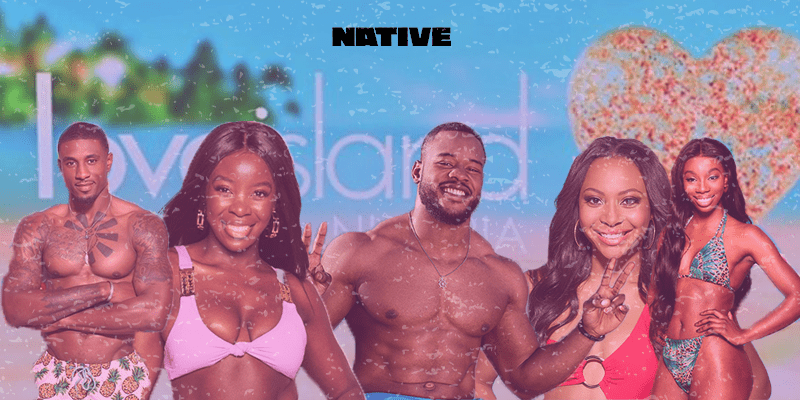
Last month, the wait for Love Island Nigeria finally seemed to be drawing to a close. Shortly after Love Island UK kicked off its seventh season, the official Instagram account for the latest African spinoff teased the first tell-all sign that the reality tv show would soon be landing firmly on our (murky) shores with a media event. Now, officially set to arrive towards the end of the year in October on MTV Base, the reality dating show will run for seven weeks within which 20 contestants will battle for the cash prize and a chance at finding their Harmattan-time romance.
Naturally, viewers of the reality show, many of whom are Black and within the African continent or the diaspora at large, have already expressed their interest in tuning in to the new Nigerian iteration. For many of them, this motivation is fuelled by the constant churning of reality dating show content that streaming platforms have subjected viewers to in the past few years. While our generation is undoubtedly nursing more commitment issues than ever before, it seems that we can’t get enough of it on our TV screens.
The anticipation for the new show is offset, however, by the underlying fear that the latest iteration of the reality dating series would once again fail to meet up to viewers’ expectations after years of television networks getting it painfully wrong. There’s no denying that reality TV shows, particularly dating shows, have long been critiqued for being overwhelmingly racist, misogynistic, homophobic, fatphobic, and ableist. When narrowed down to Love Island specifically, these issues are even more fraught when you take into account the fact that ITV has received criticism for their lack of diversity every season since the show first aired over six years ago. In response, the UK-based television network has always reiterated that they are “committed to diversity” and anti-bullying.
However, year after year, viewers see Black contestants go into the villa and leave with no love and a boatload of trauma from dealing with racial microaggressions. There’s a lot to be said about a reality dating show that constantly refuses to honour the diverse multitude of contestants that apply for their shows and the multifaceted viewership that tune in weekly, disappointed yet again that their experiences aren’t shown on mainstream television. Despite this, Love Island remains one of the biggest reality dating show franchises globally with over 21 spinoffs in different locations around the world and over 3.3 million viewers. So what is it about the show that has people willing to look past the gross ways in which Black contestants are treated?
Earlier this year, the first African iteration of the show began in South Africa, one of the most populous Black nations in the world and fans were eagerly awaiting a diverse Black cast given that the show was set on our own turf. Yet ITV and their local partners, M-Net failed to leave any lasting impressions as they dropped the ball yet again on what could have been a landmark moment for reality television. In the first few weeks of airing, viewers on the continent and in the diaspora, wasted no time in calling out the show’s producers for failing to begin the season with any visibly dark-skinned Black contestants in a Black nation. Although producers reassured viewers that more Black contestants would be making their way into the villa within the subsequent episodes, that erroneous move was enough to drastically reduce their viewership and be written off by many potential viewers.
As we stated earlier, it’s one thing to experience this gross lack of representation in a place on the main UK or US franchise, but on your own turf, in your own continent, country, and city, where most people look like you, that feeling hits different. The issue is when you only have the token Black character on any given show, there is a possibility to place weighty unfair expectations on them to become the patron saint and poster child for all Black people or on how Black love should be represented on screen. Indeed, recently, we did see ex-Love Island contestant Mike Boateng explain that he felt pressured to perform ‘Black love’ on screen and after the show. However, in a country where the majority of its citizens are Black, this expectation to act as the token Black couple would be eliminated simply because most people are dark-skinned. However, Love Island South Africa couldn’t have been farther from this.
It is in this climate that the latest Nigerian spinoff finds itself about to operate within. Given how much we know about the colourism within the country, and the way that lighter skin is treated better or superior to darker skin, it’s not hard to see why the expectations for the show aren’t sky high. Nigeria is the most populous Black nation on earth and the producers will need to go a long way to show that they are ready to immerse themselves fully within millennial and Gen Z culture in the country and that includes championing contestants that look, dress and talk like the average young Nigerian.
Luckily, in Nigeria, there is a reference point for any reality shows looking to penetrate the mainstream entertainment market: Big Brother Naija. The locally produced reality television show has become a huge spectacle within the country, spurring loyal stans dedicating to fighting for their stars’ honour, pseudo-celebrities and memorable reunion shows. Over the years and with six seasons in, the show has become the blueprint for any reality television shows coming into the country after managing to sustain continued nationwide viewership. With a reported audience of 309 million viewers from around the continent, according to DSTV media sales figures, it has become one of the most viewed entertainment shows in the country. And it’s as representative of Nigerian culture as they come. All tribes, all people, all skin colours—albeit not all genders or sexuality types.
The premiere season of Love Island Nigeria might also coincide with the seventh season of Big Brother Naija which is rumoured to be out later this year following the close of the reunion show this past week. As such, Love Island Nigeria may find itself struggling to gain the views of audiences within the country and the diaspora when there’s concurrently a show running that accurately represents Nigerian people and their culture. To this end, the producers of Love Island will need to find newer ways to break into this market and remain innovative. That would include, but not be restricted to, at least getting the casting right.
Love Island Nigeria is already being described as the first all-Black Love Island show ever and that detail is not lost on any of us. As more teasers, clips and first-looks are released in the run-up to the season premiere in October, the whole of Nigeria (and her diaspora) will be waiting with bated breath to see how M-Net and Multichoice conduct things this time around. All roads lead to October.
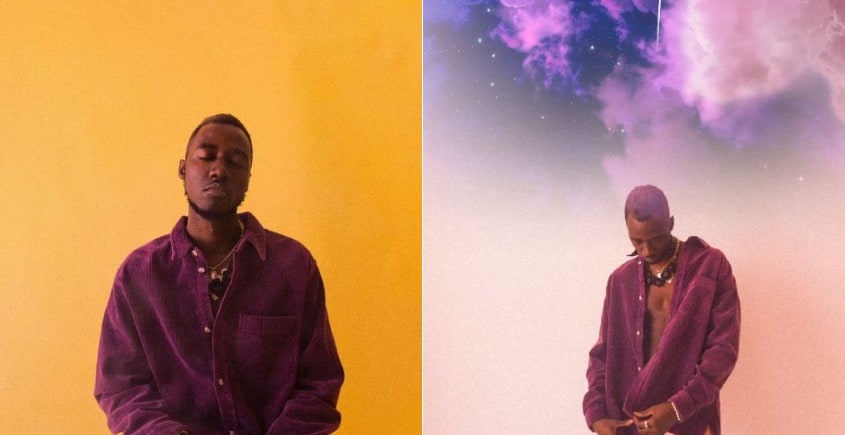
DAP the Contract has several positive descriptions to define his artistry, one of them is prolific. In the era of music streaming, being a high-volume artist is often an indicator of placing quantity ahead of quality, however this is far from the case with DAP. Over his creatively stellar and productive career, the independent rapper, songwriter and producer has stacked up a catalogue brimming with brilliant projects, both as a solo act and as part of groups.
Heavily steeped in lived-in experiences, with a preference for part-introspective and part-exuberant lyricism, DAP’s music is always a potent snapshot of where he is as a young person, at every given time. Each project is a status update, with every new release leaving an impression and adding new details to the mosaic representation of DAP as a person and musical polymath with a clear vision.
In March, he followed up the February-released EP, I’m Glad You Made it this Far, with an accompanying live performance piece, reinforcing his engagement with every facet of his artistry. Today, he’s back with the sequel to last year’s Powers, Vol. 1, putting out his third project within the span of about 16 months. That’s a short turnaround period between projects, however, DAP’s project never lacked purpose and it’s why I’m excited to hit play on Powers, Vol 2.
In usual 1-listen review fashion, all reactions are in real-time while the music plays. No pauses, rewinds, fast-forwards or skips.
“Sacrifices” (feat. Tim Lyre)
I love this cover art. These synths have a heaving groove to them, sounds something like the beginning of summer. There go the bass, a really nice knock. DAP just entered a nice falsetto and this song already has a few movements in this song, very dynamic intro. Tim Lyre has one of my favourite voices, it’s deceptively rangey and it’s quite spry here. This delivery has a Santi-esque bounce to it, love the feature. Not too many can really know what people sacrifice to achieve their dreams, but I guess you’ve to keep pushing regardless. Solid intro.
“It’s Not a Gun”
This guitar has some character to it, and this boom bap drum pattern is just vibey. DAP is really good at conversational love songs from a speaking standpoint. “Good girls love bad guys” might be cliché but I’m not going to argue it. A tighter rap flow but the charm is still there, his intent is unmistakeably. This is the anthem good guys need and deserve, but then again, who’s a good guy when we’re all villains in at least one person’s story? I really like this, keeper.
“TDK” (feat. SirBastien)
For an artist who tries out new things every time, it might seem trite to say DAP is experimenting quite well here, but it’s true. This has a very summery vibe to, mellow Afropop meets Tropical House vibe, and his singing is the apt amount of playful. Hold up, is that a Zanku-type drum pattern? On a DAP song? I’m positively shocked. But the song is still mellow and his triplet flow is hitting the right pocket. SirBastien has a dreamy voice and it fits in perfectly here. A drumless transition, these keys have a cosmic warmth to them and SirBastien is pulling off a charming serenade. Nice.
“Chaos”
We’re going back to the ‘80s, an era that will never die in music. This reminds me of something from Roisin Murphy’s Roisin Machine, which I firmly believe was the best album from last year to channel and retool Disco’s golden years. This is such a nice tactic, couching serious socio-political observation in a bewitching groove. Ear-grabbing lines here and there but I can’t hear any quotables, which isn’t really a bad thing. Beat switch. Well, that was short-lived.
“Mo Fe Jaiye [Live]” (feat. Bryan Bliska)
Immediately I saw this on the tracklist, I knew it had already been featured on the “You Made it this Far” live performance piece. The singing is so heartfelt, and it’s aided by the vocoder. I just remember Usher telling T-Pain he ruined music for using auto-tune and I’m mad all over again. Technology, when used right, won’t obscure emotion or replace actual singing. This is the umpteenth example. Not sure if I’ll be running this back as a standalone, but I definitely won’t skip when revisiting the full project.
“UFO”
This project has featured a fair bit of experimentation, proof that DAP is anything but stagnant with his approach to music. This is a dance beat but it has a chill warmth to it, and his voice is muffled. Can’t make out much of what he’s singing, and the melody isn’t really holding me. Another mid-song switch, atmospheric piano and vocal chants. This is quite chilly but he’s expressing warm, love-struck sentiments. Another short transition.
“Go Slow”
The mood is still chill. I spoke too soon, this bass has some knock to it, groovy but not disruptive. Asking a partner to part ways slowly doesn’t resonate with me, just rip the thing real quick so the injury can be swift, I’ll play with the scab later. Another beat switch, it’s keeping things interesting. It’s not rapid fire, but this is nice pacey flow. “She wanna know everywhere I’ve been/I’ve been in the friendzone.” Interesting line. DAP raps about love from a realist standpoint, even though he infuses tropes from the nice guy gospel and I’ve already stated how I feel about that. Beat switch and breakdown to close things out.
“Open Letter III”
Horns and beautiful keys, that’s always a killer opening combo for me. “I don’t know where it go for me but God involved,” that’s a bar right there. Those drums tumbled in gracefully, so much soul on this song. DAP getting personal is my favourite DAP, every line touches the heart. The nostalgia of simpler times is a touchstone in DAP’s music, but those are simply gazes at the past. Nearly every line here is laced with the heaviness of loss, but that mention of his mother has an undeniable, alleviating warmth to it. “I just want to be great, why is there something that’s greater?” I’m sure a lot of creatives ruminate over this same question. Living a life with a constant purpose can be daunting when the goalpost seems to move further back as you get closer. This is immediately in my all-time favourite DAP songs. Keeper.
“Mo Fe Jaiye” (feat. wavythecreator & KALINE)
Final song. Spacey post-dub instrumentation is not really my thing, but I can understand that this is an optimistic follow-up to the previous, contemplative song. Heh, this won’t be my cup of tea, I can already tell. I’m guessing this is wavy, haven’t listened to her in a while, she sounds alright, I guess. This is discordant enough to keep me interested, but it’s still not for me. I love these high-pitched vocals, just not enough to like this as a closer.
Final Thoughts
On last year’s Powers, Vol. 1, DAP largely rapped with a tunnel vision focus on projecting security in his artistic skill-set. For its new sequel, DAP is far less unflustered but no less compelling. This time around, he varies his approach to reflect an artist capable of constantly questioning himself, his purpose, his relationship, and everything around him. On first listen, it seems like a spiritual kin to the third instalment of the Contract Thursday series, released over a couple of weeks in 2019.
Perhaps the most intriguing part of Powers, Vol. 2 is the musical selection, which pulls from multiple, disparate sources. Primarily self-produced, the project darts between soulful Hip-Hop (“Open Letter III”), Folktronica (“Mo Fe jaiye [Live]”), contemporary R&B (“Go Slow”), summery Pop (“TDK”), and more. It’s a pointer to the fact that DAP isn’t just prodding himself to find new ways to portray his experience, he’s also on the constant hunt to make his music feel novel to familiar listeners.
As typically open as he is, DAP weaves in enough surprises to ensure it will take more than one listen to fully appreciate the project’s musical scope and thematic concerns. At that, Powers, Vol. 2, in addition to being the latest status update from the polymath, is a statement that DAP will continue to give listeners access to his perspective as he continues to figure life out, for as long as he possibly can.
In the past few years, we have seen a global shift in the music industry. Producers are now stepping out from behind the boards and becoming artists in their own rights–reclaiming a long-held opinion that producers are really the ones responsible for the bulk of different music genres that exist today. Here in Nigeria, this shift has been welcomed by producers in these parts who are eager to give fans their solo offerings. Many of the most notable beatsmiths today including Rexxie, KDDO, Yinoluu, and more, have created their own solo projects, stepping out of the shadows of their contributions for other artists and fashioning their own compelling bodies of work.
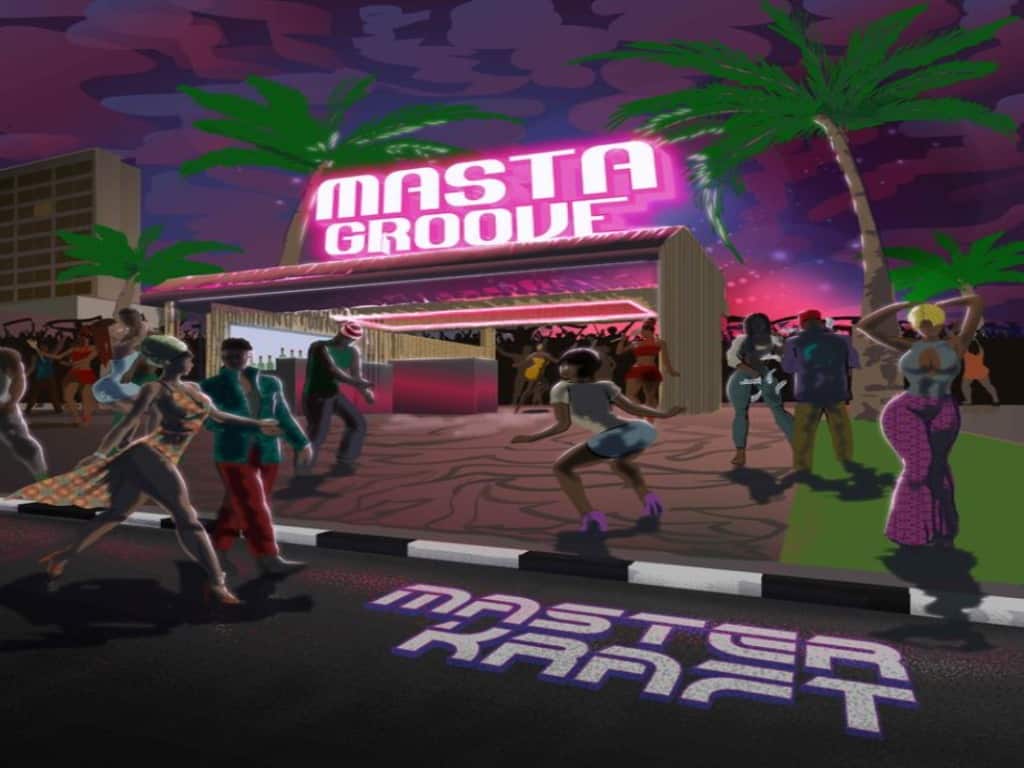
Masterkraft is the latest producer to join these ranks with the release of his sophomore project ‘Masta Groove’, a 7-track compilation of jazz-infused Amapiano cuts that make a case for his growing dexterity. The project features a host of West African collaborators from Diamond Platnumz, to Flavour, Sarkodie, Vector, Seun Kuti and more, perfectly indicative of what’s inside. Over the past year, the talented beatsmith has lent his fire production to numbers such as “Hallelu” featuring Bella Shmurda and Zlatan, “Are You Sure?” featuring Zlatan and CDQ and more recently, the “Peaches (Masterkraft Remix)”featuring Omah Lay, Alpha P, and Justin Bieber. It’s clear that improving his skills is a source of pride and Masterkraft makes sure that’s he’s constantly leaving you in awe of his last effort, no matter the genre or the calibre of an artist on wax.
In usual 1-listen review fashion, all reactions are in real-time while the music plays. No pauses, rewinds, fast-forwards or skips.
Brown Skin
I’m really loving the strings on this intro. It’s so well-plucked and beautifully strung together with Amapiano elements that it’ll have you nodding your head within moments. Masterkraft is doing something that I don’t think I’ve necessarily heard before from a producer–he’s delivering a spoken-word monologue on the beauty of Black women from their brown skin to their full lips. This is a really beautiful introduction (save for some cringey lines) that’s made more beautiful by the willingness to mesh different genres into the song’s short run-time.
Big Man Rhythm (ft. Selebobo)
This begins with a really infectious beat that will definitely have people going crazy on the dancefloor. However, it seems to be a bit of a slow burn and it’s taking a minute for the lyrics to seep into the song even though I’m already one minute into the number. Okay, I think I have to admit that no lyrics will be coming out of this number not even from Selebobo. Nice beat but not enough to get me to relisten.
Abeykehh (ft. Diamond Platnumz & Flavour)
Earlier this week, in a heated newsroom discussion, the team were mulling over the argument that Nigerian producers and artists were trying to own Amapiano to the detriment of South African artists who were really the genre’s pioneers. This number reminds me of that conversation, in the way that it seamlessly infuses Afropop sensibilities with distinct Amapiano elements. It’s not so much that Nigerian artists or producers are trying to own the genre and more so that any genre that makes its way around the world is sure to rub and pick up elements of the culture in the places it has come to settle. Tanzanian singer, Diamond Platnumz and Flavour certainly make this an affair by adding their own distinct flair to their verses.
Shake Body (ft. Sarkodie & Larry Gaaga)
I don’t know many things more memorable things than Larry Gaaga beginning a song with the lyrics, “Call me Odogwu/I no dey do ojoro/This life na YOLO”. The beat for this song is really fire and it gets better as the song builds. These drums are chef’s kiss. This is a really good song, Masterkraft came with the heat on this.
Uluuluu
Masterkraft is really in his Amapiano bag but the project is not moving along as swiftly as I would like. There seems to be a lag by the time I’ve reached this number and dare I say, I’m already feeling all Amapiano-ed out at this point. Very nice beat though, but again with sparse lyrics that keep the attention and focus on the drubbing beat.
Shabadushkabar (ft. Vector & Seun Kuti)
This is already a hilarious title so I’m sure it’ll be a memorable listen. Okay, few seconds in and we’re already receiving adlibs from none other than Wizkid. It’s provocative as they say these days. Okay, we’ve also got some horns and percussion in here from the legendary Seun Kuti, it keeps getting better with each passing moment. Lyrics such as, “Your head is not correct/Shabadushkabar”, almost sounds like a chant. This is definitely one number I’ll be revisiting.
Live My Life (ft. Mr Talkbox)
Much as the title describes, this is a feel-good number to end the project. Here, Masterkraft and Mr Talkbox make a case for enjoying their lives without the watchful eyes of society and detractors. The lyrics are really good and relatable and the production suitable to the song’s upbeat message.
Final Thoughts
As much as the music we hear today is attributed to the hard work of artists and their collaborators, a good number of the work is done by producers and sound engineers who steer the sound and production in different dimensions. While many producers around the world are fighting for their recognition and coming out from behind the boards, now is a good time as ever for beatsmiths around the globe to crystallise their sounds through a solid body of work that gives a clear view into their genre-mashing world.
In recent years, we’ve seen many producers take the reins on their sounds and show their masterful grasp of a range of genres. On ‘Masta Groove’, producer Masterkraft isn’t here to make any bold proclamations of his musical abilities–the work already speaks for itself. With a long list of foundational hits from Wizkid’s “No Lele” to Phyno and Olamide’s “Fada Fada” to Tekno’s “Yawa” and many more, Masterkraft has proven over decades that his talent is worth its salt. It’s the security from these earlier hits that carries him through to his sophomore project ‘Masta Groove’ where he simply tries his hand at one of the hottest genres coming out of Africa at the moment. This is a new chapter in Afropop history.
As we cross into the second quarter of the year, the amount of music we consume continues to grow exponentially by the minute. With amazing songs dropping at an unrelenting pace, it’s not always easy to cut through the noise and sheer volume of it all to find the music that will accompany our melancholy, inspire our next creative breakthrough, allow us our loved ones more securely, or take us to a place of unencumbered elation.
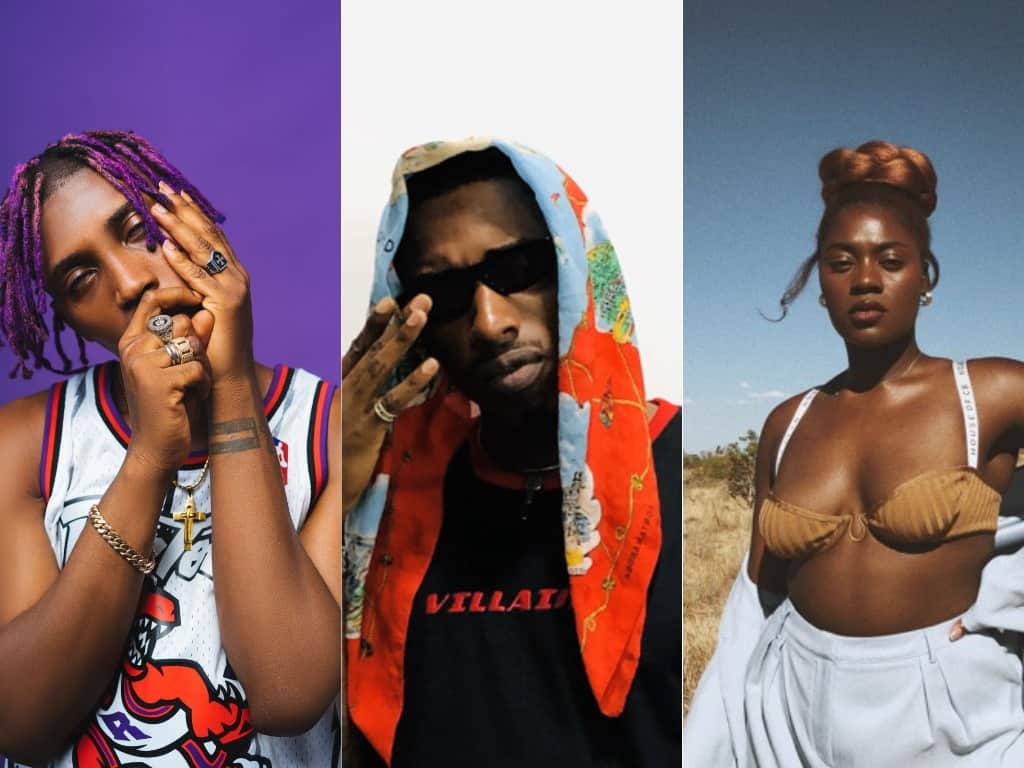
That’s where our ‘Songs of the Day’ column comes in. We try to keep our fingers on the pulse of music from across the continent and beyond, bringing you exciting songs from talented musicians who are continuously trying to bounds of artistry with their music. Earlier this week, we brought you new releases from Nasty C, SGaWD, Headie One, Saint Bond, DAP The Contract and more. To begin the weekend, we’re bringing you new releases from Bella Shmurda, Zamir and Odunsi The Engine, Bianco, Yung D3mz and more. Enjoy.
Bella Shmurda – “Party Next Door”
Over the past few years, Bella Shmurda has made it a habit to always deliver undeniably catchy music. He can’t seem to miss once and this time, he makes his return with new single “Party Next Door”, an uptempo Afrobeats banger set to take over the clubs this summer. Bella as usual just wants to enjoy life and he expresses that fact throiughout this number with lyrics such as “This is the time of our lives, I hope you’re feeling alive/You’re free to join me to party, from sundown to sunrise”. This is the first official single from his forthcoming project.
Zamir – “Love Hrts” ft. Odunsi The Engine
Former LOS member Zamir is back harder than ever and this time he’s replete with heartbreak quotes. “Love Hrts” produced by 44DB founder, Tochi Bedford features a stellar guest feature from Odunsi The Engine who makes the song a bigger moment with his genre-mashing sound. Both artists seem to complement each other perfectly, as they glide smoothly over the futuristic production. The memorable hook, “she wanna love hard/she wanna love heart” sticks with you from the very first listen and lingers on lips for long after. Very catchy tune, I must say.
Olayinka Ehi – “Someone Else” ft. Mannywellz
Fresh Meat alum, Olayinka Ehi is back again with a new relatable single. This time around, her release “Someone Else” finds her linking up with Mannywellz for a memorable anti-love anthem pefect for anyone going through it at the moment. “You always had love to give, you just had no love for me/You just wanted someone else” she sings over the song’s hook, as she expresses her emotions and her anger at an undeserving lover.
Backroad Gee – “Ready Or Not” ft. Nissi
UK-based Gambian rapper, Backroad Gee has done many important things for the culture. Earlier this year, he hosted a freestyle competition to his single “A Yo” which attracted a number of rappers from around the continent and within the diaspora. Psycho YP emerged victorious and since then, the British mcee has continued to show his love for Afropop artists. His latest single “Ready or Not” is a smooth-sounding piano-led number that finds both artists rapping and singing about their realities in this roughneck industry. “Been through hell and the wire didn’t quench my fire/I’m just an animal in my prime” sings Nissi over the song’s hook, encouraging listeners to stand firm despite the tough journey they may face.
Bianco – “Ole” ft. Laime
Nigerian rapper Bianco has just released his latest project titled ‘Aquarius’. The succinct 7-tracker with features from a host of talented artists including SGaWD, Dremo, LAIME and Bipuntato, makes an excellent showcase for his star power. Standout track “Ole”, produced by KD, a member of the distinct producer collective, 44DB is a resplendent love song directed towards a certain muse, and letting her know he’s ready to risk it all for her. He puts a spin on the popular 2 Face song “Ole” to convey the depth of his feelings.
Yung D3mz – “Dey 4 Me”
Following the release of his collaborative EP ‘Girls Like You’ with Boye The Genius and Uche B, Ghanaian producer, singer and songwriter releases his debut EP, ‘YUNG’; a 5-track project with “Fever” as the lead single off the project. After producing records for some of the hottest artists in Ghana such as Kwesi Arthur and Gyakie, the Afro-Fusion producer now wishes to step out from behind the board and orchestrate his own musical offerings. “Them never dey around when I was down and broke/dem never dey for me, most of you niggas never dey for me” Yung D3mz sings on this track as he takes us through the personal pains and experiences he has been through.
Mizzle – “Angelica” ft. Wande Coal
Artist and Record producer Mizzle releases his sophomore EP ‘In The Dark’, a 7-tracker with lead single “Smile For You” featuring Oxlade that fans have been eagerly waiting on. All the 7 tracks are produced by him as he employs help from a host of talented African acts including Wande Coal, Ninola, and Sarz to pass across his message. Standout number, the Wande Coal-assisted “Angelica” is a delicious love song about the beauty of a woman. Wande Coal and Mizzle complement each other perfectly on this mid-tempo track, where they both mix harmonies so perfectly and melodiously. The chemistry on this particular track is undeniable, performance-wise.
Dani Draco – “Trigger”
Ghanaian Afro-fusion artist and producer, Dani Draco is gearing up for the release of his latest EP titled ‘Higher Life’. Ahead of this, he’s shared promotional singles such as “Trouble” and $paceley-assisted “Paradise”, and now “Trouble”, which he produced himself. The guitar-led number finds the singer delivering a stellar performance showcasing his skilled lyricism and his ability to bend his voice to his will.
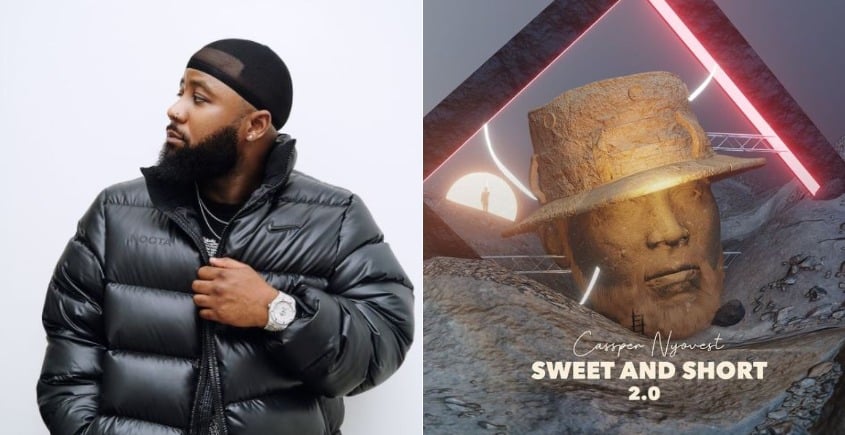
In 2018, Cassper Nyovest emboldened his affinity for Kwaito with the release of his fourth official project, Sweet & Short. Up until then, the South African rapper’s preceding projects leaned heavily into modish Rap trends, with his own infusion of a distinct SA swagger and references to parochial pop culture. For Sweet & Short, however, Caspper paid explicit homage to arguably South Africa’s most influential musical genre, post-Apartheid.
Over blaring Kwaito beats with a modern twist, he sang and chanted as much as—or even more—than he rapped, and while it might not have been as wildly successful as previous releases, it’s a project that’s clearly dear to him, so much so that he’s returned with a new sequel, Sweet & Short 2.0. Shortly after the last September release of A.M.N (Any Minute Now), Cassper began teasing the possibility of a titular follow-up to Sweet & Short, with Amapiano as the sonic focus of the new instalment. On the 2018 project, he’d flirted with the Yanos sound on tracks like “Remote Control,” but that was around the time the House/Dance subgenre was beginning to gather mainstream momentum.
These days, Amapiano is the global sound of the South African hood, holding sway amongst young audiences locally, getting widely proliferated across the continent, and improving its global appeal. Due to this level of dominance, Amapiano is being co-opted by artists who might not primarily identify as purveyors of the subgenre, especially amongst South African rap artists. Sweet & Short 2.0 is the latest evidence of the increased symbiosis between Amapiano and Rap music in South Africa, and for Cassper, it feels like a befitting follow-up considering the foundational significance of Kwaito to Amapiano.
“Ama Number Ayi ‘10” kick-started the project roll-out earlier this year, a boastful cut with guest vocals from Kammu Dee. Few weeks later, Cassper teamed up with breakout star Lady Du for “Angisho Guys,” a grittier single aimed squarely for the Kasis. In early June, “Siyathandana” dropped as the final single, a smooth, romance-themed song that is currently the biggest song in South Africa. The variety of these three singles are a precursor to the musical versatility of Amapiano, which is purposefully explored on Sweet & Short 2.0.
Cassper is joined by a cast of prominent Amapiano vocalists, including Samthing Soweto, Boohle, Reece Madlisa, and Zuma. The album is primarily produced by Abidoza and Alie Keys, with musical contributions from Fresh Meat alum Semi Tee, DJ Sumbody, LuuDadeejay, and Cassper himself. Released just over nine months after his last album, Sweet & Short 2.0 is a statement from Cassper Nyovest that he’s willing to push beyond any boundaries to the music he’s associated with, and earned the right to share it with the world on his own timeline.
Despite the pandemic’s effect on the global film industry, there remains a huge demand round the clock by consumers for new films and entertainment shows in cinema and online streaming platforms. According to Forbes, the entire global theatrical and home/mobile entertainment market totaled $80.8 billion in 2020, a significant decline from the previous year and the lowest recorded since 2016. In Nigeria, the numbers are not readily available, however, the global pandemic further exacerbated existing local hindrances such as lack of funding, and in turn, impacted the number of Nollywood films that we were receiving on a regular basis.
However, in the face of these challenges, there were recorded milestones. Earlier last year, Funke Akindele’s ‘Omo Ghetto’ broke the record for the highest-grossing Nigerian film surpassing earlier released films such as ‘The Wedding Party’. We also saw an influx of new African-centered content on Netflix including ‘Sugar Rush’, ‘Living in Bondage Breaking Free’, and ‘Ojukokoro’ which was directed by Dare Olaitan. This year, the film rooster is bigger and better than ever, for both traditional cinema and online entertainment with forthcoming releases such as ‘King of Boys II’ and ‘Dwindle’ already weeks away from their release.
‘Dwindle’, the brainchild of two close director friends Dare Olaitan and Kayode Kasum follows the story of two policewomen (played by Bisola Aiyelola and Funke Akindele-Bello) who are blamed for the disappearance of their boss, the governor of Dakawa state who has just been kidnapped. On a mission to clear their name, find the culprits and bring them to book, these two women soon find out that there’s more to meet the eye with their boss who is in possession of two insane taxi drivers.
Ahead of the nationwide cinema release this month, we spoke to the co-directors of the film about how the idea was conceptualised, the realities of filming on a budget in Nigeria and what we can expect from the film.
Our conversation which follows below has been lightly edited for clarity.
NATIVE: Hi Dare and Kayode, how was the idea for ‘Dwindle’ conceptualised?
Kayode: I am fascinated with films such as ‘Pineapple Express’ and I hadn’t seen a Nigerian film explore body friendship so I had this idea that I had been mulling over for over a year. While I had a lot of people write it seven times, it just didn’t fit in and at that point, I knew that I needed Dare on the project because I am a big fan of his work. We’ve been friends for a while now since the Nollywood Film Festival in Paris where we hit it off and I always wanted to work with him. My instinct jumped in and I began thinking ‘Maybe this is the film that you and Dare should do together’. So I approached him and he read the script and put his Dare Olaitan magic on it and we decided to direct it together. We’re just two friends who liked a story that they wanted to explore.
Dare: Kayode actually tricked me. He told me he wanted me to help him take a look at it and then edit it and also put in some money for its production. But then gradually, we were making the film together but it’s been a wonderful process. We first spoke about this film in September last year and we wanted to shoot it in January but you know how production is, we just found ourselves doing it in March this year.
NATIVE: What were the memorable and challenging moments from production?
Kayode: Dwindle is a film made on a budget because we had a really tight budget to make something this big. It was difficult and very stressful to shoot but one of the most memorable moments would definitely be us splitting up. At the time, we were running out of money and time and we were just like we had to make this film work. So in the end, two directors were shooting the same movie at the same time but with different casts. That was quite insane for me. We had a meeting on what we wanted the film to look like then we just split up to accommodate ourselves.
Dare: A lot of the directing, co-directing was actually directing in two split units to get everything economically sound. it was a lot of work but there was no way we could have done this with just one person. We tried to pack a movie that looks two times the budget in two weeks.
NATIVE: What are the realities of filming on a budget?
Dare: I think almost every film in Nigeria is shot on a budget but because of what we were trying to do, we were trying to stretch the limits of a budget film to make it seem bigger than it was. So we had to do a lot of thinking and make sure we went over all the decisions beforehand. We couldn’t afford for many things to go wrong so we did a lot of pre-production and planning.
NATIVE: How was working together as co-directors?
Dare: As Kayode said, we met in Paris during the Nollywood Film Festival and we’re kind of similar because we don’t really get on well with a lot of people but we kind of get along with each other. So we spend a lot of time, not just making music, but just chilling and being friends. That’s the biggest problem usually in this creative industry, which is their egos, but we’re both committed to doing the work and doing it well.
NATIVE: How was working with the cast on the film especially people like Funke Akindele-Bello & Brother Shaggi?
Dare: This film has three producers, me Kayode and Film One so they have a larger share and have a very good idea of these kinds of things. Almost every decision we make was done on a roundtable so we’d come in and people would make suggestions and we would see what could be done to have an impact on the market in the times we are trying to put it out exactly.
NATIVE: When is the film out officially?
Dare: We are coming out in cinemas on July 16th. For now, we tackle the cinemas first before all the other platforms but yeah, we are definitely trying to get into these streaming sites.
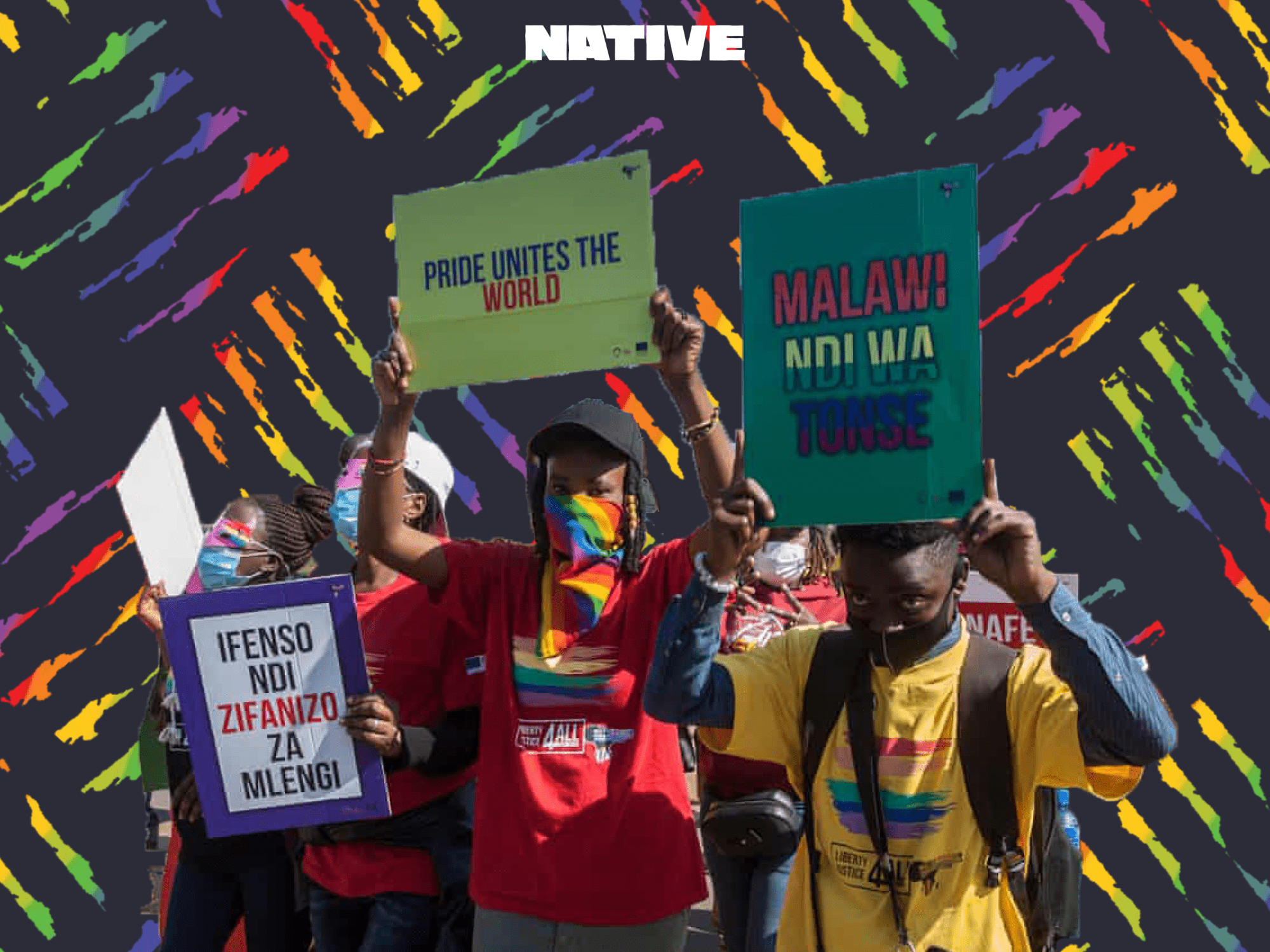
A commemoration of the Stonewall Riots, a week-long protest incited by the intolerant police raid targeting queer attendees of the Stonewall Inn, every year since that chilling June 28, 1969 day in New York, the month has been the designated to celebrating queer identities. Raising our voices even higher in support of queer rights, Pride is also a month, for many, to reflect on the persisting subjugation, police brutality, micro-aggressions and insecurity queer people face. On our continent, where LGBTQ+ people are specifically targeted by the law in 34 countries, Nigeria included.
Through Nigeria’s Same-Sex Marriage Prohibition Act, queer identities are criminalised and violently victimised by homophobic laws, and their homophobic upholders. Here, police target and abuse queer civilians, professional industries discriminate against prospective employees based on their health status, their voice or their gait, and in the media, queerness is heavily censored, with only negative representations or cautionary portrayals are visible.
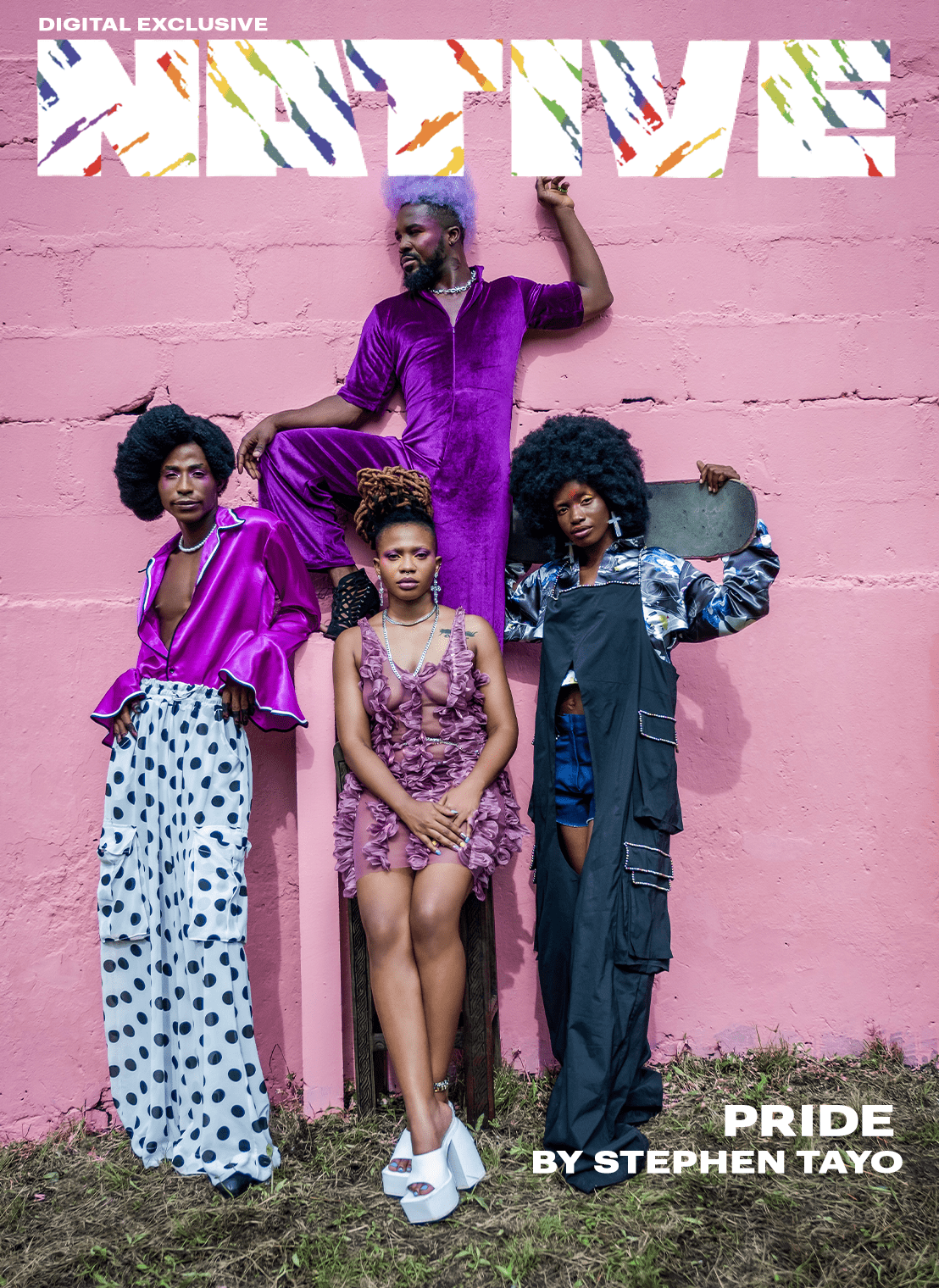
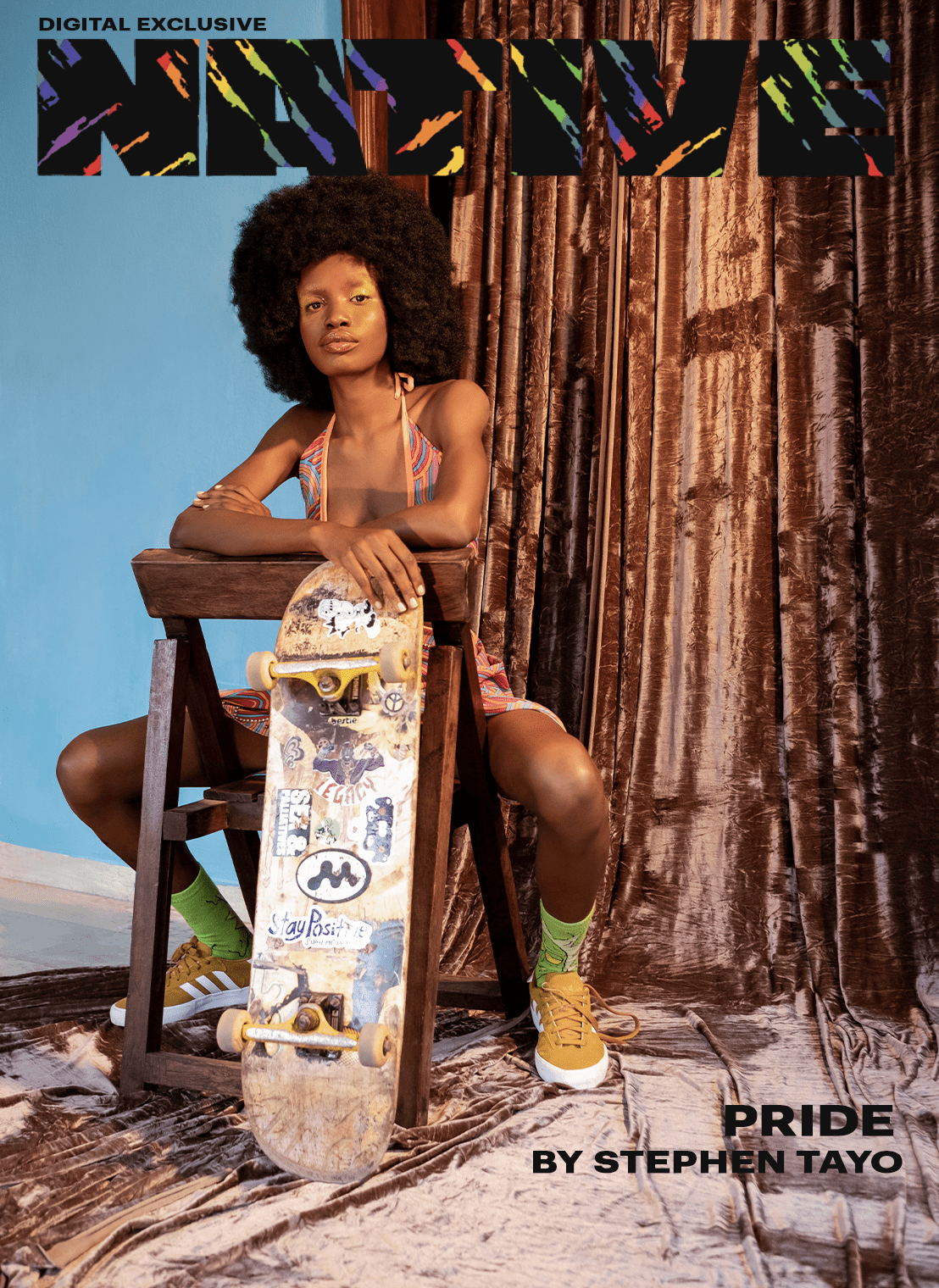
As one of the leading voices in contemporary Nigerian media, this month, The NATIVE embarked upon a 30-day long campaign in celebration of Pride. Including submissions from our audience, a film screening of Uyaiedu Ikpe-Etim’s lesbian romance short, Ife, followed by a Pride party to remember, NATIVE’s Pride 2021 festivities now culminate in our third ever digital cover, starring Uyaiedu Ikpe-Etim, Blessing Ewona, Bright Michael, Tobean Omotoso, and Adebayo Oke-Lawal.
Fulfilling our mission of championing the voices of our community, inclusively and wholesomely – in spite of the regulations set by the authoritarian regimes that have governed Nigeria over the years – NATIVE share the stories of five queer Nigerians, thriving in Nigeria, despite the numerous obstacles inherent in their various industries.
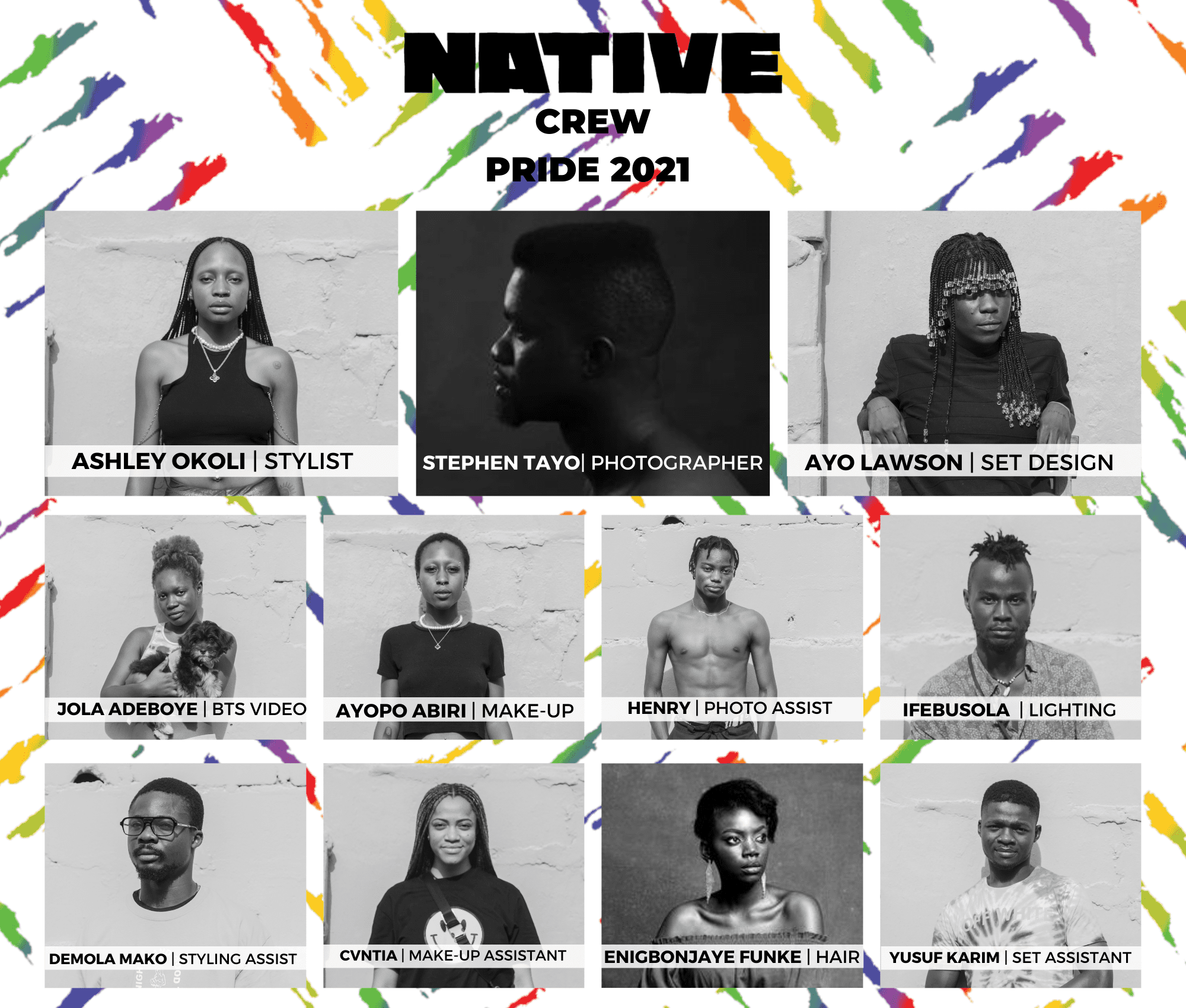
As well as a cast of queer cover stars, the crew who put together the pioneering project were made up of predominantly queer women, shot by world-renowned storytelling photographer, Stephen Tayo known for his empowerment of marginalised groups through thought-provoking conversational photography. You can check out our Pride Digital Covers here, as well as other stories shared throughout the month.
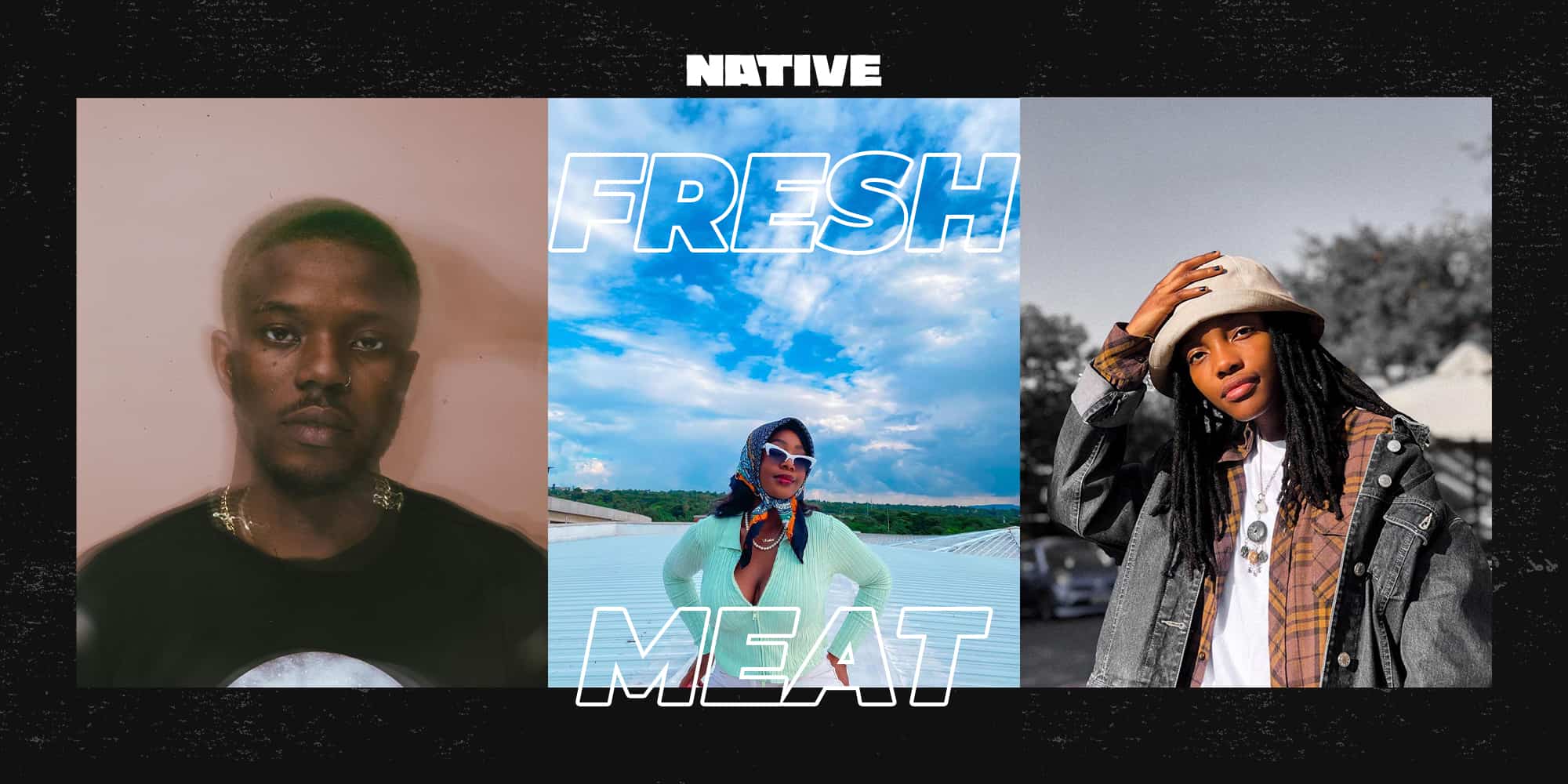
Staying True To Our Mission Reshape The Face Of African Popular Culture, The NATIVE Team Curates A Monthly List To Spotlight The Best And Most Exciting New Artists On The Continent. Some Of These Artists Have Dropped Songs To Some Regional Acclaim, While Others Are Brand New On The Block, Working Towards Their First Big Break. Tune In To What’s Next. Click Here For May’s Fresh Meat.
Music is the most accessible it’s ever been. It might be trite to say, but the impact of streaming and social media can just not be overstated. In the era of tap/click to listen, the endless scroll, and multiple avenues for instant connectivity, there’s an endless stream of new music always waiting for us. With this and the effect of the democratisation of music-making and distribution tools, there’s an influx of young, exciting and rule-breaking artists to discover.
As a publication and community dedicated to championing the sounds of tomorrow, today, The NATIVE’s editorial team always look forward to the end of each month where we share some of the best, nascent musicians we’ve become enamoured by over the last few weeks. On a perhaps more selfish note, our Fresh Meat column, now in its 16th consecutive month, is the team’s consistent way of rededicating itself to music discovery, a tenet that’s always been integral to The NATIVE even as we’ve improved and diversified how we cover music and youth culture. The column offers us a chance to intensify the spotlight on budding stars, and champion artists helping to redefine the perception of the music meant to be made by Africans.
This month’s instalment is no different. As usual, the selection of artists don’t cater to any stringent sonic rules, emboldening the diversity of the music being made by young Africans on the continent and in the diaspora. From PRVNA’s lilting, Dance-meets-R&B melodies, to Skolleywood’s unflappable raps, to the vulnerable Neo-Soul of Dato Seiko, and more, here are eight artists you should be paying attention to—if you haven’t been already. (Check out last month’s instalment here.)
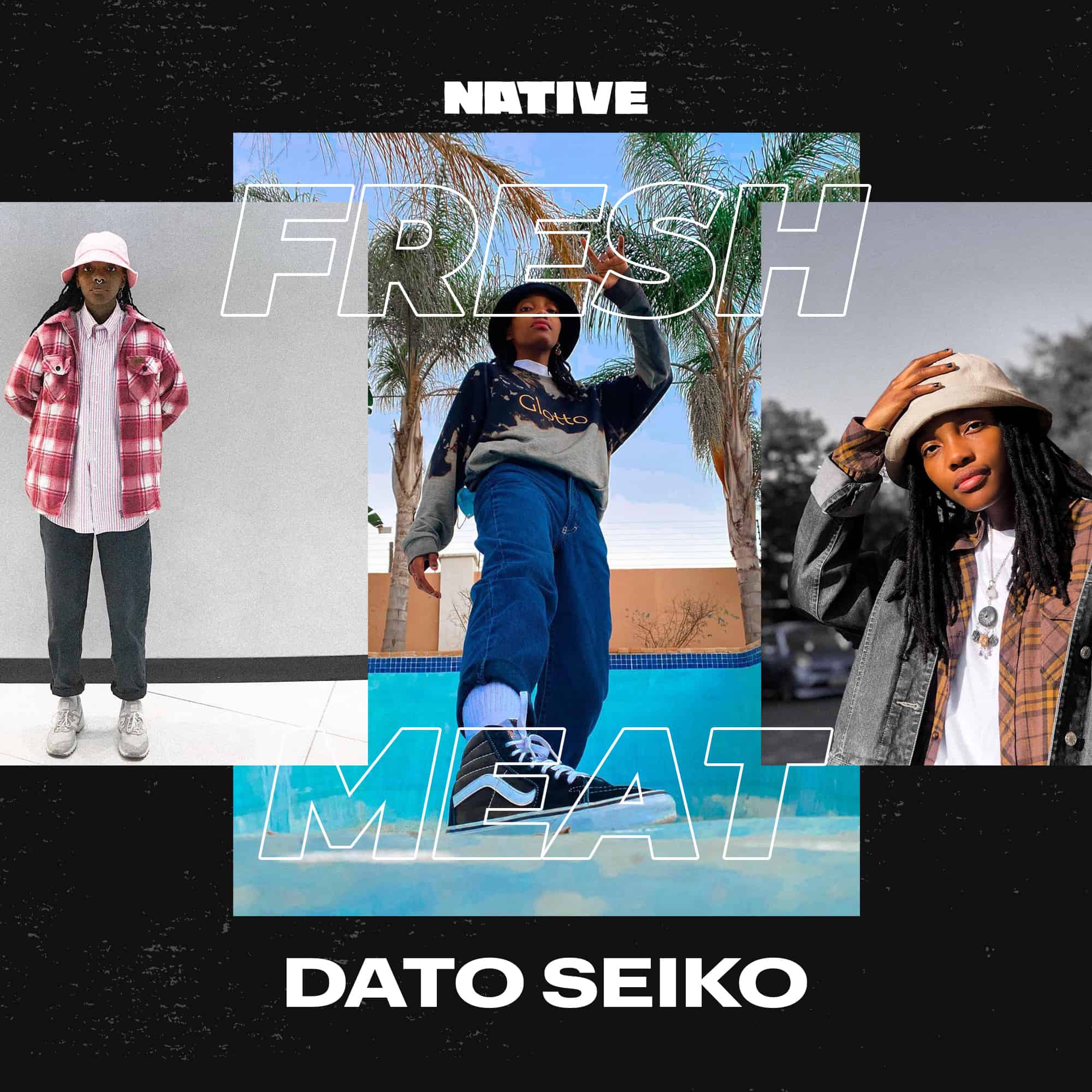
Dato Seiko
Dato Seiko took the scenic route to becoming Botswana’s latest breakout star. The singer began to garner initial attention with moving, innovative covers, and acoustic live renditions of her own written material, establishing the efficacy of her sweetly-scented voice. If you scroll long enough on her Instagram page and go through her YouTube channel, these covers and acoustic performances date as far back as 2017. “I started singing since my consciousness, and I haven’t stopped since,” she said in an interview with Sunday Standard last December. “It has always been my way of expressing myself.”
Last year, she made a wondrous guest appearance on “How It Feels,” the emotional centrepiece on Botswanan rapper/comedian William Last KRM’s debut album, Willian. On the song, Dato serves the anchor, singing the affecting chorus that perfectly accompanies the introspective gushing on William’s verses. With the early year release of its equally moving music video, which has amassed respectable 800k-plus views and counting, “How It Feels” quickly became Dato’s biggest star turn yet, setting the tone for a year that has seen the release of her long-awaited debut project.
Grace Effect, Dato’s 5-track EP, is a superb presentation of the artist’s inclination towards creating songs with intimacy and vulnerability at their core. Listening to the project is akin to gaining unfettered viewing as she fills out pages of her diary. The opener “The Wait (Gravity)” dramatizes the winding process of resolving a romantic situation where one party is hesitant. Similar to several other songs on the EP, her voice emotively stretches out over minimalist musical choices—usually just languid piano and/or guitar chords, and a little percussion. This inclination draws attention to her expressive writing and the way it impressively depicts the tensions in interpersonal relationships, like on “Lunathi,” where a piano is the only instrument as she sings of being platonically enamoured.
Showcasing her versatility beyond acoustic/ballad sensibilities, Dato also turns in looser, more blue-eyed cuts. On “Kaone Kario,” she slinks over a fleshy Neo-Soul groove, in her coy and sweet attempt to woo a love interest. Joined by Botswanan R&B star Mpho Sebina, she rues falling into an unsuccessful romantic situation on “Moonstone,” the chill bounce of the contemporary R&B production helping to convey their optimism that next time will be better. With Grace Effect, Dato Seiko has created an atmosphere for listeners—especially Black women and Queer folks—to relate with the relationship woes and hopes she shares on wax. Already, there are loyal supporters singing Dato’s songs faithfully, a fan-base that will continue to expand as her music enters more pairs of ears and connects with more hearts.
(Recommended if you like: Jazmine Sullivan, Elaine, Kehlani)
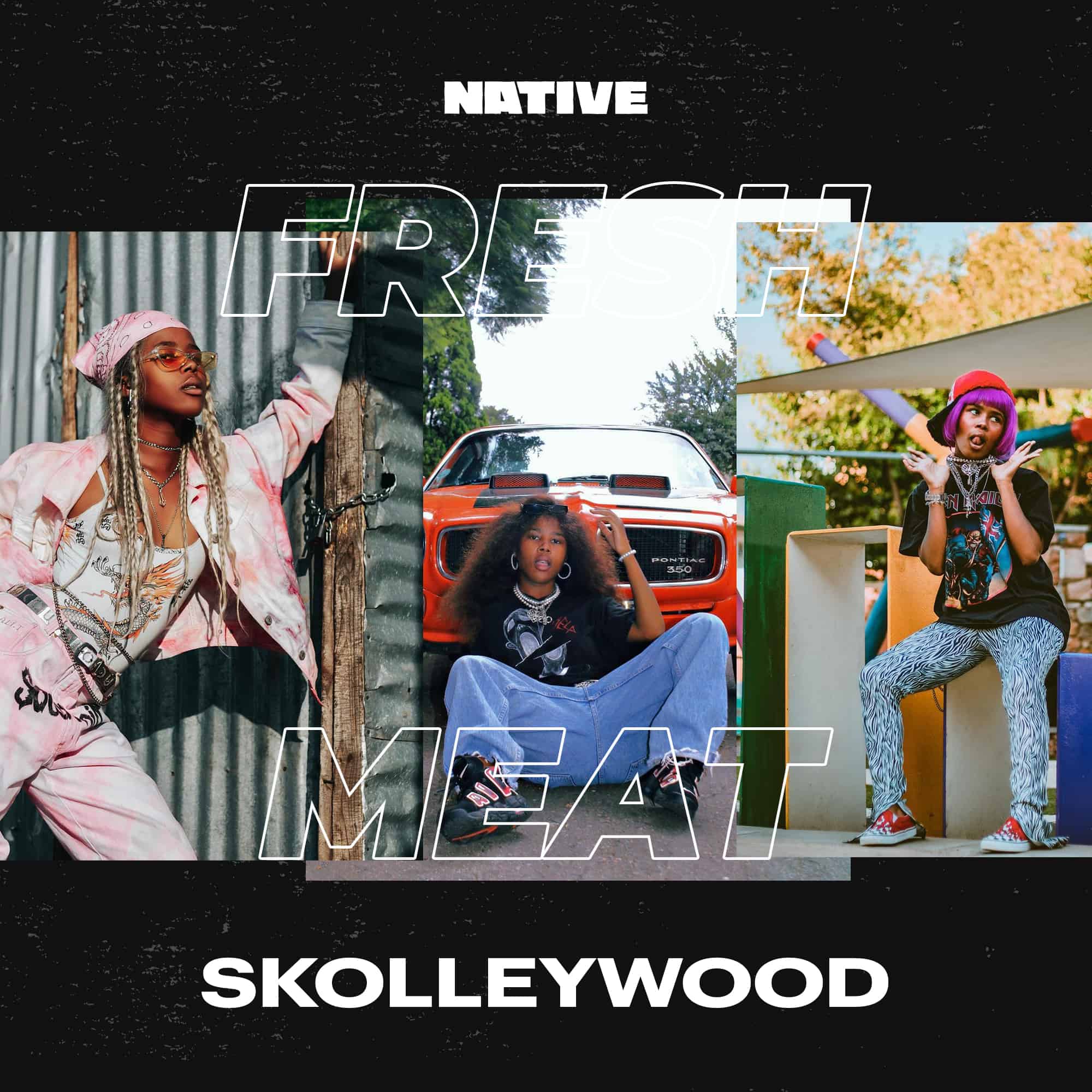
Skolleywood
The first thing I noticed about Johannesburg-born rapper Skolleywood is the glaring portmanteau that makes up her stage name. In a recent interview released earlier this year on BreakRoom Africa, the rapper was faced with a very important, yet seemingly daunting question that would frighten any newcomer. Who was Skolleywood? However, her response made an excellent showcase for her unfiltered confidence in herself and her musical abilities. “I am a rapper who is just trying to show inspiration to other kids out there, by being unique and unapologetically expressing yourself by creating your own SKOLLEYWOOD (world),” she shared, admitting the secret ingredient behind her confidence was her remarkable worldview as a storyteller. With lyrics imagining shopping trips round to the Vivien Westwood store and dallying with the rich and famous in Hollywood, it was clear that this was an artist armed with all the tools within herself to fully immerse others into her vibrant world.
It’s no surprise that Skolleywood has this innate sense of identity in herself given that the rapper has been making music for as long as she can remember. When Skolleywood was a young girl, she created an all-female band with her sisters but as she tells it, she was undeniably the main character in their dynamic. Bolstered by these experiences over the years, the newcomer released her debut single “Giddy Up!”last year April, just as the world around her descended into lockdowns and screeched to a standstill. In contrast, “Giddy Up!” was fast-paced, urgent and packed with sharp, clear raps that showed the rapper came into the game cocky, loud and ready for a good time. “Niggas out here pissed on facts that I’m spittin’/It’s in my DNA, I’m a star player” she quipped over the bass-thumping beat produced by Redash as she delivers a glittering debut that in one breath curses out the competition and in another, stakes her claim in the South African rap scene.
By her sophomore release “Thanks For Nothing”, released three months after her debut, it was clear that Skolleywood was just getting started. Once again, she linked up with close collaborator, producer Redash who delivered an uptempo hi-hat heavy beat with ample space for Skolleywood to fire off her menacing raps. “They thinkin’ I’m countin’ on their tips cause they asked for me/ Don’t need your call cause I know what you gon’ ask of me” she raps grimly, unafraid to mince her words and full of all the smoke for her last nigga. It’s hard to imagine Skolleywood letting anything get in the way of where she wants to be and that applies with niggas and coons alike.
Although women rappers have always been an integral part of rap culture’s fabric, they’ve often been shifted to the background as decoration for their male contemporaries or pitted against one another whereby only one can come out victorious, but this new generation of female emcees are changing the narrative. From the big-ticket names such as Doja Cat and Megan thee Stallion to new names arising on the continent including SGaWD, Lioness, Benzo, Brazy and more, it’s clear that the female rap evolution is well underway and anyone still sleeping on them is sorely doing themselves a great disservice. Tap in before it’s too late.
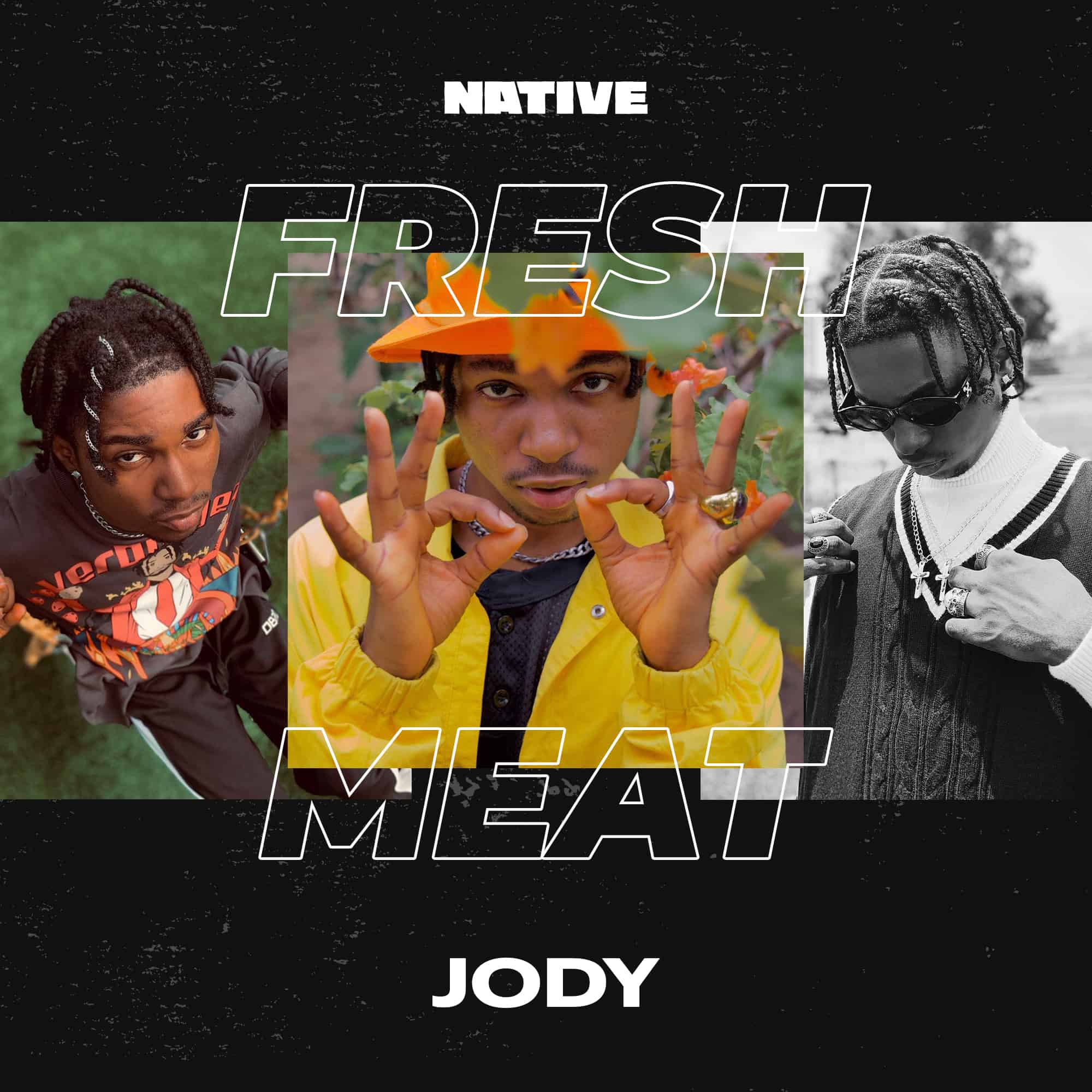
Jody
Jody makes music that is translucently confessional, subsuming desire, angst, and pain into smartly engineered mid-tempo songs that convey vivid messages. Born and raised in Lagos, the singer born Chukwuemeka Ugemba Emmanuel has always used music as an outlet for his feelings for as long as he can remember, drawing broad strokes with his pentatonic voice. Initially, he was drawn to hip-hop, joining his elder brother to rap over rudimentary beats as a secondary school student in the early 2000s before graduating to professionally recording a series of demos at the tail-end of his time in secondary school.
Beset by financial hindrances, Jody’s path into the music industry was plotted via strategically-released covers and freestyles, with one such effort catching the attention of Jos-born producer, Chopstix, in 2018. Drawn to his emotion-laden delivery and nimble flow, the producer worked extensively with Jody before introducing him to Skales. A chance to work with Skales on his Mr. Love album was a part of Jody’s development and, by the end of 2020, he appeared alongside Skales and Shegxz on a freestyle titled “Bounce On Beat” where his sing-rapping cameo was the highlight of the song. Concurrently, Jody was working on a series of songs that’d form the bulk of his introductory project as the finer details of a record deal with Skales’ OHK Entertainment were being smoothed over.
Set entirely with a minimalist palette, Waves, Jody’s debut EP, features more of his rueful emoting set to simple beat patterns bolstered by his latitudinal voice. Mixing neo-soul and R&B with the skittering drums of Afropop, his project is rangey, introducing listeners to new planes of rhythmicity while keeping his lyrics light, memorable, and incisive. But the real highlight here is his voice and how he wields it to express his yearnings like on “Fling,” where he expresses his fancy for a love interest over a light dancehall-influenced instrumental with the material troupe of Afropop without sounding cringey. The previously released single, “Non Stop,” sees him glide over a spectral beat to detail his affection before switching up his cadence around the 1-minute mark to intently reveal the depths of his passion.
At other places within Waves, Jody is almost languid, stretching out his vocals over warm guitar riffs on “For Nobody” to chronicle how he wants to be loved, before flipping the song to how he enjoys a love interest’s company. The back end of the project bears marks of an artist under Skales tutelage, with songs like “Moscow” and “Slide Slide” showing pop leanings, but, even then, Jody’s lively vocals don’t make these songs slapstick fodder, they are songs of elation taped unto songs of desire and want for those who choose to indulge. Not many can move through styles without diluting standards as Jody does here. On his debut, his voice emerges almost fully formed, breezily documenting his interests and dreams with grace and clear-mindedness.
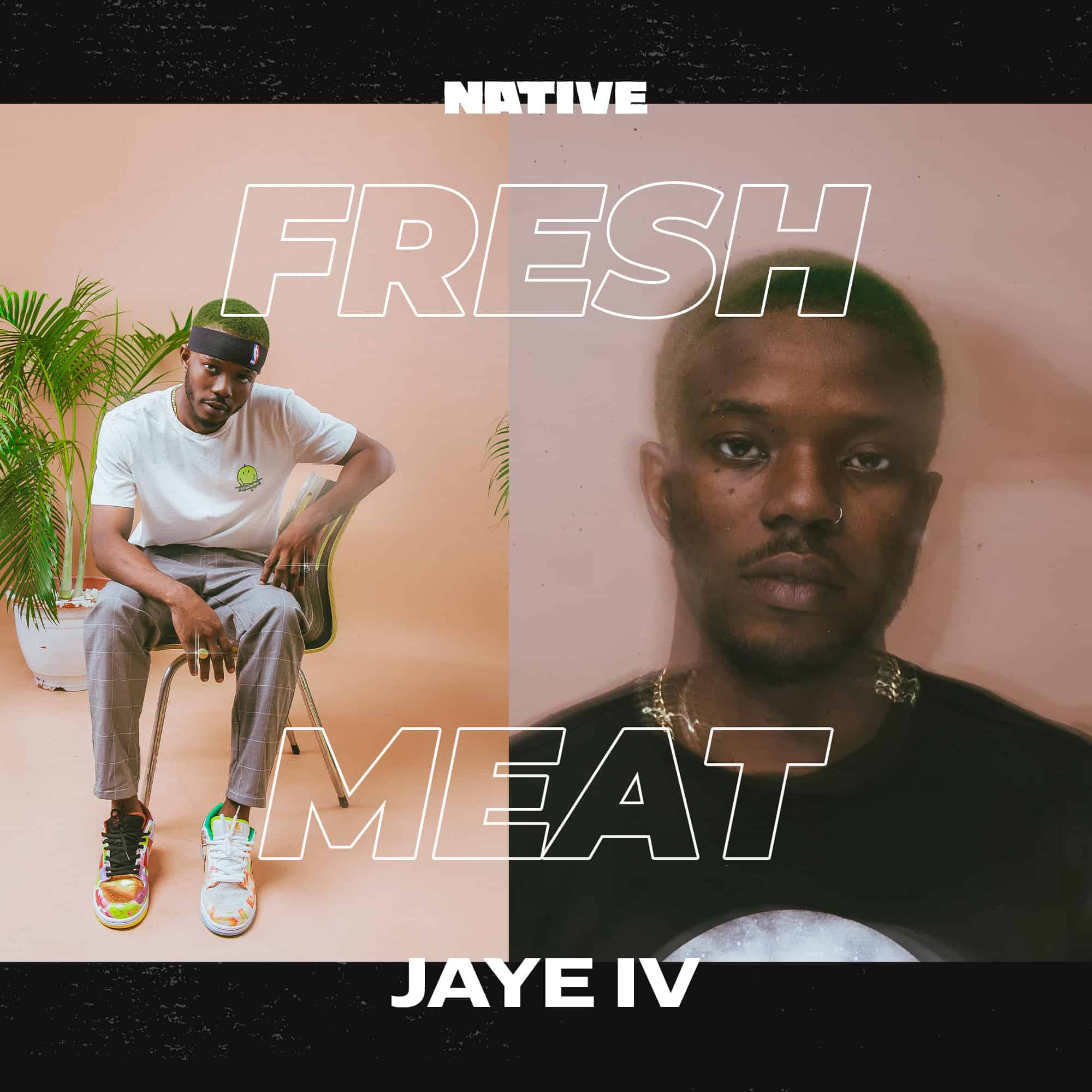
Jaye IV
In Nigeria, indigenous rap has been a slow burn, as many people from Hip-Hop purists to music fans alike believe that the language barriers pose a challenge to the genre. However, over the years, rappers from Ruggedman to Olamide to Davolee and more, have shown through their success that their local tongue is not a hindrance to their rapping abilities. Cue in Alternative Hip-Hop/Afrobeat rapper Jaye IV who might just be taking the genre in a subtly different direction than his peers. Visiting his growing discography, you’d discover that the rapper’s melodious delivery on every track he puts his mind to is refreshingly distinct from any other artist out today. There’s definitely a thing or two to learn from an artist of his calibre.
The 24-year-old wunderkind from Lagos Nigeria makes sure that his melodies are front and centre on everything that he makes, as he takes advantage of the uniqueness of his sound to express pain and passion. In late 2019, he released his debut EP ‘Pick A Side’, a smooth 18-minute listen which he used to connect with the streets, telling his story as a hustler and painting a clear picture that visualises his journey to finding himself in the face of adversity. Barely a week ago, the rapper followed up this project with the release of his sophomore tape ‘Pay The Price’, a 7-tracker with the gritty number “DND” as the lead single off the project. The lyrical genius also uses songs such as “Messiah Complex” and“My Life” to walk listeners through his journey of pain and his hustle story to success; “Imma grind for the money now, it’s my fight /put my mind on the game now it’s alright”. The songwriter, rapper and record producer has proven his versatility with this tape as he has successfully crafted what seems to be his own unique sound in every way. Jaye IV with his growing discography has proven that he has a lot more to offer and deserves to be on your radar this year. Watch this space.
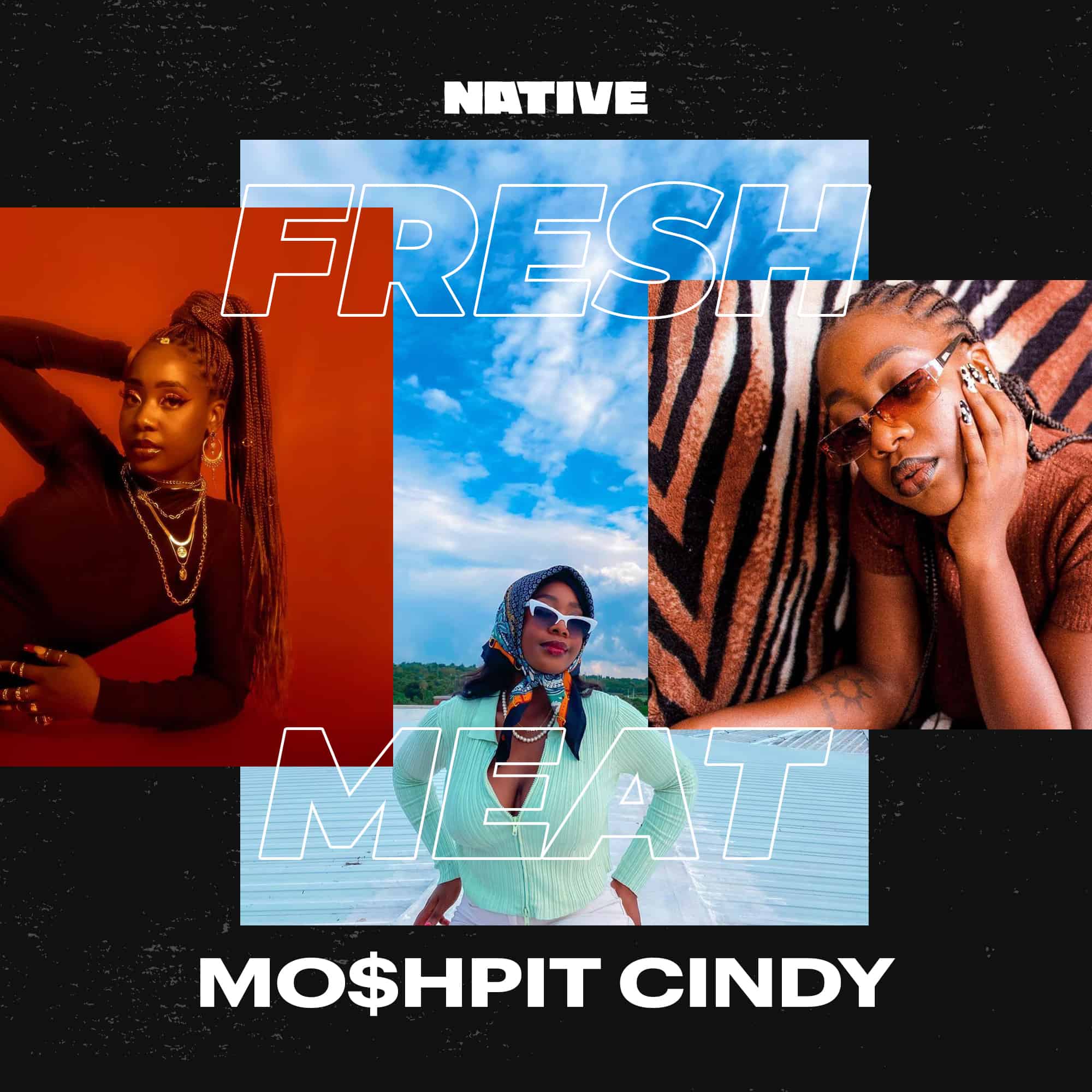
Mo$hpit Cindy
Stumbling upon the Instagram account of Mo$hpit Cindy, home to the singer’s budding 2K following, you’re likely to confuse her for your regular, down-to-earth 20-year-old with her quirky captions and distinct sartorial choices but the Zimbabwean-born singer is one of the past year’s best discoveries. Armed with a timeless voice of gold, the singer, born Nono Madzi is a fresh face on the scene whose music constantly teeters the intersection between crisp R&B melodies and trap-leaning production.
Raised in Johannesburg, South Africa, Mo$hpit Cindy made her official musical debut last year during the lockdowns in May. Titled “You Thought”, the smooth R&B number was filled with instant quotables on how women could treat these niggas exactly the same way they do them dirty. Mo$hpit Cindy then spent the rest of the year releasing a string of loose singles including “Post Club Depression”, “Karma”and “Alter Ego”, each number widening the scope of her ability and the depth of her lyricism. While the singer may be considered a rookie by most veterans, there’s no denying the potential star quality she exudes through music. Her songs are best described as coming-of-age numbers that chronicle the love trysts and life experiences of Gen Z Africans in a rhythmically captivating way that appeals to anyone who has been through similar moments in their lives. In the past month, Mo$hpit Cindy has released her biggest effort yet, her debut EP ‘21st Century Luv’, a title that aptly describes the project’s subject matter which never strays far from her own worldview as a young Black African woman.
It follows Cindy’s journey to loving herself and others around her. Intro track “Indifferent” is a bold assertion of her confidence as she finds the courage to move on from an undeserving lover. “Nothing seems to faze, haven’t felt things lately/I’m kinda suffocating/I told you baby there’s no fixing me”, she sings over the song’s bass-thumping production. While she’s focused on talking about love, she uses it as an opportunity to talk about the state of her mental health. This theme follows through into the next track “Daily Affirmation”, where she delivers affirming words for women like her “Loving who I am and I’m trying, I’m evolving/I am a work of art/Cup runneth over, I don’t know famished”. On “Therapist”, she gives listeners a further purview of her mental state and her tendency to overthink every situation. Her lyrics are deeply thought out and straightforward but also far beyond her years as she quips “to know me is to leave me”, a line that perfectly encapsulates her skilled lyricism. She showcases a unique mixture of versatility and style over the project, at one moment skating over different productions with ease and at another, adopting the jaded detachment of a rapper. ‘21st Century Luv’ is a 23-minute melancholic confessional from a fresh face on the scene whose inspiringly firm sense of identity is welcome and should be encouraged in young African women just like her. If you’re looking for a little release this month, check out Mo$hpit Cindy.
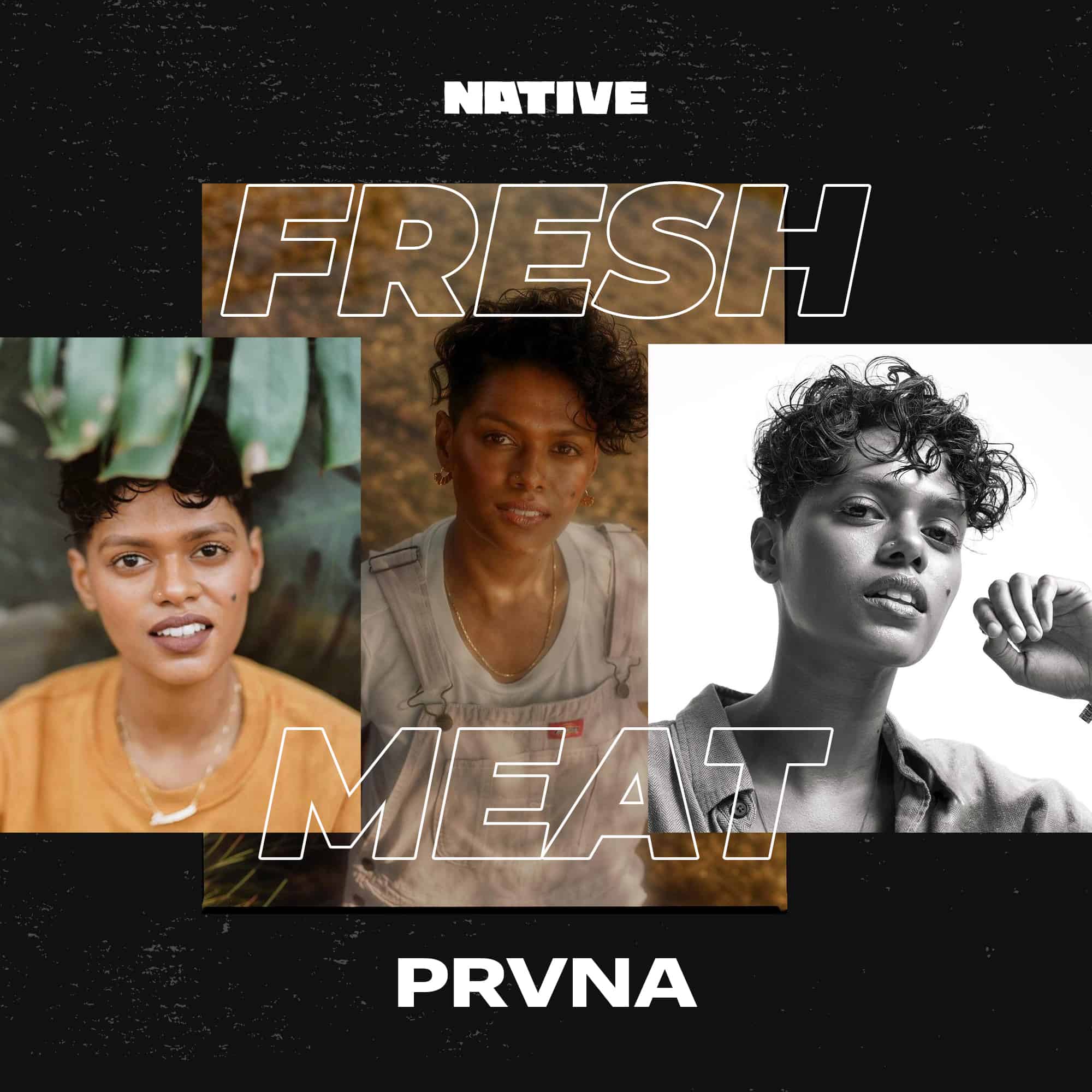
PRVNA
South London-based, Mauritian-born singer, PRVNA, has a voice that sounds like melted butter, flowing stickily over thrashing electro-inspired beats with a calm certitude. Since starting music a little over five years ago, her range has expanded from the party-starting rawness of jungle music to incorporate alternative R&B as well as funky House, seeing her sing over genre-melding instrumentals that retain the heart of her Londoner origin in them. In a dreary world beclouded by sadness and negatives, PRVNA envisions her music as something to help people feel better. “The music I create needs to be the right cocktail of relatability and release,” she says. “Making music that people can dance to and also find a bit of hope in too.”
It is a testament to the sense of hope that she hopes to inspire that there is such a steering sense of warmth within her small catalogue, primarily composed of singles from the very beginning of her career in 2017. “Homework,” a lilting ballad is her most morose song, mourning the complexities of opening up intimate aspects of one’s life to the wrong person; while her voice quite intently mourns the loss of what could have been, there is a sense of letting go within the pulse of the song. Another standout from her catalogue, “Fever,” sees him luxuriate in the melodrama of past bad relationships.
If PRVNA’s music from that age can be characterized as her nostalgic period, the music she is making presently is hopeful, playful even, seeing her dance across genres to create experimental melodies bolstered by a scenic songwriting skill that recalls details in warm fashion. On “Get Down,” PRVNA urges her listeners to take control of their lives with the song flatlining into “get it, get it, get it together,” while her distinctive, poignant voice gives soul to the record. Her latest song, “Believe,” is even more buoyant as she asks a love interest to believe that their affections can take care of any obstacle in the way of their romance; the song sounds sentimental and capable of powering a party, hinting at PRVNA’s evolving of the mystery of both emotions are dual sides of one cohesive story.
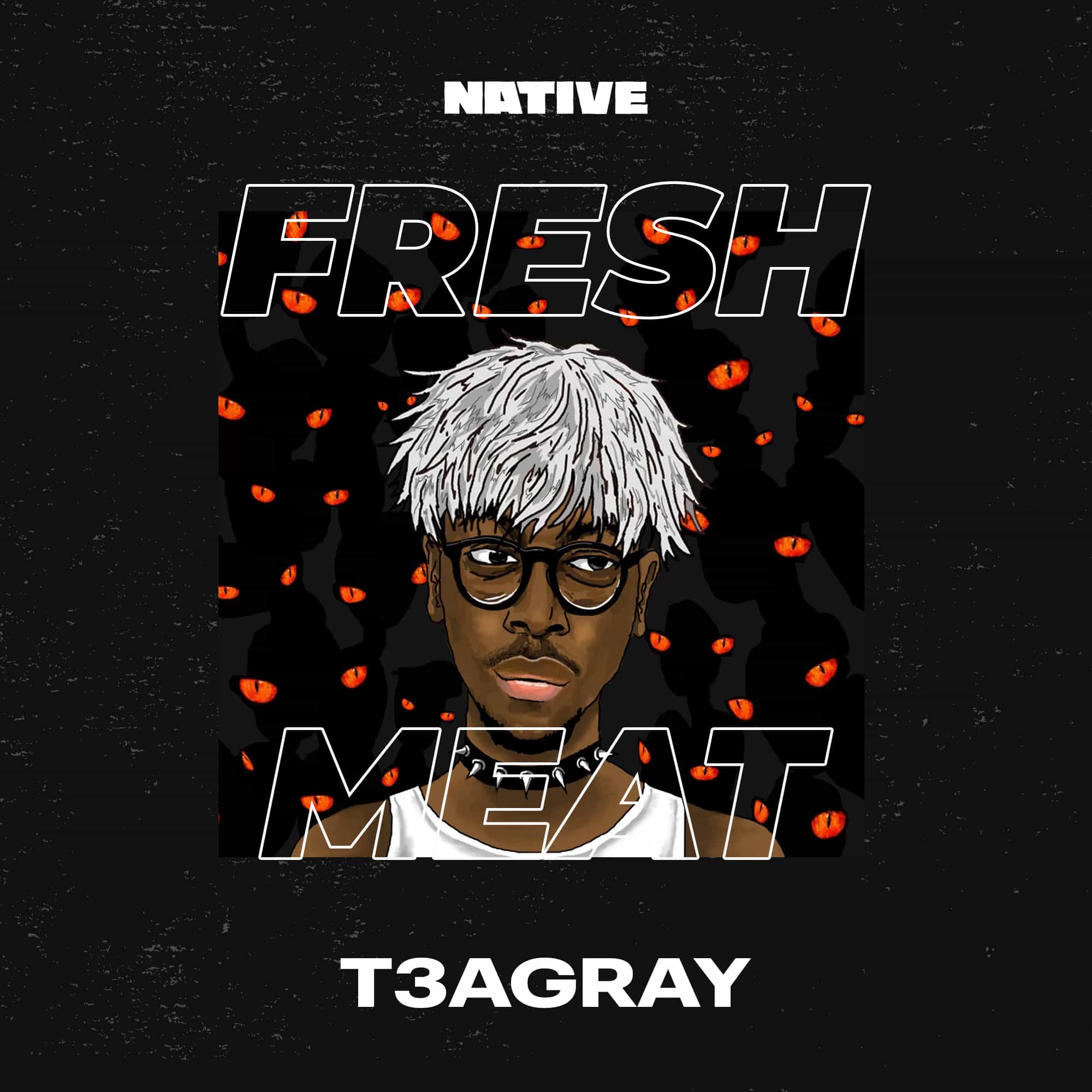
T3agray
Beyond music-related information, there isn’t really anything on the internet by way of personal details on T3agray. His Instagram page is sparsely populated, with the only post not related to a music release being a short gaming video. It seems to be on purpose, directing every ounce of focus from both familiar and new listeners to his music, which makes sense since his songs are evidently, deeply personal. These are vignettes from his life, raw emotions distilled into a catalogue portraying a teenager dealing with classic teenage issues.
With Punk Rock, and the offshoot Emo Rap, as his primary sounds, the U.S.-based singer has a long list of forebears who’ve defined the (sub)genres’ musical thrash and thematic, self-exploratory tropes. T3agray follows in that tradition, and it’s his willingness to be unabashedly open with his own experiences that make his songs affecting—or worthwhile, at the very least. There’s very little novelty to what he sings about since his music mostly centres on the quest to establishing a personal identity and the rollercoaster of falling in and out of young love, but there’s an intensity and conversational depth to his voice and writing that positively heightens how it all lands.
On “Crawl Back,” the intro to his late 2020 project Altruism, he adopts a lethargic flow to deliver a toxic kiss-off to a previous love interest, dismissing the idea of calling back and promising to make them double back simply because he’s all that and more. It’s a place most of us have been, swearing off someone and posturing even though there’s more to the situation. By the very next track, “3Xoneration,” he admits to missing the same person. In a way, Altruism is an admission that life isn’t exactly linear, especially when it comes to figuring one’s self out and how to approach interpersonal connections.
Between his SoundCloud and Apple Music pages, it appears T3agray has only been making music for little more than a year, but his commitment is represented in his already prolific streak. Chamomile, his project released earlier this year, is a collection of emotional exhales. On the 6-track EP, he’s as open as ever, wondering out loud about his place in the world (“Home”), groaning about his wounded heart (“Obliviate”), and ranting about being grounded for watching “Adult Cartoons.” By definition, T3agray’s music isn’t catchy, but it’s set to draw more people in due to its intensely personal tilt, especially amongst those of the same age range going through similar motions.
(Recommended if you like: Lil Peep, JELEEL!, Santi)
Written by Wonu Osikoya, Tami Makinde, Dennis Ade Peter & Wale Oloworekende
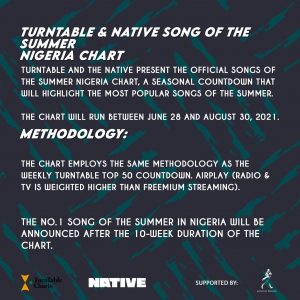
This summer, TurnTable Charts and The NATIVE will be partnering up to present the inaugural edition of the official Songs of the Summer chart. Set to begin with two distinct charts; namely the Songs of the Summer Nigeria chart and Global Afrobeats Songs of the Summer chart, the seasonal countdown will feature all the hottest songs of the season within the country and the international community at large.
The Nigerian chart will employ the same methodology as the weekly TurnTable Top 50 that combines freemium streaming, radio, and TV impressions while the global chart will combine the global streaming numbers on Spotify and YouTube along with airplay across over 80 countries with streaming being weighted higher than airplay. The chart will run officially for a period of 10 weeks from the 29th of June to August 31, 2021.
🚨 ANNOUNCEMENT 🚨@NativeMag & @TurntableCharts have partnered to bring you TWO charts to crown the African Song of the Summer: in Nigeria & Globally 🌍
The Songs of the Summer Chart is an innovation that will highlight the biggest songs of the summer as is the culture in most countries around the world. Our methodology will employ the same format as the weekly TurnTable Top 50 charts with airplay (radio and TV is rated higher than freemium streaming). Within this framework, songs such as Olamide’s “Rock” and Ladipoe’s “Feeling” enter into the Top 2 spots on the charts owing to their total streams (airplay and TV) of 2782272 and 1939227 respectively. At the end of the 10-week period, the No.1 song of the entire season will be announced and published.
Global African Songs of the Summer chart
This chart will announce the most popular Afrobeats song globally during the summer. It combines global streaming on Spotify and Youtube as well as airplay across over 80 countries. Within this framework, streaming is weighted higher than airplay and a No.1 song of the summer will be announced after the 10-week period. The conditions for qualifying under this category include releasing a song by an African artist or one that features an African artist (signed by an African label) containing known elements of music associated with the continent and a song that managed to chart on the Nigerian radio Top 1000 songs.
You can check out a full rundown of the charts here.
It’s been over three weeks since Nigeria’s federal government, led by Buhari’s All Progressive Congress party, placed an indefinite ban on the social networking app, Twitter, following the suspension of the incumbent president’s account on the platform. Justified by the country’s Minister of Information and Culture, Lai Mohammed as a means to protect the country’s “corporate existence”, the unconstitutional ban has been challenged by many Nigerians within the country and in the diaspora, with the human rights organisation SERAP lodging a formal suit against the decision of the federal government.
Despite the many concerns about the online suspension on local networks and internet service providers, Buhari’s government seems adamant about cracking down on what they term as “fake news” and “falsehoods” which they believe have taken over our social networking timelines and undermined the image of Nigeria to foreign investors and outsiders. Earlier, following the announcement of the ban, many media and government organisations were asked to adhere to the suspension and either delete their accounts permanently or cease from sending out tweets from the country through VPNs. Now, it seems the government is taking this a step further and proposing a new bill that could undermine the right to freedom of the press within the country.
House of Representatives’ public hearing on the Nigerian Press Council Act Amendment Bill begins today, the bill will have consequences on the freedom of the press in Nigeria.
It is important that all media organisations pay attention to the public hearing- 2nd bill in two days. pic.twitter.com/I08n002Cci
The Press Council Amendment Bill, if enacted, could pose great harm for journalists and media organisations based in the country. According to The Guardian, the bill attaches punitive sanctions to it including imprisonment for up to three years and payment of fines for breach of sanctions. The bill also proposes that social media networks must soon register with Nigerian regulators and have offices in the country as well as establisling a national Press Code and standards to guide the conduct of print media, related media houses and media practitioners. The piece of legislation is currently before the House of Representatives and is sponsored by the chairman, House Committee on Information, Segun Odebunmi (PDP, Oyo State).
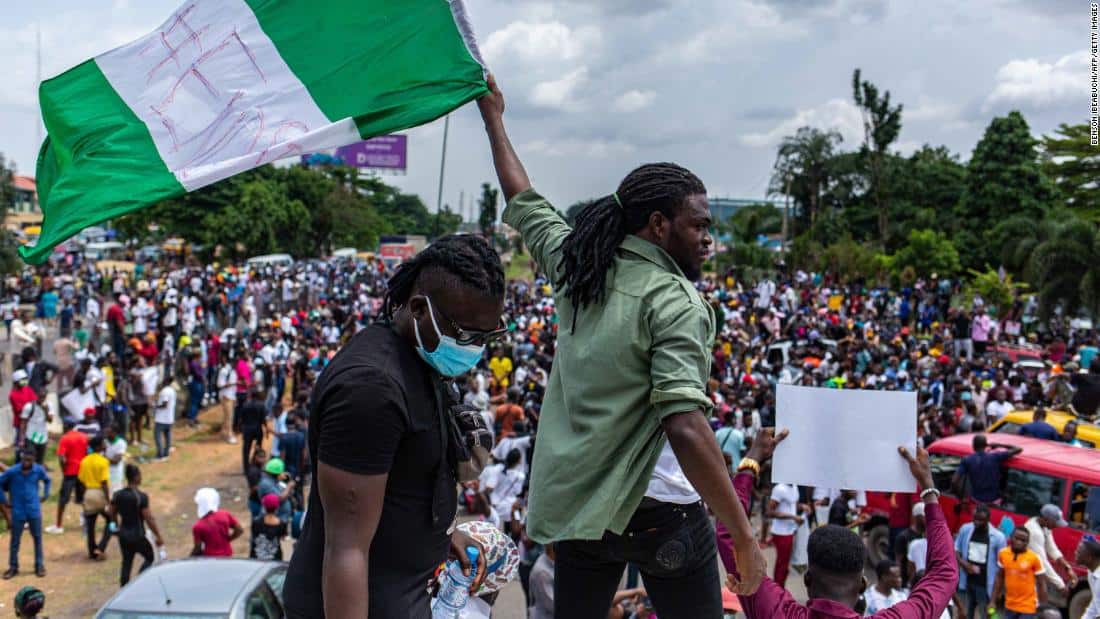
While the bill is gaining traction now due to recent events such as the End SARS protests and the Twitter ban, it actually predates Buhari’s administration. According to reports, press unions have fought various iterations of the bill across the years since 1999 when the government was dragged to court in Lagos state. A decade later, in 2010, another court struck down the legislation, ruling that 17 out of its 39 clauses were unconstitutional but it was later appealed by the government and ruled in their favour. The legal tussle for and against the bill still hasn’t ended. While the counter-appeal for this case is yet to make its way through the country’s ridiculously slow judicial system, this hasn’t stopped the lawmakers for pressing on with the bill and holding a second reading.
Many media organisations within the country are already speaking out against this undemocratic bill. Mustapha Isah, the head of the Guild of Editors, described the government’s action as “an onslaught on press freedom”. It is yet to be seen how this recent reading will garner more favour for the oppressive bill but many fear that it is in line with the federal government’s continued crackdown on free speech following last October’s protests.
This is a developing story and it will be regularly updated.
Unless you’re entirely oblivious of everything recent in mainstream Afropop, Rexxie needs no introduction. In the last three years and counting, the Lagos-raised producer has personified the infectious song-craft and madcap experimentation that have made the streets overwhelmingly great–again. Coming on the back of the Shaku Shaku wave, the Zanku followed suit as the latest frontier of innovation provided by Lagos’ inner hoods to Nigerian pop music scene. At its forefront is Rexxie, integral to a sound that is now innately Nigerian.
Packaged with a dance style that has continued to mutate rather than disappear over the years, Zanku’s musical attributes are a massive leap from the Gqom-inspired style that soundtracked the ephemeral but hugely impactful reign of the Shaku Shaku. It was a sonic evolution that the streets wholly embraced and champion till date, which meant mainstream Afropop had to follow suit. With a long list of foundational hits—including Zlatan’s “Leg Work (Zanku),” Chinko Ekun’s “Able God,” nearly everything from Naira Marley’s phenomenal 2019 run, and a lot more—to his name, Rexxie can aptly be described as a maestro.
Although he’s a reliable hit-maker with a predominant sound, Rexxie has been anything but stagnant, constantly refining his expertise while strengthening the edge that makes him this generation’s greatest codifier of street-hop. Last December’s “KPK (Ko Por Ke),” featuring Marlian Music’s MohBad, took vivid inspiration from the South African-originated Amapiano and retooled it into something equally refreshing and identifiable with the ever-broadening Zanku sound. He applied the same trick to Naira Marley’s “Coming” to great results, another proof of his commitment to staying a step ahead.
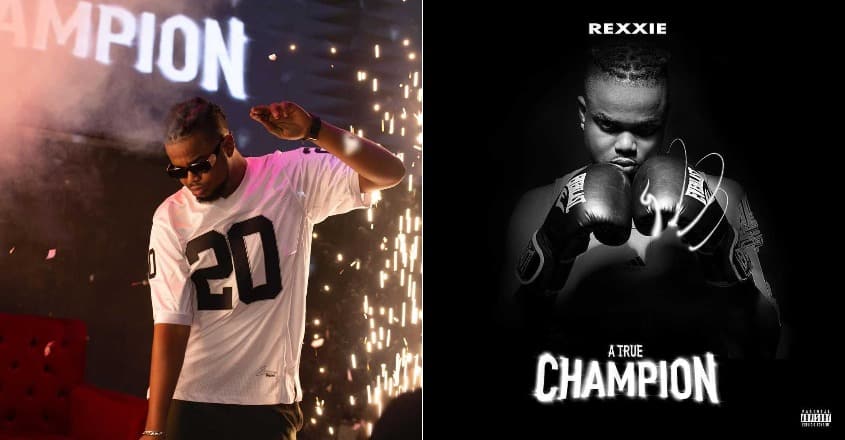
“KPK,” which has gone on to become a huge hit, is the lead single off Rexxie’s newly released, star-studded debut album, A True Champion. It’s the follow-up to last year’s EP, Afro Streets, a project which excellently centred Rexxie’s beat-making capacity. With a sprawling cast around him and clear growth in his craft since his emergence, the possibilities for ‘A True Champion’ are truly endless. Let’s hear the statement Rexxie makes with his full-length.
In usual 1-listen review fashion, all reactions are in real-time while the music plays. No pauses, rewinds, fast-forwards or skips.
“Frenemies (feat. Oxlade)”
Getting the grove right from the start, but it’s quite mellow. Oxlade should create a sample pack of his chants, he’ll probably make a ton of money from licensing them. I like the mindset of this song, very self-assured with a lot of personal substance. I love that Oxlade is repping Surulere, always a joy to hear artists uplift their beginnings. This melody could be catchier, but he does sound very comfy over this groove. Those guitars are a really nice touch, solid intro.
“Boi Boi” (feat. Teni)
It’s a travesty that Teni and Rexxie haven’t worked a lot more, “Foti Foyin” is still a banger. This is a full-bodied banger, my head is darting back-and-forth. These percussions are fire, really nice breakdown with this shimmering piano has a playful grandiosity to it. “Don’t be stupid o, collect your money o” is basically the message of this song. I’m not mad at it and I’m sure people can relate with it, but the lyrical content is doing little to match the utter catchiness of this beat. Rexxie’s dad, I think, with a prayerful cameo.
“Mofoti 2.0” (feat. Naira Marley & Sarkodie)
I always get hyped whenever Sark shouts “what else!”. Ooooof, these guitars have some old-school sauce to them but it feels perfect for a street-hop banger. The log drums came out! The way Rexxie uses the log drums as a rimshot trick needs to be applauded more often, he knows how to bring the drum pattern but the layers make everything even better. Naira Marley is such an infectious presence, very assured and unbothered. Sark’s flow is slightly stiff but I’m loving every bit of his enthusiasm. Safe to say this sequel is better than the initial installment. Electric guitars going crazy! Absolute keeper!
“Banger” (feat. Asake)
More Amapiano, with a twist. This sounds very influenced by Vigro Deep, a strong emphasis on the drums but the crystalline keys and sax pad is what make it captivating. I haven’t paid attention to Asake in a while, and he’s giving me reasons I should change that. The flow is pretty catchy, and I can see the lyrics getting love on the streets. “Them no know say e no easy to get the money.” Preach!
“Motherland” (feat. Kida Kudz)
This opening musical sequence is positively hypnotising, and Kida Kudz is obliging with his trademark Jiggy flow. “She give me all the time, no denial” is an iteration of a line many male Afropop singer use, but I find it absurd because that all the time thing sounds like all of them are moving with nymphs. I like this a fair bit, not sure I’ll be playing it a lot but it’s a serviceable song. Not this guy bragging about an ECOWAS passport, please let’s know what we’re doing.
“KPK (Ko Por Ke)” (feat. MohBad)
I remember Shina (NATIVE’s Digital guy) repeatedly yelling that we should go listen to this song two days after it dropped, he was so sure it was the eighth wonder of the world. Well, he was right. What is left to be said about this masterpiece? Every time I listen, I find new ways to appreciate the layers of the music, the way the organ gives way to the guitar without losing the groove is absolute madness. MohBad came with all the catchiness. I remember going to Ikorodu the next weekend and I heard “KPK” everywhere, someone (read: me) has to do a story on street marketing in 2021. Still a slapper! Forever a slapper!
“Back2Back” (feat. Bella Shmurda)
This song absolutely slaps! Bella Shmurda has an unassailable vim about him, it’s almost impossible to not be captivated by his star power. Of all the Nigerian producers trying to adapt Amapiano, Rexxie is heads and shoulders above them. Bella sprinkles crack on his hooks, and he repeats those lines with a sense of newness. A perfect follow-up to “KPK,” that’s a sequencing bonus right there.
“Birthday” (feat. Buju & Moelogo)
We need to talk about the influence of Juju music on Afropop, I mean extensively. Moelogo’s voice is perfect for this instrumental, he’s putting on a pretty good show. I like the cohesion of his writing, it’s a good trademark to have. Buju knows how to jump on a song, very unique but nothing disruptive. Sincerely happy he’s regained some momentum since exiting Spaceship, his on wax personality has gotten much more riveting and it’s translated into several well-accepted songs and features. This is a really good song, Rexxie came with the heat.
“Booty Bounce” (feat. Bad Boy Timz & Ms Banks)
This album has been moving at a really good pace, not breakneck but it’s fast enough to not feel like I’m nine tracks in. This Timz hook is not doing much for me, but I can see the appeal. “Big booty girls yapa for here,” I’d like an invitation to wherever “here” is. Ms Banks! The swagger is plenty. As in, O.P.P. I liked that verse, nothing too crazy but she elevates the song. Anytime I hear Ghana bounce, I just think Ajebutter22, maybe that’s why I’m not into the hook. I like the drunken knock of this beat, mirroring the perfect time it should be played at a club or party. It’s also a potent reminder that Rexxie has a good ear for melodies.
“Hobby”(feat. Perruzi)
Lively piano chords, I know the drums will drop with some verve. Ah, there they are alongside an animated and instantly raunchy Perruzi. If someone tells me I’m their hobby, I’ll roll my eyes at the silliness, but I get that it makes for a catchy Afropop lyric line. There’s the log drum breakdown anyone could’ve seen coming, it keeps the song interesting since the lyricism isn’t doing much for me. Serviceable track, keeps things moving.
“Zanku 2.0” (feat. Zlatan)
Zlatan is Nigerian music’s version of the energizer bunny. Davido might be the only competitor for that title, but I’m giving it to Zlatan. He’s giving these drums a run for their money. This is a hypeman track, and I can see this doing really well. Related: I’ve seen Zlatan on stage once, and he was even more hype than his hypeman. I like that verse, a pretty funny storyline. Zlatan is an adlib god! This is a premium example, but it wouldn’t work without this Rexxie beat. The way he’s co-opted Amapiano and used it to embolden how bombastic and malleable African Dance music is. Banger.
“40 BTC” (feat. Seyi Vibez)
More Amapiano-inspired melodies, craving a little more versatility but I’m not entirely mad at it. There’s a beautiful and affecting relationship between the aspirational ethos of the streets and deference to a higher power. Well, “a ma gbese ti’le a fi mo” is a strong rejoinder that this is primarily a dance track. I like when featured artists acknowledge the prowess of the host producer, and by God, Rexxie is one of the best out here. This should do well if it ever becomes a focus track, it has the makings of a street hit. I can even hear Reece Madlisa and Zuma on the remix for a South African crossover play.
“Ginger Me” (feat. Midas the Jagaban & Zinoleesky)
This oriental string riff is beautiful. Midas has one of those voices suited for crafting club-ready hit songs. She’s spilling her heart out to a love interest, and it’s quite charming. Zinoleesky! Haha, this loveless shtick is a wonderful contrast to Midas’ warm croon for assurance. They’re addressing different people but their perspectives dovetail perfectly. This is a really nice, radio-ready groove. Very catchy, dancey even, but it’s far mellower than most of this album, which is a good thing for variety. Whoever played the guitars on this album deserves more money. Keeper, this one.
“All” (feat. Davido)
This has pretty Afropop meets Dembow vibe to it, and there’s no one better than Davido to add a magnetic essence to it. This reminds me a bit of A Good Time, which I consider his opus. The log drums are, here again, a pretty solid trick. “Ejiro, na you I go fuck till we age oo” is going to be one of those memorable, maybe not as an Instagram caption but it will get a few shouts if at a live show or in a club. It’s great how Afropop has gotten effortlessly raunchy, fuck all that NBC ban and shout-out to the explicitness of streaming.
“KPK [Remix]” (feat. Sho Madjozi & MohBad)
Initially, I didn’t see the need for this remix but it’s grown on me a fair bit. Sho Madjozi and Zlatan need to be on a song to see who outlasts the other in terms of on-wax energy. One day, we will look back on this MohBad feature and consider it one of the greatest feats of songwriting in Afropop. The streets already approve, the wider populace will follow suit soon. Sho Madjozi radiates unbridled joy, like a child left to run wild at an Ice Cream store. Great addition, especially with her reverence for Nigerian street slangs. Beat ride out is perfect, those organs are just crazy.
“For You” (feat. Lyta & EMO Grae)
I knew we’d get into a slower bag with this track. I like how Marlian Music is setting up Lyta and EMO Grae as heartthrobs with a streetwise edge. Fan appreciation will never not be a graceful touch, and there’s the connection between the streets and God. Clanging percussion and luminous keys, perfect groove for this type of grass-to-grace introspection. Lyta is singing his precious heart out, it’s actually moving. Stopped typing for a bit, EMO Grae’s verse is a highlight on this album, the honesty is show-stopping. Keeper, this one.
“Champion” (feat. T-Classic & Blanche Bailly)
That should’ve been the final song if you ask me but I have to give this song a chance. Faster paced, but the appreciative tone is still constant. T-Classic, like the title of his EP, is actually underrated. This isn’t the best I’ve heard from him but he’s still such a wonderful presence on wax. This must be Blanche Bailly, never heard of her and this isn’t a bad introduction. She sings in French, too? Sign me up. This hook reminds me of DaGrin, IYKYK. I can see why this is the closer, it ties into the album title pretty well. Not an instant favourite but it’ll do as an outro.
Final Thoughts
Rexxie’s A True Champion is a victory lap—a well-earned one at that. Although it’s just his debut album, it’s a celebration of the thousands of hours he’s put in to achieve an undeniable level of mastery. Across the album’s 17 tracks, the level of craft displayed teeters between effortless and painstaking, a generally well-stitched effort hinging on his instincts as a hit-maker and inclination towards pushing beyond any perceived boundaries around his musical preferences.
Where Afro Streets benefitted from a laser focus on the identifiable Zanku sound, albeit with some melodic shake-up, A True Champion expands Rexxie’s musical purview to applause-worthy reception. At his core, he makes Dance music, which is made evident on the project. He does, however, vary his approach to match the respective tenor of his sprawling guest cast, shifting tempos and moving between styles without jamming up the album’s momentum. There’s a significant reliance on the South African-originated Amapiano, which happens to be his most potent trick on the album, but there’s a healthy dose of innovation attached to that choice too.
A True Champion reinforces Rexxie’s adeptness at cobbling together grooves of varying kinds. On a project with Davido, MohBad, Ms Banks, Zlatan, Midas the Jagaban and Zinoleesky being amongst those who brought their A-game, Rexxie shows himself to be singular. He doesn’t utter a word or sing a melody, but he’s the loudest star of them all here.
In January 2015, Dutch designers, Viktor Horsting and Rolf Snoeren debuted their Spring/Summer 2015 Haute Couture collection. Nicknamed “FlowerBomb” by fashion enthusiasts, the critically acclaimed collection expanded Viktor and Rolf’s oeuvre as a design label, and also elevated Vlisco, the Dutch textile giant with whom they had collaborated into the highest levels of global fashion. Following the success of Viktor and Rolf’s Haute couture collection (which was immediately purchased in its entirety by white private collectors), other designers like Stella McCartney and Maria Grazia Chiuri of Dior began to muscle in on the print, stripping it of its cultural heritage while significantly marking up its prices.
There was something conspicuous about Viktor and Rolf’s collaboration and the appropriative collections it inspired, which highlighted the absence of the overwhelming propaganda Vlisco has sold its prints and brand for the last 200 years. There was no mention of Vlisco’s “African” heritage, its long history of shipping exclusively to Africa, the African cultures that inspire its prints and motifs, but instead, they branded themselves in that moment as a Dutch brand, who was collaborating with a Dutch-owned design label, to celebrate Dutch design.
Like Viktor and Rolf, when Stella McCartney and Dior faced significant criticism for what African fashion commentators labelled as “appropriation for profit”, they countered with the assertion that Vlisco as a brand, and Dutch wax as a print, retained its European heritage and as such was available for them to use, completely disregarding the cultural explosion that Africa has experienced in the last decade and the mass commercialisation of culture from the continent by multinational organisations seeking to make profit. Champions of this kind of assimilation have accused critics of Dior, Stella McCartney and Vlisco itself as being proprietary with culture.
This is a dishonest argument, considering the unique history of Vlisco as a brand and the product on which its legacy is built. Dutch Wax, imitates an East Indian dyeing technique called Batik, and remains an important part of Javanese dress and culture. Seeking to profit off the culture of this region, and finding an accidental audience in West Africa thanks to colonial trade, Vlisco redesigned its entire business model and branding to align itself as an African brand while keeping its manufacturing and profits in Holland. Over the years, the brand has taken similar ‘influence’ from other cultures and rebranded them as African, in its bid to remain attractive to the African markets that make up their primary audience. While exploitative, Vlisco’s business choices are not illegal. They cannot, however, be extricated from the rest of Holland’s colonial legacy which includes forced slavery and the exploitation of natural resources in many of the countries where Vlisco currently operates. As the world collectively reckons with the legacy of colonialism and the disproportionate imbalance of wealth that era caused, brands like Vlisco have become a lightning rod for conversations on appropriation, exploitation and reparative justice. Just last year, Joe Penney wrote exposing the fact that until 2019, Vlisco supported an annual blackface ritual in the Netherlands.
An enduring consequence of colonialism and its enduring legacy is racial profiling. It is evident in most aspects of modern life where value is exchanged, especially in the world of fashion, which has become a multi-billion dollar industry thanks to industrialisation and globalisation. Across all levels of fashion, from manufacturing to design to merchandising, positions of power are overwhelmingly held by white persons with occasional concessions to diversity as a way to retain the continued patronage of the majority non-white markets who are expected to sustain these industries. Many of the artificial barriers created to justify colonial asset grabs remain in action today, evolving as technology and finance also evolve.
When these barriers have been highlighted by Africans and other persons of colour, and definitive change demanded, a common refrain has been for Africans to buy their way into these institutions and facilitate the change they want to see from within. A former employee of Vlisco, who spoke on the condition of anonymity, fearful of the backlash that usually accompanies the truth in the corporate fashion world, describes situations where Nigerian officials were promised that Vlisco would create 10,000 jobs for locals in exchange for access, agreements that were then contravened, as Vlisco allegedly adopted exploitative practices in how it engaged its local workforce. The company’s accounts were frozen and their operations in Nigeria halted when officials realised the company had no intentions of fulfilling its obligations.
The former employee states,
“it is very obvious that during my time at Vlisco there were a significant number of Africans within the company and in key management roles, ensuring that the company became mindful of its operating environment. Over the past 3 years they (sic) have managed to kick out 99% of all the black people in key central roles all in the name of restructuring while hiring more Dutch and South American employees.”
In 2020, the AfreximBank served as a proxy for Made In Africa, a consortium of prominent African entertainers and entrepreneurs who wished to buy into the troubled Dutch company, which was rescued from bankruptcy in 2010 by British investment firm Actis. With prominent figures such as Lupita N’yongo, Kojo Annan and Burna Boy all fronting this investment drive, the Afrexim bid seemed like an important step towards repairing the fractured image the brand has globally, and welcoming a truly progressive shift in the company’s values and operations in Africa, and was received with a lot of fanfare:
“I cried when I learned about Made in Africa and that Vlisco would finally be African owned,” says Hélène Faussart, half of the golden era soul and hip-hop duo Les Nubians. “As a Cameroonian woman, I’ve always loved these fabrics as a symbol of African culture. But I struggled to support this company knowing there is no black ownership or leadership. African Cultural matters & products should be owned and managed by Africans.”
However, it seems this collective joy was premature.
The proposed deal has dragged on for more than a year, even though by all reports, there are few other bidders willing to match the offer raised by Afrexim’s consortium, and on paper, the consortium provides not just a financial reprieve for Actis (the British owner of Vlisco), but also a rare chance to salvage the brand’s image and reposition it for global success. This reticence is hard to process, considering the brand has lost a fair bit of ground on the continent. Nigeria, its largest consumer market, introduced bans on imported textiles, which suspended a 2015 MOU with Vlisco to expand into the Nigerian market. The current situation in Ghana isn’t looking so promising for Actis, either.
A former high-level government official in Ghana offered us some insight into a possible difficult future for brands like Vlisco, who have relied on “secret patents”, the exoticism around European made products, and weak infrastructure in importing markets to protect their market share, “Following our president’s assertion that Ghana will no longer export raw cacao and then allow the Swiss to make chocolate, you can expect us to take a similar stance on printed textiles – particularly those that mimic our ancestral African designs.”
In addition to problems in Ghana and Nigeria, there have been accusations of fraud in its Congolese division, as well as shrinking markets in much of its African Francophone market. These are mounting, serious concerns that perhaps triggered the brand into entering the reported exclusivity period with Made In Africa in the first place, as one would think having powerful African allies on its board and financing its future could be useful in navigating these issues.
So why the delays?
Wealth structures for many prominent contemporary businesses were built from colonial foundations and designed to exploit African countries. While these institutions can parade as progressive, any attempts to truly diversify the management at canonical brands like Vlisco trigger deeply embedded structural barriers. Sources close to the deal point towards hostility from players within Actis. The motivations for this hostility have reportedly been pinned directly on escalating racial tensions in Vlisco’s upper management and the belief that an African majority shareholder would tip the precarious balance of power within the company’s leadership – something that does not sit well all the way back in the U.K. and the Netherlands.
It is important to note that wealth, and the power it accrues, is shifting from European economic strongholds dependent on generational wealth amassed through brutal colonial theft and exploitation, towards a modern idea of wealth, driven by an egalitarian market. Modern millionaires, many of whom have come from the South East and Africa are minted through personal ambition and democratised economies. The world is reckoning with China, which has its own scruples but is less concerned with aristocratic heirs and exclusionary politics that were inherited from colonial conquest.
As African startups in technology and finance – such as Flutterwave and Paystack – build products geared towards their own markets and muscle out Western interests who have long ignored the continent unless it was to exploit or manipulate for political reasons, and long-standing ‘partnerships’ between African producers and European manufacturers are renegotiated with a view towards restorative justice, the idea of the African majority shareholder entering institutions considered traditionally white-owned is generating a lot of anxiety in these spaces, and triggering the kind of passive hostility and attempts to delay pivotal deals or derail them all together, which seems to be the case here.
The true test of this new order is not if it will grant Africa’s new millionaire venture capitalists access to elitist institutions like Vlisco, it is when this will happen and at what cost.
Much as we’d like music drops to slow down and give us a chance to catch up with the unique tunes that are sprouting from across the world, the reality of the music business in the post-2010 era is very much different. With amazing songs dropping at an unrelenting pace, it’s not always easy to cut through the noise and sheer volume of it all to find the music that will accompany our melancholy, inspire our next creative breakthrough, tether us our loved ones more securely, or take us to a place of unencumbered elation.
That’s where our ‘Songs of the Day’ column comes in. We try to keep our fingers on the pulse of music from across the continent and beyond, bringing you exciting songs from talented musicians who are continuously trying to bounds of artistry with their music. Last week, we brought you new drops from Burna Boy, Patoranking, Dj Spinall x Oxlade, Ycee, Yemi Alade, Niniola, DEELA, PRVNA, Joya Mooi and more. To begin the week, our editorial assistant and social media editor, Wonu Osikoya takes the lead on the best drops to enjoy this week. From Nasty C’s latest new single, SGaWD’s three-pack single with Aux Africa, Headie One, Saint Bond, DAP The Contract and more. Enjoy.
Nasty C – “Jack”
For his second official release of the year, South African rapper, Nasty C makes a bold statement that he’s back with his unmistakable flow. His latest release, “Jack” is a melodic masterpiece that shows off the rapper’s range. Nasty C has proven countless times through many a release that his x factor is undeniable, and with lyrics such as ‘These people ain’t playing my songs out of pity, they genuinely fuck with me’ you can see that he knows it too. This is certainly one for your playlists this week.
Headie One – “Pound Signs”
Headie One always takes up all the space when it’s his time. In his usual manner, he’s released another braggadocious hit, “Pound Signs” where he talks about how the money he’s seeing affects his day to day, and how his proximity to more power makes him feel. Over the gritty beat, he raps ‘They say the pound sign is making me crazy/I make money, this money don’t make me’, showing how he’s able to stay grounded despite the changes to his lifestyle.
Zinoleesky – “Naira Marley”
Following the release of his debut EP ‘Chrome’ last year, Zinoleesky has returned with another heavy banger titled “Naira Marley” which is definitely set to take over the clubs this summer. Over the past year, the singer has easily taken street Afropop to another level and his ability to slide on any given beat is something to look out for on any new releases. “Naira Marley” doesn’t disappoint in any way as he brings back some of the much-loved swagger. Just as we watched “Ma Pariwo” and “Kilofeshe” blow up, I believe this is also another problem of a hit.
Aux Sessions: SGaWD – “Whorephobia”
Since its inauguration in 2019, the stage of Aux Sessions, the COLOURS-like Nigerian platform owned by Cool FM has been graced by the likes of Tems, Fireboy DML, Kranium and more. For their first installment this year, Abuja-based rapper, SGaWD takes to the mic for a special three-pack offering titled ‘Phobia’ which includes her 2019 sleeper Soundcloud hit “Whorephobia” and two new tracks “That’s My MO” and “AUX Radio Interlude”. The project’s lead single “Whorephobia” is a fiery uninterrupted 3-minute set that finds SGaWD spitting out the most disrespectful bars to anyone who doesn’t respect her prerogative to live life on her terms.
R2Bees – “Fine Wine” (ft. King Promise & Joeboy)
For their latest release, Ghanaian duo, R2bees link up with King Promise and Joeboy on a glittering new number, “Fine Wine”. With such a catchy hook armed with lyrics such as, “Shey you be fine fine wine/girlie you be fine fine wine” and King Promise’s excellent performance, the love interest in question is reminded of how beautiful she is with the song’s sweet lyrics.
DAP The Contract – “Sacrifices” (ft. Tim Lyre)
DAP The Contract has released back-to-back hits this year alone. Earlier he released ‘I’m Glad You Made It This Far’, a 4-track project that crystallised the current moment he’s experiencing in his artistic and personal journey. Shortly after, he returned with a new single titled “Trouble” featuring Famous Bobson. Now we have “Sacrifices” featuring Tim Lyre. In his usual fashion, DAP bares his soul as he questions his immediate reality, whilst Tim Lyre spun this track in a completely different direction with his captivating performance.
Saint Bond – “Stubborn”
After supporting his debut track “Free” with stellar guest verses from DJ Cuppy, Saint Bond is back with more soulful music. His latest release “Stubborn” pairs thrilling lyricism with satisfying angelic production which indubitably makes the track a seamless listening experience. The artist paints a picture that visualises his romantic experiences singing to a love interest about how he is stubborn and unwilling to let go of their love. Singing “Even if i no fit sing like Wande, i know say i go make am one day/Girl i don tell you say i stubborn”, he implores his romantic interest to stay committed to him.
Loti – “DKM” (ft. Psycho YP, Eeskay & Manga)
Earlier this year, singer, rapper and songwriter Loti released his sophomore EP ‘Violent Times’, a 4-tracker that traced the complications of romantic love. For his latest offering, Loti ditches the heartbreak tunes for sharp, clear raps that show off his ability to talk circles around his contemporaries. Produced and engineered by Hyphen, Loti collaborates with PsychoYP, Eeskay and Manga to talk about all their achievements and how hard they’ve come. “I just step in the building and they leveling/Niggas talking their shit they so irrelevant” quips PsychoYP who never fails to remind us about how much work he has put into crafting his sound with his lyrics. The hook of this record, ‘Ma pa mi’ which basically means ‘don’t kill me’, allows the improbable rappers to hype themselves up.
Hermez – “Close2Meh”
Following on from his genre-mashing EP ‘Garden Spirits’ released back in 2019, Atlanta-based Nigerian artist has been pairing up with an eclectic mix of artists from around the globe including rapper MOJO who he recently linked up with on single “All The Time”. For his latest release, he’s featured Brazilian singer Nathi and producer Jaylon for a mellow smooth-sounding romantic number that finds him pining for his love interest. Singing “I want you close to me everyday, me I no fit waste your time, I just want to make you make you mine again”, the singer shows just how much he wants physical touch from his romantic partner.
Away from his breathtaking catalogue and immense personal records, Burna Boy has legitimately morphed into an Amapiano kingmaker in his own rights over the last 12 months. Last year, he made a star turn on the remix of Master KG’s “Jerusalema,” delivering an unforgettable performance on a balmy feel-good anthem that saw many through the peak of one of the toughest years in our recent memory. Weeks later, alongside Wizkid, his lithe vocals enlivened “Sponono,” a standout off Kabza Da Small’s critically-acclaimed album, ‘I Am The King Of Amapiano: Sweet and Dust’.
With his run from 2018 to 2020 effectively making him the defining Nigerian act of the day, Burna’s ears are ranging across the continent to find some of the most promising songs to add his golden imprint and advance his pan-Africanist ideas sonically, if not politically. The collision of Burna with Kabza and Master KG, coming one year after reported xenophobic attacks on Nigerians in South Africa in 2019, hinted at a thawing of his stance towards the country that provided refuge for him at one point in his career after a public vow not to visit until they “fixed up.”
The dreary reality of the pandemic might have placed that stance in perspective and with Amapiano, the South Africa-brewed cocktail of house, Barcadi, and kwaito, in his ascendancy, Burna has gravitated ever so slightly towards the sound. On the remix of “Yaba Buluku,” off Mozambican DJTarico’s album, Moz Piano Vol. 2, Burna Boy achieves definitive synthesis with Amapiano even as he nudges the sound a little more into his afro-fusionist orbit. Immediately, the song starts playing it is perceptible that the stakes are higher as the whispery clangour at the beginning of the track is dialled up while Burna’s gravelly voice is noticeable just underneath the surface.
In keeping with the maximal feel of this remix, more action is packed into a three-minute sequence that sees more chanting, more electronic cronks, and impassioned yelping than was present in the original mix. An instant standout on the remix is the instantly viral adlib proclaiming Burna supremacy (“Odogwu you bad/ E fi le fun Burna.”) Jointly released by Spaceship Records and Geobek Records, Burna takes ownership of the song, breathlessly delivering defiant lines like “o ti pe to ju mi tin le ri” over the track’s languid Amapiano base.
In between album cycles, Burna Boy almost always has a conceptual focus that informs, if not directs, his musical choices but on this remix he is at the most extemporaneous he has been since “Killin Dem” with Zlatan, fading in and out of the song for maximal effect. As he does this, the ubiquitous “Odogwu you bad/ E fi le fun Burna” line plays in a loop like a form of self-mythologising; there’s barely a second wasted on the song as it sprints between serpentine beat switches and remarkable vocal contouring.
Earlier in the year, The Scorpion Kings returned about a brief break with Rumble In The Jungle, a true attempt to interpret Amapiano in pan-African fragments without losing touch of the genre, Burna’s effort here is an inverse, exploding the conception of the genre in much the same way as many Nigerian artists like Zinoleesky, MohBad, and Rexxie continue to do. A lot of the chatter online is critical of Nigeria’s attempt to hijack the genre, but it’s almost impossible for any Nigerian to obscure Amapiano’s South African genre; at best what Nigerian singers make is Amapiano-adjacent and on this remix, Burna Boy doesn’t try to mimic the vocal emotiveness of some of the genre’s skilled vocalist, instead, he simply puts his spin on the sound, enriching the culture and putting the much-needed focus on the sound of the moment.
For many young people across Nigeria, the night of June 11, 2021 was a tense affair. Between phone calls from concerned parents worried about their safety and those struggling to navigate a way home from jobs across the federation, the message was clear: the next day was shaping up to be one of the most eventful days in the year as the country prepared for a series of planned protests across the federation. In many states across the country, threat levels had been beefed up to critical levels including Lagos State, where President Muhammadu Buhari visited two days before the June 12 protests to inspect its security formations and commission security equipment.
Eight months on from the tragic shooting of October 20, 2020 at the Lekki Toll Plaza, the situation of things in the country has worsened with a further slide into Nigeria’s worst economic situation in over four decades and, just one week before the planned protests, the federal government announced a ban on Twitter in the country, cutting off a critical resource for commercial activities and real-time information gathering. With the national mood oscillating between apprehension and full-blown foreboding, not many expected the June 12 protests to go ahead. “I honestly didn’t expect people to turn out and I was very scared after how #EndSARS ended,” Chike, a PR specialist in Lagos, told me, “but seeing Nigerians out on the streets peacefully stating their needs made me so full of joy and hope for the future. Hopefully this is the generation that starts to see proper growth in Nigeria.”
For 24-year-old data analyst Babatunde, he expected people to turn up for the protests even if he predicted the government would take a forceful route. “I knew people would be arrested even if it’s within the constitutional rights of a citizen to protest, what’s the point in harassing and arresting unarmed citizens?” he asks. “It just shows there’s somehow a way to use a show of force to make people feel defeated and make them fear the idea of starting off a protest.”
Despite the threats and eventual use of force against protesters, the momentum of #EndSARS and the June 12 protests have shown the potential of Nigerians to organise and bring attention to the issues affecting them. It also hints at a new phase of intentful citizen partnership in the civic space that is almost foreign, but Chike disagrees, believing that Nigeria has almost always had a protest culture. “Nigerian protests date as far back as Nnamdi Azikiwe and the others involved in the independence struggle,” he says. “I think people believe that protests must be one way but the truth is there are so many ways to protest and Nigerians have been protesting for a long time but now it’s a different energy with the younger population choosing to disrupt the system. It’s like ‘we’ve tried dialogue, time to flip the script. Let’s all feel the heat.’”
Bolu, a journalist covering socio-political topics in Nigeria, disagrees. “It is obvious that the #EndSARS protest was somewhat unprecedented for our generation. The spontaneity and the magnitude are both factors to consider and which distinguish it from other recorded protests. But to think of a ‘culture,’ I will say no because we will have to scratch our heads to name protests like it that shook the country as #EndSARS did,” he says. “In the 60 years plus of Nigeria’s existence, we have had more military dictatorships than democracy and even now, we are in a milieu that cannot be literally considered a democracy. It is a militarised democracy which even with some elements of democracy in it, the government abhors protests and dissidence. So to be specific, no we do not have a culture of protest yet.”
For what it is worth, Nigeria has not had a concentrated period of awareness and contextualized record-keeping like it is presently undergoing. 23-year-old dancer Ahmed believes that what is happening across the country impresses the need for a protest culture and helps shape the direction of his politics. “Being informed is a big part of protesting because these conversations are what help us know what needs to be tackled and amplified,” he says. “We can’t just go out on vibes, we need to debate our positions and know where and how to engage the authorities critically.” Ifeoma, a 19-year-old student, agrees with this point: “As much as #EndSARS united Nigerians, there was still some divide and it was due to ideological differences about women’s history with police brutality and the LGBTQ community also. We cannot afford to erase their struggles if we want a better country and that requires us to read and educate ourselves about these issues.”
With many Nigerians still dealing with the fallout of the #EndSARS protests, protesting has taken an amorphous form to reflect the needs of the moment. Twitter handles like Sars Watch are sharing information about political inclusion ahead of the 2023 elections while the EndSars Legal Aid, a network of 800 volunteer lawyers, continues its efforts to secure the release of arrested peaceful protesters all over Nigeria. “The protests have definitely changed the way protests would occur in the future because Nigerians have seen that there’s a strength in numbers and teamwork,” Chike says. “We’ve always heard that teamwork makes the dream work on paper but we got to see it. Although the changes haven’t been made, I definitely believe that work has started in the right direction.”
The question that remains to be answered is if these protests are a symptom of the bleak reality of life in the country or if Nigerians are truly alive to the rights of peaceful protesting as enshrined in the 1999 constitution. Bolu thinks it’s the former, arguing that living in Nigeria requires that people speak up. “You can’t sit idle again,” he explains. “Nigeria is going to kill you one way or the other. So people going out despite the enormous threats speaks more to the desperate situations we have found ourselves in.” Chike agrees with him to an extent. “I think it’s a little bit of both things,” he says. “The amount of times I’ve heard “all die na die” and “you only die once” speak to how tired Nigerians are, and the need for change in the right direction. However the #endSARS protests have sparked something in all well-meaning Nigerians and that would build a consistent protest culture. Our protest culture is good but so much more can be done, the road would be long, but we are up for the challenge.”
Whatever the challenges may be, Nigerians seem ready to speak about the failings of the government defiantly and march hand-in-hand to bring attention to these shortcomings regardless of institutional attempts to stifle their fundamental rights. “It is our right to speak,” Ifeoma affirms, “and we want to be able to talk about the issues affecting us without fear for our lives. It is the bare minimum in what should be a democracy but unfortunately we are denied that. It won’t stop us though.”
[Featured Image Credits: AFP/Getty Images]
@walenchi Is A Lagos-Based Writer Interested In The Intersection Of Popular Culture, Music, And Youth Lifestyle.
It’s easy, as a queer person, to think of June – the month of Pride – and feel a sense of warmth that for once in a year, all parts of our identity get to be celebrated and uplifted, loudly and proudly. Whether this is by capitalistic machines drowning their products in rainbow colours or allies performing allyship at a higher rate or even just attending a pride parade with a bunch of friends – while wary of forced police presence. Pride is a month that reminds queer folks around the world of the ongoing fight for liberation and freedom but this is not the same for queer people living in many parts of the African continent where LGBTQ+ rights are still violently frowned upon.
Queer liberation commemorations in countries like Nigeria, Ghana, Cameroon, Uganda, Kenya, amongst the 34 countries where LGBTQ+ rights are still illegal, are a harsh reminder of the gradual but painfully slow battle towards freedom and full humanity. To be queer in Africa means existing in constant awareness of the tragedy happening around you while you try to find small pockets of joy wherever possible. It means waking up to the news of trans women getting sent to prison in Cameroon while planning a cookout with your other queer friends in Nigeria. It means getting information that yet another queer man has been killed in South Africa, just for being queer, while you’re cradled in the arms of your partner. To be queer in Africa is to celebrate Pride month with tears in your eyes and a heaviness knotting itself tightly before sitting in your chest.
For today’s Pride Day What’s Going On special, we compile a list of significant events for Pride folks in Africa during and just before Pride Month. From devastating events like LGBTQ+ activists in Ghana getting arrested for attending a workshop and being denied bail, to even more devastating news of the online bullying experienced by trans people in Nigeria.
While there were moments – small and far in between – that brought queer people joy, they were eclipsed, very quickly, by these unending tragedies, which are able to be more aware of, thanks to social media.
The Unlawful Arrest And Bail Denial Of LGBTQ+ Activists In Ghana
On May 20, 21 LGBTQ+ activists were in a workshop session in Ghana’s southeastern city of Ho when they were ambushed by journalists who, holding them hostage, made a call to the police force and alerted them to the gathering.
In a matter of hours, all of the activists, 16 of them women and five of them men, were arrested under the charge of “unlawful assembly” and planning to promote and “advocate for LGBTQ+ activities.”
According to a report by Reuters, the “assembly” was actually a workshop set up to “share insight on how to document and report human rights violations being experienced by LGBT+ Ghanaians,” organised by Rightify Ghana, a human rights organisation that has been amongst the prominent bodies – including LGBTRights Ghana and Silent Majority – fighting against the increasing level of state-sanctioned hate and violence being directed at LGBTQ+ Ghanaians since February.
This arrest, which had no provisions for bail and meant that these activists were in police custody the duration of their sentencing, would go on to last for a month. Carrying over into pride month and being a primal point of focus for many concerned about the situation queer Ghanaians are currently in. On social media, the hashtags #ReleaseAllThe21 was created and the campaign for the release of 21 queer folks who have committed no crime began.
The group was denied bail twice and in some of the reports on the issue, some of the activists were seen crying after the court ruling on June 2 after being asked to reappear in court on June 16. But on June 11, thankfully, The 21 were finally granted bail, required to pay 5,000 Ghana cedi ($866) and to provide sureties. Although this was a source of relief for many, the case is still ongoing, and queer people are still being prosecuted even though these prosecutions are blatantly against all existing human rights laws that Ghana abide by.
Do you know 21 LGBT activists were arrested two weeks ago in Ho for unlawful gathering and they’ve been denied bail? We’ve tried all we can but to know avail. #ReleaseThe21pic.twitter.com/sppfPcbnX1
— Homophobic stinks in Ghana (@ningo_nyobi1) June 7, 2021
Gay Men Getting Murdered In South Africa
In April 2021, it was reported that four gay men in South Africa had been killed in less than a month. Amongst these victims were 22-year-old Lonwabo Jack, news that was, as expected, a source of immense grief for many queer folks around the world. That grief is one that still lay fresh in our hearts when the news of another gay man getting murdered began to circulate; Aubrey Boshoga was stabbed to death, in what his family and friends suspect to be a hate crime. At this time, there are no conclusive reports as to whether or not his killers have been found or are even being looked for, but Boshoga’s death makes him the tenth south African gay man killed within the space of three months.
Two Trans women in Cameroon sentenced to five years in prison, for being trans.
After awaiting trial for over two months, two transgender women were sentenced to five years in prison after a Cameroonian court found them guilty of “attempted homosexuality.” Shakiro and Patricia were dining at a restaurant in Cameroon’s economic capital, Douala when they were arrested in February earlier this year. Since the arrest, the case has been heavily criticised by the public, still during the verdict, Shakiro and Patricia were found guilty of so-called “attempted homosexuality” and also withholding proof of their identity, for which they were fined 200,000 CFA francs ($370).
According to existing reports, Shakiro, a prominent figure in the media who had been using her platform for self-expression and advocacy, has disclosed her intention to starve herself to death while in prison. The women have spent this pride month in jail for doing absolutely nothing but exist. And if all goes according to the plan of the Cameroonian justice system, these women are about to spend five more incarcerated.
Chimamanda Ngozi Adichie’s Essay And An Unrelenting View On Trans Women
Picture this, it’s only been a few days into pride month. Things seem to be getting a little calm, queer folks have just got off the bittersweet celebration of the release of the activists in Ghana and of course, are still grappling with issues like the arrest of the transwomen in Cameroon and the killing of trans folks in the U.S. There is hope that at least the rest of the month will unfold with some level of kindness and just as that hope begins to grow, a powerful writer pens a three-part essay. In that essay, the writer – who has previously expressed and supported transphobic views on which she has been called out but refuses to back down – details her grouse with individuals who spoke out publicly against her views. The essay was a look into how she fell out with these people, but it was also an opportunity for transphobes to validate transphobic rhetoric. These rhetorics around whether or not trans women or trans folk, in general, are seen as a different, othered identity shamefully went on for days. It inspired a 24-hour clubhouse room held only by cis-gender identifying folks, with no trans person present to correct the many misconceptions and false assertions being made with inaccurate facts and zero experiential understanding of what it really means to be trans.
It inspired an article, many articles; threads and tweets on the notion that cis-gender women are out to be erased and their struggles wrapped up and tucked away somewhere out of focus (all of which are factually untrue). It emboldened transphobes to misgender trans and non-binary folks, cast human beings as theories, concepts, and speculations. But most importantly, it reminded queer Nigerian folk, particularly our trans siblings, that true allyship is yet to be realised and that as much as we might lend support to other marginalised folks, there is almost no certainty that they would also come through for us.
More than anything, it robbed us of days and hours we could have spent enjoying pride month in our own way. During that time, it was very easy to forget that this is a month for trans folks whose lives are dissected and discussed with derision and inhumanity.
IT IS OBSCENE: A TRUE REFLECTION IN THREE PARTS | Chimamanda Ngozi Adichie https://t.co/fDdiNWwTHP
— Chimamanda Ngozi Adichie (@ChimamandaReal) June 15, 2021
Malawi Holds Its First Pride Parade
Yes, good news! In what has been a month filled with hordes of heartbreaking stories, it is exciting to see Malawi hosting its first pride parade. The event which is took place over the weekend (at the time I was writing) is a cause for celebration despite the fact that Malawi is one of the most homophobic countries in the world. Same-sex unions are currently illegal in the country and LGBTQ+ folks are at risk of getting arrested, but this hasn’t stopped pride celebrations from taking place. Queer Malawians are using this march as an opportunity to call for a reform of the anti-LGBTQ+ laws in the country. And seriously, we absolutely love to see it!
Olamide’s “Rock” spends its third non-consecutive week at the top of the TurnTable charts after recording the biggest week in chart points for any song in the history of the chart. “Rock” tallied 2.78 million equivalent streams (up 60.7%) to return to No. 1 on the streaming chart, tallied 10.7 million in TV reach (even week-over-week) to return to No. 1 on the TV chart, and drew 41.1 million in radio reach (up 13.78%). The song now records the biggest total chart points in TurnTable Top 50 history, breaking the record set by Ladipoe & Buju’s “Feeling” three weeks ago.
Following “Rock” is Ladipoe and Buju’s “Feeling”which comes in at No.2 in TurnTable Top 50 for a second straight week after topping the chart for two weeks.It holds at No. 1 on the radio chart with 43.1 million in radio reach (up 7%), jumps to No. 5 on TV chart with 8.24 million in TV reach (up 179%), and tallied 1.94 million equivalent streams (up 1.6%).
Rema’s “Soundgasm”moves up one spot to No.3 this week becoming the singer’s highest-charting single on the TurnTable charts. It is closely followed by Burna Boy’s “Kilometre” which comes in at No.4 after topping the chart for three weeks while Ruger’s “Bounce” holds at its No. 5 peak.
Olamide’s “Need For Speed” debuts at No. 6 on the Top 50 with 1.88 million equivalent streams, becoming the rapper’s sixth top ten entry and the second single off his recently released album ‘UY Scuti’ to debut on the charts. Rounding out this week’s top ten of the Top 50; Adekunle Gold’s “It Is What It Is” ascends to No.7, Joeboy’s “Show Me” is up to No. 8, Wizkid’s “Essence” featuring Tems falls from its No.6 position from the previous week to No. 9 and Cheque & Fireboy DML’s “History” returns to the top ten at No. 10.
You can read the full breakdown of the charts here.
With vaccine passports, fully vacced memes and the nostaglic summer nights rolling in, a new contender for song of the summer is here. Today, Justin Bieber’s chart-topping single “Peaches” which previously featured Daniel Caesar and Giveon received a refreshingly unexpected Afropop remix. Produced by talented beatsmith Masterkraft and now featuring two uber-talented fresh faces on the Afropop scene, Omah Lay and Alpha P, the newly minted remix is another feather in the genre’s globe-throttling bow.
Beginning with the song’s ubiquitous chorus, which has been the soundtrack to many TikTok dances since the song’s release, the number segues into Masterkraft’s distinct Afropop drums and bounce indicating that this is about to be another banger. Alpha P is the first one in the ring, wasting no time to bring it home as he rap-sings “I got my weed from Kalakuta/Me I no sendy anybody if you jealous me, I get boys from Bariga/The real life peaches, dem dey hail from Nigeria”. The UMG-signed artist has definitely been building up to this moment with his string of international features including the recently released “Jiggy Bop”which featured on ‘Coming 2 America: Rhythms of Zamunda’.
Omah Lay comes in on the song’s second verse, armed to the teeth with the distinct otherwordly melodies that have been front and centre of every song he has laid his hands on. Singing “Fire dey burn for my rizzla, try to be good but I relapse/But she still lets me swim in her river/I no dey fear if I lose my guard because I know say she got me”, he fires off lines that perfectly fit within the song’s pan-African direction.
In an accelerated system of hype and exposure, more cross-border international collaborations such as this are expected, however, “Peaches (Masterkraft Remix)” manages to strike a fine balance in favour of the African acts on the song, never letting them stray from their familiar sound. This is definitely one for your playlists this weekend.
Continuing its long-running focus on championing the wealth of Africa’s creative talent and cultural legacy for a global audience, cult Dutch streetwear brand Daily Paper arrived in London earlier this month with a flagship store in Soho to kickstart a new phase in the label’s growth. This announcement came a year after the brand, run by founders Hussein Suleiman, Abderrahmane Trabsini, and Jefferson Osei, launched its New York flagship store, a marker of their cross-border growth over the years.
The move to Britain’s multicultural business and commercial hub—London—comes after years of establishing a presence within the city via regular pop-ups, campaigns, collaborations and periodic stockists at stores like Selfridges and Far Fetch. Describing London as “home away from home”, the Amsterdam-based brand is now making a play to extend their reach in the city with their forthcoming music series, Unite Sessions.
According to their official press release, The Daily Paper: Unite Sessions aims to embrace London’s hyper-localised authenticity and multidisciplinarity by celebrating all four corners of the capital through music and community. Having constantly straddled the intersection between streetwear and community, the fashion brand will mark the start of a new chapter for the brand as a global powerhouse and multi-disciplinary platform.
With a stellar roster of artists including grime icon Ghetts, British-Nigerian rapper ENNY, BDE X FLEX and Elheist, the one-of-its-kind freestyle experience is aimed at spotlighting iconic and grassroots talents from boroughs across London. The series will be released over four consecutive Sundays in a row, with each film featuring a spoken word session followed by a fresh exclusive freestyle—created especially for the project—by each respective talent. The first performance will be premiering on the Daily Paper Youtube channel this Sunday, stay peeled for all the promising content.
Watch the trailer for Daily Paper: Unite Sessions below.
At the fourth edition of the 3Music Awards, held earlier this year, KiDi swept all four of his nominations at the ceremony. He won awards for Artist of the Year, and last year’s Blue won EP of the Year. These wins were a marker of the Ghanaian singer and producer’s undeniable dominance, as he’s gone from star-in-the-making to bonafide superstar. Not too long after his well-received debut album, Sugar, he released the viral track “Enjoyment”—which won Song of the Year—and he followed up with the hugely successful EP, Blue.
A creative and commercial level-up, ‘Blue’ portrayed KiDi as an artist in stronger control of his powers as a singer, songwriter, producer and all-round hit-maker. The EP spawned gems like the Disco-influenced “Next Time I See You,” the Afropop-R&B merger “One Man,” and the inevitable smash hit “Say Cheese.” Refusing to hit the brakes anytime soon, KiDi has been making moves towards a new album since the beginning of the year, signing a joint venture deal with U.S-based label services company, EMPIRE, and long-time record label, Lynx Entertainment. Under this partnership, KiDi has now dropped his anticipated sophomore album, ‘The Golden Boy’.
Announced a few months back, ‘The Golden Boy’ is a clear statement of higher intent and apotheosis from KiDi. “I’m that special kid that is really going to do wonders and great things in this world,” he says of the title track on the Apple Music liner notes. “I believe that I am the golden boy of my generation.” On the album, KiDi produces six of the songs, while sharing production credits for the other eight tracks with producers including Pheelz, Guiltybeatz, and more.
The album features vocal contributions from Nigerian Afro-Dancehall singer Patoranking, Lynx label-mate Kuami Eugene, and Ghanaian rapper Joey B. It also includes the pre-release singles, “Spiritual” and “Touch It,” both colourful, dance-ready songs hinting at a festive, self-assured direction.
Later this year, Show Dem Camp’s debut album, ‘The Dreamer Project’, will be a decade old. In that time, and over the last five years especially, the rap duo of Tec and Ghost have established themselves as a phenomenal blueprint for indie rap music coming out of Nigeria. Since its introduction in 2017, the groovy Palmwine project series has earned SDC the bulk of its recent commercial impact, however, they haven’t abandoned the Clone Wars series, a line of lyric-driven, hard-nosed rap tapes which are integral to the group’s unwavering reverence amongst “hardcore” hip-hop fans.
On July 9th, SDC will be releasing the fifth installment of the Clone Wars series, subtitled “The Algorhythm.” The project’s announcement follows months of speculations and clamour by fans seeking a timely follow-up to early 2019’s Clone Wars IV: These Buhari Times, the most socio-politically charged edition of the series yet. Debuting in 2010, the Clone Wars series was initially used as a freewheeling avenue to flaunt traditional technical rap prowess, but by the late 2016 release of Clone Wars III: The Recession, Tec and Ghost followed a 4-year project hiatus with deeply introspective, lived-in raps.
Upping the ante, ‘These Buhari Times’ leaned into incisive commentary on Nigeria’s societal conditions, with features from M.I Abaga, Ladipoe, Vector, DAP the Contract and more. Announced along with its stunning cover art, which includes visual allusions to the pandemic and raging insecurity in Nigeria, it seems fitting to predict that Clone Wars V: The Algorythm will continue with the socio-political fervour of the series’ last edition. The album will also include features from Reminisce, Ladipoe, Jesse Jagz, MOJO, Tomi Owo, and more.
Ahead of the album release in two weeks, SDC has shared the lead single, “Rise of the Underdogs 2,” the sequel to a track off Clone Wars III. Produced by TUC, the song’s gruffy Afro-Caribbean soundscape is fitting for Tomi Thomas’s booming vocals and boastfulness, which sets the tone for the song’s thematic direction. On the first verse, Tec continues to prove relatable and self-assured, referencing the cutthroat lifestyle predominant in Lagos and reiterating his drive to live on his own terms. Following on the second verse, Ghost goes full lyrical braggadocio, piling on vivid metaphors as an imperial statement of his superiority to any supposed competitors.
“Rise of the Underdogs 2” is a welcome precursor and strong reminder that SDC still have their pens sharp, in case anyone ever doubted.
Listen to “Rise of the Underdogs 2” and pre-add Clone Wars V: The Algorythmhere.