Asake Is Meeting The World On His Own Terms
What is notable is not that Asake speaks Yoruba publicly, but that he does so at a moment of peak global visibility.

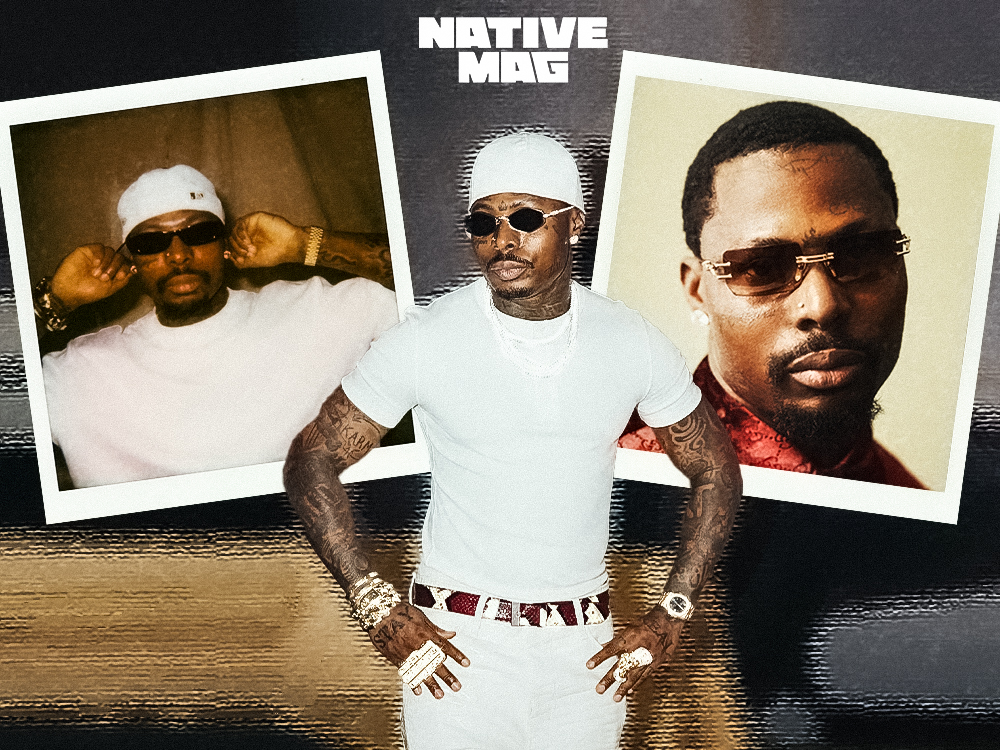
What is notable is not that Asake speaks Yoruba publicly, but that he does so at a moment of peak global visibility.
Afropop, like many Nigerians, travels with a passport in one hand and hope for global world domination in the other. When success comes, it often circles back for what was left behind: family, food, language, and the little hometown things money suddenly makes room for. But departure has always had its own etiquette. Artists leave for London, Atlanta or Los Angeles and surface online, sounding like customs cleared something in their throat.
We have watched it countless times, so much that it has become a familiar sport: who has downloaded a new accent and who now speaks as though home is something to be managed. Part of that reaction is simply the Nigerian instinct to turn everything into humour; every few months, a new name enters the dock. Wizkid, Davido, Burna Boy, Shallipopi – the list is long; the jokes, longer. But beneath the laughter sits something more sensitive: the suspicion that success has made someone shamefaced for sounding Nigerian.
The lesson has long been absorbed, especially during the early “Afrobeats to the world” years, when African accents were burdened with stereotypes and foreign labels often preferred stars who sounded more internationally legible: if you want to be global, sound like somewhere else.
As music journalist Chibuzo Emmanuel tells NATIVE Mag, “The criticism can seem scalding, but part of it is just people taking the piss out of a celebrity.” Asake has flirted with that language too; on the Grammy Awards red carpet, in a GQ profile around Paris Fashion Week appearances, and during a talk at Columbia University, where his cadence seemed to lean outward rather than homeward. Which is why his recent decision to speak Yoruba in interviews feels so pointed. He is not merely choosing comfort. He is suggesting that stardom no longer needs the costume.
To read every accent shift as fraud, however, would be too simple. Emmanuel does not see Asake’s earlier speech changes as necessarily performative. Instead, he points to a common instinct of communication: people often mirror the speech patterns of those they are speaking to. Emmanuel, who frequently liaises with foreigners, says, “Sometimes I catch myself doing the same thing.” It may be less theatre than accommodation, the brain’s way of making itself legible to the room. What Nigerians often mock as “downloading an accent” can sometimes be something more ordinary: the human desire to be understood.
Since his breakout in 2022, Yoruba had already been doing the heavy lifting in Asake’s music. It carried his bravado, his spirituality, the coded street wisdom and sly humour, the ‘lamba’ as we like to call it, that made his songs feel rooted even as they travelled. What is different now is that the language has moved beyond the records and into the interview chair. In recent appearances — most notably Spotify’s Frequency series and a homecoming film with Korty — Asake speaks Yoruba with little concession to the imagined foreign listener. The subtitles can do the labour for once. He no longer appears eager to meet the world halfway.
What is notable is not that Asake speaks Yoruba publicly, but that he does so at a moment of peak global visibility, on platforms usually built around English fluency. In the Spotify interview, spoken largely in Yoruba, he says he is grateful to be using his God-given talent and grateful too that the love surrounding him is no longer only local but global. The sentiment is ordinary enough; the delivery is what matters. He is describing international success in the language of home.
Part of what has made this shift possible is that audiences themselves have changed. The subtitle, once treated by English-speaking markets as an inconvenience, has become ordinary furniture of modern entertainment. Emmanuel tells NATIVE Mag that while it is difficult to measure the exact extent of that influence, subtitles have “definitely played a part”; people are now far more amenable to content in a different language.
Viewers binge Korean dramas without complaint, sing Spanish hooks phonetically in clubs, and fall in love with songs whose titles they cannot pronounce. Streaming has trained a new kind of listener: less insistent on immediate comprehension, more willing to feel first and translate later. In that altered landscape, Yoruba no longer arrives as a barrier but as texture – rhythm, wit, attitude, and intimacy. The world did not suddenly become multilingual; it simply became more willing to meet other languages halfway.
The precedent, of course, already exists. Global audiences have spent the last decade proving that language is not the obstacle the industry once imagined. K-dramas became mainstream through subtitles; Spanish-language records travel far beyond Latin America. Listeners chant choruses they do not literally understand and feel none the poorer for it. As Temitope Olorunnimbe, who works in marketing and label operations at CiDAR Africa, notes, the outrage over Asake speaking Yoruba ignores a simple contradiction: many of the same people complaining happily watch Korean dramas and listen to artists like Bad Bunny.
The listener, in other words, has already changed. It is only some expectations around African artists that remain outdated. Part of the difference is historical. Latin Pop and K-Pop entered global markets with industries that were permitted to be themselves from the outset, even when translated through subtitles. African music, by contrast, often arrived carrying older burdens: the need to explain itself, to be grateful for access, and to appear polished in ways that reassured foreign gatekeepers.
The expectation was rarely announced, but it was understood all the same. Be excellent, but also legible. Be local, but not too local. Those conditions are harder to sustain now because Nigeria itself has become harder to ignore. The country has travelled in bodies, appetites and surnames. In cities across America, Canada and Britain, Nigerian restaurants sit comfortably within the new urban food map; jollof rice, suya and puff-puff no longer require ethnographic explanation.
In sport, the names arrive weekly: Victor Osimhen in football, Anthony Joshua in boxing, and Oba Femi in wrestling, whose swaggering entrance and recent WrestleMania triumph over Brock Lesnar travelled online with the speed of folklore. The Nigerian presence is no longer niche, nor apologetic. It is hemmed into the texture of global popular culture. If our food can be tasted, our athletes cheered, our music streamed, our slang borrowed and our accents commercialised, then the old question begins to sound smaller: why not our language too?
Yet symbolism and transformation are not the same thing. It is possible to mistake one man’s freedom for a new rule. Emmanuel, for all his admiration, doubts a stampede will follow. Many artists, he says, “don’t want to be unconventional,” and until something is clearly proven to work, they tend to see it as unique to the person who pulled it off. The music business, in Nigeria as elsewhere, is built less on romance than repetition; artists trust what has already worked, managers sell what can already be explained, and young acts rarely volunteer themselves as experiments.
To speak Yoruba in a global-facing interview may look simple after Asake has done it, but simplicity is often expensive. It requires stature, leverage, and the comfort of already being wanted. Asake can risk being fully himself because, as Emmanuel notes, “he is big.” Many others, still climbing, will choose English not out of shame but caution. They know a familiar tongue is the open sesame of old doors.
What Asake’s choice finally reveals is not merely pride, but position. In the first eager years of Afrobeats’ journey outward, success often arrived with small, unspoken instructions. Smooth yourself a little. Speak plainly. Translate the room to itself before it asks. English was not always demanded, but it lingered in the air like a condition of entry. Many artists understood this without needing to be told. They carried the music abroad but often felt obliged to carry an explanation with it.
That a star can now sit before an international platform and speak Yoruba, calmly and without ceremony, while subtitles and audiences make the necessary adjustments, is a more significant circle than it first appears. It tells us that Afropop has moved from petition to presence. The genre now occupies enough real estate in global popular culture to lean its weight upon the furniture, to sit with its legs spread widely apart, and no longer apologise for taking up space. Whether others imitate the gesture tomorrow is almost beside the point. It has happened once, publicly and without collapse. A new possibility has entered the room.
At a time when some speak of Afropop with the weary language reserved for things that have peaked too early, this too should count as movement. Genres do not advance only by trophies, stadiums or quarterly statistics. Sometimes they advance by posture. By who is expected to bend, and who is permitted to remain standing as they are. In that sense, Asake speaking Yoruba is not a curiosity. It is a small correction in the balance of things.

