Jameson & Mainland Block Party recast old music in a new light with ‘Confluence Project’

At every moment, Nigerian pop music is in conversation, both with multiple facets of itself and outside influences. When highlife made its way to the country’s shores in the ‘50s and early ‘60s from neighbouring Ghana, legendary Nigerian musicians of the time such as Osita Osadebe, Oliver De Coque, Bobby Benson, Victor Olaiya and more ensured that the genre became recognisable by fusing it with traditional Folk sounds close to them. Fuji music evolved from Were, a way of using music as call for Islamic prayers, while Juju applied a variety of modern pop styles and instrumentation, as well as elements of Christian music, to its vivid Yoruba folk roots.

This collective flair for building on a combination of familiar, pre-existing sonic styles and a wide, disparate range of musical inspiration has ensured that Nigerian music is an identifiable, multitudinous, and ever-evolving organism. For the current wave of Nigerian pop music, which has been tracked back to the mid to late ‘90s by consensus, main initial influences were Hip-Hop, R&B, turn-of-the-millennium Pop and progression in electronic production practices. Over time, though, we’ve widened our sonic vocabulary to include Caribbean pop music, while also doing a full circle to incorporate older, popular sounds, from Juju and Afrobeat to Highlife and Fuji.

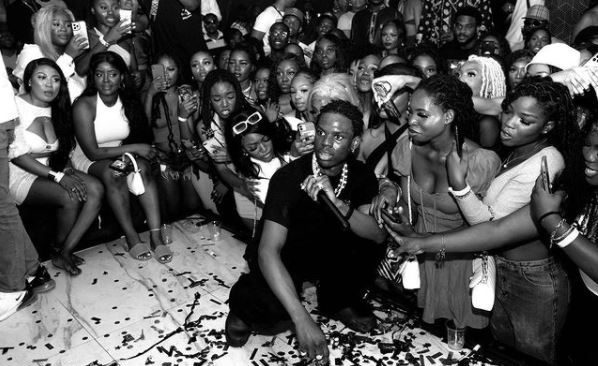
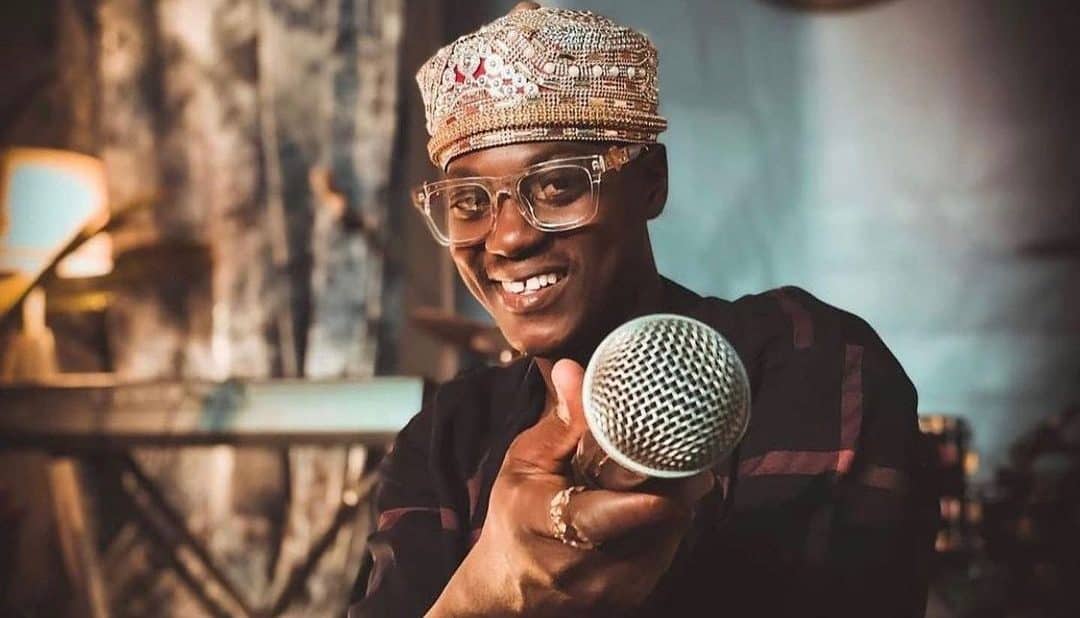
October 1st, 2020 marked 60 years of Nigeria’s independence from British colonial rule. While the country’s socioeconomic conditions have largely wavered and worsened in those six decades, Nigerian music has constantly fought through rough patches and strained investments to become an overwhelmingly bright spot. In celebration of its rejuvenated triumph in the past two-plus decades and steady incline as a global export, Jameson in collaboration with Mainland Block Party curated ‘Confluence’, a short playlist project comprising merger songs, where artists combine previously released music into something new and striking.

On paper, it seems like the straightforward idea, something that could be done via a DJ mashup or, perhaps, through an Alternate Sound faux-live mix. The thrill of ‘Confluence’ is that it bypasses any easy methods and opts to put these artists in a booth with a producer not involved with the already released songs, giving them the wherewithal to forge chemistry and create unique music from songs that many already know and love. This approach requires dedication, not just from the artists, but from the curators as well, and with the impact it’s had in the Nigerian music space over the last few years, it’s not too surprising that Jameson and Mainland Block Party have gone this meticulous route.

Initially making its mark on the then burgeoning alté scene, Jameson was one of the first brands to fully identify with a movement that still divides opinions amongst Nigerian audiences, even though to a far lesser extent these days. Currently, Jameson has expanded its cultural imprint, growing into a mainstay at nearly every outdoor event, sponsoring shows, and directly investing in artists—to the latter point, the stunning music video for Tems’ breakout smash, “Try Me”, was funded by Jameson. ‘Confluence’ is their latest indication of being in tune with Nigerian music, paying homage to Nigerian music on a present, molecular level, whilst also creating an avenue in the set structure for the betterment of the industry as a whole.

Before the coronavirus pandemic hit, Mainland Block Party was primarily a monthly gathering of young people looking to engage with Nigerian music through the most basic and visceral means possible: dance and rowdy live performances. Organisers also put up a similar forthnightly event in Abuja, tagged Capital Block Party, and they hosted a sole instalment of the Island Block Party in December 2019. With very limited opportunities to throw parties, Mainland Block Party is diversifying its portfolio, recently backing the rise of singer/rapper Victony, and helping in the curation and promotion of this multi-act EP.

‘Confluence’ comprises seven songs combining a duo of artists and their songs at a time, with four slightly unorthodox pairings. The combinations are Naeto C and Joeboy, Ladipoe and Terry Apala, Buju and Alpha P, BOJ and Fave. Perhaps with the exception of the latter pairing, these collaborations aren’t exactly the sort you’d find on the wish list of many fans of Nigerian music, for varying reasons: Naeto and Joeboy are from two different eras, with the former being quite inactive, new music-wise, in recent times; Ladipoe and Terry Apala are cut from “opposite” sides of the Nigerian hip-hop spectrum, and as such aren’t expected to mingle; Buju and Alpha P are both charting their way to superstardom, but their sounds are disparate enough that the thought of a collab seems quite left field.

Regardless, half the fun of ‘Confluence’ is in finding out how well it mostly slaps. The other half, if you’re a compulsive music judge like me, is in figuring out what makes these meshing of songs tick. At its most compelling, the project finds an intersection between experimentation and looseness, relying on craft, mutual respect, and a palpable camaraderie from all involved parties. One of the stronger examples on the project is the merger of Ladipoe’s “Man Already” and Terry Apala’s “Champagne Shower”, a truly thrilling combo based on how well both artists bounce off each other at every moment.

Produced by Sess, whose affinity for reimagining already existing songs is well-known via his PRBLM remixes, the combination of a gleefully ominous piano strings and a rattling low end splits the difference between the drill make-up of “Man Already” and the trap stylings of “Champagne Shower”. Together, Poe and Terry find a delightfully oddball harmony, with the former’s boisterous slickness and the latter’s unorthodox rasp meshing into a track that sounds like an improvised live performance. Generally, ‘Confluence’ has a low-stakes, novelty coat wrapped around it, but this particular performance comes across as momentous, partly because both these songs can be considered modern Nigerian rap classics and the rejig works so well it brings their critical acclaim into a refreshing perspective, rather than sullying it.

The two pair off again for a merger of Terry’s “Jangolova” and Poe’s “Are you Down”, and they balance each other with the same improvised verve; it’s not as singularly significant as the other collab, but it’s quite entertaining. As excellent as Terry and Poe’s complementary shtick is, it’s one of the few tricks that makes the EP enjoyable. In the case of BOJ and Fave, they don’t just complement, they combine. Both singers carry distinct voices which have distinct effects, BOJ’s fuzzy baritone floats upwards while Fave’s guttural mezzo booms like it’s trying shake the very foundation of a room. Both artist’s innate understanding of theirs and their partner’s powers is the driving force, and they become so in tune it’s like watching two people finish off each other’s sentences.

The final song on ‘Confluence’ pairs Fave’s breakout song, “N.B.U”, with “Tungba”, a standout selection off BOJ’s joint tape with Ajebutter22. Over Sess’s thunderous, electronic beat, both singers put these songs in conversation, integrating the impassioned swing of Fave’s verses and BOJ’s dreamy hook into an electrifying whole. Their other collab combines BOJ’s “Your Love (Mogbe)” with a Fave song I couldn’t quite recognise (perhaps unreleased), and they adopt the same conversational approach except, this time, they go back-and-forth in a manner that mirrors a discussion between two people on the cusp of a romantic commitment.

From Ladipoe and Terry Apala to Fave and BOJ, ‘Confluence’ largely sidesteps puppeteering or any ventriloquist gestures, and while the results are generally remarkable, it doesn’t always hit the high mark set by its best moment. In the context of the project, the merger of Buju’s “Mind Games” and Alpha P’s “Paloma” is something of a serviceable interlude, but as a proper song, it’s basically a mashup where both songs collide rather combine into a whole track.

For Naeto C and Joeboy, their collabs are a tad stiff and it holds their tracks from taking off properly. Adey’s tropical house beat puts a neon glow on the combination of “Baby” and “5&6”, and while it’s pleasant to hear Joeboy play around with the hook of the latter song, it’s Naeto who trails behind a bit. The combo of Joeboy’s “Faaji” and Naeto’s “Tony Montana” proves marginally better, mainly because both artists sound much comfortable over the stomping groove of Adey’s synth-pop production choice.

Even with its less enthralling moments, ‘Confluence’ impressively achieves its evident aim of combining artists in innovative ways, and Jameson’s implied intention of appreciating Nigerian music as the one thing every Nigerian be unreservedly proud of. For its own good, the project doesn’t masquerade as a broad representation, but it’s a strong representation that Nigerian pop music, specifically from the last decade-plus, is always in conversation with itself, and where there’s conversations the possibilities were always bound to be infinite.

Listen to ‘Confluence’ here.


Dennis is a staff writer at the NATIVE. Let me know your favourite the Cavemen songs @dennisadepeter

FRESH MEAT: DIVE INTO OUR WOMEN’S HISTORY MONTH SPECIAL FOR MARCH 2021

Here’s a list of Nollywood titles coming to Netflix in April 2021

Over the past few years, Netflix has committed to expanding their arsenal with something for everyone, including Africans all over the world with the acquiring of several films from the continent. In addition to commissioning new, upcoming projects, including impending adaptations of literary classics by Wole Soyinka and Lola Shoneyin, the on-demand streaming platform licenses new Nollywood titles at a frequent rate. Nearly every week, previously released films and, to a lesser extent, TV shows are made available to home-based and international viewers, opening these titles to potentially millions more.

Over the last few days, the comedy film ‘Three Thieves’, and ‘Marked’, a documentary on traditional facial marks, are the notable Nollywood titles to make it to Netflix. Keeping with the momentum, the streaming giant has announced the imminent arrival of nine Nollywood films that will be available to view on the platform this month. The Netflix release of these films will be scattered across April, giving people ample time to watch each title ahead of subsequent ones, and to get you prepared, so you can a lot your time wisely, here’s a list of these newly licensed films by Netflix, along with important information, including the dates they will arrive on the platform, quick synopsis and trailers to each film.

‘God Calling’ (2018) – April 2nd

As its title connotes, ‘God Calling’ is a faith-based film with Christianity at its centre. Written and directed by BB Sasore, the film is focused on Sade as she goes through the psychological ordeal of dealing with a painful loss that also tests her relationship with God. The all-star cast includes Zainab Balogun, Karibi Fubura, Richard Mofe Damijo, Nkem Owoh, Onyeka Onwenu, and more.

‘The Fisherman’s Diary’ (2020) – April 4th

‘The Fisherman’s Diary’ is the only non-Nigerian on this film, but is perhaps being marketed as such for publicity. However, this film was Cameroon’s submission for Best International Feature Film at the upcoming Oscar Awards, and even though it didn’t make the final nominees shortlist, it’s an indicator that it might be a great watch for those who haven’t seen it yet. Directed by Enah Johnscott, it follows the story of Ekah, a young girl determined to go to school in a village of fishermen where girls’ education is deemed to be taboo.

‘Ojukokoro’ (2016) – April 9th

Dare Olaitan is regarded as one of the younger directors adding a fresh dimension to Nollywood. His two feature films thus far, ‘Ojukokoro’ (2016) and ‘Knockout Blessing’ (2018) were released to critical acclaim, and previously unfamiliar viewers will be able to watch his debut on Netflix this month. ‘Ojukokoro’—the Yoruba word for greed—is a multi-genre film that combines crime and drama, as it follows a young, broke man who plans to rob the petrol station he works at. The cast includes Wale Ojo, Tope Tedela, Ali Nuhu, Somkele Iyama and more.

‘Awon Boyz’ (2019) – April 14th

To live in Lagos is to be conversant with its “Area Boys”, a term broadly applied to street hustlers and louts deeply woven into the fabric of the overpopulated state. In this documentary film, director Tolulope Itegboje takes a wholesome and intimate look at who an Area Boy is, where they come from, and what makes them tick on a daily basis. The subjects are eight men spread across three rough areas in Lagos, giving listeners small but substantial sample size to understand one of the state’s undying phenomena.

‘Doctor Bello’ (2013) – April 16th

Written, produced and directed by Tony Abulu, ‘Doctor Bello’ centres on an emotionally distraught cancer specialist who throws himself into work after the loss of his 10-year old daughter to cancer. In the course of his work, he bonds with 7-year old patient Sam, and he goes to desperate lengths to as Sam’s health worsens over time. It stars Isaiah Washington, Vivica Fox, Genevive Nnaji, Justus Esiri, and more.

‘Oloibiri’ (2016) – April 21st

The story of Nigeria’s oil rich Niger Delta region is one marked by pain, suffering and exploitation. The Curtis Graham-directed ‘Oloibiri’ is a depiction of how the Nigerian government, in collusion with oil companies, mistreated the inhabitants of Oloibiri, the small community in which oil was first found and the country’s first oil well was drilled. Its cast includes Segun Arinze, Olu Jacobs and Richard Mofe Damijo.

‘This Lady Called Life’ (2020) – April 23rd

Written by Toluwani Obayan and directed by Kayode Kasum, ‘This Lady Called Life’ is a drama film which follows a young, single mother on her quest to become a chef. Critically acclaimed upon its cinema release last October, the film’s cast includes Bisola Aiyeola, Lota Chukwu, Wale Ojo, Jemima Osunde, Tina Mba, and more. The film picked up several awards at the Best of Nollywood Awards last December, offering viewers further motivation to hit play when it makes its Netflix debut late in the month.

‘Seven’ (2019) – April 30th

Tosing Igho followed up his well-received debut feature film, “The Eve”, with 2019’s “Seven”, a drama film about a rich heir given prerequisites by his deceased father before laying claim to his inheritance. Kolade, played by Efe Iwara, has been tasked to live in Ajegunle for seven days, where experiences in the rough hood will challenge his privileged upbringing and worldview. The film also stars Richard Mofe Damijo, Bimbo Manuel, Daddy Showkey, and more.


ICYMI: HOW NETFLIX IS CATALYSING THE MOZAMBICAN FILM INDUSTRY

Listen to Psiv’s drill EP ‘Welcome to the 234’

For many years, African music was synonymous with Afropop but thankfully, with the rise of the new vanguard of hitmakers on the continent, the perception of music is clearly changing. Amongst the myriad of genres now rubbing shoulders with sounds and inflections on the continent is drill music which has recently experienced a sonic boom.

From Kumasi to Johannesburg, Lagos, and more, the past few years have seen many new artists are adopting drill’s sensibilities into their music while rooting their lyrics in their distinct cultural differences. Psiv, a UK-based Nigerian rapper is currently making a play to be at the forefront of his country’s growing drill scene with the release of his debut EP ‘Welcome To The 234’.


View this post on Instagram


A post shared by psiv (@psivgram)

These days, it’s not surprising when an artist jumps from one sound to another. After majorly exploring Afroswing, a subgenre that was born in the UK, for his earlier releases, Psiv flipped the switch when he released “Gangland”, an up-tempo drill number featuring South African rapper and Fresh Meat alum Espiquet. The quick shift in gears afforded the rapper a place to confront the grim realities of Nigerian youths following last October’s EndSARS protests. With the release of his debut EP, Psiv now expands on his experience as a young Nigerian over the course of 5 tracks which mirror the vibrant and sometimes chaotic energy that characterizes Lagos, his hometown.

Packing a dizzying array of vocal deliveries, rhyme patterns, and quotable bars, his debut EP gives us a sound introduction into the rapper’s worldview. The snappy, bass-heavy beat on the project’s opener “Welcome” afford him ample space to fire off reams of hard-hitting bars about the city where he spent most of his formative years. “The government’s mad, it’s a vicious cycle/it’s peak in these streets, it’s shite too” he raps over the swelling up-tempo beat produced by Verse II, with visible anger in his voice about the stifling nature of his country. This theme runs through to the project as Psiv represents the anger and frustration that many of the young people in Nigeria currently feel towards a failing system and a corrupt government.

But it’s not all about the city’s hardship, there are ordinary moments. On “Story”, Psiv turns his attention to his opps and naysayers rapping insults and flexes with lyrics such as “Half of the streets don’t know my story/See don’t chat to me like we’re brodies”. Then elsewhere on “Mbappe” featuring rapper Chuckgidi, he spits potent bars about the city’s nightlife which he and his team have on lock like French pro footballer Kylian Mbappe. Psiv rounds off the project up with “Spin It”, a succinct boastful track where he sends a shout-out to him and his team as they have successfully “locked the streets with riddims”.

The entire album soundtracks a flight experience from London to Lagos allowing listeners to traverse through a sonic manifestation of the rapper’s multicultural reality. Even the project’s rollout was made to represent this with its unique boarding pass image which takes listeners on a flight from London to the +234, Psiv’s ‘Mad land’. The symbolic use of the country’s dialling code cannot be ignored, the rapper shows that drill is well and alive in Nigeria. ‘Welcome to the 234’ is clearly a glistening showcase of his newly refined confidence.

Stream Psiv’s debut EP ‘Welcome to the 234’ below.

Featured image credits/AdepojuEmmanuel


ICYMI: Listen to Yaw Tog’s debut EP ‘Time’

Bruk It Down: How Tems made ‘For Broken Ears’ standout, “Ice T”

Bruk It Down, a video series shining a light on the producers and beat-makers behind the scenes, as they break down the intricacies of the songs we listen to every day. In the third edition of our NATIVE Original, Tems walks us through the making of her self-produced deep cut, “Ice T”.  


Last year, Tems released her debut project, ‘For Broken Ears’, a 7-track EP that took us on a journey through her healing. Wearing many hats as songwriter, producer and performer, Tems gave her full self to us through this project, continuing her aim to help others find healing for themselves through her music.

To ensure that her exact emotions are communicated through her songs in the exact way she wanted, Tems taught herself how to produce music. In 2018, a staggering report by The Recording Academy revealed that women make up 21.7%  of the music industry, and out of that, only 2.1% of them are music producers. Over here in Nigeria, this percentage is definitely much smaller, therefore, it’s important to highlight the women who have broken different boundaries in order to occupy this male-dominated space.

From the hip-hop influenced “Free Mind” to the soulful “Ice T”, Tems shows off her expansive sonic range, especially with her most powerful instrument: her voice. Against each self-produced beat, Tems expresses her emotion through intentional songwriting and measured pitches to suit the mood of each song.

For Bruk It Down, Tems (the first-ever female producer we’ve had in this series) walks us through the making of her deep cut, “Ice T”. From vocal samples to the build up, here’s how Tems took the emotions she was feeling at the time, and turned it into a song.

Featured Image Credits: NATIVE


Videography: Omowunmi Ogundipe, Producer: Damilola Animashaun


BRUK IT DOWN: TELZ TALKS US THROUGH THE MAKING OF “WONDERFUL”

Best New Music: Karun & Higo’s “Here With Me” is a glossy pop-soul exhibition

In the near-decade since she appeared as a member of the seminal yet short-lived urban pop group, Camp Mulla, Kenyan artist Karun has hit the reset button on her career a few times, revealing a better-rounded and more assured iteration of herself at every turn. The singer, songwriter and producer is knee-deep into her third act, which is widely regarded to have started with the release of “Roses”, the alternative R&B collab track with producer Ukweli. She’s followed with a handful of headlining songs and collaborations, an artistic renaissance that has now culminated in the release of her new EP, ‘Catch A Vibe’.

This period in Karun’s career has been characterised by colourful and eclectic production choices. Her sonic choices all seem to echo the current era of borderless global pop music, a seesaw between confessional R&B lyricism and declarative Pop songwriting, all underpinned by her remarkably sweet-sounding voice that has consistently exuded a soulful charm. Off her new EP, which distills these attributes into a seamless listen, is the standout song “Here With Me”, a glossy Pop-Soul exhibition. The premise is simple—Karun is convincing a romantic partner of their suitability together—but its execution is refreshing and instantly compelling.

Created in tandem with producer Higo, who’s credited as co-headliner, “Here With Me” thrives on a clear understanding between both collaborators. On the song, Higo curates a brightly coloured but minimalist soundscape, combining sunny guitar chords and bouncy percussion with vivid Caribbean Pop tinges. This musical make-up emphasises the honeyed essence of Karun’s voice, while also leaving enough space for her fluttering melodies to bloom and for her narrative to fully grip listeners. “Wanted nothing more but to disappear, no love anymore/But somehow I found you, learned to love again”, she sings on the first verse, setting the song’s precedent after revealing that she’s “been hurt before”.

“Here With Me” is lovestruck, but it isn’t mindlessly numb or unnecessarily devotional. It’s a heartfelt confessional, one that is inspired by wholesome yearning, rather than the desperate verve often attached to romantic cuts of this type. Karun sings to her interest of the effect they’ve had on her since their bonds deepened, popping the question in a manner that splits the difference between coy and assured—“so, won’t you be with me?” she simply asks. The writing carries the playful nervousness of leaving a voicemail or a voice note in the dead of night, but even in this one-way conversation, there’s acknowledgment that romance is a two-sided effort.

“In fact, I loved you, you loved me/we played our parts, and we can sail away”, she sings on the final part which leads directly into the coda where she chants “sail” until the song fades out. On “Here With Me”, Karun merges the straightforward honesty of Hip-Hop Soul with sharpened pop instincts, which combines with Higo’s buoyant production to result in a song fitting for a hangout on a breezy evening, and poignant enough for many to relate to. With this single, the Kenyan singer continues to show her enthralling lyricism and her the depth of her vocal agility.

Listen to “Here With Me” below.


Dennis is a staff writer at the NATIVE. Let me know your favourite the Cavemen songs @dennisadepeter

BEST NEW MUSIC SPECIAL: TENI DOCUMENTS HER UNBENDING CONFIDENCE ON DEBUT LP, ‘WONDALAND’

South African rapper, Dee Koala inks a distribution deal with EMPIRE

There aren’t many things more enthralling than hearing South African rapper Dee Koala repeatedly chant “I pull up like whuzet?” on her standout single “Whuzet?”, an anthemic number that featured on her award-winning debut album ‘4TheKhaltsha’. Since this weighty introduction, the confident and witty Khayelitsha rapper has continued to mark herself as a force to be reckoned with.

This year, to make her stamp even more, the Fresh Meat alum now has her sights set on the next step, which will create more room for other rising talents in South Africa. Yesterday, alongside the official announcement for her 2021 debut, “Spazz” featuring Blxckie & K. Keed, the independent rapper also shared that her eponymous music and entertainment company had entered into a new distribution deal with American record label and publishing company, EMPIRE.

The distribution deal is impressive for many reasons; firstly, Dee Koala is a young independent artist with promising talent. Typically, many distribution deals of a similar ilk with artists on the continent have been procured through the artist’s management and record labels namely Olamide’s EMPIRE deal with his label YBNL and Warner Music’s deal with Chocolate City Records. However, Dee Koala’s new deal with EMPIRE works directly with her own company, rather than a huge local label. Although the rapper is currently its first and only artist, she already plans to expand and put others on.

Speaking about the new deal, Dee Koala’s manager, Leo Lobelo shares “It is such a blessing as she’s one of the very few Southern African artists to have a deal with EMPIRE. The business relationship between Dee Koala (Pty) Ltd and EMPIRE is so special; it’s a mutually beneficial deal.”

With this landmark deal, it is clear that Dee Koala is not only thinking about her legacy but that of many other upcoming South African artists who will soon be able to expand their music catalogue to more markets around the world

While we wait for the new track and more details of her new accomplishment, Stream ‘4TheKhaltsha’ below.

Featured image credits/Tshepo Marcus Mgadule


ICYMI: Get to know Tyla, South Africa’s latest starlet

Fresh Meat: Best New Artists (March, 2021)

Staying True To Our Mission Reshape The Face Of African Popular Culture, The NATIVE Team Curates A Monthly List To Spotlight The Best And Most Exciting New Artists On The Continent. Some Of These Artists Have Dropped Songs To Some Regional Acclaim, While Others Are Brand New On The Block, Working Towards Their First Big Break. Tune In To What’s Next. Click Here For February’s Fresh Meat.


Women’s History Month may be winding down, however, now more than ever, our mission to amplify the voices and experiences of African women, both home and in the diaspora continues to grow strong and firm. Over the past month, we’ve chopped it up with amazing women from South Africa’s Tyla who is well underway to being her country’s biggest Gen-Z pop star, to celebrating our African mothers in special ways,  dissecting what it takes for small Black-owned businesses such as Kai Collective to be protected and even exploring the road ahead for Tanzania’s first-ever female president, Samia Sulu Hassan.

As we look ahead to a world where female voices are consistently heard and respected in our society, we are celebrating the African female artists who have inspired us to speak our truths boldly in a patriarchal world. Though female artists have always been an integral part of the fabric of our culture, they’ve often been shifted to the background,  at times pitted against one another, or maligned by critics and fans alike to ensure that only one remains on top. However, this new crop of female artists are showing us that it’s possible for everyone to exist and operate within their own lanes, delivering timeless classic music that deeply influences pop culture today.

It has been one year since we started Fresh Meat, and every month since, we have highlighted the best underground talent from all over the world we’re tipping for. In that year, we have made it a mission to ensure that the girls are also being heard, and seeing results such as Dee Koala’s recent joint venture with EMPIRE reminds us why it’s important for us to continue amplifying the voices of women. This is why this Women’s History Month, we’re dedicating Fresh Meat to the girls who have caught our attention this month.  From Amarafleur’s distinct blend of bedroom-pop and R&B to Nipho Hurd’s genre-mashing abilities, here are the women that are redefining Afropop, R&B/Soul, Hip-Hop/Rap and so much more.

Tyla

These days, the line between what is considered avant grade and what is mainstream becomes thinner each day, and this is good news for creators as they get to test their own limits and boundaries. 19-year-old Tyla Seethal is one of such artists, who is fusing a multitude of different genres and sounds to create her own distinct sonic style that affords her the opportunity to operate within her own lane. Although she currently only has one single to her name, the budding starlet is already being recognised, thanks to her unmistakable voice, which has endeared her to a multitude of listeners from across the globe, both old and young.

Tyla’s debut single “Getting Late”, is an earworm track that seamlessly blends pop sensibilities with the groovy percussive sounds of Amapiano. After releasing the groovy number back in 2019, Tyla was on a mission to expand the world around the single by releasing its accompanying music video. She wanted it to be the “biggest one in South Africa” and employed a team of close friends to bring her grand vision to life. However, Tyla’s career was put on hold a few months later when the world went into lockdowns due to the COVID-19 pandemic. Speaking to the NATIVE earlier this month, the rising star shared that she “struggled with patience” as she tried to grapple with the fact that her visual introduction to the world would be delayed. Still, this didn’t deter Tyla who ended up turning to social media to promote her single. 

The result is now being witnessed by everyone today, as the South African singer has become quite a hit on apps such as TikTok where she releases short clips and videos of her and her friends dancing to her song. Through TikTok, Tyla found a community of fans and listeners who stayed tuned into her content throughout the quarantine, eagerly waiting to see how she pulled off complex dance moves with ease. This year, Tyla finally got round to releasing the song’s Bring It On-inspired video where we see clips of Tyla getting ready with her girls for a marching band-led cheerleading performance. The video ends in Tyla and her friends delivering a stunning performance while her crush, played by the song’s producer Kooldrink, tries to win her over. 

To anyone looking from the outside in, it seems like Tyla’s ability to stay in tune with Gen Z popular culture has won her the hearts of many but it’s really down to her ability to meet the demand for something unique in today’s ever-changing industry. Tyla has already revealed her plans to experiment further with her sound on subsequent releases, admitting that she’s ready to try her hands at a myriad of different genres so it’s fairly certain to say that we may soon receive more genre-mashing bops from the singer. With only one official single out in the world, it may still seem like early days for Tyla but we’re already hedging our bets that 2021 is going to be one for the history books. 

Serena Isioma

Sometimes when you hear a song for the first time, you just know it’s going to be a hit record. This is how I feel about Nigerian-born, Chicago-based singer Serena Isioma’s breakout single “Sensitive”, the multigenre number which took over TikTok in the early days of quarantine last year. Only a handful of artists can make the same kind of electrifying introduction that Serena Isioma displayed on the number which finds them calling out everyone from fuck niggas to the government and sellouts. “Fuck niggas always tryna take my shit/Bitches these days are so sensitive” they quip over the futuristic production, as confident, self-assured lyrics flow effortlessly from the song’s very first line. So far, “Sensitive” has amassed over 80K videos on TikTok as it finds a home in a generation of social media users and influencers who are the very definition of the rebellious, care-free kids that Serena sings about in their music.

As a first-generation Nigerian-American, Serena Isioma grew up with parents who nurtured their musical abilities from a young age. The non-binary rockstar once shared in a recent interview that unlike maths, which they find incredibly tasking, music came naturally to them. “I eat, sleep, and breathe music,” they had said, echoing just how important music is and how committed they were to follow this path. The result of this unwavering dedication is seen best in their debut EP, ‘Sensitive’ aptly titled after their breakout single of the same name. The 5-track EP sees the singer seamlessly combining hip-hop sensibilities with lo-fi melodies and pop sounds arriving at a mixture that completely distinguishes them from their peers. Across the project, Serena Isioma showcases her impressive range and her unique style. There’s “Valentina” which is a sweet-sounding love song that finds the singer declaring their infatuation for a woman delivered with a fiery passion. Elsewhere on “Move” feat. Hatesonny, Serena Isioma soundtracks the intoxicating feeling of falling in love in a dimly-lit nightclub, their soft voice effortlessly gliding over the song’s spacey production. While on “Hard”, they encourage listeners to move on from discouraging experiences or losses because they do not determine the trajectory of their lives. There’s no song on the project that isn’t smooth-soothing and beautiful as they sing in a light airy voice that sounds almost like they are taking languid stretches over the beat.

Now, Serena Isioma is coming into their own in a very big way with their recently-released sophomore EP, ‘The Leo Sun Sets’. The project sees Isioma expanding the scope of their sonic ability as they explore an even wider range of sounds and genres from Funk basslines to heavy-hitting Rock drums & rhythms. We see Isioma finding their lane sonically as they deliver a 7-track project that traces themes of romance, self-discovery, solitude, anti-romance, self-love, and more. The project was compiled during the coronavirus-induced lockdowns of the past year which allowed them to create more than ever before. Speaking about the new EP, Serena Isioma revealed that, “Everything about this project touches on incredibly personal things that were happening in my life at the time of making this project. I’m glad I was able to tell my story in a way that resonates with others.” This statement rings through the most on the opening number “King”, where we find Serena Isioma boldly declaring to the naysayers “I’m the king of me”. The song is a powerful message of self-worth and power as each word carries a profound sense of self-awareness and shows a level of depth that is unfound in many young artists of today.

As Serena Isioma evolves and continues to experiment with their sound, the potential is clear and unshakeable. With the new year in sight, the singer is now looking to continue this forward motion with the eventual release of their debut album which seems to be slated for release sometime this year. In any case, there’s a wealth of old singles you can spin on repeat till they are ready to share their debut. Watch this space.

Amarafleur

It may seem like Amapiano, Hip-hop and House music often dominate the South Africa’s music scene, however, from collating these lists every month, we have observed that there’s a massive r&b scene out there. Even more interestingly, this scene seems to be dominated by women, who are coming into themselves and expressing their true selves through song. With only a few songs in her discography, Amarafleur has made a clear stamp that she’s one to look out for, thanks to her serene vocals, confident songwriting and distinct style.

Amarafleur’s month old 3-track EP ‘…And Then I Stopped Caring’ grabs your attention right from the title. The cover art, which sees a desolate-looking, blue-tinged Amarafleur looking into the distance, already gives you a good idea of what to expect from the project, and what you see is really what you get. The first track, “A Reminder”, she reminds listeners about the power they have within, in a convincing and confident pitch against a cool, slow tempo beat. From one listen, you can tell that Amarafleur is an integral part of the r&b revolution going on in South Africa at the moment, and out of all three songs, the pre-released “Whole” identifies this the most, with the bouncy beat reminiscent of a Lauryn Hill in the 90s. Pop culture’s harnessing of nostalgia has proven successful for many artists, and will certainly benefit Amarafleur. With her measured flow and vocal range, it’s only a matter of time until she works her way into the limelight, and judging by the reception of other women like her, she’s on track.

Celine Banza

Listening to Celine Banza’s music is like having your ears pressed up on her heart as she unfurls honest, sometimes complex, musings with an affecting grace. In late 2019, the Congolese singer, songwriter and guitarist won the gilded Radio France International Discovery Award, on the back of her powerful song, “Te Rembi”, a stirring ode to femininity that manages a handful of caustic swipes at the way society (read: men) centres and censors the sexuality of women at every given chance. “You think you can buy my soul with your assets/you confuse me with a commodity and a slave”, she sings on the track whose title simply translates to “My Body”.

The RFI Discovery Award, which has been won by several breakout acts from the Francophone region of Sub-Saharan Africa, has several perks usually attached to it, including a €10,000 cash prize, a mini-African tour, and a headlining concert in Paris. Due to the disruptive effect of the pandemic early last year, Celine has yet to cash in on the non-monetary parts of her win, which will bring her to new audiences across several countries. However, with society gradually opening back up this year, she’s still very on the money to capitalise on this opportunity, especially with the recent release of her excellent debut album, ‘Praefatio’.

Much like her breakout song, Celine’s full-length debut is rooted in emotionally expressive lyricism with a slight poetic twist, and a modern Folk sound that incorporates Neo-Soul, Soft Rock and Afro-Soul into its gently shaded landscape. ‘Praefatio’ is a largely personal album, drawn from societal observations and experiences, especially the passing of her father while she was young, but there’s a communal, relatable edge to the music. Celine mainly sings in Ngbandi, a local language spoken in the north of Congo, with the occasional song in English and French. It’s an assertion of her identity, a lingual choice that will very likely draw in more audiences than alienate, considering how instantly engulfing her music is on the strength of its identifiable tenets—the music and her voice.

Reminiscent of Folk-rooted singers like Oumou Sangare, Asa, Fatoumata Diawarra, and more, Celine Banza is telling her story and holding a mirror up to society without compromising her artistic vision, setting her up as the latest addition to this enviable canon of inventive and continentally impactful lineage of African women artists.

Nipho Hurd

“This song goes out to all the ladies dating a bag of wet hair”, Nipho Hurd offers at the very beginning of her impressive debut EP, ‘The Ghel’. Released about a year ago, that opening adlib shows the directness that makes the South African singer’s music immersive, especially coupled with her preference for an eclectic and altogether soulful soundscape. “Money”, the track containing that line, sees Nipho grappling with the influence of finances—or lack thereof—on relationships, with an understanding that both sides have to carry their weight even if the dynamics are bound to vary from based on the people involved.

The song is a great example of how much Nipho Hurd’s music hinges on the balance between universality and her own personality. Her thematic concerns are commonplace factors of the human existence—romance, financial self-sufficiency, fun, understanding of self—especially relatable to young adults who are still figuring the world out. What makes her stand out, is how she approaches these topics in a way that asserts her unique person and gives listeners the nudge to examine their own values. “My EP is a symbol of strength to me”, the Durban-based singer told Red Bull at the time of its release, explaining that her process of making music is a way of engaging with personal empowerment and self-improvement.

To do this in an effectively, the self-described nonconformist wraps her cloudy, sublime voice with varied layers of musical styles, pulling threads from Neo-Soul, Funk, R&B, Hip-Hop and Jazz into a warm whole. While the pandemic affected her plans, the year since the EP release has seen the singer find ways of engaging with her growing set of fans, performing her music on a few virtual shows. She’s also continued to experiment, recently revealing to Texxandthecity that her forthcoming release will feature her personal take on Trap, a genre she’s been fascinated with in the last few years.

Within the context of South African music’s R&B/Alternative corner, Nipho Hurd is another compelling character helping to push past conventions, both industry and societal. With an unbending dedication to being herself, and inspiring others to be themselves unabashedly, her message will only get louder and those who identify with her will multiply in the near future.

Featured image credits/NATIVE


Words by Dennis Ade-Peter, Damilola Animashaun and Tami Makinde

TurnTable Top 50: Gyakie & Omah Lay’s “Forever (Remix) are on top of this week’s chart

As forecasted last week, Gyakie’s “Forever (Remix)”, featuring Omah Lay, has made its way to the zenith of the TurnTable Top 50 chart. The Ghanaian singer’s popularity has been increasing amongst Nigeria since the beginning of the year, with the original version of her smash hit gaining widespread traction around Valentine’s period. Now signed to Sony Music West Africa, with international links to Sony Music UK and RCA Records in the U.S, Gyakie has her sights set on being a pan-African superstar, and the ongoing success of “Forever (Remix)” is indication that her ambitions are well within reach.

Omah Lay, who’s been dominant on the Top 50, brings his influence to bear on a song whose original previously peaked at No. 18. This feat makes Gyakie the first non-Nigerian and second lead female artist (third overall) to top the chart with a headlining song, replacing Teni, whose Davido-assisted “FOR YOU” stayed at No. 1 for five weeks straight. “FOR YOU” drops down to the second spot, even though its freemium streaming numbers increased, most likely an effect of the release of Teni’s superb debut album, ‘WONDALAND’. It is worth noting that women have held the top spot of the Top 50 throughout Women’s History Month, a remarkable feat considering how long it took for a female artist to reach that position.

DJ Kaywise and Phyno’s “High Way” continues its stunning run on the chart, coming in at No. 3 for this week’s edition, after seven non-consecutive weeks at its peak No. 2 position. On the back of radio airplay impressions, Justin Bieber’s “Loved By You”, featuring Burna Boy, debuts at No. 4 this week; it’s the second time the Grammy-winning African Giant is assisting a Non-Nigerian artist into the top 10 of the chart. Ajebo Hustler’s and Omah Lay’s “Pronto” rounds out this week’s top 5, falling two spots from its former peak position.

The rest of the top 10 features familiar songs that have dominated in the last few weeks, including Omah Lay’s bar-setting “Godly” (8), Bella Shmurda’s street banger “Rush” (6), Joeboy’s romantic “Focus” (7), and Rema’s “Bounce” is at No. 10, falling three spots down from its previous No. 7 peak. The only new entry in the lower half of the top 10 is Laycon’s “Wagwan”, which jumps twenty spots up to No. 9. It’s the second time the rapper—and former Big Brother Nigeria winner—enters the upper fifth of the top 50, indicating the sustained momentum of his star power.

You can check out the full rundown of this week’s TurnTable Top 50 here.


Dennis is a staff writer at the NATIVE. Let me know your favourite the Cavemen songs @dennisadepeter

ICYMI: EVERYTHING YOU NEED TO KNOW ABOUT THE RECORDING CERTIFICATION OF NIGERIA

Songs Of The Day: New music from Gyakie, Angelique Kidjo, Kamo Mphela & more

Music has served as the life force connecting people and communities around the world in these unprecedented times. Though the pandemic has denied us live shows and concerts, where the magical bond between artists and fans unfolds in real-time; artists have remained committed to sharing music with fans, so we continue to honour their art and create space and visibility for them.  Last year, The NATIVE created our ‘Songs Of The Day’ column as an avenue to curate some of the best and biggest songs from around the continent. In the time since its creation, the column has served as a means to discover music from niche, rising acts, while also spotlighting releases from the biggest artists on the continent. As artists continue to share their music with us this year, it’s only right that we continue pointing you towards as much great music as we possibly can.

With this month being Women’s History Month, and a year since the coronavirus altered life as we knew it, our curation will emphasize celebrating women and music that have made these uncertain times more bearable. After a week long break, we’re back to putting you unto new releases, with today’s curation including recent drops from Gyakie, Burna Boy, Angelique Kidjo, Cassper Nyovest and more. Dig in and enjoy.

Gyakie & Omah Lay – “Forever (Remix)”

Gyakie is budding pan-African superstar. That much has been made clear by the ongoing success of her smash hit, “Forever”, a standout blue-eyed love song off her debut EP, ‘Seed’. Last week, the Fresh Meat alum shared the remix to the hit song, with a new verse from last year’s pan-African breakout star Omah Lay. To make proceedings even more significant, both singers are now international labelmates, with Gyakie’s recent signing to RCA Records via a new recording deal with Sony Music West Africa. Keeping momentum on “Forever (Remix)”, an accompanying music video has been shared, and it features crisp shots of Gyakie performing her set in a moving car, under neon lights (alongside Omah Lay), and in the midst of colourful flowers.

Mowalola – “LiKe ME”

Put a finger up if you knew one day, Mowalola was going to drop a song. Over the weekend, the many-faced girl dropped a short release, “LiKe ME”, where she made the stamp we see in her creative direction on wax. Against an electronic beat reminiscent of the backing music in an arcade game, she reminds everyone that she’s in charge, alongside a playful and psychedelic video directed by Odunsi The Engine.

Angelique Kidjo & Yemi Alade – “Dignity”

Over the course of her sprawling, awe-inspiring career, Angelique Kidjo has made it a point of duty to speak truth to power and encourage her vision of an African society that doesn’t step on the necks of its citizens. Inspired by last year’s youth-led protests against police brutality in Nigeria, the Beninese singer has collaborated with Nigerian singer Yemi Alade for a new socially charged single, “Dignity”. Over an up-tempo beat, both singers mourn the needless violence being endured by Black bodies all over the world, whether it’s outside the continent due to racism, or within due to greedy and self-serving government officials. The release is also accompanied by a brightly shot video, where we see both singers dancing and singing with a defiant verve, as a plot relating to the song also unfolds around them with an artsy edge.

Enisa & Davido – “Love Cycle (Remix)”

Albanian-American singer Enisa caught the attention of Nigerians on social media after rapper and her High Bridge label boss, A Boogie With Da Hoodie, suggested she collaborate with Davido for the remix of her single, “Love Cycle”. After months of strengthening her relationship with Twitter NG, and recently collaborating with Tanzanian singer Rayvanny, Enisa has finally dropped the Davido-assisted “Love Cycle (Remix)”. The new remix maintains its Reggaeton-indented beat and Enisa’s boisterous melodies, with the main addition being Davido’s typically assured verse, where he sings of being seduced by a love interest for his wealth and fame. The accompanying video plays to the song’s catchy elements, focusing on both singers performing their set at a neon-lit party.

Vector & M.I Abaga – “Crown of Clay” (feat. Pheelz)

A year after their highly publicised beef, Nigerian rap veterans M.I Abaga and Vector squashed their beef under protracted circumstances. Their tiff was the centre of a mini-doc series, they appeared together on the last Hennessy cypher, and the pair recently released a long overdue collaborative song, “Crown of Clay”. Produced by Pheelz, who also sings its hook, the new song finds both rappers in self-eulogising mode, while using pre-colonial ancestral heritage as the spiritual guiding force to give it more heft. Directed by Olu the Wave, the music video does a good job of capturing the song’s essence, blending hood elements and religious symbolism with an artsy edge. It inevitably ends with Vector and M.I sitting side-by-side on their thrones while wearing shiny crowns.


Shane Eagle & YoungstaCPT – “AMMO”

For the majority of last year, Shane Eagle was largely silent on the new music front, eventually releasing ‘Xenergy: The Final Saga’, a visual album at the tail end of the year to remedy the pandemic’s effect on his touring plan for 2019’s ‘Dark Moon Flower’. The South African rapper has opened his account for this year with “AMMO”, a boastful thumper that finds him at his typically imperial best, as he issues out notices to naysayers and brags about his stuffed pockets. He’s joined by YoungstaCPT who steals the show with a phenomenal rap verse that mixes brashness with introspective truths like, “raised hard/couldn’t show no weakness or kindness”. The video for “AMMO” is aptly frenzied, cutting together footage of Shane and Youngsta rapping their verses in a moving car, in a desert, in front of a church, and on the staircase of a high rise building.

Kamo Mphela – “Nkulunkulu”

As a singer and dancer, Kamo Mphela best encapsulates the visceral spirit of Amapiano as a club-ready sound for a young and fun generation of South Africans. Having contributed to several smash hits over the last two-plus years, including “Sandton” and “Amanikiniki”, her credentials are evident. Stepping further into the spotlight as a solo artist, she’s gearing up to release her sophomore EP, ‘Nkulunkulu’, in early April, and she’s just shared the title track as its lead single. As evidenced by its accompanying video, which features energetic dance routines and religious imagery, “Nkulunkulu” is a potential club banger, with its thumping production from Major League DJz, as Kamo prays to God for wealth and the strength to live her best life, singing with a chant-rap energy that’s become her trademark.

Cassper Nyovest – “Ama Number Ayi ‘10” (feat. Abidoza, Kammu Dee & Luudadeejay)

Cassper Nyovest isn’t afraid to experiment. In 2018, the South African rap superstar dropped Sweet & Short, an EP dedicated to exploring his lifelong fascination with Kwaito. Since Amapiano has taken flight, he’s collaborated with some of the burgeoning scene’s key players, and after speculation, he’s gearing up to fully dip his feet into the genre with a dedicated project. Ahead of the tape, he’s dropped “Ama Number Ayi ‘10”, where he boastfully chants over Abidoza’s groovy percussion pattern, droning piano synths and blown-out bass. He’s joined by Kammu Dee, who brings his trademark energy with a swaggering verse.

Burna Boy – “23”

Fresh off his historic win for Best Global Music album at the latest edition of the Grammys, Burna Boy recently dropped the video for “23”, arguably the best track off his excellent fifth studio LP, ‘Twice As Tall’. Inspired by “The Last Dance”, the documentary series focused on Michael Jordan’s epoch-making, final season at the Chicago Bulls, “23” is Burna Boy’s paean to his self-assured gait as an artist, where he compares his undeniable talent and unbending resolve to that of Jordan. With the Grammy win, the timing of the drop is impeccable, and even though it doesn’t hit grandiose heights, the video features imagery alluding to its inspiration, celebrates Burna’s record-setting feat as the first African artist to pack out London’s SSE Arena, and nods to Women’s History Month with the bulk of its supporting cast being women.

Ijekimora – “Sexy Papa”

As far as debut singles go in these parts, Nigerian-American singer Kimora’s “Sexy Papa” is as infectious and rhythmic as they come. The groovy new number is rooted in Afrohouse, a dynamic subgenre that has recently found a home in the diverse sonic soundscape across the continent. “Sexy papa, I’m really tryna know ya/Do you know how you awaken my world,” she sings sensually on the song’s first verse, flirting and teasing with a love interest as she tries to convince them of her affection. Kimora shows off her vocal range, effortlessly floating over the song’s catchy production which is sure to grab any listener’s attention. You can hear it in the melodies, this number was tailor-made for dancefloors as it soundtracks the intoxicating feeling of two lovers under the twinkling of club lights. “Sexy Papa” is also said to be the first promotional single off her debut EP out later this year.

Mukhy – “My Race”

Nigerian-born, UK-based Afropop artist, Mukhy is just days off from the release of his debut mixtape ‘Posh Nation’, a 9-track release of sweet-sounding numbers created during the lockdown. The project’s lead single “My Race” has just been updated with a befitting video, one which tells the story of an ambitious youngster with big dreams. Singing “We all get problems, I run my race”, Mukhy depicts his desire to forge his own path and make progress regardless of the situation urging listeners to subscribe to his philosophy. The Nosachii-directed visual includes crisps snapshots of Mukhy in the streets of Lagos, comfortably at home with the city’s inhabitants as he sings to the power of the underdog rising to fame.


Dennis is a staff writer at the NATIVE. Let me know your favourite the Cavemen songs @dennisadepeter

ICYMI: WATCH SCORPION KINGS & TRESOR IN THE NEON-LIT VIDEO FOR “FOLASADE”

What’s Going On: Militant attack in Mozambique, Tanzania’s Covid-19 variant & more

Our Latest Column, “What’s Going On” Will Tally Notable News Headlines From Across The Continent — The Good, The Bad, And The Horrible — As A Way Of Ensuring That We All Become A More Sagacious African Generation. With This Column, We’re Hoping To Disseminate The Latest Happenings In Our Socio-Political Climate All Over The Continent, Whilst Starting A Conversation About What’s Important For Us To All Discuss. From Political Affairs To Socio-Economic Issues, ‘What’s Going On’, Will Discuss Just That. 


Ever so often, we have to remind the Western world that Africa is not a country. This isn’t due only to their significant lack of enlightenment, but also because of the continent-wide similarities when it comes to social, political, and economic issues. For one, Africa is teeming with corrupt and inept leaders—many of them one would call dictators— who have failed to invest in meaningful infrastructure, all while derailing and rejecting systemic change through violent means if necessary. In addition to this, they are fully aided by deeply patriarchal, religious deferring, and ultra-conservative social constructs.

At the same time, across the continent, the current generation of African youth are pushing against these systemic boundaries, in order to continue the arduous work of rewriting the narrative. Even with all of the endeavours, talent and records being witnessed from music to tech, the limitations put in place by the continent’s political landscape still looms large. Every week, disparaging headlines from around Africa make their way to the news, reminding us of the bumps affecting these perceived stripes, and the roadblocks which delay our growth towards more wholesome and enabling societies for all Africans. Below are few news bits of what’s been going in on in the past few days.

Dozens killed during militant attack in Mozambique

Last Wednesday, hundreds of militants stormed Palma, a town in the Cabo Delgado province of Mozambique, targeting shops, banks, military barracks, and the site of a gas project. Militants who are allegedly linked to the Islamic State (IS) group have been said to be behind the deadly attack, however, no one has stepped forward to claim responsibility. This current attack is the latest in a series of attacks within the country which has left more than 2,500 people dead and 700,000 displaced since the insurgency began in 2017.


View this post on Instagram


A post shared by VOA News (@voanews)

According to CNN Africa, dozens of people were killed and attacked following last Wednesday’s attack. Omar Saranga, a spokesman for the Mozambique Defense and Security Forces, said in a broadcast statement on Sunday that the fatalities included both locals and foreigners working in the region. Hundreds of people are said to have fled the scene, running into forests, mangroves or nearby villages, while others tried to escape the hotel in a convoy of vehicles on Friday, aiming for a nearby beach. At least 20 people were reportedly flown to safety in helicopters, but others were ambushed outside the hotel. The attack came hours after Total, the principal investor in a billion-dollar gas project, had announced that it was gradually resuming work after it had suspended all construction work in January due to a spate of attacks.

The extremist fighters have, since October 2017, raided villages and towns across Mozambique’s northern region, causing almost 700,000 people to flee their respective homes. The violence has left at least 2,600 people dead, half of them civilians, according to the US-based data collecting agency, Armed Conflict Location and Event Data. However, the total amount of fatalities following the most recent attacks are currently unknown with reports stating that many people who have been living and working in Palma remain out of reach due to a communication blackout in the town. Efforts are still ongoing by the country’s leaders to ensure the safety of everyone in the Palma and surrounding environs, and international governments have begun condemning the violent attacks which are said to have involved foreign casualties.

Protests against the arrest of student activists continue in Algeria

Back in February 2019, the Hirak movement was sparked in Algeria over the then-president Abdelaziz Bouteflika’s bid for a fifth term in political office. Protesters first marched on a national scale on February 22, 2019, repeating the act every Friday until the pandemic hit a year later. Although Abdelaziz was forced to step down from power a week later, protests continued as citizens demanded the departure of the ruling elite and a transition toward more democratic governance since the country’s independence from France in 1962.

The Hirak movement has now marked its second year anniversary, which has seen a renewed spark in the country’s activists and citizens to take to the streets once again, for the first time since the COVID-19 pandemic. On Friday, thousands returned to the streets of the country’s capital, Algiers, chanting slogans such as “let the system fall”. They also demanded reforms to Algeria’s government and were vehemently against President Tabboune’s call for an early June election in response to the country’s ongoing socio-economic crisis. In Algiers, authorities are reported to have arrested activist and poet Mohamed Tadjadit, along with six protesters, while the demonstrations held in Oran and Mostaganem ended in armed officers using pepper spray to disperse crowds protesting.

On Sunday, more protests erupted across the country, as citizens demanded the release of the student activists who were arrested during Friday’s anti-government Hirak movement protest. According to reports, hundreds of people gathered outside the Sidi Mohamed Tribunal in the capital Algiers which resulted in the eventual release of Mohammed Tadjadit and those arrested alongside him, a statement from one of the detained protesters lawyers reads.

Sudan signs a deal separating state and religion

In what could soon be regarded as a landmark case for democracy across the African continent, this week, the Sudanese government has just signed a declaration of principles that calls for freedom of religion and cultural identity in the country. The agreement also seeks to separate religion and the state, according to the BBC. The agreement was signed yesterday with the Sudan People’s Liberation Movement-North, a predominantly Christian rebel group that operates in the Nuba Mountains, and the transitional government of Sudan with a mind to ending years of war in the country.

The declaration of principles signed in Juba stipulated “the establishment of a civil, democratic, federal state that guarantees freedom of religion, religious practice, and worship for all people.” This essentially means that the state no longer imposes any religion on citizens of the country and guarantees and protects freedom of religion and religious practice for all people. Sharia law was first imposed in Sudan in 1983, and maintained by the country’s now-deposed president Omar al-Bashir for the duration of his 30-year-long Islamist rule.

Apart from declaring the country a secular state, the declaration of principles also stipulates the sanctity of human, women’s, and children’s rights, and emphasises that the government of Sudan will now take the necessary measures to adopt international and African human right charters that have not yet been ratified into the country’s constitution. The country will also now have a single unified army which will reflect Sudanese diversity, and their allegiance shall be to the country and not to any other political parties or groups.”

COVID-19 variant found in Tanzania

According to findings, a new strain of COVID-19 has been discovered in Tanzania, and scientists from around the world have called for the country to monitor and observe COVID-19 guidelines after largely ignoring it in the past year. A report submitted to the World Health Organization and regional bodies shows the strain has 10 more mutations than any other version, according to Tulio de Oliveira, Director of Krisp, a scientific institute that carries out genetic testing for 10 African nations.

The institution will continue to monitor how this strain interacts with antibodies as it was also reported that it is still uncertain whether the variant found in three Tanzanian travelers could more infectious or severe than other strains. Concerns still remain, however, as the country’s recently deceased President, John Magufuli, stopped the release of data on coronavirus infections and opened up the economy including the resort island of Zanzibar, which attracts international tourists. With the swearing in of the country’s new leader, Samia Sulu Hassan, many are keen to see whether she will take measures to revert her predecessors concerning health and safety decisions.

Featured image credits/Aljazeera


ICYMI: What’s Going On: Tanzania’s first female president, election (mal)practices in Congo & more

A 1-Listen Review of Crayon’s ‘Twelve A.M’

It’s almost impossible to not have come across Crayon’s colourful music. Back in 2019, after making his debut alongside his label mates on “All Is In Order”, the singer gave listeners a further peek into his world when he released his debut EP ‘Cray Cray’, an exciting pack of songs that provided a straightforward tour of his nascent and exciting abilities as an Afropop artist.

Now, two years later, he’s is no longer the fresh-faced newcomer on the scene vying for the attention of doting fans, but one of the recent entrants into the new vanguard of the Afropop genre. As he continues to grow his artistry, in an accelerating system built on hype and overexposure, Crayon has had to subtly expand the scope of his sonic ability, fine-tuning his pen game and perfecting his cadence so as to become an unmovable fixture in the industry.

The result of this is what fans are now witnessing, with the release of his sophomore EP titled ‘Twelve A.M‘, the follow-up to his 2019 debut. The succinct 4-tracker finds the singer, in his usual fashion giving Afropop an ethereal romantic touch and sound-tracking his experiences from his upbringing while comparing it with where he is now.

In Usual 1-Listen Review Fashion, All Reactions Are In Real-Time While The Music Plays. No Pauses, Rewinds, Fast-Forwards Or Skips.


View this post on Instagram


A post shared by CRAY WAY! (@crayonthis)

“In Sync”

I really like the beat of this song. It’s not too heavy for an opener and it seems to strike the right balance between mellow and upbeat, it’s energetic enough to hold your attention. Props to London for the beat. Crayon definitely has an amazing singing voice and he’s clearly very passionate about this woman that he’s singing about, but I’m not relating to the lyrics at all. I can’t explain it but I will say that I’m not fully convinced they’re that in-sync, but that’s just me. Oouuu, who’s the female vocals at the end of this song? Sounds like Good Girl LA. I really wish her vocals were peppered further into different points of the song. It’s definitely a nice-sounding track but it’s not exactly for me, I can bet I won’t be revisiting this again.

“Too Correct” (feat. Rema)

I’m looking forward to this number because of the Rema feature. I’m so certain it’ll be ‘another banger’. Yup, confirmed in the song’s opening moments, this is an Amapiano number and, without a doubt, a strong single that deserves a befitting video. “Baby you too correct/This your nyash be like Tonto” is my new favourite thing and I will be saying it everywhere from now on. Omg did Rema just shout me out on a song? I feel seen, wow. Rema and Crayon sound scarily alike on this track – what is this sorcery? Anyway, this is definitely my favourite so far! The boy is too sure, this is a fire record.

“Man Dem” (feat. One Acen)

When a song is titled “Man Dem”, you already know it’s going to be cocky and brag-filled. Crayon’s iteration is no exception. Crayon begins the number by boasting about his lavish lifestyle, his access to the hottest exclusive parties, and the hottest women in the world. It’s clear that Crayon is at a point in his career where he can easily flex and stunt on his adversaries and actually mean it. “Can’t see me/ I go john Cena man dem” is definitely finding its way into my lexicon one way or the other. One Acen definitely adds momentum to the song, rooting it in a bit more authenticity seeing as Crayon isn’t really about that life (he grew up in Lagos).

“Jackpot” (feat. Bella Shmurda)

This was one of the project’s pre-released singles and it’s definitely a hit song by every metric. I never knew that listening to Bella Shmurda sing about love would be my beat but there’s something about hearing him sing, “You the best you the first from the rest”, that completely has me spun. From this, I definitely think Crayon excels in typically Afropop bangers rather than when he tries to step out and lean towards more R&B-focused numbers, but that’s just my observation, you may disagree. I’ll be starting a petition to have the official enunciation of ‘Jackpot’ swapped for ‘Jackpotty’ in the coming weeks. Also, I’m not entirely thrilled at the brevity of this project, we want more!

Final Thoughts

As a relatively fresh-faced act in the music industry, Crayon operates in a precarious position given that he’s at liberty to step out of his comfort zone, redefine himself and his artistry and experiment more with different genres for today’s omnivorous listeners. It’s clear from ‘Twelve A.M’ that the singer is currently striving to do this, as he infuses pop sensibilities with Amapiano sounds on “Too Correct” and delivers an open-heart confessional on “In Sync”. Speaking on the production and creative direction of his sophomore EP, Crayon shares: “This project represents a new dawn for me as an artist and the journey of discovery that I have been on so far. This is for my family, and the fans that have patiently stuck with me from day one.”

However, ‘Twelve A.M’ is too little a marker to measure any real growth or progression from the artist. Running just under the 15-minute mark, the project seems too short to offer any credible inference of the singer’s sonic advancement since his debut EP. Sure, no two songs on the project sound alike, and Crayon has incorporated new genres such as Amapiano into his world, but at the end of the project, there is a certain realisation that Crayon isn’t making any bold proclamations of his artistry or his growth, he’s simply delivering feel-good music that spins infectious hooks. To his credit, what may sound basic at first will very likely later becomes catchy melodies that linger on lips long after the project has been released.

From its quite-literal title, we can already draw subtle inferences that the tracks on the project possibly soundtrack Crayon’s late-night recording sessions, where he runs through different soundscapes in one-session. With this in mind, it’s easier to understand why there are no lofty targets set on this project, only a desire to deliver and perform while capturing the experiences of young people like himself. Crayon has certainly found his sweet spot in delivering delectable Afropop numbers that will draw hearts and minds to the dancefloors this summer. All in all, ‘Twelve A.M’ feels like the calm before the storm and a means to an end: The eventual release of his debut album.

Stream ‘Twelve AM’ below.


ICYMI: Listen to Yaw Tog’s debut EP ‘Time’

How Teni is redefining the style of the quintessential popstar

Before Teni speaks, her sunny disposition says a lot about her, and when she speaks, we are always reminded of her larger than life personality. She’s maintained relevance on the afropop scene since she broke out with “Askamaya”, a vibrant and catchy party anthem that took over the radio and our social media timelines at the time of its release three years ago. Since then, she has continued to infuse her personality with her music, commanding the Afropop world with dance-ready bangers that have expanded her acclaim over the years. 

In a scene largely dominated by braggadocious men, Teni presents a refreshing counterpoint and a wanted evolution, as the genre continues to shed skin and take on new life. She constantly sticks to her guns, by betting on her originality to get her ahead and from her comedic skits to freestyles and colourful lewks, it’s clear why she’s a favourite. 

Never taking her foot off the gas, the self-proclaimed “one take god” has taken us through the different stages of her career through her social media, up until her most pivotal effort so far – the release of her debut album ‘WONDALAND‘. The 16-tracker that found her humbly praising God and her family for encouraging her on her journey so far, while recognising the strides she’s had to take to get to where she is today. 

As far as debut albums go, ‘WONDALAND’ is remarkable because it brings everything we know about Teni as an artist together. We get to see glimpses of her close relationship with her family, particularly on the opening track “Maja” where her aunty sings her praises in their Ondo dialect. There are also moments of pain and reflection such as on “Hustle” where she passionately opens up about the crushing weight of expectations placed upon her since she broke out in the industry. ‘WONDALAND’ serves as a reminder that Teni is a musical darling. Though she largely dabbles in Pop, making earworm tracks that fans can enjoy long after the hype fades away, Teni also subtly widens the scope of her ability.

Over the 17-track project, she’s only joined by one feature on “For You” which is Davido, allowing her to go the whole range on her own showcasing her lyrical chops and her sweet-sounding voice. While these certainly help in piquing any listeners’ interest, it’s the visual world surrounding the album that has truly stood out for its uniqueness. So far, Teni has orchestrated an immersive album rollout, complete with a virtual reality (VR) experience, crossword puzzles, and an inflatable life-sized action figure, the first of its kind by any Nigerian artist. As much as her music is the pull to get listeners keyed into what she has to say, she’s also communicating through her visual aesthetic which has always been vibrant and colourful since her debut.

Teni’s unflinching personal style is as refreshing to experience as it is dynamic. Across the beauty, fashion and music industries, people who society considers to be plus-size are notoriously left out of popular conversations and even worse, they are forced to live in a society where their experiences are not catered for and one which endlessly demonises fatness. Teni’s success is a form of respite in the face of such barriers, through her music, and style, she has always shown that she’s rooted in an inspiring sense of awareness, and from the jump has championed messages of self-love, body positivity and striving to the best version of yourself you can be.

When you see her, she’s typically without a beat face, which is not a usual thing in Afropop. She’s usually donning baggy, comfortable clothes that represent her quirkiness, and true personality and this is very important, as it sends a message that women don’t have to cater to a certain aesthetic to make their music appealing. She’s redefining conventional ideas of sexiness, which shows that things are evolving past unwritten rules, and Teni is breaking down the doors by just being.

Scrolling through her feed gives you the greatest examples of her vibrant sartorial universe, and from multicoloured durags to ridiculously cool pants and an impressive jersey collection you can see why we’re endeared to her style. Here are a few of the best looks Teni has worn throughout her . Enjoy.

Featured image credits/NATIVE


ICYMI: How fashion could greater influence the music industry in Nigeria

Watch Scorpion Kings & Tresor in the neon-lit video for “Folasade”

After a prolific run that saw them release five projects in a 9-month span between the summer of 2019 and April 2020, Scorpion King duo of Kabza De Small and DJ Maphorisa recently returned from a brief hiatus, and are gearing up to release a joint album with popular Congo-born South African singer, Tresor. The trio announced the project, ‘Rumble in the Jungle’, back in December, initially slating it for a late February release, alongside its lead single, “Funu”, a shiny romantic cut with a Disco-Funk sheen to it.

Earlier this year, the brightly-coloured video for “Funu” dropped, but the release also came with news that the album had been pushed back till April. Now, with April 9th as its final set date, the trio have ramped up the pre-release campaign back up, releasing a second single and its accompanying video today. “Folasade”, the new single, is significantly antithetical to its predecessor, trading in sonic minimalism without dampening the bounce that made “Funu” instantly anthemic. While it contains the typical House-indented flourishes that make up most Amapiano tracks, Kabza and Phori mainly build around super soft keys and a log drum groove.

Dialling up the charm several notches, Tresor sings of his admiration for the titular character, adding an impassioned edge that conveys the intensity of the sentiment behind his set. “You’re the one who’ll have my heart in this crazy world of sin/I need no other, you’re my forever”, he sings on the pre-chorus, willingly giving in to the spell of his love interest. The video for “Folasade” also diverges from the lead single, shot entirely in a dark location with dim lights, neon-lit bulbs, and psychedelic effects making for an enigmatic and sensually alluring video.

The video cuts between Tresor performing his set with an energetic gait, and dancers capturing the club-ready elements of the song. Kabza and Maphorisa also take up some screen time, making cameo-like appearances that involves them dancing to the groove they both helmed. “Folasade” is another compelling taste ahead of ‘Rumble in the Jungle’, an album that’s shaping up to be a blockbuster release for the upwardly mobile Amapiano movement.

Watch the video for “Folasade” below and pre-order ‘Rumble in the Jungle’ here.


Dennis is a staff writer at the NATIVE. Let me know your favourite the Cavemen songs @dennisadepeter


BEST NEW MUSIC: FOCALISTIC AND DAVIDO ARE DEEP IN THEIR BAG ON “KE STAR REMIX”

Listen to Yaw Tog’s debut EP, ‘TIME’

At the centre of the attention spike Ghanaian Drill enjoyed last year was “Sore”, a searing banger headlined by teenage prodigy, Yaw Tog. The song’s gritty and eye-catching video went viral on social, intensifying the spotlight on the Asakaa movement predominantly based in Kumasi. With global acclaim pouring in, Yaw Tog emerged as the symbolic superstar for Ghana’s Drill movement, a status that was recently underlined by the remix of “Sore”, which featured Ghanaian rap sensation Kwesi Arthur and UK rap superstar Stormzy.


View this post on Instagram


A post shared by YT (@yawtog_yt)

The release of “Sore (Remix)”, which is slightly more playful but no less authoritative than its original, was accompanied by a pre-order link for ‘TIME’, Yaw Tog’s debut EP. As scheduled, ‘TIME’ is now out in its entirety, featuring five new tracks and the previously released “Y33gye” and “Sore (Remix)”. On cursory first listen, Yaw Tog continues to impress with his streak as a commanding performer, rapping with a charisma that belies his years. However, his thematic concerns, which mostly borders around adjusting to life as a superstar, is indicative of the fact that Yaw Tog is still a high schooler.

Released in collaboration with EMPIRE, Yaw Tog has formally struck out from Life Living Records, but even with reports of a rift between him and the label/posse, he features LLR boss Sean Lifer on “Mood”. As a debut EP, ‘TIME’ seems to have done a great job of encapsulating Yaw Tog’s promise, which he has already manifesting.

Listen to ‘TIME’ here.

[Featured Image Credits: web/Audiomack]


Dennis is a staff writer at the NATIVE. Let me know your favourite the Cavemen songs @dennisadepeter
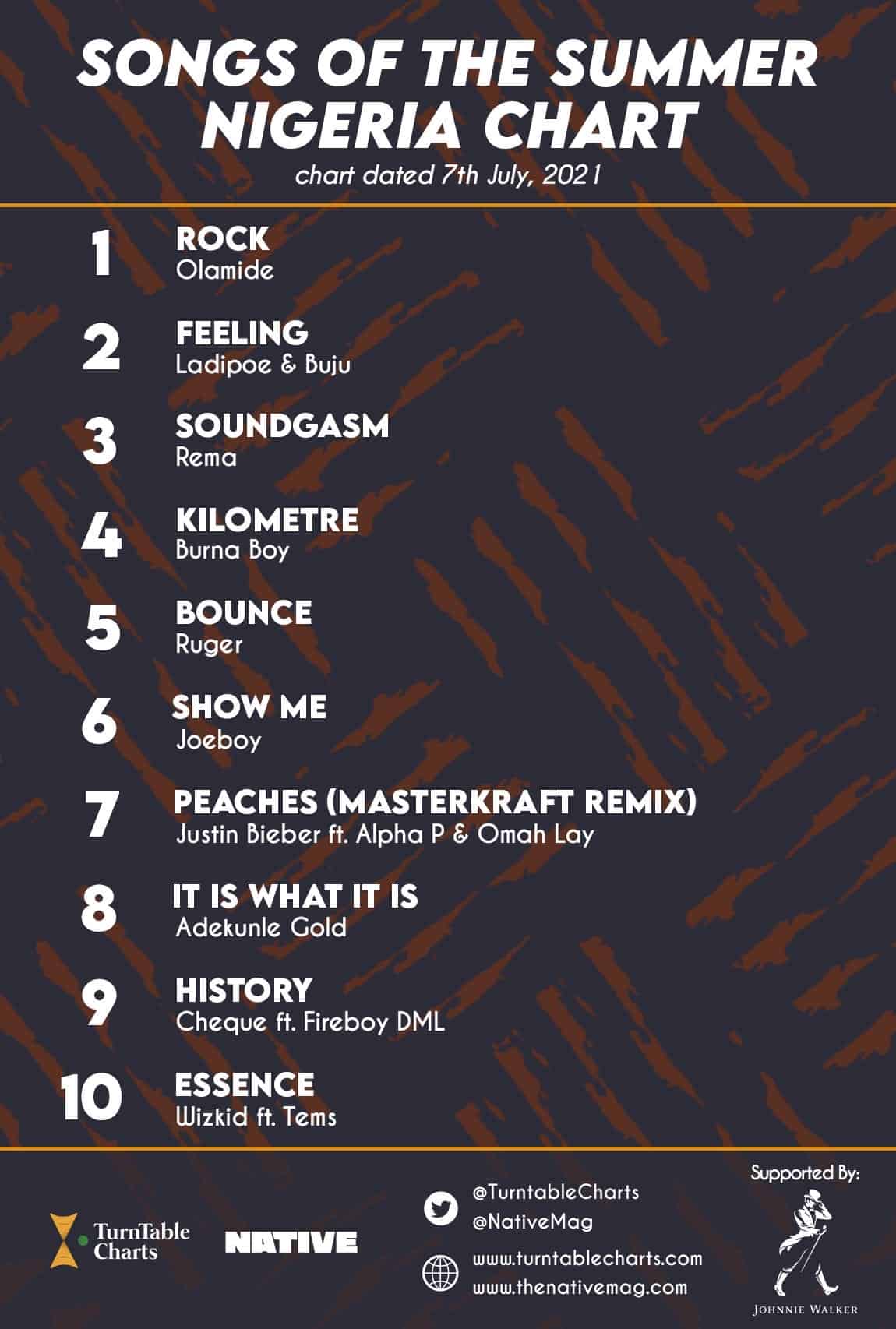

BEST NEW MUSIC: REGGIE’S “GENG GENG” IS ANOTHER BANGER STRAIGHT OUTTA KUMERICA

A 1-Listen Review of A-Reece’s ‘Today’s Tragedy, Tomorrow’s Memory’

In October 2016, A-Reece sealed his breakout with ‘Paradise’, a monumental debut album that’s regarded as a cult classic today. The LP, even with its rough edges, was an impressive introduction to a dynamic rapper, one who could flip between being a charismatic lyricist with a razor under his tongue, an introspective truth-teller, and a pop-rap savant, all on the turn of a dime. Subsequent releases have sharpened these weapons in his arsenal, as going indie shortly after his debut has afforded him the creative license to tinker and experiment, in the full glare of devoted fans who swear by his abilities.

After months of build-up, and a sparse 2020 campaign which was rare for the typically prolific rapper, Reece’s new mixtape, ‘Today’s Tragedy, Tomorrow’s Memory’, has finally arrived as scheduled. Only his second mixtape, since 2013’s ‘Forever King’ earned him initial attention, the South African wordsmith’s new project indicates something of an inward journey. The lead single, “RE$IDUAL SELF-IMAGE”, is one of the most striking feats of honest contemplation in Reece’s catalogue, and its cover art is a painting that’s hauntingly entrancing, completely different from the somewhat cavalier images of the rapper that has graced previous projects. Well, now that the music has arrived, let the speculations cease for the music to do the talking.

In usual 1-listen review fashion, all reactions are in real time while the music plays. No pauses, rewinds, fast-forwards or skips.

“MARK 15:35”

I’m not sure this made our anticipated project lists, but I’ve been looking forward to this. Plush horns and soft keys, Reece is entered with vigour but these lyrics are so dark. This is like watching someone yank out their heavy heart and place it on a scale just to see how much it weighs. Yeah, he’s spitting from the heart. Very little percussion, it’s become a big part of his music.

“HIBACHI”

Ah! YES! This soul sample is so radiant, like a jazz piece being played by a band of angels. This is triumphant soul-sampling rap music, so many boastful bars in an infectious cadence. “I got the kinda drive impossible to format, nigga” is a BAR. Ooooooh! The beat switched up, but Reece’s momentum is still steady. This is somewhere between Roc Marciano’s plush, writerly tales and Elcamino’s graceful brand of reality rap—if you know, you know. Another beat switch to close things out. Returnning to this as soon as the album is done.

“THE 5 YEAR PLAN (feat. Wordz)”

The hype single, very alt-boom bap. “Still got nobody to thank/he came from the bottom to the top of the rank” is one of my favourite rap lines this year. Reece and Wordz have the potential to be the Hardy Brothers of rap music in Africa, their chemistry gets stronger with each collab, not in the way of finishing sentence but in the way of generally being on the same wavelength. Three songs in, and this is the most boisterous track, says something of how much Reece’s approach to beat selection and music making has changed in the last few years. This still slaps adequately, and it makes sense here.

“THE SAME THING (feat. Jay Jody)”

Another Jazzy instrumental, but it’s wonderfully off-kilter. Someone once told me life is uniform even if our contexts are different, and Reece is gave me the same vibes with that opening intro. He’s repeating that line over and over, like an incantation. This is inspired by losing a very close friend or family, he’s saying something about how death will alter how you view the life works and I get that. This incantation is like saying so much with the same words, it will probably get your mind turning—I know mine is already.

“NIGHTMARE ON BRYANSTON DR – Freestyle (feat. BeloSalo)”

This has some knock to it, but there’s very little animation or rowdiness. “I ain’t been outside in a while” reminds me of Earl Sweatshirt’s sophomore, which might be a direct influence to this album. My man went from asking for a sign before his death to demanding a lady pops some pussy for him, stream of consciousness ways. Why does BeloSalo sound a bit like Nav to me? His voice is somewhat syrupy, though. Dropping out the drums entirely for his verse is a nice touch, it sounds very much like a freestyle. A sombre piano solo is a cheat way to end a song.

“DICHOTOMY”

I want to know this sample, I promise I won’t snitch. This is giving me Alchemist vibes, the sample is barely adorned but it still gleams pristinely. I don’t think I want to ever experience divorce, that shit sounds horrific. “Nothing lasts forever like monogamy”, and the polyamorous church yelled Amen. This sounds a little too personal to be just a made-up story.

“NO MAN’S LAND (feat. Wordz)”

The sample usage on this album has been extensive and immaculately done. Memories are how we keeping moments from being fleeting. A devoted father trying to cater to his son’s future while dealing with his deadbeat ex, sounds like a harrowing experience. Beat switch to match Wordz’s entrance, but he’s in the same storytelling element as Reece. We’re back to the original beat, and God knows my soul-sampling geek self is so happy. “Niggas ain’t got a license but got a handgun/these niggas shoot but ain’t been to the range once” is such a striking vignette. These bars on Black-on-Black violence are poignant, they don’t dig too deep into the root but the intentions and sentiments are genuine. That line about being luck to make it past 21 jarred me. Damn.

“JIMMY’S INTERLUDE (feat. Ayanda Jiya)”

“These one goes out to the niggas we lost” makes me want to pour some alcohol on the floor. Evocative piano sample and muted tribal drums, an extremely effective combo. This thing about getting rich while eulogising the dead homies is a bit discordant, but I get that loss can help align your goals in life, especially if you both had plans to flourish together. I really like Reece’s cadence, it’s an apt mix of mournful and optimistic. Beat switch, twinkling piano and blown out bass that thuds gently. “They keep telling me that ‘we ain’t fucking with your albums anymore’/but when I perform these songs, the people scream like Drew Barrymore” is a hard bar and a phenomenal flex. Keeper, this one.

“RE$IDUAL SELF-IMAGE (feat. Ayanda Jiya)”

I remember hearing this song for the first time and being stopped in my tracks, the honest and exuberance grabbed me by the ears. “Acknowledgement without the accolades/still I celebrate because any day could be the last time I hear this record play”, a bar that’s so self-aware it’s quite scary. It’s crazy how the guy that made “Calabasas (Fulfilment)” has changed his main priority to dropping knowledge. There’s still some discord in how to interpret his intentions because he was talking about getting filthy rich a song ago. The way Ayanda Jiya’s voice goes from smoky to fluttering is such a marvel, also looking forward to that ‘QUEEN’ album next month. I imagine the vocal sample on this beat switch to be new angels chanting out of ecstasy from walking on clouds for the first time, SO MUCH heavenly soul! So many great rap bars in this coda. Still a keeper.

“MORNING PEACE (feat. Jay Jody)”

This has a Caribbean Pop tinge to it, but the album’s Jazzy feel is still predominant. “I don’t wanna wake up to no drama in the morning”, me and you, Reece. Me, you and millions of others. I don’t know how I feel about this song on an album filled with honest reflections, but it’s not a bad song. Jay Jody is eating, great verse. This is the closest thing to a commercial “banger”, and I can’t really even seeing it playing in clubs. Maybe he’ll do a Tropical House remix, because “MORNING PEACE” is more suited to intimate moments in the morning, than a sweaty dancefloor at night. This beat switches to close out songs has been a nice touch on this album.

“BRAVO (feat. Stogie T & BeloSalo)”

These horns are so triumphant, you can smell the self-congratulatory props in the air. By the way, this isn’t an ad, but listening to music with Tidal heightens every single thing in a good way. Those BeloSalo mumbles were cute, but here’s Reece going in. “I’m trying to be unforgettable” is such a loaded mission statement, but it puts a lot of things about this album in perspective. Okay, I like this hook better than when it first opened the song. Stogie T raps with the deadeye assurance of a shark going for a kill after smelling blood. “Might miss it the first listen, it sinks in a week” is a great self-description of a bunch of Stogie T’s music. Such a strong collab, keeper.

“OVER ME”

This album has moved at a steady pace, perfect for an early morning listen before the world starts being noisy. Whoever helped source for the piano samples on this song deserves a higher royalty rate! “They could try to take me down, but they won’t take this all from me/they won’t take my artistry, this music is a part of me”. Another strong stamen of self on an album filled with plenty of them. I’d like to hear Ladipoe rap on this, mainly because of the topic, he’s one of the best at conveying being assure. Anyways, that Reece verse might be a figure 8 verse, but I’ll have to run it back. Rappers and including voicemails from close people, cue in the popular Jacob Zuma meme.

“DOTTED LINEZ”

Final song. There’s some bounce to this, but the soul remains central. Reece is taking a swipe at pop culture and the gossiping it engenders, a topic I rarely enjoy because pop culture is meant to be vain. “I don’t take advice from niggas who don’t know how much it takes for me to get where I am today” is an assured bar. I think he’s referencing the shit that went down with Ambitiouz, but his determination doesn’t exude any spite. “I can’t go out this way”. Would have loved to hear a Shane Eagle verse here, but yeah, this is a solid closer.

Final Thoughts

There’s a popular saying in Nigerian pidgin English saying that goes, “Jungle don mature”, and I’d like to think it applies to A-Reece’s ‘Today’s Tragedy, Tomorrow’s Memory’. With every body of work, Reece has always mirrored where he is and what his priorities are at that time, and those projects chart a linear progression of a young man with dealing life’s challenges, while juggling high ambitions, fame and a lavish lifestyle. With his new tape, Reece’s evolution has clearly taken an exponential turn, with a wider leap in ideals that different from the small steps that characterised the gap between previous projects.

Where previous projects had a running boy-meets-world motif, albeit with far less innocence than it connotes, ‘Today’s Tragedy’ is a striking portrait of a young man readjusting what he thinks really matters, after gaining more raw experiences and better understanding the way the world works. On the project, as already indicated by the title, there’s allusions to losing close friends either to death or prison, and it’s clearly realigned Reece’s aim since there’s an understanding that life has a cap on it. Inasmuch as Reece still stands out as a vigorous rhyme slinger, this personality shift affects his approach to writing and rapping, filling the tape with introspective bars and intentional statements of self.

To match this shift, Reece strips down his musical choices considerably, foregoing the composite and booming sound of earlier projects for immaculate soul samples, radiant vocal chants, jazzy horns and noodling drum loops. These tastefully curated, bare samples make his raps sound lighter and sharper, even when the content and overall mood is heavy with self-realisation. The tenets that make ‘Today’s Tragedy’ a delightful first listen are clear on first listen, but it’s also evident that it will take multiple listens to fully unpack the growth he exhibits on the album. This tape is proof that Reece, who turns 24 tomorrow (March 27), is very invested in maturing as a person, and it’s positively affected his evolution into one of the most poignant rap voices out of South Africa.

Listen to ‘Today’s Tragedy, Tomorrow’s Memory’ here.


Dennis is a staff writer at the NATIVE. Let me know your favourite the Cavemen songs @dennisadepeter
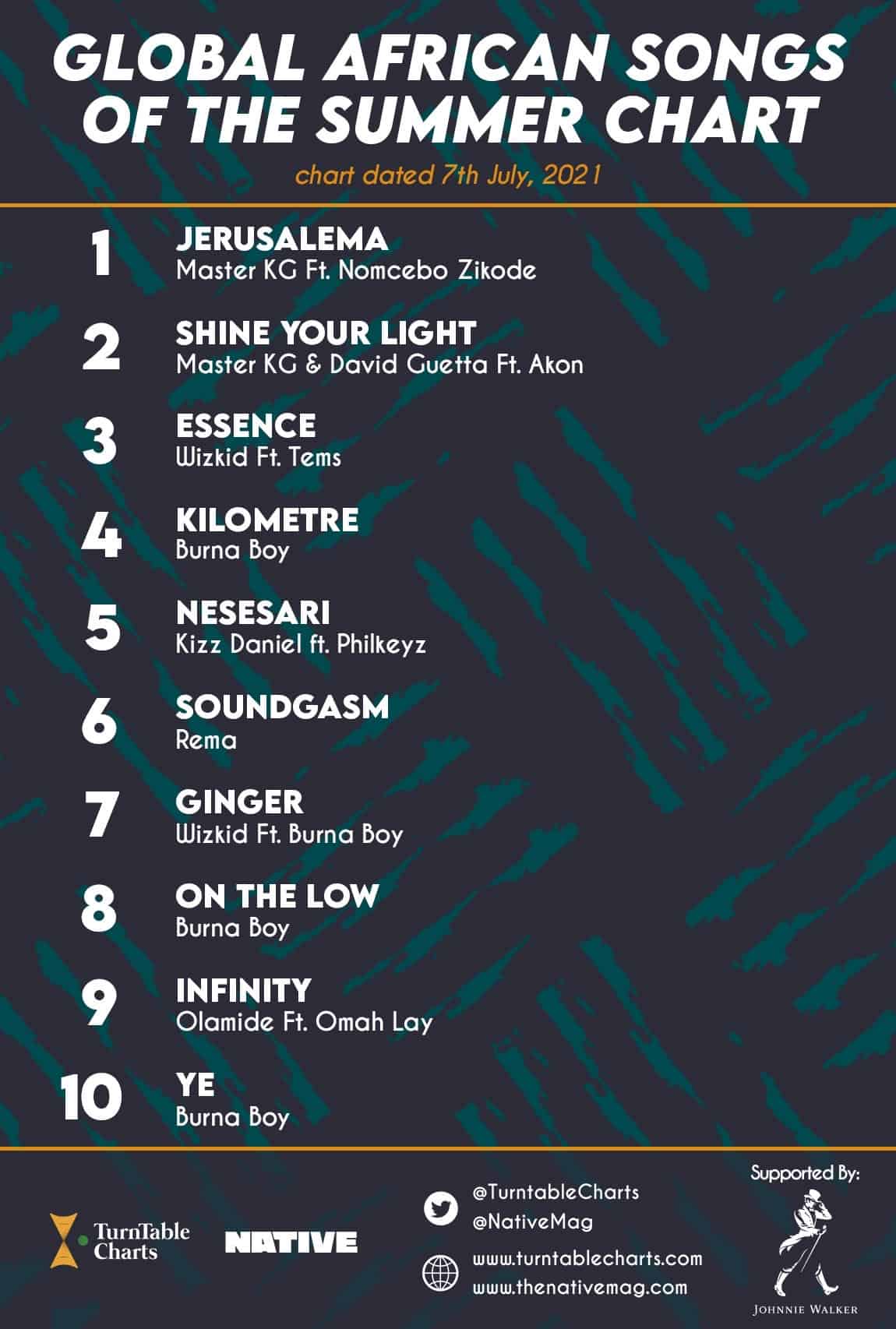

ICYMI: READ OUR 1-LISTEN REVIEW OF NASTY C’S ‘ZULU MAN WITH SOME POWER’

NATIVE Exclusive: Get to know Tyla, South Africa’s latest starlet

A year ago, when the city of Johannesburg, Tyla’s hometown went into lockdown due to the global pandemic, her plans for becoming the face of South African pop music were put on hold. At the time, Tyla had only one single to her name, the incredibly compelling, “Getting Late”, which ended up taking over TikTok and Instagram thanks to its dance-ready beat. For a debut, it’s incredibly compelling as the sweet-voiced singer seamlessly blends pop sensibilities with the groovy percussive sounds of Amapiano. 

Once the whole world hit pause, Tyla felt the changes to her rising career, and decided to weigh in on her options before taking them. “We were sitting on the footage for a year,” she tells me over a Zoom call from her family home last week, referring to the epic video for her debut single which was released almost two years after the record’s original release date. Although Tyla believed her plan to capture ‘the best video in South Africa’  was ruined, the video didn’t suffer from the delay and went on to earn over 1.4 million views in record time. Now, catapulted into a new limelight, the 19-year old artist is looking to take over South Africa’s radio waves with her infectious bops.

Born Tyla Seethal, the fast-rising singer always knew she wanted to be the next big pop star. She recalls having clear visions of the type of life she wanted to love, and it always involved making beautiful music and performing in front of adoring fans. Back then, it would have been difficult for Tyla’s parents to see her vision as the bigger picture, as they preferred for Tyla to prioritise school and keep music as a hobby on the side. 

“I was actually studying Mining Engineering” she tells me with a wry laugh, before explaining that shortly after she began this course, she realised her passion for music and committed to it full time. Naturally, in the way any African parent would, they were worried however, today, we can see that Tyla staying true to herself has worked out well for her. 

Despite the delayed start to her career, thanks to the panoramic, Tyla still found a way to connect to her fans, providing fresh, relatable entertainment through social media—particularly TikTok, which is now home to her over 700k followers. During the lockdowns, Tyla would perform dance routines and share music covers, endearing her to a global audience who quickly embraced the Gen Z singer and her world for its relatability and the singer’s impressive vocal delivery.


View this post on Instagram


A post shared by Tyla (@tyla)

It was through these dance routines that Tyla found a community of dance and music lovers, both old and young, eager to groove to her catchy style of music. “I love apps like TikTok and I’ve been using apps like this since the days of Musical.ly, so it’s kind of a surreal experience to see my song bring together so many different people from around the world,” she tells me. Tyla’s style of music has helped her cruise to victory on these apps because they work to seamlessly blend the popularity of music with the videos created on the platform.

On “Getting Late”, Tyla puts her own pop spin on South Africa’s fastest-growing genre, Amapiano, by meshing both sounds to create a “fusion”. She tells me that her diverse cultural and musical background is to thank for this direction in her own career. Growing up, Tyla’s parents introduced her to a wide collection of music from around the world, including Brenda Fassie, Boyz II Men, Brandy and more. This allowed a young Tyla to subconsciously broaden her sonic palette, and by the time Tyla was creating her debut single two years ago, she instinctively knew that she didn’t want to be confined to any strict boundaries.  

Her debut was the sonic manifestation of all the hard work she had put in with producer, Kooldrink in developing her sound and finding one that’s unique and true to her. While looking to find her feet sonically, it also afforded Tyla the space to talk about her most vulnerable feelings in a light-hearted manner, which is possibly most key ingredient of a song. She tells me that she is able to do this because: “I’m a person that doesn’t like being vulnerable, I really struggle with it, so I found a way to sing about my vulnerability in a more fun way”. She explains that the earworm track has two meanings; the literal meaning which reveals that Tyla is late for a date with a cute guy because she’s still getting ready, and the deeper one which shows Tyla’s hesitation to rush any romantic situations. 

The best music today is the kind that gets your mind working, whilst still making you want to turn up, and with this, Tyla seems to have cracked the code keeping and maintaining an audience’s attention. In addition to delivering the bops, Tyla is also being a hometown hero putting on for the people around her, as with her new platform, she is also shining a light on other South African creatives in her circle from local TikToker’s and the dance community to the marching band in her debut music video. 

A key part of her career success, she believes, comes from the fact she has always had an inspiringly strong sense of self-belief and confidence in her team. “Getting Late” was released with no label backing, no professionals or gatekeepers; just Tyla, her best friend, stylist, and makeup artist, Thato Nzimande, her manager and director, Topshotta, and producer, Kooldrink. It’s incredibly heart-warming to see their stellar results, considering the obstacles typically put in place for African creatives. 

With a blank canvas to paint however she pleases this year, Tyla is sticking to her guns and seeking to break every pre-existing mould of what a budding Pop superstar should be. She’s now well underway to becoming one of South Africa’s biggest Gen Z pop stars, one pouncing cat routine at a time.

[Featured image credits/Courtesy of Tyla]


ICYMI: The importance of women sharing their experiences through music

Here’s what you missed on the latest NSRadio Live Special

Over the past month to celebrate Women’s History month, the NATIVE has spotlighted different women excelling and smashing glass ceilings across a range of fields including music, entertainment, politics, tech, and all corners of popular culture. Two weeks ago, we held our very first Women’s History Month special on the NATIVE Sound Radio, our show on No Signal which is hosted by me, Tami Makinde. In that episode, I was joined by the founder of Femme Africa, Ayomide Dokunmu, and our Managing Editor, Damilola Animashaun, and we discussed everything from the super secret upcoming NATIVE Sound album to misogyny in the music industry.

This week, for our fifth episode, I chopped it up again with Damilola but this time, we were both joined by freelance writer and creative director, Ify Obi and rapper, student and hot girl, Ytboutthataction aka Adetutu Aderogb. Together, we discussed Burna Boy’s latest win, Wizkid and Jenn Nkiru’s win at the 63rd Grammys, Teni’s ‘Wondaland’, Tanzania’s first female president and the safety of women in society.

This week’s episode was particularly interesting for a number of reasons as we not only listened to music from African women we admire but we were also able to create a space where we could all share our worries as women in society following the atrocious case of sex and gender-based violence across the diaspora. We also launched our first-ever show freestyle with Ytbouthataction, who rapped over a catchy Blaccboyycash-produced beat, before telling us about her recent release, ‘Sage Mode’. Here are 5 takeaways from the episode.

  • The Grammys need to do better

We’ve been saying for years now that award shows are not a viable metric of success or value in the music industry because of their inability to accurately represent and champion music from different people, places, communities, cultures, genres, and more. This week, we discuss how it’s possible to recognise that the Grammy’s needs deliberate and intersectional internal change while also celebrating the fact that an Afropop artist took home the Grammy for the first-ever newly announced Best Global Music category and a black woman also won for the Best Music Video.

  • The rap girls are coming!

Last year, we declared that it was finally time for Nigerian rap to embrace its women but many people argued that it was not the right time. Well, in this episode, we all discuss the female emcess that are bringing the heat and audaciously speaking their in these parts and across the world, whilst also jamming to some new records from Crystal Millz, Ictooicy, ENNY, Lioness, and more. In addition, Ytbouthataction drops a fire freestyle and Damilola makes a case for Saweetie’s ‘High Maintenance’.

  • We are rooting for Samia Sulu Hassan

In Africa, there is still a long way to go in regards to how women are treated in society. Due to our patriarchal society, women constantly have to work twice as hard to receive any respect, and even then, it’s not always afforded. This week, we discussed Samia Sulu Hassan’s swearing-in as Tanzania’s first female president and the obstacles that stand in her way following the death of her predecessor and party contestation.

  • Women’s History Month but women are not safe

It’s been a very heavy month for women all over the world. All over the world, it’s clear that the safety of women is not priority, from targeted murder to apparently curtail the temptation of the women’s existence, to the a member of the Metropolitan Police murdering a woman in the streets. We discussed how each of these cases of violence against women affect how we perceive society’s treatment of women, and whether we feel protected.

  • DUMP Him

Ladies leave your man right now or whatever Destiny’s Child said! It was a sad weekend finding out about Quavo and Saweetie’s break up, however, it was a good opportunity to discussed why women need to focus on getting the bag and leave these niggas alone.

Catch up on the episode 005 below.

https://soundcloud.com/thenativemag/native-sound-radio-004-feat-the-kemist-ayomide-dokunmu-damilola-animashaun

Featured image credits/NATIVE


ICYMI: Tanzania swears in Samaia Sulu Hassan as its first female president

What’s Going On: Tanzania’s first female president, election (mal)practices in Congo & more

Our Latest Column, “What’s Going On” Will Tally Notable News Headlines From Across The Continent — The Good, The Bad, And The Horrible — As A Way Of Ensuring That We All Become A More Sagacious African Generation. With This Column, We’re Hoping To Disseminate The Latest Happenings In Our Socio-Political Climate All Over The Continent, Whilst Starting A Conversation About What’s Important For Us To All Discuss. From Political Affairs To Socio-Economic Issues, ‘What’s Going On’, Will Discuss Just That. 


Ever so often, we have to remind developed parts of the world that Africa is not a country. It’s not just because a significant portion of people in those parts are unenlightened, but also because of the continent-wide similarities when it comes to social, political, and economic issues. For one, Africa is teeming with corrupt and inept leaders—many of them dictators— who have failed to invest in meaningful infrastructure, all while derailing and rejecting systemic change through violent means if necessary. In addition to this, they are fully aided by deeply patriarchal, religion deferring, and ultra-conservative social constructs.

At the same time cross the continent, the current generation of African youth are pushing against these systemic boundaries, in order to continue the arduous work of rewriting the narrative. Even with all of the endeavours, talent and records being witnessed from music to tech, the limitations put in place by the continent’s political landscape still looms large. Every week, disparaging headlines from around Africa make their way to the news, reminding us of the bumps affecting these perceived stripes, and the roadblocks which delay our growth towards more wholesome and enabling societies for all Africans. Below are few news bits of what’s been going in on in the past few days.

The work ahead of Tanzania’s new female president

Last week, Tanzania inaugurated its first ever female president, after the passing of former President John Pombe Magufuli. News of Mafuguli’s death came after weeks of speculation, when the usually brash and outspoken president had been out of the public eye for a while. Ex-VP turned President, Samia Suluhu Hassan announced Mafuguli’s passing last Wednesday, with the official account stating that he’d died from heart complications. However, a section of the East African press is disputing these details, alleging that Mafuguli may have died a full six days before the announcement, and his passing may have been caused by Covid-19.

As the coronavirus pandemic raged in last year, Mafuguli was one of the chief Covid-19 detractors, claiming that the viral disease had been eradicated by three days of national prayers, and ordered the seizure of Covid-19 case statistics as early as last April. Even as cases continued to surge and test the limit of Tanzania’s public health system, he discouraged citizens from abiding by precautionary measures and his administration even declined receiving vaccines. Mama Samia, as she’s fondly referred to locally, will be completing the second 5-year tenure she won alongside Mafuguli, taking executive control of the country at a critical time.

In addition to taking an active stance in the hopes of eradicating Covid-19, many Tanzanians are hoping to see President Samia strengthen the country’s democratic processes and freedom of speech, perhaps even usher in a new constitution, since Mafuguli’s tenure consistently involved abuse of power aimed at political opponents and the press. As it is, the new president is riding on the goodwill of many Tanzanians, who are hoping that her many years in political and civil service translates into a positive socioeconomic tenure.

Congo’s presidential election is a familiar African story

Having been in power for 36years, Democratic Republic of Congo President, Denis Sassou Nguesso, is very likely to be elected for another five-year tenure. Initially president from 1979 to 1992 during the single-party regime, Sassou Nguesso was defeated in 1992’s multi-party polls, however, he spearheaded two civil wars as an opposition leader. Having muscled his way back into office in 2002, he remained in office for two 7-year terms, then pushed for referendum to change the 2002 constitution to allow him run for third term, with presidential tenures running for five years.

Similar to previous polls where Nguesso has contested, the lead-up to this elections has been marked by reports of candidate intimidation and allegations that the elections would be anything but free and fair. On Sunday, it was reported that authorities had imposed an internet blackout during the polls, with heavy presence of armed forces on the streets of Brazzaville as voters turned out in low numbers to cast their vote. Independent observers were blocked from monitoring the electoral process, while the local Catholic Church’s request to send in observers was blocked outright. Within hours of the polls closing, there were already forecasts expecting Nguesso to extend his stay in office.

To make things grimmer, major opposition candidate, Guy Brice Parfait Kolelas, passed away shortly after the polls following a coronavirus infection. It was unclear what would happen if, by the slightest of chances, Kolelas had won, but Nguesso’s expected victory has now been confirmed, winning re-election with 88.57% of the total votes. Meanwhile, the African Union, which Nguesso has once led as chairman, has commended the elections as “calm and peaceful”. This election is a familiar African story of countries working with democratic constitution on paper, but being saddled by dictator-style electoral process and administrations.

End SARS protesters are still being prosecuted by Nigeria’s judicial system

Last November, in one of its many heinous acts in response to the protests against police brutality, the Nigerian police broke into the home of Eromosele Adene, ostensibly arresting him for being one of the more popular faces of the youth-led protests. For the next ten days, the police resorted to shady, unlawful tactics, holding him in detention between Abuja and Lagos in terrible conditions, without officially charging him to court (the police can only detain citizens for only 24-hours, after which they’re required to press charges in court).

Eventually charging him to court nine days later than required, the police asked a Lagos magistrate court for a 30-day remand request, charging Eromosele with criminal incitement, cyber stalking, provoking breach of public peace, and conduct likely to cause the breach of peace—the police also lied that it arrested Eromosele at the protest grounds. The court threw out the remand order, setting a one million naira bail for Eromosele which was met, citing the irregularities with the police’s case presentation. However, those same irregularities don’t seem to be enough ground to stop the case from going to trial.

In a video shared to social media last Wednesday, which has now been deleted for seemingly legal reasons, Eromosele shared that his case has been moved to the trial phase, with the case now adjourned till May. Ever the optimistic persona, he also explained that the court before which he appeared is still packed to the brim with cases against End SARS protesters, many of whom don’t have public profiles but are still being prosecuted for exercising their fundamental, democratic rights to protest.

Ethiopia finally admits to Eritrea’s involvement in genocidal attacks on Tigray

Less than two years after winning the Nobel Peace Prize for brokering a peace deal with Eritrea, after decades of border-related hostility between both countries, Ethiopian prime minister Abiy Ahmed is now copping to allegations of colluding with the neighbouring country in targeted, genocidal attacks on the Tigray region of Ethiopia. The months-long civil conflict was a culmination of tensions between Ahmed’s federal government and the Tigray People’s Liberation Front (TPLF). Last November, Ahmed ordered military attacks on the country’s Eritrea-bordering northern region, in retaliations to alleged initial attacks on federal troops by security forces of the TLPF.

The TLPF was an influential part of the Ethiopian governing body for decades, before Abiy Ahmed took office on the back of promised political reforms. Both sides have been in a tense back-and-forth, but seemingly fearing secession by the wealthy Tigray region, Ahmed resorted to brutal military force. According to analysts, the attacks feels very much like preparation for an impending ethnic cleansing, not unlike the Biafran genocide of the late ‘60s by the Nigerian government. Tigrayans have accused Ahmed of soliciting help from Somalia, United Arab Emirates and Eritrea, the former two of which are still unconfirmed. After months of denial from both parties, though, Ahmed has finally admitted to the presence of Eritrean troops in Tigray.

In a parliamentary address on Tuesday (March 23), the PM stated that Eritrean troops crossed the border into northern Tigray, confirming that previously alleged human rights violations—including sexual abuse and looting—had indeed taken place. “There has been damage that happened in the Tigray region, notwithstanding the propaganda and lies, information indicated there have been rapes of women and looting of properties,” he said in his address. Ahmed’s very belated transparency is an anomaly in Africa, where governments sanction the cold-blooded killings of its citizens and continue to lie in the face of incontrovertible evidence. This only serves as reminder of the brutality African leaders are capable of spearheading, whether they are Nobel Prize winners or not.

https://www.youtube.com/watch?v=SMpV9IZ0VVQ

[Featured Image Credits: Web/Daily Post]


Dennis is a staff writer at the NATIVE. Send me pertinent headlines and stories @dennisadepeter
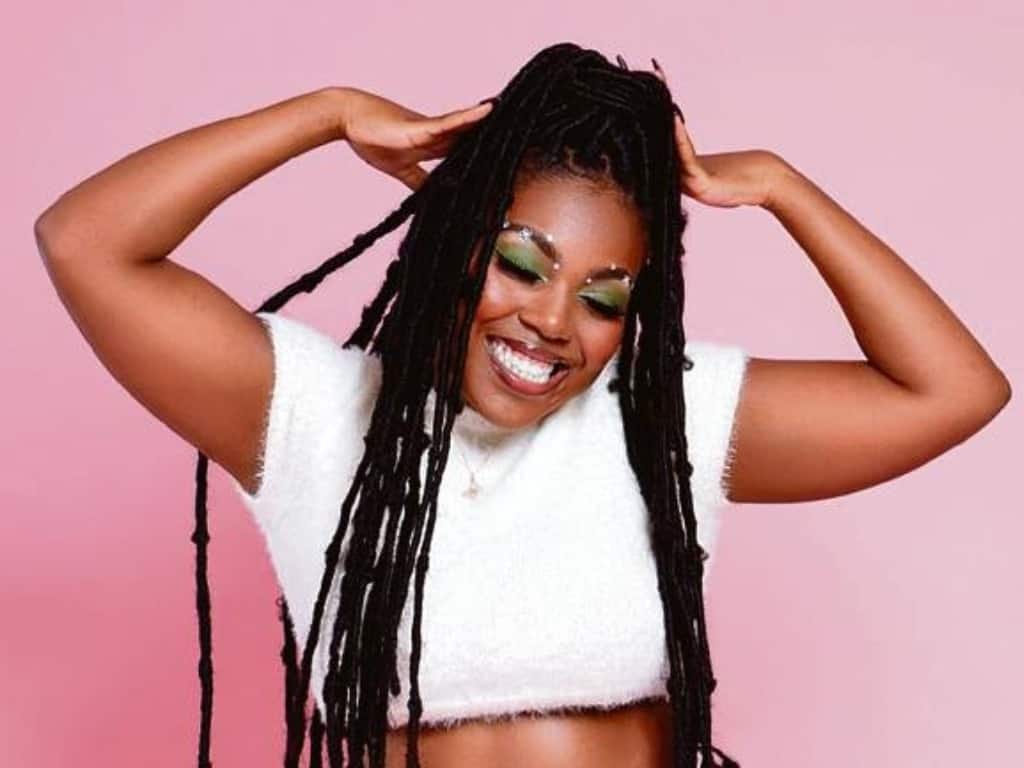

ICYMI: EVERYTHING WE KNOW ABOUT THE ASTRAZENECA VACCINE IN NIGERIA

Everything you need to know about the Recording Certification of Nigeria

There’s a popular saying that goes men lie, women lie, but the numbers don’t. Since music became a lucrative venture, there has been a clear focus on data, whether it’s how many physical CDs an artist sold or the number of an artists’ monthly listeners and views. Due to the emphasis on commercial profits, this data is often the primary indicator of how well a song, an album, and/or an artist is doing. Today in the streaming era, where an increasingly globalised world is fostering listening without the need for physical borders, these numbers now go beyond simply identifying volume, and provide way more context for the current climate.

Last week, the Recording Certification of Nigeria (RCN), a newly-minted body aimed at certifying “artistic achievements across several platforms in which music consumed in the country”, announced that Simi’s “Duduke” was the most viewed music video on YouTube by Nigerians in the country, over the last three years. To many, that was a shocking revelation, however, to Dolapo Amusat and Ayomide Oriowo, the co-founders of the RCN, it was par for the course.

Just days before, the RCN had announced itself as a pioneering certification body, they had launched a short-form video certification, verifying to the public the diverse list of music videos that have been the most popular on YouTube Nigeria in 2018.

“We started with short-form video certification because YouTube actually has a platform that provides this data, especially analytics that breakdown regional numbers,” Dolapo explains during a Google Meet call, along with the three other RCN co-founders present. “That means, with YouTube you can tell how many people have streamed a video from a particular country.” In the last decade, Nigerian pop music has played a foundational role in the increased global popularity of music emerging out of Africa, garnering a truly international audience that has only been amplified with on-demand music streaming.

At the same time, though, the reality of streaming in Nigeria is that it’s yet to be widely proliferated. Coupled with the fact that these numbers are collated globally across various streaming platforms, local streaming numbers have been largely obscured. Regardless, there’s still a lot of potential to get things right and begin accurately documenting our data, and this is how RCN hopes to fill the void. By contextualising the extent of local support in the same way better-established music industries around the world have been doing for years. (Think America’s RIAA, Australia’s ARIA, South Africa’s RiSA, and more.)

At the moment, the body is certifying music videos with the typical Gold and Platinum benchmarks, tuning the criteria to mirror current streaming habits in Nigeria. The short-form video format awards gold certifications for 2,500 units, platinum for 5,000 units, and multi-platinum starting from 10,000 units, where one unit is equivalent to 300 streams/views.

Also comprising of Fortune Osayawe and Similoluwa Adegoke, the currently 4-man operation now have their sights set on adding to Nigeria’s growing music ecosystem with a wholesome mode of operation in the near future. To this end, the NATIVE spoke to the RCN co-founders about the current music video roll-out, the reasoning and process behind the body’s formation, and their future plans for African music. Our conversation, which follows below, has been lightly edited for clarity.

NATIVE: When did you come up with the idea for RCN, and why did it start now?

Ayomide: We [TurnTable] had that idea to start this back in September last year. That was the first time we had that conversation, we’d been doing charts for a while, but we figured it would be weird to be a chart’s publication and also be part of the certification body—it was like being judge and jury. So we postponed it, thinking someone else would do it. But in January, we had this Clubhouse room where there were a few industry guys—including Bizzle and Foza—and Foza mentioned that TurnTable charts should be the one to start it. I mentioned our involvements with the charts already, and then they said there was no rules against it.

Tron (Fortune) had already mentioned something about doing certifications a week prior, and we just figured, we already have the same idea so let’s just get this done. So we just went off that energy from that room, and we started making plans, trying to figure out how to pull it off, and getting everything together.

NATIVE: That’s about two short months between conception and rolling out publicly.

Ayomide: Technically, it’s wasn’t that short because we (TTC) have been planning for it, we just didn’t want to start it as TurnTable certification. We’ve had the idea of how to start, the whole short-form video thing, but it was just January that we decided to work on and we knew that it’s WeTalkSound we wanted to work on it with.

NATIVE: What were the technical humps that you guys had to figure out in that set-up period?

Fortune: After discussing and agreeing that we were going to do this together, that’s the four of us from TTC and WTS, we knew we had the skills to set things up between ourselves. I got started with branding, creating the logo, social media, and things like that. Simi is our dev, he sort of built the website, and I created the UI/UX design for it. I got Vyne (multi-disciplinary artist and WTS affiliate) involved as well with the UI, sent that over to Simi and he built the site within about a week. For some reason, we put a lot of pressure on ourselves to get things going. I think we were set to announce on a Thursday, but we had some complications with the website and we ended up pushing things back to the next day.

Obviously, Dolapo’s got some industry connections, so we knew we were covered with putting the word and interacting with managers, label executives, and industry people. Ayomide, too, with TurnTable Charts, they already had the data and all we had to do was interpret the data, get Simi to upload to the website, and Ayomide has written all the articles on the website so far. Dolapo and Ayomide also wrote a few e-mails we’ll be sending out to brands and just about anyone we feel needs to know about the establishment of this body.

Ayomide: I think, on my end and TTC’s, the major difficulty was figuring out the metric we were going to use because the idea when we started was to make it close to the UK, where its 50,000 units is to go gold. But when we used that benchmark and compiled the data together, we realised that no one was meeting it or even close to it. So, we figured that we need to bring this down to something that actually works, then we looked beyond the UK to other countries like Italy, France and South Africa just to find something we can use as a comparable market. Even then, that wasn’t enough, because if we set 10,000 units for gold, no one was still going to get it. We were just like, this is what the market is and we should just keep it at what is attainable, and it would still be a few artists at the end of the day. We wanted benchmarks that would be remarkable when it’s achieved, and not so unattainable that there’s just one gold-certified video in Nigeria.

NATIVE: Why is 300 streams equal to one sale unit?

Ayomide: Because there’s no existing benchmark in Nigeria, we had to use both data that TTC has collected so far, and then comparable markets like France and South Africa, places that were close to us to affect the way we would structure ours. We picked S.A. because that’s the closest thing we have to a certification in Africa, and theirs is currently 200 streams to one unit. We did more research and realised that they don’t factor in several platforms that we’ll be factoring into ours, so whatever we’re doing has to be higher than theirs because they’re factoring in lesser platforms. We also compared to other markets, and we realised that a number like 1000 streams for a unit is not attainable for the market, so we decided to go with something close to S.A, at least something bigger than theirs but also reflective of our reality.

NATIVE: I like the idea of setting the benchmark relative to our streaming reality. Will you guys consider reviewing if streaming evolves positively?

Ayomide: I mean, there are several markets that have changed, like Australia and the UK have changed over time, and there are places where it’s been fixed for long periods. It’s the market that will determine what we do, the change has to be enough that the shift is recognisable to review the benchmarks. I guess the fact that people are noticing that numbers aren’t exactly high might push things forward, but I still doubt that because most Nigerians spend their time watching videos on TV. I mean, why go to YouTube when Trace and Soundcity will put it on your screens. With time, maybe that will evolve and people will turn to YouTube ahead of TV. If there’s a need for review, it will definitely happen.

Fortune: On that note, though, I know Ayomide thinks it’s not gonna do much, but I feel [the certifications] is going to have some impact. For example, a video like Davido’s “FEM” is on the verge of going double platinum will probably make his fans go hard, because we’re making the numbers visible on the website, I feel like fans will definitely see those on the verge of certification as incentive to stream more. It really depends on how competitive and monumental this becomes.

NATIVE: Certifications are huge but the plaques are the bragging rights. How will you guys start handing them out?

Fortune: Obviously, this is one of the things we’re struggling with because we don’t have the funds and backing yet, no one’s sponsoring us. So, we have to live by our means, because if we decide to start producing plaques and giving them out, we’d literally go bankrupt. We’ve decided to create a letter, e-mail sort of notification to tell artists that they’ve reached a milestone and they can apply, and pay, to get their plaques. For the video certifications, we’ll just be sending out notifications to artists and labels. Obviously, the plaque design has to be nice and appealing, we’re still working on and we’ve got an idea of what it should look like at the moment. One of these days, we’ll post the template version of it, or maybe we’ll present it to one artist so others can decide if they want it or not.

NATIVE: Why did you guys choose to rollout with short-form videos?

Dolapo: This is something no one here has done, that’s fundamental to note. When you’re defining things like this for a market that hasn’t had any real structure, it’s basically who picks up the mantle that will contextualise what the reality is. When they started RIAA and all these other certification bodies, it was just a bunch of people that came together and kicked things off. One fundamental problem around this whole certification thing—around charts, anything around data analytics—is music data availability. The data is not being given to us on a platter of gold, where Spotify, Apple Music is giving us data, that’s a hurdle we’ll have to surmount because only some of these platforms have their numbers displayed publicly.

We started with short-form video certification because YouTube actually has a platform that provides this data, especially analytics that breakdown regional numbers. That means, with YouTube you can tell how many people have streamed a video from a particular country. Videos is just one data point, we have two other certifications, this is the short-form video, we have the freemium streaming, and we’ll have a paid services one. The latter one will be based on request, where we’ll certify based on the numbers provided by the labels, but freemium streaming will be based on the platforms where we can see the numbers for ourselves. For short-form video, we’re only using YouTube which is one data point, as opposed to freemium streaming where we’ll be combining Audiomack, Boomplay, Gbedu, and YouTube NG again.

This is the easiest way to start because it’s just one data point, the numbers are transparent, it’s easy to iterate and change things as we move on, if we need to change anything, as opposed to the complex ones where to even start is more complex than this one. So it’s like building a tech product where you start with the easiest version first, you let the market react, you answer questions, get feedback, go back and make it better. That’s really the approach we’ve taken, to start with the most straightforward and the one with the easiest available data that has less controversy. The idea was just to start and see what people would say and if the reactions had been, “fuck this thing, we don’t want it, screw you guys”, maybe we would have gone back to our houses because people don’t want it. It was just about starting with the easiest to explain, easiest to execute, the validation, and start working on the others. It’s not that we don’t have the other certification forms figured out already, but it’s just best to start with reason.

NATIVE: What stuck out to you guys when you started collating data for these short-form video certifications?

Fortune: The percentage of streams coming from Nigeria surprised me. I remember when we landed on the metrics and it was 750,000 views to go gold, and I was like, “that’s too low”, which is exactly what the reaction was initially on Twitter. Then when Ayomide sent in the analytics that only one artist in Nigeria had gone beyond 3million views from Nigeria, I was shocked because I had seen videos over the years gaining millions of views, and I’m thinking, “wow, Nigerians are actually riding for these artists”, just to find out that only five to ten percent of those views are only from Nigerians. Like, in the last three years, only Simi has crossed 3million views, and not Wizkid, Davido or Burna Boy.

Simi: My input around data collation was comparatively minimal, but I think it was Naira Marley getting so many certifications. I probably expected more generally, but that shocked me.

Dolapo: I wouldn’t say anything has shocked me, it just validated things I already thought. Naira Marley for instance, if you have been following you would know that when YouTube Music launched last year, they actually used him as the face of the launch. Google announced search performance on YouTube then, and Naira Marley was the most viewed artist in Nigeria in 2019, a lot of people maybe didn’t see that. I wasn’t surprised by all those certifications, because he has a huge following locally. Maybe because I’m generally observant around analytics generally, it didn’t catch me by surprise.

Ayomide: For me, it’s more like Dolapo, mostly because we’ve seen most of the data at TurnTable anyways. We already had an idea of what would happen, because last year also, Naira Marley was top 5 on YouTube. It’s things that we expect, but as we make more announcements, people will see a lot more surprising stuff around Gospel, Hausa music, and Indian music—Zeeworld soundtracks.

YouTube is one of the more inclusive data points in Nigeria, like, the third-highest video in terms of so far is by an arewa artist—Hamisu Breaker’s “Jaruma Mata”—literally only behind Simi’s “Duduke” and Davido’s “FEM”. There are several gospel artists, Igbo artists, non-Nigerian stuff that was probably popular from a satellite TV channel and people just went on YouTube to check their videos. We represent as many different types of music videos popular in Nigeria. So far, we’ve tracked over five thousand videos from the last three years, and it’s only going to get bigger. You’ll see all types of artists getting certifications as long as they are able to meet the criteria, artists that you typically wouldn’t see on, say, Apple Music and Audiomack charts will get certified for their YouTube milestones. We’re at 92 certifications right now, and we’ll keep moving from there.

NATIVE: As regards Nigerian pop music, those percentages of local views speak to how well our music is travelling. Do you plan on representing that with the charts?

Dolapo: The thing with certifications is that they’re local, and that’s really what we can concern ourselves with. These guys are already getting certifications around the world, Burna has plaques from Canada, the UK, and France, Davido has two golds in the U.S. and he has several from South Africa. That’s the irony of the situation now, these guys are already getting plaques from around the world but none in their own home country, that’s the problem we’re solving. They’re already celebrated abroad, we’re the ones that are not tracking anything here.


Dennis is a staff writer at the NATIVE. Let me know your favourite the Cavemen songs @dennisadepeter
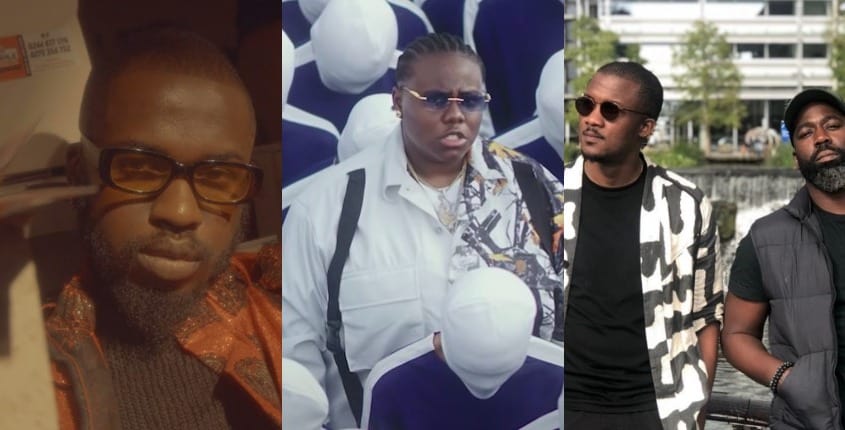

ICYMI: MEET THE VISUAL ARTISTS CONNECTING NIGERIAN ALBUM ARTS OF THE PAST & THE PRESENT

Best New Music Special: Teni documents her unbending confidence on debut LP, ‘WONDALAND’

In the earlier stages of her career, Teniola Apata constantly affixed “the Entertainer” to her current, widely accepted mononym moniker Teni. Used at a time when she was still looking to convince the people of her skillset, that epithet was a pre-emptive statement, a way of laying out her intentions to engage any and every one capable of appreciating entertainment with a capital E. Within the scope of Nigerian Pop music, a space that places premium value on entertaining everyone for a chance at sustained mainstream success, Teni’s aim wasn’t unique but she quickly started carving out her own corner nonetheless.

“Fargin”, the 2017 single that brought about the singer her first wave of attention, is a cheeky and potent representation of conversation around sexual consent, a topic that has somehow remained unnecessarily murky in Nigeria’s staunchly conservative society. Executed from a storytelling standpoint, centred on a Nollywood-esque scenario, Teni merges the heaviness of her chosen topic with whimsical songwriting, injecting a lively persona and employing Pop dalliances to subvert what would typically be expected to be a “serious” song. Even now, with the gift of hindsight, it feels a bit odd to deem “Fargin” a socially conscious song, but it does hold a mirror to society, something Teni has been casually doing in the last three years since.

‘WONDALAND’, Teni’s newly released, long-awaited debut album, is a document of stubborn joy and an unbending confidence that she’s walking the path that has always been meant for her. Again, much like the ethos that undergirds her musical inclinations, the album’s central attitude is the de rigeur of global Pop music, where superstars increasingly want to project conviction in the face of heightened scrutiny effected by the visibility and instant opinion-exchange characterised by a social media-dependent world. In Teni’s case, however, her circumstances are peculiar enough to make the results of her new LP far more significant and compelling than rote. She’s a plus-sized woman with a public happy-go-lucky charisma and distinct style that some might tag as tomboy-ish, traits that have been negatively tugged at even at her highest points.

Just as “Fargin” was giving an early boost to her career, she faced backlash for announcing that she was heavily involved in the songwriting process for Davido’s “Like Dat”, an ultra-catchy bop during the singer’s blistering 2017 run that would have been bigger than it was if not for Teni’s revelation and the subsequent release of “FIA”. During her magnificent 2018 breakout run, which produced seismic, inescapable hits that included “Askamaya”, “Case”, and “Uyo Meyo”, her image became a hot topic after a prominent journalist suggested that Teni would probably be better suited to a career in the shadows as a songwriter than as a wildly visible superstar.

Things compounded slightly in the last two years, marked by glaring inconsistencies in the quality of the music being released, and wavering public reception. ‘WONDALAND’ is not just a rebuttal to these snags, nor can it be viewed primarily as a return to form; if anything, it is a proper manifestation of the assured Pop star Teni has shown herself to be in stellar moments, albeit blown out to theatrical levels for emphasis. Obviously taking inspiration from the popular Disneyland theme park with its title, ‘WONDALAND’ was preceded by brightly hued graphics and a loveable rendering of Teni as glossy, blown-up doll. Along with its chart-topping second single, the Davido-assisted “FOR YOU”, those visual rollout cues set the perfect tone for a body of work that’s thematically vibrant and delightfully textured in its musical choices.

Right from the woozy woodwinds that opens the intro track, “MAJA”, Teni’s buoyancy on her debut LP is unsinkable, serving as the guiding compass for an album that mostly finds a balance between the tightrope walk of momentum and quality. More carousel than rollercoaster, ‘WONDALAND’ is made up exclusively of upbeat songs that simultaneously co-opts and subverts Afropop album tropes, resulting in music that’s familiar and uniquely refreshing. The album is underlined by a perpetual brightness, oscillating between sun-soaked moments and others lighted artificially, like a carousel ride at night.

While majority of its stock is in celebrating Teni’s confidence, the album’s gravitas comes from its sparse but substantial moments of introspection. On “MAJA”, Teni renders her famed bull-headedness into a rustic ballad, with her aunt reciting her Orìkí (individual panegyric in Yoruba) as a way of emphasising the self-belief she’s always had, and has been fostered by her family. Standout cut, “HUSTLE”, is Teni’s expression of the added pressure fame has brought to her feet, but she sounds far from paranoid or spiteful, choosing to espouse herself as her own main priority.

The most sentimental track, “DAD’S SONG”, finds Teni indulging in a one-sided conversation with her father, General Simeon Apata, who passed away when she was only 3-years old. Her performance on the song is no less triumphant, opting to view her dad as the guardian angel mediating and watching over her many successes. Remaining optimistic in the public eye has been Teni’s go-to superpower, but it has come at the price of properly representing the singer as a complex person, a detail that is significantly enhanced by these introspective moments. Ordinarily, “WĘRĘ” should be a perfunctory gospel-folk song, however within the album, it signifies Teni’s intentions of being an inspirational status symbol – a  far more wholesome portrait than being gawked at as a glitch from what is typically accepted in the superstardom matrix.

Craft-wise, ‘WONDALAND’ is excellently curated to focus on the singer’s Pop music credentials. Working primarily with producers Pheelz and P.Priime, with additional contributions from Tempoe and Ozedikus, the musical choices pulls from a multiple threads to create a sonic fabric as colourful as Joseph’s famed coat . There’s heavy shades of Highlife, Yoruba Folk and Igbo Folk, with echoes of House, Dancehall, and even Trap. In Afropop’s present where inspirations are mixed, matched and shored up by a variety of instantly recognisable percussion choices, this approach is far from novel, but it’s also impossible to downplay how delightful it all sounds, especially with the heavy reliance on live instrumentation.

At the centre of it is Teni, toying around with her subtly rangy tenor that can go from directly sweet to uniquely charismatic. On “FOR YOU”, adorned by a twitchy guitar riffs, dramatic piano strings and shoulder roll-inducing drums, her honeyed melodies aptly balances out Davido’s impassioned yelps, making for an instantly memorable duet. On the Amapiano-inflected “ON”, a snappy melody embellishes hooky lines like, “To ba s’ope ki n gbe, ma gbe/to ba s’ope ki n la, ma la” (“If you ask me to carry it, I’ll carry it/if you ask me to lick it, I’ll lick it”).

Which brings us to the sexual dynamics of the lust-driven cuts on the album, of which there are a handful. Teni completely sidesteps unwritten afropop rules on this album, singing from a position of either mutual attraction or as the shot shooter – the latter of which is mainly inhabited by men. Within this framework, the singer gets as explicit as she wants, sometimes even depicting scenarios that can be translated as queer situationships.

“I just wan see you next to me/you got the body of a goddess/one night with you is priceless”, she purrs on “INJURE ME”, shortly after referring to herself as a queen. On the evidently freestyled “100 METRES”, she sings playfully over gently smouldering Igbo Folk instrumentation, expressing how much she’s been taken by a love interest named Angelina. Across these flirtatious moments, she never for once pauses to explain anything concerning her sexuality, seemingly out of the lack of an urge to deal with anything that disturbs her from expressing herself with ease. In addition, it’s nobody’s business.

‘WONDALAND’ benefits from this sort of authoritativeness, casual, earned, and loud without being unnecessarily brash. “Abeggi make I no dey vex o/and if I talk, omo na threat o/and I no go show no mercy o”, she sings with a relaxed edge on the Ozedikus-produced standout, “MOSLADO”, revelling in an endearing and convincing sense of personal security. It’s a great encapsulation of the animated but singular mood of ‘WONDALAND’, where Teni interchanges between smiling, dancing, laughing, and strutting around with an infectious swagger, while adding the occasional knowing wink as a sign of comfort and supreme confidence in the parts of herself she’s chosen to share on her wonderful debut album.

Listen to ‘WONDALAND’ here.


Dennis is a staff writer at the NATIVE. Let me know your favourite the Cavemen songs @dennisadepeter


ICYMI: TENI’S “FOR YOU” JUST SPENT ITS 5TH WEEK ATOP THE TURNTABLE TOP 50 CHARTS

Everything we know about the Astra Zeneca vaccine in Nigeria

Finally, after a year of dealing with the seismic effects of the COVID-19 pandemic, the rollout of the vaccines is now underway in Nigeria. Since last week, the federal government has begun the process of rolling out the Astra Zeneca vaccine to millions of Nigerians, as the official number of confirmed cases now peaks at over 160,000 persons nationwide.


View this post on Instagram


A post shared by ARISE News (@arisenewsofficial)

In early March, Nigeria reportedly received 3.94 million doses of the Oxford-AstraZeneca vaccine through the COVAX facility, led by the World Health Organisation. It was the first shipment of the over 16 million doses allocated to the country through the COVAX Facility, which was aimed at vaccinating 20% of the population. The country also received 300,000 doses of the Oxford-AstraZeneca COVID-19 vaccines from telecom giant, MTN, on Sunday, according to the Chairman of Presidential Task Force on COVID-19, Boss Mustapha.

Tolu Ogunlesi, the special assistant to the Nigerian President on digital and new media, stated last week that Nigeria’s vaccine doses will be rolled out in four phases. The first recipients will be front-line health workers and strategic leadership, followed by individuals aged 50 and above. The third phase will cover individuals from ages 18 – 49 with relevant medical conditions, while the last group will be the remaining eligible population, which is made up of individuals ages 18 to 49 without relevant medical conditions. Over the past week, however, reports have shown that the vaccine has been administered to anyone who shows up at different local government health agencies across the country.

Speaking to Mariam*, 26, who received the vaccine last week Friday at a health centre in Igbo Efon, Lagos, I’m told that the entire process was quite seamless. “I arrived there on Wednesday morning ready to take the vaccine, we were all given numbers which were capped at a 100,” she tells me. Further investigation revealed that due to the limited supply of the vaccine currently distributed across various Nigerian states, the different health centres were instructed to only administer 100 per day, with priority to citizens over the age and 70, front-line workers, and those with pre-existing health conditions.

Nonetheless, many Nigerians have now shared their experiences with the vaccine rollout on social media, and the side effects experienced as a result of taking the vaccine shot. So far, it seems that the Astra Zeneca vaccine is the only brand widely available in the country, and the Commissioner for Health has warned Nigerians of the possible side effects that could ensue after the vaccine has been administered. So, if you’re looking to take the first shot of the vaccine while it’s available, here’s what you need to know about the Astra Zeneca vaccine.

The vaccine is safe for use

AstraZeneca vaccine’s overall effectiveness came under question after Europe enacted a temporary ban against it, following reports of blood clots and unexplained bleeding in people who received it. AstraZeneca’s COVID-19 vaccine is 79% effective against symptomatic coronavirus infections and 100% effective in preventing hospitalisation and severe disease, according to an interim analysis of its United States phase 3 trial, which included more than 32,000 people. According to reports, these symptoms showed in people who were of a certain age – around 20% were 65 or older, and about 60% had health conditions associated with a higher risk of severe Covid-19, such as diabetes, severe obesity or cardiac disease.

Despite the uproar caused by the few blood clots cases, the AstraZeneca vaccine isn’t even the first widely distributed vaccine to be connected to this side effect, as many past vaccinations including those for the human papillomavirus (HPV) have been known to cause this effect. Also known to have similar effects are the contraceptive pills are known to increase the risk of blood clotting in women up to four times due to the increased production of estrogen, according to the Cleveland Clinic. After investigation of the issue, last week, the European Medicines Agency (EMA), concluded on Thursday that there were more benefits than risks in relation to the usage of the AstraZeneca vaccine. The World Health Organisation also stated that the benefits of the AstraZeneca vaccine far outweigh its risks and recommended that vaccinations continue. The best part about the Astra Zeneca vaccine is that it can be stored at normal refrigerator temperatures, meaning it could be key to reaching people in underdeveloped areas of the world, one of the most pressing issues in the fight against COVID-19.

Vaccines will be administered from now till 2022

In Nigeria, the shortage of the Astra Zeneca vaccine currently outweighs the demand. The Lagos state government has spoken out against the mismanagement of the approved local government health centres where overcrowding has occurred during the last week of the vaccine rollout. In a recently released statement, the State Government is now urging eligible persons who fit into the first phase of the vaccination exercise to observe and ensure strict adherence to COVID protocols and instructions given by officials when they visit the vaccination sites. The State Government also reiterated that ONLY persons who fit into Phase one of the vaccination exercise, which include healthcare workers, COVID-19 response team (RRT), ports of entry staff, laboratory network, judiciary, military, police, other security agencies, petrol station workers, teachers, press, other frontline workers and persons of age 70 years above, will be attended to at the vaccination sites as from yesterday, the 22nd of March.

According to the Commissioner for Health, Prof. Akin Abayomi appealed to persons who are not categorized in phase one of the vaccination exercise to keep off the vaccination sites. “We plan to vaccinate this year into 2022”, Abayomi had stated, appeasing those who may be eager to commence their vaccine administration to observe patience so that those who are immunocompromised may be prioritised to receive their first dose.

Locations for vaccine administration

Currently, rollout for the vaccine has commenced in over 80 approved centres in Lagos state alone, and more underway in different states across the country excluding Kogi, Kebbi, Zamfara, and Oyo states who are yet to commence vaccination. Official reports state that over 120,000 people have been vaccinated since the launch of the exercise on March 5, 2021, with many more to be recorded this week. Below are a list of vaccination centres available and details on how to register via the NAPTCH online portal.

Featured image credits/BBC


ICYMI: Why Ghana’s Independence Day was quiet for the LGBTQ+ community