5 takeaways from the NATIVE Sound Radio IWD Special

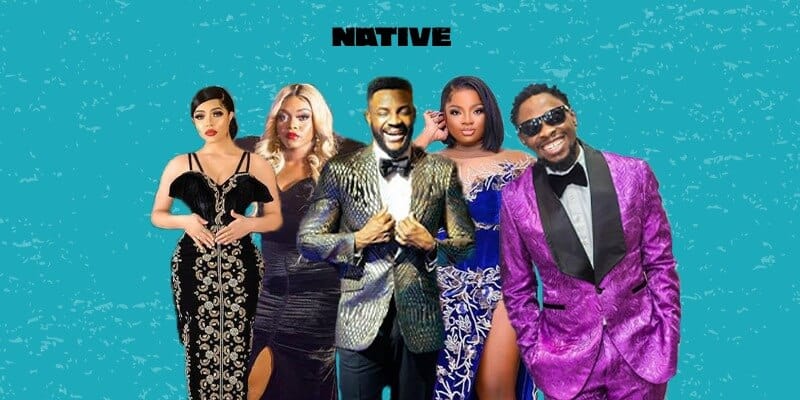
Over the weekend, the fourth episode of NATIVE Sound Radio hosted by Tami Makinde aired on No Signal Radio, and to celebrate this Women’s History Month, the show will be hosting conversations driven by women. In the first episode of this series, Tami chops it up about all things women and popular culture alongside me, the HBIC around here, and the founder of Femme Africa, Ayomide Dokunmu.

The role of women in the music industry has become an increasingly present topic, given that women from all walks of life and from different creative and business sectors have created spaces for themselves in this male-saturated business. While the needle has shifted a bit, there’s still a long way to go with regards to how all of these women, no matter what their station is, are treated.

In this episode, we had a great time listening to music from African women we admire while we created a vulnerable space where we all shared our experiences in different aspects of the music industry, dissected the recently released Coming 2 America, KAI Collective’s ongoing case against Boohoo and much more. Here are 5 takeaways from the episode

  • There’s a super-secret NATIVE Sound Album on the way.

I’m going to pretend like I don’t know everything about the NATIVE Sound Album on the way, and be as excited as everyone else about it when it gets released. Last night on the show, we shared the first teaser of what’s to come on the album, with an unreleased record with Chi Virgo number. I guess that’s all I can say for now, but keep your eyes and ears peeled for any information about that, and keep in mind that if you blink, you could miss it!

  • The Kemist is a fantastic DJ.

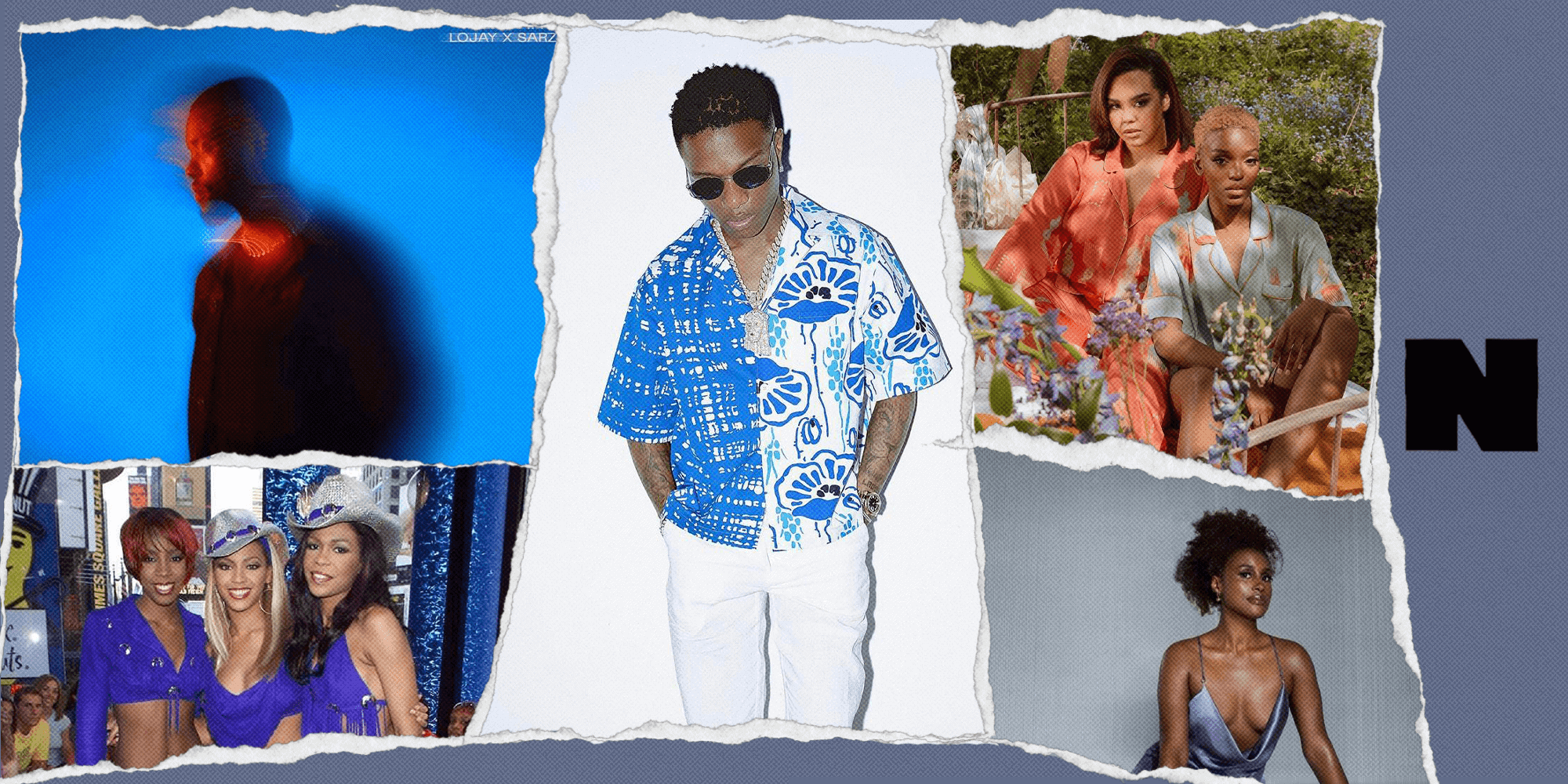
I love women, I love listening to women and I love it when women play other women. In this special International Women’s Day mix, The Kemist gave us a cocktail of all our favourite songs by women from Destiny’s Child to Lauryn Hill, Amaarae to Oby Onyioha and Flo Milli to Lil Kim. It was truly a treat, and we enjoyed every second of the mix. Follow The Kemist for more from her here.


View this post on Instagram


A post shared by olukemi (@kemlij)

  • Women in music media are suffering

Women all over the world suffer, but in our own little corner of the world, ratata! Mide, Tami and I had a deep and honest conversation about what it’s like manoeuvring this world as women, from men who try and use work to offer sexual advances, to people who count you out of a culture you’re building and men automatically assuming that I’m a man because it’s apparently impossible for a woman to be in charge. (Listen for the funniest and most ridiculous thing someone said to me). Beyond this discussion, we also spoke about how hard it is for female artists in the industry to get half as much, even though they do twice as much work, and have a shelf life imposed on their career due to unfounded opinions. It’s actually really hard out here for a real bitch, send a black woman money today.

  • KAI Collective vs Boohoo

A month ago, founder of KAI Collective, Fisayo Longe announced that her atelier was suing the fashion behemoth, Boohoo Plc for copying the design of her trend piece, the Gaia. On the show, we spoke in depth about Tami’s investigation of the case (which you can read all about here) and what it means for such a big conglomerate to take from a smaller, black-owned business.

  • Coming 2 America was a bit sexist

The whole of the Internet seems to be talking about the sequel to the 90’s classic, Coming To America, which aired on Amazon Prime and in cinemas. On the show, we spoke about the film, and why it’s problematic in today’s age, for example, it was laden with sexist jokes, which in the ’90s might have not been a big deal, but today, just does not bang. It’s not funny when women are the butt of the joke, and it was a bit hard to overlook that in the grand scheme of things especially knowing how the world treats us. Listen for how we generally felt about all things surrounding the newly released blockbuster.

If you didn’t catch the episode live or missed some of these hot topics while it was on, you can listen to the whole thing here:

Featured image credits/NATIVE

Best New Music: Darkoo puts her twist on romantic vulnerability with “Pick Up”

In an increasingly liberal world where the “ideal” image of a pop star is constantly being stretched and refashioned, Darkoo is a unique and emblematic persona. In the near two years since the One Acen-assisted “Gangsta” intensified the spotlight on her nascent career, the singer has continued to hone every part of her artistry into an unmistakeable identity, curating eclectic takes on Afro-Swing and Afro-fusion, while continuing to lean heavily into her own physical representation of “a woman who can do both”.

About this time last year, when the world was still figuring out how to deal with a novel coronavirus pandemic, Darkoo released “Juicy (Brown Skin like Eva)”, a sumptuous and lustful ode to the irrefutable beauty of Black women. The song captured a singer gearing up to embrace superstardom, and it would’ve been a much bigger song in the summer that never was. Having closed out the last year with “Cinderella”, in collaboration with superstar French boy band 4Keus, Darkoo has opened 2021 with “Pick Up”, a new single that subtly widens the scope of her ability.

Credited as Darkoo featuring Darkoo, “Pick Up” plays into the common trope of artists collaborating with their alter egos, except in Darkoo’s case, there’s two perspectives and no alter ego. In her small but formidable catalogue, which has its fair share of romance-inclined cuts, the singer’s delivery hinged on infections exuberance. This time around, she’s settled into a mellower tone, fitting for the increased level of vulnerability she expresses on the song. Over piano strings, plucky guitar riffs, lush horns, and thudding bass, Darkoo represents both sides of the conversation in a disintegrating romantic situation, playing both roles in an interesting twist.

Although she mainly writes and sings from the standpoint of the hurt party trying the hardest to fix things, the slightly more hesitant half is felt in the song in the way Darkoo plainly engages with the tension between both sides. “‘cos we just more than friends, more than sex/more to this thing”, she sings on the bridge, offering hope that it might just work out. By the second verse, though, things get spiteful, worsening the chance of redemption and hinting at far deeper issues than a gesture, grovelling, or one-night stand can save.

On “Pick Up”, the gentle rasp in Darkoo’s voice is form-fitted into a tool of honest expression, commanding space within the slinky, Caribbean Pop-inspired groove. It’s less effusive than her previous offerings, but no less compelling, opening up further possibilities ahead of Darkoo’s upcoming debut project.

Watch the video for “Pick Up” here.


Dennis is a staff writer at the NATIVE. Let me know your favourite the Cavemen songs @dennisadepeter


BEST NEW MUSIC: YAW TOG IS TAKING ASAKAA TO THE WORLD WITH “SORE (REMIX)” FEATURING KWESI ARTHUR & STORMZY

TurnTable Top 50: Teni’s “For You” marches unto its third week at pole position

Heading into the March 19 release date of her long-awaited debut album, ‘Wondaland’, Teni is building up quite the head of steam with the Davido-assisted lead single, “For You”. For the straight week, “For You” sits at the top of the TurnTable Top 50, having initially made history as the first song by a female artist to debut and ascend to the top of the charts. Remaining at the top of the streaming charts, tracked through freemium streaming platforms, along with respectable positions on radio (No. 5) and TV (No. 8) airplay charts, this continued run more or less solidifies the song as a smash hit.

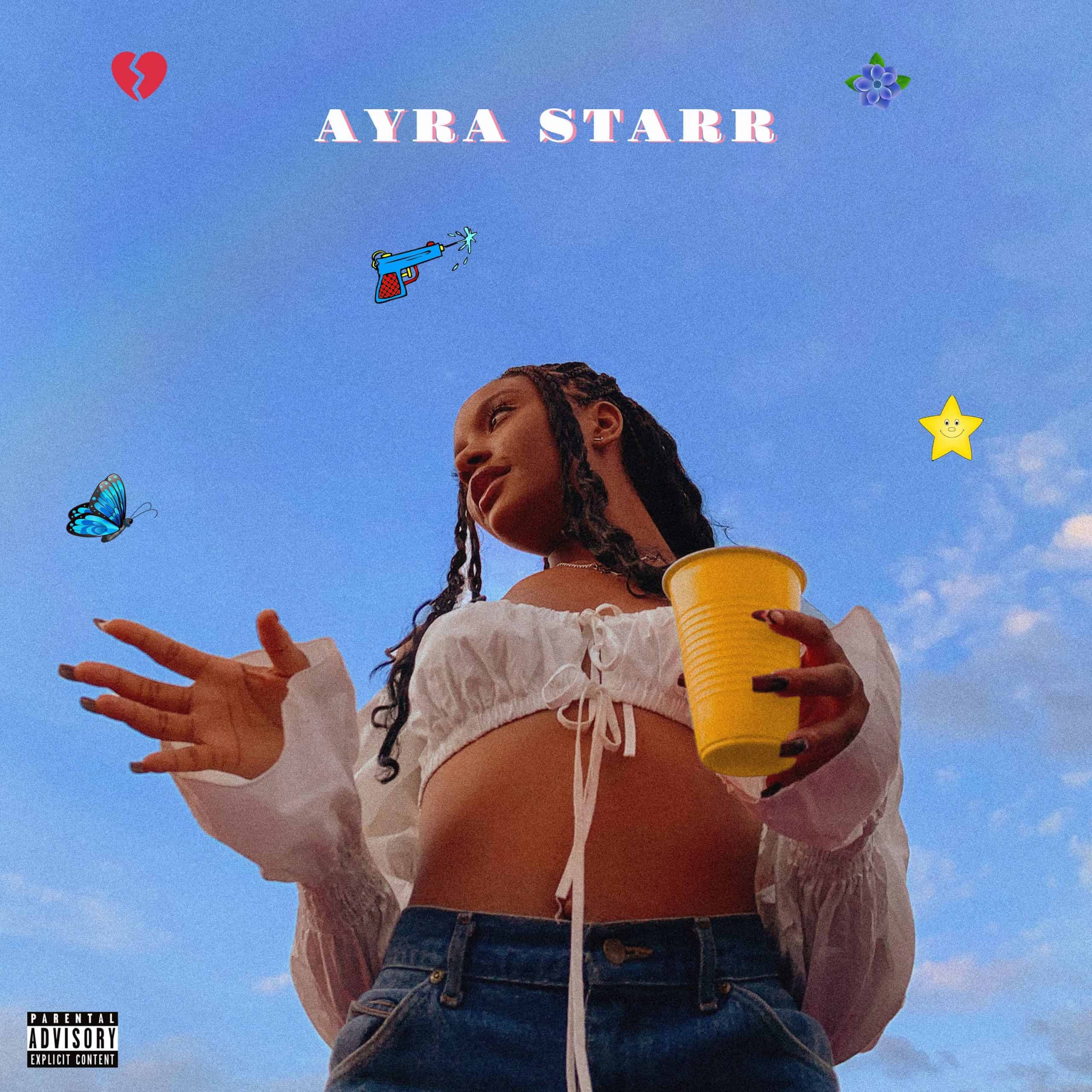
Mavin fast-rising star Ayra Starr continues her stellar run in the top ten, with her breakout single, “Away”, entering this week’s edition of the chart at No. 5, dropping one spot from its highest position yet. A few weeks ago, the singer set the previous bar for the highest charting song by a female artist, and its continued presence at the upper echelon is further indication of Ayra Starr’s world-beating potential. Rounding off women’s contribution to this week’s top ten is Latin Pop superstar Becky G, whose collaboration with Burna Boy, “Rotate”, debuts at No. 8. The Reggaton-indented song was released as the official soundtrack to Pepsi’s latest big ad, and it becomes the highest charting song by a non-African artist, a feat achieved primarily on the back of radio airplay impressions.

The rest of the top ten includes usual suspects from recent weeks, with DJ Kaywise and Phyno’s “High Way” climbing back to its peak No. 2 position after the release of its bright and ostentatious music video. Omah Lay’s history-making, perennial chart-topper, “Godly”, makes its mark at No. 3, while his collaboration with Ajebo Hustlers, “Pronto”, climbs to the fourth spot on the charts. Having dominated social media discuss in the days since its release, Rema’s “Bounce” makes its debut at No. 6, a healthy starting position in light of its viral post-promotion which very well continue in coming weeks.

Joeboy’s “Focus”, off his recent debut album, moves four spots to No. 7, marking his highest entry on the Top 50. Rounding of the top ten are Dangbana Republik & Bella Shmurda’s “Rush”, and Davido and Mayorkun’s “The Best”, while Kizz Daniel’s “Flex” debuts outside the top ten (No. 13), indicating the possibility of rising to higher positions in coming weeks. You can view this week’s edition of the TurnTable Top 50 here.


Dennis is a staff writer at the NATIVE. Let me know your favourite the Cavemen songs @dennisadepeter


FRESH MEAT: BEST NEW ARTISTS (FEBRUARY, 2021)

Songs Of The Day: New music from Darkoo, Niniola, Naya Akanji and more

Music has served as the life force connecting people and communities around the world in these unprecedented times. Though the pandemic has denied us live shows and concerts, where the magical bond between artists and fans unfolds in real-time; artists have remained committed to sharing music with fans, so we continue to honour their art and create space and visibility for them.  Last year, The NATIVE created our ‘Songs Of The Day’ column as an avenue to curate some of the best and biggest songs from around the continent. In the time since its creation, the column has served as a means to discover music from niche, rising acts, while also spotlighting releases from the biggest artists on the continent. As artists continue to share their music with us this year, it’s only right that we continue pointing you towards as much great music as we possibly can.

This month is the anniversary of the Coronavirus in Nigeria as well as Women’s History Month so our curation will emphasize celebrating women and music that have made these uncertain times more bearable. During our mid-week selection, we brought you new releases from GoodGirl LA and DJ Zandimaz, as well as new video drops from Ninola, Yemisi, Fireboy DML, SuperJazzClub, Naledi Skyes and much more. Today, we’ve compiled a list of all the new songs you don’t want to miss including a new EP release from Niniola, Naya Akanji, Darkoo, Lavaud, Reekado Banks, Teezee, Yaw Tog, Naomisia, Alpha P, TMXO, and more. Dig in and enjoy.

Darkoo – “Pick Up”

Since her arrival on the scene back in 2019, British-Nigerian rapper Darkoo has established her dominance with an exciting string of singles including “Gangsta”, “Juicy (Brown Skin Like Eva)” and “Kryptonite”. For her first offering of the year, the rapper is turning inwards for a mid-tempo introspective number titled “Pick Up” which finds her confronting her feelings after a lover leaves her calls unanswered. As an artist that’s constantly showcased both her feminine and masculine qualities, this song follows in her approach to deliver a fluid perception of Afropop.

“When I call you, no pickup/You don’t answer put me on missed call” sings Darkoo passionately on the song’s hook before delving into an honest confessional where she confronts her feelings for a love interest who hasn’t reciprocated her romantic intentions. In the Kelvin Jones-directed video, we see the singer play both sides of the relationship: as both the fed-up lover who has given too much and the love interest who can’t seem to commit. With a catchy beat and a message many will surely relate with, Darkoo once again proves her penchant for earworm melodies.

Niniola – “Ryde”

Since the year began, Afrohouse queen Niniola has been delivering a slew of R&B singles for her fans who enjoy her more romantic, soulful side as she revealed when we last spoke to her. So far, she’s served up “Promise” and collaborated with singer Yemisi, “Jolo”, showing she’s more than capable of serenading a love interest as she is at getting listeners to the dancefloor with her enchanting melodies.

Today, the singer has now released a 6-track EP titled ‘6th Heaven’, a soulful pack of singles that find the singer unleashing the depth of her sonic range and allowing love and gratitude to drive her lyrics. The EP’s final track “Ryde” is an alluring sensual track that will have you coming back for more listens. “Our love was forbidden/We’ve been through it all/We’ll be riding it out for life” she sings melodiously over the mix of drums and keys, as she reaffirms her committment to a partner for their love and kindness towards her.

Mide Michael – “Ojoro” (feat. Naya Akanji)

When it comes to romantic love, entering into a new relationship can be a daunting task for anyone who’s got their heartbroken in the past. However, no one is an island and we’re all constantly looking for ways to find healthier reciprocated love as we go through our adult lives. In his latest single “Ojoro”, Mide Michael turns his focus to an ungrateful lover who he has found out does not truly love him. He makes sense of these feelings of hurt and revelation, assisted by Naya Akanji who adds her charm to the uptempo number. “Baby na you don spoil my fantasy/Gone are the days you was killing me”, she sings soulfully, giving a familiar nod to P-Sqaure’s memorable “Do Me, I Do You” line.

Lavaud & Reekado Banks – “Oh My”

British singer/songwriter Lavaud has enlisted Nigerian singer, Reekado Banks for her latest romantic offering titled “Oh My”.  Over the mid-tempo beat produced by Mickeygeearist and Tuzi, both artists sing about their romantic affections and what it takes to get them smitten. Lavaud delivers her verse in both French and English, painting a picture that visualises her experiences with love. Reekado Banks joins her on the song’s third verse singing, “Dey fall for your matter, biko hennessy/I pray for ya” also dipping into some casual French and making the song instantly memorable with his sensual lyrics.

Alpha P & TMXO – “Jiggy Bop”

‘Coming 2 America’, the sequel to Paramount’s 1988’s ‘Coming to America’ which featured Eddie Murphy and Arsenio Hall, is days away from release on streaming services. Ahead of this, the film’s official soundtrack ‘Coming 2 America: Music From the Motion Picture’ and an additional soundtrack titled ‘Rhythms of Zamunda… Music Inspired By Coming 2 America’has now been made available online with features from some of Afropop’s most exciting names including Tekno, Tiwa Savage, Burna Boy, Nasty C, Tellaman, Alpha P and more.

One of the standouts on the recently released project is “Jiggy Bop”, an uptempo number featuring Apple Music’s Artist of the Month, and Headies Rookie of the Year nominee, Alpha P and Grammy-nominated producer TMXO. The groovy uptempo shows the singer/rapper Alpha P flex his lyrical muscles on the number, “Young jigga run it up one time/for a real hitta put it on Facetime” he raps with brimming excitement over the song’s hook, matching his clever wordplay and enviable with TMXO’s incredible bouncy production.

Jay Cliff – “Chargie” (feat. Töme)

Ghanaian singer, Jay Cliff has just released a new 6-track EP titled ‘Red Wine Conversations’, a concise offering of romantic numbers that featuring a host of different artists from Efya, to TÖME, Ayüü, $paceley and more. The TÖME-assisted “Chargie” is a romantically-inclined number that finds both artists addressing new love interests who are the missing puzzle piece they’ve been missing all this time. “You don’t want to keep your distance/and I want you anyway” Jay Cliff sings on the song’s second verse, admitting that he’s willing to look past the mixed signals for the relationship to work.

Naomisia – “Victim”

After years of releasing deep R&B cuts, Tanzanian singer Naomisia has just released her debut project which is titled ‘What Doesn’t Kill You’. In usual fashion, the new project finds her combing through her experiences and becoming a musical manifestation of power and strength for her listeners. The project’s opener “Victim” finds the singer/songwriter at her most honest, singing about a past lover who she can’t seem to forget. “You have a hold on me, we should make a decision/Cause I’m willing to be your victim” she sings soulfully on the song’s hook, admitting that she’s not ready to move and accepts that she’s ready to keep holding on to her muse’s captivating love.


ICYMI: Yaw Tog is taking asakaa to the world with “Sore Remix” featuring Kwesi Arthur and Stormzy

What we know so far about the protests in Senegal

The past few months have been characterised by an increased demand to end the wanton corruption, injustice, and inexplicable inequity perpetuated by our world leaders and the failing police systems that have spent years abusing their power worldwide. Here in Africa, particularly, a host of nations from Nigeria and South Africa to Cameroon, Liberia, and now Senegal, have seen their young people unite to continuously speak up against oppressive regimes, years of unfettered violence, and the abuse and disregard for basic human rights by those sworn to defend and protect us.

Social media has accentuated the violations taking place across the continent, allowing many of us to watch in real-time how unsafe life has become. Over the past two days, Senegal has been under harsh global spotlight since the eruption of protests in the country’s capital city, Dakar following the arrest of political opposition leader, Ousmane Sonko on Wednesday ahead of his scheduled appearance in court for an alleged rape charge against him.

According to reports by Amnesty International, Sonko was arrested on his way to his hearing at a Senegalese court due to the presence of demonstrators and sympathisers on his route. Following this, on March 4, his supporters took to the streets across the country expressing their discontent at the government’s treatment of Sonko resulting in the worst unrest the country has known in recent times. The headquarters of media houses deemed close to the government were attacked on Thursday evening and other demonstrations have begun across the country including in Sonko’s native Casamance region in southern Senegal.

In retaliation, Senegalese law enforcement have clashed with supporters of Sonko, using tear gas and stun grenades at protesters. This is said to have resulted in the death of a 20-year-old man, Sheikh Coly in Casamance which is in the south of the country. Much like during the #EndSARS protests in Nigeria, the Senegalese government is systematically silencing the voices of the protests, through these indiscriminate arrests and also by thwarting press coverage of the events ongoing. On Thursday night, the government placed bans on two media houses accusing them of broadcasting “in loop” images of unrest triggered by the arrest of an opposition leader. Today, social media and messaging apps in Senegal were also reportedly restricted from internet access in the early hours of the day amid the two-day unrest.

Reports also state that Sonko was to be transferred Thursday evening to a Dakar courthouse where his case was to be heard by a judge but his lawyers said the hearing had been postponed to Friday. The country’s Interior Minister, Antoine Felix Abdoulaye Diome said that Sonko had been arrested over a ban on gatherings because of the coronavirus and violating a traffic plan put in place. Sonko, who came third in the 2019 presidential election accuses incumbent president Macky Sall of conspiring to sideline him ahead of the 2024 elections because of his popularity among the country’s young people.

It seems that governments across various African nations are feeling the number and power of its young population who will stop at nothing to ensure that every citizen has access to their basic human rights and can live free from persecution. The Senegalese government now has the eyes of the world turned on it as news of the violent clashes continue to take over our timelines. Thankfully, this year, we are demanding better, for ourselves and the world we all live in.

This is a developing story.

Featured image credits/AFP New Agency


ICYMI: Bobi Wine vs Museveni: The Dictator is naked

Best new music: Yaw Tog is taking Asakaa to the world with “Sore (Remix)” featuring Kwesi Arthur and Stormzy

It’s quite common to hear West African artists that make music inspired by American genres. Access to the internet has made it easier for everyone in the world to align with the same pop culture traditions, so it was only a matter of when, not if, Drill would make its impact in these parts. At the moment, the rap subgenre is gaining momentum across the continent, but it’s irrefutable that Ghana, specifically the scene out of Kumasi, is at the forefront of these conversations.

Last year, clips from the gritty music video of Yaw Tog’s “Sore” went viral, making the song a pioneering Ghanaian Drill hit and initiating a wide audience into the movement and subgenre locally known as Asakaa. This instant success brought some much-deserved attention to the Asakaa scene, which features several other notable Drill artists, including Sean Lifer, O’Kenneth, City Boy, Reggie and Jay Bahd. With how much smaller the world has become, due to the internet, social media and digital music streaming, “Sore” quickly earned international plaudits, placing the 17-year old Yaw Tog under a more intense spotlight, which he plans to get used to, as evidence by the new remix of his smash hit with Ghanaian rap star Kwesi Arthur and UK rap superstar Stormzy.

Pictures of the trio shooting a video together surfaced online back in January, stoking anticipation for the remix. Retaining the raucous, instantly memorable chant of “Y3 b3 sore” as its hook, the trio go on to rap over the same gritty drill beat heard on the original song. Yaw Tog opens the song with a new, boastful verse that addresses his newfound fame — “Got wings, I go higher than niggas I’m badder than” — as he keeps up the confidence-inspiring appeal that made the original song worthy of viral success. The new verses from Stormzy and Kwesi Arthur add extra gloss to the showy narrative of “Sore” as they contribute one verse each, narrating their own individual success stories. Although Stormzy doesn’t infuse indigenous Ghanaian lyrics into his verse like Yaw Tog and Kwesi Arthur did, he name-drops Ghanaian revolutionary, Kwame Nkrumah and confirms his Ghanaian roots.

“Sore (Remix)” comes with an accompanying video that follows in the same energetic hood-love direction from the music video for the original single. However, the picture quality is significantly improved and we get to see how young Yaw Tog looks standing next to Kwesi Arthur and Stormzy. The video is set at a basketball court where the rappers are surrounded by friends and fans who cheer as they perform their verses. The new version of “Sore” is far more fun than its original, subverting the griminess which was always too hard to improve upon.

It has always been popular to further promote hit songs with star-studded remixes, a tactic employed for “Sore (Remix)” and is sure to improve Yaw Tog’s mainstream visibility ahead of his debut project, ‘TIME’, due for later this month. Considering just how much of a magnetic presence he remains in the company of big stars, Yaw Tog’s impressive new verse on “Sore (Remix)” is more indication that we all need to seriously consider the possibility that Asakaa is only going to get better from here, and perhaps take over the mainstream sound in Africa, as they forge a new cultural identity with their own interpretations of a sound that was initially beamed in from the other side of the Atlantic.

See the music video for “Sore Remix” by Yaw Tog, Kwesi Arthur and Stormzy below.

Featured Image Credits: YouTube/Yaw Tog YT


You are meeting Debola at a strange time in his life. He wandered into a dream and lost his way back. Tweet at him @debola_abimbolu


ICYMI: Reggie’s “Geng Geng” is another Asakaa bop you should get into if you haven’t already

Kai Collective vs Boohoo: Why we need to reevaluate our relationship with fast fashion

In the world of fashion, imitation and plagiarism are commonplace, and these days, the line between what counts as “inspiration” has been blurred significantly. It’s perfectly normal to see brands ripping off each other or borrowing features off other fashion designers at the slightest chance. This has been fashion’s practice for many years, and it’s important to note that this has been fostered by the entire fashion industry’s reliance on the consumers fascination with viral trends.

Famously, in fashion’s past, the legendary Harlem-based tailor, Dapper Dan made his mark in the 1980s by creating custom pieces for rappers and athletes. Known widely as the “king of knock-offs”, the couturier transposed the monograms of Gucci, Louis Vuitton, MCM, and Fendi onto premium leathers to create coveted fashion items that were worn mostly by the Black community at a time when many high-end designer brands were overlooking them.

At first, the fashion industry’s response to his work was hostile, and Dapper Dan dealt with a myriad of lawsuits, and raids over the years. But eventually, years after facing legal charges for his branded wears, these same designer brands would go on to take inspiration from his knock-off days, and have even collaborated with Dapper Dan. This begged the questions about where the line has to be drawn between taking inspiration from something and downright copying it. 


View this post on Instagram


A post shared by Dapper Dan (@dapperdanharlem)

The relationship between imitation and theft has been rather tenuous and the law around it even more ambiguous, resulting in a dearth of reliable protections for smaller brands. Big fashion brands have done so to other big brands and even smaller fashion brands, and in the past, we have seen many examples of brands coming under fire in the court of public opinion for copying. However, the most prolific offenders are fast-fashion companies which exist to bring high-end fashion that’s usually inaccessible to a mass audience, a great reason for their increased popularity today. Many of these brands cater to the Instagram and TikTok generation, whose preferences are instant gratification, and as a result want immediate access to what their favourite celebrity or influencer wore. This has now led to brands such as Boohoo becoming the UK’s fastest-growing retailer since its inception in 2006, with reportedly higher value than both Marks & Spencer and Asos. Knowing how affluent these fashion companies and their CEOs are today, it’s quite shocking how they continue to profit off the backs of small fashion brands that don’t have the capital they do.

Another important issue is that many shoppers don’t seem to care about where they buy their clothing. One of the reasons this keeps happening is because consumers are happy to buy these dupes given their extremely low prices, and the bad press gained from copying designs does little to outweigh the increased demand from consumers and the potential profits. For years, fast-fashion brands could get away with undercharging for their cheaply-produced dupes, imitating and taking ‘inspiration’ from a range of high-fashion and burgeoning independent brands and evading liability where necessary. Social media, however, has been a key factor in highlighting these egregious business practices. A very popular case was the Tuesday Bassen v Zara case. In 2016, Zara was called out for copying pins from LA-based illustrator, Tuesday Bassen, on their designs. She had initially attempted to get Zara to discontinue their use of her artwork through a cease and desist letter, which went ignored by the fashion behemoth. She then took to social media to highlight the infringement and eventually, with some thanks to the backlash they received, Zara had no choice but to discontinue the pieces and take them off their racks.

As fashion production increases and continues to move at such a fast pace, even during a global pandemic, where the pace of the world has slowed down a lot, there is an urgency to look into the factors that enable this. Recently, Kai Collective, a womenswear brand owned by Nigerian designer Fisayo Longe had her brand’s most prominent design stolen by a fast-fashion company. This is happening at a time when Kai Collective is experiencing its golden moment, having been worn by everyone from Saweetie to Jackie Aina. It was also among a range of small brands that had found itself swept up due to changing consumer behaviour patterns in the last year. The pandemic has inadvertently affected the ways in which we engage with fashion, as many in-store businesses have been disrupted, with a shift in paradigm towards e-commerce and online shopping channels. As the world has become a global village, it has never been easier to connect with people all over the world. This has then placed more emphasis on community, which often comes with trust from fostering a unique connection in a  time that has been defined by isolation and socio-political change.

2020 was heralded as the year that the ultimate luxury fashion item had become human connection.  At the same time, a gamut of small brands found favour in the communities they had begun to build online, relying on the power of social media to market their product directly to consumers. There was a massive uptick in interest in social media challenges on TikTok and Twitter, with people donning beautiful outfits and others, a glamorous face beat as they showed off their favourite quarantine looks. It improved consumer sales for small Black-owned businesses such as Telfar, Kai Collective, Hanifa, and more, who gained the attention of black communities all over the world, due to their unique, ground-breaking feats. At every point during the pandemic, one of these brands gained and kept the attention of the world, thanks to a trend they had set with their creations. Congolese fashion designer Anifa Mveumbu set herself at the forefront of the fashion game with her hauntingly beautiful 3-D fashion show, an innovative user experience for the times we are in. Fisayo Longe created her magnum opus in the vibrant mesh Gaia dress which has now grown into a two-piece, a scarf, and a mini dress set that have now won over the hearts of many millennial women. As fast as fashion goes, this attention didn’t come without downsides for both brands, as their unique designs come with a host of knock-offs in their wake.

These brands became the go-to, particularly during the summer, after the protests throughout the U.S. and across the world forced consumers to look inwards about who they were giving their money to. From Anifa and Kai Collective to Telfar and Pyer Moss, the attraction of these brands was in their values, which placed emphasis on racial and gender inclusivity, representation, and a deep sense of community, therefore it strikes a nerve when bigger brands who have more means, profit off their hard work.

Kai Collective is fighting back.

About a month ago, Fisayo Longe, Founder and Creative Director of Kai Collective took to social media to air how unfair it is that fast-fashion companies get to steal and profit off the hard work of smaller brands — especially in the middle of a global pandemic which has thrown many things off their normal course. In a now-deleted Instagram post, Longe explains how the distinct print of last summer’s hot button fashion item, The Gaia, had been copied by the fast-fashion company, Boohoo, which is owned by British billionaire, Mahmud Kamani. The company has now become a conglomerate that includes Prettylittlething, Nasty Gal, Coast, Karen Millen, and more recently, Debenhams. Boohoo Group Plc profited over £600,000 in revenue 2020, with some of it at the expense of ripping off smaller brands.

According to Longe’s post, the Gaia print, which was exclusively created for KAI by  Grapes Pattern Bank, had been copyrighted in the UK and EU, with an additional copyright application currently ongoing in the United States.  As it stands, KAI Collective and Boohoo have now entered discussions and negotiations, with Fisayo Longe’s dispute stating that the fast-fashion company must cease and desist from using the Gaia print.

KAI Collective taking Boohoo to task challenges the status quo but shows the dark underbelly of fashion laws, and how much room there is for unethical practices. Speaking on this, Fashion Consultant and Intellectual Property lawyer, Kike Ojewale confirms that: “There are still gaps within the various forms of intellectual property protection, and as such fashion designers are not offered adequate legal protection for their designs,”. In the ever-evolving fashion industry, creative expression must be protected through intellectual property (IP) rights which are put in place to protect the “creation of minds” including aspects of design, logos, and more. However, Ojewale adds that “these rights are pointless if they are not enforced, and enforcement is expensive for any brand, let alone small brands”. 

In the UK, where KAI Collective operates, copyright and design protections fall under the Copyright, Designs, and Patents Act 1998 (“CDPA”). To comply, designer’s work must fall under one of the categories listed in section 3, and one which is ‘artistic works’ is defined as “a graphic work, photograph, sculpture, or collage, irrespective of artistic quality, a work of architecture being a building or a model for a building or works of artistic craftsmanship”. The catch, however, is that such a creation must not be intended to be used as a model or pattern to be multiplied by any industrial process. Kike breaks this down for me, explaining that “essentially, [this provision] means that such designs cannot be mass-produced, which of course, is not the desired intention for any fashion designer”. This means that these copyrights are only able to protect sketches and prints and such alike, rather than to the entire design. These are the loopholes in the law that allows fast-fashion companies to find ways to take large chunks of ‘inspiration’ from smaller unprotected brands. Fisayo adds that she “honestly didn’t realise that Gaia was going to be so heavily imitated. [She] just didn’t see Kai being at that level where so many people would steal or imitate the work.”

The uniqueness of Longe’s case is that the Gaia print is too distinct and original, given how unique to the brand. Exclusively sourced by Grapes Pattern Bank, a print company based in Lagos, Nigeria, the dress which became the trend of Summer ‘20  had propelled the designer into the limelight and spawned countless knock-offs on its way to every girl’s wish list. Fisayo herself recognised this instantly and began two Instagram hashtags #GaiaAtHome and #GirlsInGaia, which were set up not only to encourage her growing community to take pictures in their colourful Gaia numbers but also to raise money towards the sex and gender-based violence back home in Nigeria during the month of June.

In response to KAI’s lawsuit, the brand’s intimate community of black women responded by amplifying her message, Which Longe is thankful for, as she tells me: “I think it gives me an advantage in the court of public opinion. Because, it’s like, this is my print!” Longe recounts that she had seen several dupes for months after Gaia’s release last year, but they were beyond her sphere of control, as the source was not always clear, however, Boohoo’s was the closest dupe she had seen in the UK, she tells me of the Manchester-based franchise. The specifics of Kai Collective’s case are also vastly different. Longe started production on her distinctive ‘Gaia’ prints with the intention of building a strong brand identity, which means that her protection extends beyond sketches and thus, falls outside the CPDA as the designer can rely also on Section 7 of the Registered Designs Act 1949.


View this post on Instagram


A post shared by KAI (@kaicollective)

This provision states that KAI Collective is entitled to the exclusive right in the copyright design to “make or import for sale or for use for the purposes of any trade or business, or to sell, hire or offer for sale or hire, any article in respect of which the design is registered, being an article to which the registered design or a design not substantially different from the registered design has been applied, and to make anything for enabling any such article to be made as aforesaid”. Kike breaks this down explaining that this Act provides that, “designers can rely on design protection which allows them the right to protect a combination of lines and colours or any three-dimensional form with or without colours is recognized as an industrial design or a design”. This means that the items released by Boohoo in January 2021, months after Gaia’s release in June 2020 would fall within this provision. 

“In this case, KAI Collective has a registered design right over the ‘Gaia’ Print; this affords them the protection against infringers. Without registration, the protection of such rights against infringers is a lot more difficult to prove in court,” Kike continues. Based on the laws mentioned, Kike strongly believes that Kai Collective could stand a chance against the fast-fashion giant Boohoo Plc., although she states that the burden of interest would now fall onto Boohoo to show that no infringement of copyright has occurred, which she admits will be difficult for them.

Longe, on the other hand, has rarely had any legal experience on this scale until now. “I really really want small businesses to know that we have rights, because right now it feels like we don’t. I want them to know that depending on the design, it might be worth spending on protecting it,” she tells me, explaining her motivation for fighting back against this case of infringement. However, with both sides currently in discussions, and Longe’s promises of updates of the case progress, the designer is certain that the court of public opinion will be on her side and stresses the importance of small brands doing their best to differentiate themselves and build a great original product that has soul.

“The thing about it is that a company like Boohoo can replicate the print but never my brand’s energy and identity”.

The case against fast-fashion

It’s not just that fast-fashion brands have the capital to hire people to design their own unique clothes rather than ripping off other fashion designers, it’s that there’s a dark underbelly that has gone ignored for too long.  Established fast-fashion retailers like Boohoo, Zara, H&M and more, tend to outsource their means of production and their raw materials from developing markets to reduce the cost of production. Alongside this, they exploit garment workers in these countries, underpaying them for their services whilst making a sizeable profit from their hard work. Many fast-fashion retailers came under increasing public pressure to investigate and invest in their production process and employment practices after the notable Rana Plaza factory collapse shook Bangladesh in 2013.

However, nothing seems to have changed. Just a few months ago, it was revealed that Boohoo garment workers in Leicester, United Kingdom, were making clothes and being paid as little as £3.50 per hour despite the company churning out 100 new styles on a daily basis. Not to mention, just this week alone, US-based campaign group Liberty claimed Boohoo is not doing enough to stop forced labour in the Leicester factories. This is not surprising seeing as the Boohoo website details that the company’s principles have not changed since its inception in 2006, with their vision strategy stating that they work ‘through a test and repeat model that brings the latest trends and fashion inspiration in a matter of weeks to our customers across the world’. It’s clear that this is a company unwilling to pay attention to how its unethical practices affect marginalised workers, and these instances only shed a sliver of light on the ugly underbelly of the workings of these fast fashion companies. 

Brands such as Boohoo are constantly at the receiving end of these allegations of theft, subpar working conditions, and grossly-imbalanced payment structures for workers, that it now raises the important question about how fast is “too fast” when it comes to fast-fashion, and how much leeway is to be given to brands who source ‘inspiration’ from pre-existing brands and designs? Imitation is said to be the greatest source of fashion inspiration but where do we draw the line when protecting smaller-owned businesses, because right now that line is barely there, thus making the calls to rewire the fashion system even more urgent.

Kal Raustiala, author of ‘The Knockoff Economy: How Imitation Sparks Innovation’, once told NPR that “regardless of the effects on the industry overall, it’s good for consumers in the sense that copying breeds competition. When you have copies, it means you have multiple things competing in the marketplace that are similar. And if they compete on price, then consumers have an option that they wouldn’t otherwise have.” But his statement not only fails to take in how imbalanced the fashion industry is for Black designers, especially one owned by a second-generation Nigerian woman who spent time building her company brick-by-brick. Her distinct Gaia print that has now been worn by celebrities like Saweetie and Tiwa Savage, and spotlighted by Beyonce, shows that she’s doing something right. With this imitation, Boohoo is grossly undervaluing KAI’s work, as one of their dupe Gaia dresses retail at 85% less than the original price on KAI Collective’s website.  This just goes to show popular fast-fashion brands destabilise the income of emerging designers by selling at eye-catching prices. Relying on the Gaia print which is familiar to a whole audience of consumers, Boohoo is unreservedly appropriating one of KAI Collective’s hallmark designs, and relying on the fact that consumers will purchase the product for its likeness, which should be unacceptable.

With fashion law being a fairly untapped area of law, there isn’t a huge amount of past cases to rely on, and Ojewale explains that the lack of such precedents and case law does little to encourage other small-end designers who seek protection against infringement, also making it even more difficult for legal practitioners to have access to these issues and gain insight on how to adequately advise their clients. But no matter which way you look at it or which terminology you employ, taking something that belongs to someone else is wrong, and passing it off as your own product and then undercharging for it is even worse, and it’s high time such things were called out and interrogated. Going forward, the fashion industry and legislation must catch up to the changing world of fashion and design but alongside this, we, as consumers, must first re-evaluate our relationship with fast fashion and find newer ways in our daily lives to make use of sustainable fashion if we are to ever have any meaningful discussions about protecting small brands, especially those owned by Black women.

UPDATE 

28/01/22

Kai Collective and Boohoo have now reached a settlement in the legal action filed against the fast-fashion brand. According to Kai Collective founder, Fisayo Longe, the items have now been removed from the Boohoo website and are discontinued from sale.

To find out more on how to shop sustainable, you can start here.

Featured image credits/FisayoLonge


Doing what I can for the culture @tamimak_


ICYMI: How fashion could greater influence the music industry in Nigeria

DAP the Contract delivers a worthwhile experience with “You Made It (Live Performace)”

DAP the contract places a premium on every facet of his artistry. Over the years he’s proven himself to be a multimedia polymath, using every tool at his disposal to advance his creativity right in front of our eyes and express himself more wholesomely than his peers. A deep dive, or even just a cursory look, into his YouTube page will reveal the high value he attaches to his visuals and his live performances. In there, you’ll find the stunning, self-directed visual album accompanying the career-defining LP, ‘Everybody Falls in the Summer’, short videos from tour and on stage, and a phenomenal yet intimate rendition of the equally biting and soothing number “Heroes & Heroines”.

In early February, DAP released his latest project, ‘I’m Glad You Made It This Far’, a loose but focused document of his continued growth as a young person, built on his preference for part-showy, part-honest writing, and boisterous production choices with experimental iterations of Soul, Jazz and Hip-Hop at its core. Similar to previous releases, the EP is held up by the twin pillars of exuberance and introspection, representing DAP’s infectious and affecting mix of youthful fervour and the depth of his self-awareness. Considering his reputation for delivering visual expressions of his music, and his apparent fondness for performing, it’s apt that he’s now just released a virtual live set in support of the recent tape.

Coming in two weeks after dropping the light-filled video for the EP’s opener, “Why Would I Lie”, the newly released live performance is a timely renewal DAP’s artistic image to previously familiar listeners, while also potentially serving as a potent entry point to those still oblivious. Combining his chops as a live performer with his established preference for curating eye-catching, multi-verse short films—as shown in ‘Everybody Falls in the Summer’“You Made It (Live Performance)” captures DAP in his creative element and makes for a worthwhile representation of an artist always looking to deliver definitive experiences in all aspects of his music career.


View this post on Instagram


A post shared by DAP The Contract (@dapthecontract)

Comprising two cuts from his new EP, and two others from last year’sPowers, Vol. 1’, the 12-minute video subverts the common expectation of a single set stage, using three different settings that act as individual vignettes within the overall scope of the performance. The opening section sees DAP performing “Why Would I Lie” in the outdoors, with the sun and a candy-coated vintage car adding some radiance to his energetic candour. “I’m glad y’all made it this far in my journey, but I wanna take y’all a little further”, DAP says as the song winds down, setting the tone for performance’s dynamic setting.

While been driven, he enters into “Tried Everything”, the second track off the new EP, and in place of featured artist popsnotthefather’s part, the performance segues into an acoustic, folktronica coda entirely shot in black-and-white. In the most intimate part of the set, DAP sits in front of the mic, voice contorted by auto-tune and alongside frequent collaborator Bryn Bliska on piano and back-up vocal duties, singing with his eyes tightly shut in order to further convey the gravitas of his emotionally resonant lyrics.

The final and longest segment takes place in an initially well-lit room, as DAP and close colleague Tiago Sta. Cruz perform “Above the Law” and “Rings”, two swaggering, bass-heavy cuts off the deluxe edition of ‘Powers’. For the latter cut, neon lights and the palpably raucous energy of both rappers recall the days of packed crowds getting turnt at an amphitheater venue, a near impossible occurrence in the year since Covid-19 turned the world upside down. With the facemask a near presence under DAP’s chin while performing, and the absence of a witnessing audience, this live set is a marker of the times we’re in, but also a marker of an artist still very much engaged with his craft.


View this post on Instagram


A post shared by DAP The Contract (@dapthecontract)

A common thread in DAP’s sprawling discography is, he keeps his eye on the three temporal units that frame our existence: the past, the present, and the future. ‘I’m Glad You Made It This Far’ celebrates the trials of the past, relishes the triumphs of the present, and looks with expectant eyes into the future. As the central author and star of his creative expressions, “You Made It” is a visual representation of that ethos. “I’m a producer, rapper and singer. I make my own beats, I write my own lyrics, and I record all my shit. Everything you are hearing me”, he proudly proclaims, a statement that encapsulates just how much DAP is set on owning his singularity as an artist.

You should definitely watch “You Made It (Live Performance)” here.

Featured Image Credits: YouTube/DAP the Contract


Dennis is a staff writer at the NATIVE. Let me know your favourite the Cavemen songs @dennisadepeter


ICYMI: DAP THE CONTRACT BREAKS DOWN ‘I’M GLAD YOU MADE IT THIS FAR’

NATIVE Premiere: Teezee makes his 2021 debut with ‘GUALA’, featuring Maison2500 & New World Ray

When he’s not chopping it up with his day-zero crew, DRB, on their debut project ‘Pioneers’, or taking an active role in the documentation of the alternative scene – or the alté scene as famously coined – through his involvement with Jameson and the NATIVE Magazine which he co-found, Teezee can be found hard at work in the studio cooking up some heavy flows.

Due to this, the rapper now boasts of a bank of musical hits at his disposal, which he’s now ready to share with his eager fans. To get the ball rolling, he’s just released his debut musical offering for the year titled “GUALA”, an uptempo number released to drive up anticipation for his debut project, which we’re told is slated for release sometime later this year.

Featuring Maison 2500 and New World Ray, the bouncy new single is an arresting 3-minute track that holds your attention from its opening moments. Beginning with soft keys that continues to build as the song goes on, the Genio Bambin0-produced track lays the perfect foundation for Maison2500’s trippy adlibs and soft humming as the rapper skates over the beat in customary fashion, setting the tone for what’s to come on the track.

He’s joined by Teezee who turns the tempo up a notch, as he raps, “Gimme that dough/Give me that guala” on the song’s hook, his gruff rap voice operating on the same frequency as Genio’s hard-thumping bass, which hones the song’s impatient message. The song’s central message is about all three rappers letting out their frustrations at a world bent on limiting the potential of young people and gatekeeping them from the success they deserve.

Speaking about the new single, Teezee shares:

“GUALA is really a cry for help young creatives not getting paid, no paid dues no paid respects. No MONEY. We want all the nice things too. Money, designer garms, ice, we want it all. But we have to take it by force. The police be robbing us, the government be robbing us. Yet the youth are the bad ones.”


View this post on Instagram


A post shared by @teezee

In the accompanying music video, we see varying clips of Teezee, Maison 2500, and New World Ray in an abandoned storehouse, they’re clad in the coolest fits featuring some known brands such as Homecoming, NATIVE merch, Supreme, and more, while surrounded by the baddest girls. All three rappers deliver their verse while a ton of cash is sprayed around them and the girls, it’s exactly the type of hedonistic visuals you’d expect to accompany such a bouncy number.

“GUALA” is certainly what you’d describe as a jam-and-then-some, and Teezee certainly knows how to make an impressive debut after a hiatus from solo releases. In any case, he has our attention and we’re already eagerly waiting for more releases from the self-proclaimed Fresh Prince of Las Gidi.

Watch the video for “GUALA” below.

Featured image credits/Ibrosnaps


ICYMI: Why DRB’s debut project ‘Pioneers’ took 10 years

Songs Of The Day: New music from Yemisi & Niniola, Fireboy DML, SuperJazzClub & more

Music has served as the life force connecting people and communities around the world in these unprecedented times. Though the pandemic has denied us live shows and concerts, where the magical bond between artists and fans unfolds in real-time; artists have remained committed to sharing music with fans, so we continue to honour their art and create space and visibility for them.  Last year, The NATIVE created our ‘Songs Of The Day’ column as an avenue to curate some of the best and biggest songs from around the continent. In the time since its creation, the column has served as a means to discover music from niche, rising acts, while also spotlighting releases from the biggest artists on the continent. As artists continue to share their music with us this year, it’s only right that we continue pointing you towards as much great music as we possibly can.

This month is the anniversary of the Coronavirus in Nigeria as well as Women’s History Month so our curation will emphasize celebrating women and music that have made these uncertain times more bearable. To start this week, we brought you new releases from GoodGirl LA and DJ Zandimaz, as well as new video drops from Focalstic and Davido, Adekunle Gold and Patoranking, and much more. Today, we’ve compiled a list of all the new songs you don’t want to miss. Dig in and enjoy.

Yemisi – “Jolo” (Feat. Niniola)

Yemisi is a soulful Nigerian singer who has consistently delivered new music since she first debuted in 2017 with “Oyari”. Over the years, she has built up a catalogue that highlights her versatility as she explored dance-driven Afropop and mellow R&B with equal vim. For her debut single this year, “Jolo”, she enlists Niniola who has also proven adept at making R&B and dancehall hits. They pair up to sing over a laidback afrohouse instrumental produced by Dunnie with a soothing mix of ambient harmonies and upbeat drums that can entice listeners to dance.

“Jolo” is a Yoruba expression that means “Dance on” in English and as such, the song invites listeners to celebrate with the artists on the dancefloor; “International, Ko le ye wan/ The vibration lori ijo na”. Their confidence-inspiring lyrics might be lost on non-Yoruba speaking listeners but the vibe is undeniable. Women’s voices have always blended harmoniously with House music instrumentals and it’s awesome to see 3 women (Yemisi Fancy, Niniola and Dunnie) come together for the production and vocals on this one as we celebrate women history month.

Fireboy DML – “Champion” (Feat.  D Smoke)

FireboyDML is having the time of his life, following his recent run of success. He went home with 4 awards at the last Headies last month and made his international late night TV debut on The Tonight Show Starring Jimmy Fallon just a few weeks ago. We imagine that his mood is at an all-time high and he keeps up the celebration with the new release of the music video for “Champion”, the lead single from his last album, ‘Apollo’.

Pheelz produced the instrumentals for “Champion” with percussion and guitar harmonies that transition from sombre to jubilant smoothly. The rhythm of the beat, backing choir samples and Fireboy DML and D Smoke’s confidence-inspiring lyrics already made the song feel like it was destined to serve as a soundtrack for an emotional scene in a movie and the ambitious video directed by TG Omori lives up to those standards with landscape shots of Fireboy DML running in the hills while a presumed young version of him walks in the streets of Lagos. We also see D Smoke performing his rap verse while standing on a floating stage as the video reminds us how international collaboration between black artists from all over the world feels more organic in 2021.

SuperJazzClub – “Till the Morning”

After showcasing their diverse roaster and sonic experimentation with their debut project, ‘For All The Good Times’, Ghanaian creative collective, SuperJazzClub have released the official video for one of the standout tracks, “Till the Morning”. The group is made up of skilled artists, DJs, filmmakers and producers and the newly released video gives a glimpse into how they are able to draw from each other to create their unique vision.

“Till The Morning” is one of their project’s more upbeat records as we hear Øbed and BiQo performing their vocals, celebrating the good times; “Pour a little something in my cup/ Bad girl wanna roll it up”. The video directed by one of their members, Tano Jackson is set at a house party to make for a lighthearted and fun video that shows friends having a good time together. This is the type of content we like to see now that Covid-19 vaccines are ready for distribution.

A-Reece – “Morning Peace” (Feat. Jay Jody)

South African rap artist and producer, A-Reece has announced that he’s releasing a new mixtape, ‘Today’s Tragedy, Tomorrow’s Memory’ in partnership with Platoon on the 26th of March. But while we wait for the project, his new single, “Morning Peace” gives us a taste of what to expect as he raps addressing his love interest over lush synths, bass guitar arrangements and a thumping bassline.

“Morning Peace” highlights A-Reece’s melodic rap flow, relatable songwriting and penchant for delivering hard-hitting truths in his songs. “I don’t wanna wake up to no drama early the morning again/ I would rather wake up to you naked baby put it on me again”, he sings on the chorus as he ditches the braggadocious exterior often associated with rappers and opts instead for vulnerable confessions about wanting to resolve the conflict in his relationship.

Kofi Jamar – “They Don’t Know”

The drill music scene in Africa has been one of the highlights of the past few months as the artists never fail to deliver exciting new music. Ghanaian rapper, Kofi Jamar has been among those leading these conversations with his breakout single, “Ekorso” showcasing his innovative blend of drill and his indigenous sound to create a new genre he calls Asakaa. The Kumasi native has shared the music video for his latest single, “They Don’t Know” and it’s directed by Prince Dovlo who sets him as a mafia-boss, making business deals in a dimly lit room. The video helps to emphasize the gritty nature of Kofi Jamar’s bars; “Real niggas move in silence, they don’t do no talking/ Take it easy, you don’t wanna go there.”

Len – “HowMuchUNeed?”

Nigerian rapper, Len is based in the UK but his unique melodic flow sounds more in tune with the Atlanta trap bounce. He started the year with the mellow introspective single about love and relationships, “Settle Down” alongside other UK natives, Billzonthetrack and Kaywavey. Today, he has shared his first solo track, “HowMuchUNeed” where he continues writing lyrics inspired by his relationship woes; “Tell me you love, tell me you’re thinking about me/ There’s no one else in this blue and green earth you’d rather be with than me”. “HowMuchUNeed” is accompanying by a video directed by Mally and Len and it captures the rapper and his muse taking photographs in a neon-lit room.

Naledi SKYES – “Black Yakuza”

Naledi SKYES’s fast-paced flow and aggressive lyrics make it easy to see why the South African rapper can fit himself within the violent universe of the Japanese criminal crew, Yakuza. His latest single, “Black Yakuza” emphasizes his proficiency with knife-sharp bars and the drive-by direction for his accompanying video adds on even more menace. “I fell in love with the vroom son/ I race it up like a Lamborghini/ I don’t see anyone competing with me”, he raps over the booming bass of the beat produced by TGUT.

Everything about the track highlights Naledi’s confidence as he gestures gun signs in the video. His confidence is contagious and offers inspiration for listeners as we continue grinding and overcoming everything keeping us from getting to the bag.

[mc4wp_form id=”26074″]


You are meeting Debola at a strange time in his life. He wandered into a dream and lost his way back. Tweet at him @debola_abimbolu


ICYMI: Catch up on all the songs you missed from earlier in the week

How Chi Virgo became the picture of confidence

“I’ve recently stopped caring.”

In the world of the Nigerian youth’s popular culture, the summer of 2020 was characterised by Mowalola supremacy. Appointed in late June as the Design Director for Kanye West’s Yeezy Gap collaboration, Mowalola became the first (and so far, only) non-musician to cover a NATIVE print issue. She launched her website with the highly coveted bundle bags (which sold out in two minutes!??!) and earned twitter infamy with her witty laid-back retorts to Diet Prada and other haters crawling out the woodwork. Amidst all these new ventures – in the middle of a pandemic, no less – Mowalola remained consistent with her designer duties, dropping an SS20 collection on SSENSE, designing exclusive T-Shirts for Homecoming’s 2020 digital edition and featuring in i-D Magazine’s ‘The Faith In Chaos’ issue with her nude campaign for the instant sell-out bundle bag. This is where I first came across Chi Virgo.

Flaunting her flexibility, serving sexy “but in a reserved sort of way,” Chi Virgo’s first ever editorial campaign has since gone on to yield several lucrative, high profile modelling opportunities, including a Valentino spread in Dazed Korea. For Chi, “never Chai” (also not pronounced “shy”), the platform and the exposure the i-D feature offered was a big deal, but the main influence her first stint with Mowalola had was the boost in confidence the nude shoot gave her. As we sit over mugs of tea in her North London flat later on in the year, Chi explains her hype, revealing, “I never got asked to do editorials – like ever. So being asked to do one of my first ever editorials with Mowa, and such a good campaign – it was sick!”


View this post on Instagram


A post shared by Chi Virgo (@chivirgo)

Modelling was an important part of Chi Virgo’s childhood, as was her second passion and primary career path, music. Born in Lagos Nigeria, Chi shuffled between audience-less catwalks in her mother’s heels and live performances in front of her mother’s friends. Modelling was the first of Chi’s childhood passions to bear fruit, she was given the opportunity to live out her modelling fantasies at the age of 15, starring in an e-commerce shoot for a local brand in her hometown, Cheltenham. Unfortunately, obsessed as she was with modelling, the ruthless industry that birthed brutal reality TV shows such as Chi’s favourite, America’s Next Top Model or Project Runway or The Face – where no episode passed without tears – had no difficulty discouraging Chi, because of her weight: “I was always told that I was too big, everywhere I’d send my photos into, especially back in the day when they’d actually say that shit to you.”

A certified model now, Chi’s transition from late bloomer to coveted muse in modelling is a similar progression to her journey through music. Upon moving to England, Chi had a few bad experiences sharing her voice that deflated her confidence, and it didn’t help that Chi had become significantly more shy since she left Apapa. “I remember when I was like 12, I put a video of myself singing “Take A Bow” by Rihanna on YouTube, and the kids at school laughed at me for so long. I was like, ‘I’m never doing this again.’” Another experience singing a solo in the school Gospel Choir in front of a crowd of roughly 1,000 – and choking “so badly” – sealed it for Chi, “I was never singing again.”

Last November Chi Virgo released her debut EP, ‘Under The Moon’, a four-track project comprised of songs she had written and recorded in the early stages of her music-making career. A perfectionist in her endeavours, Chi Virgo spent months, if not years, labouring on “Bye Bye”, “Bored”, “Trip” and “On To The Next” to achieve the impossible standard. Acknowledging that she “should have just like, put [them] out and then make more and put [those] out but like instead I’ve wasted so much time perfecting, but nothing can actually ever really be perfect,” the time she spent on the music was well worth it. Just 11 minutes, ‘Under The Moon’ leaves listeners wanting more, but it’s condensed nature ensures that each song never leaves listeners’ heads. Messing around with genres, styles, flows and subjects, ‘Under The Moon’ is a comprehensive introduction to Chi Virgo’s talents, one that has audiences and music-makers alike, keen to explore whichever soundscapes Chi Virgo traverses next.

A month ago, we were treated to a glimpse into a more recent timeline in Chi’s journey, with the intimate loosie, “Wave”. Slurred in her vocal and dance deliveries, “Wave” is soft-spoken melody detailing Chi’s halcyon trip. Effortless, easy-going and released to the public so casually, it is hard to imagine that the Chi Virgo responsible for “Wave” is the same shy teenager who vowed never to sing publicly again. But arriving into tertiary education, it was during her time at Loughborough University that Chi Virgo began to hone her skills as a songwriter, and where she got her first inklings that she would one day become a singer.

“Lowkey, Mabel inspired me,” Chi laughs, realising that seeing a young woman making distinctive music and succeeding in the industry, despite the harsh odds Chi Virgo herself had experienced with modelling, was the encouragement she needed to settle on her career of choice – singing – at the time. Though her mother was supportive of her taking her time to figure things out post-uni, destiny has a different plan, which landed Chi in an enviable 9-5 at Amazon, “and I hated it. After the first month, I was ready to leave.”

Moving to London for the “territory manager, account manager, something like that,” job at Amazon, Chi was a fish out of water in the crowded yet lonely capital city. With very few friends, in a corporate job that wasn’t for her, Chi tells me she was “very unconfident when I first came here,” before reminding me that her “confidence has definitely grown a lot.” In Chi Virgo’s origin story, her move to London was the catalyst that set her powers in motion. Whilst Amazon might not have been the place for her, reaching that low point in her life was the springboard to her catapulting into herself, into the picture of beauty and confidence that we know and love today. “I think Amazon made me not care about my image so much, which was nice, for sure.” Toning down on the make-up – overcoming her eyebrow insecurity, thanks to Bella Hadid who reminded her that thin eyebrows were indeed fashion (this was 2015-17 when dark, thick brows were all the rave) – Chi Virgo grew confident in her natural beauty, a boost that has been heightened by her healthy lifestyle adjustment, which sees her practising veganism (to the best of her abilities; “I still sometimes dabble in a bit of cheese”).

“I’m just happy that I’m healthier”

She assures me that she never considered herself fat, but had always wanted to lose weight – 2020 was the perfect year for such change. Her healthier lifestyle included long walks during lockdown, which not only assisted her weight loss but also inspired a new mode of writing for the night owl. Waking up from nights out with five new notes of different songs she had come up with, working best under the moon (hence the name of her EP), COVID-19’s effect on clubbing left Chi Virgo with a painful writer’s block, that only hours of exercise could remedy. Now fully back into her step, over the Christmas break Chi Virgo made her great return home, where (unreleased) collaborations with the likes of Deto Black, Genio Bambino, Forevatired, and the other extraordinary talents in that orbit, drew out Chi’s dexterity resulting in her delivering some of the most bewitching vocal performances I’ve been fortunate enough to hear.


View this post on Instagram


A post shared by Chi Virgo (@chivirgo)

Chi Virgo has been blossoming into herself since 2018’s last quarter, when she officially left her role at Amazon. The road to becoming one’s own is long, and arguably never ending, but Chi has made substantial headway, in all walks of her life. “I’ve recently stopped caring. Over the past few months, I’ve really learned to not [care],” she tells me, happy that she’s overcome one of her biggest adversaries yet. Now bent on putting herself and her needs first, Chi Virgo is no longer seeking industry attention, but in fact is now selective about only shooting editorials for designers she actually likes. Though she’s still has “really bad stage fright” (fortunately live shows are few and far between), Chi Virgo doesn’t mind performing recorded songs alone to a camera and uploading it onto YouTube – most of her music videos are the intimate singalongs (now to her own songs) she was mocked for all those years back. Singer/Songwriter and model in between, the confidence she found on her way, that she so often references during our couple of hours together, is Chi Virgo’s most alluring asset; and her promise that it will always manifest in her music is why you just can’t get enough.

“When I first started making music, I wasn’t necessarily making music for me, I was making music people would enjoy listening to. Now I’m like, ‘No.’ Now it’s for me.”

Featured Image Credits: Amy Peskett


Understanding the efficacy of socially conscious music in Nigeria

To be a sentient Nigerian living in Nigeria is to be intermittently, if not constantly, resentful of the country’s sprawling dysfunctionality. Depending on social class and economic means, individuals have the capability to insulate themselves from the myriad of systemic bumps, but only to an extent. Here’s an example: In 2021, Nigerians still have to deal with fluctuating power supply, a prevalent issue that affects all and sundry, and has now been accepted as part of the Nigerian experience. As a band-aid solution, a portion of the population who have the means rely on power generating sets and inverters, costly and environmentally impactful solutions to an essential service.

In 1999, Nigeria entered its third democratic republic. Coming in three decades after the civil war, which led to the death of over a million Igbo people and traumatised millions more, and a rotation of brutal military regimes that constantly committed heinous crimes against humanity, the re-entrance of democracy signified a renewed ray of optimism for the country’s chances at proper systemic growth. The opening 90-second run of the video for Lagbaja’s “Sùúru Léré” offers a brief, symbolic rundown of Nigeria’s tumultuous travails towards a third attempt at running “a government by the people for the people”. Released in the year 2000, the hooded singer/saxophonist advocated for communal patience while in the early stages of a new government system, and even though he indicated a mild cynicism towards the heavy involvement of top-ranking military officials, optimism was the song’s overarching theme.

Every so often I think of Lagbaja’s “Sùúru Léré”, because it’s one of the earliest songs that helped me understand the Nigeria I was growing up in, and it still frames my relationship with the country. When “Sùúru Léré” was released and went on to become a smash hit song, I was an adolescent whose biggest problem was scoring perfect marks on my primary school home assignments. In the years that followed, and as I became more lucid to the realities of living in Nigeria, this song became a reference point for my existence, in conversation with the most recent definitive political decision in the country’s history.

Similar to every other form of art, music is inspired by, and reflects, the time during which it was created. No matter how personal, universal or detached it is from political events, music always acts as a time capsule for the happenings and ideals of its period. For instance, modern Nigerian pop music is widely adjudged to have begun in the late ‘90s, coinciding, or at least overlapping, with the country’s new democratic republic. With a freer society which aimed to improve systemic conditions to favour individual enterprise and a more open expression of self, the earlier days of modern Nigerian pop music carry even more significance when looked at within the context of its governing political landscape.

Of course, there’s the fact that, even if all music reflects the time at least subconsciously, there’s a long line of music that has consciously and explicitly engaged with Nigeria’s socio-political situation – which stretches back beyond the third democratic republic. Fela Anikulapo-Kuti, an inevitable name in this sort of conversation, famously declared music as a weapon to inspire change for a better future. In Nigeria’s third republic, two former military dictators, both of whom Fela vehemently rebuked in his music, have returned as democratically elected presidents. This outcome begs an important question: what role does “socially conscious” music play in effecting change, over two decades into our longest democratic run?

“We must now understand just how scary it is that we are facing the same problems from the ‘70s”, Made Kuti says on “Different Streets”, off his stellar debut album, ‘For(e)ward’. Made’s missive follows references to a few Fela songs deriding Nigeria’s political state at the time, which was rife with corruption, abuse of power, failure to invest in long-term infrastructures and viable foundation systems that would positively impact the future. It all plays into the idea that Nigeria hasn’t made any socio-political progress, and any positive steps the country has witnessed over the decades has taken place under the dark clouds of terrible governments, regardless of the adopted system.

The obvious denominator is bad leadership, a fact Made pointed out when I spoke to him a few weeks ago. While the underlying components are complex and multi-layered, it’s a widely held belief that the dominance of bad governance is the reason for Nigeria’s unchanging social fortunes. Every so often, there’s the rhetoric of Nigerians needing to become better citizens rather than simply lay all the blame at the feet of its government. As valid as that point is, the simple retort to the government part is its responsibility of creating and enabling a society geared towards incentivising citizens to feel a sense of obligation to the country.

Socially conscious music mirrors this idea, punching upwards way more than sideways. On Eedris Abdulkareem’s seminal hit, “Jaga Jaga”, the rapper points at terrible governance as the root of Nigeria’s undeveloped state in his vitriolic rant. The same ethos applies to African China’s classic “Mr President”, except the singer adopts a tone of admonishment, demanding good governance from those in power lest corruption swallows the country whole. Both these songs were released less than a decade into the new democratic system, and they’ve gone on to remain omnipresent as apex examples of social commentary in music, post-1999.

In the ongoing gory aftermath of the End SARS protests, which involved the cold-blooded killings of unarmed civilians by Nigerian soldiers and the (ridiculous) arrest of protesters and passers-by at a recent protest against the reopening of financial operations at the massacre grounds, I’ve found myself mulling over the place and importance of socially conscious music advocating change, since it’s been established that things don’t change in Nigeria. After all, the leaders on the other side of these observations and vitriolic comments don’t seem to care. The answer possibly lies in the fact that Nigeria is something of a multi-layered paradox, in that, as stagnant, and even regressive, as social, political, and economic conditions are, we’ve become used to finding solutions to the myriad of daily bumps Nigeria presents, holding on to small quantities of hope for better governance while keeping our resentment intact.

Somewhere between recent, socially-inclined full-lengths like Show Dem Camp’s ‘Clone Wars IV: These Buhari Times’, Falz’s ‘Moral Instruction’, Bantu’s ‘Everybody Get Agenda’ and Made Kuti’s ‘For(e)ward’, the elements of this paradox are represented to varying degrees. Ranging from loud agitprop to nuanced commentary, these albums offer important looks at the issues from each artist’s perspective, and even if the resolutions aren’t altogether new, they signify a generation still keen on engaging openly with a political landscape that hasn’t been kind to us, because of how much it shapes the conditions under which we live in.

‘CULT!’, the second solo studio LP by rapper Paybac, isn’t an overtly socially conscious per se, but it’s a finely thought-out project of just how influential Nigeria’s bad governance, and by extension its system, is on our daily lives. On an album with song titles that include “Nigeria Suk My Dik” and “Fuk a Politician”, Paybac paints an autobiographical portrait of being a young man trying to navigate and negotiate with the systemic bumps and potholes of living in Nigeria, while trying to reach his life’s goal. In the year since its release, I’ve revisited ‘CULT!’ more than a handful of times because it mirrors what it means to be young in Nigeria. Considering his reputation as a niche act, I doubt that up to 10% of Nigeria’s youth population are acquainted with Paybac and his album, much less have any sort of communion with it.

Beyond the mental musings about the efficacy of socially conscious music, there’s also the fact that it doesn’t always permeate the mainstream. This is far from an indictment on Nigerian pop music’s emphasis on providing feel-good tunes, because it’s an apt reflection of ideals of the times. For better or worse, Nigeria is an aspirational society; everyone is working hard to insulate themselves from the unnecessary stresses of living in Nigeria, and generally, make life easier from the effects of terrible governance. Within this context, catchy pop songs with seemingly banal concerns captivate Nigerians because they represent the mundane concerns of many and, in many cases, project the lifestyle many look forward to living. It’s also within this context that “hustle anthems” are quite prominent, and rags-to-riches narratives are revered, because there’s the innate understanding of the difficulties of making it in Nigeria’s badly governed society.

From 2Baba and M.I to Burna Boy and SDC, many popular artists have shown that make music that taps both into conventional pop norms and socially conscious leanings are not mutually exclusive. If anything, these examples are ideological indications that it is impossible to not keep an eye out on the country’s socio-political woes. Last November, shortly after his acclaimed fourth studio album, ‘Made in Lagos’, Wizkid delivered a special virtual performance, and while performing his seminal autobiographical hit, “Ojuelegba”, he reworked lines to reflect last October’s protests against police brutality. The Surulere-born, global superstar doesn’t make politically-inclined music, but this gesture was an extension of his solidarity with a cause many young Nigerians identify with.

With little doubt in my mind, Wizkid’s gesture very likely reached more people than the stellar albums by Paybac, Bantu and Made Kuti, but that doesn’t invalidate the urgency these artists imbued into their projects. As important as popularity is, the potency of social commentary in music extends beyond its immediate commercial impact, mainly because its relevance isn’t limited to the moment of, and shortly after, its release. The same way Lagbaja’s “Sùúru Léré” enlightened me years later to the idea that I should’ve grown up in a golden era, following a new dawn of independence, and aforementioned classics by Eedris Abdulkareem and African China remain relevant, socially conscious music finds a way to live beyond its time. While it would be nice for it to spark immediate change, the idea that music with a social message has the capacity for future impact is something to hold on to, value wise. Right?


Dennis is a staff writer at the NATIVE. Let me know your favourite the Cavemen songs @dennisadepeter


ICYMI: 12 AFRICAN FIGURES WHO HAVE INFLUENCED BLACK HISTORY

The problem with ‘Love Island’ South Africa’s lack of diversity

Last year just before lockdown started, the winter edition of the popular reality show, ‘Love Island’ was held in Cape Town, so when it was announced that there will be a version of the show in the country, it seemed exciting for people all over the continent. The hit show, which has become a popular watch in the UK where it has now recorded five seasons, has now become an international franchise, spawning offshoots in over 20 countries including the U.S, Australia, Sweden, and more. South Africa and Nigeria were two new locations scheduled to adapt the show this year and many viewers on the continent and in the diaspora were looking forward to finally watching a show that would be more representative of their direct reality. 

Unfortunately, the arrival of ‘Love Island SA’ left a sour taste for Black viewers around the world, and the makers of the show are now facing criticism after presenting a predominantly white line-up with only two black contestants amongst the debut contestants. Those who are avid watchers of ‘Love Island’ will be familiar with subtle racism and micro-aggressions that black castmates deal with, and with news of an African iteration, one would expect to be rid of these, given that it’s set in our own space. 


View this post on Instagram


A post shared by Love Island SA (@loveislandsa)

For years, many viewers of Love Island UK have witnessed subtle racial injustice, whether it’s from other contestants themselves or from the production team. The game goes that 12 lucky singles are put in a beautiful villa where they must couple up with a partner they find attractive. These initial relationships are then tested by newer contestants coming into the show at various intervals, while those who are not in a couple are dumped from the island during elimination. In the show’s five seasons so far, we’ve seen many Black contestants, particularly the female contestants get chosen last during the couple-up stage, from Malin in Season 2 to Samira in season 4 and more recently, Yewande Biala and Ovie Soko in Season 5.

You might say that being chosen last has nothing to do with their skin tones and more to do with the other contestant’s preferences, but this is where the subtlety of racial microaggressions plays a part in the wider problem. For Black viewers who have had to face these in their daily lives, but didn’t quite have the language and understanding we have now to challenge it, these aren’t mere coincidences at all but a mirror through which we get to examine the representation of Black people. For any Africans living in the diaspora, particularly the women, fraught memories of different instances of covert racism during their formative years will spring to mind every so often. I, for one, remember being treated as a spectacle, with hair to constantly police and inspect simply because it was different from everyone else’s. Many of us grew up believing that the Western ideals of beauty were the ultimate standard of beauty, which has resulted in a generation of Black people who grew up uncomfortable in their dark skin.

So when the announcement of the debut cast members of ‘Love Island SA’ reached Twitter, viewers rightly flocked online to express their disappointment that despite South Africa’s 80% Black African population, producers had cast just two Black men and one Black female contestant in the inaugural season. Dstv has since published a statement explaining where they stand on the issue: “We pride ourselves in reflecting diversity and inclusion for all our shows, including Love Island. The many channels and thousands of program hours we produce are testament to this,” a spokesperson had said in a statement to Channel 24. It continues “Viewers can be assured that this will become more apparent in future episodes of Love Island SA. We hope viewers will keep watching to enjoy the new stars of the show who will be arriving over the next few days,” quickly assuring fans that the surprise contestants that join the show at intervals would be more representative of their diversity policies.

And sure enough, it was revealed that 4 new black contestants will be joining the villa, which seems like it was done in response to the outrage from viewers.  It’s hard to believe that a brand such as ‘Love Island’ would not have known they would face backlash for selecting a predominantly white cast in the premiere episode, given how much criticism they have faced in the past for a lack of diversity in addition to the ways the black contestants were treated throughout the show. Former contestants have mentioned how producers were not scouting for people who are actually representative of modern dating life, but we’re recruiting people who fit the conventional standards of beauty, or as Kaz Crossley calls it ‘the Love Island look’. This supposed Love Island look does not take the experience of black people into consideration, especially not the black woman. For example, we always hear preferences described as ‘tall, dark and handsome’, which typically means a tanned white male and not a dark-skinned black man.

Given all of this, it makes the decision to then begin the debut season of ‘Love Island SA’ tone-deaf, as it failed to take into account the real opportunity for diversity on mainstream television in Africa. It’s one thing to experience this in a place with dominantly white people, but on your own turf, in your own continent, country and city, where most people look like you, hits different. We cannot deny that one of the lasting impacts of racism is colourism, as we have previously explored, and ‘Love Island’ truly missed an avenue to represent a new reality from all the things we have supposedly learnt and unlearned over the past decade.

Many people are already calling for the boycotting of MNet and ‘Love Island’ because of the lasting impressions of the premiere episode. While the season is still in its early days and too close to call, the reality dating network could and should increase the diversity of people they hire on Love Island’s front and back end teams. Love Island in Africa was an opportunity to showcase the rich nature of our culture, which people all over the world seem more interested in than they ever have, and from a first impression, it doesn’t do what it should have. Hopefully, as the season progresses, there will be significant change given that we have challenged the status quo. In the meantime, meet the black contestants on the show:

Durang

Thimna


Featured image credits/MetroUK


ICYMI: How an entire generation of Nigerians grew up disliking their darkskin

Songs of the day: New Music from GoodGirl LA, Bisa Kdei x Gyakie, DJ Zandimaz & more

Music has served as the life force connecting people and communities around the world in these unprecedented times. Though the pandemic has denied us live shows and concerts, where the magical bond between artists and fans unfolds in real-time; artists have remained committed to sharing music with fans, so we continue to honour their art and create space and visibility for them.  Last year, The NATIVE created our ‘Songs Of The Day’ column as an avenue to curate some of the best and biggest songs from around the continent. In the time since its creation, the column has served as a means to discover music from niche, rising acts, while also spotlighting releases from the biggest artists on the continent. As artists continue to share their music with us this year, it’s only right that we continue pointing you towards as much great music as we possibly can.

Last Friday, we brought you new releases Rema and Seki Supervillain, a collaboration between Skillz 8Figure and Psycho YP, a momentous remix of Zinoleesky’s Amapiano anthem, and much more. Today, we’ve combed through all the releases you may have missed over the weekend, bringing you a curation that includes new single releases from GoodGirl LA and DJ Zandimaz, as well as new video drops from Focalstic and Davido, Adekunle Gold and Patoranking, and much more. Dig and enjoy.

GoodGirl LA – “Bando”

After closing out the year with “D4DM”, a PSA against physical and emotional abuse in relationships, GoodGirl LA has opened her headlining account for the year with the swaggering “Bando”, a few weeks after stealing the show on Vector’s “Early Momo”. “Trappin’ out the bando, many bad boys dey my back o/fine girls dey, dem a konto/girls don blow, no promo”, LA rhymes in the first moments, laying down a self-assured precedent that carries throughout the song’s duration. Backed by a clanging percussion pattern, she wields her guttural voice with a playful authority, resolving out loud that money is her priority. The music video also helps in underpinning her conviction, as it shows LA performing at her bando, along with a posse that includes a band, and mean-mugging men and women.

Focalistic & Davido – “Ke Star (Remix)” [feat. Vigro Deep]

Last year, Focalistic shot into unreserved ubiquity in South Africa on the back of multiple hits, the biggest being “Ke Star”, the thumping club anthem produced by Vigro Deep. The song has also improved profile across the continent, and he recently dropped a phenomenal Davido-assisted remix, which will certainly allow the song’s pan-African presence to rise. A week after its release, the rapper has shared the video for “Ke Star (Remix)”, and in contrast with the all black motif in the visuals of the original song, the new Dammy Twitch-directed video is packed to the margins with bright colours. While Focalistic and Davido perform, the video features a myriad of dancers mixing legwork moves from South Africa, like the vosho, with the vigorous variations of the zanku that has come to rule Afropop in recent years.

Adekunle Gold & Patoranking – “Pretty Girl”

Adekunle Gold’s third studio album, ‘Afro Pop, Vol. 1’, earned the singer a fresh round of plaudits, mainly for its glossy pop sheen and the evolution that led up to it. AG has remained consistent with post-release promotion efforts for the album, and he recently dropped the video for one of its standout tracks, “Pretty Girl” with Patoranking. Emboldening the song’s groovy, dancefloor-ready inclinations, the eye-popping set of visuals features its fair share of dance moves, while both singer perform their sets while styled in retro-inspired, brightly coloured outfits.

Kizz Daniel – “Flex”

He may not be overtly brash about it, but Kizz Daniel is one of the best around at extolling the pleasures of living the rockstar lifestyle. “Flex”, his new single following late January’s Amapiano-indented “Currently”, is the latest example of how effortlessly adept the singer is at evoking a good time while using his life as the main reference point. “See I just wan flex, make nobody hala for my head”, he proclaims on the chorus, casting a languid spell over groovy production inspired by Yourba highlife and Juju. Directed by the Alien, the accompanying video is situated in a retro-inspired cabaret, highlighting the positive perks of stardom as Kizz Daniel thrills the audience in the room alongside a live band.

Jay Bahd – “Go Get”

Of all the rappers prominent on the Asakaa wave, Jay Bahd is the one who leans into the obvious Pop Smoke influence the most. While his admiration and channelling of the revered Brooklyn Drill can cross into the terrain of cosplay at times, his booming voice and barrelling flow is potent and riveting enough to hold its own ground. On his new single, “Go Get”, the rapper boasts of his grind mentality and the spoils he’s accrued as his fame has risen in the last year. Seemingly inspired by receiving Off White merch from Virgil Abloh, the video sees him giving props to the Ghanaian-American designer, rocking his new fits in the hood while performing amongst friends and young people in his community.

Bisa Kdei & Gyakie – “Sika”

Bisa Kdei and Gyakie linked up for the first time on the latter’s 2020 single, “Sor Mi Mu”, forming an impressive partnership on the song. They’ve gone on to reprise their combo on Bisa Kdei’s new song, “Sika”, another romance-driven song where they act as love interests reassuring each other of their undying affections. Over a bright neo-Highlife beat, the pair complement each other very well once again, singing with a synched up sense of harmony. In the accompanying video, set at a rural location, they visualise their roles as love interests looking forward to seeing each other after a prolonged period apart, adding to the song’s endearing quality.

Etana & Stonebwoy – “Proppa”

Stonebwoy’s star power is undeniable. At the moment, there aren’t too many Ghanaian artists playing on his level of popularity, and his latest collaboration with Grammy-nominated Jamaican singer Etana is the latest proof. On “Proppa”, the two artists make a delightful pair, singing like star-crossed lovers over an Afro-Caribbean beat that finds the middle ground between their unique sensibilities. “If you want to be my lover, then come at me proper”, Etana sings on the hook, setting the tone for a playful and catchy tune about both parties fully committing to a romantic situation.

J Molley – “Want the Rack$” (feat. Nadia Nakai)

Last October, NATIVE Trybe alum J Molley released ‘All is Fair in Love & War’, a statement-making project showcasing his credentials as one of the more exciting Trap-inclined artists on the continent. Keeping the tape’s momentum going, he’s shared the video for “Want the Rack$”, a standout which features South African rap colleague Nadia Nakia. On the paper chase-themed song, J Molley’s melodic cadence makes for a nice juxtaposition with Nadia’s sturdy, unrelenting bars. In the video, set in a gaudy mansion, J Molley moves around with conviction while performing his set, while Nadia is captured in a sultry setting, as she reels off her raps while clad in a lingerie set, surrounded by an overflow of dollar bills.

DJ Zandimaz – “For Me” (feat. Michelle, Ceejay & Chuchu)

In an utterly male-dominated House music scene, it can be rare for women DJ/producers to corner mainstream attention. South Africa-based Zimbabwean DJ Zandimaz scored her first smash hit with late last year’s “Emathandweni”, a delightful Amapiano song with vocal appearance by Nokwazi. Hitting the ground run this year, she’s just dropped “For Me”, a soulful and catchy cut much in the same vein as her preceding song. Co-produced with Ceejay and Chuchu, the song spots bludgeoning log drum percussion, sunny piano and a buzzing synth bassline as its musical foundation, setting the stage for Michelle to sing romantic words of affirmation. Dedicated to the natural beauty of her home country, the video captures Zandimaz and Michelle basking in the seaside and lush greenery of Vic Falls. There’s also a party scene, where Zandimaz holds the sway over the crowd with her music.

Banky W – “Final Say”

Banky W and hugely popular actress Adesua Etomi-Wellington are getting set to welcome their first child to the world. The news filtered through late last, with pictures of the pair—Adesua with her baby bump—flooding the timeline. Turns out, those pictures are off the music video for Banky’s latest single, “Final Say”, a religious cut celebrating the pair’s marquee blessing and preaching a message of hope to believers. Over the Tropical House beat by legendary Cobhams Asuquo, Banky urges listeners to keep faith in God because he answers in due time. The sun-soaked video captures Banky and Adesua singing the song’s lyrics with an exuberant edge, culminating in a visual representation of their enthusiasm and joy. The song is expected to feature on ‘The Bank Statement’, Banky’s long-announced album currently rumoured for release later this year.


Dennis is a staff writer at the NATIVE. Let me know your favourite the Cavemen songs @dennisadepeter


ICYMI: LISTEN TO NEW MUSIC FROM REMA, ZINOLEESKY, SKILLZ8FIGURE & MORE

The Shuffle: Celebrating the legendary Dr Frabz through 5 essential songs

On Saturday 27 February, the tragic news of the death of Ayorinde Faboro, popularly known as Dr Frabz, broke to the public, and friends, colleagues, and music lovers alike sombrely shared their sorrow and shock at this passing. Over the weekend, many fondly remembered moments shared with him during his lifetime, whilst others listed all the fantastic tracks he gave us in his time, and it’s clear that we have lost an OG. For those who are unfamiliar, Dr Frabz was popularly known for his slew of classics, placing him on the innovative, cutting edge of Nigerian music at the peak of his popularity.

At age six, Frabz started playing the drums and piano in church, eventually going on to start producing music professionally in 2006. He quickly made his impact felt in the music industry, contributing to Mo’Hits Records’ dominant reign via production work on D’Banj’s “Jasi”. His upbeat instrumental arrangements pushed the genre towards a more contemporary bounce and it showed us the potential for Nigerian music on the world stage by incorporating elements of hip-hop, funk, EDM and R&B. In addition to self-producing his own songs as a singer, Frabz’s repertoire of collaborators included Wizkid, Dagrin, Naeto C, Davido, Omawumi, Seyi Shay, Chuddy K and more.

While the circumstances that led to Dr Frabz’s death are still unclear, Nikki Laoye alleged that he was shot during his stay in America. SamKlef’s tweets also confirmed that the producer was indeed in America as he narrated how he had spoken with him 2 weeks ago while he (Dr Frabz) was in Houston. One only needs to read the tributes from the old and new tastemakers in the Nigerian music industry to recognize how Dr Frabz’s production paved the way for other Nigerian musical talents.

No sound was off-limits for Dr Frabz, and this made him the go-to producer for several artists experiment and discover their identities. In celebration of his influential career, here are five essential songs that encapsulate his undeniable genius.

YQ & Dagrin – “Efimile”

One important thing Dr Frabz did was challenge his collaborators. While he was superb at tailoring his production to whoever he was working, Frabz’s beat had a commanding energy, ensuring that whoever would be singing or rapping had to be even more authoritative. His beat for “Efimile” combined classical-style piano chord loops, screeching strings, and crashing bass, serving as the perfect backdrop for YQ and Dagrin to deliver one of the best collaborations in Nigerian music. The hulking beat, in all its colour and maximalist thump, inspired some of the best bars Dagrin ever spit and an appropriately impassioned singing performance by YQ. Without overstating anything, “Efimile” is a classic record, and Frabz was a major reason for that.

Dagrin – “Thank God” (feat. Omawumi)

Growing up in the relatively neighbouring hoods of Iyana Ipaja and Meiran, respectively, Dr Frabz and Dagrin knew a thing or two about clawing their way up from humble beginnings. It feels apt that their marquee collaboration, “Thank God”, which features the immaculate pipes of Omawumi, was a celebratory song about rising from grass to grace through the help of God. Curating a soulful and booming instrumental, fitting for both vocalists on the songs, Frabz laced Dagrin’s meditative, beaming raps with a memorable synth piano chord progression and thumping drums, evoking the atmosphere of what a worship song would sound like at church where only rap music played.

Naeto C – “Ako Mi Ti Poju”

Naeto C will forever remain the epitome of swag rap in Nigeria, a reputation he earned by being effortlessly fly over catchy, experimental beats that expanded the horizons of rap music in the country. Within their handful of collaborations, it was obvious that the partnership between Naeto and Dr Frabz was intuitive. On the casually authoritative “Ako Mi Ti Poju”, the pair delivered a rap song instantly sounded distinct and has barely been recreated till date. Clearly inspired by the Lex Luger-dominated era of Trap music, Frabz’s production is sparse but maximalist, built around a framework of earth-trembling bass and spiced up by a potpourri of piano synth strings, adding gravitas and colour to Naeto’s boastful, unflappable raps.

eLDee – “Feel Good Music” (feat. Naeto C & Jimmy Flames)

As a young teenager addicted to radio (R.I.P Tosyn Bucknor), I had three major musical obsessions: Kanye West’s warbling croon on “Runaway”, the drum pattern of Olu Maintain’s “Yahooze”, and the unorthodox instrumental make-up of eLDee’s “Feel Good Music”. The reason for the latter bothered on how Dr Frabz used his voice as the foundational element of the music, beatboxing and sampling harmonies from his own voice as the basis of the infectious, booming hip-hop beat. On the song, he also sings the sparkling hook, displaying his under-heralded qualities a singer. With his all-round involvement on “Feel Good Music”, Frabz delivered an alley-oop to eLDee, Naeto C, and Jimmy Flames, ensuring that the song served only highlight reels for its 4-minute duration.

Wizkid – “Joy”

Couched underneath the conventional pop excesses of Wizkid’s sophomore album, ‘Ayo’, are a handful of personal gems offering an endearing look at the then budding global star. “Joy” is one of those songs, a loving ode to Wizkid’s mum produced by Dr Frabz. Accompanying the singer’s open-hearted expressiveness, the producer laid down a Reggae track, packing whistling piano chords, heaving bass guitar, brassy horn lines and groovy drums into a colourful, composite soundscape that never envelopes Wizkid. In promotion of ‘Ayo’, Wiz performed a mash-up of “Joy” and Bob Marley’s classic “No Woman No Cry” for BBC 1Xtra, and it featured Dr Frabz on piano and back-up vocals, performing the duty he was renowned for: doing his best to lift others up.

Featured Image Credits: Twitter/NikkiLaoye


ICYMI: Looking at DJ Jimmy Jatt’s generational influence on Nigerian music

TurnTable Top 50: Teni’s “For You” spends its second week at No.1

Last week, Teni’s “For You” featuring Davido became the first song to debut atop the TurnTable Top 50 charts. As the second single of her long-awaited debut album Wondaland’, this achievement was a celebrated milestone that saw a song by a female artist debut and sit at the highest position on the Top 50 for the first time since its inception last year. This came two weeks after newcomer, Mavin’s Ayra Starr initially set the mark for the highest-charting song by a female artist in the Top ten, with breakout song “Away”. Women’s History Month is certainly starting off on a memorable note.

“For You” is the first song to debut atop the chart on its first entry and hold at No. 1 for a second week. With over 1.46 million equivalent streams (down 37.6%), and a tallied 35.64 million radio airplay audience impression (up 10.48%). It’s joined in the top 5 by Omah Lay’s “Godly” which holds at No. 2 for another week after its record 11-week at the top of the chart. The song also continues its record for the longest song in the top three, top-five, and the top ten of the chart (14 weeks for all). 

At No.3 is Dj Kaywise & Phyno’s “High Way”, closely followed by Ayra Starr’s “Away” which holds at its No. 4 peak, and Ajebo Hustlers’ “Pronto” featuring Omah Lay which rises to No. 5 after debuting at No. 8 last week. Ajebo Hustler’s “Pronto” is also the PH-duo’s first top-five on the chart and Omah Lay’s third. Turntable Charts also estimates that with the release of the official video of “High Way” could potentially see the song rise to No. 1 on the Top 50 charts.

Outside the top 5, Davido’s “The Best” featuring Mayorkun ascends to No. 6 from No. 9 while Bella Shmurda & Dangbana Republik’s “Rush” moves to a new peak of No. 7. Zinoleeksy’s “Kilofese” is at No. 8 with Naira Marley’s “Koleyewon” at No. 9 and Wizkid’s “Ginger” featuring Burna Boy at No.10. Joeboy’s “Focus” is also at No. 11, while Masterkraft’s “Hallelu” featuring Bella Shmurda & Zlatan is at No. 13, Chike’s “Running (To You)” with Simi at No. 17, and Ckay’s “Felony” at No. 19.

You can see the full rundown of the TurnTable Top 50 here.

Featured image credits/Youtube


ICYMI: Focalistic and Davido are deep in their bag on “Ke Star Remix”

The African Ancient Futures Exhibition explores the Black experience through an afro-surrealist lenses

Afrosurrealism is getting a modern revival. Over the past couple of years, the genre which is characterised by cultivating alternative and expanded ways of knowing and being for Black people, began to take over mainstream entertainment with a host of artists like Khalil Joseph, Jenn Kniru, Beyoncé, and more reimagining the reality of Black people today.

In these times where we are disconnected in various countries across the world due to a global pandemic, there is an urgent surge for escapist entertainment in arts and culture. The African Ancient Futures Exhibition provides that experience, both in-person and online through a virtual 3-D viewing. Although the pandemic has inadvertently changed how we engage with art, we can’t deny how community has grown to be an essential facet of art viewing. Africa 2.O Magazine and White Space Lagos know this all too well and have adapted various digital mediums to curate users experience through art and film.

It features Congolese architect and environment designer Edward L. Lobo (@hueman.ntr), Nigerian-American artist & filmmaker Jamal Ademola (@jamalademola), and British-Ghanian film director Curtis Essel (@curtis.essel, @33bound). Also included is a #HistoryDive series curated by A2.O editor Elisha Tawe (@vicious_roy), and a special feature by contributor and acclaimed Nigerian-Irish author Emma Dabiri (@emmadabiri). There will also be a #HistoryDive series curated by editors of A2.O Magazine, and a kiosk with creative merchandise and this will all take place in Lagos, Nigeria this weekend at 57 Raymond Njoku Street, Ikoyi. There will also be activations at The Kiosk section with merch from a few brands including Free The Youth for the first time in Lagos. The exhibition is held at Untitled, 59 Raymond Njoku Street, Ikoyi and has been extended for viewing till March 22nd. The virtual exhibition has also now opened through a portal here with a digital 3D space designed by exhibiting artist Edward Lobo.

Ahead of the exhibition’s closing day over two weeks away, we spoke to Ethel Tawe, the art curator who is currently hosting the exhibition in collaboration with Whitespace Lagos and Africa 2.O Magazine about her interest in surrealism, the exhibiting artists, and the future of magical realism in African art.


View this post on Instagram


A post shared by Ethel Tawe (@artofetheltawe)

 NATIVE: Hi Ethel, how are you doing? Please could you tell me more about the African Ancient Futures exhibition and its focus on imagining Africa through surrealist lenses?

Ethel: Hi, I’m blessed and feeling thankful for the response to the exhibition so far. I curated this exhibition with a few questions in mind, asking why the Black and African experience has largely been framed as a ‘move away’ or response to the western world. I was prompted by Kenyan filmmaker Wanuri Kahiu’s essay ‘Ancestors of the Future’ where she asks: “assuming here that we are all equal, what is the western world reacting to? Are they reacting to us?… As artists, does our creative impetus derive from challenging the dominant narrative, or like artists elsewhere are we driven by the sheer need to create?” Kahiu mentions that it is as if Africans are viewed as unable to have an original thought that arose from themselves without it being reactionary. While reality has put many of us in the position to simply reflect the times, what about beyond that? What would we be doing if we weren’t always responding? It’s a difficult and almost uncomfortable question, even for myself, but that’s why I wanted to explore it through surrealist art which aims to release the creative potential of the unconscious mind. 

NATIVE: In your curatorial statement, you state that the rise of audiovisual and digital media has expanded our imaginations and increased the spectrum of our narratives. How do you hope to transpose this change in our lives with this exhibition?

Ethel: I wanted to bring together artists who investigate Africa’s past, present, future, and beyond, through the digital medium. The exhibition has a virtual viewing online. In the space itself, there’s a virtual component with QR codes throughout for the audience to tap further into these digital artists’ world. At entry, guests receive a special QR code that takes them into our listening portal to hear the artists introduce themselves in their own voice. In a time like COVID when travel is restricted, the artists and I worked remotely across time zones and space, from Kinshasa, to Los Angeles, London, and Accra. The process itself was a reflection of the theme and I wanted the audience to reflect on that.

It is also no secret that digital artists struggle to find ways to physically exhibit and monetize their craft in the capital A art world. An old emphasis on the canvas often placed digital work in the margins, though this is slowly changing. In the hyper digitized world of COVID 19, is there now a significant opportunity to bring these artists works to a wider audience in an increasingly accepted format? Are these formats considering access and how do they compare to the physical experiences? I don’t have the answers to these questions but I hope the audience can join the artists and I in investigating the infinite possibilities.

NATIVE: How did you source the different artists that are a part of this exhibition?

Ethel: As an editor, one of my favorite parts of developing new stories is the process of writing about artists I love; that’s how I connected with and interviewed some of the exhibiting artists. I am interested in researching and documenting African arts, to build an archive that puts us down in history on our own terms, especially in the digital landscape. These artists’ works feel quite personal to me in one way or another. In Jamal’s work, I see myself reflected in the Black female form and her cosmic energy. Edward visualises worlds that resonate deeply and feel like a stage for my own figurative collage work; that’s what inspired our collaborative series “Transmission”, included in the exhibition. The pan-African essence of Curtis work, the references embedded throughout, are so relatable but equally push boundaries. The power of the digital world is how these artists came together for me and for this exhibition. 

NATIVE: Your work has always dealt with afro-surrealism and magical realism. Why does this mode of expression define most of your work?

Ethel: I find that there is power in allowing ourselves to dream beyond this dimension. I call myself a time traveller because of my interest in exploring cyclical conceptions of time in African tradition; hence the phrase ‘African Ancient Futures’. I’m interested in how we breathe life into colonial African archives; how we work with and against the archive today as a form of history-making for tomorrow. I’m interested in myth, intuition, social justice, and the complexities of identity, through experiences of my own or perhaps those embedded in my DNA. Magical realism has become a visual language to convey these ideas and reflections in a way that feels expansive enough, most authentic to me, and (I think) accessible to a wide audience. It allows us to FEEL, as a shared human experience. 

You can find out more about the ‘Ancient African Futures’ here.

Featured image credits/Courtesy of Ethel Tawe 


ICYMI: Polartics Exhibition is proof that the way we consume art in Nigeria is changing

Fresh Meat: Best New Artists (February, 2021)

Staying True To Our Mission Reshape The Face Of African Popular Culture, The NATIVE Team Curates A Monthly List To Spotlight The Best And Most Exciting New Artists On The Continent. Some Of These Artists Have Dropped Songs To Some Regional Acclaim, While Others Are Brand New On The Block, Working Towards Their First Big Break. Tune In To What’s Next. Click Here For January’s Fresh Meat.


Although it’s the shortest month of the year, February is exciting for many reasons. Not only does the month carry cultural significance as America’s revered Black History Month, a time where we gather together and reflect on our past and futures as Black people globally but it’s also a crucial time for many artists in the music industry. Being the second month of the year, when all the awkwardness and newness of January is out of the way, many artists around the world begin to settle down and focus, making plans for new projects and singles releases, ready to hit the first quarter of the year with urgent delivery.

In a year like 2021, the music landscape is more unpredictable and everything moves really fast, seeing as we’re all consuming more information now than ever before. Artist discovery may seem a bit tedious today, knowing how many artists are gunning for the attention of listeners in these parts, however, when an artist lands something that really sticks, it’s our duty to put you on to the hottest newcomers in Africa who are consistently meeting the demand for something fresh, defiant, boundary-pushing and above all, authentic. We’re coming up to one year since we launched this column, and the efforts of the alumni from the past year is This month we’ve got an interesting line-up of artists for Fresh Meat from South Africa’s Benzo who’s rapid-fire flow is delivered all in Xhösa to Ruger, the latest Jonzing World signee with a voice of gold.

Enjoy.

Lil5ive

Like many young, nascent artists, it doesn’t take much to figure out that Lil5ive is a reflection of multiple contemporary pop music trends. Like many truly talented young artists with a sky-high potential ceiling, those influences are only touchstones for a distinct style and persona that will only become more magnetic as time goes on. Listening to Lil5ive is like hearing something familiar and unique at the same time; the reference points are palpable, but there’s a conviction to his delivery that makes it easy to realise he’s the author and finisher of his musical offerings.

Just over a week ago, the singer/rapper dropped his debut EP, ‘Dreams & Imaginations’, an instantly riveting tape underlining his eclectic preferences, from moody, piano-rife beats to reflective, first-person perspective writing and a delivery that folds afropop melodies, contemporary R&B ticks and Trap cadences. In the 6-song EP, you can hear hints of the delightful rap-sung yodelling of Roddy Ricch, the versatile croon of Burna Boy, and the street-bred orientation of Bella Shmurda. These may or may not be direct influences, but considering how nearly singular it all sounds, it’s more of a testament to Lil5ive’s already sharpened powers as a music maker.

Beyond its technical traits, the EP, like all of Lil5ive’s music on digital streaming platforms, is driven by introspective, personable writing. Self-discovery and self-assertion are the central theme of ‘Dreams & Imaginations’, a project that thrives on Lil5ive speaking his truth unabashedly, whether it’s detailing his demons (“Drugs”), shrugging off unbelievers (“Where”), or simply representing his idea of what love entails as a young man in these romantically complicated times (“Feelings”).

In an interview with Guardian Nigeria last year, following the release of the video for “Omo Ologo”, Lil5ive says he believes his “personality and [his] sound will distinguish me”. In an increasingly heterogeneous Afropop landscape, his self-assuredness already lays a strong precedent, and considering how well he backs it up on his debut EP, he looks set for greater visibility in the near future.

Ruger

21-year-old Jonzing World signee, Ruger might be new to the afropop scene, but his melodious vocals undoubtedly sounds light years ahead of his entrance into our exciting sonic landscape. Arriving with a bang over a month ago on Jonzing World’s single “One Shirt”, complete with an eye-patch and a killer voice, Ruger made his debut on the scene with label boss, D’Prince and Rema. Each artist delivered impressive verses narrating their journey at the top of their respective scenes, and tihs follows the classic tale of the underdog’s steady incline to victory. This is a strong introduction to the scene, and his affiliation with two afropop heavyweights shows a good start to his rise to the top. As Ruger continues to evolve and show listeners different sides to him as both as an artist and as a person, he’s in good company. 

His self-titled debut single,  “Ruger”, is reminiscent of the now nostalgic outdoor parties. Opening with “Man I spit fire from day one,” the singer boats about the confidence he has in his ability, even before the fame and celebrity. In all his music, Ruger reassures listeners that he was born for this, with incredibly self-assured and confident lyrics, reminiscent of Rema himself two years ago. Ruger’s default mode is one of unquenchable chill, clearly setting his own pace and connecting with the people he makes music for. With only one song out, he’s really fresh Fresh Meat, but his debut was undeniable, and we’re rooting for him. 

Benzo

Whether you like it or not, the female mcees are coming into the game loud, audacious, and ready to take charge. This Women’s History Month, it’s important to celebrate the women who are breaking stereotypes and boundaries, and as an avid fan of these female mcees, Benzo was right up my alley. The 20-year old rapper is a new and fresh voice in the Johannesburg rap scene, having made her official debut a few months ago in November. In her corner of the world, Benzo has been building up momentum, which led us to her debut project, ‘Kumkanikazi’. 

Last year, she released her debut single “Kwedini”, an upbeat single that featured fellow Cape Town rapper, Lookatups where both artists traded boastful raps. The uptempo number sees her spitting between Xhosa and English like she usually does  “I keep it a 100 and clean/my future is bright,” she brags on the number, fusing her culture with new-age trap..

On ‘Kumanikazi’, her debut project, she continues with this penchant, and her pen game immediately stands out, where she paints a vivid story of her reality whilst drawing on commentary about several universal conversations. She mixes bright pop vocals with snappy raps and futuristic production that makes her songs feel more intimate, and this makes it clear that the 20-year old is just having fun over the beat, consistently showing up as her authentic self throughout her small but potent discography. “Imali” is an instant standout from its opening moments as Benzo raps, “When I wake up in the morning/Get it lit and you welcome to the party/and I run on the beat like a cheetah,” taking no pauses as she churns out bar after bar. It’s clear that Benzo is in tune with popular culture being a Gen Z rapper, which makes her instantly relatable and likeable. Although most of her music is in Xhosa, it’s safe to say that the Johannesburg-based rapper is putting on for her city and she’s definitely one to keep a close eye on in 2021.

Urban Village

Urban Village is not entirely your typical Fresh Meat; they’re a nascent act, popularity-wise, however, they’re far from being relatively new. Formed in 2013, the band comprises bandleader and guitarist Lerato Lichaba, vocalist and flautist Tsubatsi Mpho Moloi, drummer Xolani Mtshali, and bassist Simangaliso Dlamini. All members of the 4-piece band were born in Soweto around the dawn of South Africa’s post-Apartheid era, a common bond that acts as the foundation for their musical exploits.

With a strong appreciation for music from past decades, via their respective families, Urban Village is dedicated to reinterpreting storied musical styles through a modern lens, paying homage to previously established culture with eyes planted forward. This mode of operation has made the band a local sensation in the last few years, mainly dispensing their music via live gigs, even taking the stage at the 2019 Afropunk festival. Last year, via a recording deal with Parisian label NØ Format, Urban Village released its first project, ‘Ubaba’, a short, attention-grabbing EP which served as the precursor to their recent debut LP.

Released in late January, ‘Udondolo’ takes listeners through an abridged history of South African pop music with an experimental verve and a topical edge to it. Tightly crafted and utterly stunning to listen to, the album casts Urban Village as revivalists with a purpose, as they weave a colourful, genre-mashing tapestry by pulling from Mbaqanga, Isicathamiya, and Afrofunk, while adding elements of Rock and Electronic music. Led by Tsubatsi’s agile and deceptively rangy voice, they sing of communal themes, from pride in blackness on “Dindi”, to the ideal of togetherness on “Sakhisizwe”, and “Marabi” evokes the memory of one of the oldest genres in South African pop music, Marabi, while also interpolating harmonies from Solomon Linda’s evergreen “Mbube”.

Having already delivered what will be regarded as one of the best albums of this year, Urban Village have raised their ceiling even higher. While the ongoing pandemic has stalled their momentum as a performance-based band, ‘Udondolo’ projects even more positive things as the world begins to open up, hopefully in the coming months.

SiBi

At this point, it’s almost repetitive to keep stating that there’s an R&B renaissance going on in South Africa; all you have to do is go through previous Fresh Meat instalments to scratch the surface of the myriad of talent breathing new life into a perennially overlooked genre on the continent. Vaal-born singer-songwriter SiBi is the latest artist to make an eye-catching entry into SA’s reinvigorated and generally riveting canon of contemporary R&B. Two weeks ago, she dropped her official debut EP, ‘Riverside’, consolidating on the promise of her impressive, nearly 2-year old first single, “Chill Out”.

Paying homage to her home region’s landmark river, the third-largest in South Africa, the 7-track project (8 songs if you look through her SoundCloud) doesn’t bear too much aquatic overtones, it’s an odd but fitting mix of serene and jumpy feels perfect for a calm evening near a body of water, whether alone or with a group of close friends. With intimacy as its magnetic element, ‘Riverside’ thrives on SiBi’s abilities as an expressive writer, almost to the point where it feels like she’s sharing her life doctrines and simply venting amongst friends. On the EP, she comes across as laser-focused on her goals (“Gang”), self-assured (“Chill Out [Remix]” with Grace Isis and Benzo), and vulnerable (“Pieces”); a multi-dimensional personality make-up that’s instantly gripping.

Similar to many of her colleagues, SiBi’s soundboard blends in vivid influences from hip-hop, and it shows in her beat selection and accompanying delivery. On the Tyler ICU-produced standout, “Dlala”, she moves between airy singing and a smoothed-out style of the now-standard triplet rap flows, matching the production’s Trap-heavy inclination. “My sound is – if Hip hop and R&B had a baby during the summertime who likes to take night time drives,” she recently told Le’Afrinique. “It’s an unfiltered and honest safe space.” Not just for her, but also for the increasing line of listeners set to be affected by the relatable nature of her music.

Konde Oko

Kondé Oko who used to be known as YCG, is the Nigerian rapper who already boasts of a pretty thorough catalogue. Since he began releasing music back in 2017, as his first release on his Apple Music will reveal, the rapper went on a near back-to-back streak, sharing new singles and projects with fans on a consistent basis. So far, he has four official projects which his potential clear. 

Kondé’s brisk and hurried delivery is more than enough to keep listeners entertained throughout its 26-minute runtime of his most recent offering, ‘Good Enough?’, where he shows us that it’s not about whether he’s good enough, it’s how much he’s willing to do. Here, he skips between dreamy trap landscapes, introspective raps, and hard-thumping anthems creating a world of his own where he is fully able to enjoy himself. Whether he’s going solo on a song or joined by close friend and collaborators Na-ku, Baby Brit, and more, his ability is consistent and that’s one of the best things about him. The project opener “Do Betta!” sets the pace for the rest of the album, Kondé is at his most flagrant, assuming the role of a menacing figure on the number waxing lyrical about defeating his opps. “I don’t know shit ‘bout the weather/I can’t do shit for a nigga, most of them goofy on Twitter,” he raps confidently, which shows how sure he is of what he knows about himself – another useful weapon for proficiency.

Although he’s what you would refer to as a relatively young artist himself, ‘Good Enough?’ finds him putting on new names in the Hip-Hop/Rap scene from Baby Brit to Yung Kevo. The Baby Brit-assisted “H1 N1” sees the vocally agile rapper trade bars effortlessly with his collaborator, as they both pack an array of vocal deliveries, rhyme patterns, and clever wordplay whilst also being socially conscious. “Blue lives don’t matter, not at all, not to me” to show his disdain for last year’s harmful and disconcerting treatment of Black people by law enforcement. 

There is still time to catch the Kondé Oko train as the rapper isn’t going anywhere anytime soon. More than an artist, he’s a creative visionary as on his projects, he assumes the role of the artist, the producer, and the sound engineer, and sometimes even the director and videographer behind his visuals. This is a feat he wears with palpable confidence, although he’s now more willing to allow others into his music creation process, as he reveals in a recent interview. Check out his most recent visuals here: 

Blxckie

Sihle Sithole, AKA Blxckie was born and raised in Durban, South Africa. After spending several years as a rap fan, he finally took on rapping last year and has since delivered two hit singles, “Big Time Sh’Lappa” and “Uppity” which earmark him as one of the bright prospects from South African hip-hop. He gained our attention through persistent SoundCloud releases during the first few months of the COVID-19 lockdown. However, what converts most of us listeners into fans is his enticingly confident delivery, which saw him queue up awe-inspiring brags at a machine-gun-like pace to match the energetic trap beats he rapped over; “Big rack, big slatt, big-name/Lean spill so I got a big stain/ Ten toes, I ain’t never switch lanes.”

Blxckie explained in a recent interview with BreakroomAfrica that he was motivated to start rapping cause he got stuck in Johannesburg with Lucasrap$, 808Sallie, Shouldyuang, and Yungseruno, other rappers and produced for 3 weeks and they encouraged him to release music daily like they were doing. After his first breakout single, “Big Time Sh’Lappa” featuring Lucasrap$ put him in the limelight, he followed up with “Uppity” and more recently, “Stripes” featuring Flvme as he continues to keep up the momentum with his singles from the last 4 months racking up over a million streams.

Blxckie has now abandoned his 3-year-long Psychology degree and moved permanently to Johannesburg, where he believes he can continue to grow as an artist with the supportive community of music fans. In just over 11 months, his dedication to music has been rewarded with massive support and we are eager to hear what else he has in store.

móst

Versatility in delivery and an omnivorous soundscape are the go-to tenets for many artists in their development stages. U.S.-based Nigerian artist móst personifies this prevalent trend in a promising manner. Across his sizable catalogue, he’s proven himself to be adept at crafting contemporary R&B songs, competent with laying out rap bars, and delivering the colourful melodies and songwriting generally associated with present day Nigerian pop music. móst encapsulates the increased commingling of R&B with Rap, as well as Afropop’s inspired cadences from both these genres.

Last July, móst dropped his debut EP, ‘Afro Lover’, a serviceable representation of his chameleonic preferences, as he hopscotched from groovy, dance-ready tunes to skittering trap flows and sensual melodies. As its title indicates, the project revolved around romance-related songs, situating the artist’s writing within a universal framework. For his recently released follow-up EP, ‘Mixed Emotions’, móst gets a little more idiosyncratic with his writing, offering listeners a stronger persona to interrogate through his music. The 6-track sophomore still borders heavily on romance, but we also get quick glances into the ideals that make him tick as a person.

On the opening, title track, his sole rapped verse is a stream of consciousness run, where he proclaims his goal of building an estate, references the U.S. putting immigrant children in cages, and ends with a sequence praising his love interest for her qualities. Leaning more into the hip-hop/R&B dimension of his artistry, the self-produced EP finds móst in a far more assured candour, personalising his writing even more while continuing to chisel the elasticity of his vocal abilities. móst is clearly still growing into his own artist, but even at this moment, he’s one to keep tabs on.

[Featured image credits/NATIVE]


Words by Dennis Ade-Peter, Debola Abimbolu and Tami Makinde 

Songs Of The Day: New music from Rema, Zinoleesky, Skillz8figure and more

Music has served as the life force connecting people and communities around the world in these unprecedented times. Though the pandemic has denied us live shows and concerts, where the magical bond between artists and fans unfolds in real-time; artists have remained committed to sharing music with fans, so we continue to honour their art and create space and visibility for them.  Last year, The NATIVE created our ‘Songs Of The Day’ column as an avenue to curate some of the best and biggest songs from around the continent. In the time since its creation, the column has served as a means to discover music from niche, rising acts, while also spotlighting releases from the biggest artists on the continent. As artists continue to share their music with us this year, it’s only right that we continue pointing you towards as much great music as we possibly can.

Earlier this week, we put you on to the new releases from Ycee, Tiwa Savage, AKA, Edem, Psycho YP, and more. To begin the weekend, we have another banger from Rema here, Zinoleesky’s remix of his hit single “Kilofeshe”, Bryann, Cece, Seki Supervillian, DEELA and Tblu, and more. You’re welcome. Enjoy.

Rema – “Bounce”

Another banger! Rema does not miss and his latest single, “Bounce” is proof that his winning streak won’t be running out anytime soon. The new single is his first official release for the year and it features masterful production from Mavin Records boss Don Jazzy, the pair’s first collaboration since the rapper/singer signed to Mavin. Over the uptempo fast-paced euphoric production, Rema sings about his love for a woman’s body. “Girl, I’m in love with your booty bounce/Girl, this night we dey go like seven rounds” he sings passionately.

This won’t be the first time the singer has shown his love for women, his previous single “Woman” treaded similar lines and we love to see the consistency. Speaking about the new release, the Mavin signee shares “This record was inspired by the luscious and magnificent body of the African woman. Furthermore, I’m really excited about this tune because it’s my first single with the legendary Don Jazzy”. Sharing the release on his social media at the time of its release, the singer boasted of the beginning of a new genre, although he didn’t give a name for this new genre of music he’s created, we can’t deny that this is an electrifying record by every metric and Rema has cemented his place as his generation’s undisputed leader.

Zinoleesky – “Kilofeshe Remix” featuring Mayorkun and Busisiwa

Of Lay Lay! As one of the exciting new voices from Nigeria’s street music scene, Zinoleesky sure knows how to make a record stick so much that it’s replayed for months. His 2020 banger, “Kilofeshe” just got remixed in collab with Mayorkun and Busisiwa, and we can confirm that it’s a hit. “If industry na iPhone, I’m just a charger to it/Kilo kan me pelu local money/Can’t you see the extraordinary things I’m doing,” Mayorkun sings on his verse, gleefully telling his haters that he doesn’t care if they look down on him because he’s balling–disrespectfully. Who knew all this song was missing was Mayorkun’s electrifying adlibs and Busisiwa’s alluring vocals as their contribution certainly make the remix a defining moment. However, I would really have loved to hear the song punctuated by more of Busisiwa’s catchy melodies right from the onset.

Skillz8Figure – “Like Dat” featuring Psycho YP

Skillz8Figure was one of the most exciting artists of the past year and we’re continuously excited for new material from the singer. In a few weeks, the singer will be releasing his debut album titled ‘After Dark’ but ahead of its release, he’s now shared a new single “Like Dat” which features Nigerian rapper Psycho YP, the follow up to pre-released single “4Life” which featured Twitch 4EVA.

Over the song’s mid-tempo production, he sings “Watch the way that we stepping now/They wanna know what I think about, more commas on commas,” effortlessly flexing on his opps with menacing bars delivered in the most soothing voice. It’s giving Brent Faiyaz and I love it. Psycho YP joins the singer on the song’s second verse, delivering his braggadocious lines with ease, a known feature of his meticulous craftsmanship. Whatever the case, the two promotional singles have certainly whet our appetites and we’re waiting with bated breath for Skillz8Figure’s debut out next month.

Sekisupervillian – “HIGO”

Ahead of the release of his sophomore album ‘TECHDRILL’, Seki Supervillian has been keeping fans entertained with a slew of singles including “Faithful” which was released earlier this month. While there’s a lot of reasons to be excited about the upcoming album, no one is more excited than the rapper himself who has just shared a 7-track surprise EP titled ‘Sometimes I Feel Like Madonna’ which was released exclusively on his Soundcloud.

Describing the new EP to eager fans as ‘Your Training Wheels Before Tech’, the 7-tracker sees the experimental rapper expanding the boundaries of his artistry and straight up just having fun over any beat he’s given. The EP’s opening single “HIGO” is an instant standout right from its opening moments which feature a snippet from friend and collaborator Cruel Santino himself alongside the most infectious adlibs you’ll ever hear. “All problems won’t make you special/Don’t make this shit about you everyone’s hurting, shits normal/Everday life,” he raps melodiously on the song, painting a picture that visualises his experiences. If “HIGO” is only a taster of what’s to come on ‘TECHDRILL’ then we might have to make the release day a national holiday.

Bryann – “Longe”

For his debut single of the year, 22-year old singer Bryann has just released the catchy upbeat new number titled “Longe” and its infectious rhythm is exactly what you need to begin the weekend. Over the groovy production by Spaxx, the singer address his muse expressing how she truly makes him feel while showcasing his melodic abilities. Singing “Akosua body sharp/I no go fall your hand, So I want to make you dance,” Bryann shows the notion of courting through dance. Captivatingly colourful visuals directed by the Alien also accompany the new song and show scenes of the singer dancing with his love interest. “Longe” is the first offering of a slew of singles leading to his forthcoming debut EP ‘Ileké’.

Mimz – “XXV”

Nigerian singer, Mimz has just released her first official single of the year titled “XXV” and it’s inspiringly self-assured and confident. On the new track, she sings about missing an ex-lover who had her all the way messed up, but rather than sit around and mope, she decides to make the most of her years as a 25-year old ready to hit the town with her girls and drink champagne all night. “Sip bad bitch juice, hop on a flight/This that don’t take shit boom 25” she sings confidently on the number, delivering a verse that will surely resonate with women in the mid-twenties. She also uses the song to talk about the distrust which exists between the citizens and the Nigerian government, deciding to make her own way in life rather than look up to them for any kind of change.

CeCe – “All I Need” featuring Dremo and KCamp

Nigerian-American music exec, CeCe has just released her first single of the year, “All I Need” which features KCamp and Dremo. The simmering new track is a romantic number on which both artists declare their romantic affections for a love interest. “You got all I need/Give it up to me,” Dremo sings over the song’s hook, in his attempt to convince his muse that he’s all for her and implores her to reiterate his affections. The single is perfect for a romantic winddown with your lover this weekend and “All I Need” is said to be the second single off her forthcoming album, ‘If Not Me Then Who’ released later this year.

DEELA – “Fit” featuring Tblu

Last year, newcomer DEELA released her debut self-titled EP, a move that was widely celebrated at the time for introducing Hip-Hop lovers to a new girl rapper with the iciest bars. For her first official single this year, she’s linked up with frequent collaborator and fellow newcomer, Tblu for a sensual new number titled “Fit” which will certainly bode well on your weekend party playlists. “A nigga who bag me will know it’s a flex/he hooked on that DEELA potion, guiding him like a devotion,” DEELA raps matter-off-factly on the song’s first verse, bragging about her abilities to keep her men hooked and her sexual prowess. Tblu joins her on the second verse, taking a more gruff sensual tone as she raps “Pretty brown skin girl you know you mad/Best pussy out here you better ask your dad,” and breathes levity into the number. Just what we need, the girls talking their shit.

Featured image credits/Instagram/Scrdofme


ICYMI: Watch Nissi’s spirited video for “Move x2”

12 African figures who have influenced Black History

We only have to look at the mythos of the Egyptian Pharos to realise how Africa has always played a significant role in terms of art, science and technology throughout history. Although white supremacist propaganda from the colonial era set us back with the false narrative that African culture is ‘savage’, we’ve fought for the abolition of slavery and for our independence and freedom to create cultural expressions that have impacted global community.

As inclusivity has now become the order of the day in popular culture, the visibility of African culture and artistry appears to be at an all-time high with so many new avenues available for us to celebrate our rich culture from social media to streaming platforms.

While not everyone might appreciate the significance of African culture being represented accurately and celebrated, Black Americans’ ancestral ties with Africa encourages them to contextualise themselves within the African culture. This has led to a lot of cross-cultural referencing between America and Africa as Marvel’sBlack Panther’ showed the economic benefit of being inspired by Africa.


NATIVE Presents WizMag: 4-Pack Deal


As we draw near the end of this year’s Black History Month, we’ve compiled a list of Africans who have made a global impact through music, photography, fashion and other expressions.

Chi Modu

Displaced in his infancy, during the Biafran War, Chi Modu was born in Nigeria but raised, almost entirely in New Jersey. Coming of age in East Coast America, Chi Modu’s growing expertise in photography – which he had first fallen in love with whilst studying Economics at Rutgers University in his home state – coincided with the rise of arguably the most influential genre in contemporary music: Hip-Hop. Chi Modu was a key figure in documenting the music and the culture’s leading figures. His degree was followed by vocational schooling at the International Center of Photography after which he landed the prestigious role at The Source, where his eyes would go on to make history. Documenting Hip-Hop’s glory days in the ‘90s, Modu’s motivations were to share the stories with his audience, reveal the characters and lives of his muses. Chi Modu didn’t simply produce a picture of a famous rapper, he thoughtfully, yet plainly, captured the people behind his lens. From a Rolling Stone cover image to album covers for the likes of Mobb Dep, Method Man and Snoop Dogg (of whom he has an unforgettable tribute to California, and inadvertently West Coast Rap), Chi Modu’s eyes were deeply influential to, not only the popular consumption of hip-hop and it’s artists, but also their thorough documentation into the history books.

Adewojumi Aderemi

Manu Dibango 

In a career that spanned about six decades, Manu Dibango brought the world to Africa, rather than the other way around which was common place. The Cameroonian singer, saxophonist, composer and songwriter dedicated the bulk of his life to underlining and refreshing the rhythmic complexity of several African sounds, including the Rumba and Makossa, putting them in conversation with global music trends of the time. Manu Dibango’s overflowing discography is packed to the margins with ultra-funky tunes, placing him on the cutting edge of Dance Music. The most popular gem in his catalogue of classics is “Soul Makossa”, the 1972 smash hit that picked up Grammy nominations and has gone on to play an integral part in a handful of future hits, including Kool & the Gang’s “Jungle Boogie”, Michael Jackson’s “Wanna Be Startin’ Somethin’”, and Rihanna’s “Don’t Stop the Music”. Although the rate of his output slowed down as he aged gracefully, Manu Dibango represents a force in the sprawling history of Black music, and his cultural impact will continue live beyond his days on earth.

Dennis Ade Peter

Ali Farka Touré 

Grammy award-winning Ali Farka Touré from Mali gained international reverenece through his 1994 collaboration with Ry Cooder on their joint album titled ‘Talking Timbuktu’. His diverse catalogue of music meticulously took the traditional music of Mali, including the music of the Jeliya and the Kora, and applied it to the guitar to create something which resembled the Mississippi blues. Back then, Toure was a part of the forefront of the ‘World Music’ movement, which came to prominence in the late 1970s and 80s and he was also among several African musicians, including fellow Malian singer Salif Keita and Senegal’s Youssou N’Dour, whose distinct take on African music gained wider appreciation and respect around the world. He gained so much popularity in his time that he famously toured both in the US and Europe, embodying a new template of authenticity that many Western audiences admired. Today, years on from his death, the late African Bluesman Ali Farka Touré is still celebrated as one of the pioneering figures of West African music. His position in taking Mali music to the world is still revered and his cultural and social significance for the people of Mali has been underlined in the documentaries such as ‘A Visit to Ali Farka Touré’.

Tami Makinde

Fela Kuti 

Two weeks ago, news filtered through that Fela Anikulapo-Kuti was amongst the prospective nominees to be inducted into the Rock & Roll Hall of Fame later this year. Few days later, legendary guitarist and Funk musician Bootsy Collins penned a conversational piece for Rolling Stone, making a strong case for why Fela’s likely entry into the most hallowed institution of artist immortalisation is deserved and even long overdue. Bootsy used his short experience in Nigeria, while touring the country with James Brown in 1970, as the reference point for his piece, remembering just how mind-blown he and the other members of James Brown’s band were, when they saw Fela play.

In addition to being regarded as the greatest Nigerian artist ever, Bootsy Collins’ experience is emblematic of the stunned effect Fela induced on his global colleagues. The first time Paul McCartney saw Fela, he broke into tears; when Nigeria’s military regime organised FESTAC ’77, all the prominent Black artists who came in from across the world gathered at the shrine to witness his anti-establishment stance in all its greatness; in 2009, JAY-Z and Will Smith executive produced the Broadway musical, “FELA!”, which in turn played a key role in Oscar-winning director, Alex Gibney’s deeply flawed but essential biographical documentary, ‘Finding Fela’. With the support galvanised by Nigerians across the world, Fela will likely be inducted into the Rock & Roll Hall of Fame, another result of his undying influence.

Dennis Ade-Peter

Ruth Ossai

A Ruth Ossai image is recognisable anywhere. Known for her distinctly dynamic sets and subjects strewn across the floor in vibrant garments, Ruth Ossai has always used photography as a medium of communication and connection from one culture to another. In her youth, Ossai was gifted a point-and-shoot camera by her mother, which she used to capture her life in Anambra to show her family in Yorkshire, where she moved to for school. Compiling photo albums in sketchbook and collage styles, these rustic, multimedia methods are still visible in Ossai’s images today, which often patch the styling of the backdrop and the floor mat together into one artistic creation, made of many. Her unique style is highly sought after and has earned her a spot on prestigious British lists, such as Dazed 100 and th British Fashion Council’s 2019 NEW WAVE: Creative.

In our parts (likely all over Africa given the prevalence of Nigerian cinema across the continent) it’s clear as day that Ruth Ossai’s images borrow from the styles of legendary African image-makers – the likes of Malil Sidibé, Phillip Kwame Apagya, Seydou Keita, Sanlé Sory – and is inspired by media of decades past, that paraded the bigger is better ideology through colourful music videos alongside cluttered. In 2018, as part of Miu Miu’s Women’s Tales – an ongoing series by the fashion house, spotlighting women in the film industry – Ruth Ossai earned a chance to further honour the aesthetic and the artist that inspire her world-renowned imagery, as she photographed key players within Nollywood. As well as Miu Miu, Ossai has worked with Kenzo, Nike, FENTY, Browns, and photographed many iconic women of colour – from Letitia Wright (Vanity Fair) to Jodie Turner Smith (Elle), Michaela Coel (New York Magazine) to Priyanka Chopra (Marie Claire). Ossai’s most recent cover is Elle’s March 2021 cover of FKA Twigs, where she once again conveys the simple elegance of safety and comfort, basic needs that women struggle to find but are freely afforded in Ossai’s intimate shoots; this is particularly significant considering the painful memories FKA Twigs, or before her Michaela Coel, dig up in their interviews. Dedicated to bringing the culture of her South-Eastern Nigerian home to the world, Ruth Ossai contemporary image-making has gone leaps and bounds in broadening editorial aesthetics in global popular culture and counting Black art, African art amongst the standard of beauty.

Adewojumi Aderemi

Malik Sidibé

Malik Sidibé is the visual luminary who captured ’90s Mali from his studio named Studio Malick in Bagadadji, a district located in the heart of Bamako. Known back then as the eye of Bamako, Sidibe’s unique photographs of party halls and quirky sartorial choices in Mali before the country’s 1960 Independence have now become the stuff of Instagram feed dreams. Capturing the intimacy and joyful exuberance of celebration and merriment, the image maker’s best-known works have depicted the burgeoning pop culture and nightlife of the Malian capital where he spent most of his career. Sidibé was once quoted to have said, “It’s a world, someone’s face. When I capture it, I see the future of the world”, a statement that’s surely stood the test of time as his best-known works have been known to typify youth culture as we know it by millennials and Gen Z Africans of today.

Although the photographer passed away at 80 a few years ago, his legendary photographs have been displayed in showrooms and art exhibitions across the United States and Europe. Sidibé’s work started receiving international acclaim in the 1990s when the French curator André Magnin introduced his work to France. In 1995, the photographer had his first international exhibition at the Cartier Foundation for Contemporary Art in Paris, and years later, in 2007, he became the first African and first photographer to receive the Golden Lion award for Lifetime Achievement at the Venice Biennale. By 2017, a year after his tragic passing the previous year, the Cartier foundation paid tribute to him in the form of a large retrospective exhibition titled Mali Twist. Till today, the image maker’s photos are widely distinguishable and have taken up their own space on the internet.

Tami Makinde

Trevor Noah

For a man born and raised in South Africa, who also started his career at home, Trevor Noah’s current level of popularity would be unfathomable if it weren’t unfolding right in front of our eyes. A decade ago, he delivered the classic stand-up special, “Trevor Noah: Crazy Normal”, a showcase of his punchy but loose joke unfolds and parodying that remains utterly hilarious till date. With a rising profile at home, Trevor sets his sight on a global audience, touring across continents and catching the eyes of fascinated Americans in the process. His ability to turn societal observations into easily digestible, hard-hitting jokes earned him a breakout berth as a correspondent on ‘The Daily Show’, a talk show he’s now been headlining for over six years as its main host. This year, Trevor will be hosting the upcoming edition of the Grammys, highlighting just how deeply etched he is into American and global pop culture. Trevor Noah is still writing his mythos, but from already available evidence, he’s already done enough to be regarded as legendary Black figure.

Dennis Ade Peter

Alek Wek

Fleeing from a war-torn Sudan, Alek Wek arrived in London at the young age of fourteen. Within the next five years, Alek Wek would become a professional model, signing to Ford Models in 1996 and named Model of the Year by MTV a year later – the same year that she graced the cover of Elle Magazine, becoming the first African to do so. Celebrated for breaking boundaries in the fashion industry, with her dark skin, her low cut her and her distinctly Africa name, scouted in Crystal Palace in 1995 Alek Wek spent much of her career manoeuvring spaces that had historically never seen her, and contemporarily didn’t accept her. But whilst the colour of her skin continued to be politicised, Wek was always only concerned with how good she looked: “Everyone was making a big deal out of the color of my skin, but I was making a big deal about how good I looked in that suit!”

Appearing in music videos for Tina Turna and Janet Jackson, judging on ANTM and Britain and Ireland’s iteration of the Next Top Model show, Alek Wek quickly became a fixture in pop culture, inspiring many black girls to believe that they too could be a part of and in addition, could influence mainstream culture. For example, Lupita Nyong’o said of her success, “when I saw Alek I inadvertently saw a reflection of myself that I could not deny,” she added. “Now, I had a spring in my step because I felt more seen, more appreciated by the far away gatekeepers of beauty.” Both a supermodel and a role model, Alek Wek remains influential though her modelling is not as active. She is also involved in campaigning with ties to the UN Refugee Agency, UNICEF, Doctors Without Borders, World Vision and is also an advisor to the US Committee for Refugees Advisory Council. Her book ALEK: From Sudanese Refugee to International Supermodel was a bestseller and was translated into ten languages; get a copy and inspired.

Adewojumi Aderemi

Chimamanda Ngozi Adichie

Given the boundaries she broke and how much it took for her to break them in our traditional society, in our eyes, Chimamanda was a role model and she could do no wrong if her entire politics was built on educating more people about feminism. She did do wrong, however, and it’s important for us to acknowledge that when we speak about the novelist. Back in 2018, Chimamanda Ngozi Adichie came under heat for comments she had made on Britain’s Channel 4 News regarding trans identities and their experiences. Though she later apologised for the ways in which her comments invalidated the experiences of transwomen, the writer came under heat again last year when she referred to an essay by Rowling on gender as “Perfectly Reasonable”.

Regardless, it’s difficult to create any sort of list documenting influential African figures that have traversed across borders without including Chimamanda Ngozi Adichie, the award-winning author behind books such as ‘The Purple Hibiscus’, ‘Americanah’ and ‘Half of A Yellow Sun’. To say that Adichie has earned her stripes and created a name for herself that put African literature on the map would be only telling one side of a many-layered story. Her continued status as a contemporary African novelist telling authentic stories about motherhood, feminism, sexuality, marriage, civil war, and much more, has now earned her the rankings of near-celebrity in these parts and across the diaspora. In 2013, a track called “****Flawless” on Beyoncé’s self-titled album included a sample of Chimamanda Ngozi Adichie’s TED Talk We Should All Be Feminists, a landmark move that was celebrated by many Africans and African-American women just learning and forming their own politics at the time.

Tami Makinde

Solomon Linda

For a long time, Solomon Linda was a shadowy figure. In 1939, the South African singer and the acapella group he headed, the Evening Birds, recorded “Mbube”, one of the greatest and most ubiquitous songs in the history of music. Still in the oppressive, racist Apartheid period at the time, Solomon Linda signed away the rights to “Mbube” for next to nothing, working in South Africa’s underdeveloped music industry as a Black Man recording for exploitive white, male executives. “Mbube” was wildly popular after its release, even going on to pioneer the Isicathamiya genre, but its global popularity happened in 1951, following a reinterpretation by American folk band, The Weavers, titled “Wimoweh”.

“Mbube”, now known as “The Lion Sleeps”, would go on to be covered and reinterpreted by a slew of American bands. The song would become even more popular after its use in Disney’s animated classic, “The Lion King”. In the last few years, Solomon Linda’s family have been fighting to gain full rights to their father’s timeless song, as well as due financial proceeds that weren’t paid to him while he was alive. It’s a battle that’s still ongoing, underlining the callousness of the music business and the fact that it’s another thing white people momentarily stole. For now, the symbolic victory is that Solomon Linda is no longer shadowy, he’s a seminal figure in pan-African and Black history.

Dennis Ade Peter

Virgil Abloh

Problematic as he may be, Virgil Abloh is one of the most influential figures in contemporary popular culture. Whether it’s becoming a synonym for a unit of measurement, or being the source of continental pride back in 2018 when he was named as the first person of African descent to head Louis Vuitton’s menswear line, Virgil Abloh is constantly in our eyes and ears – if not mouths – and thereby one of the key features in how contemporary culture is being shaped.

Becoming a Master of Architecture in 2006, from the Illinois Institute of Technology, it didn’t take long for Virgil Abloh to venture into the fashion industry. By 2009, Abloh had launched a boutique stroke gallery by the name of RSVP Gallery in Chicago, and that same year interned at Fendi, alongside fellow Chicago native, Kanye West. Withheld from real responsibilities Fendi became a chance for the pair to develop their artistic collaborative relationship, which culminated in Abloh’s role as Creative Director for DONDA – where he earned his stripes as a stylist and a DJ – and artistic director of ‘Watch The Throne’. After his first fashion brand, Pyrex Vision – which he was working on at the same time as his Been Trill collaborative endeavours, co-signed (then un-co-signed) by the likes of A$AP Rocky – Virgil Abloh, in 2013, began his high-end streetwear label, Off-White. Shortlisted as an LVMH finalist in 2015, Off-White has been instrumental in the rise of streetwear and its surrounding culture, globally. Though he has been known to portend its death, Off-White, and even its predecessors Pyrex and Been Trill, under the custody of Virgil Abloh helped usher streetwear into the mainstream. With their help, Champion t-shirts went from being Walmart stock to Pyrex merch and now well-respected street style pieces. Acutely aware of the significance of collaboration in streetwear, Virgil Abloh has collaborated with Nike, IKEA, and even smaller brands, such as the Nigerian streetwear convention, Street Souk. This collaborative spirit is shared throughout the streetwear market and continues to empower brands as they strive for mainstream success. Ultimately, Virgil Abloh’s appointment as Louis Vuitton menswear artistic director was the icing on the cake; a simple nod to his already palpable influence in contemporary fashion.

Adewojumi Aderemi

Osita Iheme

Osita Iheme is among the crop of entertainers that I would aptly categorise as ‘90s Nollywood royalty. If there was ever a Hall of Fame for renowned and celebrated actors of our time, it would be a crime not to include Osita Iheme. Growing up, the comedy prodigy appeared in almost every single funny movie or sketch that you could come across on television. Along with Chinedu Ikedieze, the television duo were known for their dramatic comical acting in their roles as Aki and PawPaw. His exaggerated expressions and top-notch freestyle skills earned him a new found fame on the Internet, when he became the meme king. There’s an Osita Iheme meme for just about anything you cam imagine, they worked well as reaction images for any given tweet or thread. The resurgence of these old clips and images is largely thanks to Instagram accounts documenting Nollywood noughties for a new generation. But it was Fenty Beauty sharing a clip of the famed comedian back in 2019 that really boosted the duo’s visibility to a more international audience. Whatever the case, there’s no denying Iheme’s comedic gold and his memes will remain evergreen.

Tami Makinde

Featured Image Credits: NATIVE


All illustrations by Debola Abimbolu for NATIVE. Words by Tami Makinde, Adewojumi Aderemi and Dennis Ade Peter


ICYMI:

Songs Of The Day: New Music from Ycee, Tiwa Savage, AKA & more

Music has served as the life force connecting people and communities around the world in these unprecedented times. Though the pandemic has denied us live shows and concerts, where the magical bond between artists and fans unfolds in real-time; artists have remained committed to sharing music with fans, so we continue to honour their art and create space and visibility for them.  Last year, The NATIVE created our ‘Songs Of The Day’ column as an avenue to curate some of the best and biggest songs from around the continent. In the time since its creation, the column has served as a means to discover music from niche, rising acts, while also spotlighting releases from the biggest artists on the continent. As artists continue to share their music with us this year, it’s only right that we continue pointing you towards as much great music as we possibly can.

Last week, we put you on to the new video from Gospel singer Sinach, new single drops from Niniola, Lil5ive, and capespring, a much-anticipated Ke Star remix featuring Davido, as well as the official debut single from Jonzing World’s Ruger. For our mid-week selection, we’re bringing you some of the best releases in the past few days from around the continent, including releases from Ycee, Tiwa Savage, AKA, Edem, Psycho YP and more. You’re welcome. Enjoy.

Ycee – “Nu Riddim”

On his debut albumYcee vs Zaheer’ back in 2019, Lagos-based rapper and singer, Ycee confidently asserted his penchant for fusing rap and singing in his work. In an interview with the NATIVE, he confirmed that era marked some of the best music he had ever made, but although he’s been relatively quiet since then, having only dropped last years ‘Quarantunes, the singer is confidently returning to the limelight with a new single titled “Nu Riddim”. Over an r&b-tinged beat, he sings “It’s up to you and you, baby no one but you/so baby date me,” delivering a soulful heartfelt confessional to a love interest.

Bob Marley & The Wailers – “Jamming” (Tropkillaz Remix) [feat. Tiwa Savage]

Four decades after his passing, Bob Marley’s music continues to inspire. The Jamaican Reggae icon, in addition to being one of the greatest musicians to walk the earth, was and continues to remain a symbol of hope for a better world, so it makes sense that present day artists are still reinterpreting and remixing his best songs. Famed Brazilian DJ/producer duo, Tropkillaz, have just shared their remix of “Jamming”, putting a sunny and bouncy Tropical House spin on the bonafide Bob Marley classic. They also recruit the increasingly socially inclined Tiwa Savage, and on her verse, the singer extols the power of togetherness in the drive for change, a clear allusion to last October’s bracing #EndSARS protests in Nigeria, as well as the other movements for social change across Africa.

AKA – “Finessin’”

Last November, AKA dropped ‘Bhovamania’, an experimental project where he blended dance-inflected sonic cues and melodic rap cadences. While the project has divided opinions pretty sharply, the South African rap veteran is still working promotional angles for the project. His latest drop is the music video for “Finessin’”, a clear standout off the tape featuring uncredited vocals from newly engaged fiancée Nelli Tembe, where he raps about his priorities—get a queen, live his best life and leave haters foaming at the mouth. The video takes a cinematic route, as it casts AKA as a street racer and schemer who navigates a deal with some dangerous guys, but is later caught by a police detective.

 Falana – “Joy”

It’s a little more difficult to sell positivity these days. With a still-raging pandemic, the world seems to be under a perennial dark cloud, making it near impossible to relish moments of joy. On her new single, “Joy”, Falana makes a strong case for viewing each second of every day as a blessing. “stumble, get up, I keep it moving/trouble won’t let up, I keep it moving”, she proclaims in her trademark, sweetly scented voice. The accompanying video does a great job of beaming joy, portraying heart-warming scenarios alongside shots of Falana singing and dancing while flamboyantly styled.

Stogie T – Dunno (feat. Nasty C)

In July, Stogie T dropped two singles featuring high profile guests, “Animals” with Griselda rapper Benny the Butcher and the Nasty C-assisted “Dunno”. Renewing attention for the latter song, he’s just dropped an accompanying music video, and it visualises the ominous shit-talking both rappers indulge in over a slow boiling piano chords and floor shaking bass. Directed by Amir Singh and Lazarusman, we see Stogie T and Nasty C tormenting an internet troll, taking and twisting tropes from horror flicks, resulting in quite the intriguing set of visuals.

Rexxie & Mohbad – “KPK”

Rexxie has had the streets on lock for the past two years and counting. Having played an integral role in morphing the sound of street-bred music into a dynamic and distinct organism, the producer’s latest smash hit, “KPK”, takes sonic cues from the South African-originated Amapiano, subverting them for a banger that’s fresh and instantly connected with Nigeria. Keeping the song’s hype train going, he and cMohbad, have shared the music video for “KPK”, and as expected it is dominated by the seemingly infinite variations of the Zanku dance. The video is set to precede the forthcoming release of Rexxie’s debut album, ‘A True Champion’.

Barry Jhay – “Ori”

A significant portion of Barry Jhay’s growing discography is geared towards music reflecting the aspirational reality of Nigerians. In a similar vein as his breakout hit song, “Aye”, the singer’s new single, “Ori”, is a prayerful song where he hopes for greater heights in life. Ever reverent of Yoruba traditional culture, Barry Jhay leans into the ideal that one’s head determines one’s destiny; so he prays his head directs him the right track over a folksy, fast-paced instrumental by Vstix.

Psycho YP & Azanti – “Ji Masun”

True to their initial plan of dropping multiple videos off their joint tape, ‘YP & Azanti, Vol. 1’, Psycho YP and Azanti have shared the video for “Ji Masun”, a short while after debuting the video for “Focused”. The new video hints at a storyline brewing, as it finds Azanti losing the lover he won over from the previous video. Set at a Game night/house party, the video leans into Azanti’s confessional candour on his verse (“I didn’t step up, I told lies and didn’t fess up”, he sings), while also capturing both artists performing their lyrics.

Edem – “Favour” (feat. Efya & Sarkodie)

Following a prolific 2020 run that saw him drop a full-length project and an EP, Afro-Caribbean veteran, Edem has opened his account for this year with “Favour”, a new single featuring singer Efya and rap veteran Sarkodie. Driven by a thumping, fast-paced Dancehall beat with Funk inflections, the Ghanaian trio rebuke hot-and-cold lovers, each turning in impassioned performances to display their disdain at the other party’s indecisiveness. The accompanying video focuses on the song’s dance elements, adding an artsy twist with its use of black-and-white shots and brightly coloured sets making for a visually catchy juxtaposition with all the melanin on display.


BEST NEW MUSIC: FOCALISTIC AND DAVIDO ARE DEEP IN THEIR BAG ON “KE STAR REMIX”