NATIVE Selects: New Music From Tekno, Diamond Platnumz, Guchi & more

Every week, new music shows up, sweeping fans and music lovers off their feet while artists gauge reactions to know the effect of their creativity. At the NATIVE, we are committed to keeping our ears on the pulse of the music scene and bringing the best sounds to your doorstep. In our last edition, we brought you new releases from Major League DJz, Efya and more. Today, we have songs that move from Afropop to Amapiano to R&B, with our select artists showcasing their unending talent and passion for creativity. Lock in!

DJ NEPTUNE & INTERNATIONAL BOY – “LAGOS”

Fast-rising R&B and Afropop artist, International Boy teams up with the talented DJ Neptune for an undeniable chemistry on Lagos.” After seeing International Boy’s cover of Count Your Blessings” which featured Spyro, DJ Neptune graced the young talent with his production skills, aiding in opening him up to a larger audience. The song captures the hustle and bustle of the city of Lagos over the catchy tunes with lush Amapiano embellishments. 

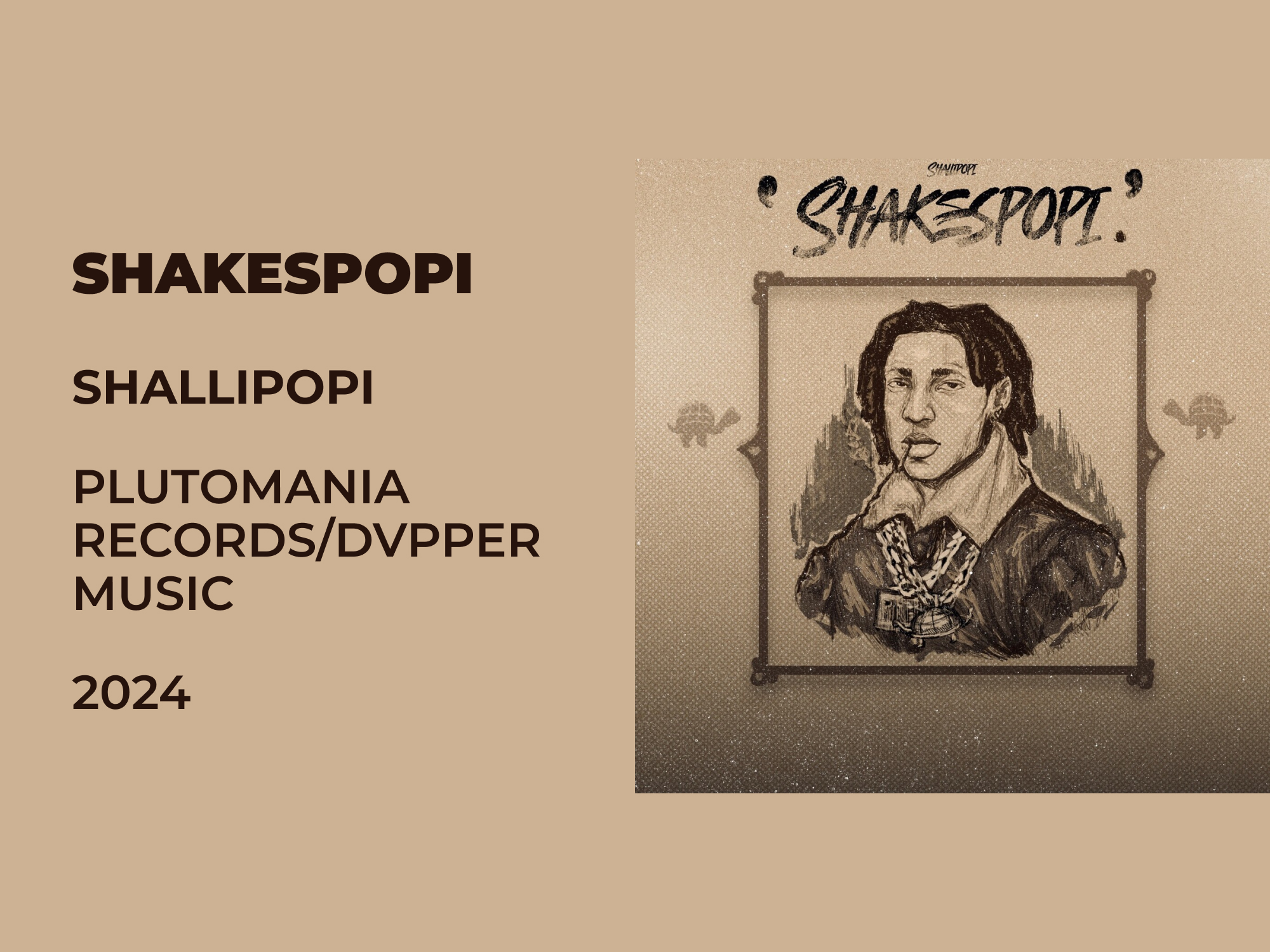
TEKNO & SHALLIPOPI – “SO WHAT” 

Tekno teams up with Shallipopi to deliver a fresh new single “So What?” This Amapiano-laced hit centres around minding one’s business as Tekno sings in the intro and at many points in the song, “Check, you see me dey complain?” Shallipopi also embodies his verse, adding flair to the overall outcome. 

REMY BAGGINS & YKB – “FIRE 4 FIRE” 

Talented artist and producer, Remy Baggins partners up with YBK to deliver an electrifying new single “Fire 4 Fire.” Impressively produced by Remy himself, the song perfectly syncs elements of the early 2000s R&B with modern sounds making it nostalgic yet fresh to the ears. Both singers express their burning desire to ignite a passionate and intimate relationship with someone special.

TEKNO – “POCKET”

With So What?” freshly out in the music space Tekno graces us again with a new release “Pocket.” With the multi-talented artist dropping a new album, ‘The More The Matter’ on September 1st, “Pocket” serves as a sneak peek into what we should expect from the album. In his new single,  Tekno highlights the power and influence of money as he sings, “When money pocket no go dey dull your body/shey you no know money dey ginger body,” The mix of Afrobeat and Amapiano in this masterpiece is balanced and enjoyable as it carries the message of the song. 

GUCHI – “NOTICE ME” 

Following her previously released songs “All Over You” and “Mon Bebe” the talented Nigerian singer collaborates with Loud Behaviour to grace us with another song for the year “Notice Me.” The Afro-pop singer confesses her love to her romantic interest, “I don’t want to fall in love but for you I will/ I don’t want to waste no time but for you I’m free.”  Who she has been trying to get along with but he doesn’t seem to notice her. From the title, we can tell her goal and aim. She emphasizes this in the chorus where she shows off her vocal prowess, “Na today you go notice me/ Since I don dey show green light” 

DIAMOND PLATNUMZ – “OVERDOSE” 

The multitalented Tanzanian Bongo Flava recording artist has delivered a lot of songs this year including My Baby” which featured the Nigerian talent, Chike. Diamond Platnumz delivers yet another single, Overdose” in which he showcases beautiful use of his mother tongue, Swahili. His vocals layer effortlessly over the log drums and percussion instruments. 

MOËTT & SCUMIE – “BANK ACCOUNT” FT. K.KEED & BUZZI LEE

Scumie, K.Keed and Buzzi Lee stand to be powerful and talented South African female rappers who together create “Bank Account” a heavy-hitting trap single produced by the renowned Moët The Goat. In celebration of Women’s Month, these talented women rise to the occasion to give women yet another song to empower themselves. K.Keed leads this trap banger with Scummie adding an intro and verse and Buzzi Lee wrapping it up. Each one of them brings in their unique style and showcases their heavyweight verses in this banger with just bars from top to bottom. 

10TEN, BLAQBONEZ & TAR1Q – “DEALER” 

Producer and songwriter 10Ten releases Dealer” with help from Blaqbonez and TAR1Q. The artists sing about how when life comes tumbling down, the dealer is the person they turn to. They all hop on the chorus which is emphasized throughout the song, ” When I’m in the zone I call all my niggas/ When I’m in the mood I call all my bitches/ When everything wan kill me I call all my dealers.” 

FRIDAYY & FIREBOY – “YOU” 

American-Haitian singer, Fridayy, joins forces with Nigerian talent Fireboy to release You” which sits as one of the songs on his album Fridayy.’ The love song showcases the vocal prowess of both artists as they reassure their love for their lover. Fridayy in the chorus makes it clear, “They be on my line but I only want you / ooh-ooh I’ma press decline when they tryna drive through, ooh-ooh.”  

ENAKY – “FAMILY”

As the message of Afropop vaunts even higher, so does the desire for more original voices. Luckily, there’s been no shortage of ascendant stars as social realities have been blurred into sound, in language so intriguing and lived-in. “Family,” the new record from Enaky, reveals an artist deep into their craft. The earthy production sets her on the introspective path, as she sings of little things bothering her and the need for her family to cover her. It’s an honest song whose feeling is amplified by her striking vocals. 


Words By Chigoziri Ezeaku.


Featured image credits/The NATIVE

Olamide, Pheelz & the synergy of artist-producer pairings in Afropop

No music-making process is complete without either the producer or the artist. Most times, it is both involved in the creation of music–with each offering their strengths to mould a collection of sounds into a coherent beat or lay vocals onto that beat to concoct a newer experience for the listeners. Everywhere in the world, the artist-producer equation has become a regular feature, with many artists and producers working with different names, fueled by the passion for creativity. But there are moments when a producer and an artist develop a closeness that defines the musical landscape. Both the artist and the producer become two peas in a pod, making music that leaves a lasting impression on their careers and the hearts of the audience.

The Nigerian music scene has been favoured with many of such significant artist-producer relationships. In the 70s, 80s and 90s, amid the backdrop of economic and political changes, Nigerian musicians were garnering global attention with their blend of Nigerian/African sounds and Western influences. Some of these artists were signed to foreign music labels, which provided them access to some of the best personnel and platforms at that time. 

While Fela Kuti self-produced a large number of discography, he also formed good relationships with British producer and sound engineer Jeff Jarratt and British drummer Ginger Baker. Jarratt and Baker had their input in some of Fela’s music, with the most notable being Fela and Ginger’s ‘Live!’ (1971), which Jarratt produced. Jarratt also produced Fela’s ‘Fela’s London Scene’ (1971) and ‘Afrodisiac’ (1973). American music producer and manager Andrew C. Frankel was a notable presence in the careers of King Sunny Adé, Haruna Ishola and I.K. Dairo. Frankel produced Adé’s ‘Ẹ Dide / Get Up’ (1995) and ‘Odù’ (1998) and was the mastermind behind the compilation projects ‘Definitive Dairo’ (1996), ‘Apala Messenger’ (2003) and ‘Synchro Series’ (2003). French musician and producer Martin Meissonnier was also instrumental to King Sunny Adé and Fela Kuti’s careers, as he handled Adé’s ‘Juju Music’ (1982) ‘Synchro System’ (1983) and ‘Aura’ (1984) and Kuti’s ‘Black President’ (1981), ‘Original Suffer Head’ (1981).

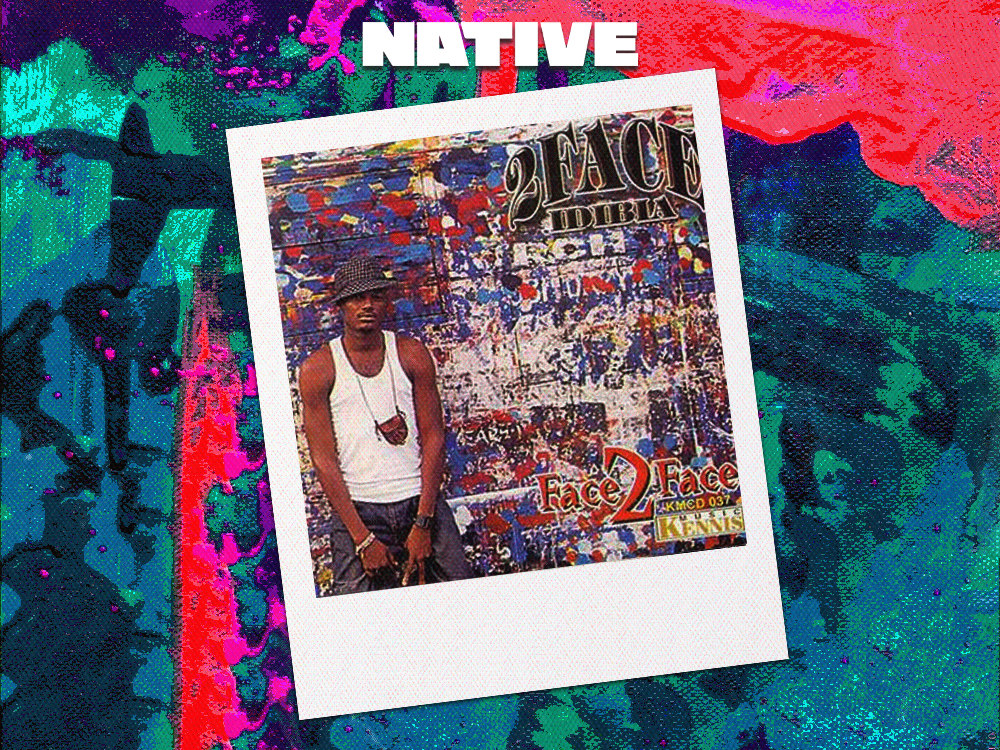
Following the arrival of the late 90s and early 2000s, the Nigerian music scene experienced a shift with the emergence of a new set of artists inspired by the music of the homeland and from foreign lands, most especially America. Still, the artist-producer dynamic persisted. In 2004, 2face Idibia (now 2Baba), released his debut album ‘Face 2 Face’ under Kennis Music with production handled solely by OJB Jezreel. OJB Jezreel also contributed to Idibia’s sophomore album ‘Grass 2 Grace’ (2006) and both projects are considered part of the canon of contemporary Nigerian music. Idibia spoke about his and Jezreel’s chemistry, revealing that they were on “the same creative wave[length].” 

Another prominent duo was Don Jazzy and D’banj, who currently has alleged sexual assault charges against him. The duo returned to Nigeria from London to form Mo’Hits Records. The Don Jazzy-D’banj connection was an instant hit, with D’banj’s magnetism as an artist matching the eclectic productions of Don Jazzy. That relationship produced three critically acclaimed albums—‘No Long Thing’ (2005), ‘RunDown Funk U Up’  (2006) and ‘The Entertainer’ (2008)—and evergreen hits. In 2009, Don Jazzy did his magic on Wande Coal’s debut album ‘Mushin 2 Mo’Hits.’ Entering the frame also in 2008 was 9ice’s ‘Gongo Aso,’ which solidified the connection he and ID Cabasa shared. ‘Gongo Aso,’ D’banj’s albums, Wande Coal’s album, Timaya and K Solo’s works on ‘True Story’ (2007) and ‘Gift and Grace’ (2008) highlighted the potential for producer-artist collaboration to enrich the country’s musical space.

Beyond the shores of Nigeria, producer-artist collaborations were yielding glorious results, too. LL Cool J’s debut album ‘Radio’ (1985) was a career breakthrough for the then 17-year-old rapper and an emerging Rick Rubin. The album was also a watershed in America’s Hip-Hop culture as it signalled a wider acceptance of the genre following the project’s mainstream success. Big Daddy Kane’s ‘Long Live The Kane’  (1988) with Marley Marl, Method Man’s ‘Tical’ (1994) with RZA, Raekwon’s ‘Only Built 4 Cuban Linx…’  (1995) with RZA and Missy Elliot’s ‘Supa Dupa Fly’ (1997) are some of the best projects of one artist-one producer of that era in Hip-Hop

The late 2010s was the beginning of a new phase for Nigerian music as artists on the homefront courted the attention of the world. Wizkid and Samklef showed excellent signs on the former’s debut album ‘Superstar’ (2011), with Samklef producing six out of the project’s sixteen tracks. Davido and Shizzi were responsible for some of the biggest songs on Davido’s ‘Omo Baba Olowo: The Genesis’ (2012). LeriQ was the sole mastermind of Burna Boy’s 2013 debut album ‘L.I.F.E,’  installing the duo’s names into Nigerian music folklore. “It was an instant connection, we both knew this is what we’re looking for,” LeriQ told Flaunt. “As a producer, finding that one artist that can work with your sound is really key. I knew this is actually perfect for my kind of music, and vice versa.”

After Olamide left ID Cabasa’s Coded Tunes and floated his label YBNL Nation, a young producer called Pheelz—whom he first knew while they were both at Coded Tunes—became his go-to guy. On 2012’s ‘YBNL,’ Pheelz covered the length and breadth of the album that delivered hits and earmarked Olamide as a serious talent. Since then, Pheelz and Young Jonn, another producer who later joined YBNL Nation, have become important fixtures in Olamide’s careers and those of the artists signed to the label, most notably Lil Kesh, Adekunle Gold and Fireboy DML. Other notable musical relationships are in that period Reminisce and Sarz, Flavour and Masterkraft, Falz and Sess, Show Dem Camp and Spax and Naira Marley and Rexxie, among others. 

With Nigerian music venturing further into the global conversation, more spaces are being opened for creatives to excel. Music producers are leaving the backseats to take charge of their careers as creators deserving of the full attention artists enjoy. Some become artists themselves and others collaborate with artists on an equal footing. Sarz is a veteran producer who has continually refined his journey as a music maker as he orchestrates impactful projects. His collaborative projects with WurlD, Obongjayar and Lojay crisscross different genres with an affinity for originality. In the category of producers-turned-vocalists, Kel-P is the latest entrant. After the defining work he did on Burna Boy’s ‘African Giant’ (2019), he now moves to the front of the microphone—joining a long list that consists of Masterkraft, Killertunes, Young Jonn, KDDO, CKay and Pheelz. 

While some producers have yet to have a collaborative project with an artist, their connections with certain artists are hard to ignore. London and Rema have announced their dynamism with hit after hit. On Rema’s 2022 debut album ‘Rave & Roses,’ London, in addition to producing some of the tracks on the project, serves as executive producer, connecting all the dots so that Rema’s magic shines through. Niphkeys and Zinoleesky are another duo who bring fervour to their songs replete with great production and sharp life-on-the-streets lyrics. Ruger and Kukbeatz have been unstoppable with their brand of Dancehall-tinged music. Magicsticks and Asake were the kings of 2022 with ‘Mr. Money with the Vibe’ soundtracking both local and international airwaves, and they replicated their brilliance a few months ago with Asake’s sophomore album ‘Work of Art,’ and Magicsticks has cited their relationship as divinely orchestrated.

These collaborations, in all their dimensions, point to one fact: the creative depths are inexhaustible. Artists and producers will continue to seek opportunities to fuse their energies for the pleasure of audiences and the advancement of the music scene. For the Nigerian music industry, the recent works have proved that the producer-artist connection is a tradition that has no end in sight. As long as the act of music-making remains, artists and producers will bond and set our hearts and dancefloors alight.

Featured image credits/NATIVE


ICYMI: How women in comedy are navigating Nigeria’s androcentric music industry

Review: Olamide’s ‘Unruly’

For the uninitiated ear, providence might make it seem that Olamide was born a legend. His lengthy discography and charismatic demeanour already reveals a legacy contented with itself. It would take a graceful retelling to underline the rapper’s rise to the top, to show that it wasn’t always written in the stars. As a young kid growing up in Bariga, there weren’t many templates for the kind of superstar that Olamide currently is. If his generational quality was visible in one move, though, it was this: after becoming nationwide famous with his second album, he established the record label known as YBNL, giving a voice to many young kids like himself, at a time when few artists were doing so.

That label has blossomed into a most fruitful tree, readily contributing leaves to the pages of Nigerian music history. Removed from his second arc as a serial pop hitmaker, which before then was preceded by his zesty rap personality, Olamide has doubled down on his role as a music executive. The duo of Fireboy DML and Asake are his prized signees, and behind their every move, on the paper and in the studio, is the boss’ wizened aura that has been a recognisable feature.


View this post on Instagram


A post shared by Olamidé (@olamide)

Still, what makes Olamide so entrenched in the popular imagination almost fifteen years after his introduction doesn’t completely hinge on his business acumen. Rather, it is his relentless search into the pockets of his artistry, emerging with sonic gems. Sometimes they’re unformed, too rough at the edges (‘999’) and other times, they reach for refinement, as on ‘UY Scuti’, but there seems to be some important missing element. Regardless of the initial reception to his albums, however, some records do find a way, in the dogged style of their creator, to creep into the public consciousness and remain there, an avatar for one of Nigeria’s most profound talents in the modern era.

When the artist shared that ‘Unruly’ would serve as his last album, it was quite surprising, even though audiences took it with a pinch of salt. From JAY-Z to Prince and Michael Jackson, artists have announced their supposedly last albums, and then returned years later with a propulsive new project that eclipsed those sentiments. That didn’t seem like an Olamide concern, because his recent releases have revealed willingness to grow, and spawned credible hits like “Motigbana” and “Rock,” both offering distinct sides to his artistry. Considered with the cult classic ‘Carpe Diem’, this period of Olamide’s career has offered sparse releases—relative to his prolific tear for most of the 2010s—but largely successful ones.

Olamide first mentioned the word ‘unruly’ on the remix of “ZaZoo Zehh,” the uber-popular hit from the quasi-controversial street-pop singer, Portable. One must however recast their attention to his breakout period, when a swathe of established acts readily associated with his brand, which can be considered an indirect way of making theirs seem more gritty and in touch with the streets. It was, however, a reigniting of old flames for Olamide, who was influential in positioning Street Pop on the radar of contemporary Nigerian audiences. With his current style focused on establishing groove over disrupting the status quo, the street jam-evoking song was like meeting a former lover in a strange land.

That was when he must have begun thinking—if he were to make ‘Unruly’ his last album, or convincingly sell the idea that it was his last, then he’d have to leave the scene with his guns blazing. It’s like how the closing scene of a movie has to be resonant and with his music having cinematic promise since forever, Olamide must have crystallised that vision over the years. Released earlier this month, the album bears the result of that patient contemplation, which has been the most visible character trait of the man born Olamide Adedeji.

Opening records are a chance to lay down an album’s values. From the militaristic machismo of ‘Street OT’’s “Oga Nla” to the tropical luxury of “Another Level,” off ‘Carpe Diem’, there’s been no shortage of memorable album openers from Olamide. However, he’s honest not to shortchange the listener, so that the first song is very rarely the best song on the project. “Celebrate” dissolves that implicit urge by being one of the best records on ‘Unruly’, whose jazzy progressions matched with ‘Piano log drums makes for a grand listen.

Accounting for his wins while sketching the motions for celebrating them, it’s an easy ride into the album. “I want to pop champagne for my pain, many things dey wey dey drive me insane,” he sings in the record’s opening line, accompanied by sizzling horns and faint touches of crowd vocals. As a person, Olamide is one of the most introverted artists in Afropop, and thus, the second line of that progression carries its own tension. However, the album’s intent remains clear and focused; that tension is masterfully retained in the background, so that zesty and victorious airs are maintained.

That emotion of forging ahead through personal tests is captured on “No Worries,” which is one of the most triumphant songs on the album. Rinsing razor-sharp flows over the most impressionist production, legacy comes to the fore of Olamide’s considerations, as he constantly reiterates “I no dey worry, God go do am.” For as long as he’s released projects, a piercing sense of optimism has always been the message of Olamide. Even in his earliest arc, when he had little of the reverence he’s accorded today, the artist always moved with the assurance of someone who recognises their unique potential.

The classic status of the decade-old ‘Baddest Guy Ever Liveth’ was hinged on pop-rap moments like “Turn Up” and “Durosoke” as much as it was on straight-out rap records such as “Anifowose” and “Sitting On The Throne.” Here, “Celebrate” and “No Worries” are among the songs that summarily chart the evolution of Olamide from the streets to becoming a cultural icon, and his recent albums have attempted to capture that graceful perspective. Featuring a swathe of rising acts on ‘999’ and toning down his sound to a breezy lull on ‘Uy Scuti’, it seemed that he was too focused on legacy to give a stirring account of it. ‘Unruly’ works out those narrative flaws, mostly because he’s having fun while taking stock of his legacy. At this point, it’s already set in stone, so in the words of the legendary Muhammed Ali, he floats like a butterfly and stings like a bee.

‘Unruly’ indeed benefits from the directness of perspective. Olamide sounds the most inspired he’s been in a minute. From this angle, records like “Gaza” and “Supplier” emerge. A poignant back-and-forth enlivens every bar in the former, supplying a communal energy that’s been present in Olamide since “Abule Sowo” and “Lagos Boys.” In many ways, this project throws it back to that era of Olamide; a brave lyricist whose novelty stems from relaying experiences too familiar, that not many artists have attempted to bring them into sound. “Supplier” is a more lived-in record; starting out with a rap cadence, Olamide switches up the flow mid-verse, attempting a patois inflection around the second he says, “Give you headache like the Naija ganja; I be thoroughbred, don’t call badman rasta.”

From top to finish, there’s a lot of such moments. As Olamide himself reminds us, “[he] don’t give a flying fuck.” On the mellow-framed “Jinja,” he’s still lyrically edgy, not so much in the bars as much as the delivery. Each line flows with a kind of alcohol-induced revelry, imbibing the message of the song in sound. “Doom” and “Street Jam” move some levels above on the same sonic metre, although to varying success. The former’s scattershot flow is in good taste, and flows well into the boppy quality of the production, but it doesn’t affect the listener as poignantly as some other songs on the same metre. On the other hand, “Street Jam” immediately ranks among some of Olamide’s best records. The song’s ancestry can be traced to the music the YBNL honcho created before the 2010s, its communal energy derived from its Hip-Hop swag and street-evoking perspective that’s evident in records like “First Of All” and “Goons Mi.”

Among the signifiers of this album’s success is how it incorporates features. Throughout the several stages of his career, Olamide has eagerly stretched his collaborative ethos to include different facets and eras of the industry. From collaborating with modern-day greats like himself (Don Jazzy, Tiwa Savage, Wizkid) to joining hands with rap savants (Reminisce, Phyno, Chinko Ekun) and even sampling traditional music icons, most popularly K1 De Ultimate, his career has been a masterclass in reaching out within one’s industry.

On ‘Unruly’, he takes his most popular route yet, featuring five bonafide Nigerian pop stars. Quite interestingly, all five features play a similar role—providing the hook/chorus, as well as other attendant peripherals—and all the songs follow themselves, creating an intriguing movement within the album, like it was an EP enclosed within an album. The sound never goes out of his grasp, though.“Trumpet” features one of the most engaging hooks CKay has delivered in recent times, his svelte showcase infusing a mellow ease on the record. As far as pop-rap songs go, it’s perhaps the most successful on the project. Which isn’t to say the other acts underdelivered, although to an extent, BNXN’s output in “Come Alive” is hackneyed, utilising an approach he’s used too often previously.

Fireboy DML on “Shibebe” is surely more evocative, his breezy expressiveness mirroring the movement of a vehicle cruising past the Lagos highways when it’s past 2AM, and the city’s night life becomes the most poignant it would be until the realism of morning emerges. What happens then during such moments is the stuff of Rema’s output on “Mukulu,” with the Mavin artist again demonstrating the sultry appeal of his lyricism. With the verbal manipulations he’s mastered, a word like kunu becomes something more, a metaphor signifying something larger than its liquid nature.

Asake shows up on “New Religion,” one of the pre-released songs from the album. As we’ve seen on “Omo Ope” and “Amapiano,” both artists are like sonic twins, tapping from similar strains within the Yoruba consciousness. While Asake reflects his through the combative sphere of Fuji, his label boss turns more often towards Hip-Hop, and in some ways “New Religion” merges both sensibilities. It’s a fine record, however, beyond its individual brilliance, it’s indicative of the direction Olamide turns towards on ‘Unruly.’

Since making his entry into the nucleus of the Nigerian mainstream, Asake’s pairing of Fuji lyricism over Amapiano sonics have seen him become unarguably the most influential artist around, and with the close working relationship he shares with Olamide, it’s no surprise that the latter adapts some structural and sonic styles from him. The most evident is the progressive ‘Piano rhythms across the album, also delivered by the inimitable Magicsticks, whose work across ‘Mr. Money With The Vibe’ remains a most memorable showing in modern Nigerian pop. When Asake’s sophomore ‘Work of Art’ seemed to draw from the same well of South African pop music, the conjecture was that he was too obviously rehashing the sound, even though the vocal deliveries were essentially different.

Likewise, Olamide makes ‘Unruly’ distinctly his. The narrative across the album cannot be evoked by anyone else, and certainly not in the same style. More than a decade into his career, he’s still relaying the perspectives that made him so beloved, seemingly digging deeper into his bag to make its telling worthwhile. ‘Unruly’ is a cohesive album, but with the subtle shifts within its delivery, it’s unarguably one of the most sterling projects of his career. It’s hard to imagine this as his last.


REVIEW: ADEKUNLE GOLD’S ‘TEQUILA EVER AFTER’

NATIVE Selects: New Music From Efya, Major League DJz, Harmonize & More

Every week, new music shows up, sweeping fans and music lovers off their feet while artists gauge reactions to know the effect of their creativity. At the NATIVE, we are committed to keeping our ears on the pulse of the music scene and bringing the best sounds to your doorstep. In our last edition, we brought you new releases from Davido, Karun and more. Today, we have songs that move from Afropop to Amapiano to R&B, with our select artists showcasing their unending talent and passion for creativity. Lock in!

EFYA – “JARA JARA”

Ghanaian songstress Efya has been around for about a decade. Yet her acclaim stands on her consistency, which is burnished by her colourful takes on afropop. “Jara Jara,” her latest record, is made bubbly by the drums and zesty horn playing, while Efya uses her commanding vocal presence to wax poetic about a lover’s intimacy. It’s a song that carries the listener into the fullness of her heart, while serenading as a bop. 

BENIE MACAULAY & DRESHIE – “KANAYO”

Both artists are in scintillating form on this brooding number. “Kanayo” is titled after the iconic Nollywood artist, and its hook also references the infamous sacrifice jokes that’s been going around in recent times. Asides this connection to popular culture, the song is indeed its own affair, with the vocal tones of the artists especially delivering the message of a love perfectly. With fine touches of electronic music, the song manages to flirt with explosiveness without completely giving into it, a choice that contributes to its enjoyable mystique. 

HARMONIZE FT. RUGER – “SINGLE AGAIN (REMIX)”

On this affectionate record, the talented duo of Harmonize and Ruger chart the tumultuous progression to being in love and falling out of it. Amidst the vibrant clash of ‘Piano drums and choir-esque vocals, it’s Harmonize who sets things off with a story-laden verse which depicts why he’s unable to love. On his part, Ruger extends the bad boy aesthetic he’s created with his songs, his svelte vocals melding perfectly with his host’s. A fine record, it’s prime to further stretch the ubiquity of its original. 

JOSIAH DE DISCIPLE FT. MALINE AURA – “AMANGA”

On this captivating record, Josiah De Discipline layers the bewitching production which Maline Aura coasts over. Over time the South African DJ has mastered that role of tastemaker, linking up with some underappreciated albeit talented musicians from the country and beyond. Maline does evoke the aura of her name, impressing her lithe vocals with memorable allure over the the knocking ‘Piano drums and soulful loops. A song to keep for all times.

TIPSHAN – “ALL OVER YOU” 

Nigerian artist Tipshan got his musical knowledge listening to the greats like 2Face Idibia, Fela Kuti and Burna Boy. His latest song “All Over You” bears traces of those influences, from the Afrobeat-evoking production to the fullness of his vocals. A feel-good affair, it accounts for the memories shared between a man and his lover, wanting to extend its goodness for the foreseeable future. 

PABRYMO FT. ODUMODUBLVCK – “DEY PLAY”

Releasing ‘City Boy’ just last weekend, a standout from that EP is this sizzling collaboration with ODUMODUBLVCK. Operating from a gritty rap perspective, it’s a haunting record that paints life as it goes underneath the glossy frames of popular culture. Both artists are in scintillating form, with PaBrymo’s aspirational direction perfectly complemented by Odumodu’s short but poignant verse. 

MAJOR LEAGUE DJZ FT. ELAINE & YUMBS – “ALL NIGHT LONG” 

One of the most consistent figures in South Africa, the duo of Major League DJz have released a new song. They pull from their vast network as they feature Elaine and Yumbs, whose vocal contributions enliven the soulful ‘Piano production. Their dreamy voices interweave around each other, creating a warmth the song benefits from.


ICYMI: LISTEN TO NEW PROJECTS FROM BELLA ALUBO, LERIQ, BONTLE SMITH & MORE

AV Club: ‘Jagun Jagun’ raises the ceiling for Yoruba epic films

‘Jagun Jagun’, the third Yoruba epic to involve Femi Adebayo and (to a far lesser extent) Odunlade Adekola within the last year-plus, is primarily hinged on spectacle. It’s an unsurprising approach, especially if you’ve seen last year’s Nigerian box office hit, ‘King of Thieves’—also streaming on Prime Video. Even beyond that ultra-popular, big budget example, you can glean the influence of the smaller scale films with premises untouched by modernity and set in rustic locations, the ones you can catch on African Magic Yoruba.


View this post on Instagram


A post shared by Netflix Nigeria (@naijaonnetflix)

In these films evoking is not enough, the goal is to subsume the viewer with more than enough signifiers of core culture so that the aesthetic is definitive. Adire, Aso Oke and other parochial types of attires are used, beads and other divination props are prominent, dialogues are laden with rumbling aphorisms, the houses are clay-made huts, and there’s a lot of arable, natural scape in those locations. For those with action sequences, the closest thing to a modern weapon is always the smokey, pre-colonial, gun.

In the television films without the privilege of deep budgets, these showy elements add to entertainment value, since they’ll have to heavily lean on actors carrying the weight of not just the story, but the film itself. There isn’t much to defer to if the acting performance isn’t selling a plot, or the story construction itself isn’t worthwhile. When there’s a bigger budget, the broader limit on how these props and set designs can be used in enhancing a film’s experience or mask its deficiencies. The small spectacle of those smaller efforts can be blown up into cinema-worthy films or, perhaps more fitting for the 2020s, on-demand streaming.

That’s the lineage ‘Jagun Jagun’, a Netflix Original, falls into. From the onset, you can tell the Femi Adebayo-produced film wasn’t made on a shoestring budget. In fact, the hue is so bright it immediately reminded me of Prime Video’s ‘The Rings of Power’, the blockbuster fantasy epic which leveraged the natural beauty of New Zealand and excellent use of CGI into creating a world with ethereal realms and sinister kingdoms. Set across multiple villages in close proximity, ‘Jagun Jagun’ has similar ambitions, although clearly on the same scale, and it’s executed across a two-plus hour run time that’s generally stimulating, if uneven.


In ‘Jagun Jagun’, Lateef Adedimeji plays Gbotija, a young warrior who has to lead the charge in ending the tyrannical Ogundiji, the egomaniacal warlord magnificently played by Femi Adebayo. It takes well over an hour into the film for this central conflict to get going, though. What we get in the first hour is the set-up of subplots that funnel into the main plot, as well as introduction to characters beyond Gbotija and Ogundiji, like the battle-tested Gbogunmi, Wehinwo, the young man sent to Ogundiji’s fighting academy by his entire village, and the love interest Iroyinogunkitan, who plays an important role in a semi-satisfying twist.

As the subplots and characters are unfurled, the dialogue comes out as one of the stars of the film. Proverbs are loaded into the writing—there are subtitles, even though they move quite quickly. The metaphors, diabolical quips and boastful quotes come at viewers thick and fast, and it’s a credit to Adebayo Tijani’s writing that it doesn’t all come as a barrage. It’s also due to the cast that very little feels forced or over-performed. (The closest we get to over-performing is the heavy-handed tirade Gbotija goes on just before the climatic fight scene.)

Going back to the budget, it’s definitely a boon to have a roster of all-star veterans making up the bulk of the support, and even fringe, roles. When Odunlade Adekola only stars in a single scene, with Bimbo Ademoye and Yinka Quadri both appearing for only about a third of a film, as well as Adebayo Salami and Dele Odule in essential cameo positions, you’ve definitely entered too big to fail territory in Yoruba Nollywood. All of the that star power and personnel is needed since the film sprawls a little longer than necessary, which means it’s up to the acting to ensure every scene is entertaining even when some aren’t essential.

In a scene that would be otherwise forgettable, the great Ayo Mogaji stars as the mother of Ajitoni, played by the ever-combustible Aishat Lawal, who resorts to loud insults to rebuff the marriage proposal of Agbeloba (Ayo Ajewole aka Woli Agba). That scene, which lasts about two to three minutes and serves as comic relief, could’ve been cut without altering the film, but it adds some information that works in service of the film. Ajitoni is devoted to Wehinwo, who’s cruelly killed by Ogundiji, which leads to a search for revenge that effects heroism and a thirst for vengeance. ‘Jagun Jagun’ is winding but it can’t be accused of not being well-thread.


It’s similar to ‘Anikulapo’ in that sense, Kunle Afolayan’s Yoruba epic from last year that saw its titular character descend into wanton greed after acquiring an otherworldly power. In that film too, it takes a while for things to really start going, giving viewers an elongated backstory that could easily have been condensed. What worked for that film, ultimately, were its story and acting performances that did some good to even the parts that could’ve been left on the cutting floor. In a way, you could read the sprawl of the film as a form of over-explaining, where the filmmakers wants to show as much as possible rather than simply trust the audience to figure the rest out.

It’s the same trap ‘Jagun Jagun’ falls into, unnecessarily expanding on Ogundiji’s notoriety as a mercenary and dulling all the edges of Gbotija into the innocuous type of protagonist that’s easy to be indifferent about. Perhaps, it’s down to the idea that epics have to be grand in scope, but with a straightforward, good versus bad premise and sans extensive world-building, there isn’t that much to be absorbed by.

For what it’s worth, ‘Jagun Jagun’ is an improvement on the two other recent Yoruba epics in the Femi Adebayo filmography. Last year’s ‘King of Thieves’ and July’s ‘Orisa’ are bonafide cinema hits, the latter is still showing on the big screen and has grossed over 100 million naira despite opening on the same weekend as global box office smashes ‘Barbie’ and ‘Oppenheimer’. Both those films, though, are essentially the same: Odunlade Adekola and Adebayo are cast on opposite sides in the tussle for the control of a fictional kingdom.

The plot nuances are slightly different but the similarities are very striking, even to the point that criticisms can be applied both ways. Most obvious is the lack of depth between the four leading characters in the two films, which makes it difficult to fully understand their motivations and root for or against them. As Ageshinkole (‘King of Thieves’) and Komokomo (‘Orisa’) terrorises the villages, plundering the former through stealing and kidnapping in the latter, his ire feels aimless to even the viewers—who should at least be in on his reasons some ways into the film. Instead, both films are hinged on late revelations that don’t quite hit.

In ‘Jagun Jagun’, the story progression is clearly much better, and it’s evident that directors Adebayo Tijani and Tope Adebayo have a stronger control over the plot than they did on ‘King of Thieves’. (Odunlade Adekola directed ‘Orisa’.) There are still parts that need drastic improvement, especially the use of VFX and CGI, the former quite garish without always inducing a visceral judder and the latter is used to kitschy effect. At this point, though, it’s about growing forward, which is what ‘Jagun Jagun’ accomplishes, raising the ceiling for a film genre whose spectacle was once limited to a niche audience.


ICYMI: ‘FATAL SEDUCTION’, ‘WURA’ & WHAT SERIES REMAKES SAY ABOUT STREAMERS IN AFRICA

Turntable Top 100: Olamide’s “Jinja” reaches a new peak at No.5

Just last week, all 15 tracks off Olamide’s highly anticipated album, ‘Unruly,’ debuted on Turntable Top 100 between No.36 and No.95. This comes only one week after the album was released and this week, “Jinja” slides up 31 spots in a new peak at No.5. The Eskeez-produced track tallied 1.97 million on-demand streams across platforms and 47.1 million in radio reach, making it Olamide’s 12th entry in Top 10.

Asake’s “Lonely At The Top” kicks off this week’s Top 5, spending its sixth consecutive week at No.1. It is just a week behind “Bandana” as Asake’s longest No.1 song in Nigeria, tallying 4.04 million on-demand streams and 97 million on radio reach. After moving up two spots last week, Khaid’s “Anabella” maintains its position at No.2 while Omah Lay’s “reason” marks its 9th week on the chart with this week’s No.3. Burna Boy’s “Big 7” off his forthcoming album, ‘I Told Them’ takes up No.4 and Olamide’s “Jinja” closes out the Top.5.

Just outside the Top 5, Adekunle Gold’s “Ogaranya” slips one spot to No.6, similar to Young Jonn’s “Sharpally” that occupies No.7 this week. Blaqbonez’s “Like Ice Spice” slides up one spot to No.8 and “Terminator” by King Promise slips one spot to No.9. Shallipopi’s “Obapluto” spends its second consecutive week at No.10.

The rest of the Turntable Top 100 chart sees Falz’s “Ndi Ike,” assisted by Flavour and Odumodublvck debut at No 13 and just above at No.12 is Olamide’s “Gaza” gliding up the chart from last week’s No.40.

Featured Image Credits/The NATIVE

Best New Music: Aya Nakamura threads desire & commitment on “Cherie”

For Aya Nakamura—or at least in her music—desire makes the world go round. Dating all the way back to her debut album, ‘Journal Intime’, the Malian-French singer has been fiddling with the thread that connects libidinous urges and smouldering affection, swinging between the candy-coated allure of giving into sweet nothings and the steamy edge of being an incredibly attractive woman. Ultimately, her ethos is agency.

The cliché is that romantic yearning can be all-consuming, which is true to an extent, but that ideal doesn’t always take into account the nuance of choice. Liking a person is easy, not so much for reciprocity, and even harder than that can be defining a situation instead of running on vibes. The latter wrinkle is where the evolution of Aya Nakamura is evident, especially on her early 2023 album, ‘DNK’. Across earlier albums, she sang of reciprocity in straightforward, innately sensual, and utterly efficient ways, the intoxicating essence of her husky voice muscling over vibrant musical choices in contemporary Afropop—from Africa to the Black European diaspora.

For ‘DNK’, she leaned a lot more on Zouk-Love, a subgenre that’s more impactful on Afrobeats than many listeners know. While the album is far from homogenous, the consistent centre of a singular sonic style is different from the scattershot verve of previous albums, and Aya Nakamura hugs those part-silky, part-rubbery grooves with some of her best writing and singing performances yet. On “Chérie,” one of the three songs added to the new deluxe edition of ‘DNK’, she relishes the full control she has over a romantic situation.

The narrative is simple: A guy likes her and wants to commit, she enjoys the effects she has on him even though he’s being warned that it might be a rollercoaster ride. It’s the Cleopatra effect, and the execution is effortlessly stunning. Sung entirely in French, the intense devotion she inspires in her love interest is obvious, even if your grasp on the language is rudimentary. It’s also a plus that Aya Nakamura is singing in the consensus language or romantic love.

“C’est dans tes bras que tu veux que j’m’endorme/attention, c’est dangereux, attention,” she sings on the pre-chorus, a line that, through my entry-level Duolingo ears translates as, “You want me to fall asleep in your arms/be careful, that’s dangerous.” There’s a trace of mischief in her voice, knowing that she’s setting the terms of engagement. In a way, “Chérie” feels like a self-given rejoinder to “Baby,” the standout single off the original 15-track edition of ‘DNK’. On that fairly older song, she lays out her frustration with a romantic situation where her interest acts lovestruck but consistently keeps the conversation about commitment at bay.

As many people who’ve ever been in a situationship will tell you, “going with the flow” is a recipe for tragedy. Not that every situation should be entered with an immediate mission, but there’s a phase where decisions need to be made for emotional clarity. “Chérie” is a playful approach to that point, and it can even be read as a coy attempt at being sure it goes beyond the infatuation-drunk, honeymoon period. “Je veux juste te faire confiance (I just want to trust you),” she sings over Kimo and Silly raiito’s snappy drums and the neon glow of whistling synths.

Regardless of what perspective resonates with each listener, whether through the singer’s courted eyes or as the interest making the initial advances, desire and commitment are universal themes. Aya Nakamura adds a layer of narrative specificity that makes “Chérie” not just a wondrous listen, but also a gleaming gem in a catalogue full of them.


BEST NEW MUSIC: LIFESIZE TEDDY CHANNELS A SELF-AFFIRMING VULNERABILITY ON “AIR”

What’s Going On: Zimbabwe Heads to the Polls, ECOWAS Rejects Niger Proposal & More

“What’s Going On” Tallies Notable News Headlines From Across The Continent — The Good, The Bad, And The Horrible — As A Way Of Ensuring That We All Become A More Sagacious African Generation. With This Column, We’re Hoping To Disseminate The Latest Happenings In Our Socio-Political Climate From Across The Continent, Whilst Starting A Conversation About What’s Important For Us To All Discuss. From Political Affairs To Socio-Economic Issues, ‘What’s Going On’ Will Discuss Just That. This Week’s Headlines Come From Niger, Somalia & Zimbabwe


ECOWAS REJECTS NIGER’S 3-YEAR PLAN 

Days after arriving in Niger Republic to hold peace talks with its military junta, the Economic Community of West African States (ECOWAS) has rejected its proposal to return to civilian rule after three years. On Saturday, the self-imposed Nigerien Head of State Abdourahmane Tiani revealed this, although he gave no further details and said that the principles for the transition would be established in thirty days time, when a dialogue hosted by the junta would take place.

The ECOWAS had sent a delegation headed by Abdulsalami Abubakar, the former Nigerian Head of State. It was however the body’s commissioner for political affairs, peace and security Abdel Fatau-Musah who responded to Tiani’s proposal, rejecting it in clear terms. “ECOWAS is not accepting any prolonged transition again in the region,” he said to Channels TV early on Monday. “The earlier they give back power to the civilians and concentrate on their primary responsibility that is defending the territorial integrity of Niger, the better for them”. 

The situation in Niger Republic has attracted not only the indirect involvement of global superpowers like Russia and America, but it’s been discussed as a major political moment within Africa, especially with a lot of citizens increasingly disillusioned by the government in their respective countries. This new development comes after the ECOWAS threat of a military intervention in Niger, which Fatau-Musah says “is very much on”. 

SOMALIA BANS TIKTOK, TELEGRAM & 1x BET 

The government of Somalia has announced a ban on social media platforms TikTok and Telegram, and online betting site 1XBet, which it claimed were being used by “terrorists” for the purposes of propaganda. The decision came out on Sunday evening, and across informed parties, was considered an extension of the Somali government’s move against the radical islamist group Shebab, which has been locked in violent battles with the central government in Mogadishu for more than fifteen years now. 

Internet providers were ordered by the Ministry of Communication and Technology to cut off access to the three platforms by August 24, warning that legal action would be taken in the case of inaction. According to the Ministry, TikTok, Telegram and 1X Bet were used by “terrorists” and “groups spreading immorality to “disseminate violent images and videos and mislead public opinion”, and banning them would “speed up the war [against] the terrorists who have spilled the blood of the people of Somalia”. 

This comes with little surprise as many governments across Africa have proven their disregard for freedom of speech and the channels which allow them. With no proper alternatives in place, users are left to deal with the sudden disruptions to their everyday lives. Internationally-owned social media platforms like TikTok have thus been the subject of intense scrutiny by governments, with privacy and economic concerns heavily influencing their policies along the line. 

ZIMBABWE HEAD TO THE POLLS 

In two days time, Zimbabwe will head to the polls for her general elections. Among other national posts, the people of Zimbabwe would elect a new president, which has typically dominated conversations leading up to Wednesday. The primary contender is the ruling president Emmerson Mnangagwa who assumed office after the military forced Robert Mugabe to retire in 2017. 

The party Mnangagwa belongs to, ZANU-PF, has been in power since the country’s independence in 1980. He was also a close ally of Mugabe until they had a falling out and for many Zimbabweans, especially young people, the incumbent’s ideas haven’t shown any intent of moving the country forward. Being eighty years himself, Mnangagwa finds himself on the opposing end of youth ideology, and it’s even more sketchy considering the election which won him his first official tenure was widely disputed. 

Nelson Chamisa, from the Citizens Coalition for Change (CCC), is the major opposition. He’s much younger, at 45 years old, and came second with 44% at the 2018 elections. After a court ruling in 2020 stripped him of the leadership of the former main opposition Movement for Democratic Change (MDC), he formed the CCC last year and has repositioned himself as a popular face ahead of the forthcoming elections. 


ICYMI: NIGERIAN STUDENTS PROTEST PROFESSOR WITH HISTORY OF SEXUAL ASSAULT

NATIVE Exclusive: Cheque Is Making All The Right Moves

Cheque’s foray into music was unplanned. As a scholarship student at Obafemi Awolowo University, books were his only companion and entertainment. During a three-month strike declared by the Academic Staff Union of Universities (ASUU)—a casual phenomenon in Nigeria’s dysfunctional tertiary education system—he met a schoolmate who lived in the same street as him. They began a friendship and, one day, Cheque paid this schoolmate—who is now known in the music sphere as Zamorra—a visit and found him rehearsing for a rap battle. Cheque would follow Zamorra to rap and singing contests on campus, and soon, he, too, caught the bug for music.

Cheque’s early musical iterations were far from exceptional. “I was very awful at that time,” he says. “But I could picture myself becoming one of the best one day.” Cheque forged on with intent—taking up the stage name Kyle B—and striking connections with more students-cum-entertainers on campus: Fireboy DML, Yhemolee, Asake, Blaqbonez and Jaido P, to name a few. Still, for all the efforts he poured into music, Cheque never considered it a viable career option. “It was when I finished school that it dawned on me this is what [I’d] do.” In 2018, Cheque and Fireboy DML came to Lagos and signed a one-year contract with a music label. After the expiration of the contract, the label couldn’t retain Cheque and Fireboy DML, and it fell on the two hopeful acts to navigate their careers.

“It was at that time we met one of our friends and we started staying with the friend, and then we were making Instagram freestyles all the time,” Cheque says. It was those freestyles that caught the attention of Olamide, veteran Nigerian artist and CEO of YBNL Nation, who snapped up Fireboy DML as one of his newest signees. Cheque didn’t have to wait too long for his breakthrough, though; Phyno, another veteran Nigerian artist and boss of Penthauze, found one of Cheque’s Instagram freestyles and DMed him. In 2019, Phyno signed Cheque to his label, alongside two other artists – Nuno Zigi and Rhatti.

Cheque immediately got to work. In a single year, he released four singles that showed his versatility as a rapper and a singer. “Pain Away” and “Jekasoro” placed him in Afropop terrain and “Abundance” and “Energy” beamed light on his suave Hip-Hop flows. Both characteristics have become identifiable to Cheque and, with more iterations, he has continued to polish his skills. In 2020, he released ‘Razor,’  his debut EP under Penthauze. The project gave Cheque his breakthrough hit in “Zoom,” a sweet Trap banger about speeding past detractors and ill comments. The song won Cheque more acclaim and boosted his confidence as a performer but deep within him, insecurity gnawed at him.

Months before he dropped “Zoom,” Cheque, in a bid to treat acne, applied a cream that badly burnt his face. The mishap caused him to withdraw into himself. “I became very conscious whenever the camera came to my face,” he says. “I looked down most times when shooting music videos  and hardly smiled at the camera.” While he battled with his insecurities, Cheque continued to make more music. “History” with Fireboy DML and “Call Me Baby” preceded the release of his debut album ‘Bravo,’ which, alongside Fireboy DML, featured Ayra Starr, Olamide and Jackboy. “History” was one of the standout songs on the album. It told a story of perseverance bound by friendship.

“I realise that whenever I’m with Fireboy, I’m close to my highest chakra,” Cheque says. “I feel unstoppable because we know each other’s strengths so well. When we make music, there’s no hindrance, the song finishes so fast, the melodies just pop out so fast and so easily.” It is a camaraderie that Cheque also shares with other artists who were his pals in university; take for instance his guest appearance on Blaqbonez’s “Best Friend” off ‘Sex Over Love’ (2021). “It’s like a film trick because you never see stuff like that coming,” Cheque says about the successes of his friends/colleagues from OAU. “I would be jealous if it was not me; these are the people that we used to look for 200 naira rice to eat. Now [we] are driving cars and living in great houses. It’s crazy, I’m not gonna lie. At the end of our careers, I think we deserve a great movie or series.”

The gratitude and joy that Cheque feels about his current state are the core parts of his latest EP ‘Chequemate.’ The project’s title is a stylised word for “checkmate,” a winning move in a game of chess. With his face completely healed, Cheque’s insecurities have disappeared and he feels that he’s at his most powerful. “If you go [through]my social media right now, my teeth are probably open to the camera, smiling. That’s who I naturally am,” he says. “Anybody seeing me now is not seeing a fake person; they are seeing who I really am. Which, in turn, gives me more confidence to keep making music the way I want to make and present it.”

The six tracks on ‘Chequemate’ foster a storytelling thread of beating the odds and emerging victorious. From the anthemic “Hustler” with Fireboy DML to the love tune of “Sunflawa” with Crayon to the celebratory “God Bless Me,” the project is meant to inspire listeners to take the best shot at their dreams. ‘Chequemate,’ which was supposed to be an album, is the first instalment of the EP series, with a sequel scheduled for release later this year. While Cheque loves for his music to find an audience, he considers himself his first audience.


View this post on Instagram


A post shared by Superboy Cheque (@superboycheque)

“I’ve never tried to prove any point to anybody because when I make music, all I do is make sure people understand what I’m saying,” he says. “I don’t feel like I need to prove any point because criticism is very good. If somebody says I’m not good, it’s alright with me. I don’t have a problem because I don’t want to please everybody. Pleasing everybody is a waste of time. Even Jesus didn’t please everybody.”

Although Cheque is generally noncontroversial, once in a while he lets out his feelings on social media about the state of Hip-Hop in Nigeria. “The reason they say [Hip-hop[ is dead in Nigeria is because most heads fail to recognise the vibe has changed, they still wanna rap like it’s 2010 or previous,” he posted on X (fka Twitter) in July 2021. “Well…it’s all melodies now. Get with the program and help your culture.” Earlier this year, he engaged in a mild faceoff with Abuja-based rappers. For Cheque, the Nigerian Hip-Hop scene is striving but is yet to operate at full capacity, no thanks, he believes, to awards organisers. 

‘Zoom’ was by far the biggest hip-hop song [when]it came out in this country [but] they didn’t recognise the song at all. They put songs that we know that the people at home are not inclined to give a fuck about,” he says. “And that kills the genre because you refuse to acknowledge the song that they all love. You put hardcore rap that nobody can sing any of the lines and you’d just be seeing songs with low numbers and nobody’s really listening. There’s no impact.”

Cheque also admits that he’s aware of the murmurs about Phyno not favouring Igbo artists after his former label mates Nuno Zigi and Rhatti (who are Igbo) left Penthauze. “I don’t feel any type of way,” Cheque, a native of Ondo State, says. “When people say Phyno doesn’t help [Igbo artists], I feel this thing is about mentality. Doing music, to me, is a crazy concept because it takes a lot of emotional strength to keep driving. You have to have a reason and great mental strength to wake up and keep recording. You need to have that and I feel like that’s one of the things that still keeps me going. Phyno helps everybody. He signed two Igbo guys and me, so [he’s] definitely helping Igbo guys.”

‘Chequemate’ is the beginning of a new journey for Cheque. He has overcome his battles and cast aside his worries to focus on the bigger picture: becoming as great an artist as he can be. With the support of his label (as well as his distribution partner EMPIRE) and the warmth of his best friends, Cheque has the world in his palms. His manifesto is clear when he says, “I have hidden myself for a long time but now, I want to show people what I can do.”

Featured image credits/NATIVE

New Music Friday: Projects From Bella Alubo, LeriQ, Bontle Smith & More

It’s another Friday and time for a roundup of music projects from African acts to check out. Throughout the week, music has poured in from all over the continent and sometimes it can slip through the cracks, unheard. This column serves to bring those projects to your ears as you prepare for the end of work and look forward to the weekend. Settle in for an experience as we travel the African continent for the latest music projects.

BELLA ALUBO – ‘LAGOS 101’

Bella Alubo’s latest EP, in the title, pays homage to the Nigerian city popular for its rambunctious energy. She makes it clear on “Lagos 101” with Falz. After that, Bella Alubo pays homage to the sounds that appeal to her: from R&B to Dancehall to Afropop. She is a fierce character on “Unstoppable,” rubs shoulders with the rap legend The Notorious B.I.G on “G.O.A.T” and revels in the joys of life on “Party Gyal.” ‘Lagos 101’ is a fine effort.

YAADMAN FKA YUNG L – ‘YES INDEED’

Yaadman, formerly known as Yung L, has never wavered with quality output. His consistency (and the quality therein) has kept him in the music conversation even as times evolve. On his new EP ‘Yes Indeed,’ Yaadman reminds listeners of his brilliance with his patois-influenced delivery that cuts through to the soul. While ‘Yes Indeed’ has a playful vibe to it, Yaadman ensures it’s packed with solid work with songs such as “Looking For Me” and “Sabi Boy.”

KAESTYLE & LERIQ – ‘ASYLUM’

It is no surprise when artists and producers link up to make a project. Newcomer Kaestyle and veteran LeriQ are the latest duo on that roster. On ‘Asylum,’ both creatives fuse their energies and perspectives for a thrilling body of work. Kaestyle identifies his need for wealth on “The Bag,” unfurls his seductive side on “The Emotion” and chases fun on “Yolo.” On ‘Asylum,’ LeriQ’s versatile production is the perfect foundation for Kaestyle to blossom.

PABRYMO – ‘CITY BOY’

On ‘City Boy,’ Nigerian act PaBrymo puts his best foot forward with a collection of songs that highlight his penchant for relatable street-smart lyrics and ear for groovy beats. With the assistance of Seyi Vibez, ODUMODUBLVCK, Minz, Kida Kudz and Rasaqi NSG, he makes ‘City Boy’ an interesting project that is sure to find a home within listeners.

ABIDOZA – ‘PHOLA’

South African DJ/producer Abidoza drops a new album that furthers the heritage of the Amapiano genre. Over groovy beats that fuse elements from R&B to electronic music, ‘Phola’ is a worthy addition to the canon of South African dance music. Featured artists, including Xenia Mannasseh, MaWhoo, Leandra Vert and Berita, give voice to Abidoza’s productions for a wholesome listening experience.

THA BOY MYLES – ‘LEVEL UP’

Rising Nigerian act Tha Boy Myles follows up 2021’s ‘Mylestone’ with a new EP ‘Level Up,’ where he showcases more of his talent. “Level Up” with BNXN is one of the project’s standout tracks – encouraging listeners with stories of their perseverance. There are also love songs such as “Something Special” and the Fave-assisted “One Sided.” Any listener will come off ‘Level Up’ with a better appreciation of Tha Boy Myles.

BONTLE SMITH – ‘THIS IS ME’

Bontle Smith takes centre stage on ‘This is Me,’ as she curates her sonic universe of joyful Amapiano beats. She uses her vocals across the songs while also inviting collaborators to join in her orchestrations. On songs like “Dipula,” “Melodi,” and “Shabesa,” Bontle operates from different emotions, touching aspirational topics here and seeking fun there. In all, ‘This is Me’ is a good showing for Bontle Smith.

JAY CLIFF – ‘WICKED SUMMER’

On his latest three-song pack, Ghanian act Jay Cliff shows his slick flows and deft songwriting. There’s an ease with the way he sings, a breezy confidence that is infectious. The production is eclectic in style fusing elements of Dancehall and Afrobeats and Amapiano for a tasty result. All three songs—“Unruly,” “Up to You” and “E.N.D.”—deserve listenership.

Featured image credits/NATIVE

NATIVE Selects: New music from Davido, Abidoza, SGaWD & more

Every week, new music shows up, sweeping fans and music lovers off their feet while artists gauge reactions to know the effect of their creativity. At the NATIVE, we are committed to keeping our ears on the pulse of the music scene and bringing the best sounds to your doorstep. In our last edition, we brought you new releases from Tochi Bedford, Cruel Santino and more. Today, we have songs that move from Afropop to Amapiano to R&B, with our select artists showcasing their unending talent and passion for creativity. Lock in!

DAVIDO & MUSA KEYS – “UNAVAILABLE (REMIX)” FT. LATTO

Davido’s Afro-House chart-topper is the gift that keeps on giving. After the release of his fourth studio album, Davido dropped a series of cross-continental remixes including Major Lazer. He takes it one step further to tap American rapper, Latto, for a new remix. The iconic introductory verse and hook remain unchanged while Latto taps to match the track’s energy in the second verse. She effortlessly rides the wave of the beat in rap as she reminisces on the toxic traits of a previous relationship. An admirable attempt. 

ABIDOZA – “DON’T WANNA LOVE YOU” FT. XENIA MANASSEH & JAY SAX 

After a fairly silent year, mainstay Amapiano DJ and producer, Abidoza, has released a new project dubbed ‘Phola.’ Right in the middle of the album, he taps Xenia Manasseh for her sweet-sounding vocals on “Don’t Wanna Love You,” a stellar contribution to the rhythmic Private School Amapiano hits emanating from these parts. Her soulful vocals hold a stark vulnerability as she confesses of being scorned by love over a mid-tempo production gleaming with saxophone chords and funky basslines. 

PATORANKING – “HIGHER”

Patoranking added to his catalogue this year with an upbeat Afro-House-tinged single called “Higher.” The track immediately leads in with a bass-heavy drum pattern stacked with melodious strings. “If e no be God, tell me no where I wan dey,” Patoranking croons in the first line, attributing all praise to his successes thus far to God. He sustains a joyful and appreciative tone as he thanks God for protecting him from his enemies, accompanied by choir chants in the background. 

REMINISCE – “WHY?” FT OXLADE

“Why?” is a solemn confessional by Oxlade’s instantly recognizable notes on, carried along by Reminisce’s braggadocious flow. The reigning oja flute draws listeners into the track with its hypnotic notes accompanied by Oxlade’s soothing vocals. He addresses his love interest, begging her to stick beside him despite his shortcomings. Reminisce elevates the track with a laid-back flow reiterating his dedication to the muse despite the questioning of several naysayers. 

BAD BOY TIMZ – “LOTTO”

Bad Boy Timz’s newest single provides a comical sample from an iconic poem meets monologue by Nollywood mainstay character, Paw Paw. It lays the foundation for a story of love as Bad Boy Timz compares the feelings of joy his love interest provides to that of winning a lottery. He seamlessly transitions between singing and rapping, armed with bars in Yoruba and English over a mid-tempo, drum-heavy soundscape. 

SGAWD – “DUMP ALL YOUR WORRIES ON THE DANCE FLOOR”

Any fans of Azealia Banks or perfect infusions of dance and rap would love SGaWD’s new single. She sets the scene with a brief self-affirming message to her listeners, reminding them that she is the hottest in the room. SGaWD commands attention over the track’s ethereal production, chanting lyrics such as “Roll a blunt then I move my hips some more,” charged with undeniable feelings of euphoria. “Dump All Your Worries On The Dancefloor” inches us one step closer to her highly anticipated project, as she continues expanding the scope of her artistry with other-worldly genre fusions.

KAYODE – “TO THE TOP”

After releasing ‘STILL FIGURING LIFE’ earlier this year, Nigerian act Kayode returns with a new single. On “To The Top,” he narrates his struggles as a rising musician and the ways he kept his belief alive. “I was hustling the money wasn’t coming in/In Akoka with my brothers we were struggling/Oh my God I knew I had to level up,” he sings. Kayode sees himself on an upward trajectory and celebrates his journey and accomplishments.


KARUN & BLOCKA BEATS – “LIE TO ME (KENZA REMIX)” FT. KENZA

Kenyan alternative R&B star, Karun, returns for a remix of her hit single with Kenza. The single which originally had a gleaming production with underpinnings of SA’s dance scene now takes the shape of a futuristic electronic track with Karun’s same honeyed vocals. Her vocals hold a raw vulnerability as she beckons on her muse to reaffirm her despite knowing the realities of their failing relationship. Across the single, Karun drifts in and out, allowing Kenza’s glowing production to shine through.


Words By Nwanneamaka Igwe & Chigoziri Ezeaku


Featured image credits/NATIVE

‘NATIVEWORLD’ A Year Later: 7 Standout Guest Appearances

In 2020, NATIVE Sound System (NSS), a music production collective (under the auspices of NATIVE Networks) with a passion for promoting the African youth culture, took a decisive step in curating the sounds and artists championing Nigerian music on the homefront and across the world. Recording camps were formed in Lagos and London, and artists—established and rising—were invited to collaborate and birth interesting sounds that highlighted the diversity and talents of Africa and the black diaspora.

The result of their work came in the form of the 15-track compilation album ‘NATIVEWORLD’, which boasted names such as Ayra Starr, Cruel Santino, Teezee, The Cavemen, Lojay, Lady Donli, BOJ, Odunsi (The Engine), Show Dem Camp, Obongjayar, PsychoYP, Bloody Civilian, Tochi Bedford, Joyce Olong, DETO Black, SGaWD, DAP The Contract and NSG, among others. Today marks the one year anniversary of ‘NATIVEWORLD.’ The album is a labour of love – from its sonics to its visual identity. It is an extension of Native Sound System’s connectedness to the pulse of the youth culture through fashion, radio and other areas of entertainment.

The magic in ‘NATIVEWORLD’ are the hitherto unlikely combinations of talents. Artists whose styles were thought too dissimilar turn their differences into strengths, sparking brilliance that comfort zones would never have made. In honour of ‘NATIVEWORLD’, NATIVE Mag‘s has selected seven guest appearances that epitomises the album’s spirit of hyper-collaboration—no mean feat for a no skips project with over 30 contributors. This is a celebration of NATIVE Sound System’s present and the lustre of our future.

AYRA STARR – “STUCK ON YOU”

Ayra Starr the star that you are. Her mastery of delivering standout hooks and verses that will ring in your ears days after has never been up for questioning. Her twinkling vocals introduce this project standout with an echoey line “Can’t get my mind off you.” She leads in the high-tempo track with mellifluous brazen confessions of love in the first verse and carries on the hook in a message to her muse over a glistening production. Ayra also provides supporting vocals over DAP’s effortless flow in the second verse, heightening the track’s other-worldly feeling. Just as Ayra’s been stuck on her love interest, I’ve also been stuck on this track and its masterful display of relationships complexities in a series of melodies.

THE CAVEMEN – “TORTOISE”

The Cavemen couldn’t have been a more perfect fit for an intro track of a genre-bending album with glowing elements of dance like ‘NATIVEWORLD.’ The track leads in with an intoxicating bass-heavy beat strong enough to get your heart thumping to the rhythm. Like a portal opening, smooth chords and subtle shakers accompany the  charming bassline as new notes unfold with The Cavemen’s chant-like adlibs. “Let the music take you away,” the pair command in the pre-hook, urging audiences to give into the feeling of freedom the chords instil. They go back and forth recognizing the veterans that have laid the groundwork for the success Nigerian music experiences today. They set the tone of the rest of the project when they croon, “Ka anyi gba egwu” which translates to “let’s dance.” Effortless and clean finish. 

WANI – “WEDDING RING”

Assembled on this lucid record are a quartet of highly affecting singers, but Wani puts in arguably the strongest shift. His millennial-sounding vocals are the first you hear, his crooning revealing suggestive tendencies while painting the most serene picture about being in love. It’s the kind of performance that makes you ask your boys what their plans on marriage are, the kind that makes you reflect on the substance of your romantic affairs. As though in agreement that his tone and perspective most carries the song’s message, the other artists leave the hook for Wani, who exudes pleasant warmth until the song’s last second.

ALPHA P – “PRESSURE”

Alpha P does most of the heavy lifting on “Pressure,” to great effect. He is provided a massive assist from producer Le Mav, who creates a catchy, Amapiano-tinged production. The log drums and the handclaps power the jubilant mood and it’s this setting that Alpha P enters with panache. His vocals glide throughout the songs, with melodies and adlibs clashing into sweet symphony. His co-collaborator Lady Donli also adds passionate, sultry vibes, stamping her imprint with confident yet soothing vocals. Still, Alpha P steals the show with his dynamism on the chorus, pairing unrelenting melodic chants with an assuredness in delivery.

KNUCKS – “HONEST”

The biggest strength of ‘NATIVEWORLD’ is how the artists lay down their diverse skills for the benefit of a song. “Honest” is unarguably one of the best examples, merging the alte-influenced singing of Teezee with the particular candour of Tec’s verse, who turns up for Show Dem Camp. They’re brilliant efforts like many of the contributions on this seminal album, but it’s Knucks who emerges the surprising star of the show. His verse wields a precision that’s heavy with realism yet assuming feather-light humour, as seen in a bar like “Knucks is in his bag like he stays in Birkins”, the last word delivered to land with the specificity of place. And yet his thoughts move beyond him, embracing the grace that comes with being a narrator for generational experiences.

BLOODY CIVILIAN – “COLD FREESTYLE”

Bloody Civilian lays out her feelings plainly. That much is clear on her fairly recent debut EP, ‘Anger Management’, but the evidence tracks back further, like her gauzy appearance on “Cold Freestyle.” Singeing the threads of a toxic situationship, her disappointment is palpable. However, it’s her carefree resolve – “This time was the last time/I gave you my best side, baby” – that makes the song really hit. Over SHOLZ’s cavernous bass and glistening dance arrangement, Bloody sweats out all the heartache and the freedom she radiates is nothing short of glorious.

LOJAY – “RUNAWAY”

The emotive value of Lojay’s ability as a writer can never be understated. A big part of that is specificity, it makes listeners believe he’s pulled these narratives from his personal life – which is often the case. On “Runaway,” he’s in sterling, lived-in form, playing one half of a relationship teetering on the edge of collapse. The antidote might be communication, so also could it be the catalyst for an irreversible end. Lojay embodies the unease; the fear isn’t just heartbreak, it’s the path to that point and the million and one things it can do to a person, especially when you’re the person looking to initiate the conversation and compromise. Lojay gave up the expressive goods.

Revisit ‘NATIVEWORLD’ here.


Written by Emmanuel Esomnofu, Nwanneamaka Igwe, Uzoma Ihejirika & Dennis Ade Peter.


NCVRD: HOW SINALO NGCABA CREATED NATIVE SOUND SYSTEM’S ‘NATIVEWORLD’

A 1-Listen Review of Yaadman fka Yung L’s New EP, ‘Yes Indeed’

Yaadman has been around for more than a decade, and has colourfully interpreted Dancehall for the homebound audience. He’s had sterling moments capturing the popular imagination, combined with his own restless search for musical clarity. The artist who was previously known as Yung L has however forged through, putting out critically-acclaimed projects and burnishing his cred among a section of fans as one of the most distinct artists orbiting African music. 

With his new EP, ‘Yes Indeed,’ the artist returns from an excellent showing the last time, on 2021’s cult classic ‘Yaadman Kingsize’ which, as written by Dennis Ade Peter, “pulls and wastes no punches, rendering Yung L in his multidimensionality, as a raunchy gentleman, serial peace seeker, and socio-political observer”. That album filtered Yaadman’s rasta-influenced philosophies through a cosmopolitan lens, culling in features which ranged from Seun Kuti to Tiggs Da Author. On the latest project, the focus is expectedly leaner, as Yaadman reserves space for just one guest artist, Oliander. There’s a lot to expect however; if anything, the artist’s recent projects have been stellar, and he’s stepping into this with the weight (and perhaps grace) of excellence, especially with the poignant direction of his name change. 

On that note do we give ‘Yes Indeed’ the one-listen treatment. In usual 1-listen review fashion, all reactions are in real time while the music plays. No pauses, rewinds, fast-forwards or skips.

“LOOKING FOR ME”

Sweet reggae groove here. I’m in love with this bounce, the drums are really mellow and feel-good. The kind you roll a good kush to. Yung L’s skating through this one; he’s in his Caribbean bag. Each inflection and each word works like a spell. “Hot like fire, but me cool like breeze” is a line that perfectly captures the mood of this song. What a chill way to start off the project. Put Chronixx on this and everything goes absolute bonkers. Which isn’t to say the song isn’t nice as it is; being a Reggae head, I know I’ll be playing this for a long time.

“VAWULENCE”

One thing about Yaadman is that his beats would always bang. The mysterious undertone here perfectly accentuates the confrontative energy he’s bringing here. The bass line is quite buttery, and I like the tempo. “Say I come in peace but I carry small violence” is such a caption-ready lyric. Everything about Yung L’s artistry is measured; from the weight of the imagery to his vocal technique. He’s able to do a lot of things with his voice but he doesn’t make the versatility overbearing; it just is. Two over two here.

“S.O.S (REMASTERED)”

This song was my introduction to Yaadman. I was in secondary school when it dropped and I could sing every word, which is saying something considering I wasn’t in too deep on Reggae and Dancehall then. But the vibe of the song is just unique; it’s truly one of the greatest Nigerian songs of the modern era. I’m not liking this remastering a lot; there’s a lot of angst that’s been taken away through its polishing. Still, the words are as evocative as ever. It remains an enjoyable record, even if that scratchy quality of its original is elusive here. For documentation purposes though, Yaadman has done well in resurrecting this song into the consciousness of music lovers.

“SABI BOY”

Asake-esque horns starting out this one, you can tell the mood is about to be celestial. Yaadman knows how to paint intriguing character portraits; when the song starts off from a third-person perspective, you know he’s about to deliver gems. The mood is here is serene but not sombre; there’s purpose in its melancholy, and it’s the kind of song I would surely appreciate in a more reflective setting. Per structure, it’s a good way of repurposing the project’s direction down the mellower path, which Yaadman has more often favoured in this stage of his career. 

“ME SHE WANT” FT. OLIANDER 

A love song here. Yaadman does these well. These kind of his songs exist in that steamy zone between flesh-turning desire and respect for the other person. Really laid back vibes here; it’s not doing me in yet, but I know it would in the future. When a song has potential to grow, I think people have a sense of that from the beginning. The duet form here is also a winner; I’m loving Oliander’s tone and her songwriting. She’s deep into the song, her verse is like lipstick—gets everything set. Okay, she’s turned the song on its head; I think this might be the standout hit from the EP.

“MOTIONS”

Choir chords from the start of this one. A lot of artists favour this direction on the last song of a project. Yaadman is really singing here though; the leanness of the production amplifies his voice in a really electric way. He’s directly sinking into my soul, each note is like a message from far away but yet so near. “I just need some time and space” always makes for a poignant line because we’re always needing time and space, and they seem so uneager to align. The world demands so much. “Get my head right, get my mind right,” me too, Yaadman. Preach on, my brother.

FINAL THOUGHTS

The longer artists practice their craft and their unexplored subjects lessen, it becomes a considerable challenge to relay fresh perspectives. Especially in popular music where redundancy is hastily observed and sometimes criticised, the unspoken rule has always been to evolve. Artists like Yaadman, however, remind us that there’s no one road to evolution, as he’s renewed themes he’s been mindful of all his career, which is charting an invigorating path to spiritual self-actualisation while soaking the blessings of mortal life.

‘Yes Indeed’ is a masterful effort. Each song here propels itself from within, bursting often with an effervescent energy that doesn’t rely on charging the listener. The vibes are relaxed and introspective, the result of years of sharpening one’s technique. Not releasing a project since 2021, Yaadman seems to have emerged from a channel of personal discovery, emboldened by the experimental scope of contemporary Afropop. He courts novelty, especially in the sound, but the direction pays homage to his own interests. He hones into his mental landscape longer than he does on his last EP, ‘Juice & Zimm’, and reaps here the dividends of that sustained focus.


ICYMI: OUR 1-LISTEN REVIEW OF OLAMIDE’S ‘UNRULY’

Hip-Hop Saved My Life: A Love Letter To The Genre At 50

Looking around the music world today, no other art form has been as influential as Hip-Hop. When people discuss the genre now, it’s as an extension of capitalism, a thorny growth on the skin of Black music heritage. The American scene, being the central location of the movement for obvious reasons, has not given its lovers a lot to love outside of the music. Brazen deaths, the coolness with which drug and gang culture is depicted, the consistent slipping onto debauchery—all these have edged popular conversation over the brilliance of Hip-Hop acts, who’ve turned our shared experiences as Black people into impeccable raps and striking visual moments. 

My instincts tend to be optimistic, however. As the culture which began in the Bronx area of New York clocks fifty this year, it’s a blossoming period to assess one’s immersion into this most particular expression. Nowadays, I’m knowledgeable a bit on the African origins of rapping. How our ancestors who crossed the Atlantic curved Soul from their hearts, which came through their mouths in spellbinding rhythms. With R&B being a direct descendant of that yearning, Hip-Hop emerged from that consciousness through proximity to the former’s sound and cultures. 

This consistent search for the narrative behind my favourite genre is sparked, no doubt, by my present occupation as a writer, but before all this was captured in my mind’s eye, connection was the sole motivation. Born in the late nineties, my baby’s ears must have picked up on songs like Sisqo’s “Unleash The Dragon” and “I Can,” as those saccharine-infused records were the Hip-Hop music I recognised, one which was close to the crowd and approached technique with that maximalist perspective. 

That era belonged to mixtape CDs and disc jockeys reigning supreme. The areas where I grew up in mainland Lagos were culturally vibrant, hosting street jams and random parties at any given chance. Perhaps nostalgia clouds my memory, but if I remember correctly, that was a happier period for Nigeria. Most people might say the same; our fortunes have so drastically changed, that it has affected communal life, in a very profound manner to say. When I encountered music, and Hip-Hop particularly, it was outside and the wind splashing on our faces made the music much more beautiful

Hip-Hop belonged in the centre of our cultural life. You could hear it in the breezy cadences of Jay-Z and Missy Elliott, the glitz-packed records of T.I much later, 2Pac Shakur’s angsty songs which the country’s provocated youth immediately resonated with. From the mid-nineties to mid 2005, the sounds which proliferated the mainstream were rinsed from across the Atlantic, the culmination of cultural exchanges which began in the 16th Century. This wasn’t to say that Nigerians were sole recipients of that thrilling tradition—far from it. I wasn’t too keen on categorisation then, but I knew we eagerly created from those established examples, holding our output against theirs in the contest and context of interrogating identity.

The African needn’t be bound to geographical inspirations, especially since every art form that’s emerged since the so-called modernisation has been the creation of many peoples and cultures, the result of continued interaction. You could feel R&B in the most searing way through the songs of P-Square. Theirs was a brilliance captured in sound and picture, as their inspired records drew ostensibly from what was pouring in from America. Still they managed a certain Nigerianness in their ethos, the consistent infusions of Igbo and experiences grounded in familiar locales. 

Thinking about it now, it seems R&B has always carried the weight of homebound expectations. Its sound, considerably grander than Hip-Hop and viewed through plush, upscale imagery, would have been considered too gritty for the mainstream 2000s. So, its artists, from Plantashun Boyz to Styl Plus, had to prove that they were indeed Nigerians, creating those colourful lyrics taken from their native lingua. Which isn’t to say the music sounded forced; if anything, the success of that fusion would come to be a model for rappers in subsequent years, the likes of Ruggedman and M.I Abaga who sought to champion homebound experiences through raps.

From its entry into Nigeria, Hip-Hop operated on very different terms. I’ve sat with Obi Asika who narrated his historic suggestion to Junior & Pretty when he saw them rap for the first time; that instead of forcing the then-popular Americanised expression, they should rap in Pidgin-English, which is the de-facto common language in most urban areas across Nigeria. Creating “Bolanle” and other iconic songs, the Storm Records duo revolutionised Hip-Hop in Nigeria, but for the most part rappers had only themselves to listen to. Rap is perhaps the only genre where having an outsized ego happens to be an important requirement to reach elite status, and for better or worse that has reflected in the music. 

In the 2000s, the biggest discussion within Nigerian Hip-Hop was language. Given that identity was so closely linked to our language, the medium of passing across such an important message became similarly important. The haughty lyricism spawned by English-speaking rappers—Mode 9 most popularly—was implicitly challenged in the raps of street-influenced purveyors, who believed our local identities were striking enough to be carried into the traditional essence of Hip-Hop. 

Discussions on identity are seldom new within art circles. 1962’s seminal Makerere Conference on African Literature spawned such debates, as writers like the Kenyan great Ngugi Wa Thiong’o expressed the strong opinion that our writing wasn’t doing much against erasing colonial identities if it wasn’t steeped in the intricacies of our local languages. It’s an idea he later expounded on the groundbreaking essay, ‘Decolonising The Mind’, and carried into his own work by changing from his erstwhile name of James Nguigi and writing all of his books ever since in his native language of Gikuyu, although he later translated the majority of them into English. The Nigerian Chinua Achebe stood on the counterview, his own books imbibing much of Igbo culture and spiritualism without losing its native soulfulness. It was he who said, quite profoundly: “Do not be deceived that we have chosen to write in English, for we intend to do unheard of things with it.”

During the ’00s, I was behind on the divisive lingual conversation in Nigerian. I couldn’t gauge the real-time reaction to “Elbow Room” or “Peace or War,” but later I would find and hear the stories, mostly through the internet. And it’s a bit ironic that for the depth of Hip-Hop culture I’m now immersed in, my first attentive moment was “Coming Home,” a comeback record of some sorts for Diddy and his label Dirty Money. Before then, the nineties-dominant mogul had barely scored a hit record, but with its massive promotional chest and that searing hook from Skylar Grey, the song came home, quite literally to me. I liked its progression so much that I wrote its lyrics, word for word, on a book and through that learnt to rap the song. 

Even though I came up in the era of mobile phones, for a time, we didn’t know the possibilities of Al Gore’s Internet. We didn’t know that you could punch a set of words onto Google and its entire lyrics would come up. If we knew, the music books whose paperbacks bore the glossy images of superstars wouldn’t be such a dominant force in youth culture. For me, I went through the painstaking but rewarding process of playing the song on my sister’s phone and writing the lyrics. I couldn’t have known it then, but that was an essential formation of the sense of rhythm, which is important for every artist, whether a writer, painter or pianist. Intuitively, I began to develop an affinity for knowing the creative process behind these songs. 

For a while though, I continued to write along to rap songs which I liked. One poignant and humorous memory returns: how I’d hidden in the backyard of a compound on a school day, delaying myself because I was writing the lyrics to M.I’s “Undisputed Champion”. The Jos-bred rapper was the first idealised rap superstar I witnessed in full consciousness, the Short Black Boy seized the public imagination by impressing a vivid image of rap on teenagers like myself. 

His first two albums, ‘Talk About It’ and ‘MI 2: The Movie’ are unarguably classics, but at the moment of release, they were larger-than-life portraits of a cosmopolitan existence. For we still had an eye on America and, to a lesser extent, other parts of the world, and like rappers before, we subconsciously pitted our mental abilities against theirs. We wanted the assurance that we were performing at global levels and M.I was the perfect embodiment of that. A returnee from the US, his music bore the sleek poetry of our shared spoken word and his sonic choices amplified by his production skills. 

When the young people began using the Internet more frquently, M.I Abaga was a touchstone for that contact. Seeking communion with like minds, I frequented Hip-Hop groups on the then-popular 2go app. We called each other wack and wrote even wacker bars, but that was an introduction to the depth of knowledge that can be obtained from falling in love with something someone else is in love with. From there, I struck off with a group of friends (we were texting, rather than rapping) and joined a rap collective known as Diabolic Emcees (DMC in abbreviation) which we took to Facebook where it blossomed. At the height of its powers, the group had thousands of members who regularly shared their written tracks, complete with hooks, verses, and feature verses, in some cases. Few of us had any intent to record the lyrics; just writing them and getting plaudits was enough for us. 

DMC became more than an online community for me. Favouring an austere style which was influenced by poets, I would put out written track after written track, earning the respect of my peers. I never thought about it then, but how many of us had Hip-Hop offered an alternate reality? In our personal lives, we probably weren’t paid much attention but through raps we learnt to take life seriously, to get in touch with transcontinental conversations when our mates were fussing over Mathematics. Art has that ability to transcend age, and so we were wiser than our years, as evidenced in the level of lyricism teenagers were showcasing.

There was Mark Enkrypt, who had the incisive metre of Nas; there was Moorpen, influenced by the niche rappers who spawned timeless rhymes about science, afro spiritualism, conspiracy theories, and still flexed their own abilities. There was Rxbel, who I’m still friends with today, carrying the torch of poetic rap but with more edginess than myself, who fancied abstractness over solid shots. 

One would be surprised by the number of persons across different spheres of life who share a similar history. One thing about Africans is that regardless of our position on the continent, Hip-Hop is never far from our origin story. For us, the genre allowed the formation of interests which went beyond ourselves, and we took great pride in sharpening that knowledge. Finding such communal spaces as DMC was one way of doing so; another way was watching more skilled practitioners edge it out or explain concepts in songs. For the former, Nairaland was my preferred channel. Figures like Ibime, AirForce, and later Blaqbonez (yes, the famed Preacher of Sex over Love) were battling each other in the platform’s celebrated rap groups, and in real time I learnt how seemingly far-off elements can be brought into rap, and that only contributed to my conviction that rap was the most intelligent genre ever. 

Unfurling the concept in rap songs was catered to by Genius, which back then went as Rap Genius. As my elder siblings bought me mobile phones, seeing I was quite the curious one, I became a bonafide user of the platform. Seldom did I contribute to the discussions; I observed from a distance, seeing rap enthusiasts like myself share their opinions on what the lyrics meant, and I sifted them through logical eyes, reaching my own conclusion after days and weeks of listening to the songs. That was the height of the blog era, though for purist reasons, we weren’t interested in the annointed purveyors of the period, the Kendrick Lamars and Drakes; rather we found out artists like Mos Def, Common, the Wu Tang Clan, and Eyedea, whose illuminating perspective made me a fan for many years. 

That blog era offered the Nigerian Hip-Hop community its last true form of having a vibrant online presence. No one could have forgotten the reaction to M.I’s ‘Illegal Music 2’. So many of us went through each song wanting to know who had the best feature verse among the many rising MCs who were on the mixtape. The unanimous choice was Boogey, whose silver-tongued flow on “Ridiculous” had us jumping on our seats, his approach quite similar to the hair-raising lyricism of Eminem. Within underground circles, we championed him along with the likes of Kahli Abdu, Rukus, Lord V, A-Q, and many others, who stirred that imaginative sense by taking shots at each other as eagerly as they collaborated, the culture bubbling with online conversations which brought so many people together. 

As a Nigerian Hip-Hop fan, that was my favourite era. The easy perspective would be longing—for those supposedly glory days, for their activity and brilliance, for the blessing of a community that cared. I won’t do that, especially since Hip-Hop in the country has been consistently viewed through a one-dimensional lens. Not many people have recognised the stirring power of Afrobeats, and its risk of running a single story, and rap being on the periphery of the popular consciousness. 

If anything, the scene’s problem has not been the absence of exciting rappers as much as it is of depreciating range among the popular demographics. With playlisting and algorithm technologies, fewer people are checking out the music that lies beneath the rubble of the warfare that is capitalist-informed industry. There’s a host of electric female rappers on the scene, from the Mavin Records-signed Lifesize Teddy and sGawd to Deto Black and mildly viral sensation Brazy, all of whom have different aesthetics to match their distinct sounds. On the male side, the vastly different presentation in someone like Psycho YP and someone like PayBac iBoro, proves the variance of contemporary Nigerian rap. There’s Show Dem Camp whose sociopolitical awareness have been broadened with their infusions of palmwine music, which has resulted in one of the most legendary catalogues across Nigerian Hip-Hop history. Ladipoe is not so far off, a true auteur yet immersed in contemporary life. 

The reason why ODUMODUBLVCK is so important to rap culture, and why he has been championed by most of the greats, is because he throws it back to the aforementioned period, when rap was pristine and fitted into any and every shape of our everyday existence. With his branding he’s more Nigga Raw than Phyno, embracing colourful aspects of the Igbo identity, and harkening to the visual template laid by luminaries like The Trybesmen and Eedris Abdulkareem. His lyricism also accounts for the middle class Nigerian life, beneath the focus of the mainstream, poignantly relaying young and dangerous experiences with skill level no rapper has managed since Erigga, who’s featured him tellingly on the excavating “PTSD”. With his ‘EZIOKWU’ project expected later this month, and with Olamide mostly returning to his rap roots on ‘Unruly’, there’s been a lot of bars going around.

In recent times I have found myself moving with a bounce that is recognisably Hip-Hop, basking in the everglow of the music that has most influenced me. These words become then a letter to this lover who’s turned fifty, a celebration of its entire essence, the numerous joys it has given us, even now, amidst the devastating consequences of its exponential growth. May this lover live, and may we continue to find new ways of loving her. 


50 YEARS OF HIP-HOP: A CURRENT LOOK AT NAIROBI’S THRIVING RAP SCENE

Asake Is Basking In Global Success After Selling Out The O2 Arena

It is almost impossible to think that just over a year ago, many people were not familiar with the unstoppable force that is Ahmed Ololade. Though any core music heads who had their ears to the streets couldn’t get enough of the 2020 street-pop hit, “Mr Money,” Asake still largely flew under the radar of mainstream Afropop conversations. Now, two months after the announcement, he joins the genre’s flag bearers as the fourth artist to close out one of the biggest concert venues in the world-O2 Arena. After a decade of relentless hard work and dedication, Asake is sitting at the top of the world and rightfully so.


View this post on Instagram


A post shared by The NATIVE (@thenativemag)

The last time we caught up with the NATIVE cover star as the indisputable face of modern Afropop with the biggest, loudest and most relentless breakthrough act of 2022, Asake was barely three months into his debut album. He tactfully, under the guidance of the genre’s key veteran, Olamide, positioned himself as a serial hitmaker determined to make good use of the spotlight he received. The 12-tracker, a cult classic in its own right, provided a mix of his typically catchy, upbeat productions and more slower-paced tracks like “Nzaza” and “Muse.” 

He also reinforced his versatility with tracks like “Dupe,” a House-influenced track, serving as an appreciation for his tumultuous journey thus far. Contrary to many that think the YBNL signee sprouted out of nowhere, his catalogue is evidence of years of perseverance and patience. “See, there’s no magic in this thing. It’s just endurance and perfect time,” he shares in a moment of stark vulnerability with the NATIVE.

The new year saw the same relentless force as Asake continued expanding the scope of his artistry with alluring visuals directed by frequent collaborator, TG Omori. This came alongside the release of “Yoga,” packed with new techniques amidst the all-too-familiar log drums-shaker pairing. He experienced an evolution in ways beyond his sound as he transformed from a local celebrity to a global superstar in high demand to grace stages across the globe.

After embarking on a UK tour late last year, Asake’s performances received varying reviews due to poor logistic planning and over-capacity venues that resulted in unfortunate deaths at O2 Brixton. Asake was on a mission to redeem his newly formed image with inimitable performances for global festivals and talk shows including a soulful yet hypnotic rendition of “Organise” at The Jimmy Fallon Show.

The next we heard of the superstar, “2:30” dropped. Over a month later, his Olamide-assisted chart-topper, “Amapiano” arrived with the announcement of his sophomore album, ‘Work of Art.’  The tune was an ode to the South African dance scene and its unfaltering penetration and redefinition into varying parts of the continent with supporting themes of Asake’s attained success in the past years. Armed with his experimental touches on the project’s pre-released tracks, Asake was primed to reveal a new and improved vision with the familiar undermining of his Afro-House and Fuji embellishments.

But when the Basquiat-themed album hit the airwaves, audience reception was on opposite ends of the spectrum. Some celebrated Asake for his unfathomable ability to dish out hit after hit in such quick succession while other conversations stirred around his music falling flat due to its repetitive baselines. While there may be some merit to the latter perspective, Asake’s unbridled confidence in his style and craft showcased across ‘Work of Art’ is evidence that he is in control. An appropriate response to the projects naysayers can be referenced in his sit-down with the NATIVE, where he shared:

If something works for you, it means you’re the originator of it. So why will you leave it? I come with a sound and the people love it, so I might do it 70,000 more times, your own is to keep enjoying it. I just have to be doing it well, that’s all that matters to me.”

It is with this irrepressible confidence and admirable defiance Asake has become a household name in just two years. As he takes on the O2 Arena, following Afropop’s greats—Davido, Wizkid and Burnaboy—we’re eagerly sat on the edge of our seats to witness what more outstanding feats Mr Money has up his sleeve.

Featured Image Credits/The NATIVE


REVIEW: ASAKE’S ‘WORK OF ART’

Midas the Jagaban returns with new single and shares details of forthcoming EP

If you’ve ever come across viral TikTok hit “Party with a Jagaban,” then Midas the Jagaban is not too far off your radar. The South Londoner arrived hot on the scene in the summer of 2020 with an air of enchanting mystery with their masked personality and unique taste for indigenous Afropop with underpinnings of Afroswing. From the debut EP, ‘Midas Touch EP’ to subsequent releases over the past few years, Midas has ushered in delectable sounds that blend Afropop sensibilities and global influences with catchy beats and playful lyricism.  

After a much-needed hiatus from the scene, Midas makes a resounding comeback with the first promotional single off the highly anticipated extended play, “More Vibes, More Money.” Combing through their expansive catalogue, it is clear that Midas is accustomed to putting together songs that feel right to blast in the summertime and the recently released single is no exception. The intoxicating drum pattern exudes a thrilling and exuberant sound that lives up to its unique style and boundary-pushing sound. From the title of the Diquenza-produced single, it is clear that they’re here for good vibes and Midas doesn’t disappoint. 

The song leads in with Midas’ upbeat vocals accompanied by light shakers and a high-tempo drum pattern, perfectly leading into the upbeat dance track. They emphasise through its course that they’re here for a good time and when the hook draws in we’re left with a head-bobbing tune as they repetitively croon “More Vibes, More Money.”  We rediscover Midas’ flare for genre-bending tunes with the inclusion of smooth piano chords and log drums at the second pre-hook and towards the end of the track. This shows that despite being away for a while, Midas’ ears are to the streets as they provide a unique contribution to the Afro-House sounds emanating from these parts. 

The song’s accompanying Yukki-directed video finds the masked artist in a tent, seeking healing from an unknown yet fascinating jewel. The supernatural powers of their source work in their favour after which Midas finds their way back to the camp to meet people awed by their arrival. It is a clear and simple yet expressive style of visualising their comeback to the music space. 

With “More Vibes, More Money”, Midas the Jagaban is signalling a new phase of her career as she looks ahead to the release of upcoming EP, Midas Touch Vol. 2: Return of the Mask,’ slated for release in November. Going by her latest single, this new era will certainly have you running it back to catch her sonic intricacies. Watch this space.

Listen to “More Vibes, More Money” here.

Featured Image Credits/The NATIVE

Essentials: RayTheBoffin Explores The Dynamics Of Love On ‘Freckles’

In his NATIVE Exclusive, Suté Iwar praised RayTheBoffin, saying, “He’s a producer that I’m excited about,” and then added: “Ray is gonna have a big future with what I’ve heard him working on.” Months after that conversation, RayTheBoffin, real name Joseph Chikak, steps out with his debut EP ‘Freckles,’ fostering his identity as a multitalented act. The project, which was released under Outer South (the same label that Iwar belongs to), is RayTheBoffin’s way of curating his world with his gifts as a singer and producer.


View this post on Instagram


A post shared by ray, the boffin (@raytheboffin)

Before the release of ‘Freckles,’ RayTheBoffin gave listeners a taste of the project with “Lifeline,” with 3kene and Tim Lyre delivering solid performances. “Lifeline” is a groovy rendition of 90s R&B and Pop with electronic fusions. All three acts reveal their interest in a significant other but from varying emotions. 3kene and Tim Lyre are the casanovas who seek pleasures but clearly state their disinterest in commitment. RayTheBoffin, on the other hand, counterbalances their perspectives with a yearning for commitment. “I just see your body and I keep on loving ya/He just want your body isn’t it so obvious,” he sings. 

The overarching theme of ‘Freckles’ is the exploration of love and its merits and challenges. On the project, RayTheBoffin and the featured artists offer snapshots of what affection means to them, how it nourishes them and how it can tear their souls apart. On “Alive,” RayTheBoffin is the lover too busy chasing money that he has no time to love his partner. Nigerian singer Yimeeka is the woman whose emotions are ignored; she describes all the distractions preventing her lover from giving himself to her as “counterfeits.” “I am doing my part/No I ain’t playing/You don’t know/What you lost/I know my worth,” she sings. 

Although ‘Freckles’ is RayTheBoffin’s debut under Outer South, he has been a consistent music maker. He’s one-half of the group Riverays with co-member Iver Rivers. Both artists sing, rap and produce. They recently put out a new project in ‘Peek 2,’ a follow-up to 2020’s ‘Peek.’ RayTheBoffin and Iver Rivers are also members of the four-man group Dancing in the Desert (with Jess ETA and 3kene) and their project ‘Afrorock’ shows an ambitiousness with fusing African sounds with Rock music. These collaborations are pillars of RayTheBoffin’s music as it exudes fearless creativity. In addition to 3kene’s appearance on “Lifeline,” in ‘Freckles,’ Iver Rivers shows up on “Brain,” a fun track where Rivers and RayTheBoffin exhibit their chemistry. 

The soundscape of ‘Freckles’ is a pristine collage of sounds such as Hip-Hop, R&B, Pop and Dancehall, with dashes of electronic distortions adding colour to the offering. On “Okay,” RayTheBoffin, Twelve XII and BUSA effortlessly find pockets amidst the Trap bounce, while on “New Emotions,” RayTheBoffin swings back and forth between Hip-Hop and Amapiano elements. In all, RayTheBoffin masterfully crafts his world of fusions and multidimensionality while ensuring it’s engaging and pleasing.

The lyrics on the project are constantly in conversation with one another. It raises a question here and provides an answer there. RayTheBoffin and Twelve XII try to convince their lover to forgive their transgressions and ignore the words of outsiders on “Okay. I know I do wrong sometimes/But why you acting like I never please you,” Twelve XII sings. In her verse, BUSA shows she doesn’t lack options as she raps, “Baddies waiting for me/I curve them on the low.” On “New Emotions,” RayTheBoffin is ready to take care of the sexual and emotional needs of his partner, and onBaaaddie,” he surrenders to his lover’s charm, singing, “Bad bad things I fit do, the way you moving that short thing.”

In the ecosystem of Nigerian alternative music, RayTheBoffin is an act with incredible potential. He fits every facet of his artistry into ‘Freckles,’ making for a definitive body of work that places him as one of the country’s exciting artists. For ‘Freckles,’ RayTheBoffin reaches into his bag of tricks with the assuredness of a veteran. 

Stream ‘Freckles’ below.

Featured image credits/NATIVE

Series spinoff of ‘Oloture’ & ‘Anikulapo’ headline Netflix’s slate of upcoming nollywood titles

Since acquiring the  Genevieve Nnaji-directed ‘Lionheart’ as its first Nigerian original, Netflix has strengthened its relationship with Nollywood and the Nigerian film audience with a frequent number of commissioned films and shows. Titles have ranged from crime dramas (‘Oloture’, ‘Shanty  Town’) and traditional epics (‘Amina’, ‘Anikulapo’) to light-hearted rom coms like ‘A Sunday Affair’ and ‘A Naija Christmas’. It doesn’t feel like an exaggeration to say that Netflix is playing a supremely important role by giving filmmakers the resources to tell a wide range of stories and easy access for viewers all over the world to watch.

Within the next couple of months, the streamer is ready to up the ante with a lineup of anticipated and intriguing films, in collaboration with a host of popular (and inventive) filmmakers. Just last week, Femi Adebayo’s Yoruba epic, ‘Jagun Jagun’, premiered to overtly positive reception, setting an exciting, expectant tone for what to expect as 2023 closes out and possibly heading into next year. Following “Lights, Camera… Naija!”, the star-studded event held in Lagos on Sunday, which was attended by a who’s who of the Nigerian film industry, Netflix has shared some details for seven upcoming titles scheduled for release in the coming months.


View this post on Instagram


A post shared by Netflix Nigeria (@naijaonnetflix)

Headlining the slate are the series spinoff for ‘Oloture’ and ‘Anikulapo’, the former originally a 2019 film that follows a journalist who goes undercover to expose a human trafficking ring and the latter, released in 2022, is a fantasy folklore about a young man who (mis)uses otherworldly powers. In another spinoff, ‘War: Wrath And Revenge’ picks up from the popular EbonyLife political thriller series, ‘Sons of the Caliphate’, continuing Mo Abudu’s extensive partnership with Netflix.

In addition to Kunle Afolayan (‘Anikulapo’), Kemi Adetiba, Charles Okpaleke and Editi Effiong are the other filmmakers behind the seven upcoming titles, all of which are in various (post-)production stages. There’s no release dates yet for any of these films and series, but here’s what we know so far for each one.

The Black Book

Directed and produced by Editi Effiong, ‘The Black Book’ is a mystery and crime thriller film about the events that ensue when a gang of corrupt policemen kill a man’s only son. It will feature Richard Mofe-Damijo and Ade Laoye as the lead cast, alongside Sam Dede, Alex Osido, Shaffy Bello, Ireti Doyle, Olumide Oworu, and more Nollywood veterans.

Anikulapo (Series)

‘Anikulapo’ was one of 2022’s best and biggest moments in Nigerian film. Its sequel is a 4-part series, with Kunle Afolayan reprising his role as director and producer. It will also feature the returning trio of Sola Sowobale, Kunle Remi and Bimbo Ademoye, alongside Gabriel Afolayan, Lateef Adedimeji, Eyiyemi Afolayan, Taiwo Hassan, and more.

Blood Vessel

Starring David Ezekiel, Adaobi Dibor and Jide Kene Achufusi, Charles Okpaleke and Play Network Studios’ ‘Blood Vessel’ revolves around a group of six friends who find themselves caught in the crossfire and attempt to flee to South America as stowaways on a ship, in order to escape a mega coup plotting in their hometown along the Niger Delta. The film is directed by Moses Inwang and produced by Agozie Ugwu, Arafat Bello-Osagie and Roxanne Adekunle-Wright.

Oloture (Series)

From EbonyLife, the sequel to the 2019 hit ‘Oloture’ is a multi-episode series that continues its titular character’s work as an undercover journalist moving through Niger, Libya and the Mediterranean, as she tries to find a way out of her assignment. Kenneth Gyang returns as the director, while Sharon Ooja, Omoni Oboli, Beverly Osu and more cast members reprise their roles.

Ijogbon

This coming of age drama stars Ruby Akubueze, Kayode Ojuolape, Oluwaseyi Ebiesuwa and Fawaz Aina (of Ikorodu Boiz) as four teenagers in rural south-west Nigeria. who stumble across a pouch of diamonds and conceal it, to grave repercussions. It’s directed by Kunle Afolayan, who created the story, and is produced by Golden Effects Pictures.

WAR: Wrath and Revenge (Series)

A spin off from EbonyLife TV’s popular ‘Sons of the Caliphate’ series, ‘WAR’ follows Nuhu Bula’s rise to the governorship of Kowa, treacherously orchestrated by his wife Binta, who discovers her husband is about to take a second wife and decides to stop at nothing to protect her family’s status quo. The star-studded cast features returnees from its predecessor, including Mofe Duncan, Rahama Sadau, Yakubu Mohammed and Patrick Doyle, along with Ayoola Ayolola, Theresa Edem, Bikiya Graham Douglas, Sophia Muhammed and more.

To Kill A Monkey

Expected in 2024, Kemi Adetiba’s crime thriller series will feature William Benson and Bucci Franklin in the lead roles, with a supporting cast that includes Bimbo Akintola, Chidi Mokeme, Dami Adegbite and Ireti Doyle. Production on the series recently kicked off, more information about the story and the cast will be shared later.


ICYMI: THE IMPENDING RETURN OF GENEVIEVE NNAJI

Track-By-Track: Cheque Breaks Down His New EP, ‘Chequemate’

Versatility has been the watchword for Cheque. Whether he’s rapping or singing, the rising Nigerian act continues to exhibit his range. It’s this seamlessness—dropping smooth bars on “Zoom” and “History” with Fireboy DML or brandishing Afropop melodies on “Dangerous” with Ayra Starr—that stands him in good stead. Joining versatility, for Cheque, is also consistency. After signing to Phyno’s Penthauze in 2019, Cheque has backed up his efforts with the EP ‘Razor’ (2020) and debut album ‘Bravo’ (2021). 

Cheque’s latest EP ‘Chequemate’ is a game-changer for the artist. After suffering a severe case of acne that lessened his confidence, Cheque has overcome that period and is pumped to express himself at the loudest volume. “My character was so different offline and online,” he says. “You’ll meet me in real life and you would not know it’s still the same person, so I didn’t like that and I’ve been fighting the battle inside me to just get myself to be comfortable when the camera comes [near me], to be normal.” Cheque, who is an avid lover of chess, also reveals that the EP’s title signifies how he feels at the moment: a victor.

In this track-by-track breakdown with the NATIVE, Cheque sheds light on the stories behind the songs on ‘Chequemate’ and the meaning they hold for him. “[This is] the right move that completes Cheque right now,” he says. Through his eyes, we are accorded fresher perspectives on the seven-track EP.


View this post on Instagram


A post shared by Superboy Cheque (@superboycheque)

“SHINE”

One thing I realised is that most Nigerian youths have a similar story. We all have a similar story. Everybody is saying the country is hard. When I made the song, I was trying to reflect the [conditions] of the Nigerian youth through the song. [The song] is just a reflection of where most of us are in Nigeria and how we are struggling every single day to be triumphant, to make it, to prevail.

“HUSTLER” FT FIREBOY DML

After we made “History,” I was like, “This time, I want Fireboy to start a song,” because I started the other song [and] did a lot of stuff so I wanted him to start the song. He was playing me a couple of songs but I wanted something in tune with hustling. I wanted the project to be more of a come-up project to uplift people. That’s what I was looking for.  The only thing that made me go crazy for this song was that I’d be jealous if it was not [my song.] And I have a dance for the song now. I can really picture the dance doing a lot of damage very soon. So I feel like it is a family-oriented dance. Stuff like that just made me stick to the song.

“WAY TOO YOUNG”

[The song] is about flexing. When I made that song, I was in America and I was feeling good and I was like, “I’m way too young/Bad boy, you know I’m too sexy.” It’s more like a flex song about self-love. It’s also like a summer party, having fun kind of song. 

“LPD”

It’s the kind of song you are flexing your life, you’re driving your car, you’re buying designers in stores. “Because it’s Louis, Prada and Dior.” That’s what LPD means. [It’s just] a song about living the life.

“SUNFLAWA” FT. CRAYON

I like Crayon’s music. It’s soothing to me – chilly and a little bit playful. He just flexes; it’s not too hard, it’s not too stressful. And I was like, “I want to feature somebody on this project that I have not featured before.” Who is gonna be a little bit playful, a love song preferably. And I messaged Crayon. We’ve met before but we’ve never made music. So I just said, “Yo, my brother, I have this beat. Whatever you do on the beat, if I feel it, we are gonna use it.” I sent him the beat. Not too long after, he sent me back the song and I loved it. I’ve not released a lot of love songs so it just felt like this was right and I put that on the project.

“GOD BLESS ME”

This is one of the songs that makes me feel like one day, I’m just gonna be one of the hottest guys in the world. The line explains [better]: “God has blessed me/I can hardly complain.” That’s the theme of the song. I put it at the end of the song to make you feel like I’ve been hustling and finally God blessed me. And it’s a Trap song and it’s not something Nigerians have been used to in the commercial scene. I’ve never released stuff like that before. So I had to put it there because God [has]blessed me.

Featured image credits/NATIVE

This Nigerian Skincare Brand Is Celebrating Sisterhood And Self-Care For Women

Black women are often left out of wider beauty and health conversations. However, the emergence of disruptor brands like Topicals, UOMA Beauty and Rihanna’s Fenty Beauty and Fenty Skin have reclaimed their seat at the table, driving in-depth research into varying skin types with a wide range of products. In these parts, another such brand is Blue Poppy, which is co-owned by Nigerian sisters, Sei and Ebi Onitsha. The newly launched brand, based in Nigeria, focuses on nurturing healthy skin and self-care practices to boost confidence and ensure buyers feel they are the best versions of themselves.

A motivating factor that led to the creation of Blue Poppy was the predominance of skin lightening products with harmful products that capitalised off our skin insecurities. In the late 1960’s, studies show that 60% of urban African women were reported using skin lightening formulas, and while the numbers have reduced now, a slew of companies still offer such products. However, despite the market for skin lightening products, brands like Blue Poppy are emerging and providing health body-positive alternatives for African women. For Blue Poppy, the sister duo want their customers to “Find beauty everyday by looking in the mirror.”

The pair shared that the brand’s overall goal is improving skin health by the most sustainable means possible. Sustainability, here, pertains to not just the longevity of product type through the best researched and sourced materials but also products that aid the upkeep of a greener planet. “There aren’t a lot of recycling programs in Nigeria and we want to make sure that we’re helping in every single way we can while fostering care for our skin. We are making sure that the products aren’t harming the environment. We don’t want the steal from A to pay B,” Ebi shared.  

View this post on Instagram


A post shared by BLÜE POPPY (@bluepoppyofficial)

After undergoing expansive research and development into the world of skincare, Blue Poppy is well versed in the best and most optimal ingredients to get the healthiest version of ones skin. As a Nigerian brand, the sisters tell the NATIVE that majority of their ingredients are sourced locally. A large aspect of their ethos also champions skin rejuvenation considering the harsh and extreme weather conditions in Nigeria, hence their leading hydrating sheet masks.

Ebi explained, “We’re really interested in African beauty, with ingredients that can be sourced from home. We work with skin scientists and find what works with our skin and it is largely homegrown. When we’re sourcing ingredients we start with homegrown materials. The focus is very gentle, hydrating products.”

Following their launch, we caught up with Sei and Ebi to share the origins of their homegrown brand, Blue Poppy, and their insights into being entrepreneurs in Nigeria. The pair also shared some details regarding ingredient sourcing and formula testing for their products.

Our conversation, which follows below, has been lightly edited for clarity. 

NATIVE: Please start by introducing yourselves.

Sei: I’m Sei, co-founder of Blue Poppy. I work currently as the CEO & Creative Director of Blue Poppy Cosmetics. I have two degrees in Accounting. I moved back to Nigeria because I felt it was necessary for me to grow the brand here. 

Ebi: I’m Ebi and also work as the creative director of Blue Poppy. I started Blue Poppy with my sister because there was a space in the market and we wanted to see how best we could aid in filling that gap. 

What’s your background in beauty and cosmetics? How did you get into doing that?

Sei: I had really bad hormonal acne when I was a teenager. When I moved to America to start university, it was just me trying to figure out ways to clear my acne. I saw various dermatologists and tried to figure out how to navigate getting better skin. That was where my interest in skincare started. I haven’t gone to aesthetician school, however, I have taken some classes and gained some certifications. We have also carried out extensive research on what works for African skin.

Ebi: Similarly, I don’t have an official degree in aesthetics. It started with Sei’s journey through hormonal acne and we discovered that there weren’t enough products that catered to our skin. I’m very dark and prone to hyperpigmentation. This led to the discovery that there just weren’t a lot of things that catered to our skin type and thus our passion sort of was born.

What’s it been like establishing a business as sisters?

Sei: It’s been really fun. It made sense for both of us to work together because we have our strong points. Ebi is super creative, being an interior designer. She also works in psychology so she has huge points when it comes to the creative side. Also the branding and marketing. I have a business degree so when it’s down to that, I’m also very savvy. It just made sense that we work together and we both considered our passion for skincare. 

Ebi: We’re in a very yin-yang relationship. When we wanted to start the brand, I don’t feel like there was anybody that would understand better. Being sisters, growing up together and understanding the world a particular way definitely helped establish the brand. 

What inspired the name, Blue Poppy?

Sei: Our mom. She loves flowers and she also went to a flower-themed secondary school. Our love for flowers stemmed from her. We thought flowers were a great way to represent our skin because they need a lot of love, patience, delicacy, and gentility to actually bloom. That was where it just started.

There’s a high saturation of skincare brands in the country. What makes your brand stand out from the competition?

Sei: We pride ourselves on our quality. Quality of material, ingredients, packaging, everything. We have great eyes for details and the aim isn’t only buying and selling. We want to make a profit but our main goal is quality. For our sheet mask, we’ve researched across the world and you’ll notice that our material is just different. We make sure our quality is consistent across the board. 

Ebi: It’s just to foster that trust. When we started the company, there were a lot of skincare brands, and still are, but we didn’t feel like there were any that was targeting us. It was mostly lightening products. There wasn’t much on sustainable self-care or skin repair. We wanted to create a brand based on quality and trust. It is not random or lacklustre. Our production is very consumer and research focused. With internality, we decided to start small but make sure each product has the right ingredients.


View this post on Instagram


A post shared by BLÜE POPPY (@bluepoppyofficial)

How do you usually go about it, ingredient sourcing and testing formulas for your products?

Ebi: We’re really interested in African beauty, with ingredients that can be sourced from home. We work with skin scientists and find what works with our skin and it is largely homegrown. When we’re sourcing ingredients we start with homegrown materials. The focus is very gentle, hydrating products, especially considering the environment and weather. Aside [from] products or ingredients that already work—AHA’s & BHA’s—Nigeria has very extreme weather. We offer products that add hydration predominantly.

Your best-selling product is the hydrating sheet masks. Why was this your first product launch of choice?

Sei: When I was clearing my hormonal acne, I started with very aggressive products. I noticed that my face was always peeling or dry. I tried a lot of oils and they just were not as effective as a sheet mask. Koreans were the first people to find out the efficiency of sheet masks. They were not lying that it helped rejuvenate the skin, particularly African skin that required hydration to fix a lot of things. It helps fix a lot of things hyperpigmentation and acne too. We deemed it necessary to bring it back here and educate people. That boost is needed to see that radiant glass skin that you’re looking for.

Having a brand based in Nigeria must come with a handful of challenges, how do you work through some of these?

Sei: From NAFDAC registration to prices constantly going up or dollar rates, it hasn’t been the easiest journey but our why is very strong. We need to realise that our country is growing and we really motivate ourselves. That’s why we bounce off each other. It’s very nice to have someone that is there to motivate you. 

What are some of the considerations you have when creating your products? You already talked about how the weather conditions. What are some of the other factors you consider?

Ebi: I’ll say quality of ingredients, effectiveness and sustainability. The green part is also very important. There aren’t a lot of recycling programs in Nigeria and we want to make sure that we’re helping in every single way we can while fostering care for our skin. We are making sure that the products aren’t harming the environment. We don’t want the steal from A to pay B. 

How long have you been in the cosmetology industry now and what are some of the things you’ve learnt? 

Sei: We started creating our sheet masks in 2018 but officially launched in 2022. It was quite the process but we gained a lot of knowledge overall. The testing stage is so underrated because it’s extensive, understanding our skin types and how it all works. 

What other products or services do you have to offer beyond sheet masks in the future?

Sei: We’re currently testing five new products. We’re thinking of clay masks just because we really like masks. Moisturisers, cleansing balms, micellar waters, makeup and so much more. It’s an extensive line that’s taking us a while but it actually takes a while in the testing and research phase. 

How do you ensure that your techniques or modes of production are up to date with the cosmetology industry in Africa or beyond Africa?

Ebi: Innovation and research. We work hand in hand with people that have our skin types, especially in Korea. We love Korea because they’re ahead in technology. The researchers and cosmetologists we work with take time to analyse the market and think of what next could be beneficial beyond being trendy. 

How would you describe a typical Blue Poppy consumer? What characteristics or traits would you say that they have?

Sei: I would say they are people who are passionate about their lifestyle, not just skincare. They love self-care and they love making sure that every part of who they are is taken care of. They’re very intentional but at the same time, they’re also like super fun people who love bold packaging. My ideal customers are 16 to 25 year old trying to be the best version of themselves. Blue Poppy is fostering that culture of confidence and loving where you are at whatever point. 

Featured Image Credits/The NATIVE