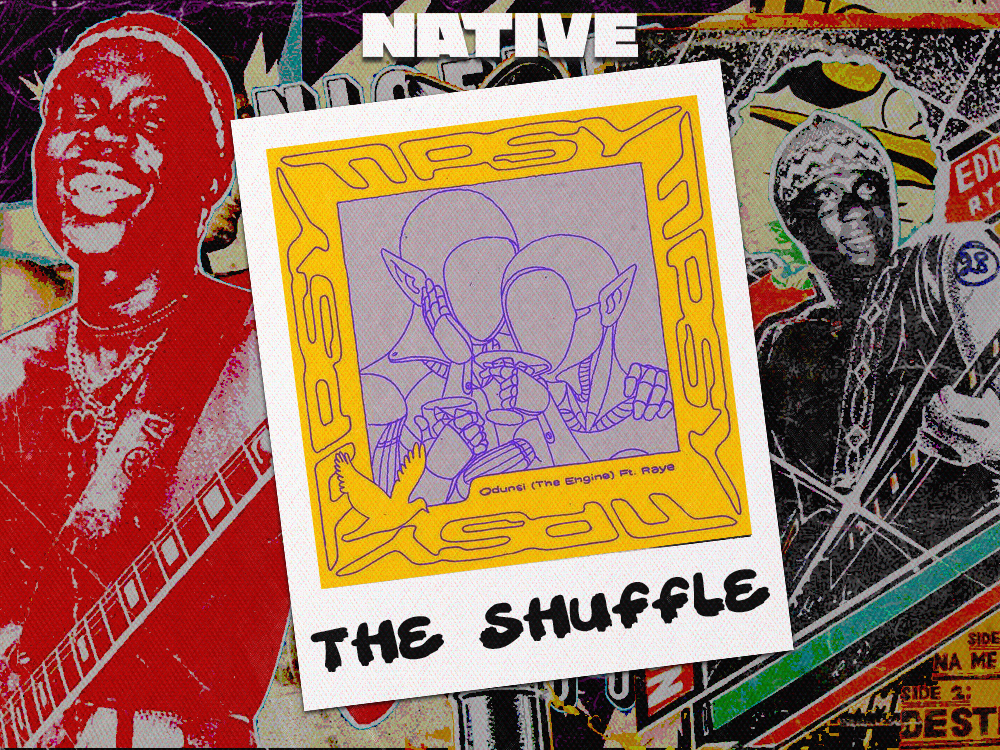
NATIVE Selects: New Music From Tochi Bedford, Cruel Santino, Bantwanas & More

Every week, new music shows up, sweeping fans and music lovers off their feet while artists gauge reactions to know the effect of their creativity. At the NATIVE, we are committed to keeping our ears on the pulse of the music scene and bringing the best sounds to your doorstep. In our last edition, we brought you new releases from Olamide, Sarkodie, Falz and more. Today, we have songs that move from Afropop to Amapiano to R&B, with our select artists showcasing their unending talent and passion for creativity. Lock in!

DAVIDO & MAJOR LAZER – “UNAVAILABLE (REMIX)” FT. MUSA KEYS

“AVAILABLE,” one of the standout records from Davido’s ‘Timeless,’ gets a fresh remix helmed by DJ trio Major Lazer. The allure of Davido and Musa Keys’ energy remains but Major Lazer also injects their kind: deep bass with electro-inspired elements. This version of “AVAILABLE” opens up the track to new audiences who get to experience the Afrobeats banger from a different perspective.

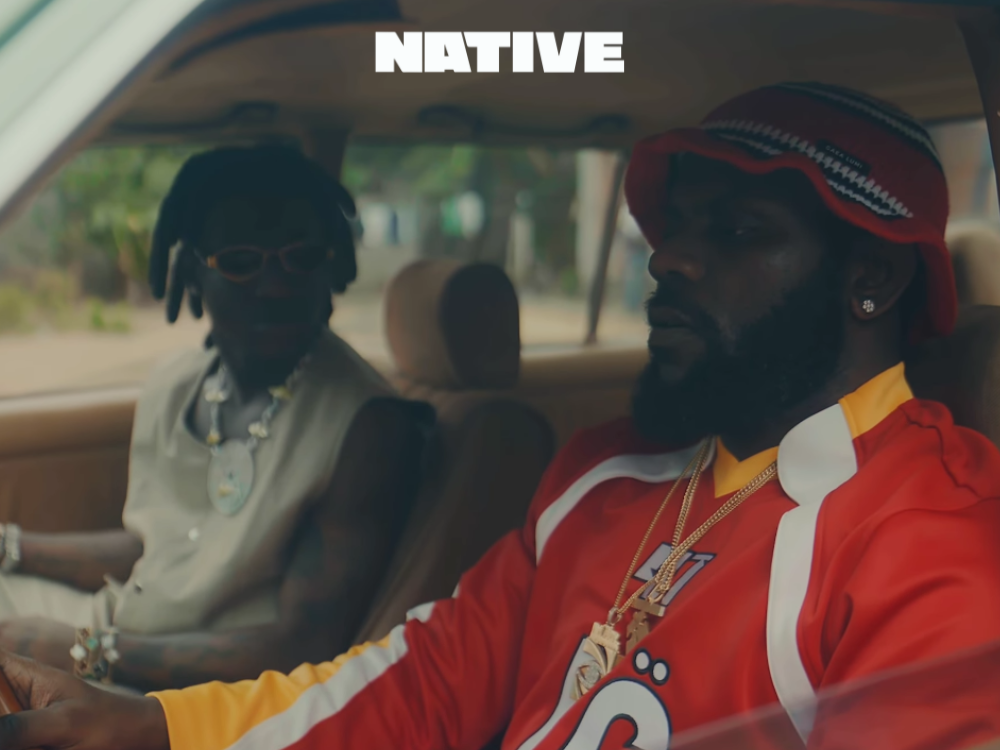
TOCHI BEDFORD – “END OF THE LINE” FT. CRUEL SANTINO

“After Eternity” was the last we heard from the Nigerian Alternative musician and that was in 2021. Tochi Bedford returns this year with a new single “End of the Line” with some help from Cruel Santino. The duo is not new to us as both musicians have collaborated in the past to deliver the Trap-laced Disintegrate.”  End of the Line” sustains a catchy beat from start to finish and graces us with talented vocals from both talents.

KABZA DE SMALL & DJ MAPHORISA – “UNGIPHETHE KAHLE” FT. NOKWAZI, MAWHOO, MASHUDU & LEEART

South African music superpowers Kabza De Small and DJ Maphorisa recruit a star-studded crew for their latest single Ungiphethe Kahle.” The featured acts vocalists Nokwazi, MaWhoo, Mashudu and LeeArt are the primary conduit for a wholesome experience that exults womanhood. LeeArt calls it a “gift to all women.”

BLAQ JERZEE FT. SOFIYA NZAU – “OROBOTO”

Nigerian music producer and singer Blaq Jerzee connects with Kenya’s Sofiya Nzau for a pan-African-aligning tune. “Oroboto” is a fun track that is steeped in South Africa’s house rhythms. Nzau’s mellifluous vocals are the song’s glue as she evokes deep feelings to balance Blaq Jerzee’s freewheeling lyrics about his admiration for a woman.

NEKTUNEZ – “ANTI-SOCIAL” FT. JEREMIH & YOUNG JONN

Following his breakout on “Ameno Amapiano (You Wanna Bamba)” with Nigeria’s Goya Menor, Ghanaian record producer Nektunez has been making strides with his music and carving his niche. On “Anti-Social,” he features US’s Jeremih and Nigeria’s Young Jonn for an Amapiano-influenced tune. Jeremih and Young Jonn sing about their affection for their lovers and the depths they would reach to show that affection.

THA BOY MYLES FT. BNXN – “LEVEL UP”

Rising Afropop act Tha Boy Myles recently released his EP ‘Level Up.’ Out of the project is a self-titled track with BNXN. On the Dreysoundz-produced song, Tha Boy Myles and BNXN share stories about the struggles they have encountered with chasing a career in music. They recount bad times, fake friends, defeats and victories. It is a smooth track full of relatable songwriting and effective delivery.

BANTWANAS – “ISIZWE”

Music collective Bantwanas, whose name means children of Africa, stir traditional and universal rhythms withiSizwe,” a Zulu/Xhosa word for nation. The 7-minute track carries the diversity in the band of DJs, producers and vocalists, who seek inspiration from South African music. “[The song] tells a story of children calling for unity and peace in the land,” the group says

OAG – “MONEY”

Toronto-based Nigerian Hip-Hop act OAG debuts her 3-track EP ‘Benin Doll.’ OAG’s raps are full of swag and panache as she charges through the songs with a domineering attitude. On “Money,” one of the tracks in the project, she pays no mind to distractions, choosing to focus on money and other good things in life. OAG shows enough promise to make her one to watch.


Words By Uzoma Ihejirika & Chigoziri Ezeaku


Featured image credits/NATIVE

The Jury On “Big Brother Naija: All Stars” Might Be Causing More Harm Than Good

Earlier this summer, one of Africa’s biggest reality television franchises returned with a bang. Three weeks ago, Big Brother Naija:Season 8 presented an all-star cast with some of the most talked about housemates from its history—See Gobe to Level Up. This time, the show returned with 20 contestants, split evenly between the guys and girls, with a renewed drive and motivation to make an even larger impact than their first time on the show. 

It presented a second chance for these ascendant stars to rise to the occasion and snag a win, all the while providing room for previously quelled feuds to arise and stir drama for viewers entertainment. In Big Brother’s typical fashion, each new season comes with a plethora of twists and turns that keep audiences glued to their screens. Those unplugged from the 24 hour live stream are constantly updated by the show’s avid watchers who ensure all hot points don’t go undiscussed across social media platforms. This leaves the room for round-the-clock interactive scrutiny of housemates, their drama filled interactions and a lot of the time, Big Brother’s unconventional methods. 

This season offered a slew of twists. A crowd favourite includes the ‘Pardon Me Please’ nominations broadcast on Monday shortly after a competitive Head of House game. Previous seasons of the show required housemates to place any housemate of their choice up for possible eviction on Sunday. As expected, a slew of nomination tactics come into play with some votes based purely on emotion and more strategic plays to kick out the potentially strong contestants out. The ‘Pardon Me Please’ votes often hold the same motivation except, in this case, housemates nominate peers they would like to save. Some contestants place their friends or love interests, and others vote based on strong alliances. Regardless of housemates personal decisions making, this aspect has generated significant support because it encourages healthy and most importantly, entertaining competition.

However, the inclusion of a jury system on eviction days of this year’s season of Big Brother Naija has left a bad taste in the mouths of many viewers. In its original context, a jury constitutes a group of people sworn to provide a verdict based on supported evidence. The key phrase here is supported evidence. In the show’s world, the jury enlists three house mates from previous Big Brother Naija seasons to evict a housemate from the three lowest ranking performers based on public votes. When Ebuka Obi-Uchendu, the show’s long standing host revealed the twist, super fans of show anticipated this method to cause controversy as it no longer leaves the power in their hands. It dit not make much sense that a random group of ex-housemates would get the final say considering their hard earned money goes into DSTV subscription packages and individual votes for their favourite housemate.

It goes without saying that the jury is expected to be well accustomed to the show. Considering they are former housemates with busy lives, no one expects them to be tuned in 24/7 but to an extent, they should be familiarised with the dynamics of the house and favourites of the wider public. The reality is evidently opposite. When questioned by Obi-Uchendu during the live show on Sunday, some members of the jury appear aloof, giving vague replies to how they’re finding the show so far. It seems rather irresponsible to leave the faith of housemates in the hands of people barely watching the show. Seeing as they don’t have much information to pull from, they lean of personal relationships formed outside the house as opposed to which housemate is actually contributing the most entertainment. It was on a similar basis a house and public favourite, Uriel, was the second evicted housemate.

At the end of Sunday’s live eviction, the voting percentages read Tolanibaj (2.04%), Uriel (2.00%) and Seyi (1.70). This left Seyi as the lowest ranking housemate, similar to last week when he gathered only 0.89% of the votes. With the aid of the jury, Seyi was saved in place of Princess who left in the second week and Uriel one week after. Fans were understandably outraged because he ranked low for good reasons and did not deserved to be saved by the jury twice.

Seyiborn Seyi Awolowo—has made it a point to haul his prestigious family name over his other housemates in the most distasteful manner. Other than possessing arrogant traits that beg to question his need for a platform as this, Seyi is simply not the most interesting Big Brother Naija housemate. Neither is he a popular candidate amongst his peers in the house. It therefore raises eyebrows on the competence of the jury as well as Big Brother that made the appointments.

Other than the jury evidently lacking the necessary context, the method they arrive at their final vote is also questionable. Typically, after a jury has received a plethora of information, they convene in a private place in order to deliberate and reach a decision. This allows room for shared points and perspectives that may sway opinions. In this case, jury members that may not be as knowledgable on the show’s dynamics would gain the needed insight and collectively arrive with a name. Big Brother’s jury, however, sit feet apart in the arena as they express confusion and arrive at a name individually. After which whoever has the highest vote is automatically evicted, hence the uproar last Sunday.

As human beings with unconscious personal bias, it is impossible to not have personal feelings to one housemate to the other. Perhaps, if Big Brother appointed a jury with super fans and show analysts familiar with ranging house personalities or even ex-housemates that simply watched the show, they would arrive at more tasteful decisions.

[Featured Image Credits/The NATIVE]


ICYMI: OUR EXPECTATIONS FOR THE NEW BIG BROTHER NAIJA ALL STARS SEASON

What’s Going On: Nigerian Students protest professor with history of sexual assault & more

“What’s Going On” Tallies Notable News Headlines From Across The Continent — The Good, The Bad, And The Horrible — As A Way Of Ensuring That We All Become A More Sagacious African Generation. With This Column, We’re Hoping To Disseminate The Latest Happenings In Our Socio-Political Climate From Across The Continent, Whilst Starting A Conversation About What’s Important For Us To All Discuss. From Political Affairs To Socio-Economic Issues, ‘What’s Going On’ Will Discuss Just That.


FEMALE LAW STUDENTS PROTEST SEXUAL HARASSMENT IN UNICAL

Female students of the faculty of law at the University of Calabar, Cross River State have demanded the immediate removal of the Dean of the faculty, Prof. Cyril Ndifon for allegedly sexually harassing them. In a viral video, the students protested, carrying placards with inscriptions such as, “Prof Ndifon, let the girls with big breast breathe. Stop suffocating us.”

There are reports that Ndifon was accused of raping a student in his office in 2016. After a preliminary investigation by the university, he was suspended. In 2022, he was reinstated by the school and this has sparked anger with students, parents and organisations questioning the reinstatement and promotion of the dean.

The Vice-Chancellor of the University of Calabar, Florence Obi, told news authorities that she and the faculty of law management have discussed the development and would investigate the allegations against Ndifon but that the students would be required to provide evidence to back up their complaints. “When you are talking about sexual harassment, you need more than accusation,” she said.

Many young Nigerians, some of whom have dealt with or witnessed this type of abuse of power in educational institutions, are showing their solidarity across social media. Social justice organisation Stand To End Rape (STER) Initiative threw their support behind the students and called on “the school authorities to immediately suspend Prof. Cyril Ndifon and carry out an investigation devoid of witch-hunting of witnesses. If found guilty, he should not only be relieved of his duties but also be charged by [the Nigeria Police].”


NIGER: MILITARY TO PROSECUTE MOHAMED BAZOUM

Niger’s military junta has revealed it will prosecute deposed President Mohamed Bazoum for treason. This comes hours after a group of Nigerian Islamic scholars who met Niger’s coup leader said the coup leaders agreed to hold direct talks to ensure an end to the political turmoil in the country. A spokesman for Niger’s military announced that Bazoum was charged with “high treason and undermining the internal and external security” of the country.

Since the Abdourahmane Tchiani-led band of security operatives overthrew Bazoum three weeks ago, the world’s attention has been tuned to Niger as the fate of the country hangs in the balance. While some of Niger’s citizens support the coup leaders, African and foreign leaders have criticised them and called for the reinstatement of the detained president. 

The United Nations and Economic Community of West African States (ECOWAS) condemned the announcement about Bazoum’s prosecution. “It represents yet another form of provocation and contradicts the reported willingness of the military authorities in the Republic of Niger to restore constitutional order through peaceful means,” it said in a statement.  The United States, through State Department spokesman Vedant Patel, has also condemned the decision, saying, “This action is completely unwarranted and unjustified and candidly, it will not contribute to a peaceful resolution of this crisis. It is a further affront in our opinion to democracy and justice and to the respect of the rule of law and a threat like this underscores the urgency of respecting the constitutional order in Niger.”


MADAGASCAR’S CHIEF OF STAFF CHARGED FOR BRIBERY IN THE UK

The Chief of Staff to the President of Madagascar and her associate have been charged with bribery offences following an operation by the United Kingdom’s National Crime Agency (NCA) operation.  Madagascan Romy Andrianarisoa, 46, and French National Philippe Tabuteau, 54, are suspected of seeking a bribe to secure licences to operate in Madagascar from Gemfields, the UK mining company that first raised concerns to the NCA.  According to reports, the sums they were seeking amounted to CHF 250,000 (approximately £225,000) in upfront charges, as well as a 5% equity stake.

Andrianarisoa and Tabuteau were arrested in the Victoria area of London on Thursday afternoon, at a meeting where they are suspected of having attempted to solicit a bribe.  The operation was conducted with cooperation from the Crown Prosecution Service (CPS). “The CPS made the decision to authorise charges after reviewing a file of evidence from the NCA relating to allegations of bribery,” said Joanne Jakymec, Chief Crown Prosecutor for the CPS.

“Criminal proceedings against Ms Andrianarisoa and Mr Tabuteau are active and they have a right to a fair trial. It is extremely important that there should be no reporting, commentary or sharing of information online which could in any way prejudice these proceedings.” Andrianarisoa and Tabuteau could each face up to 10 years in prison if convicted.


FIVE DEAD AND SEVEN MISSING IN TUNISIA MIGRANT SHIPWRECK

Five people are dead and seven others are missing after a migrant boat sank off Tunisia’s port city of Sfax on Monday. According to officials, among the dead was a child. Sfax is the starting point for most attempts to cross the Mediterranean Sea to Italy.

Twenty-three migrants were rescued out of 35 people on board, most of them Tunisians and a “small number of sub-Saharan nationals,” said Faouzi Masmoudi, a Sfax court spokesperson. ABC News reports that the Sfax court opened an investigation to determine the cause of the accident, which occurred two days after another migrant boat sank off Gabes, a port in southeastern Tunisia, about 150 kilometres (93 miles) from Sfax, killing a child and a 20-year-old man. Five other people remain missing.

These tragedies happen due to thousands of Tunisians setting sail in search of a better life in Europe. Since the beginning of 2023, they have represented the fourth nationality among migrants who landed in Italy, behind Ivorians, Guineans and Egyptians, according to Italian statistics. 


ICYMI: SUPER FALCONS & THE CONTINUED FERVOUR OF NIGERIAN WOMEN IN SPORTS

Best New Music: Lifesize Teddy Channels A Self-Affirming Vulnerability On “Air”

The Supreme Mavin Dynasty is home to a variety of artists, from the world-beating pop sounds of Rema and Ayra Starr, to Ladipoe’s vibrant rap-fusion and Johnny Drille’s exquisite folk-pop, and there’s Crayon, Magixx, Boy Spyce and Bayanni, all beyond serviceable pop singers. That roster just got a little more dazzle with the addition of Lifesize Teddy, an instantly impressive artist armed with an invigorating edge as she slips between razor sharp, poetic bars and glistening harmonies.

The Port-Harcourt native caught the attention of Mavin leader Don Jazzy after delivering an electrifying rendition as an opening act for Ladipoe, at his headline show in December 2018. Two years later, she joined the label’s artist development academy to formally learn the ropes for music creation and packaging for a modern day consumer. Now reformed and ready to make an official debut, Lifesize Teddy arrived last Thursday with her eponymous five-track EP, in typical Mavin fashion, showcasing varying shades and facets to her already multi-dimensional skill-set.

‘Lifesize Teddy’ serves as a melting point for a slew of influences made noticeable in the production and instrumental reference points with sleek combinations of Hip-Hop, Dancehall and a psychedelic spin on the modish Nigerian pop bounce. Her eccentric spin of these familiar soundscapes serve as a backdrop for her buttery vocals and relatable messages as she skips across beats armed with a clear confidence in her craft and taste. A couple of spins later and it becomes apparent the level of attention to detail Teddy puts in her craft. While she taps her Southern Nigerian heritage for an effortlessly smooth English-Pidgin rendition on “Hypnotic” and delivers a braggadocious rap of her journey in life thus far on “Butterflies,” the project’s intro, “Air” serves as a clear standout.

The London-produced number leads in with mellow, cryptic guitar strings that lay the foundation for the bass-heavy drum pattern that takes over shortly after. A brooding mood is instantaneously established on the track but with the arrival of Teddy’s vocals, it significantly picks up. Her high-octave vocals create a perfect contrast layered over the hypnotic drums as she glides over in a melodious song and rap.

“Come on over here, we are losing daylight, I want you like air,” she croons at the start of the first verse, clearly setting the scene of the track’s themes. Teddy drags out the last syllable of the line in a faint cry for attention, allowing herself stark vulnerability as she addresses her muse. She masterfully speeds up and slows down the tracks’s cadence, purposely enunciating some words for extra emphasis, while blending varying intonations of her vocals. 

Lifesize Teddy is undoubtedly someone with many tricks up her sleeve and many layers yet to unfold and she reiterates this as the track progresses. She proclaims, “I got many many women underneath this skin, they are fighting to be seen,” just before increasing her pace with a menacing flow of bars within the breezy soundscape. The track’s hook repeats its initial lines over a mid-tempo beat with heightened, raw emotions. She speaks of feelings of defeat as she thwarts all attempts to repair a broken relationship. She delivers a second verse midway through the track, this time over a slowed rhythm that allows her speedy rap cadence to take centre stage. 

Her sheer mastery of story-telling comes on display as she raps using image-painting metaphors and comparisons about trusting her own instincts and taking her time to experience growth and hope for a brighter future. If her admiration for her muse was not initially clear, seconds deeper into the track allow a listener to discern the reach of their love with positive affirmations and melodic similes. “You’re like water, fluid as the time/They probably try to trap you but your movement is divine.”

She goes on to explain, “Soothing like a balm, massaging through the tension in my soul and in my mind,” painting vivid images of what this person means to her and the impacts they’ve had over her life. Her pipes unapologetically sing praises through to the end of the track, with the aid of a clear stream of emotions channelled with memorable rhyme schemes. When the track closes out, her background vocals seep into your subconscious inform of repetitive intoxicating harmonies. 

“Air” is the project’s introduction track and rightfully so. Lifesize Teddy not only successfully whets the appetite for what more we can expect, but she has also establishing unwavering personality and taste for fresh sounds. ‘Lifesize Teddy’ has set the new Mavin starlet for a bright present and a much brighter future.

Listen to ‘Lifesize Teddy’ here.

Featured Image Credits/The NATIVE


ICYMI: WHY EVERYONE SHOULD BE EXCITED ABOUT LIFESIZE TEDDY

Why X (fka Twitter) Paying Popular Users in Nigeria Might Change The Platform’s Experience

Over the past few days, the biggest topic on social media has been the remunerations given to its popular users. For those who’ve followed the conversation, it’s been considered as far back as February, continuing a streak of huge decisions that’s been undertaken by Elon Musk ever since assuming the position from Jack Dorsey as the outright C.E.O of the social media company. The Nigerian community on Twitter—or X, as it’s now called—reacted to the updates expectedly, with excitement but also humour, and a larger number of people wanted to know how they could benefit from the new order of things. However, this new action is set to change Twitter even further, at least over here in Nigeria. 

Elon’s premise for this action is fairly simple; popular users of the platform get paid a percent of ads shared on their posts. There’s however a catch: the user must be a verified user, either through a legacy blue check or paying monthly for Twitter Blue, another of his controversial changes as Twitter CEO. Also, to qualify for this ad-revenue sharing program, the user must have 5 million impressions in each of the last three months, and to claim their payment, have a Stripe account linked to their Twitter account. 

Since Tuesday, a swathe of content creators across Nigeria has shared their earnings from the programs, reasonably excited. That lyric from pop figure Shallipopi—“I mount Elon Musk till thy kingdom come”—was shared widely, its revelry attaining new context. However, this move isn’t quite unprecedented—not really. YouTube has been paying creators from ad revenue for a long time, at exactly 55 percent for regular videos and 45 percent for YouTube Shorts. Why Twitter’s spurs so much conversation though, is because it represents what YouTube and no other social media platform globally does—a largely democratic space to share views and organise movements, be they political, ideological, or cultural. 

In recent times, social media’s biggest query has been about its level of democratisation. Although Dorsey maintained a liberal stance for much of his Twitter leadership, during the late periods he introduced certain barriers which worked against powerful personalities, most notably former American president Donald Trump. In Nigeria, former president Muhammdu Buhari had his Twitter account suspended for allegedly threatening genocide, and Twitter was an important part of the EndSARS protests. This was one of the cornerstones of Elon’s idealism for the platform; that never again would anyone’s thoughts be sanctioned, as long as they don’t pose a threat to a person or a group. On the other hand, Mark Zukerberg has scored a bad rep for his methods of aggressive data collection and, more immediate to users, policing across his Meta platforms. 

Facebook, which is the most popular and democratic of his platforms, has undergone great change from what it used to be in times past. Lately, it doesn’t take much for an account on Facebook to be locked, with the typical excuse of regulating bot accounts or scammers who seek to prey on unsuspecting individuals. Given the negative stereotypes surrounding Nigeria online, a Nigerian surely knows a lot about Zuckerberg’s sanctions. Thus, the platform has lost the vibrance it once had, and with a comparatively lower number of influential persons on the platform, it simply doesn’t have the conversational edge of Twitter. There’s that popular joke—that things happen a few days before on Twitter before it gets to Facebook users. A tad harsh, but arguably true. 

Platforms like Instagram, Snapchat and TikTok are mostly visually-driven, and as a result are very entertaining but barely move important conversations. A lot more people turn to Twitter for information, especially those with a pressing socio-political significance. This was evident in 2020, as End SARS and Black Lives Matter became historical events, and for the most part was spurred and organised through information on Twitter. 

Laying these out only serves to highlight how important Twitter is to contemporary society. Zuckerberg has tried to present a valid competition through Threads but it’s unlikely that platform would ever reach the significance of its older, and much more accessible competition. That’s why Elon Musk’s constant tinkering with the practices of Twitter—sorry, X; I tend to forget—has the sad feeling of watching someone familiar lose the qualities that once held you spellbound. 

I’m all for paying creators, but knowing Nigerians—it’s expected we would try to find loopholes in the system. Before now, a lot of people were known to tweet obviously controversial stuff in order to trend. As someone who primarily resides on Music Twitter, it’s commonplace to see tweets like “One day we will say the truth about Rema”, an obvious spur towards eliciting different opinions, because what is the truth, if not toxicity disguising behind a popular account? It’s bad enough that such conversations are driven by little to zero nuance, and it’s even worse that these artists occupy those spaces, almost helpless as they’re dragged into the sphere of public opinion. Now, they have financial motivation for being controversial. 

Even generally, being purposely obnoxious could be the norm, especially on platform where discussions range from inane gender wars to political discuss, all of which tends to have real life implications since many people internalise these hot takes. This isn’t to say that Twitter would immediately become toxic and less of a conversation-starter. There’s rather the likelihood that its conversations would become less influenced by true motivations, while of course, those who have a large following would always be at the forefront of Elon Musk’s revolutionary business decisions. Basically, expect a lot of fillers as time goes on; those songs that have no relevance to the album’s vision but have a conversational quality or are merely included to make up the numbers. 

There’s also the fact that Twitter influencers are privy to groups on WhatsApp and Telegram or elsewhere, where discussions are had to intentionally trend a topic. That manipulation has been a lesser-discussed aspect of our social media reality; that many subjects on the trends list aren’t indicative of what’s happening around the world, but are rather hand-chosen, which isn’t very different from the streaming farms conversation surrounding the Nigerian music industry. 

It wouldn’t recognise the nuances to say that there are no positives behind this new dispensation, however. We’re going to see more people make more money, especially crucial in a country like Nigeria facing massive economic downturn, and more than ever people are turning to digital media, as much for business prospects as for information. And expectedly, with the greater number of competition, a lot of people would have to step up their game, though we’re hoping it would be less of using controversial drivers and rather promoting beautiful art, factual information and analytical content.


ICYMI: TWITTER TAUGHT ME HOW TO FEEL, NOW REAL LIFE HAS NO APPEAL

Genevieve Nnaji To Produce Film Adaptation of ‘I Do Not Come To You By Chance’

When we last heard from veteran Hollywood actress, Genevieve Nnaji, she had just made her directorial debut with ‘Lionheart’ in 2018. The filmmaker also doubled as the production’s lead protagonist in her portrayal of Adaeze Obiagu, who runs into challenges in taking over her father’s company when he begins falling ill. The film made history in Nigeria’s film industry as the first production created in collaboration with the visual streaming giant Netflix, paving the way for newly minted classics such as ‘King of Boys: The Return of the King.’ However, since the film was disqualified from the running for submissions the 2020 Academy Award, little has been heard from Nnaji, until now.

After over a decade, Genevieve is set to return to the big screens in the film adaptation of Adaobi Tricia Nwaubani’s critically acclaimed novel, I Do Not Come To You By Chance. The 2009 novel offers a fresh take on the common Nollywood theme of a young man who would go to daring lengths to ensure he uproots his family from abject poverty. The story pays laser focus on an Igbo family, seamlessly blending the language with English in captivating portrayals of Eastern Nigerian culture.

It will explore the domination of online and email scams as a means of livelihood, with subtle underpinnings of the wealth, vanity and class struggle in Nigeria. The film adaptation sees Nnaji in the capacity of the executive producer, alongside Chinny Carter as co-executive producer, Ishaya Bello as director and, Blossom Ckuwujekwu and Paul Nnadiekwe as lead performers. Though Nnaji’s on-screen appearance status is presently unclear, other supporting acts include Beverly Osu, Sambasa Nberibe and Jennifer Ejiogu. Femi Awojide, with directorial of Director of Production credits in ‘Lionheart’ and ‘Juju Stories’ respectively is also slated to work on the film.

I Do Not Come To You By Chance will make an international debut at this year’s Toronto International Film Festival (TIFF), under the Centrepiece programme on September 7, 2023.

Featured Image Credits/The NATIVE

NATIVE Selects: New Music From Tekno, Black Sherif, Yimeeka & More

Every week, new music shows up, sweeping fans and music lovers off their feet while artists gauge reactions to know the effect of their creativity. At the NATIVE, we are committed to keeping our ears on the pulse of the music scene and bringing the best sounds to your doorstep. In our last edition, we brought you new releases from Olamide, Sarkodie, Falz and more. Today, we have songs that move from Afropop to Amapiano to R&B, with our select artists showcasing their unending talent and passion for creativity. Lock in!

YIMEEKA – “TSUNAMI” FT. SEMZI & MANANA 

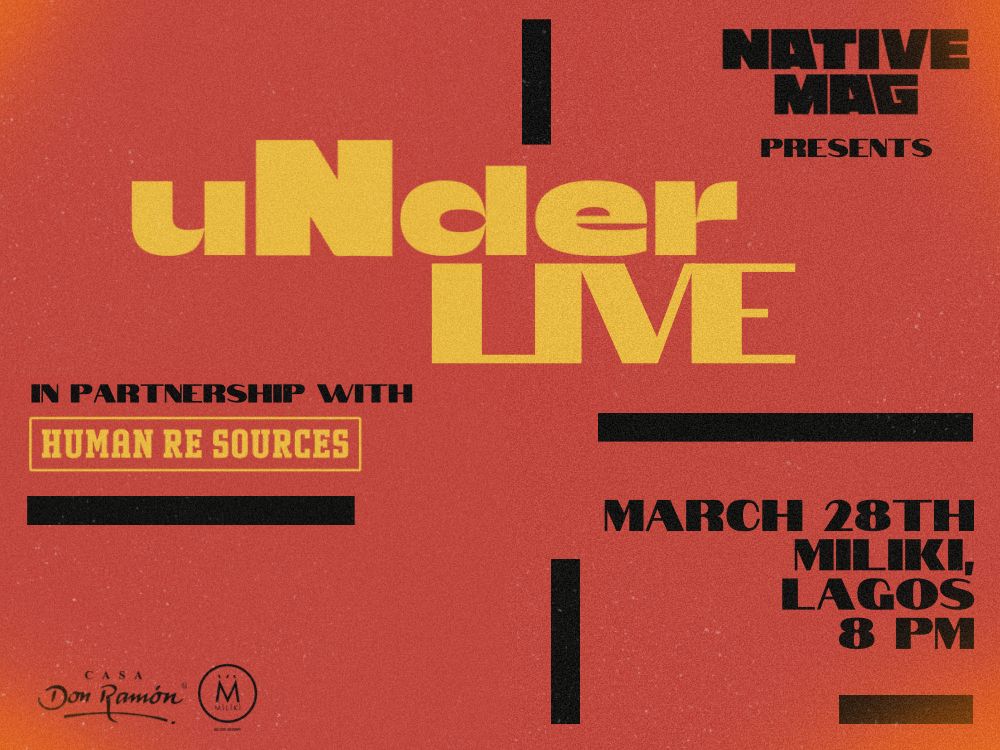
Nigerian musician-producer and uNder alum Yimeeka beautifully introduced herself last year. Now, the R&B-inspired artist is expanding the reach of her artistry, as she showcases on her new double release. Alongside “Issues,” the vibrant soundscape of “Tsunami” bares her sensitivity, as she sings about running to a lover. With features from Semzi and Manana, it’s a song with complete edges, pulling the trio’s distinct sensibilities together. 

VONDEE – “YOU”

Love has always spurred great records and this is one of those. A new track from the rising Ghanaian artist Vondee, it’s an evocative song carried by the artist’s dulcet vocals. The mellow soundscape of the record only works to amplify the feelings, as each word settles with a tenderness that underlines the intent of the artist. Here’s one artist you should keep your eyes and ears on. 

STEFFLON DON – “WHAT’S POPPIN” FT. BNXN

In recent times, BNXN has been connecting links with international artists, taking his inimitable melody into songs with Jae-5 and Dave, among others. This time, it’s the English artist of Jamaican descent who he collaborates with, their distinct voices layered in perfect sync with each other. It’s quite the breezy affair, laid-back while the inflections amplify its sensual quality. 

EUGY & MAMBA SOUNDS – “AHOUFE”

Ghanaian artist Eugy has always favoured sensitive records, blending the colourful undertones of Afropop into his R&B-inspired music. “Ahoufe” emerges from that fusion, an affectionate record where he promises to do right by his lover. With folksy production from Mamba Sounds, it’s a song that packs all the head-spinning feels that come with being intimate. 

DOTTI THE DEITY – “FOREVER SWEET”

We’ve had ears on DOTTi The Deity ever since he made our Projects You May Have Missed and he’s been justifying his ascendant star ever since. He releases the visuals to “Forever Sweet,” one of the cornerstone records from the project ‘For Yo Knew Me’, and it’s as tender as you’d expect. Set in a naturalist soundscape and the thrilling picture of talking drums accompanying DOTTi’s voice, it’s a stirring work of poetry and passion.

JERIQ – “11:11”

One of the most inimitable voices to emerge from Nigeria’s southeast in recent years, Jeriq has moved with the propulsive force of a true artist. His haughty tales about hood realities are soundtracked with similarly impressionist music, and that mark is evident on “11:11,” his new record. With a Drill base, the record manifests his growth in lucid bars, most revealed in the lyric, “Fully focused on only doing things that would elevate me”

95ANTNY – “BIGGO”

Fresh Meat alum 95ANTNY has always been omnivorous in his musical palette. Readily flitting across soundscapes and subject matter, his new release finds him in the alt-pop sphere, with intricate finishes to the music revealing a new sheen in his vocals. Even though he sings seductively about a lady’s waist, the associative feeling comes off as profound, as there’s a melancholic edge familiar to alte musicians that’s audible here. 

TEKNO – “PEPPERMINT”

No discussion of contemporary Afropop is complete without a mention of Tekno. The super producer and musician has influenced the rhythm of the game to no small extent, and now amidst the reverence, he’s primed to take his seat back at the top of the game. “Peppermint” is a reserved comeback, mid-tempo but packing the elements (groove, language, melody) that Tekno has built his empire on. With an album expected later this year, this is a fine reintroduction to the prowess of Tekno. 

REMINISCE – “E.N.K.R”

Nigerian Hip-Hop has seldom seen a rapper like Reminisce before. The veteran has solidified his elite skill level, branching into pop whenever he wants to while retaining his tough, sexy persona. With his first album in seven years expected later this year, Reminisce has whet appetites with a fifty-six-second record, “E.N.K.R”, a stand-in for the Yoruba word ‘Enikure’. Even with its short runtime, Reminisce flexes his yet-sharp pen, while his vocals sound as mature and menacing as ever. 

BLACK SHERIF – ‘TAKE CARE OF YOURSELF, BLACKO’ 

Since releasing his groundbreaking debut album ‘The Villain I Never Was’, Blacko has been on a promotional run, performing and releasing visuals. He’s stepping back into the creator fold though, as showcased on the brilliant two-pack single he’s just released. “YAYA” and “SIMMER DOWN” are distinct records, the former reiterating his strength over trap-tinged production while the latter adopts more from Drill, but the energy is mellow and Sherif’s flow rejuvenated. He seems to have been taking care of himself. 

DJ VOYST & DAI VERSE – “OVERLOAD” 

On this mellow record, the talented duo of DJ Voyst and Dai Verse collaborate. Verse’s harmonic crooning is in scintillating form as he layers affectionate lyrics in honour of a love interest. From the workings of her mind to her hip size, he relays the feeling of loving all the parts of one’s interest. 

OLADAPO – “IF AT ALL”

Known for his vibrant takes on R&B-infused Afropop, Oladapo is an artist to watch out for. On his new song “If At All,” he’s in pristine shape as he coaxes assurances from a lover. The production meets his svelte vocals beautifully, creating a song that would stay on the minds of listeners for a long time to come. 


Words By Emmanuel Esomnofu.


Featured Image Credits/The NATIVE

New Music Friday: Projects from Uncle Waffles, Sheye Banks, Kwaku DMC & more

It’s another Friday and time for a roundup of music projects from African acts to check out. Throughout the week, music has poured in from all over the continent and sometimes it can slip through the cracks, unheard. This column serves to bring those projects to your ears as you prepare for the end of work and look forward to the weekend. In addition to notable mid-week project releases from Olamide and new Mavin signee Lifesize Teddy, it’s a packed week for new releases. From Uncle Waffles to Sheye Banks, settle in for an experience as we travel the African continent for the latest music projects.

Uncle Waffles – ‘Solace’

Uncle Waffles is a blazing, brightly burning star. The eSwatini-born DJ has far eclipsed the flash-in-the-pan takes that followed her viral breakout, very much becoming ‘Piano’s It-Girl. In addition to the flair of her on-stage craft, she’s establishing herself as a curator of worthwhile projects, building a strong discography at a fairly rapid pace. ‘Solace’ is her second project of this year, the accompanying piece to ‘Asylum’, which featured the viral single, “Yahyuppiyah,” as its commercial lodestar. Last week, the ultra-smooth and affecting “Echoes” served as the lead single for this new drop, setting the ambience for another statement piece from Waffles.

Kwaku DMC – ‘Party in the Jungle’

Asakaa keeps on evolving. The pioneering drill crew straight out of Kumerica has grown from internet sensation to cultural ubiquity, inspiring scenes beyond Ghana while broadening and refining their own approach to the sound they helped popularise on this side of the world. On his new project, ‘Party in the Jungle’, Kwaku DMC exemplifies that growth, turning in his most realised project till death. If last year’s ‘Road to the Jungle’ was guttural, this new album is a lot more luxuriant, revelling in the spoils of popularity without sacrificing the blasé charisma that singled him out within Asakaa’s community of colourful rap characters.

Sheye Banks – ‘Statement of Account’

Sheye Banks is a proponent of the dancefloor-related. In Nigerian club culture where energetic hypemen have become integral to the experience, Sheye Banks is one of the most recognised names, a media personality known for making his hosting gigs into high-wire acts of showmanship. After the release two EPs in the ‘Party & Vybez’ series, he’s expanded his catalogue with ‘Statement of Account’, a star-studded debut album with a hyper-focus on club-ready jams. Features include Falz, Crayon, M.I Abaga, Prettyboy D-O, Bella Alubo, and many more.

KwesiSoul & Juma Mufasa – ‘City on Fire’

Ghana’s rap scene is bursting with great talent and, just as important, the high level of collaboration is integral to the continued vibrance of the scene. Both KwesiSoul and Juma Mufasa are young but proven luminaries, with more than a handful of projects between them over the last few years. They’ve teamed up for ‘City on Fire’, a 7-track tape where exuberance and ultra-confidence serves as the connecting bridge in their bar-for-bar approach over a varied selection of contemporary rap beats.

ExQ – ‘Enoch’

Over a career that stretches back to more than two decades, ExQ has become a symbol for consistent excellence in Zimbabwean music. ‘Enoch’ is his new album, following 2021’s ‘Verified Milestone’, and it’s the latest solid addition to one of the sturdiest discographies in Afropop. As with previous albums, ‘Enoch’ is packed with its fair share of guests, including Jah Prayzah, Freeman HKD, Holy Ten, Nutty O and more.

Söulaar – ‘Cosmic’

A year ago, Lagos-raised singer Söulaar shared his debut single, “Bam Bam,” a respectable introduction to his abilities as a nascent hit-maker. Between his preppy melodies and the youthful zest in his voice, his potential was instantly tangible, and he’s expanding listeners’ view of his skill-set with the debut EP, ‘Cosmic’. The 6-song set packs seemingly lived-in expressions of lust, love and devotion into an impressionable, as the singer operates over a colourful batch of beats—a combo that will keep ears open to him.


ICYMI: READ OUR 1-LISTEN REVIEW OF OLAMIDE’S NEW ALBUM, ‘UNRULY’


ICYMI: MEET LIFESIZE TEDDY, THE LATEST SIGNING TO MAVIN’S ALL-STAR ROSTER

Essentials: Konyikeh Spills Weighty Confessions On Debut EP ‘Litany’

Konyikeh began shaping her immersive palette over a decade ago, armed with the admirable curiosity of a child surrounded by varying influences of classical R&B. She nurtured her interests with several attempts at writing music informally, only to move steps further with formal education at Guildhall School of Music and Drama. She trained on classical instruments, as well as musical theory, all the while crafting velvety, deep pipes that make her songs ache on a deeper level. After a note-worthy performance alongside Dave at the 2022 Brit Awards, the 24-year-old vocalist set out to make a mark with the release of her debut, “Sorrow.”

The melancholic single intently showcases an expert level of intricately crafted artistry immediately after the brooding guitar strings land on the ear. Through the course of “Sorrow,” she offers contrasting perspectives of love, making sure to emphasise the joys the experience brought despite the relationship’s lowest lows. For the spaces she struggles to find the words, she punctuates her experiences with deep hums that spread warmth against a track stripped of romantic exuberance. 


View this post on Instagram


A post shared by KONYIKEH (@konyikeh)

Konyikeh further expands the tenets of her sound on her latest arrival, a debut extended play dubbed ‘Litany.’  The 5-track offering is preceded by “Teenage Dreams,” an ode to younger versions of herself and a love interest whose desires were never quite on the same page. Her storytelling abilities shine through as she takes on the persona of the narrator, shifting between a first and third-person point of view to address the irregularities and innocence of the relationship. Over a mid-tempo drum-led production, Konyikeh croons with a low-range melody, oftentimes raising her tone to draw attention to her conflicting emotions as she reminisces on the past. 

So when the announcement of ‘Litany’ came along, the FAMM signee—under the management of UK R&B meets Pop maestro, Jorja Smith— expectations were considerably high. The R&B leaning project draws us into Konyikeh’s high-tension universe with the weighty renditions of the pre-released tracks, only to smoothly transition into “I Cry” with an even gloomier soundscape. If her intentions to evoke heavy emotions and beckon all ears to reach within in a desperate attempt at understanding wasn’t clear, it was undoubtedly crystalised by the daunting piano chords of “I Cry.” Her vocals resurface heavily as she lulls about the intense feelings of pain and regret after a hurtful exchange between lovers, “I cry every time he said, I die a bit inside she said” —narrating from the outside perspective as she often does. Her sonorous vocals are backed up by reverberating, heart-breaking hums that heighten the track’s gnawing feeling. 

While “I Cry” holds a clear conviction to distance oneself from a toxic lover based on forged realities that only bring pain, the EP’s penultimate track “Joy and Pride” unapologetically showcases a deep yearning for a former lover. Despite the pain she holds, “Joy and Pride” tells the story of one willing to ignore the toxic traits of a lover for their redeeming qualities. Konyikeh emphasises the extent she is willing to go just to reclaim that spot in the life of her muse. Her longing is increasingly apparent with her delicately punctuated and drawn-out syllables at the close of each line. The low-cadence chords drift in and out of the track, allowing her stirring vocals to dictate the pace and consequently the emotions of the track.

“Give me one last chance, Save me the last dance/Feeling’s cast aside and I steal your joy and pride,” she hums, accompanied by underpinnings of violin strings. She broadens the already psychedelic soundscape with a wordless chant paired with twinkling keys. On the flip side of the coin, she addresses an evolving parent-child relationship in the second verse, “You told me how to dare to dream and not fall to my knees/Seasons came and changed, I thought you would stay the same.” Between the romantic and familial relationships, Konyikeh skillfully exhibits the many facets to sought affection while banking on validation from a loved one. 

By the final track, “Girls Like Us,” Konyikeh has successfully commanded a presence with a slew of pensive tunes addressing the turmoils of love and life. “Girls Like Us” platforms the need to embrace the risks that come with love because the results will be worth it. Despite the fears, she convinces herself just how capable she is of love games while delicately holding one’s heart. She reiterates her feelings with a series of melodies—partially accepting and partially defeated—crooning on the hook, “Cause love don’t come easy to some, so when it comes to girls like us, I just take it and run.”

Konyikeh has been working on ‘Litany’ for over six years and the 5-tracker is evidently a labour of love. She bares her soul from start to finish, wearing all the excruciating pain on her sleeve and translating them to tactfully curated melodies that throw her listeners into a tender yet agonising turmoil. In seconds short of a 14-minute run-time, ‘Litany’ paints vivid images that linger even after the songs stop playing.

Listen to ‘Litany’ here.

Featured Image Credits/The NATIVE

Super Falcons, D’Tigress & The Continued Fervour Of Nigerian Women in Sports

Nowadays, it is not uncommon to find news of Nigerian women making great leaps in their chosen fields across music, film, fashion, sports and more. The likes of Tems and Ayra Starr are breaking new ground in the music industry while Kemi Adetiba, Jade Osiberu and Oge Obasi are contributing to a revolution in filmmaking. On Monday, August 7, 2023, the Super Falcons—Nigeria women’s national football team—lost to the Lionesses of England in a penalty shootout. Victory would have ensured the Super Falcons’ passage into the quarter-final of the ongoing FIFA Women’s World Cup, co-hosted by Australia and New Zealand.

Two days before the Super Falcons exited the World Cup, on Saturday, August 5, 2023, another group of Nigerian athletes brought glory to both their names and the country. The Nigeria women’s national basketball team, otherwise known as the D’Tigress, beat Senegal 84-74 to clinch the 2023 AfroBaseket Women tournament held in Kigali, Rwanda. The team eased to the final of the competition, defeating DR Congo, Egypt, Mozambique and Rwanda to achieve their fourth consecutive win and sixth overall win in the competition. 

While the accomplishments of both teams are garnering the praise they deserve, the circumstances surrounding these wins are endemic to the “Nigerian situation,” code-speak for the tortuous economic, political and societal issues that prevent many Nigerians from realising their full potential in their chosen fields of work. From the sad state of the education system to the deplorable conditions of health care, Nigerians are not given a fair chance at survival. “On current trends, with Nigeria’s population growth continuing to outpace poverty reduction, the number of Nigerians living below the national poverty line will rise by 13 million between 2019 and 2025,” the World Bank noted. It also added that “the country continues to face massive development challenges, including the need to reduce the dependence on oil for exports and revenues, diversify its foreign exchange sources, close the infrastructure gap, build strong and effective institutions, as well as address governance issues and strengthen public financial management systems.”

In this unfavourable situation, Nigerian women have it worse. The country is intricately built on cultural and religious principles that deem women as inferior to men. In turn, many women who dare to resist the norm are faced with the tough task of proving themselves and earning the same respect accorded to their male counterparts. Even with the amazing women who have influenced Nigerian culture—say Funmilayo Ransome-Kuti or Flora Nwapa or Agbani Darego or Mo Abudu—women in today’s world still have to do beyond what is expected of them to enjoy any attention. This situation isn’t limited to Nigeria as women in other African countries can relate.

Days before the FIFA Women’s World Cup began, there were reports that the Super Falcons—the only African team to participate in all FIFA Women’s World Cup tournaments since 1991—could boycott their opening fixture against Canada in protest over unpaid bonuses. The team’s captain Onome Ebi debunked the news, though. A few days before that development, the Super Falcons head coach, Randy Waldrum, had revealed in a chat with On The Whistle Podcast that he was still owed seven months’ salary and that his players were also owed salaries and bonuses. “We still have players that haven’t been paid since two years ago when we played the summer series in the USA. It’s a travesty,” he said. 

The Super Falcons and the Nigeria Football Federation (NFF), Nigeria’s football governing body, have a history of conflicts due to unpaid salaries and bonuses, with the team recently staging a sit-in protest after the 2019 FIFA Women’s World Cup in France. They also did the same in 2016 and 2004 after winning the  Women’s Africa Cup of Nations (WAFCON) in Cameroon and South Africa respectively. Although the NFF are also culpable in owing the Super Eagles, the Super Falcons’ male counterparts, salaries and bonuses, the mistreatment of the women is more dire.  

“In Nigeria we don’t have access to much. Our training fields aren’t great. Where we sleep isn’t great. Sometimes we share beds,” Super Falcon’s player, Ifeoma Onumonu, told The Guardian. “It’s not good enough. In terms of recovery, we don’t have much of any of that. We don’t have access to a gym in camp in Nigeria. There’s a lot that needs to be done. Hopefully more people start to talk about it. Coming here it’s hard to adjust. We do what we can because we love playing for our country but hopefully they make it easier for us to do our best.”

After a goalless draw in the group stage with the Republic of Ireland ensured the Super Falcons’ qualification for the second round against England, Fatma Samoura, Secretary-General of FIFA, addressed the players in their locker room and informed them their situation has inspired the association to give the players the prize money directly, rather than through their country’s football association. After the Super Falcons’ exit from the competition, FIFPRO, the international body representing professional footballers, stated that it was assisting the players in their dispute with the NFF, saying that “the Super Falcons believe that it is now time for the Nigeria Football Federation to honour their commitments and pay the outstanding amounts.”

In a haughty stance, the NFF titled its retort: “FIFPRO’s statement is mere storm in a teacup.” Despite the all-round embarrassment that has beset the federation from its gross incompetence, penitence doesn’t seem to be an immediate concern. Not too many should be surprised, after all it’s another show of how negligent and brazenly corrupt sports administration is in Nigeria—a direct correlation to the country’s leadership system. It’s consistently disappointing, though, that athletes have to give their all and represent their country while the systems and people that should enable them ultimately serve as serious hurdles. It’s even more annoying in women’s sports, since the least amount of investment are allocated while, somehow, someway, many of these athletes and teams deliver excellent results.

The Nigeria women’s basketball team, D’Tigress, also had a rocky start to the AfroBasket Women competition. Last year, former head coach, Otis Hughley Jr., cited disrespect from the sports ministry over delays in salaries and bonuses. After his exit, Rena Wakama was appointed as his replacement in June 2023 on a two-year deal, less than a month before the AfroBasket Women tournament, which began on July 28. Wakama’s appointment drew criticism from some stakeholders who believed she had little experience to fill the successful shoes of Hughley who led the team to three consecutive AfroBasket Women titles. Wakama possesses vast experience in women’s basketball as she is currently the assistant coach at Manhattan College, after serving as the institution’s director of women’s basketball operations.

In an interview with the Nigerian publication Vanguard (where the first question posed to her was about her marital status), Wakama spoke about her passion for coaching basketball teams. “I know that I am more than ready; I know that I am the right one for the job. That’s pretty much what I am saying,” she said. “I know I can lead this team and I know I can make Nigeria proud. There are a lot of talents back home and I want to do this not just for the players but for the coaches too.” Wakama’s confidence in her abilities paid off, as the D’Tigress’ victory at the AfroBasket Women tournament made her the first female coach to win the AfroBasket Women.

These success stories are a reminder of the resilient and never-say-die mentality of Nigerians, who despite of the hardships, strive to eke out positivity with their endeavours. Yet, it is also a reminder of the stumbling blocks that limit and hinder the full growth of potential. Whether it is sports or film or music or comedy, Nigerian women continue to carve a niche for themselves with brilliance, hard work and selflessness. As the D’Tigress and the Super Falcons stir the affirmation of the world, it is hoped that the day will arrive when the requisite conditions for them—and all Nigerians—to succeed will be in place.


ICYMI: THE PERPETUAL NEGLIGENCE OF ADMINISTRATORS IN NIGERIAN SPORTS

Meet Lifesize Teddy, the latest signing to Mavin’s all-star roster

The ethos of Mavin Records has always been clear: spotlighting raw gems and turning them into titans of the Afropop universe. Through their several iterations, that mission has subtly turned and transformed, as the label powerhouse introduced artists like Johnny Drille, and Ladipoe into the fold. While the latter is a pop-welcoming rapper, the former started with folk and country music, channelling indie-pop influences from the likes of Owl City and Coldplay. 

Such forward-facing decisions have seen the label stay at the forefront of the African music business. Their experiments have been largely successful—there’s the global allure of Ayra Starr and Rema; Ladipoe’s expanding reach into the international rap scene; Crayon, Bayanni, Boy Spyce and Magixx are each distinct talents, operating within the Nigerian pop fold but possessing unique traits. Now, for the first time since September last year, Mavin Records is launching a new artist.


View this post on Instagram


A post shared by Poisnbby🕷️ (@lifesize_teddy)

Lifesize Teddy comes with a name ready for action. The Port Harcourt-native first interacted with the label through Ladipoe, coming across the rapper by chance on Instagram and later opening a show for him. Fast-forward two years later in 2020, she was introduced into the Mavin Records artist development academy, and for the next three years was put through the paces. Lifesize Teddy arrives thus to great expectation, but if there’s anything Mavin has done right, it’s announcing the artists at times when the scene is screaming for a new presence. 

Chosen as the lead single of the self-titled EP, “Hypnotic” bares her understanding of Nigerian societies and reflects its linguistic influences on her music. That’s no surprise, considering the artist is from the culturally-vibrant Port-Harcourt, the southern city that’s produced some of the most inimitable voices in our musical history. Here, a succulent mix of English and Pidgin-English is her weapon of choice, but she wields like a scalpel, peeling into the soft mass of acclaim. “Na me be the girl wey go rock this party,” she proclaims in the first line, setting her ambitions clear on the prize. Throughout the song her confidence soars, the inflection switching between the associated tones of Nigerian Pop, Dancehall, Hip-Hop and even alte-esque psychedelic crooning.

That seems like a lot, but Lifesize Teddy is accomplished in her fusion. The music also swells to incorporate these influences, packing incredible detail in its movement. You’d hear the oriental cadences of the middle east, but also the flutey vibe of Japan’s traditional sounds, while the drum base is ostensibly Hip-Hop, and when Teddy gets into her bag, the other elements are kept in the background, allowing the vocals to emerge beautifully. 

Self-awareness is the primary ethos of her debut EP released earlier today. This is no surprise given how introspective other Mavin acts have been on their debuts. However, there’s a crucial success in that each project has seemed an extension of the artist’s biography, and not merely a play into cultural tropes. Starting out hers with “Prophecy” is a confident and endearing move. The track ticks ecstatic boxes, right from the alert word choices to the vehicular movement of its cadences. Credit must be given to Teddy for how well she makes she subverts the Ladipoe influence, coming across as original while delivering verses that would give you the disgusted face of hearing a sick bar. 

She brags without seeming vain, an haughty progression like “From rapping about music and the love, to unwrapping several bundles in the club” followed with the heartfelt admission of “PH City stressing about the day I get signed”. This sudden switch in the extremes of emotion is a skill most top rappers possess, and Lifesize Teddy obviously has that. Over the smooth flow of the production, she unfurls the lyrics with cool steel, a reliable cartographer of her journey. “Butterflies” also has that honest quality, but it’s more colourful in tone, as love becomes the considered subject, with Lifesize Teddy promising to stay, the ephemeral nature of life inspiring her desire to live on her terms, to love those who love her. 

In this sense, ‘Lifesize Teddy’ is a delectable introduction. For an artist who has spent the past few years in development, the time invested in her craft is evident. With production credits from London and Andre Vibez among others, the project bares zero signs of immaturity, which will certainly leave listeners wondering if this is truly the artist’s first body of work, because it sounds so realised. “John Wick” maps out her dedication to the dance floor, its songwriting essentially paying homage to popular culture while spinning an enjoyable flow with her name. 

Saving the best for last, “Air” bears the poetic resonance of Lifesize Teddy. It’s a soulful song with a penchant for the contemporary, most revealed in the breezy allure of its drums. She empowers herself with the sheer force of history. “I gat many women underneath this skin, they all fighting to be seen,” she sings with a slowed rap cadence, as she belts raw emotions through opaque lyrical phrasing, leaving the listener to create their own images. 

The hues of Lifesize Teddy’s visual identity should be visible by now. Her sensitivity and angst gives her something of an encompassing charm, and with Brenda Fassie, Naeto C and Sasha P being among her influences, there’s no doubt a poignant storytelling will be infused into her music. With her debut EP already gaining traction online, it’s clear that the prominent label has another rising star on their hands, one with a Lifesize image.

Stream ‘Lifesize Teddy’ below.

A 1-Listen Review Of Olamide’s ‘Unruly’

Ten years ago, Olamide released his third studio album, ‘Baddest Guy Ever Liveth’. Widely regarded as his opus, that project was a real time signifier of the grizzled street boy from Bariga ascending from Yoruba rap acolyte to Nigerian music Dominus. Today, he’s a walking, breathing personification of greatness; a living lore whose greatness transcends the undisputed fact that he’s one of the greatest musicians Afropop has ever seen.

Stories of his philanthropic impact on the Nigerian music ecosystem are abundant and he’s the head of a record label with scorching hot talents. Naturally, thoughts of retirement have crossed his mind and Baddo—as he’s affectionately known—has aired them out. Rap and pop music in Nigeria, after all, is a game being taken over by the younger generation. ‘Unruly’, his tenth LP, has been teased as his last studio album. Olamide himself said as much well over a year ago, causing speculation on whether the most prolific artist of his generation would truly hang his boot or end up pulling a 180 in a ‘Fade to Black’ re-enactment.

For a man who rattled off seven albums (and a joint project with Phyno) in seven years, retirement feels like a stretch. Maybe it happens and we only get singles, short EPs and guest features, or he never even drops music at all. It’s unfathomable at this moment but the slight chance that this might happen is a big reason to treat ‘Unruly’ as a marquee affair. Every Olamide album is an event, this tenth one has the stakes to be as extra-special as his opus from ten years ago. I’m all ears, as I’m sure you are too.

In usual 1-listen review fashion, all reactions are in real time while the music plays. No pauses, rewinds, fast-forwards or skips.

“Celebrate”

Man, I’m so excited. These chords and the violins are giving me endorphins, shout-out Magicsticks. This production reminds me of the music on Venom and Shishiliza’s ‘Love is Pain’, shout-out South Africa. E get why, LOL. I like this verse, triumphant Olamide but the energy is perfect as an easy tone-setter. That Oshimen line caught my ear, don’t know why. “O ti ka l’oju e bi carnival” is a line Olamide has definitely spat before. This is “Sho Boy” without the overt exuberance. Let’s go! My excitement is getting justified.

“Jinja”

Already some more colour on this one. I know ‘UY Scuti’ upped the pop dimension of Olamide artistry but it was missing an edge, and “Jinjah” already has that. “Anywhere wey I dey, I keep it 100” is a caption-worthy bar. The way his voice is booming even with the switching between cadences is the sign of an artist who hasn’t run out of ideas, there’s no ginger lost in his tone. This can’t be his last album, man. This is a hit song in the waiting. I knew another Nigerian rap artist would tap into the rap-amapiano fusion after M.I did “Soft Life Tony,” my mind didn’t think it would be Olamide and I apologise for that.

“Problem”

This is definitely a Magicsticks arrangement, sounds like an unofficial sequel to “Basquiat.” I just can’t tell if that’s a bad thing or not, yet. Okay, I’m with it. Very with it. It has the relatively romantic dreaminess of ‘UY Scuti’ but it’s Baddo in his element as a kingpin. I like this melodic flow a lot, it’s just another show of how Olamide has evolved his craft without losing the most recognisable trait. Ha, what an imagery for a closing line!

“Gaza”

The energy is up! This feels like “ZaZoo Zehh” with a little more gloss in its sheen. Yo, this is a very drill-esque flow. For those who don’t know, Portable has a feature on a drill song. It might be unrelated but it feels apt to mention. These drums are jamming, I like this groove. I could definitely hear Drake say “combination” on this beat. “Ara n kan gaza” is a line that I expect to hear when next I pass through Mushin or Bariga. This is a jam.

“Doom”

Okay, he’s rapping! Yeah, this is the Bronx Drill-type record he shared on social media. It sounds better than I remember, or maybe it’s the mix of my excitement and my headphones. Shout-out to Big Shaq and Kanye for these gun ad-libs. These bars are all about levity, this man is having a lot of fun. I might end up having reservations on repeat listens but right now, I’m Hov nodding his head to the beat.

“Trumpet” (w/ CKay)

Yeah, the poppy lead single. This song is a reminder of Olamide as a supreme collaborator, how he can follow the lead of his guest without being dusted on his own song. I’m not entirely surprised that this isn’t a smash hit but I can see people still groove to it at the parties. Don’t play that first verse anywhere near kids or hypersensitive elders, LOL. The second verse is slightly less vulgar but no less 18+. CKay’s hook is cool, too.

“Come Alive” (w/ BNXN)

BNXN on features is a cheat code, if you ask me. Think Ty Dolla $ign, which may be a bad thing because Ty gets the rep that his solo music isn’t good, which is false. At least, BNXN has beat the charges. To the matter at hand, this intro verse and hook is hitting! Reminds me of “Do Me Nice” and how he defined that song. Fuck! This cadence and flow from Olamide is absolutely bonkers! Oh damn! He’s gliding!!! This is a verse! This delivery is mint, Benjamin Franklin mint! “If your nigga too dey flop, give me a chance” is a Yoruba demon-ready line. This is the best song on ‘Unruly’.

“New Religion” (w/ Asake)

Ah yes, the second single. Asake will forever be famous, dawg! Forever! This is how you deliver a chorus on an Olamide song. Pure magic. Blackface is a legend to the Nigerian ghetto youth that grew up in the 2000s, deserves his flowers despite all the drama. I was mouthing this entire verse even though I’ve heard this song like twice. “I accept say I change” is a code to live by, within context and reason sha. Second best song on this album.

“Shibebe” (w/ Fireboy DML)

It’s interesting how Olamide is closing this song with the verses rather than bringing back the hook. Fireboy sounds really vibrant, more vibrant than most of his lovey-dovey voice. I’m a little put off by this mix, he’s the first feature that feels like he’s screaming a little in my ear. Olamide is a pop-rap maestro, all the flows on these last couple of songs are works of art. Nice verse, overall. That’s all? Okay, cool.

“Mukulu” (w/ Rema)

Rema on an Olamide album wasn’t on my bingo card for this album, but let’s go. I don’t know that this could’ve fit into ‘Rave & Roses’ but Rema’s essence as a singer is all over this. Log drum base is a pleasant surprise. I wanted to hear Olamide spin a great rap flow on this, the singing is cool sha. I can almost guarantee that Rema has sang “You’ve got me like whoa” more than once. Okay, I’m warming up to Baddo’s melodic approach, best part is how brisk the verses are. I’m predicting this ends up more as a deep cut than an outright hit song.

“Hardcore”

My ears are open! Oh shit! These drums! Where’s Reminisce? This is his bag. Man, Olamide is a master at his craft. The gruff vocal cadence and swaggy flow is a match made in rap heaven and he’s throwing in a patois-indented touch on the hook. “Dem wan take R&B go spoil my own galala” is an ear-catching bar. This is a banger, like he says.

“Supplier”

“Bariga is in the building, streets is in the building.” You know the vibes! Let’s go. “We don’t do no tiki taka,” haha. I wasn’t trying to rhyme, please. “We nor run from problem, problem run from we.” So many quotables. You can take the man out of Bariga, you can’t take the Bariga out of the man. Olamide has always known who his music primarily faces, even the more recent excursions in Nigerian pop don’t dampen that. It just means he has more dimension to his powers, but it hasn’t changed who he is at heart. This is a keeper.

“Life Goes On”

This album has been a breathless listen. More rap/R&B-amapiano fusion. This is confessional, touching stuff. The Tupac influence feels tangible, even beyond the song title. It’s not rending, though, it’s more rooted in conviction. “What another brother doing is none of my business” is a mind-set to live by. I like that he lets this beat breathe into a fade. Definitely a keeper, this one.

“No Worries”

I subconsciously expected to hear “clear road for Shallipopi” with this beat. Oh, okay. This gets positively rowdy, a representation of his own version of happiness. If there’s any artist that deserves to be loud about enjoying their life and having no worries, it’s Olamide. “Killing ‘Piano and mixing this shit with Lo-Fi” is an interesting description, except that Lo-Fi part isn’t entirely true. Regardless, every line glimmers with an infectious certainty. This man really went from “Anifowoshe” to this, such an inspiration! Keeper.

“Street Jam”

Nothing anyone can tell me, 15 songs at about 40 minutes is the perfect length for an album in 2023. Butter fans getting a shout-out, I stan a king that understands the importance of representation. These raps have a searing quality even though he’s just yarning. Ladipoe getting a shout-out on an Olamide song is heartening in ways I can’t even describe. Anyways, hello to the Nigerian Hip-Hop heads, LOL. This feels more like an addendum/bonus track. I like it, though.

Final Thoughts

Triumph suits Olamide really well. For most of his seminal 2010s run, he mined hunger and exuberance for greatness into rap songs that were urgent in text and pop songs that were ultra-groovy in sound. By 2020’s ‘999’, he was clearly settling into an elder statesman’s role, but what ‘Unruly’ does, better than any of his releases since then, is finding a way to work the rugged charisma from his earlier form into music that reflects how self-assured he is these days.

The music on ‘Unruly’ is as varied as his 2013 opus, and it reflects a new kind of ascension for the dynamic rap artist. There’s conceitedness in place of burning hunger, while swaggering joy takes over from youthful exuberance. His skill as a hit-maker is still intact, the same guy that makes people from Bariga to Awoyaya move and relate to his quips. Taking from the glossy pop overtones of his last two albums, he’s even more refined than he’s ever been, switching between Teflon rap flows and gruff, ear-catching singing.

The Olamide we hear on ‘Unruly’ is maestro that has nothing to prove and everything to deliver. It’s expected but it’s no less delightful. Some of it feels like a neat resolution; he came, he’s seen a lot, and he keeps on conquering. This isn’t the final act, I refuse to believe that. If it is, it damn sure is a hell of a way to go out.


ICYMI: WHAT HAPPENS IF OLAMIDE RETIRES FROM MAKING ALBUMS AFTER ‘UNRULY’?

Best New Music: Uncle Waffles Brilliantly Foreshadows Her Forthcoming EP With “Echoes”

Last year, in April, the South African polygoth Uncle Waffles released her debut EP, ‘Red Dragon’. The project had advanced her place as one of Amapiano’s strongest and visionary voices, underlined with a pomp that had been the signature of Waffles since breaking out with a slew of viral moments during the pandemic. In true consistent style, she followed up with the ‘ASYLUM’ project eleven months later, introducing more sensitivity into her sound while retaining the explosive elements that made her so heralded. 

Since then the DJ and producer has been oiling the wheels of a second full length album, and its most beautiful indication came last week, with the release of “Echoes,” a dreamy song that features some of South Africa’s finest voices. Considering that her forthcoming project is titled ‘(An Asylum of) Solace’, this record goes ahead to set the scene, a centerpiece of its vision. 


View this post on Instagram


A post shared by Waffles (@unclewaffles_)

The first thing audible on “Echoes” is its percussive pattern, a swooning soft patter that’s amplified by melancholic notes. Lusanda is the adhesive behind its disparate parts, her voice lulling with the watery essence of a dream. “Echoes, but you not tryna let this go,” she sings on the chorus, introducing the theme of imperfect love that runs through the song. She’s similarly involved even when Manana comes into the mix, the singer’s warm vocals melding with the lithe tone of hers. 

Relationships are an infamously trippy field, as different perspectives emerge into its core, shifting perceptions the other thought as previously solidified. Thus it’s been one of music’s enduring themes throughout the ages, still offering material to the attentive musician. 

Uncle Waffles is anything if not attentive. Her curatorial prowess again reveals itself in the selection of the artists here, as their voices and sensibilities which has been revealed throughout their individual careers bleeds into this song. When Lusanda asks, “Have you ever missed someone and you’ll never get them back?” the listener subconsciously sighs Yes, but then her follow-up line (“Imma take it and I’ll charge it to the game”) opens up another dimension of that inner conflict, as memory becomes something larger than itself, becoming rather a manifestation of the self and how that self progresses through the world from that point onwards. 

For those with a flair for language, poetic phrasing isn’t new to musicians, but it’s the dosage of abstraction that takes a song from good to great. “Echoes” is a great song because amidst the dreamy soundscape and lulling voices, there’s a place for the listener to fit in their distinct narrative, espousing, as James Baldwin puts it, “that the things that tormented me most were the very things that connected me with all the people who were alive, or who had ever been alive”. 

The imagery is rich, the tone luscious, and it’s credit to Tony Duardo for the openness of the production, that everything fits into place. Manana, who made NATIVE Mag’s 2022 list for Best R&B Projects of the Year, provides a similarly evocative verse, imbibing the second half of the song with his charming, vulnerable perspective. “Cause I’m still gonna be, like a broken CD/ Begging on my knees, won’t you please just see me?” he sings with a pensive clarity, relaying an emotion many have felt throughout the years. The more love slips away from one’s grasp, the more confused people tend to be, wondering if the other ever saw things from their point of view. 

Initially, the rise of Uncle Waffles was preceded with some scepticism, as it seemed she rode on the heels of virality through her disarmingly good looks and energetic stage presence as a DJ. Well, she’s swatted away such opinions ever since then, every project of hers inching towards a full formation of her prowess as a musician, and it’s important that Waffles is taking her sound past the mythos of amapiano. She’s striking out as a versatile artist, while retaining her South Africanness and the communal vision many of its genres spring from. 


View this post on Instagram


A post shared by Waffles (@unclewaffles_)

“Echoes” is one of the most beautiful songs we’ll hear this year, but it’s also very possible it would become one of the striking records of Uncle Waffles’ career. Everything works to glittering perfection, setting up her forthcoming project on Friday considerably well. African music is at a place where so much is happening at once, and it takes a focused artist to trace the roots of their sound, and with ‘An Asylum of Echoes’, that seems to be the mission of Uncle Waffles. This song just puts that noble vision in perspective, and beyond it’s far-reaching motivations, it’s an inspiration of sound that she’s still honed into the present, creating, essentially, a song that speaks to the now without compromising its timeless essence. 

Stream “Echoes” and pre-save ‘Solace’ below.

Featured image credits/Instagram


ICYMI: How Adekunle Gold met Tio Tequila

NATIVE Selects: New Music From Olamide, Sarkodie, Falz & More

Every week, new music shows up, sweeping fans and music lovers off their feet while artists gauge reactions to know the effect of their creativity. At the NATIVE, we are committed to keeping our ears on the pulse of the music scene and bringing the best sounds to your doorstep. In our last edition, we brought you new releases from Anything With Mr Eazi, A-Reece, NSG and more. Today, we have songs that move from Afropop to Amapiano to R&B, with our select artists showcasing their unending talent and passion for creativity. Lock in!

OLAMIDE – “STREET JAM”

Nigerian act Olamide’s new album ‘Unruly’ is out. It comes two years after 2021’s ‘UY Scuti,’ and like the former, ‘Unruly’ shows an unrelenting Olamide who still performs at an optimal level. On “Street Jam,” he pays homage to the influences of the Nigerian way of living. He also adds braggadocio to his lyrics as he boasts about his longevity in the music industry.

FALZ – “NDI IKE” FT. FLAVOUR & ODUMODUBLVCK

Falz’s earlier singles this year have been socio-political commentaries on the poor policies in Nigeria. Today, with two new singles “Ndi Ike” and “Operation Sweep,” he settles for fun moments and braggadocio. On “Ndi Ike,” the Igbo culture is the main inspiration as he, Flavour and ODUMODUBLVCK celebrate their skill and dominance with chest-thumping lyrics and vibe. Flavour and ODUMODUBLVCK add their energy for a fitting tribute to the sounds inspired by Igboland.

SARKODIE – “FREAKY & NAUGHTY” & “CHECK MY ZINGO”

Ghanaian rapper, Sarkodie, has dropped two bangers for the summer. The last we heard of the talented rapper was his album ‘JAMZ’ which featured talents like BNXN, Lojay, Black Sherif and Joeboy. In this year alone, he has impressively dropped two singles.  Both singles feature a  catchy heavy bass which plays throughout the song and the use of heavy percussion instruments.  

ANONYMOUS MUSIC – “ELEJUBELE” FT TERRI  & GO CRAZY

Anonymous Music, a Nigerian record label and talent management company, has made songs featuring acts such as Bad Boy Timz, Barry Jhay and Victony, among others. For their latest track “Elejubele,” they feature Terri and Go Crazy. Terri is the frontman on the Afropop track, serenading a love interest and promising affection. From the verses to the chorus, Terri shows his talent for infectious melodies, anchored by his smooth vocals.

SHEYE BANKS – “FALL” FT. CLEMZY & L.A.X

The music space is availing many creators of opportunities to share their talents with audiences. Sheye Banks, a hype man and media personality, released his album ‘Statement of Account’ on Monday; the project featured acts such as CKay, M.I. Abaga, Magixx, Falz, Bella Alubo, etc. On “Fall,” L.A.X provides the vocals to complement Clemzy’s production; together, they make a melodic love tune that resonates.

8FIGUREZ – “NOT THE SAME” 

8figurez possesses guttural vocals that grab attention. Earlier in the year, the South African-based Nigerian artist and Malawian-South African act Gemini Major boasted about their dominance on the Drill-influenced “By Force.” On “Not The Same,” 8figurez returns the same energy he had on “By Force,” dropping braggadocious lines about his rise from the ghetto and protecting himself from the ill comments of detractors.

WOOZY IN THE WOODS – “DREAMING”  FT. KAYSTERY

On “Dreaming,” up-and-coming Nigerian acts Woozy in the Woods and Kaystery bring an airy feel to the Pop number, which also bears elements of Amapiano. “Temperature cold/Come sleep on my chest/Love you die, all my friends call tell,” Kaystery sings. Both acts make the track a really memorable affair as they complement each other’s contributions.

BRAZZI – “WHERE’S MY LOVE (TONIGHT)” 

The emerging Ghanaian artist, Brazzi, makes his stamp in the music scene with his debut single, “Where’s My Love (Tonight).” The artist seamlessly blends R&B with Afrobeats in this love song where he expresses his vulnerability and fears to his lover. The artist expertly delivers a blend of English, Twi and Pidgin English to create a beautiful mix of languages. 

ELSYN- “JUBA”

“Juba” is Elsyn’s debut single as a signee under Sound Wave Global. With his soulful vocals, Elsyn shares his feelings about a significant other and the mood she puts him in. With an Amapiano soundscape, Elsyn’s vocals are the focal point and he adds to the magic with tidy songwriting. “I want my listeners to feel the magic of love through my music and connect with the stories I tell,” Elsyn said about the track.


Words By Uzoma Ihejirika & Chigoziri Ezeaku 


Featured image credits/NATIVE

NATIVE Exclusive: Crayon Is At His Most Triumphant On His Debut Album

On the day of his NATIVE Exclusive interview, Crayon joins the call from the States. It’s his first time there, but the experience has been wholesome and memorable, performing music across cities as he tours with Rema and Victony. But there’s even more reason for the musician to be grateful: after making his debut in 2019—the time in-between filled with tests and triumph—he’s now released his debut album, which is fittingly titled ‘Trench to Triumph’.

“Everything is going the way God has planned it,” the man says some moments later, his voice unmistakably chill. “I feel amazing, and dropping the album while I’m on tour—it’s the most beautiful thing ever,” he shares. Alongside his label mate and longtime friend, Rema, the artist has coloured stages with his inimitable energy, the exact atmosphere that’s seen his career soar in the past couple of years. Now, with his debut album here, the progression achieves dramatic maturity, the point from which everything else changes. 


View this post on Instagram


A post shared by CRAYON (@crayonthis)

Crayon began recording ‘Trench to Triumph’ in 2020, and he reckons that “the amount of songs recorded from that time till now can make like two or three albums. But I have to select thirteen songs to fit into the theme of the album.” Though the songs on the album come across as fun and expressively realised, the creation process was anything but idyllic. 

“It’s been a crazy journey,” Crayon says. “I’ve loved every part of it. Sometimes, I go into the studio and I’m not feeling myself. Sometimes, I go into the studio and I make the happiest song of my life like “Ijo Laba Laba.” Sometimes, I go to the studio where I just talk about some spiritual struggles that I’ve been through that most people would not survive.”

As the narrative moves from struggle to strength, so does Crayon’s voice changes, the chill tone replaced with an audible verve. Nigerian Pop is undeniably a slippery terrain, accentuated by the many artists trying to grasp footing on its fertile soil. Each song is released alongside thousands more, and the line between a good song and a well-received one thins out with several nuances. The well-received ‘Cray Cray’ came out in 2019 and the artist followed up his breakout year with a string of singles that included “Sometime” and “Do Me”, but most of them went relatively under the radar, and that can be a tough spot for any artist. 

“It’s beautiful to see because I feel like God is the greatest scriptwriter,” he tells me now. “My career went from ten to five, to zero, to seven, to ten. Like, my career has just been like up-down, and now my trajectory is just up, up, up. Everything has been amazing because if you look at it from where I came from, asides my career, where I came from; from Orile to Ojo, from Ojo to Mavin, now to America, doing global shows, it’s been beautiful.”

Expectedly, the album carries that tone of gratefulness. “Call me calvary kid, cos I’ve fought so many wars,” sings Crayon on its atmospheric opener “Calvary Kid”. Amid this wholesome gaze, the artist creates songs tendered to love’s pure flame. It’s that fullness of experience that has earned the album good critical reception, a no-skip project whose feeling amplifies with every listen. 

The intimate shape of ‘Trench to Triumph’ doesn’t only come from Crayon’s bright perspective, but how the album’s features are weaned into the songs’ direction. The collaborators reveal that the artist is aware of what takes a song from merely impressionable to really good. “Ngozi” remains one of the strongest duets of the year, with Ayra Starr matching Crayon’s vigour with melodic vibrance, her writing effortlessly encompassing. It becomes a flick of fate’s hand; Ayra wasn’t originally intended to be the guest, but “for some reason the person wasn’t really clicking,” he shares.

Ayra came through and created what Crayon considers “one of the sweetest verses [he’s] ever heard”. His emotive-voiced label mate Magixx features on “You vs You,” extending their long friendship into a cornerstone of the album’s intimacy. “He’s always been my brother,” says Crayon. “We used to eat amala together; we used to vibe a lot together”. If the collaborations for ‘Trench to Triumph’ seems to shine with progression, then wait till you know how deep the friendship between Victony and Crayon goes. 

Both artists grew up in Ojo Road, a small neighbourhood in the Ajeromi-Ifelodun local government area, part of the cluster of hoods that form where people know as Lagos mainland. “We could be passing each other everyday and we don’t know we’re superstars,” Crayon says about that time. “And he knows all my spots in the hood. I went to his house one day to see him and I was having a conversation with his mum, and I was just mentioning some areas and his mum was just laughing like, ‘that’s where we stay’. It’s crazy to me.” 

The hood as Crayon remembers it wasn’t a trivial landscape. Reaching deep into memory, he unfurls the images; people smoking just across from his house, the weed dealer’s bag slung over his shoulder, the threatening cloud hovering above a game of gambling, the drugs. “I cannot count how many times we’ve run away from the police,” he says. “If Police dey come like this, you just gats dey run first, because anybody wey dem see, they dey carry. Ojo is that crazy.”

He relays these experiences on “Trench Kid,” which is one of the most revealing songs on the album. “It was like I was reading a novel,” he says. “In Ojo, when you’re planning something, you have to keep it to yourself until you actualise it. Let’s say tomorrow I want to go and buy Air Force-1, and I’m announcing it, you will not buy that Air Force-1 oh. Not because they are wishing you bad, or your friends don’t want you to buy, but something will happen. It’s the energy around that doesn’t want anybody to grow. I know how many artists and footballers have been there for years; I’m literally the first person to blow out of that area”. 

As someone who grew up in Ajegunle, which isn’t very far from Ojo Road, I know this painting of Crayon’s. Especially his old acquaintances and friends, some of them who’ve become disillusioned with life, turning to hard substances to keep up with the pressure. How eager the mouth of that beast wanted to swallow anyone it found. Music was the reality for Crayon; he references the chorus of an early Wizkid hit (“Dem say I go be number one/ As a born champion, no lele”) to relay his perspective, how the decrepit lifestyle he saw around made him want to do better. “It’s because I was stubborn,” he says. “Stubborn to greatness; like, you have to be persistent. All die na die”.

It seems predestined that the artist got a solid grounding in music. Crayon listened to the likes of 2Face Idibia, Westlife, Hip-Hop and Igbo gospel songs, accessing them through his father who sold CDs in Victoria Island. He also got his early training in stagecraft through the man, who also worked as an MC. When the idea to record songs came, a teenage Crayon would trek the not-so-long distance to Festac Town, a middle class area of Lagos that’s founded, literally, on the purpose of promoting culture. There he found an artistic community, which, in someway, led to meeting Ozedikus and another musician friend Nos and set-off his journey to Baby Fresh, the producer whose Blowtime Entertainment accelerated his path onto Mavin Records.

In the Afropop sphere of today, having the right team can be as important, if not more important, than merely being talent. Being signed to one of Africa’s biggest labels has been a learning experience for Crayon, whose perspective is illuminating and precise. “It’s like you’re playing in an all-star team,” he says, listing off a roster of football A-listers. “Everybody has a role to play, and I’m happy to be part of the team because it’s beautiful and everybody is winning, and everybody gets equal love and attention. I say a big thank you to the entire team; everybody has been working tirelessly to make sure my album is a success. I’ve learnt so much; I’ve learnt ‘family first’. I’m a team player. You listen a lot if you want to be successful”. 

From the several lives he’s lived, Crayon definitely carries a lot of expectations. Not necessarily from anyone, but within himself, possessing that burning urge to continue being present in a story that began 23 years ago. For him, God is the driving force behind him, and earlier during our conversation he’d spoken about being a church boy as a kid, eagerly attending service, participating in evangelism, sharing fliers for programs, sweeping the church yard—it was all in the promise of belief. 

The cover of ‘Trench to Triumph’ situates a cross above the figure of Crayon, a poetic rendering of his faith. Itself a striking piece of art, it conveys the stark quality of the album. Though a sterling project which belongs in year-end conversations, the journey continues still for Crayon. “This is just my debut album so it’s just the beginning,” he affirms. “We’ll take it to the apex level. I’m that kind of guy that is never satisfied. I can be content, but I’m never satisfied. I want more every time”. 

Turntable Top 100: Burna Boy Debuts On Top 10 With “Big 7”

Off the back of the biggest tour of his career, Burna Boy announced his seventh studio album, ‘I Told Them.’ In anticipation for the release later this month, he tapped into the breezy American R&B and HipHop soundscape for “Big 7,” making this the artist’s 17th Top 10 entry in his half-decade run. The promotional single has now debuted at No.2 with 2.33 million on-demand streams and 60.3 million in radio reach.

For the rest of the chat, Asake’s “Lonely At The Top” stands strongly at No.1 after 7 weeks on the Top 10 and four consecutive weeks at No.1. Omah Lay’s “Reason” off ‘Boy Alone (Deluxe)’ follows Burna Boy’s “Big 7,” occupying the third spot on the chart. Khaid’s “Anabella” reaches a new peak at No. 4 after debuting at No 33 and peaking at No.7 last week while Adekunle Gold’s “Ogaranya” slides up 7 spots to No.5.

The rest of the Top 10 consists of Seyi Vibez’s “Man of the Year” at No. 6 and Asake’s “Basquiat” slips 3 spots to No.7. Similarly, King Promises’ “Terminator” slips from last week’s No.6 to No.8. Young Jonn’s “Sharpally” and Blaqbonez’s “Like Ice Spice” close out the Top 10  but occupying the 9th and 10th spot respectively.

Just outside the Top 10, BNXN and Qing Madi’s “Ole” slides up to No.15 while Kizz Daniel’s “My G” debut’s at No. 11.

Featured Image Credits/The NATIVE


ICYMI: AFTER THE BIGGEST TOUR OF HIS LIFE, BURNA BOY IS COMING RIGHT BACK

What’s Going On Special: Everything we know so far about the coup in Niger

It has been more than one week since members of Niger’s presidential guard led and successfully seized power from the country’s leader Mohamed Bazoum in a coup. Since then, the seismic effects of their actions is still reverberating among its citizens, the Economic Community of West African States (ECOWAS), and the international community at large.

On July 26, 2023, the Abdourahmane Tchiani-led band of security operatives (later to be known as the National Council for the Safeguard of the Homeland) launched the coup, declaring the closure of borders and a nationwide curfew. Tchiani later declared himself as the new head of state as group’s spokesperson Colonel Amadou Abdramane announced that the constitution had been suspended. 

The actions of the officers immediately drew criticism from ECOWAS and the African Union (AU). The United States, France and the United Nations also condemned the coup, with France, Niger’s former colonial ruler, calling on regional bodies “to restore the integrity of Niger’s democratic institutions.” ECOWAS, led by Nigeria’s President Bola Tinubu, gave the officers a week to release and reinstate Bazoum and also imposed sanctions, including the suspension of all commercial and financial transactions between Niger and other ECOWAS member states.

The one-week ultimatum has since elapsed with Tchiani still heading the affairs of the country. The EU and France proceeded to cut off financial support to Niger and the AU issued a 15-day ultimatum to the military government in Niger to reinstall Bazoum as president. While ECOWAS scheduled an emergency meeting in Abuja on Friday, July 30 (they have planned a second meeting in Abuja for Thursday, August 10), European countries began evacuating their citizens and other foreign nationals from Niger. 

In an opinion piece published by The Washington Post, Bazoum defended the legitimacy of this government and called on “the U.S. government and the entire international community” to restore him to office. “In Africa’s troubled Sahel region, Niger stands as the last bastion of respect for human rights amid the authoritarian movements that have overtaken some of our neighbours.

While this coup attempt is a tragedy for Nigeriens, its success would have devastating consequences far beyond our borders,” he wrote. “With an open invitation from the coup plotters and their regional allies, the entire central Sahel region could fall to Russian influence via the Wagner Group, whose brutal terrorism has been on full display in Ukraine.” Although Victoria Nuland, the US’s acting deputy secretary of state, recently held “frank and difficult” talks with Moussa Salaou Barmou, one of the officers in the coup, and three of his colonels in Niger’s capital, Niamey, Bazoum remains in detention.

While there has been displeasure about the overthrow of Bazoum’s government, the coup plotters also have supporters. On Sunday, thousands of Nigeriens gathered at a stadium in Niamey in solidarity with the military government. According to news reports, the atmosphere at the gathering was festive, with General Mohamed Toumba, one of the military leaders, denouncing those “lurking in the shadows” who were “plotting subversion” against “the forward march of Niger.”

The July 26 coup is the latest in Niger’s history of coups, which happened in 1974, 1996, 1999 and 2010. There was a coup attempt in 2021 (shortly before the inauguration of president-elect Mohamed Bazoum), led by Captain Sani Saley Gourouza, but the perpetrators were arrested. Over the years, Niger has grappled with multiple security challenges. According to The Armed Conflict Location & Event Data Project (ACLED), the country faces attacks from IS Sahel and the al-Qaeda-affiliated JNIM in the west, its southeastern Diffa region contends the Islamic State West African Province (ISWAP) and Boko Haram insurgency, and the central Tahoua region wrestles with IS Sahel militancy and banditry.

While being one of the world’s poorest countries, Niger, according to the World Nuclear Association, accounts for 5% of the world’s uranium output but the revenue of the mineral—that countries such as France, Spain, and Japan use for energy—doesn’t reflect on the wellbeing of the citizens. Since assuming office in April 2021, Bazoum has mostly focused on limiting the spread of insurgency in Niger.

Geographically, Niger is bordered by Nigeria and Benin to the south, Burkina Faso and Mali to the west, Algeria and Libya to the north and Chad to the east. After talks between ECOWAS and the Niger junta stalled, Nigeria, as part of the sanctions, shut its borders to Niger and also cut out electricity supply to the country, which depends on Nigeria for 70% of its power. Niger’s military government, in turn, cut ties with Nigeria, standing firm in its decision to hold power. In Nigeria, President Bola Tinubu has received backlash over his decision to use military force to restore democracy Niger, observers noting that the president must not “rush into an avoidable conflict with a neighbour at the behest of global politicking.”

At the moment, the impasse in Niger remains. Russia has increased its military presence in Mali and Burkina Faso while also calling for an “urgent national dialogue” in Niger.  The state of a country and its citizens hangs in the balance, with the decisions from its military leaders and other leaders in African and European countries proving to be key determinants in how quickly the situation is resolved or not. While the rest of the world watches, the safety and protection of lives must remain paramount in the minds of every stakeholder.

Featured image credits/NATIVE

Review: Adekunle Gold’s ‘Tequila Ever After’

With Adekunle Gold, nothing is ever out of place in his sonic world. Each Adekunle Gold project is marked by intentionality, further burnishing his artistic mosaic. His 2016 debut album ‘Gold’ was a collage of traditional Nigerian music influences and the dreams of stardom he held as an up-and-coming act while 2018’s ‘About 30’ showed his maturity as an artist and gave glimpses of his appetite for bold experimentation. ‘Afropop Vol.1’ (2020) was a watershed moment for Adekunle Gold as he settled into a new sonic journey, exemplified by the moniker AG Baby. On 2022’s ‘Catch Me If You Can,’ AG Baby declared his supremacy and, on his latest album, ‘Tequila Ever After,’ Adekunle Gold—or Tio Tequila as he currently identifies—is establishing the mastery of his own lane, his style and his legacy.


View this post on Instagram


A post shared by Tio Tequila (@adekunlegold)

‘Tequila Ever After’ was born after Adekunle Gold, in Los Angeles, discovered his love for tequila, an alcoholic drink which hails from Mexico. “It made me feel good,” he said in his NATIVE Now! Cover story in July. “I wanted to describe the feeling of tequila. The way tequila made me feel that one time; I wanted people to feel the same way with the music. The songs that I made for this album are lighthearted and conversational; they’re conversations you have with friends when tequila kicks in.” In true fashion, the recently released album shepherds Adekunle Gold in a new creative direction, bonding him with new collaborators who bring more colour to his vibrant world and further cement his stardom. For any artist with almost a decade of experience, unearthing new creative sparks is a blessing and AG Baby doesn’t waste that moment.

A few weeks leading up to the album’s release, AG Baby was on a stellar promotional run, inviting audiences into his sonic world by sharing intimate clips of the album recording process. The intentionality of the Adekunle Gold brand isn’t only restricted to the music we hear but also to the music videos and the singer’s fashion choices. To promote ‘Tequila Ever After,’ Adekunle Gold curates “A Shot of Tequila Ever After,” a series that offers behind-the-scenes coverage of how the tracks on the album were made. The series captures raw moments of Adekunle Gold and his collaborators—featured acts and producers—conceptualising ideas and finalising them into songs. While it brings attention to the album, it also shows Adekunle Gold’s comfortability in his craft and his confidence in letting the audience into the unpolished processes of making music.

He sets the mood for ‘Tequila Ever After’ with “Chasing Peace of Mind,” opening with the lines: “My therapist don try/No remedy for my mind/One smoke, I’m alright/Too many lows and no highs/Life is a joke, don’t cry/Who get joy? I wan buy/One shot, I’m alright/One smoke, I’m alright.” His previous album ended with “Catch Me If You Can,” where, with a weary tone, he dared his detractors to match his exploits if they could. “Got a couple blessings on the way/‘Cause all I do is work hard and pray (I work hard and pray)/They say I made it over night/But I hustled till I got it right,” he sings on that song. When he sings “I keep chasing peace of mind” on “Chasing Peace of Mind,” the lyrics serve as exhalation—words condensed with so many emotions and experiences; perhaps, it’s his way of stating that he would rather focus on his business than pay attention to the opinions that seek to stop from him prospering. “Chasing Peace of Mind” is also an indicator of AG Baby’s pan-African and global ambitions, which first shone through on ‘Catch Me If You Can.’ It merges Gold’s Nigerian identity with that of Ami Faku’s South Africa-dipped vocals and Habib Koité’s golden guitar strumming.

Before the release of ‘Tequila Ever After,’ Adekunle Gold had prepped for the album with the three-song pack ‘Tio Tequila.’ One of the songs, “Party No Dey Stop” with Zinoleesky, had served as the opening act for his deal with Def Jam Recordings. Previously, AG was under Platoon with the release of his last two albums and his newly inked deal with Def Jam signalled further sonic expansion. On “Party No Dey Stop,” Gold and street pop disciple Zinoleesky performed the track with panache, bringing the best of both their worlds in a celebration of jubilant moments. “Do You Mind?” is a pop track where Gold plays a lover man tending to the romantic and sexual needs of his partner. On “Omo Eko,” he pays homage to the vibrancy of Lagos as regards its people and music. Those three songs—which also appear on ‘Tequila Ever After’—are snapshots of the themes captured on the album in the way they revolve around his Yoruba identity, love and self-belief.

Since his days as an artist under Olamide’s YBNL Nation, Adekunle Gold’s projects give careful thought to their guest appearances to maximise their contributions. “No Forget” with Simi on ‘Gold’ was a love duet that represented both artists’ understanding of emotions and vocals. The likes of Flavour, Seun Kuti, Dyo, Jacob Banks and the Lagos Community Gospel Choir on ‘About 30’ showed Adekunle Gold’s willingness to try new sounds and fusions. On ‘Afropop Vol. 1,’ Tekno, Nailah Blackman, Yinka and Patoranking were propellers in AG Baby’s reach for pop stardom, and on ‘Catch Me If You Can,’ Davido, Lucky Daye, Fatoumata Diawara, Stefflon Don, Ty Dolla $ign and Fousheé were the star cast of the Adekunle Gold show. Despite welcoming so many into his world, AG is also well-versed in keeping the spotlight squarely on himself as he shirks stylistic expectations and widens the scope of his arsenal.

On ‘Tequila Ever After,’ Adekunle Gold invites his guest artists to infuse emotion and lyrical depth into each new track. None of the visitors strays out of line; instead, they run with the baton passed to them with precision and skill. ODUMODUBLVCK’s confrontational tone is a fitting addition to “Wrong Person,” where Adekunle Gold flings disinterest at the gossip of his detractors. Coco Jones matches Gold’s earnestness for a romantic connection on “Make It Easy.” Singer and wife, Simi, like Adekunle Gold, is neck-deep in love on “Look What You Made Me Do.” Khalid and Gold both rue the mistakes made in a past relationship and on “Falling Up,” Pharrell Williams (alongside Nile Rodgers) reecho Gold’s sentiments that failure is one of the steps to success. The execution of these features tells of the considerable deliberation behind the scenes to select the right songs and the right artists for those songs.


View this post on Instagram


A post shared by Tio Tequila (@adekunlegold)

Save for “Party Never Stop,” “Ogaranya” and “Omo Eko,” other songs on ‘Tequila Ever After’ do not take the pattern of dance-ready anthems like “High” (with Davido) from ‘Catch Me If You Can.’ But this observation is no indictment on the album; here, Adekunle Gold is more concerned with the feelings behind a song than to cater to the demographics setting the dance clubs alight. “Not My Problem” shares subject matter with “Damn Delilah” from ‘About 30’ as Adekunle Gold refuses to be undermined in love, choosing peace of mind over the pain of convincing a disinterested party. “Wọn sọ pe mo kere/But dem dey copy my way,” he sings on “Kere,” revelling in his wins, and on “To My Own,” he finds pleasure in his longevity and in moving at his own pace.

A majority of the lyrics on the album are motivational. At the time Adekunle Gold came with “Sade” and “Orente,” the Nigerian music scene was firmly in the grip of anthemic songs. Gold’s labelmate Lil Kesh was destroying dance floors with “Shoki,” “Gbese” and “Efejoku.” Their boss Olamide was doing the same with “BOBO.” Farther afield, Kizz Daniel’s “Woju” and “Laye,” Tekno’s “Duro” and “Wash” and Harrysong’s “Reggae Blues” were impacting the soundscape on astronomical levels. Adekunle Gold slowed down the tempo of his songs, opting for deep lyricism over Highlife-influenced production. Still, he was able to command the attention of listeners who sought his relatable, nostalgic music. He again showed his inventiveness with ‘About 30,’ taking audiences by surprise with his experimentation of pairing the fundamentals of ‘Gold’ with electronic influences.

“It was until I dropped ‘About 30’ that I started to get criticised. So, for the first time, I just learnt to take the good from criticism and not dwell on it,” he revealed in his NATIVE interview. “Wọn sọ pe mo kere/But dem dey copy my way,” he sings on “Kere,” Steadily, Adekunle Gold has positioned himself as a mainstay in the conversation about Nigerian pop music. The success of his ‘Afropop Vol. 1’ and ‘Catch Me If You Can’ has cleared any doubts about his methods and iterations. In some way, Adekunle Gold remains an outlier: he has morphed into new forms without losing the essence of his sound—down-to-earth observations on groovy melodies—that have served him well since “Sade.” On ‘Tequila Ever After,’ he finds pleasure in his longevity and in moving at his own pace.

In addition to Adekunle Gold’s charismatic presence, the album’s producers are also the winning formula in the entire equation. Michael Bakare and Blaise Beats are the only producers from ‘Catch Me If You Can’ that reappear on ‘Tequila Ever After.’ While there is palpable influence from Western producers like Pharrell Williams, Michaël Brun, The Elements and Fridayy populate the project, African producers such as Blaise Beats, Kel-P, Mannywellz, Michael Bakare and Tony Duardo ensure that the album retains its African flavour and doesn’t stray too far from home.

Kel-P, in particular, is instrumental in this regard, producing more than six songs and establishing a fine chemistry with Adekunle Gold as he did on Burna Boy’s ‘African Giant’ (2019). His productions on ‘Tequila Ever After’ are some of the closest to an instantly recognisable Nigerian feel. They serve as a tether to Gold’s roots to the homefront, ensuring he doesn’t stray too far from the local audience. But when Adekunle Gold is called to negotiate new terrains, though, he jumps on the opportunity with glee. Pharrell Williams’ four-count loop is the curtain-raiser to a production that adds steady beat thumps with high-octane chants. Labrinth and Michael Bakare elicit a dreamy feel on “To My Own,” as Adekunle Gold sings the brilliantly-written lines: “Long as my heart drumming (Drumming)/And my red blood running (Running)/There’s no cloud over me (‘ver me)/Could stop this light of mine shining (Shining).”

‘Tequila Ever After’ is Adekunle Gold’s finest moment yet. With the help of tequila, he has caught lightning in a bottle and, using it as inspiration, dug into his well of experiences for varied perspectives on life as a man and superstar. “There’s so much more, there’s so much more that I have to offer,” Gold told the NATIVE. “I’m not done; I’m definitely not done, there’s so much more coming.” There’s no doubting Adekunle Gold—or AG Baby or Tio Tequila. Whichever moniker he assumes next, there’s only one constant: quality music that is both fresh and bold in experimentation and relatable content.

Stream ‘Tequila Ever After’ below.

Featured image credits/

New Music Friday: Projects from Bob Marley, T.I BLAZE, Oshunda & More

It’s another Friday and time for a roundup of music projects from African acts to check out. Throughout the week, music has poured in from all over the continent and sometimes it can slip through the cracks, unheard. This column serves to bring those projects to your ears as you prepare for the end of work and look forward to the weekend. Settle in for an experience as we travel the African continent for the latest music projects.

BOB MARLEY & THE WAILERS – ‘AFRICA UNITE’

In celebration of the life and music of the Reggae legend Bob Marley, some of Africa’s biggest stars were called to add their unique touch to Marley’s classics. The result is ‘Africa Unite,’ which features Tiwa Savage, Oxlade, Rema, Teni, Sarkodie, Ayra Starr and Ami Faku, among others. The posthumous project is a reminder of Marley’s legacy as well as the hard work African artists have invested in their craft to get the continent the recognition it enjoys.

T.I BLAZE – ‘DANGEROUS WAVY BABY’

‘Dangerous Wavy Baby’ is T.I BLAZE’s third project, following 2022’s ‘The Fresh Prince of Lagos’ and ‘El Major.’ Sonically and thematically, ‘Dangerous Wavy Baby’ is similar to those projects as T.I BLAZE stylises topics of self-determination and enjoying the good life on Afro-fusion. The seven-track project features Lojay, Mr Eazi, Balloranking and Magixx.

DREMO – ‘NO PRESSURE’

Erstwhile DMW signee Dremo delivers ‘NO PRESSURE,’ a new project with the backing of American music label EMPIRE. The rapper and singer touches on love, societal prejudices, and finding and believing in oneself. On “Doyin,” he pleads with a lover, and on “PESIN,” he, Jerry Shaffer and DJ Yk Mule stir an Amapiano party. In all, ‘NO PRESSURE’ is a tidy body of work.

ELOW-T – ‘LAGOS LABS’

Lagos is a fertile ground for ideas to sprout into excellent creations, whether in film, literature or music. With Amapiano-influenced soundscape, music producer and artist Elow-T seeks the artistic parts of Lagos for ‘Lagos Labs,’ a five-track EP featuring Falz, Seun Kuti, Vector and Rukmani, among others. “Come along as we take you through the city of Lagos, we’ll show you the good, the bad, and everything in between,” he announces. “From the bustling markets to the chaotic traffic, from the vibrant nightlife to the struggles of everyday life, we’ll give you an inside look at what it’s really like to live in this incredible city.”

OSHUNDA – ‘MONSTER VILLA’

On the cover of Oshunda’s ‘Monster Villa’ is a secluded house sitting on an elevated spot with the project’s title scribbled in sharp red. The imagery contrasts the music it carries, though. ‘Monster Villa’ contains rich, groovy tunes where Oshunda digs into the psyche of a person as they love, trust or fail. A native of Ghana, Oshunda is one of the emerging names in the alternative music scene.

KATALEYA & KANDLE – ‘CALL IT LOVE’

Ugandan duo, Kataleya & Kandle have released their EP ‘Call It Love,’ where they mine music from depths of affection and romance. With production from Nessim Pan and mixing and mastering duties from Anel Tunes, the duo find the sweet spot for relatable songs, merging Swahili and English, and complementing each other’s contributions across the project. ‘Call It Love’ features Barnaba, B2c and Country Wizzy. 

MARADONA – ‘FOB’

Rising Nigerian artist Maradona unveils his skills on the project ‘FOB.’ The EP follows his 2021 EP ‘Rodman.’ Juggling rapping and singing, Maradona spins love-themed songs as well as tough talk on ‘FOB,’ merging genres with his energetic brand of Afrobeats.  He’s about his money on “Mac & Cheese,” devotes his attention to his lover on “No” and minds the business that pays him on “IDC.”

Featured image credits/NATIVE

NATIVE Selects: New Music From Uncle Waffles, Kel-P, Ami Faku & more

Every week, new music shows up, sweeping fans and music lovers off their feet while artists gauge reactions to know the effect of their creativity. At the NATIVE, we are committed to keeping our ears on the pulse of the music scene and bringing the best sounds to your doorstep. In our last edition, we brought you new releases from Anything With Mr Eazi, A-Reece, NSG and more. Today, we have songs that move from Afropop to Amapiano to R&B, with our select artists showcasing their unending talent and passion for creativity. Lock in!

UNCLE WAFFLES – “ECHOES” 

South Africa’s township sounds, Amapiano, have taken over the sounds from this side and Uncle Waffles is one of the genre’s key players responsible for this inimitable growth. Off the back of her sophomore EP, ‘Asylum’ released earlier this year, Waffles draws us further into her world with “Echoes,” the first promotional single off her debut album, ‘An Asylum of Solace’. The kick of log drums and percussion instruments, commonplace in the genre, reannounce the talented DJ’s comeback after a  brief hiatus. OnEchoes,we see the princess of Amapiano create a perfect synergy with R&B singers, Lusanda and Manana with an array of gleaming melodies that set apart from the bass heavy & shaker led sound she’s known for. 

KEL P – “WHAT HAVE YOU DONE?(AMAPIANO REMIX)”

The Nigerian A list producer, known famously for his producer tag, “It’s Kel P vibes!” has been a vital player in shaping Afrobeat as we know it today. In recent years, he began establishing himself in the music industry as a vocalist with songs like “One More Night” and “True Love.” Kel P has always made music that gets people on their feet and “What Have You Done?” is no exception with its upbeat tempo and soulful pipes. He inches even further with the Amapiano remix of “What Have You Done?”  providing a smooth blend of melodies and intoxicating beats. This only stands to prove his versatility and a mastery of his craft. 

BOB MARLEY & THE WAILERS – “REDEMPTION SONG” FT AMI FAKU 

No one can deny the legend that is Bob Marley and his evident input to Reggae music and music as a whole. On his recently released album dubbed ‘Africa Unite,’ he taps a slew of talents across the continent including Rema, Sarkodie, Tiwa Savage and more to deliver reimagined version of his classics. A standout out cut from the 10-tracker is Ami Faku-asssited “Redemption song,” a fan favourite till this day. Faku’s mellifluous vocals take on the second verse as she croons across the track’s mid-tempo caribbean-inspired instrumentals. She offers a refreshing take on the song of emancipation, armed with verses English and Xhosa. 

MASTERKRAFT & UGOCCIE – “TODAY ORINGO”

Ojapiano is slowly becoming a recurring theme is mainstream music from these parts since Kcee’s “Ojapiano” hit the airwaves. The intoxicating oja chords are layered seamlessly with the Afro-House sound on “Today Oringo,” the latest effort of Nigerian producer, Masterkraft. He taps fast rising musician, Ugoccie for a melodious rendition tucked in by lyrical embellishments from Igbo and English roots. The captivating number showcases the pair as  they fantasise about the success and money they see in their future. 

DEJ LOAF – “PLEASE DON’T GO” FT TENI & CHEEKYCHIZZY

American singer and songwriter, Dej loaf has delivered a powerful song with the Nigerian talents, Teni and Cheekychizzy. “Please Don’t Go” shines light on the massive talent of everyone on it and the unification power of music, with a melting pot of Afropop and R&B. Cheekychizzy’s production allows for a beautiful synergy of Dej Loaf and Teni’s captivating vocals,  as they pour out their hearts with stark vulnerability on the need to keep a relationship alive. 

L.A.X – “LOCKDOWN”

The Afropop singer LAX joins some of the genre’s greats in A COLORS STUDIO performance of his song for the summer, “Lockdown.” The performance which serves as his first release since his EP, ‘No Bad Vibes,’ kicks off with the signature drums and a melodic tune. The love song infused with a few Yoruba lyrics calls out to his lover, emphasising how she puts him on a lockdown because she is the best. “My baby better/ better than the rest ah.”

AZANA – “SHONA MALANGA” FT. AMANHLE 

Ahead of her sophomore LP, ‘IGAGU’, Azana peels back another layer of her artistry with help of Amahle for her recently released single, “Shona Malanga.” The gleaming Afro-House production showcases the pair engaging in. colourful celebration of love. Their lush vocals glide in and out of the upbeat record as they croon over the mid-cadence instrumentals armed with lyrics in Xhosa and IsiZulu.

ODEAL – “REPERCUSSIONS” 

Over the past couple of releases, Odeal has established himself as a masterful producer and singer-songwriter with tracks like “Coffee” and “Be Easy.” He reiterates his dextrous artistry on his recent release dubbed “Repercussions.” The smooth track initially leads in with gloomy, twinkling keys and only to be met by a captivating drum sequence and Odeal’s sonorous vocals. He expertly rides the wave of the beat as he sings of bearing the consequences of his ill-treatment of his love interest.


Words by Chigoziri Ezeaku and Nwanneamaka Igwe


Featured Image credits/The NATIVE

Azana grows more self-assured on new single, “Shona Malanaga”

Afro House, South Africa’s resident sound, has become a global spectacle. What was once considered an underground genre from the burbs of SA has now seeped into the global sphere, redefining the sounds from this part of the globe. As the genre receives its share in the limelight, its bolstered by a number of frontrunners who are flying the genres flag widely with captivating dancefloor ready cuts. Fresh Meat (now uNder) alum, Azana is one of such vocalists pushing the envelope of ever-evolving genre.

Recently, she lent her vocals on two standouts off the prolific EDM veteran, Prince Kaybee’s ‘Music Theory.’ She delivers an especially poignant and melancholic performance on “Inkumbulo,” assisted by dazzling strings and colourful drum pattern enhanced by brooding notes by Kaybee. Just as her 2020 debut on Sun-El Musician’s “Uhuru,” Azana continues to display a riveting presence across a range of house productions, garnering her the mainstream attention she has merited.

The singer-songwriter’s new single, “Shona Malanga” is a prelude to her sophomore album, ‘IGAGU,’ slated for release in October. The love song arrives in collaboration with newcomer to the scene, Amahle, for a soulful rendition which like most of Azana’s rich catalogue, is delivered in her native tongue, isiZulu.

“Shona Malanga” opens with an upbeat rattle of jazzy drums that are initially distant but grow clearer as track rolls on. Through the course of the catchy track, the pair’s glowing melodies complement the bass heavy instrumentals and twinkling keys glazing over the track. As Azana’s breathtaking vocals slowly drift away, a range of choir chants take her place, heightening the track’s celebratory mood.

Speaking about the new track, Azana shares “Shonamalanga is an Afropop love song, sounding upbeat and highly commercial to radio and television, this song speaks of how proud I am of my lover.” With only two months away from her latest album, “Shona Malanga,” is a reminder of Azana’s irresistible charisma and her hit-making abilities. The album promises to pack more of her charm into a collection of dreamy cuts that embody her star power. ‘IGAGU’ which means a confident, driven individual foreshadows what audiences can expect from the new drop from one of the most exciting artists of the now.

Listen to “Shona Malanga” here.

Featured Image Credits/The NATIVE