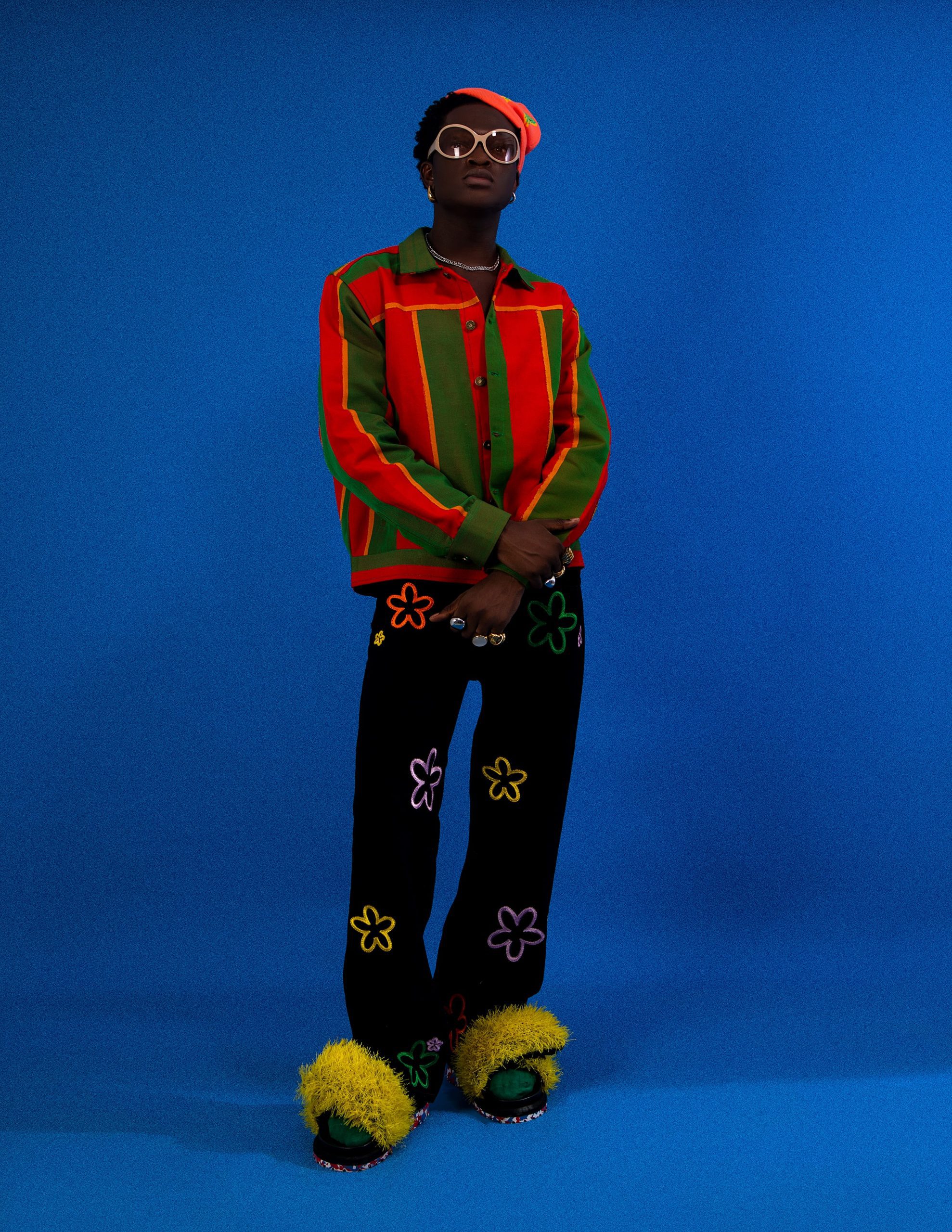
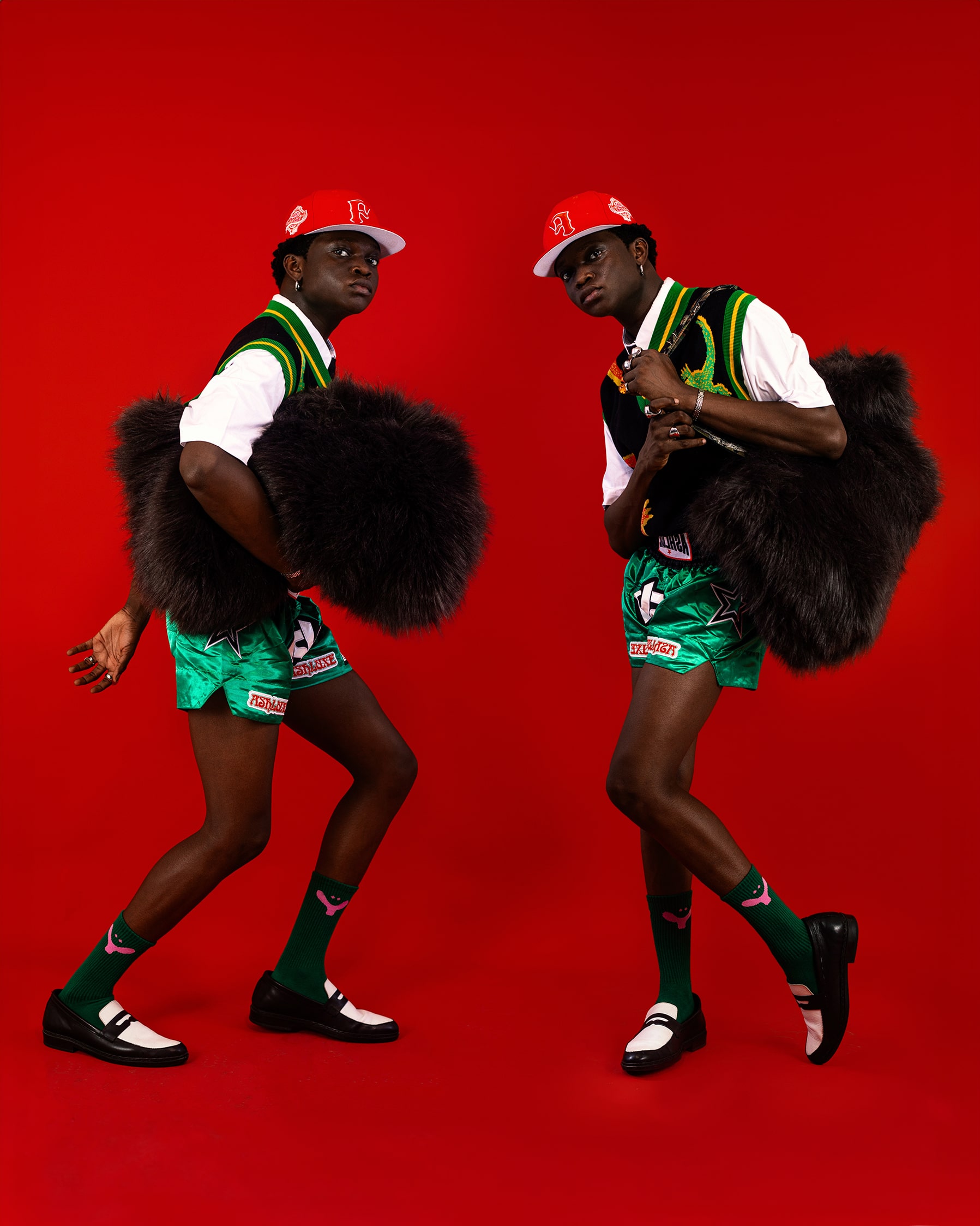
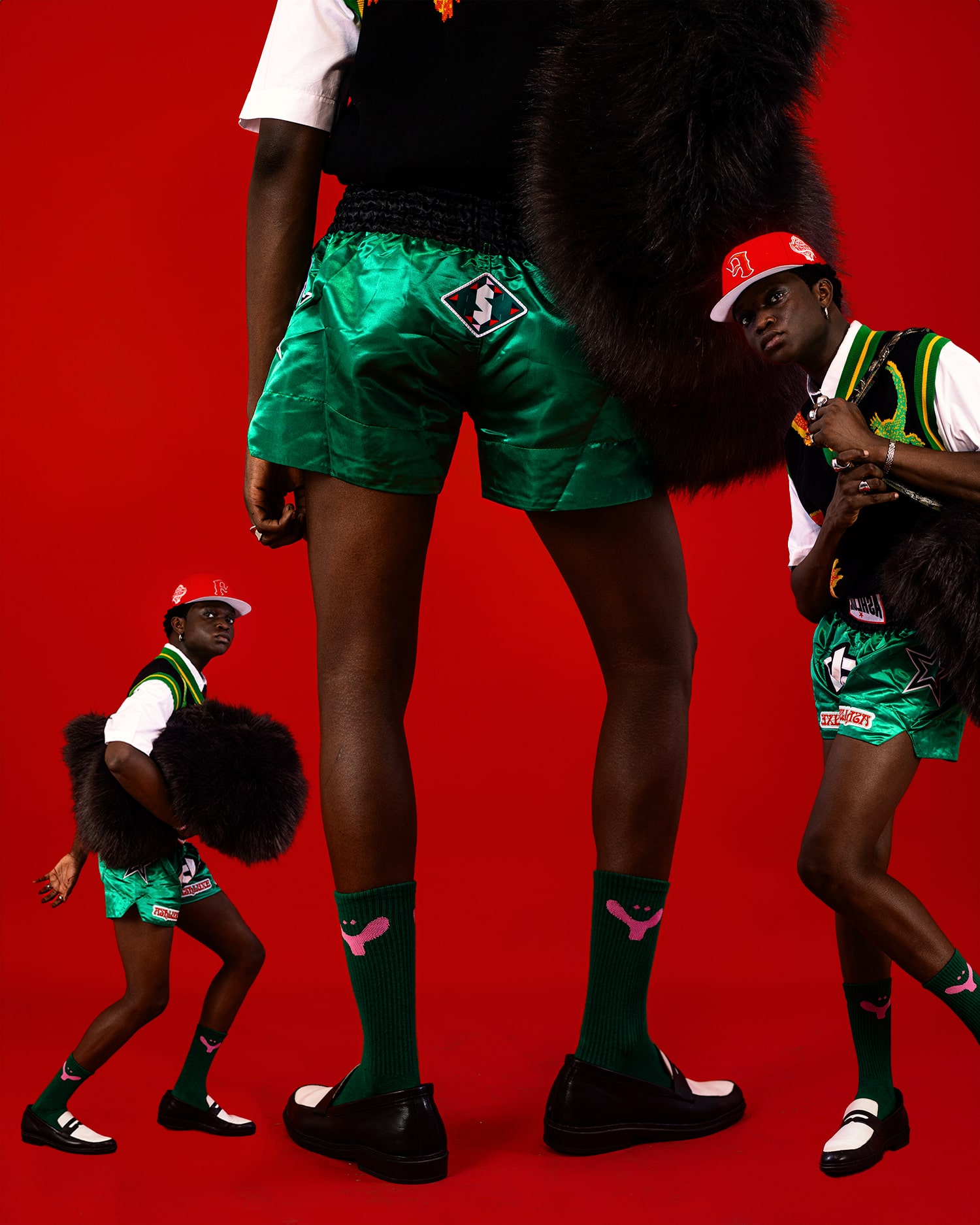
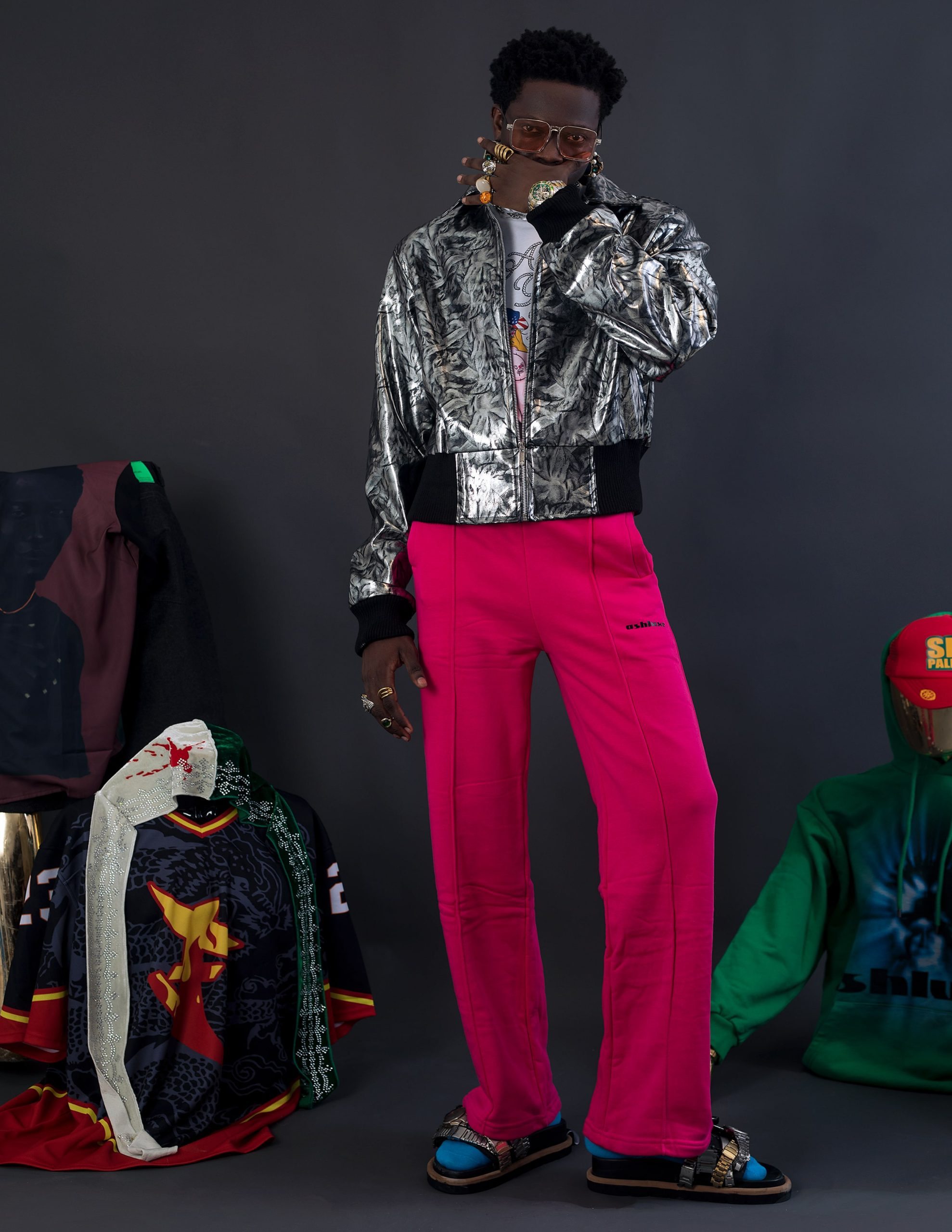
In a recent interview with GQ, Asake said of his meteoric rise: “People are counting the days you’re successful. They don’t count the days you’ve been working towards it. Nobody gives a fuck about that.” This explains the impressive effortlessness that the 29-year-old has operated with since his breakthrough a couple of years ago.
After years of silent sonic evolutions and false starts with singles like 2020’s “Mr Money,” Asake came out swinging in 2022, captivating the masses with an infectious alchemy of Fuji music and Amapiano that culminated in his critically acclaimed debut ‘Mr Money With The Vibe.’ This delightful blend of distinct styles has been the main driving force of his rapid, dazzling run; it fuelled ‘Work Of Art,’ an impressive sophomore that doubled down on his winning formula, and now, it’s priming him for a possible trifecta, all in less than three years.
While Asake rarely stepped out of his comfort zone in the first couple of years after his breakout – mostly working with his trusted producer Magicsticks and barely doing features – he’s shown a proclivity since the turn of the year for exploring new musical terrains and for collaborating more. That’s why it didn’t come as much of a surprise when the tracklist for his forthcoming third studio album, ‘Lungu Boy,’ revealed a number of eye-catching features like Wizkid, Travis Scott and Brazilian sensation Ludmilla. The features not only enforce his willingness to push the limits of his sound but it also highlights just how far he’s come in such a short time.
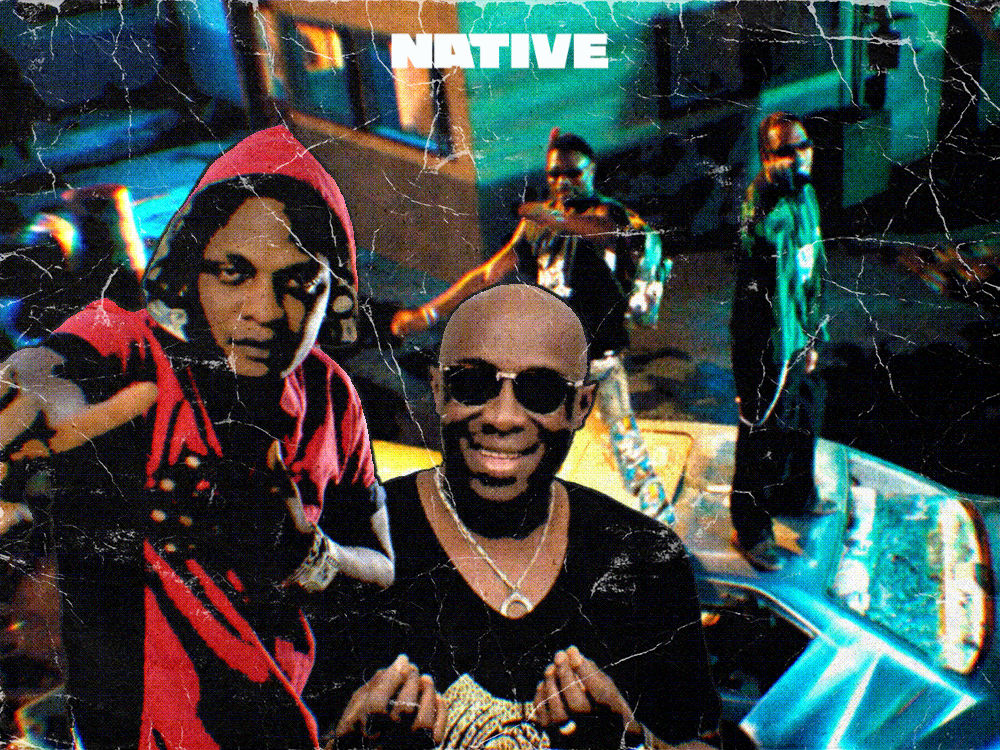
Earlier today, the Grammy-nominated singer released “Active,” presumably the final single before the album finally arrives on the 10th of August, 2024. The song dials down some of the vigor that has characterized most of his biggest hits. Here, he employs a more mid-tempo flow, coasting over an exquisite Sarz beat that expertly flips bits of Jazzman Olofin and Adewale Ayuba’s classic anthem “Raise The Roof” over a log-drum loop.
The sample, which predominantly features a snippet of Ayuba repeatedly singing “ma jo fine girl,” is tasteful and poignant, adding a slice of nostalgia to a track that borrows influences from Afrboeats, House music and Hip-Hop. The lyrics here range from braggadocious to celebratory but ultimately the message is simple: “Oh man I’m active,” Asake repeatedly sings on the hook, simultaneously propping himself up and letting everyone know he’s on top of his game.
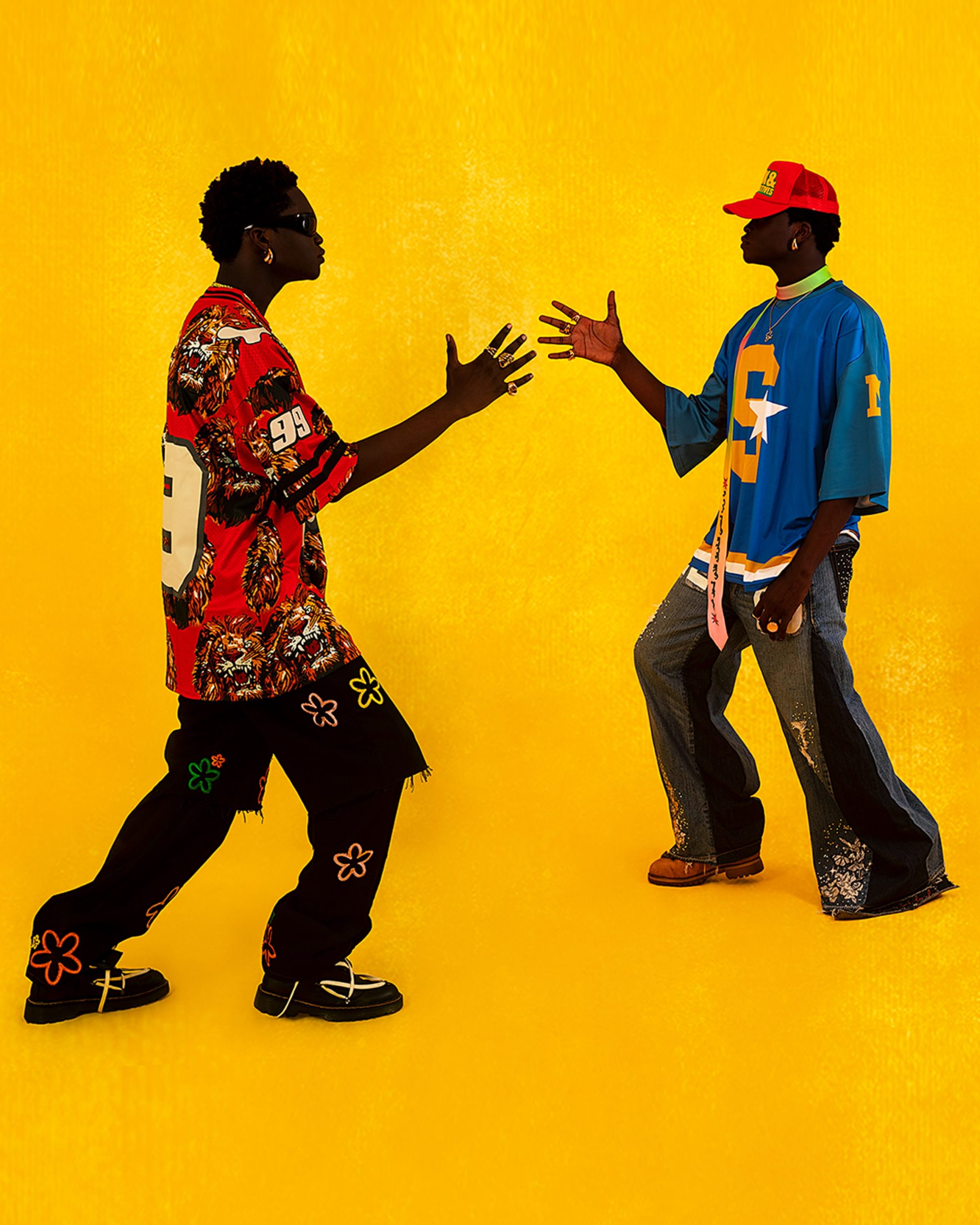
Rap megastar Travis Scott is here for company. The 33-year-old punctuates the record with a short but enjoyable verse that sees him bragging about his affluent lifestyle and numerous shenanigans. The song is also accompanied by a colorful and trippy video directed by Edgar Esteves, Joshua Valle, and Nikita Vilchinski. It features flattering shots of the pair in different well-put together sets and a bunch of b-roll footage from a couple of Asake’s recent shows.
Even as the self-proclaimed Mr Money rapidly progressed following his watershed moment in early 2022, a few things still reasonably seemed out of reach. For one, it still seemed slightly inconceivable, for various reasons, that you would hear the iconic “It’s lit” ad-lib on an Asake record. But here we are; the 29-year-old continues to defy the odds as he gears up to complete what could possibly be the greatest three-album run the country has ever seen in record time.
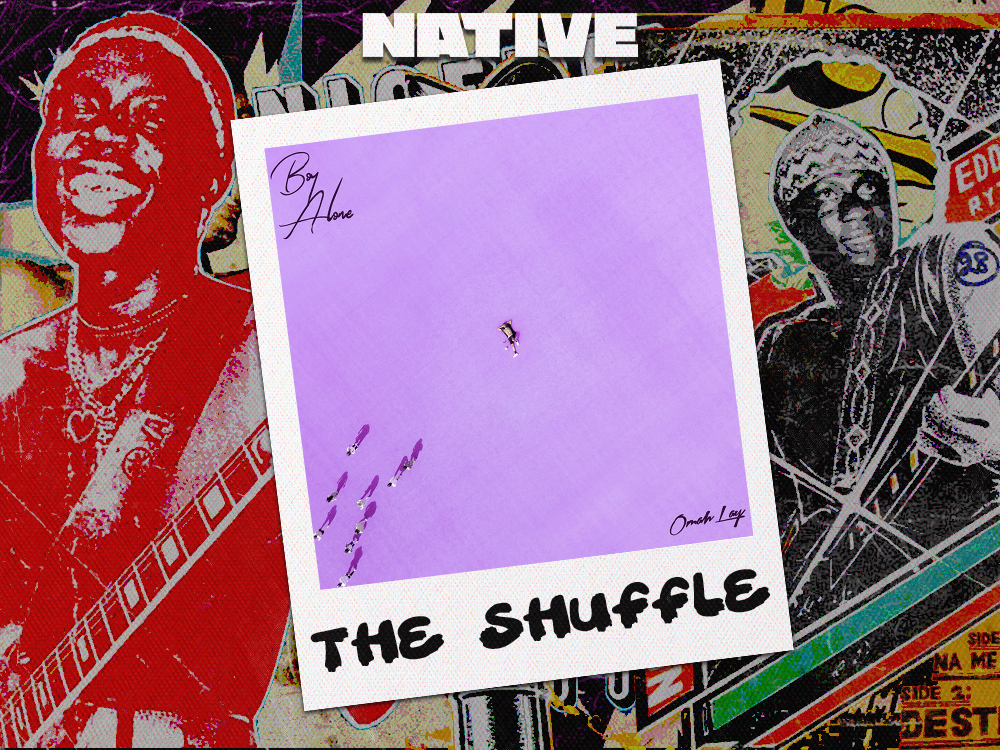
Through the years, Nigerian popular music has undergone a plethora of interesting phases where audience interaction is concerned. In an effort to both understand the various new sounds emerging from Nigeria, and de-center Western narratives and their umbrella terms like “Afrobeats,” artists and fans alike have taken it upon themselves to create new genres for the country’s music. As Rema’s Afro-Rave or Burna Boy’s Afro-Fusion dominated the conversations, a slew of debatable options rose to the surface, including “Afro-Emo” and “Yahoopiano,” of which CKay and Shallipopi were crowned pioneers. Another running joke during this time was Omah Lay’s Afro-Depression; and while the name sounds distasteful, it accurately represents the thematic elements of Omah Lay’s music thus far, more specifically on his acclaimed debut ‘Boy Alone.’
While the project was littered with groovy, upbeat synths alongside more melancholic rhythms, praise for the debut was largely due to the unbridled honesty and vulnerability captured throughout the album. Unlike his peers whose music orbited similar themes of women, sex and money, Omah Lay’s messaging and delivery stuck out mostly for how unafraid he was to discuss mental health; specifically anxiety and depression. This was an even bigger deal because it was happening in an African context, where those topics are only just beginning to gain serious attention; it was rare to find people talking openly about struggling mentally, let alone putting those struggles at the forefront of a newcomer’s music.
On Justin Bieber-assisted “attention” and “tell everybody,” Omah Lay delved into heartbreak, unabashedly begging his love interest for her undivided attention while screaming of their love from the highest rooftops. Despite retaining the same storyline, “never forget” and “soso” provide an even more wounded perspective to heartbreak, alluding to Omah’s over-dependence on his muse for his survival. However, he uses tracks like “understand” to get personal, emphasising his utter confusion with life with brooding hums on the melodious hook, “Everything I do I under under, I no fit under under under/Me I no fit under oh, under under I no fit understand.”
Heartbreak-leaning hits aside, Omah Lay’s unfiltered rawness becomes most apparent on the early album opener “i’m a mess.”Pensive guitar strings create a tender atmosphere on “i’m a mess,” ushering in Omah Lay’s weighty confessions. “Sometimes I’m happy, sometimes I’m sad/I don’t know what’s over me,” he sings on the intro. His confusion becomes clearer in subsequent lines as he shares his struggle to understand the inconsistencies of his feelings. As much as “i’m a mess” details a very personal journey to self-discovery, it also expands on the effects that kind of instability can have on the people we surround ourselves with. Ultimately, when turning to those around him yielded no results, Omah Lay commits to a new found friend, alcohol, and a heavy reliance on substances, while searching for an escape from his reality. Despite the heavy messaging of the track, the groovy Niphkeys-produced instrumentals balance the mood without allowing listeners to lose sight of the self-deprecating number. And by the time it draws to its unsettling close, Omah Lay feelings are still unresolved. On “i’m a mess” and through the rest of ‘Boy Alone,’ Omah Lay is clearly most interested in flipping melancholy on its many sides, showing listeners the inner workings of his mind.
Now a few weeks past the two year anniversary of ‘Boy Alone’ and a cryptic sophomore album announcement shared via X, it’s safe to say that Omah Lay’s tone in recent releases and features has taken a new direction. From a glittering delivery on Victony & Tempoe’s “Soweto (Remix)” to his final single of 2023, “Holy Ghost,”Omah Lay’s artistry has proven to be one stacked with consistent hit contributions but day 1 listeners are still weary we may have lost the sad boy elements he vehemently led with in the early stages of his career. Whether that is true or not, we can always rely on the fact that Omah Lay’s sophomore release will be one laced with honest, personal confessionals truly representative of the artist and whatever phase of life he is currently experiencing.
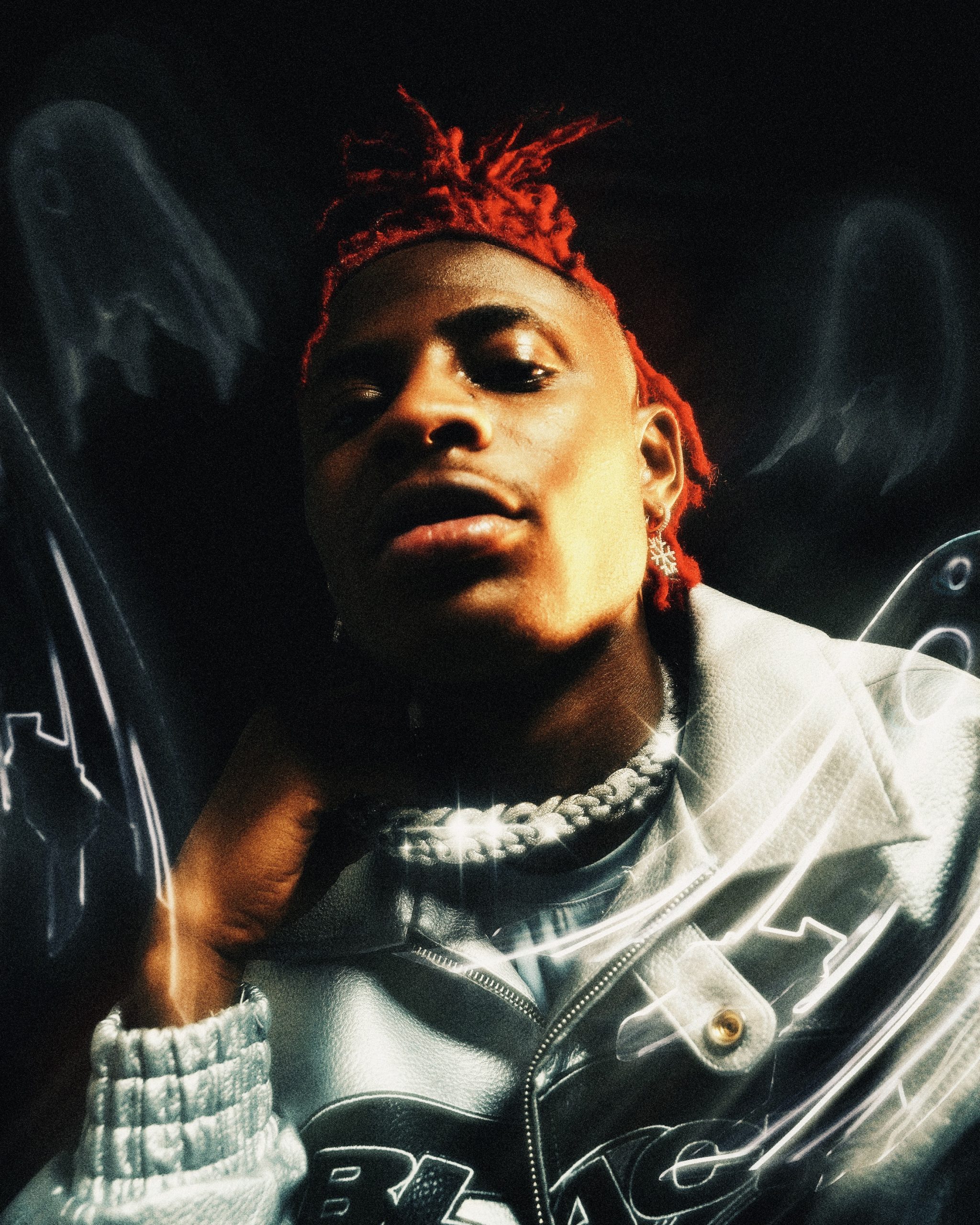
When Khaid jumps on our Zoom call on a cozy Thursday afternoon, I immediately notice his red dreadlocks, a shock he definitely intended to evoke with the bright contrast from his previous duotone of black and off-white. “I think red has always been my thing. Like this, when I walk in the room, everyone is like ‘who the hell is that guy?’” he says with a chuckle.
Religion has always been an anchor – and perhaps the most influential crucible – in Afrobeats, and Khaid is no stranger to the confluence of religion and music. Born Sulaimon Shekoni Solomon, and raised in a Christian-Muslim household of ten, hope was a heavy tenet of Khaid’s formative years and music offered him the creative outlet he dearly desired. “I started off rapping. I used to think singing was mainly for females, you feel me? At a particular time, I discovered that these people that were singing were so talented and creative, so I started trying it and I just got better and better,” he recalls honestly.
A native of Ojo, a South Lagos suburb steeped in Yoruba tradition and renowned for both its trade industry and its music stars, Khaid – which he pronounces as /Keid/ like cake with a d – found his early path in a vocational trade. At age 14, while his artist dreams picked up steam off freestyles that became popular throughout neighbouring locales, he picked up the practice of fixing cars under the stewardship of a roadside mechanic, and lived out his fantasies through social media, idolising the artistry of Juicewrld, XXXTentacion, and Lil Durk. “The power of the mind is one of the most underrated things. People don’t believe in their mind. They don’t believe in their intuition. As powerful as it is to walk physically, that’s as powerful as it is to walk spiritually, too. The mind is a big space where everything can come to life in an instant,” he says with so much conviction that you can almost see his belief through his plain white shirt and prim jumper.
It wasn’t long before his mental fortitude was rewarded and his many fantasies turned reality. By January 2022, 17-year-old Khaid was announced as Neville Records’ premier artist under the tutelage of internet sensation, Sydney Talker. Sydney had discovered Khaid through one of his many freestyles on Instagram, one year before.
“Social media has done a lot of good for me, not like it hasn’t caused me harm, but it has done a lot of good. I can’t imagine how it would be if there was no social media,” he says, acknowledging the complex bedrock behind his growing influence. “It has helped me push my music harder and just give me more exposure and with social media, you have to be smart about what you are doing.”
TikTok in particular, helped cement his debut single, “With You”– released eight days after his label signing – as one of the romance anthems of 2022. The fresh-faced beady-eyed teenager was a sensation on arrival. By May, he’d released his debut EP, “Diversity”, a six-track mesh of trap and Afrobeats pillowed with youthful exuberance that served as a full-fledged foundational iteration of Khaid’s artistic fantasies.
2023 sealed Khaid as a music industry mainstay. He started the year with the shimmery RnB number, “Jolie,”and then followed with a succession of critically-acclaimed party-starters, “Carry Me Go” with Boy Spyce, and “Annabella.” Later that same year, he released a six-track sophomore EP, ‘Emotions’ before capping the year off with a much-awaited linkup with one of his idols, Lil Durk, and a nomination for Rookie of the Year at the 2023 Headies in Atlanta. “I had no idea I was that big outside Nigeria. I get a little boxed in, sometimes. For me, no matter how big or no matter how little the crowd is, you just need to have that heart of appreciation. I can see my songs are healing people, getting them through some tough times, and just keeping them happy, and it really makes me glad that I’m doing something to help people. Music is therapy, that’s the highest form of therapy. I feel like a therapist right now,” he says jokingly before affirming God as his therapist when I ask who he runs to for help.
Primed for an explosive 2024, and flying high off backlift collaborations with fellow newcomers Gyakie, Tar1q, then spinning the block with Boy Spyce within the first quarter of the year, Khaid encountered his greatest setback yet – himself. He was hospitalised, reportedly for internal bleeding. His faith carried him through the tumultuous four-month ordeal which he barely speaks about over the course of our forty-minute chat. “It’s so crazy having someone tell you not to go to sleep until they approve. That’s what I was talking about on “I Don’t Wanna Die”, he explains. “I’m grateful for living and having life. I think what’s keeping me excited right now is my relationship with God and how my faith has grown.”
On the artwork for his latest EP, ‘444’ – released weeks after he was discharged from the hospital — a grim red aesthetic is emblazoned with a bright cross centred on Khaid’s forehead, signalling his Christian faith and possibly protection from higher powers. “Red is just intense. Pink is actually my favourite colour but red is intense. I think I have a lot to do with red in the future,” he muses. Red has long been splattered across Khaid’s visual aesthetic, but it takes its most daring form yet on ‘444’ casting him as a resilient fighter bleating out a war cry. “This EP is the road to the album. 444 has three meanings,” he explains “The first meaning of 444 is trusting in your intuition. The second meaning is your guardian angel watching over you. The third meaning is that God created the main components of the earth, the sky, the sun, the moon, on the fourth day.”
The three-track EP features a highly-coveted guest verse from rap legend and music mogul, Olamide, which Khaid credits to the power of social media. “I just went on Twitter [now X] and tagged Baddo in a tweet, and he replied. I didn’t even reply on time yet he replied quickly. Even my guys aren’t that quick with replying me,” he jokes. “From there, we just spoke. You know when Baddoo is speaking, you listen and jot things. He just showed me love. I haven’t even met him till now, so I’m like, what if I meet him, how is it going to be?” A week after my conversation with Khaid, a video surfaced on social media of him and Olamide making a Tiktok to their track, “Way Back.”
@Olamide rapper with the hardest melodies😮💨‼️.
Respect Grand chief🙌🙇🏽♂️.
‘444’ is arguably Khaid’s most reflective project yet. Battered by adversity and energised by the awakening of new-found purpose, the 19-year old artist showcases a deep well of versatility, channelling his angst and pain with a familiar cadence and introspective messaging. Although he doesn’t believe in traditional therapy, Khaid wants listeners to find therapy, lightheartedness and healing through his music. Armed with a brand new outlook on life, he cranes to become a source of self-love and a ray of hope to the many children across Ojo and beyond, relying on music for solace. “I just want people to know that as big and as good as the world is, there is still a lot of pain in the world. As sad as it may sound, the music is basically talking about self-love. I want to leave a stain of self-love. I just want them to look at me and say that guy really gave us hope.”
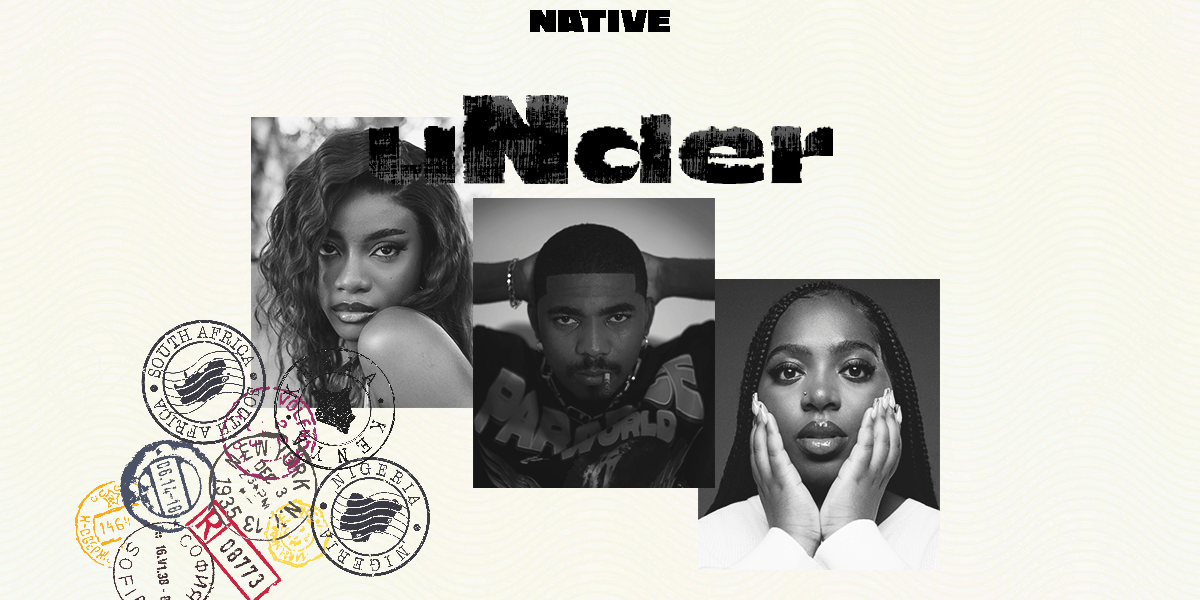
At NATIVE, we are committed to highlighting the freshest talent in African music, and offering a platform to the next generation of superstars. No other African discovery platform stays on the pulse of the underground scene like uNder, with its far-reaching gaze and commitment to pin-pointing the most innovative creators of our time.
In a time where the musical zeitgeist on the continent is experiencing a rebirth, these rising talents are at the heartbeat of the underground scene across Africa, seamlessly fusing innovation and authenticity to create music that represents the texture of their locality, but is still layered with global resonance.
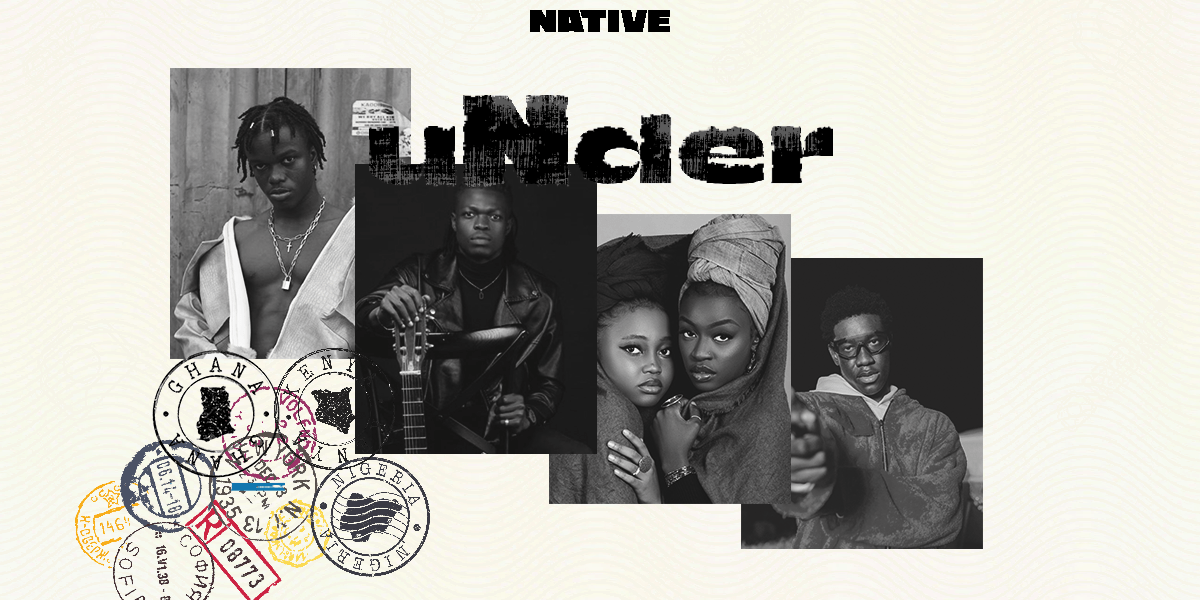
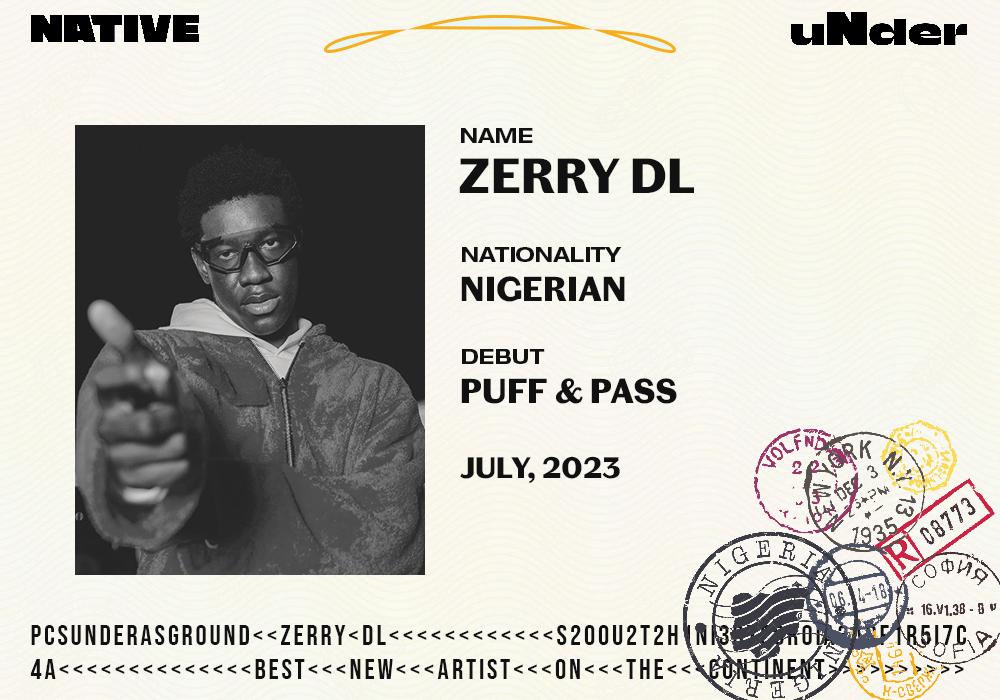
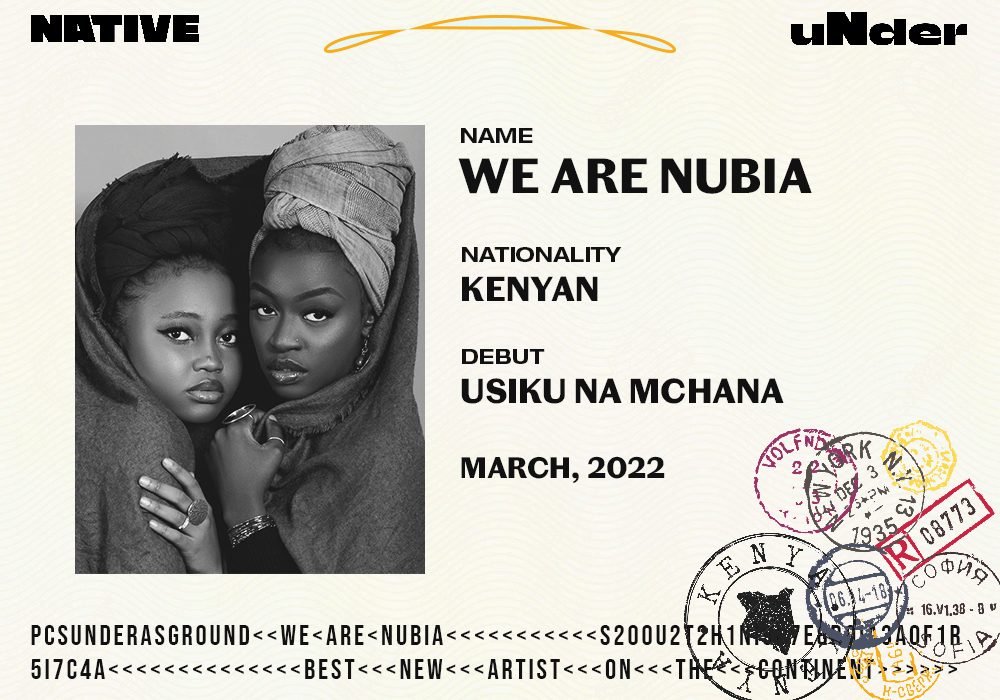
For lovers of underground music and nonconformity, Kojo Blak, Ras Amor, Zerry DL and We Are Nubia are definitely ones to watch – trail blazers set to redefine the musical landscape and steal the spotlight any moment from now.
KOJO BLACK
For fans of: KiDi, King Promise and Omah Lay
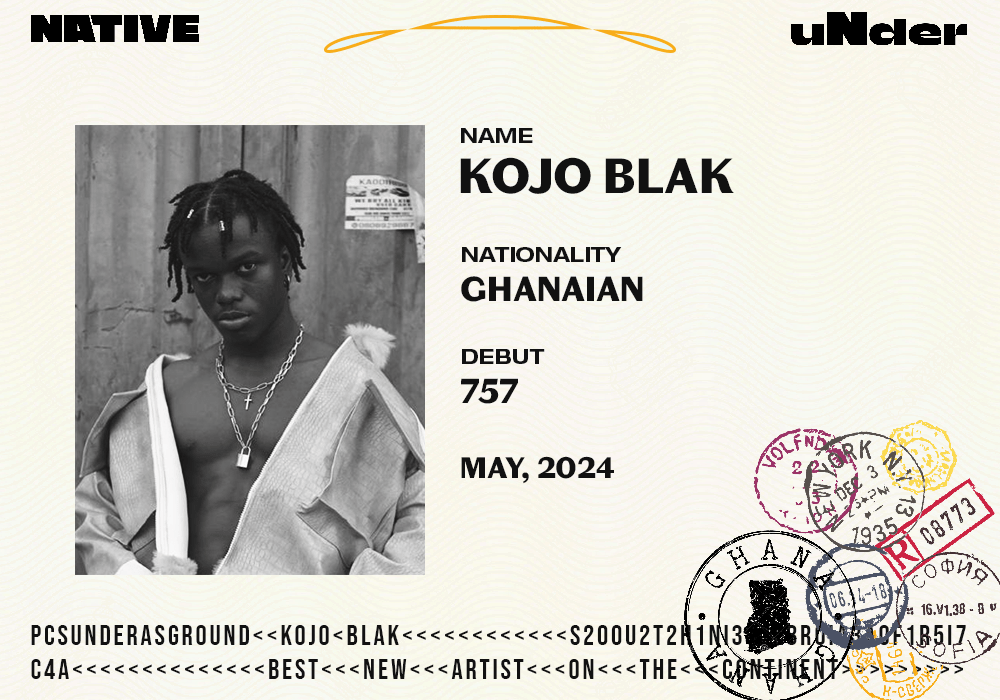
Ghanaian rising star, Kojo Blak, places his identity and feelings at the heart of all the music he makes. Born McDonald Braide, the singer’s music is largely reflective of the angst he contends with due to the state of his life. Intuitively, Kojo Blak knows what the stakes are, coming from Dansoman, a sprawling Accra suburb that’s one of the largest estates in West Africa. It’s an experience that he’s deeply grateful for. “Growing up in Dansoman in Ghana, life was tough but it gave me a deep connection to my roots,” he said in one interview. “The struggles and the vibrant culture deeply influenced my music, grounding it in authenticity.”
Blak pays homage to his journey and the places and experiences that have made a mark on him from track to track. On 2023’s “Rulling 1 (Day Ones),” he places his love and appreciation for old friends and acquaintances on record with a startling candour that’s only matched by the emotional acuity of his delivery. “So many love for ma day ones /Them wey dey sing to the songs and the melodies I draw,” he tenderly utters over a percussion-led instrumental. In June 2023, he released an update on “Rulling 1” titled “Rulling Freestyle II (Luv N Presence).” Where “Rulling 1 (Day Ones)” mulled about his OGs and how they grounded and supported him, “Rulling Freestyle II (Luv N Presence”) pulsates with the weight of the singer’s devotion to a love interest as he floats over an Hiplife-adjacent beat.
Most of Kojo’s subsequent releases have focused on his attraction to women and his desire for material success. “Something” is a mid-tempo ode to his ideal woman while “Maja” explores the intersection of attraction and betrayal atop Amapiano’s signature log drums. 2024 has been a similarly prolific year for the singer; “Ready,” a collab with Chop Daily set the pace for his year following the blueprint laid down on “Maja.” A song with Ghanaian shapeshifter, Moliy, soon followed where both singers duetted about needing their lovers on “Calender.”
All of these releases made the May 2024 arrival of Kojo Blak’s debut mixtape, ‘757,’ an anticipated release. Across nine songs, the Dansoman singer pulled a thread between his past and present while laying the foundation for his future. The titular track holds the premise of Blak’s journey as he recounts his paranoia and eagerness for success while declaring that he’s all about his business. Despite all that he says on that song, the brightest moments on ‘757’ come when he leans into his yearning for a romance to last the ages. “Abena” gently pulls at the heartstrings as he confesses that he’s not scared to love while another song, “Anything,” is a cogent promise to satisfy his lover no matter what she craves. – W.O
RAS AMOR
For fans of: Asa and Savara
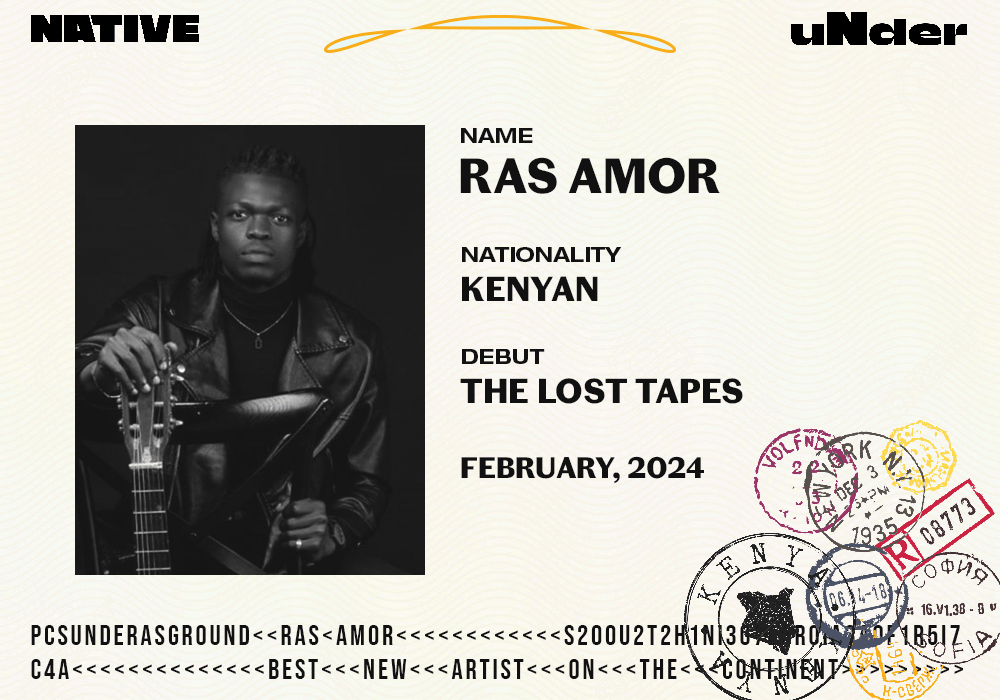
Ras Amor does not play by pop conventions. The Kenyan musician sways to the rhythms of his heart, experimenting with Folk, Soul, R&B, and Electronica as he sees fit. Through all of his genre-meshing and trials, Ras Amor’s emotion-laden voice is a virtual constant that helps him sift through even the painful emotions and situations. Like most African artists, Ras developed his knack for singing as part of a choir, performing in the Redfourth Chorus for two years after high school before beginning his solo career. Keen to bring his ideas to life, the artist worked on his production skills and has since collaborated with a number of Nairobi-based artists.
His first credit as an artist came on poet Dorphange’s “Nyota Yangu,” a quasi-ballad released in 2018 that features words spoken over squeaky guitar plucks. By the next time Ras Amor emerged on streaming platforms in 2024, he was operating as a fully-realised music talent attuned to his own message and direction. Released in February 2024, his first project, ‘The Lost Tapes,’ catalogues a world of styles and moods that veer from orchestral rock to neo-soul and hypnotic blues. “Fluid” is a dedication to a woman that the singer finds irresistible while the shoegaze-leaning “Morning Sun” narrates how a love interest won his heart over. The Afropop-inspired “Love Is Forever” is an instant reminder of love’s redemptive powers.
Creative freedom is crucial to Ras Amor’s work and his Sanctuary Nation imprint allows him to release music as he wishes. Two other projects, ‘Kitweo,’ a collaborative tape with Clef and Bandana as well as ‘Time Machine’ show that the artist loves to work at his own furious pace and inclination. The groundbreaking 2024 protests against oppressive legislation in Kenya might have disrupted the plans of other artists but not Ras Amor. The polymath threw himself fully into the spirit of protesting and has remained vocally active against the Ruto-led administration across social media. The uncertainty has not slowed down his creative prowess however; to celebrate his birthday earlier in July, he released an acoustic project of selected songs from his projects up till now. – W.O
ZERRY DL
For fans of: Shallipopi, Seyi Vibez and Zlatan
As one would imagine, having a brother who had an entry as boisterous as Shallipopi’s comes with a series of benefits. A hit song with the hottest newcomer on the block, in a scene stacked with an infinite number of new entrants, would be the perfect opportunity to stake a claim as one of the artists to watch. The stars couldn’t have been more aligned for Divine Uzama, aka Zerry DL, who tapped his older brother on the remix of his debut single “Puff & Pass.” On the Busy Pluto-produced number, Zerry tabled his concerns from Nigeria’s dwindling economy and how large sums of money are now spent in seconds to the need for drug-induced escapism from reality. Analysis aside, “Puff & Pass,” as the name implies, is simply a feel-good track that gives insight into his downtime with friends. With the addition of Shallipopi’s verse on the remix’s introduction, bolstered up by on-stage performances over Nigeria’s peak festival season at the end of the year, Zerry DL effectively garnered the attention of audiences eager for brotherly synergy.
Riding the high of “Puff & Pass (Remix),” Zerry DL released a 5-track EP before the end of 2023 with club-ready hits like “Popo” and “Knack Am.” He has since dropped another single and sophomore extended play tagged ‘Wara Wara Szn.’He seemingly arrived armed with a lot more to say, albeit over the same flow and Amapiano-tinged rhythm, on tracks like “O.U.A.T” – Once Upon A Time. For “Cash” assisted by Seyi Vibez, he talks about his plans to spend the money derived from his impending success while “Big Body Benz” celebrated his muse and the buzzing lifestyle of escaping authorities. While he is yet to have a moment as viral as his debut, Zerry DL’s discography, though sparse, holds promise of more dancefloor-ready tunes in the coming years. – N.I
WE ARE NUBIA
For fans of: Maya Amolo, Ami Faku and Brandy Maina
Originally a three-member girl group from Nairobi, We are Nubia made their way onto the scene in 2022 with “Usiku Na Mchana,” a feathery mid-tempo execution that glides over varying instruments to bring the atmosphere of their soulful, heartwarming renditions to land. From the ominous saxophone intro to the groovy drum patterns and piano chords scattered across the track, the trio are immersed in the perfect soundscape to passionately deliver their story of unwavering love. Their debut immediately landed them a small cult following, largely due to their distinct vocals execution and a seamless blend of English and their local dialect. When they later became a two-member group, We are Nubia continued to steal the audiences’ hearts with soul-stirring lyrics and rhumba-leaning melodies on tracks like “Mvingo” or “Mapaenzi Ya Sinema” off their upcoming project.
When 2024 arrived, the pair reaffirmed their penchant for making feel-good music on “Niko Sawa,” telling stories of love, loss and the resilience it takes to pursue one’s dreams. To further expand their catalogue, We are Nubia tapped Chris Clave for a balmy verse and production credits on “NINGEWEZA,” sharing their most intimate desires and dedication to a love interest. Through each new release, We are Nubia deliver impactful performances that transcend language barriers. Together, they’ve shown the potential to leave an indelible mark on Kenya’s soulful R&B scene, with moody, candid lyrics, lovesick numbers and versatile melodies. – N.I
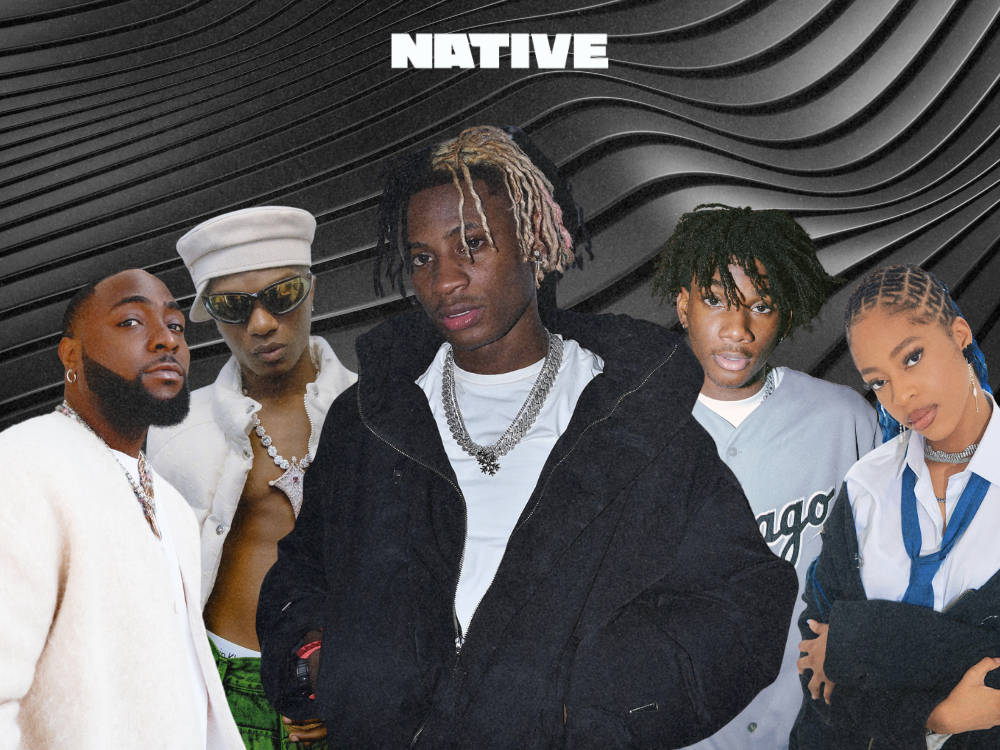
Navigating the music industry as a newcomer can leave any artist feeling burdened under the weight of several responsibilities; even more so when the journey begins at an early age. However, with a solid team and adequate support systems around them, some acts are able to defy all odds and emerge victorious on their paths to much sought-after stardom. Take Davido, who broke out with his hit single, “Dami Duro” at 18 years old, or Wizkid, who put out arguably one of the best contributions of Afropop, ‘Superstar’ just weeks to his 21st birthday.
Today, Afropop’s stars are only getting younger, with talents emerging from all parts of the country with both the childlike wonder of a newbie and the confidence of a veteran. Here’s a look back at some of the best young acts that paved the way, and a new class of artists dominating music conversations in the country today.
OLD-CLASS OF ARTISTS
BENITA OKOJIE
Benita Okojie was always surrounded by music. As a young child, she used to make medleys of Benin and English songs with her mother and sister. That history played a huge part in establishing her as one of Nigeria’s pre-social media child pop stars when her debut single, “Osemudiamen” was released to commercial success in 1998. In the three decades since “Osemudiamen,” Okojie has continued to enjoy success as a gospel singer while pivoting to working as an actress on occasion. Her early success laid the foundation for a number of child stars to break out in the years to come.
WIZKID
There can be no discussion about Afropop without the outsized contributions of Wizkid, who has been a critical part of the genre’s journey to global music’s high table over the last decade and a half. Wizkid broke through with his debut single, “Holla At Your Boy,” released under Empire Mates Entertainment on January 2, 2010, when he was 19 years old. Since then, the Surulere-born star’s trajectory has been an upward incline that has shaped the tone, texture, and style of Afropop. His debut album, ‘Superstar,’ is regularly referenced by many as an undisputed classic in the Afropop canon while other projects have also deepened his legend.
DAVIDO
Emerging in the wake of the continental success of Afropop forebearers like 2Face and P Square, Davido had originally aspired to being a mysterious behind-the-scenes creative behemoth like Don Jazzy. However, he found himself thrust into the limelight when his breakout single, “Dami Duro,” landed him in the stratosphere at just 18-years-old, and set the stage for a run that’s still unfurling new layers into its second decade. Davido added a new level of dynamism and pomp to Nigerian and African music that instantly elevated the game and made him one of the genre’s foremost avatars, widely admired for his collaborative prowess and ever-evolving curatorial instincts.
BURNA BOY
Port Harcourt has long been an important city for Afropop, and in Burna Boy, the city found its great export. The gravelly-toned singer was always regarded as a generational talent thanks to a sonic malleability that made him stand out clearly from his peers, from his late teen start. Right from the beginning, no two Burna Boy songs have sounded the same as he pulled from Reggae, Dancehall, Hip-hop, and R&B for a sound that he has always called Afro-fusion. He kickstarted his international campaign with the release of 2019’s ‘Outside’ and has continued to be one of the most inspiring acts of his generation as well as a reference point for popular music from Africa.
ICE PRINCE
Hip-hop has always been a critical influence in Afropop; and the middle belt and Northern parts of Nigeria have served as incubators for some of Nigeria’s biggest Hip-hop stars. Jos rapper, Ice Prince, came on the scene courtesy of M.I. Abaga, but he was determined to make a name for himself and did so with a number of pop-rap anthems that ruled the lands during the 2010s. His smash hit, “Oleku,” is a cornerstone record in Afropop history while other songs like “Superstar” and “Whiskey” propelled him to the history books without losing touch of his Hip-hop sensibilities.
At just 19, Khaid has showcased a broad spectrum of musical abilities under the glaring lights of mainstream audiences. He ascended the scene’s ranks armed with Afropop-influenced songs like “Anabella” and “Carry Me Go,” all efforts which snagged him a Rookie of the Year nomination at the 2023 Headies. In just a few short years, Khaid has been able to showcase and blend a myriad of influences, borrowing elements of AfroTrap on ‘DIVERSITY’ and straight up lover-boy anthems on ‘Emotions.’These, in addition to the singles and features under his belt, have positioned Khaid as one of the more promising hitmakers orbiting the Afropop landscape.
QING MADI
It’s more and more common for artists to emerge after experiencing viral moments on the internet and 18-year-old Qing Madi is no stranger to the TikTok effect. The Benin-born artist enjoyed her moment in the sun when the uncompleted version of her debut single, “See Finish,” began making the rounds on TikTok and Instagram. After unburdening herself on the debut, her followup singles, “Why” and a BNXN cosign for “Ole” set Qing Madi on a journey hardly anyone could have anticipated. With several standout singles and an eponymous debut EP under her belt, Madi shows clear signs of being one of the leading faces from this current upcoming generation of music.
MUYEEZ
Born Moshood Abdulmuiz, Muyeez is one of the youngest entrants in the Nigerian music scene after arriving under Seyi Vibez’s label, Vibez Inc still in his early teens. The Abuja-based artist made his debut on “Instagram,” delivering a staggering performance alongside his label boss and later on “247,” with other members of Vibez Inc. One self-titled EP and a follow up sophomore release just weeks after, Muyeez is evidently adamant on staking a claim as one of Nigerian music’s brightest budding acts.
TAVES
While Taves’ “Folake” earned him a spot at the top of most ‘up next’ lists, preceded by the BNXN seal of approval following a cover for BNXN’s “For Days” , the Ibadan-born artist had been releasing music long before that. Those years of experience prepared the 20-year-old for his recently released debut album, ‘Are You Listening,’ stacked with emotive, love-struck numbers sure to leave a searing impact on the fabric of Nigerian R&B music.
SHINETTW
ShineTTW released his debut single, “No Religion” to instant acclaim with over 175K views on Youtube. The earworm track pieces together the singer’s background by chronicling his experiences as a young man in Lagos. What helps him stand out amongst other trail blazers is the confidence that shines across his vivid lyricism. ShineTTW’s penchant for emotionally resonant tracks was beautifully showcased across his newly released debut EP, ‘THE CHOSEN ONE’, a clear nod to his relentless efforts to fulfil his destiny through music.
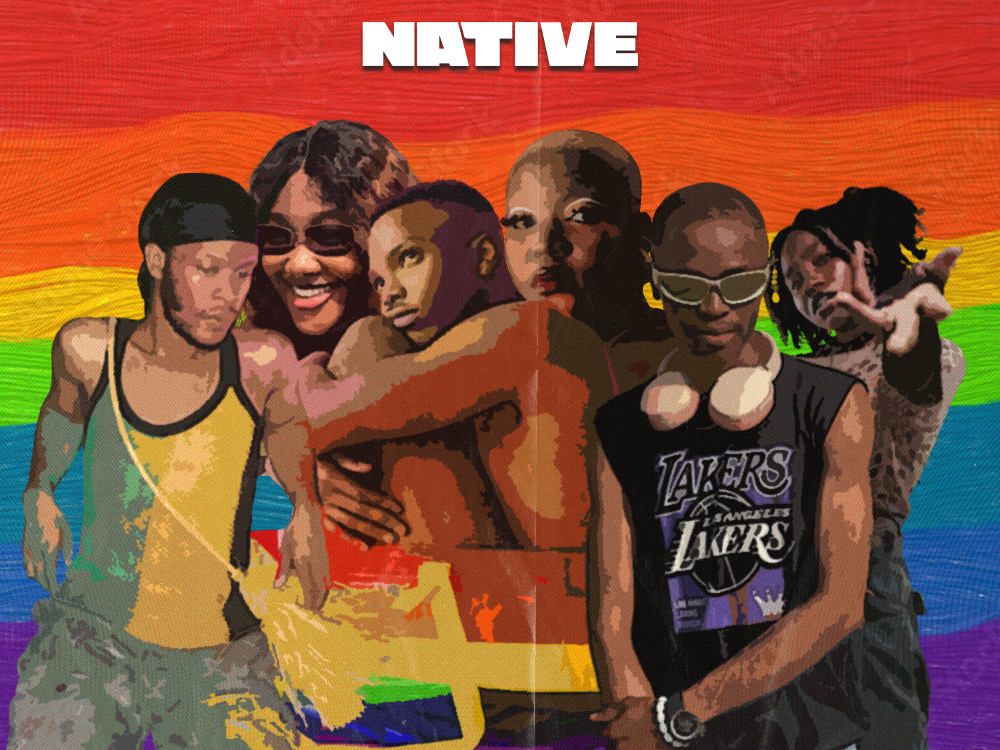
Queer art takes many shapes and forms and in the world of contemporary art, these Nigerian creatives are challenging convention and reshaping narratives with their unique perspectives. We asked them about how their artistry not only reflects personal truths but also serves as a catalyst for social change and innovation.
These responses have been edited for length and clarity.
How long have you been an artist, and how would you describe your work?
Tega Akpomedaye (Digital artist, she/her)
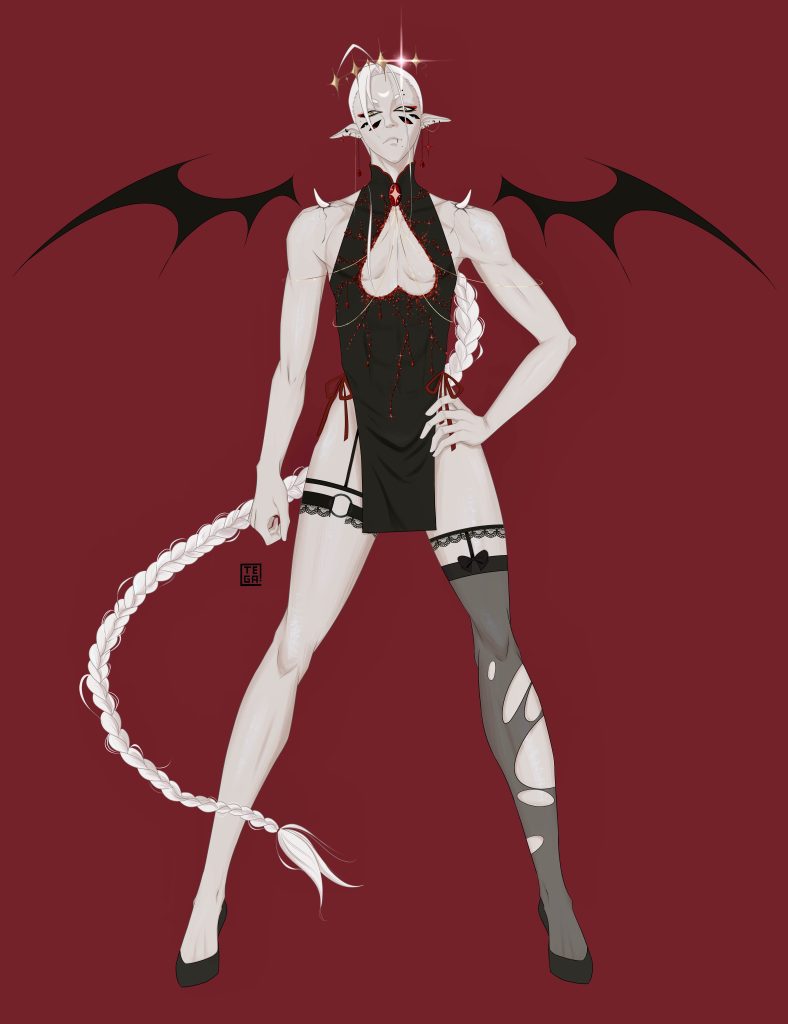
I’ve been an artist for as long as I can remember, I don’t think there was a “when” for me. Although, I started digital art in 2019. Not exactly sure how to describe my art, to be honest. It’s been called whimsical, dark, and more, but I don’t pinpoint it to a specific style. I create whatever comes to mind, whether it’s a hot, sexy fem-boy (my favourite subjects), a stunning woman, or simply my dark emotions.
Tega Akpomedaye
SHIN by Tega Akpomedaye
Alexandra Obochi (Photographer, she/her)
I’ve been creating from two different outlets since about 2016, I would say. My work started from being a makeup artist to kind of moving into creative direction through collaborations and then eventually falling into content creation and then photography. So I kind of have just been moving around and exploring which suits me better. I would describe my work as non conforming a huge part of my work is just telling stories that, you know, have not been told or trying to at least involve marginalised communities like nigerian queer community, and also making sure that my culture is a big part of the work that I do
How has your identity influenced your artistic vision and style?
Ayomikun Bamishaye (Digital artist, he/him)
I would say my identity as a queer person is intricately woven into my art. Growing up in a stigmatised society, Art made me able to explore a feminine side that I couldn’t necessarily explore in real life. An aspect of my art which is heavily inspired by my identity is the makeup looks I add to my artworks. I’ve been an ardent lover of makeup growing up, and of course, growing up in a Nigerian home, there was no opportunity for me to explore that. I then realised that I could use my art to explore that side of me that I had kept hidden for years and it made me experience the life I’ve always wanted through my art.
Freddie Jacob (Digital artist, she/her)
Most of my creative wandering comes from my identity and experiences as a human being in society through the lens of wanting to tell a story but my work is not limited to or by it.
Folarin Omolayole (Photographer, he/him)
I aim to create art that evokes a sense of connection and introspection in my audience, challenging them to consider their own identities and experiences. My work is deeply personal, often reflecting the intersections of joy and struggle that come with living authentically
What’s been your most memorable moment so far as an artist?
Folarin Omolayole (Photographer, he/him)
A really memorable moment for me was releasing my first photo essay “Beacon of light.” The essay took an introspective dive into my early childhood experiences, and was my first body of work that really connected me to my audience and gave me a taste of the type and themes of work I would love to keep making in the future.
Alexandra Obochi (Photographer, she/her)
So I said my work was featured in Time Square in 2022 for NFT NYC. I was really into NFT’s then. Last year I had an exhibition in Kampnagel Hamburg the A WA NI BI exhibition by Matthew Blaise for Obodo which is a Nigerian Queer NGO. I was the recipient of the Black women photographers grant in 2023 which I used to create my latest work, “Project celebrating queer” which is a project I started in 2021 aimed at celebrating and documenting queer nigerian people. I was in the PhMuseum black female photographers to watch in 2024 list as well. Yeah I think those have been some highlights of my journey so far.
Alxeandra Obochi
The Maidens By Alxeandra Obochi
Do you ever include your personal experiences in your work? Can you talk about an example?
Tega Akpomedaye (Digital artist, she/her)
That’s exactly what my art is about, my experiences. Last year, I created an animation after my girlfriend and I broke up. It was the best way for me to express the emotions I felt at the time. I based the animation on the song ‘Strange’ by Celeste.
Alexandra Obochi (Photographer, she/her)
I wouldn’t say my personal experiences. I don’t think my life is that interesting, really. I think I am more inspired by things that happen around me. For example cultural attires, you know people, the events that have happened are the kind of things that inspire me and have like a big impact in my work. Even with photographing people it’s the same thing. So I’m always interested in the people and their stories
Ayomikun Bamishaye (Digital Artist, he/him)
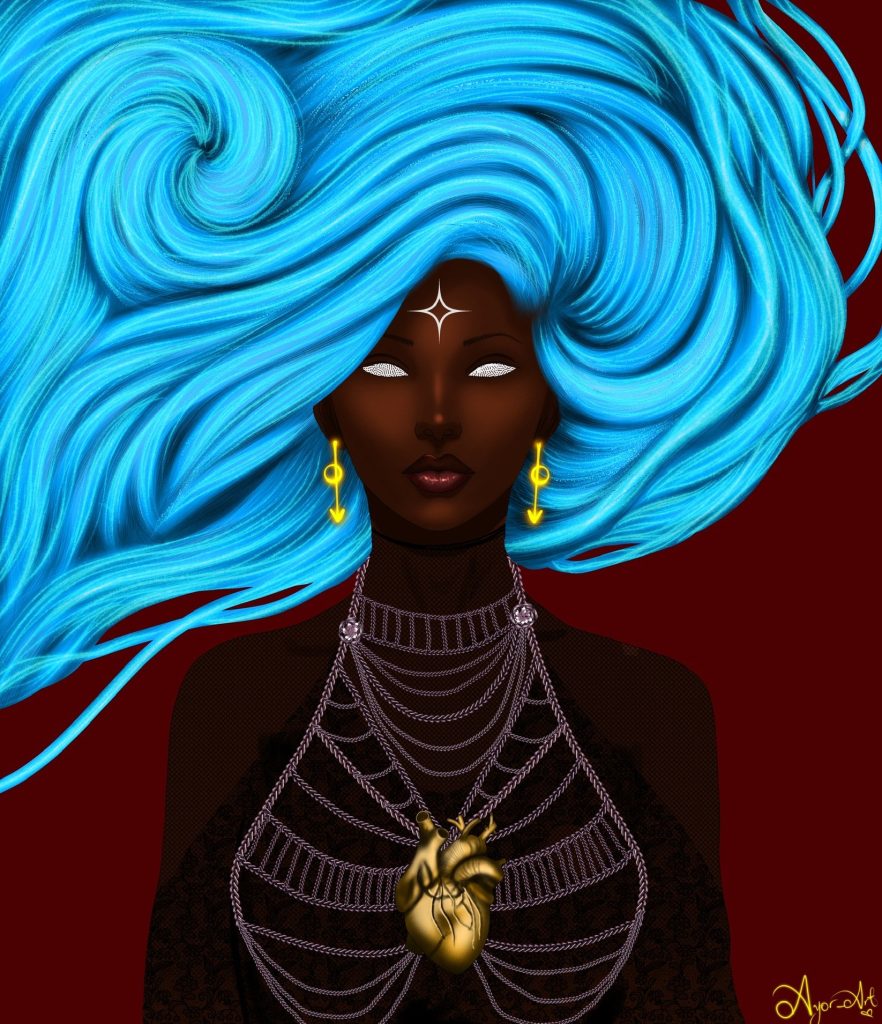
I’m not one to usually express my emotions or experiences through my art consciously. However, there are instances where my personal experience has been portrayed in my work. In 2023, I suffered from severe anxiety and panic attacks. It was a terrible experience and was usually characterized by my heart literally beating out of my chest. That year, I made an art piece (animated) that I titled ‘Raindrops’. It featured a female character with flowing blue hair, and her golden heart beating outside her chest. The piece was quite straightforward to whoever thought to reflect on it as the title itself reflected the erratic beating of my heart at the time.
Ayomikun Bamishaye
I’m Doing Okay By Ayomikun Bamishaye
Have you encountered any issues from your audiences or clients because of how you identify?
Tega Akpomedaye (Digital artist, she/her)
A client refused to work with me after finding out I was queer through my art portfolio. I’m careful about what I share on Instagram because of my family, but on Twitter, I’m free to express myself and connect with the queer community through my art
Folarin Omolayole (Photographer, he/him)
Honestly not that I know of. I try to block out the noise and focus on being authentic and making work that is true to me. I don’t stew in negativity, most times once I feel hostility about the way my work is being digested, I take it elsewhere.
Alexandra Obochi (Photographer)
So far, not really. I think one of the reasons why that happens is that I present as “normal” or what a straight person would look like. So I don’t really come across that much negativity when it comes to my work, because I feel like my community is filled with people who are like me, so they kind of also already understand what I am doing.
What themes or messages do you look to convey through your art, particularly concerning LGBTQ+ experiences and narratives?
Folarin Omolayole (Photographer, he/him)
I would say for me visibility and representation is one of the most important messages I could convey through my work. Oftentimes I find that LGBTQ+ individuals are subject to erasure, so I think its important for me to make work that validates queer existence and experiences so that future generations have imagery and stories to reference from the archives. I want all of us to be able to find solace in our shared experiences.
Brian Ibeh (Photographer/Filmmaker)
Maybe it’s not something that happens so consciously. Like maybe I’m aware of it happening, but I think just growing up queer I always looked at life beyond the traditional perspective. It has always given me a wider perspective because when you look at it I guess one of the premises of being queer is just like deconstructing constructs about sexuality and gender that exist in the everyday world. So in the same way I guess that experience has also just informed even just my eye for aesthetics like the things I consider beautiful are definitely influenced by just having a widened perspective that think queer people are just naturally oriented with just based on what it means to actually navigate the experience.
Bryan Ibeh
Bryan Ibeh Cover Shoot
Ayomikun Bamishaye (Digital artist, he/him)
I hope to inspire feelings of self-love, empowerment, and a sense of belonging in those who view my work. My art is also an exploration of peace. That is the peace that comes with living authentically as one’s true self, the peace found in safe spaces, and the inner peace that develops when we embrace our true selves.
We know that Nigeria is extremely anti-LGBTQ. Have you encountered any resistance or backlash due to the queer themes or content in your artwork? How do you navigate such challenges?
Freddie Jacob (Digital artist, she/her)
My work isn’t queer-centric and that is probably why I have had the privilege and protection from hateful backlash. I fear I would not have this protection if it was, and I believe queer centric Nigerian art and artists do not get to access this protection and that is deeply tragic.
Tega Akpomedaye (Digital artist, she/her)
Not exactly, I think this is due to the fetishisation of queer women by cis men. I’ve received a few negative comments on two of my posts that explicitly featured queer women kissing, but I’ve learned to ignore them and move on. I’m confident that my art has already resonated with my target audience, and that’s what matters most to me.
Ayomikun Bamishaye (Digital Artist, he/him)
Not really actually, there have been occasions when people have looked at me strangely and asked why I only draw female characters, but it hasn’t exactly moved past that. And of course, there have been a couple of times that my art has gotten to the wrong side of Nigerian Twitter. I’ve learned over the years to sort of just mute it all and not dwell on it. I think overcoming such challenges really boils down to having like-minded individuals around you for support as well. It really helps.
Are there specific artists or movements within the LGBTQ+ community that have inspired or influenced your work?
Folarin Omolayole (Photographer, he/him)
My two favourite photographers are Rotimi Fani Kayode who was an Older Queer Nigerian photographer from the 80’s and Clifford Prince king who is a queer American photographer that I love his storytelling. I love both of their abilities to tell queer stories in a soft plush way and their lack of fear when turning the lens on themselves with self portraiture.
Self Portrait By Folarin Omolayole
Freddie Jacob (Digital artist, she/her)
It is a very long list but I will like to highlight Frank Ocean because his music has inspired me as a human for a long time and also influenced my creative journey as an artist with a multi-faceted identity. I’m grateful he and his art exists.
Ayomikun Bamishaye (Digital artist, he/him)
Oh yes definitely, I’ve met so many artists who have inspired and influenced my work in so many ways. The first person on my list would definitely be Tega. She’s one of the artists whose art really spoke to me and inspired me, to be honest. I love how open and provocative she is with her art, she’s such an inspiration to me. Also, people like Freddie and Hazel as I have mentioned previously have really inspired me in the space. As for communities, I used to be part of a Twitter community hosted by Mxtter and Cyber Yuyu with Glitch of Mind. They hosted Twitter spaces weekly for us queer artists to connect and chat freely. It was really fun and made me feel welcome and seen in the community.
How do you think queer art contributes to broader conversations about gender, sexuality, and identity?
Freddie Jacob (Digital artist, she/her)
I think queer art contributes to these conversations in nuanced and angled ways. Art can be used as a tool of amplifying voices and ideas. Queer art and queer artists are very important in the world.
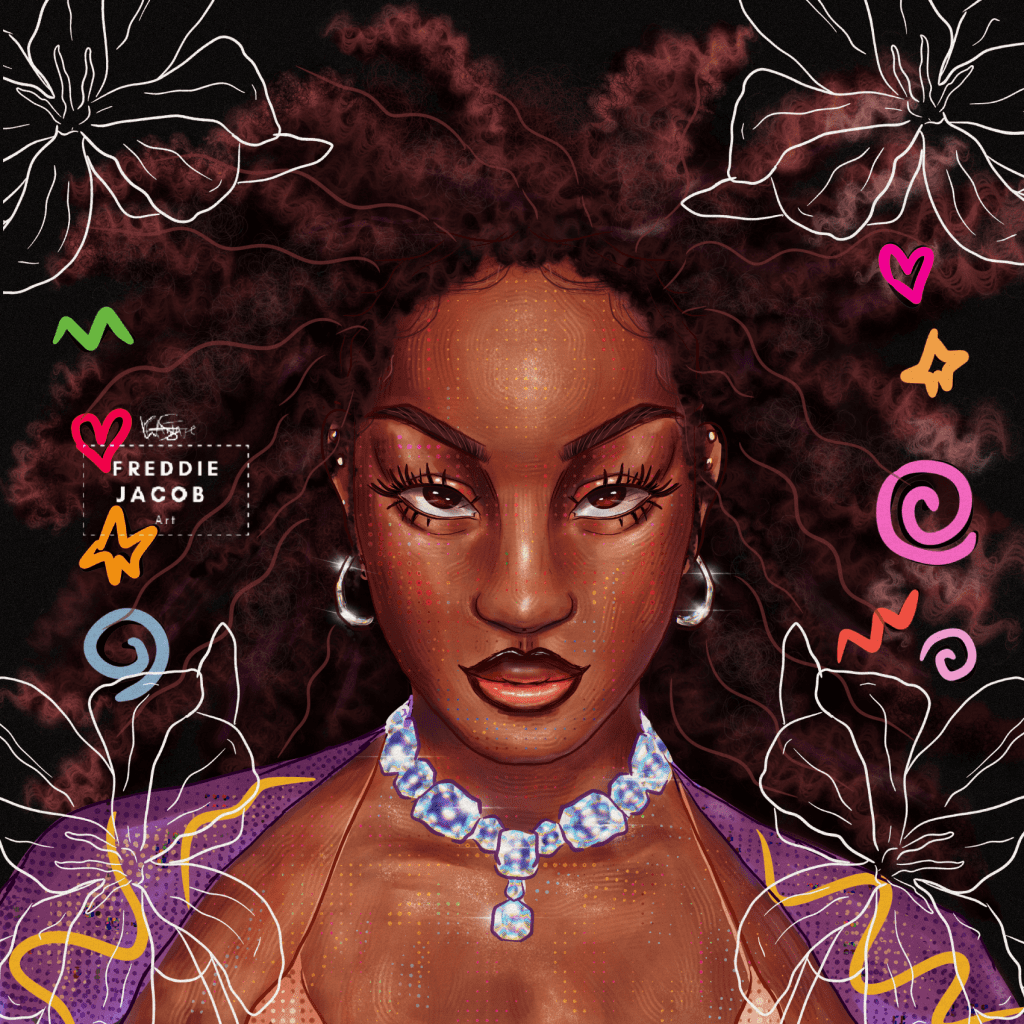
Tems Baby By Freddie Jacob
Brian Ibeh (Photographer/Filmmaker)
While I don’t think art is only activism, it takes on this quality of activism because it’s pulling from real people’s experiences. So I think queer art does this, by just providing more diverse perspectives because queerness is extremely diverse and gender identity is extremely diverse, and because sexuality is extremely diverse but this only means so much, as a statement
Tega Akpomedaye (Digital artist, she/her)
Through my art, I was able to meet other amazing queer artists (like Ayo, Freddie, Gigi) and other amazing artists who liked my work. It created a sense of community for me, I found my people and it only happened because I shared my art.
What advice would you give to other queer artists who are trying to navigate through their own artistic journey or seeking to amplify queer voices through their work?
Ayomikun Bamishaye (Digital artist, he/him)
The best advice I could give would be to be more open to meeting new people and making new friends. Conversations with artists like yourself who understand you truly is a blessing and the best thing to navigate through this journey. Don’t be scared to meet people, join communities, and talk about your art.
Alexandra Obochi (Photographer, she/her)
I would say if you want to do it fully come into it. A lot of people speak about it and then if they get any backlash, they immediately fall back which is quite understandable but these are the consequences of what you’re doing, and you should know that in the first place before actually going into it. That’s if this person is a queer person trying to speak about queer rights and for artists in general I’d just say, be passionate about what you’re doing, before going into it because it’s pretty hard.
There’s no way to tell the story of the UK’s Black music and entertainment scene, without Julie Adenuga. From appearing in front of the camera for hosting duties at numerous events to settling in behind the mic to break down your favourite album releases, Adenuga’s decade-long career has seen her document several untold stories with a refreshing style and perspective. “I’ve found that in all aspects of my career, I’m always trying to lead, guide and encourage the people around me to get some sort of job done,” she shares in an exclusive interview with The NATIVE. “As a result, whatever spaces I occupy, I always want to present myself in that way.”.
Yet even with her skills as a journalist on constant display, we would be remiss to ignore how effortlessly stylish she always appears, armed with a perfectly curated wardrobe that allows her to deliver on responsibilities as the most confident version of herself.
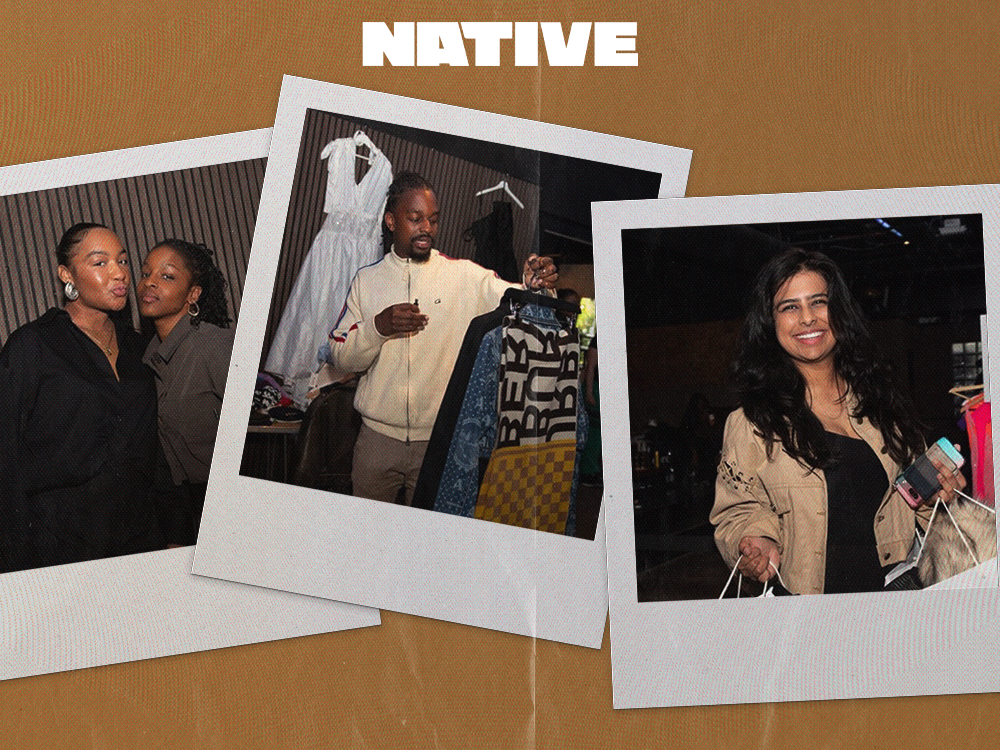
At the heart of all her endeavours, remains Adenuga’s focus on fostering community; and her debut capsule event, Collections, is the latest extension of that. Aimed at encouraging second-hand shopping, Collections gathered a small mob of shoppers, eager to get their hands on some of Julie’s prized possessions for a reasonable bargain. The first iteration, hosted at the start of June, curated everything from daily streetwear to a more elevated wardrobe. Following the successful debut event, we caught up with Adenuga mid-selfcare routine to discuss her personal style and what the future holds for Collections.
The conversation has been lightly edited for clarity.
NATIVE: Throughout your career, you’ve always had a big focus on community. What would you say inspired Collections and would you say it’s an extension of that philosophy?
Julie: My career is predominantly centred around music and as with everything within media and entertainment, you tend to branch out into a couple different but related things. ‘Collections’ was just an extension of me finding more ways to bring people together. It’s more than just selling; we try to make all the events an experience. We want people to enjoy music and just have a good time as well as getting clothes for good bargains. It was essentially to bring people together in another way that wasn’t necessarily through a generic party or club but still meets interests
Talk to me about your personal style. What is it about an outfit that first grabs your attention?
A lot of my styling comes from a feeling. It is based on how I want to feel wherever I’m going whether it’s a concert, party, event, wedding or just going to run some errands for the day. My style is based on how I want to feel when I’m doing my things. It can vary but ultimately I’m really always trying to build confidence in myself in the way that makes me proud. So a lot of my clothing choices come from anything that will do that.
Which would you say is more of a priority, comfort or style?
I would say style, easy. I think if you want to go for comfort all the time, then wear some tracksuit bottoms and a baggy shirt every day. If you want to just be chill and relaxed all the time, then there’s no point thinking about style. The act of putting an outfit together is almost like art. It’s not something that’s easy, creating something many may not have seen before. However, I do understand the conflict and if you can combine the two, that’d be great. But if your goal is style, then you have to give away the idea of comfort to accomplish that sometimes.
You’re someone who wears multiple hats and some may even say that you’ve lived many lives. How is that reflected in your style?
I’ve found that in all aspects of my career, I’m always trying to lead, guide and encourage the people around me to get some sort of job done. As a result, whatever spaces I occupy, I always want to present myself in that way. Whether that is me hosting an event in front of thousands of people, presenting in front of a camera or running a business with staff who need guidance, my style is about giving me the confidence to deliver in those positions and get the results I need. My style has evolved so much and we always just wanted to make sure I find clothes that put me in the space to command and give people direction. And I think the more I develop in the role of being a leader and a business owner and a director, I think the more my style grows within that as well. I tend to find pieces that continue to push me in that direction.
In that case, what would you say is your go-to style? Do you lean more towards casual street wear or more elevated looks?
I’m definitely not into what is considered ‘drip’ but if I had to give my style word it’s grown. I feel like that’s a perfect word for it. It’s grown but it is still very me. Elevated grown if you will.
Who are some of your personal style icons or favourite designers?
Oh that’s a good one. For personal style icons it is always going to be Tracee Ellis Ross. Favourite designers are really on an endless list. Daily Paper’s definitely up there alongside Burberry. They make fantastic art and pieces.
What are your plans for Collections moving forward regarding location, event scale and maybe frequency of the event?
The first one was almost like a test for us, to see if the concept worked. It went incredibly well. We had an amazing time. The team really enjoyed themselves and our customers, most importantly, really enjoyed themselves. So the goal is definitely to do more of them and to reach out to more people who want to get their clothes for us to sell to other people. We really want to partner with some cool people with great wardrobes, evening expanding to some male celebrities as well. Yeah just continue to find people who have got loads of items to pass on and hopefully find the right people to buy them.
Trying to see inside the mind behind LMBSKN is a journey that is always fruitful but seemingly never ending. As several conversations between us unfolded, he peeled back one complex layer after the other to reveal the network of operations that make up his contributions to the Electronic music scene in Nigeria. A key player in the genre for the last half decade, LMBSKN defines himself not as a DJ but as an ‘Electronic music performer.’
“I build a set of mostly my songs or remixes that I’ve made over the years, and perform those in front of a crowd. In some cases, that may entail mashing up two of my songs,” LMBSKN explains in an exclusive interview with NATIVE. “But it’s important to remember that they’re mostly my songs and that’s not DJing at all. It’s a lot more fun but a lot more stressful.” This seemingly trivial detail not only distinguishes LMBSKN from his peers, but is crucial to informing the way he – and others – understand his craft. And after over a decade dabbling in music, punctuated by a few off moments where he was told his music was ‘not commercial enough,’ it’s clear that LMBSKN is marching to the beat of his own drum with a self-assured vigour.
Although LMBSKN wouldn’t call himself one, it’s impossible to trace the trajectory of Electronic music without recognising the role of DJs in that history. Before the pandemic-induced resurgence of House came in the form of South Africa’s mainstay genre, Amapiano, DJ’s had begun climbing the music industry ladder with imaginative sound experiments across Hip-Hop and Techno. Names like Vinni Da Vinci sprung to the forefront, and then just a couple of years down the line, Black Coffee rose to prominence, cementing South Africa as a one-stop-shop for reimagined yet authentic Electronic music inflected with uniquely African sensibilities. As veteran acts took over the mainstage, DJs in the ’burbs of South Africa used intoxicating beats to garner the ears of music lovers across Africa, hinged on sub-genres like Gqom. The sound seeped through cracks and sprouted to the top of playlists and party tracklists, later informing an even deeper exploration into other facets of House music beyond the now commercialised rhythm of log drums.
The growth of House and the appetite for all the other sounds it’s birthed, led to the emergence of party initiatives and spaces where Electronic music could live and grow. “As much as popular Nigerian music has gained prominence globally, I sense that we’re growing a bit tired of the party experiences that go along with that sound,” LMBSKN observes. “At the same time, many more people are accepting and exploring Electronic music and it seems pretty obvious that in a couple years, we’d have figured out a couple of things regarding our contribution to the global Electronic music conversation.” Alongside others likeGroup Therapy and Element House, Wolf In The Hen House – LMBKSN’s own Electronic-led party – has carved special room for itself in the scene, propping up acts like Weareallchemicals, Aniko and Yosa to name a few.
“I thought it was important to hold space for experimentation and weirdness”
Only a few months since its establishment, Wolf In The Hen House is gradually growing into a community space where like-minded music lovers can commune over their passion for Electronic music. Considering the initiative is still in its infancy, LMBSKN is careful to shape the course of its growth to avoid getting lost in the noise of the current music scene. He describes it as an “interactive” space, which not only includes the transfer of ideas between attendants, but also between the performance acts and the audience. “I find that I’m at my best as a curator, music producer or performer when I’m following my instincts… I might ask somebody to give me a melody idea or a riff to make something out of and that would be absolutely unplanned. I’m just being a producer and performing my own music, whatever that means,” he says. The success of spaces and community-driven initiatives like Wolf in the Hen House, LMBSKN explains, largely relies on a relationship of trust between artist and audience. And for LMBSKN, that trust extends beyond the dance floor and into the studio, where even more magic happens.
Despite establishing himself as a mainstay curator and performer in Nigeria’s underground scene, LMBSKN has not left the world of music production, making sure to build a bridge from his comfort zone to mainstream audiences. His chords, created mostly on his synthesiser, have touched music from the likes of Pan African rockstar herself, Lady Donli, to Nairobi-born vocalist, Nikita Kering. He explains that all collaborations require the artists to submit to the process, whatever that may entail, because it will more than likely require them to try something outside their comfort zone. In the end, the goal is to leave them better than they came and more willing to experiment in the future: “I find that the best sessions are those where the artists either trust me beforehand, or I am able to earn their trust in the first few minutes of the conversation. I start most sessions by just chatting for an hour or two to help everybody drop their artist persona at the door and feel like we’re just hanging out and creating,” he says. Think tracks like “Hello Lady” and “Industreets,” off Lady Donli’s ‘Pan-African Rockstar’ or NATIVE Sound System’s Ayra Starr-assisted “Stuck on You,” where we see these artists fully embrace new directions to birth pristine artistry.
Speaking on his past collaborations, LMBSKN shares, “We can make six songs and two of them are going to leave you thinking, ‘hm, I didn’t know I could do that.’ Another part of your brain would’ve been opened up and hopefully, willing to do more of it. That’s when I know it’s working.”
One unrivalled career high however, came from his long time love for film and manifested with score production credits for Ryan Coogler and Ludwig Goransson’s ‘Black Panther: Wakanda Forever- Music From and Inspired By.’ “We absolutely also deserve to be there.” he candidly expressed as he detailed the process of working in the Lagos camp for the project. If the important role of Africans, especially Nigerians, in shaping global music wasn’t clear before, that moment dismissed any lingering doubt in LMBSKN’s mind. The message came through perfectly in a full circle moment for the artist, considering it was delivered by people he draws inspiration from, “I grew up idolising film composers like Hans Zimmer, Alexandre Desplat and even Ludwig.”
Beyond iconic film geniuses, LMBSKN, draws inspiration from a slew of veteran acts in the Dance and Pop scene like Daft Punk, who he referenced when finalising his artist moniker. The French Electronic music duo whose music took the world by storm after forming in the 1990s, are widely recognised for their robot-like helmets, adding an air of mystery to their craft, but more importantly, allowing the music to stay at the centre of everything they do. While physical recognisability does not rank high when considering what ways to communicate his work, LMBSKN still hopes to continue making music that resonates so clearly, any listener can pick it out of a thousand-song playlist – a common trait of the music from two of his idols, Pharell Williams and Kaytranada. “Of course my personality will shine through but music is the priority,” he says. “The most important fact about LMBSKN is that he makes the music that he makes.”
Back home in Nigeria, he cites William Onyeabor who not only played the synthesiser but holds admirable levels of tenacity that shone through in his music and his modes of production. While the idea of separating the art from artist typically appears in more problematic stories, the distinction only sheds light on LMBSKN’s laser focus and his determination to package the message he was placed in the world to deliver.
“The most important one for me is if the people who lived through this time I’m living, think back and say ‘that was a moment’”
More than anything, LMBSKN is here to reinvent the ways we approach music as both consumers and creators. Whether it’s through Wolf In The Hen House, his captivating Youtube series, LMB Chops or even his upcoming music, the name LMBSKN comes with a promise of good vibes and artistic innovation, now and always.
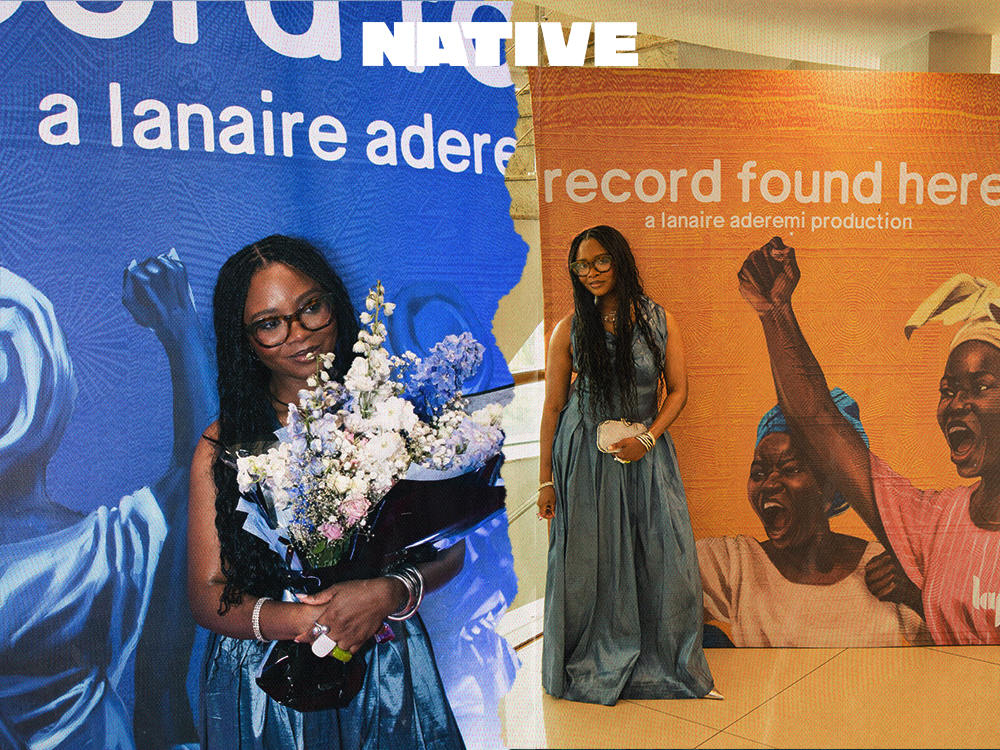
The 2024 documentary Record Found Here opens with narration, against the image of the sun setting over the Abeokuta landscape. Filmmaker Lanaire Aderemi’s voice tells the audience about her grandmother’s story of the Egba women’s revolt, setting the tone for the film’s main goal: Aderemi wants us to “see the unseen, know the unknown and learn our resistant history anew.” It’s a project that takes the audience on an intimate journey into the past, giving new perspectives on the enduring effects of human memory.
Record Found Here is a film that puts a spotlight on the 1940s Egba women’s revolt, in Nigeria. The harsh taxation on the women of Abeokuta by Nigeria’s colonial government led to a massive protest, with the women calling for an end to the oppressive practice. The taxes heavily impacted market women, who could not afford to pay those fees, and the activist Funmilayo Ransome-Kuti played an important role in rallying them.
In the documentary, Aderemi interviews several people who were around at the time of the revolt, getting firsthand accounts of how it came to be. The interviewees detail the rising stress of the women affected, and how they were forced to sell at night to avoid taxation. They speak on how Ransome-Kuti began to mobilise some of the women, helping empower them by teaching them how to read and calculate the profits they should earn, before subtly mentioning the taxation issue. Some of the film’s interviewees give a rendition of an old song used to mock the Alake of Abeokuta, one of many that ridiculed the Oba who would not hear the women’s pleas.
Through these interviews, we see how deeply people were personally affected by the events, including long after the protests ended. One of the interviewees, Oluwafunmilayo Adunola, despite being a child at the time, was driven by the actions of the women throughout her life, going on to become the first female leader of Nigeria Labour Congress.
The film gives us a look into history more personal to Aderemi as well. We see glimpses of her old family photos as she interviews her grandparents, who tell her to preserve memories. Preservation of memories can often be taken for granted in the digital age when many people could document any meaningful event with a quick tap on their smartphone. With evidence of how easily digital archives can be lost, both on the internet and on people’s devices, connecting with real people, as well as physical archives is becoming more important than ever. We spoke to Aderemi about the importance of preserving history, as well as how she carried out the research to complete this project.
Our conversation has been lightly edited for clarity.
NATIVE: What made you realise that now was the time to tell this story?
LANAIRE ADEREMI: The time is always now for telling untold stories. I didn’t decide on a particular moment. I’ve been working on this research as part of my PhD since 2021 and since the PhD is coming to an end, I wanted to challenge myself to create something that memorialised the Abeokuta Women’s Union.
What was the most meaningful piece of information you discovered when researching this project?
The Abeokuta Women’s Union were incredibly meticulous about archiving themselves and their achievements. For instance, they wrote a list of the names of members that attended meetings. It’s almost as though they were waiting for someone to enter the archive and share their stories, songs and strategies.
How did hearing your grandmother’s memories about the revolt impact your relationship or the way you view her as a person?
It didn’t change anything really. Perhaps because conversations on the revolt were a tiny fraction of our conversations. I felt blessed to hear her views on the Abeokuta Women’s Union’s courage and fearlessness but my Grandma’s recollection of this movement was more of a seed. Speaking to her excited me and listening to her memories several years ago re-energised me.
What was the hardest part about making this project?
Finding the participants to interview for the oral history interviews. Since the event took place in the 1940s, most of the protestors or witnesses have passed.
Stories like this are often hard to tell because of a lack of proper documentation in much of our country’s history. How were you able to fill in the blanks outside of what your grandmother told you?
Visiting archival sites like the National Archives in Abeokuta. We came across documents from the Egba Council records such as letters and meeting notes which helped to fill the blanks. Asking family and friends. With the support of researcher Joseph Ayodokun, we found people who had witnessed the revolt at a young age. We conducted oral history interviews with them to fill the gap. Judith A Byfield wrote a seminal paper titled ‘Taxation, Women, and the Colonial State: Egba Women’s Tax Revolt’. This paper solidified my understanding of this revolt. I also spoke to Judith to fill in the gaps since she had studied this subject extensively.
You first explored this topic on your podcast Story Story. Do you think exploring the story in a visual medium will change the impact it has on audiences?
Yes. Adding another sense always changes things. Sound forced an audience to concentrate on only the sonic experience. I love awakening audiences’ imaginations through different senses but I was intrigued by sound for how simple yet versatile it is. In a way, ‘Record Found Here’ is the story in a visual medium.
Has working on this project inspired you to look into other aspects of Nigerian history?
Yes, there are some aspects of Nigerian history I am intrigued by and we’ve covered most of them in Story Story pod; for instance, the Ogoni 9. I’m also intrigued by the Aba Women’s Protests which pioneered anti-colonial protests against tax in Nigeria.
What do you most want viewers to take away from this project?
Preserving history is important.
Archiving personal histories is important.
Nigerian women have been doing the work for a very long time.
Documenting our times is important work.
Has the project impacted your approach to feminism in any way?
I value oral histories even more. The methods I used through my research are feminist methods since they value women’s diverse subjectivities. In academia, the written word or words found in texts are often deemed to be more important than what is spoken. I’m glad that the project documented the enchanting lived experiences of women by recording oral histories.
Featured Image Credits/Peekopapzz
Get Tickets to her London screening on September 13th here
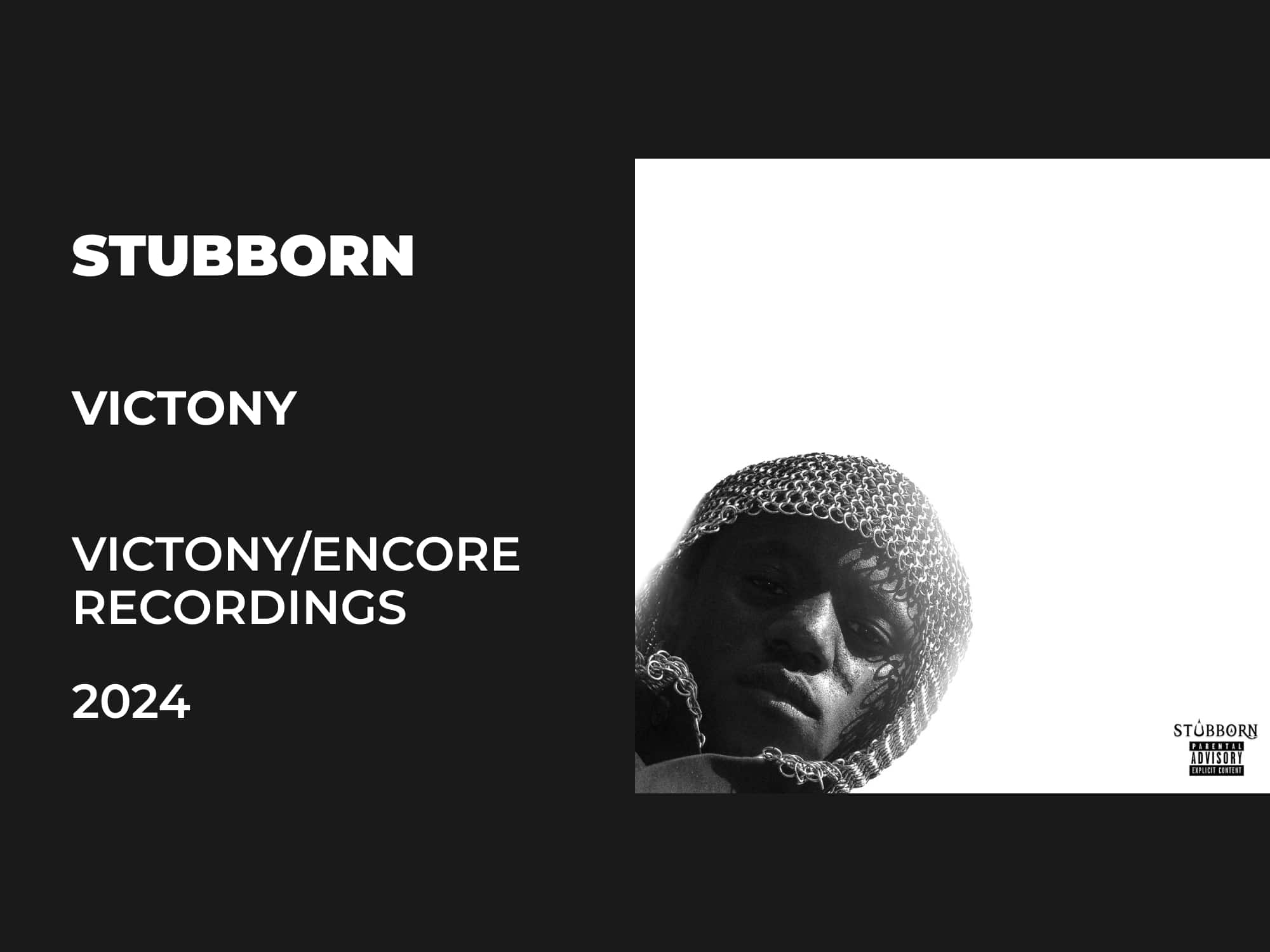
There cannot be a discussion about the present – and future – of Afropop without Victony. Whether in terms of sonic malleability, imagery, or creative vision, the former rapper turned sirenic songbird is at the forefront of the genre’s stylistic revolution thanks to a meticulous mind and an abiding search for identity that brings heft to all of his music. It’s a pairing of tools that has largely served as the propelling force behind his rise since fully leaning into a new arc as a singer on 2020’s ‘Saturn.’ And in the years since that introductory EP, Victony has been through a series of crushing lows and euphoric highs that have further swelled his bank of experience and made him an artist with a burning message to pass on.
Now, on his debut album, ‘Stubborn,’ the singer makes a bold attempt to memorialise his journey from being a curious kid in Ojo, to standing on a pedestal as one of Afropop’s great hopes. It’s a delicate task that requires a slight recalibration of his sound from the sun-drenched dancehall and soul fusion of 2022’s ‘Outlaw’ for a more pared-down sound that still manages to be a vibrant mosaic of the people, places, and experiences that have made a mark on Victony.
In many ways, the artist is a product of a specific Lagos subculture that has survived for decades. Despite the divisive narratives spread by bigots online during the 2023 presidential elections, families from all over Nigeria, and across all income levels, have always lived side-by-side in the coastal city largely without issue. In these communities, kids of all tribes play football together, shop at the same local markets, sing aloud to the same songs, grow up celebrating at both Eid and Christmas, and have developed a creolization of their many languages that’s often adopted as a lingua franca. It’s a heritage that Victony proudly claims as his across ‘Stubborn.’
Per local hood lore, someone who is stubborn is usually viewed as an outcast or seen as possessing a strong sense of ambition that is typically out of the ordinary. Across ‘Stubborn,’ Victony channels his feelings of being misunderstood while weaving his come-up story around the Lagos-specific pidgin of his childhood for narrational effect. Album opener, “Oshaprapra,” takes its title from the street-lingo for radiant but it’s really a crash course in the path that set up Victony for future success as he battled societal pressures and self-doubt to make a name for himself. His soft, buttery voice skirts languidly over the mid-tempo instrumental to share how he has had to purposely steel himself to achieve everything he has. Guest, Shorae Moore, adds luster to the song via melodic singing on his delightful interlude but Victony is quick to return to explore how he’s still standing tall despite all he’s going through.
Often, debut albums are spent in service and remembrance of the places and themes that have left the biggest imprint on an artist and ‘Stubborn’ is no exception. The streets of Victony’s childhood and early adolescence colour its margins and are never too far away from the singer’s mind. “Tiny Apartment” with SAINt JHN is a ghetto love story played out for a global audience. On the song, Victony imagines what it might feel like to miss a love interest while all alone in the popular face-me-I-face-you apartments that dot Lagos’ landscape. Anyone that has dealt with the heartbreak can instantly recognize all the ways that a relationship’s end can shatter even the most composed person. And when Victony sings, “In my tiny apartment / As you say make I park well / Girl, na my blankie I use hold body,” he’s giving words to a whole universe of unspoken feelings. The genius of “Tiny Apartment” is how it manages to elevate a decidedly Lagos story by tying it into a global emotion with SAINt JHN’s dulcet vocals melding perfectly with Victony’s.
Love undoubtedly plays a crucial role in the narrative of this album. On “History,” Victony is asking a lover not to let the past determine the parameters of their love. It all comes to a head on the song’s chorus where the singer is gently pleading, “No go dey calculate my baby.” He’s more forthright on “Anita,” telling a love interest that he’s attracted to her. Thematically, “Anita” sticks out like a sore thumb on the project as it doesn’t advance any of the ideas that the singer builds towards throughout this album; if anything it feels like the long-lost twin of “All Power” off 2022’s ‘Outlaw,’ in the way it suggestively captures Victony’s fascination with a lover’s physical attributes.
Generally, the best Victony romance songs build towards a certain type of pulsating release that comes from his wide-eyed enthusiasm for the subject, rather than the kind of tired lasciviousness that can falter. It’s that abiding sense of elation that made his Blaisebeatz-produced “Everything” a must-listen upon release. Referencing his knowledge of Nigerian pop culture, the singer promises the world without reservation to a love interest. Within ‘Stubborn,’ “Everything” still retains its sense of magic and chromatic wonder as longing and genuine appreciation converge for a true highlight. “Pier 46” is similarly unique in how the singer approaches making a ballad. It’s the sort of writing and delivery that Victony has made a stock-in-trade since ‘Saturn’ as he deftly uses the upper registers of his sirenic voice to explore warmth and romantic desire in ways that many Nigerian male acts wouldn’t dare attempt.
Victony has always slipped between sounds and influences with the ease of a dexterous curator. His sense of non-conformity is heightened in patches on ‘Stubborn’ even if the ambition shown does not necessarily function in service of any distinctive purpose or cohesive vision. The trap-leaning “Risk” lives up to its name as it loops elements of Fuji and Blues into its delivery scheme for an experimental affair. The lyrics also paint a picture of a yearner who might fall in love with a girl he’s meeting for the first time on a random night. “Love in the club no be wetin you dey find / Excuse me, shey you know this your behind / E dey cause me me trouble, so make I no go blind / Darling, shey you know I for like to get to know you,” Victony sweetly coos for all to hear.
The collaborations on ‘Stubborn’ sway between inspired and lukewarm even if Victony manages to find interesting pockets to operate in throughout. Afropop juggernaut, Asake, dials in for an inspired cameo on the titular track that sets the pace for what the album is thematically built on. When Victony sings, “Me I no dey hear word / Me I no fit be your idolo,” it’s done with a relatable sense of mischief that brings the words to life. “Slow Down” offers much promise but lacks the riotous verve that a typical Teezo Touchdown showing typically offers while “Ludo,” featuring Shallipopi platforms the best of both artists with Shallipopi making space for the Benin-born rapper vocal tics.
Victony takes things up a notch on “Kolo (Kolomental II),” a swaggering update on “Kolomental,” off the ‘Outlaw’ EP. The only criticism for “Kolo (Kolomental II)” would be its brevity but it’s a highlight that articulates the self-confident energy coursing through this debut. “Jobless people dey find wetin do ogbeni / Get the fuck out my LinkedIn,” Victony briskly warns. It is rare to find him channeling this kind of angsty energy but he captures the essence of the emotion artfully. “Bs$tard, Don’t Be Silly” is similarly confrontational even if the chip on the singer’s shoulder is informed by previous unpleasant experiences.
The album ends on a somber note with “Street Affair,” a quasi-hymnal that finds Victony considering all the betrayal he’s faced, the feats he’s accomplished, and all that’s still ahead of him. It’s a solemn song that calls back to his larger message of being misunderstood, as he invokes divine guidance and prays that his affairs never become fodder for public dissection. For the first time on the record, the singer sounds genuinely weary as he sings into a swooning mix of guitar and piano keys. “Make e my family meeting no turn to street affair,” he softly whispers from time to time. It is the ardent prayer of a person that has belatedly found grounding and is eager to keep his winning streak going.
Since his foot-thumping debut single, “Dumebi,” Rema has continuously reaffirmed himself as a transformatory artist with a decidedly distinct aesthetic. A craftsman unmatched by his contemporaries.
Introduced with a boyish look, marked by a Balaclava and saddled with a teddy bear, Rema, 18 at the time, made one of the most audacious entrances for a newcomer within Nigerian music. He released an eponymous EP, maintained omnipresence across airwaves and billboards across the country, and commandeered social media through freestyle videos and colourful visuals layered with youthful exuberance. It was the year of Rema, the self-proclaimed Prince of Afrobeats, and multi-disciplinary creator, Niyi Okeowo had a front row seat from day one. “I photographed one of Rema’s first images,” Okeowo tells me over a zoom call. “There are some popular black and white images I shot for him [back then].”
Tife
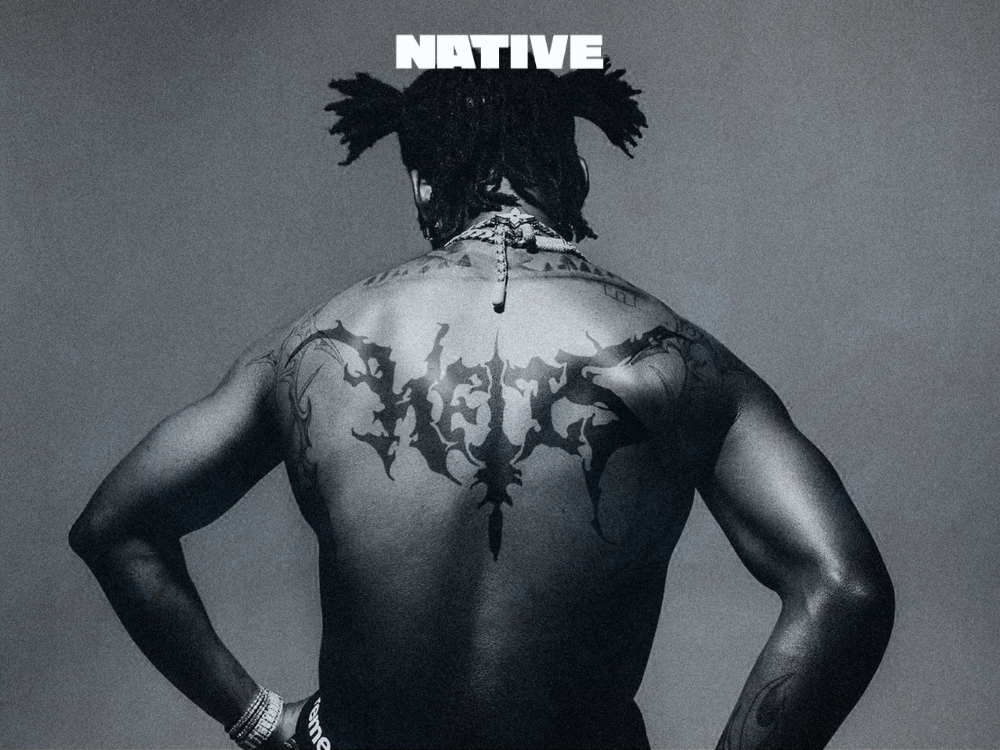
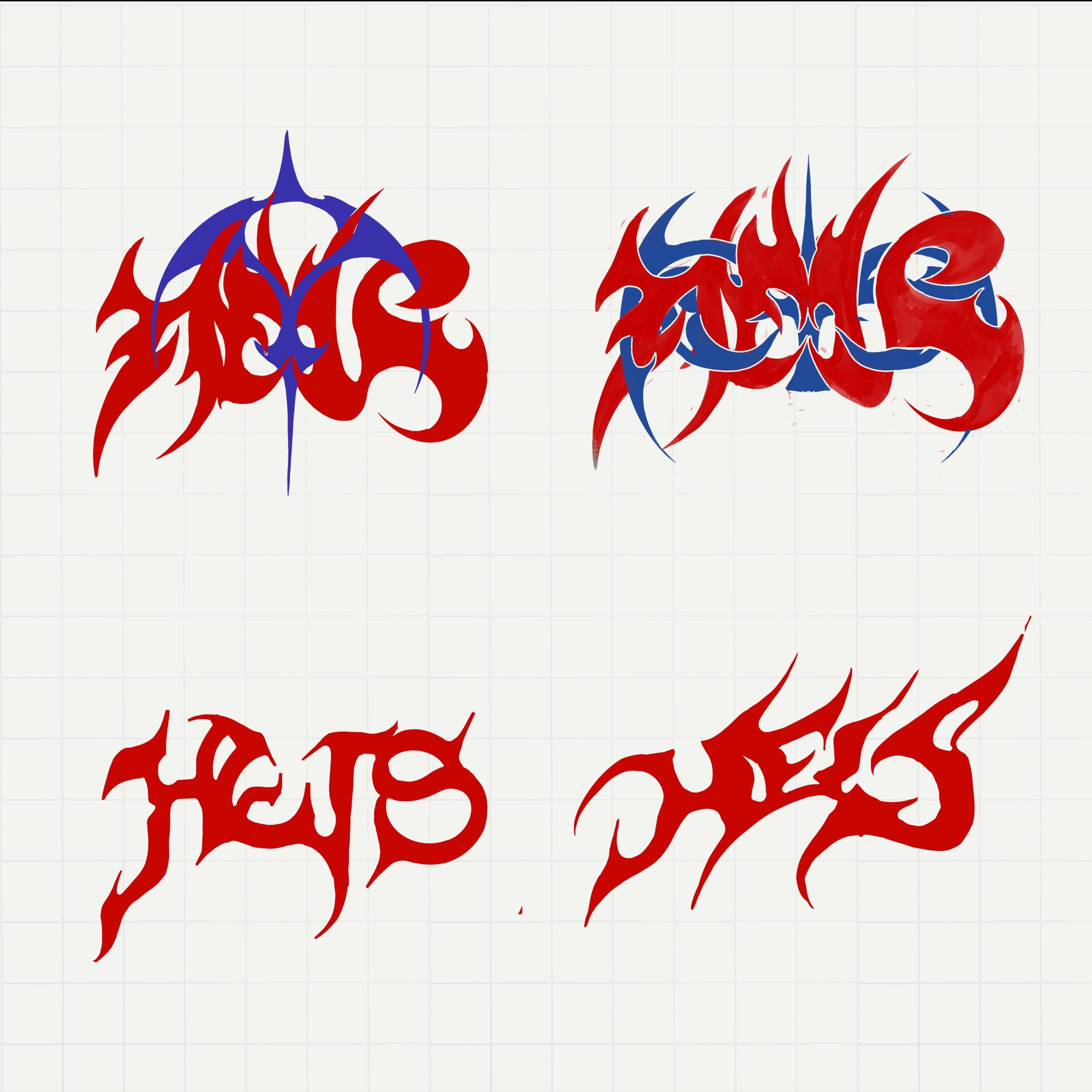
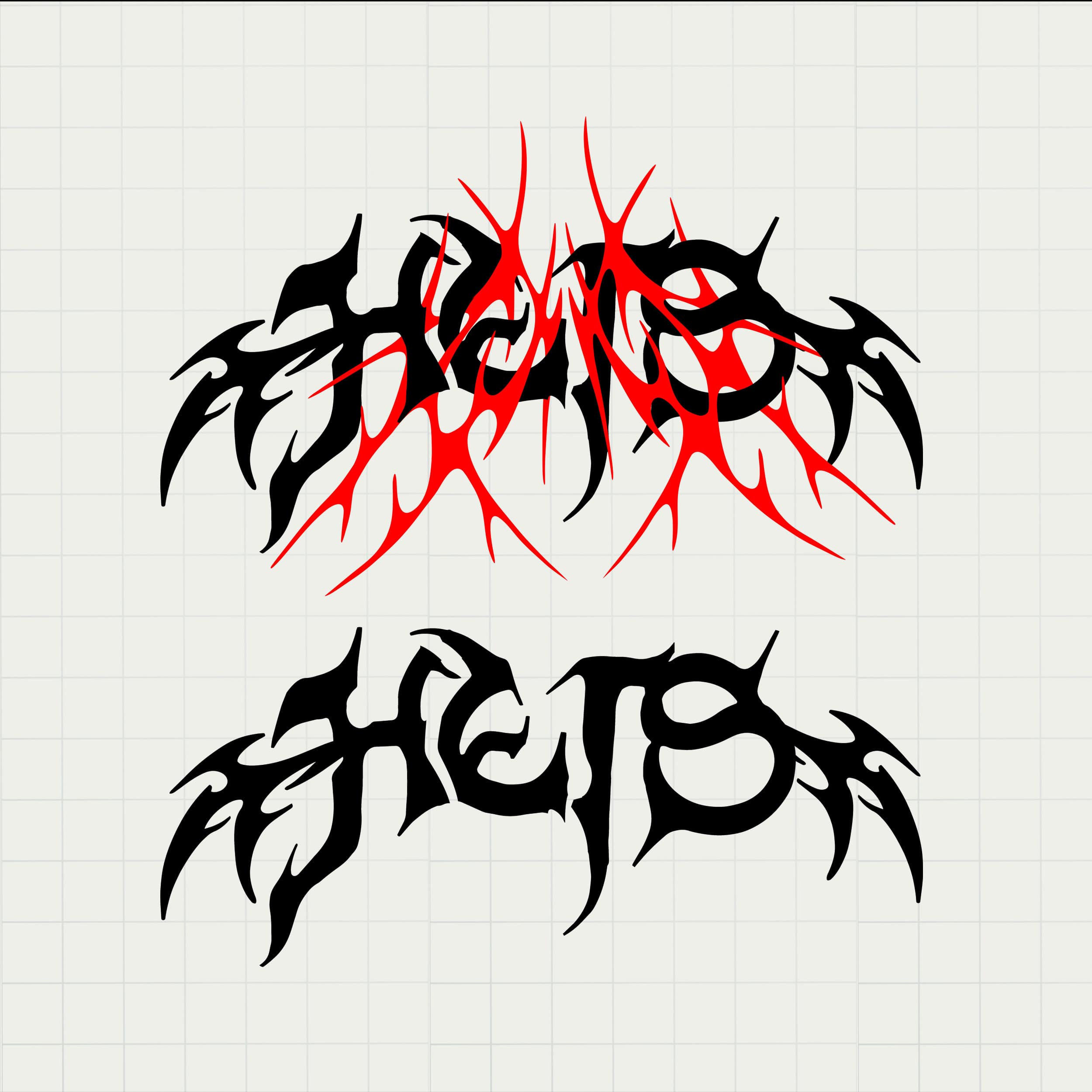
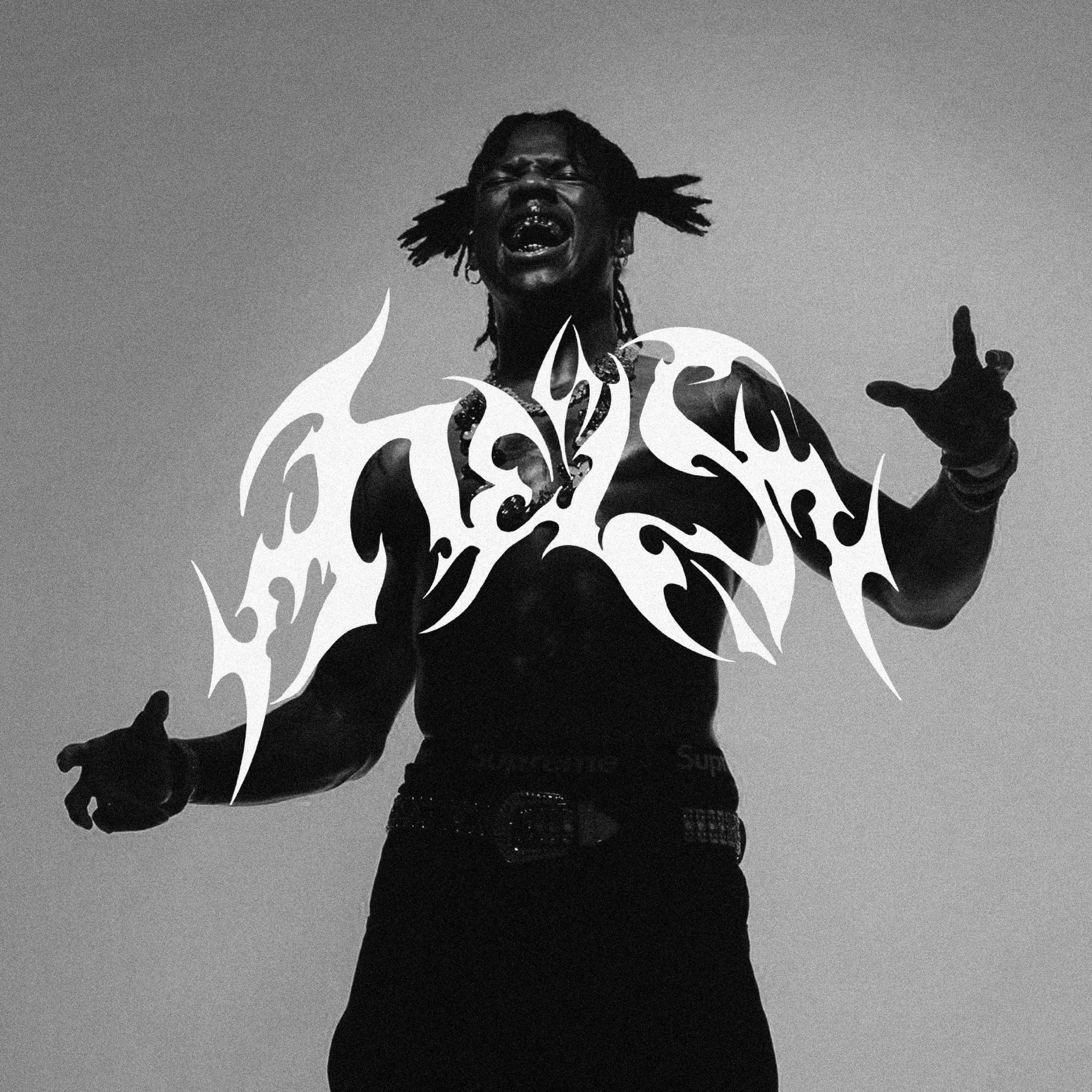
Okeowo is one of the most magnetic visual design voices on the continent, stacking up a portfolio that boasts heavyweights such as Adobe, Uber, LVMH, among many others. “We got the brief that [Rema] wanted something that would read the same, front and back [like a palindrome], but with gothic elements that would spell ‘he is,’” Okeowo recalls. “We worked on keywords and did a moodboard. I think the first thing we did was to sketch it on a bat, and then we just went back and forth from there.”
The “we” Okeowo refers to here is himself and illustrator, Boluwatife Osinaike, whom Okeowo describes as an illustrator that thinks like a designer. The pair have since formed a Batman-and-Robin-esque relationship fueled by their mutual love for design and research, amassing an artist clientele list that ranges from ShowDemCamp to Wizkid.
“We built on the logo, Tife started working on sketches, and Rema added some elements. We built it on riot imagery. Not riot like [an] actual riot; I don’t know if you know this movie, Athena? More like that kind of riot. We also noticed he had been leaning towards that anarchy, rager, and riot direction so it was a no-brainer. We had about seven versions of the logo. We did a 3D and Chrome version.”
Within the five years of his ascendance, Rema has explored multiple iterations of himself, morphing into an absolute showman that commands attention. The video for the monumental single “Bounce,” erased any doubts about his confidence, “Soundgasm” put to bed questions about his innocence, and, finally, his critically-acclaimed debut album ‘Rave and Roses,’ cemented his coming-of-age moment. Each of these eras were accompanied by a selection of carefully-crafted aesthetics; from hair to fashion to imagery.
When Rema charmed his way into our hearts in early 2023 with his sensational footwork and newly-found dance moves, it was a prelude to the anarchy-driven rodeo aesthetic that characterized his ‘Ravage’ EP and formed the cornerstone of the design experience at his O2 Arena headline concert.
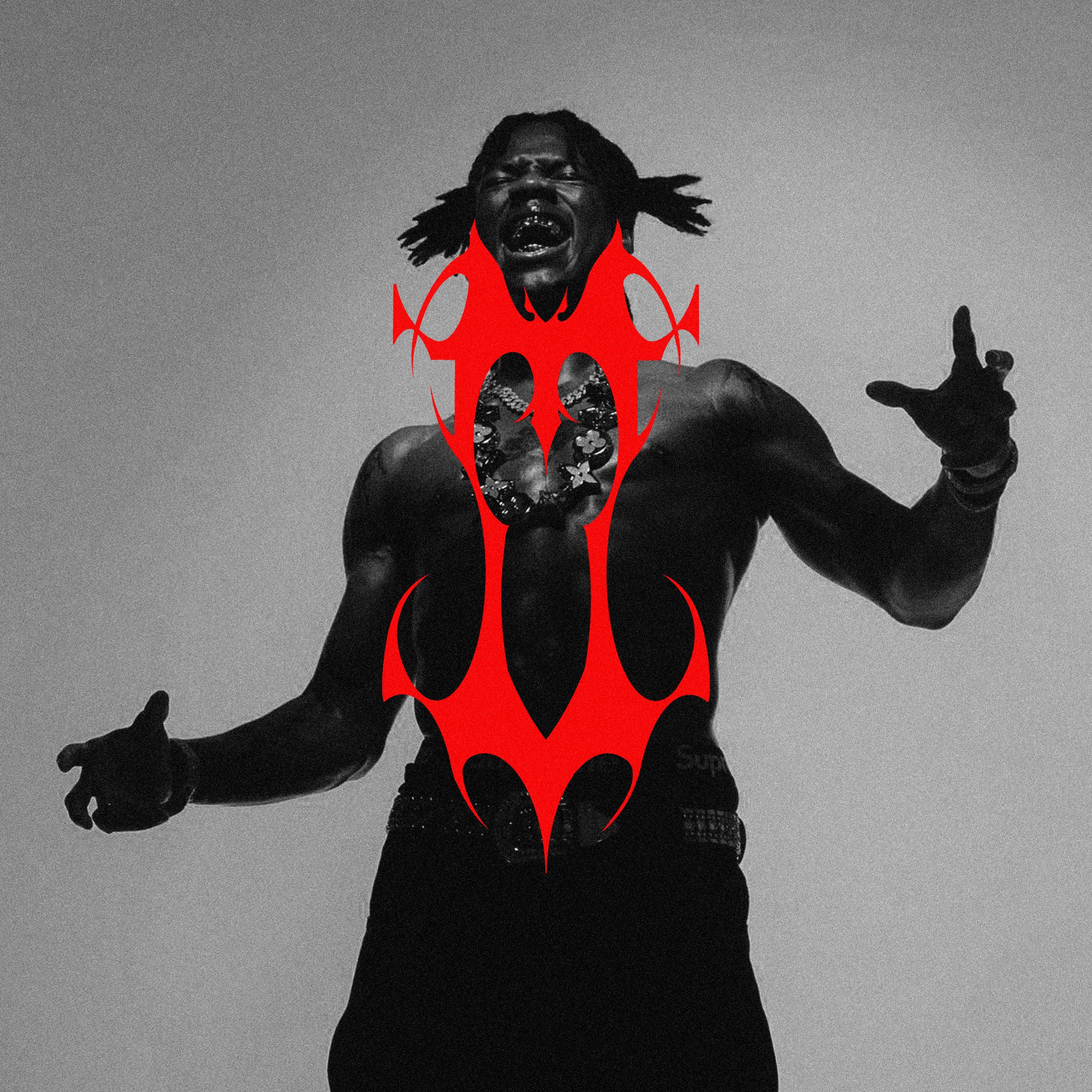
Now in a goth-laden phase, which is loosely termed “opium” after Playboi Carti’s rap collective and their all-black aesthetic, Rema leaves a lot to the imagination as he ushers in a new era – and his new insignia further complicates that mystique. “I kind of suspected that whenever he would use it, it would be for the revealing of something,” Okeowo says assuringly, eventually adding that he was as surprised and excited as everyone else by the bat signal reveal of the logo.
So far, Rema has brought in his opium era with a kinfolk collaboration with Shallipopi, “Benin Boys,” and a polarizing song “Hehehe” that sees him breathe in experimental pockets like never before.
Illuminati allegations have lingered over the Benin boy as he steps confidently into this new phase, with fans drawing overarching occultic undertones from his grim aesthetic and logo. “I think people just need to realize that within the confines of art and literature, people are allowed to explore different ideas. Nigerians are allowed to have occult imagery. Art will always form an opinion, it’s either you hate it, like it or you are in the middle. I don’t think we should police art but we can put a lens on it,” Okeowo says, before highlighting the importance of art direction and the countless benefits of artists building their own universes like The Weeknd and Travis Scott have.
Although this new logo marks a fresh chapter for Rema both visually and sonically, he’s long embodied this essence well before “HE IS” was even conceived. This new logo and sonic exploration are just affirmations of what he’s always been.
It has been four months since the Lagos Controller of Works, Olukorede Kesha, promised to compensate businesses affected by the Landmark Beach demolitions from a N2.7 billion fund. So far, only two brick buildings have been compensated – the restaurant Island Breeze and the Lagos Breeze Beach Club. Kesha had promised to pay shanties on “compassionate grounds,” but this changed when the Federal Minister of Works, David Umahi, defended the Landmark demolition, stating explicitly that the government “does not pay for shanties,” as they are located on the highway’s Right-of-Way.
But Onwuanibe and the traders aren’t the only ones bearing the consequences. There is much more at stake – from tourism, to the local economy, and of course, the environment. But to understand the ramifications, we need to first understand the importance of Landmark Beach to Nigerian society.
Landmark Beach: A once picturesque tourist escape
Before 2024, Landmark Beach – a popular tourist destination in Lagos known for its beauty, exorbitant fees, and concerts featuring A-list musicians – was a picturesque escape from the bustling city of Lagos. With its pristine sandy shores, turquoise waters and a panoramic view of the Atlantic Ocean, it was the perfect place for tourists – and the locals who could afford it – to enjoy a weekend of lively music, slightly overpriced but delicious food, and paintball activities with family, friends or even by themselves.
Landmark Beach before April 2024. Image Credit: Landmark Realty
Today, the carefree spirit of Landmark Beach has been ruthlessly silenced. Where joyous melodies once danced with the waves, an unsettling quiet now reigns. Bulldozers have devoured the remnants of hurriedly dismantled structures, leaving behind a desolate landscape. Offshore, you can hear monstrous dredging vessels churn in the water, turning its once inviting turquoise into a murky, frothy brown. The once-iconic beach is now a mere ghost of its former self, a hollow shell whispering tales of a vibrant past.
A sudden blow
For over 17 years, Landmark Beach reigned as Lagos’s premier private beachfront destination. A hive of entrepreneurial activity, it buzzed with over 40 businesses offering a kaleidoscope of leisure options, estimated to be worth over ₦20 billion.
But Landmark Beach wasn’t just fun; it was also a well-oiled machine. ₦25 billion had been spent on infrastructure, creating a solid foundation for success. Onwuanibe has proudly highlighted the beach’s economic impact – over 12,000 jobs were created and a staggering 3.5 million tourists flocked there annually. Revenue figures mirrored this success, with Landmark raking in at least ₦2 billion ($1.5 million) every year.
Tourists at Landmark Beach. Image Credit: Landmark Realty
Then, on April 24, 2024, a seven-day eviction notice and demolition warning from the Lagos State Government landed like a bombshell on Onwuanibe’s desk. Two days later, a meeting with the Federal Ministry of Works offered a mix of clarity and harsh reality for Landmark’s businesses.
The reason for the demolition, the government said, was the upcoming Lagos-Calabar coastal road project, a highway designed to be a ‘scenic route’ similar to coastal highways in other countries.
According to Onwuanibe, the original plans for the Lagos-Calabar coastal highway designated a 1.5km stretch along the Water Corporation Road median as the right-of-way. However, Umahi opted against this initial alignment, citing the area’s significant development with high-rise buildings and costly infrastructure, and the need for a revised design to reroute the coastal highway and accommodate these new structures.
In March, Umahi announced that the coastal highway – an idea first conceptualised in 1955 by then Federal Commissioner of Finance, Festus Okotie-Eboh – was to commence in April and to be completed within eight years, which aligns with a two-term tenure for current president Bola Tinubu.
The first phase of this would be constructing 47.7km of highway from Ahmadu Bello Way, Victoria Island, all the way to the Lekki Deep Sea Port within Lagos State. In the initial plan, the Water Corporation Road itself was to be part of the coastal highway, but that was changed to include the coastal shorelines, including Landmark Beach.
There was no pertinent reason as to “why,” but despite Onwuanibe’s disagreement with the plan, Umahi insisted that only 50 metres of the shoreline would be used, and said the decision was “irrevocable.”
Red marks the initial plan for the coastal highway to be built on Water Corporation Road. Yellow marks the revised plan to re-route the coastal road to the waterside. Image Credit: Landmark Beach
Business structures within the first three kilometers of the newly-designated right-of-way needed to be cleared out immediately. The news sent shockwaves through not just Landmark, but also neighboring beaches like Oniru, The Good Beach, and Sol Beach, all nestled within the close 1.4-kilometer stretch.
“In less than three hours, my dreams were destroyed”
When it came to perfect wedding destinations, Onyinyechi Achigbu, a communications specialist, always had Landmark Beach in mind. She and her partner of three years had made it a hobby to visit the beach at least once a month because of the lively atmosphere and close proximity to their home on the island.
On the verge of tears, Onyinye explained to NATIVE just how much the beach means to her. “There was this running joke my partner and I had that if we got married, our wedding guests must be clad in nothing more than shorts and swimsuits because the venue would be at Landmark Beach. It had become a place of peace and escapism for us.” Now, Onyinye has to settle for other beaches like Leisure beach, which is located in Lekki and which she complained was “too quiet for her tastes.”
While tourists may have only an emotional response, the after effect for entrepreneurs also has a financial overlay to it. Awni Berry, an Indian expatriate and General Manager for now-demolished Breeze Beach Club, disclosed to NATIVE that he was offered N100 million as compensation by the government, which is nowhere near the value of construction, a whopping N500 million.
Breeze Beach Club. Image Credit: Breeze Beach Club via Instagram
“For the past four years, I put my blood, sweat and tears into making this club a premium luxury relaxation spot. Now, I have to refund $4500 to nearly one? hundred subscribers in less than a month. I got government compensation yes, but can they repay all the running costs acquired in my four years of running this business? Absolutely not!” he angrily lamented. For now, Lagos Breeze Beach Club is closed until further notice.
Awni Berry and architects at the construction of Lagos Breeze Beach Club in 2020. Image Credit: Lagos Breeze Beach Club via Instagram
Deji Akinjobi, a lawyer and investor in the Honey Night Club Lounge, a segment of the Mami Chula luxury resort on Oniru Beach, was only a new investment partner in the club as at February 2024. He has been making plans to relocate from Nigeria with help fromthe club’s earnings, but those plans have now ground to a halt with the demolitions. With a mixture of both anger and sadness, he said “words can’t begin to describe what I feel. I invested N40 million in Honey Club because I thought I could cash out from it and start life afresh in Canada. But the government came in and did its worst. It’s funny how you save all your pennies and get your dreams destroyed in less than three hours.” Still, it’s the businesses classified as shanties who have taken the most hits, as they are deemed ineligible for compensation. *Betty, a single mother of three who used to sell a variety of finger foods popularly known as “small chops” out of a metal container at Oniru Beach, now sits with a gloomy look on her face as she watches the structures around her being destroyed. She refused to have her photo taken for NATIVE, but she disclosed how she made nearly N150,000 every week from sales. “It’s hard for me because most of these new beaches don’t allow people like me to set up business anyhow. I have to start going to both Lagos State office and the beach for registration and build a proper structure. My kids are in secondary school and I am already owing a term’s school fees. This has set me back to square one,” she complained.
Despite a federal law restricting construction within 100 meters of rivers and 250 meters of shorelines to protect waterways, lack of enforcement has allowed developments to creep closer and closer to the Victoria Island beachfront over the years. This meant that while some occupants filed taxes, they had no valid claim over those spaces beyond largely undocumented approvals.
As a result, once the evacuation order was made, many entrepreneurs were asked to prove the value of their structures on the spot. Some fetched supporting documents, while others made panicked calls to their managers, and questioned the idea of valuing businesses by metrics that neglected losses incurred in irreversible financial obligations like bills or bank loans.
Understanding the EIA debacle
Since the Lagos-Calabar coastal highway was announced, there have been concerns about whether or not an Environmental and Social Impact Assessment (ESIA) was completed before construction began.
The EIA Act of 1992 mandates that such an assessment be conducted and approved by the Federal Ministry of Environment before any major project commences. This requirement aims to mitigate potential environmental and social disruptions caused by large-scale construction.
How does an EIA work?
The Environmental Impact Assessment (EIA) process is a critical step in ensuring environmentally responsible development. Here’s a breakdown of the key stages involved:
Scoping: This stage defines the environmental issues to be addressed in the EIA study. It helps identify the most significant environmental concerns associated with the project.
Baseline Studies: Data on various environmental aspects in the project area is gathered to establish a baseline. This data typically covers air quality, water quality, biodiversity, soil conditions, socio-economic factors, and other relevant aspects.
Impact Assessment Studies: The potential impacts of the project on the environment are evaluated. These studies consider both direct and indirect impacts, as well as cumulative effects over time.
Mitigation Measures: Plans are developed to minimize or offset any adverse environmental impacts identified during the assessment stage.
EIA Report Preparation: A comprehensive report is prepared that summarizes the findings of all the preceding stages. This report includes details on scoping, baseline studies, impact assessments, and proposed mitigation measures. The EIA report is submitted for review and approval before project commencement.
In speaking with Professor Ademola Omojola, a geography and remote sensing expert, he said that projects undertaken outside of “green zones” (areas with no significant human activity) must have a report with an additional social impact component which is to identify potential social disruptions to be caused by the project and the decisions to be made to mitigate these disruptions.
Now, here’s the controversial part: Umahi failed to confirm the existence of an ESIA when asked. A letter from Kesha had also been sent to residents in certain areas along the highway, asking them to attend a workshop after the implementation of the project. The letter stated that this data collection was to ensure that the project is developed “responsibly and sustainably” and in line with local regulations and international standards. The move suggests that an ESIA, meant to be done in a project’s planning stages, was non-existent when implementation commenced.
“Conducting an impact assessment before project planning could have revealed alternative solutions that wouldn’t have required this demolition,” Adebiyi Momoh, a Lagos-based civil engineer, pointed out.
Loss of tourism for economic growth?
There is no doubt that the demolition of these beachfront properties has put a huge strain on tourism in Lagos. Landmark beach was a magnet for foreign visitors into the country who were looking for a place of relaxation. The demolition reduces tourism opportunities and severely impacts local businesses that depend on visitor traffic.
Still, the construction of the 753 km coastal highway will bring its own opportunities for economic growth. As seasoned economist, Asue Ighodalo, told NATIVE,the highway could also improve transportation infrastructure as well as boost trade.
“It would be a huge advantage to the people of the South-South, as it would enable them access and distribute trade goods from Lagos faster than before,” he said. “However, it is wrong for the government to sacrifice tourism for business priorities and destroy livelihoods.”
The 10-lane coastal highway has been designed to connect Lagos to Cross River, passing through the coastal states of Ogun, Ondo, Delta, Bayelsa, Rivers, and Akwa Ibom, before terminating in Cross River. HITECH construction firm, (notably owned by President Bola Tinubu’s long-time friend and business partner, Gilbert Chagoury) was contracted at ₦15 trillion or $9.6 billion per km.
Lessons from Eko Atlantic
The Eko Atlantic project, a massive land reclamation endeavor, sparked its own environmental concerns due to the absence of a pre-vetted ESIA report. With Lagos facing escalating annual flooding, expert predictions warn of a two-meter sea level rise by the end of the century, putting the city’s low-lying topography at risk of complete submersion.
Launched in 2008, the project aims to reclaim 10 million square meters of ocean land in phases, constructing an ultra-modern city protected by an 8.5 km sea wall. While initially conceived as a solution to the perpetually overflowing Lagos Bar Beach, the project’s massive scale of ocean land reclamation has raised concerns about improperly diverting excess water, and possibly exacerbating flooding in nearby areas.
The project’s location on the former Bar Beach site has also raised concerns about the repurposing of beach fronts along the axis, resulting in the drainage of recreational water bodies at Oniru Private Beach, Landmark, The Good Beach, and Sol Beach in Victoria Island. Despite the Lagos State government’s enthusiasm for the project, its potential environmental impact has sparked widespread apprehension among citizens and experts.
As the Lagos-Calabar coastal highway, divided into sections, begins at Eko Atlantic’s Ahmadu Bello Road (0.0 km) and terminates at Ibeju Lekki (47.5 km), concerns about the project’s potential environmental footprint continue to grow.
Momoh, an engineer, continues to sound the alarm on the unchecked pace of land reclamation in Lagos, which imperils nearby structures. “The water displaced by sand-filling has to go somewhere, and it’s manifesting in Lekki’s frequent flooding during rainfall, a stark contrast to the past,” he observes.
Omojola highlights the alarming coastal erosion afflicting shorelines in Lagos, Ogun, and Ondo, cautioning that 80% of the stretch for the Lagos-Calabar highway will experience shoreline retreat, potentially culminating in a “catastrophe” if the project is not executed with due care. This concern is compounded by reports of flooding in the Niger Delta region due to coastal erosion.
While acknowledging the Eko Atlantic wall’s role as a buffer against beach recession in Lagos, Omojola stresses the need for comprehensive studies to determine its efficacy. He criticizes the haphazard approach to infrastructure development in Nigeria, citing examples of successful road constructions in countries with extensive coastal areas below sea level. Omojola also believes the coastal highway has the potential to revitalize tourism and spark a real estate boom in adjacent states like Ogun. He cites the example of Ode Omi, a community that should have flourished if not for lack of accessibility, and hopes that the road project would bring about positive transformation.
What happens next?
Landmark Beach Resort appears to be exploring new horizons, announcing on social media its intention to pursue investment opportunities outside of Lagos and Nigeria. Additionally, they are seeking monetary compensation from the government to revive businesses and livelihoods threatened by the demolition.
Official Press Statement from the Landmark Africa Group following the Demolition of the Landmark Beach, Current State of Business and Future Plans (Landmark 2.0). pic.twitter.com/MEnBfn0fOZ
A former governorship candidate of the Action Democratic Congress (ADC) in Lagos, Funsho Doherty, has also threatened to sue the Bureau of Public Procurement (BPP) due to their failure to uphold compliance with the Public Procurement Act of 2007 during the award process for the Lagos-Calabar coastal highway project, which enforces competition, efficiency, and affordability in project selection.
However, this does not seem to be a hindrance to the Federal Government’s coastal highway, as work on Sections 1(from Ahmadu Bello Way to Lekki Deep Sea Port) and 2 (Lekki Deep Sea Port to Lagos-Ogun border) of the highway has already commenced. The construction of Sections 3 and 4 (which cover Cross River state and Akwa Ibom) is set to be inaugurated by Tinubu in August.
However, a lingering question remains – why destroy the livelihoods of many with an unplanned and unassessed project?
Renowned fashion house This Is Us has teamed up with leading Scotch Whisky brand Johnnie Walker, to unveil “Walk With Us” – a capsule collection dedicated to Nigeria’s visionaries, dreamers, and doers. The collectionshowcased meticulously crafted pieces dipped in This Is Us’ signature indigo, adorned with hand-stitched messages designed to inspire a nation of trailblazers. The partnership is a testament to Johnnie Walker’s dedication to championing the vibrant Nigerian creative economy. The brand continues to find new ways to inspire the next generation of pioneers to stride confidently toward their dreams, just as the whisky itself has evolved and innovated throughout its storied history.
“Our collaboration with This Is Us is a celebration of the resilience of the Nigerian spirit: we are honored to have brought together such an esteemed group of creatives at the Walkers Mix,” said Osato Evbuomwan, Marketing Manager of premium spirit and reserve Brands, Diageo Nigeria. “Johnnie Walker has always been a catalyst for progress and ambition. With the ‘Walk With Us’ collection, we further solidify our commitment to fostering the creative spirit that defines Nigeria.”
To celebrate this collaboration, Johnnie Walker hosted luminaries and tastemakers from the worlds of fashion, art, and entertainment at an exclusive experience at the Royal Box, Victoria Island, Lagos on 29th June, 2024. Guests were treated to a sensory journey, beginning with an immersive exhibition of the “Walk With Us” collection. Attendees were also treated to a bespoke customization experience where they could leave their own mark by creating unique pieces as keepsakes of the evening. The atmosphere was further elevated by soulful melodies from Falana and Sisi Motara, culminating in an electrifying DJ set by Uncle Bubu. Explore the “Walk With Us” collection and discover this season’s must-have fashion statements, visit www.thisisusworld.com
There is a moment from the cover shoot for his latest project, ‘Love Lust,’ that Funbi remembers because of how easily things could have all gone left. Someone was supposed to come in and provide creative direction for the beachside shoot, but they never showed up. It was a pivotal phase in getting ‘Love Lust’ ready for the singer who was making a return to music after a near-three-year hiatus. Rather than let that absence scupper the shoot, someone asked Funbi to take his shirt off and step into a bathtub that had been placed against a backdrop of the sea. “Funny enough, it came out good,” the singer tells me about the result of the shoot over Zoom one Tuesday afternoon in May. The result was, in fact, so good, it became the project’s cover.
It’s instances like that – him forging ahead even with all the elements out of his control – that display Funbi’s passion for music and all that comes with it, after a period of intense personal loss and a long journey coming to terms with grief. A little over three years ago, the singer’s father passed away just as the world was grappling with the life-halting effects of the COVID-19 pandemic. It was the darkest period of his life as he spent years trying to get over the loss. A return to music was tentatively on the cards when he released a single titled “my intentions,” in October 2021, but it didn’t feel right just yet, leading to a three-year hiatus.
It’s no surprise that such a deeply personal loss could cause the singer to spiral. Anyone who has been listening to Funbi since he broke out as part of The Collectiv3 can attest to the interiority of his music; the music he makes feels like an extension of him in many ways. Luckily, the time away served its purpose of getting him back in a healthier headspace. “I just needed to really assess myself and get my mind state in that creative space again,” he says. “Life has just been carrying me on a rollercoaster.”
Much of Funbi’s new experiences are examined on his latest project, ‘Love Lust,’ a wondrous dispatch that subtly grieves relationships that never quite delivered on their early luster. “The whole idea of ‘Love Lust’ came from my own personal experience and me being in that position where I feel like there’s a line in between love and lust,” Funbi says. ‘Love Lust’ arrives six years after the singer’s first project, ‘Serenade’ and bears all the signs of the time it has taken to craft that follow-up as the singer reaches deeply into himself for stories that are both deeply personal and widely-resonant.
This interview has been edited for length and clarity.
NATIVE: You have a new project out, how does it feel to be getting back to making music again ?
Funbi: It’s been good, man. I feel like it took a while to get into the groove of it. I can’t lie, it’s been exciting and I’m glad to be back doing it. It’s been a while, so I’m just glad that the songs that I’ve kept in my laptop for a while can finally be heard by lots of people.
Was there a moment when you knew that it was time to go again?
So, I had the songs for a bit. [Then] last year around November or so, that’s when I decided that it was time to put this stuff out. There was some stuff behind the scenes that I needed to iron out, and so it was around that time that I was done sorting out everything and was like, “Yeah, it’s time for people to hear the music.”
I’m curious about the songs that make up ‘Love Lust.’ What was it like putting it together, writing these songs, and what was the inspiration behind them?
To be honest, I went into the project with the mind of just trying to create something cohesive. We had musicians, instrumentalists, producers, writers, everybody. We came together and we started working on a couple of songs. Some of the songs didn’t make this project and some of the songs came from before that, but the whole idea of ‘Love Lust’ came from just my own personal experience and me being in that position where I feel like there’s a line in between love and lust. In my own experience, that’s what it has been. Sometimes, it feels like there’s something more in this relationship, but then, things get physical and I realize that it’s not that much there. And sometimes, things go from being physical to being more emotional, and I just felt like I wanted to express that and talk about that. That’s how the idea of ‘Love Lust’ came.
How hard was it to be honest on this record? How do you get these emotions into the songs?
To be honest, I actually struggle with putting it into music sometimes, but I find that when I hear a beat, I try to put myself in the feeling of whatever it is that I’m trying to express. I just mentally try to put myself in that feeling and I freestyle the melodies. Once I freestyle the melodies, I start to find words in those melodies and I build from there. That’s essentially how I’ve been doing my music from the beginning. [It’s] how I still do it now. Obviously, sometimes, there are writers that come in and I explain to them what I’m trying to express, but even when I hear the instrumentals and I freestyle the melodies, it’s almost like you know exactly what the song already feels like. So, it’s just about finding the right words to express that.
The first time I heard about your music was about seven or eight years ago. I think it was Desire. How has your relationship with music evolved in that time?
I think in a way, the music has become a bit more personal to me over time. I feel like it may even be subconscious. It’s not like I mentally was like, “Oh, yeah. Now, I want to be all personal.” It wasn’t anything like that. It’s just something that became more personal for me as I grew. Music became my life. It became what I am. Sonically, when I’m introduced to new settings, new environments, new producers and things like that, I feel like I discover a different side of my artistry. I can’t remember which year it was but there was this period where I worked a lot with Spax [the producer] and if you listen to the music that I had back in the day and the ones that I have now, there’s a difference. There’s a feeling that is different and that’s because my experiences, the producers, the environments that I’ve been in have influenced the music in that way.
Let’s talk about your relationship with Spax. How did that come about? How did you guys start working so closely together?
So it’s crazy, right? I met Spax through SDC. I actually remember the exact day that that happened. It was the day I went to record my very first song with SDC called “BMW.” Spax happened to be in the studio at that time. He wasn’t the one that produced that song though but he was there, and that’s how we met. And I think it was even LadiPoe that introduced Spax to all of us, and since then, we’ve just kind of bonded. We didn’t start creating anything at that time but as things went along, Spax kind of became someone that I could really bounce ideas off of and I feel like we work really well together.
The last project you put out was ‘Serenade’ in 2018. There’s a six-year gap between ‘Serenade’ and ‘Love Lust.’ What happened in that time gap?
After I released ‘Serenade’ in 2018, we promoted it for a bit, and around when COVID hit, I was trying to create and make more music, but then it was soon after that that I lost my dad. Everybody grieves differently, right? But it took me a lot longer to deal with that loss. I actually put out a song called “my intentions”in 2021 and I felt like I was ready, but in hindsight, I may not have been. I just needed to really assess myself and get my mind state in that creative space again. Life has just been carrying me on a rollercoaster.
The grief never leaves you, but how did you start to feel like you were ready again to deal with music after your dad’s passing?
It took a lot of encouragement, mainly from people like Spax, actually. Spax became one of the people closest to me.
So, the relationship evolved from just being music to bring a friendship?
Yeah. We would talk about a lot of different things; family, music, life, all of that. Also, it helped having family and friends around to motivate me. Even Poe [of SDC] became one of the people that I leaned on for motivation. They were really helpful at that time. I just felt like I was in a much better place mentally and I felt like I was ready to get back out there and start performing again because I actually missed performing. I missed performing on stage and things like that. It’s now time to get back in it.
You put out “Distance” first on the album. What was the inspiration for that song?
You know when you have this person that you are kicking it with? For me, I wasn’t ready to be in a committed relationship at the time. The whole idea of the song came from that: being in different spaces emotionally. One person is wanting more than the other is willing to give. That essentially was where the idea for “Distance”came. “Distance”was one of the songs that we created in camp. It was something that I could connect to very well because I’ve been in that situation before. We are not in the space emotionally but if I had a little bit more time, I might be there.
I’m also curious about how you’ve felt about the project since it has been out. How have you found the reactions?
Everybody that has heard it loves it. I think one thing I pride myself on is making sure that the music sounds great and the product sounds great, and I feel like nobody has given me any negative comments about the project. Everybody loves the project and I’m just in awe because it’s been a while since I put out anything. There were some nerves. I was confident in the quality of the project, but still.
Jitters always come just a moment before it goes out.
Yeah. I’m just glad that people could resonate with it and actually enjoy the music.
Something I’ve noticed throughout our chat is that your community has been a constant theme that you return to. Spax, SDC, everybody around you, family and all. How important have they been for you on this journey?
Community is huge, man. No man is an island. It helps a lot to have people around you that can support, and that has been what I’ve experienced over time. With SDC, it [started] when I newly came into the industry and since then, they have been like brothers to me. It’s great to have a music family like that.
If the first half of 2024 is anything to go by, there’s so much to look forward to in African music through the rest of the year. Now more than ever, the world is plugged into the sounds from this side and a fresh batch of talent emerges ever so often, ready to stake a claim for their space in the industry. From bangers like “Tshawala Bam” earning spots on global music charts for months on end, to our self-proclaimed African Giant selling out his second 80,000 capacity tour in London Stadium, Afropop acts are well accustomed to remarkable cultural moments by now.
Between a content-driven landscape and the never-ending pool of content on streaming platforms, the list of artists eager to earn our ears is only getting longer. For this month’s uNder, we’re bringing four acts that deserve a spot at the top of your radar. From Nigerian R&B prodigy, Amaeya, who is confidently soundtracking the youth perspective of love; to Konyikeh, whose rich vocal tapestry transports listeners to a world laced with a myriad of feelings, here’s our roundup of the best new talent from across the continent.
Read on below for more info on this month’s distinct gems, listen to our uNder playlist and find your favourite new artist(s).
LLONA
For fans of: Omah Lay and Victony
While party-starting music and celebratory motifs are undoubtedly coded into the DNA of Afropop, the genre has undergone a textural evolution over the last few years, thanks to a class of rising singers and performers whose emotive recounting of tough times and mental struggles is helping broaden the genre’s emotional range. Kogi-born singer, Llona (real name Micheal Ajuma Attah), is at the forefront of this movement, turning mental health and past trauma into high art via a soul-inflected variant of Afropop that’s so deceptively tender it almost masks the depth of his message.
Before the singer evolved into his current form as a brooding, pensive archiver, he was formerly known as Tooclasiq; releasing a series of syrupy songs about his life as a young person navigating the nuances of life in Lagos while seeking upward mobility. An E.P., ‘4 Am,’ houses his most distinctive work as Tooclasiq, infusing pidgin-heavy lyrics with Hip-hop’s grittiness on tracks like “Somebody,” “Wave,” and “4 AM.” Even then, there was ample proof of who the achingly emotive vocalist singer would become on “Eko,” a song that finds the singer both confused and in awe of Lagos’ famed organised chaos.
A brief stint away from music led the singer down the path of embracing the brooding instrumentation, hauntingly piercing lyrics, and mellow soundscape that he’s become known for. Rebranding from Tooclassiq to Llona, he did away with the Pop-leaning lyrics and production style of ‘4 Am’ on 2022’s “Nobody,” settling on a mid-tempo instrumental, his muted rage at life, and a tightly-wounded narrative of being an outsider as his new direction. If “Nobody” hinted at the bravery of his new approach, “Comforter” showed his ease at bringing audiences into his world as he referenced God, weed, his mother, and a weed dealer as the only things that bring him peace in a world of strife.
In many ways, 2023 was the year when his bruising sound converged with the Nigerian mainstream sound. “HBP,” an August 2023 release, was an instant highlight due to its commentary on anxiety, betrayal, the revisiting of past trauma, and forging a path through the things that hurt. A remix of the song with street-pop star Bella Shmurda, two months later, further extended the song’s reach and set him up for more success in 2024. The scope of the singer’s music has only grown more focused in 2024: “How I Live” is effectively music as therapy as he narrates his shame at the state of his relationship with his family and the cost of maintaining his hold on reality over illusion; while a recent collab with Fave, “Cold War,” serves up more of the insular thoughts that’s fast making him a next gen icon. – W.O
ANAIS CARDOT
For fans of: Asa & Nneka
Anais Cardot’s ability to sing in multiple languages positions her as a boundless global artist. Her music, filled with pure soul and evoking a range of emotions, instantly pulls even the most casual of listeners into Cardot’s all-inclusive rollercoaster of emotions. As she coasts through themes of self-discovery and passion encrusted in unadulterated vulnerability, Cardot’s tender-toned enchanting melodies give audiences an appetising invite into her colourful world of romance, lust, and fantasies.
Recently, her 2023 debut EP, ‘Pink Magnolia’, received a deluxe treatment. This new version contains three additions that illuminate Cardot’s artistry in never-seen-before light, with the Canadian-based French-Gabonese artist capturing fractured emotions succinctly and stepping into her light as a modern-day mouthpiece of yearning and tenderness.
Initially debuting her music on Soundcloud, Anais Cardot set her professional music career afoot with the 2023 release of “Can’t Explain,” and since then the multi-lingual soul singer has slowly warmed her way through into global households with localised renditions of love across various languages. – J.F
KONYIKEH
For fans of: Asa, Tems, and Ruby Gyang
There are layers to Konyikeh’s work. Her background is perceptibly classical but the topics she tackles – love, femininity, and romantic angst – have weighty modern resonance. The singer’s earliest introduction to music came by way of her mum and what she played at home, with songs by Jenifer Hudson and Destiny’s Child on regular rotation throughout her childhood. Keen to broaden her understanding of music and sharpen her skills, Konyikeh became a music scholar at a prestigious school in West London while also attending Guildhall School of Music and Drama where she learned musical theory alongside piano and violin.
It all set the stage for her debut single, 2023’s “Sorrow,” where she artfully explores the dynamics of a relationship where expectations don’t match. Where other songs about romantic tussles usually favour a supersized remonstration or withering rebuke to push the plot along, the genius of “Sorrow” is how precise Konyikeh is with her approach, employing a third person narrative style to add more flourishes to the song. Another song, “Teenage Dream,” peeks delicately into her experiences with teenage drama and a romance that didn’t quite work out due to differing desires. It’s a simple story that Konyikeh can expand on thanks to her knack for storytelling and how she finds contexts to frame her feelings.
The release of “Sorrow” and “Teenage Dream” set the stage for her debut project, ‘LITANY,’ released in July 2023. True to form, the five-track features more amorphous singing over gorgeous piano-led instrumentation with tension from past relationships as its central theme. Still, the songs are approached from interesting perspectives that positions Konyikeh as someone who thinks deeply about the state of the human condition: “I Cry” is about letting go of a hurtful relationship that no longer serves purpose despite the pain that accompanies walking away while “Joy and Pride” is deeply relatable in how she frames pining after an ended relationship. For all the complexities explored on ‘LITANY,’ the project ends on a positive note with “Girls Like Us” where she makes a case for the risks that come with loving. – W.O
AMAEYA
For fans of: Qing Madi & Tems
Within the current landscape of Nigerian music, it is hard to find R&B talent that truly connects with the modern day interpretation of love like Amaeya does. Born Peace Amaefula, Amaeya got her start as a background vocalist for artists such asTems, Bnxn, and ShowDemCamp. Armed with a keen knowledge of musical artistry and the industry’s nuances, Amaeya kicked her solo musical career in full gear with her viral song,“On My Own,” released in September 2023.
Slowly but surely finding her footing within an oversaturated music industry, Amaeya’s releases have been more frequent since the turn of the new year yet the intersection between her various songs is her storytelling. The Delta-bred soul singer aptly echoes the elastic emotions that characterise modern-day dating.
With four singles to her name, Amaeya is slowly welling up an irrepressible avalanche on the music industry – both locally and globally – etching her clear-cut mark with candid lyricism and storytelling that’s sure to position her as a frontline Gen-Z R&B prodigy. – J.F
Sometime near the end of 2021, I developed a mild fascination with last words. After a year of seeing people die without warning and witnessing firsthand more grief than any other period in my life, I was deeply invested in understanding the ways of death, and I was trying to map it out with words. I wanted to decipher the language of death; and to do so, I’d look up the last words of whatever figure popped into my head intending to figure out what their mindstate was as they became all too painfully aware of their mortality and what was – or wasn’t – coming next.
As she was being led to the guillotine in the wake of the French Revolution, French-Austrian royal, Marie Antoinette, stepped on her executioner’s shoe and swiftly apologised. “Pardon me, sir, I didn’t do it on purpose,” she said. Those were her last words.
Dutch painter, Vincent Van Gogh, is widely remembered and celebrated for his contribution to the art world’s post-impressionist school of thought, but he died in squalor a few years after cutting his left ear off. His last words were, “The sadness will last forever.” Maybe Van Gogh was right and sadness is an immovable obstacle that we’re only fated to get a brief respite from, but the thing with last words is that they’re very tricky because death is so unpredictable and, too often, no one knows when they’re uttering their last.
In modern times, death is, rightly, a private affair that many families try to handle with as much care and dignity as humanly possible. Still, some deaths come along that profoundly alter the dynamics of how people engage with the grieving process. I don’t remember what exactly I was doing on the 12th of September, 2023, when someone called to tell me that MohBad had passed on. My initial reaction was disbelief. He could not be gone because he had barely started. Even when I had definitive proof of MohBad’s death, my brain could not accept that he had left these earthly plains because it felt abhorrent to acknowledge that reality. In those frantic weeks after his passing, I’ll confess to feeling that if I closed my eyes long enough, I could probably will him back to life.
Grieving a musician that you don’t personally know, of course, presents its own contradictions. You question if you are even allowed to feel this much pain for someone that you barely knew beyond their lyrics and whatever part of their lives they wished to share with the world; and then you play their music to the heavens, joining your own grief to the huge commonwealth of sorrow.
What made MohBad’s death especially hurtful was that just three months before he died, he released a new project, ‘Blessed,’ that was supposed to herald a new era in his career but is now, for all intents and purposes, his long-winded last word. In between the scenic Hip-hop jousting of “Beast and Peace” and the konto-inflected party summons of “Pariwo,” the singer was trying to fashion a new path for himself after working his way out of despair and institutional neglect in Ikorodu, where he grew up, and negotiating his way out of a record deal that he didn’t want to be bound to anymore. What was supposed to be a celebration of beating the odds twice, is now a denouement on a career that promised so much.
The thing that most people don’t know about Mohbad is that even he didn’t truly know how popular he was. As Street-pop was working to the pole position in the Afropop plexus circa 2109, the singer was working in the blind without fully realising how immense his contribution was. Sure, he was aware that he was “blown” but he didn’t know how big he was both among residents of the ghetto that he knew, as well as Nigerians with middle-class aspirations. There’s something to be said about your music being big enough to ignite raves in places like Agege, and still being deemed cool enough to soundtrack parties in Victoria Island, right in the heart of Nigerian elitism.
There’s a reason why MohBad didn’t fully get his flowers while his hands were still warm enough to grasp them. The moments following his death finally revealed the true picture of his turbulent relationship with his former record label, with MohBad reportedly being subject to both verbal and physical harassment in the wake of leaving Marlian Music.
The one time I met Mohbad, months before the release of ‘Blessed,’ it was easy to recognise the world-weariness that he cloaked with a cheery disposition and unassuming charm. On ‘Blessed,’ he put that weariness on full display without presenting himself in despair. The first line on the project is simple but holds tremendous weight: “I’m on silent mode but beast ni mi” is a practice in restraint from an artist trying to engage with the world without giving in to the devil dancing on his shoulder.
According to the announcement post for ‘Blessed,’ it was MohBad’s project of growth as he sought to move into a new phase of his career that purged the gimmicky shtick of his earlier work. There is proof of maturity in how he rides the beat on “Beast & Peace” to deliver a warning to those who would wish him ill and threaten to hold him back. Yes, part of growing up is recognising that our world is not ideal and that sometimes you have to fight for the respect you want to be accorded. MohBad knew this and that’s why he opened ‘Blessed,’ a project about embracing ease and finding peace, on that note. There’s intent but it’s all in service of abiding tranquility.
The song that is undoubtedly most indicative of MohBad’s second arc is “Ask About Me,” a song that’s unabashedly about flexing your street credentials in the face of people who wish that you would disappear and never be heard from again. For all its blustery angst, the true miracle of “Ask About Me” is in how it still leaves space for MohBad to hint at the things that hurt him and how he hoped to find some solace in his faith. Like many people working in Nigerian music, MohBad started making music as a kid in church but, unlike others, he never left the church or let the church leave him.
It made sense that the announcement for ‘Blessed’ would see MohBad return to church to share his testimony with the brethren. There is comfort in knowing that a certain place will always be open to you regardless of whatever burdens trouble your mind and that all you need to do is show up and lose yourself in the singing and dancing of those who pray to the same supreme being that you call on to. In many ways, MohBad was secure in the strength of his relationship with his God. In fact, on “Blessing,” he directly references it, singing, “Covered by your blessings / I’m living by your grace / I’m guided by your blessings / Nothing fit shake me.” At the time when ‘Blessed’ was released, MohBad was starting all over again but he wasn’t deterred as much as he was excited to share his light with anyone who cared to listen, thanks to the faith that he drew from being at one with God.
Much as we publicly loved him, MohBad belonged to family, friends, and loved ones before he was a voice that recorded a song that made a dreadful day easier to deal with. I say this because some of the commentary in the months after MohBad’s passing was uncharitable at best, and downright vitriolic at worst – all of it directed at the people who held him through the darkest of nights and worst of situations. Even when alive, he was keen to let people know where his priorities lay and you can hear it in the roll call of friends he shouts out at the end of “Beast & Peace.” It is that same impulse that moved the singer to make a song dedicated to the mother of his child and the great love of his life on “Omo Mi.”
I’m not at all ignorant of all the ways and times when even that love faltered but, my friends, what is love if not affection persevering? What is the cost of love if not consciously deciding to choose the ones we call ours, even when they fall short of the best versions of themselves and yet keep showing up? Many times on “Omo Mi,” MohBad acknowledges that he and his lover have hurt each other but they keep choosing one another because their best version is together despite their imperfections,and I instinctively want to run towards love that has seen me at my worst but still believes me worthy of treasuring. When I talk about love here, I mean it in all its forms, like when my friends nursed me through the hurt of a heartbreak while we constantly played “Ask About Me” on the loudest volume possible in 2023, or how Bella Shmurda always looked out for MohBad through his nasty split with Marlian Records.
It was perhaps fitting that on the day that Lagos said its final goodbye to MohBad last year, Victoria Island bore witness to his light as the streets surrounding Muri Okunola Park reverberated with his gravelly voice spilling out of speakers with people singing along. In life, MohBad didn’t get to witness the true reach of his music; it would have been cruel to deny him a fitting homage in death.While with us, he never stood still. Starting as a rapper, he slowly but surely showed himself to be at ease with melodies, refusing to let himself be limited sonically as he moved between gritty Hip-hop anthems and sunny Pop scorchers. ‘Blessed’ was supposed to be a window to another portal for the Ikorodu-born singer, and we were not supposed to be considering what could have been for a man who was exuding such confidence, healing, and camaraderie just one year after the project’s release.
No loss hits quite as hard as that of a person whose star is so clearly, and so undeniably on the rise. In a 1987 Newswatch column, Nigerian scholar, Adebayo Williams, correctly opined about Nigeria that, “Wastage has become the dominant metaphor, the all-embracing formula for the tragedy of our collective existence.” It’s an inestimable tragedy that MohBad cannot tell us how much his life shifted in the year since the release of ‘Blessed,’ but we must remember him as he was in the months directly leading to and just after the release of this project: Free, strong, and fighting for his future.
It’s pretty much common knowledge that Port Harcourt lies at the heart of Nigerian pop music. Just as the city’s cultural make-up reflects an array of residents who have come from across the breadth of the country, its musical heritage similarly defies stringent classification, pulling influences from Hip-hop, Soul, and Jazz. This ethos of fluid experimentation and astute genre-bending is evident in the work of Port Harcourt greats like Duncan Mighty, Burna Boy, and, more recently, Omah Lay. 2024 is shaping up to be the year when another Port Harcourt export takes off thanks to the exploits of rising star, Kaestyle.
Although he sits in the lineage of Port Harcourt’s musical evolution thanks to his use of the seaside city’s colorful slangs and euphemisms, Kaestyle is very much his own artist thanks to an inimitable style that blends bluesy singing with a delicate, lived-in style of songwriting that channels his emotions and feelings on a range of issues. Since he made his introduction to mainstream audience a with 2022’s “True Love,” a soul-inflected reflection on romance that featured Victony, the KeyQaad-signed singer has been inching towards the moment when his internal turmoil would match the never-ending theater that being young and alive in Nigeria represents.
In many ways, 2024 is proving to be Kaestyle’s moment. In a year when escapism – or even just the allure of it – has been the defining theme for young Nigerians dealing with the crushing effect of a terrible economy, Kaestyle’s voice has risen to the forefront of many listeners’ consciousness. His breakout song, “My Dealer,” has surged to popularity as both an ode to the state of the country and a call to action to cop some of the weed that many young Nigerians are turning to in a bid to deal with the relentless anxieties triggered by economic uncertainties. In the world that Keastyle and Omah Lay construct over plucky drums and twinkling piano keys, a dealer is a link to the bliss that being high confers, even if only momentarily.
The momentum of “My Dealer” has paved the way for ‘Another Style,’ a new project for Kaestyle as he continues to be the architect of his own narrative. Less structurally dense than ‘Asylum,’ last year’s collaborative tape with fellow Port Harcourt native LeriQ, ‘Another Style’ is steeped in traditional afropop influences that are less a recalibration of Kaestyle’s emotive R&B-influenced style, than they are building blocks for a more expansive take on his sound. Opener, “Gin & Juice,” takes influence for its blistering flow from Hip-hop as the singer bigs up his credentials from Port Harcourt to Ikate, an enclave in Lagos’ widely popular Lekki axis. It’s the sort of uber-confident line that the singer would not have said out loud only a year ago. Keastyle has a particular vision for his songs and it’s easy to notice his appreciation for sounds from the way the instrumental for “Kaestyle” switches between gritty boom-bap stretches to interludes punctuated by twinkling keys.
Fellow Keyqaad signee, M3LON, joins for a dedication to living in the moment on “Que Sera Sera.” It’s the song that most mirrors the style that Kaestyle patented upon his debut in 2022 with ‘Kae’s Study.’ The aesthetic is low-lit and it has a stripped-down vibe that heavily signals the inevitability of fate that the song is about. “You can’t take my shit from me / You can’t change my destiny,” Kaestyle soulfully sings about his journey. Beaming in with a verse delivered in English, pidgin, and Yoruba, M3LON stays on theme, recounting the cost of pursuing his dreams of musical stardom and all that comes with it.
While drill took a foothold in Ghana courtesy of Kumasi’s gritty Asakaa boys, the scuzzy Chicago-pioneered Hip-hop offshoot didn’t really take in the Nigerian mainstream with the exception of a few singles. However, “Egberi,” the most inventive song on ‘Another Style,’ takes a huge slice of inspiration from drill with some highlife influences as well. Typical drill songs are explosive affairs but things are dialed down on “Egberi” for a somewhat muted version that plays up the melodies at the core of Kaestyle’s work that’s so potent, even a cameo from Atlanta singer and songwriter, 6LACK, cannot outshine it. It has all the hallmarks of a star coming into his elements.
A sense of predestined success is a key part of what makes Afropop tick. Some of the genre’s biggest stars wholly believe in their status as miracles unto themselves and their loved ones. Kaestyle’s years navigating the Nigerian music industry have clearly imbued him with some of that mythos as well. ‘Another Style’ ends on a self-confident note with “God Sent,” a far cry from the pensive uncertainty of last year’s “Ugly Truth.” On “God Sent,” an orchestral-inspired scorcher, the Port Harcourt native is blunt and forthright about his purpose, “Say na me God send to take my people out of poverty,” he solemnly opens the tracks. It’s a powerful moment of self-realization that both ties into the urgency propelling his new work, and is a window into the mind of a singer eager to forge a reputation for himself and add his name to the storied musical legacy of his hometown.
Nigerian fashion never fails to make a statement. From traditional attire to streetwear, Nigerian brands have consistently produced impressive pieces that have helped establish the country’s reputation as an African style capital over the past decade. And of all the different types of clothing the country produces, streetwear is, undoubtedly, at the heart of Nigeria’s fashion explosion.
As homegrown brands sit at the forefront of fostering a vibrant fashion community across Africa, Nigerian brands have become renowned for their creativity and innovation, boasting celebrated designers such as Mai Atafo, Deola Sagoe, Banke Kuku, Kenneth Ize, Mowalola, and Andrea Iyamah. And with the global spotlight currently being shone on Nigerian music, we are suitably positioned as a leading cultivator of a robust creative community in Africa, with fashion leading the charge. Nigeria’s fashion industry is dynamic, diverse, and constantly evolving, thanks to a rich cultural heritage that serves as a source of inspiration for designers and creatives. Nigerian designers’ entrepreneurial spirit and resilience also contribute to the vibrancy of the fashion industry, and the increasing recognition of Nigerian designers at both domestic and international levels.
Still, it’s community building that lies at the heart of Nigeria’s streetwear brands, effectively setting them up to thrive on the global scene. Brands like Severe Nature, WWYD, Ashluxe, Pith Africa, Legacy, Daltimore, Forever Earth, Casimir Hero and several others exemplify this communal ethos, and the work they’ve done to build communities that encourage individuality and freedom of expression, is quietly shaping the narrative of streetwear fashion in the country.
The evolution of streetwear fashion in Nigeria can be traced back to the inception of Severe Nature. Created by Christopher Afolabi, Tobi Adeleye, and the late Michael Atobalele in 2012 with a vision to push the boundaries of street luxury fashion, they have stayed true to the core values of creativity, authenticity, and self-expression. Severe Nature takes personality, form, and nature to an extreme while blurring the boundaries of streetwear with the constant use of mixed fabrics and experimental clothing to stand out from other similar brands. The homegrown fashion brand has gone on to inspire and lead a plethora of burgeoning fashion brands across the country with a strong foothold across the continent.
Severe Nature’s success has not come without challenges, though. “One of the significant obstacles has been the lack of infrastructure to support production on the continent,” Afolabi admits. “For a brand that emphasizes quality, we had to come up with creative ways to find sustainable methods of producing our products. The fashion industry’s competitive landscape, both locally and internationally, necessitates constant innovation while maintaining quality.”
Those issues have not impeded the growth of the industry. Streetwear fashion in Nigeria surged beyond the shores of the continent in a giant leap thanks to the groundbreaking work of Ashluxe. Founded by Creative Director Yinka Ash, the homegrown brand oozes luxury, elegance, and style and has successfully built an engaged community and recorded highlights like a showcase at Paris Fashion Week in 2023. “I am hyper-focused on the quality of clothes,” Yinka Ash admits. “Before the creation of Ashluxe it was difficult to get good quality ready-to-wear menswear in Nigeria. I decided to solve that problem, by creating a fashion brand whose primary focus is an offering of good quality menswear with a streetwear aesthetic.”
One can also tie the rapidly growing streetwear community in Nigeria to the daring gusto of young Nigerian creatives like Ayanfe Olarinde, founder and team lead of WWYD. Inspired by her ongoing artistic research project that seeks to dismantle toxic masculinity, WWYD, an abbreviation for ‘What Would You Do?’ has emerged as a gender-fluid, community-driven brand that promotes inclusivity and freedom of expression regardless of race, gender, or body type. A haven for free thinkers, nonconformists, and go-getters to express themselves, WWYD promotes a nonjudgmental style that is committed to reshaping the notion that colorful fashion is gendered.
Fashion stylist and art director for the Homegrown Project, a Nigerian fashion archival group, Senami Maugbe applauds the commitment of Nigerian streetwear brands to individual style, community inclusivity, and innovation.“I love the gender fluidity and vibrancy WWYD brings to streetwear fashion,” she says. “When brands exclude the restrictions to colors and patterns traditionally meant for specific genders, it creates the ideal ambiance for individual styles to flourish.”
Young Nigerian creatives – in their quest to live authentic, creative, and expressive lives amidst the restrictions caused by the economy and absence of infrastructure that enables creatives to flourish – are constantly pushing boundaries through alternative, innovative practices; fashion sustainability efforts; and inclusive, community-led events. Notably, the Ireti Zacheus-owned platform, Street Souk, continues to create an atmosphere for homegrown streetwear and fashion brands to network, collaborate, and exchange knowledge; bringing together designers, retailers, influencers, and consumers, fostering collaboration over competition.
Nigerian street fashion brands also host a series of events and activations throughout the year that actively engage their communities. These events create opportunities for brand exposure and market expansion, promoting inclusivity and showcasing the diversity within the Nigerian fashion community. They display a wide range of styles and aesthetics, which is great for the industry’s growth. “Every brand included in this project shares a common trait: they cultivate a sense of community,” Ayorinde Olabamiji, model and fashion curator of the Homegrown Project, says. “Through pop-ups, parties, and various other events, they create an environment where individuals feel part of something larger. This sense of belonging is crucial for advancing streetwear culture.”
Additionally, innovative tech-based platforms such as Garmspot.com offer e-commerce solutions for indigenous brands seeking retail channels to help them reach wider audiences in Africa and beyond. By fostering meaningful interactions and partnerships, these channels help to strengthen the fabric of the Nigerian fashion industry and drive it forward.
As African kids who often looked to Western cultures as a yardstick for acceptance, the founders of PITH Africa felt the gap in the expressionism of young Black people in their unique self and style. This moved Cosmas Ojemen, Nez Anazodo, and Adedayo Laketu, who are storytellers at heart, to use fashion as a tool not only for expression but for documenting history, building communities, and creating a new paradigm for young people to feel free in self-understanding and their skin. The satisfaction that comes from being dressed in ourselves and feeling part of our growing pop culture is unmatched, “We’ve always been obsessed with Virgil Abloh for his design principles and ideas,” Ojemen says. “He really helped us defy certain boundaries that the global fashion industry has placed on “Black people.” He made us believe that we can create something on a taste level that matches the global state of fashion but from the view of a Black African man.”
Homegrown brands in Nigeria largely draw a unifying motivation from Abloh, the late and legendary fashion designer. His ideas, drive, and love for community have inspired brands like Forever Earth, which has taken community building up a notch with the introduction of FET radio, which encompasses parties, podcasts, and concerts.
For Casimir Hero, Abloh’s background and relentless efforts to break barriers as a fashionable Black man were all that was needed to fuel his vision to launch his own brand, which saw him morph hand-painted denim into bespoke beanies, biker jackets, signature tees, and lots more.
The beauty of homegrown brands goes beyond clothing. With, Legacy, founder and creative director Adesuwa is exploring Nigerian and Thai cultures to craft unique jewelry, bags, and shoes that promote love, self-confidence, and unity among cultures. She seeks to bridge the gap between distant cultures through her pieces, which have been worn by the likes of Asake, Victony, and BNXN, among other Nigerian musicians.
Nigerian homegrown brands collectively share a desire to express themselves through fashion and style, and it is no different for the Daltimore Brand. Owned by David Daltimore, his drive is fueled by merging cultural ideas with modern styles to create unique streetwear fashion pieces.
The Nigerian streetwear community has seen several cross-community collaborations through pop-ups, raves, and fusions of art and style. It is also exciting to see brands emerging with a greater emphasis on sustainability and ethical practices within the Nigerian streetwear community, as designers and consumers alike are becoming more aware of their environmental impact, leading to a more eco-friendly fashion culture throughout the country.
Despite the glaring challenges of sourcing quality materials at affordable prices, maintaining consistent production standards, bureaucratic red tape, and a lack of government support for creative industries, Nigerian designers and entrepreneurs are optimistic that the Nigerian streetwear community will continue to evolve over the next few years. “We are committed to sustainability and ethical practices, seeking to minimize our environmental footprint and make a positive impact on the communities we serve,” Afolabi says. “Through innovation, collaboration, and a relentless pursuit of excellence, we aspire to elevate Severe Nature to new heights of success and influence in the global fashion landscape.”
Credits: Photography: Laura Osare and Daniel Uwaga Model and curator: Ayorinde Olabamiji Art direction and styling: Senami Maugbe Wardrobe: Ashluxe, WWYD, PITH, Casimir Hero, Severe Nature, Legacy, Forever Earth, and Daltimore
Premium herbal liqueur brand Jägermeister, is partnering with iconic US label Santa Cruz, to launch a limited three-piece skateboard and fashion capsule collection. The centrepiece of the collaboration is the re-issue of the “Kendall Deck,” a 1990s-designed cult skateboard which Jeff Kendall, CEO of Santa Cruz and legendary American skateboarder, designed out of love for Jägermeister.
“With these limited-edition pieces, we want to inspire both fashion and skate enthusiasts alike,” says Sven Schindler, Head of Global Brand & Digital Marketing at Mast-Jägermeister SE.
Following the launch of the limited-edition pieces, Jägermeister is extending its campaign to skateboarding communities in other countries, including Nigeria. The brand is making plans to celebrate the youthful defiance and authenticity of the skateboarding community through branded merchandise and a skateboarding competition where top local skaters can showcase their skills. Winners of the competition stand a chance to win the exclusive skateboard and fashion pieces, amongst other prizes.
“Freedom, authenticity, tradition – and a dash of rebellion. Those are the values that unite our brands and skateboarding,” says Jeff Kendall, CEO Santa Cruz Skateboards. Originally one of Santa Cruz Skateboards’ most successful designs, the nostalgic retro design of the Kendall Deck board features Jägermeister’s symbolic deer.
The new limited pieces collection will be available starting from June 20, 2024, in selected Jägermeister online shops and directly at Santa Cruz.
Underlining both brands’ commitment to pushing boundaries and fostering a spirit of bold creativity and authenticity, the Jägermeister x Santa Cruz partnership is showcasing pieces that not only honour the past, but also inspire future generations of skaters and fashion enthusiasts.
Tems’ story is one many would agree was written in the stars. Not just for how seamlessly she forged a path to global stardom, but also how she seemed to arrive long before she got started. Only in stories like hers do words like “destiny” or “fate” arise to describe a trajectory so against the grain yet so inevitable, many struggle to register the colossal shift till it is much too late.
And as the world sat in eager anticipation for the glorious album debut from the R&B singer-producer, a slew of unbelievers rose to the surface to stir the pot around Tems’ talent or, according to them, lack thereof. Even though it would be easier to dismiss all sceptics as trolls, a more candid resolution lies in the reality that not many parallels – if any at all – in Nigeria’s music history can be drawn to Temilade Openiyi. Since quitting her corporate job in 2018, per a life-changing message she received from her daily devotion, to deliver one of the most promising R&B debuts of the decade, no amount of doubt can discredit the fact that Tems is currently fulfilling her life’s purpose.
While the rest of the world first caught wind of the unrivalled force that is Tems via a stellar performance on Wizkid’s “Essence,” back home, she had already scored points as an artist to watch when she audaciously declared herself the leading vibe in 2018’s “Mr Rebel.” Still, it wasn’t until “Try Me” – a striking embodiment of her emotional yet gritty artistry – that Tems slowly began seeping into mainstream listeners’ consciousness, later earning her a small cult following that set her up to invigorate what was then considered popular Nigerian music. Six years, an RCA record deal, two EPs and now a debut album down the line, it’s safe to say that Tems has done just that, and much more. When cataloguing the string of accomplishments under her belt, one might first think of Tems’ role as a peerless collaborator – and understandably so. Recruitments for Beyonce’s ‘RENAISSANCE,’ and Drake’s ‘Certified Lover Boy,’co-writing duties with Rihanna or even the Grammy-earning “Wait For U,” are accomplishments that would be criminal to glaze over. Still, ask any of the Nigerian women in Tems’ Rebel Gang and they’ll tell you that international stardom isn’t the reason they love Tems; for many, it’s the nuanced way she voices the stories of a generation that often goes unspoken for that truly makes us love her.
Following the titular track of her debut album, ‘Born in the Wild,’ Tems’ mother hops on “Special Baby(Interlude)” to emphasise just how fated her journey has been. Over melancholic piano chords borrowed from the intro, we sit in on an undiluted conversation between mother and daughter, where Tems’ mother highlights just how ordained the superstar’s journey is. “They keep on asking,“why Temi?, why Tems? Don’t they have another person again?/They themselves do not know why, they can’t understand it,” her mother laughs, recollecting the words of naysayers who are perplexed by the force that is Tems and the support she receives. Tems’ mother encourages her to push all the doubt aside, because she was born to do this. Tems’ own sentiments, however, are easily reflected on “Born in the Wild,” the perfect introductory insight into her headspace at the start of her journey, and all the obstacles she had to overcome before getting here. Silky guitar strums reiterate her evidently burdened spirit, casting a light on her need to conquer but by the end of the track, she arrives as assured as her mother singing, “The world…is mine and the time…is now.”
Dreamily reminiscent of her introduction to the scene, “Burning” delves deeper into both external and self-inflicted pressures, set alight by an unbridled desire to succeed. The track acts as a mirror to her emotions and state of mind, aptly reflected in our 2020 cover story for The NATIVE’s Print Issue 4 where writer, Damilola Animashaun, described her as one who has “unlocked society’s cage and set herself on fire to light the way for a new vanguard.” Tems was, and still is, the girl on fire. But now more than ever, she is the perfect embodiment of just how far a fiery passion and an introspective approach to life can take you. “Burning” gives Tems the first opportunity on the album – later seen on “Ready” – to communicate just how badly she wants her story to be one of actualised dreams, while snagging production credits with assistance from Ghanaian producer, Guiltybeatz. The pair, whose combined talent is the undeniable backbone of the album’s production, further establish themselves as a dynamic duo after transporting us to the dancefloor with “Wickedest.” The track starts withMagic System’s global crowd pleaser, “1er Gaou” instantly uplifting the atmosphere, shortly followed by groovy basslines reminding us that R&B can have you up on your feet. She holds a composed tone with a sheer effortlessness that alludes to her laser focus on the grind, paired with an unshakeable confidence that her visions, however brazen, will be actualised.
The beauty of art, especially music, is its reinstative power. From sampling to interpolating, music draws references from the past to inform the stories of the present, intensifying the shared experience of the human race. When done right, we get badass anthems like “Wickedest” or the refreshing, reimagined version of Seyi Sodimu 1997 cult classic of the same name, “Love Me Jeje.”An evocative ode to her roots, Tems turned to one of the country’s greatest canonical love songs to soundtrack the official beginning of the journey to her debut album. Her interpretation was an instant favourite, building ammo for her hit-making abilities and versatility, clearly hinting at an exciting run that has only just begun. Tems is backed by her close-knit team, including her personal stylist and friend, Dunsin Wright, for a playful outro of the track. “Gangsta,” though it takes a rougher, more melancholic approach, doesn’t fall too far behind on the album’s successful reference pulls with its subtle Diana King interpolation. While the original, “L-L-Lies,” chronicles the story of a woman despondently confronting her partner’s infidelity, Tems comes in guns blazing “That’s why, that’s why I need a gangsta, That’s why, that’s why I need a bad one, That’s why, that’s why I need violence.” She clearly states that any attempts to dim her light will never go unnoticed, stressing that her circle only has room for genuine people.
As the intoxicating Amapiano melodies of “Get it Right” arrive,we’re fully abreast with Tems unrelenting hit-making abilities, spurred on by an experimental approach to her craft; and who better to enlist than seasoned vocalist, Asake and superstar producer, Sarz. Though Mr Money’s enchanting delivery is commendable, instantly making “Get it Right” one of the album’s earworms, he is well within his sonic comfort zone so a solid verse simply was to be expected. It is Tems’ ability to glide over the heart-thumping log drums and dazzling shakers, however, that leaves the track stuck on instant loop. She gracefully rides the wave, boldly expressing her desires for and commitment to her love interest, “All the boys dey on dnd, so you know what you mean to me.” A clear standout already, it helps that Asake comes armed with charming lines like, “You dey do me one kind, shey me I no go die/This your body like coke, too bad, maka why?”
The album’s tone takes a sharp turn with pensive strums on “Unfortunate,” where she expresses indifference to a love interest that treated her poorly but is trying to re-enter her life. Rather than seeing the unfavourable treatment as a reflection of herself, Tems knows that she’s too young to be hot and bothered, pointing back to the album’s overarching theme of self-empowerment.
In many ways, Tems has found the sweet spot between being unbothered and having moments of intense fixation that linger in her subconscious. “Boy O Boy” deals with the dissonance that comes with navigating those opposites while seeking resolution on her feelings. Her brain recognises that a love interest is no good for her but her heart is willing to give him another chance. “Hold me in your mind/Before I leave you on the streets,” she finally warns, seemingly deciding to focus on elevating her best self. Where “Boy O Boy” was contemplative, “Forever” is more boisterous as the singer moves assuredly over the magnetic DameDame and GuiltyBeatz-produced instrumental. Her delivery is also loosened in a way that recalls some of the ‘90s most classic post-heartbreak excoriations. Where those songs came from a place of deep-rooted passion, Tems is operating with resolution on “Forever.”
Since coming onto the scene, Tems has been a critical part of an innovative generation that has upended any traditionalist definitions of Afropop, and ‘Born in the Wild’ takes things up another notch, prioritising free flowing self-expression over conformist formulas. The J Cole-featuring“Free Fall”sees her dial in for a candid look at what happens when reality doesn’t match expectations. Tems is not a fan of lingering when she’s not getting what she wants and pointedly states that she’d rather be alone. It sounds like wisdom accumulated from a lifetime’s worth of navigating near-relationships that don’t quite work at the end of it all.
It was always an ambitious gambit to turn in an 18-song album, and there are moments when the sequencing on ‘Born in the Wild’ can be jarring, perhaps intended as a means to spark some life into the listening experience. There are other points where it feels like two songs were mixed together as one, as it does on “Turn Me Up.” The opening half sees Tems sing-rap about the state of the world and her place in it before settling into a pidgin-accented verse that sees more big-talking from the singer. It all feels like an attempt by Tems to stake her claim as one of her generation’s most well-regarded singers but it lacks the gritty appeal of an old classic like “Try Me” or the emotional lucidity of “Wickedest.” It’s a rare misstep that’s quickly corrected with the pre-released “Me & U.” Part faith hymnal and part love declaration, “Me & U” feels like a salve for tough times that could only have emerged from the deepest reservoirs of Tems’ consciousness as she weaves her personal convictions on love into her adoration for a larger-than-life divine figure that she clearly craves a closer connection to. It all works wonderfully for one of the album’s highlights.
Long-time listeners of Tems will have long worked out that she’s a fan of Hip-hop with the singer occasionally dipping into the genre for musical inspiration. Over a boom-bap instrumental on “T-Unit,” she pays homage to the genre and her own resilience. “Never surrender/Never afraid,” she tantalisingly raps about her journey. The secret genius of Tems’ music has always been how she uses her experiences as a map for her listeners looking to find themselves; it’s a task she takes quite seriously as evinced by the closing stretch of “T-Unit” where she breathlessly sings, “Throw your hands up, let me hear you say, ‘Victory until the death of me,’” as though delivering battle-time motivation to her weary troops.
Album closer, “Hold On” is similarly an admonishment. Anyone even faintly familiar with Tems’ story knows about her quitting her job at a digital marketing to start an improbable career in music. It’s been a whirlwind six years since her debut song came out and she’s now using her journey to urge her audience to hold on to their dreams however hard that may be. Perseverance is a theme that’s constantly returned to across Tems’ debut. “Do it crying, but fucking do it,” one of her managers admonishes her on “Voices In My Head (Interlude).” It’s what Tems has been doing since she sang her heart out all those years ago on “Mr Rebel.” Now, it’s time to recount the cost of her swashbuckling journey. With ‘Born In The World,’ Tems opens up a portal to her soul; tracking a meteoric rise to global superstardom, her triumphs over self-doubt and a complex journey to accepting, and as she does that, this is her moment.
As a new wave of hitmakers make their way to the mainstage, Afropop’s freshest faces are only getting younger, armed with refreshing perspectives and exciting recipes. Spurred on by the likes of Mavin Pop princess, Ayra Starr, and South African megastar, Tyla, this new generation boasts a robust catalogue of African music stars, serving as a reminder that it’s never too early to start. And with this, the foundation is set for the likes of Saràh Phenom to arrive with an admirably receptive attitude and world of cultural experiences, eager to explore the various facets of her identity and her artistry.
The Rwandan-born and UK-based artist describes her sound as a “melting pot,” adding: “I want Black women to not feel boxed in. You can be so many different things, we have so many layers to us. In my case, for example, I’m not only the Black girl that’s gonna make R&B. I can also make Pop. I could also be edgy tomorrow and the day after I could make classical music. We can be so many different things and I want to be able to show that.”
For her debut solo performance, “10%,” she leans into her Pop side, backed by reverberating basslines to soundtrack the chaos of young love, typically characterised by toxic back and forths and non-committal attitudes that ultimately result in hurt feelings.
Following the single’s release, we caught up with Saràh Phenom to discussher creative process and moments leading up to the release, with inside information on her upcoming debut EP.
Our Conversation, which follows below, has been lightly edited for clarity
NATIVE: When did you first realise that you wanted to be a musician?
Saràh Phenom: I always knew I wanted to be a musician. Every single time I had the opportunity to turn on Trace TV, I would. My grandpa used to be a huge fan of classical and Latin music as well. So every time I heard music, I’d think, ‘this is what I want to do with my life.’ Apparently, I told my mom when I was three that I wanted to become like Janet Jackson.
Wow, all the way back then?
I always knew, I was just scared. It’s a scary thing to say, especially if you live in Africa. They want you to say you want to become a doctor or something similar.
So when did you move past that fear and decide that this is something that you actually wanted to pursue?
I don’t even know if I’m over that fear. I tweeted the other day that I went to Koko and while I was outside, this person said “I really love your song.” Mind you, in my head, I’ve been an artist for two days since I dropped “10%” right? She’s like “It really inspired me. I’m going through something” and in my head, I was like, “What are you talking about what song?” and then I realised that she was talking about “10%” and I finally said thank you! There was a disconnect. I wasn’t aware that there are real-life people actually receiving the music. That made me feel amazing because [the music] transcends and that, to me, was beautiful. So right now, I’m in the process of getting up here and accepting that I’m an artist. It’s so scary to even say but people’s validation really does make your art worthy.
It sounds like meeting that fan was very meaningful.
That was a really big thing because it wasn’t because of anybody else. Before it used to be because of my affiliations or what I look like, anything but the art but that moment was purely because of something that I put out. I’m still indie even though I had a distribution deal, so I started working on this song alone. It felt like wow, you saw me and you got the message and it transcended to you. So to me, it doesn’t even matter if it’s a person with notoriety or not. It was the person who took the time and courage to talk to me, and tell me that she appreciated it. That was a very significant moment for me. I’ve opened up for other acts before and people do tell you that they like what you’re doing. It’s amazing and it makes it feel worthwhile.
You grew up in Rwanda, and currently live in London. How has experiencing both cultures impacted your work as an artist?
I think it’s funny, it’s not only impacted my work as an artist but as a human being. I understand different cultures to the next level. I understand that if someone reacts or talks in a certain way, it’s because of where they’re from. That’s very hard to understand if you’re not from a certain place. When I grew up in Rwanda, I ended up going to a Belgian school in an English-speaking country. I went to an international school as well where they spoke Kinyarwanda, their national language, and English. That’s how we learned English, plus what we saw on TV. So I grew up around a lot of people and that opened up my mind to not only music but aesthetics. Aesthetics are such a big thing that people don’t put enough emphasis on. That’s definitely something that I understood, how people in Europe dressed differently from the people in the UK or America. That helped open up my mind to all sorts of things. And in my music, when you guys discover my EP later on you’re gonna see how much it impacted me because most of my collaborators are Nigerians and Ghanaians. Every culture that has impacted my life, can be found on the EP. It’s a bit eclectic but it’s fun. It’s 100% Sarah. There’s a song that just sounds like EDM-leaning, another’s Amapiano etc. It’s a fun melting pot of who I am.
You described the EP as a reflection of accumulated experiences. Did you draw from any specific ones?
On the project, it’s like I’m taking you on a journey, from being a girl to a woman. Because I feel like women in general, we’re different, but all the same. Whether you’re a nurse or a PhD student, we all go home and talk to our girls about the same things. The reason I wanted to talk about that is because I didn’t grow up too close to my family. My friends were my family. It’s always from a perspective of “Okay, this disappointed me” or “This brought me joy,” or “ I don’t know, I’m scared.” I don’t want to give away too much but it talks about my disappointments and the growth I experienced through that. I also talk about finding love and different eras I had which I think a lot of women can relate to.
What was the initial inspiration behind your new single “10%”?
I had a situationship. He put me in a situation where a choice had to be made between me and another girl. Then it clicked to me that I’m not one to chase. It’s either you give 100% or nothing. I’m not gonna be in the middle and be the other girl. You’re wasting my time. So “10%” was me recouping my time. But then, I also understand that in situations like that, both parties have not been able to communicate because there are always two sets of stories. I feel like men speak a language that women don’t understand and there’s always a big barrier in the middle. That’s why in the visuals, there’s a big separation between the two of us. There’s his reality and then at the end, there’s kind of like this resolution. I think the lyrics go:
Sarah, why don’t you hear my side/ when I’m searching through the weeds/ and I’m trying to find the right one
I know that we got soul ties/ but I’m try to keep it P/ and I gotta find the right one
Maybe one day we’ll both try/ and I’ll find out then/ that you really was the right one/
till then/ I’ll just live my life/ but you really is the right one.
And we’re saying that together because we’re both gonna end up in a situation but he’s gonna figure out that he made the wrong choice. Eventually, we’re gonna be at peace and I’m just gonna carry on living my life. It’s exploring the lack of communication between two human beings and there being two sides to the story.
The music video was very striking. How did you first decide on its visual identity?
I’m a person that writes in journals and surfs Pinterest a lot. I find a lot of inspiration from those places. I love colours as well as old Japanese or Asian movies or photographers that play around with colours. I found this amazing photographer Cho Gi-Seok, I’m absolutely in love with all his work.
Are there any visual artists that have influenced you?
David Lachapelle is incredible. I like fantastic worlds. I like people that bring hope to the world. I also like things that are bright. Even though my video is very dark you can still see blue, which I feel is a hopeful colour. I just like colourful things and I love fashion so it all comes together.
Speaking of fashion, how did you approach finding the style for the video?
I got a stylist and a lot of our inspiration came from my time in Belgium, one of the biggest fashion capitals. There’s something called the Antwerp Six. You have Raf Simmons and all these big designers that became huge. You don’t really see it in the video, but my obsession for fashion came from there. When it came to doing silhouettes for a woman, I remembered I had seen one at the Academy of Fashion when I used to model for them. I wanted something similar to that so I told my stylists, El-Shaadi [Nyagodzi] and Kevin [Lacey]. They made it happen. I wanted something that could gain attention and be dramatic while still being simple.
Is there one piece of advice that you’ve gotten that’s been invaluable to you as an artist?
My sister once told me “Make a plan and stick to it.” That’s how I moved out and came to the UK in the most chaotic way. I think I came here with like £200 with a plan to make music. My plan has always been to make music, I just didn’t know how. I think one piece of advice I would give, is to give yourself the tools to do what you want to do. If you really want to be a dentist, don’t go to school to be an engineer. I also met James Fauntleroy [American singer-songwriter & producer] a few weeks ago and he just gave me the advice to just do it. He told me that in the beginning, people used to ask him if he knew how to write songs. He didn’t but he would just say yeah and that’s how he became who he is, he gave himself the tools to succeed.
So where there’s a will there’s a way.
100%. Even for this video, I remember telling my team I wanted to do choreography. They were like, “Can you dance?” I’m like, “Yeah I can!” I can’t dance for anything, by the way, I have two left feet. The African in me left the chat for that one. I only had two rehearsals because we were shooting back-to-back videos, and I did it. I learned that in a day. You have to be up for a lot of things. I think it depends on what kind of artist you want to be. In my case, I’ve always said that if I wanted to do it then I want to do it fully. No shyness.
What do you want people to take away from your music?
Freedom in the sense of expression. I wouldn’t say I do it for Black women [only], but I want Black women to not feel boxed in. You can be so many different things, we have so many layers to us. In my case, for example, I’m not only the Black girl that’s gonna make R&B. I can also make Pop. I could also be edgy tomorrow and the day after I could make classical music. We can be so many different things and I want to be able to show that. I want to be able to show the freedom and the range that we have. I want to be able to work with as many Black writers and artists as I can. That’s what I want to push. I don’t want to say Afrofuturism because it’s been overused but that is really the future of everything. We need to start opening up our minds to different types of music. So I want people to take freedom from what I’m doing and how I’m expressing myself.
Is there a specific artist you want to collaborate with in the future?
I think there’s too many. I have a list and monthly I post them on Twitter. Some people get it, some people are like, “what are you doing?” I also really believe in prayer and manifestation so I just put it out there. But I really like Baby Keem, I think he’s really cool. I like James Blake. I wish Britney Spears was from this era because I think she’s so cool. Right now, I really like Bloody Civilian. Kanye West would also make sense. Gunna, I think people were sleeping on him, now people are waking up. He’s so lyrically and melodically gifted. Don Toliver as well. I think Rosalia, SZA and Summer Walker are incredible. And Rihanna, but that’s in my deepest dreams.
Well you said you have to back yourself, so it could probably happen.
If they say “You have to do this with Rihanna,” I’ll say “Yep!”