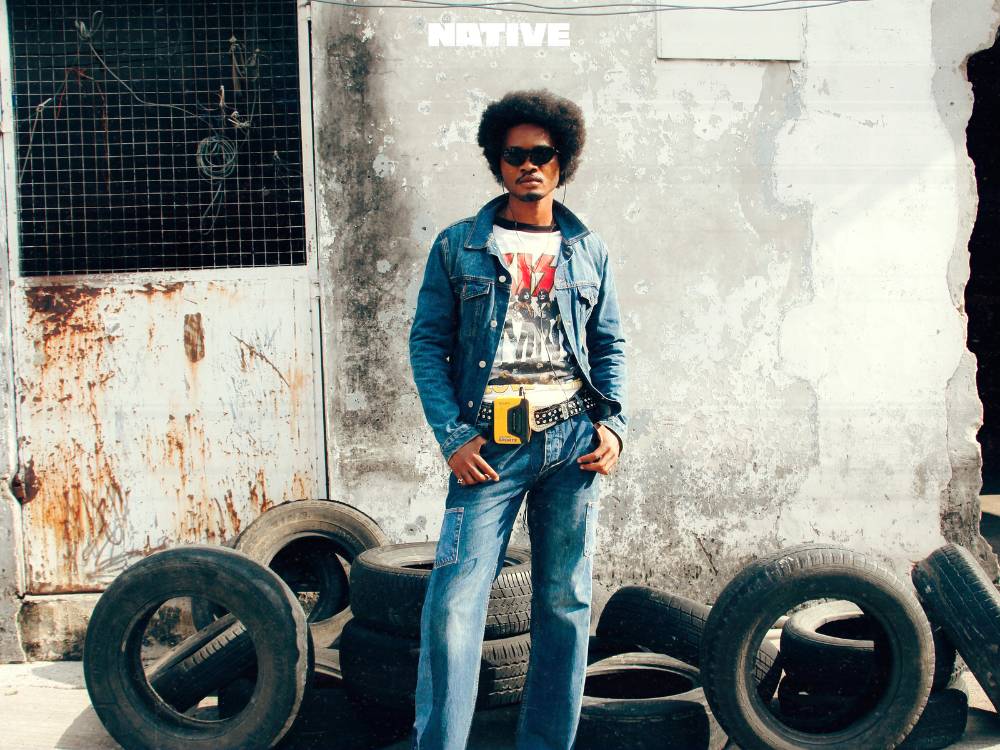
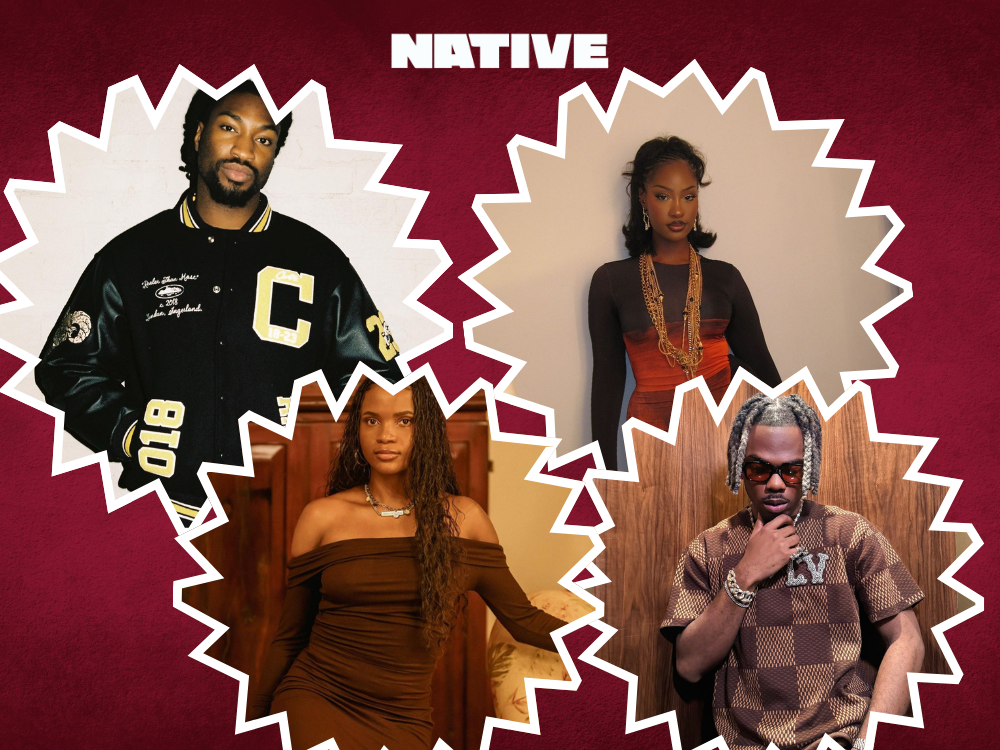
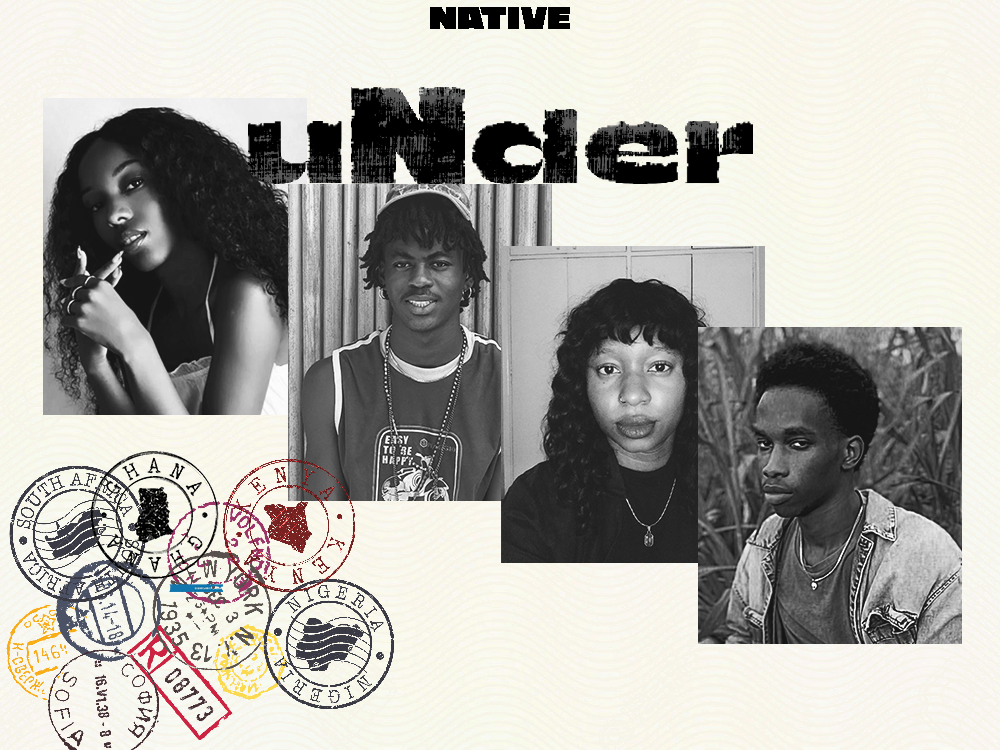
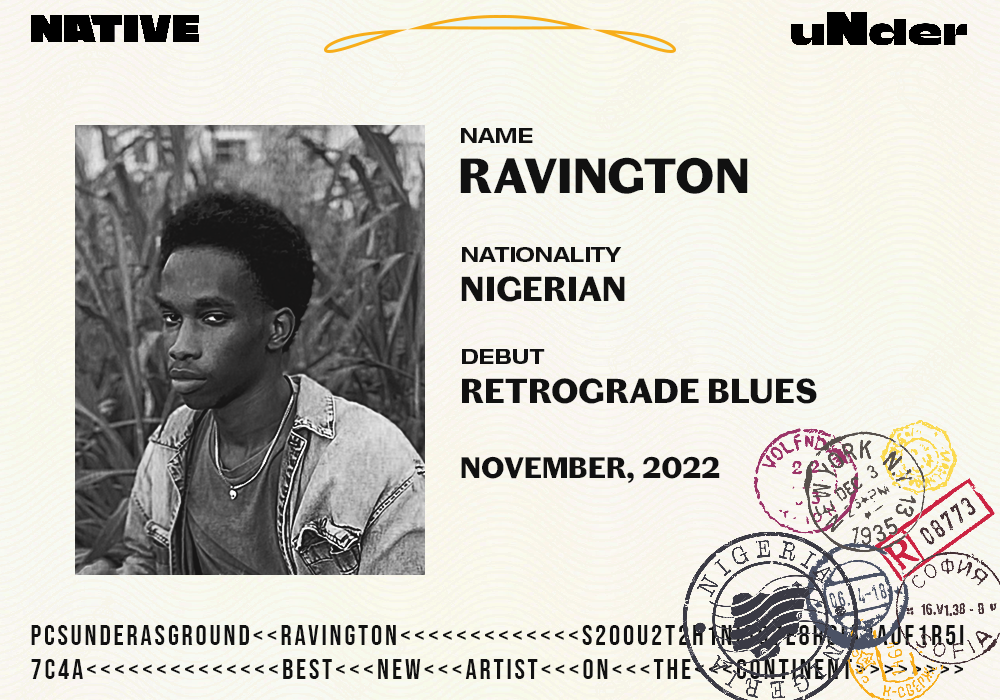
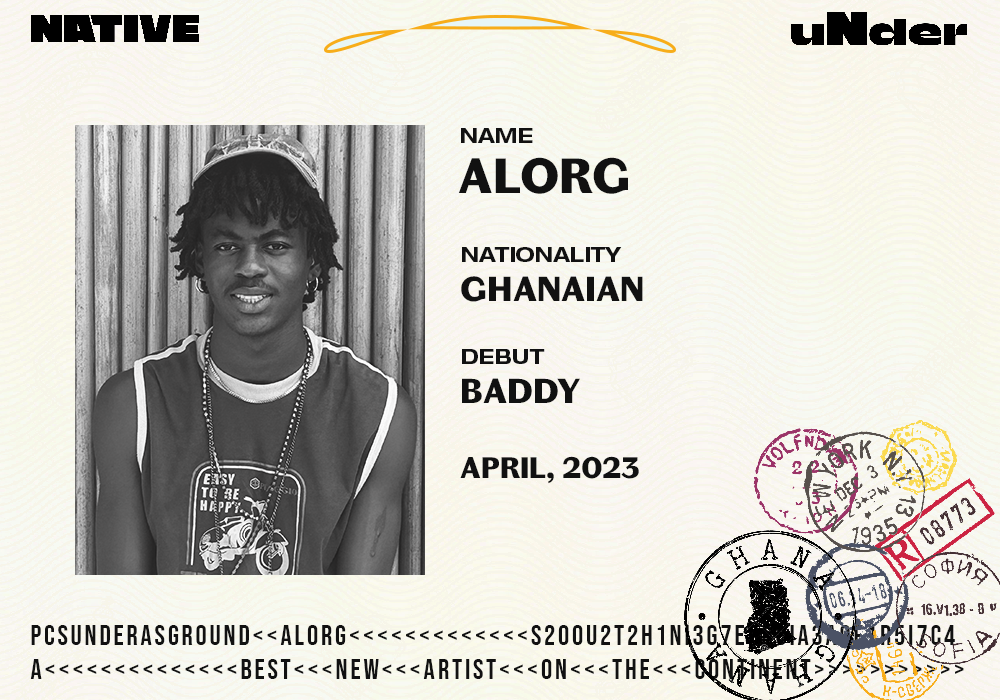
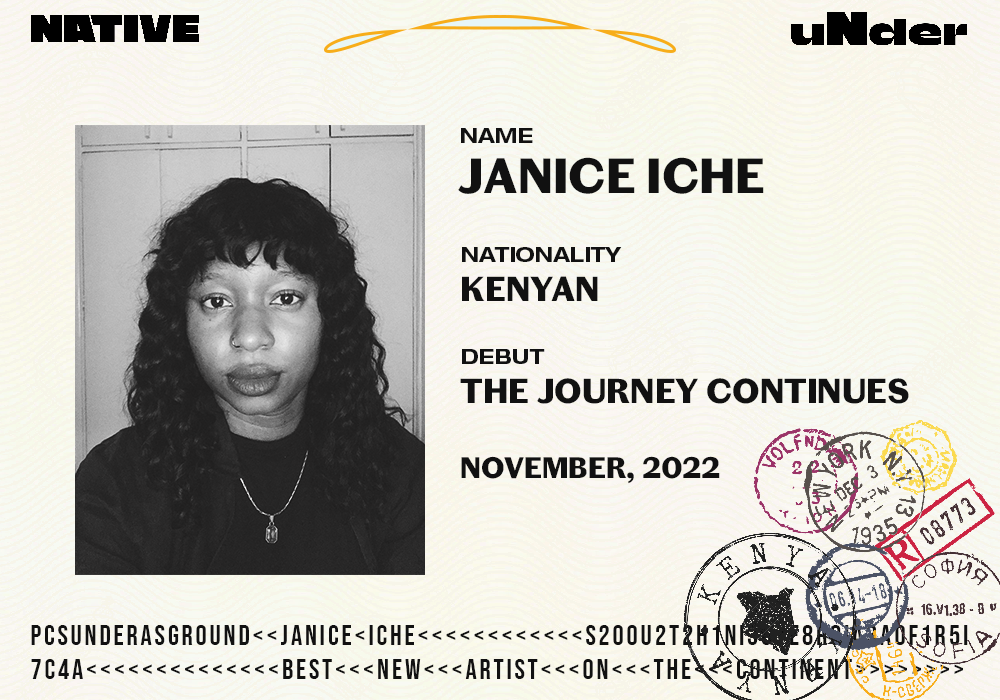
uNder LIVE alumnus Rigo Kamp has released his long-awaited debut, a two-pack titled ‘Summer/Morning Sun.’ The single comes off the back of a string of impressive live performances – including NATIVELAND – which has made Rigo a well known and highly respected vocalist and performer across Lagos’ live music circuit, alongside multiple teasers and unique reimaginations of a few classics and popular songs. The rising star has managed to build feverish anticipation for his original material amidst a fast-growing audience who have been drawn to his unique and eclectic style and that’s what his debut offering succeeds in delivering.
The upbeat opener “Summer” is a warm, funky number that conjure disco balls, shimmering lights, finger snapping and a fun two-step. Rigo sings with an irresistible magnetism and charisma over the locked groove of a Disco-inspired beat, making for a bold and delightful introduction for anyone that’s unfamiliar with his sound.
“Morning Sun” is equally bouncy, but its groove owes more to an infectious percussion loop that brings to mind the quiet storm era of the late 1970s as well as the luxurious Soul and Jazz-pop blend that acts like Sade popularized many years ago. Alte royalties GMK and Odunsi The Engine are on production duty for both tracks but it’s the latter’s presence that’s more telling, as the soundscape that Rigo explores here seems to emerge from the same universe that the talented artist-producer similarly explored on his seminal debut ‘rare.’
Aside from the eclectic and rich production that informs the two-pack’s distinct sonic style and helps keep it refreshingly crisp, another standout quality from Rigo’s debut is his elastic and smooth vocals that stretch from a soothing tenor to a weightless falsetto that accentuates every little emotion and backstory that Rigo looks to convey. His voice is just as elegant as the beats he sings on, making for an incredibly soothing and lush musical experience.
“Summer/Morning Sun” is set to usher in Rigo’s upcoming debut project which has taken about nine months to put together, according to the talented singer. Speaking about the forthcoming project Rigo explains it will explore “where I was and where I am right now.” He also adds that some listeners may not be able to relate to his music lyrically but “sonically you’ll be able to feel something.”
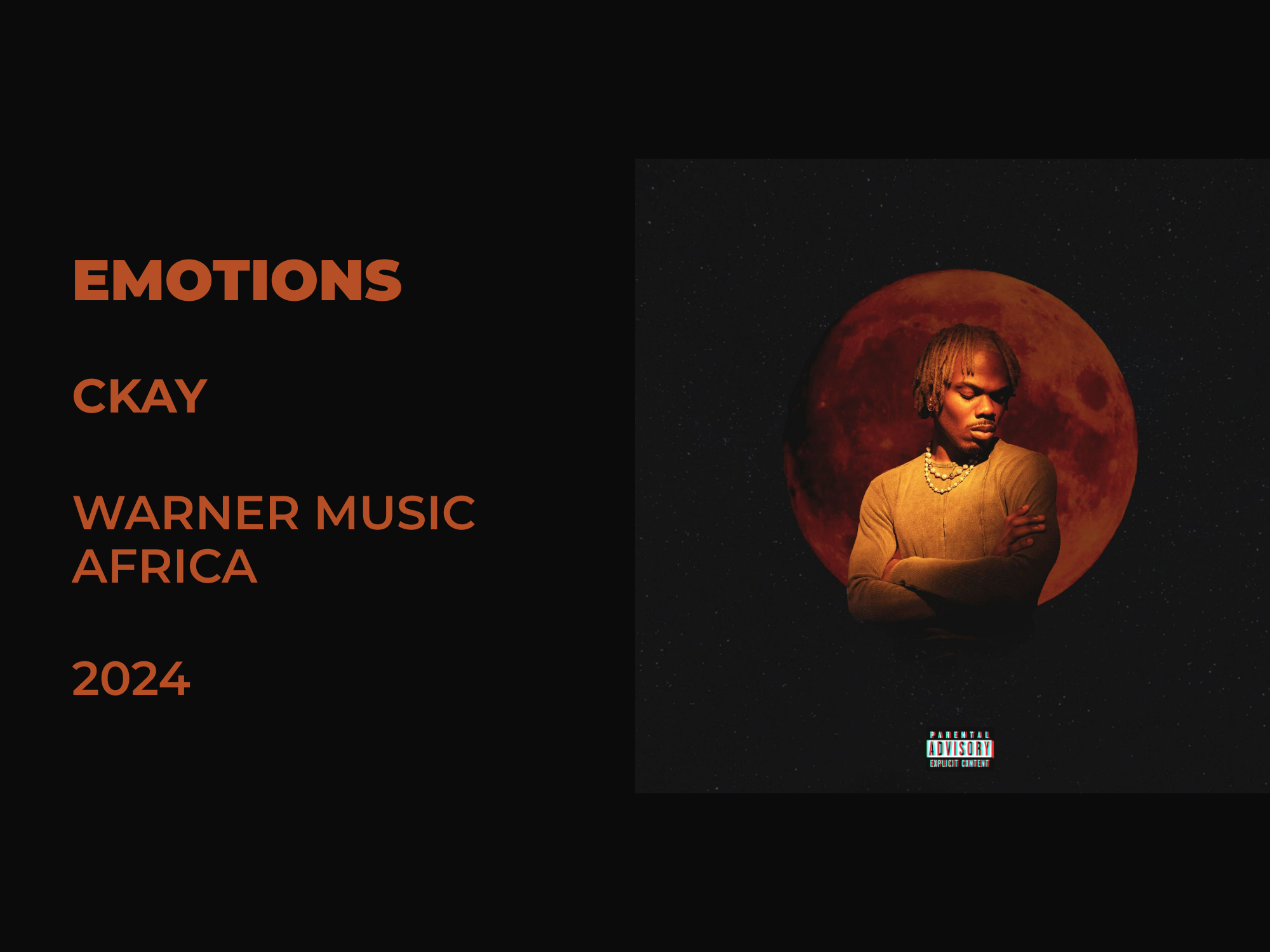
For the longest time, CKay cut a polarising figure in the music industry. His early career was dominated by industry-wide conversations and unrelenting social media-led critique of his emotive style and where it fit within the wider Afropop plexus. Between a buttery voice tailor-made for soundtracking the afterhours and an innate knack for the softly sensual, some of his earliest work didn’t channel his best qualities. Back then, it often felt like the scattered-gun effort of a creator figuring out a path to his instinctive core. Things finally seemed to click into focus on ‘CKay the First,’ his 2019 extended play that distilled his warm melodies, soft whispers, and languid take on Afrobeats into a cohesive piece – and birthed his smash hit, “love nwantiti (ah ah ah).”
Riffing off the belated global success of “love nwantiti (ah ah ah),” in 2021, CKay emerged with a vision of himself as Africa’s Boyfriend, a wholehearted embrace of his endearing interpretation of Afropop’s romantic side. If CKay’s motif was to present himself as a bleeding heart romantic, the sonics – swirling violins, tender guitar riffs, and pristine keys – set the stage; but the lyrics didn’t always follow through on that reality. If anything, the messaging often snuck hints of the toxic edge bestowed on R&B by 2010-era stars like The Weeknd and Brent Faiyaz. The contradiction between his zest for love and those darker impulses made songs like “WATAWI” and “come close” off his debut album, ‘Sad Romance,’ fascinating listens that displayed a knack for expertly dramatizing the minutiae of modern relationships.
On his sophomore album, ‘EMOTIONS,’ CKay picks up right from where he stops on ‘Sad Romance,’ completing the metamorphosis from lingering, occasionally jilted lover, to flaunting his comfort navigating contentious romantic dynamics. Where a lot of ‘Sad Romance’ was spent just inching towards the carefreeness of proposing a one-night stand or situationship, he leans fully into that noncommittal instinct on “THAT FEELING,” the opener of ‘EMOTIONS,’ warning a love interest not to catch feelings for him while promising to give her supreme thrills at every turn. CKay has always understood the emotional resonance of his Eastern Nigerian heritage as a springboard for some of his most inspired work and on “EGWU EJI,” he proclaims the beauty of African women over a relaxed blend of Amapiano’s log drums, guitars, and the Igbo oja flute. The idea for “EGWU EJI” sounds thrilling enough, but lines like, “Shey your nyash na the fake one abi na the real one,” betray the lack of emotional rigour that CKay has built his second arc on.
That misstep aside, there’s a lot of soul-searching on ‘EMOTIONS’ that shows the range of CKay’s talent. Like his predecessors in the brooding and anguished variation of R&B that took root in popular culture around the late 2010s, CKay can be paranoid and distrustful. On “RIDE OR DIE?”, he’s asking a love interest to prove the depth of her love for him while warning that he’s also distracted by his search for money. In between all of this, he’s also dodging police officers and sex workers in Lekki while out with his lover – it all feels like an epic, slightly fantastical, journey through the rowdy maze that is Lagos. “IN MY BED” feels like the spiritual twin of “RIDE OR DIE?” as CKay asks, “But is this love?” Sadly, its pace is ponderous –almost lethargic – mirroring the listlessness that creeps into parts of ‘EMOTIONS.’
Per CKay, ‘EMOTIONS’ is not strictly about love or romance. In an interview with Apple Music, he said that it was a full portrait of his life as a young Nigerian. “It’s a lot more than love on this album,” he explained. “It’s my story and my struggles, all the stuff I had to go through to get to this point. It’s basically me talking about how many battles I had to fight, even with people that I love just because they couldn’t see the vision at the time. I just trusted that it was a good fight, like fighting you in love in the sense that when you understand you’ll catch up.”
The moments that go beyond the high drama of his romantic life are few and far between but they make for some of the best parts of the album. In recent years, CKay and Olamide have struck up a great chemistry and they keep their streak going on ‘EMOTIONS.’ “VANITY” reflects on the journey that CKay has had to undergo to make a success of his musical drama. It also holds the best spurt of melody on the album that comes when CKay brings up the monumental battles he fought for his spot. “I fight my enemies / Fight my friends, I fight my family,” he affirms. Characteristically, he defers back to love, reminding everyone that, “I do it for y’all / I’m a warrior,” while setting the stage for Olamide to contribute a verse about his own come-up and the struggles that he’s had to face.
The guests on ‘EMOTIONS’ are especially memorable, sparking life into CKay’s work at different turns. On “Dorime,” Los Angeles-born shapeshifter, Ty Dolla $ign, joins CKay for an ode to their fantasy women. It’s a trilingual effort that sees both artists adopt the stylistic cadences of each other’s country for a smooth blend that is easily CKay at his titillating best. There is a bevy of groundbreaking guitar work across ‘EMOTIONS’ done by Mauritian guitarist, Mooneesawmy Devadasen. Devadasen’s work on the opening stretch of “WAHALA,” another Olamide collab, is instrumental for setting a tropical vibe that carries through the song and creates the perfect conditions for CKay’s voice to shine through with another verse by Olamide that suggests that the YBNL head is still reaching new artistic heights despite all his years in the game. Nigerian highlife duo, The Cavemen., are perhaps the best stylistic companion to CKay in Nigerian music and they fit like a glove on “ADDICTED,” complimenting his balmy flow with their raspy delivery over a soft percussive base, as they moan about being addicted to a lover.
At its best, CKay’s music represents a bold, new direction for Afropop that embraces the importance of free-flowing emotions and candour, over faux performativity. On the flip side, CKay’s weaker songs feel like dispatches from a deep abyss that maintains a callow obsession with sex and the simulation of love for the sake of a good story. “MYSTERIOUS LOVE” falls into the latter category, lacking the will and inventiveness that powered songs like “emiliana” and “Kiss Me Like You Miss Me.” When that same level of half-hearted introspection is applied to even weighty matters like getting his thoughts on self and his industry off on “THE FINAL BOSS,” it feels disjointed. The self-adulation on “THE FINAL BOSS” feels like the sort of chest-thumping brags that we’d make among friends — but on ‘EMOTIONS,’ it’s a underwhelming end to an album that promised so much but, ultimately, delivers only a narrow variety of emotions.
TW: This post contains details of parental abuse and violence.
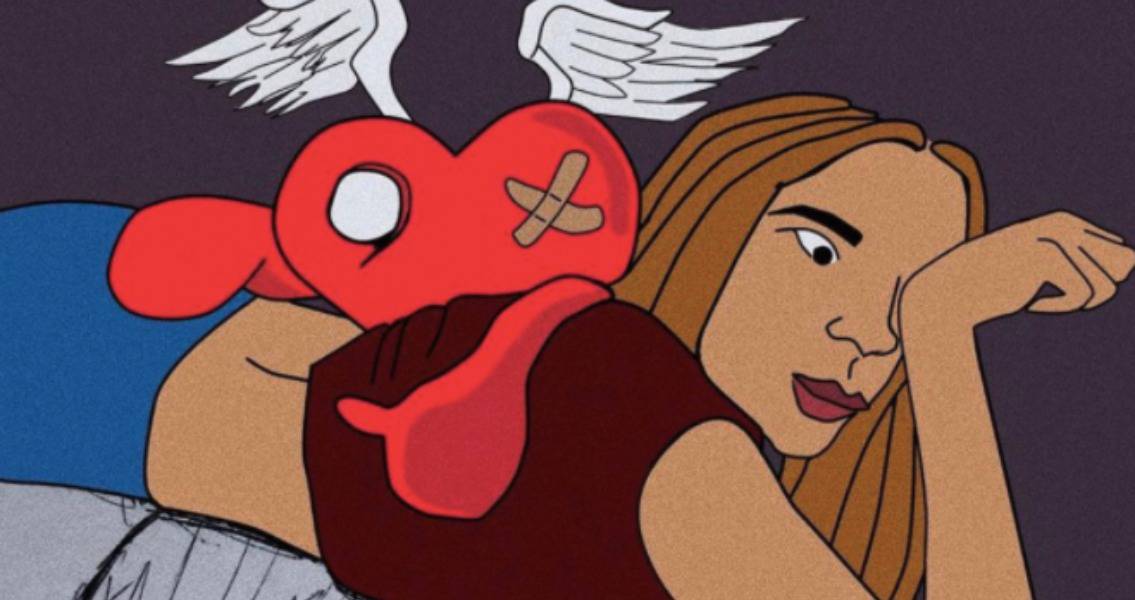
For most of us, our parents are our first basis of interaction with the world and whether we realise it or not, the way we were treated at home has lasting impacts on the way we relate with ourselves and with society in general. Unfortunately, if you grew up in Nigeria, then one of your earliest experiences of what the world would look like came through physical violence, as corporal punishment is the dominating mode of child discipline in the Nigerian home.
Corporal punishment, or what we call ‘flogging’, is so tightly woven into the average Nigerian family’s discipline culture, that it’s upheld in almost every institution from our homes to schools, to religious places, and even the workplace. It’s been so widely accepted as the norm that some of our leaders feel comfortable physically assaulting female store clerks on camera, without fear of any repercussions because the very laws put in place to protect us make provisions for physical violence of some form. For those who are not familiar, there are provisions in our criminal code that allow the use of force by parents or legal guardians (and masters) on their legitimate or illegitimate children (or servant), under the age of sixteen years for ‘misconduct or disobedience to any lawful command’.
What amounts to ‘lawful command’ is left open to interpretation within each individual home. Whether parents are aware of the existence of this law or not, their power and authority over their children has definitely been abused countless times, as most Nigerians would have experienced during childhood. I, for one, remember my parents arming themselves with anything within their reach to wield as a weapon for correcting disobedience, which definitely left scars, both physical and mental, that I still remember to this day. Disobedience or not, flogging a child that’s barely learnt their way in this world is not the ‘right’ way to impart any real discipline because you inadvertently raise children who view love as suffering and abuse, and who never demand better for themselves because they are taught to silently accept the pain and trauma.
More effective than older forms of discipline, like spanking, are new techniques such as distraction and establishing routines https://t.co/x0DzxMdmUL
As the child’s first point of contact in the world, the family home is meant to feel safe and nurturing not hostile and unwelcoming. Whilst there might be no denying that our parents definitely loved us, and still do, a lot of us are beginning to notice in our adult years, that we were raised on fear, manipulation, and blind servitude. Alongside this, the proliferation of videos shared on social media depicting physical abuse in the home has meant that many of us have relieved this trauma from our childhoods over again, and though the majority are well past any physical altercations from our parents, there are young adults still struggling to sustain meaningful and close connections with their parents due to years of mistreatment.
When a child is raised up on a violent disciplinary diet, a wall of resentment is inadvertently built and this wall serves as a reminder to them that they cannot communicate with their parents if they are in tough situations because they will surely be met with judgment and punishment. The breakdown of these base familial connections is a harmful one for any child as some may end up growing up having deep-rooted trust issues for authority figures that may even seep into their personal relationships, while for others, years of abuse become hard to unlearn as they end up repeating the same patterns to their own children.
Over here, we’re constantly told of the value of physical correction methods, and very often, you’ll often hear phrases like ‘spare the rod and spoil the child’ in conversations surrounding discipline and correction. This has always been a part of our culture as parents believe physical violence is needed to instill discipline in their children, distinguishing them from the ‘oyinbo kids’ who they believe to be rude and disobedient as a result of not being hit. Boomers unlike millennials and Gen Zers aren’t so malleable and they believe that our generation’s new way of questioning societal standards is a harrowing indication that we’re losing touch with our tradition and becoming too westernised. This fear is completely unfounded, as the old way of doing things is just not going to slide for a generation of young adults who have been exposed to the Internet. The fact remains that we are living in a vastly different world to that of our parents and the increasing understanding that we are all connected has spurred more empathy from many young adults today.
Given that authority is flouted at all levels of life in Nigeria and the way that we generally treat each other is widely atrocious, I don’t see any discernible benefit of the brutish disciplinary methods that characterises the Nigerian upbringing. It’s time to do away with these methods and really question why we result to them in the first place. Looking at our society, it is clear to see that many adults don’t view children as individuals in their own right but as extensions of them. Not that there’s any ‘right’ reason to have kids, but we’re sure that if you asked any Nigerian parent why they did, many won’t immediately say it’s because they wanted to bring independent individuals into this world to blossom but because they are more concerned with their children carrying on their legacies or living the lives that they were not afforded while growing up.
Parenting is not just about providing for a child, and we have to reach a point where we go beyond surface-level connections with children and actually nurture and form the basis of how they love others and love themselves. The dangers of children growing up as adults who have lacked a foundational basis for love is very damaging and we can see this today, with a society of young people who are not sure of themselves and who become easily swayed when making value judgments. It leads to a generation of young adults who are raised to readily accept abuse and protect abusers rather than speak up when things are clearly wrong. This is damaging because we end up with people who choose to mask evil and violence with faux perceptions of ‘culture’ rather than demand social progress.
What has long been the case in many homes is that when physical violence is no longer effective in disciplining the child, many parents substitute this method for emotional and verbal abuse, which isn’t even considered to be a big deal in many homes. Even more dangerous than physical abuse, verbal abuse tends to form the basis for self-depreciation, as the voices in your head are often made up of what you’re being told about yourself. Parents don’t tend to realise these harmful effects on their children until it’s far too late, when their children have grown up ill-equipped to take on adult life due to a lack of self-confidence or low self-esteem.
Whether we’re conscious of it or not, we’re always tracing things back to our parents and we spend a lot of time either attributing or blaming our actions on them because they have a responsibility to care for us. So when you raise a child on a diet of criticism, judgment, abuse, and physical violence, it’s only a matter of time before they take over from their parents, and embody the toxicity they were raised upon. Luckily as a generation, we’re more aware and willing to break the chain and unlearn harmful behaviours our parents didn’t from theirs. Regardless of this, when we see brutal cases of abuse, from the South African father whose son only passed music after his father paid $21,000 in school fees, to that of a young boy profusely begging with his mum to ‘calm down’ and not flog him, we’re taken back to when we felt helpless as children, and our voices were stifled by their authority.
After a lifetime of regurgitating to yourself the negative messages that are well-entrenched in your mind from the adults who raised you, to end the cycle we must heal and move on from this past trauma. In a bid to help you begin this process, we’ve compiled a list of helpful steps (from a number of online psychology platforms that promote healing for children who have been abused at home) that could go along way in your journey towards recovery.
Establish healthy boundaries.
Setting boundaries is an important part of establishing one’s identity as an adult and is a crucial aspect of mental health and well-being. Boundaries can be physical or emotional, and the first step in forming them is to access the boundaries that already exist (or are lacking) in your life. With parents, establishing and maintaining boundaries can be very tricky especially if you live together but communicating with your parents that you’re an adult who is unwilling to compromise in matters regarding YOU is an important step. It could really be as simple as being able to lock your room door or not attending your childhood church, and range to bigger steps like moving out. The best thing about boundaries is that they’re not set in stone. It’s good to think about them and occasionally reassess.
It’s okay to cut ties with a toxic parent.
This is easier said than done because many of us are still financially tied to our parents due to school, work, and other reasons. As you grow older, you should only be surrounding yourself with fulfilling relationships that serve you wholly. It doesn’t matter how much you love some people, even your parents, you’re not responsible for them or for the state of your relationships with them, and you are under no obligation to keep being abused, belittled, shamed or humiliated. Healing starts with expecting more for yourself, and you’re the only person who can make that decision.
It’s also okay to not cut ties.
Not everyone can walk away from a relationship with their parents, especially when you are reliant on them in the early stages of adulthood. Accept that for now, this is where you’re at, and fully experience what that’s like for you. This links back to establishing healthy boundaries, as living under the same roof can get triggering if those boundaries aren’t in place. Always remind yourself that you won’t spend the rest of your life living under their shadow and you’ll be in a place to move on when the time comes, if that what you want and need. It takes tremendous strength to keep walking into a relationship that you know hurts you, so keep your chin up and stay afloat.
Find your voice.
When you grow up around toxic parents, you are conditioned to believe that the only voice that matters is that of your parents (or authority figures), thereby stifling yours. Along with this, you learn that only your parents are allowed to have and express feelings and opinions and you are forced to endure their harsh words. Reframe your mindset from this and understand the power and importance of your voice in the world. You are not the ugly words you’ve been called and you deserve to share your gifts with the world so keep working at talking your shit until it becomes second nature.
Surround yourself with good friends.
Friends can be an escape from the pressures at home, so it’s always good to surround yourself with a strong and compassionate support system that is considerate of your past experiences and never use them against you. Also, remember that your friends are their own individuals and may also be coming from toxic environments themselves. In this vein, it helps to cultivate an environment where everyone shares their feelings and fears. Simply being able to speak out loud about the voices in your head is a step to recovery.
Be careful of repeating these patterns with others.
You might find yourself drawn to people who have similarities to your toxic parent. We’re all human. We’re all going to get it wrong sometimes, so don’t beat yourself up if you notice toxic patterns. The first step to recovery is self-awareness so you’re already halfway there. Be gentle with yourself and constantly process your thoughts and actions to assess if they’re detrimental to yourself or to those around you.
Seek professional help.
All these tips are much easier said than done but to really make sure you’re keeping consistent with boundaries and voicing your feelings, the best step is to seek professional mental help to get you through these difficult feelings. This might be a difficult step for those without the funding to seek professional help but there’s a myriad of resources available online right at your fingertips. To help you on your search, we’ve put below are a few websites to get you started on your journey of healing. Although they are not specifically tailored to the Nigerian experience, these websites have proven helpful to us, and we hope they will be to you also.
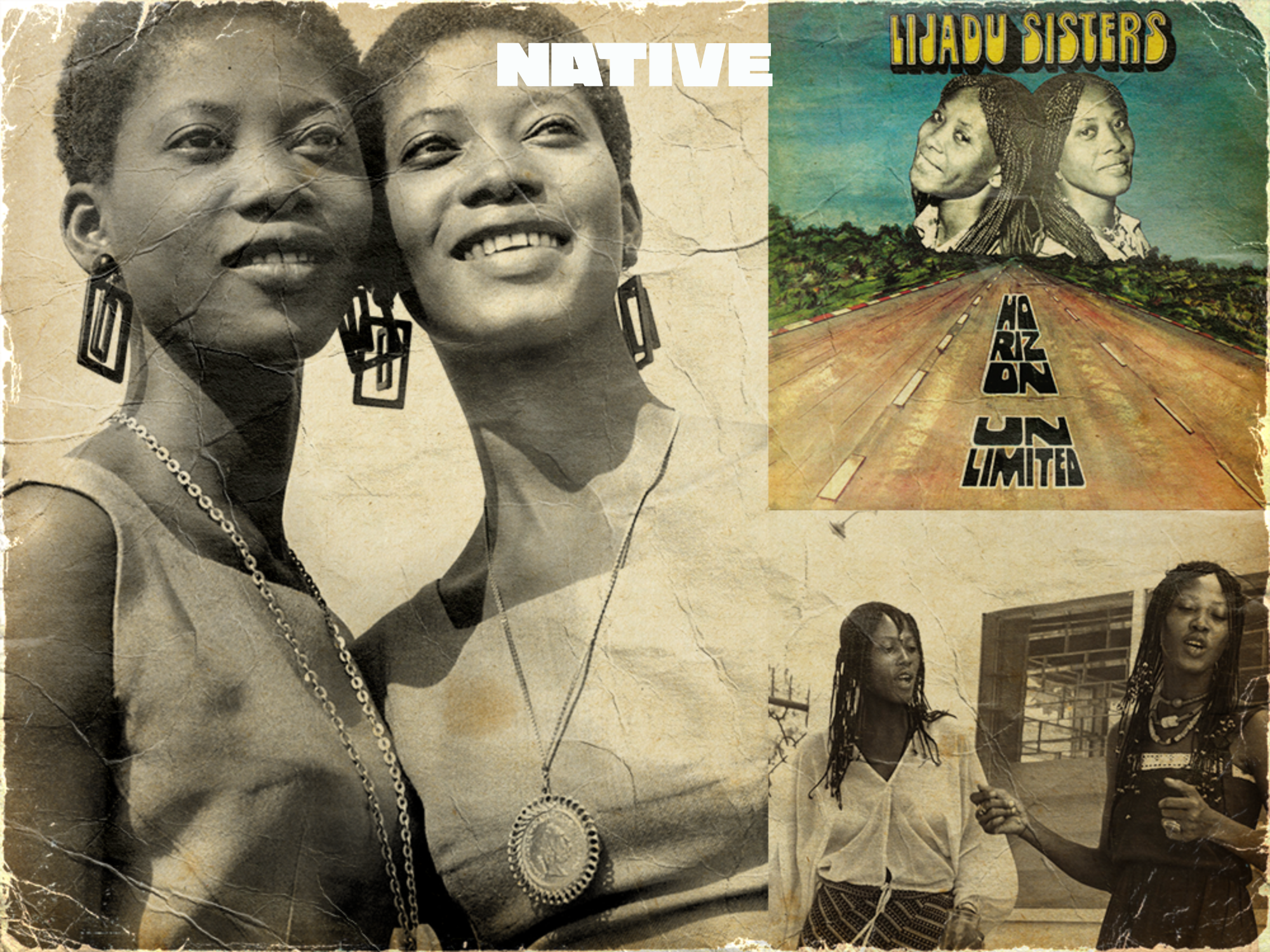
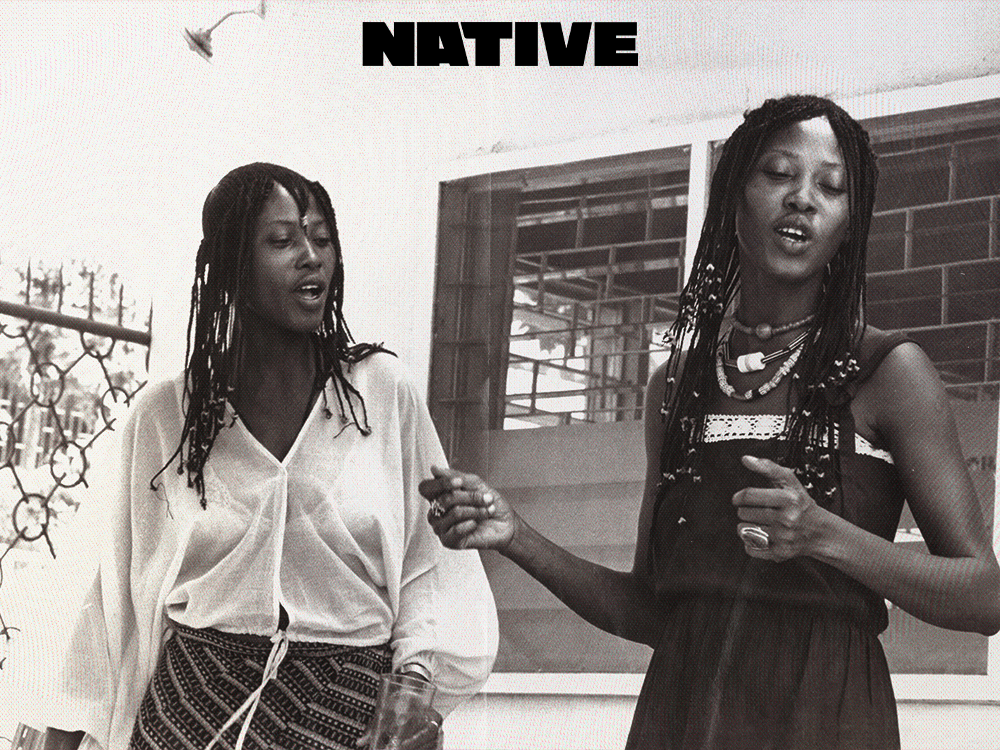
Nigeria in the 70s – A nation fresh off the throes of a civil war, grappling with rapid socio-political changes and the continued weight of its colonial legacies. From Lagos and Ibadan to Kaduna, Anambra, and Enugu, a new cultural and creative movement was emerging. In this era, when the popular music scene was championed by larger-than-life male personalities heralding Highlife, Funk, Rock, Juju, and Afrobeat, The Lijadu Sisters offered something decidedly different.
“Music is a message,” Yeye Taiwo Lijadu, one-half of the identical twin music mavericks states in the 1979 documentary, Kokonbe: The Nigerian Pop Music Scene. The confidence in her voice is as firm as her conviction.“It is our responsibility as musicians to speak to the people about what is wrong and what can be better.” And as one of the country’s fiercest mega pop stars, The Lijadu Sisters – comprised of Yeye Taiwo and the late Kehinde Lijadu – spared no effort in speaking and singing their thoughts.
With folksy psychedelic Rock, Apala, Reggae, Soul, and Afrobeat-infused grooves, The Lijadu Sisters pioneered a space for women in the music industry as the first and most popular female-led band in Nigeria. Layered within their irresistible jams were calls (in English and Yoruba) to society (their fans and foes alike) to face its injustices and iniquities, particularly towards women. Their albums; ‘Urede,’ ‘Mother Africa,’ ‘Danger,’ ‘Sunshine,’ and ‘Horizon Unlimited’ were political musings, protests, and prayers in the golden age of African music.
Born in Jos in 1948 and raised in Ibadan, the sisters’ musical career began at the age of 10 after viewing the British Comedy, The Belles of St. Trinian’s with their mother. Following the inspiring experience, they began drawing influences from Jazz, Soul, and Rock thanks to their mother’s record collection which included the likes of Elvis Presley, Ella Fitzgerald, the Beatles and Cliff Richard. They were later introduced to African musicians like Yusufu Olatunji, Miriam Makeba, and Haruna Isola.
By 1968, their limitless musical ear and relentless spirit had taken them from session vocalists at record label, Decca Records, to landing their debut single, “Iya Mi Jowo (Mother, Please),” which is “sung by a daughter who wants to know what she has done to make her mother so distant and angry,” as Yeye Taiwo would explain years later. In 1974, they released their debut album ‘Urede’ and signed a four-album deal with Afrodisia, an imprint of Decca Records. The Lijadu Sister continuously captivated listeners with low-pulse, hypnotic singing and often playful, put-you-in-your-place wit. Their power, however, rested in their soft yet blunt, impossible-to-ignore focus, as opposed to the brash and in-your-face manner of, say their second cousin and Afrobeat pioneer, Fela Kuti who approached his music with fiery grit. For the sisters, no topic was off limits.
Songs about sex or critical commentary on the government continue to be a part of music culture. Think Tyla’s “Water” or Asa’s “Jailer.” But as vocal young women living in a military-led, male-centred, conservative Nigeria, The Lijadu Sisters’ bravery was unprecedented. They made their lovers aware of their sexual desires on the sultry number, “You Can Touch Me If You Want,” which they’d often perform on tour. They’d also take aim at the government and elites, asking the people to “Get out!, Fight!” against the trouble and shortcomings caused by them as the cult classic, “Orere Elejigbo,” suggests. On the cover of their 1976 album, ‘Danger,’ the two are depicted as superheroes forever ready to protect the vulnerable. Throughout the project, they respond directly to the socio-political issues plaguing Nigeria at the time. The titular track warns of an impending danger lurking in the shadows of the country’s instability, corruption, and the widening gap between the rich and poor, all of which are unfortunately, true to this day. So it’s fitting that decades later, the duo’s striking harmonies and forward-thinking ideologies have crystalised them in Nigerian history as the voices of liberation inspiring newer generations.
“I think the Lijadu Sisters were the first alté girls,” Ghanaian-American singer Amaare points out in a conversation with Rolling Stone. “I think that they helped me build an ethos of how I wanted to operate as an African woman and as an African artist, an African rock star.” Back in 2021, Ayra Starr who had sampled the Lijadu Sisters’ “Orere Elejigbo” on her single, “Sare” off her breakout EP ‘Away,’ spoke about the sisters saying, “The way men carry Fela, that’s the same way I want women to carry these women that have worked so hard and people have forgotten their name.”
The path of a pioneer is often a lonely one. For eclectic, outspoken young women existing in an era of military rule and working in a developing industry, there comes a price for revolution. Misunderstood, misjudged and mistreated, The Lijadu Sisters faced harassment from the government – one incident taking place during FESTAC ‘77 when a soldier struck a then seven-month pregnant Yeye Taiwo on her stomach with the butt of his rifle. “Women suffer at the hands of men in Nigeria,” Lijadu explains in the Jeremy Marre-directed documentary as the duo rehearse while taking turns to feed Yeye Taiwo’s baby.
‘Horizon Unlimited,’ the flowery 1979 album,would be the last from the sisters’ genre-defining catalogue. By then, their relationship with Decca/Afrodisia had soured with Yeye Taiwo and Kehinde feeling exploited by the label. “They want you to keep owing them, and as far as they are concerned, you can keep owing them and keep paying back until you die,” they say, describing the label’s lack of care for their artistry and contributions to the industry. It was a familiar tale for artists of the time signed to multinational record companies who were more interested in making profit than genuinely developing local talent. “You should be the baby to this company because you are actually making the money for them, but the other side of the coin is that they don’t care.”
For decades following the end of their deal with Decca/Afrodisia, the sisters flew under the radar as excitement surrounding them slowly fizzled out. Due to limited protection, continuous copyright infringements plagued their work, with over 50 infringements found today, including Ayra Starr’s “Sare” and Nas’ never-released “Life’s Gone Low.”
Having regained control of their catalogue in 2021, The Lijadu Sisters hope to correct the years of injustice via a multi-record partnership with Numero Group. All five of the siblings’ trailblazing albums, will be reissued alongside previously unheard recordings, unearthed rarities, and new rediscoveries. The landmark campaign kicked off with the reissue of ‘Horizon Unlimited’ earlier in the year. “I think one of the most exciting things about the reintroduction of ‘Horizon Unlimited’ is the fact that young folk love our music, and are surprised at the upbeat tempo, and the lyrics, which are not only of today, but also very futuristic as well,” Yeye Taiwo Lijadu said in a press release.
The Lijadu Sisters’ legacy is one set apart by their unwavering resistance and dedication to using art as a reflection of society. They showed the world that sometimes revolution takes two Nigerian women singing in harmony and refusing to be silenced or relegated to the backburners of history.
There are many distinct qualities that lie at the heart of popular African music, but one easy standout is its chameleonic nature. Drawing influence from a slew of genres across various time periods, mainstream music in this part of the world tends to morph with the moment, borrowing landmark qualities of one genre to birth another. And despite its contributions to the continent’s varying soundscapes, R&B is one genre that doesn’t get the love it deserves; it often ranking low in a culture where audiences lean towards the flamboyant pomp of Dance and its variants, the lyrical ingenuity of Rap or even Pop’s fun and digestible nature.
For many, the crux of true musical ability lies in the vocals and storytelling; and despite being criminally underappreciated by many mainstream listeners, it is R&B that often displays these skills most potently, forming the foundation for much of the fusion. That said, it’s impossible to recognise the best voices in R&B without calling on their most impactful contributions to other sounds, especially considering the genre’s years-long residence in the shadows of mainstream African music.
Recently, the electric grooves of Dance music have hooked their claws into popular music around the world, and Africa is no exception. Straight from the burbs of South Africa, Amapiano emerged as a descendant of Gqom whose percussive elements pull straight from Dance. While the energetic synths are enough to increase your heart rate and transport you to the dancefloor, the once wordless, production-inclined genre quickly sought the dazzling voice of R&B vocalists to further communicate the emotive messages the basslines couldn’t. Queue the likes of Ami Faku, whose silvery chants laid the foundation for some of the biggest Amapiano songs yet, “Abelele” and “Asibe Happy.”
Both tracks held, the soulful and downright gut-wrenching elements that classic R&B is known for, as Faku delivered a performance so moving and timeless that many consider it responsible for Amapiano’s proliferation to the world. Cut from the same cloth is Nkosazana Daughter, whose feathery execution leads the Deep House-led excursions of Private School Amapiano. From upbeat to gloomy productions, Nkosazana is sure to deliver a heartwarming and memorable performance, leaving a lasting impact as her vocals exit the track. While her discography and innumerable co-signs indicate her domineering presence in South Africa’s Dance scene, her unique techniques evidently pull references from R&B’s hallmark characteristics. Also in this category are other key players like Sha Sha and Venom and Shishiliza, whose porcelain notes weave a stunning level of rhythm, blues, heart and soul with ‘Piano-indented production.
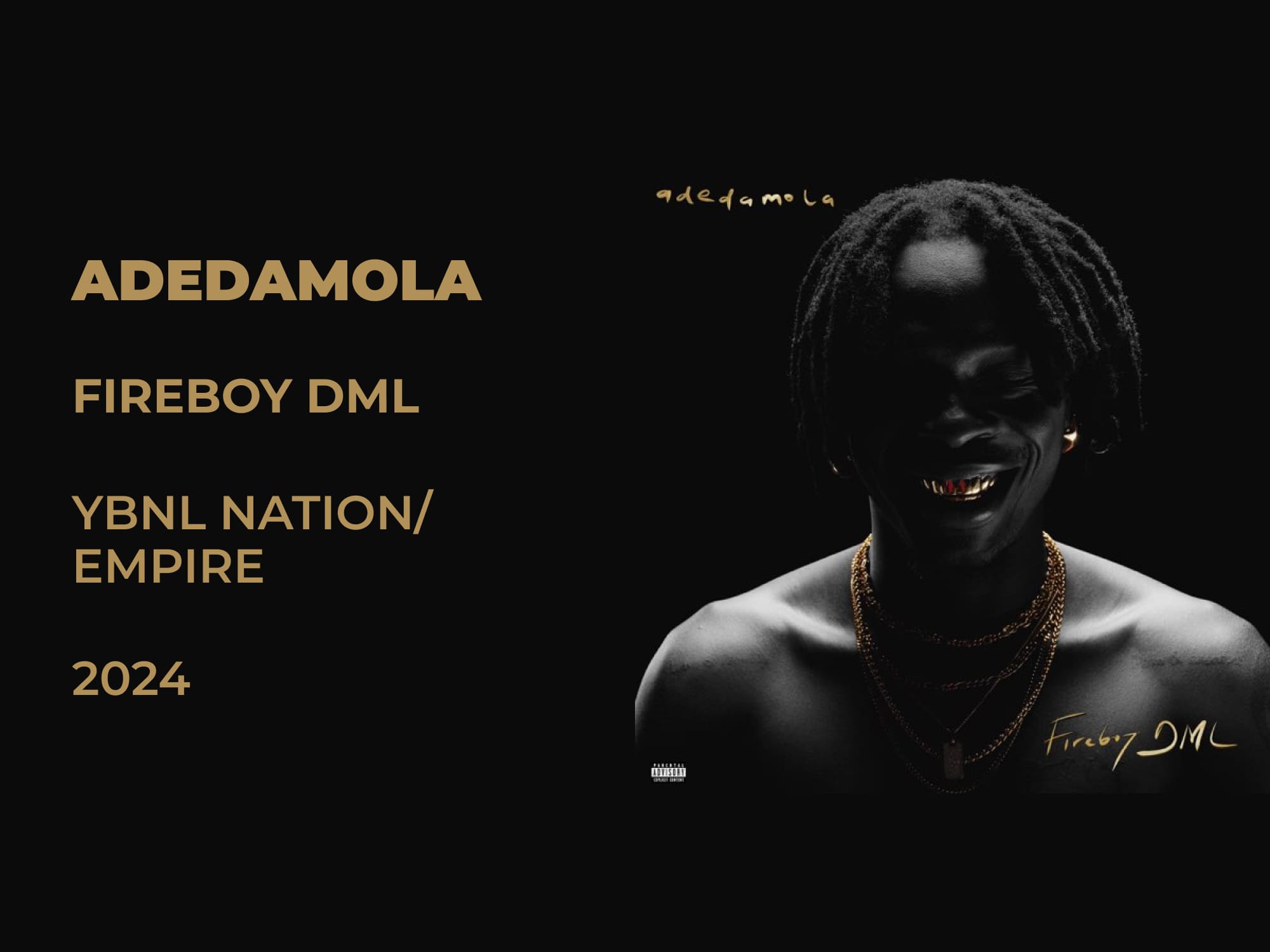
In a similar way, R&B scaled its initial boundaries after penetrating Nigerian Pop, going as far back as the early 2000’s. Think Psquare’s “Am I Still That Special Man” where the lyrical sensitivity and emotional resonance is crystal clear; or Styl Plus’ now-classic stack of emotive tunes as seen on “Imagine That” and “Olufunmi,” or even Paul Play’s unforgettable display of love on “Angel of my Life.” That early class of R&B veterans, popularly believed to be led by 2Face, propelled the genre to the limelight while setting the stage for a new generation of stars to later arrive. Now, R&B-influenced Pop music is the order of the day, after an unquestionable run in the late 2010’s where acts like Fireboy DML showed the makings of a quintessential R&B star after releasing ‘Laughter Tears and Goosebumps,’ an album so unapologetically sensitive, it starkly contrasted the entitled and brazen tone popular Nigerian music typically adopts. Before that, we also had the likes of Nonso Amadi’s “Tonight” and Simi’s “Joromi” gaining mainstream recognition, whileMelvitto and Gabzy’s ‘THENIGHTISYOUNG.’ received similar love for its stark vulnerability.
Soon after, the likes of CKay, Tems and Omah Lay arrived to take things to the next level, slinging the ropes of R&B well beyond its borders. Where various iterations of “Love Nwantiti” were gaining traction, Tems’ “Try Me” was also pulling at the heart strings of listeners on home soil, positioning her to later deliver a career defining verse that set her up to release one of 2024’s best R&B albums. Omah Lay hasn’t shied away from global success either, since releasing his debut albumand its deluxe, which perfectly encapsulated the angst of an early adulthood riddled with extreme emotions. Because his unbridled honesty and melancholic rhythms resonated so easily with audiences, his new approach on the “Holy Ghost” and “Moving” had fans worried we might have moved past the unfiltered rawness of ‘Boy Alone.’ Whether or not his upcoming sophomore release declares a sonic shift from the tunes we know and love, or his cohorts decide to occasionally dip into the fountain of Pop music more times than R&B fanatics would prefer, the upcoming class of contributors indicate the genre is still in good hands.
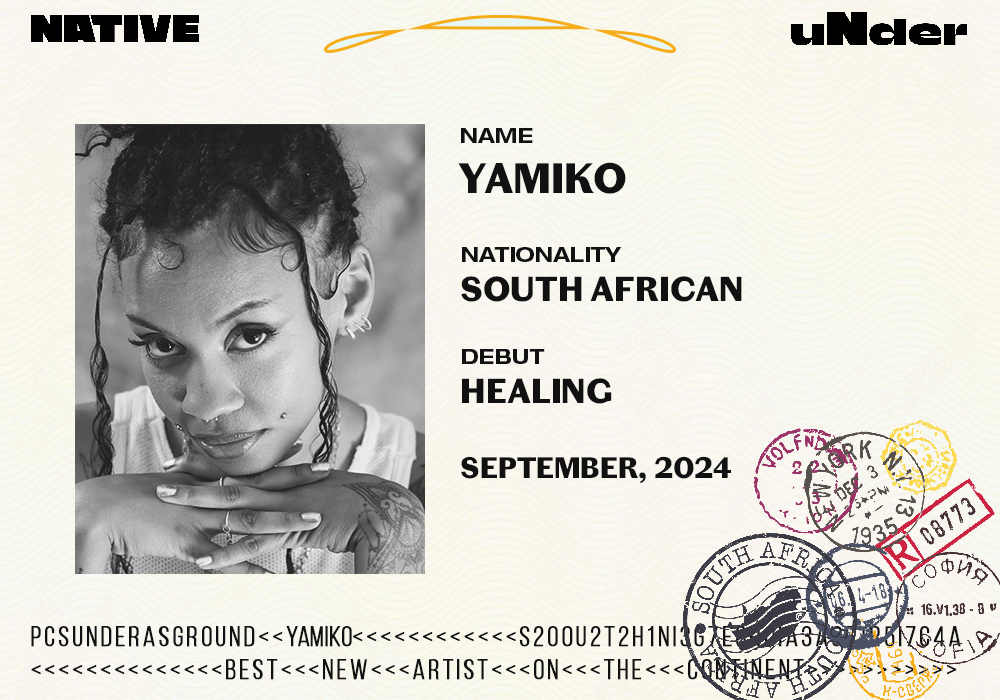
Hailing from Cape Town, South Africa, Yamiko’s soothing vocals hold the weight of her soul-stirring confessions, stacked with positive affirmations and confidence. From her 2020 debut, “Healing,” to her recently released EP, ‘Rear View Mirror,’ Yamiko approaches music with a trained conviction usually associated with far more experienced artists, while possessing an admirably childlike wonder for exploration and deep yearning. Also pondering life with a similarly melancholic flair and representing a South African R&B renaissance are Nanette and Phiwo, who never falter in telling the harrowing tales of non-committal romance and unreciprocated love of the younger generation. British-Nigerian singer, Odeal, is also traversing the soulful terrain with balmy vocals, earning the title of UK’s Brent Faiyaz for his sonorous vocals and hypnotic renditions that house a unique hit-making ability and undeniable charisma. The commanding presence of Konyikeh cannot go unnoticed, when you consider how well she wears her excruciating pain on her sleeve translating them to tactfully curated melodies that throw her listeners into a tender yet agonising turmoil. From Eswatini’s Manana to Ghana-Burkinabé’s Ria Boss, the inimitable contributors on this list are endless. And in a scene ridden with upbeat chants, reflective R&B melodies always serve as the perfect cleanser, drawing our attention back to the quieter moments that allow us to address the largely shunned emotions.
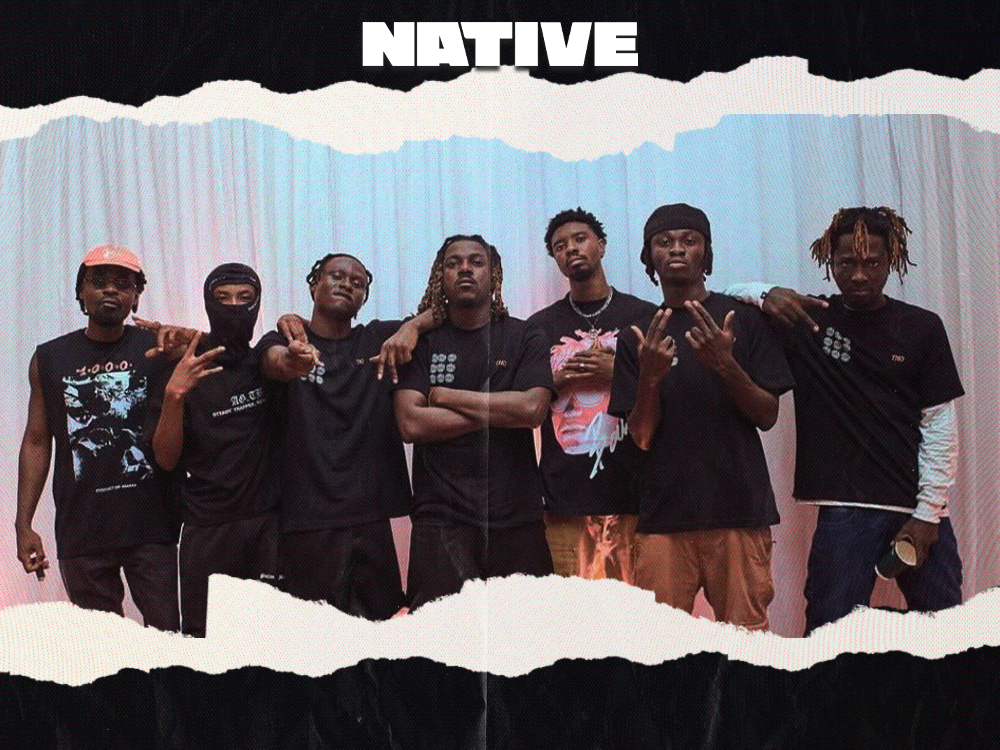
A few years ago, a couple of young, exciting rappers from Kumasi, the capital city of Ghana’s Ashanti Region, breathed new life into the country’s waning Hip-hop scene. The rappers – O’Kenneth, Jay Bahd, Kawabanga, Cedi City Boy, reggie, Kwaku DMC, Sean Lifer, Rabby Jones, Braa Benk, and Yaw Tog – all took major inspiration from Chicago’s famous Drill music, layering the genre’s characteristic hi-hat and rippling bassline with sharp, abrasive lyrics that switch deftly between the Akan language, Twi, and English. The gripping sound ballooned into a full-blown movement which they called Asakaa, a word which was coined from the Twi word “kasa” (which means “talk”), said backwards.
Like the name suggests, the Asakaa boys use drill music as an avenue to freely express themselves, chronicling the realities of living in Kumerica (a portmanteau of Kumasi and America), as they call it, as well as their various personal experiences. “When you listen to UK Drill, it’s like fights and crime, you feel me? But we, the Kumasi people, we talk about our lives, how we want to win so bad, how God should help us, stuff like that,” Yaw Tog explained in an interview with NATIVE a few years ago. The conservative nature of the Kumasi people along with the infamous reputation that drill music had developed, right from the days when it was slowly emerging from Chicago’s South Side, meant that the genre was not initially embraced by the community. Things, however, took a turn in 2020.
Sean Lifer, the co-founder of Life Living Records, is largely credited as the defacto godfather of Asakaa, laying the groundwork for the genre many years before its explosion throughout Ghana; but it was the efforts of Asakaa poster boy Yaw Tog that truly pushed the movement to widespread renown. In August 2020, the 21-year-old, born Thorsten Owusu Gyimah, released his debut single “Sore,” a swaggering statement record that went viral shortly after its release and caught the attention of Uk rap star Stormzy who featured on the remix alongside Ghanaian rapper Kwesi Arthur.
The original single, which featured fellow Asakaa boys O’Kenneth, City Boy, reggie and Jay Bahd, amassed over 3 million views on YouTube just a few months after its release and the remix racked up even more impressive numbers on other platforms. The single also received a number of notable awards, including the Hip-Hop Song Of The Year award at both the Vodafone Ghana Music Awards (VGMA) and the 3Music Awards. While Tog might have given the movement arguably its biggest moment, the efforts of his peers were just as significant in its proliferation.
Shortly before the release of “Sore,” Life Living Records act Kwaku DMC dropped the vibrant “Off White Flow,” catching the attention of the late visionary designer Virgil Abloh, who featured the Asakaa boys on his Apple Music show Televised Radio. In the same year,fellow Asakaa boys O’Kenneth and reggie released ‘Straight Outta Kumerica,’ a 6-track collaborative EP that perfectly encapsulates the subgenre’s essence. The rappers adopt influences from notable drill giants like Pop Smoke, dousing the late rapper’s electrifying style in local dialects to deliver invigorating music that sounds immediately provincial but also holds a global appeal.
The success of the Asakaa boys helped drill spill over into Ghana’s mainstream, inspiring many A-listers as well as a host of other young, talented acts in the country to weigh in and put their own unique spin on the captivating subgenre. One of the many exciting rappers who has embraced the Asakaa sound and is looking to progress the subgenre, both sonically and aesthetically, is Beeztrap KOTM. The Kumasi rising star has been dubbed one of the golden children of Ghanaian music, as his distinctive mix of drill, hip-life, reggae and a number of other genres has quickly made him a standout act.
Born Edwin Eshun, Beeztrap KOTM was raised in Santasi, a suburb of Kumasi. He was born into a musically-inclined family and this helped him develop an affinity for music very early on. As a kid, he served as a drummer in his local church’s choir – where his mum and sister also sang – and he frequently visited his uncle who owned a recording studio. His time at his uncle’s studio helped him learn a lot about making music and this ultimately influenced his decision to chase a career in music.
After making covers of popular songs and releasing a number of warmly-received singles, Beeztrap’s longtime friend and producer Stichez played the then unreleased “Distance Relationship,” to Asakaa stalwart reggie who was intrigued by Beeztrap’s work and expressed his desire to collaborate with the fusion artist. Jay Bahd and O’Kenneth ended up featuring on the single as well and this helped Beeztrap gain significant attention, especially among the ever-expanding Asakaa fanbase. Shortly after the release of “Distance Relationship,” Beeztrap went on tour with the Asakaa boys and he released his first major hit single “Cinderella.”
The posse cut helped showcase just how dynamic the sub genre has become as Beeztrap was joined by Skyface SDW, City Boy, Thomas the Great, reggie, Braabenk, O’Kenneth and Kwaku DMC to deliver love-inspired lyrics over a slow, seductive beat that takes influences from drill, Afropop and Highlife. The single ended up on Beeztrap’s 2023 EP ‘Different Kind Of Gangster,’ an introspective 7-tracker that put on display the rapper’s ingenuity as well as the endless possibilities of Asakaa.
More recently, Beeztrap continues to push the boundaries of Asakaa, slightly toning down the subgenre’s typical animation and pairing it with more airy sounds. Singles like “Fly Girl,” with Oseikrom Sikanii and subsequent remix which features Afrofusion singer Gyakie have massively contributed to giving the subgenre a different dynamic, making it a lot more soothing and accessible to a growing fanbase that has extended beyond the streets of Kumasi. While acts like Beeztrap continue to push Asakaa forward, originators like reggie, Kwaku DMC, Jay Bahd and O’Kenneth are also hard at work in keeping the movement alive as they gracefully embrace new faces in the scene while relentlessly creating and releasing music that captures the distinct energy of Kumerica.
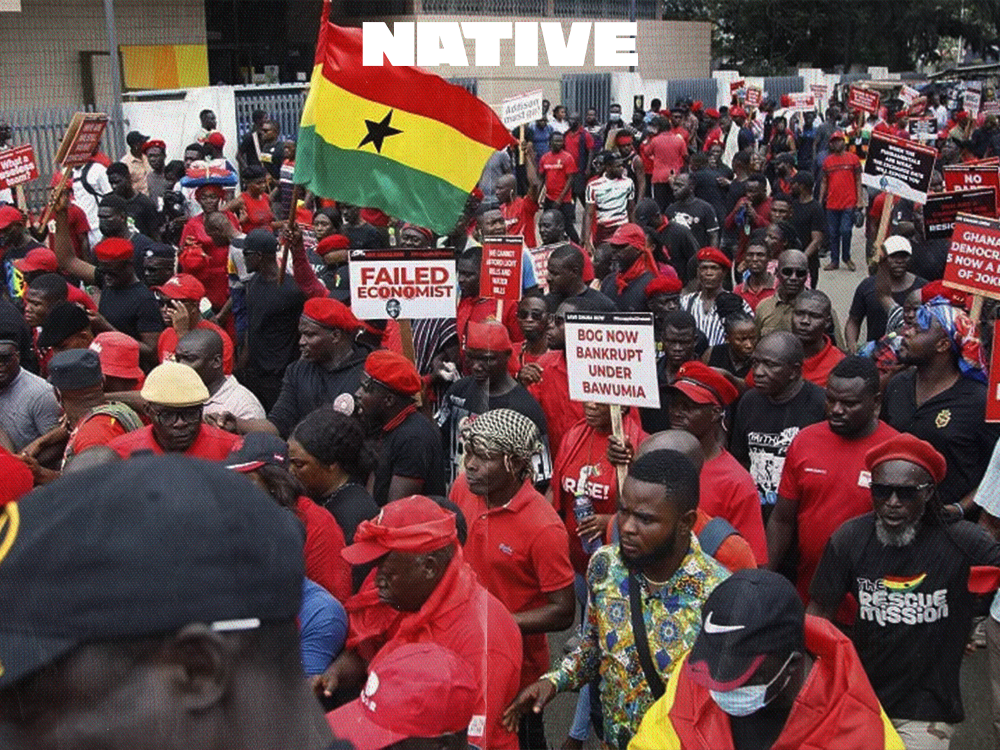
In September of 2023, hundreds of Ghanaians took to the streets of Accra to protest bad governance, high cost of living, and other social issues that have made their lives unbearable under the umbrella theme, “#OccupyJulorbiHouse.” The phrase, comprising the Ga words julor (the thief), and bi (the child), Julor-Bi, means “child of a thief.”
Organized by Democracy Hub (a pressure group in Ghana), the three-day protest began online with social media users calling for the government to fix a range of issues plaguing the country’s people. Between the 21st and the 23rd of September, the protests would move from social media to the streets of Accra. The demonstrations were, however, met with government pushback with hundreds of protestors and journalists being arrested and detained. Following the efforts of several lawyers, all detained protestors were released.
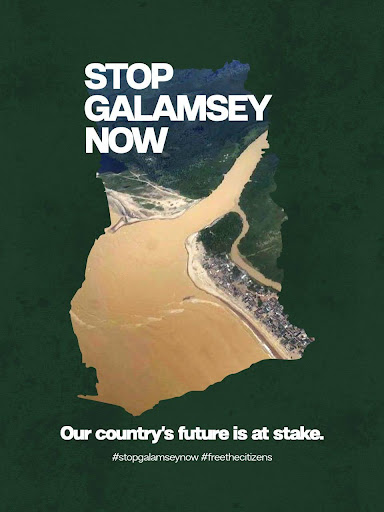
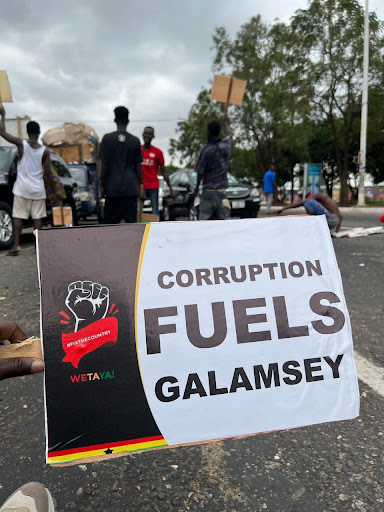
In the 12 months since #OccupyJulorbiHouse, the agitations for a better standard of living have continued, with the government’s unresponsiveness necessitating another major demonstration. As such, Democracy Hub put plans in place to stage a new round of protests from the 21st of September to the 23rd of September 2024. Among the issues that motivated this second wave of demonstrations was the pressing issue of galamsey, which means illegal mining. Galamsey has been in practice for years, and despite promises by the government, including the president, to stop Galamsey, nothing substantial has happened.
Faceless individuals encouraging galamsey would be stopped – Akufo-Addo assures https://t.co/1cWHwpAugH
This past August, Ghana Water Limited reported on the impact that Galamsey was having on the country’s water supply, causing shortages and leading to various communities around the country having less and less access to clean water. In fact, in 2011, a report by BBC Africa stated that Ghana may have to import water by 20230 if illegal mining is not addressed. Currently, 60% of Ghana’s water bodies have all been polluted.
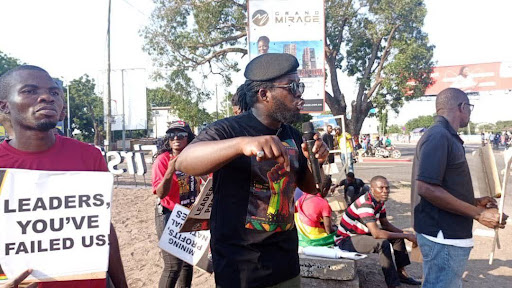
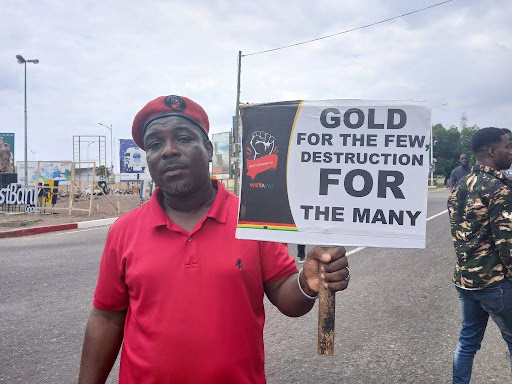
By the afternoon on the September 21st, hundreds of protestors had gathered at the 37 Roundabout in Accra, with placards voicing their grievances. The low turnout did not deter those present, though, and the event helped put pressure on the government to take action against illegal mining.
Photos by Ghfixthecountry on X
What began as peaceful soon turned sour when protesters were once again met with heavy police presence and pushback, reminiscent of what happened last year. Tensions rose, and protesters were arrested enmasse and whisked away to various police stations across the capital.
Unlike last year, the protestors who were arrested in this year’s demonstrations were put behind bars with no access to lawyers and quickly slapped with charges including conspiracy and unlawful assembly, causing unlawful damage, offensive conduct to breach of peace, assault on a public officer, and defacement of public notice. They were arraigned before the court without the prior involvement of lawyers who were moving across Accra trying to track the locations of the arrested protestors.
As Multimedia Group journalist Kenneth Darko told me, “A total of 51 people have been arraigned at the Circuit Court in Accra. As of today (26th September 2024), all have been denied bail and remanded into police and prison custody.” The detainees include a pregnant woman, an asthma patient whose family was denied contact even when they reached out with medication. Other detainees include Ama Governor, a lawyer, YouTuber, and activist; and fashion influencer Glenn Sam. All have been remanded until another court hearing on October 8th and 11th, 2024.
The detainees face eight charges, including conspiracy to commit a crime; namely unlawful assembly, unlawful assembly, causing unlawful damage, defacement of public notice, offensive conduct conducive to a breach of the peace, and assault on a public officer.
Protest convenor Oliver Barker-Vormawor faces all the aforementioned charges, along with an additional charge of stealing. Despite the arrests, he praised the coverage of the proceedings as a well-rounded affair, with everyone from traditional media to other digital and social media platforms putting their best forward and staying committed to presenting the facts of the developing story.
However, as a journalist and a citizen, Darko feels that the charges are unjust. “It has been challenging to separate personal feelings from some developments,” he says. “For instance, the remand of 11 individuals into prison custody seems extreme, especially since the justification stems from inadequate police facilities to house them. Some Ghanaians are questioning why bail wasn’t granted instead of treating detainees, who are still suspects, with such severity. This, among other issues, including the fact that one of the protestors present in court, Felicity Nelson, was not even listed among the accused, according to her lawyer, is quite embarrassing and creates room for further suspicion. The detention of the pregnant woman and the general detention of most of them for over 48 hours (which is unlawful) before arraignment do not speak well of Ghana’s democracy.”
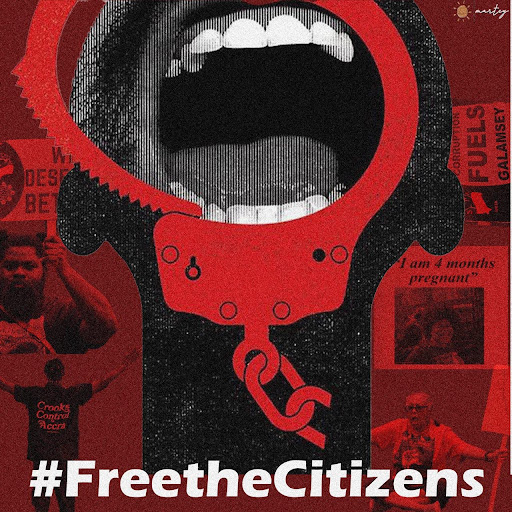
Designed by Forevermartey
In the midst of all this, media outlets like the country’s Daily Guide have painted false narratives of the happenings in their reporting. The arrested protestors have been described as members of Ghana’s opposition party, the National Democratic Congress (NDC). Even worse, a committee from the Youth Wing of the ruling New Patriotic Party (NPP)has shown support for the arrest and called for the prosecution of those arrested while describing them as “hooligans.”
Ibrahim-Anyass “Mo” Muhammed Esq, a lawyer representing the detained protestors, believes that they are not being treated fairly. “I have been in court twice. On the 25th and 26th of September, 2024. My observation of the protestors is that they were not in very good shape,” he says.“Most of them were complaining about the lack of space and the terrible conditions of our cells. That is the general view of cells in Ghana. They are not very conducive places for anyone to be. But there were more pressing concerns about insects, and getting sick without anyone readily assisting them with medication or medical care. I have a client personally who has bemoaned the state of the cell, saying that he suffered an asthmatic attack and still did not get the help he deserves.”
With this year being an election year, Mo explained how the current climate would affect subsequent protests but reaffirmed the rights of Ghanaian citizens to embark on peaceful protests. “The public will be conscious of the process or procedure for embarking on peaceful protests, which the constitution confesses to all citizens of Ghana,” he adds.“This is an election year, so all types of protests or demonstrations will be scrutinized by law enforcement agencies. I think that is why we have seen this level of toughness from the police.
“The police, under the Police Order Act, have the discretion to provide you with the necessary tools – the mode of exercising your protest, the routes to use, and the means to achieve it. The police have sometimes abused the power in the mode of exercising the mode of protesting.”
Graphic By Morganite
While the police have provided updates on matters pertaining to the protests, members of the media and citizens on the ground have poked holes in some of their statements. Particularly the arrest of one Benjamin, who was detained by the police as he was delivering essential products to arrested protesters, as reported by journalist, Olele Salvador. Additionally, a video posted by Joynews on X, shows a family of a detainee being denied access to give drinks and water to the detainee.
🚨ICYMI🇬🇭✊🏾👮🏿♂️: Ben (circled in this photo) is the same Benjamin mentioned in the tweet below who was arrested for delivering essentials to detained protesters. He wasn’t even at the protest. In fact, he was the one delivering the ‘Papaye’ meals to the protesters, which the police… https://t.co/QR8ECYJ4KZpic.twitter.com/IJ7aMtL0Hs
For many young adults, the current happenings are a show of dictatorship, disregard for human rights, and abuse of power by the government. They feel betrayed by a government that has heavily disappointed them with their lackadaisical running of the country’s affairs, which has brought many to a breaking point. Seli, a friend of a detainee, shared how angry this whole process makes her feel. “It started off as a very scary thing, how ‘people in power’ decided to handle the protest. A group of old people somewhere suddenly feel threatened by a group of young, educated people. Protests happen every day in this country, but suddenly, it is this caliber of protests they choose to stifle and intimidate protestors. It is very upsetting seeing the way they [the leaders] have been moving, how they are blatantly disregarding human rights and disrespecting the law. Initially, it was scary, but now I am just angry at their audacity, feeling like they can get away with this. A friend of mine being a detainee was hard to come to terms with, but my friends have come together to create a community where we can cheer and console each other and be there for our friend.”
Mo asserts the need for trust between all parties and the system. “There is general distrust among citizens of the country and the hard lining in what happens to be partisanship treatment of the demonstration, where some people believe the protestors are agents of the opposition and the government does not believe there is genuine concern for the demonstration,” he explains.
“The protestors need to also express their frustration because the issue of galamsey is a national concern, and they feel they need to awaken the government. The effects of galamsey affect our lives as Ghanaians. I still believe protestors need to be treated fairly. The moment someone protests, it means there is a concern to be addressed. Any government should lend an ear to protestors and address them in due time but not immediately stampede with all the force of the state. We need a level of trust within the judiciary, the executive (police), and the citizenry.”
Seli also believes politicians need to understand their role in governance. “My perception of the government has not changed. I never thought they were good people. There is this misconception that ‘people in power’ are powerful, that they’re masters, but what they fail to remember is that they are servants, public servants. They are supposed to serve the people, and this has just reminded me of how much of a dissonance there is between what their actual job is and what they think their jobs are. This has proven to me that they are really committed to destroying and tearing this country apart just to fill their pocket.”
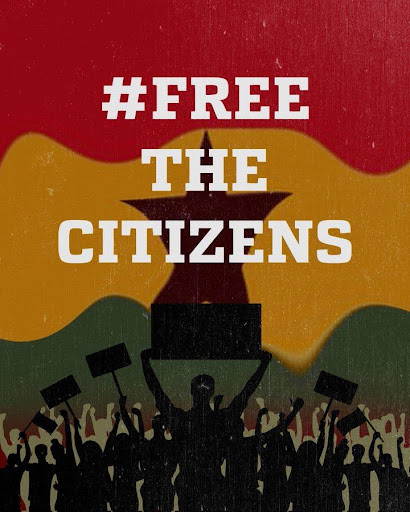
Across social media, people are calling out organizations, celebrities, and anyone of influence to draw attention to what is happening in Ghana. The push for the release of those arrested under the #FreeTheCitizens campaign on social media is quickly attracting attention, with another protest taking place from October 3rd to 5th to demand the release of the arrested protestors. With most of the detainees still awaiting their day in court, it’s left to be seen what the full ramifications of these arrests will be.
The issue of Galamsey should be treated as a national emergency and not peddled as political party disputes. The stance of the police and judiciary in handling this case sets a bad precedent that undermines the rights of the people and tenets of the constitution, which states the protocols that should be adhered to when it comes to issues like this. Sections of the youth, despite state pushback, remain committed to not only pushing for the freedom of the detained protestors but also a ban on Galamsey, among other pressing issues affecting the state of the country.
In June 2022, PDSTRN, born Bennett Obeya, captivated rap fans around the country with his performance in the eighth season of the Hennessy Artistry VS class. The Lagos-based rapper worked his way through the fiercely-contested competition, impressing judges M.I, Ladipoe and Vector at each round and eventually defeating underground rap phenom BarelyAnyHook in the finals.
“In the underground scene, BarelyAnyHook at the time was someone you wanted to get on your song. To be honest I never thought I was going to win,” PDSTRN tells me of his triumph one afternoon in late August. He seemingly had it all – witty wordplay and punchlines, a menacing flow and most importantly, personality – but just about a year before his rise to the top of the 2022 VS class, the rapper had choked in the first round of the same competition, and vowed never to return.
Born in Ojodu Berger, a bustling suburb that sits between Lagos and Ogun state, PDSTRN didn’t always harbor dreams of being a rapper. A nomadic childhood which saw the rapper shuffle between Lagos and Toronto meant he didn’t really fit in with his peers and he also didn’t settle on a career path as early as other kids did. His dad, a retired boxer and avid sports fan, initially wanted a career in sports for him as well but he remembers his mum not buying into the idea. “When my dad saw I had some interest in football as a kid, he wanted me to go to a football academy but my mum wasn’t having that. She wanted me to go to school and get a formal education,” he recalls fondly.
It was during his time in school in Toronto – the 7th grade – that PDSTRN finally found rap and began to nurture aspirations of being a rapper himself. Even though he grew up listening to a lot of music thanks to his grandmother, his mum and her younger sister, rap was largely absent from his early childhood. “My grandma used to play music from artists like Tope Alabi, Baba Ara, Shola Allyson while my mum’s younger sister used to play stuff from acts like Faze, Artquake, and Dr Sid. My mum, when she was around, would play stuff from Brick & Lace, Enrique Iglesias, Shakira, Spice Girls, and a shit ton of Bollywood,” he tells me of his early musical influences.
Nas’ ‘Godson,’ however, represented PDSTRN’s gateway to rap music. After he got introduced to the legendary American rapper’s sixth studio album by some friends in school, he went down a rabbit hole of rap history, acquainting himself with seminal albums and discovering artists that have since helped shape his own artistry, and have also remained prominent sources of inspiration. “After discovering Nas, I started to find other rappers,” he recalls. “I began to listen to a lot of Cudi, Eminem, Goldlink and a couple of other rappers.”
After his introduction to rap, PDSTRN began to write his own bars and freestyle for an audience of mostly friends. “One day I tried rapping in front of a couple friends and they thought I did okay but one guy goes: ‘Nah bro that was pedestrian.’ I didn’t even know what the word meant in that context so I went home, looked up the word and then decided I was going to choose that as a stage name,” he tells me of his early freestyling days. In 2018, he moved back to Lagos from Toronto and after months of sharpening his rap skills, and signed up for that year’s Hennessy VS class. Unfortunately, he was not accepted on his first try and decided to try again the following year where he got knocked out in the radio rounds of the competition.
He tried for a third time in 2021, this time far more confident and armed with even more sharp bars and punchlines, but he couldn’t make it past the first round again after choking on stage. “I remember going into the restroom and just bawling my eyes out because I knew there was nobody there that I couldn’t beat with what I had,” he says, recounting the unsettling experience. After a fruitful conversation with rap legend M.I led to him seek professional help for his stage anxiety, he returned in 2022 and prevailed in swaggering fashion.
Since his victory at the 8th edition of the competition, PDSTRN has slowly but surely established himself as both a competent rapper and a well-rounded act with a desire to constantly expand the scope of his music. “The Prologue,” a two-pack single which came a few weeks after his Hennessy triumph, put on display the sort of sharp punchlines and fiery energy that helped him come out on top in the 2022 VS class, as well as his eclectic taste and influence. This desire to be a musical omnivore of some sort has helped foster collaborations with like-minded acts like Sholz, one half of NATIVE Sound System, who he is set to release a collaboration tape with.
“Shoutout to Temi, [Discovery Deck founder]. At the time she was still at Discovery Deck and I used to send her a couple of my songs and she would give me some feedback. One day she just hit me up and tells me Sholz is working on something and she gives me an address to go meet him in an apartment,” he tells me, explaining how his relationship with Sholz started. The two hit it off fairly quickly and worked on a couple of songs together, one of which ended up on Sholz’s 2023 EP ‘Breakfast In Lagos.’ A few months after their first encounter, Sholz reached out to the rapper to work on something more elaborate. The two began ideating about the project in October 2023 and about eight months later, ‘ROCK, PAPER, SCISSORS’ was officially complete.
PDSTRN speaks of the forthcoming tape highly. He also relishes the opportunity to have worked on a project with Sholz, the talented producer and DJ who he describes as very meticulous. “From the sequencing, to the recording, to skits, even down to the sound of my chains. I learnt from him that these really minute and intricate details can be very important to the development of an entire project.”
“Idan,” the lead single off the project, gave a teaser of what’s to come, once again showcasing PDSTRN’s dynamism and lyrical prowess, both of which is nicely underscored by Sholz’s infectious drums.
And while ‘ROCK, PAPER, SCISSORS’ promises to provide refreshing and distinctive music from two incredibly gifted acts, for PDSTRN, the ultimate goal with this project and his music in general is mental emancipation. “Whether I’m talking about women, money, whatever it is, the goal is always to present my actual reality. Art needs to be angry, it needs to be provoking. I believe art is an instrument for social change and so whatever form of art you’re doing, I believe it has to provoke people in some way. That’s how I want people to take my music.”
African history and culture are steeped in oral traditions and storytelling, but as tales are passed down through generations, their details often evolve. The transmission of these stories over centuries has led to variations—embellishments have been added, details have been lost, and regional differences have emerged. As Halloween approaches, we thought it’d be a great opportunity to re-enact some of these timeless tales.
The NATIVE invites you to participate in our horror short story competition, NATIVE Horror Stories! We want to hear your most terrifying ideas, inspired by the rich and diverse heritage of Nigerian myths, tales, legends, traditions and more. We challenge writers to engage in research-driven exploration of these folklores and traditions, unearthing lesser-known details, interpreting the historical contexts, and crafting fresh narratives that infuse horror into these timeless tales we’ve been told all our lives.
JUDGING
Final selections will be made by Nigerian fiction writer, Eloghosa Osunde.
Eloghosa Osunde is a multidisciplinary artist. Author of critically acclaimed Vagabonds! (2022) and Necessary Fiction (forthcoming 2025), they are the winner of MoAD’s African Literary Award 2023), the Plimpton Prize for Fiction (2021) and an ASME Award for Fiction (2022). Their debut novel was widely lauded: a New Yorker Best Book of The Year, a New York Times Editors Choice, a NoName Book Club Pick, a finalist for a host of notable awards; and their work has been published by Paris Review, Granta, Georgia Review, Atmos, Lonely Planet, Best American Short Stories among others.
For the better part of the last decade, popular music from South Africa has undergone a seismic transformation. Amapiano, the generational, almost spiritual variant of Dance music that was born in the country’s townships, has gone on to dominate dancefloors both at home and abroad. Crowning stars such as DJ Maphorisa, DBN Gogo and Uncle Waffles, Amapiano’s dominance has led to a marginalisation of other genres in the mainstream conversation, with radio and show promoters casting aside acts that don’t incorporate the now inescapable log drum.
Just over a decade ago, a similar shift was occurring in Nigeria. As Afro-Pop rose to prominence, led by stars like Davido, Wizkid and Tiwa Savage, any artists not conforming to the sound of the day were alienated by the gate-keepers and industry tastemakers. What happened next was a cultural phenomenon known as the Alte movement, with artists and the communities that surrounded them – directors, producers, stylists – bucking against the machine, and making the music they felt like making. This movement propelled the likes of Burna Boy, Tems, Odunsi The Engine, Cruel Santino and more, as they started speaking directly to their fans, realising there was indeed a space for alternative music in West Africa.
Enter: Internet Girl, the three-piece South African band attempting to do the same, by breaking all the rules. Fusing Punk-Rock with Alternative Pop and an undeniable Hip-hop influence, the trio possess a distinct sensibility to deliver music and visuals that at once feel fresh and alternative; but somehow viscerally familiar. But it’s been a long road to this point. “It was very hard initially,” Matthew “Neese” Burgess, Internet Girl’s drummer and producer tells me via Zoom. “We were not focused on South Africa because we were like, ‘We don’t care about the African territory, we’ll just make music for the US because no one is going to fuck with us on this side.’ [So] we were doing that for a while, we weren’t playing shows or getting booked for shows but we were streaming well. Since last year, we’ve had a rethink and now know that we can manoeuvre these things so people in South Africa and Africa can fuck with us in terms of the swag that we bring and our image online. If you bring a sense of Hip-hop into your brand, people will like it even if you’re making guitar music. That’s what we’ve done and it’s easier to get booked for shows. We know where we fit in the scene a little better. We do care about our local territories and we appreciate everyone that fucks with us.”
The band is made up of Burgess, lead vocalist Ntstika “TK” Bungane, and guitarist/producer Griggs, who Bungane and Burgess met in 2019 after they found videos of him playing their songs online. As Internet Girl, the trio has released a wide range of projects exploring everything from the dark hole of melancholia to the zonked out escapism of indulging in narcotics. And after years of living in separate cities and figuring out their process, their 2024 project, ‘ROLE MODEL,’ finally saw them deliver a body of work that bears all the hallmarks of the grandeur and candour that Internet Girl aims for. A deluxe version of ‘ROLE MODEL’ houses “PULL UP (WHERE THE MUD BE),” their biggest song yet, that came about after Burgess flipped a melody he’d heard in a TikTok ad.
Alongside an exclusive premiere of the Royd-directed video for “PULL UP (WHERE THE MUD BE),” The NATIVE spoke to the trio about their career and the process of putting ‘ROLE MODEL’ together.
TK
Where did the name of the band come from?
TK: At a point, Matt and I were in a previous group and we just needed to change the name and everything. We were sitting somewhere and he was like, “Something like an e-girl or an internet girl,” and we just went with it.
Griggs: That’s the least interesting thing about the band because it doesn’t mean anything. It’s just a cool name. There’s no meaning behind it.
How did you all meet?
Neese: TK and I met in primary school. We’ve been homies since grade five. We were 10-year-olds so that’s about 15 years now. We’ve been homies for most of our lives and we were making music in high school. We met James over Instagram in 2019: he posted guitar videos of him playing our music and we liked it. He flew down from Cape Town to Jo’burg because TK and I were living in Jo’burg at the time. We just got to know each other and made music together. It worked out and he joined the band.
How has the dynamic been moving from being a duo to being a trio?
TK: It’s not been a big shift because with James, from the moment I met him, it felt like I’ve known him for a while. He has a cool temperament and likes the same music as us so it was quite easy to form a group and add him. With regards to responsibilities, they’re both producers and [they’ve taken] that role with the production we’ve had in the past. Now, we’ve all developed our skills differently and started taking on different responsibilities and roles.
Neese: We all have our different roles but it’s kind of naturally just evolved based on our different skills and what we’re good at. Everyone contributes to different things but it works out well and we’re all happy with the dynamic we have now.
The music you make has evolved from a heavy Trap influence to more Indie-Pop and Punk. What motivated that evolution?
Neese: I think we’ve learned to combine genres because we’ve been fans of different genres at different points in our lives. TK and I used to make a lot of Hip-hop and Trap stuff then we used to make a lot of Indie-Pop stuff because that’s the music we were listening to at that point. I used to listen to a lot of Electronic music back in the day and that’s how I started making music. As time has gone by, we’ve figured out a good way to combine all these things and it’s created a unique sound.
Griggs: If I have to think back to when we started the band, what we all brought in was very different and, after five years, we’ve all become so much better at different things. We are all capable of doing everything because you’re spending your time with everyone and your general music-making ability is all-encompassing rather than just doing one thing. For example, when we’re in the room together, everyone contributes to every piece and it’s fun.
TK: With regards to the different genres, it’s always a reflection of what we’re listening to at the time. Our tastes change and that comes out in the music.
What was the process of making ‘Parasocial Interaction?’
Neese: ‘Parasocial Interaction’ is the EP before ‘ROLE MODEL.’ That EP is kind of a collection of singles similar to ‘The World I Love’ before it. We didn’t sit down and say, “We’d make an EP that sounds this way.” We were at a weird point in our career where we were living in different cities and weren’t spending a lot of time in the studio together. It was a true parasocial interaction. That whole project happened over the internet because we weren’t playing shows or doing anything. We were sending each other stems back and forth to do the songs and, I think, that was the inspiration behind it but I wouldn’t say the music is very thematic in that sense.
Griggs: I think ‘ROLE MODEL’ is our first piece of music that’s so cohesive because, after this much time in a band, we finally felt like it was the best representation of a conceptualised project representing what Internet Girl is about.
Neese
How did you approach making ‘ROLE MODEL’ ?
TK: ‘ROLE MODEL’ started towards the end of our ‘Parasocial Interaction’ era. We call it the Internet Girl flop era because we weren’t doing much together and we decided to make sure the next project was done properly. We left too many loose [ends] and weren’t intricate on ‘Parasocial Interaction.’ We wanted to go in on ‘ROLE MODEL’ and I think we did a good job.
What was the best thing about working on ‘ROLE MODEL’ together?
Neese: I think the best part was the experience of making it. We learned how to work in studios together properly whereas a lot of our music before then was done individually even when we lived together. I would work on music in my room, James would work on music in his room and TK would write in his room. Then we’d come together later to put it all together but, with this one, we just learned how to sit in a room together and make it all work.
Griggs: I had a lot of fun working on the project. It was one of the most fun times I’ve had because I was just spending time with the boys and working on music. We’re all like best friends and making music is just what we do together.
TK: I think with the previous projects there was a little bit of doubt in terms of what sounds to do. With this one, we were sure it was the right direction to go in and we just did it. I was also a little bit more involved in the production process and just contributed more to how everything sounded.
TK said that he got involved with production a lot more on ‘ROLE MODEL.’ What was the approach to making the songs, was it instrumental first and then writing or was it the reverse?
TK: The first song I did was the song, “ROLE MODEL.” I had just returned from work and I was pissed off so I needed to get it out. I didn’t have the boys with me but I needed to make the song so I had to work on it. I got home and started working on the guitar and playing around with the drum loop on FL. I made the most terrible drum sounds just to get the rhythm and I put it all together. The next day, I was pissed again so I wrote on it and sent it to the boys. So for me, the idea often came first before the actual production took place.
Griggs: It was half-half. “EVERY MAN FOR HIMSELF,” “ROLE MODEL,” and “COKEHEAD” started as rough guitar ideas and vocals that were then produced but instrumentals were premade for the rest of the songs on the project before TK wrote on them. I think it’s also fun to have these different approaches to it because it shows we can come together and make music in many ways.
TK: I think you can also hear the difference between those tracks even though they are on the same tape, they kind of exist in two different sections.
You also live in South Africa, which is having a huge global moment with Amapiano right now. How have you navigated making music that falls outside of that?
Neese: It was very hard initially. We were not focused on South Africa because we were like, “We don’t care about the African territory, we’ll just make music for the US because no one is going to fuck with us on this side.” [So] we were doing that for a while, we weren’t playing shows or getting booked for shows but we were streaming well. Since last year, we’ve had a rethink and now know that we can manoeuvre these things so people in South Africa and Africa can fuck with us in terms of the swag that we bring and our image online. If you bring a sense of Hip-hop into your brand, people will like it even if you’re making guitar music. If you have a Hip-hop swag, dress well, are cool online and have that influence in your music as well, people will like it. That’s what we’ve done and it’s easier to get booked for shows. We know where we fit in the scene a little better. We do care about our local territories and we appreciate everyone that fucks with us.
Griggs: There are aspects of what we do that are novel but there are also parts of what we do that are familiar to people and it makes it palatable to them. There’s something about it that’s not only not been seen but also not heard before. We also want to show the world that alternative music can come out of South Africa and the greater African region that’s not Amapiano or Dance music.
TK: People didn’t know what to expect or what to do. They used to be like, “Who are these people, two white dudes and a Black guy?” Now it’s cool. When we go to shows now, people know the lyrics and show love. Getting that love is very satisfying.
Giggs
How was “PULL UP (WHERE THE MUD BE)” conceived?
TK: “PULL UP” started with Matt. Matt saw a TikTok for an ad by a brand that had a melody. He made a flip of the melody and posted it on TikTok. He didn’t tell anyone but it started blowing up more than any of our other TikToks. People loved the beat. I was already writing some songs with the guitar to finish off ‘Role Model.’ I had just broken up with my girlfriend and I had stuff to say. I pulled up to Matt’s crib to write and he told me that he needed me to write to the instrumental of “PULL UP.” I wrote to it and he was like, “It is fire, we need to drop it.” Even the label wasn’t too sure because it’d fuck up their release plan but Matt insisted that we needed to drop it. We posted a new version of the song with vocals on and that started blowing up too. We did a TikTok saying we’d drop the song if we got 10,000 comments and people started getting pissed and asking why we were gatekeeping the song. I had no idea it would go crazy like it has but it ended up changing our lives.
Do you think that experience has changed your approach to making music?
TK: It has given us more confidence in terms of going into the studio and knowing that people fuck with our music. I feel like the perception has changed and people think we’re dope so they’re more open to accepting what we’re putting out which just gives you more confidence.
Neese: Also, I think it’s helped us understand that you can’t be too rigid with your release schedule. You can have a schedule for sure but you need to be flexible otherwise you’ll shoot yourself in the foot.
Griggs: There was no spend. We had spent all our budget on the ‘ROLE MODEL’ project so all the promo on TikTok and creating the cover art was done in-house by us but it has done better than every song that we put time into and that speaks to the power of social media and branding stuff well.
Finally, the video for “PULL UP (WHERE THE MUD BE)” is here. What was the idea for the video?
Neese: We worked with our homie, Royd, on that video. He’s done all our video stuff and we just gave it to him. He was like, “I want to do a black and white video and I want it to be super shiny because the song just has a black and white feeling.” We just trusted him and showed up on the day. Usually, we’re very involved in the process but we just decided to trust him because we were very busy. We pulled up on the day and it was so sick. Maglera Doe Boy was there and it was dope. We’d met Maglera before but it was cool to see him in that environment and watch him perform for the camera.
Griggs: Royd has known Matt and TK for ages so it’s like we’ve built this world visually and sonically with a core group that understands our vision. There are not too many chefs in the kitchen. He’s our guy and we’ve worked with him for so long that he understands us and can pull off something crazy. The video turned out great and we’re so stoked.
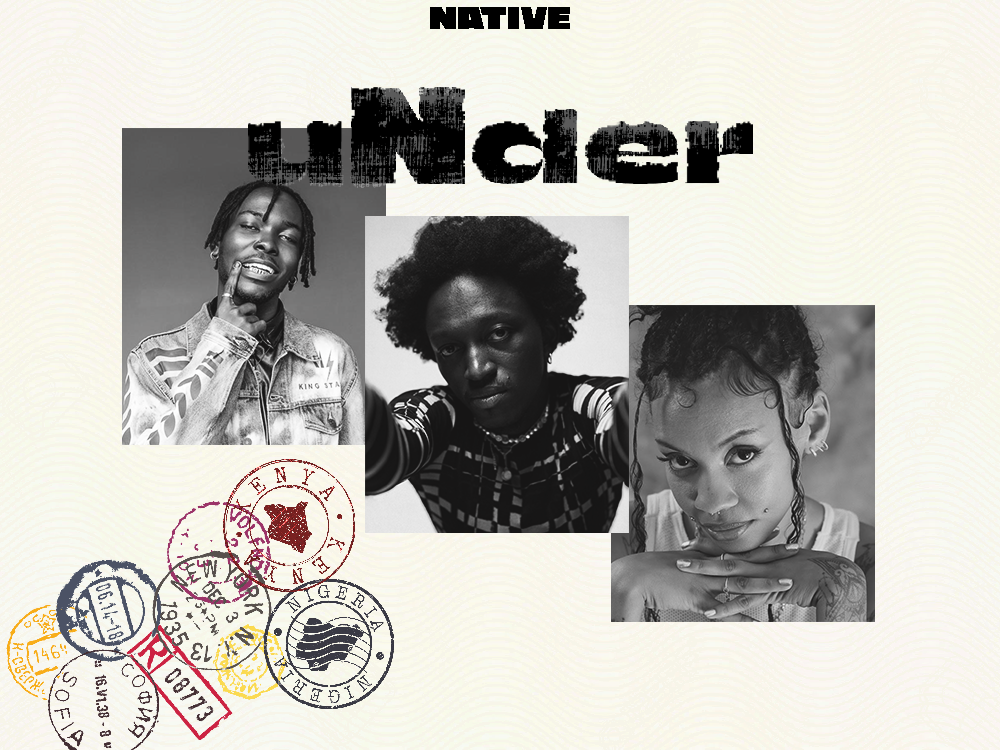
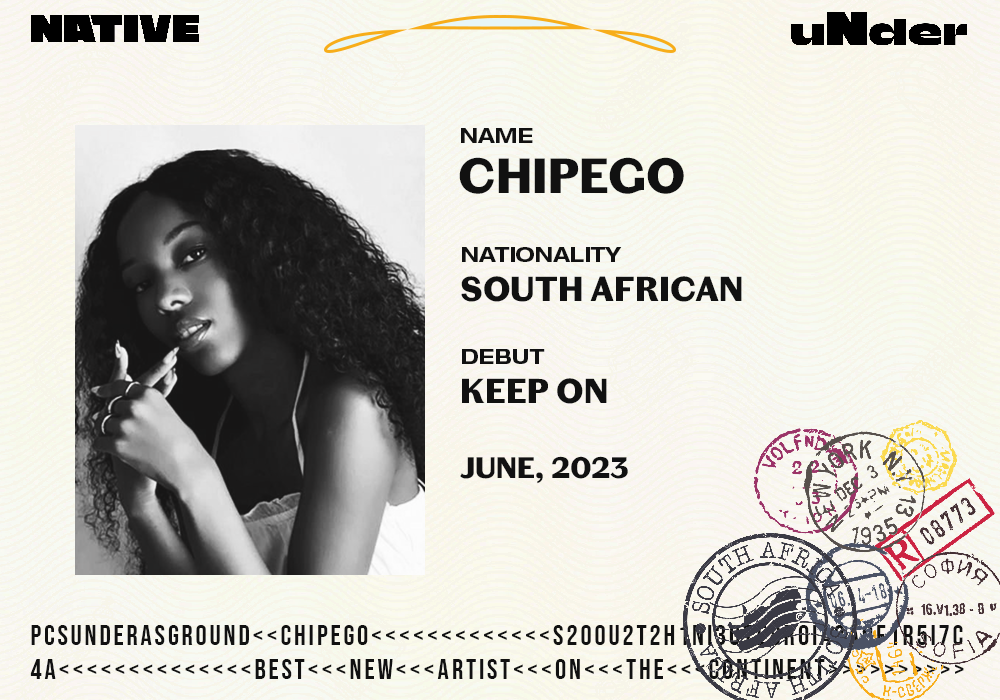
In a music music landscape where the underground is often overshadowed by the mainstream, and niche artists find their influence dwarfed by far-reaching big-label budgets, uNderstands as the heartbeat of discovery and the pulse for those searching for something raw, authentic, and unapologetically different. It’s more than just a platform – it’s a movement that’s elevating voices; curating and spotlighting artists who embody the raw and untapped essence of their scene.
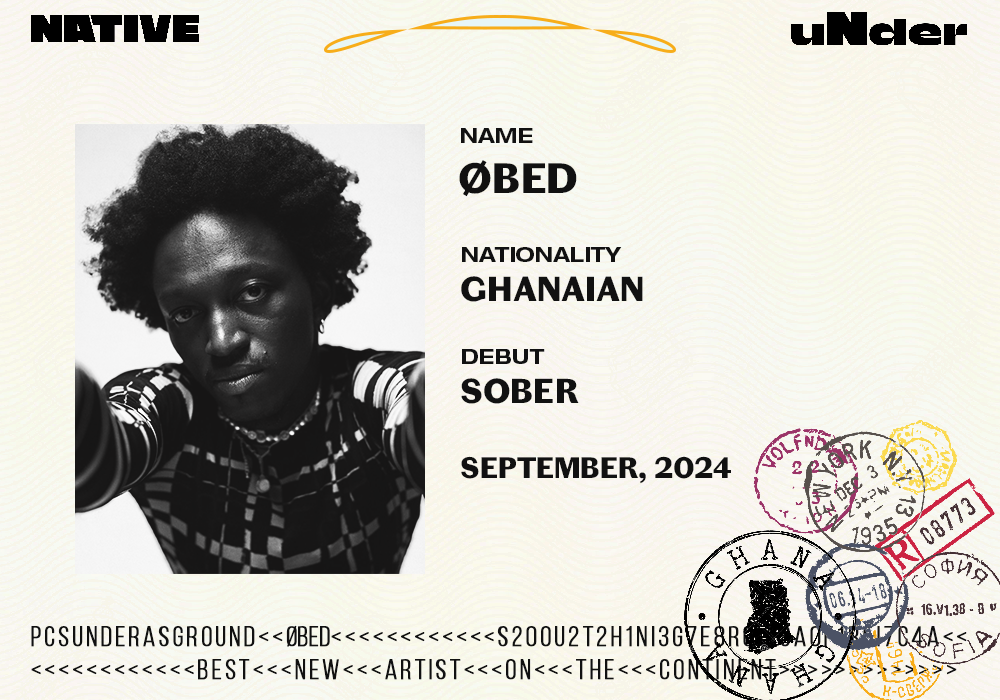
This month’s uNder highlights Yamiko, Øbed, Young Lunya, and Ema Onigah, who represent the heart and soul of their respective scenes. Each of them unafraid to put their unique spin on local contemporary music, this crop of artists are not only reshaping the underground scene, they are proving that their time in the spotlight is inevitable.
Yamiko’s voice is pure emotion, wrapping listeners in the raw, soul-stirring energy of RnB, while Øbed, a rising radical force from Ghana, comes through unafraid to challenge norms and push boundaries with his unapologetic approach to music. In Uganda, Young Lunya’s sharp flow and storytelling prowess make him one of the most exciting new rappers to watch, blending tradition and innovation with ease. From Nigeria, Ema Onigah is blending the old and the new, and creating a sound that’s unmistakably his own.
Yamiko
For Fans of: Tems, Konyikeh & Rowlene
Combing through Yamiko’s discography, it was difficult to shake the SZA vibes coursing through her releases, so it didn’t come as a surprise when Apple Music recommended “Kill Bill” as the warm synths of Yamiko’s “Blest” closed out. Unlike the American superstar, who many believe makes music that feels too vulnerable – bordering on self-depreciating – Yamiko’s messaging rests easily on the ears. On her biggest track yet, “Blest,” airy, soothing vocals hold the weight of her optimism as she chooses intentionally to focus on the positives for her peace of mind. “See I could focus on everything that’s going wrong and put it in a song/ And I’d relive all of those things, this time I sing along and act surprise when they actually manifest,” Yamiko hums over low drum vibrations and light cymbal taps, reiterating the importance of breaking the cycle of recollecting regrets.
From her 2020 debut, “Healing” to her recently released EP, ‘Rear View Mirror,’ the Cape-town born artist is coasting the lines of R&B with a trained confidence usually associated with far more seasoned artists. Her heart-warming renditions and soothing melodies, characterised by notes of utmost conviction still possess an admirably childlike curiosity and deep yearning. On “Curious,” Yamiko’s lush vocals fall over the backdrop of more Pop-inclined drum patterns, creating a groovy atmosphere for her to explore new romantic connections. “Deep Innit,” assisted by Surreal Sessions, adopted a slow Dance soundscape which later picks up along the hook with unexpected log-drum elements. Despite the track’s reverberating bass, Yamiko’s vocals stay faint and warm, drawing attention back to the cool tones of the tune.
In a scene ridden with upbeat chants over high-tempo instrumentals, slowed-down R&B melodies always serve as the perfect cleanser, drawing our attention back to the quieter moments that allow us the opportunity to address largely shunned emotions. – N.I
Young Lunya
For fans of: Khaligraph Jones, Buruklyn Boyz, and A-Reece
Young Lunya raps with the certitude of someone that has a lot to say and knows exactly how he wants to say it. Born and raised in Tanzania, his methods and messages have evolved across a career that has seen him morph into one of the most well-regarded acts in East Africa. All this while maintaining his Hip-hop credentials thanks to a plethora of hard-hitting tracks that distil his thoughts of life in Tanzania and his zest for hedonistic thrills into potent missives. Young Lunya first started his career as part of the rap trio, OMG Tanzania, working alongside acts like Salmin Swaggz and Con Boi on explosive cuts like “Kimbia” and “Swing” as well as more sung-rap melds like the Jolie-featuring “Paradiso” and “Sitaki.”
He launched his debut career in 2019 with the release of “Wanene Studio Session” in 2022, spitting rapid-fire bars about his quest to get money and live his best life regardless of what’s happening around him. It’s a tact that he has returned to several times in recent years, using freestyle sessions to get things off his chest while building a solid catalogue. He won the Hip-Hop Male Artist of the Year and Best Hip-Hop Song at the Tanzania Music Awards in 2022 and then, later that year, signed a deal with Sony Music Entertainment Africa, becoming the first Tanzanian rapper to ink a deal with the label. His debut single, for the label “Vitu Vingi,” soon followed, showing his dexterity with Swahili and thrilling fans in the language.
In 2023, he collaborated with Kenyan rapper, Khaligraph Jones, on the vociferous rap anthem, “Stupid,” as they flexed their lyrical prowess and pronounced themselves the top dogs in Eastern African Hip-hop. Lunya’s 2024 single, “Mbwa mwitu,” showed a more melodic edge to his style as he experimented with trap influences on the lead single for his debut album, ‘Mbuzi.’ Part statement of intent and part coming-of-age story, ‘Mbuzi’ holds the sum of Lunya’s thoughts on family, his career breakthrough, and love, with contributions from colleagues like Abigail Chams, Marioo, and Micky Singer. It’s a cogent and necessary introduction to one of East Africa’s most compelling voices. – W.O
Ema Onigah
For fans of: Kaestyle, Azanti, TAR1Q
The most obvious thing that first sticks out about Ema Onigah’s music is his kinetic flows. The Cross River native uses his silvery vocals like a percussive instrument, raining down syllables on beats like a skilled instrumentalist. On “Ave Maria,” his latest single, the Lagos-based singer quips about his endearing love interest, using sharp, fluid, and intricate rhymes to paint an intimate imagery about a certain Maria. Similarly on his debut single “Net Worth,” Onigah attacks Ozedikus’ groovy beat in the opening seconds with a quick-tongued rhyme delivery that would give most rappers a run for their money. While this peculiar ability has become Onigah’s calling card, there’s much more to his music.
It’s no surprise that Onigah developed a dynamic and intricate flow. The building blocks of the singer’s career were laid in his local church in Lagos where he served as a drummer for an extended period. This helped him develop a profound understanding of flows and rhythms as well as the framework of his distinctive approach to Afropop. After cutting his musical teeth in church and further fine-tuning his craft, he released “Net Worth” in 2020 and followed up two years later with “Playful Someone” alongside frequent collaborator Ozedikus.
“Playful Someone” once again showcased Onigah’s motor-mouthed flows, but more importantly it also highlighted Onigah’s songwriting chops as well as his ability to conjure incredibly sticky melodies. These abilities were put on full display on 2023’s ‘DUST OFF,’ a 6-track EP that married rich production – courtesy of him, Ozedikus and Tuzi – with some inventive songwriting. Cuts like “SIDE MIRROR,” the evocative “FOR BOYS” and his biggest solo single to date “DEY SO,” earmarked Onigah as a promising and imaginative musician who looks to offer something different from the saturated run-of-the-mill Afropop that’s being churned out. – B.A
Øbed
For fans of: Mannywellz, Tems & July Drama
Øbed, a rising star in Accra’s music scene, is captivating audiences with innovative sound and versatile artistry. Selected as Spotify #FreshFinds Africa in July 2024,. his music blends Alternative Jazz, Soul, and Afro influences, creating unique hits that stand the test of time. Øbed, who describes his music as “euphoric and uplifting,” is also the co-founder of “Superjazzclub Collective” a group he started with friends and collaborators Seyyoh, Ansah Live, BiQo, and Tano Jackson., together explore different elements in the music under the guise of the Jazz genre.
His debut single “Sober,” was released in 2018 in a collaboration with peers from Superjazzclub. On it, he produced a sound marked by Afro-percussive elements and soulful synths. His ability to craft an engaging listening experience makes him a stand-out artist for his talent in Ghana’s Alternative music scene.
Øbed’s journey is strongly rooted in his upbringing, learning the piano from his father at the age of six, and growing up around music in church, where his skills expanded in keyboard and guitar. He began experimenting with music producing after being inspired by Jon Bellion, and has produced for numerous projects including Amaarae’s “Spend Some Time.” and Cruel Santino’s “Cincinnati Pumpin!!”
Øbed’s music is distinctive for its emotive energy, blending old Soul, Funk, and Jazz with modern production. He wants his listeners to have feelings of ecstasy, melancholy, and euphoria when listening, and continues to experiment with new sounds and genres to create timeless music that speaks to both the past and the future and aims to bring Ghanaian artistry to the global stage. – N.S
Holding in partnership with The NATIVE, NTS, and Numero Group amongst others, each event will feature screenings of ‘Konkombe: The Nigerian Pop Music Scene (1979),’ from the Cannes award-winning, 14-part musical docuseries ‘Beats of The Heart.’ Beaming in on one of the most innovative periods of Nigerian music, ‘Konkombe: The Nigerian Pop Music Scene’ narrates how native styles like juju, Afrobeat and highlife all evolved in step with the country’s social, political and spiritual currents and created iconic stars like Sonny Okosun, Fela Anikulapo-Kuti, The Oriental Brother, and the Lijadu Sisters.
Speaking of working on ‘Konkombe,’ Yeye Taiwo, one half of the Lijadu Sisters, remembers it as a “beautiful” experience. “When they came, my daughter was about 8 months old, and they watched us rehearse in this house you see in the film,” she says. “The house had two floors, and we would care for my daughter upstairs, and rehearse with the musicians downstairs. And so all day, they would see myself or my sister, just walking up and down the stairs… back and forth, back and forth, all day long… holding my daughter. But when we were upstairs, we kept singing and rehearsing, as if we were in the same room.
“I would be coming downstairs holding the baby, and still singing the song with the band, and everyone would be like, “Wait. what, are you still singing the song with us?!”, and laughed. I kept the beat with the band, and kept singing along with my sister although we were on different floors.”
Diana Marre, the wife of the series’ filmmaker Jeremy Marre, remembers the sisters as a beacon of the fight for women’s justice. “Beside being struck immediately by their beauty, the outstanding memory of them is their determination to fight for women,” she says. “Women were not to be relegated to the background of Nigerian society. Whilst they were well aware of the glamorous image they projected on record covers and publicity material, they talked bitterly about the record companies.”
Widely remembered for their forward-thinking music that blended elements of rock, afrobeats, funk disco and soul, the Lijadu Sisters are an integral part of Nigeria’s music history as well as innovators in their own right.
Inspired by the month-long, globally-influential Festac ‘77 festival, ‘Konkombe’ captures the courageous Lijadu Sisters at the center of the wider Nigerian musical movement of the ‘70s alongside contemporaries like Benjamin “Kokoro” Aderounmu, King Sunny Adé, I.K. Dairo, and the Sisters’ second cousin Fela Aníkúlápó Kuti, before they moved to the US as political refugees.
Timed around their birthday on October 22nd, the upcoming events will include a conversation with surviving sister Yeye Taiwo Lijadu, who recently dove deep into the duo’s legendary career, legacy and resurgence in a conversation with The New York Times.
Out this Friday, September 20th, the remastered edition of 1979’s ‘Horizon Unlimited’ marks Numero Group’s inaugural LP/CD release with The Lijadu Sisters, restored in the higher fidelity than ever before, and presenting hits like “Come On Home” like they have never been heard.
The package also includes the first-ever transcription of the record’s lyrics in both Yoruba and English, corrected album credits and original artwork. In addition to this, a redesigned music video for opening track “Orere Elejigbo” is out today.
There is a bar called Under The Tree just a short walk from Benin’s Samuel Ogbemudia Stadium and, 24 hours before the Rema Homecoming, locals are chatting excitedly about what a concert like this represents for the city and its residents. The city has a distinct energy as it welcomes guests far and wide, saying, “We are glad to have you here with us for a Benin party.”
At odds with the sticky heat of Lagos, there is still torrential rainfall in Benin. It rains heavily for much of the day of Rema’s homecoming concert. Still, the rains start to let up around 6 p.m., becoming a playful drizzle just in time for the show to begin as workers and security operatives start to sort entry into the stadium. Inside the stadium, the floodlights splash on the stage and the bleachers as people come in ready to have an evening of fun and celebration. In little to no time, we have a full venue packed to the rafters while other enthusiastic fans stay outside the stadium to catch a glimpse of their favourite stars.
It’s time for Rema’s big homecoming.
The Samuel Ogbemudia Stadium in Benin is a unique kind of monument of the city’s culture. It doesn’t have the regal grace of the Oba’s Palace which is about 13 minutes away, or the earthy spectacle of the Benin Moat that once encircled ancient Benin; but make no mistake, the Samuel Ogbemudia Stadium is a heaving, breathing wonder in its own right. The 39-year-old stadium deals exclusively in hope and dreams, rising out of Stadium Road as a symbol of the dogged resilience of Benin people, while housing the memories of their sporting history – both triumphs and bruising losses. On the night of Friday, August 30th 2024, the stadium was fulfilling another role: playing host to one of Benin – and Edo State’s – most illustrious sons, Rema.
Anyone who has followed Rema’s career since his activation a little over five years ago can easily see the importance of Benin to the Mavin star. His avatar, a bat, is inspired by the winged creatures that decorate Benin’s skyline at night; there is lore inspired by his Bini heritage stitched into various parts of his oeuvre; and as he has taken his music across the world, he has unapologetically brought the history, stories, and struggles of his people to a wider audience. Last year, at his Ravage Uprising concert in London, Rema came on stage in costume that referenced Benin war regalia while donning a mask that paid tribute to the iconic Queen Idia.
There is something compelling about the narrative of a young boy–fresh at the gate of superstardom–desperately holding on to where he is from on the global stage when there’s the temptation to cleave to a more Western-influenced identity in the wake of unprecedented material success. It is nigh-on bravery to cling to your city and love it for what it is when your come-up coincides with a barren run for the city creatively, even if it is the hometown of the peerless Sir Victor Uwaifo or the rainmaker, Majek Fashek. With Rema, you get the sense that it was Benin or nothing. There was no alternative plan to anchor his identity anywhere but home. You see it in the reverence he has for his Benin, the Oba, and the mischievous energy that animates his hometown.
For years, Rema has been hinting about returning home to reconnect with his people after years of pushing his music to a global audience. From Lagos to New Delhi to Paris and Berlin, he has felt the love of fans enamoured by his art and the melodies he spends hours working on. Back home, though, it hits different: The people love Rema because he’s Divine Ikubor. They love him because he speaks with the distinct twang that Benin residents speak with: a little forceful at the beginning to establish that they are indeed serious,and then dragged out near the end to show a more sentimental side. Benin people love Rema because he is of them and they can imagine having walked past him all those years ago on Ekehuan Road. It’s the sort of love that money could never buy; it runs deep because it is publicly proclaimed and mutually affirmed.
The truth of the matter is that Benin, too, has been waiting on Rema for years. He’s the local boy done good who still retains ties to where he is from and, this year especially, in the midst of a serious economic and cost of living crisis, the city desperately needed something to cheer. The people needed their hero to come and give them a spectacle for the ages. Something to hold on to, a memory to cherish longer after the night has passed.
The opening section of the show is dedicated to supporting Indigenous Benin acts as they take turns to thrill the packed stadium and introduce themselves to a wider audience. Light projectiles are launched on stage as the crowd bays for Rema but they have to wait through promotional performances and talent shows from corporate sponsors. When the time comes for him to perform, a black curtain on stage drops to reveal him emerging on stage from a bat cave, sending the stadium into a shrilling frenzy. The first song performed is “MARCH AM,” the opening track on his recently-released sophomore album, ‘Heis.’ Released in July, ‘Heis’ is a wonder of minimalism and energy; there is not a second wasted or note that sounds errant – it all works in service of Rema’s grand vision to bring Afrobeats into life.
A lot has been said about how Rema took the road less travelled and made an album for his primary audience despite the bright lights of global commercial success calling to him. But there is also, perhaps, something to be said about ‘Heis’ being the soundtrack to a homecoming. There is a sense of organised mayhem in how the stadium responds to the music – hands in the hair and legs thumping so hard to the beat drop of “MARCH AM” in a way I imagine they probably wouldn’t do to a song like “Addicted,” for all its charm and qualities. It’s the same response that a lot of old Rema classics get: the audience serves as orchestral backing for him as he leads them in a soul-infused rendition of “Holiday” and the ladies cheer loudly when he performs a spirited version of “Soundgasm” and “Woman.”
There are several interludes in Rema’s show as his Mavin colleagues Magixx, Ladipoe, and Crayon take turns performing before the crowd gets treated to a special performance of “Dorobucci” by Don Jazzy. At each interval, Rema would return to his cave, returning with a new look and new zest to perform. NATIVE Records signee, Odumodublvck, joined Rema on stage for an intense performance of their song, “WAR MACHINE,” before bowing out with a medley of “JUJU” and “Blood On The Dancefloor.”
The biggest cheer of the night is saved for when Shallipopi joins Rema on stage for the performance of “BENIN BOYS,” their ode to their hometown that is sung word for word by the stadium, making for an electric atmosphere. Before launching into his solo performance of songs like “Elon Musk,” “Obapluto,” and “Ex Convict,” Rema beseeches Shallipopi to “fuck up this stage,” and it’s a request that his fellow hometown hero duly obliges, opening a portal for raucous celebration that carries over into Rema’s last stretch as he promises to return home for more celebrations like this.
A little over five years ago, when Rema was originally introduced by Mavin, he was asked in an interview with HipTV what the scariest movie he had seen was. Almost without thinking about it, he named Ozeba, an old Bini classic. And all these years later, it feels fitting that he would close out his homecoming concert with a song that references the childhood he shared with many in his birth city. However, the “Ozeba” that Rema sings about is only a backdrop to a life of luxury and debauchery that his talent now affords him, a far cry from the horrorcore of the original movie.
The attendees of his homecoming clearly don’t care too much about the thematic divergence of movie and song, as they break into impromptu mosh pits and try to keep up with the frenetic pace of the song from bleachers to the field. Even Rema seems energised by their vigour, and despite the occasional stage invaders, he runs the track back for a second time to even more enthusiastic singing. On the second performance of Ozeba, the song’s producer, London, and several members of Rema’s retinue join him on stage to perform, bringing a close to a concert that is sure to be talked about for ages in Benin.
A few hours after the stadium empties, I take a walk-through, taking in all the ways it has suffered from the typical Nigerian dysfunction of improper care despite its storied history. But for a few hours, no one cared about that – all that mattered was that Rema was home and his people wanted to party with him into the night.
“Jealous,” the breakout single that helped Fireboy DML gain instant ubiquity in the early months of 2019, introduced him as a quintessential, wide-eyed loverboy. He was a lovestruck singer who couldn’t stand the thought of his elusive love interest with anyone else. This familiar but charming trope is the bedrock that Fireboy built his first two projects on. ‘Laughter, Tears & Goosebumps,’ his classic debut, mostly frothed with feel-good vibes and relatable, lovesick lyrics that emphasized his nifty songwriting skill while ‘Apollo’ his sophomore, doubled down on this lane and also housed music that elevated mundane premises about love to the stuff of fantasies.
In an attempt at a narrative reset, Fireboy decided to trade in that adoring, loverboy persona for one of a smooth philanderer, on his third studio album ‘Playboy.’ This time, there was significantly less yearning and far more lustfulness as tales about the allure, access and temptations of his superstar lifestyle filled the tracks. The result was unfortunately mixed. While ‘Playboy’ houses a couple of the 28-year-old’s biggest hits to date, the album suffers slightly from both monotony, and the fact that this new direction lacked the irresistible charm that helped buoy his earlier works. It also did not help that the loverboy to casanova pipeline is pretty trite compared to the sonic and creative direction that a few of his peers have chosen.
While the singer seemed to have come into 2024 reinvigorated – thanks to his stellar verse on Ayo Maff’s “Dealer” and the extremely groovy “everyday” – there was still a little sense of precariousness going into ‘adedamola,’ his fourth studio album. The releases that followed 2022’s ‘Playboy’ didn’t exactly all land: bonus points for experimentation on “Someone” but the speed at which he moved on from the single is telling; “Yawa” and “obaa sima” were perhaps the two best singles he dropped in 2023 but they didn’t exactly light the world on fire, while “Oh My” seemed to have fallen between the cracks. This furthered the sense of uncertainty around an artist who seemed to be trying to rediscover his golden touch.
“iseoluwa,” the striking and introspective opener on ‘adedamola’ is, however, quick to dispel the air of uncertainty that preceded the album’s release. It’s arguably the most clear-headed he’s sounded in a while as he gently sings: “Mama say make I listen to Jah, make I no reason too far / Man, I’ve been living too fast, make I dey chill and relax,” over folk-inspired production that’s reminiscent of some of the stuff that made his debut incredibly catchy. On “Change” the opening track from ‘Playboy,’ the YBNL signee grapples with the pressure and allure of being a global star (It’s kind of hard to deal with the pressure but i’m trying / Different women in my DMs it’s a challenge) but on “iseoluwa,” the 28-year-old sings with the clarity and acuity of a superstar who has seen it all.
This sense of clarity is what helps propel the album as Fireboy manages to rediscover some of the charm that helped him stand out amidst the plethora of loverboy languish. “call me” is a smooth love confessional that makes for easy listening while “hell and back” sees him picking the bones out of a push-pull relationship over Nxrth’s bouncy percussion. “ecstasy,” which features gifted singer and saxophonist Seun Kuti, is arguably one of the album’s strongest offerings. Sonically, the devilishly seductive track finds a sweet spot between R&B and Afropop, as Fireboy’s weightless vocals float over muted synths and thumping log drums.
“back n forth” with legendary singer-songwriter Lagbaja and the SPINALL-assisted “wande’s bop” both offer a sparkly refresh to sounds from our recent past. The former largely benefits from the reclusive singer’s inclusion, adorning the track with his characteristic percussion and saxophone while the latter pays homage to Wande Coal, another legendary musician who Fireboy has repeatedly credited as a source of inspiration. The pre-released “yawa” and “obaa sima” are included on the album and while they nicely fit into the narrative here, both sonically and thematically, they don’t do much to elevate the overall experience.
Most of the tracks on ‘adedamola’ sound extremely polished and well put together. The writing is clean and incisive while his sugary vocal sprees all sit atop glossy and elegant production – thanks in large part to Nrxth and Basquially – that shimmer like expensive jewelry. While this isn’t necessarily a problem, it leaves ‘adedamola’ fairly safe, predictable even. In an attempt to rediscover his mojo, it appears Fireboy decided to err on the side of caution, perhaps for fear of producing another album that might receive a lukewarm reception. Arguably the most ambitious record on the album is “ready,” a slow-burning ballad alongside Grammy Award-winning singer and multi-instrumentalist Jon Batiste. Fireboy’s vocals – which seem to have improved, by the way – majestically roar over cinematic piano, giving his performance a bright poignancy; but even that, for all its execution, does not carry much ambition.
Four albums in and some might argue that Fireboy’s music could do with a little more inventiveness. ‘Playboy’, for all its shortcomings, was a bold attempt at rejigging the Fireboy brand, both sonically and thematically. Even though attempts to mix things up produced dismal cuts like “Havin’ Fun,” tracks like the R&B and Dancehall-influenced “Diana” and the electrifying closer “Glory” highlight the expanse of Fireboy’s artistry, something he fails to show often. With ‘ademamola,’ Fireboy largely plays it safe, going back to what worked in the earlier years of his career and giving it a more expensive makeover. And while his roots are arguably a comfortable place to be for the singer – it’s a formula that works – , the danger is he stands the risk of stagnancy in the long run.
As African music experiences a powerful renaissance, these emerging talents are some of the most promising artists at its core, blending originality with a deep sense of place. Their music reflects the rich tapestry of their local environments while rejuvenating a global audience with a keen thirst for diverse African music.
For those who thrive on the energy of underground music and a spirit of defiance, Ravington, Alor G, Janice Iche, and Chipego are the names to watch.
With each song, these artists inch closer to the spotlight, ready to captivate global audiences and leave an indelible mark across the local scene. Although their journeys are just beginning, and their impact is nascent, spotlighting these talents is not only a nod to uNder’s far-reaching gaze but a testament that no other discovery platform on the continent stays deeply connected to the underground, with an unwavering focus on identifying the most groundbreaking creators shaping the sound of our generation like uNder.
Ravington
For Fans of: Tochi Bedford & July Drama
There’s an unfaltering melancholia that lurks beneath Ravington’s latest project,‘Tranquil FM.’Even though the Lagos-based artist tries his hands at a number of fresh sounds across the project’s seven tracks – borrowing influences from Afropop, House, Hip-hop and even Disco – the songs all remain underpinned by a persistent heaviness that has come to define his music. While this particular quality is partly thanks to the 20-year-old’s voice: a rich baritone that swoops and curls around melodies and tight flows, it’s his pensive approach to music making that truly make his records sound intimate, varied and oftentimes morose.
Born Temisayo Durojaye, Ravington started out his musical career in 2018 as a producer but it wasn’t until 2020 that he started recording his own vocals. He put out his first project ‘SOMETHING TO LIVE FOR’ in 2021, a two-pack track that mostly featured sincere articulations about depression over stripped back production. His debut was quickly followed up by ‘SOMETHING TO DIE FOR,’ another two-pack that doubled as a strong statement of creative intent as well as proof of Ravington’s eclecticism.
Since his introductory back-to-back releases, Ravington has continued to prove he’s an artist worth paying attention to. His desire to fold musings about depression, love, and life into mostly experimental production that takes influences from an array of genres has continued to produce earnest projects like ‘GOD BLE$$ THE TRAP’ and‘Retrograde Blues.’ This approach has also earned him co-signs from alte stalwarts like Odunsi (The Engine) and Cruel Santino, two similarly innovative acts who push the boundaries of what their music can sound like.
While Ravington is undoubtedly still rough around the edges – there’s a noticeable lo-fi quality about his music – the potential is crystal clear. In an interview prior to the release of his latest project he was asked about the most difficult part of being an artist to which he replied: “The biggest problem for me right now, is waiting. it’s one thing to have such potential, everybody waiting on the manifestation of it, but in the meantime you have to wait. flowers take time to grow. I think I’m learning that more and more.” – B.A
Alor G
For fans of: King Promise, Rema, and KiDi.
AlorG is only a little over two years into his career but he’s already regarded as one of Ghana’s foremost next-gen talents thanks to a melodic style that melds the breeziness of Hiplife with the dynamism of Afropop for a style that’s both reflective and hypnotic. Born Alodia Gyamfi, AlorG got his start by performing medleys and covers of popular gospel songs to a social media audience, before transitioning to performing on breakfast and lunch shows in his native Ghana.
He took a tentative step to launching a recording career by collaborating with fellow next-gen artist, Octoblien, on “Closer,” in September 2022. A dedication to his dream girl, Alor G extols the features he wants from his lover over a balmy mid-tempo beat. He made his solo debut in April 2023 with “Baddy,” a showcase of all that he wanted to offer his lover as he promised a trip to Grenada, shopping runs to get her Gucci bandanas, and sexual pleasure. It was an earnest opening salvo from a singer eager to make his mark on the musical landscape. Months later, he returned with the groovy “Mariama,” leaning into his affection for the titular character and detailing what keeps him fascinated with her – the song’s suggestive verses bear some resemblance to Rema’s “Woman” in how it loops various elements to tastefully describe the fascination.
AlorG has had a big 2024 thanks to “Free My Mind,” a collaboration with BHADMAYORS that has surged to the top of the charts in Ghana and has all the hallmarks of a regional crossover hit. Built around a plea to live life in the moment and appreciate moments for what they represent, “Free My Mind” has become the biggest song of AlorG’s career to date and has gotten a remix with UK rap group, NSG. The success of “Free My Mind” has set the stage for AlorG to hone in on his sound and it’s what he does on his latest song, “For Di Road,” an ode to keeping one’s focus trained on their journey and what is to come. As he sings about his pains and the complexities of his journey, AlorG is urging his listeners to find solace in the fact that even the darkest nights lead to dawn. – W.O
Janice Iche
For fans of: Maya Amolo & Coco Em
For many, music is an outlet to express bottled up frustrations. Seconds into Janice Iche’s “Let Me Lose My Mind In Peace,” these pent up feelings are immediately brought to the forefront. Above thrilling melodies and breezy instrumentals lies Iche’s soothing delivery that leads you, though only momentarily, to forget the weight of her confessions and what they imply. She is evidently resigned to her fate in love, overwhelmed by confusion in actions that don’t match up with words spoken. The emotions are intentionally, yet somewhat recklessly sprawled across the low-tempo track, providing insight to just how perplexed the singer must be.
However, her needs aren’t too far away from her consciousness as her melodic vocals float over the self-produced track, urging her love interest to show up in the ways she requires. This invigorating delivery runs across Janice Iche’s entire discography, with skills alluding to years of practice. “I started writing music at a really young age, probably 7 years old. My early influences were music on the local radio. I was inspired by the art of music and simply wanted to partake. It felt magical to me how I didn’t feel alone when I listened to music [alone in my bedroom] and I wanted to learn how to do the same,” she shared in an interview.
While traversing safely within R&B, she doesn’t shy away from stretching her palette into Dance or Pop-leaning soundscapes as heard on her collaborative EP, ‘How You Flow’ with NKC. Her debut album, ‘The Journey Continues,’ where her most commercial releases lie, offers a thrilling compilation of her experiences and lessons, allowing Janice to appear most confident in the face of difficulties navigating her path. As songs like “All Up In Your Face” emphasise, she’s also here to reclaim her voice and power after becoming a victim of sexual abuse in the industry early on in her career. Although she shared that some of her earlier releases no longer resonated with her, for reasons she attributed to impatience with herself and her journey, Iche’s craft now not only reflects who she perceives herself to be but holds a tone of confidence, characteristic only of someone marching to the beat of their own drum. Despite having a silent year so far, Janice’s work holds promise of not just a remarkable return, but a steady rise that is sure to gather the attention of all R&B lovers across the continent.
Chipego
For Fans of: Sun el musician, Somadina, & Zri
Zambian-born Chipego, is capturing the African music scene with her innovative sound that transcends borders. Seamlessly flowing between genres and creating melodies that will resonate with almost any listener, the multifaceted storyteller weaves her evocative lyricism and spoken poetry into her melodies, painting narrative pictures of the human experience.
With her debut in June 2023, and a growing discography of three songs and a feature, Chipego doesn’t seem to be slowing down any time soon. Her debut single, “Keep On” speaks to the human experience with unwithering honesty. On it, she shares difficulties with a sense of hope, and the ability to grow through the struggles. “The hard gets easy and the grass will grow,” she sings hopefully, not neglecting to references her deep-rooted connection to the motherland with memories of her youth and the familiar craving for a better future.
This theme of growth carries on to her debut project, ‘2U,’ released in December 2023. Featuring two songs titled “CLEMENTINE” and “THESE OCEANS” which delve into self-discovery. “THESE OCEANS” have a heartfelt, emotive experience, of desire for longing, love, and frustration in referencing a deep bond. emotional lyrics like “I need you here in my world,” “You’re blood in my water,” and “It’s always been me and you,” are matched with an upbeat tune, with the contrast creating a soulful listening experience. “CLEMENTINE,” on the other hand, reflects on the need for closure and acceptance of a newfound reality through heartbreak and loss.
The infectious energy of Chipego’s music can be classified, by its attributes of African Shoegaze and Afro-soul genres, which hold traditional rhythms while incorporating dreamy Jazz and Pop elements. This result is a familiar, immersive experience, that draws her listeners into a utopian world. Chipego expressed her commitment to “remaining curious in her music” while striving to bring her sound to the global stage, a sentiment she recently shared during a talk and panel on her Instagram.
There’s always been a discernable sense of order to Asake’s chaotic process. From the first time I encountered him in the cavernous bowl that is Obafemi Awolowo University’s amphitheater as a student, the raw energy was invigorating, but even more thrilling were the elements that worked in service of his artistry. One night at amphi, mid-performance of an entirely different version of “Joha” from the one we know today, he breaks into a peppy dance routine while surrounded by a team of contortionists, and as the side-show threatens to swallow him whole, he emerges from their midst just in time to lead the song’s anthemic chorus. Even then, his music had a kinetic quality that ensured that pacing, theme, and performance coalesced into an undeniable spectacle.
Since the breakout success of 2022’s Olamide-featuring “Omo Ope,” Asake’s playing field has substantially widened. In the time since teaming up with the Street-pop don, Asake has kept audiences enraptured with dispatches of his experiences as he traveled the path from wide-eyed elation to more somber reflections on the lonesome burdens of superstardom. With Asake, the memorialisation of the journey has always been as important as the destination – if not more.
There’s a thrill in retracing the steps to his blistering debut album, ‘Mr Money With The Vibe’ today, because as he moves from seductive charmer on “Sungba” to self-effusive party-starter on “Peace Be Unto You” via “PALAZZO,” his groovy DJ Spinall collab, you already know he’s building up to the completion of an arc. By the time you are hearing Asake’s supplicatory opening verse on “Reason,” there’s sufficient information to contextualize the devil-may-care disposition that his debut album cackles with on occasion. Tracks like “Dull” and “Organise” detail the taxing specifics of his grind thanks to Asake’s word-bending flow and Magicsticks’ deft fusion of genres that sizzles with participatory intention – no detail feels out of place.
‘Work Of Art’ is similarly grounded in the realities of a world that Asake has roots in. There were fewer brighter moments in 2023 than when “2:30” made its presence known at the peak of the party. On days when the going got tough, “Sunshine” was a beacon urging listeners to strut on while there’s a summon to more revelry on “Basquiat.” Similarly, we bear witness to Asake’s passive-aggressive chest-thumping on “Great Guy,” a response to repeated criticisms of monotony. Guided by Olamide in the writing room, the world that Asake invites his audience into is thought-out, plotted, and brought to life with clarity; and enjoyment, regret, self-doubt, hope, and consideration are rendered in slang minted from Lagos’ principal Local Government Area, Ìsàlẹ̀ Èkó.
On Asake’s third album, ‘Lungu Boy,’ the narrational rigor that powered his blistering rise wanes, leaving the singer on shaky ground. There is no connective tissue between most of the tracks as he attempts to piece together his growth from Lagos Island hood rat to global pop icon. There are big holes that are left unplugged and ideas that seem undercooked even if the intent is clear. Part of this comes down to the sheer weight of expectation that Asake is performing under: mere days after the release of his sophomore album, ‘Work Of Art’ last year, questions were raised about the possibility of completing an unprecedented trifecta with his third. Too many times on ‘Lungu Boy,’ it feels like he is working with a heightened awareness of delivering on that expectation, while stuck on what direction to advance his story towards.
Typically, the best Asake songs dissolved the weight of the world they existed in, moving across eras with a nimble placelessness that made the distance between the past and present a mere suggestion. That is not the case for much of ‘Lungu Boy’ despite a valiant effort to broaden the scope of his sound. With the exception of a handful of songs, there’s a sense of vapid listlessness creeping into Asake’s writing that’s compounded by a mixing process that sterilizes his usual frenetic sound. “MMS,” named after the singer, is essentially a pale imitation of Wizkid’s post-‘Ayo’ mid-tempo R&B style. It benefits from the strengths of the style and suffers from the weakness that plagues it; making for a soul-refreshing groove that pleasantly washes over you at first until it threatens to suffocate you with lethargy.
In the lead-up to the release of ‘Lungu Boy,’ a lot of the chatter around the project hinted at Asake introducing the world to Lagos Island and the quirks of its subculture, in order to contextualise his stunning rise. In a twist, ‘Lungu Boy’ only references Ìsàlẹ̀ Èkó in silos even if those songs represent some of the album’s brightest points: “Uhh Yeahh” feels like the sort of song engineered to headline a street rave in much the same way as “Joha” was intended, while the irrepressible “FujiVibe” pays a classy homage to the music that Asake heard as a child in Lagos Island, traditionally a Fuji stronghold. Even when his Fuji fundamentals are run through a Pop filter, the results are similarly admirable. “Suru,” enlivened by Stormzy’s verses, is a tale of redemption as much as it is a tribute to the restorative love of a mother. Similarly, the Travis Scott collab, “Active,” is a stirring declaration of intent that brings Fuji along for the fun via a sample of Jazzman Olofin and Adewale Ayuba’s seminal hit,“Raise Da Roof.”
Asake’s mainstream run had barely begun when critics started to question the stylistic monotony of his Amapiano-influenced sound. Production-wise, ‘Lungu Boy’ represents the biggest recalibration of that well-wrought path so far. On it, Asake charts an entirely new path, taking a chance with eking techno beats and alt-R&B influences. It’s the sort of risk that innovators work towards much like Rema’s left-field turn on the incisive ‘HEIS.’
Production heavyweights, Sarz and P.Priime, set the tone for Asake’s new arc with a number of instrumentals that are mesmerizing and throbbing if also stripped of the live instrumentation that his early stuff thrived off. “Mentally” charts his insane global travel schedule and the demands of a life he’s long pined for, but lacks the emotive candor of “Nzaza” or the grit that fuels “What’sUp My G.” There is something markedly jarring about the choice of “Skating” as a peg for exploring new interests in his life. “Skating issa lifestyle / Skating Skating Skating / Skating is a part of me,” he drones on the song’s chorus. Asake’s flow sounds ponderous, perhaps unsure himself of just how he’s come to be into skating.
“Wave,” the Magicsticks-produced banger that follows “Skating,” sits in the lineage of Asake’s best songs. “Make nobody stress me, I’m on a wave right now / When I get marijuana, na to flex, na to chill right now,” Asake sings on the chorus of the summer-ready anthem. There’s a palpable sense of relief in listening to this song. It’s a much-needed reminder of Asake’s ability to impose believability on the ideas – destiny, romance, and living it up – that he touches on, while keeping the audience totally transfixed. It used to be that listeners could come to Asake for songs that started strong and maintained the energetic pace that animated them from the start.
“Mood,” with its guitar and steel drum highlights, is forward-thinking but sorely lacks the propulsive energy that’s a key Asake feature. Put another way: too many songs on ‘Lungu Boy’ are identical and one-paced. All the talk about women in the backseat, the puerile signifiers of sexual indulgence, and being higher than he was yesterday sound exhausted and rote, leaving him a pace behind the world he attempts to front.
Whether it is recognised yet or not, Mr Money is a linguistic authority, articulating the moods and feelings of the Lagos Island trenches for a world that has no understanding of the inner workings of that hood. That feel for language is what powered songs like “Terminator” and “I Believe” into ubiquity. On ‘Lungu Boy,’ it shows up in bits and pieces like on the opening stretch of “Worldwide” where he’s channeling consternation at his haters who want to see him fail while the Sak Pase-produced “Whine” is an industrial-yet-rhythmic offspring of the konto sound that ruled Nigerian pop in the early 2000s with help from Brazilian singer, LUDMILLA. They don’t go all the way but there’s promise in what they aim at.
“My Heart” is perhaps the most emotionally wrenching song on ‘Lungu Boy,’ a clear microevolution on the dynamics of how Asake approaches romance, but it is not without its own reproach. “Atutu poyoyo she’s not from ghetto, speaking Spanish,” he tenderly sings in ode of his ideal woman that’s evidently not from the ghetto – but it’s a moment that show the stark disconnect between his idea of what a Lungu Boy is, and what being from the hood should represent, global stardom or not.
The liberation of any people depends on who is standing on the front lines of its struggle. For South Africa it was Nelson Mandela and for Kenya, though still hotly debated, it was Jomo Kenyatta who sneakily “led” the country to independence. Over six decades after becoming a republic, Kenya still languishes in the shadow of neo-colonialism. Corrupt, nepotistic and a fascist “democracy” are all terms that can be used to describe the state of the nation in the past few years. Power is held by two major tribes, the Kikuyu who are from the Bantu Speaking Group in Central Kenya, and the Kalenjin who are from the Nilotic Speaking Group in the former Rift Valley province. Both groups have taken turns ruling the country, always ensuring their tribesmen are in government and their power absolute.
Kenyan youth, through history, have rarely had their say in government. This was patently obvious in the previous general elections which saw William Ruto win the presidency where less than 5% of Kenyan youth actively participated in voting. The fact that we, the youth, have grown up under a regime of political dynasties where the same leaders are cycled through different government offices backed up by stolen elections, has created a country of youths who have no hope. If you asked any of us about the elections, the most popular answer would likely be: “I don’t bother myself with politics because we can’t change it.” Two months before the bill was publicised, Citizen TV Media Station hosted an interview with finance experts explaining the process leading up to the passing of the 2024 Finance bill, while discussing what to expect. Unlike 2023, when the public was made aware of the bill and public participation was enforced, very few youth were involved in public consultations. This means the 2024 finance bill was already on its way to parliament for the first reading by the time much of the public was made aware of its existence. This was enough to rile up the country’s Gen Z for a movement that would be unforgettable in Kenya’s history. Fast forward a few weeks, and the prevailing discourse among young people shifted from daily conversations about partying and bullying each other on X, to topics that were more politically driven, focusing on the 2024 finance bill.
May 2024 was when conversation about the finance bill really started to become popular online. Famous influencers like Mike Muchiri started by criticizing the 2023 bill, which included a Housing Levy Tax that was passed following a year of heavy taxation. This was the final blow that forced the country to pay attention to what the 2024 bill contained. Further, he took the initiative to create a TikTok channel that included people from all 47 ethnic tribes in Kenya with the aim of breaking down the bill in ways that would make it easy for the common Kenyan to understand. X users followed suit, with numerous influencers such as Kasmuel McOure speaking out about the issues the bill had. It was clear that there was a paradigm shift in our participation in the country’s governance.
What followed was a ripple effect. Gen-Z users on X created FinanceGPT, a limited online copy of AI application ChatGPT which was coded to break down the Finance Bill details for easier understanding. This lead to the start of the #RejectFinanceBill2024 online movement, which attracted so much attention the Kenyan Government censored the hashtag with spam bots and paid influencers who were “siding” with them.
But all attempts by the government to try and sabotage the #RejectFinanceBill2024 movement only led to its increased relevance, with almost every Kenyan on X using the hashtag in all of their tweets. This further pushed the issue into the massive Tiktok community, resulting in the inclusion of Millenials and Gen Alpha in the conversation. The explosion of this early grassroots resistance fuelled the government’s anger towards its young citizens, leading to the introduction of the popular phrase and movement “Leta number tumsalimie” translating to “bring the leaders numbers, we say hi.” Kenyans spammed corrupt leaders with calls, text messages and even WhatsApp messages, trying to hold them accountable for their actions. Members of Parliament were spammed on almost every platform, as citizens urged them to vote no and drop the bill. In response, some government leaders sent back abusive texts and told people to work hard so they could afford the heavy taxation. This flagrant display of government corruption ignited a new kind of fire among Kenyan citizens, pushing them to embark on nationwide protests to further push the #RejectFinanceBill2024 movement.
For his part, current president William Ruto Samoei, urged the Kenyan National Assembly to pass the recommended bill regardless of what Kenyans demanded. This pronouncement was followed by the first peaceful mass protest, “Tokea Tuesday,” held on Tuesday, June 18. The results of that protest were positive, despite the police using brutal force by deploying teargas canisters, water cannon trucks, beating peaceful protesters, shooting rubber bullets and arresting innocent people who were exercising their democratic rights under Article 37 of Kenya’s constitution.
This incident showed the disconnect between the Kenyan people and our leaders, as the proposed finance bill was set to heavily burden everyday Kenyans with high taxes, making life in the country unbearable. The bill was set to introduce a Motor Vehicle Tax with a rate of 2.5%, a Withholding Tax on goods supplied on public entities with rates of 3% on residents and 5% on non-residents, a new tax on the digital economy where anyone who monetizes digital content is taxed at a rate of 5% for residents and 20% for non-residents, and a Significant Economic Presence tax at 30% for certain non-residents, a replacement for the National Health Fund Insurance (NHIF) which is the SHIF (Social Health Insurance Fund). The already-existing post-retirement medical funds together with the ‘affordable’ housing levy would now become deductible funds, a staggering increase in the VAT (Value Added Tax), along with a tax on diapers, sanitary pads among other imported manufactured goods together with ancestral land. The amendments on the Lands Act of 2022 would force citizens to pay taxes for land inherited from family. This is merely a glance at the gruesome Finance Bill of 2024, proposed to improve the economy but instead seeming to be a way of improving the top government’s way of life and of funding weekly tours around the world for elected officials.
On Thursday June 20, the second wave of the #RejectFinanceBill2024 movement took off, which ultimately led to bloodshed within the Nairobi Central Business District. Protesters were subjected to unspeakable brutality from the National Police Service as thousands of Gen Z youth turned up adorned in black, marching through the streets chanting “We are peaceful,” while holding placards that expressed their grievances about the bill. But despite the bleak circumstances, the young people present at the protests found ways to be joyful, singing the popular protest anthem “Anguka Nayo,” while dancing and resisting unlawful arrests. In the evening, the police sent out plain clothes officers who shot at random civilians regardless of whether they were part of the march or were simply outside going about their day. During the march, hundreds were injured and two casualties, Rex Masai and Evans Kiraitu, succumbed to injuries from live bullets. “They sent goons who looted shops to make it look like we were at fault,” said George Kihoti, who was one of the protesters. “Afterwards they sent undercover police who sprayed live bullets at everyone causing confusion.”
We expected the Cabinet Secretaries, who are Ruto’s right hand men, to condemn the brutality after the loss of lives. Instead they mocked us telling us they have been in our position before, calling the protests useless and bearing no fruits. Those who are supposed to advise the president on the situation of the country instead turned their backs on Kenyan youth.
As the bill approached its third and final reading before the president signed off on June 27, Kenyans coined the term “Seven Days Of Rage,” and changed the hashtag from #RejectFinanceBill2024 to #OccupyParliament. This was a call to all youth within the country to come out and show their disapproval of the Finance Bill. Towns were filled with water dyed pink and green by police water cannon lorries throughout the week as the protesters showed up in massive numbers.
On June 27, 196 Members Of Parliament voted for the bill while 105 voted against it. This enraged Kenyan youth, causing the protests to turn violent as paid goons infiltrated the formerly peaceful demonstrations. This caused widespread confusion, leading to looting and destruction of both private and public property and the storming and infiltration of the Kenyan parliament. Police followed this with snipers and live ammunition, blood and brains scattering outside the parliament building. Still, the young people who had just survived the frontlines of this bloody incident took care of the deceased by covering them with the Kenyan Flags while singing the national anthem, throwing their arms in the air. At the same time, police fired teargas canisters at both the deceased in the street and the protestors trying to retrieve their bodies. “It was disheartening,” George Macharia, a protester who was on the frontline said of the massacre. “We watched the brains of one of our agemates smear on parliament road. The same parliament that is supposed to defend us.”
Meanwhile, Ruto – who is both a darling of the West and a pathological liar – denied that lives were lost, calling the Gen Z protesters spoiled brats while cabinet secretaries spoke down on them, mocking them for coming out to the protests with Keringet bottles of waters (Kerigent is a mineral water company that is associated with the middle and upper classes in Kenya), driven by Ubers and having lunch breaks at KFC. The night the bill was passed, the National Police Service, aided by the country’s Special Teams, went to the city of Githurai situated along Thika Road and fired live rounds of ammunition at residents there. The resulting casualties were those seen in videos of the police dragging dead bodies into lorries with no registration plates. Those bodies are still being found in different locations around the country, as the government attempts to mask the number of casualties. This was termed as the “Githurai Massacre,” soon followed by the “Rongai incident,” where police again shot multiple rounds at peaceful protestors and random civilians, including two children aged 9 and 12 who were just going to the shops.
In the aftermath of the unrest, Ruto stated that the bill would need to be revised, but Kenyans are in doubt. In Kenya there is a law that states if a bill is not passed in parliament, the parliament has 14 days to revise the bill and incase of no agreement, the bill will automatically be passed. At the moment, the Finance Bill was set to be amended and unfortunately no one knows where the bill stands. While conversing with different Kenyans you hear a variation of answers but the most common one is, the bill was already passed and the president pulled a PR stunt by “recalling” the bill. There have been noticeable changes in the cost of living in some areas, the price of a single stick of cigarettes was increased by 5/= making the cheapest pack 300/=. A 100/=increase. Groceries, commuting fares and even food prices have slowly been appreciating.
The pressure of this grassroots movement powered by Kenyan Gen Zs, has caused the entire continent to pay attention to our requests. While the president asked for dialogue between Gen Z leaders and himself, he stood shocked after he found out the protests were leaderless: we all came out to the streets to demand that the bill be cancelled not because we were organised by a union, but because we were tired of living under a corrupt leader while taking on heavy taxations. Ruto was ultimately forced to dissolve the same cabinet that mocked us for our attempt to #RejectTheBill.
Thanks to the iPhones, KFC and Uber service the government tried to disparage, we made it happen. The last time the Kenyan cabinet was dissolved was in 2005 when the country’s third president, the late Mwai Kibaki, lost a referendum over a new constitution. While Kibaki’s move was the result of him having no confidence in his government, Ruto had been under pressure defending his government despite the anti-tax campaigns.
With that said, the fires of resistance still rage on, as Kenyan Gen Z youth demand the dissolution of unconstitutional offices such as the Office of the Prime Cabinet Secretary. Gen Z also continues to look into further government bills as the weight of the previous mass protests sits heavy in the country’s heart. In the weeks after the dissolution of cabinet, the Kenyan youth are faced with another conundrum. While the president put on the facade that he had listened to the youth, behind their backs he had been trying to squash the protests. Ultimately, the Finance Bill 2024 was passed and new members were appointed to the cabinet, but to everyone’s shock it was a repetition of leaders who are incompetent full of embezzlement cases and drug cases. Just like Kenyan rapper Octopizzo said “The Movement is on!”
South Africa has always been a hotbed of music. Kwaito and House soundtracked the country’s dancefloors at the end of the Y2K era, and at the turn of the decade, Gqom and Amapiano cast a global spotlight on its pervasive dance scene.
In contemporary times, 3-step is edging its way as the country’s latest dance brainchild and DJ Lag – one of the most defining Gqom voices — is quick to differentiate between the genres when we hop on a Zoom call “I think Amapiano and Gqom really use the same sounds. Gqom is like stripped back Amapiano, and the 3-step I can say is Afro-tech but changed into broken beats”, he explains.
Raised in Durban on Kwaito influences, DJ Lag – Lwazi Gwala – was influenced by his rapper cousin to get into music production. After a short stint messing with Hip-Hop, DJ Lag leaned into his native Kwaito influences and narrowed into tribal house beats, eventually leading him up the alley of Gqom.
Since his ascendance, DJ Lag has emerged as perhaps the most prominent vanguard of the genre, playing festivals globally and pushing the local soundscape with a consistent flush of pulsating music. His latest offering, Rebellion, just arrived weeks ago, but DJ Lag isn’t letting up “I am thinking of dropping an EP in November or December. I can say Hade Boss made me want to make another project.” His thirteen-track sophomore, Rebellion, released in June was filled with party-rocking anthems like Yebo, Hade Boss and Kwenzakalan “Rebellion is an album I started last year, but Hade Boss, I did that in December and the reception was crazy. So I am just focused on that style, it’s a mixture of Amapiano and Gqom.”
In an era where partygoers are returning to dance floors & sound systems and parting ways with luxurious discotheques, Gqom is leading the charge as one of dance’s foremost genres, and DJ Lag is at the heart of this renaissance. “Novaboy, K.C. Driller who does Amapiano, Da Man who does Gqom, Dezzodigo are definitely people you should look out for”, he says before citing Mnike by Tyler I.C.U as the one song he would play if he had a single shot at putting people onto contemporary South African music. “It’s a classic. It tells you this is South Africa. There’s Gqom in there, there is Amapiano and it was like a remix of a classic song.”
As a DJ, crowd control is at the core of his artistry, and DJ Lag ensures the audience always gets a topnotch experience by watching the set of whichever DJ plays before him. It’s a practice he has held dear since his come-up days in Clermont, Durban till now as he tours global stages heralding the gospel of Gqom. For someone who has played countless sets across the world, I ponder what feeling DJ Lag seeks when he commandeers the turntable “Happiness, man. I just want to see people dancing to my music, that’s it.”
As someone who always sets the mood and gets the party going, we had DJ Lag curate a special playlist of songs that get him going.
The creation of MAGENTA: A Tale of Two Worlds was a largely personal process. From scripting to embodying the characters on screen, multidisciplinary artists, Ann-Maree Quaynor (AMKMQ) and Angel Oduko are adamant about presenting the stories of their debut collaboration, MAGENTA, on their own terms. Largely undertaken as a means of self reflection through which they could explore their similar post-pandemic realities, the short film turned into an investigation of the pair’s psyches.
Armed with backgrounds in art and filmmaking, the two sought to visualise their lived experiences as African women traversing life both at home and in the diaspora, and how that affects their interactions with reality as well as the metaphysical world. “It was an attempt to deeply understand ourselves and our culture plus the effect of living as a global West African citizen,” Angel Oduko shared in an interview with The NATIVE.
AMKMQ and Oduko’s synergy is immediately established both on and off screen, allowing them to seamlessly overcome the countless difficulties women and independent filmmakers face in Nigeria. They dug deep, sorting through a plethora of emotions that unearth a search for oneself many can relate to. While paying homage to Afrofuturism and old Nollywood to reimagine African spirituality, the film largely took a personal approach, drawing inspiration from women the duo admire in their personal lives. Both Oduko and AMKMQ agree that MAGENTA was a labour of love but one well worth their while for the opportunity it gave them to shape their ideas of spirituality with a renewed perspective.
“She isn’t necessarily good or evil, she just is. She’s an ancestral spirit. She’s the truth that we’ve had to live with for centuries since colonisation. She’s a representation of our wildest dreams and also a great taboo, because traditional religion is still a great taboo in West Africa,” Angel Oduko on Spirit Guide
Following an Ivy Film Festival debut, which earned MAGENTA: A Tale of Two Worlds a Grand Jury Prize for Best Direction of an Experimental Film, AMKMQ and Oduko spoke to us about the film’s visual choices, its major reference points and more.
Our conversation has been lightly edited for clarity and length.
I watched the film and I am very intrigued by it. What first inspired the idea for the story?
AMKMQ: We were both in Nigeria for longer periods than usual, reflecting on these sort of existential themes; even [regarding] just how much our lives shifted when we came home. We were also processing things in our personal lives and Magenta started off as a passion project. It was something to keep us occupied and creatively stimulated whilst we were at home. The backdrop of everything still felt a bit strange considering it was post-pandemic and pre-election time. There was a lot that we wanted to explore within that and it just grew into a larger project.
Would you say characters in the film occupied similar positions?
AMKMQ:It was definitely a very reflective process but also an outlet in an abstract world where we could process our real lives, while realising we’re creating characters. There is that distance that gives you clarity over the entire process and the pain you’re experiencing in that moment.
Oduko: It was definitely used as a medium to express what we were going through at that time.
When it came down to the final process of writing the script, did you feel any catharsis or did it change the way you felt about being in Lagos?
Oduko: I wouldn’t say that it did. I think it just shone a spotlight on exactly what we were going through spiritually, emotionally and mentally because the film is really an exploration of both of our psyches, as well as our spiritual and mental health and well-being. It was an attempt to deeply understand ourselves and our culture plus the effect of living as a global West African citizen. The difficulties that come from living in Lagos were also very apparent through the course of filming. If anything, it just cemented how we were feeling.
AMKMQ: 100%. So much happened within that time period. We were learning about ourselves and the subject matter as we were shooting and editing. The actual production process was so experimental which made it a constant [learning] process. It felt like something that was shifting in our hands as we were moulding it.
You both developed the initial story idea together. What changed between your initial idea and the final product?
AMKMQ:We split up the process. It went through multiple layers of experiences and thought. We came up with the story and Angel wrote the script. Then we both conceptualised it into what it actually was. MAGENTA was both of our seeds but we nurtured it in separate ways to tap into our strongest individual capacities. It was a labour of love that went through a lot of thought, expectations, desires and what we have at the end is an amalgamation of the first few ideas and so many iterations of other new ideas.
Did you have any difficulty making sure both your visions were reflected?
Oduko: Yeah, definitely. I think in any creative collaboration, there’s bound to be creative friction. That is part of what makes it a living and breathing piece of art, especially when it’s something so personal and experimental. We were threading our own DNA into this film so there were definitely times when we were both sensitive and had to figure out how to traverse the difficulties. We had never worked together and it was also our first short film so that came with its own challenges. I would say in the pre-production stage, we had some friction because we both wanted to feel seen and in the end, we made sure that happened.
AMKMQ:I’ve worked in production and theatre but Angel’s actually studied that and I’m more of an independent artist. While we had different approaches to making it, we filled in the gaps where the other person was lacking. When you’re working with someone else you’re definitely gonna have points of contention. That’s part of the learning process. But we realised we both wanted the film so bad that we weathered through any sort of disagreement. The moments one of us is feeling more depleted then that other person can have a bit more energy. I even appreciate the contrast to my individual practice. There’re definitely pros and cons but it’s more like learning lessons and there are many things to be grateful for.
AMKMQ you have a background, as you said, as a multi-disciplinary artist. Do you think that impacted the way you approached the film visually? Did you draw inspiration from any other art forms?
AMKMQ:Definitely. In my personal practice, my current thesis is about moving paintings – so approaching film as paintings. I can’t divorce my background in paintings and other mediums from how I approached editing the film just as Angel’s background in writing the film informed the pace, the storytelling and the style. To me, paintings are almost like an elevated frame or screenshot where you’re trying to tell an extensive story or pass an extensive message, feeling or sentiment within the composition. I think that definitely imprints how I approach my video work in general.
With the visuals, what would you say were the main references used to develop the film?
Oduko: We had a lot of style influences but our major one was old Nollywood. We were really trying to make a 21st century contemporary Nollywood art theme by bringing together so many different art styles like Absurdism, Surrealism, African futurism, Horror and even Fantasy. It’s an amalgamation of all these different things.
AMKMQ:We even explored Anime. It was just a multidisciplinary process the entire way through. I think we also had our own ideas locked in so we knew where we wanted to harvest references. We knew the essence of our story and some cool ways that people have explored that in the past. From there, we started approaching it through our own lens. The Lost Okoroshi was a major reference. That was probably the most similar in terms of formats but definitely a lot of different references.
What informed your decision to cast yourselves as Akua and Sade?
AMKMQ: It was such a small cast we wanted everyone to really be in sync with the part they were playing.
It seemed like you could relate to the feelings that your characters were going through.
Oduko: That’s what I was saying earlier about how our experiences [are woven] into the DNA of the film. It was always our intention to play these characters because personally, as a writer and an actor, I write to be in the things I write. I just wanted to create something that I would love to act in and be a part of. I looked to the women around me to inform the characters. My mom, sister, friends and so on, just to highlight things we’ve all mutually experienced in this realm as West African women. I think it was about both us feeling close to the subject, but also really wanting the execution done properly and exactly how we envisioned it.
AMKMQ: We also both had trust in the other person even though we had our own set of experiences. If it was just the two of us and we had a camera, it would have been done in two days. But we didn’t have everything we wanted and there was a fear of destabilising all the shifting parts. When you’re in front of the camera, you need to have so much intrinsic trust with the person behind the camera and if that person is struggling, we’re meant to be supporting their vision to fruition. It sometimes caused momentary friction where things didn’t turn out as expected but realising it’s not just about ‘your’ creative process.
Oduko: It was pretty smooth for us, navigating the front and back of the camera. The one time I had a real difficulty with directing was when one of the men was trying to direct my actors for me. I’m a Leo and I’m not afraid to look like the bad guy. I’m here trying to take the role of director on my own film. The audacity of this man to question me, mansplaining things to me even.
AMKMQ:Especially with this subject matter, it was really weird. Angel has more onset film experience so I didn’t even realise. I was annoyed at how egregious it was.
I want to touch on the film’s characters a bit more. Where did the ideato use the Spirit Guide to represent the film’s themes come from, and what was the casting process for this role?
Oduko: It was an exploration and investigation of our culture … the effect living in the West has had on both our spiritual and mental health, and the Spirit Guide represents us trying to understand our culture, community and our old ways of life. She isn’t necessarily good or evil, she just is. She’s an ancestral Spirit. She’s the truth that we’ve had to live with for centuries since colonisation. She’s a representation of our wildest dreams and also a great taboo, because traditional religion is still a great taboo in West Africa now. She represents a world that could really never be ours because she’s a spirit walking amongst us, visible to us.
AMKMQ: Before even getting into the casting process, we wanted her to symbolise the sense of enlightenment and the pursuit of clarity. It’s clarity within the context of the past, present and the future. Africanism and Afrofuturism is so much about giving yourself solace for colonialism and all the other horrible things that happened.
Oduko: For the casting, we wanted the spirit guide to be a regal, authoritative figure.
AMKMQ: We didn’t want to demonise the ancestral spirituality in a way that made it seem like this is a distant evil spirit following the characters. We wanted it to be ambiguous but it turned out how it was supposed to.
Angel: Spirit Guide is about enlightenment. It represents what it would be like were we not interrupted by colonisation.
In terms of distribution, what was the process like? You’ve already screened at a festival and won an award. Can you talk about that process?
AMKMQ:The festivals were interesting and majorly about campaigning for yourself and the ideas we felt were important for the film. It was stressful but rewarding and we did it as a form of practice to apply ourselves. We knew it deserved the recognition but the submissions were majorly about getting the practice in. If we didn’t get in, we would’ve been completely ok with that. It made the process all the more rewarding when we went so far as getting an award. Not like the recognition could have confirmed or denied [how special] MAGENTA [was], but having that experience transcended all of the pain that came with the actual process. It was the first time I was able to step back and appreciate the film.
That must have been really special. The film can be described as quite abstract and absurdist, with potentially multiple ways to interpret it. If there’s just one thing you want audiences to take away from it, what would it be?
AMKMQ:It has to be something about enlightenment which is sometimes scary. Sometimes, what you fear is not what you should run from.
Angel: The theme song of the film is called “You Can’t Go Back” and that really does represent what the feeling of enlightenment is. You really can’t go back to a time where we were uninterrupted. We have to move forward with the knowledge that we could have been something else or existed in a completely different way as West Africans but we’re here now. We have been interrupted and we have this knowledge of our ancestors. We are striving towards the future with that knowledge and we’re living in the present. We have to keep moving, we have to go forward and we have to wake up.
—
CAST
Spirit Guide: Tamilore Fashola
Sade Adebowale: Angel Oduko
Akua Mawusi: AMKMQ
CREW
Directed by: Angel Oduko & AMKMQ
Produced by: AMKMQ Studios tm & Angel Oduko
Executive Producers: Brown University, Angel Oduko, AMKMQ
Since the very start of his mainstream ascension, there has been very little doubt in Ahmed Ololade’s mind about who he is, what he represents, and how he should be regarded. On a verse off his 2022 hit,“Peace Be Unto You,” he famously affirmed, “I just blow but, omo, I know my set.” It’s a brag that points directly to a level of self-assuredness that’s rooted in Asake’s personal conviction about his status and a calmness about the journey that has landed him at the cutting edge of Afropop after years of toiling in the underground.
In many ways, the most distinctive factor about Asake’s music from 2022 till now, is how unabashedly reflective it is of his origins and where he comes from. No one can come away from listening to songs like “Sungba,”“PALAZZO” or “2:30” and think that Asake is anything but a Street-pop star forged in the crucible of Lagos Island for a global audience. Many times across his debut album, ‘Mr Money With The Vibe,’ Asake is leaning into Lagos-specific street slang and idioms that function both as a narrational tool and quasi-homage to the people that understand the weight of the topics he’s tackling and reflecting on. 2023’s ‘Work Of Art’ was more euphoric but no less instructive to understanding Asake’s id and how he’s engaging with the world as a kid from inner city Lagos that has seen his music garner a worldwide audience.
While the specifics might differ, there is a common thread woven through the lived experience of people in inner cities across the globe. Too often, they’re the most vulnerable, relegated to society’s lower rungs with little to no access to adequate healthcare, education, and social infrastructure needed to make their lives easier. In lieu of government-led interventions that can easily improve their conditions and help them escape the cycles of poverty that are endemic to these places, what most people have is dreams; using them as an escape from the collapse and rot that surrounds them.
With seemingly few other pathways to success, many inner city kids dream of blowing up as footballers or musicians. And having no help in sight, they often cling to the hope that they can will themselves and their loved ones into better circumstances off the backs of their skills on the pitch or in the studio. It’s the same story from the hoods on Lagos’ mainland, to the favelas of Rio De Janeiro – the goal is to blow up fast and escape systemic poverty.
Born and raised in Lagos Island, Asake understands the scale of what his people are up against and what it means to be a dreamer. On “Nzaza,” off ‘Mr Money With The Vibe,’ he famously sang, “I show them pepper kin to sanle,” which translates to an admission that he was mischievous before he ran away from home. In an interview with GQ, Asake shared that he got his stage name tattooed on him during a period of self-doubt, in order to essentially lock himself into his musical dream and spur him to go harder.
Per American psychologist Abraham Maslow’s hierarchy of needs, the highest level of personal achievement is self-actualisation. It’s the level at which one has conquered elemental concerns for safety and sustenance, as well as attained both self-understanding and freedom. In the less than three years since Asake and Olamide originally collaborated on a remix of “Omo Ope,” Asake has worked his way up Maslow’s pyramid, channeling joy and satisfaction every step of the way. Just 12 days into 2024, he released a new single, “Only Me,” that distilled his feelings about his new station in life into two minutes and 39 seconds of a maximum bragging about his class ascent and the perks of being rich, all while demanding applause from his audience.
Just weeks later, he kept up with his documentation of the good times, collaborating with Zlatan on “Bust Down,” a triumphant luxuriation in the success that their work has afforded them. It stands in stark contrast to the hopeful tenor of Asake’s hook on “Peace Be Unto You” from just two years ago where he sang, “Je ka won padi mi ma biza, thank you,” beseeching a supreme being to look positively on him and his friends as they put the work in. Still, as Asake prepares for a new era, it hasn’t been all parties and jet setting from him; there’s also been moments of reflection, with him recounting the cost of his success and the path that has led him on to being a global force. It’s evident on “BROTHER,” his stirring collaboration with long-time friend and confidant, Ashidapo. “The pain that you feel when food no dey / Na im go make you ginger properly,” Asake soulfully sings on the song’s first verse.
By the time he guested on Victony’s “Stubborn” in May, it was all too clear that Asake was gearing up for a monumental release later in the year. On his verse, he was hinting at the rougher edges of stardom and increased pressure, channeling the same melancholic energy that birthed “Lonely At The Top,” a ‘Work Of Art’ favourite that’s noted for its stripped down approach, vulnerability, and candour. Definitive confirmation of Asake’s third album came last month with the announcement of his “Lungu Boy” tour that takes its name from the album’s title, and means a hood boy or someone that maintains a close familiarity with the streets.
By tapping into a variety of emotions and sharing how he’s feeling with his audience ahead of his third album in three years, Asake is letting everyone know that he’s standing on the precipice of the highest step in Maslow’s hierarchy of needs: self-actualisation. A constant theme in Pop music is returning to – or reclaiming – one’s roots to seek fresh impetus for a forward vaunt, and it’s what Asake is potentially looking to do with ‘Lungu Boy.’ After the swashbuckling breakthrough of ‘Mr Money With The Vibe’ and the mythos-setting ‘Work Of Art,’ Asake is using his music as a tool of connection to the labyrinthine streets of Lagos Island and its propulsive energy, while finding new lanes of expression in Street-pop and helping to codify the sub-genre’s tenets. On a personal level, one can tell that the singer is in a new place as he looks to ring in ‘Lungu Boy’: gone are the colourful dreads and artsy grills that provided a visual accompaniment to his blistering come-up; in their place are smart twists and a liking for sport streetwear fits that accentuate his lean frame.
In June, Asake released “Wave,” the lead single off ‘Lungu Boy’ and it’s an instructive look at what the album might offer. Produced by close creative partner, Magicsticks, there are visible elements of Amapiano’s distinctive shakers and log drums as Asake sings about living up the good life and never backing away from a challenge. With a video shot in Lagos and referencing the iconic Afrikan Shrine, Asake is paying homage to one of the city’s most iconic cultural landmarks while his lyrics say that he doesn’t want to be stressed. Joined by British rapper, Central Cee, it’s the sort of groovy summer-ready song that Asake has made a stock-in-trade since his breakthrough in 2022.
In conversation for his 2022 NATIVE print cover story, Asake noted that his artistry is heavily influenced by Fuji, a mainstay in Lagos Island during his early years. “Omo, me I be Fuji artist o,” he said, proudly declaring his allegiance to the storied Yoruba oral genre that has produced legends like Barrister, KWAM 1, Saheed Osupa, Pasuma, and Adewale Ayuba. In fact, “Raise The Roof,” an Adewale Ayuba and Jazzman Olofin song is sampled on “Active,” the Travis Scott collaboration that’s sure to be a highlight on ‘Lungu Boy.’
As both he and his music travel the world, Asake has continued to find ways to infuse Fuji in his sets. Tour videos have shown him enjoying an instrumental performance of K1 De Ultimate’s “Aluji Mi” and vibing to Fuji jam sessions on stage. Per the album’s tracklist, “Fuji Bonus” will be a bonus track but it’s already one of the most eagerly-anticipated songs on the album due to some pre-release promotion that has seen snippets of it go viral on social media. Originally, many thought that the song would be titled “Fuji Extravaganza.” It was first recorded as a cover of Olamide’s 2017’s hit “Wo!!” but has now been reimagined as the latest evolution of Asake’s relationship with Fuji as he continues to pay homage to the iconic genre and bring it to more mainstream audiences.
An important part of the ‘Lungu Boy’ universe has been the visuals that have propped up the world Asake is building. Some of his tour stops have featured memorabilia that proudly celebrates the streets of Lagos Island as the singer leans into his heritage. Places like Adeniji Adele, Freedom Park, and Marina are referenced and brought to life from stop to stop and will be a key part of the ‘Lungu Boy’ tour going forward. Whatever happens next, one thing is certain: now more than ever, Asake knows who he is and where he’s headed and he’s determined to bring his hood on the ride with him.
For the last six years or so, Show Dem Camp and The Cavemen have both drawn from the same creative well. The former, rap veterans Tec and Ghost, initially built an underground following in the early 2010s with the release of ‘Clone Wars Vol 1,’ the first installment in an extended line of stellar rap mixtapes and albums that houses the sort of witty lyricism, sharp wordplay and relevant social and economic observations that rap heads and career no-sellout vets live and breathe for. 2013’s “Feel Alright” was, however, the duo’s first real dalliance with the mainstream; the Juls-produced highlife-inspired record teased a burgeoning sound that would become fully realized four years later on ‘PalmWine Music Vol 1.’
While the veterans were fleshing out a rap and highlife hybrid that has come to define their illustrious career, The Cavemen – sibling duo Kingsley Okorie and Benjamin James – were similarly tinkering with familiar genres, producing a fresh and unique variant that fused elements of jazz and soul music but still managed to retain its traditional essence. Before the release of their official debut single in early 2019, the duo cut their teeth next to alte royalty Lady Donli, performing at various live events and eventually producing 11 of the 15 songs on Donli’s colorful debut ‘Enjoy Your Life.’ Following their stint with the singer, the duo went on to release a string of singles that culminated in ‘Roots,’, their highly refreshing debut that seethed with the acute nostalgia of highlife but also staked a claim for the new future.
So when it was officially announced a few weeks ago that Show Dem Camp and The Cavemen were releasing a joint album, it seemed like a match made in heaven. The respective duos are, however, not just a great fit because of their overlapping stylistic similarities but also because highlife, for the longest, has served as the bedrock sound for common gathering, an ethos that’s clearly evident in the careers of both acts. And that is exactly what ‘No Love In Lagos’ is: a confluence of talents that explore the intersection between neo-highlife and hip-hop as well as the complexities of love and living in the country’s largest city.
The project opens with the “Intro” track that features a brief but intimate spoken word performance that’s awash in a cascade of warm instrumentation; but it’s the eponymous lead single that truly sets the tone for the project. The title track pulls together the respective duo’s strengths: Tec and Ghost bookend a sonorous and sticky hook – courtesy of Benjamin’s elastic falsetto and Kingsley’s more measured tenor – with ruminations about Lagos’ frigid and unforgiving dating scene over slow, rhythmic drums. The track is also peppered with melodious guitar riffs courtesy of the prolific David Nsikak, who appears alongside The Cavemen and Show Dem Camp throughout the entirety of the album.
Spax, another frequent collaborator, and one of the major architects of the Palmwine sound that has become Show Dem Camp’s calling card, is also here for the entire ride and his presence is instantly felt on “Johni,” another pre-released single that benefits largely from the producer’s booming drums. “Fall” is instantly groovy and is buoyed by the kind of breezy, sing-along hook that made some of The Cavemen’s earlier cuts so endearing, while “Why” sees Show Dem Camp once again pondering about their city’s cutthroat nature. “If I start to craze, they’ll say I’ve lost my mind / I’ve seen this film before, some people cross the line,” Tec raps with the insight of a man who has seen a lot. He ultimately resigns himself to protecting his peace instead of playing the same old games.
There’s a reasonable paranoia that permeates most of ‘No Love In Lagos.’ It’s a running theme that stands in stark contrast to the warm and fuzzy instrumentation that drives the album. This is not a novel creative choice though, especially for Show Dem Camp. The duo have turned to their city for inspiration on numerous occasions, painting vivid vignettes of Lagos’ sordid inner workings over silky production that’s equal parts lulling and groovy. This is, however, the slight downfall of ‘No Love In Lagos’: it mostly offers tracks that sound familiar, perhaps a little too familiar. Regardless, the album remains a good time, at least for the most part.
Genre-bending singer Tim Lyre is entrusted with hook duties on “Buga” and he delivers splendidly, expertly riding beautiful guitar licks and syncopated drums that are sure to get you off your feet. Nsikak also delivers a standout solo performance towards the end of the record, continually reminding listeners of both his presence and stellar skills. “Blessings” finds Tec and Ghost taking stock of their early days: “Used to close my eyes and imagine packed stadiums / Become the national grid and shut down Lagos / Dreams of blowing mixed with fears of being famous,” the latter raps in his usual baritone. It is, however, longtime collaborator Moelogo that steals the show here. The British-Nigerian singer delivers arguably the most moving chorus on the entire album, rendering sweet-sounding prayer requests in his native Yoruba language. It’s catchy, uplifting and incredibly soothing all at once.
“Sudden Day,” the final track on the album, is a masterclass in arrangement: sharp tugs of the guitar are followed by skittering percussions and jazzy horns that all combine perfectly to serve as a delicious backdrop for Tec and Ghost’s introspective back-and-forth along with Benjamin’s soft vocals. Spax and Nsikak also make their presence felt here, with the former acting as director, overseeing the entire affair, while the gifted guitarist once again shows off his unmatched skills.
Since the beginning of their respective careers, Show Dem Camp and The Cavemen have both shown an ardent devotion to sounds that lie outside of the current mainstream canon. This decision has pushed the individual duos to turn to a near-forgotten era for inspiration while carving out a loyal following that have bought into the dulcet gospel of modern day highlife and its variants. So for these duos to finally join forces for a joint album – alongside trusted hands Nsikak and Spax – is not only remarkable, but it feels just right – like a prophecy fulfilled, a dream come true. And even though ‘No Love Lagos’ tends to sound fairly familiar, the album manages to capture some of the magic of both groups’ best works, leaving fans with a fresh batch of songs that ultimately extends the enduring legacy of Show Dem Camp and continues The Cavemen’s rejuvenation of one of West Africa’s richest genres.