The Shuffle: Celebrating Wizkid’s ‘Ayo’ through 5 Essential Songs

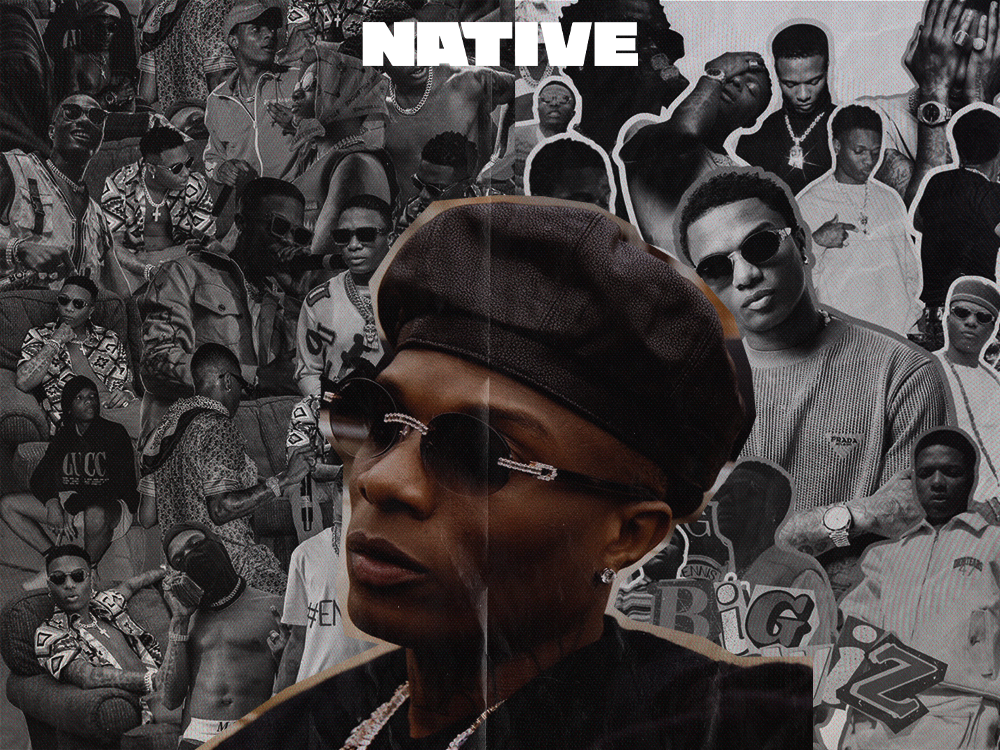
Back in 2011, Wizkid made a confident declaration with the release of his debut album, ‘Superstar.’ He was armed only with the backing of artist-mentor, Banky W., distinctive vocals and a dream but he introduced himself as a superstar when not many knew his name. It didn’t matter that he didn’t have much in terms of exposure or resources, Wizkid’s conviction rang loudly across what many now consider the best debut in the history of Nigerian pop. Three years later, Wizkid was already basking in the glory of his unrelenting efforts with the unfathomable success of the debut, etching a staggering imprint on the soil of African music. His sophomore effort, ‘Ayo’ was a celebration of not just his admirable career strides in such little time, but a toast to the name Ayodeji Balogun. 

‘Ayo,’ which translates to joy, features 19 feel-good songs with Wizkid soaking in the light shone by his hard work and accolades of the preceding three years. He was experiencing an unquenchable high and decided to take listeners along to celebrate this win with him. While Wizkid thanked his supportive mother for her continued prayers onMummy Mi, he showed his admiration for his roots for driving him to new heights on “Ojuelegba.” As much as he is humbled by his background, he doesn’t hesitate to gloat on “Show You the Money,” a cheeky reminder of the financial gains his success has brought. To celebrate nine years since its glorious release, here are five classic songs from ‘Ayo’ that you need to circle back on your current rotation. 

“OJUELEGBA” 

The beauty of a song like “Ojuelegba” is that it’s one of those iconic singles that cut across several generations. Pull this up at any social event you’re attending and everyone from your great-grandmother to the overly excited ten-year-old is sure to have a good time. For many Nigerians home and abroad, the Legendury Beatz-produced track has been dubbed Nigeria’s national anthem and with good reason. Over the lightly clashing cymbals and lush chords, Wizkid tells a story of hustle most Nigerians are familiar with in one way or the other. “Ni Ojuelegba, they know my story,” he croons on the first line, taking us back to his early music days at Mo’Dogg studio. He explains that while he may be on the cusp of a bigger breakthrough—and boy was he right—his journey didn’t start as flashy as his life may appear now. As much as he is telling his story, he takes the next couple of lines to explain that his drive did not sprout out of nowhere, crediting the shared determination to make it common with the people of Ojuelegba. 

Wizkid reiterates his penchant for feel-good tunes as the mood of the track picks up by the chorus, “I am feeling good tonight, this thing got me thanking God for life.”  In many ways, he perfectly encapsulates the skill Nigerians have to put a smile on their face while grinding for their daily bread. He is overwhelmed with joy and radiating positive energy as he quips “I can’t explain, I can’t explain,” leaving a lot unsaid but trusting that his listeners, or at least those who have witnessed his come-up, will understand and thank God on his behalf. Lyrically, the song doesn’t offer much with regards to length as he only repeats the first verse and hook for the second half of the track but it really doesn’t need to. While he seamlessly drifts between Yoruba and English, the message is crystal clear —Wizkid is happy. 

“JAIYE JAIYE” [FT. FEMI KUTI]

Of all the hits on this 19-tracker, “Jaiye Jaiye” captures the radiant themes of the album the most and with good reason, it is also the introduction. For an album dubbed ‘Ayo,’ “Jaiye Jaiye” —which loosely translates to enjoyment and generally having a good time— couldn’t be a more perfect way to set the mood. Wizkid starts by listing what we can assume to him are the good things in life—money, designer items, cars and women. He exudes optimal levels of excitement as he expresses almost to his own surprise “You cannot believe what I am seeing with my eyes/Say my people it is a beautiful story(na na na).” Other than the pleasures derived from the aforementioned joys themselves, Wizkid’s happiness comes from making comparisons to his life when he started. He is basking in the limelight, catching flights and quite literally nothing can bring him down from the high he is feeling. 

To anyone who may try to stand in the way of his earned success, he warns, “I’m balling I’m balling I’m balling for two, Let nobody do me bad or intrude.” The props of this hit can’t be complete without the recognition of Sarz’s masterful production. “Wizzy bad musician, Sarz bad producer,” Wizkid croons mid-way across the track, giving Sarz his well-deserved flowers. He is able to celebrate Wizkid’s smooth vocals over Femi Kuti’s boisterous saxophone chords and heart-thumping bass to convey the joyous story being told. As the track draws to a close, Wiz delivers an admirable tribute by sampling the legendary Fela Kuti’s “Lady” as he croons the eminent lyrics “If you call am woman African woman no go gree/She go say, she go say I be lady o.” All this is strung together by Femi Kuti’s exhilarating saxophone solo as the track closes out. What a marvellous way to introduce a celebratory album. 

“CARO” [FT. L.A.X]

It’s a blessing and a curse to have a song with a maestro like Wizkid. A blessing because you’d have one of the best party songs of our decade and a curse because if you’re anything like L.A.X, topping an effort as outstanding as that would prove extremely difficult. Whether or not L.A.X’s magnum opus arguably dates back to 2014, it doesn’t take away from his peerless delivery on the gem that is “Caro.” This may not be the blueprint but in many ways “Caro” is a solid example of serenading taken to new heights. Over a groovy production, by Legendury Beatz once again, Wizkid shamelessly rains praises on what his ideal woman looks like, “Caro make my head dey turn, Caro dey make me wan dey lose am.”

Now, it is unclear whether or not this woman is already in Wizkid’s life or he is simply stating the qualities he looks for in a woman as he croons, “Eh, I’m looking for Caro, show me Caro/Sisi Caro, where are you Caro?” Like we hadn’t already heard Caro’s name enough, L.A.X comes in to reiterate  the stronghold she has on himself and Wiz. His gritty, sonorous vocals sweetly contrast Wizkid’s plush ones as he sings, “Caro fine plenty plenty, Caro sweet, no get enemy.” Whoever Caro is, shout out to you for inspiring this timeless tune. 

“ON TOP YOUR MATTER” 

A major factor contributing to the likeability of this track, other than Wizkid’s glassy vocals, is Del-B’s pristine production. “On Top Your Matter” perfectly sustains the jovial mood of the album established by preceding tracks like “Kind Love” and “Show You The Money” to name a few. Once the heavy basslines drop at the track’s introduction, your mind instantaneously travels to an Owambe for the similar melodious pattern associated with a talking drum. It is later accompanied by echoey chords and Wizkid’s sweet-sounding adlibs. “I fit die on top your matter, baby girl God bless your mother,” he leads in, evidently hooked on the love interest. He celebrates her beauty with witty comparisons to mystical creatures as he lulls, “You too fine pass mami water,” all the while thanking her parents for their daughter. Wiz goes on to celebrate his muse, making promises of a lifetime commitment after searching many years for her. Touched by her qualities, he bravely admits to being in love and the extreme measures he would take to ensure she reciprocates his feelings. 

“IN MY BED” 

Wizkid has never been one to shy away from sexual themes. On “In My Bed,” Wizkid manages to wrap up his desire for his muse as he quickly commits to loving her for her body while celebrating God’s goodness in his life, all under four minutes. South African four-man music group, Uhuru, consisting of DJ Maphorisa, Xeli, Mapiano and DJ Clap snagged credits on the intoxicating drum-led production of the track. The groovy, upbeat instrumentals lay the perfect foundation for Wizkid’s serenading to begin, “Oh girl you whine your waist, I promise to be your defender/Girl, I go love you January to December, Tell dem hater back to sender.”  The bass drops, replaced by an air of seriousness to queue in Wizkid’s brazen request. 

After name-dropping several key players in Nigeria’s political scene, he takes on a different theme, praising God for his guidance through a tumultuous journey, “Oh blessing follow me everywhere I go, I’m serving a living God.” In an admirably humble moment, he expresses his surprise at the support as he croons “And everywhere I go people show me love, just tell me the reason gan.” He questions his haters in the same breath, wondering why they try to speak down on him despite his evident talents. This message is accompanied by brooding keys and an intermittent bass in the background. Seconds later, the mood picks up as Wizkid’s decision to ignore his naysayers and focus on his grind becomes evident. 

[Featured Image Credits/The NATIVE] 


ICYMI: REVIEW: WIZKID’S SUPERSTAR

The Aftermath Of Mohbad’s Sudden Death

This is a developing story about the aftermath of Mohbad’s death.


On September 12, 2023, the tragic news of Mohbad, real name Ilerioluwa Oladimeji Aloba’s passing broke. The 27-year-old artist had come into the limelight by creating some of the most transcendent records this decade, inspired by his unending search for peace. In the last week, his colleagues in the entertainment industry have continued to pay their respects; from monetary donations to his family to tribute songs and calls for justice for his alleged killing.

Following the news of his death, many of his nearest and dearest have alluded to his untimely death being tied to threats he reportedly received from his record label (Marlian Records) while he was alive. At different points in the last year, Mohbad had revealed through a series of X (formerly Twitter) posts, video recordings and Instagram Live Streams that he was embroiled in a bitter fight with his former label.


February, 2022 – NDLEA Arrest

In February 2022, the Marlian Records residence in Lagos was reportedly raided by the Nigeria Drug and Law Enforcement Agency (NDLEA) which led to Marlian signees; Mohbad, Zinoleesky, and other associates being arrested. Following the arrest, Mohbad took to an Instagram Live stream, claiming that his life was in danger. He lamented, “Everybody in the whole world, please help me, if I die, na Marian Music, Naira Marley kill me. Please help me, I don’t want to die”. 

In the last week, some more footage from that day has been released, which shows Mohbad in what looked like a hospital, crying about his recent experience in NDLEA custody. He claimed to have been harassed and given a substance to drink. “They gave me something liquid to drink,” he said in the video. “It was inside a plastic water bottle. They said I was using drugs. I was the only one who drank it, they didn’t give the others to drink. I won’t lie. Then they told me to go home and told the others to wait”. Following his death, NDLEA through spokesperson, Femi Babafemi, has debunked any claims that Mohbad was arrested and poisoned in their custody.

October 2022 – Mohbad vs Marlian Records

A few months later in October 2022, the musician revealed through a thread on X the details of his conflict with Marlian Records. “As an artist from the street, I thought the Marlian Family would be a good place for me. However, recent events and certain truths have come to light which threaten my peace, health and career.”, he said, before going into detail about the cause of the day’s fracas. “I noticed Tunde was quite agitated as we started the discussion. In the middle of the conversation, Tunde became violent and attacked me. The guys I was with were also attacked, humiliated and stripped naked by Sid, Shuddy and Seyi and some of the other boys. We were barely able to escape. 3 of us had to be checked into the hospital to get medical care for the injuries sustained during the assault.”

In the series of posts, Mohbad claimed that he asked for his manager to be changed, and as a result was beaten up with the people he went with. He also shared footage of the injuries he sustained in the alleged attack.

June 2023: Mohbad files petition against Sam Larry  

In the aftermath of Mohbad’s death, a video was released of him and Zlatan shooting the video for “Account Balance,” off his last project, ‘Blessed’. The video showed a number of threatening figures storming the set of the video shoot with weapons in hand, threatening that Mohbad would not be able to leave the premises. The video identifies Sam Larry, a known associate of Naira Marley, who appeared to attack Mohbad, before Zlatan stepped in and protected the now-deceased.

A picture of Mohbad’s petition to the Nigerian Police Force also surfaced, which alleged that “they have been asked to deal with me for reasons best known to them which till date they are threatening to kill me if seen”. Accounts from Paulo, Bella Shmurda, Iyabo Ojo and others corroborate Mohbad’s claims that he was being hunted and attacked, stating that he had confided in them or someone close to them about it before he died. 


September 2023: Mohbad is pronounced dead

Last Tuesday, Mohbad’s sudden death was announced. Over the weekend, a video of the artist’s mother surfaced online, where she spoke about some of the challenges her son had been facing before he died. She reaffirmed the allegation that Mohbad was given something to drink at the NDLEA office and that since then he struggled with fear, anxiety, hypertension, insomnia and more. In between her pleas for justice, she spoke about the artist’s fear of attending public events, because people being allegedly sent from the label were after him. She debunked claims made by the label in several live streams that her son didn’t suffer from any mental illness as they stated but was being set up to look that way. 

The immediate aftermath of his death cast a pensive atmosphere across social media, as his quick burial, which was live-streamed, raised questions about such a hurried interment without an autopsy. Some people noted that he wasn’t Muslim and, therefore, didn’t need to be buried immediately as Islamic custom requires. In addition, others found fault with his family burying him in an undersized coffin, further highlighting suspicions of foul play. 

Sustained vitriol has been the response of the general public, and most especially, industry insiders who knew Mohbad and his struggles with Marlian Records. Most notably, Bella Shmurda made a number of affecting tweets calling for justice for his friend. “Until those who oppress him face justice and sentenced, nothing like last respect,” he wrote, rejecting the notion that the deceased had peacefully been laid to rest. 

These revelations have brought about a call for justice, which has resulted in a spate of processions across the country and even in the UK. Throughout Nigeria, from Kogi and Abeokuta to Asaba and Akure, hordes of young people have taken to the streets to demand Justice For Mohbad, showing solidarity with the fallen artist. In Lagos State, many more are planning to join the peaceful walk and tribute concert scheduled for Thursday evening (September 21).

The Nigerian Police Force has also stepped in, recently sharing an official statement by the Lagos Commissioner of Police, Idowu Owohunwa yesterday. The unit is said to have inaugurated a 13-person special investigation team to look into the death and an interim report is expected within two weeks. “We don’t want to isolate specific characters,” Owohunwa said. “All facts, including videos, including personalities that have been mentioned, including those not even mentioned but we do know from our investigative experience would be vital.”
To carry out his autopsy as the investigation demands, Mohbad’s body has been exhumed from its burial spot in Ikorodu. The Lagos State Police Command Public Relations Officer, Benjamin Hundeyin has also confirmed an arrest has been made, of the nurse who gave the deceased what was supposed to be an anti-tetanus injection after he was attacked in Lagos state.

On the 21st of September, a candlelight procession was held in Lagos and other states across Nigeria, including Enugu and Anambra states in the southeast. In Lagos, musicians Falz, Zlatan and Davido, gave the closing remark at the tribute concert. It was an emotional celebration of Mohbad, whose death has morphed into a global consideration, as the likes of American superstars Lil Durk and Meek Mill have shared posts about it. Mohbad also appeared on the prestigious Time’s Square billboard, with a touching message read alongside it: “Will be remembered forever. Legends are never forgotten. R.I.P.”
It was also reported that later that evening, the crowd which had gathered for the candlelight procession, started to march through the Lekki tollgate, a symbolic location during the End SARS protest. That was when the available policemen began to ask them to disperse, and in the eventual refusal, reportedly threw teargas into the crowd. In response, the Lagos Police spokesperson, Hundeyin released a statement on Friday, the 22nd of September, relaying the events that spurred the police’s decision to use teargas.

According to Hundeyin, “the Lagos State Police Command had an agreement with the organizers of the candle light procession that it was to end at 8pm latest and should terminate at Muri Okunola, Victoria Island,” he said. “It was clearly stated for avoidance of doubt that in the interest of all Lagosians and considering the heavy use of the Lekki-Epe Expressway, the Lekki Toll Gate would be a no-go area. It, however, became disconcerting that after the procession duly ended at Muri Okunola park as agreed, with the police providing optimal security all through, some persons started gathering at the Lekki Toll Gate with intent to manifest objectives extraneous to the #justiceforMohbad initiative. Vehicular movement on the ever-busy expressway had also been brought to a total standstill, leading to traffic build up. Having gone down this road before, having learnt from previous similar encounters, and having studied the pattern in the crowd, the red flags and early warning signs of total chaos and anarchy were discernible. Therefore, in fulfillment of our mandate to protect life and property, maintain law and order and prevent crimes, we adopted the least harmful method of crowd dispersal, following the failure of verbal persuasion – the use of teargas”.


ICYMI: IN MEMORY OF MOHBAD, THE STREET-POP ARTIST WHO ALWAYS SOUGHT THE LIGHT

Lady Donli is set to unveil another layer of her artistry with ‘Pan African Rockstar’

The release of an artist’s debut album is arguably one of the most defining moments of their career. While they may have a plethora of unofficial releases across platforms, up until their music hits major streaming platforms, the work gets only a limited number of ears directly affiliated with the artist or on an ‘if you know, you know’ basis. That’s where platforms like Soundcloud came in to serve as a launchpad for underground artists to prepare themselves and get accustomed to the convoluted world of mainstream access. Ahead of her debut album, ‘Enjoy Your Life’, Abuja-raised singer Lady Donli had kept the midnight oil burning as she carefully threaded a path to self-discovery from her 2014 mixtape, ‘Love & War’ to her immersive detailing of a heartbreak on 2017’s ‘Letters to her’.

When her 15-track LP finally arrived in 2019, it was more momentous for listeners who had been following the artist’s evolution over her first couple of releases. Newer listeners were not excluded, considering how distinct and rounded ‘Enjoy Your Life’ is within the Lady Donli canon. It’s just that, in flipping the script once again, older fans were fully prepared and Donli was ready, now more than ever, to bask in the limelight of her unrelenting efforts. 


Set the scene in 2016. Nigeria’s prominent alternative community is witnessing a shift and tracking a path down mainstream audiences with the help of young mavericks like Cruel Santino, Odunsi (The Engine) and of course, Lady Donli, to name a few. While the first coming of the alternative movement goes as far back as 2009, spearheaded by the likes of DRB Lasgidi, Ajebutter and Blackmagic, the subculture’s second coming—now termed ‘alté’—didn’t come into fruition until around 2016. The reason it was able to garner so much attention in such remarkable ways is largely due to the sheer hunger and drive its major proponents had.

While mainstream Nigerian pop was expanding in unfathomable ways, trickling into international markets and strengthening its grip on Afropop’s centre, the new wave alté pioneers began experimenting with new ways to produce and consume music. As they built immersive worlds within their craft, exploring various soundscapes and fusing genres, artists like Lady Donli nurtured a community of explorers alike to put them on to innovative paths Nigerian music can travel. So, by the time lead hustle single, “Cash,” arrived with delightful Highlife infusions by The Cavemen and twinkling keys from producer, GMK, alongside poverty rebuking hit, “Suffer Suffer,” we were unlocking a portal into what would be one of the best debut releases in Nigerian music, this side of Wizkid’s ‘Superstar’

In the true spirit of community, Lady Donli tapped some of the most stunning vocalists and expert producers still navigating a come-up in Nigeria’s hyper-competitive music scene. And to my preferred judgement, most of them were women. Let’s start with “Corner.” Dynamic sister duo, Ivana and Jessica Nwokike—more popularly known as VanJess—provided a refreshing R&B perspective to a Highlife-fusion track featuring dulcet shakers and background vocals from The Cavemen. Together, they presented a witty and direct address to their love interest, calling them out on their player ways, “Corner corner eh, you just dey use me dey play corner corner eh.”

Similarly, Donli enlisted flower crown-Tems, before she was Grammy award winning-Tems for a vibey, heart-warming rendition on “Good Time” as the pair crooned about only being interested in the jovial aspects of life. She also delivered an unrivalled combination of Ghanaian superstar, Amaarae, and SOMADINA for a sultry rendition on “FLAVA” and Solis for her ethereal touches on “Confident/Feeling Cool.”


Lady Donli was able to provide an enabling environment for her eclectic collaborators to blossom, all the while delivering star quality verses that reminded you who’s album you were listening to. Think “Never Ending” where Donli’s hypnotic vocals pull at your heartstrings as she confesses her extreme dedication and unquenchable thirst for her love interest. Or “Trouble,” where she relays the cold-heartedness of the streets and sheer longing for full-on commitment. She puts her skilled penmanship on full display and wears her heart on her sleeve the entirety of the project with the assistance of her painfully distinct chords. By the time the outro, “Bite the Dust” rolls around, you are met with bitter-sweet emotions.

Yes, this was one the most seamlessly curated projects of our time and a resounding debut for Donli but this is also the last time you’d hear the sonic masterpiece, ‘Enjoy Your Life,’ for the first time. “I’m just getting started, securing my assets/God give me the access, So I never get to bite the dust,” she croons once the track’s dreamy keys roll around. The heart-warming message implies that this is only the beginning for Lady Donli, as she beckons on God to open more doors into the future. It comes with intense disappointment that this peerless contribution to Nigeria’s vast music fabric has been pulled from digital streaming platforms for over a month now—hopefully to return soon.

With her debut album now behind her, Donli is evidently delighted to take the world by storm but the world’s greatest nightmare, COVID-19, puts all her efforts to a halt. And as the iconic tv show, ‘Avatar: The Last Airbender’ quotes, “when the world needed him [in this case, her] most, he [she] vanished.” Fans of ‘Enjoy Your Life’ searched high and low amidst the socially distanced lockdown for Lady Donli who we later discover in our 2020 column, Life in Quarantine, was stuck in Toronto, Canada.

While artists like Amaarae soundtracked our lockdown experiences, Lady Donli grappled with the rest of the world to understand what was starting to look like a new normal. Understandably overwhelmed by the overstimulating and heartbreaking news cycle, Lady Donli took a well-deserved social media and music break—with the exception of loosie single, “Wonda Wonda”— only to return in the later parts of 2020 with a two-pack release dubbed, ‘Rockstar Parole.’  For many hard core EYL fans, the smooth Afropop-textured release signified the end of a dearly beloved era. To this, Donli explained, “I said these songs are the last two from the EYL era. This is officially the end of an era because album two is on the way.” Speaking on what we now know as ‘Pan African Rockstar,’ Donli added, “I keep trying to explain, you can not box me. I created the box. Everytime I create a new project, it’s a new sonic. I take on a new identity. Everything [is] deliberate.”


After ‘Rockstar Parole,’ Lady Donli went MIA again, only to return half way into 2021 with the groovy 6-track EP, ‘W I L D’—acronym for Where Is Lady Donli?—and all seemed right with the world again. “Searching” leads the quiet, not-so-quiet comeback with part-brooding, part-excited journey down self-discovery alone and in the confines of a romantic relationship. “I just wanna know who I am, I hope that you can try and understand,” she ruminatively sang on the hook. On the EP, she tapped usual suspects of GMK and Yinka Bernie for producer duties, alongside guest appearances from Ragz Originale, Shae Universe and Sugarbana.

In typical Lady Donli fashion, ‘W I L D’ is captivating. She offers an electric freestyle on “Dragon Fruit Freestyle” and her vulnerable side on the intro, “WILD” as she confesses her struggles of loss and confusion while navigating the pandemic. However, “M.K.K” remains the EP’s standout for a number of reasons. We are reaffirmed of Donli’s fun and free self as she seduces her love interest, subtly shaming yet understanding why they’re obsessed with her. She evidently derives pleasure from dangling the carrot as she lulls, “You can be my ex if you play too much, when I put it on, tempted to touch.” As much as an EP doesn’t feel sufficient after a long hiatus, Donli ensures her fans that she is back for good with intimate live performances across the country. 

As the new year rolled around, Lady Donli proved to be a woman of her word, debuting an enthralling performance of “Thunderstorm in Surulere” for A COLORS SHOW. Her vibrant, jumpy energy effortlessly transcends the screen as Donli sashays and sings over production by UK-based artist and EYL-collaborator, Benjiflow. The pair provide a melting pot of R&B, Afro-Soul and subtle tinges of Folk. She languidly basks in the euphoria of a romantic interest and her longing to be next to them, “Rain is falling, in a way it has never felt before/It’s the thunder in my soul that’s pouring/‘Cause I think I found the one, I’m Soaring.” The performance, which has now raked in 240k views, Donli reaffirmed her penchant for feel-good tunes laced with hypnotic instrumentals and peerless storytelling.

She didn’t close out 2022 without a new single, “Hello Lady,” a refreshing entrance into Donli’s newly explored soundscape. The LMBSKN-produced single unearthed a cheery Donli over a breezy, bass-led instrumental with her same, unmissable sensual energy. She croons, “I know I’m on to something, so excited, so excited/My head is spinning out of my body,” on what we now know as the first promotional single for her sophomore album, coming 4 years after the glittering debut. 


As we’re well aware, it takes more than drive and talent to make it in the music scene. With a viewer attention span of mere seconds, navigating the space amidst dozens of new entrants proves difficult and Donli is not shy to express this. We catch a laidback Donli across platforms such as Twitter and TikTok, shamelessly requesting audience engagement and hustling for your attention. Her witty videos and one liners beckon on whoever would lend an ear to stream her singles as “My Ability,” the second promotional single for ‘Pan African Rockstar’. She is evidently leaning in a new direction as she enters an ultra-confident mode for an infectious rendition strengthened by lustrous guitar riffs and groovy percussions by JMS.

Given her history, it goes without saying that Donli has earned our ears and we’re in good, reliable hands as we anticipate her next album. The 12-tracker promises to deliver equal parts party anthems, self-reflection in usual Donli fashion and glassy love songs ultimately strung together by her childlike exploration for new sounds. Lady Donli’s time now and she is primed for another showcase of artistic brilliance, as always.

[Featured Image Credits/The NATIVE]


BEST NEW MUSIC: LADY DONLI CELEBRATES HER BRILLIANCE ON “MY ABILITY”

Turntable Top 100: Mohbad’s “Ask About Me” makes a re-entry at No.22

In the final days of June, Mohbad released a Fuji-leaning Street Pop extended play dubbed ‘Blessed’, a colourful sophomore release carried by his irrepressible spirit. Lead single and penultimate track, “Ask About Me,” proved to be a clear standout from the 8-track project, presenting a breezy cut of Amapiano-infused keys and ethereal background vocals. On this week’s TurnTable Top 100, the Nektunez-produced track made a re-entry into the Top 30, snagging up a spot at No.22 as fans reconnect with the talented star amidst his unfortunate and heart-breaking passing. RIP, Imole.


Asake’s hit single, “Lonely At The Top” stands strong at No.1 on this week’s TurnTable Top 100, extending its streak to ten consecutive weeks, now becoming the second-longest No.1 in chart history. It tallied 2.89 million streams and 90.9 million in radio impressions. The song has a chance to tie the 11-week run of Omah Lay’s “Godly,” and possibly set a new record in a few weeks. Ayra Starr-assisted “Ngozi” moves Crayon’s previous No.3 to the chart’s Top 2 this week while Burna Boy’s “City Boys” slips from the second spot into this week’s No.3. The rest of the Top 5 remains unchanged, with Khaid’s “Anabella” at No.4 and Omah Lay’s “reason” at No.5.

Outside the Top 5, Shallipopi’s “Obapluto” rises four spots to this week’s No.6, a new peak for the single, and Olamide’s “Jinja” slides up 4 spots from last week’s No.11. Similarly, Flavour and Odumodublvck-assisted single “Ndi Ike” slides five spots, a new peak for Falz after spending 5 weeks on the chart since its debut. Burna Boy’s “Giza” featuring Seyi Vibez and BNXN’s “Aduke” off his highly anticipated album, ‘Sincerely BNXN,’ closes out the top 10, occupying the 9th and 10th spot respectively.

For the rest of this week’s TurnTable Top 100, Burna Boy’s “Big 7” and Young John’s “Sharpally” linger on the 11th and 12th spot after spending a combined 15 weeks on the chart. Khaid’s “Jara” off his recently release EP, ‘Emotions’, also rises 22 spots to No.14 and Mohbad’s “Peace” re-enters at No.28 after spending 32 weeks in the Turntable Top 100 and peaking at No 21.

[Featured Image Credits/The NATIVE]


ICYMI: IN MEMORY OF MOHBAD, THE STREETPOP ARTIST WHO ALWAYS SOUGHT THE LIGHT

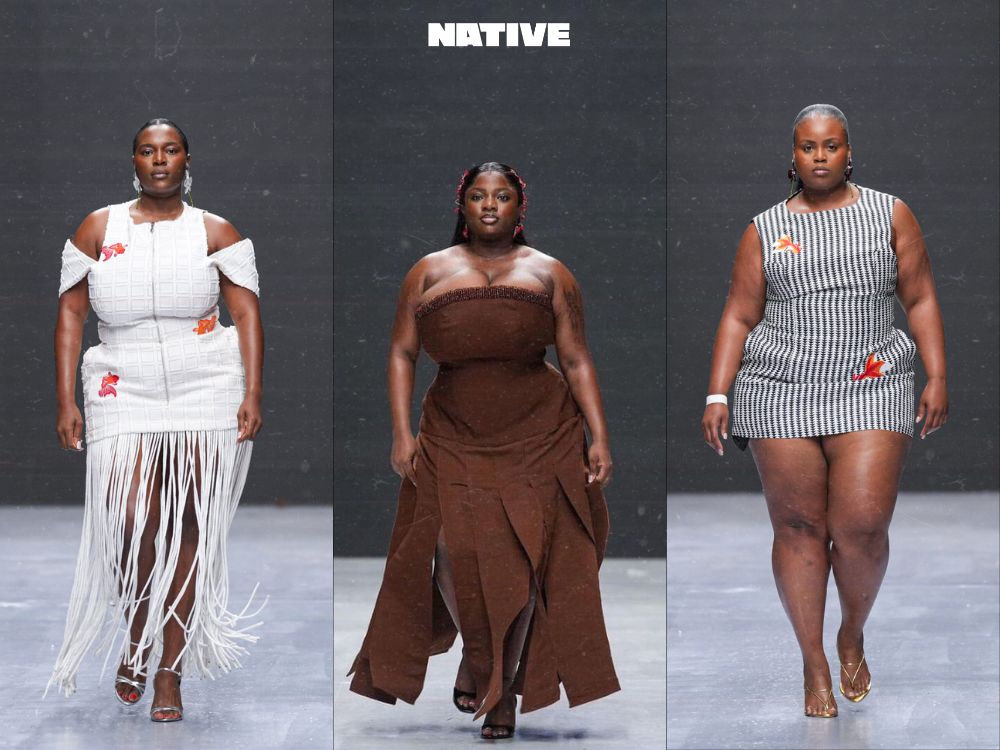
Here’s why Mowalola Ogunlesi’s Spring 2024 Collection left a sour trail

Fashion Week is undoubtedly one of the most highly anticipated events in the world social calendar. Artists and designers in the form of iconic brands and fresh newcomers gather around fashion capitals of the world including New York, Milan and Paris. On September 15, London Fashion Week commenced, allowing designers an opportunity to showcase their distinctive ideas and tell the more important stories through fabric and design.

The weekend, as expected, came stacked with a plethora of notable designers providing a refreshing perspective on how we consume in the present day and the likes of Skepta make a glowing contribution to the multi-faceted discourse. The British-Nigerian musician made his official entry into the fashion world with his new brand, MAINS, debuting a sportswear collection stacked with tennis-court-styled pieces, relaxed knitwear, pristine tracksuits and more. Designers like Mowalola Ogunlesi, debuting her Spring 2024 Ready-To-Wear collection, on the other hand, are not new to the game. 

Reminiscing on her 2023 Autumn/Winter collection, which successfully blurred the lines of imitation and appropriation of IP with a futuristic element punctuated by her signature design, Mowalola has always been a disruptor in the industry. Her Friday show at The Beams London gathered a crowd of roughly a thousand people as Mowalola sparked by her viewing of David Cronenberg’s 1996 film, Crash. “I was really excited by the fetishisation of pain through crashing,” Ogunlesi shares in conversation with Luke Leitch for Vogue. She presents her the idea of living dangerously and ambitiously, and proposes that we reflect that in the clothes we wear. Russian-American supermodel, Iryna Shayk, who opened the show adorned with a metallic silver floor-length dress and vivid bruises on her face is a clear play on the glamorisation of pain associated with this collection’s themes. 

Ogunlesi strays away, ever so slightly, from her signature small pieced leather looks and opts for a more modest approach, all the while retaining not-so-subtle brazen elements with scantily clad women on her t-shirts. Subsequent looks, like the first, feature oversized cuts and ludicrously capacious bags with the occasional low-rise mini skirt and her logo sprawled around the various pieces. Ultimately, her message speaks of embracing the pains we experience and wholeheartedly living with them. We later stumble into risky territory with the inclusion of sensitive words and insults, but with some conjoined pieces, Ogunlesi attempts to signify how all that pain can bring us together regardless of these differences. She utilises a darker, earth-toned colour palette of dingy brows and blood-like red to reiterate her collection’s message, an appropriate contrast to the silky, reflective textures she adopts. 

By the middle of the collection, Mowalola wilfully takes a provocative route with the inclusion of leather mini skirts  of countries’ flags including Japan, the United Kingdom, China and—stirring the most conversation—Saudi Arabia. It was particularly sensitive and in bad taste because the country has a steep history of social issues surrounding women’s censorship which showed up in the form of banning skirts in 2012. However, the major bone of contention lay within the message inscribed on the country’s flag with a Shahada which translates to, ‘There is no God but Allah, and Muhammad is the messenger of Allah’, in Arabic.

Considering the message held sacred verses, using the flag of a hyper-religious nation on a provocative miniskirt comes off as disrespectful. Initially defensive, Ogunlesi sarcastically retorted to the outrage but several users doubled down to explain why respecting people’s religion does not have to be considered artistic censorship. 

She later issued an apology. “I’ll ensure this design is removed from the collection. I deeply regret any hurt or offence my oversight may have caused. Thank you for holding me accountable, and I appreciate your understanding as I learn from this experience,” Mowalola concluded. As the show progressed, we were introduced to the brighter side of life that resulted from embracing the darkness that comes with life. The colour palette now reflects this with conspicuous yellows and metallic pastel oranges, adorned on models seemingly less bruised than the show’s openers.

Just as art intends to be open to scrutiny, the aim for many is to document an improvement or positive change. However, Mowalola might’ve skipped out on that memo with Look 44,  a short-sleeved conjoined piece with a message ‘4 Slim People’ displayed boldly across. Her reference point and defence to consumers’ critique was “Ur[Your] rage is valid but I will always be humorous. I flipped this Karl Lagerfield 4 slim people tank top. It is funny to me because I hv[have] never seen any plus size on a Chanel runway & I never see this outrage towards them.” 

Her sentiments are valid, the standards are different for brands like Chanel. More than being one of the biggest brands in fashion history, Chanel’s ownership rests predominantly with white people and this allows them some level of protection from scrutiny more often than not. However, the validity of that argument falls flat. Fashion from the early 2000s and prior faced heavy criticism regarding the inclusion of a variety of bodies and their incessant need to perpetuate harmful ideologies and body standards. If brands like Mirror Palais can make more informed decisions, then surely it shouldn’t be an issue for anyone else.

Rather than reiterating the fatphobic tendencies of earlier fashion eras, collections like Mowalola’s with a platform like London Fashion Week should channel evolution with time and growth in a way that reflects our realities and what we want our future to represent. 

Featured Image Credits/The NATIVE


ICYMI: STREETWEAR IS ON THE RISE IN AFRICA BUT INDUSTRY-WIDE SUPPORT IS SLOW TO HAPPEN

NATIVE Selects: New music from Khaid, Midas, Diamond Platinumz & more

It’s that time again. Every week, new music shows up, sweeping fans and music lovers off their feet while artists gauge reactions to know the effect of their creativity. At the NATIVE, we are committed to keeping our ears on the pulse of the music scene and bringing the best sounds to your doorstep. In our last edition, we brought you stellar new releases from SGaWD, Ayra Starr Darkoo and more. Today, we have songs that move from Afropop to Amapiano to R&B, with our select artists showcasing their unending talent and passion for creativity. Lock in!

KHAID – “FOREVER”

The untimely death of Nigerian star, Mohbad has thrown Nigeria into national mourning with different reactions and conversations surrounding his unfortunate passing. “Forever”  is an emotional, gut-wrenching tribute from Khaid to Mohbad as he flies high with the Angels. In the intro, we can hear Imole thanking and appreciating Khaid as well as expressing shock at the love he gets from his fans and listeners. Imole, translating to light, is the essence of this song as he sings in the chorus, “Forever/ let there be light/ Imole/ you hold the light” Khaid’s tribute is definitely the song to help ease through the grief.

AYOX – “WALKING DEAD” FT ZLATAN

“Walking Dead” serves as another tribute song to Mohbad’s untimely passing. It is Ayox’s first song off his coming debut EP which speaks volumes on life here and now. With the help of Zalatan both artists talk about how we do not need to wait for mydeath before we appreciate the people around us. In the first verse, Ayox sings, “Love me while I’m still here/cause Heaven is our residence.” Before going on to say that “every man is a walking dead”, which lies on the fact that death isn’t something that can be disregarded.

DIAMOND PLATINUMZ & WOUTER KELLERMAN – “POUNDS & DOLLARS”

With massive success on “Overdose“, Tanzanian talent, Diamond Platinumz is back in the music scene with a new single “Pounds and Dollars” In collaboration with the South African grammy award winning flutist, Wouter Kellerman, a masterpiece was produced. We’re drawn into the song by a mesmerizing flute as it goes on to sync perfectly with the African beat. Diamond sings to his lover and promises all things good as long as the love is reciprocated. “I go cheque and balance for you/ Pounds and dollars for you” he sings in the chorus, riding on the melody of Wouter’s impressive flute. 

LYTA – “MOVE”

Lyta has been on a roll this year, releasing songs like “Can’t Complain” “Nakamura” and many more under his 2023 belt. On “Move“,  the latest single joining the list, Lyta professes his love to a special person. Armed with his Yoruba tongue, he dives into confessions as he tries to explain his feelings. “This love is crazy,” he confesses in the second verse and hopes that it’s not some sort of taboo. It’s a feeling relatable to many which Lyta delivers well. 

BRAINEE – “WEAK”

Nigerian rapper, singer/songwriter, Brainee, has recently released his new single “Weak”. Coming after “Panic” and an ADM remix of the masterpiece with the talents of Echo the Guru and Ifeoma C.S, Weak” revolves around love between Brainne and his lover. Despite this love, there seems to be friends around who cloud his lover’s mind. To this he says “Fuck what your friends say” and goes on to assure her on the chorus that her love makes him weak. He goes on to emphasize his disregard for third parties in their relationship, having no time for “he said, she said, he said”  and has better plans on making her feel loved. 

MIDAS THE JAGABAN & TAY C – “LOUIS VITTY”

Featuring Cameroonian talent, Tayc, Midas the Jagaban goes on to release a mellow and infectious single “Louis Vitty” which serves as part of thyer EP, ‘Midas Touch Vol 2: Return of the Mask,’ set for release on the 17th November. With the massive success on “More Vibes More Money” Midas delivers a more laid back, mellow and calmer track which is different from her unique and distinctive style. “Louis Vitty” witnesses an effortless blend of Afropop rhythms and R&B. 

MZ VEE – “DESTINY” 

Talented Ghanaian singer and songwriter, Mz Vee has dropped a confidence booster in the name Destiny. From the first line “Can’t stop my destiny” riding on the African rhythm and catchy use of electronic guitars, Mz Vee empowers every listener. As clear as the title, the song speaks volumes on being in charge of one’s destiny and rising up to obstacles or challenges that may arise.

AGUERO BANKS – “STILL SOBER” FT PHYNO

Serving as a follow up to his hit single, Sober” released in March, Aguero with the help of Phyno  reminds us that he’s indeed still sober in his recent album ‘God Is Never Late.’ Starting off strong with the choir-like essence, it delves straight into Phyno showcasing his skilled artistry in the Igbo language as he raps his verse. The two artists connect on that level and deliver a perfect synergy.

[Featured Image Credits/The NATIVE]


Curated & Written by Chigoziri Ezeaku 


TURNTABLE TOP 100: MOHBAD’S “ASK ABOUT ME” MAKES A RE-ENTRY AT NO.22

Best New Music: Nobuhle offers stirring prayers on “Imali”

Within the versatile grooves of South African dance music, what is sometimes understated is how much emotion is loaded into songs, especially beyond the parochial audience where lingual barrier plays a role in fully connecting. It often helps that what is lost in translation can be carried by evocative performances. Not too many singers operating in that terrain are as stirring as Nobuhle, with a voice that’s as radiant as early morning sunshine rays.

That distinct warmth has consistently defined every song she’s made as a headline artist and appeared on as a highly sought after guest, marking her out as a uniquely gifted singer in the few years she’s been around. As with many prominent vocalists in a scene heavily (and somewhat aptly) tilted to producer-DJs, it started with a co-sign. For Nobuhle, that was her affiliation with Dream House pioneer Sun El-Musician, whose ability to spot and spotlight yet-to-pop talent is widely evident—Simmy, Mthunzi, Azana and more El World affiliates are proof. Obviously, that co-sign mainly amplified a talent that was already there.


On “Never Never,” a gleaming highlight off Sun El’s sprawling, late 2020 album, ‘To the World & Beyond’, Nobuhle’s show-stopping appearance is a transportive masterpiece, her melodies wafting like summer breeze. From then, the singer’s list of collaborators includes a who’s who of SA dance music, from Tribal House luminaries Black Motion to the King of ‘Piano himself, Kabza the Small. Most striking is the variety of dance subgenres she’s lent her magic to, the ideal vocalist who’s fluid enough to fit into any mould and still retain the lustre of her essence. In fact, that’s the magnetic core of her two albums so far.

Less than a year after ‘Indlela’, Nobuhle is already stoking the flames for album 3, and her latest single shows that her musical ambitions are even wider than the range of sounds she’s already worked with. “Imali”—not to be confused with last year’s single of the same title—taps into the Boboledu House sound that exploded into global ubiquity through Master KG’s “Jerusalema.” KG co-produces Nobuhle’s single with frequent collaborator Casswell P, curating a House-fusion arrangement with speaker-rattling snares and gorgeous melodies, in what is arguably one of the most fitting arrangements for its headliner’s voice.

As a fusion subgenre itself, Boboledu House is a fusion of Tribal House drums and Gospel melodies, an incredibly malleable sound that allows for an infinite myriad of variations, as well as elemental infusions from other subgenres. While the knock of the drums have the unmistakeable Master KG touch, the boom is dialled down and the song takes on a deep house atmosphere, with log drums from the Yanos adding to its of-the-moment. For an artist with an omnivorous palette, Nobuhle turns in an effortlessly compelling performance.

If there’s a central, discernible ethos in Nobuhle’s music, it’s optimism. Not the type rooted in delusion, though. Hers is more based on spirituality, an innate belief that God and the other guiding forces of the universe tend to conspire for the good of those who believe things will work out. That’s why, even with little to no knowledge of her lyrics, there’s a balmy effect to her songs. It also helps that, in her vocal performances, she often opts for control over pyrotechnics, even though she can really belt if she wants to. Relatability over showmanship.

On “Imali,” Nobuhle seeks financial blessings for herself and her kin, amidst the cost of living crisis that’s rocking the entire world, with a prayerful approach that makes it easy for listeners to slot themselves in the same petition. The premise is simple and she furnishes each line with a heartfelt, resonant cadence. Once or twice, she belts—“Iyo iyo yo!”—to establish the pressing nature of her prayers but it doesn’t take long to revert to a cool, soulful register, almost as if she’s assured that her requests is reaching up into the heavens and will be answered when due. Philippians 4:19.

“Imali” is loaded with feeling, a song that can be multipurpose depending on the listeners. It could fit into an early morning set at home, possibly slide into a DJ set at KONKA, or maybe become a staple amongst gospel loving folk. Perhaps most important is that it strengthens Nobuhle’s standing as one of the best artists working in dance music right now.

Listen to “Imali” here.


ICYMI: WHY WE RATED NOBUHLE SO HIGHLY EVEN BEFORE HER DEBUT ALBUM

What’s Going On: Truck-Bus Collision in South Africa, Landslide in DR Congo & More

“What’s Going On” Tallies Notable News Headlines From Across The Continent — The Good, The Bad, And The Horrible — As A Way Of Ensuring That We All Become A More Sagacious African Generation. With This Column, We’re Hoping To Disseminate The Latest Happenings In Our Socio-Political Climate From Across The Continent, Whilst Starting A Conversation About What’s Important For Us To All Discuss. From Political Affairs To Socio-Economic Issues, ‘What’s Going On’ Will Discuss Just That. This Week’s Headlines Come From Across South Africa, DR Congo & more.


17 PEOPLE CONFIRMED DEAD IN CONGO LANDSLIDE

At least 17 people were killed by a landslide caused by heavy rainfall in the northwestern Democratic Republic of Congo (DRC). The tragedy happened on Sunday along the Congo River in the town of Lisal, in northwestern Mongala province, according to Matthieu Mole, president of the civil society organization Forces Vives, with the victims said to have lived in houses built at the foot of a mountain.

“Torrential rain caused a lot of damage, including a landslide which engulfed several houses,” he said. “The results are still provisional because bodies are still under the rubble. ” Authorities have also warned that the toll could rise as rescuers continue their search through the rubble of collapsed houses. Cesar Limbaya Mbangisa, governor of Mongala province, said there was an urgent need for machines to help clear debris and try to save survivors. The governor also offered his condolences to the families of the victims and declared three days of mourning throughout the province.

The United Nations climate experts reported that poverty and poor infrastructure have contributed to certain communities becoming vulnerable to extreme weather such as heavy rains, which are becoming more frequent and intense in Africa due to climate change.


LIBYA PROTESTERS STORM DERNA AFTER HORRIFIC FLASH FLOOD

Hundreds of protesters took to the streets of Derna in Libya on Monday, accusing the authorities of neglect after a huge flash flood devastated the coastal city and swept thousands to their deaths. The protesters gathered outside the city’s grand Sahaba mosque and chanted slogans against the parliament in east Libya and its leader Aguilah Saleh.

In the evening of  Monday, the protesters set fire to the house of Abdulmenam al-Ghaithi, ex-mayor of Derna at the time of the flood. They also called out other officials, including the head of the eastern-based Libyan parliament, Aguila Saleh. “Aguila, we don’t want you. All Libyans are brothers,” protesters chanted. Prime Minister Usama Hamad has dismissed all the members of Derna’s municipal council and referred them for investigation.

Due to the September 10 disaster, when two dams burst after Storm Daniel hit eastern Libya and unleashed a torrent throughout Derna that killed nearly 3,300 people and left thousands more missing, thousands of Derna residents are homeless and badly need clean water, food and basic supplies amid a growing risk of cholera, diarrhoea, dehydration and malnutrition.

SOUTH AFRICA: TRUCK-BUS COLLISION CAUSE DEATH OF 20 PEOPLE

A head-on collision between a truck and a bus ferrying workers to a mine in northern South Africa’s Limpopo province has killed 20 people. “A bus transporting employees of the Venetia mine was involved in an accident on Sunday afternoon,” the Transport Department of Limpopo province (north) said in a statement. The accident “cost the lives of at least 20 mine employees.”

The construction company Murray & Roberts Cementation confirmed on Monday that 17 of the dead were its workers who were being transported to the Venetia mine in Musina close to the Zimbabwe border. Four workers were injured in Sunday’s accident. The company said it was offering support to the families of the dead. It is still unclear who the other three victims are.

The Venetia mine, located in the bush near the border with Botswana and Zimbabwe, has been operated for more than 30 years by the De Beers group. It represents 40% of South Africa’s annual diamond production and has more than 4,300 employees, many of whom come from neighbouring communities.

South Africa has one of the most developed road networks on the continent but is among the worst performers in terms of road safety. A study in 2015 found that road traffic crashes have continued to be the 9th leading cause of death for 15 years in the country (1997-2012), claiming an average of 3.5 per cent of overall deaths during those years.

ABEOKUTA YOUTHS PROTEST MOHBAD’S DEATH

Youths in the Panseke area of Abeokuta have entered the streets to demand justice for the death of Nigerian musician, Ilerioluwa Aloba, popularly known as Mohbad. Since news of Mohbad’s death was confirmed on September 12, artists and fans have shared tributes in honour of the man christened Imole – The Light.

The Abeoukuta protest is part of the wave of agitations that have followed Mohbad’s death, after a well-documented breakup with his former label Marlian Records and its boss, Naira Marley. With the hashtag #Justice4Mohbad across social media, sympathisers have called for an investigation into the death of Mohbad after reports of the late singer facing bullying and intimidation came to light.

On Monday, the Lagos State Commissioner of Police announced the commencement of a full investigation into the death of Mohbad. He revealed that a 13-man committee have been set up to “unravel the circumstances surrounding the death of the victim, identify witnesses, culprits if any and any person that will be helpful to the investigative process and deploy processes and other technological tools to aid the investigative course in line with the relevant provisions of Nigeria.” Areas of concentration for the committee are exhumation, autopsy/toxicology/histology, scene visit, hospital/medical report and records of suspects/witnesses’ statements.


ICYMI: IN MEMORY OF MOHBAD, THE STREET-POP ARTIST WHO ALWAYS SOUGHT THE LIGHT

NATIVE Exclusive: Kah-Lo is closing out an old chapter with ‘Pain/Pleasure’

With the exception of the anomaly that is Tems, not many Nigerian artists can brag of a Grammy nomination so early on in their career, let alone before the release of a debut album. But as we’ve seen, Kah-Lo is nothing like the rest. The Nigerian House-leaning artist and writer joined the British producer Riton on “Rinse & Repeat,” the intro track for their joint project, ‘Foreign Ororo’. The duo presented an indisputable force with the Electronic-Pop song that earned a nomination under the Best Dance Recording category at the 59th Grammy Awards.

It was great but it was really overwhelming as well,” Kah-Lo reminisces. “I went from people not knowing or considering that I was Nigerian or that I was really making great music to being in the cover of three national newspapers. It was strange.” Despite achieving feats unfathomable for the artist at the time, she took time perfecting her craft and finding her voice amidst the rush of Nigerian pop going global.


View this post on Instagram


A post shared by Kah-Lo The Ruler (@thatkahlo)

Kah-Lo ensures to stay true to her House and Electronic roots, ignoring several pressures to box her into anything that feels even slightly inauthentic. Seeing as she uses music as a vessel for her expression, Kah-Lo arrives armed with varying messages to herself and her audience and doing this without the pleasantly screeching and euphonies melodies of House just doesn’t seem right. In conversation with Kah-Lo, her tone and message radiate the music-chose-me energy and she is only here to pass on these stories.

A lot of us musicians are crazy to be doing this full time. But a lot of us are here because we have something to get out,” she explains. She part jokingly, part seriously adds: “You know when Western artists try to make Afrobeat and it sounds just off. That’s what it sounds like when I try to make Afrobeat.” This incessant to do only what feels right and true to her person is the primary driver for Kah-Lo, only releasing a debut album six years after snagging a global hit song. 

Kah-Lo’s time is now and she couldn’t be more ready. Her debut dubbed ‘Pain/Pleasure’ presents a 14-track representation of her journey over the years, armed with bitter lessons and necessary experiences needed to navigate the next phase of her life and career. She ruminates on her loss and pain translated to anger and many other emotions. While these are inherently negative, she embraces them with open arms and sits in the feeling of discomfort with a renewed sense of maturity. A slew of masterful producers join her as she peels back refreshing layers of her artistry, effortlessly shifting between heartwarming renditions and club-ready bangers to relay her experiences with pleasurably painful life.

Ahead of her highly anticipated album, we caught up with Kah-Lo to discuss moments leading up to the drop, the messages she aimed at communicating with her audience, overcoming the challenges that come with being Kah-lo and much more.

Our conversation, which follows below, has been lightly edited for clarity. 

NATIVE: Walk me through your background. Did you have any early introductions to music?

Kah-Lo: My family wasn’t musical but they enjoyed music so I grew up enjoying music. My elder sister also loved 90’s music, Spice Girls and Tupac specifically. My dad loved 80’s R&B like Shalamar and all. There was also my uncle who just loved everything. I got introduced through all  three of them mostly and  I eventually grew up to find my own taste.

How would you say the music you consumed in your childhood shaped your relationship with creating the music you do now?

It definitely did. Combining those genres or should I say eras. It felt like the possibilities were endless with what I could create and I think that’s reflected in my music today because I don’t really put myself in a box of genres. It’s all about the feeling that I try to express and it can be anything from Electronic to R&B or Dance. 

Have these early influences changed regarding the music you listen to now?

Definitely. I consume music every day so everything I listen to inspires me. Every sound, every single auditory experience I get inspires my sound.

At what point did you realise you wanted to pursue music professionally?

I’d say 13 but it was actually when I was eight. I started taking it seriously and taking steps towards it at 13. 

What did those steps look like at that point in your life?

You know, just connecting with musicians looking for producers, trying to get recorded music down, trying to put it all online, trying to find an audience and so on. 

The grammy nomination on “Rinse and Repeat” must have been a phenomenal point in your career. What were your takeaways from that moment?

It was great but it was really overwhelming as well. I went from people not knowing or considering that I was Nigerian or that I was really making great music to being in the cover of three national newspapers. It was strange.


NATIVE: How has your process of making music changed over the years?

Kah-Lo: I mean, now I have access to producers and other amazing resources. There’s a lot more flexibility but still not that  much flexibility, you know? Now music pays my rent. So, like the kids say, you have to make music like the rent is due. 

Is there anything about your processes, the way you write and record instrumentals for example,  that has changed? What exactly does your process entail in general?

Not really because I started as a writer. I really liked writing poems and so it’s still mostly the same. Sometimes, once in a while, I can try to have the freedom or give myself permission to freestyle on the mic but that doesn’t come so naturally to me. It’s more of the words that come naturally to me and then I put them to melodies. I hear a beat, resonate with it melodically, then I write the words to it.

Your music holds a feel-good touch in general but what do you audiences take away when they listen? 

I want them to feel joy and feel empowered because even my music empowers me. I created Kah-Lo to do things Farida was afraid to do. It’s kind of like I need her to help me and so I hope she and the music help other people.

What informed your artist moniker Kah-Lo? 

There’s a Mexican artist called Frida Kahlo and my real name is Farida. My sister always called me Frida Kahlo when I was younger and I never really had any nicknames I liked growing up. I adopted Kah-Lo and put a hyphen in it so I don’t get sued.

With the eyes of the world on you, I’d imagine you’re exposed to a world of  music creatives. What now informs your choice of collaborators in your creative process? 

Good vibes. I hate negative energy. I know that’s generic but the slightest negative energy I detect, I can’t work with you.

You recently released “Runaway.” Can you share with us the inspiration behind the track’s themes and what do you want audiences to take away from the song?

People always ask me why I don’t make Afrobeats and I feel like it’s  a genre I can’t do justice to mainly because it doesn’t come naturally to me, as weird as that sounds. So “Runaway” was a track that I made with TMX when I was in Lagos last summer. Everybody said I needed to work with TMX because he understands perfectly the niche that I’m in. We were essentially able to collide our worlds and create “Runaway.” I would say Ampiano is an evolution of African music because at this point it belongs to Africa. We’re able to merge Dance and Amapiano which was what I was feeling at the moment and I never want to do anything that is not authentic to me. So “Runaway” just felt authentic enough. 

You predominantly dabble into Afro-House amongst other genres. Why did you feel that was the best medium to tell your stories?

I wouldn’t even call it Afro anything really. I feel like I just make Pop and House but my Africaness or Nigerianess led to the inclusion of the Afro label. Which is why I appreciated the category I was nominated for the Grammys. It was just Dance and not World Music because it seems  once you put the non-western connotation in something, all of a sudden it becomes othered. I’ve always wanted to make music that could transcend my cultural background and where I was from [Lagos]. Taking it back to the inspiration from my family, musically, they weren’t just strictly listening to Fela and Sunny Ade for example.  As much as I appreciate that music still, listening to a plethora of genres enabled me to end up the way I did musically and my ability to express myself was nurtured by those moments. I can probably count on one hand, the amount of tracks that I intentionally intended to include that Afro element in there.

Are there any genres that you’re curious to explore in the future?

No. Not that I’m aware of yet. 


NATIVE: What’s the hardest part about being Kah-Lo and how do you rise above these challenges and stay true to yourself in an industry as packed as this?

Kah-Lo: That’s a good question. Essentially,  I had a great job before I started making music professionally as Kah-Lo. It was a wonderful job, great benefits, everything was perfect. I was exceedingly good too. I have a university degree so I could probably get a job if I wanted to now. While I had this wonderful job, I was not able to express myself in this way so I had to get it out. At the time, not many people were really doing that. I didn’t have any representation of the things I was trying to do. Like I said, when an African artist makes Pop, they put it as Afropop and then you have to try to fit yourself in that box because that’s the only way you can pay your rent.

When I make my music in that space, you know, I can easily just say hit up Adekunle Gold. Actually, I’m lying. I probably can’t because I’m a great songwriter but it does not translate to Afrobeats in the way that feels authentic. You know when Western artists try to make Afrobeat and it sounds just off. That’s what it sounds like when I try to make Afrobeat. I probably could be more known if I had a wonderful songwriter like Teni, or any other person in that space but it just sounds off. If I were to build my career off music that sounds off and doesn’t sound authentic to me, then why did I leave my job in the first place? I’d end up in a situation that I hate. So I could have just stayed in a job that I hated. A lot of us musicians are crazy to be doing this full time. But a lot of us are here because we have something to get out.

You’ve achieved a number of outstanding feats in your career thus far and your debut album is just coming out now. Why did you feel like this was the right moment to share with audiences? 

I’ve been working through a lot; career, ups and downs and more. The album title in itself being called ‘Pain/Pleasure,’ I went through a lot with the people I came up with and even going through all of that as a Nigerian artist to end up being here. A lot has happened to make this the perfect time. Honestly, if it was any other time, I probably wouldn’t be as ready. Mentally, emotionally, spiritually, physically, this is the right time in all aspects. I’m with Epic Records Now. I put out my EP two years ago and then the natural progression after that was an album, which I’ve been working on for a few years now. After like about 80 plus songs, we are  able to get this and it’s well encapsulating my entire journey into a 14 track message. 

What should we expect and what do you want listeners to take away?

The album is called ‘Pain/Pleasure.’ The first half deals more with the pain I was dealing with through that time. When COVID-19  happened, we were all dealing with collective pain. So there was a lot of anger that I had to get out.  A lot of people I trusted when I started out my career basically tried to destroy me. I had to get weathered and I had to find a way to creatively get it out. The bulk of the newer songs are more into the pain section of the album. Then the last half is more themes of pleasure. That’s when a lot of the blissful ignorance was occurring and those were really good songs. Just because I was hurting doesn’t mean the song shouldn’t have a life. There’s a couple of new songs on there as well, but it’s a journey.  I started to realise through the process that pain and anger, all these things we consider negative emotions, don’t have to be bad because sometimes they’re necessary. To get to the good you have to experience pain and know what pleasure truly feels like.

What sort of doors do you hope this opens for you? 

I haven’t really thought about that yet because this is closing a very long chapter for me. I really have no expectations because I’m literally just in the process of closing a very heavy security door. Happy to be here. 

Listen to ‘Pain and Pleasure’ here.

[Featured Image Credits/The NATIVE] 

Our First Impressions of Nasty C’s ‘I Love It Here’

With over a decade of experience in the game, Nasty C still stands as one of South Africa’s most visible rap stars. After introducing his music with mixtapes and an extended play circa 2012-2015, the artist got his breakthrough with 2016’s “Hell Naw,” winning hearts across Africa with his immaculate emceeing skills and ear for great production. With ‘Bad Hair’ (2016) and ‘Strings and Blings’ (2018), Nasty C was championing the wave of African rap, imprinting his brand of both vulnerable-plus-braggadocious music.

In 2020, Nasty C inched towards international fame after signing a deal with  Def Jam Records. That year, he released ‘Zulu Man With Some Power,’ with appearances from the likes of T.I, Ari Lennox and Lil Keed. His freestyles on international platforms—Fire in the Booth, BBC Radio 1Xtra and On The Radar Radio—have also complemented his efforts and raised his profile as a wordsmith. Last year, he announced his partnership with Carry1st to launch the video game Call of Duty across South Africa. On his IVYSON GAMING page on YouTube, he connects directly with fans who share his love for music and gaming.

Earlier this year, Nasty C and fellow South African artist Cassper Nyovest announced their African Throne Tour, which runs from August 18 to October 28, starting in Arusha, Tanzania and ending in Johannesburg, South Africa. Nasty C also revealed his new status as a father. It’s all these changes and achievements that feed into Nasty C’s fourth studio album ‘I Love It Here’. The project features appearances from Ami Faku, Benny the Butcher, Manana, Tellaman, Anica, Maglera Doe Boy and 25K.

The NATIVE editorial team dives into the album, and in true fashion, we give our honest thoughts on the Nasty C’s latest body of work, from best song to stand out production, biggest potential hit, biggest skip and more.


View this post on Instagram


A post shared by I LOVE IT HERE (@nasty_csa)

BEST SONG

Nwanneamaka: I may be cheating by choosing “This Time” as my favourite song and favourite verse but for the sake of doing justice to my palette, this is the only right answer. One of my all time favourites from Nasty C is his Rowlene-assisted “SMA” and I think this reminds me a lot of that. Ami Faku brings out a softer, more emotional side to Nasty C which keys perfectly into the project’s themes, still allowing his gleaming braggadocio shine through. Other than an effortless vocal pairing, the production by Lekka Beats knocks the track up several notches with its trumpet shouts, steady bass pattern and light shakers. Simple formula but works really well. 

Dimeji: “Prosper In Peace” easily takes the top spot for me. I love the melodies, I’m a big fan of calmer, sing-song  rap and Nasty C definitely delivered that. The message also stood out to me, he’s just trying to grow and people won’t let him do that. Bonus points for the feature from Benny The Butcher, his verse definitely tied the track together.


FAVOURITE PRODUCTION

Chigoziri:  “Prosper in Peace” by Nasty C featuring Benny the Butcher is an exceptional collaboration. The production is top-notch, with captivating beats and impressive lyrical delivery from both artists. It’s a track that seamlessly blends their talents and leaves a lasting impact. 

Emmanuel: Rap was the focus on this album and you can hear it clearly. It’s the least Nasty C has flirted with pop sonics on a project and the result is a drum-heavy, boom pap sonic atmosphere. As a rap head, I respect the choice very much and I had a lot of favourites. “Release Me” and “Broken Marriages” are quintessential spaz-out beats, spurring ridiculous faces as Nasty flows through them. “Sunset Walks” with Tellaman also sounds like the title; laidback but possessing its own unique energy, which we can really say for a lot of the production here. Nasty has always had a great ear for beats. 

Alex: I think the tracks of this project were properly and meticulously produced. It’s quite hard to choose a favorite, however, I think the production of “Crazy Crazy” was crafted beautifully. The piano sounds, the drums, and the vocals were in perfect harmony. “Crazy Crazy” has this soothing effect that I didn’t seem to experience in other tracks.


BIGGEST POTENTIAL HIT

Moore: “Broken Marriages” definitely has potential to be a huge hit. On the surface, the song already has an infectious rhythm that makes listeners play it on repeat. Taking time to listen to the lyrics then adds another layer to the track, as it alludes to the pain that comes from growing up in a broken home, something many can relate to.

Dennis: “This Time.” Easiest answer TBH. The vibes are very “SMA”  as Nwanneamaka mentioned above, which went on to become a huge hit. It’s not that he’s repeating the same trick, it’s that Nasty C knows how to make emotive slaps with featured singers. (Also, those pair of Manana features are bonkers.)


BEST VERSE

Nwanneamaka: HUGE Ami Faku fan so it was only right that my favourite verse “This Time.” The synergy between the pair is almost magical as their tones differ yet manage to complement each other perfectly. Ami Faku  smoothly glides between English and an SA language I can’t quite place but still resonates with the track’s themes beautifully. Her verse is very soothing and reassuring as she softly croons, “I still need you, I won’t let you down. I won’t miss this time.” And you know what? I believe her. 

Dimeji: In light of a lot recent developments, the first verse of “Fuck That” really spoke to me. Nasty C raps about giving him his flowers while he is still here, and I see it as an oath to all the people we’ve lost recently, especially in the industry because so much has been happening.


BIGGEST SKIP

Moore: While I wouldn’t be in a hurry to skip any track on this project, I’d have to say “She’s Gone & The End” is the one I’d likely skip past. Its slow beginning goes on for a bit too long, and even after the song begins to pick up in energy it’s never quite as engaging as most of the other songs on this project.

Dennis: I have an agenda against “Crazy Crazy” because I didn’t like it when I first heard it as a single. It sounds better within the flow of this album but it just gnaws at me that what I think should ideally be a deep cut was chosen as a single. That said, I can’t pick a skip within the flow of the project. That’s more than I can say for his last album, which I thought was really, really good.


STANDOUT FEATURE

Uzoma: I’d have to settle for both Ami Faku and Maglera Doe Boy. Over the drum-heavy “This Time,” Ami Faku’s vocals provide a different vibe; her singing is smooth and relaxing, complementing Nasty C’s raps. On “Kill The Noise,” Maglera Doe Boy does vocal twists and turns with the verse, alternating between singing and rapping. His verse is the fitting outro for the song—as the message he passes across washes over you.

Chigoziri: The relaxing essence of “Kill the Noise” is truly a beautiful masterpiece to sink into. Anico’s soothing voice and Maglera Doe Boy’s ability to perfectly switch from singing to rapping while delivering his message sits just right on the track. They all complement each other so effortlessly as they showcase their undeniable talent. While listening to it, it really feels like you’re killing the noise around and taking in the message of the lyrics.


OVERALL FIRST IMPRESSION

Alex: Nasty C has been consistent in his crafts, delivering excellent records that resonate with his audience in an intimate realm. ‘I Love It Here’ is proof of his unwavering talent that’s unextinguishable. His bag of talent never runs dry. With this project, Nasty C attests to many things: he cares for the listening experience of his fans, he cares about diversity of sounds which he shows by his choice of features, and he cares about his status as a continental rapper, and hitmaker which he consolidates with this project. ‘I Love It Here’ is Nasty C’s best works yet, and he is not resting anytime soon. 

Dennis: I don’t think many people are going to call ‘I Love It Here’ Nasty C’s opus – that honour still belongs to ‘Strings & Blings’. What this album is, is a show of evolution from an artist who’s grown up in public but has kept some details private. Those moments of vulnerability make the boastful ones a lot more than specialty fare, because by now it’s impossible to know that Nasty C is great at project invincibility. The veneer hasn’t worn out, it’s just been polished to show a different glint when the sun’s out.

Daniel B: I believe ‘I Love It Here’ represents some of Nasty C’s finest work to date. It’s a meticulously crafted masterpiece, and the entire listening journey was thoroughly enjoyable. What struck me most was Nasty C’s strategic use of featured artists, as opposed to the common trend of scattering them haphazardly throughout the album. In particular, the collaboration with Benny the Butcher stood out as my personal favourite, a seamless fusion of two distinct rap styles. I’m confident that this project will receive a warm reception, solidifying Nasty C’s status as a formidable presence not only in African music but also on the global stage.

Listen to ‘I Love It Here’ here.


ICYMI: OUR FIRST IMPRESSIONS OF BURNA BOY’S ‘I TOLD THEM…’

Review: Burna Boy’s ‘I Told Them…’

In the pantheon of contemporary Nigerian music, Burna Boy is a name associated with the biggest feats: sold-out concerts and tours, chart-topping singles and albums, dozens of awards nominations and millions of followers worldwide across Africa, Europe and the Carribean. It’s a position the Port Harcourt-born man has always dreamed of. “No be say I wan blow with one track/And my music fade away/And I no fit come back/I dey try to win a Grammy to say I don die,” he sings in “Yawa Dey,” the 2013 single that preceded his debut album ‘L.I.F.E – Leaving an Impact for Eternity,’  released in that same year. Six albums and one Grammy win later, Burna Boy’s music reverberates across the world, leading the way for Nigeria’s march on the globe.


Since grabbing the spotlight (aided by his track “Ye” from 2018’s ‘Outside’ being mistaken for Kanye West’s album ‘Ye’), Burna Boy has marshalled his rise to the pinnacle of success with consistent quality releases and equally excellent live performances. The 2019 run-up to his album ‘African Giant’ was the stuff of dreams, with “Gbona,” “On the Low,” “Killin Dem” with Zlatan, “Dangote” and “Anybody” heightening up the excitement for the project. He opened up about the ideological and sociopolitical leanings of the album on international radio and television platforms such as The Daily Show with Trevor Noah, Ebro in the Morning on Hot 97, Power 105.1 FM’s The Breakfast Club and The Big Boy’s Neighborhood. It all culminated in his first Grammy nomination for Best World Music Album, which he lost to Angélique Kidjo’s ‘Celia.’

Burna Boy’s next album, ‘Twice as Tall’, eventually won him the Grammy plaque and he’s been on an upward trajectory. On his newest album ‘I Told Them…,’ Burna Boy has a new motive: announcing to his doubters that he’s achieved everything they didn’t believe he would. It seems a petty incentive because why would an artist conquering the world with his music and shutting down more-than-fifty-thousand-people-carrying venues care about the cold shoulders of naysayers? But so is the mind of a creator, constantly motivated by their experiences. In the case of Burna Boy, he’s always felt like he has a point to prove. After losing out to Sean Tizzle in the Next Rated category in the 2013 Headies and walking out of the event, Burna Boy has carried the reputation of an outcast, presumably undermined by his people and honoured by outsiders. His off-music actions have also drawn the ire of the public, calling into question his pan-African and humanist branding.

Is this the motherfucking thanks I get/For making my people proud every chance I get?” he fires on the J. Cole-featuring “Thanks.” Those words shine a light on Burna Boy’s grievances. He’s a man who has come a long way and gathered so many wins but he’s still unsatisfied with the reception from his home supporters, those who, in fact, have followed his journey since the 2011 mixtape ‘Burn Identity.’ You say my mama dance for Fela/You say I no get baby mama/You say that I’m cancelled again/You say I shoot pesin for Cubana/Because I wan collect pesin woman,” he goes on again on “Thanks.” It was at the Lagos leg of his Love, Damini tour that Burna Boy first spoke directly to Nigerians about the reasons for his annoyance. “No wahala. I still love you, na why I dey here. So if you like, no love me, na God go punish you,” he was recorded saying. On ‘I Told Them…’, Burna Boy raves at Nigerians but to the hearing of foreigners.

As Burna Boy’s profile has grown, so has his artistic evolution. ‘Outside’, with its pointed forage into the UK sounds of Afroswing and road rap, was the beginning of Burna Boy’s transformation into a global act. With the backing of major labels Bad Habit and Atlantic, Burna Boy refreshed his dynamic offering of Afrobeats, Dancehall and Reggae. ‘African Giant’ was the tipping point where years of consistency and quality met to serve up a swaggering superstar. On ‘Twice as Tall,’  with the endorsement of American music mogul and co-executive producer Diddy, Burna Boy ingrained himself into the fabric of the American music space, unarguably the biggest in the world. On ‘I Told Them…’, Burna Boy is returning to a time when he first fell in love with rap and American pop culture with the appearances and influences of GZA and RZA of the Wu-Tang Clan spread throughout the album.


GZA suffixes album opener “I Told Them” with a spoken word rendition highlighting his and Burna Boy’s elevation above the ordinary. “I’m in a place where perception is developed/If you can’t walk on these shoes, then your feet would swell up,” GZA says. There are also kung-fu samples (a staple of Wu-Tang Clan’s music) interacting with the rest of the tracks. There are also the Islamic teachings adopted by the Wu-Tang Clan where on “12 Jewels,” RZA educates Burna Boy, saying, “The twelve jewels are basically the twelve important things/That a man should inspire for/That’s the best acquisition you can have, right/And it’s simple/Knowledge, wisdom, understanding/Freedom, justice, equality/Food, clothing, shelter/Love, peace and happiness.” On closer inspection, ‘I Told Them…’ is Burna Boy’s tale of seeking self and spiritual purity and finding a balance while luxuriating in the physical pleasures.

Nowhere is the album’s focal point more encapsulated than on “If I’m Lying,” a soaring track of guitar and piano. Burna Boy flits in and out, emotion-laden, singing and humming, about riding the waves of life. “Every day, I just dey give thanks for life/Know how to move ‘cause I know sacrifice/Lose control, still hold on tight/Won’t be the only time,” he sings. The song—most especially the chorus—is one of Burna Boy’s best works. “If I’m Lying” is also similar to the last run of ‘Love, Damini’, where the songs “Wild Dreams,” (with Khalid), “How Bad Could It Be” and “Love, Damini” (with Ladysmith Black Mambazo) peeled back the layers of the superstar figure to reveal his vulnerabilities. There aren’t many vulnerable moments in ‘I Told Them…’ but a whole lot of happiness and braggadocio to reflect the survival of the harsh times.

On Normal,” Burna Boy announces that he’s operating at a higher level than he was in the past: “People dey doubt, sey e sure for me ké?/Rich nigga before I sign to label.” On “On Form” and the Brandy-sampling “Sittin’ On Top Of The World” with 21 Savage, he reiterates his dominance, singing on the latter, “In an eleven room mansion/Pure like water wey dey for nylon/I pull up in my high fashion, every light flashing.” If the message wasn’t clear enough, on “Big 7,” where he pays homage to close associates Virgil Abloh and Sidhu Moose Wala, Burna Boy pulls up the receipts about his global reach—“Wavy since London,” “Wavy since Berlin,” “Wavy since Sweden,” “Wavy since Paris,” and then he informs listeners: “I’m in a different place.”


While ‘I Told Them…’ is Burna Boy’s gospel, his guests contribute greatly to its structure. GZA and RZA infuse their Wu-Tang Clan characteristics into the project, fulfilling Burna Boy’s teenage dreams. UK rapper Dave, with whom Burna Boy scored a classic hit on “Location,” wields his usual deft pen on the Kwabs-sampling “Cheat On Me,” with both he and Burna Boy determined never to shortchange themselves. 21 Savage furthers the big-boy talk on “Sittin’ On Top Of The World” with swagger. Seyi Vibez steals the show on “Giza,” with his memorable one-liners and the inescapable magic of his favoured producer Modra. J. Cole’s sure hand is a beautiful addition to “Thanks,” with clever songwriting and expert delivery. Byron Messia’s gangster energy complements Burna Boy’s on “Talibans II,” with both artists feeding off each other’s vibes. The collaborations are signposts to Burna Boy’s skills as a curator to select the right talents and contributors to his story.

Three days before the release of ‘I Told Them…,’ Burna Boy’s interview with Zane Lowe (hosted by Apple Music) premiered. The conversation took place at Rock and Soul, a famed DJ equipment and record store in New York City. Burna Boy and Lowe spoke about the album, his admiration for New York and its rappers, and his philosophies. A part of that conversation caught the attention of the Nigerian audience when Burna Boy touched on Afrobeats, saying, “90% of them, have almost no real-life experiences that they can understand, which is why you hear most of Nigerian music, or I’ll say African… I don’t even know what to say, Afrobeats, as people call it, it’s mostly about nothing, literally nothing. There’s no substance to it.” That comment caught Burna Boy some heat—and rightfully so. 

Burna Boy has relentlessly called his style of music Afrofusion, as he blends R&B, Hip-Hop, Afrobeats, Dancehall and more into a sound that’s uniquely his. While Burna Boy isn’t the only Nigerian act branding themselves by ‘owning’ a sound—see Rema’s Afro Rave—there’s stylistically not much difference between what he does and what the likes of The Remedies or D’banj did in the early 2000s. In the history of contemporary Nigerian music, artists have always borrowed elements from genres and painted them with ‘Nigerianness.’ What many found concerning about Burna Boy’s comments was that he, as a leading figure in the music scene, was perpetuating a damaging narrative to a foreign market, when there’s 2Baba’s romantic and sociopolitical detailing on ‘Face 2 Face’ and ‘Grass 2 Grace’ or Wizkid taking stock of stardom on ‘Superstar’ or most recently Omah Lay’s exploration of mental health with ‘Boy Alone.’  Also, not all music must have ‘substance’; sometimes, music, being food for the soul, is just meant to be felt and enjoyed in moments.


The soundscape of ‘I Told Them…’ is symbolic of everything the Afrobeats genre encourages: fusion. American R&B and Hip-Hop are the essentials of the songs “Normal,” “Sittin’ On Top Of The World,” “Big 7” and “City Boys.” The last of the four samples Jeremih’s “Birthday Sex” and is a joyful tune about Burna Boy’s wins. “Giza” and “If I’m Lying” create a home for Amapiano and oriental influences, respectively. “Talibans II” and Tested, Approved & Trusted” fit in the Dancehall and Caribbean music lane. “On Form” absorbs the African percussion and instrumentals. The producers come from Nigeria, Germany, the UK, US and France and also have ties with other nations, thereby offering a host of influences that give ‘I Told Them…’ a universal feel.

‘I Told Them…’  is an excellent example of Burna Boy’s mastery of sound and intent. While his fixation on demanding endless praise without taking responsibility for his wrongs is worrisome, it doesn’t take away from the strengths of the album. The Wu-Tang Clan effects streamline the project into a coherent output, as they highlight Burna Boy’s reach and appeal yet don’t hinder him from making a fun album about his achievements. The road is paved in gold for Burna Boy; moving forward, he alone determines what direction he takes.


ICYMI: BURNA BOY DEBUTS ‘I TOLD THEM’ MAGAZINE ALONGSIDE ALBUM RELEASE

NATIVE Selects: New Music From Ayra Starr, SGaWD, Darkoo & More

It’s that time again. Every week, new music shows up, sweeping fans and music lovers off their feet while artists gauge reactions to know the effect of their creativity. At the NATIVE, we are committed to keeping our ears on the pulse of the music scene and bringing the best sounds to your doorstep. In our last edition, we brought you stellar new releases from Kah-Lo, BNXN, Young Stunna and more. Today, we have songs that move from Afropop to Amapiano to R&B, with our select artists showcasing their unending talent and passion for creativity. Lock in!

AYRA STARR – “RHYTHM & BLUES”

Emerging as this year’s best female artist, Arya Starr has delivered the highly anticipated single Rhythm and Blues.” The new track, while showcasing the superstar’s vocal prowess, confesses love to a special person which she refers to as her rhythm and Blues. She emphasises on how special this person is as she sings in the chorus “My rhythm and blues/ So many things you dey do nobody do me like you do.”

MUZI – “MILK & HONEY/LIGHT”

Over the years, Muzi has been one of the most inventive artists in the South African music scene. An experienced purveyor of electronic sound, his music finds a middle ground between futuristic and traditional forms of expression, an ingenuity that’s made him a favoured act beyond the continent. On his new double release, Muzi channels the positive energies he’s reflected since the start of his career. The mellow “Milk & Honey” features British rapper The Last Skeptik who layers evocative bars over the production. “Light” sees Muzi go solo, but with his masterful vocal manipulation, it’s a communal-evoking record which calls the body to move.

DIANE DDDD – “MA JOLIE”

Exceptional Francophone artist, Diana Dddd, releases her awaited single “Ma Jolie.” The singer promotes the idea of valuing oneself and achieving personal growth within the context of relationships. The lively and colourful percussion instruments create a harmonious blend that beautifully complements the artist’s pure voice and the meticulously polished production.

WAVY THE CREATOR, SGAWD  & ARIEENATI- “SHAYO GALORE” FT. LE MAV

After a long 2 year hiatus, Wavy The Creator bounces back into action with the rising rap queen, SGaWD, to deliver catchy and feel-good tunes on “Shayo Galore.” With the help of a formidable production trio of Le Mav, ArieNati, and Malik Bawa, “Shayo Galore” proves to be a good time accompanied by a lush, memorable beat. The song’s heart-thumping production promises a good time with a melting pot of Electronica, House and rollicking bass. 

NISSI – “NOBODY” FT. FIREBOY DML

When this song was teased a while back, listeners eagerly anticipated its release. Nissi after all has been one of the shining lights of the alternative scene, impressing her luscious vocals on memorable songs over the years. Alongside Fireboy DML, both artists create a smooth vibe on this one. The writing is pristine as ever, the beat ecclesiastical, while the promise of remaining loyal to one’s lover renders a tender energy to the record’s seams. A fine collaboration. 

DARKOO & TION WAYNE- “SHAYO”

On this party-ready track, Darkoo soundtracks the motions of a night out. Amid crowd vocals and the saccharine measure of the production, it’s a song with charming exhilaration and well-realised images. Her hybrid qualities are on display as she sings for those with some weight to get off their chest, while Tion Wayne delivers beautifully with his Christopher Wallace-mentioning verse. A fine collaboration, it extends Darkoo’s ethos of connecting the African soundscape to the diaspora. 

BRUCE AFRICA – “SLOW”

A rising artist from Tanzania, Bruce Africa creates an impressionable melody on this one. “Slow” doesn’t describe the energy of the song; there’s rather a fast-paced progression to the beat, but it’s the artist’s tender yearning for a lover which supplies its attendant chorus and its title. Elements of the bongo flava sound are present, but the song resides more in the Afropop style, which proves Bruce’s versatility which, with the right push, should make him an accepted name around the continent. 

DJ GIAA – “MESSAGE/JAZZ HOLE IKOYI”

The wide reach of Amapiano has been largely owed to producer/DJs and GIAA is a figure you should know. A consistent purveyor of the sound, his high-tempo production has earned him a loyal following from the US where he’s based. On his new double release, the masked act unfurls distinct layers to the Afrobeats sound, which is especially present in “Jazz Hole Ikoyi.” He’s also an inventive user of his vocals, a sort of hype man controlling the tempo of the party. 

KEMUEL – “ALONE”

Known for his evocative writing and fine vocals, Kemuel has emerged as a young talent to watch out for. His collaborations with the likes of SPINALL and Olamide have bolstered his potential, but Kemuel continues to release solo material. His latest is this vibey record; on the other side of his heartfelt lyricism, where he sings about not wanting to be lonesome, there’s a bevy of Highlife-originated guitar playing which contributes to the song’s sweetness. Surely, it’s a good way to keep his name on playlists as we approach the end of the year. 

COULTS – “IN THE MIDDLE” FT. DEELA & ODUNSI (THE ENGINE)

DEELA and Odunsi (the Engine) showcase their admirable synergy as they  join Coults to deliver a memorable rendition of “In the Middle.” Each artist showcases their ability to sync perfectly with the heavy bass Rap track with ease. Coults strongly introduces us to the song with his verse and carries on to spearhead the captivating hook. Odunsi leads on the second verse while DEELA appears later on, sealing the track with the final verse sung in her effortlessly confident bars. 

[Featured Image Credits/The NATIVE]


Words by Chigoziri Ezeaku and Emmanuel Esomnofu


IN MEMORY OF MOHBAD, THE STREET-POP ARTIST WHO ALWAYS SOUGHT THE LIGHT

New Music Friday: Projects From Nasty C, Juls, Cassper Nyovest & More

It’s another Friday and time for a roundup of music projects from African acts to check out. Throughout the week, music has poured in from all over the continent and sometimes unmissable projects can slip through the cracks, unheard. This column serves to bring those projects to your ears as you wind down to the weekend. We’ve compiled a typically spellbinding list today, a vast terrain in the African music soundscape covered. In addition to new projects from Nasty C and JULS here are some more projects that deserve your ears.

NASTY C – ‘I LOVE IT HERE’ 

South African Hip-Hop maestro, Nasty C, makes a refreshing introduction to this week’s New Music Friday. ‘I Love It Here’ arrives with a generous track list of 19 songs enlisting some of the best vocalists —Manana and Ami Faku—and rappers, Maglera Doe Boy, in South Africa’s booming music scene. For his first album since his 2020 release dubbed, ‘Zulu Man With Some Power,’ ‘I Love It Here’ presents a refreshing perspective on Nasty C’s growth over the years. He comes armed with slick bars of praise, reminiscing of his journey this far, with occasional love-tinged tunes like Benny The Butcher-assisted “Prosper in Peace” where he beckons on his love interest to confess her feelings towards him. The project doesn’t miss his tone of gratitude and contentment as he showers praise on his longtime girlfriend and child. 

VIC MENSA – ‘VICTOR’

Ghanian-American singer and rapper, Vic Mensa offers an eponymous album, the first project release since his 7-track extended play dubbed ‘I TAPE’ back in 2021. He taps iconic American Hip-Hop figures like Common and Jay Electronica, soulful bassist and singer, for a smooth rendition on “STRAWBERRY LOUIS VUITTON” and more Pop-leaning sensibilities with TY Dolla $ign on “Eastside.” There’s something for every listener on the versatile album as Vic Mensa taps a slew of influences from his American and African roots. It also presents a good balance of solos, allowing Mensa’s effortless flow to shine through the Hip-Hop project.  

JULS – ‘PALMWINE DIARIES VOL.1’

Master DJ-producer, Juls, pays homage to his Ghanaian roots on ‘Palmwine Diaries Vol.1,’ a lush 6-track contribution to his breezy, contemporary Palmwine sound. It provides a mellow groove with accompanying vocals, paired with an intriguing insight into Juls’ mind through breezing conversations. While acts like Cina Soul appear to provide a soothing, heartwarming rendition, the likes of Kofi Mole, Sarkodie and R2Bees appear to spit some hard-hitting bars all under Juls’ airy production.

CASSPER NYOVEST – ‘SOLOMON’

It’s not everyday you see icons like Nasty C and Cassper Nyovest dropping full-length albums on the same day but today is special. Cassper Nyovest delivers an 11-track project dubbed ‘Solomon’ where he reflects on several themes. Stand-out records include “After 10” where Nyovest reflects on his contributions to the music industry over the past decade, “10 years making hits for you, Still feels like we lifting off.” Through the course of the album, Nyovest is communicating his emotions over a slew of slick bars that allow his authenticity to echo in a cheeky yet relatable form that not many can effectively pull off.

WANGECHI – ‘EMOTIONAL GANGSTER’

Wangechi makes a heartfelt re-entry into the Kenyan music scene after a much-needed 9-year hiatus since experiencing a life-threatening accident. She makes a gleaming comeback with the 10-track album dubbed ‘Emotional Gangster,’ where she admirably wears her heart on her sleeve, telling stories of grief, facing fears and navigating self-doubt. She taps the likes of BURUKLYN BOYZ and Domani Mkadinali and is able to balance a story of embracing one’s emotional side with a story of hope and liberation.

ANAÏS CARDOT – ‘PINK MAGNOLIA’

French-Gabonese R&B-Soul singer, Anaïs Cardot, delivers heartwarming croons over emotive keys on her debut EP, ‘Pink Magnolia.’ The 6-tracker provides solo renditions in French – “Que Te Gusta De Mi?” and “Colors” and English across a lush soundscape of twinkling keys and honey-tinged guitar strings. Her vocals can effortlessly hold a stark vulnerability across the 16-minute run time as she navigates the uncertainties of Love and life.

AGUERO BANKS – ‘GOD IS NEVER LATE’

Eastern-Nigerian rapper, Aguero Banks, taps the likes of Phyno and DanDizzy for a Street-Pop 6-track extended play. While tracks like “Preach” and “Bia” hold a more mellow, low-cadence soundscape laced with Aguero’s Igbo and English rustic bars, Ugoocie-assisted “Pray For Me” brings a groovier, upbeat perspective.

[Featured Image Credits/The NATIVE]

NATIVE Exclusive: ITUA Wants To Heal The World

ITUA embraces multiplicity. The Dutch-Nigerian musician would stop you in your tracks with his tender and realistic narratives, emerging from years of hard-wrought artistry. When NATIVE Mag spoke with him in August, the drummer and singer was set to release his sophomore project, ‘Transition’. Since last year when he began putting out solo music, ITUA’s sound has incorporated elements as diverse as bedroom pop, alternative rock, blues, and of course, the percussive patterns from home. 

“It was very broad,” he says about the music he listened to in his early life. “We used to listen to a lot of Fela, there was also music from Congo, in that time, a lot of Makossa music. Later on I loved 2Face, Tony Tetuila, but also all these Western music”. His elder brother Elvin pushed him to hear sounds far from their geographical location and that influenced his omnivorous taste. ITUA began playing the drums at church and school when he was around twelve years old. Later during our call, he’d turn on his camera and behind him is his home studio, his drum set in radiant formation.


View this post on Instagram


A post shared by Itua (@ituagram)

“Rhythm is the key of everything,” he says in response to why he chose to play the drums. “It’s the base. The bass guitar comes close; I also play that. It’s what keeps people moving; you can play music and somebody doesn’t like it but oh, if the rhythm is there, he will start moving. That’s what I really like about drums; it’s a universal thing, you know.” 

Getting around the Netherlands music scene, ITUA found a regular job playing drums for musicians which included Bea1991, Klyne and Thomas Azier. “Doing those shows,” he says, “I realised I wanted to do these shows on my own, and have my own stories to tell. I think that happened around seven years ago”. It took six years later for ITUA to release his debut record. That time was spent in the chambers of learning, as he took on production and learnt to bend his perspective into sound. “I wanted to understand the vision behind the music not just wanting to be an artist but having something to contribute in the bigger sense”

The appeal of “Sort It Out” springs from its honesty. The depicted character is a quintessential rover, in search of love but at conflicting odds with the soft matter of his heart. Because he knows he must reconcile those issues, his conversation with the love interest makes up the song’s crushing lyrics. “I don’t wanna think the way they taught me over there,” sings ITUA in a melancholic tone reminiscent of Sampha, or even Frank Ocean, given the weightless admission of his own shortcomings. “You don’t even know how much it took me to see clear/ I don’t want your sorry, I just want you over here”.

Contemporary music has much use for open-ended lyricism, the sort of writing that embraces the iceberg theory of the great American writer Ernest Hemmingway. According to him, a short story—in this case, a song—should leave much of its narrative underneath its telling, an iceberg basically, so there is richness for the reader to discover. It’s a recognisable advantage that ITUA produces his own music; each part of the mosaic sound is well actualised, from the mellow drums to the interjecting note. “Heartstop” was similarly masterful. The reverberating bass is made to mirror a heart’s beating, as the artist and producer’s oneness reveals itself in the sweet, purposeful singing of ITUA. “My heart go stop, you make my heart go stop today,” he offers in cheesy Pidgin-English, exuding a pleasant boyish aura. 

ITUA deals in the human condition. His music listens to the colourful, crazy conversations of life, and his gaze thins the size of them into character-driven pieces. In August 2022 he released his debut project ‘nice to meet,’ which included the aforementioned songs but also the sparkling “one kind” and the grand hipness of “Be There,” all of them creating the project’s deep sensorial, almost dreamy, feeling. Then his voice arrives like waves on the beach shore. 

ITUA was born in Eindhoven, the Dutch town where his father, a young engineer, met his mother. A Nigerian from Edo state, Mr. Usidame worked for Shell, a job which parlayed into opportunities that took him around Europe. It is his face on the cover of ‘Transition,’ an ID card which, given its displayed details, was a swimming passport from the Shell company. In conversation with ITUA, there’s a hint that their relationship had its grey areas, and the project evokes variant shades born of a complexity of feeling.

“I really try to keep the base on my own experiences, and experiences I see from other people’s lives,” he says in account of his music. “Just be free to express what you want. It all started at home, like the two cultures at home, it was not very easy so there were a lot of fights. A lot of anger and sadness, so that was also a reason for me and my brother to play music.” 

The artist feels “a responsibility to share what [he] knows,” by virtue of the narratives he’s imbibed. ITUA began creating the songs for ‘Transition’ about a year ago, tussling with his identity as a person of colour in the Netherlands, which can be tough “especially if your roots are not communicated at home,” he affirms. Right after his father died, the artist would overcome a depressive episode. “I didn’t have the same understanding about Nigeria as I have about the Netherlands. At some point it gets confusing”. 

The six songs on ‘Transition’ provide a peek into the character formation of a man. In that sense, the EP progresses towards a longing for fullness, as palpable from the first song “Something To Prove,” where psychedelic drums relay the urgency of wanting to bloom in the face of doubters; “Trophy” begins with the telling lyric, “I want better, can’t ease my soul”. On “What’s Wrong” he coaxes good energies from the people around him, sympathetic to the greyness he sees, familiar to the one within him. Here he most assumes the afropop sensibility, at least in production, where the knocking drums and upbeat chords would seamlessly feature in a Obongjayar or Tay Iwar album. 

ITUA would emerge on the other side of the tunnel, some six months after the depressive period. He was better reconciled with who he was. The process of ‘Transition’ was more enjoyable. “These songs are the first time that I really could let go and just enjoy the process,” he affirms, “and create what just felt right and before then, I really wanted to do the same thing but I was still influenced by my environment, how people wanted me to be. What you see on Instagram—oof. Like, maybe I should take this route. Am I not too old, you know, all these questions. But now that doesn’t matter; it’s your own route, it will make sense in the end”.


NATIVE Exclusive: Eclipse Nkasi’s Grand Vision For Music And AI In Africa

A 1-Listen Review Of Juls’ New EP, ‘PALMWINE DIARIES VOL. 1’

Afropop’s wonderful range would be impossible without the contributions of Juls. For more than a decade, the Ghanaian-born producer has soundtracked its mellower side, adapting the coast-evoking vibe of Highlife into contemporary movements. Dubbed palmwine music, the current popularity of the sound, while championed by Show Dem Camp, however owes a lot to the ingenuity of Juls who created its template on the seminal SDC record, “Feel Alright”, which set-off the veteran rap duo’s iconic ‘Palmwine Music’ series.

Returning now to the well-accepted name, Juls wants to extend the mythos of its sonic. Pioneer aside, as heard on the sprawling ‘Sounds From My World’ the producer’s craft has advanced, thus making the prospects of ‘PALMWINE DIARIES VOL. 1’ very tantalising. The fusion of his eclectic sensibilities, filtered through the classical metre of the palmwine sound, should make for great music. Calling up a feature cast which includes artists like Sarkodie, KiDi, Worlasi, Cina Soul and the great Black Thought of The Roots, it’s a possible game-changer, and you can tell already that I am excited for this one-listen review. So let’s get into it. 


View this post on Instagram


A post shared by Juls baby (@julsbaby_)

In usual 1-listen review fashion, all reactions are in real time while the music plays. No pauses, rewinds, fast-forwards or skips.

“UNFORTUNATELY” FT. R2BEES, SARKODIE & KIDI

Languid, chill vibes here. These keys are glistening with fruity promise. I’m loving what this person’s doing with his voice. Sounds like Mugeez; there’s that smokey appeal. The rap is accomplished too; short but poignant. I’d like to groove to this in Ghana with the man dem. Very smooth arrangement here; Sarkodie’s here now. His flow card has never declined through the years, it’s forever pristine. What a packed introduction, man. Everybody’s coming correct; this is KiDi. I’ve been listening to him more this year. That “Likor” song with Stonebwoy is afropop’s best kept secret this year. He was really neat with his songwriting, as he is here. Solid, solid opener. 

“ENJOYMENT” FT. PURE AKAN 

A more upbeat production here. I’m loving these rap flows of Pure Akan; there’s a way his voice goes behind the beat, like he’s speaking from far away, calling you to come join him. It’s a really fun affair, this song. Reminds me of the Ghana bar we had close to our house back then. People would merry and dance to the music, clutching their chests like they understood the words. Akan does wonderful here; he sounds like a unique artist. This is surely my cue to check him out. 

“FOCUS” FT. BLACK THOUGHT, WORLASI & KOFI MOLE 

Back to the chill palmwine. There’s a serene interlude vibe here. Like everyone’s worked through the whole day and now it’s time to chill. Juls knows how to use these drums, man. The rootsy quality of an ancient period is never lost; he takes you into those experiences. Horns are applied in good measure too. Light but with enough spark to inflect the song’s mood. Black Thought! His flow always gets to me; here he’s reflective but packing the energy he’s famed for. He’s always shone on live-centric beats, considering his roots with The Roots (pun well intended), and here he just coasts over every element of the sweet production. I love this one. 

“WOSSOP” FT. KWW, QUAMINA MP, KOFI MOLE, TWITCH 4EVA & DAYONTHETRACK 

I love this gruff-toned artist who’s starting out. He sounds very invested in the song. The roll of this rhythm, man—Juls is a master. It’s the most forward-leaning I’ve heard Highlife sound since The Cavemen’s “Stranger”. You can have twenty different artists on this and they’ll find unique ways to flow over the beat; it’s that accommodating. Gruff Voice has the best hook on the project so far; I need to know who he is. Everyone’s coming correct here, though. There’s no clear standout; rather the song is the standout. Very accomplished collaboration; there’s a lot to love about the loyalty of the Ghanaian turn Juls takes on this project. He brings it home. 

“SOMETIN SMALL” FT. WORLASI & CINA SOUL 

Afrobeat-esque drums on this one. The dusty colours of Tony Allen all over. You can tell Juls went deep into his palmwine to get this juice. What are the intersections between Highlife and Afrobeat? Highlife is the older genre, and was the genre of Fela before he switched over. Speaking of Fela, it’s the direction this song takes. Worlasi channels his immortal spirit. The inflections and the language. The way he stretches and cuts into flows. The consistent measure of the production. Cina Soul is given free rein; she’s the spiritual conduit of the record. The queen of Fela’s backup singers; the one who sometimes saunters into the main stage and changes the dynamic of a song. So much detail here. 

“PALMWINE RIDDIM”

I have to say it now. I’ve been hearing The Cavemen on this project; now I’m hearing their voices here. That signature husk of Benjamin. However the background conversation is rooted in the Ghanaian landscape, like a meeting between elders. Even the percussions are striking in their identity. A horn solo; this is a favourite of the Highlife genre. I could never forget the transcendental feeling of hearing the solo on Cardinal Rex Lawson’s “Jolly Papa” for the first time. Anyways, this song is golden. A reflective end to a project that’s expressed more than it considered. I like the touch; there’s a novelistic edge to it. 

FINAL THOUGHTS

Juls has always been a focused musician. Even as he increasingly entered into the mainstream scene over the past few years, the quality of his sound was never compromised, instead he drew artists into the pristine field of his musical understanding. Beyond these collaborations, projects have been the way he’s reflected his standing at every point of his ever-evolving journey, and for the first time, coming into ‘PALMWINE DIARIES VOL. 1’ most people knew what to expect. The phrase has become cultural knowledge, even though not many have situated Juls place in its formation. Going into that roots was always going to be a rewarding experience, but Juls makes it even more rewarding than anyone could have guessed. 

With well-chosen, eclectic features which all tied the project’s narrative centre back to Ghana, the EP shines with destiny and deliberation. There’s no piece that seems overwrought or out of place, rather every artist brings their A-game, tilting ever softly to meet the requirements of Juls. In his role as creator and curator, he is graceful with his position, moving to the ebbs of genres residing outside palmwine while incorporating colourful voices, mostly artists from Ghana who relish standing on the world’s stage. The result is an uproarious body of work whose Ghanaian roots link with diasporic seams.


NATIVE EXCLUSIVE: A SONIC JOURNEY INTO JULS’ WORLD

ODUMODUBLVCK’s ‘EZIOKWU’ Draws Closer With New Single, “MC OLUOMO”

The journey towards ODUMODUBLVCK’s ‘EZIOKWU’ is nearing completion, with impressive showings on Joeboy’s “Normally,” Adekunle Gold’s “Wrong Person” and Falz’s “NDI IKE.” The project promises to be a thrilling ride through ODUMODUBLVCK’s world of pop culture references and musical versatility. Last week, the rapper and singer won the Rookie of the Year award at the 2023 Headies in Atlanta, Georgia—signalling his growth into a talent worthy of recognition.

ODUMODUBLVCK unveils his latest single “MC OLUOMO” off ‘EZIOKWU.’ Produced by Cross Ateiza, the track is a Drill-based rendition of ODUMODUBLVCK’s confidence and swagger. It borrows its title from Musiliu Ayinde Akinsanya—popularly known as MC Oluomo—head of the Lagos state branch of the National Union of Road Transport Workers (NURTW). 

Since his breakthrough on 2022’s “PICANTO” with Zlatan and Ecko Miles, ODUMODUBLVCK has taken pride in subverting the expectations of the music industry. “I can do without their policy I go (I go)/I must fall in with all my niggas aboy (Aboy)/If them wanna bounce person it cannot be mine (Mine oh no)/Men just boku e be like them be rice (E be like them be Rice),” he sings on the runaway hit track “DECLAN RICE.” ODUMODUBLVCK began his career in Abuja—a city currently known for its striving Hip-Hop community—where he built a following before carrying that buzz into Lagos. Although in Lagos, ODUMODUBLVCK hasn’t lost sight of his early days, opting to hail his city at every opportunity.

“MC OLUOMO” is a subtle nod to the contributions Lagos has made to ODUMODUBLVCK’s career thus far. He has been embraced by the Lagos audience at shows and media interviews. At the moment, conversations have risen about Abuja and Lagos’ influences on ODUMODUBLVCK’s music; he has been clear about Abuja’s contribution to his art but has also acknowledged the benefit of venturing into the Lagos circuit.

How many time did they try to come back like Kylian/But I quack them down/Many men wan try mess with Messi on a big stage/I call them clowns/Jagaban antics/Run trap like Lagos till the bando babies call on us,” ODUMODUBLVCK raps on “MC OLUOMO.” His lines are punchy and Cross Ateiza’s production lends the necessary heft to his words. ODUMODUBLVCK tears through the track with vigour, dismantling any notion about his unworthiness to sit at the pinnacle of success.

“MC OLUOMO” is a taste of the things to come on the NATIVE Records artist who is set to release his debut mixtape on October 6. It’s a signal to ‘EZIOKWU’ being a compendium of ODUMODUBLVCK’s truths and beliefs. With a deal with Def Jam locked in and ODUMODUBLVCK inching his way into the UK music scene (see Unknown T’s “WELCOME 2 MY STRIP”), ‘EZIOKWU’ is the artist’s chance to stamp his authority with his music.

Stream “MC OLUOMO” below.


ICYMI: What To Expect From ODUMODUBLVCK’s Forthcoming Project ‘EZIOKWU’


Featured image credits/NATIVE

In memory of Mohbad, the street-pop artist who always sought the light

The first time I went to Ikorodu—not ‘IKD’—Mohbad was there. Not in person. Actually, that wasn’t the first time that I was in that deep southern axis of Lagos. I had extended family there for a couple of years and we visited at least four times that I can remember, but they lived in the more vanilla side of town and my cousins were the type to call it IKD. This time around, in late 2020, I was cramped in the backseat of a Sienna with two other friends, all seven of us in the vehicle going to Lagos State University of Science and Technology (LASUSTECH), fka LASPOTECH, for a volleyball match.

Like I said, Mohbad was there, but not in person. In the car, as the driver—‘Papa’, as we like to call him—snaked through roads that sloped up and down, “KPK,” the inescapable hit song with super-producer Rexxie, rang out at least three times and we all sang along judiciously. I think that was Shola, the dedicated aux guy, just reloading the song every time a new song came on and he didn’t like it. I can’t remember what the conversation was about till today, it must have been something very mischievous, but I remember Innocent, left corner at the backseat beside me and Henry, yelled “for my life, I never see pussy wey bitter,” quoting that viral line from Mohbad’s “Ponmo.” We were just minutes away from turning onto LASPOTECH road.

We were in the real Ikorodu. I mean, I grew up in another hood in Lagos, far away from Ikorodu, but I easily latched unto and spoke the slangs that caught my ears as soon as we were dapping people up, the blasé roughness in their cadences. Everywhere I turned, I heard niggas saying “Aje.” I heard the ladies, who were checking us out, say “ko po ke?” in playful jest. Mohbad was here, expectedly. During pre-game warm-ups, a speaker was rattling out tunes next to the court: “KPK” played, so did “Ponmo,” and the Davido collab, “Once Debe.” Of course, he’s beloved in the place that he came up in—no stereotypical prophet.

Yesterday evening, the family of the man born Ilerioluwa Aloba confirmed his passing. He was 27-years old. Gone too soon, fuck the 27 club. (Related: RIP Dablixx Osha.) I’ve heard people say death is the ultimate leveller, which I think that’s dishonest, because not everyone lived life the same and there’s a reason we consider a person’s legacy after they pass. Death didn’t level Mohbad, it snatched a star who clearly believed that we were not put on this earth to just flounder in the wind and wait for the end.

Like many street-pop artists, Mohbad didn’t try to be everything to everybody; he sang and rapped for himself, for his people—people raised in circumstances where you have to make shit happen because that was the only option. “I’ve learnt to always do what comes to your mind,” he said in an interview on ‘Osikoya Speaks’ months ago. No floundering, no waiting for the end. Just do it. I think he was wearing a pair of Nikes at that Blaqbonez Valetntine’s Day show in 2022.

“Iya to je mummy mi, to je daddy mi/ma je ko je mi,” he rapped on “Imole,” a song that pre-dates being an official Marlian but helped build his street cred. That line is simple but loaded, a prayer to God to escape the familial history of financial want. I never could relate, my parents were civil servants on very modest income, so we had food and some Christmas clothes, and they earned enough to make sure I got a degree from a Nigerian university. But I lived in close proximity to people whose parents couldn’t afford them that latter privilege. After secondary school, they either learned trades or hit the streets. Tarrying wasn’t an option, just make something happen for your sake, for your family’s sake.

On “Sorry,” the intro to his December 2020 debut project, ‘Light’, Mohbad recalls ditching classes after his father scavenged around for money to enrol him at the polytechnic—he didn’t see a pathway through school. “I don dey do yahoo/I don dey take banku,” he confessed. By this time, he had been signed to Marlian Music, the record label founded and floated by the patron saint of irreverence, Naira Marley. Success had started coming in, but he wasn’t far removed from the formative experiences that shaped him. “Omo pastor ti wonu aye,” a submission that he was a sinner; music was his redemptive arc.


View this post on Instagram


A post shared by MOHBAD 💡🕯 (@iammohbad)

Mohbad always sought the light. “Imole ni mi, mo de fe tan kari aye,” he shared amidst the life-baring bars on “Imole.” “I am light and I want to shine all over the world.” His debut EP was partly defined by the trappings of being closely affiliated with a crew whose pioneer turned cruddy and lewd slang into period-defining bangers. Beyond that, it was evident that Mohbad was a lot more soulful than a song like “Ponmo” would suggest. He just so happened to be a versatile artist, one that could synthesise street slang into lung-raising slappers.

The obvious one is “KPK,” the Rexxie co-headlined single that revolutionised Nigerian pop’s sonic relationship with Amapiano. Mohbad inhabits the rolling drums and shiny synths with his trademark drawl, as if it had been predestined that this would be a hit song. Personally, I’m a big fan of his verse on “Money,” the collab with Terri and Bella Shmurda. It’s sixteen bars of infectious precision, nothing is wasted and everything is quotable. Perhaps, he knew that minting ear candy out colourful quips would be too easy, so he turned inward as often as he could. Besides, it’s not that he couldn’t do both at the same time, as “Feel Good” proved.

At that Blaqbonez show I mentioned earlier, Mohbad came on stage but I can’t remember what song he performed first. Maybe it was “KPK.” I do remember that he performed “Feel Good” last and as he went into the second verse, he asked Blaq, who was hanging on the side, to come closer and join him at the centre of the stage. “Feel Good” was a hit record, not as popular as the Rexxie collab, but the crowd knew the song and were chanting along. As soon as Blaq joined in to adlib that second verse, the level of vocal activity dropped, as if we all wanted to hear some positive admonition. “I know there is a day, all my pains will go away,” Mohbad sang, Blaqbonez adlibbed the last word. I’d heard that line more than a few times before, but it touched me (and possibly many more of us) in a different way.

“I’m not feeling the way I’m supposed to feel but I’m OK,” he sang on “Feel Better,” in the aftermath of his messy split from Marlian Music. In his search for better, there was a sense of gratitude, a lot of it rooted in religion but also as part of a formative street tenet that you never take anything good for granted. That’s what made ‘Blessed’, his June-released sophomore project, so delightful. There was stuff to be embittered by, but the focus was on a present where he was the one now sending money to his father, and a future where happiness, actual happiness, could be achieved.

“Beast & Peace,” one of the best intros in Nigerian music this year, is packed with stream of consciousness raps, poignant bars that reflected his status as a star who was still very much in touch with reality. “Doctor want  you sick, lawyer want you in trouble/Na only thief dey pray make you successful,” he sang on the gospel track, “Blessing,” one of the most profound lines you’ll hear in music this year. The depth in Mohbad’s music was earned, but he never claimed to be an authority. Like many of us, what he wanted the most was to have fun and find peace amidst life’s randomness.

There’s no neat resolution to his life, he could’ve written so many more chapters if he had more time. However, his work is testament that he lived as best as he could. In a sense, he’s found the light.


ICYMI: READ OUR TRACK-BY-TRACK REVIEW OF MOHBAD’S ‘BLESSED’

Best New Music: Patoranking & Victony Are A Delectable Pairing On “Babylon”

Music stands at the intersection of all of life’s experiences. It’s a nod to cultural references while being a charged conduit for the musician’s own personal sensibilities. The best songs are those who are confidently placed on this intersection, such as the lead record from Patoranking’s fourth album, ‘World Best’. Influenced by the convergent genres of Reggae and Dancehall, the artist has been one of contemporary afropop’s most visible champions for the Caribbean-hoisted movement. That has placed great responsibilities on the shoulders of the man born Patrick Okorie, and by reaching deeper into his expression, every project has been to serve the purpose of uniting those transcontinental messages with the turning motivations of his own heart, the ever-evolving details in the chasm of his reality. 

Appearing with Victony, the song “Babylon” is the finest example of that fusion on the superstar’s new album. It’s a convergence of several artistic choices, like the dystopia-evoking title which is chosen. Babylon’s place in the biblical canon cannot be debated, because it was a sharp, pristine demonstration of divine influence in the affairs of man, and ever since the word has signified the dysfunction of the modern world, largely popularised by the rasta believers which evolved from Jamaica. On Patoranking’s record, the word occupies a similar place, a formidable opponent whose trappings are familiar and likeable, but ultimately dangerous. The choice of Victony as feature also hits another fine stroke at meta-artistic conversation, since the artist has consistently evoked biblical imagery and themes in his own music. 


View this post on Instagram


A post shared by Patoranking (@patorankingfire)

A lithe, slightly screeching, softness, his voice is the first you hear it calls from the depths of emotions with just the words: “Babylon, Babylon”, and follows up with the more revealing line, “Me I go run and run until I find Heaven’s gate”. It’s a framing that puts the record in visible light, as a piece of social commentary. But the social is invariably tied to the personal, in that humans make up every society, and grander problems can often be whittled down to smaller, interconnected issues. 

Throughout his career, Patoranking has always reflected this perspective. Removed from the maximalist existentialism of his younger peers, his narratives are framed around vibrant, everyday spaces, the kind you can walk into after a hot noon in Ajegunle or Ebute Metta. It’s a place where stories of temptations are rife, and on “Babylon” he does depict that. “Dem say make I no go where enemies dem set trap/ I waka with leg like who dey Cele church,” he sings in the introduction of his verse, bouncing with the assuredness his long practice bestows on him. Phantom’s production is a sizzling presence in the song’s success, a zesty pair of the contemporary Caribbean bounce and the more aged dub style, which emerges from electronic influences. 

Sometimes collaborations don’t work as well as expected, but there’s double pleasure here as the listener didn’t see this coming. Victony’s standing among OG artists is cemented, but Patoranking wouldn’t be touted as the next older artist he was going to work with. It becomes a success that they both find an appropriate topic, while delivering naturally through their distinctive styles. Taking their verses midway and finishing off each other’s rhyme schemes, it’s a testament to the close working relationship that birthed the record, which was a marked evidence of what Patoranking said in his interview with NATIVE Mag, that “We like to take new directions; if everybody’s going left, we want to go right”. 

“Babylon” is the centrepiece of one of 2023’s most assured mainstream projects. Coming from the deep wells of emotion it emerges from, it’s a fine record which propulsively advances the motivations of both its creators. When one considers the thematic preoccupations of afropop today, it’s likely that no other record would touch on the same concerns as this record. And while rarity doesn’t bestow greatness, at least not immediately, there’s the potential for blossoming into a singular achievement. 

What’s Going On: Rescue Efforts In Morocco, Storm Daniel In Eastern Libya & More

“What’s Going On” Tallies Notable News Headlines From Across The Continent — The Good, The Bad, And The Horrible — As A Way Of Ensuring That We All Become A More Sagacious African Generation. With This Column, We’re Hoping To Disseminate The Latest Happenings In Our Socio-Political Climate From Across The Continent, Whilst Starting A Conversation About What’s Important For Us To All Discuss. From Political Affairs To Socio-Economic Issues, ‘What’s Going On’ Will Discuss Just That. This Week’s Headlines Come From Gabon, Nigeria & South Sudan.


NIGERIA: MORE DEATHS RECORDED IN BOATING ACCIDENT

The death toll in the boat accident in north-central Nigeria has risen to 28 as local communities mobilised in support of an intensified search for dozens still missing.  The incident happened when a boat carrying more than 100 farmers, which mostly included women and children, capsized on Sunday morning. They were travelling to their farmlands in the Gbajibo community, located 251km (156 miles) from Minna, the capital of Niger state.

The cause of the boat capsizing is still unknown. Ibrahim Audu, the spokesperson of the Niger State Emergency Management Agency, revealed that it took several hours before help could reach the community in Mokwa district because of its remote location and villagers nearby were on the lookout for bodies floating on the river.

It is the third boat accident in a week in Nigeria. On Saturday, at least 10 people died and three others were missing on Lake Njuwa in Adamawa State in the northeast region of the country. A week ago, a boat with 18 passengers capsized in Fufore district. At least one person died in that incident and another was missing.

CASUALTY TOLL RISES AFTER STORM DANIEL HITS EASTERN LIBYA

At least 2000 people are feared dead with an estimated 10,000 missing in eastern Libya after the flooding caused by torrential rains. The flooding was due to Storm Daniel, which has also hit Greece, Turkey and Bulgaria in recent days. According to Osama Hamad, the head of the executive in eastern Libya, the figures were from Derna, in the Jabal Al-Akhdar region and the suburbs of Al-Marj. The storm also hit the cities of Benghazi, Susa, Bayda and al-Marj, among others, on Sunday and Monday.

Libyan citizens have shared footage and pictures showing the destruction on a large scale, with entire neighbourhoods, especially ones located along the River Derna that runs down from the mountains through the city, destroyed. Multistorey apartment buildings were also damaged and partially collapsed into the mud. There were images showing cars being swept away by the muddy currents.

Libya’s health minister, Othman Abduljaleel, revealed that many more bodies are still under the rubble in Derna’s neighbourhoods or have been washed away to the sea. “We were stunned by the amount of destruction … the tragedy is very significant, and beyond the capacity of Derna and the government,” he said.

Several foreign governments have sent messages of support and solidarity to Libya. Several nations, including Algeria, Egypt, Iran, Tunisia, Turkey, and the United Arab Emirates, said they were ready to send humanitarian assistance and personnel to help with search and rescue efforts.

ZIMBABWEAN PRESIDENT’S MINISTERIAL APPOINTMENTS STIR CONTROVERSY

Opposition parties and civil society organisations have criticised President Emmerson Mnangagwa’s decision to appoint his son, David Kudakwashe Mnangagwa, as the deputy finance minister in a new cabinet following his re-election.  The president’s act has been described as corruption and nepotism, with Nelson Chamisa, the opposition leader, calling it a “gigantic fraud” and accusing Mnangagwa of not prioritising the nation’s economic challenges.

David Mnangagwa, 34, will serve as the deputy to Finance Minister Mthuli Ncube, while the president’s nephew, Tongai Mafidhi Mnangagwa, was also named deputy minister of tourism and hospitality. This decision is part of the newly constituted cabinet consisting of 26 ministries.  President Mnangagwa also appointed husband and wife, Christopher and Monica Mutsvangwa, as ministers. Christopher Mutsvangwa will lead the new ministry of Veterans of Liberation, while Monica Mutsvangwa is the new minister of Women’s Affairs and SMEs.

Citizens Coalition for Change (CCC) lawmaker Fadzayi Mahere called Mnangagwa’s cabinet “indefensible.” “It’s a toxic mix of illegitimacy, corruption, violence, nepotism, incompetence and sex scandals – everything but the ethical leadership Zimbabweans want and deserve. No wonder the national mood is so funereal,” he said. This controversy follows President Mnangagwa’s re-election amid opposition claims of electoral irregularities. Critics argue that his actions are contributing to a perception of dynastic politics in Africa, following the footsteps of other leaders who have appointed family members to key government positions.

VOLUNTEERS AND RESCUE WORKERS CONTINUE TO SEARCH FOR SURVIVORS AFTER THE MOROCCO EARTHQUAKE

Moroccan volunteers and rescue workers, supported by foreign teams, continue to search for survivors and provide shelter for hundreds of families who have lost their homes more than 72 hours after the earthquake that killed almost 2,900 people.

On September 8, 2023, a magnitude 6.8 earthquake hit Morocco’s Atlas Mountains region, with the earthquake’s epicentre located in Al-Haouz province in the High Atlas of the mountains. The earthquake is the country’s deadliest in more than 60 years, killing many people and leaving at least 2,476 injured. The deadly earthquake has put a heavy burden on the North African kingdom’s emergency resources and some stranded in shattered communities are angry and shocked over what they say is a lack of an influx of aid.

“We feel abandoned here, no one has come to help us,” said 43-year-old Khadija Aitlkyd from among the ruins of her village of Missirat in a remote area high in the Atlas Mountains. The head of the Moroccan government, Aziz Akhannouch, chaired a meeting on Monday devoted to the reconstruction of homes destroyed in the disaster zones. According to him, solutions are currently being studied for the homeless.

Meanwhile, the villages closest to the epicentre of the earthquake remain inaccessible due to landslides. The Moroccan army has set up field hospitals to treat the injured in isolated areas, such as the village of Asni, in the stricken province of Al Haouz, just over an hour from Marrakech.

Featured image credits: Bulent Kilic/AFP

NATIVE Selects: New Music From Kah-Lo, BNXN, Young Stunna & More

It’s that time again. Every week, new music shows up, sweeping fans and music lovers off their feet while artists gauge reactions to know the effect of their creativity. At the NATIVE, we are committed to keeping our ears on the pulse of the music scene and bringing the best sounds to your doorstep. In our last edition, we brought you stellar new releases from JULS, Pheelz, Major League DJz and more. Today, we have songs that move from Afropop to Amapiano to R&B, with our select artists showcasing their unending talent and passion for creativity. Lock in!

BNXN – “SWEET TEA(ADUKE)” 

A couple months ago, BNXN announced his upcoming album dubbed, ‘Sincerely, Benson.’ He leads us one step closer to the release with his new love-themed single, “Sweet Tea (Aduke).” The slow-tempo single leads in with a lush flute single, followed shortly after by a warm address to his love interest. On the SAK PASE-produced track, he pointedly asks his love interest at what point their love went sour. The track fades out with a solo instrumental paired with soft croons in the background. 

SARZ, CRAYON & SKRILLEX – “YO FAM!”

Following the release of ‘Memories That Last Forever,’ Sarz has unveiled another layer of his artistry with gleaming production credits from American Pop DJ, Skrillex and vocal accompaniments. The drum led instrumentals lead the upbeat track embellished with subtle electronic vibrations. Crayon’s rendition rides the wave of the beat as aptly questions his love interest in a seamless blend of Yoruba and Pidgin. By the time the hook comes around, the thumping drums commonplace in Afro-house take centre stage as Crayon croons over the tuneful hook. 

BNXN, YOUNG STUNNA & NIKITA KERING’ – “TRABOSKI (REMIX)” 

In the later parts of last year, BNXN released a captivating house-tinged single dubbed “Traboski.” Now, he taps Afro-house singer-producer, Young Stunna, and Nikita Kering’ for a more upbeat live-performance remix. This version includes mellifluous supporting vocals from Nikita and a hypnotic Zulu-sung solo by Young Stunna accompanied by lush drums and soft piano keys. 

JUJUBOY – “SPACEMAN (REMIX)” FT NONSO AMADI

Fast-rising Afropop singer taps R&B leaning artist, Nonso Amadi, for a glimmering remix of “Spaceman.” The ethereal soundscape leads listeners on a journey to escape reality with its accompanying psychedelic visuals. The single acts as an ode to dreamers, characterised by Jujuboy’s vulnerability and the introspective quest for understanding. He expressly states that he would rather be alone than experience the turmoils a certain relationship has to offer. Nonso Amadi comes in at the second verse to deliver a tuneful verse over the track’s rhythmic drum pattern. 

KAH-LO – “EUPHORIA” 

House music enthusiast, Kah-lo is back and better with a 14-track project dubbed, “Pain/Pleasure.” Towards the end of the project, “Euphoria” comes in as an upbeat club-ready banger where she addresses her love interest to express feelings of excitement they share. She beckons on her muse to explore their chemistry beyond the dance floor as she croons over the upbeat, eclectic production, “we need to go beyond this some time.” 

BOY SPYCE – “SO BAD” 

In the run-up to his debut album, Mavin Records’ Boy Spyce unveils a new single “So Bad” produced by Andre Vibez. The track toes the same narrative-led path of Boy Spyce’s previous singles as he pleads for the attention of a lover. “Love you/Need you/Miss you and you miss me too/Talk true/Don’t lose your feelings for me,” he sings. Andre Vibez’s production is a mellow instrumental that Boy Spyce works brilliantly with staccato-like verses.

POCO LEE & KIZZ DANIEL – “UNLEASH”

Poco Lee is one of those easily recognisable names in the Nigerian entertainment industry. His dance prowess has endeared him to many personalities in the music scene who acknowledge his contributions to the expansion of their music. After working with Cruel Santino earlier in this year on “showmetheway !!,” Poco Lee is here with a new single featuring Kizz Daniel. Produced by Semzi, “Unleash” is about good vibes, succeeding and proving the haters wrong. 

YKB – “SAN SIRO (REMIX)” FT JOEBOY

“San Siro” is a beautiful love song which YKB taps Joeboy for to deliver a very much anticipated remix. Both artists complement each other on the track as they profess their undying love, “I could be your number one hero/ Till I enter casket.” With love songs being Joeboy’s speciality, he embodies his verse as expected, making it better than the original. 

DEELA & MOISE KEANE – “TRY ME”

Moise Keane, a group of three friends from South Paris hand in hand with the trap and Hip-hop star, DEELA, work together to create a track for the lovers of House music,”Try Me.” With this being her first attempt at House Music, it’s only fair to say that she showcased a new level of versatility in her ability to combine House music and her iconic rap style. 

KONSTANCE – “MELO”

On her single “Melo,” 18-year-old Konstance, who juggles music with her studies at Lagos State University (LASU), showcases her talent as one to keep an eye on. With spirited vocals, she marshalls an introspective tune about life’s journeys and its baggage. “Sometimes I feel so down/Thinking about many things that have come my way/And as I take stand strong/Praying for my blessings make e no delay,” she sings. “Melo” is great showing of Konstance’s skills as a singer and songwriter.

[Featured Image Credits/The NATIVE]

Review: Uncle Waffles’ ‘Solace’

Amapiano is a feeling. As the South African-honed sound continues to traverse the continent’s borders in increasingly unfathomable ways, language has not proven to be a barrier to its global success. Through the success of the genre’s frontrunners including Major League DJz and Vigro Deep who continue to sell out venues across the globe, to the widespread love its receives on social media through instant virality, it’s clear that Amapiano is here to stay. Perhaps the most fascinating export to arrive from the genre’s global success, is Eswatini DJ Uncle Waffles who is similarly garnering a lion share of audience attention through thrilling DJ sets on the hottest stages including Afronation and Coachella.


View this post on Instagram


A post shared by Waffles (@unclewaffles_)

It’s impossible not to have come across or heard of Uncle Waffles. Through her infectious dance moves, the DJ and artist is inviting more audiences to experience and listen to Amapiano, the global sound of South Africa’s townships. This is the latest South African music genre to see its artists on the global stage, with Spotify streams outside of Sub-Saharan Africa growing more than 563% in the past two years. Building on her approachable personality and proximity to fans, Uncle Waffles creates a connection whereby she engages with her audience on TikTok and regularly previews new tracks and scouts new artists, bringing listeners into her world.

It’s through the world of social media that Waffles first got her foot in the door through the viral success achieved in 2021 while playing Young Stunna’s “Adiwele,” to a dance floor of enthralled audiences. It’s also through social media that the DJ landed the attention of her team, South African-led Kreative Kornerr run by Zeus and Kai who further her global ambition through well-thought out campaigns and social outreaches with her growing legion of fans. Social media also serves as Waffles experimentation ground for testing out new material and connecting with new artists who she then invites to collaborate and contribute to her growing sonic tapestry. Following the release of her debut EP ‘Red Dragon’ and chart-topping single “Tanzania” in 2022, the Estwatini DJ and artist returned this year for her second project ‘ASYLUM’ which laid the foundation and served as the first instalment for a full-formed LP now titled ‘Solace.’

Ever the keen observer and shaper of the current tides of culture, Waffles returns strong and confident on ‘Solace’ which reinforces her ability to operate as a industry tsunami with minimal effort and maximum skill despite being only two years away from her breakout moment. On the new album, she continues to draw converging lines between the music and her audience, cementing her impact as one of the female leaders in South Africa’s male-dominated dance scene.

Given that advancing the culture remains central to Waffles’ global vision, her ability to effortlessly translate meaning and feeling on the screen, champions her more viral moments. Think “Yahyuppiyah,” her lead promotional single for sophomore release, ‘ASYLUM.’ The track’s urgent delivery and heavy shakers delivered an infectious buzz that has soundtracked many TikTok videos since its release. The stacked song credits, featuring Pcee, EeQue, Tony Duardo, Justin99 and Chley not only reiterated her dedication to the genre’s ethos of community by providing other artists and producers with a platform, but also shed a light on her first-rate ear for music and the culture around it. The song’s accompanying dance and infectious production spread like wildfire on social media, playing into Waffles’ strength and understanding for surveying the culture while informing it in real-time. 

This innate understanding has set the tone for the rest of her journey as she ascends the ranks. The appeal of Amapiano is rooted in dance and rhythm, which is gleaned through the emerging culture around it. More than just the music or the lyrics that audiences are hearing, the ability to connect with listeners through a video and social-first approach has allowed audiences from around the world to tap into the genre’s fabric by peeling back the curtain on its language-barrier. The speed with which Uncle Waffles has made her name, as one of the most important voices of the younger generation of hitmakers is nearly unprecedented, and this is mostly entirely due to the proximity listeners have to her truest and most vulnerable feelings on social media.

When her sophomore release ‘ASYLUM’ arrived, it was clear that Waffles felt the need to provide a refreshing contribution to the dance subgenre. This created a sharp contrast with a visibly dark, almost daunting, effect in her tone and delivery. Armed with moody, pensive beats buoyed by catchy features, Uncle Waffles peeled back new layers of her artistry on ‘ASYLUM’  with infectious rhythms and melancholic melodies that command you to bump your head and sway your hips. However, the heart-thumping drum patterns paired with light shakers are only one part of the inventive equation when you consider the continued presence of Private School Amapiano and the Deep-House-led excursions. So, while the party anthems remain a crowd favourite with good reason, the melancholic interpretations also served to further encapsulate the genre’s many facets. In Waffles’ world, light and dark are able to exist in tandem, rubbing off on each other but never truly commingling.

As Uncle Waffles hurdles closer to the crown jewels of Amapiano with a mastery of these varying frames of reference, she elucidates that in her world, light and dark can co-exist. Her recent addition to her catalogue, ‘SOLACE,’‘(An Asylum of) Solace’ acts as a follow-up characterised by dazzling synths and wide percussive bass lines providing a soulful touch and broadening our sonic palettes one chord at a time. On the album opener and promotional single “Echoes,” featuring Tony Duardo, Manana and Lusanda, Waffles provides the perfect backdrop for her visitors to chant with lyrics such as “Echoes, but you’re not trying to let this go” which set the effervescent tone of the project. Both Manana and Lusanda are important mainstay acts in South Africa’s burgeoning R&B/Soul scene and their appearance on this track further enunciates Waffles more emotive, vulnerable moments .

The project’s title goes a long way in establishing the mood for the rest of the listening time. Comfort, cheer or support perfectly describe the tone of Manana-assisted “Echoes.” Waffles leads in with the genre’s mainstay embellishments, drawing curious ears in with a familiar bass-heavy pattern lined with subtle shakers. As they drift in and out of the song’s production, their voices and lyrics hold a sense of equivocation in expressing their emotions, as though uncertain to speak their mind. The next track “Peace and Happiness,” continues this penchant for brooding beats and delectable shakers.

“Peace and Happiness” is a fusion of heartfelt memories and a good time. Here, Kamto and Khesto snag production credits on the second track embellished with bubbling piano chords, gently tickled by raspy vocals. Wordless chants and harmonies evoke the feeling of euphoria supported by the occasional drum infusion. “You give me peace and happiness, oh yes/In my soul, in you I echo,” the mid-cadence vocals croon, continuing the project’s aforementioned themes of love. This, however, takes a brighter and significantly less daunting approach—a smooth attempt to lift the mood in the groovy soundscape. So far, our introduction to Waffles’ solemn side presents a nuanced view of soul music and acid jazz, secured by a string of House embellished keys. 

On ‘Solace,’ Uncle Waffles is leaning towards Private School Amapiano–a school of thought which believes that Amapiano should be more soulful and heavily vocalised. It strays away from the heart-thumping drum patterns paired with light shakers and general production-led facet to the genre. On the contrary, this embraces melancholic interpretations to evoking the same transcendental emotions. Seeing as the genre is dance-focused and was majorly exported through upbeat bangers with intoxicating soundscapes as seen on Focalistic’s “Ke Star” or Mellow and Sleazy’s “Bopha,” Private School Amapiano is yet to witness a similar upwards trajectory. Other than tracks like Kabza De Small’s “Abelele,” the Bacardi-House party anthems remain a crowd favourite. 

There’s no party without Uncle Waffles and she reminds listeners of this on the project’s next track “Peacock Revisit” which interpolates a vocal interpretation of bubblegum group Splash’s 1986 hit, “Peacock.” On here, Waffles shows her true skill, coalescing basslines and Barcardi House flows into her orbit. The song’s progressive nature builds a steady momentum with a creeping bass, backed by a penny whistle that drives its rhythmic qualities up several notches. “Peacock Revisit” is a call to action from Waffles to the audience, complete with drum kicks and playful snares that beckon them immediately to the dance floor. 

As the project builds, it’s clear that improving her skills and that of her collaborators is a great source of pride for Uncle Waffles. On “Waffles Anthem,” she taps a slew of artists to showcase their undeniable skills, providing the artists space to fire off their dazzling over-the-top spectacle. Murumba Pitch is a familiar name given the artist’s outstanding vocal contributions on the hit single, “Hamba Juba.” On “Waffles Anthem,” there is an almost hypnotic feel to the track, helmed by the seductive saxophone, clashing cymbals and Pitch’s sonorous vocals. In true anthem fashion, he smoothly slids over the mid-tempo production with charming boasts using Waffles’ name. Shakes and Les, frequent collaborators with the ‘Piano princess, couldn’t be a more perfect pairing with Pitch for the celebration of her charismatic personality.

MaWhoo’s rich vocals fight for space amidst the pleasant cacophony of instruments on “Khumbula.” The jazzy undertones smoothly glaze the blend of sounds, allowing Msolo’s honeyed croons to form an enticing ballad of melodies that further amplify the track’s celebratory nature. The project’s penultimate track, “Khula,” presents a smoother blend of percussive elements that aptly represent the chirpier atmosphere of the extended play. The repetitive lyrics also give enough room for a lush soundscape created by the kalimba and piano progressions to flourish. ‘SOLACE’ wraps up in a bittersweet moment with its titular track in a captivating mix of guitar and piano chords. Reminiscent of smooth jazz records, “Solace” portrays a relaxed atmosphere with minimal lyrical backing to celebrate Ice Beats Slide’s proficiency in instruments. 

As the Amapiano genre continues to redefine the status quo, Uncle Waffles is navigating the industry not just as a newcomer but as one of the youngest women competing for a share of attention against powerhouses such as DJ Maphorisa, Kabza De Small, Major League DJz and more. More importantly, Uncle Waffles is changing the rules of the game and playing on her own terms, as she widens the potency of her arsenal with animated DJ sets and experimental music that brings other emerging artists to the fore. Waffles has proven that DJs no longer have to be one-dimensional, embracing her vulnerability and assertive storytelling to empower other African women just like her.

There’s no denying that Uncle Waffles is someone we will continue to keep close tabs on. Her desire to redefine the status quo, push the envelope on the spaces reserved for women, as she navigates the industry with the vim of a newcomer and the confidence of a veteran, is admirable. Uncle Waffles is a sonic, human manifestation of the popular saying, “Amapiano is the lifestyle” and continues to reaffirm herself as a powerhouse capable of global domination. SOLACE’  adds another string to her bow, as she pretty much continues to go warp-speed on her abilities, making music that is thematically bound to introspection and constantly evaluating personal truths.

Listen to Uncle Waffles’ ‘SOLACE’ here. 


ICYMI: ESSENTIALS: UNCLE WAFFLES WLECOMES A NEW CHAPTER WITH ‘ASYLUM’