Nigerian Music To The World – Through Hollywood

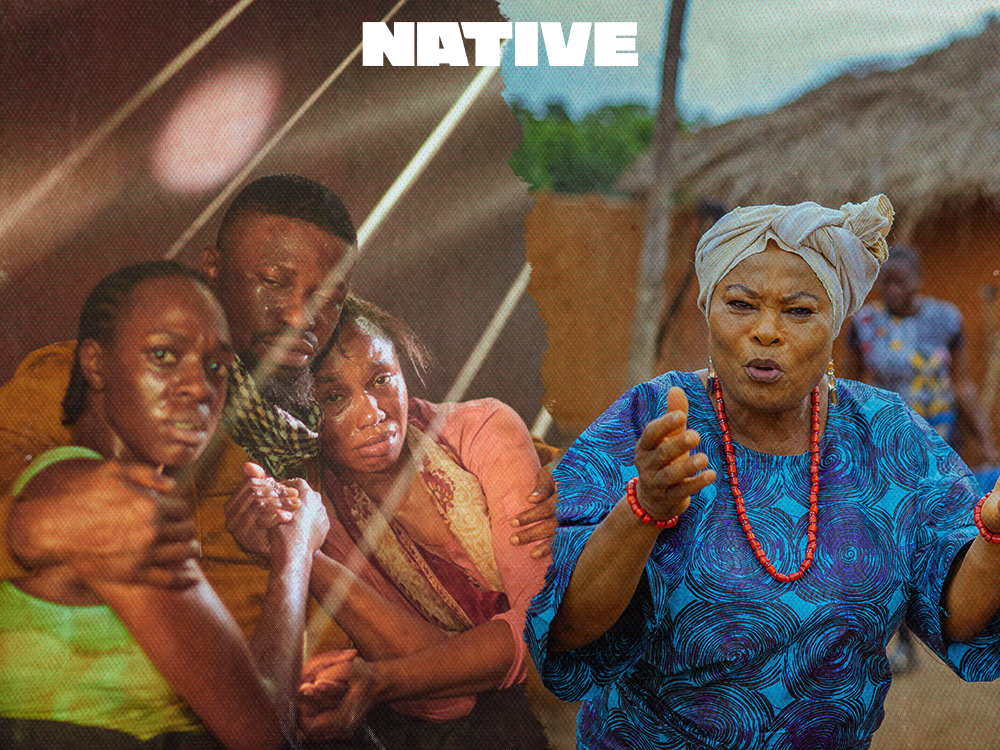
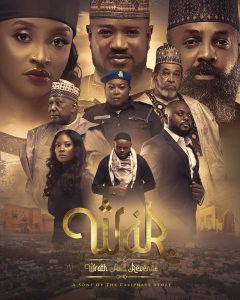
Across the globe, Nigerian music is on the ascendancy, soundtracking the lives of people, parties and festivals, and stamping the names of its stars on the lips and hearts of listeners. Following behind is its film industry—popularly known as Nollywood—creating homegrown content with improved technicalities for both Nigerian and worldwide audiences through partnerships with international streaming platforms. According to a PwC report, the Nigerian entertainment industry is one of the most profitable industries in the country and will generate $14.8 billion in revenue in 2025. 

“Due to heavy leverage on digital platforms, the Nigerian entertainment industry has gone global,” said Professor Umar Danbatta, the Executive Vice-Chairman and Chief Executive Officer (EVC/CEO) of the Nigerian Communications Commission (NCC). He further added, saying, “Nollywood is one of the biggest movie industries in the world. In fact, more movies are produced by Nollywood yearly in comparison to Hollywood…[and] Nigerian music stars are in hot demand worldwide because of their popularity and brand recognition on social media.”

The connections between the Nigerian music and the film industry is layered and manifold. Stakeholders in both industries have found common grounds to deepen ties between themselves and lay the foundation required to become a “mammoth cultural force.” With the current mantra of “Afrobeats to the World” signposting the march of Nigerian artists with their music, the film industry has also contributed in no small way to the moment that our music stars now enjoy. 

In 1983, the same year he released his album ‘Synchro System,’ Nigerian Juju veteran King Sunny Adé starred in Jim McBride’s Breathless. The following year, Adé became the first Nigerian artist to get a Grammy nomination. In 1985, Adé and his band, the African Beats, featured in Robert Altman’s film O.C. and Stiggs and contributed substantially to the film’s score. In his piece for Burning Ambulance, Phil Freeman revealed that both films were his introduction to the music of Adé and his band. “The footage of them performing ‘Penkele,’ from their 1983 album Synchro System, captivated me,” he wrote. “The lilting Yoruba vocals; the shimmering waves of guitar, bolstered by synthesizers and zinging steel guitar; the conga polyrhythms and the amazing-sounding talking drum; it was like no music I’d ever heard before, and while I never spotted any of his albums in record stores, I filed his name in my head for future reference.”

Fela Kuti is another musician in that era whose music has inspired countless artists around the world and has been made part of the soundscape of many Hollywood productions. In 2021, Kuti’s “Let’s Start,” off his 1971 live album with Ginger Baker, soundtracked the trailer of Jeymes Samuel’s The Harder They Fall. His tracks “Open & Close” and “Je’nwi Temi (Don’t Gag Me)” were part of the soundtrack for Tom McCarthy’s 2007 film The Visitor; so also were his tracks featured in the TV series Narcos (“Who’re You”), Atlanta (“Shakara”) and Stumptown (“Zombie”), among others. Kuti’s “Zombie” was also sampled in Beyoncé’s 2019 concert film Homecoming

King Sunny Adé and Fela Kuti weren’t the only ones from Nigeria’s musical past whose songs entered the sphere of Hollywood. In Season 6, Episode 4 of the American TV series Homeland, Segun Adewale’s “Ojo Je,” Joe King Kologbo’s “Sugar Daddy” and Vocal Slender’s “Aje Gunle” were part of the soundtrack. “After story, music is the strongest emotional cue in film,” notes Ben Stamos. “Music adds to a movie’s narrative in several ways: It sets the mood, it focuses attention, it foreshadows what’s about to happen, it reflects the characters’ emotions, and it influences the viewer’s perception of certain characters. It even dictates how scenes are cut. Music is a powerful narrative tool that can make or break a movie.”

As the 2000s rolled in, the soundscape of Nigerian music experienced changes as artists incorporated their unique homegrown idiosyncrasies into Western sounds. “African Queen” by 2Baba—previously known as 2Face Idibia—ushered in a renewed awareness about the musical talent on the African continent and made a splash in foreign scenes. “Africa Queen” was part of the soundtrack for the 2006 Mo’Nique-starring American film Phat Girlz, alongside Mad Melon & Mountain Black’s “Danfo Driver.” The latter parts of the 2010s witnessed the rise of Wizkid, Davido, Burna Boy and Yemi Alade, and those artists have contributed to making Nigerian music the dominant force that it is today. They have also caught the attention of the film industry, with their songs soundtracking films and TV series such as Pacific Rim Uprising, Ballers, Top Boy, Bitten and Sex Education, among others. 

In 2019, a host of Nigerian artists were featured on the Beyoncé-curated soundtrack for the musical drama The Lion King. They included Wizkid, Burna Boy, Tiwa Savage, Tekno, Mr Eazi and Yemi Alade. Two years later, Davido appeared in a cameo role to perform his song “Assurance” in Coming 2 America, the sequel of the celebrated film franchise starring Eddie Murphy and Arsenio Hall. He also featured in the film’s soundtrack alongside Burna Boy, Tiwa Savage and Tekno. 

The newer Nigerian music stars are ensuring that the pipeline connecting music and film gains more strength. Rema and Tems’ vocals were on the teaser video for 2022’s Black Panther: Wakanda Forever, and they both featured on the film’s soundtrack alongside Fireboy DML, Burna Boy, CKay and Bloody Civilian. The British sci-fi TV series, The Power, which is currently airing on Amazon Prime Video, features songs from The Lijadu Sisters (“Orere-Elejigbo”), Obongjayar, Chief Stephen Osita Osadebe (“Osondi Onwedi”) and Lady Donli (“Hello Lady”). Days ago, news broke that music from Wizkid, Tekno and 1da Banton featured in the third season of the American comedy TV series Ted Lasso. These developments are evidence that Nigerian music is on the right track. With more channels to promote their music, Nigerian artists can be sure that their art will reach larger audiences and that the legacy of their works will live for years to come. 

Featured Image Credits/The NATIVE


ICYMI: Dunsin Wright is just getting started

What’s Going On: Unrest In Sudan, National Mourning In DR Congo & More

“What’s Going On” Tallies Notable News Headlines From Across The Continent — The Good, The Bad, And The Horrible — As A Way Of Ensuring That We All Become A More Sagacious African Generation. With This Column, We’re Hoping To Disseminate The Latest Happenings In Our Socio-Political Climate From Across The Continent, Whilst Starting A Conversation About What’s Important For Us To All Discuss. From Political Affairs To Socio-Economic Issues, ‘What’s Going On’ Will Discuss Just That.


SUDAN REFUGEES ENTER ETHIOPIA AMID UNREST

Following the war that broke out between the Sudanese Army and the paramilitary group Rapid Support Forces (RSF) on April 15, hundreds of refugees—consisting of citizens and residents of Sudan—have fled the country and crossed the border into Ethiopia. The fighting has claimed the lives of at least 700 people, most of them civilians and wounded thousands.

Multiple truce deals have been declared and quickly violated as gun battles and air strikes flared on Sunday in Khartoum, Sudan’s capital. The latest ceasefire efforts came from Saudi Arabia and the United States. “The United States stands with the people of Sudan—and we are acting to support their commitment to a future of peace and opportunity,” President Joe Biden said in a statement on May 4. “Today, I issued a new Executive Order that expands U.S. authorities to respond to the violence that began on April 15 with sanctions that hold individuals responsible for threatening the peace, security, and stability of Sudan; undermining Sudan’s democratic transition; using violence against civilians; or committing serious human rights abuses.”

With the eyes of the world on Sudan, some citizens and foreign nationals are caught in the middle of the war, hiding in their homes amid shortages of water, food, medicines and other essentials.

AUTOPSIES RULE OUT ORGAN HARVESTING IN KENYA CULT DEATHS

According to government pathologists, autopsies performed on 112 bodies of cult members unearthed from shallow graves in Kenya’s coastal Kilifi County have excluded the possibility of organ harvesting. The verdict is that some of the victims died due to starvation, strangulation and suffocation.

The victims were members of the Paul Mackenzie Nthenge-led Good News International Church. In April, at least 109 bodies were retrieved from mass graves in the Shakahola forest, with Nthenge believed to have encouraged his followers to starve themselves to gain salvation. Nthenge appeared in court on Tuesday (May 2) and could face “possible terrorism charges,” according to his lawyer George Kariuki.

Kenyan police are expected to excavate more graves in their search for additional victims. Mackenzie is currently in police custody, pending investigation. To investigate the deaths of these Christian cult followers, President William Ruto has established a commission of inquiry.

DR CONGO MOURN AFTERMATH OF DEADLY FLOODS

According to officials, the death toll from the floods that ravaged two villages in the Democratic Republic of Congo has risen to more than 400. The government has also declared Monday as a day of national mourning in memory of the dead and missing.

On Thursday, May 4, the villages of Bushushu and Nyamukubi in Kalehe territory, South Kivu province, were submerged after days of torrential rain caused landslides and rivers to leave their banks. The disaster came two days after floods killed at least 131 people and destroyed thousands of homes in neighbouring Rwanda.

“It is the worst flood we have ever had,” civil society representative Christian Zihindula Bazibuhe said, adding that bodies were still floating on Lake Kivu. António Guterres, the Secretary-General of the United Nations (UN), stated on Saturday during a visit to Burundi that it was “a new illustration of an acceleration of climate change and its dramatic consequences for countries that are not involved in global warming” of the planet.

NIGER SOLDIERS DIE IN MINE EXPLOSION

The Nigerien National Guard (GNN) reported on Sunday that seven Nigerien soldiers were killed when their vehicle exploded on a mine in the western region of Tillabéri, where jihadist groups regularly operate.

“A vehicle of the weekly supply escort mission hit a mine late this morning, about 6km from the village of Samira, in the department of Gothèye, near the border with Burkina Faso,” said a statement on state television from the GNN, which is attached to the Interior Ministry and is at the forefront of the anti-jihadist fight. The village of Samira has been home to Niger’s only industrial gold mine since 2004.

Africanews reports that the Nigerien government has been fighting jihadist groups linked to Al Qaeda and the Islamic State in the Greater Sahara (IS-GS) there since February 2022, in an operation called Niya with more than 2,000 men. Niger is also facing deadly actions by Boko Haram and the Islamic State in West Africa (ISWAP) in its south-eastern part.

Featured Image Credits/The NATIVE

New Music Friday: New Projects from Bongeziwe Mabandla, Dwin, The Stoic, A-Q & More

In a singles-dominated market, putting out projects feels like an act of faith. Faith in the attention span of the contemporary human mind, but also in the expansive vision of projects, the linkage of different parts to create an immersive experience. As such, projects are highly celebrated by the NATIVE Mag and that’s what New Music Friday embodies. Being the prime date for new music releases across the Afropop soundscape, it’s only right we launch you into a befitting weekend, carried on the distinct, complex thrills of the albums and EPs that’s been put out. On this week’s New Music Friday, we have collated projects from around the continent, each boasting sounds that are bound to keep you sonically alert. 

BONGEZIWE MABANDLA – ‘AMAXESHA’ 

As you can tell by now, NATIVE Mag loves the music of Bongeziwe Mabandla. For months, we’ve counted down to the South African musician’s fourth album, the grand ‘amaXesha’ which translates as ‘The Times’.  A soulful encapsulation of the breathless emotions Bongeziwe has evoked since his decade-plus presence in the scene, it’s a masterful reconstruction of Xhosa folk. The contemporary radiance of electro flourishes meets his spirited vocals with epic intent, progressively taking the listener through every song, so the tape plays out like a collection of evocative movie scenes reaching the crescendo of its final moment. With the COLORS-released “sisahleleleni (i)” starting out the album, potential listeners already have an inkling as to its atmospheric quality. 

A-Q – ‘GOD’S ENGINEERING 2’

Better late than never is a saying familiar to many, but few careers embody that like A-Q’s. Having began releasing music officially in the mid 2000s, the rapper hit the peak of his artistry just before the 2020s, going on an unprecedented run that was largely fuelled by the production genius of the late Beats By Jayy. The joint-album ‘Crown’ with Loose Kaynon among that run, Q’s position at the zenith of Nigerian rap lyricism was solidified by ‘God’s Engineering’, which became arguably his best album. With introspective, cutting raps stitched over elegiac beats, he unfurled personal demons while taking stock of the world around him. ‘God’s Engineering 2’ continues on that path, adding the glitter of pop flourishes around the hardcore pyrotechnics of A-Q. The result is an essential rap album.

YKB – ‘YUSFUL MUSIC’

The Lagos music scene is one abuzz with talents, but over time, we’ve seen that the ones more likely to break through are those with a unique grasp on social conditions. Over the years, the musician known as YKB has worked towards perfecting that quality in his art, merging the details of his personal life onto the grander palette of a city that seems at odds with itself. ‘YUSFUL MUSIC’ is the latest iteration of that experiment; in five soulful, related tracks, he charts the seas of the internal and external with heartfelt brilliance, inching closer to that mainstream ubiquity that has been looming around for a while now. Read YKB’s track-by-track breakdown of the EP. 

OYEDELE – ‘IRAWO’

Consistency and experimentation is the watchword for Nigerian act Oyedele. On his latest EP ‘Irawo,’ the rapper merges traditional Nigerian music with modern sounds to create unique experiences. “Irawo is actually my most personal project,” he says. “In crevices of sound and cadence, there are personal imprints all over the project— it marks a particular period in my life.” Oyedele’s aim for the project is to “push boundaries with music,” and that aim manifests ‘Irawo,’ “from featured artists, to producer, mix mastering engineer, to designer, to set designer, photographer and all.”

DWIN, THE STOIC & RHAFFY – ‘LOVE LANE’ 

Last year when NATIVE Mag profiled Dwin, The Stoic, the artist was excited to reveal his expanding grasp on popular sounds. His ‘Love Lane’ EP, he said, would challenge expectations of his oft-categorised ‘alternative music’, and after following up with some singles, the referenced project is finally here. As promised, ‘Love Lane’ is a kaleidoscope of sounds, presenting Dwin’s signature melancholic direction in new light, and his writing pushing unbounded into new thematic terrains. For lovers of sensitivity and the constant search for a fuller existence, this is a must-listen. 

TENA TENPO & BENMAELEN – ‘COLOR BLIND’ 

Over the years, Tena Tenpo has established a name as one of the most avant-garde artists out of Nigeria. Orbiting sonic lanes around R&B, rap, and afropop, he’s flexible in his direction, perhaps the quality that influences the title of his latest project. ‘Color Blind’ presents a wide spectrum of sounds and perspectives, parsing each element through the plain honesty of Tenpo and Benmaelen, his co-star. With its intimate sonic touches influencing an autobiographical edge onto the project, it rewards the listener both on a technical and emotional scale. 

NATIVE Selects: New music from CKay, Fireboy DML, BNXN & more

It’s that time again. Every week, new music shows up, sweeping fans and music lovers off their feet while artists gauge reactions to know the effect of their creativity. At the NATIVE, we are committed to keeping our ears on the pulse of the music scene and bringing the best sounds to your doorstep.

Earlier this week, we brought you stellar new releases from Mayorkun, NOT3S, Kwesi Arthur and more. Today, we have songs that move from Afropop to Amapiano to R&B, with our select artists showcasing their unending talent and passion for creativity. Lock in!

FIREBOY DML – “SOMEONE”

In the third quarter of 2022, Fireboy’s highly anticipated ‘Playboy’ dropped. Featuring tracks like the chart topping “Peru,” assisted by Ed Sheeran, the standout cuts on the project have undoubtedly positioned the artist for a bigger breakthrough. “Someone” serves as the first release for the artist since the album and it does not disappoint. Over a groovy, dance beat -almost reminiscent of Drake’s “Texts Go Green”– Fireboy DML’s infectious vocals unabashedly beckons on love and affection from his muse. His vulnerable lyrics and soulful vocals express his preconceived feeling of loss due to the absence of his love interest. 

IYANYA & BNXN FKA BUJU – “SINNER”

Back from a well deserved hiatus, Iyanya makes a stellar comeback on BNXN-assisted “Sinner.” Over the groovy, mid-tempo beat, Iyanya and BNXN wear their hearts on their sleeve as they sing of the hypnotic powers of their love interests. A beautiful fusion of Iyanya’s expressive vocals and BNXN’s rustic verse performed in his local dialect, the recently released single is certain to have audiences hooked on a first listen. The sleek collaboration, produced by Shuga(shugavybz), is a testament to Iyanya’s musical prowess and BNXN’s unique ability to further develop an outstanding track. 

KILLERTUNES, BZ & NOT3S – “SHY”

For his first single of 2023, Nigerian record producer and singer Killetunes taps UK acts BZ and Not3s for the sultry number “Shy.” The track brilliantly infuses jazz elements with pop rhythms as the trio serenade their love interests.  BZ also uses his verse to deliver some heartfelt lines about being his family’s breadwinner. “Shy” is a flex, both sonically and thematically.

BALORANKING & IDA BANTON – “CARO (REMIX)”

There’s never been a time in Street Hop where its soundscape was as variant as it is now. Everyone’s evolving differently, an acknowledgment that’s necessary in the assessment of contemporary afropop. Balloranking belongs in this convo, a stylist whose merging of deeply-reigned Yoruba cultures and new-school storytelling has seen him elevated as a most promising act. He surely holds that reputation up on the remix of “Caro”, featuring the in-form 1Da Banton who joins him to detail the soulful aftermath of a break-up. 

CKAY – “HALLELUJAH” FT. BLAQBONEZ 

Without a doubt, Ckay’s growth over the past few years has been nothing short of outstanding. From the astronomical growth of his standout single, “Love Nwantiti” to a star-studded debut album laced with perfectly curated tracks telling a story of toxic love. CKay is THE moment. An ode to his career strides in recent years, CKay’s recently released single “HALLELUJAH” taps into Blaqbonez for an upbeat celebration of growth. The track’s intoxicating Amapiano-infused keys and drums sets the tone for the rest of the track as the pair make comparisons to their past life. Blaqbonez’s sleek bars follow after CKay’s melodious rendition, reiterating the track’s message of gratitude. 

ESPACIO DIOS – “THE SECOND KIND” FT OKMALUMKOOLKAT & NALELI

Ever pushing the boundaries of his craft, South African musician Espacio Dios can go anywhere. On “The Second Kind”, it’s a broody song which tells the story of young lovers caught in a storm. Both on a literal and metaphorical level, it’s an inspiring record with bold splashes of individual style. Between Naleli’s svelte tones and Okmalumkoolkat’s spirited verse, the linking quality of Dios’ output makes it come together. Add the smoothly-worked psychedelia and bottle-laden percussions and you get a visceral experience which places you in the world of sound, feeling and imagery. 

KING PROMISE – “TERMINATOR”

Ghanaian sensation, King Promise has had an awe-inspiring breakthrough into global audiences over the past few years. Since his Omah Lay-assisted hit single “10 Toes,” off his album, ‘5 Star,’ studded with local and international acts, King Promise has proven to be a serial hit-maker. His stellar songwriting skills and standout vocals come into play on his new single “Terminator.” The song’s catchy beat, produced by KillBeatz and clever lyricism will leave every listener hooked, adding to his already impressive discography. 

YABA BULUKU BOYZ & FALZ – “MADAM DE MADAM”

Entire records dedicated to female physiology isn’t new to Afropop musicians, but Falz does know how to spice up his. An astute lyricist with fine flexings on humour and relatable stories, he finds natural alliance with the earthy production of Mozambican super trio Yaba Buluku Boyz on “Madam De Madam”. House-tinged beats aren’t new to Falz and he does reiterate his brilliance on this style yet again, shining alongside the authoritative bars of the group. An accomplished record, it’s one destined to shake dance floors from Maputo to Lagos. 

LEEOBI – “TONIGHT” 

The Nigerian music scene is abuzz with talents. Every day, new records announce the peculiarities of rising acts, indeed giving much excitement to us music lovers. Leeobi is a name to watch out for, if his “Tonight” record is anything to go by. Seeming to work in the breezy love tradition of Tekno and Joeboy, he’s a musician with warm dispositions, as evident in his new song. Coloured with live instruments, his vocals are beautifully rendered in the telling of a love tale, establishing a pattern of pensive beauty which is maintained till the song’s last second. 

TTO – “BANK”

TTO opts for a mellow vibe on his new single “Bank,” produced by Lynzz Beats who he met online. The Dallas-based Nigerian artist has been honing his melodic rap skills and lyrical confidence with 2018’s ‘Panorama’ and 2022’s ‘You’ve Done.’ On “Bank,” TTO reflects on his journey of “steady tryna get to the bank” and also showers appreciation for a woman responsible for his happiness. TTO and Lynzz Beats have made magic with this feel-good track.

Featured Image Credits/The NATIVE

Track-By-Track: YKB Breaks Down His New EP, ‘YUSFUL MUSIC’

In the past few years, the Afropop scene witnessed the entry of a new vanguard of musicians. Without knowing it, the many young artists who began creating seriously during this period embodied a sonic and linguistic shift within the movement’s nucleus in Nigeria, and would come to capture the solitary zeitgeist of the following year in such stirring ways. One of such musicians was yusufkanbai who, until some couple of years ago, became simply known as YKB

Born Yusuf Oluwo, the artist possesses a strong sense of self. Prior to music he worked as a photographer, a profession that continues to influence the vivid snapshots encapsulated in his songwriting. Among other places, he resided in the Ketu neighbourhood of Lagos, gathering the experiences he would relate with crisp emotiveness across his oeuvre. YKB started creating music in 2019, getting on the much-vaunted Ejoya ‘Class of ‘20’ the following year, alongside other promising genre torchbearers such as Buju (now BNXN), Jinmi Abduls, DJ Yin and Emo Grae. 

In the years since, YKB has maintained a passion for output. He’s often releasing music to his ever-growing fanbase, advancing his sound with each project while centering biographical details within that amorphous range which, over the times, have included Afropop, R&B and Trap. As he told the NATIVE Mag, “My messaging is always going to remain the same, just that the music is going to get better”. 


View this post on Instagram


A post shared by YKB 🤎 (@ykbonly)

Evidence of that growth is all over ‘YUSFUL MUSIC’, the new project from YKB. Spurred from a nickname he flipped in secondary school, ‘Yusful’ extends the narrative palette of the March 2023-released ‘Never Lazy’ mixtape. The five-track EP continues to burnish his personal ideations, cutting through the heart’s pleasures and uncertainties to offer poignant perspectives. Like many of his projects, the uNder alum put together distinct but interrelated records. 

In this track-by-track breakdown with the artist, we dissect the origins and meanings behind each song, at the end placing it in the sprawling conversation of YKB’s unique creative process. 

“PRESSURE”

This na real life story oh. The day before the day I made “pressure”, something happened where my mom called me to come to her place, and then my elder sister called her phone that she wanted to talk to me. When they gave me the phone, she was talking about me looking for another option if music is not making sense, maybe music is not making money. That I’m only getting older and I need to start playing my role as a son, say my mama no dey collect pension. It’s all in music; like, I just narrated that whole p. The first verse of the song I just narrated what happened. Spax produced the song, and that’s like the second version of the song, but Spax is really the one that brought all the instruments together and made it sound like exactly what I wanted it to sound. I had written it down to an emptier beat, but Spax was the one that elevated it. 

“BO CARD (THINGS I NEED)”

“bo card” was basically me just flexing my vocals. I was singing my whole lungs out and I just wanted to create something where I could like, flex my vocal power, something sensual in that sense. We had parts of the beat before, and then we just came together and Spax was like, “This one, let’s make it together”. And that’s like Spax’s favourite song sef. I don’t know if I create [sensual records] often because I don’t really keep track of the topics, as long as it’s genuine and it’s real, that’s what I just go on. That’s my whole thing approaching music.

“SAN SIRO”

I made this in my room oh. I wrote “San Siro” to impress a girl. The girl likes when a song has witty lyrics and good songwriting. So I was like, let me make a song that this girl’s going to like. And we thank the Lord, she loved it; she still loves it. About the title, there’s this place where we used to play football when I was in secondary school; they used to call that place San Siro – it was in Mile 12. I didn’t even know it was the name of a real stadium. After I made the song, my creative director Niyi Okeowo was like, “Ah, how do you know about San Siro? That’s my team’s stadium”. I was like, ‘that’s mad’. So, everything is ordained. That’s how I knew “San Siro” was meant to be cos everything really came together. From the song to the video, it was a real story that came from the heart. 

“KOMPLETE RIDDIM”

So me and Steph, who’s the producer, were hanging out one day – cos we used to just hangout that period. He liked my music and I liked his music, so we’d just get together and make tracks. So we’re making a song – I can’t remember the song we were making, and we’re trying to complete a song, then his guitarist sent in a loop and I was like “Bro, load this thing immediately, put it on your laptop immediately”. Then I just came up with the hook and I sang it to him and he was like, “Guy, gone. Let’s finish it; it’s gone”. And Steph and them like Buju, they were the first set of people that used to say “It’s going, it’s gone”. When you record a take, and they say, “Is it going? Yeah, it’s gone”. So when I did “komplete riddim” it was like, don’t worry, it’s going; it’s gone. That’s how the song really came about; we actually made that song just to have fun cos that was the mood we were in. And if you listen to the song, you can tell that “Oh, this guy is having fun”. The way we even recorded it, he played the guitar on the computer, and I recorded the hook, and he played drums on it—we were just layering it, we were complementing each other with the creation of the song. So that’s like the most fun song on that project. 

“TRAFFIC”

I made “traffic” and “pressure” the same week. I think at the time I was really feeling myself, cos “pressure” was kind of like a release for me, it made me feel better. Imagine your sister calling you and saying, “How far this your music p?” Cos when you’re outside, people will always say, “Bro, you’re bad, your music is so good. But then your family member is now telling you that ‘Bro, this music, I don’t understand what you’re doing with it oh’”. So it really weighed heavy on my chest. But when I made “pressure” I just started feeling myself, so that was the energy I used to record “traffic”. And the hook of the song says, “I’m on my way, I’m just caught up in the sunkere fakere”. Sunkere fakere means ‘Traffic’ in Yoruba, so that was just me telling myself, “I’m going to get there, I’m just caught up in the traffic of the music industry”. Obviously, that’s how it works. You just have to wait for your spot to get there. 

Featured image credits/YKB


ICYMI: Zinoleesky’s Reign

NATIVE Exclusive: Dunsin Wright Is Just Getting Started

The driving force behind Tems’ inspiringingly firm sense of style is Dunsin Wright, a Nigerian stylist and expert who is the Nigerian singer and producer’s close friend and collaborator.

I actually met someone on her team a couple of years ago, maybe two years ago,” Dunsin tells the NATIVE about the fated meeting. “At the time, [styling] was meant to be more of a side thing. Then I met someone on the team who had seen my work and he just pitched me. I guess Tems must have liked my work because then they sent me a mood board.” Having grown up in Lagos in the 1990s, she developed an affinity for home-grown luxury brands and had her first gig in the game with the global artisan, Lisa Folawiyo. “I think working in Lagos and with a female led brand definitely informed my idea of what was even possible,” she recalls of the experience.

Now, Wright is the in-house stylist for the Grammy and BET award winning artist, Tems and forms a core part of Tems’ small yet undeniably well-oiled machine. In such a short time, both Tems and Wright have embarked on an awe-inspiring trajectory that has birthed the global star a polished and sleek image direction. Working as Tems’ right hand, Dunsin ensures she looks breathtaking for all these moments. From her baby blue Brielle moment for the Global Citizen Festival to the ethereal custom Vivienne Westwood piece donned at the Grammys earlier this year, Wright is crafting and redefining the singer and producer’s entire wardrobe, one awe-inspiring look at a time.

Off the back of the 2023 MET Gala, the NATIVE sits down with the stylist to discuss her entry into the fashion industry, working with Tems, her creative process and much more.


View this post on Instagram


A post shared by The NATIVE (@thenativemag)

Our conversation, which follows below, has been lightly edited for clarity.  

NATIVE: Hi Dunsin, thanks for joining me on this call. Can you talk about your first introduction to fashion? 

Dunsin: I would say that I was very heavily influenced by my mom. From when we were children,  my mom was always super intentional, very creative and always made me think or see fashion from different lenses. It was very intertwined with my idea of self-expression. I think I always admired that creativity and it’s something that has informed the way I look at clothes and style to this day. From a career standpoint, I never really looked at it as something I would go into professionally. It was just always very fun for me. After I graduated from university, I wasn’t loving some of the jobs that I tried to get into. I was going for something more corporate, but I just never really had a lot of fun doing it. I decided to get some experience in the fashion industry and started off working fashion PR in London. From there, I met the clothing designer, Lisa Folawiyo. I moved back to Lagos and I started running her comms and marketing. 

So you had the opportunity to understand the fashion industry on  a closer level. 

Yeah,  I had a lot more time to build experience and grow my contacts as well then I pivoted into styling and creative direction. That’s really it. 

What are some of your early fashion inspirations?

One of the biggest ones was my mom and older sister. I would say now it’s kind of everything and everyone, down to people on the street. I always say that I really love and appreciate street style especially in Lagos and London. Right now, I would say it’s a bit of everything. I can’t really pinpoint it to one person. I also love old music videos and fashion shows. Some independent designers here and there. So yeah, I would say it’s a mix of everything right now. 

As a young Nigerian woman, how were you able to chase your creative passions and get into that industry? You already mentioned working with Lisa Folawiyo, do you think working with a woman influenced your journey? 

I think pursuing my creative career was not easy at first because there was a social stigma attached to it. When I was growing up and even within my family, it wasn’t looked at as a lucrative career. Everyone was encouraged to study a more serious subject and fashion was not that at the time. It wasn’t easy at first but I was invested. I knew I’d really be denying myself of who I really am if I didn’t pursue this. I think working in Lagos and with a female led brand definitely informed my idea of what was even possible. Working with someone as strong as Lisa, who has so much respect in her industry, really paved a way for other fashion designers. It changed the way I looked at everything. I just realised that as long as you’re able to work hard and put as much effort in your work, it will always speak for you. It definitely informed the way I look at my work and possibilities. 

“All the women doing those amazing things are the reason younger girls have people to look up to.  I’m really not limited. That’s why they say representation is important.”

How would you define your style now? 

I think I am a lot more comfortable in my skin. I speak to so many designers everyday and I’m taking in a lot more fashion and style than I would ever have. I think that has translated into me being a lot more comfortable and I know my style a lot better. Now I gravitate towards things that feel like me. I connect with pieces a lot more. I feel like I have a wardrobe that is more reflective of my personality. I found that before, I’d probably look for clothing in a limited amount of places. I don’t think it’s possible to really have clothes that reflect all the different sides of you if you’re looking in limited spaces. And so now, whether it’s from markets and labels to thrift stores, to Depop or more high end clothing, I think being able to understand style from that space has allowed me to build on what reflects the different sides of my personality. 


View this post on Instagram


A post shared by @dunsinwright

Let’s talk about Tems. How did both of you meet and how did you decide that this is something that you wanted to do with her? How did you guys hit it off?

I actually met someone on her team a couple of years ago, maybe two years ago. They were trying to put together a press shoot. At the time, I was working with Lisa, and I had just styled my first shoot with BOJ and Davido. So it was something I was starting to consider. I had also done some work for Lagos Fashion Week with NATIVE and Momo Fashion. I co-styled that shoot and I was just starting to consider styling. At the time, [styling] was meant to be more of a side thing. Then I met someone on the team who had seen my work and he just pitched me. I guess Tems must have liked my work because then they sent me a mood board. I got some clothes together. I actually got a lot of custom pieces made at the time with Lisa which was also very helpful.

We had to shoot and I think what stood out to her at the time was how well the clothes actually fit. It was rare for her at the time because a number of clothes didn’t tailor to her proportions. As African women, you’d know it’s sometimes hard to find people that cater to our body type specifically.  I think that’s something that Lisa Folawiyo is able to do quite well. That experience directly impacted my next experience, my next chapter. We really just had a great time. I think that was probably the most fun I had from a shoot. It was chill. It was very easy. At the time, I didn’t have a single approach to these things. It was on a job to job basis.  I think later, they were about to go on tour or for a couple of shows and they came back to me. We just kind of fell in love from there. It was very easy, very organic.

I see you and Tems have very unique and different styles. How are you both able to marry your creative ideas to pull together amazing looks?

I think that because of the nature of our relationship. We’re pretty close and we’ve built a lot of trust in each other. When pieces speak to me, it’s easy to translate that into something she’ll like because we spend so much time together. She’s quite vocal about things that she does or doesn’t like as well. I think as a stylist that’s one of the most important skills; to understand each person that you work with. Understand their creative vision and see things outside of yourself. I think the key thing here is probably just the trust, the relationship and the friendship that we have. I actually would say that it’s not as different as it may come across. The way we put things together will probably be quite different but in terms of the foundation, the sorts of pieces that we both gravitate to, I would say there’s a lot more similarity than you may think. So regarding that, it’s actually pretty easy. It’s pretty seamless. 

What message would you say you’re trying to pass across in Tems’ look as she crosses over from the Nigerian audience to a worldwide audience?

My approach was studying her as opposed to passing across any strong political messages. I say political because I think in recent times, a lot of people have probably thought that was the goal. I would say that it’s really not. My approach to styling her and working with her is really just wanting her to feel the best in what we’re putting together. It’s wanting her to feel the most confident in every piece. I think in my work, generally, I just want women to feel their most confident and beautiful.  From day one, I’ve always reminded myself it can’t be about what people think, you know? It has to really start with self because that will translate most naturally. She has things that she loves based on her body type or background. Like is said earlier, it’s about letting the young girls everywhere know, you can actually take up these spaces completely being yourself. I think with the age of the internet, it is not uncommon to receive that kind of backlash when you’re being daring and confident, especially as a black woman.


View this post on Instagram


A post shared by @dunsinwright

What would you say takes precedence for you working with Tems: style or comfort?

Definitely what she’s comfortable in. I could have a vision for something that I think would be amazing but if she doesn’t feel good or doesn’t feel herself, that will translate. It won’t even allow her to wear the piece in the way that it’s supposed to be worn. So yeah, it comes back to comfort. Of course, the looks are important but there’s also everything else including beauty. 

What’s this selection process like for the beauty and glam teams that you work with?

I mean naturally you look at people’s previous work, that’s one thing. The next thing is definitely their attitude I think. With everyone that we work with, the reason I work so well is because of the personalities we all have. So I think that’s definitely the next thing. For choosing the actual looks, we decide on the pieces first and what sort of vibe we’re going for. This could be a range of things. Based on the outfit, we then decide what sort of look we’re trying to create. We’ve been pretty lucky. In each city, we’ve worked with hair and makeup artists that are local and we’ve had some really amazing talent. They always bring in their own touch to whatever vibe we’re trying to create so that’s been really good.

How does your creative vision differ depending on the artist that you’re working with? How do you manage to keep those two visions separate?

It’s really just trying to get clothes outside of myself or jump out at me for my own style. What’s also quite special is that the people that I’ve worked with, I think there is some part of me that resonated with them and vice versa. It’s important to me to work with people that I also appreciate their style in a way, or they appreciate mine. I feel like if I’m working with the wrong people, then we might not be able to make some things work. But yes, building references out of film or music videos,  cartoons, runways or anywhere. So it’s about reaching into whatever mood or collections started building. You know there might be some similarities, some crossovers but you find yourself building completely new collections or references for each person. Each person that I work with as well is willing to experiment. Again, there has been a lot of trust for them to let you work. I think again each process is with each project is quite different. 

How do you feel about taking risks in your fashion? Are there any that you’ve taken that haven’t paid off?

I think it really takes out the fun if you’re not taking risks. For me, I feel like what even really constitutes a risk? it’s like, okay, you were just confident and did what you wanted to. It doesn’t really cross my mind that this could be a risk. It’s like, yeah, this may have a reaction, but ok. Yeah this could cause a conversation and I think that’s a good thing. As long as you’re not doing anything offensive. I guess everybody’s idea of what is offensive is different. But I think if you’re not harming anyone or not putting any messages of hate or whatever, then I personally think you’re good. People may not think that but whatever. 

You had an exhibition 2121 last year, how was this experience like?

That was my first exhibition. I had wanted to do it for a while before I actually got a chance to do it. The first time I wanted to, we entered into the lockdown. Last year just felt like the perfect time. It was very heavily influenced by my love of film and the way my love of film had influenced my love of fashion and sort of trying to marry the two worlds. It was about putting together ideas of what fashion in the future would look like.

It was very important for me to put those things together, to get the people – African creators – in a space to dream bigger than what is right in front of us, especially when things seem bleaker than ever in Nigeria. It’s like giving everyone that space to keep dreaming because if you can’t dream, then you’re never gonna get out of reality. I asked different fashion designers to create according to what they feel fashion will look like in 100 years from now. I also wanted my audience to come dressed in their own interpretation of that. Even with the music that we had, the DJ created a playlist with her idea of music or artists that represent the future of music. 

What can we expect from you this year, if there’s anything you can tell us?

Definitely more activations to do like 2121. I’m working on a few exciting projects, starting with creative direction and potentially directing music videos. 

Featured Image Credits/ The NATIVE


ICYMI: NATIVE EXCLUSIVE: “TOGETHER IS OUR WIN”, TEMS TALKS ABOUT WIDENING HER CIRCLE

Essentials: Jaywillz Captures The Pleasures Of Love On ‘Pretty Inside’

Jaywillz, the singer, born Chinonso Emmanuel Ome, has anchored his music to the workings of love, whether it concerns a significant other, oneself, a thing, or the community. He wields his sonic magic—borne from a confluence of sounds from R&B to Highlife—with his mellifluous vocals, rich with falsetto and adlibs. ‘Love or the Word,’ aside from being the title of Jaywillz’s 2021 EP, is also the guiding light throughout his discography. Off the album came the hit track “Medicine,” where he professed love to his woman. Shortly after, he scooped a coveted spot on Olamide’s 2021 album ‘UY Scuti,’ singing heartily about being locked in love. 


View this post on Instagram


A post shared by ROLLBOY!!! (@jaywillzofficial)

On his newest project ‘Pretty Inside,’ Jaywillz sticks to his winning formula but finds ways to examine what affection means to him. He starts his reflections with  himself on the opening track “Good Life,” singing, Am ready for this fight am ready to work, eh/Uuu, guard me, ooh Jah Jah.” While “Good Life” is set to Xtofa’s Amapiano-inflected beat, Jaywillz controls his vocals so well that the pain behind those words is felt. The overarching mood of the song is positive and hopeful, with Jaywillz encouraging listeners to aim for the good life when he sings, “You can be anything that you want oo/Just be bold, naaa na.

In 2020, Jaywillz signed with Chaado Music Worldwide and released his debut EP ‘P.U.N,’ an acronym for “Please Underrate Nobody.” “Abena” stood out from that body of work, in the same way that “Medicine” did from ‘‘Love or the Word.’ The case was the same for “Wishlist” from 2022’s ‘Sun Flower.’ If there’s any song from ‘Pretty Inside’ destined for that kind of fate, it’s “Colours,” a brilliantly jolly tune where Jaywillz professes everlasting love to his better half. Say I go leave you dey whine/Good or bad we die here/Pray my pocket no dry/Cos I go spend on you,” he sings. Nigerian producer Shugavybz lives up to his name with delightful guitar strings and percussion that stir one to dance.

On “Oceans,” Jaywillz continues the Ghana-Nigeria connection, sprinkling “shito” into his lyrics and singing “Follow me go Ghana.” The love track is also proof of Jaywillz’s skill with hooks and choruses. It is a skill that has earned him the attention of more mainstream acts, who have invited him to bless their tracks with his impressive vocals. After receiving a co-sign from Olamide, he appeared on CDQ’s “Addicted” alongside Wande Coal and Diamond Platnumz’s “Melody.” 

Jaywillz replicates the romantic sentiments on the Xtofa-produced “Lobatan,” a House-inspired track. He also tilts the mood of the song toward the sensual, singing, “Make we do this all night long girl, eh.” It is a culmination of sweet nothings but Jaywillz’s mastery of the kind of singer he is ensures that the track and the project remains engaging. It’s no different on “Fine” as he serenades his lover with promises and witty lines, singing, “Use my tools (On you)/Dance like fool (For you)/Play some blues (For you)/Leave my food (For you)/Girl, I’ll bend my rules (For you).”

‘Pretty Inside’ ends how it started: Jaywillz uses himself as an example of facing hard times and winning despite the difficulties. Like on “Good Life,” “Calvary” also pulsates to an Amapiano beat yet Jaywillz’s vocals are drenched with gratitude. He addresses the hardships of his past and the naysayers who didn’t give his career a chance of survival. When he sings, “Calvary/Nothing impossible from calvary/Thank God for blessings that came my way,” his emotions are undeniable as they reflect his current state of mind.

By utilising a small crew of producers who have contributed to his discography, Jaywillz’s ‘Pretty Inside’ benefits from the chemistry he and the producers have forged over the years. The project packs great replay value and is a formidable body of work for the growing artist. For fans of Jaywillz, ‘Pretty Inside’ is another reason to love him, and for newbies, it is a great place to start and be acquainted with his talent.

Stream ‘Pretty Inside’ below.

Featured image credits/

Amaarae Shares New Single “Co-Star” And Announces Her Sophomore Album

Amaarae is back. Making her return with the kaleidoscopic sonic range of new single “Co-Star”, she pays tribute to the many beautiful women in Africa and the Diaspora. Fans of the sensational Ghanaian-American artist would observe that since releasing the genre-bending ‘The Angel You Don’t Know’ in 2020, Amaarae has receded from the task of putting out any new music, rather consolidating on the strengths of that great body of work. 

With collaborators including Cruel Santino, Mellissa, Kojey Radical and CKAY, the musician had united diverse sonic textures to create an accomplished, mesmerising whole, making that debut one of the most talked-about projects of its era. It also spawned the mega-hit “SAD GIRLZ LUV MONEY”, which rode on the waves of genuine fan love from TikTok virality to become one of the biggest songs in the world a year later, in 2021. An electrifying remix with Colombian-American artist Kali Uchis only worked to solidify its star power, amassing over 379 million global streams ever since.

Amaarae’s new record “Co-Star” comes on the back of these successes, although if there’s anyone who has proven consistent in extending her viral streaks into a body of work with lasting currency, it’s Amaarae. The release follows after “Reckless & Sweet” in March, where she stripped down the psychedelic pomp of ‘TAYDK’ for renewed sensitivity, boasting sweet guitar licks which underscored those ambitions. “Co-Star” is a decidedly distinct affair, featuring breezy sound elements which coaxes a teasing performance from Amaarae. With fluttering cadences and a narrative sequencing that calls upon zodiac imagery and game-esque presentation, it’s a fitting nod in the new direction Amaarae is charting. 

For a while now, those who follow the Ghanaian singer on social media might have been familiar with the ‘Fountain Baby’ title, and she’s just crystallised that by announcing it as the title of her anticipated sophomore album. Now, Amaarae has shared news of the album which is slated for release on June 9 via Interscope, and it is in celebration she releases the ravishing “Co-Star”, which exists at her signature intersection of female empowerment, subversion of gender norms, and a thrilling exploration of female sexuality and artistic self-expression – doing all this while centring her West African heritage within a sprawling global lens. 

“Co-Star” comes with scintillating visuals directed by Lauren Dunn. Reminiscent of the 90s supermodel era, it captures the song’s enchanting allure by creating a Co-Star competition which features some of the baddest women in the game such as The Clermont Twins, model Biba Williams, Nigerian rapper Deto Black, 1XBlue designer Lois Saunders, photographer, model Moyosore Briggs, and many others. The release comes just some weeks after Amaarae’s show-stealing performance at the launch of the Mugler x H&M collaboration in New York City, which also saw her revealed as the face of the collection, another feathered addition to modelling within the highest echelons in the fashion world. 

“‘Co-Star’ is a fun song about star signs,” she said in a statement. “I wanted to give people something cute and flirty for the summer. Astrology is such a huge part of our youth culture, it felt like a missed opportunity to not lean into that and give the girls an anthem that reads and celebrates them all at once. The video is amazing too! Having some of my favourite women in the whole world represent themselves in such an iconic way. The Clermont Twins are such a huge part of alternative African culture. These are the tastemakers of our time. It’s really so amazing to bring them all together”. 

‘Fountain Baby’ is nearly here and from the looks of its rollout, it will surely be an experience to enjoy for several years to come. For now, Amaarae has done well to place “Co-Star” at the forefront of that experience. Hearing and seeing the intentionality behind the record, we’re surely excited for the tidings June would come with.

The significance of Rema’s tour of India

Barely four years ago, Rema made his debut on the Afropop scene. What has happened in that time has become a gloried tale of musical shape-shifting, positioning the Benin-born artist as one of the most complete, dazzling, and purposeful superstars we’ve ever seen. On one hand, he’s juggling myriad sounds in his orbit, and on other, playing around with different motifs, cultures and countercultures, uniting the music with narrative background that draws from his own interests. His recently announced “Calm Down” tour of India continues to burnish these ambitions, even more poignantly than few things the musician has attempted throughout his audacious career. 

The tour banks on the phenomenon of “Calm Down” to strengthen Rema’s presence to an Indian audience. It is scheduled to be held in the cities of Mumbai, Pine and Bangalore, between May 12 and May 14. Through the immensity of the ‘Rave & Roses’ breakout hit, the tour however continues an underlying relationship with Indian culture and sonics for Rema. Few can easily forget the humorous, even if ignorant, criticism thrown his way in the aftermath of “Dumebi”—his flamboyant vocalisation bordered on feverish indulgence, coating the song’s chorus with, essentially, inaudible adlibs. Indeed for most, those vocalisations undercut Rema’s potential, especially in Afropop where words and meanings are of utmost importance.


View this post on Instagram


A post shared by REMA (@heisrema)

Playing the long game, the artist born Divine Ikubor continued to bank on his high-powered fusion in his sound. “Corny” and “Iron Man” continued to blend Bollywood sonics into Nigerian pop-coloured production, harping on melancholic melodies and pensive, drawn-out synths, evoking even if lightly, the bright flamboyant gowns associated with Indian damsels.

If listeners couldn’t place the intent behind the sound, at least they could visualise it. Turning inside out the expectations of what off-the-mic ad-libbing could sound like, Rema moved without boundaries. Those vocals you’d hear complementing the main lyrics contributed to the songs’ atmospheric quality, and by doing so, forming great cultural linkages with the globally-iconic conventions of Indian culture, particularly its film industry.

The more Rema progressed as a superstar, he doubled down on his sonic origins. Although he ditched the much-beloved emo rap perspective for the explosive allure of Afropop, he’s carried this particular influence into his other musical iterations ever since. ‘Rave & Roses’ nodded in that direction; with its second track “Hold Me” featuring similar brooding elements, which was carried into later tracks such as “Soundgasm” and “Calm Down”. Whereas the latter was spiced yet with Latin pop influences, especially its upbeat production, his vocals, the “Oh, oh, oh” refrain sounded like something you’d hear in a Bollywood film. Likewise on “Soundgasm”, its breathless mutterings seemed to be mirrored from the romantic tensions palpable in such movies.

By converting genuine appreciation into a marketable enterprise for his brand, Rema is operating on a very strategic level. To his credit, the seeds of this relationship has been watered over time, in its distinct way contributing to a larger conversation about the overlapping  nature of the Nigerian and Indian cultures. 

Several generations of Nigerians have been aware of Indian culture. Mere awareness doesn’t even begin to describe the intensity of the relationship; before the craze of Korean and Chinese movies, Nigerians have always loved films made by Indians. This was a norm even before Independence in 1960, as Lebanese and Syrian traders pulled off the commercial masterstroke of importing the Bollywood films which had cheaper import licenses than Hollywood into the country, so that by the early sixties, “Nigerian moviegoers were just as likely to see a poster of Shammi Kapoor in Junglee as they were of James Stewart in Vertigo at their local theatres”. 

The era’s social landscape must have contributed to this multicultural interest. Emerging into its national existence, the temperament of the period was largely positive. An immense, promising future seemingly laid ahead for Nigeria, which had discovered oil just four years before Independence. Among locals and international businessmen with a penchant for the cultural, it was a prime period for galvanising public interest in the arts and by doing so, making profit for themselves. The several hotels and bars in metropolitan cities such as Lagos and Port-Harcourt were in service of this idea, patronising the talent of (mostly Highlife) musicians and positioning themselves in the centre of an imminent cultural boom. 

However, for all the credit Lagos tends to get, it was the North which championed the merits of Indian cinema, which would later be described in its rightful term of “Bollywood”, a conflagration of America’s Hollywood and its premier cultural centre, Bombay. With historical links to Asia and the Middle East through the trade in spice, silk and other materials of certain allure, the North saw the obvious similarities between their culture and that of India. From the layered gowns to overtones in sound, the Indian culture was completely and colourfully embraced, first and foremost as a tool for fostering artistic interest rather than just another commercial venture. 

Growing up in a middle-class area of Lagos which was proliferated with Lebanese who frequently inter-married with Hausas, the culture was in obvious view. From donning the popular Saree and Ghagra choli gown styles to using red-coloured cosmetics and intricate Laali designs, you’d be forgiven for thinking you’d stepped into an overseas Indian state. Just as the rest of the country embraced the Eastern-created films which defined the conventions of Old Nollywood (starting with 1992’s ‘Living in Bondage’), so did channels of distribution spring between the North and metropolitan cities, with frequent travellers, family members, and traders moving between those spaces to return with loads of Indian movies, which were then seen in the film shops popular until the popularisation of mobile phones and the internet. Among the most popular films were ‘Dus Numbri’, ‘The Burning Train’ and ‘Nagin: Snake Girl’, about two lovers who could transform to snakes, which was a narrative premise that was subsequently used in Nollywood in the 2000s. 

In a paper, the anthropologist Brian Larkin related this intriguing relationship through the prism of postcolonial artistic formation and relations. The author of ‘Signal and Noise: Infrastructure, Media and Urban Culture in Nigeria’ focused on the culture’s impact within Hausa societies, recognising the proliferation of littafayan soyayya (love stories) which became popular from the late eighties. Merging wildly imaginative sexual storylines into Hausa social landscapes, the oft-criticised pamphlet literature was however an extension of the cinematic relationship, and more poignantly was something Larkin described as “the local reworking and indigenising of transnational media flows that take place within and between Third World countries, disrupting the dichotomies between West and non-West, coloniser and colonised, modernity and tradition, foregrounding instead the ability of media to create parallel modernities”. 

“Indian films,” he writes, “offer Hausa viewers a way of imaginatively engaging with forms of tradition different from their own at the same time as conceiving of a modernity that comes without the political and ideological significance of that of the West”. 

This relationship succeeds in the establishment of its narrative tropes, which is something Rema hones into brilliantly. With characters such as the hero, mother, and comedic friend reigned in from Indian religious epics, viewers know what to expect before the scenes unfurl, but the exhilarating quality makes it worth sticking around for. The Director K visuals for “Calm Down” has a particularly Indian sequence: at a crowded house party, Rema sets his eyes on his beloved for the first time, and throughout the video their relationship goes through motions of getting her to like him to actually being heads-over-heels in love, at the kind of pace viewers of Indian cinema would surely relate to. 

The record, and by extension, the piercing admission in the lyric “Baby girl, if you leave me, I no go love again” thus constructs meta-level significance. It harps on the song’s individual quality while linking arms of storytelling with conventions in the established tradition. If a writer like Omah Lay highlights the hedonist thrills associated with dangerous love, and Fireboy DML craves the tender reach of feminine souls melting into his, Rema exists in the centre: he can be as fierce as he is tender, bringing into his songwriting a dramatic flair whose roots can be found in the storylines of the many Indian films he must have watched growing up in Benin City. 

In recent years, the media industries of both Nigeria and India have attempted to capitalise on its long-shared relationship. Obviously due to the central position of film in this interaction, it is film, rather than music, which has led the charge for cross-national collaboration. In early 2015, the Acting High Commissioner of India in Nigeria revealed plans to facilitate a partnership between both film industries, which were in the mid 2000s heralded as the two largest producers of movies in the world, even ahead of Hollywood. 

However, the report in a decade’s time proved that Nollywood was experiencing dwindling fortunes. Since 2013, those fortunes have so far improved, as Nigerian Cinema is back on course, both as an art form and as part of the commercial ecosystem. In 2020, the big-budget ‘Namaste Wahala’ was released to generally mild reviews, but prior to watching a lot of viewers were intrigued by the possibilities. It was billed as the first crossover movie of its kind, although eight years before a lesser-known movie titled ‘J.U.D.E’ was premiered across cinemas, bearing similar motivations. 

Over the years, a small number of Nigerian actors have starred in Bollywood films, thereby bringing the relationship to a full-circle moment. These include Zainab Balogun, who featured in ‘Cocktail’ (2012); Daniel Lloyd, a former music business professional who was the titular Jude in the aforementioned movie; and in 2018, Samuel Robinson took on a principal role in ‘Sudani from Nigeria’, playing a disillusioned character whose love for football takes him to India where he represents an international team, amidst the social struggles of navigating his own past and the strange environment he’s found himself. Last year, it was revealed that Nigerian actors Sola Sobowale and Brodda Shaggi were going to star in a movie by the acclaimed Hamisha Daryani, although further details about the production haven’t been revealed since then. 

Being the first of its kind, Rema’s tour opens up a lot of opportunities in the attempt of this cross-cultural reconstruction. More than a lot of Nigerians and Indians know, the similarities between their urban cultures are myriad. In terms of geographical sensibility, the sprawling population and the heat; also in characteristic, as Bombay could easily be taken for Lagos during certain periods of the day. The people are also hardworking, opening themselves to the gruesome necessities of labour while being able to water the flowers of their creativity in the same, sometimes lesser, measure. The return to India would then—and very crucially—give us the opportunity to write new stories, to reconstruct our own narrative alongside this culture that has become so familiar and yet so far away. 

It would be interesting to hear the stories Rema tells on those Indian stages. More interestingly, to gauge the reaction of the people when they learn how one of the most important pop stars of this era was influenced by their culture. Times of India have reported that Rema, in obvious appreciation and calculation, would feature an array of that culture on his stage, including dance forms such as Lavani, Kathak and Kuchipudi. 

No doubt, the memories would last a lifetime for many Indian fans of Rema. As an industry, it’s also a cue for Afropop to look past the West and find cultural alliances with other regions across the globe, particularly in Asia which shares the so-called Third World tag with the African continent. Due to the colonial, oppressive history African countries have with the West, it’s almost psychologically influenced how much we’d seek to enter their much-vaunted spaces, but it’s that same history that makes countries like India and South Korea such potent spaces for seeking long-lasting collaboration. 

Rema has again proven to be ahead of the conversation, and it’s only going to get better for his brand if he pulls this off successfully. There’s no such thing as wasted influence, and it would demonstrate a multicultural, multifaceted edge to the art of creating music and the business of international tours, if more Nigerian musicians took a closer look at the cultural strands that have formed the texture of their artistry.  


READ THE ISSUE 005 COVER STORY, REMA: STILL DIVINE

NATIVE Selects: New Music From Mayorkun, SuperJazzClub, Kwesi Arthur & More

It’s that time again. Every week, new music shows up, sweeping fans and music lovers off their feet while artists gauge reactions to know the effect of their creativity. At the NATIVE, we are committed to keeping our ears on the pulse of the music scene and bringing the best sounds to your doorstep.

Last week, we brought you stellar new releases from Boj, Young Jonn, Niniola and more. Today, we have songs that move from Afropop to Amapiano to R&B, with our select artists showcasing their unending talent and passion for creativity. Lock in!

MAYORKUN – “FOR DADDY”

For his debut single of the year, Mayorkun hones in on the sweetness of romance. Supported by the uptempo, guitar-coloured rhythms of producer Yo X, Mayorkun’s happiness toward an Amarachi is infectious as he sings, “I’ve been looking for you like I’ve never seen before/Your beauty make me fall.” “For Daddy” is a reminder that Mayorkun is still a master of catchy love ballads. 

SUPERJAZZCLUB – “PARADISE”

Following the release of “Too Early,” interdisciplinary Ghanaian collective SuperJazzClub unveils their new single “Paradise,” which, with “Too Early,” is housed in their mini EP ‘ACT 3.’ Sonically, “Paradise” draws inspiration from the Brazilian genre Bossa nova, with production credits to two of the collective’s members Øbed and Joeyturks, and additional production from Daniel Edinberg. On “Paradise,” SuperJazzClub interrogate the concept of paradise and its worth, singing, “If you know what you got, you would never fuck it up.”

KWESI ARTHUR – “PENNY”

Exactly two months after “Pain Interlude,” Ghanaian act Kwesi Arthur follows up with “Penny,” a new tune about old failures and new wins. “I remember when we begging for penny/Now the pockets obolo, getting heavy,” he sings. Co-produced by King Ketelby James and Gabiga, the song is melody-heavy, featuring skippy percussive elements and effective riffs. “This was inspired by all my people getting to it,” Arthur says.

808VIC – “WAN ME DEAD”

uNder alum 808vic blends Hip-Hop with his pop sensibilities on “Wan Me Dead.” The track is a truckload of braggadocio and affirmations dedicated to a female partner. “Shawty too cold/One step in the room, dem man froze/She was merking my villains, my foes/Hadn’t seen nothing like it before,” he raps. With production credits to 808vic and his lover and collaborator Ria of Mars, “Wan Me Dead” is an intriguing work that showcases 808vic’s versatility.

MAWHOO, KABZA DE SMALL & DJ MAPHORISA – “NDUMA NDUMANE” FT. DA MUZIQAL CHEF

On her latest single, “Nduma Ndumane,” South African act MaWhoo is the vocal force connecting the works of Kabza De Small, DJ Maphorisa and Da Muziqal Chef. “Nduma Ndumane” comes after her 2022 debut EP ‘What a Time to Be Alive’; it is a thrilling peek into what MaWhoo has in store for the rest of the year.

NOT3S – “SO FAR GONE” FT. MAYORKUN

On “So Far Gone,” British act Not3s returns to his Nigerian heritage for inspiration as he starts a new chapter in his career. On the Amapiano-inflected tune, Not3s enlists Nigerian act Mayorkun as they share their feelings on their journeys, as regards career and love. “So Far Gone” is both inspirational and a party starter to kick things off on the dance floor.

YARDEN – “BUSY BODY”

Yarden—born Blessed Jordan Okereke—is one of the new exciting acts in the music game. He follows up 2022’s “Wetin” with the catchy “Busy Body.”She no dey make am easy for me/If I give you love shey you go keep am for me/For your matter I turn busybody/She no Dey pick up but I keep on calling (keep on calling),” he sings, imploring his romantic interest to pay attention to his advances. With the song, Yarden proves himself worthy of a listener’s attention.

TYLER ICU & TUMELO.ZA – “MNIKE” FT. DJ MAPHORISA, NANDIPHA808, CEEKA RSA & TYRON DEE

Tyler ICU and Tumelo.za team up for the fun ride that is “Mnike,” whilst inviting DJ Maphorisa, Nandipha808, Ceeka RSA and Tyron Dee. The South African association brings their vocal and production qualities to bear on “Mnike,” as it buzzes with Amapiano dopeness. 

AFRICAINE – “WORK”

Nigerian singer Africaine espouses the virtues of hard work in her new song “WORK.” Amid Zen Universe’s mid-tempo production, Africaine taps into the strength of her vocals as she encourages listeners, singing, “Work all night till you tire/Work all night till the morning comes/Work all night till you are hungry/Work all night dem no send no one.”

RAYO – “ALIYAH”

On his latest single “Aliyah,” rising Congolese singer and songwriter Rayo merges his dreamy vocals and endearing lyrics into a message of love and appreciation. “Aliyah is a therapy for hearts and a delight for ears,” says the singer who has been into music since he was a child. “Aliyah” is music for all lovers who want to flatter their companion’s ego or make beautiful promises.

Featured image credits/NATIVE

What’s Going On Special: Everything we know so far about the conflict in Sudan

In the last three weeks, citizens and residents of Sudan have been living under heightened fear for their lives. On April 15, fighting between the Sudanese Army and the para-military group, Rapid Support Forces (RSF), rapidly spread across the country. It’s the latest bout of conflict in a country that has had to withstand several armed conflicts for many decades. As with previous times, this ongoing conflict is tied to pro-democracy agitations and, as with many similar situations in Africa, in-fighting between two powerful, power-crazed men.

Back in 1989, Omar al-Bashir came to power as a Brigadier General through a coup d’état, ousting a democratically elected government for negotiating with rebels in the southern part of the countries. Not too long after usurping power, al-Bashir scrapped the office of Prime Minister, in order to ensure sole executive authority. The following decades barely stemmed the tumult Sudan was already in, with the South Sudan conflict escalating prior to its eventual independence, allegations of state-sanctioned ethnic cleansing in the Darfur region, elections riddled with malpractices that kept al-Bashir in power, and more prominent ills.

By 2010, the International Criminal Court had issued two arrest warrants for al-Bashir on counts of war crimes and crimes against humanity. In December 2018, widespread protests seeking the removal of the long-term dictators rocked the East African country, forming the foundation of the Sudanese Revolution. After three decades in power, al-Bashir was finally ousted in a coup that was led by General Abdel Fattah Al Burhan and General Mohammed Hamdan Dagalo. Like al-Bashir at the time of his own coup, both coup leaders this time around were also high ranking members of the military.

Prior to becoming president through the coup, Burhan was serving as the Inspector General of the Sudan Armed Forces (SAF). Co-conspirator and eventual vice president, Dagalo was the leader of the Rapid Support Forces (RSF), a para-military group founded by al-Bashir to support armed efforts by Sudan’s allies and also as a failsafe against any coup attempts from the SAF. During a stint serving together as part of the allied forces fighting insurgent Houthi rebels in Yemen, Burhan and Dagalo became pals, with their friendship culminating in a united front between the SAF and RSF to oust al-Bashir.

Months after the April 2019 coup, Burhan set up the Transitional Sovereignty Council (TSC), a coalition of civil political groups and members of the military junta, to serve as the interim federal government in Sudan. In its constitutional charter, the TSC was meant to last 3 years and 3 months, then handover to a democratically elected government. Of the 39 months the TSC was expected to last, it was agreed that the military junta would pilot the affairs of the TSC for 21 months, then members of the civil political groups would be in charge for the final 18 months.

The announcement of the TSC sparked joy across Sudan, with many believing the country was on a firm track to not just democracy, but the sort of political stability that should fuel social and economic growth. However, as has been witnessed when the military is in power in an African country, democratic plans can be easily turned upside down. In October 2021, just a month before the military’s TSC leadership tenure would be over, Burhan led another coup to oust the civil political groups. Politicians were arrested, journalists were detained, and Prime Minister Abdalla Hamdok was kidnapped and held at an undisclosed location.

A month later, Hamdok was reinstated after signing a deal that would see the military remain a significant part of the TSC’s leadership responsibility. For many Sudanese citizens, it was an incensing double cross on the part of Burhan and members of his military junta, with large scale protests ensuing immediately after the coup. During the protests, soldiers assaulted protesters and Burhan was quick to institute a state of emergency, which wasn’t lifted till about a year later.

Amidst this political crisscrossing, cracks had begun to emerge in the relationship between Burhan and his vice president, Dagalo. It’s been reported that part of the basis for the rift was due to Burhan appointing former cabinet members who worked with former dictator al-Bashir, into government offices. On a personal level, bringing in the politicians that he helped in ousting, betraying al-Bashir in the process, was something of a threat to Dagalo’s staying power and even potential ascendance into the highest seat of power.

On a wider scale, there’s also the fact that Dagalo is from the Darfur region. During the reign of al-Bashir, many of the indigenous tribes in Darfur were heavily persecuted for bigoted, ethnic and religious reasons. There were also reports that many viewed the state-sanctioned violence in the region as a way for the political elite, based in Sudan’s capital city of Khartoum, to keep any political will from Darfur under great suppression. With this history in mind, Dagalo’s ascent to the office of vice president, even though helped by a coup, is quite the rare achievement for someone hailing from Darfur.

With the tension between him and Burhan, Dagalo is leaning on his power as the leader of the RSF, as well the support of rebel groups from the Darfur region he’s interfaced with over the years. Previously known as a straight-edged military leader, Dagalo has spent the last few years adjusting to the role of a politician, wearing less camo uniform and more relatable, traditional outfits. It’s in this rebrand that he’s claimed that the RSF is fighting to restore the people’s will for a democratic government, but many Sudanese citizens don’t believe.

This escalation of the fight between the Sudan Armed Foces and the Rapid Support Forces is a culmination of the tensions between Burhan and Dagalo, with the TSC and the Sudanese people’s quest for self-determination through democratic means serving as the fatal backdrop. Since the armed conflict burst out in the densely populated city of Khartoum, most civilians are trapped in their homes, while governments and international bodies have been evacuating expatriates and missions personnel. While most of the attention of the conflict’s effects and casualties have been focused on Khartoum, there have also been deadly clashes and fatal attacks in Darfur that have left many civilians dead.

Currently, it is unclear if, when or how peace and reconciliation talks will happen, but there have been several ceasefire agreements already, perhaps a sign that this conflict—hopefully—might not last for longer. Last Monday, both sides agreed to a 72-hour ceasefire to enable foreign countries evacuate their citizens, but the RSF alleges that the SAF continued its armed attacks, even carrying out airstrikes against supposed RSF hideouts in Khartoum, which led to an unconfirmed number of civilian casualties. Earlier this week, both sides reportedly agreed to a 7-day ceasefire from May 4, to enable mediation from emissaries from nearby countries, but it remains to be seen if there won’t be any violation during that period.

One important part of this situation that should not be glossed over, though, is that Burhan has repeatedly stated that he and his military junta will only hand over the reins of leadership to a democratically elected government that will also involve the military in its official duties. Like the popular African saying goes: When two elephants fight, it’s the grass that always suffers.

Even though the citizens and residents of Sudan are meant to be the most important consideration in the country’s affair, they’ve been reduced to casualties and their collective will is being used as the basis for a needless war between two powerful, power-crazed men.


View this post on Instagram


A post shared by The NATIVE (@thenativemag)


ICYMI: THE CRUELTY OF UGANDA’S NEW ANTI-GAY LAWS

Best New Music: Young Jonn Reinforces His Hit-Making Abilities On “Aquafina”

Young Jonn’s transition from music producer to recording artist has been smoother than shea butter. In the beginning, earlier tracks like 2018’s “Oshey,” 2019’s “Ello Baby” with Tiwa Savage and Kizz Daniel and 2020’s “Incase” had turned the focus of audiences toward Young Jonn but they didn’t retain that attention. It wasn’t until his 2022 debut EP ‘Love Is Not Enough’ that his star power became clearer; over well-curated Afropop rhythms and sensibilities, Young Jonn dished out his ruminations on love and its accompanying emotions. The project spawned the runaway hits such as “Dada” and “Normally.”


View this post on Instagram


A post shared by JIGGY ☄️ (@youngjonn)

“I’ve always been a singer, and I just really enjoy making music, whether it’s producing or using my voice,” Young Jonn told the NATIVE. “I just never put that side of me out there on a major level until recently, but it has always been a part of my process. Like, I’d make beats and sample my vocals on the beats. It’s always been like that.” Since that conversation, Young Jonn has widened his spread as an artist, scoring another winner with “Xtra Cool” and consolidating the success of his debut EP with a sophomore effort.

Young Jonn has described his experiences with love as “kinda weird,” stating that “my own understanding of love is quite different from the way many people see it.” “A lot of people think it’s a do-or-die thing, but I feel like love doesn’t have to be romanticised,” he said. Young Jonn’s viewpoints on the subject of love are grounded in his inclinations as a realist – accepting what it is rather than pushing to change that narrative. It is this state of mind that supersedes his latest single “Aquafina.”

On the new track, Young Jonn plays the role of the lover nursing his hurt feelings. “Most nights I’m lonely baby, you don’t even notice,” he sings. Elsewhere, he provides the genesis of his happiness, singing, “We cannot do this every time oh/This love not anybody concern/Why do we argue every night oh/When you know say I love you kpa.” His frustrations, we surmise, lay in the fact that the opinions of outsiders have threatened the stability of his relationship. 

After the success of his debut and sophomore EPs, Young Jonn has not taken his foot off the gas pedal. He kicked off 2023 with “Currency,” featuring YBNL boss Olamide, with whom, during his days as predominantly a producer, he has made hits. He also appeared alongside Ayra Starr on Tiwa Savage’s “Stamina,” where he more than proved his salt as a feature artist. All these new songs have ensured that Young Jonn fully transcend into his own identity, and be respected as an artist as he was a producer.

While Young Jonn expresses his pain on “Aquafina,” it is only a precursor to his true intentions: he has no qualms about getting his pound of flesh. “Even-eventually even if you don’t love me again/You should just tell me like this (o like this)/Cause tomorrow if my feelings start to change/You go know I don tell you before,” he sings in the chorus. The advice-cum-warning falls in the same territory as Ruger’s “Red Flags.”

Nigerian record producer Magicsticks delivers a thrilling Amapiano-infused soundscape for Young Jonn to settle in. The production is everything you’d expect: bouncy log drums, violin chords and heavy percussion. With Magicsticks’ breakthrough coming from Asake’s ‘Mr Money With The Vibe,’ his efforts on Tiwa Savage’s “Stamina,” Davido’s “UNAVAILABLE” and Young Jonn’s “Aquafina” prove that he is earning his stripes in the industry and will become a force. For the music video to “Aquafina,” which was shot in Senegal, Young Jonn taps another Asake collaborator in TG Omori, who brings the emotions of the song to life with characteristically colourful visuals.

On May 1, Young Jonn was the face of the Apple Music Home Sessions, performing a stripped-back version of his song “Xtra Cool,” as well as covers of Lagbaja’s “Never Far Away” and Beautiful Nubia’s “What A Feeling.” These achievements portend that Young Jonn is in the right direction as he continues to carve his space in the industry as a well-rounded music maker.

Featured image credits/YoungJonn


ICYMI: How women in comedy are navigating Nigeria’s androcentric music industry

TurnTable Top 100: Zinoleesky Earns Highest Debut With “Many Things”

This week, Zinoleesky’s “Many Things” launches at No. 3 on the charts, taking the honour of the biggest debut on the Top 100. The new single drew 4.07 million on-demand streams (No. 1 on streaming) and 17.3 million in radio reach (No. 52 on radio). “Many Things” becomes Zinoleesky’s eleventh top ten entry in Nigeria.

Asake’s “2:30” retains a third week at No. 1 as it tallies 2.94 million on-demand streams (No. 2 on streaming) and 82 million in radio reach (No. 2 on radio). As a result, it becomes Asake’s longest-charting No. 1 song as a lead artiste on the singles chart in Nigeria (“Yoga,” “Peace Be Unto You (PBUY)” and “Terminator” spent two weeks each in different spans atop the singles chart in Nigeria).

Davido’s “UNAVAILABLE” with Musa Keys holds at its No. 2 peak for another week; it tallied 2.22 million on-demand streams (No. 3 on streaming) and 81.2 million in radio reach (No. 3 on radio). Adekunle Gold’s “Party No Dey Stop” retreats 3-4 after topping the chart for two weeks while BNXN’s “GWAGWALADA” slides 4-5. “Gwagwalada” led the Top 100 for four weeks.

Davido’s “FEEL” holds at No. 6 for another week after debuting and peaking at No. 4 on the chart. Victony and Tempoe’s “Soweto (Remix)” with Rema and Don Toliver dips 5-7. The song is now challenging for No. 1 on next week’s chart following the release of another remix featuring Omah Lay.

Rounding out this week’s top ten, Spyro and Tiwa Savage’s “Who Is Your Guy (Remix)” is steady at No. 8 while Tiwa Savage’s “Stamina” with Ayra Starr and Young Jonn falls 7-9.

Omah Lay’s “soso” is down to No. 10. As a result, the song has now logged a milestone of 19 weeks in the top ten of the singles chart. It is now the second longest charting song in the top-ten region of an aggregate chart in Nigeria – behind only the 30 weeks of “Peru.” Just outside the top ten this week is Johnny Drille’s “Believe Me” ranks at No. 13 while Olamide and Ckay’s “Trumpet” debuts at No. 15 after its release last month.

Featured image credits/DanielleMbonu

The rise & rise of women filmmakers in Nollywood

It is an unprecedented time for Nollywood. These days, Nigerian films are racking up huge numbers at the box office and finding easier access to slots at festivals around the world. There are also more pathways, especially bolstered by the ubiquity of streaming, for Nigerian films to reach global audiences and bring in more money and attention to the filmmakers. One thing, though, that is clear in this latest phenomenon is that there are more women—whether as directors, producers or boardroom executives—than there ever contributing to the rapid expansion of the film industry.

Dating back to the nascent period of 1970s, the Nigerian film industry has usually been characterised by male hegemony. When the 1990s came along, moving past the TV golden era of the ‘80s, the situation was still the same, yielding names such as Kenneth Nnabue, Tunde Kelani, Tade Ogidan, Chico Ejiro, Zeb Ejiro and Teco Benson, among others. A fallout of this was that the portrayal of women in Nigerian films only served to uphold the stereotypical and misogynistic views of society, where women were subservient to men and weren’t expected to take up leadership roles. But amid the heavy gathering of names, one woman distinguished herself.

Through her productions, Amaka Igwe upended the patriarchal expectations of the things a woman should do or become. Her portrayal of female characters bears a feminist view, with the women possessing realistic human qualities. Her 1996 film ‘Violated’ addressed the prevalent problem of gender-based violence in Nigerian society while also ensuring her female character shone with agency. In her 1999 film To Live Again’, a woman finds love outside her marriage. In her TV series Checkmate’, Ego Boyo played Ann Haatrope, one of the lead characters in the family drama. Amaka Igwe’s productions proved to be influential, igniting the revolution that inspired more women to venture into filmmaking and tell their stories.

“My own path to directing is thanks to one very special woman, Igwe, who was one of the biggest names in Nollywood and, in fact, throughout Africa. For many years, she was the only well known female director and she was a pioneer for developing our television industry, too,” said Tope Oshin, a producer and television and film director. “Igwe is that one person, who took me out of this mindset that women are less; that there are some things that women can do and some they can’t do. At some point, she told me, ‘I like your process as an actor; I think you will do more if you continue this way. I think you will make a good director.’ I thought she was joking because, for me, only men could be directors and she insisted, ‘If you have the talent, go ahead and be what you want to be!’”

In 2016, Tope Oshin released the documentary ‘Amaka’s Kin: The Women of Nollywood’ to highlight Amaka Igwe’s contributions to Nollywood and chronicle the journey and challenges of Nigerian female directors. The documentary also had female filmmakers share their stories on how Amaka Igwe inspired them to enter filmmaking; they include Mildred Okwo, Omoni Oboli, Blessing Effiom-Egbe, Michelle Bello, Adeola Osunkojo and Jadesola Osiberu, among others. It was also Amaka’s Igwe influence that spurred Ego Boyo (who had starred in Igwe’s productions Violated, Checkmate and To Live Again) into filmmaking.

“We worked so successfully together that she spoiled me for other writers/Directors. I have not worked with that many since Amaka, only a small number of people who I judged to be close to her standards,” Boyo wrote in a tribute after the passing of Igwe in 2014. “She was my mentor. When it came to all things Industry she had an opinion of what I should do and she always told me, ‘Ego oyinbo we have to do this, you have to come and do this or that. You have to make this film,’ do this or that, always something. She was my Nollywood link; she kept me anchored to the industry.”

Years later, Amaka Igwe’s impact has yielded numerous results. With the success of her directing TV series and films, Tope Oshin has become an important figure among the names of Nigerian filmmakers making an impact in the country and around the world. As a producer, she has also scored success with 2017’s ‘The Wedding Party 2: Destination Dubai’ being one of the highest-grossing Nigerian films in history. Mildred Okwo is another veteran whose works have inspired female Nigerian filmmakers. Her productions, mostly especially 2012’s The Meeting and 2021’s ‘La Femme Anjola’, have received critical and commercial acclaim.

In terms of storytelling, the influx of more female filmmakers has boosted the representation of women in film as well as challenged patriarchal narratives. In Jadesola Osiberu’s ‘Isoken’ (2017), Dakore Egbuson-Akande plays the titular character, a woman in her mid-30s who has a successful career yet faces pressure from family and society because she is unmarried. In a breakaway from the usual of desperate unmarried women in Nollywood, Isoken is focused on herself and sticks to her desires in her choice of a romantic partner.

In Kemi Adetiba’s King of Boys franchise (2018 & 2021), the lead character Eniola Salami (Sola Sobowale) is a vicious antihero whose characterisation subverts a role that is usually reserved for male characters and considered normal for men in Nigerian society. Genevieve Nnaji’s ‘Lionheart’ (2018) casts her as the lead character named Adaeze Obiagu, an ambitious entrepreneur who is faced with the responsibility of saving her father’s company. This choice of characterisation toes the path begun by Amaka Igwe and enforces that women are not one-dimensional but fully functioning human beings with flaws and strengths.

There has also been a rise in female executives who handle the bulk of the decision-making that goes into filmmaking. Mo Abudu is one of them. After years of working in the corporate world, she entered the entertainment and media industry, founding EbonyLife Studios, which involves a TV company, a film company, a cinema company and a film academy. “In my subconscious, I have always had the desire to rewrite the African story. I always wanted to talk about the issues facing our society,” Abudu revealed in an interview. “Importantly though, I have always been disturbed by portrayals of African life and people’s perception of Africa. I have always believed that despite our challenges, Africans are a breed of gifted and remarkable people.” Abudu’s company has produced over 20 projects and inked deals with international film companies, most recently finalising one with Idris Elba’s Green Door Pictures.

Inkblot Productions is another film company with a woman at its helm. “It is important to have female voices to tell female stories. It is even more important that women are part of policy conversations,” said Zulumoke Oyibo, one of the company’s co-founders. Inkblot Productions has deals with Netflix and Prime Video and has its hands in some of Nigeria’s highest-earning Nollywood films in recent years, which includes The Wedding Party franchise (with Mo Abudu’s EbonyLife Films also in the picture). It is important to note that at least five of the highest-grossing Nigerian films in the recent decade feature either female directors or producers.

Outside of the mainstream, Ema Edosio is another success story. Her low-budget 2018 directorial debut ‘Kasala!’ featured newcomer actors but was a solid effort that caught people’s attention during film festivals. Released in October of that year, it would take two months before getting accepted by cinemas. In 2020, Edosio’s film would reach a wider audience after it premiered on Netflix. The Uyaiedu Ikpe-Etim-directed Ìfé (2020) would signal the rise of stories that centre sexual minorities in Nigeria; executive produced by Nigerian LGBTQ rights activist Pamela Adie, Ìfé’ is the first lesbian-affirming film in Nollywood. While the film received pushback from the Nigerian Film and Video Censors Board (NFVCB), Ìfé will stand as a testament to the fearlessness of Nigeria’s queer women.

Despite the usual issues of funding, piracy and conservative censorship that bedevil the Nigerian film industry, female filmmakers have shown that they are worthy creators whose insights and stories shouldn’t be taken for granted, and whose place at the table is deserved. With more commercial and critical acclaim and partnership deals in store, Nigeria’s female filmmakers are running farther with the flame lit by Amaka Igwe and lighting the path for future generations of women.


ICYMI: NOLLYWOOD CAN BENEFIT MORE FROM ITS RELATIONSHIP WITH THE MUSIC INDUSTRY

uNder: Best New Artists (April 2023)

In the past five years, the NATIVE has keenly explored, championed and identified the wealth of rising talent on the African soil extensively. From the underground scenes of Shrap bubbling in Kenya to the dusty log drums of South Africa’s revolutionary Amapiano movement to Nigerian street pop’s message of hope and perseverance, no stone has been left unturned in our mission to put our readers on to the who’s-who of Afropop and her neighbouring sounds.

This month, we haven’t lost sight of that vision. Following our partnership with Femme Africa back in March, we return this May with a pretty solid list (if we do say so ourselves) of dazzling talent who are redefining what it means to be a star today. From Zimbabwe’s Bantu Spaceship who are pioneering a forward-facing sound that combines the past and the present, to Morravey, a new named and face on the scene launched off the back of the illustrious Davido Music Group (DMW) and Kenya’s latest R&B starlet, Zowie Kengocha; there’s something in here for every listener. 2023 is poised to be a great year for music, and while there are plenty of new artists that we’re excited to watch each passing moment, this is who we think you should have on your radar today. Read the full story below and listen to the playlist here.

LWAH NDLUNKULU

Breaking through the South African music scene can be daunting, although being a well-branded talent surely helps. Ndlunkulu has always positioned herself in that light; about eighty percent of her Instagram feed features her striking face and disarming smile, with her music often playing in the background. Her songs draw from her unique experiences coming through the northern Kwazulu-Natal region in Durban, giving Ndlunkulu’s music a distinct identity which has propelled her from regional acclaim to nationwide dominance. In 2020, she was nominated for Best Pop Single at the heralded South African Music Awards (SAMA).

Lwah Ndlunkulu made her bow in 2018 with the locally viral “Mina Nawe,” then following up with a series of live performances. ‘Ilembe’ was released as her debut EP the following year, but didn’t quite make the impact she hoped. The Sjava-assisted “Home” would introduce Lwah to the popular scene, bending isiZulu inflections into urgent percussions. With the song’s biographical direction polished with a mix of earthiness and dreamy ambitions, it was both a longing to leave home and then return. Ndlunkulu’s vocals emerge more powerfully on “Ithuba,” her storytelling exquisitely rendered in emotive notes.

Signed to Nkabi Records, her 2023 has been off to a great start: “Ngiyeza” continued her preference for Dream House production, its guitar-laden plains offering soft landing for her expressive melodies. No surprise there, since Lwah learnt to play the guitar at ten years old; now into her twenties, it’s remarkable how the several facets of her life are coming together to spur a potentially great music career. At this point, all she needs to do is keep singing.

Emmanuel Esomnofu

BANTU SPACESHIP

Out of Zimbabwe emerges the duo Bantu Spaceship, who are pioneering a forward-facing sound that combines the past and the present. Comprised of Ulenni Okandlovu (Vocalist/Emcee/Journalist) and Joshua Madalitso Chiundiza (Producer/DJ/Video Artist), Bantu Spaceship are drawing inspiration from the music of their childhood—Zamrock, Mbaqanga, Sungura, Chimurenga, Mbube and Jit—fusing them with Western influences in the mould of synth-wave, electro and Hip-Hop. Last year, they released their debut single “Don’t Break” via French label Nyami Nyami Records, known for its experimental yet essentially African sounds.

Like every efficient workforce, Okandlovu and Chiundiza complement each other. On their self-titled debut album, Okandlovu’s singing and rapping intertwines English and his native tongue, while invoking cultural and spiritual nuances. As the producer, Chiundiza’s interesting sonic variations burrow into Zimbabwe’s rich musical history, punctuating with tracks with guitar strings here or a bass there. Across the ten-track project, Bantu Spaceship establishes a promise to find newer yet catchy interpretations of Zimbabwe’s sonic treasures.

Uzoma Ihejirika

MORRAVEY

In a world riddled with an endless stream of content, several talented artists struggle to gain the attention of the audience. With dedication and persistence however, you may be—in her own words—as “blessed” as Morravey to debut on one of the most anticipated albums by an Afropop great. At only 21 years old, Morravey caught the attention of Davido with her freestyle of Fireboy DML and Asake’s “Bandana.” “When I came to Lagos, we wrote some songs together and I recorded some, nothing serious,” the singer says of her first IRL meeting with the superstar. “I think he heard it and said ‘I love this. This is going to be on my album’ and I just froze.” As one would expect, that debut appearance on such a huge scale was a momentous occasion for the artist—one she does not plan to waste.

Appearing on a stacked tracklist with memorable showcases, Morravey’s appearance on ‘Timeless’ is stellar. On “IN THE GARDEN,” Morrvaey’s lush vocals warm up the love-themed track as she confidently lays her intentions bare to her love interest: “Far far in the garden, I wanna give you loving/Be the one to hold my hand, I want you to be my man.” However, the track’s catchy hook presents a vibrant feminine energy that pairs perfectly with Davido’s bravado, making the track deservedly one of the highest streamed since the release. Beyond her talent in the recording studio, Morravey’s eminent star qualities shine through her captivating stage presence at the Lagos leg of Davido’s Timeless tour at the Tafawa Balewa Square. As we anticipate a bigger breakthrough in the near future, the latest member of Davido Music Worldwide (DMW 2.0) is an artist we should keep our eyes peeled for.

Nwanneamaka Igwe

ZOWIE KENGOCHA

Ever since African music became a global phenomenon, its sound has been impacted by artists in the diaspora. These musicians born to Africans but growing up in diverse places across the world pine for home, and connecting diverse strands of sound, get to create something that keeps their fire aflame. Zowie Kengocha is one such artist; born to Kenyan parents, she’s been residing in New Jersey for a while now, going through the regular school programmes and the not-so-regular programme as a musician.

As a young person, Zowie listened to her dad’s collection of R&B: Faith Evans, Usher, Stevie Wonder. The 21-year-old also belonged in the choir and has a backlog of song covers on her YouTube page, a foundation that has helped her build her own style. In the last months of 2021, Kengocha released “red flag” and “space.” The former was muted, with languid strings underlying the narrative sequence of her writing. As the title suggests, it was a reckoning with toxic loves, and the latter song seemed to expand that storyline, although its shimmering atmosphere was more pronounced. The 2-pack release,‘Nightshot’, is an immersion in a neo-soul soundscape, further teasing out the drums in “chokehold” and “faq.” Both harped on themes of love and self-worth, a thematic signature of Zowie’s.

Early this year, she turned up the pace, with NGE-THE-PRODUCER’s ominous loops segueing into a disco-esque progression on “Touch.” Her first project ‘You Never Learn’ was released this April, a spellbinding collection of six songs produced by Mark Gerson. Atmospheric without sacrificing narrative depth, it’s a fine entry point for Zowie Kengocha, who introduces herself among the generation of East African women changing perceptions of the region’s sound.

Emmanuel Esomnofu

KARYENDASOUL

Afro-house in South Africa continues to make outstanding strides in recent years for a number of reasons. While a plethora comes to mind, a distinct cause would be the sheer ability to evoke strong emotions with a series of perfectly arranged keys and rhythms. Producer and DJ Karyendasoul is building a catalogue of inventive deep house, helming songs with an affecting pull and sumptuous, visceral feel. In 2018, he caught his first bouts of attention with a co-production credit on the Zhao-assisted “Any Other Way,” a synth-packed highlight on Black Coffee’s ‘Music is King’ project.

Receiving a co-sign from a luminary like Black Coffee undoubtedly played an amplifying role in his already blossoming career, subsequent releases have justified his growing prominence and unique touch in SA’s abundant dance music scene. Earlier this year, Karyendasoul released ‘We Live 4 Our Music’, a 10-track project studded with features from Ami Faku, Msaki, Zakes Bantwini and more. Named after the record label he recently co-founded, the album is a tacit celebration of his cult appeal and consistent focus on turning out music that converses with the SA House mainstream on his own terms. Pulling in afro-tech and electronic elements, the producer crafts a booming yet soulful canvas for his guests to offer balmy performances.

Undeniably one of Afro-House’s best kept secrets, Karyendasoul’s seamlessly strung eccentric keys and lush chords set him apart from his peers as he experiences a steady rise and dominance. With every release, he reiterates the unifying forces of music and its power to eclipse any language barriers.  

Nwanneamaka Igwe

MYSIE

It took Mysie a second coming to revitalise her sound and place as an artist. She first released music under her birth name—Lizbet Sempabut dropped it when she felt stifled by the lazy comparisons touted within the industry. There were parts of herself, sonic-wise, that she wanted to explore, and so in 2019, she released her breakthrough single “Rocking Chair” with a new stage name: Mysie. She followed it up with her debut EP ‘Chapter 11’. In 2020, she won the Ivor Novello Rising Star Award and was assigned Grammy-winning music producer Fraser T. Smith as a mentor.

Mysie and Smith had an instant connection and his guidance helped her dig deep into her emotions as well as emboldened her to create music from a blend of Western and African influences. In her EPs ‘Undertones’ (2021) and ‘joyride’ (2022), which Smith executive-produced, Mysie, born in south London with Ugandan descent, sifts through personal collections of love, heartbreak and inner strength over sound beds of indie-pop, R&B and Afropop. For her music videos, Mysie lets her thespian skills shine through, embodying the emotions of the song, whether it be fun-filled like on “gin + juice” or solemn and ponderous on “Keep Up With Your Heart”

In her recent single Ctrl,” an empowering song about “receiving a phone call from an unfaithful ex who aired me for 6 months after saying BRB,” Mysie finds a sweet spot between fun and assertive. In the accompanying visual, she utilises a captivating collage of familial joy to strike home the point of the song. (Side note: Mysie’s grandfather Israel Magembe Wamala was a member of the jazz band Kampala City Six in the 1950s.) With her career on an upward trajectory, Mysie’s music is food for both the body and soul.

Uzoma Ihejirika


ICYMI: WINNY, BRAZY & MORE BEST NEW ARTISTS FROM MARCH 2023

Farai London unveils its dazzling summer collection with British-Nigerian influencer, Uche Natori

UK-based womenswear brand, Farai London has become a cult favourite for Gen Z shoppers and celebrities including Megan Thee Stallion, Kylie Jenner and model, Lori Harvey. Launched back in 2020 in the middle of the COVID-19 pandemic, the ready-to-wear brand instantly became a favourite for many Black women due to its vibrant and splashy colour palette. Within a few years of its launch, Farai London, the brainchild of designer Mary-Ann Msengi has been stocked at the likes of Selfridges and Revolve.

With summer approaching, Farai London has now collaborated with British-Nigerian fashion and beauty influencer, Uche Natori for her first-ever capsule collection titled NATORI. Speaking about the forthcoming collection, Natori shares that “What’s culture without us? That’s ultimately what it comes down to. I cannot be here without everyone that supports me.”

Similar to many Black and brown skinned creators, Uche was constantly reminded from a young age that she looked different from the accepted standards of beauty and has spent most of her career uplifting women who look, talk and sound just like her. With over ten years since the start of her career, Uche continues to stay true to this mission and her latest collaborative capsule ‘Natori Collection’ with Farai London, is a manifestation of her passion to champion Black women.


View this post on Instagram


A post shared by UCHE NATORI (@uchjn)

Ahead of the collection launch on Sunday April 30, we caught up with Uche Natori to talk about the new drop with Farai London, her expansive decade-long career and her plans for the future.

Our conversation, which follows below, has been lightly edited for clarity. 

NATIVE: Hi Uche, you’ve been a beauty and fashion blogger for five plus years now and you’ve gathered quite a following across social media. When did you decide that this was something you wanted to do full time? 

Uche: I was doing it for a while just as a hobby. I started back in 2011/2012. My brother was very into photography. I was really into YouTube at the time. So he basically taught me everything I knew about cameras and editing. Maybe not so much editing, but definitely cameras. Then when I was coming to the end of my degree at uni, I started looking at it as a viable option. I considered actually doing this full time. I was getting a lot of opportunities and a lot of recognition from brands that I really, really loved. And it was never anything I’d considered. I was sceptical but a friend of mine asked ‘what have you got to lose?’ So I gave myself a year to do it full-time when I graduated and I just never looked back.

Did you grow up in Nigeria at any point or were you always in the UK? How would you say your upbringing has helped you achieve your goals? 

So interestingly enough, I was born in Nigeria. We moved to the UK when I was five. Reflecting now, that was actually kind of traumatic.  That must have been really difficult for my parents. Anyway,  I moved here when I was five with my Nigerian parents and a very African background. Everyone in my family is either a doctor or an engineer. So I kind of landed in the middle with dentistry. At the time, I thought ‘It’s good working hours and I can still do all my science subjects.’ It’s also something that I’d really enjoy and love. I was very focused on my academics because of the environment I grew up in. I’ve always been an overachiever.  I have an older brother who’s insanely intelligent as well. My parents are super hard worked as well. 

So I’ve always been in a background of really going for what you want. I’ve never felt limited in this life and like there’s nothing that you can’t do. So I think when I started venturing into the creative industry, it was new to my family because we weren’t really creatives in that sense. 

You were definitely branching out 

Exactly. I took a similar approach thinking I can do this. There’s absolutely nothing I can’t do. I just kept going at it. Interestingly enough, I think I’m naturally better at creatives than I am at hard sciences, which explains the degree. It was more second nature to me. I always really struggled with chemistry, physics, and math. 

I think building a career as an African woman –a Nigerian woman – in the UK must have come with a lot of challenges. How would you say you overcame those? 

Yeah, the beauty industry particularly is just, it’s a lot. It’s come a long way, but it still has so much further to go in a lot of ways. I think my blessing was I, in a sense, got ahead of the industry. I came in very early. It was still in its infancy. That helped me a lot. It helped me kind of make my mark in an already growing industry or quite an early industry. I think if I came in now, it’d be very different, but it’s tough trying to prove yourself as a Nigerian, as a black woman.

I grew up in a rural town in London, just outside of London, so everyone was white. I was kind of dealing with that element as well coming from being born in Nigeria and now moving to the UK. Obviously, I was still quite young then. I think maybe if I came at a later age, I might have experienced it in a different way but being around white people from a young age, there’s certain things that you already conditioned. Which is so sad, but I think the generation now are so lucky and so blessed because there’s so many people that look like you doing incredible things. So you don’t have to do some of the knuckle fighting that some of our generation had to do. Just because there’s people that come before you. Like I said, still a long way to go but people have made so much headway.

There’s an undeniably expansive content and talent pool at the moment. How would you say you stay ahead of the curve with fresh and relevant content, making sure your audience stays plugged in all the time.

I think one thing about me, which I hope my audience values, is I’m not the creator that’s going to chase all the fast and hard trends. I’m going to give you something of value. That’s always been something that’s very core to me. Core to my content and core to everything I’m about. Because of my science background and general educational background, it affects how I approach content. Sometimes I’m going to give you the fun, exciting trend-led content, but at my core I want people to leave with something new. Whether that’s like a new product recommendation or a new technique or skill, something. I think maybe that’s why I’ve had so much longevity in this industry. I’ve always been focused on adding value rather than getting the most subscribers in the shortest amount of time. That’s not really a metric I’ve focused on and I think that’s definitely helped me just kind of stay aboard.

Especially in an industry and world undergoing 1000 changes every minute. 

Exactly. There’s TikTok today and there’s Instagram tomorrow. There was YouTube five years ago and output is always changing. Ultimately it’s about what you are bringing to the platform.

What would you say has been the biggest career highlight for you?

I’ve had a lot. If I was to think about the past year, I did an edit with Clinique, which was a huge full circle moment with me. Clinique is a brand that supported me very heavily throughout my social media journey. So to have that edit with them was a real big moment for me. Yeah. I’m working on a collection at the moment with Farai London, which is huge. Again, Farai London is one of those brands that people have probably seen me wear in the summer. There’s so much synergy between me and the brand and to be able to come together and do this collection particularly in the summer is crazy. Particularly because there’s so many huge moments in the summer like DLT Malta, Recess Land and more cultural big moments in the London circuit.

It is so nice to be able to do this collection and think about the ways to implement them into these events and big moments. I’ve done a lot of panel stuff with Meta, that was huge. Meta had me come in and speak to a room full of brands. It was insane. I think it was probably one of the first of its kind and for me to be the person doing that was absolutely mind-blowing. Currently, I’m part of the YouTube Black Program which is like the YouTube Black Voices Program. It was like an application and I’m really honoured that I was picked to be part of it. It’s been such a great way for me to reconnect with YouTube because my social media origins start from YouTube and then Instagram came second. TikTok came third. So to be able to reconnect with YouTube has been really great for me also.

You have a collaboration with Farai London coming up soon. What values do you share in comparison with the brand? 

Farai London has always been a brand that I’ve resonated with because I think at their core they’re all about making women feel beautiful and making clothes that women feel their best in. My content is all about educating women in a way that makes them feel the most beautiful. My lens is through makeup and Farai London is through fashion but ultimately we both celebrate women. We both champion women and we both empower women.

I’ve been wearing Farai since their inception so for us to be able to do this together is huge. I even connected with Mary-Ann, the founder, before her first launch. Weirdly enough, it seems like a different time because I was planning to release a swimmer and brand myself. I remember connecting with Mary-Ann about that. It’s incredible to see how both our journeys have grown in such vast ways. Honestly, it’s amazing. So I think when people think about incredible independent female-led brands from London we come to mind. 

The founder of Farai London is a black woman like yourself. How important would you say it is for collaborations like this to happen for the growth of the culture? 

It’s like what’s culture without us that’s ultimately what it comes down to. I cannot be without everyone that supports me. Farai is nothing without everyone that supports them. Mary-Ann and I are nothing without the people that support us. So it really just felt like it had to be done. It’s gonna be so incredible seeing everyone in the pieces over the summer. Mary-Ann and I are two people that are very involved in the London scene. We go to London parties and we know what people would want. Even for the styling there’s some ways that I would style that Mary-Ann had contrasting opinions for. We really had in mind all the ways that people style it and I’m just so excited to see everyone’s take on it. 

What were some of your inspirations going into the project and how were you able to merge this with Farai’s?

My biggest inspiration was nail art. I’m so big on nails and anyone that knows me knows I’ve always had my nails done. Always done. It’s usually long and elaborate. At the moment, I’m super into the heat pad nails and the kind of psychedelic look. We channelled the vibrancy of summer which was fun. When I think about myself and my summer wardrobe, I would say I’m quite neutral but in the summer I really bring out the colour, particularly in swimwear. So I really wanted to bring that fun element to the collection as well and Farai was so supportive. Farai already has a very colourful and fun branding. I think people know them for their very unique prints and colorways. So I really wanted to stay true to what they already do but bring a kind of fun, different element that’s more aligned with me as well. 

The collection is set to drop this summer. How did you tailor the collection for summertime?

We played around with a lot of different textures in terms of the prints and colours. So the only tough thing with Farai, because they are such a colourful brand, was thinking of colours that hadn’t already been done before. I wanted to do slightly different colours so you look at the collection knowing that Uche and Farai did this. I wanted it to be a beautiful mix in the middle where you see both sides really having fun and being playful. The design team was absolutely incredible. They really helped me bring my vision to life. 

In a world that’s growing just increasingly sustainable, was that something you had taken into consideration during the creation process? 

Definitely. The priority was creating clothes that people could wear in different ways. With swim and cover-ups, people often feel like you can only wear one way. When we did the campaign shoot we really wanted to show the different ways you can wear it. Someone might like the skirt of the cover-up but they might not necessarily want to buy the bikini.  We gave people the options of look so if you only resonate with one piece you don’t have to style it in the traditional sense. These are not pieces that you’re going to need to buy a new wardrobe to wear also. You can insert pieces very easily into your wardrobe, particularly your summer wardrobe.  I just want them to have fun with it and really just slot it in with things that they already wear.

So it’s definitely not something trend based that would just last for a bit and then they forget about it the next summer. It’s something you can include with what you already have at the moment. 

Yes and what makes this one different is it’s just very fun. Hopefully it will make some people that might not necessarily play with colour, experiment a bit more. I’ve not always been the most colourful person but when you have that one statement piece,  you can put on a cute white top over it with your favourite heels and bag, it’s like, ‘hey, I didn’t think that I could do this, but this looks incredible.’ That’s really what I want. For people to be able to look at it and think, okay, what do I have that I can just wear with this rather than thinking ‘how am I going to have to buy a new wardrobe to fit around?’ 

This sounds really good, very excited for the collection to drop. What more can we expect from you in the future?

I think this year you can expect me to do a bit more outside of the traditional beauty influencer. I definitely want to work a lot more with homegrown talent. I want to nurture those connections around me and tap in and work with my peers. I’m also working on a series. I want to bring a bit more fun and excitement to my YouTube channel. As I said, where I’ve been on the program, I’m really trying to give more. So I want to do something more fun with my YouTube channel. Bringing in my people and working on more content with them. I want to show the more fun sides of me because I think that’s something that I’ve always felt like I had to suppress being on social media. I definitely want to do more creative directing. I really want to tap more into working behind the scenes with brands and bringing my kind of expertise and what i’ve learned in the past few years.

Featured Image Credits/ The NATIVE


ICYMI: How women in comedy are navigating Nigeria’s androcentric music industry

NATIVE Selects: New Music From Omah Lay, Young Jonn, Ayra Starr & More

It’s that time again. Every week, new music shows up, sweeping fans and music lovers off their feet while artists gauge reactions to know the effect of their creativity. At the NATIVE, we are committed to keeping our ears on the pulse of the music scene and bringing the best sounds to your doorstep.

Earlier this week, we brought you stellar new releases from TAR1Q, Bongziwe Mabandla, Deto Black and more. Today, we have songs that move from Afropop to Amapiano to R&B, with our select artists showcasing their unending talent and passion for creativity. Lock in!

BOJ & AYRA STARR – “LINE OF FIRE”

Boj’s “Line of Fire” follows shortly after his recently released “2 Bad,” reaffirming his unique delivery on heart-warming love themed tracks. This time, Boj is joined by Ayra Starr on the mid-tempo production by SHOLZ and Spax. Leading into the track, Ayra Starr’s vocals take centre stage accompanied by smooth chords and groovy drums. She and Boj go back and forth expressing the extent to which they are willing to satisfy their love interest, over the track’s luminous beat. 

Nwanneamaka

YOUNG JONN – “AQUAFINA”

Few musicians have their hands on the pulse of the moment like Young Jonn. Everything he releases right now stands the chance of being a mega hit, and that is such a great position to be in. “Aquafina” continues in the amapiano-style of some of his previous hits, produced by Magicsticks. Bemoaning a loss of love, it’s an electrifying song that seems crafted for the ebullience of communal moments. 

VICTONY & TEMPOE – “SOWETO (REMIX)” FT. OMAH LAY 

For a number of listeners, Victony and Tempoe’s “Soweto” was already THAT song. As we heard Victony’s lush vocals, pondering on the allure of his love interest, that had done it already. But like the gift that keeps on giving, Victony taps into Don Toliver and Rema for a glorious remix already making several rounds across social media and topping charts. Victony and Tempoe double down with another remix featuring Omah Lay’s dulcet vocals which heighten the intensity of the intoxicating track. As expected, Omah Lay’s luminous vocals blend seamlessly with Victony’s and Tempoe’s mellow keys. He reiterates the message of the track, undoubtedly mesmerised by his love interest as he asks spiritual forces to release him from her hold. 

Nwanneamaka

KIDI – “I LIED” 

Ghanaian musician KiDi knows how to pull the heart. Every song he’s put out, even the bops, have that emotive quality. With “I Lied”, he’s created one of his best incursions in that field yet. The production calls on warm, mellow drums and establishes an acoustic sound with its guitar and the horn playing in its latter sections. As always, KiDi’s vocals are evocative, charting the tumultuous seas of romantic tension. 

ROSE MAY ALABA – “IBADI (WAIST)”

Over the years Rose May Alaba has built an inimitable profile for herself, singing across various genres, but often returning to Afropop. Her latest “Ibadi (Waist)” strikes a sensual note from the first second, holding the listener spell bound with May’s singing. Produced by the prolific Blaise Beatz, it’s a mellow sound which would do a number both in public and intimate settings, a versatility that’s been the signature of Alaba’s music. No doubt boasting a lot of potential, it’s a juicy reintroduction into the Afropop fold. 

A-Q – “FAMILY” FT. BLAQBONEZ 

In the past few years, A-Q has burnished his cred as one of the hottest rappers in the country. Merging his conscious lyrical style with sonic measure, he’s in an elevated spot unlike where he’s been in his almost two-decade career. “Family” is a touchy record about the perils of naysayers and why support from the real ones is all one needs. Pair Q’s signature ingenuity with Blaq’s renewed skill as a singer and this song’s appeal comes to the fore. It’s that rare rap song the radio would absolutely love. 

NINIOLA – “ALL EYES ON ME” 

Widely acclaimed as the Queen of Afro-House, it’s always a madness when Niniola gets on a drum-suffused record. On her latest track “All Eyes On Me”, she culls in amapiano production to sing about her superstar quality. Teasing as she always does, her singing brings the song to visceral life, hitting ecstatic spots in the brain with its sweet rush of vocals. There’s every chance this might become a hit song in the coming weeks. 

CHOPLIFE SOUND SYSTEM & MR. EAZI – “WENA” FT. AMI FAKU 

“Wena” is the third single from ‘Choplife Vol. 1: Mzansi Chronicles’, the forthcoming project from Choplife Sound System, which is an offshoot of Eazi’s entertainment outfit Choplife Ministries. Its dreamy amapiano soundscape created by DJ Tarico, it’s a purposeful record which blends the distinct vocals of Ami Faku and Eazi to spellbinding effect. As part of a larger project, it also helps to establish great buzz in that direction. 

LAIME FT. ODUMODUBLVCK – “WHERE THEM DEY”

Since teasing this record on social media, listeners have eagerly anticipated the link-up. On “Where Them Dey”, a laidback production which allows Laime and ODUMODUBLVCK to chart different tales of their come-up and their experience with drugs respectively. With both rappers proving quite authoritative, it falls into the section of high spirited rap songs, but its mellow edge also means it might enjoy airplay within closed, chill circles as well. 

JOHN NETWORQ – “GOATED”

Amapiano is the gift that keeps giving to Nigerian music. Adapting the electric allure of the log drums, very exciting records have been created from that template. John NetworQ is one such artist who’s comfortable adapting the trends of contemporary Afropop. On his newest record “Goated”, he delivers affirmative lyrics with a hype man-esque style over bopping drums and loops. It’s a succinct record ready made for groovy evenings, and when you get to hear it outdoors, remember you first did so here.

ATTIFAYA – “SMACKDOWN” FT. JAIDO P 

Rising artist AttiFaya has released his first single of the year. Featuring the exciting Jaido P, “Smackdown” is a mellow tune carried on the irresistible flows of both artists. It runs with a moving guitar string, padding soft drums on either side to create a chill ‘zone out’ vibe. With more records expected this year, “Smackdown” offers a sonic prelude to the exquisite grooves AttiFaya has planned out. 

New Music Friday: New Projects From Rema, Zlatan, Stonebwoy & More

The wheels of Afropop never stop spinning. More than ever, artists are utilising their creativity for the satisfaction of music fans around the world. These projects serve the purpose of preserving a moment (or moments) and distilling them into sonic pleasures. On this week’s New Music Friday, there are exciting new releases from Nigerian superstar Rema, Ghana’s Reggae/Dancehall veteran Stonebwoy, Amapiano rhythms from South Africa’s Lady Du, and more projects from across Africa. Get into it below.

REMA – ‘RAVE & ROSES (ULTRA)’

Since debuting the album last year, Rema’s stock has risen, with “Calm Down” and its remix becoming a global anthem and him touring the world and performing on some of the biggest platforms. With an India and North America tour on the horizon, this deluxe version is well-positioned to give Rema another great run and bring his music to a wider audience. Based on the sonics, what this deluxe does is erase every doubt as to Rema’s artistry; at the moment, he is operating at an incredibly high level and we should be excited as to how much he can achieve with his music.

ZLATAN – ‘OMO OLOGO’

With Zlatan finding new forms of expression as a creative, the ‘Omo Ologo’ EP is the opening chapter of a new start in his career. He fuses the songs with bright, encouraging lines to the streets while still finding a balance between introspective and celebratory. ‘Omo Ologo’ has guest appearances from Seyi Vibez, Young Jonn, ODUMODUBLVCK and Jeriq.

STONEBWOY – ‘5TH DIMENSION’

‘5th Dimension’ is Stonebwoy’s first album since his partnership with Def Jam Recordings and signals a new beginning for the Ghanaian superstar. The 17-track track features heavyweight collaborations with Davido, Tiwa Savage, Stormzy and Angélique Kidjo, among others. “This album will open people’s eyes to a lot of things. It will bring them to Africa. It will let them understand that everything has always started from Africa,” he told the NATIVE.

GOYA MENOR – ‘BOMBOY’

Nigerian rapper Goya Menor had a viral moment with “Ameno Amapiano,” culminating in a great 2021 and 2022 for him and Ghanaian record producer Nektunez. On his EP ‘BOMBOY,’ Goya Menor enlists Nas Tee, Jaywillz and Ladé for an often fast-paced ride where he implores listeners to trust God and chase their dreams diligently.

JAYWILLZ – ‘PRETTY INSIDE’

Love has always been a common theme in Jaywillz’s music. Backed by consistent releases—2020’s ‘P.U.N,’ 2021’s ‘Love or the Word’ and 2022’s ‘Sun Flower’—the Nigerian singer has perfected his act of laying his saccharine vocals over mid-tempo Afropop melodies. He continues to do so on his latest EP ‘Pretty Inside,’ which features production from Shugavybz and Hulla, among others. Jaywillz is sure to capture listeners with his ruminations on romance.

LADY DU – ‘SONG IS QUEEN’

For her debut LP, South African rapper, singer and DJ Lady Du delves into the personal and spiritual. With Amapiano as a bedrock, the 20-track project shuffles between introspection and fun, with assistance from African acts including Cassper Nyovest, Reekado Banks, Yemi Alade and Blxckie, among others. Lady Du’s music is deeply rooted in Africanism, with her saying, “I’ve never felt any reason to be embarrassed about my own spirituality, and embracing my ancestors. My beliefs should never offend someone that, for instance, doesn’t believe in ancestors. We are all allowed to believe in different things.”

TINO MOODY – ‘MOODY IS PACIFIC’ 

Nigerian singer Tino Moody unveils his debut EP ‘Moody is Pacific,’ a fine blend of Afrobeats, R&B, and Soul. With production credits from Solidkeyz and Papi Gunzo, Tino Moody showcases his artistry with smooth vocals on themes of affection and sex. “I made it while in a romantically emotional phase of my life where love showed me so many sides to it, so I put it all in a 5 song project, so whoever’s listening can feel a glimpse of how I felt,” he says about the EP.

Featured image credits/NATIVE

Ajimovoix Drums Is Pioneering The Sounds of Ikorodu

In conversation with many people, it’s easy to decipher that Ikorodu exists mostly in their minds as a voyeuristic backdrop to their cultural consumption. A rich and cultured concept that has provided some of the most essential pop acts redefining the scope of Nigerian music like Zlatan, Seyi Vibez and Mohbad, but still a mere concept nonetheless. The Ikorodu that exists in the world of Ajimovoix Drums is a very real place. So real that you can reach out and almost feel the pulse of the city in his music. For the little-known but influential record producer and recording artist, Ikorodu is a living, breathing organism that has shaped his ideologies, sharpened his resolve, and defined his conception of life. 

There’s ample proof of how much Ikorodu means to Ajimovoix Drums across his cavernous, free-wheeling discography. That love and appreciation somehow works its way into his everyday life, which in turn defines how he approaches music-making. When we finally get together via Zoom one sunny Saturday in April, he’s talking about occasionally returning to Ikorodu to decompress and finish the bulk of his records there, away from the daily hustle and bluster of metropolitan Lagos. “Ikorodu is my superpower,” he says, laughing from a dimly lit studio in Itumoja, Ikorodu. “There’s a vibe in Ikorodu that’s natural. It’s just a feeling that’s not artificial and cannot be replicated anywhere else. It’s undiluted and I love it.”

While many music listeners might not readily recall who Ajimovoix Drums is or pick him out in a crowd of people, he has carved a niche for himself since 2018 on the indie circuit thanks to his vivid, euphonious instrumentals that capture the pomp and grit of Ikorodu–as well as mainland Lagos–and soundtrack the revelry and hedonism of party-goers in Lagos’ influential archipelago of islands and beyond. In 2021, one of his instrumentals, “Focus Dance Beat,” went nuclear on social media, finding virality in the choreographed confines of TikTok before spreading to Instagram, WhatsApp and, predictably, the clubs. However, 2021 was not the first time Ajimovoix Drums had a hot instrumental on his hands. “Most people don’t know this but I’ve had a lot of success before that instrumental,” he clarifies. “I made the ‘Lagos Scatter Dance Beat’ which was as big as the ‘Focus Dance Beat’‘ but I didn’t understand the business side of things then.”

Among his credits are veritable viral instrumentals like Ase Ni Client E,” “Yahoo Abi,” “Lagos Street Vibes Dance Beat” and “Eko O Jina.” Without an extensive budget to lean on or a label structure to call on, Ajimovoix Drums has had to fashion out a DIY distribution and marketing style that gets his music to the grassroots directly, thanks to an army of over 10,000 DJs and local promoters that he has access to. He first started collecting their details and sending them his music a decade ago on BlackBerry Messenger before migrating to WhatsApp. “People used to say that that was an old method of promotion but I stuck by it,” he says. 

“I still do that and people are getting to understand the importance of those mediums. One thing I’ll say is that it’s not easy to get these people and build that network. Other people might know top DJs but you have to realise that these people have careers of their own but the DJs in the streets are the ones taking the sound everywhere because they are always on the move. They’re the ones taking it from Agbowa, to Epe and Ibadan.”

All these years of working in the underground might have left Ajimovoix Drums unprepared for navigating the serpentine corridors of the Nigerian music business for his earlier hit instrumental but when “Focus Dance Beat” came, he was more than prepared. “I stood with ‘Focus Dance Beat’ because I was determined not to be overlooked for my work ever again,” he explains. “A talent manager, Oba Sijuade, reached out to me and gave me insight into how to navigate that period. He told me that it was the right time to promote myself and contact everyone I could.

“I met a lot of people at that time and that allowed me to work with a lot of people. I learned to put myself out a lot at that time because I’m not Olamide or Don Jazzy and these people still go hard at their promotion. At one point, there was an issue between me, the dancers, and some local boys who felt like they promoted the song to get it to where it reached but I refused to allow them to upload my song without permission.”

The resilient streak and savant-like musical skills that have allowed Ajimovoix Drums—born Adewale Oguntade—to carve a position for himself in an industry always in flux have roots in his Ikorodu origins. His family was part of the second wave of migrants who moved to Ikorodu from other areas in the Lagos metropolis around the mid-90s. There he witnessed the rise of a town from scratch and got in his fair share of trouble as a child. Raised by a prophetess mother and father with an innate understanding of percussive instruments, music was in his blood. As a secondary school student at Yewa Grammar School in Ikorodu, he co-founded a band called Ajimohun Musical Group but that was short-lived. “I think we disbanded because of pride,” he says. “Nobody was willing to be submissive to each other and that affected us. There were also a lot of distractions that made it hard to continue the group. In my mind, I never looked down on that group because I foresaw that it would be a big thing and I also brought up the name.”


View this post on Instagram


A post shared by Horus Music Nigeria (@horusmusicng)

After a brief spell at a theological church and the unfortunate passing of his mother, the musician found himself at a crossroads. “That was a dark period for me because I lost my support system and I didn’t know how to continue.” Keen to support himself and his family, Ajimovoix Drums turned to construction work and fish farming to keep himself above water but his zest for music never died. In 2012, a benefactor provided him with the funds to buy a laptop and he “never left home again,” instead concentrating on making music and improving his skills.

A spell working with non-responsive artists left him disheartened and birthed the strategy of releasing empty instrumentals with the hope of getting someone’s attention. It’s a punt that has worked magnificently for him. “I was initially surprised that people started listening to my beats and vibing to it but I love it because that’s what I spent several days hoping for,” he says. “I’ve also worked with a lot of people thanks to those instrumentals and that’s encouraged me to also put my own music out.”

Eager to make an impression post-”Focus Dance Beat,” Ajimovoix Drums started releasing songs with his vocals in 2022. ‘Border To Border,’ released in May 2022, was a pleasant introduction to his spiritual-infused interpretation of street-pop with highlights like “Don’t Bother” and “Omoolope” while ‘That Unserious Focus Boi (T.U.F.B),’ released as a compilation later in 2022, was an instructive look at the circumstance of his origin peppered with Islam-adjacent scores and mellow, introspective lyrics. “While I was making instrumentals for other artists, I kept rehearsing and preparing myself,” he says of his decision to return to releasing his songs. “I just think it’s time to tell my stories.”

Those stories are brought stunningly to life on his latest project, ‘Available For The Streets (AFTS),’ a concise four-track tape that has everything from heart-tugging stories about picking up survival skills in Ikorodu to a quirky-yet-chaotic house beat. Still, per Ajimovoix Drums, the sole purpose of AFTS was to pay homage to Ikorodu and finally put his thoughts about the town on wax.

“I wanted to make a project that shows how I feel about Ikorodu because I learned a lot and lost so much here,” he says. The opener, “ALL D WAY  (Ikorodu Oga),” is an unmissable signpost for this message. On the song’s refrain, Ajimovoix Drums gets right to the heart of that contradiction, singing, “Ikorodu show me shege you know, won tun gbe mi soke,” roughly translating to “Ikorodu has shown me hard times but Ikorodu has also elevated me.”

“I was singing that ‘Ikorodu show me shege’ part and I was fucking crying inside of me because it’s not easy to make it out of the hood,” Ajimovoix Drums says. “But despite all that, it’s still my home and where I feel the most comfortable.” Ultimately, his goal is to serve as a connecting bridge between the mainstream and the deepest hearts of the trenches with his music. To make this point, he tells a story of inviting singer, Dice Ailes, to Ikorodu to record a verse for the remix of “Focus Dance Beat,” which was released two years ago.

“Dice came to Ikorodu to record the remix because he wanted to get that authentic feeling of working here,” he explains. “When he got here, he was overwhelmed but that feeling he wanted was just there and he connected to it. There were a lot of people on the street there to see him, singing his lyrics outside the studio. When he came to Ikorodu, he realised that this was another world entirely. The mood was fun and everything felt great, I was so excited and that’s the feeling I want to always have.”


Wale Oloworekende is a Lagos-based critic and writer covering African music and youth culture from Lagos.


ICYMI: TRILL XOE IS ALWAYS EXPANDING HIS ARTISTRY

5 Nollywood-related recommendations on Prime Video

At the top of the long Easter weekend from earlier this month, Prime Video took a definitive step in engaging a Nigerian—and by extension, an African—audience. When the Amazon-owned streamer launched its services in Nigeria, it launched a “Japa to Prime Video” campaign that was mainly driven by promoting non-Nigerian shows like “Lord of the Rings: The Rings of Power” and “All or Nothing: Arsenal.” However, on April 7th, it added its first Nigerian original film to preceding fanfare and continuous discuss on social media.

Directed and co-written by Jade Osiberu, ‘Gangs of Lagos’ is a crime drama with a story largely rooted in a very Nigerian reality. Starring Tobi Bakre, Adesua Etomi-Wellington, Bimbo Ademoye, Maleek Sanni and more, the film features several standout acting performances, and it’s also bolstered by complimentary music composition and selection. With extensive marketing setting it up as Nollywood’s marquee event, there was a rush to see ‘Gangs of Lagos’ immediately after release, so much so that the film made its way to pirate sites for non-Prime Video users to download and watch.

Reacting to the widespread bootlegging, Jade Osiberu shared a tweet encouraging Nigerians to take advantage of Prime Video’s free 7-day trial period. In addition to corralling support for her latest film through proper channels, as a way of wholesomely supporting Nollywood, the filmmaker also implied that going through the streamer’s catalogue during that free period could help viewers swing their opinion of subscribing to the platform.

For those already familiar, ‘Gangs of Lagos’ barely scratches the expansive catalogue of Nollywood-related films, shows and documentaries on Prime Video. For those not in the know, it’s a great entry point that should serve as a portal to the wealth of mainly licensed content the relatively new streamer (in Nigeria) has to offer. Here are 5 recommendations to get you started.

“Grind”

In Nollywood, it’s usually expected that prominent filmmakers and established production studios get the deals from streamers commissioning originals. Executive produced by Roberta Orioma, ‘Grind’ is an antithesis to the norm. Prime Video’s first Nigerian TV series is a largely independent project, headed by a budding filmmaker and brought to life by a cast of mainly burgeoning actors. Released weekly between the end of last year and the first weeks of 2023, the 10-episode first season delves into the allure of dreams and the grittiness of ambition, going from strip club politicking to familial woes.

In something that can be described as ‘P-Valley’ meets the distinctly Nigerian storytelling of a Wale Adenuga Productions sitcom from the 2000s, ‘Grind’ is carried by an exciting premise and scripts that move the story along in crisp fashion. In the current era of glossy aesthetics, the show won’t wow viewers technically, but there’s a DIY feel that keeps it rooted and makes it consistently eye-holding.

(See also: ‘Behind the Veil’)

‘Eyimofe’

There’s a school of thought that the Nigerian dream is to leave for countries with better socioeconomic conditions and love the country from afar. There’s a reason “Japa” culture has gotten even more prevalent since the end of the previous decade. However, it’s worth noting that migrating out of Nigeria is an expensive, resource-draining endeavour. It’s within this framework that “Eyimofe” works, a familiar story that doesn’t have to rely on contrived sentiments to earn affecting points.

Directed by the Esiri brothers, “Eyimofe” is split into two parts that follow two lead characters whose dreams of emigrating are affected by devastating events. A festival darling before making its way to Prime Video, the film has been critically acclaimed as one of the best films in recent Nollywood history and its qualities are obvious. The acting is spectacular, especially by the two leads Jude Akuwudike and Temi Ami-Williams, while the twin duo of Arie and Chuko Esiri establish quite the engrossing identity with their directorial choices.

(See also: “The Milkmaid,” “La Femme Anjola”)

‘Super Eagles ‘96’


View this post on Instagram


A post shared by Prime Video Naija (@primevideonaija)

It might no longer be the most potent proclamation, but there was a prolonged period when it was unequivocally true that football unites Nigerians. Perhaps no era epitomised that better than the golden run of the mid-1990s when the men’s football team consistently put in stellar performances on a continental and global scale. At home, football held everyone’s attention. Yemi Bamiro’s documentary, “Super Eagles ‘96,” is a thorough recap of the events that culminated in the Dream Team’s gold medal win at the Atlanta ’96 Olympics.

Featuring archival footage, simulated actions, and interviews with players like Jay Jay Okocha and Taribo West, the iconic coach Clemens Westerhof, culture historians Ed Keazor and Obi Asika, the doc traces history through the words of those primarily responsible and several who experienced it first-hand. What gives “Super Eagles ‘96” its captivating touch, though, is in how Bamiro connects the political temperature of the country at the time with the success of its football team. Weaving in the threads of a cancelled election, the sports-washing antics of a brutal dictator, and Noo Saro-Wiwa’s bracing appearance, the documentary is bound to be a cultural touchstone for one of the most tumultuous times in Nigerian history.

(See also: “Delta Boys,” “Badamasi”)

‘Juju Stories’

Superstitions are a part of daily Nigerian life. Even if you’re a cynic, it’s impossible to not recognise its role in everyday culture, even down to common parlance like, “no be juju be that?” A 3-part anthology film, “Juju Stories” leans into this (ir)reverence towards mystical happenings, exploring urban legends with a blasé charisma. Each chapter is directed by Michael Omonua, Abba Makama and C.J “Fiery” Obasi, the three indie filmmakers that make up the Surreal16 collective, where ambitious storytelling is the priority.

“Love Potion,” the first part, deals with the aftermath of a lady using a diabolical charm on a love interest, and the heartbreak that ensues when it becomes glaring that they’re incompatible. A street hustler turns into yam after picking money off the floor in the following chapter, ending up in the belly of another man, which inevitably drives both of them to insanity. In the final part, a witch terrifies, tortures and kills to protect a friend she’s in love with. Together, the three parts of “Juju Stories” don’t expressly ask you to re-evaluate your beliefs, but you might find yourself with some whimsical and possibly serious questions when you’re done watching.

(See also: “Country Hard”)

‘The Trade’

You could say ‘Gangs of Lagos’ isn’t the strongest Jade Osiberu film of 2023 and have a solid argument. Released earlier this year, ‘The Trade’ definitely features the best script the celebrated filmmaker has worked on yet, and a lot of that has to do with its reality-based source material. In June 2017, the Nigerian police force arrested the now-convicted kidnapper popular known as Evans, after years evading arrest while running a kidnapping ring. It’s not explicitly stated in the film but that’s the story Osiberu adapts in “The Trade.”

Blossom Chukwujeku plays the role of a kidnapper simply referred to Eric, and he turns in a performance for the books as he darts between cunning menace, playful lover and protective father. Clearly well-researched, the film carries itself with the assured edge of a biopic. There are two families, passionate policemen and corrupt ones, as well as terrified victims. There are no moral lessons, just the story of a man who pulls off criminal activities and has the walls close in on him. It’s Osiberu’s least indulgent work as a filmmaker and arguably her best showing yet as a director.

(See also: ‘King of Thieves’)


AV CLUB: SHANTY TOWN IS A PICTURESQUE CRIME THRILLER WITH GLARING PLOT HOLES

NATIVE Exclusive: Stonebwoy is Entering His Fifth Dimension

Different shades of blue outline a ship. A strip of red clothing rolls down the middle. This is the visible image when Stonebwoy gets on Zoom, joining the NATIVE from London where he’s currently situated as in Europe-wide listening sessions to promote his forthcoming album, ‘5th Dimension’. The Ghanaian superstar and BET Award winner is undoubtedly a busy man, but as we unfurl the details of his life and music, he’s relaxed on the sofa, and speaks with zen calm. 

Livingstone Etse Satkela was born in Ashaiman, one of the biggest cities inside Accra, the Ghanaian capital. Coming from a neighbourhood he recently likened to the Bronx, it was everything he needed to be stone: multiracial and multi-class, and his locale soon became a resourceful field of experience which he would translate into his art and lyrics. Residing in a country which has vividly contributed to African music, pristine sounds would have been a regular occurrence for Stonebwoy, but on that eventful day when he picked on the piquant melody of Lucky Dube’s “It’s Not Easy”, it made him stop and think. 

“I felt very emotional,” he tells the NATIVE, some moments after harmonising its chorus. “I wasn’t sad but I remember so well, it just got to my spirit so much”. In primary school, he knew already he wanted to be a musician. He was involved in writing and acting dramas, music in church, holding a familial and social life. “I started very early,” he recalls now. In junior secondary school, when faced with a decision about his future profession, he soon realised his path was laid down all along. “It was one of those ones that made me think ‘okay, if I really want to become a musician, what would it be that I would want to do?” 


View this post on Instagram


A post shared by 1GAD (@stonebwoy)

Reggae and its offshoot genre Dancehall provided the answers. A sound which traces back to Africans who were enslaved in Jamaica before the 16th Century, it turns pain into triumphant meditations on freedom and love. Like Dube before him, Stonebwoy looked at the social fabric of Ghana and could hear its heartbeat was akin to Caribbean, meanwhile it’s no surprise they’re both coastal areas. 

“The little that I understood of Reggae and Dancehall music at the time, being a conscious kind of style, I actually loved it,” he says. He draws a distinction between both genres, the latter being faster and the former more meditative, gently teasing where the other pushed through. He listened to a lot of the greats: Bob Marley, Majek Fashek, Beenie Man, Alpha Blondy, Capleton. “Brother,” he calls out, “Collections of reggae music. Tons and tons of those. The only thing that can teach me is music. It’s just like you want to be a doctor, and a carpenter is teaching you, you cannot end up to be a doctor na. So definitely, music was my teacher.”

In 2012, Stonebwoy made his bow in the Ghanaian music scene with the ‘Grade 1 Album’. He was signed to a record label owned by Samini, who was one of his forebears in Reggae. Under his mentorship, Stonebwoy released an album which fittingly captured his talents. His sensitivity was evident on songs like “Rat Race” and “Kiss n Cry”, harping on romantic themes which was translated in the inimitable Reggae flavour of Stonebwoy.

The album proved a stellar starting point. Earning Stonebwoy Ghana Music Awards were the records “Ghetto Love” and “Climax” featuring Irene Logan and Samini respectively. From then on, it was obvious a blazing new star had appeared on the horizons of African music. With Patoranking yet to make his mark, and Burna Boy operating more vividly in the afro fusion sphere, Stonebwoy was the quintessential purveyor of ragga styles in African music. 

‘Necessary Evil’ was released two years later in 2014, introducing more pomp to Stonebwoy’s music. From the opening record “Pull Up” to mid-album cut “Party Again”, it was quite obvious that Stonebwoy was positioning himself as the vanguard of Afro Dancehall, a term he popularised due to his incursions into the flagrant melodies of afropop. “Pull Up” also references the aforementioned Patoranking; by wrapping welcoming arms around the Nigerian artist, Stonebwoy lived on the practice of ‘one love’ that he would come to preach concerning the often beneficial but sometimes tumultuous relationship between the neighbouring West African countries. 

“I’ve been very intentional about it from the get-go,” he tells me now about his multifaceted style, “Because that is what would set me apart. That is what would make me bring something new onto the table and I think that is what I represent. I always love to bring something new. What are you bringing? It can be very difficult, but once it is unique, then that gives me the energy to continue to push it. I have actually pioneered Afro Dancehall music up to this point from all these years”. 

This hybrid form wasn’t readily accepted from the beginning, due to the novelty of the style. “We had to fight our way into it,” he says, “By actually studying to show ourselves approved. Whereby everytime I jump on a reggae music, it was like ‘Wow, this guy is Jamaican. No, he can never be African’. And anytime I blend it, they’re like, ‘Who did you feature on the song?’ Then they began to understand that people actually do have the talent to be very diverse, you know, like myself”. 


View this post on Instagram


A post shared by 1GAD (@stonebwoy)

In 2015, that talent was recognised in bigger spaces. Before then, Stonebwoy had championed the sound within Africa but with the proliferation of our music into global spaces, he cornered his own unique space way before many embarked on the journey. A year which saw him pick up over ten prominent awards, he got the BET nod for Best International Act, entering an elite list of African recipients which included 2Face Idibia (now 2Baba), his countryman Sarkodie, Wizkid, Ice Prince and Davido. 

‘Epistles of Mama’ was his initial immersion into a biographical tradition. It was in honour of his mother who had passed two years before. The songs, even though permeated with sunshine, were audibly influenced by this most peculiar angst of a young man. From the heart-wrenching account of their relationship on “Bawasaaba” to the self-affirmative “Souljah”, the Ghanaian icon charted an unchronological journey towards finding redemption. That album also featured Burna Boy on that classic Reggae riddim (“Take You Home”) and a rising Amaarae, whose lithe vocals can be traced to this noteworthy performance alongside one of her country’s greatest ever musicians. 

In its totality, the person and music of Stonebwoy stretches and successfully links up diverse eras and genres, to the past and future all at once. This was the direction he continued to chart in subsequent projects, including ‘5th Dimension’


View this post on Instagram


A post shared by 1GAD (@stonebwoy)

The visuals for “Le Gba Gbe,” the lead single for ‘Anloga Junction’ features Stonebwoy in a rural setting. With blazing imagery of fire, the restriction of chains, and finally, a stretch of water, it’s a stirring translation of one of the most poignant songs he’s ever created. “If this is me alive, and it turns out like this,” goes the proverbial chorus which is sung in his native Ewe, “How much more when I’m dead and laid in state for nations to file past?” 

That album broadened Stonebwoy’s vision. Actually, it returned him home, a reverse journey that enriches an artist with great perspective. The features continued his cross-continental ambitions: legendary Ghanaian artist Kojo Antwi, the American superstar Keri Hilson, the Jamaican artist Jahmiel, among others. 

“The theme is to represent Africa in the era that we’re in right now, without having to Westernise it too much,” he told OkayAfrica in an interview. That vision was surely delivered with signature finesse and artistic grit, culminating in a soulful ode on “Strength & Hope”, a song where he seeks divine empowerment to continue on the journey that started more than a decade ago, leading up to the fifth dimension. 

‘5th Dimension’ is more than an album for Stonebwoy, it’s a renewal of his artistry. As an intentional creative, he’s constantly opening up new mediums within him and shifting traditions, one step at a time. “If you are a very skilled and a talented driver,” he tells me, “There is nowhere you cannot drive to, except cars don’t go. This is the next level, this is the next destination that I am carrying the whole musical vibes to, which I refer to as the fifth dimension.”

Live performances on Vevo have accompanied the release of “More of You” and “Far Away”. Both songs are on the album, and are indicative of Stonebwoy’s intimate leaning into his vocals. He’s always been an astounding performer but watching him croon assuredly and with all the emotional inflections, it’s a level that combines all his previous dimensions into a groundbreaking whole. 

The album’s feature list is also a masterclass in big-hitter names. Sparing no punches, Stonebwoy calls up Angelique Kidjo, Tiwa Savage, Shaggy, Mereba, Stormzy and Oxlade, among others. An assemblage worthy of carrying his immense vision. “As much as it had to happen naturally,” he says of the choices, “Technically, when you review it, you realise that it’s actually a product in the end, that is supposed to continue to represent for the culture. And the only way people can know the culture is to be strategic about it, and be intentional about some of the moves that you pick with it.” 

Considering this is Stonebwoy’s first album since his partnership with Def Jam Recordings, it’s another momentous era for the 35-year-old. With Afropop making its ascension into global spaces and rubbing shoulders with other cultures, it’s more important than ever before to partner with people and brands that are able to champion our African heritage. Speaking about the partnership with Def Jam, Stonebwoy reveals that he’s unwilling to compromise on parts of himself to fill the bigger picture. “As much as exportation is important in order to broaden the culture and win more souls, the global establishment is very important, the machineries and the institutions that articulate these things are not only of Africans. And it doesn’t stay at music alone; what African export is not even music, its people, its resources. Now we have to be wise enough to develop our African music ecosystem.” 

One of the ways he envisions that can be done is through replicating the establishments—award shows, charting systems, multimedia platforms—in Africa. “That way, there’s going to be quality employment,” he says. “Everything returning back home to the grounds”. Stonebwoy certainly does his own part with his ownership of Burniton Music Group and the BHIM Nation fanbase (which he describes as more a nation with actual ideologies), for whom he organises an annual festival. He’s an employer of Ghanaian talent, and coming from those streets himself, knows just how much creativity and the educational background can help the youths. 

Before our conversation ends, Stonebwoy manifests on the vision for ‘5th Dimension’. “I speak heights, I speak levels, because this is a musical journey,” he says. “I can tell you now that, if we count African musicians who are actually representing for the continent in its very conscious form, we are only a few. God has blessed people wey get voice, but not all of us wey get heart to represent for the voice. And I see myself as one of those people who is like a Pan-Africanist with this. This album will open people’s eyes to a lot of things. It will bring them to Africa. It will let them understand that everything has always started from Africa.” 

Featured image credits/NATIVE


ICYMI: How women in comedy are navigating Nigeria’s androcentric music industry