Every week, new music shows up, sweeping fans and music lovers off their feet while artists gauge reactions to know the effect of their creativity. At the NATIVE, we are committed to keeping our ears on the pulse of the music scene and bringing the best sounds to your doorstep. In our last edition, we brought you new releases from Guchi, Diamond Platnumz and more. Today, we have songs that move from Afropop to Amapiano to R&B, with our select artists showcasing their unending talent and passion for creativity. Lock in!
JOHNNY DRILLE – “SPENDING”
Johnny Drille ventures away from his usual mellow soundscape for an upbeat rendition on “Spending.” Over a groovy Amapiano beat, Drille sings about spending his money on the woman he loves as his show of affection. He croons that while love is important, the material aspects are equally as important. Mavin Records’ boss, Don Jazzy, also provides background vocals while reiterating Drille’s message of spoiling your love interest.
BRAZY & DBN GOGO – “ATTENDS (DBN GOGO REMIX)”
Attends Shekeleva! Brazy’s hit single, “Attends” takes on a refreshing perspective with the help of South African DJ-Producer, DBN Gogo. The initially fast-paced, high-tempo single spins into a slowed-down bass-heavy track with ominous piano chords. The Afro-House embellishments become evident mid-way through the track with the inclusion of brash log drums and barely audible shakers. As the track fades out, Brazy’s vocals seep in and out to allow the instrumentals to take over.
AZANA – “SIFANELENE”
Following her cheerful tune, “Shona Malanga,” Azana draws us one step closer to her upcoming album with a mellow love story on “Sifanelele.” The Mthunzi-assisted track leads in with daunting, low-tempo piano keys, followed shortly after by Azana’s honeyed vocals and twinkling guitar keys. Backed by melodious chants, her heartfelt rendition tells the story of two lovers expressing gratitude for navigating life’s tumultuous journey together.
PHYNO – “DO I”
Jaysynths snags production creds on Phyno’s latest Amapiano single, “Do I.” In his typical fashion, the Eastern Nigerian rapper comes armed with sleek bars recited in Igbo and English. He directly poses rhetorical questions on the track’s hook “Do I look like I give a fuck?” paired with a not-so-humble brag of his riches. He is addressing his naysayers, emphasising that he deserves everything in his possession.
KENZA & XXC LEGACY – “ALONE”
South African DJ-Producer, Kenza taps XXC Legacy for a slow tempo EDM tune, “Alone.” The beat contained the typically intoxicating synths of Deep House paired seamlessly with Legacy’s mellifluous vocals. She embraces vulnerability as she addresses feelings go loneliness after a soiled relationship. “I smoke the pain away, drink it all away/I wish that I could stay, in the clouds today,” she croons on the track’s pre-hook, heavy with feelings of regret.
MR EAZI – “ADVICE”
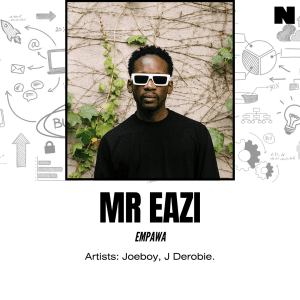
Mr Eazi is taking us to church on the intro of his recently released single, “Advice.” Produced by M.O.G Beatz, the high-tempo single leads in with a beautifully sung choir rendition, followed by a direct address from Mr Eazi. He immediately establishes the mood of the track as he reminds onlookers to keep their unsolicited advice. The bass-heavy drum pattern is paired with lush piano chords, backed up by smooth harmonies by the choir. “I no need advice/ talk wey dam talk I no pay attention, them no be my size,” he passionately croons on the tuneful hook.
UNA RAMS & MIKHALÉ JONES – “SOS”
Una Rams delivers a sultry new single dubbed “SOS,” the artist’s acronym for “Sex on Sunday.” He taps South African R&B star, Mikhalé Jones for a soulful rendition, exploring themes of passion and sexual connection with their love interests. The track holds captivating rhythms and captivating melodies created by sweet-sounding saxophone chords and a steady drum pattern.
ANYTHING WITH YUSEF – “FERRARI”
Botswana-born Afropop artist, Anything with Yusef, unveils another layer of his artistry on his captivating new single dubbed “Ferrari.” The track leads in with a velvety saxophone solo paired with a head-bopping beat and light shakers. He seamlessly rides the wave of the beat with charming harmonies and dulcet vocals as he addresses his love interest. He lovingly promises that he is capable of providing all her needs on the Jitotwe Tshombela-produced track.
MOONGA K. & NKOSILATHI – “BE MINE”
Dreamy Piano chords and twinkling keys open MOONGA K.’s recently released melancholic single, “be mine.”“Can I turn back, can I fix the damage of the past,” he croons on the opening line, evidently filled with feelings go dread. The lush guitar strings heighten the track’s ethereal atmosphere as he reminisces on a past relationship. Nkosilathi taps in mid-way through the track, posing rhetorical questions to her love interest as she expresses her fears of falling in love again.
Olaide has his head in his hands, he’s just learnt that Arsenal conceded a goal within a minute of kick-off, in the English Football club’s Premier League fixture against Fulham. A lifelong Liverpool fan, Olaide couldn’t care less if Arsenal failed to win, but he was mourning a conceded goal because the Arsenal goalkeeper Aaron Ramsdale and defender William Saliba were in his Fantasy Premier League (FPL) team. That goal all but assured that both players would have little impact on his score for the week’s round of fixtures.
“Shebi dem dey house?!” Olaitan loudly asks in Pidgin English, his question directed at no one and everyone in the vicinity at the same time. His logic was simple: Arsenal were playing a team that many would describe as a weaker opponent, on their home turf as well, an advantage that meant the possibilities of keeping a clean sheet was more than decent. “You know say Arsenal hate to dey keep clean sheet for house?” a guy popularly referred as SK retorted to Olaide’s question, recalling Arsenal’s nail-biting win against Bournemouth last season, after conceding two goals in the match’s early minutes.
SK, a Manchester United fan, also wasn’t invested in an Arsenal win, but he wanted the London club to complete a comeback if winger Bukayo Saka would be involved in the goals. “Saka dey my FPL team,” he said. Another guy, Tonye, this time an Arsenal fan, wanted midfielder Odegaard to be in on the action. When Arsenal won a penalty in the second half and Odegaard converted from the spot, no one screamed “GOAL BALL!” louder than Tonye. It was obvious he wasn’t just celebrating an equalising goal.
Fantasy Premier League is an online fantasy draft game, centred on the English Premier League (EPL), where fans, pundits and even football players create teams on a fixed budget. At the start of every season, every FPL manager is given a budget of 100 million pounds to draft players of varying prices, selecting 15 players across positions without exceeding the budget. Every round of match fixtures, players are scored based on tangible, real life contributions like goals, assists, clean sheets, added bonus points and more. The cumulated points represents a score for the week, and each week’s tally count towards the total at the end of the PL season.
During the season, FPL managers are afforded a free transfer for each new fixture week, allowing for some flexibility to transfer players in and out within budget. There also chips—bench boost, free hit, triple captain and wildcards—that help with transfers and score boosts, although they must be used sparingly. Prizes are also offered to different tiers of winners: The overall champion for this season’s FPL champion will win a 7-night break in the UK inclusive of two VIP hospitality at two PL matches next season, travel and accommodation inclusive. That’s just the headliner, in a package that includes a laptop, noise-cancelling headphones and more. There are prizes for 2nd to 20th positions, as well as in-season prizes for Manager of the Month and Manager of the Week.
Last season’s tally for the total number of Fanasy Premier League managers was reported to be well over 11 million. Given the increasing popularity of the fantasy game, this season’s should be higher. It’s far more than the 76,000-plus players who registered when the Premier League officially launched FPL, along with its website, in 2002. Before then, a 25-year old computer programmer, Andrew Wanstein introduced fantasy football to the UK, having been inspired by a fantasy baseball game he was introduced to by a family friend from the US. Debuting in the 1991-92 season, Wanstein’s Fantasy League attracted about 700 players.
Although Wanstein wasn’t involved in the creation of Fantasy Premier League, there’s no doubt he inspired the now global phenomenon. “The drive was just sort of enthusiasm for football,” he told ESPN late last year. Even with its glossy prizes, the same drive is what’s pushing FPL’s ubiquity amongst many football lovers across the world—Nigeria included. “It’s just another way to be a fan and engage the game,” Olaide says of being invested in FPL. “Before, all I really cared about was Liverpool and I would watch some matches between the bigger teams, but these days I keep tabs on almost every team so I can find players I can transfer in and out of my team.
Austin, a self-proclaimed FPL champion, is currently a part of three leagues, one of which he paid a 5,000 naira registration. Last year, he was one of 43 managers in the paid league, winning the 150,000 naira top prize for finishing at the top position. “Towards the end of the season, na FPL consume my mind because I don make mouth say I go win,” he says, stating that he’s a sore loser and would’ve probably gone through a bout of depression if he hadn’t ended up at the top spot after spending nearly half the season in that position. A Liverpool fan, Austin says he watched every match possible in May, even though the club he supports was “pretty much nonsense” last season.
This season, Austin isn’t that confident of winning the prize money for the league because there’s been an almost 100% increase in managers. “Now, we have about 80 people and the prize money has doubled but these guys are not playing this year,” he says. Last weekend, he got 64 points, and he’s somewhere in the middle of the pack so far, which means he’s playing catch-up. But that doesn’t mean he’s lost interest in this season’s Fantasy Premier League; the other two leagues he’s part of consists close friends and he doesn’t want to be at the receiving end of humorous, depreciating banter on a weekly basis.
The same motivation is what pushes Oyinkan. “I’m better at dishing banter than taking it,” she says. “So anytime I have a bad FPL week, I avoid social media. My friends know, so they even call me out on Twitter when I don’t respond to group texts. It’s even worse when Man Utd now decide to lose on the same weekend.” Banter is a Nigerian specialty, one that we use in easing and deflecting the debilitating social conditions of the country. On football twitter, it’s known that Nigerians let the jokes fly, from sardonic humour to off-the-cuff observations. Even the country’s national team isn’t spared.
Number of FPL managers per country, Full list at https://t.co/Z84d7O3Y7C 1- England🏴2,329,450 2- Egypt🇪🇬 650,582 3- Nigeria🇳🇬 338,250 4- Malaysia🇲🇾 287,200 5- USA🇺🇸 270,789 6- Ireland🇮🇪 255,986 7- Norway🇳🇴 199,283 8- Kenya🇰🇪 187,978 9- South Africa🇿🇦 187,132 10- India🇮🇳 182,463 pic.twitter.com/mmBsk9YN0x
Considering the ultra-popularity of football and the Premier League, along with the global recognition of our bantering abilities, it’s no surprise that Fantasy Premier League is popular amongst young Nigerians. Even those who don’t play have heard about it. According to a tweet from August 2022, Nigeria had 338,250 FPL managers, a number that would have undoubtedly increased as last season progressed, and should be more during this season.
For all its allure, some people still drop off eventually. “After like 10 weeks that I knew I was just arranging rubbish, I gave up last season,” Olaide says. “It requires dedication.” For some, their issue is ideological, especially since the points are fixed. “I don’t like the fact that a player can play really well and not end up with a goal or assist, then be given 3 points,” Austin says. As he explains, it collapses the nuances of the game into straightforward numbers, which can belittle the contributions of some players and overly glamourize others.
As SK points out, the rules are there as a framework for transparency, so players aren’t just awarded points due to the discretion of some people. “It’s just setting up your squad to optimize those fixed metrics,” Oyinkan says with a wry laugh. “Last last, we go again every weekend. The game is the game sha.”
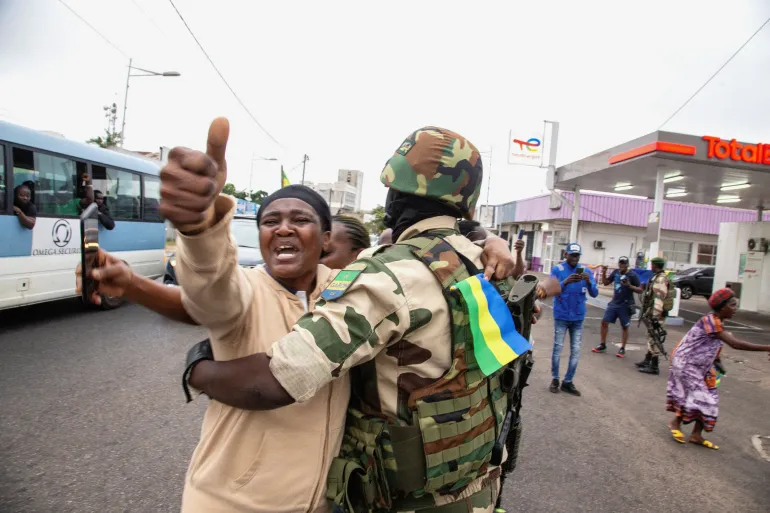
For the eighth time in three years, a coup d’état has toppled a civilian administration in west and central Africa. On Wednesday, August 30, military officers in Gabon forcefully ousted Ali Bongo Ondimba as the country’s president, after 14 years in power. Occurring shortly after Bongo was declared as the winner of the recent general election, around a dozen military personnel appeared on national television to announce the end of the existing administration.
The military spokesperson stated that he was speaking on behalf of the Committee for the Transition and Restoration of Institutions (CTRI), and the committee “has decided to defend peace by putting an end to the regime in place.” He went on to add that the election results that declared Ali Bongo the returning president had been voided, placing him and his son, Noureddin Bongo Valentin, under arrest and home detention. Several of Bongo’s aides have also been arrested. According to the spokesperson, the arrested are facing charges from treason and embezzlement to corruption and drug trafficking.
Within hours of the coup announcement, AFP news agency aired a video of the Ali Bongo asking his “friends” to “make noise” and come to his aid, claiming that his family were away from him and scattered around. “I don’t know what is going on,” he said in the video. Instead of gravitating to Bongo’s trepidation, many citizens in Gabon poured out to the streets in jubilation of his ousting, a show of how deeply unpopular the president had become.
In 2009, Ali Bongo was elected into office following the passing of his father, Omar Bongo, who ruled Gabon for 40 years. During the older Bongo’s autocratic rule, Ali served in various capacities in his father’s administration, as the minister of foreign affairs, deputy in the national assembly, and minister of state. It was widely believed that Ali would eventually succeed his father, both his entry into power wasn’t without controversy. Due to allegations of fraud by the opposition, the constitutional court of Gabon ordered a recount of the 2009 election results, which still declared Ali Bongo the winner despite continued grumbling by many citizens.
Seen as a hugely important election, after Bongo had served two 7-year terms, independent candidate Albert Ondo Ossa was considered the main opposition candidate to the incumbent seeking a third term. Months before the election, several controversies put Gabon on edge, starting with a handful of proposed reforms from the parliament. Among the reform were the reversal of the adopted 2018 bill, which moved the single-round presidential election to a two-round ballot, and a reduction of presidential terms to 5 years. In April, these constitutional changes were adopted, along with the abolition of re-election limits, allowing Bongo and many politicians to essentially remain in administrative office for life.
Regardless, Albert Ondo’s candidacy reportedly picked up steam, gaining the support of a multi-party opposition coalition. On the day of the elections, it was reported that foreign media and international observers were prevented from entering Gabon, voting at many polls were delayed, which impacted the percentage of registered voters that actually voted, and ballot papers carried the names of candidates who had already dropped out of the race in support of Albert Ondo.
After voting took place on Saturday, the government restricted internet access and imposed a curfew, stating that there were measures against the spread of false news and potential violence. In the dead of night, at 3:30AM local time, the results of the election were announced, declaring Ali Bongo the winner with over 60% of the vote. Shortly after, mutinous soldiers, led by Brice Oligui Nguema, commander of the republican guard, took over the presidential palace, placing Ali Bongo under arrest before making their announcement later that day.
Gabon joins Niger, Burkina Faso, Mali, Chad, and several other African countries and former French colonies that have slid into military rule via coups. The celebration of the coup by Gabonese citizens is a reaction to decades of being lorded over by a family and select group of elites, with Omar Bongo keeping the country in a one-party system until 1991, and his son keeping the hegemony going even as oppositions have sprang up. Gabon, a mainly producing and export country, is currently beset by high levels of poverty, with a reported 40% unemployment rate for people between ages 18 and 40.
The Bongo family has been repeatedly accused of embezzling and hoarding public funds, with the Pandora Papers fingering Ali Bongo as one of the many African leaders with wealth in offshore tax havens. On social media, a viral tweet shows an alleged video of bags of hard currency in the presidential palace. Many Gabonese hope that the coup will portend the change of the country’s fortunes. The Committee for the Transition and Restoration of Institutions (CTRI) has announced Brice Oligui as the president of the transitional council, perhaps a sign that the new junta already has eyes towards a true democracy in the near future.
Evolution is a famous concept in music. Once every while, an artist grows beyond their established sound and aesthetic, and it becomes necessary to create another vision. Prior to this year, the singer Teni occupied a visible space across the scene; pulling from the colourful tapestry of the Nigerian experience, and infusing the sounds of her native Yoruba, she created effervescent portraits of young existence, as heard “Uyo Meyo” and “Case,” just to mention a few records.
Today, the artist releases “Lanke,” her first record since the May-released “No Days Off”. As the older song revealed, the musician was branching onto wider plains of sonic experimentation. Its Genio-helmed production had a skittering, freewheeling drum base that was ostensibly influenced by Nigeria’s alte music, especially those which have soundtracked a number of songs from Cruel Santino, who also directed its visuals.
Coming after 2021’s sprawling ‘WONDALAND’, it signified a marked change from the afropop Teni was doing, and unsurprisingly, was timed to go with her new brand direction, which was a more femme, gritty image, arrived at by dark rock-esque clothing and sunshades, bandanas and ripped trousers—-her second arc was in full flow.
“Lanke” continues in that style, another step towards the new sound Teni is charting. An Amapiano-tinged progression is provided by Blaise Beats, a cool but zesty vibe that would fit seamlessly with Asake’s ‘Work of Art’. On vivid display throughout that album were novel techniques for the South Africa to be utilised, and Blaise, who’s been one of the more consistent producers in recent years turns in a beautiful shift on the record. The drums are accompanied by string instruments and deftly follows the vocal inflections of Teni, making it a song in purposeful alliance with all its component parts.
To her credit, Teni isn’t estranged from her early technique, sprinkling the vibrant poetry of the Yoruba language on its chorus. Her vocals are as evocative as ever, as she speaks on her unique qualities with a rapper’s audacious allure. “On g, I got the juice and the energy, everybody wanna sodi to my melody,” she sings in the opening bars, and for the rest of the song’s runtime, she paints the image of living up her life, in the second verse, singing, “Teni Makanaki on a skibi jumpo lifestyle, bad bitches wanna ride/ Never alone, with my guys, I’m a liverpool on this side…”
Feel-good bops have been an essential niche in Teni’s catalogue and “Lanke” is a fine addition. Each second of the song bursts with flavour and finesse, showcasing the continued growth of the beloved singer. Perhaps a couple more singles would be released before an album comes out but right now, Teni has scored two great songs in two releases, and witnessing this growing affinity for experimentation has been a triumph of afropop’s year.
Every week, new music shows up, sweeping fans and music lovers off their feet while artists gauge reactions to know the effect of their creativity. At the NATIVE, we are committed to keeping our ears on the pulse of the music scene and bringing the best sounds to your doorstep. In our last edition, we brought you new releases from Guchi, Diamond Platnumz and more. Today, we have songs that move from Afropop to Amapiano to R&B, with our select artists showcasing their unending talent and passion for creativity. Lock in!
SHOW DEM CAMP FT. BELLAH – “WYW”
Off ‘Palmwine Music Vol. 3’ from Show Dem Camp comes this new music video. A favourite among listeners of that sprawling, feature-laden body of work, here the rap duo translate its theme of a toxic relationship into a stirring visual montage. The looks are exquisite and the scenes packed with deliberation as much as action, and Bellah pulls off a riveting performance as the femme fatale. Everything works to beautifully extend the run of this record.
TOLIBIAN – “Happy”
Abubakar Abdulmutolib Ottan, popularly known as Tolibian is a fast rising singer and songwriter from the North Central part of Nigeria (Ilorin, Kwara state). On his latest single “Happy,” the singer delivers a perfect fusion of Afrobeats and Apala, which can best be described as tuneful and classic. On the new track, Tolibian attempts to paint a mental picture of what living a true happy life feels like with lyrics such as “We battle and survive/Wetin God design no fit collapse.”
E.L – “SOBA”
One of the most consistent artists from Ghana, the music of E.L has always retained a funny, quirky outlook. “Soba” is his latest, colourfully rendering the azonto sound in a contemporary light. The result is a hit ready-made for online challenges, which should get the song’s hype buzzing afterwards. Considering the celebratory period we find ourselves in this year, there are surely great prospects for the record going forward.
MONSEEKA – “OVER THE RADAR”
Monseeka might be a newcomer, but she’s clearly accrued experiences that glow under the heat of her pen. Her intense sensibilities are captured on this record, which details her floating towards the perfect place. Emo themes are increasingly fancied by young musicians; that is because the mental landscape offers so much narrative material. Helmed by the masterful Bigfoot, this is a sterling addition to that tradition.
MUTHAKA & EMMA CHERULO – “TOUCHING ON MY BABY”
A consistent feature in the African music scene is the soulful excellence of Kenyan artists. The country has no shortage of artists adapting genres like R&B and Soul, matching their soulful core with the vibrant percussions within their popular music. “Touching On My Baby” benefits from that fusion, blending the impressionist voices of both musicians to tell a sweet-sounding tale of desire and protection. A vintage touch is present in the visuals, which references the eighties-evoking vibe of the record.
KING PERRYY & IDA BANTON – “DENGE”
The Port-Harcourt sons unite for this scorching banger. “Denge” harkens back to the sound of Baba Fryo and his iconic dance, actualised through a contemporary filter which manifests in the zesty edges of its mastering. At its core, however, is a simple Dancehall riddim and a vocal sample, while both artists float assuredly over the record. It’s expectedly light work for King Perryy who’s in familiar territory, but it is 1Da Banton’s verse, brief and boisterous, which brings the song home.
JAY-WAY – “ONLY ONE I THINK ABOUT”
A thrilling sense of adventure follows every second of this record. Crafted with intimate observation and fun-paced progressions, it blurs sonic lines between bedroom pop and rap music. The Dutch-Ghanaian act has also put out a five-track EP of the same title, incorporating zesty touches from nearby genres of alternative rock and dubstep, all of them working towards the project’s portraiture of a colourful, complex existence, which ostensibly belongs to the young.
MOHBAD – “BEAST & PEACE”
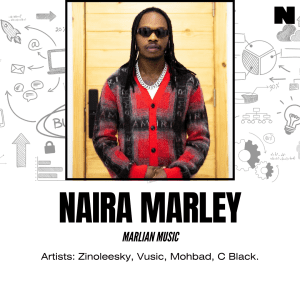
Earlier this year Mohbad released the ‘Blessed’ project, unarguably his most important one yet considering the events which preceded it. Off that project, few songs captured its stark imagery as vividly as its opener, “Beast & Peace”. The song, as its title suggests, presents both sides of the street reality while centering his own trajectory within those considerations. On the just-released visual he’s dressed as someone who’s just come off a fight, a telling allusion to the song’s message of personal strength amidst the trials of being persecuted and picked upon.
MAJOZI & MTHANDAZO – “MI AMOR”
On this jazzy track, the South African artists combine to pine about a lady’s love. Cheesy, affectionately-drawn images are drawn with lighthearted touch, while the easy production reminds you of a rainy day. It’s a beautiful song whose strength arises from its tenderness, which is evident from the guitar progressions down to the background vocals. Each element contributes to its dazzling whole, making this the perfect soundtrack to a loving moment.
Going to the movies is no longer the somewhat low-cost endeavour it used to be. The world over, the cinema experience has become more expensive, largely due to global inflation. In Nigeria specifically, the jump in prices has been more than noticeable, with a 100% hike in the last five years. Coupled with the increased penetration of streaming platforms, the cinema-going rate hasn’t boomed and the recent increase in revenue has mainly been spurred by the hike in prices, with a significant portion of viewers going to cinemas to see blockbuster Hollywood films.
Last year, the film industries in the US and the UK launched National Cinema Day, allowing cinemagoers to watch films at drastically reduced, uniform prices for a single day. In the US, more than 8 million people showed up at cinemas to watch films at the flat rate of $3. In the UK, over 1.5 million people watched films for €3—around three times the normal level. Last Saturday, more than 3,000 theatres joined in the second edition of National Cinema Day in the US, with more than 8.5 million moviegoers participating in the $4 flat rate for movie tickets. Next Saturday, September 2nd, more than 630 theatres in the UK will be showing films for €3.
Following suit, the Cinema Exhibitors Association of Nigeria (CEAN) has announced a heavily discounted, flat price for cinemagoers in celebration of National Cinema Day. Similar to the UK, it will take place on September 2nd, and cinemagoers will be able to watch films for N1,000 across 50 cinema locations in Nigeria. Participating cinemas include popular multi-venue chains like Filmhouse Cinemas, Genesis Cinemas, Silverbird Cinemas, and more. “We believe this will bring together audiences of all ages to enjoy a day at the movies and see any movie of their choice at a discounted ticket price of N1,000,” CEAN president Opeyemi Ajayi said in a statement. “We are doing this to say thank you to movie-goers and promote the cinema-going culture as well as to remind audiences about the magic of cinema.”
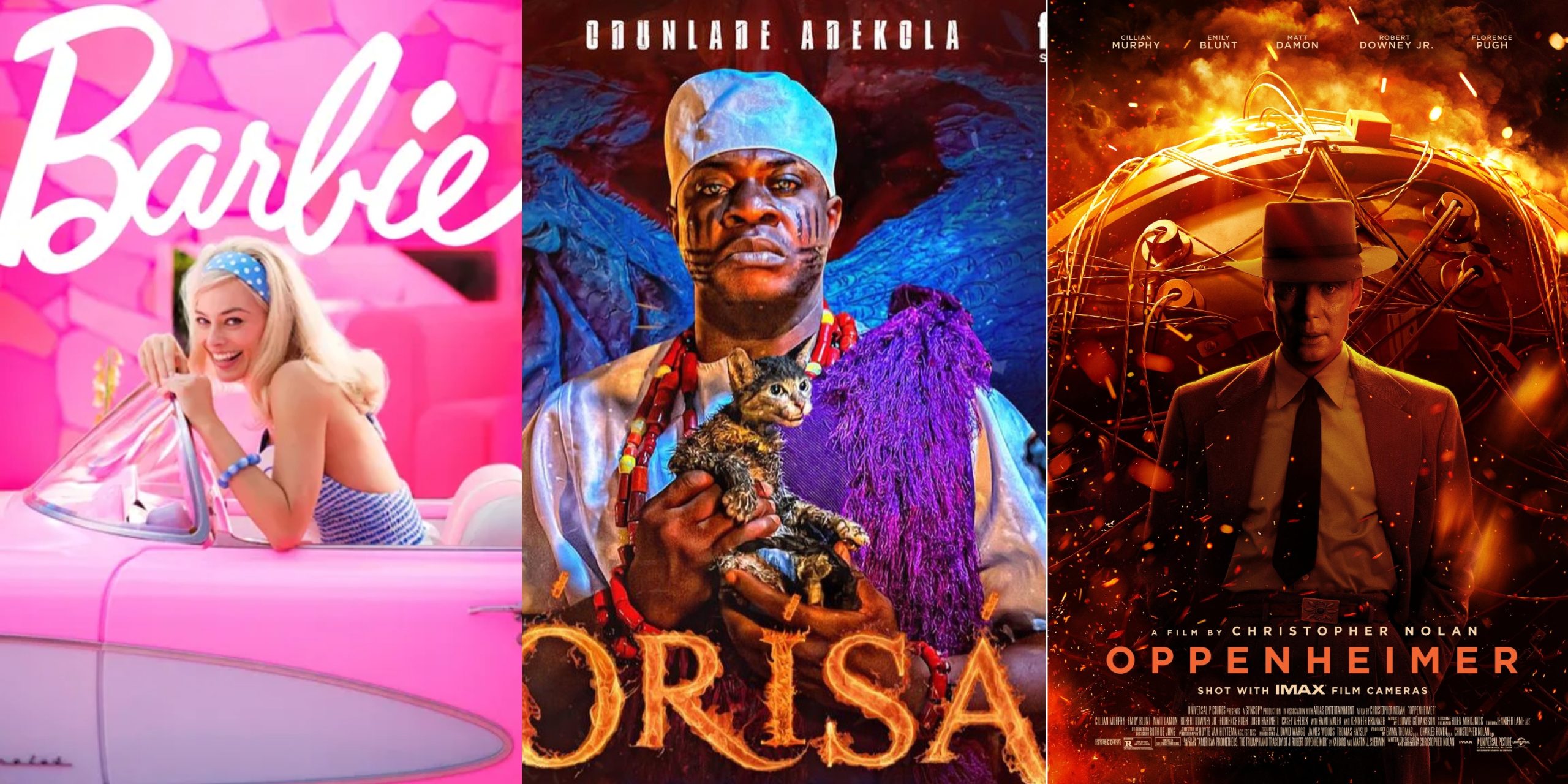
Nigerian cinemagoers likely to take advantage of the reduced prices will be spoilt for choices, as a handful of blockbuster are currently showing in cinemas. In addition to worldwide smashes ‘Barbie’ and ‘Oppenheimer’, there’s the new DC superhero film ‘Blue Beetle’, the ongoing local box office sensation, ‘Orisa’, the new Yoruba epic ‘Kesari’, Niyi Akinmolayan’s children’s film, ‘Mikolo’, the long-tenured fourth film in the epic action franchise, ‘Mission Impossible’, and more. Grab your popcorns!
The history of Nigerian music isn’t complete without an understanding of its component parts. Of those parts, Fuji is a towering cornerstone. The genre which evolved from the Islamic prayer rites, Ajisari and Were, is musically vibrant, draws from the deepest wells of Yoruba culture, and has greatly influenced modern Nigerian pop. A testament to its transcendent influence is its fan base it enjoys across Nigeria and in the diaspora, which is the next focus for Bobo Omotayo, who is the creator of ‘Fuji: A Opera.’
At the height of the pandemic in 2020, Omotayo “had a lot of time on his hands,” he shared with The NATIVE on a recent weekday. Being a culture custodian, he decided to tell some stories he’s had on his mind for a while. The origin and phenomena that is Fuji presented a good place to start. “There was basically nothing online,” he said of his time researching the culture of Fuji, especially when one goes beneath the surface of its contemporary endurance. A lot of its intricacies were lost to time, either through disinterest in its narrative or a dearth of its knowledgeable custodians. The former was the case.
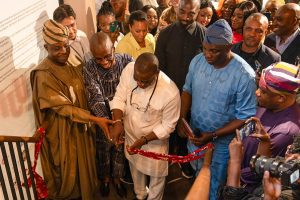
To further accentuate his ideas, Bobo brought in his brother Papa Omotayo and his friend, Tosin Ashafa, who both acted as investors and creative partners. A lot of reaching out was done, knowing that bringing such a powerful narrative onto the landscape of today’s popular culture would need heavy lifting. From collaborating with the genre’s living greats, to seeking information from university professors and traditional rulers, down to the important establishing corporate alliances which propelled the message even further, Lagos state—and by natural extension the national cultural space—felt the impact of ‘Fuji: A Opera’, especially in the subsequent months and years.
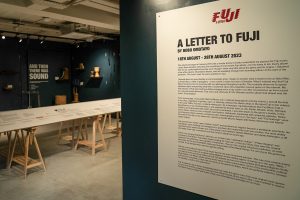
Storytelling was the ethos of Bobo and his team. To bring both old and new lovers into Fuji’s sprawling existence, the information to be presented had to be bit-sized and entertaining. An exhibition at the Ikoyi-based Alliance Francaise (another one of their partners) resolved that need, but even more striking was the experiential scope of its design. Austere funnel-styled speakers softly played the music of each great, located on one part of the wall. Elaborate lace materials usually worn by Fuji practitioners adorned another wall, there were pictures, memorabilia, and written information on several facets of the culture, such as the biography of the Fuji pioneer Ayinde Barrister, the genre’s memorable artist clashes over the years, and the wisdom of its spoken word. It was a world unto itself.
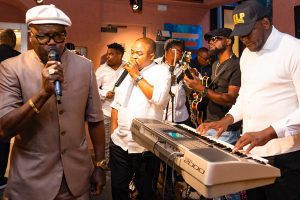
This exhibition happened for a week, and included a panel discussion which featured K1 De Ultimate, who, for an hour, revealed how far the genre has taken him and several others, which is supplied by its overall culture, both sonic and visual. A grand concert capped off the event, as K1, Saheed Osupa, Malaika and several other Fuji stars performed. The platform also gave rising Fuji acts a chance to perform in front of luminaries.
For Bobo Omotayo, ‘Fuji: A Opera’ is an extension of interests he cultivated much earlier in life. He was a reader, who then began writing seriously around a decade ago, publishing his first book ‘London Life, Lagos Living’, which collected short poignant observations about life in the Nigerian city. In 2015 the book was made into a stage play by Make It Happen productions, and starred established figures such as Kate Henshaw, Funke Akindele, Lami Phillips and several others. ‘Honourable’, his second title, was published in 2017, a satire which revealed the intricacies of an actual political campaign the author took part in and interweaving them with fictional premise.
From these entries, Omotayo’s love for cultural endeavours spring forth, and the tinkering in-between mediums is what makes them exciting pieces for public consumption. His next exploit is taking ‘Fuji: A Opera’ to the world, and he’s already in the motions of doing so. Since the 18th of this month, the London exhibition has been taking place. “We’ve taken over four floors at the African Centre,” says Bobo, “where people can sort of start the journey of Fuji, how it started in the 1950s and how it’s evolved over the last seven decades to where it is now. On the fourth floor we’ve actually imagined what Fuji would look like in future, because for me, this is a genre that would transcend my time, and probably my children’s time, so for us, it’s really about, How do we keep this thing going?”
As ever, Bobo Omotayo built on the blocks of what he’d already achieved previously. The Lagos exhibition was a learning experience for the group. “The London one is far richer in terms of content,” he says, “because when we did the Lagos showcase, we had space constraints and knowledge constraints. So, for the last two years, myself, a couple of academics, a couple of African Studies scholars, a couple of culture custodians, and of course, the Fuji music artists themselves, we’ve been partnering to really articulate the history”.
The ‘Fuji: A Opera’ experience aims to break more ground, according to Bobo. A documentary is currently in the works and a touring experience is taking the showcase to different parts of the world. As its creator likes to say, it’s a multi-dimensional experience that will keep looking for ways to tell the complex, thrilling story of Fuji.
Adekunle Gold has been operating in scintillating form throughout this year. Before releasing his sprawling fifth LP, ‘Tequila Ever After,’ the singer had embarked on a run of hot singles and sold-out events, while a deal with Def Jam Recordings gave flight to his ascendant place in the global music discussion. Off this project, the track “Sisi Ganja” was produced by Fridayy, the American-Haitian artist who’s been a revelation on the international scene, and has appeared eagerly linked with his African roots, collaborating with Asake, and appearing on his recent O2 Arena event. On his new self-titled album, it is Adekunle Gold who lends his magical touch to the younger artist, both floating over afro-inspired sonics.
Over the past two years, Fridayy’s strong, evocative vocals have scored him collaborations with the likes of Lil Baby and Wiz Khalifa, while his crowning moment unarguably came on DJ Khaled’s smash record “God Did”. For the American rap scene, JAY-Z’s sprawling verse was perhaps the standout, a flex on the iconic bearings of the Brooklyn rapper, but for the majority of international listeners, it must have been the gospel-licked chorus of Fridayy which cemented the song’s transcendental feeling. Since then, the 23-year-old artist has remained at the forefront of a resurfacing consciousness in popular music, which is that of the gospel-influenced artist.
There is an effervescent beam of positive energy on the AG-featured “Done For Me”, permeating every second, every lyric, and every beat count. It is created from a profound place of inner strength, and there is no surprise the artist thinks highly of the record as well: it’s the second song off the singer and producer’s self-titled album, which is one of the propulsive sections of every body of work. The second song moves the project beyond the musician’s urges and towards the listener’s taste, and should ideally merge both motivations, which is what Adekunle Gold and Fridayy achieve with this record.
Adekunle Gold’s verse is a shimmering display of mastery, as he skids over the production with ease. It’s his vocals which highlights the Afro base of the song’s percussions. He advances the song’s message with his inimitable perspective, the high levels of storytelling that took him from an alternative-serving act to one of the continent’s biggest pop stars. His verve audibly comes from a real-place which, given the writing, would most likely be related with the sickle cell experience he related on “5 Star”. Here, he’s appreciative of being given that chance at life, because he “could have been dead and gone/ six feet, but you saved my soul”. Tender writing meets AG’s patois-laced inflections, which suggests he was in the celebratory mode of ‘Tequila Ever After’ when he delivered this verse.
The artist is one of the two Nigerian artists featured in ‘FRIDAYY’. On “You” the dramatic ease of Fireboy DML finds purposeful deployment, which sort of continues a thread of diaspora-born Black artists collaborating with their Nigerian and African counterparts. It’s a worthwhile moment in the history of popular music because advancing the commercial vision of trans-continental collaborations in times past, now it’s in service of honouring cultural ties and passing deep messages about our shared experiences of hurt, struggle, and triumph, which vaunts beyond the constraints of time and space.
Life’s greatest lesson is its fallible nature: things can go wrong, nothing is set in stone, make hay while the sun shines, and so on. There are many such quotes which highlight this aspect of our existence, which similarly influences both artist’s musings on the record. Starting out, the pensive landscape of the modern world is evoked by Fridayy when he sings, “Tell me why they envy me,” just before he prays the Lord to defend him from enemies. His earnest yearning is amplified by the polishes of vocoder-inflected background vocals, a technique he’s quite fond of. That gives his winding verse a palpable warmth, establishing a bright-shaded side to the narrative coin he presents from the start of the record, that nearby potential for disaster.
In the past, a host of musicians have carried their Christian values into song. Gospel has thrived largely within Africa, partly because it was a defining trait of cultural life in the aftermath of colonialism across the continent. But gospel’s success is owed also to its exhilarating sonic quality, which offers a beautiful alternative to the percussive semblance of afropop. Its relationship with popular music culture—the church being a sort of training arena for musically-inclined persons to learn instruments, sing, and develop a grasp on the art form—also supplies its continued relevance. It is from this tradition Fridayy emerges, although he also operates in the R&B and Soul field, using his striking vocal abilities to tell poignant stories.
Born to Haitian parents, Fridayy operates from a sonic tradition that has origins in West Africa. On this record he deepens his link with Haiti, delivering its first pre-chorus in Haitian Creole, a language which rose in the seventeenth century and has lasted through the times. Housed within the personal debut album ‘FRIDAYY’, “Done For Me” sets the done for its almost forty minutes of brilliance.
Falz is enjoying his moment. The Nigerian rapper earns the biggest launch this week with his new single, “Ndi Ike” featuring rappers Flavour and ODUMODUBLVCK rises to a new height at No.8 on the chart this week. “Ndi Ike,” is in good company on the charts, and earns Falz his first top ten record and the first top entry in Nigeria featuring many rappers. The single is also ODUMODUBLVCK’s fourth entry on the top ten and Flavour’s second entry.
Elsewhere on the charts, Asake maintains his dominance for another week. His latest standout track “Lonely At The Top” records another week at No.1, totalling seven weeks on the chart so far. The track garnered 96.2 million in radio reach and 3.95 million streams across on-demand platforms. “Lonely At The Top” becomes Asake’s longest-serving No.1 single equalling the seven-week dominance of Fireboy DML’s “Bandana” featuring Asake.
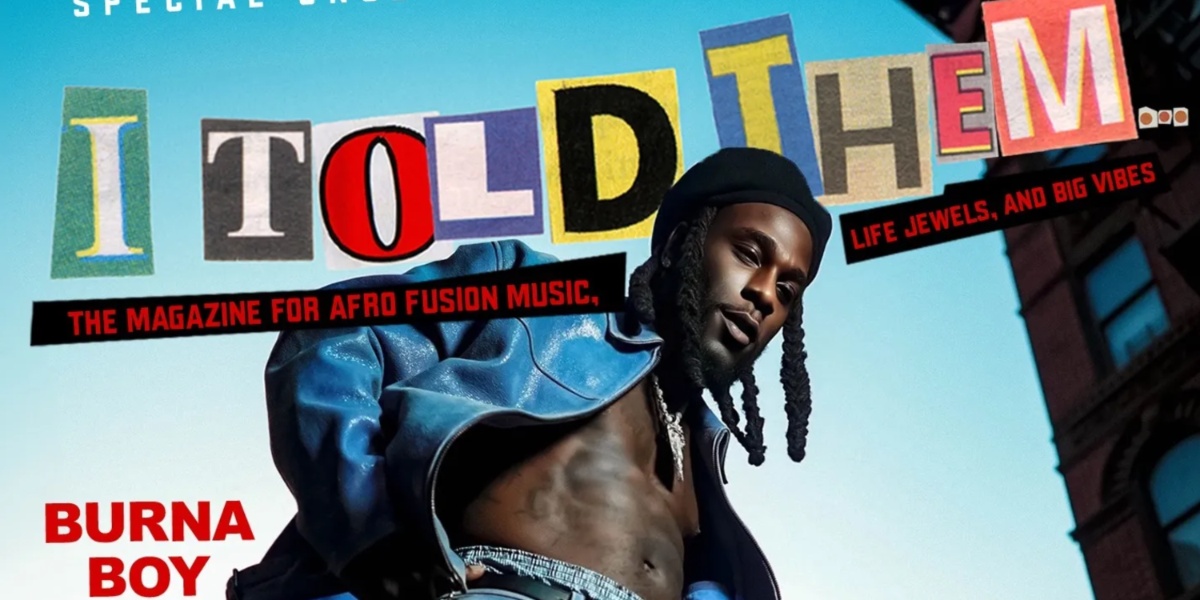
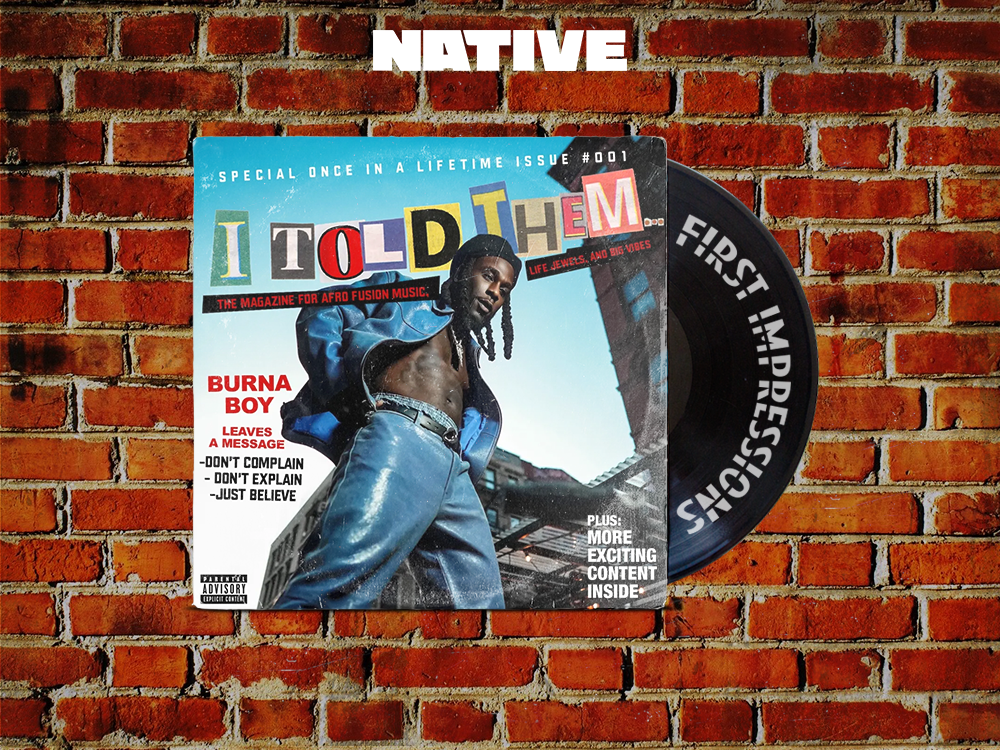
Following the release of his latest album ‘I Told Them,’ Burna Boy’s “BIG 7” returns to its peak at No.2 on the charts. It comes after the global release of the ‘I Told Them’ magazine, which was released in tandem with the album. It’s followed by Khaid’s “Annabella” which returns to No.3 after six weeks on the TurnTable Top 100 and Omah Lay’s “reason” which sits at No.4 this week. Olamide’s “Jinja” closes out the top 5 following three weeks on the chart.
Outside the top five, Shallipopi’s “Obapluto” returns to No.6 this week, rising from its last peak at No.10 last week. It is followed closely by Adekunle Gold’s “Ogranya,” which falls to No.7 following its rise to No.6 last week. At No.9 is King Promise’s “Terminator” which maintains its position from last week. Olamide’s “Gaza” rounds up the top ten this week rising from its peak at No.11 last week. Just outside the Top ten, Davido’s “Unavaliable” springs back to No.11 after slipping to No.22 last week, while Magixx’s “Maria” debuts on No.35.
Every other day, new talents break into the scene with a series of offerings, hoping to stand out to a crowd with an ever dwindling attention span. From a skilled pen game, inimitable vocals or transcendental production skills, these fresh acts display varying talents that aim at not just connecting with an audience, but redefining the status quo and slinging the ropes of African music far beyond its boundaries. More often than not this guarantees the presence of an infinite list of talents, providing staggering gems and re-telling our stories from a brighter, renewed perspective.
Sifting through these exceptional acts can prove overwhelming but our monthly instalments of uNder ensures that all grounds are covered and no artist worth noticing skips your radar. As summer comes to a glorious finish, and with the end of 2023 creeping in, our August class presents a promising group of artists from across the globe on the cusp of a bigger breakthrough. Newest Mavin Lifesize Teddy arrives armed with vulnerable confessions in melodious tunes and sleek bars; Fentse. is an introspective savant and precocious nu-soul singer; the already-popular ilham is a vision of second-generation immigrant excellence; and three more artists with distinctly striking traits and artistic narratives.
Earlier this month, Lifesize Teddy joined the Mavins records all star roster armed with admirable confidence and skilled penmanship, showcased through heart-warming melodies and assertive bars. The Port-Harcourt native joined the label in what seemed like a full circle moment, after delivering an invigorating performance opening for Ladipoe back in 2018, joining the label’s famed academy two years later. Released in tandem with her unveiling, as typical of new Mavin signees, Lifesize’s eponymous debut EP arrived with a refined touch to her evidently multi-dimensional palette.
A bite-size insight into her personality and craft, ‘Lifesize Teddy’ displays several phases and reference points of the artist with suave touches of Dancehall, Rap and Nigerian pop. She is armed with brazen confessions of love and life, delivered effortlessly in Pidgin and English thanks to her background from the culturally vibrant Port-Harcourt. The music feels and sounds like an intimate diary session, considering how seamlessly Lifesize Teddy is able to convey her heartfelt emotions in only 5 tracks. Her dexterity in song writing comes through clearly on“Prophecy” where she confidently brags of her growth thus far, paired with a heartfelt admission reminiscent of her early days.
On “Air,” the leading track of the project, she utilises the track’s breezy soundscape to bare her emotions to a love interest while maintaining confidence that she is still one of one. As she croons on the mid-tempo instrumentals, “I got many many women underneath this skin, they are fighting to be seen,” it is clear that Lifesize Teddy possesses many layers to unfold and her debut EP is just a showcase of the tricks in her voluminous bag.
IDDI SINGER
Iddi Singer’s affairs as an artist dates all the way back to 2010, but it’s fitting to claim that he’s only just hit his stride. The Mombasa-raised, Kenyan musician describes his style of music as “Swarnb,” an abridged portmanteau that references the cadence of his Swahili-informed songwriting and his reverence for R&B. Armed with a smooth tenor, and clearly influenced by the male R&B heartthrobs of the ‘90s and 2000s (think a cross between the soulful Joe and the more exuberant Mario), the sonic tag makes some sense, but it undersells the expansive nature of his musical interests.
His 2020 debut EP, named after his style of music, is a vivid collection of tunes that melds his blue-eyed perspective on romance with production that’s buttery and fluorescent. There’s guitar-led R&B tunes, as well as mid-tempo Afropop jams. The result is impressionistic, the work of an artist who could try on several styles without coming off as scatter-brained. For his next multi-project release, however, he honed in on a single style. 2022’s ‘Rootsman’ is rooted in reggae, his approach recalling the optimistic lyrical lean and modern yet organic instrumental flair of Chronixx. Between those two EPs, it was clear Iddi Singer was building up to something with higher stakes, working his way into being a better-rounded artist.
The evidence is on ‘Imba’, his February-released debut album, an album where range in service of the music, and not the other way around. Of course there’s R&B and Reggae, but the multicoloured palette also spans Bongo Flava, Kizomba, and more influences across Afropop. On the standout song “Seasons,” he collaborates with Grandmastatek for a luminous Deep House slapper, serving as the launching pad for the duo to extend their musical kinship. Earlier this month, they released ‘Afrodisco’, a propulsive 5-track EP that moved across varying styles of Dance music, with Iddi Singer dousing his writing with more edge than he’s typically shown, journeying from heartbreak to romantic bliss. It’s proof that he’s still unravelling the extent of his abilities; at that, he already deserves your attention.
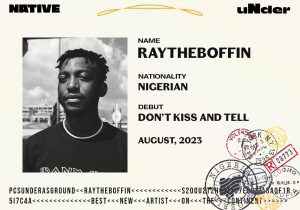
RAYTHEBOFFIN
While new to the Nigerian music scene, RayTheBoffin—real name Joseph Chikak—boasts a healthy catalogue. The producer/singer has been constantly exploring the boundaries of sound, fusing genres into one another whilst inserting relatable stories onto those rhythms. A large portion of these works came before he signed with the London and Johannesburg-based record label Outer South as one-half of Riverays, with co-member Iver Rivers and member of the four-man group Dancing in the Desert (with Iver Rivers, Jess ETA and 3kene).
Whether as Riverays or Dancing in the Desert, RayTheBoffin has found a soft spot between R&B, Rap, Afrobeats, Soul and Rock. As a new signee of Outer South, RayTheBoffin’s latest offering is ‘Freckles,’ a pristine collage of sounds such as Hip-Hop, R&B, Pop and Dancehall, with dashes of electronic distortions. The project is an ode to love and the varying emotions it uproots from people. From the grooviness of “Lifeline”with 3kene and Tim Lyre to the Trap bounce of“Okay”with Twelve XII and BUSA to the Amapiano elements of “New Emotions,”RayTheBoffin exhibits his versatility. Labelmate Suté Iwar recently described RayTheBoffin as having “a big future” and it’s no mere co-sign: RayTheBoffin has shown he’s here to stay.
FENTSE.
Fentse.’s music accommodates so much soul and emotion. Since her debut with the 2020 tear-jerker “Don’t Care (Let Your Eyes Bleed),”the South African singer and producer devoted herself to making music to speak to people’s great times and dark moments. In 2021’s ‘Get It Together.,’ Fentse. dug into her life experiences for an R&B/Soul affair (with elements from other genres) with soft vocals that possess as much venom as it is a caring friend. Regardless of the sonics she settles for, Fentse.’s music reflects honesty.
Fentse. has describedher music as being “inspired mostly by her experiences,” and that “her taste in music is ever evolving and ever developing, ranging from melancholy and ambient to experimental and upbeat.” On ‘Therapy Is Cancelled,’ her latest body of work, Fentse. articulates the roles humans play in their lives and the lives of others: lover, truthseeker and chaser of happiness. She bristles at a lover’s toxicity on“Video Girl,”ponders about existentialism on“Caffeine”and thirsts for clarity on “White Doves.”Fentse.’s music is a flame in the storm, enduring the knocks yet burning bright and lighting a path.
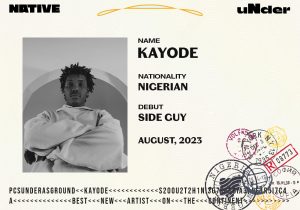
KAYODE
The musical education of Kayode began a long time ago. Both his parents were Christians and he was around church a lot of the time, learning to play the piano. Till this day, that awareness for instrumentals feature in his music, which is a vibrant mix between orchestral-set bangers, zesty rap flows, and the colourful sweet talk of afropop. “I learnt most of the stuff I knew on YouTube,” Kayode told NATIVE.
A project like 2020’s ‘Playtime is Over’ demonstrated those influences, as Kayode united variant sounds while talking his shit in the most audible ways. As the title suggests, the six-track EP was a crystallisation of what spurred him towards music a few years earlier. While“On My Back” and“Look at You”showcased his rhyming abilities over cloud rap beats, “Sideguy” and “456” coasted on warm percussions, both masterfully produced by an ascendant Magicsticks, who he met after he began sharing his work on Instagram and getting acclaim for them. Kayode merges both his dominant sensibilities, especially on the latter record, where he turns in the evocative hook (“Oh baby, whine make you whine, I no be Casanova”) while feature Victony delivers beautifully, including a rapped verse.
Kayode continues to oil the wheels of his artistry. In May, he released ‘STILL FIGURING LIFE’, an EP that packs thoughtful observations into its concise 7-song set. “At a point in everybody’s life, we’re into that realisation we’re all still figuring life,” he says about the motivation behind the project. “I like to make music about what I’m feeling”. The drill-evoking opener “Fill Me Up” is matched with other excellent records like “All I Need” and “Blessings,” and beyond the quality of their gaze, it is Kayode’s skills with mixing and mastering which takes them into an otherworldly scope, bringing out the best of features ODUMODUBLVCK and Psycho YP, in the case of the latter record. With the crisp honesty of “To The Top”shared with the world some weeks ago, Kayode’s vision has remained unrelenting and positive. That mentality cannot be bought, just as the experiences that have burnished his music.
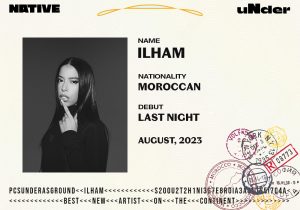
ILHAM
Sensitivity doesn’t fail the musician. Since emotions are directly considered within the metres of sound, accomplished artists—or those planning to become one—need to build up techniques on relaying their unique experiences and perspectives into sound. Born to Moroccan parents in the US, this has been an underlying focus in the music of ilham, whose bluesy records are influenced by listening to 2000s American R&B, but also the expansive, oriental tastes of her parents who, during her formative years, played a lot of Arab music inside the house.
ilham’s earliest music was released around 2019, shortly after graduating university, also preceded by an internship at Capitol Records. There’s a lived-in quality in records like “down” and “cycle of games”, as ilham fuses autobiographical detail with woozy Trap and Soul. “You pushed me down once, took ten steps forwards,” she sings in “down,” rebelling against the unchecked influence of an adversary, and later affirming “Let’s make mama proud” behind the words which make up the song’s hook. Growing up in the Hip-Hop-dominant area of Queensbridge, in New York, her rapper’s awareness for language have resulted in a number of projects over the years.
Her duo of projects ‘with time’and ‘ilham’were released three years apart from each other, the latter coming out in September last year. Bearing her artistic growth, it’s a demonstration of the skills that first drew ilham to French Montana who signed her, and now Def Jam, the global record label powerhouse. Whereas the earlier project was mellow and personal, with songs like “i tried” and “never even know” utilising a core sound of lo-fi to express those sensibilities, the self-titled EP was more encompassing in its gaze and broader in sound, introducing zesty touches to the established sensitivity of ilham. For her, as “show me” and the Vory-featured “hype” reveal, music doesn’t have to go far from its roots to transcend.
“What’s Going On” Tallies Notable News Headlines From Across The Continent — The Good, The Bad, And The Horrible — As A Way Of Ensuring That We All Become A More Sagacious African Generation. With This Column, We’re Hoping To Disseminate The Latest Happenings In Our Socio-Political Climate From Across The Continent, Whilst Starting A Conversation About What’s Important For Us To All Discuss. From Political Affairs To Socio-Economic Issues, ‘What’s Going On’ Will Discuss Just That. This Week’s Headlines Come From Niger, Somalia & Zimbabwe
REACTIONS TRAIL RESULT OF ZIMBABWE’S PRESIDENTIAL ELECTION
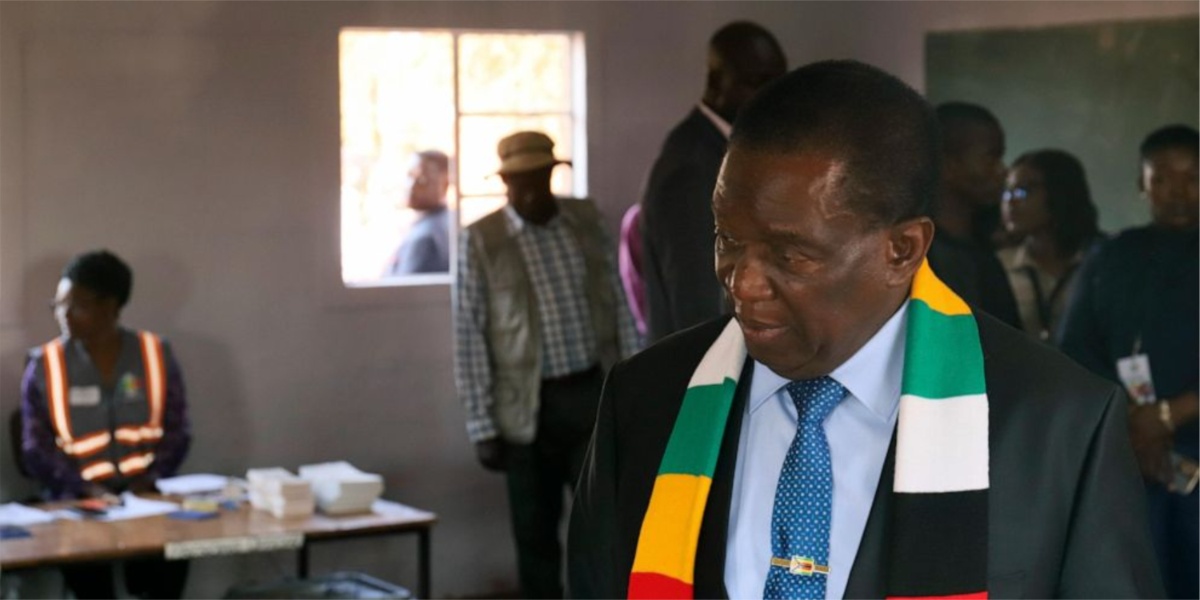
Zimbabwe’s main opposition leader Nelson Chamisa has countered the re-election of President Emmerson Mnangagwa, alleging “blatant and gigantic fraud” in the electoral process that declared Mnangagwa’s victory on Saturday.
The Zimbabwe Electoral Commission (ZEC) announced Mnangagwa, 80, won a second term with 52.6 per cent of the ballots against 44 per cent for his main challenger, Nelson Chamisa, 45, of the Citizens Coalition for Change (CCC) party. The announcement, which came after voting had to be extended because of delays in the printing of ballot papers, was made two days earlier than expected.
Fellow Citizens; I know you are anxious. I will give an address soon. Never lose hope. Don’t give up. You did your very best. You sacrificed all. It’s not in vain. They stole your voice and vote but never your hope. It’s a blatant and gigantic fraud. Our God is faithful. There…
Mnangagwa, speaking from the presidential palace, dismissed the allegations. “I did not conduct these elections. I think those who feel the race was not run properly know where to go to complain,” he said at a news conference on Sunday. Although Mnangagwa insists the electoral process was free and fair, international observers have sided with Chamisa. The United States, through its Department Spokesperson Matthew Miller, have condemned “the intimidation and disruption of lawful election observers throughout the electoral period.”
Mnangagwa assumed office in November 2017 following the removal of Robert Mugabe whose 30-year was characterised by political tensions and economic turmoils.Mnangagwa is a member of the political party ZANU–PF and a longtime ally of Mugabe. His main opposition Nelson Chamisa is considered a man of “uncomplicated message, honest ambition and commitment to achieve meaningful change,” as he grew up in Kuwadzana, “a sprawling high-density township in Harare where the widespread effects of ZANU-PF’s socioeconomic failures – especially unemployment, hunger and poverty – are experienced particularly severely.”
UGANDA: 20-YEAR-OLD MAN FACE POSSIBLE DEATH UNDER ANTI-GAY LAW
Ugandan prosecutors have charged a 20-year-old man with “aggravated homosexuality,” an offence punishable by death under the country’s recently enacted anti-gay law. The law, which is one of the harshest as regards queer people, contains provisions that make “aggravated homosexuality” an offence punishable by death and includes penalties for consensual same-sex relations of up to life in prison.
The suspect “was charged in Soroti [in eastern Uganda] and he is on remand in prison. He will be appearing in court for mention of the case,” said Jacquelyn Okui, spokeswoman for Uganda’s directorate of public prosecutions. According to the charge sheet seen by AFP, the 20-year-old suspect was charged on August 18 and is accused of “unlawful sexual intercourse with… [a] male adult aged 41.”
In May, US President Joe Biden called for the immediate repeal of Uganda’s Anti-Homosexuality Act, which he tagged as “a tragic violation of universal human rights.”But the government has remained defiant with Uganda’s president Yoweri Museveni accusing the World Bank of using money to try to “coerce” the government to drop the controversial legislation. The legislation also has the support of the majority of the country’s citizenry who see the measures as a necessary pushback against perceived Western immorality.
GABON: OPPOSITION CANDIDATE DECLARE VICTORY AFTER SATURDAY’S ELECTION
Albert Ondo Ossa, President Ali Bongo Ondimba’s main rival in Saturday’s election in Gabon, whose official results are still awaited, has claimed to have won and called on the Head of State to “organise the transfer of power.” Ossa had already denounced “fraud” by the Bongo camp on Saturday, two hours before the polls closed, and asked to be “declared the winner.”
“We call on our compatriots who gravitate around this power that is more devoid of legitimacy than ever, particularly those around Mr Ali Bongo Ondimba” to bow humbly before the will of the Gabonese people,” declared Mike Jocktane, the director of campaign director of Ondo Ossa, during a press conference in Libreville.
The Gabonese Elections Center (CGE) has been in the spotlight after refusing to give any indications on the progress of the counting and on the date and time scheduled for the proclamation of the official results. Ondimba’s government also frayed nerves after it cut off the internet on Saturday evening and put a curfew in place, citing the risk of violence. It accused French media outlets RFI, France 24 and TV5 Monde of “a lack of objectivity and balance … in connection with the current general elections.”
SUDAN’S ARMY CHIEF GIVE SPEECH IN PORT SUDAN
As the battle between the Sudanese Army and the paramilitary group, Rapid Support Forces (RSF) rages, the ongoing conflict has plunged the country into anarchy with many citizens fleeing into neighbouring countries as refugees and others living in Sudan without water and electricity.
The head of Sudan’s military, General Abdel Fattah al-Burhan, announced on Monday that he fled the capital during a large military operation as the bloody conflict in the Northeast African country enters its fifth month. General Al-Burhan also confirmed that no agreement had been reached with RSF leader Mohammed Hamdan Dagalo to facilitate his departure from the capital.
President Al Burhan’s escape from General Command is a significant win for the Sudan Armed Forces (SAF). He is expected to visit Cairo and Jeddah, and likely other foreign capitals too, and this will benefit SAF politically and diplomatically at the expense of the Rapid Support… pic.twitter.com/Pby5KqMpu9
“I confirm that my exit from the General Command took place without any help, and I did not leave with a deal or by arranging any agreement,” he said. “This was a military action carried out by the armed forces, and anyone who says that there is an agreement or that there is a party that helped or that there is a deal is delusional. We do not agree with the traitors or those outside the Sudanese people (traitors referring to Rapid Support Forces and those outside Sudan meaning Americans).”
The violence in the northeast African country is estimated to have killed at least 5,000 people, according to the Armed Conflict Location and Event Data Project (ACLED), a disaggregated data collection, analysis, and crisis mapping project.
There’s no denying that disc jockeys are an indispensable part of the music industry. Serving as conduits of sound, they act as middlemen between the artists and the audience; introducing new artists to the mainstream and providing a source of entertainment. In the ever-evolving world of Afropop, DJs have continued to shape the music industry in some cases, even creating their original music. Names such as DJ Jimmy Jatt, DJ Spinall, Dope Caesar and Smallz are constantly in circulation, for their awe-inspiring sets that usher many to the dancefloor.
For Smallz the DJ, in particular, music has been a crucial aspect of finding himself and his sound. From an early age, Moshood Ayinde David, popularly known as Smallz fell in love with the music he heard playing over the radio; “I used to listen to Riddim FM a lot and there used to be DJs like DJ Mility, DJ Snow the Damager. So every Saturday, I’d make sure not to miss their sets. I was like, “Oh my God, I want to be like this,” he tells the NATIVE.
Soon enough, he began learning the ins and outs of the craft from his brother, who also worked as a DJ while growing up. At first, he faced opposition from his family who wished that he follow a traditional career path. “My parents wanted me to go to school and stay focused. Also, it’s just my brother and I so my parents didn’t want both of us to become DJs,” he shares. It wasn’t long before he started getting bookings for shows and performances, the most notable of which was DJing at Homecoming Concert and soon enough, opening the show for Davido during his ‘Timeless’ show in Tafewa Balewa Square, Lagos.
Outside of performing for other artists, Smallz the DJ is also producing and working on his own original music. Like many other DJs before him, he is a keen learner of music and improving his skills is a great source of pride. In 2018, he released his debut mixtape ‘Small Chops’ which featured 37 tracks and gave listeners a taste of what he had to offer. Smallz the DJ is no stranger to making music as the rising DJ once made an appearance on Ycee and Milli’s “Yoruba Demon” back in 2015. “Imagine going to DJ a set and you see people vibing to your own music,” he gleefully says over our call. “It’s something I believe every DJ should do.”
Now, Smallz the DJ is soundtracking the life of young Nigerians through relatable DJ sets and hosting intimate events that draw loyal supporters and fans. Recently, the rising DJ hosted his first event of the year ‘Sundown With Smallz,’ a 24-hour DJ set hosted in his home city, Lagos which added yet another string to his prolific bow. Following the event, we caught up with Smallz the DJ to talk about finding his feet as a DJ in Lagos, garnering a loyal following and audience as well as his plans for the future.
Our conversation, which follows below, has been lightly edited for clarity.
NATIVE: Can you talk about how you first got involved in the world of DJing?
SMALLZ THE DJ: My elder brother was a DJ. I always followed and assisted him at events, and that’s when I actually fell in love with it. So, my brother actually inspired me.
Did you find support from your peers and family when you started?
It was not really a smooth journey. Obviously, my parents wanted me to go to school and stay focused. It’s also just my brother and I, so my parents didn’t want both of us to become DJs. My mom was always telling me to look for another career. “You can’t be a DJ and all that,” but along the line, she let it go because she had no choice but to let me do my thing. So at first, it wasn’t smooth but eventually, everything aligned.
Who were your early inspirations and influences?
I was being inspired by DJs back then. I used to listen to Riddim FM a lot and there used to be DJs like DJ Mility and DJ Snow the Damager. So, every Saturday I’d make sure not to miss their sets. I was like, “Oh my God, I want to be like this.”
How did you go about getting your name out there as a DJ?
So first of all, when I started, I didn’t have a DJ name. I’d always just go to gigs and tell them my real name, David. When I got into my SS1, my close friends started calling me Smallz because I was literally the smallest in our crew. One of them then suggested the name to me as my DJ name. After secondary school and moving on to uni, I decided to keep the name Smallz to pay respect to the friend who gave me the name as he’s late now.
You’re approaching a 10-year milestone in your career after years of exceptional work. What has been the most challenging aspect of following your dreams?
Being a DJ in Nigeria, it’s really hard to get your name out there because they’re thousands of DJs in the industry. The market here is about doing things in a different way. Gigs can be hard to get because everyone has their favourite DJ. So you’d have to prove to your client that you’re a good DJ and you can deliver the job. I wouldn’t say it was a smooth journey for me because there are always challenges. Whenever I’m going for a gig, I always make sure that, whatever the situation might be, I give my best. I always try to put on a positive outlook.
What’s an important lesson you can share with upcoming disc jockeys?
You have to stay focused on whatever you’re doing. If this is your goal, you just have to stay focused. Don’t let anyone tell you what to do, what genres to play, what events to attend or not attend. Stay focused and do what your mind throws at you. Just do you, honestly.
How do you typically prepare for a new gig? What’s your performance ritual or habits?
When I started, before any gigs, I always went to my studio and practised or researched new songs or made a playlist for an event I wanted to do but that wasn’t really helping me. I’ve realised that planning a set isn’t my thing because I might get to an event and the set I planned may not be what [the crowd] want. I try to share my set time. I know that I’m going to play for like an hour and 30 minutes, so I try to divide it. I’ll do like 30 minutes of Afrobeats, 30 minutes of Hip-Hop, 30 minutes of EDM or something and it works for me. I rather just go there and do my thing and DJ live. I try to read the crowd and understand what they want to listen to and when they’re not receptive.
When it comes to mixing, what are your first thoughts when approaching a hostile crowd at an event?
When I go for a gig and meet the crowd, I try to test the crowd with whatever track I’m starting with and try to gauge their reaction to it. If I see a good number of the crowd have a positive vibe, I’ll keep up with the track. If they don’t, I make sure the next track I’m dropping has to be something relatable to the crowd. I make sure that at least the first five songs I’m playing are something the crowd can really relate to.
So you use relatability to seamlessly engage with the crowd and get them moving.
Yeah exactly. As a DJ, you always have to read your crowd. You have to read your crowd and engage them with tracks that they can relate to in that event or in that context or space.
How do you balance staying true to your style while also playing to local trends and crowd favourites?
Like I said before, I always share my sets, so I always make sure that I’m playing something for everyone. Even though I might play a song that everyone knows, there are always different people in the crowd so being versatile helps. My last set; the last Davido concert in Nigeria, the crowd was massive, so what I planned to play would have been a shitty set. The crowd was mixed so I had to play something relatable to everyone and the reviews were really good after my set. So balancing your set and craft is important. Always try to leave a mark that people will talk about and be like “Do you remember when Smallz dropped that beat?”
You’re popularly known for being able to fuse genres in your sets. Are there any genres you want to explore more of?
There are some gigs I get where I’m not supposed to play Afrobeats because maybe it’s a private event but I’m more focused on playing Afrobeats. If I was to explore other genres, it would probably be House Music or Hip-Hop. EDM is something I love but I don’t really play often even when I go out for events.
Since the rise of Amapiano and the infusion of log drums and faster BPMs in music, has this affected how you deliver music to audiences?
Before Amapiano even came to Nigeria proper, it had been around for a long time. It didn’t start last year. Before the whole Amapiano thing, I always play this South African vibe. I play Amapiano but I don’t make it just that. I make sure I mix it with Afrobeats.
DJs are very important to music culture and we’ve seen many DJs like Spinall and more release their own original music. How do you feel about making your own music?
Actually, I’m working on something. Probably, by the end of the year. I’m going to release my project. It’s not really a must to do, but it’s something I think every DJ should work on once in a while. Imagine going to DJ your set and you’re playing your own music. You see people vibing to your own music, that’s really crazy, so that’s something I believe every DJ should do. Even if it’s not something original, it can be a remix to a song, but just have your own craft or project that you push.
Collaborations have been a key part of your journey. It’s there any artist you’ve dreamed of working with? Why?
I’ve always wanted to drop something with Davido. I don’t know when that will happen, but I would love to have something with him. There are a lot of new guys that I’m trying to work with. I won’t lie, the new guys right now are really going hard. There are a lot of them that I’m trying to work with right now.
Now, you’re putting on your own parties with “Sundown with Smallz” coming in the next few days. Is there anything we should look forward to?
I’ve always wanted to do this since, but I think I wasn’t in the right headspace. I was busy with other things. Obviously, COVID came, but I want people to expect more because “Sundown” is actually going to be big. I’m not just thinking of doing it in Nigeria only. I’m sure, by God’s grace, next year, I’m going to have one in London and in US. It’s going to be something global. I’m trying to build a proper community.
What should we expect from you in the near future?
Apart from music, I want to start something on my YouTube. I won’t say now, but I’m going to be active on my YouTube. I’m going to be dropping more mixes. It has been awhile since I dropped mixes because I’ve been busy with other things. Now, I want to be dropping mixes like every month, if possible every week. I don’t want to starve my fans anymore.
Burna Boy is sitting on top of the world–figuratively and in real-time. Since his 2022 album ‘Love, Damini,’ so much has changed for the Grammy-award winning artist who has spent the last eleven months making good on everything he’s set out to achieve. There are no glass ceilings when it comes to Damini Ogulu and his latest album ‘I Told Them’is further proof of his near-peerless and prolific run.
The 15-tracker cements his position as a global star with a bevvy of influences which he draws from the various corners of the globe he’s frequented, including unmissable samples from Western R&B and Hip-Hop including Jeremih’s “Birthday Sex” and Brandy’s “He Wasn’t Man Enough.” This all comes full circle on ‘I Told Them,’ with rich textures that are seamlessly integrated with a collage of contemporary sonics that expand on the self-dubbed Afro-Fusion genre.
Arriving today, in tandem with the release of his latest album ‘I Told Them’ is an accompanying print magazine of the same name, which expands on the music in the album and brings it into sharp focus. The recently released magazine which is on sale globally and at the Shreeji News and Magazines head store in London, is released in collaboration with this very publication as we host Burna Boy for an exclusive launch and signing.
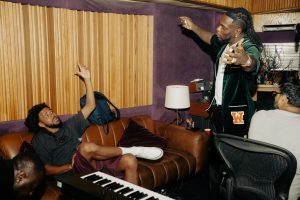
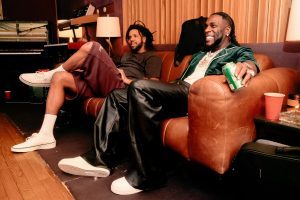
The special edition magazine contains exclusive conversations with collaborators on the project, particularly American rapper and leader of the Wu-Tang Clan RZA, behind the scenes images of Burna during the album’s creation process across different studios around the world and never seen before lyric breakdowns of the album’s standout tracks. The new magazine also spotlights some of unique African creatives in their respective fields including mixed media artist, Dennis Osadebe, self-taught photographer, Stephen Tayo and homegrown brands, WAF and THIS IS US.
In true Burna Boy fashion, the print magazine is yet another avenue for fans and audiences to understand his meticulous approach to his craft. Typically, in music, artists are prone to rely heavily on music videos, social media and the visual aspect to build upon the world around their projects. Burna Boy sets a new standard by delivering a timeless print publication that fans and loyal audiences can purchase, own, resell, share and collect for years to come.
Copies of the magazine will be available for sale throughout the day, and the Monday programme includes a Meet & Greet with Burna Boy, where fans can grab a signed copy of “I Told Them”.
The music business is a notoriously tricky industry. A lot of artistic minds have been unable to crack it, while musicians have sometimes struggled to make the best business decisions, leading to blow-back on the artists and an associative label, if there’s one. It then becomes twice as hard when a music executive happens to be a recording artist, one who’s still in the active years of their creativity.
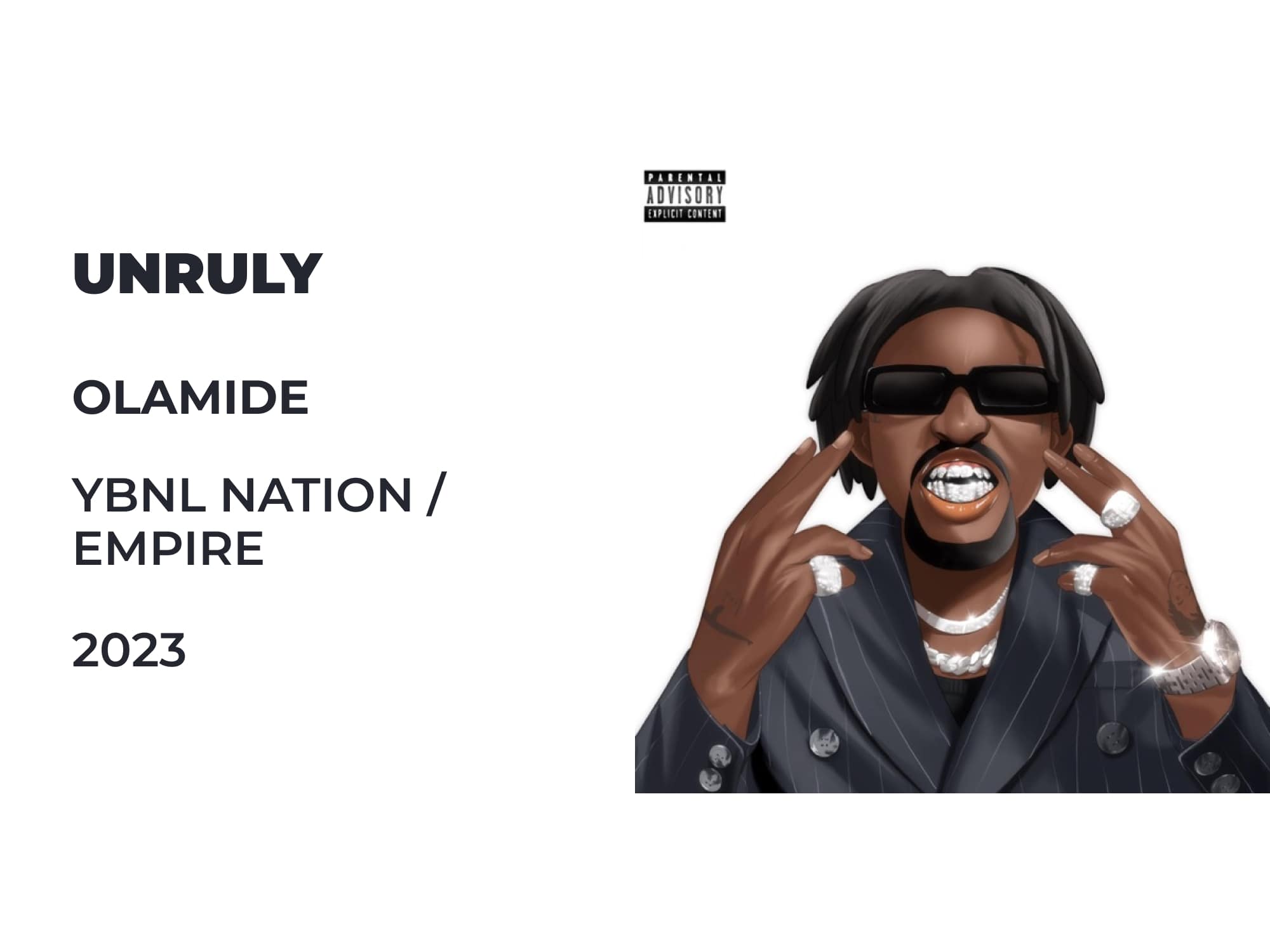
However, a number of people have been able to crack the ice and extend the creativity of their careers onto other artists. In the contemporary African music scene, Olamide is the biggest example that comes to mind, using his YBNL label to break the likes of Adekunle Gold, Lil Kesh, Asake and Fireboy DML over the years. With each passing year and another breakout artist on his hands, the ‘Unruly’ artist has revealed himself as worthy of reverence, although he’s not the only figure in this conversation
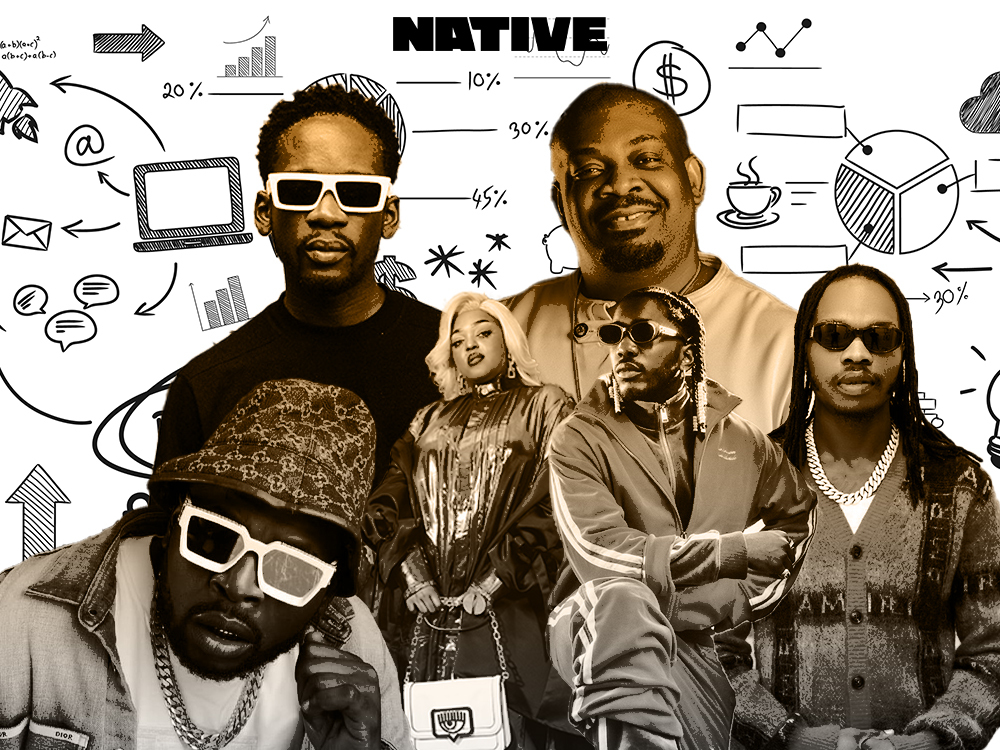
To properly highlight the brilliant figures who are music executives while being artists themselves, the editorial team at NATIVE Mag compiled this encompassing list. Spanning the breadth of the continent, from Nigeria to Tanzania and South Africa, we’ve put forward an esteemed cast of these hybrid personalities, celebrating them but also recognising the joyful moments they’ve given to listeners through the largesse of their heart and the brilliance of their minds.
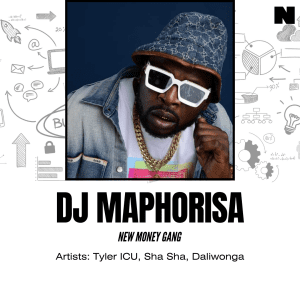
DJ Maphorisa
In the South African music scene, DJ Maphorisa is an important and respected figure. He embodies diverse roles—singer, record producer, DJ and songwriter—as a music maker working across genres but with a solid influence in house music and Amapiano. His catalogue of hit tracks features impressive acts in both the South African and African music spaces, including Black Coffee, Kwesta, Uhuru, Major Lazer, Mafikizolo, Wizkid and Runtown, among others. After leaving Kalawa Jazmee Records, the label co-founded by Oskido, another influential name in South African music, DJ Maphorisa floated his label, first named Blaqboy Music and now known as New Money Gang Records.
As a label owner, DJ Maphorisa has continuously nurtured South African music talents, offering a steady stream of opportunities for those artists and their fans to connect. The label has witnessed the entrance and exit of talents such as Tyler ICU, Sha Sha, Daliwonga, Lucasraps, Bontle Smith and MaWhoo, among others. The healthy presence of female artists on the label, in a notoriously male-dominated African music scene, lends credence to DJ Maphorisa’s drive to support talents. These artists have made an impact with their music, in turn furthering DJ Maphorisa’s legacy as a leading light in South African music.
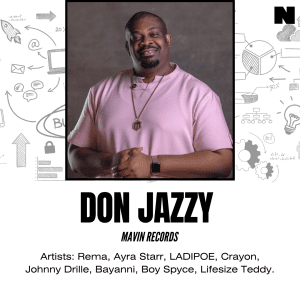
Don Jazzy
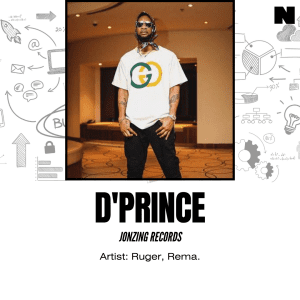
You can’t delve into the rich history of Nigerian pop music without mentioning Don Jazzy. The mid-2000s were knockout years stacked with countless hits, many of which Don Jazzy lent his vocals and expansive knowledge of production. He had already attained icon status when he founded Mavin Records in 2012, birthing some of the biggest stars the scene has ever seen. Don Jazzy led the first class of stars, comprising Wande Coal, Tiwa Savage, D’Prince and Dr Sid. Years down the line his influence has only increased and the label powerhouse introduced an even wider range of artists.
Don Jazzy’s mastery of the mainstream music market, home and abroad only further established his maestro status as he struck out with endless pools of creative vision. That being said, he’s hacked the system but even that well-trained eye for talent in the past couldn’t have prepared us for the astronomical success his latest class of stars are currently experiencing. In one corner, LADIPOE is broadening the reach of Nigeria’s rap scene with memorable blends of Nigerian Pop and on the other side, Johnny Drille’s sonorous vocals are soundtracking some of the greatest R&B meets Folk records of our time. Beyond home base, Ayra Starr and Rema have achieved admirable feats as they trot the globe with only a few extended plays and two full-length albums between them.
With other notable mentions like Crayon, Magixx, Boy Spyce, Bayanni and the recently signed Lifesize Teddy, Don Jazzy continues to be incredibly influential, consistently shaping the image of an African powerhouse through expansion and peerless longevity.
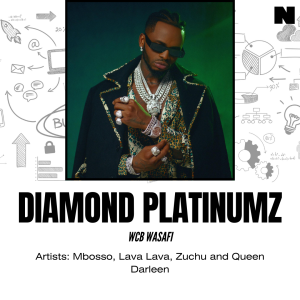
Diamond Platnumz
WCB Wasafi is one of the biggest employers in the East African music space. Founded by Tanzanian superstar Diamond Platnumz, its roster doesn’t only include musicians but producers, artist managers, dancers and photographers. Having ascended an unparalleled level of relevance in the Tanzanian music scene prior to the 2010s and crossed over to continental ubiquity with the Davido-featuring “Number One,” the artist has been strengthening the pillars of his empire, parlaying his wealth and connections into cornerstones for other artists to spring forth, and to his credit few have left controversially.
Harmonize and Rayvanny are two big artists who’ve passed through the Wasafi label, their stylistic similarities to Diamond seldom hindering their chances of breaking out. Both artists were branded distinctly, and that has been a defining trait in the presentation of Zuchu, Mbosso, Lava Lava and Queen Darleen, all four being current signees to the label. The first two are household names, and the rest aren’t so far off. Through his own outlandish branding and impeccable sonic choices, Diamond Platnumz has always been a fine businessman but it’s something special to extend that grace to such a wide range of artists, while still being active himself.
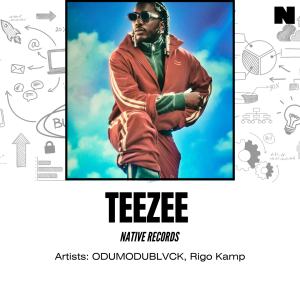
Teezee
NATIVE Records hasn’t been around for more than a year and it’s already one of the most influential labels around. A large chunk of its success can be attributed to Teezee, its founder who is also one of the co-founders of Native Networks. Through its affiliation with Def Jam Recordings, the music executive has spearheaded the domination of Odumodublvck, who’s unarguably been one of the revelations of the year. Teezee is never far away from Odumodu, in shows or business meetings, guiding the hands of the maverick artist so each move is deliberate and fitting.
English Premier League side Arsenal FC using the rapper’s “DECLAN RICE” hit to announce the former West Ham captain is just one of the several instances where Teezee has struck gold with his moves, which should come as no surprise really, considering he’s also an artist. He’s not just any artist too—he’s a part of DRB Lasgidi, the supergroup which influenced the West African alternative movement with their music and branding, starting from the late 2000s. He’s coloured the visual presentation of ODUMODUBLVCK with eccentric touches, imbibing communal ethos onto his stagecraft and other aspects of his artistry. Considering that Teezee has scored a masterstroke with his first signing, there’s no telling how excellently the next era for NATIVE Records would come off.
DBN Gogo
DBN Gogo makes her own rules. It’s an observation that’s easy to discern from her career thus far, whether that’s DJing with a constant aura of freedom or irreverently dismissing conversations about being privileged or curating bangers that range from lilting to thumping. As part of her influence in improving female inclusion in South Africa’s male-dominated Dance scene, DBN Gogo heads her own record label—no mean feat in a space where women have to hijack their respect.
In partnership with UMG Africa, Gogo founded Zikode records as an avenue to upscale her already fledgling career and give a platform to less known talent she believes in. Just over a year since its launch, Zikode Records is blooming. “Bambelela,” her debut single under the label, was an immediate hit and her November 2022 debut album, ‘What’s Real’, is a cohesive body of work that strengthened her curatorial cred and also introduced Stixx, Nvcho, EltonK, DJ Stopper, and Unlimited Soul as the mix of vocalists and DJ/producers on Zikode Records.
In March, the crew dropped ‘ZIKODE PRSNTZ’, an 8-track compilation project that highlights the potential for Zikode Records to become a powerhouse label in Amapiano and South African Dance in general. It would definitely be interesting to see a couple of women join the roster in the near future, but for now DBN Gogo is clearly just following her rules and eclipsing boundaries.
Davido
With a decade-long run, Davido is undoubtedly one of the biggest exports of Afropop in our time. His timeless classics and instantly recognisable vocals have successfully spearheaded the domination of the domineering genre on a larger scale, earning him a slew of international co-signs and cross-continental bestsellers. This weighty influence however, only motivates the Afropop veteran to give back to the community that enabled his bottomless reach via his record label, Davido Music World (DMW).
Since his 2018 Headies Awards speech, where he delivered the symbolic words “We rise by lifting others,” surrounded by a slew of mentees, Davido has relentlessly expanded on this ethos. In the early years of DMW’s establishment in 2016, Davido sprung a slew of talented acts on the booming scene armed with solo and collaborative hits. Think DJ/Producer E-Cool, street rap luminary Idowest, versatile rapper/singer Dremo, or his biggest protege yet, Mayorkun, to name a few. After two genre-defying albums and chart-topping singles, Mayorkun has continued to deliver bangers, even after parting ways with the label.
The announcement of Davido’s fourth studio album arrived with the introduction of DMW 2.0, ushering in two effervescent talents ready to steal the spotlight under the tutelage of the popstar. From their performances on the highly anticipated album, ‘Timeless’, it became clearer that Logos Olori and Morravey held a promise of capitalising on the launchpad provided by their mentor. Given Davido’s evergreen touch and stronghold on the industry, the pair couldn’t have asked for a better mentor to position them for global triumph.
D’Prince
Depending on who you ask, D’Prince still had a lot to offer as an artist. When he receded from the ubiquity of the mainstream, the years weren’t that far away from hits like “Take Banana” and “Oga Titus,” revealing his yet-potent grasp on the language of popular culture, but alas D’Prince had other plans. He wasn’t going to be an average player in a good team when he could be the coach of a great one, and so he took the second option.
When Rema was signed onto Mavin Records, it was D’Prince who took his hand. Actually, the Benin-born youngster was signed onto Prince’s Jonzing World, which had a subsidiary-esque arrangement with Don Jazzy’s outfit, a relationship smoothened by familial ties between both execs. A freestyle had portended the initial link-up, and from there D’Prince, along with the Mavin academy, chiselled Rema into a bonafide superstar, possessing everything he needed to shine in the modern market. Ruger came not too long after, and his Dancehall influences overtly inspired his confidence and swag, but if a thread was strung through both artists, the brazen appeal of D’Prince emerges as an inspiration. Being an artist who knew how to juggle sensual tease and social commentary, he’s the best mentor both artists could ask for.
Naira Marley
When “Issa Goal” hit our airwaves in 2018, not only did it deliver one of the most memorable records of that year, it also marked the introduction of an unapologetically raw and imperious character into Street Pop. Naira Marley quickly summoned a vivacious cult following with raging fans ready to rally behind the superstar to the ends of the earth. For those that weren’t quite onboard the Marlian train, his hypnotic tracks and captivating, high-spirited personality did a great job at convincing audiences of his outstanding influence. With his hands woven deep into the fabric of Street Pop, he took a fresh talent under his wing with the aid of his 2019-established label, Marlian Music.
Zinoleesky appeared hot on the scene with an admirable hunger to win, and a sheer mastery and understanding of the market on the Afro-House number, “Kilofeshe.” He crooned a braggadocious manifestation turned reality as the bar, “I’m trending, I don’t know why,” bolstered him and the label to unimaginable heights. He went on to cement his reign with increasingly notable contributions to the textural and sonic soundscape of Street Pop, invigorated by the genre’s grand master. Barely half a decade since its inception, Naira continues to use his core establishment to dig deeper into the streets to fish out note-worthy acts like Vusic, Fabian Blu and CBlack to fling the ropes of the genre beyond its borders.
Mr Eazi
It’s irrefutable now: Mr Eazi helped significantly reupholster the sound of urban West African music. Banku Music, the signature style of buttery, highlife-indented jams, is undoubtedly the bridge to a significant portion of what is widely referred to as Afrobeats. These days, Eazi’s music might not induce the same level of mania that it did during his 2016/2017 run, he’s definitely grown into one of the most successful figures in African music, through the boutique Label Services imprint, emPawa Africa.
In 2019, the company provided 100 rising artists with funding for new music videos, announcing itself as a space to help talented artists grow. That same year, Joeboy emerged as a fully-formed hit-maker, becoming the emPawa’s biggest success story yet. The label is also home to Ghanaian dancehall singer J. Derobie, while supporting a countless number of releases from artists all across Africa. In a reflection of how Mr Eazi has moved throughout his entire career, emPawa is a pan-African endeavour operating on global standards. It’s far from an altruistic business but the company is clearly artist-inclined, taking cues from its founder who’s made a habit out of deciding his own fate without fear.
Olamide
Olamide’s entry into the music space in 2010 was facilitated by Coded Tunez, the record label owned by singer and beatmaker ID Cabasa. From the streets of Bariga, a promising Olamide carried his dreams of stardom with raps brewed from tough-life confidence and mastery. After finding his breakthrough, he founded his music label YBNL Nation, swiftly prioritising a personal touch for his budding career. More than a decade later, YBNL Nation, just like Coded Tunes that had 9ice, 2Shotz, Reminisce and Lord of Ajasa, among others, hasn’t only catered to Olamide’s career but has been instrumental in the discovery and development of numerous music talents.
Lil Kesh, Viktoh and Adekunle Gold, in addition to the music producers Pheelz and Young John, were the first set of artists on the roster of YBNL Nation. Both Lil Kesh and Adekunle Gold—different in style but similar in their originality for indigenous rhythms—became huge successes, winning hearts across Africa and the world. Pheelz and Young John were essential to the stories of both artists, as they honed their craft while still serving hits. The second set wasn’t as successful but Fireboy DML stood out. The artist was the label’s conduit to a changing music scene experiencing the ascendancy of new stars. Fireboy DML, under Olamide’s tutelage, made an instant impact with two well-received albums (the first is considered a classic).
YBNL Nation is in a new moment heralded by the genre-merging, Afro-centric world of Asake. The artist had a stunning rise in 2022 and within a year, he has become a force roaring through the charts around the globe. YBNL Nation’s partnership with EMPIRE (an American music and distribution label) has also allowed the label to reach new heights. Over time, it is clear Olamide’s proficiency as a curator of talent is undebatable.
Last year, Burna Boy released ‘Love, Damini’ — a culmination of his impressive successes over the past decade, capped off by several Grammy nods, wins and chart-topping hits. The album, packed with classics and mainstream hits, perfectly encapsulated his essence and tumultuous journey thus far. As he basks in unfathomable levels of global success, Burna’s unrelenting confidence cannot go unnoticed as he reshapes the quality and range of sounds emanating from these parts. It is with this immutable poise he carries the crown of African Giant with a seventh studio album, ‘I Told Them…’
He long teased the 15-tracker, drawing us steps closer with “Sittin’ On Top Of The World” and “Big 7” after the completion of what was the biggest tour of his career. The arrival of ‘I Told Them…,’ however, comes with a sour taste in audiences’ mouths following an interview-stacked press tour including a sit down with Zane Lowe for Apple Music. As the name suggests, the album is a poignant boast of Burna’s achievements thus far and how against all odds, he is quite literally sitting on top of the world.
The album’s collaborations ranging from Wu-Tang Clan to Seyi Vibez serve as a melting pot of Burna Boy’s endless pool of influence from world genres, particularly the deep cuts of Hip-Hop in the early 90s wrapped up by generic African instruments and embellishments. With the arrival of ‘I Told Them…,’ the NATIVE editorial team shared their initial thoughts on Burna’s braggadocious displays. Tap in!
Nwanneamaka: “On Form” is my favourite song so far owing to its standout production on this project. Those conversational elements at the start infuse a certain degree of Burna’s personality and I am not mad at Burna’s effortless flow. However, my accolades have to go to producer P2J for his groovy, drum-led production. It easily plays into the eclectic atmosphere Burna has been constructing within his self-dubbed genre Afrofusion.
Daniel B: “Big 7″ undoubtedly stood out to me, thanks to its infectious hook and the exquisite instrumental sample derived from the Boechi-assisted track “Willemstad,” originally by the Dutch rap duo, Qlas & Blacka. Burna truly surpassed expectations with this song, and I think people will keep spinning the track for years to come.
Emmanuel: He might not like to hear it, but Burna Boy makes better love songs than combative ones. Even you might argue but then a song like “Tested, Approved & Trusted” comes up. Smooth vocals run assuredly over the mellow production, creating a warm feeling that mirrors the exhilaration of romance. Few songs this year have left such a strong impression, and when the time for individual promotion comes, I hope it’s on first-row consideration.
STANDOUT PRODUCTION
Daniel B: It’s definitely “Thanks” for me. I’m a huge fan of West African percussion and its utilisation in this song was truly exceptional. It beautifully complemented the repetitive melody of the piano and effectively conveyed the core message of the song. Through this track, he distinctly showcases his prowess as an innovator in crafting Afropop.
Chigoziri: “Giza” is a fave and serves as a stand-out production. The way the song opens up with a mysterious flute and syncs up with the iconic log drums is truly impressive. Not to mention Seyi embodying the song. Everything comes together to form a masterpiece.
Sien: It has to be “City Boy.” The song’s arrangement is marvellous. The thumping bass makes me want to stomp my feet every time it comes on.
BIGGEST POTENTIAL HIT
Uzoma: Seyi Vibez did irredeemable damage on “Giza.” It’s obvious that Burna Boy let him own the show and wisely so. Other than opening Seyi Vibez to a wider audience, “Giza” is a sure-fire banger. It’s destined to become a favourite on dance floors. The production. The flows. Everything is gold.
Daniel A: Amid the controversy leading up to the release of the album, there’s one thing that is sure. When it comes to music Burna Boy knows how to spin the hits. On ‘I Told Them…’ a couple of songs stand out with “Big 7” and“Giza” featuring Seyi Vibez already showing potential signs of becoming hits.
Alex: I believe “On Form” is going to be a hit. The track is groovy and the upbeat sound propels a listener to take to dancing and body gyrations. The message will resonate with Nigerians and the beat will make the song a go-to for fun.
BEST FEATURE
Moore: Of all the features I’d have to say the standout one to me is Dave’s feature in “Cheat On Me.” Though he only has one verse on this delightfully fun song, it gives the song the necessary flavour and dimension.
Alex: “Giza” featuring Seyi Vibez stands out in the album. I’m picking it over other features because I feel Burna and Seyi’s vocals really complement each other. In the back of the drum-indented track, Seyi Vibez and Burna Boy displayed uncommon synergy that translated to the well-produced “Giza.” The production takes the track a notch higher too. Clean!
Dennis: GZA, obviously. Maybe not obviously and I’m talking from a place of bias, because ‘Liquid Swords’ is one of the albums that truly helped me understand the magic of Wu-Tang after I repeatedly tried and failed to get into the group’s iconic album back then. Back to the matter at hand, the Genius’ spoken word outro on the titular intro track is packed with poignant boasts. Zero clichés, all figure 8 bars.
BIGGEST SKIP
Dimeji: For me, “Giza” is definitely the biggest skip. Undeniably, it is a fantastic song. Seyi Vibez and Burna achieve a chemistry on this track that gets better with each listen. However, I feel like the song doesn’t really match the overall vibe of the album and would have been much better as a standalone single. As it is, the song stands apart from the mellow, Pop-influenced sound I feel Burna Boy was trying to hone in on the project. It disrupts the direction and musical flow in the process.
Sien: Every song is a beautiful piece in the grand masterpiece but one piece that seems out of place is “Thanks.” I feel J.Cole would have done better on probably another track because the dynamics of the track left him simply floating.
Chigoziri: First of all, I’d have to say that every song on the album is impressive alongside interesting collaborations. The biggest skip would probably be “12 Jewels”featuring RZA. There isn’t exactly anything wrong with it, but it kind of kills the musical flow of the album.
OVERALL IMPRESSIONS
Uzoma:‘I Told Them…’ is one of Burna Boy’s most cohesive body of work. There is a clarity about what it seeks to do that runs throughout the album. Burna Boy has always been at his best when he feels there’s a point to prove. Despite the triumphs he has amassed, he still harbours feelings of underappreciation. That, and his homage to American pop culture, make up the essence of ‘I Told Them…’ The album also succeeds because it delicately balances Burna Boy’s homegrown appeal as well as his international sojourn.
Emmanuel: Needless to say, this has been one of the more anticipated albums of the year. And coming into its time, there were a lot of events and conversations that highlighted the potential of Burna’s ranking in the Great Pantheon of Afrobeats (the term he doesn’t like so much), leading him to create his most combative project in a while. The conviction is admirable, but sometimes the need to consistently proclaim greatness blurs his focus, thus creating some noticeable off-moments (“Thanks”). Regardless of this perceptive flaw, the sonic direction, especially its infusion of spoken word, gave me a lot to think about. And that will keep me returning.
Nwanneamaka: I went into this album with a lot of scepticism due to the tirade of interviews leading up to its release. The jury is still out on his decision to dunk on Afrobeats in his pre-album press run. That being said, from my perspective, there are two types of music listeners. Those who pay attention to the instrumentals and others who listen to the message. ‘I Told Them…’ holds gleaming production qualities that cut across varying sonic directions and producing something cohesive. Particularly his clean attempt to almost body Seyi Vibez on his own sound, each song is a nod to Burna’s versatility. If this is Afro-Fusion, then I guess I’m here for it.
It’s another Friday and time for a roundup of music projects from African acts to check out. Throughout the week, music has poured in from all over the continent and sometimes it can slip through the cracks, unheard. This column serves to bring those projects to your ears as you prepare for the end of work and look forward to the weekend. It’s a packed week for new releases. From Burna Boy to Kelvyn Boy, settle in for an experience as we travel the African continent for the latest music projects.
BURNA BOY – ‘I TOLD THEM’
After months of bated expectations, Burna Boy’s new album is here. As the title suggests, ‘I TOLD THEM’ is an assertive collection which links Burna Boy’s travails at home to the global vision he’s continually sharpened with his music. The features are colourful but purposeful, from the likes of legendary Wu Tang clan members RZA and GZA to the swashbuckling Seyi Vibez, and even rappers like J. Cole and Dave makes appearances.
TITI BAKORTA – ‘MOLENDE’
Bakorta’s take on Congolese pop and folk sounds is emboldened by his rich personal history, which includes performing with musicians who saved him from a boat accident. Since then he’s played in bands which regularly explored the continent while matching their intriguing rhythms with sounds from outer places, thus giving Titi Bakorta’s artistry a hard-wrought excellence. This is especially audible in the complex movements of ‘Molende’, an album whose many instruments does not diminish its cohesiveness as much as it portrays a multi-faceted aspect of Bakorta’s colourful world.
AYO JAY – ‘TOMMY’
For about a decade, Ayo Jay has come to occupy a unique position in afropop. He’s one of the genre’s artists stateside where he’s based, with records like “Your Number” and “Gimme Kiss” becoming ubiquitous hits. Since the ‘Lazy Genius’ project released five years ago, the talented dulcet-voiced artist hasn’t put out another project, until now. ‘Tommy’ extends Jay’s bright-hued style which is amplified by guest showings from American rapper Fabolous, US-based producer Wavos, and a rare verse from the Nigerian rap savant Mojeed.
KELVIN BOY – ‘FOR THE CULTURE’
Since making his debut in 2015, Kelvyn Boy’s colourful interpretation of Highlife and afropop has earned him a loyal following. He’s met that love with a palpable ease for creating music, which has given him three projects so far. On ‘For The Culture,’ the latest of those, his sonic vision expands to incorporate the sensibilities of features like Tekno, King Promise, Babyboy AV and Stefflon Don. The core element is however the earthy grace of Ghanaian Highlife, which contributes to the live-centric feel across its seven songs.
VEANA NEGASI – ‘NO APOLOGIES’
From firebrand Wendy Shay and songbird Gyakie, to veteran soul siren Ria Boss and folk-pop upstart Baaba J, women in Ghanaian music are broadening the scape of the scene in tangible ways. Veana Negasi is looking to be the latest inclusion in that growing list, having officially debuted last year with “Get Down.” After the February-release of her second single, “Hol’ Me,” she’s dropped her debut EP, ‘No Apologies’, a no-feature 6-track project that serves as a worthwhile introduction as a showy singer and near-full formed songwriter.
KOREDE BELLO – ‘BEAUTY & BLISS’
No one could forget the electric entry of Korede Bello. Sporting an afro and a guitar, and a mellow vocal tone, the artist would come to embody more than teenage freshness. His releases in recent years have been sparse, understandably due to his return to academic life, but he’s finally followed up on 2020’s stellar ‘Table For Two’ with a new project. ‘Beauty & Bliss’ is exactly that; a sterling collection of bluesy records which showcases Korede’s pristine qualities as a singer-songwriter. With the lone feature coming in Mr. Eazi, the eight track project is intimate and realised, portending a promising comeback for the artist.
When an artist and a producer find chemistry, they make music; if we are lucky, the music comes as a body of work. This is the case of Kaestyle and LeriQ who have put out the five-track ‘Asylum.’ In recent years, music producers have left the shadows to stand beside artists as bonafide creators deserving of attention and acclaim. Sarz has been one of the most dominant Nigerian producers with his collaborative projects;‘I LOVE GIRLS WITH TROBUL’ with WurlD, ‘LV N ATTN’ with Lojay and ‘Sweetness’ with Obongjayar have made a significant impact on the careers of Sarz and the artists featured, as well as on the landscape of the Nigerian music scene.
LeriQ, like Sarz, is a veteran. He got his big break in 2013 after he produced Burna Boy’s ‘L.I.F.E’ in its entirety. The project—coated with LeriQ’s signature producer tag “It’s LeriQ, call the paramedic”—was an Afro-fusion masterclass in how it imbibed multiple sounds from Dancehall to Fuji to Afrobeat to Reggae to Galala. Two years later, LeriQ released his debut album ‘The Lost Sounds,’ which featured Burna Boy, Phyno, Wizkid, 2Baba, Cassper Nyovest, Timaya and Tay Iwar, among others. LeriQ has continually released music, even showing his skills as a vocalist on 2018’s ‘Luv.Wav.’
Kaestyle, on the other hand, is a newcomer who possesses a huge dose of potential. After signing to KeyQaad (same home as Omah Lay and M3LON), Kaestyle debuted his EP ‘Kae’s Study,’ introducing his brand of Afropop, which has a solid base in R&B. The project featured Omah Lay and Victony and portrayed the Port Harcourt talent as a competent songwriter and vocalist. On the Semzi-produced “Soundtrack,” he further exercises that mastery for feel-good tunes.
On ‘Asylum,’ Kaestyle and LeriQ address familiar themes through exciting unique sound choices and deliveries. On the opener “The Bag,” Kaestyle makes his intentions clear: he puts in the work to get enough money to live his best life. “Ain’t nobody getting in my way o/I want it now,” he sings. LeriQ also reveals his manifesto with a delightful production of background vocals and rumbling bass. Sonically, “The Bag” is an easily identifiable feature of LeriQ’s production: a familiar soundscape with an element of surprise lurking.
“YOLO,” which recalls Teni’s “No Days Off,” continues Kaestyle’s hope for a better life. It’s a bouncy tune with a catchy hook that is meant to get the people on their feet and bobbing their heads. “Say my name gon’ live forever/But I’m trying to live for now/If this life is just a show/I’ll kill it and take a bow,” sings Kaestyle. LeriQ sprinkles “YOLO” with electronic elements with a shift in the latter parts of the song. It is a song with the potential to become a runaway hit record.
R&B is an important ingredient in Kaestyle’s music. It’s evident in his delivery regardless of what genre he’s working with. He and LeriQ slow things down on ‘Asylum’ with “21” as Kaestyle flexes his vocals. He praises the anatomy of a love interest and the feelings she elicits from him. “Oh my, do that dance that you do on TikTok/Ain’t no time for you to flip flop/21 but with a big butt/Girl, I need some,” he sings. He does the same on “eMotion” but with more sexual urgency, singing, “I’m gon’ make you moan/Eat it till you’re sore.” The song, in mood and theme, is reminiscent of Jeremih’s “Birthday Sex.”
While Kaestyle’s vocals make ‘Asylum’ a smooth and enjoyable listen, LeriQ’s production is fundamental to the project’s success. He and Kaestyle showcase an understanding of each other’s uniqueness; what binds them together is their versatility and ear for sound and the skill to weave sound with well-tailored lyrics. Kaestyle and LeriQ are at their highest powers on “Ugly Truth,” mining Afro-R&B goodness out of the song. Kaestyle wraps LeriQ’s mid-tempo production with dollops of irresistible melodies.
From DJ Coublon and Oxlade’s synergy on ‘Eclipse’ to the brilliant experimentations of Sarz’s collaborative projects, ‘Asylum’ is another depiction of the magic that can happen when two minds are in sync. Kaestyle and LeriQ have made their case as a dynamic duo. ‘Asylum’ is music at its glorious and finest state.
Every week, new music shows up, sweeping fans and music lovers off their feet while artists gauge reactions to know the effect of their creativity. At the NATIVE, we are committed to keeping our ears on the pulse of the music scene and bringing the best sounds to your doorstep. In our last edition, we brought you new releases from Major League DJz, Efya and more. Today, we have songs that move from Afropop to Amapiano to R&B, with our select artists showcasing their unending talent and passion for creativity. Lock in!
DJ NEPTUNE & INTERNATIONAL BOY – “LAGOS”
Fast-rising R&B and Afropop artist, International Boy teams up with the talented DJ Neptune for an undeniable chemistry on “Lagos.” After seeing International Boy’s cover of “Count Your Blessings” which featured Spyro, DJ Neptune graced the young talent with his production skills, aiding in opening him up to a larger audience. The song captures the hustle and bustle of the city of Lagos over the catchy tunes with lush Amapiano embellishments.
TEKNO & SHALLIPOPI – “SO WHAT”
Tekno teams up with Shallipopi to deliver a fresh new single “So What?” This Amapiano-laced hit centres around minding one’s business as Tekno sings in the intro and at many points in the song, “Check, you see me dey complain?” Shallipopi also embodies his verse, adding flair to the overall outcome.
REMY BAGGINS & YKB – “FIRE 4 FIRE”
Talented artist and producer, Remy Baggins partners up with YBK to deliver an electrifying new single “Fire 4 Fire.” Impressively produced by Remy himself, the song perfectly syncs elements of the early 2000s R&B with modern sounds making it nostalgic yet fresh to the ears. Both singers express their burning desire to ignite a passionate and intimate relationship with someone special.
TEKNO – “POCKET”
With “So What?” freshly out in the music space Tekno graces us again with a new release “Pocket.” With the multi-talented artist dropping a new album, ‘The More The Matter’on September 1st, “Pocket” serves as a sneak peek into what we should expect from the album. In his new single, Tekno highlights the power and influence of money as he sings, “When money pocket no go dey dull your body/shey you no know money dey ginger body,” The mix of Afrobeat and Amapiano in this masterpiece is balanced and enjoyable as it carries the message of the song.
GUCHI – “NOTICE ME”
Following her previously released songs “All Over You” and “Mon Bebe” the talented Nigerian singer collaborates with Loud Behaviour to grace us with another song for the year “Notice Me.” The Afro-pop singer confesses her love to her romantic interest, “I don’t want to fall in love but for you I will/ I don’t want to waste no time but for you I’m free.” Who she has been trying to get along with but he doesn’t seem to notice her. From the title, we can tell her goal and aim. She emphasizes this in the chorus where she shows off her vocal prowess, “Na today you go notice me/ Since I don dey show green light”
DIAMOND PLATNUMZ – “OVERDOSE”
The multitalented Tanzanian Bongo Flava recording artist has delivered a lot of songs this year including “My Baby” which featured the Nigerian talent, Chike. Diamond Platnumz delivers yet another single, “Overdose” in which he showcases beautiful use of his mother tongue, Swahili. His vocals layer effortlessly over the log drums and percussion instruments.
MOËTT & SCUMIE – “BANK ACCOUNT” FT. K.KEED & BUZZI LEE
Scumie, K.Keed and Buzzi Lee stand to be powerful and talented South African female rappers who together create “Bank Account” a heavy-hitting trap single produced by the renowned Moët The Goat. In celebration of Women’s Month, these talented women rise to the occasion to give women yet another song to empower themselves. K.Keed leads this trap banger with Scummie adding an intro and verse and Buzzi Lee wrapping it up. Each one of them brings in their unique style and showcases their heavyweight verses in this banger with just bars from top to bottom.
10TEN, BLAQBONEZ & TAR1Q – “DEALER”
Producer and songwriter 10Ten releases “Dealer” with help from Blaqbonez and TAR1Q. The artists sing about how when life comes tumbling down, the dealer is the person they turn to. They all hop on the chorus which is emphasized throughout the song, ” When I’m in the zone I call all my niggas/ When I’m in the mood I call all my bitches/ When everything wan kill me I call all my dealers.”
FRIDAYY & FIREBOY – “YOU”
American-Haitian singer, Fridayy, joins forces with Nigerian talent Fireboy to release “You” which sits as one of the songs on his album ‘Fridayy.’ The love song showcases the vocal prowess of both artists as they reassure their love for their lover. Fridayy in the chorus makes it clear, “They be on my line but I only want you / ooh-ooh I’ma press decline when they tryna drive through, ooh-ooh.”
ENAKY – “FAMILY”
As the message of Afropop vaunts even higher, so does the desire for more original voices. Luckily, there’s been no shortage of ascendant stars as social realities have been blurred into sound, in language so intriguing and lived-in. “Family,” the new record from Enaky, reveals an artist deep into their craft. The earthy production sets her on the introspective path, as she sings of little things bothering her and the need for her family to cover her. It’s an honest song whose feeling is amplified by her striking vocals.
No music-making process is complete without either the producer or the artist. Most times, it is both involved in the creation of music–with each offering their strengths to mould a collection of sounds into a coherent beat or lay vocals onto that beat to concoct a newer experience for the listeners. Everywhere in the world, the artist-producer equation has become a regular feature, with many artists and producers working with different names, fueled by the passion for creativity. But there are moments when a producer and an artist develop a closeness that defines the musical landscape. Both the artist and the producer become two peas in a pod, making music that leaves a lasting impression on their careers and the hearts of the audience.
The Nigerian music scene has been favoured with many of such significant artist-producer relationships. In the 70s, 80s and 90s, amid the backdrop of economic and political changes, Nigerian musicians were garnering global attention with their blend of Nigerian/African sounds and Western influences. Some of these artists were signed to foreign music labels, which provided them access to some of the best personnel and platforms at that time.
While Fela Kuti self-produced a large number of discography, he also formed good relationships with British producer and sound engineer Jeff Jarratt and British drummer Ginger Baker. Jarratt and Baker had their input in some of Fela’s music, with the most notable being Fela and Ginger’s ‘Live!’ (1971), which Jarratt produced.Jarratt also produced Fela’s ‘Fela’s London Scene’ (1971) and ‘Afrodisiac’ (1973). American music producer and manager Andrew C. Frankel was a notable presence in the careers of King Sunny Adé, Haruna Ishola and I.K. Dairo. Frankel produced Adé’s ‘Ẹ Dide / Get Up’ (1995) and ‘Odù’ (1998) and was the mastermind behind the compilation projects ‘Definitive Dairo’ (1996), ‘Apala Messenger’ (2003) and ‘Synchro Series’ (2003). French musician and producer Martin Meissonnier was also instrumental to King Sunny Adé and Fela Kuti’s careers, as he handled Adé’s ‘Juju Music’ (1982) ‘Synchro System’ (1983) and ‘Aura’ (1984) and Kuti’s ‘Black President’ (1981), ‘Original Suffer Head’ (1981).
Following the arrival of the late 90s and early 2000s, the Nigerian music scene experienced a shift with the emergence of a new set of artists inspired by the music of the homeland and from foreign lands, most especially America. Still, the artist-producer dynamic persisted. In 2004, 2face Idibia (now 2Baba), released his debut album ‘Face 2 Face’ under Kennis Music with production handled solely by OJB Jezreel. OJB Jezreel also contributed to Idibia’s sophomore album ‘Grass 2 Grace’ (2006)and both projects are considered part of the canon of contemporary Nigerian music. Idibia spoke about his and Jezreel’s chemistry, revealing that they were on “the same creative wave[length].”
Another prominent duo was Don Jazzy and D’banj, who currently has alleged sexual assault charges against him. The duo returned to Nigeria from London to form Mo’Hits Records. The Don Jazzy-D’banj connection was an instant hit, with D’banj’s magnetism as an artist matching the eclectic productions of Don Jazzy. That relationship produced three critically acclaimed albums—‘No Long Thing’ (2005), ‘RunDown Funk U Up’ (2006) and ‘The Entertainer’ (2008)—and evergreen hits. In 2009, Don Jazzy did his magic on Wande Coal’s debut album ‘Mushin 2 Mo’Hits.’ Entering the frame also in 2008 was 9ice’s ‘Gongo Aso,’ which solidified the connection he and ID Cabasa shared. ‘Gongo Aso,’ D’banj’s albums, Wande Coal’s album, Timaya and K Solo’s works on ‘True Story’ (2007) and ‘Gift and Grace’ (2008) highlighted the potential for producer-artist collaboration to enrich the country’s musical space.
Beyond the shores of Nigeria, producer-artist collaborations were yielding glorious results, too. LL Cool J’s debut album ‘Radio’ (1985) was a career breakthrough for the then 17-year-old rapper and an emerging Rick Rubin. The album was also a watershed in America’s Hip-Hop culture as it signalled a wider acceptance of the genre following the project’s mainstream success. Big Daddy Kane’s ‘Long Live The Kane’ (1988) with Marley Marl, Method Man’s ‘Tical’ (1994) with RZA, Raekwon’s‘Only Built 4 Cuban Linx…’ (1995) with RZA and Missy Elliot’s ‘Supa Dupa Fly’ (1997) are some of the best projects of one artist-one producer of that era in Hip-Hop
The late 2010s was the beginning of a new phase for Nigerian music as artists on the homefront courted the attention of the world. Wizkid and Samklef showed excellent signs on the former’s debut album ‘Superstar’ (2011), with Samklef producing six out of the project’s sixteen tracks. Davido and Shizzi were responsible for some of the biggest songs on Davido’s ‘Omo Baba Olowo: The Genesis’ (2012). LeriQ was the sole mastermind of Burna Boy’s 2013 debut album ‘L.I.F.E,’ installing the duo’s names into Nigerian music folklore. “It was an instant connection, we both knew this is what we’re looking for,” LeriQ toldFlaunt. “As a producer, finding that one artist that can work with your sound is really key. I knew this is actually perfect for my kind of music, and vice versa.”
After Olamide left ID Cabasa’s Coded Tunes and floated his label YBNL Nation, a young producer called Pheelz—whom he first knew while they were both at Coded Tunes—became his go-to guy. On 2012’s ‘YBNL,’ Pheelz covered the length and breadth of the album that delivered hits and earmarked Olamide as a serious talent. Since then, Pheelz and Young Jonn, another producer who later joined YBNL Nation, have become important fixtures in Olamide’s careers and those of the artists signed to the label, most notably Lil Kesh, Adekunle Gold and Fireboy DML. Other notable musical relationships are in that period Reminisce and Sarz, Flavour and Masterkraft, Falz and Sess, Show Dem Camp and Spax and Naira Marley and Rexxie, among others.
With Nigerian music venturing further into the global conversation, more spaces are being opened for creatives to excel. Music producers are leaving the backseats to take charge of their careers as creators deserving of the full attention artists enjoy. Some become artists themselves and others collaborate with artists on an equal footing. Sarz is a veteran producer who has continually refined his journey as a music maker as he orchestrates impactful projects. His collaborative projects with WurlD, Obongjayar and Lojay crisscross different genres with an affinity for originality. In the category of producers-turned-vocalists, Kel-P is the latest entrant. After the defining work he did on Burna Boy’s ‘African Giant’ (2019), he now moves to the front of the microphone—joining a long list that consists of Masterkraft, Killertunes, Young Jonn, KDDO, CKay and Pheelz.
While some producers have yet to have a collaborative project with an artist, their connections with certain artists are hard to ignore. London and Rema have announced their dynamism with hit after hit. On Rema’s 2022 debut album ‘Rave & Roses,’ London, in addition to producing some of the tracks on the project, serves as executive producer, connecting all the dots so that Rema’s magic shines through. Niphkeys and Zinoleesky are another duo who bring fervour to their songs replete with great production and sharp life-on-the-streets lyrics. Ruger and Kukbeatz have been unstoppable with their brand of Dancehall-tinged music. Magicsticks and Asake were the kings of 2022 with ‘Mr. Money with the Vibe’ soundtracking both local and international airwaves, and they replicated their brilliance a few months ago with Asake’s sophomore album ‘Work of Art,’ and Magicsticks has cited their relationship as divinely orchestrated.
These collaborations, in all their dimensions, point to one fact: the creative depths are inexhaustible. Artists and producers will continue to seek opportunities to fuse their energies for the pleasure of audiences and the advancement of the music scene. For the Nigerian music industry, the recent works have proved that the producer-artist connection is a tradition that has no end in sight. As long as the act of music-making remains, artists and producers will bond and set our hearts and dancefloors alight.
For the uninitiated ear, providence might make it seem that Olamide was born a legend. His lengthy discography and charismatic demeanour already reveals a legacy contented with itself. It would take a graceful retelling to underline the rapper’s rise to the top, to show that it wasn’t always written in the stars. As a young kid growing up in Bariga, there weren’t many templates for the kind of superstar that Olamide currently is. If his generational quality was visible in one move, though, it was this: after becoming nationwide famous with his second album, he established the record label known as YBNL, giving a voice to many young kids like himself, at a time when few artists were doing so.
That label has blossomed into a most fruitful tree, readily contributing leaves to the pages of Nigerian music history. Removed from his second arc as a serial pop hitmaker, which before then was preceded by his zesty rap personality, Olamide has doubled down on his role as a music executive. The duo of Fireboy DML and Asake are his prized signees, and behind their every move, on the paper and in the studio, is the boss’ wizened aura that has been a recognisable feature.
Still, what makes Olamide so entrenched in the popular imagination almost fifteen years after his introduction doesn’t completely hinge on his business acumen. Rather, it is his relentless search into the pockets of his artistry, emerging with sonic gems. Sometimes they’re unformed, too rough at the edges (‘999’) and other times, they reach for refinement, as on ‘UY Scuti’, but there seems to be some important missing element. Regardless of the initial reception to his albums, however, some records do find a way, in the dogged style of their creator, to creep into the public consciousness and remain there, an avatar for one of Nigeria’s most profound talents in the modern era.
When the artist shared that ‘Unruly’ would serve as his last album, it was quite surprising, even though audiences took it with a pinch of salt. From JAY-Z to Prince and Michael Jackson, artists have announced their supposedly last albums, and then returned years later with a propulsive new project that eclipsed those sentiments. That didn’t seem like an Olamide concern, because his recent releases have revealed willingness to grow, and spawned credible hits like “Motigbana” and “Rock,” both offering distinct sides to his artistry. Considered with the cult classic ‘Carpe Diem’, this period of Olamide’s career has offered sparse releases—relative to his prolific tear for most of the 2010s—but largely successful ones.
Olamide first mentioned the word ‘unruly’ on the remix of “ZaZoo Zehh,” the uber-popular hit from the quasi-controversial street-pop singer, Portable. One must however recast their attention to his breakout period, when a swathe of established acts readily associated with his brand, which can be considered an indirect way of making theirs seem more gritty and in touch with the streets. It was, however, a reigniting of old flames for Olamide, who was influential in positioning Street Pop on the radar of contemporary Nigerian audiences. With his current style focused on establishing groove over disrupting the status quo, the street jam-evoking song was like meeting a former lover in a strange land.
That was when he must have begun thinking—if he were to make ‘Unruly’ his last album, or convincingly sell the idea that it was his last, then he’d have to leave the scene with his guns blazing. It’s like how the closing scene of a movie has to be resonant and with his music having cinematic promise since forever, Olamide must have crystallised that vision over the years. Released earlier this month, the album bears the result of that patient contemplation, which has been the most visible character trait of the man born Olamide Adedeji.
Opening records are a chance to lay down an album’s values. From the militaristic machismo of ‘Street OT’’s “Oga Nla” to the tropical luxury of “Another Level,” off ‘Carpe Diem’, there’s been no shortage of memorable album openers from Olamide. However, he’s honest not to shortchange the listener, so that the first song is very rarely the best song on the project. “Celebrate” dissolves that implicit urge by being one of the best records on ‘Unruly’, whose jazzy progressions matched with ‘Piano log drums makes for a grand listen.
Accounting for his wins while sketching the motions for celebrating them, it’s an easy ride into the album. “I want to pop champagne for my pain, many things dey wey dey drive me insane,” he sings in the record’s opening line, accompanied by sizzling horns and faint touches of crowd vocals. As a person, Olamide is one of the most introverted artists in Afropop, and thus, the second line of that progression carries its own tension. However, the album’s intent remains clear and focused; that tension is masterfully retained in the background, so that zesty and victorious airs are maintained.
That emotion of forging ahead through personal tests is captured on “No Worries,” which is one of the most triumphant songs on the album. Rinsing razor-sharp flows over the most impressionist production, legacy comes to the fore of Olamide’s considerations, as he constantly reiterates “I no dey worry, God go do am.” For as long as he’s released projects, a piercing sense of optimism has always been the message of Olamide. Even in his earliest arc, when he had little of the reverence he’s accorded today, the artist always moved with the assurance of someone who recognises their unique potential.
The classic status of the decade-old ‘Baddest Guy Ever Liveth’ was hinged on pop-rap moments like “Turn Up” and “Durosoke” as much as it was on straight-out rap records such as “Anifowose” and “Sitting On The Throne.” Here, “Celebrate” and “No Worries” are among the songs that summarily chart the evolution of Olamide from the streets to becoming a cultural icon, and his recent albums have attempted to capture that graceful perspective. Featuring a swathe of rising acts on ‘999’ and toning down his sound to a breezy lull on ‘Uy Scuti’, it seemed that he was too focused on legacy to give a stirring account of it. ‘Unruly’ works out those narrative flaws, mostly because he’s having fun while taking stock of his legacy. At this point, it’s already set in stone, so in the words of the legendary Muhammed Ali, he floats like a butterfly and stings like a bee.
‘Unruly’ indeed benefits from the directness of perspective. Olamide sounds the most inspired he’s been in a minute. From this angle, records like “Gaza” and “Supplier” emerge. A poignant back-and-forth enlivens every bar in the former, supplying a communal energy that’s been present in Olamide since “Abule Sowo” and “Lagos Boys.” In many ways, this project throws it back to that era of Olamide; a brave lyricist whose novelty stems from relaying experiences too familiar, that not many artists have attempted to bring them into sound. “Supplier” is a more lived-in record; starting out with a rap cadence, Olamide switches up the flow mid-verse, attempting a patois inflection around the second he says, “Give you headache like the Naija ganja; I be thoroughbred, don’t call badman rasta.”
From top to finish, there’s a lot of such moments. As Olamide himself reminds us, “[he] don’t give a flying fuck.” On the mellow-framed “Jinja,” he’s still lyrically edgy, not so much in the bars as much as the delivery. Each line flows with a kind of alcohol-induced revelry, imbibing the message of the song in sound. “Doom” and “Street Jam” move some levels above on the same sonic metre, although to varying success. The former’s scattershot flow is in good taste, and flows well into the boppy quality of the production, but it doesn’t affect the listener as poignantly as some other songs on the same metre. On the other hand, “Street Jam” immediately ranks among some of Olamide’s best records. The song’s ancestry can be traced to the music the YBNL honcho created before the 2010s, its communal energy derived from its Hip-Hop swag and street-evoking perspective that’s evident in records like “First Of All” and “Goons Mi.”
Among the signifiers of this album’s success is how it incorporates features. Throughout the several stages of his career, Olamide has eagerly stretched his collaborative ethos to include different facets and eras of the industry. From collaborating with modern-day greats like himself (Don Jazzy, Tiwa Savage, Wizkid) to joining hands with rap savants (Reminisce, Phyno, Chinko Ekun) and even sampling traditional music icons, most popularly K1 De Ultimate, his career has been a masterclass in reaching out within one’s industry.
On ‘Unruly’, he takes his most popular route yet, featuring five bonafide Nigerian pop stars. Quite interestingly, all five features play a similar role—providing the hook/chorus, as well as other attendant peripherals—and all the songs follow themselves, creating an intriguing movement within the album, like it was an EP enclosed within an album. The sound never goes out of his grasp, though.“Trumpet” features one of the most engaging hooks CKay has delivered in recent times, his svelte showcase infusing a mellow ease on the record. As far as pop-rap songs go, it’s perhaps the most successful on the project. Which isn’t to say the other acts underdelivered, although to an extent, BNXN’s output in “Come Alive” is hackneyed, utilising an approach he’s used too often previously.
Fireboy DML on “Shibebe” is surely more evocative, his breezy expressiveness mirroring the movement of a vehicle cruising past the Lagos highways when it’s past 2AM, and the city’s night life becomes the most poignant it would be until the realism of morning emerges. What happens then during such moments is the stuff of Rema’s output on “Mukulu,” with the Mavin artist again demonstrating the sultry appeal of his lyricism. With the verbal manipulations he’s mastered, a word like kunu becomes something more, a metaphor signifying something larger than its liquid nature.
Asake shows up on “New Religion,” one of the pre-released songs from the album. As we’ve seen on “Omo Ope” and “Amapiano,” both artists are like sonic twins, tapping from similar strains within the Yoruba consciousness. While Asake reflects his through the combative sphere of Fuji, his label boss turns more often towards Hip-Hop, and in some ways “New Religion” merges both sensibilities. It’s a fine record, however, beyond its individual brilliance, it’s indicative of the direction Olamide turns towards on ‘Unruly.’
Since making his entry into the nucleus of the Nigerian mainstream, Asake’s pairing of Fuji lyricism over Amapiano sonics have seen him become unarguably the most influential artist around, and with the close working relationship he shares with Olamide, it’s no surprise that the latter adapts some structural and sonic styles from him. The most evident is the progressive ‘Piano rhythms across the album, also delivered by the inimitable Magicsticks, whose work across ‘Mr. Money With The Vibe’ remains a most memorable showing in modern Nigerian pop. When Asake’s sophomore ‘Work of Art’ seemed to draw from the same well of South African pop music, the conjecture was that he was too obviously rehashing the sound, even though the vocal deliveries were essentially different.
Likewise, Olamide makes ‘Unruly’ distinctly his. The narrative across the album cannot be evoked by anyone else, and certainly not in the same style. More than a decade into his career, he’s still relaying the perspectives that made him so beloved, seemingly digging deeper into his bag to make its telling worthwhile. ‘Unruly’ is a cohesive album, but with the subtle shifts within its delivery, it’s unarguably one of the most sterling projects of his career. It’s hard to imagine this as his last.
African entertainment is a thriving business. That much is clear from the convergent movement of industries like music, tech and nightlife, impressing unique hues on the consciousness of the modern global world. In recent years, esteemed personalities have sprung from this encompassing field, and Sheye Banks is one of the most vibrant personas the scene has yet witnessed. A radio personality and hype man, he’s most recently become a recording artist, his few years of organised output culminating in his major-minted debut album ‘Statement of Account’, released last week.
When The NATIVE spoke with Sheye, he was in considerably good spirits, eagerly unfurling tales from his decades-long career in the entertainment industry. For Sheye, his journey into such interests began with his father, who used to run a printing press. “That’s how my love for journalism and broadcasting came about,” he says. “And then, I was already surrounded with music—that’s when the blend came”.
Growing up in the Egbeda axis of Lagos—in Gowon Estate, specifically—Sheye Banks got into sounds by legendary artists like Fela Kuti, King Sunny Ade, Westlife, Michael Jackson. “You know, I just listened to a bunch of tunes,” he says. That omnivorous mix of Nigerian and Western classics helped shape his broad palette, while the act of learning the records was an unassuming masterclass on utilising memory, skills he would come to traverse into his professional life.
For a while, Sheye then worked in radio. He started in a broadcasting service owned by a hospital in the United Kingdom, and returning home to Nigeria for school, he worked at UNILAG FM. He then worked at the Kiss FM branches in Ibadan and Lagos, accruing invaluable multicultural experience, before moving to Soundcity TV.
“I consider radio and TV my foundation, and then hype my growth,” he says. “Everything else is like building from the foundation of being a vocalist. Even being an A&R is like the ceiling to the house that I’ve built over the years”. As a radio presenter, Sheye’s focus was amplifying the diverse range of voices embedded within afropop and even beyond. Inspirational, conscious messages were his forte. “Songs that would just motivate you to be a better version of yourself,” he affirms. “That was how I started until I got to commercial radio, where you have to play hit music only. And there was a time I played music to just promote up-and-coming artists”.
Inching towards more practical sections within entertainment, Sheye Banks found himself, along the line, drawn to being a hype man. The ironic switch isn’t lost on him; as an OAP, he was behind the scenes and being more of a curator. As a hype man, he was the centre of attraction, directly leading the audience towards a memorable event. At the time it was also the most financially sustainable, and before then, people always complimented his voice. The roots were even deeper. Sheye was always involved, early on in church, hosting parties at school, and at the time he started “It was the new crude oil,” he says about going into hype circa 2013. “It was the fastest-rising craft in music and entertainment, and I wanted to tap into it as one of the foremost creators and hypemen”.
These days, the hype man is one of the most divisive figures in the entertainment industry. Its recent detractors point to the lack of emotional tact showcased by hype men who broke-shame, which was especially rife during the Dorime craze; others would say that the music is enough, that there needn’t be another voice booming from the speakers. For those who’ve kept an open perspective however, especially from its descendant culture of Hip-Hop, the hype man’s role is inimitable—he is the link between the artist and the audience, and the better ones know to flow along with the ebbs of the music, not crash against it. Sheye Banks belongs to the latter category, a craftsman skilled in the intricacies of vocal technique and on-stage tenacity.
“I feel like promoters are now starting to understand more how it operates,” he says about the disrespect the craft was once subjected to. Likening it to the cryptocurrency wave, he makes the point that it was the new thing, but perhaps its commercial and brand prospects also lured personalities who wanted the quick cut and were complacent on the job. Luckily, that’s not a Sheye Banks concern; much like everything he’s done, he holds himself to very high standards, which is evident across ‘Statement of Account’, an album which belongs among a ground-breaking tier of projects that includes Basketmouth’s ‘Yabasi’ and the Larry Gaaga curated ‘Living in Bondage: Breaking Free’ soundtrack album—all three are created by non-musical acts, inviting talented artists nonetheless, though their fingerprints are all over the sound, which becomes a true offspring of their creative identity.
In Sheye Bank’s case, even his 2021-released ‘Party & Vybez Vol. 1’ EP bore traits of that identity, parsed through the successful experiment of collaborating with producers rather than artists. The result was memorable records like “Get Down” and “Black is Beautiful,” produced by Andre Vibez and Sigag Lauren. Both flexed his vocal strength, especially the latter which poses a positive notion amidst the birdy thrill of accompanying female vocals.
For as long as he remembers, Sheye Banks has always fancied the creativity behind music. Before he began working on his debut album, he had five years plus under his belt as an A&R. He’s worked extensively with Kizz Daniel (“Buga”, “Lie”, “Cough”), on Joeboy’s‘Body & Soul’ album, Reekado Banks’ uber-hit “Ozumba Mbadiwe,” and several others. That understanding of sound, on a deeper level than casual lovers, also has to reside with a lot of heart, as A&Rs have to communicate their ideas to the artist. We asked Sheye Banks how he handles this nuanced aspect to the job.
His response was illuminating. “It pretty much starts with understanding the talent you’re working with, as a creative person,” he says. “You need to understand how they communicate, how they express themselves. You need to understand that inasmuch as you’re in a bid to express your idea, you shouldn’t express it from a place of aggression or control. Creatives don’t like being controlled; they like to be guided. Understanding that would let you know what to say, and when to say it”.
Sheye Banks adopted a similar approach during the creative process of ‘Statement of Account’. Packing an array of talented artists, it features CKay, Prettyboy D-O, Bella Alubo, and Philkeyz among others. With most of the artists he already had prior relationships, so that process of expressing his concept was as seamless as possible. “It was a case of respect, love, energy, support, vibe,” he says. “There was no bid to control anybody. It was about just letting them be themselves”.
‘Statement of Account’ aims for ambition and reaches it considerably. It begins with affecting spoken word on “The Game Is The Game,” right to the mellow Dancehall-evoking“Fall”. The plan was a cocktail of sounds, so there is something for everyone, regardless of taste. Crayon and Babyboy AV dip into distinct, sweet pockets of afropop on “Cranberry Juice” and “Roll”respectively, while Falz and M.I Abaga dust off rap flows on “Appy”. Streaked with gems, the album’s palpable high level of deliberation is its unifying quality. Sheye Banks even showcases his hype man side on “Ban Money” and “Change Your Style”respectively, with the former especially brilliant for how it flips the social perspective on Nigeria’s currency and its limitations.
The album creation process started in 2018, a culmination of a desire that Sheye Banks has had for a long time. “It’s been a really inspiring journey,” he shares. “I mean, it’s the album that birthed a whole hype music genre, called Afro Hype, because at the time, a lot of artists didn’t want to work with me on the project. But you know, it only just takes persistence and dedication to keep doing what I did, and shoutout to L.A.X also for encouraging me to go ahead and do this. If he didn’t give me the first record, I don’t think I probably would have been able to complete the album”.
Interacting with his musician friend helped affirm his desires as a creator. “He also just sort of showed me that you can create,” he tells me, “You can be anything you want to be, because at the end of the day a lot of people just feel like you’re just—you’re a radio guy, you’re a hype man, what do you need a record for? They didn’t actually believe in the idea of just being a diverse creator”.
‘Statement of Account’ affirms all that Sheye Banks has been doing in the industry. He’s baring all the wins and losses, the triumphs and tests, everything that has shaped him. To create its white-hued visual identity, he was the project’s primary creative director, and each song has minute touches to their storytelling, such as remarks and transactional details, exactly like a statement of account provided by banks.
Our conversation ends with the consideration of the Afrobeats scene, given the increasing number of personalities like Sheye Banks who are blurring the lines between creative fields. He thinks it’s growth for the industry, and now it’s about “the world accepting diverse creativity as a whole,” he says. “At the end of the day, you cannot box greatness, and what I’ve been able to do is build a bridge between people who are scared to create and people who already create. That you can actually just create without limitations, without societal factors holding you back.”