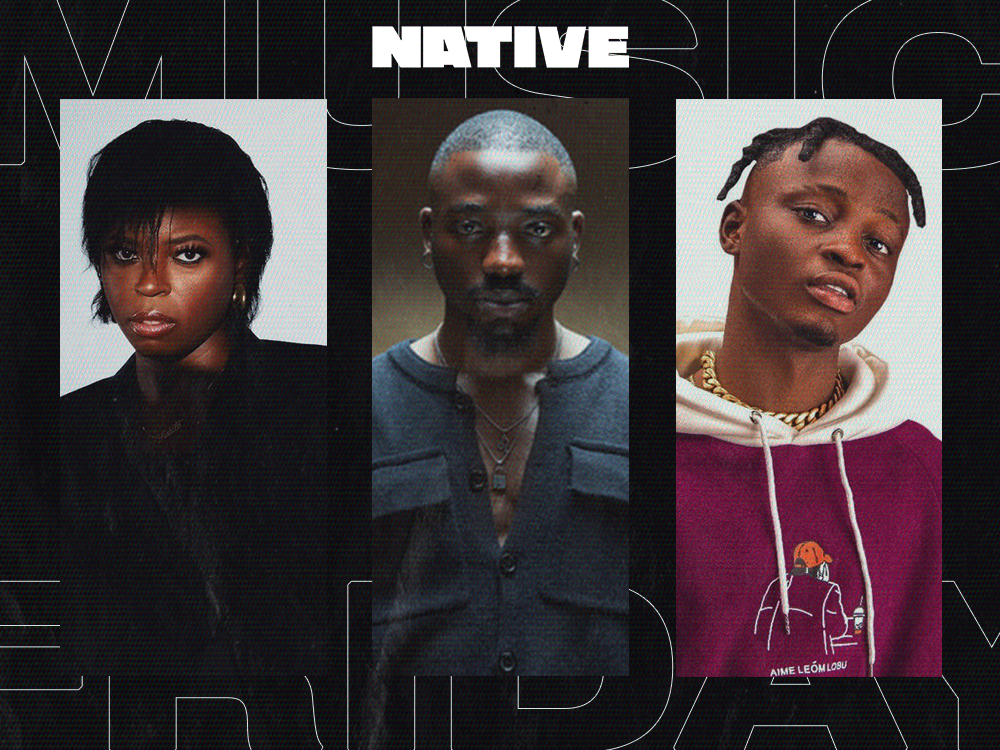
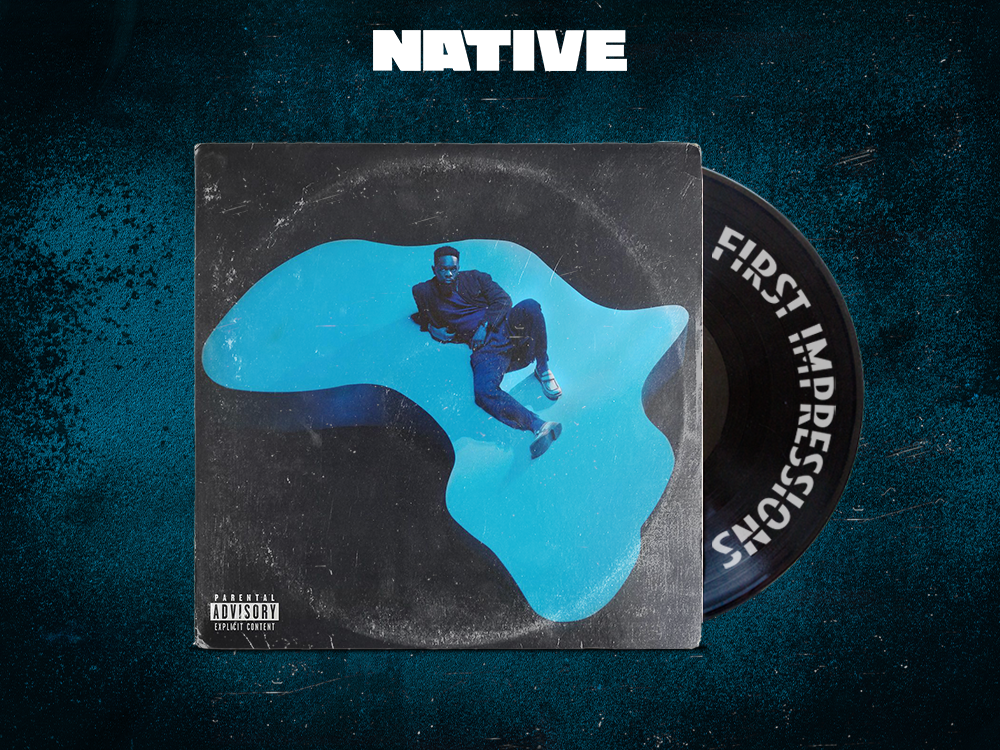
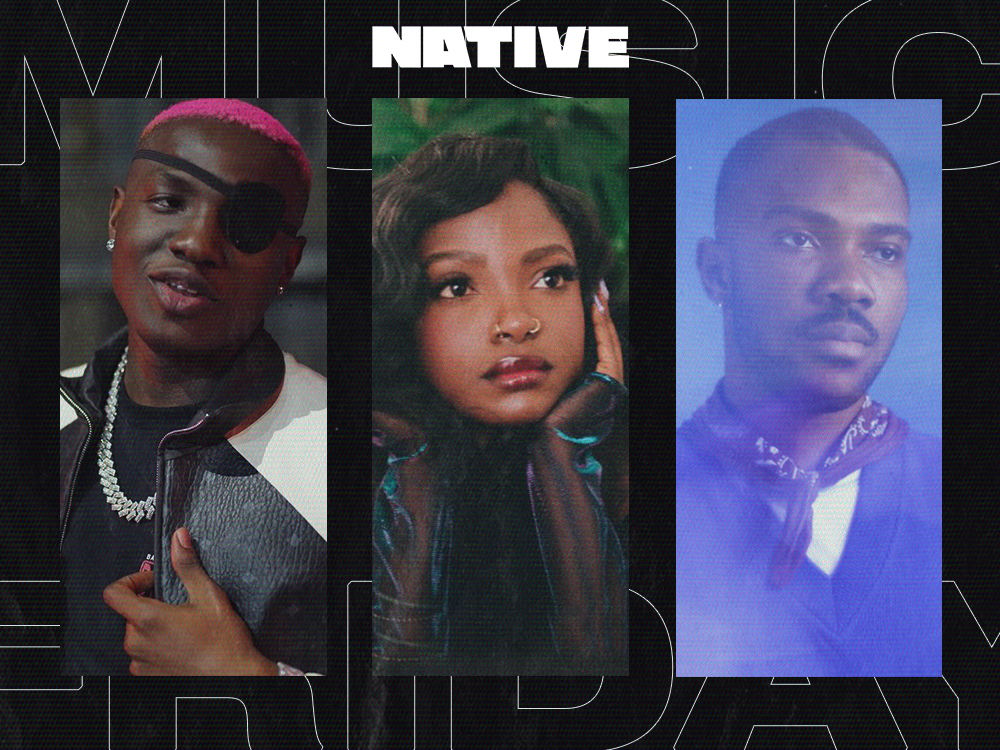
New Music Friday: New Projects from Prince Kaybee, Asake, CKay & more

In a singles-dominated market, putting out projects feels like an act of faith. Faith in the attention span of the contemporary human mind, but also in the expansive vision of projects, the linkage of different parts to create an immersive experience. As such, projects are highly celebrated by The NATIVE and that’s what New Music Friday embodies. Being the prime date for new music releases across the Afropop soundscape, it’s only right we launch you into a befitting weekend, carried on the distinct, complex thrills of the albums and EPs that’s been put out. On this week’s New Music Friday, we have collated projects from around the continent, each boasting sounds that are bound to keep you sonically alert.

PRINCE KAYBEE – ‘MUSIC THEORY’

Afro-house over the years has achieved outstanding feats as the uniquely ethereal sounds rock the airwaves of mainstream audiences across the globe. A strong flag bearer and returning explore of this genre is South African DJ-Producer, Prince Kaybee. His recent efforts sum up in an instrumental-led 12-track album dubbed ‘Music Theory.’ Similar to his 2022 show stopper, ‘Gemini,’ the recently released project showcases Kaybee’s rich ear for unique sounds as he masterfully crafts a layered body of work filled with mind-blowing synths and vocal features from across the continent.

ASAKE – ‘WORK OF ART’

Asake’s run has been nothing short of awe-inspiring. After an outstanding breakout run, Asake doubles down on his efforts with the release of his sophomore album less than a year later. Work of Art’ sees the Lagos-born singer more self-assured and affirmed, accompanied by skilled penmanship displayed in a seamless balance of Yoruba, Pidgin and English. Magicsticks also reiterates his noteworthy production and mastery of Asake’s lush Neo-Fuji and Amapiano sound, scoring 11/14 of the credits on the project. From the solemn intro “Olorun” to the Blaisebeats’ produced “I believe,” Asake -more than anything- is telling us just how grateful he is to do what he does.

CKAY – ‘SAD ROMANCE (DELUXE)’

It’s the season of deluxe and CKay is surely not missing out. Since his crossover to international audiences with “Love Nwantiti” and all its remixes, the self-proclaimed emo prince has captured the hearts of many with his toxic love stories and mellifluous vocals. He multiplies his efforts with the release of ‘Sad Romance (Deluxe).’ The new and improved version contains Blaqbonez-assisted “Hallelujah” where he expresses his appreciation for God and other new tracks re-fit across several corners of the album. From the Amapiano-infused “NNEKA” to the sensual mid-tempo track, “nwayi,” ‘Sad Romance (Deluxe)’ offers more love-themed tracks guaranteed to have you swooning.

OMAH LAY – ‘BOY ALONE (DELUXE)’

Over the past few weeks, Omah Lay has been crowned the front runner of the term Afro-depression for a number of reasons. Through his admirable run, he has been able to perfectly articulate feelings of uncertainty and sadness cognisant with many people in the most heart-warming and engaging way. His expansive catalogue, tracing back to ‘Bad Influence‘ and his most recent release ‘Boy Alone (Deluxe)’   are proof of this. Boy Alone (Deluxe)’ generously offers 7 new tracks featuring Latin-American like Ozuna on “Soso” and more stellar solo performances.

CHMBA – ‘OKONGOLA CAUCUS’

Malawian DJ-Producer Chmba delivers a clutch performance across 5-tracks including the nIGEL-assisted “Okongola.” With barely 15 minutes to make an impression, Chmba’s debut serves makes an mentionably dazzling impression with the offering a mid-tempo to upbeat tracks laced with hypnotic electronic embellishments. ‘Okongola Caucus’ serves a unique composition of several Pan-African influences with soulful and magnetic vocals communicative the EP’s message.

SEAN TIZZLE – ‘DUES’

The last time we saw a well rounded album effort from Sean Tizzle was 2018. Since then, the Nigerian pioneer has been in and out of the scene with singles scattered across the last five years. Now, he delivers a mix of upbeat, groovy tunes to praise-led hits in his 12 track album ‘Dues.’ The surprise release dabbles smoothly between Yoruba and English sung tracks with fresh, soulful touches.

DARKUA – ‘U’VE BEEN HERE B4’

On her debut extended play ‘U’ve Been Here B4,’ Darkua offers 4 tracks rich with soulful vocals and melodious instrumentals on relatable stories of love and heartbreak. She explores feelings of uncertainty and the road to self discovery while unapologetically stating her feelings for her love interest.


ICYMI: JOSHUA BARAKA, UGOCCIE & MORE BEST NEW ARTISTS FROM MAY 2023

Featured Image Credits/The NATIVE

Exploring “Ojapiano” & The Evolution of Nigeria’s Most Spiritual Flute

In the past two years, no genre has impacted Nigerian Pop as much as Amapiano. Extending the decades-long relationship between South Africa and the West African country, this time around, collaborations aren’t the sole catalyst, rather Nigerians are creating the music themselves. The unique flavours that have cemented themselves in our sonic tapestry was blended into that rich world of log drums, often to masterful effect.

Week after week, Amapiano’s strengthens its grasp on artists and consequently the music we hear. For a genre that’s soundtracked the motions of unbridled joy and poured out skin-filled dance floors and other communal spaces, it was a paradox of popular expectations when people began demanding more. We grooved to the better Amapiano songs, but with each whine, it seemed we craved something new.

Nigerian Pop is enjoying its most novel moment in a while. Pushing sonic boundaries is expected of certain artists, but there’s no limitation across the current contemporary soundscape. Even non-singing talents like hype men and producers contribute in no small way to the litany of music-driven public moments we share. Right now, the biggest and fastest-growing song in the country was created by an artist far removed from his prime, whose contributions to early 2010’s Nigerian pop is rather understated, and his consistent punches at the today’s scene has gone largely unnoticed.

“Ojapiano,” which was released by KCee, is that song. First gaining traction on TikTok, the sound has been used by over 30,000 users and has penetrated several facets of popular culture. From “Buga” to “Calm Down”, the biggest songs have shown a penchant for purposeful minimalism, paring down excess elements in favour of the song’s unique tune or progression. The KCee song has that flair for measurement, thanks to its producer Jaysynths. Rolling log drums are the dominant feature, blended into the easy-going vocals of Kcee, while that flute—yes, the Oja—bends from the corners of the much busier percussions, exuding grace and muscularity in its movement. 

The track seems inescapable right now. It’s cool enough for a night with corporate executives at Victoria Island, gritty enough to elicit whines at the back corner of mainland hotels, clean enough for a toddler’s birthday party. DJs love it, Gen-Zers and millennials love it, casual listeners of music, too. Undoubtedly one of the biggest success stories of the year and primed to become one of the most transcendental songs as well, it continues a rich form of culturally-impactful records KCee has scored in recent years.

Two years ago, “Cultural Praise” attained similar levels of ubiquity. Timing its release to coincide with the ‘ember’ months—starting from September to the last day of December—the effusive praise contained in its charged rhythms appealed to a wide range of Nigerians. A national myth is the lurking danger of these months, their doses of pleasure always harbouring the risk of pain. Death, loss, tribulations; no one wants these, and so we give thanks.

Understanding the Nigerian psyche on this level has long benefited KCee. “Limpopo,” after all, had that bemusing but implicitly revealing chorus, carried on the gesture of hand movements which became its dance. The police-civilian dynamic was explored on “Pull Over,” featuring Wizkid whose youngster edge provided further gravitas for the record. On “Cultural Praise,” the expertise of the Ogene percussive tradition was sought after by KCee, leading him to collaborate with the Okwesili Eze Group. Even with the far-ranging motivations behind the recording, at its core what was being presented was a groovy song,  a gyration medley that passed messages of positivity. 

On “Ojapiano,” the intended demography is different. Rather than east-side travellers and elderly folks, this was meant for those who spend their Friday nights outside and don’t necessarily bother about Sunday morning. The choice of Amapiano as a sonic base was peculiarly striking because of its aforementioned standing in these parts. It’s the soundtrack of many urban societies across Nigeria, thus wielding that immediate appeal of the familiar. 

Where the song strikes sonic gold is in its Oja playing. From clips available on social media, the mastermind behind the flute in question is a young Nigerian man. In one such video KCee and the Oja player OJazzy Igbonile—who’s clad in animal skin wear—are luxuriating in each other’s presence, obviously heated by the steam of music in the room. Stretching the cultural palette from the incursions on ‘Cultural Praise Vol.1’, the resultant project from the earlier mentioned record of the same name, KCee entrenches Igbo musicality—and some would say spirituality, but more on that later—into the tapestry of modern Nigerian pop music. 

The Oja is an ancient instrument. Its origin is in Igbo land, which is officially referred to as southeastern Nigeria. Of all the regions, this is the most forested, surrounded by thick forests and dense, lush vegetation. With access to this natural resource, the Igbo people have always been fine woodworkers. Craftsmen have evolved from Awka to Enugu, creators of masquerades and repositories of the gods’ powers, ornately designed stools and musical instruments of the highest caliber. 

Among instruments such as the Egwe, Igba, and Udu, all of which are percussive tools, the Oja stands tall. Pre-colonial societies utilised its distinct harmony in many social occassions, mostly as a means to call forth the unique spirit of its listener. For those who’ve attained great reputations, the Oja can be used to sing their praises. As someone who lives in the East, I have been opportuned to hear the instrument played live, often to soft strums of accompanying music from any of the aforementioned percussions. 

Some of its most mesmerising renditions I’ve witnessed were by Gerald Eze, who is a musicologist and Ogbuoja. He wields the instrument with grace and dignity, never showing off or merely seeking appraisal. Rather, it’s a teachable experience whenever he plays, as he usually follows up with his fine oratory skills to tell the history and uniqueness of the flute. Listening to him one cool evening in Awka, I was gradually transported to a place of pristine wisdom, and the weight of experiences which seemed from centuries earlier flowed within me. I grasped for the familiar, but the more he played, the immediate world lost its meaning on me, and so I was contemplative for a long time after the last note. 

Eze, who’s the subject of a wonderful essay on Afrocritik, is an embodiment of the ageless wisdom retained in sounds. He places the genealogy of the Oja in like importance with the saintly acclaim of classical music, perhaps even more considering how important flutes have been to Sub-Saharan African societies. According to his conversation with Chiedoziem Chukwudera, the Oja’s distinct quality is its very high sense of individuality. No two players can play the same time, and “no two people will ever play the Oja in the same way. Each sound emitted will be unique in itself”.

Considering how quickly “Ojapiano” has blown up, it’s possible to conclude that this experience is novel to mainstream audiences. Moving at the pace it does, the center of Nigerian music is pulled towards several sounds at once, and with worldly ambitions of conquering, the external becomes prime currency. We do not look inwards enough. As they should, the southeastern music scene has championed the utilisation of this sound, even way longer than most people know. 

One of my favourite threads on Twitter right now explores the timeline of the Oja, sketching its evolution from traditional-leaning musicians like Queen Theresa Onuorah and Ejike Mbaka to modern purveyors such as CKay (“Anya Mmiri”) and Jeriq (“Cartel Business”). The diverse emotional scales between the last two records are proof of the Oja’s liquid form, able to serenade as much as it incites. Zoro and Flavour’s “Ogene” and Kolaboy’s “Kolapiano” (which was an early fusion of amapiano and the Oja) have also adapted the instrument poignantly, repping the colourful Igbo culture while furthering the pockets of their artistry. 

The biggest indicator of the Oja’s appeal right now is the love it’s getting, not only from listeners but musicians as well. ODUMODUBLVCK who’s undoubtedly one of the hottest artists in the country has shared a video of him layering his richly emotive vocals over the production, extending the genius input he had on Zlatan’s “Oganigwe,” another song which utilised the Oja. A master of the quaint and local, the rapper emerges a perfect fit for a potential remix, while the Igbo leanings in his overall presentation just signifies the richness and freshness of that particular culture. 

As The Cavemen have most successfully displayed in recent times, the culture’s history of performance still offers a lot to the disciplined musician, whether it’s through the utilisation of an ancient instrument, interpolating a classic song, or plucking church hymns and rinsing them in the rivers of contemporary sound. 

Yet this imminent entry into deeper aspects of culture raises fresh concerns. Compensation is the most pertinent, how much is owed to the custodians of these folk traditions, and to whom exactly payment is made to. KCee has faced an infringement charge from prominent Catholic composer Jude Nnam, and it’s revealing how much happens between taking societal songs and making them modern. People have similarly commented on the agreed compensation between the artist and the player OJazzy. Whethere he was paid as a session instrumentalist or as a producer and songwriter on the record (which he is) becomes an argument of moral proportions, but that’s exactly why the business of music should ideally not come secondplace to the creation, especially not during these periods of long-reaching contractual consequences which might make or break a musician. 

In all of this, the viability of culture restores itself to the zenith of popular conversation, and that’s a win. The proximity to global success shouldn’t obscure the fact that a thriving industry doesn’t consume and regurgitate everything, rather it listens and moves with the trueness of personality. As more societal concerns have revealed, the destiny of Nigeria rests in the potency of its individual parts, and where one is doing something right, it shouldn’t be hard to give praise and learn respectfully, if one so desires. 

For too long the southeast has been excluded from discussions in mainstream media. Lauded for business and economy, and less for its culture and philosophy, there’s a need for more investors in the creative landscape but also more focused efforts from within. As someone who cracked the scope many years ago, it’s fitting that KCee is again at the forefront of this conversation. It goes beyond the Oja; this is the heartbeat of life at its finest.


ICYMI: THE GRAMMYS ADDS NEW AWARD CATEGORY FOR AFRICAN MUSIC

4 Takeaways From Omah Lay’s ‘Boy Alone (Deluxe)’

Destiny can be delayed, but it is never denied. During the press runs in the aftermath of his breakout 2020 year, Omah Lay expressed the reasons for going into music. Apparently he’d worked as a producer and songwriter in his native Port Harcourt, but his better-known collaborators were adamant of giving him credit. Spurred by the discomfort of ill-paid anonymity, he struck out on his own, releasing a string of emo-centric songs that quickly scored him an underground fan base and brought him to the transcendental moments of “Bad Influence” and “You” at the onset of the world-shifting pandemic. 

Since then, Omah Lay has been one of Afropop’s brightest lights. An original with consistent flair, he combines a generation’s penchant for self-awareness with unique sonic choices created by himself and other talented producers such as Semzi and Tempoe, among others. Last year’s ‘Boy Alone’ was most enduring; maturing into his hedonist and often nihilistic themes, the album’s minimalism allowed his emotive range to emerge beautifully, leading to, not just Album of the Year nods, but well-wrought opinions on why it is one of the most memorable debut LPs we’ve ever listened to. 


View this post on Instagram


A post shared by Omah Lay (@omah_lay)

Arriving yesterday evening, the deluxe version of ‘Boy Alone’ is here. Omah Lay continues in the path of the forlorn, placing existential inquiries side by side with exquisite grooves. With five new songs, it’s a renewal of the intimate and poignant songwriting Omah Lay established on its original, leading to a number of online conversations that’s trailed its release. 

Here are some takeaways from the ‘Boy Alone’ deluxe. 

THE CONSIDERATIONS OF MENTAL HEALTH 

Omah Lay has often been described as the pioneer of “Afro Depression,” a colloquial online expression that highlights the major theme of mental health in his work. In interviews, he wearily recounts tales from his personal life, the death of his father (who ‘Boy Alone’ is named after) and how he basically had to grow up much earlier than his mates. His music carries that sensibility of feeling out of touch with the world. 

The five new songs on this deluxe all have smatterings of that broodiness. “reason” features the familiar pair of danceable progressions and introspection, as Omah Lay asks, “What are we doing, my dear?” with a philosopher’s simplicity, while crafting its hook and remaining parts with that evocative lightness in his pen. “Do you even listen to yourself, you’re living inside your head,” he sings with emphatic wisdom on “come closer”. Even when he broaches romantic terrain, as on “it’s yours” and “joanna”, there’s a lurking sense of danger, as the manifestation of past traumas limit his ability to be vulnerable to love. 

HE STILL HAS A PRODUCER’S EAR FOR SOUND 

Being a superstar, Omah Lay doesn’t produce as much as he used to, but he still has a producer’s ear for sound. ‘Boy Alone’ was demonstrative of that quality as he co-produced a number of the records, essentially contributing to the famed originality of his sound. In his deluxe, he continues in pristine form. 

Omah Lay wields his voice like an instrument. This instrument most resembles the rhythm of a lightly-hit percussion, flowing with the intricacies of Port Harcourt lingua. Even when rinsed in R&B qualities, the melodies on records such as “come closer” and “it’s yours” have a peculiarly Nigerian flavour. Heightened by his unique word choices and phrases, Omah Lay makes the producer’s work seamless. Perhaps some people would find issues with his enunciation; as on “reason,” it’s sometimes hard to hear what Omah’s singing about, but I believe it’s a stylistic choice that makes the listener return, hoping to unlock the words. As they do, the brilliance of his melodic writing unfurls more beautifully. 

THE PECULIAR ARRANGEMENT OF THE DELUXE 

Deluxe albums are still a relatively new concept to afropop audiences. In recent memory, Wizkid’s ‘Made in Lagos’ was the first home-minted album which had one, but there’s been an explosion in recent times. Rema and Ayra Starr have had really interesting arrangements for their deluxe albums; mixing the new records in-between the old tracks, they set up the albums interestingly. Rema even described his as an ‘Ultra’ version, setting up the album to be received in fresh light. 

The ‘Boy Alone’ deluxe shines with similar novelty. All the new songs are placed at the beginning, while the former album arrangement follows. The only change comes from “soso,” which is bumped up from its late album cut position. Following “joanna,” it’s a curious choice that’s most likely influenced by the similarity in the songs’ tempo, while the thematic union emerges from the shared bemoaning of a love affair. It remains to be seen if the arrangement would work successfully in terms of streams, but right now, it demonstrates that Omah Lay’s attention is to the music and the music alone. 

OMAH LAY’S UNDERSTATED COMMERCIAL VISION 

Afropop exists at a very high level of global importance right now. The Grammys after all announced a quite divisive ‘African music’ category some days ago, meaning that more than just racking up numbers, there’s a new lane for critical appreciation for musicians orbiting the continent. In Nigeria, the race for global hit songs have spawned interesting sonic choices and collaborations, but Omah Lay is running his own race.

His commercial vision is understated because it emerges as second place to the music. Regardless of his immense reach, he’s only featured artists with genuine appreciation for the songs they’re appearing on, more often than not contributing greatly to its overall appeal beyond their name. On “attention”, the Canadian superstar Justin Beiber was indicative of this; on here, it’s Ozuna and Aitch on “soso” and “imagine” respectively. While the former has been released and parsed through critical ears already, the United Kingdom rapper delivers a stunning verse on the latter. Familiar to Nigerian audiences through his collaborations and the “Come And Go” record which had Omah-esque depression-couched-in-hedonism themes, it’s a purposeful alliance of vision. Thus the record sounds like an extension in the narrative tapestry of Omah Lay, rather than a stand-alone. For the purposes of this deluxe, it’s an artistic handling of Omah Lay’s commercial intent. 


ICYMI: CKAY, OMAH LAY & THE RISE OF EMO-INFLUENCED NIGERIAN POP

Asake’s ‘Work of Art’ Primed To Reveal A New Global Vision

“Inspired by Basquait, my chariot’s on fire/ Everybody took shots, hit my body up, I’m tired” 

Jay-Z, “Grammy Family Freestyle.”

Asake is not tired. If the signs of extending 2022’s run weren’t immediately visible, he has slowly brought his new artistic vision into focus. This renewed practice of his craft has been the highlight of his new year, following into every release as he carefully constructed the blocks that are meant to make ‘Work of Art’, the artist’s sophomore album. 

For obvious reasons, ‘anticipated’ won’t suffice in the description of the forthcoming project. The modern Pop industry is calculated and controlled; with labels eyeing massive coverage and trans-continental audiences, numbers have become a major factor in the release of new music. Rather than knock on the same door without much success, artists and their teams are finding it easier to barge into the more accessible rooms, sometimes abandoning the traditions that shaped their entry into the scene. 


View this post on Instagram


A post shared by Spotify (@spotify)

Asake is operating on a different playing field. Knowing the levels he has set with his release strategy, ‘Work of Art’ is an extension of those motivations. Also, for precisely those reasons, releasing two albums in the space of a year isn’t something most listeners would have banked on. The element of surprise can be a potent force in the execution of art, after all. Being Asake, the musician holds up this new presentation with the acclaim of his Mr. Money entrance year. Even with the unexpected nature of this release, the yet-familiar excitement of that run gives listeners a lot to expect. 

At this point last year, Asake was burning through the industry with the penetrating force of a meteor. His signing to YBNL was announced barely five months earlier, but the artist presented himself in a manner so assured, it seemed he’d always been part of the mainstream. 

In truth, Asake was a part of the mainstream, but operated in considerably smaller pockets than YBNL’s operations would later allow. A performer at his prestigious alma mater Obafemi Awolowo University (OAU), he’d gone into the music industry with enough artistic confidence and conviction in his hustle. When he sang “I just blow, but omo I know my set” on “Peace Be Unto You (PBUY)”, it was telling that the lyric didn’t garner the sort of criticism that personally aware songwriting gets around these parts. He belonged truly to an earlier period, even though his steady rise to the top kept him tinkering with deliberate designs on how to present the core elements of his sound. 

For the careful ear, those elements were everywhere in his pre-YBNL music. 2019’s “Kanipe” had his trademark aspirational messaging layered over a mellow acoustic set. Released that same year, “African Something” was an exciting immersion into the artist’s groovy word-bending. “Lady” and “Body” were sonically distinct but unified by Asake’s tender utilisation of Yoruba, especially when singing for the opposite gender. It’s a crucial distinction: addressing records to women, and not pretending to understand their unique experiences, as some other male artists have done. This renders Asake a masculinity that is at once sensitive and sensual, and he’s made good of those qualities ever since. 

The song which changed everything was released in 2020, at the latter stages of the pandemic. Beyond supplying his soon-to-be sobriquet, “Mr Money” also marked the start of his creative relationship with Magicsticks. Stuffing ‘piano-evoking log drums and party-starting synths, the sonic texture harkened to Asake’s established styles while putting him into the vivid lane of Street Hop, with vocoder-inflected adlibs that wouldn’t sound out of place on a Zlatan song. It’s no surprise that alongside former DMW star Peruzzi, the ‘Omo Ologo’ rapper was featured on the 2021 remix of that record. 

When Olamide announced Asake as YBNL’s latest signing, the alignment was visible. Himself a progenitor of narrative-sustained street music, the artistic direction of Asake was a path he knew intimately. Asake might not have taken immediate sonic cues from his boss but the confidence of having such an iconic figure beside him was palpable. Where the Mr Money phrase seemed a hopeful grasp at future possibilities, the act of putting pen to paper with Olamide–of all people–showed that he indeed he’d secured solid industry backing to count on. 

Instant classic: those are two words, but Asake gives them new meaning with ‘Mr. Money With The Vibe’. A compact set of twelve songs, the album is unarguably one of the greatest Afropop debuts ever.  Songs like “Terminator” and “Organise” have an unforgettable visual trail, masterfully executed by T. G. Omori and supplying an essential roadman aesthetic to the presentation of Asake. 

Beyond these near-lying motivations, the musical quality of ‘MMWTV’ is the reason it’s still being discussed a year on. Rinsing the freewheeling vocal techniques of Fuji, there’s a pristine energy permeating the album’s core. Deliberately styling the seams as much as he improvises, seeming to come up with phrases on the spot, the appeal emerges from its range of angled shots. 

‘MMWTV’ was created to imprint the feet of Asake into Nigerian music lineage. Just like his label boss, the artist knows the boundless reach of culture, and through that relentless prism shapes the figure of his own eternity. You can hear it: “Ototo” evokes the flowing white gowns of celestial churches;  “Dull” rises with the vigour of an Islamic call-to-prayer; and alongside Burna Boy, the grittiness of urban Nigeria was captured, in all presenting Asake as an unbiased chronicler of modern society. 

The vision behind ‘Work of Art’ is bound to be different. The singles “Yoga” and “2:30” have showcased new and familiar techniques, especially the former which samples the Mauritanian legend Michel Legris. A breezy cosmopolitan vibe follows the latter, even amidst the familiarity of log drums. There’s been a natural evolution elsewhere. In the past year, Asake has transformed from nationwide superstar to global celebrity. The robustness of the business choices Asake has made also coincides with the agreement of his home label, which signed under a joint venture deal with EMPIRE. 

A few months ago, the trio of Asake, Olamide and Fireboy DML were seated courtside at the NBA game between the Golden State Warriors and the Minnesota Timberwolves, an appearance that was eagerly reported by stateside sport dailies. Naming his album ‘Work of Art’ and further having a song titled “Basquiat” after the great neo-expressionist painter, he’s tapping into the finer aspects of the Western culture, building on similar interests as musicians such as Jay-Z and Kanye West, a certain brand appeal obtained from close relationship with the arts. 

Similarly, Asake’s sold-out shows in London have left a lasting impression on his audiences in this region. His commanding stage presence, captivating performances, and effortless synergy with his band and audience, all account for his remarkable ability to sell out all his shows within minutes, such as those at the famous O2 Academy Brixton. Asake has however carved a distinct space among other African and Nigerian artists that have gained popularity in the West mainly due to his refusal to completely dilute his music to conform to Western palettes, rather upholding his uniqueness as a prism to establish genuine connection with the diaspora. 

Asake’s musical impact has been substantial. With each release, he has consistently grabbed the attention of audiences – especially in the UK where steady flows of new music aligns with a genuine appreciation for artists’ consistency. Much of the anticipation for his upcoming album ‘Work of Art’ stems from the admiration his catalogue has garnered. No matter where he delves with the sound, it is certain that eager ears will be wide open, waiting to receive and listen. The anticipation surrounding his upcoming album is a testament to his talent and the profound impact he has made in a relatively short time. 

Friday would soon be here and Asake would again bare his skills. If the previous is anything to go by, ‘Work of Art’, which is entirely solo except for an Olamide feature—would demonstrate his ability to dig deeper into his reservoir of sounds. The gargantuan influence of Magicsticks on his sound would also come under consideration, especially if the producer doesn’t handle a significant part of the project. When all’s said and done however, Asake is one of the most unpredictable artists on the scene, and so whatever Friday holds the album’s certainly going to demand the attention it gets. 

Additional reporting by Alla Gubara. 

Interview: Kojo Funds Is Building His Legacy

When Kojo Funds was due for college, he moved to Ghana. His mother hails from the West African country and bringing up a child in faraway London, it made sense to encourage him to embrace his roots. “Due to the area I grew up in, you could get easily influenced, peer pressure stuff like that,” he told The NATIVE one recent weekday. “My family didn’t really like that, because I was going in a different way. They said I need to see [my] background, he needs to really see where the fam is coming from, and the struggle that they went through.” 

He ended up staying there three years, extending the initial plan of one year. The flavours of the local language appealed to him, the people warmed up to his presence, and in all, experiencing that first-hand connection with his roots was “a good learning experience,” he shares. Kojo’s musical background can best be described as a potpourri of sounds, although Reggae and Dancehall formed a dominant part of that diet. In Ghana, he heard a record from R2Bees on the TV which opened him to the richness of African music. “It was African but had some little twist to it,” he says. “It was different.” 


View this post on Instagram


A post shared by ✝️ EL ROI (@kojofunds)

Born to a Dominican father who’s been absent for much of his life, the very existence of Kojo Funds demonstrates cultural merging. However, music wasn’t in the picture for him until his early 20s. This was also the period of youthful zest, an incisive exposure into the lifestyle his family had wanted to steer him off. Coincidentally, he got into music via one of those social networks. “In 2014, one of my friends was having a birthday party,” he narrates, “And we do this thing where somebody would just play beats off their car speakers, so they never heard me on a freestyle before. When I did it, everybody was surprised.” 

The next day, he was asked to come to a studio. He pulled up, recorded a song, and the feedback was so good he put the finished version on SoundCloud. The song captured the era so well; they were regular fans bumping it on their mobile devices and cars, DJs were incorporating it into their mixes, and event organisers wanted to book him for events—just one song into his career. “My 9ine” was created with little technical expertise, but for an original like Kojo, the instinct for sound was good enough. 

He followed up with “Dun Talkin’”, the record that fully opened up his path in the UK music scene. Over a chill Dancehall beat, and with a delivery reminiscent of artists like Sean Paul, the song demonstrated Kojo Funds’ pioneering spirit. Before African inspired rap music became a thing, here was Kojo stitching variant inflections onto the thematic fabric of Hip-Hop. He continued in a prolific vein throughout that year. Typically over serene beats, Kojo Funds would oscillate between rapping and singing, his East Londoner personality spiced with overt sonic clues from around the Black diaspora. 

In 2017, Kojo was nominated for best newcomer at the prestigious MOBO awards. By then it was obvious that a blazing star had appeared at the constellation of British music. To his credit, Kojo Funds acknowledges the influence—if not stylistically, then characteristically—of some great UK rappers who were creating music before his entry in the scene. 

“Me coming from East London,” he says, “is like the birthplace of the genre called grime. So, we kinda grew up on that. Wiley being a godfather, he’s from the same, like, East London. And we have people like Kano, Dizzie Rascal, Lethal Bizzle, so listening to them was like, ‘Okay, these are people the same colour as me, but they are doing something’. And I was very ambitious, you know?”

Inspiration can spur creativity in very potent ways. When Kojo Funds was still a teenager, he heard the 1998 hit song from Sean Paul, “Deport Them”. The record was fiery and poignant, and “it kinda resonated with me,” he says. Afterwards the melody and production couldn’t leave his head, and whenever he found himself alone he’d try to make up his own melodies. 

The UK scene today is replete with artists who likely heard a song from Kojo Funds the same way, too. Sped up through the global acclaim of African music through the years, much of the music emerging from the United Kingdom takes on distinct African flavours, especially those created by diasporans whose roots were West African. Kojo Funds belongs to the earliest generation of UK-born musicians who created grime music paired with afro sounds. And of them all, he most embodied the pursuit for musical fluidity which is most exemplified by him naming his sound afro swing, which is now the popularly accepted name for that kind of music.

Over the years, more artists have identified with the fusionist style, if not the tag. From NSG to One Acen, Ms Banks, Pa Salieu and Swarmz, there’s no shortage of sonic purveyors. By all means, Kojo Funds wasn’t the first to make this music; in the early 2010s, the likes of Fuse ODG, Mista Silva and Timbo were adapting African influences into their music. Afterwards, there was J Hus, most prominently. However, none of the tags embraced by these musicians enunciated the merits of this fusion as poignantly as afro swing, which makes Kojo a pioneering act. 

“Because of Afro being the core, the drums,” he explains the choice, “The ‘swing’ was just implementing the different melodies—the R&B melodies, the Dancehall flow, as well as the sounds, the strings and stuff like that. So just the Afro swinging from different elements of genres. And also me being a popular fan of New Jack Swing; cos you know R&B came from New Jack Swing, the Bobby Browns and the guys. I kind of implemented those melodies, as well. It just made sense: Afro Swing.” 

Talking about Afro, there’s also been notable appearances from Kojo Funds alongside African musicians. He’s constantly burnished his musical relationship with the motherland; it’s unfortunate that his famous lyric “Are you dun talkin’?” courted a brief controversy with Davido using it on the summer smash “Fall”, but that was sorted out while the rest of Kojo Funds’ Afro incursions have been seamless, especially the music. 

He fitted like second skin alongside Wizkid on “I Like”, where his inflections drawled in irresistible seduction, using the agile lyricism of Dancehall to croon about a lady’s positive qualities. The Director LX visuals was a mainstay on TV throughout the later months of 2019, its classy montages amplified by the understated mastery of the music. Kojo still had “What Do You See” that year with Spinall, which is unarguably one of his most popular songs yet. If the Wiz record was championed on-air, this was a celebratory affair that was gritty enough for street heroes, and so became a soundtrack for joy that had gone through struggle, which embodies the crux of Kojo’s music. On “M.O.O.D” he coasted the serene splendour of signature Juls, again swapping bars for tenderness. 

More than a rapper, Kojo Funds consistently demonstrates he’s an artist with the quality of water, easily shifting to the ebbs of sounds which move him. That has kept him at the forefront of music across the several music scenes he inhabits, an OG from London to Lagos, Kingston to New York. And yet like any true artist, there’s an innate urge for Kojo to keep creating, to keep sharpening the strength of his perspective through the one thing he’s had all the days of his life. 

Earlier this month, “FARDA” was released. The record bares Kojo Funds at his most brashful, reminding naysayers of his legacy. It’s telling that the visual begins with a clip from a packed-out event, the crowd yelling back his name. “I be the one that was born to be great, destined to rise to the top of the chain,” he sings in his trademark inflection in the opening lyric, driving the song forward assuredly and verve that still holds a groove. 

In 2022, Kojo Funds released only one song, “Do You Mind”. It was unusual given his prolific standards, and for casual observers the larger conversation was how the recent years have witnessed an influx of young UK rappers, releasing music to frightening pace and embodying the roadman vigour beyond aesthetic. “FARDA” proves Kojo Funds’ willingness to continue to belong in this discussion, with peculiar quality nonetheless. 

He plans to follow this first single of the year with other singles, “just to boil up the water,” he says. There’s a good chance he might release an EP, whose songs would be entirely different from the singles he’d put out. It would be his first in five years, after the effervescent ‘Golden Boy’ album. All this clarifies one thing: there’s a lot in the vault for Kojo Funds. As the afternoon sun slowly recedes, and evening approaches, the tree visible through his car window takes a darker shade. He’s relaxed and assured.

“All I just wanna do is put music out,” he tells me now. “I like being creative. This song here is just to show that I’m doing what I’m doing. It’s me. It’s Kojo. Regardless of any hardship or any situation, I just love making music. I haven’t been away from music; I’ve always been in the studio”. 


ICYMI: SUTÉ IWAR IS ON A JOURNEY OF EXPLORATION

RANKED: The Top 5 Songs From Amaarae’s ‘Fountain Baby’

Amaarae is an iconoclast among her peers, and this is gleaned by her consideration to the music. She swerves past the conventions of just singing, rather parsing her songs through a wholesome, ever-swirling prism of sounds and artistic traditions. That was obvious across the sprawling set of her 2020 debut album, ‘The Angel You Don’t Know’, hailed as one of the projects bound to define the new decade.

Last Friday, Amaarae pulled the final stops of the rollout of ‘Fountain Baby’, releasing the sophomore to great expectations. Since the past year she’s made the title of the coming album known, releasing singles that exquisitely captured the new sonic direction she was heading towards. Across the 14-track album, Amaarae skates as much as she brawls, offering a roller-coasting view into the wide spectrum of emotions that emerges from the search for oneself. Being a source of constant inspiration for her fan base, Amaarae is gracious and occasionally high-wired in her writing, lending a vivacious edge to a number of the records. 

In this NATIVE Mag roundtable, members of our editorial team have voted for their five favourite songs off ‘Fountain Baby’, and we’ve ranked the five best songs according to the number of votes they got. Ideally, these records would demonstrate to listeners the sonic and thematic range in the project which, we dare say, is, or would be, some of the best music you’ll hear all year. Here goes.


View this post on Instagram


A post shared by Instagram (@instagram)

5. “COUNTERFEIT”

On her omnivorous sophomore album, ‘Fountain Baby,’ Amaarae sets out to flex her skills as a solo performer. Given her penchant for stretching the boundaries of sounds and borrowing from the scenes and cultures she typically rubs shoulders with as a global star, standout track “Counterfeit” is a fine showcase of her broad sonic palette. There is an innate playfulness to Amaarae’s wispy vocals on this track as she chants lyrics such as “me and my bitch got matching titties,” across a live instrumentation cover of Clipse’s “Wamp Wamp (What It Do),” and Bohemian rock rhythms that earmark her as one of the most compelling artists of the now. Amaarae can do no wrong.

Tami Makinde

4. “ANGELS IN TIBET”

Just one track into the album is the enchanting “Angels in Tibet,” a heady punk-rock track that sets the tone for the ‘Fountain Baby’ soundscape. Amaarae seamlessly rides the wave of the song’s eclectic production punctured only by her shriek, soulful vocals. Clocking in below the 3-minute mark, the Ghananian-American troubadour showcases her dexterity over chords tinged with East Asian sounds while maintaining her signature airy vocals. “Pay homage, in the club, to the god, take it off,” she chants on the hook, with an infectious cadence and witty one-liners that radiate a mischievous energy.

Nwanneamaka Igwe

3. “PRINCESS GOING DIGITAL”

Explosiveness is an innate trait in Amaarae. She’s always riding off the banging movement of her production or utilising her vocals to create a charged atmosphere. On “Princess Going Digital,” she does both in perfect synth. Placed early in the album, it’s a crucial enabler which shifts its movements, instantly making two moves by taking the record beyond the conventions of Afropop while sounding familiar enough not to alienate the listener. The background male vocalist adds an early 2000s Brit pop allure, but the weaving of Amaarae’s inflections belong in Michael Jackson territory, giving a multi-layered feel to the song. Beyond all the sonic pyrotechnics, the song basically accounts for the soft life of Amaarae, establishing how cool she is while reserving enough introspection to demand better from those around her. It’s an absolute banger whose true depth is revealed with every subsequent listen.

Emmanuel Esomnofu


2. “SOCIOPATHIC DANCE QUEEN”

Given the globe-trotting vision of ‘Fountain Baby’, it is only natural Amaarae would pull off something like this. America has long inspired her artistic incursions, from the syrupy rap flows of Atlanta to the glitzy takes on R&B. On “Sociopathic Dance Queen”, the robust movements of soft rock forms the sonic backdrop. Artists like Fleetwood Mac and Jaden, who created music in very different generations, have been pulled into the feel-good bounce of the sound. Rather than rely on this rich musical tradition, Amaarae side steps expectations, infusing her trademark edgy songwriting which lends unique appeal to the record. It sounds like something you’ve heard before but can’t really place where, and that sweet mystery envelops the listener until the last second. Sexiness is at the root of the record; the words “touch, touch/ don’t even think about it,” is repeated with lustrous invitation, but it’s not until grooving to the song that the listener gleans a deeper meaning, that perhaps the body here is a metaphor for life, and dance stands in for its effervescent manifestation.

Emmanuel

1. “COME HOME TO GOD”

“Listeners quickly learnt that in the songs of Amaarae, the woman is god,” NATIVE’s Emmanuel Esonmofu wrote a day to the release of ‘Fountain Baby’. It’s no coincidence that “Come Home To God,” the album’s closing track, is divinely self-reverential. “Alimony Ama, get it from her mama/She out with her shottas,” she brags over a glistening combination of guitar and strings. Her inimitable cool is as spellbinding as it’s ever been on wax, referring to herself as the ultimate place of solace for a partner that “love me like she love the Lord.” When the drums swing in midway through the second verse, the song starts to swell into the grand closer, fitting for an album marked by its maximalist lean. There are no proclamations too big for Amaarae as long as they channel her conviction, she’s God – she believes it and you might as well believe it, too.

Dennis Ade-Peter

Best New Music Special: Bloody Civilian fiercely guards her autonomy on ‘Anger Management’

Bloody Civilian evolved from rebellion. As the SoundCloud renaissance was firmly in its twilight at the end of the 2010s, discoverers became attuned to the heady writing and supple voice of the artist then known as Emosé. Her self-produced music was colourful but with a gothic hue attached to it, and she sang of freedom as a feeling she needed to attain. Just as the Emosé hype train was revving up with the 2020 release of “Goliath,” she unceremoniously packed it up. There were rumours, of societal constraints within the deeply conservative and misogynistic confines of Northern Nigeria, that her choice to pursue a creative career was an act of continuous blasphemy.

Naturally, a move down south made sense and it spurred the re-emergence of the artist now known as Bloody Civilian. That’s why her 2022 “debut” single, “How to Kill A Man,” doesn’t even remotely come across like the work of a rookie. In fact, the artistic singularity on display is incredible, it’s a prodigious mind expressing itself on clear terms. The instructions are remarkably vivid: “And if that man start to shout/Omo na to slap am oh/And take him to the backyard oh/And give him with the dagger oh.” It doesn’t matter whether she’s killed a man before or not, I believe her the same way you believe her because of the magnetic charisma in every line and the lustre in her voice.

On her new debut EP, ‘Anger Management’, there’s blood in Bloody Civilian’s mouth and it’s not from biting her tongue. Where her previous work couched some of her irreverence in biblical allegories, everything is out in the open and anyone who incurs her annoyance is fair game. The story isn’t linear but the narrative is unmissable: Freedom isn’t just something you manifest, sometimes you have to take it and guard it fiercely. In her taking and guarding, there’s impatience for “anybody wey cross my meter” and she’s willing to bite through flesh to reiterate her point.

The 3-song run that follows the second-placed debut single on ‘Anger Management’ is proof that, sometimes, adopting a no-nonsense attitude is important to self-determination. Fuck being politically correct—being punk is no gimmick here, there’s actual tongue lashing to go round. If you thought DETO BLACK had the ultimate aunty read in Nigerian music, “Family Meeting” would make you double back on that take. “Aunty, please go home/Even God rested on the 7th day,” she sings in utter disgust. Yes, Bloody Civilian agrees that she’s “the problem child,” but the she doesn’t want her motivations and life choices subject to the opinions to unwanted intruders.

As a pop song, the best part about “Family Meeting” is that it’s chockfull of quoteables, even the somewhat raunchy line telling a boyfriend off could be used as a caption. The rawness of her writing is how you can tell that Bloody Civilian is not playing the part, these lyrics are pulled from lived situations and she doesn’t have to sell it because she’s been through it. The authenticity adds to the allure, like when she tells some guy to “put that shit to rest” on the club-ready “Mad Apology,” her chagrin is effortless and the melodies stick in just one listen.

Released earlier this year, “I Don’t Like You” is staggeringly direct. It’s not so much an incise untangling of past, toxic friendship, as much as it is a messy gashing, with lyrics that bludgeon like a stick with spikes. Bloody Civilian revels in it. “It’s not like I hate you/It’s just that I don’t like you” is the kind of petty jibe that can cause physical heartache—sorry to Abdullahi and James. The object isn’t the “you,” it’s the “I,” and that’s where ‘Anger Management’ really wins. For every person she doesn’t fucking like, they’re just characters she expels on the path to definitive autonomy.

It’s incredibly heartening to hear a Nigerian woman express these thoughts and feelings, given that we live in a society where women are still subjected to casual abuses and intentional injustices. From pop stars like Ayra Starr and Teni to rap artists like Brazy and ytboutthataction, women practising and preaching irreverence is as mainstream as it’s ever been in Nigerian music. There’s even more space to fill and Bloody Civilian snaps at whatever boundaries of appropriate behaviour society asked of her when she performed under a different moniker.

Largely self-produced, ‘Anger Management’ filters musical influences through the artist’s ever-present gothic lens, resulting in a project that’s as glossy as it is dark. Opener “Escapism” starts off as an ambient house song with Bloody Civilian ruing her choice not to smoke “because my ancestors are watching.” You can hear it coming from a mile away but the log drum-inflected EDM drop is no less satisfactory. It’s a great tone-setter in the sense that the elements and sounds are familiar, but they function differently because of the artist’s vision and touch.

“How to Kill A Man” is actually a bashment song, but the centre is so bloodied that the instinctual move is to nod aggressively rather than imagine anyone giving or catching whines. “Family Meeting” is a psychedelic pop ballad until the occasional additions of drums on the hooks, with stick work that would impress Tony Allen. “Mad Apology” and “I Don’t Like You” are both influenced by the intoxicating bounce of Jersey Club, with the latter featuring sprinkles of gan-gan percussion.

‘Anger Management’ closes with “Come From,” where Bloody Civilian acknowledges vices and social constraints as obstacles, but not in the defeatist way. “Don’t have to find drugs/That’s the thing, drugs will find you,” she sings on the first verse over woodwinds and blown out bass, while referencing the raging insecurity woes in the north on the second verse. “I’m going to be sitting at the top shining so bright” goes the reminder on the hook. It’s a poised reflection that highlights the EP’s bracing sentiment: Anger against people and systems that aren’t positively enabling can be fuel to becoming your best self.

Anger gets a bad rep, and perhaps rightly so—it can be really destructive. In the hands of Bloody Civilian, it’s a rousing emotion.


TRACK-BY-TRACK: BLOODY CIVILIAN BREAKS DOWN HER DEBUT EP ‘ANGER MANAGEMENT’

NATIVE Exclusive: The ingenious creativity of Tay Iwar

Tay Iwar felt he was already old when he released his cult classic debut mixtape, ‘Passport’, in 2014. Just a few months shy of his 17th birthday, the Lagos-born artist had delivered a magnificent exhibition of his precocious abilities. Armed with an incredibly smooth tenor, he sang of the hedonistic thrills that often accompanies young romance and declared himself as a boundless creator, over self-produced R&B-fusion arrangements. It’s the type of creative feat any teenage artist would proud of but, in addition to pride, Tay believed he was overdue.

“I should’ve started releasing music four years before then,” he tells the NATIVE one Tuesday afternoon in April. Those teen years were about audacity and executing what felt like visionary ideas to Tay and his brothers. They formed Bantu Collective as a mini-community to nudge each other’s creativity, on the path to possibly greater goals. “For me and for all of us, it was about moving steps ahead as a whole. It’s actually a ridiculous thing to want to attempt because we didn’t know anyone but we felt like we could change the whole music industry through songs. That’s what we tried to do and we actually reached somewhere, which is crazy.”

Bantu was an integral part of the alternative music renaissance of the mid-2010s. Tay’s ‘Passport’ and Suté’s afrocentric rap mixtape, ‘Jelí’, are acclaimed touchstones of the period when SoundCloud served as the primary exhibition ground for young artists creating music away from the confines of Nigeria’s mainstream. Based in Abuja at the time of these releases, the Iwar brothers are foundational to the vibrant and increasingly diverse music scene in Nigeria’s capital city. Hindsight puts a gloss on their influence but some of those steps were spontaneous, DIY bursts from young adults expressing themselves freely.

“It was a complete experiment,” Tay Iwar says. “I wasn’t meant to sing on ‘Passport’, it was initially a beat tape. My plan was to put it out there and find artists that liked the beat, then make beats for them and record them, but my brothers convinced me to sing on it. That’s what I did.” Seven years later, Tay’s voice and entire artistry is synonymous with R&B excellence, and it goes beyond the Nigerian context.

‘Summer Breeze’, his new EP, is the latest testament to the fact that Tay Iwar is one of the most exciting artists working in global R&B. The soundscape is incredibly gorgeous and warm, the honeyed texture of his voice is utterly captivating in its sheer beauty, while his portraiture of and musings on human connection remain as poignant as ever. It feels like spiritual follow-up to the 2016 EP, ‘Renascentia’, but this time he trades the overly sensual atmosphere for something a little more grown and sexy. From start to finish, you can hear him relish being ingeniously talented. There’s no taking himself too serious, the jams here unfold effortlessly.

“I think it’s a representation of how I’m feeling right now,” he tells me. “I wanted to make some pretty sounding music.” Mission accomplished. On the opener, “Undercover Lover,” glistening keys and a gurgling bass riff melt under the cool intensity of groovy mid-tempo drums, with guitar accents and moaned background vocals adding to the song’s fullness. The gently buzzing bass, rubbery percussion and saxophone accents of the Juls-produced title track is the perfect vision of a breezy day with a favourite person, while the Spanish Guitar of “Don’t Lie” dolefully slinks along as the singer rues regret and seeks redemption.

When Tay Iwar released his 2019 debut album, ‘Gemini’, it showed his masterful ability at grappling with the complexities of romance. Whether it’s passionately revelling in the euphoria of physical intimacy or singing blunt lyrics like, “I fell in love with you and I almost died,” his technical abilities as a velvet-voiced singer, ear-holding writer and rangy producer emboldened the plain fact that Tay was singing the romantic blues of a generation where relational morass is more pronounced than ever.

“I feel like love has always been difficult to find,” he candidly offers. “That’s just the fact of life. Maybe now it’s just more apparent to people that it’s difficult, because the world has been through a lot of phases where people felt like they were in love or acted like they were in love for the longest time, just to keep their ego intact. Right now, a lot of people have lost their ego or it’s changed, ego is in other things now. Love is hard to get.”

Even as Summer Breeze’ plays at a leisurely pace, with a colourful sound palette to match, the complicatedness of finding and keeping love plays a key thematic role. Even though its title is plain-stated, “Undercover Lover” feels like a blue-eyed love song, which it is, except the subject of affection is in situation that can be referred to as a sneaky link. “You’re beautiful as the sunrise/You’re beautiful as your own eyes,” Tay sings in adoration. Maybe it could be translated as an ode to being a relationship that’s fulfilling because it’s private. That it isn’t definitive and could be interpreted in more than one way is just another masterful representation of the many complex romantic situations there are.

On the Knucks-assisted “Juice,” their lustful desire is unabashed, and there’s an undercurrent of past relationship failings that plays a part. “I gave her my heart in school/she was harsh and cruel but I learn from my lesson,” Knucks raps in an impressive couplet. The balmy-lead single, “Healing,” is a Trojan Horse-like attempt in getting over being hurt, the glum in the lyrics is balanced out by the summery electro-R&B production.

“I always try to make songs to keep people in different states of emotion,” he tells the NATIVE. That’s the hallmark of a Tay Iwar song, or even a feature, and it’s part of the reason he’ll gladly wear the R&B tag even with the afro-fusion bounce to his songs. “I completely agree with it, because my main influences in music have always been from an R&B space. I was raised with Jazz and Soul, knowing that I was listening to people like Sam Cooke, Marvin Gaye, D’Angelo and everything related in that circle. The R&B in me is natural, that’s just what I listened to growing up.”

R&B’s influence on Nigerian pop music is ever-present, although conversations about the genre centre often centre on its fringe attention amongst Nigerian listeners. A lot of it stems from an idea of what R&B should sound like, rather than what it is when it’s been filtered through a Nigerian and afrocentric filter, much like how Tay Iwar does. The narratives in his music are globally relatable, while the music reflects the mix of his influences and his origins, and it continues to captivate listeners across the world. The sauce is so undeniable that he’s become an in-demand collaborator, working with Wizkid, Tiwa Savage, Omah Lay and more in recent years.

At a time when international labels are snapping up African talent, it’s curious that Tay is still working as an independent artist. “I don’t know what a good deal is, because a good deal might be impossible,” he tells me. It’s not like he’s not open to the idea of being signed but the creative control that comes with his current position is important to him. ‘Gemini’ was released through the Los Angeles-based Soulection imprint, pushing Tay into the U.S. market even before he’d ever been there. The ideal situation would mean he’s making the music how he wants to and the reception keeps widening.

“The truth is, I think every artist makes art to be loved by someone. If not, why would you put it out to the world? That’s what this whole thing is about, looking to be heard, looking to be connected with, looking to be understood.”


ICYMI: READ OUR ESSENTIALS PIECE ON ‘GOLD’, THE JOINT TAY IWAR & LE MAV EP

Ladipoe makes his welcome return with “Guy Man” featuring Bella Shmurda

Ladipoe is an inimitable force. On his 2021 EP, ‘Providence,’ the Mavin rapper delivered a slew of noteworthy performances with special appearances from big-hitter features from Amaarae, Fireboy DML and Rema. The EP also housed the standout track “Feeling,” a boisterous anthem featuring Next Rated artists, BNXN which soundtracked the post-coronavirus stay at home lockdowns, at a time the world needed aural healing the most.

The rapper has come to straddle an important intersection in Nigerian music. With a catchy husky tenor and exacting lyricism, Ladipoe has become the poster child for his unique position between mainstream success and Nigeria’s niche hip hop scene. In his last NATIVE Exclusive interview, the rapper candidly shared “When you feel like you represent something to people, you want to hit that target—and more so, because you represent that thing to yourself”, about the lofty expectations that have trailed him since he came on to the Nigerian rap scene. Whether he’s been able to shoulder the weight of these expectations is irrelevant, Ladipoe has amassed a respectable inventory of accolades under his belt.


View this post on Instagram


A post shared by Leader of The Revival (@ladipoe)

Now, Ladipoe is making a resounding comeback with an infectious new single ahead of his project, ‘Lifelines Of Life,’ which is slated for release later this year. Ahead of this, the rapper shares the Reward Beatz-produced single “Guy Man,” which features street pop savant, Bella Shmurda. The catchy new single places on the strengths of both artists, with Ladipoe’s quick punchlines and Bella Shmurda’s irresistible charisma, immediately drawing listeners in with hypnotic drum patterns and delectable keys.

The track’s groovy instrumental provides the perfect backdrop for Ladipoe’s bars which steadily fasten itself to the catchy production. “Last year, flight plans, world tour, white fans/meet guy man/dem dey feel guys out in Saipan,” he sings in the opening verse, painting a picture that visualises his current experiences as a globe throttling superstar. He continues speaking about his standing in the game today, with little insights into his state of mind with relatable lyrics like “I’ve never been the one to follow protocol.”

As the track’s tempo picks up, Bella Shmurda smoothly glides into the song’s hook offering a slight sonic shift. “Me I no dey tango, I dey do my thing for the angle,” he chants on the song’s hook, switching between Yoruba, English and Pidgin with ease. His gruff chants are a contrast to Ladipoe’s sonorous and sleek delivery, giving the release an element of the unexpected. Further on the record, Bella continues in a praise for the strides accomplished over the years only to be followed shortly by Ladipoe whose bars preach of self love and recognition of the wins received.

With “Guy Man,” Ladipoe and Bella Shmurda set the motion rolling on his new album and era, while continuing to cut their teeth as two of the most exciting young voices in Nigerian Pop today.

Watch the lyric video for “Guy Man” below.

Featured Image Credits/NATIVE


ICYMI: HOW DAVIDO GOT HIS VOICE BACK

The Grammy Adds New Award Category For African Music

For the first time ever, the Grammys award will have a category solely dedicated to African music. Announced today on the Recording Academy’s official website, the new category will come into effect at the 2024 Grammy awards in an effort to solidify considerations going on behind the scenes for decades. Considering the consistent upsurge of music created by Africans in the continent and across the diaspora, the new year has seen the breakout of more superstars and more hit songs, indeed taking the message of music from Africa to all the corners of the world.

Primed as a flexible award system which recognises the ebbs of the music industry, the Grammys over the years have adapted changes to their systems and created new categories to recognise the changing shape of culture. This has been positively received by observers, who eagerly criticise the awards when they shun cultural landmarks in favour of commercial choices, and it’s been noteworthy how the Grammys retain their legacy by making these small but often consequential changes.

In a statement, the Recording Academy CEO Harvey Mason Jr. shared “The Recording Academy is proud to announce these latest Category changes to our Awards process. These changes reflect our commitment to actively listen and respond to the feedback from our music community, accurately represent a diverse range of relevant musical genres, and stay aligned with the ever-evolving musical landscape.”

The ‘Best African Music Performance’ was further described as “A track and singles Category that recognises recordings that utilise unique local expressions from across the African continent. Highlighting regional melodic, harmonic, and rhythmic musical traditions, the category includes but is not limited to the Afrobeat, Afro-fusion, Afro-Pop, Afrobeats, Alte, Amapiano, Bongo Flava, Genge, Kizomba, Chimurenga, High Life, Fuji, Kwassa, Ndombolo, Mapouka, Ghanaian Drill, Afro-House, South African Hip-Hop, and Ethio Jazz genres.”

Other categories that are newly included are the Best Alternative Jazz Album and the Best Pop Dance Recording, a genre with roots in South Africa. “By introducing these three new categories,” says Mason Jr., “we are able to acknowledge and appreciate a broader array of artists…We are excited to honour and celebrate the creators and recordings in these categories, while also exposing a wider range of music to fans worldwide”.

Surely, a feat such as this will be received well by artists, labels, and the general music ecosystem on the continent, but a more pertinent conversation arises with the persistence of the tag “African music”. In the past, international awarding systems have not always taken our diverse genres into consideration, and there’s little doubt that this will change, even within this new category. With the cultural and commercial standing of Nigerian Pop, which is often called Afrobeats, it remains to be seen how the Grammys would balance that reputation with recognising other sounds from across Africa, but we’ll surely explore those concerns as they unfold.

Track-By-Track: Bloody Civilian Breaks Down Her Debut EP ‘Anger Management’

Bloody Civilian is inching towards the powerhouse she is capable of becoming. Since her debut in 2022, the rising star has been moulding her reality with powerful, soulful vocals and an unshakeable confidence. Her short but sparse discography is littered with diary-like ruminations of becoming, heartbreak, love, and sticking it to the man.

On her debut project, ‘Anger Management,’ she sets out to fill the contours of an ascendant star. The 6 track EP, which is recorded, produced and performed solo is a masterclass in knowing oneself and operating with a sure-fire assurance. The new project which arrived last Friday features her debut and pre-released single, “I Don’t Like You,” a fine showcase of Bloody Civilian as an artist creating solely on her own terms. Across eclectic productions, she shares her innermost feelings with relatable lyrics about intrusive relatives and honest reflections on relationships, that sound like a conversation with a friend.

In a recent interview with the NATIVE, the Nigerian singer shares “[When] making some of the songs, I was really upset. I was trying to tone it down initially but it wasn’t working. It did not align with my reality so I told myself the truth, and that was, I could only keep this act up for a while.” Through inquiring into her own mental psyche and that of others around her, Bloody Civilian arrives at a project that is both disarmingly authentic and instantly relatable.

Following the release of ‘Anger Management’ EP last weekend, we caught up with Bloody Civilian to break down the songs, one track at a time.

Her words which follow below have been lightly edited for clarity. 

“ESCAPISM”

The first lyric I wrote was the first line of the song. That typically happens for most of my songs; the opening line comes first. Sometimes, it’s the chorus and sometimes it’s both. The opening line comes first and I make it the chorus and open the song with the chorus. For this, I wrote “Should’ve smoked that shit since morning” because that resonated with me that day. I was trying to change a certain lifestyle that I had cultivated for a while, and I just felt frustrated that I couldn’t just give in. I had promised myself that I wouldn’t. I sang about how much I wanted to smoke but I didn’t end up smoking. It was a weird song. It’s just the feels of someone who just wants to smoke and is not going to.

“HOW TO KILL A MAN”

My first time coming to Lagos, I got catcalled. I didn’t really get it when I came. Moving on foot in Lagos is not the same as moving on foot in Abuja and I didn’t really get that. When it happened, I was so flustered and frustrated. I got catcalled and I got touched inappropriately. It was so weird. That song just came from how I was feeling in that period although I didn’t write it that same. It also came from all the other things that kept happening around the time so I wrote “How To Kill A Man” about that.

“FAMILY MEETING”

I grew up in a community that has so many aunties. Growing up in the North is a sport because you essentially have to live up to so many different standards and expectations from the older generation. We don’t like change. Being a female producer, artist or DJ in the North is along the lines of prostitution to them. You have to understand that this is what I had to grapple with. Going for shows late at night with warrant family members getting involved in the mix. I was caught up in the whirlwind of all that. I know that rebellion was my only means of survival. Every part of my life had to be fought for and grappled with. I struggled and tussled throughout my life and I had so many hurdles in the form of human beings. I’m glad I wrote this song because a lot of people are embarrassed to talk about these things. I’m glad I said it [because] being a creative means being the problem child at home.

“MAD APOLOGY”

“Mad Apology” was inspired by the phrase “mad o.” I have this sarcastic way that when I receive certain types of apologies from some people, I go “Mad, thanks. Appreciate.” It’s not sincere and they know it’s not sincere. You can smell it from afar. I just felt I should write about it because it’s happened one too many times. Funny enough, the song started up slow but I thought, “this song is too dull, I think we can speed it up.” I wanted to give it a more Pop and fun feel. I was attempting to make it a deep song but had second thoughts hence “Let this shit go. You’re not in your Lauryn Hill bag right now.” So, I just had to speed it up and make it a fun song. That’s how I put that one together.

“I DON’T LIKE YOU”

This was lowkey a diss track. People think it was about a guy but it wasn’t. I was a diss track for a babe that pissed me off big time. I was very angry about this one and the person had no clue. It was a fleeting thing that I made seem like a random song. It came from real emotions and I feel emotional songs really [go well] with 808. For me especially, having grown up on Kid Cudi. The beat does one thing and the lyrics another. The song was overall fun. It was even a funny experience writing the song. I thought it would be funny.

“COME FROM”

With “Come From,” I just wanted to follow the theme of how I was feeling on the songs. I would rather close with who I am than start with who I am. My mindset is like “who cares?” so that should be last. I’m a new artist so I’m not expecting much but at least talk about who I am and relieve the whole mystery behind Bloody Civilian. I wanted people to leave ‘Anger Management’ with a taste of who I am and where I’m from. “Come From” was very appropriate for that.

Featured Image Credits/Bloody Civilian


ICYMI: OUR FIRST IMPRESSIONS OF AMAARAE’S SOPHOMORE ALBUM, ‘FOUNTAIN BABY’

Our First Impressions Of Amaarae’s Sophomore Album ‘Fountain Baby’

The last time we saw Amaarae in album mode was November 2020 following the release of her debut project, ‘The Angel You Don’t Know’ (TAYDK). At a time where the world needed aural healing the most, the Ghanian singer’s otherworldly vocals and eccentric production provided comfort to a number of listeners. Three years later, she returns in a big and colourful way with the release of her omnivorous sophomore album, ‘Fountain Baby.’ 

‘Fountain Baby’ arrives with much pomp and glamour. Across 15 dazzling tracks, Amaa Serwah Genfi bares her soul all on her own, assisted only by a roster of highbrow producers and engineers, who provide the perfect backdrop for the singer to fire off her innermost desires. Promotional singles “Co-Star” and “Reckless and Sweet,” set the ball rolling with Amaarae’s expansive sonic approach with hints of her borderless sound with an innate disarming authenticity and vulnerability.

The unbridled confidence she displays through the new album is not new to her OG fans. Since ‘Passionfruit Summers,’ Amaarae’s wispy and honey-toned vocals have soundtracked many of our thrills and romantic sensualities. With evocative, poetic phrases and memorable melodies dripped in Japanese folk, R&B, dream pop, punk-rock and more, Amaarae paints a picture of an artist with little to prove and a lot to say. In typical fashion, we share our thoughts on the album, from best song to stand out production, biggest potential hit, biggest skip and more. Tap in.

FAVOURITE SONG 

Alla: Amongst the tracks on the album, “Big Steppa” stands out as my ultimate favourite for its enticing summer-indie essence. I find the song to be a masterful balance of Amaarae’s sweet-sounding vocals over the sturdy and catchy beat. The song deeply resonates with me for its enchanting mix of ethereal vocals and rhythmic undertone that transports you on a serene journey, as if cruising down a highway into the sunset. In its entirety, “Big Steppa” exudes an aura characterised by the warmth of summer and a delightful touch of sweetness—what’s not to love?

Moore: Choosing a favourite song from projects filled with bangers is always difficult, but if I had to pick one it would definitely be  “Angels in Tibet.” It flows seamlessly from the intro track “All My Love,” carrying on the Eastern influence that makes it so intriguing and spiritual. It’s also the perfect party song with a catchy beat and lyrics that will have friends chanting it in clubs throughout the summer. “Angels in Tibet” is definitely a great song to place at the beginning of the project, as it gives a clear idea of the dreamlike quality of Amaarae’s songs along with the energising quality that the rest of the songs have.

BEST PRODUCTION

Nwanneamaka: Digging through Amaarae’s catalogue, her production is usually eccentric but given the versatility of an artist like herself, they work. I appreciate the South-Asian and Arabic influences on tracks “Counterfeit” and “Reckless and Sweet.” That being said, my favourite production is “Sociopathic Dance Queen” for a number of reasons. The drums at the start are very reminiscent of Michael Jackson’s “Beat It” and when her vocals land, they’re very airy and exciting. I can’t place my finger on what exactly it reminds me of but the instrumentals sound very nostalgic as well.

Dennis: At one point during “Counterfeit,” I was ready for Slim Thug to jump out and start yelling “Wamp wamp, what it do!” There’s a couple of great choices for this question, but the rap head in me is going for the song just because of the sample. This is where I want to say thank you to Pharell and Chad Hugo for creating one of the most inimitable sounds in Hip-Hop, and if you didn’t understand the these references, get some education in your life and listen to ‘Hell Hath No Fury’. Beyond the sample, though, the percussive embellishments and the way Amaarae glides is some supreme shit! 

FAVOURITE VERSE 

Israel: My favourite verse is still from “Co-Star.” The production on the song is very catchy but i think what sold it for me were the lyrics. Being a leo with strong main character energy, I was waiting to hear what she said about us. Her lyricism on this track is also very comical. Particularly hilarious when she said ‘Them libra bitches horrible.’

Alex: It’s difficult to have a favourite verse in Amaarae’s body of work because all the tracks surely have a verse that hits deep. However, the verses in “Come Home To God” resonate with me on a much deeper level because it’s reminiscent of scriptures God encouraged his followers to turn to Him for rest. Going the way of the gospel and affirming that God is the ultimate place of rest, the verse is a message and a reminder for me to always seek refuge in God. 

BIGGEST SKIP

Sien: Absolutely no skips on this. Personally, I couldn’t wait for the album to begin so I’ll say the only track that glided through due to suspense is the intro, “All my Love.”

Daniel A: Fountain Baby back at it! Its beautifully put together with zero skips. The production and genre bending blows me away. The album seems split in two with her now expected rock spice added to the second part of the album and “SEX, VIOLENCE, SUICIDE” was the perfect interlude. 10/10 in my book.

BIGGEST POTENTIAL HIT: 

Emmanuel: A lot of records on here have unarguable hit potential but on first listen, there’s a couple I’m leaning towards. One of them is “Princess Going Digital”. With a packed eighties synth wave production, it’s a harkening towards a certain confidence. The beat drop is absolutely bonkers and Amaarae floats over the song assuredly. It’s that kind of song people feel sexy and goofy to; if popular media’s anything like me, they’d be all over those bounces. Another hit potential is “Big Steppa”, for almost similar reasons to “Princess”. Feel good affirmations with horn-licked P2J-esque afrofusion production never goes wrong with the African audience, at home or in the diaspora. 

Nwanneamaka: “Reckless and Sweet” is already making rounds across streaming platforms and a strong contender for biggest potential hit with good reason. The track’s twinkling production pairs perfectly with her smooth, melodious vocals and funky baselines. It’s message and accompanying visuals also perfectly align with Amaarae’s recurring themes of love and mystery through the lens of her spunky self expression, perfectly positioning it for commercial success. While “Disguise” is more mid-tempo, the reverberating bassline and hypnotic background vocals could make it another crowd favourite.  

OVERALL FIRST IMPRESSION 

Dennis: First impression from a few days back: I’m playing this right when it’s out. Second impression from this morning: GOOD GOD ALMIGHTY! I’m still going to need one or two more full listens to work out the specifics of my awe, but I know a masterpiece when I hear one. ‘Fountain Baby’ is a masterpiece.

Nwanneamaka: Coming from several months of Amaarae features scattered across album announcements like CKay, Boj, Tiwa Savage and countless others, I thought it was interesting that this album only had solo performances. While I would have loved one or two features, it doesn’t make the album rank any lower in my books. It’s HER time. After waiting several months, with the backing of the pre-released tracks, ‘Fountain Baby’ is exactly what I thought it would be. We still have the unapologetically sensual energy but with a renewed sense of confidence. The varying production styles across the tracks also played in her favour as it widened my perspective of her range. It’s familiar but risky at the same time. Undeniably an interesting route but as an OG Amaarae fan, I’d say it’s just the right amount of experimental. ‘Fountain Baby‘ for the win. 

Emmanuel: Amaarae’s experiments come off smoothly because she doesn’t make a big deal of them. She’s flexing over the most layered beats you’ll ever hear with assured ease, those vocals striking fierce and tender. There’s a lot to like about ‘Fountain Baby’: from the visceral beats to the specific edge in her songwriting, to the sheer wonder of the lush experiences she creates. Coming from a classic like ‘The Angel You Don’t Know’, the expectations were always going to be high but Amaarae deftly evades them, instead positioning the flag of her new country. This fountain will never dry, that’s for sure. 

Featured Image Credits/The NATIVE

NATIVE Selects: New Music from Reekado Banks, Simi, M.I & more

It’s that time again. Every week, new music shows up, sweeping fans and music lovers off their feet while artists gauge reactions to know the effect of their creativity. At the NATIVE, we are committed to keeping our ears on the pulse of the music scene and bringing the best sounds to your doorstep.

On our last edition, we brought you stellar new releases from Amaarae, Oxlade, Tiwa Savage and more. Today, we have songs that move from Afropop to Amapiano to R&B, with our select artists showcasing their unending talent and passion for creativity. Lock in!

REEKADO BANKS FT. ADEKUNLE GOLD & MALEEK BERRY – “FEEL DIFFERENT”

While Reekado Banks has had a fairly quiet couple of years, he’s made an admirable comeback with a slew of releases this year. Adding to the catalogue, he tapped Adekunle Gold and Maleek Berry for an upbeat, groovy track with subtle log drum embellishments. Reekado starts off the track emotionally sore from the consequences of love gone wrong as he adamantly steering clear of catching feelings. He holds the track’s intoxicating hook with supporting harmonious vocals from Adekunle Gold while Maleek closes the track out on high notes, reiterating the message of a new romantic feeling and its dangers. 

SIMI – “STRANGER” 

Simi tracks always come with a promise of spell-binding vocals and her most recent release is not different. Leading in with mellow piano keys, the sombre tone is instantly set on the love-themed track. The song’s message is clear as Simi delivers a heartfelt rendition on the vulnerability of love and its ability to make one do bizarre things. Midway through, she dabbles between Yoruba and English with background vocals expressing feelings of love and loss. 

L’RAIN – “NEW YEAR’S UNRESOLUTION”

L’rain makes a promising comeback on “New Year’s UnResolution” after a break since the release of her 2021 album, ‘Fatigue.’ At the start of the new number, we’re met with a futuristic instrumental reminiscent of sounds moving through time and space. Her dulcet vocals take over the track as she harmonises with the help of a slow paced drum pattern. Through the course of the track, her vocals are airy and almost trippy, transporting listeners into an other-worldly soundscape. 

BAABA MAAL – “FREAK OUT (BABA ALI’S REMIX)”

Following the release of his extended play earlier this year, the Senegalese heavyweight is back for the remix of one of the project’s lead singles, “Freak out.” This time, he taps into Baba Ali for an upbeat rendition rich with punk and disco elements. Mid way across the track, the eccentric production shines through as the vocals take back stage in a repetitive, mid-tempo pattern. 

Y’AKOTO – “WMYT (WHAT MADE YOU THINK)” 

Y’akoto embraces an engaging narrative style as she introduces her recent release paired with a bubbly instrumental. Fitting well within her discography, “WMYT” is a seamless blend of rhythmic, laidback vocals and Y’akoto’s sultry vocals.

M.I ABAGA – “PLAN B”

Veteran Nigerian hip-hop singer, M.I Abaga has started the year with a single “Plan B” which provokes the consciousness of the Nigerian listener. With its enthralling sounds and lyrics, M.I takes a deep introspection to the different issues affecting young Nigerians. He draws attention to the political, socio economic, and religious actions that play a role in our development. Against the backdrop of the administration in power, “Plan B” is a call to action on the various problems that need solution.

PSYCHO YP & AJEBO HUSTLERS – “NOT MY FAULT”

Introducing the track with sweet-sounding instruments, PsychoYP taps the talented duo Ajebo Hustlers for “Not My Fault” with its catchy beats and lyrics. Ajebo Hustlers and PsychoYP share sizzling verses, blending their styles and sounds perfectly which lays credence to their creativity. Produced by Thrill Max and Ramoni, “Not My Fault” uniquely captures and complements the vocals of PsychoYP and Ajebo Hustlers in this groovy track.

ULOKO – “NSOGBU”

New artist on the block, Uloko reflects on the travails of life “Nsogbu” and highlights the problems of life and preaches tenacity as a way of overcoming and taking control of your life. He captures the spirit and energy of artists who are charting new paths with their craft. “Nsogbu,” which is Uloko’s first single, is proof of his musical prowess. 

Featured Image Credits/The NATIVE

Review: Joeboy’s ‘Body & Soul’

2019 was undoubtedly an integral year in the expansion of Nigerian pop. New stars emerged in emphatic fashion, many of whom have become prominent in the vanguard of Nigerian music. Rema swung into mainstream popularity with three well-received EPs, Fireboy DML made heads turn with ‘Laughter, Tears & Goosebumps’, Tems’ anthemic track “Try Me” became a generational hit, and Joeboy imprinted his voice on ears across the country with the inescapable “Baby.”

If there was any pressure for Joeboy to repeat and surpass the success of his debut single, he didn’t show it. He followed with “Beginning,” the Mayorkun-assisted “Don’t Call Me Back,” and his debut EP, ‘Love & Light’, all before that year closed out. Four years later, Joeboy’s status has transcended from upstart to mainstay. Floating on the coattails of his limber vocals and an obvious gift for easily memorable melodies, Joeboy—with hit song after hit song—has ensured that his place in a market as competitive as the Nigerian music scene is unshakeable.

Released recently, the singer’s sophomore album ‘Body & Soul’ is an endeavour of artistic growth. Here, his music-making quality, as well as his ability to compile a top-to-bottom long play, have gone up a notch. The Joeboy on ‘Body & Soul’ is a much improved and better-realised version. “When this album becomes an instant success, I’ll willingly forgive all of you that doubted me or said I fell off,” Joeboy tweeted a day before the release of ‘Body & Soul.’ “Even the ones that tried to sabotage the whole project, I’ll forgive everybody.”

It is no surprise when artists make bold statements like this but in Joeboy’s case, the emotions behind his declaration are understandable. His 2021 debut album, ‘Somewhere Between Beauty & Magic’, had its highlights in standout tracks such as “Call,” “Lonely” and “Show Me,” but the project cumulatively felt serviceable – especially when placed in conversation with the many other great releases in that year. Entirely lovestruck in its thematic approach and with Joeboy as the only voice across its 14 songs, the album could have benefited from a broader perspective or a variety in execution.

An instant difference on his new LP is the presence of guest features. Far from the one-man show of his debut, ‘Body & Soul’ finds Joeboy creating opportunities for him and other artists to blend their uniqueness for a balanced result. Although the guest appearances are from predominantly Nigerian acts—with American rapper Ludacris being the outlier—the artists differ in their style and delivery, eliciting a consistent thread of freshness in the tracklist. It is an interesting development, especially since Joeboy’s biggest songs are his solo performances.

The opener “Normally,” which features BNXN and ODUMODUBLVCK, is both indicative of Joeboy’s new approach and the profitability of the features on the album. The trio ease in and out of the track with a smoothness that matches the song’s self-possessed attitude. “When we in the club it’s a champagne shower/Only see blessing, never see yawa /Can’t understand there’s a higher power/And we special yeah we nuh do normal no,” Joeboy sings. BNXN and ODUMODUBLVCK weave in their own narratives about walking confidently in their own path, the former sprinkling in relatable soul and the latter in his usual irreverent form.


View this post on Instagram


A post shared by JOEBOY (@joeboyofficial)

Joeboy’s blossoming as an artist is intrinsically tied to his rise as the lead act for the label Services Company, emPawa Africa. After his cover of Ed Sheeran’s “Shape of You” caught the attention of Mr Eazi, he was enlisted into Eazi’s talent-harnessing, becoming the imprint’s biggest success. These days, Joeboy moves like the kind of priority act that keeps the lights on in a label’s building, with his star power extending to elevating features on songs by emPawa Africa-affiliated acts, like Nandy’s “Number One” and Solana’s “Far Away.”

More importantly, the headline hits haven’t stopped pouring out. There was “Sip (Alcohol)” from 2021, last year’s slow-burn hit “Contour,” while “Body & Soul” and “Duffel Bag” were released earlier this year to tangible fanfare. All four songs appear on‘Body & Soul’; while three of the four songs advocate settling for the sweet stuff of life, they do so from differing angles. “Sip (Alcohol)” and “Contour” carry a dark edge to them, with Joeboy singing on the former, “That’s why I sip my alcohol (E we)/I don’t wanna reason bad things no more (Oh no),” while on the latter, he mourns the duplicity of his lover. He is the loverboy on “Body & Soul,” pledging loyalty to a significant other and, on “Duffel Bag,” he is a lavish spender who won’t hesitate to cater to the financial needs of his lover.

Love is a constant theme in Joeboy’s discography, even seeping into his features as it did on DJ Neptune’s “Nobody,” which features Joeboy and Mr Eazi. He continues that thread on ‘Body & Soul.’ On “Check My Phone,” Joeboy addresses the dynamics of relationships in today’s world of social media and the internet. “Check my phone/Check my Snapchat o/Nothing I Dey hide o/You no go see wetin you Dey find o ye yi,” he sings, dissociating himself from his lover’s assumption of him being a cheat. It is a song that is bound to resonate with a lot of people who grapple with distrust and unfaithfulness in their relationships.

On the groovy, Amapiano-inflected  “Lose Ya,” Joeboy declares his affection and loyalty to his partner, singing, “I wanna be with you and you only/You can have my body, time and my money/As long as you dey loyal to me.” At heart, Joeboy is clearly still a crusader of love, but there’s more mischief in his arsenal. In moments like that, he still appears like he’s trying to sell a character development rather than actually embodying the narratives, but it’s fun to at least hear him try. Also, there are guests that make things go down a little smoother.

Oli Ekun, Nigerian online comedian and content creator, appears on “Interlude,” delivering a story about his familial and romantic mishaps with his signature, affluent-man drawl. The track is a turning point in ‘Body & Soul,’ as it presents Joeboy as his hedonistic best. He and CKay question the essence of romance without money in “Wetin Be Love,” as they try to convince their love interests to see them as routes to enjoyment. The Oxlade-featuring “Woman” thumping ride on the pleasures associated with the anatomy of their lovers. Ludacris combines with Joeboy on the breezy “Chicken, Spice & Curry,” urging their lovers to “Kill ‘em with your style and your class/Million dollar smile and a whole lotta ass.”

“This album definitely has more edge, it is less innocent than the first one,” Joeboy said in a recent interview. “The music on this particular album comes from a very sincere and honest place, so I could say this music comes from my body and my soul,” he added. The compactness and sonic quality of ‘Body & Soul’ is also courtesy of the efforts of the producers. Joeboy invites previous collaborators in E Kelly, Tempoe, BeatsByKO, Dera The Boy and Type A, continuing the synergy they have shared in other Joeboy’s projects.

A new addition to the list of producers Joeboy has worked with is Kemena, who also has songwriting credits on ‘Body & Soul.’ Kemena, who is also an artist, produces “Interlude” and “The Best For You,” wherein he also appears as a guest artist. On the latter, Joeboy and Kemena inhabit each other’s worlds as they express their care for their lovers. Elsewhere, Tempoe is tagged as a featured act on “Better,” like he was on Victony’s hit track “Soweto”; although it is Joeboy’s vocals that are predominantly heard on the song, Tempoe’s handprints are everywhere—with his production incorporating no small amounts of flourishes.

‘Somewhere Between Beauty & Magic’ may have left many with doubts about Joeboy’s ability to curate full-length, ‘Body & Soul’ does a much better job. It is an album that highlights Joeboy’s maturity and growth as an artist. Here, he sidesteps his weaknesses and hones in on his strengths; he sticks to his winning formula of catchy tunes but also throws the appeal of different perspectives that embellish the messaging of the project. Joeboy wasn’t entirely wrong to boast about ‘Body & Soul’ before its release: there’s no sophomore slump here, just a bar that’s been raised for future efforts.


BEST NEW MUSIC: JOEBOY MINTS ASPIRATIONAL SOUL ON “NORMALLY”, ALONGSIDE BNXN & ODUMODUBLVCK

New Music Friday: New Projects from Amaarae, Tay Iwar, Bloody Civilian & more

In a singles-dominated market, putting out projects feels like an act of faith. Faith in the attention span of the contemporary human mind, but also in the expansive vision of projects, the linkage of different parts to create an immersive experience. As such, projects are highly celebrated by The NATIVE and that’s what New Music Friday embodies. Being the prime date for new music releases across the Afropop soundscape, it’s only right we launch you into a befitting weekend, carried on the distinct, complex thrills of the albums and EPs that’s been put out. On this week’s New Music Friday, we have collated projects from around the continent, each boasting sounds that are bound to keep you sonically alert.

Amaarae – ‘Fountain Baby’

Nearly three years ago, Amaarae released her debut album, ‘The Angel You Don’t Know’, to instant critical acclaim and rousing commercial success. Depending on who you ask, it’s a classic. Regardless of who you ask, it ushered her into a realm of superstardom that celebrates the Ghanaian artist as a boundary-pushing auteur who also makes great pop music. Today sees the release of her long-awaited sophomore album, ‘Fountain Baby’, and going by first impressions, it’s one of the must-hear releases of this year.

Tay Iwar – ‘Summer Breeze’

Tay Iwar doesn’t miss. It’s a fact with credence that dates all the way back to his first mixtape, ‘Passport’, released when the Nigerian singer and producer was still a teenager. In the two years since releasing the pandemic-themed EP, ‘Love & Isolation’, he’s been quite busy as a collaborator, working with Nigerian pop heavyweights Wizkid, Tiwa Savage and Omah, British-Ghanaian producer Juls, American rap artist IDK, and more. Staying busy but with a focus on headline material, his new EP ‘Summer Breeze’ continues to show why Tay is one of the most exciting R&B artist anywhere in the world, continuing to dig poignantly into the nuances of human connection. Juls, Twelve XII, IDK, Knucks and Kojey Radical are the guests.

Seyi Vibez – ‘Vibe Till Thy Kingdom’

Seyi Vibez may have surprise-released his new project but the signs were there. Upon returning to social media about a month ago, the Lagos-raised singer has been in rabble-rousing form, stoking his rivalry with Asake and entering a new beef situation with Zinoleesky. He also released “Hat Trick” and “Amdallah” as singles, both which appear on ‘Vibe Till Thy Kingdom Come’, a 10-song project that features his usual profound, stream-of-consciousness quips in Yoruba. Nigerian singer Young Jonn, South African rap artist Focalistic, and American rapper Russ make guest appearances.

Baaba J – ‘Okay Baby, Let’s Do This’

Ghanaian singer Baaba J has been, slowly and steadily, reaching ears and turning heads for the last couple of years. Earlier this year, the uNder alum debuted with the soulful single, “Ole,” setting listeners up for the sonic possibilities she could unleash this year. Her new project, ‘Okay Baby, Let’s Do This’, continues down that line of emotive performances over lushly arranged production, with vivid folk influences giving the music its gorgeous sheen.

Bloody Civilian – ‘Anger Management’

Bloody Civilian is an artist to be excited about. The Nigerian singer and producer broke out (again) with last year’s delightfully punchy single, “How to Kill a Man,” following up this year with the Jersey Club-influenced “I Don’t Like You,” a sweltering banger with a combative stance. Her anticipated debut EP, ‘Anger Management’, is out and the entire project is just as intoxicating as the pre-released singles. Bloody Civilian is heady in her quest for self-determination, and it makes for one hell of an introductory body of work.

Nviiri the Storyteller – ‘Inside Out’

Premier Afropop band Sauti Sol might be going on an indefinite hiatus very soon but the seeds for lasting impact is already blooming. Sol Generation, the imprint founded by the group, has just heralded its second major release, following the March release of Bensoul’s ‘The Lion of Sudah’. Today sees the drop of Nviiri the Storyteller’s long-awaited debut LP, ‘Inside Out’, and the Sol Generation signee keeps on delivering like he’s done in the last few years since his introduction. An exuberant project, it shows the Kenyan singer as an artist capable of introspection and being the life of the party. It’s the worthwhile showcase.

Lordkez – ‘Testament’

Since debuting with the 2019 EP, ‘Revenge Season’, lordkez has been one of the most exciting auteurs in South Africa’s R&B scene. After four EPs, the NATIVE Fresh Meat alum finally released her debut album, ‘Testament’, a project heavily influenced by her spirituality. With a musical palette that balances contemporary R&B and Neo-Soul, the singer creates a deeply immersive experience where her ruminative approach is buoyed by resonant couplets and her gorgeous, siren voice. She’s joined by American-Sudanese rapper Bas, South African singers Shekhinah and Mars Baby, and more collaborators.


ICYMI: JOSHUA BARAKA, UGOCCIE & MORE BEST NEW ARTISTS FROM MAY 2023

A 1-Listen Review of Tay Iwar’s ‘Summer Breeze’

Tay Iwar is the quintessential soul musician. In the past decade, he has gone from underground darling to working with the prominent names across pop music, lending his trademark sensitivity to their records, whether as a producer, featured guest, or songwriter. A majority of Tay’s new audiences would know him for contributions alongside the likes of Wizkid, IDK and Tiwa Savage, but Tay Iwar’s artistic vision of probing the human condition in majestic sonics has been his unique pull, beyond the glitz of pop music. 

Emerging from the Abuja scene, he’s carried this responsibility through the sensitive traditions within R&B, a sound that is pushed to its furthest possibilities by Tay. This avant-garde approach was audible even while he was a teenager, releasing the ‘Passport’ and ‘Renascentia’ tapes to critical acclaim. Ever since Tay has immersed his projects in transcendental sounds and themes. His last showing came on ‘Love & Isolation’, a delicate collection whose records had soothing clarity. Following up from ‘GOLD’ and his globe-trotting debut album ‘GEMINI’, it represented an essential weaning of some pop sensibilities he’d picked up in recent years.  

Tay’s vision often comes across as crystal clear. His recent singles “Healing” and “Undercover Lover” have returned him to his pristine elements, relaying that old sensitive soul he’s known for. With his new project ‘Summer Breeze’ released today, here’s a 1-listen review of the soul savant’s newest body of work.

In usual 1-listen review fashion, all reactions are in real time while the music plays. No pauses, rewinds, fast-forwards or skips. 

“UNDERCOVER LOVER” FT. TWELVE XII

Cool, shade-like lyrics. “Undercover lover, cool me down,” has the sort of mystery Tay has perfected throughout his career. I’m loving these percussions; they’re unhurried and tropical. Who’s this? Twelve? He sounds like a certain Wizkid. That’s an interesting choice considering how much Tay has worked with Wiz in recent years. It’s so perfect that this is the first song I’m listening to today. Some rock-tinged bass here, guitars and melodic finishes. A solid opener. 

“SUMMER BREEZE” FT. JULS

I’m raising the motion that Tay and Juls rank among the best artist-producer duo right now. Those coastal-evoking percussions whose sister variant is so often called palmwine music. Liquid is a term that best describes Tay’s vocals; it’s hard keeping a grasp on what he’s saying but the delivery is everything. I surely like the emotion in this one. 

“HEALING”

This sounds like therapy even before a word is said. Skating over the drums with a master’s assurance, this is Tay in his bag. “Healing from your stress” is such a wholesome sentiment. If one thing’s sure, this song is sending soothing vibes through my body. The sound has a twist of vintage R&B, but with some colourful tinkering going on alongside that established base. Tay has been a champion of mental clarity, and this song just fits into his long personal tradition. Definitely a keeper. All the songs have been, anyways.

“JUICE” FT. KNUCKS

Lest you forget, this project is titled ‘Summer Breeze’. These drops have a The Matrix-esque sci-fi undertone. Knucks is knocking the beat out with precision. We don’t talk enough about the enunciation of UK artists, how every word is clear enough to hit on first listen. A definite bop. The mandem would enjoy this during that smoking sesh where everyone’s just returned from work. 

“BON APPETIT”

A French title, you know Tay does a madness with foreign language titles. It’s interesting how he goes often outside of his established sound and still retains his soul. This follows up the previous song successfully. Trap bounce in the flow meets the groovy, bass-heavy production. Who’s this? Can’t see any featured name on this Apple Music display. (Editor’s Note: It’s American rapper IDK) He does a great job with the verse, though. Tay has returned to wrap things up. Summer hasn’t sounded better in a long time; this is a potential all-timer. 

“DON’T LIE”

Folksy Tay is back. Some serene, melancholic guitars floating alongside his vocals. Listening to Tay, you just know he’s a musician. The instrumentation and composition is as important as the vocals, but there’s no clash for importance; you don’t feel he’s trying to creare a banging beat or hit on a catchy phrase that gets popular on TikTok. That said, his inflections are poignant in a truly transcendental way here. If Tay were a filmmaker, he’d create classic epics because his perspective has a consistent quality of accountability. This is one of those songs you don’t go through life without listening to. 

“BROKEN PROMISES”

“People like to say things that they don’t mean, just to get close to you,” what a lyric. Tay is skating over this one. He’s really unlocked pockets of flow over this project, from the soulful to rap-esque. This one has something of Nicki Minaj, which means it has something of Dancehall, and he’s gone back to hook duties. Who’s rapping this verse? The vocal texture is rich, the words are very well enunciated. I’m thinking Tiggs Da Author, but I’m not sure. (Editor’s Note: That’s Kojey Radical.) What a song, Tay Iwar. These beat drops are exquisite, man. 

“SOUL SEARCHING”

Cohesion is a natural trait of Tay. That at least is audible in how well these songs are flowing into each other. Last song on the tape, you just know Tay would do a madness. What’s this “searching, searching” refrain? Layers of vocals and this beat, I like the bouncy quality. Provides a very unexpected landing for the meditative premise of the song. Is this a beat switch? Some emotive Frank Ocean-reminiscent bridge, and Tay is back. “In my mind, I’m running from the danger/ I’m running from myself” is such a line. THESE NOTES. Tay is literally plunging my head in deep waters. The richness of this song is hard to describe in words. Literal perfection. 

FINAL THOUGHTS 

Putting projects together is a seamless task for Tay. His talent shines at the musical, thematic and visual level, making sure he always has something worthwhile for listeners. One of my favourite things to hear Tay do is to get into Hip-Hop waters, which he’s shown from way back by creating and collaborating alongside savants like M.I. Abaga and Boogey.

On ‘Summer Breeze’, he again returns to the genre, but with great ingenuity and tact. Each song feels like different compartments of a road trip to the beach, ending in a late-night reflection amongst friends that would surely get its participants teary-eyed. Even in the midst of the party, he seems to say, remember the essence of your person.

In a time when the state of R&B in Nigeria is constantly argued and put down, Tay Iwar is shining a light on the genre’s current ambitions. It can stand side by side with rap, and can even soundtrack the summer—it’s still R&B. Perhaps some imagine the genre through the classic cry-in-the-rain emotional scale, but things are changing, and ‘Summer Breeze’ is a fine example. An accomplished collection that matches up to the work of anyone anywhere, it arrives at the perfect time.


ICYMI: THE BEST 5 SONGS FROM TAY IWAR’S DEBUT ALBUM, “GEMINI”

The NATIVE Presents NATIVE NOW!: Davido, Back & Triumphant

Absence, they say, makes the heart grow fonder. On the last day of March, Nigerian pop superstar Davido returned with his fourth studio album, ‘Timeless’, stepping out of a grief-induced hiatus. The 6-month period of relative silence and social media absence marked the first time the singer drifted away from public sight, having become an ever-present persona in Afropop from his momentous sophomore single, “Dami Duro.” His absence wasn’t just noticed, it was felt.

Returning to raucous reception and ongoing commercial success, ‘Timeless’ is arguably Davido’s finest full-length showing yet, honing his iconic powers as a hit-maker into an euphoric front-to-back listen. At the height of his new zenith, The NATIVE is proud to unveil Davido as the cover star of its renewed and improved digital cover series, ‘NATIVE NOW!’ This makes him the first artist to be featured as a cover star for this publication, following his 2018 headline moment on our Issue 002 print magazine.

‘Davido Vs. The World’, his first NATIVE cover story, chronicled and largely coincided with the triumph and travails of the now-iconic 2017 “Back to Basics” run, which spawned the smash hits “IF,” “Fall” and “FIA.” Five years later, Five years later, Davido has continued to grow as a deified superstar at home and an indisputable global star as Afropop surges to international acclaim, evidenced by the momentous success of ‘Timeless’. After a much-needed hiatus, the superstar talks to us about getting his voice back and finding his way back to music in the aftermath of a personal tragedy.

“Now that I go back to think of it, I was not even making these songs like, ‘Ah, o boy we need to drop oh. I need to be hot again oh. I need to make money oh.’ I was just like, ‘I’m just happy to make music again.’”

We also speak to his manager Asa Asika, new signees to his record label, DMW, and several other key collaborators on ‘Timeless’, and the result is a reverential, wholesome portrait of one of the most beloved superstars to emerge from this side of this world.

Full Credits

Words by Dennis Ade-Peter & Tami Makinde

Photographer: Isabel Okoro
Creative Director: Scary Town
Stylist: MOMO
Editor-In-Chief: Seni Saraki
Head of Content Strategy: Damilola Animashaun
Managing Editor: Tami Makinde
Head Of Digital: Shina Ladipo
Production Assistants: Daniel Akins, Nwanneamaka Igwe, Israel Ajayi, Sien Essien
Producer: Dafe Oboro
Production Company: Dafe Films
Production Manager: Ebunola Agboola
Production Assistant: Adedayo Biyaosi
Runner: Vernal Donatus
Runner: Smart Song
BTS Videographer: Omowunmi Ogundipe
BTS Sound Engineer: Femi Adeleke
Lighting Technician: Ayinde Olamilekan
Lighting Assistants: Kolapo Omimi, TONY
Styling Assistant: Alfred Abiodun
Art Director: Ayeblue Gbenga
Art Assistants: Bashiru Opeyemi, Biola Adeola
Makeup Artist: Onome Ezekiel
Makeup Assistant: Ifeoluwa Aduloju
First Aider: Azeezat Olatunji
Graphic Designer: Jude Amponsah
Equipment & Location Support: Nexthought Rental

Read the full story here.


ICYMI: DAVIDO VS. THE WORLD

Amaarae is primed for another show of artistic brilliance with ‘Fountain Baby’

Amaarae couldn’t have been anything but a star. Not every great artist shows promise from early years, but hers was written in the skies. Almost like a promise, she’s consistently moved towards the fullness of her potential, making proud that brave girl who first wrote a song when she was thirteen. This Friday, the anticipated sophomore album of Amaarae, ‘Fountain Baby’, will be released, introducing a new phase in the career of an artist who’s become an essential presence in the present generation, Africa or the world. 


View this post on Instagram


A post shared by Fountain Baby (@amaarae)

In Amaarae’s journey, the sensibilities of geography is important. Born to cosmopolitan parents who moved between the United States and Ghana, she was exposed to a kaleidoscope of sounds early on. The soundscape of Afrobeats might be heavily influenced by the diaspora but few artists have embodied the totality of the diverse experiences between the distinct spaces between Africa and the world. Not like Amaarae, they haven’t. Her position in the scene thus shines with this singularity. 

From the 2017 project ‘Passionfruit Summers’, it was evident that an accomplished talent had started off their journey. With six songs totalling under twenty minutes, it was a wholesome representation of Amaarae’s artistic interests. You could place the folksy elements side by side with pop music, the skittering flows of southern American rap alongside emotive croonings reminiscent of an R&B classic on a rainy night. Whether it was Afro-inspired drums on “Sundays” or a muted Trap bounce on “Hawaii”, her autotune-licked vocals were consistently brilliant in their evocative quality. 

“Passionfruit Summers” had a jazzy tenderness that would fit perfectly in a black-and-white movie, while “Catching a Wav” adapted soft shakes from what sounds reminiscent of a Ghanaian percussion, demonstrating how closely Amaarae moves to home, even with her itinerary lifestyle. “Fluid” had a lyric that can be likened to Amaarae’s sound: “I’m feeling soft, fluid”. Simple, but it’s the delivery that brings the lush vision to life, a particular set-up into the music, career and personality she would come to embody over the years. 

Beyond the music, there’s an immediate appeal in the message of Amaarae. Her entry coincided with a period where African music was pushing onto global terrain, but it was also a period of established sounds. 2017 is credited as the year afro pop (read: West African pop music) slowed down, as the likes of Maleek Berry and Mr Eazi embodied a stirring sensuality. That however spawned masculine representation; on the other side, few were creating empowering songs dedicated to women, and then Amaarae stepped up. 

In contemporary society, the importance of online media has become paramount. Where ignorance used to thrive in the dark, the awareness of millions all over the world, speaking and sharing issues in the public has made more people knowledgeable about certain things. Especially matters with institutional depth, whose secrets are eagerly pried open by people who’ve experienced similar things or have dedicated themselves to learning about them. Amaarae belongs in the second category, a subtle enforcer of all philosophies feminine and fiery, whose lucidity of thought was captured in her music.

Listeners quickly learnt that in the songs of Amaarae, the woman is god. She is the centre of the universe, and everything pulls towards her. That strength of opinion was carried with an effervescent, almost dizzying swag, so that when online communities began championing her, she was well attuned to the nature and language of those spaces. Even till this present day, Twitter—whose opinionated streaks are the bane of many esteemed musicians—is like a playing field for Amaarae: she shares pictures, tinkers with ideas, and feels sexy. 

When the alternative community began prospering within Africa, it was only right, Amaarae was heralded as one of its biggest stars. Her knack for New Media saw her leverage on interviews and appearances to strike an image so distinct, it was immediately hers. Musically, she was a ravaging force, embodying the amorphous sensibilities of the movement’s great purveyors. Little reason why she features on many unanimously great albums from alte artists, including Cruel Santino, Lady Donli, and Odunsi (The Engine). 

Because the alte culture was crystallised in Nigeria, and Amaarae was collaborating and performing with the country’s artists more than she did any other place, she was considered Nigerian. This courted a playful but revealing conversation during one of those cross-country banter. Amaarae wasn’t solely Ghanaian; she was an experience, one that would resonate anywhere with anyone, given that person has embraced the same ideals of freedom, creativity and expression—basically, being cool. 

If her stunning verse on “Rapid Fire” forced previously casual listeners to pay closer attention to her, the performances that followed after solidified her status amongst continental icons. A global takeover was imminent.

‘The Angel You Don’t Know’ is so mesmerisingly good, it’s hard to believe it’s a debut album. The form was perfect for Amaarae’s powers to expand, fitting in many artistic and personal choices. Over a carousel of brightly coloured, eccentric beats she brought the world together. In almost direct opposition to the dominant depressive themes of the SoundCloud era she grew up in, Amaarae became a fountain of joy. Because her music makes you feel like your best self, you move in level with those standards. “SAD GIRLZ LUV MONEY” and its Kali Uchis-featured remix embodies this sort of intimate love for oneself. 

During the drab, unsure months of the pandemic, myself and other young men found ourselves meeting at a field, talking about recent events or doing some other stuff. It was against government law but honestly we didn’t mind much. Someone usually came with a speaker, and someone usually connected, blasting the sounds of the era. That way we didn’t miss the entry of Omah Lay as he admitted his nihilistic tendencies on “Bad Influence”, nor did we miss the zesty falsettos of Oxlade. We definitely didn’t miss the shimmering brilliance of Amaarae. 

Flouting popular expectations, I would play the most avant-garde music I knew, convinced somehow that newness would spark newness. And so one day “FANCY” came on, and from being unsure in the opening seconds, everyone was suddenly bobbing their heads. “Who sing that song?” a guy peculiarly known for his reserved nature asked. I tell him Amaarae and he nods. 

The success of ‘TAYDK’ wasn’t surprising. Yet credit must be given to Amaarae who followed up an excellent album with promotional grit and creative incursions into other pockets of culture. A young woman herself, she nurtures wholesome and rewarding friendships with other women, some who just happen to be very accomplished creatives. That network is nourished by everyone’s love for music, and so Amaarae moves with the ease of water, achieving astounding levels in her art, from the edgy fashion to the concept visuals. 

Not long after ‘TAYDK’, the seeds for ‘Fountain Baby’ were being sown. Amaarae’s rollout banked on the power of the subconscious, using the two words in social media captions and pictures. The phrase had a certain legitimacy before it came into being. And this means the words are taken from a deeper place, somewhere so unshakably true it wouldn’t lose currency even in the combative sphere of social media. 

In true style, Amaarae has led the moment up till this album well. “Reckless & Sweet” was a sweet tease of a record, pointing the artist in a direction that still utilised her strengths, but at a higher level than before. The boppy “Co-Star” was given the lead single treatment: intriguing visuals, a star-filled cast which included Deto Black, The Clermont Twins and Moyosore Briggs, and an even bigger creative room. Although featured in ‘Fountain Baby’, those songs do not capture its larger intent. It’s a crucial choice of secrecy, like how the movie trailer shouldn’t reveal the highest points of the storyline. 

“I wanted it to feel like a worldly album that takes inspiration from everywhere,” said Amaarae in the album biography which was made available to The NATIVE. Subsequently, it was an exercise in adoration and curation. From channelling divas of 2000s American pop to sampling a Japanese folk song, right to retaining that glitzy rock edge most associated with alte and keeping in-tune with the rhythmic energies of Ghana, the album bares it all. 

And so, a new era begins. ‘Fountain Baby’ is a generous act of replenishing, as Amaarae pours into the same vessels that have brought her here. Continuing the sprawling discourse on gender and identity which began with ‘TAYDK’, the sonic liquidity ensures Amaarae continues to push her craft. And through that journey, listeners would have those striking vocals and cadences, telling the most empowering stories in revealing ways, so that by the time its post-release promotion starts, one thing would be clear: Amaarae is in a league of her own. 


ICYMI: A BEST NEW MUSIC SPECIAL ON A 3-SONG SEQUENCE FROM AMAARAE’S LAST ALBUM

What’s Going On: Internet Restrictions in Senegal, Suspended Strike in Nigeria & More

“What’s Going On” Tallies Notable News Headlines From Across The Continent — The Good, The Bad, And The Horrible — As A Way Of Ensuring That We All Become A More Sagacious African Generation. With This Column, We’re Hoping To Disseminate The Latest Happenings In Our Socio-Political Climate From Across The Continent, Whilst Starting A Conversation About What’s Important For Us To All Discuss. From Political Affairs To Socio-Economic Issues, ‘What’s Going On’ Will Discuss Just That.


SOCIAL MEDIA RESTRICTED AMIDST PROTESTS IN SENEGAL

Late last week, Senegal’s government ordered mobile network operators to sporadically shut down internet services and block social media platforms for hours at a time. The restriction is due to the protests that broke out following a court’s sentencing of opposition leader Ousmane Sonko to two years in jail. Two years ago, Sonko, of the Patriots of Senegal for Work, Ethics and Fraternity (PASTEF), was accused of raping a massage parlour attendant, with many Senegalese claiming that the accusation was politically-motivated to keep him from running for the presidential office in the future.

Protests broke out in 2021 when Sonko was arrested and charged to court, with 12 people reported dead during the demonstrations. On Thursday, the court acquitted Sonko of the rape charge but he was sentenced to two years in prison for “corrupting young people,” a nebulous judgement that would make him ineligible for the upcoming general elections in 2024. The protests that have since followed have turned violent, as state forces are meeting demonstrating civilians with armed measures. Over 15 people have been reported dead, while over 500 have been arrested for exercising their rights to protests.

With internet services still patchy, WhatsApp being shut down, and citizens taking to VPNs to access social media, there’s been little digital support in organising and mobilising during these protests. Currently, there’s no timeline for when these measures will be eased, with poor and non-existent internet service continuing as of Monday afternoon.

NIGERIA’S UNIONS SUSPEND STRIKE OVER FUEL SUBSIDY

Nigerian labour unions—Nigeria Labour Congress (NLC) and the Trade Union Congress (TUC)—have suspended the proposed nationwide strike scheduled for Wednesday after meeting with government officials at the Presidential Villa in Abuja.

Both unions had planned to protest against the removal of fuel subsidy by President Bola Tinubu in his inaugural address on 29 May. The president’s announcement, which didn’t have a specific date, caused petrol prices to jump over N500 per litre in different parts of the country. Last Wednesday, fuel marketers increased the price of petrol to at least $1 (£0.80) per litre – up by about 200%.

The price hike caused queues at petrol stations as people took their jerrycans and cars to jostle for fuel. All these years, Nigeria, an oil-rich state, has been unable to refine crude locally. President Tinubu stated that the government could no longer afford to subsidise fuel because of dwindling revenue.

DEMONSTRATORS PROTEST TAX HIKE IN KENYA

Kenyan Police on Tuesday fired tear gas at demonstrators in the capital Nairobi opposing the Finance Bill 2023, which seeks to implement increased taxes.  The protestors, numbering up to 100, marched to the parliament building, holding placards, flags, and whistles, and chanting slogans against the bill.

The proposed bill aims to implement tax changes aimed at expanding the tax base and generating revenue to meet the government’s ambitious budget of KES 3.6 trillion ($25.89 billion) for the year 2023/2024. It also fixes tax hikes on items such as fuel, food, beauty products, etc.

In an attempt to disperse the protesters, the police fired tear gas canisters into the crowd, and several people are reported to have been arrested. The general public has criticised the actions of the police and Amnesty Kenya has called for the release of the people arrested, stating that “#RightToProtest, express oneself, & participate in public discourse is SACRED under our Constitution and international law!”

10 DRC CONGOLESE REFUGEES KILLED IN KHARTOUM BOMBING

Ten refugees from the Democratic Republic of the Congo (DRC) have been reported dead as a result of a bomb attack in southern Khartoum on Sunday.

Since fighting started in Sudan on April 15, citizens and refugees from neighbouring countries have been forced to deal with the horrors of the situation In a statement read to the press by the Congolese Minister of Foreign Affairs, Christophe Lutundula, he said he had learned “with deep consternation” of the death of these ten nationals, “killed by bombardments carried out on Sunday at 1 pm on the campus of the International University of Africa in Khartoum.”

“I am shocked and saddened by reports that at least 10 refugees living in Sudan have died in an attack in Khartoum. UNHCR is trying to reach and provide support to survivors,” Filippo Grandi, United Nations High Commissioner for Refugees, said on Twitter. “All civilians are in danger in Sudan. Guns must be silenced if lives are to be saved and aid delivered.”

[Featured Image Credit: DayFR Euro]


ICYMI: EVERYTHING WE KNOW SO FAR ABOUT THE CONFLICT IN SUDAN

NATIVE Selects: New Music From Tiwa Savage, Bloody Civilian, CKay & More

It’s that time again. Every week, new music shows up, sweeping fans and music lovers off their feet while artists gauge reactions to know the effect of their creativity. At the NATIVE, we are committed to keeping our ears on the pulse of the music scene and bringing the best sounds to your doorstep.

On our last edition, we brought you stellar new releases from Amaarae, Oxlade, Tiwa Savage and more. Today, we have songs that move from Afropop to Amapiano to R&B, with our select artists showcasing their unending talent and passion for creativity. Lock in!

TIWA SAVAGE – “PICK UP”

Having got off the year to a great start with “Stamina”, Tiwa Savage is consolidating on its success. She calls up the magic fingers of Blaise Beatz, whose Amapiano production is polished with breezy flourishes. Tiwa’s writing accounts for a lover’s unrequited style, choosing to move forward with her own heart intact. It’s a powerful record with groovy finishes, indicating that this one would rock the dance floors sooner than later.

BLOODY CIVILIAN – “ESCAPISM”

Ahead of her scheduled debut EP, the talented Bloody Civilian has shared a new record. “Escapism” is much like the music she creates; with the contemporary touch of log drums, the sonic landscape is broadened through the infusion of ethereal elements in the background. There’s also the progression of EDM-esque synths and vocalisation, proving the auteur appeal of Bloody Civilian’s music. With the songwriting obscure and yet focused, it’s a beautiful record that sets up her imminent release.

BURNA BOY – “SITTIN’ ON TOP OF THE WORLD”

Years deep into performing around the world, Burna Boy has reasons to be celebratory. His new clinks glasses to that mood, right from the statement of its title. Slightly referencing “Last Last”, he samples Brandy in this early noughties R&B-reminiscent number. His vocals layered with precision and feeling, it’s a feel-good capsule ready made for summer. 

OLAMIDE FT. ASAKE – “NEW RELIGION”

It has been barely weeks since the YBNL duo featured on a song together, but they’re already consolidating on that creative run. This time it’s Olamide featuring Asake, both artists giving a quintessential account of their skills. With Asake’s word bending meeting an assured rap verse from Baddo, it’s a song with obvious cues from the corridors of power. As Olamide raps, “Only dead fish go with the flow”

KCEE – “OJAPIANO”

In the hands of Nigerian artists, amapiano has been constantly updated and paired with other sounds. However, KCee might just have curated the most innovative pairing yet. “Ojapiano” merges the spiritual grooves of the Igbo flute oja with amapiano log drums. The result is a vivid reconstruction of legacy genres, creating an effervescent mood that sounds ready made for TikTok dominance. 

ZINOLEESKY – “A1 (FEELING DISORDER)”

Zinoleesky has been in the news lately for non-musical reasons, from the tiff with Seyi Vibez to buying a new Ferrari. But as he’s been known to do, he’s very intent on associating his person with the music. “A1 (Feeling Disorder)” revives that motivation; with bouncy drums from frequent collaborator Timi Jay, it’s a sensual record which would light up a dancefloor as easily as it does the bedroom. An A1 song, literally. 

ODEAL & BRAZY – “BE EASY”

After months of teasing the snippet across social media platforms, the highly anticipated track is finally here. Odeal enlists Brazy for a breezy tune which samples the latter artist’s standout single, “Attends,” within a mellow, slowed down soundscape. Still retaining the track’s iconic hook, “Be Easy” showcases Odeal’s dulcet vocals, accompanied by rhythmic piano chords and repetitive clapping embellishments that give the track an undeniable edge.

SIGAG LAUREN & RIC HASSANI – “MINDS ALREADY MADE UP” 

Ahead of a forthcoming project, musician Ric Hassani and EDM producer Sigag Lauren have released a new single. Hassani’s passionate vocals find solid footing in the fleeting synths of Sigag’s production. As he’s demonstrated from variant angles, Ric’s writing is influenced by romantic conflict, and here the mood of a character who’s decided to mood on enters the music. By all means a fine pairing, this sets up the project very well. 

GUCHI – “ALL OVER YOU” 

The underrated tag is one that’s been thrown around recklessly in recent times, but if there’s one artist who hasn’t gotten their deserved flowers, it’s Guchi. With several hit songs and affecting deep cuts under her belt, her acclaim somewhat falls short of her talent. Her latest two-track release which includes “All Over You” aims to resolve that. A breezy love account, it’s a vivacious record with dramatic flourishes. 

PHEELZ – “YOLO” 

Since breaking out as an artist, Pheelz has supplied a good number of bubbly records to Afropop. “YOLO” extends that vision: with signature crowd vocals, it’s a song which celebrates the primal instinct to live life. Of this mood, Pheelz creates an elaborate musicality around, not only thrilling on a writing level but visceral as well. 

JAE5 FT. LOJAY & LIBIANCA – “I WISH”

Increasingly collaborating with African artists in recent years, Jae5 features the emotive duo of Libianca and Lojay on this one. “I Wish” bares all the hallmarks of the heartbreak song, introduced by Lojay’s dulcet vocals and polished with a serenading verse from Libianca. With a stripped atmosphere, it’s a record crafted with cold nights and wine in mind. 

CKAY – “NWAYI” 

Never one to take his foot off the gas, CKay has been typically prolific this year. Following up on the Blaqbonez-featured “HALLELUJAH”, he’s now returned to the mid tempo terrain he flexed on his ‘Sad Romance’ album. Incorporating endearing Igbo phrases to the verse, he crafts a sweet record that embodies the head-spinning highs that comes with being in love. 

MOONLIGHT AFRIQA – “LOVE DIMENSION” 

One of the most promising young talents around, Moonlight Afriqa has released his debut single “Love Dimension”. A riveting single, it showcases Moonlight’s fine grasp on contemporary Afropop, in sound and language. His singing bares all the emotive qualities of the classic love song, though his is brilliantly situated in the context of Nigerian experiences. Primed to become a superstar, Cosign Music has someone solid in their books. 

RUKMANI – “SO FINE”

Having released her single not long ago, Rukmani has proven herself as an artist to watch out for. Her scintillating vocals carry her sharp sense of self, as heard on her new record. Featuring Duduboy, it’s a stripped account of infatuation and celebration, an ode to the attributes of a love interest. Her guest amplifies the narrative quality, presenting an alternate perspective on the topic. 

1DA BANTON – “OMOTOLA” 

Releasing the ‘1Da Shall Never End’ a short while ago, 1Da Banton has now premiered visuals for “OMOTOLA”. The song is a vivid reinterpretation of afrobeat, carried on the musician’s distinct vocals. Considering the myriad successes 1Da Banton has recorded over the year, this is a fine extension of his acclaim. 

BASIIL – “VIBRATION”

The soundscape of Afropop has seldom had a more vibrant scene. Partly due is the influx of rising artists whose sound colors outside of typical expectations; one of such musicians is Basiil. His new song “Vibration” flexes his vocals over a distinct production, while his writing aims at an impressive level of relatability, at some places quite reminiscent of Adekunle Gold. You should check this out. 

COZY KIYO FT. KONDÉ OKO – “I.J.G.B”

One of the more visible names creating bedroom pop, Cozy Kiyo has been expanding his artistry. That development is evident on “I.J.G.B,” his new single which features Kondé Oko. An atmospheric number, it’s a groove with smooth movements and narrative clarity. It situates dramatically a character in the fore, with both artists singing endearing her personality on the minds of listeners.

Off his ‘HI, I’M LULU’ comes this personal record. In conversation with the themes of psychological distress that’s rife in modern Afropop, it’s a striking account that’s delivered with sufficient evocation. The songwriting culls the nuances from Pidgin English, demonstrating the Abuja based singer’s grasp on the language of now. In all, it’s a noteworthy project. 

Watch the Cruel Santino-directed video for ODUMODUBLVCK’s “DOG EAT DOG II”

After several teasers across social media, the video for ODUMODUBLVCK’s “DOG EAT DOG II” is finally here. Directed by Alté frontman Cruel Santino, who also features on the song alongside Bella Shmurda, the music video adds another feather to ODUMODUBLVCK’s rising popularity in Nigerian pop culture space. 

“DOG EAT DOG” was a 2022 release that played a major role in ODUMODUBLVCK’s current ascent. With its catchy melodies and bounce, the UCEE-produced track is ODUMODUBLVCK’s love letter to his craft and the attention he gives it and receives from it. An earlier music video captures the fun and swagger of the track, bringing more eyes to ODUMODUBLVCK’s fashion style and on-camera charisma.

Shortly after “DOG EAT DOG,” ODUMODUBLVCK signed to NATIVE Records and began the fine run of form he’s currently on with the well-received singles “PICANTO” and “DECLAN RICE.” The success of those songs has translated into wins on music charts and playlists, as well as the co-signs of fellow music stars in Nigeria and in the diaspora. He has also kept up the flame with impressive turns as a featured act on the tracks of other artists.

With the version two of “DOG EAT DOG,” ODUMODUBLVCK kills two birds with one track: Cruel Santino is a revered figure in the Alté music space and Bella Shmurda is a major name in the street pop scene; marrying both forces on the track is ODUMODUBLVCK’s way of consolidating his place by reaching new audiences. Tapping Cruel Santino to direct the visuals of the track allows the former to concoct a world that is a welcome creative challenge for ODUMODUBLVCK and Bella Shmurda.

The video for the “DOG EAT DOG” remix bear all the creative identities of a Cruel Santino flick: elements of Old Nollywood and a moodiness that feels immediately soothing. Through the images, the video combines the unburnished qualities of old Nigerian films and the fashion style of the 90s and early 2000s. ODUMODUBLVCK and Cruel Santino also play the roles of gun-toting men who do not mind entering risky situations for the benefit of their lovers.

All three artists give enjoyable performances in the video but Cruel Santino’s expert directing skills steal the show. With this video, ODUMODUBLVCK chose well to hand the reins to Cruel Santino, who adds another layer to ODUMODUBLVCK’s song and also highlights why his works as a music video director are one of the most interesting in contemporary Nigerian music.

Featured image credits/