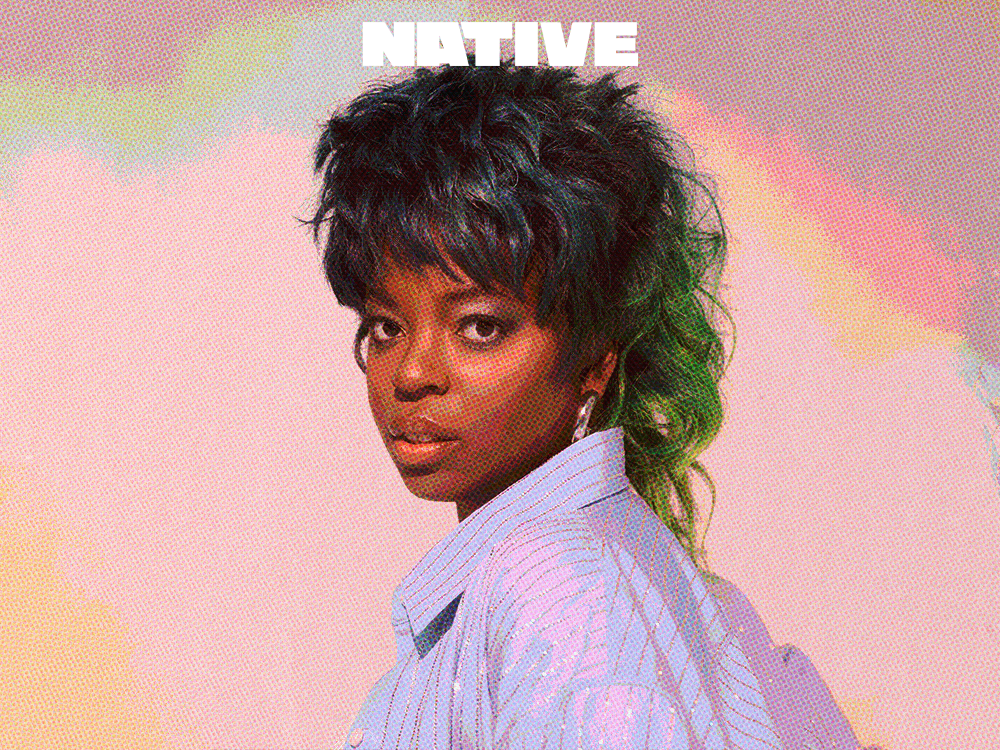
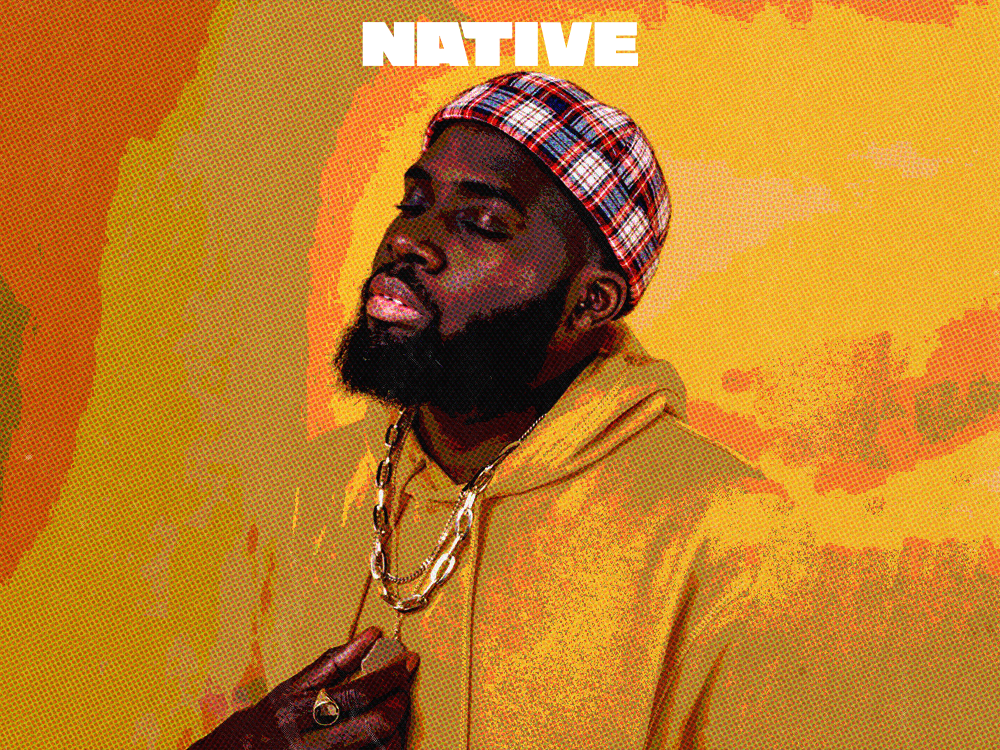
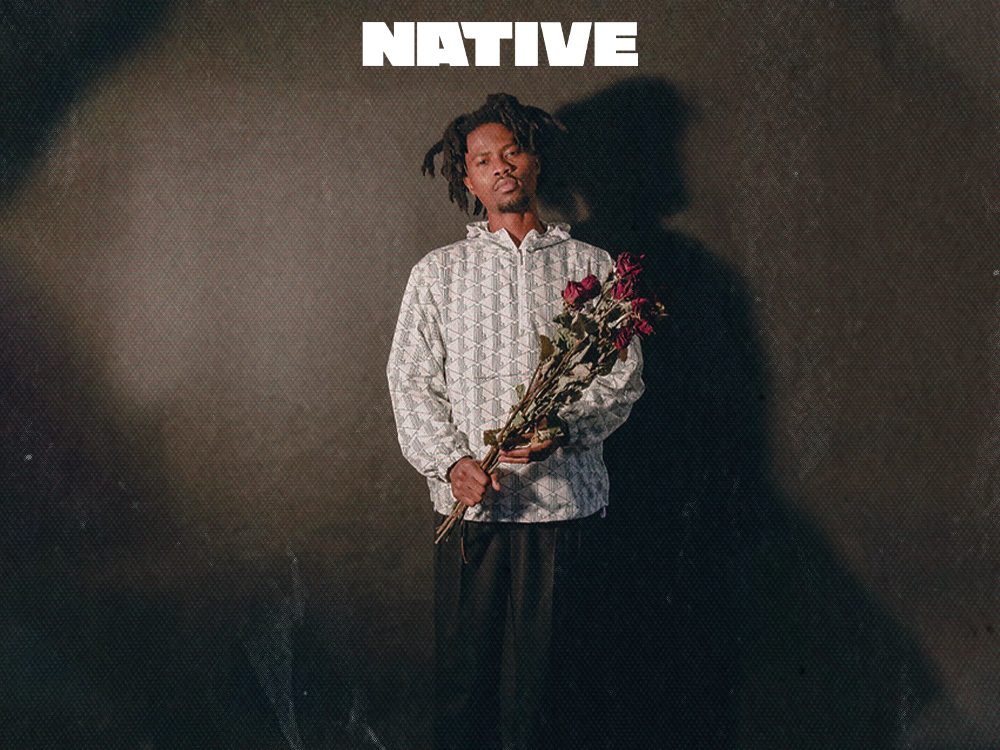
NATIVE Exclusive: Bloody Civilian Is Stepping Into The Spotlight

Before the release of her debut EP ‘Anger Management,’ Bloody Civilian was an ascendant star with only a handful of hits to her name. Powerful anthems such as “How To Kill A Man” and “I Don’t Like You” released just months apart, were open and honest confessionals from an artist developing in real time. Both written and produced by the Abuja-based singer, both tracks introduced audiences to her diary-like ruminations which sounded like a friend on the other end of the phone line.

It’s clear that Bloody Civilian arrived at her current sound with experiences that have shaped her musically, and personally, without fear of holding back truths about open about her past struggles with mental health, and Bad Aunties. “At first, I was trying to tone it down. I didn’t want it to be on the nose but I couldn’t do it any other way because these were the things I was really feeling,” she shared in a recent track-by-track interview.

Her artistry is put on full display on her 6-track debut EP, ‘Anger Management’ with a disarming authenticity and vulnerability that could shock new listeners. She tackles a series of emotions many can relate to; from the dread of withdrawal from a bad habit to the frustrations derived from interactions with nosy relatives. ‘Anger Management’ provides more insight into Bloody Civilian’s life and journey as she comes into her own armed with the skills and confidence of a veteran paired with the curiosity of a newcomer.


View this post on Instagram


A post shared by BLOODY CIVILIAN (@bloody__civ)

In her first-ever exclusive interview with the NATIVE, the rising artist opens up about her creation process, the autonomy that comes with producing her own music and the years-long journey to where she is today: an artist unafraid to mince her words.

Our conversation, which follows below, has been lightly edited for clarity. 

NATIVE: Let’s start by talking about your name. Why did you choose Bloody Civilian?

Bloody Civilian: It basically stemmed from where I’m from. There’s a lot of military violence and the term bloody civilian gets used on the victims. I’m from a place where my people keep going through stuff like this. So, I chose the name as a way to take it back. 

Where are you from?

Taraba and Kaduna State.

Talk to me about your background in music. Who are some of your early influences?

My early influences are Asa, Nneka, Kid Cudi, Kanye, Tame Impala. These are the people I grew up listening to them, especially in high school. Their sound influenced my music. For song lyrics and song writing, these are some of the people I look up to. Kendrick is also in there. I love Kendrick. 

Early in your career, you achieved some outstanding feats like collaborating with Rema for the Black Panther soundtrack, how was that experience like?

It was a fun experience although I actually never met Rema. It was especially great working on production and seeing how someone with way more experience does what they do. It was just a nice learning experience. 

You double as a writer, producer and singer, and that’s an interesting thing a lot of artists in our time are not doing at the moment. How is it like being involved in the entire creative process of your music?

Production is something I didn’t make a conscious choice about. When I started producing, I didn’t know what I was doing was production. I just thought I was playing with my laptop. It was mostly playing around with the software that my cousin had installed on my laptop. Someone discovered it and told me that it was production. By then, I started to take it slightly more seriously. I started to pay more attention to it. Production was never an active chore or choice. It was a fun escape I did in my spare time.  [Also], I always loved writing songs from a very young age. I write songs and sing them to my parents. Again, it never felt like a chore. It wasn’t compulsory. It just always came from inspiration. If I got inspired, I’d write. If I got inspired, I’d produce as well. 

What advantage does producing your own music afford you?

I feel like because I have been able to express myself not only lyrically, and vocally, I’m also really able to control the story. Every time I make a song, it sounds cliche, but I always try to get the sonics to match what it is I am singing about. I don’t like when I create music and it feels like the instrumental is telling a story while the vocals are telling another. There’s a particular chord progression I’d use to say a particular sentence. I’m very specific about it. I always want everything to be perfect. So, I wonder how I’m going to cope now that I’m going deeper into the industry because it’s a process that may not translate when working with larger groups. I’m excited to learn how to work with people. 

You mentioned artists and producers that you look to for inspiration. What about their works stands out to you?

I think generally, the type of music I’ve unintentionally grown attracted to is all around the same style. They are created in similar conditions. Most of these people when I read about them, they are isolated. They like to be in their own space and in their own world. For example, Tame Impala. To create my favourite album, he went to a beach house without phone service. He was in isolation, far away from everyone and everything. There’s a purity his sound also has. There’s a nuclear sense to all his ideas and it makes it feel more authentic. Listening to his music feels very pure and original. That’s why I’m inspired by these people. 


View this post on Instagram


A post shared by BLOODY CIVILIAN (@bloody__civ)

Your creative process entails you stepping back from the world to your own space to create. As a writer, and producer, do you think anyone comes first when you’re creating a song? 

Usually, the words drop with the beat idea. A concept or a chord progression. I always get the message and it already has its chords, melody and tune. My struggle from that point is to decide how to package the initial idea. 

Have ever produced tracks for anyone else, and is that something you’re looking to do in the future?

Yeah back in the day. Nothing too big. I started off making Trap because trap was very for my rapper friends. I charged 15K per one. It wasn’t much, and they were working with me because I was the only one they could afford. Now, because my production and artistry are tied together, working with other people is something I want to do. I have to see how that goes because I want to prioritise my career and take that leap of faith in myself . 

One thing that stands out about your music from the titles to lyrics is how confident and unapologetic they are. Especially “How To Kill A Man” and “I Don’t Like You.” Why was it so important to communicate these strong feelings as titles?

Music has been an escape for me. It’s where I live vicariously through the characters I create. For me, it’s necessary for my mental health. I can’t do without being able to express myself. If I didn’t have music, I don’t know what I would have turned out to be. I was a troublesome child  and music was one of those things I used to hold myself together while feeling like I’d let emotions out. 

Do you see music as your own storytelling medium?

Music is definitely my storytelling medium. I had a point where I really loved writing poems and short stories but I found out my attention span was really thin. With songs, you can tell a shorter story in a small amount of time. I’d enjoy the dopamine of musicality and still have a similar experience. 

It’s difficult to place you in a box or under one genre, is that something that was intentional? If you had to describe your music to someone that has never listened, how would you qualify it? 

My Spotify Wrapped always grouped me as an explorer. [I] cannot be in one place and that has been true for the longest. I really consume music in moods. I see myself as an A&R in a way. I love to curate different types of music that are not even in English. It has given me problems and benefits. Problems because my ability to focus on one thing is very slim. I usually just do so much. It also helps me have an abundance of ideas and inspiration. It’s so much stuff I’ve studied sonically and it helps me infuse so many different things. I started off making beats online. I noticed the recurrent feedback was ‘how did you mix those two things?’ I know that’s something I’ve organically had this inclination for. 

Are there genres you look forward to exploring in the future? 

Not really. I go by ear. I also just feel genre’s don’t serve the same titles as they did in the past. We’re defining genres more demographically now. I just know that I love music and when something sounds good and it inspires me, it simply works. 

Let’s talk about the moments leading up to your debut EP. How have you felt leading up to the release? 

The moments leading up to it were similar to most people. I [released] two singles and gauged what kind of crazy songs people would like “How To Kill A Man” and an even crazier song like “I Don’t Like You.” I followed the process of self-discovery and it was fun. I met people, and lost people. It was everything I expected. My perspective is just the default I guess.

Artists usually comb through a series of projects as inspiration for their own music. Who are the people you listened to while creating ‘Anger Management’?

The songs were created over a long period of time so it’s hard to place. Everything got reproduced so it can suit the times. I personally believe you can carry any song concept and put it in any time. A lot of those concepts changed from years ago, I just reproduced and revamped them to make sense for now sonically. I have been listening to everything. I can say for specific songs like “I Don’t Like You,” I liked “Xtra Cool” by Young Jonn. I loved his voice and the rhythm. At the time, he brought it into a space where I couldn’t find songs that sounded similar to what he brought in regards to the drum pattern. There was something about it and it really inspired how I approached the drums for “I Don’t Like You.” 


View this post on Instagram


A post shared by BLOODY CIVILIAN (@bloody__civ)

What messages were your priority when you were creating the ‘Anger Management’?

I’ll be honest with you. At first, I was trying to tone it down. I didn’t want it to be on the nose but I couldn’t do it any other way because these were the things I was really feeling. As I was making some of the songs, I was actually really upset. I was really angry. I was trying to tone it down but it wasn’t working because it simply was not aligned with my reality. At some point, I had to tell myself I could only keep the act up for a while. It was going to be very different and toned down. Things happened as I was trying to wrap up the EP and we ended up having to change it from what it was before. I was taking out things I felt were fake and not what I represented. I had to go back and forth asking what the implications of trying to put swear words on air would be for example. People just kept saying do what you want because we can always do a clean version. I just wanted to be unhinged with everything and luckily, I have a good team that will help me keep my dreams of being X-rated. 

It definitely paid off. 

For sure. I’m glad we kept it as raw as it was coming. 

You have six tracks on the EP. Talk me through your process of deciding the final songs especially considering you had recorded some a while back. How did you decide what needed to make a comeback and the final cut?

[The songs] made sense. I also thought no one was going to listen to eight tracks, so I opted for six tracks rather than four. Left for me, I wanted to do an album but you can’t do it for your first drop. I haven’t been putting out music but I’ve been making music for such a long time. This is a dilemma you usually don’t find. Where people are making music and not releasing because most people’s motivation is the fact that they would put it out. I’ve spent so many years of my life just creating so I have so much music. It was very hard deciding what songs to push to the front. I went based on how I was feeling at the time. If I feel angry/passionate at a certain time, all the songs need to reflect that. I need to talk about that. The other songs will come out later if they make sense for how I feel at that time. 

What can we expect from you in the future?

People should expect more music from me. That’s what I do. What I want for my future is to meet people, travel and work with great minds. I am excited to see what the future holds. I feel like my team is enough for me and my A&R’s are convinced that I can find people outside the team I already have. I’m curious to see where that goes and I’m open to being raw for sure. 

Stream ‘Anger Management’ below.

Featured Image Credits/The NATIVE

‘Journey of a Billion Streams’: 4 Takeaways from Spotify’s new Afrobeats-Focused Website

In recent times, urban West African pop—aka Afrobeats—has gained huge appeal across and beyond the borders of the African continent, finding homes in both the African diaspora and foreigners with cultural ties to Africa and also entering and clinching hitherto rarefied spaces and awards. From 2Baba to Fuse ODG to Burna Boy to Rema, African artists have curated homegrown sounds that have resonated with the world and sparked the explosion of Afrobeats.

One of the major contributors to the growth of Afrobeats is streaming platforms. With the ease that technological advancements have created, commodities such as music have become easier to access and ensured that a song from an artist in Ghana or Nigeria or South Africa can reach a listener in London, New York, Paris or Tokyo. These streaming platforms, with their curated playlists and catalogue of songs, have taken African artists and their music straight into the homes of consumers.


View this post on Instagram


A post shared by Spotify Africa (@spotifyafrica)

Spotify is one of those pivotal streaming platforms. Founded in 2006, Spotify entered the African market in 2018, first launching in Algeria, Morocco, Tunisia, and Egypt before expanding into a 49-strong list of territories that includes South Africa, Nigeria, Ghana, Angola and Zimbabwe. In the same year, Spotify launched “Afro Hub” as part of its Global Cultures initiative, featuring a dedicated curatorial space for listeners to interact with Afrobeats via artist-helmed playlists and podcast, as part of the streaming giant’s plans to create a digital archive and resource for African music.

In celebration of the genre’s ascendant dominance, Spotify recently launched Afrobeats: Journey of a Billion Streams, a dedicated infotainment website for everything surrounding the genre, from the past to the present. “There is no doubt that Afrobeats as a genre is here to stay, and will only continue to shatter more ceilings. In 2023 alone, the genre has been played for more than 223 million hours with streams exceeding 7.1 billion on Spotify,” revealed Jocelyne Muhutu-Remy, Spotify’s Managing Director for Sub-Saharan Africa. “We created this site for both new and longtime fans of the genre, who would like to have a better understanding of how and where this explosive sound came to be.”

Going through the website, here are four takeaways from Afrobeats: Journey of a Billion Streams.

ACCESSIBLE INTERFACE

Although the website isn’t fully updated, it is organised in a way that makes the information quick to understand. On the homepage of the site, there’s a timeline carousel for the Afrobeats genre, relaying information about Kennis Music’s emergence in 1998, the birth of Mo’Hits Records in 2004 and DJ Abrantee launching his radio station in 2011, among others. 

The site also states its five pillars, which are Origins (the exploration of the origins of Afrobeats and the sounds that influenced it along the way), Evolution (Afrobeats’ evolution from its 90s sound to the current sound), Fusion (the different genres in Afrobeats as well as Afrobeats’ biggest collaborators), Cultural Export (a look at Afrobeats’ biggest moments on global stages) and Women of Afrobeats (exploration of key female figures and their contributions).

INSIDER INFORMATION

Afrobeats: Journey of a Billion Streams provides data about the songs and artists in Afrobeats dominating the charts. This data, which will be updated on a biweekly basis, is based on Spotify’s user base and is intended to “share noteworthy findings and trends.” The data includes the Top 10 Afrobeats songs of all time, age group percentage listening to Afrobeats, top cities streaming Afrobeats and their most streamed songs, Top Female Afrobeats artists and Afrobeats emerging markets, among others.

There is also a curated selection of Afrobeats playlists and podcasts “that allow you to immerse yourself and develop a better understanding of the genre.”

A DOSE OF FUN

It’s not just serious stuff on the site. There are fun games planned in the form of quizzes and polls to test the audience’s knowledge about Afrobeats as well as deepen that knowledge in the process. There’s a quiz website visitors can go through, which reveals access to an exclusive Afrobeats playlist at the end. Visitors can also participate in a weekly poll, with questions being changed on a weekly basis, while a wordcloud activity rounds out the games tab.

A SIGN OF GOOD THINGS TO COME

This site portends good tidings for Afrobeats. By joining other stakeholders who are documenting the history and rise of the genre, Spotify is ensuring that there will be a great database of information for both Africans and foreigners to learn more about the genre, its roots, key players, accomplishments and future stars.

Visit ‘Afrobeats: Journey of a Billion Streams’ here.


ICYMI: SPOTIFY WELCOMES CREATORS TO STREAM ON 2023

Burna Boy, Libianca & Tems lead a stellar night for Afropop at the 2023 BET Awards

Every year the BET awards is attended by huge fanfare from the global Black community. This year’s event was no different, as several celebrities from different walks of life were present, contributing to Sunday night’s glitzy appeal. As always, the red carpet looks were endearing moments but by and large the main focus was on the events which happened on-stage, those performances and award wins that has got many people still talking hours after the event.

For Afropop, the biggest news was Burna Boy winning his fourth Best International Artist award in five years. With the exception of Tems, who won it last year, the self-proclaimed African Giant has been on a memorable award run. This time he faced competition from notable superstars such as Ayra Starr, who was the only other Nigerian on the list; France’s Aya Nakamura and Tiakola; Uncle Waffles and K.O, from Swaziland and South Africa respectively; United Kingdom’s Stormzy, Ella Mai and Central Cee, and Brazil’s L7nnon. 

Native Now! cover star Davido also courted headlines for his performance. The ‘Timeless’ artist continues to give an excellent post-release account of his imminent classic, performing an electrifying medley of summer breakaway hit song “UNAVAILABLE” and “FEEL”.

Tems continues to stack her already-glittering set of awards, winning the Best Collaboration category for her role in Future and Drake’s “WAIT FOR U”—the same collab that earned her a Grammy award. The Nigerian artist is no newcomer to such awards, although the biggest conversation from last night’s awards however featured another female artist.

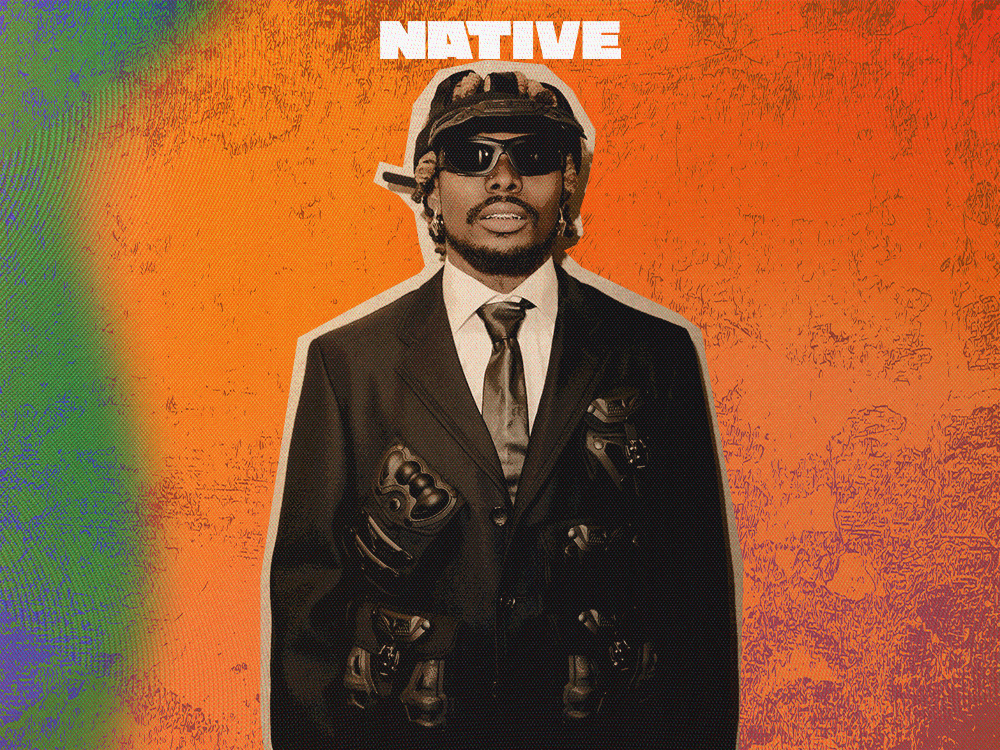
Having announced herself with the emotive smash  “People,” Libianca won the Best New International Act. The category was keenly-contested as it included other budding acts like uNder alum Pabi Cooper, Camidoh and Raye. Of them all, Asake was however the strongest competitor, given the shift he’s brought to the music scene and the larger culture since his 2022 breakthrough.

A section of social media (which is unarguably populated by Nigerians) have registered disbelief at Libianca winning the category, although their opinions, like any other person’s, have a subjective merit to them. With her history at the American Idol and how purposefully “People” was marketed outside the continent, it’s not entirely surprising that an ‘International’ category would recognise her.

After that breakout single, she’s also given a good account of herself. Her Ayra Starr and Omah Lay-helmed remix of the record further endeared her to African audiences, while her sterling appearance on Jae 5’s “I Wish” alongside Lojay also furthered her reach. Her first single of the year “Jah” takes account of divine blessings, while reiterating Libianca’s vision to rise to the top.

If the BET awards means anything (and it does, a whole lot), there’s a number of narratives that are still being written. Regardless where one pitched their tent, we can agree that for an awards show that represents Black excellence across continents, this year was particularly good for Africa. We’re still on the rise.

See the full list of nominees and winners HERE.


ICYMI: WHY LIBIANCA IS A BONAFIDE BREAKOUT STAR

ALÁRA Lagos Debuts A Stellar Multi-Sensory Exhibition at Brooklyn Museum

Since its inception in 2015, Alára Lagos has been a major attraction in West Africa, housing luxury art and design by African creatives. The contemporary retail store, located in Victoria Island and owned by Reni Folawiyo, looks to promote and celebrate African luxury and lifestyle predominantly through fashion. The name itself, which means wondrous performer, suggests an impact that reaches beyond the four walls in which the building stands. Folawiyo has stated that her aim is to “create a meeting point for design, fashion and art, and has now taken the concept store global with its recent exhibition in Brooklyn Museum.


View this post on Instagram


A post shared by ALÁRA (@alaralagos)

The exhibition, dubbed Africa Fashion, is one the museums largest ever presentation, with over 180 works by 40 designers from over 20 countries across the continent. Organised thematically, this multi-sensory experience features immersive displays of haute couture and ready-to-wear apparel, photographs, literature, sketches, music, textiles, and jewellery to name a few. Speaking on her contribution to the exhibition, Folawiyo shares: Combining this with the urgency of all things African, from afrobeat to tech to consumer, it felt natural, and also like a responsibility, to bring that positioning to bear globally. Brooklyn Museum is a terrific partner because, like Alára, it engages with culture and builds community on so many levels.

For Alára’s unique installation, Folawiyo collaborated with Ernestine White-Mifetu, the co-curator for the exhibition and curator of African Art at Sills Foundation. “The partnership with Alára is an essential part of the discussion the exhibition is having around the importance of African creatives choosing how they are represented, White-Mifetu says. “Reni is showcasing the best and brightest in a way that allows them to shine—and the exhibition is doing the same. The exhibition is slated to run all summer from June 23 to October 22, 2023. It features a capsule collection in collaboration with WafflesNCream (waf.lagos) and Dye Lab, as well as ceramics from Clementina van Her, conceptual pieces by Cedric Mizero, furniture by Ousmane Mbaye and much more.


ICYMI: REVISIT THE NATIVE X ALÁRA FASHION EDITORIAL, ‘U N R U L Y.’

NATIVE Selects: New Music From Burna Boy, Lady Donli, Fireboy DML & More

Every week, new music shows up, sweeping fans and music lovers off their feet while artists gauge reactions to know the effect of their creativity. At the NATIVE, we are committed to keeping our ears on the pulse of the music scene and bringing the best sounds to your doorstep.

In our last edition, we brought you new releases from Asake, Omah Lay, Libianca and more. Today, we have songs that move from Afropop to Amapiano to R&B, with our select artists showcasing their unending talent and passion for creativity. Lock in!

BURNA BOY – “SITTIN’ ON TOP OF THE WORLD (REMIX)” FT 21 SAVAGE

A few days out of his sold out stadium tour, Burna boy released “Sittin’ On Top Of The World” and the timing couldn’t be more perfect, as he adds more outstanding accomplishments to his belt. He acknowledges his international status over the Brandy-sampled instruments of “Top of the World.” For the remix, Burna boy returns with 21 Savage for a sleek and effortless delivery to accompany his mellow vocals. 

FIREBOY DML – “YAWA” 

Superstar producers, Telz and Magicsticks lay the groundwork for an outstanding track that’s buzzing the airwaves less than 24 hours after its release. Fireboy’s recently released track, “Yawa” introduces an ultra-confident artist. “I’m on a mission, I see no competition,” he sings over an instantly captivating, head-bopping beat. He smoothly dabbles between Yoruba and English as he sings of drowning out the background noise and focusing on his journey.  Midway through the track, infectious log drums join Fireboy’s rendition with subtle whistle adlibs that embellish the track. 

VICTONY – “MY DARLING” 

Off the back of two successful remixes, Victony returns with a two pack release dubbed ‘My Darling + Angelus’. The Juls-produced track features infectious drum patterns accompanied by lush guitar strings. Victony unabashedly paints his love interest in a glorious light as he expresses why she is one of one saying. The track’s hook sees Victony repetitively refer to his love interest with the assistance of high-tempo choir vocals. 

LADY DONLI – “MY ABILITY”

As her sophomore album inches nearer, Lady Donli peels back another layer of her artistry with her recently released “My Ability.” The groovy track features a confident Donli reaffirming her expertise and addressing the naysayers who are unsure of her talents. This stems from the doubt fans have expressed regarding her ability to top her standout debut project, ‘Enjoy Your Life.’ The track’s release is supported by colourful visuals that perfectly suit the gleaming production of the feel-good track. 

DOPE SAINT JUDE – “ALPHAS”

South-African rapper, Dope Saint Jude, delivers some sure-fire bars over a drum-lead beat pattern for her first track of the year. She seamlessly glides across the heart-thumping instrumentals armed with slick bars and silvery vocals celebrating queer love and attraction.  

MAJOR AJ & BLAQBONEZ – “MY OWN”

Carried on a great run of form, Blaqbonez has been most impressive on collaborations from last year. On “My Own” however, fellow Chocolate City signee and uNder alum Major AJ imprints his energy on the visceral cut, setting the tempo before his feature’s rap verse. With sweet horn licks and crowd vocals, it’s a song in sync with contemporary stylings while upholding the distinct message of debauchery and realism at its core. 

TIM LYRE – “CHASING WIND”

A most intentional creative, Tim Lyre is equally great at producing and performing. Those twin aspects come to the fore on “Chasing Wind,” a serene record about the conflicting nature of life. Buttery bass sends a reggae-esque wave through the body, as the musician calmly sings about existential concerns. It’s a potent reminder of Lyre’s unique ability as a musician, this time moving past previously communal ideals to dig deeper into the core of one’s own individuality. 

BABYBOY AV – “QUICK QUESTION”

The sonic experimentation currently underway in Nigerian pop is mindblowing. Artists are digging into the roots of sound, unearthing gems which will resonate for a long time to come. “Quick Question” bears evidence of such artistic vision. Carried on a mellow palmwine music groove, it’s a sensual record that shows Babyboy AV at his most tender. “Me I be different kind of person/ Baby, make we connect,” he sings, promising his love interest the better experiences of life. A magical record, this one. 

MOHBAD & BELLA SHMURDA – “PARIWO”

The bromance between Bella and Mohbad has provided some wholesome cultural moments. On “Pariwo” they translate their obvious love for each other into a banging afropop record. With both honing on their strengths—Bella’s hook prowess and Mohbad’s rap-styled flow–it’s a feel-good that shines with a mellow flair. One for the dancefloor and all the fun spaces in between. 

MINZ & ZINOLEESKY – “SOKOTO”

Earlier this year, Minz scored a ubiquitous hit with “Wowo”. After its remix and fairly recent visuals, the artist has moved on from what has been a productive run. “Sokoto” joins forces with the expressive Zinoleesky, both musicians impressing their distinct vibe. It’s Minz who sets things off with his atmospheric vocals, establishing the theme of romantic tension. Zino polishes the idea, while the amapiano-tinged production does great in its movement, exploding in its final minute from its initial silky control. 

TOMI AGAPE – “CONTROL” FT T.U.C

It’s been a while since we got Tomi Agape music but she more than makes up with the sexy direction of “Control”. Utilising T.U.C’s avant-garde production that has House roots but swirls with ambient elements, there’s a visual sense of rolling lights in a dancefloor. It’s essentially a vibe song, as Tomi sings with a hint of naughtiness, “Control it, my emotions rolling”

SKALES – “AS I WAKE UP”

It’s been a tale of resilience and verve that Skales has continued to put out music. A lot of artists who blew up around the same time as him have eased their grasp on the pop sphere, but not S to the K. “As I Wake Up” is unarguably his most immediately appealing record in a while. With assured songwriting upholding positivity amidst everything that’s happening, it’s a feel-good capsule that truly mirrors the freshness of a brand new day. 

BORELSON – “SUMMERTIME IN TORONTO”

Amapiano continues to be the most influential genre around Africa. On this new cut, Gabonese Congolese musician Borelson curates a fun vibe that’s direct in its pursuit of happiness. Crowd vocals, rap verses, a hyped interlude—all the classic elements are present, and by the end of the record, its effusive vibe would have made its mark on the listener. 


ICYMI: TEEZEE CAPTURES THE EFFERVESCENCE OF BRAZIL ON “STAMINA”

New Music Friday: New Projects from Nkosazana Daughter, Harrysong, Rukmani & More

It’s another Friday and time for a roundup of music projects from African acts to check out. Throughout the week, music has poured in from all over the continent and sometimes it can slip through the cracks, unheard. This column serves to bring those projects to your ears as you prepare for the end of work and look forward to the weekend. Settle in for an experience as we travel the African continent for the latest music projects.

NKOSAZANA DAUGHTER – ‘UTHINGO LE NKOSAZANA’

It’s a star-studded affair on Nkosazana Daughter’s debut album ‘Uthingo Le Nkosazana.’ After teasing the project with a string of singles, the South African artist unveils her album, whose fulcrum is Amapiano. She adds R&B and Afropop to the sound and showcases her range while inviting some of the biggest music makers in South Africa and across Africa, including Master KG, Kabza De Small, DJ Maphorisa and Young Jonn. 

CAMIDOH – ‘L.I.T.A (DELUXE)’

Three weeks after he put out the ‘L.I.T.A’ album, Ghanaian act Camidoh updates the record with a deluxe version, increasing the 15-track length of the former with three new tracks: “Big Mama,” “Odo Dede” with Sarkodie and “Save My Soul.” “Big Mama” is dedicated to the ever-generous affection of mothers, “Odo Dede” is where Camidoh and Sarkodie open up their intentions for a love interest and “Save My Soul” is a stirring tune about Camidoh’s vulnerabilities and the pressures he faces. It’s another high point for Camidoh who recently was nominated for a BET award.

HARRYSONG – ‘GOD AMONGST MEN’

Harrysong is an old hand in the Nigerian music space who has stayed active with hit tracks and a healthy catalogue. Three years after his 2020 project ‘Right About Now,’ he returns with a 15-track LP that finds him exploring the prevalent sounds of Afropop with newer acts such as Majeed, Fireboy DML, Camidoh and KolaBoy. ‘God Amongst Men’ flows from introspective cuts to ready-made party starters.

ALYN SANO – ‘RUMURI’

Rwandan singer and songwriter Alyn Sano consolidates on her efforts with her debut 13-track album ‘Rumuri.’ In March, Sano released the EP ‘Boo and Bae.’ On ‘Rumuri,’ she pulls inspiration from R&B, Pop, Alternative Rock and indigenous African sounds to curate a variety of songs that explore love, societal pressures and finding strength in oneself. While she alternates from Swahili to Kinyarwanda to English, Alyn Sano’s clear, strong vocals ensure that the listener feels whatever emotions she wants them to feel.

EKITI SOUND – ‘DRUM MONEY’

Ekiti Sound is the moniker of Leke Awoyinka, a record producer and DJ who has shared his time between Nigeria and the UK since childhood. With his music, Ekiti Sound pays obeisance to indigenous Nigerian sounds and pairs them with elements from Electronic music and Hip-Hop. On his sophomore album ‘Drum Money,’ these influences of Africa and the diaspora come alive as Ekiti Sound finds a balance in curating sounds that merge his individuality with diverse cultures.

RUKMANI – ‘ANGEL ON THE RUN’

When an undeniable talent comes around, it’s hard to ignore. Nigerian singer Rukmani is one of those. Her debut EP ‘Angel On The Run’ is at once captivating, which is a result of her piercing vocals and intricate, deliberate songwriting, making for an immersive experience. She utilises the songs to chronicle her struggles as well her wins as regards love and self-discovery. ‘Angel On The Run’ is a memorable gift for an artist with a promising future.


ESSENTIALS: CHMBA FASHIONS UNIVERSAL SOUNDSCAPES ON NEW EP, ‘OKONGOLA CAUCUS’

Air Afrique Partners with Bottega Veneta to Launch New Magazine

Independence was a recurring theme across West Africa in the late 1950s and early ‘60s. In that era of the region’s wind of change, countries relished their self-determining authority, which inevitably extended into collaborative efforts and general camaraderie. In 1961, the leaders of Senegal, Central African Republic, Cameroon, Ivory Coast, Gabon, Benin, Burkina Faso, Mauritania, Niger, Congo and Chad launched Air Afrique, an airline for intra-regional movement and as a link to the global African diaspora, as well as the rest of the world.

Air Afrique was undoubtedly a pan-African endeavour and in its four decades of existence, was a promoter of culture, serving as a patron for film festivals such as FESPACO, large art exhibitions like Biennale de Dakar, and more seminal cultural gatherings. The airline also housed Balafon, the now-defunct magazine publication whose slogan read, “for a better knowledge of Black Africa.” These issues, which were produced and sold between 1964 and 2000 served as a document of the history and evolving times of the African continent, promoting a forward-facing narrative away from any Afro-sceptic sentiments.

Predominantly made up of young Parisian creatives from across the African diaspora, the Air Afrique collective is set to release their debut issue. Led by Creative Director, Lamine Diaoune, co-founders Djiby Kebe and Jeremy Konko,  and editor-in-chief Amandine Nana, the collective was inspired by the now-defunct pan-African airline and its magazine publication, which served as a premier cultural manifesto in its heyday. With this launch, Air Afrique’s editorial approach will be in line with the legacy of pan-African magazines of the 20th century, to serve as an accessible cultural platform of knowledge and aesthetics designed to connect and stimulate contemporary Afro-diasporic perspectives, stories and cultural initiatives.

“We want to revive the African transcendence that Air Afrique represented,” Lamine Diaoune says of Air Afrique. “Our mission is to preserve this heritage, to put Air Afrique back in the cultural conversation, and to build on their example of cultural engagement.” Djibe Kebe adds: “Air Afrique was more than an airline. It was a cultural platform. We want to share the Air Afrique archive and create our own archive—to capture this moment of change in Black awareness and expression.”

For its first issue, Air Afrique has partnered with luxury fashion house, Bottega Veneta. In this partnership, Bottega Veneta will co-host the magazine’s launch party today in Paris during the ongoing Men’s Fashion week, while creating a series of unique campaign images that will combine the purpose of Air Afrique and the aesthetics of Bottega Veneta. The brand will also release a limited-edition series of blankets designed by Franco-Sudanese designer, Abdel El Tayeb. 10 blankets will be sold through Bottega Veneta channels and the proceeds will be donated.

The Air Afrique collaboration is part of Bottega Veneta’s unique approach to print media partnerships, focused on new and revived cultural magazines. In 2022, the brand sponsored the return of BUTT, the iconic magazine focused queer culture and sexuality. Dating back to the seminal 1978 campaign, “When Your Own Initials Are Enough,” in Interview magazine, Bottega Veneta has been associated with significant creative media partnerships, and Air Afrique is its latest marquee endeavour.

With sterling inspiration from the past, a winning mission statement for its present and future, as well as extensive support from a hugely popular patron of the arts, Air Afrique is primed for immediate, as well as lasting, impact.


ICYMI: ‘BOTTEGA VENETA: MEN’ EXPLORES GENDER BOUNDARIES IN SOCIETY

14 Years and A Day: A Distinct Love Story Intimately Representing Queer Identities

The history of queer representation in African cinema is unpleasant—to say the least. A large part of that results from the widespread criminalisation of homosexuality and gender non-conformity in Africa. When the queer community isn’t grappling with censorship and under-representation, they are poorly represented in distasteful and degrading scenarios. The growth of the digital atmosphere has enabled a significant increase in queer representation but despite the recent advances of the entertainment industry in Africa, our filmmakers omit these stories. As a result, queer people have begun bypassing industry gatekeepers to tell their stories and make it accessible to all audiences across the globe.

However, the stories that have made it to our screens often take a tragic tone in a bid to spotlight the injustices the queer community face. Understandably so. According to the creators of ’14 Years and a Day’, this disregards the beauty of a genuine queer love story we have around us. Ayo Lawson and Uyaiedu Ikpe-Etim, the movie’s writers and directors have taken the responsibility of spotlighting these crucial perspectives of a queer person navigating life in these parts, while celebrating love and self-discovery within and outside relationships.


View this post on Instagram


A post shared by Uyaiedu Ikpe-Etim (@uyaiedu)

The few times I remember seeing queer characters, they were displayed in very terrible light,” Uyaeidu Ikpe-Etim tells The NATIVE. They were either begging people for change or deliverance. It just made it seem like there was something inherently wrong with queer people.

Ahead of their screening in Lagos, we caught up with Ayo and Uyai regarding their creative process, choosing queer collaborators for the film the intricacies of telling a queer love story and more.

Our Conversation, which follows below, has been lightly edited for clarity. 

NATIVE: Hello guys, thanks for joining me today. Take me back to the beginning. What sparked the idea to work on a film for Pride Month? 

Ayo: What really inspired the film was La Tarvena, the location we shot the film. Uyai and I were at dinner and we thought that it would be a nice place to shoot. We thought the fairy lights looked very romantic and it could be a great setting for a love story. It also crossed our minds that La Tarvena has become a safe place for queer people and there’s so many different stories we could tell there. We were also inspired by our own love story.

Uyai: We’re screening the film this month because it’s a great time. We don’t really have a lot of pride celebrations. We do have a couple and we wanted to be part of that. We wanted to include more celebrations for queer people this month. We’ve built so much anticipation for the film and it just clicked to do this during pride month.

Let’s talk about your background. What are some of your directorial experiences?  Uyaiedu, you’ve directed ‘Ife,’ a short film with queer themes. Did that experience make this film a less daunting task?

Uyai: Absolutely. ‘Ife’ was my first time directing and it was also a queer film. There was a lot that came with that especially being a first time director. However, making ’14 Years and A Day’ was a lot less daunting because I already had the experience of negative and homophobia. I was aware that they are just fear tactics. With making this, I was not too worried. Also, I was making ’14 Years and A Day’ with Ayo and that took away [some pressure]. We could really bounce off each other. We worked so well together. Finding actors and putting a crew together was still very difficult but because of my experience with ‘Ife,’ I knew how to navigate that.

Ayo: ’14 Years and A Day’ is also my second time directing. I directed ‘Nightmare on Broad Street’ with Femi Johnson but as much as it had queer experiences, I wouldn’t say it was a queer film. Going into this having met Uyai, I’ve become more confident in my queerness because I want it to be the forefront of the story. Let people choke on the queerness literally. I wanted it to be clear and in-your-face that the characters were queer but not let that be the only topic of the story. I also didn’t want to represent queerness through the lens of homophobia or all the hardships that come with living in Nigeria.

What’s it like working on projects with your real life partner? Are there any unique challenges and benefits that come with it?

Ayo: It’s interesting. I think we make a really good team. Obviously it’s difficult because when stress levels get high, it’s natural to snap at each other. Sometimes we’d have an idea and the other person is not getting it. All in all we really had an eye for what we wanted. We had spoken about it a lot so we were mostly on the same page. I’m really someone that wants to talk about how everything looks. I mostly come from art filmmaking so I want to ensure it looks nice and has the great aesthetic but Uyai is more particular about the story line and acting. Coming together, we both got to look at the other sides more than we would have normally.

Uyai: I really agree that we make a great team. Even beyond making the film, preparing for the screening and the ball has been great. Last night, Ayo looked over to me and said we make a great team. We’re on the same page and when we’re not on the same page, our ideas complement each other.

Given the conservative norms we have in our society, what made you take a more positive perspective/standpoint as opposed to the more daunting realities? Why did you think you had to paint that picture for the audience? 

Uyai: We wanted to tell the complete story. I grew up watching a lot of Old Hollywood and there was hardly any representation of queer characters. The few times I remember seeing queer characters, they were displayed in very terrible light. They were either begging people for change or deliverance. It just made it seem like there was something inherently wrong with queer people. For Ayo and I, we wanted to tell the full story. Here we are, queer people and we have an amazing community. We exist. We love and we live here. We experience life and heart break like every other Nigerian. We wanted to bring that to the forefront and put it in your faces. This exists and these people are happy despite the negative stories you’ve tried to tell us. We’re here to tell a different story.

Ayo: As much as we have positive realities also, being queer in Nigeria is still hard. We wanted to create an escape. Some of the other recent queer films still talk about struggle which is very valid but we wanted to change the narrative so people can have a story to aspire to. If not that, feel some sort of hope that there is light somewhere at the end. People are having positive experiences. We can have spaceS. We can have love. We can meet people and life can be positive. We also wanted to change the narrative for our international audiences. When we screened in England, people asked us why we live in Nigeria and suggested we seek asylum. We’re not hidden and prisoned here and while they aren’t many, there are spaces we are accepted. We wanted to create more spaces and inspire people to create more spaces.

What factors informed your choices of other people to collaborate with on the film? 

Uyai: Allyship. It’s very difficult to find queer crew in Nigeria. It’s very difficult to find queer crew in Nigeria, that’s another thing that we struggle with. I had worked with someone on ‘Ife’, the same person who did the cinematography. He was such a great ally and respectful of the cast. We also went with him because there was a way we wanted the film to look. For the actors, we went with almost 100% queer actors. We had a nonbinary actor play a non binary character. That was very important to have that kind of representation. 

Ayo: Another thing that was important to us was finding new talent. People have a tendency to use the same faces. I don’t know how many people in Nigeria would even be comfortable playing those roles. We did a casting call for people to send monologues and that’s how we narrowed it down. We also just reached out to some people and said, “We think you’d be really good at this.” A lot of them got cast that way. For example, Alex, who plays Max, this was their first time ever acting. That was a good way of finding and nurturing talent.

Dating as an intersex person I think creates such a unique struggle both in and out of the queer community. What inspired you to explore this theme in the film? 

Uyai: While we’re very particular about telling queer stories, we’re also particular about having teachable moments. Initially we were just going to go with a non-binary character but we decided that we should infuse other identities, especially those that aren’t highlighted in the media. The intersex identity is not even highlighted in Hollywood, let alone in Nigeria. We think about how we can infuse entertainment with education, that’s why we had that character.

Ayo: Even in the queer community, we realised that a lot of people aren’t in the know. It’s not just educating the masses but also educating the queer community.


View this post on Instagram


A post shared by 14 Years & a Day (@14yearsandaday)

Let’s talk about the main characters, what inspired the main character Amal and Max?

Uyai: We wanted to tell a love story and tell it from different perspectives with different kinds of queer people. I feel like in Nigeria, there are different kinds of gays. We’ve noticed the more oppressed you are in Nigeria the more willing you are to be more visible to fight for your freedom. As opposed to class gays who have so much to lose and would rather be closeted about their sexual identity and we wanted to bring that together. Not in a way to judge either ends of the spectrum but bring that up in conversation. A class gay can say ‘this is my reason I don’t want to come out’ and that’s ok. We wanted that to be visible in the story. We also put other kinds of gays who are visible and loud and that comes as a shock to the class gays who assumes they can’t have another kind of life. We wanted to show all these journeys are valid and they matter. 

Why did you think Adunolaoluwa Osilowo and Alexandra Maduagwu would best play the lead roles? 

Uyai: So we spent lots of time looking for actors. Like Ayo mentioned earlier, finding queer actors willing to play these roles was very difficult. We did put out a casting call and got responses. However we still didn’t find a person who fit our Max character. While we had other people in mind—Ayo had actually worked with Adu in the past and thought she’d be a great fit for the role—we couldn’t possibly find someone for Max. randomly we remembered Alex and thought they would fit perfectly in the role. We just thought, “hmm, can they act?” That’s another question but let’s just try. So we hit up Alex and asked them to come for the screening and then we did a chemistry test with Adu. It was the chemistry test that sold us and showed us that it was a perfect match.

I’m sure you had some reference points when creating the film. Did any piece of media have a significant impact on your film?

Ayo: At the time we were really inspired by K-Dramas and old Asian film aesthetics. We were inspired by the colour and lighting of films like that. Some of the films we watched were ‘Suspiria’ and ‘Parasite’ for their cinematography and camera movements.

Uyai: Story wise, we really drew from our community and the people around us. I remember when we sent Fola Francis the script to play the trans woman, Divine, she was so excited. We drew from our own lives because we wanted it to be relatable. 

Are there any particular characters you each take particular interest or liking to and why?

Ayo: I’d probably say Max. I feel like Max’s experiences are somewhat like mine. They never felt they were able to fit into the closet. I feel like once I realised my queerness there was no going back. Also with how masc representing I am, I resonate with that. Even in the situation where Amal and Max come out of the bathroom and the cleaner was like ‘Ah ah, this is a woman’s bathroom.’ That’s my life. I get that on a constant basis. That’s my struggle. I feel like I could just relate with their experiences. 

Uyai: For me I think I can relate to almost all the characters. I can relate to not fitting into the closet because as soon as I realised my queerness I accepted my new life. Another character I resonated with was Max’s ex Zara (Funmbi Toye’s character). In the film, Max finds out they’re intersex and doesn’t know if they’re transitioning. I could really relate to that as a partner who’s not sure what their partner is becoming and constantly thinking about how it would affect the relationship. I can really relate to a character just packing up and leaving while being unsure that they actually wanted to leave.


View this post on Instagram


A post shared by 14 Years & a Day (@14yearsandaday)

Comparing your script to the final copy, were there any major changes that had to be made through the course of production?

Uyaidu: Not really, because we were the writers and directors. We really stuck with the vision that we had in mind. I would say there were some changes based on our shooting schedule because we only had a night to shoot and the entire film was meant to happen at night. However, the shooting time had to go into the morning so we had to make that change.

Ayo: There were also meant to be cameos by iconic gays. We wanted to have cameos by people who were activists and public figures but we didn’t have the time.

The landscape for queer youth has changed in the past few years, especially in Nigeria. How do you think the film would be received now compared to five or ten years ago?

Ayo: I think it’s going to be a lot of mixed feelings. Because of the growth of the queer community, I feel like there’s going to be acceptance for our film, even though there’s going to be the normal backlash. We live in Nigeria. When things are hyped up that’s when the homophobia comes in and the homophobic people want to shit on it. But because of the changing and the acceptance of people, I feel like there’s been change created so ’14 Years and A Day’ can be more accepted.

Uyai: I don’t even think I could have made this film 10 years ago. There’s been a lot of change and a lot of people being more vocal about their sexuality. That of course has helped us feel bolder to make this kind of film. 

What was it like shooting this film in Lagos? Did you encounter any challenges?  

Ayo: Like Uyai said we only had a night to shoot. We had booked La Taverna for one day and we had to make sure that everything was done within that day. There were some logistic issues. I think the main issue was just timing because we had less than 8 hours to shoot. To get everything in was just difficult to do because we had to change camera and light set ups. Another thing I’ll mention was just getting the crew. Because the crew wasn’t queer, we were educating them on pronouns and how to interact with people. We had a few slips here and there but it was still alright. It was an educative moment for them.

You’re having your Lagos screening soon. What have the days leading up to this moment been like for you? 

Uyai: Initially, there was a lot more anxiety. However, we’ve gotten a lot of help from international organisations who have agreed to host it and take a lot of that pressure off of us. I’m honestly just really dazed and excited. I feel like what’s happening in a few days has been a dream for me; to have the queer community come together and party in a really queer way. I can’t wait for people to see it and see themselves represented. That’s not a thing that happens a lot for us. I’m also hoping that this leads on to more screenings across Nigeria and internationally. That’s really our dream, that everyone in Nigeria gets to see it.

Ayo: I’d say that for me, it was quite anxiety inducing. The whole purpose of making this film was for queer Nigerians to see themselves represented on screen. When we did the RSVP link, it closed in less than four hours. It just shows how many people want this and how many people have been waiting to see themselves represented. It was such a big deal and that I feel has taken all my anxiety away. I know that at the end of the day it’ll just be joy. It’s fulfilling for me. And the ball, I’ve always wanted to do the ball. I’ve been huge on ballroom culture as well.

What sort of impact do you hope this has on the audience, especially queer Nigerians grappling with self-identification and sexuality?

Uyai: I really hope that creators and artists are inspired to make more queer art. I know that everyone will be excited to see themselves represented, but I really hope that it inspires more creators to make more films with queer people and create more art with queer people centred. That’s one impact that will make me super grateful and happy.

Ayo: For me, I didn’t watch old Nollywood and I didn’t really have any representation of queerness in Nigeria at all. Even internationally, I don’t think I was watching any shows that had any prominent queer characters. Later, I heard about ‘L Word’ but it was so white that I couldn’t relate to it. The impact I want to make is creating that representation in different forms. Not just a gay man or woman. Trans people, non binary people, intersex. I feel like the impact is going to educate people and create some kind of acceptance. It’s going to change people’s perspectives as well. I feel like it will inspire people to do more. Maybe it’s idealistic, but maybe it could inspire people to come out and live authentically.

[Featured Image Credits/The NATIVE]

ICYMI: UYAIEDU IKPE-ETIM VS NOLLYWOOD

Teezee’s new single “Stamina” captures the effervescence of Brazil

Teezee knows the potential of culture. Striking out the scene in the 2000s with DRB Lasgidi, the artist has occupied many roles and worn many hats throughout the industry. Right now, Teezee is acclaimed in popular culture for his leadership role at the Def Jam-affiliated Native Records, whose flagship act ODUMODUBLVCK has been making memorable incursions into the mainstream domain, while courting a niche dedication in their fanbase, much like Teezee did all those years ago. 


View this post on Instagram


A post shared by TEEZINHO (@teezee)

Despite how far he’s come in the game, music remains a prime activity for Teezee. He’s an intentional creator, matching his vast sonic palette with narrative choices that brings his ideas to colourful light. Last year’s ‘ARRESTED BY LOVE’ was attended with an Old Nollywood-esque dramatism, placing the motions of his life under consideration on wax. 

“Stamina” is the rapper and singer’s latest release. It’s a fun drop with exquisite polishes, right from the sound and down to the visuals. As he tells us in this exclusive, it’s a summery bop intended to settle the listener into a chill vibe and paint a picture of his time in Brazil.

Ahead of the official release of the visuals for “Stamina”, Teezee tells The NATIVE about how the record came together, its relationship with the beautiful game of football, visiting Brazil, and the ongoing experimentation going behind his sound.

NATIVE: You worked with frequent collaborator Sholz on this one. Did that play a role in how intimate and relaxed this song sounds?

Teezee: Yeah, Sholz is one of my oldest friends. We actually started making music together, like back in JSS1. He’s a co-founder of Native Records; working with him is always seamless and easy. We’re just in a search to create a new sound and really tap into this Afro-Dance element which kind of retracts elements of Amapiano, Afrobeats, Afrofusion, some pop, some Garage. Elements that we’ve kind of discovered and explored around the world. You know, this Afro-Dance is not a new idea to us; it’s something we’ve been trying to create since, with the inception of Native Sound System and the ‘NATIVEWORLD’ album—so we’re just developing on that sound to take it further. 

The song is titled “Stamina” (which is a popular word to football fans) and you’re wearing a Brazil football jersey on set. Was that a coincidence or is there some narrative behind that choice?

Teezee: Wearing a Brazil jersey is very intentional. I think I probably have the most in-depth jersey collection in Nigeria. I don’t want to say Africa because some guys might have it more than me. You know, football is near and dear to my heart. Like that’s something that I use as an anecdote to many things in life. And especially Brazilian football—you know Brazilian footballers are really good, but people say they’re playful because they’re fun with it. They dribble a lot; they’re about having fun but they also win and I think that’s what we at Native Records represent. Like, we take this very seriously but it’s also fun. It’s also what we love doing. We love to dance, we love to score goals, we love to create assists. 

You can check the track record, I’ve always worn classic football jerseys in most of my historic music videos. DRB Lasgidi “Necessary”, wore the Nigeria; one of 23 kits that came out in 1994; Odumodu’s “Declan Rice”, I wore the Zinedine Zidane jersey from Euro 2000. And for “Stamina” I’m wearing Ronaldinho, one of my icon’s Brazil jerseys from the 2002 World Cup. It’s really special for me. 

“Stamina” is a feel-good song which sounds perfect for summer. How do seasons and moods contribute to the music you make?

Teezee: Seasons and moods completely contribute to that. I’m a summer baby, and I’m a water sign. So those two things really collaborate into making the type of music I want to hear when I’m outside, when I’m having fun, when I’m travelling with my friends, when I’m at the beach, when I’m swimming, when we’re about to go to the party, when I’m dressing about to get lit. You know, that’s the kind of music I want to create; I want to create ambience music that’s like the soundtrack to your enjoyment. And I think that’s the vibe I try to give to “Stamina.”

What was the most memorable experience from your trip to Brazil?

Teezee: My memorable experience from Brazil was definitely the carnival. That was a mind blowing experience. Just seeing the richness in cultures, how all those favelas are the ones that actually build up those mannequins that kind of walk through the whole stadium and you get to watch and just see a rich celebration of culture. Brazil also being a place where the culture is really immersed in diversity. It’s one of the most diverse places in the world; in fact, I read that Brazil has the most afro-diverse community outside of Africa in the world. So you understand when us as Africans go to Brazil, you feel an instant connection with the people and cultures. 

The visuals are quite colourful and striking in a cinematic way. How did those scenes come together? 

Teezee: I just work with a beautiful creative team. Shoutout to Sawa, Rafa, Mowa, the whole crew. Just some young, dope, I’ll call them—you know, just people pushing subgenres out in Brazil. There’s people like us around the world and we found them and just made a masterpiece and I just really took stems from seeing what Brazil looks like when it was represented to us back in the day—from watching movies like ‘City of God’ or also watching what Pharell and Snoop Dogg did in “Beautiful”. I just wanted to recreate that, but in my own way, and in a very Teezee, natural, alte kind of version of that. 

If you could play this song anywhere in the world, where would you play it? 

Teezee: I’ll play this song…at the beach. When you’re meditating and you’re just trying to free your mind, just enjoying yourself. So I think the beach; Tarkwa Bay preferably.


ICYMI: A TRIP TO CUBA WITH TEEZEE, SKEPTA & STEPHEN TAYO

Asake, Wizkid & the influencing power of listeners on artists’ creativity

Last Friday, Asake released ‘Work of Art’, his second studio album in nine months. It came with much discussion about the sounds Asake would pick up, especially in light of some criticism he’d faced the year before. According to listeners who shared their thoughts on social media, the YBNL artist’s zealous utilisation of the amapiano-meets-fuji blend was becoming less novel and more hectic, which kind of suggested he was maybe a one-trick pony. 

Every new song was parsed through critical ears. For instance, the progressions on “Sungba” and “Palazzo” were considered to be a rehashing, and prior opinions hinted that he and the Magicsticks alliance was suffering a bit of complacence. Perhaps it was expected: boasting a melodic grasp on the poignant lyricism of fuji, listeners wanted to hear those inflections on a different sound. As though in direct contradiction of their expectations, Asake made ‘Mr Money With The Vibe’ one of the most closely-curated Nigerian pop albums in recent times, each song wielding those same qualities that had gotten him the banter name ‘Sungbaman’ some months earlier. 

A new album is here and the fires of conversation are again stoked. Earlier this week, a tweet featuring a video comparing the opening seconds of different Asake songs across his two albums went viral, suggesting the Lagos-born artist was being formulaic. 

As you’d expect, the comments were varied but most were similarly enraptured by the excitement of new things. It seemed as though Asake’s secret had been revealed to the world. Well, there’s a deeper discourse at play, and it surely extends past Asake. For as long as there’s been entertainers, there have been audiences. It’s a relationship with a subtle but powerful relevance, as it has the potential to shape both parties. For audiences, the associative tendencies produced by their favourite creators stands the possibility of influencing them. 

Beyond shaping their artistic sensibilities, there’s often a real life effect that comes from the art we consume. There’s no surprise when listeners of Nas turn out to be society-grounded intellectuals. He frames his music from the perspective of an insider, utilising high art no less to bring the situations alive. On the other hand, a rapper like Jay-Z embodies the totality of celebrity. He’s a fantastic stylist, but his career is what it is in spite of that and not because of that. This artist-audience dynamic is important because very often, it’s the perspective of the audience that’s heard. Through social media, open letters, at concerts and festivals, in magazine pieces like this, the audience somehow asserts his presence. 

For artists, the question becomes: beyond their presence, just how influential the audience should be. Is it worthy to create from purely individual impulses or rather the work attune itself to contemporary interests? These are nuanced considerations and attempting to unfurl them may reveal something relevant to the present conversation. 

In the sphere of Nigerian, audience expectations are almost as popular as the music. Especially in the hyper-connected age of social media, opinions have the ability to make or break a release. The awareness of their power has made the audience cover new ground in the historical landscape of their relationship with creators. Quite frankly, the philosophy of the music business is that musicians should go where the market is. That is, creating music to suit the sensibilities of the people you’re supposedly creating for. 

However, it would be overstating the audience’s wisdom to say some musicians haven’t successfully created outside of those expectations. Artists have sometimes struck out on their own to establish what the German philosopher Friedrich Schlegel described as the absolute arbitrariness of an artist who transcends all influences to create from his own subjectivity. In ‘Sounds From The Other Side’, the artistic vision of Wizkid was revealed as forward-facing, especially after the album’s standing was solidified as time went by.

The project’s mellow soundscape was a sharp turn after from the pomp of his earlier releases. Crystallised by ‘Superstar’, the artist’s grasp of the triumphant pop banger was unrivalled, and by creating ‘STFOS’ had betrayed the audience’s image of him. In relation to the Asake situation, first of all, this demonstrates that fan expectation isn’t always consistent. At best, fans will depend on their emotions to inform their takes. There’s actually little research that suggests that they’re speaking from an artistically informed perspective. 

‘Made in Lagos’ solidified the efforts of Wizkid from ‘STFOS’, blending the juicier elements of Caribbean pop with the conversational ebbs of African cultures. Thus with a more controlled creative room, Wizkid successfully set up the sonic bridge he’d begun building with his Drake-hosted “One Dance”. In hindsight, were Wizkid to have succumbed to fan pressure, it is likely he would not have gotten the experience he needed to create ‘MIL’.

Likewise, the evolution of Adekunle Gold was initially open to criticism. His folk-minted records such as “Sade” and “Ready” had tugged the sensitive plains of audiences’ hearts, making him the favourite everyman. Gold’s vision was however focused on a broader direction, and he began to chart that lane gradually, starting with the glossy intimacy of ‘About 30’. For a musician who had the streets, with an audience base which included varied demographics, most people considered it an abrupt move. If there are any other dissenting views, the elite cache of pop-centric hits Adekunle Gold has scored in the past four years puts them to bed. 

Being an artist is such a dangerous thing to do. I say this as someone who hopes to one day write books and create stuff. Out there in the world, nobody really cares for the mental fortitude it takes to create what you create. The work is all that is visible; everything else melts away. 

For this particular reason, creating art has to be an experience true to oneself. The mass commercialisation of Nigerian Pop (or Afrobeats, if you will) makes this seem like an altruistic vision but it is perhaps the only vision for a serious creative. During his peak years, the artist Iyanya was the rave of the industry. He followed the conventional wisdom; he was everywhere people needed him to be, but he was seldom there for his artistry. When others came with better alternatives to what he was satisfied with providing, he was largely forgotten, castaway on the trail of old Nigerian Pop loves. 

In contrast, the legendary P-Square stuck to their guns during their era of dominance. People often criticised them for taking too much from classic American R&B, but the twins knew how to work those sensibilities into a uniquely Nigerian flavour. They believed in their style rather than churning out similar music to what everyone else was making. As a result, they have one of the most identifiable catalogues in modern Nigerian music, positioned at the forefront when an audience wants to get into a particular vibe.  

Let’s come back to Asake. There’s an opinion I saw somewhere; that ‘MMWTV’ and ‘Work of Art’ can be considered as siblings rather than twins. I agree. The amapiano log drums from which Magicsticks usually shapes his compositions isn’t known to be the most malleable instrument, in that it’s a very distinct sound. Regardless of how it’s being utilised, this means it comes off as repetitive to the everyday listener. 

Producers would however tell you that few songs on this sophomore album have a direct copy from last year’s breakout one. Rather, they extend the vision, adapting breezy progressions to carry the superstar persona Asake is all about. Where the production was previously heavy to carry the grass-to-grace narrative, here it’s essentially stripped, contributing to a generally celebratory tone. We need to understand that novelty can still be created within an existing template, to borrow the words of that Twitter user. 

South African ‘Piano savants likes Kabza De Small and De Mthuda have demonstrated this across several albums in their oeuvre. Making subtle, intricate flourishes from beat to beat, there’s a continuity in the sound that makes the listener locked wholesomely in that world. Alternatively, some other listeners are bound to get bored, but it’s the nature of art to resist unanimous acclaim. Subjectivity, that often mentioned word, is so profoundly present in music, that the surest bet is to trust the musician. 

In an interview with OkayAfrica, the rapper LADIPOE spoke about the initial pushback he got when he was making incursions into the pop-rap sphere. “You don’t have to focus on the evolution because the artist will evolve faster than the audience, it’s nature” he said, a poignant reminder that these people are the ones in those studios, traveling around the world, and soaking in sounds and cultures as they do. It’s expected that sometimes their creations wouldn’t resonate in early listens, especially when it’s so different (or in Asake’s case, similar) to their previous work. 

This doesn’t mean that a work of art can’t be critiqued. Rather, it’s a reminder that audiences shouldn’t hold artists to their own standards. At its essential, basic level, the artist creates to satisfy an itch within themselves, and with an audience or not, the work still remains art. Acclaim might come decades later, or not at all, and critics like myself might constructively unravel a project, but it’s to the detriment of art to tell the artist what to create. Personally, what I do is highlight the shortcomings in the execution of the work; I do not pretend to know the intent behind its ideation. 

Fortunately, the man at the centre of this has given us an insight into his process. In his sprawling NATIVE Issue 005 cover profile, he referred to his style as a special rice he’d discovered. If everyone was looking for that potent mix of cultural impact and commercial success, and his dive into Amapiano had provided that, it makes little sense to divorce the sonic marriage. “My sound is my sound,” he said. “That makes it my sound, because you can’t understand it. The moment I understand it, that means it’s not my sound, so I have to keep dipping into my sound”. That’s good perspective to have, especially when he’s this fresh into his mainstream career. I believe the Asake on “Yoga” who floated over the bluesy rhythms of Sakara—via sampling a Sega music classic—would still resurface; he only needs the time to learn its intricacies as well as he’s done Amapiano. Without that grounding, he might flounder in the process of experimentation. 

Art isn’t a walk in the park. Popular music has a tighter runtime than other disciplines like painting or writing, but we can sometimes borrow from their practices. Artists are known for different styles throughout their career, and each style isn’t necessarily moved into after one successful outing with it. The works of transcendental painters like Picasso and Caravaggio were critiqued according to their distinct eras, from early paintings to mid-age paintings and, finally, their later works. And even when these works are different in medium or execution, there’s often a unified thread running through them. We can and should give musicians this grace; they’re artists too.


ICYMI: RECORDING ACADEMY ADDS NEW CATEGORY FOR AFRICAN MUSIC AT THE GRAMMYS

Ahead of his debut album, Victony continues to rise to greater heights

In Nigeria’s burgeoning Afropop scene, Victony is one of the newer acts consolidating on the exploits of the veterans whilst laying the foundation for the sonic iterations of the genre for the future. He has curated a heady brew of Afrobeats, Hip-Hop and R&B, spiced with wit and candour about his experiences as a young Nigerian battling the vicissitudes of life. While 2021 proved to be a turbulent year for the rising star, he has maintained a zest that has added colour and ingenuity to his music, further raising his stock as one of Nigerian music’s leading lights.

Born Anthony Ebuka Victor, Victony got an early start in the music scene as a rapper, dropping freestyles and mixes. Inspired by Kendrick Lamar and Drake, Victony released a rap mixtape on SoundCloud; it featured covers of Nigerian and international hits including Burna Boy’s “On The Low,” Tems’ “Try Me,” Kendrick Lamar’s “DNA,” and Cardi B’s “Bodak Yellow.” He followed that with the singles “Menace,” “2mins in Space” and “S.M.S (Sing My Song)” with Zichy. Admittedly, “S.M.S (Sing My Song)” bore Hip-Hop elements but it was an early sign of Victony’s experimentation with Afropop-inclined melodies. At the peak of the COVID-19 pandemic in Nigeria and around the world, Victony put out the 2020 EP ‘Saturn,’ a display of his workings with Afrobeats.

Its title, ‘Saturn’ was an allusion to Victony’s ability to transport listeners with his music to different dimensions. While Victony found new Afropop delights with “More,” the Falz-assisted “Maria,” “Fasta” and “Jó Riddim,” he retained his love for rap with “Space & Time” and “87 Club.” Overall, the project was marinated in elements associated with Emo rap: moody, melancholic productions felt otherworldly. ‘Saturn’ was also our first encounter with Victony’s planetary alter ego Tredax. Throughout this period, Victony managed his music side by side with his academics as a student of the Federal University of Technology Owerri (FUTO).

On April 26, 2021, days after he dropped the single “Broken” and appeared on Hoodini’s “Euphoria,” tragedy knocked at Victony’s door. He and his friends were involved in a car crash, which left them severely injured and claimed the life of one of them. Victony, hospitalized, needed surgery. Prayers poured in from both fans and fellow artists. After surviving the crash, Victony’s only aid for movement was a wheelchair. In an incredible show of faith, Victony continued to make music, refusing to let the unfortunate situation keep him away from his passion. A few months after the accident, the two-track EP ‘Dark Times’ was born.

‘Dark Times’ was equal parts Victony’s place for mourning and a yearning for brighter days. He purged his emotions on “Pray,” shifting from feelings of grief to gratitude for the abundant love from family, friends and fans. On “Unfamiliar Realms,” he paints a picture of anguish, singing, “Don’t know myself/Another realm inside my head/Can’t tell me hell is not my residence/The devil’s here and then he plays with my intelligence.” ‘Dark Times’ garnered overwhelming positive reception and steered Victony onto the path of glory. He would go on to appear in other songs such as Savage’s “Rosemary,” Krizbeatz’s “Time & Place” with Terri, Mayorkun’s “Holy Father” and the two-song pack ‘Nataraja’ with Rexxie. “Holy Father” was the game changer, though; powered by his striking falsetto, Victony’s chorus fired the song into the minds and hearts of music listeners around the globe. 

On Christmas Day of 2021, at Davido’s “A Decade of Davido” concert, Victony rose to his feet with the aid of Davido and Mayorkun to perform “Holy Father” to the loud cheers of the audience. That act, aside from showing that Victony’s recovery was accelerating, was a sign that Victony was being welcomed into the class of elite Nigerian music stars, courtesy—and strictly—of his prowess. Victony’s 2022 began on an excellent note: he featured on DJ Boat’s “Old School Love” and released the P.Priime-produced thumper “Apollo” and the contemplative tune “Kolomental”—all culminating in the brilliant ‘Outlaw’ EP. He also made an appearance on A Colors Show to perform the track “Many Man.” ‘Outlaw’ is Victony’s finest moment yet; on the project, he has a firm grip on his stylistics, gliding across a colourful range of production choices to euphoric results. From the EP, “Soweto,” with music producer Tempoe, would transform Victony into a bonafide star.

Tempoe is one of Nigeria’s current hitmakers. With “Soweto,” he added to his catalogue of chart-topping records, dating from CKay’s “Love Nwantiti (Ah Ah Ah)” to Omah Lay’s “Understand” to Joeboy’s “Sip (Alcohol).” The rhythms of Victony’s “Soweto” are as addictive as the elements that make them up: mid-tempo drums, percussion and flute melody. The song soared through music charts around the world, soundtracking parties and becoming a staple on TikTok. “We just caught a vibe and it just happened. It was not an intense session,” Victony told The Fader. “…it’s kind of like a learning experience for me to just try our new stuff because you never know what people would like.” “Soweto” has birthed African and international remixes with the likes of Rema, Omah Lay and Don Toliver hopping on the track. 

Visually, Victony has adopted a more polished look, preferring retro-styled clothing that breathes class. It’s an intentionality that has always been present in all his creative processes. Nowhere does he make clear his latest trajectory than through the snippets he’s been sharing on social media for his forthcoming music. Snippets have become an effective marketing tool in contemporary Afropop and Victony, in preparation for what he has termed “Ebele Music,” has used them to capture the attention of his fans. 

He recently tweeted the names of Ebenezer Obey, Bright Chimezie, King Sunny Ade, Patty Obassey and Oliver De Coque, bookmarked by “LEGENDS NEVER DIE.” It is a perfect summation of the sound Victony has been teasing. The production is an intriguing collage of Highlife, Juju and Gospel music. The snippets also feature music acts Blaqbonez and ODUMODUBLVCK as well as online comedians Nasboi, Shank and Broda Shaggi. The forthcoming tracks “Angelus” and “My Darling” signal a new creative direction for Victony that is bound to yield dividends. The sound is instantly refreshing and harkens to the music of previous, time-tested generations. With these songs, Victony is serving as a conduit between the past and present to foretell the future.

Elsewhere, Victony’s global appeal received a further boost after he featured on Burna Boy’s Grammy-nominated album ‘Love, Damini.’ Since then, he has appeared on the remix of South African act Musa Keys’ “Selema (Po Po)” and UK-born act JayO’s “XO.” Coupled with the consistent rise of “Soweto” and the genre-merging attributes of his forthcoming music, Victony is staking his place to become one of the revered Afropop stars on the continent. Where once lived pain and grief, Victony has found beauty and strength, skyrocketing him to greater heights.


ICYMI: VICTONY & REXXIE BECOME MUSICAL KIN ON 2-SONG PACK, ‘NATARAJA’

Review: Seyi Vibez’s ‘Vibe Till thy Kingdom Come’

Urgency can be a catalyst for transcendent bursts of creativity. Mere days to the release of his November 2022 studio album, ‘Billion Dollar Baby’, Seyi Vibez was faced with a quandary. A song that featured a Nigerian pop superstar was being removed from the tracklist due to label red tape, throwing a major wrench in his plans. That song was also meant to be the album’s focus single post-release. There was a decision to be made, to either replace the scrapped single with something from the cutting floor or record an entirely new song. The latter happened and, as they say, the rest is history.

“Chance (Na Ham)” is the diamond forged from the pressure of its circumstance. Seyi Vibez, a Yoruba street-pop singer with a melodic rap flow as one of the calling cards in arsenal, ran through lines like there was a stopwatch ticking right in front of him. The song is a feat in stacking quips, a stream-of-consciousness approach where lustful desires rub up against divine reverence, with a general aura of self-assuredness keeping things from venturing too far either ways. Within days, ‘Billion Dollar Baby’ had its runaway smash hit, perhaps the most fitting outcome considering its genesis as a replacement cut.

The song’s notoriety became the lightning rod for copycat conversations. To the primary audience, i.e. those living in the inner parts of Lagos mainland and across Nigeria’s south-west, “Chance” packed infectious hood lingo over a beat that throbbed and flickered perfectly in tandem with Seyi Vibez’s charismatic performance, an exhibition of a street-pop luminary hitting a new creative peak. To the mainstream audience, he was basically jacking Asake’s style, and it didn’t help that DJs at many clubs often mixed the song right before or after Tiwa Savage and Asake’s “Loaded.”

If those criticisms of mimicry bothered Seyi Vibez, he didn’t show it. In fact, he doubled down. Cuts like “Psalm 23” and “Ogochukwu” off the ‘BDB’ deluxe edition are wrung from the same template, rapid-fire melodic raps over log drum-led production. On his new album, ‘Vibe Till Thy Kingdom Come’, the Lagos-born artist largely continues to operate within the same format, but he’s writing from a place of greater disrespect for detracting conversations. There’s greater control of his template and his chest sticks out with even more authority, but he does it without sacrificing the specificity of his quips or the urgency in his delivery.

‘VTTKC’ is the singer’s third project release in seven months, and it shows how well he’s capitalising on being in a creative flow state. Besides, his motivations haven’t really changed, they’ve simply evolved and the best way to fulfil them is to keep making music that comes to him authentically. After all, this is the guy that remarked, “Say I too dey drop song/Nigba tin ya’wo LAPO,” on “Para Boi” from January’s ‘Memory Card’ EP. His prolificness is purposeful, both as a means to financial gains and a fulfilment of destiny.

Opener “Kingdom” kicks off the album on spiritually-inspired terms, weaving his early learning of the Quran from age nine into his lifelong dream to be the one to lift his family into generational wealth. “Tabbat Yada fun awon to n binu mi,” he sings on the bridge, invoking a Surah against his hecklers while an A Capella gospel sample fills out the ambience. It’s a striking representation of contemporary Yoruba culture where, in many cases, one parent devoutly practises Islam and the other Christianity, meaning the children have to put on a Kufi or head veil to Jumu’ah on Friday afternoons and also wear their white garment to Celestial Church on Sunday mornings.

For Seyi Vibez, being raised between two religions is important to his constant veneration of The Divine. At the same, it’s also a form of communication that fills him with the confidence that he’s manifesting—and will continue to manifest—great deeds. Asides the remix of “Gangsta,” originally a romance-themed deep cut on ‘Billion Dollar Baby’, there’s no song on ‘VTTKC’ that doesn’t reference God, but you’d be hard-pressed to find anyone calling this a gospel or Islamic-pop album.

The pre-released single, “Hat-Trick,” attracted virality when its snippet was shared, due to lustfully suggestive lines directly sung at Nigerian pop superstars Tems and Ayra Starr. On that same song, he ponders “why some artists dey use stream farm,” references both drug kingpin Pablo Escobar and Nigerian film icon Ogogo, while also delivering an impassioned plea to the Higher-Up: “Celestial, ma je n ri’ya.” (“Celestial, don’t let me see troubles.”) All of it may come across as purely scatter-brained, which it is to an extent, but Seyi Vibez works really well as a collagist because almost every line has its profound value, even when he’s being arcane to the wider world beyond the primary audience of Yoruba street-pop.

To those who believe Seyi Vibez is simply jacking Asake’s style wholesale, ‘VTTKC’ will do little to change that opinion. Although it would be foolhardy to not admit their shared similarities, which Asake helped popularise—“Chance” is quite the structural mirror of “Organise”—it would also be disingenuous to not accept Seyi Vibez’s unmissable peculiarities. Musically, there’s a preference for minimalism, an option that isn’t always exciting but it keeps the focus squarely on his quips, his robust voice and whatever vocal filter it passes through. For the most part, it’s log drums and atmospheric piano chords or synths.

That a song like “Money Matter” is club-ready and feels made for big atmospheres is as due to the bang of the Dibs’ production, as it is the larger-than-life boastfulness of Seyi Vibez and South African rap star Focalistic. Standout track, “Dejavu,” is indebted to the immersive, chill vibe of Deep House-indented Amapiano, and it’s a suitable sonic backing for a song that features a couplet run like, “Shower me blessings to po dada/furo go cause palava/I no like palava/no be by who get big cassava.” In four lines, he’s as effusive seeking divine favours as he is singing lascivious utterances.

For all of the conversation about style-switching, the title ‘Vibe Till Thy Kingdom Come’ is pulled directly from “Big Vibe,” a single off his 2021 album, ‘NSNV’. Going all that way back, there’s nothing particularly novel about Seyi Vibez’s “new” style. On that song, he’s divinely reverential and he writes in intricate rhymes. Even that album had Amapiano-influenced slaps produced by Rexxie. If anything, it’s that his music has gotten grittier, evident in how ‘VTTKC’ has the freewheeling energy of a mixtape.

More eyes (and ears) obviously mean more scrutiny, but there’s a magnetic edge to how Seyi Vibez revels in being unapologetic. “Twitter, Instagram, dem go talk,” he says on “Kingdom,” proof that he sees and hears the criticisms. He won’t be making any concessions, though, deciding to cater to those who (want to) get him. “Won gbo mi ni Germany de Ibafo,” he sings over the fast-paced omele drums of “Fuji Interlude,” touting his global listener base with a joie de vivre that feels like a lost Remi Aluko song has been resurrected.

‘Vibe Till Thy Kingdom Come’ is clear in its sentiment that Seyi Vibez believes his success isn’t man-made. Over the sombre piano keys of “Blacka Rhythm,” his faith is underlined by his belief that he’s got angels watching over him. “My sister, my mother, both gone/Oluwaloseyi, mo gba gbo (I believe),” he sings as the song fades into an Isicathamiya sample. It’s the most wistful moment in his catalogue yet, proof that there’s a heart beneath the veneer of his spiritually-backed convictions.


ICYMI: 4 KEY POINTS ON THE BREWING ASAKE VS SEYI VIBEZ RIVALRY

NATIVE Selects: New Music from Yaw Tog, Not3s AratheJay & More

Every week, new music shows up, sweeping fans and music lovers off their feet while artists gauge reactions to know the effect of their creativity. At the NATIVE, we are committed to keeping our ears on the pulse of the music scene and bringing the best sounds to your doorstep.

In our last edition, we brought you new releases from Asake, Omah Lay, Libianca and more. Today, we have songs that move from Afropop to Amapiano to R&B, with our select artists showcasing their unending talent and passion for creativity. Lock in!

NOT3S – “START ME UP”

UK act Not3s continues his dive into his Nigerian heritage with “Start Me Up,” part of a two-song pack of the same title. For “Start Me Up,” Not3s taps Nigerian music producer P.Priime for the R&B-tinged track that shines with effortless swagger. “Eye chocolate/Not eye candy/You’re sweet how you be/You’re sweeter with me,” he raps, as he propositions a love interest to let down her guard and accept the romance he’s offering. “Start Me Up” is a smooth cut made for quiet moments bursting with love.

BILS – “IT’S GIVING SUMMER”

Summer creeps in and Bils has a song to celebrate that period of the year synonymous with sun-lit beaches and parties and drinks. Over an Amapiano-inflected production, “It’s Giving Summer” is a fun tune to soundtrack gatherings alive with joy and flirting. Bils compares the body of a love interest to the heat of summer and does so with deft, playful singing and songwriting. 

YAW TOG – “OBRA” FT. ROIII

Since his breakout with “Sore,” Yaw Tog has been consistent with his craft, raising his pen game one track after the other. With ‘TIME’ EP and a deal with EMPIRE in his bag, Yaw Tog’s hunger hasn’t waned. He shows it on “Obra” as he and Roiii pour their passion for being the best into your lyrics. Over the Drill production, Yaw Tog and Roiii brag and reminisce about their journey and the wins they have accumulated.

ARATHEJAY – “MY BABY”

AratheJay has been on an impressive run of form since the year began, releasing the single “Chosen” and collaborating with NYAMECMPLX on “2000 & Odeshi,” BillyDray on “Andele” and Nana Owusu on “Kasapa!” With “My Baby,” the Ghanaian act plays with the Highlife-laced tune, crooning to a lover about his feelings towards her. “My Baby” grabs attention and proves AratheJay’s prowess.

BU$H – “OH MY HONEY” FT. LADE

After the Jaywillz-featuring “Nintendo,” Nigerian act Bu$h teams up with fellow Nigerian singer Ladé for the love tune “Oh My Honey.” Bu$h and Ladé trade verses over CeeCee’s catchy production, promising both loyalty and sexual pleasures as they interpolate Gym Class Heroes’ “Stereo Hearts” with Adam Levine. Guitarist Fiokee also lends his skill to the track with bright guitar licks.

AMERADO – “THE HARDEST”

Ghana’s Amerado stakes a claim as one of the liveliest MCs in the game with the seven-minute “The Hardest.” Line after line, he brags about his abilities in comparison with other rappers in the Ghanaian rap scene and declares: “The best rapper /Amerado/The X-factor/Amerado/The next chapter/Amerado/Hardest rapper/Amerado.” With a hard-hitting Drill beat, he engages in an interesting ride of wordplay and dexterous flows.

Featured image credits/NATIVE

TurnTable Top 100: KCee’s “Ojapiano” Peaks at No. 1

KCee’s “Ojapiano” leads at No. 1 on this week’s Official Nigeria Top 100 chart, tallying 3.51 million on-demand streams (No. 2 on streaming) and 72.2 million in radio reach (No. 1 on radio). The song is only the second traditional single to reach the summit of the Nigeria Top 100 and is majorly influenced by the music of the eastern Nigeria.

“Ojapiano” is also the first No. 1 song on the singles chart released under Five Star Music and Onerpm. KCee’s discography spans over two decades since his days with the defunct group KC Presh. The duo came into the limelight in 2002, ensuring that KCee becomes the first artiste with a career spanning over two decades to record a No. 1 song on the Official Nigeria Top 100. 

Seyi Vibez’s “Hat-Trick” rises to a new peak of No. 2 as it tallied 3.66 million on-demand streams (No. 1 on streaming) and 40.8 million in radio reach (No. 15 on radio). “Hat-Trick” continues to be Seyi Vibez’s highest charting single as a lead artist. 

At No. 3 is Asake’s “Amapiano” featuring Olamide, falling from its two-week stay at No. 1. Zinoleesky’s “A1 (Feeling Disorder)” retains its spot at No. 4 while Rema’s “Charm” slips to No. 5 after topping the chart for three weeks. Olamide’s “New Religion” with Asake drops from No. 2 to No. 6 while Davido’s “FEEL” slips from No. 6 to No. 7. Seyi Vibez’s “Dejavu” enters the chart at No. 8, becoming the highest debut off the latest album ‘Vibe Till Thy Kingdom Come.’ CKay’s “Hallelujah” with Blaqbonez holds its place at No. 9 and Davido’s “UNAVAILABLE” with Musa Keys does the same at No. 10 for another week.


ICYMI: EXPLORING “OJAPIANO” & THE EVOLUTION OF NIGERIA’S MOST SPIRITUAL FLUTE

AV Club: ‘Sista’ banks on emotive value & Kehinde Bankole’s superb acting

There’s a popular discuss, that mothers are celebrated multiple days in a year while fathers get a solitary day in June. It’s a conversation that gets rehashed frequently but with different motives, sometimes as a (paternalistic) validation of the invaluable nature of motherhood, or as a way to whine about how society undervalues fathers. In Biodun Stephen’s ‘Sista’, a mother is the sole parent of two children who would likely be the type of people that would send out reverential tweets about their mum also being their dad on Father’s Day.

It’s not that viewers need a mid-budget Nollywood film to know that single parents exist and stretch themselves across roles better suited to two or more people, but ‘Sista’ is guided by a plot with a lived-in quality and that counts heavily in its favour. Taking inspiration from her own life, as the daughter of a single mother, Biodun Stephen delivers a worthwhile affair that aptly banks on emotive value. It’s not a novel approach, she’s helmed affecting films based on family-oriented plots, like ‘Looking for Báàmi’ and ‘Joba’, to warm critical reception.

‘Sista’ is plain from the jump, more in how it feels like you’re watching a familiar story play out rather than it being droningly predictable. In an early scene, we’re introduced to a pair of young lovers debating the impending fate of a premarital pregnancy. Young Victoria (Adedamola Adewale) is on the cusp of finishing her secondary school education, while young Folarin (Chimezie Imo) is about a year into his Bachelor’s degree. Incredibly upset, their families shun them and the pair are forced to a version of domestic life, moving into Folarin’s tiny apartment together and making ends meet through Victoria’s industry and self-sacrifice.

On the eve of their second child being born, Folarin decides to pull a disappearing act, aided by being posted to another state for his post-uni mandatory youth service. About 16 years later, the now-older Victoria (Kehinde Bankole)—now generally referred to as Sista, even by her two children—is single-handedly raising Folarin and Anu, both named after their father, while working as a cleaner across personal homes and corporate offices. The film wastes no time in showing Sista as a diligent worker, evidenced by an early scene where she’s reluctant to go into a house without its resident being around, in order to avoid being accused of stealing.

Just as important, Sista is shown to have a warm relationship with her children, partly influenced by her sole parental presence. “It’s four eyes that born a child but it’s only two that’s nurturing,” she tells her daughter in a cautionary reaction while Anu rolls her eyes and recites along in a manner that suggest it’s the umpteenth time she’s hearing this quip. In the film’s first half, Sista’s hardworking nature is intertwined with her commitment to raising Folarin and Anu to the best of her ability. The children take care of her too, and the established dynamic bridges the gap between past and present. Sista gives the children money to fuel the generator in case of power outage with semi-strict instructions to match, while they provide her with physical relief after a long day’s work and complain that she’s working too much.

Work-wise, Jemima (Tope Olowoniyan) is Sista’s most important ally, helping to get her jobs and lending a very generous hand in a manner that ranges from lunch to giving phones to the Folarin and Anu. Jemima is also the unwitting conduit to Folarin Sr. (Deyemi Okanlawon) making his way back into the lives of Sista and her children. On his return, Folarin Snr has another family, with a new wife and two adolescent kids. Half of the film’s second act and all of the third act depicts the tumultuous process of reconciliation and eventual redemption for the deadbeat father.

In trying to right his past, he pulls in his children’s affections with his deep pockets, he remorsefully pleads with his wife Tiwatope (Bisola Aiyeola) for the chance to be a better man, and he grovels with Sista after her staunch refusal to let him back into the life she’s created for her and her children. ‘Sista’ works these relationship dynamics with a notable level of efficiency. Flashbacks fill in some foundational gaps, while its premium is in the writing of the dialogues and monologues, relying on strong acting performances to translate their emotional weight to viewers.

The film’s compelling height is a monologue where Sista confronts Folarin Snr to let out her vindictive rage at trying to badger his way into the lives of three people he abandoned, in the presence of his wife no less. As her eyes widen and her voice reverberates, Kehinde Bankole wrings out an excellent performance in a scene that’s emblematic of how well she carries the load as the primary character. In definitely one of the best casting moves of the last year in Nollywood, Bankole embodies the character with a poise that’s not just apt for Sista, but also enhances the on-screen value of every other cast member around her. It’s telling that the film’s affecting value drops a level whenever she isn’t in a scene.

Overall, the acting in ‘Sista’ is superb. Deyemi Okanlawon is becoming a savant at playing characters on the perpetrating end of emotional tumult (see: ‘Blood Sisters’) and he does a solid job as Folarin Snr. Adeoluwa Akintoba and Chiamaka Uzokwe deliver eye-holding turns as the children, while Adedamola Adewale and Chimezie Imo do a great job portraying the travails of two young people figuring out the best way to deal with being young people who are also young parents.

Wearing multiple hats as writer, director and producer—similar to those aforementioned titles—Biodun Stephen’s vision is singular, but not without its flaws. Her decision to prioritise economy favours the film as a brisk and easy watch, but there are missing bits of visual nuance, like the little knowledge we have of the relationship between Sista and Jemima, considering that the latter is incredibly fond of the former up to the point of buying phones for Sista’s children. Also, we could’ve used a more than a montage moment of Sista scraping her way through cleaning jobs, not to the point of glorifying suffering but at least for a little more heft.

Some of the other stuff is touch-and-go. The grammar thing teeters on the edge of caricaturing, especially since Sista made it close to finishing up secondary school. Her apartment is quite posh for the income class the film alludes to. Also, the maudlin soundtrack that plays for almost the entire second half could’ve been toned down. Considering how well the plot unfolds, these are critical remarks that pop up from the margins of a film that deserves every minute of its run time.

How you feel about the ending of ‘Sista’ depends the way you reconcile Sista’s initially adamant attitude with her eventually thawed opposition, in the face of a repentant, prodigal father. Regardless, there’s no invalidating the realness of how it all plays out—forgiveness and letting go of the past is a very Nigerian thing in family situations, especially when the man is the erring party. Since art imitates life, it’s fitting to conclude that ‘Sista’ hit the right marks.


ICYMI: ‘AFRICAN FOLKTALES, REIMAGINED’ EXPLORES INDIGENOUS STORIES THROUGH SHORT FILMS

Essentials: Chmba Fashions Universal Soundscapes On New EP, ‘Okongola Caucus’

From childhood to adulthood, Chmba has carried a love for music, favouring a unique blend of sounds from diverse genres that is intensely pan-African and representative of her experiences. In 2017, the Malawian producer and DJ—born Ellen Chilemba—set out on her path as a professional music maker, fiddling with elements of sound behind the board and performing the results of her iterations to crowds of music lovers. She made her debut with the 2020 EP ‘Mtima Rising,’ a five-track offering of groovy Afro-tinged house and electronic tunes.

On her latest, sophomore EP ‘Okongola Caucus,’ Chmba sticks to the tenets of her sound. ‘Okongola Caucus’ is preceded by the single “Bwela,” her contribution to Black Artist Database’s song compilation and a light-footed track that pulsates with cheeriness. “[The] song is special to me because I was mourning the loss of my mom,” she told DJ Mag. “I’ve done a lot of healing work at the lake, in the sun, so as I was making this beat I imagined driving along the coastline. I started with drums and then started toying with the guitar chords because I wanted something happy with strings.”

The NiGEL-featuring “Okongola” pumps ‘Okongola Caucus’ with an energetic start; the stumping bass is immediately accompanied by rattling percussion dives into NiGEL’s confident, flirtatious lyrics. “I like you and nobody else/Nobody could take your place/I heard say that you need me/Do you really need me?” NiGEL sings. Midway into the track, Chmba drops Amapiano log drums into the fray; the drums are gentle and do not overwhelm the production. “Patali” maintains the uptempo of “Okongola”; again, the Amapiano log drums rear their heads amidst the underpinnings of electronic. 

In the opening seconds of “Nitemwe,” the mood is charged as the drums pound with restrained energy. The tension dissipates when Nyago’s vocals enter with a flourish of soft chords. Synths and guitar licks form a circle around Nyago’s assured singing. The song, Nyago revealed, draws inspiration from “the way we neglect our parents and call our grandparents ‘witches’” and is meant to glorify the relationship between a parent and their child. Nitemwe” is an excellent child of Nyago and Chmba’s synergy. 

Outside music, Chmba fans her passion for social activism with her community-based NGO Tiwale, which supports women, girls, and non-binary people in Malawi through educational, entrepreneurial and economic opportunities. Built off an experience with Chmba’s close friend, Tiwale is committed to strengthening the creative and entrepreneurial talents with its DJ and music production workshops, and STEM education. Chmba’s work with Tiwale has earned her recognition in countries such as Switzerland  Zimbabwe, Uganda and Ghana, among others. Chmba shared once “…the whole essence [of Tiwale] is really just to break some toxic socio-economic-cultural cycles.”

The patient build-up in song structure is also evident in “Dzuwa” before Ms Fay’s Soul-tinged vocals take centre stage. It’s a head-bobbing production (of claps and rumbling drums) that mixes well Ms Fay’s singing. Halfway into the song, guitar chords are given their own space to entertain before they become one with the rest of the production. On “Gusta,” African and Western elements clash into one formidable potpourri of sounds: a log drum here, a guitar chord there and small embellishments everywhere. A lone voice connects everything with deft, heartfelt singing.

Chmba’s ‘Okongola Caucus’ makes for a refreshing ride through space and time, helmed with  intricate detailing. While the lyrics mostly feature lyrics doused in Malawian languages, it doesn’t hinder enjoyment at its most basic, substantial element. Music is a universal commodity, and on ‘Okongola Caucus,’ Chmba opens up about her history and culture to the world with resonant music.

Stream ‘Okongola Caucus’ below.


Best New Music: Prince Kaybee Curates A Mystery-Driven Masterpiece on “Inkumbulo”

Mystery is an important element in House music. The feeling of being led through a sea of bodies, when it’s utterly dark, and loud music is banging from a speaker you can’t place—this atmosphere best visualises the quality of South African House and Dance music. A sonic descendant of Kwaito, it shares the older genre’s penchant for turning inside out the possibilities of pain. It drenches the listener in the rhythm of progressions that might otherwise be tedious, but which, alongside purposeful sonic choices, becomes the perfect medium for letting out angst.

Prince Kaybee understands these sensibilities. Since entering the SA music scene in the mid 2010s, the 34-year-old producer, composer and sound engineer has created within the vivid, expansive soundscape of House music. First releasing a string of Electronica-focused songs, he began to move closer to the ebbs of local cultures and consequently opened up his artistry to fit into the developing sprawl of the contemporary pop industry. Nowadays, Prince Kaybee isn’t quite the commercial juggernaut of ‘Re Mmino’, but he’s been working from a place of inventive freedom, as evidenced by last year’s spectacular LP, ‘Gemini’.


View this post on Instagram


A post shared by K A B I L L I O N (@princekaybee_sa)

Last weekend, the prolific producer and DJ released ‘Music Theory’, his third album in three years. As the title suggests, it’s a flex of Kaybee’s powers, rightly positioning himself as a master of his sound. Across the one-hour runtime which incorporates the output guests from around the continent but mostly from South Africa, he curates an expansive, exquisitely-paced project whose brilliance shines through the wealth of its implicit sonic choices. 

On “Inkumbulo,” the mysterious dazzle of House creates a poignant atmosphere certain to grip any listener. It runs over five minutes, but the subtle sonic variations never fail to excite. The dusty rattle of jazzy drums set the stage for the song’s imminent explosion. Coloured with light hits of cymbals and brooding notes which build up as the drum base intensifies, the lone vocal trait—”Uh”—becomes part of the production. 

Fresh Meat alum Azana delivers on singing duties, layering a typically evocative performance over Kaybee’s beat—she also features on “Amaphiko Ekono.” For a continent deep into the plains of global domination, it’s striking that the various African languages being spoken in songs do not possess any barrier to their appeal, not in the real sense. Music being a tonal language is able to pass across emotions even without complete appreciation for its lyrical components; in essence, the sound is key.

Benefiting from its rich soundscape, “Inkumbulo” goes about its party-starting task with grace and efficiency. Like the many amapiano and House songs with words completely sung in local dialects, the record has a primal instinct to its movements. Melancholic without losing its groovy elasticity, the utilisation of Azana’s vocals, whether in full stretch or stripped to the haunting presence of a single note, truly demonstrates the mastery of Prince Kaybee when it comes to House music, much like Black Coffee who’s one of his major inspirations. 

“Inkumbulo” starts off the second quarter of the ‘Music Theory’ album. That positioning allows it to advance the folksy leanings on the earlier trio of songs, pointing out the album in a boundless direction. As he’d demonstrated on ‘The 4th Republic’ and ‘Gemini’, there’s a stuffed feeling that comes with listening to Prince Kaybee, although the rapturous elements worked to genius levels which then highlight the groove of each distinct listener. 

A remarkable record which sets off the wheels of mystery and climbs off the last second with more transcendental feelings that harbour close to joy, Azana and her host producer showcase their strengths. More crucially, these qualities are fused to reach sonic harmony, and for those who’ve followed the resilient career of Prince Kaybee, it’s an extension of his captivating artistic vision.


BEST NEW MUSIC: BLOODY CIVILIAN GUARDS HER AUTONOMY ON ‘ANGER MANAGEMENT’

What’s Going On: Nigeria’s Hike in Power Fees, Cease Fire Begins in Sudan & More

“What’s Going On” Tallies Notable News Headlines From Across The Continent — The Good, The Bad, And The Horrible — As A Way Of Ensuring That We All Become A More Sagacious African Generation. With This Column, We’re Hoping To Disseminate The Latest Happenings In Our Socio-Political Climate From Across The Continent, Whilst Starting A Conversation About What’s Important For Us To All Discuss. From Political Affairs To Socio-Economic Issues, ‘What’s Going On’ Will Discuss Just That.


NIGERIA TO INCREASE ELECTRICITY TARIFF

According to news authorities, there are speculations that the Nigerian government is planning to implement a hike in electricity tariff (by over 40 per cent) by July 1. This development, if it comes to pass, will follow the government’s removal of fuel subsidy, which resulted in massive queues at petrol stations and a spike in the prices of essential commodities.

The Guardian posits that “while the increase is unavoidable due to the changes in the parameters, households and small businesses, which should power the economy, may head for serious problems with energy costs alone rising to over 70 per cent as purchasing power remains a challenge in the face of unemployment and poverty.” 

“Nigerians are still struggling to keep pace with the cost of energy for business and household use. If the electricity tariff goes up as envisaged, the question remains if there will be value for the quantum of electricity so paid for,” a source told The Guardian. “The truth remains that if electricity supply is constant, of the right quantity and quality, the envisaged upward review in the tariff will be gladly absorbed by the populace.” Across social media, Nigerians have reacted to the news, with most stating their dissatisfaction. 

SUDAN’S CEASE FIRE BEGIN AHEAD OF HUMANITARIAN CONFERENCE

Sudan’s warring parties—the armed forces and the paramilitary Rapid Support Forces (RSF)—began a cease-fire on Sunday morning after two months of fighting that has thrown the country into chaos. The three-day truce, which was announced by mediators the United States and Saudi Arabia, came ahead of a pledging conference by the United Nations (UN) on Monday to raise funds to cover Sudan’s humanitarian needs.

The nationwide truce went into effect at 6am (04:00 GMT) on Sunday and will last until June 21. According to the UN, at least 25 million people in the country need aid and protection, according to the United Nations, which said it has received only a fraction of the necessary funding. It also revealed that it received less than 16% of the $2.57 billion required to help those in need in Sudan in 2023 and that another $470 million is needed to support refugees.

Since the war started in Sudan more than 3000 people have lost their lives, over 6,000 others have been wounded and more than 2.2 million people have fled their homes to neighbouring nations. The UN health agency has said it needs $145 million to meet the increasing health needs of those impacted by the conflict inside Sudan and assist those who fled to neighbouring countries.

UGANDA MOURNS DEADLY ATTACK IN SCHOOL

The Ugandan town of Mpondwe has begun burying the victims of an attack by suspected extremist rebels Allied Democratic Forces (ADF). The attack happened on Friday (June 16) when the rebels (who have ties to the Islamic State) descended on Lhubiriha Secondary School and burned, shot, or hacked the victims to death.

Ugandan authorities recovered the bodies of 41 people, including 38 students, and at least six people were abducted by the rebels, who fled into the neighbouring Democratic Republic of the Congo. Uganda’s President Yoweri Museveni on Sunday ordered more troops to Mpondwe. 

“We are now sending more troops into the area south of Rwenzori Mountain,” he said in a statement. “Their action, the desperate, cowardly, terrorist action, therefore, will not save them. We are bringing new forces to the Uganda side as we continue the hunting on the Congo side.” It is considered the deadliest attack in Uganda since twin bombings in Kampala in 2010 killed 76 in an attack claimed by the Somalia-based al-Shabab group.

SENEGAL: DEMONSTRATION VICTIMS DEMAND JUSTICE

Victims of the protests earlier this month in Senegal are demanding justice. One family, in particular, whose son, Kadhim Ba, was killed on the same day political opposition leader Ousmane Sonko was convicted of “corrupting youth” and given a two-year prison sentence.

Several people were reported shot with live ammunition by men wearing civilian clothes who appeared to be fighting alongside the police, according to protesters and rights groups. According to Human Rights group, Amnesty International, the death toll is double compared to similar protests in 2021.

“Find the person who killed him (her son, Ed.) and bring him to justice, is the only thing I want,” says Seynabou Diop, mother of Khadim Ba. “They killed a person they don’t know. By Allah, they don’t know who they killed! The person who did this must be brought to justice. It is God’s will (to take the life of Khadim, Ed.) but justice must be done.”

Amnesty International also called for an independent enquiry into the deadly crackdown on protesters. “The Senegalese authorities must immediately carry out an independent and transparent investigation into the deaths of at least 23 people, including three children, during the violent demonstrations of 1 and 2 June 2023, and shed light on the presence of armed civilian personnel operating alongside the security forces,” the group said in a statement. The demonstrations were further marred by attacks on freedom of expression and information, with access to social media and mobile Internet being suspended. 

Featured image credit/REUTERS

How Blessing Ewona’s Dencity Is Fostering Community for Queer Female Skaters

Blessing Ewona was used to being the lone female skater on the rink. When we last spoke to the 27 year old creative, she was at a fascinating tipping point; ushering in a new generation of female skaters–with all the brawn and brain required to dominate the local turf. “When I started skating I would only find about 2 to 4 guys at the National Stadium, or I would have to call them or even skate alone sometimes,” she shared on the set of our Pride 2021 cover.

Nowadays, Ewona is rarely the sole female face on these grounds. Since 2021, Ewona and her close friends have been building Dencity, an all-female skate group born out of a need for greater representation. With over two years of experience leading the skate group, Ewona has nurtured her growing passion for opening the door and breaking glass ceilings for more women who look and talk like her. 


View this post on Instagram


A post shared by Eden (@blessing_ewona)

“I really wanted to see girls skating and that’s what I wanted to be a part of but there was none. I had to do the best I could to introduce more girls to the sport,” she shared candidly during our interview in March. Despite the challenges that arise from chasing your dreams and building from the ground up, Blessing kept her eyes on the prize as she built Dencity – a community of queer female skaters in Nigeria – one stunt at a time. 

“One day, I woke up and said I wanted to start a female skate community and I didn’t even look at the timing.”

The creative industry’s glass ceiling for Black girls and women begins and ends with tokenisation but Ewona is actively working against this. When she talks, she speaks with the clear conviction of someone that has always had a tremendous amount of self-belief in herself and her abilities and by extension, the abilities of young women just like her. Throughout our interview, Blessing thinks back on the life she abandoned to reach this moment.

Before she joined Nigeria’s premiere skate brand and shop, WAF (previously known as WafflesNCream), Blessing tells us that she was actively working in another field: nursing. At the time, she graduated with a degree in Psychiatric Nursing from Cross River State and made the move to Lagos to seek out employment opportunities. However, that experience turned out to be a scam; which left her feeling destitute, alone in a big city and in need of community. “The thing about me is I know life comes with good and bad so I don’t let the negatives outweigh the positives,” she says. 

Soon enough, she found this community through WAF, a space she felt welcomed by its founder, Jomi Marcus-Bello. Through WAF, she learnt the ropes and made new friends who would become life-long partners. She also utilised the internet and social media to learn more about the world of skateboarding; picking up tricks and tips that would expand her knowledge as a natural leader.


View this post on Instagram


A post shared by Eden (@blessing_ewona)

In April 2021, Blessing created Den City. She tells the NATIVE that her first community event for Den City was a disaster. “Roughly 5 to 6 people turned up. I just said ok, that’s fine. We just started anyway, it’s still new but that doesn’t mean that I have to stop,” she shares candidly. However, this experience did not deter Blessing as she was only more motivated to bring more women into the fold. She began reaching out to female skaters in neighbouring cities such as Port Harcourt and Abuja, who soon became part of what she was building. 

Running a skate club in Lagos is no easy feat. “I think one of the problems we have is getting skateboards in Nigeria. It’s really expensive and not everyone can afford it so I was very happy when we got those,” she shares about the lack of access to equipment and skating materials. Her work with WAF also affords her access and discounts to skate gear, which she shares with the women and girls of Den City as well as girls looking to try out the sport.

“There are some times where I’ve felt down and unsure of what I was doing. I get pressure from my family a lot as well,” shares Blessing about her journey creating the community and brand. In the past, Ewona and the Den City team have had to take matters into their own hands and raise funds for capital. She shares that she’s held more skate sessions, created merch and scheduled skate torus in order to raise funds needed to stay afloat. 

Despite the inroads that Ewona and her crew are making, they still face discouragement from wider society. In Africa, skating has become more recognised across the years through the actions of the youngest generation who now recognised the sport as a viable creative endeavour. I know some of the reasons people don’t let their children come out to skate is because it isn’t safe. People have asked me to call their parents or send a flyer to send to their parents to show it’s legit because we haven’t built a skatepark in Nigeria yet. I even want to be able to afford people’s transportation to enable them to come out and skate,” says Blessing.  

This hasn’t deterred Blessing and her crew who are still receiving sign-ups from women and girls both within and outside Lagos. For Ewona, this is what the future of skating should be: more women taking up space as they please. Recently, Den City just welcomed Success, its youngest member. Blessing speaks fondly of the 10-year old skateboarder saying, “When she came out to skate the first time, I was surprised by what she could do. The second time she came, she was in her school uniform. She was that serious. Because of her, I started coming out everyday to skate so I could give her my board. In less than a week, she could do some stunts I took a month to learn. It’s insane.” 

As for what’s next, Ewona and her crew are keeping the focus on what matters–raising funds for Nigeria’s first-ever skate park. She says,”This country is honestly hard enough. If you can find something that gives you joy, you’d really want to hold on to it regardless of what people say. It’s amazing to see that I’m not alone. There’s people that do the same thing.”

Featured Image Credits/The NATIVE

NATIVE Exclusive: Wande Coal Is Embracing Reinvention

Fourteen years ago, Wande Coal stamped his authority on the Nigerian music scene with his 2009 debut album ‘Mushin 2 Mo’ Hits.’ Buoyed by the amazing sonics of Don Jazzy, producer and co-founder of the defunct label Mo’Hits Records, as well as the energetic submissions of other members of the Mo’Hits Crew in D’banj, D’Prince, Dr SID, K-Switch, Wande Coal wrought his immaculate vocals to stunning effect, scoring hits with “You Bad,” “Bumper 2 Bumper,” “Taboo,” “Ololufe,” and the likes.

After ‘Mushin 2 Mo’ Hits’, he put out more hit singles, became the foremost star of a newly emergent Mavin Records, then a messy split led to the formation of the self-floated Black Diamond Entertainment, under which he released his 2015 sophomore album ‘Wanted.’ Over the years, Wande Coal has kept up with the changing tides in the Nigerian music industry, blending his musicianship with the sounds of the times, while retaining his old fans and adding new ones to his portfolio. “I’m persistent and consistent and I’m happy with what I’ve done,” he tells me on Tuesday afternoon earlier this month.

Following a thread of impressive singles and features, Wande Coal released his highly anticipated third project ‘Legend Or No Legend’. On the album, he works with both old and new stars (artists and producers) and fearlessly experiments with sounds as he deems fit. In a NATIVE track-by-track, Wande Coal broke down the connections and moments that fuel the songs on the project, revealing an aura of camaraderie as essential to his creative process. For him, ‘Legend Or No Legend’ is reflective of some of his life journeys throughout the years. “There’s a song called “Don’t Feel Love”; there was this time I was in a relationship [and] it didn’t work out. [The song] was just a way of me showing my emotions,” he says. 

‘Dues’ is a way of saying, ‘I’ve been in this industry for a while and I really know what I’m doing and I really know what I want.’ And you know in the music industry you have ups and downs and sometimes you just feel like you don’t want to do this no more but the drive and focus is what I take. When I focus, I just want to do better things and it reminds me of how I started in the game. Also ‘Nobody Holy,’ ‘Nobody Holy’ shows how nobody’s perfect. I’m not perfect. You cannot just expect everything to be rosy on all levels because everybody goes through their own [bad times] unless they lie that they don’t go through their own, you feel me? So, that’s how I see it.”

In the days Wande Coal debuted with ‘Mushin 2 Mo’ Hits’, the Afrobeats genre was still gestating and constructing the elements that made it the global success it is today. Wande Coal, being one of the luminaries of the genre, admits that while he has adapted to the new changes in the industry, he still upholds his ethos of pushing the boundaries of sound. “I was like 21, 22 when I came into the industry, and I made sure that I made an impact as soon as I came in,” he says. “So over the years now, I’ve been able to show my versatility, being articulate with words, teaching vocab in different slangs and still not deviating from my culture [as Yoruba and Nigerian].”

Numerous Nigerian artists of the current times have admitted to Wande Coal being influential in their sound and style. For Wande, it is an honour to continue to set trends with his career and impact present and future generations. With ‘Legend Or No Legend,’ he shows his gift by writing all the songs on the album, thereby reaching into different parts of himself to make music that will resonate with the public. This has always been my MO. From ‘Mushin 2 Mo’ Hits,’ you could tell that all the songs are different,” he says. “‘I Know You Like’ is a different sound. ‘You Bad’ is a different sound. I would always give you different sounds. That’s one. [Secondly], I would always find a way to do something different that would captivate the crowd [and] sounds like ‘Kpe Paso,’ ‘Ebelebe,’ ‘Nobody Holy,’ and ‘Dues’ would always make that impact. 

“And whether you like it or not, music is so universal to the point that it reaches everywhere, there’s no restriction for music. That’s what a lot of people don’t get. Music is never going to stop. People listen to Juju, people listen to Afrobeat, people listen to Soca, people listen to Reggae – it’s all types. So, for me, to be able to touch different zones and people and different nationalities makes me feel happy. That’s one thing I want to do and that’s what I’ve been able to do.”

One time, while Wande Coal readied the songs for his new album, he came across a Twitter post that posed the question: “Is it right to call Wande Coal a legend?” A lot of people descended on the post with differing sides arguing for or against Wande Coal’s status as a legend. Amused by the ruckus, Wande Coal responded to the post, writing, “Legend or no legend, I just love making good music.” His words immediately ended the debate. Inspired by that incident, he reached out to his team and informed them of the title of the album: Legend Or No Legend. Wande opines that, for him, the rewards of making music lie in the act itself and how his audience receives his work.

Being relevant at this time is a success. Having to be present in this time and still doing good is a lot of success,” he says. “I’ve been around the world, I’ve done a lot of tours, I’ve done a lot of things, and I’m grateful for where I am. Happiness is success to me. As long as I’m happy, I’m successful. As long as I’m breathing, I’m gonna be successful, you know. The mindset [of success] that people think is that you have to have all the [material] things but for me, as long as my health is okay, I’m successful. That’s my state of mind. 

“People have to also love themselves, you know. First, you have to love yourself, regardless of what people say. People measure success with different things but as long as within you, you know what you’re doing is good, you have a true heart, you’re hardworking and you’re prayerful, trust me, you’re successful.”

In 2018, Wande Coal inked a recording deal with an American company Starstruck Management and its partner EMPIRE, respectively. In 2019, Wande Coal released his first single “Vex”, produced by Sarz. He then followed up with his EP ‘Realms’ in 2020, that had a continental hit; “Again”.

Last year, Wande Coal was featured in EMPIRE’S first compilation project alongside other independent and EMPIRE-affiliated artists such as Kizz Daniel, Asake, Tiwa Savage Olamide, Black Sherif and Fireboy DML, among others. Wande Coal believes that the relationship between him and EMPIRE is “organic [and] meant to be.”

“EMPIRE is a family. I remember the last time they took me to America, I was in a studio; they had like seven studios in one building. It was crazy,” he says. “And then they had a different hallway [where] you could go eat [and] you go chill. You know how you go to a school and it’s just music that you’re doing? That’s the relationship and the idea that I love about working with them. They give you a space where you can come out there and work, and not just work with yourself but work with different producers, work with different artists, [and] work with different A&Rs. It gives you an open space to explore.”

The eight years between ‘Wanted’ and ‘Legend Or No Legend’ has taught Wande Coal that his music has a spiritual element to it, which is what he believes gives appeals to listeners and adds longevity to his career. He has enjoyed tremendous success with 2016’s “Iskaba,” 2017’s “Tur-Key Nla,” 2018’s “So Mi So,” 2019’s “Gentility” with Melvitto and 2020’s “Again” as well as 2021’s “Come My Way.”I’ve noticed that my type of music grows on people [and] it gets to a lot of people, [and] I’m happy that my music does that,” he says. He also acknowledges the differences in the music landscape compared to when he started and is appreciative of his success.

“Back then, it wasn’t about social media. It was about your talent. It was about doing the necessary things to be out there,” he says. “Right now, it’s about networking, it’s about social media, it’s about influencing people. I feel like it’s a good thing. And also it’s not [only] about that [social media and networking], the music has also grown from back then to now. The Afrobeats of then is different from what is happening now because right now, the international scene is involved in the process, which is a good thing that I’ve noticed over the years. So aside from social media, the music has also crossed over to the other side. It’s a blessing in disguise, everything is working and aligning.”

Beyond making music, Wande Coal hopes to utilise his position to assist new talents to hone their craft, most especially in the areas of writing [with and for them], creating concepts and A&R. He also shares his plans for promoting ‘Legend Or No Legend.’  “I have different concerts already set down for me to perform in Europe, London, America and East Africa,” he says. “And what I’m most excited about are the East Africans because I always want to feel that I’m African. I love that part of me because home is key for me.”

Featured image credits/NATIVE

NATIVE Selects: New Music from Omah Lay, Libianca, CKay & More

Every week, new music shows up, sweeping fans and music lovers off their feet while artists gauge reactions to know the effect of their creativity. At the NATIVE, we are committed to keeping our ears on the pulse of the music scene and bringing the best sounds to your doorstep.

In our last edition, we brought you stellar new releases from Simi, Reekadi Banks, M.I. and more. Today, we have songs that move from Afropop to Amapiano to R&B, with our select artists showcasing their unending talent and passion for creativity. Lock in!

ASAKE – “MOGBE”

Mr Money needs no introduction. Following his debut album ‘Mr. Money With The Vibes’ with ‘Work of Art,’ Asake with a mix of Yoruba, and English tells stories of his birth, and successes since he took the Nigerian music industry with catchy amapiano-fused sounds. With the 14-tracked album, Asake emphasizes his zeal for creating music that delights his audience across the world. “Mogbe” is one of the standout cuts.

CKAY – “NNEKA”

After ending 2022 with his debut album ‘Bad Romance,’ CKay returns with the deluxe version and four new tracks: “capture my soul” with Joeboy, “nwayi,” “NNEKA” with Tekno and “HALLELUJAH” with Blaqbonez.  The most recent of the tracks “capture my soul” and “NNEKA” possess boundless energy; on the former, CKay and Joeboy serenade their lovers with praise and affection, and on the latter, CKay and Tekno lace their affection for their lovers with sexual fervour. The songs are a reminder of CKay’s musical ingenuity and versatility. 

OMAH LAY – “reason”

Extending the successes of his debut album, ‘Boy Alone’ Omah Lay has released a deluxe edition of the album. The six-tracked album has “reason,” “It’s Yours,” “Come Closer,” “Imagine” featuring Aitch, “Joanna” and “Soso Remix” featuring Ozuna. With ‘Boy Alone Deluxe,’ Omah Lay continues with delivering fascinating storytelling with themes of heartbreak, sex, and romance. 

NISSI – “HIGHER”

Known for her scintillating vocals, Nissi has garnered a core fanbase. That section of listeners would surely be grooving to “Higher,” the singer’s new record. Coasting over mid-tempo percussions with stuffy ‘piano-tinged bass, it’s an ethereal medley carried on her edgy songwriting. Nissi continues to demonstrate her musical talent, possessing several traits which reveal her unique sensibilities as an artist. 

LIBIANCA – “JAH”

Since her breakout single, “People”, Libianca has kept her releases short and sweet. Her new single flows with assured ease, appreciating the encompassing role of God in her life. If her entry was carried on wings of melancholy, here she strips the weight, obviously living life in a better place. The sonic choices embody that progression as well, striking an optimistic tone alongside the honeyed tone of Libianca. 

KELVYN BOY – “VERO” 

Ghana’s Kelvyn Boy captivates with his latest tune “Vero,” a groovy love story where he expresses his deep affection for a woman named Vero. The song showcases Kelvyn Boy’s unique style and infectious energy, crafted with heartfelt lyrics and production by Ghanaian producer Master Maison.

MZ KISS – “BP DROP”

Amapiano is the foundation for Mz Kiss’ latest effort “BP Drop,” a playful account of the Nigerian nightlife lifestyle. Mz Kiss alternates between social commentary and sensual needs as she touches on the dynamics of wealth and the good life between men and women. While laced with some seriousness, “BP Drop” is a fun, enjoyable track.

FIRSTKLAZ & HITSOUND – “I LIKE GIRLS”

Nigerian musicians Firstklaz and Hitsound—both creatives under Black Butter Records—team up for the catchy tune “I Like Girls.” Based on the social media-generated maxim of “Fear women,” singer Firstklaz and record producer Hitsound turn the saying in its head to celebrate their love for women. Amidst an infectious production and backing vocals, Firstklaz and Hitsound show signs that they are a promising duo to keep an eye on.

SUKAH – “JUNE”

There’s no doubt that Nigerian music is operating at high levels. Beyond the glitz of the mainstream, a number of musicians are creating exciting sounds, and one such act is Sukah. Infusing spacey Victony-reminiscent melodies and progressions into his songs, he is consistently enjoyable. “June” is a mellow bop, basically about waiting on a lover, but it’s the dreamy-eyed singing that makes the song stick. 

Featured image credits/NATIVE