New Music Friday: New Projects From Laycon, Alpha Ojini, xInsomniac & More

In a singles-dominated market, putting out projects feels like an act of faith. Faith in the attention span of the contemporary human mind, but also in the expansive vision of projects, the linkage of different parts to create an immersive experience. As such, projects are highly celebrated by the NATIVE Mag and that’s what New Music Friday embodies. Being the prime date for new music releases across the Afropop soundscape, it’s only right we launch you into a befitting weekend, carried on the distinct, complex thrills of the albums and EPs that’s been put out. On this week’s New Music Friday, we have collated projects from around the continent, each boasting sounds that are bound to keep you sonically alert. 

LAYCON – ‘BIOBA’

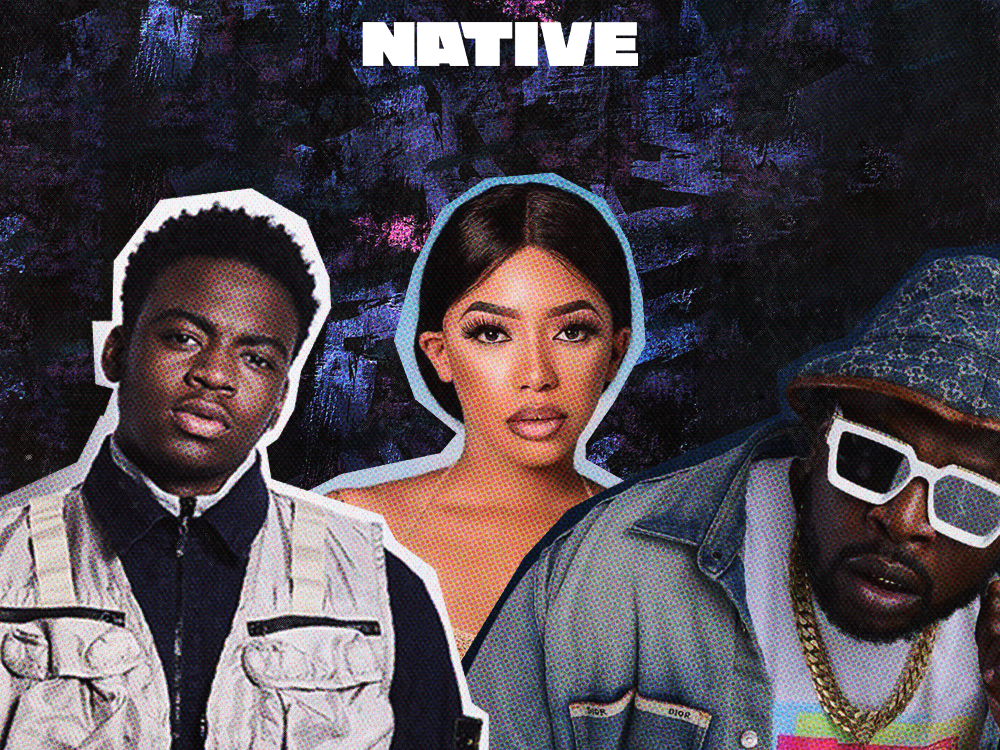
Since winning the popular TV show Big Brother Naija, the artist Laycon has carefully constructed his career. He’s appeared sparingly on features while releasing immersive projects which holds up his cred as a skillful rapper. ‘Bioba’ follows up on that motivation, his first album since 2021’s ‘I Am Laycon’. A minimalist work with some hidden features, ‘Bioba’ however incorporates a number of cultural references, through the heartfelt verses of Laycon down to the naming of songs like “Odumodu in a Picanto” and “Peruzzi’s Interlude”. For his teeming fan base, it’s a timely reminder of the dazzling mic skills Laycon has picked up on his long journey to fame. 

xINSOMNIAC – ‘HOUSE OF X’

Israel Ajayi is a man who wears many hats. A film producer, creative consultant, graphic designer, photographer amongst other disciplines, he’s also a boundary-pushing rap artist. With his debut EP ‘House of X’, he dons the hat of xlnsomniac, a musician and curator of world-bending experiences. He collaborates across the alternative scene to arrive at the psychedelic, mosh pit-evoking atmosphere of the six-track project. The talented collective 44DB feature in the production, while the likes of Konde Oko, Wode and Atlanta-based alt-rock artist T3agray deliver vocal contributions. The result is a mesmerising body of work that would uphold the creative genius of xlnsomniac many years down the line. 

SAVAGE – ‘THAT UZERE BOY’

A fine curator who’s organised some of afropop’s most transcendental hit songs like “Rosemary” and “Confident”, Savage has released his debut album. ‘That Uzere Boy’, like its title suggests, is an autobiography-leaning body of work which shines a light on where Savage is coming from. The neighbourhood is in the Isoko South area of Delta state, one of the largest oil-producing blocs in the country. While Savage largely keeps this socio-economical context out of the album, the confidence in repping his homeland is palpable, while features like Victony, J Molley, WurlD, Blxckie, Psycho YP and many others contribute to its lived-in perspectives. 

ALPHA OJINI – ‘THE EFEMELE PACK’

Undoubtedly one of the most skilled rappers currently operating in Nigeria, the consistency of Alpha Ojini has been inspirational to the entire scene. He’s also a producer and sound engineer, thus contributing to the thematic and sonic cohesion every project has possessed thus far. On ‘The Efemele Pack’ he serves up a quick reminder of his prowess, featuring the duo of PDSTRN and Psycho YP over three tracks. The records are audibly cut from the thumping soundscape of Drill, although the stories within are ostensibly Nigerian, right from its title which references the infamous former Central Bank governor to the verses. Come for the explosiveness, stay for the narrative grit and swag behind each record. 

MAGNITO – ‘I AM DODO’

In recent years, the effortless rhyming qualities of Magnito has come to the fore. He’s scored mainstream moments through his humorous clips which are nonetheless heavy on skill, but the sometimes Hausa-speaking rapper hasn’t translated that prowess into an acclaimed project. He aims for that mark on ‘I Am Dodo’, his latest 12-track album. Going for a collaborative vision, each song features one or more artists, with some notable names including Sarkodie, Phyno, Nyanda and ODUMODUBLVCK. As usual, he uses storytelling to relay his standpoint, but the complementary efforts of the featured artists make most of them work on a song level. 

MOONLIGHT AFRIQA – ‘TALES BY MOONLIGHT’

From TV shows to playlist appearances, “Love Dimension” has been filtering into the Nigerian pop mainstream in the past few months. That growing ubiquity has translated to genuine fan love, as the Lagos-based artist Moonlight Afriqa has steadily built up his rep as one to watch out for. His debut EP ‘Tales By Moonlight’ thus arrives at the perfect time. With five songs and no features, it’s a sensitively captured project which demonstrates Moonlight’s evocative qualities. Paired with mellow production from the likes of Ozedikus and DeeYasso, records like “Ms Jailer” and “Amazing” are tender masterpieces, flexing the artist’s smooth vocals and impeccable songwriting. 

LUNGELO MANZI – ‘ADULTING ANONYMOUS’ 

Durban-born Lungelo Manzi is a peculiar artist. Consistently blurring the lines between R&B and Hip-Hop, his music evokes a vivid picture of existence in South Africa. The themes however draws on universal feelings such as love, loss and estrangement, all of which are present on ‘ADULTING ANONYMOUS’. A tightly-curated album which moves with a cinematic precision, its focus on everyday narratives renders it a homeliness it benefits from. Evocative keys and brooding vocalisations are a unifying sonic choice through its thirteen tracks, but there’s also a fine selection of drums and poignant rapping, picking up the pace at crucial moments. 


ICYMI: RUKMANI, DARKUA & MORE BEST NEW ARTISTS FROM JUNE 2023

Sean Tizzle, Harrysong & The Art of the Comeback Album

The music industry can be a daunting scene. With so much new music orbiting the scene, being consistent in the expected sense often leads to burnout. Especially when the artist is past their prime, and the focus of the mainstream audience isn’t necessarily on them. In 2023 however, a number of artists have released spellbinding albums, enlivening the soundscape of the wider Afropop scene through their relentless search to reach deeper into the motivating factors behind their music. 

It used to be that artists had a relatively short period at the top of the musical pyramid. During this timeframe, every song they drop is received with gusto, most times constructively reviewed and listened to. After the period of grace however, the audience begins to lose concentrated interest in the artist, possibly due to a number of factors: the most common is that the artist’s grasp on popular culture loosens, and imagery that was once riveting becomes lacklustre, at least in the ears of the majority. Another factor is the simpler premise of a weakened attention span, the reason why people would continue to listen to the music they’re familiar with. 


View this post on Instagram


A post shared by KINGMAKER||🇳🇬 (@iamharrysong)

The peculiar cases of Harrysong and Sean Tizzle open themselves to further scrutiny. Both artists, who became famous in Nigerian pop around the same period, were once savants of the popular tradition. In the case of Harrysong, he emerged from that most common spheres of the industry; the live band. He’d been the vocalist of a group before he met KCee of the KC Presh frame, whose efforts saw the Delta-born artist signed up to Five Star Entertainment and consequently got introduced to influential players within the music industry. 

In his prime, Harrysong was one of the most potent songwriters around. Industry insiders would attest to the fact that he wrote a majority of the hits recorded by KCee during the period, his awareness for melody and the catchy lyric almost unparalleled throughout the industry. A more noteworthy direction was the cache of hits he accrued, from the Olamide-assisted love ode “I’m In Love” to “Kolombo” and “Beta Pikin”. While the first song was delivered in the bluesy inflections of English, the latter duo were energetic and wedged into everyday narratives, ostensibly from rural landscapes where lust blurs into reality in often comic ways. 

Even years after this period, after the ubiquity of “Reggae Blues”, Harrysong still had some hits down the line. “Baba for the Girls”, “Under The Duvet” and “Selense” were released between 2016 and 2018, yet retained the musician on the popular channels of the time. However, that period also coincided with Harrysong’s exit from Five Star, a transition that wasn’t the most seamless but executed with as much grace as both parties could muster. 2019 was a defining period for afropop, and through all that change, Harrysong slithered into the cracks. He continued to release music, mostly singles, but none of them made a solid mark. 

It’s a similar predicament for Sean Tizzle. Perhaps his story is even more poignant, considering the situations surrounding his breakout. After making his entry with the era-domineering “Sholee”, a lot of eyes and ears were on the youngster. His creative partnership with D Tunes birthed a number of hits, including “Perfect Gentleman”, “Loke Loke” and “Igi Orombo”. The latter two songs featured 9ice and Tiwa Savage respectively, a sort of respectable nod from seniors in the game. Like a fine dish, the music of Sean Tizzle was savoured by everyone. 

Winning the coveted Next Rated at the 2014 Headies over a stellar cast which included Burna Boy, Phyno and Seyi Shay, a lot of expectations were naturally placed on Tizzle. Quickly proving his quality, ‘The Journey’ was released, a classic body of work that captured brilliantly the peculiarities of its era. Listening to the album now feels like entering a time machine, carried on the lovely old school vibes that Sean Tizzle embodied. 

However, the period of ubiquity for Sean Tizzle was even shorter than Harrysong’s. Some have alluded to his falling out with key collaborators like D Tunes among others, others suggested his pride was responsible for his subsequent unpopularity, but if there’s anything the Nigerian audience has shown, it doesn’t need you to do anything particularly outlandish to fall out of love. As long as they’re others who’ve come along offering better-realised versions of the music you were once loved for, it’s almost certain the market will move on. 

So far, 2Face Idibia has been the SI unit for reinvention. Through collaborations, entering deeper into his craft to reflect his versatility, the veteran has kept his name in the conversation for the better part of two decades. The recent albums of Harrysong and Sean Tizzle demonstrate their readiness to follow in the same direction. 

‘God Amongst Men’ has fifteen songs running just over forty minutes. Perhaps a tad extensive for the current market, but Harrysong makes it worth the listener’s time. He doesn’t execute this through divorcing his entire style, rather parsing his trademark flourishes through the prism of curating a contemporary experience. 

The titular opener has a sombre minimalism reminiscent of “recognise” off Omah Lay’s ‘Boy Alone’. In stark, revealing lyrics, he sings, “I know you don’t like me, but you don’t have a choice/ the grace of music found me, so you don’t have a chance”. Preceding tracks like “One Bottle” and “She Knows” showcase the vibrancy of Harrysong’s vocals paired alongside elements of contemporary afropop, like the bouncy drum pattern on the former and the featured acts Olamide and Fireboy DML on the latter. He cedes way for the YBNL duo, with Fireboy delivering the hook on the latter while Harrysong’s evocative vocals provide a riveting backdrop which contributes to the song’s fullness. 

“Tangerine” and “Chi Chon Thin” reveal this curatorial prowess. To be fair, Harrysong has been one of the better curators of Nigerian pop, as evident from “Reggae Blues” which still stands as one of the greatest posse cuts of the modern pop era. “Tangerine” is one of my favourites from the album; a mid-tempo cut whose sweetness is the opposite of its titular fruit, the chorus is a remarkable utilisation of words. “I ask for something/ Something tangible, this na tangerine; I hope I’m capable, you’re just too good to be true,” he sings with infectious lightness. The latter features Kolaboy of the “Kolapiano” fame, and he brings that Igbo music flavour.

It’s not hard to see when an album works. The pacing in ‘God Amongst Men’ is sustained, through the deliberate pairing of bops and slow tunes. A song like “Madingo” combines both sensibilities, its production the most striking in an album full of well-produced records. Ending the project with “My Story”, Harrysong calls upon the storytelling technique that’s worked so well for him in the past. Recounting tales from that era, and also his recent past, gives the project a humane touch after all, a streak of humility amidst the pop flagrance. 

Similarly, Sean Tizzle returns to mastered elements. As demonstrated on ‘The Journey’, an understated broodiness lies in his vocals. Even when he’s singing about colourful things like love and debauchery, the restrained husk gives a sweetly dark feeling to every lyric. Hence he’s always had the vocal range best suited for reflective stories, and early into ‘Dues’ he gets into that zone.

“Al Barakah” immediately accounts for his absence on the scene, a reggae bounce setting Tizzle off on his thoughtful spree. Accounting for his perception in the public, and how anticipation built and collapsed over the nine years since his debut, it’s a very potent opener. The chorus yet leaves an optimistic taste for the listener, shaping up the rest of the listen well. From “Witness” to “With You”, he doesn’t let the ball drop, doubling down on the bops as eagerly as he reaches into self to unearth fresh stories. “And if you never see things, make you no go talk say you dun see things,” he sings in the former, set by the melodious strings and measured drums evoking a sparse Highlife feel. 

The production here is stellar, suggesting that the artist opened his studio and process to talented young producers. Sometimes what causes sonic stagnation isn’t merely due to the artist, but also the producers he worked with. Nas hadn’t released an album in a while then he met Hitboy and he released four albums in two years, including the celebrated ‘Kings Disease’ trilogy. The beats on ‘Dues’ are riveting and colourful; well mixed and mastered, the vocals of Tizzle emerge the most beautiful it has in years, perhaps at a level that even supercedes ‘The Journey’. 

A fine sonic trio emerges on “Extraordinary”, “Focus” and “Dance”. Mellow drums are the main element in the first, its mood satisfied; the second picks up the pace, adapting Fuji drums amidst the serene loops; concluding the run is the song combining both tempos, carried with Congolese-style guitar playing as Sean commands the dancefloor. 

At just thirty five minutes, the album is direct and deceptively simple. As reflected on its artistic cover, Sean Tizzle doesn’t just relay stories of strife; he’s as willing to soundtrack the more joyful moments of his life. In that way, ‘Dues’ has a tonal complexity that contributes deeply to its richness. “Adofo” is a late album excellence; interpolating Lionel Richie’s African-themed “All Night Long,” its stripped sound assumes the soothing feeling of water after hours of playing football. Ending the album with “Sean Plenty” and “Paid My Dues”, there’s an endearing humanity whose inflections are accentuated by the production. Background vocals and horns enliven the former; shekeres and reflective keys do the latter, as Tizzle flexes his falsetto with a measure that pulls off well. A goobye hug worthy of prime Nollywood. 

How then does an already legendary artist reassert dominance? The methods are variant, the possible executions countless, but 2023 has also witnessed elaborate dances from the masters, as they offered sophisticated versions of their favourite skills while showing off the new ones they’ve newly picked on. 

I first heard Baaba Maal on the grossly underrated EP ‘Johannesburg’ from Mumford & Sons, who recorded the five-track project with Baaba Maal, the indie South African band Beatenberg, and The Very Best. Ecclesestial in parts and transformative as a whole, Maal’s powerful vocals formed its most evocative sections, such as the opening on “There Will Be Time” and the chorus of “Ngamila”. By the time I came around to him, a lot of time had passed—although during this time, he hadn’t released any new body of work.

‘Being’ was thus an opportunity to witness the Senegalese master in real time. As promotional materials had revealed, he was stepping undaunted into an electronic soundscape. I was curious to know how the blend with his signature folk would be executed; early on, he replied with an almost smirk, in the first song “Yerimayo Celebration”, a glorious, rapturous record which seemed like the start of the village’s most important festival. “Freak Out” featured The Very Best, with drum progressions that wouldn’t sound out of place in a Beyonce album. Even the inflections from Baaba are steeped in a rap-evoking cadence, carried on an effervescent energy that’s recognisably youthful. 

At just seven songs, the individual complexity of each record however lends an epic feeling ‘Being’. In rare moments, the pomp is set aside for sensitivity, such as on “Ndungu Ruumi”, where a somber spiritual source enlivens the inflections of Baaba. The rootsy guitar is more audible than it’s been all project long; even when drums enter, it’s with an occultist mystique, the soundtrack of a procession that leads to an otherworldly experience. “Casamance Nights” also has a stripped atmosphere, portending the well-achieved mixture of the familiar and the exotic which Baaba Maal pulls throughout the album.

In contrast, TY Bello sticks to established techniques on ‘HEAVEN HAS COME’. As always, gospel’s place in the canon of African music cannot be understated or even put into question. Before pop stars went pop, they were in church, learning standard vocals and using instruments they couldn’t otherwise afford or maintain. Thus it’s remained deeply ingrained in the consciousness of Africans, in this particular case, Nigerians.

Whereas her previous album utilised a big feature room, Bello also did the same here. However, given the natural ease of playing together that’s on audible display, the choices reveal themselves as aspirational: they aim to evoke a choir’s grandness. Pop-leaning acts like Johnny Drille, Nosa and Folabi Nuel feature here, as well as purist savants Dunsin Oyekan and Tope Alabi. Most of the artists are relatively on-the-rise, revealing the open-minded interactions that formed the creation process of the album. “He Fights For Me” and “Loved By You” are some highlights from its one-hour plus runtime, vividly encapsulating its majestic, yet lived-in atmosphere. 

That open-mindedness brings us to the the most popular of them all, Davido, whose ‘Timeless’ has rightly been dubbed a potential classic. Its greatness owes a lot to the grand staging of the album, its rollout which effortlessly blended into the artistry. Announcing a comeback with “OVER DEM” has a number of the elements that makes Davido who he is, and throughout the album he doesn’t lose focus of himself. As though newly convinced of his legendary status, every word strikes with verve and emotional honesty, from the pensive themes of “LCND” to the triumphant closing note of “Champion Sound”

Comeback albums can be difficult to pull off, but these projects show it’s not impossible. In this particular context, the comeback isn’t determined solely by how long the artist dropped their last project, but also how much has changed in the soundscape since then. The absence or presence that’s gone on during their process, while the release of the album returns to place those subtle or significant shifts in perspective. 

AV Club: A Love Story & Dreamy Cinematic Thrill Converge in ‘The House of Secrets’

At the start of The House of Secrets, the year is 1999. Through a voiceover, we meet Sarah played by Najite Dede, working at her typewriter as she cooks up gossipy banter for her column about her two loved-up neighbours. Sarah sits in a room facing a window, through which she spies on the couple and their everyday lovemaking and squabbles. Sarah is a slender, slightly grey-haired woman who is attended to by a small group of family members: her niece Esther (Anee Icha) and her young son, their maid Kamsi (Funlola Aofiyebi-Raimi) and another relative Daniel (Emeka Nwagbaraocha). They are joined by Dr Badmus (Femi Jacobs) and, through an effective enter-and-exit of the characters, we understand that Sarah suffers from memory loss, which these other characters desperately need her to overcome. After an intense panic attack, the scales fall from both Sarah’s and our eyes: we are in modern-day Nigeria, twenty years away from 1999.

This sleight of hand is the catalyst for Niyi Akinmolayan’s psychological thriller that premiered exclusively on Amazon Prime Video. Through flashbacks distinctly demarcated by monochrome and colour photography, the past and present intersect as the lives of a younger Sarah and her husband (played by Efe Irele and Shawn Faqua) are laid bare in a whirlwind of romance, patriotism and death. Much of Akinmolayan’s acclaim as a filmmaker has come from the box office-smashing romantic and comedy flicks The Wedding Party 2 (2017), Chief Daddy (2018) and Prophetess (2021) but he’s no stranger to dramas and thrillers, as 2019’s The Set Up and Elevator Baby prove. What The House of Secrets does differently is its infusion of film noir, encapsulated by the dim lighting and melancholic tone of the black-and-white scenes.

After Najite Dede’s Sarah is no longer fooled by the antics in the opening scenes, she realises that an enemy from the past still lurks in her present, in the person of General Sanni Sofa (Keppy Ekpenyong) who is the favourite for the forthcoming presidential elections. Sofa has a secret that can damage his political ambition and only Sarah knows of it. Aofiyebi-Raimi reveals herself to be Mrs Banke Lawal, the founder of an NGO that seeks to improve the chances of Mrs Durosimi Williams (Moyinoluwa Olutayo) with Sofa’s secret in the election. Sarah, with her hazy memory, is at the centre of this power play that could influence the trajectory of a nation.

Najite Dede is one of the standout performers in The House of Secrets. She carries her role with a subdued yet dignified poise. Her witty voiceovers and dialogue display a young-at-heart persona, and when snatches of the past begin to converge, her confusion and anger intermingle on her face, leaving her both enraged and helpless. An earlier one-on-one scene with Femi Jacobs’s Dr Badmus (who really is Dr Jide) is remarkable. The intensity of Dr Badmus’ interrogation (worsened by the screech of a train) and Sarah’s defencelessness are evidence of the incredible talent of both actors. Scene after scene, Najite Dede moves with different emotions and effortlessly embodies one after another.


View this post on Instagram


A post shared by Prime Video Naija (@primevideonaija)

While Najite Dede’s Sarah pushes the narrative forward, it is her younger version and Panam Peters that are the heart and soul of The House of Secrets. Efe Irele and Shawn Faqua’s on-screen chemistry is one of the best in Nollywood’s recent history. Their meet-cute, enhanced by a soaring score, is one of the film’s best scenes. After they fall in love, Panam Peters, a soldier and Sarah, a secretary at the post office, marry. Through Barnabas “Barny” Emodi’s camera lenses, Panam and Sarah’s marriage is dreamlike, full of kisses and hugs and affectionate words. It’s moving and tender, with both actors complementing each other yin and yang.

When trouble comes from Panam’s associates in the military, Sarah and Panam’s marriage, now blessed with a coming child, is rocked but it never loses its on-screen charm. Sarah and Panam’s story arc bears similarities with Izu Ojukwu’s 76 where Ramsey Nouah’s Joseph, also a member of the military, is aware of a dangerous secret and must protect his pregnant wife Suzie (Rita Dominic). While both films differ in their presentation, the two lovers in the films are the winning cards in their portrayal of a love threatened by evil politics. 

Aside from the strong performances from the cast, The House of Secrets also wins on a technical basis. Emordi’s cinematography and Akinmolayan’s direction, most especially in the black-and-white scenes, marry each other with skill and intent. A particularly impressive frame is where Irele’s Sarah is whipped into a line of seated patients in a psych ward and the scene match cuts into cups of pills. The shots are also used well in bringing the characters’ surroundings to the fore and heightening the mood of the scenes.

Where the wins of The House of Secrets lay, though, are also where its flaws arise. The actors with an identifiable catalogue of works are the ones who put in the best performances, while the rest are left to their own devices. Also, the CGI effects are poorly executed and call undue attention to themselves. The strongest moments in The House of Secrets are the scenes set in the late 90s; they shine with a lot of thoughtfulness that the filmmakers put into them. When compared to those parts (aside from the early scenes), it elicits wonder about what The House of Secrets might have been if it was strictly set in 1999.

Still, The House of Secrets is a commendable work. It shows that Nigerian filmmakers are more than ever willing to take creative risks with their storytelling. At its core, The House of Secrets is a story about the strength that love possesses to outlive fear and pain. With excellent acting from the lead stars and skilful camera work, Niyi Akinmolayan has unlocked a new creative path that promises interesting tidings.

Stream The House of Secrets on Amazon Prime Video.

What’s Going On: Senegal’s Presidential Elections, Measles Outbreak In Sudan & More

“What’s Going On” Tallies Notable News Headlines From Across The Continent — The Good, The Bad, And The Horrible — As A Way Of Ensuring That We All Become A More Sagacious African Generation. With This Column, We’re Hoping To Disseminate The Latest Happenings In Our Socio-Political Climate From Across The Continent, Whilst Starting A Conversation About What’s Important For Us To All Discuss. From Political Affairs To Socio-Economic Issues, ‘What’s Going On’ Will Discuss Just That.


SENEGAL’S PRESIDENT ALLEVIATES FEARS OF A THIRD TIME IN OFFICE

In a live official recording on Facebook, Senegal’s incumbent President Macky Sall resigned all attempts at running a third term in the country’s 2024 elections. In his speech, Sall maintained on Monday that Senegal’s constitution would have allowed his candidacy despite having already been elected to a second term in 2019. Nonetheless, Sall chose to end years of uncertainty over his political future that helped fuel deadly opposition protests last month.

President Sall was first elected into office in 2012 for a seven-year term after prevailing against former President Abdoulaye Wade, whose decision to seek a controversial third term prompted violent street demonstrations. During his time in office, Sall made revisions to the government constitution that set a two-limit presidential term per candidate. When his first term ended in 2019, Sall was reelected for another five-year term.

“My decision, carefully considered … is not to run as a candidate in the upcoming election on February 25, 2024 … even though the constitution grants me the right,” he said. He went on to ask the government to do everything possible to organise a transparent election in February.

SUSPECTED GAS LEAK KILL DOZENS IN JOHANNESBURG, SOUTH AFRICA

On Wednesday, reports reached social media that a gas leak had taken place in Johannesburg, South Africa. According to BBC, medics shared that a nitrate oxide gas leak caused the death of 17 people through toxic chemicals. Current reports now state that police and forensic investigators have said the scene of the toxic gas leak is still active and have advised people to stay clear of the area.

A local resident of the informal settlement blamed the incident on an illegal mining operation in the area but these claims are yet to be verified. This won’t be the first time that such an occurence would happen in the region. According to loved ones of the victims, a similar leak happened in the past year. In December 2022, a gas tank explosion occurred in the same township, claiming 41 lives and destroying several homes and vehicles. The Gauteng Province Premier, Panyaza Lesufi, shared in a statement “The scene was heartbreaking. Whether the illegal miners are among the deceased, that is not yet known.”

Nitrate oxide gas—colloquially known as “zama zamas”—is commonly used by illegal miners in the country to extract gold from soil stolen from abandoned mine shafts. According to Nomsa Maseko, BBC Correspondent Johannesburg, all victims were found within a 328ft radius of the crime scene. Currently, 15 people are receiving treatments in the hospital, three of which are in critical condition.

MIGRANT ATTACKS IN TUNISIA

On July 4th, dozens of migrants—majorly women and children—were left injured after brutal attacks in Sfax, Tunisia. According to official reports, the medical team on ground confirmed that inhabitants of the area were attacked with ‘swords’ while others were flung off storey buildings following the brutal death of a 41-year-old Tunisian citizen by stabbing.

During the protests, several Tunisians blocked the streets with burning tires demanding that all illegal migrants be evicted from their homes—according to Agence France-Presse. Several videos circulating social media have shown the police urging residents to depart their homes and take temporary refuge in their police vehicles. According to some local human right groups, the police have detained some migrants and deported them as far away as the Libyan border more than 200 miles away.

With a population of 12 million, Tunisia migrants occupy 0.2% of the population which translates to roughly 21,000 migrants from other parts of Africa. Many attribute the rise in recent racially motivated attack to a statement made by the country’s president, Kais Saied, which alleged migrants introduced violence and “criminal plot” in an attempt to change it’s demographic makeup.

MEASLES OUTBREAK IN SUDAN

According to CNN, at least 13 children have died in recent weeks during a suspected measles outbreak at internal displacement camps in Sudan’s White Nile state, amid conflict between the country’s two warring factions over the weekend. In a series of tweets explaining the outbreak, MSF Sudan said: “Sudan’s White Nile state is receiving increasing numbers of people fleeing the conflict. Nine camps are hosting hundreds of thousands, mainly women and children. We are receiving sick children with suspected measles every day, most with complications.”

The NGO also reported that it had received a total of 3,145 patients to the two clinics in the month of June, adding that “as more people arrive, there’s an urgent need to increase assistance, scale up services like vaccinations, nutritional support, shelter, water & sanitation.”

Featured Image Credits/The NATIVE

Essentials: Rukmani Creates Honest, Relatable Music with ‘Angel on the Run’

I’m a baddie but a good girl in my soul,” Rukmani sings in 2022’s “Human Blood.” Across her budding discography, there exists a fine line between what constitutes good and bad; yet, an overarching theme that appears is Rukmani’s acceptance of her choices and its consequences. On 2021’s “Satori,” a story of youthful exuberance and thrill-seeking, she sings, in an admittance of her fallibility, “And I know that I make mistakes/I acknowledge them today/And I let it go/It’s part of growth.”

Growth is fully evident in Rukmani’s debut project ‘Angel on the Run,’ a well-polished effort with which she strengthens her blend of R&B, Soul, Hip-Hop and Afropop. The seven-track EP is home to her clearest ruminations on love and life, as well as a headstrong belief in her duality to be both good and bad on her own terms. On the lead single, “Gateway Drug,” Rukmani pledges allegiance to the intoxicating effect of sex. For her, the act isn’t just an exchange of fluids; it is the strongest glue between her and her lover.

Born and raised in Port-Harcourt, Rukmani began her career making freestyles and song covers. Her penchant is music that wears its feelings on the sleeve, trading mystery for openness puts her strengths and weaknesses in the spotlight. “In my opinion, everything got a purpose/Would’ve written me off/Maybe cos I was rough in my teenage pages/Should’ve never done drugs/But when I see that shit today/I swear to God e no dey move me,” she sings on “Purpose,” a track about making peace with mistakes. Throughout ‘Angel on the Run,’ it’s Rukmani’s honest writing that is the greatest gift: it paints her as no angel or saint but a learning, evolving human.

That honesty also means there’s no false sense of modesty with Rukmani. On “Shege,” she threatens her lover with great, sex-filled times, with a promise to “intoxicate your system.” She glides over the BeatboyJw-produced mid-tempo with sultry vocals that match the intentions. When she adds, “Bad girl no be bad person,” it’s clear that, for Rukmani, sex shouldn’t breed shame but instead be fully enjoyed by two consenting adults. Aside from sex, romance and its mushy feelings are also on the cards.

On “So Fine,” Rukmani expresses undying affection for her lover; she sings of sometimes grappling with insecurities as to whether he still feels the same way she feels about him. Duduboy adds to the professions of love, singing, “I don’t want another place to lie/If it’s not you then I no do oh/Baby for your matter I go fight oh/If you be my poison I go die put.” Those sentiments also appear on “Lovin” as Rukmani announces, “Your loving dey fuck up my system.” Both songs are wholesome homages to the everyday emotions of loving and caring for one another.

While ‘Angel on the Run’ proudly wears its R&B emblem, it also carries elements of global genres that appeal to Rukmani, most especially Hip-Hop. Whether it’s the boom bap of “Lovin” or the Trap beat on “Purpose,” Rukmani’s rapper-style flows pay obeisance to Hip-Hop. With the assistance of the producers, ‘Angel on the Run’ is superbly curated to showcase Rukmani’s skills and influences.

My loyalty/Can always be trusted/By you/If you want to,” Rukmani sings on “Loyalty.” She communicates her thoughts to her love, urging him to choose between his fears and her commitment. She then adds: “I’m a bad girl, agreed/But not what your friends gist.” On “Softies Vibe,” she is clear about her demands on life: loving those who love her and loving herself even harder.

‘Angel on the Run’ is an impressive debut. With a lot of heart and talent, the June 2023 uNder alum crafts a space for herself as a singer who is not afraid to pair her art with her perspectives. It leaves a freshness on the listeners’ minds about her rawness and the creative ways she communicates her thoughts. Rukmani is not to be slept on.

Stream ‘Angel on the Run’ below.


Omah Lay, Wizkid & Nigerian pop’s healthy relationship with the deluxe album

There aren’t too many debut albums in Nigerian pop as fully realised as Omah Lay’s ‘Boy Alone’. In fourteen songs, the Port-Harcourt-raised singer and songwriter deals with the strain myriad of grim experiences have had on is mental health, cycling through indulgences to cope with pre-fame trauma, glamorously pondering his part in lust-driven situations, rueing the aftermath of being jilted, and seeking the bliss of wholesome relationships. There’s no clean resolution, the reward is in how immersive the process is.

At the risk of hyperbole, ‘Boy Alone’ is a classic. To be far more modest, it’s an undeniable masterpiece. The album matches the stakes with a level of execution that is as stunning as it is idiosyncratic, excellence so lived-in it could only have come from its creator. Take the slow-build smash hit, “Soso,” a superb feat in pairing personal tumult with a rolling groove. It’s not misdirection, even if the utter catchiness of Tempoe’s production is what holds the ear first, but it’s impossible to not be affected by the tremble in Omah Lay’s voice once the misery in his lyrics become pronounced. The pathos at play is striking.

Eleven months after its release, Omah Lay gave ‘Boy Alone’ the deluxe treatment, adding six songs to the tracklist, including the Ozuna-assisted “Soso (Remix).” Remarkably, parsing the five new songs feels is rewarding, like watching the final episode of a beloved show. The intent, of candid expressions, remains the same but you can hear the singer finding some semblance of personal paradise. “What is the reason you do not have your own peace of mind?” he asks on “reason,” a song that can be described as a moment of clarity and uneasy acceptance. On the R&B bop “imagine,” with British rapper Aitch, he holds no grudges about a relationship fizzling out, while his lovestruck performance on “joanna” leans on the Ikwerre intonation that gives his melodies their unique patina.

In its brilliance, what makes ‘Boy Alone: Deluxe Edition’ notable is in how it comes across as an antithesis to the perception of album deluxe versions in the 2020s. Before recent years, deluxes were often issued as a novelty tool for repackaging an album, especially when it’s tied to an event long after its original release. A lot of the time, the event would either be a re-release of the project in a different territory from the country or continent where it was released—which happened when sales of CDs where the in-thing—or an anniversary edition with additional songs to get people interested. Now, its form and function as been retooled, even if the object remains promotion.

As with many game-changing things in music for the last few decades, it started with Hip-Hop. In early March 2020, just before the lockdown measures of the coronavirus pandemic set in, Philadelphia native Lil Uzi Vert dropped his long-awaited sophomore LP, ‘Eternal Atake’. For an album whose release route had taken two long years, from announcement to eventual release, Uzi ensured there was a lot of music on the project—18 songs amounting to over an hour of run time. But that wasn’t all: A week later, he shared the 14-track LP, ‘Lil Uzi Vert vs. the World 2’, as the deluxe edition of ‘Eternal Atake’.

The deluxe addition again drew a lot of attention, partly because it felt like an appropriate Side B and it was the sequel to the mixtape that helped drive Uzi into rap stardom. Unlike the solitary feature on the main album, the new additions were studded with contributions from rap stars, and many of the songs were reupholstered leaks that had been floating through the internet during the period of feverish anticipation for new Uzi music. Since it was basically a part of a pre-existing album, ‘Lil Uzi Vert vs. the World 2’ contributed to the sales and charting position of ‘Eternal Atake’, ensuring that the album would stay on Billboard’s No. 1 spot for two weeks.

Seeing Uzi’s manoeuvre and its ensuing success, it didn’t take long for rap artists and label to take a similar path with new releases. Notably, Atlanta rapper Lil Baby added six new songs to his sophomore album, ‘My Turn’, nearly three months after its late February 2020 release, with eventual hit songs like “We Paid” and “Social Distancing” re-upping the album’s critical value and commercial momentum through a rearranged tracklist.

More rap artists would add to the trend: Canadian rapper Nav added a new project, ‘Brown Boy 2’, three days after the release of ‘Good Intentions’; Gunna tacked eight songs to the original 18-song effort, ‘Wunna’; there were seven new songs on Lil Durk’s initially 15-track ‘Just Cause Y’all Waited 2’ over a month after its drop; and even the usually less-is-more rapper/producer Earl Sweatshirt added two new cuts to the inscrutable ‘Feet of Clay’, nine months after it dropped in late 2019 release. These days, it’s always expected that rap stars would deliver a near-instant deluxe with additional tracks, following the release of a new project.

This norm wouldn’t be possible without the omnipresence of streaming as the primary channel of music consumption. In the era of oversaturation and pennies-per-stream, deluxes improve the chance for commercial success, sustaining an album’s momentum beyond the instant gratification of the release weekend, and helping artists’ prominence at a time when attention spans are incredibly tiny. At that, adding songs to a project is often an exercise in bloat. Also, the additions are often unreleased material from the cutting floor, which means there’s barely any quality upgrade and very little rewards from listening to a deluxe album.

As shown by Lil Baby, expanding an album with supplementary material only really works when the songs come across as tangible additions—i.e. newly recorded stuff specifically for the deluxe. It’s the same ideal you can glean from ‘Boy Alone: Deluxe Edition’, where the tracklist isn’t necessarily rearranged but the payoff from placing all six songs at the top is significant. (In addition to its critical acclaim, “reason” has been the No. 1 song on the TurnTable Charts for two straight weeks now.)

Thankfully, it’s this ethos, of meaningful adding to an already released project, that has made the several deluxe projects in Nigerian pop quite the worthwhile affairs. Considering the continuous influence of American Hip-Hop culture on urban Nigerian music, it was only a matter of when—and not if—the trend of deluxe drops would become a thing over here.

It is worth nothing, though, that the deluxe album wasn’t an entirely alien concept in Nigeria before these last few years. Burna Boy’s 2013 debut album, ‘L.I.F.E’, was furnished with additional tracks when it was being pushed internationally, while M.I Abaga’s classic sophomore LP, ‘M.I 2: The Movie’, had an expanded version on iTunes that featured skits attached to several tracks, which tied into a cohesive sketch. In fact, you could make the argument that video collection albums were a form of deluxe releases. In the 2000s, artists like 2Baba (fka 2Face Idibia) and P-Square released Video CDs containing visuals to select songs from their albums, as a promotions tool.

With Hip-Hop retooling the function and approach to deluxe drops, it’s unsurprising that the same thing is happening in Nigerian pop—although the scales are different. Its adoption over here, however, has been far more wholesome than the data dumps that have defined many deluxe endeavours in American rap. There’s a thoughtfulness and the results have been overtly positive, even if it’s a small sample size so far.

In late 2020, soul-fusion singer WurlD shared the deluxe edition of his third EP, ‘AFROSOUL’, six months after its original drop. The expansion involved two new songs: “Bossy,” a punchy cut featuring a verse from British-Nigerian rapper Kida Kudz and a scene-setting voicemail by DJ/vocalist Cuppy; while “Chop N Pray” is a sultry track that leans into WurlD’s well-known ability to craft blue-eyed romance songs. “This isn’t something that’s really popular in Nigeria, but I’m a very detailed artist with a wider perspective,” he told The NATIVE then, also citing the pandemic and lack of live performance opportunities as a factor.

Formerly based in Atlanta, arguably the trend-setting centre of rap for well over a decade, WurlD’s deluxe inspirations are plain, but the restrain in adding just two (then recently recorded) songs to a set that was originally 7 songs is admirable. Considering it was the first main foray into this style of deluxe re-release since American rap made it a thing, ‘AFROSOUL Deluxe’ is a strong tone-setter that frames how several Nigerian popstars have figured out how to expand their already released projects.

In 2021, during the summer of “Essence,” Nigerian global superstar Wizkid added four songs to his career-defining fourth album, ‘Made in Lagos’. Dropped in the heart-rending aftermath of the EndSARS protests in late October 2020, ‘MIL’ was a warm ray of sunshine piercing through a gloomy period, an album that portrayed Wizkid’s luxurious lifestyle and breezy ideals to delightful results.

Months later, the Tems-assisted global smash hit, “Essence,” received a Justin Bieber remix, becoming one of the four songs to be added to ‘Made in Lagos: Deluxe Edition’. There’s very little risk of hyperbole in describing ‘MIL’ as a classic LP. It’s a seamless listen with the kind of outsize commercial success that’s pacesetting, especially within the context of Nigerian pop’s global rise. Any deluxe additions that were less than stellar might have negatively impacted the album’s legacy.

In addition to the aforementioned remix, there’s Wizkid cooing sweet nothing on the pillowy Tay Iwar co-write, “Steady,” a show of sensual bravado on “Mood” with BNXN (fka Buju), and an effortless banger in the P.Priime-produced “Anoti.” All three entirely new songs were recorded after ‘MIL’ originally came out, and they injected even more freshness to a set that already exuded Teflon swagger. As one of the brightest shining superstars in Afropop, Wizkid had set a bar for how well-intentioned and well-executed a deluxe could and should be.

As with many things that involve the younger vanguard of superstars in Nigerian pop, the template will always be tweaked. Over a year after she released her fabulous 2021 debut album, ’19 & Dangerous’, Ayra Starr re-upped the project with six new songs and a reorganised tracklist. The new additions included a handful of collaborations, like the Kelly Rowland-assisted remix of the viral slapper, “Bloody Samaritan,” a refix of the deep cut “Lonely” with Zinoleesky, and reuniting with Lojay for “Running.” It also housed the boastful, A Colors Show-premiered “Ase,” while the pre-released single, “Rush,” is an undeniable gem in her catalogue.

In temporal contrast, street-pop luminary Seyi Vibez dropped the deluxe version of last year’s ‘Billion Dollar Baby’, six weeks after its release. This was amidst the heat of the wildfire success of “Chance (Na Ham),” which significantly improved his mainstream visibility and also served as the point of contention for copycat conversations. The five newer songs, added to the bottom of the original tracklist, only furthered his notoriety.

Doubling down on that single’s rapid fire melodic rap style, deluxe cuts like “Psalm 23” and “Ogochukwu” strengthened the idea of a singular artistic vision and deepened his bond with a wider range of fans intrigued and appreciative of the slang and Yoruba cultural nuance in his lyricism. Also, the deluxe is the launching point for an ongoing prolific run that has seen him drop an early 2023 EP and two recent albums in back-to-back fashion.

There are no set rules for how to curate and deliver a deluxe: the space for new additions could be fourteen months or six weeks, while the tracklist could be rearranged or simply consolidated. The most important thing is that it doesn’t play like unimportant work or dull the acclaim of the album from its initial release. Best case scenario is that it enhances value, which is what Rema inarguably did with ‘Rave & Roses (Ultra)’, dropped 13 months after the Mavin superstar’s long-awaited debut LP appeared.

With six added songs and an adjusted tracklist, the singer calculatedly resets the front-to-back experience of the project, adding a new dimension for listeners to take in its infatuation-crazed euphoria and youthful zest. While it capitalises on the slow-build global success of the Selena Gomez-featuring “Calm Down (Remix),” that’s far from its only gambit. The shimmering banger, “Charm,” has emerged as a runaway hit since the deluxe release, while the hustle-to-triumph bluster of “Holiday” quickly drove the single to national ubiquity.

In a somewhat similar move, self-proclaimed emo-Afrobeats singer CKay added four songs to his debut album, ‘Sad Romance’, slotting the new additions in pairs within the already existing song order. For an album that moves in emotive portraits, the new songs stretch out sections in intriguing ways. The Joeboy-assisted “capture my soul” and pre-released “nwayi” extend the lovestruck sentiments that lead into the hurt and Lothario rebound middle of the album, while “NNEKA” brings Tekno along for the lust-driven ride and continues with the Amapiano fascination of preceding standout cut, “WATAWI.”

‘Sad Romance (Deluxe)’ hasn’t spawned any runaway hits yet, but it maintains Nigerian pop’s healthy relationship with the deluxe album trend. (It probably hasn’t helped that it came out in close proximity to Omah Lay’s deluxe and on the same day as Asake’s recent album.) Till now, there’s only been a handful of deluxe releases, which makes it easy to speculate that there will be more of them in coming years. It would be interesting to see more non-major label artists add to projects they’ve already dropped—or plan to drop—which could widen the possibility of what Nigerian artists could do with the deluxe format.

The uncertain part is whether the streak of excellence will continue. If the results continue to unfold in the way we’re accustomed to, a new global standard might start from Nigerian pop.


ICYMI: CKAY, OMAH LAY & THE RISE OF EMO-INFLUENCED NIGERIAN POP

The Bob Marley ‘Africa Unite’ Album Raises New Questions About Posthumous Projects

Between 1978 and 1980, Bob Marley visited several parts of Africa. The visits had a musical purpose; he performed most famously at Zimbabwe’s independence, upholding the tenets he’d relayed on “Africa Unite,” his famous song about the continent and the potential gains of embracing its oneness. The visits—to Ethiopia, Gabon and Kenya among other places—however had an historical undertone, highlighting the reasons why the estate of Marley is releasing an African-themed album decades after the legend’s passing. 

Posthumous albums are a relatively old concept in music. Life, so often unpredictable, can strike at the oddest moments. An artist is creating music, pulling their energies together. Suddenly death comes and all that’s left is the work. The estates of artists then take on great responsibility in putting out the music they’ve created, handling the essential task of a roll-out and creating the narrative behind the music. 


View this post on Instagram


A post shared by Bob Marley (@bobmarley)

In the nineties, two of the biggest stars Hip-Hop has ever seen died, and in very brutal public ways. 2Pac and The Notorious B.I.G were stylistic opposites of each other, but unified by the harsh rattles of a gunshot, their deaths had to mean something greater. ‘Makaveli – ‘The Don Killuminati: The 7 Day Theory’ was outsized in embracing the militant, sometimes erratic ideals 2Pac embodied in his later life. On the other hand, ‘Life After Death’ upheld B.I.G’s notorious streak as a detailer of grim stories, peering into the darkest parts of his existence and also the soul of society. 

Both albums were well-structured and well-timed, and contributed greatly to the mythos of the rappers decades after their death. Similarly, Otis Redding’s ‘The Dock of the Bay’ extended the Soul artist’s narrative vision, embedding that great tragic voice into the hearts of generations to come. In recent times, posthumous albums such as J Dilla’s ‘The Shining’ and Mac Miller’s ‘Circles’ have struck a poignant final note for both artists, completed by their close collaborators and thus wielding an affinity for the art, first and foremost. 

In contrast, the music of Bob Marley never left the public consciousness. Just three years after his passing in 1980, his first posthumous album ‘Confrontation’ was released. With his band members from The Wailers then alive, the music was as pure a reflection of his standards as it would have been were he in the studio. Perhaps the most deliberate of the 20th century greatest artists, his estate has also continued to burn the flame of his legacy, through concerts and collaborations. 

The forthcoming ‘Africa Unite’ album is however quite important to his legacy, in a quite powerful way also. Given the well-explored links Marley had with the Black continent, the collaborative work shines a light on the contemporary relevance of African music. Studying historical and cultural links, one sees the presence of blackness inherent in many sounds from around the world, and as the estate of Marley is showing, a return has been due for a while.

Rastafarianism is the most popular leftist ideal in Jamaica. Other Jamaicans have stereotyped them in the past, called them “dutty rastas” to suggest poor hygiene, but they’ve continued to grow. Currently, there are close to a million people around the world who identify as rasta. And while some describe it as a philosophy, and others swear it’s a religion, its roots have never been up for debate. Emerging from a spur from the eminent Pan-Africanist Marcus Garvey for all Black peoples worldwide to return to Africa, the movement would grow to have spiritual dimensions. 

It took messages from the sacred Ethiopian text Kebra Nagast, which is acclaimed as the oldest in the world. When a young Bob Marley was growing up in Nine Mile, violence was the credo of the streets. Violence of the mind manifested gruesomely on the body, as guns and knives razed through its miraculous physiology. A message of peace wasn’t just required by the era; it was a necessary doctrine, which explains why it was favoured by young Jamaicans. 

Marley was one of those people, called to its practices by the preacher Leonard Howell whose organisation of Rastafarian on the islands began in the 1930s, which were the singer’s normative years. For people who donned the green red yellow and smoked weed to be one with the universe, Africa wasn’t just an idealistic premise. They were in tune with its physicality, after all they had come to the Caribbean from different places across Africa those many years ago, and the rhythmic sensibilities of the continent still flowed in their blood. As a result of this, the sonic make-up of Reggae is as African as it is Jamaican, a fact Stonebwoy reiterated when I interviewed him earlier this year. 

One of the most important political figures of the 20th Century was a direct link to these sensibilities. Haile Selassie was believed by Rastafarians to be a son of God; quite literally, he was heralded as the second coming of Christ, whose physical manifestation would spark great spiritual effects. Sometimes the Ethiopian president—also crucial in founding the Organisation of African Unity in 1963—rejected this ethereal reputation, but more often he sought to connect Jamaicans to their yearnings for the Africa in them. 

In 2016, Prince Ermias Sahle Selassie visited Jamaica. It was exactly fifty years after his grandfather Haile Selassie had visited the country, an arrival which “birthed” Rastafari—taken from “Ras,” which means the head; and “Tafari,” which is Selassie’s first name. The elder Selassie had engaged in discussions with elders and some years later, was actively trying to get Jamaicans to interact closely with the Ethiopian Orthodox Church. 

The music of Bob Marley imbibed these influences. From “Zimbabwe,” which was written during his pilgrimage to Ethiopia in 1978 where he sang “Every man got the right to decide his own destiny,” to the scathing anti-colonial evoking “Small Axe,” and even an upfront Rastafarian-affirming “Selassie is the Chapel,” which was inspired by the Elvis Presley ballad “Crying in the Chapel”—the prints of his Africanness was all there. It says something that the one of the most successful musicians of all time felt the peculiar struggles of Africa, and lent his voice to them. 

If done right, a posthumous album continues to write the story of its artist. Death has no power over music; both are non-physical entities, but one arises even in the presence of the other. In this case, it is music which lasts the longest, unencumbered by the great black hole that is absence, that is the physical frame of Marley and all the musicians taken from us too soon. 

What the Marley estate has been doing sets a good precedent. By aligning with the concept of uniting contemporary African artists, it advances the philosophical vision of the man called Tuff Gong. There is continuity in the framework of what Marley is supposed to mean, because it’s inevitable that he would have embraced the continent’s superstars were he still creating. The phenomena of the internet makes it all the more possible. 

So far, ‘Africa Unite’ has reflected genuine artistry at play. Quite obviously, the very presence and figure of Marley would inspire nothing but respect. As much as Bob Marley loves Africa, it is indisputable that Africans love the man. We know all his songs by heart, passed down to us from our parents, who were sometimes teenagers when that glorious Reggae bounce came into their lives. 

In February, Sarkodie was the first guest on the album, contributing his incinerating flow to a reworked version of “Stir It Up”. The classic lovers ode was coloured with a mellow drum base, providing the veteran Ghanaian rapper the verve his direction needed. As a result, it becomes a new record, rinsed in the glow of collaborative consideration. Likewise, the new “Waiting In Vain” coerces heart-wrenching longing from Tiwa Savage, its curious guitars met with mellow drums and well-arranged synths and sax. 

This past Friday, the lead single from the album was released. I must admit here; “Three Little Birds” is one of those Bob Marley songs that’s been a prayer throughout much of my life. More than a song, it’s a place where I go for calm and consideration, and every rock on the shore of my life is washed away by the sea of Marley’s voice. New beginnings; that’s what the song represents to me. Thus it was more than comforting to hear what Oxlade and Teni did with the record.

Embracing a humane quality in their direction, they’re in tune with the song’s core value. In the lead role, Teni’s bright vocals bend with palpable appreciation, while Oxlade’s usual vocal flamboyance reaches the sufficient measure to add a triumphant edge. It’s now three for three, all excellent songs with flair and focus. The album rollout has also incorporated a rich visual identity, from the cinematic splendour of the “Stir It Up” video to the colourful cover designs and lyric videos. 

It is scheduled for release on August 4th, supposedly in prime time to dominate conversations going into the rest of the year. However, one can’t help but feel this album is not that kind of album. Rather, it serves a spiritual function, and as well a strong political message, of the potentials of collaboration across colonial influence and borders. 

A tracklist of ten songs has been confirmed to Dancehall Magazine. It features Rema and Skip Marley (appearing together on the angsty “Dem Belly Full”), the South African artist Ami Faku, the Ghanaian hitmaker Afro B, Zimbabwean musicians Nutty O and Winky D, and Nigerian music mainstays Davido, Ayra Starr and Patoranking. The song chosen for each musician reflects something they’ve adapted in their own music, portending a narrative and stylistic coherence that the album is bound to benefit from. 

“With Africa Unite, Bob Marley’s influence continues to resonate, bridging the gap between the past and the present,” said the family label Tuff Gong in a statement. “The album not only showcases the global reach of Bob Marley’s music but also celebrates the rich tapestry of African rhythms and melodies. By intertwining reggae’s soulful vibrations with the infectious energy of Afrobeats, Africa Unite embodies the unity and spirit of collaboration, mirroring the late artist’s vision of a harmonious world”. 

One shouldn’t rush to think that all posthumous albums are flawless, however. Each artist has distinct sensibilities, and it’s up to the estate to tap into them as best as they can. Often, reaching out to collaborators is the most frequented path, although in the absence of the unifying creative factors the work might fail to present a renewed perspective. 

As the ‘Africa Unite’ album shows Jamaica and the Caribbean by extension wrapping arms of love around Africa, it’s a reciprocation of the ingrained influences we’ve adapted from their music. It is evident when Burna Boy sings in Patois, and Wizkid enthuses about a whine on mellow reggae-esque production, and Patoranking has a picture of Marley in the video of “Alubarika”.

By contrast, the shared historical links between Africa and the United States of America hasn’t propelled contemporary relationships between both peoples. On social media, both communities are often on loggerheads, cultures clashing. The considerable number of collaborative music between African and US artists hasn’t reflected that philosophical division however. If anything it highlights the need for more purposeful collaborations, showcasing better those shared aspects of our histories, whether it’s pride or pain, roses or guns. 

We have also had some posthumous releases by US acts featuring African musicians. “G.O.A.T,” released a year ago by The Notorious B.I.G’s estate, featured Bella Alubo alongside TY Dolla Sign. For Bella, more than the obvious achievement of standing alongside greats, she owned the energy; she’s the first voice you hear and she delivers the evocative chorus, interpolating the classic harmony of Fela Kuti’s “arararara, ororororo”

If you scroll down the YouTube comments of the song, one however gleans a paradox of thought: one section of people, by far the most populated, praising the infinite flow of Biggie and how he still “sounds fresh” through the ages. The other sections aren’t deceived by the sleekness of the first verse, as it doesn’t possess the grainy gruffiness that inflected Big’s raps so beautifully. 

Definitely, the business of putting music out after an artist is dead would raise brows, just like the once-popular adaptation of holograms were morally conflicting. This is especially obvious when the artist left a body of work so strikingly singular, that any attempt to contort its vision would likely lead to disastrous results. It’s a fine line between experimental artistry and self-preservation, and there’s no sure test for knowing when one should be chosen instead of the other. What we can trust is our ears, how true the records that are being created sound. 

The estate of Pop Smoke has elicited polarising opinions on how they’ve handled his legacy. ‘Shoot For The Stars, Aim For The Moon’ was released only five months after his death, featuring a long list of featured artists who Pop most likely didn’t record with. Even with its flaws, Alphonso Pierre of Pitchfork foreshadowed in his review, that “the good moments here will outlast them”. Its deluxe then featured Burna Boy and Davido on “Enjoy Yourself” and “Tsunami” respectively, both artists having paid respects to the American Hip-Hop tradition several times in their career. 

While the songs would have benefited from closer interaction, they’re actually enjoyable records. Embrace the nonexistent narrative and a groove emerges, its hat in hand, dancing to the miracle of this cultural moment. Consider also that the death of Pop Smoke spurred widespread appreciation for Drill across the continent of Africa, with hubs like Kumerica and Abuja turning its muscular template on its head to soundtrack local experiences. 

African music resides at levels where it once peeked from the outside, and that’s major. Beyond the intercontinental exchange of business ideals and contracts, this arrival of non-African Black peoples through the peculiar form of a posthumous album is nothing if not riveting. Sonically, Afropop is shaking things on a global level, and its potential is limitless. These collaborations frame what’s happening now in an even more poignant light, proving that history would always return to its origin. 


ICYMI: The hologram tour is new proof that the way we consume music is changing forever

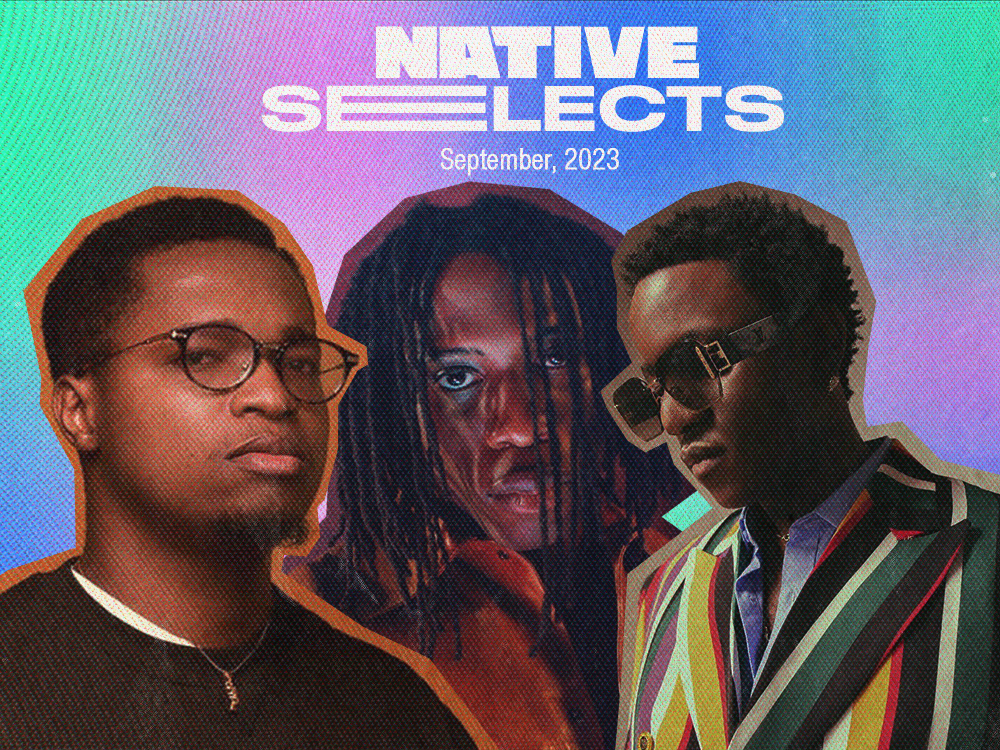
NATIVE Selects: New Music from Maya Amolo, KCee, AYLØ & More

Every week, new music shows up, sweeping fans and music lovers off their feet while artists gauge reactions to know the effect of their creativity. At the NATIVE, we are committed to keeping our ears on the pulse of the music scene and bringing the best sounds to your doorstep.

In our last edition, we brought you new releases from Wizkid, Nasty C, Tekno and more. Today, we have songs that move from Afropop to Amapiano to R&B, with our select artists showcasing their unending talent and passion for creativity. Lock in!

KCEE – “OJAGINGER”

Kcee made a resounding comeback to the scene with his recently released “Ojapiano,” successfully solidifying a decade-long relationship between Nigeria and South Africa. With the local spiritual flute still at the forefront of the record, Kcee returns for another iteration on “Ojaginger.” The Oja flute leads in the upbeat track accompanied by a rhythmic drum pattern and subtle whistling sounds commonplace in Amapiano. Kcee briefly addresses his muse with undeniably joyful, high-tempo vocals. For the remaining run time, the instrumentals take centre stage, closing out the track on an energetic note.

AYLØ – “CATCH UP!” & “LIGHTS”

Soul-fusion singer AYLØ has built a significant portion of his catalogue on exploring the preciousness of intimate connection between two people, how incredibly fun it can be and the unquantifiable joy of reciprocated attention. On his new two-pack release, “Catch Up!” and “Lights,” AYLØ’s words are flowery, even when the situation isn’t entirely wholesome. On the former single, he serenades a cutty buddy over tropical guitars, an ode to the time shared and the time spent apart without any emotional obligations. On “Lights,” he’s joined by Minz over Higo’s iridescent groove, and the pair sing to love interests that make them “lose myself to you.”

MAYA AMOLO – “COTTON CANDY”

Mayo Amolo has mastered the art of sultry alternative R&B that seeps into the psyche with mellifluous vocals. The Kenyan artist whose project ‘Asali’ was on the NATIVE’s Best R&B Projects of 2022 list continues to dig deeper for melodies that mirror situations in contemporary times. On “Cotton Candy,” the singer is in wonderland as she appraises a love interest while spilling her desires. The SirBastien-produced track bounces with mellow log drums that maintain harmony with Amolo’s vocals and affection-laden lyrics. 

FOCALISTIC & MHD – “FIRE”

Off his acclaimed 2022 album, ‘Ghetto Gospel’, South African rap artist Focalistic has shared the video for “Fire,” the collaborative effort with French rapper MHD. Over a colourful Bacardi-tinged Amapiano groove, courtesy of Felo Le Tee and Mellow & Sleazy, the pair are in boastful form, proclaiming that they’re “never gonna miss.” In the new video, Foca and MHD match their raps with excited performances, passing the mic back and forth in one scene, while dancing side by side in another scene as they’re surrounded by a hype crew.

LAIME – “7 IN THE MORNING” FT. LOJAY

Following the release of his Odumodublvck-assisted track, “Where Dem Dey,” Laime taps Lojay for his second release of the year. In alluring production by Dami Rore, “7 in the Morning” builds up with an acoustic drum pattern and lush saxophone chords. The pair ride the mid-tempo wave of the beat with sensual vocals addressing their love interests. They glide back and forth across the track reiterating the feelings of being lost in love. 

OLAKIRA – “ILEKE” & “KISSES”

Ever since the hit song, “In My Maserati,” Nigerian act Olakira hasn’t slowed down. He has consistently kept up his standard, winning loyal fans along the way. He ventures into the two-song-pack row to showcase his talent with “Ileke” and “Kisses.” Both songs are Amapinao-tinged tunes Olakira employs to address matters of the heart and the female anatomy. “Ileke” and “Kisses” are feel-good songs for lovers and to ignite dancefloors.

EESKAY – “RECOVERY”

Menacing sonics are a mainstay in Drill music, but the potential for novelty within that template is very possible. “Recovery” embodies those motivations, its striking drum loops and scratchy synths establishing a grimy feel. The Abuja-based rapper Eeskay is in prime form throughout its run time, oscillating between flows which switch from boastful Pidgin to suave rapper, and then to Apala—all without losing its bite and coherence. Basically, it’s a song that highlights his peculiarities as a rapper while reiterating his zest to keep hitting at the highest levels. 

HOTKID – “ON COLOS”

Emerging from that humorous world of TikTok, “On colos” has been one of the year’s most enduring catchphrases. On the exactly titled record, Hotkid paints a riveting image of a youngster who gives in to the drug and its storied manifestations. Even with the weighty theme, Hotkid’s approach is cool and collected, presenting the narrative in sonic balance with the breezy ‘piano-inflected production. Ultimately it’s a song that would make you groove, but also give you a bit to laugh and a lot more to think about. 

IDYL – “PRETTY BIRD”

In 2017, Idyl—born Daniel Diongoli—won the second season of the music competition The Voice Nigeria. Since then, he has released singles, with last year’s EP ‘Indulgence’ marking his debut project.  Although “Pretty Bird” was part of ‘Indulgence,’ it’s been re-released as a single. It is a track about the longing for companionship as Idyl  pins for his lover’s presence, singing, “Pretty bird/Don’t fly away.” The rhythms are soft but the piercing clarity in Idyl’s vocals is enough indication of the song’s passion. 

MOORE DH – “ON ME”

Last week, rising artist Moore DH released a new two-pack. Both affirming his knack for dreamy-eyed romance, the accompanying production swirls with spacey elements. “On Me” has a bit of everything in that regard, boasting Amapiano drums while ceding space for horn playing in the background. This vibrant soundscape coerces a memorably energetic performance from Moore, whose inflexions also carry distinct effervescence. “La Familia” being the other song from the release, its mood hints at broodiness, a sonic antithesis to what’s on offer here. 

WAPO – “BLOOD FOR BLOOD” 

The levels of sonic experimentation across African music are at a mesmerising high. Blending eras and sounds, the amorphous quality isn’t grasped with caution but rather flamboyantly, with total confidence. “Blood For Blood” showcases such talent; Wapo’s heartfelt record has shades of mid-2000s R&B, the stuff of P-Square and Bracket, but the soundscape also soars with psychedelic influences, carried by a simple, menacing drum base. Its arrangement of background vocals also contributes to its ominous atmosphere. 

SAMUEL KAIZAR – “YUSROH”

R&B remains the ideal conduit for passionate expressions of romantic yearnings, that’s why its influence can never be understated in a Nigerian pop scene that’s love and lust-crazed. On his debut single, “Yusroh.,” Samuel Kaizar is consumed by his feelings of infatuation towards the titular muse, the drawl in his voice wringing out every last bit of feeling from his plain lyrics. “Yusroh, you fill me with desire/for you I roar,” he sings, his lovestruckness apparent in every slightly ludicrous line.

Featured image credits/NATIVE

The way we use social apps like Twitter is changing forever

“We’ve applied the following temporary limits,” read Twitter CEO Elon Musk’s public announcement over the weekend. Since last Saturday, everyone’s favourite social media app Twitter has been facing temporary constraints and limits due to extreme levels of data scrapping and system manipulation. With Musk’s new limits for the social website, unverified accounts will only be able to see 800 posts per day, and for “new” unverified accounts, just 400 in a day.

The announcement came a day after Twitter’s Friday action to block access to the website for anyone who isn’t signed in as a registered user with an account. It seems like the days of social media being free because users are the product may be coming to an end and we’re approaching a new era where paying a standard fee opens users up to the best online experience. As we watched unfold over the weekend, what was simply a measure put in a place to address third-party data scrapping soon descended into a collective existential crisis on the Twitterverse (and beyond, of course).

For young Africans, Twitter was one of the first springboards for many of us to share our unfiltered thoughts and experiences, safe from judgement from the older generations and in the presence of our peers who shared similar characteristics and traits. Three years ago, when the EndSARS protests erupted across various states in Nigeria, many young people took to social media, particularly Twitter to air out their frustrations at the government. While underway, these young people also masqueraded their pain as memes, jokes and GIFs, which they shared online in a very real way. In the digital age, the stock response to any unfortunate news seems to have become a need to flood social media with memes in attempts to make light a terrible situation. It’s a similar occurrence everywhere else in the world; think WWIII jokes, and more. Self-deprecating humour is a life source for many who are constantly online and in need of side-stepping the heavy news cycle.

As expected, many are dissatisfied with the new changes and have began looking to alternative platforms, which soon may include Meta’s own version of Twitter and Spill—a Black-owned social network formed by ex-Twitter employees which is currently in beta-testing mode. If you’re on Twitter today, you’re likely experiencing an app that is more frequently broken, more random, and more unhinged than the platform has ever been. The site has seen a sustained uptick in outages and bugs for the past year since Musk stepped in as CEO and upended the current system.

Last year November, an anonymous Twitter engineer interviewed by MIT Technology Review shared that after the staff reductions, “Things will be broken more often. Things will be broken for longer periods of time. Things will be broken in more severe ways… They’ll be small annoyances to start, but as the back-end fixes are being delayed, things will accumulate until people will eventually just give up.” Earlier this year, NPR and PBS, two major news outlets, stopped using the platform and deactivated their accounts, saying they had lost faith in Musk’s decision-making after he slapped a “government-funded media” label on the accounts.

For most of Twitter’s history, its value was its community and users, who post, comment, start discussions, spread information on the latest happenings and share opinions, for free. For A&R and music exec, Feyisola Ogunbajo, she joined Twitter over a decade ago, eager to utilise the online platform to share her thoughts and new music. “I grew up on Twitter,” she shares candidly. “It’s a part of my youth. I think this might be the end of the road for me if Twitter continues this way, but deep down, I know I might buckle and pay for the app. I’m attached and I don’t know if another app would feel the same. It does open up a conversation you know, would other apps start making us pay for them?”

Ogunbanjo and many others like her, are starting to realise that Twitter is not just a community; it’s also a business. While it was once a marker of our youthful exuberance, the website’s business needs will always come first, and right now, the company is showing that it needs to make more money and regulate the online experience for everybody. But the long-term effect remains to be seen. Back in March, according to Similarweb data, Twitter had a 7.7% decline in traffic compared to the year before, which marks the third month in a row of year-over-year traffic decline. Similarly in March, there was a 3.3% in Twitter’s unique web page visitor count year over year; while on Twitter’s Android app, average daily active users were down 9.8% year over year.

The drastic decline in online traffic and unique views is alarming for a site which once taught us how to feel and stayed constant through different phases of our lives. However, this writer believes that therein lies the controversy: how does one justify paying for a service that’s been free all our lives when there is no viable competitor? Many tech entrepreneurs have already begun to create alternatives such as ClubHouse, Spill, Substack, and more, which are raking up new users each passing day. For Nneoma Kanu, a multidisciplinary creative and tech founder in DC, pivoting to a new app still seems far off.

“One of the challenges with social platforms today is the involuntary binding they create,” Kanu shares. “Our information, social graphs, and reputation become locked within closed databases, making switching costs unbearably high. After investing years in building a following and reputation on a particular platform, it’s not easy to simply move on to the next one when they aren’t composable by nature.”

Already, there are cracks starting to surface in the new social apps cropping out of the ether. Recently, the co-founder and CEO of Spill, Calvin Benton can be seen sharing in a viral clip that Spill is not exclusive to Black people and professionals. “First, we want to make abundantly clear is Spill is open for everyone. [We want] to build a better experience for folks who drive the most culture, who also happen to get the most hate, is that it will become a better experience for everyone,” he shared.

Given the volatile climate online, it remains to be seen what long term effects will arise from Musk’s latest decisions at Twitter HQ. With the summer rolling on and numerous reasons to be outside enjoying with friends and family, it seems like more and more people will be voluntarily opt out of social networking altogether. “I definitely won’t be pivoting to another social media app. If Twitter does end up being truly unusable, I’m going to use my websites a lot more,” shares music manager, Seunfunmi Tinubu. Nevertheless, we’ll be watching this space to see how things develop in the coming weeks.

Featured image credits/NATIVE


ICYMI: What the proposed social media bill means for the Internet and free speech

For Us By Us: The harsh realities of Nigeria’s new students loan act

For a number of young Nigerians, the first quarter of the year held significant weight in our political and socio-economic lives. Since the EndSARS protests of 2020, where a number of young Nigerians took to the streets with placards and called for an end to years of systemic oppression, extra-judicial killings and unjust profiling, we’ve continued to witness a shift in our public consciousness. United in minds, hearts and spirits, the experience which descended into one of the most atrocious nights of violence and bloodshed, has ignited a fire in the hearts of many young Nigerians to speak out against injustices from the ruling class.

This year, we’ve already witnessed this vigour from young Nigerians in the gubernatorial elections which saw the public condemnation of the Independent National Electoral Commission (INEC) with a record number of 93.4 million voters, the highest in our nation’s storied history. The result of those elections are felt greatly by Nigerians today following President Bola Ahmed Tinubu’s swearing in last month. Already, the incumbent President is wasting no time to carry out new reforms, a pertinent new policy being the new student loan bill which has been, by turns, celebrated, dissected and frowned at.


View this post on Instagram


A post shared by The NATIVE (@thenativemag)

According to the Students Loans (Access to Higher Education) Act 2023, this new legislation aims to revolutionise access to higher education by providing crucial financial support to Nigerian students from low-income families and backgrounds. “We will institute a pilot student loan regime…this will expand access to education to all Nigerians regardless of their backgrounds,” President Tinubu wrote in his manifesto, Renewed Hope. “At the same time, this will give institutions the ability to charge more cost-reflective tuition fees. Because of the current employment rates and other conditions, the loan program will have a maximum limit any student may borrow and must have flexible repayment provisions.”

On closer look, the Student Loans Act provides the establishment of a student loan bank that provides interest free loans to any student interested in pursuing higher education in a tertiary institution. The funds known as the Nigerian Education Loan Fund, established under the law, will be managed and administered by various stakeholders, including the Central Bank of Nigeria and commercial banks. It reportedly includes mechanisms for monitoring academic performance, ensuring timely loan repayment, and preventing fraudulent practices. The funds will be provided directly to the institution the student in enrolled after a series of official checks on the student.

For years, the education system has continued to decline with incessant strikes and class actions erupting throughout the school semester, leaving many students out of class and professors clamouring for raised fees. According to the United Nations, unless Nigeria acts fast on the education issue, the country might not achieve the global agenda for universal inclusive and equitable basic education for all school-age children by 2030. As such, a Student Loan bill of this nature appears to be a step in the right direction for the young generation. However, as all government bills show, there is always finer print to comb through.

On the surface, the Loan Act looks like a reasonable solution for the less than satisfactory state of our education system. In order to be eligible, one must of have secured admission into a federal or state university, polytechnic, college of education or vocational school. The student’s income or family’s income must also be less than ₦500,000 ($1,000) per annum or ₦42,000 ($88) per month. Further, the student must provide two guarantors who is either a civil servant of at least level 12, a lawyer with, at least, 10 years of post-call experience or a Judicial officer or a Justice of peace.

It gets trickier when it comes to repayment terms. According to the Student Loan Act, after a program is completed, the student will be responsible for loan repayment with the set time frame of two to twenty years hence beneficiaries of Nigeria’s student loan will commence repayment two years after completion of the National Youth Service Corp (NYSC) programme. Ideally, once a secure mode of employment is obtained, 10% of the student’s salary will be deducted on a monthly basis by their employer. However, those who become self-employed risk a two-year jail term or fine if they refuse to pay back the loan as 10% of their monthly profits.

In addition to the employment issues that might arise, the conditions to successfully acquiring the loan are still stringent. Less privileged families still have to prove their earning capacity with bank statements that they are unlikely to have in their possession. Recently the ASUU president, Mr Emmanuel Osodeke projected that the loan conditions were “not practicable”, adding that more than 90% of students won’t meet its “requirements.” Moreover, the student loan bill functions on the account that the undergraduate is able to secure a mode of employment after university.

This already poses a challenge for the country and its falling job market which KPMG’s International Global Economic Outlook report states is expect to continue to be a major challenge in 2023. KPMG’s report also details that the “unemployment rate is expected to rise to 40.6%, an uptick form 37.7% back in 2022. Although the incumbent President has already begun to promise swift changes to the country’s unemployment rates in three years of office, the effects of his fiscal and economic policies remain to be ascertained.

For the unemployed, little is known about how the Student Loans Act will affect them in the future. This gap in the law might give the government of the day leeway to impose further sanctions in the future. That being said, provisions need to be made for new entrants to not only successfully secure, but sustain credible employment above minimum wage. Where the beneficiary is self-employed, the Act states that one shall remit 10% of his total profit monthly to the student loans account prescribed by their bank.

Given these apparent grey areas in the law, it is left to be seen how the incumbent government will implement and redress all the matters arising from the Bill in the future. All around us, world governments are struggling with facilitating and sustaining student loans. For instance, in the US, the Supreme Court has barred the Biden administration from carrying out its plan to extinguish up to $20,000 in federal student loan debt, and millions of borrowers will continue to struggle under the weight of their loans.

According to a recent report by McKinsey, inflation-adjusted student debt has increased by 45% over the past decade, and repayment rates have cratered. Given this steep incline in the West, it’s hard to remain optimistic about similar government policies back at home. Without a doubt, the student loan will serve as a temporary relief from financial burdens. However, the stringent terms for qualifying and eventually repaying the loan are glaring issues that the government must take into account.

Featured Image Credits/The NATIVE


ICYMI: A detailed timeline of the ASUU strike in Nigeria

TurnTable Top 100: Omah Lay’s “reason” stays at No. 1 for a Second Week

Following the release of the deluxe version of his debut album ‘Boy Alone,’ Omah Lay is reaping the benefits. Omah Lay’s “reason” retains its place at No. 1, tallying 5.35 million on-demand streams (No. 1 on streaming) and 39 million in radio reach (No. 13 on radio). It spends a second week at No. 1 on the Official Top 100.

Asake’s “Basquiat” rises to a new peak of No. 2 on the Official Nigeria Top 100. it tallied 3 million on-demand streams (No. 2 on streaming) and 50.3 million in radio reach (No. 6 on radio). KCee’s “Ojapiano” drops from No. 4 to No. 3 on the Top 100. It leads the radio chart for a third consecutive week with 93.8 million in radio reach. It tallies the all-time biggest weekly tally by a single in a week on the radio. “Ojapiano” also drew 1.66 million on-demand streams (No. 13 on streaming). 

Asake’s “Amapiano” with Olamide loses its No. 2 spot from the previous week and enters No. 4 while Seyi Vibez’s “Hat-Trick” also moves upwards from No. 6 to No. 5. “Hat-Trick” previously peaked at No. 2 on the Nigeria Top 100. Rema’s “Charm” moves to No. 6 after spending three non-consecutive weeks at No. 1 while Davido’s “FEEL” returns to the top ten at No. 7 from No. 13 on last week’s chart. 

Asake’s “Sunshine” drops from No. 5 to No. 8 while “Lonely At The Top” ascends into the top ten, moving No. 11 to No. 9. Zinoleesky’s “A1 (Feeling Disorder)” completes the top ten. Outside the top ten, Seyi Vibez’s “Man of The Year” debuts at No. 13 while Tiwa Savage’s “Pick Up” moves to a new high of No. 16.

Featured image credits/OmahLay


ICYMI: Read our review of Seyi Vibez’ ‘Vibe Till Thy Kingdom Come’

Best New Music: NYA Soundtracks the Motions of Radiant Joy on “Good Days”

Radiant joy is an emotion popular music has long sought to capture. If you’re from that generation, Bob Marley’s “Three Little Birds” would do it for you. Something more recent is Pharell Williams’ anthemic “Happy”, while the 2000s Freshlyground classic “Doo Be Doo” reiterates the perspective of oneness amidst the great potential for trouble. Across eras and genres, we see how the universal troubles of life provide artists the reason to adopt an oppositional stance, simply by urging the listener to make good of the times.

Likewise, the thematic scale of contemporary Afropop has been tailored to meet these experiences. As generations before have seldom seen, the world is deteriorating on a fast level, bringing health and economic concerns side-by-side with more existential queries. It’s a grim period for human civilisation. Luckily, music emerges from these same situations, and in the hands of the graceful, the phenomena of pain is turned inside out so that wholesome realisations—about not being alone in your struggle; about the beauty of the mundane—are recorded on wax. This is an effervescent feeling with high quality.

“Good Days,” the new song from Toronto-raised Ghanaian artist NYA, is such a record. Following an intrinsically simple progression, its pairing of twangy guitars and a low drum base works to accentuate NYA’s vocals. The atmosphere is that of an intimate live set. On her part, the uNder Alum mirrors the serenity of the production, every lyric packed with the thoughtfulness of someone who’s come through the wringer and can appreciate the immensity of all that lays in front of her. 

The importance of atmosphere in music cannot be overstated. Beyond the lyrical quality, it’s the inflections, the level of the songwriting—these qualities bring a song to life, and “Good Days” has an abundance of them. NYA doesn’t dwell much on what the audience makes of her words; she delivers them rather in a way that ensures they hold the aforementioned worries of the listener, a soft cushion for their thoughts to roam. “I go see the best days of my life,” she sings in the second verse, an acknowledgment of her own person. 


View this post on Instagram


A post shared by NYA (@iam_nya__)

Music that doesn’t care for perception always thrives, and there’s a certain playfulness on display here. Reminiscent of the grooves on Lady Donli’s ‘Enjoy Your Life’, it’s a subtle disregard to the ingrained fears of naysayers. Everything is possible, such records seem to say, and given the perception battles that many are silently fighting in a world ruled by social media and the politics of image, it’s a blessing when a song sees you. 

This NYA record ticks many artistic boxes, from the leanness of the production to the colourful atmosphere and the purposefully obscure songwriting. Baring her R&B instincts, the sensitivity of the genre’s icons like Toni Braxton and Aaliyah is present, but also imbibing that sweet Afropop feel into its core, “Good Days” scores a wonderful achievement for itself. This it does by acknowledging the popular road, but ultimately just settling for its few viable lessons and then sticking out on its own path.


BEST NEW MUSIC: LADY DONLI CELEBRATES HER BRILLIANCE ON “MY ABILITY”

uNder: Best New Artists (June 2023)

The expansiveness of African music makes it easy to to spoiled for choice when it comes to artist discovery. Between the on-demand infinity pool of streaming and content-driven landscape of social media, there’s a long list of rising artists seeking the attention of our eyes and ears. It’s exciting and, for us as The NATIVE, it means there’s no fear of our music losing its inventive drive anytime soon.

For this month’s edition of uNder, the abundance of talent more people need to tune into continues to make our efforts worthwhile. It is even doubly special that this month’s curation is dominated by women who make music of differing flavours and appeal, but the throughline is in the stunning talent that you’ll find. Nigerian singer Rukmani touches on intimate emotional points with R&B-influenced music, South African rapper Dope Saint Jude champions self-conviction and queer perspectives, while Malawian producer/DJ Chmba is a purveyor of exciting Afro-House. There are three more artists on this month’s list, get into the details below and listen to our uNder playlist here.

Rukmani

Rising women stars are impressing their styles on Nigerian pop audiences and Rukmani belongs in that conversation. Although she’s just 22, the Port Harcourt-bred musician wields an advanced understanding of her craft and presentation. Of part-Indian descent, her music boasts an amorphous reach, flowing into ebbs of R&B, psychedelia, and local pop flavours. Earlier this year, “Getaway Drug” introduced Rukmani to mainstream audiences, but she’s been at this for a while before then.

In 2021, the artist born Udogie Sonia Omosigho released “Bruce Wayne,” an emotive cut with a drum base reminiscent of nineties Hip-Hop. She however rendered a soulful performance, mirroring the theme of longing with her lithe inflections. “Satori” flexed her skills over afro-based production, although pairing her effervescent delivery with a groovy edge. Last year, the self-affirmative “Human Blood” set up the children’s music–feel of the aforementioned breakout record, establishing Rukmani’s artistic vision as distinct and remarkably singular.

‘Angel on the Run’ showcases her powers in collective form. In seven songs Rukmani covers an expansive soundscape, each song honing on subjects of identity, romance, and pure nostalgia. She sounds like a moment in time. Each note, from the lucid “Purpose” to the ethereal mid-project cut “Lovin” and down to its closing record “Softies Vibe,” touches on intimate emotional points. A masterful demonstration of her star power, Rukmani’s career has been building up to this point and with genuine fan love and solid industry backing, there’s no limit to where she can go.

Emmanuel

Chmba

Chmba, like many artists, discovered her love for music at a young age. She combed through a series of genres, taking a liking to african-inspired sounds, paired with more eccentric and futuristic beats. However, she didn’t fully tap into creating music until much later, debuting with the EP, ‘Mtima Rising’. With her new EP, ‘Okongola Caucus’, the producer/DJ continues to refine her approach towards crafting Dance music. As Afro-House continues taking the world by storm, Chmba offers a refreshing take on the domineering genre as she expertly layers lush vocals over a series of electronic, time-travelling synths.

‘Okongola Caucus’ offers only five tracks but across a short runtime, Chmba is able to display a depth of expertise. While the project holds a series of futuristic beats, it maintains a consistently laid back approach through its run time with subtle inclusions of varying vocal pitches in form of guest vocals by the likes of Nyago and nIGEL. At its core, the recent release holds African percussive rhythms paired with the more upbeat house grooves you’d hear in a club. More than the ethereal vocal embellishments, Chmba’s slick production is fiery and confident across individual tracks and as a body of work. ‘Okongola Caucus’ is a solid first offering from Chmba and all eyes will be on her as she continues to push the boundaries of her craft and the expansive sound.

Nwanneamaka

Dope Saint Jude

At every listen, Dope Saint Jude’s clarity of self is evident. Before choosing music as a professional career in 2013, the veteran wrote poetry and founded and performed in South Africa’s first drag king troupe, BrosB4Hoes, where she and others boldly expressed their outlook on sexuality and gender. After leaving the troupe, Dope Saint Jude—born Catherine Saint Jude Pretorius—debuted her self-produced 2016 EP ‘Reimagine’ and started her journey of documenting her experiences as an openly queer woman.

Dope Saint Jude’s music is hinged on both self and the communal. On her 2018 EP ‘Resilient’, the tracks “Who I Am” and “Inside” call for introspection, while “Grrrl Like,” “Liddy” and “Didn’t Come to Play” are pro-LGBTQ+ anthems centred on living apologetically in a constantly challenging world. Dope Saint Jude’s feminist perspectives are powered by attention-grabbing vocals and flows that breathe confidence and courage, whether doused in vulnerability or celebration.

The 2022 EP ‘Higher Self’ contains Dope Saint Jude’s most-evolved self; here, she fully acknowledges her place as a pacesetter and change maker. “I’m a soldier a fighter a beast/I’m ready I came here to feast/Baptised my passions increased/Ancestors behind me, my power released,” she raps on “For You.” Throughout the project, she is aware of her insecurities but there’s no stopping her from living to her fullest potential. Aside from being a rapper, singer and music producer, Dope Saint Jude is also a filmmaker who utilises her music videos, whether as a director or producer, to establish her pan-African, feminist and pro-LGBTQ+ leanings, in turn, stamping her uniqueness on the continent’s music scene.

Uzoma

Darkua

More and more women are improving the diversity of Ghanaian pop music, setting their own standards for excellence through their unique and captivating forms of expression. (It’s evident in how up-and-coming talent from the West African country consistently filters into our uNder selections—See: NYA, Ginius, Baaba J, Riycon and Mellissa.) In 2020, Darkua shared her SoundCloud-exclusive first song, the N.O.B-prodcued “E Dey Pain,” a breezy showcase of her intriguing capacity as an ear-holding singer with a gorgeous voice, melodic inclinations with R&B influences, and writer with worthwhile, relatable emotions as the premise for her lyricism.

That release, a cool and savage call-out of an inconsistent partner, quickly set Darkua’s bar for musical excellence and she’s only continued to exhibit those compelling traits. The official 2021 debut single, “Amalelor,” sets her heartrending grievance over a failed relationship to a sublime groove that features a lustrous guitar riff and snappy, gentle percussion pattern. Even as she reads out the unfaithful partner, calling him a “presidential liedidate” in an interesting play on words, Darkua projects a magnetic sense of confidence that’s a recurring motif in her work, as she explores the complex range of emotions within the interiority of romantic relationships.

Her more recent singles have landed on the more flowery side of devotion, but they’ve also served as a conduit for experimentation. “Go Low” is a party-ready cut with the now-obligatory inclusion of log drums, while “You” is clearly influenced by Highlife. Darkua recently released ‘U’ve Been Here B4’, a compilation of her previously released singles, preceded by the release of “Echo,” a sumptuous vision of the pure sensual energy in moments of intimacy between two adoring lovers. The song is a show of increased mastery, that Darkua will continue to aptly translate her emotive ideas into great music as her career inevitably gets bigger.

Dennis

YTBoutthaction

It’s been over two years since the Nigerian rapper YTBoutthataction made her debut onto the scene armed with a sparse yet impressive catalogue that channel her experiences as a young black woman. She’s as real as it gets. “When it comes to the lyrical content, it’s just how I’m feeling,” she told The NATIVE earlier this year. “Music is an outlet.”

Relationships, career, sex, mental health and relatable life experiences; no topic is out of bounds for YTboutthataction and evidence of that can be traced to her clever and poised lyricism. “Be like say they wan chat to me, that’s like winning the lottery//Like someone who sees a doctor, just be calm and be patient please” the intro lyrics to YT’s recently released single, “Cool Story Bro” read. Over the past couple months, the standout record off ‘love & vex has deservedly gained traction for its catchy, rhythmic hook referencing the iconic Nigerian childhood rhyme.

YT, across the rest of the 5-track EP, presents her unapologetic truths paired with eccentric, sure-fire production that reiterates her dextrous artistry and sets her apart even amongst the next generation of female rappers in Nigeria. She breezily dabbles from Rap to R&B, sometimes infusing unique elements of Pop, all the while maintaining her rawness. Think “24,” a coming of age story that tallies all too familiar whirlwind of feelings that follow self-acceptance or “Pill Head” which reclaims power from antagonising aunties. While her journey started not too long ago, YT holds a ton of promise with the motivation and hunger of a beginner accompanied by the confidence of an expert. We’re excited to see where she could go sonically next as she reveals another layer to her artistry with every release.

Nwanneamaka

Sknny

The Port-Harcourt music scene, while known for its distinct musical talents, hasn’t produced many notable rappers. Sknny is however breaking out in remarkable style; the young rapper’s music features inflections that wouldn’t sound out of place on a New York posse cut. His stories imbibe rich originality, aiming to capture the existence of young people residing in contemporary Nigeria. Pulling a wide palette of rap-influenced sounds, he cuts impressive profiles across his songs.

A vibrant percussive mix emboldens “Omo Worry Worry,” his earliest uploaded single on Spotify. Flexing musicality with a rapper’s nuance, it set up his career for imminent blooming. ‘YnC’, an abbreviation for Young and Clueless, had the introspective broodiness that was the mark of pandemic releases. Sknny’s vision was however incorporating social nuances; on tracks like “No Clues” and “Nomophobia,” he raps tightly-wound bars on the contrast of familial expectations and individual desires. The latter’s poignance makes it one of his biggest songs till date, espousing a human perspective behind the little-known condition of mobile phone addiction.

“Social media killing my social life,” he raps over the Trap production, skating amongst video game-esque loops and a bouncy drum base. On later cuts, Sknny has been consistently brilliant. The short projects, DARKEST HOUR pack’ and ‘The Vibe Pack’, embraced collaborative energy, birthing an assortment of flows unpacked over breezy beats. “Meanwhile In George Reynolds” and “No Lie” had the stateside swag that’s the M.O of Sknny, imbibing aspirational storytelling with distinct perspectives. With the technically excellent “Dues” being the rapper’s sole release in 2023, it’s evident that Sknny has clear sight on the path he aims to trod on his way to the top.

Emmanuel


Written by Emmanuel Esomnofu, Nwanneamaka Igwe, Uzoma Ihejirika & Dennis Ade Peter.


ICYMI: JOSHUA BARAKA, UGOCCIE & MORE BEST NEW ARTISTS FROM MAY 2023

Where Were You: Muyiwa Awoniyi’s music insider session, Insights comes to London

Great artists aren’t created in the ether. Instead, behind every prolific hitmaker is a high-level and professional team consisting of game changers who are able to pull the necessary strings behind the scenes to create the perfect story. Muyiwa Awoniyi, fondly known as Donawon is one of the emerging members of a new creative generation, harnessing his innate business acumen and well-thought out provoking strategy to push the envelope in the music industry.

When he’s not managing Grammy-award winning artist, Tems and raking up accolades in the music industry, he’s leading and spearheading an independent agency called BSB Agency–a labour of love which provides valuable knowledge about the business side of music production. With over a decade of experience in the music industry under his belt, Awoniyi now has his sights set on unveiling insider knowledge about the industry and routes to finding success.

Last year, Awoniyi kicked off Insights, an intimate panel session offering practical insight from key players in the music industry and providing real-world networking opportunities for budding music enthusiasts, A&R’s and music execs. After hosting successful iterations in Lagos and Ghana last year, Awoniyi brought the event to London last month where he imparted key insights from his journey and that of seasoned industry professionals. The event took place on June 22 at Aura, London with an all-star roster of guest speakers and artists including Dave, Juls, JAE5, Ms Banks, Teezee and Alex Boateng, the co-president of Def Jam UK.


View this post on Instagram


A post shared by Muyiwa Awoniyi (@donawon)

The event which was slated to kickoff at 6pm faced minimal delays due to the large number of eager attendees being ushered into the venue. Once inside, guests were welcomed into the cosy restaurant venue arranged to host the intimate fireside chats and questions and answer sessions. The DJ added to the already buzzing atmosphere as we anticipated our host’s entrance. Before long, he took centre stage accompanied by the Nigerian DJ-producer, Jess Finesse.

Awoniyi kicked the evening off by explaining the reason for creating Insights–an insider session born out of necessity and his desire to create a platform that allowed industry experts to engage in open dialogue with music enthusiasts and industry stakeholders, providing their valuable knowledge and findings. After the brief introduction, Jess initiated the first round of discussion—a Q&A session with the host. She posed a series of questions to which he offered a rich trove of insight on the music business alongside his personal experiences. “What is your why?” she asked Muyiwa. “The whole point of living is to liberate your mind. I wanted to know what I could become based on me chasing my interests. I felt I couldn’t do that in a bank. I realised music or entertainment in general was the widest place for networking,” he shared candidly. Through a series of light hearted back and forth, Awoniyi shared his wisdom and experiences with a mix of humility, humour and sincerity. 

As the session goes on, Awoniyi speaks a bit more about developing discernment as an essential tool to obtaining the most out of the industry. “Discernment is basically what is good for me, but not necessarily what I like. The path to self development has to focus on what’s good for you. You can only find out who you are when you undergo discipline. Put yourself under pressure to find out who you are. Your emotions are your navigational tools. When you do this, you’ll have a very good understanding of your values.” In addition to understanding what methods work best for an individual, Awoniyi also shared the importance of understanding one’s self worth. He recalls when an event manager offered $300 for a Tems performance before she was recognised globally. “ Always highball with your prices. The truth is, you have to be a leader to set standards,” he advised.

After an hour filled with insightful gems from Awoniyi and his co-host, the night progressed with much chatter and good energy. Soon enough, guests were welcomed to ask their burning questions about the business of music. The tone of the evening remained relaxed, intimate, and light-hearted, with drinks and food still circulating. The guest lineup, as expected, was just as impressive as in previous events, if not more. The attendees had the privilege of sharing the space with renowned producers Jules and Jae5, NATIVE Records co-founder, Teezee, co-president of 0207 Def Jam, Alex Boateng, Ebi Sampson, Dave and Ms Banks.

After the main sessions, guests had the opportunity to mingle and interact with the artists and executives in small groups of two or three. All around me, people posed questions ranging from “How can I determine the best producer to collaborate with?” to “What’s the best approach to releasing my artist’s debut single?” Some attendees even sought advice on establishing their own presence in the industry, seeking insights into whether they should prioritise releasing a music video or focusing on creating a solid body of work. Others were keen to understand how both music executives and artists effectively built their teams and expanded their reach. The DJ resumed spinning bangers, from Davido’s “Unavailable” to new singles from Asake’s “Work of Art,” creating an amazing ambiance.

For the panel members and music enthusiasts alike, the event in London was a valuable opportunity to understand more about the wheels of the business. This effort, particularly in the current climate, is admirable as it serves as a reminder of how far the Nigerian music industry has come together as a whole. Awoniyi’s Insights event fosters community and serves as a much-needed reminder to keep going and grinding against the grain. With its third iteration now complete, Awoniyi has created an important outlet for disseminating knowledge that will surely help the next generation seeking to enter the music industry.

Featured Image Credits/The NATIVE

A 1-Listen Review of Mohbad’s New Album ‘Blessed’

Stars are abound in the Afropop galaxy, but Mohbad shines a different light. Since entering the scene, he’s united a fusion of eclectic elements in his work, impressing his talent on audiences within Nigeria and beyond. Last year’s contractual difficulties with Marlian Records led him to break away from the label, but Mohbad continues to renew his appeal by honing in on his sonic strengths. Through brilliantly rendered songs like “Feel Better” and “Ask About Me”, he’s kept himself in popular discourse, cornering the angles for a project drop that solidifies his new path.


View this post on Instagram


A post shared by MOHBAD 💡🕯 (@iammohbad)

‘Blessed’ comes with that motivation. Released earlier today, it has eight tracks and features Bella Shmurda and Zlatan. These interesting pairings nod in the direction of Mohbad’s fuji-informed street hop origins but also his tendency to really rap, which contributes to the distinct colours in his music. He’s surely had a fine run-up to this EP, so it would be enthralling to witness his approach to this sophomore body of work. Let’s get it on. 

In usual 1-listen review fashion, all reactions are in real time while the music plays. No pauses, rewinds, fast-forwards or skips. 

“BEAST & PEACE”

Army band-type drums starting out this one. Very atmospheric, it’s like a dove hovering above a streak of dark clouds. Mohbad is really spitting; I love this reserved flow. Every word is hitting, the cadence is quite Reminisce-esque. “You don’t have to hurt me before you win” is such an heartbreaking line. I’m feeling this; personal openers are the norm but few approach it with fresh perspective. This mention of Bella—their friendship is so wholesome. A rarity in the music industry, I tell you. Solid opener; perhaps the best I’ve heard all year. It’s surely up there. 

“SABI”

Grooves are put front and back of this one. This production is alive and mellow; I love the tone of the drums. Mohbad’s singing never fails to be evocative: he studied the greats, you can tell. It’s songs like this that make me wish I could hear the Yoruba language. Mohbad knows how to take it to church; I wonder how much religion influenced him growing up. The violinist here has been stellar as well; these first two songs just sink you into a reflective, poignant, but ultimately grateful mood. There’s something about the musical quality that sounds like the aftermath of struggles and tribulations. 

“ACCOUNT BALANCE” FT. ZLATAN 

This is the most street hop song on the tape so far. I wonder who’s the producer behind that ‘meduwa’ tag; he’s become the owner of this bounce. It’s a very bouncy, catchy song. Coming from the energy of the first two songs, perhaps a mid-tempo could have settled the vibe a bit better. I like this song as a stand-alone, and would probably break a few chairs in the club to it, but it was an abrupt choice for the pacing. You’d like it though; some close friends say I tend to overthink. 

“OMO MI”

Mohbad’s ear for beats is underrated. He’s hardly picked a bad beat throughout his career, and his understanding of their nuances also reflects in how he utilises his vocals. He’s skating over this one, it’s what I mean to say. When he gets into that smooth-sounding delivery, where his vocals barely rise over a whisper, the richness in his vocals comes alive. This song is such a good song; it does everything, from motivating the listener to making her feel sexy. I admire coherence, but I also enjoy the ability to be different things at once without losing one’s essence. Everything is everything. 

“BLESSING”

“Many people say me I dun too fumble,” sings Mohbad some lines into this one. His awareness of self is beneficial to the music. His vocabulary is quite expansive if you peep it; he’s able to relay very conflicting emotions easily. Everytime he performs he puts the merit of his celebrity under perspective, especially with the gory past of the label conflict. He’s willing to grow in public and that carefreeness reflects most especially on this song. Banking on the grace of God, he makes the case for his continued development, through the essential act of creating music like he’s always done.

“LA PIO PIO”

Niphkeys tag—I know this is about to shut down clubs. The intent to party is not hidden; the mysterious feel of these drums are synonymous to the Lagos nightlife where anything is said to happen. I’m currently in the most serene place possible so it’s just my legs swinging; I feel a bit estranged from the vibe. But I know this will bang on club speakers; the chorus is also structured in a way that would inspire dance moves and chants. Don’t be surprised if this becomes the breakaway hit from the project. 

“ASK ABOUT ME”

Amapiano makes the cut, finally. Lol. Jokes apart, it’s quite the sonic feat that Mohbad made it seven songs into this project before having the familiar log drums. Even their adaptation here is novel; it’s moving with a breezy splendour, while the soft synths and trumpets alongside it makes the production more dynamic. Having one of the best vocal deliveries in the game, Mohbad makes light work of the beat. When he sings “ask about me,” he’s really about that talk. It’s remarkable how consistently evocative Mohbad has been over the years. These female backups, golden. Great song, man. 

“PARIWO” FT. BELLA SHMURDA 

When I heard the snippet of this song, I really liked the direction. Now Bella’s starting out; man, this guy’s vocals have a vulnerability that borders on spiritualism. He’s open to the emotions of living. He’s left the beat now, though, and Mohbad is riding it with a more fun streak. “I just let you know” is such a simple lyric but Bella makes it sound like a passionate theory from a 19th Century philosopher. He’s the unique quality in this record, but his host deserves credit for also working towards his strength. Short song, but you’d surely return. Boasting dance and demons in almost equal measure ranks a fine spot in the achievements of contemporary Nigerian Pop.

FINAL THOUGHTS

The sophomore slump is one of the most believed myths in music history. An artist turns into their personal life—the pains and triumphs–to create their debut, and when the second comes along, the material is exhausted or weakened. We’ve seen artists fail to replicate the spark in their early work, but for some others, the mundane is potent for vibrant sounds to emerge. Mohbad belongs in the latter category. 

Where his first project, the pandemic era-released ‘Light’, bore his signature traits, the affiliations with his former label and his relative newness to celebrity life somewhat blurred his vision. Societal accounts made for reflective bops, but here he’s created a transcendental body of work. A project which endures, and moves endlessly with the inner tensions of the creative. ‘Blessed’ is a narrative masterpiece, uniting the past, present and future through an assortment of stripped, spiritual sonics. 

Mohbad delivers like someone who’s got something to prove, while for large parts ignoring the obvious elephant in the room. What this does is embolden his perspective, pushed to delve into himself and unearth ideas that had previously only appeared on surface level. As a pop project, these eight tracks also colour the mainstream with an ingenious energy, turning the light back to the scene as the musician bares his ever-evolving perspective. 

Stream ‘Blessed’ below.

Featured image credits/NATIVE


ICYMI: Exploring “Ojapiano” & the evolution of Nigeria’s most spiritual flute

From Folk to Pop: The awe-inspiring evolution of Adekunle Gold

Of Adekunle Gold’s evolution, much has been said and written. Although people informed in the workings of Pop music and everyday listeners, to a lesser extent, expect musicians to freshly execute their ideas, few are able to progressively do so. Since the release of his eponymous debut album ‘Gold,’ six years ago, every aspect in the artistry of Adekunle Gold has blossomed, into a flamboyant and calculated presentation. 

Coming off the back of well-received singles, the luscious R&B collaboration with Lucky Daye on Sinner and the Davido-assisted Amapiano-laced blockbuster High,”Catch Me If You Can’ was released on February 4th. Among the slew of exciting music being put out right now, Adekunle Gold’s listenership is cemented, owed to several artistic reasons but mostly for his songwriting which has been nothing short of stellar in recent years. Asides the obvious changes in style, AG’s pen has been the biggest indicator of his sonic development.

His earliest songs basked in innocence as he hadn’t gotten the experiences he would become familiar with as he moved upwards in the world. On Sade,” a Folk-Pop ballad which covered One Direction’s Story of My Life, Adekunle Gold fills the record with dreamy-eyed perspective as he pleads a woman’s hand in marriage. Coasting on indie Rock-inspired strings and the melancholic violin, Gold’s svelte voice swelled and relapsed, and in its Yoruba parts demonstrated the artist’s strengths: taking indigenous traditions into Western styles and vice versa.

Born into the Kosoko royal family of Lagos, he grew up listening to the expansive guitar grooves of Juju maestros, particularly Chief Commander Ebenezer Obey and King Sunny Ade who is listed as a writer on the titular record of ‘Catch Me If You Can.’ These influences permeate the musician’s debut album, detailing stories in the manner of folklore and embellishing them with vivid drumbeating and praise chants.

Adekunle Gold might have been inspired by age-long traditions but he sang about the simple details of life, such as falling in love, being a fool in love, encouraging hard-work as the underlying factor for success, or simply just appreciating nature. This everyday perspective has been explored on varying levels by the likes of 2Face Idibia, Asa, Black Magic and Sound Sultan, and like most of those precursors, Adekunle Gold was an outlier for what was otherwise popular. In the mid 2010s the Wizkid-Davido dichotomy was approaching its peak, and from either camp, boisterous, electronic-generated bangers were pouring forth. Artists like Tekno, Yemi Alade and Mr. Eazi were making some of the most impressionable records in Nigerian music, connecting decades of musical history as they explored Pop and Highlife for modern audiences. A newly-ascendant Kizz Daniel turned bubbly beats from DJ Coublon into romantic bops which won him the Headies Album of the Year over other nominated projects, which included AG’s Gold.’ 

The album was still among the phenomenal debuts of its day. It debuted on #7 on the Billboard World Music Chart, which is telling of Adekunle Gold’s supposed “lane” considering the connotations of otherness associated with the category. Back home, he was praised for his singularity and loved by a wider demography than most of his contemporaries. And although his style was indie-influenced, his affiliation with YBNL and Olamide burnished his street credibility. For a while, this spot seemed comfortable for him. There was no foreseeable reason to switch it up, which is exactly what he did two years later.

Adekunle Gold stretched his vision considerably on About 30, his sophomore offering. Looking back, its cover art was indeed telling: where he was donned in khaki-colored agbada on Gold’ and looking straight at the camera, About 30′ is inverted as it features him sitting on a horse facing sideways—suggesting movement and possibly growth. “I’m not a sucker for genres,” he said to The NATIVE after its release four years ago. “I’m growing, exposing myself to new music, new instruments and new sounds.”

The album featured a wider cast of artists, blending Seun Kuti’s saxophone into the didactic Mr. Foolish and creating a seismic hybrid of eastern and western Highlife with the masterful Flavour on Yo Yo. Across diasporic lines, he formed a creative partnership with the British-Nigerian singer and songwriter Dyo, who delivers stunningly on Down With You. However, the biggest indicator of Adekunle Gold’s evolution came on Damn Delilah,” the album’s fifth track. It is a song about the wrongs perpetuated by one party in a relationship he previously believed to be reciprocal.

His angst bore into the opening line—“To hell with you Delilah, you made me weak and left”—and for the rest of the song, Adekunle Gold depicts the chaos of a mind betrayed, with lyrics like “I use to think you took my breath away/I lied, I was choking on your bullshit”. This was the introduction of dangerous desire to his catalogue. The inspiration is revealed later on the album, where he poetically considers the trappings of Fame,” embracing the familiar route of entertainers who’ve been thrust onto the spotlight. How then does one remain a people’s person without sacrificing the soul of their artistry? This might be implicit suggestion of Adekunle Gold when he sings, “everyone says don’t change but how will I grow?”

Adekunle Gold, by then, was likely recording the songs which made ‘Afro Pop Vol. 1’, released two years later in the midst of a global pandemic. 2020 taught the world to embrace art (especially music) as a personal endeavour, one that lives with the musician long after the media machinery has returned to other concerns. As disclosed in interviews, Adekunle Gold recorded most of Afro Pop Vol. 1′ in his closet which affects a quality of closeness not found in the manifold expressions of About 30′. The simmering sensibility rocks right at the start, on the collaboration with Trinidadian singer Nailah Blackman, whose glossy vocals produced the unforgettable chorus of AG Baby, where she repeatedly sings, “gimme that, gimme that bop/AG Baby, baby don’t stop.” It doesn’t just share electronic music flourishes with the last song of About 30′ (Call On Me), the thematic subjects were linked. On it, Adekunle Gold had sang “call on me if you need somebody” and here he was the next album beginning with a name-calling song. Such subtlety marked the start of Adekunle Gold’s progression from a lovelorn lover to a legitimate hitmaker whose desires are bound to be met, and his image and fashion played a dominant role in that.

While he dabbled in Folk infusions that earned him the ‘alternative’ tag among listeners and blogs of the day, Adekunle Gold also walked the walked and dressed the part. The simplicity of his records were matched by the unassuming nature of his trademark Adiré outfits and beaded jewelry. In place of the sassy braids he wears today, he used to be comb his hair into an afro. The seven months between the releases of “Call On Me” (in July 2018) and “Before You Wake Up” offered the earliest traces of his evolving image. On the former, Adekunle Gold reminisces about being about with a lover on the streets of California, losing her and then making up in the colourful ending scenes of Moye Oyelola’s visual. He stuck to the direction on “Before You Wake Up,” keeping the dyed outfits at bay, rocking patterned shirts or colourful one-piece coats, his designer sunglasses smashing. He references the process when he sings, “I fit change for you/ I fit bad for you; I fit change my style o.”

There’s no doubt the possibilities broadened for Adekunle Gold following his seamless evolution from his first pair of albums to Afro Pop Vol. 1′. However, through it all, his personal life acted as a sort of diluting agent, balancing his growing prowess and showing that, at heart, he’s still the same old ‘Kunle. In early 2019 he married his longtime lover, the artist and music engineer Simi, in a private wedding ceremony in Lagos. Outspoken and funny, both Simi and Adekunle are known to tease and banter themselves on the Twitter timeline, prompting discussions into the haven their home could be. Still, that inner perspective was denied the fans by both musicians, whose first child came a year later. Simi would announce baby Deja on the video “Duduke,” an affectionate record which trended massively in the months after release. 

“Every day,” said AG in an interview, “I think about how I have a job to raise a beautiful queen and in this crazy world that we’re in, you know it’s hard work. I’m grateful to be a girl dad, it’s made me even more aware of how crazy it is to raise a child in this new age so I’m more in tune with everything I need to do to be a responsible dad and a great man at large.” 

This familial background doesn’t just inform Adekunle Gold’s sensitivity (as seen in his intimate letters to his fans and the tour bus experience of Afro Pop’s rollout) to strengthening relationships, it allowed him explore a wider spectrum of emotions across his third album. From the apologetic outlook of “Sabina” to the delicate angst of “Something Different,” the album echoes the complex palette evoked by the Nigerian artist Anthony Azekwoh on the cover of “AG Baby”. Regardless of where he turned, whether it was the overtly sensual nature of Caribbean Pop (“Pretty Girl”), the not-so-humble braggadocio in the style of rappers (“Okay”), the back-and-forth of lovers in an open relationship gone wrong (“Exclusive”), or damning excuses and admitting mortal shortcomings in the Tekno-featuring “Firewood” and closer “My Ex”—Adekunle Gold sounded right at home. His new act was mastered.

In the seventeen months since that album was released, a lot has happened for Nigerian music. After the pandemic inspired an unprecedented level of productivity among artists, the world slowly opened and discovered the vast brilliance of artists from these parts, blurring identity and genre in their creative outputs. The archive of great Nigerian pop moments was massively updated during this time—several albums became global classics, international concert arenas were sold-out in minutes, songs became mainstays after being popularized on social platforms like TikTok and Triller, international collaborations didn’t seem like the novelty they used to be. Musicians were especially intent in growing their images to evolving modern standards. As seen in the case of Tems and CKay, the journey from scenic acclaim to global superstar has been shortened by technological advancements, and nobody wants to miss out on that.                       

‘Catch Me If You Can’ portends Adekunle Gold’s bragging rights for being ahead of the curve. At thirteen songs, the album is in-tune with contemporary preference for brevity. Celebrating his birthday a week before the album’s release, the artist wrote about his joy on having “almost everything he ever wished for” and the album pours with a profound sense of gratitude while simultaneously spelling opulence in a fashion unlike anything Adekunle Gold has done before. His producers are as varied as Spax and TMXO, both responsible for some of the most iconic Rap songs out of the country; he also taps the protean Pheelz and Blaise Beatz, whose “uber” tag has become almost synonymous with an AG song; both Que Beats (“More Than Enough”) and Tay Iwar (“Sleep”) turn in exquisite production streaked respectively with electric and soulful guitar-playing.

Asides the production, the engineering on this album shines with deliberation in regards to movement and sequencing. Each song owns its space, but ultimately contributes to making the album an enjoyable body of work. And though the features are notably international, from the American R&B stars Lucky Daye, TY Dollar $ign and Fousheé; to United Kingdom’s Stefflon Don and the France-based Malian folk singer Fatoumata Diawara (Davido is the only Nigerian feature), Adekunle Gold’s core inspirations remain pan-African. A number of songs are sketched from Highlife-esque sonics, with bright guitars and elemental melodies; of them all, “Selah” is most remarkable, continuing the “Damn, Delilah” arc by taking shots at an old lover. But whereas “Damn, Delilah” saw him reeling from the loss, down and bad, “Selah” exudes more grace in letting one’s source of pain go–he’s not the loser here: “I’ve never loved you less/ Even though you bring me stress/ It makes no sense/ But leaving you na self defense.”

It’s been a consistent journey for AG Baby. He’s come a long way from recording his first song as a teenager, later forming a boy band with his friends. Heck, the dreamy-eyed country balladry of “Sade” feels like lifetimes ago, different from the style and substance of the Adekunle Gold we know today. He’s embarked on what is perhaps the most admirable transition from an indie-leaning act to a pop superstar, becoming the gold standard for what is possible in music and branding.

For someone whose first popular moments came from doing photoshopping himself alongside celebrities, it’s quite monumental witnessing the celebrity Adekunle Gold has become today. At this stage of his ever-sprawling career, a line of his would suffice: “It is what it is.”


ICYMI: AFROPOP REVOLVES AROUND NIGERIA, FOR BETTER OR WORSE

NATIVE Selects: New Music from Wizkid, Nasty C, Tekno & More

Every week, new music shows up, sweeping fans and music lovers off their feet while artists gauge reactions to know the effect of their creativity. At the NATIVE, we are committed to keeping our ears on the pulse of the music scene and bringing the best sounds to your doorstep.

In our last edition, we brought you new releases from Burna Boy, Fireboy DML, Lady Donli and more. Today, we have songs that move from Afropop to Amapiano to R&B, with our select artists showcasing their unending talent and passion for creativity. Lock in!

WIZKID & DJ SPINALL – “LOJU”

Heavy log drums and light shakers have become commonplace in Afropop in recent times and I’m not mad at it. For the recently released “Loju,” DJ Spinall and Wizkid join forces with one of the most sought-after producers at the moment, Blaise Beats, for a magical rendition with Wizkid. The track is introduced with intoxicating instrumentals, accompanied by whimsical adlibs by Wizkid. He expertly rides the wave of the beat as he smoothly serenades his love interest, “Tonight I want you, only you// Na only you I wan dey run back to.”

Nwanneamaka Igwe

ODUMODUBLVCK – “FIREGUN” FT. FIREBOY DML 

Ever since making his entry on the scene, ODUMODUBLVCK has been intentional about his musicality. He sings as well as he raps, while his continuous homages to popular Nigerian culture have proved a winning formula. On “FIREGUN,” it’s the bounce of early to mid-2000s music he channels, stacking sensual innuendos into the mid-tempo groove. Fireboy DML turns in an evocative shift, his R&B roots more visible than he’s shown in recent times. The result is a song true to its creators, while its stylistic revelry reaches a colourful and groovy effect. 

Emmanuel Esomnofu

TEKNO – “PEACE OF MIND”

Nigerian singer-producer, Tekno, is in a self-reflective mood for his new single as he preaches about trusting the process and shutting off all exterior noise. He is assisted with lush guitar keys and a steady, rhythmic beat as he explains the benefits of patience in a journey like his. The song holds a strong message with a captivating hook that goes “Peace of mind is underrated, that’s why I’m patient because I know my time is now.”

Nwanneamaka

YEMI ALADE – “FAKE FRIENDS (IRÓ ÒRE)”

The concept of fake friends is quite popular in Nigerian circles. People aren’t what they seem, and everyone should selfishly guard their hearts and interests. On that note, Yemi Alade’s new song adapts the trope to deliver a typical groove. Fast-paced loops and a buttery drum base provide the landing for her assured singing, as she unfurls old tales about being slighted. It’s a trite theme, but she makes good of the vibrant production, her vocals effervescent and delivered in good measure. 

Emmanuel

NASTY C – “NO MORE”

With a recent appearance on the freestyle platform Fire in the Booth, South African artist Nasty C has been making plans for his forthcoming studio album. He offers a peek into what he has in store for his audiences with the latest single “No More.” The song is a grass-to-grace tale of Nasty C’s rise to stardom and his determination to be one of the best rappers of his generation. With “No More,” courts and heightens attention for his album.

Uzoma Ihejirika

CRAYON – “MODUPE”

It’s been a while since Crayon released new music, but for sure, the talent’s never been in doubt. In the presence of any naysayers, the Mavin Records artist’s new song culls in light ‘piano drums to reflect the oneness of his existence. Thankful and boastful in equal emotiveness, it’s a cherry-toned song which reiterates Crayon’s distinct approach to crafting bangers. As much as we can hear, he’s still got it.

Emmanuel

ZORO – “GOOD LIFE” FT. MAYORKUN

On “Good Life,” Zoro and Mayorkun toast to the easy pleasures of life. “Suffer no fit me/Hard life no fit me at all/Struggle no fit look good on me,” Mayorkun sings. Over Blaisebeatz’s mid-tempo production, Zoro raps about the challenges he has surpassed and how enjoyment is the current thing on his mind. Mayorkun’s hook further colours “Good Life” with a motivational tinge for a track that is the opening chapter to a forthcoming LP.

Uzoma

SHALLIPOPI, ZLATAN & FIREBOY DML – “ELON MUSK REMIX”

Like the track was not thrilling enough, Shallipopi taps Fireboy DML for the remix of remix for his hit song, “Elon Musk.” The track, as expected, still retains its catchy instrumentals paired with Shallipopi’s sonorous vocals and Zlatan’s boisterous rap. On this version, Fireboy DML takes over following the first rendition of the chorus backed up by warm, choir-like vocals. He sings of everything from getting high, being proud and interactions with his love interest in a few short seconds. Shortly after, Zlatan takes over to close out the track on high notes.

Nwanneamaka

BOYBREED & MAMBA SOUNDS – “ENTA”

Nigerian duo BoyBreed collaborate with talented artist and producer Mamba Sounds for the enchanting single “ENTA,” which infuses elements of Afropop and R&B. It is BoyBreed’s third track of the year following “Again” and “Priscillia” with Dj Dynamiite and Minz. On “ENTA,” they sing about their undying devotion to their love interests and the mushy feelings they elicit in them.

Uzoma

SUPA GAETA – “DON’T LEAVE ME ALONE”

For his first single of 2023, Ghanaian UK-based act Supa Gaeta pins for the affection of a woman. “Don’t Leave Me Alone” tells a story of yearning and passion as Supa Gaeta confronts his love interest to be honest about his feelings for her. In his own words, the song “explores the vulnerability and pain that can arise from unrequited love.” It features production from Yung D3mz with co-production by David Acekeyz & Supa Gaeta.

Uzoma

RAYTHEBOFFIN, 3KENE & TIM LYRE – “LIFELINE”

As he prepares for the release of his debut EP ‘Freckles,’ Abuja-based artist-producer Raytheboffin gives a taste of things to come with “Lifeline,” a groovy tune that borrows blends R&B, dancehall and electronic music. Alongside 3kene and Tim Lyre, Raytheboffin creates an experimental yet bubbly track that is meant for a slow night after a hard day’s toil. 

Uzoma

BR3NYA – “OUTSIDE”

Ghanaian-born, London-based singer and rapper Br3nya flaunts her pedigree on “Outside” as she fires shots at those who dare to compare themselves with her. Sampling Tic Tac’s Tony Tetuila-assisted “FeFe Ne Fe,” Br3nya, with sharp lyrics and efficient delivery, curates a summer anthem for the girls and their friends. The Melody Berkery-directed music video is an ode to Nollywood films Mean Girls and Girls Cot.

Uzoma

Featured Image Credits/NATIIVE

ODUMODUBLVCK taps Fireboy DML for new single, “FIREGUN”

ODUMODUBLVCK’s impressive run of form continues following the release of last month’s “DOG EAT DOG II” with Cruel Santino and Bella Shmurda. Crowned by an ‘Old Nollywood’-inspired music video directed by Cruel Santino, “DOG EAT DOG II,” like previous releases, heats ODUMODUBLVCK’s ascendancy in the Nigerian music scene as he has garnered the support of fans and fellow music artists from Abuja to London.  For the Nigerian artist, the year keeps on dishing out wins in the lead up to the release of his forthcoming EP ‘Eziokwu.’

On his newest, bouncy single “FIREGUN,” ODUMODUBLVCK taps Nigerian artist Fireboy DML for a smooth collaboration that highlights the chemistry of both acts. In typical ODUMODUBLVCK fashion, he infuses the bubbly tune with well-delivered lyrics intended to serenade a love interest. Fireboy DML coats the song with vibrant melodies, serving as the ying to ODUMODUBLVCK’s yang. “FIREGUN” is both artists’ first time collaborating.

“This record is impactful to me in so many ways and that’s why it’s such a collaborative record with Fireboy and I,” ODUMODUBLVCK shares. “I started listening to Fireboy a long time ago. A proper seasoned artist with impeccable melodies. He had to be one of the artists that I wanted to bring along on my journey to the truth. EZIOKWU. That’s the name of my EP. ‘FIREGUN’ is my final reveal before the truth.”

ODUMODUBLVCK also shared that “FIREGUN” is a result of Fireboy DML’s benevolence and genuine appreciation for his art. They spent time making music, with a willingness to collaborate being a common denominator. In the studio session for “FIREGUN,” their chemistry is palpable. According to ODUMODUBLVCK, Fireboy DML was also incredibly influential in the nine-hour set for the “FIREGUN” music video, which was shot in London.

Directed by Nigeria-born and London-bred director Earthboi, who is responsible for visuals such as Rema’s “Dirty” and Ayra Starr’s “Sability,” the music video for “FIREGUN” is set in a gritty otherworldly world featuring beautiful vampires and other strange characters. It draws inspiration from the film franchises The Matrix and Blade Runner. In the dark-coloured setting of “FIREGUN,” ODUMODUBLVCK and Fireboy DML bring the fun and excitement of the track, flooding the scenes with a zest for life’s many pleasures. 

“Working on this video with OD and the rest of the NATIVE team was really refreshing,” says Earthboi, “there’s a real sense of collaboration and community in what was being made and you can see that through how committed everyone was to try new ideas and push boundaries. OD was vibes and inshallah the whole day we were shooting.”

In readiness for “FIREGUN,” ODUMODUBLVCK had shared “WotoWoto Seasoning,” a smooth tune with visuals from Trip. With the release of “FIREGUN” and its music video, ODUMODUBLVCK once again stakes his claim as an act not to bet against. With ‘Eziokwu’ on the horizon, he’s steadily unlocking new levels to his artistry and writing a new chapter for Nigerian Rap.

Watch the video for “Firegun” below.

Featured image credits/NATIVE

Why Ladipoe’s Fusion of Rap and Afropop Has Always Been Generational

Ladipoe is not your everyday rapper. Mainstream audiences began to grasp the generational quality of his talent when he appeared on “Feel Alright,” alongside the mercurial Show Dem Camp who were, back in 2013, still charting incursions into the centre of Nigeria’s alternative movement. The Juls-minted production was a potent soundscape for the rappers’ innuendo-laced bars to thrive, but there was a certain musicality to Ladipoe’s delivery. Afterwards, listeners were sure to keep him on their radar. 

It’s now almost a short change to rank Ladipoe purely amongst rappers. He’s proven an affinity for crafting songs which blur the lines between rap and pop music, but throughout his sonic travels, he’s retained the same qualities that made him so heralded almost a decade ago. Rap and rappers occupy a high level in the pantheon of popular Nigerian discussions; whenever casual listeners get the chance, they bemoan the supposed death of the genre, often listing acts and their songs which are considered to be classic material. 


View this post on Instagram


A post shared by Leader of The Revival (@ladipoe)

Never mind that such stories are usually carried on nostalgia, it’s declared as truth. Nuance is abandoned; catchy declarations are game. And so rap—whose Nigerian variant has long adapted the flavours of contemporary music—is suggested to have gone commercial. The much-maligned tag of being a ‘sell out’ is one that’s followed the local Hip-Hop scene, even though for a long time a so-called sell out has been exactly what the game needs. 

In the years before the 2010s, the dominant medium for expression amongst rappers was English. A few notable acts worked in the indigenous tradition, but those were few and far between. From eLDee to Eedris Abdulkareem, Sasha P, M.I Abaga and Naeto C, the language clearly influenced the zeitgeist. From the technical set-up of songs to the stateside-evoking fashion, the sensibility was unarguably suited to English-speaking rappers. 

Afterwards, the new decade brought new major changes. Phyno and Olamide spearheaded the indigenous movement, joining rappers like Reminisce and Erigga in detailing Nigerian stories in the intimate flagrance of local languages. That generation of rappers—arriving between 2010 and 2015—signified the genre’s loosening grasp on popular culture and mainstream music. While subcultures and artists emerged around the country since then, none has gotten the mainstream acceptance Ladipoe has gotten. Flying the English-speaking banner, he embodies the vibrant musicality that rap needs to compete at the highest level. 

Contrary to common perception, the Ladipoe story didn’t begin with “Feeling”. It began with the cultivation of his artistic interests: two years ago he told Notion about the many artists he grew up hearing, from Al Green to Victor Uwaifo, Marvin Gaye and Lagbaja. “All of these things,” he said, “feed into my style of not sticking to a genre and using rap as my outlet, a way of communicating my art but not seeing that one sound [as the only way to go]”. 

His ear for rhythm was thus in training from childhood. When he began writing bars, it was natural he gravitated towards similar rappers. Little Brother’s Phonte, a rapper whose flow has been described as “lithe and jocular,” is the major descendant of Ladipoe’s easy-going inflections. Drake also emerges from this tradition, while technical savants Elzhi and Lupe Fiasco were some other rappers who influenced Ladipoe’s assured style. 

By the time Ladipoe arrived on the scene, he was already an accomplished stylist. As someone who frequently scoured the internet in search of deep cuts, I was aware of Ladipoe quite early on. Through the same blog channels that revealed acts like Boogey, PayBac iBoro, X.O Senavoe, Aina More, Khali Abdu and many others, a rapper called Poe arrived. 

“Slow It Down” was rinsed in retro qualities. It was an early indication of Ladipoe’s vision to unite rap flows over acceptable pop-directed beats, produced by the mercurial IKON who was also known for their affiliation with SDC. The accusations of going pop was therefore an argument that just couldn’t stick; this was as far back as 2014. On “Can’t Forget”, the rapper turned to the liquid guitar playing of Highlife. Produced by Moodini, it sampled a singer whose vocal inflections sound a whole lot like Rexx, the sage behind the classic chorus of Jesse Jagz’s “High Life”

This awareness of his country’s sonic history thus made Ladipoe a very special MC. I could tell from the start; however, no other verse solidified my love as much as “Victoria Island of Broken Dreams”. On the ‘Clone Wars 2’ cut, he went toe to toe with the SDC duo over a fiery Kid Konnect production. Embracing a prophetic, almost journalistic clarity, his verse sounds more like a revolutionary speech: 

And I’m just spitting, for a part of me that’s wishing

Elected to speak the truth, but the ballot box is missing

I’m sad how we do things, there’s trouble in the government 

They roll with tinted windows, wonder if they see the suffering 

Put your all for promises, I’m searching for acknowledgment 

I’m looking at my people, asking them where the knowledge went 

When ‘T.A.P (Talk About Poe)’ was released in the latter months of 2018, it felt like prophecy fulfilled. For many of us, Ladipoe was emblematic of rap’s soft quality, able to blend into the stories and sounds of cultures far away from its origin in America. He wasn’t following in the template of many English-speaking rappers who gloried in the Americanised presentation of their style; he was rather a descendant of SDC but also M.I Abaga, whose commercial achievements had solidified his place in the GOAT discussion. 

On “Double Homicide” he floated over a pensive loop, rapping his words with a destructive intent. “I don’t have to quantify, the rappers that I nullify, it’s easy being dope when the rest of them are borderline,” he raps, and then cheekily inserting, “Man, I really love it when they talk about Poe, but I know it’s all pride and I really have to swallow mine”. His feature Ghost continues by referencing Poe’s smoothness with it: “Man, there you go again Poe, always hogging all the shine/ This dude stays getting all the dimes…”

“Revival” had the controversy-courting bar “and rappers dying off from Afrobeat fever” but beyond its edgy perspective, Poe gave a good account of himself on that closer. As a collection, the project represented his alternative roots in as much lyricism and storytelling as the mainstream could accept; take for instance, the Sir Dauda-featured “Hello Goodbye” whose folksy production sounds cut from the music within an obscure bar in the southwest. Tems was evocative as usual on “Falling,” switching the direction towards a more pop lane. 

After that project, the rapper returned five months later to kick off a new arc. ‘Talk About Poe’ was the project he owed his day ones, but it wasn’t necessarily the vision Mavin Records had to ensure his ubiquity as an artist. “Jaiye (Time of Our Lives)” was the first step in that direction, featuring the acceptable figure of Johnny Drille who also produced its sunny rhythm. Even the colourful visuals were attuned to this motivation, and it was only right Ladipoe scored his then biggest hit three songs afterwards. 

“Know You” by now is known as the quintessential soundtrack of the pandemic, a balmy record carried by the world’s genuine desire for intimacy. However, the song’s success couldn’t have been possible without the duo of preceding records. “Based On Kpa” and “Lemme Know” were produced by Altims and Ozedikus respectively, both pop savants who tuned down the usual pomp for sensitivity, a trait which “Know You” would later perfect. Teni’s appearance on the remix of the latter record was a fine extension of the cheeky bar “your sugar mummy on my case like Teni” but it also signified Ladipoe’s oncoming immersion in the mainstream. 

In 2021, LADIPOE was feeling confident. He’d scored that hit with Simi and had become one of the genre’s most important artists. Colouring inside popular music with his rapping, he released “Rap Messiah” just a month before “Feeling”. This demonstrates his readiness to move between both lanes, flexing his signature flow with a savant’s ease. 

I once likened that flow to “a vehicle filled with tourists which slows down at designated spots so the passengers can pick details of the world outside and Ladipoe is like the grey haired driver with quips and an astounding knowledge of the city”. If this was true, then Ladipoe’s perspective has changed in the time since; he’s now the man in the passenger seat, observing the minutiae details of the life around him. He’s now the main character. 

That perspective came into total light on the ‘Providence’ EP. Released while the world was still on the “Feeling” wave, he was set on the clouds. Everything was coming together. The project reflected that appreciative aura, in lyricism and sonic vision. It featured the popular trio of Rema, Amaarae and Fireboy DML, each contributing their unique perspectives to the records. While the Mavin star reaffirmed their superstar lifestyle, the ‘Fountain Baby’ explored romantic tensions and the YBNL star contributed to the aspirational zest in “Running,” the project’s runaway hit song. 

Rap wise, Ladipoe’s own skills came to the fore on “LOTR II” and “Providence”. Both songs showcase the trademark effervescence of his delivery, filled with unique storytelling and the rapper’s undeniably A-level ear for a resonating quotable. On the former, he raps, “The secret to longevity is always rewrite the narrative/ repeat it in Swahili, in Igbo, or perfect Arabic, the truth translates in all languages”

In recent times, Ladipoe has been sharpening the plots in his narrative. To his credit, he’s set the wheels in motion since coming into the scene, only now he’s more matured in his choices. A record like “Big Energy” thus shines with that intentionality, its bigness of vision reflected not only in the title but also in the song. 

The years have been kinder to rappers. Even as Afropop valiantly moves into the uncontested position of being a global phenomenon, rappers have been creating music that sticks, from Psycho YP to ODUMODUBLVCK. Artists like Mohbad and Amaarae, even while not expressively identifying as rappers, have eagerly translated its cadences into pop-licked bangers, making Ladipoe something of an early sojourner in that path. 

In an exclusive interview with NATIVE Mag, he related the motivation that informs his culture-pulling sound. “When you feel like you represent something to people, you want to hit that target,” he said. “And more so, because you represent that thing to yourself”. For those who’ve noticed, there’s a chest-thumping bragaddocio that’s accompanied his recent releases, now comfortable in the fact he’s hit that mark. What is left is solidifying their successes. 

These past few months, he’s rolled out similar aesthetics to the Revival Sunday, where short, succinct clips of freestyles where attended with DIY-esque videos. He’s also rolled back the years, adapting some verses from previously-released songs; these choices, in essence, aim to reconstruct his narrative, painting them in a new gloss while he maps out the terrain of his oncoming movement. 

A peek through the prism has come with “Guy Man”, his latest record. It features Bella Shmurda, another artist whose Hip-Hop roots are enmeshed in the peculiarities of Nigerian Pop traditions. On a meta level, it’s a self-aware song, on the level of understanding oneself while referencing Ladipoe’s pop credentials. Sandwiched between Bella’s emotive hook, he raps tellingly on the second verse, “You’ve entered one chance, this one na club jam” and later on, elucidating on that point: “I got a tip, no dey trip off the success/ Cos Afrobeat hit no mean say Hip-Hop’s dead”

It’s a long way from the Afrobeat bar on “Revival,” but every artist should ideally grow. Ladipoe has been evolving for a long time, first by establishing the core tenets of his craft before getting onto the scene, and later by shifting some parts to accommodate the concerns of being Nigerian. In the imminent expectation of a new project, the flowers are well watered for Ladipoe’s indulgence. He’s been leading the revival and now he’s here, a champion of rap’s eternal presence within the sprawling soundscape that is known as Afropop. 

TurnTable Top 100: Omah Lay’s “reason” Debuts at No. 1

Omah Lay’s “reason,” from ‘Boy Alone (Deluxe)’, tallied 4.36 million on-demand streams (No. 1 on streaming) and 35.8 million in radio reach (No. 16 on radio). It is Omah Lay’s fourth song to reach No. 1 on the singles chart in Nigeria—joining “Godly” (record 11 weeks at No. 1), “Forever (Remix)” with Gyakie (4 weeks at No. 1) and “Understand” (3 weeks at No. 1). 

In addition to “Understand,” “reason” is the second song off ‘Boy Alone (Deluxe)’ to reach No. 1 on the singles chart in Nigeria—“soso” peaked at No. 2 on the Official Nigeria Top 100. Two songs by Asake follow at No. 2 and No. 3 respectively. “Amapiano” with Olamide rebounds to No. 2 after topping the chart for two weeks while “Basquiat” debuts at No. 3 on the Top 100. “Amapiano” tallied 3.74 million on-demand streams (No. 3 on streaming) and 55 million in radio reach (No. 4 on radio) while “Basquiat” launched with 3.84 million streams in Nigeria (No. 2 on streaming) and 29.5 million in radio reach (No. 25 on radio).

KCee’s culturally profound “Ojapiano” falls to No. 4 after topping the chart last week—it leads the radio chart for a second week with 81.9 million in radio reach. It also tallied 2.03 million on-demand streams (No. 16 on streaming). Asake’s “Sunshine” debuts at No. 5 with 3.62 million on-demand streams (No. 4 on streaming) and 18 million in radio reach (No. 47 on radio). Seyi Vibez’s “Hat-Trick” drops from No. 2 to No. 6 on the chart while “2:30,” which stayed four weeks at No. 1 returns to the top ten at No. 7.

Rema’s “Charm” is at No. 8, dropping from No. 5 after topping the chart for three weeks; Zinoleesky’s “A1 (Feeling Disorder)” drops from No. 4 to No. 9 while Asake’s “Olorun” debuts at No. 10. Outside the top ten, the rest of the tracks in Asake’s ‘Work of Art’ appear in the top 40 of this week’s Official Nigeria Top 100. Also, all of the new tracks on Omah Lay’s deluxe appear in the top 50 of the chart.


ICYMI: READ OUR REVIEW OF SEYI VIBEZ’S ‘VIBE TILL THY KINGDOM COME’

Best New Music: Lady Donli Celebrates Her Brilliance on “My Ability”

In the canon of Nigeria’s Alté music scene, Lady Donli is a respected figure. Since marking her official debut in the 2010s, including the SoundCloud-era epochs Wallflower’ and ‘Letters to Her’, she has stuck to the fundamentals of her craft: mixing diverse sonics with her multicultural experiences to create an authentic, assured sound. In 2019, Lady Donli turned heads with her debut album, ‘Enjoy Your Life’, a refreshing showcase of genre-blending and scaled ambitions, combining colourful, nostalgic yet forward-facing grooves with a poised attitude towards living out her dreams, both big and frivolous.

As she gears toward the release of her sophomore LP ‘Pan-African Rockstar’, Lady Donli unveils the thumping “My Ability.” In 2021, she released the six-track EP ‘W I L D,’ which saw her exhibit both moody vulnerabilities and sassy confidence. She began 2022 with “Thunderstorm in Surulere” and also performed it on A Colors Show, then following with the singles “Soft Life” and “Hello Lady.” Those songs follow different trails of emotions that beam light on Lady Donli’s desires, concerns and aspirations.


View this post on Instagram


A post shared by Lady Donli (@ladydonli)

On “My Ability,” Lady Donli sneers at her detractors who dare contest her creativity and skill. “You question my ability/I’m a young woman with agility/Ayh/The best that you’ll ever see/But you question my ability (for why),” she sings. Although there’s a playfulness to the way she manoeuvres the lyrics, it doesn’t hide the seriousness behind the words. She weaves her way through the track with oomph, attacking JMS’staccato-like production with deft flows.

After Lady Donli teased the release of “My Ability,” certain sections of her audience expressed their indifference to the song, whilst also alluding that the track was testament to a what is perceived as a decline of Alté music. Unmoved by the murmurings, Lady Donli responded, saying, “My music has not evolved to anything that it wasn’t already. I love rock, I love bashment, pop, jungle, R&B and amo do everything !” In a way, “My Ability” is Lady Donli’s ready-made response to listeners who say her music doesn’t resonate with them: she doesn’t need anyone’s validation to be herself.

Immediately “My Ability” begins, the production’s blend of percussions and drums rouses one’s body to move. Long-time collaborator JMS continues his great chemistry with Lady Donli, curating the buoyant mood with a thick, groovy percussive pattern, lustrous guitar riffs and rumbling bass guitar, a musical alchemy that Lady Donli handles with sizzling swagger, and her usually siren voice is retooled to carry a punchy infectiousness. In the Buhari Yesufu-directed music video, Lady Donli and her crew of women embody the fun and swagger of the song, with smooth dance moves and suave demeanours. 

You think say/Me I no go wound you/If you come around me/With bad energy,” she sings, telling everyone that there’s a sharper part of her that doesn’t stomach disrespect. Afterwards, she adds that she just “Want to live my life/With love and dignity.” For Lady Donli, the freedom and choice to explore her creativity to the fullest extent is her ultimate goal. “My Ability” is a reminder to herself and the audience that nobody deserves less than being the best and should hold on to that belief—regardless of whatever the world thinks.


NATIVE EXCLUSIVE: THE INGENIOUS CREATIVITY OF TAY IWAR