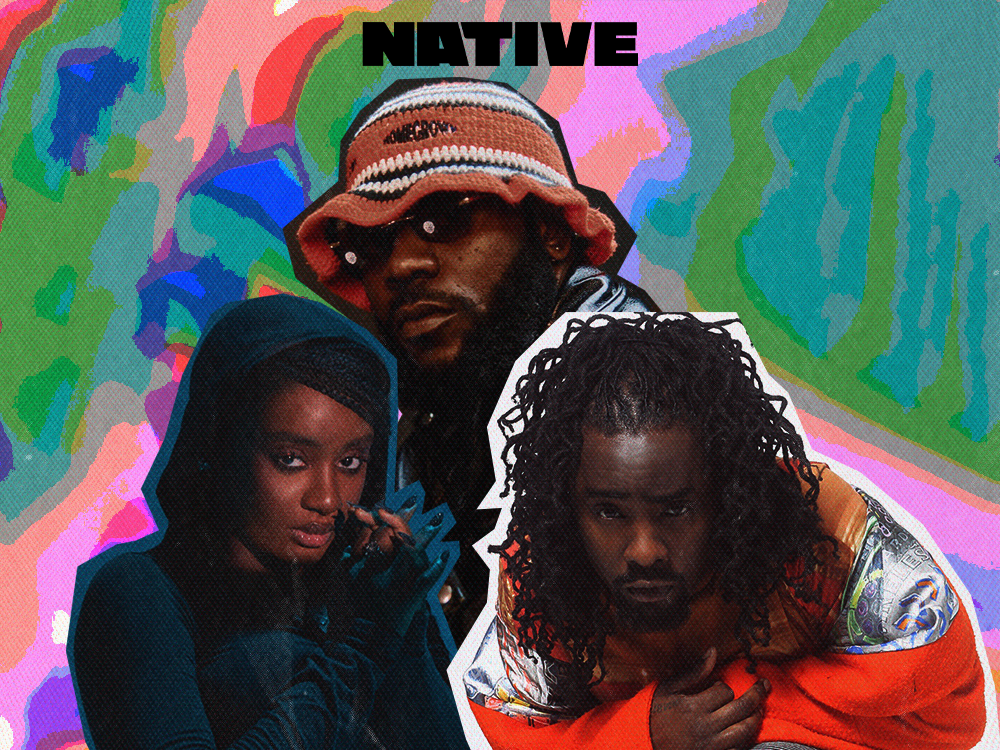
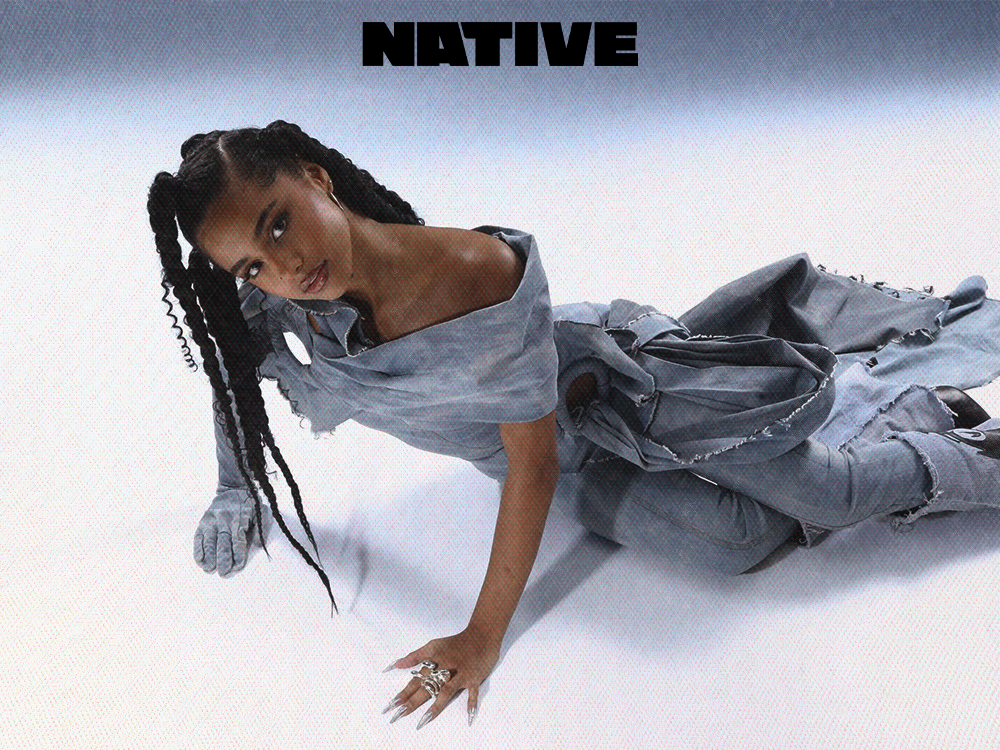
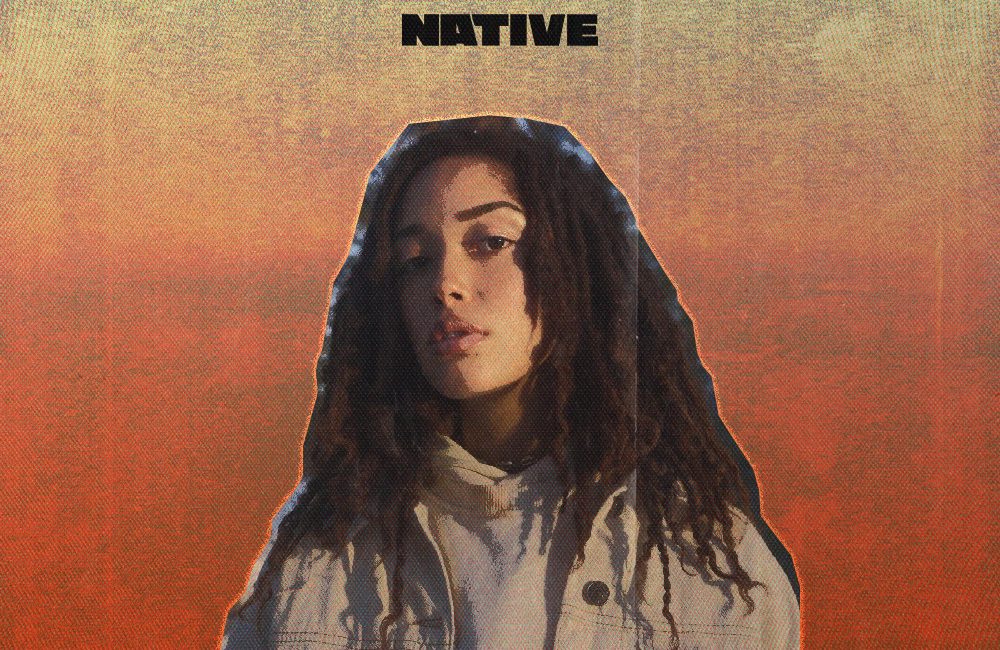
Best New Music: DEELA Taps Flo Milli For A Befitting Remix to “Take It Up”

These days, artists are finding success quick and fast through virality on social media. Gone are the days where industry gatekeepers determine who’s worth listening to, now the audience is taking some of that power with platforms such as TikTok and more, becoming instrumental in catapulting artists into greater success.

One perfect example is Nigerian-born, UK-based rapper, DEELA who’s been bubbling on our radar for quite some time. Since her appearance in Fresh Meat (now known as uNder) back in August 2021, the rising star has been fine-tuning her catchy bars which are armed with a youthful outlook on life and an unfiltered sense of confidence. The budding rapper has continued to carve a space for herself in the current zeitgeist of powerful female emcees unabashedly putting themselves on and inverting the male gaze to their benefit.

Two years later, so much has changed in DEELA’s world and we’re all the better for it. She’s been building up an impressive catalogue of feel-good flexes where she chops it up to the men and naysayers that deserve a mouthful. Her sophomore EP ‘DONE DEEL,’ is perhaps the most comprehensive introduction to DEELA’s talents, one that feels like each track is a burst of her personality. DEELA once shared that ‘DONE DEEL’ took significant inspiration from Flo Milli’s ‘Ho, Why Is You Here?’ “I guess that also speaks for itself. Flo Milli and I should be on a song soon,” she told the NATIVE at the time.


View this post on Instagram


A post shared by Queen D 💋 (@deelagram)

On “Take It Up,” DEELA opens the track with brazenly honest bars as she adopts the tone of someone fed up with all the BS from a former love interest. “Take it up with another hoe who cares you fucked up because I’m heavy on grind/If I weren’t so turnt up right now might spaz but you even ain’t worth my time,” she commands on the track’s intro. Switching from her laidback and collected delivery in the verses to a higher pitch in the hook and pre-chorus, it feels almost like DEELA is symbolising the freedom she feels through her melodies.

In today’s world of modern-day dating and relationships, it’s very difficult to find partners that are willing to speak the same love language, leading to an endless string of heartbreaks and situationships. It’s common to see women compromising on what they want and settling for less but DEELA is reinforcing that there’s power in shutting things off quickly and focusing inwards on stacking your paper and learning your craft.

DEELA adopts a laser precision flow as she digs into this frustrating experience and finds relief through her pen. In a similar tune as female emcees before her, DEELA reaffirms her self worth. She reminds herself that she’s still that girl despite the treatment she once endured with catchy bars like “Price ain’t cheap, so stack up your coin like you need a new home.”

It’s not hard to see why American rapper, Flo Milli took an instant liking to the no-holds barred track. Flo Milli found DEELA’s track through her For You page on TikTok where she instantly reached out to the Nigerian rapper and commended her sharp, clear raps. As fate would have it, the pair soon linked up on the remix to the track which further expands the song’s reach to a wider audience.

Flo Milli’s catalogue is littered with tracks that mirror the energy dishes on DEELA’s “Take It Up.” Think tracks such as 2019’s “In The Party” and 2020’s “Like That B*tch” where she fires off menacing bars around her competitors and her naysayers. It’s this same charisma that Flo Milli brings to DEELA’s world, matching the rapper’s don’t-care attitude and trading bars about sticking men to the curb. She smoothly complements DEELA’s deeper vocals with a light and airy verse “He fishing for love I ain’t taking the bait/I thought a broke boy said I won’t be shit, look at the tables I still got rich.”

Flo Milli’s success has been one of the most captivating to witness over the past few years. For any fans of the young American rapper who broke out just before the pandemic year, her dizzying flows and a sex-positive fearlessness has deservedly resulted in a legion of fans. At this crucial moment in her career, it’s endearing to watch her take an interest in the Nigerian rapper and boost her song to greater heights.

It’s only forward for DEELA at this stage, given that it is one of the most exciting times to be an emerging artist. Although she has kept his releases precious but powerful, she is gracefully confirming herself as an artist in a constant state of evolution, hungry for more bars and ready to top her best effort. We’re definitely ready for whatever she serves up next.

Listen to “Take It Up(Remix)” below.

Featured Image Credits/The NATIVE

Three Takeaways from TurnTable’s Mid-Year Charts

Before July 2020, when TurnTable Charts was launched, there were no recognisable homegrown music charts that documented the popularity of songs and artists in Nigeria. In the US, there is Billboard, publishers of Billboard Hot 100 and Billboard 200, among others; and in the UK, there is the Official Charts Company’s Official UK Top 40 and Official Albums Chart Top 100, etc. It is the gap in the Nigerian music scene that Nigerian entertainment company TurnTable (co-founded by Ayomide Oriowo and Similoluwa Adegoke) sought to fill with TurnTable Charts.

“There’s a lot of misinformation within Nigerian music; there are many things that people do not have credible data to verify. Also, there’s no standard music market worldwide that doesn’t have music charts,” shared Ayomide Oriowo, its Editor-in-Chief. Since its inception, TurnTable Charts, in partnership with several music platforms and organisations, has compiled data from airplay on radio and satellite TV as well as audio and video streams, most especially with its Official Nigeria Top 100.

In 2021, TurnTable Charts and the NATIVE premiered the inaugural edition of the official Songs of the Summer charts, which were divided into the Songs of the Summer Nigeria chart and Global Afrobeats Songs of the Summer chart. The charts featured the hottest songs of the season within the country and the international community. TurnTable Charts and WeTalkSound, a Nigerian music collective, also established the Recording Certification of Nigeria (RCN), a music certification body in the same mould as the Recording Industry Association of America (RIAA) in the US, the British Phonographic Industry (BPI) in the UK and the Recording Industry of South Africa (RISA) in South Africa.

This week, TurnTable Charts unveils its mid-year lists of Top 20 albums and Top 20 songs that have dominated the charts in Nigerian music. The lists contain songs and albums from December 9, 2022 to June 9, 2023. Here are three takeaways from the mid-year lists.


View this post on Instagram


A post shared by TTC (@turntablecharts)

YOUNG STARS LEAD THE PACK

With the global reach of Nigerian music, many newer Nigerian artists are wasting no time enjoying the benefits of the road paved by predecessors. Although Wizkid, Davido and Burna Boy are still regarded as The Big Three of the Nigerian music industry, artists such as Rema, Ayra Starr, Omah Lay, Fireboy DML, Joeboy, Victony and Ruger are charging to the forefront and attaining new heights, with their music crossing into wider markets. 

On the Top 20 Songs list, Omah Lay’s “soso” sits at No. 1 with 87.4m on-demand streams across all platforms. His debut album ‘Boy Alone’ is at No 4 on the Top 20 Albums list with 93.8m on-demand streams. Ruger’s “Asiwaju” follows at No. 2 on the songs list with 78.1m on-demand streams and his ‘The Second Wave (Deluxe)’ is at No. 18 with 22m on-demand streams. Other acts such as Rema, Ayra Starr, Zinoleesky and Seyi Vibez also feature on both the songs and albums lists.

THE VETERANS MAKE AN IMPACT

While the younger Nigerian artists enjoy their time in the sun, the veterans aren’t left out. Davido’s comeback album ‘Timeless’ is at No. 1 on the Top 20 Albums list with 185.6m on-demand streams and his singles “UNAVAILABLE” with Musa Keys and “FEEL” sit at No. 13 with 40.4m streams and No. 17 with 37.1m streams respectively on the Top 20 Songs list. Wizkid’s ‘More Love, Less Ego’ is at No. 7 on the albums list with 51.4m on-demand streams and he  is also at No. 14 on the songs list via Rexxie’s “Abracadabra (Remix).”

Burna Boy’s ‘Love, Damini’ and ‘Twice As Tall’ are at No. 5 with 71.7m on-demand streams and No. 20 with 4.7m on-demand streams on the albums list. Tiwa Savage also shows her star power via Spyro’s “Who Is Your Guy? (Remix)” with 56.3m streams on No. 4 and “Stamina” with Ayra Starr and Young Jonn with 35m streams on No. 18 on the songs list.

LOW FEMALE REPRESENTATION REMAINS

On both the Top 20 Albums and Top 20 Songs lists, Ayra Starr and Tiwa Savage are the only featured women. On the songs list, Ayra Starr is at No. 10 with 43.9m streams via the Mavins collaboration “Won Da Mo,” No. 15 with “Sability” 38.6m streams and No. 18 via Tiwa Savage’s “Stamina.” Starr’s ‘19 & Dangerous (Deluxe)’ is at No. 17 with 25m on-demand streams on the albums list.  On the other hand, while Tiwa Savage has two entries on the songs list, she doesn’t appear on the album list.

Although both lists are primarily indicative of the consumption levels of the public, it also calls into question the low representation of women in the music industry from artists to record producers. While artists such as Tems continue to prove that women are also major stakeholders in the Nigerian music industry, there needs to be more acceptance of the works of women, as it is with those of their male counterparts. 

Find the complete Top 20 Song and Top 20 Albums lists below.

TOP 20 SONGS

1. “soso” by Omah Lay – 87.4m

2. “Asiwaju” by Ruger– 78.1m

3. “Gwagwalada” by BNXN, Kizz Daniel & Seyi Vibez – 65.1m

4. “Who Is Your Guy? (Remix)” by Spyro & Tiwa Savage– 56.3m

5. “Soweto (Remix)” by Victony, Tempoe & Rema ft. Don Toliver – 56m

6. “Party No Dey Stop” by Adekunle Gold & Zinoleesky – 50.3m

7. “RTID (Rich Till I Die)” by Kizz Daniel – 50.1m

8. “Xtra Cool” by Young Jonn– 46.5m

9. “Personal” by Zinoleesky – 46.1m

10. “Won Da Mo” by Mavins, Boy Spyce & Rema ft. Crayon, Bayanii, Magixx, LADIPOE & Ayra Starr – 43.9m

11. “2:30” by Asake– 42.7m

12. “Holiday” by Rema – 41.6m

13. “UNAVAILABLE” by Davido ft. Musa Keys – 40.4m

14. “Abracadabra (Remix)” by Rexxie, Naira Marley & Skiibii ft. Wizkid– 39.6m

15. “Sability” by Ayra Starr– 38.6m

16. “Cough (Odo)” by EMPIRE & Kizz Daniel– 37.8m

17. “FEEL” by Davido– 37.1m

18. “Stamina” by Tiwa Savage, Ayra Starr & Young Jonn– 35m

19. “Yoga” by Asake – 34.2m

20. “Body & Soul” by Joeboy – 33.6m

TOP 20 ALBUMS

1. ‘Timeless’ by Davido – 185.6m on-demand streams

2.‘Billion Dollar Baby 2.0’ by Seyi Vibez – 131.1m on-demand streams

3. ‘Mr. Money With The Vibe’ by Asake – 116m on-demand streams

4. ‘Boy Alone’ by Omah Lay – 93.8m on-demand streams

5. ‘Love, Damini’ by Burna Boy – 71.7m on-demand streams

6. ‘Grit & Lust’ by Zinoleesky – 70.2m on-demand streams

7. ‘More Love, Less Ego’ by Wizkid – 51.4m on-demand streams

8. ‘The Villain I Never Was’ by Black Sherif – 49.1m on-demand streams

9. ‘EMPIRE Presents: Where We Come From, Vol. 01’ by Various Artists – 39.8m on-demand streams

10. ‘Love Is Not Enough, Vol. 2’ – EP by Young Jonn – 39m on-demand streams

11. ‘Hypertension’ by Bella Shmurda – 37.4m on-demand streams

12. ‘Rave & Roses’ by Rema – 36.8m on-demand streams

13. ‘Chapter X’ by Mavins – 35.9m on-demand streams

14. ‘Memory Card’ by Seyi Vibez – 31.8m on-demand streams

15. ‘Playboy’ by Fireboy DML – 31.5m on-demand streams

16. ‘Outlaw’ by Victony – 30.7m on-demand streams

17. ‘19 & Dangerous (Deluxe)’ by Ayra Starr – 25m on-demand streams

18.‘The Second Wave (Deluxe)’ by Ruger – 22m on-demand streams

19. ‘Big Time’ by Rexxie – 15.5m on-demand streams

20. ‘Twice As Tall’ by Burna Boy – 14.7m on-demand streams

You can read a full breakdown of the mid-year charts here.

Featured image credits/NATIVE

NATIVE Exclusive: Chinye Mugo Is Telling Meaningful Stories Through Fashion

These days, social media brings audiences up, close and personal with their favourite brands and online personalities. Consuming this deluge of information can be exhausting for any twenty-something African who is finding a balance between consumption and creativity. For Nigerian designer, Chinyemugo Obiekwugo-Charles, this is a familiar struggle that she recognises while owning and maintaining a ready-to-wear brand in Lagos. 

“I just want people like me that don’t really fit into any one circle to know that it’s ok not to fit in. That’s what makes you special. That’s what makes you perfect. Being imperfect is perfection in its own way,” she shares in an interview with the NATIVE. This desire to seek comfort within ones self is firmly at the centre of her namesake brand, Chinye Mugo which is known for its neutral colour palette, distinctive layers and recycled hand-woven knits. 

While it has been in the vault for many months, Chinye Mugo only launched its debut collection this July and already, it’s making waves. The collection split in two parts titled Controlled Chaos and Growing Circumspection – an honest reflection of intentional imperfection with references to the Nigerian Civil War. For Obiekwugo-Charles, utilising clothes to tell a wider story and make someone feel accepted or welcome is as important as the clothing itself. “I do portray an air of imperfection intentionally,” she shares candidly.


View this post on Instagram


A post shared by Mugo (@chinye_mugoofficial)

Following the brand’s recent successful debut and entry into the fashion scene, we caught up with the brains behind Chinye Mugo to discuss all there is to know about the must-have label.

Our conversation, which follows below, has been lightly edited for clarity. 

NATIVE: Thanks for joining me today. Could you talk me through the inception of Chinye Mugo?  What pushed you to establish a brand in your name?

Chinyemugo: My brand is Chinye Mugo and it’s taken from my name, Chinyemugo. I thought it would be cool to separate the two. I’ve wanted to create this brand since I was young and I feel like this has been coming for at least ten years now. I’ve been designing since I was 10. I initially wanted to start in 2025 but last year, I decided that there was no point in putting it off for so long. I’m never going to be 100 percent perfect at the start, so I might as well get started. I only hoped I’d be able to push myself to grow as time progresses. 

How does your Nigerian heritage influence your designs or processes?

The fact that I’m already designing from the subject position of a Nigerian is going to naturally affect the outcome. However, I don’t naturally pull so much inspiration from Nigerian culture. It’s always going to have subtle Nigerian influences but I don’t think that’s the main thing. This collection, however, was inspired by the Nigerian Civil War but not in terms of culture or anything like that. 

Talk to me about your background in fashion and how long had the brand been in the works? 

I designed a quarter of the collection last year; two or three outfits. I designed six this year. I currently attend Parsons School of Design in New York. Before that, I went to Cambridge School of Visual and Performing Arts where I studied the UAL extended programme for two years. I have been doing art. 

If you had to describe the brand’s ethos, what would you say? 

My brand ethos is let live. Just let live and be yourself mainly because it’s ok not to be perfect. As cliche as it sounds, it’s genuinely the truth. In my designs, I do portray an air of imperfection intentionally. I feel like garments lose their personality and individuality when people expect it to look perfect. I like garments that have a bit of wear to them. You can see that time has affected a change in it. Maybe it’s distressed or the seams are ripping. I like things like that. I feel like we live in an age where we are almost being pressured to take upon different identities aside from our own. Being imperfect is perfection in its own way. 


View this post on Instagram


A post shared by Mugo (@chinye_mugoofficial)

Who are some designers or creatives you look up to in the African fashion industry or beyond?

I try as much as possible to admire people’s work and not necessarily take inspiration from them. The people I admire in the industry, I’ll say Thebe Magugo, Supriya Lele. I’ll also say some of the greats like Karl Largafield for Chanel and Christian Dior. I’m also a big fan of Craig Green and Kim Jones. I really loved Virgil Abloh. He is a genius. 

Longevity in creating as opposed to being trend is something a number of conscious consumers pay attention to. How do you draw the line between these two whilst creating products that appeal to your audience now? 

I feel like there’s a collection for everything. As for now, I am more interested in creating pieces that have a story. I’m not focused on the monetary part of it even though the money is important. When I design, I do so from a concept and however, I’m feeling at the time. I’m a very emotional person and I cannot really process my emotions without putting it down on a piece of paper. I don’t really design from a consumer’s point of view mainly because  as designers, we tell consumers what they want. It’s just about reading and knowing your customer well but I don’t design from the perspective of the consumer. 

How would you describe your inspiration for the looks in your collection? 

The title of this collection is “Controlled Chaos” and it’s a theory of design where I propose that control and chaos cannot be mutually exclusive when it comes to design. The two should not be mutually exclusive but they should become one functioning machine. So, I factor in a little bit of chaos and a little bit of control to create controlled chaos. I referenced control in this collection with the Catholic church. That’s religion so there’s a lot of control there, naturally so. I also referenced control in terms of government officials which I studied in the Biafran war. I did a lot of hand knitting from existing sweaters I owned or found and that’s also a sustainable aspect to this collection. 

I do think for my brand, I am striving to include a lot more sustainable aspects in how I design. I also referenced chaos in terms of brutalism. When you look at brutalist architecture, you might see a daunting shape appear out of nowhere and it’s just made out of cement. It’s very obstructive. I use that as inspiration. I create these layering techniques in my skirts that are very obstructive because it’s not constructed in the way that it looks. It’s constructed in a new, innovative way. It’s really just about taking subtle references and ideas behind these movements as inspiration.

Why did you adopt more neutral colours or patterns in this collection? 

Yes. I’m not really a fan of vibrant colours. I like darker green, moss, creams, browns and denim mainly because I feel these colours exude a rustic aesthetic that’s almost antique-like. I’m trying to portray the feeling of wear and tear even with the colours I choose. 


View this post on Instagram


A post shared by Mugo (@chinye_mugoofficial)

What would you say has been your biggest challenge establishing Chinye Mugo the brand? 

I would say designing my logo myself. I designed that logo probably about twenty times. I also changed the name many times. At one point, it was Mugo Mugo or Mugo. I think establishing my brand’s identity was really difficult for me but I decided to allow the brand to form an identity on its own. Consciously or not, I’m already curating a specific aesthetic for the brand without knowing. There’s no need to put too much pressure on how the brand looks. 

Carving your way through an industry as a newcomer must come with its own challenges. How do you navigate them?

I’m definitely learning on the go. Thankfully, I’m surrounded by a lot of people that are very happy to help and lend me advice. It’s been very exciting to step into that world and understand what goes on. I’m usually also in my own head a lot and I stay by myself. I tend to create my own space and exist in it. I’m finding that now, I have to put myself out there more. I have to allow people to take part in my creations and that’s something I never really anticipated. I’m looking forward to learning and discovering more in that regard. 

We spoke earlier about sustainability and using more ethical methods to production. Are there any changes or methods you see yourself adopting in the future to adjust to this? 

I’m very focused on my prints at the moment. I create prints with bleach and I’m trying to solidify that. One of the jackets is completely lined with this bleach pattern on the inside. I’m looking into more sustainable ways to create prints. Even beyond prints, I don’t see my brand as an extreme fast fashion one.

What are some of your goals for the brand moving forward? Any next steps you could share? 

I will be having a fashion show so that’s something to look forward to. I feel like it’s going to be really groundbreaking. I’m also looking at dropping a ready to wear collection very soon. 

Who is the quintessential Chinye Mugo customer?

They’re definitely brave. They do not give a fuck about what anyone has to say. They just do their own thing. They’re going to wear what they want and say what they want because at the end of the day, it’s a free world. The world can’t be free on only some people’s terms. They’re individualistic. 

Featured Image Credits/The NATIVE

Essentials: PsychoYP Shows His Versatility On ‘Osapa London’

The crowning glory of PsychoYP’s well-sewn rap skills and entrepreneurial abilities is his elite consistency. Since starting his career as a teenager, the Nigerian artist has continued to find new avenues to create and reinvent his craftsmanship. Last year’s ‘YPSZN3’ was a continuation of his intention to prove to himself and listeners that his talent has no limits or ceilings. “Wherever I take it [Hip Hop] to, that’s what is going to be,” he’d told the NATIVE. “It’s not like some selfish P but I’m carrying niggas and putting niggas on and doing what niggas are supposed to be doing but they are not doing.” 


View this post on Instagram


A post shared by 𝐘𝐏⚡️ (@psychoyp)

He’s here again to prove his dominance with a new EP ‘Osapa London.’ Born and raised in Abuja, Nigeria’s capital, PsychoYP is an important feature in the city’s push to reinstate Hip-Hop as the nation’s darling. Throughout his career, PsychoYP has always repped Abuja and its influence on his sound. His EP’s title references an affluent neighbourhood located in Lekki, Lagos; it is the first time the rapper alludes to another city in the country. 

The Lagos connection comes alive on “DO WHAT I LIKE” featuring Khaid and Prettyboy D-O, artists whose careers are tied to the cosmopolitan city. Khaid ‘s hook is the glue that holds PsychoYP and Prettyboy D-O’s verses as they all brag about the complexities that a celebrity lifestyle affords them.  On “Bad B,” with its early-2000s R&B rhythms, Teni, another act who owes her stardom to Lagos, and PsychoYP go on a diasporic ride with UK’s Wax Bentayga. The trio express their feelings concerning love, women and the pursuit of their goals.

While PsychoYP’s EP is inspired by Lagos, he doesn’t hesitate to save spots for his Abuja brethren. PsychoYP and ODUMODUBLVCK, who has been the revelation of the year, recently made the 2023 Headies nominations list for the former’s “Bando Diaries.” They reconnect on the Amapiano-infused  “SETTLE US!,” painting instances of being pressed by people to give them money or people owing them money. Oya YP/You go do free?/Dem no wan pay/Demma mental/They no show love,” ODUMODUBLVCK raps. On AnyGadDamnTime,” PsychoYP and Laime go the Afrobeat route to declare their disinterest in the feelings and words of detractors. 

In the Abuja Hip-Hop scene, togetherness is an essential element of the community. PsychoYP has been one of the leading figures with his Apex Village collective/record label. Apex Village has curated the emergence of artists like Azanti and PsychoYP’s works have brought music producers such as Ramoni and Trill Xoe more recognition. “Apex Village is a collective of some of the most talented people I know. They’ve all made a lot of things so easy for me and I can only do the same for them,” PsychoYP told OkayAfrica. “It’s one thing to just be in a group of talented people and it’s another thing to be in a group of talented people where everyone can feed off everyone’s energy and give it back 100% in everything we do.” On ‘Osapa London,’ this collective energy is evident. 

On “Not My Fault,” Ajebo Hustlers and PsychoYP deliver a heartfelt yet playful examination of lost love. While they acknowledge their feelings for their lovers, they instead choose to only hold on to the fleeting sexual moments, as it’s less troubling. Elsewhere, on “STAND ATTENTION,” PsychoYP and King Perryy contemplate the struggles of pushing to achieve a better life. “Too many boys stuck on the road since far/I might light Jane when I smoke the cigar/Too many young boys smoking Igbo/And at the same time we gon still go far,” PsychoYP raps. On his part, King Perryy implores listeners to “No go dull yourself o.”

Although PsychoYP spins a lot of braggadocio into his music, there are moments on ‘Osapa London’ that pry open his vulnerabilities. “And I no fit to open my mouth and talk/I just can’t explain/Why they wanna carry me for chest and mind/Every night and day,” he raps on “This Country,” subtly admitting to the pressures he faces in his life. Still, he proclaims his infallibility: “I still dey stand fit.” On “Most Times” with the veteran rapper Ice Prince, PsychoYP opens up about feeling loneliness, rapping, “Omo most times o/I no fit to lie you/People dey beside you/But I dey on my own.” Ice Prince, like PsychoYP, tells of his worries but offers himself some comfort when he raps, “Me I only trust in the Almighty.”

PsychoYP’s ‘Osapa London’ infuses elements of Afropop and R&B into Hip-Hop for a mix that fits the rapper’s skills. The works of the producers—from Jordan Knows to Ramoni to Princeton—again prove PsychoYP’s fine ears for sounds. ‘Osapa London’ is PsychoYP’s evidence of his versatility to work with diverse melodies and the consistency to improve on his discography.

Stream ‘Osapa London’  below.


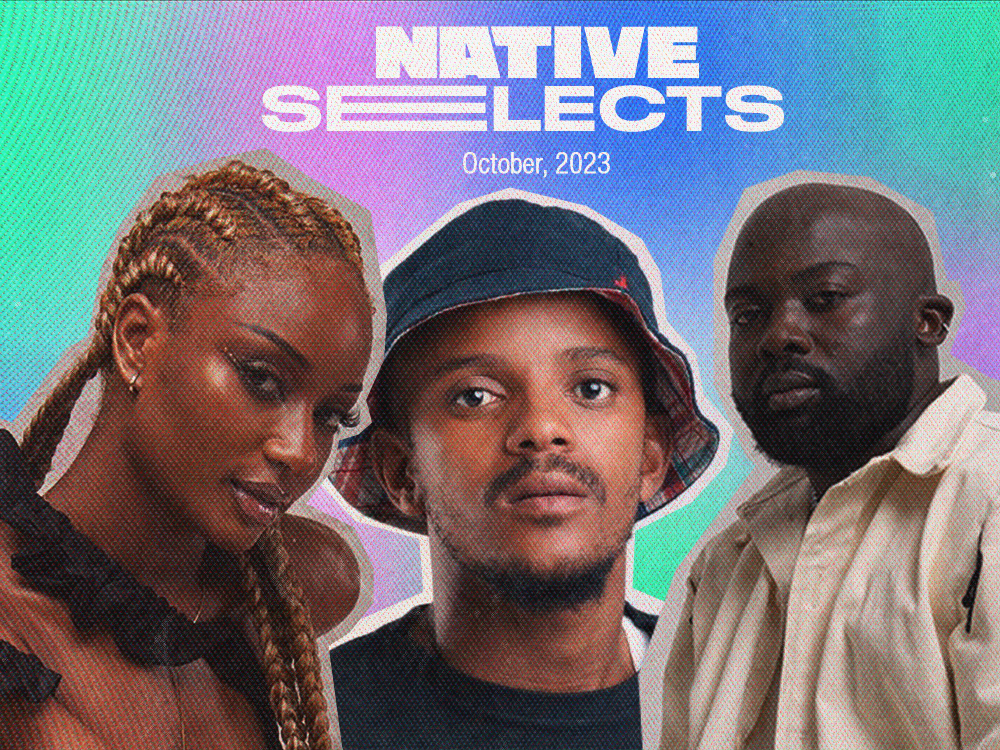
NATIVE Selects: New Music From DEELA, Adekunle Gold, The Cavemen

Every week, new music shows up, sweeping fans and music lovers off their feet while artists gauge reactions to know the effect of their creativity. At the NATIVE, we are committed to keeping our ears on the pulse of the music scene and bringing the best sounds to your doorstep. In our last edition, we brought you new releases from Prince Kaybee, DJ Maphorisa, Spyro and more. Today, we have songs that move from Afropop to Amapiano to R&B, with our select artists showcasing their unending talent and passion for creativity. Lock in!

ADEKUNLE GOLD – “OGARANYA”

Geared to release his new project ‘Tequila Ever After’, the mercurial Adekunle Gold has shared a single. It’s a record as gracious as it is recognising his legacy, arriving that delicate mix through the evocative pen of AG. With warm, rootsy percussions building around his vocals, it’s a reminder of the distinct quality Adekunle Gold provides afropop, indeed setting up the forthcoming album in a scintillating way. 

DEELA & FLO MILLI – “TAKE IT UP(REMIX)” 

The rap girlies are back and thriving! Deela’s “Take It Up” was already an anthem for a number of reasons. Other than the heart thumping drum pattern created to have your head bopping at the drop of the first note, Deela’s lyrics are so brazenly real. Deela is fed up and she’s not not sparing any feelings as she effortlessly rides the wave of the beat, “Take it up with another hoe who cares you fucked up.” What started as a TikTok comment section interaction has turned into a glorious co-sign from Flo Milli. Deela still takes the first half of the song up until the intoxicating hook, after which Flo Milli taps in. Her light vocals bordering on the higher register beautifully contrast Deela’s. Similarly fuelled with passion, Flo Milli expresses her uncaring nature towards an old flame. 

KHAID — “ANABELLA”

One of the most consistent youngsters in the past few years, Khaid’s sound has imprinted itself on the consciousness of many afropop listeners. From “Jolie” to “Carry Me Go”, his utilisation of everyday narratives to spin poignant stories on love hasn’t gone unnoticed. On his new song, he doubles down on the technique, culling Highlife-esque guitars to serenade a love interest. It’s ultimately a groovy record with obvious nods to the 2010s Nigerian Pop sound, highlighting Khaid’s intentionality as an artist. 

THE CAVEMEN. — “OPEN YOUR MIND/SAVIOUR”

Since entering the scene just before the 2020s, The Cavemen have utilised the iconic genre of Highlife to dizzyingly excellent results, releasing two acclaimed albums. With their sound having caught on the biggest artists and audiences around the world, they’ve released their first singles of the year. “Open Your Mind” is the quintessential gyration melody, using the genre’s typical woodwork to call people to dance. On the other hand, “Saviour” is quite the spiritual record, adapting the sparse movements reminiscent of Ghanaian Highlife to preach their individuality. “I no fit be your saviour,” they sing with exhilarating emotion, embedding a classic vibe onto the record. 

PATORANKING FT. POPCAAN – “TONIGHT”

When two dancehall icons connect, nothing short of greatness should be expected. “Tonight” draws a successful sonic line through the local flavours of Nigeria’s dancehall riddim to that of Jamaica, by way of Popcaan. Soundtracking a good time is the obvious intent, and both artists are masterful in their execution, their voices melding with the ease of water. Cue in the peculiar beat drop and the whistles in the background, and the song’s boppy quality is undeniable. 

EUGY – “CHOSEN”

Ghanaian artist Eugy is known for his colourful takes on R&B, but on his new single “Chosen” he adopts an audibly different gaze. More rap than blues, every lyric assumes the heated poignance of a prophet, as Eugy unfurls the manifestations of the life he’s chosen. Almost every line is quotable material and the hook effortlessly complements the forward-facing subject matter, making this one of those soulful records you put on the speakers just after waking up. 

JINMI ABDULS – “SARAFINA”

Once crowned the Prince of Highlife, the Lagos-bred Jinmi Abduls has taken his artistry onto broader sonic plains. Among the genres he’s increasingly delved into is R&B, its plush narratives finding a natural ally in Jinmi’s affectionate pen. “Sarafina” benefits from these, a mid-tempo record which moves with the truism of a man falling in love. “Oh Sarafina, I dun lose my focus,” he sings in the heartfelt chorus, as the building instrumental creates, truly, an epic feeling of desolation and longing. 

GABZY – “HEAR ME OUT”

One of the most exciting R&B artists in Nigeria, the music of Gabzy has long been an intriguing package. Best known for his work with producer Melvitto, the artist has worked broader in the industry, bringing his sound more novelty and freshness in recent times. “Hear Me Out” is a string-based record with soulful finishes, drawing on the popular theme of convincing one’s love interest of their genuine desires. Gabzy’s vocals embody this feeling, giving the song an intimate core it benefits from. 

ITUA – “FAVOURITE SOUL”

The Dutch-Nigerian artist ITUA has a wide artistic range. Becoming a drummer by the age of nine, he’s explored genres from R&B to Soul and afropop in recent years, utilising his distinct life experiences to draw deep meanings from everyday situations. “Favourite Soul” is a stripped, spiritual song, lit up from within by the subtle touches of ITUA’s drumming and evocative notes. Even his vocals are in sync with the song’s melancholy, in all creating a truly epic feeling through its runtime. 

MUTHAKA & BENSOUL – “SECRET LOVER”

Over the years, Kenya has become one of the prime destinations for discovering great R&B artists. “Secret Lover” joins the unique talents of Muthaka and Bensoul, a warm duet whose replay value is evident with every listen. Starting off the record is Muthaka, whose lithe vocals embrace a sensitive direction, while Bensoul’s svelte tone excites in the background before his verse. It’s a fine song with sufficient measure. 

RUNDA – “BEAUTIFUL LIES” 

Love contributes to some of the most conflicting emotions. In its happier times, it forms a wholesome haze and when things go sour, life comes crashing, pleasure becoming pain. “Beautiful Lies” captures the bittersweet spectrum of those moments, a truly remarkable song by Runda. With its accomplished soundscape and the artist’s vocals meeting beautifully, it’s a record that would soundtrack very important moments for its listeners.  

NU BABY – “TAMPICO” 

The Canada-based artist Nu Baby has contributed distinctly to the sound of afropop, from his diasporic base linking hands with the movement’s sonic peculiarities. “Tampico” extends that vision; drawing an immersive soundscape by pairing a tropical guitar movement with the usual drums. Moving with the sexy serenade of a dancer, the song mirrors the highs of love which Nu Baby sings about, making it work on different levels. 

Featured Image Credits/The NATIVE

Adekunle Gold Brings ‘Tequila Ever After’ Closer With New Single “Ogaranya”

The “Tio Tequila” season is here. In anticipation of his fifth studio album ‘Tequila Ever After,’ Adekunle Gold has teased its arrival with well-received releases that have sought to capture his state of mind as well as the essence of the project. He began 2023 with “Party No Dey Stop,” combining nicely with Zinoleesky for a tune about the fun and enjoyment of their lifestyles. “Party No Dey Stop” was followed by the three-song pack ‘Tio Tequila,’ where Gold showcased his artistry on new tracks “Do You Mind?” and “Omo Eko.”


View this post on Instagram


A post shared by Tio Tequila (@adekunlegold)

Adekunle Gold has shared that the inspiration for  ‘Tequila Ever After’ came from an incident when, after he had taken a shot of tequila a long day, he felt energised to try new ideas and expand on his catalogue. Gold’s transition into a pop star has been noted for its seamlessness in how he incorporated Western influences into his earlier Folk sound and still maintained the quality of his art. 

I am exactly who I think I am. It has taken me time to get here but now that I am here, there’s no looking back,” Gold said about his forthcoming project. “I have unlocked a different level and potential. I am finally celebrating my growth, my wins. I’m living life to the fullest and enjoying my success. I invite you to join me on the wildest ride of my life.

With two weeks to the release of ‘Tequila Ever After,’ the project’s lead single “Ogaranya” is out. The song’s title is an Igbo word for a wealthy person and it’s this extravagance that Adekunle God infuses into “Ogaranya.” I’m no a new level, bobo/I put it all on God/So when you see me smile, my brother/You for just show me love/Viviendo la vida loca/Nobody take my joy/Better make way when you see ogaranya,” Adekunle Gold sings. “Ogaranya” is a jubilant tune about Gold’s transformation and achievement. 

The song also comes with a colourful music video that mirrors the celebratory nature of the song. In the video, Adekunle Gold is the star of the moment as he poses with branded tequila bottles and bundles of cash. In one particular frame, Gold sits beside some TV screens showing African music legends such as Fela Kuti and Angélique Kidjo. It’s a subtle admonition that Gold is forging his way to legendary status. 

While Adekunle Gold readies ‘Tequila Ever After,’ he has also announced tours scheduled in areas of North America and the UK. The artist recently revealed that American singer Khalid is one of the guest artists on his album, with promises of more goodies to come. Adekunle Gold’s journey is one of perseverance and excellence. With ‘Tequila Ever After,’ a new phase beckons. 


Identify: Chmba Reigns, For Music & Malawi

Malawi has blessed Chmba and she, in turn, has reciprocated. In 1994, the year she was born, the country shifted into a multi-party political system, casting off the agonies of a 30-year dictatorship. This change in political structure yielded benefits: a new respect for civil rights, press freedom, and an open door for music from other countries in Africa and around the world to enter. The seismic change impacted a young Chmba when she listened to the likes of Awilo Longomba, Brenda Fassie, Angélique Kidjo, Michael Jackson and Madonna.

“[My childhood] was very colourful musically and that really influenced the sound that I create today and how I think about sound,” Chmba, a DJ and music producer, says. “With all of those influences, it’s hard for me to stick to one particular sonic pattern. In terms of my music, you’ll see elements of Afrobeats, Afro-tech[no] and Afro-house from South Africa, indie vibes [and] pop vibes.”


View this post on Instagram


A post shared by Chmba (@chmba)

A collection of electronic sounds fused with indigenous elements, Chmba’s music, although coloured with universal perspectives, is rooted in her African heritage. In 2020, she released her debut with the EP ‘Mtima Rising,’ which was dedicated to the memory of her late mother. Three years later, Chmba’s newest EP ‘Okongola Caucus,’ while retaining its rudiments, moves on from grief to embrace a celebration of love and life.

Aside from the music she listened to and watched as a child, Chmba’s path as a musician was inadvertently paved by the relationship her family members had with music. Born into a large family, she remembers an aunt’s excitement when Brenda Fassie’s “Weekend Special” started playing while they were on public transport. “Seeing how energetic and happy she was to hear this song play from the bus and sing along, it awoke something within me to contribute to that culture or the joy that people find when they hear a song,” Chmba says. Her father and her uncle were breakdancers and loved music. Her father also owned a boombox, which he used to play mixtapes. At the age of seven, Chmba began trying her hands at making music.

“[My father’s] mix was always so random. You could go from Lucky Dube to Abba on the same cassette,” she says. “Growing up, I just wanted to chop up [songs] and see what mixes I could make myself. And so I would borrow, more like steal some of the cassettes and play them myself, mess around, make my own mix and so my love just started.”

Chmba soon began making mixtapes for her friends, an act that continued into her college years as she performed at parties and other events. After she got a DJ Controller, her career as a disc jockey fully took off. “I love DJing and mixing for people,” she says. “When I’m DJing, I love to mashup songs sometimes, like I’ll take the beat of this song and then bring in the vocals of another song and then let them transition into each other. I love what I can create during the DJ set, and so, it was that kind of creation that made me go, ‘Wait, what if I could also make my own music that’s a certain type of way?’

“DJing started first but it definitely inspired and sort of gave me the base to start producing.”

As she matured, Chmba observed the strides of the DJs and artists leaving a mark on the music scene: Black Coffee, DJ Cleo, Wizkid, P-Square, Boddhi Satva, Just a Band, Muzi and Kaytranada. “They were very influential to me in terms of finding my own sound. They’ve really influenced the way I create now: to be free and not worry about [being] boxed in.”

As a teenager, Chmba’s choices of career path didn’t always go down well with her parents. Although they loved music, they didn’t consider it a respectable career. After graduating from the university with a degree in economics, Chmba worked a job that drained her physically and emotionally. In those moments, her recourse was music. She listened to DJ mixes and watched YouTube tutorials by music producers and DJs. That passion has sustained her to this moment. Similarly, her parents disagreed with another choice she made when she was 17. After witnessing a close friend get forced into early marriage and abandon her education, Chmba decided to found Tiwale, an NGO dedicated to creating educational and economic opportunities for young women and persons in marginalised communities. 

Under the four pillars of education, skills training, job creation and community, the youth-led Tiwale (which means “Let us shine or glow” in Chichewa, based in Mtsiliza in Malawi’s capital Lilongwe, supports communities with loans, workshops (on fashion design, sewing and tie-dye), education facilities and classes on music technology and education. Tiwale has worked with over 512 women and girls, reached over 40,000 young people and partnered with numerous other NGOs across Lilongwe and Malawi. With Tiwale’s assistance, many of their students have improved their living conditions with learned skills such as sewing and music production.

Chmba & the Tiwale team. Image Credit: Chmba

Chmba admits that although she and her team lacked enough experience in founding and managing an NGO—the oldest member was 19 and the youngest was 12—they were fuelled by a desire to make a difference in the lives of those in their community. After battling teething issues such as operating without the approval of the community chief and without being registered by the government, Tiwale grew steadily, seeing an estimated figure of ten people transform into 150. “I think the gift of youth is ignorance,” Chmba says, “and with that ignorance, you end up starting something not knowing how big it will become because sometimes when you know how big it could be, or what could actually happen, then you’re intimidated from actually doing that thing and so it was a blessing in disguise.”

“It was really being young that allowed the project to start immediately. That rage [and] the anger that we were all feeling,” Chmba adds. “And with time, we’ve done all of those other steps to be formalized. But what’s been the gift is that we’ve kept it a youth-led project and being youth-led, we’ve continued to innovate quickly with what’s happening.” Earlier this year, Cyclone Freddy hit Malawi, resulting in deaths and the displacement of many lives. Before that, there was an outbreak of cholera that negatively affected the country. There was also the matter of the Covid-19 pandemic. Through it all, Tiwale has remained focused on its goals to provide a better life for the members of its community. 

As a music producer and DJ, Chmba’s wealth of experience living in different countries has massively influenced the kind of music she makes. She cites DJ MoMa’s Afrobeats parties in New York, Afrobeats-themed music festivals around the globe and Rema’s recent tour of India as signs of music’s power to transcend boundaries and languages. That has inspired Chmba to be unapologetic with her Malawi-grounded sound sparkling with Chichewa lyrics. “When the beat is right, even if someone doesn’t know the language, they would vibe,” she says.

Chmba’s music has taken her around the world and placed her on prestigious stages alongside Nile Rodgers and Angélique Kidjo. Her music has also, to her surprise, fetched her new audiences in Mexico and Colombia, as she reveals that in terms of sound patterns (e.g. drums) both countries share similarities with Africa. She further adds that one of her favourite bands is the Colombian group Bomba Estéreo. Chmba also acknowledges the growing profile of African DJs on the continent and across the world. “DJs have always carried culture, from radio DJs playing what’s popular, what’s popping [and] curating the kind of sound that folks should listen to,” she says. “And so I think that DJs are essential to the music ecosystem, and I wish there was more appreciation, but we’re starting to see it. We should give more DJs their flowers.”

While Afropop is the current African darling in music circuits, Chmba presses on the importance of African artists boldly breaking the mould, especially those in the electronic music space. She cites Chimamanda Ngozi Adichie’s The Danger of a Single Story as a guideline for African artists to tell a complete narrative about the music from Africa. “Afro-tech[no] and Afro-house were born in South Africa and so it’s also who we are,” she says. “There’s always that danger where people think [electronic music] is a Western thing, but it’s actually always been there, the way people drum at home, that’s the fast BPM. That’s Afro-house and Afro-tech[no] kind of drumming. I think maybe it hasn’t been produced as much but I think there’s a lot of opportunity for us to go beyond that single story of African sound.”

Chmba teaching Tiwale students. Image Credit: Chmba.

Juggling Tiwale and her music career hasn’t been easy for Chmba but it has also offered her insight into herself. As a teacher of music production, she derives great joy in seeing her students explore their passion and find financial independence. “I do see a lot of opportunities for African countries in terms of sound,” she reveals. “Artists are getting hired to play at different festivals. People like Tems are winning different awards and there’s a lot of money that can really come with being an artist. And so I want everyone to have access to that as much as possible. It shouldn’t be a privilege thing and so I really care about that quality of access of skills.”

When she’s not at work with her Tiwale team, Chmba is in the studio making music that excites her. She has tours planned to promote her music in Malawi, the US (East Coast), Amsterdam, Berlin, Geneva, Paris, Rome and London. “Folks should look out for me,” she says. “I’m just going to keep creating and pushing to give my fans and [all] who listen to my music the best that I can do.”

Stream ‘Okongola Caucus’ below and read more on Chmba here.

Featured image credits/NATIVE

Review: Asake’s ‘Work Of Art’

In music, confidence is a drug. You can tell when an artist is operating at a new plane of self-assuredness: There’s more pep in their cadence, they sing of opulent feats, the need to expand their artistic scope comes across as an innate endeavour, and a belief in their own hubris means the artist is working on their own time. In Nigerian music, there are many instances where artists use unbridled confidence after an acclaimed debut album as the driving force to supercharge their powers, like how Wizkid’s post-‘Superstar’ feature run and defining contributions to the EME compilation project was mythical, or in Adekunle Gold’s awe-inspiring evolution from folk singer to sleek popstar.

If there was a numeric apparatus to measure this sort of confident drive, Asake’s would probably break the scale. Last year, the Lagos-born singer bum-rushed the Nigerian music mainstream with a run for the ages, headlined by the releases of a semi-eponymous debut EP and a greatly acclaimed debut LP, both stuffed to the ears with smash hits. Nine months after the instant classic ‘Mr Money With the Vibe’, Asake has returned with the sophomore full-length, ‘Work of Art’, leveraging in on his superstar status by tactfully pushing the envelope on his artistry without disrupting the flow established by its predecessor. “Different pattern of my own style/so consistent, no resistance,” he sing-raps amidst ricocheting log drums on penultimate track, “Great Guy.”

The hallmarks of Asake’s back-to-back-to-back 2022 campaign have been dug into, even taking into account their influencing nature within Nigerian pop. There’s the importance of Amapiano and South African House to the singer’s preferred sonic canvas, the formative influence of Fuji music on his songwriting, the infectiousness of backing, choral vocals, and how snippets helped drive the hype train. Just as important as all these music elements is the palatable nature of his persona, a street-bred singer that didn’t come with the divisive quirks or antics of several recent forebears and colleagues within the same artistic lineage. Even when placed side-by-side with an easily lovable star like Zinoleesky, Asake comes across as more polished, floating above every crude perception that often limits easy, overt mainstream acceptance for street-pop artists.

The music matches the image. Without peddling irreverence, he mirrors what it means to come from the non-glossy side of Lagos, singing in Yoruba and English, interpolating slangs and quips that originated from these places. The melodies demand to be sung at lung-bursting levels, the beats are flamboyant and often dance-ready, and the vibes are wholesome. There’s an edge but not the type that will bruise easily offended ears. ‘Work of Art’ doesn’t upend that balance; in fact, it’s a testament to how effortlessly Asake collapses street and pop into a near-frictionless entity, without rendering his ambition in beige overtones.

Where his first album lived at the intersection of gratitude and thoughtful optimism, ‘WOA’ is far more triumphant and indulgent. “Walking poetry, I am greater/I’m a work of art, Basquiat,” he sings on the proto-title track, one of the many self-aggrandising sentiments that’s delivered with a blasé authority. As album-defining as it is, the parallel reference to Jean-Michel Basquiat only works on the surface. The half-Haitian, half-Puerto Rican painter and artist was more than a Neo-Impressionist pioneer, he was a magnetic figure who constantly railed against racism in his work and beyond, and he also dealt with drug abuse and allegedly committed assault on multiple occasions.

Asake, like several other musicians and millions of admirers, only look at Basquiat through rose-tinted frames, identifying with the rags-to-riches theme in many of his works and the eternal acclaim he continues to accrue, close to four decades after his untimely death. That continued impact and the outsize influence has made Basquiat the template for hundreds of artists, and not only does Asake see a parallel, he envisions that kind of eternal impact. That it’s surface is less of a flaw and more of a design, given how guarded the singer is about his person beyond the music.

‘WOA’ doesn’t tell us anything particularly new about the man Ololade Asake—perhaps that’s a positive in the era of oversharing. What it does, however, is bolster the singular nature of Asake’s skillset under the glow of being a minted superstar who has gotten too big to fail in a relatively short period. “Iwaju gan o easy/eyin o shey lo, omo iya mi sho ti ri n si/my boat never sinking/mo kanaku mo jiggy/they wanna know what I’m thinking,” he sings in one of the revelatory passages on “Awodi,” briefly pondering the difficulties of sustaining forward momentum but ultimately landing on the buoyant feeling of being accomplished.

In a sense, ‘WOA’ is a heat check, a Steph Curry logo shot in the middle of a scoring binge. It’s an act of showmanship where audacity is half the fun, there’s zero risk assessment when the reward is this tantalising. This sophomore doesn’t have the same instant stop-you-in-your-tracks factor as ‘MMWTV’, largely due to the effect of the turnaround, but it’s arguably the more rewarding listen with each front-to-back spin. As much as he’s reprising already familiar tricks, there’s an undeniable dynamism in the approach to every facet of the music, and the depth in Asake’s writing is striking.

A show of Asake’s dominance in the previous year was in how listeners defined his lyrics as mazes that need close attention to be fully appreciated and, ultimately, remembered. It’s easy to scoff at those opinions now, considering that the singer’s writing is even more packed. There are aphorisms, taken from folksy and urban Yoruba culture, littered across ‘WOA’; he’s gone from referencing ‘Gongo Aso’ to using the phrase within the confines a boastful one-liner. Even his well-known reverence for the divine deepens his “Chrislam” representation“I get many pages like Songs of Solmon/l’ola Anobi Mohammed, koni wa’le lai lai till we reach Al Jannah,” he intones on “Basquiat.”

The writerly nature here works due to a deeper dalliance with rap music, optimising the cadence of “PBUY” for a large portion of the project. There’s also the Olamide factor, who’s the only featured artist, on the pre-released banger “Amapiano,” and is credited as co-writer on a few songs. In addition to references to all-time rap classic ‘Illmatic’ and the late, great 2Pac, ‘WOA’ features taut rhyme schemes and pedantic moments that add to the technical flash. Off “What’s Up My G,” “Full branding, no be fugazi/white range and black Maserati/we dey fire go, koni da fun anybody,” is showy as any line you’ll hear in a rap song this year. On “I Believe,” he uses the word Metaverse as a reference to the extinction of third verses in pop/rap songs, a framing that would be useless on its own but adds some flash to the lines next to it.

Again, Magicsticks is the main collaborator on ‘WOA’, repeating his role as primary producer and sound engineer. Helming 11 of the 14 tracks, his chemistry with Asake gets the same facelift even as the duo double down on their signature blend of maximalist Amapiano-pop. Except the Sakara-via-Sega arrangement of lead single and album closer, the peace-seeking “Yoga,” every other song from the pair features log drum-indented production, some more inventive than others but the music always colourful. As in the past, their inspirations are easily traceable in some cases, with “Mogbe” taking cues from the skeletal grooviness of “Bheba” and the egregiously-titled “Amapiano” whirrs in a similar tone as the Bacardi-‘Piano funk of “Ba Straata.”

Considering Nigerian pop’s predatory relationship with the South African-originated sound, it’s worth identifying the exciting ways Asake and Magic create their variations. “Awodi,” which references Prince Adekunle Juju classic “Awodi Nfo Ferere,” is a thumping folk-pop highlight, the log drums banged out in the same way you’d hear a drum set played in a church with Yoruba folks. “Sunshine” and the Blaise Beatz-produced “2:30” are stunning visions of Fuji-pop with the unique knock of log drums as the texture for their percussive choices.

To boot, the melodies and riffs are brightly coloured: “Remember” is a lush piece with gorgeous violin and strings, “Basquiat” and the P.Priime co-produced “Introduction” are both accented by squealing alto sax, and the stacked vocals on the hook of “I Believe” is underlined by droning synths. “Lonely at the Top,” produced by Blaise Beatz, is the most unique song of the set, reminiscent of the kind of songs you’d hear and sing along to at a Kegite gathering.

Asake clearly still has a multitude of musical influences to tap from, the same way there’s personal depth to mine into songs if he so chooses. The hallmark of the most interesting popstars, though, is in how they make every choice sound and feel worthwhile, setting their own stakes and meeting them on their own terms. Asake has undoubtedly figured that out, he’s masterfully dictating how listeners should interface with him and his music, knowing fully well that he’s got a template that will always get the people going. ‘Work of Art’ is proof that he’s in total control.


REVIEW: SEYI VIBEZ’S ‘VIBE TILL THY KINGDOM COME’

NATIVE Exclusive: Dope Saint Jude wants everyone to be “Alphas”

Catherine (Dope) Saint Jude never thought that her music would find a home in her native South Africa. Her 2018 debut single “Grrrl Like,” has racked up over 3 million streams on Spotify alone, disrupting Africa’s ascendant music scene with honest and open confessionals about existing with all her complexities. “I know that the work is important because we don’t see a lot of representation of queer Africans,” she tells the NATIVE at the end of June.

It’s the beginning of the long summer holidays and pride month, Dope Saint Jude has just released her latest single “Alphas.” Coupled with deep basslines, twinkling keys and a no-holds barred delivery, the new track encapsulates everything the singer has to offer at a time of great innovation for the African music market: a multidimensional artist with a solid vision for her craft and an affinity for empowering women and gender non-conforming audiences.

“We’re also lucky in South Africa regarding our queer laws and it’s not something we should gloss over. I understand how great it is, that I can say something with this. I don’t take it lightly.”

If any artist understands the sheer power of hardwork and dedication, it’s Dope Saint Jude. The June uNder alum first made her break as a drag king following a degree in Politics and Public Policy. During her time as a drag entertainer in Cape Town, Catherine fell in love with writing and producing her own original music after growing tired of lip syncs. Soon, she was making her own music which represented her experiences and held a mirror to her thoughts. “I just wanted people to feel empowered. I want people to feel like they’re the shit regardless of where they stand in the world,” she shares.

Tapping into all parts of her identity, Dope Saint Jude returns victorious and triumphant on her latest release “Alphas,” which finds her taking a deep dive into her queer roots. The central theme on the catchy new single is staying true to oneself and delivering a self-determined showcase. “Now I’m a feminist I see your inner beauty/But Ive also seen that ass and let me say that you a cutie,” she chants on the song’s first verse, inviting women, queer people and gender non-conforming individuals to release themselves and step into their alpha identity.

The video for “Alphas” is equally empowering and meaningful. Opening up with interview clips between Catherine and close friends and people in the LGBTQ+ community, the rapper questions what it means to be an alpha in today’s society. It’s clear that the singer takes pride in experimentation and she’s not afraid to present all her paradoxes on wax, allowing listeners to also interrogate their own biases and release their premonitions.

Following the release of “Alphas,” we caught up with Dope Saint Jude to discuss the track’s inspiration, her creative process and working with other queer artists to bring her vision to life.

Our conversation, which follows below, has been lightly edited for clarity. 

NATIVE: Hi Catherine, thanks for joining us on the call today. Can you talk a bit about your moniker, Dope Saint Jude? Where did that come from & what it means to you?

Dope Saint Jude: My name is actually Catherine Saint Jude. Saint Jude is the patron saint of loss and hopelessness. My mum named me Saint Jude because she really wanted a daughter after having 4 boys. Then I came along. She was just really praying to have a girl and that’s where that part comes in. Honestly, the Dope part because I thought it sounded cool at the time. I was very young and it just worked. I added two together and there you go, that’s my name. 

Looking at South Africa more closely, the country has one of the best music scenes in the world. It’s produced genres like Amapiano, Gqom, Bacardi house, to name a few sounds. What role do you see your music playing against the backdrop of SA’s global sound as a whole? 

I’d say I’m doing something in terms of developing the smaller artists in South Africa. South Africa’s music industry is still young. It hasn’t been in existence for the amount of years like the UK or France has. It’s still pretty young and only recently, the industry opened up beyond Africa following the Apartheid. The landscape of music has changed and what tends to happen in South Africa is that a lot of focus is placed on one genre at a time. There was the Gqom wave and now the Amapiano wave. There isn’t a lot of infrastructure to support smaller artists that are outside what the current wave might be. I am part of the group of artists that are trying to create space for artists that don’t fit into what is currently mainstream.  

You sing, produce, write your own music and also previously performed as a drag king, how did you decide what passion of yours to focus on?

It kind of happened naturally. I went to university and studied Politics and Public Policy and I wasn’t that into it. I was drawn more towards performing, and I had been exposed to the queer community in Cape Town. I started going to drag bars and performing as a drag king. I had fun with it but I started writing music as a result because I found it a bit boring only lip syncing songs by other people. From creating my own music, I realised that I really loved the process. From there, I taught myself music production and delved into what I’m doing at the moment. 

Let’s talk about your recent release “Alphas,” could you talk us through what that song means to you and how it came about?

I was recording a bunch of singles when I was in London and “Alphas” was one of them. I was trying to make music that reflects my reality. Back then, I was spending a lot of time on TikTok and I saw a lot of alpha male rhetoric which I found funny and hilarious. I just thought it was bullshit. I’m a woman who is attracted to women and I actually like a baddie or a woman who is self-possessed and powerful because that’s what I value in myself too. I value owning my identity. So, I made a song saying ‘we can both be alphas’ in a way to subtly poke fun at the alpha male movement and comment at the time about nothing being wrong with a powerful woman. 

The track is a powerful anthem exploring themes of sexuality, power, relationships, feminism, becoming & more. How do these themes allow you to express yourself as an individual and as a musician?

It just helps me to make sense of my world. I think the point of art and music is to reflect the world around us. I was taking in all of this information and remixing it in my artistic way. I was providing my spin on it. I was just trying to make sense of my reality and make sense of my world. It helps me know here I stand as a person within society, but at the same time have fun with it. I am kind of past that point in my life where I get angry and fight with faceless people on the internet. I wanted to make a song that’s playful and funny but still saying its piece.  

How important is exploring your raw emotions when you are working on music?

It is pretty important for me to explore what I’m feeling, but also to reflect what’s happening around me. I do focus on what I’m thinking and feeling, but I also try to think of what else is happening outside my little bubble. “Alphas” is a mixture of what I’m feeling and what a lot of other people are thinking about.  

The visuals for “Alphas” is equally powerful with images of queer Africans celebrated on the screen. How much creative input did you have in the entire process?

I pretty much had full creative control of that. The process of shooting it was so fun. I put out a call for queer people to appear in the music video and we ended up having the best time. We became best friends and we’ve been hanging out a lot since then. We meet up at some other events and meet more new people. We’ve been able to build and grow the community even further which I deem really important. Art that is fresh and reflective of a community is the priority.  

What was the most memorable moment of collaborating with different queer cast members from different backgrounds?

They’re all just fantastic people and learning about them was interesting. I had been away in London for five years and being back, and collaborating with the new generation of queer artists in the art scene was amazing. It was cool to see what everyone was up to, so the highlight was just the good vibes. Amazing people to be around and work with. 


View this post on Instagram


A post shared by Catherine Saint Jude (@dopesaintjude)

“Alphas” arrived during Pride month last June, serving as the honest queer African presentation we deserve. How do you feel about such expectations from your audience? 

I was making the song and it kind of happened that the release was around pride month. I would’ve made and released it anyway, I was just lucky it was during pride month. I don’t feel pressure but I also know that the work is important because we don’t see a lot of representation of queer Africans. We’re also lucky in South Africa regarding our queer laws and it’s not something we should gloss over. I think it’s good that we recognise these. Of course, people are dealing with homophobia in some parts of South Africa but there’s definitely a lot of privilege to the work we put out. We don’t take it lightly and I understand how great it is that I can say something with this. I don’t take it lightly. 

How has your journey been for you, especially as a young queer woman in a notoriously male-dominated space?

I grew up with 4 brothers, so I think I’ve always had that fighter spirit. I’ve dealt with a lot of discrimination but I don’t focus on it because when you do, it can get you down. I have the tendency to look at the positives and go in the direction of people that want to be around and elevate me. People say that the Hip-Hop industry is male dominated but I’m not concerned. I am just forging a cute, little gay path with my friends and having a good time. People are either down with it or they’re but that’s not my problem. You may not be down with what I’m doing but I’m here to build community. 

“I am just forging a cute, little gay path with my friends and having a good time.”

With your new release “Alphas” would you say there was any message or feeling or thought you wanted audiences to take away? 

I just wanted people to feel empowered. I want people to feel like they’re the shit regardless of where they stand in the world. I know I often need to hear that. I need to listen to music that empowers me. I get those days where I listen to music to pump me up because I don’t feel like dealing with my emotions. I want to make people feel loved and deserving of all the good this world has to offer. 

Music has such a steep history but most times the Black pioneers are written out of the story. As an artist, how do you honour your SA heritage but still make room for your own originality and expression?

I try to be as authentic as possible but often, in a lot of my music I have many South African sounds. I use a lot of chanting sounds that reference South African culture. At the same time, we are living in a globalised society. I’m also making Hip-Hop music so I can’t deny the fact that I’m affected by everything I’ve consumed over the years which is like American/British music. I also try to keep my authentic self when I’m making music videos. Even the words, I often use South African colloquialisms. I try to mix it all together but I won’t say that  my music is purely South African because what even is that? We are all so influenced by each other from all over the place. 

Are there any topics you want to explore in your music in future?

Nothing that I can think of but when it comes up, I won’t be afraid to talk about it. I feel very comfortable talking about whatever’s on my mind. When something comes up, you’d hear it in the music. 

Listen to “Alphas” here.

Featured Image Credits/Dope Saint Jude & The NATIVE


ICYMI: UNDER BEST NEW ARTISTS (JUNE 2023)

Four Takeaways from the 2023 Headies Nominations

Every year the Headies come to shake things up. Since its inception in the early 2000s, the award founded by Ayo Animashaun as the Hip Hop World Awards has maintained curatorial consistency while putting itself in the faces of Africans through its media channel, Hip TV. As a result, it’s been regarded as the premier award show around these parts.

Early this morning, the Headies confirmed its full nominations list for its 2023 awards show. Coming just after the middle of the year, the scene has witnessed several memorable artists and moments, crafting their myth or consolidation of established status. Thus the nominations arrive to quite the fanfare, contesting for relevance thick within a bubble of conversation.

We’re however about the music, and so here we react to some strong points from the nominations list. From the omissions to the glaring talking points and potentially scene-defining nods, we explore the most poignant conversations that could spring up from this nomination list.


View this post on Instagram


A post shared by The Headies Awards (@the_headies)

ASAKE’S IMPENDING SWEEP

It should be obvious that Asake’s Headies moment is on the horizon, but that may not quite be the case. In the past the award organisers have made questionable decisions, leading to divisive comments in the aftermath. But Asake’s greatness should be unarguable by now; he’s shifted the soundscape of afropop, taking the popular amapiano sound into the hyperrealist portraits of Fuji lingua. An album full of literary hits, an uncontestable era stamped in time.

Among the categories he’s nominated in are the prestigious Next Rated, Album of the Year, Best Street-Hop Artiste and Song of the Year. He has some solid contenders, such as ‘Boy Alone’ in the album category and “Calm Down” and “Last Last” in the latter, but he has sufficient credentials to attempt a clean swoop. If anything, Headies’ recognition of him in those key categories would signal their interest level in popular culture, especially as Asake was the undisputed man of the year, particularly in Nigeria. With crossed fingers and bated breath, the country awaits their decisions, with the hope that perhaps, musical excellence would triumph at this year’s awards.

Emmanuel Esomnofu

WHAT’S THIS R&B THING ABOUT?

Among other things, Nigerians love to discuss the state of R&B. To some, the genre’s smooth gaze has lost its relevance to the times; for others, contemporary incursions into the sound haven’t matched up to the standard of its golden era. Regardless of those conversations, a delve into the music reveals some timely gems, worthy bearers of all the romantic allure that comes with it.

For Headies, R&B has seldom been considered a major genre in its own right. There’s a surface-level understanding of its intricacies, especially as regards the subtle variations in the sounds being created by today’s Nigerian musicians. It really asks the question of what constitutes R&B, and some of the nominations on this year’s list don’t really answer that question. The Best R&B single category, for instance, has an obvious pop-directed song like Chike’s “Hard To Find”, while “Loyal” and “For My Hand” by Simi and Burna Boy don’t quite have the sonic peculiarities of the genre even with their emotive resonance.

No doubt, all three would best be situated in a Pop category, if they’re deemed quality enough. Similarly, the Best R&B album isn’t the best encapsulation of a genre whose practitioners have released stellar projects through last year. I find the nominees to be easily sourced, too predictable. There’s no doubt better research could have been done, to properly reflect quality and not just how much the project leans into the mainstream.

Emmanuel 

NEWNESS IS A RELATIVE CONCEPT

The Next Rated category has always been one of the most prestigious awards in the Headies canon. Awarded to the most impactful new artist under the year in review, it’s a category where its nominees are discussed, considering that the winner joins a rank of revered artists, many of which often go on to eclipse the success of their mainstream breakout year. Asake, Seyi Vibez, Young Jonn, Victony and Spyro are in contention for the award at the next Headies ceremony, a formidable list of nominees who made indelible marks on Nigerian pop in 2022—none more searing than Asake, though, the overwhelming favourite to pick up the award and the accompanying car.

With the Next Rated outcome seemingly predetermined, some of the discussion has moved over to the Rookie of the Year, a category dedicated to artists who have had a breakthrough year with no album in the year under review. Bayanni, Khaid, Guchi, Eltee Skilz, Bloody Civilian and Odumodublvck are this year’s nominees, an otherwise fine list based on the criteria, but there have been eyebrows raised due to Odumodu’s nod. The Abuja-raised rap artist is something of a young, if grizzled, veteran with more than half-a-dozen projects under his belt, which makes the rookie tag quite misleading. However, it is worth noting that recent songs like “Picanto,” “Declan Rice” and the recent top ten single “Firegun” have elevated his visibility beyond the cult following of his earlier work.

In truth, what these categories for “new” artists signify is that nominations are usually considered through artists’ relationship with the mainstream, not by their output and duration as professional recording and performance artists. Both Asake and Seyi Vibez had veritable street smash hits before last year, Victony was on NATIVE’s Fresh Meat radar back in 2020, while Bloody Civilian released music under an entirely different moniker two-plus years ago. It’s just another reminder that the Headies is for the mainstream.

Dennis Ade-Peter

MORE WINS FOR NIGERIAN PRODUCERS

In this year’s Producer of the Year category are Magicsticks for “Sungba (Remix),” Pheelz for “Electricity” Andre Vibez and London for  “Calm Down,” Tempoe for  “Soweto,” Kel-P for “Kpe Paso” and Rexxie for “Abracadabra.” In Afropop’s globe march, music producers have been instrumental in the expansion and reinvention of sound, picking influences from different genres and cultures and creating authenticity to the African space and its artists.

A standout feature of the contemporary music scene, especially in Nigeria, are that producers are assuming more active roles in the creative process. Whether as performing acts or sole owners of songs, they are no longer staying in the background and are choosing to push to the fore. One of the nominees in Headies the Next Rated category is Young Jonn, who began his career as a hit-making producer but is now making hits as an artist. In the Producer of the Year category, Rexxie and Pheelz are the owners of “Abracadabra” and “Electricity” respectively while Tempoe shares ownership credit with Victony on “Soweto.” This is indicative of the changing tides as more producers are seeing opportunities to establish themselves as creative contributors who deserve full recognition. As the Nigerian music industry continues to evolve, the wins of these producers will motivate up-and-coming producers to not sell themselves short and demand their respect as creatives.

Uzoma Ihejirika


How DJs Are Changing the Face of African Music

About a week ago, Nigerian DJ/producer Spinall signed a deal with Epic Records. He marked the news with the release of the Wizkid-featuring track “Loju”; it was his first record as an independent act in a career that has lasted more than a decade, highlighted with his recent sixth studio album ‘Top Boy.’ Spinall’s discography, like every that of every other music act, is a compendium of the sounds and essence of different eras but what makes his interesting is the fact that he’s one of the disc jockeys on the African continent who have elevated their role by becoming key members in the music industry.

The importance of DJs has always been felt around the world. With their ability to mix and match different songs, genres and beats, DJs are the conduit between artists and music lovers. They are responsible for ensuring that the music permeates every aspect of the audience base, thereby satisfying the audience’s need for entertainment and the artist’s need for recognition. Beyond curating memorable experiences, DJs are also important knowledge banks as their ears are always tuned in on the music and artists that define eras and generations. 

“Being a DJ is beyond mixing and changing songs for people to dance. There are a lot of technicalities, and essential values to showcase your relevance as a DJ to an artist and to the public at large,” said Dj Exprezioni, who is also a music producer. “Although we are in a time when most artists do not value the relevance of a DJ because the internet has helped with music publications and popularity, so, they feel DJs are not what we need to promote our songs. However, there is a place for computers and there is a place for the culture, which is carried out by humans.” He further added that “DJs shine more light on their careers by bringing their fans closer to them. This is something the internet will not be able to do! There is a certain pull from reality than the online life we see.”

In the 80s and 90s, way before the popularisation of the internet and the arrival of streaming platforms, DJs around the African continent began to stake their claim on the music industry. Outside the continent, DJs had a tight grip on the music cultures of their region. In American Hip-Hop, for instance, the DJs were pioneering the music borne out of mixing identical records as well as using turntables to manipulate sound and create original music. The music they made catered to the parties and events of their neighbourhoods. The act of DJing, coupled with graffiti, breakdancing and rapping, was the foundation of Hip-Hop culture as we have come to know it today.

In 1970’s South Africa, the music industry benefited from the influx of international DJs whose experimentations with Hip-hop, trip-hop, techno and Psychedelic trance opened up a unique set of genres to the country’s local scene. As the years went by, the local DJs took centerstage to curate sounds that paired Western influences with African sensibilities. The country’s house music experienced an explosion with Kwaito and Gqom being the forebears of that period. Helmed by the likes of Vinny Da Vinci, Christos, DJ Superfly, Oskido, DJ Mbuso and Harael Salkow, House music became an integral part of the identity of the South African people.

In Nigeria, our history with disc hockeys mirrors South Africa’s, which came with traces of foreign influences, most especially Hip-Hop. From the late 80s, Hip-Hop took root in Nigeria and inspired a generation of rappers and singers who borrowed certain peculiarities of the American rap genre and imbibed into their Nigerian experiences. This period saw the emergence of DJs DJ Jimmy Jatt, DJ Tee, DJ Humility and DJ Waxxy. From the late 80s to the 2000s, this group of DJs would go on to change the face of DJing in the country.

DJ Jimmy Jatt’s ‘The Definition’ (2007) is regarded as the first official DJ-compiled LP in Nigeria. Leveraging on his extensive experience in the music industry, DJ Jimmy Jatt secured some of the biggest names in Nigerian music at the time. One of the album’s tracks “Stylee” (featuring Mode 9, Elajoe and 2Face Idibia (now 2Baba)) is an era-defining work that seamlessly merges American Hip-Hop and Nigerian insight. DJ Jimmy Jatt is also the brain behind Road Block Street Carnival and the TV show Jimmy’s Jump Off, both avenues for Nigerian music to directly reach its local audiences. 

At the beginning of the 2010s, DJs were no longer background features; they became major, respected fixtures across the music industry. In Nigeria, the likes of DJ Spinall, DJ Exclusive, DJ Neptune and DJ Kaywise were establishing themselves as mainstays. In South Africa, a fresh crop of DJs—Black Coffee, DJ Cleo, Muzi, DJ Maphorisa and DJ Euphonik—were pushing the envelope with their musical output. Around this time, it was normal for DJs (some of whom were producers) to feature music artists in their songs (and vice versa) and establish themselves as independent and functional music makers. 

With the advent of streaming platforms, DJs have also enjoyed greater visibility on the music charts. From DJ Maphorisa’s “Soweto Baby” with Wizkid and DJ Buckz to Spinall’s “Ohema” with Mr Eazi to DJ Neptune’s “Nobody” with Mr Eazi and Joeboy to Master KG’s “Jerusalema” with  Nomcebo Zikode and Burna Boy to DJ Kaywise’s “High Way” with Phyno to Spinall’s “PALAZZO” with Asake to Uncle Waffles’ “Yahyuppiyah” with Tony Duardo, Justin99, Pcee, EeQue and Chley, DJs are no longer small fries and taking their place in the big leagues.

While TikTok has, in recent years, rivalled DJs with its features of chopping and mixing sounds, DJs still maintain that their influence will never wane. “DJs are still very much essential and critical to the sound ecosystem,” Malawian DJ and producer Chmba tells the NATIVE. For her, there is nothing that beats the experience of a human being soundtracking the lives of other humans in a shared, jubilant space.

Featured image credits/NATIVE

NATIVE Selects: New music from Prince Kaybee, Spyro, Joshua Baraka & More

Every week, new music shows up, sweeping fans and music lovers off their feet while artists gauge reactions to know the effect of their creativity. At the NATIVE, we are committed to keeping our ears on the pulse of the music scene and bringing the best sounds to your doorstep. In our last edition, we brought you new releases from Blaqbonez, SGaWD, Shallipopi and more. Today, we have songs that move from Afropop to Amapiano to R&B, with our select artists showcasing their unending talent and passion for creativity. Lock in!

PRINCE KAYBEE – “CATHEDRAL”

Prince Kaybee is the gift that keeps on giving. A few short weeks ago, he shared an 11 track project dubbed ‘Music Theory’, laced with ethereal house and electronic elements paired alongside hypnotic African percussion embellishments. Now, he returns with “Cathedral” with a high-tempo production free of vocal accompaniments. The pace of the track gradually builds up with the inclusion of a lush drum pattern and mellow keys. All the while, a deep chant drifts in and out of the track as the piano’s low cadence contrasts its EDM details. 

JOSHUA BARAKA – “NANA (REMIX)” FT. KING PROMISE, BIEN & JOEBOY

Joshua Baraka is Uganda’s bonafide breakout star of the moment. The singer has been releasing music for over two years and he scored his biggest song yet with “Nana” earlier this year. He followed it up with a pan-African remix featuring Ghanaian superstar King Promise, Kenyan icon Bien and ubiquitous Nigerian singer Joeboy, the trio of guests adding their own flavour of charisma to the sleek, dancehall-indented slapper. The remix now has a colourful video to go with the song, which should further its reach as Joshua Baraka seeks to become a continental phenomenon.

SPYRO – “FOR YOU” FT DIAMOND PLATNUMZ, TENI & IYANYA

Spyro has enjoyed tremendous success with “Who’s Your Guy?” and its remix with Tiwa Savage. For his latest single “For You,” Spyro takes the route of a pan-African collaboration as he recruits Nigerians Teni and Iyanaya and Tanzanian superstar Diamond Platnumz. “For You” is a love song where all artists take turns delivering affectionate lyrics to their lovers and the endless romance they aspire to. With its uptempo production with Amapiano elements and crowd vocals, “For You” might be Spyro’s next hit track.

OKIEMUTE – “NO DRAMA”

Since releasing her debut single “African Woman” in 2018, Okiemute has been steadily refining her craft and sound. The Nigerian singer, who won the music reality TV show Project Fame West Africa in 2016, also put out her ‘A Star’ EP in 2019. On her newest single “No Drama,” Okiemute informs her lover she wants no part of chaos. She makes this clear with a detailed evocation of the sex-filled and pleasurable life she imagines for both of them. With her sultry vocals, “No Drama” is a total pleasurable experience.

SAVAGE – “MAJO” FT. BLXCKIE & DJ MAPHORISA 

Savage’s newly released album, ‘That Uzere Boy’ taps an impressive list of talents across Africa including Victony, WurlD, PsychoYP and more. A standout from the stacked 13-track release would have to be Blxckie and Maphorisa assisted, “Majo.” The Afro-House infused number interestingly leads in barely audible whispers and the infamous log drums. As he addresses his muse, Savage brags of being the life of the party. He openly admits his admiration for her as he croons on the tracks pre-hook “Girl I swear, I’m obsessed with your waist/Girl I wan taste your body.”  A smooth arrangement of mellow keys close out his verse and queue Blxckie’s paired perfectly with Maphorisa’s effortless production. 

LOTI- “CLOSURE”

Nigerian R&B singer Loti digs into the rollercoaster of romantic intimacy with a lived-in approach, employing a first person approach that gives his songs a relatable feel. On “Closure,” he ruminates on the aftermath of a crumbled relationship, reminiscing on his initial hopes and the multiple ways his partner stretched and eventually broke his heart. Over a soft groove, his sorrow is overt, every melody coloured by the tangible dourness in his voice.

ALPHA OJINI – “APAPA”

Alpha Ojini is one of Nigerian music’s hardworking acts out there. The rapper, songwriter, producer and sound engineer has had his hands on tunes from both established and up-and-coming acts. Off his three-track ‘The Efeleme Pack’, “Apapa” is a standout song. Over a Drill beat, Alpha Ojini recounts his experiences as a young Nigerian who faces the threat of poverty. He vows to stack the money, rapping, “I’m trying to be a rich nigga with no manners.” “Apapa” is a tune for those hustling to escape the jaws of poverty.

WANGECHI & BURUKLYN BOYZ – “MBIZO”

On the Drill-influenced “Mzigo,” Wangechi and Buruklyn Boyz converge to toss around braggadocious lines about their indispensability. The Kenyan rappers, who are part of the country’s blooming rap scene, grab the beat by the scruff of its neck and each act flows verse after verse with a clear hunger and swagger. “Mzigo” is instantly catchy as the artists look out for payday and demand street cred.

Featured image credits/The NATIVE


Words by Dennis Ade-Peter, Nwanneamaka Igwe, Uzoma Ihejirika & Emmanuel Esomnofu. 


ICYMI: 13 GREAT PROJECTS YOU MAY HAVE MISSED MIDWAY THROUGH 2023

A 1-Listen Review of Shallipopi’s ‘Planet Pluto’

If listeners once regarded Shallipopi with a sneer, they are now paying attention. The Benin-born artist has capitalised on a string of viral moments, showcasing musical talent even while being in the news for alleged fraud. “Elon Musk,” the song which introduced him to the mainstream, has a mischief-toned groove with references to the quite popular world of digital trade, Bitcoin especially. That alignment with generational subjects endeared him greatly with young Nigerians, but the movement ever since has shone a light on more than Shallipopi, rather taking account of the world that has particularly shaped him.

Among the most resonant lyrics of “Elon Musk” were, “Pluto ways no dey show for map,” suggesting an unpredictability that has been the mark of Shallipopi throughout the year. Immediately after his release from EFCC custody, he took a familiar route by releasing “Ex-Conflict,” a song which was victorious and revealing. In the days since, the culture had seemingly moved towards him; he was the talk of social media, went number one on Apple Music, and then got a co-sign from Wizkid.

In the latter hours of yesterday, the artist released his debut project, ‘Planet Pluto’. Quickly extending his buzz into a body of work, Shallipopi reveals himself a deliberate creative, with a team whose fingers are on the pulse of his moment. A six-track EP, the only features are Fireboy DML and Zlatan, suggesting that for the most parts the artist coasts the solo path, closely matching the music with his distinct experiences. Here’s our 1-listen review of the project.

In usual fashion, all reactions are in real time while the music plays. No pauses, rewinds, fast-forwards or skips. 

“OBAPLUTO”

Signature log drums to start out this one. What’s this rendition? Sounds very Benin and ancient. It gives these opening seconds the kind of mystique I’m quite fond of. He’s not following up in the reflective direction; Shallipopi’s style is audibly indebted to the hypeman culture. He does make his mark, but it’s the sample that forms the most evocative part of this song. “Mr Shalli Shalli, small body, big engine,” is a loved statement by musicians, for sure. The closing seconds puts this record in perspective; this is the world of Pluto and he’s the Oba—the King. A striking opener, definitely. Introduces the energy you’ll be getting from the jump.

“EX-CONVICT”

Yahoopiano is such a funny name for Shallipopi’s music, but the sentiment is audible. The man makes music for the dancefloors; for places where morality blurs into hedonism and everything you’ve always been aware of becomes the visceral present. I’m not very deep into the BTC culture so some of these references are flying over my head. He’s musical here, though, adapting a flow that’s quite Zlatan-esque in its brazen inflections. A direct connection in Shalli’s music can be drawn from the nightclub “shut-down” culture of the post-2020 Nigerian societies. It’s a major shift in the culture, and whether one agrees with its practices or not, fighting against culture is almost always a losing fight.

“SPEEDOMETER”

Third track and I’ve settled quite well into the project. I like when artists recognise their strengths and hone into them as truthfully as possible. The thinkpieces will come, but at the base, you get the feeling that Shallipopi just wants to create music. I’m loving this record; this chorus has so much personality. He literally sounds like a guy next door. “Who fall go rise again on a speedometer” is a useful bit of encouragement. I agree, although the consistently depreciating state of Nigeria offers a strong counter. This closing flute is quite poignant; I wonder if it’s from Benin. It does sound like it’s being played live.

“MELANIN TOUCH”

What’s love got to do? We turn to Shallipopi, in this attempt to ally by one of afropop’s most enduring themes. Right from the first beat drop, I’d known this one was for the ladies; the title also reveals that intent. These drums are mellow, sounding like something CKay would produce. Serene notes linger in the background, as Shallipopi paints a story of lust in the most brazen imagery. He’s not the metaphoric writer in the ilk of Omah Lay; his technique is more direct, quite like he’s been on his breakout songs. But he uses his vocals well here; you can tell it was a challenging song to make, but he pulls off the vibe like someone who’s fully formed the idea in his head.

“AHEAD AHEAD”

With the exception of the previous song, each song on here has had a log drum base. I’m hearing brooding synths and percussions from a bottle. Already, this is one of the most novel beat on the project. The pace also reminds you that Nigerian-adapted ‘Piano has subtle variations. I’m not too feeling his delivery in these early parts; the riveting quality of the subject matter seems to have slackened. I spoke too soon, it seems. This second verse has an infectious amount of braggadocio. He’s legitimising his presence in the industry. “I put Evian for song, e dey make all of una dey mental”—awareness can never go wrong for an artist. Anthemic record here; the streets would love this one.

“ELON MUSK (REMIX)” [FT. ZLATAN & FIREBOY DML]

The breakout song. The Elon Musk song. The Evian song. The BTC song. There’s a lot of things that can be said about “Elon Musk”, it’s the kind of song whose cultural relevance might eventually supersede its quality, but I’m sure Shallipopi won’t mind. As the last song in the project, it’s quite the full-circle moment; to conclude one’s swoop with the move that began it all. These feature verses aren’t doing too much for me, but then again I’ve seldom been big on remixes. In recent times only a few of those have positively advanced the original record’s vision. Overall though, as an EP closer, this is a good call.

FINAL THOUGHTS 

Once every while, a musician comes to shake things up. The perception of his personality is varied, but the emotion of his craft undeniable. Once there was Naira Marley, now we have Shallipopi. Releasing a project so close to his breakout could easily have been the wrong decision, but the artist seems to know his market. He doesn’t delve from the expected, rather coats his project with a pomp that’s naturally extensive of his off-music personality.

‘Planet Pluto’ benefits from that spontaneity of thought, a collection of energetic records which shines a light on some of the most culturally-penetrating activities of today’s Nigeria. From the government desks to bank offices and music studios, everyone’s on some digital platform or the other, seeking to maximise gains in ways that’s sometimes questionable but always dramatic. The music industry shares those same qualities, and placing himself at the forefront of this thematic unity, Shallipopi has orchestrated a solid opening move for his career.

Stream ‘Planet Pluto’ below.

Featured image credits/NATIVE


ICYMI: EXPLORING “OJAPIANO” & THE EVOLUTION OF NIGERIA’S MOST SPIRITUAL FLUTE

Best New Music: Maya Amolo Explores The Tenderness Of Love on “Cotton Candy”

In her 2020 debut EP ‘Leave Me At the Pregame,’ Maya Amolo introduced her style of sultry, contemplative R&B/Soul chock-full with lyrics that dug up relatable emotions from the dark corners. From the pained awareness of “Puddles” to the realisation of a lies-filled love on “Jokes,” the Kenyan act showed herself as an artist willing to draw inspiration from her experiences. On her 2022 debut album ‘Asali,’ the dark emotions gave way to brighter aspirations.

She retains those happy moments on her newest single “Cotton Candy,” as well as the producers that greatly impacted ‘Asali.’ SirBastien, one of the producers on ‘Asali,’ replicates his role as the other, Lukorito, takes on mixing and mastering duties. On “Cotton Candy,” Maya Amolo is the lover who wants to soak up all the stress of her beloved and leave them free of whatever pain disturbs them.

Don’t know what’s behind those eyes/The way they watching me/It’s the way/It’s the way you move I know you’ll give me anything/And everything,” Amolo sings on “Cotton Candy.” On “Drama Kwa Base” from ‘Asali,’ she contemplates her choices and her dissatisfaction with her lover. On that song, Lukorito, who also provides a verse, provides a fuller perspective as he accuses Amolo of certain wrongdoing. Here, on “Cotton Candy,” there are no conversations as Amolo is fully committed to tending to her lover’s faults and inadequacies. 


View this post on Instagram


A post shared by Maya Amolo (@mayaamolo)

The production on “Cotton Candy” feels familiar yet carries experimentation. Amolo has been open about the influence of SirBastien on her career, citing that “…he sent me all these beats that were just so full of joy. So just by the strength of his music I was kind of forced to be in a happier space. I couldn’t write sad lyrics to the music that he was sending me.” In her NATIVE Exclusive, Amolo delved deeper into her process as a creative.

“Cotton Candy” is undeniably R&B but SirBastien goes for a Dancehall-esque bounce buoyed by log drums that keep the track alive. Amolo’s vocals glide over the production as its solid base assists with the heavy lifting. There are also small splashes of percussion to make things as interesting as possible. With “Cotton Candy,” Amolo and SirBastien’s synergy, which began from his ‘Mango Island’ project, shows no signs of rust or weakness.

Throughout “Cotton Candy,” the optimism in Mayo Amolo’s voice never wanes. That delicate touch in her music is one of her winning powers. There’s an understanding that emotions are a universal commodity, and it is this commodity that Amolo trades with as she paints, for the listener, a picture of the care and tenderness of a person in love.

Turntable Top 100: Odumodublvck’s “Firegun” debuts at No. 10

Abuja-based Drill rapper ODUMODUBLVCK launches to the top ten of the TurnTable Top 100 this week. Following the release of his latest single “FIREGUN,” featuring YBNL singer-songwriter, Fireboy DML last month, the rapper debuts at No. 10 after his 2022 debut with Zlatan and Ecko Miles-assisted “PICANTO.” As we anticipate the release of his debut extended play, he –alongside Fireboy DML– steal the no.10 spot from Zinoleesky with his recently released single, “FIREGUN.” 

Almost one month following the release of ‘Boy Alone: Deluxe Edition’ and Omah Lay still sits art the top of the charts. “Reason” spends its third consecutive week on the Turntable Top 100, tallying 4.43 million streams on demand and 35 million in radio reach. Asake is seemingly on his way to break new records as he scores 4 spots in this week’s rundown. All entries are also from his recently released sophomore project, ‘Work of Art.’ Coming in at the highest for the artist this week is “Basquiat.”

The project standout and crowd favourite remains at No.2 for the second consecutive week after peaking last week on the Official Top 100. “Lonely at the Top” follows shortly after for the No.3 spot, moving up 6 spots from last week’s position at No.9. Kcee’s “Ojapiano” slips one spot on the Top 5 now occupying No.4 while Rema’s “Charm” off ‘Rave and Roses Ultra’ closes out the Top 5 after spending the last week in No 6.

Similarly, Davido’s “FEEL” glides up the chart with its new position at No. 6 while Asake’s “Amapiano” slips down three spots. The Olamide-assisted single currently sits at No. 7. “Sunshine” stands stead at No.8 for the second consecutive week after peaking at No.5. Seyi Vibez’s “Man of the Year” makes it’s Top 10 debut after occupying the 13th spot last week while Odumodublvck’s “Firegun” featuring Fireboy DML debuts at No.10.

Featured Image Credits/The NATIVE

What’s Going On: Ban on Festival in Nigeria, Anti-LGBT Bill Gets Support in Ghana & More

“What’s Going On” Tallies Notable News Headlines From Across The Continent — The Good, The Bad, And The Horrible — As A Way Of Ensuring That We All Become A More Sagacious African Generation. With This Column, We’re Hoping To Disseminate The Latest Happenings In Our Socio-Political Climate From Across The Continent, Whilst Starting A Conversation About What’s Important For Us To All Discuss. From Political Affairs To Socio-Economic Issues, ‘What’s Going On’ Will Discuss Just That.


EMIR OF ILORIN SANCTIONS BAN ON ISESE FESTIVAL

Last week, there was controversy in Ilorin, Kwara state, as the Emir of Ilorin backed a group that banned the traditional festival known as Isese. This was confirmed by the spokesperson of the Emir, Mallam Abdulazeez Arowona, after the Muslim group Majlisu Shabab li Ulamahu Society had stormed the house of the Osun priestess, warning her to desist from organising the festival which traditionally paid homage to some Yoruba deities. 

“There wasn’t any time when they prominently performed events of such,” responded Arowona to journalists. “No event of such has ever been associated or held in Ilorin, or within Ilorin Emirate. Our culture is Islamic-based, so we don’t promote idolatry at all”. 

This censorship has brought criticism from far and wide, but the biggest interest has been from the Nobel Laureate Prof. Wole Soyinka, who faulted the Emir’s suppression of a people’s religion in an open letter, calling it “a crime against the cultural heritage of all humanity”. In response, the Emir had suggested that cancelling the event was a security measure, even though Nigerians—who believe they’re residing in a secular country—have been forthcoming in their criticism of the Ilorin monarch. 


GHANA’S PARLIAMENT UNANIMOUSLY SUPPORT THE ANTI-LGBTQ BILL

As more people around the world continue to link hands against LGBTQ hate and prejudice, Africa seems to be moving backwards. This year has seen a number of countries tighten their laws against gay people, and Ghana have been the latest to do so, with the news last week announcing their extreme anti-gay bill which got unanimous support from the Ghanaian parliament. 

On Wednesday, the Parliament passed a bill it had been discussing since 2021 into law. The bill was known as the 2021 Promotion of Appropriate Sexual Rights and Family Values Bill. It criminalises the promotion, advocacy, funding and practice of homosexuality, with prison terms rising to ten years for LGBTQ+ advocates and three years for anyone who identifies as homosexual. The bill also seeks to withdraw HIV medication from this community. 

Legislator Sam Nartey George, who is the bill’s main sponsor, said: “Homosexuality is not a human right in Ghana, but a lifestyle choice, a sexual preference”. The Speaker of Parliament Alban Bagbin also supported the bill’s passing, saying that “the Bill will be a reference point for many countries. It has gone through all the provisions of the constitution, laws and international organisations”. 


VIOLENCE & MURDER IN NIGERIA’S NORTH CENTRAL

At least 24 people have been confirmed to be killed as suspected herdsmen attacked villages in Benue on Saturday night. This happened in the Akpuuna and Diom communities in the Ukum local government area of Benue state. Gunmen were reported to have stormed these areas where they shot at anyone in sight for over two hours, before leaving. 

The governor of the state, Rev. Fr. Hyacinth Alia has condemned the attacks, which he described as a heinous crime and grave sin against God and mankind. The attacks follow a spate of similar attacks in other areas within the North Central, most recently in Plateau communities. Yesterday, twelve people were confirmed dead as gunmen attacked the Farinkasa Kerana and Sabon Gari communities in Mangu LGA. 


KENYANS PROTEST AGAINST INCREASE IN TAXES

Protesters in Kenya have clashed with the police as they moved against the increased taxes in the East African country. In their thousands, people stormed the streets of the port city of Mombasa to air their grievances about the ruling government of President William Ruto, especially his imposition of new taxes, even in the face of a severe cost-of-living crisis. 

Chanting “We are tired,” the people marched through the streets with banners and placards. The motion seemed to have worked, as the high court in Nairobi suspended the implementation of the new bill later on Friday, in the wake of the demonstrations. Further reports showed that police had arrested over twenty protesters, as confirmed by the Nairobi police commander Adamson Bungei, although it didn’t reveal the charges that were going to be brought up against them. 

“He (William Ruto) is increasing taxes on people who have nothing,” one protester said to Africa News. “If one has money, it is okay to be taxed. We have nothing”. With taxes on petroleum products among other things, the Kenyan opposition leader Raila Odinga has asked his supporters to uphold civil disobedience by refusing to pay the taxes. He also revealed that he would announce further steps towards fighting against the new taxes.

Featured image credit/AFP


FOR US BY US: THE HARSH REALITIES OF NIGERIA’S NEW STUDENTS LOAN ACT

Track-By-Track: Chmba Breaks Down New EP, ‘Okongola Caucus’

Chmba’s ‘Okongola Caucus’ is a movement in love and the sweet feelings it breeds. On her debut 2020 EP ‘Mtima Rising,’ the Malawian DJ, music producer and NGO founder mourned the passing of her mother. Over soulful Afro-house and Afro-techno productions, the project examined the grief and the honour owed to loved ones. On ‘Okongola Caucus,’ that laser focus is aimed at the act of love, as regards self, parents and lovers. 

Chmba prefers timelessness to temporariness. “I’m always inspired by something that Drake once said: ‘I make music for when you’re driving alone at night,’” she says, “which I think it’s very important for me to think about like, ‘Okay, what’s the song that will last with you for life?’ I’m just creating something that will mean something to someone.” Chmba’s five-track project, noted for its refreshing ride through space and time, is a fine fusion of African and Western elements marked for global appeal.

In this track-by-track analysis of her new project, Chmba takes us behind the scenes to experience the big and small details that form the structure of her ode to love and happiness.


View this post on Instagram


A post shared by Chmba (@chmba)

“OKONGOLA” FT. NIGEL

With Nigel, we met through a mutual friend and I was working on a commercial for him; it [the commercial] was to promote an event and so it was like, “Oh, I have this friend who has this weirdly but beautifully also deep voice. We’re gonna put him on for the commercial.” So he [Nigel] came through and I was like, “Yo, have you ever done music?” when we were recording the commercial and he was like, “Yeah, actually music is my first love but I just do this other stuff on the side. But I wish I could do music more.” But he’s also busy working and all of that. And so when I told him about what I was working on [and] when he heard my first EP, he was like, “Whenever you have a beat, just send it to me. Any beat, just send  it my way.” And I was like, “Yeah, sure.”

When I sent him the “Okongola” beat, I think it was less than an hour because I was just like, “I made this overnight and I thought you might vibe, but let me know.” And I sent it and within the next hour, he sent a voice note where he had recorded himself on his phone and he was like, “I’m into it.” It just really flowed for both of us, even when he came to the studio. With some others, it takes a while; we might schedule a day at the studio just to maybe do backups. But with him, we were done with recording and everything within an hour and he just flowed. 

“Okongola” means “Beautiful” in Chichewa and basically the song is flirty. It’s like you’re on the dance floor and you see someone beautiful and so you’re calling them and you’re throwing game. So basically Nigel is throwing game in the song. And with the synth and also the combinations of electronic and Amapiano, it’s more like a when-the-sun-is-setting kind of vibe before the party really gets boom boom boom 


“PATALI”

“Patali” is quite electronic. The intro is very similar to “Okongola” because I was in this realm of being very inspired by electronic music and also the rise of Amapiano. I was exploring just messing around with log drum bases, and so they both have a log drum base. But with “Patelli,” I teach so I was going a lot to the lake region and just being around the lake region and the sunsets. I wanted a song that you listen to when you’re driving along the coastline. And so it makes me think of the sun in this way, it’s a love song, it’s a happy song. 

I sang on it because I think I felt very much close to the emotion that I was working in the song. And so “Patali” means “Far.” And the song is saying, “Let’s go far together,” and it’s more about encouraging a lover to go with you on the journey, to trust you and be with you. It’s a love song but the vibe is very much for a drive when you are just solo or with people and you are just really gazing at the land around you and the environment around you.


“NITEMWE” FT. NYAGO

“Nitemwe” means “Love me.” And when we did this song, it was post-pandemic and during a time when a lot of young people in Malawi lost [their] parents. And so there’s a lot of mourning but no one was really talking about it. But also as young people, you dream that you’re gonna graduate, you will get a job and then you will get your parents a house, just you’d do stuff for them but then with the way our parents would go to college and graduate and get a job, it’s not the same with us. Now there’s high unemployment, people have degrees but are at home and it’s a whole different game where what you believed when you were young like “Oh, I’ll do this. Yeah, yeah,” you don’t get that anymore. 

And so there’s a lot of frustration with young people where you just feel like you can’t show up as you had dreamed and sometimes you feel low about it. And in “Nitemwe,” which Nyago wrote, she was thinking about her mom and her mom has just always been like, “All I want is for you to show up. Come through. You’re enough and even if you can’t do all of these things for me, just you being there, you being present, you coming to see me, that’s good.” And so “Nitemwe” is about parental love and how sometimes the most you need is family and then the other stuff can follow.

“DZUWA” FT. MS FAY

“Dzuwa” means “Sun,” and “Dzuwa” is in Tumbuka, which is a language spoken in most of the northern region here in Malawi. “Dzuwa” is also a romantic song. It’s very much a happy song as well where you’re calling your love dzuwa like they’re the sun to you, where they bring all the warmth. So I was playing the beat for Ms Fay and she started humming and I was like, “Whoa, wait. You’re humming really well.” And she was like, “Yeah, yeah, I could do this vocals but I think you need this kind of vocalist.” And so I went back and I was thinking about it like, “Wait, you sang really well. Why don’t you just try?”

And so this is her first released song and she is coming to the scene but she also wrote it in the moment and also what I love most are the guitars and the way they flow with her voice and the backing vocals. “Dzuwa” is really just an exploration of joy and warmth.


“GUSTA”

“Gusta” is Spanish and also a love song. So this whole EP is a collection of love songs. There’ are different forms of love, romantic and parental. My first EP was around grief where I was grieving the loss of my mom. So I wanted to make a happier EP to also show my appreciation for my healing from grief. And so “Gusta” is very vibey, it’s leaning to Amapiano but not fully in. Also, very electronic in a sense. “Gusta” is Spanish for “Like,” so basically it’s just someone expressing that they’re liking the vibe, they’re liking how someone is making them feel, and it’s really just groovy in the sense of you’re in a good mood.

Stream ‘Okongola Caucus’ below.

Featured image credits/NATIVE

SGaWD is confident and self-assured on new single, “Boy Toy”

In the past few years, Nigerian women in music continue to make remarkable inroads to the summit of the charts. Whether they are waxing lyrical to common experiences we share as Black African women, decentering the male gaze in their music or sticking it up to the naysayers, more and more women are coming into the industry unabashedly on their own terms.

SGaWD, the Nigerian rapper with fierce bars and diary-like ruminations is cutting her cloth as one of the most exciting female acts today. Since her debut on the scene back in 2019 through powerful anthems such as “Are You Dumb (WTF)” and feel-good cuts such as “Feel Alright,” the rapper has contoured her shape-shifting voice around poignant intimate and relatable stories for women. Her latest effort “Boytoy” reinforces her soft but commanding charisma, revealing a woman of words over action who isn’t afraid to talk her shit.


View this post on Instagram


A post shared by Seddy 💕🧜‍♀️ (@sgawd01)

If the title wasn’t already clear enough, SGaWD is only here for a good time. She leads in the Tochi Bedford-produced track with rhythmic adlibs and the brazen admission, “Girls like me, you know we like sex.” The futuristic bounce lays a foundation for her catchy and memorable verse as she smoothly glides over the intoxicatingly jovial beat. She reinforces the premise that women like sex and can get this when and how they want, on their own terms.

As the track builds, so also does SGaWD’s vocals fasten the beat, as she emphasises the importance of keeping her head in the game. “Get litty, get paid that’s commandment number 1/This is time to hussle, this is time to have the fun,” she quips. While chanting about what she wants and when she wants it, SGaWD also delves into affirmations and advice for herself and her listeners sounding like a friend on the other end of the phone. It’s become increasingly clear that SGaWD has been sharpening her pen game while retaining the raw elements that attracted audiences to her music.

“Boytoy,” serves as the first promotional single off the rapper’s forthcoming EP which is slated for release some time this year. Talking about the sophomore release, her management led by Seunfunmi Tinuby share that the project is “the culmination of a lot of sonic explorations between Lagos and London that will allow her to showcase her range in a much broader way than her debut project. With elements of House, EDM, Afropop, Bashment and more, the focus is less on any specific genre or sound but rather creating authentic music that speaks to SGaWD’s core mission: to make her listeners feel good!”

Listen to “Boytoy” here.

Featured Image Credits/

NATIVE Selects: New Music from Blaqbonez, SGaWD, King Promise & More

Every week, new music shows up, sweeping fans and music lovers off their feet while artists gauge reactions to know the effect of their creativity. At the NATIVE, we are committed to keeping our ears on the pulse of the music scene and bringing the best sounds to your doorstep. In our last edition, we brought you new releases from Maya Amolo, KCee, AYLØ and more. Today, we have songs that move from Afropop to Amapiano to R&B, with our select artists showcasing their unending talent and passion for creativity. Lock in!

BLAQBONEZ – “LIKE ICE SPICE” & “LIKE BEZOS”

Nigerian rappers love talking about two things, money and women. When the snippet dropped, many fans -myself included- thought Blaqbonez was attempting to shoot his shot at the people’s princess but after a couple of listens, “Like Ice Spice” has no relation to the rapper, Ice Spice. However, he does mention her in the chorus with the comparison “When she go down, do like Ice Spice.” While he isn’t talking about Ice Spice, he is talking about unapologetically going for what he wants even if that is your girlfriend. The rhythmic beat supports his glaring rhyme scheme as he raps with several backup vocals. “Like Bezos,” as you’d expect, is about just how long Blaqbonez’s money is. He brags of a lavish lifestyle filled with diamonds, partying and travelling every other night. 

Nwanneamaka Igwe

WURLD & SARZ – “LOCATION” 

Following their standout chemistry on joint EP ‘I LOBVE GIRLS WITH TROBUL’ back in 2019, Sarz and singer-songwriter, WurlD are a match made in heaven. Sarz creates a gleaming atmosphere with a captivating Afro-House beat and when WurlD comes in, his vocals are nothing short of airy and exciting. He playfully serenades his love interest with an earful of promises, “Anywhere you dey my love, I’ll be on my way my love,” assisted by flute embellishments. 

Nwanneamaka

LIL KESH & YOUNG JONN – “FEELING FUNNY” 

Since making the pivot to being a recording artist, Young Jonn has been on a great run. He teams up with Lil Kesh on “Feeling Funny,” in anticipation of the latter’s ‘Rhythm and Tunes.’ Lil Kesh and Young Jonn, whose histories tie to the magic moments they wrought during their time at Olamide’s YBNL, create a banger of a track as they serenade their love interests with adulation. 

Uzoma Ihejirika

JAZ JONES & FIREBOY DML – “ME & MY GUITAR”

Fireboy has had a busy year. To name a few, he lightly dabbled on an experimental House sound with “Someone” -oddly reminiscent of Drake’s “Texts Go Green”– then joined Zlatan for another remix of Shallipopi’s “Elon Musk.” He continues to expand the scope of his sound as he taps British House-Electronic producer, Jaz Jones for his recent release. We receive Jones’ rendition on high soprano notes with the assistance of a mid-tempo drum pattern and guitar strings. Midway through, Fireboy takes over singing about chasing his hopes and dreams. 

Nwanneamaka

BELLA SHMURDA & LIL KESH – “DND” 

Ahead of his upcoming EP, ‘DND,’ Bella Shmurda continues to use acronyms in his names, adding “DND” to his catalogue of songs. The upbeat song explores a variety of topics, especially those pertaining to women, while showcasing the distinct styles of Bella Shmurda and Lil Kesh.

Alex Omenye

SGAWD – “BOY TOY” 

On this Tochi Bedford-produced track, SGaWD taps her seductive side as she sings and raps about a relationship with a sexual partner. She clearly establishes her non-committal intentions and sheer focus on her grind over a mid-tempo instrumentals driven by an enchanting drum pattern “Get litty, get paid that’s commandment number 1/This is time to hussle this is time to have the fun.”

Nwanneamaka


KING PROMISE & YOUNG JONN – “TERMINATOR” 

Ghana’s King Promise is one of those artists that have promoted pan-Africanism with singles and collaborations that crisscross the continent from either producer to featured artist. For the remix of his single “Terminator,” he taps Nigerian music star Young Jonn; both acts sing about their refusal to let life’s obstacles keep them away from reaching their wins. They compel themselves to the film-inspired protagonist in how they dismantle all challenges.

Uzoma

JOHNNY DRILLE – “THE BEST PART”

For most of his career, Johnny Drille’s reputation as a crooner of love ballads has been cemented time after time. Even when he tenders to friendships or appreciates his father’s care, there’s always an emotional softness to the songs. On his newest single “The Best Part,” the Mavin Records act hits closer to home. The song is a celebration of the love between Drille and his wife, as he promises her the best parts of himself.

Uzoma

SHALLIPOPI – “EX-CONVICT”  

Shallipopi’s “Elon Musk” has been one of 2023’s defining tracks. With features from mainstream acts Zlatan and Fireboy DML, the track has put a spotlight on Shallipopi’s street-smart, catchy lyrics and intriguing personality. He keeps the fire on with “Ex-Convict,” an Amapiano-influenced track where he drops nuggets about the daily hustles of the Nigerian youth and how they indulge in different acts to make money or keep themselves sane.

Uzoma

JUJUBOY – “SPACEMAN” 

On “Spaceman,” Afropop act Jujuboy is both a loner and in need of companionship. Over production by Canadian duo Banx and Ranx, Jujuboy debates about his place in the heart of his lover interest; he seeks clarity while also revealing he can be alone and still be happy. “Spaceman” sparkles with elements from Pop and R&B, which he garnishes with his melodious vocals. 

Uzoma

SHADDY JAY & FEELINGZ – “NEW”

Music producer-cum-artist Feelingz pairs with Shaddy Jay for “New” as they contemplate the ups and downs of life. “New life/New everything,” they sing whilst reminiscing on the pressures and obligations they must cater to. For them, being alive is a chance to make use of the opportunity to be the best version of themselves.

Uzoma


For The Girls: Baaba J is Finding Herself Through Soulful Melodies

As ever-evolving beings, self-reflection is a constant aspect of navigating life’s tumultuous journey. However, making the transition into adulthood and acquiring independence comes with interesting discoveries one may or may not be ready to digest. Conflicting emotions and uncertainty become the new normal and that’s a feeling a number of us can relate to. In her recently released sophomore EP, ‘Okay Baby, Let’s Do This,’ Baaba J, like the rest of us, is beginning to find her footing in the world. She speaks about releasing her EP, “It was tough putting together this particular EP because it wasn’t really themed. The theme of the EP is ‘We are ready.’ I am ready to take music seriously regardless of all the doubt and thoughts flying around of what could go wrong.” 

The Ghanaian-born singer is still learning about herself and her music plays a key role in steering through the journey. As she figures things out, she understands that the journey is not one to be taken alone. That helps with partnering through the curation process for the project as well as the messages she communicates within her records. Her promotional single, “Ole” is dominated by her sweet-sounding vocals accompanied by slow-paced, rhythmic drum patterns and lightly clashing cymbals she reveals are performed live. “I am very particular about those things and I like to record them live. Most of the time, whatever instruments are going on the track will be played in the studio.”

She bares her heart the entirety of the single, filled with the subtle disappointment that a relationship with her love interest is better left as friendship. Likewise, the rest of the extended play is filled with melodious, heart-warming coming-of-age anthems. Baaba J has proven that the voice of the youth is safe and secure in her hands, across seven fusion tracks championing a series of soulful melodies, African folk and touches of Pop. A few short days after the release of ‘Okay Baby, Let’s Do This,’ we sat down with Baaba J to provide some insights on her creative process, working on the sophomore EP and more.


View this post on Instagram


A post shared by B A A B A (@baaba_j)

Our conversation, which follows below, has been lightly edited for clarity. 

NATIVE: How would you describe your music to someone who has never listened?

BAABA J: I think it has a very African folk vibe. I try as much as possible to represent where I come from in my sound. Not only through language but the melodies, rhythms and cadence that delivers the music. There’s a lot of African instruments reflected in my sound. I think if somebody asks me what my music sounds like, I would say it’s a fusion of African music with Pop or Folk music.

You described your various musical inspirations which are different in their own ways. These influences contribute to the distinctness of your sound. What elements in those references contribute to that?

I think I am very heavy on instruments and their tones. In all of my music, you will hear a lot of guitar strings and piano. I am very particular about those things and I like to record them live. Most of the time, whatever instruments are going on the track will be played in the studio. I want to maintain the feeling of live performance with the instruments, and so I think that’s one thing that runs through in my music. in the recent EP, that’s like how all the songs were made. That’s like a signature thing for me.

Why was that important to you; recording live and having instrumental focused music?

I guess because of the way I respond to music. For some people listening to a song, the first thing they’re listening to is the lyrics. Others are listening to the melody and instruments. The first thing that catches my attention is the music of it; the instruments and rhythm. I have to listen to it a couple of times before I start thinking of what the artist is talking about. The first thing that gets to me is what I’m hearing and that’s what influences the making of my music. That’s how I relate to music. When you listen to my music, this is what you will notice.

So that’s the part that comes more naturally to you. After getting the instruments down, how do you get to the zone of putting other elements like lyrics together?

Writer’s block is really crazy. Most of the time when I have a block, sometimes it’s very weird because I’m trying to write a particular song, that one isn’t working but when I try another song, it works. Sometimes it’s like the song is not ready to come out. Maybe this particular vibe is not ready to come out but when it’s all through when I can’t write, sometimes I just take a break. I give myself a break and try to do things outside of music. I also realized that once you push yourself, something will come out, even if it’s not the best that you were going for, there’s something that’s going to come out. I take that break and then I come and work myself out a bit and I will get something, I may or may not work with that but that’s how I go about it.

Do you have a particular African female musician that you look to for inspiration and why if you have any?

In my country, I listen to Sina a lot because she’s one of the musicians that use Ghanaian English. She makes it still feel real and like the language we speak, I listen to Asa a lot. When I heard her music first, I don’t think I knew anybody who was making that kind of music and it was just like she was in her own zone. I also really like Simi. She’s very smooth and calm. Most of my music is very chill and I relate to those a lot. Right now, there’s a lot of people I look up to; Amaarae, Tems, and even upcoming people like Bloody Civilian, Arya Starr. There’s so many even songwriters that are producing for themselves too are really inspiring because I don’t usually produce. I give direction to how to play the music because I play the guitar, and so I know what I’m looking for. I never really touch the computer. I give the direction from the back, but it’s nice to see people full on producing their stuff, especially women. That’s great.

You have already mentioned heavily instrumental driven, what would you say is the most important thing about the music you create and what do you want the listeners to take away when they hear it?

I always like talking about self-love and love for other people. One big thing I want people to take from my music is it’s all about you. You’re the one. Love yourself. Put yourself first. Besides the message, I feel one thing about my music is that it has a replay value. It plays some many times in your head and you have to go back and listen to it. It is because of how smooth I play around my melodies and instruments. That’s like a very big takeaway because they’re melodies that will get stuck in your head very easily. Even if you don’t know the lyrics or you don’t understand the grammar, the melody sticks. I think that’s one very important thing about my music. It is easily registered. It is easy to learn. It is easy for people to catch it.

Are there new genres you’re looking to explore in the future?

I have been doing a bit of afro-folk, I want to do Afrobeats, Amapiano infused with folk because I think that will be great to try. Alternative music as well. I want to try Rock. Afro-rock music, that will be fun. I have one hip-hop song on my debut titled “Tomboy,” and people really loved that song. Since then, I haven’t done anything like that and I think that song was really important for that period. That message I was talking about. I haven’t done that on this EP. I’m still trying to tap back into it and try Rap and Hip-hop. Also more African influences in my language and  melodies that I use.


View this post on Instagram


A post shared by Spotify Africa (@spotifyafrica)

What have the moments leading up to the release of your sophomore EP been like for you?

It was tough putting together this particular EP because it wasn’t really themed. The theme of the EP is we are ready. I am ready to take music seriously regardless of all the doubt and thoughts flying around of what could go wrong. The songs don’t follow a particular theme and this time, I had more songs than the first time. I had to pick it was difficult. I also had to find the best mixing & matching because when I did my first EP I didn’t really know much. I was just excited as opposed to now where I’m working with more people. Knowing the potential of the EP, I wanted it to come out and stand on its own. The music had to be good besides what we had recorded. The mixing of the song had to be good, which was really difficult because of what we were trying to give. It was a lot of back and forth, but worth it. It’s out now and people really love it. That’s good. 

Talk to me about creating “Ole,” that’s the biggest song on the EP and one of the ones you have released prior to the EP

“Ole” is like most of my work, one of the songs I finished writing before entering the studio. So, I wrote it and I had the guitar progression in my head. I knew how I was going to go so I took it to my home studio where I worked with my cousin at the time. He produced “227” on my EP too. We started experimenting on the sounds and figuring out what kind of song we wanted to make. There’s a lot we want to do. Is it going to be very Pop? Is it going to be Funk? Reggae?  We played around until we got to what we have right now. We really stretched the creative process because we had different genres come in for different parts and we had to choose a limit. It [“Ole”]was inspired by liking someone and liking them enough to know you can’t be more than friends. It was fun to do.

Looking back at your 2020 debut, how would you say you have experienced growth over the years and do you think that has reflected in your sound in any way?

Definitely, I think I have learned so much about working with people. I’m more open to allowing people to share their views about my music and integrating that into my process.When I was making the first tape, it was just me at home in the pandemic with my cousin. The process was mostly a two-man thing but this one, even the creative direction of it. It wasn’t just about me. I think one big thing that I took away from the creative process of the EP was working with people and how much people can bring to you even though they didn’t have the starting idea. People can always chip in, although you are the bedrock of the whole thing. I have genuinely learned a lot. I have learnt writing with my audience in mind. Before, I was writing for myself.  Now, there’s more compromise. There’s more thinking, which one would the audience like the most? Should I maybe stretch a part or make the hook a little catchy? Now, there’s so many things to think about when you’re making the music that I didn’t think about when I was doing the first one.

How would you describe your audience?

I think they’re just youthful people trying to live. I have come to realize that most of my audience are people trying to be happy, trying to have fun or trying to be heard. That’s why they listen to my music, they relate. Even at my shows, I have noticed a lot of them are youthful people who just like to express themselves. They relate to me because they think I am very comfortable in myself and I stand for who I am. 

What did you want them (your audience) to feel from your EP?

I will say most of the songs in the EP are about love in different ways.  Even seeing that we are different people, we are literally the same in some way. The EP just shows the kind of person that I am. It’s me just going through the world trying to make my music and find more love and understanding. That’s what the EP talks about.

Your audience is made mostly of young people trying to find themselves. Why do you think you’re the best person to communicate the message?

A lot of my music is true. They are from my experiences and what I have seen people go through. I think people can tell when something is coming from a place of truth. IT’s not a brand. It’s not a brand for my music.  I think people can tell that what I’m saying in music is real. They relate to that honesty and they can trust it.

Which artist are you keen on collaborating with?

I would love to collaborate Black Sherrif, The Cavemen, Asa. There are so many Ghanaian artists too. It’s a lot. All the artists on the Spotify radar programme, I haven’t really gotten to meet them personally although we are on the same programme for this year. I would really love to collaborate with them in the future. I was talking about collaborations a lot when I released my first EP. I said I would do another EP with just me,  just introduce myself  before I start collaborating. Now that I have done that, I am excited to do music with everybody else.

So far, it seems like you’re on the cusp of something bigger, what more can we expect from you?

Definitely more music. We are going to put out a couple of visuals for the EP too.  I really love storytelling and I have much interest in film. So there’s going to be visuals. There’s going to be performances; a concert where people can come and listen to all the songs together. I hope that the EP will be big enough that we can tour and perform in other countries because.  I really think that it’s that good and when people hear it, they will want it live. I would love to perform and represent my country, my people. 

Featured Image Credits/The NATIVE

13 Great Projects You May Have Missed Midway Through 2023

What a time to be alive and to be a listener of African music. Over the last few years, streaming has made it easier to access the expansive scope of the many, many sounds and  styles that make-up the music from across the continent and its diaspora. It’s a great positive that has its overwhelming side: There’s always a lot of music to get through. For us at The NATIVE, where we pride ourselves on being on the pulse of African music and its attendant culture, it takes a lot to keep up with the unending torrent of new music that constantly lands in our collective mailboxes and streaming feeds.

We’re not complaining, though. In fact, as a way of acknowledging the expansive nature of African music in 2023, we’ve compiled this list of great records we believe haven’t received enough attention. In our deliberations, some projects were left on the cutting floor for quality control, which means there’s probably more projects we could’ve put you unto. Regardless, these 13 projects represent what we believe is a strong start point for you to join us in our rabbit hole listening habits. Dig in, listen (!) and enjoy.

WITCH – ‘Zango’

After their 1984 album, ‘Kuomboka’, legendary Zamrock group WITCH disbanded. During the 1970s and ‘80s, WITCH, an acronym for “We Intend To Cause Havoc,” were at the forefront of the popularisation of Zamrock in Zambia, digging into their cultural history for material that they paired with the Western offsprings of Psychedelic Rock and Funk. The band, alongside their country, were swallowed up in long years of political struggles, economic hardship and AIDS epidemic. More than thirty decades later, WITCH is experiencing a rebirth, led by the band’s founder and only surviving member Emmanuel “Jagari” Chanda. 

An album ten years in the making, ‘Zango’ is a unifier of the present and the past. Together with Jagari as lead singer, Dutch musician Jacco Gardner, keyboardist Patrick Mwondela and a host of other instrumentalists, WITCH conveys years of strive, failures and success. They long for home and peace on “Waile,” “Streets Of Lusaka” and “Stop The Rot.” ‘Zango’ is also a bridge with Zamrock legends Amanaz and Keith Kabwe connecting with newer stars Theresa Ng’ambi and Sampa The Great. The album is an artefact for Zambia and Zamrock’s yesterday, today and tomorrow.

Uzoma Ihejirika

Mannywellz – ‘Don’t Tell Anyone’

Over the years, Mannywellz has been an outlier in afropop music. He’s resident in the United States but was actually one of the earliest international acts to recognise the sound’s new wave. Pairing the serene melodies of R&B with vivacious percussions from the homeland, he’s created projects with a lot of soul and verve.

2022’s ‘Unwanted’ reflected the artist’s outcast perspective, set on brooding notes while unfurling heavy themes. As a result, ‘Don’t Tell Anyone’ sounds like an unstripping of that weight; its opener “Deja Vu” returns him to love, singing with rich emotive resonance, “I find myself, when I look like you, feels like deja vu”. Over bright beats, he croons tellingly about intimacy, from the assuring ode of “Everything” to the rollercoasting-effect of “Miracle”. Even in love, Mannywellz is investigative and intense, these qualities heightened by the sparse soundscape the project adapts.

Emmanuel Esomnofu

Chmba – ‘Okongola Caucus’

If the aim of ‘Okongola Caucus’ was to transport the listener to another dimension, then a job well done. It almost feels like an out-of-body experience listening to the fiery strings and ethereal vocals of Ms Fay on “Dzuwa” or the sonorous rendition by nIGEL laced with the climbing, climatic pacing on the introduction ”Okongola.” As the records blend into one another they offer a fresh play on a series of funky fusions and futuristic house grooves, creating an undeniable transcendental listening experience across the project’s 5 tracks. In the middle with “Nitemwe,” Chmba taps her Malawian heritage for a series of time-travelling synths and African percussive elements all tied together by deep almost humming vocals straight from the soul of its performer, Nyago. Through its course, ‘Okongola Caucus’ offers a lush, infectious series of soundscapes all perfectly woven by familiar House and Alternative sounds.

Nwanneamaka Igwe

MOJO & Ronehi – ‘I KNOW YOU MISSED ME’

MOJO can spend your annual rent on weed casually, his rotation is filled with women that are as bad as one of Afropop’s biggest stars, and he might be a quiet guy IRL but he definitely isn’t shy. ‘I KNOW YOU MISS ME’, the Lagos rapper’s joint project with frequent collaborator Ronehi, is a thrilling caper of eye-widening punchlines, delirious hooks and wonderful beats. From its Trap-indented opener, “NO FILA,” to the drill leanings of standout “RAP JESU” and the soulful closer, “RASTAMAN DREADS,” there’s a very Nigerian essence at the core of Ronehi’s composition and, in typical fashion, MOJO oozes supreme confidence, every boastful line uttered  with an  infectious casualness that also emphasises his dead-eyed technique as a rapper. It’s enthralling and greatly entertaining.

Dennis Ade Peter

BENSOUL – ‘THE LION OF SUDAH’

Bensoul knows his onions. The Kenyan singer, songwriter, multi-instrumentalist and record producer has consistently sharpened his art by writing for and collaborating with numerous artists across the African continent, from Kidum to Sauti Sol to Burna Boy. He has also put out songs and EPs, bathing melodies wrought from R&B, Soul, Hip-Hop and Afropop with a sensibility unique to himself. His efforts culminated in his 15-track debut album ‘The Lion of Sudah,’ which served as an inlet into his persona, addressing topics such as self-actualisation (“Intro (Dreams)”), romance (“My Boo”) and the decriminalisation of marijuana (“Legalization”). ‘The Lion of Sudah’ is also aided by accomplished guest appearances from African acts including Bien (of Sauti Sol), Xenia Manasseh and Bayanni.

Uzoma

DOTTi The Deity – ‘For You Knew Me’

Nigerian singer/songwriter DOTTi The Deity is as distinct as they come, operating from within the sphere of live music and unfiltered perspectives. A roots-influenced act who grew up in Lagos, ‘For You Knew Me’ captures his mastery, cutting tenderly into stories about love set in the backdrop of a busy city that barely stops to acknowledge the beauty of the mundane. Taking vividly from the Yoruba sonic tradition, the beats here are alive and percussive, finding measure through the smooth-coasting deliveries of DOTTi. The warmth of background vocals enliven “Deja Vu” and “Pamisaye”, offering intimate takes on the state of love. Whereas the former was dreamy-eyed, DOTTi’s character learns the hard way and the crashing feels of a lost affair is weaned into the country bounce of the drums, the melancholic twist of its guitar. 

A soothing serenade follows “Good Times” and “Time Heals”, with live-centric flourishes carrying the songs through to the honey-toned ballad “Goodbye”. DOTTi can be situated in a tradition of live performing artists, stretching back decades towards oral storytelling griots. In the post-war eighties, the likes of Beautiful Nubia, Lagbaja and Asa have translated the expansive scope of live, fusion-heavy music into their recorded songs. ‘For You Knew Me’ belongs in this tier, possessing the distinct vibrance of a cult classic.

Emmanuel

DeadWvlf & Jaci Martinz – ‘The House Kids From Africa’

This offers simplicity in its most digestible and captivating format. Across 5 tracks, the Afro-House extended play combines a balanced combination of wordless compositions with distinct instrumentals and crisp, melodious vocals. For any Electronic/EDM music fans, “Deep Waters (intro)” is instantly reminiscent of tunes from a summer in Ibiza or at least your favourite Calvin Harris song. At the centre of the project is another standout track for its soothing drum pattern and lush keys. At various stages of “Sound of The Morning,” a new layer is peeled back with the aid of an additional instrument to heighten the senses whilst leaving your mind cast to your idea of a calm morning. However, the best production of the project has to go to the penultimate track, “Sensual.” Introduced by a smooth, head-bopping beat followed shortly by deep chords, “Sensual” has a more groovy and familiar touch with the inclusion of lyrics performed in English and Pidgin. With barely over 15 minutes to listen, ‘The House Kids From Africa’ offers a compact and familiar take on Afro-electronic sounds.

Nwanneamaka

HALO YAGAMI – ‘SILHOUETTE DREAMS’

Halo Yagami’s debut album ‘You Can’t Replace the Sun’ entered the NATIVE’s list of the best R&B projects of 2022, boasting the singer’s “golden voice” and “soulful verve.” For ‘Silhouette Dreams’,  his EP from earlier this year, the South African act brings to the table all that fans have come to identify with his music: soulful melodies and musical variety. On “La,” he proposes an escape from the worries of the world to his lover, and on “Only You,” he reiterates her importance in his life. But it’s not all roses and scents: the Kemuel-featuring “Toxic” highlights the harmful push-and-pull dynamics that can seep into relationships. That, in itself, is the beauty of ‘Silhouette Dreams’. It is Halo Yagami’s diary where he explores the calm and disorder in and around him.

Uzoma

DAP The Contract – ‘PW3RS

DAP The Contract is purposeful with his music, which makes every new project a worthwhile listen. On his latest mini-album, ‘PW3RS’, his sonic scope is as expansive as it’s ever been without undercutting the relatable expressiveness in his lyricism. It’s the third instalment in the series he kick-started circa pandemic times, and it’s a focused culmination of the wandering verve behind the first two projects. There are straight-up rap cuts as in Vol. 1 and there’s a lot of singing—sometimes auto-tune-aided—like Vol. 2, however, the level of clarity on this newer set is gobsmacking. DAP is no longer just projecting himself as a self-assured young man; he takes it a step further by radiating a sense of conviction that he’s blessed to know the value of living and loving himself, as well as those closest to him. The perspective is enhanced by a glowing, self-produced palette that features club-adjacent beats, psychedelic funk and soulful hip-hop. ‘PW3RS’ is a treat to the ears and food for the soul.

Dennis

MAUIMØON & LA SOÜLCHYLD – ‘FROM UGANDA WITH LOVE’

The power of MAUIMØON’s vocals cannot be overstated. He breezes through tracks with panache and complete understanding of the soothing effect he creates. Since his debut 2021 EP ‘Pleasure’, the 2022 uNder alum polishes his R&B/Soul-influenced tunes with elements from other genres. On his recent EP ‘From Uganda with Love,’ MAUIMØON, who also goes by the moniker La Soülchyld as a producer, sought to “capture the beauty of Ugandan skies.” He achieves this effect with a pack of rich songs that flow into one another with mellow, soulful rhythms. ‘From Uganda With Love’ is concerned with love and both its simplicities and complexities. From the promised pleasures in “Cherry Sweet” to the urgency of “Really Need,” MAUIMØON casts ‘From Uganda With Love’ as a contender for one of 2023’s best music projects.

Uzoma

Suspect 95 – ‘Société Suspecte’

You could make a case that Cote d’Ivoire has the most vibrant rap scene on the continent right now. It’s certainly the home to some of the best hybrid rap sounds in Africa, where contemporary rap trends are reengineered into something distinctly African and Ivorian. Case in point: ‘Société Suspecte’, the recent album by Suspect 95, is defined by a maximalist canvas that weaves Zouglou and Trap, Drill and Coupé-décalé, along with hints of Ndombolo and a soulful closer that features Nigerian singer Tomi Owo. Even if your understanding of French is rudimentary or non-existent, ‘Société Suspecte’ is quite the hair-raising listen, with Suspect 95’s gravelly voice and impassioned gusto commanding attention even as he shares space with a blaring soundscape. By turns, he’s irreverent, ruminative, candid and generally riveting, the lived-in edge of his lyricism palpable even if you don’t decipher anything he  says.

Dennis

YTBoutthaction – ‘Love & Vex’

For a good month plus, any moments of silence in my mind were replaced by the subtle whispering of Bẹ, bẹ, bẹ ko le bẹ, Iya mi, ko le bẹ// Baba mi, ko le bẹ E mi ni kan lo le bẹ Bẹ, bẹ, bẹ.” That’s the alluring hook of YTBoutthaction’s biggest track yet, “Cool Story Bro,” off the EP ‘Love & Vex’. From this track and a number of others in her discography, YT interestingly layers a number of elements that on paper just do not seem to work. A heavy Trap beat, light and mellifluous vocals that hold a confidence which brings about well enunciated bars, all tied together by an irregular rhyme scheme. An honourable mention would be her admirable transition between Yoruba, English and Pidgin. It simply works. ‘Love & Vex’ holds the same self-assured YT addressing any and everyone who’s offended her with witty lyrical similes,  and sure-fire production that pushes the envelope of her dextrous soundscape.

Nwanneamaka

Maison2500 – ‘Crybully’

Last year, Maison2500 released two albums, ‘BUFFCORE’ and ‘Maseverse’, both projects embracing the immersive worldbuilding they have become known for, lodging memorable one-liners centred on youthful exuberance within psychedelic trap slappers. ‘Crybully’ is a continuation of the same ethos. Clashing synths and drawn-out inflections embolden the grasp on emo themes, which isn’t surprising given the title of the project. Reaching into the extremes of individualistic behaviour seems to be a favourite activity for Maison, and he does play those narratives well.

“Bizzare” opens the cinematic scope of the project, with Trap flows carrying the message of getting high. “Demons inside my head, wonder where the molly at,” he raps. “Castles” and “X-Rated” are uproarous in their rage, incisively peeling into the character Maison consistently paints through the project’s runtime. In the end, the title becomes more than a character and more of a metaphor, representing the paradoxical urge for the one who hurts others to cry, to stop in the midst of all the lust, craze and destruction and really ponder the details of their life. In a sense, it’s reminscent of the 1999 movie ‘Fight Club’, based on the Chuck Palahnuik novel of the same title.

Emmanuel


Written by Emmanuel Esomnofu, Nwanneamaka Igwe, Uzoma Ihejirika & Dennis Ade Peter.


ICYMI: JOSHUA BARAKA, UGOCCIE & MORE BEST NEW ARTISTS FROM MAY 2023