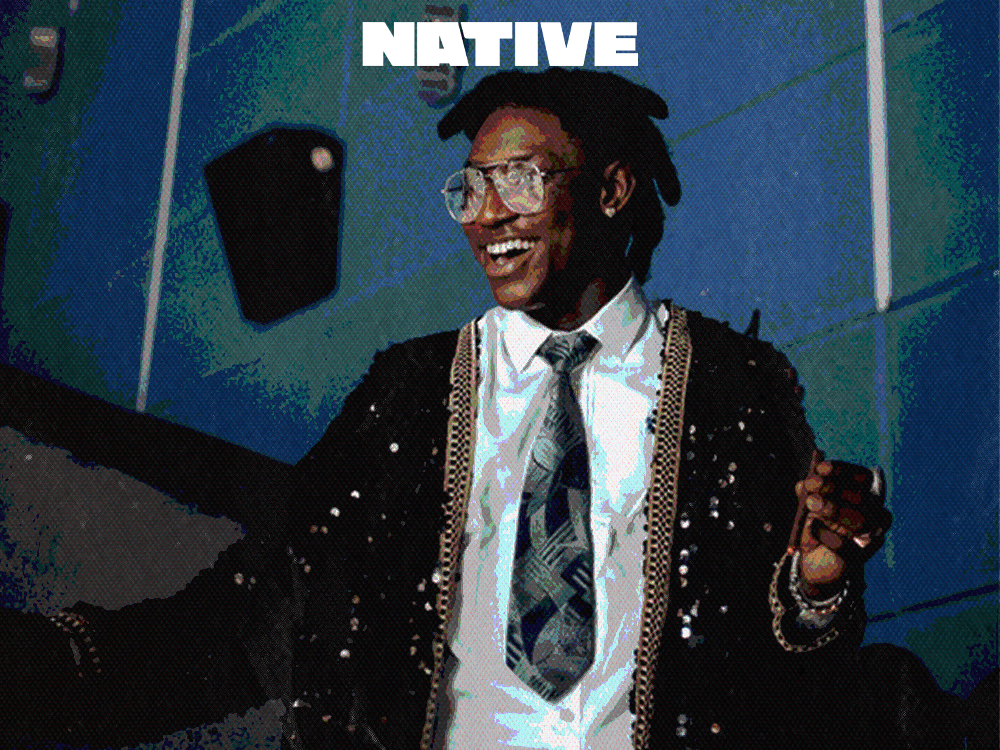
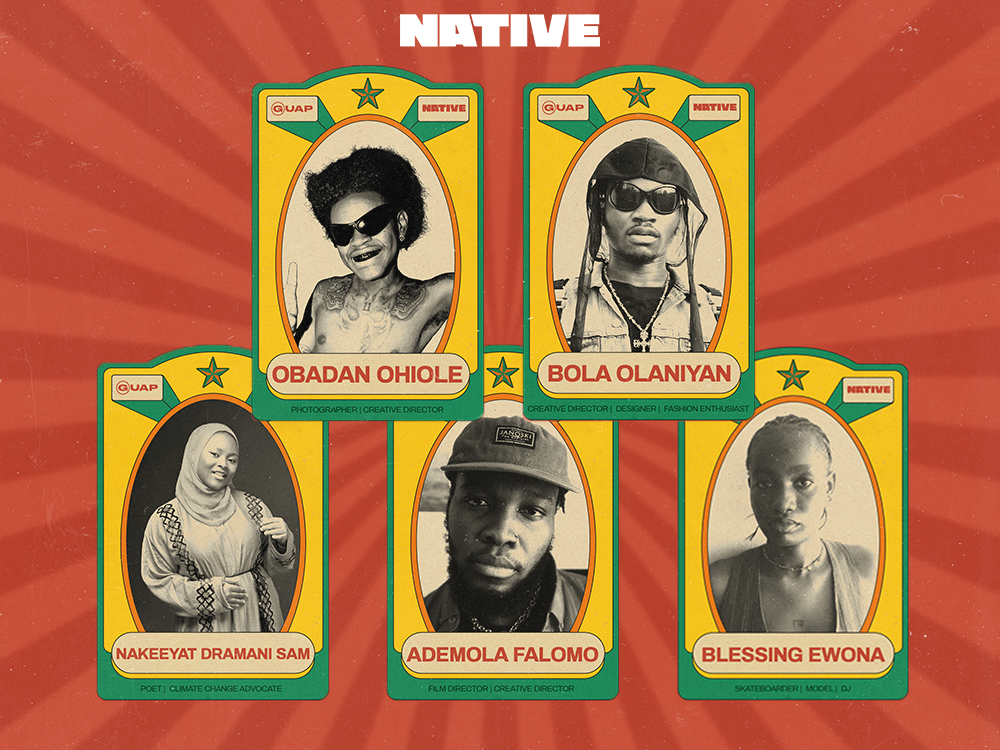
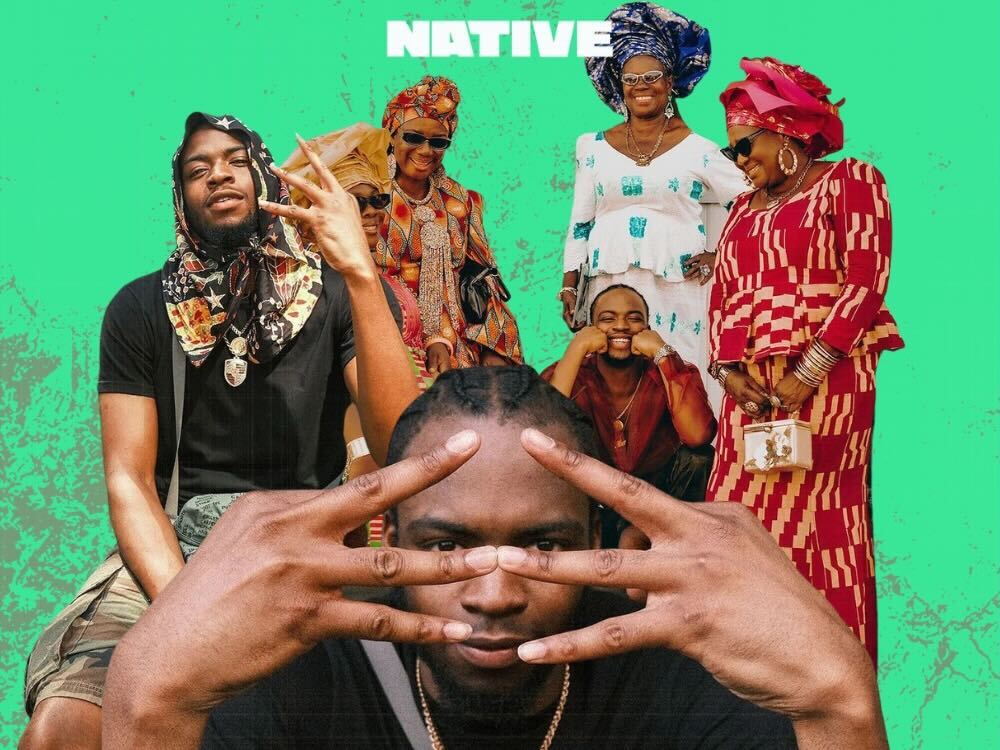
How Ibadan Is Fashioning the Next Generation of Music Stars

Ibadan comes alive slowly, and even when it does, it moves with a calmness and serenity that exists with people—minus the city’s micra drivers—who don’t leave on edge. It’s a serenity that seeps into life in the city, from businesses opening with no urgency to the art the city creates.

Ibadan is a historic city which began as a military camp in the 1800s. Its diverse neighbourhoods provide a unique and insightful view of the city’s culture and past. Each area has its distinct architectural style, from the traditional brown roofs of Bere and Mokola to the old-money structures of Bodija and the modern developments of Akobo and Jericho. The city’s neighbourhoods embody its diversity and resilience, reflecting its ability to adapt and evolve.

Its storied past has seen the city grow into a city unfazed by the constant pursuit of success, content with itself, and an understanding that time affects everything. For artists like SoulBlackSheep, Ibadan is a place illuminated by the tawny sun, capturing her curious mix of historic and contemporary architecture and the unmistakable sense of peace that almost feels otherworldly on “Ecstacy,” a deep cut of his 2018 project titled ‘Ecstacy, Just Chill.’ When SoulBlackSheep released ’Ecstacy, Just Chill,’ the melancholic blend of R&B with Lo-Fi set him apart and captured the attention of fans in Ibadan and, more importantly, nationwide. Soul had rediscovered music and started creating with WeTalkSound, while he was still a student at the University of Ibadan.

“To nurture that type of sound, the nature of the city you grew up in is very important,” says Moss The Fireman, another of the city’s promising acts. “The music we make here is not music you can make if you grew up in a place where you have to be in traffic for six hours a day. It is music for people who actually get to places in 15 minutes, 30 minutes.” 

Moss, who appeared on Show Dem Camp’s ‘Clone Wars V – The Algorhythm,’ is one of the city’s foremost rappers and the founder of Retour Entertainment, a collective and entertainment company that created some of the most impactful visuals out of the city between 2018 – 2020, the early stage of the city’s music scene.

In those early days, collectives like Retour Entertainment and WeTalkSound (WTS) were instrumental in creating music and building a community within the university and, later on, Ibadan. “WTS were the ones that were able to meet up with the volume of releases that you need to say, OK, we are actually playing in the industry properly,” Moss continues. “They were very pivotal to that whole movement. There were also organizations and communities, like Longstrell and Retour.” 

While Retour Entertainment was heavy on visuals and WeTalkSound on music, Longstrell, a dance and art brand, was instrumental in creating spaces for the music to be experienced. Moving the music from outside the university into the city, where performances found a home in New Culture Studios and Alliance Française.

From its inception in 2016, WeTalkSound served as the platform through which a lot of artists, from Eri Ife to Vader the Wildcard, SirBastien, and Jola Bello, released their genre-meshing music. Alongside them, producers such as Audio Monkey, Audio Chemist, Bash the Piper, and Timbun spearheaded experimentation in the scene and pushed away from mainstream Afropop sound that had come to be associated with the city.

Before the University of Ibadan began minting stars, artists like Oyinkanade, Fabulous P, and Qdot had pushed a resurgence of music in the city. Their unique blend of Afrobeats, which incorporated traditional Yoruba styles, like Agbe and Apala, with a mix of Yoruba slang and adlibs resonated with an enthusiastic audience within a city that had been left fallow since the 80s and 70s. 

The roots of Ibadan’s musical heritage trace back to the 1950s and 1960s, when pioneering artists like Alhaji Dauda Epo-Akara and Ganiyu Kuti (Gani Irefin) introduced Wéré music—an exquisite blend of Islamic chants and traditional Yoruba melodies. The infectious rhythms of Wéré quickly captivated the Muslim communities in Ibadan and eventually found their way to Lagos, where artists such as Alhaji Sikiru Ayinde Barrister would evolve the genre into the beloved Fuji music.

Fuji became a sensation in Ibadan, taking root in various neighbourhoods and nurturing its constellation of stars. The 70s and 80s saw the rise of Juju and Highlife in the city, with venues like Independence and Paradise Hotels hosting weekly local band sets and opening their doors to some of the biggest national musicians, from Victor Uwaifo to Ebenezer Obey.

In the 90s, the rise of genres such as Reggae and Hip-Hop saw music become more central to Lagos, where artists began borrowing elements of Western genres and retooling in unique ways. During this time, Ibadan experienced a lull in its musical influence and became an occasional pit stop for national tours. Yet, its relevance never weaned, serving as the birthplace of renowned artists like 9ice or a nurturing ground for then-rising stars such as Wizkid and Dremo.

Now, the city is brimming with a new set of creatives who defy the confines of traditional Afrobeats, fusing genres like Lo-fi, Bedroom Pop, R&B and more to create music that authentically reflects their experiences and the city’s spirit. Their music resonates with a distinct flavour that can only be cultivated in a city where journeys take minutes, not hours, in traffic.

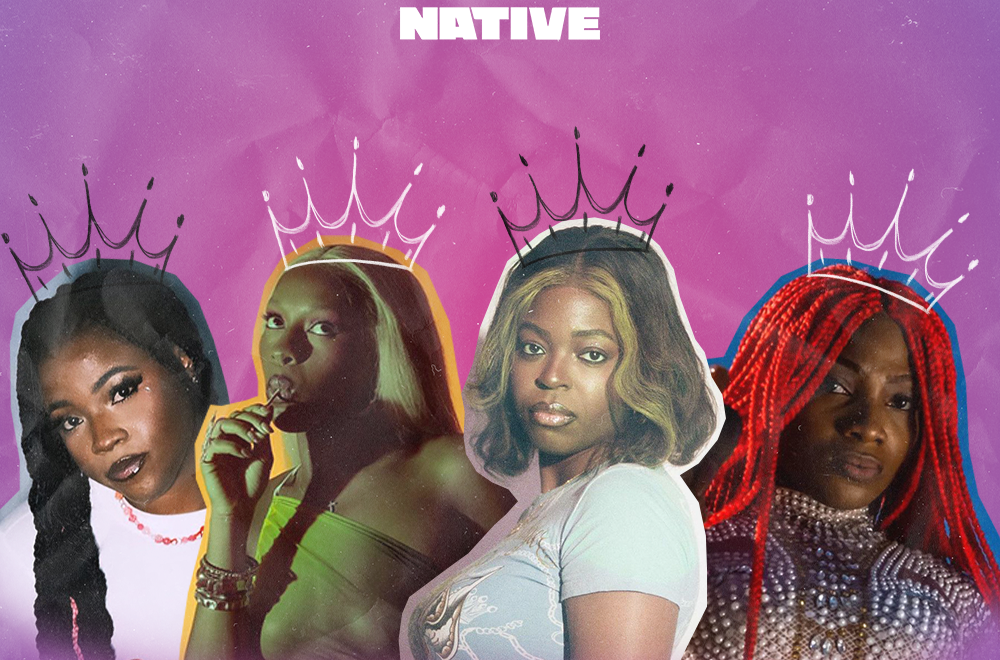
With frontrunners like SirBastien, Tega Ethan, and Inioluwa, Ibadan’s calm indie scene is discovering audiences in niche sounds and slowly building momentum through collaborations. SirBastien’s ‘Mango,’ released in 2019, introduced the producer-artist to the music scene at a time of deep innovation from the country’s alt-Pop scene. His sophomore project ‘Mango Island’ uses sounds to create pictures of a tropical vacation filled with memories and feelings, SirBastien has been slowly carving a niche for himself, creating music with a simplistic approach, using guitar loops and relaxed, dreamy vocals.

While the current crop of artists is altering the scene’s palette and expanding the sounds of the city, there’s no denying the influence and glamour that Lagos poses for artists looking to make their big break–both locally and internationally. To address this, many budding artists in Ibadan are creating their own spaces to share music and connect with fans. Brands like Pull Afrika and The Brown Roof Party, pushing a growing event culture.

“Lagos is saturated; it’s a hustle to be seen or for you to push your craft for it to make a difference,” says Moyo Onipede, an events specialist who was been behind Bella Shmurda Live in Ibadan and the The Cavemen live with fourth journey, some of the biggest shows in the city. “There are a lot of people who are doing great stuff in Lagos, so it’s now another thing for you to now decide it’s not like I’m doing badly, but why not make that difference in Ibadan? So a few of the guys from Ibadan, who were able to make it in Lagos, decided to come back to Ibadan to grow and develop here instead.”

While this is true, the past year has seen SirBastien, Tega Ethan, and Taves move out of the city to further their career. “I feel like the mistake that we’ve always made from the jump is, you know, removing that qualification because of where people stay,” Moss says. “It’s a maturing market, and if you are trying to do things to the level that we want to push IB forward, you have to play in the biggest arena possible, which is in Lagos.” 

As the world tunes in to Ibadan’s emerging music scene, it is becoming clear that this ancient city has a new story to tell—one that resonates with its past, embraces its present, and holds promise for a future filled with musical brilliance. 

If you are new to Ibadan’s music scene, here are five artists from the city to bring you up to speed:

Artist: Tega Ethan

Notable Release: ‘McCarthy Street’

Tega Ethan’s official bio opens with, “On a cold December night in 1898 – I was most definitely not around – I wonder what sad songs people listened to.” In a way, it captures the curiosity and inspiration that drives his music. A singer and songwriter who, despite having been writing songs for years, only began to consider himself an artist in 2017, Tega Ethan’s voice captures the intimacy of closely shared moments.

Understanding the intimacy his lyrics and the longing of an acoustic guitar can evocate, he leans more towards performances, either on stage or in front of a camera. His social media pages are littered with videos of him and his guitar as he creates songs based on everything from names to Ibadan, coffee, and heartbreak.

His debut EP ’McCarthy Street,’ showcased his versatility as a songwriter, effortlessly transitioning from Afropop to heartfelt Folk ballads. Whatever ’McCarthy Street’ lacks, Tega Ethan makes up for it by delivering emotive live performances that have seen him host his own shows in Ibadan and Lagos and tour with The Cavemen.

Artist: 6th Quan

Notable Release: ‘Rebirth (Deluxe)’

Born Etim Essang, 6th Quan, is a musician, digital artist, and producer whose creative process sees him use colours to signify the stages of his life. The cover art of his debut project, ‘Threnody’, features a ray of light passing through a prism over a picture montage of pictures of his sister, symbolises his artistic birth influenced by his sister’s death and covering themes of heartbreak, loss, and grief through a blend of R&B, Alternative, and Hip-Hop elements. 

Taking a break from music for most of 2021, 6th Quan started exploring creating digital art, and music production, playing with elements of Drill, Afrobeats and Amapiano – the groundwork that led to his new project, ‘Rebirth.’

Rebirth explores his personality change, fast-paced emotions and his interpretation and startlingly modern take on conventional mainstream genres. At five tracks, Rebirth hops from genres with a cohesion that is powered by fleeting emotions. 

Artist: Achezy

Notable Release: “Special Memories”

Achezy grew up in the choir, like a lot of artists. Not being much of a talker growing up, music became the best way he could express himself. Pouring all his emotions into the songs he creates, his music exists in a tricky place; Afrobeats that somehow retains the homely melancholic feeling and rawness of folk music.

“Special Memories” captures the emotional yearning of a broken heart. Over lo-fi strings, he sings of not wanting love back even though his actions scream for it. “Yanibo,” his follow-up to the 2021 “Special Memories,”  is a pursuit of love, realising his mistakes and wanting a chance to prove himself again and not let love go.

Artist: Alté

Notable release: “Elijah”

With only two singles, Alté has proved to be one of the voices of Ibadan. Last year, he released “Elijah,” a plea for a miracle sung with the heartfelt sincerity of a devout Pentecostal Christian. 

“Cause the devil follow me talk/ Say my gbedu no go reach up /And the mandem wey follow me come go shoot me for club if gbegele burst/ Show me cause only you wey know me/ And only you fit to control me/ It could really get pretty lonely,” he sings.

As if in answer to his prayers, “Elijah” rapidly gained popularity throughout the city, breaking first in the University of Ibadan, where everyone assumed he was a student, before finally giving Alté his first big stage as an opening act for Bella Shmurda.

“Freedom,” his more uptempo follow, features his gruff voice, and also calls down the Holy Ghost’s fire on whoever Trieste to move to his babe or his freedom as he sings, “kele for table/rozay for table… ojoro dey the game/but me no let no man play me.”

Artist: Taves

Notable Releases: “Eleyele”

Since making his debut in 2021 with “Betterment” followed by ‘18,’ a lovesick four-track EP showing even with teenage love, there’s no simplicity to love, Taves, despite being a teenager, has won the respect of more established artists in the city and gotten Buju to ride for him. His teenage sad boy R&B style, coupled with near-perfect vocals, makes him one of the city’s most promising acts. 

His latest single, “Eleyele,” named after one of the city’s neighbourhoods, opens with “I dey for Eleyele/ Where you leave me overthinking everything/ Am I wrong for what I feel or are you insane? /I still crave you, but you dey for Eko-Ile,” channelling the same heartbroken melancholy that runs in the city’s art.

Newer artists like Laolu, Iyanu Osho, Pheropizzle, Ory G, Harnar, Fifty Four, Teibo David, and FDray, are slowly building a name for themselves collaborating and performing at some of the city’s biggest events.

Featured image credits/NATIVE

Deep Cuts: Kizz Daniel Overcomes the Tribulations of “Alone” to Become a Maverick

There was no stopping Kizz Daniel when he launched 2014’s “Woju.” A sweet Afropop banger, the song took the Nigerian audience by surprise—here was an artist who most people didn’t know firing upwards on the music charts and soundtracking the lives of Nigerians, from wedding parties to clubs. At the time, Kizz Daniel (then Kiss Daniel) was signed to G-Worldwide Entertainment, an Emperor Geezy-owned label that was home to Daniel, Sugarboy and DJ Shabsy. The star-making quality of “Woju” was cemented when it was remixed with features from Davido and Tiwa Savage, two of the hottest Nigerian artists of 2014.

Between 2015 and 2016, Kizz Daniel went on an incredible run with hit track after hit track, displaying his chemistry with producers DJ Coublon and Young Jonn on “Laye,” “Good Time” and “Mama.” As a featured act, he stood out on DJ Shabsy’s “Raba” with Sugarboy. When Kizz Daniel’s debut album ‘New Era’ arrived, he had the attention of the world and he didn’t disappoint. The project churned out the hit songs “Jombo” and “Duro.” Beyond hit records, ‘New Era’ was a cohesive collection of Kizz Daniel’s reflections on self, love and society.

“Alone” is one song on ‘New Era’ where Kizz Daniel revels in vulnerability. In hindsight, it is also a song that imbibes some of the roughness that the trajectory of his career would take. The song begins with the voice of a man mocking an up-and-coming Kizz Daniel who seeks his benevolence. As the man makes light of Daniel’s request to use the recording studio, haughty laughter rings out as Kizz Daniel lets out an exasperated sigh. “Alone” is a story about the struggles faced by many up-and-coming, underprivileged musicians.

Kizz Daniel opens his verse on “Alone” by singing, “The storm is over now/Listen to my story now.” Sonically, the song features Yoruba folk elements with a measured pacing that signals the coming of trial-tested wisdom. On the song, Kizz Daniel admonishes listeners about life’s toughness and the need to find strength within themselves. On the chorus, he sings: “Believe in yourself o/Open your mouth and say you will/If you die my brother nobody go die with you.” The background vocals intoning the lyrics “Diye diye mi, diye diye mi/Were were mi, were were were” create a haunting effect that emphasises the realities in the song.

After the release of ‘New Era,’ Kizz Daniel fell out of favour with G-Worldwide Entertainment, in a case of contract issues. Still, Kizz Daniel released “Sofa” and “Yeba” under the label, with both singles getting positive reception. In 2017, while his battle with G-Worldwide Entertainment continued, Kizz Daniel founded his label Flyboy I.N.C and christened the announcement with “No Do.” The following year, he dropped “Kiss” for “Kizz” and released the audaciously titled sophomore album ‘No Bad Songz.’

While trouble brewed in courtrooms with G-Worldwide Entertainment, Kizz Daniel, like he sang on “Alone,” carried his cross and poured all his attention into his career. Similarly to his 2015-2016 run, Kizz Daniel blazed through with “Fvck You,” “Eko,” “Pak ‘n’ Go,” “Pah Poh” and “Jaho” as well as a strong performance on Mayorkun’s “True.” His consistency paid off when he inked a deal with American publishing and distribution company EMPIRE. While 2020’s ‘King of Love’ didn’t enjoy the same reception as Kizz Daniel’s previous projects, it helped to keep his name on the minds of listeners.

From 2020 to this year, Kizz Daniel’s career has reached astronomical heights. 2021’s ‘Barnabas’ reiterated his hitmaking powers. In 2022, he and G-Worldwide Entertainment ended their squabbles and he scored a massive hit with the Tekno-featuring “Buga (Lo Lo Lo).” Its music video holds the record of Kizz Daniel’s highest-charting video on YouTube with 159 million views. He also ended the year with another hit song in “Cough.” 

With his fourth studio album ‘Maverick’ arriving on Friday, Kizz Daniel, throughout his career, has exhibited admirable single-mindedness. He took his own words of advice on ‘New Era’’s “Alone” and, with great drive and determination, he pushed past what could have been a demotivating moment in his life. The end of Kizz Daniel’s journey is nowhere in sight. He’s strongly on the move.

Featured image credits/NATIVE

After the biggest tour of his life, Burna Boy is coming right back

Around this time last year, Burna Boy released ‘Love, Damini’. The album was a personal recollection of the successes he’d attained over the past half-decade, preceded by a peerless run culminating in classic albums, memorable songs, and unforgettable moments. Yet streaked with moments of stark vulnerability, it was a quintessential Burna Boy album, one which announced him in the rockstar fold he’d once sung about.

Oiling the engines of the album, the maverick artist went on the road. The Love Damini Tour took Burna Boy across the United States and down to Europe and the Caribbean. He sold out acclaimed arenas like the 80k London Stadium, the 35k Jamaica National Stadium and the 21k-capacity State Farm Arena in Atlanta. Like all good things, however, the tour’s come to an end as Burna himself announced yesterday on social media.

He also announced the Friday-expected “Big 7, a single that’s been an underground favourite for months now. Heard from the glitzy sphere of TikTok, chanted on the private videos on Twitter, teased by the artist himself on Instagram, it’s coming with considerable fanfare. From the available clips of the song, it’s a breezy summer jam with Burna’s muscular serenade all over it, tapping sweetly into the American R&B soundscape as he did on “Sittin’ On Top of the World”

“Been wavy since morning, I no go fit save you from nothing,” he sings on the chorus, a bit of phrasing that’s immediately discerning as a Nigerian. He’s been criticised severally for his off-music actions not matching the radical philosophy of his post-’African Giant’, such as refusing to comment on the consequentially flawed 2023 elections as well as other stirring social issues. It’s then become evident that Burna Boy has not allied his tendency for bold talk with truly bold actions even though his generational talent has never been in doubt. With that lyric in “Big 7,” he suggests the next temperament in how his brand and music approaches socio-political issues. 

Further confirming this, close collaborator and designer of the ‘Twice As Tall’ cover Chuka Obi responded to someone on Twitter saying the forthcoming album has no such songs. We can safely assume that records like “Another Story” and “Monsters You Made” belong in this category, and taking that away from a Burna Boy album, it does point to unrestricted territory. The artist is unarguably the one of the most topical in Nigerian Pop history, belonging to the class of Fela Kuti, Rex Lawson and 2Face Idibia as those who’ve weaned countless stories from the eternal material of everyday living. Burna Boy even has the advantage of straddling identity lines, resident in many parts of the world through his life and picking strong cultural clues from there, imbibing them into his music with an author’s flair. 

The forthcoming album therefore has a lot of potential. In terms of sound, “Big 7” and “Sittin’ On Top of the World” (which samples a 1998 hit from Brandy) suggests that Burna Boy is entering his American bag, creating music suffused in nostalgia and feel-good vibes. The era of African American ladies on MTV rocking natural braids and impeccable teeth; of men wearing big coats and gold chains. Playing into this imagery, beyond the immediate clues in the music Burna Boy evoke nineties America in the latter’s video, from the phone booth to the sepia-toned scenes and later on the sports jackets, fresh as can be. 

This isn’t new for the artist. Over the years, Burna Boy has used locations to erect narrative placards. A troubled youngster during his early career, in London and Port-Harcourt he found refuge, kneading his songs into their soft centre so they sounded like odes to the cities. From the slang to the sound and swag, he reflected the sensibilities of wherever he lived, most especially the southern Nigerian city which was his birthplace.

After he released his debut album ‘L.I.F.E’ in 2012 and ascended the ranks of the industry, he moved to Lagos. There he created sweltering jams like “Run My Race” and “Yawa Dey”, and his subsequent project ‘On A Spaceship’ adopting the city’s bustle and sound. From late 2014, he resided for a while in South Africa and from there created unforgettable hooks for rap anthems and even retained that influence on some of his own songs.

When ‘Outside’ dropped and “Ye” signified a turning point in Burna’s career, his sound became essentially cosmopolitan. It wasn’t necessarily tethered to Nigerian influences or South African, rather it was a child of the world’s collective musicality. Or, rather, the places in the world that’s home to Burna. No doubt America is one of those places and Burna, a man born in 1991, is a Hip-Hop and R&B fan. He made that quite known during the promotional run for ‘Twice As Tall’, when he described how much the duo of Naughty By Nature meant to him, so much that he named their collaboration after them. 

In the tours for ‘Love, Damini’, the legendary Busta Rhymes has been a towering presence, while Burna Boy has also been seen at the Wu Tang Clan and Nas’ NY State of Mind tour, grooving to the MCs with palpable joy and reverence. Anyone with a keen eye for rollouts would tell you he’s establishing the atmosphere, having most likely created music that reflects the sound. The reported features with American rap stars J. Cole and RZA reaffirm the possibility. 

Rap and the ever-adjacent R&B have always played a pivotal role on Burna’s albums, perhaps most evident on ‘Twice As Tall’, but the seeming, more brazen approach to lean into these genres is a gambit that could pay off at a time when the artist is riding a high and is hellbent on being prolific. “It keeps me fresh,” he told Ebro Darden shortly before his London Stadium gig, describing the ethos of being consistent and inventive up to the point where global audiences think he’s only been making music for a few years. Leaning into Hip-Hop and R&B could strengthen his considerable commercial powers stateside without dampening his connection to other sides of the world.

I’m not in the least suggesting that the album wouldn’t have other sounds. If anything, the closest is the patois-inflected genres of the Caribbean—also a formative influence on Hip-Hop—which Burna Boy has always done throughout his career. Among the many amazing things his voice is able to do is to switch between a measured rap cadence into a stringent Jamaican flow mid bar. That would make the forthcoming album his most outside-facing album since ‘Outside’, and that already translates into cross-continental appeal.

Now that the Love Damini Tour is over, Burna and his team are expectedly making preparations for the rollout of his seventh album. This is what “Big 7” represents. Beyond the number’s spiritual connotations of the ethereal, spellbinding, intelligent and perfect, it’s an extension of the love Burna Boy felt the first time he heard a song. That simple, wordless emotion of moving to rhythm and intuitively learning cadence. Let’s hear him put it into music.


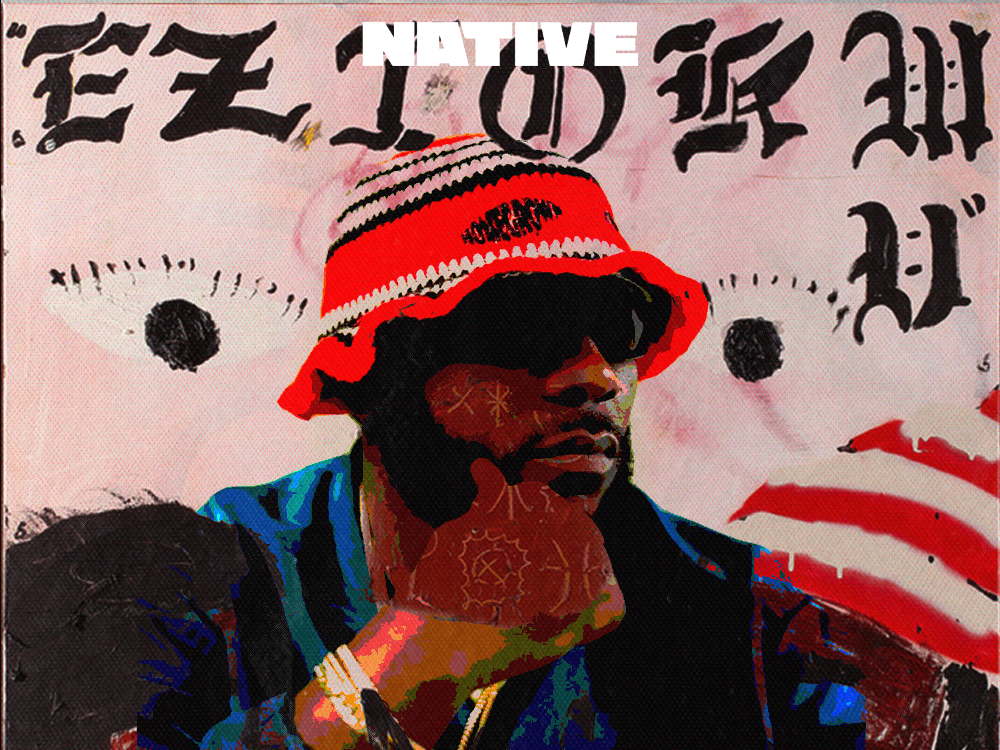
ICYMI: WHAT TO EXPECT FROM ODUMODUBLVCK’S FORTHCOMING PROJECT ‘EZIOKWU’

Track-By-Track: Bella Shmurda Breaks Down His New EP, ‘DND’

Since the turn of the decade, few musicians have captured the zeitgeist of afropop as eagerly as Bella Shmurda. His voice is at once a detailer of generational experiences as it an instrument of immense personal quality, wedged into the very unique stories that has shaped the man born Akinbiyi Ahmed. This has been the dominant force in Bella Shmurda’s career, coupled with the consistent displays of business and marketing strategy, keeping him on the lips of audiences in Africa and beyond. 

Last year, the exciting singer released ‘Hypertension’, an album which moved him beyond the street hop tradition he had, until then, been working in. Listeners would remember the electric allure of his breakout year, the stark imagery of “Vision 2020” and “Cash App”, their dedication to stories of the underbelly which further revealed themselves as offshoots from a corrupt system and not solitary issues. 

That debut album, like many things Bella, was marked with flagrant deliberation, full of colour but also measured in tone and application. Now, two years later, Bella Shmurda is where he’s always been: at the top, influencing the streets. He’s set to release a new project, this time the EP titled ‘Do Not Disturb’. Capturing the lived-in energy of Bella’s personality, it’s a succinct display of his prowess. As he tells The NATIVE during our breakdown, “You can be inside and enjoy too, not until you go outside. I want people to achieve a good state of mind; I want people to achieve joy”. 

Here’s our track-by-track breakdown of the project with Bella Shmurda. We’ve lightly edited these words for clarity. 

“IN CHARGE”

Majorly, I just wanted to let my fans know that yo, I’m still here, I’m still Bella Shmurda. The CEO Dangbana Republik and I’m still in charge of my music, I’m still in charge of my life. So that’s the inspiration behind the song. And shoutout to Larry Lanes, he sent the beat to me and I just loved it, so I said, Okay, let me just try and do something different on this because the beat also sound different. Let me just go harder on this and go crazy. And I called him, and he came over and he recorded me and it was a good one and I loved it personally. “In Charge” is just to let people know; Bella Shmurda is still here regardless of anything. 

“ARA (GEN GEN TIN)”

This one’s been out since January or February. Same producer; Larry Lanes, he made that too. He came to the studio; I think with Larry Lanes because we always connect. At a point in time we always connect whenever we’re making music and he’s a good one. So we made “Ara”,  we put it out because I loved this personally. Even before “Ara” was out, it was trending on TikTok; by that time, I hadn’t even finished the song, so I had to run back to the studio, finish the lines and put everything together. 

“NSV” FT. TIWA SAVAGE 

Shoutout to Poco Lee. So, Tiwa Savage hollered Poco that ‘yo, where is Bella na? Bella dey this country?’ and he was like ‘yeah’. He hollered me that ‘Bella, Tiwa Savage is looking for you, this and that’. And I linked up with her, I went with Poco too, I took my producer along, so I played her couple of music, and she loved “NSV” and she jumped on it. This was a finished song already so we had to remove some parts for her and it was a good one. “NSV” is out, banging, so shout out to everybody, shoutout to my team. 

“DND” FT. LIL KESH 

Lil Kesh is a big bro, you know, he has been here before us so I respect him a lot. He came from the same source which is Olamide Badoo so I have that love for him, you understand? He’s a big brother and he’s doing well. So, Lil Kesh owns the conversation of the song because he sent me the music to make a chorus for him and after we finished everything, I was like ‘Bro, I would collect this song oh, this song has to be mine’. And he gave it up to me, you know—-brothers doing business. So that’s it, you know, I loved it, I put it out, we out here, doing our thing. The song is just Bella on a Do Not Disturb mode, you understand? It’s kind of a love song, but it’s still a message for everyone to know that Bella is on his own right now. 

“BANKRUPTCY” FT. PHEELZ 

Shoutout to Pheelz. Pheelz came up to my studio was like, ‘Bro, let’s link up, I dey Lagos for like one month now o, let’s do something’. We made like three songs that day and I picked “Bankruptcy” and he picked the other songs. So I liked this one because the composition was from me personally and Pheelz made the beat—-it was a good one. 

“JOJO”

Shoutout to Olamide Badoo. Badoo composed—-actually, he called me to the studio and he was like, he has a song for me, I say oya now. I got there, he sent me like two songs and I picked “Jojo” out of it. So majorly, it was me and Badoo who made that song, together, you know? We shared ideas and we shared composition. Olamide has always been one of the best songwriters ever in the music industry so him doing this for me is a big thing for me personally and kudos to him, shoutout to him for always being there as a father figure and as an inspiration to lots of us out here. 

The Art of Resistance: Illuminating a Hopeful Queer Future for Nigeria

“A thing being forbidden did not make it extinct; that, in fact, bans only created black markets,” Eloghosa Osunde writes in one of my favourite quotes from her celebrated 2022 novel, ‘Vagabonds’, a seminal feat in telling imaginative stories significantly centred on the triumphs and travails of queer people, in a society that squeezes far beyond the margins every single day.

In Nigeria, the Same Sex Marriage Prohibiton Act (SSMPA) ensures that any “act” of homosexuality is punishable by 14 years of imprisonment. However, criminalising people’s existence doesn’t mean they stop existing. It only means they create spaces where they can live, free from prying and judgemental eyes.

My city, Lagos, is yellow. Imagine yellow buses with barely hanging doors covered in tattoos of toxic positivity phrases that promise drivers a better future. Yellow, as in “Keke” tricycles that fight for road space with buses on highways and drive without fear in pedestrian walks like they own the roads. Yellow taxi cabs people only use when they’re desperate and rich enough to part with more money than they’re worth. But as a queer person in a country that swears we’re not real, I see more colour than the sun reflects. Whether it’s through our expression of self with our fashion choices that break gender barriers, our bold call to action online for a better future for queer people, or their creation of books, films, and music that document our existence, LGBTQ people in Nigeria keep finding a way to show the world that we exist.

In a country where the LGBTQ+ community often faces marginalisation and discrimination, a three-day art exhibition titled “A WA NIBI” – the Yoruba declaration for “We are here!” – was held earlier in the year, to envision a bold and inclusive future for queer individuals in Nigeria, comprising a series of workshops, panel discussions, and performances. This event, curated by the visionary artists and activists team of Obodo, in collaboration with Kampnagel, aimed to challenge societal norms and ignite conversations about acceptance, equality, and the power of artistic expression.

The art exhibition was a vibrant display of creativity, featuring diverse artworks that celebrated the complexities and beauty of queer experiences in Nigeria. From captivating paintings to thought-provoking installations, each piece was a powerful catalyst for introspection and dialogue. By showcasing the artistic talents of queer individuals, the event aimed to challenge stereotypes, dispel myths and foster societal empathy.


View this post on Instagram


A post shared by We are here (@a_wa_nibi)

Art will always be a potent vehicle for social change; this exhibition was no exception. It provided a platform for artists to express their authentic selves and communicate the struggles, joys, and aspirations of the queer community. Through their artwork, they shattered the barriers of silence and fear, inviting viewers to engage with their stories on a profound level. The exhibition challenged conventional norms, asking society to question preconceived notions and embrace a more inclusive and compassionate future. 

A WA NIBI featured work from artists like Yagazie Emezi, Rachel Seidu, Alexandra Obochi, Va Bene (CrazinisT Artist), Emmanuel Ndefo, Sabelo Mangeni, Oluwatamilore Osho and Nwaobiala. Notably, the accompanying talk sessions during the event sparked vital conversations among attendees. Experts, activists, and members of the LGBTQ+ community came together to discuss “Queer(y)ing the archive,” and the importance of documenting challenges faced by queer individuals in Nigeria to ensure that our art, history and lived experiences are not buried by the society we live in.

These discussions elaborated on an earlier focused group discussion, which aimed to explore queer language in Nigeria, the terms the community speaks in secret pockets of the world to make themselves feel seen and heard. It was essential to document these as a way of archiving and documenting queer history in Nigeria. By having these conversations, the event stimulated a broader understanding of the struggles faced by the queer community and highlighted the urgent need for change.

The three-day art exhibition and talk on a queer future in Nigeria served as a powerful testament to the resilience and creativity of the LGBTQ+ community. The final day was a Zine workshop titled “Fantastic Queer Futures,” taught by Chizzi, an interdisciplinary artist, designer and researcher, whose work centres on the specificities of Igbo, Nigerian and African experiences and histories. The class helped queer people use their imagination to create a future where their lives weren’t criminal.

Through events like these, queer people are boldly challenging societal norms, demanding acceptance, equality, and freedom of expression. A WA NIBI was not just about art; it’s a call to action, urging queer Nigerians to live boldly and push for diversity within their society.

To build a queer future in Nigeria, we must engage in open conversations, challenge prejudice, and actively work towards dismantling discriminatory structures. Art has the extraordinary ability to ignite dialogue and inspire change. By supporting and amplifying the voices of queer artists, we take a step closer to building a society where every Nigerian can live their life boldly and authentically.

This transformative event showed the importance of harnessing the power of art and the spirit of inclusivity to reimagine a Nigeria where diversity is celebrated, love knows no boundaries, and everyone has the freedom to embrace their true selves. The time for change is now, and it is up to all of us to create a future where queerness thrives and every Nigerian can live their life with pride.

In a conversation with Matthew Blaise, a member of the organising team for A WA NIBI, we spoke about the reason why this project needed to happen and their plans for archiving the stories shared.

NATIVE: What does “A WA NIBI” mean? 

Matthew Blaise: A Wa Nibi means we are here. It was a means to establish our existence and say fuck it; we are here. There’s nothing you can do about that.

 I noticed the exhibition focused on mixed media to convey its message. Why did you decide on that?

These were artists I’ve followed and respected for a long time. I find their works very inspiring. These are works thousands of people have seen and felt represented by, but it was important that people in our community could see them too. The idea was for these works to reach out to every and any Queer Nigerian to remind them just how here we are, and it all tied in perfectly. It was also vital that it focused on the works of queer artists in one room, for us, with their message not being mangled to fit a narrative that suits a heterosexual audience. The centre of all this was queerness, and people needed to enjoy the art through a queer lens.

How long did it take to make this happen?

In 2021 I was contacted by the team at Kampnaga to join this collective project. It took two years of waiting, reaching out to the artists and applying for funding, and here it is now. It wasn’t as easy as that, but I’m grateful to be the vehicle through which this exhibition happened. All that mattered was that we got to boost the lived experience of queer Nigerians with this, and that’s what kept me going.

What’s next after these three days?

So while it’s essential for the people who the work was done for, who experience these struggles to interact with art that sees them, it’s also crucial for the world to see it. The exhibition also happened in Germany, where a new audience saw them.

Are the pieces being exhibited for sale?

No, they’re all for exhibition only.

So this wasn’t intended for monetisation?

No, not at all. It’s all to showcase the works of these incredible artists; even entrance to the event was free. It was all supposed to be accessible.

That’s amazing. What happens next?

Well, the final and most important aim was to develop a digital glossary of languages queer people use to interact and carve out spaces for themselves. We hope this gives us access to a community that trusts us so there’s proper documentation of our existence and experience.

All Images By Nengi Nelson.


Malakai Bassey is a pop culture writer, an art enthusiast and a semo apologist. They’re a multimedia storyteller interested in telling stories of people who don’t find themselves interesting. They were raised by TV, so their current personality is their favourite character from whatever show they watch.


14 YEARS AND A DAY: A LOVE STORY INTIMATELY REPRESENTING QUEER IDENTITIES

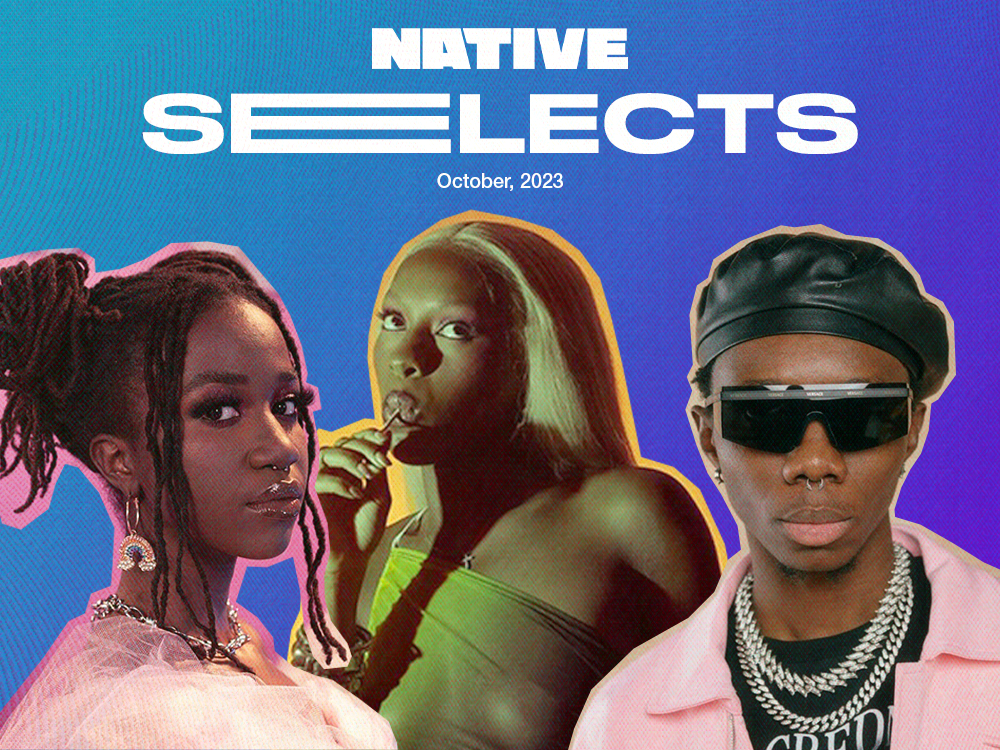
NATIVE Selects: New Music from Mr Eazi, A-Reece, NSG & More

Every week, new music shows up, sweeping fans and music lovers off their feet while artists gauge reactions to know the effect of their creativity. At the NATIVE, we are committed to keeping our ears on the pulse of the music scene and bringing the best sounds to your doorstep. In our last edition, we brought you new releases from Anything With Young Jonn, LIYA, Burna Boy and more. Today, we have songs that move from Afropop to Amapiano to R&B, with our select artists showcasing their unending talent and passion for creativity. Lock in!

MR EAZI – “CHOP TIME, NO FRIEND” 

Mr Eazi announces the release of his long awaited debut solo album on October 27th, 2023 alongside the release of his new single “Chop Time, No Friend.” Andre Vibez is the producer behind this playful return to the Banku music sound reminiscent of Mr Eazi’s “Skin tight” and “Leg Over” from early musical career. He emphasises the need for focus as on ones grind as he croons, “If I dey chop my mulla/ I no dey look another man face,” reiterating that we should ignore all the haters and keep going. 

KING PROMISE & YOUNG JONN – “TERMINATOR”

For the past two-plus months, King Promise has dominated the Ghanaian airwaves with his latest single, “Terminator,” a Killbeatz-produced slapper where the singer prioritises his happiness over external opinions. “Who are you to judge me like say you be holy pass?” he questions over the vibrant, log drum-filled beat. Alongside its recent video, the song has been reupped with a new Young Jonn verse, whose verse is similarly centred on his own pleasures. The video is colourful and casts King Promise as a man of the people, fitting for a song where he expresses easily felt sentiments.

NSG & NINES – “RIDE” 

NSG is on it again with another song for the summer. For their recent release dubbed “Ride,” the duo taps North London rapper, Nines, for a groovy track accompanied by animated storytelling visuals. The track infuses the organic UK rap with subtle Afropop embellishments and Caribbean influences to push a message of their brotherhood and a slow but steady rise to the top. Nines’ effortless flow over the slow-tempo instrumentals is immediately apparent as he raps, “They say it’s lonely on top/ I got rich with the gang.” The pacing picks up with the entrance of the duo, reiterating the tracks message of looking out for one another. 

BELLA ALUBO – “PARTY GYAL”

Bella Alubo’s new release Party Gyal” serves as a follow up to her previous hit track Sober.” On Party Gyal,” there’s a reassurance from Bella to her lover that she’ll always be there when she’s needed as long as the feelings are reciprocated. The call and response becomes clearer on the melodious hook as she croons, “Party Gyal – E dey for you.” 

G’AZA – “SABI DEM”

“One blow, one die, use your number 6/I go give you half caste, you be lebanese,” G’aza raps on his new single, “Sabi Dem.” Over floor-shaking 808 bass and ominous samples, the Lagos-raised rap artist spits irreverent bars, toting his street cred and bragging of the very Nigerian fuel behind his burning ambition. Every line is rapped with a mix of hunger and poise, a biting approach that also works to strengthen the song’s appeal.

A-REECE – ‘PARADISE 1.5′

For the last three years, South African rap veteran A-Reece has been teasing the sequel to his highly-rated debut album, ‘Paradise’. While a release date has yet to be announced, there’s a feeling that the long-awaited project will be out soon, bolstered by the recent drop of the 3-pack single, ‘Paradise 1.5’. All three songs culminate into a showcase of A-Reece as a standout lyricist and dynamic rap artist, moving from boisterous to heartfelt to introspective. His skill-set is already proven and, amidst his continued prolific streak, this new drop is only warming fans up for the eventual main event.

BELLA SHMURDA – “DND”

On his newest single, the effervescent Bella Shmurda joins forces with Lil Kesh. “DND” is a song about many things, folding a mischievous rhythm into its percussion while Shmurda croons about being left on his own. His guest however evokes the pomp of outside, giving the record the flamboyant quality that Pop music thrives on. As a precursor to his ‘DND’ project which is expected tomorrow, it’s a sweet tease and an unrestricted invite into the incoming sounds of Bella. 

DANDIZZY – “MORALE”

One of the more consistent rappers operating from Port Harcourt, DanDizzy has the streets on lock. From establishing his cred as a brilliant freestyler, he’s released songs cut from the ethos of those spaces, and the mood behind his new single “Morale” is no different. Set by an omniscient beat with menacing vocal chops, he unfurls bars with razor sharp storytelling and punchlines. It’s the kind of song to make you say Hip-Hop’s back, even though it never went anywhere. 

REEKARH – “OMO DADA”

A most talented artist, Reekarh has been honing her sound over the years. Now she’s here, a signee of Parabellum Entertainment. Her debut single “Omo Dada” harkens to the beauty of her voice; over sparse, soulful strings, her luscious vocals are brought into full form as she sings about the trials of life and becoming triumphant over them. It’s a powerful performance, one which situates her sonic genesis within the plains of R&B but also contemporary afropop and folk, particularly the stirring invocations of her native Igbo people.  

Featured image credits/The NATIVE


Words by Chigoziri Ezeaku, Emmanuel Esomnofu, Dennis Ade-Peter & Nwanneamaka Igwe


ICYMI: BEST NEW MUSIC: THE CAVEMEN TELL POIGNANT STORIES ON “OPEN YOUR MIND” & “SAVIOUR”

Turntable Top 100: King Promise Makes Top 10 Debut With “Terminator”

Following its July 2023 release, King Promise’s hit single “Terminator” launches to the top ten this week. Claiming the 7th spot on this week’s chart, the track tallied 1.14 million on-demand streams (No. 14 on streaming) and 52.3 million in radio reach (No. 5 on radio). It’s ascent on the charts comes a week after the Young Jonn-featured single received the music video treatment a few days after its release.

The number one spot this week remains with Asake whose single “Lonely At The Top” spends its second week at No.1 on the TurnTable Top 100. The song tallied 6.7 million on-demand streams and 64.6 million in radio reach, continuing to break new records as it becomes the first song with the biggest total activity for a single a week this year. In addition, “Lonely At The Top” becomes the first song of 2023 to reach No.1 across all chart records, and becomes the 9th biggest song this year.

The rest of the top four remains unchanged with Omah Lay’s “Reason” at No.2, Seyi Vibez’s “Man of the Year” at No.3 and Asake’s “Basquiat” at No.4 and Shallipopi’s “Ex Convict” closes out the Top 5. Shallipopi who recently released his latest project ‘Planet Pluto’ also claims the sixth spot with his single “Olapluto” which jumps 39 spots to a new peak at No.6.

Elsewhere on the charts, Davido’s “FEEL” slips 5 spots to No.8 after peaking at No.3, making it the longest charting single off the ‘Timeless’ album. Closing out the Top 10 is Kcee’s “Ojapiano” which sits at No.9 while Rema’s “Charm”off ‘Rave and Roses Ultra’takes the final spot at No.10. Just outside the top ten, Adekunle Gold’s “Ogaranya” off his upcoming album, ‘Tequila Ever After’ debuts at No.19 on the charts.

Read a full breakdown of the charts here.

Features Image Credits/The NATIVE


FROM FOLK TO POP: THE AWE-INSPIRING EVOLUTION OF ADEKUNLE GOLD

Best New Music: The Cavemen Tell Poignant Stories On “Open Your Mind” & “Saviour”

The Cavemen’s objective, when they debuted on the music scene, was clear: they were new-generation Highlife acolytes seeking to put a modern spin to a unique, ancient sound. The group—made up of brothers Benjamin and Kingsley Okorie—have cultivated a loyal following of old and young across Africa and the rest of the world, gaining listeners with every song release. 


View this post on Instagram


A post shared by The Cavemen. (@the.cavemen)

For this year, The Cavemen open their account with the two-song pack of “Open Your Mind” and “Saviour.” Both songs, like every one of The Cavemen’s music, are steeped in bright Highlife-sweetened instrumentals. The former is produced by Duktor Sett while the latter is produced by The Cavemen These songs also come in between The Cavemen’s successful run of tours. 

Wetin I go talk o (Baby open your mind)/Wetin you go see o (Baby open your mind),” The Cavemen sing on “Open Your Mind,” a fun track where the brothers urge an unnamed woman to embrace acceptance of new ideas. While the song isn’t chock full of lyrics, it’s the arrangement and production that makes it an enjoyable affair. Courtesy of Duktor Sett—whose Highlife allegiances are openly displayed on Basketmouth’s music projects—the drums, percussion and call-and-response vocals give “Open Your Mind” a homegrown effect that stirs The Cavemen’s motif of both nostalgia and invention.

With the massive popularity of Afropop in the world, The Cavemen took a creative risk by sticking to their passion for Highlife. That risk, though, has paid off as they are becoming regular features on the tracklists of mainstream acts as well as securing for themselves, with their festivals and tours, a crowd of fans who root for their music. The Cavemen have appeared in the projects of acts such as Kizz Daniel, BNXN, Asa and Davido. 

“Highlife is a combination of brains and beauty. You can dance to highlife, you can meditate to highlife. That is all we have always wanted. To us, we think things are too deep around us, let us create an avenue where people can do whatever they want to do,” Kingsley Okorie told the NATIVE. That innate capacity for Highlife to entertain and educate is the essence of all of The Cavemen’s music from “Osondu” in 2020’s ‘ROOTS’ to “Selense” in 2021’s ‘Love and Highlife.’

If “Open Your Mind” is meant for the body, “Saviour” is food for the mind. On the latter, The Cavemen reject bearing the faults of people who seek to only use and discard them. “You put me for wahala/You come see palava/You wan do me wayo/You con see palava/You come run away/I no want your own,” they sing. The mood of the song is solemn, with The Cavemen’s vocals preaching the need to not play the fool. Like on Open Your Mind,” the signature Highlife elements—from drums to guitars to percussion—are present. 

In another sign of The Cavemen’s impact on the music scene, they are billed to perform at the Tottenham Hotspur Stadium for Wizkid’s More Love, Less Ego Tour. “Open Your Mind” and “Saviour” show that the brothers will not cease to cater to their audience’s need for Highlife music that speaks the common human languages of happy and worrying times as well dance and contemplation. Theirs is music for the body and soul.

Stream the new release below.

Featured image credits/


ICYMI: Adekunle Gold is reshaping the look of the conventional pop star

Adekunle Gold is reshaping the look of the conventional pop star

Since his debut on the scene, Adekunle Gold has unveiled new layers of his artistry with each new release. His skilled penmanship and striking vocals showcase his rapid fire abilities, which have continued to widen and expand in scope through his many different eras and albums; from About 30′ to ‘Catch Me If You Can.’ More than most, Adekunle Gold emerged on the scene as an alternative singer, who feeds the fancy of both mainstream pop channels and traditional folk and highlife predilections. Beyond the music, his commendable style evolution through these sonic eras has set him as the touchstone for purposeful talent presentation. 


View this post on Instagram


A post shared by Tio Tequila (@adekunlegold)

Back in 2015, Adekunle Gold was a fresh-faced charmer on the music circuit, newly signed to YBNL alongside its all-star roster. His standout single “Sade,” was making rounds across radio and streaming platforms. The Folk-Pop ballad features Gold’s velvet vocals pleading for a woman’s hand in marriage over highlife and folk-inspired instrumentals punctured by pensive violin strings. He presents the all too familiar lover boy trope in the most humbling way, as he tells the story of heartbreak, betrayal and jealousy. At the time, he was an alternative artist, forgoing Pop sensibilities for highlife patterns on his debut album ‘Gold.’

AG represents a wanted evolution in Afropop’s canon. In a scene largely dominated by leading male figures such as Davido, Wizkid, and Burna Boy, Adekunle Gold offered a visible shift from the traditional norm. Unlike his contemporaries at the time, Gold wasn’t too perturbed with commingling Western influences with his music, instead, he was more focused on blending traditional folk and highlife into his sonic orbit with standouts such as “Orente,” showcasing his penchant for folk music.

His influences aren’t without reason. Adekunle Gold grew up in the Kosoko family. His father loved to listen to indigenous Yoruba music: Juju, Highlife, Fuji, which soundtracked his childhood and formative years. This extended beyond the music to the sartorial choices as well; on the cover of ‘Gold,’ Adekunle Gold is dressed in his most regal attire–adorned in gold from head to toe. He’s clad in Traditional Yoruba garments–agbada, buba and sokoto, both embellished with the most magnificent gold, as he clutches a gold neck piece and wears a crown fashioned from gold.

It’s a similar disposition to the one Wizkid wears on his 2017 album ‘Ayo,’ adorned in traditional native attire as women sit at his feet. Both albums are typically left out of conversation today, but their importance to the overall progression of both artists is not lost on any of us. The year 2017 was a pivotal time for Afropop, with numerous stellar collaborations that earmarked the scene, as it made its way from our shores to the West. AG was still at the start of his sprawling career, and he was already making clear that he valued and championed his West African roots, no matter how far they carried him. 


View this post on Instagram


A post shared by Tio Tequila (@adekunlegold)

‘About 30’ mirrored his debut album’s visual identity. Once again, Adekunle Gold donned his traditional attire, but this time, he was not alone; as he mounted a horse, a symbol of wealth. His style, like his sound, still held a unique element of his previous self, as he ushered in a new year with limitless possibilities. Adekunle Gold addresses the prospect of movement and growth across the project but most heavily in the later parts of the album with tracks such as “Fame.”  He touches on the growing pains of success and fame, singing , “everyone says don’t change, but how will I grow?” 

By the time the socially distanced days of the pandemic rolled around, AG’s evolution was complete and he’d emerged a pop star, growing even more sure of himself and daring with his choices. Now, a husband and a father of one, Adekunle Gold welcomed change in his later years; rather than reject or run away from it. His dazzling major label debut ‘Afropop Vol.1,’ released under Universal Music Group subsidiary, Virgin EMI Records, was a bold proclamation of his biannual progression.

On its cover, he stared confidently ahead with freshly woven shoulder length braids adorned with beads, paired with a red silk shirt and layered accessories. He embraces the flamboyant ring stacking common amongst the biggest stars but in a more mellow and seemingly personalised fashion. He had officially peeled back a new layer, adopting bold and striking colours, loose-fitting pants and trousers, tailored suits and garments into his wardrobe.  


View this post on Instagram


A post shared by Tio Tequila (@adekunlegold)

His style choices weren’t without criticism. It’s not lost on anyone that Adekunle Gold is a 30+ (we all know the significance of that) mainstream artist (in all but his music) so freely donning his fashion-forward, loose-fitting co-ords and glimmering suits, crowned with his now signature braids and beads, can be open to misinterpretation. True enough, some of AG’s fans found his new style alien to where he had come from, while others embraced the change and welcomed the new vision.

That was a major touchpoint for AG’s now refined and modern approach to style, distinguished by his form-fitting silhouettes and revived flare for colourful and textured ensembles. Travel always widens the scope of any artist, the new perspective he gained from his travels was expressed through a more experimental wardrobe that paid homage to the cultures of the countries where he performed. He continues to stand firm in his convictions with a newly progressive mindset, allowing him to garner new audiences and push the boundaries on what’s expected from artists like himself. His self-confidence in his abilities and his embrace of change, has earmarked him as one of the most interesting Afropop stars of the now. 

Now, the arrival of ‘Tequila Ever After’ is imminent and AG Baby is in full swing as he welcomes a new personal and sonic era. He is continuing his trend of expressing personal growth through the visual branding of his musical eras by elevating it with superlative tailoring and craftsmanship as shown in his ‘Tio Tequila’ 3-pack release which arrived a few months to the new drop. Scrolling through his feed gives you the greatest examples of his sartorial universe, and from the multicoloured durags to tailored suits and baggy pants, you can see why we’re endeared to his style. Here are a few of the best looks Adekunle Gold has worn. Enjoy.


View this post on Instagram


A post shared by Tio Tequila (@adekunlegold)


View this post on Instagram


A post shared by Tio Tequila (@adekunlegold)


View this post on Instagram


A post shared by Tio Tequila (@adekunlegold)


View this post on Instagram


A post shared by Tio Tequila (@adekunlegold)


View this post on Instagram


A post shared by Tio Tequila (@adekunlegold)


View this post on Instagram


A post shared by Tio Tequila (@adekunlegold)


View this post on Instagram


A post shared by Tio Tequila (@adekunlegold)


View this post on Instagram


A post shared by Tio Tequila (@adekunlegold)


View this post on Instagram


A post shared by Tio Tequila (@adekunlegold)


View this post on Instagram


A post shared by Tio Tequila (@adekunlegold)


View this post on Instagram


A post shared by Tio Tequila (@adekunlegold)


ICYMI: From Folk to Pop: The awe-inspiring evolution of Adekunle Gold

Our Expectations For The New Big Brother Naija All Stars Season

Big Brother Nigeria, first launched in 2006, as an experiment to capitalise on the influence Nigerians had on the Africa-wide franchise. Since then, it has welcomed and ushered ascendant stars and personalities into the entertainment industry including actors Tobi Bakre and Bisola, and rapper Laycon back in 2020. Social media and mobile data connectivity has also evolved sufficiently since the first iteration of the show, giving Big Brother Nigeria near-boundless virtual mobility. It has also made it easier for lovers of the show to create fandoms, rife with followers and led by influencers and brands with their own agendas. Today, during Big Brother season, it’s near impossible to avoid its principal characters and rowing fan bases on the timeline.

Although Multichoice and the Big Brother franchise has gained the lion share of audiences attention for the past few years, with its fifth season held during the lockdown recording over 14.6 million mentions from over 4.9 million fan. In recent years, local viewers have discussed at length the weaning attention from reality TV given the return to regular programming since the lockdown restrictions were lifted. Despite these concerns, its move to online streaming via Showmax has opened the show to audiences across the continent and the diaspora, who were once unable to tune into the action without illegal downloading or streaming.

Nevertheless, a new season of Big Brother is always met with attendant fans and audiences who are ever ready to ship new personalities and new contestants. This year’s iteration is drawing in new eyes and longtime viewers by touting an all new All Stars special season featuring past contestants and winners of previous sinners. The new season which launched on Sunday welcomed audiences to 20 familiar contestants who have, at one point or the other, walked the halls of Big Brother’s house. From Whitemoney who won the previous season to media personality, Kiddwaya, fan favourite Mercy, Angel, Cross, Pere, Ike and more, it’s already clear that this new season is packed with all the action that will attract frequent watchers.

Reality TV is attractive to the public for many reasons. For one, it endears the audience to rising personalities at the start of their careers, who look, talk, act and sound just like the audiences that tune in weekly. It restores social capital in the hands of everyday influencers who show us that if you work hard enough, build a loyal community of fans and followers, then you could also chart a path to success and fame. It’s aspirational and it’s the sort of sentiment that sells reality TV. This is why it’s not surprising that Big Brother emerged this year with its latest twist: an all-star roster of past favourites, villains and winners.

True to this, the launch episode of BB Naija All Stars was widely discussed across social media on the night of its launch with currently over 223K impressions on Twitter. With much to anticipate as the new season rolls on, the NATIVE team discuss our takeaways from the premiere episode and share our expectations for the new season and the chaos yet to unfold. Dig in.

THE NOVELTY OF OLD FACES FOR FAMILIAR AND NEWER VIEWERS

In 2010, for its 5th edition, Big Brother Africa hosted a cast of select housemates from the preceding years. The fourteen housemates from across fourteen African countries comprised mostly previously evicted participants, with Tanzania’s Mwisho being the only runner-up amongst the cast. Eventually won by Nigeria’s Uti Nwachukwu, who was first evicted in the show’s third season, Big Brother Africa: All-Stars was a continent-wide hit for its novelty in bringing back familiar faces, giving viewers characters they didn’t need time to invest in.

The same effect is already happening with Big Brother Naija All Stars, especially since long-term fans of the reality show have watched these housemates in different years, and already have perceptions about each person – who they’re already supporting, the persons they’re already shading and much more dynamics to watch. Beyond those familiar with these faces, this season could be refreshing for the uninitiated as well, especially with the grumbles that the show has been graced by less magnetic characters in the last two years. With experienced housemates and a whole lot of chaos on the horizon, this should be far from the case of old wine busting new skins.

OLD RIVALRIES RESURFACE

Drama has always been a recurring feature in every season of the Big Brother Naija shows. With more than 20 strangers kept in one space for long periods, alliances will form and tempers will flare. The Big Brother Naija franchise has birthed some of the most heated rivalries; there was Bisola vs. TBoss in season two; Alex vs. Cee-C in season three; and Tacha vs. Mercy in season four, to mention a few. These rivalries, whenever they played out on screen, got the audience engaging in heated debates, with many people throwing support behind their preferred housemate. 

With the return of old housemates on the all-stars edition of Big Brother Naija, a lot of rivalries will be given new life and audiences are bound to be hooked to their seats to see who still carries bad blood for each other. Alex vs. Cee-C is one such rivalry that viewers will be looking out for, with host Ebuka Obi-Echendu hinting at it during the show premiere. In season four, Mercy and Ike were love birds but have parted separate ways since then. Once again, they will find themselves in the same house. There are also season six winner Whitemoney and co-housemate Pere who had a fallout during their stay in the house and season seven’s Adekunle and Doyin who still have unresolved issues. These rivalries promise to garner attention from viewers and spark conversation, which will be a big win for the show.

PAST WINNERS MAY HAVE AN UNFAIR ADVANTAGE 

It seemed like at some point, Big Brother was only getting bigger. The day after the show’s finale, all housemates are invited to claim the rewards earned through the season in an award ceremony. The show’s host, Ebuka Obi-Uchendu always announces the unfathomable numbers in viewership and votes Multichoice is able to rack in each year. So from the production perspective, it’s easy to understand why previous season winners, Mercy and White Money would return. The pair also went on to do big things and remained in the news cycle for one reason or another. After Whitemoney emerged the winner of Season 6’s Shine Ya Eye, it’s safe to say that was the point viewers lost interest so that justifies the choice.

However, this could be an unfair advantage to other contestants without a large fanbase. Though Double Wahala contestants, Cee-C and Alex were very popular in their day and undeniably pioneered the hardcore fan engagements the reality show has, their season was 5 years ago. Other contestants like Soma from See Gobe and Princess from Double Wahala also got evicted quite early on in their seasons. Their fan base is not as strong as the show’s former winners who have also garnered a significant following on social media. These dedicated fans stir conversation around their favourites and as we’ve seen in previous years, it plays a major role in how contestants are perceived in the real world. That being said, the advantages are clear but it doesn’t guarantee a win seeing as staunch supporters can be built overnight on this show.

A SECOND CHANCE AT LIFE & FAME

A lot has changed since the reinvented first -technically second- season of Big Brother Naija over 6 years ago. For a number of older contestants, life looks very different and this return comes with new goals and renewed perspective. The first runner up from the Double Wahala season and the first returning housemate, Cee-C, shared with Ebuka Obi-Uchendu, the show’s host that she’s much more mature now. This comes after several fights and disagreements with her love interest at the time, Tobi and his closest friend in the house, Alex. While many expect that old rivalries may resurface, others shared that the pair [Cee-C and Alex] made up several years ago. See Gobe star, Uriel similarly shared with fellow All Stars housemate, Adekunle that she is returning with a more outgoing personality after battling self esteem and confidence issues during her last run.  

Other than fresh perspectives, a number of contestants have expanded their families and this leads viewers to believe this comes with maturity. Pepper Dem contestants, Seyi and Frodd are married and the latter had a daughter not long ago. While the discourse around married contestants and their success rate during and after the show is tricky, the Big Brother Naija:All Stars season undeniably provides these crowd favourites a second chance at life. Many are coming to promote their brands and gain an even larger platform than before while others are here to right their wrongs from ages ago. Regardless of personal motives, this season holds potential to be the best one yet.

Featured image credits/The NATIVE


Words by Uzoma Ihejirika, Dennis Ade-Peter, Nwanneamaka Igwe & Tami Makinde


ICYMI: THE MENTAL TOLL OF REALITY TV FAME IN NIGERIA

What’s Going On: African Teams at the FIFA Womens’ World Cup & more

“What’s Going On” Tallies Notable News Headlines From Across The Continent — The Good, The Bad, And The Horrible — As A Way Of Ensuring That We All Become A More Sagacious African Generation. With This Column, We’re Hoping To Disseminate The Latest Happenings In Our Socio-Political Climate From Across The Continent, Whilst Starting A Conversation About What’s Important For Us To All Discuss. From Political Affairs To Socio-Economic Issues, ‘What’s Going On’ Will Discuss Just That.


A quick recap of the African teams’ first matches at the FIFA Women’s World Cup

On Sunday, South African striker Hildah Magaia scored the opening goal of Banyana Banyana’s first match at the FIFA Women’s World Cup. It was the first and only goal scored by an African side in the first round of group matches at the tournament, however, it came in an eventual defeat, with opponents Sweden coming back to winning the match 2-1. The goal was also a bittersweet moment for Magaia, as she picked up an injury while scoring the goal and had to be taken off the pitch shortly after. It’s expected that she will be fit when South Africa faces Argentina on Friday.

Nigeria’s Super Falcons were the only team to pick up a point in the first round of matches, after playing a goalless draw against Canada on Friday morning. They’ll be looking for an important win against host nation Australia, at their next match on Thursday. Both Zambia and Morocco suffered heavy losses in their first matches, the former losing 5-0 to Japan and the latter losing 6-0 to Germany. Both countries are making their first appearances at the Women’s World Cup, and they’ll be looking to put in improved performances during their next matches.

Zambia will face Spain on Wednesday, sans their first choice goalkeeper Catherine Musonda, who will serve a one-match suspension after picking up two yellow cards in the loss to Japan. Morocco will play against South Korea on Sunday morning. You can take a look at the full schedule here.

Ghanaian government minister resigns amidst stashed cash controversy

After six years as Ghana’s minister of sanitation and water resources, Cecilia Abena Dapaah has resigned from the position, following allegations that she had large sums of cash stashed in her Accra home. Dapaah made local headlines on Friday, following media reports that two of her former household staff appeared in court between July and October 2022, based on accusations of stolen cash and personal belongings from the ex-minister and her husband.

Prosecutors had told the court that the accused former staff bought houses and vehicles with the stolen money, however, reports of the allegedly stolen $1 million, 300,000 euros and 350,000 cedis drew outrage from Ghanaians, with many questioning how Dapaah came to be in the possession of such huge sums of cash. Under President Nana Akufo-Addo, many government officials have been caught up in corruption scandals, making it easy for Ghanaians to be hyper-vocal at alleged theft of public funds, especially at a time when skyrocketing inflation and a housing crisis has worsened the quality of life for many citizens.

“Whereas I can state emphatically that those figures do not represent correctly what my husband and I reported to the police, I am very much aware of the import of such stories around someone in my position,” Dapaah wrote in her resignation letter. “I do not want this matter to become a preoccupation of government,” she said, adding that she would “no doubt” be exonerated.

Hunger & Injustice continues in the aftermath of Ethiopian Civil War

After about two years of fighting, a November 2022 ceasefire served as the starting point for the war between Tigrayan regional forces and Ethiopia’s federal allies to officially come to an end. Over the last months, the focus has been on repairing Tigray and restoring normal quality of life to a region that has been denigrated by hunger, death, ethnic cleansing, gender-based violence and other human rights violation. Amidst there supposed efforts, lack of urgency and unaccountability have been rampant, putting doubts in how committed the Ethiopian government is to the cause.

According to multiple on-the-ground reports, food insecurity is a major issue that continues to plague Tigray. According to the World Food Program (WFP), about a fifth of the 6 million people in the region were severely food insecure as at February. In June, the WFP and the US government paused aid flow due to alleged diversion from those in dire need, in what could be the “biggest theft of food aid on record.” According to Gebrehiwot Gebregziaher, a doctor in charge of the Tigray region for the National Disaster Risk Management Commission, 595 people have been reported dead due to hunger since around April, a toll that will most likely continue to climb if efforts are not doubled to be transparent with aid flow.

In addition, human rights groups are still reporting that violence and ethnic cleansing continues in Tigray even under the ongoing truce. While the international community has called for investigations into these war crimes, the Ethiopian government have stifled those efforts by pulling sovereign rank. The pressure has clearly waned, with the US government helping out the country’s ailing economy, an indicator that justice against war criminals isn’t a priority at the moment—and may never be.

Nine people die due to plane crash in Sudan

For the last 100 days, war has raged on in significant parts of Sudan, mostly starting out of the capital city of Khartoum and down to the Darfur region. Over 2 million people have been displaced due to the in-fighting headed by two military strongmen at war, with well over a dozen ceasefire agreements breached and several diplomatic efforts yielding very little return. There’s no peace in sight, with both parties believing they have the capacity to overwhelming each other during the war.

Amidst all of this, other tragedies are still taking place. Although Port Sudan has barely been involved in the war, the army has confirmed the death of nine people, including four soldiers, when a civilian plane crashed on Sunday (July 23). According to the army, the plane crashed due to technical reasons, and the incident is significant because the Port Sudan airport is the only operational airport in the country due to the war. The airport is the important for the movement of aid and aid workers, as civilians left in the country are left to survive under the fear of hunger, fatal injuries and death.


ICYMI: EVERYTHING WE KNOW SO FAR ABOUT THE CONFLICT IN SUDAN

NATIVE Exclusive: DAP the Contract continues to stretch his powers

“I don’t know if I can articulate when the moment is but I know the feeling,” DAP the Contract tells the NATIVE one Thursday evening in early June. The rapper, singer and producer is describing the sensation he usually gets when he knows that the music he’s been making and the pieces of leftover ideas are coalescing into a body of work. It’s ineffable but, when you’ve made eleven projects, that déjà vu tingle is recognisable. “It’s such distinct feeling and it’s happened with every project I’ve made. At that point, I know what the project is, even if there’s three or four more songs left to make.”


View this post on Instagram


A post shared by DAP The Contract (@dapthecontract)

The same distinct feeling hit while he was making his latest release, ‘PW3RS’, the concluding part in a trilogy series that started in 2020. ‘Powers, Vol. 1’ dropped just as the world was adjusting to the realities of the coronavirus pandemic, and DAP met the moment with some of his most self-reverential raps yet. “Fuck a Red Bull I got wings/Stay fly I might swing/All I do is get rings,” he rapped on “Rings.” The production was grandiose, but with a dark edge to it, otherwise radiant melodies creaking under the weight of pounding drums.

DAP’s arrogance hinted that the 5-song EP was conceived pre-pandemic, and the addition of three newer songs to the deluxe edition, released a month later in late May, felt a little more tethered to the times. While “Above the Law” fit into the mould of boastful speaker-rattlers, the other two songs summoned existentialist references, touching on climate change, racism, third-eye musings, and even briefly pondering death—“And when the reaper take me home, love, it was a pleasure,” he says on “Caged Bird Song.”

The deluxe of ‘Vol. 1’ showed a clearer portrait, of an artist and a young man figuring the world out and his place within it, initially leaning on bravado as the main gambit and then doing some looking inwards right after. On a more instinctual level, this was DAP the Contract also stretching the boundaries of his artistry. “I was experimenting with a new sound, so I wanted to make EPs as opposed to an album worth of these experiments,” he says a few minutes into our conversation. “It started off as one but I had a feeling that I would do two but then, I like things in threes—all my favourite artists have trilogy albums—so that helps me build it into a world and each of them is slightly different.”

For ‘Powers, Vol. 2’, DAP brightened the palettes significantly. The music was decidedly funkier, featuring an eclectic range of dance-pop cuts, a UK Garage track with Wavy the Creator, colourful R&B-tinged experiments, more singing and auto tuned vocals from DAP himself. Following suit, the themes are lighter but the writing still retains some of that grizzled edge from its predecessor. On the heart-baring “Open Letter III,” he reminisces on formative experiences from his younger days, some of them devastating, but there’s some wistfulness to his raps in how he embraces the lessons and cherishes the positive memories.

Even though it’s a 180-degree turn from its predecessor, ‘Vol. 2’ still plugs into the singular framework of DAP the Contract, since his music has always pulled from an incredibly wide range of inspirations. He’s also still mirroring feelings and expressing sentiments that are resonant to many young people—he only tempered the posturing with melodic versatility. Case in point, the UK Garage-influenced “Mo Fe Jaiye,” with its hopscotching rhythm, is a relatable manifesto of wanting to be free from life’s toxicities.

‘PW3RS’ is a refinement of what came before it. “Having the third one has helped me to execute what I set out to do and also round out the sound,” DAP tells me. In eight enveloping songs, DAP balances the light-hearted exuberance of ‘Vol. 2’ and the asceticism of ‘Vol. 1 (Deluxe)’. Between soulful Hip-Hop beats and groovy, afrocentric Funk-Pop, the music is utterly beautiful, and the coexistence of rap bars and sung melodies is seamless. On “Dancing in the Rain,” there’s great synergy between the brightly coloured production and his buoyant vocals, while he’s assertively rides the elastic knock of “Birds of a Feather” with a Teflon flow.

“I don’t know if it’s a uniform thing, like different sentiments or emotions in different songs and I can explain them singing or rapping,” DAP says of his creative process. “It isn’t really like tied to anything how I decide whether to sing or rap, it’s more like how the sound comes to me. I think of everything initially from a sonic perspective, ‘cause I started out as a producer. Before I’m even thinking of the singing or rapping, it’s more about what’s going to sound better. Then the words kind of land based on what the sound’s going to be.”

Determining technical approach is one side of the music. The other side is figuring how the themes that need to be explored. As a primarily projects artist, DAP the Contract often opts for portraiture even when the stakes are lowered. The 3-installment compilation, ‘Contract Thursdays’, is an aggregate document of personal growth, each entry allowing listeners a glimpse into DAP’s ambitions as a person and an artist, as well as his evolving perspectives on love and life, within the confines of a freewheeling series. DAP clearly hangs his hat on making lived-in music, and ‘PW3RS’ leans into that.

On the closing duo of “Magic” and “Everything is Everything,” he immortalises the memory of close friend Baingor Joiner, the multifaceted creative who passed away last year. “We grew up together,” DAP says of his relationship with Bai. “We started making music at the same time—producing, I mean. You know when kids meet each other and they’re so excited to just play together, that’s it. From then on, I saw Bai study geology, I saw him do DJing, I saw him explore, he’s doing skating, now he’s on Waffles N Cream. His taste and affinity for creating across the board was so infectious.”

“I think that’s what he gave to a lot of people, he just inspired you to create and do what you want to do more than anything else.”


View this post on Instagram


A post shared by DAP The Contract (@dapthecontract)

Alongside the gleaming Disco-Funk production, Bai’s voice is the first thing listeners hear on “Magic.” That inclusion is culled from a message he left DAP just before he got married, a totem of how close they were. Befuddled by the untimely nature of his friend’s passing, DAP tries to work through his grief. “If it’s heaven for a G, that’s my therapy,” he sings on the hook. Bai’s voice beams in at the song’s end again, this time offering some soothing words of encouragement—“Do something different, do what it is that inspires you.” There’s resolution over the crisp drums of “Everything is Everything” even though “it was hell to pay for twenty-eight,” a full circle moment from when he was worried about the 27 club on ‘Vol. 1 (Deluxe)’ closer, “Love the World.”

It took a few months for DAP the Contract to turn these feelings into music. That process plays into his ethos of experiencing life, allowing himself to work through those emotions, before eventually using that energy to create. “I’m not a frequency artist because I really create off emotions and real things and experiences,” DAP says. “That takes time to happen, unpack, develop and put into music. Apart from perfecting the sound, so much had happened. Everything was easy to write, I needed the therapy for real.”

‘Magic’ is Powers.


ICYMI: DAP THE CONTRACT’S ‘PW3RS’ & MORE GREAT PROJECTS YOU MAY HAVE MISSED

NATIVE Selects: New Music from Burna Boy, Young Jonn, LIYA & More

Every week, new music shows up, sweeping fans and music lovers off their feet while artists gauge reactions to know the effect of their creativity. At the NATIVE, we are committed to keeping our ears on the pulse of the music scene and bringing the best sounds to your doorstep. In our last edition, we brought you new releases from Anything With Yusef, BOJ, Oxlade and more. Today, we have songs that move from Afropop to Amapiano to R&B, with our select artists showcasing their unending talent and passion for creativity. Lock in!

BURNA BOY & BRYON MESSIA – “TALIBANS II”

Bryon Messia’s “Talibans,” from his project ‘No Love’, has been enjoying massive success. For the remix, the Jamaican act taps Nigerian star Burna Boy for a gripping tune about the rough patches of life. Burna Boy, who recently performed at Apple Music Live, injects the track with grit as he fires shot after shot at his detractors. He and Bryon Messia take “Talibans II” up a notch with convincing and memorable performances. 

YOUNG JONN – “SHARPALLY”

Young Jonn has been on a roll this year with gems like “Stamina” and “Aquafina,” and his recent release is evidence that he is far from slowing down. The Chocolate City signee on “Sharpally” expertly transforms a love-themed track into a party with the aid of the captivating log drums commonplace in Amapiano. He charms his love interest with smooth lyrics as he tells her the just how hooked he is on her love, “You dey high me like I’m on colos, on colos.” His unreplicable production style shines through on the tracks hook as the subtle flute chords aid him in serenading his love interest. 

LOGOS OLORI – “JAYE LO”

Last we heard of Logos Olori, he was delivering his smooth vocals on the standout R&B-tinged track off Davido’s ‘Timeless.’ Now a DMW signee, Logos Olori’s “Jaye lo” arrives with an upbeat and instantly rhythmic soundscape. The Magicsticks-produced track holds subtle Afro-House embellishments as he anticipates great success in the near future. He smoothly dabbles between Yoruba and English with the backing of intoxicating log drums as he croons “When I get this money, all of them go dobale.” He is preparing our ears for what’s to come with subtle indications of what the future hold. 

QING MADI & BNXN – “OLE” 

uNder alum Qing Madi and BNXN collaborate for a Pop-infused number. On “Ole,” they consider their romantic attachments as well as their struggles with self. “Everybody’s fine but they can’t be you/Even if they wanted to do,” Qing Madi sings as she comes to terms with her imperfections and strengths. BNXN complements her performance with an introspective peek into his lifestyle as a star and its straining demands.

KIZZ DANIEL – “COUGH (REMIX)” FT BECKY G

For the greater part of 2023 “Cough (ODO)” was rocking the airwaves in these parts with its upbeat, jovial beat. Kizz Daniel is not shying away from international collaborations as he taps Becky G for an equally captivating remix. The track leads in with the signature cough intro as Kizz takes the first verse in a similarly groovy rendition. Her light and mellifluous vocals take over half way through the track as she smoothly dives in armed with lyrics in Spanish and English.

CRAYON – “NGOZI” FT AYRA STARR

Off his debut album ‘Trench to Triumph,’ Crayon and fellow Mavin Records act Ayra Starr appreciate the benefits of a romantic connection on “Ngozi.” Wetin you put for dis your jollof/You’ve gat my heart and my soul on lock/And I wanna go crazy with you/Through the night till the sun come up,” Ayra Starr sings. Both artists, with Sarz’s production, make “Ngozi” one of the best songs off Crayon’s album.

IDAHAMS – “WETIN NO GOOD (REMIX)” FT. ELTEE SKHILLZ & DANDIZZY

Idahams’ “Wetin No Good” borders on the territory of sweet lamentation as he sings of his lover’s effect on him. On the remix, he invites Eltee Skhillz and DanDizzy to join in his lamentation-cum-praise. Both Eltee Skhillz and DanDizzy keep their verses lighthearted and in line with the message of Idahams’ song. With its Amapiano-influenced production, “Wetin No Good (Remix)” makes a fun, enjoyable track.

BIMS – “IFE” & “FIRE”

Rising Nigerian singer Bims kicks off his 2023 with a two-song pack. While both songs are love tunes, Bims approaches the songs from different sonic directions. “Fire” is a mid-tempo tune as Bims highlights his smooth vocals to serenade a love interest. On “Ife,” the rhythm is uptempo, with Amapiano leading the way for Bims to speak his mind to his lover. Both songs show Bims as a promising artist.

VUSIC – “HISTORY”

New artist on the block and Marlian music signee, Vusic, has started a good run with “History.” In his first single, Vusic sings about his humble beginnings, bidding farewell to pain and sorrow. He smoothly acknowledges the days of darkness and gives gratitude to God. Vusic starts his music career on a promising note. He has a lot in store. He’s just beginning. 

LIYA – “I’M DONE” & “POWERFUL”

Ex-DMW songstress Liya arrives with two singles, “I’m Done” and “Powerful.” In “I’m Done,” Liya sings about difficulties that come from leaving a love interest. However, she holds an optimistic tone as she looks forward to the blessing that a new day might hold. While Liya talks about her love gone sour in “I’m Done,” for “Powerful,” she takes on another course as she sings about her strength and gratitude. In smooth vocals, Liya restates her strength and establishes herself as an artist to look out for. 

Featured image credits/The NATIVE


Words by Nwanneamaka Igwe, Uzoma Ihejirika, Chigoziri Ezeaku & Alex Omenye 


ICYMI: 13 GREAT PROJECTS YOU MAY HAVE MISSED MIDWAY THROUGH 2023

New Music Friday: Projects from Crayon, Azanti, Lil Kesh & More

It’s another Friday and time for a roundup of music projects from African acts to check out. Throughout the week, music has poured in from all over the continent and sometimes it can slip through the cracks, unheard. This column serves to bring those projects to your ears as you prepare for the end of work and look forward to the weekend. Settle in for an experience as we travel the African continent for the latest music projects.

CRAYON – ‘TRENCH TO TRIUMPH’

It took four years from when he joined Mavin Records but Crayon’s debut album is here. The Nigerian artist uses the project to document his feelings, trials and tribulations, and success. With support from seasoned music producers (Sarz, Andrevibez, Don Jazzy, etc.) and featured acts (Ayra Starr, Victony, Oxlade, etc.), Crayon takes centre stage with Afropop cuts that balance introspection and party mood—all with an aspiration for his journey.


AZANTI – ‘HEART PARTS & NOSTALGIA (DELUXE)’

Last year, Azanti showed his versatility on his debut LP, with songs that flowed from R&B to Soul to Afropop. It was also an opportunity for Azanti to flex his songwriting and vocals. On the deluxe version of ‘Heart Parts & Nostalgia,’ he adds six new tracks to the project with features from Adekunle Gold, PyschoYP and Rowlene. It’s a fitting addition to Azanti’s discography.


LIL KESH – ‘RHYTHM AND TUNES’

While he continues to work on his sophomore album, Lil Kesh puts out an EP for his fans. The six-track ‘Rhythm and Tunes’ contains earlier tracks “Don’t Call Me” (with Zinoleesky), “Feeling Funny” (with Young Jonn) and “Vanilla Bottega” (with Joeboy). The project is a tidy pack of songs that finds Lil Kesh in either romantic or fun moods. ‘Rhythm and Tunes’ is for day-one Lil Kesh fans who have followed his journey since YBNL and also for new listeners who want to participate in his art.


SARZ –  ‘THE SARZ ACADEMY PRESENTS: MEMORIES THAT LAST FOREVER 2’

In 2020, The Sarz Academy, the brainchild of Nigerian music producer Sarz, released the first instalment of its compilation project featuring graduates of the music programme. That project ushered in the likes of Dunnie, Tempoe and P.Priime. For the second instalment, graduates of the program show their musical abilities with the 15-track project. Featuring both artists and music producers, this is another compilation that announces the arrival of some of Africa’s newest talents.


JAMOPYPER – ‘JAMOPYPER’

It’s a star-studded affair on Jamopyper’s debut self-titled album. The Nigerian act consolidates on his works since his impressive turn on 2020’s “Of Lala,” inviting guests including Ice Prince, Mohbad, Chike, AV and Reekado Banks. The songs on ‘Jamopyper,’ which focuses on romance and survival, showcase his influences from Apala to Fuji to Were, with deft touches of Amapiano.


BASIIL – ‘I KNOW I AM’

Basiil’s debut EP ‘I Know I Am’ is here. The Nigerian singer, who enjoys the backing of entertainment maestro Bankuli, released his debut single “Vibration” earlier this year. ‘I Know I Am,’ with guest appearances from Camidoh and 4Korners, is a collection of Afropop songs that exhibits Basiil’s relatable songwriting and melodious singing. The project is the starting point for Basiil to take off in his career and build more following.


INDIGO STELLA – ‘INTERSTELLA’

On her debut album ‘Interstella’, South African rapper Indigo Stella flexes her skills over Hip-Hop and Afrobeats productions. He uses the project to trace her journeys and desires and fears, speaking confidence into her efforts with deft flows and deliveries. ‘Interstella’ is Indigo Stella’s account of the pressures she’s surmounted and the great heights she has her sights fixed on. In other words, she’s on Earth but her mind is out of this world.

Featured image credits/NATIVE

Our First Impressions of Crayon’s Debut Album ‘Trench to Triumph’

In 2019, when his labelmate Rema made a strong opening in “Iron Man,” Crayon did the same with “So Fine,” a romantic Afropop tune that highlighted his knack for melodious adlibs and hooks. As a new Mavin Records signee, Crayon shouldered the weight of expectations well and, on his debut EP ‘Cray Cray,’ showed more of his qualities. That same year, he copped a Rookie of the Year nomination at the Headies.

With every music release that followed, Crayon continued to clear his path to stardom. His 2021 EP ‘Twelve A.M’ revealed the Nigerian singer to be growing in confidence and evolving his sound. Crayon’s star turn began to manifest on the 2022 Mavin Records collabo “Overloading (OVERDOSE),” with his chorus being the song’s most distinctive feature. A few months later, he scored his biggest hit to date with “Ijo (Laba Laba),” boasting production from Nigerian veteran Sarz and a pan-African remix featuring Camidoh, Costa Titch and Focalistic. He closed the year with more impressive turns on Mavins’ collaborative project ‘Chapter X.’

Early in the year, Crayon consolidated his efforts with his and Yaba Buluku Boyz’s “The One (Chop Life),” showcasing his hit-making abilities. With Crayon’s debut album ‘Trench to Triumph’ now here, his journey, as suggested by the project’s title, is a testament to his perseverance and talent. In our usual manner, the NATIVE team delves into ‘Trench to Triumph’ to offer our initial thoughts on ‘Chapter X,’ from favourite song to best feature to standout production.


View this post on Instagram


A post shared by CRAYON (@crayonthis)

FAVOURITE SONG 

Alex: The One (Chop Life)” featuring the Yaba Buluku Boyz is my favourite. The Buluku Boyz’s upbeat verses complemented Crayon’s tone in the Amapiano-fused track delivering the same energy the Mozambican trio is known for. Before now, “Ijo (Laba Laba)” was my favourite Crayon song, but “The One (Chop Life)” resonates with my mood right now. Chopping life!

Chigoziri: The Amapiano-laced “Ijo (Laba Laba),” although produced a year ago, still remains a big vibe and a favourite on the album. Just to stray away from familiarity, I’d say “Calvary Kid” is a personal favourite alongside “Ngozi.” There’s something about an artist singing about their wars and struggles that makes me appreciate their music more. Unlike most of the songs on this album, it has a melodic tune and a beautiful choir to pass across the message, taking you on a journey throughout the album. “Ngozi,”’ another Amapiano-laced song featuring the fashion killer, Ayra Starr, is a love song that kicks in from the start. I think it is really a bop. The pair have only sung together as part of a MAVINS project like “Overdose” and “Won Da Mo” but they work beautifully on “Ngozi.”

BEST FEATURE

Uzoma: I will go with both Victony on “Belle Full” and Yaba Buluku Boyz on “The One (Chop Life).” On the former, Victony’s playful verse complements the mood and tempo of the song. And with the ad-libs, he and Crayon shine. Yaba Buluku Boyz bring high energy to the latter track with their chants and production. It’s an instantly addictive song.

Israel: After listening to the project in its entirety, I can say that none of the features particularly stood out to me. The only song that left an impression was the Victony -assisted number “Belle Full.”

Daniel Akins: Magixx on “You vs You” stands out for me. Magixx shows his vocal range with beautiful melodies that compliments now trademark Crayon’s style.

STANDOUT PRODUCTION

Uzoma: I really like the production of “Superwoman.” The rolling drums at the beginning of the song increase in tempo as the song advances. When the chorus arrives, the drums are seamlessly paired with Amapiano log drums. The layers in Blaise Beats’ production are very impressive and Crayon’s performance on the song makes it worthwhile

Daniel Banjoko: The production of “Ijo (Laba laba)” continues to resonate deeply with me. I’ve played this song countless times, solely to immerse myself in its impeccable mix of Nigerian afrobeat percussion and the ever-popular Amapiano sound. Sarz is always the man for the job. It sounds like the beat was set up to be played in a perfect loop and I can see why, it flawlessly complements the message of the song which is to let loose, dance, and enjoy oneself. 

BIGGEST POTENTIAL HIT

Dennis: “Belle Full” came out about a week ago and it’s the perfect song for the Mavin machinery to beam into inescapable popularity. As a guest, Victony shines unreservedly, but not to the point where he hijacks the spotlight from Crayon, who adds some charisma to his usually giddy charm. KTIZO’s colourful beat also warrants some replay.

Uzoma: I still feel “The One (Chop Life)” hasn’t gotten the deserved attention. It’s a delightful bop destined to get people moving. “Belle Full” and “Superwoman” are two other tracks I suspect will do great numbers for Crayon. The hook on the latter is really catchy and Blaise Beats’ production packs a punch.

Moore: While it’s hard to single out only one song from a project filled with likely hits, I’d have to choose “Ngozi” as the one with the most potential. The presence of an automatic hitmaker in Ayra Starr already gives the track an advantage, as well as the incredibly catchy beat.

BIGGEST SKIP

Chigoziri:  I’d say “Superwoman” didn’t do it for me. I could only feel the Amapiano fusion and not the actual message of the song.

Daniel Banjoko: For me, “Wetin Go Be” didn’t quite hit the mark. It’s nothing against the song personally, but it felt a bit lacklustre, especially considering its position so close to the end of the project.

OVERALL FIRST IMPRESSIONS

Daniel Akins: ‘Trench to Triumph’  is a beautiful project that tells the story of an artist used to the hustle finally coming to his own. Crayon found his voice, and with this project that features a balance of introspection on a song like “Calvary Kid,” definite club bangers like “Modupe”  and love songs like “Superwoman,”  he lets us know he is here for the long ride. 

Nwanneamaka: “Ijo (Laba Laba)” was released over a year ago but still proves to be an earworm and I think that says a lot about Crayon’s impending impact on Nigerian music. I never paid particular attention to the artist but after listening to ‘Trench to Triumph,’ he is definitely on my radar. This was a solid and cohesive attempt at a debut album. He provides a heartwarming perspective of the generic ‘rags to riches’ story with more focus on his growth as an artist and the opportunities he was exposed to. The project, as a result, leans into mellow tunes characterised by low-tempo chords on tracks like “Adey” with upbeat renditions on “The One(Chop Life).” Optimistic to see how he expands the world of the album with visuals as well. 

Stream ‘Trench to Triumph’ below.

Featured image credits/NATIVE

Deep Cuts: How “Ariwo Ko,” off his debut album, shows the early confidence of Adekunle Gold

On the very first day of 2016, at about 10PM, Adekunle Gold sauntered unto the stage at the Landmark Events Centre in an Adire boubou (aka Agbada). Accompanied by an entourage of about a dozen men, the singer was beaming with an ear-to-ear smile. “Sade,” his breakout song had won the Headies award for Best Alternative Song. The acceptance speech was gracious, celebrating that he’d won for a song that was basically a cover and he partly dedicated his win to then fellow YBNL labelmate, Lil Kesh, who infamously lost the award for Next Rated.

What happened next is Nigerian pop lore: YBNL boss went on an expletive-filled tirade in promotion of Kesh, chucking both middle fingers during the nationally telecast award show. It’s probably a little inconsequential now, but revisiting footage of that kerfuffle you’ll see Adekunle Gold gingerly climbing down from the stage shortly after Olamide grabs the mic and everyone else exits via the side of the stage. In hindsight, that split second decision feels like a representation of how much AG differed from his first music family.

For a label founded by a street-bred rapper and, at the time, littered with artists of the same musical inclinations, AG’s clean cut look and folk-indebted sound zagged heavily from the general perception of YBNL. In a way, he was the outlier, a secondary character in the grand scheme of things. It could’ve gone wrong, he could’ve exited in unceremonious fashion, similar to the Headies’ moment of controversy—but, thankfully, it didn’t. That’s where his first album comes in, the rare debut full-length that banks on autonomy and succeeds because of it.

Seven years after its July 28 release, ‘Gold’ still holds up as a dazzling display of measured ambition and meticulous execution. A lot of it is coming of age stuff but, even then, there was a palpable conviction in how Adekunle Gold approached its creation. The colourful grooves of Yoruba Highlife and Juju music as sonic influences were obvious, while the loud vocal melodies of pop-rock inspired his writing and singing; they melded into an identifiable, easily loveable sound. For the most part, AG was the genial guy, the one that runs from a tempting mistress and attempts to use pure charm to escape the friend zone.

For some edge, ‘Gold’ had its moments of irreverence—and I’m using this word relative to the rest of the album. Emblematic of this is “Ariwo Ko,” a sly show of conceitedness and one of the more experimental spots on the project. Without naming names, Adekunle Gold throws direct shade at “noisy” artists, the kind of insult that perfectly captures the popular saying, “if the shoe fits.” “Empty barrel lo ma n p’ariwo,” he sings on the hook, a variation of an insult many young Nigerians have heard while in grade school, when teachers would refer to noisemakers.

Lauded for his uniqueness, AG doesn’t just thumb his nose at the empty barrels, he also uses the opportunity to applaud himself as a gold standard for quality. “Numbers don’t lie and I don’t shout,” he confidently declares at the top of the first verse. Within the same album, it’s aligned with “My Life,” where he pokes at the peering eyes of haters. Like many people who do well at concealing their contempt, the singer shows that he only needs the right amount of annoyance to use choice words. On the song’s second verse, he expresses his disgust at those who use money and political power as tools to step on the people who have less than them, adding a communal layer to his arrogance. “No be only you go make am/ je a gbo’ran ore, who you help oh?” he sings with a slight increase in his voice.

These days, ultra-confidence and modish pop choices are the elements associated with Adekunle Gold. His evolution is one of the most worthwhile narratives in Nigerian Pop, but songs like “Ariwo Ko,” where he embraces his own hubris, is proof that those traits were already part of the AG package. Even Pheelz’s accompanying production is forward-facing, featuring oriental strings and backing vocal harmonies that evoke Bollywood scores. It’s a forebear for stuff like Fireboy DML’s “ELI” and Rema’s affinity for Indian influences.

On the cusp of his fifth studio album, ‘Tequila Ever After’, revisiting AG’s earliest work reveals more to the even-tempered perception almost everyone had of the singer back then. That’s an effect of authentic artistry, giving listeners new things to appreciate about the past while growing forward.

Pre-save ‘Tequila Ever After’ here.


FROM FOLK TO POP: THE AWE-INSPIRING EVOLUTION OF ADEKUNLE GOLD

What To Expect From ODUMODUBLVCK’s Forthcoming Project ‘EZIOKWU’

ODUMODUBLVCK’s climb to the top has been a combination of talent, consistency and grace. A few months after he released “Dog Eat Dog” as an independent act, he signed with NATIVE Records and confirmed the deal with “PICANTO” featuring Zlatan and Ecko Miles. For an artist whose career began in Abuja, far removed from the entertainment epicentre of Lagos, ODUMODUBLVCK’s deal with NATIVE Records, a Lagos- and UK-based music label with ties to Def Jam Recordings, was an act of faith in his talent and marketability.

It’s almost one year since his deal with NATIVE Records and ODUMODUBLVCK has continued to repay the faith shown in him. He began 2023 on a high note with “DECLAN RICE,” a Hip-Hop thumper that pays homage to English international Declan Rice, whose ferocious style of play on the football field ODUMODUBLVCK find similarities in his strides on the music scene. ODUMODUBLVCK has also leveraged his love for community, which has roots in Abuja’s Hip-Hop space, taking his fans along with him through unfiltered access to his mind on social media. With Declan Rice’s seal of approval, “DECLAN RICE” has entered a bigger scale after the English football club announced their signing of the player with the song.

While ODUMODUBLVCK inches his way toward a global audience, he hasn’t left his home turf unattended. This has come by way of collaborations with mainstream Nigerian artists. “DOG EAT DOG II” birthed a quirky yet functional union between ODUMODUBLVCK, Bella Shmurda and Cruel Santino, with the latter enhancing the song’s music video with Nollywood-centric adornments. On “FIREGUN,” Fireboy DML and ODUMODUBLVCK went full-on Afropop, finding a balance between gruff disposition and boyish charm. Across social media, co-signs from the Olamides to the Wizkids have positioned ODUMODUBLVCK as the latest entrant into stardom.

Right before his current, bustling phase, ODUMODUBLVCK has been teasing the title of his project. For him, ‘EZIOKWU,’ an Igbo word for the truth encompasses all that makes ODUMODUBLVCK tick: originality, flair and determination. With the release of the project in view, the NATIVE has insider info for listeners on what ‘EZIOKWU’ sounds like, who else might be on it aside from ODUMODUBLVCK and what the project will mean for the artist’s nascent legacy.

A NUMBER OF POP CULTURE REFERENCES

A dive into ODUMODUBLVCK’s discography reveals an offering of football references, as the man who once held the dream of being a footballer continuously alludes to his past love. This football references dot ‘EZIOKWU’; on one song, ODUMODUBLVCK raps, “I go dribble the bunda/Dis one no tiki-taka.” There are other references bordering on music, movies, politics and cars—from North Korean leader Kim Jong Un to the American film series Puss in Boots to the car brand Tesla.

MORE COLLABORATIONS WITH NEW FRIENDS

From the looks of it, there is a healthy dose of collaborations on ‘EZIOKWU.’ ODUMODUBLVCK, whose life and career have taken him through different locations—Abuja, Lagos, Accra and London—brings his access to these diverse cultures to bear on the project. Every song with a guest appearance complements the uniqueness of ODUMODUBLVCK and the featured acts: they all find a way to blend their perspectives to fit the themes and moods of the songs. So far, he’s already hinted at Amaarae who is set to appear on the new drop.

VERSATILITY

From his smooth hooks on “DOG EAT DOG” and “PICANTO” to the quick-fire bars on “DECLAN RICE,” ODUMODUBLVCK shows his range as an artist, exhibiting an ability to shapeshift with his flows and melodies. On ‘EZIOKWU,’ ODUMODUBLVCK assumes different personalities: the life of the party, lover boy, nonconformist and a survivor of unpleasant realities. Sonically, ODUMODUBLVCK also plays in the field of Hip-Hop, Afropop and Amapiano—sometimes combining all three into one. One quality that unites the diversity, though, is that ODUMODUBLVCK’s messaging is relatable, as it is opening into his ideologies and experiences as a young Nigerian man in an increasingly globalised world. 

A COMPLETE EXPERIENCE OF ODUMODUBLVCK

While ODUMODUBLVCK is no stranger to making projects, ‘EZIOKWU’ carries a different weight. As his first outing under a label and also a project that promises to increase his profile, this is ODUMODUBLVCK operating on a higher plane. Here is his chance to stake his claim as a well-rounded artist with the ability to appeal to both a niche crowd and the mainstream audience.

We predict that ODUMODUBLVCK, who is already on the cusp of consolidating his place in the music industry, will move into full-blown recognition immediately after ‘EZIOKWU’ drops. The music on the project is too good and too relatable not to make ODUMODUBLVCK a superstar—and that, in itself, is eziokwu.

Featured image credits/NATIVE

Review: Amaarae’s ‘Fountain Baby’

Amaarae has made a habit out of eclipsing expectations. The Ghanaian-American singer and rapper stunned with her 2020 debut album, ‘The Angel You Don’t Know,’ an expansive effort that gave listeners increased access to her singular artistic vision, where genre-defying, red-blooded grooves and turn-of-the-millennium southern rap merged with delirious boasts and sexually fluid declarations. She seamlessly shifted from the fairy R&B goddess persona attached to her earlier work, into the excellence of post-genre pop music, setting newer stakes without overwhelming older listeners or demanding too much from those previously unfamiliar.

Within the latest vanguard of Afropop superstars, Amaarae clearly had her own uniquely magnetic appeal, evident in the growth of her fanbase on the continent—Nigeria and Ghana especially—and her explosion into global popularity on the back of the viral success of “SAD GIRLZ LUV MONEY.” Along with the even more satiny remix, featuring Kali Uchis, Amaarae’s honeyed vocals were soundtracking billions of TikTok videos across the world. She’d stepped into budding superstardom with disarming authenticity and confidence. In the time since, there’s so much to account for in Amaarae’s sprawling career: Live shows to adoring fans in many, many countries, a recording deal with Interscope Records, that angelic all-white ‘fit at Jacquemus 22/23 Fall Winter show, a typically brilliant appearance on Black Panther: Wakanda Forever Prologue’, and more accolades.


View this post on Instagram


A post shared by Fountain Baby (@amaarae)

The post-‘TAYDK’ glow is evident on her recent sophomore album, ‘Fountain Baby’, a project that’s just as—if not even more—enthralling as its predecessor. Effortlessly widening the scope of her musical ambitions, Amaarae spins catchy rhythms in a variety of ways; some songs bubble, others melt, some knock, and others are jagged explosions. She expands on familiar sounds, enriching them with otherworldly visions and toying with expectations, subverting them where she pleases and straight-up destroying them in other instances. It’s not the all-out reinvention of her debut LP, but the needle-shifting is significant and awe-inspiring, and we’re given a little more access in the Amaarae’s mind as she explores desire, relative to her stardom, and constantly glides with blinding ultra-confidence.

‘Fountain Baby’ arrived much in the same way as ‘The Angel You Don’t Know.’ Months before we witnessed that first album, Amaarae engaged her fans in a string of close-knit interactions during those socially-distanced days of 2020. During these intimate sessions, she previewed music, answered questions about her creative process, and unveiled the world around her album. It’s 2023 now and it’s the same approach, with a different iteration. Although it’s debated who runs the social account, a few months back, the Instagram profile photosofamaarae appeared on the Internet, giving audiences a first-hand look into Amaarae’s world through exclusive images of her outfits, tours around the world and moments with her inner circle. It was on Instagram also that the multitalented singer also first played a few tracks off her latest album, for anyone lucky enough to catch her at the time.

When “Reckless & Sweet” arrived in March, it continued the artist’s commitment to excellence, especially with an album on the horizon. Strutting over a glistening guitar riff and bouncy percussion, Amaarae considers a relationship where her interest is mainly enamoured by her proximity to wealth. There’s some jadedness (“Don’t touch me, I get nervous”) but she mostly seems to be enjoying the games. Although she never acknowledges it outright, Amaarae’s music reverberates with defiance in its carefree sensuality, which is positively striking at a crucial time of pain and harm for the LGBTQ+ community in Ghana. Against this backdrop, Amaarae approaches sex with an existential self-reflection that shows she’s constantly questioning her own biases and the motivations of those around her: “I needed a cleanse, anointing my mind, my spirit,” she coos.

Second single, “Co-Star,” continues with the same motif of exploring the games young people indulge in during that phase between attraction and (non-)commitment. It’s more playful but it’s approach is ingenious, linking admiring odes and mischievous barbs alike with stereotypes about astrological signs. It’s a fitting theme for Amaarae who has become the patron saint for saying the things younger millennials and Gen Zers might not want to say outright. “Tease me like a Taurus/Them Libra bitches horrible,” she pointedly sings on the second verse. By its instantly unforgettable hook, “Air, I need some air,” Amaarae’s powers as a pop star feels bigger than ever, the charisma in the silky, buoyant melody daring you to not sing along.

As established by its two singles and expanded on by the rest of the album, ‘Fountain Baby’ is Amaarae’s offering to the bad girls who (want to) love with all their heart. Of course it wouldn’t be Amaarae if lust, to the point of self-possession, doesn’t figure into the equation. “Fuck me slow and subtle, Don’t you wanna taste it,” she sings in that hair-raising near-whisper on “Angels In Tibet,” basking in sexual euphoria over Funk Carioca-inspired production. “Step into your power/come on home to God,” she chants with irresistible charisma on the same song, an invitation to surrender to her whims. The vision is one of bodies melting and melding into each other without reserve.

Falling in love unreservedly these days, in an era partly defined by situationships, ghosting and all sorts of complicatedness, is hard. Adding the complex layer of celebrity definitely comes with its own set of challenges. Instead of lamenting, Amaarae pirouettes through the mess by finding the balance between levity and directness. On “Princess Going Digital,” Amaarae openly expresses her desire to enter a committed relationship. Feelings have been caught, her voice dips into a low register at the song’s opening when she declares, “You know what? I’ve finally figured it out. Loving you is like fye.”  She’s not running from the fire, though; in fact, she wants to be consumed by flames: “Baby, hold me down/I got feelings for you now,” she confesses over the sublime, psychedelic synth-pop arrangement helmed by Tochi Bedford.

By the chants of “Take me out the streets,” it’s evident that there’s no happy ever after because “niggas be doing the most.” Amaarae is not desperate, she’s just exasperated by the madness—like me, like you. Similarly, “Big Steppa” adopts stark vulnerability, but the singer still makes being thirsty on main come off as the coolest thing ever. “You wanna desert me like I been auctioned off/See I had to, to be pressure, just to be option one,” she coos over blaring horns and folk-pop drums. On ‘Fountain Baby’, “Big Steppa”  occupies a unique position for its gleaming Afropop sensibilities, the Highlife influence proving that Amaarae can command even the most familiar sounds to fit into her distinct, sometimes garish sonic orbit, with her voice as the ever-defining presence.

There are several flattering ways—siren, fluttery, enchanting, spellbinding etc.— to describe the texture of Amaarae’s vocals, and none of them would be over the top. At this point, the singer’s voice has its reputation but, more importantly, it’s in how she toys around with it and emphasises it range even within the confines of a single song—talk more of a project. ‘Fountain Baby’ continues to offer intriguing variations, a necessity considering the myriad of musical choices she crams into the album. “Wasted Eyes” opens with a sampled Japanese Koto riff, a motif that recurs throughout the song. Amaarae tackles the oriental choice with a detached cool, surfing over the blown out bass and loud horns with a breathy vocal cadence, declaring that she’s “fresh to death” amidst her unwillingness to commit to a person who loves her “with no honour.”

‘Fountain Baby’ is an album driven by clarity. Amaarae doesn’t just know what she wants, she also knows what she doesn’t want. She wants a shawty that loves her “like she love the Lord,” as she sings on the grand, fourth wall breaking closer, “Come Home to God.” The preceding mini-suite of songs, starting from the psychedelic rock-indented latter part of “Sex, Violence, Suicide” up till penultimate song “Water to Wine,” is knowingly self-indulgent. “Maybe we could be the remedy/Then eventually we’ll be enemies,” she suggests to a potential one night stand over the rubbery bassline of “Sociopathic Dance Queen.”

In Amaarae’s hands, hedonism will always be purposeful and compelling. It’s in how she confidently evokes pleasure, sometimes with an impish smile, and often through a queer perspective. “Me and my bitch got matching titties/She got Fountain Baby tatted ’cause she fucking with me” are the first bars on the first verse of “Counterfeit,” the mid-album speaker rattler that samples Clipse’s “Wamp Wamp (What It Do).” Throughout the song, she’s so self-possessed that the production comes off as a fascinating, well-worn choice, rather than an experiment. It’s mastery that doesn’t break a sweat.


View this post on Instagram


A post shared by Fountain Baby (@amaarae)

‘Fountain Baby’ is a confident collection of tracks punctured by Amaarae’s sultry vocals all tied in a bow for listeners to unfurl at their pleasure. No matter where one picks up in the project’s runtime, you’re bound to find something for every listener as Amaarae never squeezes her artistry into forms that have already been defined. On “Disguise,” her hitmaking abilities shine through the most, with earworm production that all but beckons one to the dancefloor. While the deep—almost daunting—keys introduce the track, it’s Amaarae’s lyricism that shines through, as she chants confessionals such as “I like my coffee with some head in the morning- two shots.” The atmosphere created with the background vocals and instrumentals kick the likeability of the track up several notches. Listen close enough and it feels like a perfectly crafted mini orchestra in the best way possible. The attention to detail is pristine and a fine showcase of her meticulous craftsmanship. 

In the two and a half year gap since her debut album, Amaarae has shown unprecedented levels of growth with an almost peerless run that has earmarked her as one to watch on a global scale. It’s clear that she’s spent most of her time learning, as a true student of the game which continues to widen the scope of her ability and showcase her impeccable artistry. As an artist still fairly a stone throw away from her debut back in 2017, it’s clear that improving her skill is a great source of pride and satisfaction for her. Delivered just under 40 minutes, ‘Fountain Baby,’ is a manifestation of all Amaarae has learned and acquired over the years, showcasing a unique mixture of versatility, dexterity and style that merges her Ghanaian-American identity with her multi-cultured experiences.

Through ‘Fountain Baby,’ Amaarae is able to transport listeners across continents and dimensions through glittering production, skilled penmanship and her silky timeless vocals. ‘Fountain Baby’ solidifies her position, once again, as one of the most daring artists of the now–message well received, Amaa. 

Stream ‘Fountain Baby’ below.

Featured image credits/NATIVE

Explained: A First Timer’s Guide to Voting at the 2023 Headies

The Headies, Nigeria’s and one of Africa’s most revered music awards, returns for another session. Six days ago, on July 12, the nominees’ list was released to the public. The lists housed many of Africa’s finest music talents as well as foreign internationals in categories such as Best Recording of the Year, Producer of the Year, Rookie of the Year, African Artist of the Year and International Artist of the Year. These names included Rema, Burna Boy, Ayra Starr, Omah Lay, Asake, Young Jonn, Tempoe, Black Sherif, Marwa Loud, Selena Gomez, Drake and Don Toliver, among others.

The nominees list, as expected, sparked conversations. The NATIVE wasn’t left out,  with the team sharing their thoughts on eye-catching topics that sprung from the list. While an official date and location for the Headies Awards haven’t been announced, the buzz on social media confirms that it’s a respected platform that constantly stirs conversations from music to fashion. While the award and its organisers have received their fair share of criticism, the executive producer has reiterated the growing profile of the award on a global scale.

Today, the Headies announced that the voting process has commenced, and the body has called all our music lovers to cast their votes for their favourite music, artists, record producers and video directors. For an award established back in 2006, seasons have changed with the audience size and taste evolving. To this end, we have outlined a step-by-step process for first-time voters seeking to ensure that their desired choices take home the plaques.


View this post on Instagram


A post shared by The Headies Awards (@the_headies)

HOW VOTING WORKS

The first step to take is to visit the Headies website (www.theheadies.com). There is a VOTE tab on the home page. Click on it. It then takes you to the designated page for voting. 

This year, there are 32 categories with 26 categories open to the voting public. The remaining categories, which will be judged by the Headies’ panel, are Best Recording of the Year, Songwriter of the Year, Best Vocal Performance (Female), Best Vocal Performance (Male), Best Rap Album and Lyricist on the Roll. 


View this post on Instagram


A post shared by The Headies Awards (@the_headies)

On the Headies’ voting portal, you are required to input some personal information: Email, Name, Phone Number and Location.

After that, you can make your selections of your preferred candidate in the list of the following categories: Rookie of the Year, Producer of the Year, Best R&B Single, Best Rap Single, Best ‘Alternative’ Song, Best Music Video, Best Collaboration, Best Street-Hop Artist, Next Rated, Afrobeats Single of the Year, Headies’ Viewers’ Choice, Best West African Artist of the Year, Best East African Artist of the Year, Best North African Artist of the Year, Best South African Artist of the Year, Best Central African Artists of the Year, Best R&B Album, Best Alternative Album, Album of the Year, Song of the Year, Best Female Artist, Best Male Artist, African Artist of the Year, Best Inspirational Single, Digital Artist of the Year and International Artist of the Year.

Once you are done inputting your details and picking your selections, hit the SUBMIT button. The votes are recorded. 

Visit https://theheadies.com/16th-online-voting/ to make your votes.

Featured image credits/NATIVE


ICYMI: Three takeaways from TurnTable charts mid-year charts

TurnTable Top 100: Asake’s “Lonely At The Top” Peaks At No. 1

Asake’s “Lonely At The Top” sits at No. 1, tallying 6.04 million on-demand streams (No. 1 on streaming) and 48.3 million in radio reach (No. 5 on radio). It becomes the record-equalling fourth No. 1 single off ‘Work of Art’ – a joint record with Asake’s debut album for most No. 1 entries from one album in the singles chart history in Nigeria.

“Lonely At The Top” is also the eleventh No. 1 single by Asake – the most for any artist in history and five more than the next best artist (Davido with 6). Omah Lay’s “reason” drops to No. 2 after topping the chart for three consecutive weeks while Seyi Vibez’s “Man of the Year” rockets to a new peak of No. 3 on the chart. “Man of the Year” tallied 2.76 million on-demand streams (No. 3 on streaming) and 33.8 million in radio reach (No. 14 on radio). 

Asake’s “Basquiat” drops to No. 4 after peaking at No. 2 on the Official Nigeria Top 100. Former 1-week No. 1 “Ojapiano” by KCee slips to No. 5. Rema’s “Charm” retreats to No. 6; it topped the chart for three non-consecutive weeks while Davido’s “FEEL” dips from No. 6 to No. 7. Asake’s “Amapiano” with Olamide ranks at No. 8. 

Shallipopi’s “Ex Convict” debuts at No. 9 with 2.6 million on-demand streams during the week of July 6 – 13. It received no radio airplay as it is banned on terrestrial radio in the country. Asake’s “Sunshine” rounds up this week’s top ten.

Featured image credits/Instagram/Asake

NATIVE Selects: New Music from Anything With Yusef, BOJ, Spyro & more

Every week, new music shows up, sweeping fans and music lovers off their feet while artists gauge reactions to know the effect of their creativity. At the NATIVE, we are committed to keeping our ears on the pulse of the music scene and bringing the best sounds to your doorstep. In our last edition, we brought you new releases from DEELA,  Adekunle Gold, The Cavemen and more. Today, we have songs that move from Afropop to Amapiano to R&B, with our select artists showcasing their unending talent and passion for creativity. Lock in!

ANYTHING WITH YUSEF – “STUCK IN MY MIND” & “FEEL SOMETHING” 

Off a two pack release dubbed, ‘Chaos Theory,’ “STUCK IN MY MIND” offers an upbeat groovy record with Anything with Yusef’s melodious vocals addressing the hold his love interest has over him. He seamlessly rides the wave of the beat with baritone background vocals that complement his lush melodies. His bares his heart on the track as he repetitively croons on the tuneful pre-hook “You still stay stuck in my mind.” Similarly, on “FEEL SOMETHING,” he holds a warm vulnerable tone over more low-tempo instrumentals characterised my rhythmic drums. Veezo View assists the track with a captivating verse where he raps over the trap-leaning beat.

BOJ – “CAN’T BE STOPPED” 

The first iteration of ‘Gbagada Express’ presented a staggering roster of guest features over Boj’s unreplicable soundscape. He followed up with ‘Gbagada Express Vol 2: Moving Mad’ with an equally impressive tracklist, showcasing the Alté pioneer’s skilled penmanship over 9 love-themed songs. He recently combined the two for a deluxe version with a new track, “Can’t be stopped” serving as the project’s intro. He taps into the wave of Afro-House inspired tunes currently dominating the sounds from these parts. The Adey-produced track features prominent log drum embellishments accompanied by subtle whistling sounds. His sonorous vocals croon across the track’s length about focusing on his grind, “I just dey pray that I don’t lose my way, I just dey pray that I don’t go astray.” 

JHUS – “MASCULINE” FT. BURNA BOY 

When you see these two on a track, it already promises to be a good time. Going as far back as “Sekkle Down” off Burna Boy’s ‘Outside’ or “Play Play” off Jhus’ ‘Big Conspiracy,’ the pair have proven to be a match made in sonic heaven. So when the Gambian-British rapper prepares for a resounding comeback after a three year hiatus, it only makes sense that his long time collaborator. “Masculine,” which sits at the top half of Jhus’s ‘Beautiful And Brutal Yard,’ leads in with lush low-tempo chords produced by Lexi Lennox and TSB. The daunting instrumental at the introduction creates the perfect atmosphere for Jhus’ smooth bars. Burna takes over shortly, picking up the pace with a seamless flow between rapping and singing. 

OXLADE, DAVE – “INTOXYCATED” 

Oxlade and Dave join forces on this brooding low-tempo track “Intoxycated.” Led in smooth piano chords, the melodic drum pattern takes over accompanied by Oxlade’s harmonious vocals. He addresses his love interest driven by heavy feelings of sadness and longing. He imagines what their life together could look like as he croons, “I for take you overseas, me and you for be like 5 & 6.”  He critiques her non-committal attitude towards him after realising she was only with him for financial gains. Dave takes over mid way through, equally stressed by feelings of regret attributed to unreciprocated feelings of love. 

SOUND SULTAN – “MONEY RACE” FT. SPYRO

It’s been two years since Sound Sultan passed. The man is a legend of Nigerian music and his influence on the culture is never in doubt. In this latest posthumous release featuring Spyro, Sound Sultan delivers a catchy and relatable tune. “No dey bring me trouble/I dey face my hustle,” Spyro sings, complementing Sound Sultan’s call for listeners to face their journeys and strive to succeed. “Money Race” exalts dignity in labour.

SIGAG LAUREN & RIC HASSANI – “COACHELLA”

Sigag Lauren is a pioneer of electronic dance music in Nigeria, remixing tunes from Johnny Drille to Chinko Ekun. On ‘Wish You Were Here(E),’ his collaborative EP with Ric Hassani, Lauren, also a DJ, producer and singer, creates a soundscape of electronic rhythms with an African identity. Ric Hassani is the vocal star on “Coachella” as he tells a love story about the happy memories forged between lovers. It is a bubbly music that tugs at the heartstring.

EESKAY & MOJO AF – “DOMINATION”

Eeskay and MOJO AF continue to strengthen their synergy. The last time that the pair collaborated on “No Excuses,” they showcased incredible wordplay and flows, resulting in a solid rap song. Here, on “Domination,” they change gear, putting their rap styles into a dance tune. Over Baniclava’s Amapiano-influenced track, they rap about their dominating certain areas of their lives and being on top of their worlds. They also keep things light and fun, making “Domination” fit for the dance floor.

JHUS – “MILITERIAN” FT NAIRA MARLEY 

As the sounds from these parts continue to cross over, we are seeinf more outstanding collaborations between acts we know and love; the UK rap and Afropop scene being a crowd favourite. This has recently expanded to include Street Pop key players like Naira Marley for captivating renditions like that of “Milietrian.” The Stuart Hawkes & P2J-produced track holds an Afropop-leaning soundscape, laced with a rhythmic drum pattern and lush saxophone chords. The pair glide effortlessly back and forth with sex and love-themed bars. 

Featured image credits/The NATIVE


Words by Nwanneamaka Igwe & Uzoma Ihejirika. 


ICYMI: 13 GREAT PROJECTS YOU MAY HAVE MISSED MIDWAY THROUGH 2023