Essentials: ENNY Is Reflective & Triumphant On Sophomore EP ‘We Go Again’

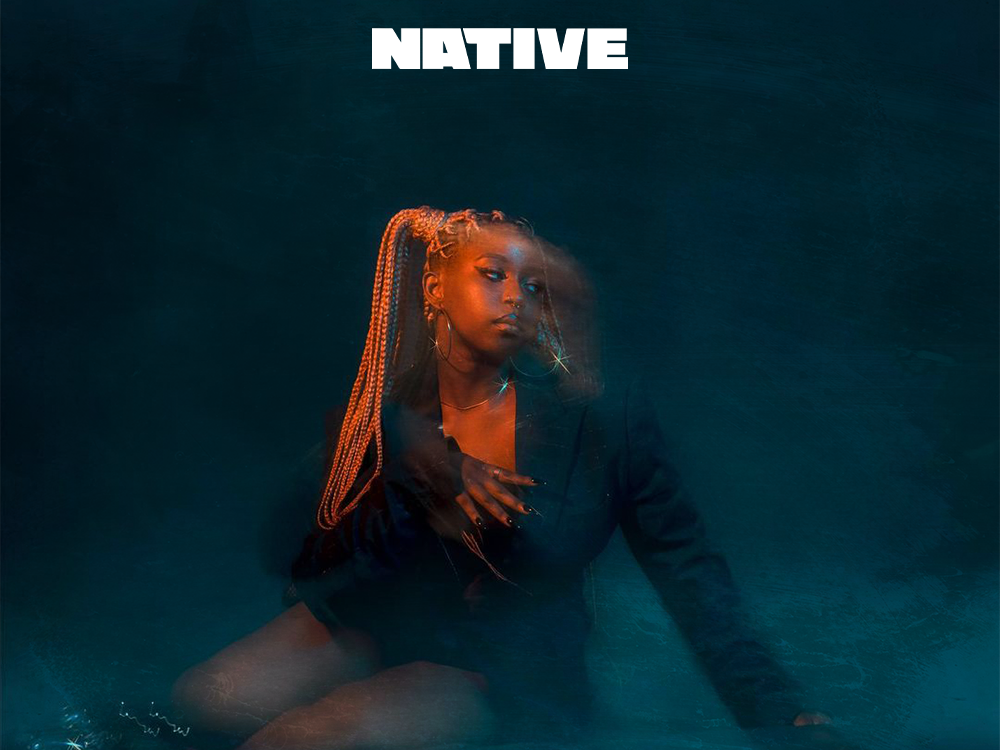
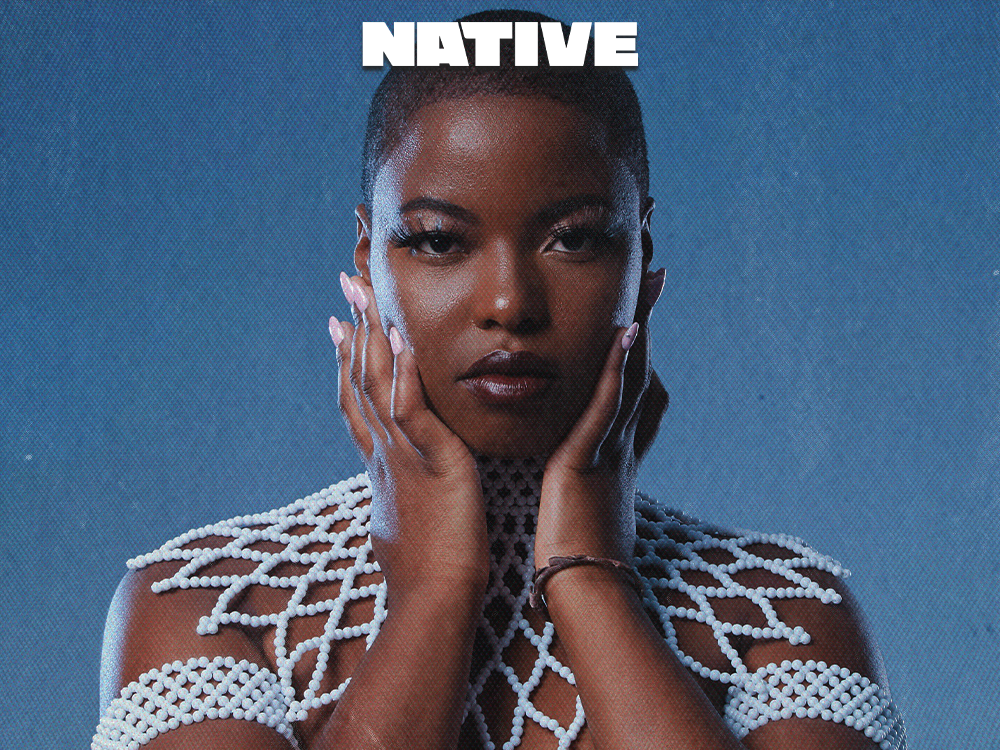
Since earning her breakthrough in 2020 with the singles “He’s Not Into You” and the Amia Brave-assisted “Peng Black Girls,” UK-born Nigerian artist ENNY has stuck to her belief of championing Black and African lives, most especially the lives and experiences of Black women. Her lyrics, often concerned with her victories and struggles as a Black-British woman, radiate with sass, confidence and elite penmanship. Born Enitan Adepitan, ENNY pays homage to her Nigerian heritage and acknowledges her unique cultural confluence as she raps in “I Want”: “We’re Black and we’re British and African, too.”


View this post on Instagram


A post shared by ENNY (@ennyintegrity)

Two years after her debut EP ‘Under Twenty Five,’ ENNY follows up with a sophomore effort. ‘We Go Again,’ like her previous project, is ENNY’s diary where she records her thoughts and feelings about the emotions running through her mind as well as those reflecting from the world around her. She achieves a fine blend of the themes such as love and becoming, while showcasing the growth in her artistry these past two years. ENNY is also unafraid to identify her flaws and embrace her weakness, as exemplified in “2am In Central,” where she raps, “I’m so destructive/I appear as a delicate flower/To those that know me I’m quite eruptive.”

It’s this ability to be brutally honest (with herself and others) that ENNY brings to the EP, rapping on “U Shld Heal”: “I/Used to be weary of black men/This was not wrote to attack them/These are the things I was feeling/Then I start doing the healing.” Producer Paya, who had great input in ‘Under Twenty Five,’ offers a solemn yet vibrant beat that affords ENNY to purge her emotions with great skill. ENNY also makes a worthy argument about the pressures foisted on Black women around the world when she raps, “His complexion is my complexion/But why does it feel like mines the wrong?

On “I Want” from ‘Under Twenty Five,’ ENNY reveals wanting “a Nigerian honey/Who laughs at my jokes even when they’re not funny.” On the assuredly titled “No More Naija Men,” ENNY’s interests have changed as she mourns loving Nigerian men that give her too much stress. “No More Naija Men” isn’t a sonic put-down of Nigerian men; rather, it’s ENNY’s way of highlighting the wrongs of people taking advantage of the trust their romantic partners place in them.

Inspired by the music she listened to as a child, ranging from Hip-Hop to R&B to Jazz to Gospel, ENNY has always been about proving she’s one of the best mcees in the game, in a scene that has seen the boom of female rappers around the world from Little Simz to Megan Thee Stallion. On “Champagne Problems,” ENNY challenges the misogyny in the music industry when she raps, “Certain man love hailing me up/‘Cause they say ‘Yo, we like you don’t rap about sex’/Hm, what’s that supposed to mean to me?” She informs anyone who cares to listen to her that her talent is undebatable, rapping, “Any genre, get up on it, I’m a vulture/Flip it, wrap it, give to you, love it cause its wholesome.”

Her braggadocio is clear-cut on “Charge It,” as she reiterates that nothing—even heartbreak—will stop her from living her best. Her Gospel influences show up through the backing vocals, with producer Yogic melding it all into the R&B-influenced track. That mellow and relaxed vibe is replicated on “2am In Central,” as ENNY rap-sings, “Glasses are filled to the rim/ Finally taking it/I really needed a night like this/I really needed to count my blessings.” In an Instagram post, ENNY wrote: “This collection of songs were formed in a period of what I know now was growing pains. Unintentional but intentional.” This is the mood that surrounds ‘We Go Again’: weary yet confident enough to forge ahead with her dreams.

ENNY’s journey from beginner to superstar is encapsulated in the last track “Take It Slow,” which features Loyle Carner. Over Linden Jay’s boom-bap production, she expresses gratitude for the ups and downs in her life and observes that those complications have pushed her to more success. “From little girls to grown women/From they won’t let us inside/Now we own the buildings,” she raps. Fellow UK act Loyle Carner gives a fine performance with his verse, establishing how the peace and victory people need can be found only in themselves.

‘We Go Again’ is ENNY’s chance of facing her fears and healing her wounds, while also calling out the societal structures that inflict some of those injuries. It’s not a rosy affair but that is what gives it the advantage: ENNY is honest, conflicted but optimistic—the winning combo to overpower life’s daily complications. It’s a reminder for herself and others to rise and go again.

Stream ‘We Go Again’ below.

Featured image credits/NATIVE


ICYMI:Konyikeh’s “Sorrow” Is A Meditative Ode To Life

TurnTable Top 100: Asake’s “2:30” Spends A Second Week At No. 1

This week on the TurnTable Top 100, our NATIVE Time Issue cover star Asake’s “2:30” tallied 3.08 million on-demand streams (No. 1 on streaming) and 72.7 million in airplay impressions (No. 3 on radio). It spends a second week as the No. 1 song in Nigeria. As a result, all of Asake’s No. 1 songs in 2023 as a lead artist have now logged multiple weeks at No. 1 on the singles chart – equaling his total from last year. Davido’s “UNAVAILABLE” with Musa Keys also spends another week at its No. 2 peak on the Official Nigeria Top 100; it tallied 77.7 million in radio reach (No. 1 on radio) and 2.43 million on-demand streams (No. 2 on streaming).

Adekunle Gold’s “Party No Dey Stop” with Zinoleesky holds at No. 3 for another week after topping the chart for two weeks. BNXN fka Buju’s “Gwagwalada” with Kizz Daniel and Seyi Vibez is steady at No. 4 after topping the chart for four weeks.

Victony’s “Soweto (Remix)” with Tempoe, Rema and Don Toliver returns to its peak of No. 5 on the Top 100; it tallied 70 million in radio reach (No. 4 on radio) and 1.05 million on-demand streams (No. 15 on streaming). A new remix of the song is expected to drop on Friday which could potentially see the song rise to No. 1 on the chart.

Davido’s “FEEL” drops 5-6 on the Top 100 while Tiwa Savage’s “Stamina” with Young Jonn and Ayra Starr rebounds to No.7 this week. Rounding out this week’s top ten, Spyro and Tiwa Savage’s “Who Is Your Guy (Remix)” returns to the top ten at No. 8, Omah Lay’s “soso” dips 8-9 as it logs an 18th week in the top ten – only three songs have spent more weeks in the top ten of singles chart in Nigeria. Khaid and Boy Spyce’s “Carry Me Go” rebounds to No.10 this week. Just outside the top ten, Joeboy’s “Duffel Bag” ascends to a new peak of No. 13 while Mohbad’s “Ask About Me” debuts at No. 15.

Read a full breakdown of the chart here.

Featured image credits/

NATIVE Selects: New Music From Bongeziwe Mabandla, TAR1Q, Deto Black & More

It’s that time again. Every week, new music shows up, sweeping fans and music lovers off their feet while artists gauge reactions to know the effect of their creativity. At the NATIVE, we are committed to keeping our ears on the pulse of the music scene and bringing the best sounds to your doorstep.

Last week, we brought you stellar new releases from Olamide, SuperJazzClub, Zinoleesky and more. Today, we have songs that move from Afropop to Amapiano to R&B, with our select artists showcasing their unending talent and passion for creativity. Lock in!

BONGEZIWE MABANDLA – “SISAHLELENI (I)”

One of the most distinct voices in South African music, Bongeziwe Mabandla is a sonic treasure. His albums ‘Umlilo’ and ‘iiMini’ both won the Best Alternative Album at the South Africa Music Awards (SAMA), a demonstration of his almost peerless work in that category. With his fourth album ‘amaXesha’ expected next month, Bongeziwe has upped the ante with his debut COLORS performance. A stirring showcase of his signature Xhosa folk style, it’s an ambient record full of spirit and soul.

VENUS RAPS – “MSHINE” FT. AIRDEE

Rap music doesn’t have to be a one-dimensional affair. The most dynamic rappers have always recognised this, placing their bars in conversation with other genres of music. VenusRaps, a rising act from South Africa, also shares this quality. On her new project ‘Superstar’, she moves towards full form as she incorporates bubbling sounds from around her. “Mshine” is a stirring standout, coasting on vivid drums that coerces a memorable performance from her. With bars mostly delivered in Xhosa, she incinerates the production while wielding the skill to create a hook that sounds every bit of a hit material.

RIC HASSANI – “AMINA”

Since breaking through the Nigerian music scene, Ric Hassani’s hearty records have cornered a distinct audience. He’s rewarded that active participation by releasing more music, his most recent body of work ‘The Prince I Became’ demonstrating his growth by pushing into previously uncharted sonic terrain. Releasing two records to continue his busy start to the year, “Amina” pairs beautifully with “The One”. Whereas the latter is more upbeat, “Amina” demands more from Hassani’s voice, which he provides in its typical lusciousness, incorporating spicy lingo to drive home the point of being heads over heels in love. 

LAYCON – “SHINE”

Ever since winning the heralded Big Brother Naija, Laycon has proven eager to burnish the credo of his artistry. Constantly pushing his craft in fresh ways, he’s stayed relevant on a musical level, even while navigating cultural ubiquity. On his new double release, Laycon places himself firmly in the Nigerian music discussion. “Shine” takes from the aspirational style of street hop, but with a sound that’s essentially stripped, Laycon’s submission is powerful in its self-affirmation. Reportedly bagging a degree not long ago, it’s a fitting reminder that the mind can do anything with the right motivation. 

RUKMANI – “GETAWAY DRUG” 

Only starting to share her music two years ago, it’s incredible how far Rukmani has come. The Port Harcourt-born musician has a soulful edge to her artistry, impressing great vibes on listeners who’ve followed her journey. “Getaway Drug” is the newest stop in that cruise, further establishing Rukmani as someone who’s got their hands all over their music. Set to retro R&B production from Wavskinny and Mirra Pro, it’s a sensitive record which upholds strength and the willingness to live life on fun terms. Its fun vibe is colourfully rendered by the Clarence Peters directed visual, placing Rukmani in evocative scenes with other Black women. 

E.L – “CHOP LIFE” 

E.L is Ghanaian music royalty. Present in the scene now for over a decade, he’s constantly remoulded his style while keeping his signature humour-laced flow. These peculiarities are the hallmarks of “Chop Life”, his new track which marks his return to the scene after some time. With an obvious nod to the party vibe he’s curated for much of his career, the song jumps with colourful synths and a head-bopping drum pattern, while E.L floats over the song with positive assurance. 

TAR1Q – “PRETTY LIKE”

Chocolate City’s TAR1Q unveils his debut single for the year, merging his smooth vocals with sensual yearnings. Co-produced by TAR1Q and BMH, “PrEttY Like” operates in the Afropop territory whilst incorporating elements from Amapiano. TAR1Q sings of a lover who chooses him yet fights with doubts as to his sincerity; he spends the song reassuring her of his love and commitment. Vocally, it’s a very  dynamic performance which recalls the movements of Rema, and with the brooding sonics colouring its backend, it’s an instantly memorable song that seems destined to do great things for TAR1Q. 

IMMACULATE TASTE, SILVERSTONE BARZ & DETO BLACK – “SAUCE” FT. DEE KOALA & MONEY BADOO

When people imply the quality of Rap music is deteriorating in Africa, it reveals only a surface-level understanding of the scene. In truth, barely have we had such a multi-faceted culture, pulling from everywhere and everything. Women rappers have been beneficial to this set-up and right now or whenever, there’s fewer songs where that fact is manifested as strongly as “Sauce”. Featuring two rappers from South Africa and one each from Nigeria and Kenya, the song lines irresistible and distinct rap styles over the glossy production. It’s a song that says so much with great swag,  resulting in what sounds like a potent hit.

TOYE ARU & BANKYONDBEATZ – “WE DEY WHERE MEN DEY”

Nigerian music producers Toye Aru & Bankyondbeatz releases “We Dey Where Men Dey,” a dance-ready anthem curated for the party floor. The tune is the first single of their forthcoming EP ‘Gifted Hands,’ which drops on Thursday, April 27. Like “We Dey Where Men Dey,” the EP will showcase the duo’s unique production skills, featuring a blend of traditional Afrobeats sounds and modern production techniques.

KOFEE BEAN – “SILLY NIGGA”

Ghanaian alternative artist Koffee Bean asserts her dominance on her latest single “Silly Nigga.” She reminisces on losses caused by giving her autonomy to the men in her life. “You took the deepest part of my soul,” she sings. Over Okaiwav’s R&B production with Gospel influences, Koffee Bean becomes the main character in her life,  choosing to love herself over and over again.

DJ LATITUDE & AYANFE – “LABA LABA” FT. WICKEDD 

The trio of DJ Latitude, Ayanfe and Wickedd! join forces on “Laba Laba,” a irrestible tune on the pleasures of love and its concerns. Over Iambeatz’s Amapiano-infused beat, Ayanfe colours the track with his vocals, singing in Yoruba and serenading his lover. DJ Latitude and Wickedd! add their touches on the production, making “Laba Laba” one of the week’s best tunes.

Y’AKOTO – “SECRET” FT. JAY BAHD

Having spent much of her life between Germany, France and Ghana, Y’akoto recently relocated permanently to the Ghanaian capital of Accra and kickstarts her new phase with “Secret” Ghanaian rapper Jay Bahd. The Nabeyin-produced tune is an intense interpretation of romance, the kind that inches toward danger. “Romantic love is an enigma and a notion that you have to be completely selfless and unconditionally in love from dusk till dawn,” Y’akoto speaks about the song. “That is a scam in my eyes. Love feels reckless and dark sometimes but we kind of like the thrill. That’s why we do it over and over again.”

Best New Music: Konyikeh’s “Sorrow” Is A Meditative Ode To Life

If you caught Dave’s performance at the Brit Awards early last year, you would have come across rising artist, Konyikeh. The talented singer has a commanding presence on stage and sings with so much gusto, setting the tastefully melancholic energy which “In The Fire” embodies. It was the sort of performance many would describe as a career highlight, but for Konyikeh, it was only the latest stop on a musical journey that began a long time ago. 

Konyikeh started singing classical music when she was eleven, partly because her mother played it so much around the house, along with records from Jeniffer Hudson and Destiny’s Child. A pairing that was intriguing and immersive enough to pull Konyikeh into other forms of music, her palette has continued to grow. She became a music scholar at a prestigious school in West London and for a decade went on weekends to the neighbouring Guildhall School of Music and Drama where she learned musical theory alongside piano and violin. 

Imbibing this level of expert artistry, it can sometimes be hard to adapt to popular music. The pace is breakneck, the industry even more frenetic, and language can sometimes be too outward-facing. An artist like Konyikeh requires soft landing, and to her credit, she achieves that and more with debut single, “Sorrow.” On surface, it’s a stirring meditative piece, an associative mood that is immediately established by the layered warmth of Konyikeh’s voice.


View this post on Instagram


A post shared by KONYIKEH (@konyikeh)

That’s only on the surface, however. Strip the songwriting for its clues and you’ll find many easter eggs–a style which is enriched by Konyikeh’s third-person narrative. It’s even more remarkable when you consider that the song was written when the artist was about fourteen years old, wanting to suffuse her writing with the weight of life’s lessons, even if that meant writing outside her immediate perspective. 

The song’s evocation of a romantic tussle that spans years constructs powerful images in the mind. Its quaint edge is flavoured with the colourful twists of a flamenco guitar, working to render contemporary zest. With sparse, staggering drums in the background, the music brilliantly complements Konyikeh’s voice, which stands as an instrument of its own. In all, the song’s central dilemma is present in the hook, which resurfaces in-between her incisive verses which culls inter-generational terms and religious allusions. “She sings about lust, he sings about sorrows,” sings Konyikeh, building layers to this character analysis which enriches the tension. 

The visuals for “Sorrow” also mirror the poignant brooding of the record. A house that wouldn’t be out of place in a Kazuo Ishuguro novel is the first thing you see, followed by the twinkling feet of a child. Snapshot after snapshot, the extremes of emotion are captured by director Kemi Adeeko. Rich montages of Black families experiencing joy are the most frequent, but with the haunting vocals of Konyikeh creeping from behind the scenes, there’s a sort of hiding that’s present: you’re surely watching the video, but you know you’re not seeing the full picture. 

Konyikeh’s debut EP is slated for release later this year, while the singer continues to burnish her cred. If anything, the artist with direct links to Cameroon, Jamaica and Britain has her foot solid into the industry. Performing alongside Dave isn’t her only big-name association; she’s signed to Jorja Smith’s management company FAMM, which also releases music from Smith and ENNY, the British-Nigerian rapper. 

A lot of songs can make you move, but few can make you stop and listen. Konyikeh’s music belongs to the latter category, and for a debut, it’s almost frightening what beautiful record this 24-year-old would create throughout the course of her career. Her life has been marked by playing the long game and by now it’s the only way she knows. Epic and exquisitely simple at the same time, “Sorrow” is the prelude to something major.


IDENTIFY: YINKA WANTS THE WORLD TO LOVE AGAIN

What’s Going On: War in Sudan, Civilians Killed In Burkina Faso & More

“What’s Going On” Tallies Notable News Headlines From Across The Continent — The Good, The Bad, And The Horrible — As A Way Of Ensuring That We All Become A More Sagacious African Generation. With This Column, We’re Hoping To Disseminate The Latest Happenings In Our Socio-Political Climate From Across The Continent, Whilst Starting A Conversation About What’s Important For Us To All Discuss. From Political Affairs To Socio-Economic Issues, ‘What’s Going On’ Will Discuss Just That.


SUDAN CALLS 72-HOUR TRUCE

Over in South Eastern Africa Sudan, one of the continent’s largest countries has experienced unrest resulting from a vicious power struggle within the country’s military rule. Following the coup in 2021, Sudan has been ruled by a council of military generals led by two men, Gen Abdel Fattah al-Burhan, the head of the armed forces and president as well as his deputy, Gen Mohamed Hamdan Dagalo, popularly known as Hemedti. The clashes are a result of a disagreement between the country’s army and the paramilitary force called Rapid Support Forces (RSF) – led by the aforementioned parties- over the direction of the country and whether or not to proceed with civilian rule.

The shooting, which started on April 15 swiftly spread across several parts of the country as the World Health Organisation (WHO) reports over 450 civilian casualties with several failed ceasefires attempts. Amidst the unrest, several Nigerians have made moves to flee to neighbouring countries like Chad, Egypt and Eritrea without the government’s approval but to no avail as they were denied entry into countries like Ethiopia.

Speaking on the issue, Dr Onimode Bandele, the director of the National Emergency Management Agency (NEMA) and committee chairman for the evacuation of stranded Nigerians shares, “The Nigerian Ambassador in Egypt, Nura Rimi, confirmed to me that the ambassador in Ethiopia is working on that, and hopefully they should be able to get a passage. In our own humanitarian assignment, self-evacuation is at the risk of the person that is involved.” Though there’s still significant unrest, the warring parties in an attempt to dissolve the situation have agreed to a 72-hour truce after 48 hours of negotiations.

ARMED MEN IN UNIFORM KILL 60 CIVILIANS IN BURKINA FASO

In Karma, located in the northern Yatenga province of Burkina Faso, about 60 people were killed by people wearing the uniforms of the national armed forces. The village located near the Malian border is known to attract a plethora of illegal gold miners and serves as a motive for the perpetrators of violence, suspected to be jihadists. Following the attack on Thursday, survivors in the village of Karma shared that over 100 armed men in motorbikes and pick-up trucks raided the area, killing dozens of men and young people.

Since Capt. Ibrahim Traore seized power in September during the second coup, extrajudicial killings of civilians have increased according to rights groups and residents. Regarding the issue, Burkina Faso’s military group declared a “general mobilisation” to combat all the attacks and bloodshed blamed on the Al-Qaeda-affiliated group. This would involve the recruitment of over 5000 more soldiers to battle the insurgency that has gripped the country since 2015.

MARBURG VIRUS KILLS 12 PATIENTS IN EQUATORIAL GUINEA

As described by the Centres for Disease Control and Prevention (CDC), the Marburg virus is a “rare but severe hemorrhagic fever which affects both people and non-human primates.” The epidemic has been raging for over three months in Equatorial Guinea, with comparisons made to Ebola fever and an ever-increasing provisional death toll. According to the Ministry of Health in a report presenting the epidemiological data of the Marburg virus disease, “there have been 17 cases and 12 deaths since the beginning of the epidemic,” as of April 21st, 2023. 

Nearly a month ago, the World Health Organisation (WHO) called on Equatorial Guinea to report cases of the Marburg virus because of fears of more widespread contamination to neighbouring countries, Gabon and Cameroon. With a fatality rate as high as 88%, there is currently no approved vaccine or antiviral treatment for the virus. However, supportive care – oral or intravenous rehydration – and treatment of specific symptoms increase the chances of survival.

Featured Image Credits/The NATIVE

NATIVE Selects: New Music from Olamide, Zinoleesky, Wande Coal & More

It’s that time again. Every week, new music shows up, sweeping fans and music lovers off their feet while artists gauge reactions to know the effect of their creativity. At the NATIVE, we are committed to keeping our ears on the pulse of the music scene and bringing the best sounds to your doorstep.

Earlier in the week, we brought you stellar new releases from Bayanni, Chike, Erigga and more. Today, we have songs that move from Afropop to Amapiano to R&B, with our select artists showcasing their unending talent and passion for creativity. Lock in!

OLAMIDE – “TRUMPET” FT. CKAY

YBNL boss Olamide drops his first single of the year, recruiting CKay to lay his velvety vocals on the hook. On “Trumpet,” Olamide and CKay serenade their love interests, promising acts of tenderness and sexual pleasures. Produced by P.Priime and CKay, “Trumpet” has a mellow bounce with chord progressions that dole out melody after melody. It is a solid return for Olamide whose guidance has been integral to the success of one of Africa’s biggest stars in Asake.

ZINOLEESKY – “MANY THINGS”

With his sophomore EP ‘Grit & Lust’ released less than five months ago, Marlian Music act Zinoleesky shares his first single of the year. On “Many Things,” Zinoleesky beams the searchlight on himself, singing, “Something just dey tell me ride on/No be say na me do pass/Baba just decide to gimme through pass/E look my life and gimme two chance.” Over Timi Jay’s mellow production, Zinoleesky encourages himself to continue on his path and ignore distractions.

WANDE COAL – “LET THEM KNOW”

As his album ‘Legend Or No Legend’ draws nearer, Wande Coal releases a new single “Let Them Know” to heighten anticipation. Over Kel-P’s upbeat production that shines with percussion and guitar chords, Wande Coal states that he is in his lane and won’t show his moves to his detractors. “I will rather get the money in a foreign currency/And get rich or die while trying,” he sings, revealing that he’s here to play with his success.

KONYIKEH – “SORROW”

On her debut single “Sorrow,” Cameroonian-Jamaican British musician Konyikeh is inspired by personal history and familial troubles. With distinct vocals, Konyikeh expresses her frustrations with a family setup that doesn’t protect its young ones from its exuberances and those of the outside world. “Sorrow” is produced by British producers, Charlie J Perry and Paya and released via Jorja Smith’s FAMM label, with the accompanying visual directed by Kemi Anna Adeeko.

SUPERJAZZCLUB – “TOO EARLY”

Ghanaian multi-talented collective SuperJazzClub releases the video to “Too Early,” an anthem for escapism and careless abandon. Produced by one of the collective’s members Øbed, the track expertly fuses elements from Trap to Garage to Highlife, making a tune that is familiar yet futuristic and forward-thinking. The music video was directed by Tano Jackson, another member of the collective and is inspired by Quentin Tarantino’s signature use of monochromatic tones, colours and editing.

TIZ EAST & BERRI-TIGA – “YELLOW BUSES”

Nigerian-born, Newham-raised act TiZ EAST pays homage to his Nigerian heritage on “Yellow Buses” as he connects his days in Lagos to his will to flourish. The song was recorded in Lagos—with Bayoz Muzik and Producer X handling the production and vocal mix respectively—and brings to life the hustle and bustle of the city. For the hook, TiZ EAST taps Nigerian singer Berri-Tiga who sweetens the tune with his smooth vocals. 

TEEBEE – “I FEEL GOOD”

Toronto-based Nigerian artist Teebee is all about the good vibes on “I Feel Good,” a single off his forthcoming album ‘In a Loop.’ On the up-tempo record, Teebee celebrates surviving the tough moments of life and the wins that also follow it. “After the rain comes the sunshine/Why I go dey worry when I see your waistline,” he sings, infusing his love for the female anatomy. “I Feel Good” continues Teebee’s style of fusing  Afrobeats, Reggae, Dancehall and R&B.

CLOUD BEATS, WALSHY FIRE, KARUN – “TALKING IN MY SLEEP” FT. THE GREAT EDDY, JIMMY OCTOBER, G NAKO

Tanzanian musician Cloud Beats opts for a star-studded lineup on “Talking In My Sleep,” the latest single from his forthcoming album ‘Wmls.’ Produced by  Cloud Beats and Grammy Award-Winning Jamaican American DJ, Walshy Fire, the song infuses elements of Amapiano as The Great Eddy, Jimmy October and G Nako provide vocals. “Talking In My Sleep” is an uplifting tune about counting one’s blessings and enjoying the fruits of one’s labour.

Featured Image Credits/The NATIVE

NATIVE Exclusive: Suté Iwar Is On A Journey Of Exploration

Suté Iwar is a master of all trades. At seven, he began playing the piano and saxophone, sharpening his musical skills at Muson Centre, Onikan where his father had enrolled him. Years later, he and his brothers [Tay and Terna] would form BANTU Collective, a creative space with the agenda “to push high-quality art across the board.” Under the collective, Suté released albums and EPs that formed his hybrid style of music, fusing multiple genres that range from Hip-Hop to R&B to Afropop to Soul to Jazz to Funk.

A rapper, producer, singer and songwriter, Suté’s music is greatly influenced by experiences gleaned from his life and those of the people that make up his environment. In 2022, he began his journey with music label Outer South, releasing alright, ok” and the WurlD-assisted “JUDAH LION.” He is primed for the release of his debut album ‘ULTRALIGHT,’ which comes after the Tim Lyre-featuring “SPACE COWBOY” and the kadiata-assisted “STAR PLAYER.”

“The core of the album is me sharing my journey so far,” Suté shares with the NATIVE. “And I think just like anyone’s journey, it’s up, it’s down, it’s joyous, it’s triumphant. It’s all those things.” At the time of this interview, Suté is in the UK and provides insight into his musical background and influences, the making of ‘ULTRALIGHT’ and the passion for community that fuels his music and personality.


View this post on Instagram


A post shared by Suté Iwar (@suteiwar)

NATIVE: You started playing the piano and saxophone at seven after your father enrolled you in music lessons. What made you fall in love with music in the first place?

SUTÉ IWAR: I think I fell in love with music without even knowing because it was just such a big part of the house. So it was just one of those things that were always around. I’ve never really had to think about music at all or even think about why I like it because it was always there. So when my dad is in the house, he’s playing jazz music at loud volumes all the time, and even like driving us to school or something, he’d probably be playing some Soul music from those guys he likes. And you know, when you’re a kid, whatever you’re being played, you’re trying to find what’s interesting about it and that’s what it was.

And that was even before I started music school [Muson Center in Onikan]. And at the time, there were classes every Tuesday and Thursday after school because I went to Home Science in Ikoyi. Yeah, and that was just like an extension of all of that. I’ve always been happy being around music, being with music and Muson Centre especially always felt like I was travelling out of Nigeria. The place has a very different vibe when you’re in there, so I was happy to be there.

Who are the artists on the African continent that have had a similar influence on your music?

When I was a kid, I wasn’t really paying attention to [the Nigerian music scene] but heard Plantashun Boiz, just like the music that was being played and that was popular. So that’s just a part of my DNA. A guy like 2Face for instance; 2Face is huge for me because of all the Nigerian pop artists he is the most complete; he was also writing really good songs and he was talking about a range of things. 2Face is one of those guys [that] if he wanted to, he could come out with another hit song and the writing in the song would also be cool. And he’s from Benue State, which was big for me because there are not a lot of big artists that are from Benue State. That’s still a growing number. So the fact that he was from Benue and you’re like, “Oh wow,”  and he’s doing it. 2Face was really big for us.

And the other pop guys, too. I remember clearly when Naeto C started doing his thing. That was big because my thing is [about] fusing hip-hop, R&B and all that stuff. Before Naeto C, there were all these other rappers and they were fun but Naeto C made it cool [to rap]. I was in secondary school at the time and I was just like, “Wow. With the music he’s making, he could exist anywhere making this music,” and I still think his first album ‘U Know My “P”’is the best Nigerian Hip-Hop project ever. So, yeah, Naeto C, M.I. and all that whole scene. I can’t say I was influenced directly by D’banj, Wiz[kid], Davido or any of these guys but just having people from where I’m from doing it big is very inspiring.

And Aṣa, too, because that’s a big deal. I went to an Aṣa concert – this is before even her first album. My dad took me to some show at Alliance Française and it wasn’t even [Aṣa’s] show, she was just performing there and I remember seeing her and up until when she released her first album, I was like, “Wow, I swear this is the same girl I saw performing at that thing.” So yeah, I love Soul music and R&B, so for that side of myself, there’s definitely Aṣa there, and also Styl-Plus and all those great Nigerian songwriters.

What’s the connection between Lagos and Abuja as regards your music career?

I grew up in Lagos. Funny enough, I don’t think a lot of people know that. So I was born in Benue but we moved to Lagos when I was like four years old. I did nursery, primary and secondary schools in Lagos. [I then] moved to Abuja just after I finished secondary school—I went to Dowen[College]—and I was in Abuja for a year and immediately loved the place. But then I went to uni a year after I moved to Abuja and then when I finished uni, I came back to Abuja. I’m very much influenced by Lagos because most of my friends are there and I really understand the place. But I have a love for Abuja that’s different because while Lagos moulded me, I feel more comfortable in Abuja because I never felt like I fit into Lagos [and its] way of doing things. I understand it but it wasn’t my speed, which Abuja is.

You and your brothers formed BANTU Collective where the three of you recorded, produced and engineered your music. Why did you choose to join forces?

Suté Iwar: Well, so I got back from uni to Abuja and they [Suté’s brothers] were already making music. It wasn’t very serious at the time but even when I was in Uni, Tay was already sending stuff like, “Oh, look at what I’m working on” because I’ve been working on music since secondary school from Dowen. The first project I released, I was like 15 in Dowen. And the way the secondary school scene was, there were already music groups. I went to Dowen but there were guys in Whitesands [School] who were doing music and it was semi-serious.

But [after] coming back to Abuja, it was like, “Wow, we can really do this thing” because there’s just so much talent to do it. And I didn’t want to do the music thing alone. The whole idea was about community. We wanted to produce Nigerian music of a higher quality, the quality that we heard in our ears because, at the time, the mixing of music wasn’t really what it is now. So we were like, “We want to be able to introduce new things,” but if you are doing something like that, you can’t do it alone. So, the idea was, you know, let’s build this community: BANTU Collective. Let’s make it even more than music. Our agenda is to push high-quality art across the board and we had like-minded friends that were down for that. And so we just did it.

It was a cool melting pot for everyone that was working in Abuja at the time. I can’t think of an Abuja artist that didn’t come through. What I’m happy about BANTU was just how it gave safety to a lot of Abuja artists to just come around, make music, and feel like what they were doing was important because we’re still just getting past that era where it felt like music was disposable, like you have to explain to your parents that what you’re doing is a real professional career. So BANTU allowed people to justify what they were doing with music, like where we’re doing something serious here. And if you’re trying to do that on your own, it is very easy to just give up at some point. But because it was a community, it emboldened a lot of people.

You were rapping mostly in your early records but on your sophomore album ‘199X,’ you pivoted to singing. What prompted you to add singing to your repertoire?

Singing is something I was always kind of doing but just wasn’t confident enough to do on my music. [This is] because since uni I was always working as a songwriter.  I schooled in Dublin and I was working as a songwriter for artists in Dublin and just in studios all the time. So I’m a real studio rat like that. I’m ready to work on any part of the song. For me, the song is the master and we’re just doing everything to serve the song and make it the best song. So yeah, I think my first impression to a lot of people was ‘Jelí,’ which was rap-heavy but with ‘Jelí’ I was trying to make a great Nigerian Hip-Hop project. Which wasn’t even necessarily the kind of music I was making before ‘Jelí.’ ‘Jelí’ was a different thing for me, and [it] was kind of experimental for me, but we [Suté and his brothers] had this intention like, “We want to make a great Nigerian Hip-Hop project.”

But right after ‘Jelí,’ I was singing on ‘Visions,’ [which] was way more melodic and felt a lot more like myself. So [singing has] always been a part of me but I feel like I had to build the confidence to explore that part fully; also I didn’t want to give all my talents on the first project all at once. I’ve had to slowly introduce the production side of me, the songwriting side, and all of that. But a lot of that just has to do with how I see music. People always ask me the question, “Are you a rapper?” And I’m like, “Sure, I’m a rapper but the first thing I was doing was playing the piano [and the saxophone], so should I be called a pianist or a saxophonist or a rapper or all these labels?” Now, I’m just a musician serving the song, so it’s whatever the song needs. The singing is just a natural progression to make the songs how I hear [them] in my head.

I understand not wanting to give away all your talents in your first projects, and in your case, I believe it worked.

I appreciate that because also a lot of the artists that I love were always exploring every side of their musicality, even if it’s Lauryn Hill, Anderson .Paak or Prince. Prince was rapping in the 90s, you know; it’s about enjoying yourself and having fun with the music you’re making. And really, it’s whatever that looks like. In the future, I might do a project where I’m not even rapping or singing; it’s just like the instrumental or with a band. It has to make sense too because you have fans, right? I respect all the fans who enjoy my raps and I will never deprive them of that, but I also want to enjoy myself. So it’s always finding that balance between not getting bored and making sure that the people who appreciate my music are satisfied.

You have amassed an envious discography since you began making music and those projects have fused multiple genres from Hip-Hop to R&B to Soul to Jazz. And you could have chosen to stick to one genre if you wanted to. What has been the motivation behind these stylistic choices?

I don’t think I’ve thought about it like that. I’ve always just made the music that I would like to hear at that particular time. But the music that really speaks to me is Hip-hop, R&B, Soul, Funk, and Reggae. So those are always gonna find their way into my projects. And I think maybe because I started with instruments – I’m always able to see the connection between them. But because I’m Nigerian, there’s also that connection to Afro-drums, so for me, it’s like trying to bring those worlds together, all my interests and what I enjoy listening to and trying to fuse that with Afro-drums because, in Africa, that’s the one thing we have that can’t be taken from us. Our drums are really what makes us different from everywhere else in the world and our drums are very unique and specific, so that’s really the Afro in anything and I think that’s why [our music] is so big now because we’ve tightened it up to a level where the rest of the world can’t resist that rhythm and it’s just such a new rhythm and does such a specific thing. 

For me, it’s honouring my heritage with those drums and trying to balance out all my other interests musically. But the soul of the music is always around Hip-Hop and R&B. It’s hard to talk about genres because Hip-Hop is also kind of funky. There’s a lot of funk in there because it is based on funk drums and R&B is actually soul music but I’ll say the heart of the music is Hip-Hop, R&B, and fusing that with Afro-drums.

‘ULTRALIGHT’ is your first project under London & Johannesburg-based Outer South. How did that deal come about?

Adam [Tiran] from Outer South has a great ear for music and he’s been around the music [scene]. [After the release] of my project ‘Colors’ was the first time he sent me a message, like, “Love what you’re doing. This is really cool music.” And we just kept talking now and then from that time, and I put out ‘199X’ and he sent me messages too and we were chatting and I could tell he was interested. And I think I was in London at the time when he reached out—I think that they just put out a couple of Tim Lyre songs at the time he reached out to me. That’s how that conversation started. It was cool because I know it’s someone who has appreciated the music for a while and just getting the chance to have him work on the project was cool because I trust his ear. It was very organic the way it happened.

Your new album is inspired by astronomy and finds parallels with love and sound. Why did you choose that route?

The core of the album is me sharing my journey so far. And I think just like anyone’s journey, it’s up, it’s down, it’s joyous, it’s triumphant. It’s all those things. But I guess if I’m saying something on the album, it’s basically that you can do it too if you tap into your light, And that’s why it’s called ‘ULTRALIGHT’ because we all do have the best parts of ourselves and because of how the world is, there’s always these blocks, these things are stopping you from tapping into it. And it’s just like, you want to tap into all that light and maximize it to the fullest extent. A lot of that has to do with me just being a very dreamy person. You know, maybe slightly delusional at some points, but that’s my story and that has always served me well, just believing in the best outcome for myself. I think if I didn’t have that, I wouldn’t even be doing music because music is such a risky thing to do in that you’re just living in flux [and] there are no guarantees for anything.

That’s the message of the project and that message is for everyone. There are people who are living different kinds of lives but still feel a heaviness sometimes or feel like they can’t do this or do that. So, even for me that is doing a risky thing like music, if I can keep my sanity to an extent doing this and keep my light, the message is that you can do it too. And so all the allusions on the album—it’s not even particularly astrological—it just has to do with feeling like the star player in your life, and that’s not diminishing any other person’s light. But if you look up at the stars, they all shine and there is space for everyone. So it’s okay to think of yourself in that way because you’re not diminishing anyone’s light. 

[The track] “SIGNS” is from the perspective of a pessimist, like look at all this stuff that’s happening. But we still have to move forward and shine our light even with all the [bad] signs in the world. For the past year in Abuja, I’ll say I went to the filling station maybe two or three times because there was no fuel, and if you’re in Naij, you know that that’s happening and that’s real and that’s a sign that things are bad but we’re still gonna shine our light regardless. So I think that’s the core of the album.

What was the process of writing and recording the album?

[We started in 2021]. I think the first song that I worked on was “SIGNS.” I recorded “SIGNS” in August or July 2021 and I was in London at the time, and [the weather] was so hot, it felt like I was in Naij and I’m like, “Wait, this is very strange.” That’s why the album starts the way it does. After “SIGNS” [that I produced], I was like, “Okay, I like this sonic direction for the album. Let me make a couple more songs that are in this sonic world where it’s a slow, Afro bounce, but has funky chords or guitars on it.” And I think I must have done “MEDITATE” after “SIGNS” and maybe started “SHUGA PEACH” and “JUDAH LION” around that time.

Most of the songs in the earlier parts of the project were made around the same time in London. And after that, I went back to Naij and [I said to myself], “With this sonic direction I have, what other songs can exist with this sonic language?” So I linked up with SuperSmashBroz—they are a production duo—and they sent over a bunch of beats, and from those I picked “SPACE COWBOY” and “BIG WORLD BABY.” I think I might have recorded “BIG WORLD BABY” and “STAR PLAYER” in London, and when I came back to Naij, it was just to put the finishing touches on those. “THE LIGHT,” which is the outro on the album, is a song I’ve had since 2019 but it was just me on the song. So I chopped it up with Twelve XII and we finished that song up. I think the last songs that were finished were “THE LIGHT,” “ICE DUB” and “EARTH ANGEL” with Ogranya.

And every song was kind of different. I started working on the album myself but there’s so much collaboration in it – I was sending the songs out to people to add stuff; on “SHUGA PEACH,” Bad Entity [who is a producer on the album] added sax and guitars. For “MEDITATE,” I got to play the song to Lex [Amor] in her studio but Tay [Iwar] was the first person that heard that song. And “THE PLEASURE PRINCIPLE,” which is one of my favourite songs on the album, was made with Ray[TheBoffin]. He’s a producer that I’m excited about. He’s on Outer South too and we linked up and I was like, “Yeah, that’s a song we should definitely finish up.” 

Every song [on the album] was made differently and at different times. But “SIGNS” is where the album started.

You produced most of the songs on the project. For the songs that were produced by other producers, how did you decide on whose production to move forward with?

I just played it by ear. I gave myself the intention with “SIGNS” that I want this Afro-bounce but I don’t want pop chords on it. I want soul chords or soul guitar because pop chords weren’t just weren’t interesting for me at the time, they just sounded like every other beat. So that’s what’s different about the album. I just wanted soul chords and Afro-drums. That’s what “SIGNS” sounds like, that’s what “JUDAH LION” sounds like, that’s what “MEDITATE” sounds like, that’s what “THE PLEASURE PRINCIPLE” sounds like.

For the rest of the album, I wanted to maintain the Soul chords but just introduce other kinds of ideas. SuperSmashBroz gave me Trap-sounding songs; it’s the same Soul chords and it fits in but they [have] a Trap bounce to them and that’s on “SPACE COWBOY” and “BIG WORLD BABY,” although “SPACE COWBOY” feels like a Trap-African infusion thing and “STAR PLAYER” is just like a UK summer song. 

The defining thing musically on the album are the soul chords with Afro-drums and some Trap and other stuff. “ICE DUB” was initially an interlude because it’s Reggae and has live drums, and I was like, “This is a nice way to break the album up in the middle.” “ICE DUB” and “THE LIGHT” have live drums on them and they give something different, but it’s all just soul chords.

There are phone conversations from family and friends spread around the project. Why were those conversations important to insert into the album?

It’s easier for me to be vulnerable in music, weirdly enough. Everyone who’s speaking on the album is my friends from way back, and they’re just people who are a big part of my story. I didn’t even give any instructions, I was just like, “Yo, I need you to speak on this album I’m making” because they’re all a part of my story and I wanted the album to also have their voices. I wanted to pull people closer to me because I’m not a social media guy. Sometimes I just forget about it, to be honest. The only way I can pull people closer is by doing it on a song, and I feel because it’s so personal, it lives with people longer. You can spin it back, maybe you weren’t paying attention to the story that was told before, so you go listen back like “Okay, that’s interesting. That’s where he’s coming from.” 

What song of ‘ULTRALIGHT’ is most personal to you and why?

[I think it’s “EARTH ANGEL.”] I said some stuff that I never even imagined I’d say on a song before. But there are some other parts that are very revealing and vulnerable. But I’ll pick “EARTH ANGEL” for now.

There’s “JUDAH LION,” “Bethesda” and 2017’s ‘Jericho Rose’these are some titles with biblical references in your discography. How influential is religion to you and your music?

I’ll be honest, I’m not a very religious person, and I know it’s a cliche now but I’m more spiritual than religious, even though I did grow up in church. That is a really interesting question. I do have a lot of respect for Jesus. What I am is a knowledge seeker and so a lot of the time when I’m not working on music, I’m really just appreciating the world, appreciating world history and all this kind of stuff, and those things kind of find their way back into my music. It’s part of the spiritual side of me; sometimes if I feel the song hits me in a certain way, I just attach a name to it that gives it the same feeling I have inside, if that makes sense.

For ‘Jericho Rose,’ Jericho Rose is actually a plant, it’s a resurrection plant. The nature of my music is that every project feels brand new. I feel like a new artist when I’m making a new project. That’s where that name comes from because I feel like I’m resurrecting every time I’m making a new project. Maybe there’s a biblical connotation to that. But I just find all that stuff interesting, and all the things I find interesting find their way into my music.

In your experience, what has been the difference between releasing music as an indie act and releasing music under a label?

I mean, it’s back to that thing I was saying about community. In my situation, it feels like there’s just a community of people who are there to help bring this project to life and we’re all doing it together. That’s when it works the best: when you have like-minded people working together for this one thing, so that’s what it feels like. I know a label situation can be many different things but in my situation, that’s what it feels like.

Now, we have witnessed a rise of artists from the Abuja music scene in the likes of Bloody Civilian, Tay and yourself. What are the potentials for the music in Abuja to blossom and expand?

I think it’s only going to get bigger. The talent is in surplus to be honest, and with Abuja artists, they’re also versatile, almost all of them do multiple things. They have an interesting perspective because there is space for you to think and be yourself. Sometimes, Lagos does not afford you that space to really know who you are as a person because it’s easier to just fit into what’s happening. So yeah, it’s only gonna get bigger. Ray is gonna have a big future with what I’ve heard him working on. Efe [Oraka] is a really interesting artist too. Even Twelve XII is also brilliant. I think it’s only a matter of time. There’s also Preye who’s doing really well now. And [Lady] Donli obviously. But also the Hip-Hop guys, like Zilla [Oaks] and PsychoYP who have been doing it for a while. So [the Abuja music scene] is only going to get bigger. 

There are UK artists featured on your album and you are headlining your first show in the UK in May. What do you find interesting about the UK music scene?

I guess what’s interesting about the UK scene is that it’s a small place with a large presence of Black people who aren’t disconnected from where they’re from. I think that’s very different from America. So when you’re navigating the UK, you just find that there’s a better understanding immediately, they have a stronger culture around music. It’s just a very welcoming community of musicians and an audience. That’s why you’re seeing so many [Nigerian] guys selling out shows here before they can sell out in America and that’s because they really understand us here. So I think that’s a big part of it. 

What are you most looking forward to with this album and what should fans expect at the show?

The show is going to be sick. Anyone who comes to my live shows knows that I always leave myself on the stage. And I think I’ve been on the stage longer than I’ve been recording music even because I’m a music school guy. So, it’s gonna be a mixture of songs from the new album and songs from before that people already know and are requesting. I’m looking forward to the show and I think it’s gonna be brilliant. 

But with what I’m expecting from the album, I try not to put those kinds of expectations on the album or music in general. For me, when the song is done, that’s my satisfaction. Right? Like we’ve done the song well, we’ve done this album well and it sounds solid because I have no control over what it does in the world. But what I know it’s going to do, just because I made it, it’s definitely gonna live with people for a while. I think it’s going to be an album that people share with other people. I think it’s an album that’s gonna introduce me to a lot of people who haven’t heard my music before. And they’re gonna get a front-seat view of all the stories that are on the project. They’re gonna get to see all the sides of me. And who knows, from there they could go as far as the songs want to go, but I know for sure it’s an album that’s gonna be shared a lot and people are going to enjoy it.

Stream ‘ULTRALIGHT’ below.

Featured Image Credits/The NATIVE

NATIVE Selects: New Music from Bayanni, Chike, Erigga & More

It’s that time again. Every week, new music shows up, sweeping fans and music lovers off their feet while artists gauge reactions to know the effect of their creativity. At the NATIVE, we are committed to keeping our ears on the pulse of the music scene and bringing the best sounds to your doorstep.

Last week, we brought you stellar new releases from Prettyboy D-O, Ayra Starr, Oxlade, Candy Bleakz and more. Today, we have songs that move from Afropop to Amapiano to R&B, with our  select artists showcasing their unending talent and passion for creativity. Lock in!

BAYANNI – “TA TA TA (REMIX)” FT. JASON DERULO

Fresh off “Ta Ta Ta” winning the Best Viral Breakthrough Song at the Urban Music Awards, Mavin Records’ Bayanni updates his hit track with a remix featuring American artist Jason Derulo. Derulo adds new energy to the song, merging with its theme as he sings, “Please keep the lights off, don’t like those off/We could vibe with our clothes off and make love til we doze off.”

Uzoma Ihejirika

CHIKE – “ON FIRE” (PANA TIME) (FROM GANGS OF LAGOS)

Nigerian singer and songwriter Chike exposed us to a new and refreshing side to his sound as he delivers a sleek performance on “On Fire” for the recently released Gangs of Lagos. Introduced with mellow keys, Chike’s soft vocals warm up our ears with the assistance of the Amapiano-infused beat. Dipping into his heritage, Chike delivers an emotional rendition in Igbo as he asks for God’s strength through a tumultuous journey. Midway through the track, Chike adds rapper under his belt as he effortlessly switches between Igbo and English to reiterate the track’s message of relentlessness 

Nwanneamaka Igwe

ERIGGA – “POT OF STEW” 

On his first single of 2023, Nigerian rapper Erigga furthers his quest for self-growth and expansion with “Pot of Stew.”  Over solemn piano keys and a soft-bellied bass, he fills the track with prayers—“New Benz amen new crib amen/Vacation amen new monеy amen”—as he narrates the economic difficulties that prevent Nigerians from succeeding in the country. In the end, the prophecies that he will succeed despite the obstacles.

Uzoma

GUVNA B – “AMPLIFY” FT. DARKOVIBES

UK rapper Guvna B taps Ghanaian act DarkoVibes for “Amplify,” an uplifting tune about overcoming tough life situations. Guvna B, who is a child of Ghanaian parents, reminisces about his background and sacrifices he made at the start of his career. DarkoVibes’ chorus, amid the backup choral vocals, is the icing on the cake, “praying to the heavenly father” to amplify his and Guvna B’s wins.

Uzoma

DABIEH & TS GRAYE –  “GRACIE’S THERAPY.” 

Sitting alongside “livin on the line.” in a two-pack release, “gracie’s therapy.,” outstanding producer Dabieh taps British pop singer, TS Graye for a soulful rendition about love gone sour. Through the slow-tempo beat laced with subtle drum drum patterns, Graye’s harmonious vocals shine through the tracks filled with sweet-sounding melodies and heart-warming messages of conflicting emotions.  

Nwanneamaka

SANKI – “ON GOD”

The best musicians are those who can turn life experiences into poignant music. Sanki showcases that quality on “On God,” the budding musician’s latest record. “Some kind things no dey bother me, like when the fake ones dem brother me,” he sings in the opening lyric, his vocals smoothly delivering on the song’s aspirational theme. With soulful strings matching the mellow percussive base, the Nigerian artist sets a great precedent for his forthcoming album, ‘Anthems & Vibes, Vol. 1’

Emmanuel Esomonofu

6TH QUAN – “65 NIGHTS”

Earlier in the year, Nigerian act 6th Quan released the deluxe version of his ‘Rebirth’ project. Now, the singer/producer returns with a new single “65 Nights,” where he purges his emotions as he expresses his longing for a loved one. “[“65 Nights” is] about the yearning for reconnection, the ache of missing someone, reminiscing on the promises you both held to heart and the hope that keeps you going even in despair,” he says. 

Uzoma

Featured Image Credits/The NATIVE

Asake’s Reign in Afropop: One Year After “Sungba (Remix)”

Last month, Asake’s “Sungba (Remix)” with Burna Boy marked its one-year anniversary. The previous year was evidently a thrilling ride for the Nigerian artist, and that track was an important fixture in the series of successful events that elevated him from an underground hitmaker to a bonafide superstar. On Sungba (Remix),” Burna Boy, who had laid a winning verse on the remix of Black Sherif’s “Second Sermon” the year before, added further gloss to an Asake song that was already tearing through music charts in and outside Nigeria. That Burna Boy cosign cemented Asake’s place in the list of new and exciting Afrobeats acts exporting Nigerian music and culture to the world.

The foundation for Asake’s successes was 2020’s “Mr Money,” a sleeper hit that began his fruitful relationship with Nigerian music producer Magicsticks. “Mr Money” had the Amapiano-infused instrumentals that would become a necessary feature in Magicsticks and Asake’s works. On the Olamide-assisted “Omo Ope,” they raised the stakes, elevating their connection and artistry. “I think ‘Mr Money’ was us trying to find our sound, and ‘Omo Ope’ was like, yes this is the sound,” Magicsticks said about that period. 

It is worth mentioning the Olamide feature here. Around the world, newcomer artists have always depended on influential artists to acknowledge their sounds and back them with either a guest feature or public recognition. These acknowledgements do wonders for the careers of newer acts by opening doors for them where it seemed there was none. Olamide did this for Asake on “Omo Ope”; he went a step further to add the singer to his roster of artists on YBNL Nation. Immediately, Asake was in the spotlight and began catching the attention of the mainstream media. 

“Omo Ope” was part of the songs on ‘Ololade Asake,’ Asake’s debut EP. The four-song project introduced Asake’s style of Yoruba Gospel, Fuji influences and Amapiano-aided Nigerian pop primarily honed by Magicsticks. “Trabaye,” “Omo Ope” and “Baba God” carried ample evidence of Asake’s engaging storytelling and gratitude to a higher being. But it was “Sungba” that proved the potential of his star power. Off of Magicsticks’ infectious production, Asake unleashed his repertoire of quotables and fully assumed his role as a hitmaker. 

In his memorable verse on Sungba (Remix),” Burna Boy, who was only months away from dominating the world with “Last Last,” merged his energy with Asake’s, finding pockets of melody that highlighted his position as one of Nigeria’s most versatile music makers. Both he and Asake didn’t outshine each other; instead, it was a flawless collaborative effort as both artists allowed each other space to wield their creativity and pump the blazing track with extra verve.

Within the context of the music industry, the importance of music videos cannot be overstated. While the production of these contents has evolved through the years, they are important pillars for any artist in the industry. Asake was aware of this and enlisted TG Omori, one of the best hands in the game, to curate the music video for “Sungba.” It was in the video that Asake and TG Omori began to piece together the details that would transform Asake from an everyday man to a leading man, starting from his physical appearance to his fashion choices. TG Omori reprised his role for the music video accompanying Sungba (Remix),” chiselling the edges of Asake’s on-screen persona. 

With every song and music video that followed Sungba (Remix)”“PALAZZO,” “Peace Be Unto You (PBUY),” and “Terminator”—the trio of Asake, Magicsticks and TG Omori kept on hitting new highs and reinventing the singer’s dynamism. When Asake’s debut album ‘Mr Money With The Vibe’ eventually arrived, audiences were primed and ready to experience the full dose of Asake’s magic. The project, in addition to housing “Sungba (Remix),” also featured incredible cuts such as “Organise,” “Dupe,” “Joha,” “Nzaza” and “Sunmomi.” Both music videos for “Joha” and “Organise” deepened the chemistry between Omori and Asake, marking their partnership (as well as that of Asake and Magicsticks) as one of the most dynamic in Nigerian music history. 

The Asake of “Mr Money” no longer exists. In his place is a renowned performer who has toured the UK and the US and appeared on Jimmy Fallon’s late-night show. Musically, too, Asake has sought reinvention, most clear on “Yoga,” his first single of 2023. On the track, Asake dug his feet into other African cultural influences by sampling Mauritian singer Michel Legris’s “Mo Capitane,” and for the music video, TG Omori bought into Asake’s Pan-African inclinations by setting up shop in Senegal.

Asake is a star living in his glory and seeking to explore new forms of musical creativity. In just one year, he has steered his career in an upward trajectory, with the help of his label boss, a gifted producer and a sharp-eyed music director. His story is noteworthy for the crowd of support he has enjoyed, whether from fellow musicians or fans. Sungba (Remix)” is one of the fitting examples of talent-meets-efforts-meets-support. Boom. Stardom.

Featured image credits/NATIVE

Best New Music: Prettyboy D-O Oozes Confidence on “Korokoro”

In the lead-up to the release of “Korokoro,” Prettyboy D-O’s newest single, the rapper released a promotional video that got fans amped up for the song. Directed by Badflicks and written by Prettyboy D-O, the video features Prettyboy D-O and a friend arriving at a local shrine. When the witch doctor turns him away, saying, “He smells of love. There’s no fire in his eyes,” Prettyboy D-O protests: “Love? There’s fire! There’s fire.” What follows next in the clip is the opening seconds of “Korokoro,” which features Dare Kasali’s monstrous instrumental and the opening lyrics of a classic Prettyboy D-O slapper.


View this post on Instagram


A post shared by Prettyboy D-O 🌍 (@prettyboydo)

They’re two things a nigga can’t do/That’s stick to their word or mind their business/But there’s nothing that me I can’t do/When it comes to the dough or to get my interests,” Prettyboy D-O raps. Those words carry a tenacity to them, courtesy of D-O’s guttural vocals that he has manipulated throughout his discography to winning effect. Whether it is being war-ready on the Cruel Santino-assisted “Pull Up” or expressing his affection for a romantic partner on the WANI-featuring “Mentally,” Prettyboy D-O knows how to hold a listener’s attention. And on “Korokoro,” the former is the case.

Prettyboy D-O’s dislike for detractors and their negative energy has fuelled his music, becoming a signature of his sound, which is a mesmerising mix of Hip-hop, Afropop, Dancehall and R&B. Regardless of the subject matter of his songs, D-O takes pride in his place as an outlier, bull dozing his way with his Alté-leaning sonics and fashion choices. “I’m not a proud person, but I confident die,” he said in a recent interview. That confidence is infectious and finds a common home among his teeming, die-hard fans. 

From the get-go, what makes “Korokoro” an irresistible tune is its production. The song begins with the rumblings of drums and the angelic-feel chants of tribal singing before transitioning into a Drill-influenced slapper of a beat. The production itself pulsates with so much energy that it would be a sin if D-O didn’t match it with his delivery and lyrics. “Korokoro” is also a fine addition to the great songs that D-O and his producer, Kasali have made including “Odeshi” and “Same Energy” from 2020’s ‘Wildfire’ and “1996,” “Rodman Style / Dre’s Interlude” and “Broke Boy Fc” from 2021’s ‘Love is War.’

Pray my pride never be a weakness/If I fall, let my opps never bear a witness/Stepped in, flip-flops and my singlet,” Prettyboy D-O raps in “Korokoro,” firing shot after shot at his enemies who hope that he fumbles. Line after line, he is relentless, rapping like a man with a point to prove. Last year, Prettyboy D-O crowned himself the president of Alté, a sub-genre of the Nigerian music scene known for its inventiveness in sound, fashion and visuals. He isn’t all talk, though; his style of music as well as the cinematic feel of his music videos have led him to classify his sound as Culté music, an amalgamation of the words: cult and Alté. Since the release of “Korokoro,” fans of D-O have splashed social media with images of them holding a hand to one of their eyes, in solidarity with their favourite act.

As exemplified in his previous album ‘Love is War,’ Prettyboy D-O is aware of the difficulties with rising to the zenith of one’s career. He, too, had a tough beginning with many false starts before getting his breakthrough with 2018’s ‘Everything Pretty.’ That doggedness powers his moves, as he is weary of the challenges yet confident of surmounting the challenges that appear in front of him, whether in forms of Nigeria’s ineffectual policies or the scheming industry people. In the latter parts of “Korokoro,” he raps, “See all the fake love brother, me I no like am/‘Cause I wear shades, no be say I no sight am,” and then he advises himself: “Mind your business, biko, make you no mind am.”

Prettyboy D-O has teased a forthcoming project titled ‘Pretty Please.’ Whether “Korokoro” is a part of that project or not, D-O’s efforts on the new track hold a tantalising promise. The rapper shows that he is still passionate about his music and is hungry to prove that his music deserves the recognition it enjoys—and even more. 

Featured image credits/NATIVE

Review: Davido’s ‘Timeless’

Life is unpredictable. This fact about our existence impacts the quality of art that has been created over the years, carrying into their foundation an element of that suddenness. Last year, Davido suffered inexplicably, and in public. In a perfect world, what happened on that first day of November 2022 does not happen. Alas, it did, forever changing the life of a beloved superstar even while he balanced the expectations of his name.

Being one of the brightest and biggest stars in Afropop comes with a lot of responsibility. You’re unarguably a figurehead for an entire movement, contributing many great memories over the years and soundtracking African joy for a local and global audience, with the same intensity as the early days and without losing that unique quality across the sprawl of time. Since the entry of a new vanguard of stars at the turn of the 2020s, David Adeleke’s legacy has come into focus. Sonics are changing, and generations are ever-turning in their relevance to popular culture—it was everything for a musician who’s been active for over ten years to still have hits.

A detour into one’s mind provides that clarification. Few musicians who emerged before the first two years of the last decade are present today. At best they have abandoned the scorching thrill of creating art for mass audiences and at worst they still release music, but with sound and subject matter failing to align with contemporary realities. That is not a Davido problem: with “Champion Sound” and Pheelz’s “Electricity” boasting that hard-to-get combination of genuine audience love and hit quality, he showcased flexibility in perspective and brought the Afropop audience to his singular language.

The more last year progressed, Davido’s deep bag of tricks ensured he wasn’t missing in popular conversations. Meanwhile, the crowd-suffused vocals of Asake were making a serious affront on the entire scene, from Nigeria to the south of Africa. Unpredictably, the sonic landscape had again shifted and it was only right, many wanted to know how someone like Davido would respond. More successfully than the few other superstars in his league, he bent trends to his will, changing notions about the ephemeral not having real currency.

001’s response came through “Stand Strong.” Tints of crowd vocals permeated some parts, but the application was less Asake and more black gospel choir, suggesting a new sonic terrain for Davido. That single didn’t catch on as Davido’s camp would have hoped, but its tone and approach were striking. OBO no go minus” also became a fan favourite catchphrase for the musician’s resilience, how gracefully he forges on amidst the humane losses he’s had from childhood and now into his thirties.

A fitting peak to Davido’s year would have come on the FIFA World Cup stage, billed to perform at the final after featuring prominently in its official soundtrack, “Hayya Hayya.” As footballers such as Lionel Messi and Kylian Mbappe walked down the tunnel of the Lusail Stadium in Qatar, the promise glimmered in the eyes of Afropop fans worldwide: Davido would have been there, electrifying the stadium and baring his easy smile as the cameras linger on him during the match. 


View this post on Instagram


A post shared by Davido (@davido)

When he shared “See y’all March” on social media last year, the tweet carried great deal of significance. It embodied strength and love for the art of music making. Soon enough, ‘Timeless’ followed the timely strategy of album roll-outs, utilising a packed window to heighten expectations. In typical Davido style, he made the run-up an event of its own. He announced shows in select venues around the world, dropped a merch collaboration with Puma, granted revealing interviews on the self-tailored “Timeless Radio” and most importantly unveiled a due rebranding of his record label, Davido Music Worldwide.

On the old insignia, the depiction of an infant David was the centre of attraction. In its new form, it’s one of a lion with glitzy edges, a nod to the allure and zest of popular culture. Alongside this, Morravey and Logos Olori were also announced as new signees to the label, their intriguing backstories positioning them as worthy torchbearers for the expansion of the DMW legacy. The newcomers were also featured on two of the album’s seventeen songs, meaning that ‘Timeless’ built on the numerical thread of records that have been on every Davido album.

The album incorporates a slew of Davido tricks. Its opener “OVER DEM” continues the chest-thumping affirmation he’s demonstrated on previous album openers such as “FEM” and “All Of You,” on ‘A Better Time’ and ‘Omo Baba Olowo: The Genesis’ respectively. Flexing the verve of his legacy with a joy that suggests introspection, Davido culls biblical metaphor to create the record’s most catchy lyric, “If dem wan turn Goliath, I be David for life.” It’s the sort of phrase crafted with audiences in the mind’s eye, but the mellow groove of the production is coasted smoothly by Davido, lending it peculiar warmth which is a novelty among the other openers in this conversation.

In truth, ‘Timeless’ is a very cohesive album. That sense of warmth never departs its sonic core. Subverting popular expectations, only a few records continue on that path of self-investigation. Legacy is sometimes necessary to contend with, but staring too often into the ocean of one’s influence could drown an artist. It’s therefore credible that ‘Timeless’ ends with “LCND” and “Champion Sound” respectively. Whereas the latter was heavily influenced by the Hip-Hop indebted inflexions of Focalistic over the Amapiano production, Davido goes the solo route on the former.

Perhaps “LCND” would have made a better closer; twinning the album’s talking points of love and loss, it presents the Davido manifesto better than most songs on the ticket. Make I tell you something, life is not fair,” he sings in the opening line. “Lost many of my guys, but I thank God I still dey here.” The record then flips, celebrating the essence of being alive: being able to touch, taste and love. Except for “UNAVAILABLE” and “PRECISION,” which comment on the nature of relationships, the other records dive head-in into the comforting silk of love’s fabric.

It’s the interwoven thread around the album’s almost fifty-minute runtime. The run-up to the release of ‘Timeless’ came with the announcement that Davido had married to his longtime partner, Chioma Rowland (a.k.a. Chef Chi). A heartwarming moment hinged on the affectionate direction of “Assurance,” which was inspired by and featured the chef in its visuals, it had full-circle appeal. From that backdrop, the several love-attuned songs on the album feel like letterings on the doorpost of their relationship. From heartbreak to head-spinning intimacy, just about every spectrum of emotion is touched upon.

However, Davido delivers varying results, or perhaps, the songs just fail to come together. A rare misstep occurs on “U (JUJU),” which sounds like a well-thought-out song but falls quite short of brilliance. Skepta’s verse and the production are bright spots, but altogether the record fails to leave a lasting impression. The interpolation of Ice Prince’s “Juju” succeeds in its nostalgic intent, pointing a potential direction towards being a deep cut. 

Fortunately, the good songs appear way more frequently. That goes partly to the focused direction of collaborations on ‘Timeless,’ which brought Davido into a light he’s scarcely seen to occupy previously. ‘A Better Time’ baulked under the American motivations behind its collaboration, with Nicki Minaj seeming to be only the essential from a bunch which included Nas, Hit-Boy and Young Thug. Far from a rapper, those incursions suggested more passion than tact, and it’s a gap Davido fills with ‘Timeless’. 

In very different ways, each feature on ‘Timeless’ elevates their respective records, whether it’s Asake bringing his signature word-bending to “NO COMPETITION” or a Wizkid-reminiscent contribution from Logos Olori on “PICASSO.” Fave’s evocative writing adds bubbly feminine energy to “KANTE” in ways similar to Morravey on “IN THE GARDEN.” The neo-Highlife flourish on “NA MONEY” scores typical and successful features with The Cavemen., but the energy of Angelique Kidjo doesn’t just excite on a visceral level, it brings the album’s cross-generational appeal into focus. Add Musa Keys on the TikTok-winged “UNAVAILABLE” and the pan-African vision of OBO present on Diamond Platnumz’s “Number One” and “Tchelete (Good Life)” with Mafikizolo reveals itself as enduring.

The biggest takeaway from ‘Timeless’ is the renewed vocalism of Davido. As a genre, Afropop hasn’t been the keenest on voices but that perception is changing. As showcased in their recent work, artists like Burna Boy and Ayra Starr have vocals that would rival anyone anywhere, and it’s an industry phenomenon as well. So many unique voices and then there’s Davido. Husky and inflected with Nigerian lingo which manifests in adlibs and animated catchphrases, it’s a highlight of modern African music. But sometimes he’s tried too hard to be evocative, almost seeming pressed under the weight of legacy.

‘Timeless’ witnesses an essential stripping of that weight. Every song benefits from this ease of delivery. On “FEEL,” he almost lulls into the microphone, the muscular verve replaced with, finally, an air of accepting the validity of his peculiar skillset. Fewer songs capture Davido’s vocal dynamism as “E PAIN ME,” one of his most vulnerable moments on wax. The storytelling is gripping but it’s his switching between the metres of sound—cool and detached in one lyric, hurt and screaming in another—that makes the song stick. “FOR THE ROAD” adopts a weary gaze that accentuates the longing for one last intimacy before the girl departs, while Davido’s curative expertise meets this vocal awareness most brilliantly on “NA MONEY,” sandwiched between his guests and becoming light to allow the energy flow through his contribution.


View this post on Instagram


A post shared by Davido (@davido)

With the production, Davido balances pomp with cohesiveness. This, he achieves with variant producers, virtuosos of Nigerian pop such as Shizzi, Blaisebeats, Magicsticks and 1Da Banton sharing the room with relatively fresh figures which include Young Alpha, Rore, Jon P, Sparriq and Damie. Amapiano-coloured log drums are present on many songs, but arrangements with violins and pianos brood side-by-side with the percussive base, establishing a breezy vibe for most parts of the ‘Timeless’ ride. The Yung Willis-produced “LCND” energises the album’s final run, which is then amplified through a remastered “Champion Sound.”

In all of this, it is evident Davido has been working behind the scenes. ‘Timeless’ smoothens the musical and structural cracks of his previous albums, showing how fame has been shaped not only by his music career, but by the very many strings he has to his bow. Its variance in thematic material can be lacking, but Davido more than makes up with the assured warmth on most records. No doubt watching him interpret them to live music would be interesting, and with the model of ‘Timeless’, the future shines with great promise. For now, take a bow, David. You’ve conquered the Goliath of your career.


ICYMI: READ OR REVIEW OF LOJAY’S ‘GANGSTER ROMANTIC’

Essentials: Winny Explores Love & Self On Debut EP

In the NATIVE’s uNder column for March, Winny’s music was noted for its “lyrics and…emotion-laden vocals that demand attention; the simplicity in her words does not belie the profoundness they carry, and her voice, which reverberates with a certain ache, pulls at the heartstrings.” Those sentiments were ascribed to her previously released singles “Pretty” and “Don’t Leave,” and on her recently released self-titled EP, they remain true.


View this post on Instagram


A post shared by Winny (@winnyadanu)

On ‘Winny,’ the singer born Winifred Ohili Adanu builds upon the essence of her music, which is her Dancehall-esque patois delivery. It is the bedrock of everything she does—the way she plays with her words and shifts gears with her vocals to evoke the emotions she does. She is excellent on “Pretty” as she pledges commitment to her desires and sense of individuality. “Me and myself in a one-man gang/I guess it’s best if ‘alone, I stand’/Only the best of me, I desire,” she sings. She replicates that magic in “Don’t Leave,” pleading earnestly with her lover not to exit her life. From those two singles, it is clear that Winny sings from the deepest parts of herself, making her music relatable and arresting.

She starts the EP with “Operation,” sounding agitated and pained about a failed relationship. Over producer Damie’s heavy drums, Winny part-shames her ex-lover and part-blames herself for how their love turned sour. “You make my life go dark/Even sef the fire wey dey burn, e dey cause one hole/Not sure I’ll love again/Me ah never know if this wound e go ever wan close,” she sings. As the end of the song nears, it becomes clear that Winny has one operation in mind: getting her past lover back into her life. She urges him to “open up the closet of your heart” because loving someone shouldn’t be so difficult. 

On the Wodemagic-produced Trap-influenced “Burn,” she drops a piece of advice for both herself and the listeners: “Baby, burn, burn your love for him/Burn it up until the light goes dim.” For a track with a runtime of fewer than two minutes, “Burn” carries invigorating energy. Thematically, it serves as a point of escape away from the hurts Winny has felt in the preceding tracks. Wodemagic, who also produced “Pretty,” is another reason “Burn” is one of the best tracks on the EP. The blend of Hip-Hop and Winny’s Soul inclinations is immaculate, and she hops on the track with an infectious bounce. 

Damie returns on “Ghetto Feels” as a confident Winny brags about the security she finds in her circle of friends. “Cyaan be no imposter/Weh mi from everyone is a soldier/One champion, different ah holders/Real gees gat my back all over,” she sings. Winny understands that the energies of the people she surrounds herself with play a huge role in her life and is proud of the company she keeps. Underneath the staccato drums of “Ghetto Feels,” Damie inserts a guitar chord that colours the song right until the end. 

Kiss me from my head to my knees and toes,” Winny sings on “Kiss Me,” unveiling the sensuousness of her music. She utilises her vocals to devastating effect, rendering the imagery of lovemaking fuelled by pure romance. “Me no go lie/You put your hands all over me/Me love the way you put your hands all over me, O boy/Me no fit follow nobody (nobody).” It’s another track that spotlights her chemistry with Damie and portends good tidings for their working relationship.

The EP ends with Winny recollecting sad moments on “Boji.” Here, unlike in “Operation,” Winny doesn’t ascribe any blame to herself. She makes it clear that she had no hand in the mistreatment and gaslighting she suffered at the hands of a man she loved. “You don’t wanna take the blame ah,” she sings before proceeding to lay the blame at his feet with the chorus: “Boji Boji you do me/Why you do me?” It isn’t explicit but one gets the sense that she is done with holding on to the past.

Since debuting “Pretty” last year, Winny has been slowly courting the attention of music lovers with her tunes and eye-catching visuals and fashion sense. Weeks ago, she performed at this year’s Femme Fest, joining other female artists to entertain women and lovers of music by women. On her EP, she makes good on the promise of the pre-released singles, ensuring that you don’t leave after the last track without a better appreciation of her sound, which is raw, soothing and melodious. 

Stream ‘Winny’ below.

Featured image credits/


ICYMI: The complimentary touch of ‘Gangs of Lagos’

Watch Kaelo Iyizoba’s Gripping Short Film ‘Boy Meets Girl’

Nigerian-American award-winning filmmaker Kaelo Iyizoba’s short film Boy Meets Girl made its global debut on April 14, 2023. The film was inspired by the tragic events of the Chibok girls’ abduction in 2014 by the Islamic terrorist group Boko Haram. 

Set in the town of Gamboru in Borno State, North-East Nigeria, Boy Meets Girl follows a seemingly ordinary day in the life of 15-year-old Musa whose life’s trajectory is irrevocably changed during a chance encounter with a young girl on a bus. Boy Meets Girl is Kaelo’s first narrative film. It stars Aaliyah Atazamu and Gabriel Dung and is produced by Adnaan Muhammed-Ali and Conrad Johnson-Omodiagbe. It won the award for Outstanding Experimental Film at the 2021 Abuja International Film Festival. 

Boy Meets Girl first started as a class exercise in school,” says Iyizoba, who has been described by Buzzfeed as one of four upcoming Black filmmakers shaping the future of the industry. “My professor had asked that we write a 2-page script with no dialogue. The caveat was that at the end of the script, the protagonist’s world must have irreversibly changed. Somehow as soon as the assignment was given, I knew exactly what I was going to write.

Still from Boy Meets Girl.

“This assignment was never meant to be made into a film, but after reading it, my professor insisted I found a way to film it. With a script and zero budget, I and my producers Conrad Johnson-Omodiagbe and Adnan Muhammed-Ali jumped into the making of this film. I remember the night before the shoot, we had not been able to cast one of our lead characters yet. I and Adnan were literally on the streets of Abuja searching for someone who could pull it off. Honestly, without context, it would be easy to have mistaken us for kidnappers. Luckily Conrad came to the rescue with a dying-minute goal and we had the perfect actor to play Musa’s mother.”

In a runtime of fewer than eight minutes, Boy Meets Girl’ is a poignant movie that forces us to confront the uncomfortable truth about the mass abduction of children in Nigeria. It’s also a reminder that we must never give up in the fight for justice and security. “Over time, it becomes too easy to reduce entire lives to mere numbers,” says Iyizoba, who also serves as the film’s executive producer. “We can distance ourselves from their humanity, forgetting that they loved and were loved, just like us. This film is a call to action for me.”

Kaelo holds the Arthur Krim Award for Excellence in Producing (from Columbia University) and is a Blackhouse-Meta fellow and a Facebook SEEN future filmmaker grant recipient. The young creator is passionate about making films that allow us to see pieces of ourselves in others. He considers himself a trader whose merchandise is empathy.

Still from Boy Meets Girl.

“Acting as ‘Girl’ in this film introduced me to a different perspective of pain,” says Aaliyah Atazamu, one of the lead actors in Boy Meets Girls.  To be in that helpless place where death is the only way out. It gave me more empathy [for] the plights of displaced people in Nigeria.”

Muhammed-Ali, one of the film’s producers, adds: “The film unveils some of the insidious tactics used by extremist groups to manipulate vulnerable individuals. It also serves as a reminder to us all of the urgent need to address the underlying grievances that fuel terrorism in Nigeria today.” 

Watch Boy Meets Girl’ below.

Featured image credits/Courtesy of the director

New Music Friday: New Projects From mau from nowhere, ENNY, Mellow & Sleazy & More

The wheels of Afropop never stop spinning. More than ever, artists are utilising their creativity for the satisfaction of music fans around the world. These projects serve the purpose of preserving a moment (or moments) and distilling them into sonic pleasures. On this week’s New Music Friday, there are exciting new releases from Kenyan genre-bending artist mau from nowhere, British-Nigerian rapper ENNY, South African ‘Piano auteurs Mellow & Sleazy and Felo Le Tee, and more projects from across Africa. Get into it below.

MAU FROM NOWHERE – ‘THE UNIVERSE IS HOLDING YOU’

On his debut album ‘The Universe is Holding You,’ Kenyan-British artist/producer mau from nowhere interrogates existential concerns, ranging from romance to loss of self. The uNder alum incorporates his rapping and singing skills into the self-produced genre-defying project, which features guest appearances from African acts including Maya Amolo, NAiLA and MAUIMØON, among others.  ‘The Universe is Holding You’ contains previously released singles “Try,” “Dogtail,” “Ghost,” “I Like,” the Maya Amolo-assisted “s_t_l” and “Refuse Refuge.”

Uzoma Ihejirika


ENNY – ‘WE GO AGAIN’

British-Nigerian rapper ENNY provided one of the brightest moments in 2020 with “Peng Black Girls,” a wholesome and inclusive celebration of black femininity. She followed up with the impressive ‘Under Twenty Five’, a coming-of-age project that purposefully expanded on the soulful foundations of her sound. Today, ENNY drops her sophomore project, ‘We Go Again’, an impressive feat in portraiture that finds the rapper healing from the emotional turmoil of toxic relationships and asserting herself as a dynamic person on the previously released lead single, “Champagne Problems.” British-Guyanese rapper Loyle Carner joins the previously released closer, “Take it Slow,” as the project’s only guest.

Dennis Ade Peter

MIZZLE – ‘NOW YOU KNOW’

Nigerian artist Mizzle (real name Anifowoshe Temitayo Michael) has been on the grind since pushing his production and singing skills on social media by recreating musical patterns of mainstream acts and releasing his ‘In The Dark’ EP in 2021. He returns with another EP ‘Now You Know,’ staking his claim as a promising act with his unique take on contemporary Afropop. The 6-track project has only ODUMODUBLVCK as a guest feature and all songs are produced by Mizzle.

Uzoma


FELO LE TEE & MELLOW & SLEAZY – ‘THE III WISE MEN’

In just close to two years, South African producer duo Mellow & Sleazy have earned their stripes as leaders in Amapiano. Co-pioneering and playing a huge role in popularising the Bacardi-tinged strain of ‘Piano, the pair are known for their inventiveness and a consistently growing catalogue of hits. A week before releasing the sequel to last year’s ‘Midnight in Sunnyside’, their latest drop is a joint project with ‘Piano veteran and fellow hit-maker, Felo Le Tee. ‘The III Wise Men’ is packed with guests, including NATIVE uNder alum Chlèy, MaWhoo, Masterpiece YVK and several other notable names in South Africa’s ever-expanding Amapiano scene.

Dennis


HUNTER ROSE – ‘BUTTERFLY’

South African act Hunter Rose has curated an enviable catalogue of music that delves into the sweetness and complexities of love and relationships, with both personal and collaborative bodies of work. She continues in that path on her latest EP ‘Butterfly,’ merging her R&B/Soul sensibilities with elements that borrow from Jazz and Funk, among others. ‘Butterfly’ asserts Hunter Rose’s dedication to finding pleasures in romance and discarding the negativities that sometimes come with it. 

Uzoma


KWEKU SMOKE – ‘OLD COMPOUND’

Kweku Smoke is one of the most prolific and exciting acts in Ghanaian rap at the moment. Often rapping over booming trap and drill beats, his voice possesses a serrated edge that adds a lived-in colour to his bars. After dropping two EPs in 2022, he’s opening his account for this year with ‘Old Compound’, a 6-track project paying “homage to the blocks that built him.” Unlike last year’s guest-laden ‘Big Shmoke’, he mostly goes solo on this EP, with the sole guest appearance coming from Ghanaian pop star Kuami Eugene on the romance-themed “Be Mine.”

Dennis

Featured image credits/NATIVE

NATIVE Selects: New Music from Prettyboy D-O, Oxlade, Ayra Starr & more

It’s that time again. Every week, new music shows up, sweeping fans and music lovers off their feet while artists gauge reactions to know the effect of their creativity. At the NATIVE, we are committed to keeping our ears on the pulse of the music scene and bringing the best sounds to your doorstep.

Earlier in the week, we brought you stellar new releases from Johnny Drille, Darkoo, Joeboy and more. Today, we have songs that move from Afropop to Amapiano to R&B, with our  select artists showcasing their unending talent and passion for creativity. Lock in!

PRETTYBOY D-O – “KOROKORO”

After months of teasing across social media platforms, self-assured rapper, Prettyboy D-O has dropped his second single of the year, just days after his recently released solo “It’s Different.” On the DARE-produced track, D-O’s “korokoro” leads in with sharp and echoey cult-like chants and soft keys. Following a daunting intro, D-O’s hard-hitting bars take centre stage on the eccentric instrumentals as his effortless, rhythmic flow rides the wave of the beat. His brisk delivery on the track explains that his enemies can never see him fall as he raps a prayer, “May my pride never a weakness, If I fall may my opps never bear witness.”

DJ BIG N, AYRA STARR & OXLADE – “HOW MANY TIMES”

Two of the Afropop’s youngest and freshest faces join forces with DJ and producer, Big N for a slow-tempo, melodious track, “How Many Times.” Evidently heavy with emotions, Mavin’s pop princess better known as Sabi Girl lead us into the track with her soothing ad-libs accompanied by mellow piano keys. Still holding a ting of excitement, some energetic drum patterns guide Oxlade as he takes the first verse, reassuring his love interesting and encouraging her to shutout all distractions and naysayers in their relationship. Ayra Starr delivers a mellifluous response explaining that actions speak louder than words and their love story might be a lost cause.

CANDY BLEAKZ – “WALE”

Sitting at the forefront of Street-pop with the likes of Zinoleesky and Zlatan, Candy Bleakz’s flow and rustic bars undeniably pushes the envelope of the domineering genre with every release. Following her feature on SHOLZ’s “Vex,” assisted by Teezee and Odumodublvck, Candy Bleakz drops her first solo of the year, “Wale.” Another story of the hustle to make it -a common theme of the genre- Candy Bleakz open up on a vulnerable note of the stresses she experiences on a regular basis. She reiterates the cries of her mother who desperately misses her and wants her to return home. However, she is dedicated to the grind and evidently isn’t stopping anytime soon.

KOREDE BELLO & MR EAZI – “JEJELY”

After a relatively quiet 2022 with only two releases under his belt, Koredo Bello makes a resounding come back into the scene with the assistance of Mr Eazi on “Jejely.” If the cover art and song title -which loosely translates to taking things easy/slowly- didn’t already suggest that the pair are in a relaxed mode, the airy instrumentals of the mid-tempo track did. Korede Bello sings of steering clear away from all stresses as he searches for peace of mind. Over soothing drum patterns, he delivers wordless harmonies on the intoxicating hook and Mr Eazi reiterates the tracks message as he croons, “Problem no day finish so I’m choosing my peace.” 

MANNYWELLZ – “MAGIC”

An assured tune a few short seconds into the track, a groovy beat leads us into Mannywellz’s recently released single, “Magic.” When his intoxicating vocals commence the track, it is clear that Mannywellz is here to serenade his listeners and surely enough he does just that. He showers his love interest on the sensual track, sparing no details to let her know the stronghold she has over him. He is undoubtedly smitten as his smooth vocals and dreamy guitar strings hold a promise of love and passion that knows no bounds.

MOHBAD – “ASK ABOUT ME”

With an already quick start to the year, Mohbad continues reshaping his craft with consistent, back to back releases and his recent Amapiano effort, “Ask About Me.” It’s always a guaranteed good time when you hear the rhythmic drum beats and lush shakers commonplace in Amapiano but Mohbad takes this a step further with warm saxophone chord and background chants, reminiscent of a harmonious church choir. On a mellow note, Mohbad’s vocals swell with appreciation of his journey thus far, armed with bars in Yoruba and English.

Featured Image Credits/The NATIVE

The complimentary touch of the music in ‘Gangs of Lagos’

As has become customary in the last few years, there’s always something new to celebrate and discuss in Nigerian film. A week ago, Jade Osiberu’s latest directorial feature ‘Gangs of Lagos’ was both the toast and topic of social media timelines during the long Easter weekend. Even now, it remains a topic for a controversial, if unnecessarily contrived, reason. Osiberu is one of Nollywood’s most exciting filmmakers working today, and the mainstream attention her work consistently garners has reached another peak with her latest film.


View this post on Instagram


A post shared by Prime Video Naija (@primevideonaija)

Co-written with Kay I. Jegede, ‘Gangs of Lagos’ landed with the preceding hype of being the first African film originally commissioned by Prime Video, the streaming platform owned by tech giant Amazon. Inspired by the gritty streets of Lagos Island, colloquially referred to as Isale Eko by locals, the film delves into betrayal, friendship, grief, revenge, deferred dreams, and the connections between street politics and actual politics. Working through the lens of lead character Obalola (Tobi Bakre), the script prioritises nuance in establishing its characters, from Oba’s lifelong friends Ify (Chike Ezekpeazu Osebuka) and Gift (Adesua Etomi), to the street kingpin Kazeem (Olarotimi Fakunle) and his daughter Teni (Bimbo Ademoye).

In early conversations about ‘Gangs of Lagos’, many were quick to point out the film’s place within the recent pile of gritty dramas with underground crime elements in Nollywood. For Osiberu, it’s a realm she’s been part of since her breakout with ‘Sugar Rush’, which she produced. Her last two films, the cinema blockbuster ‘Brotherhood’ and ‘The Trade’ from earlier this year, fall within this same scope but it would be unjust to not gauge Osiberu’s latest film on its own merits, even if there’s external context to consider.

Let’s be clear: ‘Gangs of Lagos’ isn’t a perfect film. Whether it’s a great one depends on who you ask and what they value when experiencing a film. The characters and their set-ups are impressive, while the story development could’ve been better. To the latter, it’s telling that two relatively minor characters fill in tension-generating information in the third act using flashbacks. Perhaps a longer run time or even expanding it into a mini-series could’ve helped. Technically, it’s well-shot and there are sequences that bring to mind the 2002 classic Brazilian crime film, ‘City of God’. The fight scenes are well-choreographed, while the scenes involving guns could’ve been much better.

If there’s one part of ‘Gangs of Lagos’ that’s absolutely stellar: it’s the music. Nollywood has had an uneven relationship with music since its emergence in the early ‘90s. Musicians have taken on acting roles, actors have delved into music, and the excellence of music selection and composition in Nigerian film has undulated between great and tepid.

When paired successfully, theme songs and scores have the power to enhance the film viewing experience. As NATIVE’s senior writer Uzoma Ihejirika recently pointed out, “Original Gangster” by Sess, Reminisce and Adekunle Gold is one of the finest examples in recent memory of a theme song working in tandem with its film—in this case, Kemi Adetiba’s ‘King of Boys’. Even now, it’s impossible to think of Eniola Salami’s imperial form and not instantly recall the rumbling Bata drums that enliven Adebayo Adepetun’s score in that film and its mini-series sequel.

Right from its trailer, ‘Gangs of Lagos’ makes music selection and composition a big part of its experience. In the trailer, packed with slow-motion shots from the film, a chopped version of Ladipoe’s drill slapper, “Man Already,” booms underneath. Parts of the song’s vibrant hook are tethered to a dismantled, guttural version of its original beat, adding to the trailer’s foreboding feel that ups the stakes for expectation.

As the film begins, composer Tolu Obanro quickly makes his hand seen with sinister keys that score the film’s first killing. That quickly morphs into an orchestral folk arrangement with chanted spiritual vocals as the opening credits roll in. The music composition choices in the early going resurfaces throughout the film, from the rumble of broody strings that accompany a weapons acquisition scene to the dirge-like piano lines that run alongside Obalola walking over to his best friend’s corpse. Similar to the intro, orchestral folk compositions are worked into integral scenes in the third act.

In one of the film’s glossier moments, the character Teni is re-introduced to viewers in a manner akin to that spotlighting a vixen in a music video. In that slow-motion shot, the score is a radiant acoustic folk interpretation of King Sunny Ade’s “Ma Jaiye Oni.” In addition to its aesthetic value, it’s also a call-back to an earlier scene where a much younger Obalola (Maleek Sanni) eats dinner at the home of his adopted father and street kingpin, Ninalowo (Tayo Faniran). There, KSA’s 1982 classic rings out in all its evergreen glory as Oba tears into a piece of chicken thigh while Nino watches him between wide smiles.

For much of the first act in ‘Gangs of Lagos’, the period isn’t strongly defined. It isn’t until we see Nino’s headstone that we know those early years of Oba and his friends are portrayed circa 2007. That gives credence to young Ify’s (Pamilerin Ayodeji) dream of becoming a big musician like 2Baba, then known as 2Face Idibia. There’s also “Funky Fuji,” the 2005 hit by Fuji immortal Dr Wasiu Ayinde Marshall—aka K1 De Ultimate—which plays as Nino’s regally trudges the streets of Isale Eko behind Oba, Ify and Gift (Small Mummy).

As opposed the more urban choice in its trailer, the music selection in ‘Gangs of Lagos’ is a representation of the music that buzzes out of speakers in inner parts of Lagos like the setting of this film. Before the now older Obalola, Ify and Gift brutally flushes out a person suspected of scalping Kazeem’s money, Naira Marley’s street smash “Koleyewon” serves as an ominous scene-setter. It’s one of the two contemporary songs in the film, the other being “On Fire,” a pop song with Amapiano influences performed by Chike and written for the character Ify, who’s also actively chasing dreams of music stardom.

Like a lot of its technical details, great attention was clearly paid to the music in ‘Gangs of Lagos’. Whether that’s in the songs licensed for scenes in the film, or in a score that’s as stirring as it is majestic. To the latter especially, the end credits feature the names of session musicians and vocalists who contributed to the score. It might be a minor detail that many viewers won’t pay that much attention to on first view, but the music in ‘Gangs of Lagos’ is a complimentary positive that deserves to be appreciated.


ICYMI: NOLLYWOOD CAN BENEFIT MORE FROM ITS RELATIONSHIP WITH THE MUSIC INDUSTRY

Nollywood Can Benefit More From Its Relationship With The Music Industry

Before Nigerian rappers Reminisce and Illbliss made their acting debut in the Kemi Adetiba’s crime-thriller King of Boys (2018), and Phyno followed right after in Genevieve Nnaji’s Lionheart (2018), there was Christy Essein-Igbokwe in Chico Ejiro’s Flesh and Blood (1996) and Onyeka Onwenu in Chimdi Chiama and Ndubuisi Okoh’s Conspiracy (1999). These artists were not just making cameo appearances in these films; instead, they were taking on full roles that took them out of their otherwise pop star glam and inhabiting worlds very different from that of stardom.

Nollywood and the Nigerian music industry have always enjoyed a symbiotic relationship. Often, when musicians starred as actors their songs were used to soundtrack the films, even when their acting roles were minor. This was the case with the 1997 feature film Mark of the Beast, which featured the late Reggae musician Majek Fashek in a cameo role. In fact, a silhouetted image of Majek Fashek played the guitar and sang a tune as the film’s opening credits ran over. Onyeka Onwenu also lent her original song “You and I” to the soundtrack of Conspiracy (1999). The late Gospel artiste Sammie Okposo composed soundtracks and scores for films, outside of releasing his singles, and is behind the music of so many Nollywood hits and classics like Most Wanted (1998), Issakaba (2001), Emotional Tears (2003), and The Amazing Grace (2006). There was also a quality to the kind of music produced in that time that isn’t attainable today.

“Early Nollywood scoring was reflective of what music consumption was like in the 1990s, before the Afrobeats boom. The scorers of the time demonstrated lots of influences from originally Western genres like R&B and Blues,” Kelechi Njoku, a Nollywood enthusiast and writer, tells the NATIVEThe soundtracks of ‘Glamour Girls’ (1994), Domitila’ (1996), Blood Money’ (1997), and Scores to Settle’ (1998) all have this flavour. There was a commitment to vocal dexterity in them as well. A few examples include composer Stanley Okorie’s work with singer Thelma Yakubu on Chika Onu’s Confusion’s lead soundtrack “Something’s Wrong Somewhere”; or the vocals on “We Have Overcome,” which is Omololu Richard Ogunleye’s work for The Mark of the Beast.

Thankfully, there was a penetration that homegrown Nigerian sounds started to have from around 2003 that wasn’t happening in the 1990s. However, this development failed to produce remarkable soundtracks. In the 1990’s flicks, composers like King Jaja, Mike Nliam, and Abay Esho paid close attention to the stories they were composing for; the music was never in the way. “By the mid-2000s, we could be watching a movie and there’s just song underlining the entire flick, sometimes in ways that are emotionally dissonant from the story,” Njoku stated, adding that a lot of serious stories were rendered comical with that kind of music. Unfortunately, the practice continues to this day under the onslaught of Afrobeats club hits thrown into our movies.

Another consequence of the diminishing artistry with the music of Nollywood starting from the mid-2000s was that filmmakers started to rely on foreign hit songs to soundtrack their films, especially for romance dramas. Celine Dion and Westlife’s discography were great resources for these filmmakers. But that was only an aspect of the many issues with Nollywood from the year 2004 when marketers became filmmakers and placed a ban on actors they considered too demanding. These actors were Genevieve Nnaji, Omotola Jalade-Ekeinde, Ramsey Nouah, Richard Mofe-Damijo (RMD), Emeka Ike, Stella Damasus, Jim Iyke and Nkem Owoh. That singular act, now known as the G8 ban, had a colossal effect on the industry: the marketers-turned-filmmakers cared more for commercial gain than artistic merit, and for that reason, the quality of films, the music in the films inclusive, dropped.

Following the ban, Genevieve Nnaji released her debut album ‘One Logologo Line’ in December of 2004 with “No More” as its lead single. Her film influence shined over the song. Against the song’s upbeat tempo, she narrates, in English and Igbo, her experience in a relationship that started beautifully but quickly turned toxic, and finding the strength to flee. The song’s music video is a short film depicting this relationship.

What the G8 ban did was that it started an era of actors also becoming musicians and this wasn’t restricted to the G8 actors. Omotola, RMD, Desmond Elliot, and Ebube Nwagbo also tried their hand at music at some point. Nollywood producers also capitalised on this wave and introduced albums inspired by films. For instance, Nkem Owoh’s ‘I Go Chop Your Dollar’ is based on Andy Amenechi’s 2005 film The Master, a film about Owoh’s character defrauding and scamming unsuspecting white men. On the album ‘National Moi-Moi,’ Patience Ozokwo takes on the personality of her character Mama G, a middle-aged woman dedicated to the epicurean lifestyle much to the annoyance of her husband and community, in Gabriel Moses’s Old School (2002). The ‘Dinta’ album with vocals from Chioma Chukwuka, Fred Aseroma, and Chiege Alisigwe is adapted from Amayo Uzo Philip’s Sacred Tradition (2005).

Today, however, there is an almost complete abandonment of creating original soundtracks for films. Our films are often jam-packed with the latest Afrobeats hit or club banger. This isn’t right. These songs, no matter how catchy they may be, are not written for the film and so hardly ever elevate the film. Music aids storytelling and even helps the tone of a film, and thus, should be part of the story-creating process.

“Music can propel narrative swiftly forward, or slow it down. It often lifts mere dialogue into the realm of poetry. It is the communicating link between the screen and the audience, reaching out and enveloping all into one single experience,” said American film composer Bernard Herrmann, who contributed scores to films including Citizen Kane (1941), Psycho (1960) and Taxi Driver (1976). Nigerian filmmaker Raymond Yussuf and a member of The Critics Company relied on music to help drive the narrative and form the emotional core of his film One Can Only Hope and Wonder, which was recently exhibited at the Zollamt MMK in Germany. Inspired by German composer Hans Zimmer’s “Cornfield Chase” for Christopher Nolan’s 2014 film Interstellar, he employed a filmmaking tool, the leitmotif, to achieve this.

“There was a certain scene in the film where the rhythm of the music was very important to me as it influenced the editing, the performance, and the filming process, so we had like three pieces of music already composed before we shot the film,” Yussuf tells the NATIVE.  Without dialogue, Yussuf and the Critics Company were able to tell an emotionally cohesive story with the aid of music. Another Nollywood film that actively employed the use of leitmotifs to enhance its storytelling is Daniel Oriahi’s 2018 film Sylvia with the score composed by Michael “Truth” Ogunlade. Its haunting, sombre tune set the mood for the film.

But these are exceptions and not the norm. This isn’t to say that most Nollywood films are entirely bereft of score or soundtracks. They’ve just not been properly employed as tools for storytelling. It is common to watch intimate scenes where the music applied distracts rather than heightens the emotion. And there is no crime in using popular music in films but filmmakers need to be deliberate about its use and consider what they want the audience to feel at that moment. Has the use of it rendered what should be a melancholic scene comical? Does it enhance or align with the actions in a scene or contrast it for irony? Does it connect to the characters and their situation in a meaningful way? Does it serve the story?

The music in many Nollywood films reveals that music is often treated as an afterthought. Film is a form of audiovisual media; both sound and picture need to work in unity. The symbiotic relationship between Nollywood and the music industry needs to go beyond featuring musicians in films, or Nollywood actors trying their hand at music, to a point where the relationship between our film and music industry reflect in the quality of music soundtracking our films.

Musicians who have also become actors are in the best position to lead this movement. Banky W, for instance, before venturing into acting was telling stories with his music videos that aptly captured the message of his R&B love songs. Aside from that, musicians already know about  sonically creating emotions with lyrics and melody. It is no surprise that one of the most memorable soundtracks we have had in recent times is “Original Gangster” for King of Boys, produced by the multi-award-winning music producer Sess with vocals from Adekunle Gold and Reminisce, one of the stars of the film.

Even with the generally intriguing history between Nigeria’s contemporary music and film scene, the possibilities for consistent excellence when they interface remains vast and could develop into a mammoth cultural force.

Featured image credits/NATIVE

Essentials: Lloyiso Upholds Self-Investigation & Grace on ‘Seasons’

Music is such a life-moving force that it takes little time to spot a natural. Anyone who’s cultivated an ear for sound knows when potent emotional channels are being hit, there’s a brain rush triggered by sonic excellence. Lloyiso has a similar effect on listeners: first on his immediate family members in Uitenhage, his warm-hued vocals have serenaded audiences on prestigious shows such as South Africa’s Got Talent and Idols SA. He finished fifth on the latter, in 2015 when he was only sixteen, and ever since the allure of LLoyiso has been on remarkable display, now perfected with the release of his debut EP, ‘Seasons’


View this post on Instagram


A post shared by LLOYISO🐘 (@lloyiso_rsa)

Sparingly releasing music over the years, Lloyiso has built up social currency. Covers of records by the likes of Billie Ellish, Lewis Capaldi and Rihanna have spawned viral TikTok moments, leading to a deal with Universal Music Group South Africa and Republic Records in the US. That was two years ago; since then, “Seasons” and “Speak” are some records which have established his mastery of R&B, sprinkled with native linguistic influences. 

The timing couldn’t have been better for ‘Seasons’. For someone who’s been a sort of celebrity since high school, it’s a feat of sustenance how Lloyiso updates his perspective. Rather than steer the easier lane of debauchery that can be afforded by financial prosperity, he hones into the sensitive. As you’ll glean from his social media comments, listeners tend to find Lloyiso when they’re faced with dicey odds at life and relationships. He doesn’t offer easy answers, but contends his tussles with grace and reason, most regularly the former. 

In an interview with Apple Music, LLoyiso revealed that he wrote the project to reflect the motions of a personal heartbreak. For those who’ve given their all in love, there’s a lot of pain that comes with letting everything drop. The memories, most especially, but also the feelings of inadequacy that comes with being by oneself, without the constant reassurance of another. The opener “Seasons” works up the ballad form to tell a lucid and quietly compromising tale. “Is it because I cry too often? That you don’t believe me when I say I’m hurtin’?” he sings, establishing a theme of gaslighting which runs through the song. 

As far as openers go, it’s sets up the entire thematic landscape of the project, and even more remarkably, from an intimate perspective. When self-love becomes hard, it becomes important to declare one’s issues with the prior relationship while reiterating the strength to move on. “Is it because I don’t love my body?” he asks in the second verse, “That you make me feel like you’re the only one that loves me?” The song progresses into the final compromise: “I’m taking my heart back, it’s all I have”. 

Lloyiso’s writing is beautiful and bold, in that he doesn’t spare himself the criticism of a better perspective. Ultimately, it’s that honesty which leads to the project’s generally positive energy. “Give A Little Kindness” turns up the energy, swirling with bright drums and Lloyiso’s vocals cartwheeling with refreshing splendour. An admonition to pour into his kindness as readily as he pours into others, he paints serene imagery of a man finding peace. “Sitting on a lake, breathin’ in my space/ Out of touch, this is kind of nice,” he proclaims with infectious exhilaration. Credit to his virtousic performance, his voice still has audible shades of hurting, contributing on a meta level to the song’s roundedness as a quintessential post-heartbreak song. 

Victory can sometimes be pierced by hurting. It’s this duality which emboldens ’Seasons’. With additional input from Norwegian producer Earwulf, the music works splendidly to carry the heft of these ideas. Lloyiso’s understanding of the piano enables him the base which to start off, letting his vocals soar in tandem with the notes. Soft drums are also a regular fixture, increasing the tempo as the intensity of emotion demands. “What Would I Say” has this quality, as Lloyiso paints the riveting image of looking for his beloved, with his heart craving the intimacy of small things. “I’ve played these love songs,” he sings, “They can’t seem to get the words right, they can’t seem to get the feelings right.” 

On the flip side, “Run” goes into the world for something to hold on to. When physical spaces inhabit so much memory, it’s inevitable to seek the grandiose and unpredictable. It’s an accomplished record which sees Lloyiso tone down his vocals for breeziness. “Let Me Love You” has electronic influences, but the rippling energy only works to highlight Lloyiso’s vocals. A measure is evident in the writing, again placing himself in the seat of provider. As though to counter that perspective, the song which follows is titled “Where Do We Go (When We Need Love)” and flips the gaze on his own desires. 

Emotive notes and violins rise to warm Lloyiso’s penultimate confession; with church-reminiscent vocalisations and beat change that’s set off by a percussive base, it’s a beautiful structure of a song. “Damn, I’m supposed to make this song about this pressure of society/ Oh, that’s the frenemy,” he sings in one of the project’s few lines which directly references the external, implying in a subtle way that the personal is as poignant, while the world which is constantly at odds with itself, could be a friend. 

‘Seasons’ is a stunning achievement. Lloyiso’s prodigious nature might have suggested a promising career, but the execution shines with a personal energy that’s easy to hear. For a youngster who got into music from his sister’s playlist which consisted of Beyonce and Jennifer Hudson, artists whose prime isn’t that far-off, it’s amazing what Lloyiso can do with his voice. He’s made a confident first step into the world of projects by banking on his heart. And the music indeed makes you feel, that for Lloyiso, it’s all he has. 

Stream ‘Seasons’ below.

Best New Music: Mas Musiq enlists an all-star cast for the gorgeous ‘Piano cut, “Gangnam Style”

Mas Musiq is one of Amapiano’s finest soundmen. As a producer and engineer, he’s been involved in enduring moments, whether that’s mixing and mastering the entirety of DJ Maphorisa and Kabza De Small’s first project as the Scorpion Kings—a commercial beacon of things to come in ‘Piano—or setting the musical tone for Riky Rick’s vulnerable admissions on his affecting single, “HOME.”

Like all A-list ‘Piano producer-DJs, the best way to enjoy the full Mas Musiq experience is through his full-length projects. With three albums and a joint EP with singer Aymos, Mas Musiq already has a preferred side of the Amapiano spectrum he operates in. Working on the Deep House side of things, the producer’s sound sits at the intersection of buttery and booming, where radiant piano melodies have as much allure as the rhythmic bounce of the rumbling bass and thudding log drums.

Already respected for a catalogue of known hits like “Zaka” and “Bambelela,” 2021’s ‘Auti ‘eSharp’ elevated the Tembisa-raised producer’s stock. Off the album, “Uzozisola,” “Inhliziyo,” and “Sengizwile” became hugely popular songs that pushed him into superstar territory, while the project’s immersive feel, refined touch and perfectly curated cast of collaborators highlighted his powers as an auteur. In a few weeks, Mas Musiq will release his fourth long play, ‘NINI na NINI’, and its lead single already portends a new creative apex.

Usually, when there’s a Kabza and Maphorisa credit on a headlining Mas Musiq song, the expected primary vocals are those of Aymos. This time around, it’s the robust and sweetly-scented voice of Daliwonga that rounds out the quartet on the newly released “Gangnam Style.” Referencing the 2012 dance-pop smash by the Korean artist PSY, the song is another showcase of Amapiano creators’ ability to find inspiration wherever they look.


View this post on Instagram


A post shared by Mas Musiq (@mas_musiq)

Asides Daliwonga’s interpolation of the viral phrase, “Oppan Gangnam style,” there’s no other explicit connection between both songs released eleven years apart, but the link between them is far from tenuous. First off, there’s the galloping tempo of its rhythmic groove, a direct referencing of the horse-y dance that greatly helped catapult PSY’s song into viral popularity. Also, there’s the incredibly fun and effortless charisma in Daliwonga’s performance, as he hops between snappy sung-rap quips and gorgeous onomatopoeic chants. There’s a guiding hand for Mas Musiq’s “Gangnam Style,” but its draw is in how incredibly fun it is without the gimmick of its inspiration overshadowing the sum of its parts.

As with any song involving Kabza and Mas Musiq, the melodic aspects of the music are ear-holding, with gospel-style keys providing angelic harmony runs. The overall framework for “Gangnam Style” is uncomplicated: The groove is consistent, simple but ultra-effective, while Daliwonga puts in a typically strong shift that continues his trademark mix of swag and gritty soul. There will be twelve more songs that will vie for the best song on ‘NINI na NINI’ when it’s out in its entirety, and “Gangnam Style” has set quite the bar for what to expect—that’s in addition to being one of the most gorgeous dance songs in ‘Piano so far in 2023.


ICYMI: READ OUR LIST OF THE BEST DANCE PROJECTS FROM 2022

Introducing Ikorodu Bois’ Maleek Sanni, The Latest Star in ‘Gangs of Lagos’

Nigerian comedy group Ikorodu Bois are an internet sensation, appealing to fans with their DIY skits and entertaining audiences in Africa and around the world. Formed in 2017, the group consists of Muiz Sanni, Maleek Sanni and their cousin Fawas Aina—all managed by Muiz and Maleek’s brother Babatunde Sanni. The group uses everyday household items—mops, pots, wheelbarrows and bins—to recreate multimillion-dollar music videos and Nollywood and Hollywood movie trailers, shot by shot.

Based in Ikorodu, a suburb in Lagos, the group, with its 1.2M followers on Instagram, has caught the attention of celebrities including basketball star LeBron James and film superstar Will Smith. In 2020, Ikorodu Bois got an invite from the producers of the Hollywood flick Extraction 2 after the recreation of the movie trailer went viral. They also got the endorsement of the American streaming platform Netflix, which gifted them filming equipment. 

“[Maleek] actually wants to go into acting later in life, but his elder brother, Muiz, still wants to be a doctor,” Babatunde revealed in an interview. Last year, Maleek and Fawaz made their acting debuts in Kunle Afolayan’s Netflix-distributed film Aníkúlápó with small roles. Judging from Babatunde’s words, Maleek seems determined to make a career out of acting as he has featured in Jade Osiberu’s rave-of-the-moment film Gangs of Lagos.

Dubbed the first Amazon Original Movie from Africa, Gangs of Lagos, which premiered on the American streaming platform Amazon Prime Video, has won the hearts of movie lovers who have embraced the project, dissecting it in threads and kick-starting conversations on the internet. Gangs of Lagos is centred on the lives of a group of friends in Isale Eko, Lagos who work for the criminal underworld but hold dreams and aspirations of a more comfortable, secure future. The performances of the actors in the production have received rave reviews, from veterans like Chioma Akpotha to newcomers like Omoniyi “Zlatan” Temidayo Raphael. But amongst the cast is a special set of child actors, most especially Maleek Sanni, Small Mummy (real name Ashafa Salamot) and Oluwanifemi Lawal, who play younger versions of the three friends.

In the first act of the film (approximately 30 minutes), Sanni, Small Mummy and Lawal (as well as Pamilerin Ayodeji) are the stars in their roles as Obalola, Gift and Ify. They are street kids, snatching bags and remitting the proceeds to older, street ganglords. Obalola is the son of a late street gangster and an overly religious mother who is desperate to ensure he doesn’t end up on the same path as his late father. While it is the voiceover of Tobi Bakre (who plays the older Obalola) that colours the film from start to finish, Maleek does a fantastic job of portraying a young, vulnerable and impressionable boy who seeks a father figure. 


View this post on Instagram


A post shared by Maleek Sanni (@maleek_of_ikorodubois)

The conversations between Maleek and his friends are honest and childlike, in an unforced manner. When they talk about their dreams for the future or their crush on another character, amid bants, the chemistry is undeniable. It sounds like the kind of everyday conversation every adolescent child would have, regardless of their familial or financial background. But it is Maleek’s interaction with the older actors that highlights his latent talent. After his character is brought to face the gang leaders for a crime he committed, his stoic outlook endears him to one of them, Nino (Tayo Faniran), who takes him under his wings. Nino is the father figure that Obalola desperately seeks, even though he doesn’t know. In a scene where he narrates wanting to be a gangster like Nino to another character, he says, “But Nino said no. He says I have head for book, that I should become an economist like that CBN governor, or writer like Wole Soyinka.” With Nino, Obalola is whoever his guardian wants him to be: street-smart hustler here or untainted bookworm there.

But the most powerful scene Maleek had was his character refusing to return home to his mother. As Obalola’s mother, Iyabo Ojo delivers an intense performance. Her love for her child is the fiery and smothering type—“You know I’m doing all this for you,” she tells him in Yoruba. Heartbroken by the death of her husband, she fights to prevent her son from falling into the same predicament. When she finds out Obalola has moved in with Nino, she begs him to come home with her, and when he refuses, anger clouds her face as she utters curses at him. Obalola doesn’t say a word but his face bears his emotions: fearful of his mother’s words yet determined to create his path. It is that scene that stamps Maleek as a gifted actor. 

In 2021, Maleek’s reenactment of a Steve Harvey speech received praise from the popular American TV host for capturing his mannerisms, from the hand movements to the pauses. The following year, he did another sketch of Steve Harvey. These and the other skits with his Ikorudu Bois relatives have helped Maleek polish his acting skill, which now has its deserved recognition with Gangs of Lagos. As an actor in the film, his character was used to lay the foundation for an older version, and Maleek achieved this, with a strong performance that forged an emotional connection with the audience. 

With talented child actors slowly becoming a thing again in Nollywood, actors like Maleek, Small Mummy, Oluwanifemi and Pamilerin herald an era when the screens won’t only be the arena of older actors but instead, a place where craft and expertise are allowed to blossom. The future looks promising.

Featured image credits/NATIVE

uNder Spotlight: Mellissa is breaking through on her own terms

Ghanaian singer, Mellissa wants to reintroduce herself to her audience. Following her scene-stealing appearance on Amaarae’s debut album ‘The Angel You Don’t Know,’ Ajebutter’s ‘Soundtrack To The Good Life,’ and BOJ’s ‘Gbagada Express’ with her sister and partner, Moliy, Mellissa is ready to reveal new layers to her artistic expression. Fairly a new name and face in the scene, Mellissa’s verses are marked with poignant and evocative details about life, becoming, friendship and love. Since her debut single “Limelight” in 2021, the singer has made music that is thematically bound to introspection and constantly evaluates personal truths.

While her discography may be sparse and short, the music has been able to steadily carve out her own intimate corner in a crowded and versatile music scene, ensuring that she’s not left out of the conversation. “I also just wanted to make people free, happy and have fun. When we’re creating those songs, we’re having fun. I can only hope that anyone who is listening is going to catch that,” she shares with the NATIVE. It’s clear that improving her skills is a great source of pride. This has in turn, endured her to a rising legion of loyal fans and subtly widened the scope of her ability.

Now, Mellissa is inching towards the powerhouse she is capable of becoming with an album slated for release later this year. “My EP is coming out this year for sure. Ok, let me not say for sure, but this year, all other things being equal. I’ll be releasing singles before that. The first single hopefully in June and it’ll flow into the EP,” she shares with the NATIVE.

Ahead of its release, we caught up with Mellissa, the undeniably sought-after collaborator on some of her music influences, her two-way creative process to her stellar performances as well as some future solo releases and more.

The conversation, which follows below, has been lightly edited for clarity. 

NATIVE: Some of your standout performances are with your sister, Moliy. What’s it been like building a career in music together?

Mellissa: It’s been very fun. Most of the features that I have out, like the one with BOJ and Amaarae, are with her. She had already started releasing music and we’re so close so we’re together all the time. The [son] with Amaarae for instance just happened because I was in the studio. We just talked about a hook idea and Amaarae was like ‘You have to record that.’ It’s been fun. We’ve always made music together since we were really young. Even on our way to school, we’d sing together. Everything is connected in music so we’ve done a lot of growing together. 

What’s your experience been like working with other artists like BOJ & Ajebutter?

The best way I can explain it is fun. It was more fun than anything and I feel like that’s how it’s supposed to be. All those sessions, I remember them being very fun. We had fun making the music and I’m sure it reflects when you’re actually listening to the music. 

Definitely. Do you have any particular African female musicians you look to for inspiration? 

I really love and admire Tems. Her sound and brand especially. I really love Tems. There’s a long list but I’d rather just keep it short. I also really love Efya, she’s from Ghana. I still haven’t made music with her yet, I don’t know why but I’m going to. She’s actually in Nigeria right now. I bumped into her here so maybe we’d make music here. Who knows?

Looking forward to hearing that. What’s the most important thing about the music you create? 

The most important thing about my creative process, I think would be for it to be relatable and real. I feel like we’re all connected somehow. If you’re going to talk about something people don’t know about or you don’t actually align with, then how do you expect people to connect to that? That’d be the first thing and I guess I also just wanted to make people free, happy and have fun. When we’re creating those songs, we’re having fun. I can only hope that anyone who is listening is going to catch that. Those are two of the most important things I’d say. 


View this post on Instagram


A post shared by MELLISSA (@mellissadarlin)

Describe your creative process to me. You mentioned mostly just having fun so are you more spontaneous?  How do you get into the zone to make music? 

It completely depends on who I’m collaborating with. If I’m alone for instance, I usually start with melodies so it almost sounds like gibberish. That would be the canvas and I’d eventually feel out what that sound is representing. What does this feel like? Is this a love song? Then when that’s figured out, I can now start painting the picture with words and that’s how it grows. Usually that’s my most comfortable way of doing it but sometimes the words comes with the melodies and we get a song with a hook then build from there. That’s what happened with “In A Loop.” The hook, “what we fi do”  was a melody that came with the words. 

Can we expect any solo releases from you this year? 

100 percent. So my EP is coming out this year for sure. Ok lemme not say for sure but this year all other things being equal. I’d be releasing singles before that. The first single hopefully in June and it’d flow into the EP. I can’t wait to release it, I’m not going to lie because I’ve had a lot of features but this will be more like what I’ve been working on. 

Do you have any one you’re keen on collaborating with? 

There’s a few people. Right now I’m in Nigeria and it would be really dope to collaborate with the likes of Lojay. I actually want to work with Bloody Civilian as well. I think her music is really dope. Her swag is also there. I think it would be nice working with her. Then I’d say Efya as well since she’s here. 

Do you have any reasons as to why you think you’d go really well sonically? Is there anything that stands out to you with their sound that would pair perfectly with yours? 

Yes. So i’d say with Efya, her vocals are very powerful. We could make a timeless song. There’s this song that she made with Sarkodie and the song has been stuck in my brain and heart. It has always been a dream of mine to collaborate with her and make something similar. A track that would last for time. I’d say with Lojay, obviously his melodies are out of this world so I just want to, in a way, test myself and get in my bag with melodies like that. We could make something dope. Bloody Civilian’s music seems so fun and free. That’s also my vibe so I want to see what could come out of that. 

How would you describe your average listener and what audience do you anticipate targeting in the future? 

I think my average listener would hopefully be a lot of women. I create music obviously for everyone but I think a lot of women would connect more with my experiences. That would be the main demographic but I’d say anyone who wants to move, dance, have fun and feel free. That’s the main essence of my project for instance. It was what I wanted freedom to sound like in beautiful melodies. 

What was the second question again? I think it was a two part question. 

Yes, Is there any audience you feel has not really caught on to your music yet that you feel could relate with you on a different level when they listen? 

I’m not sure yet. I think my music could tap into multiple markets if I’m being honest. For instance, my EP is Afro-fusion but I included some elements of Latin and I think it’s because I went to school in Orlando and the Spanish scene there is very big. It was inevitable. I just soaked in a lot of their culture and their music definitely influenced me so the’re bits of that included in the sound. Maybe not immediately, but I think the music will translate well in those areas. Hopefully.  

Featured Image Credits/The NATIVE