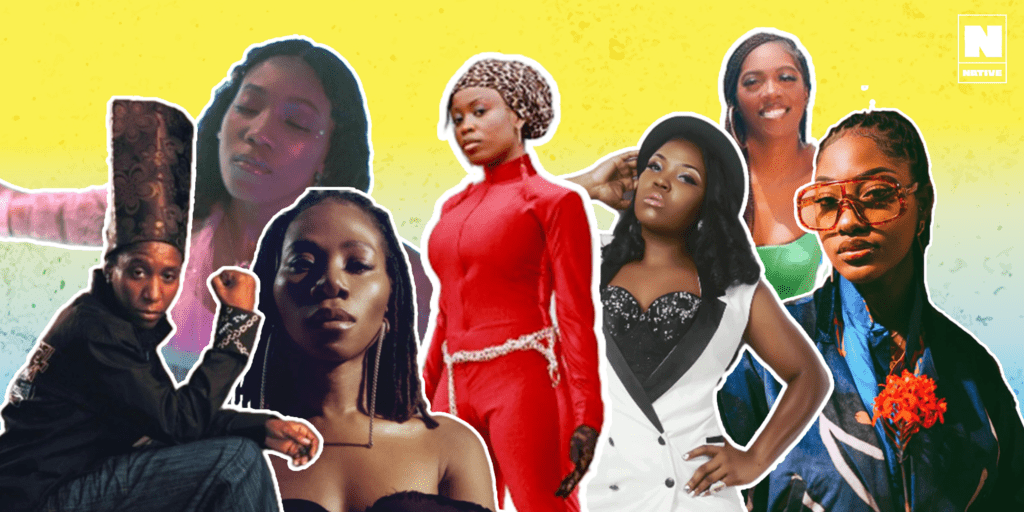
Over the past week, social distancing has put the world on pause, and everyone worldwide has been looking for entertainment as we stay home to beat miss ‘Rona. Social media apps like Houseparty, TikTok and Instagram’s Live feature have become big sources of entertainment, and everyone from celebrities & influencers to even you and I are determined to keep the time at home fun and engaging.
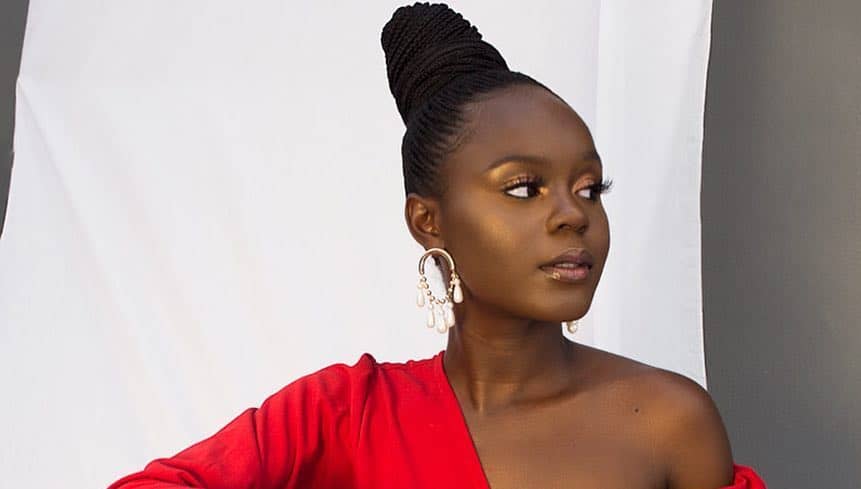
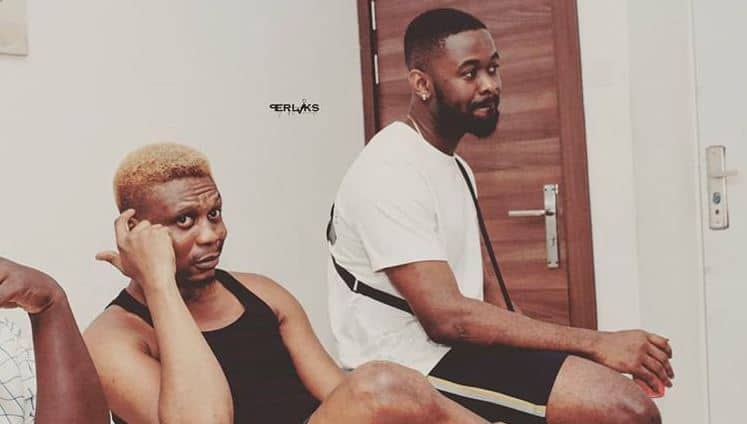
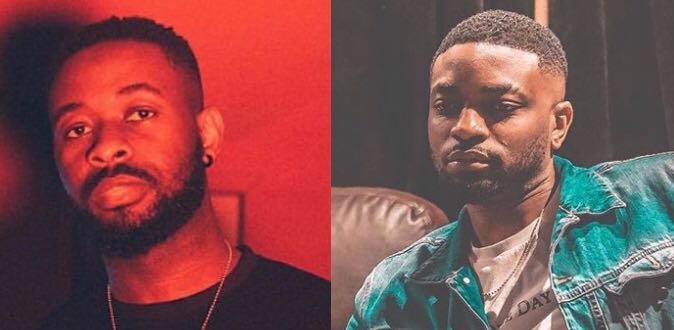
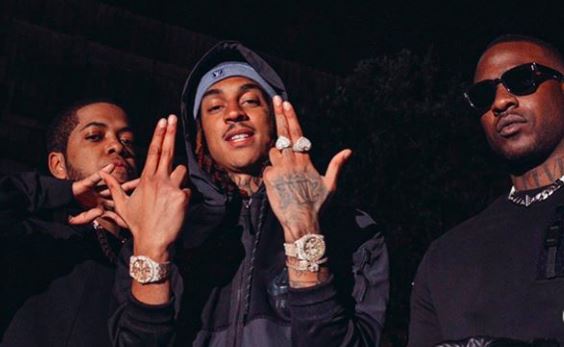
We’re pretty sure you’ve opened countless videos to either hear Megan thee Stallion’s “Savage” or Wiz Khalifa and Ty Dollar $ign’s “Something New” with people mimicking the same choreography. The latest song to get caught up in the TikTok frenzy, is British hip-hop duo Young T and Bugsey’s “Don’t Rush”, thanks to the make up challenge making the rounds with black women everywhere in the world.
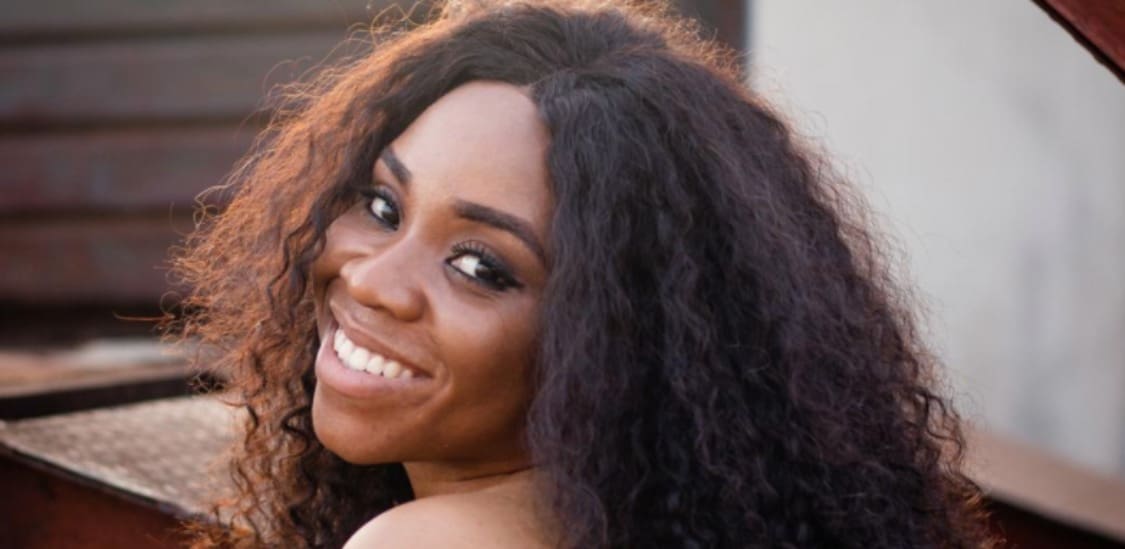
The late-2019 hit is packed with catchy one liners, which make for a genuine feel-good tune. Now, the internet has brought it back and it’s making rounds across our timelines from Love Island’s Amber Rose Gill & YouTuber, Ronke Raji to stylist and influencer, Ashley Okoli all joining in on the fun.
The #Don’tRush challenge aims to showcase the beautiful women around the world, and requires women to post before and after shots of themselves whilst getting ready- to stay at home lol. This has then shot the songs to number 1 on the iTunes chart in both South Africa and Nigeria, given that a lot of people would have heard the song for the first time.
Nigerian-born Bugsey went on social media to share his appreciation for the song taking new life in his home country. His connection to Nigeria lent a hand in the clever wordplay in the song’s hook, which sees Bugsey slipping in some pidgin English to the rapid-fire hook.
While we’re all the way here for women are showing off their natural beauty and serving face with make up, we can’t but help wish that the song currently in the #1 spot were a song by a female artist. Since the entire challenged is aimed towards empowering women, it would have been nice to see it all the way through. Songs like Gigi Atlantis’ “Wahala on the Rocks” or Dua Lipa’s “Physical” would have been perfect for this type of challenge, and there’s a lot more where that came from. Hopefully the next time this comes around, we’ll get to see more women being pushed to the #1 spot!
When it comes to technological ubiquity, few mobile phone companies can boast of reaching the status that Blackberry once occupied in Nigerian society. In the late 00’s and early 2010s, Blackberrys were seen as a must-have luxury utility, and the market was filled with so many second and even third hand phones, you would think there was a Research In Motion (RIM) factory in our borders.
Less than a decade later, that ubiquity is just a bit of a nostalgia. Blackberrys are no longer the status symbols they once were, and now iPhones and other Galaxy smartphones are the more trendy options in the current mobile market. Regardless, it’s hard to dismiss the role their devices played in bridging the technological divide, and advancing the socio-cultural dynamics of the 2010s in Nigeria.
From professional workers, and government officials to the big boys and girls in secondary schools and universities across Nigeria, Blackberry provided a much needed bridge to access the rapidly developing social media landscape. They were definitely a contributing factor to Nigeria’s technological frontier, despite having relatively poor internet infrastructure in comparison to the rest of the world.
The phone’s design was alluring, featuring a full QWERTY keypad, making it the best option for email, and chat heavy users. Initially Blackberry’s services were only available on postpaid plans, leaving the option open only to people who could afford it. Blackberry then later made its service available to prepaid users, opening the floodgate for the device to become a staple in Nigerian society.
With a developing social media ecosystem around the world, mobile technology and internet subscription was relatively expensive, and slow. Given this, Blackberry then went on to partner with telecom service providers for BIS, which gave users unlimited access to the internet, at an affordable price (N3000/$20 at the time), and changed the social media game forever.
Blackberry as a mobile device was instrumental in providing access to platforms such as Facebook, Twitter and even blackberry’s own instant messaging platform, BBM. BBM functioned as an online hub for networking, news, music and much more. Certain unique features such as the ‘Now Playing’ status, which showed your friends what music your were listening to at the moment, also helped facilitate music sharing as well. I can’t recall how many artists I started listening to from seeing them on BBM statuses from ShowDemCamp to The Weeknd.
Going back to the sheer number of Blackberry phones available, the resale value of this phone was really high, which further aided its popularity. In addition, they had innovative ways to boost business in Nigeria, across a large number of universities and get a continuous supply of young developers who understand the needs of the local markets. Their focus on our market wasn’t completely altruistic, it was a survival mechanism as their sales continued to dwindle in other markets, owing to the steep competition iOS & Android brought about.
Regardless, as of 2012, half of Nigeria’s 4 million smartphone users owned a blackberry. “What’s your BB pin”, was the 2000s equivalent of sliding in DM, and one of Wizkid earliest/most famous lines said on Dprince’s ‘Jonzing’ said: “I give her my ping and I ping her, then she follow me on Twitter”.
Back then, if you didn’t have BBM, it felt like you were completely out of the loop. Blackberry broke news, introduced people to new music, and helped inter-connect urban centres like Lagos and Abuja. Much like all the social media platforms we have today are doing.
The influx of affordable smartphones from companies like Techno, coupled with services like Whatsapp refusing to make their service available on the device put the nail in the coffin for the once universal social device.
Blackberrys were not the only notable technological driver in Nigerian culture, social media platforms like 2go for example also provided a means for instant communication in a cost effective manner. Operamini was also vital in providing affordable internet services, by compressing web pages and providing a fast internet alternative.
Soundcloud can also be seen as a technological catalyst, ushering a new generation of artists and building a community of music enthusiasts.
Featured Image Credits: Web/ Pocket-Lint
[mc4wp_form id=”26074″]
Djaji is a creative Vagabond, send me your takes on music and African culture @djajiprime
To commemorate Women’s History Month this year, we will be spotlighting a different female artist every day of the month. Some of these women you may know, others you may have heard of and some will be entirely new discoveries. The aim is to shine a light on the remarkable young women from around Africa, who are finding their feet through music and giving women a voice of their own.
Written by Adaobi Ajegbo & Tami Makinde
Every day this month to celebrate Women’s History Month, we have profiled a female artist to showcase the diverse range of talent there is in the industry, which is often overlooked thanks to the patriarchy and set standards. Some of the artists we’ve highlighted are relatively new discoveries, while some others you’ve already heard about.
Efe Oraka happens to be in the category of the latter, with several releases that cement her position in the industry and make her one to keep close tabs on. Over the last two years, she has become an interesting talent to watch over the years and it’s very clear where she’s headed in the game. Just this year alone, she’s bagged a feature from Chocolate City heavyweight, M.I Abaga and performed alongside other talented female artists on International Women’s Day at Femme Africa’s latest showcase.
The Abuja-based artist has been actively releasing music for three years. Her first single on Soundcloud, “Gbe Mi”, dates back to 2017, where she lets her buttery smooth, yet strong vocals shine through. Sampling Kanye West’s “Ultralight Beam”, she introduced us to what we’re now seeing from her all the way back then, and has stayed true to her craft all this time.
Following her latest release, “Zion” and the announcement of her upcoming EP, ‘Magic’, which will feature the pre-released “Zion” , “Wonderland” and an exciting Tay Iwar feature. Since we’re indoors thanks to Miss ‘Rona, we got to speak to Efe in her safe space via Facetime, while she was presumably ready for bed in a headscarf and glasses, and it made for a very enlightening conversation about her craft. We got to speak to the talented singer about her inspiration, her steady incline, personal life and women’s place in the music industry.
https://www.instagram.com/p/BwJzcTCh1IY/
NATIVE: How are you doing in these uncertain times?
Efe: I’m doing okay mostly, taking one day at a time.
So what should we expect from your upcoming EP, ‘Magic’ ?
The EP will have five tracks and an intro. So it’s “Comfort Food”, “Wonderland”, “Love Galactic”, “Zion” and “Dive” but I’ve been wanting to add one more track just because it’s been so long I’ve made everyone wait. I wrote most of these songs between the time I was 17 and 18. I’m turning 21 next month, and there’s been a lot of growth in between. I’m not ready to put any song I’ve recently written, so I have to look for another song from that time.
What’s your selection process like? How do you know which songs you want to put out?
I am definitely really picky; I am my biggest fan and also my biggest critic, so most of the time when I’m just creating a song I think it’s the most amazing thing ever. When I take it to the studio though, I get a beat and I lay out vocals, which gives me time to get out of that initial excitement and really process the song – sometimes I start to feel like “Ómò this one is not really making sense oh”.
But I’m very picky because I just want everything at every point in time to not necessarily be a true representation of me but a true representation of where I am and what my mindset is and what I’m trying to do. And I mean, everyday I’m growing more, learning more, stretching more and my taste keeps changing.
https://www.instagram.com/p/B2ZRB09BSKo/
Tell me a bit about being a woman in the industry? What has that been like for you?
It’s just the thing of constantly being forgotten or left in the shadows and having to fight extra hard to carve a niche for yourself. You’re never really a part of the conversation sometimes. We thank God for artists like Tems and Lady Donli, who keep showing us that you can be a part of the conversation at all times, but it’s also like a lot of times when people refer to female artists they refer to them as female artists as opposed to just being an artist. It’s a lot, it’s just a lot.
Do you have anythingelse that gets in the way of your creative process?
Yes definitely, I don’t want to go to school anymore and I feel like I’ve always wanted to be the champion – like stay in school and do the right thing, but I’m generally in a phase of not caring, especially when it comes to the way other people perceive the things I do.
Uni is not it for me, and that’s a lot for me to say because I do very well with academics, I always have, but at this point in my life allI do is think about all the things I would rather be doing apart from uni. I study law and I’ll be reading statutes and cases, Law is not easy and its like wow I could really just be doing something else. In a way I’m also grateful for the fact that I’m in school, because it’s a good distraction from when music is not necessarily working out the way I want it to.
If you had to, what genre would you categorise your music as?
I really liked that you asked me this question, because when I first started creating music – even though I wouldn’t have called it this then – I was very much a pop girl, I used to listen to a lot of Imagine Dragons, Avril Lavigne, Coldplay, Radiohead & Pink. I was really in my pop/alternative rock/soft rock phase but now that I am growing, the type of music I’ve been listening to in the past few years has really really changed.
I’m very surprised about the fact that I listen to Young Thug now – not because I think the music is not great, but because I was scared and I was like this just generally doesn’t sound like what I should fit into. I then started to realise that everything comes from a source, and at the end of the day, who are we if not one another? We literally all imitate each other, some people just find new ways to extend or shrink or alter what has already been done. So I told myself “Efe, if you want to make music that’s timeless, music that cuts across all works of life and across all types of people you need to immerse yourself in absolutely anything”
Everything is fluid these days, and we need to be maintaining the real essence of who we are so that’s what I’m trying to do. I look more at creating a style for myself, than creating a genre because who is really sticking to one genre in 2020? We’re fusing baby!
So how do you think your fluidity affects the way you’re received by the audience?
I don’t think it hurts my brand, but I’ve definitely had a lot of experience where people have tried to put me in a box. I’ve been put in the Asa, Johnny Drille, Simi box, I’ve also been put in the Santi, Odunsi, Lady Donli box. I’ve been put in so many boxes that I’m just like “yo are you not listening to the music, how does it even relate?”
It used to stress me out a lot, but I literally from the bottom of my heart don’t care where someone decides to place me. The most important thing is that you listen to the music and you’re experiencing it. I feel like when people listen to my bodies of work they will understand that I’m really not trying to be put into any box and I will not associate myself with any particular genre. Do you know what actually? My genre is called cool black girl because I make music that cool black girls make.
That’s right! So let’s talk about “Zion”, what’s the story behind the song and where did you draw influence from?
So essentially, what a lot people may not know is that “Zion” is actually a continuation of “Wonderland”, that’s why i purposely made sure that the artwork was kind of like a darker version of wonderland. So “Wonderland” is a story of love, but it is also a story of uncertainty and not really being sure where somebody is about to take you, having doubts. I say things like it’s a twisted fairytale.
There’s annotations in that song that anybody who’s proper trying to deep the lyrics will grab that they’re coming from a place where they’re not really sure about a certain person, but because the person so interesting and different from what they’re used to, it’s like “okay let me get out of my comfort space and go into this relationship”. So we go to Wonderland together, and then you take me to one part that I don’t really know and now leave me there. So to continue, in “Zion”, I’m begging God to please take me back to Zion. Zion in the bible is a place where Christians, find like their strong place of comfort, a place of rest. But it was also inspired by Lauryn Hill and Carlo Santana.
How did you get M.I on the song?
I didn’t think of MI being on it because I mean it was 2017, I didn’t know anybody in the industry, and like how would M.I; Mister Incredible, Chairman be on my song? So I was just going to ask one of my guys that raps “yo how far, spit some bars. Then on Twitter, there was this thing where his [M.I’s] people said he puts on a lot of female artists, andI replied like “Omo, MI has not put on anybody if he has not put me on o” and he actually saw the tweet and asked me to send him the song. When I sent in the song, he texted me that day at like 1am and asked me what my thought process was for the song; half asleep I sent him a voice note explaining the whole biblical allegories and everything, and then he sent me back that verse. He ate up those biblical metaphors.
You mentioned being inspired Lauryn Hill earlier, which other artists or what else influences your music?
Well I would say it’s mostly from my day-to-day experiences, the conversations I have, the music that I listen to, the places that I go to, it’s everywhere. I used to think that my main inspiration or my driving force was from Abuja because I love Abuja so much, but after a while when I went to Toronto and moved partly to Lagos, I realised it wasn’t the city because I’m picking other things from other cities and the stuff I’m even making in these other cities sounds different from what I would make when I’m home so it’s really just everything around me.
With track titles like “Comfort Food”, “Love Galactic”, “Dive” and pre-released singles like “Wonderland”, Efe Oraka is gearing up to let listeners into her perfectly crafted lo-fi pop world and cement herself as an unmissable name in the music industry. We can’t wait to see what she comes up with.
Dara Alamutu’s music is honest without being overindulgent. This identity is what makes his excellent recently released project, ‘Easy to Love Me Now, Pt. I’ a collection of succinct and powerful snapshots of the rapper’s current state of mind. He makes an entire statement of immense growth where he speaks his truth without needlessly projecting them on others.
The nine songs are a result of a man who wields his imperfections as his superpower. Dara writes and raps with the wizened edge of someone with a new lease on life, and while he doesn’t overly dwell on the errors of the past, it all feels very well-earned. The closest thing to an expository cut on the tape is the bonus track, “Some Fun”, where he reminisces on a period in his life where his head was in the clouds. He acknowledges a few missteps, but in the same breath, he fondly looks at those glossy days as a formative period in his life.
Hinging his growth on the notion there are only lessons and no losses, ‘Easy to Love’ is largely driven by forward momentum. Dara places his sights firmly ahead, only stealing glances at the past through his side mirror. On the heart-warming “Peace & Love”, Dara raps, “don’t believe in your Jesus/but I fought all my demons, shook ‘em off like seizures”, following up with his desire to live the picket fence lifestyle with his girlfriend, in the years to come.
For someone who’s moving into his late twenties, wanting to settle and have kids is a worthy & normal aspiration, but there’s also an explicit understanding that the choices of the present are the foundation for what the future looks like. For many young people, getting their financials in order is an important pre-requisite for starting a family, and Dara is no different. On the intro track, “Too Easy”, he admits that building an estate for his “babies” is the major driving force for his constant money chase, however, the pressure isn’t driving him to desperate measures.
Over the playful piano riff and bouncy trap drums of “Legal”, Dara brags about making his money while staying on the straight and narrow path. It’s the type of responsible flexing that many might consider corny, except one of the biggest rap songs of last year had the rapper revelling in making his wealth “legitly”. Dara’s mum also makes an affecting appearance on “Legal”, name-checking Africa’s richest man in her short, admonishing speech. Beyond that cameo, too, the influence of Dara’s parents also looms large on the project, with references to the ways they’ve enriched his life (“I got a papi who be showing me the ropes”, he recites on “Omo Yoruba (Money)”).
The weight of Dara’s personal themes is exquisitely offset by his conversational flow. He switches between rapping with the confidence of someone who has nothing to prove to anyone except himself, and the spontaneous intensity that he has important things to say. He’s the type of rapper who creates and colours inside his own margins. While this delivery pattern makes for a smooth listening ride, it also casually obscures the technical brilliance of his lyricism. Like on “Too Easy”, when he raps, “one time for the people that got me back straight/couple lies that a nigga couldn’t escape”, it takes a second to gauge the multi-word end rhyme, because the spotlight is on Dara’s openness.
In a similar vein, the beat curation on ‘Easy to Love’ serve to point at the emotions: Dara accompanies his free association raps on “My Back” with a chunky bassline and thudding bass, while the clarity of “Live Out Our Dreams” is underpinned by radiant piano loops and boom bap drums soaked in morning sunlight. These self-produced jazz and soul-indebted instrumentals, albeit with a modern twist, sound gorgeous when they ride out, but in the grand scheme, they ensure that the project comes together as more than the sum of its parts.
Sure, Dara gives us a resounding portrait of what it looks like to embrace growth, but at the same time, we get to experience a musical polymath deliver some of the best rap music of this year, till date.
Listen to ‘Easy to Love Me Now, Pt. I’ here.
Featured Image Credits: Instagram/daraalamutu
[mc4wp_form id=”26074″]
Dennis is not an interesting person. Tweet Your Favourite Playboi Carti Songs at him @dennisadepeter
Sarz has spent the most important two decades in the scene producing timeless hits that transcend genre and boarders. While he’s best known for laying the foundation for hits by DaGrin, Wizkid, Niniola and many others, his epic battle with Shizzi last night made it clear that regardless of who he’s working with, and like his solo album stated, Sarz is really not your mate.
This battle also reminded us of one of his older work on Reminisce’s “Kako Bi Chicken”, the 2011 hit song which broke Reminisce into the mainstream and led him to switch up and start rapping in Yoruba.
“Kako Bi Chicken” ‘s mainstream success cemented Reminisce as a beacon of light for the street-hop scene, and earned him the title “Alaga Ibile”. “Kako Bi Chicken” is one of the songs that set the foundation for blending hip-hop with Afropop, and also set the premise for street-hop’s mainstream ambition, which led Reminisce to expand indigenous rap’s appeal from regional to national.
Sarz is no stranger to melding two worlds, and his entire discography shows how versatile a producer he is. The twitchy bliss of the beat highlighted Sarz’s ability to make music from the past feel an awful lot like the future. Halfway through the song, there’s a heavy traditional drum riff and talking drum sample, which makes it feel a lot like an owambe soundtrack, which is being rapped upon.
Despite being ahead of his time and putting Reminisce on to the allure of the Street-hop sound that is presently dominating the mainstream in Nigeria, Sarz continues to evolve his sound and experiment with different sonic programming that allows him to work with a diverse array of artists with different unique sounds; He released an R&B joint EP last year and also helped Niniola discover her Afrohouse sound.
Thanks to the world-imposed inside life we’re all experiencing right now, we’re getting a huge surge of people returning to the basics, and creators are creating for hungry consumers. In the comfort of our homes, we get to see artists battle against each other, and the friendly competition is just showing off the amazing talent we have in the industry.
Two of the hottest producers on the scene right now, Shizzi and Sarz have fixed a date and time to face off against each other on their Instagram live. Tonight, the producers will follow in the “Epic Beat Battle” footsteps of hip-hop producers, Boi-1da and Hit-boy as they entertain guests on their IG live with their favourite beats, biggest hits and perhaps some unreleased songs with notable features.
Shizzi and Sarz are among the few Nigerians producers who have paid their dues and are sitting right at the top of the music game without being artists. The celebrity producers managed to carve out special niches for themselves, then gradually build a buzz about the sound till it dominated the mainstream, allowing them keave an imprint. Each producer has worked with an impressive range of collaborators since Sarz broke out with DaGrin’s “Kondo” and Shizzi with “Dami Duro”; Sarz has produced hit songs with 2Baba, Niniola, Mr Eazi and even one for himself, “Good Morning Riddim” while Shizzi has produced songs with hitmakers from Olamide, Wizkid, Chris Brown, Davido, Future and more.
However, the reason they make the perfect matchup is because of the instrumental roles they played in the globally recognised success of Davido and Wizkid respectively. Sarz and Wizkid seem to be displaying more camaraderie than a working relationship these days, which they often flaunt on social media, while Davido’s latest hit “Sweet In The Middle” was helmed by Shizzi. . It was only a matter of time before the two producers got dragged into the whirlwind that is the industry fabricated rivalry between Wizkid and Davido, and tonight, we get to decide in real time as they go face to face, sharing music on their Instagram live.
While we gear up to this, we decided to create a list of other producers we would like to see go head to head. It’s interesting to see that we’re at a point in the industry where we can appreciate their special role in the music
Baby Fresh Vs Altims
Having produced several bangers for many of the Mavin stars, these producers have more than enough in their catalogue to just entertain us without any competition. A battle between them will not only be a robust set, but also a reminder of the Nigerian music scene as it’s grown over the years. Baby Fresh is responsible for hits like Tiwa Savage’s “All Over” to Reekado Banks’ “Problem”, while Altims gave us tracks like Korede Bello’s “Do Like That” & Rema & D’Prince’s “La Vida”. This battle will also be great indication of Don Jazzy’s imprint on the afropop scene right from its very young days, and would be a nice reminder of how far we’ve come.
Rexxie VS Young Jonn
Rexxie and Young Jonn have played a unique part in the Nigerian music scene. Both producers have hit songs with the front runners of the indigenous rap scene, Naira Marley & Olamide respectively, so there’s more than enough evidence of their immense talent.
Whether you’re a fan of Rexxie’s Afro-house samples that transition into the indigenously-inspired Zanku club-music or Young Jonn’s hit songs and reputation as the producer that led YBNL to cult-level fandom in mainstream Nigerian music, a Rexxi versus Young Jonn matchup would be a dream battle fans in Nigeria will appreciate. For extra points, they could give us some unreleased songs from street-hop stars like Naira Marley or Zlatan or Olamide.
Black Coffee VS DJ Maphorisa
These two South African producers have built a reputation for being among the most popular DJs in Africa. They’ve both played a key role in representing South Africa’s love for dance music to the rest of the world – on one side, DJ Maphorisa repurposed EDM into Afro-house and made it mainstream across the continent, while Black Coffee on the other hand constructs Kwaito production with house beats, performs on stages all over the world. Their beat battle will not only be a world music event, it will also expand the nuance of the international genre and gives it an authentically African perspective.
Sam Kleff VS MasterKraft
A Beat battle match between Sam Kleff and MasterKraft will be historic, to say the least. Both producers have a catalogue that boasts of a large portion of Wizkid’s debut tape, ‘Superstar’ and collaborations with throwback stars including Banky W, Sammie Okposo, Stella Damascus, Bracket, J. Martins, Sound Sultan and Busta Rhymes. With the new producers taking over from where they started, Sam Kleff and Masterkraft will be competing for nostalgic points as they serve us with classic songs that soundtrack the past.
Don Jazzy VS Cobhams
Asides the remarkable amount of hits Don Jazzy and Cobhams have pumped out in the last two decades, both have also proven impressive scouts for future talents. Cobhams is credited for producing Asa’s breakout songs “Fire on the Mountain” and “Jailer”, while Don Jazzy produced D’Banj’s “Why Me” and has remained the go-to guy for hits with his label, Mavin (formerly Mo’hits) giving us hitmakers like Tiwa Savage, Reekedo Bank, Korede Bello, Wande Coal, D’Prince, Dr Sid, D’Banj, Rema etc. Having sustained their relevance for so long, you can bet both producers have a stretch of good material to keep fans entertained for hours.
Genio VS Higo
The names, Genio and Higo might not be associated with mainstream hits, but they’ve certainly contributed to making Afropop more marketable for global audiences. But with their production on Santi’s album debut, ‘Mandy and the Jungle’ and Genio’s credits on Odunsi’s ‘rare.’, both producers have laid the blueprint for the next generation of producers.
[mc4wp_form id=”26074″]
You are meeting Debola at a strange time in his life. He wandered into a dream and lost his way back. Tweet at him@debola_abimbolu
To commemorate Women’s History Month this year, we will be spotlighting a different female artist every day of the month. Some of these women you may know, others you may have heard of and some will be entirely new discoveries. The aim is to shine a light on the remarkable young women from around Africa, who are finding their feet through music and giving women a voice of their own.
Since we’ve all been social distancing and doing our bit to fight the ongoing pandemic, artists have taken to using the power of social media to connect directly to fans and keep them entertained with new music releases and engaging video content. You may have seen the viral video of twenty-year old GodsFavour Chidozie (more commonly known under the moniker Fave) singing the lyrics to her yet-to-be released single, as it roamed the Twitter streets over the weekend.
After tapping into the free beats made available to young artists by Lagos-based artist and producer, Jinmi Abduls, the result was an upbeat tune, on which Fave addresses a love interest, questioning whether their love will remain if the circumstances were different. She runs through a list of conditions, testing his love and determined to find out if he’s really the one for her.
Fave has been actively making music for just over a year when she began scouring the internet for free beats that she could make use of for herself. This soon transpired to a full blown musical journey about nine months ago, when she released her first single “M.O.M.M.S” which she explains means ‘me or mask my sins’.
Over the track’s piano led beat, she offers a deep song about broken people who are unable to accept love, because they are blind to the intention of others. ‘We’re waiting for love in the backyard/looking for what’s not lost’ she sings over a pop-tinged production, presenting listeners with two sides of the same coin – those who love others despite their flaws, and those who are broken and won’t accept love.
At the start of the year, Fave released her sophomore single “Dal” a reggae-inspired track on which she sings about love and loss. ‘Everytime I say I wanna switch gears/my stupid heart will press decline’ she muses, singing about all the red flags she ignored because of her love for someone else. It’s always refreshing to come across artists who know outwardly present everything you are feeling on the inside, but can’t articulate yourself.
Fave is already catching the attention of some of the industry’s biggest heavyweights, owing to her freestyles. Mr Eazi’s emPawa Africa programme was seen contacting the talented singer/songwriter and requesting she send in her music. ‘To be honest, I wasn’t happy, excited or surprised. It just felt good to know that they finally recognised me after all I did to get their attention” she told me via dms.
As she’s gearing up to release her third single, which we’re waiting with baited breath for, familiarise yourself with her latest single, “Dal” below.
Featured image credits/faveszn
Tami is a lover of astrology, music and women. Tweet your fave female artistes at her @tamimak_
In just three months of this disorienting year, African music has lost three of its most influential legends. In February, South African singer/bandleader Joseph Shabalala and Nigerian trumpeter and highlife singer Victor Olaiya both passed away within 24-hours of each other, and just last week, we lost Cameroonian saxophonist and genre-bending musician Manu Dibango to the novel Coronavirus. While their careers and the progress they made during their time serves a bit of a consolation that these artists lived long and impactful lives, it’s still a huge loss.
This is why ‘Rejoice’, the newly released joint album by Hugh Masekela and Tony Allen, is a much needed gift amidst the losses. Recorded during a series of sessions in 2010, ‘Rejoice’ is the delightful result from the purposeful collaboration between two of the most talented and innovative African artists ever. Across the album’s eight tracks, Masekela and Allen find common ground in their virtuosic powers, putting together a loose and joyful body of work that slips and slides between Afrobeat and Jazz.
On several occasions, Tony Allen has stated that his stick work is largely influenced by Art Blakey and Max Roach, both pioneering greats of Jazz subgenre, Bebop. He’s always pointed out t he’s always pointed out that he’s an Afrobeat drummer, and his take on Jazz is refracted through that prism.
‘Rejoice’ is a prime showcase of this ethos, and the 2010 recording serves as precedent for his similarly Jazz-inflected 2017 projects, ‘A Tribute to Art Blakey (EP)’ and ‘The Source’. For this project though, he delivers barely adorned, yet, always spectacular drum patterns that tick and pop in unique Tony Allen fashion.
With Allen’s drumming and additional bass riffs serving as the spine, Hugh Masekela’s horns and occasional singing, form the heart of the songs. Equally intense and deft, Masekela’s abilities lends itself a wide expressive range, jumping between vivacious, sullen and everything in between without breaking a sweat. On ‘Rejoice’, he leans closer to the livelier side of the spectrum, imbuing his horn solos with uplifting radiant scats and syncopated runs, even when he’s not being upbeat. His voice also carries a similar effect when he sings, communicating vigour and joy through his wisened tone and full-throated chants.
On “Never (Lagos Never Gonna be the same without Fela)”, they pay their reverence to previous collaborator and fellow African legend, Fela Kuti, with a composition that veers the furthest into Afrobeat territory. Tony Allen’s funky groove, revving bass guitar riff and additional local percussion, drive the song’s big band Jazz-inflected setting. “Lagos never gonna be the same, never without Fela”, Masekela reverently offers in honour of Fela, using his conversational horn solos as a response to the call of his sung lyrics.
If you’re into that type of stuff, ‘Rejoice’ is packed with moments you can geek about, from Tony Allen’s vivid drumming and Masekela’s improvised and intimate motifs, to the elegantly uncluttered arrangements. But the triumph here is, technical precision works in service of a highly enjoyable, sometimes outrightly visceral, album. Of course, for a duo that reshaped African music in their own ways, an album of this calibre is generally expected, but it is no less of a masterwork, one that was clearly anchored by a mutual respect in craftsmanship (“Jabulani (Rejoice, Here Comes Tony)”) between both artists.
In January 2018, Hugh Masekela passed away at age 78, and ‘Rejoice’ is an excellent first posthumous album that adds a bit more gloss to the royal status he earned through hundreds of albums and evergreen hit songs. Tony Allen, currently 79, is still pushing his musical boundaries in his solo work and through joint endeavours, like the 2018 EP with Techno DJ Jeff Mills, ‘Tomorrow Comes the Harvest’, and his integral involvement in Rock supergroup, the Good, the Bad & the Queen. That we got a joint album from these two is something we shouldn’t be taking for granted.
‘Rejoice’ presents two artists celebrating each other in the period of impulsive innovation that birthed a class of pioneering artists. It’s a reminder that we need to cherish those from that era who are still with us, and continue to sing the praises of those who have passed on.
Listen to ‘Rejoice’ here.
Featured Image Credits: Web/hughmasekela.co.za
[mc4wp_form id=”26074″]
Dennis is not an interesting person. Tweet Your Favourite Playboi Carti Songs at him @dennisadepeter
The fast and furious pace of new music releases makes it hard to keep track of all different new sounds coming out of Africa, as the music scene grows more and more expansive. We’ve decided to help out, by sorting through all the new songs from across all the sub-genres around the continent to curate a column with all the best “Songs of the Day”, to highlight all the new releases you absolutely Need to hear.
The rest of the world remains in lockdown while we battle Coronavirus pandemic, but the music keeps coming. On Wednesday, we brought you new releases by a diverse set of African artists, including Darkovibes, King Promise, Terry Apala, Niniola, Crayon, Veen and others. Last Friday also saw new releases from Nasty C, BOJ, Tulenkey, DJ Juls Shipo The Gift and more. This week you can update your playlist with new Jean Frier, SOLIS and all the new music from around the continent.
SOLIS – “Mercury”
SOLIS is here to encapsulate all our worries with her timely track “Mercury”. The talented singer wrote the lightweight catchy lo-fi bop last month when mercury was in retrograde, and things hadn’t got this real yet. ‘2020, what did we do to you?’ she croons when the song starts, speaking about the general low mood that has taken over many of us at this tough time. She also offers up an accompanying music video where we see her singing at home, clearly observing social distancing. We stan a socially conscious queen, flatten the curve!
Jean Feier is one new artist we’re excited about. She has been releasing new music weekly since the beginning of the year, in a personal project she has named #NewFeier. This week, she just released a mellow drum-led new track titled “Hey Love”, where she addresses a love interest directly and questions whether he’s feeling her or nah. ‘I do not care what they think of you’ she sings reassuringly, before switching for a more uptempo flow as she transitions to rapping.
We can always count on BOJ to provide lightweight music for the best vibes. In these times, when we’re all hungry for new music, he’s now given us some more heat, with the release of his new GMK-produced single, “Assignment”. BOJ appears on top form, and does what he does best – kill the hook. The good thing about BOJ’s music is that it was made for the dancefloor, and also for the bedroom which perfect now that we’re all stuck at home!
Juls – “Soweto Blues” Feat. Busiswa, Jaz Karis
Juls has put out his first single release of the year, “Soweto Blues” for which he enlisted South African house singer, Busiswa and UK-based South African R&B singer, Jaz Karis. Juls’ self-produced ambient beat for “Soweto Blues” and it serves a groovy backdrop for Jaz Karis’ smooth voice, singing about her relationship with woes; “Don’t want to talk about it/ Don’t want to live without it”. Busiswa’s adlib vocals are fused into the beat but she also gets a verse which she performs in her indigenous South African language.
Nasty C – “There They Go”
Nasty C has just released his first single, “There They Go” since he announced his recent signing to Def Jam. As has been evident with the host of other artists who have bagged such deals, this will allow the South African rapper continue his role as the ambassador for African hip-hop.
Produced by Cxdy, the base-heavy beat for “There They Go”, leaves room for Nasty C to authoritatively dismiss his haters, while bragging about his impeccable wealth and status in the game. The accompanying video is set in Durban but is directed by Andrew Sandler who shoots Nasty C at different locations like skating parks and landmarks that highlight the African city’s beauty and rich urban culture. “There They Go” is expected to feature on ‘Zulu Man With Some Power’, Nasty C’s upcoming album and follow-up to the multi-platinum selling album, ‘Strings and Bling’.
Ayüü Safi – “Covid Riddim Freestyle”
Since closing off last year with a new project ‘Ayüüniverse’, Abuja-based artist Ayüü Safi has mostly been quiet. Over the weekend, he broke this quiet spell with new freestyle “Covid Riddim Freestyle” produced by Don Ozi. The track sees him switching effortlessly between signing and rapping, as he works through his desire to be high as well as being explicit with sexual feelings for a love interest.
Lörd Isaac – “2020/Coldfeet”
Since making his NATIVE debut with “Milli”, Lörd Isaac has shown himself to be an excellent craftsman, telling his personal stories and experiences through the globally acclaimed trap sound of hip-hop. For his first release this year, the UK-based artist has dropped two new singles “2020/Coldfeet” on which he shows off more of his clever wordplay and enviable flow. On “2020” he croons and raps passionately about being hounded for new music by fans where he would have rather taken his time with releases while elsewhere on “Coldfeet” he taps into the soft-spoken vocals of Michael Ang3lo for a catchy upbeat track where both artists muse about their anxiety.
Featured image credits/instagram
Tami is a lover of astrology, music and women. Tweet your fave female artistes at her @tamimak_
Back in 2018 When Oxlade first broke out into the scene with the catchy hook of Blaqbonez’s “Mamiwota”, we knew he was on to something. Without the same major label backing some of his peers have relied on, Oxlade has managed to build his own little community across social media, mainly due to his charming, larger-than-life personality, which definitely bleeds into the music we’re getting.
With a handful of radio hits, his performance at the 02 Arena alongside his idols (Wande Coal and Wizkid), his collaborations with DJ Tunez, Juls, Melvitto and a very active fanbase, it’s hard to imagine that this is really Oxlade’s first-ever body of work. While he’s spent the past two years finding his feet and contributing to other people’s vibes, he’s now introduced us to what he is really about as an artist with his debut project, ‘OXYGENE’ .
The production is helmed by highly regarded producers, Spax, Syn X, Alpha Ojini, Dera, Nosa Apollo, Lussh and Echo, who all create the perfect bedding to compliment Oxlade’s musings. Even though he seems to be living his best life outwardly, this album takes us inside Oxlade’s head, where his real battle exists.
Oxlade sings, “You’re all that I need” on the opening track, “02”, where he compares his desire for his lover to his body’s need for air. The opening track captures the entire essence of the project, and is a good introduction to Oxlade’s melodic vocal range. For the next track, he turns up the charm on the wistful “Hold On”, where he wears his heart on his sleeve and professes his full-hearted affection for his lover, against a catchy and danceable beat.
The project’s lead single, “Away”, boasts all of Oxlade’s trademark, and is the EP’s centrepiece backed by an the ethereal but groovy Spax-produced beat. At this point, it’s clear that Oxlade is here to get us in our feelings while making us want to turn up at the same time, a winning formula we’ve seen with popular artists from Wande Coal to Fireboy.
On the closing track, Oxlade is joined by Moelogo for the emotive “Tables Turn”, where they reminisce on their come up and how far they have come. The a dreamy ballad sees Oxlade reflecting about his humble beginnings in Mushin, dreaming about making songs with his idols, to actually shutting down shows overseas with them.
The inspiration anthem closes with an intimate voice note from Oxlade’ grandmother, a fitting way to close the chapter on his debut tape.‘Oxygen’ is guided by Oxlade’s charm, the same one that has earned him thousands of supporters. His voice is rich and velvety, flowing out of him much like project’s cover art depicts. By grounding each track in emotional truth, he’s relatable and the project is immediately accessible.
Stream ‘Oxygene’ below.
Featured Image Credits: Instagram/oxladeofficial
[mc4wp_form id=”26074″]
You are meeting Debola at a strange time in his life. He wandered into a dream and lost his way back. Tweet at him@debola_abimbolu
The main driving force behind Tay Iwar’s music is the raw emotion. The reclusive artist is something like an enigma, however, through his music, we are given insight to who he is and are left wanting more every time. Tay Iwar released his debut album, ‘Gemini’ exactly one year ago, and revisiting the project all this time later cements his status as one of the greats even further.
https://www.instagram.com/p/B9cM8FbFLR-/
Tay is part of the latest generation of hitmakers who pulled themselves out of the Soundcloud halls and made it to the global stage. From his vocal range, to lyrical dexterity and impeccable ear, it’s not hard to imagine why. Tay’s experiences and sonic appeal, whilst portraying deep emotion and relationships on ‘Gemini’ leaves listeners intersecting between enjoying the music, whilst relating to the themes presented.
Each song on the 16-track Gemini is carefully crafted and excellently executed, and songs like the Odunsi-assisted “SUGARDADDY”, “DON’T KNOW” ft Sute Iwar and others stood out immediately the album dropped. Given this, choosing favourites was a bit difficult, however, to celebrate one year of his first release under Soulection, the NATIVE team has revisited the project to create a list of the best 5 songs.
“Space”
One of the most upbeat songs on the album, the Santi and Preyé-assisted “Space” is a definite standout from ‘Gemini’. While still bedded by a mellow beat, the three explore the importance of getting some space in relationships and why they need it. While Tay handles the hook, Santi and Preye deliver very strong verses to paint the song’s narrative, while describing why their partners would struggle to leave them alone. Each artist brings their A-game, however, Preye undoubtedly steals the show with her layered verse and impeccable vocal delivery.
“Monica”
With one of the most memorable lines from the past year – ‘I fell in love with you and almost died’ – “Monica” probably has the best song openers of all time. On this track, Tay highlights the toxicity of modern relationships, as he croons about a past lover who left him worse off than they first met. Over the drum-led beat laced with hypnotic guitar riffs, we find out about the mysterious ‘Monica’, who due to the loss of an important family member, has trouble giving and receiving love.
Our lover boy, Tay, recognises his lover’s demons, and still wants to be there for her because he empathises with her pain, however, his demons creep up on him and this results in panic and anxiety due to his own childhood trauma. It’s very rare to see Nigerian men reach this level of depth, and the relatability for both men and women is what makes this song one of the album’s standouts.
“Keeps”
Listening back to the album, some of the deep cuts sound even better than they did the first time around. At this point when music is serving as a form of grounding for those who are unsettled, “Keeps” is one of the best songs to listen to. With pure vibes, and Tay’s smooth vocal delivery, it makes for the perfect song to wind down after a long day (of staying at home), while you scroll through the ‘gram and put one in the air. Produced by Tay himself, the drum-led mellow beat makes the song what it is, making the perfect bedding for the singer to reflect on a past situation with a doubting lover, who he reassures that he’s ‘playing for keeps’.
“Call U”
One of the more familiar songs on the project, “Call U” was first released as loose track on Fridaycruise’s Soundcloud just before ‘Gemini’ was release. This whole album is perfect bedroom music, and Tay Iwar seems to know how to manouvre this really well throughout the album, and this makes “Call U” the perfect closing track. For the entire minute and a half of, he only strings together 5 phrases over somber piano chords, capturing his lustful plea for some sexy time. Singing “Can I call you? In the morning/ When I call you/ Don’t be sleeping/ Come to me”, he’s assertive and demands his lover’s attention, all while still being effortlessly charming.
“Miracle Girl”
In 2018, Tay first gave us a taste of his debut album with a 3-track collection titled ‘1997’. On “Miracle Girl”, the final song off ‘1997’, Tay performs a Prince-like hollering over glassy acoustic guitars, while he personified the ecstatic feeling of great sex with an unnamed lover the night before. Tay includes “Miracle Girl” as one of the last songs on ‘Gemini’ to suit the mood the album had created in all the other tracks. The guitar-led backing beat leaves room for his smooth vocals to shine, and makes for the perfect serenade while the urge to recreate his feeling erupts in listeners… especially now!
Featured Image Credits: Instagram/tayiwar
[mc4wp_form id=”26074″]
ICYMI: Here’s how Rema changed the afropop game in only one year
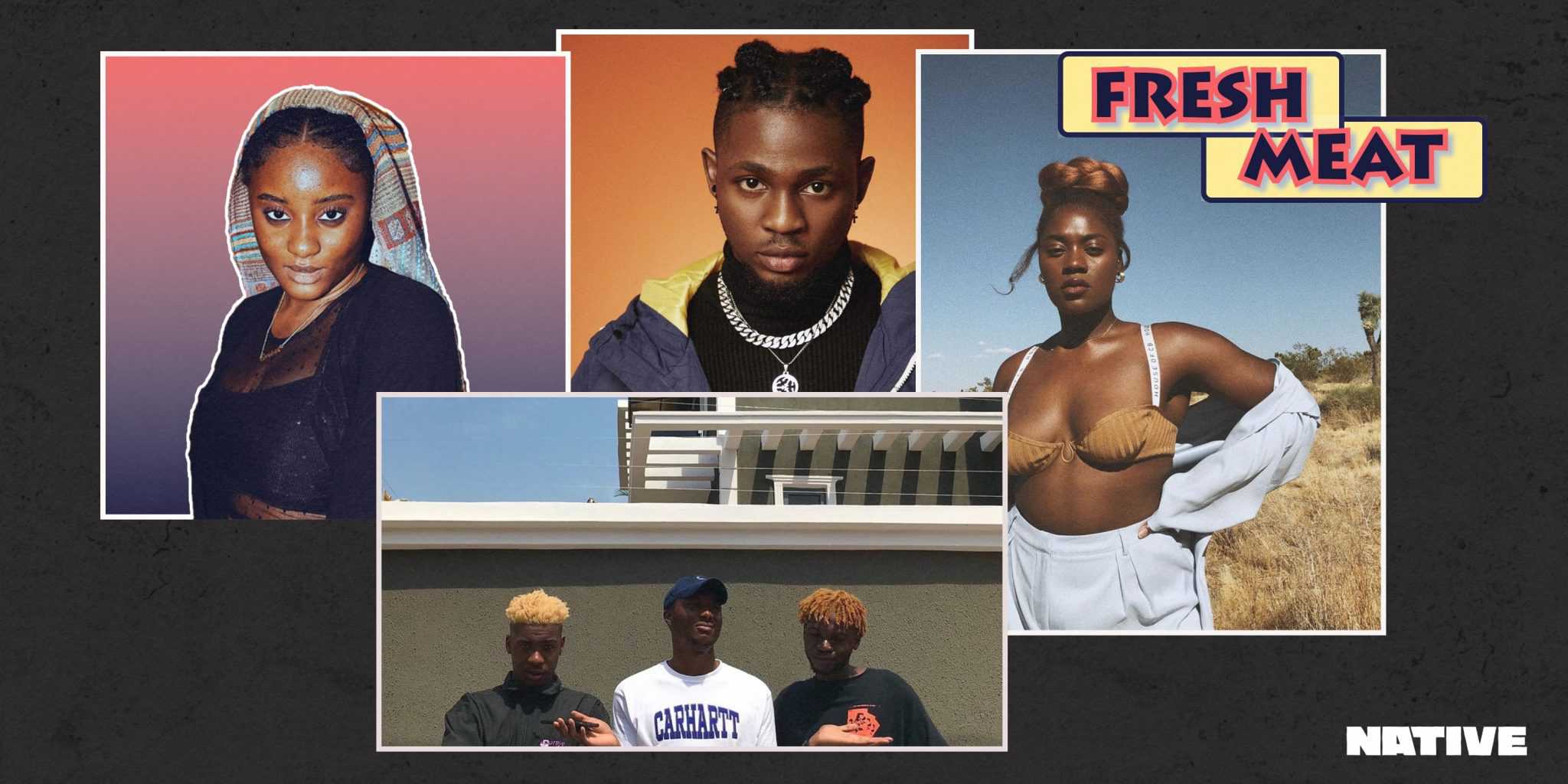
Staying true to our mission reshape the face of African popular culture, The NATIVE will be curating a monthly list to spotlight the best and most exciting new artists on the scene. Some of these artists have dropped projects which many are familiar with, while others are still finding their feet and discovering their sounds – either way, you definitely want to pay attention.
If the rapid growth and success of young artists from all over the globe – such as our very own Rema or even Compton’s Roddy Ricch – tells us anything, it’s that the music world moves fast today. Young artists are earning their stripes very quickly, and are doing so purely based on their talent and the audience’s reception of them.
To put it in perspective, if we were to make this list same list 10 years ago, artists like Wizkid & Davido would have been fresh in the game, probably gearing up to their debut on the scene to introduce the world to their sound. Now, they have cemented their positions, and have set the pace to inspire the next generation of artists, and are taking our sound all around the world.
Things are different now, and we’re not in testing waters anymore, the world wants to hear our music, and our underground scene is bubbling with hidden gems. We’re now witnessing the generation of artists such as Odunsi The Engine, who graduated from the halls of Soundcloud to the global stage.
A generation of fearless artists who refuse to conform to norms, and are creating their own paths, on their own terms and in times like these, their importance on the scene is made even clearer. Everything going on from the ‘Rona to it’s effect on the entire society serves as a reminder of what’s really important, and when you strip all the pomp and ceremony, the actual music is what’s keeping everyone going.
Music is more than just background sound for most people anymore, it’s now serving a bit of relief from the daily anxiety the whole world is feeling right now, giving both artists and consumers a bit of familiar grounding. Times like these can be particularly difficult for a young artist who is still trying to navigate the chaotic music industry, whilst also trying to develop their own sound and y’know… the pandemic and stuff.
So in a bid for the NATIVE to continuously identify, analyse, and champion the music of tomorrow, we’ve decided to create a monthly list of the most exciting new artists we’re listening to and tipping for. It’s always interesting to watch artist’s trajectory unfold right before your eyes, especially when it turns out that they creates art that will set the tone for years to come.
This year, each of these artists have stood out to us, for nothing other than the actual music. Ranging from different genres, each artist is at a different phase in their career, some testing the waters and trying to figure it out, whilst others are at tipping point, about to break into the mainstream.
What ties them together, however, is the feeling their music evokes from listeners, in a time when all the best music out, is the kind you can feel. From the hypnotic sounds of Olayinka Ehi’s female empowerment anthems to Bella Shmurda’s reflective party bops, here are 8 artist who have caught our attention this year, and we’ll be keeping close tabs on.
Zilla Oaks
You could define Zilla Oaks as boatload of talent and ambition, and he has stayed true to himself since we first heard of him and his community, Apex Village. Zilla is at the forefront of the wave of west African trap artists, melding the Atlanta-popularised sub-genre with his distinct and recognisable south-eastern Nigeria identity.
In 2016, he released his excellent debut EP, ‘NEG:RO’, where he traces through his Igbo heritage, naming a song after Nigeria’s first-ever president, Nnamdi Azikiwe. He followed up with a slew of singles and guest appearances that culminated in his sophomore project, ‘NO ZZZ’, where he forcefully raps about his non-stop grind towards achieving his dreams of being the best and biggest from around here.
In all this time since, Zilla has remained very active, dropping new singles and collaborating with other artists. In early 2019, Apex Village dropped their first compilation project, ‘Welcome to the Ville’, and Zilla appeared on six of the project’s eight songs, pulling out multiple standout performances.
From his emotive candour on “Outta Yo Mind” and the YP-assisted “Strapped Up”, it’s clear that his personality shines through, and that’s what’ is leading the way for him. Zilla has already opened this year with the Dremo and prettyboydo-assisted “Ogini”, which we’re confident will be one of the best rap songs of the year. It’s safe to say he’s not here to play in 2020.
Emosé
Abuja-based artist, Emosé’s sound is hard to place. On the one hand it’s the dusty lo-fi sound that most r&b newcomers channel in their music, and other times it’s solid, and firmly rooted in biblical imagery. Emosé is forging her own unique path; the singer/songwriter and producer describes her music as “deep blues”, an extant genre of music that is characterised by singing on a lilting minor key. Similar to the likes of Asa and Adele, who she names as some of her music influences as well as her former jazz playing father.
For now, her only official release is “Goliath” a pain-filled romance number on which she vulnerably works through conflicting feelings about dealing with her fear. Emosé’s releases always seem to come attached with vivid biblical imageries, possibly alluding to the key role that religion plays in her life and in her craft. With just three loose singles on her Soundcloud, the DIY artist and producer is gearing up to finally share her debut project soon.
FOREVATIRED
The Abuja-based music collective, FOREVA have kept us interested since they were formed in 2017. Their steady incline has made their music hard to ignore, especially after release of their latest album, ‘Before You Kill Us All’. FOREVATIRED is a pretty sizeable collective. Formed in September 2017, and led by Kyd, the collective features 15 rappers, vocalists, producers and a number of other visual creators. Forevatired’s self-sustaining, experimental collaborative family is in a lot of ways similar to LA collective BROCKHAMPTON and Odd Future before them, with their music clearly drawing inspiration from artists such as Frank Ocean and Santi, with sonic textures swinging from guitar-led rock and roll, through ethereal indie-pop, to cool and charismatic raps.
What’s most intriguing about FOREVATIRED, is the balance they bring to their musical compositions, despite featuring a host of artists. Their vocal delivery and presence is not cluttered or ambiguous, illustrating the deliberate and concise thought behind every track, each entry by a member forming memorable and distinct parts of their music. One of the group’s standout tracks, “Else” is the perfect sound track for the world’s mood right now. Roll one, light a candle and set the mood for the lush string sections, as the sorrow of the track’s theme reveals itself; ‘I wish I could change myself/ I’m wishing I was someone else/Pick a random n#gga off a shelf/I’m reaching out for any help’
Zarion Uti
One scroll through his Soundcloud page will show you that Zarion Uti is enjoying himself with the music, whether it’s on a feature, or he’s covering and refixing existing songs. For every cover of Summer Walker’s “Playing Games” & The Weeknd’s “Blinding Lights”, he has just as many songs in collaboration with artists such as Odunsi, dndSection, Psycho YP to name a few.
One strength we’ve noticed from all the music so far, is his ability to kill every single hook he’s enlisted for. Whether it’s on the catchy “Take Time” alongside Toyé & dndsection, or the reflective “Murder” from his 2-year-old EP, his melodic flow is what sets him apart. In the industry as it exists, aritsts like Wizkid, Reekado Banks & BOJ have benefitted from this greatly and it would be interesting to see whether he will tow the same path.
Olayinka Ehi
If you can’t already tell, in this household, we stan Olayinka Ehi. She was the first entry in our ongoing column “For The Girls”, where we’re shedding light on the best female artists from all over the globe. Her first EP ‘Story’ was compiled in 2018 and was a good introduction to her various tastes, from the melancholic opener, “Story About You”, to the up-tempo electronic number, “B.G.S.N” (Baba God Said Nah) and the mid-tempo drum-led track “Jeje”.
Aptly titled, each song tells a different story, with honest lyrics and laid-back delivery that will captivate any listener. She’s filling a space for women in music, with confident delivery that will force any listener to look inwards as she sings our deepest and innermost thoughts out loud. This is why her first single of the year, “Terms & Conditions” caught our attention this year, where she croons about willingly continuing a fling even though she knows how it’s going to end, something I’m sure we all know too well about.
Olayinka Ehi is still in the early stages of her career, her dream-pop sound which we’ve seen on songs like “Good Girl, Bad Girl”, which still evoke emotion are a good contender for the mainstream, and with the rise of artists like Dami Oniru, Somadina & such, there’s definitely room for Olayinka around here. Don’t sleep on her.
Omah Lay
Omah Lay came into 2020 with a big bang, with his first official single, “You” which was released just last month on Valentine’s Day. The Port-Harcourt born singer, songwriter and producer, before the success of ‘You’ had been working quietly underground, waiting for his turn to gain recognition, even from the people who had made use of his talents.
This year, Omah decided to properly pursue his musical career to prove to nay sayers that he could do it, and dare we say he’s well on the way? His hit single, “You” is definitely a convincing show of his song making prowess, and whilst it maintains a recognisable afropop structure with infectious melodies, his previous releases “Hello Brother” & “Do Not Disturb” are shrouded in an air of reflective melancholy.
Omah’s vocal delivery, varied as it may be, breathes life and emotion into his records, regardless of the genre he finds himself making, whether it’s a dance-ready number or a Hip-Hop . Omah is slated to release his debut EP ‘Get Layd’ sometime in April, and we can’t wait to see what else he has to showcase to the world.
Ictooicy
A few years ago, an artist like ICTOOICY wouldn’t be able to achieve the amazing feats she’s done in such a short stint, given her refusal to bend to the rules. Earlier this month, she released an album, Sorry I Don’t Like Phone Calls, which gives you a good sense of her audacity, before you get lost in her fantastic music. Within the first week of it’s release, the album became the number 3 on Apple Music’s Alternative Album chart, and is ranked 75 in the top 100 Nigerian albums, of all genres.
Throughout her releases and features she’s garnered over the years, comes to us as she is, both in character and in music and that’s what makes her so special. On “Liberty Road”, a standout from her latest project, you can hear the sass and the pomp in her music as clearly as you can hear the vulnerability and fear of being hurt. You can also hear that she’s a young artist still finding her feet in the finishing of her songs (which could do with some engineering), however it’s hard to ignore her talent.
Mostly because she won’t let you, Sorry I Don’t Like Phone Calls is the 4th project she has released, and her SoundCloud is littered with other confident songs where she’s baring her soul and using her music as therapy. All of this is made evident in the Outro for her latest album, where she flips a middle finger at the status quo, saying she’s here to stay on her own terms regardless of whether it’s a problem for other people.
Listen for yourself here:
Jackmillz
Jackmillz first caught out attention after two stellar appearances on Olamide’s recently released, strictly rap project, ‘999’. The only artist to get featured twice on the 9-track EP, Jackmillz made the most of this big look, arguably getting the better of the YBNL boss on standout cuts, “Dancing with the devil” and “Demons”. While these features serve as a great entry point, Jackmillz has a growing yet impressive catalogue that marks him out as a future star.
Last December, he released his debut project, ‘Midnights and Weekends’, a fine showing of his expansive range. On the 12-track project, he skips between dreamy trap landscapes, introspective raps, bashment-infused melodies, and straight-up afropop bangers. Currently, the word “vibes” gets a bad rap, with the idea that it only obscures lyrical substance, however, Jackmillz embraces making music that’s heavy on the vibes, with lyrics you still want to pay attention to.
On his newest single, “Live Forever”, Jackmillz articulates a dreaded fear amongst many people in his age range: dying young. Over shimmering guitars, ticking hi-hats and bouncy 808 bass, he proclaims his desire to live the rockstar life to its fullest, performing his best Travis Scott impression without sounding too much like a clone. Even with his influences being vivid, Jackmillz’s personality still shines through. As he refines his skillset and treads new sonic territory in the near future, Jackmillz will only continue to grow into a far more acclaim.
Ms Fu
We’re trying to get to a point where rappers who happen to be girls are not classed as ‘female rappers’, just plain ol’ rappers and Ms Fu is good indication that we will get there. She’ll rap circles around any other MC in her peer group, and this became evident last year when she tasked herself to weekly Thursday drops.
On her songs, she seamlessly weaves between English & Patois, switching up her flow to suit a wide range of beats. From the fast-paced “Energy” to a more mellow cut, “Dear Human” , a love letter to listeners to keep going through the hard times, she’s quick with the wit and never misses the beat.
Like almost every other artist in this list, Ms Fu’s strength lies in her ability to evoke emotion from listeners with her confident bards, and melodic flow. The world is becoming more receptive to women who rap, thanks to the likes of Megan Thee Stallion, Cardi B, Tierra Whack and many others.
Ms Fu is still in a very early stage in her career, but we can tell that she’s tipping herself into something huge. Don’t sleep on her.
Bella Shmurda
The type of music Bella Shmurda’s makes is exactly what the world needs right now. He glides through each reflective song such that you can almost feel the emotion in his voice against the catchy beat. This is what makes him one of this generation’s prime contenders to carry the r&b and soul torch, a genre which is dominated by a particular type of sound.
His Yoruba lyrics definitely set him apart, and his songs benefit from his ability to switch gracefully between Yoruba and English. We have seen nationwide acclaim with artists who played around with this sound such such as 9ice, Reekado Banks or even Fireboy. So, it’s safe to say Bella Shmurda is on the right track.
Indigenous music over here is typically either straight owambe music, or the sound bed for the rebellious street-hop scene rappers like Olamide and Naira Marley are celebrated for turning their setbacks in life into power. Bella Shmurda manages to do the same thing, yet still managing to be delicate and rough around the edges at the same time.
His debut project, ‘High Tension’ opens with soulful cry for help out of the mud. We’re given insight to Bella Shmurda’s trauma, as he paints his reality saying; hustling everyday for money, chasing wire (cyber crime) and witnessing brothers killing each other for survival. Though he doesn’t portray himself as a saint in this chaotic world, his heartfelt confessions are so moving that it only seems natural that he’d slip in a few words of prayer to God, looking for some familiar grounding.
Music is a universal language, and so is pain. The little details of what you’re hearing make you feel seen and regardless of your situation, you can relate to Bella Shmurda’s music. Though the harsh reality of the streets is the recurring theme through his 7-track long catalgue, he also evokes a sense of relatability through other love songs, party anthems and prayerful sons that add more depth and colour to his vivid sound. Having gained the co-sign from Olamide with their collaboration, “Vision 2020”, we can already tell what direction Bella Shmurda’s career is going in, and there’s no other way but up from the bottom.
Featured image credits/NATIVE
Words by: Dennis Ade-Peters, Debola Abimbolu, Tami Makinde, Djaji Prime
A-Q and M.I Abaga always deliver worthwhile events whenever they collaborate. In the last few years, they’ve deepened their bond from collaborators to apparent brothers, curating live events and cyphers together, whilst also dropping projects within weeks of each other. An effect of this stronger relationship is their electric chemistry on wax, as they push each other to deliver their best lyrical efforts when they’re on a track together, reflecting some truth to the saying about steel sharpening steel.
“The Trinity”, a standout cut on M.I’s latest project, ‘Judah’, found both rappers delivering arrogant raps with the fervour of starving bloodhounds. They’ve now come together again very shortly after for “A Class Act”, an immediate standout off A-Q’s new album, ‘God’s Engineering’. While they retain the same self-confident energy that powered their preceding collab, the new cut trades in savagery for grandiosity, as both veterans reassert the dominance they’ve earned on their own terms.
M.I opens the song with his stunning verse, reminiscing on his rise to being the “GOAT” and gives the finger to haters and perceived competitors. “They try to evict the victorious until you show them you vicious”, he raps in a mischievous tone, perhaps taking shots at his most recent opps.
A-Q immediately follows suit on the hook-less song, spinning authoritative lines about his unorthodox path and the animosity he’s getting for being fiercely different. “I can start from zero and make it back/ten years from now, boy play this back”, he assuredly quips, taking conviction from being a trailblazer, certain that posterity will favour him when all it’s said and done.
Backed by an eerie string riff and reverb-stained bass, “A Class Act” is a commanding cut from two of the country’s most talented rappers, which definitely lives up to its name.
Listen to “A Class Act” here.
Featured Image Credits: Instagram/mi_abaga & thisisaq
[mc4wp_form id=”26074″]
Dennis is not an interesting person. Tweet Your Favourite Playboi Carti Songs at him @dennisadepeter
With about twenty-five years in the game and numerous classic afropop cuts, Sound Sultan is the textbook definition of what it means to be a living legend. In the last few years, have been. a bit mellow for him on the celebratory side, however , that hasn’t stopped him from consistently dropping music and staying true to his craft. His latest release is his eighth studio album, ‘8th Wondah’, a 17-track project including five bonus songs and an incredible guest list.
As a marker of his continued relevance and respect amongst his colleagues, ‘8th Wondah’ is packed with a guest list that mixes the old and the new. The album benefits greatly from a wide range of features from 2Baba to Wizkid, Falz, Teni, Mr Real Peruzzi and more. He even brings Olu Maintain, while Sound Sultan is joined by Johnny Drille for the remix of his classic single, “Area (Motherland)”. ‘8th Wondah’ is Sultan’s follow-up to his 2016 LP, ‘Out of the Box’.
You can stream ‘8th Wondah’ below.
Featured Image Credits: Instagram/soundsultan
[mc4wp_form id=”26074″]
Dennis is not an interesting person. Tweet Your Favourite Playboi Carti Songs at him @dennisadepeter
After a few years circling the mixtape circuit, indie rap veteran Paybac Iboro dropped his debut solo album, ‘The Biggest Tree’, in 2018. He’s been busy since then, dropping ‘Autopilot’, a joint EP with producer, Charlie X, and reuniting with Boogey for a second joint album, the excellent ‘Alternate Ending’. Now back on his solo tip, the rapper has just released ‘CULT!’, his second solo full-length.
Paybac had been teasing ‘CULT!’ for nearly a year, hinting that he would be taking a different musical approach. He kick-started the rollout with last September’s release of lead single, “Boy Band”, a lively, playful cut that samples ‘70s Afro-Rock band the Funkees. He followed up with “Activ8”, a song dedicated to legendary Nigerian footballer, Samuel Okwaraji, and also cemented the tape’s nostalgia-influenced direction. Both singles feature on the 15-track LP, with guest appearances from Blaqbonez, Barelyanyhook, Jazzz Atta and more.
Stream ‘CULT!’ here.
Featured Image: Instagram/lookatpaybac
[mc4wp_form id=”26074″]
Dennis is not an interesting person. Tweet Your Favourite Playboi Carti Songs at him @dennisadepeter
Skepta, Chip and Young Adz have made careers from spinning intricate tales about their lives and giving the world a glimpse of the streets in London. We all know Skepta and Chip have been in the game for the past decade, spearheading and setting the pace for then UK’s now mainstream grime scene, and they have now brought their OG vibe with the younger artist, Young Adz who rose to greater prominence over the last three years. Having all contributed to grime’s recent global appeal, the trio’s collaborative album, ‘Insomnia’ is very important especially now when we all need new music.
‘Insomnia’ is Skepta’s first full-length project since he released ‘Ignorance is Bliss’ last year, while Chip is returning from his 2018 album, ‘Ten 10’ and Young Adz is following up his former group, D-Block’s 2019 album, ‘Street Trauma’. At this point in each artists’ career, they’re above chasing the hits. Skepta and Chip’s artistic evolution has reached an arguable peak, where their previous projects have made a notable mark on the grime scene, and made fans out of international megastars like Drake, A$AP Rocky and many others.
Skepta opens up the album with his verse on “Mains”, which introduces the assertive tone of the project. Over the mix of 808 drums, synth harmonies and flute samples, Skepta, Chip and Young Adz take turns bragging about their success, whilst reminiscing about the tough times before they blew up. Young ADZ’s melodic vocals make the song’s catchy hook, while Skepta takes the reigns on the next track, “Golden Brown”, an undoubted standout from the album which shows off each artist’ range.
‘Insomnia’ was welded by a group of producers from UK and America who bent elements of trap, grime, and pop into sparse soundtracks for the club undergrounds. “Golden Brown” finds them dipping their toes into a more sultry r&b vibe which you typically wouldn’t expect from Grime artists these days.
The project’s lead single, “Waze” was produced by Cardo, an American producer who was instrumental to the production on albums like Baby Keem’s ‘DIE FOR MY BITCH’, Travis’ ‘Astroworld’ and Kendrick’s ‘Black Panther’. On “Waze”, he mixed the eerie harmonies of trap music with bass drums which serve as the perfect sound bed for Skepta, Chip and Young Adz’s aggressively boastful raps, where they lay particular emphasis on their statuses as OGs in the game.
https://www.instagram.com/p/B-II_wdHZ9I/
Elsewhere, London-based producer, Scott Styles produced the catchy trap beat for “Demons”, where the whistling riff he incorporates into the beat stands out for D-Block’s reunion. Dirtbike LB joins the trio for a reflective song about their motivation to change the lives of the people they hold dear.
Most of the tracks on ‘Insomnia’ benefit from the intricate production work. On “St Tropez”, Skepta’s shows off his skill and impeccable ear by sampling M.I.A’s 2009 hit, “Paper Planes”. DaBeatfreakz also gets to flex his muscles with the quick-paced drill beat for the emotive “Star In The Hood”, where the rappers reflect upon their steady incline and how far they have come.
Given this, songs like “Traumatised” continue this narrative and set the tone for the rest of the project, where they get deep and address the effects of their hostile come up on their mental health today, even now that they have made it. “I’m close to the edge so please don’t push me” Skepta explains before he speaks about the people he’s lost, the things people did around him that have left him traumatised and on edge, while Chip reveals the little ways he seeks joy in these times; “I pray a lot like heavenly father can you help me? All this weed and all this liquor, so unhealthy.”
For the rest of the album, the vibe is slowed down with hard hitting bars about the harsh reality of the streets they came from, and the effects violence has on society. By the end of the album, each artist gives us more insight to them as people, making the album seem like a love letter to grime. Each artists’ steady incline has been a result of the music changing their lives, which serves as a warm and welcome reminder of what’s important.
Though they have different strengths—Young Adz’s innovative flow, Skepta’s technical precision and Chip’s lyrical dexterity – they all come together quite nicely, and complement each other perfectly. It’s going to be a quiet next few weeks around here, so what better time to meditate to reflective music like this?
Stream ‘Insomnia’ below.
Featured Image Credits: Instagram/skeptagram
[mc4wp_form id=”26074″]
You are meeting Debola at a strange time in his life. He wandered into a dream and lost his way back. Tweet at him@debola_abimbolu
To commemorate Women’s History Month this year, we will be spotlighting a different female artist every day of the month. Some of these women you may know, others you may have heard of and some will be entirely new discoveries. The aim is to shine a light on the remarkable young women from around Africa, who are finding their feet through music and giving women a voice of their own.
Sampa the Great is a Zambian-born, Botswana-raised, Australia-based poet & songwriter whose socially conscious music strives to uplift, empower, and inspire positive change. Her love for music really took shape when she relocated to America for a music degree in San Francisco, before making the decision to move to Sydney, Australia upon her graduation.
While in Australia, she discovered the underground hip-hop scene there. which was at the time dominated by white males, thanks to leading group, ‘Larrkin rap’. Motivated by the need to take the narrative back,, Sampa released her first mixtape ‘The Great Mixtape’ which was well-recieved within the hip-hop community out there. One of her first singles, “FEMALE” sees her showing off her now signature poetic flow while celebrating African woman in all their strength and glory.
In 2017, she signed to London imprint, Ninja Tunes, before releasing her second mixtape ‘Birds and BEE9’ which gained her even more acclaim in the Australian music scene. The project fused her love for poetry with her clever wordplay as an MC, with standouts like “Black Girl Magik” and “Rhymes to the East”.
She gained co-signs from many industry heavyweights such as Kendrick Lamar and even her childhood idol, Lauryn Hill. Sampa’s most recent release is her debut studio album ‘The Return’, which she released last year in an attempt to reconnect with her home country, as she weaves through themes of home, heritage, displacement and freedom. From the project’s opener “Mwana” which find her, her mum and sister performing in Bamba, a Bantu language spoken by her family to the titular track. On “The Return” which sees a couple of guests speak about what home means to them and where they come from, there’s a real strive to bridge the gap between her place in the Australian music scene and her African roots.
While most songs are notable, the most catchy song on the album is probably “Final Form”, a bass-thumping anthem offering soulful ’70s funk vibes and a message of black power and resilience. The song was recently featured on the soundtrack for Netflix’s first African original series ‘Queen Sono’.
Just last week to celebrate the anniversary of Rema’s debut EP, we took a look at the incredible year he has had in the game, and how the current times and paradigm shifts have allowed him change the game as we know it. Throughout his career, he’s steadily gained the attention of the entire world, and gained the seal of approval from key players from all over the globe as seen from the collaborations he’s secured in just a short time.
(Photo: YouTube/ Manny Norte)
This is what makes him the perfect representative for Nigeria in a song which brings talent from all over the world together. Helmed by British DJ/presenter Manny Norté, the romantic song shows the undeniable growth and attraction of afropop all over the world. We’re now living in a global village and access to music is literally one click away, and that’s why for his debut single, Manny Norte tapped into wide range of talent from around the globe – Rema from Nigeria, 6LACK from America and Tion Wayne from UK.
On “4AM”, we see Rema in his loverboy element, wearing his heart on his sleeve while pleading with his lover to come back into his life, before 6lack kills the chorus and hook. Being the only rapper on the song, Tion Wayne holds his own with his melodic verse, where he also serenades a lover with promises of luxury.
Manny Norte also teamed up with P2J and Anthony Marshall for the breezy beat, which left room for the artists to croon about their innermost feelings about love. The song manages to marry all the different genres they excel in seamlessly, showing that music is truly a universal language.
The Meji Alabi-directed video, which was released only 6 days ago has already garnered over a million views, which shows that eyes are watching. We see all four artists convene in Manny Norté’s hometown, Teshie Ghana, living lavish and setting the pace for what the summer holidays should look like. If the ‘Rona permits, we’ll definitely be jamming to this one at summer raves, all over the continent and the world.
Watch the video for “4AM” below.
Featured image credits/instagram:mannynorte
Tami is a lover of astrology, music and women. Tweet your fave female artistes at her @tamimak_
If you talk to anyone who’s privy to its inner workings of the music industry, or even just pay close attention, you’ll find that personal egos and an unwitting sectioning are major roadblocks to the growth of Nigeria’s commercially struggling (English) rap scene. An unwillingness on the path of rappers and relevant stakeholders to work together towards a fruitful end, has sort of stunted the genre from sustaining momentum and growing upwards rather than sideways. This is why when collaborative efforts do happen, it’s important that they’re executed on a compelling level.
As an informal means of collaborating, rap cyphers provide a no frills avenue for rappers to show off their abilities amongst their colleagues. Unlike joint records or posse cuts, cyphers disregard typical song structure entirely, and focus only on freestyled verses which aren’t bound to a common theme. Given this, featured artists are able to really show off their skill, and emphasise upon a varied mixture of looseness and friendly competition. In these parts, however, participating rappers deliver written raps or go off the cuffs over a single beat, only bothered by their lyrical content and technical precision.
The equally—if not more—important part of rap cyphers are those behind the scenes. Since cyphers are put together in audio-visual mode, the organiser(s) are responsible for everything that is necessary for a well-executed cypher. These responsibilities include picking the right beats, audio mixing, picking the right location and set, video editing and selecting the right set of rappers to form a relatively compatible collective on camera. Once any of these factors goes awry, the balance of the cypher is thrown off, effectively reducing its enjoyability.
Take the recently released pilot of MTV Base’s cypher series for instance, which would have been a striking entry into their new, commendable endeavour, save for a few missteps. Shot in what looks like either a car garage or car storage space, the brightly lit set is eye-grabbing, and the quartet of Shakez, Alpha Ojini, Hench and Timi Kei all look like they belong in front of the same camera. Where the cypher falters, however, is in the audio editing. If you press your earphones in or turn up the volume significantly, you can hear the slick wordplay in each rapper’s lyricism, but it is almost impossible to feel the passion behind their delivery.
With all the verses performed and taped live, we definitely needed them to amplify each rapper’s voices in post-production. With the exception of the immaculate Timi Kei, who raps like he’s walking on water, performances from the other rappers were bogged by section cuts and censored words. In a setting where listeners expect a no-holds barred approach from the rappers, removing parts of a verse without any subtleties and glitching out certain words and phrases are difficult, almost inexcusable bumps that derail cyphers rather than enhancing them.
Considering that this a relatively new move by MTV, the hope is that the series will get better with subsequent episodes, even if history shows that’s not really the case around these parts. At the moment, the Hennessy cypher is the only long-running cypher series we have in Nigeria, and while the cognac brand behind the series deserve a lot of props for keeping the cyphers alive for the last five years, it’s definitely due for a revamp. In its past three editions, the cypher has gone from a highly anticipated event to something many rap fans are weary of watching.
Their latest of the annual series was the straw to break the camel’s back, from the uninspiring beat selections, followed by the lacklustre bars they inspired. Their 2019 edition wasn’t well-received by an audience who was expected a spectacular showing, and for good reason.
At the beginning of last year, Loose Kaynon, A-Q, M.I Abaga and Blaqbonez united for the first ‘Martell Cypher’, delivering one of the most talked about events in Nigerian rap music in recent memory. Although with pre-recorded audio verses, the Martell Cypher was a masterclass in packaging, and as a result recieved instant fanfare and sparked rap conversations for several days after it was dropped. With the success of a seemingly new rival, rap enthusiasts hoped the Hennessey cypher would step up to match the odds, and when they didn’t, it made sense that M.I and company returned for ‘Martell Cypher 2’, a sequel as equally impactful as the first.
In comparison to consistently churning out exciting albums and successful singles, cyphers might seem transient, but in the grand scheme of things they’re quite valuable. While the ones featuring the more prominent rap artists are important in creating moments of visibility for the genre, cyphers featuring lesser known rappers should serve as compelling discovery points and indicators that there’s a boatload of talents brimming just beneath the surface.
A stellar example is the first set of Coronation cyphers that were released November. Curated by Chocolate City-affiliated imprint, 100 Crowns, one of the sets featured five must know, up-and-coming rap artists, while the other focused on the battle rap scene. Both cyphers have been viewed over 20,000 times on YouTube, cumulatively—not too shabby for videos with only a few familiar names. In a smart move, the cyphers were released a few days to the latest edition to the Coronation, stoking hype and leading into the best instalment of the hip-hop-centric event series, till date.
Without the right heads and hands behind the scenes, shoddily executed cyphers have an unwelcome, negative effect for a scene that needs as many wins as possible in Nigeria. It would serve the industry well to integrate more rappers who rap in their native tongue, for variety and wider appeal beyond ‘hip-hop heads’, but that’s a discussion we’ll have another time. What is needed right now, though, are properly executed cyphers that aid the growth of the Nigerian rap scene.
Like they say, what is worth doing is worth doing well.
You can watch the Coronation cyphers below.
Featured Image Credits: YouTube/M.I Abaga
[mc4wp_form id=”26074″]
Dennis is not an interesting person. Tweet Your Favourite Playboi Carti Songs at him @dennisadepeter
A very popular saying goes, “If you want to go quickly, go alone; if you want to go far, go together”, and WeTalkSound, a community of musicians, creative artists and music enthusiasts, demonstrate the strength of going together. Last year, when they dropped their sophomore compilation project, we described WTS as “a phenomenon laying wait, infecting music culture to the farthest reaches of the internet”. This aptly describes the truly boundless collective who have been growing at a steady and impressive pace, meeting the stakes for each endeavour, while also raising the bar to constantly inducing evolution of the music scene.
From the early 90s’ collective of alternative hip-hop groups, Native Tongues, to the sprawling, radical and irreverent Odd Future, We Talk Sound has traceable precedence, however, their broad and seemingly infinite scope is what sets them apart as a distinctive community. Interestingly enough, they didn’t exclusively set out to make the group what it is now; as the full name implies, the online group was formed initially as a forum to trade opinions about music. Shortly after, they realised that a significant amount of the members were up-and-coming artists who were actively aiming to hone their skills, and this led them to organically morph into a space for artist’s support.
Even with this evolution, WTS has retained an informal edge, which manages to give both new and old members a sense of ease they typically won’t find so easily in the current climate of the music industry. Every day on WTS’ 1,000-strong Telegram channel brings with it new topics and debates, which are always positive – everyone can freely drop their takes. Even when there’s disagreement and things get heated, it barely results in malice, which creates a welcoming environment for new members to get acquainted, share music whether it’s theirs or a friend’s and leaving room to galvanise support within the community.
“You don’t have conform to anything; you can just come on the group and say, ‘You guys, please give me feedback’”, co-founder, Dolapo Amusat tells me during a long and insightful conversation at his Lagos apartment. This exact example he describes is something I’ve witnessed on the group myself, and while the number of reactions varies, artists sharing new or old music will be met with comments, whether positive or negative. Depending on how enamoured members are with the music, the comments can turn into far-reaching levels of support and interaction.
“Support on WTS ranges from receiving feedback, to people actually streaming your music and sharing it on social media, to connecting with a producer who could give you a beat or help you record your music etc”, Dolapo explains, shedding light on the community’s wholesome nature. While the level of support you gain as an artist sort of depends on how active you are in the group – for instance, an artist who only pops by to share new music will most likely not garner the same amount of reactions and backing as one who is more visible and shares their thoughts during chats. From what I’ve gauged, it’s not really about being on the Telegram channel 24/7, as much as it is a combination of being familiar name or moniker and making sure your music passes the litmus.
Regardless of a member’s relationship with the community’s online channel, members can rest assured that WTS has positive value for them. With the amount of substantial discussions tucked in between the fun, the community is an educative avenue for creatives and non-creatives to learn about any and everything related to the creative and business aspects of making and releasing music. There are as many debates about the fine prints of making a song, as there are in-depth conversations about how to distribute and market music. Even if you’re not contributing, you’re gaining by paying a little attention to the discussions.
All of this knowledge and camaraderie culminates into WTS’ approach in pushing whatever project they’re involved in. During their early days, the idea was to digitally strong-arm as many people as possible, with members tweeting the link to a song and aggressively tagging any and every one they could online. “We used to be very noisy on social media”, Dolapo admits, but you’d be incorrect to think they’ve dialled down the noise. These days, WTS is operating on a laudable level when it comes to promotions, retooling that noise into well-intentioned and well-executed roll-outs. It’s no longer just about strength in numbers, but also placing an emphasis on quality so that each effort makes a sizeable mark.
“Bio’s “Indigo” was the first thing we did that was creative on the level we now create stuff”, Dolapo tells me. The release of the lush and seductive R&B track was preceded by extensive pre-promotions, mostly centred on fan interaction, as a way of reeling in bystanders and doubters into the WTS fold. This methodical approach resulted in the most streamed song to come out of WTS’ stables at the time, leading the way for the community’s commitment to creative and promotional campaigns, now being led by its young but accomplished creative arm, WTxtra.
Dolapo describes WTxtra as “a proper business” that services a wide range of clients, from artists—WTS affiliates and otherwise—to corporate bodies. In about a year of its existence, notable accomplishments on the agency’s portfolio includes a campaign for ride-sharing company, Bolt, and building interactive fan websites for artists like Dami Oniru and Teni. In a bid to further establish themselves, WTxtra will be putting out their debut product in a few months, one that hones in on the team’s inventive use of technology in connecting with potential fans and listeners.
Regardless of all of this, the most important thing to them still remains the music. Just last month, they put out ‘LOFN 3: A Collection of Love Stories’, the third consecutive instalment of their Valentine’s Day compilation they debuted in 2018. Arguably the best edition yet, ‘LOFN 3’ packages the musical diversity of WTS into a captivating, front-to-back experience.
True to its title, it’s a collection of stories that compels listeners to consider love as something best experienced, even with its ups and downs. From obvious standouts like Shakez’s “Long Distance” and Meji’s “Overkill”, to the deeper and immersive cuts like Dwin the Stoic’s “Juju” and Caralee’s “25/8”, the compilation uses variety as a binding tool, and fronts the ideal of WTS as an aggregate of its affiliate artists.
As with previous editions, songs on the project were sourced through artist submissions, but according to Dolapo, ‘LOFN 3’ almost didn’t come together the way it did. “A few weeks—even days before—we were far from ready with the project”, he tells me, explaining that finding the right songs didn’t happen till the last minute. Even the stunning, summery baecation vibe of the cover art went down to the wire, with the designer, Vik, initially spending about ten hours straight on a rejected idea, only to come up with the eventual cover on a final try in about three hours.
This process for ‘LOFN 3’ points to the mix of carefulness and spontaneity that buoys the creative packaging of WTS, and it’s not stopping anytime soon. Dolapo understands that with more “industry” and general eyes on the community, there’s a pressure on WTS to continue to level up and deliver game-changing work. It’s a situation he’s fine with but not at the expense of the boundless energy at the community’s core. “We’re going to experiment more, we’re going to try out new things so don’t put us in that ‘saving the industry’ box”, he asserts. “We want to better than everybody else, but we’ll probably make mistakes, and that’s fine ‘cos we’ll learn from it.”
For all of the grand visions, Dolapo maintains that being a safe space where artists learn, interact and even earn off their work remains the priority for WTS. “It’s important to me that WTS remains a community that encourages and supports different people. In fact, the goal for ‘LOFN’ and future projects is that artists can make money off their work”, he explains. In an increasingly fragmented and oversaturated music landscape, it is tough for independent artists to make substantial money off streaming and sales, but Dolapo is sure that WTS is getting there slowly but surely. At the very least, the projects are directly affecting the organic growth of its affiliates’ fan base, which is definitely something to be proud of.
By banding together and refusing to be separated, the community is creating impact for itself and artists within it. The sprawling group may not be going as fast as, say, their Alté counterparts, but the momentum WTS is consistently building up brightens their future prospects and assures that they’re a phenomenon that will go whatever distance and heights they set for themselves.
[Featured Image provided by Dolapo Amusat for WeTalkSound]
[mc4wp_form id=”26074″]
Dennis is not an interesting person. Tweet Your Favourite Playboi Carti Songs at him @dennisadepeter
The music scene in Nigeria has benefitted from a large crop of women who have come in and out of the limelight, and played a part in making afropop the profitable and domineering genre it is today. Now more than ever, we’re gaining visibility all over the globe, the world is looking to Africa and paying attention to her sounds, and for once, not just the men.
Back in the late ’90s to early 00s, the music scene in Nigeria witnessed a defining moment where most of the mainstream songs mirrored American hip-hop, owing to the rising mainstream popularity of the genre at the time. This saw many Nigerian artists adopting similar versions of the late 90s and ’00s trends, like we saw from artists like Tony Tetuila to the Plantashun Boiz, Ruggedman and many others.
This is not to say that any of the women were left out of this monumental time in music history, as we had a crop of female rappers leading the charge and redefining what it meant to be a rapper in Nigeria. Like you’ll find with other indigenous rappers who are left out of rap conversations, Weird MC at the time was one of the unsung heros of the 00’s hip-hop/rap era. Most people from our generation would probably only know her two most popular songs, “Ijoya” & “Allen Avenue”, even though she had been in the game for most of our lives at these points. Beyond the music and her position in the rap scene, her androgynous style set her apart, and created a space for women like her who didn’t stick to the norms.
Following quickly on her heel, Sasha P, crowned ‘First Lady’ of rap at the time went on to achieve a number of firsts for female artists in Nigeria. In 2008, she became the first Nigerian female artist to perform at the World Music Awards, and two years later was the first Nigerian to win the Best Female Award at the MTV Africa Music Awards. Although some of the fiercest MCs at the time, Weird MC and Sasha P both retired from the mic; where Weird MC took on a more mentor-ey role in the industry to push younger artists, and Sasha P went into the fashion industry.
This is in stark contrast to the male counterparts from that time, who are revered today for their status as industry veterans, while the women are usually looked upon as a distant memory. Although Plantashun Boiz eventually split up, the group’s lead member, Tu Face, became one of the biggest household names in the history of Nigerian music, and has maintained mainstream relevance over the past two decades. Furthermore, the most popular female artists today are the women who came much later on in the next decade, such as Tiwa Savage, Simi, Asa, Teni the Entertainer, when attitudes towards women had changed and we began to take charge of our own narratives worldwide.
In addition, men always found a way to feed off each other, while the women typically didn’t come together and were rarely ever even featured on the men’s songs. This is not to say, however, the male artists weren’t collaborating with the women around them – Sasha P was part of hip hop collective, Trybesmen and had standout verses on songs like “Oya“, and just last week we had a look at how Lagbaja’s “Never Far Away” was an all-time classic particularly due to the song being helmed by Ego Iheanacho Ogbara, whose career never took off after she split from the band.
Music consumption back then was also very different to what it’s like today. To listen to music, you would have to buy physical albums or tune into radios or TV stations, therefore to really excel as artist, listeners had to buy your albums and tapes. The most successful arists were the most popular ones, and the women at the time weren’t given the same treatment and opportunities that the men were.
Female artists at the time were not what’s considered mainstream entertainment. In fact, women were fighting for their voices to be heard and also for the one seat at the men’s table allocated to them. Looking back, knowing what we know today, it would have served them better to come together, rather than compete.
These days, however, things are different and women are able to gain more visibility on their own thanks to the Internet and streaming, which makes profiting from your music much easier. Today, to access a musician’s entire discography is one search tab away, and the success of this is evident in independent artists such as Tems and Lady Donli, who with no label backing have towed their own paths and made their voices heard.
Prior to Tiwa Savage, it would be difficult to point to a female afropop superstar, thanks to this unspoken idea that there’s only space for one women at a time, alongside all the other men dominating the scene together. Growing up, as a young Nigerian girl, there was no one in Nigeria who held the same reverence to us that Britney Spears or Beyonce were in ’00s pop culture.
Currently jarring numbers show that only 21% of the global music industry are women and within that, only 3% produce and another 2% mix and master their music. We’re sure that within the Nigerian music industry, these numbers are even lower, within the different areas of the ecosystem from DJs and producers to songwriters and rappers. While the rap scene in the country is still finding it’s feet, the number of female rappers are basically zero to none, with only a few like newcomer Yazavelli and old timers such as Eva Alordiah spitting their truth.
Everywhere else in the world, women creating space for themselves, as we’ve seen over the years with artists like Lil Kim, Remy Ma, Nicki Minaj, Cardi B, Megan Thee Stallion, Tierra Whack and many others. It would be very difficult to point to that many women in our industry, and we all know what the reason for that is.
The progress women have made generally from the public’s reception of them to the amazing sounds they produce is immense, now we have a younger set of artists who are willing to put each other on and are even creating space for each other to win together. We’ve seen this from Tems to Dami Oniru, Bella Alubo, Tomi Agape, Efe Oraka, Ictooicy and many more. As the world became more aware of the importance of women’s place in society, so did the notion that more than one woman can win just like her male counterparts.
Lady Donli’s stunning debut album ‘Enjoy Your Life’ had more than its fair share of collaborations from other women such as 234jaydaa to Somadina to even Ghanaian pop princess, Amaarae; Bella Alubo’s recent EP, ‘Summers Over’ had Ezi Emela on the project’s standout track “Don’t trust Geminis” showing just how much growth and good sounds can come out of women working hand in hand to create their own legacy.
Even the existence of the more contemporary r&b, lo-fi sounds from Solis, LunaLovesYou, 234jaydaa, Merry-Lynn and our entire list of discoveries this month, is just further proof that there is space for more than one woman at a time, and also that we don’t need a seat at the boys’ table to be seen.
It’s important for us to keep this momentum going, and support women in music as much as we can, so that younger generations to come can look back with even more respect and reverence for the women who have come before them.
Featured image credits/native
Tami is a lover of astrology, music and women. Tweet your fave female artistes at her @tamimak_