It’s a generally accepted notion that both listening to and creating music can have various positive effects on one’s mood and mental health. More than a form of entertainment, music can intervene when you’re feeling lonely and isolated, whether it’s when you recognise details of what you’re feeling in what you can hear as a listener, or as the creator – like Tems – finding release for these feelings.
Last Friday, she released her debut EP, ‘For Broken Ears’, which she revealed is “for anyone looking for an alternative to the darkness. Those who needs a break from the toxicity they consume and supply on a daily basis”. Her deeply personal lens on navigating the world when you can feel its weight on your shoulders, is the kind of music that can be used to find a place of comfort and a secure base for emotional balance. The speed with which Tems has made her name as one of the most important voices of the younger generation of hitmakers is nearly unprecedented, and this is mostly entirely due to the proximity listeners have to her truest and most vulnerable feelings.
https://www.instagram.com/p/CFNOpD-jG21/
In our Issue 004 cover story, Tems detailed her troubled past with us, speaking about how making music helped her get over a bout of depression as a teenager. There’s a certain freedom that comes when you’ve fought away the black cloud hanging over your head during a downward spiral, and with “Free Mind”, Tems perfectly expresses what it’s like on the other side.
Opening with soft piano keys and a thumping bass, the song’s catchy, self-produced (alongside Omeiza) beat sets the foundation for Tems’ honest confessional. With recurring bass after each four bars, one will find themselves bopping their head to the bounce and in agreement with what she’s saying in unison. Switching from her calm and collected delivery in the verses to a higher pitch in the hook and pre-chorus, it feels almost like Tems is symbolising the freedom she feels through her melodies.
Throughout the project, “Free Mind” sees Tems at her best vocal delivery and lyrical dexterity, as she walks us through what it’s like to feel bogged down, how she feels after overcoming these troubles, and subsequently ‘running to the other side’.‘I try to be fine but I can’t be, the noise in my mind wouldn’t leave me. I try to get by but I’m burning’ she sings on the first verse to set the tone, before she declares that she really needs a free mind on the hook. A person’s outer reality is directly influenced by the internal beliefs one has about themselves, and typically, the way you think influences the way you act; the way you act influences how you’re treated, which cycles back to influence what you believe about yourself. As a result, having limiting beliefs of one’s self is very easy to fall into, and with this project as a whole, Tems is showing us that it’s better to be on the other side of this.
On the hook she sings: “When I try to live my life, then it tries to take me out”, which is probably the most relatable line in the whole song. If you’ve pushed through a hurdle before, you’ll know that the reward for overcoming a challenge is an even bigger challenge to overcome, and without a free mind, you might find yourself back to square one. This is where most people stumble, but Tems is confirming to us that it’s possible to keep pushing to get to the other side, and the clarity and freedom of mind is the key.
During the interview for our cover story, Tems told me that her all her new music is representative of a new Tems, one she’s become used to being, but we aren’t aware of yet. Her breakout song, “Try Me” was written at a time when she was still feeling immense emotional pain, which you can hear through the lyrics and inflections on the track. “Free Mind”, seems like she has reached the final form from “Try Me”, connoting that once you’ve freed yourself from the prison of your mind, these limiting beliefs are eliminated from your life, and you will become more motivated to take action on what you truly want to achieve.
If you stick to Tems’ rulebook, you’re likely to keep your head down and carry on pushing with ease.
Celebrated from October 1 to October 31 in the UK, Black History Month was first introduced to the British calendar in 1987, under the initiative of Akyaaba Addai-Sebo, a Ghanaian activist who worked as the Special Projects Coordinator of the Ethnic Minorities Unit of the Greater London Council (a mouthful, but he did good work). Noticing that black children felt a detachment to their African roots, ashamed of their heritage, with some even longing to be white, Addai-Sebo conceived the idea of an annual celebration of Black British people’s African history, elucidating how the continent and its people have made sizeable contributions to global civilisation.
Thus Black History Month in the UK was born, the 31 days of festivity to kick off in just a few days. Black History Month has grown into a month of pride and a month of joy within the black community, it’s a celebration that fills us with love, so it’s absolutely perfect that the social networking platform, which once started out as a dating app, Bumble, is commemorating the month by sharing stories of black love.
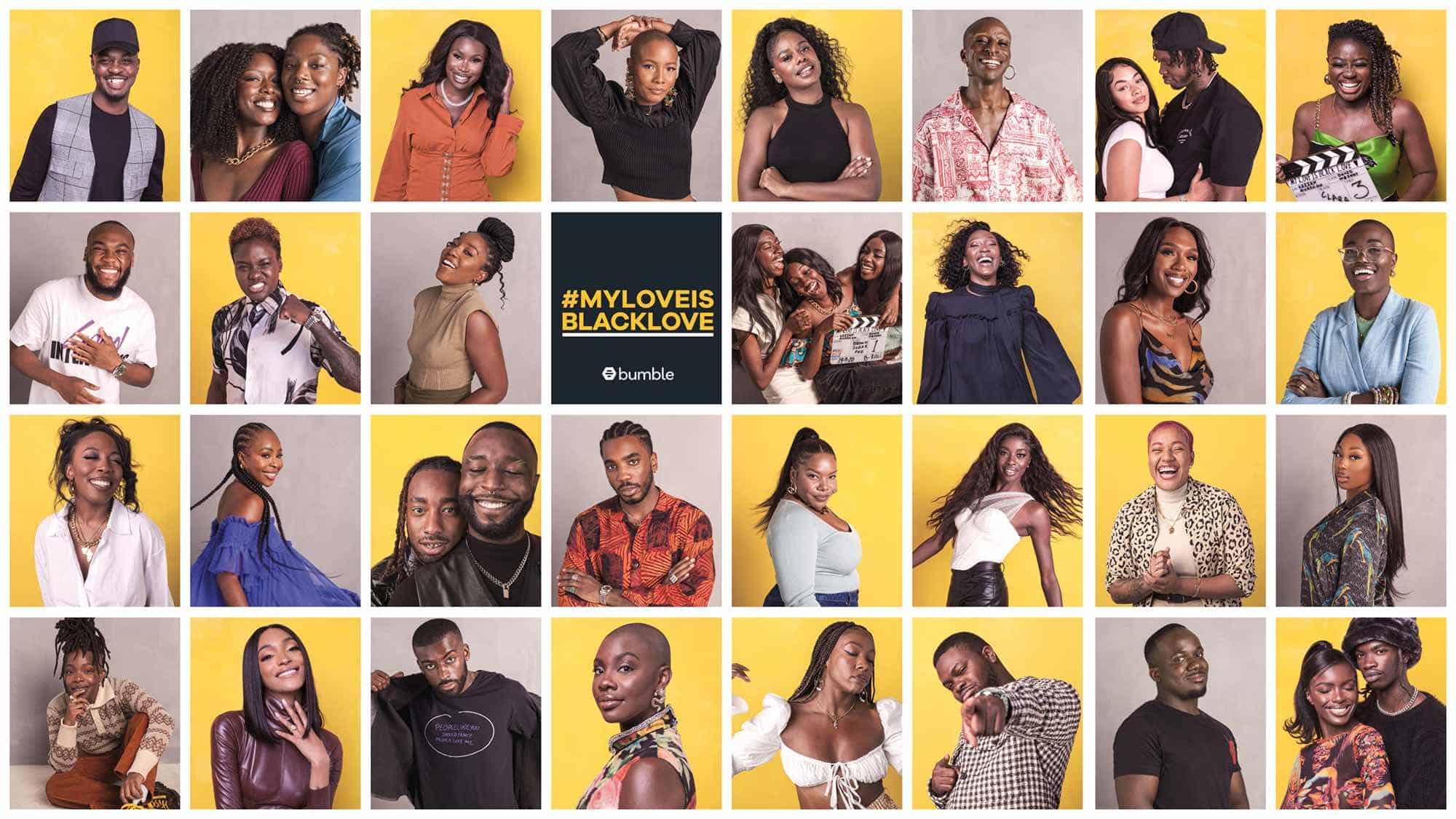
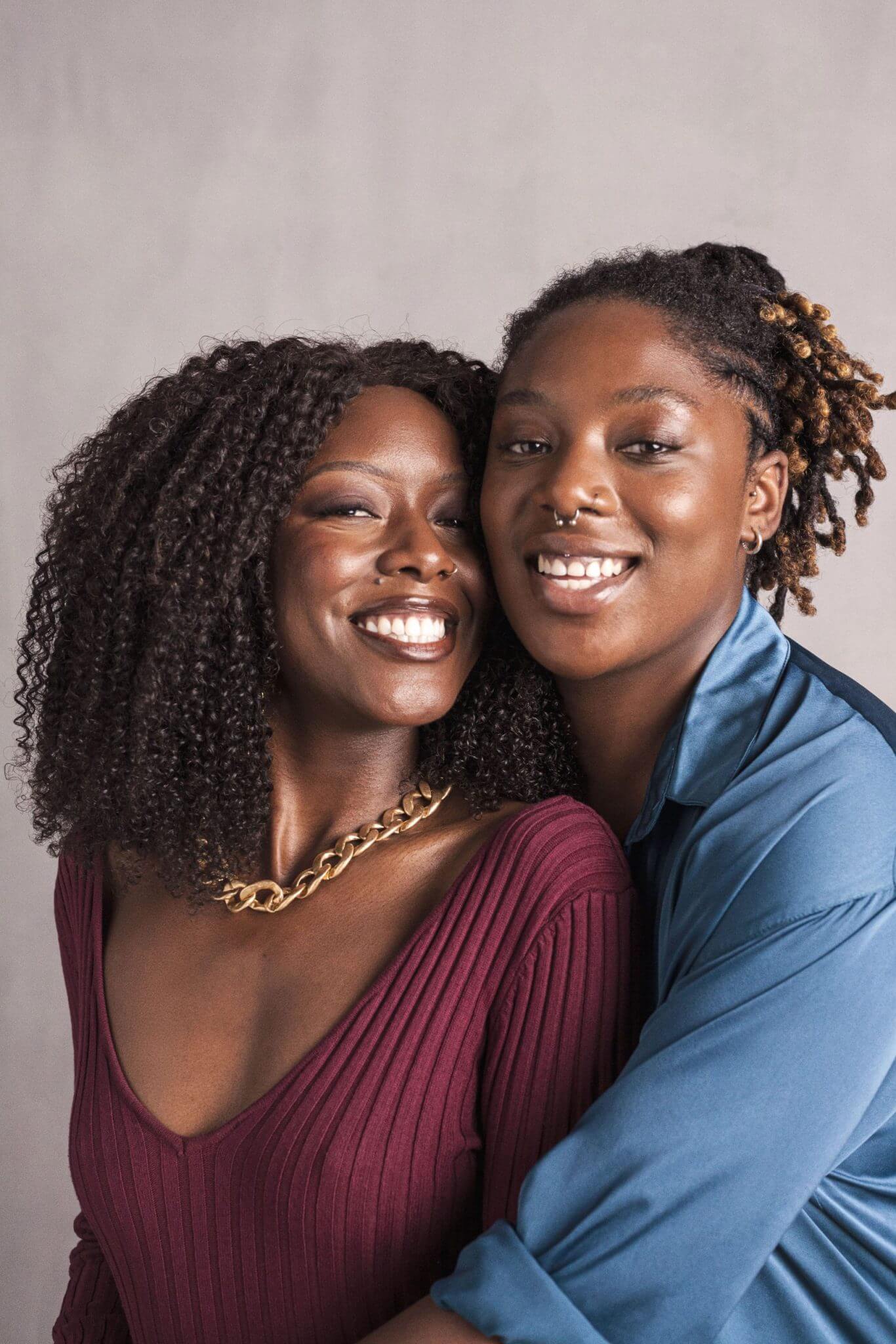
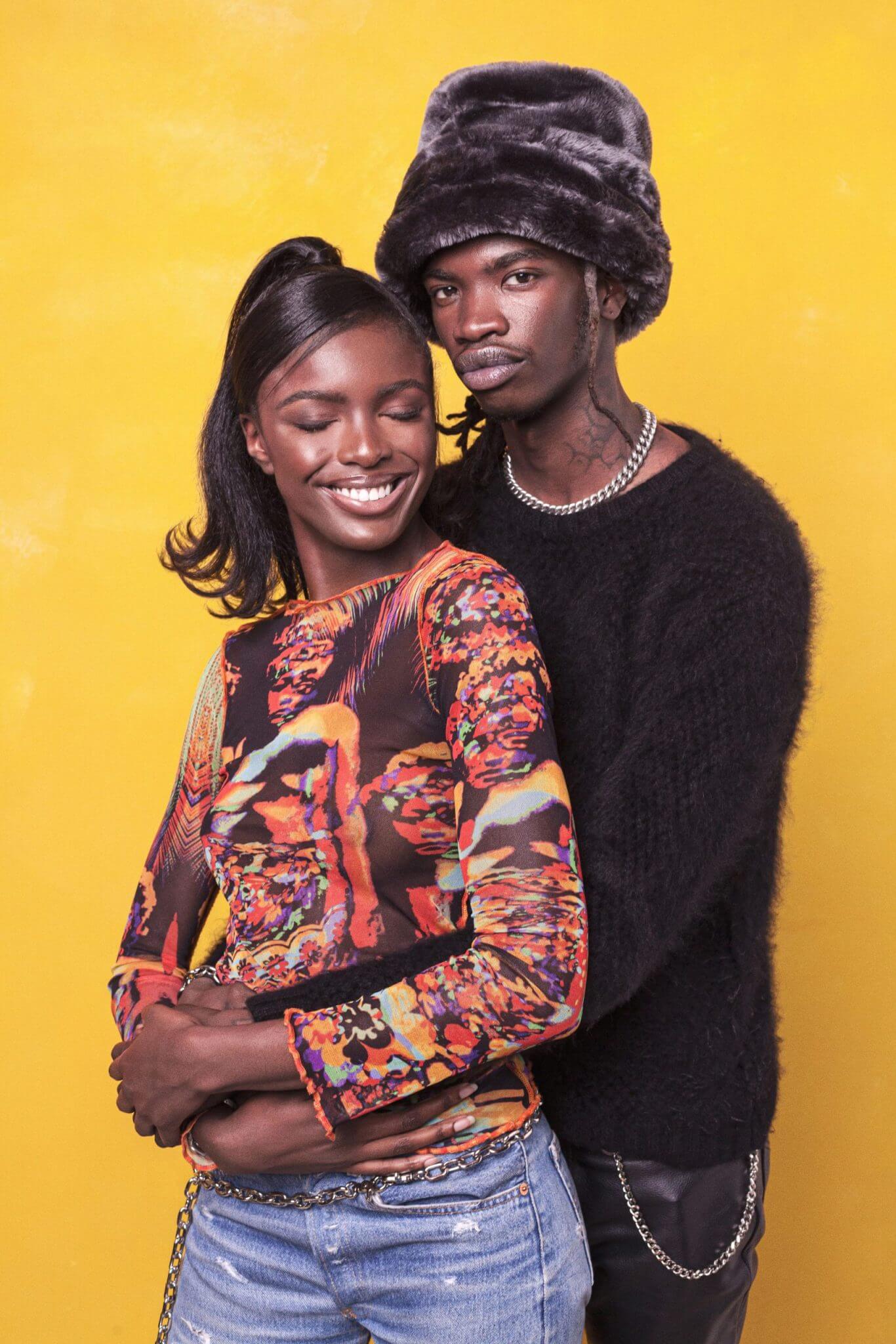
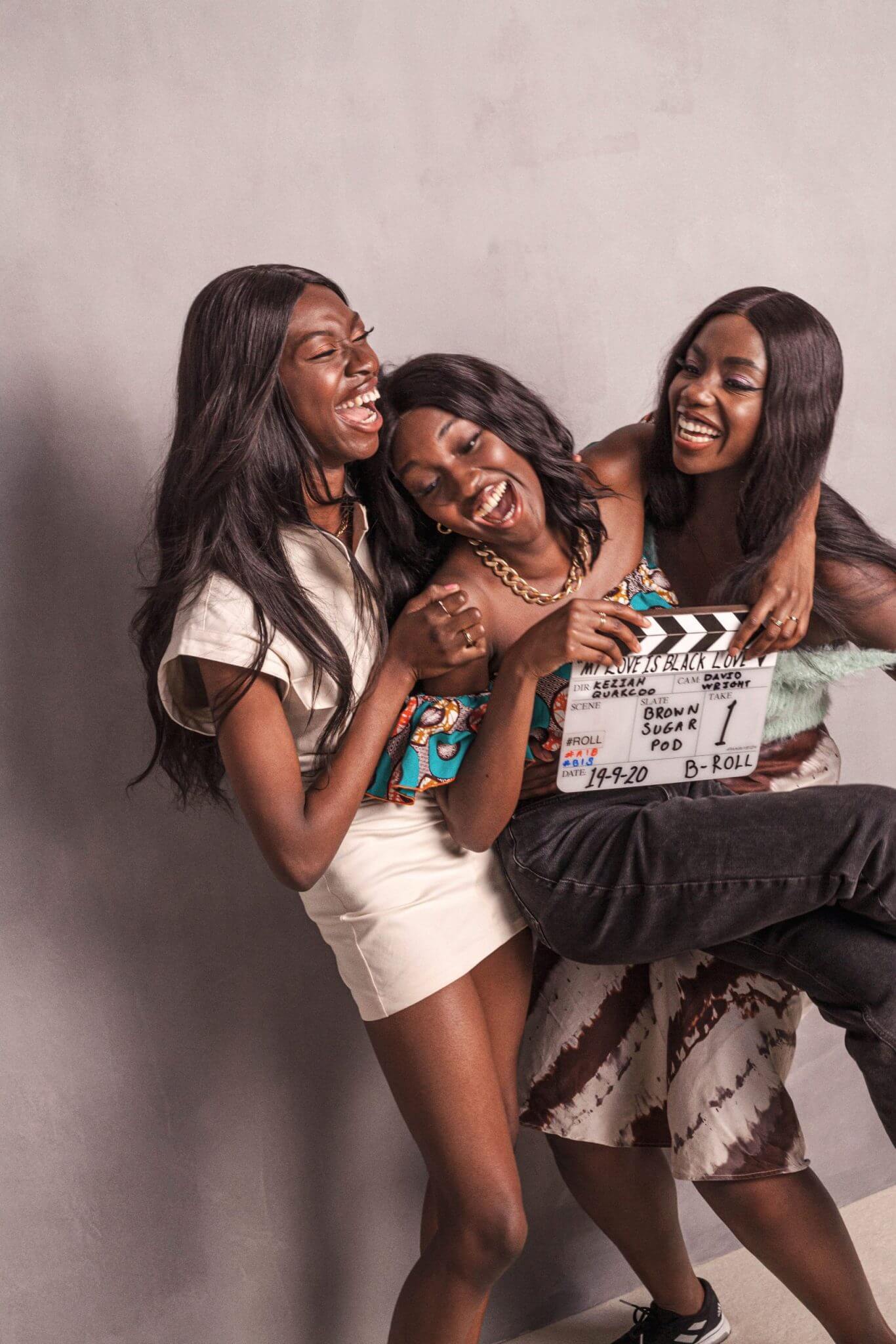
In their new campaign which says, My Love Is Black Love, Bumble will be sharing the stories of 31 Black British people for the 31 days of the month. The campaign consists of video interviews and testimonials which share what black love means to each individual and what they would describe their love to be. “Mad deep”, “thoughtful”, “attentive”, “spicy” these are but a few ways the musicians, models and people from within the Bumble community, who all take part in the campaign, express their love.
“Bumble is a platform rooted in kindness and respect,” so their CEO Whitney Wolfe Herd will tell you. Most praised for their Make The First Move slogan, which empowers women to do just that, Bumble are proud to destabilise the patriarchal dynamic which prevails in modern relationships, right from the first move. In their expansion with Bumble Bizz, they also encourage young professionals to take that all too scary step towards their next goal. The Bumble brand is all about empowerment, and this year, more than any other, they have proven that they’re all about intersectional empowerment.
Earlier this year, Bumble donated $1 Million to the Black Lives Matter movement, following their support of 15 small businesses with grants to keep them afloat during the pandemic period. Now, as they seek to offer an authentic representation of black love that has hardly existed before, Bumble are actually “putting their money where their mouth is,” affirms Naomi Walkland who is the Head of Bumble UK and Ireland.
Having been at Bumble since 2018, Walkland tells me she is truly “proud to be part of [a company] that actually walks the walk,” as we chat over the phone about Bumble’s numerous ventures in realising its philosophy of kindness, respect and empowerment. From big money schemes to help the disenfranchised, right down to a simple mandate for all its users to sign a pledge – that says you believe in their values of equality, representation and inclusivity – in order to join Bumble’s social network, Bumble are, from top to bottom and right from the start, a company that emphasises justice and fairness in today’s cruel world. Most importantly though, “we are always listening to our community,” Naomi tells me. Bumble’s advocacy doesn’t simply stop at the ideas the staff members have, they genuinely keep their ears to the ground, with a bottom-up approach that tells of their dedication to being for the people.
Raised by a single Nigerian mother in the UK, Walkland reminds me of a childhood we shared, where depictions of black love in the British media were few and far between. Like Walkland, maternal (and sibling) love was about the only thing I understood about black love– that and the hood love portrayed through the hip-hop music videos that populated MTV or dance and basketball movies seemed to be the only places I could find an all-black cast living life outside the white man’s gaze. As Naomi quotes, “You can’t be who you can’t see“, so denying black British people the visibility of people like them sharing love on screen in a non dramatised way, will always leave its mark. Are we all expected to follow the stereotypical arch of Tyler Perry movies, filled with infidelities and a chaos so toxic that my more enlightened self doubts if that representation should ever even be called love? Are we to only ever expect black men to be absent or abusive? Because even if at home they’re exposed to better, in the media that way of being a man is continuously reaffirmed.
Most representations of black love have been stereotyped, realistically reproduced again and again, teaching us that what we’re fed is just how life is, until we ourselves make the effort to unlearn. So, for 2020’s Black History Month, Bumble are giving black people, black children – whose shame in their heritage-inspired Akyaaba Addai-Sebo’s inception of this very annual October celebration – an authentic, diverse and inclusive representation of black love, in romantic relationships, in parent-child relationships (like the ones Naomi and I share with our mothers), and even in friendship (shout out Bumble BFF).
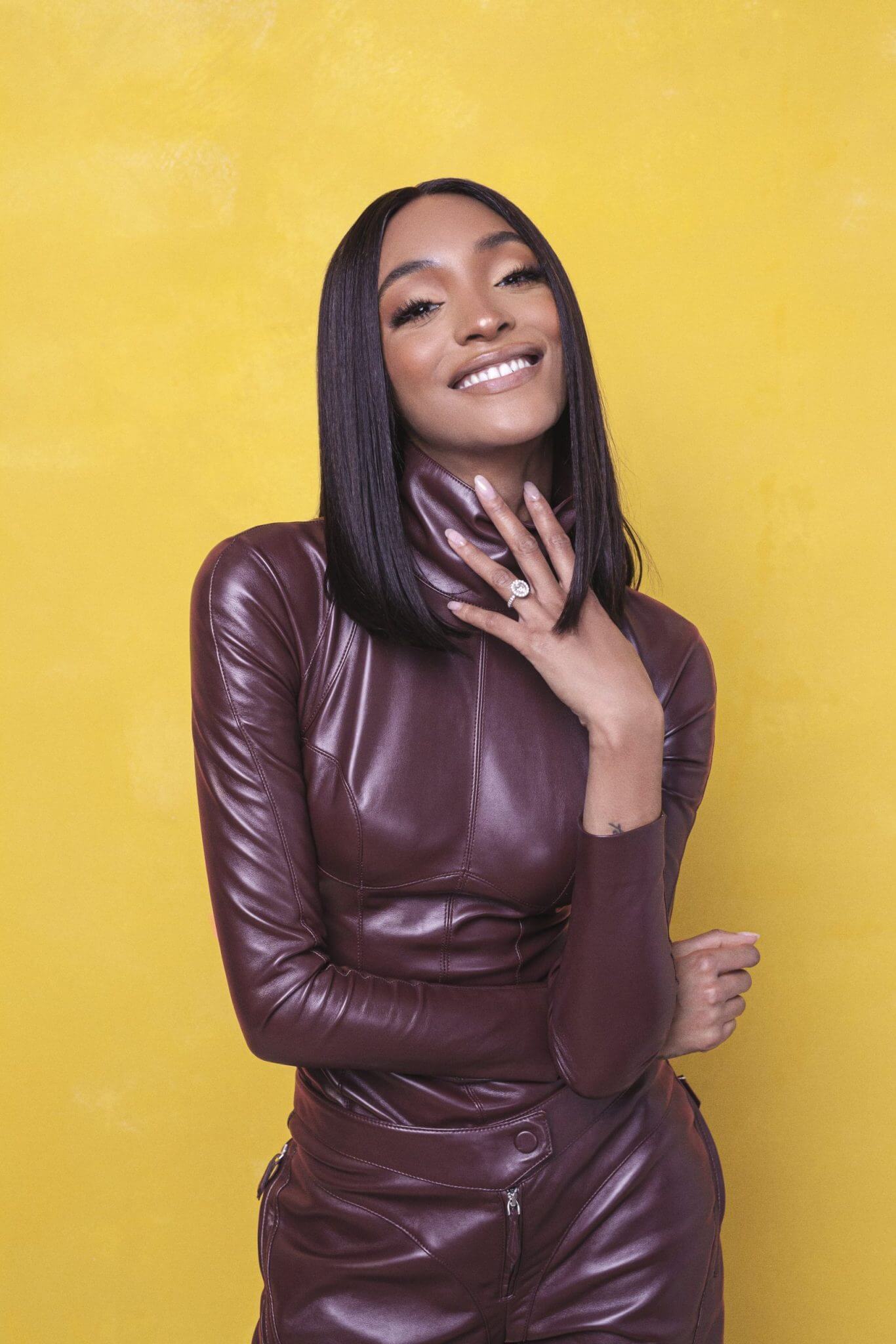
This morning, Bumble shared the campaign video to introduce their month of black jubilation, with snippets of wisdom from some of the people from whom we will be hearing throughout the month. Bumble’s cast includes George the Poet, who asserts “black love feels like the best is yet to come“, Jourdann Dunn, who believes it is “A community coming together and really showing up for each other”, just as she an Bumble have done, Nicole Crentsil, who envisions black love as “A world where we can see ourselves being happy,” and more. Capturing big grins, festive cheer and a motivating series of positive messages, putting this campaign together put a cheshire-wide smile on the Bumble head’s face, because she saw what we’ve all secretly known, but rarely get the opportunity to experience; Naomi Walkland witnessed the awesome phenomenon that:
“Black love is black joy”
Image Credits: Bumble UK & Ireland
Wojumi Is A Bad Bitch And She’s Going To Brag About It. Tweet Her Your Latest Cultural Exploits @Dewoju
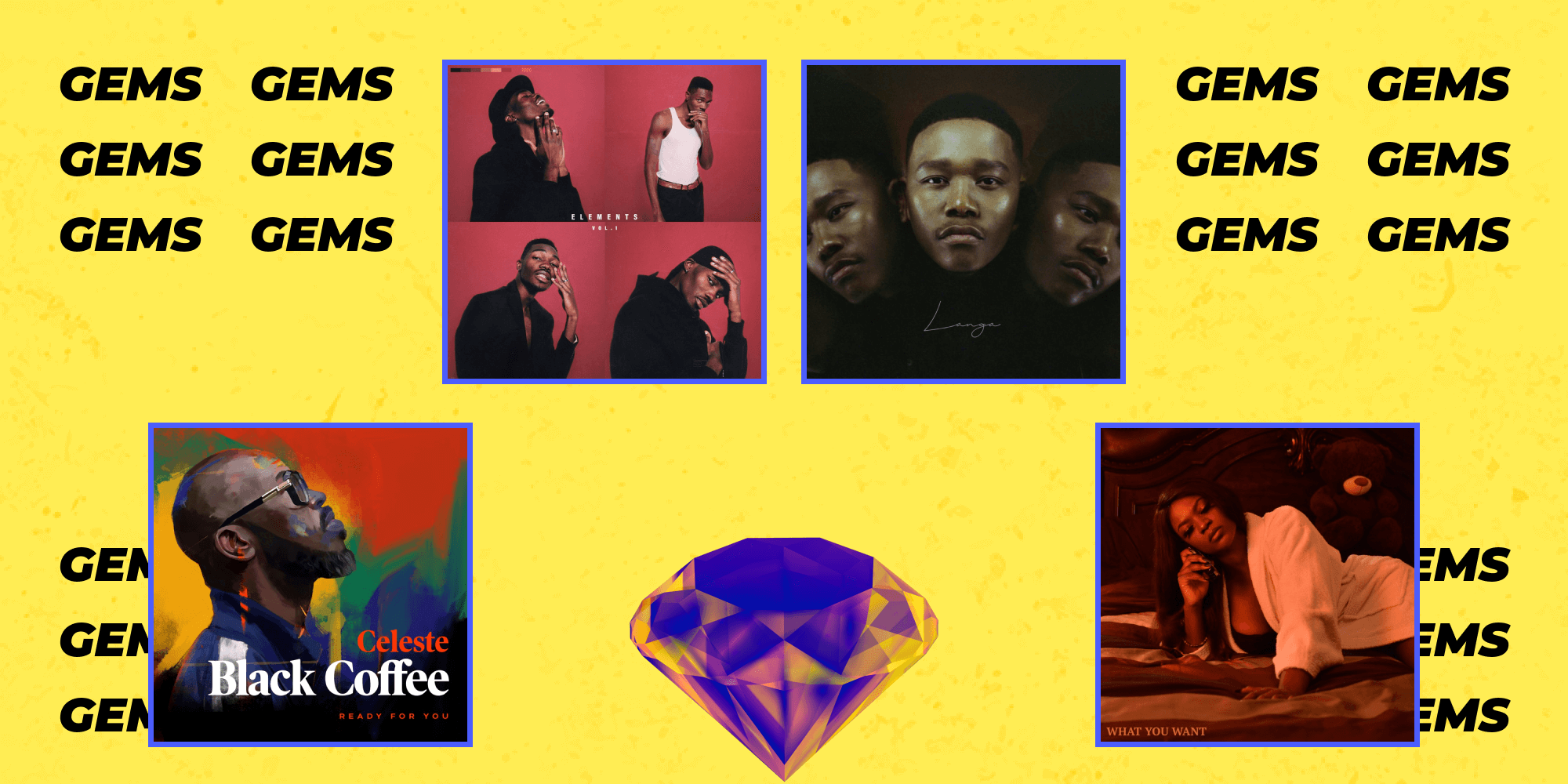
Staying true to our mission reshape the face of African popular culture, The NATIVE team curates a monthly list to spotlight the best and most exciting new artists on the continent. Some of these artists have dropped songs to some regional acclaim, while others are brand new on the block, working towards their first big break. Tune in to what’s next. Clickhere for August’s Fresh Meat.
Finding new artists is easier now than it has ever been. Whilst the ease is notably productive for both listeners and artists themselves, it tends to create a slight problem: it’s harder than ever to filter through it all and keep tabs on what’s really good.
To stay on top of this, every month, NATIVE’s editorial team spends a lot of time scouring through the world wide web for fresh new talent, who are in their own way breaking boundaries and adding some value to the music ecosystem throughout the country. As we’ve become more connected thanks to the global pandemic, it has never been easier to put out music and find a niche following. What’s difficult, however, is sieving through all the noise, and finding all the diamonds in the rough.
So, this month, from South Africa to our backyards in Nigeria, here is a list of the best new artists who have gained our attention this month.
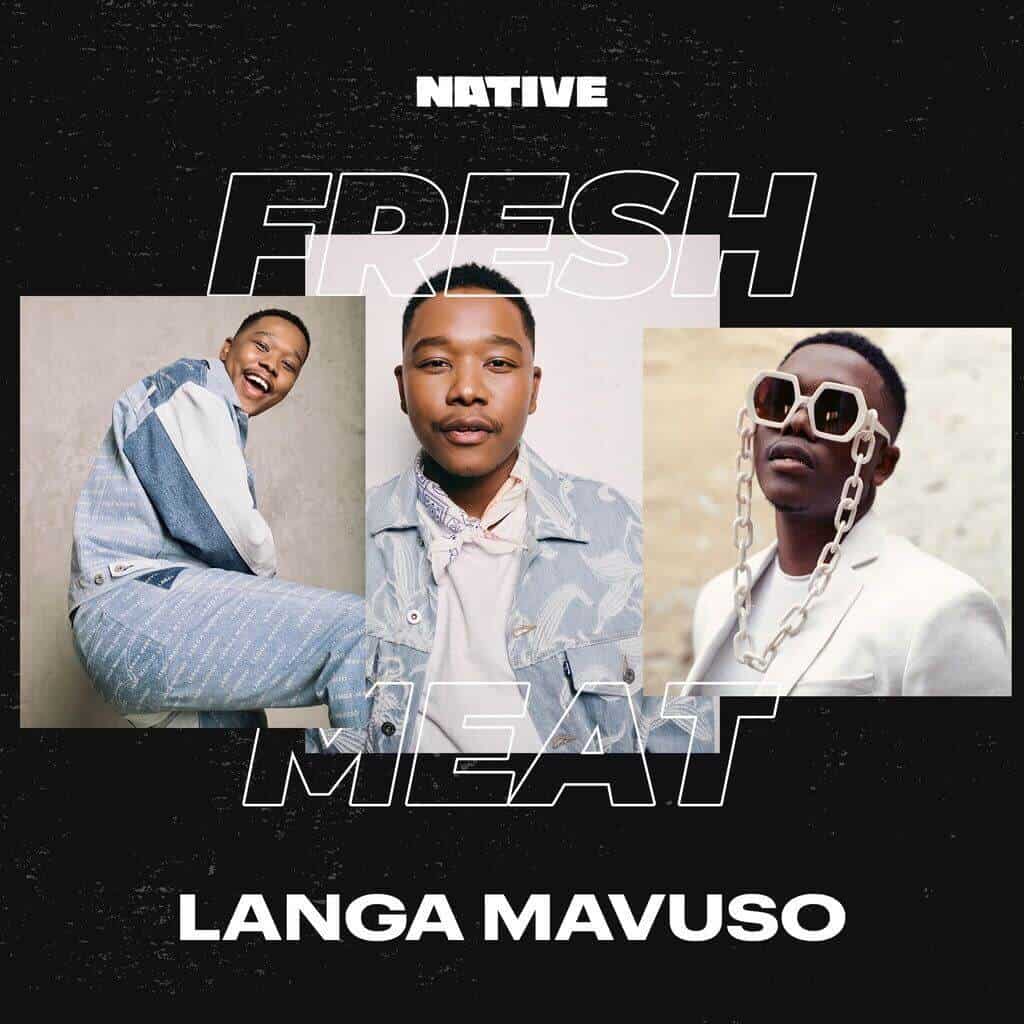
Langa Mavuso
Deezer NEXT is an initiative from the French Online streaming platform, which provides select artists from all over the world with marketing and editorial support for the twelve months that they remain on the roster. This year’s class sees talent from France, US, UK, Yemen, Netherlands, Brazil, Germany, and representing the continent is Langa Mavuso from South Africa. Having been making music for what he describes as four short, yet, eventful years, Langa Mavuso made his music debut in 2016, with his EP ‘Liminal Sketches’, which earned him audience with South African heavyweight, Black Coffee, who eventually signed him to his label] Soulistic Music. Now, he’s fresh off releasing his debut album, ‘LANGA‘, and it’s a piece that positions him as one of Africa’s brightest emerging stars.
Growing up around a lot of soul and jazz, owing to his parents’ preferences, Langa’s greatest musical heroes are the legends that raised him; Caiphus Semenya, Ringo Madlingozi, Miles Davis, Stimela, Donny Hathaway, Luther Vandross, Whitney Houston. Growing into D’Angelo, Maxwell, Musiq child amongst others, Langa Mavuso’s upbringing through soul’s timeless classics have played a huge role in the neo-soul proclivities that typify his sound today. Another key influence for the millennial singer was Tumblr: “I’m an African Tumblr kid making music” Mavuso professes. From the monumental platform, Langa got into the like of Frank Ocean, Chance the Rapper, Kanye West, BJ the Chicago Kid; a more diverse selection of artists, still Langa’s love for this cohort, for music in its entirety, remains rooted in soul. But Mavuso doesn’t wish to be boxed into that one genre, he is able to travel many musical paths and that is evidenced through his collaborations. On Spoek Mathambo and Blacswet’s “Libalela (Pray)” Mavuso explores electronic music, as he also does on the electropop number from Muzi, “Best Friend”, whilst one of his most successful collaborations, “7 Seconds” Langa brings his soulful vocals to the hip-hop beat, for a duet alongside British singer, Grace Carter. As Solo Ntsizwa Ka Mthimkhulu spits bars on “See Plenty Dreams”, Langa Mavuso ditches is ballard style of singing for a punchy delivery of the song’s repetitive chorus. But when he is on his own terms, Langa Mavuso is delivering soulful music from the heart, narrating his experiences, past and prospective, in a universally relatable way. This is what makes his debut album, self-titled, ‘LANGA’ the resounding hit it has been thus far.
A hopeless romantic – his favourite movie soundtrack is The Notebook’s – ‘LANGA’ is a course in heartbreak, its crooner guiding his listeners through the minefield of pain and destruction, until we see the light at the end of the tunnel, acceptance. That is as far as Langa goes. Though he claims to have ‘moved on’ on the bitter ballad, “Cheat Code”, throughout the duration of his self-titled, Langa remains within that past relationship’s orbit, but the key change in attitude between the pain and the acceptance is the hope, the belief that things will end up alright, despite the “Love Lost”. Working on ‘LANGA’ between his chapters 23 and, Cape Town, Johannesburg and London were the locations that offered Langa refuge during his self-reflexive journey of healing from heartbreak. In London, Mavuso worked with Chloe x Halle producer, Linden Jay and on the SA side of things Cape-Town duo Noble (consisting of David Balshaw and Bubele Booi, who produced on ‘The Lion King: The Gift’), lent their hand to the beats. Their production on ‘LANGA’ is outstanding. “Spirit”, which could fit on a contemporary gospel album, is one of the standouts in terms of production. With weight sustained keys given power to Langa’s spiritual musings, “Sprit” is afforded a long piano outro, to flaunt its magnanimous production. The wholesome beat for “Calamities”, the album’s opening track features a host of instrumental sounds, rhythm clicking, sharp violins, guitar breaks, as well as R&B drums mingled in with the funk infusions. Through ‘LANGA’, Langa Mavuso gives himself away completely. With an aim of putting South African R&B on the map, Langa Mavuso introduces to the world his ballad style of singing and his deeply personal approach to writing. Our eyes are peeled and we won’t regret it.
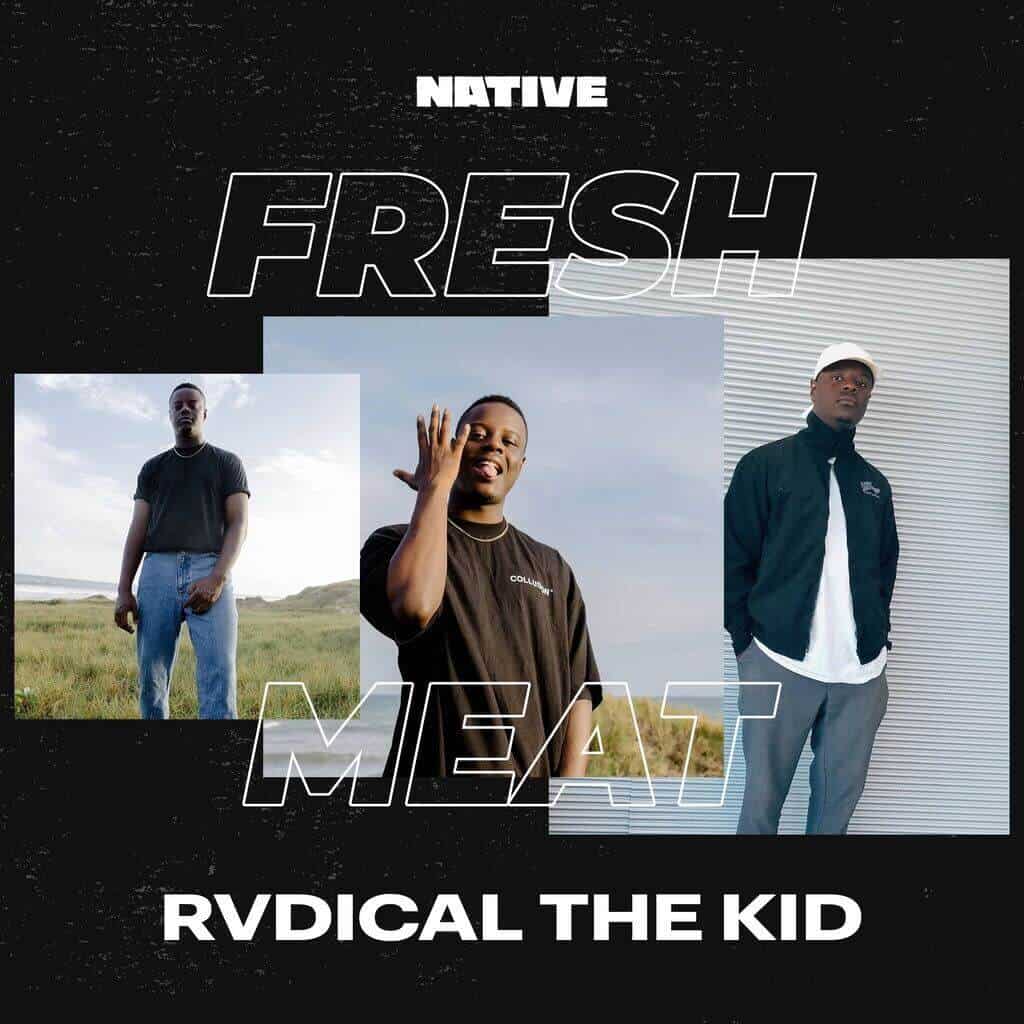
Rvdical The Kid
Rvdical The Kid is not exactly Fresh Meat. Whilst he is primed for a take-off any minute now, Rvdical has been on the scene for a good minute, his fresher year taking place back in 2015 with the release of his eclectic debut project, ‘Carte Blanche’. Born in Nigeria, the Benin Republic raised producer cum DJ, moves to Accra just after his debut, and has been primarily located there ever since. A truly West African musician, Rvdical’s early musical icons were the legendary Nigerian instrumentalists, Fela Kuti and KSA, though Celine Dion, Phil Collins and Kenny Rodgers were also integral to his early listening experiences. However, these acts didn’t influence The Kid, per se. These old-hands were simply the voices his father would play for the family; when Rvdical began exploring music for himself, the sounds of the Three Six Mafia, Trick Daddy and East Side Boys were what he gravitated towards at first, later leaning into Chase & Status, Rusko and Skrillex, where he learned the whims of electronic music, than now plays a role in the sounds he offers up to the world.
Also handling production on Tems’ “These Days” earlier this year, Rvdical The Kid’s latest is titled, ‘Little Planet’, a strong twenty minutes that build upon the raw display of talent he first aired on ‘Carte Blanche’. Where ‘Carte Blanche’ opens with a hip-hop number infused with electronic sensibilities, as the DJ-producer makes good use of his toolkit, ‘Little Planet’ houses similar spunk on the lively lead single, “Skimp on the Shrimp” featuring Yonkwi, or the Amaarae-assisted standout record, “NASA”. From his first few takes, Rvdical has been showing us just how proficient he is at beat-making and mixing. ‘Carte Blanche’ is stacked with samples, the sweetest sounding being his chop and screw of Really Doe’s “We Major” chorus on “Skyscrapers”, which the beatsmith mixes in with disco-like synths. There is no genre that is above manipulation from Rvdical’s sword. “Funk With Me” on ‘Carte Blanche’ plays with the funk sounds you’d expect from its playful title (found also on “Everything” via Soundcloud) and “Free Spirit” later on on the album mixes in afrobeat inspirations with an electronic preference. On his sprawling Soundcloud page he gifts us a trap remix of Odunsi’s “Happy Hour”, whilst on ‘Little Planet’, he’s adopting reggae rhythms with the drums on “Rosemary” before the beat strips bare to accommodate Maesu’s spacey singing. Easily likened to Frank Ocean Maesu has been a long time collaborator of Rvdical’s, appearing on the debut project to deliver a delectable “Dopamine”, a solid song that could rival anyone of Ocean’s ode to narcotics. Like Maesu, Amaarae, Yonkwi and Australian, AyWy are some of Rvdical’s oldest collaborators who share like visions with the producer. This is why he finds it easy to invite them into his ‘Little Planet’ (though not AyWy), for the period.
Digging deep to deliver personal messages through his beats, Rvdical’s journey has been an eventful one, full of an eclectic range of vibes shared through irresistible tracks. The road has been long too; the Kid has been on the map for a minute, but with these days he seems to have gained a certain cultural relevance in our collective consciousness that has earned him an ever-growing consumer base.
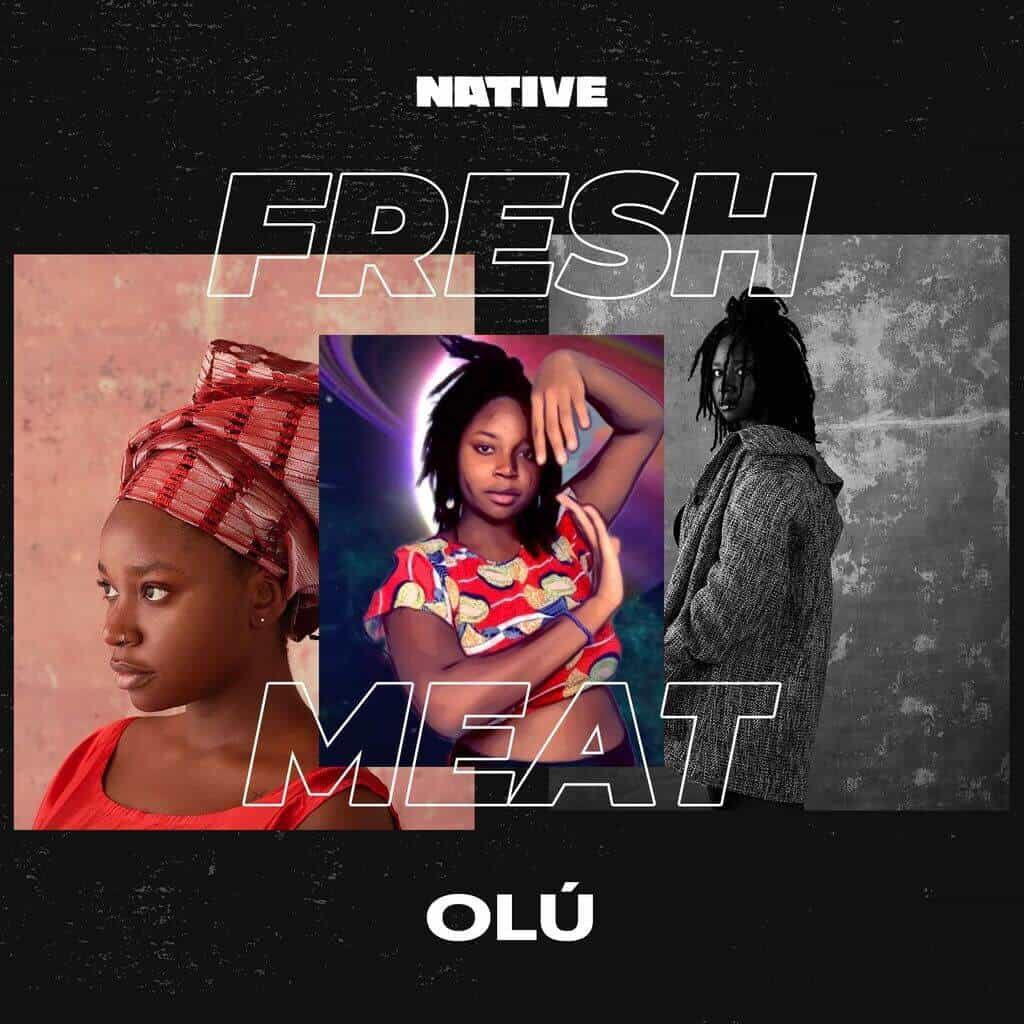
Olú
Soul singer Olú’s name is a mononym. The succinct moniker is an abbreviation of the artist’s first name Oluwatosin evoking the same command and intrigue as musical greats like Beyonce, Adele, Madonna, and more, who need no further introduction than their noteworthy first names. And just like these artists, Olu wields a sharp and soulful voice, forcefully delivered with enough intensity to stir introspection and a constant evaluation of personal truths in any listener.
Her deeply poetic spin on music was first introduced to the world back in 2017 when she released her debut single “The Cry”. The stylistic influence of her church background was instantly noticeable in her rich sirenic voice as she pleaded with listeners to wake up to the many injustices of the world. The spit-along confession found her audaciously declaring she was “heaven sent” to deliver this important message to all willing to listen right at the song’s opening moments. Accentuated by soft sweeping acoustics, her rich distinct voice was given ample range to showcase its prodigious depth as she invited listeners to think beyond their reality. This soulful take on afropop followed her into her next release “Aye”—Yoruba for ‘Life’—which was filled with lucid, distinct storytelling as she narrated a tale of unconditional love and sacrifice in the world backed by brassy, percussive production. A year later, she was ready to let listeners further into her world with the release of her debut EP ‘Languages’, a 5-track offering which called for more self-reflection and relied on evocative storytelling to hone its message. On each number, she’s offering listeners room to contemplate and be present in the moment.
On her sophomore project ‘Feels’ she guides listeners through a sonic journey as she comes to terms with who she is and how to navigate this newfound self-awareness. Seeing as the singer dubs herself a sage, it comes as no surprise that her music is equally reassuring and comforting, extending a warm embrace to listeners who stumble into her atmospheric soundscape. On ‘Feels’, you can hear that sonically and personally she has grown as she examines the relationships in her life and the places that have made her who she is today. On “Feels Like” she pines for a lover who is slipping from her grasp, as she itemises a list of things she wishes to feel from true love.
The project drifts like a mindset influx as she’s endlessly switching up themes, going from naive adoration of her bustling home-city Lagos on “Lagos Hypeman No-1” and segueing into self-acceptance and unbridled confidence elsewhere on “1111 I Love Myself”. Each song feels emotionally descriptive as she opens up like never before, even speaking on mental health on the project’s centerpiece “A Thing” which finds her capturing snapshots of her complicated life. ‘Music is my rider/sometimes my provider’ she sings, admitting2 that the only way out of her self-doubt and pain is through surrendering herself to her craft. The project’s greatest success isn’t that she’s overcome all her obstacles but that she’s human and perfectly capable of ascending armed with a deep self-conviction in herself and her abilities as she offers a refreshing take on neo-soul coming from these parts. This is an artist who has a whole lot more to say and who deserves all the attention for her distinct and well-layered soulful contribution to afropop’s burgeoning musical landscape.
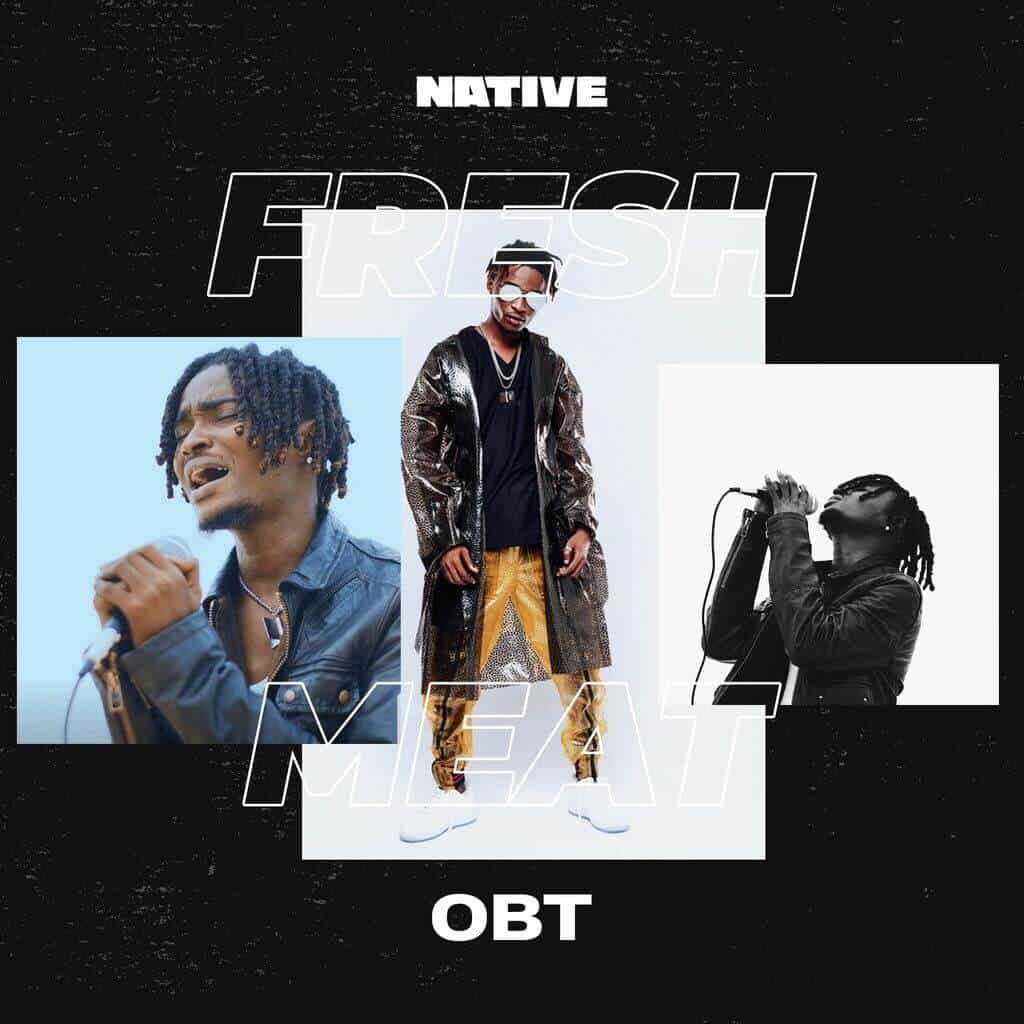
OBT
Like most things today, music genres are not static. They frequently grow and take on shape by borrowing from a host of other genres as they inculcate a range of stylistic influences, expanding and growing through different cultures and people. Take for instance, how afropop as a whole, would be nothing without its borrowing from other genres like highlife from Ghana, where it absorbed some of its infectious percussive rhythms. In fact, today, we’re coming into times where there is less stringent rules to conform and uphold static genres, allowing artists who neither fit in here or there to flourish with their hybrid brand of music much like Rema, Odunsi the Engine and many new-gen artists are doing exceedingly well today.
OBT’s journey is similar. After studying music production in South Africa, he returned to Nigeria to pursue his music career as an artist and producer, founding a creative media frontier named ‘95 Issue through which he released his debut single “Killah” back in 2017 and also through which, he has now just rolled out his debut album ‘Birdie’ earlier this month. The 12-track offering is a culmination of all OBT’s sonic influences, latching onto highlife-infused percussive production to match the dreary tenor of his lyrics as he chronicles his personal struggles in life. He explained in a recent interview that the project ‘took [him] on several musical journeys’ which is aptly seen in the array of melodies that underscore his debut. Whether he’s inviting his love interest to take up permanent residence in his heart forever on “Home” backed by a stellar rap verse from Wonder Tha Hypeman or rejoicing about his life and the journey he’s had undertaken in search of himself on “Jabulala”, he’s constantly presenting distinctive and individualistic takes on a range of topics that only he can meld together.
He’s constantly sending off honeyed-toned words of admiration to a lover, endlessly aiming to express the depth of his devotion to his muse (or a range of muses). In any case, OBT wants you to know that he’s a man of love and that shines through on a number of tracks on the project like “Water”, “Maria”, but despite this, OBT still hangs on to his pride on “Debit Lover” where he admits the limit to his love and affection. The song’s title alone has negative connotations, showing that the relationship may be one-sided, taking more from him than it is willing to give him in return. But even this emotion doesn’t last as the song bleeds into the rhythmic “Closer” which sees him returning to his loverboy languish. And with his declaration of self-assurance and confidence on “High School Dream”, it’s clear that this is an artist that has a lot to prove to himself and the world.
His afro-fusion cocktail of sounds is best observed on “Jabulela”, one of the projects main standouts which finds him infusing several African sounds from Ghanaian highlife to South African harmonies as he celebrates the continent and its liberating quality of music. Seeing as the song’s title is Zulu for rejoice, its up-tempo number makes for an enjoyable listening experience as the contrasting harmonies meld seamlessly and plunges listeners further into his youthful world. What you’re left with at the end is an artist who shapes their craft with fine-tuned precision creating smooth otherworldly melodies that are equal parts joyful and pensive, arriving at something that can adequately be enjoyed by anyone who’s listening.
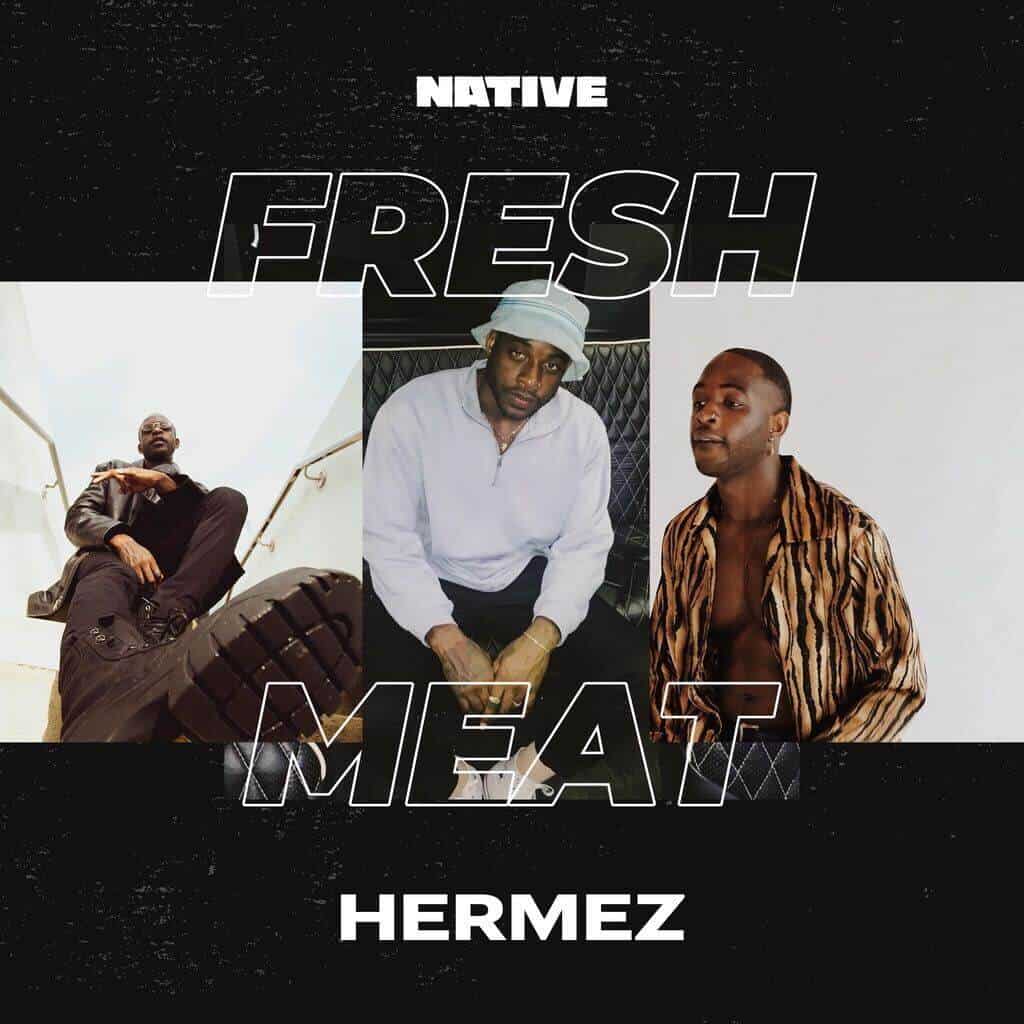
Hermez
R&b has mutated up to the point where artists can comfortably carve out their own lane, due to the boundless fusion possibilities the genre seems to hold. Atlanta-raised, Los Angeles-based, Nigerian singer, Hermez has curated an engrossing sound that oddly but refreshingly fits together the glossy bounce of contemporary r&b, the immersive vibe of lo-fi melodies, and the occasional polyrhythms of afropop. It’s a sonic mix that’s sophisticated and unique, but also recognisable and instantly accessible.
Last year saw Hermez’ debut, with the release of two projects, a short EP and a full-length LP. ‘Late Night Oasis’, the 9-song tape that dropped in March, introduced the singer’s bent towards moody melodies and writing that bordered on emotiveness, however, it’s the late October album, ‘Garden Spirits’, that offers a fuller glare into what Hermez is capable of. Colourful, cohesive and musically varied, ‘Garden Spirits’ is a conceptual record of sorts, a utopia for people to enjoy life and live freely as he describes it. Weaving in cross-cultural references that gesture towards being “full-blooded” Nigerian, Hermez offers up his identity while digging into the familiar themes of lust, love, heartbreak and everything in between.
Listening to the 17-song project hones in on Hermez’s ability to lay his sentiments bare, leaving room for listeners to relate with his songs even though they’re highly specific to him. Even though the through-line is freedom to enjoy one’s self, Hermez uses every opportunity possible to detangle emotions and complicated scenarios. In an interview with VoyageLA, Hermez explained that he “worked with the wrong people [and] fucked with the wrong chicks” on the way to becoming who he is now, and he clearly channelled those experiences into an album where playful hedonism, as an escape mechanism, and vulnerability comfortably sit side by side.
This year, Hermez has dropped two new singles, the AYLØ-assisted “Waves” and “All the Time” with MOJO. Both songs flaunt the idea of a stronger artistic identity going forward, with the former playing into his wheelhouse of emotional honesty, and the latter expanding his sound even further into the familiar bounce of Nigerian street-hop, without obscuring the qualities that make his music so distinct. As he continues to grow, Hermez will only get more undeniable—now is the right time to jump on the bandwagon.
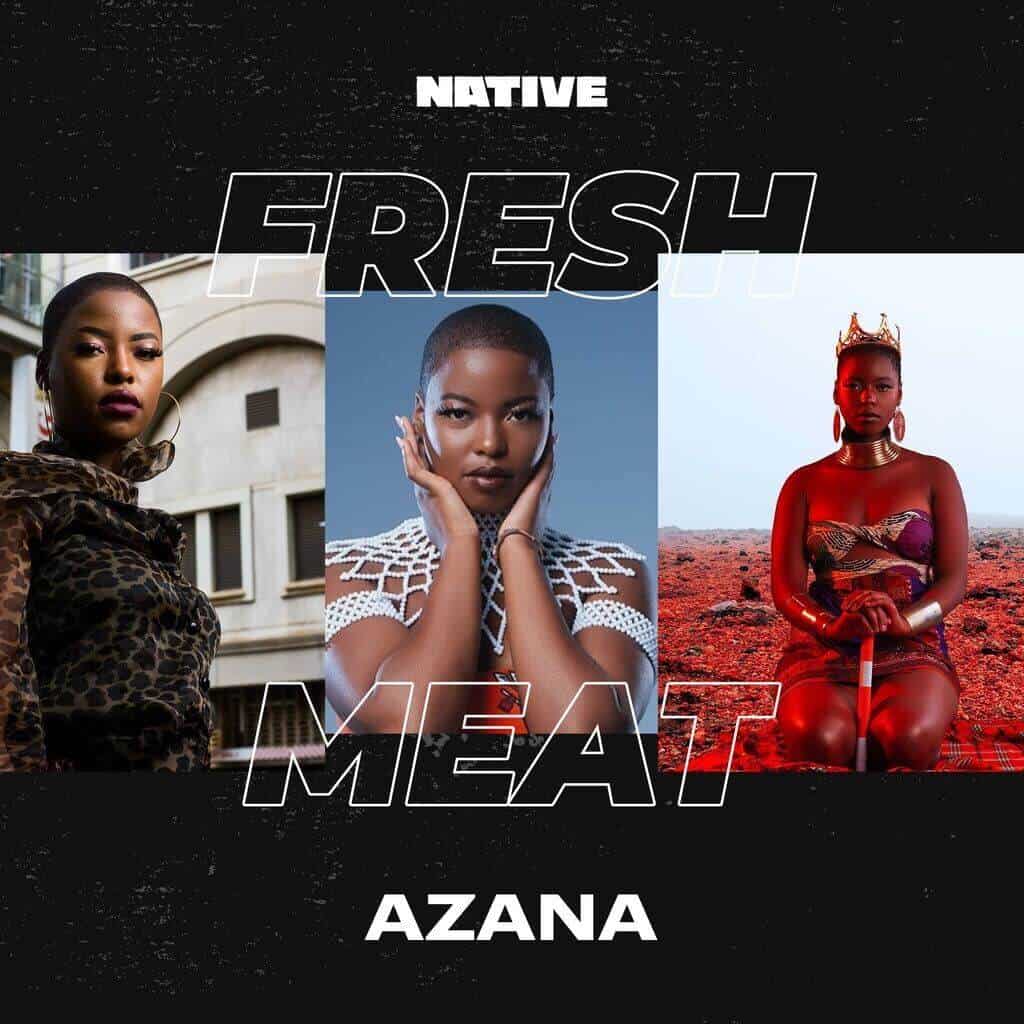
Azana
If you scroll long enough through the comment section of Azana’s music on YouTube, chances are you’ll find a few takes on her being the Zulu version of Msaki. Even though it’s a bit reductive, as are most comparisons, it’s not the worst compliment that can be garnered by an artist who only gained mainstream attention a few months ago. Especially when you consider that Msaki is easily one of the very best singer-songwriters on the continent. Armed with a rich and profoundly soulful set of pipes, Azana’s voice is effortlessly captivating and truly breath-taking.
In April, the 19-year old South African singer made her debut on Sun-El Musician’s “Uhuru”, bringing a riveting essence to the superstar producer’s blaring beat. A rousing call to action and reminder that many Africans still live in less-than-ideal conditions, “Uhuru” instantly showed that Azana is capable of taking on weighty topics. She quickly followed up with “Your Love”, which served as the lead single for her recently released debut album, ‘Ingoma’. Comprising fourteen stunning and beautiful songs, ‘Ingoma’ is a wonderful introduction to Azana, an album that’s easily one of this year’s best full-length debuts.
Although mostly sung in isiZulu, ‘Ingoma’ benefits from this language barrier, casting Azana as an artist who can conjure vivid moods, by matching her variety of musical choices with a range of melodies that land on many points on the spectrum between breezy and intense. “It comes naturally to me, when I express myself in Zulu it’s easier”, she explained in a post-album interview with Checkout Africa. Musically familiar, ‘Ingoma’ jumps from simmering ballads to up-tempo cuts and features a handful of collaborators, but it’s Azana’s phenomenal voice and specific identity that grounds the album.
At the moment, Azana is juggling her nascent musical career with studying for a law degree—“it’s so hard but it’s doable”, she says. It’s that sort of conviction that permeates her music and indicates that she’s destined for much greater things, sooner rather than later.
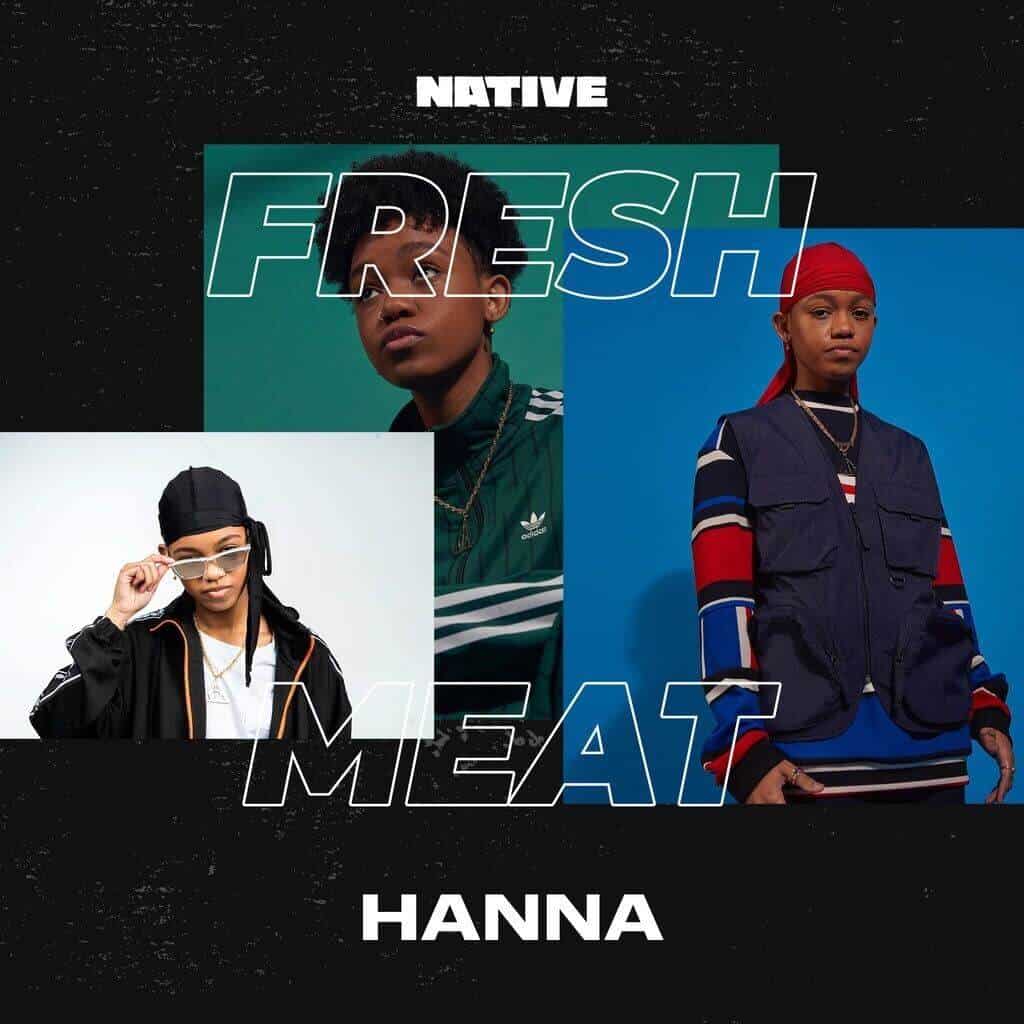
Hanna
Most times, getting the right co-sign is all it takes for unshakeable conviction to set in. When South Africa-based, Zimbabwean rapper, Hanna uploaded a freestyle video to her Instagram, she didn’t expect it to catch the ears of rap superstar Nasty C, but it did, and his positive comments nudged her into taking her rap dreams serious. “The whole Nasty C situation with the comments and that video is actually what made me want to start doing music more seriously”, she told University of Cape Town radio. “I hadn’t recorded anything at that point”.
A year later, it all came full circle as Hanna worked with Nasty C on ‘Lift as You Rise’, a compilation EP that paired the star rapper and some of his established colleagues—Tellaman, Rowlene, Gemini Major and Lastee—with talented, up-and-coming artists. Having already recorded and released a few singles of her own, Hanna was already stepping into her identity as an artist, and her confidence shone during her cameo on “Outside”, as she ran through a scene-stealing 16-bar verse that merged quick wit with infectious arrogance. It might have been her biggest look at the time, but with that performance, Hanna comes across as unfazed, an attribute that has defined much of her music.
Being self-assured is something that’s expected of anyone who raps, but in Hanna’s case, it goes beyond the trappings of genre that’s rooted in machismo: She embodies being young, black and queer in a way that’s instantly refreshing. “Young black queen, young black queen/better run that dream, secure that cream”, she declares on the catchy hook of “Nigists” as she flaunts her blackness. It plays into her ideal of making music that not only represents herself, but also resonates with listeners—“I just can’t rap about nothing/I gotta stay real, I gotta stay true/I gotta be honest”, she says on “Peace”.
It goes without saying that Hanna is a supremely talented rapper, and even though more people will come to her for the bars, she wants them to stay for the substance in her music. On October 9th, she will be releasing her debut project, ‘The Girl in the Durag’, and it’s already shaping up to be an expansive showcase of her powers. Lead single, “The Girl in the Durag”, is a straight-up bar-fest over a stomping beat, while latest single “Low Key” finds her dabbling in neo-R&B cadence for a lustful bop. It’s in line with what she told UCT radio: “I also produce and sing, and I enjoy sounds that are quite melodic…I would like to try other genres. I feel like rap is a very small box to put me in”. By refusing to let anyone other than herself define her identity, Hanna is shaping up to become even more undeniable as she keeps on evolving.
[mc4wp_form id=”26074″]
Featured image credits/NATIVE
Words by: Adewojumi Aderemi, Dennis Ade-Peter & Tami Makinde
We’ve had music to fall back on through all the heartbreaking moments of 2020. Despite the ongoing pandemic, civil unrest, and the seemingly endless barrage of bad news, musicians have continued to capture our collective pop consciousness with new songs that either reflects our present reality or provide an escape from it. We know it can be difficult to keep up with all the diverse streams of music, so we’ve created this column to keep you, our readers, up to date with all the finest tunes coming out of Africa and the rest of the world. These are the songs you absolutely need to hear.
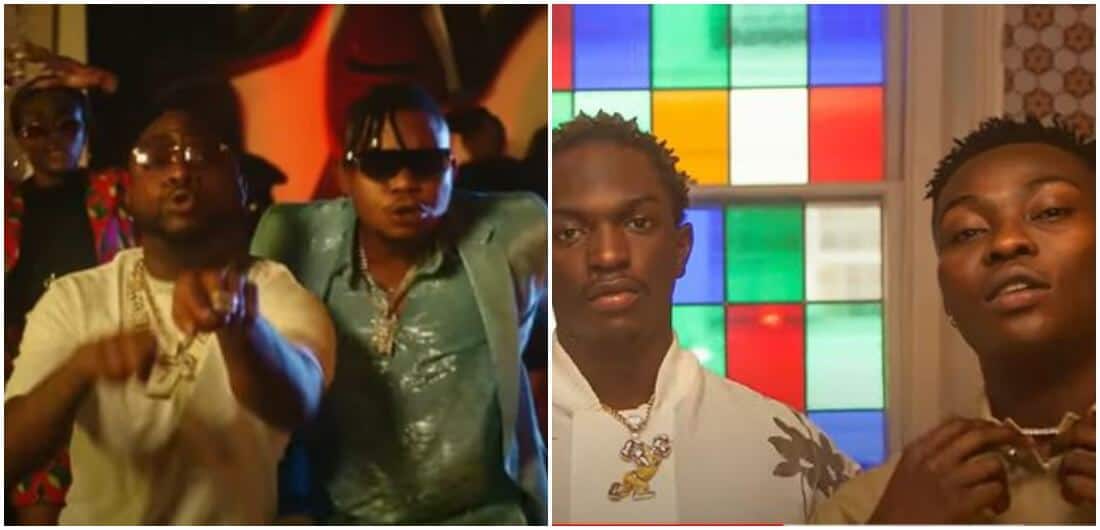
Last Friday, we brought you the long-awaited, Davido-assisted remix to Olakira’s summer hit, a collabortive single between Reekado Banks, Kida Kudz and EO, as well as new singles from L.A.X, Runtown and more. To get your week started, we’re recommending stellar new songs from Kida Kudz, Young Jonn, Rowlene and more. Dig in and enjoy.
Kida Kudz – “Don’t be Shy”
Kida Kudz has happily kept the streets fed throughout this year. In addition to February’s debut mixtape, ‘Nasty’, the UK-based rapper has put out a consistent stream of loose singles and feature appearances. In addition to his stellar contribution to Reekado Banks’ “Need More”, last Friday also saw the release of Kida’s breezy new single, “Don’t Be Shy”.
Adopting a slick flow over warm piano chords and a frenetic bassline, Kida reaches into his softer side, singing of his affection and promising undying devotion to a potential love interest. While he’s better recognised for his ability to make machismo-driven bangers, “Don’t Be Shy” is a timely reminder that Kida has more dimensions to him, and he will always keep it catchy.
Young Jonn – “In Case”
After years of being behind the boards, crafting hits with a lengthy roll call of A-list artists that includes Olamide, Naira Marley and Tiwa Savage, Young Jonn is seemingly ready to show us his chops in front of the microphone. “In Case”, his new single, is the first time Young Jonn places emphasis on singing as his primary role on the track. The song is produced by Phantom, whose screeching piano strings, horn harmonies and highlife-inspired bounce serves as the perfect backdrop for Young Jonn’s nasally vocals and preppy melodies, as he sings of transactional sex and the primary currency behind it: money. “Nna, one thing must kill a man o/e fit be woman, e fit be cash o”, he sings, choosing to observe rather than judge and it pays huge dividends, resulting in a catchy song with no unnecessary shaming or proselytising.
Kofi Mole is one of the many artists who use their prolific streak as an opportunity to constantly experiment and fine-tune their abilities. While he could be deemed as a rapper, the Ghanaian artist constantly shows range with each new, distinct single. His latest, “Makoma”, finds him playing at the intersection of Ghanaian folk and trap, as he delivers a boisterous romantic cut. Adopting a rugged rap-sung flow, Kofi Mole sets the song’s lively tone, and in doing that, he pulls a melodic flow from Sarkodie, while Bosom P-Yung’s goes into his bag of tricks for a delivery mode that borders on hysterical.
Rowlene – “Stop”
Rowlene has consistently shown herself as one of the more captivating voices on the continent, thanks to a radiant voice that can convey several emotions and slip into a multitude of sounds rather effortlessly. The South African singer is gearing up to release her sophomore album, ‘11:11’, in November. Kick-starting the rollout, she’s shared the intro track, “Stop”, as the album’s lead single, and it finds her in an assertive mood. Over brightly ominous keys and robotic bass synths, Rowlene pulls off an authoritative kiss-off that sees her cracking on a former flame, riffing on his fake chain and flat-out dismissing him. “I know that you’ve gotten used to taking from me when you stall on empty/don’t involve me now, it’s gotta stop”, she declares in a tone that’s as caustic as it is infectious.
https://www.youtube.com/watch?v=mXXb_BpbXng
lordkez – “Amnesia” (feat. Blind MIC & AYLØ)
South African multi-hyphenate creative lordkez introduced herself as a singer-songwriter with last year’s ‘Revenge Season’, a debut EP that established her as an artist with a preference for making emotive and deeply engrossing music. Last Friday, she followed up with her second EP, ‘Charcotta’, a 9-song that emboldens the cinematic quality of her music. One of the instantly striking cuts off the excellent EP is “Amnesia”, a deep cut with assists from Blind MIC and AYLØ.
On the song, all three artists recall a past relationship that took a toll on them, wishing away all the toxic memories that came with the experiences. “Hurt face all in my case, I don’t need you/sit back, always laid back, I’m sativa/act like I don’t know you like amnesia”, kez sings in the opening moments, letting out the flood gate for MIC and AYLØ to wax poetic about the PTSD they accrued. With each artists taking their turn on the mic over aqueous guitar and languid drum rolls, “Amnesia” is the musical equivalent of three friends venting to one another and bonding over a similar situation.
[mc4wp_form id=”26074″]
Dennis is not an interesting person. Tweet Your Favourite Vigro Deep Songs at him @dennisadepeter
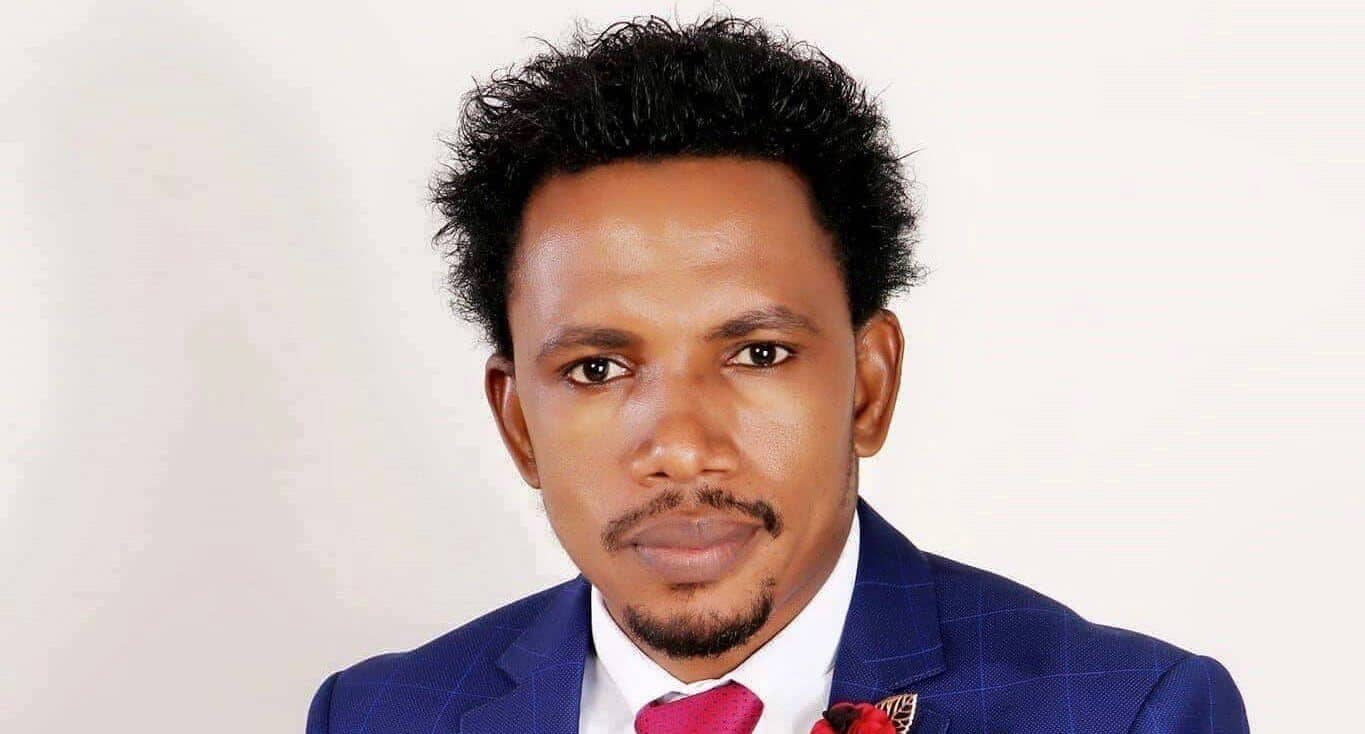
Last month, it was reported that the year-old case again Senator Elisha Abbo – who was charged on July 8 2019, following the viral video of his violent assault against a Ms Osimibibra Warmate – was dismissed. Though the Nigerian public had all seen the evidence, despite the testimonies of Ms Warmate and the investigating police officer, even disregarding the fact that Senator Abbo admitted to the assault in his public apology, the case was dismissed on the grounds of insufficient evidence in the investigation.
The ruling to dismiss the case was one that rightfully riled the public, as it proved just how ineffective our justice system can be. Women in Nigeria are painfully aware that the law and its keepers rarely have our interests at heart, but today, we witnessed a pleasant surprise – a much needed dose of good news this year – as we were given a positive update on the dispute. Today, lawyers representing Ms Warmate revealed on Twitter that, in the civil suit, ‘Osimibibra Warmate v Senator Elisha Abbo’, the Federal Capital Territory High Court passed judgement against the Senator, awarding the sum of 50 Million Naira in damages, in favour of Ms Warmate.
Remember that video of a Nigerian Senator slapping/assaulting a young lady at a shop? Well justice was served today with the Court slamming the sum of N50M against the Senator. I am delighted to have represented that young lady in this suit. We say no more to oppression! https://t.co/zM9zQlEcH7
Earlier in the year, as we witnessed the brutalisation of multiple black women all over the world, it became clear that we really are the only ones who stand up for ourselves. Recently, when none of the police officers responsible for killing Breonna Taylor were charged with causing her death, despite months of protesting, it became clear that no matter how much black women demand respect for our bodies and value for our lives, not men and not their patriarchal laws ever listen. The ruling against Senator Abbo, shared today, is a good reminder that things will get better. After a tiring year of fighting, with few positive outcomes, this update is the fire we need to keep going in our battle against gender inequality.
Today, it’s 50 million in damages, tomorrow it’s jail time and the day after that it’s men staying the fuck out of women’s business. Amen.
Featured image credits/BBC
Wojumi Is A Bad Bitch And She’s Going To Brag About It. Tweet Her Your Latest Cultural Exploits @Dewoju
1st of October—the day where Nigeria celebrates her independence and we reflect on the nation’s growth—is right around the corner, and although our independence day is always a good excuse to party, COVID-19 is causing us to celebrate independence day a lot differently this year.
This year’s holiday will mostly serve as a break from the hustle and bustle of everyday life before it starts all over again the next working day. However, the nation’s spirited attitude during this time persists, and Nigeria’s most popular Irish Whiskey, Jameson has found a way to honour the monumental day in a unique way with their special carton design.
https://www.instagram.com/p/CEmUr5WDvME/
Jameson unveiled a new case design that adapts the visual expressions of our culture to show their appreciation of Nigeria’s glorious traditional heritage. They tribute the different tribes in the country with the artistic design that aligns all the tribe names together to form the shape of the Nigerian map. Apart from listing all the different tribes that make up the country’s super diverse culture, the design also incorporates some of the Nigerian ethnic symbols as it features illustrations of totems and other aesthetic markers in their geographical locations on the map. Though this acknowledges Nigeria as a multi-cultural society with the embedded designs representing the different ethnic groups, it also highlights our dynamic lifestyle and conveys the nation’s cultural synergy.
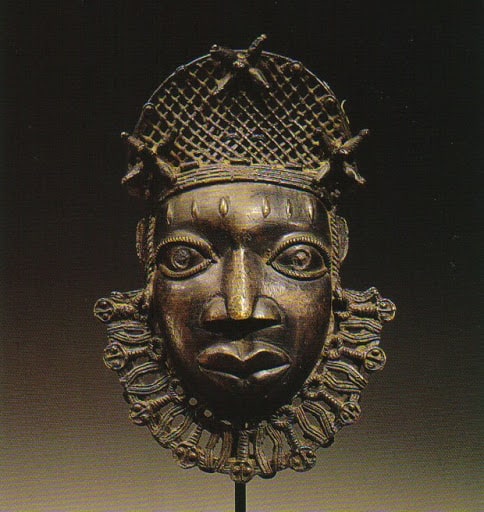
The bronze head
The Benin bronze head figure is widely reputed as Nigeria’s most revered artwork. The sophisticated bronze sculptures made to commemorate the sacred person of an Oba or King were looted during the colonial era so they can be found in many of the world’s greatest museums, including the British Museum in London and the Metropolitan Museum of Art in New York and even Pablo Picasso owned one. Though they are currently in the process of being returned to their rightful origin in Benin, Nigeria, Jameson has portrayed its position on the Nigerian map to celebrate Nigeria’s artistic culture.
Drums
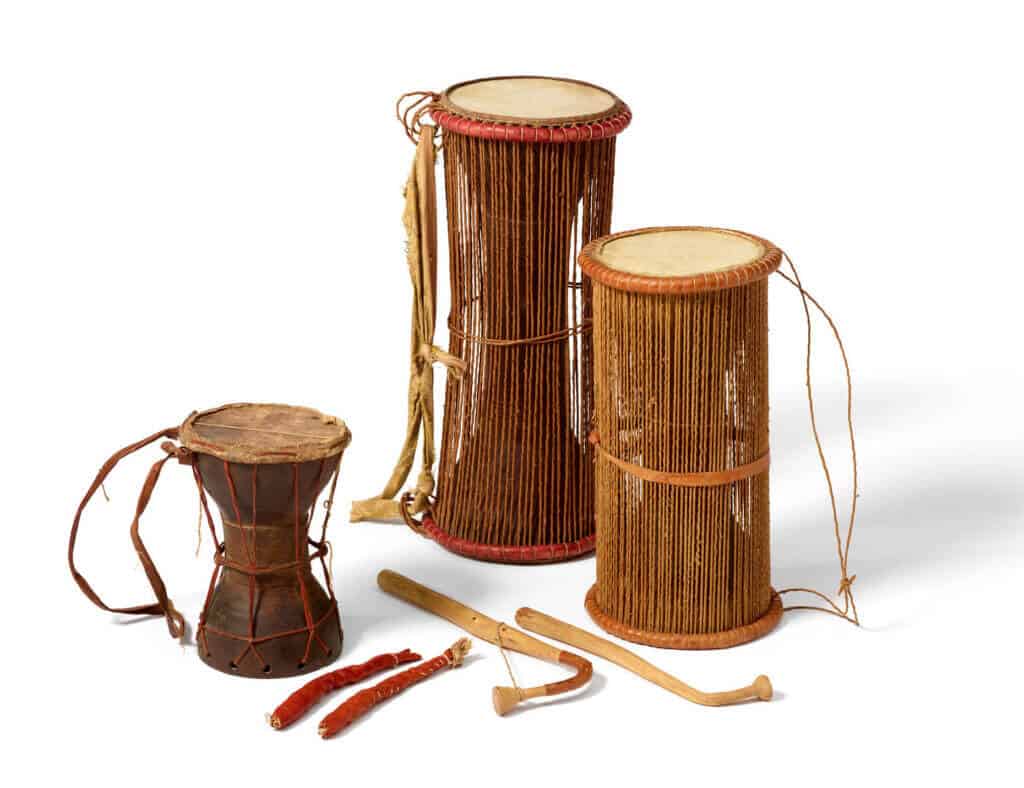
Nigerians love music as much as they love to drink and party. Jameson has shown they recognize this by organizing music concerts and supporting musicians (especially within the alté music scene) through niche collaborations and several campaigns. For the new case’s design, they featured some indigenous musical instruments like the talking drum played in the Yoruba speaking west and the goje, played by ethnic groups inhabiting the north. By showcasing these traditional instruments, they are celebrating our cultural music heritage.
Cocoa fruit, cattle, and livestock
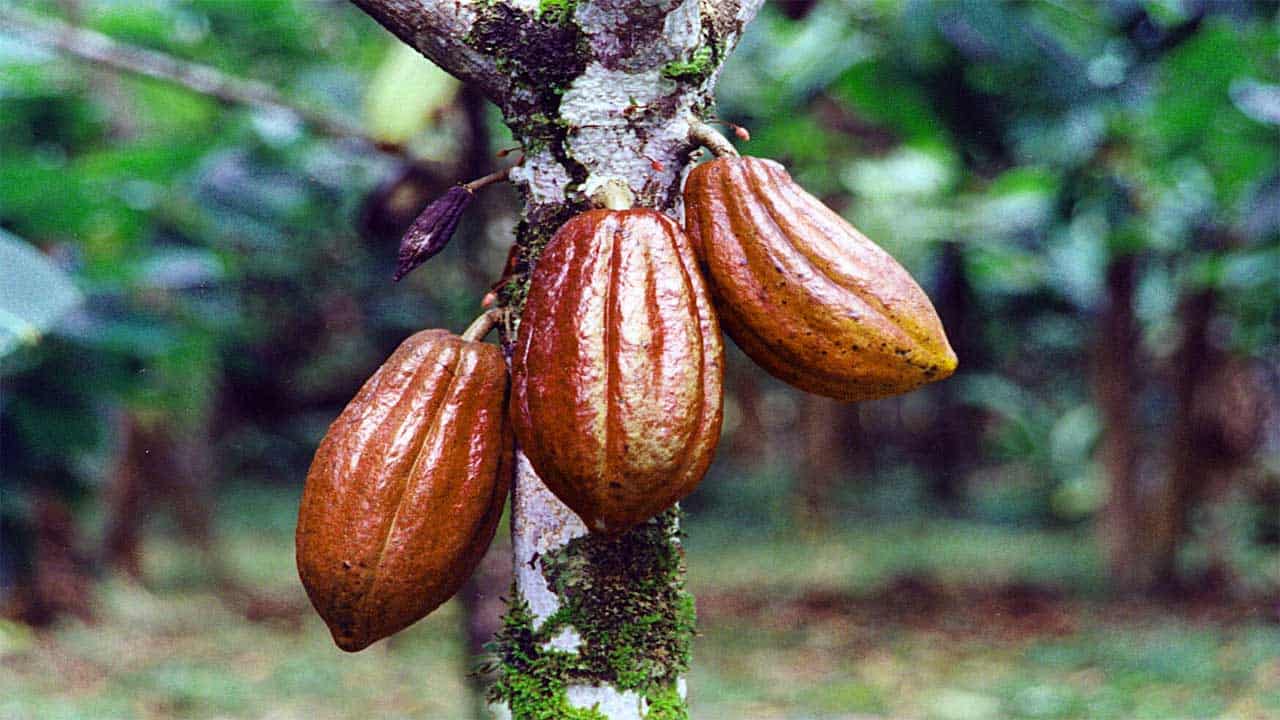
Before oil was discovered in Nigeria, we relied primarily on an agricultural economy. Jameson’s Independence Day case design reflects the traditional agriculture of the different regions by illustrating the cocoa fruit which sustained the economy in the western Nigerian region and the cattle livestock trade that’s popular in Northern Nigeria.
The symbol of a woman wearing a headwear reflects our fashion while we also see the Arewa symbol as they combine our different cultural symbols to form a whole that surrounds the text “Celebrating 60 Years Together“. The case’s design reminds us of Nigeria’s richly diverse culture and the strength in the nation’s unity in spite of the differences in tribe and tongue.
But even before the new case design, there are few things in the bar that say “I’m proud to be Nigerian” like a Jameson bottle. It’s right there in the green-coloured bottle that reflects the colours of the Nigerian flag.
Jameson is starting to develop a history of creating events to celebrate Nigeria’s independence day. Last year, a warehouse was converted into a chill spot for young people to bond over their smooth Irish Whiskey, and the year before that, they hosted an independence day-themed concert at the New Afrika Shrine.They’ve consistently shown their support for Nigeria’s youth culture through the Jameson Connects events dedicated to bringing the youth communities together for memorable bespoke experiences like pop-up fashion stores, live T-shirt printing and sponsoring the video shoot for beloved artists like Tems. The new case design allows them to sustain their patriotic commitment while still following the new COVID-19 safety regulations.
Though fans can still count on Jameson’s smooth taste, the new case adds an extra incentive to buy the bottles. You don’t want to miss out on a chance to get the limited edition package as you’d also be paying for the patriotic and educational art designs that feature all the Nigerian tribes. Though we’ve been told not to judge a book by its cover, you’d be hard-pressed to find a more perfect independence day gift.
[mc4wp_form id=”26074″]
You are meeting Debola at a strange time in his life. He wandered into a dream and lost his way back. Tweet at him@debola_abimbolu
Every Weekend, The NATIVE Will Put Out A List Detailing The Best And Most Enjoyable Songs Released During The Week.
With The Scope Widening And Music Dropping At An Immeasurable Pace, It’s Easy To Miss Out On A Lot Of New Drops, So We’ve Decided To Help Out, By Collating A List Of The Best Hip-Hop, Pop, R&B Songs From All Over The Continent. Our Main Goal With This List Is To Make Finding Great Music Of The Moment Easier For You.
“Made Me Everything” – TOBi
Earlier in the week, TOBi announced the release of his sophomore album, ‘ELEMENTS, VOL. 1’ along with the video for its latest single, “Made Me Everything”, which arrived on Tuesday. Opening with a sample of “You Made Me Everything”, a 1971 funk/soul tune written by Charles Moose Amos and Tony Milen and produced by Ricky Clark, horns from which prevail throughout TOBi’s own rendition, “Made Me Everything”, is a gospel-like celebratory production, courtesy of Alex Goose. Speaking of the song’s soulful exuberance, TOBi asserts that his aim, throughout his music, is to reignite the heartfelt instrumentalism that typified the music we’d happily dub classics, saying, “That soulful energy with a contemporary touch is what my music is about. I’m bringing that feeling back for the kids to experience.“
“Made Me Everything” is one of TOBi’s more commercial plays, however its triumphant spirit excuses away any notion that he’s selling out, as the record is clearly intended to touch everyone, hence it’s pop ambitions. The collective joy TOBi wishes to impart over Goose’s uplifting beat is clearly related through the song’s gleeful music video, where dancers follow the Nigerian-Canadian star through different sets, their happy energy matching the mood of the song. When it comes to lyricism, TOBi is one of the most captivating emcees. As ever, on “Made Me Everything”, TOBi’s similes are full of wit, he raps early on, “got your bae watchinglike I’m Hasslehoff?” and tackles casual racism with a cleverly constructed bar, “Ouu well spoken for a black man, that’s how you serve a complement with your backhand.”
TOBi never shies away from the unsavoury disucssions, and though “Made Me Everything” is intended for positivity, TOBi still finds room to discuss police brutality (“save your breadth keep your two cents and invest in a dash cam”) and gender (in)equality (“I’m looking down but I never look down on her/I put a crown on her”). Chanting that “the pain made me everything I am” over the songs multiplicitous chorus, this record appreciates that though his start was rough, he has always had the potential to be great: “came out the mud/a diamond in rough/just give me a wipe down”. Ultimately, TOBi is now “A long way from young dumb misunderstood”.
“Pretend” – Langa Mavuso feat. Aimee George
On Friday Langa Mavuso released his self-titled debut album. Laced with heartfelt ballads, R&B bops with hints of pop and folk spread out over the 45 minutes, ‘Langa’is an incredible album, from which a clear favourite is impossible to choose. There’s the moving on anthem, “Cheat Code” with an infectious bass guitar reminiscent of Kendrick Lamar’s “Sherane”; “All of Me”in all its pop glory; towards the end of the album Langa delivers a contemporary gospel “Spirit” later matching this energy with organs playing on the sweetest “Love Lost” – the albums final track. Every song on on ‘Langa‘ deserves its praise, but the number that jumped out on my first listen and has remained a favourite is track number nine, “Pretend” – thanks, in no small part to the stunning pipes Aimee George brings to the table.
To open the track singing, “Hey old friend, are you breathing well”, Langa Mavuso comes in in a lower register than we’re used to though the album, reminding us of his range, as well as a former flame that he is still here for her. Taking the bottom line of the harmony when Aimee George enters on the pre-hook, Mavuso and George duet as they sing of a love that has sustained itself deep within them, so much so that they can’t let go, though they know they’re better off without each other. Sharing a familiar story to most harsh break ups, Langa and Aimee appreciate that they both chose themselves above each other which pulled them apart. They express the pain of having to fake it until you make it in a poetic, poignant way over the peaceful chorus, singing, “I know it’s said an done/ we made our beds alone/ was it really worth it in the end/ if now we play pretend” before Aimee George opens her verse in a similar fashion to how Langa began the track (her line: “hey old friend, are you ok?”).
George’s verse on “Pretend” is a standout on the album; she sings of how she longs for her lover’s voice, before appearing apologetic that she ended up hurt (“I never meant to hurt this way”) over a love she was expecting but didn’t get (“I only hear the words that you didn’t say” she says, appreciating that actions do speak louder than words). After a second take of the song’s chorus comes a rousing outro, where the couple repeat the lines “I can’t help but play pretend/let’s play pretend”. Here, Langa joins Aimee in the upper register, briefly flaunting his range before the somg wistful strings carry this graceful number to its end.
“What You Want” – Toye Aru x Beulah Obioma
An effect of deeply longing for someone is that we get utterly straightforward with our intentions. Depending on who you ask, confessing love, or even like, is not the most advisable course to take for a few reasons — because not everyone you like will like you back, it seems everyone is playing games these days, etc. — but nonetheless, that burning desire almost always overpowers logic and pushes us into being open with our feelings. “What You Want”, the joint single from producer Toye Aru and singer Beulah Obioma, is an apt representation of this sort of situation, where one party is direct even though the signal from the other side borders on uncertain.
Written from a first person perspective, “What You Want” benefits from a frankness that comes from a tasteful sort of desperation. With her voice at the centre, Beulah sings of being a safe space for a confused love interest, promising emotional presence during the daytime and physical intimacy at night. As much as she’s attempting to lure her interest in, she frames her propositions in a way that takes account of her own desires—“I don’t care of what you think, I want it too”, she passionately sings.
Toye Aru, who usually has an affinity for big sounds, accompanies his collaborator with a minimal instrumental arrangement that combines R&B guitar riffs from Jazz Priest, softly gurgling bass guitar by the Cavemen’s Kingsley Okorie, and a shaker to keep a steady tempo. It’s another fine showcase of Toye’s ability as a producer who is a wizard at forming synergy with his collaborators, at any given time, based on their strengths.
“Ready For You” – Black Coffee feat. Celeste
You could say Black Coffee is the biggest house music producer/DJ out of Africa with a straight face, and not sound stupid. For the better part of this millennium, Black Coffee has grown into one of the more ubiquitous and inventive music makers on the continent, while also pushing the global agenda of Afropop through collaborations with artists such as Drake, David Guetta, Usher and more. He’s currently preparing his next studio album, tentatively titled ‘Stop Consciously’, and it’s shaping up to be a blockbuster release with the Sabrina Claudio-assisted lead single, “SBCNSCLY”, already out and rumours of a collaboration with Pharrell Williams.
Over a week ago, the South African maestro put out the second pre-album single, “Ready For You”, and it features Celeste, the highly rated British-Jamaican singer who won BBC’s Sound of 2020 award back in January. Known for barely crowded, Jazz-steeped songs, “Ready For You” pulls Celeste into previously uncharted terrain, as she’s surrounded by careening synths, sweeping strings and rowdy keys. To her credit, she doesn’t sound like a fish out of water, instead her soulful voice strides beautifully and purposefully as she becomes the song’s centre of gravity.
A blue-eyed love song, “Ready For You” makes great use of Celeste’s flair for affecting writing, while Black Coffee’s vibrant production captures the bright feeling of committing to a person who makes you feel special. “And when you’re right beside me, I never lose myself”, Celeste sings on the sole verse as the beat briefly dissipates into something softer. “Ready For You” doesn’t exactly push the ledger on Black Coffee’s proven capability, but it’s a remarkable reminder of what makes him one of the perennial greats around these parts.
Featured Image Credits: NATIVE
Words by Adewojumi Aderemi, Dennis Ade-Peter & Debola Abimbolu
Evolving from trap music about a decade ago, originating from the South Side of Chicago, drill music has grown to be one of the most popular corners of rap music in our year 2020. Originally helmed by Chief Keef, Lil Durk, Fredo Santana, amongst other Chicago rappers, these days, drill’s top figures are hail from a range of cities around the world; the genre has taken on different inflections as it has spread globally and rooted itself in a number of music spheres. these days, Pop Smoke, Headie One, Fivio Foreign, Loski are all popular names at the forefront of the drill scenes from New York to the UK.
UK drill first emerged around 2012, from Brixton, South London, inspired by the realistic nihilistic tendencies of Chicago drill, that detailed the violence of the street life that its rappers lived. Whilst drill content has remained gritty and apoetic in its spread to the UK, it was only when drill settled in London’s boroughs that the genre earned its distinctive production style. Though similar to trap, Chicago drill worked with a slower tempo than its predecessor, but according to Chicago native journalist, David Drake the new style wasn’t defined by a particular production standard, but rather a mentality, a lifestyle indigenous to the Chicago youth. Nowadays though, drill is mostly affiliated with sliding bass 808s, moody melodies, and a quicker pace to its Chicago counterpart, kept up by its rhythmic snares. These tendencies owe thanks to the grime and UK garage influences, which weaved their way into drill as it landed on British soil.
Spreading to New York (Pop Smoke), Australia (OneFour), the Netherlands (73 De Pijp), and further, thanks to international collaborations with UK drill producers, drill music has now been adopted into various musical enclaves, including here on the African continent. Rappers, from youngin, Jaiye (Nigeria) to the famous Cassper Nyovest (South Africa), have dabbled in drill music; even IDPizzle’s “Billie Jin”, a song which sat at the heart of our summer in lockdown, is a drill record, inspired of course by the late great Pop Smoke’s “Dior”.
Like all types of music, drill is being experimented on throughout Africa, but nowhere is the movement more prevalent than in Ghana’s Ashanti region, in the city of Kumasi (renowned for pioneering cultural waves in the West African country), now fondly referred to as Kumerica.
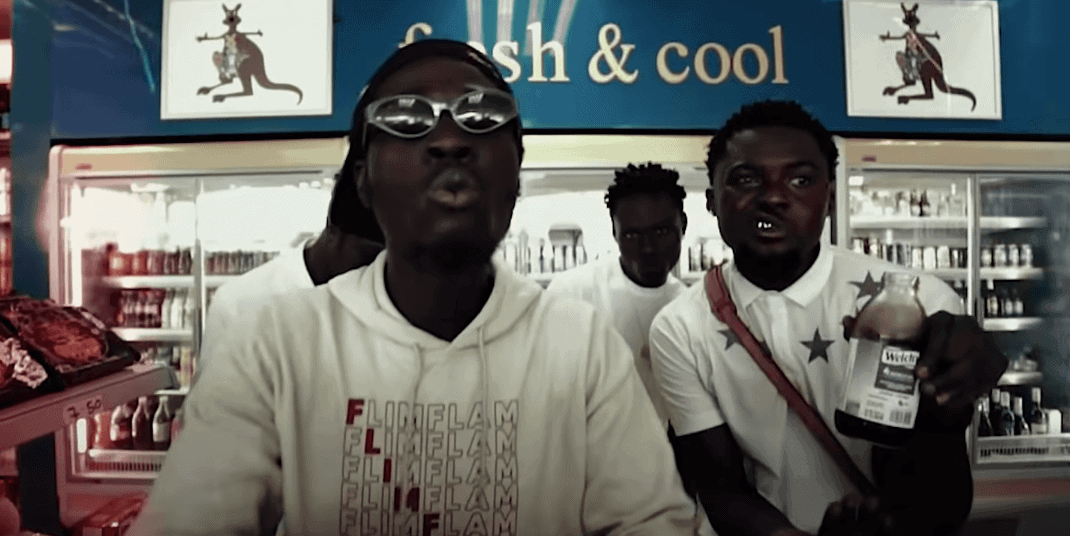
Kumerica – simply forged from a mash-up of Kumasi and America – was coined by the young people of Kumasi to illustrate the how their lifestyles were less reflexive of their Ghanaian location and more closely related to the opulence presented by American stars, from their dancing chains, to their fancy sports cars, and their wardrobes full of luxury designer items. Sensationalised on the internet earlier this year, Kumericans, as they’re called, are not only seen to co-opt American style, but they also adopt the American style of speech, from their slangs to the ubiquitous American accent.
Whilst in everyday life, mimicking another cultures and lifestyles is worth note and attention, when it comes to music, taking inspiration from genres outside of one’s immediate vicinity is a practice that has been ongoing for as long as music has been alive. So, it is no surprise then, that with the growth of the Kumerican community came the growth of a bubbling musical movement that is equally as inspired by the US, this time, drill sound blowing up in Pop Smoke’s New York.
As with all drill music, the lyrics spewed through each Kumerican rap track are typically brutish as they narrate the violent reality of the Kumasi streets. In the UK, Mayor of London Sadiq Khan once blamed the rise of the drill scene for increased knife crime in the country’s capital; in Ghana, as the gang violence, drug affiliation and general criminal activity commonly associated with drill is mimicked amongst Kumasi drill rappers, the introduction of the new genre to Kumerica has similarly been accused of inciting violence in the Garden City of West Africa.
Whilst Kumasi Drill (led by Reggie, O’Kenneth, Kwaku DMC) seems to be the only drill movement in full form on the continent, the sound is an everyday one to African ears, owing to the ubiquity of Western media. So, when our own artists try their hand at drill – whether one-off, or taking on the genre’s sensibilities as their own artistic style – we are gifted with familiar sounds through familiar tongues, offering a more personal experience to the foreign-helmed sonance.
From South Africa (where Chicago drill has been studied by rappers for many years now) Nigeria, Mozambique, Kenya, Congo, rappers are interchanging English and their indigenous languages to the tune of UK drill, to a standard well worth our recognition. In applause, NATIVE have compiled a list of ten tracks that have caught our attention – for those who don’t know about drill on the African continent, get hip to these guys now. And if you’re all about it? We’d love to hear who you guys have got on your African drill playlists, and which country they’re repping. Get me lit!
According to Wallz, he is “the best rapper from Ibadan.” Though most artists we’re familiar with hail from Nigeria’s commercial capital, with the occasional Port Harcourt or Abuja star cropping up, everybody who pays attention to music in Nigeria has heard about the bustling rap scene growing up Ibadan. So, it is quite a claim that Wallz asserts, but from his new EP, ‘Big Bad‘, he is definitely a worthy contender, putting up the right kind of fight to take home the title.
Opening with a short, sweet, but still relatively dramatic title track, “Big Bad” is followed by the real head-bopper “Next”, a smashing production from one of drill’s biggest champions, Chris Rich Beats, who pads the song with sinister strings and and dark sliding bass notes. After these two solo takes, Wallz convokes a whole host of familiar names to assist him in delivering the Ibadan’s most talked about EP (one assumes is his intention).
“PSA” welcomes MOJO and Blaqbonez on a similarly as gritty track as the song that preceded it – a comfortable spot for the Chop Life Crew frontman, MOJO. For the afropop number, Oxlade and Lamii’s presences are requested, the latter stealing the show with a stellar closing verse. Similarly, on the project’s final track, “Money”, Fresh L’s verse, which comes up last, emerges as the highlight of the song, though Wallz and Tobby Drillz do hold their own.
Repeating throughout the album that he doesn’t like stress, Wallz has certainly set himself up for commercial gain on ‘Big Bad‘, so earning the life that affords no stress is getting less far-fetched for the Oyo native. Stream ‘Big Bad‘ below, and help Wallz achieve his dreams.
We’ve had music to fall back on through all the heartbreaking moments of 2020. Despite the ongoing pandemic, civil unrest, and the seemingly endless barrage of bad news, musicians have continued to capture our collective pop consciousness with new songs that either reflects our present reality or provide an escape from it. As pivotal as music has been to us getting by, it can be difficult to keep up with all the diverse streams of new releases, so we’ve created this column to keep you, our readers, up to date with all the finest tunes coming out of Africa and the rest of the world.
During the week, we brought you new releases from Remy Baggins, Supa Gaeta, Rhamani and more. On a packed day for new drops, our weekend curation includes the long-awaited, Davido-assisted remix to Olakira’s summer hit, “Maserati”, a collaborative single from Reekado Banks, Kida Kudz and EO, the lead single off Runtown’s coming album, and more. Dig in and enjoy.
Olakira – “Maserati [remix]” (feat. Davido)
Following its June release, Olakira’s “In My Maserati” became a dark horse in the running for song of the summer, racking up millions of streams (over 2.8million on audiomack alone) on digital streaming platforms and effectively becoming his biggest song yet. The song’s buzz kicked into a higher gear after a Davido-assisted remix was teased a few weeks back. The remix, along with an accompanying music video, is now out, and as expected, Davido absolutely kills it.
With the beat and the song’s showy flirting remaining the same, Davido’s appearance provides a renewed sense of novelty to “Maserati [remix]”, as the superstar references his affluence in resounding fashion. “Girl, I’m ready if you’re ready/Lasgidi to yankee for this pandemic/girl, I get dollar me I wanna spend”, he sings with a playful energy typical of the generous pop star. Even though his contributions remain unchanged, Olakira continues to act as the song’s anchor, with his indelible hook remaining as earwormy as the first time we heard it.
Runtown – “Kini Issue”
Since he dropped “Body Riddim” in late January, Runtown has been relatively quiet on new music front, only surfacing for the occasionalfeatureappearance. But with the recent announcement of an impending album, the singer has clearly been working, kickstarting the rollout by sharing the lead single, “Kini Issue”. Digging into his familiar lover-boy bag, Runtown delivers a romantic set over summery piano chords, sunny guitar riffs and bouncy afropop drums. “Why any time I dey with you, I can’t focus/why all of a sudden me I can’t go”, he sings on the chorus, marvelling at the spell his lover has brought him under. “Kini Issue” doesn’t break the mould for Runtown, but it solidifies him as one of the best at dishing out catchy love-struck songs.
L.A.X – “Go Low”
Following the release of a few loose singles in the past few months, L.A.X is set to close out the year with his sophomore album, ‘Zaza Vibes’. Ahead of its November release, he’s shared the third single off the album, “Go Low”, and it taps into the Amapiano movement from down south. Clemzy helms the mix of airy synth pads, wide bassline and shimmering keys, serving as the perfect accompaniment for L.A.X’s playfully chanted lyrics, where he urges listeners to dance and “go low”.
Killbeatz x King Promise x Ofori Amponsah – “Odo Nti”
Killbeatz has been one of Ghana’s foremost music producers for well over decade, with a sprawling credit list that includes R2Bees, Sarkodie, Fuse ODG, Mr Eazi and much more. The producer will be headlining his very first project, ‘Love and Happiness’, a joint EP with veteran singer Ofori Amponsah and bonafide pop star King Promise. Preparing for the tape’s release this November, the trio have shared the lead single, “Odo Nti”, a mid-tempo cut that establishes the creative relationship between them. Killbeatz laces the beat with highlife-inspired guitars and a buoyant bassline, while King Promise and Ofori take turns promising eternity to their respective love interests.
Reekado Banks (sort of) promised fans a new LP tentatively titled ‘Daddy to Many’, as far back as last year. It isn’t clear whether the singer is still looking to put the album out, but he has decided to sate the ears of fans asking for new music. “Need More”, his new single, taps into the slinky vibe of afroswing and it features UK-based rappers Kida Kudz and EO. Mirroring the playful hedonism found at parties, the song finds all three artists boasting of the credentials that makes them the life of the party. “Henny in my cup, need more/got a lot of racks”, Reekado sings on the catchy hook, while Kida and EO follow with light-hearted verses of their own.
When it was announced, many expected “Follow Me Reason”, the new collaborative single between Zilla Oaks, Psycho YP and Eeskay, to be a thumping banger featuring hard-nosed bars tailor-made to dunk on opps. However, the trio have inverted those expectations into something entirely different but just as impressive. Backed by Jaylon’s sunny production, they channel their softer sides into a romantic bop. Although there’s still a fair bit of boasting on the song – “shoot niggas like a nigga Spike Lee/and the juke drizzle like a nigga Ice T”, YP raps – they do it in service of wooing their love interests. With their lively performances, “Follow Me Reason” plays into the trope of hard guys being openly emotive when they meet someone they like.
[mc4wp_form id=”26074″]
Dennis is not an interesting person. Tweet Your Favourite Vigro Deep Songs at him @dennisadepeter
Tems’ rise in the last couple of years has been uniquely expeditious. With only “Mr Rebel” behind her, Tems was already one of the more closely watched emerging artists as we entered into 2019, and as the year went on, thanks to multiple performances and two more magnanimous tracks, Tems secured herself as the newcomer venerated as highly as longer-established acts.
Only in the game for two years, it isn’t surprising that Tems is only just releasing her first body of work, though the fanfare around ‘For Broken Ears‘ might encourage you to think so. What is of note and extremely commendable and emblematic of her captivating talent is that Tems is so revered at such an early stage of her career. From her features to the industry interest, and fans clamouring for new releases, Tems has remained highly coveted so far, and with the release of this debut EP, she knows she is not about to let up anytime soon. The pressure is on.
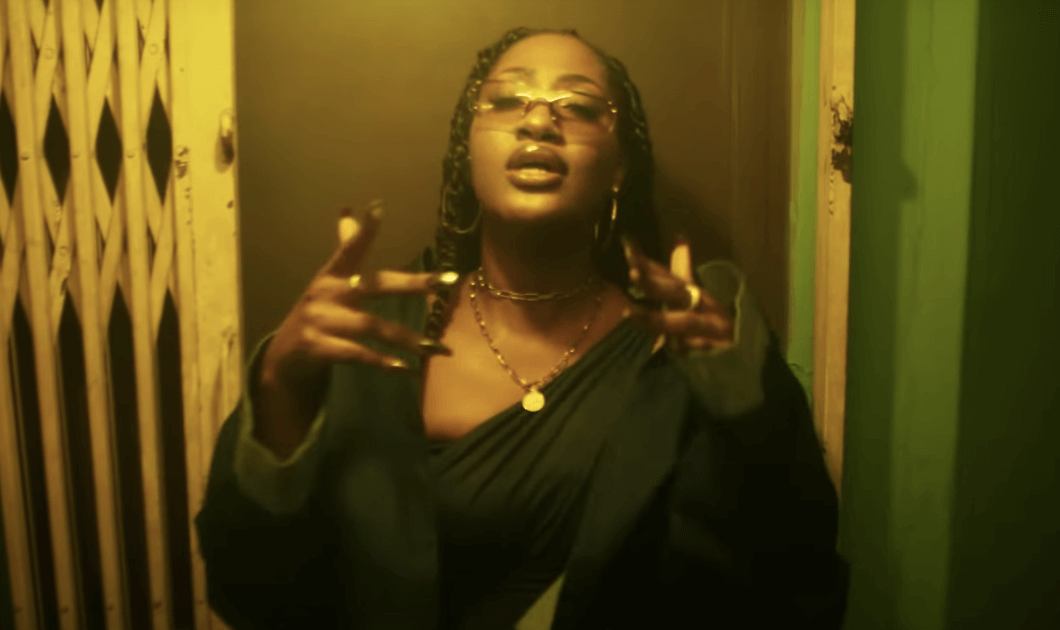
We have all been looking forward to ‘For Broken Ears‘. The advent of its lead single last week, made fans even more eager for Tems’ first body of work, and to get our senses even more prepared, yesterday she released the music video for the lead single. Directed by Ademola Falomo, produced by Ladder, Lex and Booker, “Damages” sees Tems float the the trap house with her girls. Playing board games in the afternoon turns into getting dressed and dancing to Tems’ latest single in the night time, in the simplistic video for “Damages”.
Surrounded by her friends in “Damages”, later in evening, at midnight, we got to see, well hear, Tems go at things all alone (though all her singles so far have been solo takes, so her no-features tracklist didn’t come as any surprise). Upon first listen, my conclusion is that Tems has delivered a timeless piece, one that I’m going to return to tomorrow, in five years and probably in another 15 when my daughters are finding their feet in the adult world. To help you draw your own conclusion, here are my ramblings from my first ever listen to Tems’ ‘For Broken Ears’. Read on:
“Interference”
I love this intro, it goes straight into her powerful voice, although I’m a bit confused because I cannot for the life of me discern what she’s saying, is she talking about disturbing a someone? Tems, you fling the doors open!!!
I love the simplicity of this song, this is the perfect introduction for a Tems debut, her voice is right at the front and her poetic lyricism is set up to be the champion of the song, as it should be. “If you couldn’t be reminded baby girl I’m gon’ remind you now” – this is such a hard line, catch me and my middle fingers shouting it everywhere! The ending feels a bit dragged on, but I like that we’re given time to contemplate on all Tems has said.
“Ice T”
I like the key change, it’s the same chord progression but in a different key and pace – I think that’s very clever and I’m hearing notes of “Mr Rebel” which remains my favourite Tems track to date (maybe ‘FBE‘ changes that?). I hate that I connect so much to these lyrics, not because I’m sad about waiting for a guy but because Tems is a queen and deserves better than having to assume a lover wants her. I thought this song would have something to do with Ice-T of Ice & Coco (maybe there’s a reference I’m missing, will have to listen again) but it’s about making ice tea out of lemons. Not lemonade out of lemons? Fair, shout out to Lipton.
The production is simple, shakers are nice and soft, the bass on my speakers is all the way up but so I’m really feeling the kick. I love these lyrics, they’re quite funny. This chorus chanting is not what I would ever have expected from Tems, I can see she is having a lot of fun with this song, talking about raspberries, ginger, vanilla – this is kind of chaotic but it’s a whole lotta fun!
“Free Mind”
I love this pattern, but this intro is a bit dragged. This is such a powerful song. This will really resonate with a lot of us at this point in time, there is so much going on not even just in terms of the world but in personal lives, from talks with my friends and even talent I am getting the impression that everyone is feeling at war in mind; we are definitely looking forward to feeling the peace you cannot buy.
This is my favourite so far. I love her similes for how free she wants to be… ok wow, that sudden flip, I did not see coming! So this is a two-sided record? Okay, Free Mind is hashtag that track. The wistfulness of this side of the production is like yeah, very… emotive ?
“Temilade Interlude”
Awww, this is so sweet! Her mother knew she was a girl before anyone believed it. And she defied the Yoruba tradition of the husband’s father giving names. She was literally written in the stars, someone pass me a pack of Kleenex please.
“Higher”
I love the kick drum on this, ah and she referenced “Kini Big Deal”, Neato T, my hero. “Would you cry or would you try to get me? Tell me now I need you to be clear. I WILL WAIT FOR YOU!!!” Wow, the way these records resonate with me. “Why you made a war that we’re fighting“… ok Tems is speaking my truth, I absolutely love to hear it. She is singing about running away, which is exactly what I have been planning to do (no joke, I look at flats in Osaka in my free time), and I’m sure everyone feels it too when life gets a little too complicated. Okay this guitar that has replaced the kick as absolutely stunning, I wish it were louder, like a full on guitar solo – now that would be epic.
“Damages”
The entry into damages is very harsh, but in a nice way – it emphasises the juxtaposition of the two tracks, between the subject matter and the general vibe of the song. “Higher” is with the slower pace, whilst “Damages” is a mid-tempo with a higher bpm than the preceding song, a punch that is padded with the song’s dramatic entry. Okay, “Damages” is making me miss summer already, it’s such a vibe. Hold on whilst I worm my hands into the air with that brown liquor in my cup. Spax’s production is taking me back to 2016 Drake, but no I’m feeling this is very Party, right now thinking of “Only You”, but I’m sure there are more PND songs along these lines. Hardly matters, I am in love.
“The Key”
I like the wind on this song, is it a western flute or one of its African sisters? Okay, I am feeling the melody for this chorus, it wasn’t predictable and I really appreciate that. “Listen when they call they call my name”, I like that she is already feeling herself and her success – this is what I call “Superstar” energy, debut project but the artist can already prophesy that the whole game is with them and for them. It was facts for Wiz and is facts for Tems, she is going to be at the top, the point where everyone knows her name. I love that she already brags about it.
Final thoughts
Okay, that was an abrupt ending, but I’m not mad at it. I like the length of that project, I definitely feel ready for it to be done, I’m not wishing there was more and nor did I wish for it to end. I feel like this project might get mixed reviews, but I think that would depend on your expectation. ‘For Broken Ears‘ is a delectable project, for you to put on and vibe to, it doesn’t feel like it was ever intended to be a blockbuster debut that commands attention for weeks on end. In this day and age there is so much music we are consuming, some good, some bad, some forgettable and some you’ll always want to return to; Tems has given us music that we will always want to return to, timeless music. It doesn’t have to go the hardest right now, because it’s gonna go hard forever.
Featured Image Credits: Tems/YouTube
Wojumi Is A Bad Bitch And She’s Going To Brag About It. Tweet Her Your Latest Cultural Exploits @Dewoju
Since its formation back in 2010, SA music duo Black Motion have been on the cutting edge of South African house music, pushing the ledger as one of the more inventive acts within the broad genre with each new release. The producer/DJ group, comprising Thabo “Smol” Mabongawe and Bongani “DJ Murder” Mohosana, released their debut full-length, ‘Talking to the Drums’, back in 2011, and they followed up with four more LPs over the course of the last decade, building one of the most significant catalogues in African house music.
This year, the duo have been celebrating the decade anniversary of their formation, hosting a 2-hour virtual performance in June, and hosting a somewhat low-key live event in August. All of this has built up momentum for their newly released sixth studio album, ‘The Healers: The Last Chapters’. Due to its subtitle, there were initial speculations that this might be Black Motion’s final album, but the pair have quickly debunked the rumours. “Unfortunately for some and fortunately for others, there’s no split. The Last Chapter simply says we’re closing the [last] 10 years”, they have stated.
https://www.instagram.com/p/CFglck9lHD1/
According to the duo, ‘The Healers: The Last Chapter’ is the closing arch to the narrative they started with their first work. Across their albums, Black Motion has established a spiritual connection to their music, using each full-length to provide insight into their progression to becoming “traditional healers” through their music. As the final part of this narrative, ‘The Healers: The Last Chapter’ is a hefty and befitting closer, a sprawling album that stands at 41 tracks long, with 14 of them being radio edits of initially longer songs.
‘The Healers: The Last Chapter’ is packed with guest features from Sauti Sol, DJ Maphorisa, Kabza De Small, Msaki, Ami Faku, Sun-El Musician and many more. “Each album represented a chapter, so we’re going on to a new book now”, they explained to Apple Music of the album’s overarching significance. “If you want to understand us, you’d have to understand us via this book. If you look at it as a journey, you’ll understand our story”.
Nasty C is making big international moves. Earlier this year, the South African rapper signed a venture deal with the prestigious hip-hop label, Def Jam, ahead of his recently released, brilliant third studio album, ‘Zulu Man With Some Power’. The deal clearly aligns with Nasty C’s global aspiration, as he’s gone on to release the ‘Zulu’ mixtape hosted by DJ Whoo Kid, appeared on American late night TV, while ‘ZMWSP’ contains cross-Atlantic features from Ari Lennox, Lil Keed and Lil Gotit.
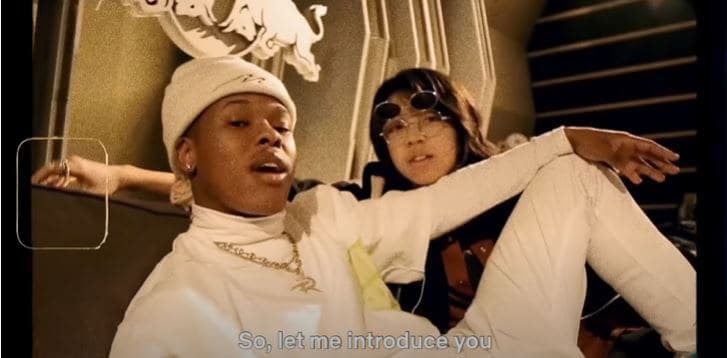
All of these moves indicate that Nasty C is serious about his role as the foremost ambassador of rap music coming out, and he isn’t just focused on North America. Last year, he spent some time in Japan, during which he soaked in parts of the local culture, collaborated with several of the hottest artists out there, and got to experience the East Asian country’s vibrant creative arts and rap scene. To immortalise the trip, the rapper has shared the documentary, “Zulu Man in Japan”, a 48-minute visual experience of Nasty C’s journey and artistic exploration of Japanese culture.
Officially announced with an official trailer last week, “Zulu Man in Japan” was created in partnership with Red Bull Africa and is now available for on-demand viewing on Netflix. Going by its trailer, the documentary sees the rapper living carefree, exploring the country at night time, indulging in local fashion and high art, recording music, attending high octane concerts and much more, sharing all these insightful experiences with a cohort that includes Nigerian-American designer Ugo Mozie and manager Colin Gayle.
“I’ve always had this feeling that I was meant to visit Japan”, Nasty C says of the seemingly eye-opening and thoroughly entertaining trip. “I could never really explain it. Perhaps it’s because I’m not just a rapper, I’m an artist and I feel like Japan is the hub of art. Shout out to Red Bull for giving me the opportunity to expand my knowledge and creativity as far as art, fashion and music go”.
Against the recent acquisition of Netflix’s first ever movie from a Portuguese-speaking African, Nicolas Nhalungo explores the history of the Mozambican film industry, explaining how Netflix might be the key to Mozambican cinema finally living up to its intended purpose.
New York Film Academy (NYFA) alum, Mickey Fonseca’s latest project, Redemption has garnered international recognition since its pivotal release last summer. Selling out across Mozambican cinemas in the days following its July 18th premiere, a year later, the film has now been made available for global streaming on Netflix. On July 30, 2020 the young director achieved a feat that no other director has to date; and Redemption has become the first-ever Mozambican film to be featured on Netflix, the world’s largest streaming platform that caters to around 190 countries. It’s also the only film in Netflix’s catalog from a Portuguese-speaking African country. Written, produced, and directed by Fonseca – who co-owns his own filming production company with Pipas Forjaz, Mahala Films – this achievement serves as evidence of the impact digitalisation has had on the African continent, particularly in extending resources to African creatives.
Redemption (Resgate in Portuguese) is one of Mozambique’s few independent films. Edited in South Africa and Portugal, it follows the life of a young man dealing with the aftermath of his involvement in criminal affairs. The film highlights ongoing issues within Mozambique, particularly the kidnapping of entrepreneurs. Screened around the country and in Portugal, with a relevant message and stellar production, Redemption received critical acclaim, so much so that the creators were motivated to distribute the film to a wider audience. When picked up by Netflix with the hopes of a wider reach the film was dubbed in English, and its distribution extended to Kenya.
To truly understand the significance of this milestone we must examine the history of the film industry in Mozambique, and the politics behind it. In the early ‘70s, FRELIMO (the Mozambique National Liberation Front) and the country’s newly appointed president, Samora Machel, believed that films could be an incremental tool for its people. Creating a National Institute of Cinema (INC) – Mozambique was the only African country to have a film institute instated immediately after independence – President Machel pioneered a cultural wave in the country, founded upon film. Due to the country’s Marxist-Leninist ideology, that attracts creative workers with its socialist philosophies, the Mozambican INC were able to attract several filmmakers, including Portuguese-Brazillian director, Ruy Guerra (Mueda, Memoria e Massacre), Jean Rouch (Moi, un roi) from France, and the French-Swiss film critic, screenwriter and director, Jean Luc Godard (Bande À Part). These three were part of the most prominent cinematic movement in the 1960s and were privileged enough to be part of the birth of cinema in Mozambique.
Led by the President, with the support of the ruling party, the nation went on to produce films that were intended to empower and mobilise the Mozambican people, though, counterintuitively, the moulding of Mozambican cinema was primarily conceptualised by foreign filmmakers, since Mozambique did not have the resources to forge their own cinemascape alone. To boost the local film industry, President Machel’s first cultural mandate was to establish the Kuxa Kanema weekly newsreel program, sharing this via the few newly erected cinemas that were scattered across the country and mobile units provided by the Soviet Union, which enabled movies to move around the country in order for cinema to reach the masses.
Many of the earliest films produced in the nation are difficult to find these days, as many were lost as a consequence of a socio-political transformation – consequentially, along with the loss of the captured footage of the first 11 years of independence, so has that period of time been forgotten from history. In part due to the socio-political transformation, which came with a lack of financial motivation to continue investing in the industry, economic difficulties in the country, and perhaps even the absence of acquired knowledge, unlike its neighbouring country South Africa, or further north, Nigeria, Mozambique still only has a relatively small but growing film industry – it’s comparatively smaller movie industry could also be attributed to a later independence. Today, Mozambique still has only a handful of functioning theatres across the country, but that has not stopped the country from hosting a number of annual film festivals. The Dockanema (the country’s first film festival in 2006), Kugoma, and The European Film Festival, thrive in the country and also invite hosts of international audiences. Mozambique film festivals such as. Additionally, Mozambique has proven to be an attractive destination – known for its colonial architecture, tropical islands, and large biodiversity – for filming; in the past, films like Blood Diamond, Ali, Diana, Generation Kill, and The Interpreter shot scenes on the picturesque landscape. Now, with the acquisition of Redemption by Netflix, Mozambique has now become a destination for digital consumption, as well as scenic exploration or festival going.
Over the years Netflix has been pushing to obtain more African media, inviting African creatives to tell their stories, giving them a platform to share the multiple African perspectives that are so often silenced. Looking to be a leader of inclusivity and diversity in our global society, by featuring a film like Redemption in their catalogue, Netflix continues to live up to their aims, however the question can still be asked, are Netflix doing enough?
Reportedly 5-10 African films are added monthly, most of which come from Nigeria’s booming movie industry, Nollywood, however; and whilst Netflix brand themselves as an inclusive streaming service, they’re yet to host in the majority of African countries. Most African content currently comes from Ghana, Nigeria and South Africa, the largest African film industries on the continent. In this regard, African cinema is still one dimensional in the way we are presented to the world, with the West African perspective dominating what is consumed as ‘African’ media. Still, as the streaming giant takes small steps to achieve a truly global catalogue, Netflix is also setting itself up to be the vessel that delivers African cinema to a global audience, acting as a catalyst for local industries to finally reach their full potential, or in the case of Mozambican cinema, realising its intended purpose.
Although few, films produced by Mozambican filmmakers are not simply produced for entertainment value, but carry with them important messages, reflecting the vision pioneered at independence by President Machel. Post-independence presented a great need to deconstruct the narratives produced by Portuguese colonists of Mozambican people being depicted as dependent, incapable, and small-minded; Machel hoped cinema would (re)educate the masses. Fonseca’s Redemption achieves this, and through its success, the film promotes and celebrates this quality in Mozambican cinema on a universal scale. In a country that gets relatively little support for creative endeavours, having an awarding film featured on a streaming service as far-reaching as Netflix presents multiple opportunities, paving the way for more films like it to garner the international critical acclaim Redemption boasts so far.
Granted, with the global stay at home mandate and people being locked at home, able to binge from dusk to dawn, it was in search of something new and different that many stumbled upon Redemption. Regardless of how the film was found, be it fate or chance, mistake or design, Mozambican cinema has finally been given the fuel to grow beyond her borders into the socially empowering tool it was always meant to be. Redemption stands at the helm of this movement, but it shouldn’t stand alone; these are the top five films this writer believes deserve a spot in pushing forward this Netflix-assisted digital charge:
Comboio de Sal e Açúcar (2016)
Directed by Licinio Azevedo
On a dangerous train journey through war torn Mozambique, civilian passengers witness the painful duality of an ill-disciplined military force, who are on board with the purpose of protecting the passengers, fighting off the rebel army lurking in the bush, but also use their status to harass the innocent civilians. In the end, they must all work together to repair the sabotaged train track.
O Ultimo Voo do Flamingo (2009)
Directed by João Ribeiro
The locale of Tizangara, Mozambique is plagued with a number of mysterious explosions that have taken the life of several soldiers in a short space of time. To investigate the concern, a Portuguese soldier Massimo is appointed to the case, accompanied by a local, Joaquim who is charged with translating both the words and the facts, in order for clarity to be gained and the mystery solved.
Mueda, Memoria e Massacre (1978)
Directed by Ruy Guerra
https://www.youtube.com/watch?v=1YLk3-uCawU
On 16 June 1960, acting out their orders from the Portuguese governor, the Portuguese army executed 600 inhabitants in Mueda, Mozambique. Said to be Mozambique’s first feature-length film, Mueda, Memoria e Massecre blurs the lines between documentary and fiction as it narrates this the harrowing chapter in the history of Mozambique, a moment which is popularly connected to the birth of the national liberation struggle that ensued in 1994.
Virgem Margarida (2012)
Directed by Licinio Azevedo
The year is 1975, Mozambique is being reborn as an independent nation. Not without violence and trauma to its many citizens. It is in this politically turbulent time that a 16-year-old Margarida is caught between the crosshairs of a plight to cleanse the streets of Maputo of its prostitutes. Taken by mistake, Margarida’s story draws on real life accounts from women living through this particularly androcentric period in Mozambique history.
Kuxa Kanema: The Birth of Cinema (2003)
Directed by Margarida Cardoso
Kuxa Kanema: The Birth of Cinema is a documentary on the INC, President Machel’s vision, the INC and Godard’s proposal to set up an independent television network as the INC struggled to get up and running. The film, which was released on DVD and has played at a number of film festivals, delivers rare footage from INC original films, and tells the compelling history of Kuxa Kanema (which translates to The Birth of Cinema).
***
As an aspiring Mozambican creative, it is inspiring to see new opportunities for my country to exhibit our many talents. The birth of Mozambican cinema may have been years ago but Netflix has brought an exciting prospect as we may possibly witness major growth in Mozambican cinema. As Mozambican films gain international recognition it is time for the country to invest more to help local creatives and to propagate the Mozambican narrative.
Nicolas Nhalungo is a writer and researcher whose interests include mental health, intersectional feminism, pop culture, travel, fashion and sustainability.
Born in Montreal, Canada, Nigerian/French-Canadian singer, TÖME is the neo-afro-fusionist artist, who refuses to slow down for anyone or anything (not even corona). Releasing her sophomore album, ‘Bigger Than 4 Walls‘ earlier this year, TÖME has rather swiftly moved on to a new chapter ushered in by a three-pack single release, “I Pray”.
Laden with inspiring quotations and messages of love, “I Pray” is a spiritual gospel song that leans on God for guidance. Speaking with NATIVE, TÖME revealed what in particular she has needed God’s protection from this year.
What (or who?) have been your biggest adversary this year?
Most definitely COVID-19 has been my biggest adversary, as well as my bad habits of procrastination.
Besides prayer, what other methods do you use to overcome your demons?
Meditation really helps me calm down, yoga, [or] just [taking] deep breaths and moments of quiet; these practices are not as consistent as I’d like them to be however it is something I still try to do as frequently as possible to help me centre myself and focus my energy on positive thinking. What are your preferred methods for lifting your spirits?
Taking deep breaths and just recollecting my own memories and thoughts of the moments I appreciate the most. Making music is a great way for me to find inner peace. Working on an acting script is really uplifting and my social life, being around friends is always good and healthy for my mind and mental. Who are you sending love to today?
My family.
The primary single is a reggae-soaked number, fittingly featuring a childhood hero, Sean Kingston, who last year came back to popular attention in Nigeria with his collaboration with Davido, “Peace of Mind”. Following her alluring musings that signal TÖME’s entrance onto the track, the singer, narrates of how different adversaries wish to knock her down and take her sight, but she says “No, no fighting, no cussing, no war,” instead encouraging “love and affection for all.“
With compelling wails through the first half of the chorus, TÖME gets on her knees and prays to the Lord for mercy to lead her, help her fight her demons and give her strength so she is not broken down by the forces working against her. Sean Kingston quickly snatches the mic after TÖME’s magnanimous chorus, contrasting her passionate cries to God with a smooth, laid-back verse where he discusses his troubles involve financial difficulties, takes accountability for his sins, and ultimately thanks God for the good life he has lived over his thirty years.
Following TÖME’s second chorus is an unduly lengthy outro, the highlight being a brief duet where TÖME sings over a part of Sean Kingston’s verse where he praises God for the blessings that He has bestowed upon him. In a press release statement, Sean Kingston expressed his gladness to have worked with TÖME on “I Pray”, saying:
“TÖME is an incredibly unique artist with a beautiful voice, I really vibed with this song and I respect the fact that she is an independent Afro artist on the rise. I’m happy to be a part of a record the world truly needs right now”
The next offering in the pack is the extended version of the track, that replaces Kingston’s vocals with a second verse from TÖME herself. This take is absolutely impeccable. Exhibiting the versatility in her vocal skills, as she dextrously changes pace and rhythm, TÖME encourages us not to be discouraged from following our dreams, and not let outside voices control us with their purported “advice”.
To fill out these three minutes, TÖME ends the extended version of the track repeating a prayer to God, “please have mercy on me,” before leaving room for the BRYM beat to play us out. The final track in the pack is a French rendition of the extended offering. Boasting a worldly following, TÖME appreciates her own multinational, bilingual upbringing with this trifecta of singles.
Featured Image Credits: TÖME
Wojumi Is A Bad Bitch And She’s Going To Brag About It. Tweet Her Your Latest Cultural Exploits @Dewoju
Wizkid has kept us waiting long enough, but it is now officially Starboyszn. Just last week, Wiz gave us a second offering from his much-awaited album, ‘Made In Lagos‘, alongside the artwork. Now he’s returning to the album’s lead single, to deliver an eye-watering music video for the H.E.R-assisted “Smile”.
After the tumultuous year we’ve all collectively had, one either comes out of the other side in bits, or as a calm, still whole. From the music we’re getting from him, it seems as though Wizkid has chosen the latter, and his recently released video for “Smile” is enough indication of that. This year has thrown innumerable trials our way – collectively the world is hurt and individually we are all trying to navigate these unprecedented times – and the difficulty of it all has left us with very little to smile about. But in preparation for his forthcoming album, ‘Made In Lagos‘, Wizkid is reminding us that though times are looking bleak, we will always have something important thing to smile about: each other.
Canvassing groups of friends, couples young and old, aunties bright in their iro, buba and gele, the dreamcatchers, Banky Wellington and even a man with his barber (an ever precious bond that can’t ever be broken), the video for “Smile” depicts the joy of interpersonal relationship, as all these different groups of people smile and have fun together.
Dedicated to Wiz’s three kids, Bolu, Ayo and Zion all make an appearance in Meji Alabi’s latest masterpiece, which also spotlights other parent-child bonds, to remind us of the first love most of us ever felt. “Smile” is a heartwarming song which has now been adorned with a bountifully cheerful video that will life your spirits instantly.
Watch the video now, and every time you need to “Smile”:
Whoisakin wants everyone to pay undivided attention to his music. The singer’s breakout has been characterised by an impressive debut EP, ‘Full Moon Weekends’, and a preference for physical anonymity. It’s not a common trope in pop music, but a few artists have concealed their identity in the beginning stages of their career—e.g. the Weeknd, H.E.R—getting initial props for their talent before putting their faces out there.
Whoisakin is following the same route, albeit with his own twist, using an animated hybrid of wolf and a young man as his avatar. The “Wolfbiker” image adds a layer of mystique to the title of his EP, representing the immersive style of music he makes, which is perfect for owl hours listening. “I’ve always been nocturnal and I wanted to make a tape that depicts my love for the moon”, he told us back in June as part of our Fresh Meat picks for that month. A blend of emotive storytelling and musical choices that intersect between Afropop and contemporary r&b, ‘Full Moon Weekends’ has captivated a lot of ears, including mentor Mr Eazi, who he’s now working with via the #emPawa30 artist incubator initiative.
https://www.instagram.com/p/B-u8JKwDcqs/
Keeping up the momentum for his EP, Whoisakin has dropped the animated video for the opening track, “Magic”, which features another Fresh Meat alum, Olayinka Ehi. Based on a real life situationship, the song portrays the complicatedness of differing intentions between love interests, and the hurt that follows when the only compromise is to part ways. “Even though I thought the relationship had potential at the early stages, she never felt the same way and it was just “vibes” for her”, the singer explains of the scenario behind the song.
The animated video for “Magic” is a dramatic depiction of the song’s content, while it also continues to lean into Whoisakin’s anonymous mystique. Put together by YX Animation, we see Wolfbiker physically fight through robots to get his interest, representing the intensity of his affections, however, Olayinka Ehi’s animated character demands some space and turns him down outrightly at the end of the video. Eye-catching and riveting to watch, the video is another timely reminder that not everyone you like will like you in the same way, and that’s very fine.
Watch “Magic” here.
Featured Image Credits: YouTube/Empawa Africa
[mc4wp_form id=”26074″]
Dennis is not an interesting person. Tweet Your Favourite Vigro Deep Songs at him @dennisadepeter
We’ve had music to fall back on through all the heartbreaking moments of 2020. Despite the ongoing pandemic, civil unrest, and the seemingly endless barrage of bad news, musicians have continued to capture our collective pop consciousness with new songs that either reflects our present reality or provide an escape from it. We know it can be difficult to keep up with all the diverse streams of music, so we’ve created this column to keep you, our readers, up to date with all the finest tunes coming out of Africa and the rest of the world. These are the songs you absolutely need to hear.
Though it has been a slow week for music releases, we’ve made sure to capture all the highlights with our Songs of the Day curations. We started this week’s curation for Songs of the Day with new music from; The Cavemen, Skepta, L3, and Michael Phantom, Eugy, Toyé, Sir Dauda, and Simi. Today, we are featuring the new releases from Remy Baggins, Psycho YP and MOJO, Ghanaian singer, Supa Gaeta and Oxlade, Rhamani, and more for our mid-week curation and you can enjoy them below.
Remy Baggins – “GBOJU!” Feat. Psycho YP, MOJO
Remy Baggins has consistently represented Nigeria’s anime fandom by making reference to the Japanese cartoon culture on each of his 3 projects. Just like his last EP, ‘Sakura’, his latest project, ‘Amaterasu’ gets its title from the ninja anime, “Naruto”. As a result, he’s able to tap into his more forceful elements for “Gboju!”, one of the standout tracks from the tape where he features Psycho YP and MOJO to deliver cocky brags.
Tell produced the beat for “Gboju!” with the trendy drill bass that sets a frenzied backdrop for the aggressive performance from the artists. With each artist performing threatening lyrics, the video Kelvin Nuel and The CRWD directed captures them looking menacing in the streets. Remy Baggins puts on a ski mask in some shots while Mojo smokes a blunt and Psycho YP points gun fingers at the camera. Though Remy Baggins was all about love on ‘Hentai’ and ‘Sakura’, “Gboju!” reflects a more hardcore Baggins.
Supa Gaeta – “Text Me” Feat. Oxlade
Ghanaian singer, Supa Gaeta is gearing to release his new EP, ‘SUPA SZN’ in the coming months. While fans anticipate its release, the singer has shared the tape’s lead single, “Text Me” inspired by his experience from the pandemic-induced lockdown.
Singing “It’s a lockdown thing/ Facetime me, make I run that thing” over the breezy afropop production, the song continues the genre’s romantic conventions as he expresses his intimate feelings for his muse. There’s also a guest verse from Oxlade who performs a melodic set that builds on the distant lover narrative as he joins Supa Gaeta to plead for a text from their muse. The accompanying visualizer made by YX Animation depicts Supa Gaeta and Oxlade in a Simpson’s style art while we watch both singers try to win their muse’s affection over the phone.
Whoisakin – “Magic” Feat. Olayinka Ehi
With his debut tape, ‘Full Moon Weekends’ Whoisakin proved that it’s possible to make upbeat and joyous songs that can still put listeners in their feelings. On the Olayinka Ehi-assisted opener, “Magic”, he delivered a sensuous r&b infused performance with lyrics that narrate his experience with unrequited love. “She said to me/Though it feels like magic/ I’d be on my way”. He has now shared the YX animated visualizer for the track and it depicts him in his wolf form as he rescues the animated Olayinka Ehi who plays the damsel in distress.
The visualizer video for “Magic” depicts Whoisakin fighting off some robots who attack Olayinka Ehi in the forest. However, just like in the song, he fails to earn her love and the video ends with him getting a door slammed in his face.
Rhamani – “Pepeni” Feat. Dahlin Gage
America-based Cameroonian singer/dancer, Rhamani has released a new single, “Pepeni” ahead of the release for his upcoming project, ‘Just Rhamani’. He had previously shared his self-produced debut single, “Legedis” and “FAWO” in 2018 and 2019 respectively, but while we wait for the tape’s scheduled release, he has given fans a new dance-driven single to enjoy.
“Pepeni” has an upbeat rhythm reminiscent of the Azonto era of afropop. Though the sound is no longer as trendy as it was, Rhamani invites us to recall its groovy appeal. He has built his fanbase around his dancing so his embrace of the dance-driven sound is hardly surprising. Ghanaian rapper, Dahlin Gage also contributes a rap verse that shows the genre’s range. By conjuring the throwback sound, “Pepeni” sounds instantly familiar.
[mc4wp_form id=”26074″]
You are meeting Debola at a strange time in his life. He wandered into a dream and lost his way back. Tweet at him@debola_abimbolu
Though he hasn’t been out of sight completely – thanks to a gentle stream of unmissable features, such as his ‘Pioneers‘ standout chorus on “I Swear”, his assists on Higo and Hvrry’s double take, “Company/Issues”, or his latest collaboration “Mentally” with Prettboy D-O – it has been almost a year since WANI delivered a single of his own. Having spent the year working on the second installation of his widely acclaimed debut EP, ‘Lagos City Vice’, WANI is finally out with his first official single this year, “All My Ladies” – an indication that he’s is ready to open up the floodgates to the ‘LCV‘ sequel, which the girls (and boys too) have been clamouring for, for years.
Dedicated to a particular demographic of his fanbase – the ladies – WANI’s new single is a thank you to the ones who have stayed on side, even during his long, unannounced musical hiatus.
“The hiatus was just to get the plan in motion for the next set of moves. I just secured a deal for ‘Lagos City Vice 2’, so I was waiting for that to be set before I released any music. Also, I wasn’t comfortable releasing music throughout the pandemic, I didn’t even feel like people were ready to [listen].”
Telling NATIVE of how he felt “the mood wasn’t ready” – now that outside is opening back up and people are more comfortably adjusting to the new normal , WANI believes fans will be more receptive to “All My Ladies” – WANI also expressed that with the weight of the year, it was also hard for him to get into the right mood to release music.
“This latest release, I wouldn’t even call it a single. It’s just something to show people that I’m still working. Give me a little bit of time, let me get the project ready for your guys. That’s literally the whole purpose of this release, and it’s a crazy song, so why not?”
“All My Ladies” is a celebratory release that closes out WANI’s previous chapter, introducing the next phase of Wani Wonder. However, as much as the track is a happy appreciation of his loyal fans, “All My Ladies” also warns the industry that now is the time to start support, because WANI is about to go. Having recently signed a deal with Platoon, WANI’s warning “if you got love, show me don’t wait till when I get on,” looks like one to be taken seriously and fast.
It’s like every 4th quarter I remember I actually have to drop . just singed a deal for Lagos city vice 2 but I’m going to drop ONE more independent record for you guys before then ok ?
“All My Ladies” is produced by Adey, who earlier this year, for his long-deserved spot in the limelight, called upon WANI to deliver “Fugazi”. Clearly a sound pairing, Adey’s production on “All My Ladies” matches WANI’s diverse musical palette. Journeying through musical history, Adey’s beat honours Nigerian hip-hop legends, The Remedies, through its subtle sample of their hit single, “Shako Mo”, before teleporting us to a deserted Colonial Street, where Nelly and Kelly hash out their “Dilemma” to the tune of Ryan Bowser’s infamous high-pitched “ahh”. Sampling Diana King’s unforgettable “Shy Guy” opener, “Oh lord have mercy mercy mercy,” WANI himself cashes in on his versatility and breadth of musical knowledge as he sings to his lady love.
WANI has always been positioned, by his listeners mostly (although he embraces it too), as a ladies man – this latest single plays right into that. Compelling the woman he is interested in to take him serious – “fuck with me I’m a real don dada” he sings – over the course of the track, WANI reminds his fans that he knows how to treat girls right, and that, when it’s time, he is a faithful guy (though he might still play the field during off-season).
Is Mercury in Retrograde this week? I don’t check those things anymore, because I’m trying to get right with God (read all about how I found God in between Roddy Ricch lyrics here), and apparently horoscopes go against the first commandment. I’m lying, it just gives me anxiety when the first thing I read in the morning is ‘Gemini, watch out for crossed wires today’, and all I do throughout my day is look over my shoulders waiting for someone to piss me off. Anyway, it seems as though everyone is having a bad week this week, and it wouldn’t shock me to hear that we’re all just burnt out from the happenings of this crazy year.
We started this column a few weeks ago to give you (more ourselves tbh) a much-needed break from the constant consumption of horrible news every day, and we hope you’ve enjoyed them so far. So if this week, you’re having a horrible week like me, here are some of the things that have kept my mind off the chaos, and kept me a little bit sane. Enjoy!
What I’m listening to at the moment: What A Time To Be Alive
On Sunday, Drake & Future’s joint tape, ‘WATTBA’ turned 5, and I went to listen to it again just for the vibes. When it dropped, I had just started my Masters at London College Of Fashion, and I remember very vividly the first time I heard “Plastic Bag” and “Diamonds Dancing”, and falling in love instantly. “Diamonds Dancing” especially because of Drake’s monologue at the end, when he said ‘your mom would be ashamed of you, haven’t heard a single word from you, ungrateful‘ – let’s just say, thank God for growth. Whilst the lyrics about a toxic entanglement resonated more with me in 2015 when the project dropped, when I was listening to it on Sunday, the standouts for me were “Jersey” and “30 For 30 Freestyle”.
I guess at that point in life, I hadn’t really achieved anything or even experienced real pain, so it didn’t hit like that when Future was clearly revelling in the pride of what he had overcome when he said ‘you do what you want when you’re popping’ on “Jersey” or when Drake said ‘but I got bigger fish to fry, bigger shit than you and I’ and ‘the pen is working if you niggas need some ghost lines’ on “30 for 30 Freestyle”. It was nice to look back to 5 years ago and be able to see very clearly how different my perspective on life is. When I pressed play, I wasn’t expecting to do any self-reflection, I just wanted to revisit one of my favourite albums of all time, but it was nice that the music was able to help me measure my growth as a person. Music is special isn’t it? The world was a very different place in 2015, but what Drake and Future said in most of these songs are still relevant today. I’m very grateful that it’s my job to listen to music and analyse what it means, and when things like this happen, it reminds me that I’m definitely on the right track.
What a time to be alive, no?
What I’m watching on YouTube: Jay Z
If you haven’t already noticed by now, I’m a real rap girl. I spend so much of my free time either listening to rap or researching rappers, and Jay Z is one of my favourite rappers. I would say about 70% of my free time is spent either watching or listening to a rapper speaking about something or the other, and this weekend I was on a Jay Z interview binge. I watched a lot of interviews I had already seen before, but the one that stuck out the most to me out of everything was this one at Columbia University where he says ‘I walk into every room as myself. I don’t walk into any room as anyone else, I’m not cowering, I’m not speaking soft, my voice doesn’t change. Imma walk in as myself and proud and I speak for us’.
I don’t think I need to explain why it’s important for anyone anywhere to walk into every room as themselves, and because I’ve felt more like myself recently than I ever have, it really sat right with me when he said that. If you need a reminder, I suggest you listen to Jay Z speaking, something about the things he says – whether it’s on wax or in an interview – always gives me a good indication of who I am and maybe it could help you too.
What I’m watching on Netflix: Menace II Society
It’s taking me a really long time to get through this film, because I don’t like blood and it’s very bloody, but I’ve been starting and stopping ‘Menace II Society’. It’s a drama set in Compton in the ’90’s, and it follows a young man who gets caught up in a life of crime, and has to face the consequences of his actions… somehow. It’s basically a different and more in-depth version of ‘Boyz N The Hood’ or ‘Baby Boy’ (why was that film so trash?), and you guys know how fascinated I am by gang activity and life on the streets.
I really enjoy consuming anything that gives me a good sense of a reality that’s very different to mine, and I think this film is basically a visual version of the kind of music I like listening to. From watching it, I can also recognise a lot of scenes from ‘Don’t Be A Menace To South Central While Drinking Your Juice In The Hood’ (where Ovie’s signature ‘MESSAGE’ is originally from) which I’ve now understood is a parody of ‘Menace II Society’.
Check out the trailer here:
Wizkid, Burna Boy & Davido
We’re preparing for our next instalment of our weekly column Fresh Meat, and every month when we’re looking for these artists, I remember a time when artists like Wizkid, Davido and Burna Boy were at their own tipping point, and gearing up to take the Nigerian music industry by storm. 10 years ago in 2010, I only knew of Davido because he made a song with my friend called “Tambourine”, which was circulated via hotmail (lol them days), I had no idea who Burna Boy was and knew of Wizkid from his feature on D’Prince’s “Jonzing World” (one day can we talk about how great 2009/10 D’Prince was??).
Today, all three of these artists have earned their stripes and have all left indelible marks on the Nigerian music industry in general, yet for some reason, we’re kind of demanding that they have to still prove it to us? In the past 8 weeks, each of them have dropped music and each drop has had it’s own moment, been enjoyed by all and certainly undeniably good. But, each of them have been compared to one or the other surrounding these drops and I’m genuinely confused about what the point of these comparisons are. There’s always some sort of beef or the other surrounding all of them; Wizkid and Davido’s beef trickled down into the different fan clubs and I think we’ve all been made aware of the brewing conflict between the African Giant and O.B.O recently. When ‘Twice As Tall’ dropped, there was talk about “Way Too Big” being a diss song to Davido, but if you ask me, I would say “No Fit Vex” sounds like it could be what’s directed to his counterpart, and what would make the most sense for grown ass men who occupy the same position.
While Davido clearly drew the battle line with “Fem”, making direct indirect with lines like ‘tell Odogwu we like to party’, “Life no easy my brother you dey find your own me I dey find my own” sounds like where we should all be at. Back in 2015/16, we were all thriving off Drake and Meek Mill’s very public fight (I can’t believe Drake convinced me that I didn’t fw Meek), but now they have made up and Meek has said many times that it was a pointless and baseless fight he should have never given any energy to. I don’t know what the intricate details of any of these fights are, we’ve all heard whispers but it sounds dumb, and like Jay Z has advised us previously, let’s not Michael & Prince any of these guys. Let’s all just enjoy all the fire music with no stress.
But I’m a Gemini and the twin is kind of living for the drama and thinking this is more interesting than M.I & Vector’s beef….
Hennessy – The Conversation
Which brings me to my next point. I got really excited when I heard about The Conversation, a documentary by Hennesy which aims to present a dialogue about the evolving hip hop scene in Nigeria since the ’80s. As someone who is actually really interested in rap, I’m particularly uninterested in Nigerian rap and watching this documentary confirmed why to me. My favourite thing about rap is the authenticity, and how what I’m hearing gives me a good enough idea of the person who is rapping, and I rarely ever get that from Nigerian rappers. I know it’s because I can’t really get past the intonation which mostly mimics an American accent, and that’s why I’m more drawn to rappers like Naira Marley and Zlatan, who are speaking (rapping) as it comes to them, and it really makes the difference for me.
I love to learn about things though. I wanted this documentary to fill in the gaps my disinterest in the actual music left, but I’m afraid it didn’t really do anything for me at all. Earlier on in the lockdown, I watched all the episodes of Hip Hop Evolution on Netflix, and I was in awe of the creativity and innovation evident in each rap era the show documented – even from a time long before I was born or even thought of. Two episodes in, I’m not really sure what more this documentary aims to do, than sensationalise M.I and Vector’s beef. The first episode left out a lot of crucial information, that would have given an even clearer idea of the shaping of the Nigerian rap scene, by the people who were there. These actually interesting bits were very briefly glossed over in the aim to rush into this conversation about who is the best rapper or not, or who is beefing who.
I personally want more or nothing at all.
FEMME MAG is what the girls need and deserve
As someone who is usually the only girl in the room and has mostly always been, when I get a crumb of the amazingness of spaces created for women, I am eternally grateful. FEMME MAG is an editorial version of that. I spent a lot of my time as a young girl reading Cosmopolitan, Man Repeller, Jezebel and such websites targeted towards women, but never really felt like it was for me (because it wasn’t lol). Having a website dedicated to Nigerian women, and made by Nigerian women is what the scene needs at the moment, and our friends at Femme Africa are doing a great job.
If you haven’t heard about it yet, FEMME MAG is an editorial vertical of Femme who are carving out a space to tell stories about African women, for women, by women. I particularly love their interview series, Friend Of A Friend, which tells real and authentic stories about young women in a way I’ve never seen done (right) in these parts. I am definitely looking forward to everything else they have in store, and you should follow them on Instagram for more frequent updates:
Last week, the internet was in a tizzy because news broke that ITV had partnered with Digital Play to bring Love Island to the country. For those of you who are uncultured and won’t keep up with the times, ‘Love Island’ is a UK dating show, where a number of contestants are locked up in a villa for eight weeks and have to find love within that time. At the end of the show, there’s prize money and also the inevitable promise of becoming a celebrity as we’ve seen with many of the previous contestants.
Currently, we’re all following Big Brother Naija (or at least were until they evicted Kidd and Erica) and earlier on during lockdown, my timeline was filled with tweets about ‘Love Is Blind’ and ‘Too Hot To Handle’, which gives good enough indication that the Nigerian audience will appreciate this kind of reality show.
It would be the perfect opportunity for pop culture to become a bit more daring in this country, and I’d like to see a lot of drama. Much like we’ve seen in Big Brother several times, I’m expecting a cheating nigga, who has a girlfriend outside to be inside the villa professing love for someone else. I’m also expecting to see the goody-two-shoes who is mArRiEd To tHe LoRd but still came on a dating show on national TV to find love. I really want a ‘wild girl’, who will shake the room for real; someone who will take all the ideals about gender equality, and general uselessness of (you know the gender, don’t make me say it) that we see the timeline divided over, to the wider Nigerian audience, and cause a real ruckus with the olds who will be watching. I generally just want chaos, and I hope they deliver!
Left to my parents, if you don’t go to an office, you don’t have a job. Wait until they find out that ‘pressing phone’ is actually a career, and the power of the social media influencer in driving sales is genuinely lucrative. The Internet has changed many things since millennials came ‘of age’, and many bloggers have built a reputation and amassed a following by offering genuine and honest reviews of all sorts of products. Essentially influencers have a trust-based relationship with their followers, and this allows them to drive sales and predict trends in the way that it was originally done by fashion and beauty magazines.
Of course, with every good thing comes the bad, and we have instababes who have very clearly had their bodies sculpted by Dr Miami telling us that all we need to do to look like them is drink Flat Tummy Tea. Given that these guys have taken charge of the forefront, when I come across people like Melissa’s Wardrobe, I’m genuinely happy and if I had more money, I would buy everything she recommends.
First of all, she doesn’t present herself as an ideal in any way. In the same breath that we see her all glammed up and living the lifestyle – wearing Prada and chilling with Stormzy – we also see her at night with her hair in a mess, spot cream on and looking just as regular as any of the rest of us do. If you watch her Instastories every day like me, you’ll know that a few weeks ago, she tried a product which she was hoping wouldn’t make her break out, and lo and behold, it did. Her hashtag #melmademedoit is enough proof that more than an influencer with a curated page, and very nice clothes, she is actually influential and I would present her to my children as someone to look up to! Follow her if you haven’t already, her stories are hilarious!
It is no secret that Nigerian society is a patriarchal one. One doesn’t even need to visit our shores to see how androcentrism proliferates, a simple peek through our most commercially successful movies will give you all the insight into the misogynistic tropes into which Nigerians – through TV and cinema – are buying. Though films such as ‘Wives on Strike’ or ‘King of Boys’portray and venerate women wielding their own power, both in their own unique ways, quite a few major blockbusters still haven’t been able to shake decades old stereotypes of Nigerian women as evil mother-in-laws (The Wedding Party), conflicted brides (Isoken), or slimy, slutty vixens (anything with Beverly Naya in it).
But whilst our popular entertainment still has a way to go in telling women’s stories, Nigerian literature has always remained diverse, imaginative and inspired in how they narrate women. So, of course, when rumours dropped that Arese Ugwu’s bestseller, The Smart Money Woman would be getting a television adaptation, we knew that we were in for a treat, and have been eagerly anticipating today, as the series premieres on AfricaMagic Showcase tonight (DSTV Channel 151).
Published in 2016, Arese Ugwu’s The Smart Money Woman is a Lagos-based fictional novel that explores the daily trials of middle-aged, middle-classed womanhood in Nigeria’s commercial capital. The Smart Money Woman TV series, which is based on the book, isn’t only exciting because of its storyline centring around five women and their affairs alone, it’s also a treat considering the formidable cast of female filmmakers behind the scenes. Produced by Kemi Akindoju, The Smart Money Women is directed by Bunmi Ajakaiye and its scriptwriters are Pearl Osibu and Jola Ayeye, who of course adapted from Arese Ugwu’s original story.
Starring Osas Ighodaro, Ini Dima Okojie, Toni Tones, Kemi Lala Akindoju and Ebenezer Eno (respectively), The Smart Money Woman TV series follows the lives of its protagonist Zuri, and her closest comrades, Tami, Lara, Adesuwa, Ladun, who navigate financial, career, relationship woes as individuals and as a supportive group, through the course of the show’s thirteen episodes, which will air weekly. Speaking with NATIVE about what viewers should expect from the forthcoming series, Ayeye says:
“Smart Money Woman is about how love, relationships and money collide. So you guys can expect to laugh, cry, feel sad and be exasperated by the characters and their shenanigans. You can expect to see themselves and their friends –and enemies– in the individual stories. I really, really hope people enjoy the series, it’s going to be a fun 13 weeks”
Watch the trailer for The Smart Money Woman below, and get your alarms set for 9:30pm tonight, when the series premieres.