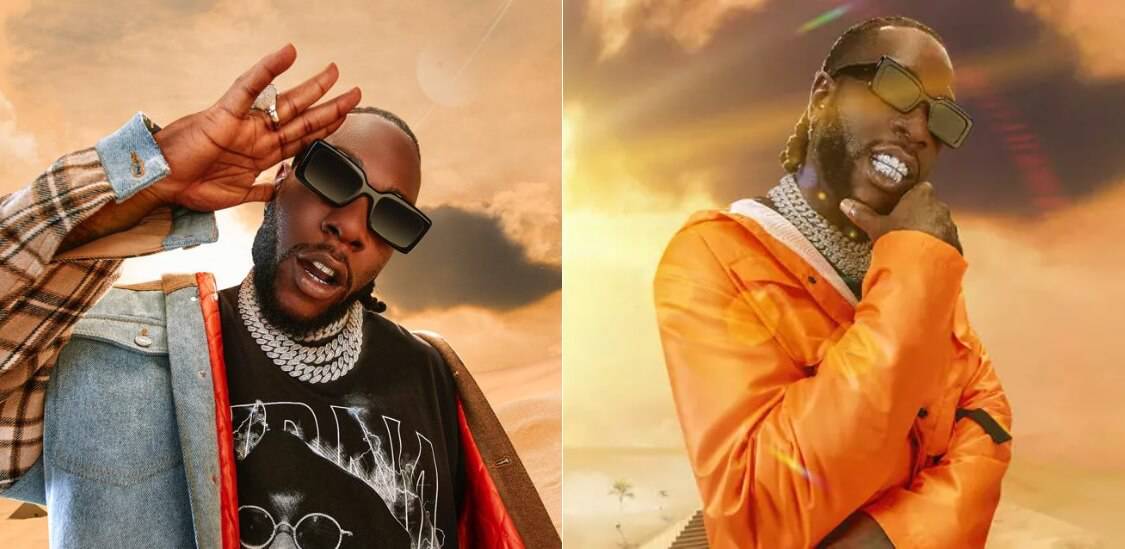
Davido wants you to shut up and listen to ‘FEM’

After months in hiding, Davido returned to social media a couple of weeks ago, generating buzz with his Instagram Live chat with the Recording Academy. As usual, everybody had lots to say – which was part of the reason why the Nigerian sensation changed his number and shut of his socials back in June, in the first place – but Davido doesn’t want to hear it anymore. “To the people talking about you because they don’t understand your shine, dey don’t understand your grace, dey don’t understand why they can never be what you are or have what you have..we say #FEM!he tweeted in promotion of his brand new song. 

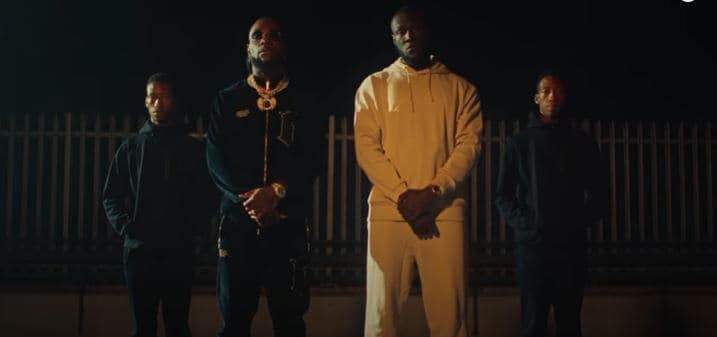
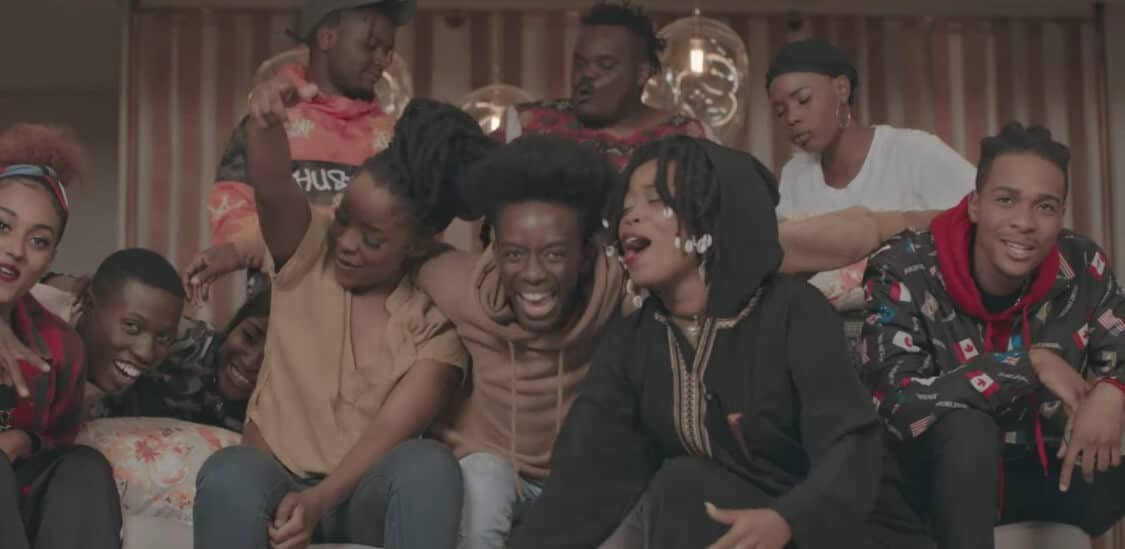
“FEM” opens with a bright horns before introducing its drums, a flute and even a happy three-note appearance from a steel pan, as Davido exists his private plane. However, those instrumentals are pretty much the extent of the positivity on “FEM” as Davido uses the chirpy beat to deliver a threatening message, reiterated by his back-up dancers throughout the song’s luxurious video.

Getting a clean shave in a dashing two-tone suit, Davido returns to the music scene with more than just loving lyrics, though he deals out a few of those on the song’s first stanza. Questioning why those around him have been acting strangely, warning the opps not to say too much because he will bite back, irately narrating how he’s the unfair target of public scrutiny and vitriol, Davido’s ultimate instruction to those listening (which is the whole world at this point in his career) is to shut it… but like… in French. C’est magnifique!

Likely to be the lead single off his previously announced album, ‘A Better Time‘, “FEM” would fit in almost too comfortably on its prequel, ‘A Good Time‘, indicating that these two albums will have similarities beyond their sequential nomenclature. Of course, living up to the standard of his sophomore album shows the new single has merits, however a more effective dismissal of the haters would have been on a record that doesn’t sound like a replica of his collaboration with the man that likely earned his ear some dissenting voices.

Davido’s leave of absence from the spotlight came about a day or two after allegations of sexual misconduct against Peruzzi surfaced, so the resemblance between his plea that we all “FEM” and the Peruzzi-assisted “Disturbance” is extremely ironic, as the former being reminiscent of the latter takes us right back to the subject Davido would prefer we shut up about. Oops.

Feature Image Credits: Davido/YouTube


Wojumi is a bad bitch and she’s going to brag about it. Tweet her your latest cultural exploits @dewoju


ICYMI: BRUK IT DOWN: TELZ TALKS US THROUGH THE MAKING OF “WONDERFUL”

Bruk It Down: Telz talks us through the making of “Wonderful”

Introducing Bruk It Down, a video series shining a light on the producers and beat-makers behind the scenes, as they break down the intricacies of the songs we listen to every day. In the first edition of our new NATIVE Original, Telz takes us through how he made the vibrant beat to the inescapable ‘Twice As Tall’ lead single, “Wonderful”


Back in June, Burna Boy released the lead single off his latest Grammy-worthy body of work, “Wonderful”. Following the captivating acapella performance that emerges as Burna Boy’s narrative chorus, enters a bubbly beat which depicts a bright enchanting expanse, ruled by the magnanimous ‘Funkula’ – or so the production tag he sprinkles onto the song suggest.

As our fingers got to working to answer the all-important question spinning around as “Wonderful” replayed in our heads – who is Funkula – we found that the man behind Burna Boy’s ‘Twice As Tall‘ promotional number also emerged on Prettyboy D-O hard-hitting collaboration with rap legend, Olamide, “Wetin You Smoke”, that came out a few days prior, and Patoranking’s “Abule” which followed a month later. Along with ‘Twice As Tall‘ came four more beats that would familiarise us with the newest it-producer on the block, “Onyeka”“Naughty By Nature”“Wetin Dey Sup” and “Real Life”. But by far the most seminal production in Telz’s catalogue remains his work on “Wonderful”. 

Speaking with NATIVE, Telz tells us he Burna Boy was looking for a carnival sound to infuse into his album. Though Burna himself is an incredibly versatile artist, singing in different styles, dabbling in and out of different rap flows, the production laid down by Telz is what gives “Wonderful the fun-sprited soundscape Burna Boy sought after. As the song challenges your speaker or earphones to go higher, Telz’s multiple rim-shots and well-engineered shakers highlight the airy synths that bounce between Burna Boy’s enthusiastic delivery.

But our words alone won’t do justice to how meticulously crafted Telz’s production is, this is something you ought to see for yourself.


Words: Adewojumi Aderemi, Videography: Omowunmi Ogundipe, Producer: Damilola Animashaun


MU NARRATIVES PRESENTS TEMS: FROM LAGOS TO NEW YORK

Best New Music Special: Amaarae’s “Fancy” is a love letter to black women

All month, Amaarae has been teasing the release of her forthcoming sophomore EP ‘The Angel You Don’t Know’, the follow up to her 2017 offering ‘Passionfruit Summers’ and from the looks of it, we’re getting to see a whole new side to Ghana’s neo-soul pop princess.

Since releasing the project’s lead single “LEAVE ME ALONE“, a laid-back pop number which hinged on the theme of isolation from people and responsibilities, Amaarae has made the lead up the project even more exciting for those anticipating. All year, she’s been hosting a series of Instagram Lives, playing new music – some off the project, and some otherwise, in efforts to gauge which of the records land a punch with her ever-engaging fans. Well, it seems like one of those songs has landed a spot on the new project, as she’s just released the bouncy Kzdidit-produced single “FANCY” .

Where “LEAVE ME ALONE” found her reflectively finding strength in solitude and encouraging listeners to find solace despite the events of this year, “FANCY” offers a more light-hearted and fun message for anyone looking to just have a good time. “FANCY” is a bad bitch anthem and there is no greater evidence of this assertiveness and confidence that the singer channels than in the song’s opening moments. “I got smoke for a nigga” she says, as a euphoric piano-led solo ushers into the song,  it immediately becomes clear to listeners that all expectations of Amaarae are out the window, this here is an artist keen to develop her sonic palette while retaining the hallmarks of an experimental artist.

Songs about sex and power are central to hip-hop, but are apparently shameful when it’s women who are laying claim to it – just look at the way Cardi & Megan were scrutinised for WAP and you’ll see how much we have to still do. Well, Amaarae is on job to fight this leg of the patriarchy as she has delivered this euphoric cut “for all the bad bitches”. Singing “Every day I do my dance in the mirror/Cause I feel so damn fancy” over the distorted beat, she speaks about feeling oneself and moving with that energy regardless of who you come across during your journey.

The song’s production is built on groovy drum patterns and accentuated with an array of hints of alt-pop, emo-rap, and trap, resulting in a cocktail of atmospheric trap whether it intends to or not. The soft, stripped-back vocal inflection that Amaarae adopts produces the perfect bedding for the layered, otherworldly beat as she sings with unshakeable confidence.

Speaking to the NATIVE on “Fancy”, Amaarae states:

Fancy is a bad bitch record – it’s that joint that you put on when you’re getting ready to go out, when you’re getting ready to ace that exam, to ask for that promotion, do that job interview, go on that date that you know you are about to dress to kill for! It’s for the BOSS BITCHES.

Released alongside the new single, Amaarae has also shared the David Nicolsey-directed video for “FANCY” which was shot in the artist’s home country, Ghana. In the video, varying clips of Amaarae donned in an all-black punk ensemble are displayed while she performs the bouncy single accompanied by bad bitches.

The super engaging video also gives a nod to sex workers and cam girls and honestly, we are living for every single moment. For a summer that seemed to be lost with the tumultuous events of this year, Amaarae’s “FANCY” makes a compelling case for salvaging what’s left of it.

So get up, take a look in the mirror and get fancy!

Watch the video for “FANCY” below.

Featured image credits/Yussif Al Jabaar


Hell hath no fury like Tami. Tweet her your fave female rappers @tamimak_


ICYMI: Nasty C’s ‘Zulu Man with Some Power

Get into Eugy’s latest EP, ‘4 Play’

The British-Ghanaian artist, Eugy is best known on his home turf to be a dream on collaborations, having teamed up with YCee on his previous EP, Mr Eazi and Ajebutter for the sensual hit, “Ghana Bounce”“Lolo” remix which featured Harmonize, Seyi Shay and many more. That isn’t to say Eugy hasn’t proven he can carry a song on his own on singles such as the hot dance grooves, “Rendezvouz” and Tik Tok or the boastful “Don Corleone”, however Eugy’s latest EP, ‘4 Play‘ shows a new, softer side to the artist that flaunts his solo abilities.

Now an independent artist, Eugy kicks off his 8-minute long reintroduction with a cocksure profession that reassures fans that although he’s on a different trajectory at the moment, he’s still the same transnational musician that piqued interests both home and abroad.  Throughout this intro, Eugy reaffirms his status as a top don, purely focussed on finding success and money, and hardly distracted by anything else. Even in his lyrics, Eugy only leaves one line to talk about the carnal interactions the title of the project would suggest are central to his life.

But the leading track, “4 Play” is met with a bright contrast on the song that follows, “Forever”; firstly noticeable in its energetic tempo, then through Eugy’s lyrics which focus on love, as opposed to professional moves, and lastly in his style of delivery, opting for a rapping verse to follow his sung chorus, which plays with a series of familiar Ghanaian slangs. The next two tracks follow along the loving lines of “Forever”, though the introduction to “Feeling” appreciates that Eugy is “busy making moves” (as he stated on “4 Play”) thanks to Eugy’s reverbed excuses, “you know my lifestyle busy ‘cos we always on the go/you know my lifestyle busy ‘cos we always on the go“, co-produced by Bassey and Nonso Amadi.

“Love Blind” offers a more soulful element to the project, Eugy embracing his r&b upbringing to deliver a passionate eulogy to his common sense as he rides blind into love with his baddie. Proclaiming to be a new man, this is a love we hope works out for the best for Eugy, but if it doesn’t, at least we got this sensational project closer out of it. Wrapping up on this high note, Eugy’s reintroduction as an independent artist is a sweet-sounding reminder of the skills he boasts of.

Watch the short clip narrating Eugy’s introductory title track below:


Featured Image Credits: Eugy/Instagram


Wojumi is a bad bitch & she’s going to brag about it. Tweet her your latest cultural exploits @dewoju


ICYMI: ODUNSI LEAKS “LOVE ISSA DRUG/FLOOD MY WRIST”

8 must-hear projects you may have missed this year

Globally accessible streaming platforms have made music ever more available to listeners around the world, which means we have a host of music, old and new, at our fingertips. Whilst it’s great to be able to tap into divergent sounds from far away places, it can be a bit overwhelming to keep up with all the new drops, which means lots of songs and projects flying under our radar. Though this year, we’ve had a lot more time on our hands to explore new musicians and to meditate over a score of new music, it is still impossible for anyone to have listened to the plethora of releases that have come this year, and many of them do deserve our ear.

In light of this, as your resident music experts, NATIVE are bringing you seven of the best albums from the team’s rotation that you probably, unfortunately, missed this year. From recent drops such as Tkay Maidza’s ‘Last Year Was Weird Vol. 2‘ to the Valentine’s Day release ‘Boo of the Booless‘ by Chike, these albums are records you’re going to want to get hip to, so read on and jam on.

You’re welcome.

‘Festival Bar’ – Davolee

Davolee has always retained the spirit of an underdog even when he had an A-list act like Olamide in his corner. He first got a taste of the limelight through his brief feature on “Pepper Dem Gang”, one of the lead singles from Olamide’s ‘The Glory’ album. However, it wasn’t until the following year that he proved his mastery at creating storytelling raps in Yoruba with “Festival Bar”, his debut single. The picturesque tale documenting Davolee’s struggles as a bartender in Lagos affirmed his rap prowess and potential for longevity, after he closed the song with the promise of a sequel.

Though Davolee had severed ties with the YBNL mogul when he shared the 4-track EP, ‘Festival Bar’ in June, the tape’s impact was still felt across the Nigerian music scene.

Davolee had already captured the attention of music lovers with the first two instalments, “Festival Bar 1 & 2” which were released as singles. His narration of the more unsavoury aspects of the Lagos lifestyle already reserved his spot as an artist to look out for and fans couldn’t wait to hear the rest of his empathetic story about his personal journey from being a lower-class Lagosian to discovering his talent and earning financial liberation.

Davolee continued to detail his personal ups and downs over different yet similar sounding ominous hip-hop instrumentals through the rest of the project. As promised at the end of “Festival Bar 2”, Davolee finally shared the story of how his talent got discovered by Olamide on “Festival Bar 3”. Saying “62 steady days ni mo fin drop bars(I rapped for 62 days)/ Sori IG koto di pe eyin gbo bayi(On IG before you could hear me like this) / Gbogbo celebrity yin ni mo be fun repost(I begged all your favourite celebrities for reposts)”, Davolee’s vivid depiction of his struggle to get discovered highlights the hustle for social media validation, while also leaving some philosophical tidbits for those who can relate to his story to soak up game for themselves.

On the final track, “Festival Bar 4”, we get a few bright moments as he celebrates the success of his solo single, “Way”. However, most of the track continues to linger in sombre reflection as he recounted the criticism he faced for leaving YBNL and also that Olamide had agreed to still help him out. A little snooping around will show that the EP is distributed by Inglemind, a company which works closely with Empire who Olamide has recently signed a JV with. This buttresses some of the things he states in the EP, especially with regards to his relationship with Olamide still being solid, and having suffered no actual severed ties.

Altogether, the project is a beautifully tragic narration of the struggles and frustration of the streets of Lagos from Oshodi to Ikotun. Despite the melancholic narration, the portrayal of Davolee’s trails and tribulation offers an inspiring philosophy that there’s light at the end of the tunnel as we hear him go from struggling for what to eat to struggling to deliver a hit song. Through the exhilarating real-time narration of his career trajectory, he’s able to keep listeners engaged for the 15-minute duration of the tape, without needing a catchy hook to water down the severity of his story. Very few artists can dream of accomplishing this feat and by the time the project ends, he sounds like he’s still warming up as he promises to keep us updated as his life story continues to unfold.

– Debola Abimbolu 

‘Last Year Was Weird Vol. 2’ – Tkay Maidza

Zimbabwean-born, Australian singer-songwriter and rapper Tkay Maidza is an indubitable talent on the rise and there is no greater evidence of this glaring fact than the brilliant 6-piece EP  ‘Last Year Was Weird Vol.2’ she released recently.  

On the second instalment of a three-part mixtape series, Tkay Maidza widens the potency of her arsenal by offering a selection of genre-mashing hits, laced with subtle hints of pop, alt-r&b, hip-hop and dance music. Opening song “My Flowers” finds her analysing herself and the thoughts in her mind. “My petals fly, they can fly but they can fall if I don’t take time” she sings, admitting that although she has the potential for greatness, she’s well aware of her limitations. This heavily contrasts with bass-dropping number “Awake” which features JPEGMAFIA. Here, she’s confident in the person she is, as she sends menacing punchlines to the competition. While she waxes poetic of her masterful grasp of hip-hop, she openly confronts living with attention deficit disorder, but rather than let this affect her, she’s sworn to stay up plotting. 

Elsewhere on dreamy “24K”, she admits this confidence is because “[she’s] been blessed by the gods” and moves accordingly, no matter whose toes she steps on in the process. The narrative focus leaves her room to experiment with flows and music. No two songs sound alike and that seems to be the project’s sweet spot, typifying the reason why the pop-leaning rap has attained new heights in recent years. As for romance in her life, she’s ten steps ahead of men and the tricks they play. On “Sad”, she purposely ignores her lovers calls, wryly teasing that his  “small hand [was] tryna play a big boy game” while on Kari Faux-assisted “Don’t Call Again” she asks for distance from a lover who won’t stop ringing her line. Rarely do you come across a projet this neatly packed with these many stylistic choices offering something in it for almost every listener. 

Her versatility is even more impressive considering the album’s length. Sitting at just a few minutes under the 30-minute mark, the project is a brief but ambitious offering from a star on the rise while retaining all the experimentation of a DIY-artist. In a world where gatekeepers wish to pigeonhole female rappers into limited roles to occupy in rap, ‘Last Year Was Weird Vol. 2’ is an exhilarating cut that occupies space in its own right, reminding us that hip-hop/rap could use several voices like Tkay Maidza. Stop sleeping on the girls!

– Tami Makinde 

‘Boo of the Booless’  – Chike

Released in commemoration of Valentine’s Day, this debut album from singer/songwriter cum actor (AfMag’s Battleground), Chike, comprises of a series of honest love notes, penned in pain, in adoration, in longing ness and in dedication to the women that have filled Chike with the blissful sensation. Clearly, this honest resonated, as the project spent many weeks at number 1 on Apple Music’s top 100 album charts, and still remains in the top 10.  ‘Boo of the Booless’ opens with gentle humming set to folk guitars, all held together by rhythm-keeping shakers. Chike’s strong vocals sing of the beauty of having people love you truly, yet the slow tempo and the folk inclinations of “Beautiful People” give the track a wistful ambience, almost suggesting that he has lost the people he celebrates. Over the song’s bridge, Chike explains why he so dearly holds onto his baby (the chorus’ repeated line), singing that there are ugly people who both fail you and bail on you – so he must cherish the “Beautiful People” who love him and make him smile.

Up Next is a Ric Hassani team up, one of only three featured artists on the 14-track body of work, alongside M.I and Anambra’s finest, Zoro. On “Nakupenda”, where Ric Hassani’s silky vocals take the song to new heights, Ric and Chike compete over the same girl, both promising her the world and more. Chike’s collaboration with M.I, on the other hand, is just that: collaborative, not competitive. A passionate r&b leaning number that promises a lasting love, “Forever” depicts an avowed M.I., who lays out his future with his partner, promising that he will never leave her, come rain come shine.

As the album’s title suggests, ‘Boo of the Booless’ approaches love in a hyper-romantic way, even falling into the Romeo and “Julie” cliches on the primarily Igbo record “Roju”. However, whilst the first half makes love out to be entirely fantastical, after the album’s seventh track, “Finders Keepers” – it’s bright saxophone, which is even afforded a solo, and repetitive dance-like chorus signalling the end of something good – ‘Boo of the Booless’ takes a turn for the worst. Ushered in by Chike’s interrogation of his girlfriend, before going on to explain why he is so “Insecure”, this turning point illustrates the multiple sides of love, and might be more relatable to those of us who haven’t quite cracked its complex code.

Love loses its appeal. “Out Of Love” describes an all too familiar feeling of being stranded in love, Chike’s partner confessing over the chorus, “Oh Chike, this is hard for me to say/But I’m gonna say it anyway/I’ve fallen out of love with you.“Forgive” will remind listeners of their most recent messy break-up that left both parties hurt and jaded, whilst “Faithful” brings back the anxiety you feel when you cross paths with a past flame again. “Faithful”’s chorus is a strong contemplative session, where Chike works through his torn heart; asserting that he is faithful to his current girlfriend, seeing his former love has brought up feelings in him that he thought were long gone. “I have someone who loves me, even though I think that I, that I, that I love you” Chike stutters, trying to grapple with his emotions, before ultimately concluding that he’s faithful at the song’s poignant, climatic end.

Boo of the Booless’ is all wrapped up with a gracious thank you to God “for watching over [him],” and “fighting all of [his] battles” floating between English and Igbo, as is typical of a praise song. This is where we see Phyno’s progeny, Zoro, who takes ahold of the second verse, delivering a vernacular rap to swoon over, aiding Chike in his ever-grateful dedication to God. “Watching Over Me” is a good reminder that after all is said and done on earth, for believers, the most important love of all is the love of God.

– Adewojumi Aderemi

‘Easy To Love Me Now pt. 1’ – Dara Alamutu

Dara Alamutu’s music is honest without being overindulgent. This identity is what makes his excellent recently released project, ‘Easy To Love Me Now, Pt. I’  a collection of succinct and powerful snapshots of the rapper’s current state of mind. He makes an entire statement of immense growth where he speaks his truth without needlessly projecting them on others.

The nine songs are a result of a man who wields his imperfections as his superpower. Dara writes and raps with the wizened edge of someone with a new lease on life, and while he doesn’t overly dwell on the errors of the past, it all feels very well-earned. Hinging his growth on the notion there are only lessons and no losses, ‘Easy To Love’ is largely driven by forward momentum. Dara places his sights firmly ahead, only stealing glances at the past through his side mirror.

For someone who’s moving into his late twenties, wanting to settle and have kids is a worthy & normal aspiration, but there’s also an explicit understanding that the choices of the present are the foundation for what the future looks like. For many young people, getting their financials in order is an important pre-requisite for starting a family, and Dara is no different. On the intro track, “Too Easy”, he admits that building an estate for his “Babies” is the major driving force for his constant money chase, however, the pressure isn’t driving him to desperate measures.

Over the playful piano riff and bouncy trap drums of “Legal”, Dara brags about making his money while staying on the straight and narrow path. It’s the type of responsible flexing that many might consider corny, except one of the biggest rap songs of last year had the rapper revelling in making his wealth “legitly”. Dara’s mum also makes an affecting appearance on “Legal”, name-checking Africa’s richest man in her short, admonishing speech. Beyond that cameo, too, the influence of Dara’s parents also looms large on the project, with references to the ways they’ve enriched his life (“I Got A Papi Who Be Showing Me The Ropes”, he recites on “Omo Yoruba (Money)”).

The beat curation on ‘Easy To Love’ serves to point at the emotions: Dara accompanies his free association raps on “My Back” with a chunky bassline and thudding bass, while the clarity of “Live Out Our Dreams” is underpinned by radiant piano loops and boom bap drums soaked in morning sunlight. These self-produced jazz and soul-indebted instrumentals, albeit with a modern twist, sound gorgeous when they ride out, but in the grand scheme, they ensure that the project comes together as more than the sum of its parts.

Sure, Dara gives us a resounding portrait of what it looks like to embrace growth, but at the same time, we get to experience a musical polymath deliver some of the best rap music of this year, till date.

– Dennis Ade-Peter 

‘Mint, Green’ – Shalom Dubas

Shalom Dubas is incredibly self-aware. As she’s exponentially grown into a better-rounded artist with each release, her constant selling point is that she’s cultivated a knack for lived-in music, allowing her to hone in on a range of emotions with personal sincerity. Shalom’s latest EP, ‘Mint, Green’, is a statement of self-acceptance where she reaffirms personal quirks and reinforces her ambitions. It also coincides with the coalescing of her abilities as a rapper and singer into a seamless and entrancing whole.

Last year, Shalom teamed up with producer and close collaborator, Toyin Ores, for ‘Oakwood Ave’, a joint project that functioned as a loose and musically varied (re-)introduction. This time around, she’s tightened things up a bit for ‘Mint, Green’, a brisk set that is defined by an in-built sense of intimacy and honesty. It doesn’t take much to get into it, though, Shalom’s contemplations are matched by a conversational and sometimes playful tone, a mix that’s perfectly accompanied by radiant musical choices. Between the funk-lite bounce of “See Me Now” and crunchy boom-bap on “The Biz”, production on the 6-song set is a fine blend of neo-soul and hip-hop that feels like a natural evolution of what the Soulquarians were pulling off in the early ‘00s.

Shalom inhabits this sound with poise, slipping between warm melody runs and nimble raps, a fluid mode of delivery that’s perfectly suited to her writing style, which feels very much akin to Ladipoe’s famed lifelines style. In as much as she can be clever, she’s most resonant when her lyrics are artfully plain: “persistence is all I need/quality friends is all I need and a girl is going far”, she sings on the pep talk-styled opener, “’02 Thicke”; “no more sugar-coating shit/dissecting myself, I came here to speak/peeped I won’t reach no peak if I don’t publicise my lows”, she muses with utter honesty on “The Biz”. With ‘Mint, Green’, Shalom lets us know that she’s at ease within and is perfectly fine constantly working until she reaches the best version of herself. It’s a gripping portrait that’s finely distilled into an EP that appreciates with each listen.

– Dennis Ade-Peter 

“Bond” – Kemena

Kemena doesn’t like genres. In a time where artists pull influences from stylistically disparate sounds, it’s now normal to dislike strict musical categories because it places them in a box. On his debut album, ‘Bond’, Kemena earns his aversion towards tags, curating an eclectic and experiential project that drifts across varying sound hybrids without coming across as unnecessarily scattered. Serving as producer for all but one track on the project, it’s a testament to his range and imaginative execution.

With a clear affinity for big sounds, Kemena’s musical choices are always bright whether the instrumental arrangements are minimal or broadly composite. On opening track “Ibadan”, he sings against a grand piano and a stack of his own layered back-up vocals; “International” merges indie folk tricks with a distinctly African bounce; “Inugo” is powered by the rustic rhythms of Igbo folk; while “Down” crosses over into rock territory. The grounding factor to the sonic variety on display is Kemena’s voice – a baritone with soulful twang that’s flexible and consistently reliable in expressing a myriad of emotions.

True to its title, ‘Bond’ explores romantic connections and the circumstances that make or break them, from the magic of when things are going smoothly to the inevitable sourness that follows when it goes off the rails. It’s not widest-ranging topic nor is it the most creative, however, it’s rich enough for Kemena to present his powers as a writer with a knack for fascinating narratives. On the standout song, “Only You”, he gets into his storytelling bag, singing from the perspective of someone who’s been cheated on one too many times and has finally reached breaking point. “Feeling” is eerily similar to Omah Lay’s “Damn” in concept, a song that plays into the self-aware trope of questioning the merit of unconditional love.

A strong front to back listen, Kemena keeps things constantly refreshing while carrying the album almost exclusively. ‘Bond’ is a stellar, full-length introduction, don’t let it slip under your radar.

– Dennis Ade-Peter

“Generation z” – JELEEL!

Besides flashy jewelry and colourful hairstyles, showmanship seems to be a dying art in music with more focus on self awareness and emotional maturity these days. American-based Nigerian artist, JELEEL! seems on a mission to bring this back, however, with his penchant for entertaining fans with backflips stunts, shirt tearing and showing off his bulk body build. While his energetic performances are fashioned to draw crowds, it’s his experimental take on hip-hop that makes fans out of his gawking spectators.

JELEEL!’s auto-tuned rockstar voice puts him among the set of unorthodox hip-hop acts breaking out of the mould and for his latest project, ‘Generation Z’, he continued to expand the barriers of hip-hop while also channelling his rage into political activism. After witnessing the traumatic event of George Floyd’s murder at the hands of an American police officer in May, JELEEL got energized to rage. On the opening track, “Red Light!” we hear blaring sirens and clattering drums that conjure an instant sense of tumult. And because the project was released while people were out protesting and rioting the killing in the streets, JELEEL’s combative energy and his unorthodox brand of hip-hop reiterated the popular sentiment that there was an urgent need for change.

With expert production from Connie, Zaro Vega, Ricky Remedy and Aryay, Asoteric and Jonas Jeberg, the project explored a variety of sounds, from hip-hop, dance-pop and reggae-dancehall. He glided across the different genres with agility while his upbeat energy and his unique auto-tuned voice is able to pull the different frenetic moments of hardcore and punk flourishes into a uniform style. Partnering with his Nigerian brother in arms as the project’s only featured artist on “HotShot”, he also made the world feel smaller as he illustrated how black music is interconnected through their collaboration to protest against oppression.

Though JELEEL!’s ‘Generation Z’ mines some of the trauma of racial discrimination, it also celebrates black power and art in the face of oppression. His rich voice and confident songwriting offered music as a balm to heal the trauma of our time, as he weaved a project that reflects today’s youth-led social justice movement and showcases the progressive music birth from having multi-cultural influences.

– Debola Abimbolu

“New Tangents In Kampala, London and Nairobi, Vol. 1” – Various Artists

Put together by Extra Soul Perception – a collaborative creative collective name after saxophonist Monk Higgins’ album release in 1968 – ‘New Tangents In Kampala, London and Nairobi Vol 1.’ convokes a number of artists from the three countries of which those cities are capital, Uganda, England and Kenya. With the aim of exploring all the various tangents which soul music can take, this project is as eclectic in its sound as it is encompassing in its musicians, who recorded the project in a writing camp in Nairobi.

Dutifully paying homage to their roots from the very first song, entitled “Ancestry”, ‘New Tangents’ opens brashly, with London’s ten Lex Amor chanting in her indigenous tongue, set to a bassy electronic beat, credited to Hibotep (Uganda) and Faizal Ddamba Mostrixx (Uganda), who is known for his afro-cosmic productions. The EP’s soul finds itself in “Probably Never”, which features mesmerising keys from Joe Armon-Jones, a jazz keyboardist rising rapidly in the UK. Frequent collaborators, Arnon-Jones and Maxwell Owin (UK) provide the stunning instrumentals that Xenia Manasseh (one of this year’s emPawa30, hailing from Nairobi, Kenya) devours.

Inviting the disco into the tape, on “Roses” (whose star on Apple Music would indicate its been a crowd favourite) Lynda Dawn (UK) and Bes Kept, from the, guides us through feelings of uncertainty in love, communicating the unfortunate realist that “nothing’s ever guaranteed”. Over four minutes long, the length of “Roses” is matched by the song that follows it, “In My Soul”, stretched out by its repetitive takes that hammer the invigorating beats straight into our souls. We do feel it, as Kenya’s beautifully endowed songstress, Karun repeatedly asks us. As another grandiose interplanetary Faizal Mostrixx production sets in motion, Karun also switches out her formidable vocals for an added spark to the already heated record.

After “In My Soul” comes the EPs fourth and final track, “Utokapo”, which plays into rural styles of music-making. Vocally led by Labdi (Kenya), “Utokapo” which exists entirely in the vernacular, is reminiscent of a traditional dance performed by the Digo tribe in Kenya. Springing to life to the tune of their own voices, Kayamb (shakers) and Chivoti (flutes), the Digo’s Kayamba looks like a likely source of inspiration for K15’s inspiriting instrumental backing for Labdi’s emotive performance. Through these five tracks and ten musicians ‘New Tangent’ brings together a range of musical identities into one thoroughly enjoyable 15-minute course.

Listen for yourself:

– Adewojumi Aderemi

Featured Image Credits: NATIVE


Words by Debola Abimbolu, Dennis Ade-Peter, Tami Makinde and Adewojumi Aderemi


ICYMI: FRESH MEAT: BEST NEW ARTISTS OF THE MONTH (AUGUST)

Songs of the day: New music from Olamide, Sean Tizzle, Eugy, Teni and more

We’ve had music through all the heartbreaking events of 2020. Despite the ongoing pandemic, civil unrest, and the seemingly endless-barge of news about untimely deaths, musicians have continued to capture our collective pop consciousness with new songs that either reflects our present reality or provide an escape from it. We know it can be difficult to keep up with all diverse streams of music so we’ve created this column to keep you, our readers, up to date with all the finest tunes coming out of Africa and the rest of the world. These are the songs you absolutely need to hear.

We started this week’s curation of Songs of the day by covering the latest releases from Kwesi Arthur, Ice Prince and Tekno, A.BEEB, DJ Tunez and J Anthoni, $odaman and more. Today, the mid-week edition features the new releases from Olamide, Teni, Eugy, Sean Tizzle, DJ 4kerty and Dammy Krane, Jamopyper and Mayorkun and more. These are all the latest releases you don’t want to miss out on and you can enjoy them below. You’re welcome.

Olamide – “Eru”

Olamide already proved he’s a versatile artist when he made the switch from making rap songs to making club-ready street anthems. He pulled both of his artistic expressions together for his last album, ‘999’, where he rapped about his clubbing lifestyle on tracks like “Mojo” and reflected rap’s ill-mannered attitude towards women on the street anthem, “Wonma!”. He just released his first single since EP, “Eru”, and here, he abandons rap to deliver melodic singing about his love for his partying and his muse.

Singing “Ko le re mi rara(I can’t get tired)/Eyin ma nowo tan(You’d spend all your money)/ Awa olowo nile oh(We have money at home)” over the dance-driven beat produced by P.Prime, “Eru” is dedicated to partying to the max. We expect to hear the song serving dancefloors as soon as clubs get back in business, but in the meantime, we can enjoy the party-themed video Clarence Peters directed for the song.

Teni – “Wanneka Women Anthem”

Teni’s impressive music career makes her one of the most prominent voices in the country. Her relevance in the largely male-dominated music industry positions her as a cultural icon for women and on her latest single, “Wanneka Women Anthem”, she embodies her role as an inspirational figure to deliver a tribute to all women. P.Prime produced the bouncy Afropop beat for Teni’s love message to women as she sings “Baby you’re so smart and beautiful/ Everything on fleek and you’re so unique”, over mix of percussion harmonies and catchy drums.

With dance instructing lyrics—“Oya show them, give them/ Oya baby pepper them”“Wanneka Women Anthem” is another dance-driven performance from Teni after her ‘The Quarantine Playlist’ project with DJ Neptune.

Jamopyper – “If No Be You” Feat. Mayorkun

People fall in love all the time, and musicians keep finding compelling new ways to express their hearty feelings. Paired with catchy Afropop harmonies, Jamopyper and Mayorkun’s candid depiction of how they charm their love interests is stunning. The two singers take turns confessing their feelings for their muses as their bright melodies ride the groovy instrumentals.

Though the beat produced by Mansa Jabulani was designed to serve dancefloors, Jamopypa and Mayorkun infused their goofy personality with lyrics that make the song a pleasant listen anywhere. The video directed by NayaEffectz Visuals captures both artists as they perform the song in different sets and we see Zlatan cameo in one of the sets.

Sean Tizzle – “Oreke”

In the video for Sean Tizzle’s latest single, “Oreke”, the singer gets into a highspeed car chase with someone trying to kill him. The song itself is a romantic ballad written to show the extent of Sean Tizzle’s romantic feelings for his muse as he sings over lightweight Afropop harmonies designed to serve dancefloors. While we hear him serenade his muse with sweet words like “Baby, lately I’ve been acting crazy about you”, the video reveals just how dangerous his attraction as we watch Sean Tizzle get into a fight at the club to protect his lover’s honor.

With Sean Tizzle’s heart-on-sleeves performance, “Oreke” is serviceable as a pop song for the dancefloor. However, the CGI video adds an edginess to the song as the scenes move from a party date to a street race that ends in what looks like a fatal crash.

https://www.youtube.com/watch?v=o8ZAA_fJEEY&feature=youtu.be

Eugy – “4 Play”

Eugy has remained a consistent feature in Afropop conversations since he broke out in 2016 with Mr Eazi assisted single, “Dance For Me”. For his latest offering, the UK-Ghanaian artist/rapper has released a 4-track tape, ‘4 Play’, exploring the sexual tension that builds between people as they grow intimate with someone new. Though all of the tracks convey his romantic feelings and intentions, the title track, “4 Play”, finds Eugy describing all the things he loves about his relationship with his muse; “Always on worst behavior/ Backtrack and you stay down”.

In the video for “4 Play”, we watch Eugy spending his day on a romantic date with a woman he met at a store. Though the laidback r&b-influenced song plays in the background while we see them taking walks, buying flowers, and eating at a restaurant, the lyrics don’t seem to reflect the actions in the video. The closing shot of Eugy in bed with a different woman hints at the bigger picture which unveils through the rest of the cohesive project.

[mc4wp_form id=”26074″]


You are meeting Debola at a strange time in his life. He wandered into a dream and lost his way back. Tweet at him @debola_abimbolu


ICYMI: Catch up on all the songs releases from earlier in the week

All the details for Polo Avenue’s massive summer sale

These days, the phrase “all dressed up with nowhere to go” is especially relevant. At the start of lockdown, we were comfortably spending our days in sweats and loungewear but now, as the city gradually begins to open up again, and life, as we knew it slowly, begins to resume. Most of us have emerged as new people, and as a result, we’re tossing out the sweats for denim pants and swapping the loungewear for clothes that fit our new bodies, personalities and style.

Well, it will be nice to know that there’s a killer sale on at the moment, that you don’t want to miss out on if you’re on the search for new fits or an early Christmas gift for your loved ones.

Polo Avenue – the ultimate destination for high-end watches, accessories, and fashion in West Africa – is having a huge summer sale and it’s an exciting way to treat yourself or your loved ones to some of the finest luxury fashion pieces at a discounted price.

Kicking off earlier this week, the 2020 summer sale which is up to 70% off includes a wide range of exquisite brands from Bottega Veneta, Berluti to Amina Muaddi, Jimmy Choo, Valentino, Palm Angels, and many more. The sale will be held at the Polo Avenue Flagship store at Polo Towers, 166 Ozumba Mbadiwe Road, opposite Radisson Blu, Victoria Island; or the Polo Avenue Boutique, at Admiralty Way, Lekki Phase 1.

Get shopping right now and you’ll be able to save up to 70% on designer womenswear, menswear, bags, shoes, jewellery, and gifts. To unlock your discount, use the code: Pass02 in-store.

Here are some of the brands in-stock during the summer sale;

Featured image credits/PoloAvenue


Hell hath no fury like Tami. Tweet her your fave female rappers @tamimak_


ICYMI: A look at RAX by Russell Athletic’s latest Selfridges collab

12 Nigerian Artists As Your Favourite Superheroes

Last week, Nigerian Twitter was engulfed in hilarious imaginations of a world in which their favourite superheroes were resigned to operating in Nigeria’s impossible terrain. With jokes flying around about the fastest man in the world, Flash, not being able to compete with cars on Lagos expressways, or Spiderman being defeated by a commonplace tool as mundane as the broom, the general consensus was: no superhero, as we know them, would survive in the jungle that is Nigeria.

That’s all good though, because we’ve got our very own home-grown superheroes making Nigeria a better place; these are our musicians. From Fela Kuti and Burna Boy who rage against the establishment, demanding civic right for Nigerian people, to Rema and Tiwa Savage, whose global recognition represents Nigeria in the positive light mass media has so desperately tries to eradicate from our narrative, to Davido and Wizkid who are redistributing wealth in the country by putting people on, or appeasing the “bros do giveaway” crowd, our artists are genuinely making Nigeria a better place.

The Justice League, The X-Men, The Avengers, we’ve all agreed that they couldn’t function for a minute in Nigeria, but Niniola, Tems, Naira Marley and our other revered musical acts, most definitely can take on the roles of Storm or Captain Marvel or even super-villains like The Joker. They can, and to our minds, they have. Using their backgrounds, their aspirations, their impacts, their character traits and their music sensibilities, we’ve drawn equivalents between a dozen of the most influential Nigerian artists and heroes (and villain) from the Marvel and DC universes, highlighting just how much they’ve done to save Nigeria.

Fela as Batman 

Active during some of Nigeria’s most politically turbulent decades, Fela Kuti’s Lagos home probably did not look much different to Batman’s Gotham. Both enraged by the corrupt state of affairs in their locales, Kuti and Wayne decided to take matters into their own hands, saving the civilian population with their unparalleled craftsmanship, much to the anger of the political elites running Gotham and Naija into the ground. Still, that did not stop Batman from racing around in his Batmobile, instilling fear in all the criminal he faces, nor did it ever stop Fela from calling out the criminals who called themselves leaders on his politically charged, pioneering Afrobeat music.

Tiwa Savage as Wonder Woman

Having to deal with men on a daily basis, Wonder Woman has learned to adapt to a testosterone driven space, but that does not stop her, or Tiwa Savage for commanding attention for themselves. Top two in the Justice League and ever-present in music conversations over here, Tiwa Savage and Wonder Woman are pretty much unstoppable forces, who have will continue to claim every victory for themselves and put on for the Themyscira population every time they do.

Wizkid as Superman

There is no doubt that Ayo Balogun is out of this world. Over the ten years since he prophetically announced that he would be a ‘Superstar‘, Wizkid has grown to be the most revered afropop artist. Everyone in the industry uses him as a standard of greatness, whether they are looking up to him, or the bad guys that are scared of him – nobody dares challenge Superman and picking a fight with Wizkid is easily as laughable. Where Superman has otherworldly strength, laser eyes, and an impenetrable skin, Wizkid boasts an array of musical superpowers too, his ability to carry every song, his musical foresight, and his uninterrupted run at the top, making him comparable only to the Justice League’s no.1.

Naira Marley as The Joker

A certified Joker, Naira Marley is notorious for terrorising streets with his inappropriate wit, his defiant candour and his undeniable mastership for his craft – killing shit. And just like The Joker, Naira Marley is pretty much unstoppable – no matter how many times they get captured, be it by the Nigerian police force or arch nemesis Batman, Naira Marley and his DC counterpart always come out stronger, ready to provoke their adversaries once again. You think you’re meant to hate them, but what would Gotham or Naij be without public enemy number one?

Blaqbonez as Deadpool

As depicted by Ryan Reynolds in the 2016 and 2018 Marvel movies, Deadpool is an outrageously funny character. He’s cocksure in his abilities yet driven primarily by a sarcastic, goading humour – a combination that might invite you to mock or underestimate him, but that would be something of a mistake. The same goes for Chocolate City’s Twitter Warrior, Blaqbonez, who loves inciting verbal bouts on the TL, but has a solid catalog to back up his unsolicited beefs. Though neither are considered A-listers (let’s ask why?), when they get their time in the spotlight it’s pure entertainment backed up by palpable skill from both ‘Bonez and ‘Pool.

Niniola as Storm

Though her cohort rarely get as much attention as other teams in the superhero universe, Storm is a vital part of the X-Men Alpha Squad, using her destructive power to create a better world. In the same way, Niniola wields her robust musical ability to create a space in which Afro-House thrives in Nigeria. As Storm has the ability to change the weather, so Niniola can adapt the mood of any function when her bubbly tunes bellow through the speakers. With abilities to forge lightning, both these striking acts are quite literally electrifying.

2Baba as Captain America

We’re not saying he’s been around since the second world war, but 2Baba’s longevity is certainly something, and only really comparable to the never-ageing, virtuous hero, Captain America. From the early 2k jams,  “African Queen” or “For Instance” to his latest run with Wizkid, “Opo”, 2Baba has been consistently flexing his juiced-up musical abilities, slinging his formidable hooks in attack, just like Cap wields his shield. Bringing the party-starting vibes (“Enter The Place”), plucking heartstrings (“Rainbow” ft. T-Pain) and recharging our political batteries (“Only Me”), 2Baba has so much depth to him, and he’s very versatile, much like Capt. – though the latter’s often mistaken for being all business, his love affair with Peggy and his witty one-line remarks and jabs at his other teammates show him in a complex light.

Rema as Spiderman

Having likened himself to both Iron Man and Spiderman on his debut single and one of his more popular freestyles last year, Rema could play out as a multitude of different supernaturals. But of course, Spiderman is most fitting, because Rema is without a doubt the friendly neighbourhood wonderkid, with infinite tricks and enviable flexibility that keep our streets rid of the petty criminals populating the airwaves with mediocre music.

Burna Boy as Black Panther

The Black Panther movie poses an important question of African protectionism. Newly crowned King T’Challa is wary of opening up his highly advanced country to the world, for fear that the West will exploit it as they always do. For King T’Challa (and Burna Boy), it is important that Wakanda is protected from the colonisers, but he also feels a duty to share the country’s technological resources with the world. Describing his ideal “crossover” dynamic, Burna Boy has expressed a similar concern. As he flaunts his distinctly African talent across the globe, Burna Boy wishes, not for African artists to strive for Western approval, or for the West to feel they can dictate or claim ownership of African creativity. Instead, like the Black Panther, Burna Boy’s goals are to show the world just how rich African culture is, to invite them to our shores so that we can boast our comparative advancement. Where Wakanda leads in tech, Nigeria leads in creativity. The Black Panther and Burna Boy sit on those respective thrones.

Davido as Iron Man

Both coming from wealthy, well-established family backgrounds, neither Davido nor Iron Man have let their fathers’ prominent positions overshadow their greatness. Capitalising on the many tools at their disposal, Davido and Iron Man have both built lasting legacies for themselves as the captains of their respective fields, and, to celebrate these wins, treat themselves to opulence and flashy lifestyles, which the fans absolutely love them for. Like Iron Man, Davido is also a formidable mentor, if not better, using his success and recourses to help build the careers of emerging artists, until they’re strong enough to hold their own – similar to Mr Stark’s mentoring of young Peter Parker.

Cruel Santino as Thor

Thor Odinson is the chosen one or the Kingdom of Asgard, the crowned prince destined to lead Asgardians into a peaceful and prosperous future – though many enemies who would rather see them crumble exist in the way. On his ascent through the Nigerian music industry, Santi played the same role for the Alté music scene, putting on for everybody within his sphere in order for the extra-mainstream planet to not only survive, but become the thriving creative space that has tangibly changed the Nigerian music industry at large. In the same way that Asgad’s affairs grow even more inseparable from Earth’s daily workings as each new Marvel movie unfolds, so too has the movement fortified by Santi, The Monster Boys (which you can liken to Asgard’s Warrior Three), and his mischievous yet utterly loveable chameleonic brother, Loki (The Engine), become a mainstay in the the Nigerian music universe.

Tems as Captain Marvel

Cropping up out of the blue, both Tems and Captain Marvel have brought to their respective multiverses a force we could not even have imagined existed. Though neither Tems nor Captain Marvel have many appearances to their names (just yet), they’ve more than proven their power; with her unique and compelling set of pipes, and an untouchable aura flowing within and without them, both Tems and Captain Marvel are the new heroes giving everyone a run for their money, and we cannot wait to experience what more they have in store for us.

Featured Image Credits: NATIVE


Words by Adewojumi Aderemi. All illustrations are NATIVE originals by Debola Abimbolu


ICYMI: TWITTER IMAGINES WHAT SUPERHEROES WOULD LOOK LIKE IN NIGERIA

Hot Takes: The return of cursive singing, female rappers & Big Brother’s Ozone

We live in a world where the truth seems harder to grasp on to each day; every morsel of information is both fed right to us through the news and social media channels, and the rest is neatly buried beneath layers of hearsay. At times, the constant cycle of information is enough to overwhelm any individual, and I, myself have become too caught up in staying updated that I sometimes feel incredibly burnt out. If this is something that you also struggle with then please consider taking regular breaks.

It doesn’t help that the state of the word this year has been far from normal, and with the global health pandemic and its ensuing cosmic effects disrupting life as we know it, its become more important than ever to consume information that keeps you informed but entertained. Twitter has become a mainstay for many during the pandemic (this writer included) who wish to offload and share their thoughts in 280 characters without any filter, and though there are some takes that will surely have you rolling your eyes into their socket, there are also unifying moments where we all truly sit and engage with a range of various topics (Big Brother is one of those moments–unless you’re a die-hard stan).

For a bit of catharsis, The NATIVE has birthed a new column, Hot Takes, where every week, a different member of our editorial team will dissect different trending topics across the globe, and give their hot takes on each topic. This week, I’ve laughed incessantly at the widely circulated meme of Lani Good saying ‘bad boy piece of information’ and enjoyed a bit of new music from the rap girls. Here’s the tea:

What I’m watching on Youtube: Darkoo goes dating

One of my favorite things to do is learn more about my favorite artists and what better way to carry out that exercise than devoting hours of my day to scouring Youtube for the latest videos? This week, I’ve gone through podcast episodes, music videos, makeup tutorials, and more, but the one that’s stuck with me the most has been watching Darkoo, an openly out bisexual singer and rapper go on a blind date with a selection of women and men. I absolutely love how she’s able to seamlessly switch from wig and high-glam to bare-faced and low trim and with this month being bisexual visibility month, I can’t think of a better way to spend your time.

What I’m watching on Netflix: Greenleaf

I can’t believe it’s taken me this long to get into the American television series, Greenleaf but boy, have I been missing all this drama. After taking a break from watching new movies or shows (sometimes I get tired of staring at a screen), this has been the main source of my post-work relaxation. The show, which is on its fifth season (I’m currently on season three) is a Netflix drama based on the moralistic Greenleaf family, owners of a Memphis megachurch known as Calvary. Now if you’re not entirely religious like myself, you may be wondering what’s the deal with do-good churchgoers but Greenleaf goes deeper than religion and/or church and real unfurls the complexities of human beings; whether we are divinely ordered or not, we all make the same mistakes.

What I’m listening to: ‘Last Year Was Weird, Vol. 2’ by Tkay Maidza

Every month, there’s a new female rapper that’s my latest obsession and I am unashamed to say I stan all the girls severely. Last month, it was the talented Princesa28, and this month, I was thrilled to discover a new rap girl in 23-year old Australian-Zimbabwean singer/rapper, Tkay Maidza. First stumbling on the artist after I watched her video featuring another one of my faves, Kari Faux, I began to do more research into the vibrant artist and learnt that she was African. Once I found this out, it was a no brainer that I was going to stan.

Interestingly, I found that the rapper has just released a new EP titled ‘Last Year Was Weird, Vol. 2’ which serves as the second installment from a planned musical trilogy. The project, an 8-piece offering, hits the sweet spot between the scathing, mean flows expected from hip-hop, and the futuristic production of breezy pop and alt-r&b. My favourite track at the moment is the menacing scathing fourth track titled “Awake” featuring JPEGMAFIA because of Tkay’s unfiltered confidence, as she spits hard-hitting rhymes about ending the competition. When she raps “Devil in a dress, carry tricks in a bum bag/cuttin’ all the weak eecges like a wristband” over the bass-dropping beat, there’s a conviction in her tone and delivery that affirm that she’s really living this tough gangsta life she sings about. She’s working tirelessly into late hours because she wants to stay ahead of the competition, and it seems to be paying off as the Aussie rapper is finally getting her flowers. watch this space. 

The return of cursive singing will be televised

SZA is back, and this time it’s not a drill. The TDE songstress is back after a long hiatus from releasing any new music and I am absolutely living for it. Since her debut album ‘CTRL’ three years ago, SZA has been soundtracking our toxic feelings and reckless behaviour when it comes to romantic relationships. On “The Weekend”, her silvery voice and the song’s flurry of angelic production make the tumultuous task of being a side chick seem like floating into an euphoric dream. She negotiates when she gets to see him and doesn’t get caught up about whether he’s going to make her the official girl because she’s happy with their current weekend arrangement. It’s hard to imagine a world where something like that could happen but with SZA anything – even the most mundane – is possible.

Her latest single, “Hit Different” marks a momentous return for cursive singing, a stylistic method of enunciating lyrics that many have used to discredit the singer, but for this writer, that is one of SZA’s most remarkable qualities: her ability to bank on melodies and beats to carry the listener along. Over nostalgic mid-tempo production from The Neptunes, SZA sings about a current lover who makes no plans to put a tag on their relationship but she’s not upset about this, in fact, this is an ideal for her as she gets to still stay in her lover’s embrace, hence the titular phrase ‘Hit Different’.

‘You a wild one and I’m wading in you like its cool water/Mirrors inside me, they recognise you’ she sings in her dream-like vocals, she knows that the relationship is unhealthy for her but still she plunges in, heart first into the lover that’s unwilling to validate her feelings and desires. Even Ty Dolla $ign seems to have caught the infectious cursive singing buzz as he sings the song’s chorus, which wittily stylise the pronunciation of different at moments.

If you’ve been following SZA’s career like me then you’ll know that the singer has had a rough and hostile relationship with her record label TDE. Just last month, she suggested in a series of now-deleted tweets, that TDE head was delaying her releases. She’s not the only black female artist that feels shortchanged by her record label, and I do hope that “Hit Different”, which was released under TDE and RCA is a good indication that the Missouri-born artist is ready to serve up a new album. In an interview with Apple Music, she shared this is her rolling out her thoughts, and we are living for whatever she’s ready to share.

Sometimes, even superheroes get sick

I’m not sure what it is about superheroes but everybody seems to like them. Back in March when we spoke to members of our community about what they are doing to offset the difficult emotions and feelings that are rising as a result of the global health pandemic and the ensuing lockdowns, many of them shared that they were turning to old films and movies to ground them in a bit of normalcy. One of the contributors I spoke to shared that they were rewatching the entire collection of movies from the Marvel cinematic universe with their reason being that the tumultuous news cycle has made lead them to search for good news arising out of bad situations.

This represents most people’s actions towards superhero movies, you get to see the happy ending where the hero saves the day, defeats the bad guy, and bags the cute girl all at the same time. Last week, Nigerian Twitter was awash with users sharing memes in response to what superheroes would look like in a Nigerian context. The responses were hilarious and showed us the humanity behind the masked heroes that we frequently watch on screen. When placed within the Nigerian context, these heroes were marred by the economic, physical, and social restraints that many of us face daily in this country, and for once, they weren’t above falling short.

Last week, news circulated that Robert Pattinson a.k.a The Batman a.k.a Edward Cullen (I refuse to see him as anything else) had contracted the COVID-19 virus and social media went up in flames when it became clear that the production process on the upcoming Batman film was to be put on hold. Of course, after the novelty of the news wore out, the trolling began to roll in. Many jokes surfaced online about the irony of a superhero contacting a viral disease, others focused on the fact that the Batman mask that hides Christian Bale’s identity only covered the nose and not the mouth which was blamed as the cause of exposure to the virus. But what these jokes fail to realise is that sometimes, superheroes get sick too, sometimes they pass away (RIP Chadwick) and sometimes they hurt just like you and me. We all need to be a lot more kind with our words and hope that R.Pattz has a speedy recovery, I, for one will be praying that he regains his health. And please don’t forget to wear your mask people!

Chloe x Halle may be teen heartthrobs but this remix ain’t it

This is the year will go down in history as the year that female rappers across the globe stood together and won on all fronts. As a lover of all things hip-hop/rap, it’s been exciting to see women swoop in and state their lofty claims unabashedly through their music and from witnessing Megan thee Stallion bag two #1 Billboard 100 spots to watching Jahdatta and her vibrant fashions and catchy rhymes return to our screens, it’s been a great time to pay attention to these women as they make swooping changes to a misogynistic industry.

Over the weekend, sister-act, Chloe x Halle released the remix to their popular song “Do It” and this time around, they showed that they have their eyes and ears to the ground at the moment as they recruited some of the biggest names in hip-hop/rap such as Doja Cat, the City Girls, and Mulatto. For all its exciting prospects, due in large part to its star-studded feature list from the new-gen of women in rap, the song itself fell short of our expectations. From the general goss on twitter, it seems that Doja Cat was the only one who truly shone through on the beat and effortlessly decimated everyone else. It also didn’t help that she was the first verse, setting the standard for the following girls. Users on social media were particularly unimpressed by Caresha’s (a.k.a Yung Miami) verse which was said to have been off-beat. Whether this was the case or not, we cannot diminish the fact that this is a momentary collaboration for women in music. Chloe x Halle have both been at the top of their game this year, and everywhere you turn is a reminder that this is their year and as for the rappers, each of them have been generating so much buzz for themselves in their individual lanes. Also, perhaps we should be grateful that we got three of hip-hop/rap’s hottest emcees on a record finally, when Saweetie’s “Tap In” as the rapper opted for features from an all-male lineup missing a chance to unite all the hotties, city girls and more. After several listens, Caresha’s verse seems to be growing on me, so maybe just keep running it up?

Are you sitting on a bad boy piece of information?

Every once in awhile, there’s a meme that truly unites us all despite our many, many divisions. As social media is a melting pot of different users, you could be privy to a joke on Nigerian Twitter or off UK Twitter if you follow enough people existing within those different camps. This week, that meme for me, was the widely circulated three-minute clip of Youtuber, Lani Goode saying “I’m sitting on a bad boy piece of information, you understand?” with a menacing glare into her camera. Of course, in usual Twitter fashion, the soundbite of her bold proclamation of harbouring the juiciest and most illicit goss was taken out of its context and turned into the butt of several jokes. Many freelance writers used it as a meme to signify the process of pitching an article cold-turkey to a publication while others used it as a fitting comeback to when questioned by your parents for underachievement in comparison to your cousin (who’s secretly a drug dealer). Whatever your iteration of this meme is, we cannot deny that this is truly a hilarious one that has brought a little light-hearted cheer to a mundane week. We may be memeing our way through the pandemic but there’s so much to laugh at, so we might as well be doing that than the frantic panic that came at the start of the lockdowns several months ago.

And now to Big Brother…

Excluding the fact that Erica has now been disqualified from the Big Brother House, something that’s been grinding my gears in recent times is the amount of unhealthy relationships we’re watching play out on the screen. From Laycon playing the manipulative nice guy card with Erica, to Neo’s constant temper and emotional abuse with Vee, there is no shortage of cringe moments while watching those who currently have coupled up. But perhaps the most irritating has become the unreciprocated relationship between Nengi and Ozo. Can someone seriously tell Ozo to #FreeNengi because our girl is clearly being polite and fed up with his ass.

Since I started watching Big Brother Naija this season, I have watched how different platonic and romantic relationships take shape, typifying how the playing field usually is in real life millennial circles in Nigeria. We watched with horror how the situation between Laycon and Erica played out, where she didn’t nip it in the bud as soon as she noticed that Laycon expected more from her than she could give leading to her eventual disqualification from the tv show and now, it seems, we’re watching this same unreciprocated feelings play out between Ozo and Nengi. It’s a known fact for many BBNaija watchers that you can’t see Nengi without also seeing Ozo lurking somewhere behind, and now that strong friendship that they once shared seems to have turned into something extremely cringey to watch. Rather than take a hint that Nengi is really not just that into him (she’s brother zoned him more times than you can imagine), Ozo has resorted to constantly badgering her to see their relationship as more than what it is–a friendship.

It’s clear that Nengi wants nothing more than to be left alone rather than having to spare his feelings, but as women, we know more than anyone that letting a man down straightaway is a prime recipe for disaster as they could retaliate by physically or verbally threatening harm. The roots of misogyny sink so deep in our culture and it goes to show that even on a reality show were harm is forbidden, women are still walking around on eggshells when it comes to men. Many BBN fans on social media have likened Ozo’s behaviour to that of Netflix’s Joe Goldberg in the stalker-thriller trope ‘You’, and they are not wrong at all. Men have a proclivity to keep applying pressure when moving to a woman and in a world where women always have one eye on their back, almost everything is done to acquiesce the male ego so that we can be spared from further harm. All we know is that we’re tired of seeing Ozo’s persistence, and if we’re already at this point, then we wonder how our good sis is handling it all. Sending her love and light.

Featured Image Credits: NATIVE

[mc4wp_form id=”26074″]


Hell hath no fury like Tami. Tweet her your fave female rappers @tamimak_

Odunsi leaks “love issa drug/flood my wrist”

There are quite a few things about Odunsi (The Engine) that are ‘rare’., but one of his most unique attributes which his fans will forever be grateful for, is that he almost always heeds our requests. Back in May, after five months of teasing Vivendii Sound’s hottest number on their set, “wicked, sexy!” Odunsi (The Engine) left the eagerly awaited release up to us, simply asking that his fans change their profile images to the bright cursive poster for the equally as sensory tune. True to his word (another rare trait from a musician these days), “wicked, sexy!” followed two nights later, along with “body count” and the rest of his self-assured middle finger to the opps, ‘EVERYTHING YOU HEARD IS TRUE‘.

In the contemporary music landscape, inundated with new releases, saturated with artists to follow, our consumption of music is very much as instantaneous as everything else we demand from our daily lives; we’re quick to hop on and quick to move on. For, recording artists, their audience’s waining attention span is a steep challenge they must overcome in order to remain relevant in this world of rapidly changing headlines. Back-to-back releases, non-musical campaigns (such as stints at acting or brand endorsements), clickbait publicity stunts and meticulous detail to fan engagement are but a few strategies today’s artists adopt to keep themselves on the map at all times. The latter is Odunsi (The Engine)’s forte. Whilst for a lot of musical acts, the ‘friends not fans’ mantra is a marketing tool passed down from the suits at the table, Odunsi’s audience have always been – or at least always felt like – his peers, throughout his musical career.

Coming up via Soundcloud, resharing his music on his notoriously cheeky Twitter page, Odunsi (The Engine) has always been in tune with the whims of his fans – and his critics too. The phrase ‘cult following’ is growing in use all too carelessly – mostly adopted as a more flowery synonym for the word ‘fans’, or a less aggressive way to describe stans – but when it comes to Odunsi (The Engine) it is the best way to describe the innumerable listeners who have their eyes peeled to the ever-rising Nigerian star. His loyal audience didn’t just grow overnight either, Odunsi has amassed his cult following by genuinely relating with the people on an interpersonal level, at all times. He replies his fans as wittily and enthusiastically as he engages with his colleagues, he claps back in banter at his haters as readily as he would cruise his mates; Odunsi (The Engine) is as ‘for the people’ as you’d get, and ultimately this reflects in the fact that he not only pays attention to his followers, he listens to us too.

When one of his early naysayers tweeted “fuck the engine” back in 2016, Odunsi incorporated the unwarranted abuse into his rollout campaign (complete with badges), adopting the slogan “funk the engine” for his disco/funk infused debut album, ‘rare.’. After fans pleaded for a Paris leg of his European tour (which was unfortunately cancelled), Odunsi happily added the extra stop as requested. From his early days, right up until his nearly 100k followers, Odunsi’s fans, particularly us Twitter folk, boast actual influence on our favourite artist, and if “wicked, sexy!” wasn’t proof enough, last night’s leaks, “love issa drug/flood my wrist” are further evidence that we are an important part of the journey too.

As quickly as his appearances change, so too does Odunsi (The Engine) travel through different stages in his life. Not one to dwell in the past, Odunsi explained to his fans yesterday evening why the appealing “love issa drug”, first teased at the start of 2019, wouldn’t ever be coming out officially, tweeting: “the truth is i never finished it and i can’t bring myself [to]”. “love issa drug” keeps the same disco pop sensibilities as the body of work preceding it, ‘rare.‘ Unlike the formidable debut album, however, the newly released single rejects any romantic notion, after all, “love is just a drug“. Though he’s still “tryna show you things you’ve been missing“, Odunsi (The Engine) is “only down with [his] niggas“, more concerned with getting lit to the sound of the club siren that splits the 2018/2019-recorded numbers, than he is with finishing his thoughts about loving you.

When it comes time for “flood my wrist”, the latter, longer side of the leak, Odunsi’s focus shifts to getting lit to the sound of his ever-increasing coins, the slight turn in how he is choosing to enjoy himself indicating growth in commercial success throughout the year. In line with “airplane mode”‘s “had to get money had to stunt on ya” lyric, “flood my wrist” describes just how Odunsi intends to stunt.  First exposed to Odunsi’s cocky ingenuity via Vivendii Sound’s PEAK TIME* mix – shared what seems like a lifetime ago, during season one of the COVID-19 period – “flood my wrist” narrates Odunsi’s new reality. From accompanying Santi on the seminal “Gangsta Fear” to sold out shows across Britain, competitive streaming numbers and a widening fanbase, Odunsi (The Engine) has come up fast, and he uses this record to appreciate that, and to appreciate why: because he can’t miss.

“I’m a bad bitch I can never lose/there can never be another one”

Featured Image Credits: Odunsi (The Engine)/Twitter


Wojumi is a bad bitch & she’s going to brag about it. Tweet her your latest cultural exploits @dewoju


ICYMI: BEST NEW MUSIC: KWESI ARTHUR BOLSTERS HIS KNACK FOR PROFUNDITY WITH ‘THIS IS NOT THE TAPE, SORRY 4 THE WAIT II’

Best New Music: Kwesi Arthur shows off his profundity on ‘This is not the Tape, Sorry 4 the Wait II’

There are no boundaries to Kwesi Arthur, and some of that stems from one of the most influential artists of the last decade, Drake. “Yo, Chale…I think I can do that too”, he told Pan-African music of his reaction to listening to Drake’s debut LP, ‘Thank Me Later’, very likely referring to the artist’s wide-ranging skillset as a rapper and singer. Over the course of his impressive catalogue, Kwesi has proven himself to be an undeniably formidable lyricist and a proficient melody slinger, fashioning himself into one of those rare artists who can crush a Fire in the Booth freestyle and turn out bright, candy-like earworms.

In recent months, Kwesi has been teasing the impending arrival of a new project, the follow up to last year’s ‘Live from Nkrumah Krom, Vol. II: Home Run’, the star-studded showcase that nudged a few steps up the ladder of superstardom. In anticipation of his next project, he put out a 3-pack set, ‘This is not the Tape, Sorry 4 the Wait II’, a sequel to the similarly veiled tape he dropped in the lead up to ‘LFNK2’. It’s not uncommon for artists to drop a low stakes collection of songs before the “official” release, and just as he’s previously done, Kwesi uses this medium to properly hit the ground running. The short set comprises of three stylistically distinct songs, with the ratio leaning in a bit more on his rapper side.

The pre-released loose single, “Turn on the Lights”, is the sole melody-driven cut, and it finds Kwesi publicly declaring that he’s “looking for a boo”. Singing vibrantly over twinkling piano riffs and a bouncy bassline, the song has a catchy edge to it, but what truly elevates it, is that Kwesi personalises a portion of the lyrics. “Turn on the Lights” seems to be the spiritual successor to last year’s “Zombie”, where he fumbled with the weight of his growing fame and how that might make it difficult to meet potential love interests who will genuinely like him and not try to exploit him. This time around, he swaps paranoia for an adequate amount of desperation and optimism, wrapping it in a befitting pop gloss.

Going by the songs on it, ‘Sorry 4 the Wait II’ deals with the ways fame has affected Kwesi’s worldview and how he’s navigating situations that are relatively new to him. On intro track, “Live from 233”, Kwesi taps into the locally-flavoured drill wave that’s growing in Ghana, for a song that finds him in combat-ready mode. “You say we go see something/three months come but nothing happen”, he raps on the first verse, scoffing at the opps who have a problem with him and letting them know he won’t be derailed because he’s focused on his grind. Besides, “some of [his] guys no get manners” as he says on the second verse.

Throughout the short set, Kwesi is well aware of the ways fame has complicated several things in his life but he isn’t overly weary. On the Sarkodie-assisted “Jehovah”, he reflects on the impermanence of unconditional support because, as an artist, people begin to dip once you stop popping. “I don’t trust no ties at all, I swear to God/not even the one on my laces”, he cleverly quips. Instead of coming across as a paranoid wreck, though, it’s a feat of honest introspection and he doesn’t isolate himself, seeing his chance at success as a chance to lift up family, close friends and continually inspire fans who live vicariously through him in the hope of better days.

In a typically stellar verse, Sarkodie delivers clear-eyed raps on being accomplished despite the gazing eyes of doubters, perhaps reassuring his younger colleague that all it takes to reach the very top is constant tenacity and unwavering trust in God. While Kwesi Arthur has already shown that he’s hugely talented and prolific, the fact that this tape has enough substance to chew on while being enjoyable shows that he’s bolstering his knack for being profound, a characteristic that will serve him in his quest to go the long haul.

Beyond temporarily sating the appetite of impatiently waiting fans, ‘Sorry 4 the Wait II’ functions on multiple levels: it serves as a loose, yet, compelling reminder of Kwesi’s powers as a songwriter, expands on his sonic range and shows how he’s better coalescing his dynamic skillset into a singular artistic identity. If this is just a taste, we should all be on standby for what he brings with his coming project.

Listen to ‘This is not the Tape, Sorry 4 the Wait II’ here.

Featured Image Credits: Instagram/Kwesi Arthur

[mc4wp_form id=”26074″]


ICYMI: GHANA IS SET TO ESTABLISH SPECIALISED COURT FOR ITS CREATIVE INDUSTRY

Songs of the day: New music from Kwesi Arthur, DJ Tunez and J Anthoni, $odaman and more

Music has continued to sustain our sense of community as we all navigate the chaos of the world around us. Artists have kept the party going with new relatable songs that helps us remember the good old days (before the pandemic), dream of a better tomorrow, or just enjoy the present moment. Because we know the volume can be overwhelming sometimes, we’ve decided to highlight the best songs released from around the world, thrice a week, in a bid to put that extra pep in your steps as you go through the rest of the year.

Our last Songs of the day curation featured the new releases from Ghanaian sensation, J Derobie, Del B, Wizkid, Flavour, Walshy Fire, and Kes, Oxlade, Bella Shmurda, Moshoodat and Olayinka Ehi, MOJO, and D-O. To start the new week, we’re featuring all the latest music releases from you don’t want to miss out on. We have songs from Kwesi Arthur, Ice Prince and Tekno, A.BEEB, DJ Tunez and J Anthoni, $odaman and more. You can enjoy them below.

Kwesi Arthur – “Live from 233”

Kwesi Arthur has a flair for singing and rapping. He showed off his adeptness at both on his 2019 project, ‘Live From Nkrumah Krom, Vol. II’, where his sonic range allowed him to explore lightweight romantic themes and also deliver politically-charged raps. The tape’s success built fans’ anticipation for Kwesi’s follow-up project, and he has now shared a 3-track EP, ‘This is not the tape/ Sorry for the wait II’, to appease fans while we wait for the full-length project.

The tape contains previously released single, “Turn on the Lights”, Sarkodie-assisted “Jehovah” and “Live From 233”. Kwesi Arthur also shared a video for “Live From 233”, conveying the song’s motive as we see Kwesi Arthur out on a street in Ghana while he raps about how much he has accomplished despite his humble beginnings. Saying “Three years ago, food was a challenge/ Now I get Ethiopian girls trying to show me the promised land cause they know who the sun is” over the grime beat produced by Juiczx, “Live From 233” is an inspiring record that anyone who has been through struggle can relate to.

Ice Prince – “Make Up Your Mind” Feat. Tekno

After navigating his career as a rapper turned pop star, Ice Prince understands better than most how to soften his candid rap music with a lovesick narrative. For his latest single, “Make Up Your Mind”, he teams up with Tekno to examine loyalty (and the lack of it) in their relationships. Celebrities tend to have trust issues in their relationships and over the catchy beat produced by Stunna, both artists take turns lamenting the uncertainty they feel.

Saying “Just last week, my guy dey form billionaire/ When police came, I swear his friends disappear”, Ice Prince expands the narrative to include none romantic relationships as he narrates different scenarios with questionable loyalty. Tekno’s harmonizing pairs nicely with Ice Prince’s raps, and his verse, questioning what his muse wants from him builds to the song’s conclusion: “Make up your mind/ If you too dey fight, omo break up on time”. It’s clear from the song that they’ve both had it with fake friends.

Yanó Rude – “Kalash Passion”

With the global appeal for Afropop growing more undeniable by the day, African in the diaspora are proudly embracing their culture with their new music releases. Atlanta-based, Gambian singer, Yanó Rude just released his new single, “Kalash Passion”, an almost 3-minute long piece of feathery, melodramatic dancehall ballad. Layering the song with synths, highlife guitar riffs, percussion harmonies and Afropop drums, “Kalash Passion” is primed for sweaty dancefloors. Though Yanó Rude’s lyrics waver between serenades for his muse and the anxious thoughts that haunt him—from “You’re the queen of the dancehall” to “Bad energy stay away from me/ I’d rather just make money”—the dancehall production gives “Kalash Passion” its form as the groovy melodies take the edge off Yanó’s depiction of his hustler lifestyle.

“Kalash Passion” introduces Yanó Rude’s upcoming EP, ‘Kalashion’ and we’re anticipating more afrofusion experiments from the Gambian artist.

Skiibii – “Banger” Feat. Reekado Banks

In 2018, Skiibii‘s career grew from publicity stunt acclaim to nationwide cool after his song, “Sensima” featuring Reekado Banks dominated DJ sets and radio airwaves. He has since continued to enjoy mainstream success with his follow up releases like “Daz How Star Do” featuring Falz and Teni and his debut single for 2020, “Banger” featuring Reekado Banks. The two reunited to woo their love interests with adoring lyrics and now they’ve updated the song with a colorful video to match.

The dancefloor-driven RhymeBamz beat takes on a summery allure in the video AJE Filmworks directed. While both artists are seen singing their lovers’ praises saying, “Baby girl your body is a banger”, we also see beautiful dark-skinned women showing off their skin. All the models glisten with sweat, glitter, and melanin as the song celebrates everything we love about the summer season.

A.BEEB – “No Gree”

Whether putting out cocky rap songs like Maison2500-assisted “Fleas” or crafting R&B melodies on last year’s “You & I”, Atlanta-based Nigerian artist, A.BEEB is known for writing his relationship experiences into his music. He just released a new single, “No Gree” and he resumes his romantic narration over a mid-tempo Afropop instrumental with laidback synths and stomping dancehall drum.

Singing “Odeyewu, don’t go/ I’m begging you, please/ You see I’m down on my knees”, A.BEEB isn’t scared to admit his feelings for his muse. But rather than put up a charming performance, “N0 Gree” finds A.BEEB venting his frustration at being underestimated by his muse. “I like you but you act somehow”, he sings with his subdued vocals reflecting his disappointment. “No Gree” is as close as a song can get to depicting unrequited love.

DJ Tunez – “Differently” Feat. J. Anthoni

After giving us Wizkid-assisted “Cool Me Down” and star-studded “Pami”, DJ Tunez is back with a new single, “Differently”. The new song introduces the featured artist, J. Anthoni as a sweet-talking dancehall singer with his seductive vocals riding the whine-ready beat produced by Akonedo Jeffrey. The mix of breezy synth harmonies and Caribbean dancehall drums create a smooth backdrop for his romantically-inclined performance addressed at a muse who “says she wan put the pussy pon (him)”. Though the instrumentals’ groovy harmonies set the song on the dancefloor, J. Anthoni’s vivid lyrics focus on his relationship with his muse while his melodies capture the thrill of Caribbean dancehall.

$odaman – “CNN”

Atlanta-based rapper, $odaman has followed up his debut album, ‘$oda City’ with a new single titled “CNN”. The new single celebrates $odaman’s growing acclaim following the success of his project and he continues to deliver cocky brags that are reminiscent of the rude mogul-in-waiting bars that propelled him to where he is now. He carries the momentum forward on “CNN” saying, “Got these niggas watching me like I’m CNN” over the mid-tempo trap beat produced by JKJ.

Although it’s a bit on the nose, the video for “CNN” captures $odaman’s playful buoyance as he dresses up in different humorous costumes of TV presenters. The comical video is sure to extend his hot streak even further.

[mc4wp_form id=”26074″]


You are meeting Debola at a strange time in his life. He wandered into a dream and lost his way back. Tweet at him @debola_abimbolu


ICYMI: Catch up on all the new music released last week


Tidal announces partnership with MTN Nigeria

Back in July, Tidal brought the full range of its services to Nigeria, a move which had seemingly been in the pipeline for a while, but happened without even as much as an official statement. Considering that they’d entered into one of the major hotspots of African music, it was a bit strange that their entrance came in rather furtively, however, it seems like the streaming platform was taking its time to reveal their strategy to get to Nigerians.

Last week, Tidal announced that they would be partnering with telecommunications giant, MTN, on special subscription packages for subscribers on the local network. According to recent reports, MTN currently holds around 37% of Nigeria’s mobile subscription market share, significantly edging out other competitors within the country. Partnering with a ubiquitous and dominant force in mobile network services, Tidal will be looking to improve its chances in becoming dominant as the country’s streaming culture continues to grow upwards.

Tidal x MTN plans (Source: Tidal website)

Continuing with its free first month policy, Tidal’s plans for MTN subscribers is fixed in Naira and it comes with multiple access options (3-day, weekly, monthly and yearly), different from the dollar-charged, strict monthly plans that are generally available in the country. In addition to these access plans, MTN subscribers can also choose plans that come with dedicated internet service to the streaming platform — e.g. with ₦1,200, you can access all of Tidal’s content for a full month without additional data cost.

A widely acknowledged constraint to the adoption of streaming is the relatively high price of data in the country, so these special plans for on-demand access to music and other exclusive video content should appeal to many Nigerians. MTN subscribers can register on Tidal with their phone numbers on the app, while IOS users can register via web using this link.

Featured Image Credits: Tidal

[mc4wp_form id=”26074″]


AMAPIANO: THE GLOBAL SOUND OF THE SOUTH AFRICAN HOOD

Review: The Cavemen.’s ‘ROOTS.’

There’s a popular Igbo adage that states “Onweghi ihe bu ihe ohụrụ n’okpuru anyanwu” – which loosely translates to English as There is nothing new under the sun”. Whether it’s fashion, entertainment, or art, most modern concepts are simply reworked regurgitations of the past. In the same vein, contemporary music – especially African music – evidently has strong ties to past music styles that defined previous eras. 


Thus is the entire essence of the Afrocentric band, The Cavemen, who channel the nostalgic highlife sound that raved in our country during the ‘50s and ‘60s. Fusing elements of jazz and soul music with their evident highlife influences, The Cavemen – comprising the sibling duo Kingsley Okorie and Benjamin James – create their version of futuristic highlife; a coalition of slices of the past and their modern perspectives. Although the pair first stepped onto the scene as instrumentalists, they attained a higher level of visibility back in 2019 as they began making music of their own. Their peerless sound – one they’ve defined as ‘Highlife Fusion’ – was born out of a necessity to fill a void undoubtedly missing from the Nigerian mainstream. Listening to the Cavemen, you’re immediately catapulted onto a different plane; it’s suddenly a cool Sunday evening in Nsukka – the storied city in Enugu state, Nigeria – in 1965, and you can feel the dusty red sands beneath your feet and perceive the scent of palm wine trailing laughter from husky voices in the backyard, as the blaring music envelops your ears. It’s a sound that begets warmth, a warmth our grandparents once relished in, a warmth we can now all identify with. 


African music, more than anything else, is historically ancient, rich, and diverse, and here in Nigeria, our sounds are vast and varied, upheld by our storied culture. However, in the last few decades, Afrobeat – and more recently its offspring, Afropop –  has been singled out as the blanket genre that defines our country’s contemporary sound, resulting in a sideline of other genres. This was, however, not always the case. Delving deeper into the history of our arts, you’d find that before Fela Kuti’s revolutionary work as the pioneer of Afrobeat, before our country’s independence, highlife was a mainstay; seeping into our roots from Ghana. It was West African pop music when the Union Jack was lowered for the last time by the British colonial masters in Lagos, and the Nigerian Green-White-Green flag was hoisted. 

While the music held more significance for Ghana in the ‘60s, representing their daily socio-political struggles, in Nigeria, it was feel-good music, carrying mundane themes, made specifically for dance. Although highlife spanned across the breadth of the country, it first gained popularity among the Igbo people following World War II. Performers like Rex Lawson & the Majors Band, Chief Osita Osadebe, Victor Uwaifo, and the legendary Oliver De Coque revolutionized the sound and, for a while, highlife was the dominating genre in our sound culture. Following the civil war in the late ‘60s, Igbo musicians were forced out of Lagos and returned to their homeland and as a result, highlife ceased to be a major part of mainstream Nigerian music; solely thought of as being something purely associated with the Southeasterners. Over time, highlife’s popularity slowly dwindled among the Igbos, and it was reduced to a passive genre. A genre The Cavemen, Igbos themselves, are prepared to resurrect. 


Right from their debut single, “Osondu”, the Cavemen’s unique agenda was vivid: they are here to expand on the transcendent blueprint of Highlife music, and play their part in extending the influential sound’s relevance in the most authentic way possible. In the last year, the duo have furthered their cause with subsequent releases of singles like “Bolo Bolo”, “Me You I” and more recently, “Anita”, as well as producing the majority of Lady Donli’s critically acclaimed debut album, ‘Enjoy Your Life’. Their electrifying live performances – with stages as intimate as living rooms and as grandiose as TedX conventions – have lit up many rooms and earned them a reputation as one of the most enjoyable bands around. Slowly, but surely, Kingsley and Benjamin are taking strides to becoming the modern torch bearers for the highlife genre. 


Their sonically opulent history climaxes into ‘ROOTS’, the Cavemen’s newly released debut album which they had been teasing since January, but actually working on over the last couple of years. On a mission to “fill the vacuum for contemporary highlife”, ‘ROOTS’ is, as its name suggests, produced in reverence to their Nigerian heritage and a genre with deep anchors in the history of African music. Sitting at just six minutes short of an hour, the sixteen-tracker is concurrently an expansive journey through the rich sound of highlife and a heartfelt ode to the soundtrack of our country’s traumatic history and political turmoil. 


Highlife is, more than anything else, characterised by its very particular sound; jazzy horns melding with layered, arpeggiated guitar riffs and skittering percussions, serving as the perfect backdrop for the spacey croons of the performer. It’s music that evokes spiritual hip gyrations from unassuming bodies as they become one with the rhythm. The first half of the album – as Kingsley reveals in an interview with Accelerate TV – is intended to sound like an afternoon in town, filled with mellifluous melodies, and easy going yet message-bearing lyrics. “Ah, Akaraka oh/Echi d’ime” (Destiny/Tomorrow is pregnant), Kingsley rhythmically intones on “Akaraka” in his vernacular Igbo tongue over the accompanying traditional instrumentals certain to send shots of nostalgia through your body. The pitter-patter percussive progression of pre-released “Bolo Bolo” would cause an eruptive swinging of hips on the dancefloor in a ‘50s nightclub in Enugu; “Ọ gini ka i ga-eme ka nwanyi a ghara i bolo bolo su” (What will you do so that a woman won’t take you for a fool?), Kingsley questions as Benjamin’s sizzling drum rolls swirl with the irresistible guitar melodies. And on the shekere-heavy “Bena”, the breezy rhythms are reminiscent of a Sunday afternoon car ride through town. 


Love, in all its variant forms,  is a running theme in highlife music; almost every song boasts lyrical attempts to woo a woman. It’s no wonder why every other song on ‘ROOTS’ is named for a woman and places her firmly at the center of its subject. On “Fall”, “Me You I” and “Anita”, the pair explore themes of freshly tapped love, frothing at the mouth with infatuation. “Ije love asogbue m” (The journey of love is sweeting me), Benjamin shrieks on the mellow “Me You I”, painting the all too familiar picture of you early days in love. “Bena” and “Ọbiageri” are dedications to transactional love. “A mana m/Obu na I ma m/Naani inye I na eri/Nako mo” (Don’t know me,if you know me for only what you want from me), they repeatedly echo on the weighty “Ọbiageri” (the name which directly translates as someone who came solely to enjoy), as they render an ode to those who take but never give. And sometimes love goes sour; it gets messy but we somehow can’t let go – the Cavemen perfectly illustrate this downturn on “Ifeoma Odoo” and “Crazy Lover”.


The late Professor Chinua Achebe once said “Ilu bu nnụ okwu” which means “Proverbs are the salt with which words are eaten”. Proverbs are the wisdom of a people, in a nutshell. Complex stories and situations are concentrated in a few words and phrases which capture and retain the essential meaning of the experiences from which they derive. Hence, the compulsory use of Igbo proverbs (“ilu”), parables and idioms, in every traditional setting, has elevated the language to the status of a living art of popular communication. This has translated into Igbo music, particularly highlife. While the lyrics are often sparse and repetitive, they commonly hold vital life lessons, conveyed mostly through witty proverbs. 


On ‘ROOTS’, The Cavemen transform into the wise village elders perpetually planted on seats under the mango tree, passing on moral lessons to any child willing to hear; “Osondu” probably narrates one of the most crucial life lessons needed. “Mgbe I na-aga ije gi elekwala anya n’azu, ọsọndu” (When you’re going on your journey, don’t look back, run for your life), they warn, advising listeners to focus on their onward path alone. On “Iro”, Benjamin and Kingsley convey a message on the demerits of ‘iro ajọka’ (quarrel), admonishing listeners to live and let live because “ọ bu onye makwazi ife ọ ga-egbu”(who knows what you will be?) And “Onye Ma Uche” (which directly translates as ‘who knows the mind ?’) relays ear-pulling advice on dealing with others. ‘O ga ka mma, kanyi bi e ndu, na maghi uche. Ma oburu na I ma Uche m, gi were ike I gbo oso. Ma oburu na m ma uche gi, ewere m ike gbo oso’ ( It’d be better for us to live life not knowing the mind. Because if you know my mind, you might run away from me. And if I know your mind, I might run away from you), they counsel, enforcing the popular saying, ‘what you don’t know won’t hurt you’.


I want people to feel healing, really. That’s what I want from this album, I want impact and healing,” Kingsley revealed in the trailer for ‘ROOTS’, shared via their social media. On the opposite spectrum of highlife’s ability to send electrifying shocks down your spine and overtake your body’s hip movement, resulting in a cascade of gyrations, lies its healing power; its ability to cleanse the soul. The late Cardinal Rex Jim Lawson was known to weep and shed tears while singing his own songs on stage, notably the haunting “So Ala Temen”, a slow-boiling track filled with gentle rhythms. In the same way, the reflective “Beautiful Rain” and “Homesong” stand out as calmers. It is gentle rain (quite literally) on an early Saturday morning. Traditionally, agriculture was a leading profession among the Igbo people who would rise as early as the crack of dawn and make their way to farms spanning over thousands of acres to get to work. Naturally, they would always pray for the right amount of rainfall to enable their crops to grow and yield a bountiful harvest. Hence, to the Igbo people, rain is often seen as a deity of healing and replenishment. It’s little wonder why Kingsley repeatedly begs the rain to “ye m amamihe” (give me wisdom). “Mmiri ozuzo, sachapu ihe ọjọ m” (Beautiful rain, please wash away my sins), Kingsley begs over the stripped down, hi-hat led instrumentals on “Beautiful Rain”


Among all things, highlife is communal music. It’s a chore-filled Saturday morning in an extended household. It’s a Thursday evening rendezvous at the beer parlour down the street. It’s the ‘dance dance dance’ segment of your cousin’s newborn’s naming ceremony. Highlife has always been the bedrock sound for common gathering and ‘ROOTS’ is an attempt to channel this spirit, starting right from the album artwork – courtesy of ATIDE Studios – which portrays an image of  townspeople in a village square, making merry and dancing to the beat of the drums played. Instilling a sense of community through the mellow grooves, Benjamin croons, “Eze oge ndi obere” (Good times are short), on the album’s third track “Oge”, beckoning listeners to “ka anyi jiri ya me nke ọma” (let us use it for something good). 


The Cavemen are carefully treading their own path as a bridge between generations, bringing the sounds from the past into the future. Further listening to ‘ROOTS’, the Cavemen’s goal becomes clearer by the second; they are here to uphold the legacy of highlife but they’re much more than revivalists – they’re dedicated to creating instantly timeless music rooted in their own authenticity. It’s music that transcends language barriers, as is evident during their scintillating live performances; whether or not you understand the language, the music will speak to you. It’s music that transcends generations as those irresistible drum patterns will make anyone from 5 to 50 dance and ‘feel alright’. 

The essence of the hour-long journey on ‘ROOTS’ – frankly the Cavemen’s career in its entirety – is best summarized on the album’s two minute opener, “Welcome To the Cave”. ‘Uda si n’ugba’, the sounds from the cave (which they define as ‘the heart of a man’) is the music they are certain will change Nigeria, unite Africa and inherently impact the world. They are set to give the Nigerian music landscape the diversity it’s been yearning for and growing into, while embodying the spirits of their musical ancestors. And while many have crowned ‘ROOTS’ album of the year from these parts (this writer included), it’s apparent critical acclaim isn’t the sole end goal for this revolutionary duo; they are more focused on making music people can live with. “It’s long, but you’ll sit with it because it’s good music”, Benjamin shared with NATIVE upon the album’s release. In their bid to render a contemporaneous update of a near-forgotten era, the pair are also laying the groundwork for the future of highlife – a future we hope will never overlook highlife again.

Songs of the day: New music from J Derobie, Moshoodat, Oxlade, MOJO, D-O and more


Music has continued to sustain our sense of community as we all navigate the chaos of the world around us. Artists have kept the party going with new relatable songs that helps us remember the good old days (before the pandemic), dream of a better tomorrow, or just enjoy the present moment. Because we know the volume can be overwhelming sometimes, we’ve decided to highlight the best songs released from around the world, thrice a week, in a bid to put that extra pep in your steps as you go through the rest of the year.

We covered the new releases from Yemi Alade, Jess ETA and SGaWD, Ruhdee and Bella Shmurda, Justin UG, and Rexxie, Zlatan and LadiPoe on our mid-week curation of Songs of the day. Today, we’ve compiled a list of our favourite new releases to set the perfect mood for the weekend. You can enjoy the latest releases from Ghanaian sensation, J Derobie, Del B, Wizkid, Flavour, Walshy Fire, and Kes, Oxlade, Bella Shmurda, Moshoodat and Olayinka Ehi, Mojo, and D-O. Enjoy.

J Derobie – “Riches”

Since breaking out into the mainstream with emPawa-endorsed single, “Poverty”, J Derobie has continued to impress fans with his reggae flow and dancehall harmonies. The song recently won the award for reggae/dancehall song of the year at the Vodafone Ghana Music Award and now, he’s celebrating the accolade with a new single, “Riches”.

MOG Beatz produced the beat for “Riches” with a laidback groove, mixing percussion harmonies, synths and a bouncy drum riff. J Derobie’s rasta-flow matches the catchy bounce of the beat as he celebrates the hustler ambition of people living in the streets; “Every ghetto youth is a star”. The video directed by Wofa Rockson captures the crowd-pleasing vibe of the song as well as J Derobie’s street-savvy as we watch him surrounded by fans while performing on the street.

Del B Feat. Wizkid, Flavour, Walshy Fire, and Kes – “Consider II” 

Before Del B released his debut single as a recording artist, “Boss Like This”, he already made his name as a producer, cooking up hits for A-list Afropop artists like Davido and Wizkid. He continued to show off his networking prowess on his debut tape, ‘Afrodisiac (the mixtape)’, which saw him collaborating with Seyi Shay, Wizkid, Timaya, Davido, Mr Eazi, Flavour, Runtown, CDQ, Dice Ailes, Bam Bam (Ex-Big Brother Housemate) and Moet Abebe. Though the romantic standout track, “Consider”, already had a starstudded lineup, featuring Wizkid and Flavour, Del B just upped the ante even further as he adds Major Lazer’s Walshy Fire and Kes to contribute for the song’s second instalment, “Consider II”.

“Consider II” has a breezy Afropop swing, making it perfect for the summer parties. The lightweight ambience of the instrumentals guide Del B, Wizkid, Flavour and Kes as they try to convince their muse to be their lovers. If you’re ever stuck on how to charm your love interest, “Consider II” is loaded with sweet words that can break down any resistance.

Oxlade – “DKT(Dis Kind Thing)”

Long live the romantic banger. When Oxlade shared his debut tape, ‘Oxygene’ in March, he showcased the allure of crafting Afropop songs that are born out of both a need to express extreme romantic desires and mission to charm a lover with catchy melodies. The success of tracks like  “02”, where he compares his desire for his lover to his body’s need for air confirmed the mainstream appeal of his dramatic confessions and he keeps up his desperation for love on his latest single, “DKT”.

IsceBeatz produced the mid-tempo beat for “DKT”, mixing Afropop drum riffs with atmospheric synths, and horn samples that punctuate Oxlade’s romantic confessions. Singing, “I’ve been searching for you for a while”, Oxlade appeals to listeners’ emotional sensibilities while his catchy r&b-inspired melodies launch the song into anthemic stratosphere.

Bella Shmurda – “Dangbana Orisa”

After weeks of teasing fans with snippets and posts that hinted at the start of a new chapter in his career, Bella Shmurda has finally released his anticipated single, “Dangbana Orisa”. Earlier this year, he offered up a soulful representation of the lifestyle on the streets with his debut tape, ‘High Tension’ which earned him rave reviews and massive fanfare from fans of indigenously-charmed music. For his new single, he links up with street-hop’s premier producer, Rexxie, who set the laidback backdrop for Bella Shmurda’s Yoruba-fueled vocals about his courage; “Bi ina ban jo, Ogiri o sa(The walls don’t run when there’s fire)”.

Over the dancefloor-friendly instrumentals, he channels his street-smart to make a confidence-inspiring anthem. Singing “Vanessa tell me where you dey, I don come/ You know I’m about to fuck this up”, “Dangbana Orisa” underscores Bella Shmurda’s charm, as he embodies the pride of his indigenous Yoruba culture while still be accessible with English lyrics inserted at intervals.

Moshoodat – “Goddess” Feat. Olayinka Ehi

Moshoodat has been a shiny beacon, representing the inner light of black women through her career as a creative director and makeup artists. The New-York based creative has been portraying the beauty of black women with her captivating photographs of herself and other black women, basking in the glow of their skin. She has now taken on a new creative outlet as an artist and her debut single, “Goddess”, finds her rapping as she continues to preach her empowering message of celebrating the beauty of black women.

The piano-led beat for “Goddess” was produced by Nigerian producer, Melvitto and he mixes piano harmonies with head-bobbing 808s to sets a solemn backdrop for Moshoodat’s confidence-inspiring lyrics. Olayinka Ehi also features through her airy crooning that serves as backing vocals, adding an extra layer of glitter to Moshoodat’s celebration of black beauty. Saying, “Can’t believe I got this far without knowing my worth”, she’s claiming her power while also encouraging listeners to do the same.

Black Beatz – “Dobale” Feat. MOJO

MOJO’s rap prowess makes him a standout from the rest of the Chop Life Crew band members. His solo catalogue has caught the attention of music lovers who can appreciate his ability to coin vivid bars in Yoruba. On Black Beatz’s “Dobale”, he continues to show off the crowd-pleasing allure of his raps as he was enlisted to deliver the catchy hook and chorus for the club-driven single.

Saying “Olun gbogbo wan learn (They’re all learning)/ The way you carry na blessing/ The way you whine am na talent” over the smooth mix of drum riffs and percussion, “Dobale” is delivered as a love note to a muse. The groovy beat Black Beatz co-produced with Raffy is primed to serve the dancefloor and the newly released video directed by All of Us translates this into a house party set where we see Black Beatz and MOJO partying with beautiful ladies. Though there is a cut scene that shows Black Beatz and MOJO at a cult meeting happening at the same house party location, the song only focuses on appreciating their lovers’.

Prettyboy D-O – “Mentally” Feat. WANI

D-O’s latest project, ‘Wildfire’ brought the aggressive energy we’ve come to expect from our bolshy fave. However, nestled among the 8-track tape of aggressive bravado is “Mentally”, a pause for tender thoughts, where he teams up with WANI to confess his romantic feelings. Though the dancehall-influenced beat Adey produced for “Mentally” already granted the song a summery ambience, the newly released video with a house-party theme can elevate the song to be the soundtrack of this summer.

Prettyboy D-O, Integral Studio and UAXStudio are all credited for directing the almost 3-minute long clip that shows Prettyboy D-O partying with models. WANI is also shown performing his verse to his beautiful muse while we hear both artists relaying their fragile emotions, on the back of organic and minimal Afropop beats. “Mentally” is another romantic banger that makes proves D-O and WANI’s ability to make listeners sweat; if not on the dance floor, then under the sheets.

Na-Ku – “Uhp”

“Uhp” begins on topic, with Na-Ku asking himself where he’s been and where he’s at, questions on his fans and opps’ lips alike, to which he simply responds, “I’m up”. Two seconds shy of two minutes, Na-Ku’s first verse and only verse sees him switch between him setting the record straight—“Fuck it ain’t losin’, they thought I was down and out”—and him making flirtatious moves towards a girl, despite having a wifey.

Produced by the highly proficient fast-riser, Tochi Bedford, “Uhp” is a moody, yet affirmative record. The message is clear, Na-Ku “don wake” and everyone who thought his seven-month hiatus would be the end has another thing coming—the rapper chants across the outro, “dia papa!”

[mc4wp_form id=”26074″]


You are meeting Debola at a strange time in his life. He wandered into a dream and lost his way back. Tweet at him @debola_abimbolu


ICYMI: Catch up on all the songs releases from earlier in the week

Amapiano: The global sound of the South African hood

South Africa’s youngest and fastest growing electronic music movement, Amapiano has grown from underground to mainstream disruptor; now it is going global. South African writer and documentary photographer, Setumo-Thebe Mohlomi journeys through Amapiano history to illustrate how.


Amapiano is the youngest sibling in the South African musical family. It’s almost customary, then, that ‘Piano, like young Black South Africans at family gatherings, is held by the hand and presented to its older family members. As a uniquely South African sound, ‘Piano borrows from the country’s deep musical catalogue – even though its specific township of birth is undetermined, as though its birth certificate is still pressed under its parents’ mattress. But at times, the South African electronic music movement is chastised for not even remembering the clan name of its oldest ancestor, Jazz; censured for being coddled by its youngest uncle, Kwaito; and scolded for not paying enough homage to its closest relatives, diBacardi and AfroHouse.  

All of the genres which influence Piano have homes in most South African townships and have played their respective essential roles in the country’s political and creative history. South African Jazz, from which Piano borrows its keys – and is named for that – was instrumental in helping to overthrowing apartheid; Kwaito music was the first original sound that came from the post-democratic South Africa, its warm melodic chords informing the infant sound; whilst drum patterns which are partly taken from diBacardi – a sensation which was pioneering in its DIY approach – and other genres popular in SA townships, swirl in Piano’s DNA.

As well as paying homage to all its predecessors, Piano also has traits entirely of its own making, which differentiate it from its lineage.

Local Spinner

‘Piano music was birthed in the townships at the edges of cities in the Gauteng province, with a few townships and artists staking a claim to originating the sound. In particular, it is Kutloano Nhlapho (who hosts The Playa’s Club on popular Gauteng radio station YFM under the pseudonym, Da Kruk) however, that has been involved with exposing mainstream audiences to the then strictly street sound since 2017. “Hore mang mang (That so and so) started with a drum and somebody put on keys, that doesn’t matter anymore. I really think it doesn’t matter where it started from. My biggest thing is where is it going? How are the guys going to make it more relevant in the next couple of years?” Da Kruk posed last year. He does his part to ensure ‘Piano’s global relevance through his show AmaInternational, which he hosts on the London station, The Beat FM. 

Between 2017 and now, ‘Piano has not only infiltrated the mainstream, it continues to disrupt traditional music production and distribution models. If you’ve got a keen knack for striking nostalgic yet unfamiliar chords, a cracked version of Fruity Loops, access to online data sharing sites like datafilehost, WhatsApp, Facebook and other social media accounts, it’s possible to become a Piano star. After all, these are the ingredients which shot the movement’s foundational hits – namely, “Amabele” by Kabza de Small, “Shesha Geza” by De Mthuda and Kaygee and Bizizi’s “Kokota Piano” – to fame. Twenty-two year-old Lehlohonolo Marota, professionally known as Kwiish SA, who made “Isikhathi” (one of the first hard-hitting, unpolished hits popularly known as Gong Gong for how they knock) remembers his decision to focus on music, “I dropped out of school in grade 10 because of friends. I had also started smoking zol [cannabis] and things like that,” he says “plus I was getting booked for gigs so I didn’t have time for school anymore. Sometimes I would get booked for a Sunday gig and have to go to school on Monday. I would go to the gig and get paid good money. That’s when I realised that if I lived like this I might survive.” Typically, Marota’s first hit went viral without his realisation. 

When you send music through Whatsapp, there is no stopping it. So the name Kwiish SA was already on kids’ phones and I would hear my music being played in local taxis, not knowing how it got there.

Kwiish SA

As a sound which originated on the African continent, however, ‘Piano only very nearly missed the fate of many contemporary sounds in other African countries which are popular within a specific country’s borders but never get a passport out. “I think a lot of African countries suffer from that insular production. You make such amazing music but you never share it with anyone else and no one else will know the genre but people are comfortable within their countries that people know their music,” asserts the British-Kenyan Elvis Maswanganyi, who performs, promotes events, produces and hosts an afrobeats radio show, ‘Destination Africa’ on BBC 1Xtra as DJ Edu. The afrobeats pioneer has been keenly observing the growth of Piano’s international appeal, telling NATIVE,Amapiano caught on faster than Gqom because with Gqom I think it was more of the white audience that caught onto it. They already have musical styles that are similar to that, so it connected with them. Amapiano has got soul in it, the chords are warm and there is singing. As much as it is still raw and organic, those very warm chords make it feel quite uplifting when you hear them.

As DJ Edu suggests, diversity within the ‘Piano sound has differentiated this movement from others from its onset. The Beat London’s latest specialist music show host, Nohlapho, agrees, claiming that Piano’s international appeal was an inevitable and natural progression. “I started talking about Amapiano three years ago when it really wasn’t a thing. I’ve always been talking about the diversity of the genre, but obviously we were waiting for more people to warm up to it and for it to make enough noise for people like [Kabza de Small and] Burna Boy and Wizkid, and Tiwa Savage with De Mthuda to actually do stuff together.

DJ Sumbody and Cassper Nyovest

Remix|Collaborate

Afrobeats, originating in West Africa (Nigeria particularly), is the dominant sound in Sub-Saharan Africa and the region’s biggest musical export. Circa 2010 – at a time when Piano had a small but loyal following – releases like P Square, Akon, and May D’s “Chop My Money and Fuse ODG’s “Antenna” were doing the rounds, poised to becoming charting hits in subsequent years and trailblazers for the international growth of Afrobeats. Since then, the genre and its stars have become internationally recognised and a natural choice to help South African acts break the markets of other countries on the continent, and further afield, emerged.

When they first penetrated the mainstream, Piano producers bought the ears of a wider online and radio listenership by including vocals to their instrumentals. These vocals took the form of singing and repeated party refrains and catchphrases. Piano producers have also benefited from remixing familiar vocals off already popular songs and giving them a Piano sensibility. Notable among these are Kabza de Small and DJ Maphorisa’s (known as Scorpion Kings) 2019 remix of “everything i wanted” which features South African vocalist Marichan singing Billie Eilish’s part. Other, non-piano producers have also taken advantage of remixing as a channel to international audiences. Master KG’s “Jerusalema”, for example, though it was already popular across Africa before its Burna Boy remix, has, with the African Giant’s vocals, become an international viral sensation, peaking at #2 on Billboard’s World Digital Music chart; whilst the original, which featured only the vocals of South African singer, Nomcebo Zikode, is now celebrating a platinum certification in Italy.

Recently, Sarz and WurlD’s “Ego” was remixed by Major League Djz and Abidoza. The outcome is a record sensitively reinterpreted to allow both the original and elements of its remixing just enough breathing room. Tiwa Savage’s “Dangerous Love”, released earlier in 2020, has enjoyed a ‘Pianofied treatment by South African DJs Ganyani and De Mogul. Both of these remixes lean closer to the type of Piano described by producers and listeners as musically “mature”, sarcastically nicknamed ‘Harvard Piano’ because this variant demonstrates a producer’s wide musical knowledge.

Collaborations have also ensured that relatively unknown ‘Piano producers and vocalists are able to build a following by putting their names beside more established acts. On the global stage, across genres, collaborations are an essential tool for mass appeal. “It’s very strategic,” says DJ Edu “I think that is where they connect, especially with the collaboration. I think it’s how people consume music nowadays. For example, when you go to your streaming platforms, what tends to happen is one [artist] leads you to another. So a lot of people are discovering most of the artists by chance. Literally, I think it’s a maze but once you get one song and you get the collaborations, the algorithms guide you towards who else is popular or who was collaborated with.

Using SA-Nigerian features to full effect, Kabza de Small’s “Sponono” with Burna Boy and Wizkid (alongside Cassper Nyovest and Madumane) appeared on the producer’s fourth studio album ‘I am the King of Amapiano’. The single looks destined to garner a million Youtube views in the first three months of its release, and Sony Music’s Director of A&R for Sub-Saharan Africa, Spiro Damaskinos observes that its popularity might also be owed to the vital combination of various digital streaming and social media platforms’ recognising Piano, granting the genre international accessibility. 

Social media has played a massive role in spreading the buzz and the sound globally. The big DSPs put the spotlight onto it by creating playlists on their platforms, giving new artists exposure to the world.

New Heirs

The skills that ‘Piano has picked up growing on the streets of South African townships – tussling with and winning over the mainstream, and opening its eyes to strategic collaborations as an avenue for the music to reach continental and global audiences – make it something of a golden child. The hopes of many South African musical family members rest on the shoulders of Piano representing the country, well, abroad. This is colossal pressure for a movement that, perhaps more than anything, requires space and time to come into its own.

Harvard Piano and other radio-friendly variants of SA’s youngest and most influential electronic music movement are prying open international markets for a sound which has experienced a growth spurt to rival a teenager’s and with an appetite to match. Locally though, the fastest-growing stars are the young producers leaning towards a diBacardi-influenced brand of Piano, with complex but raw and devastating drums, chest-rattling bass lines and often uplifting but sometimes dark melodies. Leading this pack in popularity is Vigro Deep, whose ability to churn out hits was introduced with “Untold Story”, became established with “International” (the refrain after which Da Kruk’s show is named) and is soaring with “Ke Star” featuring Focalistic. Close behind him is trio The Lowkeys, who have used the national lockdown period to release a project, The Main Sound of Pitori and become household names with appearances on popular music TV channels MTV Base and Channel O. Thebelebe Onalenna, Freddy K and Sje Konka among others are also helping to create a buzz around a harder-hitting Piano variant. 

These producers are the incumbent royalty of Piano, now tasked with the challenge of sustaining the momentum of the Amapiano movement, across the continent and in the African diaspora. 

Image Credits: Setumo-Thebe Mohlomi


As a writer, Setumo-Thebe has published with reputable South African and international publications and online platforms for over a decade. His broad area of specialisation encompasses the arts, culture, business and international politics in Sub- Saharan Africa. Working symbiotically with his writing, Setumo-Thebe’s Documentary Photography comprises still images that do not merely reiterate or illustrate what is written but offer perspective and work in conversation with his writing.


ICYMI: KABZA DE SMALL’S ‘I AM THE KING OF AMAPIANO: SWEET & DUST’ IS A CREATIVE LANDMARK FOR AMAPIANO

Ice Prince announces 300 Entertainment deal with new single, “Make Up Your Mind”

Ice Prince has had a relatively quiet run this year, save for a few loose singles and collaborations, however, now it seems that the “Oleku” hitmaker is officially ready to make his return to the music industry. He’s coming back with exciting news of his official signing with an indie record label, 300 Entertainment, home to some of hip-hop’s most exciting names such as Young Thug and Megan Thee Stallion.

Ice Prince is the first African and Nigerian to be signed to the New York-based record label, and alongside the great news, the rapper has also released a new single titled “Make Up Your Mind”, a groovy afropop offering featuring Tekno.


View this post on Instagram


A post shared by Panshak Zamani 🙂 (@iceprincezamani) on

Hint of the new song first came a few days ago when Ice Prince shared a still from the song’s upcoming video with the caption ‘Track 7 loading’ suggesting that the single was a pre-released one from a forthcoming album. Well, whatever the case may be, “Make Up Your Mind” is a definite banger and we can’t get enough of the vibrant music video.

Over the up-tempo beat produced by Stunna, Ice Prince shows that he’s still got that masterful grasp of hip-hop and wordplay just as he did circa 2011. He does most of the heavy lifting, rapping ‘Omo make up you mind/if you too dey fight omo break up on time’ as he stresses the importance of only engaging in romantic relationships that serve you, because life is too short to be loving the wrong person. Tekno, in his usual fashion, delivers a killer hook instructing his love interest to make up her mind on their romantic relationship and though his demands may be weight, the catchy beat will you have you dancing along.

Alongside the new release, Ice Prince has also shared vibrant new video directed by T.G Omori. The kaleidoscopic visual feast is a fitting one for this catchy song as it shows scenes of both artists just having fun while backed up by energetic dancers. As the weekend rolls in, get into this catchy afropop number which we can definitely see being played as the places around the city gradually opens up again.

You can listen to “Make Up Your Mind” below.

Featured image credits/Westofivy


Hell hath no fury like Tami. Tweet her your fave female rappers @tamimak_


ICYMI: Ladipoe and Joeboy link up for new single “Yoruba Samurai”

Abba Makama’s ‘The Lost Okoroshi’ is now streaming on Netflix

Last year, Surreal 16 filmmaker and director, Abba Makama released his second full-length film titled The Lost Okoroshi which premiered internationally at the Toronto International Film Festival (TIFF) as part of its new Discovery slate. The film which follows a young security guard stuck in a job he doesn’t enjoy takes a turn for the unexpected, when he wakes up one morning and finds that he has transformed into a traditional masquerade known as the Okoroshi.

Though the film premiered in Lagos at the Lights, Camera, Africa Film Festival for a select number of guests, it never made it to the cinema circuit within Nigeria, leaving many unable to watch the masterpiece at the time of its release. Well, not anymore, as The Lost Okoroshi is now officially streaming on Netflix in Nigeria and globally. Abba Makama shares with the NATIVE that,

‘I’m extremely excited that exactly a year from premiering at the Toronto International Film Festival, the world finally gets to see it, especially at a time where being spiritually connected is important’.

You can watch the film here and watch the trailer below.

Featured image credits/AbbaMakama


Hell hath no fury like Tami. Tweet her your fave female rappers @tamimak_


ICYMI: Meet the women fostering sisterhood and community through podcasts

Ladipoe and Joeboy link up for new single “Yoruba Samurai”

2020 may well go down as the year of the revival, as Ladipoe is currently having a great run. Back in April, the rapper/singer released the romantic number “Know You” featuring Simi, a groovy afropop number that stayed in the top 10 on many DSP and airplay charts for several weeks including reaching the number spot in both Kenya and Ghana.

Two months later, he followed this up with “Lemme Know”, a confident statement track which faired just as well and went on to benefit from a freestyle challenge and a remix from NATIVE 003 cover star, Teni. Then shortly after, linked up with Zlatan for the remix to “Opor”. He’s been booked and busy.


View this post on Instagram


A post shared by Leader of The Revival (@ladipoe) on

With no plans of slowing down anytime soon (but you knew that), he’s now linked up with Joeboy for a new catchy single wittily titled “Yoruba Samurai”. Ladipoe wants to set the record straight, he’s a Yoruba samurai, not a demon, and the two could not be more different from each other. Where the Yoruba demon stays gaslighting you in a series of toxic entanglements, a Yoruba samurai is a sweet model romantic partner who will ‘go to war for you’ as Ladipoe amorously sings on one of the verses.

Over the mid-tempo Ozedikus-produced beat, Ladipoe and Joeboy serenade their muses, who have been successful in melting their hard exterior and romantic walls. Ladipoe waxes poetic about his love interest with impressionable lines like “You know I studied chemistry, still I can do the math/two bodies in one soul is what you and I have become”. He’s joined by Joeboy for the song’s hook, whose alluring vocals rock and sway over the infectious beat, as he details his romantic inclinations.

Any romantic would tell you to be wary of certain kind of lovers, but Ladipoe makes a claim for this samurai’s capability. He may well have another hit on his hand.

You can listen to “Yoruba Samurai” below:


Featured image credits/Instagram


Hell hath no fury like Tami. Tweet her your fave female rappers @tamimak_


ICYMI: Social media challenges and their impact on our listening experience

Wizkid’s lyric video for “Smile” is a love letter to the FC

The long-awaited album Made in Lagos could be arriving any day now or at least that’s what Wizkid would like us to believe despite how long we’ve been waiting. So it’s fair if any member of Wizkid FC (this writer included) has some trust issues towards the Starboy currently.

Well, we can’t really stay mad at the G.O.A.T for too long, as Wizkid is satiating fans with the newly-released lyric video for his latest single “Smile” featuring H.E.R, presumably in hopes that this will whet their appetites for the project that is to follow. The video which was released today features varying clips of Starboy FC fans around the world singing, performing and dancing the lyrics to “Smile” while with their loved ones. The lyrics are displayed at the bottom of the screen, each line made to feature as a comment on an Instagram live, very fitting for the current times where we’re mostly connected through our screens.

As the song’s vibrant horns and trumpets fade out and the last of the beaming smiles disappear, the words “Thank You Wizkid FC” appear on a dark screen closing out the incredibly heartwarming video. Whether you choose to forgive him or not, Wizkid has all his fans in his mind, and Made In Lagos could very well be more than worth the wait. Watch this space.

Watch the video for “Smile” below.

Featured image credits/Youtube


Hell hath no fury like Tami. Tweet her your fave female rappers @tamimak_


ICYMI: Wizkid announces ‘Made in Lagos’ release date but people have trust issues

Twitter imagines what superheroes would look like in Nigeria

Nigerians are the real monarch when it comes to memeing. Our natural propensity to laugh at literally anything coupled with our hyperbolic overdramatic inclination equips us with the skill to generate the funniest short clips, to source the most humorous snippets and to re-difne even the most innocent of videos as memes. You must remember that in 2003, Nigerians were crowned the happiest country people in the world, our nation also labelled the ‘Happiest Place on Earth’ by The Guardian in 2011. Though we’ve now dropped to 91st happiest country (5th out of Africa’s 54 countries) ours is still an incredibly jovial society – one need only look at Nigerian Twitter to appreciate that.

But our humour is set to a backdrop of political instability, financial insecurity, civil unrest and innumerable social injustices. Everyone, including us Nigerians, can agree that there is very little to laugh about here – our problems are grave – however, we always find a way to make light of our country’s dire straits. According to Ebenezer Obadare, who writes a compelling journal article, titled, ‘The Uses Of Ridicule: Humour, ‘Infrapolitics’ and Civil Society in Nigeria‘, our humour might not be in spite of our country, it is likely that our dedication to laughing at Nigeria stems from Nigeria’s issues themselves; he writes:  “laughter serves a variety of functions for the oppressed African subject – as ‘vengeance’, ‘coping mechanism’, a ‘means of escape’, ‘subversion’, not to mention as a means of ‘resistance’“.

Back in April, when the lockdown was replaced by a countrywide curfew, memes flooded the streets mocking our government’s decision, which seemed to suggest that COVID-19 only came out at night. This response was a sort of coping mechanism for our fear, and a means to escape the unsettling reality of the fast-rising COVID-19 numbers that the NCDC reported daily, especially worrying considering our notoriously inadequate healthcare system. A few days ago too, Twitter users used humour as a means of vengeance in a way, rallying against former Minister Femi Fani-Kayode, who erupted into a violent verbal attack on a journalist who asked a question that offended him.

From political cartoons, to internet memes, “jokes have always been iconic tools in the hands of society’s subalterns, used to caricature those in power, subvert authority, and, in some instances, empower themselves,” says Obadare. The latest way in which we, the largely powerless laypeople of Nigeria, are raging against the system is by imagining how (in)effective superheroes would be in our hardly-functioning society. Innocent as the initial prompt was, asking “if superheroes were in Nigeria“, the hilarious responses – that highlight our infrastructural issues, or make jest at our customs or even humorously depict the social issues that are rife in Nigeria – illustrate the little positivity we have surrounding Nigerian affairs but how willing we are to laugh right through the pain.

Look through the quote tweets and replies via the respective hyperlinks, and check out our favourite memes below:

Featured Image Credits: ‘INTERESTING NIGERIAN Movies’/YouTube


Wojumi is a bad bitch & she’s going to brag about it. Tweet her your latest cultural exploits @dewoju


ICYMI: HOT TAKES: KIDDERICA, TRAP NICOLE RICHE & DANCEHALL ADELE