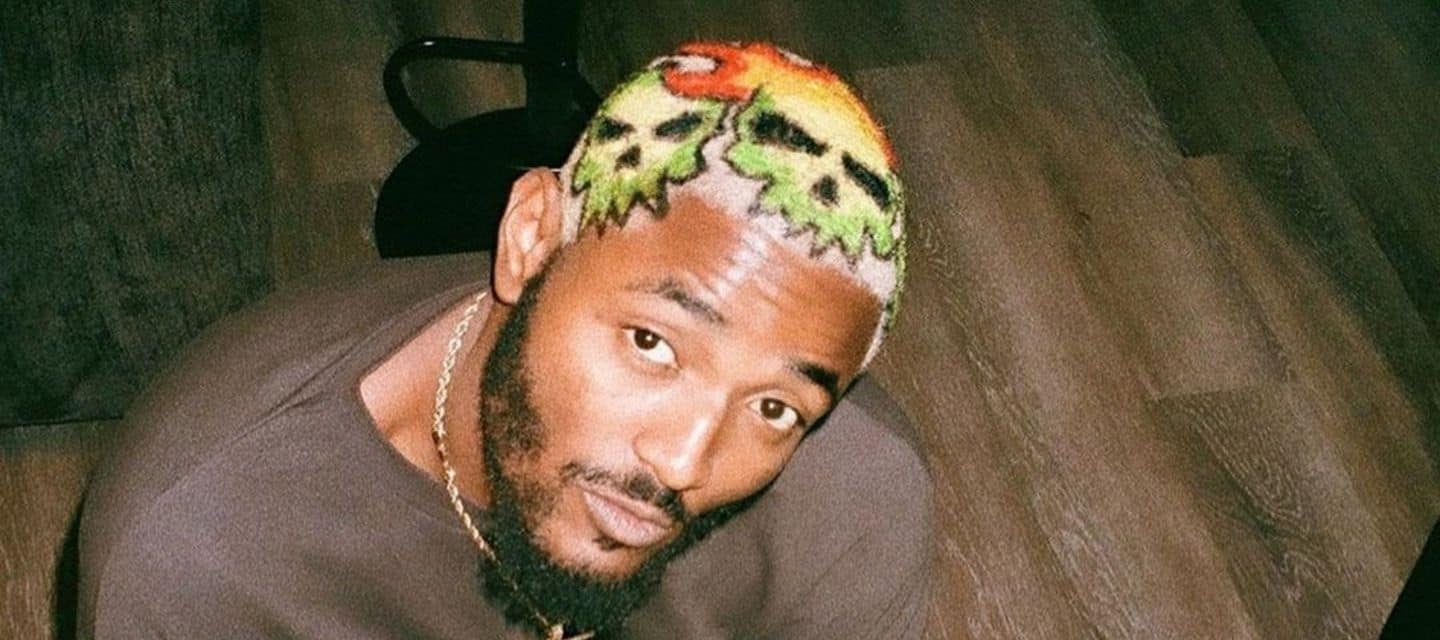
Why we shouldn’t sweep these allegations against Brymo under the rug

“I think that all women go through some form of micro sexual aggression, We’re often trained to think that’s just normal, that we have to grin and bear it. “Unless it is rape, [many of us] feel like we can’t really talk about it or that we have to take it in our stride and even laugh about it”.

Aimee Lee Wood, Director of Sex Education.

According to the WHO, one in five women will be sexually assaulted at some point in their lives, and to bring it closer to home, UNICEF says 1 in 4 Nigerian girls are victims of sexual violence before they turn 18, and according to a national survey carried out in 2014, only 38% of those who experienced sexual violence as children told someone about it, and only about 5% asked for help. As though without them, it wasn’t clear enough, these jarring numbers show the need to protect our women–all the time.

April is sexual assault awareness month, and to close out the month, a group of women were brave enough to name and shame their abusers, including some prominent members of the entertainment industry such as Brymo. Every time this happens, society’s attitudes towards assault and why the aforementioned numbers are as high as they are is made evident.


View this post on Instagram


A post shared by Feminist ♀ (@feminist) on

TW

Two summers ago, young Nigerian women took to Twitter for their version of the #MeToo movement as they named and shamed their abusers and rape apologists living amongst us, which was a monumental moment for Nigerian women in general. This was when whispers of Brymo’s misdeeds fist came to light, and activist Uche Nelo alleged that the singer had been sexually inappropriate with a friend of hers. Her tweets were brushed aside as quickly as they came up, and the singer continued to make music and carry on his career like normal.

The justice system isn’t always on our side, and we still see abusers in power going about their business as usual, (see Busola Dakolo and COZA) therefore, we’re taking matters into our own hands and creating justice for ourselves in the little way we can. Social media has become a tool to name and shame violent behaviour, in a bid for abusers to get their due and be ostracised from society, giving us a semblance of victory.

As a woman, I can confidently tell you that most other women I know have experienced some sort of inappropriate sexual behaviour, and this has been the case for most of our lives since we were little girls. Almost every day, we hear about women who have been assaulted, in situations that could have very easily been us or another woman we love. Every time these stories come up, we’re either reopening old wounds from our past experiences or laden with anxiety about whether we could be the next victims.

Yesterday, before Beyoncé and Megan Thee Stallion sanitised our minds with the fantastic “Savage” Remix, the timeline was very heavy with women expressing the many dangers we face every day, at the mercy of sexual abusers and Brymo came up again, but this time with a detailed description directly from his victim, which brings to light how casually sexually inappropriate behaviour is viewed in society, and the damage it does to women.

From this jarring account, Brymo took advantage of an unassuming fan, demanded to be satisfied “because he was already horny”, intimidated the lady in question into sleeping with him (coersion), and laughed in the face of her fear. From what has been alleged, we see how the singer views women as objects of his sexual satisfaction (which he suggested in a recent interview saying he deliberately said offensive and sexually inappropriate things to women in order to get content for his upcoming album).

Casual attitudes towards sexually inappropriate behaviour leave room for violent and abusive men to continue hurting women, and we have dismantled and learnt too much over the years to let the fear of consequences derail the fight. By the looks of it, with the way Brymo has continued like normal in the face of these accusations, it wouldn’t be a far cry to assume that at this point, he either doesn’t think he did anything wrong in that account, or believes (like most men do) that he can get away with it.

Everywhere in the world, cases of sexual assault are swept under the rug and those who have been called out usually get away with it, leaving their victims to pick up the pieces they shattered. It took nearly 3 decades to bring people like R Kelly, Harvey Weinstein and Bill Cosby to justice, thanks to the silence culture and the power they had to build a system that protects their horrible behaviour.

This should be seen as more than a scandal for Brymo and all others who were accused. In calling this behaviour out and holding perpetrators accountable, we are uncovering the socially ingrained cultural and political disparity which shows up in sexual behaviour towards women. We are also sending a message that in the future, other people can’t get away with their abusive behaviour when they see that there are consequences.

We have absolute autonomy over what kind of entertainment we consume, and supporting abusers (alleged or confirmed) sends a message to them that they can continue their behaviour like normal. It also validates and gives confidence to other people like them, who could go on to endanger another woman around the world.

We all know how difficult it is for them to face the law, so what we can do, is hit them where it hurts. By listening to their music and allowing them to carry on their lives as usual with no consequence, we enable their behaviour. To put it simply, someone like R Kelly was able to prey on young black women for 3 decades and pay his way out of getting into trouble for it, because he made a shit load of money from people listening to his music.

In addition to supporting female-focused spaces which dismantle patriarchal norms, such as Femme Africa, Stand To End Rape, The Dcktator, Wine and Whine, Confident & Killing It, The Consent Workshop and more, we must also ensure that we’re actually all creating safe spaces for women. These platforms give room for women to speak up and form bonds over our collective harrowing experiences as women, with a real sense of sisterhood, community, and protection that we see being fostered.

Women typically bond over these shared experiences, with the common denominator being abuse from men. The sheer number of women who spoke up yesterday on the timeline should give you a good gauge of how rife it is for us, keeping in mind that there are loads more who don’t have it to do the same.

To every woman struggling at the moment, we can hear your silence and we’re here to remind you that awareness is victory and we will continue to fight. We’re all aware of how much more needs to be done, however, looking back at where we’re coming from, the acknowledgement of a problem is a step in the right direction.

Here are some useful contacts within Nigeria to have if you need to speak to someone:

Stand to End Rape (S.T.E.R.) Initiative: 08168967217; 08130320270

Domestic Several and Violence Response Team: 08137960048; 112; 6820

Mirabel Center Lagos: 08187243468, 08155770000

Featured image credits/Nationswell


Words by the women at The NATIVE: Tami Makinde & Damilola Animashaun 

We reached out to Brymo’s team for a comment to no avail


ICYMI: Women take to Twitter to call out their sexual harassers

Fresh Meat: Best New Artists Of The Month (April)

Staying true to our mission reshape the face of African popular culture, The NATIVE team curates a monthly list to spotlight the best and most exciting new artists on the continent. Some of these artists have dropped songs to some regional acclaim, while others are brand new on the block, working towards their first big break. Tune in to what’s next. Click here for March’s Fresh Meat. 


This month has been one of unsettled adjustment, as almost every country has adopted some form of lockdown in an effort to contain the Covid-19 pandemic. Everyone at The NATIVE would like to send our love and support to every creative working through these unprecedented times. Nothing can adequately replace live shows or IRL engagement with fans and supporters. That being said, music has been the medicine for a lot of people.

Through intimate Instagram Lives, fans are getting to know the people behind the songs they love – to really know them, beyond radio interviews during album rollouts. Through platforms like VERSUZ and #NS10, the worldwide music community is able to give long-overdue flowers to songwriters and producers that have soundtracked our lives. Through shows like Tory Lanez’s Quarantine Radio, we’re all able to be in the club at the same time with everyone from The Weeknd, to the ex you forgot to block.

Releasing new music has never been harder. Whether you’re a grammy-nominated African Giant or an Icy youth clocking her first chart-topper, artists have been forced to get innovative during this period, as they try to provide some sort of escape to their fans.

For our second installation of Fresh Meat, we doubled down on our commitment to music discovery on the continent, with artists from Lagos to Vaal making appearances on this month’s edition. There is so much good music out there, and now more than ever, we need to support good music.

Skillz 8Figure

Before the release of his debut EP, ‘Gangsta Luv’ last month, Skillz 8Figure only had one official appearance to his moniker. Alongside Quamina MP and Prettyboy D-O, he featured on “Champagne”, a standout cut off ‘We Outside; Y3 W) Abonten Vol. 1, a compilation project curated by Ghanaian creative agency, Ground Up Chale last November. On the song, Skillz served as the backbone, delivering the memorable hook which holds the song together and elevates it at the same time.

‘Gangsta Luv’ capitalises on the potential he flashed on “Champagne”, resulting in one of the best EPs to have graced Afropop this year – so far. The 6-song project is an amalgamation of influences into a viscerally thrilling whole, where groovy, mid-tempo beats meets Trapsoul-indented melodies that still feel innately Ghanaian. The EP works within a familiar and relatable territory that includes lust and general life goals, however, Skillz’ still shows he’s no slouch when it comes to songwriting, penning potent hooks, Instagram-ready captions and melodies that are saccharine and downright addictive.

Skillz might be as green as they come, but ‘Gangsta Luv’ as a coming-out party is the sign of an undeniable talent with massive world-conquering potential. As he builds momentum at home and makes further in-roads into neighbouring countries and beyond, Skillz will become one of those artists no one can ignore—we might as well start paying him that attention from now.

Espiquet 

Espiquet has one of those voices that jumps out at you. Deep and gravelly, the South African rapper shows up with the presence of a giant and he never fails to stomp around like one on wax. “The Krown”, his second single of the year and the song that caught our attention, is a drill anthem brimming with personality, combining an infectious flow with sinister, memorable one-liners.

As commanding as he can be in front of the mic, Espiquet’s joker card is his versatility. Across a catalogue that spans three solo projects, as well as multiple singles and features, he dabbles into a range of rap subgenres, adding his distinct twist in a way that best represents where he calls home—the Vaal region. “I’m just trying to make the best music I can, to represent what I come from and tell the stories the best way I can”, Espiquet says of his mission as an artist. He adds that travelling through Africa and working with artists from different countries is on his bucket list since it will provide an opportunity for learning and merging stories.

While the current restrictions on movement means Espiquet’s travel plans are going to have to wait—“you can still travel through the internet, luckily”—he’s using this period to work on and put out as much great music as possible. He just released ‘The Remedy’, a 2-song tape with close associate and fellow South African rapper, Farx the Epic, he’s sending out verses for features, he plans on shooting videos for every song he’s dropped recently, and he’s involved in a soon-to-be-released crew mixtape. For him, this is a period to consolidate on the momentum he’s already generated. “We started it, we didn’t know we wouldn’t be here when we weren’t here anymore, so let’s keep moving and see how far it can take us, and how far we can take it.”

ARSXN&LXNER 

South African duo, Arson and Loner’s style of melancholic, inferno music, is a fitting companion for listeners who aren’t bold enough to venture into the darkness of their hearts. Their music fields an eclectic blend of sounds and textures, clearly gaining influence from fellow South African rapper, Patrickxxlee. Their latest project ‘Take Me Where Nobody Knows’ features a breed of gritty, menacing and brutally honest punk rap, with transparent reflections on personality, relationships and phoney rappers capping with fake guns.

The standout track, “I’m No Saint, I Admit” is a chilling admission of immorality and an observation on the ubiquity of the bullshit. Whilst they would rather mind their business, they mince no words in declaring their readiness for war: “It seems, it’s just one thing that y’all have in common/No language, not English, not Spanish but violence/ I’m fluent, let’s do it!”. Arson and Loner have been friends since they were 8, and their strong synergy is made clear by the seamless transitions between their respective verses and vocal inflexions. We definitely cannot wait to rage and mosh to these tracks once we are back outside.

https://soundcloud.com/arsonandloner/sets/tmwnk

Fave

Twenty-year-old artist, Fave’s forceful and melodic voice sets her apart, and even though she’s fairly new in the game, she already seems to be making all the right moves and has caught the attention of industry heavyweights like Mr Eazi’s and his emPawa Africa program.

What welcomes you to her Instagram page is a simple message saying ‘I have no genre’, which prepares you for her range across different sounds. Her debut single “M.O.M.S” which sees her experimenting with lo-fi pop melodies, where she offers a reflective song about broken people who are unable to accept love because they are blind to the intention of others. On her sophomore single “Dal”, she takes a full-180 from her debut and taps into a reggae-inspired sound, where she explores a similar subject matter before returning to a pop-tinged production on her latest single “N.B.U”. 

Fave is part of the younger crop of GenZ artists to use their social media as a way to skip the middlemen and connect directly with their listeners. Twitter is their home and Fave is no exception, and much like Fresh Meat alum, Icytooicy, she’s known to sample new music and freestyles via her social media before making them official releases. With only a handful of singles and impressive genre-mashing inclinations, we can’t wait to see what she cooks up next.

Tsuni 

You know you’re doing something right when you get a public co-sign from Tiwa Savage. Tsuni, the co-signed artist in this case, recently put out her debut EP, ‘Flexxx’, a genre-mashing project entirely helmed by go-to producer, Lord Beezy. Within its four tracks, Tsuni’s shows off her budding dexterity as an artist, using expressive, sex-positive writing and her adaptive voice the through-line between a variety of sounds. The introductory track, “Hold Back”, features sensual vocals over an alt-r&b bounce, while “Bad Habit” is buoyed by a jazz-inflected dance-pop swing.

“We had our fears, we didn’t think people would accept it because of the different sound on the tape”, she explains. Tsuni admits that the warm reception of her very first project has improved her confidence in her abilities, and she’s already looking towards what comes next. While the initial plan was to drop another EP later this year, the singer won’t be rushing herself to any major drops, because she’s more focused on developing and showcasing her diverse skill-set. This means actively working on being a songwriter for other artists, and putting out a lot more content on her socials as a way of drumming up more attention to herself.

With a clear plan of action and commitment to constant growth—she wants to take on vocal training, learn to play a few instruments and engineer music—Tsuni’s admirers are only bound to grow, up to the point where her idols will be widely regarded as colleagues and her co-signs will carry some major gravitas.

Loti 

Loti or RnBLoti as he is known by his loyal social media following is not entirely new to the scene, one quick look at his Soundcloud page will reveal that the r&b crooner has actively been releasing for the past four years. His first single “Hold Me” is a deeply reflective number on which he disables the patriarchal notion that men can’t show emotion as she croons about wanting to cry and be held after losing an important parent figure in his life.

In 2018, he released his debut EP ‘Odyssey’, a collection of 8 tracks that showed off more of his buttery smooth vocals as he wielded his misfortune with love as a superpower for making highly relatable r&b bops. But he’s more than just the r&b crooner we’ve come to know, Loti is also a skilled rapper with an enviable flow as seen from releases like cautionary single “Talk Too Much” where he lets a different persona shine through as he sends a warning to the competition. 

In all this time since, Loti has constantly shown his determination to grow as an artist, his robust catalogue of singles is full of impressive solo standouts as well as collaborations from romantic number “No Souvenirs” with Tim Lyre to “Oasis” with Yinka Oshodi and more recently his single “Realer” with 44db producer, KD. If there’s one thing that’s clear from Loti’s career so far, it’s that he’s listening to critics and growing with the times. He’s slated to release an EP with frequent collaborator, KD next month and we can’t what to see what else he has to showcase to the world.

Elhi

It’s crazy that we saw artists like Davido and Wizkid come into their positions at the top over the past decade, and are now witnessing a generation of musicians who draw clear influence from them. A few weeks ago, we discussed the new vanguard of hitmakers, and we have no doubts that Elhi is towing the same path, following closely behind artists like Joeboy and Fireboy, who dominated the mainstream charts over the summer. This year, we see an Elhi track occupying the same space.

Elhi has that x-factor you need to gain the attention of a mainstream audience upon first listen, and he caught our attention with his upcoming EP with one half of Legendury Beatz, Mut4y, ‘Eu4ria’. They have teased the project two singles so far, “Bad” and “Feeling You”, where we get a good sense of Elhi’s vocal ability reminiscent of 2011 Wizkid against club-ready beats. With only other two songs in his catalogue, Elhi is quite literally Fresh Meat, and we’re ready to eat.

Moonbather

Previously known as SEO, until the release of her latest project, ‘It’s Imperfection’ Moonbather’s unique sound caught our attention this year. Her 6-project deep discography, dating as far back as 2017, places her among the league of other young artists whose music echoes the SoundCloud trend of experimenting with niche electronic sounds. By creating her unique sound, she’s creating her definition for what it means to be a new, exciting artist in Nigeria today.

Moonbather doubles as a singer and producer for most of her songs, indulging in delightfully weird bedroom-pop experimentation. ‘It’s Imperfection’ nestles in that sweet spot between polished and spontaneous, as her production maintains a sharp and distinct edge – littered with E.D.M. and sci-fi sound elements – provide a quirky backdrop for her innocent, yet, blunt songwriting.

On the instantly striking “Autosexual”, she makes a case for masturbation amidst bold vocals and rummaging percussion. In terms of gaining a bigger audience, the positive reception of the unique vocal delivery of an artist like Santi is an encouraging indicator for Moonbather, since she favours burying her falsetto beneath echoing reverbs that form a translucent tapestry of sound. Her mesmerising and wistfully off-kilter sound is proof of the innovative and ambitious music independent Nigerian artists are capable of when they aren’t driven by the need to attain overnight commercial success, but in playing the long game, Moonbather is only preparing herself for bigger successes soon.

Featured image credits/NATIVE 


Words by: Dennis Ade-Peters, Adewojumi Aderemi, Tami Makinde, Djaji Prime 


ICYMI: FRESH MEAT: Best New Artist Of The Month (March) 

Education As The Key To Nigeria’s Technological Advancement

“Parents listen to your children, they are the leaders of tomorrow. Try and pay our school fees…”

I remember singing this every other morning at my primary school in Abuja. The mantra of children being the leaders of tomorrow highlights the finite nature of human life, and the fundamental need for all living creatures to pass on their knowledge and encourage future generations to build upon this for greater progress. It’s for this reason civilisations have refined the art of education in both formal and informal settings since the dawn of humanity. The roles of teacher and mentor were seen as highly pious and noble, because it takes a recognisable amount of expertise and patience to teach.

Once used as a tool of subjugation by the elite, the 21st century has ushered in the free flow of information, with the internet being an omniscient teacher, making education less tedious, and enabling engagement from the comfort of wherever we find ourselves with access to absolutely everything. The barriers to information access have never been so close to being rendered useless, yet in 2020, it would seem like Nigerian universities are unable to make the digital push.

The general public was recently informed of the inability of public tertiary institutions to conduct ‘Open distance’ learning courses, in the wake of lockdowns aimed at controlling the spread of the ‘Rona. This revelation brings to focus the worrying state of education in Nigeria, who’s government investment and focus on education are the lowest of all sectors. This causes teachers to be constantly ill-equipped; strike over low wages, poor incentives and working conditions.

‘Open Distance’ or simply distance learning is the education of students who may not always be physically present at a school. Nigeria officially established open distance learning with the creation of the current National Open Universities (NOUN) in 2002, being the first in the West African sub-region.

In a research paper by Phillip Achimugu & Oluwatolani Olugbemi, the focus on ICT as a ‘topicality’ as opposed to being an integrated tool for education in Nigeria is highlighted as a detrimental attitude towards harnessing technology as a tool for education. According to the paper “This philosophy limits the potential of ICT in education to be a central force in economic competitiveness. Its potential as a tool for addressing challenges in teaching and learning and as a change agent are thus neglected”. The need for students and teachers to go beyond learning about computers, and use them in developing, learning and managing tasks is vital in breeding a culture of research, critical thinking and innovation.

It would seem that currently, Nigeria has no central online curriculum, or national software used for education, as evidenced by the statement issued by the Nigerian universities commission.

An integrated ICT/ Open distance learning format presents many advantages for students and teachers alike; increasing freedom in learning, taking into account individual pace. More resources such as videos bring concepts to life, encourage emulation and also serve as a resource for teachers in training and development. This redefines the role of a teacher and provides greater avenues for analysis on the part of students.

When you look at other more stable societies, we find that education, with specific attention to Mathematics, Science, and Arts, form the bedrock of innovation and higher standards of living. In order to develop infrastructure, provide healthcare, compete economically, and develop solutions to cope with the ever-changing nature of the world, we need highly skilled and trained experts.

Countries in Southeast Asia, particularly Japan and Singapore have little to no natural resources, yet continue to lead the world in innovation, with their students being some of the most intelligent in the world. Universities in Hong Kong and Singapore are among the best and most rigorous learning institutions in the world, which is a result of deliberate planning and focused spending on the education sector – approximately 16% of Singapore’s 2018 budget being spent on education.

United Nations Educational Scientific and Cultural Organisation (UNESCO) recommends an allocation of 15 – 20% of a developing country’s budget should be put towards education. Closer to home, Ghana spent 21.7% of it’s 2014 budget on education, whilst Nigeria has spent between 7 – 12% of its annual budget on education in the past decade, and the 2020 budget allocated only 6.7% of its total to education.

The average salary annual for a public school teacher in South Africa ranges between $13,000 and $14,000, with the highest-paid Nigerian teacher at primary level earning around $6,000 annually with grade level between 14-16. South African universities in collaboration with the government and the private sector are working towards subsidising internet subscriptions for students in the wake of lockdown season.

Beyond funding, entry into teaching colleges have the lowest entry marks, and admission into these colleges is usually a third choice for applicants, highlighting the poor perception of teaching in Nigeria. The effect of this is that teaching is no longer viewed as a respectable career choice, and this affects the quality of education received by our future leaders.

Apart from helping students stay on top of course work during this and any possible lock-downs in the future, distance learning may prove vital in bridging the gap in rural areas, help decongest classrooms, and reduce the time spent on learning. When the focus is tailor-made to students interests and abilities, the results will surely be fruitful.

The neglect of education and technology is worrying, as it’s symptomatic of a society content with little to no progress. How can any of us be proud of any feats of academic success in foreign lands by people of Nigerian origin, when we continue to handicap the educational rights of Nigerians at home?

The current state of education is a far cry from the glory days when Nigerian universities such as ABU Zaria, and the University of Ibadan were not just regional, but internationally acclaimed citadels of higher learning.

Harnessing the ubiquity of the internet as an effective tool for education would help boost the individuality and productivity of students in Nigeria, and also bridge the educational deficit in rural areas of the country. By giving students the resources to develop themselves at their own pace, we produce a conducive environment for critical thinking, and through entrepreneurial investment, help the unemployment situation.

Featured Image Credits: Web/ BudgIT
[mc4wp_form id=”26074″]


Djaji is a creative Vagabond, send me your takes on music and African culture @djajiprime

ICYMI: Some Iconic Cars You’ll Remember From Your Childhood In Nigeria

The Shuffle: Remembering Afropop’s Charming Diva Goldie with “You Know It”

Every so often, the world is introduced to a superstar whose talents and personality are so unique, yet they still maintain a level of relatability enough to endear them to us. The late Goldie Harvey was perhaps one of the best indications of this in Nigerian music history being Nigeria’s pre-eminent pop diva.

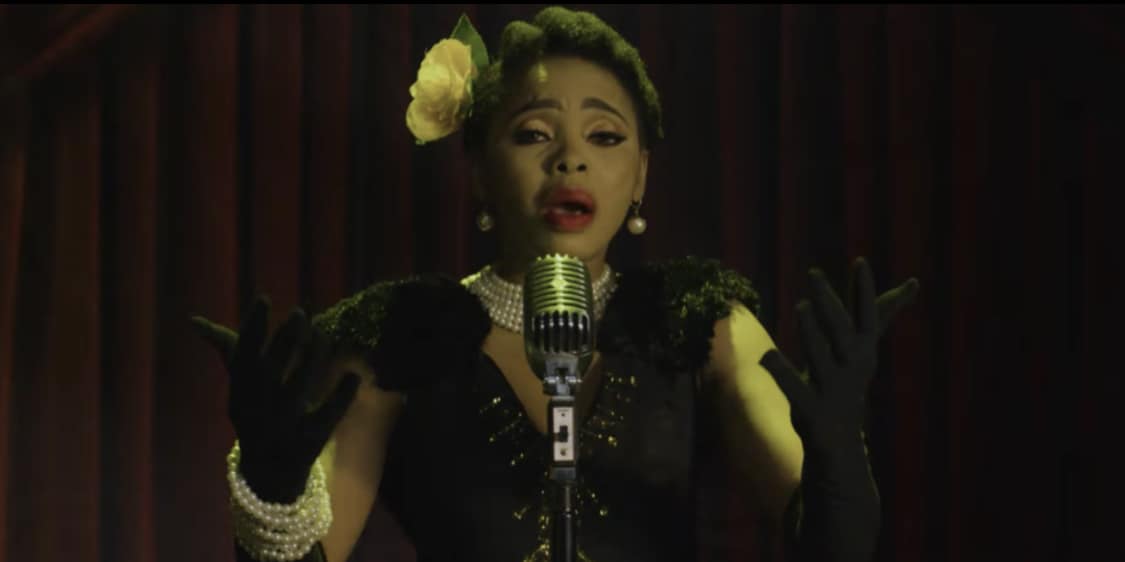
With her stylish brand of rebellious and provocative music, Goldie first caught our attention in April 2010, with her Eldee-assisted “You Know It”  breakout single, introducing the world to her eccentric personality, unmistakable voice, and her penchant for extravagant vintage attire in the accompanying music video, shot by Clarence Peters.

Over the years, Goldie represented a brand of fiercely independent-minded women, who were confident in their craft, a philosophy which is what formed the basis for “You Know It”, where she sang: “Yes I’m a diva, ooh I got class, you players hate me, but you know, you know”.

The success of this single paved the way for Goldie’s debut album ‘Gold’,  which was released one whole year later. Through the course of the song, Goldie reiterated her unique standing, singing; “We’re not the same O, I’m in my lane O”, emphasising her irresistible allure and personality which her lovers and haters alike had little choice but to admire her for.

Eldee compliments Goldie’s ‘too hot to handle attitude’, with his trademark braggadocio, crediting his swag to the hands of the Almighty. The sonic composition the pair brought together made for a dance-ready track, with electro-inspired synths, and driving drums, the mix would give Goldie an airy, transcendent atmosphere, adding to the intoxicating feel of the song.

“You Know It” would soon become an inescapable smash reaching number 1 on Radio and Dj countdowns, earning Goldie several awards including ‘Best Female Video’ at the Soundcity Awards 2010, ‘Best Use of Costume’, ‘Best Afropop’ at NMVA, and ‘Best Female Artist’ at the City People Awards.

This collaboration served as good indication to Nigerian audiences of the intoxicating power of pop + rap, coupled with indigenous charm to pave the way for future afropop divas. Goldie was a superstar who enriched Nigerian music and showcased the beauty in individuality. Even though she’s not here, “You Know It” remains a memorable cut, mainly due to its forward-thinking production which has stood the test of time, making the song an evergreen hit.

On Valentine’s day in 2013, we lost a trailblazer and a fearless creative who was well ahead of her time and wasn’t afraid to let  everyone know. Sweet, sassy, and authentic, Goldie laid the blueprint for what it means to be a compelling diva, with an infectious smile, and a desire for all individuals to achieve their dreams stating: “We are our mind, not our body or situation”.

Featured Image Credits: Web/ Onobello


Djaji is a creative Vagabond, send me your takes on music and African culture @djajiprime


ICYMI: The Shuffle: Revisiting Cynthia Morgan’s Sensual Dancehall Bop, “Lead Me On”

Songs of the Day: New Music from Dapo Tuburna, Mayorkun, Sarkodie, Boity & more

The constant frequency of cross-Atlantic collaborations is proof that afropop is only moving forward with its global appeal. Last week alone, we got new music from Tems and Davido alongside Khalid, while Santi joined Octavian and Obongjayar for a hypnotic bop. Across the continent, music has only become more diverse and expansive, leading to a daily flurry of new releases. We’ve decided to help out by sorting through new songs from across all the sub-genres around the continent to curate a column with all the best “Songs of the Day”, to highlight all the new releases you Need to hear.

At the beginning of the week, we brought you Ajebutter22’s Grime-influenced banger, “Big Man Talking”, Jidenna’s “Feng Shui” off the soundtrack of the new “Insecure” season, the latest single off Mut4y & Elhi’s joint project, and more. Today, we bring you Dapo Tuburna and Mayorkun’s collaborative single, a loverboy cut from Korede Bello, a brag-filled stomper from Boity, an Azonto revival jam by E.L and Sarkodie, and much more. Dig in, and you’re welcome.

Dapo Tuburna x Mayorkun – “See Finish”

Dapo Tuburna started off 2020 with his first headlining show, ‘The Gingo Experience’, in celebration of last year’s run that saw him release his well-received debut EP, ‘Gingo Vibes’, amongst other achievements. He soon followed up with his first single of the year, “See Finish” in collaboration with regular hitmaker, Mayorkun. Together, both singers urge listeners to avoid being too open and familiar in public, since it only breeds contempt in the long run. “See Finish” has now been given an accompanying video, which in addition to shots of Dapo and Mayorkun performing their set, we see colourful dance moves and all-round, eye-popping shots.

Korede Bello – “Mi Casa Su Casa”

Korede Bello started his 2020 with “Sun Momi”, a romance-themed cut released just in time for Valentine’s Day, and now he’s continuing with that momentum with the release of his new single, “Mi Casa Su Casa”. Produced by Ozedikus, who laces the beat with an afro-Caribbean flavour, the new single continues to bolster Korede Bello’s heartthrob, with a more mature presence. “If you give me chop, I no go rush”, he sings on the hook, exploring a new raunchy side we’ve never really seen to him.

Boity – “Bakae”

Last November, Boity made history as the first female South African rapper to go platinum, with the success of her Nasty C-assisted debut single, “Wuz Dat”. She followed up with “Bakae”, a song where she stunts and flexes on her naysayers over a thumping trap beat. After a long wait, she’s finally dropped the music video for “Bakae” via IGTV, citing ongoing label issues as the reason she couldn’t put out through any other medium. Regardless, the Nape Phasha-directed video is pretty stunning, as we see Boity rapping her lyrics with a commanding demeanour, while rocking several glamorous outfits.


View this post on Instagram


A post shared by Boitumelo Thulo (@boity) on

E.L x Sarkodie – “Revival”

Over a week ago, Sarkodie put out a call to fellow Ghanaian artists to bring back Azonto, the up-tempo subgenre behind the dance craze that took over West Africa circa 2011. Sarkodie kicked things off with the Tulenkey-assisted “Fa Hooki Me”, and he’s now followed up by joining fellow Ghanaian rap veteran, E.L for “Revival”. Over Pee GH’s bright and buzzing synths, both artists narrate the experience of a night out while also setting the Azonto revival agenda straight with a beat that mimics that sound and instructive lyrics.

Sheye Banks x Ckay x Bella Alubo – “Ifunanya”

Moving beyond their role as music curators for radio listeners, it’s becoming more common for on-air personalities to facilitate songs of their own with vocal assists from artists. Following the release of his Dapo Tuburna-assisted track, “Rotation”, Sheye Banks, the self-proclaimed king of vibes, recently tapped Ckay and Bella Alubo for the romantic single, “Ifunanya”. Backed by piano keys and mid-tempo afropop drums, Ckay and Bella deliver an amorous set loaded with affectionate one-liners.

TÖME – “Free”

After a stunning 2019 run where she opened at headlining shows for Wizkid and Burna Boy, and also released her debut album, ‘Tomesroom Chapter One’, Canada-based singer, TÖME is preparing for the release her sophomore LP, ‘Bigger than 4 Walls’. The album which we’re expecting next month is set to feature Runtown, King Promise and Zlatan, and to whet our appetites, she’s just dropped the lead single, “Free”, along with an accompanying video. Over gently sweeping keys and EDM drums, TÖME’s voice soars as she sings about earning the freedom to go after her dreams. In the video, we see the song’s narrative being played out, as well as shots of TÖME surrounded by nature.

Kiienka – “In the Ends”

Kiienka’s debut EP, ‘Spaceman’, marked the Port Harcourt-based artist as one of the more exciting purveyors of trap music on this side of the globe. He’s continued to consolidate on that ideal via joint releases with frequent collaborator Veen, and he’s currently getting set to drop his next project ‘Spaceman, Vol. II’.

“In the Ends” is the lead single off the forthcoming project, and it serves as a thrilling peek into what we should be expecting. where Veen lays down the song’s layered, psychedelic trap beat, accentuating Kiienka’s brag-filled raps about sipping Hennessy and independently making it to the top with no help.

[mc4wp_form id=”26074″]


Dennis is not an interesting person. Tweet Your Favourite Playboi Carti Songs at him @dennisadepeter


ICYMI: CHECK OUT NEW MUSIC FROM JIDENNA, AJEBUTTER, STONEBWOY & MANY MORE

This season of ‘Insecure’ highlights the inevitability of change and outgrowing friendships

Over the last four years, Insecure has provided us with relatable experiences for the millennial woman who is navigating adulthood and trying to find her feet through the lives of Issa and her best friend, Molly. Insecure recently returned for its fourth season and this time around, the cast have grown up a bit, and are coming into their own as women, glowing and growing, dropping their past toxic patterns.

With this, we also see the inevitability of change and outgrowing certain situations and even friendships we thought would never come to an end. Friendship breakups are never a nice thing, and where romantic breakups get their fair share of attention in every facet of popular culture from films to music, nobody ever really talks about the effects of falling out with a close friend.


View this post on Instagram


A post shared by Dcktator (@thedcktator) on

The new season begins ominously with Tyler the Creator’s cut-throat number “A Boy Is A Gun” in the background, as Tyler’s emotionally tumultuous lyrics seem to foreshadow the eventual demise of Issa and Molly’s friendship. We get to see Issa’s conversation where she speaks about the friendship ending, saying ‘I don’t fuck with Molly anymore’ ahead of the eventual breakup between the pair.

As entertaining as Insecure is, one of the most frustrating things is that characters tends to take one step forward and ten steps back. Since we started watching the show in 2016, the only character who seems to me making any tangible progress in the entire scope of her life is Issa, which is great for her, but it often feels like her friends are used to having to look after her, when all that shows is how regressive and stuck in the past they are.

Though there are only 3 episodes of the season out, we can already see the obvious tension building between Molly and Issa so far, from Issa’s budding friendship and work relationship with Condola, we begin to see what drives the wedge between her and Molly. From the looks of it, it seems as though Molly is feeling some sort of resentment towards Issa for focusing more on her relationship with Condola and her new passion project, which now means that Issa no longer has time to prioritise Molly’s relationship and professional woes.

As the season goes on, they both begin to lash out at each other and make snarky comments, like Issa saying to Molly ‘You gon’ pull the Old Molly and scare him away?’ when referring to her latest love interest. The internet collectively worried about the possibility that Issa and Molly’s friendship could be coming to an end, and many people shared similar experiences with friendship breakups in the past, opening up a much-needed conversation about the need to find your tribe full of honest and dedicated girl friends.

We all know how it goes when you realise your friend is actually an opp, but takes a while for you to actually get to the point of cutting off the friendship because it seems like a ridiculous option. We might not realise, but we expect more loyalty from our friends than we do from (male) romantic partners, mostly because at this point in life, you’ve probably been friends with your closest gals for a very long time, and have shared a deep connections over the years. As close as a boyfriend is, there are certain things he can never understand, which you need your girls for.

It’s always heartbreaking to lose friendships, and what this season of ‘Insecure’ does is present all of our lives on television with some much needed emotional honesty, which can be difficult to achieve in real life. We’re all watching the show, commenting about what Molly and Issa could and should do to save their friendships, but how many of us can confidently say we employ those methods in real life?

Hopefully, watching these uncomfortable facets of life as a black women can encourage us to do better in our real life, such that the show actually serves its purpose to offer nuanced and well thought out responses to the woes black women face.

Friendship break ups like relationships are inevitable, and sometimes people grow apart when their lives are heading in entirely different directions no matter how long they’ve been friends for. The end of a friendship if it has to come to that doesn’t always have to be a fight, and the key to achieving that, is keeping clear communication lines open, with the aim to always resolve and air grievances in a compassionate manner.

Featured image credits/Insecure


Tami is a lover of women, music and astrology. Tweet your fave female artistes at her @tamimak_


ICYMI: How ‘Skinny Girl in Transit’ is tackling social issues Nigerian women face

How Soundcloud changed the sound of Afropop music forever

I remember where I was the first time I listened to Santi’s cult classic tape, ‘Suzie’s Funeral’. In the backseat of a Toyota Sienna, on a trip to Abuja, my friend Timothy sent me a link to the project with an accompanying message, “you should spin this.” At the time, my SoundCloud app was pretty much inactive, but I trusted my friend well enough to wipe those digital cobwebs—and looking back, it was worth it.

There’s music that creeps up on you, and there’s music that hits you like a gale force wind. ‘Suzie’s Funeral’ was both – for one, it was instantly distinct and felt unbound to anything but Santi’s rules. It was intriguing, entertaining and even confounding to varying degrees, depending personal taste. Regardless of where listeners fell on the acceptability spectrum, it was difficult to dismiss ‘Suzie’s Funeral’, and as the tape’s myth began to build in the following weeks and months, it became impossible to ignore.

Within all of the chatter and buzz, Santi’s breakout project was emblematic of SoundCloud’s most essential trait: freedom. In the African mainstream scope where co-opting and conforming to trends is the ideal, freedom has always been a double-edged sword, allowing non-conforming artists to express themselves in whatever form they choose but also limiting their chances at widespread success. With the advent of the SoundCloud trend, the platform became the nexus point for a new generation of boundless creatives to showcase their abilities and build a community of listeners turned ardent supporters.

Like Myspace and Hulkshare before it, discovery was—and still is—an integral part of SoundCloud’s appeal, but its superpower came from becoming the premier platform to emphasise and amplify creative freedom in a way that made it so cool that even the global mainstream had to sit up and take notice. Soundcloud was the launching pad for Bryson Tiller’s rise to stardom, it was integral to the buzz behind the Raider Klan— Smokepurpp and Denzel Curry—and other artists of the ‘SoundCloud Rap’ movement. More popular artists also used the platform as the leak site for (un)official releases, like how Kanye West dropped “No More Parties in L.A”, a single off his 2016 album, solely on SoundCloud at first.

In the African context, it took a while for the mainstream to properly acknowledge what was happening on SoundCloud, but that’s simply because artists who used the platform didn’t start out hunting for that type of validation. The ethos was to make whatever style of music that represented them best, and leverage whatever resources they could muster into growing a formidable fan base. By the end of 2016, there were buzzing projects by Odunsi (the Engine), Lady Donli and Tay Iwar, and 2017 effectively diversified the playing field, with the increased popularity of Ghana’s La Meme Gang, South African rappers Patrickxlee and J Molley, and more.

Currently, the diversity of the music African artists are making is now more apparent in the mainstream, but that widescreen narrative would be incomplete without SoundCloud acting as the buffer for experimentation and growth. Being a totally DIY system, artists could be as experimental with their sounds as they wanted to be, confidently putting out music that would most likely languish in obscurity when traditional media and promotion routes were the only ways to gain any attention. With no bounds on the music that could make its way to SoundCloud, there was no shortage of artists, and being a low barrier streaming platform, there was also no shortage of listeners looking to discover their next favourite song, tape or artist.

One would be right to also describe SoundCloud as the rallying point for a revolution, but what’s a revolution without a resistance? As the movement picked up the pace, there was a lot of unwarranted critique, which mainly stemmed from a perception of privilege and the sheer need for ol’ heads to place these artists in one box. First, it was the derogatory term ‘SoundCloud artists’, then came Alté, but along the way, the artists had already started to carve their own space in the mainstream and SoundCloud’s prominence was beginning to wane.

In July 2017, it was reported that SoundCloud had shut down two of its offices and laid off close to half of its employees. At the time, it looked like it was the beginning of the end, but one outcry and an intervention from Chance the Rapper later, the streaming platform seemed to be doing just fine. You could argue, however, that things began to change irreversibly from that point, as artists started to go directly to the monetised, seemingly more secure streaming services.

Apart from this scare of a closed shop, you can cite two other important factors for this shift. The first is the instrumental role social media now plays in marketing and self-promotion. These days, artists can peddle their links in the digital equivalent of rappers selling their mixtapes out of their trunks, they can virtually interact with their fans and other artists in order to build community, and they can showcase their abilities in short bursts that can go viral and lead to initial momentum they can build off their careers with.

The second factor is that the stakes changed. With its positioning as a freewheeling platform for artistic expression, SoundCloud is a decidedly low stakes platform. While discovery is a part of an artist’s career that’s difficult to overstate, transforming the potential that drew in the first set of supporters into a career on the biggest stage possible comes with a higher stakes. As far as measuring star power, SoundCloud is a few levels below streaming services like Apple Music, Spotify and YouTube, and the artists seemed to understand that perfectly. It’s the reason why Santi’s proper debut LP, ‘Mandy & the Jungle’, got all of its push on those more prominent platforms, even though the album still made its way to SoundCloud, while some artists entirely forgo putting their album on there.

Although SoundCloud is still here, it clearly doesn’t have the same presence it did only two years ago. Just last week, the pioneering quartet L.O.S came back with a new EP, ‘The Tribe’, which I found out about via SoundCloud, but had to confirm validity from whether it was on other streaming platforms. In addition, its low numbers (by L.O.S) on the platform is proof that listeners have clearly migrated. In the same breath, young artists like ICTOOICY use their SoundCloud page as the place for frequent releases, conversations around the fast-rising poet with a flow have centred on her Apple Music chart conquests, showing where the major metric for budding stardom now lies.

Those who still use SoundCloud regularly know that there’s still good music and artists being discovered, but for those who don’t, the streaming service is a throwback to simpler times when the thrill of discovery was still a big thing. Regardless of which side you’re on, SoundCloud’s importance and impact on African and global music is indisputable. Whether it resurges back to its previous level of relevance or remains in its current rhythm, it would be particularly painful if the same fate that befell Myspace befalls a platform that’s integral to the musical identity of an entire generation.

SoundCloud and the thousands of memories and magnitude of talent it helped create shouldn’t be allowed to die.

[mc4wp_form id=”26074″]


Dennis is not an interesting person. Tweet Your Favourite Playboi Carti Songs at him @dennisadepeter


ICYMI: BEBE ZAHARA BENET IS ON A MISSION TO BRIDGE THE GAP BETWEEN HER TWO WORLDS

NATIVE EXCLUSIVE: Why DRB’s debut project, ‘Pioneers’ took 10 years

There’s a vibe that we provide that no one else can. We have so many unreleased DRB music over the years, so now it’s like let’s just give them this thing.

The roots of being alté as we know it were largely set in motion about a decade ago, and it would be impossible to not trace it back to the days of the Double R Boys, who we all know today as DRB. When I was a young teenager, any kind of proximity to them gave you automatic cool points, whether it was from getting emailed the links to their tracks like “Marry You” and “Wait A Minute”, or that Teezee waved to you from afar at their annual DRB concerts.

Today, not much has changed apart from the fact that the foundation they set all those years ago has now been built into a mansion, which houses Lagos’ creative scene. We’re expecting their debut project ‘Pioneers’ after 10 years of being a collective, and ahead of the release, we spoke to TeeZee, BOJ & Fresh L about their decade of contributing to the creative scene in Lagos, what to expect from the album and more.

‘Pioneers’ is a love letter to alté as a whole, with a star studded guest list featuring Odunsi The Engine, Santi, Tems, WANI, D-O, Lady Donli and many others. The group released their fourth single off the upcoming album “Softly” last week, and with the eclectic range of sounds from all three other singles; “Necessary”, “Shomo” & “Based On”,  ‘Pioneers’ is definitely a defining moment, bringing all their efforts over the years to full circle.

As a collective, DRB saw ahead into a time when accessibility, lifestyle and experiences are just as important as the music itself. While they’ve always stayed connected to the music in some way or the other, what DRB sell to us much like it was when they were just the cool guys in school, is themselves.

Years before social media apps like Instagram or Snapchat allowed people feel like they had direct access to their favourite celebrities and influencers, DRB continuously gave the community a peek into their lives. With several vlogs and Facebook videos of them just hanging out or following them as they toured from uni to uni within the UK, the intimacy of these posts also helped them gain a cult following and remain relevant, where everyone watching was made to feel included.

DRB have always been the kind of collective to set the pace. They were the first in our community to actually grow outside of the community, and their first act as a cool and trendy collective of adolescents eventually gave way to their second act as mature solo artists. With their upcoming project, the group is stepping into this next act nicely, having seen the creative scene from bird’s eye level, and touched on every corner from fashion and lifestyle to music and parties. Following in the steps of Wu Tang or Odd Future, clothing and appearance were a big selling point for them. Each member represented a distinct aesthetic which challenged shallow societal representation, and in turn strengthened their collective force.

All those years ago, their branded t-shirts became something of a status symbol amongst our community, and their close friendships with other burgeoning fashion houses such as Modus Vivendii and WAFFLESNCREAM intensified their position as tastemakers. They dressed to stand out from everyone, which today, has become a defining factor of the alté community today.At some point during the last decade, Teezee adopted the moniker ‘Fresh Prince Of Las Gidi’ thanks to his colourful mix and match of clothing, and BOJ established his signature look wearing a big hat and sunglasses which we still see him rock today. The alté scene is coloured by a bunch of people wearing and doing whatever they want, not following the trends from the runways or Instagram, which is considered – much like the original Fresh Prince was – outlandish.

Before the creative scene became what it is in society today, young Nigerians who were creatively inclined had to deal with a lot of nay sayers who saw our work as a hobby, rather than something to be taken seriously. With their music, they have always touched on topics which were relatable to listeners, and in the wider scope, represented a generation who collectively decided to rewrite the rules to suit our own paces.

When I asked the group why they decided to make an album after 10 years on the scene, they said:

“As you develop yourself as a person, and if you care about your craft and what you’re doing, you realise that there are some certain things you need to do to get things done. Life happens and you become forced to take things more seriously. When you get to adulthood, you have to be forced to translate the your passion into bar.”

This drive to create room for their own normal, allowed DRB to explore many different options outside of the music to make things happen for themselves, from organising parties to branching into the media (Teezee as co-founder of The NATIVE & Fresh L as founder of Alte Daily). Being the oldest member of the collective, TeeZee takes on the role of the organiser, who makes sure things are always in order.

Fresh L tells me about Teezee :

“He has always been like the big brother of the group, the one that’s always making sure everything is in order. He’s mostly in charge of our visual identity and does most of the creative direction. He brings in the business for us and generally makes sure we’re always doing what we need to be doing”

Musically, he has consistently maintained a melodic flow which made songs like “Swagga Mi Gbona” and more recent tracks like “Softly” as enjoyable as they are. After being quiet on the music side for a few years, Teezee returned with a big bang with his standout verse on BOJ & Ajebutter’s “Amala” in 2017, which housed the iconic line “I dey shaku with Naomi”.

In his time as the Brand Ambassador for Jameson Nigeria, Teezee managed to make whiskey the go to choice for young party goers, through carefully curated events from the weekly parties at Vapors; Trap Jungle to our annual festival, NATIVELAND. His experience putting together the best and most unique experiences for young Nigerians made him a trusted voice in the corporate world, which facilitated a lot of financial backing for the creative scene as a whole.

Speaking about what we can expect from him on ‘Pioneers’, Teezee said:

“Naturally, I’ve always been melodic, with a weird sounding vibe and unorthodox flow like you hear on “Toyin”. As everyone has grown, our sound has evolved, but with this project, I really want to show that this is my vibe.”

Their individual strengths within the collective definitely play a key role in continuing this drive, and this is only possible through their close camaraderie and need to see each other winning. Having been friends for most of their lives, they have an unspoken understanding of each others’ strong points, which helps their music, branding as a collective and business decisions.

Since NATIVE 11 alum, BOJ moved back to Lagos from schooling in England, he won over the affection of Nigerians with his ability to kill every single hook he’s featured on. His relationship with other artists in the game gave DRB that extra leg in to the music scene, and having featured on super popular songs like “Omo Pastor”, “Feel Alright” in the early 10s gained the group the attention of a wider Nigerian audience.

Speaking to the NATIVE about BOJ’s role,

“He’s been the most popular guy, he’s been on major hits and people see him as like the most blown guy and he always brings us along with him. Sonically and melodically, he has the ear. He also provides the balance in the group, when we’re all being eratic, he’s the voice of reason to bring some grounding to the conversation so everyone is still productive.”

BOJ has spent the past decade listening to more music which has contributed to making his melodies better, so we can expect more fire hooks from him in the future. He’s also been paying more attention to his lyrics, which we can see clearly through his most recent feature on Gigi Atlantis’ “Deathproof”, where he sends a timely message about perseverance and resilience. On this album, he’s interested in being more vocal and saying more things than he used to, in order to reflect his personality better.

Back in the day, DRB used to be a bigger collective in conjunction with CE – CE/DRB, which also included artists like Kasien, Tau Benah 3 Feat and more. In that time, they gave us songs like “Go Harder” & “No Send”, and even though this collective doesn’t really exist anymore, they’ve all continued to work together in different capacities. Fresh L has now started a media outlet with Shayo Okupe (aka 3 Feat or Thr33), in addition to ploughing his own way through the music industry since he moved back to Lagos in 2016.

When we spoke to him prior to the release of his mixtape, S.U.N.S, there was a clear feeling of unfinished business when he discussed the group’s 10th year anniversary. They have been gearing up to this moment for a long time, a BOJ tells me that Fresh L plays the unique role of setting the tone for when they’re making music:

“When it comes to setting the storyline and subject matter that has happened to us, Fresh L is our guy, we want to represent young, black, Nigerian man and he always gets it. He has also managed to keep the brand alive all this time since we’ve been quiet on the music side on social media. He’s kind of like our voice on social media, whether it’s positive or negative. *chuckle*”

His social media pages, especially Twitter, are typically littered with him saying incendiary things to rile people up, but even after being trolled countless times, Fresh L refuses to conceal this aspect of his character to appease the masses, and others who don’t know him personally. 

Through his mixtape, S.U.N.S, we saw an evolution of his sound from straight up raps to suit different melodies. His strength as an artist lies in his pen and his flow, and while he still considers himself a rapper at heart, over the years, his sound has become more malleable. Showing versatility with songs like 2018 summer hit, “Firewood” or his contribution to BOJ’s bolshy track, “Awolowo”, he’s spent the past decade polishing his craft in preparation for what we’ve getting on the new album.

Speaking to us about what to expect from him on this album, Fresh L said:

“I always want to rap. I’m still trying to put as many bars in there as possible, however I’ve trained myself to the point where I can do it on any kind of beat. Whether it’s hip hop, afropop anything. As long as I’m saying what I need to say, I’ll ride the wave.”

Today, one could very easily argue that the Nigerian musical landscape is more liberated from the audience’s expectations than it’s ever been, and artists now have the room to re-imagine genres to fit their own personal expressions. The role ‘Pioneers’ will play in this is difficult to overstate, being a cultural coming-of-age of sorts, and housing all the popular facets of music we all enjoy from rap & R&B to street-hop and dancehall influenced tunes.

When making music, it’s very important for them to stay true to themselves, much like it is for anything else they involve themselves with. ‘Pioneers’ is their playground as a group, which allows them express themselves as individual artists who belong to a collective.

After ‘Pioneers’ drops this weekend, we can expect more music from each of them as usual. They are all individually working on new music, and they all have new projects on the horizon. According to them, DRB is just the legacy and the foundation that will forever be there. Their album to them, is a means to “introduce people to the past and the future, and 2020 is the perfect year to do that, because it’s not the same world we used to be in”.

[mc4wp_form id=”26074″]

TeeZee is one of the co-founders at The NATIVE


ICYMI: Ladipoe just wants to give you good music, whether it’s rap or not

Where were you: Africans in Conversation is a big step forward for the creative industry

Over the weekend, Njiko Agency and Abike Studio hosted a digital conference, ’Africans In Conversation’ which was aimed towards creating cultural dialogue between Africans both at home and in the diaspora, who work within the spaces of music, arts, politics, and culture.

Africans In Conversation hosted several industry innovators such as our Editor-In-Chief; Seni Saraki, Lagos-based artist; Adekunle Gold, cultural tastemaker; Jess Finesse, journalist; Joey Akan and many more. They spoke about the current state of the world and their industries within that, how they manoeuvre their chosen fields, and the effects of the COVID-19 pandemic for the continent and African diaspora. With close to 700 RSVPs and attendees, the inaugural conference was a resounding success.

The creative industry in Nigeria is still in its infancy, and creative talent is a huge untapped resource in our society’s ecosystem today, especially within Africa, where people see creativity as more of a hobby than something to be taken seriously. Commercial and more ‘serious’ vocations prioritised and get the most financial backing from the government and private entities alike.

It’s actually very impressive that the creative industry has become what it is today, mainly due to the fact that a bunch of young people came together and decided to rewrite their own rules and take up their own space. For creatives, getting work invested in can be an arduous task, especially in times like this where uncertainty is the order of the day and workflow has been impeded upon by a lot.

The music industry especially has seen a paradigm shift, and the entire world is currently interested in our sound, and our local talents are now performing on a global stage. In the past few years, with efforts such as NATIVELAND in Lagos, La Meme Gang’s Crusade in Accra, and La Sunday in Abidjan, we’ve been aiming to bridge the gap and connect the dots by ourselves.

As our Editor-In-Chief impressed upon in his conversation with Joey Akan at the panel, we have a responsibility to tell authentic stories and showcase the vast talent we have within our community, and also why it’s important for African publications to tell the truth about what’s going on in order to control our own narrative and gain some autonomy over how our stories are being documented.

In the wake of the unease the pandemic is bringing, with everyone being stuck indoors, “Africans In Conversation” was a great way to take our minds off the stress, and also an interesting way for creatives who signed up to the event to network with other creative talent, and expand the scope of their work across various jurisdictions.

https://www.instagram.com/p/B_cq9sopPej/

Africans In Conversation is digital brainchild of Olive Uche, Dotun Abeshinbioke, and Ikenna Ngwu, who through their the three brands are focused on building and connecting Africans through dialogue. Their efforts provide a safe space for Africans both at home and in the diaspora to commune, share ideas, and connect while engaging in unique and necessary conversations about the continent, working in certain spaces, health & wellness, and more.

Speaking to the NATIVE, the event organisers shared their motivation behind creating the platform and the importance of having such cross-Atlantic events online:

Africans In Conversation was created as a community across different borders at a time, with the aim to evoke feelings of togetherness even while we’re all apart. This conference focused on music and culture and how some African tastemakers are creating names for themselves and thriving within these spaces. We wanted people in attendance to have key takeaways that they could apply to their careers moving forward.

This effort, particularly in the current climate, is admirable as it serves as a reminder of how far the creative industry has come together as a whole and it serves as a much-needed reminder to keep going and grinding against the grain, because there’s a lot for us to do. Check out what some attendees had to say:

“Currently having the best time during this lockdown at this digital conference.”  – Halima Ibrahim

“So many nuggets dropped at Africans In Conversation. Best Sunday spent during lockdown.”  – Chineme Ezekewnenna

“This was very informative and inspiring.” – Benewaah Boateng, Harmattan Rain

Featured Image credits/abike.studios


Tami is living in a black mirror episode and can’t seem to wake up. Tweet your fave female artistes at her @tamimak_


ICYMI: Asa’s heartwarming performance on IG Live

Essentials: Listen to Rexxie’s debut project, ‘Afro Streets’

As the producer behind most of Zlatan and Naira Marley’s hit songs, his famous producer tag “Yo Rexxie pon this one” saw him developing a reputation as one of the producers responsible for building Nigeria’s Afro-house scene into a dominating force in the mainstream. Though the works of producers like South Africa’s Black Coffee and the Distruction Boiz already established Afro-house’s acclaim around the world, Rexxie has released his debut project, ‘Afro Streets’ and it defines his role as the architect of the distinctly Nigerian influenced Street-hop sound of Afro-house.

https://www.instagram.com/p/B8i_YhiB9IQ/

In many ways, Rexxie’s ‘Afro Streets’ is a genre-defining project. The distinctly ingenious sounds that influence Rexxie’s production are primed to show off all the different range of sounds within an entire scope which is usually boxed as one, and this further highlights the fault with international bodies like the Grammys putting all music from Africa under one umbrella genre, ‘world music’.

From the opening track, “Eze Egwu”, we hear him mix synth harmonies with vibrant traditional drums and whistle harmonies produced by traditional Igbo musical instruments. With no vocal contributions on songs like “Eze Egwu” and “Marlian Riddim”, this allows listeners appreciate Rexxie’s skill, as he draws different elements together to masterfully blend ambient electronic synths with the steady pace of the traditional instruments.

Elsewhere on “I Can Dance”, popular street-hop dancer, Poco Lee makes his debut as an artist on ‘Afro Street’ through his contribution. His DJ-hypeman-esque performance over the frenzied mix of synths and traditional drums highlight that Rexxie’s productions belong on the dancefloor. On “Opor”, he collaborates with Zlatan to produce a lightweight beat for the street-hop rapper’s boastful lyrics. The ambient synths Rexxie layers over the groovy drum riffs definitely make you want to get up and dance, which builds upon the ability for the genre to fork out many of the trendy dance moves we’ve had.

The street-savvy approach to Rexxie’s production is highlighted on standout track, “Mofoti” featuring Naira Marley. While the guitar harmonies aren’t too different from what you’d expect of any highlife-fuelled Afropop song, the traditional drum riffs, whistling harmonies and Naira Marley’s foul-mouthed lyrics distinguish it as a street-hop jam. ‘Afro Streets’ closes out with the Barry Jhay-assisted, “Sokale” the most reflective track on the tape, which sees Barry Jhay’s prayerful introspection over an atmospheric beat.

Rexxie’s debut project challenges the popular divide of African music between South African House and Nigerian pop. The tape captures the very Nigerian allure of Afro-house through the sonic influences and lyrics. Though the casual use of Yoruba language and tropes gives the impression that street-hop is primarily designed to entertain those on the streets of Lagos, tracks like “Eze Egwu” expand the sound to cover other cultures within Nigeria. While the tracks with Yoruba-speaking features highlight Rexxie’s appeal on the streets, the other tracks with no features and vocals broaden the scope of street-hop to match the global renown of Afro-house.

Stream ‘Afro Streets’ below.

Featured Image Credits: Instagram/rexxiepondabeat
[mc4wp_form id=”26074″]


You are meeting Debola at a strange time in his life. He wandered into a dream and lost his way back. Tweet at him @debola_abimbolu


ICYMI: Here’s why everyone is so hyped Rexxie released ‘Afro Streets’

Best New Music: Gigi Atlantis delivers a timely message with “Deathproof”

According to Gigi Atlantis, this was—or maybe it still is—the year we were going to be catching flight, but look at us now, restricted to the four walls of our bedrooms and houses for our own safety.

“2020”, Gigi’s single from March last year, basked in the bright glow of positivity, honing in on the belief that youth and its heartaches are a portal to better things ahead. Even in the face of a global pandemic, her optimistic stance remains unchanged on her latest release, “Deathproof“.

“Deathproof, ain’t finna die so we rise”, Gigi sings on the sublime hook of her incredible new single featuring BOJ. Both singers come together for a gently nudging anthem over IKON’s flickering Caribbean-pop beat, bringing depth; a lived-in feel and the perfect shade of technical flair required of any song released right now.

One of Gigi’s superpowers lies in her sly and tender voice and its ability to reel you in with it’s riveting coolness. On “Deathproof”, Gigi’s voice exudes a casual confidence that amplifies the potency of her emotionally resonant lyrics. While it’s now common for singers with mood-inducing voices to lean into hazy songwriting, Gigi has set herself apart as a writer with a poetic precision—for example, her party-starting breakout, “Wahala on the Rocks”, is very much an ode to freedom.

“Deathproof” finds the balance between chant-ready declarations and promoting resilience, singing “nobody said that it would be smooth sailing”, which indicates that it’s a song made for both the artist and the audience. This serves as the perfect context for BOJ’s brief, yet, effective cameo where he triumphantly sings, “even if I fall I go get back up”.

In the wider context of a world currently riddled with uncertainties, “Deathproof” is as timely as it gets. It’s a call for us to push through and reject the temptation of apathy, because there’s light at the end of the dark tunnel. Scaling back to Gigi’s career, “Deathproof” is a powerful and well-executed slice of pop music, consolidating Gigi Atlantis as a supremely talented artist with a golden pen and uniquely striking voice.

Listen to “Deathproof” here.

[mc4wp_form id=”26074″]


Dennis is not an interesting person. Tweet Your Favourite Playboi Carti Songs at him @dennisadepeter


ICYMI: L.O.S ARE SENSITIVE THUGS ON THE GENIO-PRODUCED “EMOTIONZ”

Songs of the Day: new music from Jidenna, Ajebutter, Stonebwoy & many more

The constant frequency of cross-Atlantic collaborations is proof that afropop is only moving forward with its global appeal. Last week alone, we’ve got new music from Tems and Davido alongside Khalid, and Santi joined Octavian and Obongjayar for a hypnotic bop. Across the continent, music has only become more diverse and expansive, leading to a daily flurry of new releases. We’ve decided to help out by sorting through new songs from across all the sub-genres around the continent to curate a column with all the best “Songs of the Day”, to highlight all the new releases you Need to hear.

Last Friday, we brought you music from Akon and Wizkid who teamed up for a new single “Escape”, WurlD also released his first single of the year as well as collaboration with Bankuli. To start the new week, we’re bringing you songs you may have missed over the weekend such as Ajebutter’s new single “Big Man Talking” which is currently making rounds on social media with different artists rising to the freestyle challenge. We also have new music from Jidenna, David Meli, SGawD, Mut4y, and GJtheCaesar. Dig in, and you’re welcome.

Jidenna – “Feng Shui” (from Insecure soundtrack)

The fourth season Insecure is here, and while we’re taking in all the new lessons that Issa, Molly, and the other characters in their world have to offer, we can’t gloss over the impressive music played throughout the series. In this light, Jidenna who also starred in the show a few seasons agom is back with a brand new single “Feng Shui” which is set to feature in the next episode. Over an upbeat highlife guitar-led beat, Jidenna adopts a braggadocious persona, where he boasts about having that Feng Shui. ‘They wanna keep me in a chokehold/I send a b*tch nigga one way’ he croons, self-confident in his abilities which set him apart.

Ajebutter – “Big Man Talking”

We haven’t heard from Ajebutter since he released his second joint EP with BOJ, ‘Make E No Cause Fight 2’ which they also enlisted Falz for. He’s back with his first single of the year “Big Man Talking”, where we see Ajebutter switching up his more romantic sounds for a braggadocios anthem, letting the naysayers know he’s a cut above. Over the drubbing beats produced by Que, Ajebutter uses his signature wordplay, rapping “They can’t see the vision, they need Specsavers, talking shit like they need lifesavers” as he challenges his opps who competition who are nothing but dead men walking.

Mut4y x Elhi – “Feeling U”

As one-half of the revered Legendury Beatz, Mut4y has shaped the sound of the afropop genre by working with some of the biggest names on the scene. For his next project, he’s linked up with an up-and-coming singer, Elhi, for a 5-track EP titled ‘Eu4ria’, which will be available next month. Earlier this month, they released one of the singles off their joint project “Bad” and now this week, they have returned with new single “Feeling U” which marks the duo as a formidable pairing. On this new romantic number, Elhi sings about a love interest who has him captivated with her charms and good looks ‘I’m feeling you girl/you don’t need to try’  he sings, offering praises to this mysterious woman who has him smitten.

David Meli – “Only You” featuring Psycho YP

Nigerian singer/songwriter David Meli is back with his sophomore project ‘Fruition’, a smooth 14-track follow up to his 2019 release ‘Zamira’. One of the project’s standouts, which immediately caught our attention was the romantic number, “Only You” featuring the talented Psycho YP.

While David Meli croons his appreciation for a lover who can do no wrong in his eyes because of his love, Psycho YP comes through with his usual onslaught of wordplay. Joining Meli on the second verse, YP subverts the song’s energy to sing about his love for the grind. ‘First thing on my mind is money, it ain’t you’ he sings matter-of-factly letting any love interest know where they stand with him.

Stonebwoy ft Keri Hilson – Nominate

Stonebwoy recently released a new star studded project, Anloga Junction over the weekend, and made one of the standouts – the Keri Hilson-assisted “Nominate” the first single after release. Against a mellow, yet catchy beat, the pair are on top form, presenting a feel-good jam, where they confess amorous feelings for their lovers.

SGaWD – “Whorephobia [Hannibal] Freestyle”

Over here, we’re big fans of more women taking center stage and simply talking their shit, and  SGawD is one rapper who is not afraid to call out men who uphold misogynistic beliefs.  On “Whorephobia [Hannibal] Freestyle”, SGaWD targets the men she’s encountered who have belittled her for living her life unapologetically the same way they would. ‘Cut a nigga off he mad/Niggas hurt you then tell you relax/ give a fuck if you call me a slag’ she raps digging into the frustrating knots of life and turning it into ammunition to school these niggas. We have no choice but to stan!

GJtheCaesar – “Baby Giant” featuring Ayüü

You don’t want to miss GJtheCaesar’s new EP ‘Don’t Play With Me’ a 7-track project which he rolled out last week comprising of tracks made while social distancing during the current mandatory lockdown imposed by world leaders around the world. For the project’s third track “Baby Giant” GJtheCaesar taps into the nonchalant raps of fellow Abuja-based artist Ayüü.

GJtheCaesar starts off by rapping about his current state of mind from losing it during isolation to drinking more alcohol than he would and spending time trolling on Twitter streets. Ayüü comes in with boastful, off-the-cuff raps about his status as a hitmaker ‘You bloody insect trying to talk to the GOAT’ he raps self-assuredly, taking on the persona of the Baby Giant and offering cut-throat one-liners at the competition.

Featured image credits/Instagram


Tami is a lover of women, music and astrology. Tweet your fave female artistes at her @tamimak_


ICYMI: All the new music you may have missed from last New Music Friday

Making great rap music & chasing money are not mutually exclusive

One of JAY-Z’s most quoted passages comes from “Moment of Clarity” on ‘The Black Album’, where he raps: “I dumb down for audience to double my dollars/they criticise me for it yet they all yell HOLA!/If skills sold truth to be told, I’d probably be lyrically Talib Kweli/truthfully I wanna rhyme like Common sense, but I did five mill, I ain’t been rhyming like Common since.” At the time of these raps, Hov had been running the rap game for six straight summers and was already established as the G.O.A.T, yet here he was, explaining the motivation behind the commercial tilt of his music.

As an art-from which focuses a lot on how its practitioners use words (especially among its fair share of purists) rappers who consider themselves to be the best are usually held to high standards when it comes to content and technical writing. Prior to today’s more diverse and boundless hip-hop terrain, the perception that a rapper was compromising lyrical depth and complexity for crossover appeal was frowned upon by these purists.

In his memoir, “Decoded”, JAY explained that he started out in the late ‘80s wanting to be the best technical wordsmith possible, but upon realising hip-hop’s bright future and seeing rap as a potent medium to deliver stories and life lessons, he began to tailor his music to entertain and connect with more people than it impressed upon. This strategy clearly paid off for him, and JAY-Z is widely regarded as the greatest these days, carving his name into music history books—quite literally—through skill and clarity. The rap mogul is walking proof that making great rap music and cashing huge cheques are not mutually exclusive.

In Nigeria’s needlessly segregated hip-hop scene, there’s the currently held belief that being overtly ‘lyrical/hardcore’ is a recipe for constantly fighting obscurity, while rappers who are commercially successful by peddling different varieties of pop-rap aren’t to be looked at through a lens of critical (rap) acclaim. The effect of this dichotomy is that, the English rap is seen as struggling, while indigenous rap music is sometimes dismissed as an artless form of hip-hop. While this contrasting narrative has been pushed to fans, what’s precarious is that it’s being internalised and publicly projected by the rappers themselves.

On “STFU”, the intro track of his newly released sophomore project, ‘Codename, Vol. II’, Dremo issues a stern declaration of where his intentions lie. Rapping with ferocity, the DMW rapper requests for his name to be left out of conversations about who the best rappers are, since being regarded as the best doesn’t expressly secure him a bag or put food on his table. Ironically, on the day of the project release, there was a whole debate on Twitter about whether or not Dremo was indeed one of—if not—the best rapper in Africa.

The debate, which featured a stinging, yet, ultimately friendly back-and-forth between Ycee and DMW label boss Davido, was more or less an indicator that wanting to be regarded as (one of) the best is an intrinsic and almost inescapable part of rap music, depending on the degree to which each rapper cares. While Dremo claims that he’s only focused on making his money, he can’t control discussions on whether he’s the best—or even a good rapper to begin with—especially in this era of stan culture.

Regardless of where they place their sights, fans will always be selfish enough to believe that their favourite rap artists are the whole package, and casual listeners and didactic enthusiasts will always want to add their two cents. In Dremo’s case, more people went ahead to listen to his new project so that they could chime in on the debate with their opinions—which turned out to be very mixed. Without a doubt, ‘Codename, Vol. II’ is a clear upgrade from its 2018 predecessor; it has the sense of urgency ‘Vol. I’ lacked, the production is diverse and worth its weight, and Dremo sounds more confident than ever while rapping and in his several singing forays.

All these positives, however, don’t quite make up for the project’s negatives, with the most glaring one being that Dremo very often conflates his forward momentum with quality. Regardless, he’s still very prominent in our music scene today, and the reason all of this sticks out is that if there’s a Nigerian rapper who should unanimously be regarded as the whole package, it’s Dremo.

As far as artistic sensibilities go, he’s the middle-of-the-road rapper, who can work within a wide range of rap sub genres as well as afropop. It also helps that he delivers his lyrics in a mix of English and Yoruba, so his sound is quite malleable. In the last eighteen months alone, he’s been on songs with Reekado Banks, Psycho YP, Zlatan, Zilla Oaks and more, without ever sounding out of place. In all this, I don’t think Dremo has ever been put under the pressure to become something of a Nigerian rap messiah, but it’s interesting, however, it’s still quite interesting (and a little disappointing) that he’s not exactly bothered by the expectation that he should be making great rap songs and expressly good projects.

In declaring that making money is his priority, Dremo is decidedly playing into pre-existing tropes, hedging himself closer to the indigenous and pop-rap sect that has a the mainstream in chokehold currently, but is sometimes not awarded its due songwriting credit. In actuality, though, indigenous rappers are not only making some of the most popular rap songs, they’ve been putting out some of the best rap songs in a long time.

Just this week, we commemorated the 10-year anniversary of DaGrin’s passing, an artist who effectively changed the rap game in Nigeria by staying true to his roots, and is widely regarded as one of the best to ever come out of the country. In comparison to DaGrin, whose music still adhered to the more traditional style of rapping, the newer crop of rappers he paved the way for mirror the amorphous and radical nature of rap, globally, but don’t always get their deserved props. For example, Naira Marley’s phenomenal 2019 run was powered by hit songs that made full use of his ability as a quips, as well as his sly yet infectious delivery. Somehow, though, debates still hover around Naira’s validity as a rapper.

It might as well be the aftereffect of “Local Rappers”, the levelling and defining collaboration between Reminisce, Olamide and Phyno that also resulted from elitist concerns. Beyond the cycle of cause and effect, what is most important is, between Olamide’s “Voice of the Streets” and Phyno’s “Alobam”, indigenous rap artists have delivered defining songs while being bankable. Even the supposedly struggling English rap scene has produced independent and talented cult acts like Show Dem Camp and A-Q, who are adjusting the notion of what it means to be successful rappers through the lenses of their own successes.

The narrative that a rappers have to choose between making great rap music or aiming for popularity needs to be challenged and eradicated. As long as the music slaps when we hear it, it’s completely fine for a rapper to switch up their style to improve their chances at wider prominence, however, shouldn’t be an acceptable excuse to deliver shoddy rap. With this in mind all the time, younger rappers will understand that they can aspire to have it all. The pursuit of money, while noble, shouldn’t dampen the pursuit of making excellent rap music, and vice versa.

[mc4wp_form id=”26074″]


Dennis is not an interesting person. Tweet Your Favourite Playboi Carti Songs at him @dennisadepeter


AFROPOP ON THE RISE: WE’RE WITNESSING A DOMINANT NEW LINE IN THE AFROPOP VANGUARD

Rap Song of the Week: XNO merge profundity and grittiness on “Destiny”

When you think of rap duo XNO, the first three adjectives that come to mind are rough, rugged and raw. Made up of Xploit and ODC, the duo have been around since as far back as 2015, however, they only recently dropped their debut tape, ‘CHx presents Prohibited Weapons’. Entirely produced by veteran Nigerian hip-hop producer, Charlie X, the 6-song project is steeped in gritty street realism, where raw and unflinching quips embolden the lifestyle they portray in the music.

As viscerally thrilling as their confrontational boasts and unfiltered storytelling is, the project strikes the loudest in its moments of profundity. On the final track, “Destiny”, the duo get philosophical, letting listeners in on the importance of integrity and purpose.

Over sombre piano and bass guitar samples and thudding boom bap drums, Xploit examines the allure of making illegitimate choices in a dysfunctional society like Nigeria, and its hindrance to finding personal peace, while ODC raps about cultivating generational wealth with a celestial wisdom—“You have to visualise the full story for the destiny to manifest/that’s what the chief priest told me”.

Jazzz Atta’s soulful chorus, laden with aphorisms on the human existence, serves as the connective tissue between both verses. Her elastic and ear-bending vocals bring a layer of Zen to “Destiny”, making it the perfect comedown for a project that spends majority of its time in bruising motion.

Listen to “Destiny” below.

[mc4wp_form id=”26074″]


Dennis is not an interesting person. Tweet Your Favourite Playboi Carti Songs at him @dennisadepeter


ICYMI: LISTEN TO ESPIQUET’S CATCHY & SINISTER “THE KROWN”

Gigi Atlantis finds her groove on new single “Deathproof” featuring BOJ

We’ve been dying to hear some more from Gigi Atlantis since she released her self-confident number “Wahala On the Rocks”last year. Her mellow voice which she infuses perfectly with pop-leaning beats and solid songwriting, sets her apart and now we’ve got another taste with her first single of the year, “Deathproof”.

On the new track, with silken melodies and a drum-led beat, Gigi delivers a self-assured number about powering through, regardless of the obstacles in your way. ‘Deathproof ain’t finna die so we ride/Nobody said it would be smooth sailing’ she croons on the hook, empowering listeners to go for everything they want in life, before she’s joined by DRB’s hook killer, BOJ who addresses his haters and naysayers.

This new release gives us a taste of what to expect from her upcoming project, and while we wait for it, she gave The NATIVE a little preview of what to expect, saying:

Deathproof encapsulates a recharged battery . It’s like getting back up and dusting yourself off with glitter. The trials we face won’t kill us so we must go on . We’re saying not today and daring to glide. On my EP, people can expect more Persona–past , present and prospective.

Listen to “Deathproof” below.

Featured image credits/


Tami is a lover of women, music and astrology. Tweet your fave female artistes at her @tamimak_


ICYMI: Gigi Atlantis is a party starter in the new video for “Wahala on the Rocks”

Songs of the Day: New Music from Wizkid, Tiwa Savage, WurlD Maison2500 & More

The constant frequency of cross-Atlantic collaborations is proof that afropop is only moving forward with its global appeal. This week alone, we’ve got new music from Tems and Davido alongside Khalid, and Santi joined Octavian and Obongjayar for a hypontic bop. Across the continent, music has only become more diverse and expansive, leading to a daily flurry of new releases. We’ve decided to help out by sorting through new songs from across all the sub-genres around the continent to curate a column with all the best “Songs of the Day”, to highlight all the new releases you absolutely Need to hear.

For our mid-week edition, we brought you music from Jean Feier, B.Banks, Tide, as well as the gorgeous collaboration from Sauti Sol and Soweto Gospel Choir. Today, we feature the new joint single from Akon and Wizkid, WurlD’s first single of the year, Reekado Banks’ collaboration with UK producer/singer Parker Ighile, and more. Dig in, and you’re welcome.

Akon x Wizkid – “Escape”

Akon’s affinity for Nigeria’s biggest pop stars has well-documented over the years, and none more so than Wizkid. In the past, the two collaborated on “For You” off Wizkid’s sophomore album, ‘Ayo’, now and they’ve reunited for new single, “Escape”. Backed by glossy, stadium-pop instrumentation, both singers make the perfect pairing for a romance-themed set. “I Will Climb The Tallest Mountain, I Will Swim The Seven Seas If I Could, To Be By You”, they devotedly sing on the bridge, asserting their commitment to their lovers and making their feelings very clear.

Young Jonn x Tiwa Savage x Joeboy – “Let Them Know”

With his widely credited involvement in “Mafo” and “Ello Baby”, Young Jonn is moving from popular producer to star curator of hit songs. For his first single of the year, “Let Them Know”, he recruits Tiwa Savage and Joeboy for a blue-eyed love song, where both singers sing lyrics of commitment, promising to stay together forever. With a combination of Young Jonn’s lush, mid-tempo beat, and the catchy melodies carrying the lyrics, “Let Them Know” is perfectly suited for wedding dancefloors and other similar events.

Maison2500 x Odunsi (the Engine) – “Dirty Fanta”

At this point, it seems a bit torturous that “Wicked & Sexy”, the highly anticipated collaboration between Odunsi (the Engine) and Maison2500, isn’t out yet, because the streets need it. To satiate us it seems, the duo have now unexpectedly linked up on “Dirty Fanta”, the lead single off Maison’s forthcoming EP, ‘Turnpike’ which we’re expecting next Friday. Having leaked last week (sans-Odunsi verse), it’s now been officially released, and provides a detailed glimpse into the rockstar lifestyle. “Money Coming In Way Too Fast, bands On My Ass Do The Dash”, Maison croons with a hint of intoxication in his voice. Odunsi blesses the song with a quick rap verse, leaning into a new vocal cadence, perfectly fitting into the pocket of the shimmering trap beat.

Reekado Banks x Parker Ighile – “Options”

The constant frequency of cross-Atlantic collaborations is proof that afropop is only moving forward with its global appeal. The latest of such collabs is between Nigerian singer Reekado Banks and Parker Ighile, the UK record producer/singer who has worked with Rihanna, Nicki Minaj, G-eazy and more. “Options”, the newly released single, combines honest pleas for reciprocal affection with a colourful neo-Afropop beat, resulting in a sneaky banger. Reekado and Parker acknowledge the hold their love interests have over them, trading lyrics and contrasting harmonies like a conversation between two people going through the same situation.

WurlD – “Love Nobody”

It would be entirely fair to describe WurlD’s 2019 campaign as career-defining. Within the 12-month span, the singer dropped two well-received projects, ‘Love Is Contagious’ and ‘I Love Girls With Trobul’, his joint EP with Sarz, and feature on Davido’s smash hit, “Sweet In The Middle”. To begin his 2020 run, WurlD has just dropped the TMXO produced “Love Nobody”, which leans closer to the electronic universe of ‘ILGWT’. Over the hypnotic percussion and synth lines, he paints the portrait of a relationship where he and his “baby” are keeping things exclusive, even though they’re taking things slow. “She Don’t Want Me Loving Nobody/And I Don’t Want My Baby Next To Nobody”, the velvet-voiced singer passionately intones, whetting our appetites for what’s still to come.

Bankulli x WurlD – “Gbemiro”

Over the last year, Bankulli became an instantly recognisable voice in afropop, following his contributions to the Beyoncé-curated project, ‘The Lion King: The Gift’. He’s remained very vocal ever since, dishing out music business knowledge and industry stories via his IG Live series, Connecting the Dots, and he’s now shared his debut single as an artist, “Gbemiro”. Assisted by singer WurlD, the two deliver a Gospel-indented set, as they look up to God for continued blessings and protection from all harm. Their heartfelt singing is accompanied by sleek guitar strums and folksy percussion, culminating into a soulful song.

Darkua – “E Dey Pain”

Even though the song’s pristine energy gives Darkua away as a newbie, you wouldn’t guess that “E Dey Pain” is her very first single as an artist. The Ghanaian singer possesses a gently moving voice, impressive melodic phrasing and her writing on the song feels very lived-in. Backed by N.O.B’s sweeping piano strings and thudding afropop drums, she promises to maintain the same energy with an ex who didn’t treat her right, refusing to take the high road while still sounding as gracious as possible.

[mc4wp_form id=”26074″]


Dennis is not an interesting person. Tweet Your Favourite Playboi Carti Songs at him @dennisadepeter


ICYMI: SANTI, OCTAVIAN AND OBONGJAYAR LINK UP FOR TRIPPY NEW SINGLE, “POISON”

The importance of women sharing their experiences through music

April is the month of sexual assault awareness, and while there should never be a time where we’re not raising awareness about the effects, we’re glad there’s a dedicated month to the cause. Over 10 years ago, The #MeToo movement began with the aim to give women a space to speak about sexual assault without the fear of unfair consequences. In the last three years, the movement has gained enough momentum, become an outlet for women to hold abusers accountable for their actions, and also done a fair bit to dismantle silence culture and victim-blaming.

Over here in Nigeria, misogyny and systematic oppression of women and children is the order of the day, and the stigma attached to being assaulted leaves women who experience this trauma wanting to keep quiet about their experiences. UNICEF says 1 in 4 Nigerian girls are victims of sexual violence before they turn 18, and according to a national survey carried out in 2014, only 38% of those who experienced sexual violence as children told someone about it, and only about 5% sought help.

Something that ties all women together, from any walk of life is the fear and anxiety of attack from a possible abuser. Anywhere in the world, you will find that women are walking around in survival mode and taking measures to avoid attack or prepare of the possibility. It should be noted that black women suffer more from domestic and sexual violence as this study shows and this is why it’s important for us to have our voices amplified in any form possible, and music has proven to be one of the most effective.

Black women have always used their music as an outlet to speak up against the injustices they face, from recounting their own personal experiences to just serving as a socially conscious mouthpiece for other women who have been in similar instances. Ludacris’ 2006 single “Runaway Love” which featured Mary J. Blige was a powerful depiction of this, although the song focused on children who run away from abusive homes, the accompanying video showed the violence that women withstand in the home at the hands of abusive husbands.

Other anti-assault anthems have been Asa’s “Murder in the USA”, one of the lead singles off her last project, which deals with the realities of toxic romantic relationships that are physically abusive and lead to the death of one of the partners involved. ‘I shot my lover and I run away/committed murder in the USA’ she solemnly croons over the tracks hook, as the Sesan-directed video plays out a situation in which a woman in an abusive relationship wishes to end the life of her lover who has physically hurt her but we painfully watch as he gains power and leaves her for dead.

Asa takes an active role in the video, playing the police officer who arraigned the murderous boyfriend, but she also plays the role of every person who uses their music as a vessel to channel pain. We see Asa fully clothed in a bathtub as she submerges herself in water with the intention of drowning herself, this action is a bold metaphoric stand with women who feel so choked up in their relationships or marital homes and a clear message that we see you, and we mourn with you in solidarity.

There is a long history of music putting women down – particularly hip-hop and rap which has a track record for being entirely misogynistic and glorifying violence against women or depicting us as accessories to their stories. This is why the unified strength of women who come together and speak out against these injustices through different mediums such their music is extremely necessary and powerful.

Beyond positive empowerment, with songs such as Beyoncé’s “Brown Skin Girl” or Lil’ Kim & Christina Aguilera’s “Can’t Hold Us Down”, artists like Kelly Rowland have also released powerful tracks about their own experiences. Back in 2013, she shared a single “Dirty Laundry” which was a cut-throat candid track where she laid herself bare. touching on numerous topics but more poignantly recounts her personal experience with assault. ‘Hitting the window like it was me / And still it shattered. He pulled me out and said ‘Don’t nobody love you but me / Not your mama / Not your daddy’ she sings recounting her abusive relationship and also revealing her mental struggles of wanting to leave despite being warned by loved ones. This trope of women blaming themselves for staying with physically and emotionally abusive men is not uncommon, and Kelly vulnerably gives us an insight to her truth, which will be sure to inspire someone who is going through something similar.

Feminist anthem “For My Sisters” on Ko-jo Cue’s album is another worthy noteworthy mention, which speaks out about women seeking allegiance against the injustices they face. Ms Fu, Raphaela, Anae and Dzyadzorm feature on the highly illuminating song, where they angrily stick it to the men who continue the cycle of silence and harm. The track begins with ‘Listen to the stories, you can’t see the pain in our eyes/do you call yourself an ally just to keep your mind satisfied’, imploring all who listen to reflect on their own actions and strive to do better within their own communities and groups to protect and empower women.

Although we’re a long way from how people viewed the danger women face back in the days, there have been great strides and effort to punish perpetrators (shout out to Harvey Weinstein & Bill Cosby spending the rest of their lives in prison). Music is a powerful tool that has a wide reach to everyone all over the world, and you never know what can inspire you to either speak up or help someone who is in need out.

Men have used gangster rap as a tool to empower each other and let the world know about the struggles they had to overcome and the violent conditions of the hood they grew up in. They have used music as therapy to deal with their mental stress, whilst making enough money from it to get out of their situations, and this should be the case for women too. By always speaking up and becoming irreverently loud, we can reduce the chances of being ignored, and increase the chances of making our society a safer and saner place for everyone – especially us women.


Tami is a lover of women, music and astrology. Tweet your fave female artistes at her @tamimak_


ICYMI: We finally have a sex offenders registry in Nigeria

Watch Davido, Summer Walker & London On The Track in the flossy video for ‘D & G’

Last year when Davido finally dropped his sophomore album, ‘A Good Time’, it was a crowning moment in the career of a young legend. With club-ready anthems like the Naira Marley and Zlatan-assisted “Sweet In The Middle” sure to get airplay, it was a pleasant surprise to see “D & G”, the moody collaboration with Summer Walker and London On The Track, become a fan favourite.

On the track, Davido in his usual manner marries his love for women and luxury, saying that when his lover looks into his eyes, all she sees is luxury brands including Dolce & Gabbanna. For the DAPS-directed video shot in Los Angeles, we see Davido, Summer Walker and the song’s producer, London On The Track clad head to toe in the designers they sing about , making the best of their time.

Davido is seen serenading a love interest as they grab a meal, before the pair join the rest of Davido’s posse on the basketball court. Summer and London also put their love on full display, as she sings directly to him while delivering her verse. The song’s romantic subject matter is definitely brought to life in the video, which makes it even more enjoyable to listen to.

Watch the video for “D & G” below.

Featured image credits/youtube

PREMIERE: Oiee, M3NSA & Amaarae for new single “Still Dey Inside”

We’re beginning to see more cross-atlantic collaborations this year, particularly as the world seems to be paying more attention to afropop and its subgenres coming from Africa. With no prospects of slowing down these collaborations anytime soon, Budapest based DJ and producer, Oiee has now tapped into the immense talent coming out of Ghana in his new single “Still Dey Inside” featuring M3nsa, one half of Ghana’s FOKN Bois and our favorite neo-pop princess, Amaarae.

https://www.instagram.com/p/B0nuHf8nOSk/

The upbeat catchy track begins with Amaarae sing-rapping about an independent woman who strives hard to get out of the slums, ‘I wanna be strong like you but I wouldn’t wanna be ya’ she sings over the frenzied beat of hi-hats and whistles. Through this, we see her showing off her sonic range which endeared us to her in the first place.

In the accompanying video, a group of people are huddled around a pyramid light source, which seems to be possessing them with the need to dance, while M3NSA joins them to deliver his fantastic verse. He glides over the bouncy beat with his laser-precision flow with wordplay, complete with profane boasts on how the haters haven’t been successful at bursting his bubble. “Still Dey Inside” is a timely story of staying on your grind while stuck indoors, and is a timely collaboration since mandatory lockdowns worldwide means we’re all spending a lot more time indoors.

Watch the video for “Still Dey Inside” below.


Tami is a lover of women, music and astrology. Tweet your fave female artistes at her @tamimak_


ICYMI: Bella Alubo drops the lyrical video for “Don’t Trust Geminis”

Santi, Octavian and Obongjayar link up for trippy new single, “Poison”

Just last week, we explored how we’re currently witnessing a dominant new line of afropop vanguards, as the likes of Rema, Odunsi, Santi, Tems, Fireboy and many more are at the forefront of conversations centered around the viability of the genre on a global scale.

Earlier in the year, Rema championed a memorable cross-atlantic collaboration when he teamed up with UK’s Manny Norte and Tion Wayne, as well as America’s 6LACK on “4AM”, a cultural feat that showed the undeniable growth and attraction of afropop and the global village we are currently now living in. Now, we have Santi at it again, who has just teamed up with Octavian and Obongjayar for a trippy new single, “Poison”.

“Poison” tells a psychedelic tale that falls somewhere between sentimental longing and brazen lust. Octavian is in search of an attractive woman, and so he recruits Santi and Obongjayar to follow him into a neighbouring club which is really a colourful underground world of trippy colours and hypnotising dancers. Upon entry, they’re given an unsuspecting drug which enhances their sensual and visual experiences while in the club.

‘You’re my poison/baby love me till I overdose’ croons Obongjayar over the songs infectious hook as the three men enter into their eventual captivity. Clad in Mowalola originals, the women in the accompanying video are the masterminds in the end, and all three men are seen unconscious while the girls rally around their lifeless bodies in the closing scene.

Watch the hypnotic video for “Poison” below.


Tami is a lover of women, music and astrology. Tweet your fave female artistes at her @tamimak_


ICYMI: Santi promises to feed us with new music this month

How ‘Skinny Girl In Transit’ is tackling social issues Nigerian women face

Ndani TV’s web series ‘Skinny Girl In Transit’ has become a bench mark for what Nigerian webseries should look like since its emergence on the scene in 2015. The show which boasts of big names like Ayoola Ayolola, Sharon Ooja, Abimbola Craig and Timini Egbuson began as a sitcom which traced the life of a young plus sized girl named Tiwa as she navigated the struggles of dating as a millennial woman, and her complex journey to self love.

Written by Dami Elebe and directed by Ema Edosio, Skinny Girl In Transit has racked up a huge fan base since its release, particularly due to this, however, these days is a far cry from and is now developing into full on romantic comedy, which now focuses on other young women such as Didi (played by Bisola Aiyeola) and Wosilat (played by Chioma Okoli ) are on full display.


View this post on Instagram


A post shared by NDANITV (@ndanitv) on

The show is currently on its sixth season, which began earlier this year and has sent the Twitterverse into a frenzy with hot takes on the kind of topics they covered within the space of a few months. Spoiler alert, but in season 6, Tiwa and Mide are now married and the season begins with us finding out Tiwa is pregnant. As the series progresses, we learn that Tiwa has a miscarriage and now has to deal with the psychological effects and trauma that has on her personally and on her relationship with Mide.

We see as Tiwa struggles to make sense of her loss, from blaming herself to lashing out at her loved ones, we mourn and weep as she does and watching her make sense of the situation is sure to resonate with anyone going through something similar. A recent study shows that black woman are two times more likely to suffer from miscarriages than other races, and this is what makes speaking about these things in popular shows like ‘Skinny Girl In Transit’ is not lost. At any point in life, young Nigerian women are under undue pressure to perform perfunctory gender roles, and the series shows this with how much importance Tiwa & Shalewa’s mum, (hilariously portrayed by Ngozi Nwosu) places on whether they’re married or not. Even when you “finally” get married, there’s rush to get to the next step and have children, without anyone really taking time to know and understand the risks involved.

Through Shalewa, we also get to see the struggles of living with African parents as a single millennial woman, in past seasons we have watched as Mrs Awosika constantly worries and stresses her girls about finding a man and getting married. However, with this new season her efforts seem to have intensified as her first daughter is now married. Shalewa gets the short end of the stick, as she finds her voice and fights for herself within her own family home, who is trying to get her out as though she’s a guest. I’m sure we can all relate to this. This could very well be wha clouds her judgement when it comes to her choice of men, throughout the series, and the series’ in-depth coverage of this issue is sure to find a place in the hearts of many young female viewers who have had to live through the same constant nagging from parents.

Perhaps the most important social issue addressed this season is the physical and verbal abuse one can sustain from their romantic partners. Shalewa (played by Sharon Ooja) has had nothing short of a tumultuous dating life, she’s just broken things off with her long term boyfriend Mohammed who incessantly cheated on her, and her attempts to leave him and forget her trauma leads her into the arms of Kwame. Kwame arrives on the scene with grand promises of love and tries to break Shalewa’s walls down with constant reassurance, but we later find out he was just waiting to unleash his madness.

Shalewa thinks she has found the perfect rebound, only to realise he’s aggressive and abusive further down the line. He instantly becomes cold and even uses force to restrain her from touching him, and it’s not until we see her stand up to him that we see him for who he really is–a coward with low self esteem. The inclusion of character like Kwame does serve its purpose, to let viewers know how commonplace this behaviour is and how easy it is to fall into such a situation without ‘deserving it’ or ‘asking for it’ like society wants us to believe.

On a smaller scale, we also get to learn about some outdated laws in our country like a woman not being able to post bail. Tiwa’s aunt, Dupe is refused the option to post bail for her adopted son solely because she is a woman, and she is asked to come back the following day with a man instead. This is similar to her earlier plight she went through during adoption, where she was refused a child solely because she was not married. Even her sister, chastises her for her ‘poor choice’ to not get married, and blames this choice for not being allowed a child by an adoption agency. Through her character, we get to learn how older unmarried women are treated by Nigerian society, and learn the subtle ways society tries to stifle their voices.

‘Skinny Girl in Transit’ has definitely served its purpose, and offered nuanced and well-thought responses to social issues we face here in Nigeria. They haven’t always presented it in the best way, and definitely have some questionable views presented here nad there, but when you dig (very) deep, the nuance isn’t really common on Nigerian TV and it’s commendable that they are doing this at all. We’re hoping that as we all become more aware of our place and power in society, younger female writers will be hired to carry the story along and the series will evolve with us.

Featured image credits/AMXNigeria


Tami is a lover of women, music and astrology. Tweet your fave female artistes at her @tamimak_


ICYMI: How Inkblot Productions new film ‘Who’s the Boss’ represents the modern Nigerian woman