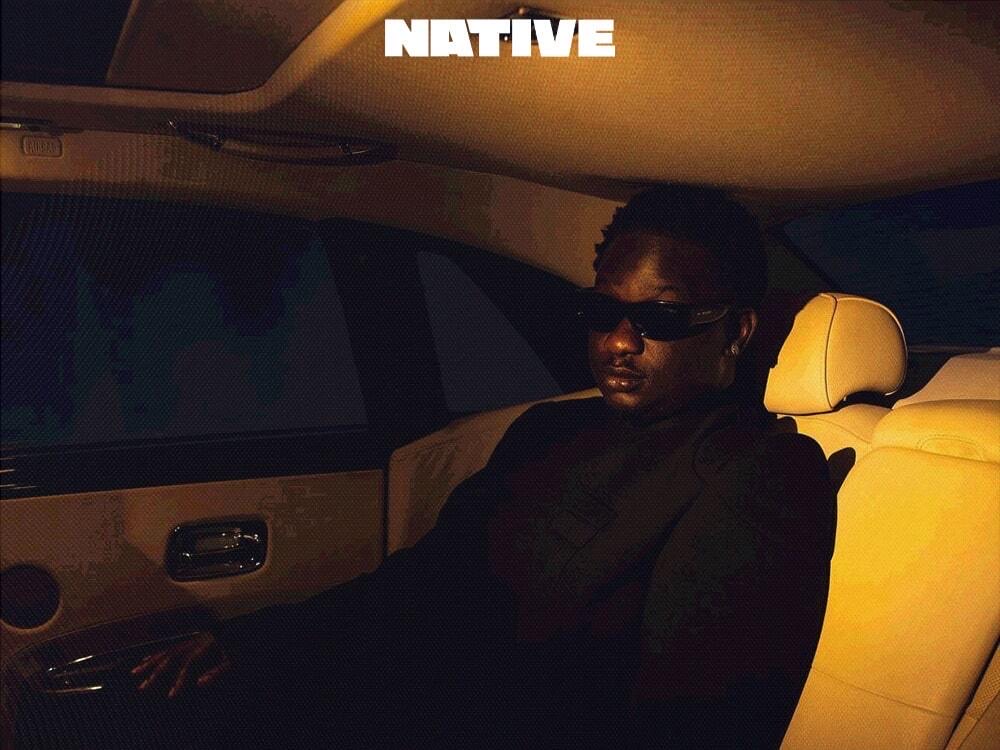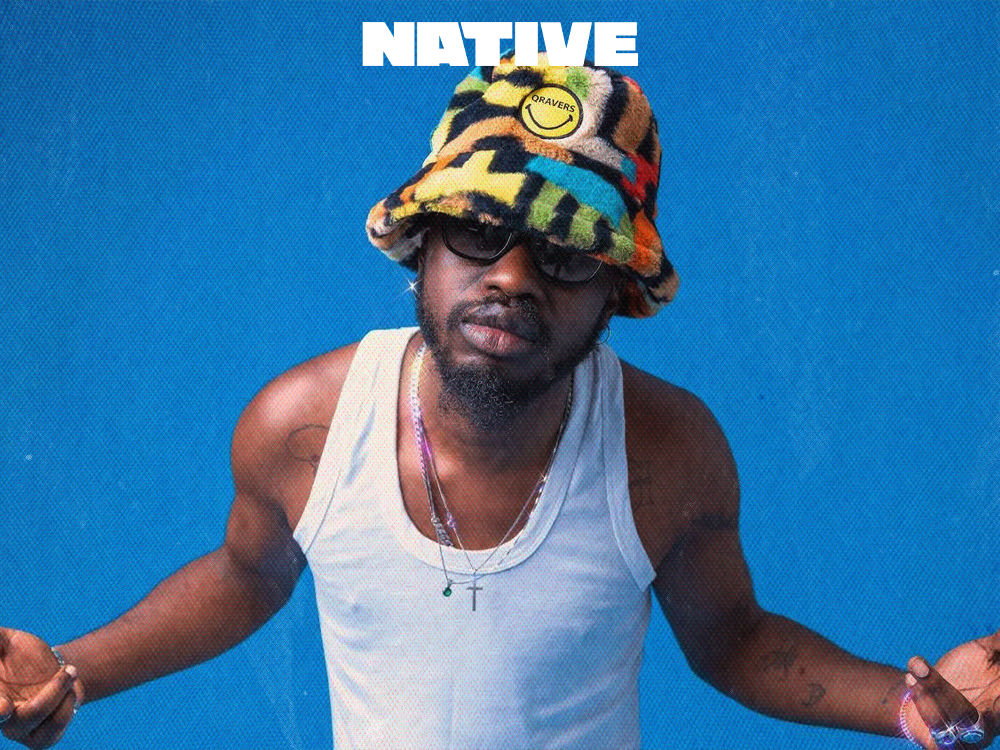
Track-by-Track: Mauimøon Breaks Down His Sophmore EP ‘From Uganda With Love’

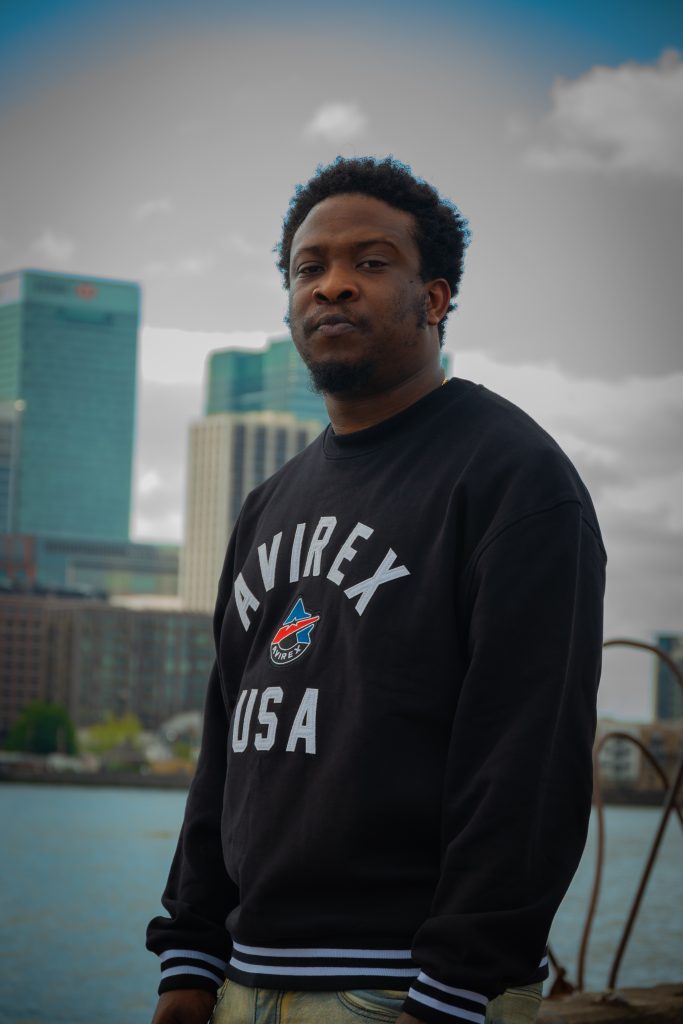
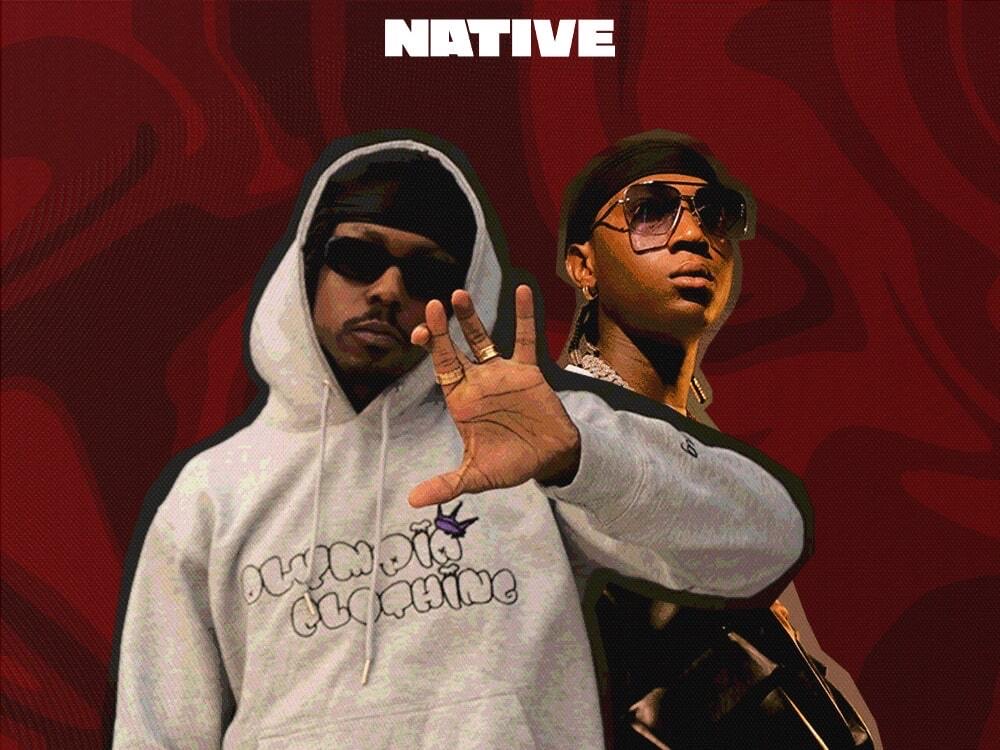
2022 uNder alum Mauimøon is gearing up for a big year. First introducing listeners to his colourful world as a producer under the moniker La Soulchyld, his craft music has since evolved and morphed into a riveting career that has seen him gain fans internationally. In 2019, he released “Too Real,” a fast-paced track foreshadowing his upcoming greatness, which showcased an artist on the cusp of breakthrough with grand ambitions and even smoother flows. His stellar penmanship and fusionist sound soon started gaining traction with the release of his debut EP ‘Pleasure,’ the best introduction to his catalogue for the uninitiated listener.


View this post on Instagram


A post shared by MAUIMØON. (@soundsbymaui)

Mauimøon’s presence over a silky R&B sound fusing pop, dancehall, and delectable Afropop has ensured that each release is met with enthusiasm from his loyal fans and close-knit listeners. Last year, he performed and wrote on “Part2 (Dinner in Maui)” alongside Fresh Meat alum Hermez, off the Nigerian-American R&B singer’s sophomore album, ‘Oasis’. Alongside this, two of his most recent tracks this year, “Leaving Summer” and “Sweeta,” have both amassed over 150K streams on Spotify alone, setting the scene nicely for his 2023 run.

With this in mind, Mauimøon has unveiled his sophomore EP ‘From Uganda With Love,’ a succicnt collection of love songs and survival tales about his place of birth. Now, after time spent refining his craft and a renewed spirit for gracefully inspecting his emotions, the new project finds the singer contouring his voice around lovelorn pleas while drawing on relatable experiences for young people.

The self-produced project invites only one guest into its simple world–Kenyan singer Mau From Nowhere who delivers a sharp verse that comes with a twist that doesn’t necessarily tell the tale of a happy ending in love. With a vision to capture the beauty of Ugandan skies, the EP cover art is created to depict the innocence of love and the rush of intimacy. “I just wanted to have a theme that would work. The sunset matched my first song of the tape. I wanted to have something that gave a beautiful look and sound before you listen to the project,” he tells the NATIVE.


View this post on Instagram


A post shared by MAUIMØON. (@soundsbymaui)

Inspired by his love for R&B, Timberland, and Pharell, Mauimøon continues to display his mastery as he croons over songs reminiscent of Craig Davis. His harmoniaation technique is especially noteworthy, pulling the listener in and hitting them where they can feel it. Whether it is reminding girls of their effortless beauty in the lead single “SupaHawt” or experimenting with his voice and production skills in “Felony,” Mauimøon takes you on a short trip over well-sequenced sensual soundscape accompanied by a voice guaranteed to get you in your feelings.

Ahead of the release of his new EP, ‘From Uganda With Love,’ the NATIVE sat down with the rising Ugandan star to walk through each track on the project.

His words which follow below have been lightly edited for clarity.

“SAYING MY NAME”

I self produced this track. As soon as I started with the harp I wanted to have a Timbland – Pharell type of bounce but with African elements to it and it was creating the fusion of old-school melodies. Underneath an afro-inspired percussion and drums to create something different for me so when anyone clicks it, they hear it’s something different from ‘Pleasure.’I think it’s important to be open about your emotions because a lot of times we can say things and keep them to ourselves. I stay relevant by ensuring I do not overthink anything and as soon as I start working on something I write down my thoughts and that shows the song came to be.  and it really influences how we perceive various things. Being honest with yourself makes you understand yourself.    Before starting this track I already had a rough idea of the chorus. I wanted to create a unique fusion of old-school R&B underneath afro-inspired percussion.  Following the theme of love I felt the harp-like instrument was the perfect choice to start off the project and lean into the theme of love.

CHERRY SWEET”

I used my own ad-libs here because of the beat. It was bouncy and playful and I thought it was important for me to try and experiment with how to enhance the feelings and sounds ensuring it continues the vibe and doesn’t sound plain. I really enjoyed it because I got out of the rhythm of always trying to sound on beat. Continuing with the theme I wanted to create a bouncy love song that felt catchy and unique when it came to an arrangement. The production was done by Ransom Beatz and as soon as I heard it felt like the perfect beat for this project.

“SUPAHAWT”

This was my lead single since I enjoyed the process of how I created it. I often let the beat play and mumble words to find a melody that is catchy. I had mumbled different melodies and one specific one was standing out. I felt this is the perfect track to not only write to but to also have fun with. The production was done by Brizy beats and the goal was to create a song for the ladies to enjoy and appreciate themselves. A short and sweet single that could catch the ear of any listener.  It’s important to create niche songs for my female fanbase considering all the love I have gotten from my female fans. With songs like “Sweet Love,” my fans send me messages telling me how the song uplifts them. I felt it was important having this track because it’s more direct.

“WHAT YOU WANT”

I chose Mau as the only collaborator because when I made the song he was the first name that came to mind. Working with him on “Sweeta” was amazing and I saw how his cadence is pristine. The original goal was to have the whole project by myself but as soon as I heard this track, I couldn’t leave him out. Every time I get something from Mau he goes above expectations. The melody is purposefully different. It was one of the last tracks I worked on and I wanted to create something different that would still make sense in the sequencing. I like to push myself in not getting comfortable. Because of the genre Alte, I love how broad the definition I, so it gave me more confidence to try something new and still keep it similar to the songs. When producing I like producing with slices, I started off with the drums, mumbling a few lyrics, and coming up with certain structures. I sound more like a dancehall artist in this song and I felt it was necessary because it’s always interesting for different songs because I use various vocal performances. I wanted to challenge myself by creating an unorthodox afro-fusion-inspired song that would feel different yet familiar to what my audience is used to.

“REALLY NEED”

Really Need” is a ballad-like tune under an Afrobeats production produced by Brizy beats. For this track, I refrained from using the common verse-chorus arrangement and opted for a dynamic structure that would take the listener on a journey. I felt it would be an interesting chance for me to shift from the basic structure and also test my own ability to see how I can dance with different structure and still keep it dynamic and authentic. Most of the time when I mumble an idea, I go through various stages but for this track, I mumbled all at once and it was a one-take situation. I fixed my vocal performance to make this align well. It’s actually one of my favourite songs on the project. When creating this song I felt I really wanted to make this emotional, deep, and for all the red-wine drinkers to enjoy. I wanted to tap into what someone who really needs something would want to listen to.

“CAN’T BELIEVE”

Can’t Believe” was produced by SOULCHYLD and Tyler Turner. This was another song I had a melody for after listening to the sample provided by Tyler Turner. The melody had been stuck in my head for some time and felt it was the perfect chorus to have. I also wanted to experiment with the syncopation of the adlibs to showcase the R&B influence that has been a big part of my childhood. It all fell into place just how I want to. I keep my fanbase growing in Uganda by keeping authentic to my sound just as I did in this song, I don’t pay attention to what’s popular in Uganda rather I pay attention to what my listeners and I can relate to.

“FELONY”

Once again I was testing my vocal performance and ability when it comes to different genres. I have always focused on alte so I decided to lean into the vocal performance of what’s trending. I was really excited after writing everything and it’s unique because in this track I am trying to give a different ideology and performance. It was the second last song to put together because I already knew it felt like a good structure with how the tape was arranged. The first six songs are all about love but I flip the tale with “Felony. It is another dynamic track that was inspired by a similar arrangement as “Really need.” In this song I experimented with a different vocal performance than the previous songs in the project, borrowing from afrobeats sounds that are currently trending.

Listen to ‘From Uganda With Love’ here.

Featured image credits/NATIVE


ICYMI: Out of the fog, Nezsa emerges better and assured

Everything we know so far about emPawa Africa’s ongoing copyright issues with Bad Bunny & Rimas Music

On February 6, 2023, Nigerian singer and emPawa Africa founder Mr Eazi took to his Twitter and LinkedIn accounts to call out Puerto Rican artist Bad Bunny and his label Rimas Music (Rimas Entertainment), citing copyright infringement on the Puerto Rican artist’s song, “Enséñame a Bailar.” This was hours after Bad Bunny became the first all-Spanish opening act at the 65th GRAMMY Awards and his blockbuster 2022 album ‘Un Verano Sin Ti’ won the Grammy for Best Música Urbana Album. According to Mr Eazi, in his call-out earlier in the month, both parties had been trying to resolve this issue amicably since May 2022 with their legal teams, however, Eazi stated that “the intent of Rimas Music is clearly to blatantly appropriate young African creators’ work for their gain without attribution.”

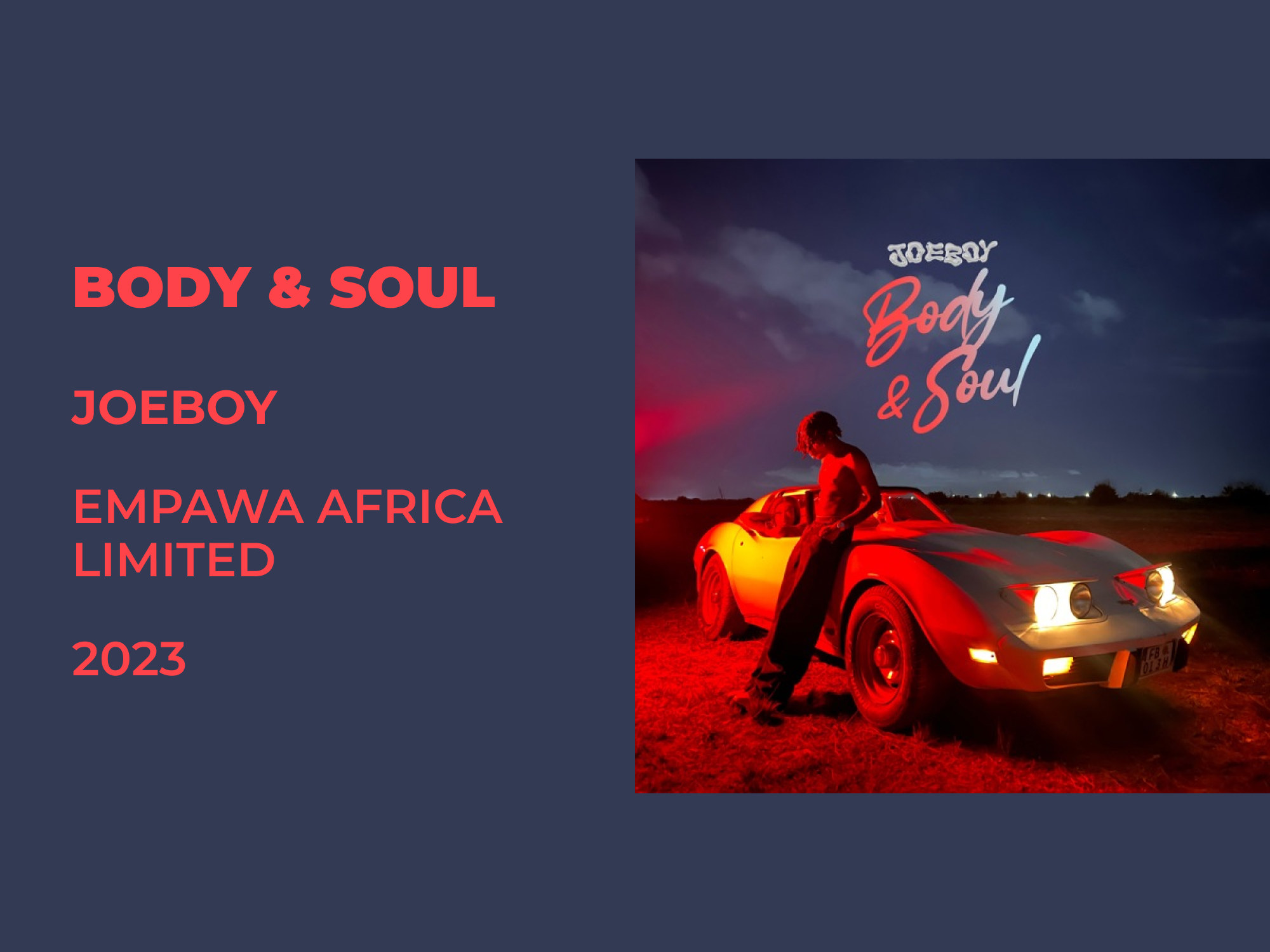
As can be heard on “Enséñame a Bailar,” Bad Bunny takes sonic cues and heavily interpolates melodies from “Empty My Pocket,” the song performed by Nigerian singer Joeboy, produced by Nigerian producer Dëra and distributed by Lakizo Entertainment. (Interestingly, “Empty My Pocket” has been taken off streaming platforms for copyright issues while Bad Bunny’s song remains intact. You can listen to it via YouTube search.) In addition to utilising Dëra’s composition throughout, “Enséñame a Bailar” also samples Joeboy’s vocals in its coda. Yet when Bad Bunny shared his album ‘Un Verano Sin Ti’ in May 2022, no credit was given to Joeboy and Dëra, and no clearance was sought from emPawa Africa, which is both Joeboy’s record label and publisher.

According to an official statement from emPawa Africa, emPawa Publishing and Kobalt placed the publishing on “Enséñame a Bailar” in dispute, which means that all payouts on publishing revenue from the track will be halted until the dispute is resolved. Furthermore, emPawa Africa ordered a takedown of the record from digital service providers as soon as possible. Rimas Music refuted emPawa Africa’s claims in a statement, writing that it “acted properly and followed standard industry protocols.” Rimas says it purchased the master track from Lakizo Entertainment, who is listed as the track’s creator and owner in numerous public sources. It also stated that, regarding the song’s composition, emPawa has also failed to forward documents to prove that they are authorised to act on the writers’ behalf.

“This is categorically untrue,” emPawa Africa shared in their latest statement. “emPawa Africa is deeply concerned by Rimas’ deflection from its failure to secure any publishing clearance from, and provide any songwriter credit to, the actual creators of “Empty My Pocket,” Joeboy and producer Dëra, whose respective vocals and composition are clearly heard on the song.” emPawa Africa also denied Rimas Music’s assertions that Lakizo Entertainment is the sole creator and owner of “Empty My Pocket,” as Lakizo Entertainment only served as a licensed distributor. “In assuming this role, Adesina Lekan (dba Lakizo Entertainment) negotiated the rights to a partial share in the writing and production credit, as well as a partial share in the master. In actuality, Lakizo Entertainment’s only creative contribution to the 2021 master recording of “Empty My Pocket” was adding its “It’s Lakizo, baby” tag at 0:07,” the statement read.

The statement goes further to say that “no one should confuse Rimas’ alleged payment to Lakizo Entertainment for the master with a publishing clearance. Nor should they confuse emPawa Africa’s request for composer credit, publishing and royalties for Joeboy and Dëra with a request for the sort of upfront payment Rimas Music states that it made to Lakizo Entertainment. emPawa Africa has made it clear that it has never asked for any cash compensation, only respect for Joeboy and Dëra’s intellectual property.”


View this post on Instagram


A post shared by JOEBOY (@joeboyofficial)

The business of sampling.

Whether we’re fans of sampling or not, the simple fact remains that it has existed in the music industry for time immemorial. Contrary to what many music listeners think, musical creativity doesn’t emanate from thin air. In fact, the hallmark of some of the most creative artists is the ability to let their influences feed their imaginations and repurpose this for newer audiences. As a way of explicitly paying homage to influences, sampling in music is a legitimate form of creativity and involves taking from the past—whether immediate or further back—and flipping the elements so that they fit into a modern context.

Today, the internet seems to have collapsed our linear time clock, making the music of decades ago as easily accessible as the music of today. However, the process is not that straightforward. Music is intellectual property which accrues rights and certain entitlements for its owner. As such, if you’re including a sample of an older song in your track, you need authorisation from the respective parties to release that song. Dammy Sanya, a Nigerian music and entertainment lawyer who is conversant on the law in this area, shares that “If no agreement was reached between the two parties, the next step would be to request for takedown by DSPs.”

For example, in 2009, Cameroonian singer Manu Dibango filed a lawsuit against Rihanna and Micheal Jackson, claiming that both artists sampled his 1972 song “Soul Makossa,” without seeking the appropriate permission. According to reports, Michael Jackson had already admitted to sampling the track, choosing to settle with Dibango out of court, however, when Rihanna went on to sample Jackson’s “Got To Be The Start of Something,” she had failed to obtain permission from the song’s initial creator. While Dibango was not necessarily wrong, the court case failed because the singer already successfully applied for a writer’s credit on Rihanna’s hit in 2008, with the presiding court deciding this ruled him out of any further claims on the track.

However, when looking at the peculiarities of this current case, no accurate credits or publishing was carried out by the Rimas Music team nor their client. “Unfortunately this is part of a broader pattern we see in how the wider music industry approaches the IP [intellectual property] of African artists,” said Mr Eazi. “Afrobeats has become a global phenomenon, and everybody wants to sample a piece of it. Unfortunately, Afrobeats artists, their producers and labels often have to pursue legal means to secure publishing and royalties after songs they originally created are co-opted without credit by other artists.”

There’s no denying that there is a large gap in legal education between the general public and industry insiders and professionals. Dammy Sanya admits that the law around intellectual property and copyright is largely unknown by many Nigerians–and deliberately so. A lack of knowledge of one’s rights results in a lack of legal remedies to pursue and eventually, the disenfranchisement of the individual. “If I have a right and I’m not aware of the right, it means I cannot exercise the right or stop someone from exercising the right,” he shares with the NATIVE, stressing the importance of getting the right teams as an artist on the scene.

He continues, “When someone bigger than you infringes on your rights, there’s a fear and you feel like there’s nothing you can do. Part of this is because of lack of knowledge of the legal system, but another part of it is the culture that we imbibe whereby people rip people off and don’t give them their rights. Because you are afraid of being blacklisted or being labelled the black sheep, most producers or artists accept the theft and accept the fact they are getting publicity from it.”

In most cases, the resulting publicity from the bigger artist is never worth giving up one’s rights. While the laws in other jurisdictions are more advanced than the industry here, there is value in protecting one’s right to intellectual property. According to Sanya, despite the gripes and general distrust of litigation and the legal system, the results could be seismic for future aggrieved parties. “If there is a judgement that goes in your favour, it may not benefit you but may benefit others. Now, there is judicial precedent and others can easily seek litigation for similar cases,” he explains.

As Afropop continues to grow and welcome new digital tenants each day, sampling is only going to become a more legitimate means of creativity and the law needs to develop to protect our interests. However, currently, the law is playing catch-up with the realities of the industry. According to Sanya, The Nigerian Copyright Act 2004 is the main legal remedy for persons who have had their copyright infringed. However, across the years, there have been calls for legislators to amend the Act and reflect the modern times we live in, which is yet to occur.

Recently, in their statement, emPawa Africa also shared that the proof that emPawa Publishing represents Joeboy, as well as Dëra, is demonstrated in the same public sources (i.e. any performing rights database) through which Rimas determined Lakizo Entertainment’s claim to master ownership. “The inference by Rimas Music that emPawa Africa should provide Rimas with the entirety of its contracts with Joeboy or Dëra is absurd and inconsistent with standard industry practice,” the statement reads.

“If Rimas was truly unaware of this relationship, it would not have contacted Kobalt, the administrator for emPawa Publishing, seeking to obtain publishing clearance after the song’s release,” the statement further reveals. “Instead of acknowledging our subsequent proposal, it opted recently to register its preferred publishing split without clearance or approval from emPawa.”

At the moment, Mr Eazi and the emPawa Africa Team hope that they reach a cordial resolution of the matter with Rimas Music.

This is a developing story and will be updated with developing information. The NATIVE has reached out to Joeboy for a comment which was denied by the artist.

Featured image credits/NATIVE


Written by Wonu Osikoya and Uzoma Ihejirika.


ICYMI: AKA was an African rap great but his legacy will always be grossly tainted

For The Girls: Out of the Fog, Nezsa Emerges Better and Assured

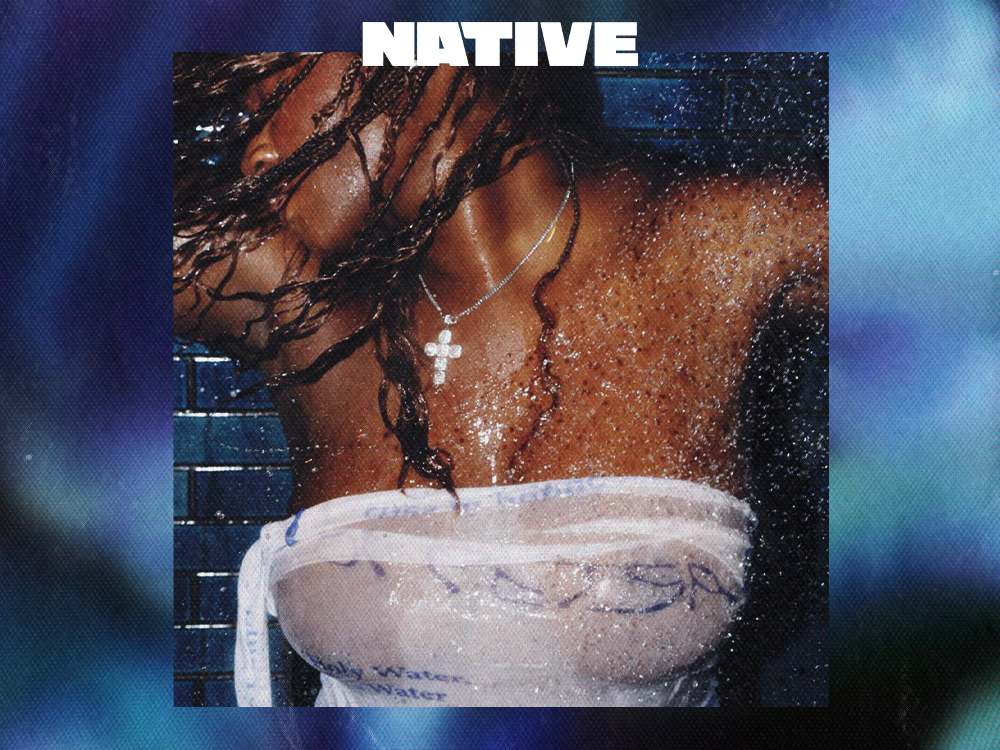
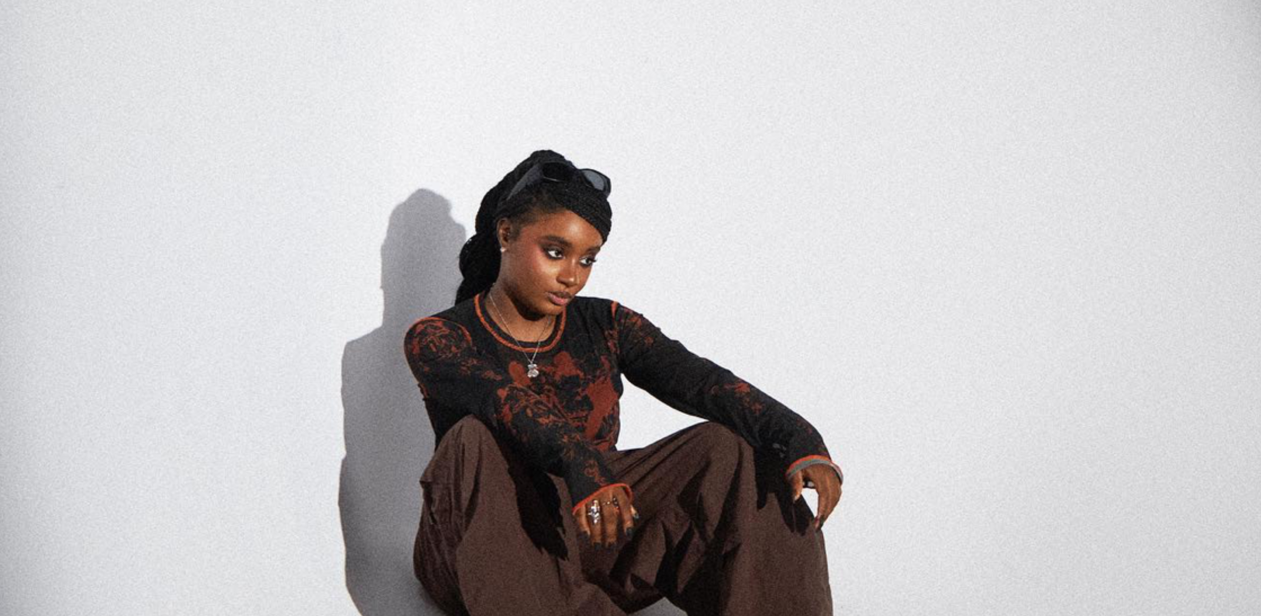
In her journey to become the best version of herself, Nigerian singer Nezsa has had to embark on her biggest challenge yet: herself. In the months after she self-released her 2020 debut EP ‘Bitter-Sweet,’ she hit a creative block – a result of personal ups and downs, which were exacerbated by the world-conquering coronavirus pandemic. It wasn’t until last year that circumstances shifted in her favour. Her manager had been in conversation (for a different artist) with emPawa Africa, the Mr Eazi-owned music company. Although that deal didn’t materialise, Nezsa’s manager kept in touch with the emPawa Africa team; later, he sent them Nezsa’s music, which they liked and indicated an interest in working with her.

Nezsa didn’t need much convincing to consider emPawa Africa’s proposal. “I just thought ‘Oh, I already feel hopeless with this music thing and I almost gave up, maybe this is a sign for me to get back into things and see what can come out of it,” she tells the NATIVE. The singer convinced herself to go for the distribution deal opportunity and take a chance on herself: “I said [to myself], ‘Oh, if I’m under emPawa, I’m kind of obligated to keep making music,’ [and] this deal would help me keep me on my toes and be like, ‘Oh, this is not a joke. You have to take it seriously.’”

Nezsa and emPawa Africa began their journey with the single “Break,” which features the inner workings of a dysfunctional relationship full of broken promises. At 17, Nezsa—real name Vanessa Adaeze Enoka—moved to Canada from Nigeria, where she was born and was part of her church choir. As a young child familiarising herself with her love for music, she grew up listening to the music her brothers fancied: Yanni, Sade Adu, Aṣa, Adele, Coldplay, Rihanna, Beyoncé, Lana Del Rey, Davido, Wizkid and Wande Coal.

It was whilst studying in Canada that Nezsa surrendered to the idea of becoming a recording artist. “I got into university and I made a couple [of] friends,” she says, “and there was a day they were recording in their room, and I just came in and they were like ‘Oh, do you wanna try something?’ And I just sang something and from there, that just turned into a single that they decided to release and that was what got me thinking about starting my own music career.” 

Nezsa held on to her dream and, in what she describes as “a spur of the moment type of thing,” she decided to record an EP. “At that period—that was right before the pandemic hit—I was recording a lot of songs and just enjoying the creative process,” she says. “Around that time, that was the first time I got all my music equipment that I used to record in my room. So I was just really excited to record a lot of songs. That was how I compiled an EP and decided to release it at that time.”

The six-track EP, titled ‘Bitter-Sweet,’ was the breeding ground for Nezsa’s brand of sultry alternative R&B and emotive songwriting. The songs travel different terrains of love and relationships; on “Safe,” she is weary of a lover who chooses to hold their cards to their chest; she is completely enveloped in love on “Subway,”; on “Dangerous,” she realises the unhealthy dynamic at work in her relationship; and on “Peace of Mind,” she wants nothing but to prioritise her sanity and wellbeing. 

Since the release of ‘Bitter-Sweet’ and the deal with emPawa Africa, Nezsa’s confidence in personality and sound has soared. “It was around that period that you saw the rise of more female artists like Tems [and] Amaarae,” she says. “So that period was definitely motivating and eye-opening for me. One thing that happened after releasing ‘Bitter-Sweet’ was [people saying], ‘Oh, have you ever thought about trying Afrobeats? Have you thought of this, have you thought of that?’ A lot of unnecessary opinions from people. But I already knew the direction I wanted to take my sound, and just seeing the women I mentioned being able to do their thing and being able to achieve what they’re achieving right now was inspiring for me.”

While R&B and Soul sit at the core of her music, Nezsa hasn’t shied away from incorporating different sounds. ‘Bittter-Sweet’ was more of a strictly R&B sound. Back then when I was recording, I was trying to stick to one particular sound I knew I could hop on,” she says. “But I think after that project, I expanded my sound selection choices and started adding [Afrobeats-inspired drums] into my already alternative style. I would say that’s one difference that separates ‘Bitter-Sweet’ from the new songs I am making.”

In 2022, her Gbeduboss-produced single “Trouble” caught the attention of music lovers and won her new fans as well as spots on Spotify (Fresh Finds, R&B Rising) and Apple Music (Breaking R&B, New In R&B). In the music video for “Trouble,” which was Nezsa’s first music video, she is out for revenge against a lover who has crushed her emotions with his ill-doings. Nezsa tells the NATIVE that although the filming exposed how stressful shooting a music video is, she enjoyed the process. Last year, she was also an opening act for the North American leg of Adekunle Gold’s “Catch Me If You Can” tour, which happened in Toronto, Canada. “It was probably the best performance I’ve had because the energy from the crowd [and the reception] was amazing,” she says.

At the moment, Nezsa and her team are gearing up for the release of her new project, which she reveals has “been bouncing from album to EP to album to EP” but would most certainly be an EP. “Most of the songs recorded [were] kind of an accidental collaboration with [Gbeduboss], [a] Nigerian producer I got introduced to,” she says. “I think my manager accidentally sent a beat pack to me, which was supposed to go to an Afrobeats artist. But when I listened to it, I was like, ‘Oh, this is interesting.’ And I recorded. That was how I recorded ‘Trouble’ and some other songs that haven’t yet been released. 

“That [opportunity] also reignited my passion for music again because one thing that was happening before the emPawa thing was I was stuck in a rot where I wasn’t getting inspired by the beats and the music I was hearing. But I think that reignited that spark and got me motivated. So I wrote a couple of songs, like about five or six songs at that time. But now, it’s a lot more than that. So that’s why I’m trying to decide which ones to go for at the moment.”

Judging by her latest single “Should Have Cared,” which was produced by Denzl and borrows from Reggae, Nezsa’s upcoming project promises to be worth the wait. The song is a tasteful compilation of lush melodies and Nezsa’s fascinating vocals, and her solid storytelling about the regrets and hurts that linger after a failed relationship. For the project, Nezsa has worked with a talented crew of producers: Denzl, Gbeduboss, Malik Bawa, and Lexjnr, among others. Outside of the project, she has worked with Type A and E Kelly.

Nezsa learnt that she creates music best when in isolation. “In terms of the creative process, I feel more free and able to tell the story the way I would want to tell it,” she says to the NATIVE. Now, the singer is challenging herself to invite more people into her sonic world which she believes is a necessary ingridient for growth as an artist. Nezsa doesn’t have a title yet for her upcoming EP but she has one for her debut album, which she hopes to be ready by next year: ‘To All the Heartbreakers.’ She got the idea for the title after a friend of hers had spoken those words while in a conversation with her.

For Nezsa, there lies a connection between the subject matter her music touches—love, heartbreak, betrayal and self-reliance—and her observations of the lives around her. She might not be expressive in her day-to-day living but the words in her head always find their way into her music and spark her creativity. “But I’m going to [explore] other topics that will definitely be coming out in some other songs,” she says.

In a similar thread to the names whose music Nezsa grew up listening to, the list of artists she hopes to work with is cross-continental and extensive. They include Nonso Amadi, Bloody Civilian, Aylø, Burna Boy, Q, Rihanna and Frank Ocean, among others. With her upcoming EP scheduled for release either in the second or third quarter of the year, Nezsa is poised to stamp her name in the growing collection of African music artists pushing their sound to a global audience.

“I look at it [her upcoming EP] as kind of building my résumé,” she says. “I would say ‘Bitter-Sweet’ placed me where I am currently. So I’m hoping that this next project will take me to the next level that I need to get to.”

Featured image credits/

AKA was an African rap great but his legacy will always be grossly tainted

In our latest op-ed, Dennis Ade Peter breaks down the conflicting feelings surrounding the death of South African rapper AKA who recently passed away. While AKA is revered and respected for his magnanimous contributions to the industry, his passing is shaded by serious allegations of sexual abuse. Trigger warning.


On Friday, February 10th, news of the passing of South African rap artist and entertainment entrepreneur, Kiernan Forbes (AKA) broke across multiple news outlets and on social media. According to reports, AKA and close friend Tebello “Tibz” Motsoane were shot dead on Florida road, one of Durban’s entertainment hubs, on their way out of a restaurant. A disturbing CCTV video footage showing this has since leaked online.

Immediately AKA’s passing made it to social media, the disbelief was evident. Amidst the shock, tributes started rolling in, mostly centred on reverence for his artistry and cultural impact—and rightly so. AKA is undeniably one of the most successful rap artists of his generation, a superstar that enjoyed parochial domination for much of his career and reached continental ubiquity through headline hit songs and collaborative efforts with artists from across Africa.

In West Africa, AKA gained popularity with bonafide hit songs that enjoyed heavy airplay and more than a handful of guest appearances on songs with Nigerian and Ghanaian artists. Even with a mere surface level of rap music from South Africa in the 2010s, it’s impossible not to know AKA. I don’t think my knowledge of AKA and his music was surface level. Before the Burna Boy-assisted “All Eyes on Me” brought him closer to Nigerians as the mid-2010s rolled along, AKA was easily one of my favourite rappers from the rainbow nation, and I was keen on most of the work he shared during his lifetime.

My first encounter with AKA was borne out of curiosity. In 2012, M.I Abaga released the second instalment in his ‘Illegal Music’ mixtape series and, in addition to being a bar-fest that excited a rap-giddy teenager, it was packed with guests that showed out. One of them was the late South African rap icon HHP on “Superhuman,” whose introspective verse remains as bracing as ever. By this time, my knowledge of South African rap music was sparse at best, mostly limited to the CD of Skwatta Kamp’s ‘Mkhukhu Funkshen’ I stumbled upon in an older cousin’s room. That HHP verse nudged me on one random afternoon: I opened the browser on my Nokia 5250 and googled South African rappers.

I can’t remember what song by which artist I downloaded first, but I can recall downloading the two AKA songs I found on a blog where I regularly downloaded music then. (Illegal? Yes. But it was the blog era, keep the judgements.) “Victory Lap” and “Bang” were the two songs, and even though I could count the number of South African rap artists I was familiar with on one hand, I quickly convinced myself that AKA was the best South African rap artist in existence. Both songs are braggadocios, with the rapper embodying impeccable cool and contagious confidence over chunky, bass-heavy beats.

“Victory Lap” especially did it for me: I thought the way he rapped “Michael Jackson couldn’t be as dangerous, shit happens/Armed with the paint brush, hope you get the picture” was one of the smoothest things I’d ever heard from an African rap artist. It wasn’t until the following year—in 2013—that I would listen to ‘Altar Ego’, the debut album that housed the song. I had cajoled my parents into buying me a Samsung phone that had space for a memory card, and that meant I went crazy with downloading songs and entire projects. I downloaded each song on ‘Altar Ego’ from whatever blog had them and I listened intently, repeatedly; by the time AKA gained popularity with my friends via “All Eyes on Me,” I gladly called them latecomers.

Between 2014 and 2020, AKA released four projects and I listened to each of them intently. Even though I can’t say I was fond of each new project, my admiration for AKA as a rap artist remained. As I got into other rap stars such as Kwesta and Stogie T and Nasty C and K.O and FLVME and many, many more South African rappers, I wasn’t exactly describing AKA as the best South African rap artist in existence, but his brilliance was never lost on me.

One of my favourite times as an AKA supporter came in 2015 when he sent out warning shots to several rivals and infamously capped long-time arch-rival, Cassper Nyovest, with the classic diss track, “Composure.” Amongst the Nigerian hip-hop heads niche corner in Twitter that year, everyone had to pick a side in a beef that was an entire region away. I almost sat on the fence because I loved Cassper’s smash hit, “Doc Shebeleza,” but I went with the guy that served as a major entry point into SA rap and I felt vindicated by my choice when the general consensus emerged. AKA delivered a Takeover-style hit, there was no Ether-level response.

In hindsight, the execution and acceptance of “Composure” wasn’t happening in a vacuum. AKA was a rapper at the peak of his powers. The year before, he had dropped ‘Levels’, the sophomore album that quickly eclipsed the critical and commercial bar set by his classic debut LP. In 2017, he teamed up with Anatii for ‘Be Careful What You Wish For’, arguably the high watermark for his powers as a lyricist. By 2018, when he dropped the autotune-filled ‘Touch My Blood’, there were some mutters about his stylistic choices but it remains a statement piece from an artist unwilling to play within set boundaries.

Musically, AKA had an affinity for maximalist choices, and it was always fitting for an artist who was comfortable being larger than life. The man-made  rap star music with the curatorial ear of a pop savant, and the beats always had to thump and glisten to aggrandise every rap or sung line about his greatness, the focus of the bulk of his work. Along with exploring romantic connections from his own POV—sometimes to unnecessarily petty lengths—there wasn’t that much thematic variety in AKA’s work, but he found ways to be intriguing through project-defining wrinkles in sound.

‘Levels’ was a blaring electro-rap affair from a rap superstar assuming the mantle of authority, ‘Be Careful What You Wish For’ honed in on groovy Trap, ‘Touch My Blood’ pulled in a variety of ‘80s sounds like Boogie and South African Pop, while the late 2020 EP ‘Bhovamania’ is suffused with varying styles of SA dance music. For me, the latter mostly fell flat. It was the first time AKA sounded predictable and barely kept me intrigued; “Casino” with Sho Madjozi and FLVME and “Finessin’” were the only songs that I liked.

At the 10th edition of the South African Hip Hop Awards held in December 2021, AKA was one of the sixteen nominees in the Artist of the Decade category. While his résumé made him a shoo-in for that category, I was deeply uncomfortable with the possibility of the rapper picking up such a grand honour. By that time, AKA had fallen way out of favour with me and it wasn’t just because I didn’t like his 2020 release.

– TRIGGER WARNING –

On April 11, 2021, AKA’s then fiancée Anele “Nelli” Tembe passed away under controversial circumstances. According to reports, Nelli died of an apparent suicide, jumping from the tenth floor of the Cape Town hotel where she and the rapper had lodged while on vacation. About a month after, a clip of AKA breaking down a door to get to Nelli in their Johannesburg home went viral. At the time, there were allegations of emotional abuse and physical assault playing an integral role in the saddening passing Nelli, and AKA was being alleged as the villain.

The clip was chilling. Since I watched the video, seeing AKA looking rabid with bloodshot eyes and in attack mode against the women he was planning to spend the rest of his life with, I wasn’t able to just view the man as a rapper I really enjoyed their bars. It’s probably why I was conflicted by the news of his passing last Friday and the overwhelming show of love that I found on my timeline. Now, I’m not saying I was gleeful about AKA’s death, neither am I remotely thrilled by its violent nature, but the abuse allegations and the evidence supporting it made me disinterested in tweeting anything reverential to his legacy as a rap artist.

At the time, within a week of the clip nodding to his allegedly abusive behaviour towards Nelli, AKA granted an interview with Thembekile Mrototo in a bid to set the record straight and possibly exonerate himself from any wrongdoing. For me, none of those aims were achieved from watching that interview. If anything, details like his convenient absence when Nelli hurled herself to the ground, going to his friend in the next room instead being by her side right away, clearly using her mental issues as an out, and just the generally toxic energy exuded during the hour-plus interview sealed my personal cancellation of AKA.

Aa a journalist and writer, I’m an advocate for cancel culture in music. Maybe not a staunch one in the absolute sense, but I firmly believe in artists being shut out for doing some terrible shit. In cancelling an artist, though, I understanding the innate complexity that’s tied to debates about separating artists from their art, and just even many African societies’ willingness to gloss over the gross failings of artists—mostly male ones. I believe artists are intrinsically tied to their work because, as with any form of art, there’s a piece of the creator’s soul in every line rapped and every note sung. Basically, if you’ve done some terrible stuff that cannot and should not be justified, the music can and should be kept at bay.

“We live in a very forgiving country,” South African media personality MacG said on his podcast back in 2021 when the viral clip made its way to the internet, using the remark as the basis for his argument that AKA could come clean if he had played any part in Nelli’s death and wouldn’t be cancelled. It’s an indictment on the values of a society that will let such a heinous act slide, and it’s even more worrying considering the crisis of gender-based violence in South Africa.

Till his passing, AKA never owned any responsibility for Nelli’s passing, stating his innocence and eventually moving on. For me, that clip is the first thing my mind associates with AKA and I immediately committed to never playing his music again after I saw the video. The internet is naturally unforgiving but when it comes to our real-time society, we can never agree on who should be cancelled. For me, I believe most of cancel culture is a personal thing, and in AKA’s situation, it was a personal decision that I’ve since held on to despite the rap artist trying to make amends before his life was cut short unexpectedly—I’m not a fan of redemption tours.

Last year, AKA teamed up with Nasty C for “Lemons (Lemonade)” and it was certified gold by the Recording Industry of South Africa (RiSA) within a month of its release. “WE BACK IN BUSINESS BABYYY!!!!!!” he tweeted at the time. Like MacG had stated, all had been forgiven and AKA was back to his rap superstar ways. I’ll admit that I did click on the YouTube link earlier this year after being badgered by the algorithm for months, and it took less than a minute for me to be overwhelmed with guilt for listening to the music of an alleged abuser.

That’s where I am right now: I’m not happy that AKA has passed away but I will be overwhelmed by guilt if I join in the ongoing hagiography that’s been happening in the last couple of days. Even with the impending, posthumous arrival of ‘Mass Country’, the album he’d been teasing for months, I don’t know that I will be listening intently. I get it, he was undeniably a great rap artist with even more to offer, one that set his own trends and consistently moved with a remarkable sense of self-conviction. At the same time, there’s no erasing the horrible allegations he gladly evaded accountability for. I get it, it’s not dignified to speak ill of the dead. At the same time, I firmly believe that death shouldn’t erase a person’s sins and instantly cast them as saints.

It’s fine if you choose to believe AKA wasn’t an abuser while he was alive. In addition to that clip, there’s also a pattern of morally questionable decisions, such as cheating on his pregnant girlfriend, allegedly cheating with the partner of a collaborator and friend, and allegedly intimidating another woman he had affairs with. While we mourn his passing, these are serious allegations and events that many people should not be wilfully ignorant of, or chose to forgive and forget. For me, I don’t know that I will ever forget the toxic side of AKA, it’s too visceral for me to ignore. Normally that would make him an artist who was a deeply flawed person, but that’s a kind description. Kiernan Forbes was a great rap artist but his legacy will remain grossly tainted by his alleged toxicity.


ICYMI: ON THE SHAPE SHIFTING IMAGES OF THE ALLEGED ABUSERS IN AFRICAN ENTERTAINMENT

YKB Shares Exciting New Mixtape, ‘Never Lazy’

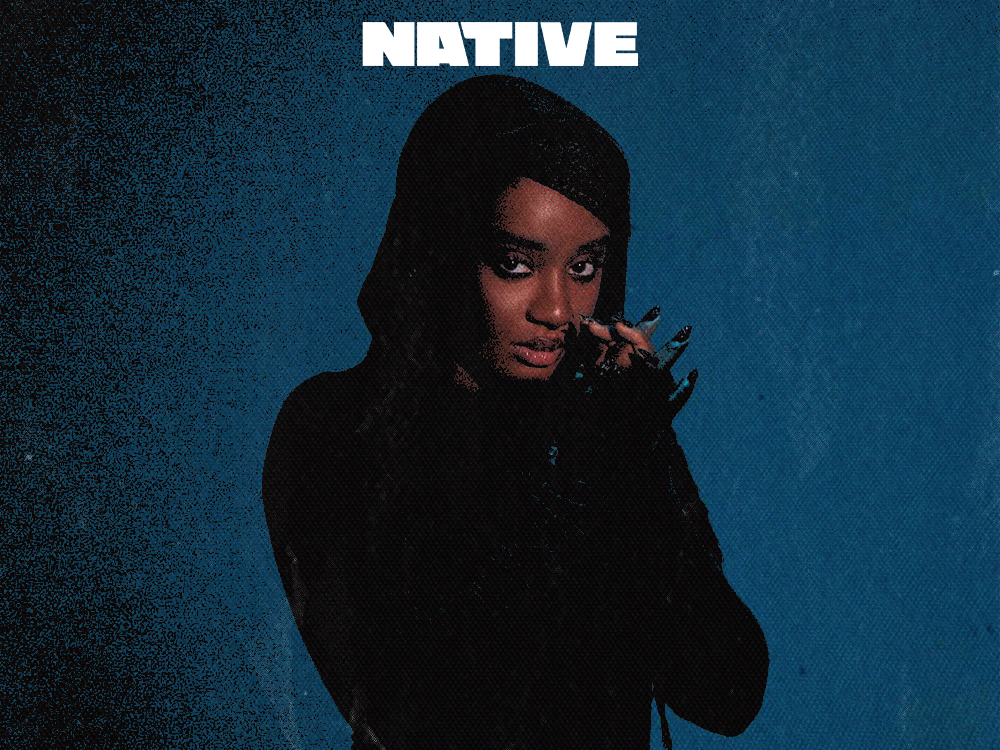
Barely three years ago, YKB was one of the standout musicians off Ejoya’s ‘Class of ‘20’ compilation tape. Like many listeners I was struck by the boldness of his delivery, coasting on vocals as powerful as they were implicit, allowing the listener to absorb the vibe without the overwhelming presence of a medium. These days the artist who was then known as Yusufkanbai continues to colour the boundaries of Afropop with myriad flavours of sound, establishing his versatility in the seamless way he’s iterated his perspective of urban life and relationships. 


View this post on Instagram


A post shared by YKB 🤎 (@ykbonly)

The NATIVE recognised YKB’s growing star by featuring him on our uNder set for emerging artists in September 2022. Following the release of his project ‘Before I Blow’ the previous year, the chronology seemed to be chiselled into perfection. The Lagos-born artist however continues to work like a man with an axe to grind and he’s inched closer to the motivational ethos he sets for himself on “Wake Up,” the opening track of the aforementioned project. Layering dulcet vocals over the pensive strings of a guitar, he paints scenarios of the life he wants to live and why complacency wouldn’t get him that dream. “I need to wake up,” he sings with tenderness, and afterwards flipping the light onto his listener, singing, “You need to wake up”. 

In our follow-up interview with him YKB attested to the communal gaze he employs. “I make music to project, hoping that there will be receivers,” he said. “We’re all human beings and we all have universal truths. If you can tap into that frequency then that’s for you”. 

With the year relatively still fresh, YKB isn’t slowing down. Today he releases his latest body of work, a mixtape he titles ‘Never Lazy’. Drawing from a diverse collection of songs from other artists, he layers his unique vibe all over the record, making it a collaborative project which places his voice firmly in the contemporary Afropop tradition. Starting off the uber-hit “Wowo” from frequent collaborator and fellow Ejoya alumni Minz, he dazzles through the famous instrumentals for LADIPOE’s pop-rap banger “Big Energy” and the revelatory “Asiwaju” from Afro-Dancehall sensation Ruger. 

He collaborates with DJ808 on “Poland” while the other songs “swaggu” and “maga” sees him go the solo route, although with the voices of his sampled artists providing the dynamism which makes the project stand out. There’s one catch though; due to its stylistic incorporation of actual songs, ‘Never Lazy’ is available for streaming only on Audiomack, the platform where YKB currently has over twenty three thousand monthly listeners. 

“It’s on Audiomack only because it’s mostly other people’s beats,” the singer revealed the NATIVE. “I don’t wanna monetise other people’s work. I just wanted the verses which are my interpretation of other people’s songs to live somewhere that’s accessible to everyone, not just on social media. I wanted my fans to hear what it’d sound like if the artist had featured me on the record. Mostly, the mixtape is for my fans. I never want them to starve for too long”. 

Featured image credits/NATIVE


ICYMI: Why The Forthcoming Elections Matter to Young Nigerians

Essentials: Pheelz is Affectionate & Aspirational On His Sophomore EP, ‘Pheelz Good’

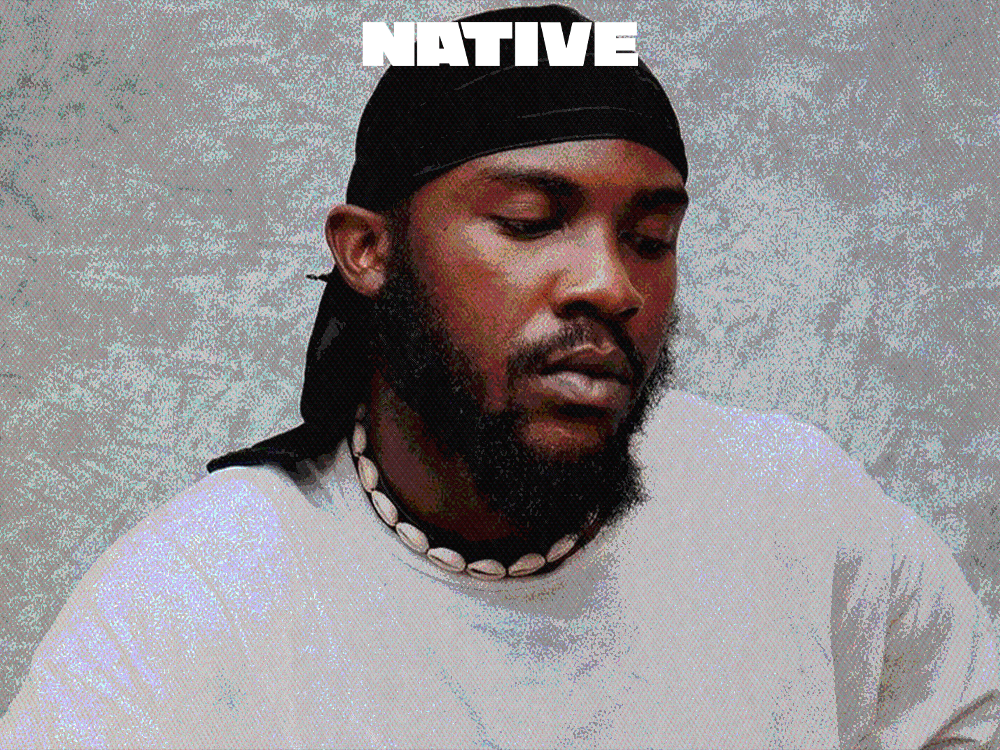
Inspiring is the perfect word to describe the trajectory of Pheelz. Although contributing celestial arrangements to the sound of mainstream 2010s Nigerian pop, he continues to pour the elements of his pristine artistry into his second arc as a musician. For many, “Finesse” was the introduction to that side of the man born Kayode Moses. Vibrant and contemporary with its application of crowd vocals, the BNXN-assisted record successfully brought Pheelz’s ever-shifting vision into popular gaze, setting him up favourably for longer pieces in the future. 

Since then, Pheelz has been playing the game with iconic finesse. A deal with Warner Records covered not just his singing, but the 360 aspects of his creativity—production is the most well known of those but Pheelz has showcased his visual skills, collaborating with gaming behemoth FIFA on his own merchandise while designing the masks-laden cover art of his latest EP, ‘Pheelz Good,’ a pun which fittingly describes the creative’s frame of mind. Good might be an understatement for how Pheelz feels; he’s moonwalking on the higher plains of popular culture. 


View this post on Instagram


A post shared by PHEELZ (@pheelzmrproducer)

‘Pheelz Good’ captures that exhilarating mood within a succinct runtime of 21 minutes. Three of its eight records having been pre-released, the listener comes into this half-expecting a certain vibe, and that mushy promise is delivered. In peculiar focus to the project’s laid-back vision, “Ballin” works as an opener. Braggadocio is hardly a novel style for first records but there’s a cool energy permeating Pheelz’s vocals, a reserve that reflects (rather than tell) he’s about that life. With light touches of percussion meeting the celebratory progressions of twinkling piano keys, the production pulls around the statement lyrics with great emotion and form. 

Indeed, all of ‘Pheelz Good’ seems lit up by an inner intensity that can only be achieved when the creator is truly at peace. “Electricity” is well placed in the project’s middle, colouring bubbly overtones to follow the initial trio of records. “Vibes on a frequency” might be the defining ethos of this project; it’s quite the simple one, but Pheelz interplays roles with his collaborators in a way that espouses his accomplished musical background. Davido is therefore as affecting as BNXN on “Finesse,” the record which directly follows on the EP’s chronology. With their distinct styles on flagrant display, Pheelz’s minimal choice of features pays off, rewarding ‘Pheelz Good’ with a certain intimacy. 

Considering the warm, lived-in feeling Pheelz evokes throughout the project, the more direct descriptions of love blend smoothly into the sonic tapestry. “Stand By You” and “Pheelz Like Summer” work like twin swords in this peculiar aspect; the former adopts a bluesy perspective in promising loyalty to a love interest, culling pop-centric terms like “breakfast” to reflect the joy that comes with finding one’s own person. Here Pheelz’s vocals are revealed for their richness, an almost husky tone which assumes icy touch or warm reverberations, depending on how he employs them. “Pheelz Like Summer” sounds like the kind of production an earlier Pheelz would create for Fireboy DML—asides the refrain-esque hums which enliven its adorable mood, there’s a sunny quality to the percussion’s bounce which mirrors the distinct feeling of waking up to a bright new day with one’s lover beside them. 

On the project’s last movement which includes a trio of songs, Pheelz flips the mood in a more upbeat direction. “Pablo Escobar” draws parallels between the lifestyle with the flamboyant lores associated with the titular personality. His focus drawn on detractors who questioned the validity of his dreams, he channels the present in advising young creatives to be wary of the streets. “Emi Laye Mi” continues the well-trodden pairing of early tribulations and the returning gains of the present. “Two milli, twenty enter,” he sings on the intro, establishing his moves as deliberate. It’s less affecting than the preceding track, but the groovy direction and its Yoruba-tinged hook embody the record with undeniable hit potential. In the crucial role of closer, “Ewele” reintroduces the brooding elements which dominated the project’s early parts. The percussive energy of preceding tracks is however retained, paired with horn sections which casts an epic feel over the record. “I live once, I do YOLO,” he sings on the hook, just before an assortment of drums sweeps the breezy allure with an earthy quality that brings the project to a satisfying close. 

‘Pheelz Good’ presents an actualised side of Pheelz the performer. Whereas his tape ‘Hear Me Out’ saw a gifted musician coming to terms with the shifting soundscape of Afropop, two years on Pheelz is nearing a mastery of his style. Showing as much narrative grit as his cloying tendencies, the project couldn’t have been better assembled. In an industry where more producers are abandoning the background for more immersive roles within the scene, Pheelz relays his evolution in a purist sense. He’s not creating records because others are; these are emotions that have been bubbling underneath for a while now, waiting for expression. 

For Us By Us: Why The Forthcoming Elections Matter to Young Nigerians

In October 2020, a minor demonstration that was initially thought to last a few days soon spurred a generational movement, as young Nigerians rose up in throes to push back against a defunct and corrupt special forces unit know as SARS. The protests ran across the country with urgency and dogged organisation, proving that Nigerian youth can think clearly and execute even more effectively. While the errant institution has  only to be repackaged by the government, for many of us, victory was served in the understanding that, when pushed to the wall, we wouldn’t be silent. We could act. We could change things. 

With only a week to go to the elections, a lot of Nigerians–not just young people—are surely feeling that way as the national elections draws closer. While there a number of candidates in the running, all attention is on its frontrunners from the Labour Party, All Progressives Congress and People’s Democratic Party. There has been unprecedented attention concerning which person gets to become the President-In-Waiting after the elections scheduled for February 25th. Collated data shows that newly registered voters have contributed significantly to the overall numbers, while conversations on social media and elsewhere have peeled into the characters of the major contestants, unmasking all that stands before them and the messages they propagate. 

Young Nigerians are however the most invested in the forthcoming elections. For myriad reasons, the Nigerian state has revealed the deep-seated tensions between their motivations and that of political leaders. In recent times, finances have been the most obvious; under the government of Godwin Emefiele, the Central Bank of Nigeria has sought to control legitimate means of earning, cryptocurrency most frequently. With a slew of backward policies, the CBN has criminalised the practice, even as more progressive governments are finding ways to leverage its utilitarian benefits. 

As many remember, during the End SARS protests, bank accounts of prominent participants were frozen for long periods of time. Afterwards, the extrajudicial months-long ban on Twitter demonstrated the Nigerian government’s sickening need to sanction the freedom of its predominantly young population. No surprise it has been then, the recent cash scarcity which has left many stranded has been sometimes interpreted through the lens of a controlling government trying to frustrate its citizenry into responding with protests which would then be sabotaged through the indiscriminate use of violence. When parts of Oyo and Abeokuta states witnessed such an outbreak, the immediate response to the looming consequences of chaos was telling. Just as we’ve witnessed before, youths across ethnic and social lines have taken up the matter in their hands and hearts, rightly considering themselves as influencers for positive change. 

“This election is important to me because I’m tired of having the same greedy politicians recycled every four years,” says Ezioma Kalu, a writer who lives in Enugu state, southeastern Nigeria. “It’s as if Nigeria is in a relay race, and every four years, the baton is passed onto the absolute worst of leaders to rule. And they’re perfectly excellent at what they do, destroying the economy while enriching their pockets. This has to stop. I’m tired of the increased poverty and hardship. I’m tired of being a graduate with no job. I’m tired of managing the bare minimum, so it’s time to take our country back.” 

Ezioma is not alone in this thinking. While many young Nigerians have thrown themselves onto the frontlines to either demand better or support their choice candidates, the fight to take back Nigeria from the old order has been amplified by an alternative route of leaving the country. Fewer generations before us have been so eager to immigrate, the imploding landscape and economy often the reason. To this phenomenon we have ascribed the term ‘Japa,’ which translates as ‘run swiftly’. On the same level of popularity as the finance-decrying ‘Sapa’, such words are indicative of the domineering concerns among young Nigerians, especially those residing in urban societies across the country. 

Statistical information is telling: in 2021, the United Kingdom’s Higher Education Statistics Agency revealed that the number of Nigerian students in the country increased by 69% from the previous year, going from 13,020 to 21,305 during that time. While many took advantage of the UK’s new policy on post-study work visas which allows students two years visas after graduation, the catalyst must have been the demoralising events of End SARS which led many young people to question their place in a country with little to no regard for human rights. Interestingly, the provided data covers just a single destination; under the big world, Nigerians can and will immigrate to anywhere they believe would offer them better opportunities. An estimate on young Nigerians who have left the country in the past five years will surely prove larger than that. Think about it: you or someone you know has probably left in the past year alone. 

Truthfully, Nigeria leaves much to be desired. In a globalised world where we’re inundated with news of life-changing reforms happening elsewhere, it’s sometimes difficult to stand tall as a Nigerian. Our cultural currency—which has often been the product of youthful grit and ingenuity—has featured as the balancing act, propelling Nigeria’s potential into the spaces that matter. And yet, for every young person that leaves the country or desires to do so, there are many others who aren’t given to such wandering notions. For some, it’s an expensive and time-consuming process that they simply can’t afford. Some others are quite mindful of the differences in social lifestyle and how that influences one’s philosophy, and would rather live in Nigeria. 

Migration is barely a new idea though. Since countries have shared in the disaster of greed and wars, ordinary citizens have fled whatever homes they know in search of better odds. Others have pursued adventurous ideals, as they seek to experience more of the world. In the sphere of art and literature, music, movies and books have situated the feelings of longing and displacement as principal psychological consequences. While Japa might seem a romantic idea, such productions continue to reveal the undersides of ambition. Contemporary films created by young Nigerians such as ‘Eyimofe’ and A Japa Tale’ are poignant films which capture the social struggles that arise from such an endeavour, the latter particularly contemporary in its relationship-focused direction. 

‘Americannah’ by Chimamanda Ngozi Adichie is arguably the most popular Nigerian immigrant novel, and for readers its cathartic closing scene couldn’t have happened anywhere else but in Nigeria. Ifemelu and Obinze, after years with several lovers in America and UK respectively, finally return to their home country and even Obinze’s marriage can’t stop their happily-ever-after. Similarly, Chigozie Obioma’s ‘An Orchestra of Minorities’ also had a Nigerian protagonist who travels overseas, to Cyprus for a college degree, but upon landing finds out he’s been duped and the series of events afterwards is nothing short of ugly, leading him to return home. 

In essence, art teaches us that there’s no perfect ending. It’s easier to leave the country than for the country to leave you. Therefore, for those who choose to stay even when the option is possible, there are precedents which backs up their reasons. “I am an odd one, not entirely interested in migrating out of the country,” says Ope Adetayo, an internationally published freelance journalist. “So, I want an election that will produce a candidate who can make this country liveable. There is no gain saying that Nigeria is on the precipicies and the election is a way to halt that headlong rush towards societal collapse. If the right person can be elected in power, at least it can give the government a chance to change things around and maybe improve the situation. The election is particularly important for me as a young person because I am willing to see a country that works and one I can thrive easily in”. 

Another sphere of living that young people would be looking to influence would be the force behind its creative industries. From finding technological solutions through startups like Paystack to having some of the most penetrative music labels and collaborating with film giants Netflix and Amazon Prime, it’s a bubbling new age for Nigerian creatives. A Jobberman study in 2021 revealed that five fields across the creative industry—Media, Entertainment, Beauty and Lifestyle, Visual Arts, Tourism and Hospitality—employ 4.2 million people. The report also claimed that after agriculture, the creative sector is the second largest employer of labour in the country. 

In the two years since that report, many young people continue to break ground in their respective fields. They have done this through leveraging community and their peculiar skills, while holistic structural support from the government remains lacking. At best, the Nigerian leadership is one-dimensional in their understanding of cultural power, which has led to the renovation of the Iganmu-based National Theatre but not the legislative flexibility that allows for investors in the music business and elsewhere. 

Young Nigerians desire a government which recognises these changes in the world’s set-up. As traditional economic patterns lose more of their relevance, creativity steps up to carry the song of a country’s glory into the future. For all the colour and dominance Nigeria brings to the global cultural scene, from football jerseys to Tobi Amusan etching her name onto athletic immortality, a recurring factor has been the helping hand of the Western world. Meanwhile the country has proven it has more than enough talent to harness creativity and share with the world, but first the government has to align with the values of the youth who, it must be said, are positively changing the world. 

“I can’t imagine enduring this amount of suffering for another four or even eight years. I can’t keep asking the government to provide the basic amenities,” Ezioma says. “I am taking the election personally because I want to have a better life. Suffer dun tire me.”


View this post on Instagram


A post shared by INEC Nigeria (@inecnigeria)

Featured image credits/NATIVE


READ MORE: Nigeria is experiencing its longest petrol scarcity crisis

NATIVE Selects: A List of The Best Songs This Week

It’s that time again. Every day, new music shows up, sweeping fans and music lovers off their feet while artists gauge reactions to know the effect of their creativity. At the NATIVE, we are committed to keeping our ears on the pulse of the music scene and bringing the best sounds to your doorstep.

Last week, we highlighted songs from Oxlade, Nissi, Skiibii, Shatta Wale, etc. (Tuesday) and Cruel Santino, 2BABA, Mi Casa & Larry Gaaga, Nasty C, and more. Today, we have songs that move from Afropop to Amapiano to R&B; these artists—from Nigeria, South Africa, Kenya and Tanzania—showcase their unending talent and passion for creativity. Dig in!

REXXIE, NAIRA MARLEY & SKIIBII – “ABRACADABRA (REMIX)” FT. WIZKID

In the second half of 2022, the trio of Rexxie, Naira Marley and Skiibii scored a hit with the Amapiano thumper “Abracadabra.” The Rexxie-produced song, which already has a spot on his forthcoming album ‘Big Time,’ caught the attention of music lovers, including Nigerian music superstar Wizkid. Rexxie reserves a spot for Wizkid on the remix to lend his renowned vocals and fire up an already blazing tune.

Uzoma


KAMO MPHELA – “HANNAH MONTANA” FT. BOIBIZZA, CHLEY, NOBANTU VILAKAZI, BONTLE SMITH, F TEEARSE, SHAUNMUSIQ & MELLOW & SLEAZY

Kamo Mphela is inarguably one of Amapiano’s most magnetic personalities. The best part is that it translates on wax. She doesn’t just make songs; her music is bad bitch credos, where raps and chants blur into declarations that find a dwelling corner in the listener. On “Hannah Montana,” she’s joined by an army of collaborators but it’s obvious that she’s the sun around which they all orbit. The Bacardi-piano beat is an instant ear-holder, and while each guest pitches in with important glue moments, from Chley’s wordless chants to Nobantu Vilakazi’s rousing 8 bars, Kamo breezes in mid-song and holds sway with that trademark effortless charisma.

Dennis


BZ – “GET PAID”

British-Ghanaian rapper BZ has just shared his first single of the year titled “Get Paid,” which finds him waxing poetic about his success in the game. With sharp tongued bars and a snot-nosed flow, he details his life both abroad and back at home. Shot in Ghana, the Delenn Vaughn-directed video stars BZ playing the role of The African Robin Hood, a heroic outlaw who sets out to provide for his community.

Tami

DALIWONGA & MAS MUSIQ – “10 KILOMETERS”

For their first single of 2023, South African singer Daliwonga and fellow South African DJ and music producer Mas Musiq team up for “10 Kilometers,” a delicious tune that concerns itself with the soft side of human emotions. Daliwonga layers his smooth vocals over Mas Musiq’s enticing Amapiano-laced production to create a certified earworm.

Uzoma


KAESTYLE – “SOUNDTRACK” 

For a while now Kaestyle has been cutting his teeth in the music scene. Signed to KeyQaad, last year’s ‘Kae’s Study’ attempted an autobiographical parsing of love tropes, assisted by star features from label mate Omah Lay and Victony. “Soundtrack” is a fine step towards individuality; over vibrant drums and sombre notes, Kaestyle produces a heartfelt ode to female physiology. He arrives at the standout chorus with energetic verses backed with crowd vocals, while touches of amapiano colour the romantic tension he sings about even more vividly. 

Emmanuel


KHALIGRAPH JONES & HARMONIZE – “KWAME” 

Khaligraph Jones is at the pinnacle of rap music. With a plethora of hits under his belt, Khaligraph has morphed into a rap genius funnelling a life of hustle and success into music with a guttural voice poising as the best name when mentioning rappers. Together with Tanzania’s Bongo superstar Harmonize, the duo team up for an unconventional single “Kwame.” Unlike his previous songs characterised by aggressive performance, Khaligraph Jones takes a different route comparing himself to the late Kwame Nkrumah. While this move might be controversial, it is understandable as Khaligraph is seen as a revolutionary force in the entertainment scene and also a vocal voice in championing Kenyan music on Kenyan airwaves. Talking about the challenges of being a musician, Khaligraph and Harmonize pay homage to fans and industry heads. A spectacular release that is both pious and boisterous. 

Tela


SHAYKEH & MIDEBEATZ – “CALL MY NAME”

Canada-born Nigerian singer Shaykeh taps music producer Midebeatz for a new tune spiced with romantic intentions. With “Call My Name,” Shaykeh encourages her lover to allow her a space in his life. “Oh when you’re down/And you’re feeling lonely/Call my name,” she sings, her vocals intertwining with Midebeatz’s guitar-led upbeat Afro-fusion production.

Uzoma


LAYZEE ELLA – “CHEMICAL” 

Layzee Ella has been a remarkable talent to witness. Pulling diverse sounds into her artistry, she has enough free room to experiment and she’s made a fine demonstration of that. Extending the sensuous direction of last year’s ‘Feel Everything,’ her new single bares her desires colourfully and confidently. “Chemical” aligns with the hyper-physical allure of Dancehall, with Ella working her delivery to glide over the beat. Describing intimate moments with a love interest, she curates a Sean Paul-esque banger, but with less pomp and more sensitivity, making this the perfect record to get down to. 

Emmanuel


NASBOI – “LOVER BOY”

In the spirit of Valentine’s Day, Nigerian comedian Nasboi, real name Lawal Michael Nasiru Bolaji, releases “Lover Boy,” his debut single as a musician. Nasboi, who is a fan of music stars 2Baba and Davido, seeks the assistance of Producer X and guitarist Fiokee for this mellow tune, wherein he serenades his heartthrob Morenikeji with promises of love for her commitment to him. “Lover Boy” is a promising beginning for Nasboi.

Uzoma


TABBIE – “KAM TU” 

Tabbie has been strategic about her come-up. The R&B songbird takes tactical approaches with her songs from her sultry vocals to the meticulous production, she is an artist to watch out for. Releasing her first offering of the year on valentine’s day, “Kam Tu,” a Swahili equivalent to the phrase “come over.” Accompanied by steamy visuals “Kam Tu” is a feel-good song, the visuals bring the words kam tu to life especially when you miss your significant other and you are working to convince them to come over while highlighting the feminine power and vulnerability that comes with needing another. A display of both sensuality and a representation of a strong woman who is not afraid to communicate their desires “ Kam Tu” is a perfect addition to your playlist on a valentine. 

Tela

Featured image credits/

14 Afropop Songs That Describe The Vast Terrain of Love & Relationships

With February now entering its second week, the day of love is here once again. For many people around the world, Valentine’s Day is a memorable day in the calendar year to show and express your love for your nearest and dearest ones. While we don’t exactly need one day of the year to show our loved ones just how much we care for them, it’s become a yearly tradition where Cupid puts in overtime to present jaw-dropping gifts and vibrant bouquet arrangements.

Love is certainly in the air for some this year, but for others, the cards aren’t quite on the table yet. While most people are going on dates and serenaded with saxophone solos, others (you) have a full day ahead of coping with your crippling emptiness. Don’t worry, though; we’ve got you covered with plenty of songs to soundtrack the capitalist holiday. Here at the NATIVE, we believe that the gift of music curation is powerful, a love language to be wielded with care.

As such, we’ve compiled a list of 14 Afropop songs which the NATIVE editorial team believe soundtrack the different forms of love that we celebrate and champion on the day of love. Featuring Grammy-award winning Tems, Kenya’s Sauti Sol, Johnny Drille and more. Enjoy.

2FACE IDIBIA – “AFRICAN QUEEN”

Nearly twenty years after 2Baba—fka 2Face Idibia—released “African Queen,” it remains the apex love song in modern Nigerian pop music. Everything about the song quickly became iconic: the glistening ripples of the guitar strings that sets the tone on OJB’s instrumental arrangement, the singer’s gossamer tenor cooing “I love you” over and over again, Annie Idibia’s eye-holding appearance in the music video, and several other unvarnished details. It’s such an institutional love song that a long-running allegation of song theft against 2Face, by a former close collaborator nonetheless, has done absolutely nothing to tarnish its greatness. The blue-eyed magic of “African Queen” hasn’t and will never again be replicated.

Dennis Ade Peter

 TEMS – “FREE MIND”

Tems is a valiant purveyor of self. On several levels of intimacy her debut tape ‘On Broken Ears’ peeled into a young woman’s search for independence and peace. “Free Mind” is all that and more: over the bouncing drums, Tems’ vocals soar like a flag over the territory of her heart, calling home the soldiers of her mental landscape. Anxiety isn’t explicitly mentioned but rather painted, the first verse ending on the line “I try to get by but I’m burning” and the second, with “I need to find release”. Yet Tems isn’t vulnerable just for the mere sake; she works this inner turmoil into strength, so that listeners such as myself emerge with a feeling of reinvigoration rather than resignation. “Free Mind” stands peerless in the canon of new school Afropop—personal, poetic and practical, it’s a dive into uncertainty while acknowledging one’s own determination in coming through the other side. 

Emmanuel Esomnofu 

AYRA STARR – “LONELY”

When Ayra released her debut album ‘19 & Dangerous’ in 2021, the record “Lonely” immediately stood out to me. On “Lonely,” Ayra writes an open letter directly to a love interest who hurt her. She opens the song with the standout lyrics “Every night I dey cry o, just to blame myself for loving you like I did,” expressing hurt and heartbreak in its deepest and its most authentic form. Ayra does not shy away from telling the most relatable story on “Lonely.” 

Wonu Osikoya

THE CAVEMEN. – “FALL”

A month after The Cavemen. released their debut album, ‘Roots’, I was ready to declare it a classic with a straight face. Over two years later, that description remains fitting. In their Highlife-fusion retrofit, the sibling duo of Kingsley and Benjamin often sing about romantic relations, and an example of their prowess at showing love’s intoxicating feeling is in full display on “Fall,” an endearing standout from their first LP. Led by Benjamin’s helium-tinged voice and strengthened by Kingsley’s backup melodies, the brothers sing of being smitten in a simple and utterly beautiful manner. “My lady, I don fall in love” goes the refrain; nothing complex, just plainly stated words carried by a heartfelt performance over vintage music.

Dennis

AYRA STARR – “BLOODY SAMARITAN”

There are songs that are revolutionary: not just from the composition but from the ideology communicated. Living in the 21st century can be a tard too hard especially when plunged into adulting without a guide book. Ayra Starr fully understands this and with “Bloody Samaritan” she created a tune to remind you to be the baddest version of yourself. Released in 2021 as the lead single to her album ‘19 & Dangerous’  the artist writes a love letter not to anyone but herself as she croons I‘m a ticking dynamite//I’ll blow your candle light//You know i’m just that type,over the London infused track. While championing self adoration, “Bloody Samaritan” is an ode to all sabi girls and boys about bringing yourself to the fullest potential while ensuring your energy is zen warning the haters to back off. 

Tela Wangeci

AṢA – “GOOD TIMES” FT. THE CAVEMEN.

Last year, Nigerian singer/songwriter Aṣa returned to the music scene with her fifth album ‘V,’ layering her signature emotion-laden vocals with influences and assistance from some of Africa’s most innovative contemporary music creators – Wizkid, The Cavemen., Amaarae and producer P.Priime. Amid ‘V’’s heartfelt explorations of love is “Good Times,” which features neo-highlife duo The Cavemen.; through easy-going rhythms, Aṣa and The Cavemen. heap appreciation on the friendships that have jubilated with them in happy moments as well as comforted them in sad times. “Good Times” is an ode to both people who make space for us in their lives and people who we allow access into our most vulnerable spots.

 Uzoma Ihejirika

BURNA BOY – “NO FIT VEX”

Life takes us far and away from the people we love. Over time pop music has reflected that longing through affecting production. Burna Boy’s approach is a bit different but recognisably Nigerian; “No Fit Vex” has an heartwarming quality, but it’s also realistic in its reactionary stance, calling on one’s friends to move on with life because time waits for no one. As more people complain about feeling disconnected from their oldest friends, Burna Boy being a superstar would understand how he’d come across to people who influenced his early life and yet have no place in the present one. He pulls a page from the 2Face Idibia book, looking ahead while handling the past with emotional intelligence. For someone who’s had friends come up with the same remarks about forgetting them, nothing beats the honesty of the line: “Life e no easy my brother; you dey find your own, me I dey find my own”

Emmanuel

THE ONLY ROSA – “NO CONSEQUENCES”

The Only Rosa has a knack for penning lovelorn stories. Recalling the first time I heard “No Consequences”  I was immediately jolted into a world where nothing but love exists. Drawing inspiration from the naive dating scene when in High School, she paints love as pure and patient. We can all remember our first love and the thrill of sneaking around hiding your relationship from your parents while stealing glances and  seductive touches. The Only Rosa’s sultry and warm vocals against the powerful yet mellow and complex saxophone background formed a perfect backdrop as she sings about young starving love with no baggage adding up to a magnificent euphoric single. 

Tela

OBONGJAYAR – “I WISH IT WAS ME”

Our relationships with our siblings can be complicated. Even when the love we have for them is overwhelming, tension is always nearby. It’s how we get to know them and how they get to know us, and it almost always culminates in admiration. Obongjayar’s “I Wish It Was Me” is a perfect representation of how deep filial love can get. An ode to his brother, the Nigerian singer delivers every note with a preciousness, letting his admiration out like he’s singing a sacred hymn. “I adore you,” he powerfully sings several times. To catch all the feels, watch Obongjayar sing the song in front of his family—and maybe get your sibling(s) Valentine’s presents right after.

Dennis

JOHNNY DRILLE – “HOW ARE YOU (MY FRIEND)”

When it debuted, Johnny Drille’s “How Are You (My Friend)” was the song you loved but didn’t know you needed. The Mavin Records act has always carried the torchlight for soul-stirring music centred on everyday human emotions and connections. On “How Are You (My Friend),” a precursor to his 2022 EP ‘Home,’ music mogul and record producer Don Jazzy affords Johnny Drille a delightful beat for his love letter to long-time friendship and camaraderie. With the song, Johnny Drille reminds us to not let the pressures of day-to-day living suffocate the fondness we share for our loved ones; it is an apt portrait of the times we live in and a call to never let go, even when time and location separate us.

Uzoma

SAUTI SOL – “STILL THE ONE”

Before Sauti Sol took over Africa with eccentric Afropop songs, they were crafting love songs confessing their undying love for their first love. Over nine years since its release the song is still impactful and relevant to many lovers who have experienced love in various stages of their lives. Telling the life story of how they adore their muse Sauti Sol give a detailed timeline of how love evolves from enemies to frenemies and eventually leading to a relationship. Touching on how you can adore someone from childhood till old age, this is a sure number to always play in a romantic setup reminding your significant other your love is still burning just as it was the first time you met. 

Tela 

WIZKID – “BLESSED”

‘Made In Lagos’ has today become a modern day classic album as the impact of the album was greatly felt across the world. On the album’s standout record “Blessed,” he taps Damian Marley for the mid tempo tune which shows both artists are seen at their most grateful. Wizkid expresses a different level of self love and self confidence on this record while still infusing a large amount of gratitude. Damian Marley feeds into the message of the record seamlessly with his verse. 

Wonu

SHOW DEM CAMP – “DUADE”

Masculinity, the big old M. While mental health features prominently in Afropop’s thematic canvas, in-depth portraits of masculinity aren’t as accessible. On “Duade,” the revered SDC duo investigate the manifestations of trauma with particular emphasis on how the Nigerian society shuns vulnerability. A soothing record carried on Cina Soul’s spirited vocals, I won’t forget how deeply Tec’s verse sunk on first listen. When he raps “She asking questions that’s exposing all my inner scams,” several situations open themselves up to further scrutiny. And for a generation in perpetual search for connection, Ghost’s recommendation to cater more sensitively to “the interior decorations of our mental palace” is quite revealing. Covering the distinct journey from individual doubt to desires of collective distraction, “Duade” demands more work from the listener, a mission that’s intrinsically noble if not necessary. 

Emmanuel

Best New Music: Ayra Starr Embodies Ultra-Confidence on “Sability”

True superstars have a unique insignia. It can be a slang, a symbol, a beloved alternate moniker, a look—just anything that instantly reminds you of them. With last year’s wildly successful single, “Rush,” Ayra Starr affirmed the generational lean of her superstardom, inherently helped along by a catchphrase that quickly became ubiquitous. “E dey rush” entered pop culture canon as another slang gifted to Nigerians by its pop music but, interestingly, it hasn’t gone on to be the singer’s insignia. That privilege has been earned by the first word sung on the same single: SABI.

What makes you a Sabi person? Of course, it’s the devil-may-care attitude that Ayra, an artist working her way through Nigerian pop superstardom with an assured and Gen Z-associated edge, has gone beyond simply evoking. These days, she effortlessly flaunts it, as evidenced by her latest sure-fire hit song, “Sability.” It’s a casual flex of self-assurance and the latest show of dominance from an artist who’s officially way beyond putting the game on notice. The was Ayra Starr embodies it, the manual to being a person with the Sability oomph is being gleefully ultra-confident and letting charisma embolden your person and talent. Two years since her eponymous debut EP introduced her to Afropop, the intriguing teen singer is now a growing powerhouse.

Ayra’s position as Gen Z’s amplifier has grown more distinct with each release. A constant has always been her emphasis on self-love and confidence, as exemplified in the romantic tongue-lashing of her first single, “Away.” If that was a bit subversive, she’s gotten a lot more explicit about her personal choices and purpose, revelling in them as she gets alternately admired and judged in a social media-driven era. On “Sability,” over London’s club-ready production, Ayra Starr could care even less about any external displeasures, as she celebrates her power as a Sabi Person—more specifically, her ability to “make you jo dada” (make you dance really hard). It accentuates the fact that she knows that she knows her long, long reign as a superstar is just getting started and she’s making an anthem for everyone who agrees with her and believes they are as cool and assured as she is.

Demonstrating her witty songwriting skills, the 20-year-old chanteuse delves deeper into her daredevil artistry, crafting a dance floor-ready bop In the song, climaxing with an immediately memorable hook that samples Awilo Logomba’s 1998 classic, “Coupé Bibamba,” as she creatively swaps out his name with hers, showing her poise and casting her impending queenship. Ayra Starr demonstrates that she is on the road to success and is willing to continue regardless of what other people think of her as she delivers a beautifully executed single which fuses high-tempo Afrobeats and Makossa elements. “Sability” is evidence of Ayra Starr’s artistic ability as every word, every beat, and every piece of production are perfectly incorporated to create a catchy yet emotional track painting a vivid picture with each verse unmatched. The song is intriguing, powerful, and melodic. The song captures every feeling she experiences as she works for her goals and desires.

With every release, it is evident Ayra is blooming into an even more daring artist. While “Bloody Samaritan”warned off her haters and “Rush” reflected her deeper thoughts about her fast-found fame, “Sability” is an ode to believe more in yourself. Prioritising rhyme sequence and a banging beat over lyricism and purpose “Sability” fuel for the dance floor while still making it relatable. She blatantly admits that being in a place with such bad energy helped her realize her life’s purpose much more clearly. As a result, she is free to live without worrying about what other people think of her sense of fashion or even her sexual orientation. “Sability” by Ayra Starr is a potent reminder that we should have faith in our abilities, triumphs, and potential.

Listen to “Sability”  here.

What’s Going On: Human Rights Issue in Somalia, Disease Spike in Sudan & More

“What’s Going On” Tallies Notable News Headlines From Across The Continent — The Good, The Bad, And The Horrible — As A Way Of Ensuring That We All Become A More Sagacious African Generation. With This Column, We’re Hoping To Disseminate The Latest Happenings In Our Socio-Political Climate From Across The Continent, Whilst Starting A Conversation About What’s Important For Us To All Discuss. From Political Affairs To Socio-Economic Issues, ‘What’s Going On’ Will Discuss Just That.


SOMALI JOURNALIST FREED DESPITE JAIL SENTENCE

Abdalle Ahmed Mumin, a Somali press freedom advocate and freelance journalist who was given a controversial two-month jail term, has been freed by sympathetic prison officers. According to a message shared on his Twitter page, Mumin revealed that a Banadir Court judge sentenced him to two months in jail despite the fact he was detained five months ago.

In October 2022, Mumin was arrested after a government crackdown on information about the militant group al-Shabab. The Somali Journalists’ Syndicate (SJS) called Mumin’s sentence on security-related charges a “travesty of justice.” The Committee to Protect Journalists (CPJ), an American independent non-profit, had issued a statement calling for Mumin’s immediate release.

“Abdalle Ahmed Mumin is a fearless and tireless advocate for the rights of Somali journalists to report the news freely and independently. His arrest is an unacceptable aggression and is undoubtedly sending a ripple of fear through the Somali media community,” said CPJ sub-Saharan Africa representative, Muthoki Mumo. “Authorities should release Abdalle Ahmed Mumin immediately and unconditionally, and should instead work to create a climate in which Somali journalists can work without fear.”

“I went straight to my office to conduct my daily routine. I will continue to be on the forefront of defending press freedom and human rights in #Somalia,” Mumin tweeted.

MAKERERE UNIVERSITY ENFORCE BAN AT GRADUATION

The management of Makerere University, one of Africa’s most prestigious universities and Uganda’s largest and oldest institution of higher learning, has banned students and parents from bringing cell phones at the 73rd graduation, which starts on Monday, February 13, 2022, at Freedom Square, inside the main campus in Kampala.

Although no reason has been given for the ban, other items prohibited from the ceremony include alcohol, cameras and video cameras, dangerous weapons (such as guns and knives), cigarettes, chemicals, back bags, lighters, canned foods and bottled drinks. A total of 13,221 students are scheduled to graduate, with each allowed to invite only two guests.

According to the chairperson of the Ceremonies Committee Prof Patrick Mangeni, the university will hold a five-day graduation ceremony, with faculties being assigned different graduation dates across the week.

On Monday, students from the colleges of Natural Sciences, Health Sciences and School of Law will graduate; on Tuesday, students from the colleges of Education and External Studies, Agriculture and Environmental Sciences will graduate; on Wednesday, students from the colleges of Business and Management Sciences, Computing and Information Sciences, and Veterinary Medicine, Animal Resources and Bio-Security will graduate; on Thursday, Makerere University Business School will graduate their students in the various disciplines and the graduation will close on Friday with students from colleges of Humanities and Social Sciences, Engineering, Design, Arts and Technology.

First Lady Janet Museveni, who is also Minister of Education and Sports, is expected to grace the occasion.

DR CONGO SOLDIERS GET DEATH SENTENCE

A court in the east of the Democratic Republic of Congo has sentenced seven soldiers to death for cowardice in the face of the enemy and murder. The soldiers had fled advancing M23 rebels, retreating through the town of Sake where they caused the death of two people by recklessly discharging their arms. Last November, three other soldiers were convicted of cowardice and sentenced to death.

The M23 rebels, who control large territories in the mineral-rich North Kivu province, are part of DR Congo’s long history of conflicts. Some of the conflicts based are on ethnic rivalry while others are driven by the fight to control the country’s mineral wealth. Last week, Pope Francis, who visited DR Congo and South Sudan to mark his 40th Apostolic Journey abroad, called for a ceasefire to the armed conflict that has plagued the country.

Throughout the M23-led conflict, the DR Congo, the US and UN experts have accused neighbouring Rwanda of backing the rebels, which the Rwandan government has denied. The lawyers of the seven soldiers plan to appeal their sentences.

SUDAN FACES SPIKE IN MOSQUITO-BORNE DISEASES

According to VOA News, a recent spike in mosquito-borne diseases—such as dengue fever and malaria—has highlighted the fragility of Sudan’s health system. The country’s underfunded public health sector has struggled to effectively diagnose or treat patients as significant government spending went to its vast security services.

“While malaria is common across central and southern Sudan, large dengue outbreaks are rare,” the report notes. “But last fall and winter, dengue fever spread to 12 of the country’s 18 provinces, killing at least 36 people and infecting more than 5,200, according to Sudan’s Ministry of Health. However, the actual numbers are likely higher, given the limitations on testing.”

The UNICEF also supported the report, stating that access to health services is often a big challenge for many Sudanese families. “Only 70 per cent of the population has access to a health facility within 30 minutes travel from their home (and 80 per cent has access to health facilities within one-hour’s travel),” the humanitarian aid organisation notes. “And when a health facility is reached, care is of insufficient quality.”

The country’s leaders have been accused of not disbursing more funds towards the health sector, with the health ministry receiving less than half of the allocation of the Sudanese Armed Forces and the Rapid Support Forces, the country’s largest paramilitary group.

Featured image credits/


ICYMI: ‘Dark October’ and Nollywood’s struggle with copyright infringement

‘Dark October’ & Nollywood’s Struggle with Copyright Infringement

The advent of global movie streaming services has resulted in a major boom for the Nigerian film industry. These platforms—Netflix, Showmax, Amazon Prime, and more—have contributed to presenting Nigerian films and their stars (behind the scenes or in front of the camera) to worldwide audiences, as well as revealing cultural and societal idiosyncrasies. While good abounds in the current situation, only a few Nigerian productions have managed to entertain viewers and critics alike, and side-step the notion that Nigerian filmmakers are yet to master pairing a great story with a great production value.

In a recent interview, Nigerian critic Alithnayn Abdulkareem shares “…Nollywood is not at the stage where the films being produced have the range to feature in or compete in global conversations about the quality, purpose and vision of film. In business terms, perhaps, but no way in terms of plot, dialogue or the aforementioned production values.” In most cases, the Nigerian films that delve into more complex subject matters fail to make a splash on the home front, and are shoved to the background in favour of glossy big-budget blockbusters. 

For the longest period, piracy and copyright infringement were two issues that have handicapped the Nigerian film industry; while cinema and film streaming platforms have helped curb the cancerous growth of piracy, the latter is still a problem that continually rears its ugly head. The latest case is the Linda Ikeji-executive-produced Netflix-housed film ‘Dark October.’ Released on the streaming platform over the past week, the Toka McBaror-directed film is centred on the tragic death of four University of Port Harcourt (UNIPORT) students who were wrongly accused of theft and lynched in the Aluu community of Rivers State in October 2012.

‘Dark October’ aims for a realistic and jolting portrayal of the death and events surrounding the death of those four students—Ugonna Obuzor, Lloyd Toku, Tekena Elkanah and Chiadika Biringa. In 2012, when clips of the lynching surfaced on the internet and went viral, the unfortunate incident shook the country as calls were made to ensure stringent measures for jungle justice. An anti-lynching bill was proposed but that hasn’t seen the light of day. Five years after the incident, a trial was held in Rivers State and three persons were sentenced to death for the murder of the four undergraduate students.

Days before ‘Dark October’s’ February 3 premiere on Netflix, the families of the four UNIPORT students, through a statement from the Integrity Friends for Truth and Peace Initiative (TIFPI), demanded the suspension of the film, citing that they were not contacted for the project. “The production of the advertised movie has deeply reactivated the trauma and psychological pain that these families have been irrecoverably battling with for the past ten years, and this is unfair,” the statement read. “It is on record that Linda Ikeji has never reached out to the affected families since 2012 and this raises questions on her motivation.”

The families also threatened legal action against Linda Ikeji and her partners, which in this case are Netflix and the film’s distributor FilmOne Productions. In an interview with BBC Pidgin, Linda Ikeji stated that her decision to make the film came from a good place, which is to honour the memories of the Aluu Four victims and cast light on the evils of jungle justice. While those are noble intentions, they do not reduce the severity of her and her crew’s actions. Dark October’, which should have been a saving grace of some sort, also doesn’t match Ikeji’s upright aspirations.

‘Dark October’ might be the latest case of copyright-associated problems but it’s not the first, high-profile case of this nature. In 2020, shortly after the release of the Kenneth Gyang-directed Òlòtūré on Netflix, Nigerian journalist Tobore Ovuorie called out EbonyLife Films owner Moe Abudu and the film’s crew for failure to sufficiently credit her as the primary source for Òlòtūré. In 2014, ZAM Chronicle and Premium Times published Ovuorie’s undercover report of sex trafficking in Nigeria. “[Òlòtūré] does not closely resemble my work,” Ovuorie said. “It is a copy and paste of my work. [Òlòtūré] is my life story.”

Although the film’s crew admits that Òlòtūré was inspired by Ovuorie’s report, Mo Abudu refuted Ovorie’s claims, stating she had acknowledged Ovuorie’s journalistic achievements, granted her a private screening of the movie, given her a special mention and offered 5% of the profits of the film’s cinema run to Tobore’s NGO. She further stated that her company had obtained the rights to Ovuorie’s story through Premium Times, her employer at the time.

Ovuorie responded to Abudu’s remarks, saying that she had, through her lawyers, informed Abudu that the investigation for her piece had started before her employment with Premium Times. “[Òlòtūré] is an ADAPTATION of my work and life-story. I experienced the investigation, the process, and the risks, upon which the movie is based,” she wrote. “I also single-handedly authored the publication the movie relied on. The publication of my experience is what gave birth to [Òlòtūré].” Ovuorie also demanded compensation of $5,000,000.00 for copyright infringement.

According to the Nigerian Copyright Act LFN 2004, the author of a work owns the copyright; however, Section 10 (3) of the Act stipulates that “where a literary, artistic or musical work is made by the author in the course of his employment by the proprietor of a newspaper, magazine or similar periodical under a contract of service or apprenticeship…the said proprietor shall, in the absence of any agreement to the contrary, be the first owner of copyright in the work in so far as the copyright relates to the publication of the work in any newspaper, magazine or similar periodical.” This section shows that while Ovuorie is the author of the work and has exclusive rights, Premium Times also has copyright claims as the publisher. Legally, Mo Abudu was right to say she got consent from Premium Times but it still doesn’t erase Ovuorie’s demands that she be identified as the sole owner of the story because, without her work, there wouldn’t have been any reason for Abudu to approach Premium Times in the first place.

The issue of copyright infringement isn’t only a problem in film; it’s also prevalent in the music industry, with the most recent cases being Carter Efe vs. Berri Tiga and SGaWD vs. Dvpper Music. In the situation of Linda Ikeji and ‘Dark October,’ it seems to be a moral issue rather than a legal one. Globally, there is no requirement for a filmmaker to seek consent before making a film about a person– whether living or dead. The only exception to the rule, though, is if a person has copyrighted their name, image and likeness—thereby making it a standout brand. That is not the case with the Aluu Four victims, meaning that anyone can make a film about them.

For a story as deeply troubling with heavy themes as Dark October,’ Linda Ikeji could have done the just and moral thing and engaged the families of the victims by trying to seeking out their consent and support. While that won’t mean total agreement from the families, it would be courteous and have better portrayed her intentions to show respect for the memories of those students whose lives were cut short by senseless rage. Towards the end of the film, ‘Dark October’ makes a mess of paying its respects to the Aluu Four—played by newcomers Chuks Joseph, Okpara Munachi, Kem-Ajieh Ikechukwu and Kelechukwu Oriaku—when a character in the film (who was close to the four main characters) directly addresses the audience about their death. It might have been a tearjerker move but instead, it served very little to honour to lives of the departed boys.

Films about real-life occurrences are nothing new. All around the world, filmmakers and directors are borrowing inspiration from the world around us and retooling this as digestible content for global audiences. This won’t particularly be the first time that Netflix co-signs a real-life story without first seeking the permission of the affected victims or family. Last year, the streaming giant came under fire for the release of Ryan Murphy-directed ‘Dahmer – Monster: The Jeffery Dahmer Story’ which failed to seek the permission of the families affected by Dahmer’s heinous crimes.  One of the victim’s mothers Shirley Hughes told the Guardian: “I don’t see how they can do that. I don’t see how they can use our names and put stuff out like that out there.”

As Nollywood continues to expand its scope in terms of storytelling and production values, its key players must strive to ensure that they cover all bases, whether it be legal or moral obligations. Nigerian film producer Charles Okpaleke’s Play Network Studios have announced plans for upcoming films based on the 1803 Igbo landing and the 1993 Nigerian Airways hijack; it is hoped that Okpaleke (and his team) as well as any other Nigerian filmmaker interested in retelling true-life situations make the right choices and avoid the reoccurrence of the issues similar to Òlòtūré and Dark October. While it is great that the Nigerian film industry has positioned itself for a global audience, it is important to ensure that there are no skewed stories on offer.

Featured image credits/NATIVE

New Music Friday: New Projects from Pheelz, King Perryy, Rhita Nattah & More

It’s Friday and the weekend beckons. What better time to unwind with the latest music projects from the African continent? More than ever, artists are utilising their creativity for the satisfaction of music fans around the world. These projects serve the purpose of preserving a moment (or moments) and distilling them into sonic pleasures.

On this week’s New Music Friday, there’s new music from Nigeria, Afropop’s capital, inward-looking but global-attuned sound from Morocco and delicious Rap-influenced concoctions from Kenya and South Africa.

PHEELZ – ‘PHEELZ GOOD’

Pheelz’s transition from music producer to full-blown recording artist has been seamless and full of rewards. After his debut EP ‘Hear Me Out’ in 2021 and the success of his BNXN-assisted smash hit “Finesse,” Pheelz didn’t stop putting in the work as the singles he put out—“Electricity” with Davido, “Ballin” and “Stand By You”—stamped his skill and versatility.

With his sophomore EP, which is a play on the words “Feels Good,” Pheelz clears any lingering doubts. Each song on the project carries a feeling—whether joy or romance or confidence—and Pheelz does well to pass those feelings to the listener. ‘Pheelz Good’ is an exciting project, a culmination of careful planning and solid talent.

KING PERRYY – ‘CONTINENTAL PLAYLIST’

Afro-dancehall singer and songwriter King Perryy continues the globetrotting theme of his 2021 debut album ‘CITIZEN OF THE WORLD’ with his latest EP ‘Continental Playlist.’ Following the success of his 2019 single “Murder” with Teni, King Perryy has maintained his penchant for delivering Dancehall-inflected Afropop music, while also embracing experimentation with “Go German,” his Bella Shmurda & Backroad Gee-featuring 2022 take on UK Drill.

‘Continental Playlist’ is all about good melodies and pleasant vibes. King Perryy enlists the assistance of Tekno, Victony, Ria Sean and 1da Banton to curate boisterous sounds that provide warm emotions. It is a worthy addition to the playlist of Africa’s interesting music creators.

UC DRAY & LUPO – ‘BAD BOY STILL’

Nigerian up-and-coming acts UC Dray and Lupo have combined efforts on a new EP titled ‘Bad Boy Still.’ The project is Lupo’s debut and UC Dray’s sophomore after 2021’s EP ‘Ray of Light.’ Both acts add their flavour to six songs that move from Pop to Amapiano to Drill.  They add Nigerian rapper Jeriq and Nigerian heavyweight act Wande Coal to their slim cast of guest appearances. The tracks have a breezy but purposeful touch to them as UC Dray and Lupo seek to showcase their talents and kick off the year on a great note.


ZEJI – ‘COSMIC SONIC’

Zeji, an indie Kenyan music producer, rapper and singer, has always been on his grind. Last year, he released ‘Magema,’ adding to 2020’s ‘Nairobian Chillhop,’ ‘Nairobian Chillhop, Pt. 2,’ ‘No Skips : Molten Breath’ and 2021’s ‘Postitively Negative.’ A quick look at Zeji’s discography unveils a love for Japanese comic culture and science. On his newest project ‘Cosmic Sonic,’ his interests are on full display.

The production on ‘Cosmic Sonic’ is top-notch; the project fuses electronic elements with Hip-Hop with a precision that is closest to Nigeria’s Cruel Santino. Zeji and his featured guests mostly spend time dropping braggadocios raps but it doesn’t feel corny; there are also bits of vulnerability, like on “Fade out of the Galaxy.” ‘Cosmic Sonic’ is no dull affair.

RHITA NATTAH – ‘INNER WARRIOR’

The most striking quality about Moroccan singer Rhita Nattah is her voice; it bears so much emotion and charisma. The next thing that catches your attention next is her lyrics, which shine with insight from lived experiences. The self-taught artist and music producer, in partnership with long-time collaborator Samir El Bousaadi, has released her debut EP ‘INNER WARRIOR.’

‘INNER WARRIOR’ is a documentation of Rhita Nattah’s journey and experiences, as regards love, self and Moroccan society. Effortlessly, through R&B/Soul, she makes room to vent her angst, embrace her vulnerabilities and call out her country’s politicians. ‘INNER WARRIOR’ feels like a once-in-a-lifetime experience and rightfully so.

MASHBEATZ & SAUDI – ‘SAWFSIDE’

On ‘SAWFSIDE,’ South African Hip-Hop music producer MashBeatz taps his fellow countryman and rapper Saudi for a seven-track ride of swaggering trap soul. Saudi, whose last project was 2020’s ‘The Drip’s Leak,’ commands MashBeatz’s sample-based productions with graceful verses and hooks. Throughout the project, he recalls instances of crime, love and passion for his craft. Their synergy is a winning combination as MashBeatz adds another streak to his growing list of collaborative projects.

Featured image credits/NATIVE


ICYMI: Here are 7 artists that the NATIVE is keeping tabs on this year

NATIVE Selects: A List Of The Best Songs This Week

It’s that time again. Every day, new music shows up, sweeping fans and music lovers off their feet while artists gauge reactions to know the effect of their creativity. At the NATIVE, we are committed to keeping our ears on the pulse of the music scene and bringing the best sounds to your doorstep.

As such, every Tuesday and Friday, the NATIVE will compile a list detailing the best and most enjoyable songs released during the week. This Tuesday, we covered releases from Oxlade, Shatta Wale, DJ Tunez and more. Today, uncover our favourite tunes from 2Baba, Cruel Santino, Jesse Jagz and more. 

CRUEL SANTINO – “SHOWMETHEWAY !!” FT. POCO LEE 

Tinkering with his sound has been the defining ethos of Cruel Santino. Even though he’s always flown the alte banner within these parts, his music honours a wide range of cultural traditions. On “showmetheway !!” he unites with popular dancer Poco Lee who expectedly imprints his signature energy. The shimmering, fast-paced production belongs however to Santi’s “Omoge Wa Jo” universe, freewheeling bops which uphold the musician’s high school-evoking spirit. If the visual rollout is executed with a similarly colourful direction, Cruel Santino might just have a viral record on his hands. 

2BABA, MI CASA & LARRY GAAGA – “BEBE”

Every person on this record has earned their flowers. From the legendary 2Baba to South Africa’s quintessential trio Mi Casa and the iconic executive figure of Gaaga, it’s a coming together that works. Soulful best describes the record’s atmosphere, with warm percussions sitting gently alongside arrangement which includes, at several points, piano licks, zesty violins and a saxophone solo. Over the dramatic floss of this sound, the  musicians’ assured vocals underlines the thoughtfulness of this cross-country collaboration. 

NASTY C – “BLACKOUT” 

Prolific doesn’t do justice to Nasty C’s energy. Few weeks seldom go without the South African rapper releasing a new song, and it’s been testament to his artistic range that most of the songs sound different to each other. “Blackout” has drill-esque drums at its base, but strung atop are cadences and choices much closer to Trap. As a result the beat’s sombre energy finds a perfect companion in Nasty who colours the credo of his superstar life even more brazenly. While the topical matter might not inspire the takes the Sarkodie-referenced “No Big Deal” does, it’s a vibey interlude to what the rapper has coming next. 

YOUNG JONN & OLAMIDE – “CURRENCY”

Last year Young Jonn was the artist to beat. He had the pulse of Afropop in his voice, and every song sounded like a hit on first listen. Returning from his elevated spot, Young Jonn takes the appreciative route while reiterating the need to make more bangers and secure more bags. “Currency” meets the zen calm of OG Olamide perfectly, the YBNL boss doing the required on his verse. Young Jonn however creates the cherry, right from the chorus down to his second verse which closes out the song. A perfect blend of cool and fire, it’s the kind of song you want to hear before heading into the sure trials of a day in Nigeria or elsewhere, really. 

NNENNA – “DAYDREAMING”

The musicians of Africa’s diasporic base would always have something to say. In recent years acts from hotspots such as the US and the United Kingdom have shared their unique experiences in songs, drawing connections across several eras of popular music. American-Nigerian singer Nnena is one such musician, an R&B purveyor with soulful edges reminiscent of her influences like Jill Scott and Tiwa Savage. On “Daydreaming” her full vocals are evocative and zesty, breaking from the melancholic hue of its chorus to rapping its latter parts. By all indications she’s a musician to be watched out for. 

JESSE JAGZ – “CHANT DOWN BABYLON”

With an album expected later this year, Jesse Jagz has been fanning the embers of his legacy. His latest record is titled after a Bob Marley classic and has the same revolutionary edge the legend was known for. “Chant Down Babylon” thus sounds like an entry into Jagz’s ‘Thine Nation Come’ era, built on heavy bass and the bouncing feel of roots reggae. His songwriting has a prophetic lean, referencing political themes which suggests commentary on the forthcoming election. For anyone who fancies this side of Jagz over the NY-inspired spitter, they’re surely in for a good treat. 

1DA BANTON – “CALL JEHOVA”

Some weeks ago 1da Banton premiered his new song and now, he’s got evocative visuals to boot. Directed by Adasa Cookey, the scenes in “Call Jehova” amplifies the aspirational emotions laden in the record, at once drawing references to religion while establishing the need for one to stay on their grind. It’s a purposeful interpretation of a beautifully raw song, proving that as much as Banton’s talent has never been in doubt, the creative team around him are making good of their roles. 

ICE PRINCE – “GET AT YOU” 

Teasing a return with an EP scheduled for next week, Ice Prince SZN might finally be upon us. Over the past few years, listeners of Zamani have longed for a more prominent position in the Afropop global movement, especially as he’s one of the early runners of the journey. While he bided his time, it’s assuring that music was never the delay. “Get At You” proves this: over lush patterns which evoke the sea breeze, Ice’s trademark flow charts the journey of an unrequited love. The video carries that affectionate quality, minimal and yet expressive, featuring Ice walking over choice locations with his supposed love interest. 

MSAKI & TUBATSI – “COME IN”

Ahead of the release of their debut album’Synthetic Hearts,’on March 10th, Msaki and Tubatsi release their latest offering “Come In.” The single is both introspective and conversational – disentangling emotions and considering what is shared and private in the messiness of our relationships with ourselves and others. Speaking about having an equal responsibility to look after each other the single shares the intimate feeling of love, longing, confusion, sorrow and despondency, are opened up and negotiated. “Come In” is a perfectly uncomplicated love song, a declaration of unshakeable commitment that wears itself with a determined assurance. With each repetition of the gauzy refrain, this assurance grows ever stronger, as the invitation is made again and again: “So come in  I love you Take off your chains So come in I love you / Kiss me again.

ZAGA – “ORGANIZE”

Having ended the year off with a smooth laid-back afrobeat single ” Ohema“, the Port Harcourt born singer kickstarts the year with a fresh new afrobeat single,” Organize“. A singer that can deliver on any day and on any beat, Zaga is slowly building his audience and gaining recognition in the afrobeats space. Inspired by the past, present and future, “Organize,”pierces through your emotions as he incorporates the reality of his life – good times and bad times in his music. “I just want to make music that can heal people”, Zaga stated while speaking to the NATIVE.”I hope all my supporters will enjoy this latest offering. Very soon I will be releasing my debut EP..so I am looking forward to this journey”. 

A 1-Listen Review Of Pheelz’s New EP, ‘Pheelz Good’

Pheelz was prepared for this moment and his impeccable 2022 run is proof of his star power. Following his win at the 2020 Headies for Producer of the Year, Pheelz embarked on a near peerless run which saw the release of his breezy debut EP ‘Hear Me Out,’ and landed him production credits for a number of notable names in Afropop including Olamide, Mr Eazi and more.

Last year, he triumphantly expanded his musical successes to include performing with the release of the BNXN-assisted “Finesse” which catapulted the artist to global audiences. In a recent tweet, he shared: “Life has been a movie since I stopped directing and became the actor,” speaking volumes to his transition to all-round artist. With silk croons and alluring melodies, Pheelz has been able to fashion himself into his own type of star.

Now, keen to expand his global appeal and explore new and emerging sounds, Pheelz has shared his new EP titled ‘Pheelz Good,’ a succinct collection of Afropop-tinged production and melodic R&B tracks. Featuring Davido and BNXN, the new project is a celebration of the newcomer’s Nigerian roots and a summation of his current musical sensibilities.

In Usual 1-Listen Review Fashion, All Reactions Are In Real-Time While The Music Plays. No Pauses, Rewinds, Fast-Forwards, Or Skip.


View this post on Instagram


A post shared by PHEELZ (@pheelzmrproducer)

“Ballin”

Ok, this record has been out for a bit and I’ve always liked it. From the production to the delivery, everything stands out about the song and I’m still so impressed with Pheelz’s performance on this record. I have to add that “Ballin” is an exceptional project opener. It sets the tone for what to expect seamlessly. I’m only one track, and I already know the project is going to be subtle but it’ll still make a statement. Pheelz is talking about his journey so far, and also speaks on the people who may have doubted the artist he’s rapidly growing into. The piano chords on this record makes the most standout statement.

“Stand By You”

This record, Pheelz had also released prior to today but I believe we’re slowly moving into the era of melancholic music. On “Stand By You,” Pheelz is as transparent as he can be to his muse; he just wants to show her love. The backup vocals on this record gives the record an entirely different life and it doesn’t go unnoticed. I’m a sucker for deep love songs and this one is definitely going to be on repeat.

“Pheelz Like Summer”

Great, we’re getting into the new records. These trumpets? Incredible. One thing Pheelz will do is sing. He’s not doing too much but he will simply flex his vocals on every track no matter how upbeat the tempo of the record is. This one I like because it does have that summer feeling and it’s just making me crave the summer, I know we only just started the year. Yes, this is how to use the crowd vocal effect without making it sound unnatural. 

“Electricity” ft. Davido

Yeah, the track arrangement of this project is very solid. Davido’s delivery on this record is highly commendable as he feeds off Pheelz’s energy. Both artists brought their best foot forward and it’s undeniable.

“Finesse” ft. BNXN

“Finesse” easily grew to be one of the biggest songs of 2022 and I can still see why–it’s unique. The track arrangement of the body of work allows records such as this that have been out prior to today to still shine and have its own life. Shoutout to the A&R who put this project together.

“Pablo Escobar”

This is the one. This is easily my favourite song on this project. Pheelz is talking is shit and I’m here for it. On the record, he chants the standout lyrics “girl you know say over sabi na my weakness” and I can’t but agree, Pheelz is deep in his creative bag and he knows exactly what he’s up to. The producer isn’t doing too much on the beat but the bounce will have you bopping your head to the beat thirty seconds into the record. 

“Emi Laye Mi”

This is that party song and I see this one taking over the clubs for sure. The production is so distinct, it’s very uptempo but it’s not all over the place and Pheelz delivered a very special performance on this record. He’s obviously making music he’s comfortable making and it’s really nice to experience this record for the first time. I can’t wait to hear this one at parties. 

“Ewele”

Again, Pheelz knows exactly what he wants to do and he’s making the music he wants to make because what is this record? He’s speaking about his accomplishments and somehow, he managed to write these lyrics on an uptempo beat, incredible. The production is stellar and easily one of the most standout songs on the project. 

Final Thoughts

Pheelz is an all-rounder and he’s not afraid to show it off. On ‘Pheelz Good,’ the singer and producer sets out to consolidate the last twelve months with a steady release of tracks that find the balance between danceability and serenity. With his skilled ear for melodies and production, Pheelz plucks the best backdrops to fire off his romantic and personal intentions. While he keeps his subject matter simple and one-dimensional, he makes up for this with his raspy, radio-ready falsetto while ruminating on love.

Across the 20-minute runtime, Pheelz sings with incredible confidence, belting out heartfelt lyrics to lovers and waxing poetic about the naysayers. Without wasting a breath, he shows listeners quite literally the rewards of his success and the object of his desires. In all, it is an enjoyable tape with some standout tracks that will have listeners running it back to catch the intricacies. With Pheelz Good,’ Pheelz continues to prove why he’s only getting better and better

Featured Image Credits/NATIVE

Ayra Starr returns with new sure-fire hit single, “Sability”

Ayra Starr is the moment. She’s vaulted into generational superstar conversations with her glistening voice, resonant writing, glimmering production choices and a magnetic personality. The Mavin pop star has been on an upward trajectory since her eponymous EP in early 2021. Since then, she has continuously evolved her sound from R&B-influenced cuts to cheeky Afropop tunes that explore her musical palette. Closing off the previous year with several accolades to her name, including landing a spot as the only woman artist to lead the Turntable Charts with numerous singles, Ayra Starr has more than proved her salt.

Through 2021 and 2022, Ayra has been reaping the benefits of her debut album ’19 & Dangerous’ and its deluxe, which has seen her sound morph from sultry sweet nothings experienced in love to anthems that remind you of your euphoric existence enabling her to build a wide audience.

Now, the singer has shared her second single since her deluxe tape. Kicking the year off on a high note, the newly released single “Sability” is a masterclass in Gen Z tropes. Produced by London, the track follows her smash hit “Rush,” which was a hot girl’s declaration of good vibes and chasing the bag. “Rush,” first introduced listeners to Ayra’s ability to “sabi” and her latest single expands the world around her new lingo.

With a seductive voice reminiscent of a Gen Z princess, the new single shows her multicultural outlook on music, art, and life. Working with longtime producer London, they pair up with songwriter Mbryo who helps to interpolate Congolese legend Awilo Logomba’s vocal chants in his pan-African smash single “Coupe Bibamba,” fusing it with log drums from South Africa’s Amapiano.

In her usual style, Ayra Starr vaunts her musical prowess as she makes deft use of her vocal range, and subtly telling her fans she’s very confident about her music. “Belle oh, deliver like say I get belle,” she sings on the first verse, confident in her abilities and her talent. The singer’s “It girl” approach coupled with her fierce personality is set to catapult her latest single into commercial success, a sure-fire hit song.

As Afropop continues to advance this year, Ayra Starr has opened up the year with a catchy and infectious single that was tailor-made for clubs and TikTok challenges. The infectious yet repetitive chorus has already started growing on listeners, who have dubbed themselves “sabi girls and boys,” all loyal to Ayra’s message of staying true to oneself.

Listen to “Sability” here.

Featured image credits/

EXCLUSIVE: Mr Eazi, Nancy Isime & M.I join Glenfiddich NG as its newest Maverick collaborators

In partnership with Glenfiddich NG


In Nigeria’s ever-growing entertainment scene, music and alcohol have nurtured a long-standing relationship fostered through community-first collaboration. The latest of which is Glenfiddich Nigeria’s ‘Where Next’ campaign which introduces M.I ‘The Guy’, Nancy Isime, and Mr Eazi as its newest maverick collaborators.

According to Glenfiddich, the ‘Where Next’ campaign is aimed at encouraging others to examine the mastery and uncertainties that come along the path to advancement. To bring this mission to life, Glenfiddich has welcomed into its fold, a talented crop of individuals, tagged as mavericks, who are pushing the boundaries within their respective industries of expertise, from music to film.

In addition to their roles as brand collaborators, Glenfiddich has revealed that its new Mavericks are currently working on some exciting projects which will be unveiled in the next few months. Speaking about the announcement, Eddie Madaki, Meta Luxury Manager, William Grants, and Sons stated, ‘We are happy to welcome these outstanding individuals to the Glenfiddich family, the home of pioneers and visionaries. We believe true progress requires taking chances and these individuals have proven themselves worthy to be titled as Mavericks.’

Following the induction of Glenfiddich’s latest mavericks, the NATIVE spoke with Nancy Isime, M.I ‘The Guy,’ and Mr Eazi about their path to success, where they’re heading next, and their growing partnership with Glenfiddich Nigeria.


View this post on Instagram


A post shared by Glenfiddich Nigeria (@glenfiddich_ng)

Their words, which follow below, have been lightly edited for clarity. 

NATIVE: How would you say your ambition for success aligns with the Glenfiddich brand?

Mr Eazi: When I think of the brand, the process of whisky-making comes to mind. The patience to wait for each category to age and taste as it should; 12 years, 15 years, 18 years. In my journey, I never rush anything I do. My process is well thought out meticulously, so I make sure whatever project I’m working on is ‘well-done’ before it is made public. A good example is the album that I’ve been working on since 2020. We are almost there.

Nancy Isime: My ambition for success aligns with the Glenfiddich brand in so many ways but one way that stands out to me is how the brand stands for excellence and constantly asks the question, Where Next? I was fortunate enough to tour the Glenfiddich distillery in Dufftown and was impressed by the Grants family’s growth into the world’s most decorated single malt scotch whisky. Their commitment to excellence in all they do was particularly notable.

M.I “The Guy”: Glenfiddich is a premium brand known for its commitment to quality, craftsmanship, and innovation. These values align with success as they demonstrate a focus on excellence and a drive to continuously improve and push boundaries. Glenfiddich’s long history of innovation and experimentation in the whisky-making process shows a determination to stand out and succeed in a competitive market. By embodying these qualities, the Glenfiddich brand is a symbol of success and a benchmark for excellence in the whisky industry.

The campaign challenges us to ask, “Where Next,” where do you see the path you’re on leading to?

Mr Eazi: My path is leading to freedom. Freedom to do what I want when I want. Freedom to create. Freedom to continue to live freely and continue charting new paths for others to follow.

Nancy Isime: I see my path leading to something inspiring; a path that no one has ever walked, they might have tried but how far did they get? How diverse has their journey been? For me, it leads to all sorts of paths – from being a host, an actor, an executive producer, and creator of my own show – the Nancy Isime show, and now currently being appointed as the Director of the AGN Business Development. I also see my path encouraging inspiration and constantly driving the conversations with people who are watching and girls who are looking for motivation, and asking – “Where Next? What more can we do? If Nancy is constantly advancing in the right direction, that means we can do it too and can be greater.”

M.I “The Guy”: The “Where Next” campaign is about exploring new opportunities and pushing beyond boundaries. For individuals, it may mean considering new paths in their personal and professional lives and asking themselves what they want to achieve in the future. This could lead to new experiences, new relationships, new skills, and new ways of thinking. Ultimately, the “Where Next” campaign encourages individuals to embrace change and growth and to strive for personal fulfillment and success.


View this post on Instagram


A post shared by The NATIVE (@thenativemag)

What are some of the biggest challenges you’ve faced due to not conforming and how has this shaped your outlook on success?

Mr Eazi: Early on in my journey, I learned that challenges are meant to be overcome. In Yoruba culture, there’s a saying that literally translates to “There’s nothing coming from the sky, that the ground is afraid of”. So, this simple mentality has shaped my outlook on not seeing or thinking of challenges. They are a way of life.

Nancy Isime: One of the most significant obstacles I have faced as a result of not adhering to traditional norms is managing my schedule and juggling multiple roles, such as actor, host, influencer, and brand ambassador. Despite this, I wake up every day striving to bring the same level of dedication and value as I would any aspect of my life and, as a woman in Nigeria, to always pursue excellence, success, and financial independence.

M.I “The Guy”: One of the biggest challenges faced by those who do not conform is resistance from others who may not understand or accept their ideas, beliefs, or actions. This can lead to isolation, difficulty in finding like-minded people, and opposition to progress. On the other hand, embracing non-conformity can lead to innovation, creativity, and personal growth. In terms of success, non-conformity can be a double-edged sword. While it can lead to unique and innovative solutions, it can also make it harder to fit into traditional structures and systems. Those who embrace non-conformity often have to work harder to prove their ideas and build support, but they also have the potential to achieve great success by creating their own paths. Non-conformity can bring both challenges and opportunities, and it is up to the individual to navigate them and find their own definition of success.

In what ways do you challenge yourself every day to seek out a better future?

Mr Eazi: I make sure to take time out for myself. I meditate, and I work out. I think about the next thing I can learn about the ever-changing world.

Nancy Isime: I push myself daily to work towards a better future by staying focused on the tasks at hand and the next steps ahead. While I also make an effort to enjoy the present, I am aware that there is much to achieve in the near future if I stay dedicated to what I am doing.

M.I “The Guy”: Exploring new activities, exploring new passions or hobbies, or accepting new responsibilities and challenges are all ways I try to grow. Keeping up with learning and developing new abilities can also help one stay relevant and be better prepared to navigate a constantly evolving world.

As leaders in your respective industries, you’re paving the way for the next generation. How significant do you consider your role as a mentor and inspiration to young people in Nigeria?

Mr. Eazi: I feel like spiderman – with great power comes great responsibility. The importance of mentorship cannot be overstated in any career. If I’m able to walk this path and conquer, then that means I’m able to share a blueprint with the ones after me so they can walk faster and create new paths for another generation.

Nancy Isime: To be honest, I don’t like to think of myself as a role model or as a model because it comes with the pressure of having to be perfect. What I would say is I do see myself as an example, especially in the careers that I have chosen. So, what I consider my role right now is opening more doors for the next generation. From being the very first female to host The Voice Nigeria and consecutively hosting the Headies two years in a row to being one of the youngest females to own a show, not just on one but three TV stations, to also being an actor taking up projects and roles that are breaking the box office. This has taken me across the globe; I’m shattering ceilings by just being my own person and making the rules as I go and having fun while at it. I consider it a huge privilege and I am taking it on the best way I can.

M.I “The Guy”: Mentorship and inspiration play a significant role in shaping the future of a country and its citizens. By providing guidance, support, and a positive example, mentors can help young people in Nigeria overcome challenges, reach their full potential, and achieve their goals. In addition, leaders can serve as role models for young people and provide them with a sense of hope and possibility. By demonstrating success and perseverance, leaders can inspire young people to pursue their dreams and work towards a better future.


View this post on Instagram


A post shared by Glenfiddich Nigeria (@glenfiddich_ng)

Featured image credits/NATIVE


ICYMI: “Together Is Our Win”, Tems Talks About Widening The Circle

What’s Going On Special: Nigeria is going through its longest petrol scarcity crisis

On one side of Lagos Mainland’s Mobolaji Bank Anthony expressway, connecting Maryland to Ikeja, there’s a long row of cars parked on the service lane from just after Onigbongbo bus stop. It’s a hot January 2023 afternoon and this has become a regular sighting for locals familiar with the route. The line-up of cars is a queue towards the TotalEnergies fuelling station along that road, which is usually busy, as it is one of the most trusted fuel stations for motorists and residents around the area, and has now become even more hectic over the last several months.

Ali, a driver on the ride-hailing platform Uber, says he was on the queue into TotalEnergies earlier that day for well over four hours, joining in at past 6AM and finally exiting the fuel station with a full tank of petrol in his car at just past 10:30 AM. “Na here I dey usually get petrol if I’m in this area but I’ve been buying from other places for some months now,” Ali says in partly Pidgin English. “I just decided to join this queue today because I wanted to buy as much petrol as possible and this one dey sell at N200 per litre, and na steal be that one for this situation wey we dey.”

The situation Ali is discussing to is the ongoing, months-long scarcity for Premium Motor Spirit (PMS)—colloquially referred to as petrol or fuel—in Nigeria, dating all the way back to October 2022. Long queues in front of fuelling stations have quickly become the norm in these months; the better the price of petrol at a station, the longer the queue. Those queues then lead into a typically choked up station where there’s minimal number of dispensers selling to customers, adding to the number of hours people wait to get fuel.

Scarcities like this are not uncommon in Nigeria, a crude oil-producing country that imports the overwhelming majority of its refined crude oil products. In fact, these scarcities are a frequent occurrence, happening in stints that often range within a few weeks. This ongoing scarcity that has persisted for over four months now is an anomaly, and is undoubtedly the worst period of petrol scarcity in recent memory.

“I can’t remember it ever being this bad,” Mr. Gboyega, an area manager for a petrol products selling company, tells The NATIVE. “Personally, I knew it was going to be very bad but I thought that things will go back to normal after December, but the worst part is that the solution won’t make it easier on Nigerians.” Mr. Gboyega, who oversees operations across nearly a dozen fuelling station for his company, blames the scarcity on longstanding factors that have existed over time but have never been resolved due to lack of transparency from the involved regulatory bodies and the Nigerian government, the most glaring one being the issue of fuel subsidy.

In the 1970s, the Nigerian government began to subsidise crude oil products due to global inflation that drove up the prices of petrol. The subsidy was comfortably cushioned by the soaring global prices of crude oil due to the oil shock induced by the Arab-Israel conflict. Under the Price Control Act, it was illegal for petrol to be sold above the government’s set price, since it had decided to bear the brunt of offsetting any excess cost. By the early 1980s, though, there were steep declines in oil prices and petrol subsidy became an increasingly cumbersome albatross for successive administrations—military or civilian-led.

Over the past three-plus decades, various federal government administrations have tried to scrap subsidy, mainly because it continues to take larger percentage of revenue, however, those attempts have failed because the removal of subsidy means Nigerians will have to buy petrol at way higher prices. At every mention of petrol subsidy removals, citizens and civil societies have balked, with protests or threats to protest overrunning those government plans. In early 2012, former President Goodluck Jonathan announced the removal of petrol subsidy, effectively raising the per litre pump price of petrol from N65 to N141. His reason was that the removal of petrol subsidy will free up funds for higher socioeconomic infrastructure, including health and education.

The subsidy removal announcement was met with massive discontent and quickly resulted in the Occupy Nigeria protests that halted economic activities throughout the country. Within a few weeks, the planned per litre price was reduced to N97 and decreased even further to N87 towards the 2015 general election that brought in current president Muhammadu Buhari. It is worth noting that, Buhari was one of the more vocal politicians against the increase in petrol price, even stating that subsidy is a fraudulent policy. “Who is subsidising who?” he famously asked while running for president in 2011, stating that he would help decrease the price of petrol when elected into office.

In the near eight years since Buhari’s entrance into office, petrol price has more than doubled. In fact, the official per litre price of petrol was increased to N145 within the first year of his first 4-year term. Since then, petrol price has risen gradually and sometimes sold within an arbitrary range that changes from fuel station to fuel station. In all of this, subsidy remains a contentious issue, with the Buhari-led administration already planning to abolish the policy by the time he exits office in June of this year.

While petrol subsidies are added to the yearly federal budget based on the projected price of crude oil and foreign exchange rates—because the country sells crude and imports petrol in dollars—this year’s petrol subsidy of N3.3 trillion is only meant to last through June. For context, Nigeria spent over N10 trillion on fuel subsidies between 2006 and 2019, but its cost rose by 349.92% in the next three years. In 2019, it was reported the subsidy payments by the government was N350 billion; in the first two months of 2022, that figure was N396.72 billion and it grew into N525.174 billion in August 2022 alone. What’s worse is that the government is borrowing to paying off this subsidy, as confirmed by Minister of Finance Zainab Ahmed.

The increase in subsidy payments is tied to the fluctuating prices of crude oil, the increased price of oil products globally due to the Ukraine-Russia conflict, and Nigeria’s worsened economy over the years that has weakened the Naira against the dollar. Now, with the planned subsidy removal, Nigerians will have to bear the entire cost of petrol, which is currently selling at about N600 per litre on a global scale. To add to that, there will be import duties since Nigeria doesn’t refine its crude oil.

A few weeks back, the Nigerian government announced the official increase of petrol per litre price to N185 from N173, however many Nigerians haven’t noticed since we’ve been buying petrol at higher pump prices for more than six months. These days, the price ranges from one fuel station to the next; two fuel stations on just about opposite sides of the road in the Alimosho axis sell at drastically different prices, one at N330 per litre and the other at N265 per litre—naturally, there’s a longer queue at the latter.

“The price thing is connected to the subsidy issue because no one really knows what will happen by that June they want to remove it,” Mr. Gboyega says. Despite working in the sector for over two decades, he’s as uncertain about the immediate future as he is concerned by the present. “We sell at N255 in some stations and it’s N270 other stations because the prices that the tankers carry petrol is different. Some will tell you they got it at N220, others will tell you something else and we have to adjust by which one goes to which station.”

As we are wont to do, Nigerians are adjusting to the wide range of petrol prices across the country. “I bought it at N310 in one place because there was very little queue and I just needed petrol for generator so I can work in peace,” Adetola, a product designer based in Lagos, tells The NATIVE. Unlike kerosene and diesel, two crude products that have been deregulated from subsidies, the removal of petrol subsidy is a lot more difficult because of its extensive use in everyday Nigerian life. Apart from fuelling private vehicles, petrol prices determine the prices of public transportation and, due to the consistent failing of the Nigerian government to take steps in providing 24-hour electricity, many Nigerian households and businesses rely on generators that run on petrol.

This ongoing scarcity of petrol is affecting lives and livelihoods, with Nigerians spending hours on queues and businesses struggling to run efficiently. “I think they’re just conditioning us for when the price officially becomes like N700 per litre or something ridiculous,” Adetola says. “Obviously we will be angry about it, but with all the shege we’ve already seen. After all, Nigerians adapt to everything,” he goes on to add. “I can’t say it’s not possible,” Mr. Gboyega says about the suggestion that petrol may be sold at over N500 per litre someday soon. “Even we that are in the sector, the situation is too volatile to predict. If they remove that subsidy, it can even be more than that.”


EXPLAINED: NIGERIA IS EXPERIENCING A NAIRA SCARCITY

NATIVE Selects: A List Of The Best Songs This Week

It’s already been a month since the year kicked off and 2023 is looking exciting and promising for Afropop. Artists such as Tyla have made a luscious comeback while Seyi Vibez is in his moment of glory. With fans gearing up for a year of album releases, the artists are constantly feeding their enraptured fans with prolific singles.

With new releases coming in every day the NATIVE team dedicates itself to keeping you in the loop with the latest songs on NATIVE selects as we discover rising acts. Last Friday, we covered releases from Lojay, Ruger and more. Today, get into new releases from our favourite artists including Oxlade, Nissi, Skiibii, DJ Tunez and more.

Oxlade – “Bad Boy” ft. MayorKun 

2022 was undoubtedly a good year for Oxlade, and no one knows this more than the honey-toned singer. Still coasting on the global success of “KU LO SA,” the artist has followed this up with a more than fitting jam. “Bad Boy” takes the positively affirmative direction many musicians have taken throughout the year, upholding the philosophy of self-love as truth. Over heavy logs of Amapiano drums helmed by Magicsticks, the sweet falsetto of Oxlade admirably unites with the deft wordplay of Mayorkun, creating a catchy track that’ll have you running it back to catch the intricacies.

NISSI – “OVERTHINKING”

It’s been over three year since Nissi’s last project, ‘IGNITE’ but she’s kept new releases coming in the time since her last effort. Following the Major Leaguez-assisted “Gravity,” in 2022, she released “Overthinking,” a mid-tempo number about finding the strength to move on from an unrequited lover. To update the new single, Nissi has shared a new video for the track which further conveys the song’s plaintive message. Backed by warm-toned scenes and vibrant colours, Nissi delivers her verse while having an intimate conversation with her girlfriends. The ultimate remedy for the overthinking blues.

Skiibii – “Back To Sender” 

Following his contribution to Rexxie’s hit single “Abracadabra” which features Naira Marley, Nigerian singer Skiibii has shared his first official single of 2023, “Back To Sender.” Built on knocking Amapiano percussions, Skiibii portrays a life of ease on this new record, celebrating his success of the past year and looking past the naysayers. With catchy lyrics and an even more infectious cadence, Skiibii’s “Back To Sender” is a memorable anthem that deserves to be on your playlists.

DJ TUNEZ, D3AN & SMEEZ – “HIGHER” FT. SIKI BOI

Over the years, DJ Tunez has maintained his collaborative ethos. Combining the skills of distinct artists in different stages of his career, he’s had quite the resume. On his latest joint “Higher,” he joins forces with frequent collaborators D3an and Smeez, a production and songwriting duo. The record taps from the dreamy soundscape of South African House which is couched in Afropop sensibilities. With luscious vocals melding beautifully into the piano-tinged production, a late-night cruise would certainly be the perfect setting for this record. 

SHATTA WALE – “UNDERSTAND” FT. OPANKA  

Few Dancehall musicians in the continent have the riveting appeal of Shatta Wale. His gruff vocals seem uniquely created for him, an instrument he’s wielded in varying ways over the course of his career. On “Understand” he trods the motivational path, charting the difficulty of the journey from unknown artist to Grammy-nominated superstar. Opanka polishes the heartfelt direction, dropping a Twi-laced rap verse that reminds one of younger Sarkodie. A perfect collaboration, the distinct approach of the talented artists underlines the long-shared relationship between the associative genres. 

ELHI – “ALL FOR YOU”

Since making his mainstream entry with the Mut4y-helmed ‘EU4RIA,’ ELHI has kept a relatively low profile. Some singles here and there, but few of those have burnished his credo as well as “All For You” might. A mid-tempo song, it’s an affectionate pledge rendered to a love interest. With the songwriting reminiscent of the free-flowing serenade of Joeboy, its warm production brings the vibe together. No doubt it would be interesting to hear what ELHI has got lined up for the rest of this year. 

STYLLERSUPREME – “LOVE ON YOU”

“Love On You” is an infectious R&B and Afropop fusion track from fast rising British-Nigerian singer StyllerSupreme. The song is the perfect antithesis to the fluffy love songs that litter Valentine’s Day every year – on this new offering, StyllerSupreme is open, honest and transparent about his toxic ways as he tries to keep a failing relationship going, just for the physical intimacy. Inspired by toxic relationships the artist reminisces over his time with his muse. StyllerSupreme comes with his own dynamic fusion sound, driven by R&B and Afropop music, with hints of pop and hip-hop in its DNA. 

Featured Image Credits/NATIVE

Essentials: Lindsey Abudei’s Latest EP ‘Kaleidoscope’ Examines Self & Life

Seven years ago, Lindsey Abudei’s 2016 debut album ‘…And the Bass Is Queen’ proved to be a career game-changer. The album, which she began recording in 2014 (a year after her 2013 EP ‘Brown’), was a muscular display of Abudei’s mastery as she wrapped rhythms of Neo-soul and R&B around topics of melancholy, love and discovering self. ‘…And the Bass Is Queen’ made her more than just a little-known name who lent her vocals to tracks from M.I Abaga and Jesse Jagz to an artist destined for a space in Nigerian music royalty.


View this post on Instagram


A post shared by Lindsey Abudei. (@misslind_sea)

Although a lot of time separates 2016 from 2023, Abudei’s form is top-notch as she shows her latest EP ‘Kaleidoscope,’ which she co-produced with Nigerian artist and music producer Bigfootinyourface. While she kept a low profile in the Nigerian music scene, Abudei, who also has her fingers in photography, art design and architecture, was busy behind the scenes sharpening her creativity: an Art OMI: Music 2017 Fellow, a BANFF Jazz And Creative Music 2018 alumna, a Red Bull Music Academy (RBMA) 2018 aluma, a Pop-Kultur Nachwuchs alumna, a ColabNowNow 2019 Art resident, a OneBeat 2021 Music Fellow and a Black Girls Glow 2022 Fellow.

On ‘Kaleidoscope,’ the themes of love (of self/of another person), religion and existential concerns reign. Short interludes (termed intermissions) serve as circuits to connect the messages throughout the 13-track body of work. The interludes mostly feature humming and Acapella-style singing, which builds tempo from the start and results in a burst of melodies, like on “Rogue (Intro).”

Abudei makes an offering of herself on “Thunder In My Arms” as she encourages the object of her affection to utilize the gift and privilege that is personhood. “Take the wind/Then let it stir/And you’ll have/A whisper, brave and warm for your scar,” she sings. As the song approaches the end, Abudei’s singing reaches a crescendo, communicating an eagerness to create magic with this person. That earnestness fills the seams of “+ Intermission: Gather Me To Your Place.”

“Ànị̀’s War” shares the persuasion of the previous tracks but its energy moves with covert aggression. The piano-led track thumps with drums and handclaps and hums as Abudei urges the listener to “take on the night” because “thunder is roaring/roaring through the sky.” “The Wanderer’s Hymn” ushers in calm as Abudei acknowledges the power of a higher calling. “In bloom/In grace/We pray the same/To save our face/From the world’s disgrace,” she sings. “+ “Intermission: The Stranger’s Prayer” completes the supplications as Abudei urges every wanderer to keep moving and not relent. Both tracks are a reminder that everyone on earth is a sojourner who, once in a while, needs the other person to renew their strength, most especially in tough times.

In 2020, Abudei released the single “One on the Outside,” where she felt she was a mere onlooker and made to look like a fool in situations that affected her. The song served as a revalidation of her sense of self. She reiterates her decision to look out for herself on ‘Kaleidoscope’ with “If I Had Known,” which incorporates elements of electronic music. She doesn’t allow regret to stop her from her leaving a bad situation as she sings, “I would let you go/No I won’t stay here.” She then completes the self-cleansing with “+ Intermission: Take Me To The River.”

Elsewhere, “Abụ Ya (Her Song),” which is sung in Igbo and is a tribute to Abudei’s grandmother, makes a comeback on ‘Kaleidoscope.’ “+ Intermission: Ellipsis” serves as a recollection of desires as Abudei dives into old memories and dreams crafted from childhood freedom.

While “A Sliver For Your Heart” could fit romantic sentiments, it could also be a song Abudei dedicated to herself; it could be a song about a person, after years of self-abandonment, returning to themselves and making their bodies a home again. “As the sun comes up/I pray you’re here with me/Take this sliver of light/Make your heart heal,” she sings amidst the chorus of angelic backup vocals. She rounds up those sentiments on “+ Intermission: Dawn Will Be My Saving Grace”—a confirmation that the bright, comforting light of morning is never far behind the dark, uncertain night.

As the title suggests, every song on Abudei’s ‘Kaleidoscope,’ on closer inspection, births a myriad of meanings and that is the beauty of the project. That quality is what separates average artists from truly incredible ones. If you were to search for the group Abudei falls under, as she searches for herself on ‘Kaleidoscope,’ you’d find her firmly planted on the latter.

Listen to ‘Kaleidoscope’ below.

Featured image credits/

NATIVE Exclusive: “Together Is Our Win”, Tems Talks About Widening The Circle

There is a fascinating connection between the worlds of music and spirits, and in our millennial lifetimes, this connection has grown from the subject of bars in a Rap song to whole communities being built, the expansion of business empires and much more. One example we have in Nigeria, is Jameson Irish Whiskey, who have maintained a direct relationship with the creative industry, giving specific attention to burgeoning music communities. 

In pre-covid Lagos, it would be no far cry to be at an event with guests punctuated by the signature  Jameson green cup in hand. It was at one of such events in 2017 that Tems debuted an unreleased melody, “Try Me” to an intimate group in a bid to test out what the reception will be. Unbeknownst to her – or any of the lucky listeners that evening – two years later, “Try Me” would spur on a relationship with the brand, which today has grown into a partnership with the most recent collaboration seeing Tems and her team introducing Jameson Black Barrel to this market. 

In a recent interview with NATIVE, the now Grammy-winning singer tells us about the brand:

I love the authentic feel, they are honest and that is all the things I stand for…clearly there is some type of understanding of life we both have. This is just the beginning.” 

Tems for Jameson Black Barrell
Tems for Jameson Black Barrel

In 2019 when she released “Try Me”, it immediately established her as the next big thing without her even trying or particularly wanting to. Tems’ music has always been coloured with triumphant tales about overcoming a difficult situation with each song presenting a different shade of how she found the strength to carry on. For the Grammy-winning artist, music is a release – a way for her to express her emotions, and to give wanting ears the space to do the same. Tems views her music as a means to connect to people, especially those who are downtrodden and need healing energy.

While music is the way we all saw and heard this mission, Tems tells us that her goal is more than the music. “it’s more of what can I do in this world that can really change people’s lives, and that’s beyond music.” Not long after this conversation, Tems was putting her words into action with the wardrobe sale she recently hosted in the heart of Lagos, where she invited friends and fans to shop from her collection of clothes, shoes, sunglasses and more. All proceeds from this wardrobe sale will be donated to two charitable causes dear to Tems’ heart: WARIF Nigeria; a non-profit created in response to the high incidence of sexual assault occurring against young girls and women in Nigeria, and the Margaret Ohiani orphanage. In a full circle moment, as I perused the items on display at this wardrobe sale, I spotted the red jumpsuit Tems styled herself in for The NATIVE Issue 4 cover, an embodiment of Tems’ growth from Nigeria’s fiery new upstart to the global sensation she is today.

First Chapter – Try Me 

Right from her 2018 debut single, “Mr Rebel”, Tems established who she is today. The confidence with which she declares that she’s “the leading vibe’ on the song, though audacious from a new artist, sets the tone for everything we are seeing unfold in her career. There aren’t that many people from any corner of the world who are able to boast of the things Tems can, especially not only four years into their career. During that time, she has collaborated with some of the world’s most legendary superstars such as Beyoncé, Wizkid, Future, Grace Jones, Drake, Rihanna, and more. Her music and songs she has written or featured on have been nominated for and won some of the world’s most coveted awards; Grammy, Golden Globe, not to mention “Lift Me Up” being nominated for Best Original Song at the Oscars. While “Mr Rebel” introduced Tems to the scene, it was “Try Me” that really stamped her arrival, embodying all the things we know and love about Tems today. Back in 2019, when the airwaves were dominated by Zanku-ready songs, Tems caught the attention of the whole country with her big, bold voice accompanied by triumphant, resonant lyrics. The track was in good company, alongside Burna Boy’s “Anybody”, Naira Marley’s “Soapy.” Though sonically different, a common thread between hits of this period was the victorious confidence they gave whoever was listening to feel good after a period of struggle. 

While the song already captured the attention of the country, the accompanying video, supported by Jameson, illustrated the subject matter even further, thereby making it resonate with even more people. With the funding and support to create the self-written video, Tems “wanted to show how I was feeling when I wrote that song. Feeling like you’re trapped and then you’re finally free.” “Try Me” represented the same thing for everyone who connected with the lyrics, more than being a fresh new sound that evoked an involuntary head bop, the lyrics, her flow and cadence gripped you, as the raw emotion in the song became more prevalent as it progressed. The song starts off with Tems singing about her woes against a thumping bass, before she slinks into a confident chant about her rebirth after the attempted destruction. The accompanying video did exactly as Tems promised, presenting a group of people society would label as misfits being transported in chains, before Tems leads her pack to freedom at the end of the video with flaming torches in hand, ready to face whatever comes next.  When I spoke to Tems in early 2020 for the cover story of The NATIVE’s Print Issue 4, she definitively said to me, “I can never make another song like ‘Try Me’ again”. As aforementioned, in her breakout year, Tems’ sound was very different to the popular music in mainstream Nigeria, which made many express their doubts about the longevity of her career. While this chatter persisted, Tems was sharpening her pencil and preparing to write the next chapter of her book: Her debut EP, ‘For Broken Ears.’ 

Next Chapter – “Free Mind” 

2020 was the year our screens kept us connected to each other and the rest of the world. I remember watching the live listening session of Tems’ aptly titled EP, ‘For Broken Ears,’ where she – Jameson green cup in hand – walked viewers through each song. The EP was released in the year of upheaval, where the pandemic turned the world as we know it upside down, followed by a global social reckoning where people all over the world fought against police brutality (which Tems herself experienced first-hand in Uganda), gender-based violence, exploitation of natural resources and many more societal ills. Although she was adamant that she can never make a song like “Try Me” again, without trying to, she did with “Free Mind” and gained the attention of absolutely everybody.  According to the woman herself,  ‘For Broken Ears’, was “for anyone looking for an alternative to the darkness. Those who need a break from the toxicity they consume and supply on a daily basis.” Tems’ deeply personal lens on navigating the world when you can feel its weight on your shoulders was the kind of music 2020 and 2021 needed, while we all attempted to put the pieces of the broken world around us together. While all of these achievements come with inevitable fame and success, for Tems, knowing that people connect to not just my music but just to me as a person” is good enough for her. 

Tems for Jameson Black Barrell
Tems for Jameson Black Barrel

Much like on “Try Me”, “Free Mind” opens with soft piano keys, contrasting a thumping bass to introduce the song’s catchy, self-produced beat. Vocally, Tems switches from a calm and collected delivery in her verses to a stronger, higher pitch in the hook and pre-chorus, almost symbolising the motion of her feelings through her melodies. It’s hard to deny the idea that “Try Me” and “Free Mind” are two sides of the same coin, where one details the pain and the other presents the freedom of the other side. In a NATIVE original series, Bruk It Down (where Tems took us through how she made “Ice T”, another self-produced song from the EP) Tems says about her songwriting process “vocalising and songwriting those parts are very easy I usually just freestyle, most of my songs come from a freestyle that’s how I get the emotions pure, it’s like 100% raw”. This is an ethos she shares with many of the world’s best songwriters from Jay-Z to Jhene Aiko, who, like Tems, speak from the heart with the aim to help and improve the mindset of those who are listening. 

Anyone who can write, produce and perform their own music will always be at a significant advantage. Tems boasts of this advantage in the recent wow moment when she co-wrote “Lift Me Up”, the lead single off Black Panther’s official soundtrack, ‘Black Panther: Wakanda Forever – Music From And Inspired By.’ On the song, we can hear Rihanna singing, but Tems’ influence is clear – whether it’s with the line “drowning in an endless sea”, the kind of hyperbole we’re accustomed to hearing in Tems’ songs, or how the song ends with Rihanna singing a  heartfelt chant as Tems did on “Try Me”, “Free Mind” and most of the songs in her discography. This confirms that Tems’ secret sauce is herself, her life and her voice, which she’s able to weave together into relatable tales that the world now sings along to. She’s unshakeably aware of this, saying that her choice to remain pure and “really focus more on who I am internally and who I want to become, because that’s what‘s important.”, for Tems, “that focus on self is what makes a person.”

Tems for Jameson Black Barrell
Tems for Jameson Black Barrel

Here we are at a full circle moment, where Tems and her team have introduced Jameson Black Barrel to this market, signifying the growth both artist and brand have experienced together. Speaking about this latest collaboration in a long line of many, Tems says confidently “Clearly there’s a connection there and there’s some type of understanding of life that we both have and I’m very excited for this.” In the first Jameson Black Barrel advertisement, Tems is featured alongside her team Wale Davies; Muyiwa Awoniyi; Dunsin Wright and Deeds. She performs to a large crowd of people – Black Jameson cups in hand – who are vibing to her hit song, “Damages”. This ad shows that Tems has intentionally surrounded herself with solid and trusted individuals, which allows her to focus on her number one priority – using her voice. Her impressive trajectory in such a short period speaks to her being part of a well-oiled machine, which consists of a small, yet effective team who are just as dedicated to her success and passing on her message as she is. She tells me that between them, there’s an inner compass that guides each of them to achieve their goals, both within and outside of her career. She states that “None of us are the same, everybody is growing in their own way and achieving so much and that’s not even associated with me. And that’s something I’m very happy and grateful for.” The closing line of the ad, where a waiter delivers a bill “for Tems”, she responds, “you know that’s all of us right”, pointing to her squad as they sit triumphantly among each other pouring up a glass of Black Barrel. 

The past four years have been proof, through her music and pretty much everything, of Tems’ Midas touch, which with the right support has led her each step closer to her steady, yet “life-changing” incline. 2022 for her saw her on tour around the UK & America, attending exclusive Hollywood parties and award shows, snagging up deal after deal and generally living her best life whilst delivering some of the most impressive musical feats of her career as all aforementioned. What’s next, for Tems? No one knows, but it’s being written and we will see and hear it when she’s ready.