For Its Next Lap, Nigeria’s Street Pop Is Pushing Into Experimental Fields

Street Pop offers a small confusion with its name. The definition of “street” is by no means dogmatic, but its intended meaning couldn’t be clearer. In between our nations cracks and crevices are the streets–a place where there are only a few positives other than the music made by those craving an escape; the slums that don’t make it to sweeping drone shots of Nollywood movies. What brings the confusion is the overlapping of the literal definition of “street,” which refers to the inner-city hood, and “Street Pop,” as in the music genre, which is employed as the catch-all term for all hood-fueled music–a similar problem faced with Afrobeats

Recently, this has become less of an issue, as Lagos has pulled ahead and established itself as the choice location from which this music is created. When the term “Street Pop” is used now, it readily calls to mind acts like Naira Marley, Zlatan, T. I. Blaze and legions more, around whom, admittedly diverse as they are, a clear circle can be drawn within which all occupants can find common ground. The commonalities these artists share also serve as a rough list of modern Street Pop’s characteristics—a theme of hustle that knows no moral bounds, a delivery composed chiefly of Yoruba and Pidgin, and a keen beckoning to God, via any religion, as the ultimate source of blessing. 

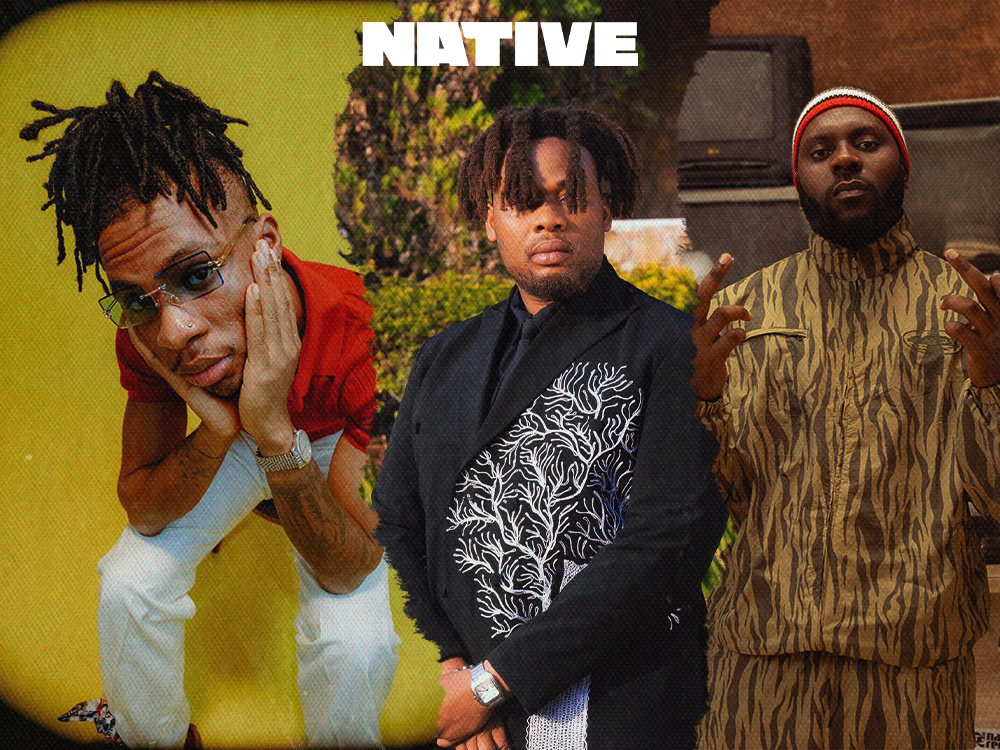
Today’s Street Pop stars possess, in addition to these fundamentals, a keenness to experiment and cut bits and pieces from Nigeria’s rich soundscapes to insert into their music. Evolution and adaptation are core concepts of Street Pop and acts like Asake, Seyi Vibez, and Zinoleesky are able to pull off cross-cultural interactions of sound—high-risk, high-reward adjustments that have set them apart from the abundant competition. 

One view on Street Pop’s origin is as a direct continuation of the Street music that once crowned Daddy Showkey, Danfo Drivers and Baba Fryo kings in locations like Alaba, Surulere, Mile 2, Mushin, Ajegunle and Orege, the places name-dropped by Mountain Black and Mad Melon (Danfo Drivers) in the iconic song. These parts of Lagos were a potpourri of cultures, mostly originating from Delta State, and it explains why Pidgin, Nigeria’s unofficial lingua franca favoured by South-South indigenes, was the language iconic songs like “Jogodo,” “Denge Pose,” and “Kpolongo” were delivered in. 

With time, Street music moved into more Yoruba-dominated spaces like Bariga and Agege, and there it got interwoven with long-standing indigenous Yoruba genres, especially Fuji, as they flowed into the Street Pop of today. An easy case study of Street Pop’s tribal spread can be found in Danfo Drivers’ “Kpolongo.” Street Pop star Zlatan sampled the 2006 smash for a song on his most recent album and named the new song “Polongo,” with the spelling change subtly conveying that the song has shifted cultures: the Yoruba language has no ‘kp’ in its alphabet. A quartet of Street Pop figures—Zlatan and Bella Shmurda as recording artists, Rexxie as producer and Poco Lee as, well, Poco Lee—were at the helm of this remake and they recreated the track in modern Street Pop terrain while preserving its original Ragga bounce. 

Another school of thought downplays the spatial connections between modern Street Pop and its Ajegunle prologue and instead focuses more on the temporal link between it and ancient genres like Fuji and Apala. Fuji’s most popular days are assumedly behind it now, but it would be a fallacy to assume it has run its course. Live instrumentation in music may have been largely replaced by electronic sound effects, but the melodies of the tuneful singing style adopted from Wéré are replicated fairly faithfully by artists like Asake, Qdot and Portable, among others. 

Pre-colonial Western Nigeria had a strong Islamic base, and with the yearly occasion of Ramadan came the Wéré (or Ajisari) singers who serenaded villagers with early morning music that kept them awake for Sahur. As the music grew in popularity it came to dissociate from Ramadan, and Alhaji Sikiru Ayinde Barrister conferred on it a new name and identity – Fuji, after drawing inspiration from Japan’s famed mountain. As Wéré was a vocals-driven genre with only the most modest percussion, the Sakara drums and Goje violins were adopted from Sakara music and fused into Wéré at the creation of Fuji.

At the time, the older but lesser-known Apala was also gaining momentum, relying on the Apala talking drum that had originated when men would beat match boxes in celebration of the birth of a new child. It had its pioneers in Ayinla Omoruwa and Haruna Ishola, but their deaths in 1980 and 1983 respectively inevitably hampered the growth of the genre, robbing it of the continued influence Fuji enjoyed. 

The Yoruba language is intonation heavy; the subtlest of tone changes can make the difference between complimenting a person’s beans (Èwà) or their beauty (Ewà). Wéré, then Fuji, drew heavily from this, and the earliest pioneers had the dexterity of vocals to flutter between vowels even at high notes, resulting in the signature technique of Fuji artists in drawing out the last vowel of each sentence to fill the gaps between lines. 

Wasiu Ayinde Marshal (or King Wasiu Ayinde Marshal or KWAM 1 or K1 De Ultimate, depending on what decade you’re looking at) was particularly adept at this singing style, and with it, he headlined Fuji’s next generation after graduating Ayinde Barrister’s tutelage. By incorporating more Westernised instruments, he pulled in the younger generation and upper-class citizens, ultimately giving Fuji its most mainstream push. This attracted a host of other artists towards the turn of the century, as Adewale Ayuba, Akande Obesere, Saheed Osupa and more entered the scene and went on to write their names in Nigerian music history. 

Pasuma deserves a special mention in the context of Street Pop. A student of KWAM 1 alongside Saheed Osupa, his keenness for innovation drove him to fuse Hip-hop and Pop. For Fuji to bleed into Street Pop, it needed to get embedded into the streets, and that was helped in no small measure by the efforts of Pasuma, who drew in younger people with his more eccentric version of Fuji, which would influence artists to adapt his cadences into modern pop beats. For his efforts, Pasuma is rewarded with references and nods from new-school artists, like Bella Shmurda (on Rush) and Zinoleesky (on “Rocking,” referencing his evergreen ‘Orobokiboalbum). 

The Street Pop-Fuji pipeline, however, wasn’t always as open as it is today; the earliest renditions of modern Street Pop positioned it closer to Hip-Hop, and for a while, it was Nigeria’s authentic answer to the American rap scene. Dagrin’s music career ended prematurely with his tragic passing in 2010 but he was such a force that any Street Pop literature without him carries a gaping hole. His take on the genre was heavy on rap, and his portrayal of the streets warned you to expect abrasion rather than camaraderie. One of the songs he got to stamp his footprint on was a remix of Oritse Femi’s “Mercies Of The Lord,” a prime cut from a stock now affectionately known as Afro-adura (an inormal term picked up by lovers of the genre), and he brought his signature Yoruba Hip-Hop, adding another dimension to the Ragga-Gospel soundscape the original was set in. 

Oritse Femi’s contribution to Street Pop extends beyond this chance mention, which is already more credit than most mainstream media gives him. His experiences in Ajegunle pushed him, as they did to others before him, into the studio, and in 2007 he emerged with songs like “Flog Politicians” and “Elewon,” leaving no doubt about his intentions for the political class. As Ajegunle’s influence in Nigerian music continued to shrivel, he left his hometown, physically and in spirit, and in 2014 delivered the Fela-inspired “Double Wahala”—his biggest commercial single at the time. Collaborations with modern Street Pop acts Reminisce (“Tomorrow”) and Olamide (Sossi’s “Sebee Remix”) helped sever any ties he had left to Ajegunle and ensured his rebirth as a Yoruba Street Pop star. 

Olamide, Dagrin’s spiritual successor, started in a similarly combative way and debuted “Eni Duro” in 2010 to exaggerate his toughness and draw a mark around his territory. With time, Olamide would come to make his music more accessible to outsiders, and anthems like “Bobo,” “Wo,” “Lagos Boys” and more could be enjoyed by even those who had no connection to the backwater areas of his upbringing. With catchy slang and easy dance routines, he extends a hand to the rest of the world, taking you on a tour around his hood while sparing you the ugly corners.

With Street Pop now packaged in colourful, ready-to-dance wrapping under which its material was kept thematically light and universally accessible, it sauntered into its most commercial lap. Soon the industry would be sieged with a glut of new artists, but they were not without their own intricate demarcations. Mr. Real, Idowest, Slimcase and CDQ propagated “Legbegbe” and its many spawns, which finely interwove South African gqom into slang-driven Street Pop, and it was complete with its own dance, the Shaku Shaku; Zlatan ushered in the Zanku era, and with the help of Burna Boy and Naira Marley, brought his dance to international fame; Naira Marley went on to make headlines after his much-revered 2019 run, and after publicity was so readily provided by the EFCC, he coasted on lyrics that should rattle Nigeria’s conservative sensibilities but instead earned him a cult following.

Street Pop has become a lot more decentralised since 2019, and it is nigh-impossible to place it in any particular space at each time, given that its hundreds of creatives work without a synchronised direction. As Street Pop gains a solid footing in Nigeria and takes flight beyond its borders, today’s creatives face a competitive environment that is always a welcome precursor for innovation, and some have responded particularly brilliantly. Nigerian music is no stranger to fusions and reinventions, but more important is its quality of staying true to itself and retaining ownership of its core. We danced to Yemi Alade’s takes on Coupé-décalé as she made her claim for the ‘Mama Africa’ title, we drowned in the soulful Hiplife rhythms Mr. Eazi brought with him from Ghana and the multitude of slow burners it inspired in Nigerian music, and now we have accepted that every other Pop song will carry log drums borrowed from South Africa’s Amapiano

At no time through multiple eras did we ever feel that the music was any less Nigerian, and now Street Pop has taken the baton to be at the forefront of Nigerian music’s quest for innovation while preserving its core elements. The inclusion of Amapiano can no longer be granted the blanket description of “inventive,” but there are musicians who go the extra mile in creating their own fusions with it, taking parts of two known elements to create something so different, it is almost an entirely new genre. Asake is one of those musicians. 

2022 was Asake’s time, but while his persistent spirit and Olamide’s influence are readily credited with his success, there remains no factor more significant than the quality and novelty of the music he produced. The large log drums are unmissable, but underneath them lies subtle craftsmanship, like in the Europop-esque beats at the base of “Sungba” and “Palazzo” that give it a feel of Dance music. His use of backup choristers and anthemic choruses is another well-documented side to him, but more interestingly is the way he works them into multi-religious concepts. On “Omo Ope,” he aims for a Christian choir, depicting this with robes in the video and sectioning voices into vocal ranges. “Dull” has backup vocals chant words of prayer to ancestors in a manner common to the African Traditional Religion. On “Peace Be Unto You,” they chorus “Asalam Alaykun/ I get many many disciples,” a reference to Islam, which he reiterates in the video. His use of the Islamic religion plays a secondary role as an ode to Wéré, Fuji’s Islam-influenced precursor, and assures that his inventions will never take him too far from home – not while he possesses a hold on the historical roots of his music. 

It is after delving into intricacies like this that comparisons with Seyi Vibez dissipate and don’t survive on closer inspection. Seyi Vibez’s take on Amapiano is decidedly more stripped, in that it features all of its bells and whistles (quite literally), but the biggest log drums are only sparingly applied, resulting in stretches of a song where Seyi Vibez’s signature guttural vocals float in incantation without a beat to guide them. As expected, a few have put this phenomenon down to an inability to follow a beat rather than a creative choice—as forging unconventional styles into music will always polarise listeners. 

Seyi Vibez’s discography carries multiple nods to Yoruba culture and music, such as when he mutters money-seeking incantations to himself on “Chance” like an Ifa priest would: “Omo Anifowose, omo Abule sowo/ Aje wami ri, money no dull me“; or a more overt reference like sampling Apala legend Fatai Olowonyo’s “Elewure Wole” on “G.O.A.T.”

Interestingly, Fatai Olowonyo’s original track was released at a time in Apala and Fuji genres where rivalries reigned, enough to go around that many artists were embroiled in more than one. Ayinde Barrister and Ayinla Kollington turned a childhood friendship into an adult battle, flinging entire albums like weapons at each other. Ayinde Barrister was also involved in a cross-genre war with Ayinla Omoruwa, who elsewhere was tied in conflict with Haruna Ishola, a rivalry that only ended when Omoruwa conceded superiority to Ishola. Olowonyo and Omoruwa were drawn against each other though the latter was considered the more popular artist.

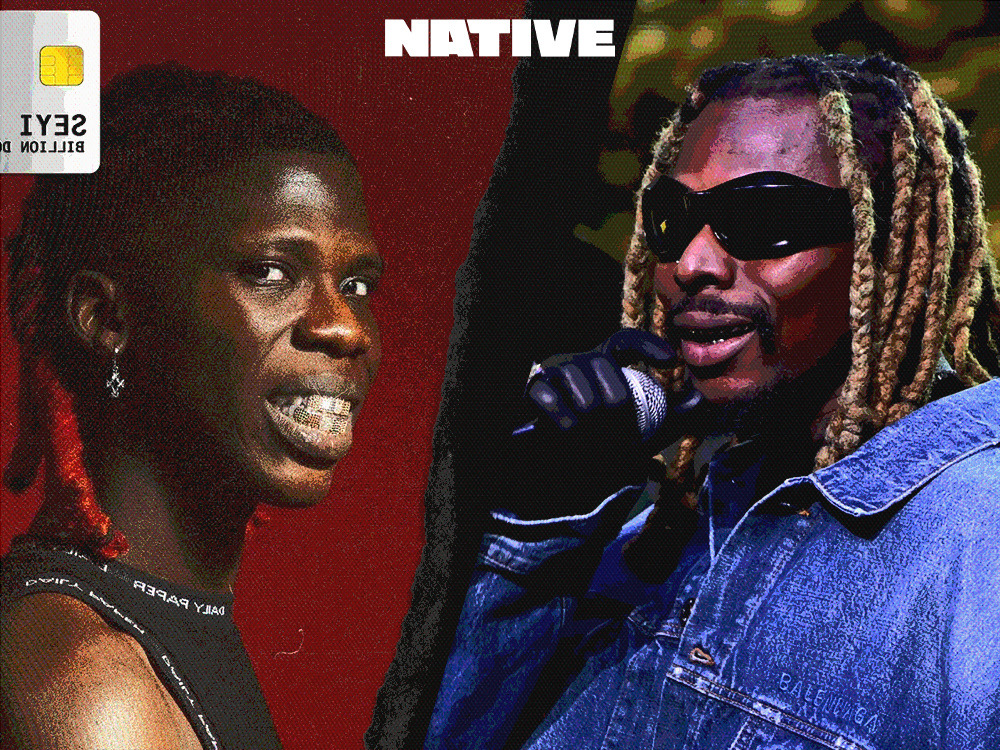
Seyi Vibez finds himself in similar shoes as Olowonyo today,  paired against the established Asake. These comparisons, spurred by fans who cannot watch two artists succeed in a field without forcing arguments over who is greater, may provide a context to the choice of this particular sample for a song that was titled “G.O.A.T.” Asake, for his part, has wisely kept mum on the matter, but his latest single “Yoga” conveys subtle messages in its lyrics (“I dey maya/ Make nobody kill my Yoga Yoga“) and more importantly in his choice to expand the purveys of his chosen genre to prove he can flex his creative prowess anywhere. 

No other Street Pop artist currently contorts the genre as much as these two, but several other acts have put together machinations to own their private spaces in Street Pop. Zinoleesky stumbled on his mellow formulation of Amapiano and Street Pop on “Kilofeshe” and owned it until just before the release of his EP Grit And Lust,’ where he wandered from his comfort zone in search of fresh inspiration. Rexxie, Naira Marley’s much-preferred producer, wields chaotic Afro-house production to consistently excellent results, most recently on “Abracadabra.” 

As Street Pop continues its global tour on the backs of today’s stars, it is left to be seen what new formulations tomorrow’s acts will employ to distinguish themselves. Darwin’s theory of natural selection may hold no overt connections with Nigerian Street music, but his words on adaptation as the key to survival apply to Nigeria’s rapidly populating Street Pop industry. And while many acts will not see much room for ingenuity beyond the incorporation of a log drum or two, opportunities abound for those who are willing to break the mould and take sonic risks for the culture. Nigeria’s Street Pop is coasting on its success, but a lot more innovation and ingenuity will still be needed if it is to close the gap on Afropop, its more successful cousin. 

Featured image credits/NATIVE


Patrick Ezema is a music and culture journalist. Send him links to your favourite Nigerian songs @EzemaPatrick


ICYMI: ‘Crime and Justice Lagos’ tackles societal ills through the police and legal procedure

TurnTable Top 100: Asake Debuts At No.1 With New Single, “Yoga”

Asake‘s rein on the charts isn’t letting up anytime soon. The singer’s latest single, “Yoga” has just debuted at No. 1 on the Official Top 100 with 3.86 million streams making it No. 1 on streaming platforms while also garnering 22.6 million in radio reach. This is his seventh No.1 entry in Nigeria after leading the charts with his several hits including: “Omo Ope”, “Sungba (Remix)”, “PBUY”, “Terminator”, “Organise” and “Bandana.”

He joins artists such as Burnaboy, Davido, and Ayra Starr in having numerous No.1 on the Turntable Charts. This is also producer Magicsticks’ sixth No. 1 entry with Asake making him the producer with the most No.1 songs.  “Yoga” made an incredible debut on streaming platforms during the week of January 27 – February 2, 2023, despite being available for only three and half days – the song was released on January 30, 2023, at 6 pm WAT. It makes history as the first song to debut at No. 1 on an aggregate chart in Nigeria despite having only a partial tracking week Wizkid’s “Bad To Me” No. 11 debut with only two days of tracking was the previous highest by any single.

“Asiwaju” by Ruger slips to No. 2 while Omah Lay’s “Soso” takes a bow to No.3. Kizz Daniel’s “RTID” and Zinoleesky’s “Personal” drop by one spot to No. 4 and No. 5 respectively. Outside of the top 5 this week, Rexxie’s “Abracadabra” rises to a new peak of No. 6 while Mavins’ “Won Da Mo” falls to No.7 from its previously held position at No.5 last week. It is also followed by Young Jonn’s “Xtra Cool” which descends to position 8.

Rounding out this week’s top ten; Boy Spyce’s “Folake” debuts at No. 9 with 1.46 million streams, making his song No. 7 on streaming with 29 million in radio reach. This becomes Boy Spyce’s third top entry and first as a solo act. Elsewhere, Khaid’s “Jolie” enters the top 10, ascending from No.92 to No.10 after its first full week of tracking. The new track tallied 1.58 million streams placing it at No. 5 on streaming and 22.3 million in radio reach.

Just outside the top ten, Phyno’s “Ojemba” with Olamide debuts at No. 11 while Libianca’s “People” moves to No. 14, Minz’s “Wo Wo (Remix)” ascends to a new high of No. 15 this week and Spyro’s “Who Is Your Guy” jumps to No. 18.

Read a full breakdown of the charts here.

Featured image credits/


ICYMI: 7 Essential Authors For Learning About Africa’s History

Best New Music: Lojay sings an anthem for the lovelorn on “MOTO”

Music’s relationship with cars is extensive, especially where romance is involved. In a lot of situations, it’s not about the vehicular movement as much as what the car symbolises within a song. There’s Rihanna’s famous “Shut Up and Drive,” a metaphor for breathless sex, or if you’re a little more old school, Billy Ocean’s New Jack Swing classic, “Get Outta My Dreams, Get Into My Car,” where infatuation is all-consuming. Recent R&B/Rap innovators Frank Ocean and Anderson .Paak have consistently turned their obsession with cars into the muse for songs that portray the complexity of finding and keeping love in the 21st century.

“MOTO” is the most explicit show of Nigerian singer Lojay’s ongoing obsession with cars, a lovelorn anthem that goes through the motion of a situationship. In a broader sense, it doesn’t take much to connect this new single to the last two songs Lojay has released, especially their connection with cars. “Shey you don see motor with suicide door and electric charge?” he rhetorically quipped on the P.Priime-produced “LEADER!”, a buttery thumper where he boastfully revels in hedonism. In the visualizer for his next single, the Amapiano-based “CANADA,” Lojay performs the entire set in and around a drop top, singing about a lady with mainly materialistic interests and, as he sings on the second verse, is taken by the plushness of his passenger seat.

Compared to the posturing of those two previous singles, “MOTO” is a lot more vulnerable and wounded. It’s not exactly a diary entry but, in recounting the happenings of his involvement with a love interest, it feels like he’s reliving the whole experience again. One moment it’s the best of times, but as the story unfolds it becomes the worst of times. “When it’s cold and raining outside, I’ll bring a blankie your way,” Lojay sings on the opening line, quickly establishing a base for his admiration. He promises to bring a lotto if she’s ever on her last dime and the next few bars continue on the devotional path, until the turning point happens: “So I can never understand when you said you need time and space.” Yikes.

In the almost two years since the Sarz-assisted ‘LV N ATTN’ ushered him into Nigerian Pop’s mainstream, Lojay has constantly earned plaudits as a writer. A large part of that is a preference for specificity that leaves out just enough to keep things intriguing. The details are mostly evocative, sometimes picturesque and other times descriptive, with the latter regularly helped along by ear-catching turns of phrase. “Even if sun don’t shine in the morning time, I use halogen make e sha’na,” he sings on “MOTO,” another remarkable use of Nigerian lingo in a catalogue brimming with them.

Sung from the perspective of the jilted, the singer’s writing style firmly casts him as a reliable narrator, revealing just enough about his intentions to garner empathy for his heartbreak. It doesn’t feel contrived even though the motivation for his love interest’s sudden disinterest isn’t quite known. Despite being asked for “time and space,” Lojay keeps going with his admiration instead of accessing the situation, after all the heart wants what the heart wants. That’s when the car reference in the song is revealed as a metaphor for driving down a dangerous path and eventually crashing even though the warning signs were there.


View this post on Instagram


A post shared by Lojay (@lojaymusic)

“I know you poison deep in my soul/but I no fit leave you alone,” he sings in the second verse, setting up his complicity in being heartbroken. He even finds the grace to wish her well with the “Valentine’s substitute,” even though his pain is raw. For an artist who’s shown himself as a heartthrob with a playboy streak, “MOTO” reveals more of the sensitive dimension of Lojay’s artistry, and it’s fitting that the song bears his first credits as a producer. With a vibrant bounce slightly reminiscent of Burna Boy’s “JA ARA E,” the song is planted firmly within Nigerian pop territory, however, it’s the twangy guitar riffs that sets the tone for Lojay’s vulnerable display—another cut that fits right into 2000s-style R&B-infused jams.

Co-produced with Elementz and AOD, “MOTO” continues improve the standard of what to expect from Lojay. The potential has never been in doubt, but it’s interesting to know that the ceiling for the singer’s powers can definitely eclipse the bar for his last project, especially as he gears up to release the new EP, ‘Gangster Romantic’. Between “MOTO” and its preceding singles, Lojay has clearly been evolving his craft, developing into a more assured writer that’s confident exploring the more rugged side of romantic relations without his song-making sagging under its weight. And, as the running car theme shows, he understands the importance of trademarks to becoming a more distinct artist.

Watch the video for “MOTO” here.


ICYMI: LIBIANCA, TYLA & MORE BEST NEW ARTISTS TO WATCH IN 2023

7 Essential Authors For Learning About Africa’s History

Black History Month is a period of meditation as it is of celebration. Across the world, Black peoples and communities continue to be under attack, from repressive governments to errant institutions, crime and poverty. In Africa, the past few years have been intense and excruciating, economies of countries like Nigeria and Ghana crashing against itself. Local currencies are going scarce at the same time our music fills out stadiums across the world. With all the consistently bad leadership our societies have had to endure, the election booth seems a reasonable place to take back power. More than ever citizens are confident in the power of their votes and it’s not in the least surprising that Nigeria recorded a record-high increase in registered voters since last year. 

It is election season throughout Africa as more than 20 countries will be having presidential polls. Nigeria is the most followed all over the world, reasonably due to the country’s influence and size. Under President Muhammadu Buhari, the standard of living has reduced drastically, with economic catastrophes accentuated by the increasing insecurity. Just as many Nigerians would hope to change their fortunes through electing the right personality and party, so would African countries such as Sierra Leone, Zimbabwe, Liberia, Sudan, Madagascar, Gabon and many others, be looking forward to achieving. 

Here’s a list of African authors who have written extensively about the history of their countries and the Black world at large. Through their novels, poems, non-fiction and lectures, they contribute to the archive of Africa’s intellectual history, covering vast subject matter in distinct styles. Through understanding their stories and ideas, the reader comes upon a goldmine of social awareness that would surely improve one’s decisions throughout the year. 

CHINUA ACHEBE 

Essential Reading: ‘Things Fall Apart,’ ‘No Longer At Ease,’ ‘A Man of the People,’ and ‘There Was A Country: A Personal History of Biafra.’

The father of African Literature was a tag Chinua Achebe resisted during his lifetime but it’s a sentiment that sticks. Before the Ogidi-born writer had his 1958 classic ‘Things Fall Apart’ published by Heinemann, the fictions of our literature wasn’t constructively influencing the black diaspora. By documenting the pre-colonial Igbo worldview Achebe showcased the intricate structures of African societies, an essential lesson in writing back to the world. His other novels ‘No Longer At Ease’, ‘Arrow of God’, ‘A Man of the People’ and ‘Anthills of the Savannah’ extended the multidimensional portrayal of identity politics. 

Achebe’s knowledge of history and political systems shone best through his essays and other pieces of nonfiction. As an essayist, he brought his signature wit and cultural wisdom to the fore, however grounded in the ideals of scholarly debate he learned throughout his schooling years. ‘The Trouble With Nigeria’ and ‘There Was A Country: A Personal History of Biafra’ perused the deeply-ingrained tensions which makes the country so prone to division, while ‘Morning Yet on Creation Day’ and ‘Hopes and Impediments’ discussed the trending literary discourses of the era while locating the African writer’s place in it. ‘Hopes’ begins with the must-read essay, ‘An Image of Africa: Racism in Conrad’s Heart of Darkness’, a brilliant takedown of the book’s explicit racism and what its acceptance reveals about the perspective of the Western world towards blackness. With its closing essay paying homage to Achebe’s acquaintance, the great African-American writer James Baldwin, the title sparkles with the mix of heart and intellect that made Achebe so revered. 

NGUGI WA THIONG’O 

Essential Reading: ‘Ngaahika Ndeenda,’ ‘Decolonising the Mind,’ and ‘Wized of the Crow.’

More than any East African author has ever managed, the works of Ngugi wa Thiong’o capture the struggles of revolution. He often pulls from the lessons of history, but the true strength of Ngugi’s drama and fiction emerges from his unprecedented depiction of ordinariness, a quality he consistently updated as he writes about Kenya over the years. His frequent clashes and escape from the Kenyan government was initially stoked with his successful play, ‘Ngaahika Ndeenda’ which adapted the novel theatre form by encouraging improvisation and active audience participation. 

A frequent shout for the Nobel Prize for Literature, the breadth of Ngugi’s work spans novels, plays, academic texts and scholarly lectures delivered around the world. From his seminal text ‘Decolonising the Mind’ which urged African writers to work in their native languages to actually renouncing English and writing in Gikuyu, Ngugi’s practicality makes him a deserved icon of world letters. Over the years he tinkered with the novel form, incorporating his trademark themes of colonial resistance into genres of realism and magical realism, as displayed in his last novel, ‘Wizard of the Crow’.  Other essential works from the legendary Kenyan author include ‘Weep Not, Child’, ‘The River Between’ and ‘A Grain of Wheat’

WOLE SOYINKA 

Essential Reading: ‘The Burden of Memory: The Muse of Foregiveness,’ ‘Chronicles From the Land of the Happiest People on Earth,’ and ‘Document of Identity.’

Cultural history is every bit as important as anthropology. Throughout Africa, few writers have so beautifully placed the specifics of a particular society side-by-side with the classical philosophical discourses birthed from ancient Greece and Rome. When Soyinka was awarded the Nobel Prize for Literature in 1986, the Swedish Academy praised his “wide cultural perspective and poetic overtones fashioning the drama of existence” in a groundbreaking moment which crowned him a giant of Black Literature.

Across Soyinka’s oeuvre, displacement between the old and new ways burn with complex spirituality of the Yorubas and his unique humour. Versed across drama, poetry and fiction, his writing has inspired writers across the world to lean into the ambiguous aspects of their traditions. And while the Netflix-adapted ‘Death and the King’s Horseman’ might present a morbid side, ‘The Lion and the Jewel’ is as affecting as any classic love story even as historical details swell alongside the plot. Obviously being one of the most recognisable figures in African literature, many people have read Wole Soyinka but with 52 books to his name, there’s no doubt several titles that may yet be unread, titles bursting with imagination that might contribute to Africa’s intellectual and cultural progress. 

AMINATTA FORNA

Essential Reading: ‘The Devil That Danced on the Water: A Daughter’s Quest,’ ‘Ancestor Stones’ and ‘The Memory of Love.’

When Aminatta was eleven years old, her father was hanged on charges of treason. Starting out a physician, her father later entered politics though he exited, the violent and corrupt political landscape inspiring his decision. In her novels, Forna mostly enters historical perspective to unfurl stories with a lean on psychological trauma. Rather than weigh the complications of war-torn Sierra Leone, she presents the inner complexities of believable characters whose role in the eras gave him unique viewpoints into the crisis. To cover her oeuvre, it’s advisable to read the memoir based on her father’s death, ‘The Devil That Danced on the Water: A Daughter’s Quest’ and from there progress into celebrated fictional works such as ‘Ancestor Stones’ and ‘The Memory of Love’

TSITSI DANGAREMBA 

Essential Reading: ‘Nervous Conditions,’ ‘The Book of Not,’ and ‘This Mournable Body.’

When you’re the first Black woman to publish an English novel in a nation’s history, regular platitudes aren’t enough to celebrate the artistic ingenuity. We must also consider the sociopolitical systems which must have resisted its happenstance and as well ponder the strength of vision that was required to push through, to objectively influence the intellectual trajectory of not just any country, but one as important as Zimbabwe. Since ‘Nervous Conditions’ was released in 1988, we’ve seen women Zimbabwean authors like Pettina Gappah, NoViolet Bulawayo and Novuyo Tshuma write from Dangaremba’s template. With that groundbreaking novel telling the story of a family during Rhodesia’s postcolonial period in the eighties, Dangaremba’s writing possessed sharp observational qualities which allowed her to roam into the characters’ deepest motivations and undoings. In 2006 and 2018, she completed the novel’s trilogy with ‘The Book of Not’ and ‘This Mournable Body’ respectively. Also a filmmaker, last year Dangaremba published the poignant essay collection ‘Black and Female’

CHEIKH ANTA DIOP 

Essential Reading: ‘The African Myth of Civilisation’ and ‘The Cultural Unity of Black Africa.’

A distinguished historian, scientist and political leader, Cheikh Anta Diop was grounded on ideals of Pan-Africanism. The Senegalese icon was born in 1933 to a family which belonged to the peasant class, though he worked hard to become educated. Studying for a Ph. D in physics, Diop would rather embrace his communal interests and, in 1951, help organise the first Pan-African Student Congress in Paris. The movement was largely influential in establishing the framework for liberation ideals in the global Black community. As a historian, Diop’s work was similarly committed to establishing the impact of African historiography on other world civilisations, a feat he achieved with titles such as ‘The African Myth of Civilisation’ and ‘The Cultural Unity of Black Africa’ which were published four years apart in the seventies. Until his death in 1986, Diop actively contributed to Senegal’s position as a celebrated centre for African arts and research, working across both disciplines with masterful efficiency.

MAAZA MENGISTE

Essential Reading: ‘Beneath the Lion’s Gaze’ and ‘The Shadow King.’

Ethiopia is one of the most intriguing countries in the African continent. Asides never being colonised, it’s also home to some of the oldest civilisations and religions in the world. Alongside Dinaw Mengestu, the most popular contemporary writer from Ethiopia is Maaza Mengiste. She is a photographer and novelist, her works evoking the vast terrains of the country’s history. Through a family’s perspective her 2010 debut ‘Beneath the Lion’s Gaze’ relayed the riotous conditions of the Ethiopian Revolution which saw her own family flee the country when she was four. Her second novel ‘The Shadow King’ came a lengthy nine years later but that was only because Mengitse’s scope had broadened, this time covering the Italo-Ethiopian War which began in 1935 and ended in 1937. As an historical event, it’s an important precursor to the legislative inconsistencies which sparked the Second World War in 1939. Essays also feature prominently in Mengiste’s oeuvre, as usual drawing on pieces of her country’s complicated history to reach crucial conclusions on the motions of the modern state. 


ICYMI: June 12 & the complexities of Nigerian status symbols

Our Reactions From Last Night’s 65th Grammy Awards

The Grammy Awards happens once every year but the conversation lingers. Artists on diverse levels of popularity and artistry get to share the same stage, famous and infamous wins are recorded, and for many the attention on their wins or misses morphed into a discussion of the Recording Academy’s ethos as award organisers. Last night, the 65th Grammy Awards took place in Los Angeles’ Crypto.com Arena, attracting a wide cast of music professionals. While some had eyes on red-carpet looks and heart-warming camaraderie between their beloved superstars, every moment was decidedly orchestrated to serve as backdrop to the ultimate moment of announcing the winners of the several categories. 

As we’ve known of the Grammys, the night combined thoughtful presentations such as the tribute to ex-Migos rapper Takeoff and other late industry professionals with some head-wracking decisions which massively went against popular expectation. In all, the “biggest night in music” proved to be quite the online sensation, reeling in comments from around the world even in places where people were usually tucked in bed during its midnight-held (as it was in West Africa) event. Here we give our takes on some of the conversations we expect will last the longest from this particular Grammy night.  

THE CELEBRATION OF HIP-HOP’S 50TH ANNIVERSARY

It’s been 50 years since Hip-Hop’s rise and its rapid evolution has birthed various sub-genres with new names continuously etched in the books. What once started as a voice for the oppressed has morphed from tough riveting bars and accommodated melodic numbers. Last night, the Grammy’s Hip-Hop’s 50th anniversary and it was nothing short of pomp and parade. With an elite performance line up from Hip-Hop’s greatest acts including: Missy Elliot, Eminem and even Lil Uzi Vert adorned the stage reliving history through the years. We can’t fail to obsess over Jay-Z’s performance on “God Did.” Despite the celebration, it was noted the Grammy’s snubbed its founder Kool Herc, something quite popular with the Academy as it has previously been rocked with various accusations that saw international stars such as Drake and Silk Sonic decline to submit any of their projects for consideration.

Earlier this year, when the Hip Hop category nominations were announced, Hip-Hop felt failed with average rappers getting nominations. Once again, it showed the power of music listenership and Kendrick Lamar owned the night taking three out of eight categories he was nominated for, while also winning “Best Rap Category.” I thought it was quite predictable considering its only worthwhile contender would be ‘It’s Almost Dry.’  Despite gunning for Pusha T, Kendrick Lamar deserved the win. Tems earned her first Grammy with Future’s “Wait For U” featuring Drake for Best Melodic Rap Performance. With these awards, I believe Hip-Hop won. 

Tela Wangeci

HARRY STYLES WINNING ‘ALBUM OF THE YEAR’ OVER BEYONCE 

Beyoncé has for many years maintained GOAT status but last night, she broke a new record. At the awards ceremony, she walked home with four Grammy awards, becoming the artist with the most Grammys (32  Grammys). While Beyoncé was also in the category for Album of the year, Harry Styles however was awarded in this category last night. We all know that Album of the Year is a very important category to anyone slightly interested in the Grammys. ‘Renaissance’  is a deep and affectionate dive into Black and queer dance culture, and is the most experimental body of work to come out in 2022. 

Every year Beyoncé releases a new album, she brings forward a different perspective and rewrites the rules every single time but for every time she has lost in the category AOTY, the body of work in question has always been up more than worth its salt. In my opinion, ‘Renaissance’ should have won over Harry Styles’ album ‘Harry’s House.’ That being said, a big congratulations to everyone nominated in the category; AOTY is one of the most important categories at any award show and every album nominated simply deserved the nomination.

Wonu Osikoya

TEMS’ REMARKABLE RUN

It’s easy to forget Tems’ released “Looku Looku” just four years ago. Since that record caught on among Nigeria’s alternative audiences, the musician has skyrocket into a global superstar. This year, she’s been on multiple franchises across entertainment, scoring an Oscar nomination for lending her pen to Rihanna’s “Lift Me Up” off ‘Black Panther: Wakanda Forever’. With a BET and other relevant awards in her locker, a Grammy Awards wasn’t a distant idea.

She earned that honour with “Wait For U,” the Future and Drake collab which had her distinct vocals from “Higher” sampled all over the song. Considering the category was Best Melodic Rap, it’s quite easy to say Tems carried both rappers to glory, especially since she’s been welcomed into the American R&B fold as one of theirs. At the backstage, Tems was seen talking with American stars like Mary J. Blige (who wanted a picture) and DJ Khaled who professed to being her biggest fan. All this gives a glimpse into the moment Tems is having, and with talks of her debut album dropping this year, the Grammy seems like a stepping stone into greater acclaim. For creatives in the continent, no doubt this has stacked a burning battery to their determination. If Tems can rule the world, so could they, many would probably be thinking.

Emmanuel Esomnofu

VIOLA DAVIS COMPLETING THE ‘EGOT’ 

American actress Viola Davis’ audio recording of her 2022 memoir Finding Me won the Best Spoken Word Or Non-Musical Album category, making her the 18th person to achieve the EGOT, as she joins an illustrious list that includes Whoopi Goldberg, John Legend and Jennifer Hudson. EGOT represents the four most prestigious awards in the American entertainment industry: the Emmy, the Grammy, the Oscar, and the Tony. The EGOT is renowned as the biggest symbol of success in the entertainment industry and artists who get the EGOT are revered as some of the bests in television, recording, film, and Broadway theatre.

Davis won an Emmy in 2015 for her role as Annalise Keating in the TV series How to Get Away with Murder, won a Tony in 2010 for her role as Rose Lee Maxson in the Broadway revival of August Wilson’s play Fences and won an Oscar in 2016 in the same role as Rose Lee Maxson in the film adaptation of Wilson’s Fences. In her memoir, which TIME referred to as an “act of finding herself,” Davis bares her soul on the pages, narrating her tumultuous childhood as well as her challenges and successes in adulthood. Her Grammy win also puts her memoir in the same bracket as those of Barack Obama’s Dreams from My Father & The Audacity of Hope and Michelle Obama’s Becoming—all three won the category in 2006, 2008 and 2020 respectively. Davis’ win is a crowning moment for a dedicated actor and entertainer who didn’t allow the hurdles of life to halt her march toward excellence. 

Uzoma Ihejirika

BURNA BOY’S LOSS IN THE GLOBAL MUSIC CATEGORIES 

Going into Sunday night with two nominations, many would have expected Burna Boy to clinch at least one of those. In its category “Last Last” was surely the most popular and had its unique vibe going for it, but clearly the Academy had other plans. It went rather to the Deep House-tinged “Bayethe” by Nomcebo Zikode, Zakes Bantwini and Wouter Kellaman, a decision which sparked unsavoury comments about the song’s quality. This shows the implicit superiority Nigerian listeners showcase over the sounds of other African countries, even though their knowledge of those genres are shockingly limited. If anything, “Last Last” would have been a better fit in the pop categories, seeing how the Academy consistently demonstrates a certain ‘taste’ in their Global/World Music selections over the years. 

In the category of Best Global Album, I wasn’t expecting Burna Boy to win that to be honest. The album had no cohesive narrative and some sonic choices seemed to pander too much to the aforementioned Grammy taste—presenting the basics of African cultures as an exotic grandeur. Masa Takumi’s ‘Sakura’ by contrast blended Japanese folk with futuristic engineering. Alive and contextual, the album brims with originality, which isn’t something we cannot say for Damini. Burna has obviously made better projects and returning to the drawing board, it’d be great to see him take off the saviour persona in favour of the rawness and vulnerability we fell in love with. For now, Nigerians should seek context and understand the music a little better before scampering to offer hot takes. 

Emmanuel

EXPLAINED: Nigeria Is Experiencing A Naira Scarcity

Since the past week, Nigeria has gone through an unprecedented scarcity of cash. Naira notes are in high demand after many citizens cashed in their remains of the old currency as required by the Central Bank of Nigeria (CBN). On October 22nd last year, the governor of the apex financial institution Mr. Godwin Emefiele announced the change into new currencies of the three highest denominations of the Naira N200, N500 and N1000.  

In his speech, Emefiele suggested that the currency faced challenges which affected the CBN and the country. Among other factors, he mentioned the hoarding of banknotes by the public, the shortage of clean and fit banknotes, the risk of counterfeit currencies and, most pertinently, the global convention of central banks redesigning the currency after windows of five to eight years. The Naira hasn’t been redesigned for twenty years, he mentioned, and indeed, on paper the motivations seemed true enough. With elections looming, Nigerians also saw the change as a means to curb malpractices—vote-buying especially—that are made necessary with money that might have been put away. 

The window for phasing out old currencies and using new ones wasn’t exactly satisfactory for Nigerians. According to Emefiele, the new currency was to begin circulating from December 15th, 2022, but in actuality days into the new year very few states had achieved widespread circulation. In urban areas across the country there were sparse sightings of the notes, but even then they seemed exotic, occasionally seen for sale in public places. By the middle of January, it was becoming increasingly clear that the 31st deadline for the legitimacy of old notes was not going to work. As the date pulled closer, a creeping sense of anxiety and FOMO dawned on the country, resulting in a last-minute rush for Naira notes.

The cash scarcity isn’t a standalone consequence of the current administration in CBN. Since becoming the governor in 2014, the Naira has recorded 70% value loss, according to Nairametrics. The current policies on forex and the dual exchange system has resulted in the consistent free-fall of the Naira against the dollar, which at some point last year rose to almost N800 per dollar. With a drop in the overstressed crude oil industry and reduction in foreign investments, Nigeria’s economy has sunk without much of a struggle, with many concerned citizens calling for Emefiele’s sack

The recent cash scarcity is particularly jarring given that there could have been better planning. For one, a country of our size with millions of citizens shouldn’t rush to make statement decisions without weighing the complete scope of consequences they might have, across the different social classes. So far, the situation has been nothing short of excruciating and mentally draining, with several reported happenings painting the image of a frustrated country on the brink of further demise. On social media, reports have circulated about banks and ATMs which completely lacked in providing the new currency, even as the CBN claims they made them available. With sightings of the new currency being sprayed in flamboyant parties, there’s been wider outrage from the citizenry who believe it’s another one of such Nigerian policies which cripples largely the lifestyle of its working class demography. 

In recent years the Point of Sale (POS) machines have been widely adopted by Nigerians as an alternative means of payment and withdrawals. Avoiding the stress of frequenting traditional banks and ATM queues has proven valuable to bank customers, but in the new reality of cash scarcity even POS payments haven’t been exempt. Agents in several parts of the country are hiking prices, with most centres charging 10% of the money being withdrawn; this means N1000 would be service charge for N10,000, when it previously used to be just N200. 

Nigerians have complained against the regulation methods of CBN, while faulting the absence of values such as trustworthiness and discipline in the national character. Backdoor deals are believed to be orchestrated by financial workers and select middlemen and elites, with new currency going one way and an excess of the old going the other. Meanwhile, in bank halls and outside the buildings, people are frustrated by the inability of banks to pay over the counter. In one video currently making the rounds on social media, a woman bemoaned that she hadn’t fed her children for two consecutive mornings, which is something many around the country will relate to, considering the sinking spending power. 

Although Emefiele announced the postponement of the activity on the 29th of January, the situation as we see it has failed to improve. “Our aim,” he wrote in a press release announcing February 10th as the new deadline, “is mainly to make our Monetary Policy Decisions more efficacious and like you can see; we’ve started to see inflation trending downwards and exchange rates relatively stable. Secondly, we aim to support the efforts of our security agencies in combating banditry and ransom taking in Nigeria through this program and we can see that the Military are making good progress in this important task in Nigeria.” 

Quite obviously, the country’s leaders are lacking the nuance and empathy Nigeria requires. The incumbent Nigerian President Buhari shared the plight of Nigerians in a recent set of tweets, stating that his government was doing everything in its power to bring an end to the scarcity, with significant improvements slated on or before February 10. However for many Nigerians, the fact that very few of the CBN’s motivations have measurable goals, these smoke screen of decisions fail to make any visible difference to the economy. 

The latest update from the CBN came on February 2nd, in a statement signed by its Director of Corporate Communications Osita Nwanisobi. Confirming its knowledge of all the pertinent issues this piece has highlighted, from the “persons who sell the newly redesigned bank notes and those who flagrantly abuse the naira by hurling wads of Naira notes in the air” to the “upward trend in the cases of unregistered people and non-bank officials swapping banknotes for members of the public”. Instead of taking active decisions, the CBN went on to “state” that such actions were unlawful and perpetrators risked fines and imprisonment. 

Yet the Nigerian will find no joy in these statements. The streets remain as angry as ever, with only some days between now and the new deadline date. From the look of things, it would take a really effective administration of laws and policies to flush the corruption that has stained this national action most citizens initially accepted. Already protests against what seems to be a deliberate scarcity has begun: in the Ibadan city of southwestern Nigeria, the atmosphere is described as hostile and riotous. Banks and small businesses have closed up, crippling the economy of the state (as in many other places) and leaving citizens hungry. 

This is a developing story and we will regularly update this articles with updates.

NATIVE Selects : A List Of The Best Songs This Week

It’s already been a month since the year kicked off and 2023 is looking exciting and promising for Afropop. Artists such as Tyla have made a luscious comeback while Seyi Vibez is in his moment of glory. With fans gearing up for a year of album releases, the artists are constantly feeding their enraptured fans with prolific singles. 

With new releases coming in every day the NATIVE team dedicates itself to keeping you in the loop with the latest songs on NATIVE selects as we discover rising acts. On Tuesday, we covered Bad Boy Timz, Pheelz, and more with each song representing a wide range of artistry. Today, we round up the best Afropop songs we’ve heard this week from all across the continent including new cuts from Lojay, Adanna Duru, Sho Madjozi and more.

LOJAY – “MOTO”

Lojay is kicking off 2023 with a refreshed energy and strong intentions. Following his stellar run in 2022 with the NATIVE Sound System and Ayra Starr-assisted single “Runaway” and “Leader,” the singer shares new single, “Moto,” a heart-wrenching anti-love anthem about longing for a lover whose heart can’t be trusted. Co-produced by Lojay himself and Elementz and AOD, the new single explores heartache through the lush layers of Lojay’s distinctive vocals as he showcases his lyrical abilities through raw songwriting and storytelling. The single serves as the first sign of Lojay’s debut solo EP ‘Gangster Romantic,’ which is slated for release in March.

BLAQBONEZ – “BREAKING THE YOKE OF LOVE (OFFICIAL THEME SONG)” FT. CHIKE & RAYBEKAH

Following the success of his 2021 debut album ‘Sex Over Love,’ Blaqbonez has stuck to the overt message and mission of that project. In February 2022, he kick-started the crusade-themed “Breaking the Yoke of Love” concert where fans would undergo sonic deliverance to expunge any thirst for romance. Last year, his sophomore album ‘Young Preacher’ continued on that path, and in preparation for this year’s concert, he tapped Nigerian singers Chike and Raybekah for the concert’s official theme song.  

Chike and Raybekah set things off with stirring vocal renditions of the lyrics “Sometimes love is peace/But these days, love is wicked,” underneath Gospel-esque piano chords. When the bass, drums, and backup choir vocals come in, Blaqbonez swaggers into his verse to admonish those who believe in the ‘fairy-tale’ of soul mates. While the morality of Blaqbonez’s ideologies is always in question, his musicianship is never up for debate—and the latter is the case on this track.

ADANNA DURU – “UR A BITCH” 

Viral sensation Adanna Duru has been slowly winning the fans over with her honeyed vocals with her pop sound mixed with classical R&B . Releasing her first single of the year, “Ur A Bitch“The soft piano keys against the guitar keys usher you into Adanna Duru’s colourful world. The upbeat electronic pop track displays Adanna’s impeccable vocal range bridging the traditional sonics of R&B classics with a sensual bounce. As she sings of superficial love and self-identity she peels a new layer to her artistry with the sassy delivery “..I am not a threat there is no competition// don’t antagonize me like that, I am so out of this bitch…” All its elements mesh together as the lyrics are introspective and a little sad and balance the beat and pop rhythm.

DJ VOYST – “BASED ON ANALYSIS” FT. VICTONY 

Known for his immersive collaborations, DJ Voyst is here again. This time he’s joined by Victony, a musician whose art has resonated with more people than ever over the course of 2022. On “Based On Analysis” he explores the sensual path he’s made a name in, utilising his famous trick of colouring religious hymns with sultry intent. On the Magicsticks production, Victony delivers a melodic performance with his sleek and stellar vocals. Magicsticks,  embeds his distinct Amapiano flavour to carry the svelte tones of Victony craving companionship.

WANDE COAL – “KPE PASO” FT. OLAMIDE

After featuring on Olamide’s “Hate Me” last year, Nigerian act Wande Coal enlists the YBNL boss to repay the favour on “Kpe Paso.” Slated for Coal’s ‘Legend Or No Legend’ album in April, the Kel-P-produced “Kpe Paso” is a fun, up-tempo banger wherein Wande Coal and Olamide drop braggadocious lyrics about their place in the industry as well as make passes at their female admirers. The Jyde Ajala-directed music video is a colourful recreation that mirrors the intentional but carefree nature of the song and elevates it as one of the best songs/music videos of this year already.

SHO MADJOZI – “CHALE”

Disruptive South African rapper/singer superstar Sho Madjozi has a slew of hits under her arm. Gearing for a year full of fresh releases, Sho Madojzi kickstarts with “Chalé.” The song is sung mostly in her native tongue of Tsonga with the hook in English. Bringing off the fun, mischievous, and playful nature of Sho Madojzi, bits of the song went around during the holidays on TikTok and it instantly went viral with a couple of million views.

STONEBWOY – “MORE OF YOU”

Stonebwoy is the moment. Still ravishing in last year’s success Stonebwoy returns with his first release of the year – “More Of You.” Produced by GRAMMY-nominated American/ Jamaican producer Supa Dups, the soulful, uplifting record is the perfect tonic for the start of the year, a sleek, resonant gem tailor-made for dancefloor motives. Underlining Stonebwoy’s natural finesse when combining Ghanaian sounds and deep Ghanaian percussion with Reggae and Dancehall elements.

DJ NEPTUNE – “BIENVENUE” FT. RUGER

Ruger is an exhilarating artist; his spin on Dancehall, Afropop, Bashment, and R&B never goes unnoticed, which has resulted in him and his long-time producer Kukbeatz churning out hit after hit. On DJ Neptune’s “Bienvenue”—a French word for welcome—Ruger croons his admiration for a love interest whilst making romantic and sexual promises. A result of the efforts of DJ Neptune, Kukbeatz, and Choke Boi, “Bienvenue” is a nice blend of Afropop, Dancehall, and Amapiano and another mark of Ruger’s star power.

uNder: Best New Artists to Watch in 2023

The beginning of every year comes with promise. For Afropop, specifically, it’s the promise that the continent’s diverse urban music scene continues to be inventive, flush with great music and attention-holding at home and to the rest of the world. For those positive things to manifest, there has to breakthrough artists taking the next steps in their careers and pushing the envelope. At The NATIVE, we’ve always taken pride in championing the artist and music of tomorrow in this moment, and we’re back on the job.

For this year’s first edition of ‘uNder’, our column spotlighting breakout and intriguing acts, we’re sharing with you seven artists the editorial team is excited about as 2023 unfolds. There’s Libianca, the Cameroonian singer whose recent breakout has been helped along by a deeply, emotionally resonant hit song; Fresh Meat alum Tyla, the South African starlet set to fulfil her potentials; Bloody Civilian, a fiercely talented Nigerian singer and producer; and more artists who deserve our collective attention. Read through our list, hit play on our playlist, and you’re guaranteed to find and hold on to more than one new favourite artist.

LIBIANCA

No song this year has been more penetrating than “People.” Emotions of abandonment and pending doom are universally felt, but no one could have written the record like Libianca. With vocal measure and expressiveness in perfect sync, the Liberian-American artist unfurled a layer of her artistry which now has millions around the globe hooked. On TikTok and just about everywhere, the famous query of its chorus (“I’ve been drinking more alcohol for the past five days, did you check on me?”) has been a fixture, while industry bigwigs like RCA/Jae5 and BNXN have sought her affiliation through a record deal, as in the former, or a melancholic cover as delivered by the Nigerian singer.

Libianca’s journey in music goes far back. Born in the US, she moved to Cameroon when she was four. She was exposed to a variety of music and began writing songs at ten, getting a local record deal when she moved back to America during her teens. Last year’s showing on The Voice was a fitting rite-of-passage for an artist who’s been working all their life for musical greatness. Her early-career cuts like “Level” and “My Place” possess the soulful awareness of her vocals and on the tear-inducing family ode “Thank You,” you’ll hear the sensuous blend of afropop and R&B which makes her so exciting. Even uber-popular hits like Doja Cat’s “Woman” and Billie Ellish’s “everything I wanted” sound better when covered by Libianca, her songwriting and vocal prowess turning the records on their heads.

Since Tems, seldom has an African artist been this intentional about the 360 aspects of her craft. And with Tems currently being where she is, there’s no doubt Libianca possesses the talent and grit to reach those same levels and possibly exceed them.

Emmanuel Esomnofu

Bloody Civilian

Last year must’ve been the best Bloody Civilian ever dreamt of. After securing a spot on NATIVE Sound System’s debut compilation project ‘NATIVEWORLD,’ the Abuja-born singer/producer dropped a single and snagged production and artist credits on the Ludwig Göransson-helmed soundtrack for Marvel’s Black Panther: Wakanda Forever. It was a host of incredible achievements for a DIY artist who, until 2021, went by a different stage name.

In 2019, under the stage name emosé, Bloody Civilian (born Emoseh Khamofu) released the single “Goliath,” a Folk-inspired tune steeped in biblical allusions where the singer railed at naysayers and swore to surmount trials. While her vocals floated with evident ease and the anger powering those lyrics was covert, her emotions are raw and inescapable on her audaciously-titled 2022 single “How To Kill A Man.” On the self-produced song, she sings that her “Anger wey dey boil like heater” is out for revenge against any man who dares to be on her wrong side. Alongside the song’s menacing rhythms, Bloody Civilian, fed up with injustice, details the ways she would gain her pound of flesh. It never feels gimmicky; the song works because you can feel it comes from an honest place. After all, frustration is a feeling we all have felt.

The accompanying video for “How To Kill A Man” packs high energy as Bloody Civilian plays the role of an action figure who battles her enemy. She also paraded an array of talents as she did her stunts, directed the visuals and was part of the editing team. With a Def Jam deal in the bag and an EP in the works, there is more greatness to be expected from the Bloody Civilian as she refines her sound.

Uzoma Iherijika

M. Rumbi

Rumbi’s discography is rich. The Kenya-born producer, singer, rapper and songwriter, has been making music since 2017. His sound is mostly a relaxing mix of R&B, Jazz, Soul and Hip-hop. A self-taught creative, M. Rumbi, who finds inspiration in the works of The Roots, FKJ, Tom Misch and Uyama Hiroto, has spent adequate time perfecting his craft and making music that touches on topics of love, existence and relationships.

An admirable quality of M. Rumbi’s music is his penchant for collaboration. He has worked with numerous local and international artists, with projects such as 2018’s ‘Busy Body,’ 2020’s ‘Si Me. See Me’ and ‘Not All That,’ and 2021’s ‘A.Ms’ highlighting his versatility. He is one half of the creative duo BasicCity and also produces under the moniker theNairobiNomad. On “Outplayed,” his first single of the year, M. Rumbi orchestrates a Jazz/R&B-influenced soundscape for Philippines-based singer Christine Cuare has fears about another woman in her lover’s life and questions his commitment to her: “Why always playing games?/If it will/If it will end the same?” The track also sizzles with elements of electronic music, rounding up a fine showing of M. Rumbi’s mastery. If “Outplayed” is a sign of things to come, it portends that M. Rumbi has more delights up his sleeve.

Uzoma


SCUMIE

Surprise is a potent element of rap music. Within the South African music scene, few artists underline that truth as poignantly as Scumie. Though the youngster’s entry came about two years ago, an effortless charisma and writing which flosses while being sensitive has earned her a stellar profile. In 2021, her ‘066’ EP demonstrated a spitter with cutting edge, but even more mastery emboldens its follow-up released on the penultimate day of the year. With just one song exceeding two minutes, the seven tracks play out like cut-and-join pieces, a style which lends her urgent thoughts the brazen individual direction needed to thrive.

Scumie’s range comes alive on “Solitude” and “SRT,” two standouts from the project which culls in ambient synths and a menacing drill base respectively. On last year’s ‘Gangsters With Standards’, she collaborated with producer Moett to deliver her most riveting project yet. Full-throated declarations colour the opener “Sky” while her stylistic resume also includes emo-inspired crooning (“NO MORE”) and scattershot rapping, as you’ll hear on eight-minute cut “Party/Pressure”. Her ear for beats is remarkably brilliant and with a collaborative edge to her artistry, Scumie wields significant tools for breaking through into mainstream influence. After impressing on the pop-leaning “Give Me Ya Luv?” which features Blxckie, she returned the favour on the rapper’s “investigate”, delivering a Nicki Minaj-reminiscent last verse on the gritty trap production. More than anything, those performances verify the buzz of Scumie’s talent as legitimate.

Emmanuel

IkeN

Kenyan born singer and songwriter Ike Ngala, recording and performing under the moniker IkeN, fell in love with music from a young age. The 19-year old musician, songwriter, and producer began experimenting with writing and recording on his computer in his early teens, with his production and vocal talent swiftly developing to the mature alt-pop music we hear today. He brings together delicately powerful vocals with rich soundscapes, and pop-leaning songwriting.

Since he made his debut in 2020 with “Vibe With You,” IkeN has only solidified his footing in the music industry with records such as “Twisted” and “I hear Angels” both of which allowed the artist to show off his distinct and sonorous vocals. To round up the year last year, he released the infectious record “Your Turn,” an open letter to his love interest that also doubles as his best song yet. A largely DIY artist, what the singer has been able to put together so far is as impressive as it is intriguing, setting him up for a future that will draw more ears and eyes to him. IkeN is ready for the next phase of his career and we’re here to see him shine.

Wonu Osikoya

TYLA

For the budding 19-year old superstar Tyla, becoming a global pop star was always a huge part of her plan. When Tyla released her dance-ready bop “Gettin Late,” it ended up taking over TikTok and Instagram due to its up tempo beat. Taking off during the pandemic, the song earned the singer her big break, its glossy Amapiano-meets-pop sheen quickly helping to anoint her as South African music’s latest starlet. Ever since then, Tyla has only become a force to be reckoned with. When her song is not featured in some of the biggest Netflix SA TV shows, ‘Blood & Water,’ she’s performing her hit songs on world stages.

In the two years since her first taste of mainstream, Tyla has been seemingly playing the long game, with a deliberate slow drip of music that signals a focus on her development. Right now, it feels like go time. To end last year, she released “To Last,” and has quickly opened her account for this year with the sparkling “Been Thinking.” In typical Tyla fashion, she brings forward a vibrant and radiant effect to the new record with her stellar lyricism, as she opens her heart up to her love interest and dazzles with her porcelain voice. These releases have set Tyla up to move to the next stage of greatness, from growing star to potential great.

Wonu

Wizard Chan

Wizard Chan believes he’s a messenger from the Creator. At least, that’s what he projects on Earth Song, the December 2022-released single that’s currently serving as his breakthrough single.  “Lord have mercy/I’m on my knees ‘cos a man must sin,” he quips on the song. The spiritually-inclined song is also a stunning feat of self-awareness from an artist who’s never lacked it across his earlier songs. The Port Harcourt-raised artist is versatile, sometimes couching those sort of poignant lines and more playful lines into fusion-pop songs with palpable Reggae influences.

Releasing his first single “Halo Halo in 2020 he has morphed into a multifaceted artist dabbling between discrete storytelling and releasing bangers. On “Truth, he uses society as his canvas, tackling everyday ills and injustices while shining a ray of hope for the days to come. After a brief hiatus, he made his come back earlier in 2022 with the lovelorn Miss You,” where he proved his range beyond rapping and highlighting how the break helped grow his craft as an artist, as he harmonises on the chorus. Wizard Chan is obvious dragging around a big bag of tricks and deep artistic arsenal, and that is synonymous with world-beating potential. There’s already a lot to love about him, and there will be much more to admire as he unfolds he abilities to the world as 2023 goes by.

Tela Wangeci


ICYMI: THE BEST NEW ARTISTS OF 2022, RANKED

Exploring the Evolving Relationship Between Afropop and Latin Pop

Afropop doesn’t care that it’s early in the year. The global movement is picking up pace with each passing moment, and redefining the texture of its sound through its commingling with global genres. In recent years, Afropop’s frontrunners have furthered their global ambition by tapping into different music markets and collaborating with the artists within those spheres to bring their music to new audiences and expand their pool of loyal listeners.

Of the many genres that interact with Afropop, Latin Pop has emerged as a common fixture in the Nigerian Pop scene and sure-fire way of attaining new levels of global success. In addition to the similarities of its shared economic prospects, musicians from this side have led the conversation by fostering creative partnerships. Of the numerous Afropop musicians with interests in Latin music and culture, Rema is right now the most consequential.

Some weeks ago, “Calm Down” became the first African song to peak at #1 on the Billboard Global 200 chart. This means asides in the United States, Rema boasts one of the biggest records in the world. Bring in the Billboard Hot 100 and he’s ranked #35 from last week’s chart. From being played across multi-packed festivals to a stadium belonging to Al-Nassr, the club which houses the biggest football star in the world Cristiano Ronaldo, “Calm Down” has been leaving an indelible mark on popular culture. 

Quite frankly, “Calm Down” possessed star quality upon release. Coasting on Andre Vibez’s colourful, visceral production, his neatly written account of young love was as starry-eyed as anything the Benin-born act has ever put out. It was a good record, but not many people would have anticipated its meteoric rise through the skies of popular music. As part of ‘Rave & Roses,’ the song remained as potent as on first listen, propelling the album’s movement in agile style. 

When talks of a remix surfaced, it was the one thing many saw coming. The idea was keenly argued, revolving around the archetypical Western coverage that was due to gloss over the contributions of the song’s initial creators and local audience. For many, cultural context had seriously been lacking in previous attempts to take Afropop songs to the world via collaboration. It should also be said that although Justin Bieber had little bearing on the original creative nexus of “Essence,” he offered tremendous commercial value through his feature. This goes the same for Ed Sheeran, whose appearance on the remix of “Peru” skyrocketed Fireboy DML’s profile in the United Kingdom. 

Another international-facing remix of an already famous song considerably drew sighs, but Rema’s choice of feature was quite interesting. Unlike many of his contemporaries, the Benin-born didn’t opt for another Drake-esque feature, an artist orbiting the famous world of Hip-Hop and R&B. Instead, he collaborated with an established pop star like Selena Gomez, a TV-star-turned-musician who is long entrenched in American pop culture both in music and cinema. As a musician, she has had a career many would term successful, with a wide-reaching fanbase that follows her every move. There’s also the fact that more particularly Selena’s ethnic multiplicity (being part Mexican) favourably emboldens Rema’s collaborative vision. 


View this post on Instagram


A post shared by REMA (@heisrema)

In 2023, the business of music is a multi-billion dollar industry. From Africa down to Europe, corporations are seeking new markets to tap into and new genres to discover for an omnivorous audience. Listeners flock to the heralded sound, wanting to uncover the next cool thing before it becomes popular and old. For all the buzz about such demographics, Afropop and Latin pop are the most cemented, influential across continents and turning the ears of the global audience to their distinct sounds. 

To discuss the flagrant set-up of Afropop is to rehash a consideration from last year, and indeed since 2019. An unprecedented number of young superstars are creating music alongside recognised greats, bringing into their presentation influences from as far as emo and as nearby as Fuji. It has shaped the African music scene very excitedly, with global domination being the reasonable trajectory to explore. On its part, Latin pop took an earlier seat at the table. Shakira and Marc Anthony were some of the biggest acts which propelled its nineties movement, recording some records in English and stitching their names into the consciousness of the language’s speakers worldwide. 

Over the years, as the global music industry grows, so has Latin pop alongside it. A real game changer has been the streaming era, which for the first time took the listening patterns of the Spanish-speaking world into the crucible of hard data. Released in 2017, Luis Fonsi and Daddy Yankee’s “Despacito” heralded the new era for the movement. Its party-starting groove rendered its sentiments clearly to the world, even (and perhaps especially) to those who didn’t come from its origins. 

It’s common knowledge that Bad Bunny is legitimately one of the biggest Pop stars in the world. He’s cornered the sort of Michael Jackson-esque fanbase only a few musicians command globally. With his Trap flows drenched in bouncy Latin sonics, recent anthems like “Dakiti” and “Titi Me Pregunto” continue to establish his musical prowess as much as they demonstrate the potency of Latin pop as a genre. What’s more? He currently has 67 million monthly listeners on Spotify, which is the most widely used music streaming platform in the world. For perspective, Drake has 69 million monthly listeners and Beyonce has 50 million while only Taylor Swift, considerably trumps Bunny’s Spotify listenership with 81 million monthly listeners. 

Asides Bad Bunny, the likes of Rosalia, J Balvin and Rauw Alejandro have also made great impact in the mainstream American music scene. Selena Gomez might not outrightly belong in this category, but her Mexican heritage and the obvious origins of her name adds her to artists of this ilk. As much as music remains a creative endeavour, such business decisions fuel the machinery which allows the artist’s best form to shine through. In Rema’s case, “Calm Down” already had Spanish-evoking melodies and a bounce that wouldn’t be out of place on an Ozuna album. On air with Capital Xtra in 2021, he affirmed the intent to take Afrobeats to places it had never been. Illustrating his point, he spoke on the Bollywood-style flow that got him humorous digs when he was starting out, asking, “Why can’t we shut down India?” 

Historically, the relationship between African music and its Latin counterpart is well documented. Among scholars and musicologists, it’s an accepted fact that the Latin areas of America and the Caribbean received an influx of Black people from Africa during the slave trade. Once they arrived on unfamiliar shore, these people sought the familiarity of music, emerging at the Cuban clave which sounded like the many percussions back home. Over the years, their efforts at playing were recognisable influences on the popular music of the region. 

The relationship went both ways. Upon further research, a Wikipedia page infers that it was “Cuban music, more than any other, that provided the initial template for Afropop.” Known for its contribution to the liquid spontaneity of Highlife, Congo was the first African country to adapt Latin guitar styles into their music. From the 1940’s local bands and musicians, spurred by the urban-focused curation of the influential Radio Congo Belge, began to create music around the trendy Cuban style. Sung in French, the new sound was called rumba, which is now the most popular genre in Congo and other parts of Francophone Africa. 

In contemporary Afropop, Rema is hardly the sole artist tapping the rich sonics birthed from Latin culture. Rumba’s most acclaimed purveyor Fally Ipupa continues to hold the French world in awe, his 2022 three-part album ‘Formule 7’ demonstrating impressive mastery over the sound and bending it towards an African perspective. With the forward-facing scope of his projects since ‘Boyfriend,’ CKay also belongs in this conversation. “Jeje de Whine” and “Skoin Skoin” draw explicit inspiration, the former rolling with a Spanish guitar while Brazilian musician Bianca Costa features on the latter. The Warner Music act in interviews has shared that Latin music appeals a lot to his listening taste, and so, it’s no surprise to see certain choices he makes on his projects. His much-heralded debut album ‘Sad Romance’ has its fair share of Latin influences: Cape Verdean musicians Mayra Andrade and Ronisia features on “samson and delilah” and “lose you” respectively, colouring both records with the dramatic flair associated with the sound. If anything, CKay’s trust in the musicians proves there’s potential for French and Portuguese-speaking musicians in the ever-amorphous vision of Afropop. 

All around us, the world is brimming with Latin musical influences. And now, because of the massive cultural reach of Spanish, Portuguese and French, there’s a lot of potential new listeners Afropop could be getting, through collaboration. Music scarcely takes a linear shape, and it’s quite fitting that the sounds which left our shores centuries ago are now returning, in the hands of pop stars no less. Last year, Oxlade’s “KU LO SA” sparked off a viral social media trend, its affectionate message instantly endearing many listeners. Many could see the record getting the international remix treatment, but not many would have accurately predicted the choice of feature. 

Camilla Cabello isn’t the most obvious choice, and she does come with her allegedly racist history. But she’s a very calculated feature: considering all the nuances and numbers that have since been highlighted, it’s likely that Oxlade has his eyes on the Latin market. On Spotify, Cabello has 42 million monthly listeners, which is very appealing from a streaming perspective. Even though such metrics don’t guarantee an instant smash hit, with the variant promotional tools available to artists and labels today, one wouldn’t want to bet against the song making a return to popular culture this year. 

What’s left to safeguard is the currency of history. While collaborations are sometimes tilted to whatever is in vogue, the origin of genres remain rock solid. It would be aghast for a demographic to claim ownership of a sound they didn’t really create, and collaborations, when not done right, can crack the loophole through where misinformation can slip through. Therefore, artists should be intentional about speaking up for their inspiration when they do interviews. Music is universal after all, and anybody can create anything. Just acknowledge the source; this way, everybody eats. 


ICYMI: Would Essence have come this far without its remix?

East Africa’s Women Executives Are Challenging The Music Industry’s Male-Dominated Narrative

The music business has mostly been a space dominated by men. Across history, the top brass positions were reserved for men while women were seen as cheerleaders on the sideline. Although women have long dominated the airwaves with widely loved hits, from girl groups to solo acts, their essence in boardrooms was reserved for menial tasks such as serving cups of tea. However, in 2020, the global shutdown due to the COVID-19 pandemic served as a turning point for the scene. What were once stones that were cast away ended up being the cornerstones of a revolution in the music business.

While it is undeniable that East Africa struggles to find its definitive role in Afropop, women executives have stepped in acting as guides towards effective business models spearheading music in East Africa. From PR consultants to label executives, women have opened gates to gender equality. From Seven Mosha, Marketing & Artist Manager at Sony East Africa, Camille Storm, PR Consultant and Founder of Camille&.Co/C&C Distro, to Bilha Ngaruiya, the country leader at ONErpm, there are now more women in senior leadership positions that pave the way for women who look and talk like them, challenging the archaic music narrative.


View this post on Instagram


A post shared by MID3M+23 (@midem.official)

When Spotify announced its entrance into the African market, the main question on everyone’s lips was how would the brand would support and promote the East African market given that it’s largely been left out of Afropop conversations on the continent. Monica Kemoli-Savanne was one of the first woman to take up the role of Spotify’s Artist & Label Partnerships Manager for East Africa. Opening up the gates for artists to easily share their art worldwide, this caused a whole paradigm shift as Kenyans who initially relied on YouTube to share their music, had a new option for having their songs on platforms and receiving support which could catapult them to the world–only with the talent, of course. Not long after, new programs supporting artists such as East African curated playlists, and artist support from platforms like Boomplay and Spotify with Equal and Radr began popping up on the platform. 

This is largely replicated across the music industry. In 2023, celebrating women entering first-time roles in the industry is not the intentional representation we’re looking for. It was not until one week ago the Kenya Association of Music Producers (KAMP) elected Ms. Angela Ndambuki as the first female chairperson since its emergence. KAMP also elected Suzanne Gachukia as its Chair Licensing and Operations Committee while Faith Kithele was elected as the Chair of the Finance and Human Resource Committee and Monica Kibayu as its Chair Audit and Legal Committee. Despite these recent changes to their board, KAMP is the only collective management organisation (CMO) whose board has the highest representation of women that commands the majority number of four out of seven board members. 

“I don’t know why but even when in gatherings with music executives, the men are always trying to pitch the women against each other. I mean, yes there is competition but it’s all friendly competition. We are all trying to elevate the game,” Bilha Ngaruiya shares with the NATIVE. It’s only been less than a year since Bilha stepped into her new role and already, ONErpm has signed two leading Kenyan acts Buruklyn Boyz, who are the face of Drill in the country, and Boutross, a key player in the rise of Shrap. The results of these partnerships bore fruitful results as Boutross’s tape ‘Mawingu’ trended on Apple Music’s Top 100 while the lead song “Angela” hit No.1 on Youtube.

“Men are always trying to pitch the women against each other. I mean, yes, there is competition but it’s all friendly competition. We are all trying to elevate the game.”

For other women such as Camille Storm, a journalist and PR Consultant in Kenya, bringing more women in the door is a top priority.  “I am trying to put more women in the industry into power. You can walk into a meeting and everyone thinks you are a secretary. The constant undermining of women is something that needs to be stopped.” The challenges African women face are mostly borne out of bias and societal misconceptions major in as well. A lot of the time, there are often sneaky comments made directed towards sexual harassment, and whether women could handle the pressures associated with the industry. At the moment Kenyan DJ and artist, Janice Iche is fighting a tumultuous court battle after she was assaulted by her producer. 

“As a woman, you need to work twice as hard and be street smart. Music is not an easy business and there’s a lot of men. Some people are driven by certain desires and will see you as an object rather than an executive. You always have to stand your ground and make it purely professional,” Camille Storm echoes. At each stage of these women’s careers, they faced an obstacle they had to surmount. They had to put work in, face their fears and also stand out from their male counterparts, going through several hoops to prove they are worth their salt. 

Compared to ten years ago, the music industry has made major moves, especially in East Africa. Women are now filling all the spaces that they haven’t traditionally filled and they’re fitting in well. The more we’re seeing women in all these spaces, the more doors we open for other young women looking to break into the industry. In 2022, Boomplay held an all-women dinner under the theme “breaking the bias,” one the first-events of its nature by a music streaming platform. While this is not a magnanimous feat by any means, it’s a step in the right direction for the industry who has spent years maligning women and pitting them against each other.

Now, we need to collectively create space for more women to emerge in leadership roles and to be represented in higher numbers across the industry which is happening, slowly but surely. Soon, the interior of the music industry will catch up with the progressive and diversified roster of women it supports on the outside. Till then, more African women in music are making more positions for themselves at the table rather than waiting for the crumbs to be handed down to them. 


ICYMI: JAIL TIME RECORDS IS THE HOME OF CAMEROON’S INCARCERATED ARTISTS

Essentials: Dj Mura K.E Is Still The Dancefloor Master On ‘Murastar.Vol 2’

Over the years DJ Mura K.E has etched his way into Kenyan hearts with dancefloor-ready bangers and eccentric mixes. His unorthodox East African edge, even when producing commercial sounds, has given the artist an upper hand in carving his name into contemporary Kenyan music. The lean dreadlocked DJ has become a familiar face in the alternative scenes and his minimalist, house-infused production makes him an avart-grande producer/DJ always looking for innovative ways to impress audiences.

Mura has worked with several renowned names to great results. He teamed up with Ayrosh on the fan favourite “Hutia,” which blended dance, Benga, Afropop and Folk. With sultry Kikuyu vocals by folk-fusion artist Ayrosh, the single draws from a range of different textures that immerse a discerning listener in a kaleidoscope of cultures, vibes and grooves. Udulele who also features on his recent project, was on the guitar giving soul to the rhythmic melody of the song.

Releasing ‘Murastar Vol 1’ in 2022, DJ Mura K.E weaved a web of love tales against Electronic and Amapiano backdrops. The warm silhouette of Wendy Kay against the mid-tempo productions and vibrant shakers in “Nikikuona” paint a vivid tale of 21st century love that is mostly online. The smooth music bed is soulful as the saxophone sweetly blends in Wendy’s voice. The third studio album combined sounds from East, South and West Africa telling the tragic stories of love juxtaposed by serenading afro-house beats.

With eight years of music under his belt and , DJ Mura K.E’s sound is continuously evolving. Using his recently released EP Murastar Vol.2′ to showcase his soulful and dance side he taps into Amapiano as the main inspiration infused with R&B. Through ‘Murastar 2,’ Mura reveals his artistic journey and growth as an artist. Essentially making African electronic dance music, the project shows where his mindspace is at in regards to what he’s currently playing on his DJ sets, hence the influence in his music production journey as well. The project is also filled with a hybrid of traditional sounds and music fused with electronic elements.

Immediately from “Loving,” featuring Njerae, he sets an impeccable tone for the tape. Dj Mura K.E’s airy synths cut across the Amapiano infused tune with the alliterating chants that set an upbeat production. Njerae’s silky vocals meld into the African sound as she assures her love of her undying love. Accompanied by cool visuals directed by KG Brian the song oozes the beauty and purity of love.

Experimenting with sound has been Dj Mura KE’s focal point and it resulted to a well oiled machine coordinating as the songs seamlessly flow into each other. Inviting Polaris in his canon of hit collaborations, DJ Mura K.E captures a vulnerable side in “Nimechoka.” Capturing the pain of a lovelorn relationship, he adds his midas touch transforming it to a nostalgic number with lush production. The serenity experienced in the guitar strings surprisingly give birth to an astral number. The piano riffs in “Goodtime Riddim,” featuring Udulele and Robin Marcel offer the perfect close to the dynamic project. The piano riffs and the harmonisation of the keys uplift you to euphoria as you get absorbed by the seditious production.

Murastar affirms Dj Mura K.E’s game plan is united with the talent and ability to showcase his distinctive flow and rhythm when making and playing music. Not afraid to jump out of his musical comfort zone, ‘Murastar Vol.2’ is a compilation lethal tailor-made for the dancefloor.

Listen to ‘Murastar Vol.2’ below.


BEST NEW MUSIC: TYLA BARES HER DESIRES IN HOUSE-DISCO STUNNER “BEEN THINKING”

AV Club: ‘Crime and Justice Lagos’ tackles societal ills through the police & legal procedure

Showmax is building a formidable catalogue of original African film and TV content. Currently, the Multichoice-owned streamer is better known for airing reality shows, including its live-streaming of the ubiquitous Big Brother Naija, its constant stream of episodes in the Real Housewives franchise from Durban to Lagos, and minor hits like I Am Laycon and GH Queens. Encompassing all of that, though, is an obvious dedication to telling African stories, with dozens of commissioned and renewed TV series mainly from Nigeria, Ghana, Kenya and South Africa, over the past few years.

A recent sign of Showmax’s commitment is the first season of ‘Crime and Justice Lagos’, which serves as a new instalment in a promising franchise. In 2021, the streamer premiered the debut season of ‘Crime and Justice’, a police procedural drama set in Kenya where two detectives—Makena (Sarah Hassan) and Silas (Alfred Munyua)—investigate cases with grave crimes at their centre. The show, which returned for a second season last year, took inspiration from real life happenings, giving it a lived-in premise and a strong base to explore these stories from a human angle.

‘Crime and Justice Lagos’, released across six weeks from last December, follows the same ethos, and even retains some of its predecessor’s traits, especially in its casting of two lead detectives, Kelechi (Folu Storms) and Danladi (Jammal Ibrahim). With an already set template, the show doesn’t have to justify the reason for its existence, but it does have to navigate its relation to a city—and country—where crime is regular but neither investigation nor justice is a consistent occurrence.

In October 2020, millions of Nigerian youth and concerned citizens marched onto highways and streets across the country, in protest against police brutality, particularly against the notorious Special Anti-Robbery Squad (SARS) unit of the Nigerian police force. The protests, which came to a brutal halt after soldiers of the Nigerian Army and officers of the police shot at and killed unarmed protesters at the Lekki Tollgate, is referenced in “Clash,” the fourth episode of ‘Crime & Justice Lagos’. In that episode, four young adults are killed by three policemen and, in uncovering the situation, what follows is a portrayal of the machinations that are usually at play when the men in black are on the wrongful end of a crime.

“Clash” is easily one of the best episodes of ‘Crime and Justice Lagos’, a very Nigerian event that gets treated with the level of care and tenacity that seldom happens in real life. That tension between what most Nigerians know happens regularly versus what is shown on screen makes for a gripping hour of screen time. Adding to that, Kelechi and Danladi belong to the Serious and Special Crimes Unit (SSCU), which is meant to be an antithesis to the real life SARS unit. As the detectives jump through hoops to expose the events that led to those deaths, the bureaucratic hurdles they have to jump through are a reflection of a police force where commissioners tell police brutality victims’ loved ones to “leave it for God.”

“The truth? When did the police start caring about the truth?” one of the errant policers remarked while being interrogated. Unlike that biting, real life assertion, the fictional SSCU cares about finding the truth and ensuring justice. Deviating from the perception of a Nigerian police force that has neither the means nor the will to solve crime, the SSCU has the persons and tools to conduct investigations, from an autopsy lab headed by a competent Dr. Aggey (Uche Mac-auley) to the tech wizard Simi (Maggie Osuome), who is mainly in the show to “make your lives easier while you guys take the credit.”


View this post on Instagram


A post shared by Showmax Naija (@showmaxnaija)

Led by a straight-cut unit leader, DCP Biboye (William Benson), there’s no established pattern to the cases investigated by the SSCU. That gives the show a flexibility in how to approach each case, while giving viewers insight into each character on an episode by episode basis. The issue with that, though, is we really never know the founding motivation for the unit. Serious and Special is a broad basis for a unit, and it shows in how the focus of episodes from kidnapping to organ harvesting, but as a cumulative body of work, these cases come across as arbitrary selections from higher powers we aren’t privy to, and that undefined quality seeps into the reading of the whole show.

As leads, Folu Storms and Jammal Ibrahim do a great job of showing up as passionate detectives in the Nigerian police force, but their performances are also welded to the show’s limitations. For one, halfway through ‘Crime and Justice Lagos’, it seems like the writers haven’t figured out whether Kelechi and Danladi are cordial colleagues or workers who’ve become friends. Part of that is because there’s no establishment of the timeline of the SSCU’s formation and their working relationship. On the OG ‘Crime and Justice’, viewers get to know that Makena and Silas are new partners within the opening scenes of the first episodes, and we get to watch their evolution into colleagues who greatly trust each other.

On “Sliced,” the second episode, the detectives take interest in the case of a missing girl child against the wishes of Biboye, up to the point of risking their salaries. As the plot unfolds, it becomes a commentary on Female Genital Mutilation (FGM), a pressing social issue in Nigeria. It’s in this episode that we’re allowed into Kelechi’s life a little more, but because she’s mainly defined by man troubles, expectations from a rigid father and trauma from a child-related event that doesn’t eventually get revealed, Folu Storms has to wear a perpetual scowl. Part of that is fitting for a character in a male-dominated field, especially as she deals with blatant misogyny on several occasions, but it unfairly gives Kelechi a single dimension.


View this post on Instagram


A post shared by Folu Storms (@folustorms)

Danladi gets slightly more grace because the character gets a little more interest later in the show. On “Harvesters,” the penultimate episode, the case of young boy who has his kidney removed through an illicit system is put in conversation with Danladi’s backstory as a street beggar when he was much younger. It’s not exactly what you would describe as truly special, but Jammal Ibrahim’s performance is moving enough to keep a rather pedantic episode afloat.

Even though most of it is focused on the investigation of these cases, ‘Crime and Justice Lagos’ features some legal procedure, with the final arch of five out of six episodes taking place in the courtroom. At its best, these parts of the show find the balance between final expositions and resolutions—regardless of whether the arraigned are convicted or not. At their worst, it’s a lot of explanation that tells the viewer what happened when they could’ve been shown as the investigation developed.

In “Oro,” the court scene is captivating because it shows the generally baffling nature of ritual killings, in relation to how the law deals with culture. It’s capped by the best revelations on the show. By contrast, first episode “Zero” loses the bulk of its momentum by walking around evidence in circles and leaving uncertainties with its resolution. In these up and down parts, as with a lot of the show, an undeniable positive is how well-defined the aesthetic is.

Taking cues from its predecessor, the colours on ‘Crime and Justice Lagos’ are eye-holding without being loud. Even when swinging between the upscale SSCU headquarters and grittier, rustic locations, there’s a steadiness that makes it easy for scenes to absorb viewers. In a way, it reminds me of the American crime drama show, ‘The Blacklist’, a show with some speculative influences on ‘Crime and Justice Lagos’—both shows are centred around units with lead detectives whose character matrix have some similarities.

Beyond its Kenyan predecessor and my speculations, there aren’t a lot of forerunning police procedural dramas in Nigerian television. When I asked for examples, an older journalist friend pointed me to ‘Third Eye’, a show from the late ‘80s starring the iconic Olu Jacobs, and the mid to late ‘90s Ghanaian sitcom ‘Inspector Bediako’ which was quite popular in Nigeria during its heyday. (‘Inspector Bediako’ got a fairly recent 52-episode reboot that’s currently streaming on Showmax.)

Being part of a franchise, ‘Crime and Justice Lagos’ has a template but this first season comes off across as a show still figuring out its strengths. That much is clear in its finale, “Deadnappers,” which is based on an unnecessarily muddled plot. Personally, I think the second season of ‘Crime and Justice’ was better than its first. I’m betting on the second season of ‘Crime and Justice Lagos’ following that same trend. There’s no shortage of crimes to portray on the small screen, and much like the system of justice in Nigeria, there’s always room for improvements.


AV CLUB: SHANTY TOWN IS A PICTURESQUE CRIME THRILLER WITH GLARING PLOT HOLES

NATIVE Selects: A List of the Best Songs This Week

It’s that time again. Every day, new music shows up, sweeping fans and music lovers off their feet while artists gauge reactions to know the effect of their creativity. At the NATIVE, we are committed to keeping our ears on the pulse of the music scene and bringing the best sounds to your doorstep.

As such, every Tuesday and Friday, the NATIVE will compile a list detailing the best and most enjoyable songs released during the week. Last week, we covered releases from Tyla, Jeriq and more. Today, uncover our favourite tunes from Asake, Pheelz, Bad Boy Timz and more.

ASAKE – “YOGA”

On the back of the prolific heater that was his 2022 run, Asake has just returned with his first single of this year, “Yoga.” Where his music from the previous year was defined by its inspired relationship with Fuji, this new single sees the singer reach even further back into the canon of Yoruba music history. “Yoga” takes clear influences from Sakara, the bluesy style of music that was popular in Nigeria’s southwest from the 1930s and even served as a stylistic progenitor to Fuji. Created in tandem with the main collaborator Magicsticks, Asake dispels the bad energy that can come from being young, rich and famous, letting ancestral spirits from the past guide him in the present.

BAD BOY TIMZ & EMPIRE – “FAYA”

Last year, music distribution giant EMPIRE curated a project, ‘Where We Come From Vol. 1’, featuring artists from several parts of Africa. The roll-call included artists in different stages of their careers, from world-renowned new schoolers to veterans of eras past, bringing a cocktail of feels to the project. On “Faya,” the electric style of Bad Boy Timz edges remarkable space for itself. Since his arrival on the mainstream scene, Timz has kept his music groovy, making bold statements while having obvious fun on the beat. This new record retains those energy levels, but the storytelling is remarkably heightened, working up a metaphor which represents fire as desire and destruction. 

PHEELZ – “STAND BY YOU”

Pheelz’s impressive run of form continues. As he gears up for the release of his ‘Pheelz Good’ EP, the Nigerian producer/artist puts out the mellow tune “Stand By You.” On the track, Pheelz surrenders to the spellbinding love he shares with his woman as he promises to remain by her side through good and rough times. The track is strewn with catchy lyrics—like “I don chop breakfast, lunch and dinner”—that make the song a fire tune.

NEZSA – “SHOULD HAVE CARED”

Love is blind until it robs you of your dignity and self-respect. On “Should Have Cared,” Canada-based Nigerian R&B singer Nezsa rues the decision to devote herself to someone who wouldn’t reciprocate with the same intensity, despite the signs being there all along. The affecting quality of this song is, Nezsa offers herself grace as much as she beats herself up, her earthy voice floating over Reggae-tinged production that’s accented by talking drums and rippling strings.

FADÉ – “LIGHT MY FIRE”

As the year starts, new female voices are equally stepping into the scene. Newcomer Fadè joins the conversation as she arrives with her debut two-pack single, ‘Ignited Heart.’ It features the records “Light My Fire” & “Love Me.” The former sees her serenading a love interest as she sings soulful lyrics such as “You light my fire/I hope you feel the same” with her clear and solid vocals, over the melodious production of OgbeniSB. 

LOTI – “SEARCHING”

Debauchery is a subject Afropop artists are increasingly discussing in records. From Omah Lay to the ascendant Libianca, the motions of a heart learning to survive have made for dramatic complexity. “Searching” finds Loti threading that path, layering mellow vocals over ominous production. Like evocative singers are known to do, he enters into the emotion of his messaging, really making this personal affair embrace the wholesome strain of something universal. It’s a distinct direction from last year’s EP, ‘Gorimapa Gangster,’ but following the characterisation of that project it’s a fine portrait of a character caught in his excesses and clawing through the mud for redemption. 

BAABA MAAL – “AGREEMENT”

After collaborating with Swedish composer Ludwig Göransson on the score for last year’s ‘Black Panther: Wakanda Forever,’ veteran Senegalese artist Baaba Maal unveils the second single from his forthcoming album ‘Being,’ which is his first in seven years. “Agreement” contrasts the upbeat nature of “Yerimayo Celebration,” the project’s first single: its gentle-moving melodies are hypnotic and meditative, flowing in tandem with Maal’s observations about relationships and connections, both cultural and emotional.

SAMBA PEUZZI – “MERCEDES” FT. REMA

Known for contributing his dynamic vocals to diverse artists around the globe, Rema gets on this new record with Senegalese rapper Samba Peuzzi. “Mercedes” takes after the glossy feel of its title, its bewitching drum base matched with sunny rhythms. Romantic promises make up the lyrical content, and the distinct cadences of the featured acts impressively pad the song’s appeal. Samba has consistently flirted with pop-leaning sounds since flexing muscles as a freestyle rapper, and here he’s in familiar grounds. With his feature polishing the affirmative direction, the listener comes away with the exhilarating lightness of sunbathing on the famous beaches of Senegal. 

DIAMOND PLATNUMZ – “YATAPITA”

Drama is half the vocal performance in Bongo Flava. Within the Tanzania-birthed genre, no one is better adept at heightening the emotions in their lyrics than its foremost superstar, Diamond Platnumz. After dabbling in a multitude of Afropop genres on last year’s EP, First of All’, he returns to his roots with “Yatapita,” a heartfelt love song written from the perspective of a man promising to give his partner the finest things money can buy when he’s financially capable. Like many of his best songs, the draw is how his voice rings out and wrings out feeling out of every line and melody.

BONGEZIWE MABANDLA – “NOBA BANGATHINI”

In preparation for his forthcoming album ‘amaXesha’ in April 2023, South African musician Bongeziwe Mabandla serves a blueprint with the stirring single “Noba Bangathini.” The track is centred on the power of love to overcome difficult situations as well as protect, strengthen and elevate a person. “It’s about seeing all the obstacles and heartache that comes with sharing your life with another, but still choosing to do so, in spite of it all,” Mabandla says about the track.

MAANDY & SAVARA – “NITARUDI”

Maandy’s scope has widened enabling her to flourish as a pop star. Weaving numerous bangers with her cheeky lyricism and cadence, she’s stood out as a budding female artist. After teasing with still shots with Savara, Maandy offers her latest offering “Nitarudi. (I will come back).” Maandy showcases her honeyed vocals over the mellow beat as she pledges loyalty to her significant half. She shows her lovesick heart that yearns for love even if she’s hurt. Sauti Sol’s Savara melodic voice intertwines with the dulcet cadence delivering a passionate love song.

MUTHAKA & CHEMUTAI SAGE – “GO”

Very few people manage to personify R&B like the 90’s but Muthaka and Sage Chemutai are special exceptions with their alluring vocals. Muthaka is fresh from her AFRIMA win and she isn’t slowing down. The duo teams up on a nostalgic 90’s old-skool R&B beat with vivid details of a fiery love that pushes you to the edge.

Featured image credits/NATIVE


ICYMI: Tyla bares her heart desires in new disco-stunner, “Been Thinking”

NATIVE Exclusive: Jail Time Records Is The Home of Cameroon’s Incarcerated Artists

In November 2022, Jail Time Records, a non-profit record label made up of rappers, singers, producers and filmmakers formerly and currently incarcerated in Cameroon’s Douala Central Prison, released its first compilation album ‘Jail Time, Vol. 1.’ The album is a collection of 24 tracks that revolves around Rap, Afrobeats, Afro-trap, Drill and Afro-house. Through an assemblage of languages spoken in Cameroon—French, English, Douala, Fulbè, Bamoun, Bassa and Sango—several artists chronicle life behind bars and explore themes of frustration, pain, love, guilt, hope, social and political criticism. The album is a showcase of the strength of community and the redemptive power of music.

“It’s always a matter of chemistry or alchemy how you compose an album, especially when you have hundreds of songs to choose from. It’s not always easy but it kind of made sense,” says Dione Roach, one of the co-founders of Jail Time Records. “The songs had different themes. They had different feelings [and] different emotions. It kind of created a bit of a story, a narrative around this universe of incarceration. So I think we were looking for that diversity. And that’s why there’s also the skits in the album, sounds from the prison, a [recording of a guy] speaking, interviews or even phone calls between one of the artists and his daughter.”

Variety lives on ‘Jail Time, Vol. 1.’ Songs like D.O.X.’s “Loubards,” Empereur’s “Sa Ngando,” Do Stylo’s “Sang Or Argent” and Kengol DJ’s “Ça Va Aller” are hard-hitting Rap songs with verve and power; songs like Makondo’s “Low” dwell on introspective topics; Jeje, who is the only woman and Nigerian on the tracklist, provides catchy melodies on “Show Me The Way,” and these melodies are replicated on D.O.X’s Vidou H-assisted “Offline,” Landy’s D.O.X. and Debit-featuring “Tuerie 1” and Vankings’ D.O.X.-assisted “Micky Mouse.”

Some of Jail Time Records’ artists. Image Credit: Jail Time Records.

Some of Jail Time Records’ artists. Image Credit: Jail Time Records.

For most of the artists on ‘Jail Time, Vol. 1’, which is dedicated to the memory of Chimico, one of Jail Time Records’ artists who passed on in 2019, the project is a major milestone in their lives. “They are really excited and really proud because most of them had never had music released before,” Roach says. “And in general, it gives them a lot of optimism and it gives them even more desire to commit and go further with the music.”

Between 2017 and 2018, Dione Roach, who is a multidisciplinary artist working with photography, video and painting, was a volunteer with the Italian NGO Centro Orientamento Educativo (COE), at Douala Central Prison in Cameroon. It was her first time in Africa. During that time, while she gave painting workshops and organised dance and music events, she met a group of rappers—Stone Larabik, King Ice, Chimico, Do Stylo, Picsou—called La meute des penseurs, which translates as “the wolf pack of thinkers,” who would then invite Roach to their rehearsals. “They were rehearsing every day in the death sentence court of the prison. It’s a crazy space,” she says. “Sometimes they use it as a church. Other times they use it to watch soccer. Other times it’s a restaurant. There’s a lot of drug trafficking as well and stuff. That was my first contact with the musical part [of the prison].”

Dione Roach. Image Credit: Jail Time Records.

Roach, who was born in Italy and was surrounded by art and familial support all her life, became thrilled by the dedication and passion of the musicians who didn’t come from backgrounds that encouraged their artistic leanings. She approached COE for funding to build a recording studio inside the prison and both the NGO and prison officials obliged her. Afterwards, she met Steve Happi (aka Vidou H), a multi-instrumentalist, sound engineer, producer and singer who became Jail Time Records’ in-house producer and her co-founder.

In hindsight, Happi and Roach’s meeting seem divinely orchestrated. Throughout Roach’s volunteer activities in the prison, their paths never crossed. Happi spent most of his mornings and afternoons in his cell and used the nights to stretch his legs and mind. One midnight, a late pal who knew he was into music told him about a “young white lady” who frequented the prison and had kick-started plans to build a recording studio. The friend spoke to Roach about Happi and the two met and, while in conversation, discovered that they shared a lot in common. A couple of months later, as her time in Cameroon as a volunteer was coming to an end, Roach handed Happi the key to the studio and told him he was in charge of it.

Steve Happi (Vidou H). Image Credit: Jail Time Records.

At Jail Time Records, Happi kept an open-door policy, allowing anyone who showed interest in music to stay and record. When Roach returned to Cameroon five months later, Happi had recorded over a hundred songs spanning Hip-Hop, R&B, Afropop and Gospel. She was impressed with the efforts of Happi and the other prisoners and decided to create a functional music label and release those songs to the public. After Happi left the prison in 2020, he handed control of the studio to Stone Larabik.

“It was really a new experience,” says Happi about his time in prison and making music. “It’s not even something you take [a] decision like, ‘Yeah, it’s about to be a new experience.’ No. You are just living the experience because you are behind bars. The conditions are really different. The spirit is really different. Your soul is acting different. Prison is another world. Your creative processes are really different. The inspiration is even different. You are in the middle of four walls and that’s when music [becomes] an instrument of resistance, an instrument of sharing, an instrument about knowing people.”

Happi’s experience in prison also taught him about the motivations and desires of the inmates whose songs he recorded. Those songs offered him a peek into the mental and emotional psyche of the artists who sang or rapped about personal and familial travails, often basing their songs on their memories of their fathers, mothers, children or friends. “It was more about [the] real lessons of life. They even educate you through the stories. So for me, it was a huge experience about resistance,” he says.

Stone Larabik. Image Credit: Jail Time Records.

The first music video shot in Douala Central Prison was for La meute des penseurs’ “MERCI” in 2019. It was directed, filmed and edited by Roach. Since then, she has handled the direction of the music videos for tracks from Jail Time Records’ artists. These music videos—Stone Larabik’s “Fils du terre terre (Freestyle),” Landy’s “Tuerie 1,” Empereur’s “Sa Ngando,” Abdel’s  “Soungoula,” Jeje’s “Show Me The Way” and D.O.X.’s “Offline”—feature grittiness and unsophisticated emotions that highlight the harsh circumstances surrounding the artists. In some of the videos, Roach adds body painting as a costume choice to give the visuals another dimension.

“The prison is always the same space and it’s very limited. So we have to find stuff to make it different,” Roach says. “You have to find just different visual colours or you have to be quite creative to make it a bit different. Otherwise, it will always be the same because it’s the same place. So yeah, I think out of that limitation, it kind of made me want to explore an art direction that took on different elements.”

Some of the prisoners at Douala Central Prison. Image Credit: Jail Time Records.

Some of the prisoners at Douala Central Prison. Image Credit: Jail Time Records.

Some of the prisoners at Douala Central Prison. Image Credit: Jail Time Records.

Some of Jail Time Records. Image Credit: Jail Time Records.

In December 2021, Jail Time Records built a new recording studio outside the prison. The reason for the new studio was to ensure an easy transition for the ex-convicted artists into free citizens of the community. “For a lot of guys, when they come out of prison, it becomes quite difficult if we have to bring them back to prison to record,” Roach says. “Like already it’s not that easy for them if we’re not there to have access [to studios] and then a lot of them don’t really want to go back to prison because there’s a lot of bad memories.

“That’s why it was important to keep the guys busy, to keep them working, to keep them focused once they leave because actually, the most sensitive moment is when they leave prison because that’s when it’s like, ‘Okay, what happens now? Are you really going to change your life or are you going to go back to the life you were living before?’ And you know a lot of them come from quite disadvantaged backgrounds and maybe the families won’t take them in or they need money. So it’s important to be there at that stage and keep them motivated.”

Steve Happi in the new studio outside prison. Image Credit: Jail Time Records.

A Jail Time Records artist recording in the new studio. Image Credit: Jail Time Records.

Jail Time Records plans to help some of the artists to launch solo careers. One of those artists is Jeje who has always been committed to music since she was 18 and who Roach says is “incredibly talented.” Aside from music, the record label, through Roach and Happi’s savings, has found accommodation for some of their artists and given out capital to others to set up businesses. Roach reveals that it is just recently that the label got funding from the Moleskine Foundation and the Supporting Act Foundation.

Happi, who produced and engineered all the tracks on ‘Jail Time, Vol. 1,’ found the process challenging but fulfilling. “I don’t like to put boundaries [on myself] because I don’t have the audacity to judge people. It was really a matter of spirituality. It was a matter of connection [and] energy,” he says. He also reveals that Roach was pivotal to the process. “She’s the kind of person that’s going to tell you, ‘Mix this and that.’ She was the one who told me, ‘Yeah, it’s good to make traditional music, but I would like you to put maybe a traditional singer on a trap beat. She’s a producer too. I told her, ‘You don’t know this, but you are a producer. It’s not only about making beats.’”

Dione Roach, Steve Happi and some of Jail Time Records’ artists. Image Credit: Jail Time Records.

In terms of the promotion of the album, Jail Time Records offers some of the artists who are outside the prison the opportunity to perform at concerts and find new audiences. The record label also plans to expand its reach to other prisons in Africa. “[In] 2023, we are going to go to MACO (Maison d’Arrêt et de Correction de Ouagadougou) prison in Burkina Faso. [We were] there for like a workshop last year (2021) and we’re going to build a studio there as well,” Roach says. “But as you can imagine, Nigeria is a dream in terms of musical potential. And so Lagos [has] always been on our top list of places we would love to go and bring the project.”

Yet, those aren’t the only plans Roach and Happi, who describes his experiences in prison—meeting Roach, working with fellow incarcerated artists and making ‘Jail Time, Vol. 1’—as “a blessing,” have in store for the label and themselves. In the future, Happi and Dionne plan for Jail Time Records to really become a kind of movement and an established platform for the voices of prisoners and for great music as well. Roach says, “and to have as big as an impact it can have on the life of the people involved and of their families and the community and society as a whole.

Now, Jail Time Records has their sights set on making a documentary. “We’ve been working on a documentary of the life of the artists inside prison. Hopefully, we will get done this year. And for us as artists, I think I can speak for both of us, there’s a lot of creativity [around us that is stimulating]. All these people we work with have such strong stories and the cultures they come [from]—because they all come from different ethnic groups and different backgrounds—there’s so much cultural richness [and] it’s a very fertile environment for creativity, for imagination and work. So I think it’s just to bring as much of that out artistically as we can.”

Stream ‘Jail Time, Vol. 1′ below.

Featured image credits/

TurnTable Top 100: Rexxie Debuts On The Top Ten With “Abracadabra” Featuring Naira Marley & Skiibii

This week on the TurnTable Top 100, Ruger’s hit single “Asiwaju” spends another week as the No.1 song in the country. The record tallied 2.54 million on-demand streams and 77.7 million in radio reach joining the ranks of Omah Lay’s “soso” and Joeboy’s “Sip (Alcohol),” both of which spent 11 and 10 weeks atop the charts respectively. 

It is followed by Omah Lay’s “soso” which rises to a new peak at No.2 tallying 2.55 million on-demand streams and 62.7 million in radio reach. “RTID (Rich Till I Die)” by Kizz Daniel slips to No. 3 after debuting at No. 2 on the Top 100 only two weeks ago. To close out the top 5 is Zinoleesky’s “Personal” at No. 4 while Mavin All-Star’s “Won Da Mo” which recently topped the charts drops to No. 5.

Outside the top 5, Young Jonn’s “Xtra Cool” remains  at No. 6 for a third straight week and it’s followed by a new entry on the charts–Rexxie’s sleeper hit “Abracadabra” with Naira Marley & Skiibii which rises from No. 16 to a new peak at No.7 on the chart this week. The viral song tallied 1.32 million on-demand streams and 35.7 million in radio reach ahead of the release of the street pop producer’s new project ‘Big Time’ set for release on March 3rd.

Joeboy’s “Body & Soul” is at No. 8, becoming the biggest debut this week with 878,000 on-demand streams and 50 million in radio reach. “Body & Soul” is Joeboy’s biggest debut across all platforms since “Sip (Alcohol)” in October 2021. Seyi Vibez’s “Chance (Na Ham)” falls from 7-9 while EMPIRE & Kizz Daniel’s “Cough (ODO)” drops from 9-10. Outside of this week’s top ten; Libianca’s “People” moves from No. 43 on last week’s chart to No. 12 while Minz’s “Wo Wo (Remix)” with BNXN fka Buju & Blaqbonez debuts at No. 18. Spinall’s “Bunda” with Olamide and Kemuel also debuts at No.4 on this week’s charts.

Read a full breakdown of the charts here.

Featured Image Credits/Demola Mako


ICYMI: Revisit our Sounds From This Side Street Pop Digital Cover

Best New Music: Tyla Bares Her Desires In House-Disco Stunner “Been Thinking”

Before the pandemic shifted the workings of music production three years ago, Tyla was already on-course for a run at the top. Then 18-years-old, the breakout single “Getting Late” was the South African singer’s velvety interpretation of Amapiano, the heavily-percussive genre which wasn’t welcoming of many vocalists at the time. As the next year came, evidence of credible listenership was unfolding right before Tyla: on social platforms Instagram and TikTok, the record’s affecting dance groove caught on among new listeners and when the visuals were released in early 2021, it hit over a million views in record time.


View this post on Instagram


A post shared by Tyla (@tyla)

Since then, the scintillating performer has found reason to venture deeper into the nexus of her creativity. “Been Thinking” is a colourful pop record with polishes of house and disco, extending the sonic direction Tyla has so far charted in her career. As her first single of ‘23, there’s undoubtedly a pristine focus on furthering the creative choices that has so far worked for the Johannesburg native. On “Getting Late,” the budding talent had collaborated with her longtime producer Kooldrink. While the song’s electric quality remained top-shelf, her aesthetic on the Topshotta-directed visual was vividly represented by her stylist Thato Nzimande and her creative director Garth. Everything was well structured to allow the musician to embody the idea, which is based on an expressive, feminine point-of-view that has stood shoulder to shoulder with the male-dominated perspective of contemporary pop music. 

With relationships being the usual subject of Tyla, she reverts the attention towards herself, singing her innermost desires with sharp focus. A young musician, Tyla’s nearby experiences are shaped by widespread totems of globalisation such as the TV, along which art forms like music, movies and fashion have emerged through. She brings this angle into her creations, sketching a portrait of where she is without feeling the need to exaggerate details. “Getting Late” plays out from the fairy tale-esque storyline of the male love interest waiting for the lady to be ready, a point of tension Tyla explores with lighthearted disregard throughout the song. 

She has grown as a writer, more confident in her desires than ever. “Been Thinking” thus constructs an aura of longing, brought into grandiose terrains by the Grammy Award-winning producer Tricky Stewart. Moving with purposeful intensity, the beat coerces a similarly fierce performance from Tyla, singing the feelings of lust with an urgency which charges her songwriting. “All day, all night, I’ve been thinking about you,” she sings on the catchy chorus, “can’t hide, can’t lie, I’ve been thinking about you”. In one of the verses, she cues-in more detail and flexes her pen game with the imagery, “You the best that I never had, somebody call up Usher cause I got it bad/ I’m on your top like a durag, I’m at your crib where you live with a duffel and my Louis bag”

In her NATIVE Exclusive, the origins of Tyla’s musical inclinations were laid bare. According to the artist born Tyla Seethal, she always imagined herself singing and performing to crowds, even before she had an inkling of what the lifestyle of a professional musician demanded. All she had to go by was her love for sound; mostly from 2000s American R&B, she learned to work her vocals and how best to express her unique desires, and by the time she made her debut the musician was already quite versed on how to put everything together. So far, she’s had icons of South African Dance music DJ Lag (“Overdue”) and DJ Maphorisa (“To Last [Remix]”) feature on her records, an inclination of how much she has been trusted to advance the popular scene of a country with deep musical history. 

As always, the video for “Been Thinking” is beautifully planned and delivered evocatively from Tyla. Sultry hues like purple and red establish the mood of desire early enough, while the scenes are packed with the familiar energy of mosh pits and party spaces. As she’s proven eager to do, Tyla interprets the song’s groove with dancing moves, admirably taking much of the screen time in a video whose external impulses contribute to its appeal. Going off her deal with Epic Records and now this new release, it’s quite clear the promise this year holds for Tyla. 

What’s Going On: Mass Shooting In South Africa, Protests In Burkina Faso & More

“What’s Going On” Tallies Notable News Headlines From Across The Continent — The Good, The Bad, And The Horrible — As A Way Of Ensuring That We All Become A More Sagacious African Generation. With This Column, We’re Hoping To Disseminate The Latest Happenings In Our Socio-Political Climate From Across The Continent, Whilst Starting A Conversation About What’s Important For Us To All Discuss. From Political Affairs To Socio-Economic Issues, ‘What’s Going On’ Will Discuss Just That.


GUNMEN KILL EIGHT AT A BIRTHDAY PARTY IN SOUTH AFRICA

On Sunday evening, gunmen opened fire on a group of people in KwaZakhele, South Africa celebrating a birthday on the weekend, killing eight and wounding three others. The birthday celebrant was among those gunned down in the mass shooting. A statement released by the police on Sunday evening stated the guests randomly shot at guests and their motive for the attack is still unknown. The mass shooting was carried out by two attackers and occurred between 5:15 and 5:30 p.m.

Nomthetheleli Mene, the provincial police chief for the Eastern Cape province, condemned the killings as “a blatant disregard for human life.” An investigation has been launched into the attack and police said a manhunt for the perpetrators was underway.  Eastern Cape police have launched a manhunt for two suspects who opened fire on guests.

South Africa last year saw a mass shooting that killed nearly two dozen at bars in different Johannesburg and in the eastern city of Pietermaritzburg. Police Minister Bheki Cele, the national police commissioner Fannie Masemola, and crime experts were scheduled to visit the scene of the attack later Monday morning.

BURKINA FASO CELEBRATES THE WITHDRAWAL OF FRENCH TROOPS

On Saturday, protestors in central Ouagadougou held signs bearing slogans including “Down with imperialism,” “Down with French policy in Africa” and “Forwards for Burkina’s sovereignty” in support of the ruling junta, days after France confirmed its special forces there would withdraw within a month. Junta leader Captain Ibrahim Traore was acting for the West African state’s sovereignty and “an army powerful enough to fight jihadists,” said Alassane Kouanda, head of an association backing the planned transition to civilian rule.

The former colonial power France has special forces based in Ouagadougou, but its presence has come under intense scrutiny as anti-French sentiment in the region grows. Last week, Paris confirmed that the troops, deployed to help fight a years-long jihadist insurgency, would leave within a month. Mahamadou Sawadogo, leader of the Burkina-Russia association, said during Saturday’s protest that there were other opportunities for cooperation in the fight against jihadis. The French foreign ministry recalled its ambassador to Burkina Faso, citing the context of recent developments, a day after Paris announced it would withdraw its troops from the African country.

Anger within the military at the government’s failure to control the insurgency, which has raged since 2015, fueled two coups in Burkina Faso last year. Violence by insurgents linked to al-Qaida and the Islamic State group has killed thousands of people and forced around 2 million more to flee their homes. The biggest source of the anti-French sentiment is Paris’s military intervention in Mali in 2013 to beat back jihadists who were advancing from the north and threatening to overrun the government in the capital Bamako. Protests by opponents of the French military were heavily linked to perceptions that France has not done enough to tackle an Islamist insurgency that has spread in recent years from neighboring Mali

NIGERIA LAUNCHES DOMESTIC CARD

Nigeria’s central bank has launched a domestic card scheme, AfriGo hoping to enhance its drive to make Africa’s biggest economy a cashless society and save the country foreign transaction fees. AfriGo is owned by CBN and Nigerian banks. The announcement by Central Bank of Nigeria governor Godwin Emefiele follows the bank’s decision last year to phase out old higher denomination bank notes. Speaking at the launch on Thursday, the CBN governor, Godwin Emefiele, said the event signals another major step in the drive to ensure a thriving and competitive payment landscape in Nigeria.

During a virtual launch of the AfriGo card scheme, Emefiele said that although penetration of card payments in the country had grown over the years, many citizens are still excluded. The national domestic card is expected to rival Visa and Mastercard, the market’s biggest players. Visa and Mastercard have dominated the card payment market in Nigeria. While they remain convenient, especially for international transactions, domestic cards are expected to better serve the unbanked market and increase competition within the payment landscape. Given the limited usage of cards by Nigerians and in a bid to deepen penetration, the Bank actively promoted the National domestic card scheme which will be accessible to all Nigerians and also address our local peculiarities.


TROPICAL STORM IN MADAGASCAR KILLS 25

Two dozen Madagascans have died and tens of thousands have been left homeless since a severe tropical storm started last week and continued for days off the island’s western coast. The storm which started ten days ago has caused flooding extending damage to houses, and schools and cutting off several national roads. According to an update from Madagascar’s Office for Risk and Disaster Management on Sunday, 21 people were confirmed missing.

The storm headed back to sea on Sunday and had been stationary off the western city of Morondava for more than two days, the office said. The storm and rain had so far displaced just over 60,000 people and damaged 13,000 houses and 100 classrooms, the European Commission’s Civil Protection and Humanitarian Aid Operations department said in a statement on Thursday.

In recent years, Madagascar and Mozambique have been repeatedly hit by severe storms and cyclones that have destroyed homes, infrastructure, and crops and displaced large numbers of people. In January and February last year, four major storms hit Madagascar, killing at least 138 people, destroying 124,000 homes, and displacing about 130,000 people.


ICYMI: KENYA’S LGBTQ COMMUNITY IS STILL AT RISK

New Music Friday: New Projects From Jeriq, Sjava, Pawzz & More

It’s only the first month of the new year but already, our favourite Afropop stars are treating us to a myriad of new and genre-defying music. Fridays are a favourite day on the calendar for any music enthusiast due to the sheer volume of releases in circulation on the scene. While last year witnessed an uptick in the amount of solid projects and body of works we were receiving, this year is shaping up to be even greater for the musical landscape as a number of highly anticipated albums and EP’s are expected to drop within the coming months.

In this light, we’re committed to our mission of making sure good music isn’t slept on. Through our New Music Friday column, we’ll be spotlighting the best projects from around the continent. Regardless where you listen to your music, on Spotify, Apple Music or elsewhere, lock in to these projects from Jeriq, Pawzz, Ouma Wa Mafegi and more. 

JERIQ — ‘BILLION DOLLAR DREAM (DELUXE)’

With haunting bass vocals and a menacing flow, Jeriq is one of the most exciting rappers in the country. Over the past couple of years he’s flown the gritty banner of Drill music, colouring his sound with the sunny potential of music born from the Eastern part of Nigeria. ‘Billion Dollar Dream’  marked the rapper’s foray into the extensive scope of an album, but no one could have guessed it. From thumping rap bangers to soulful cuts, it had every desired element. Now releasing its deluxe, Jeriq broadens his vision, adding six new songs. Veteran act Phyno is the sole new feature on the whistling bounce of “My Bro,” joining Jeriq in his trademark appraisal of the young community. 

SJAVA — ‘ISIBUKO’ 

Famed for being able to contort his music into any form, Sjava is a singular presence in the South African music scene. In the last few years he’s lent his skills to features, going from diverse acts like Mafikizolo to Kabza De Small with relative ease. On the solo train, he’s moved with similar precision, spacing out his projects to allow him ample time to build their soundscapes with stark realism. Arriving today, ‘Isibuko’ sees the musician uphold the ethos of self-reflection. The titular word means ‘mirror’ isiZulu and across its eighteen tracks, he unpacks a weighty mass of subjects, from familial tension to the motions of a romantic relationship. Alongside other talented musicians, he’s joined on select tracks with the likes of Emtee, Sampa the Great and Mzukulu.

PAWZZ — ‘PREZZ PLAY’ 

Everytime a new artist makes their debut, Afropop holds its breath. We’ve become used to seeing electrifying talents enter the scene, but sometimes there’s more obviously going for a particular act. Pawzz is one such talent, a big package of musical ability and confidence. Hailing from Benue state, the 20-year-old is a songwriter, rapper and drummer. Across his five-track EP ‘Prezz Play’ his percussive background is on colourful display, forming the core of bold records that would no doubt rock a dancefloor with the intended gravitas. From the bounce of lead single “Koma” to the affectionate writing abound on “Suga,” Pawzz will align with lovers of high-energy Afropop. 

OUMA WA MAFEGI — ‘VILLAIN YEAR’ 

A rapper and songwriter from Kenya, Ouma Wa Mafegi is steadily climbing the ropes of mainstream acceptance. He’s made a lot of moves in the local scene, taking his Trap-tinged style to a considerable number of listeners around the country and even beyond, making incursions into other pockets of East African music. With his portfolio featuring an EP and a collaborative album with Mi$tak, another rapper from his hometown of Kilimani, Ouma does have a lot of leverage going into the new year. He makes good on that run with ‘Villain Year,’ a full-length capturing the fluctuating states of his mind while embodying the boppy direction of Trap/Drill music. A strong showing by any measure. 

NATIVE Selects: A List Of The Best Songs This Week

In 2023, music from the African continent is advancing at a breakneck pace. The past decade has witnessed the rise of new players, from veterans such as Wizkid, Olamide, Burna Boy, and new frontrunners such as Tems, Rema, Cruel Santino, who are stretching the genre beyond its boundaries and adapting to changing times.

For the past five years, we’ve been resolved in our mission to champion the sounds of tomorrow: today. This is no easy feat and it’s easy for new music to get slept on in the process, due to the milieu of new music in rotation from our favourite artists. As such, every Tuesday and Friday, the NATIVE will compile a list detailing the best and most enjoyable songs released during the week. Earlier this week, we covered releases from Minz, Shatta Wale and more, this new music Friday, get into new cuts from South Africa’s Tyla, Jeriq, Bongeziwe Mabandla and more.

TYLA – “BEEN THINKING”

South Africa’s Tyla is always pushing the boundaries of her musical ability. Following strong releases such as the Kooldrink-assisted “Getting Late,” and “To Last,” the singer has now shared new single, “Been Thinking.” Over twinkling keys and shimmering percussive patterns, Tyla sings about a love interest who she can’t seem to get off her mind. Released alongside a brand new video, “Been Thinking” is a strong contender for our best release this week.

BONGEZIWE MABANDLA – “NOBA BANGATHINI”

Bongeziwe Mabandla is one of the most exciting and innovative artists cropping from South Africa. His unique style fuses traditional Xhosa folk music with modern influences such as R&B, soul, and electronic production. His first offering of the year  ‘Noba Bangathini’  sees him exploring love’s frontiers in exquisite and moving depth that reveals his continuously blooming artistic expression. Collaborating with long-time producer Tiago Correia-Paulo the song tells a tale about accepting one’s imperfections and loving them despite their flaws.

WETALKSOUND, PDSTRN & VADER THE WILDCARD FT. KAEY — “SHOW ME SOMETHING”

Over the years WeTalkSound has embodied the pristine values of the community. They’re now an unmissable imprint in the fabric of African culture, and the new year comes with a lot of promise. Starting out 2023, they’ve released this new song with a trio of talented acts. Over stripped, scintillating production, the musicians croon sweetly about desire, a woman’s sensual allure forming the song’s irresistible chorus and its similarly brilliant parts. 

1DA BANTON — “CALL JEHOVA”

Since gaining TikTok virality with “No Wahala,” the Port Harcourt-repping 1Da Banton has grown his musical stock around the world. From collaborations with continental icons such as Kizz Daniel to working with French-Algerian producer Moh Green and US rap star French Montana, Banton is moving intentionally. On new single, “Call Jehova,” he turns inward and delivers a reflective number that finds him singing about the ethereal presence of God in his life. With breezy cadences floating over the chill beat, he comes across as introspective and fulfilled, a combination that builds the song’s warm allure. 

KHAID – “JOLIE”

At the beginning of 2022, Neville Records announced Khaid as a new signee, a move which has set him on the path to further stardom and virality. A year later Khaid continues to make astronomical steps with the Afro Classic song filled with themes of love, “Jolie” is full of smooth melodies and lyrics, dedicated to the girl he desires but can’t seem to pin down. He expresses his love to her, describing his attempts and persistence over a track drenched with an infectious hook, drumbeats, and Khaid’s infectious vocals.

KENDICKSON — “KEYHOLDER”

Holding a guitar on the cover of his ‘Love Series’ tape, Kendickson is a soulful musician. Across the 4-track tape, the affecting writer sets out to display his romantic intentions which are perfectly encapsulated on standout track, “Keyholder.” A warm record that highlights the sweet essence of his vocals, it’s buoyed by rich percussion and violin-tinged production that drive its message home. With Valentine SZN not too far off, this deserves to be on your playlists.

OGC – “BLESSED BOY” ft. ODUMODUBLVCK

Following the enormous success of his debut EP, ‘Epiphany,’ Emo-Afrobeats star OGC shares his latest offering, “Blessed Boy,” featuring Abuja-based rapper, ODUMODUBLVCK. With gruff-talking rap style and scanty singing, the pair trade bars about getting their shit popping and their unending blessings. The Grey Beatz-produced track gives fans a taste of what to expect on OGC’s new album, ‘The Maraji Experience’ which is set for release later this year.

PHEELZ – “STAND BY YOU”

Pheelz is having a moment. Following the success of his recent singles “Ballin” and Davido-assisted “Electricity”, the Nigerian artist, songwriter and producer Pheelz makes his returns with his new single  “Stand By You.” Over smooth keys, Pheelz seals the deal with his dreamy, whispered lyrics: “I put nothing above you,” he sings. “I’m so proud to call you my boo.” The stirring, Afropop anthem is the latest single from Pheelz’s forthcoming ‘Pheelz Good EP’, which is to be released on February 9th.

BOY SPYCE – “FOLAKE”

It’s only been a year since Boy Spyce’s debut on the scene but already, he’s recorded several wins. From the release of his debut EP to his strong features on the Mavin All-Star album, ‘Chapter X,’ he’s been determined to showcase his dexterity and stellar penmanship. For his first release this year, Boy Spyce shares “Folake,” a romantic number tailor-made for constant radio play. Produced by Sparqq, the earworm track tells the story of a young boy who is hopelessly in love with a girl who has garnered a reputation from rejecting all the boys. 

DJ MURA K.E – “LOVING” ft. NJERAE

Following the release of ‘Murastar 1‘, DJ Mura has released its follow-up tape, furthering the music series which reflects on experimentation. ‘Murastar 2’ unveils a new side to the electrifying DJ as he teams up with Kenyan songbirds and collaborated with artists Njerae, Udulele John, and Polaris. The standout track “Loving” featuring Njerae shows a new side of Mura as he reveals his artistic journey and growth as an artist.

Featured image credits/

Track-By-Track: Ajebutter Breaks Down His New Album, ‘Soundtrack To The Good Life’

Ajebutter22 was always destined to create a project like ‘Soundtrack To The Good Life.’ Since his debut on the scene at the turn of the noughties, the singer and songwriter has created earworm bangers in Nigerian music conversations. Imaginative in his lyricism and exacting in his delivery, the singer formed a trademark identity segueing between Yoruba, English and Pidgin to tell stories about the excesses of Lagos.

With two projects under his belt including his debut album ‘Anytime Soon,’ and its excellent follow-up ‘What Happens In Lagos,’ Ajebutter22 has pieced together a wild collage that pulls from his mismash of interests–from working a 9 to 5 tech job to cruising round Lagos with his goons. Through the years, he’s maintained a godfather like figure in the alte scene, working with close collaborators such as BOJ, Falz, Odunsi The Engine and more, with cool but confident verses that have soundtracked cool summer nights for many Nigerian millennials.

Now, 6 years on from his last body of work, Ajebutter22 is ready to expand his sonic world with new lessons learnt and new ways of expressing himseld. The 15-track body of work pulls from a range of different topics such as love, heartbreak, addiction, enjoying life as well as focusing on the positives. With production credits from a talented pool of producers including long-time friend, Studio Magic and Johnson IP, ‘Soundtrack To The Good Life’ is collage of vibrant sounds that will appeal to young (and young-at-heart) listeners. In an exclusive Spaces interview with The NATIVE, Ajebutter22 takes us through his third studio album, one track at a time.


View this post on Instagram


A post shared by Ajebutter22 (@ajebutter22)

His words, which follow below have been lightly edited for clarity.

“Soft Life Manifestations” ft. Koromone 

For this [track], I knew I wanted something that would kind of set the tone for the album, and I had already written down the title even before creating an idea for the song. I ran into Koromone and we hadn’t seen each other in a while but she said she’d like to be on my next project and I knew she’d be such a great fit, so I gave her the title and she did her thing. It took her about two months to finish it up but it was certainly worth it. Then, I got one of the producers Yung Z, and he just added the music. 

“Soft Life” ft. LadiPoe 

I knew I wanted this song on the album and I knew how I wanted it to feel but it took me so long to actually get the mood and tone right. I had to go to Abuja for three days just to record music with the producer, Ransom Beats and in the three days, that was all I did, and we finished my part of the song. I had the original idea for this in 2021 and I was able to come up with the hook but I finished it off in Abuja. When I had this done, I just knew I wanted a rapper that was blown enough to understand the life I was talking about and articulate enough to pen it down. It took Ladipoe quite a while to send in his verse, in fact I had to block him at the Mavin studio one night and he just did his verse. I initially wanted him to do 32 bars but then we switched it up, so he did 16 bars and did his thing for the rest of it. Making the new song took roughly about 6 to 7 months, if not longer. 

“Enjoyment” ft. Ajebo Hustlers 

There are a number of name similarities and this was based on the references to each other. At some point, I just heard [Ajebo Hustler’s] music, and I knew these guys were such talented musicians and songwriters. My former manager hit me up to ask if I’d be interested in working with them and I was open to that but at this time, I was basically done with the album. So we got into the studio and we made two songs and yeah, “Enjoymemt” came about. 

“African Man” 

This is produced by Studio Magic and I actually recorded this in 2020 just before COVID hit. This was when I started forming the idea of Butter Nation. The whole song was really about just being proud of who we are as Africans. At some point it wasn’t cool to be African but I’ve always been proud to be African, and I just made this to further embrace that. 

“Floating”

If you’re an artist, you’ll get a lot of beats and beat packs from producers. KC Freely used to send quite a lot of beats to my email and they were really good. I could just see him steadily improving, so I knew we had to work on something together for the album. I wrote “Floating” when I was in a good mood in Kigali, so I just decided to write something that takes me away from where I am and everything flowed really quickly. This is one of those songs that I settled down to write the verses and write bars. If you listen to the bars properly, there are a lot of crypto references and personal references and this is because I really took my time to write this particular one.


“Fire” ft. Jeff Akoh

I found Jeff Akoh on Instagram so I reached out and we linked up and made this song together. The beat I had already got from Spax a while ago so Jeff started the song and just did his thing and I just started adding more and more words to this. I wrote my verse and well that’s how the song came together.

“Sumoju”

I found Johnson IP on Twitter a while ago. He just used to post a lot of fire beats on Twitter and what stood out to me was the fact that his beats are not noisy at all, so that just makes it easy for me to write to it. He sent me 3 beats and I just wrote to them really quickly because it was just so natural, I really love writing to his stuff.

“Light, Spark” 

“Light, Spark” is really interesting to me and another song I really took my time to write. It’s about love and about addiction basically and the comparison between these two things. [It explores] the withdrawal from their constant supply and how they’re both the same thing. The whole song is a double entendre, so I could be talking about love and I could be talking about drugs at any point in the whole song. On the song, I talk about relapsing and just comparing the both sides.

“Unconditionally” ft. Oxlade 

We just decided to link up and make something and Chillz also contributed to the songwriting process. Oxlade did his thing in the studio and in no time, he was done and he absolutely killed it. I took my own back and properly wrote down my verse when I had the time to do that. This is also one of my favourite songs based on how smooth the song is. 

“Finish Me” 

Before I made this record, I had asked Studio Magic to send me a Drake type international beat then I slept off. When I woke up, I saw the beats he sent and I just recorded and made “Finish Me” right there. After, I was playing the record back and it just seemed like something was missing. He came up with the Daddy Showkey idea and it just worked so well for me. 

“Confam” ft. Kida Kudz

This one I recorded deep in lockdown, this song practically puts the entire idea of the album together. I just wanted to take my mind to a place that was free. I sent to Kida and he did his verse and sent it back and he absolutely killed it. 

“Dey Ok” ft. Joey B & KiDi 

I was in Ghana for a bit and I recorded this. Joey has a studio and I had some free time before my flight so we just went ahead and did the record, we went off each other’s energy and it was such a good time. KiDi actually did his verse when I had left Accra. He heard the record and he liked it so he just did his verse and they both did very well on the record. 

“King of Parole” 

I wrote and recorded this song very quickly and it just worked. The guy that produced the record also produced the intro “Soft Life Manifestations” and “Amapiano x Shisha.” The record was fast and so easy to record and I remember telling my people around that the song was going to be so big. It honestly was just so fun to make. I enjoyed that.  

“Amapiano x Shisha” ft. Toby Shang

Every time you go out in Nigeria, all you hear is Amapiano and then there’s booze. I just had to capture that since this is what nightlife in Lagos is like now and Toby Shang is such a character. He just came on the record and showed himself. He brought his full energy and I loved that so much. 

“Hear My Sound” ft. Melissa & Not3s

I just wanted to talk about how Afrobeats is moving and talk about how far the sound itself has come, that was the idea I had when I wanted to make this record. Melissa did her thing and Not3s didn’t hold back either. He brought his A-game and killed it. To me, it was just a great way to end the album, so yeah, we did that. 

Featured Image Credits/NATIVE

Review: Ajebutter22’s ‘Soundtrack To The Good Life’

Life rarely unfolds in linear form. It’s a situation that many young adults have to come to terms with as they figure out how to reach what we think is our ideal selves. Every once in a while, it’s not uncommon to come across a tweet that reads something like, “I’m 27 and this was supposed to be the year I buy my private jet but LMAO we move.” It’s reality check that’s more bracing than disheartening, particularly for many young Africans. On his excellent 2017 sophomore LP, ‘What Happens in Lagos’, Ajebutter22 reflects the twisting and sometimes exhausting nature of finding your own way.

“Why would I strive for 9 to 5/When singing some lines would bring me more profit,” he sang three years earlier on “Humble,” the opener on his debut album ‘Anytime Soon’. Butter was wide-eyed, and understandably so. The BOJ-assisted “Omo Pastor” had ushered him into budding stardom in the latter part of the early 2010’s and  became a club staple shortly after. “I celebrate the things I don’t have yet ‘cause I could get them anytime soon,” he remarkably quipped on “Celebrate in Advance” off that same debut. Ajebutter22 was clearly ready to reap the glossy rewards of music stardom.

By the cinematic intro of ‘What Happens in Lagos’, “Good Place to Start,” a wearied tone began forming in his delivery. Things haven’t exactly gone according to those ideal plans; instead, he’s waking up at 4AM to get ready for a 9 to 5, and he’s doing it in a city that pushes against the lives of many of its inhabitants. By the album’s end, Butter has figured out how to be a Lagos big boy, juggling a well-paying job with fanning the embers of healthy indie music career, but the formative experiences he puts on wax across his sophomore are deeply relatable. The ethos is as Nigerian as it can possibly get: You have to figure out how to live life adequately and enjoyably regardless of what’s happening around you.

On his new third solo album, ‘Soundtrack to the Good Life’, Ajebutter isn’t just living life adequately and enjoyable, he’s successful and relishing in it. The differences are immediately obvious, from its brightly-coloured cover art to Koromone’s spoken word intro packed with images of flamboyance—a far cry from the somewhat stark, evolution-based cover of ‘WHIL’ which revelled in the hardcore Lagos experience. This isn’t just Lagos big boy music, it’s flying first class to an exotic island as a lifestyle music. This is the album that best fits the rapper and singer’s moniker, local slang for people enjoying high class perks.

“All she wants to do is japa, all because of sapa/Get her visa and ghost,” Butter sing-raps on third track and pre-album single, “Enjoyment.” The reference to the widespread urge to exit the country to forge a better life away from Nigeria is quintessential Ajebutter22, but there’s an implied underlay that suggest the intention to japa is mostly leisure-based. Viewed within the song’s romantic framework, you can easily conjure the image of someone with the resources to up and leave with a significant other, just because. “Let me into your life, use enjoyment blind your eyes, baby,” Piego of Ajebo Hustlers gently belts on the hook, making that image even more vivid.

Because of how plain-stated it is, ‘Soundtrack to the Good Life’ is the least intriguing title of an Ajebutter22 album. The expectations are laid bare—for better and for worse. In Nigerian music, plush, breezy production choices and flowery romance being the primary thematic concern are signifiers within albums espousing the good—or soft—life, a recent high watermark being Wizkid’s ‘Made In Lagos’. Butter adheres to those tenets on his new album, favouring a music selection that simmers for an overwhelming portion of its run time, from the buttery R&B-inflected Nigerian pop of the Ladipoe-assisted “Soft Life” to the gentle Afro-swing of closing track, “Hear My Sound.”

It’s all meant to be seamless in order to properly portray the ease of living the soft life, but there’s a gnawing lack of edge which has never been a Butter trademark. Even though he’s better known for his ability to make earworm bangers in wider Nigerian music conversations, Butter’s greatest strength has always been in depth that’s as sly as it is accessible. Mining the dynamic nature of his baritone voice, a tool that can adapt to sling breezy melodies or deliver ear-holding bars, he’s able to turn quotidian topics into stimulating slaps.


View this post on Instagram


A post shared by Ajebutter22 (@ajebutter22)

The 2019 loosie single, “Lagos Love,” is easily one of the very best Ajebutter22 love songs because of how he makes the act of finding and falling someone new sound like an utter wonder. By comparison, several of the love-struck songs on ‘STTGL’ come across as cliché encounters. “You get sparks like 4th of July,” off “Unconditionally,” is the type of unassuming pun you’d expect from Butter but he immediately follows with “e be like shayo dirty my eye, that’s why I can speak my mind,” tapping into the kind of generic line you’d hear in a lot of Nigerian pop songs wooing women. It also doesn’t help that Oxlade’s hook comes across more synthetic than soulful, no thanks to auto-tune usage that fails to enhance his siren voice this time.

Across his first two albums, Ajebutter22 framed himself as an artist who says it as he experiences and sees it, always rapping in first-person perspective while using clever humour as a relatable gambit. It’s not that a lot has changed about his artistic approach, it’s that the music is not as compelling and is less ambitious than previous works. Songs like “What Are We” and “Okafor’s Law” from ‘Anytime Soon’ were on the more complex side of romance spectrum, while “Yoruba Boys Trilogy” off ‘WHIL’ is epic in scope. ‘STTL’ falls into the trap of comfort.

Men singing about what they can offer women in a relationship is as mainstream as it gets in Nigerian music. As much as leaning into that ethos as the core of this album suits its soft life representations, Butter blends into broader Nigerian pop rather than conversing with it on his own terms, as he’s done over time. Objectively, none of the songs here are technically bad, more than a handful are inert in feel. On “Fire,” there’s a lot of puns about the titular element, in relation to praising a romantic interest, but the song doesn’t particularly sizzle.

‘Soundtrack to the Good Life’ is meant to simmer on full listens, but it doesn’t offer much beyond chill vibes on deeper reading. It works to the effect of its creator’s intent, but there are moments that show that intrigue can be found within the confines of comfort. “I have some destiny I’m not using,” Butter cracks on highlight “Finish Me,” where a song by Nigerian dancehall great Daddy Showkey is briefly interpolated over a Reggaeton-inspired beat. The self-eulogising lead single, “King of Parole,” remains as delightful ever, brimming with easily memorable Butter quotes over throbbing log drums.

“My motto is chop life and live long/Alté hall of fame is where I belong,” he raps on “Floating,” a passage that encapsulates the easy conviction that powers ‘Soundtrack to the Good Life’. At that, the song itself is a little too languid, perhaps lending more credence to the idea that the destination is rarely as interesting as the journey.

Stream ‘Soundtrack To The Good Life’ below.


ICYMI: AJEBUTTER22’S ARTISTRY HAS ALWAYS BEEN UNIQUELY NIGERIAN & CULTURE-DEFINING