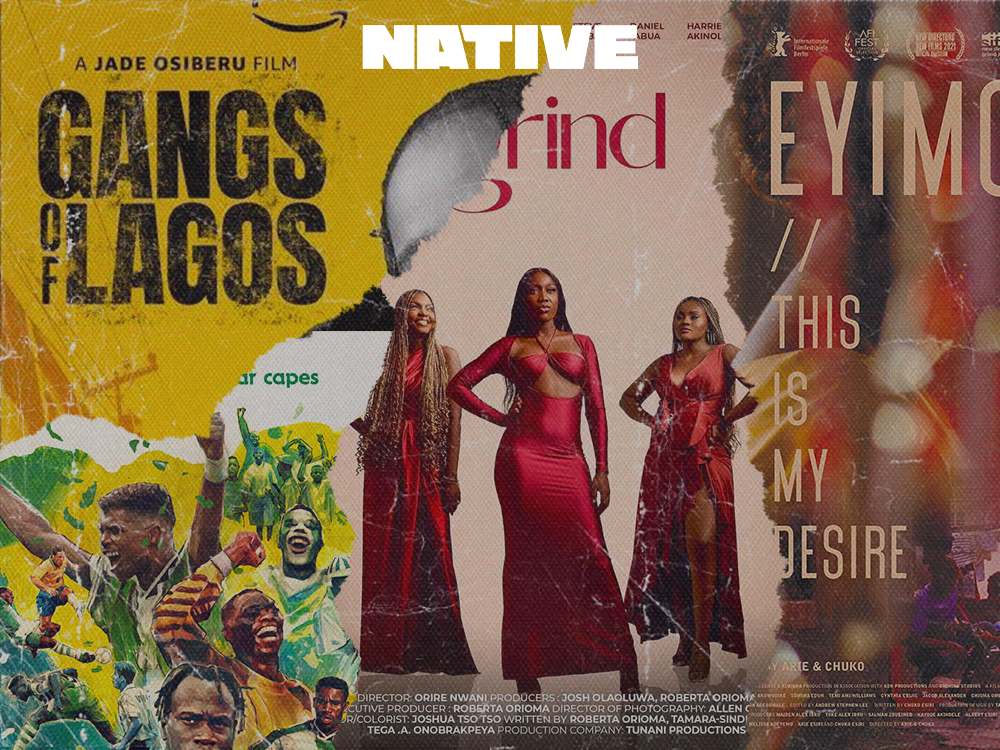
Three years ago, Netflix entered Nigerian film. The streaming giant’s reputation for glossy, big-budget movies was heralded as the next step for Nigeria’s promising filmmakers, even though opposition from the long-held cinema and piracy culture rose to contest its ambitions. In 2023, credible conversations still continue to follow the release of a new Netflix blockbuster, just as it’s been in the years since its entry.
Of their new movie ‘Shanty Town,’ there was relatively little buzz prior to its release late-last week. Underplaying the marketing’s intensity was a defining stroke towards the series’ reception. Whereas ‘Blood Sisters’ and ‘Far From Home’ had more of a big-budget roll-out, many people knew about ‘Shanty Town’ the day of its release. I didn’t go into the series with overblown expectations and that it proved to be an enjoyable, conversation-starting production was quite the satisfaction.
On the rudimentary scale, the six-part series follows the story of sex workers held in terror by the thug-slash-pimp Scar (who’s played by Chidi Mokeme). On the other hand however, the series attempts to connect the gritty realities of that underbelly to the high offices of state politics. These motivations are achieved to varying degrees, though sometimes there’s a fusion of interests which thicken the plot’s progression.
In recent years, we’ve seen New Nollywood grapple with themes of sexuality and consent. From ‘Citation’ to ‘Oloture’ and ‘Ijakumo,’ there’s been an unrelenting investigation into the currency of sex, especially its prospects existing within faux-conservative societies such as Nigeria. Usually from the perspective of women, these movies attempt to unfurl the realities of sex workers and the systems that uphold the mistreatment of women.
However, in new Netflix Naija crime thriller ‘Shanty Town,’ the series tries to present a moral evocation of society but its glaring plot holes diminish the viewer’s satisfaction. Scar’s emergence into the pimp leader role doesn’t possess enough depth to relay why people were so scared of him; however Mokeme brilliantly carried the role with muscular gravitas. While Enem’s arrival in Shanty Town, played by Ini Edo, set off a range of catastrophic events, her release from prison was offset by demanding the poetic “pack of cigarettes and a phone call”. It seemed to aloof and foreign to be the realities of a Nigerian prison, too cleanly written to be reality. Inem’s CIA-type infiltration into the fold of Shanty Town also doesn’t carry enough dramatic weight, while the touch of dark spirituality fails to affect the plot.
Some of the storytelling direction on ‘Shanty Town’ takes on the well-adopted lane of oppressor versus victim, and most times the individual parts don’t make for a well-designed whole. A better predecessor of such narrative is ‘On Black Sister’s Street,’ the 2007 novel from Nigerian novelist Chika Unigwe, which followed the lives of four African women trafficked to Belgium to become sex workers. Their lives intersect when a colleague dies, although with more biographical detail forming their present selves. While this draws parallels to Jackie’s character (played by Mercy Eke), the book takes it a step further by informing the unpredictable nature their desire for freedom has taken.
A similar perspective has been remarkably utilised in South African cinema, taking the racial and political material into their storytelling. Due to their divisive history, the Rainbow Nation has some of the most politically aware filmmakers in Africa. From classics like ‘Tsotsi’ to recent productions like ‘The Brave Ones’ and ‘Collision,’ their rich history is used as a backdrop to advance storytelling. Similarly, the currency of ordinary life is peeled back with close detail and there’s a gradual progression to connect the misfortune of poverty with the suaveness of wealth. In ‘Shanty Town,’ director Dimeji Abiola sets out to unearth the connections between the political and the underworld, but falls flat when lead antagonists such as Scar are conjured without much depth. This leaves viewers wondering what circumstances could possibly have shaped a man like Scar.
Time constraints however impound on every production, especially for Netflix where economy of storytelling is the current trend. Acting-wise, ‘Shanty Town’ would no doubt be an early-year provider for forthcoming movie awards. Most people would walk away from this remembering Scar, so wonderfully embodied by Chidi Mokeme. The veteran actor in an interview with Channels TV revealed he suffered from Bell’s Palsy during the promotional period of ‘76,’ the Izu Ojukwu film which he also starred in. His return here fittingly captures his range as an actor: from his body gestures down to his code-switching between Nigerian languages, his performance is a career-highlight which places him favourably for future roles.
The women of ‘Shanty Town’ all delivered splendid performances as well. Nancy Isime proves that she gets roles not just by being well-connected, and Mercy Eke does well in her showing as Jackie. Both friends on-screen, they’re the prism through which Scar’s terrifying acts reflect in the early episodes. On their part, Nse Ikpe-Etim and Ini Edo (who’s rather divisive in her role as Inem) portray strong women characters. Their relationship isn’t as lovey-dovey as the former, but it’s certainly more rewarding and more consequential to the plot (the Ibibio spoken between them is also a refreshing touch). Although he doesn’t say much beyond “everywhere good” and “body dey pepper me,” Zubby Michael in the role of Colorado holds his own pretty well, a character many viewers would find themselves increasingly liking with every passing scene.
Aesthetically, ‘Shanty Town’ is a well-put together production. At this point, Netflix has a preference for certain kinds of stories and the creators sell it well. More crucially, a fine job is done of the execution, especially from a technical viewpoint. With the exception of its writing failing to advance the conversation of similar sex-meets-crime-meets-politics movies, the usage of cinematography is brilliant. The artsy design of Shanty Town was especially pleasing to the eyes, while the angle of the shots improved the film’s tensions. Perhaps the soundtrack could have been better, but again, I understand the pop-leaning direction. It’s like a child building a house of Lego bricks and it starts to rise above their heads. They can either continue or call it a day—for their unique motivations, the creators of ‘Shanty Town’ choose the second option.
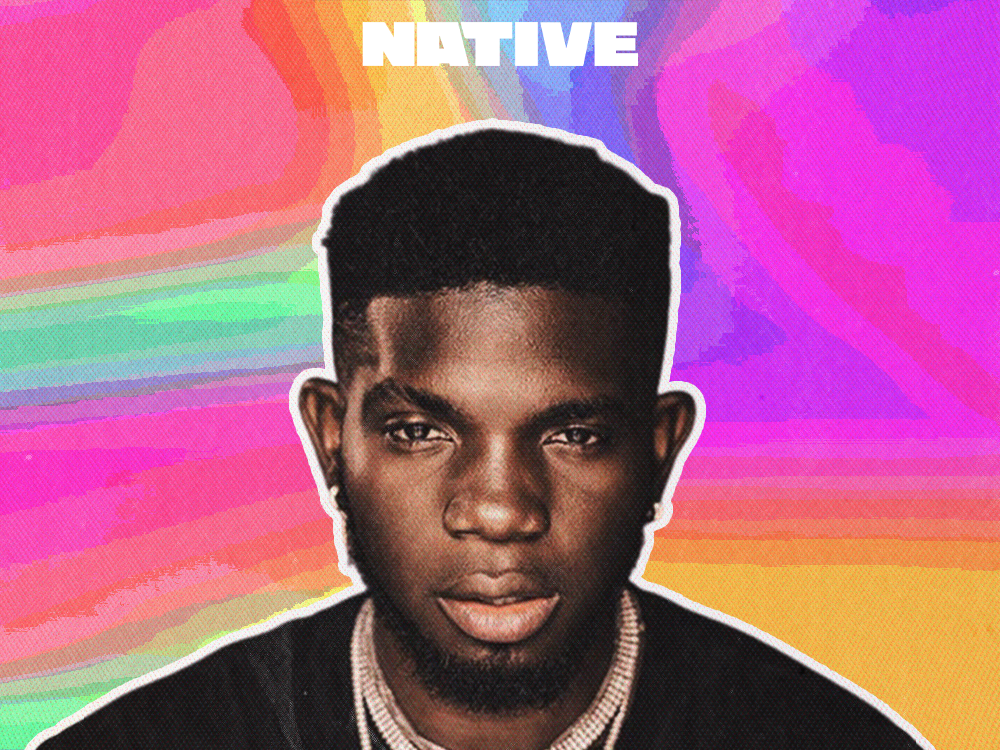
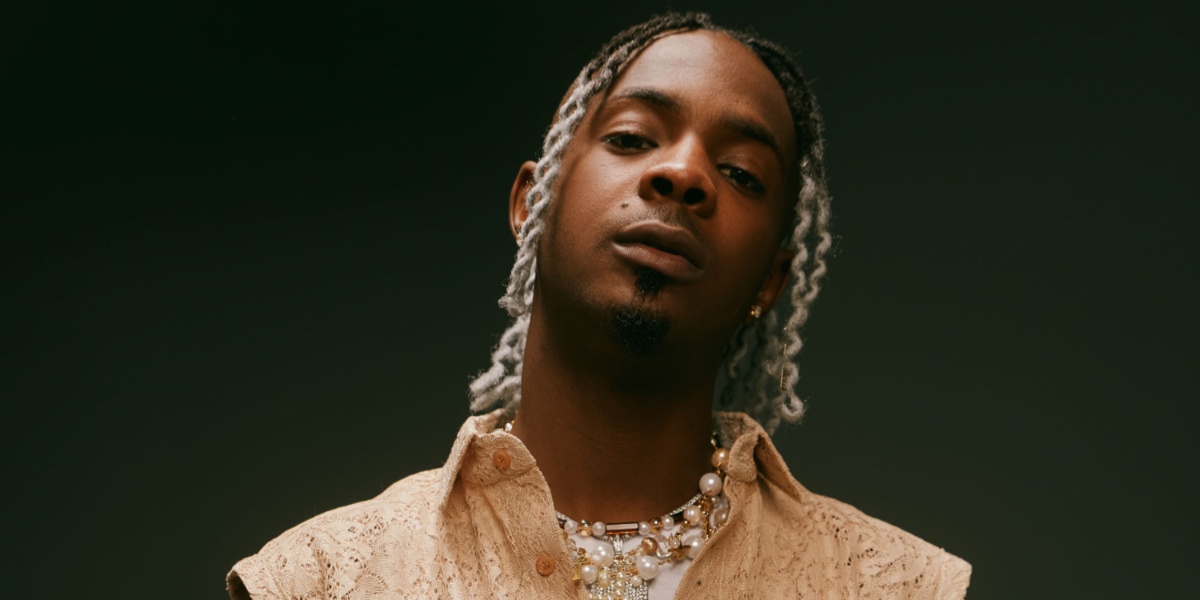
2023 has been off to a great musical start. Thanks to Afropop’s teeming creators and their audiences, the scene has picked up from where it stopped in the previous, movement-defining year. Mainstays like Kizz Daniel, Shatta Wale and Joeboy have all released songs this year, while wanton up-and-coming artists have thrown their hat in the crowded ring of mainstream popularity, willing the best to happen. Among those who’ve participated in the thrill of releasing new material or refreshing old one, the artist and producer Minz has arguably been the most successful, embarking on an upwards career trajectory that may be well established this year.
“WO WO,” the song which sets him on that path, was released last November as a single under emPawa records, the Mr. Eazi-owned label he signed to in 2020. While no doubt an impressive record, its acclaim has been skyrocketed by the addition of two in-form musicians on its remix: BNXN and Blaqbonez. Career upliftment has been variantly explored by Afropop artists, a textbook style Minz pulls with unique zest here. On the original’s first verse, he sings, “tell the kele do proper, get the money, live soft life ah ah/ Say they want to link for vibes, on my neck it’s ice water ah ah,” those words sketching the hedonist underbelly of his aspiration. With bubbly, assured production from Mike Bgrz, the burgeoning fan base of Minz caught on to the song, but now even more people are catching on.
At number eight on the Apple Top 100 chart for Nigeria, the song currently ranks above Seyi Vibez’s “Chance (Na Ham)” and Libianca’s viral “People.” While it’s yet to register similar impact on other streaming platforms or on TikTok, the motion has been set. In some ways, the story has been in progress since 2016, when his professional career started. “Aunty Patricia” bore the colourful percussive bounces he’d later master, but even the lesser-known “Neva Stop” had exciting composition going on for it. With breezy flourishes of Dancehall, the musician bares his Kranium influence with swag and poise.
Born Oluwadamilola Adedolapo Aminu, in 2017 Minz sat down with NATIVE Mag to discuss music. The resident Lagosian was then 22 but was already controlling the twin forces of his artistry: being a musician and producing his own songs, although he’d admitted that the former came more easily to him. “Beat making is dynamic,” he explained. “Each beat chooses its path to life”. It’s expected then, that Minz continued creating songs so he’d chisel them into his vivid interpretation of Afropop, a potpourri of influences that ranges from trap to reggae and highlife.
Over the years Minz has parlayed his 360 skill set into a formidable portfolio, among others producing for Spinall (“Energy”), Boybreed (“Apuruka”) and Runtown, whose 2021 playlist-esque comeback tape ‘Soundgod Fest Reloaded’ had four tracks composed by Minz (“Sativa”“Ghetto Gospel Riddim”“Bad Pass Dem”“Fuck Eh Up”). As a featured act, he’s also appeared on a lot of records with fellow rising stars, a clear case of a musician pushing the bar alongside his peers. On “See Something”and “Boti,”he pulls up alongside acclaimed colleagues like Mr. Eazi and Cruel Santino and still delivers convincingly, making standout contributions to both records. As part of Ejoya’s ‘Class of ‘20,’ he appeared on two records, dazzling alongside a set we’ve increasingly become familiar with: BNXN fka Buju, YKB, EMO Grae, Jinmi Abduls. That year he also appeared on the near-hit record “Confetti,” off E Kelly’s ‘No Secrets,’ a slim project which served as a sort of group work for emPawa artists.
As the Afrobeats movement propels itself further into the world, scenes across Africa are becoming hot prospects for international investors. Asides setting up label and streaming platform offices, more spontaneous engagements like writing and production camps are on the rise. Minz easily fits into several facets of the culture, and with the business-savvy Mr. Eazi by his side, there’s no foreseeable limit to his trajectory. On his own, he remains prolific, colouring last year with stirring solo releases like “Lady” and “Diamonds”while showing out with JAYLON on “Naya’s Riddim” and DJ Flex and Crayon “Meliza (Remix)”.
A professional still immersed in the craft with a student’s zeal, Minz continues to grow. In a 2020 interview with Artish, he explained his approach to songcraft. “I’m someone who’s always trying to learn and evolve,” he said. “I’m observant. I observe what’s happening in the industry, I observe people when I work with them, like for example when I work with bigger artists or artists who have really gone far in their careers. I listen, I learn and sit down with them and just take notes of the things that I feel like made them get to where they are and I apply it in my music. I just learn and put my ears down and see what I could be doing better”.
If anything, the ascendant success of “WO WO (Remix)” shows that Minz walks the walk as eagerly as he talks. In a meta sense, calling on the verbose motivations of BNXN references the Gbagada export’s own early days, marked with feature verses as many as the locks on his head. And wasn’t it Amaarae and BNXN who carried the potential of “Bling” into the youthful demographic it needed? Blaqbonez’s second act had properly begun then, his glitzy pop-star image cut with desired edge.
Minz continues on his journey, and for those who believed since day one, there’s a cloud of destiny that seems to unfurl from above him. For his newer listeners, there’s a rich backend of music to forage through. That might be the sweetest thing about discovering a new artist after all—the wide world which opens to the listener. Later this 2023, the expected release of a new project will aim to cushion his successes, and that’s a seat anyone would want to be on, especially when the architectural process began so early in the year. Minz is coming.
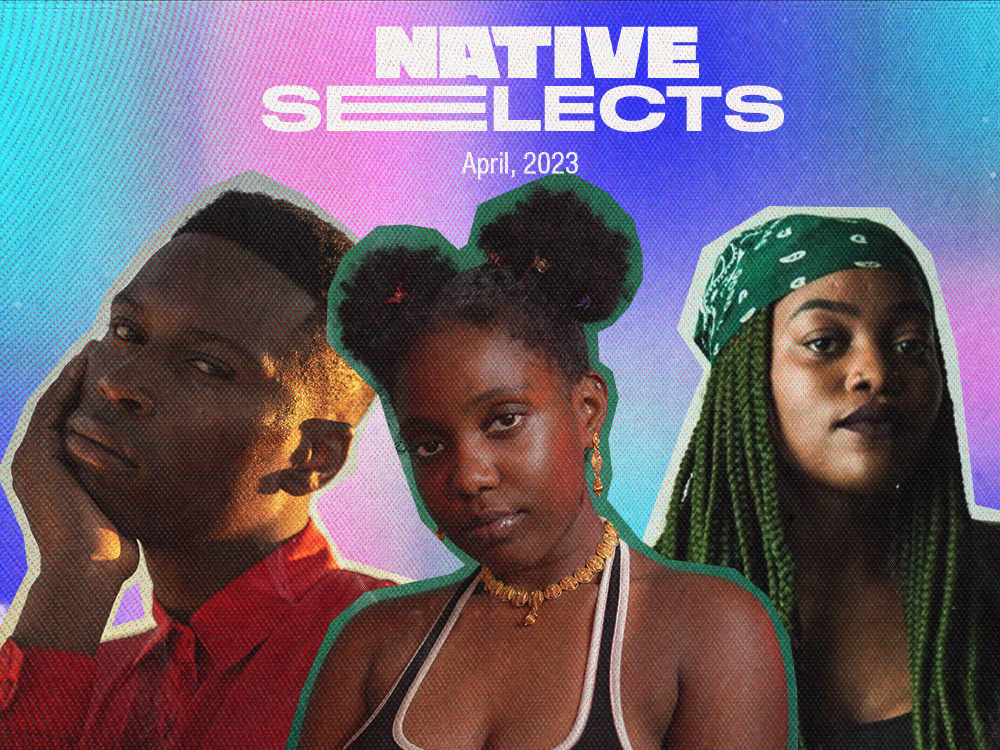
The tide of new music never stagnates. All across the continent, artists are releasing new music at a breakneck pace, whether to build their following or satiate the appetite of teeming fans. With our Songs of the Day column, we have consistently curated lists of exciting new music from Nigeria and around the African continent.
This week, we are debuting NATIVE Selects. Here, our editorial team will share new music (from the past 10 days) that they are excited about and want you to pay attention to. On our inaugural edition, we have scoured music from across the continent including Nigeria, Ghana, Côte d’Ivoire, Uganda and Jamaica. Featuring cuts from Minz who updates his single “Wo Wo” with a remix from Afropop stars, BNXN and Blaqbonez, Juls who delivers his first offering since his debut album, ‘Sounds of My World’ and Suspect 95’s hard-hitting new single.
NONSO AMADI – “EASE UP”
Nonso Amadi has hit foot firmly on the gas. Since his return to the scene, he’s been churning out experimental sounds rooted in his R&B leanings. His first offering this year “Ease Up” is a necessary call to chill out. From the Malian chant at the beginning of the song to the references to Lagos weather and lyrics about letting life run its course, he creates a memorable and relatable number to kick off the new year. Nonso’s new experimental style is exciting to see as he’s shaping himself into his own type pf star in real time.
MINZ – “WO WO” (REMIX) FT. BNXN & BLAQBONEZ
Minz has orchestrated many eclectic Afropop productions since his debut on the scene. Sorely overlooked for his cool vocal style which weaves in, over and through beats, he’s kicked off his new year with a hunger to etch his name in the minds of listeners across the continent. On “Wo Wo (Remix),” he calls on smooth crooner BNXN and Choc City rapper, Blaqbonez to deliver a mid-tempo track with familiar Nigerian references. Gliding over the intoxicating beat with lyrics that feel like feel-good flexes, Minz and his collaborators deliver their verses in a slow rolling cadence ushering listeners into the hazy Harmattan sunset.
SUSPECT 95 – “SOCIÉTÉ SUSPECTE” FT. YOUSSOUPHA
Ivorian rap is enjoying a period of abundance. One of its protagonists is Suspect 95, a dynamic veteran that embodies technical brilliance as a lyricist without sacrificing the importance of ear-holding song-making. For his latest single, “Société Suspecte,” Suspect delivers a snarling manifesto. Joined by Youssoupha, the pair run wild over a minimalist, thumping beat with an ominous melodic atmosphere, making rebellious proclamations entirely delivered in French. With sharp-tongued bars and a commanding, charismatic presence, the energy is palpable on this one.
MSAKI & TUBATSI MOLOI – “ZIBONAKALISE”
There’s an obvious deference to ancestry in Msaki’s music. While she’s widely known for her numerous collaborations with House/Electronic producers, the South African singer leans more towards modern Folk arrangements in her music, which she’s gearing up to display more on ‘Synthetic Hearts’, her upcoming full-length with Tubatsi Moloi. On the latest promotional single, “Zibonakalise,” the duo successfully reach into an otherworldly plane of spiritual joy, chanting within an acoustic frame with rustic orchestral flourishes.
JOSHUA BARAKA – “NANA”
With two previous EPs ‘Baby Steps’ and ‘Watershed,’ Joshua Baraka is a talent to watch out for in 2023. “Nana” is an anti-love anthem about longing for someone whose heart can’t be trusted. Opening up with swelling keys, hypnotic flourishes, and ragga-infused instrumental, Joshua adorns his muse with praises and adoration while coming to terms with the inevitable.
JULS – “SADE RIDDIM”
Ghanaian-British act, Juls is notorious for repeatedly blurring the lines between producer, DJ and musician. He makes a note-worthy return with his first release since the deluxe version of his debut album, ‘Sounds Of My World.’ Very well within his signature groovy catalogue, his new release “Sade Riddim” offers a wordless composition of dreamy harmonies layered over a slow tempo drum beat. Met with the instantly calm intro of crashing waves, Juls plays into a slew of instruments, creating a perfect cross between the hypnotic saxophone chords and light shakers.
SHATTA WALE – “LONDON BRIDGE”
Ghanaian singer and songwriter Shatta Wale is one of the most charismatic music personalities . For his first offering this year, he’s turning the focus back on the music with the release of new single “London Bridge.” The guitar strings coupled with the mid-paced drum pattern allow the record to come together nicely. Shatta Wale might just have another hit under his belt as “London Bridge” is set to start the year nicely.
BOB MARLEY & THE WAILERS – “STIR IT UP” FT. SARKODIE
Fresh off his ‘JAMZ’ project, Ghanaian rapper Sarkodie kicks off 2023 with a cross-continental collaboration with the legendary Bob Marley & The Wailers on new single, “Stir It Up.” This latest version retains the Reggae feel of the original while injecting a modern Hip-Hop-inspired bounce into it. In his native tongue of Twi, Sarkodie raps about the softer and more romantic side of life as he makes promises to his lover. The accompanying music video, shot in Accra, Ghana, portrays the love and positivity of the song as lovers and friends party along the shores of a beach.
G.D.S – “ALL YOURS” FT. CAMIDOH
Ghanaian artists have always embedded the unique strain of their culture into the sonics. Although drawing often from R&B, Camidoh embodies a pristine sensuality in this new record with G.D.S. With recognisable percussions from Hiplife, he waxes soulfully over the mid-tempo number, engaging an array of vocal embellishments as the song coasts further. G.D.S takes a supporting role, lining his vocals with her striking svelte tone, a fusion which results in an exciting high reminiscent of classic duets.
ONYINYE – “FREE MY MIND”
Off her ‘Stay Gone’ project, this sombre record highlights the immense potential of Nigerian singer, Onyinye. The understated production comes alive with wobbly elements enlivening the background while Onyinye’s vocals assume an alert sensitivity. Conversations about mental health have increasingly shifted into the centre of Nigerian music and Onyinye’s record forms part of that discourse, a uniquely alive song which aims to reclaim her autonomy from the pressing weight of the world around her. Although a romantic interest hovers above her writing, the sonic direction is amorphous and could fit into several life situations.
mau from nowhere – “Ghost”
Kenyan artist mau from nowhere has been heavy on our radar for a minute. To open his tab for the new year, mau has updated his 2022 single, “Ghost” with a lush video. Directed by Chebeni, the video for “Ghost” is a compelling visual that finds the singer performing his verse against a dusty pink backdrop while firing off verses that sound like catching feelings on the breeziest summer day.
Over the weekend, nominees for the next edition of the Soundcity MVP awards were announced. Across three days, nominations were unveiled on social media, an elaborate move that has become customary for an award show that has grown into one of the most glamorous celebration of music in these parts. Formerly known as Soundcity Video Music Awards before transitioning into Soundcity MVP Awards, the award ceremony was set up with the plan to recognise outstanding achievements of African artists in 15 various music categories which include Best Male MVP, Best Female MVP, Song of the Year, Music Video of the Year, African Artist of the Year, African DJ of the year among others.
Not much has changed this year with regards to the categories, and while nominations cut across different acts from across Africa, the nominees list is overwhelmingly Nigerian. In one of the more diverse categories, Tems, Tyla, Gyakie, Zuchu, Tiwa Savage and five more artists from across four countries will vie for Best Female MVP. As is often the case with most award shows in Africa, men lead the pack of nominees: Burna Boy has the highest number of nods with eight in seven categories, and he’s closely followed by NATIVE Issue 005 cover stars Rema and Asake, both with seven total nominations. All three are in the Best Male MVP category alongside Wizkid, Davido, Diamond Platnumz, Focalistic, Kidi, Omah Lay and King Promise.
In the African Producer of the Year category, BlaiseBeatz, Andre Vibez, Tempoe, Niphkeys and more Nigerian producers make up nine of the ten nominees. have as well been announced as nominees for this category. The Video of the Year category is similarly Nigerian-dominated, with nominees including Rema’s “Calm Down,” Omah Lay’s “Soso,” Kizz Daniel and Tekno’s “Buga,” Asake and Fireboy’s “Bandana,” and more. In announcing the nominees for this category, the organisers failed to credit the directors for these videos. While these videos are quite strong selections, the hard work of the video directors and the entire production team should never go uncredited. The visual representation of a record is created by the music video directors and for this reason, they should be handed their flowers.
In a recent instagram post made by popular music video director TG Omori, he expressed his displeasure at the awards and shared that a category such as Video of the Year should not be credited to the artists alone and the Video directors should never be left out of the larger conversations. This in fact is very understandable as most of the time, it’s usually a collaborative effort between the performing artist and the video director so for this reason, they should as well be credited. The music industry is constantly growing and Nigerian music is at a very sensitive point where it’s exporting many different talents and as the music is growing, the other parts of the industry aside from the music should be growing just as fast. Award shows, music festivals/concerts and more should be intentional about the work that’s put into its creation.
Although it has now been rectified and the awards have announced the video directors in the place of the artists following the alarm raised by TG Omori—who has three nods in the category—this does not dispute the fact that intentionality should be a keyword when addressing the hard work of creatives. The Soundcity MVP Award ceremony is set to hold on the 11th of February at the Eko Convention Center.
1. Pheelz & Bnxn Fka Buju – Finesse (NG)
2. Fireboy & Ed Sheeran – Peru (Remix) (NG)
3. Black Sherif & Burnaboy – Second Sermon (GH)
4. Camidoh – Sugarcane (Remix) ft. Mayorkun, King Promise & Darkoo (GH)
5. Costa Titch – Big Flexa ft. C’buda M, Alfa Kat, Banaba Des, Sdida & Man T (SA)
6. Asake – Sungba (Remix) ft. Burna Boy (NG)
7. Kizz Daniel & Tekno – Buga (NG)
8. Daliwonga – Abo Mvelo ft. Mellow & Sleazy (SA)
9. Mayorkun & Victony – Holy Father (NG)
10. Mavin All Stars – Overdose (NG)
BEST HIP-HOP
1. Black Sherif – Kwaku The Traveller (GH)
2. Blaqbonez – Back In Uni (NG)
3. M.I – The Guy (NG)
4. Kaligraph (Og) Jones X Dax – Hiroshima (KE)
5. Nasty C & Aka – Lemons To Lemonades (SA)
6. Psycho Yp – Bando Diaries ft. Odumodu Blvck (NG)
7. Ladipoe – Running ft. Fireboy (NG)
8. Wakadinali – Geri Inengi ft. Sir Bwoy (KE)
9. Chyn – Hosanna ft. Fxtune (NG)
10. Vector – Clowns ft. Ladi Poe (NG)
LISTENER’S CHOICE
1. Oxlade – Ku Lo Sa (NG)
2. Kizz Daniel & Tekno – Buga (NG)
3. Burna Boy – Last Last (NG)
4. Ch’cco & Mellow & Sleazy – Nkao Tempela (SA)
5. Daliwonga – Abo Mvelo Ft. Mellow & Sleazy (SA)
6. Rema – Calm Down (NG)
7. Mavin All Stars – Overdose (NG)
8. Camidoh – Sugarcane (Remix) ft. Mayorkun, Darkoo & King Promise (GH)
9. Black Sherif – Kwaku The Traveler (GH)
10. Patoranking – Kolo Kolo Ft. Diamond Platnumz (NG)
VIEWERS CHOICE
1. Asake – Pbuy (NG)
2. Timaya – Cold Outside ft. Bnxn Fka Buju (NG)
3. Kizz Daniel & Tekno – Buga (NG)
4. Costa Titch – Big Flexa ft. C’buda M, Alfa Kat, Banaba Des, Sdida & Man T (SA)
5. Kidi – Touch It (GH)
6. Burna Boy – Last Last (NG)
7. Rema – Calm Down (NG)
8. Camidoh – Sugarcane (Remix) ft. Mayorkun, Darkoo & King Promise (GH)
9. Black Sherif – Kwaku The Traveler (GH)
10. Ayra Starr – Rush (NG)
1. Dj Obi (NG)
2. Dj Tunez (NG)
3. Dj Big N (NG)
4. Uncle Waffles (SA)
5. Dj Maphorisa (SA)
6. Dj Dips (NG)
7. Black Coffee (SA)
8. Dj Vyrusky (GH)
9. Dj 4kerty (NG)
10. Dj Tariqo (MZ)
Over the past decade, the music coming out of Africa has gained steady momentum on the international stage–resulting in big-hitter cross-continental features, record-breaking firsts, award-winning auteurs, and jaw-droppingly dexterous music. Today, the frontrunners of Afropop are changing the game and retooling the face of a genre for future generations to come, with memorable melodies and even catchier dance moves and relatable slang.
In 2023, the music reverberating from the continent has elevated to a revolving door of genres, from Pop to R&B, Hip-Hop/Rap, Drill, Fuji, Highlife, Amapiano, resulting in impenetrable soulful worlds buoyed by soulful and mesmerising production. With the global embrace of the international music community, all eyes are on Africa and the new generation of hitmakers who are cutting their teeth as some of the most exciting and promising acts of the now. Although we’re very much in the early days of the new year, there’s already so much new material to anticipate in the coming months. With superstars such as Olamide, Kabza De Small, Tems and more, primed for smooth follow-ups to their previous solo offerings, and new acts such as SGaWD, Uncle Waffles, mau from nowhere due for their debut albums, it’s already shaping up to be an exciting year for music and we have front row seats to the greatness to come.
Here’s a list of projects that the NATIVE is looking forward to in 2023. Enjoy.
Tems
[Release Date: TBA]
Tems is working on a new album. The major label debut from the fast-rising Nigerian singer is one of the most highly anticipated prospects from the world of Afropop this year. With two EP’s already to her name, a debut album is certainly on the horizon for the Grammy-nominated artist who has ginned up attention and enthusiasm for its eventual release. “Still next level coming. I’m just about to start,” she tweeted in a rare moment of proximity to her 1.5 million followers back in November last year. With songs such as “Free Mind” and “The Key,” still attracting global accolades for their ability to meet listeners at the base of their emotions, it’s likely Tems will take a similar approach on the new project, unfurling the complexities of new found fame, success and womanhood, coolly but with directly confident verses that sound like a late night conversation with your girls.
Tami Makinde
Amaarae – ‘Fountain Baby’
[Release Date: TBA]
Looking back at 2020, an undeniably traumatic time for the world, Amaarae’s debut project, ‘The Angel You Don’t Know(TAYDK)’ provided comfort to many listeners with the Ghanaian artists’ mellifluous vocals and otherwordly production from Yinka Bernie and the likes. The success of the 14-tracker attained new heights when Moliy-assisted standout track, “SAD GIRLZ LUV MONEY,” tapped Kalis Uchis for a remarkable rendition that later went viral on tiktok, leading the track to top several local and international charts.
In this time, Amaarae has been anything but silent. When she wasn’t going on live to play some demos, she was lending her honey-toned vocals on a number of tracks. Think Tiwa Savage’s “Tales by Moonlight,” BOJ’s “Money and Laughter,” Blaqbonez’s“WHISTLE” or even “This is What I Mean” off Stormzy’s recently released album. Another honourable mention is “A Body, A Coffin” for the ‘Black Panther: Wakanda Forever Prologue’. It goes without saying that Amaarae has been anything but quiet. Alongside this, she toured several cities around the world and took to social media to tease her sophomore album dubbed ‘Fountain Baby.’ So far, we know the project potentially features Maesu and Kyu Steed, who made appearances on “FANTASY” and “CÉLINE” respectively.
Nwanneamaka Igwe
Lady Donli
[Release Date: TBA]
Since the release of her 2019 debut ‘Enjoy Your Life,’ Lady Donli has been an artist everyone should keep their eyes peeled for. Featuring a series of outstanding tracks like VanJess and The Cavemen-assisted “Corner” or “Cash,” which indisputably played a role in shaping the alternative music scene in these parts, Lady Donli has proven to be an unstoppable force. However, amidst the 2020 COVID-19 pandemic, she went MIA with the exception of a few tracks. With a fresh and renewed perspective in her craft, Lady Donli released “Searching” off her EP‘W I L D,’ translating to Where Is Lady Donli? While the 6-track project did not get much traction beyond her core fans, she stole the hearts of many with her stunning rendition on “Thunderstorm in Surulere” for A COLORS SHOW. For her sophomore album, Lady Donli released the promotional single, “Hello Lady,” in the later parts of 2022, showcasing her ever-luscious vocals over a glimmering production. We’re in for a treat from the pan-African rockstar.
Nwanneamaka
Nasty C
[Release Date: TBA]
Verse by verse, South African rapper Nasty C has risen through the ranks to become one of Africa’s respected MCs. With deft flows and impeccable songwriting, the artist is a bridge that conveys the feelings of younger audiences as well as appeals to the taste buds of the veterans. On both his mixtapes and studio albums, Nasty C has never shied away from unearthing personal demons and battles while also making space for the braggadocio that is synonymous with the rap game.
Through his recording deal with Def Jam Recordings (via a joint venture with Universal Music Africa), Nasty C has sought to expand his reach into territories outside the African market. With an album (in the works) geared as a follow-up to 2020’s‘Zulu Man With Some Power,’ there is no better time for the man to place himself firmly in the conversation as one of Africa’s leading rap stars.
Uzoma Ihejirika
Kabza De Small
[Release Date: TBA]
It is no surprise that any offering from South African veteran, Kabza De Small is received with rave views. With his stellar addition to his discography in the last few years, Kabza has only left listeners in need of more music. Following its classic 2020 predecessor, the leading Amapiano producer and DJ reasserted his supremacy with‘KOA II Part 1’, which featured Daliwonga, Ami Faku, Young Stunna, Msaki and more. Now, it seems like the self proclaimed King of Amapiano is set to release the second half to 2022’s album, with rumours of the project circulating ever since the first half’s release last June. Whether it’s the rumoured second half or an entirely new album, we’re rest assured that it’ll be some of his best work yet. With an impeccable work ethic and his level of confidence coupled with the stellar music production, we can only expect another classic.
Wonu Osikoya
Cruel Santino
[Release Date: TBA]
Cruel Santino takes his time. Over his decade-long career as a creative, the man born Osayaba Ize-Iyamu matches to the beat of his heart’s intuitions. Where many expect him to zig, he zags, and that’s what has consistently made him one of the most intriguing artists of his generation. Last year’s ‘Subaru Boys: FINAL HEAVEN’ strengthened the quality of his madcap ambitions, a breathless display that wove anime-inspired world-building and boundless musical experimentation around the trajectory of bouncing back from heartbreak. While it usually takes years for a follow-up, Santi has been adamant that his next project is already at a very advanced stage and should be in our ears soon as he’s already teasing a title known as ‘King of the Bounce’ on his social media. Whatever it is and whether you’re a fan or not, there will be millions listening to figure out where Santi takes us next.
Dennis
Olamide – ‘Unruly’
[Release Date: TBA]
Olamide’s influence on Nigerian cannot be overstated and he only keeps on getting better. Last year, it took fans and listeners by surprise when he announced his retirement from music after his still forthcoming 10th studio album, ‘Unruly.’ Recent efforts ‘Carpe Diem’ and ‘UY Scuti’have only solidified the rapper’s place as a dynamic force in Nigerian pop. Olamide is known to cause conversations with minimal effort and ‘Unruly’ will be no exception.
After making appearances on records such as Asake’s hit single “Omo Ope” and “Bigger” with rappers M.I Abaga and Nas, he has set the tone for what the album should sound like. Although the album was announced to be released last year and could not be released, we believe that ‘Unruly’ will take form as one of the most standout albums of the year. In recent years, Olamide has become an important figure in Afropop, whether it’s through mentoring some of the biggest Nigerian acts in present day such as Asake, Fireboy DML and more, or its through connecting Nigerian talent to international audiences by distribution deals with EMPIRE, Olamide has his name written among the stars. With producers such as P.priime, Pheelz Magicsticks and more, ‘Unruly’ just as the name implies will be a statement by an artist who has done it all, successfully.
Wonu
SGaWD
[Release Date: TBA]
When SGaWD released her late 2021 debut EP, ‘Savage Bitch Juice’, it expanded on her abilities as a dynamic rap artist. Crown jewel “POPSHIT” is a fringe classic that epitomises Seddy’s song-making tricks. In that same EP, as on earlier slaps like “Feel Right”, you could hear her seamless ability to switch to smooth R&B-influenced melodies. Heading to two years since her last project, a new SGaWD project would not only anneal her standing as a curiously talented entity, but could also elevate into stardom conversations. The routes are multiple: She could double down on snappy rap bangers, infuse more purely sung tracks, or find a dance-inflected balance like on her standout Ronehi collab, “TELFAR”. SGaWD has me excited for all these possibilities—you should be excited too.
Dennis
Sarz
[Release Date: TBA]
Sarz is one of those rare old hands who have reinvented themselves at every point in their careers. At a nascent stage, in the late 2000s, he scored hits withJah-Bless’“Joor Oh,”Shank’s“Ghetto,”Reminisce’s“Kako Bi Chicken,”and the Wizkid-assisted“Beat of Life (Samba),”among others. A decade later, he would make a pivot sonically, blending electronic influences into his productions and stamping his authority on the music scene with the 2019 declarative EP‘Sinym (Sarz Is Not Your Mate).’
What followed can only be described with one word: incredible. His collaborative projects with WurlD (2019’s‘I LOVE GIRLS WITH TROBUL’), Lojay (2021’s‘LV N ATTN’) and Obongjayar (2021’s‘Sweetness’) were an eclectic assortment of pulsating sounds, ranging from Soul to R&B to Afropop to House to Synthwave. Worthy of note is the fact that those projects served as breakthroughs for the music acts in the Nigerian music scene. On the production side, with The Sarz Academy, Sarz has helped to pave the way for the next generation of music producers; the academy has birthed stars such as P.Priime, Tempoe, and Dunnie who are already making significant impacts on the scene. Last year was a relatively quiet one for Sarz. This year, it is reasonable to believe those moments behind the scenes would birth a magnificent project to reinstate the notion that Sarz is no one’s mate.
Uzoma
Uncle Waffles
[Release Date: TBA]
Recently announced to make an appearance on Day 1 of Coachella 2023, South-African superstar DJ, Uncle Waffles is a couple mixes and tracks away from becoming a global household name. Since her viral video showcasing her exceptional skills on the deck with Young Stunna’s “Adiwele,” Uncle Waffles has debuted her smash hit single “Tanzania” off her EP, ‘Red Dragon.’The 4-track EP features a series of memorable, heart-thumping tracks with vocal assistance from some of the scene’s key players including Tony Duardo, Sino Msolo and a slew of others. Following her remarkable NYE 2023 mix with Apple Music, Uncle Waffles teased new music out this year. Considering her small but mighty track record of stellar productions, we can expect more outstanding collaborations and hits from the artist.
Nwanneamaka
Mau From Nowhere
[Release Date: TBA]
Mau From Nowhere has been etching his name into Africa’s alternative scene one song at a time. Featuring in NATIVE 2022 Under Best new artists, he has been staking his claim through his vigorous single releases like “Fireflies,” “Ghost” and “Our Favorite Songs” whilst teasing his yearn for more longform projects on previous interviews. His minimalistic production coupled with intimate thoughts we all encounter saw his fan base scale up especially after the release of his project ‘MFN’. His constant evolution of sound has seen him transverse across hip hop, afropop and alternative, channelling his frustration, desires and ambition each lyric at a time. This year should be an interesting coming of age era for the Nairobi based artist, starting off with the release of visuals to “Ghost” I’d hope we get to pree more into his depth working alongside features on his upcoming album.
Tela Wangeci
Sauti Sol
[Release Date: TBA]
When Sauti Sol announced that they will be taking a break as a group to focus on their solo projects fans only hoped that this wasn’t a premonition of splitting up the award winning band. Being together for 17 years, the group has found their niche audience with their culturally tailored projects that evolve with each release. Since the release of the critically acclaimed fifth studio album ‘Midnight Train’ the four man band has strengthened their artistry which was reflected in their 2022 single ‘Lil Mama’ which was released two years after their sabbatical break.
Being the first song they produced collectively, Sauti Sol gave fans a sneak peek of what their new album might reflect. With many accolades, awards and global recognition, Sauti Sol has been soaring high. Singing in Swahili, Luhya, Luo and English, Sauti Sol prides themselves on storytelling as an East African tradition that permeates music from that region and this is what has kept them relevant with audiences across the world and earned them so many accolades along the way.
With the new year kicking in, fans are excited for the sixth studio album. In an open letter to fans back in October 2021, the group first announced they will be releasing the next Sauti Sol group album in May 2022 after the rollout of their solo projects dubbed “Alone-Together” under the group’s label Sol Generation which meant to re-introduce the four group members as they usher in their sixth studio album. Despite failing to keep their promise, the group announced on twitter, fans should be ready for a futuristic new album with a more mature sound.
Tela Wangeci
Davido
[Release Date: TBA]
Four words aren’t often enough to hold on to, but if you’re Davido—one of the biggest superstars in the world—that works just fine. “See you in March”, the musician had shared on his socials after performing at the FIFA World Cup closing ceremony in March. Added to his recent win of five categories at the AFRIMA Awards, that career-highlight event proves Davido’s star power even in a year understandably devoid of much solo material.
With March only two months away, the prospect of a new Davido album is tantalising and similarly pensive. Many listeners didn’t think ‘A Better Time’ satisfactorily advanced the autobiographical direction of his acclaimed sophomore, though the live-centric direction of his 2022 solo offering “Stand Strong” leaves a strong impression. “Electricity” and “Champion Song” with Pheelz and Focalistic were singles in-between which demonstrated Davido’s sterling knowledge of how to dominate a hit song. In the right mindset and with the right team, I don’t think anyone with a speck of fairness could doubt Davido’s ability to stage a memorable comeback.
Emmanuel Esomnofu
Odumodublvck
[Release Date: TBA]
Big Gun has been firing heavy since last year. Once acclaimed as Abuja’s answer to M.I Abaga and Erigga, the rapper has morphed into a crafty music-maker. Describing his style as Okporoko music, there’s a haunting mix of menace and melancholy which makes his records pop. Odumodublvck has steadily climbed up the stairs of rap dominance, now peeking over the walls of mainstream influence. Of course he does that alongside the promising Native Records, a subsidiary of Def Jam Recordings shaping up for great things this year. From associating with top dons like Skepta and Tobi Nwigwe to the several African industry connections he already boasts, Odumodu’s forthcoming album is looking very strong. If anything, his ‘22 releases “Dog Eat Dog” and “Picanto” sets him up favourably, shimmering with their enthralling cadences and cinematic production which holds up the expanding scope of his artistry.
Undeniably, Ruger closed off his 2022 with a bang, growing his superstardom by constantly sharpening his captivating take on Nigerian Dancehall. The singer’s recent release “Asiwaju” continues his ascent into perennial hit-making status and the numbers are backing him up in a big way. Leading the Turntable Top 100 chart for the sixth consecutive week, “Asiwaju“ tallied 2.81 million streams—good enough for the seventh straight week on top of the streaming chart—and 78.9 million in radio reach. It joins an elite list of songs that have completed the clean sweep as it moves to No. 1 for the first time on this week’s YouTube chart.
.@rugerofficial’s “Asiwaju” becomes only the eighth song ever to reach No. 1 on all charts in Nigeria
“Asiwaju” joins an elite list of songs that have completed the clean sweep as it moves to No. 1 for the first time on this week’s YouTube chart pic.twitter.com/zeqtO8o2AY
The song has spent a total of six weeks as Ruger keeps rewriting his personal record for the longest No. 1. It becomes only the eighth song ever to reach No. 1 on all charts in Nigeria. Setting more records the single tallied 78.9 million in radio reach during the week of January 13 – 19, 2023: setting a new record for the biggest week by any single on the radio breaking the previous record held by Kizz Daniel & EMPIRE’s “Cough (ODO).”
Kizz Daniel’s “RTID” maintains at No. 2 for another week peaking at No. 2 on radio reach and 2.71 million streams. Omah Lay’s “Soso” is giving Kizz Daniel’s “RTID” a run for its money as there is a slim margin with 2.75 on-demand million streams and No. 2 on radio reach. “Personal” from Zinoleesky still remains at No.4 after peaking at No.3 while Mavin All-Star’s top-charting song“Won Da Mo“rounds up the top 5 after spending a second week at No.5.
“Xtra Cool” from Young Jonn is steady at No.6 after peaking at No.1 for three weeks in 2022. This was his first time leading the charts. Seyi Vibez’s “Chance (Na Ham)” ascends to a new peak of No. 7 making it his highest charting single in Nigeria. It was No. 10 on streaming and achieved 37.2 million in radio reach making it No. 10 on the radio during the tracking week. Victony and Tempoe’s “Soweto” makes an interesting comeback 10 weeks later after re-entering the top ten peaking at No.8
Rounding out the top ten; EMPIRE & Kizz Daniel’s “Cough (ODO)” slips to No. 9 while Asake’s “Joha” dips to No. 10. As a result, Asake extends his record for most consecutive weeks with a top ten song in Nigeria to 49 – three weeks shy of a full year with at least one top ten songs in the country. Just outside the top ten, Rexxie’s “Abracadabra” with Naira Marley & Skiibii jumps to a new high of No. 16 while Libianca’s “People” rockets to No. 43.
.@rugerofficial’s “Asiwaju” becomes only the eighth song ever to reach No. 1 on all charts in Nigeria
“Asiwaju” joins an elite list of songs that have completed the clean sweep as it moves to No. 1 for the first time on this week’s YouTube chart pic.twitter.com/zeqtO8o2AY
Our reactions to nudity in cinema ranges from empowering to discomfiting. For a very long time in Hollywood, it was impossible to show nudity onscreen. There were regulations and censors set in place which monitored films closely for explicit content, flagging costumes that were too revealing or shots that were too leering for audiences. Nowadays, the times have now changed and films and television such as ‘Euphoria’ and ‘Sex Lives Of College Girls,’ are normalising on-screen nudity to further its plot and relationship between characters.
However, when the lens of cinema is narrowed down to Africa, nudity is still widely divisive for both viewers and production teams. Over the weekend, Nigerian actress Nancy Isime shared a post to her Instagram account, informing viewers that the nude scene she recorded as Shalewa in Netflix Naija’s latest underworld drama 6-part drama series, ‘Shanty Town’, was filmed with a body double. Body doubles are an essential part of the filming and production process for many reasons, one of which is protection against physical and verbal backlash of an actor.
For anyone who has watched the new Dimeji Ajibola-directed series, which arrived last Friday, you’d already know that it follows the story of Lagos-born hustlers who unite to wage war against the biggest and most ruthless crime ring in the city, which draws its wealth and connections from the underground ‘burbs of Shanty Town. As the first official African original offering from Netflix this year, expectations were sky high for the action-packed drama which featured Nollywood veterans such as Sola Sobowale, Ini Edo and Richard Mofe-Damijo alongside names such as Isime’s, Mercy Eke, Nse-Ikpe Etim, Peter Okoye and more. However, the moment has seemingly been shaded by conflating reactions to nudity in Nollywood.
In the days since the show’s release, Isime’s post on social media has been received with mixed reactions by audiences across the country. For one, Isime’s announcement on social media was a result of several viewers of the new series sharing derogatory comments on social media, and talking down on the actress for appearing nude on a platform such as Netflix. Some had gone as far as to screen record clips of the nude scene and share and disseminate on social media.
On the other hand, Isime’s post served as means to educate the general public about the realities of acting and working with body doubles. In a follow-up comment on the post, Isime further shared “If there weren’t thousands of horny tweets and comments talking about how they’ve finally seen Nancy’s breast. The need to educate people won’t have come up…It’s been Western public knowledge for years and unless an actor or actress really was the one in the nude scene, she or he doesn’t have to talk about it because the public chooses to focus on what’s important. Most times, they can tell. This is new to Nigerians I understand.”
For a large number of viewers, it is understandable why Isime had to get ahead of the backlash and seize her story by announcing the use of a body double. In Africa, there’s no denying that nakedness attracts raised eyebrows from a society which always debates the display of nudity in public spaces—often from a derogatory standpoint. While no one is arguing for nudity to become the order of the day, it’s hard to divorce the current conversation from the perceived roles that women are expected to play in society: the saint and the slut. We’re given limited spaces to exist and show up in society, such that any woman who doesn’t strictly conform to purity culture has breached the moral fabric and should be shunned.
Nudity is a natural part of the human experience and should not attract shame and attention to the actor, given that she is playing a role set in a world where she sells her body to make ends meet. Informed viewers are aware that Isime is merely playing a role, and should not be the subject of indignation for embodying her character and its accompanying travails.
The rise of criticism on social media, where everyone’s an expert, is a double-edged sword, especially in cases with delicate subject matters such as this. While it might be common sense not to disseminate nude clips and videos of people online, there’s no denying that these conversations serve as learning curves for a large number of society, who otherwise would have diminished a woman for exercising her right to body autonomy. It’s conversations such as this that remind us that we have a long way to go in dismantling and disrupting dangerous societal norms. In the meantime, our focus should really be on celebrating the new Netflix Naija original which showcases fine talent and a tightly-packed plot woven around themes such as betrayal, crime, politics, sex work, displacement and more.
For 22-year-old Libianca, the success she enjoys with her single “People (Check On Me)” is the product of years of hard work and commitment. It is also another testimony of the power of social media platforms to catapult music acts into internet-aided stardom (see CKay’s “Love Nwantiti”). Officially released in December 2022, the track began gaining traction on social media; on TikTok alone, the videos tagged with Libianca’s name have amassed over 75 million views. Aside from all those factors, what makes “People (Check On Me)” a clear standout is the song’s subject matter: it is a topic that reminds listeners that they are no different from the next person who wears the biggest smile in public but weeps in the privacy of their home.
On the song’s intro, Libianca shouts out her hometown of Bamenda in Cameroon. After that, the words that follow immediately suck you into the song. “I’ve been drinking more alcohol for the past five days/Did you check on me?/Now, did you look for me?/I walked in the room, eyes are red and I don’t smoke banga/Did you check on me? (Did you check on me?),” she sings. Those words are simply Libianca’s reality but it carries an accusatory edge that confirms to the listener that they are involved in the song, whether they appreciate it or not. You are forced to think of the persons you know or have met who fit the description of Libianca’s words. That instant relatability is one of the song’s strongest points.
In case you didn’t know, Libianca is no newcomer to the music business. Born in Minneapolis, Minnesota in the United States of America to Cameroonian parents, she started playing musical instruments and getting vocal lessons from a young age, and around 15, she signed to a record label. She is also a sound engineer, songwriter and creative director. Last year, she was a participant in The Voice, an American singing competition, where she was tutored by American country music act Blake Shelton and performed covers of SZA’s “Good Days,” The Weeknd’s “Save Your Tears,” Billie Ellish’s “Everything I Wanted” and Doja Cat’s “Woman.” During the show’s Blind Auditions, Ariana Grande, who was one of the coaches, had told Libianca: “You’re so good, you’re so beautiful, I’m obsessed.”
On “People (Check On Me),” Libianca addresses depression and anxiety. “Nobody wey know the paranoia oh/‘Cause I put a smile on my face/A facade you can never face (Ooh),” she sings. It is common knowledge that nobody readily puts out their woes for the world’s consumption. The act of faking appearances or emotions is a skill humans have perfected for many, many years. What would be expected, though, is that family and friends are one’s confidants but that isn’t always the case because sharing familial and personal ties doesn’t make a person’s internal turmoil decipherable. Libianca seems to know this when she sings, “And if you don’t know me well, well, oh/You won’t see how buried I am inside my grave.”
Sonically, Mage the Producer offers Libianca a soundscape that captures the hopelessness that saturates the track. The mid-tempo rhythm strays into the path of Afropop with Libianca’s Soul-tinged vocals and emotions colouring the tune. While Mage the Producer plays behind the board, ace British-Ghanaian record producer JAE5 mixes and masters the song, ensuring that the instrumentals and Libianca’s vocals are a perfect fit.
In today’s world, the internet has become both a blessing and a curse. Multiple social media platforms have made lives easy and made connectivity possible as people scattered across continents can communicate with a single click. Whether it concerns business, social, political or romantic interests, distance is no longer a problem; intentions are expressed and understood without hiccups. On the other hand, it has contributed to a more insular world, where people and real-life situations are mostly sources for viral content and nothing more. It is these circumstances that fuel the world of Libianca’s “People (Check On Me).”
Three days ago, Libianca released the music video to the song. The Ceojay-directed music video, which is an in-house production handled by Libianca and her team of video directors and photographers, mirrors the moodiness of the song. In the opening sequence, Libianca rises from sleep to start her day while she goes on to prepare food and invite her friends for dinner. By the end of the video, Libianca’s friends fail to show up and she remains indoors, dejected and alone. A piece of advice appears on the screen, encouraging viewers to check on their people because their “sense of kindness can break the wall of isolation and the feeling that no one cares.”
At the moment, Libianca is signed to RCA Records and JAE5’s 5K Records; it is a major step up for the previously indie artist, which means more attention and opportunities. Other music artists, including Nigerian singer BNXN, have expressed appreciation for Libianca’s craft and have done covers of “People (Check On Me).” Libianca’s song calls on listeners to remember our humanity and that for the time we are on earth, we are all we have got.
The death of Chadwick Boseman changed everything for Marvel’s ‘Black Panther’ franchise. The first stand-alone film featuring Marvel comic’s royal cum superhero quickly became a seismic cultural event when it arrived in 2018 garnering over $700 million domestic gross and $1.8 million worldwide. Thanks to an inspired screenplay by writer-director Ryan Coogler, the late Chadwick Boseman who had introduced the character earlier in ‘Captain America: Civil War’ stepped into his cinematic purpose. It was clearly, the role Boseman was born to play and everything he’d done in his career led up to that moment. Leaning into the character’s symbolic significance, Boseman turned in a regal performance in tune with just how much the character meant to people around the world, particularly for Black people. It sometimes seemed like an outsize responsibility being T’Challa but Boseman shouldered it with grace.
This year, arriving during the hazy summer days in July, came the stunning teaser for ‘Black Panther: Wakanda Forever’ which soon set the mood for the sophomore film that followed later in November. At the time, heartrending scenes of grieving characters who were part of T’Challa’s circle of trust including Nakia, Queen Ramonda, Shuri, were set to the tune of Tems’ emotive cover of the 1974 Bob Marley and the Wailers classic, “No Woman, No Cry,” as they ostensibly grieved the loss of T’Challa and by extension–their friend and colleague, the late Chadwick Boseman. These sequences in the trailer soon gave way to the defiant refrain of cathartic release promised by Kendrick Lamar’s rallying anthem, “Alright.” For many of us, it was clear from this teaser that music would be crucial to the mourning process in ‘Black Panther: Wakanda Forever,’ just as plays a special role in the burial rites of many African cultures.
According to Ludwig Göransson, the Oscar winning Swedish composer who masterminded the musical architecture of both ‘Black Panther’ films, the plan with its sequel, ‘Black Panther: Wakanda Forever’ was to create a rich, immersive music landscape that visualised the characters experiences as they discovered the underwater world of Talokan, while serving a dual function of paying tribute to Boseman. Speaking about the release, Göransson shared “Thematically, we wanted to move the audience from grief to celebration. When you listen to the soundtrack, you can close your eyes and relive the experience of the movie. That was the intention.”
The new soundtrack follows an epic first album, curated by Kendrick Lamar, for 2018’s ‘Black Panther.’ Featuring artists such as SZA, Travis Scott, and the Weeknd, the album trended at the time of its release, with over eight songs charting on the Billboard Hot 100 just over a week after the film’s release. The first ‘Black Panther’ album also won two Grammy awards–one for the score and the second for Best Rap Performance for “King’s Dead” by Jay Rock, Kendrick Lamar, Future, and James Blake. It’s safe to say that the expectations for the new release were sky high anchored by the record-setting firsts of its predecessor.
Even though the original ‘Black Panther’ was packed with brilliant performances and incredible world building, Boseman remained both the film’s moral leader and soulful epicenter. His character–T’Challa, the noble king of Wakanda, a fictional African nation blessed with endless natural resources–was a new age hero. A dignified, aspirational figure tasked with maintaining the isolationism that had served his country so well, and fulfilling his duty with his Avenger colleagues in world-saving business. However, when Boseman tragically fell ill to colon cancer in 2020 at the age of 43, Coogler and the studio were compelled to reimagine the direction of the franchise. An early decision was made not to recast the character and with this established, Coogler went to work on its sequel while mourning his leading man and close friend.
The result of this excursion is felt in ‘Black Panther: Wakanda Forever.’ Coogler and his cast and crew pour all of their emotional response, both immediate and delayed, into creating both the film and its soundtrack. The sequel is powered by the themes of grief and mourning as reality and fiction are blended in often uncanny ways that might have been exploitative in other people’s hands but feels cathartic in sensitive, well-intentioned ways when Coogler is the firm hand behind the material.
The film’s plot introduces the new sub-marine kingdom of Talokan and with that, a whole new culture that claims its ancestry from Mexico’s ancient Mayan civilisation. The film’s antagonist, Namor (Tenoch Huerta) and his indigenous underwater nation had suffered the devastating effects of colonialism, being nearly wiped out by germs and guns brought on by Spanish colonialists. In this regard, there is a sense of shared experience with the Wakandans as Coogler seeks to comment on the geopolitics and cultural ties between two would-be marginalised communities.
Working on both the score and the soundtrack projects at the same time, Göransson travelled to Mexico while the film was shooting. In Mexico, Göransson worked with an eclectic crew of established and upcoming artists not to mention music archeologists and historians to unearth the instruments and sounds that would form the sonic scape for Talokan. Some of the earliest result of this deep dive appeared on the 3-track prologue EP that followed the release of the teaser. Fast rising Mexican rapper Santa Fe Clan contributes “Soy,” a hard-hitting rap single.
Themes of trauma and loss are common to both the Wakandans and the Talokans and the music of Wakanda Forever is fully in tune with this. The entrancing “Árboles Bajo El Mar,” recorded by Mexican performers Vivir Quintana and Mare Advertencia Lirika deploys drums, breathing, shakers and lyrics that dwell on rebirthing, to relay a seductive otherworld. “Con La Brisa” is a lilting love song laced with the flirty vocals of singer Foudeqush. While talented vocalist Blue Rojo delivers a show stopping dirge “Inframundo.”
For the world of Wakanda, thrown into mourning by the loss of their king and protector, Coogler and Göransson seeking authenticity decided to look to the obvious corner, Nigeria. In recent years, contemporary Nigerian pop music has been on a steady incline on the global stage, and Göransson tapped into this swell of activity. After principal photography wrapped, Coogler and Goransson flew to Lagos and connected with the Co-President of NATIVE Records, Seni Saraki, who in turn marshalled a revolving door of big-name talent- Burna Boy, Ckay, Rema- and session musicians to write and record songs that would eventually make up the soundtrack.
Afropop and mourning would instinctively appear to be strange bed fellows. A generous portion of this ascendant music culture is characterised by uptempo tunes that work best as dancefloor prompts prioritizing fast living. But this conclusion would be an incomplete reading of this musical renaissance that goes back at least to the early noughties. The embrace of Afropop has in some way, paralleled the economic downturn that Nigeria has experienced in the last decade. Afrobeats has emerged as a form of respite to these tough times, creating distractions, upliftment and in its own way, documenting the struggles even. A recent example would be a record like Omah Lay’s debut album ‘Boy Alone’ which clearly has a lot more on its mind than just dance- although there is plenty of that. The singer chronicles his struggles with the fame monster crafting catchy tunes about alcoholism, loneliness and depression.
The soundtrack’s lead single “Lift Me Up,” written by Tems- with contributions by Coogler- is notable for marking Rihanna’s return to recording music following a six-year absence spent pursuing other interests. While the new mother was not keen to sign on initially, she was ultimately unable to resist the powerful teaser as well as the themes of motherhood connecting both Wakandan and Talokan worlds. The resultant product is a serviceable ballad peppered with non-committal lines such as, “Burning in a hopeless dream/Hold me when you go to sleep,” anonymous enough to project emotions surrounding Boseman’s demise onto it- or any other emotional experience to be honest.
Working as a more precise reflection of loss within the context of the film is the Burna Boy-performed, P.Priime and Tay Iwar-produced title, “Alone” which soundtracks some of Wakanda Forever’s most palpable emotional beats. “Alone” has some fine colourful writing: “Don’t let them take my head/And dance over my dead—Body, yeah,” Burna Boy wails mid tune as the record builds to a swirling crescendo. Whil evidently solemn and self-reflective, Burna Boy finds space to wink to his audience by including the line, “Mr DJ gbemi trabaye.” In ‘Wakanda Forever,’ “Alone” is preceded by Stormzy’s tone poem which is inserted as an interlude on the album. The British superstar sings and raps about moving through the world alone following the loss of a loved one.
In some African cultures, it is believed that the dead do not exactly leave their loved ones but are on a continuous journey to the afterlife. The Black Panther films have embraced this belief and with the films’ ancestral plane, Coogler has set up a space where living and deceased can communicate. Fireboy’s “Coming Back For You” is a celebration of this life after life, with reliably vague Fireboy lyrics hinting of a kind of omnipresence. This is backed by a melodic chorus and chants delivered in Yoruba. With this song, the film dwells on the beauty of the grieving process and celebrates solitude and reflection as well as the burning of the mourning attire that usually marks the end of the period.
CKay takes the lead on “Anya Mmiri” which is literally translated as tears– a superfluous affair that wastes the brilliant use of the melodious oja flute. The flute is also incorporated in the film’s climactic battle scene, and is used to better effect on the Amaarae stunner, “A Body, A Coffin” on the prologue disc. Mexican and African cultures collide on songs like “La Vida,” a lively celebration of cultural identity that also stresses the links between minority communities. Snow Tha Product and American rap icon E-40 share lead on this hip hop mariachi fusion. Elsewhere Rema puts in a surprisingly confident verse and more than holds his own alongside rapper Alemán on the braggadocious, “Pantera.”
Just like the film that inspired it, the soundtrack album is more than its mournful parts. The South Africans DBN Gogo, Sino Msolo, Kamo Mphela, Young Stunna and Busiswa get the party started-twice- on Amapiano anthems, “Love & Loyalty (Believe)” and “Jele.” And Tobe and Fat Nwigwe are delightfully boisterous on the highlight, They Want It, But No. The soundtrack serves as further proof that as far as African cultures go, the grieving process can also be a celebration of life.
Stream ‘Wakanda Forever – Music From And Inspired By’ below.
Wilfred Okiche is a writer, culture critic and all round great guy-at least that’s what people say. He tweets from @drwill20
On the 4th of January 2023, the decomposing body of Kenyan LGBTQ activist Edwin Chiloba was found stashed in a metallic box. Chiloba, who was a popular model, social media influencer and divisive figure in Kenya’s largely queerphobic society, was grotesquely found with socks stuffed into his mouth and a piece of denim from jeans tied around his face. This gory murder attracted global condemnation as it was initially thought of as a crime against his sexuality. Right now, though, it has been alleged as a crime of passion by law enforcement. Five people were arrested in connection with the murder, including Chiloba’s long-time friend and suspected lover Jackton Odhiambo, who local authorities have described as the main suspect.
Both former president Uhuru Kenyatta and Kenya’s current presiding leader, have given a clear stand on homosexuality constantly claiming their rights are not priority issues in Kenya. Homosexuality is taboo in Kenya, not too dissimilar to much of Africa, and gay people often face discrimination or persecution. Attempts to overturn British colonial-era laws banning homosexuality in Kenya have proven unsuccessful, and gay sex remains a punishable crime with penalties that include imprisonment of up to 14 years. This negligence has even grown over into social crimes such as domestic violence within homosexual partners who have the expectations that these cases will be swept the carpet because of Kenya’s stand against homosexuality.
Kenya’s Penal Code, a colonial-era relic, criminalises “carnal knowledge against the order of nature,” widely understood to refer to anal intercourse between men. Government agencies have denied some organisations representing lesbian, gay, bisexual, and transgender (LGBT) Kenyans the right to register and operate legally, on the grounds that they allegedly promote illegal behaviour, although recent court victories have compelled the authorities to register two organisations. Politicians and extremist religious leaders seek to bolster their relevance by proposing homophobic legislation and preaching hatred against gay Kenyans. Media houses engage in sensational reporting on “scandals,” sometimes entirely fabricated, involving LGBT+ people. Although many LGBT people draw on support from friends and family and carve out spaces in which they can live in relative safety, the risk of violence remains present.
Kenya’s progressive new constitution, promulgated in 2010, guarantees all Kenyans the rights to privacy, equality, dignity, and non-discrimination. It articulates a set of national values that include “human rights, non-discrimination, and protection of the marginalized.” Further, the constitution integrates international law—including treaties ratified by Kenya that prohibit discrimination on the grounds of sexual orientation—into Kenyan law. These provisions provide Kenyan authorities with an opportunity to eliminate laws and practices that discriminate on the basis of gender identity and sexual orientation.
During the Universal Periodic Review (UPR) process at the UN Human Rights Council in January 2015, Kenya rejected recommendations to decriminalise same-sex conduct between consenting adults, but accepted a recommendation to “adopt a comprehensive anti-discrimination law affording protection to all individuals, irrespective of their sexual orientation or gender identity.” Kenyan activists are pushing for the government to uphold this commitment as well as to decriminalise same-sex conduct.
Kenya’s approach to addressing the clear vulnerability of LGBT people to violence and instability should be guided by a landmark resolution passed by the African Commission on Human and People’s Rights in 2013, which called on member states to “end all acts of violence and abuse, whether committed by State or non-state actors” against individuals on the basis of their real or perceived sexual orientation or gender identity. This general stigma even makes it difficult for those close to queer persons to offer support. Prior to Edwin Chiloba’s burial, his family constantly denied his sexuality, to the point of claiming he was a pastor and a youth leader.
It’s clear that the abuse and discrimination against the LGBTQ+ community in Kenya drives public opinion and enhances stigma among Kenyans. For Edwin Chiloba, the police’s investigations alleging that it was a crime carried out by a close friend and a partner, is in stark contrast to the initial perception that his murder was queerphobia-fuelled. Even the reactions on social media mirrored the casual cruelty consistently meted out to queer persons, with gleeful vitriol floating around after news of Chiloba’s passing became public.
Regardless of the intentions behind his murder, a crime was still committed. That it happened to Edwin Chiloba, who was openly and flamboyantly queer, is a sharp reminder that the LGBTQ+ community in Kenya exists in a hateful society. All that we can keep doing is admonishing and joining in the calls for the abolishment of state-backed queerphobia. The Kenyan Parliament and county legislative assemblies should repeal laws that discriminate on the basis of sexual orientation, gender identity, or sex worker status. They should adopt comprehensive anti-discrimination laws that explicitly protect people of all sexual orientations and gender identities. It is the Kenyan government’s responsibility to ensure the safety of all citizens, including by more effectively addressing the violence and insecurity that lesbian, gay, bisexual, and transgender people face.
It’s only the first month of the new year but already, our favourite Afropop stars are treating us to a myriad of new and genre-defying music. Fridays are a favourite day on the calendar for any music enthusiast due to the sheer volume of releases in circulation on the scene. While last year witnessed an uptick in the amount of solid projects and body of works we were receiving, this year is shaping up to be even greater for the musical landscape as a number of highly anticipated albums and EP’s are expected to drop within the coming months.
In this light, we’re committed to our mission of making sure good music isn’t slept on. Through our New Music Friday column, we’ll be spotlighting the best projects from around the continent. Whether you listen to your music on Spotify or Apple Music, lock in to new projects from Ajebutter22, Camidoh and more.
Ajebutter22 – ‘SOUNDTRACK TO THE GOOD LIFE’
After taking a brief hiatus from releasing any projects, Ajebutter22 is back with his third studio LP ‘Soundtrack To The Good Life.’ The 15-track album features artists such as LADIPOE, Kida Kudz, Toby Shang, Not3s and sees production credits from record producers such as Twitch Papii, Johnson IP, Chillz, Ransom Beatz and more. Across 47 minutes, Ajebutter speaks on enjoying life, focusing on the positive side of life and having a great time while at it.
Joya Mooi – ‘WHAT’S AROUND THE CORNER’
A follow up to ‘Whats Around The Corner (Side A),’ which explored thought-provoking themes of loss and longing on “So Stunning” or the tribute to her freedom fighter father on “Most Frail,”‘What’s Around The Corner’ continues with political commentary geared towards achieving social change and gaining personal resolution.
In the later parts of last year, South African singer, Joya Mooi introduced us into the world of her debut album, ‘What’s Around The Corner’ with “Tears,” a soulful R&B record celebrating Joya notoriously raw lyricism and other-worldly vocals. The reflective number touched on a slew of topics surrounding embracing life’s journey amidst its challenges, all the while utilising its unique Jazz and Hip-hop touches in production by Sim Fane and SIROJ. With 6 new tracks leading in from SIROJ-produced “No Beginning,” Joya takes the experimental approach, combining alternative R&B with a sprinkling of trap, tied together with dreamy string arrangements.
Camidoh – ‘A LIFETIME IS NOT ENOUGH’
Since the success of his hit single “Sugarcane Remix” which enlisted Mayorkun, King Promise and Darkoo, Camidoh has gathered a small cult following in Ghana and beyond, with the track topping several charts and his fans taking part in the #SugarCaneChallenge via TikTok. Exploring love and the complexities of modern relationships, Camidoh has followed this up with memorable performances on “Kaba” and joins South Africa’s Focalistic and Costa Titch to deliver a standout verse on for Crayon’s standout track, “Ijo (Laba Laba).” A long way from his 2018 debut with “Trap Motivation,” Camidoh is back with a series of dulcet melodies on his joint 6-track EP with G.D.S, ‘A Lifetime Is Not Enough.’ While “Like You Mean It” features a stellar rendition from Cina Soul, the rest of the project showcases the pair’s effortless flow as they speak of love from a plethora of standpoints.
Otega – ‘AS IT SHOULD BE’
Singer and songwriter Otega is here with his most recent body of work ‘As It Should Be,’ an 11-tracker that cuts across topics such as self awareness, growth as well as making money and living life freely. The project features Dremo and Qdot and sees stellar production from the likes of Beat Monster, Sterry T, Jay Fred and more.
Uncle Vinny – ‘YOUTH LEAGUE’
South African singer and songwriter Uncle Vinny first arrived with the record “Pholas” a few weeks ago and has now arrived with her debut EP titled ‘Youth League.’ The body of work features industry heavyweights such as Major League DJz, Mellow & Sleazy, Yumbs, Kailey Botman and more. While the 7-tracker cuts across many different themes, the project remains euphonious through the 45-minutes.
As the year kicks off, new music never stops in rotation. Every week, many songs from African artists make their way to digital streaming platforms, and wading through them can be intense. That’s where The NATIVE’s Songs of the Day column comes in to help. We go through as many new releases as possible, spotlighting them here, two to three times every week. Today, enjoy new releases from Spinall, Lojay, Nonso Amadi and more. Lock in!
JOEBOY – “BODY AND SOUL”
Having ended the last year with a positive run which culminated in “Contour,” Joeboy is shaping up to have an interesting 2023. Already tipped for a full-length release, he’s set the ball rolling with “Body And Soul”. The E-Kelly produced record is a stirring, string-based sonata, a praise rendered to the feet of a lover. Catching a lot of fun on socials with perspectives of falling in love, Joeboy indeed sounds the part here, coolly assuring the love interest of his undying dedication to their trajectory. Sentimental ballads are Joeboy’s forte and he’s very memorable in this early-year showing.
SMALLGOD FT. LOJAY – “AUTOMATIC”
Over the years Smallgod has solidified his name as one of the most creative executives operating out of Africa. Responsible for curating some memorable Afropop moments, the Netherlands-based exec keeps his ears open and mind willing to create, and “Automatic” is proof of that zeal. Tapping up the talented Lojay, the charged percussions of the production and a somber electronic twist gives the musician’s ample space to flex his vocal dynamism and writing skills. In all, it’s a well-structured perusal of lust and the seductive depths people can go to satisfy their craving.
BOB MARLEY FT. SARKODIE – “STIR IT UP”
A reggae classic gets a fitting twist. Known to millions around the world, Bob Marley’s love-suffused records brought many eyes to the transcendental journey and messages of Jamaica-birthed Reggae. “Stir It Up” ranks high among his lovely hits, a song that has stayed relevant over the generations. A king in his own right, Ghanaian legendary MC Sarkodie colours the updated sound with signature flows. It’s a collaboration that not many would have expected, but one that nonetheless sparkles with brilliance.
AKA FT. KHULI CHANA – “PRADA”
South African rapper has a new album out this year, and he’s rapping like a man with something to prove. Collaborating with some of the most promising acts from Rainbow Nation over the past couple years, he’s bridged the big sound of Trap with electronic flourishes, stepping up to something unique whenever he’s on the mic. “Prada” is instantly memorable, rippling with loud synths and the swerving cadences of the duo of established rappers.
SPINALL FT. KEMUEL & OLAMIDE – “BUNDA”
Curation comes naturally to Spinall. With a new album in the pipelines, he starts off the roll-out with this expertly crafted song which features Kemuel and the legendary Olamide. Increasingly getting known among Afropop lovers, Kemuel’s sweet-toned vocals light up the song from the start, serenading a love interest with the potential of everything good. Bubbly percussions and light notes carry his message like a feather, until a short but effective verse from the YBNL honcho brings it home. Very good record, this.
NONSO AMADI – “EASE UP”
For those in the know, Nonso Amadi has been experimenting with his style, incorporating more influences into his established R&B core. So far it’s made for very dynamic songs, reimagining the vocals and writing style of Amadi. “Ease Up” is his first record for the year and he’s gone for excitement, above all else. From the Mali-indebted chant which opens the record to the sequence of the production elements, there’s a motivation to keep one’s head afloat that makes it stir. The topic of easing up is most definitely important, especially during a time of the year when it’s easy to get caught in the heady tangle of aspirations and dreams.
KEL-P – “ONE MORE NIGHT”
In recent times, more producers have been stepping away from the background and creating songs of their own. Grammy Award-winning producer Kel-P is known for his distinct percussion but now, he’s branching out into expressing himself vocally. “One More Night” is a fitting demonstration of his prowess, summery banger with a Dancehall twist. Singing about his romantic interest, he angles from an array of perspectives and heartwarming vibe.
Seyi Vibez is in his bag at the moment. His debut album‘Billion Dollar Baby’ skyrocketed to the peak of the music charts, earning him over 185 million streams on Audiomack alone. It also spawned the runaway hit “Chance (Na Ham).” So massive was the adulation that greeted the album that Seyi Vibez followed it up with the deluxe edition a month after its initial release, loading the project with five new tracks that continued his obeisance to the hustle mentality.
Fresh off the euphoria of last year, Seyi Vibez started the New Year with the five-track EP titled ‘Memory Card.’ The project, which is a surprise release, signals that the indie act has chosen to maintain his efficient work ethic. He starts the project with “G.O.A.T,” which samples Apala maestro Alhaji Fatai Olowonyo’s “Elewure Wole.” On the song, Seyi Vibez iterates his desire to continue putting in the work to bolster his career. “So ti ba gba Grammy/There’s still a lot to achieve,” he sings on the solemn instrumental that sways with violins and backup choirs.
While ‘Billion Dollar Baby’ was praised for its brilliance, it drew Seyi Vibez piercing criticism, most especially on the Amapiano-led banger that is “Chance (Na Ham).” Last year, YBNL star Asake blazed through charts with hit after hit, which he solidified with ‘Mr. Money with the Vibe,’ his slapper of a debut album. Seyi Vibez’s rapid-fire flows on the song and edgy fashion choices have earned him unfavourable comparison with Asake, with many fans stating that he is biting off latter’s aesthetics. That assertion was strengthened when Seyi Vibez tapped Nigerian music video director TG Omori, Asake’s preferred collaborator for visuals, for a music video that carried similarities with an Asake video.
Seyi Vibez swatted aside the accusations of being a copycat in an interview with Apple Music. “I like Balenciagas a lot and I like to create them in my own way. I’m just… fashion boy,” he said. “I’m precious but I’m precious fashion. I want to impress! I like creating things in my own way.” He went further and said, “I’m not trying to sound like no one, it’s just pure me. The way I sing from way back, I also know how to put it on fast beats, so everything’s just going.” In reality, Asake and Seyi Vibez are both offsprings of multiple indigenous music genres and subgenres, ranging from Were to Waka to Fuji and Apala. What both artists have discovered is that there are treasures yet untapped from interpolating and sampling music from decades ago.
“Para Boi” is the cousin of “Chance (Na Ham)” on ‘Memory Card.’ It begins with a flurry of violin swirls before jumping into an Amapiano-powered territory of shakers and log drums. Seyi Vibez’s confidence is unerring when he declares that “Calming down is not recommended” as he revolves around diverse subject matters like love and his dislike for detractors – all underpinned by his hunger to be the best version of himself. He transforms that energy into “Alaska,” rich with Islamic influences and choir-like backup vocals.
On ‘Memory Card,’ Seyi Vibez’s songwriting is as scattergun as it can be. On each song (and even on each verse) he employs an ear-catching rap-like delivery that demands a listener’s participation because he sounds so sure of whatever falls out of his mouth. He fires this sonic enthusiasm into “IG Story,” shuffling from declarations of love to doling appreciation to his street roots.
Sonically, “Love is War” is different from other songs on the project. It features the project’s only guest appearance and takes on a laidback R&B-influenced rhythm. It is also the only song on ‘Memory Card’ where Seyi Vibez doesn’t sound assured. He delivers a a fine verse mostly in English but it isn’t excellent compared to American act YXNG K.A’s butter-smooth flows. Additionally, “Love is War” is the only song on the project that has a thematic focus.
The biggest flaw of ‘Memory Card’ is its production quality, with the instrumentals coming off sometimes as skeletal and unfinished. Nevertheless, the project could be an indication of the direction Seyi Vibez has chosen to ply; if so, 2023 is going to be a big year for the music act who has continuously managed to hit new highs.
In the beginning, there was Ajebutter22. Before Alte culture significantly altered the landscape of African aesthetics, a Lagos-born musician was portraying a fresh narrative perspective and an even breezier approach to his branding. Career trajectories aren’t exactly crafted in perfect magical chambers, especially when Afropop music is involved, but there’s an element of timeliness in how the baritone-voiced rapper struck out. As pop stars flexed their pull, the rap game needed a musician who possessed similar smooth-talking skills, and even though unassumingly, the man born Akitoye Balogun stepped up. Ahead of his forthcoming sophomore album ‘Soundtrack To The Good Life,’ there isn’t a narrative strand out of place in the texture of what he’s achieved.
When considering Nigerian Pop in the contemporary era, there’s an irrefutable significance wedged in the pre-2015 era. In addition to the change in pace in mainstream pop music, there was also a changing of the Hip-Hop guard, a newer group of exciting rappers marking territory with distinct styles. Among the likes of Boogey, Phenom and Eva Alordiah, there was also a class of rappers which included Falz, Ladipoe (then known as Poe), and Ajebutter22. Unlike the MCs from previous eras, they had socially aware lyricism among their dominant skillset. In particular, Ajebutter22 was making music which was influenced by his Surulere background but not limited by it, adding colours from popular music elsewhere.
I remember hearing “Senrere” for the first time on the radio, sitting indoors without much to do. There was an energy which seemed to heat the record from within, its thumping bass lines swirling around Ajebutter’s delivery with liquid ease. Even at that early stage in his career, there was remarkable confidence about how the rapper carried himself. It wasn’t just the words he was saying, but how he said them, like he had lived several lives and could predict the potential ebb of a relationship even before intimacy was established. Thinking now about that first record, I realise its production had a House-esque bounce which had the perfect pair with zesty electronic flourishes.
With 2014’s ‘Anytime Soon,’ the musician made his official presentation to the world. Combining visceral production with lived-in material, the project emerged with great potential and was one of the sleeper gems of its era. Even with the recognition of class through his sobriquet, Ajebuter22 shared little propensity for rap’s fictional zeal. His stories were a fork digging through the earthy crater of existence. “Okafor’s Law” is as affecting as any classic love-gone-wrong tale, the rapper painting vivid images over a mellow drum and piano base. Heartbreak not being a subject Nigerian rap has sufficiently addressed, Ajebutter’s rendition remains as important as it was nine years ago.
Elsewhere, his vision remained unrelenting. “Omo Pastor” became the commercial darling, but the narrative thrust which made the song such a delight was as well present on the conversational “What We Are”. There he stages the complication of being on unclear terms with someone, not sure if it’s love or something ephemeral. With the clear outline of his structure, shifting perspective with every line and verse, it’s sometimes easy to forget such a song was released in 2014. Cue in CKay’s “WATAWI” and how the once-vulnerable phrase now serves a toxic characteristic, deliberately underplaying a person’s romantic interest. With Ajebutter, there’s a lot more nuance from the masculine perspective, not excusing as much as it portrays the heart’s eternal confusion of choice. “Church Mind” collects the album’s overarching subject matter into a stirring portrait, in sung-rap lyrics imbibed with aspirational currency. “E get many things, aswear I wan yarn, But if I speak church mind they no go like am,” he says in the record’s most revealing lyrics, sketching how he “went pop like oil inside can, when you pour water straight inside am”.
In promotional interviews, the rapper confirmed that ‘Anytime Soon’ was only a prelude to a larger project. True to his words, ‘What Happens In Lagos’ was released in 2017. By this time Ajebutter22 was more known around the country. The Alte movement swaggered with a globetrotting fusion of artistic cultures, catching on from Nigeria and sparking countercultures across Africa. Ajebutter was viewed differently; he was playing the long game after all. His choice sonics wasn’t as eclectic as the likes of Odunsi (The Engine) and Cruel Santino but within three years he had intentionally collaborated with its most influential players, while his corporate-friendly branding brought eyes and ears to a section of what the movement was doing. He is a part of the story as much as anyone else.
Over the past fortnight, a conversation about ‘perfectly created’ songs was engaged online. A prompt: such a simple tool, but when employed right, there’s no telling where reminiscence could take the open mind. On The NATIVE social media handles, we requested for such perfectly created songs from the Alte community. Thousands of people have so far responded, sharing pictures and clips which would have given teary eyes to early-hoppers aboard the Alte train. From obvious choices like “Star Signs”and many cuts off ‘Suzie’s Funeral’ to less-celebrated classics like “Shaken” and “Cash”, it is beautiful to be reminded how colourfully distinct the Alte sound was and continues to be, and a nod to its ominous influence over much of the mainstream Afropop being created today.
In his own way, Ajebutter22 is an OG of the movement. Added to his hit songs and communal dedication, a huge feather on his cap comes from the singularly brilliant ‘What Happens In Lagos’. From top to bottom, a number of well-sequenced songs honestly capture the millennial experience, blending poetic introspection with swanky pop numbers, with features from Odunsi (The Engine) and Maleek Berry to Falz and M.I Abaga helping bring his vision to life. For the most parts though, it’s just Ajebutter and Studio Magic feeding off each other’s energy, curating a journey that is as seamless as it is memorable.
“Good Place To Start” begins with a spoken word from Koromone, sketching the mixed feelings that many Lagosians get from living in the city. “How do I begin the story about a place that can inspire and deflate you at the same time?” she asks over a base of gospel-evoking pianos, “How do I talk about Lagos?” A Yoruba folk spiritual from Mystro propels the angle, the currency of aspiration through which many of its residents live by. On his verses, Ajebutter exudes a zen calm as he relays his motivations, as an artist but mostly as a human. “Put everything on the line,” he raps in a lyric which sets up its other part to deliver on something grandiose, but he finishes instead with the cheeky simile, “like I’m waiting for all my clothes to dry”.
And yet the understatement works. Waiting for one’s clothes to dry can mean anything, especially for an artist whose career still looms in front of him and with so much promise. The album is elsewhere hyperrealist, from the visceral subject-flitting “Dollar Ti Won” to the dramatic scenes aflush in “Rich Friends” and “Bad Gang,” the pre-album single which features Falz. “Wayward” banks off big band-evoking production which also culls in Afrobeat horns, but Ajebutter’s evocation of women has some of the frustrating stereotyping that has marred some of his biggest songs. Alongside Odunsi, he delivers an epic narrative on “Yoruba Boys Trilogy”, going meta when the beat switches thrice, first a head-bopping Afropop-type production, then a sauntering party-ready beat which sounds straight from the eighties and, finally, a Trap-tinged progression.
Among Hip Hop’s most endearing qualities is the tradition of conceptual story arcs, and Ajebutter22 is very obviously a student of that school. From being part of the duo Soyinka’s Afro with his sister, there’s been an unrelenting desire to internalise the external, and to switch it up sometimes by parlaying the intimacies of his own life into more communal ideas. Honestly, I think ‘What Happens In Lagos’ is one of those albums that were massively slept on by the broader bent of mainstream Afropop. In terms of ambition and craftsmanship, it stands as a cult classic, in the tier of Mojeed’s ‘Westernized West African’ and ‘The Royal Niger Company’ by Jesse Jagz, two projects which possess the transcendental awareness of setting while upholding the creator’s individual inclinations.
With his third album ‘Soundtrack To The Good Life’ dropping this Friday, the direction Ajebutter22 is heading towards seems clear enough. The glossy petal-designed cover reflects its potential colourful vibe, while features include pop-leaning spitters (Ajebo Hustlers, Ladipoe, Joey B), sweet-toned singers (Oxlade, KiDi, Jeff Akoh) and talented diaspora-affiliated acts (Kida Kudz, Not3s, Mellissa). Koromone features on the opener “Soft Life Manifestations,” a track which would most likely continue his thread of delivering conceptual openers on his albums. It’s been six years since Ajebutter22 made his last album showing but if anything’s certain, it’s that the Soundtrack boasts the creator’s antecedents of being memorable. He’s done it twice before, and you know what they say: good things come in threes.
As the Nigerian music scene continues to witness global success with international audiences, and household names like Wizkid, Tems, Kabza De Small and Burna Boy etch permanent prints in our minds, the music coming out of Africa is advancing at a breakneck pace. In the mix, a commingling of genres are rubbing shoulders with each other, including Street Pop which continues to witness a steady rise with current frontrunners such as Bella Shmurda, Zinoleesky and more, championing a creative renaissance on the continent.
Zinoleesky—the crowned Prince of Marlian Music has spent the past few summers racking up a formidable repertoire of hits, pushing the envelope with stories cut straight from the burbs of Lagos. Undeniably a consistent hit-maker armed with a slew of memorable one liners and catchy hooks, Zinoleesky continues to make a name for himself with a string of hit records including 2020’s “Kilofeshe,”“Naira Marley” and “Gone Far.”
With relatable tales of his steady come-up, Zinoleesky continues to top his best effort, resulting in the release of sophomore EP ‘Grit & Lust’which showcases a slew of breezy productions with Amapiano and Afropop sensibilities, and bookended with his precise determination on each track. On the 8-track project, he taps two artists who have cut through the fray in recent years with beautifully produced music and powerful lyrics. On “Many Roads,” he taps Mavins pop princess, Ayra Starr for a catchy number with memorable melodies. However, it’s on the slow-tempo number “Last Time,” which features Port-Harcourt wunderkind, Omah Lay that Zinoleesky truly shines and flexes his muscles as an artist.
The Niphkeys-produced track ushers listeners in with soft piano keys and Zinoleesky’s distinct vocals. He sings solemnly, heavy with emotion as he expresses the difficulties faced in most modern day relationships. Recounting horrors of dating and romance has always been a prevalent theme in Omah Lay’s music, as gleaned from his moody debut album,‘Boy Alone,’so it’s no surprise that Zinoleesky tapped the rising star to further his loverboy anguish.
In contrast to his usual bubbly spirits, Zinoleesky takes a different approach on this number with a sobering, almost too personal vulnerability right from the song’s opening moments. “Say I’ve been trying to leave/Give me love at no cost, say the rest na bonus,” he sings in the first verse, addressing his muse who is withholding her affection from him. Segueing between each other’s pained vocals, Zinoleesky and Omah Lay paint a picture of unrequited love shaded with moments of deep grief.
“Last Time” is coloured with a lot of pain and hurt, and its sombre tone is retained right from its opening moments to the very end. While both artists express their emotions, they also seem to shift the blame of the relationship to their partner. At one moment, accepting their own part to play in the relationship’s dissolution and in another moment, presenting contradictions. With lyrics such as “How I feel about my feelings is my business not yours” to “Would you let me use you as a lifeline/Cuz these feeling’s for a lifetime,” the pair adeptly capture the conflicting emotions that come with navigating romance.
As the song draws to a close, Zinoleesky takes over to reiterate the track’s initial premise. Singing “But my money don go jollificate/ Uhn, I need something to take all this pain away,” the affecting singer offers existential and poetic self-reflection about longing for someone who’s heart can’t be trusted. Omah Lay is well known for his ability to reach deep within his bag and bring forth emotions that give each new release an element of the unexpected. As the pair’s first official collaboration, “Last Time” is undeniably hypnotic, but not obviously commercial. However, as a stark departure from his typical solo offerings, “Last Time,” is further evidence of Zinoleesky’s versatility and his ability to satisfy a legion of audiences. It’s safe to say that street pop is in safe hands.
As the year kicks off, new music never stops in rotation. Every week, many songs from African artists make their way to digital streaming platforms, and wading through them can be intense. That’s where The NATIVE’s Songs of the Day column comes in to help. We go through as many new releases as possible, spotlighting them here, two to three times every week. Today, enjoy new releases from Mizzle, Karun, Bey T, Ric Hassani and more. Dig In!
Mizzle – “Marry Her”
Fresh meat alum Mizzle kicks off the year with the Amapiano infused track titled “Marry Her.” On the record, he shows off his playboy side as he advises his love interest to stay clear of him as he’s bound to break a few hearts. Over delectable production helmed by the artist himself, he chants “She say make another nigga no bother that na me go marry her, marry her.”
Ric Hassani – “My Only Baby”
After ending the year in grand style with romantic singles “Angel” and “Connection,” Ric Hassani has kicked off the new year with his latest record, “My Only Baby.” Produced by DeeYasso, the mid-tempo number sees the artist singing romantic lyrics to his muse as he makes his intentions completely clear to her. With his charming and captivating voice, he sings “anything you want I’ll do, I’ll be your lover and your fool/because I want to marry you.”
Bey T – “Personal” ft. Karun
For the new record “Personal,” Bey T taps her fellow Kenya based singer and songwriter Karun. The uptempo record finds both women bring their best foot forward as they sing about focusing on focusing on their mental and emotional advancement and putting themselves first. On the pre-hook, the duo sing relatable lyrics such as “I had what you need, you had me and told me I should wait.”
Antoneosoul – “Switch It Up” ft. Kemboi
Kenyan OAP, songwriter and singer Antoneosoul is back with the deluxe version of his debut album ‘Welcome To My Soul.’ On the record “Switch It Up” with Kemboi, he delivers a slow paced soul number that finds the artist flexing their vocals over the melodious production of the track.
Lyta – Stronger
Marlian signee Lyta is focused on being the best version of himself this year. On new single “Stronger,” he speaks about his musical journey so far, getting better as an artist as well as his predictions for the new year, over the melodious production of the Niphkeys produced track.
Anonymous Music & Mohbad – “Feel Better”
After rounding up the year with the feel-good record “Weekend,” street pop singer and songwriter Mohbad teams up with Anonymous music for a catchy new track. On the new Amapiano-infused number, Mohbad speaks about being in a better place and focusing on the positive things of life following the hardship of the past year.
Hook – “A Little Thing Called Love” ft. Xenia Manasseh
For the new electronic single, Kenyan singers Hook and Xenia Manasseh join forces for the new record “A Little Thing Called Love.” The track finds both artists at their most expressive as they break down their understanding of love and romance, which takes on a different definition for each person.
Since the early ’90s, Sony Music Publishing has been home to the world’s best selection of songwriters, with classic catalogues including The Beatles, Michael Jackson and contemporary catalogues such as Rihanna, Beyoncé and more. As one of the largest music publishers globally, Sony Music Publishing has spent years creating a space for talented songwriters and artists to harness their skills and upscale their reach.
Late last year, Sony Music Publishing opened its first office in Lagos, Nigeria, a welcome move that saw music entrepreneur, Godwin Tom appointed as its first-ever Managing Director. The new African division will allow the company to expand its operations in Africa and better serve its growing number of composers and songwriters in the continent.
Now, with its sights firmly set on Africa and expanding its global reach and growing roster of songwriters and composers across the region, Sony Music Publishing has today launched its inaugural songwriting camp in West Africa, set to take place in Accra, Ghana from January 5-12, 2023. The SMP Ghana Camp reflects the company’s efforts to expand support and drive growth opportunities for creative communities across the African continent.
Spearheaded by Head of A&R for Africa, Wale Davies, the week-long event will encompass a wide range of activities including sessions with top songwriters, artists and producers; creative/A&R mixers; wellness activities; and community outreach workshops aimed at supporting the next generation of songwriters. The initiative will also bring together a diverse community of songwriters from across SMP’s global roster including Tems, Ladipoe, Lojay, Guiltybeatz, Ozedikus, AV, Berwyn, Moon Willis, Rymez, and more.
Speaking about the SMP songwriter camp, Wale Davies shares:
“It’s an honour to spearhead the inaugural Sony Music Publishing West Africa camp, as we work to foster creativity and community across the roster and invest in the next generation of African talent. As a Nigerian myself it has always been a goal of mine to build bridges between the continent and the rest of the globe, and I am grateful for this opportunity to cultivate the future of music with SMP.”
Sony Music Publishing Managing Director, Nigeria Godwin Tom also shares:
“This camp is a part of Sony Music Publishing’s commitment to African songwriters and the continent. I am delighted to be a part of this important effort to build meaningful connections between African composers and artists to other Africans, as well as the international music market. I also look forward to working together with our head of A&R for the continent, Wale Davies, along with our South African office as we further expand these songwriter focused initiatives around the world.”
These days, we tend to talk about Afropop’s excellence in relation to its increased global acceptance. It’s inevitable, especially when you consider that it keeps getting bigger and more ubiquitous—a lot of those international props going to Nigerian pop and South African dance music. However, if you are a keen cultural observer, what is perhaps more significant is the fact that a lot more is going on in African music than just the stuff receiving mainstream validation.
The fact is, African music has always been diverse, a cultural scene with dimensions on dimensions of great, creative things happening. With the internet and streaming and social media, the staggering and awe-inspiring scope is visible. At the NATIVE, we’ve consistently improved on our aim of contextually covering the music across Africa, even though the bulk of our newsroom is Nigerian. Arguably our strongest show yet, with regards to this pan-African ethos, are the end of year wrap-up lists we’ve been rolling out.
As one of our final lists, this year’s Best Songs list is a culmination of the songs that were definitive in our coverage of African music. Collectively, we fell in love with a lot of music and discovered even much more music, and this list, arranged in alphabetical order, highlights all of that.
Asake – “Peace Be Unto You (PBUY)”
In the year of his entrance into meteoric superstardom, “Peace Be Unto You” is undeniably the song that best encapsulates Asake’s frame of mind. The song, released a few months before the definitive ‘Mr Money with the Vibe’, is a celebration of surmounting obscurity and beating any one-hit wonder charges, as much as it is a self-aware prayer to never slide into a complacency-fuelled falloff. Most consequentially, it’s a crystallisation of the most exciting powers he’s embedded across his best songs: It has the molten rap-infused cadence of “Palazzo,” the spiritually-inclined clarity of “Trabaye” and “Dull,” as well as the confident clarity of “Ototo.” Simply put, “PBUY” is the brightest gem yet in Asake’s catalogue.
In the lead up to the release of the deluxe version of her debut album ‘19 & Dangerous,’ Mavin Records’ Ayra Starr unlocked three tracks:“Ase,” the remix of“Bloody Samaritan” with Kelly Rowland and “Rush.” On the last of the three, helmed by Andre Vibez, the singer produces a bouncy cut establishing her star status. Tapping into the Nigerian zeitgeist of seeking God-ordained favours, the song is as much a prayer and celebration for the listeners as it is for Ayra Starr.
Following the star-heralding success of “Second Sermon” in 2021, Ghanaian artist Black Sherif started this year with the Joker nharnah-produced “Kwaku the Traveller.” Around that time, the artist was facing backlash in his home country for dropping his previous manager and signing with EMPIRE. Black Sherif used “Kwaku the Traveller” to address his imperfections and vulnerabilities while still retaining a chest-thumping oomph in the track. The lyric line, “Of course I fucked up/Who never fuck up hands in the air,” was an instant winner, reminding both artist and listener that making mistakes is human but owning up to those mistakes is divine.
2022 will always be remembered as the year Burna Boy made the world sing out loud to a breakup anthem. “Last Last,” the singer’s uber-hit single off his 8th studio album is a masterclass in hit-making, packed with relatable lyrics, familiar Nigerian references and delectable production helmed by Chopstix. Chopped over a sample of Toni Braxton’s “He Wasn’t Man Enough,” Burna Boy covers the misfortune that comes with longing for someone who’s heart can’t be trusted. While taking a significant period of his life and shaping it into music, he sets the record straight–everybody chops breakfast but life goes on with the right vices.
There is always something cheeky with Chris Kaiga and his music, which primarily speaks to the Gen Z mass in East Africa. In his normal laid back delivery, he whipped out the club anthem “Kengele,” an ode to party lovers. His ABC rhyme scheme has a surprisingly nice appeal to the ear as the guitar riffs continuously refrain creating an upbeat melody. His hand in promoting Kenyan music with the debe genre has been significant and has earned him a cult following in the region. “Kengele” is a signature single, a party playlist song inching towards evergreen status.
For his sophomore album, ‘Subaru Boys: FINAL HEAVEN,’ Cruel Santino enlisted a slew of guest vocals including household names like Koffee, Skepta, Amaarae and even Gus Dapperton. However, making a standout performance on the project’s intro was newbie to the scene, Brazy. Pairing perfectly with Santi’s eccentric vocals and futuristic sounds, Brazy delivers a clutch performance on “Maltilda,” allowing her colourful puns and airy, melodious vocals shine over the track’s heavy baseline.
There are few vocalists in Amapiano with a voice as magnetic as Daliwonga. After anchoring Tyler ICU and DJ Maphorisa’s 2021 runaway ‘piano smash, “Izolo,” the singer opened this year with dazzling show of his power, teaming up with premier Bacardi-Amapiano producer duo Mellow & Sleazy for “Abo Mvelo.” Leaning into the grittier side of his voice, Daliwonga sounds like a man possessed by his own hubris—but in the most enticing way possible. Complimenting the snap of his melodies, M.J’s sing-rap flow emboldens the overall badassery on display.
Dennis
dndSection – “Imagine That” (feat. Lamii)
Don’t let dndSection’s newfound reputation as a rabble rouser in a rap beef distract from the plain fact that he’s a dynamic artist capable of making any type of rap song he wants to. On one of his best songs yet, “Imagine That”, he goes full-on Nigerian pop-rap, buoyantly weaving across a log drum-heavy production. “I too sabi pass anybody for this life and spiritual/they couldn’t kill me even if they wanted to,” he states at the top of the song with a melodic flow, setting the tone for an exuberant song that packs ultra-confidence without slacking off on catchiness.
Who begins an album with an eight-minute song? You know who—it could only be ‘Piano’s prolific genius, the ever-exciting Kabza De Small. “Khusela” is an earthy record which doesn’t burden itself with the aspirations of its scope. It’s rather executed with an almost shoulder shrug, each percussive rhythm placed with loose intent while retaining its role in the grander set-up. The usage of soulful keys is deliberately maximalist, complementing the grit of its other accompaniments with graceful lightness.
Featuring the evocative vocals of Msaki, there’s an unmistakable mood of prophecy it gives off. When you’re at the top of the game as long as Kabza has been, there’s a tendency to align with epic ideas. “Khusela” translates to ‘Protect’ in Zulu, and throughout ‘KOA II’ Kabza’s vision for the genre is clear: he means to protect its cultural edge, while furthering its place within the global Dance and electronic conversation.
Lady Aicha & Pisko Crane’s Original Fulu Miziki of Kinshasa – “Tikanga”
Sonically, the scope of Lady Aicha & Pisko Crane’s Original Fulu Miziki of Kinshasa’s ‘N’Djila Wa Mudujimu’ is expansive and tightly woven. One of the best examples is “Tikanga.” On the song, the group deploys their made-from-trash musical instruments to produce an intense and unflinching bass, which they support with bells, mechanic-driven elements and boisterous chants. “Tikanga” is the group’s punk-inspired iteration of Congo’s soukous and a representation of the incredibly exciting sound.
MashBeatz –“Never Ride” (feat. Thato Saul & Maglera Doe Boy)
Among listeners of contemporary South African rap, the name MashBeatz is a familiar one. First building his profile from working with A-Reece, the Limpopo native has become a producer known for his excellence as much as his prolific nature. This year, though, he reached another level of cultural significance with May’s “NEVER RIDE,” a year-high for the scene which features the skilled duo of Maglera Doe Boy and Thato Saul. Over swirling violins and Trap drums, the rappers unite as twin swords, cutting through pockets of space with the graceful efficiency of a ninja. Sending detailed threats to opps is a familiar subject in rap but the understated menace of the verses is amplified by the salsa-evoking liquidity of MashBeatz’s production. When paired with the laser-sharp focus on their ambition, the record’s appeal emerges more vividly.
NATIVE Sound System – “Stuck On You” (feat. Ayra Starr, DAP the Contract & LMBSKN)
Arriving in the summer of 2022–a monumental return to live performances and concerts was NATIVE Sound System’s debut compilation album, ‘NATIVEWORLD,’ a sharp cut of 15 songs framed through a weather-based conceptual arc. “Stuck On You,” the airy number performed by one of the year’s most consistent acts, Ayra Starr, DAP the Contract and LMBSKN is tailor-made for summer BBQ’s and dancefloors alike. Ayra and DAP glide across the teardrop guitar-licked production and dance-infused instrumental, with silk croons and alluring melodies reminding listeners that the dance lives on.
Melancholy is often the vehicle driven by Obongjayar on his journey to catharsis, but fun can be credible as any device. He proves this on “Sugar,” the catchiest song on ‘Some Nights I Dream of Doors’. Built from the ribs of groovy percussion and ethereal flute-playing in the background, it’s a call to strength and splendour. If the album sees him plunging the reality of dreams for a satisfactory ending, this record comes as a sort of interlude, the brief escape from everything that bears heavy on the soul. And who better to curate such emotions? In a heartfelt lyric, he mines autobiographical detail for illumination. “Who thought the boy from Atekong would make it this far?” he asks in a triumphant tone, the production’s weight stripping away when he says, “I took my pain and turned it into sugar”.
Out of the multitude of music performances by Nigerian singers on the German-owned A COLORS SHOW this year, Oxlade’s “KU LO SA” instantly caught the ears of the world. Powered by the Nigerian singer’s velvety vocals and passionate delivery, the song’s romantic pleas dug its tentacles into the hearts of listeners, spurring millions of streams and fan videos. While Oxlade’s unique qualities have been present since he debuted on the airwaves, “KU LO SA” is his shining moment and the starting point for his journey toward global prominence.
Decidedly a feel-good track, “Breakfast in Soweto” is a standout number off Prince Kaybee’s 5th studio album, ‘Gemini’, for a plethora of reasons, including the celebration of its ethereal strings, clean-cut production and other-wordly vocal assistance from Ben September and Mandlin Beams. The euphonious record provides a warm perspective of a classic love story, as the pair express their appreciation for the more mundane aspects of life, over the track’s hypnotic chord arrangements. The iconic log drums and shakers commonplace in Afro-house couldn’t have shone any brighter as they did on this track.
Rema’s debut album ‘Rave & Roses,’ was one of the most anticipated Afropop albums of the year. Arriving without delay at the end of March, the 16-song set was a fine showcase of Rema’s ability to present a vibrant mosaic of music from deep melodic cuts to hyper-frenzy trap and plaintive R&B. On standout single “Addicted,” the crowned Prince of Afropop glides over the intoxicatingly jovial production of close collaborator, London as he shoulders the weight of heightened visibility and even higher expectations. “You’re addicted to the lifestyle, please baby can you take it slow,” he sings against the song’s otherworldly production which disguise its alarming lyrics.
Sampa The Great is always looking for new ways to expand her palette and sonic offerings. Releasing her album ‘As Above, So Below’ the adroit musician touches on being back in Zambia and celebrating her African roots. Standout track “Never Forget” reverently taps into Zamrock, the patent blend of psychedelic rock and traditional Zambian music popularised in the 1970s. On the delightful song, Sampa pays homage to Zambian artists, and African heritage in general, a celebration of the forebears who paved the way for the present, while also acting as a declaration that the rap artist is here to further that lineage by being as true to herself as she can.
SuperJazzClub might be alternative culture’s best kept secret, but not for long. Sooner than later more people will catch onto the groundbreaking work the Ghanaian indie collective are doing; from musicians to fashion designers, photographers and filmmakers, they have it all. “MAD” was their first release of the year, a fun-tinged record whose melancholic production captures the tension in its centre. Adapting rap cadences to paint depictions of a party, the vocals wouldn’t sound out of place on an alt-rap/alt-pop project like Santi’s Subaru Boys, which is saying something of its fatalistic sensation. Yet there’s much more to its layers, an ingenuity which unfurls stark poetry such as “Open, swinging all the doors and let the hoes in,” as a member of the collective sings in the first verse, “Grudges on the ice, I keep it frozen”.
Emmanuel
Uncle Waffles – “Tanzania”
Off her debut extended play, ‘Red Dragon,’“Tanzania” is not just the lead single for the 4-track Amapiano project but the first show of the superstar DJ’s outstanding skills and expertise beyond the deck. Making a debut on one of the biggest online music broadcasting and promotional platforms in the world, Boiler Room, “Tanzania” enlisted the sonorous vocals on some of the scene’s key players, Sino Msolo and BoiBizza, for an undeniably intoxicating, heart-thumping rendition.
After collaborating on their 2021 single Amapiano-rap fusion hit, “Sho Boy”, Venom and Shishiliza strengthened their partnership as song curators with “Sondela,” bringing together the all-star cast of Yumbs, Raspy Blxckie, the late Riky Rick and Tshego, to create a serene atmosphere that roots for love. Interpolating Jeniffer Lopez’s smash hit “If You Had My Love,” there’s a combination of soulful croons and a rapped verse from Riky Rick over a buttery Amapiano-R&B beat, doubling as a gentle slap fit for slow dancing and a love song that scores a tranquil moment.
It is not unusual in today’s world to see a music video for a chart-topper garner millions of views within hours of its release. As the scope of African music continues to expand and we witness the growth of the scene like never before – with its key players slinging the ropes of the sounds from this side well beyond its curbs – it is crucial to recognise the role visuals play. From show-stopping set designs and dazzling aesthetics, music videos do not only aid the creator in expanding the world of their music. They also provide a fresh perspective and deep dive into the minds of your favourite artists, creating an immersive experience.
Well beyond the artist, a slew of creatives inclusive but not exhaustive of producers, directors, hair and makeup artists, stylists, lighting, editors and writers aid in translating and transforming a vision, previously communicated by a series of melodies and catchy hooks into an enthralling video fit for the tune. With today’s consumers relying heavily on visual content, the roles of these visionaries could not be more imperative. The NATIVE’s editorial team, in a bid to spotlight some of the best music videos this year, combed through a series of selections, taking into consideration a series of factors: compelling storyline, masterful direction, aesthetic appeal and clear correspondence to the track to name a few.
10. Fireboy DML — “Bandana” Ft. Asake
Every time video director TG Omori and Asake come together to make a video, the result always stands out. The video for Fireboy DML’s hit single “Bandana” featuring Asake is not left out of this conversation. From the visual storytelling to the styling, the video depicts the message that the song’s lyrics are trying to convey. As they both perform their various parts of the song, the video sees the artists collectively and individually bring their best foot forward. In one scene, Asake is in a church speaking to his maker for guidance, while in another, Fireboy is alone with his thoughts and his musical instruments. The TG Omori-directed video, which carries the same electrifying energy that the record exudes, is a stunning ode to rebellion.
Wonu Osikoya
9. Prince Kaybee — “Breakfast In Soweto” Ft. Ben September & Mandlin Beams
A clear standout from his fifth studio album, ‘Gemini,’South African House DJ and producer celebrates otherworldly strings, pristine chord arrangements and the mellifluous vocals of Ben September and Mandlin Beams on the stunning Afro-house number, “Breakfast In Soweto.” Starring in the minimalist visuals directed by Toolz, Ben September takes on the role of a father and husband as he expresses his gratitude for the otherwise mundane aspects of life. Assisted by Mandlin Beams, the pair goes back and forth showing their appreciation for each other with a greyish colour palette featuring subtle pops of red in its variations. With a simple storyline and neutral colour grading, the visuals not only support the track’s message of love but allow it to take centre stage as the pair re-enact the song’s title.
Nwanneamaka Igwe
8. Blaqbonez — “Back in Uni”
Blaqbonez’s unique storytelling skills have put him on a different calibre with each release. From his songs to his visuals, his knack for creating masterpieces has been cathartic. In late 2022, Blaqbonez released his sophomore project ‘Young Preacher,’ which housed the eccentric “Back in Uni” where he made his directorial debut in his usual fashion–a parodic sense of creativity.
The accompanying set of visuals is experimental in scope and execution as he teams up with Abdulrasaq Babalola to recreate key moments from several Nigerian music videos. The colourful visuals pay homage to Nigerian stars as he mirrors Oxlade’s smash COLORS performance in “Ku Lo Sa,” Wizkid ‘s “Bad To Me” cover art, “Girlfriend” by Ruger, Ayra Starr’s “Rush,” Asake’s famous church scene in “Bandana” as well as Burna Boy, Portable, BNXN, and skit-maker, Carter Efe. The peak moment in the video is in the final minute as he uses satire in the whole production to highlight that there is a spot for everyone in the industry.
Tela Wangeci
7. Blinky Bill — “Inaweza Haiwezi” Ft. M.anifest & Khaligraph Jones
With candid storytelling and an East-meets-West collaboration, the video to Blinky Bill’s “Inaweza Haiwezi” was one of the best videos of 2022. Directed by Zack Adell, the Kenyan artist taps Ghanaian rapper M.anifest and fellow countryman Khaligraph Jones to execute raw moments of their presence in the industry. The song’s title, which roughly translates to “It can or it can’t,” puts a new light on Blinky Bill’s successful career as he boldly sends a message to anyone doubting his capability.
In a cool, slick production, the video takes the form of a digital magazine issue and highlights the content of each rapper as chapters. Zack Adell uses the magazine template to predict Billy’s continuous success in the scene as an industry leader creating necessary traction. The strongest point of the video is the well-structured graphics that highlight key parts of the artists’ lyrics while evoking a thought process. The Pan African music video displays the trio’s skilful wit and braggadocio lyrics, while also celebrating the rich melanin tone of Africans as Zack Adell draws inspiration from filmmakers working with dark skin models.
Tela
6. Rema — “Are You There?”
T.G Omori has been the video director to watch all through 2022. His usage of multiplicity mirrors the stuffed quality of contemporary Afropop music, while he’s also been eager to show off action-packed scenes that play out with the tension of a feature movie. On the other hand, Rema is one of the most dynamic artists Nigeria has ever seen. His flair for humoured drama is only bettered by his artistic prowess, and for the video of “Are You There?” both creatives meet each other halfway to deliver a captivating career highlight.
Perhaps the most eccentric record on ‘Rave & Roses,’ the militant nature of Rema’s lyrics, when paired with the beat’s swashbuckling groove and the incorporation of party-ready one-liners digs up enough material to work with. T.G’s colours and signature crowds feature here, but so does the wasted potential of Nigerian politicians, the glimmer of a clubhouse matched with the desolate structures of a shanty. In the role of revolutionary, Rema proves his acting credentials, switching from incendiary to hedonist in seconds, the camera moving with as much pace so the narrative isn’t bogged down or overly polished.
Emmanuel Esomnofu
5. BOJ — Culture Ft. ENNY
Nostalgia is a big part of the music BOJ creates and in his music videos, he showcases this impeccably. On “Culture,” alternative singer and songwriter teams up with ENNY for a modern ‘80’s-inspired pop record. The video displays these inspirations of the record with its styling and aesthetic. A My Accomplice production, the video for “Culture” is an all-round lush watch helmed by one of the most promising directors in the game and you can’t help but escape into the world BOJ and ENNY created.
Wonu
4. Asake — “Organise”
Everything about Asake tends to be instantly iconic. His music video for “Organise” is no exception. Directed by TG Omori, the video is filled with distinct visuals. One of those is the scene of students in an exam room, which creates a visceral reaction in viewers as it harkens back to some of the most stressful times in the lives of most people. The uniforms also create a sense of order and conformity. This sense of order is contrasted with the chaos in the rest of the video, as we see scenes of a man selling a Nigerian artefact to foreign buyers, before being reprimanded and kidnapped by men who appear to be tribal leaders.
There’s a case of order vs. chaos as bodies of authority are depicted with allusions to exam boards, foreigners in the colonial era and traditional rulers. These authoritarian figures go up against the rebellion of the students in the exam room in the opening shots and people playing jazz instruments. This imagery seems to have been intentionally chosen to allude to the song’s title and makes the video one that is thought-provoking but also just a lot of fun to watch.
Moore Wright
3. Tshegue — “Mais”
On “Mais,” their first (and perhaps, only) single of 2022, Paris-based duo Tshegue (comprising of singer Faty Sy Savanet and producer Nicolas ‘Dakou’ Dacunha) orchestrate a hypnotic soundscape moulded from a blend of traditional African percussion, electronic music and punk. For the music video, the director, Ibrahim Kamara (who is also the Editor in chief of the British magazine Dazed) recaptures the intrigue in the sound with striking imageries against a dark background: from dancers covered in red and blue paint to Faty spotting a variety of costume from a gold chest plate to red gown to a wedding dress. A piece of art in itself, the video grabs your attention and doesn’t let go till the end.
Uzoma Iherijika
2. Sampa the Great — “Never Forget” Ft. Chef 187, Tio Nason, Mwanjé
Sampa the Great’s “Never Forget” is arguably the greatest feat of cultural reverence in African music this year. It’s a nostalgia-influenced song that becomes a forward-facing project, seamlessly connecting the past and the present with a level of execution that is just downright masterful. In the elaborate video, its aesthetic is woven to represent the depth that comes with understanding the role of history in what’s happening at the moment. The Afrocentric fits are absolutely gorgeous; there’s a controlled frenzy that reflects the poised intensity of Sampa and her collaborators, but it’s the archival footage of ‘70s Zamrock bands performing and the Zambian society around their music that makes “Never Forget” a timeless show of love – for heritage and self.
Dennis Ade-Peter
1. Obongjayar — “Try”
Being UK-based and Nigerian-born, Obongjayar’s music synthesises a lot of influences. He has likened his creative process to scoring the motions of a film, and “Try” lends itself to a utopian edge. From the unique fashion to its employment of light and colours—unfurling scenes with sharp, deep hues—there’s a total encapsulation of what the 2022 music video should be like. It pays homage to select totems of popular culture while upholding the musician’s heritage, yet responding to the production’s movements and the content of Obongjayar’s poetic lyricism. Perfectly transcendental, “Try” carries the viewer through the metaphorical doors the musician sings of, a universe where anything can be pulled into possibility through the force of artistic will.
A sense of the epic permeates the video of “Try.” As the opener and thematic centrepiece of ‘Some Nights I Dream of Doors,’ translating its message about the eternal importance of strength into a motion picture needed masterful handling, which Spencer Young provides. Sharing screen time with a child rocking an afro, Obongjayar is presented in the awe of a god. Rows of textured garments and a crown of horns portray the mysterious qualities of the record’s production, while ‘60s-esque TVs and energetic dancing relay its techno ambience.
Pop is a sonic oxymoron. Fundamentally, it takes a satisfactory nod from the masses, traditionally materialised by airplays. Most recently, it leans more to plummeting figures behind the screens of smart devices—word to streaming culture and social media. However, the ‘pop’ tag is stapled on variegated sonic textures, typically influenced by differing places and times. For example, in the Western world, R&B, Hip-Hop and adjacent forms of urban music ruled the ’90’s to early 2000’s, becoming ultra-popular music without being categorised as Pop. Recently, parts of Africa received the gift of Amapiano from South Africa in 2018, a genre whose originators had indulged in years before its increased international interest and is now a marquee pop sound from this side.
Does that make sense? No, it doesn’t—it’s not meant to. Pop doesn’t either. It means different things, all at once.
Countries with rich sonic histories are often overwhelmed by this. Ghana’s musical archive tells a story of genres that carry the same “afro” foundation, flipped with genres that can keep up with its pace. Highlife, Hip-life, Azonto, Afrobeats, each a refined version of its sonic predecessor, and thus ironically, fusion-prototypes. The current Ghanaian pop terrain is ruled by Afrofusion; a formula that combines the sharpened sonic cultural identity of West Africans and pre-existing genres. In Ghana, Afrofusion’s relentless development has led to an artistic shift powered through different generational sockets.
For seasoned acts, there seems to be a unanimous effort to reach rhythmic ascension through musical risks. Churning out timeless ditties that satisfy authentic Ghanaian taste buds have earned these veterans the explorative luxury in their craft. Sarkodie emulates this. Although his artistic coat is fabricated with Hip-Hop detailing, the Rapperholic recently curated a playlist of JAMZ that illustrates his adoration for Highlife and taps in contemporary pop forms in African music, including Amapiano. It’s not a stark departure, avid Obidi followers would notice a pattern in his catalogue—he includes a pop song laced with traditional Highlife in every project, which makes his latest project something of a worthy, modern pop-inflected extension.
For other Ghanaian acts, an imminent rebirth is in motion. Transitioning from a short-lived girl-band, albeit its immense potential to a solo act in the prosperous Lynx Entertainment, MzVee owns revivals. The 10 Thirty album is a post-independence renovation of her pop arsenal with maintained musical habits like the impressive collaborative dancehall streak with Stonebwoy on the Kizzy Beat-production, “Pull Up”. Some Ghanaian acts are embarking on a journey of refinement. Stonebwoy’s fusion of R&B/Soul elements with his trademark Dancehall inclinations are key to recent releases, “Therapy” and “Gidigba”, feeding his increasingly growing global audience whilst introducing elevation in his craft to his local consumers. When it comes to 1Gad, there is no act more intentional with their sonic trajectory.
In newer pastures, the youngins are creating sonic movements. Kumasi snatched the reins of the London-New York-Chicago vehicle of drill and launched a selection of wordsmiths with punchy Twi lyrics, painting the city with a loud colour of new age rap—Asakaa. Not too far off, the drill sound was hybridised with Highlife by the Prince of the Ghetto Gospel, Black Sherif. His refreshing melancholic expression, which is splendidly elaborated on debut LP The Villain I Never Was, further monopolised this rare fusion formula. On the more alternative side of things, astounding stylistic modes are being tested via Amaarae’s bewitching blend of Alt-pop, Neo-R&B, Rap and whatever else catches her fancy.
The most delightfully surprising addition to this renaissance is the development of a new kind of artist—the tastemaker. Ghanaian producers and DJs are cementing their sonic brands by slapping them onto tunes they made on a technical basis or organised. The tastemaker-artist goes as far as the mere music-lover; entrepreneur and cultural patron Smallgod uses his extensive network and good ear for music to curate Ghanaian-Nigerian Afro-fusion marriages between artistes and producers—he builds bridges. Like DJ Khaled, his artistic tool lies in his ability to conceptualise.
Certain genres remain undefeated. The Ghanaian Gospel scene is infinite with acts, ready to lay spiritual vulnerability for pop success. Unbeknownst to many, it’s also the only genre whose structural efforts seem coordinated and rewarding. Its patrons recognise the audience’s thirst to experience the music and as a result, Accra is constantly flooded with massive signboards announcing concerts, shows and church appearances which are often seamlessly organised and filled to the brim. The aforementioned events provide intimacy between audiences and their favourite praise and worship leaders, as well as a spotlight for burgeoning acts to prove themselves in the midst of powerful vocalists with insane range.
The most remarkable feature of this genre is the substance of its craft—there’s a gospel song for every human emotion possible but mostly, the ones Ghanaians rave about. Positive affirmations on upbeat rhythm? Ghana Music Awards’ Artiste of the Year Diana Hamilton’s cruisy “Wa’sem” has you covered. Heartfelt ballads of worship? Joe Mettle‘s sweet Ga melodies on “Bo No Oni” will do the trick. And what’s more, this has been happening for generations.
On the surface level, Ghana’s music terrain—secular and spiritually-inclined—seems great. The renaissance is in full session. But structurally, make nobody lie you, we dey suffer. Our ecosystem exists in weak blocks of leadership, construction, distribution and sale. If this is beginning to sound like a business essay, then we’re on the right page. Sometimes, it seems that the industry itself isn’t quite ready to admit that music, as is the recycled industry saying, is 90% business and 10% music.
At the height of Afrobeats, Ghanaians woke up. The globalisation of a sound local to their shared palettes with Nigerians meant embracing streaming culture, collaborations and international competition. However, Ghanaian music critics make innumerable comparisons to Nigeria both in artistry and in listenership. For the latter, Ghanaian consumers are often accused of not diversifying their tastes, forcing some acts to surrender their artistic integrity by actively making “mild” music that struggles to cover the same mileage as our Nigerian counterparts. It’s not all so bad. If the Ghanaian audience lap up the “mild” music, a few slots in shows and events (particularly during the Christmas season) are assured, the most traditional yet reliable means of making music-cheddar.
Now, this is where it gets a little comical. Simultaneously, the consumers call out some Ghanaian acts and industry patrons for making feeble creative efforts in their craft, pointing to Nigerian sonic wins. It’s a cycle of woo-ha in the midst ofthe pressure getting worser.
Regardless, the quality of Ghanaian pop music should never be doubted—not even by Ghanaians. Though it may seem that there has been a decline in the standard and quality of the terrain, the Ghanaian musical landscape has experienced prosperous pop phases. The opening years of the decade are often undeservingly overlooked during nostalgic music discussions. 2010-2014—though the phase’s flavouring dates back to 2008—boasted an exceptional streak: back-to-back modernised Hip-life anthems in trailblazing modes that are absent today. For example, the landscape included a prominence of musical groups whose brilliant club bangers competitively infiltrated the airwaves. VIP’s “I think I Like Am” aged like fine wine. As 4×4 harmonised hyperbolically sensual proclamations of awe, barfing a record amount of rear-end innuendos and puns with “World Trade Center” and “Waist and Power”, older groups like Praye and 5Five whipped up contagious dance sequences to “Angelina” and “Muje Baya”. TikTok would’ve rinsed these moments.
The success of the era is also owed to domainal takeovers. The metropolis of Tema became a reliable source for Ghanaian Hip-Hop as its newbie flow-riders such as Sarkodie, Yaa Pono, Opanka and Yaw Siki enriched the country’s rap culture. Their fiery freestyles littered across YouTube rapidly transcended to nationally-acknowledged hood chants. Interestingly, the misconception of Hip-Hop being too tight a focus leads to the underestimation of its contributors’ artistic flexibility. Acts like D(r)-Cryme and Stay Jay with rap foundations strengthened their penetration into the pop scene via melodious tunes; for the former, a funky love song with a ‘twi-brofo’ title, “Kill Me Shy”, and for the latter, upbeat records like “Shashe Wo Wo” shaped by cleverly comedic story-telling that assisted in the inception of the Azonto era.
But make no mistake, subtle diss songs like “Sue” depicted the gradual ‘pop-ification’ of Hip-Hop on their terms. And the rap atmosphere was thick at the time—there were A LOT of rappers. Hip-Hop culture has a funny way of trickling down; if memory serves correctly, Ghanaian all-male secondary schools became breeding grounds for lyricists. If you were in junior or senior high in Ghana between 2011-2012, chances are you knew at least two aspiring rappers. Other promising Hip-Hop acts took larger bites of the “Afro” cake in their exploration of the pop terrain and ended up forging literal genres. Dansoman’s jack-of-all-musical-trades, E.L baked a selection of treats like “U Go Kill Me” and “Obuu Mo” that were integral (the former, globally and the latter locally) in manufacturing Ghana’s first major export-the Azonto era.
There was also an influx of artistic nurturers. Award-winning producer and singer-songwriter extraordinaire, Richie Mensah formed a coven of artists who constructed Afropop renditions of Western sonic trends, extra indications of the earlier dabbles into fusion-based pop. Eazzy’s “Bon Wonsem Ma Me” can be easily likened to Cassie’s “Long Way 2 Go”; bold feminist paeans that outlined dating standards on wicked flow. Along with her peers ASEM, OJ Blaq and Zigi, they laid a remakable foundation as the first generation for Lynx Entertainment, the perennial label powerhouse. It was a great feat on Richie’s part but admittedly not the first as previously made by his predecessors like the formidable production beast Appietus—a creator whose Midas-touch ‘on the mix’ stays iconic—was the ultimate talent magnet.
So perhaps, the Ghanaian pop lovers need to have a little faith in the local sound. The sonic history of the Ghanaian pop landscape mimics the life-span of a phoenix. In the words of almost every overachieving Ghanaian parent or guardian, there’s (always) room for improvement.
Lourdes Alexandra Oppong is a British-Ghanaian television presenter, radio and television production executive and copywriter. Living between London and Accra, the creative’s deep appreciation for music has led to her commentary on it, specialising in the development of Afrobeats/ Afrofusion, specific to Ghana.
2022 is ending but memories of the good times will last. There has been no shortage of noteworthy happenings on the African continent and around the world, both exciting and heartbreaking. Through it all, music has continued to prove its usefulness in transporting us to many realms, whether as a means of escape or a reminder of life’s harshness. In the music scene, the beginning of the new year brings many possibilities; for many, it is a time to taste the music their favourite artists have in their locker; for others, it is an opportunity to discover new sonic flavours—and with it, new names.
This year has witnessed the rise of newcomer artists who are making steady progress in their bid to establish their sound. At The NATIVE, the editorial team has kept its collective ear on the ground with the monthly uNder column, detailing the nascent and breakout talents earning their way into wider African music discussions. As part of our year end lists, we’ve curated a list of 2022’s ten best new artists, taking into consideration their debut dates, their uniqueness and compelling artistic abilities, as well as their commercial level-ups over the last eleven-plus months.
10. Coco Em
In Kenya’s burgeoning electronic music scene, DJ and music producer Coco Em is adding to the chorus of sounds, merging her native tongue Kikamba with diverse music genres like Lingala, Kuduro, House and Hip-hop. Coco Em’s foray into music began as a DJ as her selections received commendations from friends and industry folks. Before making that career pivot, she worked as a photojournalist, and her turn behind the decks has seen her work stages across Kenya, Uganda, Israel, Tunisia, Swaziland and France.
During the COVID-19-induced lockdown, Coco Em turned her attention to music production. In that period, she made over seventy beats, and with the assistance of the Nairobi-based organisation Santuri East Africa, she whittled the beats to seven tracks, which make up her fascinating debut EP ‘Kilumi’. The project, which featured fellow Kenyan artists such as MC Sharon, Wuod Baba and Ndunge Wa Kalele, among others, swung from the Amapiano-led rhythms of “Winyo Nungo” and contained ecstasy of “Yi Ingi”to the bass-heavy “Kilumi”and Afrocentric leanings of “Land (Black) First.” This year, Coco Em reintroduced herself as an electronic music auteur with a wide musical palette and boundless ambitions.
Uzoma Iherijika
9. Majeeed
Majeeed initially stepped into the music industry as a producer and songwriter, helming and co-writing hit records with top industry heavyweights like Tiwa Savage, Seyi Shay and more, while perfecting his art on the side. In early 2021, the 23-year old singer began performing his own music when he released his first official single “Time”, a mid tempo Afro-highlife number which sees the artist letting listeners in on time and its importance, if used properly.
At the top of this year, the singer shared his debut EP titled ‘Bitter Sweet’, a clear and succinct 17-minute project featuring reality-tinged stories on the varying phases of romance, from infatuation to lovelorn moments. Describing himself as a storyteller, his debut tape proves his bonafides as a transportive writer, and his production credits on a couple of songs highlight his all-round talent. Off the EP, “Yawa No Dey End” quickly emerged as Majeed’s biggest song yet, even snagging a remix with Nigerian pop superstar Joeboy. Currently at the frontend of his career, Majeed is earning his way to stardom one storytelling lyric line and ear-holding melody at a time.
Wonu Osikoya
8. Iduzeer
The rap game is always peeling new layers in its evolution, facilitating the eruption of forward-facing sounds such as Emo- Rap, Trap and Drill. Kenya, being an epicentre of Drill in Africa, unveils new rappers every minute each with a strong case for their prolific flows and Iduzeer is no different. His unique cadence, which he terms as Gothic Hip-Hop, is a cumulation of cross-country experiences and multiple languages that bring a riveting edge to his bars. A product of political unrest in South Sudan, Iduzeer moved to Egypt at a young age and finally to Kenya. The different cultural settings created a blank canvas for Iduzeer to rewrite his history in an idiosyncratic manner.
With a few singles under his belt in the early months of the year, the enigmatic rapper definitively took his place as a breakout star with his August-released EP, ‘Zeer Mentality.’Folding Juba Arabic, English and Swahili into a captivating, sui generis flow, Iduzeer exudes inventiveness, infectious exuberance and an unfuckwithable charisma. He does all of this while sharing space on wax with several Kenyan rap royalties, including Khaligraph Jones, Buruklyn Boyz and Wakadinali. With a remarkable lineup of impactful singles and an impressive first project under his belt, Iduzeer’s lyrical flair tells pragmatic stories of the streets and friendship but doesn’t veer of from the Drill ethos of brotherhood and promiscuousness, anointing him a rap superstar in the making.
Tela Wangeci
7. TxC
The COVID-19 pandemic will forever be a touchpoint in the emergence of many of Amapiano’s stars. South African DJ duo TxC, comprising Tarryn Reid and Clairise Hefke, began drawing their initial bouts of attention largely for their lineup and salacious looks behind the decks. Two years later, their skill behind the decks is undeniable and the pair have grown into a powerhouse brand, playing viral ‘Piano DJ sets across prestigious stages in and around Africa.
A naturally fitting and expected evolution, TxC released their debut EP, ‘A Fierce Piano’, earlier this year, a signifier of their ability to move beyond spinning other artists’ songs and curate theirs. The 5-song project features a set of boisterous ‘Piano slappers with a noticeable soulful undercurrent, with vocal contributions from Nigerian singer Tim Lyre, South African vocalists Daliwonga and Murmba Pitch, and more. Well beyond the initial hype and fascination with a two-woman DJ duo, ‘A Fierce Piano’ established the widened scope of TxC’s ambitions, worthy of their growing global popularity.
Wonu Osikoya
6. Khanyisa
Every other day, a budding new star is expanding the range of Amapiano and the music landscape in South Africa. Playing a key role to this proliferation is Khanyisa, South African TikTok star and skilled vocalist. While she made her debut in 2021 with her 5-track EP, ‘Journeys’, she didn’t gain much traction till she featured on “Ungangi Bambi,” the electrifying amapiano track by one half of JazziDisciples, Mr JazziQ.
A couple of viral videos with her popular catch phrase “Bottom line” later, Khanyisa proved herself to be more than a funny social media personality, with stellar collaborations with some Amapiano key players Kabza De Small, Lady Du, Marcus MC and more. A standout from the artists discography, Khanyisa enlisted the best of the best on “Zula Zula (Hub Way)”, bring us a sublime blend of lush, groovy production by Villosoul, magnetic contributions by Acutedose and Focalistic, as well as an unequivocally memorable hook by the budding artist herself.
Coupled with a slew of singles like “iNkukhu,” an intoxicating mid-tempo number with co-production from Kabza, and the Pabi Cooper-assisted “Thandolwethu,” Khanyisa is always delivers an outstanding performance, stamping her as a force to be reckoned with in South Africa’s ever evolving music scene. This year, she strengthened her case and took her sound several steps forward with the ‘Halfway’, laced with outstanding features and a vibrant set of ‘Piano hits. With every release exploring her dazzling vocal range, Khanyisa etches her name deeper into the fabric of hitmakers rising from South Africa’s manifold talents.
Nwanneamaka Igwe
5. Elsy Wameyo
For most artists, their first musical encounters are mostly in church and school. Elsy Wameyo is no exception. Throughout her school life, her constant interaction with music fanned the flame of her music-making desires, a natural gravitation towards a fitting calling. A self-taught producer and versatile artist, Elsy’s music has a lived-in quality to it, filled with poignant reflections and soul-baring confessions, accompanied by star-making verses that hold resonance beyond her ability to conveniently switch between neatly sliced raps and soulful singing.
With ‘Nilotic’, her debut project from earlier in the year, Elsy proudly explored the strength of her self-identity. Hailing from the Nilotic tribes of Kenya, the rapper and singer embraces this cultural heritage alongside her Christian beliefs and experiences whilst growing up in Adelaide, Australia. Darting between personal declaration of faith and socially pertinent issues like police brutality, the 6-song project is packed with engaging thematic moments, enhanced by her ability to sound impressively authoritative across a 16-bar verse and affecting on an R&B tune. It also helps that her videos are glorious pieces that affirm the scope of her artistry. Clearly, ‘Nilotic’ – and all things attached to it – is the beginning of a burning spear that’s lighting up the music scene.
Tela
4. T.I Blaze
Just two days into the new year, T.I Blaze got the crucial step-up his career needed. Olamide got on the remix of the propulsive hit “Sometime,” a co-sign which solidified his status as an exciting new voice operating within the distinct ethos of Street Hop. February saw the release of T.I Blaze’s debut project ‘The Fresh Prince of Lagos’, a pristine-yet-experimental showcase of the singer’s skill set – dusting off tales of weighty days as heard on “Try”or fronting the excesses of a glossy lifestyle on Trap-dented “Basic.”
Hailing from Ogun state, the limitations of a rural background in shaping one’s dream-laden life is omnipresent in T.I Blaze’s oeuvre. But he sidesteps the gnawing edge of nihilism, rather recognising music’s legitimate potential as a leveller of one’s fortunes. His November-released debut album, ‘El Major’ is constructed from such snapshots, the musician’s confidence ostensibly elevated by virtue of the year he’s thus enjoyed. Pop-facing features embolden his amorphous vision, but the soul-baring perspective remains sharpened. This year hasn’t had many artists relay such a total view of their artistry, and if the last one was anything to go by, there should be more blazing flights to report from this side next year.
Emmanuel Esomnofu
3. Pabi Cooper
The growth Pabi Cooper has exhibited since decidedly betting on herself as an artist is truly astounding. In August 2021, Pabi released her debut single, “Isiphithiphithi”, to rousing commercial success. Prior to that, she’d become reasonably popular as a dancer, vlogger and social media influencer within South Africa’s Amapiano circles. A chorister in her much earlier years, singing was far from an alien creative outlet for the Pretoria-raised artist, but the decision to go at it as a career on a playing field where dozens of breakout acts are frequently minted has much higher stakes attached it, and Pabi Cooper has been sashaying her way into earned prominence.
Quickly beating any one-hit wonder charges, Pabi has morphed into a reliable hit-maker, and beyond that she’s undeniably one of the most riveting vocalists in Amapiano. She opened this year with a show-stealing appearance on “Bambelela”, the hit song she co-headlined with DBN Gogo and Felo Le Tee, following up with the smash, “Banyana Ke Bafana”, on which she collaborated with fellow Pretoria ‘Piano stalwarts Focalistic and Ch’cco. In mid-October, Pabi went between smoky croons, breathy melodies, snappy raps and a soulful ode to her mother on her splendid debut EP, ‘Cooperville’, showing off delivery range, a preternatural guile and a level of assuredness that only superstars possess.
Dennis
2. Nomfundo Moh
It’s hard to believe Nomfundo Moh is just 22 years old. Wisely grounded in the ethos of South African communal life, the native of Kwazulu-Natal has emerged as one of the continent’s most alluring young musicians. Blending Afro-Pop with amorphous influences that range from R&B to House, her luscious, finely wrought vocals first elicited national interest last year on “Lilizela,”a track which was recorded in 2019 while Moh worked towards a university degree in social work.
Universal Music hasn’t been the only established industry players to come calling: Nomfundo’s music shines with tonal brilliance that’s endeared her amongst the country’s superstars—featured on her early 2022 debut album ‘Amagama’ are the likes of Sjava, Kwesta, Shekina, Sha Sha and Ami Faku, the latter duo contributing verses to her 4X platinum smash hit, “Phakade Lami.” Across the project, and its deluxe released in August, the singer unfurls affectionate stories masterfully helmed by longtime collaborator NaXion Cross.
Subjects from existential dread (“Umthwalo”) to demanding more of one’s romantic affairs (“Shintsha”) and realistic portraits of rural dwellers seeking a better life (“Soft Life”) all enter her sprawling vision. Yet Nomfundo carries these stories with graceful lightness, revealing her immense talent and potential to keep being an effective vessel in the years to come.
Emmanuel
1. Uncle Waffles
Any active social media user would’ve seen Uncle Waffles’ infamous set where she captured the hearts of the guests and audiences beyond with her enthralling dance moves and masterful set. Born Lungelihle Zwane, the South African DJ is improving the notoriety of South Africa’s Amapiano movement on the global map, one set at a time, as she sells out venues within Africa and beyond. From Young Stunna’s “Adiwele” to Daliwonga’s “Abo Mvelo”, featuring breakthrough ‘Piano auteurs Mellow and Sleazy, Uncle Waffles remains one of the frontliners spotlighting the plethora of sounds emanating from these parts.
Earlier in the year, in yet another intoxicating set on Boiler Room x Ballantine’s True Music Studios – hosted in Johannesburg – Uncle Waffles played the first single from her debut extended play, ‘Red Dragon.’“Tanzania” enlists multiple Amapiano key players, with Boi Bizza and Sino Msolo pairing their vocals over the catchy, melodious production by Tony Duardo and Uncle Waffles. The performers’ native dialect synchronised perfectly with the thumping beat, making for a cumulative performance that undoubtedly transcends language barriers. For the entirety of her first EP, Waffles’ unique craftsmanship and keenness on collaboration results in sleekly produced songs that range from dark-edged to radiantly soulful, but always with a dancefloor allure.
‘Red Dragon’ is a fresh and tasteful proof of the time and commitment the young DJ invested in dissecting the intricacies of Amapiano and South Africa’s music landscape as a whole. Despite her short time on the scene, Uncle Waffles has had an undeniable role in taking the sounds well beyond the boundaries of Africa. Her talents patently extend well beyond her captivating DJ sets, making Uncle Waffles an already minted superstar primed to raise the ceiling well beyond whatever projections many have for her.