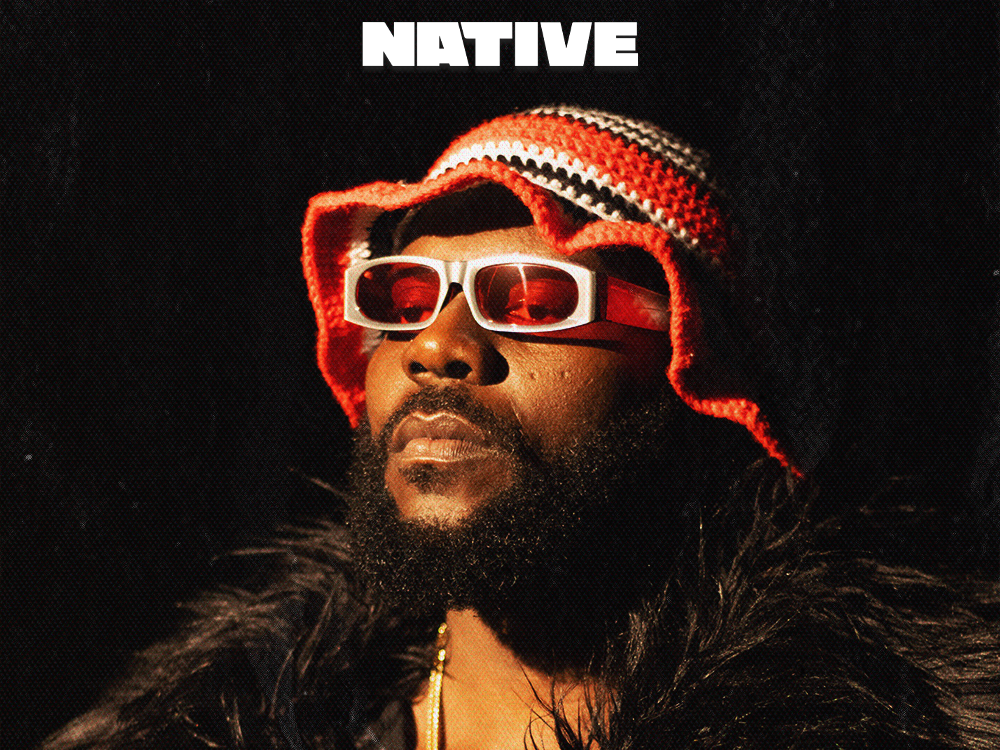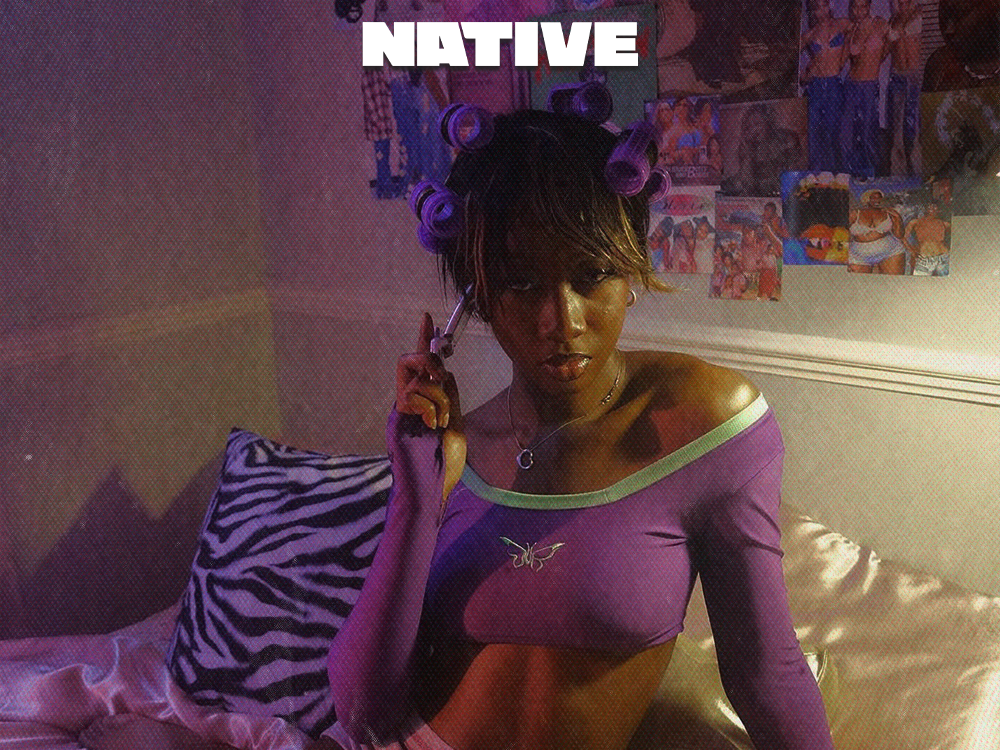
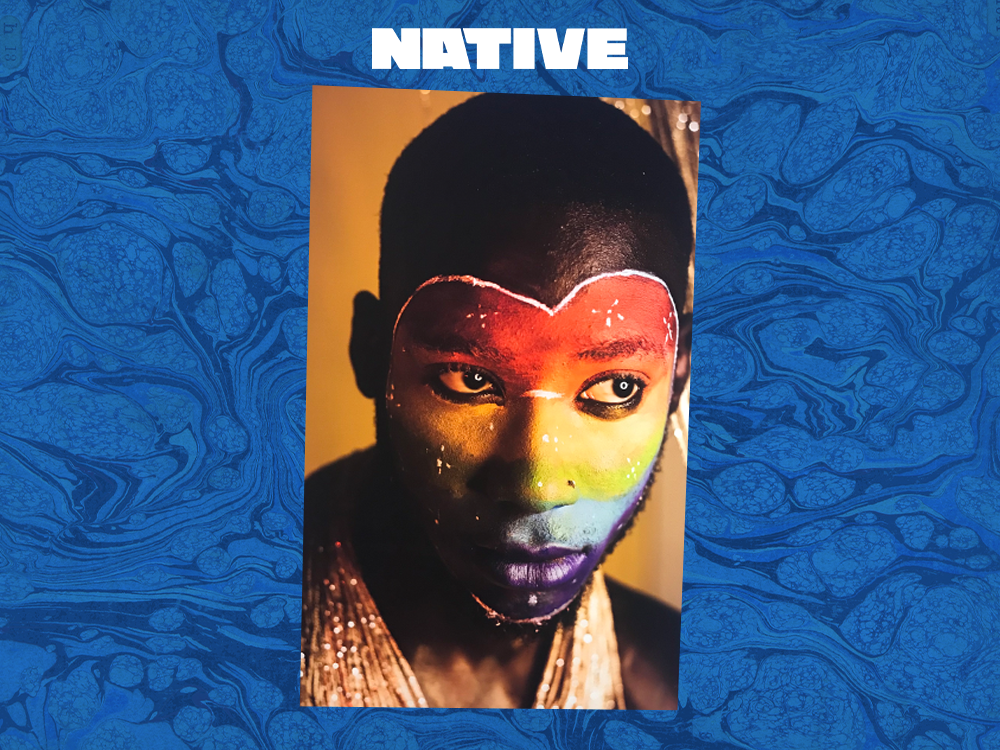
For The Girls: Real Warri Pikin is an unstoppable force in African comedy

Undisputedly, the functions art serve for any consumer cannot be summarised in a finite list. From documentation of events to a means of self-expression or simply as a medium to raise awareness and educate. However, a major role art plays is entertainment. And for a country like Nigeria, regularly riddled with a plethora of quandaries, the entertainment purpose of art doubles down as a means of escapism. For years on end, comedy has served as a reference point to temporarily suspend reality. Despite the fact Nigerians unarguably need a laugh from time to time, the stand-up comedy industrylike every other creative and non-creative industry in the countryis reserved for and dominated by men. Working just as, if not twice as hard to achieve results, the women struggle to make a name for themselves and stand out from their male counterparts who have no issues taking up space.

On the rare occasion that a woman is credited for her outstanding efforts in this field, one of the names you’d likely come across is Real Warri Pikin (Warri Pikin). As her stage name implies, the comedianborn Anita Asuohahails from Warri, Delta State. “I think my heritage is one of the factors that has brought me this far and it has played a huge role. I remember when I was going for my London show, the first set of people who bought my tickets were Ijaw, Urhobo and Itsekiri people that live over there. It was really strategic.” Anyone familiar with the comedy star knows that her heritage is also reflected in the sort of jokes she tells as well as the language she adopts. “Na where my strength dey, that pidgin English. I don’t speak proper pidgin. It’s the Warri Pidgin.” 

However, deciding a stage name and the reference point for her witty punchlines and jokes was the least challenging aspect of the journey ahead. Building a career from scratch, with minimal experience in the comedy field after studying political science was difficult enough but doing it in a male-dominated field made it more tasking. Reminiscing on her entrance in 2018, sitting amongst industry heavyweights like Basket Mouth, Bovi and AY to name a few, she faced numerous setbacks. From being told to change locations or the tone of her jokes because they were too ‘vulgar,’ some industry colleagues made several conscious or unconscious attempts to paint her as an overachiever. 

“‘Why do you want to use a big hall? Start with a small hall because you know female comedy shows are not as big.’ They tried to discourage me but I said, ‘why I no go fit use the biggest hall? If a man can use the biggest hall, why can’t I?,” Warri Pikin laughed as she looked back at the measly attempts to shut her down. However, she chose to remain persistent and authentic, trusting that her hard work will pay off. In a sit down with The NATIVE, Warri Pikin goes into detail about her journey and lessons in the industry thus far as well as how the steps she took at the start have enabled her to build a brand on the global stage that is the internet. 


View this post on Instagram


A post shared by ANITA ASUOHA (@realwarripikin)

Our conversation, which follows below, has been lightly edited for clarity. 

NATIVE: Let’s start from the top. As someone working on the inside, what’s it been like building a career in the Nigerian entertainment industry?

Real Warri Pikin: It’s been very bitter-sweet. It’s been difficult. It’s just mixed emotions because when you’re still in the beginning stages you don’t realise that it’s something you’re going to build forever. You never get to the finish line. As long as you are alive, you continue to build and evolve if you want to remain relevant. The foundation was not easy, especially coupled with the fact that I was married with little kids. I’m also a woman in the industry, dealing with those backward narratives. You know how e dey be. It’s been really difficult but I was very intentional and bent on changing the narrative. A woman can be in a male-dominated industry and still stand out. 

Comedy in Nigeria as you’ve rightly pointed out is very male-centred with many top spots reserved by men. Would you say there’s been a significant incline in the number of women doing comedy? 

About an increase in women in comedy, not at all. There’s no single increase. If you want to compare with the male comedians, it’s nothing. No one can count but you can count the number of female comedians and we might not be up to ten. The number is really not encouraging. 

What’s your secret ingredient to staying confident and focused on your craft?

Not really a secret ingredient but I’d say authenticity. Just being myself. It’s very easy to be me. I do my very original jokes and I’m not faking it. Who I am on camera is the same person I am in real life. Just being myself is my secret I guess. It’s also a blend of my being very focused, consistent, intentional and also trying to learn new things. Being myself is still that key. 

Given that there weren’t very many women in the space, who did you look up to growing up? Who were your early comedic inspirations?

For my role models I had a couple, like Helen Paul. I had role models like Aunty Mandy and Lepacious Bose from A Night of a Thousand Laughs as well. 

Having recognised this problem, what role would you say consumers have to play in ensuring the longevity of female comedians?

Oh yes! The consumer factor is like 50%. Consumers need to support and they need to encourage. I remember when I won [Comedian] of the Year [at] Humour Awards and I saw a lot of comedy consumers say things like, ‘Ah na woman them go give? Where was BOVI?’ I was just thinking, didn’t I work? Didn’t I do comedy shows? I no crack joke? They need to really show support because the comments were not good. Even on Hip TV, they were saying ‘You want to tell that Warri Pikin is funnier than so and so?’ Do you understand? I had to block out the noise. Make I no lie to you I funny die! The narrative is just poor and consumers need to really support female comedians.


View this post on Instagram


A post shared by ANITA ASUOHA (@realwarripikin)

Comparing when you started in comedy and now, has your approach to comedy and the sort of jokes you tell changed? 

Of course, my approach is still changing because I always evolve and build myself. I always want to learn, unlearn and relearn things. The joke wey I crack for stage 2018 or 2019, I no fit crack am now. I go don pad am and upgrade am. I’m more in tune with my environment. I understand people better and I understand my audience better. I can say for a fact that my comedy now and before has really really changed. 

We’ve also had a shift from stand-up comedy to Internet comedy in Nigeria. How would you say using social media channels such as Instagram and TikTok have been for the advancement of your career?

One of the advantages of also having an online presence is reach. As a standup comedian, when you’re on stage and people don’t know you, the first look they give is always a weird ‘you better be funny.’ It takes the grace of God to really perform and leave the stage without getting booed. Since I already have an online audience and presence, before they call me, they’ve started cheering. So the online videos help them have an idea of what to expect. They know that I’m funny. That has helped me in my standup. I’ve never been booed and I don’t think I will ever be booed by the grace of God. That first ten seconds of cheers, na the energy wey you go take kill am. 

Fair enough. How did the COVID-19 pandemic affect your work and what are some of the ways you navigated that rough time?

That 2020 ehn? The pandemic made me discover other things about myself because when I started, all I had going for me was standup comedy but it occurred to me that we need to focus on other things. At the same time, it taught me that I need to have more content online. That was the time I opened my YouTube. Invest and create more content online across platforms. Instagram is very short, you know. The life span of one video is short so I had to create longer form content on YouTube. Staying at home helped me discover that and see how I can get more content for other platforms. 

I guess it would’ve also helped you grow audience membership. 

I’m telling you! The kind of views I got on Facebook in 2020 I’m struggling to get them now. I used to get 16-20 million views but now I dey struggle with 1000 views. I’m telling you. My followers increased drastically as well. I opened my TikTok in 2020 and I got over 500 thousand followers in a week. 


View this post on Instagram


A post shared by ANITA ASUOHA (@realwarripikin)

What advice would you give to any woman trying to venture into comedy in Nigeria? 

First of all, you need to work on your mind. If you can conquer your mind you can conquer the world. It’s all in the mind. When I started, if I had listened to what people said I won’t be here today. There are two veteransI no fit call their namesbut top comedians in Nigeria, one of which told me to come to Lagos if I want to blow. Just imagine those words coming from a veteran. It will make you start thinking and making decisions that you aren’t prepared for. Because they’ve done 20 years plus in the industry, you’d now be thinking you always have to take their advice. I don’t know the kind of mind I had then that just pushed me to do as I like. I had a goldfish mentality. Anywhere wey I dey for the water, they go see me.

Very essential especially as you’re starting.

Exactly. Another veteran told me to change my type of comedy saying, ‘You’re too vulgar. You’ll not go far.’ You need to conquer that mindset and set your own rules. Times have changed. If you’re a woman that wants to do what I’m doing, you need to conquer that mindset. You don’t have to go with what the world thinks. It’s what you think would work for you. Everyone has their own customised grace and strategies. Second of all, you have to make sure that what you want to do is what you’re supposed to do. Be sure you have passion for it and you feed it by learning about it and working on it. With those things, you now focus as well. You’re good to go. The internet is also like a small stage right now so in 2 seconds you can blow.

Amazing advice. What’s next for Warri Pikin this year?

Just stay put. Watch out. 

Featured Image Credits/The NATIVE


ICYMI: THE NATIVE LAUNCHES NEW WOMEN-FOCUSED VERTICAL, UNRULY

A 1-Listen Review Of Davido’s ‘Timeless’

Absence, they say, makes the heart grow fonder. For 12-plus years, Davido has been a fixture in Afropop, an inescapable superstar with an outsize personality and designer duffle bags brimming with hits. As he’s unequivocally established himself as Nigerian (and African) music’s quintessential pop savant, Davido has also grown into the man that he is very publicly. That means celebrations are shared with millions, controversies are amplified, missteps are loudly dissected, and personal losses attract communal condolences.

Around this time last year, there was chatter about a potential Davido album for the summer, given some credence by the May release of the gospel-influenced “Stand Strong,” in collaboration with the Sunday Service Choir. As the months passed without further developments, those hopes for a project would come to be replaced by sympathies to the singer and his family, following the loss of his son. Death and grief, sadly, aren’t new to David Adeleke, but this loss carried more weight than the previous losses he’d grieved.

Months of silence was broken a few days ago, keeping promise with his “see you in march” tweet from last December. The cinematic video officially set off the road to his fourth studio album, ‘Timeless’, with an open letter hinting at the music’s formative times and his definitive trait of resilience. We’ve seen Davido weather his way through losses and controversies, but the nuances here are different, which plays a role in our expectations of the music. How has Davido weathered the last few months? ‘Timeless’ has the answers.

In usual 1-Listen review fashion, all reactions are in real-time while the music plays. No pauses, rewinds, fast-forwards or skips.


View this post on Instagram


A post shared by Davido (@davido)

“OVER DEM”

Going in a bit blind without all the credits but, boy, am I excited?! This sax is adding a spiritual dimension to this gbedu-type beat. “I be David for life” is going to ring out at concerts, I’m 1000% sure. I don’t know what I was expecting from this intro but this is a little more rambunctious than I expected, but then again, this is Davido in imperial form and it sounds quite fitting. I like that verse, a couple of self-possessed quips. The groove in this beat is a really good springboard for Davido’s brag. The dancing governor gets a line, which is an excellent touch because his tenure has gotten off to an excellent start from all reports. Nice intro, nothing crazy but it’s great as a tone-setter.

“FEEL”

Omotepiano is in the building! Davido knows how to get your attention regardless of what’s happening in the music, it’s that magnetic star power always at work. There’s some depth to this even though it’s a love song, heartfelt on first scan but I need to hear this again for critical value. In the moment, though, this could be one of those sleeper hits. Might not be a huge song but you’ll hear people murmuring the hook when it comes on.

“IN THE GARDEN” (feat. Morravey)

Nigerian pop songs that feature gossamer guitar loops rarely miss. More omotepiano vibes. Whose voice is this? (Editor’s note: DMW new signee, Morravey.) Her voice is very radiant and the melodies are supple, reminds me a little of Waje. I don’t know if it’s my headphones but the mix on this log drums sound a little more cruddy than necessary. This is Davido in his “My money, my body na your own o” bag. Nice verse, but this hook is the star of the show. That guitar loop as well. That was short, really short.

“GODFATHER”

Blaise Beatz’ quarterly streaming checks must be going crazy. Yes, I’m pocket watching. I might be getting omotepiano’d out, dawg. This sounds like a Davido song I’ve heard before, sounds like he’s in cruise control. Maybe it’s the title but I expected something a little more assertive. Ah, there go the lines about his status, but this romantic tilt to it is undercutting it for me. Even this hook is tepid to me, like I’ve the man sing similar sentiments to stronger effect. Might be a skip.

“UNAVAILABLE” (feat. Musa Keys)

Musa Keys credit and Magicsticks tag? This has to be some heat. Yeah, this is an anthemic hook. Those piano chords came in with some sauce, and this man is talking. I’m going to be repeating “I’m unavailable, dem no dey see me” to any and every one for the next few days. I might need more people to go to Musa Keys for vocal features, this is a remarkable contribution. I figured he didn’t produce this since there were no delicious guitar chords, but Magic delivered—as he always does. Interesting to have a South African producer/singer over a Nigerian-produced ‘Piano track. This is the hit song.

“BOP” (feat. Dexta Daps)

I was about to say there might be no log drums here but it hit me right in the ear drum. This one has an afro-bashment knock to it, catchy but I need to hear something more special from Davido to sell me on this. Who’s this? Sounds like a voice of a UK-based artist to me for some reason. (Editor’s note: It’s Dexta Daps.) There’s more fire in this person’s verse, love the passion in his voice, sounds like the infatuation is consuming him. This hook is serviceable and it works well with the beat. Need to revisit.

“E PAIN ME”

The Pon-Pon sound is back! My excitement is based on this being a variety addition, not that it’s an excellent beat. I mean, it’s good enough to pull out a really strong Davido performance. Who was the last person that did Davido dirty? He’s doing a good job recounting those dark days, or at least channelling someone else’s experience. That “Baby no be so” line on the chorus stands out to me, maybe it’s the melody. This fade out isn’t it, man.

“AWAY”

Shekpe! always gets me going. Is Magicsticks is the best omotepiano producer out here? I’m on the yes side of this argument. “Gbedu dey body/I’ve been doing this/e don tey.” That entire bridge is quintessential Davido, every line sparkles with a knowing conviction. Davido is coming for all the dancefloors with this album, which is expected. This one is a hit-ready slapper. Short, straight to the point and effective.

“PRECISION”

This album has flown by. Haha, I like that opening line. I don’t know about this decision to add a log drum to this, I think the konto/galala groove was really strong on its own. I guess we’re keeping things modern. “As I dey here, I’m counting my blessings” is a resonant lyric. One of the most underappreciated things about Davido is how he’s honed his voice to make everything sound infectious, even if the timbre is a little unconventional. “Precision” is a solid example of that, it all sounds effortless. This would end up being more of a deep cut, but it’s one of the brightest spots for me so far.

“KANTE” (feat. Fave)

More Caribbean pop vibes, very colourful. Fave! Her voice is so distinct. I think people focus on the timbre of her voice more than how agile it is, which is really the sell of her singing power. Davido is mirroring Fave’s melodies but with his own swaggering touch. This verse is giving Oli Ekun’s “Agba lo n s’oro” vibes, LOL. It’s the only thing I could compare it to. This is a really good hook. Yeah, this is going to be one of the shorter ones here. Good deep cut.

“NA MONEY” (feat. The Cavemen & Angelique Kidjo)

I heard “Sawa” and those guitars and I knew the Okorie brothers are in the building. Benjamin’s voice was beamed in from an ancestral plane, and the way Davido slides in so majestic. The groove is grooving! “Be like mamiwota, why you fine like this?” I feel you, David. I just remembered that thread of Igbo women displaying utter beauty. God dey create. Ms. Kidjo! Always a force when she steps in front of the mic. Like 50 good things are happening on this song. This is such a pleasant surprise. Definitely a keeper.

“U (JUJU)” [feat. Skepta]

Any song that follows “NA MONEY” has to slap, man. Come on, Davido. Give me something. I like this, R&B-tinged slapper. “Tule”-era Davido is one of the greatest highlights in modern Nigerian music culture. I like the bounce on this. Big Smoke! Skepta on Nigerian pop jams is always welcome, he put on before—redacted. The pidgin bit is a nice touch. This is a solid song.

“NO COMPETITION” (feat. Asake)

I’m awake, man. The last couple of songs have kept me engaged and this one is already doing the same. “You go no say people fine/God design na elelele” is such a remarkable line. Bro, Nigerian women are so stunning. Like, you’ll just be taking an evening stroll and you’ll be thanking God for the gift of sight. I digress, my bad. Asake! Okay, talk to her! Yeah, this is a great verse. This is exactly how I’d expect Asake to yarn a babe if he’s attracted. I like this song.

“PICASSO” (feat. Logos Olori)

These are some beautiful guitar strums. Davido really put on for the loverboys on this album, and this is going to be part of the reason why I need everyone to kill the Yoruba demon agenda. I’m trying to place this voice, I’ve heard it a few times before. Fuck, I hate this no credits P. (Editor’s note: That’s new DMW signee, Logos Olori.) Davido listening to Sauti Sol to prove his romantic-at-heart bonafides is funny to me, but I get it. Whoever this guest is, you put in a great shift.

“FOR THE ROAD”

Blaise Beatz tag, hope I don’t hear no log drums. I like this sort of folk-pop direction, has some Caribbean pop bounce and colour to it. Davido dipping into his lower register is an interesting, if a little tepid, choice. LOL, guys have such wild ways to cajole women to get what they want. The choral hook is a nice touch but I don’t think I want to hear this song more than one or two more times after this.

“LCND”

Penultimate song, let’s get it. This is going to some emotional place, I think. Sike, my man is doubling down on his readiness to enjoy life and make money. You know what? I rate it, because legends truly never die. I automatically hate any line that references Lukaku; I’m an Arsenal fan, go figure. This beat is radiant and triumphant, fitting for Davido’s proclamations. Will revisit this for sure.

“CHAMPION SOUND” (w/Focalistic)

Counting its leak, this song is almost two years old and I think it’s time to call it what it really is: A CLASSIC. Caltonic SA and ___ gave Mr. Adeleke and Mr. Sebetso a heat rock of a beat. More than “Ke Star (Remix),” this song is the one that represents their chemistry and I think we need to start asking about the whereabouts of that joint EP. That Runtown line is Nigerian pop heritage, Focalistic’s syncopated flow and Davido adding adlibs is one of the greatest feats in Nigeria-SA collaboration. Like I said, this is A CLASSIC.

Final Thoughts

001 is back and he means business. I don’t think anyone expects Davido to be shaking off rust, but there’s almost a concerted effort to get things going right from the bat instead of addressing his absence. ‘Timeless’ is a reassertion of greatness from one of the greatest entertainers of his (and any other) generation. Almost all of the 17 songs here are made with the intent of showing Davido at his most optimised, a hit song generator that distils his perspective as a young, famous and successful person into dance-ready jams.

For the most part, ‘Timeless’ comes across as effortless—maybe a little too effortless. Unlike how his last two albums helped us better understand him as a person that cherishes his loved ones (‘A Good Time’) and a man with a boulder-sized chip on his shoulder (‘A Better Time’), this new album doesn’t land revelatory punches. Also, there aren’t too many musical risks, leaning heavily on Nigerian translations of Amapiano especially on the album’s first half. The collaborations are remarkable, though, a diverse cast that help the project’s variety and also underlines Davido’s adaptability as a pop artist.

The driving force for ‘Timeless’ is invincibility. Between opener “OVER DEM” and penultimate song, “LCND,” there’s a triumphant air Davido walks in. Even though the moments of emotional realness are rare and undercut in favour of posturing, Davido’s comeback is a worthwhile affair in pomp and self-conviction.


ICYMI: DAVIDO’S NEW ALBUM ‘TIMELESS’ MARKS HIS INDELIBLE LEGACY IN AFROPOP

NATIVE Exclusive: Trill Xoe Is Always Expanding His Artistry

“Trillo tell me say na NATIVE be the matter,” raps the mercurial ODUMODUBVLCK in what is currently the hottest song in the country. That makes the mentioned figure one of the most sought-after people on the internet, where the song is dominating every post and status, its instantly catchy beat in swaggering symmetry with the quotable-laden bars of the rapper. When Trill and I connected on Zoom some days ago, we immediately got to the Declan-sized elephant in the room. 

“It’s just crazy to see everyone’s reaction,” says Trill who co-produced the record and is professionally known as Trill Xoe. “I was just literally watching a video of Tony Elumelu listening to it and I’m like ‘wow’.”

A billionaire who’s one of the richest men in Africa, Elemelu’s endorsement follows a long list of celebrity mentions: from Wizkid to Adekunle Gold, Timaya, and the West Ham captain himself Declan Rice, the Trill Xöe beat has been heard just about everywhere. Having a glossy finish without losing its gritty appeal, the production perfectly aligns with the song’s vision—a treatise on self-confidence which sounds the part. With ODUMODU’s mention of his friends and crew members, “Declan Rice” sparkles with boisterous communal energy. 


View this post on Instagram


A post shared by Trillo (@trillxoe_)

This was initially achieved through the creative process, Trill Xöe tells the NATIVE. “I have to shout out 44db,” he says, referencing a producer collective he’s part of. “John Wav—he’s a part of 44db, he’s a frequent collaborator with me—he sent me the pack when I was in Ghana cos I asked him for that, to send me zips to work on, cos that’s how we normally work. So he just sent me the beat and I heard the first twenty seconds and I was like yo, this is crazy.” 

With that grand vision set, Trill Xöe knew the beat had to go somewhere else, and he got people in. “One guy called OTB—shoutout OTB—he did some drums that were fire and John added melodies,” he says. “I heard it, the full beat he sent and I wasn’t feeling all the melodies so I told him to send me the zip so I could touch it up. Then ODUMODUBLVCK just pulled up and he heard it and was like, ‘Chill. This is it’.”

Everything was in alignment: it was their first day in Ghana for a recording camp and he was just setting up his gear when the song came together. The gunshot sounds being ODUMODU’s idea, the Native Records rapper sent it to UC who produced “Dog Eat Dog”, and kept a steady creative rapport with the artist. “He felt like something was missing,” Trill recalls, “and UC now added that string base that you hear (mimes the sound) and a flute. There was already a flute in the beat but this flute was a bit different. And you know, that’s how the magic was made.”

Collaboration has always been a part of Trill’s sonic philosophy. As early as 2018, he was thinking through a curator’s lens, bringing artists together in songs he produced. That year saw the release of ‘Blood, Sweat and Tears,’ a sort of manifesto which underlined his resolve to dig beneath the field of popular music. Featuring a host of rappers like Psycho YP, Barelyanyhook and Zilla Oaks, the EP however swirled with delicate touches, revealing Trill Xoe’s mastery over his wide-ranging genres. 

In 2016, Trill Xoe had left for the island country of Mauritius for his university education, and while there getting involved in the music ecosystem. “I was just going through a lot mentally,” he says about the period, “because I was trying to balance school and putting myself out there through music. It was sort of my dissertation cos I wanted to show the world what I was working on. And you know it was that period when SoundCloud was hot; so this is me out here, seventeen years old in Mauritius, just saying you know what? I’ll just release this”. 

Surprisingly, he barely met any of the artists in person during the creative process. “At that point, the only person I met in person was Rilwan,” he explains, “because we went to school together. But YP, Tonero, I never met them in person,” he says with a laugh. “I’m a perfectionist, I pay attention to every detail,” says Trillo when I ask about his involvement in a recording session. “Down to the writing, I try my best to just direct the artist in where I was going with the beat. Cos I really love synergy; let’s say I’m making a beat from scratch, I want to be on the same page as the artist.” 

We wind off an anecdote about Sarz grouping producers as either musicians or beatmakers, depending on their levels of interaction with the complete creative process. Trill Xoe then mentions the legendary producer as one of his inspirations and I ask who else belongs on that podium. “A lot, I can’t lie,” he says. “Firstly, everyone in 44dB, RZA, Kanye, Metro, who else? Kabza—ah mehn, Kabza is crazy. So these are just based off listening from when I started to where I am right now; Adey, Sarz, they’re a lot.” 

Music being part of his everyday existence, it’s no surprise how deep Trill Xoe’s interest runs. He remembers being a stubborn kid and always getting in trouble. “Funny enough, my first introduction to music was in church; I used to be a drummer,” he reveals. “Even before then, I used to always—we used to have this big cupboard that was like a drum, so I’d get pencils and just be tapping on it. I was making different noises but to me it was fun sha”. 

He was in church for about five years before he went to boarding school. In senior secondary school, he became more immersed in the modern adaptation of use. Using laptops within the school was then newly approved and a senior whose name was Olu (who was also a DJ) had FL Studio which Trillo found fascinating. The era of DRB Lasgidi and Joules Da Kid, young people were being increasingly drawn towards creativity. “I was just amazed to see them record these things from scratch,” he recalls. “I got FL from Olu; I think he bought the CD or something cos that was the very old FL. And he gave the CD, gave me all the details. Then I used to make rubbish beats. I realised I wasn’t feeling what I was making”. 

YouTube provided the source material for further research. Spending hours on the platform, he’d watch tutorials to learn the concepts of music-making. Metro Boomin’s ‘Cook Up’ volumes were important for him; more than just techniques of mixing, he also learnt how to handle a studio. He started remaking beats and executing a flawless replication of Chief Keef’s “3Hunna”. “Once I did that,” he says, “I realised I actually do not want to be one of those guys making Type beats on YouTube and from there I just went on a path of self-discovery. Knowing the sounds I like, the tempos I like, the keys I like, sort of acts I like, it just helped me out”. 

Trill Xoe is also a DJ, which is a skill he picked while in Mauritius. Wanting to “hustle for [his] shit,” he was advised by his close friend and manager Julian to meet clubs and event organisers in the area. “At a point, it was like we were the best DJs on the island,” he says. “I remember Davido came, Mayorkun came, Falz came, Kiddominant came—it was just something like ‘yeah, I can actually do something with DJing’. Anything music, you can catch me there”. 

Last year, Trillo announced that he had signed on to NATIVE Records as an A&R. Bringing his wealth of technical mastery and industry knowledge, it’s an alignment of values as the urban cultural platform has always been big on spotlighting the best talents, regardless of where they are. Currently home to ODUMODUBLVCK and Smada, it’s a movement with every potential to define the soundscape of this particular generation. 

“Shoutout Teezee, shoutout Chubbz, shoutout Sholz,” he says with an air of genuine appreciation. “It’s crazy, I just feel like they just believed in me and we’re here for talent. You know how they say producers are the best A&Rs and they took the risk on me and you know, hopefully it’s paying off. We have the number one song in the country right now. So shout out everyone at NATIVE Records.” 

On an individual level, Trill Xoe has got some things planned for the year. “This year is looking fresh,” he says excitedly. “So this is going to be an exclusive, I’m dropping my first project since [‘Blood, Sweat and Tears’]. The project comes April 21st, first single April 14th. The single features Azanti and one of the young boys I discovered, his name is Maji and the project is the first time I’m rapping on like two songs. It’s a six track EP. I’ve been working on this like 2019; can’t wait for it to come out. It’s called ‘Lucent’. It means glowing with light.”

Featured image credits/NATIVE

Meet Logos Olori, the latest artist on DMW’s all-star roster

It’s not everyday you get signed onto a music label owned by one of the greatest artists Africa has ever seen. For up-and-coming musicians who consistently put in work into their craft and perception, due recognition also comes with energised determination. That is how Logos Olori would surely be feeling at this moment. Alongside Morravey, he was announced yesterday as the newest signees of Davido Music Worldwide (DMW), the premium markers of its exciting rebrand which refocuses for a conscious push into the global market that is now available to Afropop. 

Being one of the most consistent hitmakers between now and the previous decade, Davido has proven to have a great ear for sound. Over the years, the pop star has been able to place his fingers on the exact movement of a culture’s pulse, and use the resources at his disposal to execute his ideas. This was the unique pull behind the success of the first set of DMW signees, of which Mayorkun, Peruzzi, Dremo and DJ ECool penetrated deeply into the market, scoring many hits between themselves before most of them moved on. 


View this post on Instagram


A post shared by Logos Olori (@logosolori)

Its this celebrated Afropop tradition that Logos Olori uses as his launchpad. Born in Lagos as Olalekan Emeka Taiwo, the singer began playing the drums when he was young. Iconic musicians such as 2Baba, Bob Marley, Michael Jackson and Fela Kuti were some of the inspirations he would imbibe as he set on a professional career, which really began while he was an undergraduate at the Lagos State Polytechnic (LASPOTECH). 

There, he also became close friends with Magicsticks, the acclaimed producer best known for his work on Asake’s ‘Mr. Money With The Vibe’. Being around such intentional creatives, it was natural for Logos Olori to grow confidently into his sound, which is probably why he has such a stacked catalogue before his first record deal. Produced by Magicsticks in 2020, “Only You” was his debut. A quintessential Tekno-esque Afropop groove, his emotive qualities were present even if not sharpened to elite standards. 

His creative relationship with the King of Sounds and Blues continued into the Dandizzy-featured “Logos Party,” a mellow bop which sees him flex a bit of rapping skills. Playful in tone and loosely structured around Magicstick’s horn-flecked production, there was audible development. That productive pandemic year continued with “Shine”, again produced by you-know-who. Perhaps the most accomplished record in his backlog, it’s a mix of good vibes and aspirational messaging. A favoured pairing among street hop musicians, it makes perfect sense in the hands of Olori, who’s mentioned as having grown up in the Ajegunle hood of mainland Lagos. 

Since then, he’s put out music each year. From the amapiano-indebted “Palliative” to the Young Thug-sampling “Irregular” and afropop-coloured “Dissolve Me”, the musician has maintained a versatile approach to his records. In case you thought he didn’t have a softer side, “Happy” featured a virtuosic folksy groove from Magicsticks, while the artist contemplated the confusion of mixed signals in his verses. “Yellow gold, pelu ice/ Feeling nice, I’m alright tonight/ Carry go, do me so, overflow oh/ I’m all yours tonight,” he sings with tender submission, but more excitingly, it’s the assured and understated way he positions the rhyme schemes in between the lines, showing his skill as a songwriter. 

“Lale” was his only release from last year, put out in July, which is presumably the period before he went into artist development by DMW. Stuffed in the recent style of Magicsticks, the beat teases a Fuji-inflected performance from him, yet another showcase of the Logos Olori dipping into the pockets of established sounds to find his rhythm. This is a man prepared for the journey. 


ICYMI: MAGICSTICKS WANTS TO BE KING OF THE WORLD

uNder: Best New Artists (March 2023)

It’s no known secret that Afropop is growing at a breakneck pace; from welcoming ascendant stars to garnering the attention of audiences beyond its home and selling out big-ticket venues across the globe. According to the IFPI Global Music Report, Sub-Saharan Africa was the only region to see more than 30% growth, becoming the fastest-growing region for recorded music revenues in 2022. 

Despite this growth, women in Afropop, who have always been an integral part of the culture’s fabric, are still being shifted to the background either as decoration for their male counterparts, or pitted against one another, and in some cases, maligned by critics and fans alike. Thankfully, we have community-driven initiatives such as Femme Africa bridging this gap in the industry, and creating a space where artists, producers, DJs, A&Rs, music execs and enthusiasts can harness their skills and talents, and increase their reach through live music performances that endear them to listeners. That’s why this International Women’s Month, we’re partnering with the women over at Femme Africa to present our first-ever women-focused curation of Best New Artists across the continent.

With 2023 poised to be an even greater year for the music coming out of Africa, there are plenty of new women artists that we’re excited to watch out for; from bilingual Nigerian rapper Brazy to Ghanaian singer with a voice of gold, Melissa, and Cameroonian singer, Posi, there’s something in here for every listener. Tap in if you wish to be that friend putting people on to good music or if you’re an A&R, looking for the next best thing, this is the group of artists you want to be paying attention to.

WINNY

Winny

In association with Femme Africa.

Last year, Winny released “Pretty,” a riveting track that contained a litany of proclamations bordering on abundance, both financial and emotional. “I’m pretty in my own way/And I like to dey sing what’s on my mind/I love broke inna rich way/Stay humble, to make my money with pride,” she sings. It’s both the lyrics and Winny’s emotion-laden vocals that demand attention; the simplicity in her words does not belie the profoundness they carry, and her voice, which reverberates with a certain ache, pulls at the heartstrings. While the Benue State indigene is relatively new to the music scene, a little digging uncovers her consistency with covers of songs from other artists and a 2018 single “Toluwani.”

In music videos for her songs, which she calls “short films,” Winny also offers visual treats alongside the audio delights. In the Prince Akpa-directed video for “Pretty,” Winny favours minimalistic backdrops, allowing her striking fashion style—hair, clothing and accessories—to convey her sense of individuality and expression. In her latest single “Don’t Leave,” Winny recreates the magic of “Pretty” with a patois-influenced delivery as she shares her fear at the possibility of her lover exiting her life; she encourages him to ignore the detractors and stick by her side. 

The video for “Don’t Leave,” directed by Prince Akpa, also shares stylistic similarities with that of “Pretty”; both videos evoke the mood of intentionality that runs parallel with Winny’s brand of Afro-inspired R&B/Soul. With her debut, self-titled EP scheduled for release on April 7, Winny’s journey promises to be exciting. It’s a must-watch.

Uzoma Ihejirika

BRAZY

“Attends Shekeleva” was the phrase that had a stronghold on several TikTok users in Lagos and Accra late last year. Off her song, “Attends,” Brazy’s catchy track, adorned by a witty pre-hook, cheat on me and I’ll cheat on you” made it clear that this rapper was a name that mustn’t be omitted in conversations about the next generation of audacious female rappers in the country. But before the Velli-produced track took audiences by storm, Brazy’s airy, euphonious vocals graced the intro track, “MATILDA” for Cruel Santino’s star-studded album, ‘Subaru Boys: Final Heaven.’

Sitting amongst music industry heavyweights in their own right, Amaarae, Gus Dapperton, Koffee and more, Brazy delivered a clutch, stand-out performance, leading her to accompany Cruel Santino on his Europe tour last year. When we last spoke to Brazy, she shares that she randomly decided to record “Attends”—translating to ‘wait’ in french—before the Paris show held in October 2022 and in 10 minutes, her biggest track yet was born.

However, that wasn’t the genre-fluid, bilingual rapper’s debut on the scene. Still relatively new to the scene, Brazy’s first attempt at music can be seen on the L0la-assisted “Siren.” And for all her singles including “1st Place” and “Gingerbread,” or her numerous collaborations with other female rappers as seen on “Selecta” or “ARI,” Brazy has taken the organic approach to create music. Despite starting her journey out as a means of having fun with friends, Brazy stands out from the crowd not just for her self-assured lyrics and witty penmanship, but also for her eccentric production and sheer ability to create tracks that instantly put you in a good mood. With Brazy already displaying many layers to her artistry, we’re excited to see where she could go sonically next. 

Nwanneamaka

MELLISSA

In association with Femme Africa.

With only a few songs under her belt, Mellissa has proven that she is an artist we should keep our eyes out for. While she made her solo debut in 2021 with “Limelight,” audiences first got a whiff of Moliy’s dulcet, hypnotic vocals on “FEEL A WAY” off Amaarae’s critically acclaimed debut album, ‘THE ANGEL YOU DON’T KNOW.’ Assisted by her serial collaborator and sister, Moliy, Mellissa took Amaaarae’s nihilistic party girl anthem to new, unimaginable heights. Pairing perfectly with the two vocalists, the Ghanaian singer’s sleek vocals blended so smoothly that they would all be briefly mistaken for one voice. But that was just the beginning of her stellar collaborations as with each release, she proves to be a versatile artist transforming the worlds created to another dimension.

Another clear standout cut, Boj enlisted Mellissa and Moliy for what would be one of the most streamed tracks on his solo album, ‘Gbagada Express.’ On “In A Loop,” the trio go back and forth over the rhythmic, groovy track as they sing of being stuck in the cycle of a toxic relationship. Carrying the track’s infectious hook, Mellissa’s luminous vocals are especially affecting as she sings, “What we fi do? We’re stuck in a loop/Nobody gonna win this game,” underscoring the romantic tension which vivifies the record. Reiterating her sheer artistry, she delivers another memorable performance with Not3s on “Hear My Sound,” the outro for Ajebutter22’s ‘Soundtrack To The Good Life.’ Still awaiting more solo releases, Mellissa is already a sought-after collaboration with evidently more tricks up her sleeve.

Nwanneamaka Igwe

QING MADI

In association with Femme Africa.

Snippets of Qing Madi’s 2022 debut single “See Finish” were already floating on her Instagram and TikTok pages before she decided to enter a studio and complete the song. The teenage singer had shared that she was in a bad place when she conceptualised the song as a means to purge her emotions. While gloom is the anchor of the finished version of “See Finish,” Qing Madi delivers the song with a mastery that belies her age. “Say I used to be the life of the party/Now the energy inside of me is drained,” she sings as she shares her disinterest in the happenings around her to avoid disappointment. It is a sentiment that many people would relate to and Qing Madi captures those emotions with astute songwriting and great vocals.

In her sophomore single “Why,” Qing Madi’s disappointment is of the romantic kind. She tells off an admirer whose vibes she isn’t comfortable with, preferring her solitude. With a Hip-Hop/R&B bedrock, “Why” and “See Finish” offer a peek into Qing Madi’s personality and artistry, revealing an artist unafraid to share her truest thoughts. In the Jyde Ajala-directed visuals for both songs, Qing Madi also shares her love for dancing, with the choreographed moves paying homage to the late 90s and 2000s R&B. She’s one artist whose name will soon be on every lip.

Uzoma

KEZIAH MALLAM

In a generation where relationships are casual and undefined, Nigerian songbird Keziah stands out with her love-lorn pleas. Commanding attention with her voice on songs like Over X Over,” Keziah Mallam’s catalogue is a cannon of creative wit characterised by cathartic singles. 

Since making her debut in 2020 with Zo Nan Nyanzu (Come Here Now), Keziah has only been assuring of her position in the industry. Dedicating her 2022 to music, Keziah set off on an 11-month journey of finding her voice. Releasing 11 self-produced tracks including Real Me,” she showed off her skilled penmanship by teaming up with groundbreaking artists such as SGaWD, moving on an upward trajectory and receiving nods from her numerous fans. Rapping on an upbeat 808, Keziah and SGaWD show boast of their womanhood “come from London to Lagos and still kept score/ I am my own superman s on my chest I depend on my plans.”

Rounding off 2022 with the Funk-inspired “Goodbye,” Keziah metaphorically bids farewell to a lover as she comes to her senses. Rounding off a chronological journey of falling in and out of love, the bass guitar accentuates her silky vocals as she is ready to step into the next chapter of her life. Her evolving persona and skills as she sets different moods to make her a perfect addition to a relaxing playlist. 

Tela Wangeci

POSI

Teresa Eposi Chando has a voice that will wash over you. It’s a cathartic experience to hear the musician sing, with lucent vocals covering the pensive motions of the romantic heart. Living in North Carolina, the artist of Cameroonian descent was a prodigy. By eight years old she could play the piano and violin and for her training, she replicated arrangements on songs such as Beyonce’s “Pretty Hurts.”

In Posi’s music, self-investigation flows alongside the worthy mission of seeking peace. Her debut 2022 debut song “The Plan” featured a moving performance enriched with great perspective. “You don’t have to be on your knees/ Oh, I can’t let life get the best of me,” she mulls over a colourful production that’s right in place with Afropop. Her next single “Trying” had stripped elements with subtly emotive songwriting. Poignant lyrics such as “even when evil comes to me, I deserve to be living free” see Posi holding up the affirmative energy of women musicians like Tems, Asa and Jhene Aiko, all of whom serve as touchstones for her progressive R&B sound.

She released her debut project ‘Troubles of the Heart’ early this year; it was put together alongside Posi’s longtime collaborator DJ Wicked. A meditative collection pulsing with intimacy, Posi’s vocals are measured in tone and tradition. It’s a deftly-ambitious project in its use of her vocals and with stories of life and love at the ready, ‘Troubles of the Heart’ becomes an essential look into Posi’s vision of the human condition. Quite the talent, Posi’s career has unfurled to a definite start, and good things would inevitably find her as she continues to stay true to her sensitivity.

Emmanuel Esomnofu

VALERIE OMARI

Not many artists find success in their first album especially when it precedes a debut single. Valerie Omari preaches a different testimony. On her 2017 single Pray for Me,” a source of solitude for hopeless romantics, it was her clear and emotive vocals that immediately caught your attention.

“Just Like The Rain, her warm, seductive ditties invite you into her world as she fusses over love that’s exhausted. What’s most interesting about Valerie is her bold approach when penning her lyrics. As she sings “Just as the rain she had me dripping way down,” the bass-assisted single set off a perfect introduction to her escapist lyrics. Releasing the album ‘Therefore I am’ in 2019, she continued to edge closer towards stardom as she curated a confessional letter of self-love and identity.

Taking a slow but sure approach to releasing her music, Valerie has been on a musical journey of releasing intentional pieces that speak to her fans. If I Tried” lives on the reminiscent 90s R&B singles that pay an ode to true love. Starting her 2023 on a high note, Valerie delivers a stellar performance showcasing her growth as a musical journey. Closureis a follow-up of her debut album as she trails on self-discovery after the early stages of a breakup. Valerie Omari is a promising artist peeling a new layer of her artistry with each release.

Tela

GAIDAA

In 2018, Gaidaa burst onto the scene with a show-stealing performance on Dutch-Armenian DJ and producer Full Crate’s “A Storm on a Summers Day” and showed glimpses of her brand of honest R&B/Soul music. A child of Sudanese heritage, Gaidaa, born and raised in the Netherlands, hasn’t shied away from her roots and the unique intersection of cultures at her disposal, as exemplified by her 2019 debut single “Morning Blue,” which she performed in A Colors Show. She followed up “Morning Blue” with “I Like Trouble” and “Falling Higher,” both tracks that entered her 2020 debut EP ‘Overture.’

‘Overture’ was an intricately-woven project that highlighted Gaidaa’s honest lyricism and soulful vocals. On the Saba and Jarreau Vandal-featuring “Stranger,” Gaidaa pondered about life’s unpredictabilities and her need to make sense of them. She pledges to stick to her values on “Ride My Way,” and on the Joshua J-assisted “Say Yes (Turquoise),” she proclaims success in her life despite any challenges, singing, “I’ma say yes every time/Yes every time/I’ma stay blessed every time.”

The independent act has performed on stages in the UK, US, Netherlands, and most recently, in her home country of Sudan. In her 2022 single “Figures,” she cites the multiple roles that society foists on individuals, preventing them from living to their fullest potential. Gaidaa’s music is about being honest to oneself and finding your way in the world’s maze – it calls listeners to the power they have to decide their present and future.

Uzoma

Featured image credits/NATIVE


ICYMI: Yinka wants the world to love again

Hot Takes: Fear Not, AI Is Not Coming For Afropop

In 2012, an up-and-coming rapper named Boogey released a mixtape titled ‘Artificial Intelligence’. Replete with samples of robotic voices and braggadocious, highly technical writing, the project would become acclaimed, putting the young rapper in all-time great conversations afterwards. More than ten years later, the actual AI has again resurfaced in African music, this time not a narrative prop but the real thing. Or rather, the closest thing to the real thing.  

Artificial Intelligence, which is most commonly referred to by its acronym of AI, is hardly a new phenomenon in science. From the 1940s, pioneering cybernetic scientists such as Norbert Wiener wanted to inculcate “a whole theory of control and communication, both in animals and machines.” With the Second World War in flux, many nations were finding new ways of being efficient in their tasks without overt reliance on the human factor. 

Through the years and with much innovation, AI has morphed into a cultural breakthrough. Useful in just about any field, from helping detect the coronavirus to being utilised by filmmakers, it’s been perhaps the most divisive technological development in recent history. And for the first time, it’s seriously being considered among music audiences, as an alternative to the hard-wrought style of creating and releasing songs. 

Some days ago, the AI enthusiast Roberto Nickson went viral with a video of him reproducing Kanye West’s vocals through Artificial Intelligence. A jarring and revealing experience, the video brought to the fore how much popular music could change in the coming years. “All you have to do is record reference vocals and replace it with a trained model of any musician you like,” says Nickson in the video. “Keep in mind, this is the worst that AI will ever be. In just a few years, every popular musician will have multiple trained models of them.”

Watching that video, I found myself asking the question: “How would this affect Afropop? For better or worse?” The consensus on the programming is that music creation could become lazy as a result. What used to inspire musicians to sit around studios and soak creative energy might just be taken away; then you’d have automated music and would there be a need for actual producers and musicians? It’s an ethical dilemma as much as a technological one, but if this present circumstance is any illumination, popular African music has always been inching towards this moment. 

In the past, live instruments were the most acceptable form of music creation. Except for a few genres with electronic history, most of the sounds emerging from Africa—whether Highlife, Juju or Kwaito—were created through the peculiar rhythm of human ears gauging the weight and pairing of instruments. Then came laptops and software like Fruity Loops (now known as FL Studio), which revolutionised and democratised production emerging into the 2000s. Even the later invention of Auto-Tune was initially considered a threat to natural voices, but years later, it’s a practice that’s been subtly ingrained into music. 

The thing about Africa is that sometimes we learn about technological advancements too late. Since Western countries and governments understand the essence of research and fund them adequately, it’s understandable how knowledge about such conventions would be widely available over there before sparking serious conversation in the continent. To this end, Afropop may have already been incorporating techniques of a lesser-developed AI into the music-creation process. Being cultural vagrants who oscillate between several worlds, musicians are well-placed to carry these conventions into the sphere of popular discourse. 

A similar case happened during the NFT rave of the past few years. Quite familiar among visual artists already, it was the entry of musicians like Don Jazzy and BNXN which brought it a wider reach. Suddenly more people wanted to know what NFTs were and how they worked. The premise is simple: technology that is distinctly tailored to music has sparingly been made, rather it’s musicians who’ve gone out of their way to learn these techniques. Still consistent is the human factor, because it demands a certain level of measure for any credible art to come about. Another argument arises: NFTs as a way of sharing music haven’t retained their popularity because it relies on widespread audience awareness, which unfortunately isn’t present. On the other hand, using AI can be solely executed by the artists themselves, and that’s a nuance worthy of recognising. 

In an article, Jonathan G. Shaw, who is a lecturer and author of ‘The South African Music Business’ related his experiences of AI and how it could be adapted to music. His point stands similar to mine; fractions of AI are already in use, such as the digital audio workstation (DAW) and modern synthesiser, while across film, fashion and gaming, there are several AI platforms which can instantly create music patterned to the peculiarities of any given piece. 

His most poignant thought was however the legal implications, which were also raised on Nickson’s Twitter thread. “If AI generation works,” he asks, “who will own the copyright of these works? If all the AI is doing is scanning historical works, identifying patterns and reordering them, is this not an example of a derivative rather than an original? Whoever owns the original would also own the adaptation. Perhaps the owner of the software may own its output, or would the user?”

Art is the most distinctly human of mankind’s advancements. While AI might help in its creation process, the random and unpredictable quality of an artist is what lends the form its surprise and acclaim. A possible downside of AI making music is its possible reiteration of cliched perception, depending on the software and the uniqueness of the orders given to it. 

The case of FN Meka points us in a curious direction. A major music-meets-technology news from last year, the AI-created rapper was later dropped by the label Capitol Records following complaints of its perpetuation of racist stereotypes. Beyond his green-coloured dreadlocks and jewellery, which establish his gritty outlook, a video of Meka being beaten by a police officer while saying the N-word demonstrated the logic of garbage in, garbage out. It was an implicit showcase of America’s prejudices against Black men, the single story that has so often plagued the mind’s audacity to wander.

Situated in the delicate position of being a global phenomenon, Afropop is learning to love itself. Doing this includes building the structures back at home so there’s something to return to. However, the conversation about ownership of sound has frequently come up, about the chances of African musicians when their white counterparts begin creating music that could pass as Afropop. Would they not shut down their awards to us and begin recognising themselves? 

While a valid concern, it’s quite reactionary to think they would immediately get the sauce that enlivens African pop music. If anything, it’s most possible that the reward systems might be considerably altered in their direction, but the pristine quality of music that’s made from the distinct experiences associated with its genre is unrivalled. This would likely be the influence of Artificial Intelligence on our popular music as well. Art would always need a guiding hand and a human hand, so Afropop is safe. It’s not coming for us because it’s already here. 

Featured image credits/NATIVE


ICYMI: How women in comedy are navigating Nigeria’s androcentric music industry

What’s Going On Special: The Cruelty of Uganda’s new anti-gay laws

Let’s call it what it is: State-sanctioned homophobia is targeted violence. In many African countries, where ultraconservative values are regularly championed, being anti-gay is so rampant that laws backing this form of hate have been enshrined into the constitutions of over 30 countries. The penalties are often made even more brutal whenever those laws are visited and amended. It is not enough that people are pressed against the margins for who they are and who they love, a significant portion of African society—led by cruel leaders—want to persecute queer individuals as violently as possible.

About a week ago, Ugandan lawmakers approved a new anti-homosexuality bill that consists harsh penalties for a variety of “crimes” attached to being queer. In the bill, openly identifying as “a lesbian, gay, transgender, a queer, or any other sexual or gender identity that is contrary to the binary categories of male and female” is grounds for imprisonment for up to 10 years, while anyone convicted of “promotion of homosexuality” is liable for a prison term of up to 5 years.

The headliner of the bill, and easily the most discussed since its approval, is the death penalty submission for “aggravated homosexuality,” a broad term used to describe sexual acts without consent and under duress, against children, involving, and/or by a “serial offender.”

Introduced by opposition lawmaker Asuman Basalirwa, with the aim of protecting “our church culture; the legal, religious and traditional family values of Ugandans from the acts that are likely to promote sexual promiscuity in this country,” only two out of the 389 MPs voted against the bill. It is currently waiting to be signed into law by Yoweri Museveni, the authoritarian president who’s in his 38th year in power. Museveni recently called queer people “deviants,” so it’s expected that the anti-homosexuality bill would be gleefully signed in coming days.

This bill isn’t the first time Ugandan lawmakers and leaders have attempted to brutally criminalise being queer up to the point of the death penalty. In 2009, a bill was proposed to include a death sentence for gay sex, and the country’s lawmakers passed a bill in 2014 that replaced the death penalty with life imprisonment. It was eventually annulled by the Ugandan constitutional court on procedural grounds. While Uganda’s penal code already has punishments laid out for “carnal knowledge against the order of nature,” adopted from the country’s colonial past, Basalirwa says his draft of the bill is to “have it in tandem with the current situation.”

Basalirwa’s reference to “the current situation” is an acknowledgement that we live in a better enlightened world where queer people are increasingly proud of and comfortable in who they are. Like many African countries, though, that liberal outlook is being actively countered in favour of “traditional values.” It’s not dissimilar to the rhetoric many African lawmakers and executive leaders have used in whipping up support for anti-gay laws, claiming that the LGBTQ+ community is a danger to family life and societal morals. To top it off, the opium of the people—religion—is always invoked as a way to claim the moral high ground.

This continent-wide wave of queerphobic propaganda led by lawmakers has seen a consistent stream of happenings in the past few years, with very few bright spots. In late 2021, Botswana’s Court of Appeal upheld a landmark ruling that decriminalised homosexuality, infamously repealing a relic of colonial values and attitude towards queer people. Earlier this year, the Kenyan Supreme Court ruled that the country’s constitution barred the discrimination based on sexual orientation, upholding verdicts by lower courts that the government could not lawfully refuse to register the National Gay and Lesbian Human Rights Commission (NGLHRC) as an organisation.

The Kenyan Supreme Court’s ruling has proved divisive, especially as President William Ruto and many lawmakers have condemned the verdict. Currently, there’s a second case making its way through Kenyan courts that challenges the constitutionality of the penal code that bans sex “against the order of nature,” another proof that a large part of the laws criminalising and demonising homosexuality and queer people were directly handed down from colonial rule. Amidst the rampant queerphobia in East Africa, Rwanda has vehemently refused to criminalise homosexuality, ceding to citizens’ private rights even though there are currently no protective laws to counter the persecution of queer people.

In the African context, Rwanda’s somewhat neutrality is a stark contrast to the state-backed homophobia being perpetrated by its neighbours—and you could even argue that neutrality is not enough. When same-sex relations are punishable by life imprisonment in Tanzania and 24 people were recently charged with “homosexual practices” in Burundi, along with anti-gay laws in Nigeria and Ghana, Uganda is following a trend that makes neutrality to queer rights look revolutionary. What happens after President Museveni signs the anti-homosexuality bill into law is an easy guess: Queer people already living in fear of their lives will be in even more grave danger.

Persecution isn’t enough; total erasure is the only acceptable outcome for these lawmakers and their supporters. It’s evident in the wording of the bill, especially as it deals with the “aggravated homosexuality” part that will result in the death penalty. By mentioning non-consent and relations with minors, there’s a blatant conflation of queer relationships with problematic sexual assault, echoing the terrible (and popular) idea that queer people can’t have relations that are devoid of toxicity.

When Uganda’s constitutional court struck out the initial anti-gay bill, there were sentiments that Museveni was using homophobia as a means of currying political favour from the Ugandan citizenry. Almost a decade later, and a few years after facilitating one of the worst elections Africans have seen in recent times, there’s a sense that he’s inciting the same emotions even as he grows increasingly unpopular with the youth. However, claiming that this bill is a deflection from the many administrative and economic issues in Uganda trivialises the simple, plain fact that these hostile (soon-to-be) laws are a form of targeted violence that should always be condemned.


ICYMI: KENYA’S LGBTQ COMMUNITY IS STILL AT RISK

Davido’s New Album ‘Timeless’ Marks His Indelible Legacy In Afropop

Last week, Nigerian music superstar Davido announced his fourth studio album ‘Timeless’ to instant fanfare. Both fans and fellow artists took to social media to share their positive feelings about his return to the scene after an accomplished yet turbulent 2022. ‘Timeless,’ which comes three years after 2020’s ‘A Better Time’ feels more than an only-for-Davido project–it is a project both for Davido and his community of loyal fans and admirers who have supported his journey from a newcomer to a global renowned musician. 


View this post on Instagram


A post shared by Davido (@davido)

Since the start of his career, Davido has exhibited his affinity for the community, pooling the energies of those around him for maximum effect with his established everyman identity in the music industry. ‘Timeless,’ which drops on Friday, March 31, is another chapter for Davido and his community of friends and fans: a celebration of a man’s trip through life’s pleasures and adversaries. Davido first appeared on the Nigerian music scene in 2011 with the Naeto C-featuring “Back When,” which he produced. He returned to Nigeria to pursue a music career after his early years in the US and in the UK and joined the likes of Wizkid, Burna Boy, Flavour and Tiwa Savage who were also tending their fledgling careers. While the feel-good “Back When” enjoyed significant airplay, it told a grass-to-grace story that wasn’t a true reflection of Davido’s roots. Months later, Davido, the son of a business magnate and a late university lecturer, embraced his blood ties on the instant club hit “Dami Duro.” On the song’s chorus, Davido proclaimed that he, omo baba olowo, the son of a rich father, was unstoppable. A thread of later released singles such as “Ekuro” and the Sina Rambo-assisted “Overseas” ushered in Davido’s scene-stealing debut album ‘Omo Baba Olowo: The Genesis’ in 2012.

‘Omo Baba Olowo: The Genesis’ wasn’t the critics’ favourite but it did enough to draw attention to Davido, who never failed to represent his then-label HKN Music and its offshoot collective HKN Gang, which featured him and his cousins Sina Rambo and B-Red. Between 2013 and 2016, Davido consolidated his rise with a string of singles and collaborations within and outside Nigeria. He closed 2013 with “Skelewu,” a dance-leaning track, which he supported with an instructional dance video, a dance challenge, and two music videos. The latter of the music videos was borne out of necessity after the first one (directed by Sesan) spawned criticism; it was shot in London by Moe Musa and was premiered exclusively on MTV Base UK. Davido went a step further to release an electronic version of “Skelewu” with American DJ group Major Lazer and Dutch DJ Wiwek, as well as a House version with South African group Uhuru.

Those collaborations rightfully expanded Davido’s reach in the music industry. He continued on that path, featuring South African duo Mafikizolo on “Tchelete (Good Life),” Ivorian act DJ Arafat on “Naughty,” South African acts Uhuru & DJ Buckz on “The Sound” and American rapper Meek Mill on “Fans Mi.” In 2016, Davido changed gears by signing with Sony Music Entertainment in a bid to venture further into the foreign music markets. It was one of the first signs of global appeal that Nigerian music held; the following year, Wizkid signed with RCA Records/Sony Music International and Burna Boy signed with Bad Habit and Atlantic Records; and in 2019, Tiwa Savage signed with Universal Music Group’s Motown Records. 

2016 yielded the five-track EP ‘Son of Mercy’ which found Davido expanding on his sonic identity and creating a hybrid of sounds that borrowed from Caribbean music, Hip-Hop and Pop. The project gave Davido more concerns than wins: it weakened his hold on the Nigerian or African music scene with Davido panning the project as “shit.” Yet, 2016 wasn’t all that terrible for the rising superstar. At the time, he took his departure from HKN Music and founded his own label imprint – Davido Music Worldwide (DMW), his eponymous incubator platform that launched rising acts and close friends such as Mayorkun, Dremo, Peruzzi and Yonda. Mayorkun, in particular, proved to be an instant success in the Nigerian market. His singles “Eleko,” “Sade” and “Mama” became early fans’ favourites and rose to the top of music charts in Nigeria and Africa. Since it was established, DMW has also accommodated more artists including  Ichaba, Lola Rae, Danagog, Fresh VDM, Speroach Beatz, DJ Ecool and Liya, who it has welcomed into its ascendant halls. Just as he did with HKN Music, Davido has never relented in promoting his artists and their music.

A year later, Davido re-emerged stronger than ever before, backed by a deal with Sony Music Entertainment and, in 2017, the resounding success of chart-smashing singles “If” and “Fall.” The Kiddominant-produced “Fall” rose through charts, both at home and abroad, and became the longest-charting Nigerian pop song in Billboard history. Its accolades are endless; “Fall” appeared on Pitchfork’s 200 best songs of the 2010s, was one of the most Shazamed songs in the United States and its music video is still one of the most viewed Afrobeats videos on YouTube with over 250 million views. As Davdio embarked on his back-to-basics mantra, he followed up with the Rae Sremmurd & Young Thug-featuring “Pere,” “FIA” and “Like That.” In 2019, he became the first solo African artist to sell out The O2 Arena in London, and throughout his career, he has amassed over 30 awards internationally.

As with everything in life, the good and the bad must cohabit. Davido has had his fair share of tragedies, with the death of close associates and friends such as Tagbo Umeike, Olugbenga “DJ Olu” Abiodun and Habeeb “Obama DMW” Uthman, to mention a few. News of those demises brought great distress to the artist, who has spent years fostering close-knit relationships with the brothers he has come to call partners at DMW. However, it was the recent loss of his three-year-old son Ifeanyi Adeleke in October 2022 that must have hit the man the hardest; with Davido retreating from the public eye to mourn the devastating loss. Through that period, fellow artists and music lovers never lost sight of their beloved 001, Nigerian Pop’s everyman in every sense of the word. In December 2022, in a moment of rare proximity, loyal artists and fans organised a concert to honour the memory of Davido’s son and celebrate his birthday. It was indicative of the great relationships Davido had built with fans—dubbed 30 Billion Gang—and fellow artists, whose songs and careers he had impacted. Moreso, it was a true representation of the calibre of the man who has spent the past few years putting it on for his people and his home city, Lagos.

Given that Davido is one of Nigerian Pop’s most visible frontrunners, his discography has something in it for every listener. His previous projects packed 17 songs each and are best viewed as collections of potential hit songs rather than cohesive, narrative-enhanced bodies of work. Aside from the preceding singles, ‘Omo Baba Olowo: The Genesis’ gave listeners “All of You” and the Ice Prince-assisted “Feel Alright”; 2019’s ‘A Good Time’ housed “If” and “Fall” but also delivered “1 Milli,” the WurlD, Naira Marley & Zlatan-featuring “Sweet in the Middle,” “Assurance” and the Chris Brown-assisted “Blow My Mind.” Barely a year later, Davido served up its follow-up 2020’s ‘A Better Time,’ which expanded on his hit-making abilities with strong cuts such as “FEM,” “Jowo,” “Something Fishy,” the Mayorkun-assisted “The Best,” the CKay-featuring “La La” and the Mayorkun & Sho Madjozi-assisted “I Got A Friend.” Some proponents argue that Davido’s albums have lacked the era-defining quality of his contemporaries, for instance, Wizkid’s ‘Superstar’ and ‘Made in Lagos’ or Burna Boy’s ‘Outside,’ ‘African Giant’ and ‘Twice as Tall.’ Whether that is an issue to Davido, no one can say, but in his 2022 single “Stand Strong,” there was clear storytelling and intentionality to his music, as he showcased a level of depth and maturity.

His forthcoming album, ‘Timeless, too, has 17 songs, with Davido’s 2021 single Focalistic-featuring single “Champion Sound” making an appearance. “There is a time for everything. A time to [grieve] and a time to [heal]. A time to [laugh] and a time to [dance]. A time to [speak] & A time for [silence],” Davido shared in the announcement video for the album. While there is no one way to process everything he has experienced in recent times, we might be getting some of Davido’s most vulnerable moments on display; or we might get the usual Davido: hitmaker par excellence; or both. 

In preparation for the album, Davido has announced live shows in Lagos, London and New York, which, in a way, is a thank-you gesture to his fans who have remained dedicated to his life and music. There are also scheduled meet-and-greets with fans in New York and the UK for his fashion collection with PUMA. Davido has his hands full and rightfully so; both he and music lovers around the world deserve a grand return to the scene. One thing is clear, though: Timeless’ will connect Davido to his community of friends and fans and serve as a healing process and reinstate the man where he belongs: happy and making music.

Featured Image Credits/The NATIVE

Where Were You: Femme Fest’s continuing impact for women in our community

A derivative of Femme Africa, Femme Fest has quickly asserted itself in the cultural and creative space. The festival is aimed at empowering, educating and entertaining women while celebrating their all-round existence. Building upon their 3C’s, Femme Africa’s infusion of Culture, Content and Community creates an atmosphere for the girls to show up and show out as their most authentic selves. Since its inception, Femme Africa has spent the past few years giving back to the community by creating a space for and by women; in a way that is embodying a new template of authenticity for the creative industry.


View this post on Instagram


A post shared by @femmefest23

Last Saturday, the latest iteration of its annual one-day festival was held at Harbour Point in Victoria Island to resounding success for both brands and concert-goers alike. The musical showcase, beauty market and panel discussions, have become an annual March tradition to culminate all the efforts made throughout the month to champion and support Black African women. On arriving at the venue, it was clear that this year’s showcase was a fine marker of the Femme Africa’s 4 year-long mission to provide women a space to just exist. All around the venue, every inch of space was utilised to showcase the breadth of female talent in the country from one hall focused on vendors, workshops and panels, to an adjoining hall which served as home to the stage and dance floor.

For many women in attendance on the day, Femme Fest ‘23 certainly passed the vibe check. The atmosphere was bubbly with a picturesque and welcoming environment for all women and girls–and even men too. As they milled about the venue and explored the activities, women and girls of all ages were donned in colourful avant-garde outfits and festival makeup. The registration and ticketing was pretty simple; ushering the entire schedule of events off to a great note. Once inside, the space transformed into every young woman’s dream. All around the hall, there were beaming friendly faces and numerous stalls to explore.

The vendor hub was a huge standout of the day. The event included vendors in various businesses who offered services such as candle making (Rékojà), free hair consultations (Amari Hair Care), a girls’ night hosting class “22b” and body art by Skin Ink. The space also hosted a “beauty market” with renowned beauty brands like Mohini and Uncover. Many other Nigerian brands made an appearance, with jewellery brands like Refine Studios and Osé, skincare brands like Sublime Skin by Jumai, haircare brands like Kinky Apothecary and fashion brands like Her Apparel, Afrique KOD and 21 Wool Street. The stalls catered to Femme Fest’s uber-modern crowd which included women of all backgrounds; from wellness enthusiasts to music, beauty, tech, hospitality and more. It was a networker’s dream. Speaking to Simi, one of the day’s attendees and also an upcoming artist, she shares “This is what it should be about! It’s about building and supporting and networking.”

Alongside the beauty hub, Femme Fest also featured several beneficial panels which served as introductory taster courses to the music, creative and entrepreneurship industry. Dubbed as the “School of Femme,” a partnership between Femme Africa and the Orchard, the curated panels and workshops were packed with information to empower and steer budding creative talent on the right path. Kicking off in the afternoon, School of Femme began with “Get Legal,” an informative session about legal matters in the creative industry which was hosted by Wurola Ajeigbe and included a stunning roster of women with legal expertise including Oyinkansola “Foza” Fawehinmi, Bukola Bakinson and Kike Soyode Ojewale. The next set of panels were geared at the music industry and uncovering the realities of distribution for the independent woman artist and a songwriting and production bootcamp in partnership with Women in Music Nigeria.

Aside from providing an elementary introduction to songwriting, production, legal work and podcasting, the panels were incredibly interactive and immersive for the young women in attendance, ensuring that we heard first-hand from professionals within these different fields and proffering opportunities from keen and curious minds to engage with potential mentors. As the sun set, it was time to wrap up the panel discussions and make way for the live musical showcase–the creme de la Femme. From some of the resident female DJs to the female performers, the entertainment and performances of the night were a true manifestation of women talking the talk and walking the walk. From DJ Ayizan to twin DJs Wanni x Handi, there was no dull moment as we waited for the night to truly begin.

As the eager crowd waited for the artists to take to the stage, the drinks were flowing around the hall courtesy of Absolut Vodka. Attendees could also wander around the venue and try out the numerous photo booths placed around the hall. There was also a chill corner with comfortable throws and pillows on the floor for guests to sit and wait for the night’s activities. The singer Mairé performed her single “Show Up x Shut Down” and serenaded the crowd with her relatable lyrics and energetic backup dancers. Next up was Qing Mai whose voice of gold filled the hall with musical manifestations of strength and power.

There were also appearances from a talented spate of female talent including Winny, Layzee Ella, Candy Bleakz and more. The most riveting performance, however, came from Nigerian rapper SGaWD who stomped across the stage with her signature pink Telfar in hand and venom in her bars. SGaWD ran through her familiar hits with the receptive crowd and introduced us to new music titled “Intermission.” As she strutted up and down the stage, all the girls flocked to the front of the stage to get a good view of the rapper who is expanding conversations around women in Hip-Hop/Rap in West Africa.

“Femme is for women by women so I’ll always be there to show love and support.”


View this post on Instagram


A post shared by FEMME! (@femmeafricaa)

Once the performances were over, the lights darkened and it was time for the after party. The energy in the room picked up as guests were entertained with killer sets from DJs such as Atracta, Wanni x Handi, Ayizan and more. With back-to-back hits, Wanni x Handi kept the dancefloor active through their set and maintained, if not elevated, the high vibrations of the festival. Neezybeats, another resident female DJ at the festival, also wowed the enthusiastic and growing crowd with straight hits, no misses from her infectious set. As guests danced, belted out lyrics and exchanged contacts, it became clear that Femme Fest’s continuing impact for women in our community could rarely be argued.

Women-centred events and showcases such as Femme Fest are needed in today’s androcentric society to remind women that there are spaces for and by us. “Femme is always amazing because it is rare to find a platform that is dedicated to creating memorable experiences for women,” SGaWD shares with the NATIVE. Not only did this year’s iteration create a safe and nurturing space for women and girls, it also brought together a community of creatives, entrepreneurs and professionals who are primed to expand the value and contributions of women in our community. By catering to a wide audience from various backgrounds, Femme Africa has once again successfully showcased women’s undeniable contributions to the music, fashion and creative industries. It was the perfect end to an event social calendar for International Womens Month and with two festivals deep now, we’re excited for what’s in store in the coming years.

Featured image credits/NATIVE


Tamara Odibi is a connoisseur of all things woman and all things wellness. Alongside her work in branding and communications, she contributes to the female wellness community through her passion project – @matteabyher on instagram.

NATIVE Selects: New Music From Suté Iwar, Lil Kesh & More

It’s that time again. Every day, new music shows up, sweeping fans and music lovers off their feet while artists gauge reactions to know the effect of their creativity. At the NATIVE, we are committed to keeping our ears on the pulse of the music scene and bringing the best sounds to your doorstep.

To kickstart your weekend, we brought you fresh releases from Odumodublvck, Nonso Amadi, Ajebo Hustlers, another collaboration from iconic duo, Wani and Odunsi(The Engine) plus more. Today, we have songs that move from Afropop to Amapiano to R&B, with our select artists showcasing their unending talent and passion for creativity. Lock in!

SUTE IWAR & KADIATA – “STAR PLAYER” 

Following up on his first release of the year, Tim Lyre-assisted “Space Cowboy,” Nigerian alternative singer taps the Kadiata for the slow-tempo track, “Star Player.” The self produced track. Sute Iwar’s sweet-sounding vocals carry on the first half of the track, accompanied by soothing instrumental and light adlibs. As Sute Iwar’s smooth vocals tell a story of finding oneself and embracing the unknown, Kadiata’s sleek delivery tied into the lustrous production assisted by bAd entity reiterates the track’s message about shining amidst adversity. 

Nwanneamaka 

LIL KESH – “GOOD BAD BOY” 

On “Good Bad Boy,” Lil Kesh opts for tongue-in-cheek humour as he calls out an unnamed woman who has a list of qualities that her potential spouse must have. Shuffling between rapping and singing, Lil Kesh makes clear his grouse with such women. She said a gangster will break heart/And a church boy is not enough/She wants a gangster that is a pastor/She wants all in one,” he sings. “Good Bad Boy” is a catchy tune that should delight fans of the former YBNL star.

Uzoma

MOJO AF FT. MASIANO – “HIGHEST STUDENT”

Known among a section of rap fans as a most unique voice, Mojo AF is a name to look out for. He’s been relatively low key in recent times but on “Highest Student” he stages an impressive come-back. Loosely patterned after Drill progressions, the beat teases a memorable performance from him and his guest. With Mojo’s wavy flow reminiscing on the glorious haze of younger days, the song leaves a nostalgic and simultaneously fresh impression on listeners. 

Emmanuel

ZAMORRA – “GLOW” 

Despite the momentum and buzz gathered around his debut extended play, ‘Storms and Rainbows’ in 2021 and his upbeat Amapiano single, “Paradise,” Zamorra had a fairly quiet 2022 with the release of only two tracks. However, the uNder (previously Fresh Meat) alum is taking a different approach this year with two releases in the first quarter alone. For his recently released single, “Glow,” Zamorra delivers a heartfelt, melodious rendition over the slow-tempo instrumentals, led heavily by soothing guitar strings and local drum patterns. Fueled with passion, Zamorra sings about a life predetermined for success, “My life is strictly for me, No one can dictate how it’s supposed to be/ I am the light, I’m sure you can see.” 

Nwanneamaka

LYTA – “GEH MONIE”

Nigerian singer Lyta follows up his 2023 EP ‘Stranger’ with a new single “Geh Monie.” Over the Amapiano-infused uptempo beat, Lyta expresses his disinterest in the criticisms aimed at him by his detractors. He’s all about his money and living to the best of his abilities. “Geh Monie” is proof Lyta still has jams under his sleeves. 

Uzoma

KOFI FT. KUAMI EUGENE – “DON’T LIE”

While Kuami Eugene is more established, his host on this record is relatively new. Which is no problem because he pulls the ears to listen on “Don’t Lie”. Stripped from baggy excesses, the song’s pairing of cool vibes and narrative sequencing proves to be a winner, as it rewards several listens. On his part, Kofi’s hook is a fine demonstration of his soulful voice, and with his obvious relationship with rap it’s a promising run down the road for his progressive R&B vision. 

Emmanuel

SOMI & LAMII – “OPTIONS” 

Expanding her discography even further, SOMI releases a melodious love-themed track assisted by Lamii. As she sings about missing her love interest, she shares her plans to explore if he doesn’t fully meet her expectations, “Don’t walk away, don’t make me look for options.”  Her mellifluous vocals, assisted by the mid-tempo beat, leads in for Lamii’s swift delivery. 

Nwanneamaka

KEEMA X – “RUNAWAY”

When you see me/Hug me and give me some money/Sapa dey choke me I can’t see,” Keema X sings in her latest single “Runaway.” On the Damilfice-produced track, which incorporates elements of Dancehall, the Nigerian artist shares her frustrations with the economical situation in the country and how it affects her day-to-day living as an adult. She then seeks solace in her lover, inviting him to join her and run away to a better place.

Uzoma

Featured Image Credits/The NATIVE

For The Girls: Faridah Folawiyo is making Black art accessible, one exhibition at a time

For many years, the Art world has maintained a white, male face but we’re coming into times where Black artists are gaining similar levels of recognition. Defying the status quo, a number of independent artists and art lovers came together to form their own communities where they can exist and flourish without validation from the industry’s gatekeepers. With the advent of the internet and peer-to-peer networking, the interconnectivity of artists is like never before. They are adamantly making their voices heard and garnering the attention they deserve, with or without a co-sign from MoMA’s and Tate’s of the world. One of such communities is run by Nigerian curator, Faridah Folawiyo.

At the core of Faridah’s curatorial visions in the contemporary art space is a passion for championing Black art and artists, and making art accessible for a young and curious generation. Reflecting her passion for ensuring African art is not boxed into stringent and lazy categories, Faridah established FF Projects, a love letter to Black African art. In an attempt to bridge this gap, FF Projects came into fruition to create a a space for Black art to be consumed and appreciated solely for its existence.


View this post on Instagram


A post shared by @faridahf

Folawiyo’s appreciation for art goes beyond its mere aesthetic quality, Faridah tells me she was simply born for this. “People have also been telling me for years and years that I should do it by myself but you can only come to that sort of conclusion when you’re ready. I think I was just ready when I was,” she says to the NATIVE.

When she was in university, she took a History of Art course which piqued her interest in a long-time career in the Art world, buoyed by encouragement from her then professor, Chika Okeke-Agulu. She was also raised in a home that appreciated African art by her mother, Reni Folawiyo, the founder of Alara – West Africa’s first fashion luxury and lifestyle concept store. Now, with a robust background working on freelance projects such as Art X Live and more, Faridah is working more on her own individual projects.

Her recent project MANIFOLD was a lush visual curation with strong themes of Black culture and experiences. The art showcase featured works from 15 black female artists including Fadekemi Ogunsanya, Isabel Okoro, Oluwakemi Lidaju, Oluwatobiloba Ajayi and more. The showcase which ran last November, 2022 , furthered Faridah’s mission to grow a wholesome community for artists and art lovers, one exhibition at a time. “What ‘MANIFOLD’ gave these artists was a sense of community. It gave that to me as well. A sense of community and support wrapped up in something that’s there to hold you up,” she shares.

Outside of art, Faridah is also championing wholesome Black experiences for people both in London and Nigeria. Her entertainment outfit – No Fronting – is a rolling party collective that celebrates safe and representative spaces for people to let their hair down and have a good time. “We think about how to create safe spaces of community and fun for everything. There’s definitely similarities between everything I do,” shares Faridah.

With MANIFOLD 2.0 only a few days away, we spoke to Faridah about her curatorial experiences, the genesis of the establishment of two powerful initiatives, FF Projects and No Fronting, and more.


View this post on Instagram


A post shared by @faridahf

The conversation which follows below has been lightly edited for clarity. 

NATIVE: What prompted you to start FF Projects? 

Faridah: I’ve worked for different companies and late last year or earlier this year when I was into freelancing, I was having a lot of conversations with some gallerists and different institutions. Putting on shows for them helped me see that I could put it on for myself. It felt like there was always going to be a discrepancy between what I love and what I want to show with the barriers that are put in place in institutions. That is obviously normal but I just felt like there was something that meant me doing this by myself. People have also been telling me for years and years that I should do it by myself but you can only come to that sort of conclusion when you’re ready. I think I was just ready when I was.

Since creating FF Projects, what has your curatorial experience been like in the contemporary art space? 

It’s been amazing. ‘MANIFOLD’ has been the main show that I’ve worked on this year and it feels kind of life changing in the sense that we got to do that as 15 Black women. We made a space for ourselves and we made a space that we were very comfortable in. For me, as my first independent curatorial project, it set the tone for what I know I want going forward. I think when you have an intense educational background, you have all these ideas of what you’re supposed to do. You now turn that on its head in a way that works for me and the artists as well. That has also allowed me to reconsider what the traditional methods are and how they don’t suit me.

Do you have a specific goals or visions you hold on to going into the shows you curate? 

I say this a lot but I really think the idea of comfort is important to me. I think that’s what I was really happy about with ‘MANIFOLD.’ Anyone that came into the space spent a lot of time because they felt comfortable in it. I think that I was more interested in what a random person that came in felt, as opposed to any of the art people that I know. That, I would say is more important to me. What is the initial visceral reaction to the work. The idea of comfort would always be something that I am thinking about. Art should not be alienated to anyone.

Yes I’d say accessibility is very important.

Exactly, it should be accessible. So I’m thinking curatorially, how can you make that happen? That is my constant challenge and something that I always want to be thinking about.


View this post on Instagram


A post shared by @faridahf

How important is it for black artists to have a platform like FF projects to showcase their works?

I don’t know in terms of importance because I think the artists that I brought together are amazing and would always have some sort of platform. However, what ‘MANIFOLD’ gave these artists was a sense of community. It gave that to me as well. A sense of community and support wrapped up in something that’s there to hold you up. I think that’s what ‘MANIFOLD’ did for me and the artists I’ve spoken to. A feeling of ‘ok, I’m not alone in this.’ Not only am I not alone, I’m surrounded by amazing women who are doing amazing things and there to cheer me on. The sense of community was more important than the platform.

Have you had any particular challenges that standout with curating? 

Curating is hard. I think putting together the show is a lot because I’m working with 15 artists so you’d imagine the number of moving parts. Logistically it was crazy and you also have to learn how to manage different personalities. I was working with amazing people who helped me in terms of modelling the space. I would always move things around within the model so I already knew where each artwork was going. There’s a lot of doubt that goes into that process. You’re thinking, ‘what if this doesn’t look good here?’ or people might not understand the relationship I’m trying to show between here and there.

Has curating changed how you view art? Do you have more appreciation for artists as individuals?

Definitely, but also for curators as well. I’ve always been in awe of artists. A lot of my best friends are artists and when I watch their processes, I think about how crazy it is. ‘MANIFOLD’ opened me up to 15 different processes and it’s amazing. I remember the curators that I know have done such big shows and think that’s crazy, hats off to you.

Has the No Fronting Collective helped you find that golden thread between music and art?

The way we work in ‘No Fronting’ is something I try to carry into my own curatorial practice which is essentially not taking yourself too seriously. Understanding that while I’m creating art, it is to be consumed, understood and enjoyed. With both those things, we’re always thinking about that. Us at ‘No Fronting’ are incredibly over educated but it’s very important for us to not hit people in the head with that. We think about how to create safe spaces of community and fun for everything. There’s definitely similarities between everything I do and me trying to stay as far away from the pretentious as possible. That is very hard but I think about how to not only make it accessible but help people feel things.


View this post on Instagram


A post shared by no fronting (@_nofronting)

What’s your advice to people who want to begin curating, particularly young black women?

I’m not in any place to give anyone any advice but I think everything comes down to what you like and how does that sort of translate. How do you create a physical embodiment of that. I’d also recommend finding that sense of community that you can build and be a part of.

Are there any changes you’d like to see in the art industry in Nigeria, Africa or globally? 

Oh wow, don’t get me started. I mean I’m trying to be less shady now but thinking about Nigeria specifically, I do think there is a lot of space for female artists to shine. I would love a world in which all female art practitioners have the same opportunities as the male ones. From artists to curators to gallerists to dealers to gallery owners and just in general. I’m always rooting for the black woman. If we could take over that space some more, I’d be super happy but that would take time.

Do you have any plans to open up a permanent gallery space for showcases or is there a value in moving locations per exhibition? 

I think that the value that I find, I always say is about asking questions rather than answering them. The shifting of context allows me to view that. The way I design a show in London, I don’t believe that that would make sense in Lagos. Cultural specificities and how different cultures react to art and the way in which they consume it. Context affects the presentation of artworks and the perception of it. For now, at the very least, I like the nomadic model because it allows me to ask questions. In terms of permanence, I’m not sure. I might eventually get tired but for now I’m open to seeing how different places react to different artist and works.


View this post on Instagram


A post shared by @faridahf

Featured Image Credits/NATIVE


Nwanneamaka couples her creative interests with her individuality, using writing as a vessel for her expression.


ICYMI: FOR THE GIRLS: YTBOUTTHATACTION IS AS REAL AS IT GETS

TurnTable Top 100: Tiwa Savage’s “Stamina” Is The Highest-Charting Female Collaboration

Tiwa Savage’s “Stamina” with Ayra Starr & Young Jonn moves twenty-two places to a new peak of No. 4 on the Top 100 – becoming the highest charting female collaboration ever. It surpasses the No. 5 peak of Tiwa Savage’s “Somebody’s Son” with Brandy in 2021 and Libianca’s “People (Remix)” featuring Ayra Starr & Omah Lay at No. 6 in 2023. “Somebody’s Son” remains the only all-female collab to reach the top ten in Nigeria.

Adekunle Gold’s “Party No Dey Stop” with Zinoleesky leads this week’s Top 100, setting a new record for the biggest total activity by any single in a week in 2023. It also sets a new record for the biggest total streaming tally by any single in a week – surpassing BNXN’s “Gwagwalada” with Seyi Vibez & Kizz Daniel. 

“Party No Dey Stop” tallied 4.56 million on-demand streams (No. 1 on streaming) and 70.4 million in radio reach (No. 4 on radio), becoming Adekunle Gold and Zinoleesky’s first No. 1 single in Nigeria. “Party No Dey Stop” is Adekunle Gold’s fifth top-ten entry in Nigeria. It is also Zinoleesky’s tenth top ten entry and he is the only artist with at least ten top 10 entries to have a sole number one single.

Adekunle Gold & Zinoleesky holding their No. 1 song plaque. Image Credit: TurnTable Charts.

BNXN’s “Gwagwalada” with Kizz Daniel & Seyi Vibez dips to No. 2 after spending four weeks atop the chart. Spyro’s “Who Is Your Guy (Remix)” with Tiwa Savage retreats 2 – 3; it tops the radio chart for a third week with 93.5 million in radio reach. It sets a new record for the all-time biggest weekly tally by any single on the radio.

Omah Lay’s “soso” falls 3-5 while Rema’s “Holiday” slips 4-6 on this week’s Nigeria Top 100. Ayra Starr’s “Sability” backtracks 5-7 after topping the chart for a week.

Rounding out this week’s top ten, Khaid’s “Carry Me Go” with Boy Spyce enters the top ten at No. 8, becoming Khaid’s third top 10 entry and Boy Spyce’s fourth. Ruger’s “Asiwaju” dips 7-9 after spending seven weeks at No. 1 while Bella Shmurda’s “Ara (Gen Gen Tin)” falls 6-10.

Read a full breakdown of the chart here.


ICYMI: Revisit our TIME cover story on Davido here

A Look Back At Odumodublvck’s Best Football References

When it comes to rap, metaphors are a potent device. Being technical writers, comparing someone or something to another thing allows rappers the space to illuminate perspective in a surprising way. ODUMODUBLVCK is one such rapper; since entering the heralded Abuja scene before the turn of the 2020s, the rising artist has packed an exciting set-up of sporting references in his work, most regularly drawing from the technical aspects of football and as well some personalities in the sport.

Across the distinct history of rap, several MCs over time have created inimitable portraits of themselves through references. The legendary stature of Mode9 was referenced partly through his several football references, while the likes of Kendrick Lamar and Drake have rested their catalogue’s autobiographical heft to their respective hometowns of Compton and Toronto. For ODUMODUBLVCK, the relationship with football is similarly personal, as he’d once nurtured dreams of a professional career before the (in)famous injury turned him onto music instead. 

With “Declan Rice” being the hottest song in the country right now (reaching No. 1 on Apple Music and Spotify), the time is prime to recollect some of ODUMODUBLVCK’s best football references. Across the dense backlog of projects he’s built from his underground years to his more recent releases flecked with ominous pop influences, there’s a lot to unpack in how ODUMODUBLVCK has used football to reiterate his mental strength and the peculiar skillset that makes him one of the most promising torchbearers of rap music right now. 

“DECLAN RICE” – ODUMODUBLVCK

Year: 2023 

Lyric:Do like Declan Rice.”

So far the most penetrative of his footballing metaphors, it’s peculiar how there’s only one reference on this track. Subverting typical notions of what a track named after an actual person should sound like, ODUMODU uses the acclaimed strength of Declan as the base for his proclamations. The West Ham captain might not be the most popular English international, but he’s a dedicated member of the squad and he’s the representative figure of its relentless push to the zenith of English and European football. More than most, Rice demonstrates that it’s possible to do great things from a small place, and it’s an ethos ODUMODU has reflected ever since coming from the Abuja scene. Refusing to fully relocate to Lagos, he’s doing like Declan Rice on many levels: staying with the community, tackling the industry hard and leading his people to greatness. 

“KEVIN DE BRUYNE PASS” ODUMODUBLVCK FT. REEPLAY

Year: 2021

Lyric: As I dey run my race, I dey smell canta/assist my man with Kevin De Bruyne pass.” 

Kevin De Bruyne is widely regarded as one of the best midfielders of all time. A captain of English Premier League side Manchester City, he’s famed for the breadth of his assists. Pulling diverse range on his playmaking, he’s arguably the best creator still active in the game, a quality his teammate Erling Haaland has massively benefited from. ODUMODUBLVCK is likewise a team player, someone who’s eager to carry along his peers. Like De Bruyne, he has been recognised for his individuality, but his legacy as he’s so far reiterated is to lead his family to the promised land. 

“OYOYO” – ODUMODUBLVCK FT. CH1DZ

Year: 2022 

Lyric:Soldiers of the kingdom, we dey tackle ojoro.

Asides from footballing metaphors, ODUMODUBLVCK also has a knack for religious allusions. He’s often spoken about his strong faith as a Christian, and it’s all of these diverse strands of identity that make him so magnetic as an artist. In this cut from ‘The Drop,’ his collaborative tape with B.O.C Madaki, he pairs both worlds in the quoted lyric, emerging with imagery that’s as stark as it is elusive. When he calls himself a soldier of the kingdom, the immaculate force of angelic stories comes to mind, but it’s his tackling of ojoro that highlights something of an industry flaw, the hype that previously eluded him. But through his grace and grit, he’s making the industry take notice of communities outside the epicentre of Lagos. 

“ODIEGWU” 

Year: 2021

Lyric:Defend my soul, Celestine Babayaro.”

The Super Eagles team from 1994 to the Olympics-winning ‘96 was one of the best teams in the world. Achieving a continent-high FIFA World ranking of 5th place, its myth is ingrained in the popular culture of not just Nigeria but Africa. An important part of the latter team was Celestine Babayaro, a left-back who sometimes played as a midfielder. Here ODUMODU makes the reference to Babayaro’s footballing position, but he also incorporates commentary on preserving his uniqueness as an artist, which isn’t an easy feat considering the fast-shifting nature of the music industry. As he’s since shown, ODUMODUBLVCK has been delivering on this promise, and I’m sure Babayaro would be proud of his defending. 

“DOG EAT DOG” 

Year: 2022

Lyric:My baby give me big koroba, she dey lap for my yard/I dey find kaluba, I say make I feel among, Lacazette I dey fire like that.”

Bravado is a defining trait of ODUMODUBLVCK’s music, but being a versatile lyricist, he knows how to branch out those plains. “Dog Eat Dog” is one of his few records that centre romantic themes, coasting over ODUMODU’s vocal background and the laidback production. Regardless of the stripped mood the song imbibes, the rapper uses a football metaphor to enliven one of its hooks. “Lap for my yard” references the famous goalkeeper-resident ‘Box 18’ in football pitches, an off-kilter way of saying his lady loves being intimate with him, while the mention of former Arsenal striker Lacazette firing like that flips the perspective onto his desires. In one progression, with the aid of the established imagery football provides, ODUMODUBLVCK creates such a stirring, sensual lyric, and the best thing—even the radio can’t sanction this.

“DUVAN ZAPATA” – ODUMODUBLVCK

Year: 2021

Lyric:Muscle full ground like Duvan Zapata/Italo mafia, headquarters dey for Atalanta/Keeper vanish before I load am, with my back to goal, with a shangalo, I scatter the post ah.” 

Colombian international Duván Zapata is a burly forward. With his career taking him to different football leagues across Europe, he’s currently a player for Italian Seria A side Atalanta FC. Zapata might not be mentioned among the great strikers of his generation but during his prime, his combination of athleticism and technical quality was feared by opposing defenders, and it’s that image which ODUMODUBLVCK holds up here. Detailing what is arguably the most outlandish move in football (the overhead kick, otherwise known as Shangalo), he makes a case for his flair while evoking the communal and dangerous association of being part of a mafia. 

“OJUJU CALABAR” ODUMODUBLVCK FT. REEPLAY & AGUNNA

Year: 2021 

Lyric:I catch you for post, it’s a goal.” 

When he’s not defending his soul, ODUMODUBLVCK is the one making the charge. He’s the guy with the ball at his feet, capable of doing anything and going anywhere. He’s the one who hits the net, as he reminds us on this cut. Assertiveness has always been a trait necessary for artists to create and it’s everywhere in ODUMODU’s music. On this particular bar, he opts for simplicity, but the message is clear and confident. 

Featured image credits/NATIVE


ICYMI: How women in comedy are navigating Nigeria’s androcentric music industry

Best New Music: Nonso Amadi & Zinoleesky Are A Perfect Pairing On “Lock Up”

A few months before the pandemic took over the world early 2020, singer and producer Nonso Amadi took a much needed hiatus from the scene. Rejuvenated with a renewed focus after an evidently rewarding time away, Nonso Amadi made a noteworthy return in 2022 with new single, “Foreigner” and a collaborative deal with Universal Music Canada. His return was welcomed by the generation of millennials and Gen Z whose music he found favour with, and displayed an update on his familiar R&B style accompanied with illustrious chord arrangements. Evidently still ruled by his reflections on love, the track expressed the singer’s  deep infatuation and dedication his muse

Prior to this, he enlisted Canadian R&B duo Majid Jordan on “Different,” before sharing “Eye to Eye” and “Ease Up,” two singles which were replete with clever wordplay. Now, the singer is unveiling the world around his debut album ‘When It Blooms,’ a collection of songs poised to celebrate his maturity and experience as both an artist and person. Alongside the four promotional singles, the singer has now shared new single “Lock Up,” a delightful new cut which features Street Pop’s Crowned Prince, Zinoleesky.

On “Lock Up,” Nonso Amadi expertly finds a middle ground between his energy and that of Zinoleesky’s. Over the past few years, Zinoleesky has risen up as one of the ascendant stars from the street-pop scene. Flooding our airwaves with his freestyles and singles during his debut year, Zinoleesky wrestled his way into wider Afropop conversations off the back of the sheer quality of his voice and his sharp and gritty lyricism. It doesn’t come as a surprise that he has become a sought after collaborator for a number of artists in the past few months.

Before his project ‘Grit & Lust,’ last December, Zino was already inching his ways into several high-flying collaborations. For instance, the singer featured on a string of feel-good tracks such as “O’dun” with Naira Marley, “Kilometre Remix” with BNXN, “Blessings” with producer, Niphkeys, “No More Condition” with Rexxie, among others. In the space of a few months, Zinoleesky had more than proved his salt as a formidable collaborator with the ability to hop on an artist’s track and bolster it to greater heights. This year, it’s clear that Zinoleesky is wasting no time to keep his output fresh and exciting for his listeners. Already, the singer has featured on Adekunle Gold’s “Party No Dey Stop,” a sonic shift from his predominantly soulful discography, which harbours hit records like “Before You Wake Up.”

Its this rapid-fire ability that Zinoleesky also brings to Nonso Amadi’s latest single “Lock Up” off his forthcoming project, ‘When It Blooms.’ While the singer landed his breakout hit from his heartwarming 2016 breakout single, “Tonight,” a soulful R&B-tinged cut with soft twinkling keys, “Lock Up” is a testament of his sonic evolution. On paper, the marriage of their two distinct sounds may raise eyebrows, however, the pair deliver an outstanding performance on “Lock Up,” showing where Afropop is able to go sonically and lyrically.


View this post on Instagram


A post shared by Nonso Amadi (@nonsoamadi)

Over an intoxicatingly jovial beat, Nonso Amadi maintains his loverboy anguish as he addresses a love interest who he’s willing to go the lengths for. The rhythmic mid-tempo production encapsulates his romantic and personal emotions for his love interest as he expresses his interminable love and affection singing “This kind love wey you give me, Abi na miracle ye pa/Her name na miracle ye pa, Top of the pinnacle ye pa.” In typical Nigerian colloquial vocabulary, “Lock Up translates to shut up,” Nonso Amadi explains as means to shun all intruders and naysayers of the relationship.

Coming in shortly after the first verse and chorus, Zinoleesky’s instantly recognisable vocals take over the track as he reiterates its themes in the most brutally honest way, “See many man shall fall that day, If anybody try touch my bae.” With production credits attributed to P.Prime and Nonso Amadi, Zinoleesky is able to deliver a standout performance in his few short lines as his gritty rendition drives home the points in a way Amadi’s sweet-sounding vocals might not have. Undisputed king of memorable one liners, he doesn’t close out his verse without delightful rhymes, “Charge her up like any other day, She thinks I’m Michael Faraday/She hit me up when she wants to escape, She knows I take her faraway.”

Following a few rounds of the beautifully delivered, mellifluous chorus, the outro of the track takes on another perspective. More mellow and vulnerable, Nonso Amadi addresses his hiatus and future aspirations as well as the socio-political climate in Nigeria through the lens of police brutality, “Government men make you fear them o/Them dey carry gun and them get round o.” Amidst the chaos, he lets us know that leans on his love interest as a form of escapism.

Ahead of the release of ‘When It Blooms,’ Nonso Amadi has proven again to be an outstanding vocalist with a few tricks up his sleeve. Skilfully leading in with Zinoleesky’s witty and confident verses, Nonso hints that his debut album will be an expansive exploration of his sound alongside a more possible collaborators.

Listen to “Lock Up” here.

Featured image credits/NATIVE

How Women In Comedy Are Navigating Nigeria’s Androcentric Industry

Across numerous eras and genres, comedy has been a fundamental part of popular culture, appearing in different mediums of entertainment including television, radio, film, music, books, theatre, and more. This art form, which dates back to medieval times, has undergone several changes and modulations but its major objective remains the same: eliciting laughter in audiences to, even if briefly, forget everyday circumstances. In today’s digitalised world, comedy has taken on new, unique forms while retaining its core values, and women—fighting against tough societal and economic challenges—have played a major role in this shift.

In Nigeria, our collective relationship with comedy as a profession harkens back to the late nineties, with names such as Moses “Baba Sala” Olaiya, Ayo “Papalolo” Ogunsina, Tajudeen “Jacob” Gbadamosi, Kayode “Aderupoko” Olaiya, Chika “Chief Zebrudaya” Okpala, James “Gringory” Iwoha, Sunday “Papi Luwe” Omobolanle, in constant circulation. The works of those performers were rooted in theatre and television, which were striving fields in the early forties and fifties. Baba Sala, who performed with his Alawada Group, is regarded as a pioneer in modern Nigerian comedy. While the trio of Papalolo, Jacob and Aderupoko scored success with their plays that aired on TV stations in the southwestern part of the country. Chief Zebrudaya and Gringory were the stars in the hit TV series The New Masquerade’ that ran from the 80s to the mid-1990s. In that space, the most notable female comic actor was The New Masquerade’s’ Lizzy Evoeme, who played the role of Ovularia.

The fusion of theatre, TV and comedy was the building block for what later became Nollywood–the country’s premiere film industry. It also took until the 1990’s, the same amount of time it did for Nollywood, for the comedy industry to blossom and diversify itself. One such advancement came in the form of stand-up comedy. Following the path created by acts such as John Chukwu (JC), Mohammed Danjuma, Tony St Iyke, Jude “Away Away” Onakpoma, Atunyota “Ali Baba” Alleluya Akpobome became a household name. The comedian is regarded as the one who revolutionised stand-up comedy in Nigeria, making it a profitable and respectable career path.

As the comedy grew and broadened its horizons, Nigerian film producer-cum-comedy-entrepreneur Opa Williams delivered a watershed moment with the growth of the genre with his comedy show “Night of a Thousand Laughs,” which birthed ascendant names such as Okey Bakassi, Julius Agwu, Basketmouth, I Go Dye, Gandoki, AY, Gordons and Bovi, among others. Entertainment producer Bunmi Davies also made an impact with his comedy show, “Stand Up Nigeria,” deepening the pool of local comic talents. At the time, it was glaring that the industry was male-dominated, as there were only a handful of women who received their deserved recognition. 

One of those women is Mandy “Mandy” Uzonitsha who is considered a pioneer among female stand-up comedians in Nigeria. She performed on the same stage as her male counterparts, earning their respect as well as the admiration of her audiences. In 2017, Mandy celebrated 25 years in the industry and hosted an all-female comedy show. Her success carved the path for Damilola “Princess” Adekoya, Bose “Lepacious Bose” Ogunboye and Helen Paul. Like Mandy, Princess, Lepacious Bose and Helen Paul found creative ways to gain relevance in the industry. Princess’s jokes are mostly about her experiences as a Nigerian woman, Lepacious Bose uses her comedy to call attention to the beauty and gloriousness of plus-size women, and Helen Paul’s signature child-like vocal delivery is a winning formula. 

These female comedians have also found success outside of stand-up comedy. They have ventured into TV, music and film and notched up endorsement deals. Princess was part of the cast of Kayode Peters & Tope Alake’s film ‘Crazy Grannies’ (2021); Lepacious Bose won Best Comedic Act category in the 2014 film ‘Being Mrs Elliot’; and Helen Paul, who is a TV and radio presenter, starred in numerous film and TV productions and pursued a music career. 

Despite the wins, the journey to success wasn’t an easy feat for those women as they faced unfair challenges that riddled their path with more obstacles, compared to their male counterparts. In an interview with The Punch, Mandy cited instances where “most of the juicy jobs usually go to our male counterparts, even the jobs that are tailor-made for females.” It is a credit to the resilience of Mandy and other female comedians that they stuck to their talent and eventually found success, thereby making the path easier for the next generation of women to follow.

The early 2010s gave rise to the boom of the internet and social media in Nigeria, benefiting creative industries including film and music. The comedy industry was not left out from this. The ubiquity of smartphones meant that more Nigerians had access to content from around the world and could also curate content for audiences outside the country. This led to platforms such as YouTube, Thriller, Vine and WhatsApp becoming arenas for creatives to showcase their talents and gather a massive following.

While this phenomenon saw the influx of large numbers of male creatives, it also ensured that women too gained access without any restrictions to contend with. Through short comedy sketches popularly known as skits, women with comic talents have found ways to garner attention such as Anita “Real Warri Pikin” Asuoha, who is a stand-up comedian, on-air personality and actor. In her skits, Real Warri Pikin assumes different roles and humorous spins on ordinary Nigerian lifestyles. She mostly utilises Pidgin English (of the Warri brand) to create her content and embeds it into the sociocultural texture of Nigerian society. Over the years, Real Warri Pikin, who is also a mother, has managed to strike a balance between her career and motherhood.

“It’s been very bitter-sweet. It’s been difficult,” Real Warri Pikin tells the NATIVE about building a career in the Nigerian entertainment industry. “The foundation was not easy, especially coupled with the fact that I was married with little kids. I’m also a woman in the industry, dealing with those backward narratives. You know how e dey be. It’s been really difficult but I was very intentional and bent on changing the narrative. A woman can be in a male-dominated industry and still stand out.”

Chioma “Chigul” Omeruah is another performer whose signature act is her Igbo accent that proudly celebrates her roots in the southeastern part of the country. Like Real Warri Pikin Chigul has featured in TV and film productions, and like Real Warri Pikin, she has been open about mental health challenges. In an interview for Accelerate TV’s “The Cover” segment, she spoke about the discrimination she has faced because of her plus-size frame and how she has managed to keep her focus on her career. Her YouTube show “Her Matters” features conversations with respected individuals on the topics of youth, family and sexuality.

Similarly, Maryam “Taaooma” Apaokagi-Greene rose to stardom in 2019 after uploading a skit on Instagram about an agitated mother hurrying to take her daughter, who overslept, to school. Along the way, the daughter mentions that she forgot her school bag at home. “Did you carry food?” the mother asks and when the daughter says yes, the mother rains slaps on her. That skit went viral and formed the basis of Taaooma’s work: the (sometimes dysfunctional) relationship between parents and their children, when it comes to traditional forms of discipline and family life in general. Taaooma has since leveraged her breakthrough, directing for the cinematography firm The Greenade Company, founding her food company Chop Tao and pursuing a music career

Indeed, no conversation about comedy in Nigeria will be complete without the mention of “Maraji” Oloruntobi, who is another illustrious name in Nigeria’s comedy scene. In her comic skits, Maraji plays multiple roles, from troublemaking students in a classroom to the behaviours of mothers concerning their daughters’ intimate lives. In one skit, she showed the different reactions that parents would express when watching TV and a kissing scene appeared. After giving birth to her child in 2022, Maraji has used her social media pages to document her journey with pregnancy and motherhood and keep her audience entertained with new material that celebrates her growth and maturity.

The crux of comedy is collaborations and in Nigeria, female comedians are also keen on collaboration to widen their arsenal and endear them to new audiences. Oluwabukunmi Oyebisi “Kie Kie” Adeaga-Ilori is a skit maker, event and TV host, actor, a brand influencer and fashion enthusiast. Her character Kie Kie is a cantankerous, semi-literate yet funny personality with an opinion on everything and everyone. Some of her collaborators include Mr Macaroni, Broda Shagi, Lasisi Elenu and Officer Woos. Taaooma, too, has worked with names such as Twyse, Mr Macaroni and MC Lively. The collaborations have yielded benefits for both male and female comedians as they access one another’s fanbase and increase their reach. 

Outside the country, there are female comics (of Nigerian descent) who have made incredible impacts. Born in the United States, Chinasa Anukam started her stand-up comedy career in the United Kingdom and she is also an actor, presenter and content creator. Anukam has a YouTube web series called “Is The Seat Taken?” where she has unscripted conversations with public figures. Last year, she toured Lagos and Abuja for her stand-up comedy show “By The Grace of God and Black Man Blood.” Other names outside these parts include Regina Obedapo “Gina Yashere” Iyashere and Drea Okeke. Gina Yashere is a British comedian, actress and writer who has performed in the UK and America and co-created the American sitcom ‘Bob Hearts Abishola’ while Drea Okeke uses TikTok to entertain and promote Black creators on the platform.

Like their counterparts in Nigeria, Gina Yashere and Drea Okeke have faced challenges navigating a male-dominated industry. Yashere told The Guardian that years of commitment to her craft and being the only female engineer at Canary Wharf have helped her surmount the obstacles hindering women from reaching the peak of their careers, saying that those have “built up my layers of resilience going through all those things.” On her part, Okeke admitted that although “her path hasn’t been as tough as other female comedians,” she has struggled with being taken seriously outside the comedy space. “In the hierarchy of social media, the beauty and lifestyle creators definitely do get the higher budgets,” she told In The Know. “Comedians do get paid, …but the ‘stuck in a box’ problem is real.”

While these issues remain, female comedians, both in Nigeria and in the diaspora, have been resilient in their bid to garner the attention of audiences and compete with their male colleagues. They have leveraged social media’s ability to reach large numbers of people, whether in Nigeria or outside the shores of the country. “One of the advantages of me also having an online presence is reach,” Real Warri Pikin says. “Since I already have an online audience and presence, before they call me, they’ve [the audience] started cheering. So the online videos help them have an idea what to expect. They know that I’m funny. That has helped me in my standup.”

The future looks promising for Nigeria’s female comedians. Over the years, there has been more influx of names whose impacts have been felt, from child star Emmanuella “Emmanuella” Samuel to Kemi “Mummy Wa” Ikuseedun to Ope “SwitOpe” Keshinro. It remains only a matter of time before they attain the respect they rightfully deserve as creators and artists.

Featured image credits/NATIVE


ICYMI: The NATIVE launches new women-focused vertical, Nruly

Identify: Yinka Wants The World To Love Again

Earlier in the month, Yinka (previously known as Olayinka Ehi) released her new EP ‘Let’s Get Romantic.’ As its title suggests, the seven-track project is a compendium of matters of love, touching on both the good and not-so-great moments. It is a subject matter Yinka has perused throughout her career, which began in the late 2010s, from 2018’s ‘Story’ to 2019’s “Thinking” to 2020’s “Terms and Conditions” to 2021’s Mannywellz-featuring “Someone Else.”  

On ‘Let’s Get Romantic’ though, Yinka’s ruminations about love carry more gravitas. “I feel like this was a debut to me,” she tells the NATIVE, “this was an introduction and I kind of just wanted it to be my voice and I wanted it to be literally the closest to intimate as possible.” On songs such as “Two Weeks,” “Die Loving You” and the title track, Yinka serenades her loved one with care and affection; elsewhere, she struggles with the pain that sometimes comes with loving.

In this exclusive with the NATIVE, Yinka shares her passion for music, the processes involved in the making of ‘Let’s Get Romantic’ and her thoughts on love and society. 


View this post on Instagram


A post shared by YINKA (@olayinkaehi)

NATIVE: How did music start for you?

YINKA: My mom says I was three. I have always liked singing, and I’ve always liked music, so it’s just something I was doing. I was learning I was just copying the singers I would listen to.  And then it wasn’t until I started school that I was like, “Okay, I want to really start singing.” There was a show in school and I’d asked to sing. So I was singing, and my principal at that time had come to my house to tell my parents, “Wow, did you guys know that she had a voice like this? Did you know she could sing? So from then, [at] any opportunity I could get, I would ask to sing. I just wanted to always sing. So that’s really how I started singing. I just knew that I had something.

And then I tried to mimic stuff. I’d try to write my own songs. My late uncle was the first person that showed me how to write a song because he also wanted to be a rapper. So I learned from him, as far as writing music, trying to be a musician, a verse, a hook. All that kind of stuff. So that’s where I really learned and I was like, “You know what? I’m determined. I want to be a singer. Ever since then, it’s been something that I’ve been doing.

During this period, you were in Nigeria, right?

Yeah. I was born in Benue State but I started school in Abia State. I was all over Nigeria, to be honest.

Who were your musical influences while growing up?

It’s crazy and it’s so random but I used to be a big fan of Lagbaja. I was really young, but I was just so taken by the music because he always used to talk about just real shit in his stuff, you know. He used music to say stuff and that was when I was like, “Oh, you can use music to say things.” That was my first understanding of [the fact] that music could be a message, music could be a way to express yourself. And then after that, it was Destiny Child and Beyoncé. Also, P-Square [and] Styl-Plus as far as Nigeria [is concerned]. And then growing up, it was Rihanna, Rosalía – she’s one of my new favourite artists. I feel like now I don’t even really listen to other people’s music that much because I’m always in my head, but yeah, those are just a few influences. [Also] James Blake is really, really dope. That’s a dream producer I’d love to work with but other than that his music is also amazing. SZA, Rosalía, James Blake, Rihanna. Those are just really dope influences that I think about. 

You were born and raised in Nigeria and then moved from New York to Los Angeles. Was the acclimatisation to a new environment seamless for you?

It was difficult because it’s a new thing, new life, new culture, new food, new people. It wasn’t as seamless because you are moving from one country to another; you have to relearn things and you have to make new friends. I think I can honestly say music is really what held things together because I saw like, “Oh, I could still make music.” So as much as I didn’t like certain things, I always found a way to be like, “Okay, I want to do music. Maybe an art program. So I think music really helped that transition for me, as corny as that sounds, because it was just the peace in the midst of madness, really. When you are coming from one country to another, it could be crazy and then you miss home.  

You quit your job after getting bachelor’s and master’s degrees and faced music full time, did you get any pushback from friends and family?

Of course. So, basically, I rushed to finish school, so I finished my master’s at 22. That’s a pretty young age to finish and then make that decision because, you know, Nigerian parents, as long as you’re in that house, it doesn’t matter. So I was pretty young to just say, “Hey, listen, I’m gonna pick up and do this and do it full time.” The degree didn’t really mean much to me because I knew what I wanted to do. I was just trying to finish and tell my parents, “Okay, listen, this is what you wanted me to do. I’ve done it. It’s time for me to choose myself,” and I guess it was rebellious because that wasn’t the plan. I just did it because I think at the end of the day, as much as we love our parents, they got to live their lives. They got to do whatever they wanted to do, the choices they made, whether good or bad, they’ve done it. So I just saw it as, “Listen, it’s my life.” I [didn’t] think I’d be disowned but nothing mattered to me at that moment but just chasing my dream fully because I will have myself to blame.

So yeah, there was definitely pushback. And then also to just pick up my stuff and move here by myself. I moved to Los Angeles without a plan. I didn’t even have an apartment. I just knew that I needed to be here in order to push to chase my dream and I just did it. I packed my suitcase. I got here and I’ve just been figuring things out since then. And I think my parents have seen that and they’re like, “Okay, This is something serious to you.” They even supported me fully because they were like, “You are pushing for something. You must love it so much that you’re ready to risk a lot of things.”  Risking just being comfortable and things like that, and when they saw that, I think it helped them be more supportive of it and just kind of respect my decision, even though they’re scared. But life goes on.

You released your first project ‘Story’ in 2018. In your interview with VovageLA, you said the aim was to raise funds for the construction of an all-girls school in Tanzania. Tell me more about that project.

I’ve always been into women’s rights and equality for women. So that’s always been something that has been important to me as far as being an advocate for that and things like that. So, prior to doing that, I had gone to Tanzania with a church to volunteer. We had volunteered at a school and the principal of the school wanted to open up his own school, and I knew that I had some music coming out, and I was just like, “How can I help basically?” because this is somewhere that I lived in for like a month in the village. I know how hard it is to kind of come up with funds and things like that.

I’m also a photographer; so I had taken some pictures while I was there and I decided to have a big fundraiser event. And then I partnered with a friend of mine who’s also Idoma; they have their own foundation called WACRIA Foundation. So I reached out to them and then we worked together in order to help raise funds. So, I performed my songs. I also auctioned off some of the pictures that I took and we were able to raise—I don’t know the exact amount—but we were able to raise money for the school. So it was really close to my heart because women in Africa go through a lot, especially in places where they don’t really have as much rights. So, I think it was really important to me to kind of bring awareness and then use my music to help jumpstart it [the project]. It was really a good experience and I’m blessed to be able to even do that.

With the benefit of hindsight, what are you grateful for about putting out ‘Story’ at the time you did?

I think it taught me a lot because I feel like music is a journey. I feel like I’ve evolved as an artist from that time and I needed that as a stepping stone, you know? So I think that really helped me understand how I wanted to sing and if I didn’t do it, I wouldn’t have been able to do ‘Let’s Get Romantic.’ I feel like ‘Let’s Get Romantic’ is my debut project because it was the first time that I felt like, “This is how I want to be heard,” compared to that first project where I was trying to figure out how to be an artist. So I think I needed that as a stepping stone to where I am today and I feel like the next project would be the same thing. I’m gonna evolve more, I’m gonna learn more, and in order to learn, you have to do. So I feel like it was a step in my journey going forward.

What made you change your stage name to Yinka?

It wasn’t really a deep thing. My name is still Olayinka Ehi [and] that’s gonna be there. But I felt like because I was entering into a more intimate part of my music, Yinka is the name that everyone calls me. Yinka is me. I wanted to just step into that intimacy as an artist and yes, I just decided to switch the name, but my socials are still Olayinka Ehi because I feel like that shows both worlds like I’m Idoma [and] I’m Yoruba – put it together [and] I think it’s the perfect way to kind of define me. I’m still both but I think Yinka is just more intimate. It’s a step into my music. It’s almost like having two separate personalities or something, you know; one is [a] more intimate, closer part of me and I think ‘Let’s Get Romantic’ is a very intimate project, so it just kind of made sense to dive deeper in there.

‘Let’s Get Romantic’ feels very intentional about love. What made you choose to create this project that hinges on romantic thoughts and commitments?

I think post-pandemic, I just kind of noticed that everybody—around me at least—I felt like we were just losing the idea of being intentional with each other, including me. I was just like, “Ah, fuck it. Who cares?” I think something stirred my feelings to question, “Do we actually hate love?” I think that was around the time it was like, “Oh, you’re a simp if you do this, if you do that,” and I was just like, “That sounds crazy because how are we deciding not to be intentional and not to really be intimate each other,” so it just kind of triggered my thought process. I don’t think we hate love and intimacy. I think we’ve had bad experiences, right? Like, I mean I don’t know about you, but people I talk to, my friends, me included. I think, “I want to be loved by someone. I want to love someone.” I just feel like we’ve had such experiences that it makes you almost not want to try. 

So I think that’s what really inspired me to give love a chance again and just to be like fuck it, if I go in fully, I go in fully, instead of just putting one foot in so that in case anything happens, you don’t care anymore. But I think it’s just time [give love a chance]—not even just as lovers but as friends, you know, being more intimate with your friends, telling them you love them because I just feel like life is too short to not be intentional about the people that you love. So ‘Let’s Get Romantic’ is not just about lovers. It felt like a movement to me; I wanted it to be a movement where we’re all just trying to be intentional with the people that we love; and even with strangers, we just shouldn’t be so cold anymore. 

I don’t know if you’ve seen but we’ve been delivering flowers to people; people have been sending requests like, “Oh, I want to send this person flowers,” which is just a physical symbol of care and love for someone. I want people to see that it’s more than just music; this is something I feel we should all collectively do: receive love, give love and just really be intentional because we all have hearts so there’s no point being cold and I doubt that we all want nonsense. I know that we want good, genuine [and] intentional stuff. That was really the whole thought process and then as I continued to add more songs, it became more and more intimate. It became more of a message that I wanted to put out there and I think the EP ends with the song “Flowers” because it talks about not receiving flowers, not receiving all these things but it’s like, “You know what, I still want to try. I still want to give love and I still want to receive it even though I might have not received it in the past. I think from start to finish, it’s a conversation, you know. It’s like, “Can anybody find me someone to love?” in the beginning, and then it ends with “Well even if I don’t find it right now, I’m still gonna give it. I’m still gonna be that person.”


View this post on Instagram


A post shared by YINKA (@olayinkaehi)

What was the creative process for the project? 

[The process] was chill. It was like me using my full-on creativity, even with “Interlude,” I wanted it to be a poem because we don’t see poems anymore, we don’t see love letters anymore. I was like, “You know, let’s bring back these things that some people might see right now as corny” but I didn’t give a fuck because, in the end, I do what I want. I do what I think feels good. So to me, it was [about] bringing these little things that were romantic and I try to intertwine that into my project. You see a lot of strings, you see a lot of grand gestures because I wanted it to feel like a grand gesture. I wanted it to feel like my kind of love letter to everyone and I hope people are receiving it that way.

You spoke about expressing love publicly and literally sending flowers, do you think people are apprehensive of intimate expressions now because these expressions might have been linked to chivalry?

That’s a good question. I think it’s kind of tough because I’ve been seeing these podcasts that have been going viral [about] couples. What is supposed to be done? Expecting too much, expecting too little blah blah, like judging people based on what they’re doing. and I feel like it depends on where that person is at the moment. Not everybody cares for flowers, right? Not everybody cares about different aspects of material things. It could be whatever you want to receive. The EP’s intro is like a question, so I think if someone wants to go and deep dive into the project, they can actually ask themselves and have a conversation with themselves, and I think by the end of the EP, they should be thinking, “Do I actually not like these things? Do I actually not like love or certain expressions of it?” Or “What is my love language?” versus “Oh, I don’t care for it.” So it really depends on the person but I wanted it to be an open letter so it’s not just specific. It’s for the people who are inside of love, it’s for people who are apprehensive as well. It’s just like whatever you feel, I want you to feel it fully. Hopefully, it changes things and changes the mindset.

How did you decide on the songs that made the project?

I think from the start of it down to the end, we might have recorded 15 songs during that time because it was just like, you know, trying different things. And then we had to pick [the] ones [on the project] based on the message. It was pretty easy because since it was happening in such a fluid way, it was already a story from the beginning and then after we were done, we were just like, “Let’s see if there are other things that we can talk about or any way to make it better,” then it took a while. I think “Flowers” was the last song. There are literally three versions of that song because I wanted to end the EP with something solid and strong and intimate enough. It was like, “Well, you don’t get it, you don’t give it.” Um, and

At first, “Flowers” was personal and then I changed it to something more about others. So there were a couple of songs but I think these seven were pretty solid after all the other records that we did. Hopefully, you guys will be able to hear the other records when the next project comes. But yeah, it wasn’t too hard because it was a conversation from the start.

Our Best New Music column on “Flowers” was about how the track deviated from the rose-tinted POV of the other songs and depicted something a lot darker. What does “Flowers” mean to you and why did you choose to have it on the project?

I appreciate you really listening to that detail. I’m glad that you caught it. I realised that love is not always blissful. Love is not perfect in any way. You can have love and be with someone that’s not giving it to you, right? I don’t want people to just think that we’re living in delusion, even though that’s good sometimes. I think for me it was like, “Okay, let’s also come back to reality. Let’s say you don’t get it. Let’s say you’re saying, ‘Let’s get romantic, let’s get romantic,’ and the person is like, ‘No, fuck that.’ What do you do now?” I don’t want it to just be, “Aww, I’m just in my head,” and I’m not talking about reality. I wanted to dive a little deeper into the fact that the reason that we’re here now as a generation where it’s like, “Oh, fuck love. I only care about money and I only care about this, this and that” is not because we don’t like it; it’s because of the experiences. So now it’s like, “Okay, let me prep you. If you do go out there. If you put yourself out there, if you are intentional and someone doesn’t give that back or someone doesn’t appreciate it and hurts you, you need to be ready to still keep on going.”

So I wanted to end with that because it was important that you don’t just go out there and think, “Oh, once something bad happens again, I’m done.” Go out there with the intention that if it doesn’t work out with this person, you’re gonna keep going. Literally, in the verses, I talk about just how love could feel sometimes like “Head above water” and “I’m hopeless in love.” “The dust didn’t even settle” literally means I didn’t let that relationship kill me, it just happened and I’m still like, “It’s okay. I’m gonna still go and love someone else.” So a breakup or someone hurting you doesn’t have to equate to saying fuck love. You just have to keep on going because you don’t want to become what broke you. So I think for me, it was good to end with a “Hey, just in case it doesn’t work out, be ready to keep going, because there’s really no point of going backwards when you could just go for it and be intentional with other things and with other people and actually find someone that gives you the same energy that you’re giving them.” So yeah, I appreciate that question because I think “Flowers” is a little bit dark but because the project is called ‘Let’s Get Romantic,’ not everyone sees that. But it was definitely a different view on [love] for me.

Listening to “Flowers” gave the impression of someone in a relationship who isn’t getting what she wants but refuses to leave [the relationship] and move on to someone else who would give her the kind of love she wants. The song seemed like someone desperate for love and sticking with a bad situation.

Okay, I see what you mean. I can actually see how you see it from that angle, but it’s more [about] moving on but I could see how it could seem that way. I love it. I actually like that you saw a different take on it. Don’t stay anywhere that they don’t love you, please. But the real meaning when I was writing was more just like, “I keep on going, even if you don’t give me stuff. I’m still gonna find love. I’m still gonna be loved regardless of my experiences. Sometimes I feel like I write in riddles, so sometimes I can see why different people can have different takes on it. But yeah, no please, just go somewhere else.

What was the inspiration behind the cover of ‘Let’s Get Romantic’?

I wanted this EP to kind of be open[ended]. So, if you wanted to talk about self-love, if you want to give yourself flowers, if you wanted to talk about loving your partner, cool, if you wanted to talk about loving your man, your woman, whoever, you know, that’s great, but I think flowers have historically been a representation of love, even flowers of different colours. They mean different things. I didn’t want to put a guy there because that was expected. I don’t like to do what is expected of me all the time. 

When someone sees the cover, I want them to just look at it and think to themselves, “Oh, what does that mean?” I just didn’t want it to be so obvious and I feel like ‘Let’s Get Romantic’ is a message of let’s love again. It doesn’t necessarily have to be with the partner. It could just be self-love, whatever it is. But I think I wanted the flowers to just be a representation of love and not actually of a person, so whatever you wanted to use love to do, you can just be open to doing that. So yeah, I thought that was a good way to express myself and do something interesting. I wanted something that’s like, “Oh, what does that mean?” So I’m glad you even asked because that’s the goal.

What was it like working with the producers to bring your ideas for the project to fruition?

I feel like what I did here was combine classical and contemporary music with [an] edge. It’s a unique project. So, I think what I appreciated the most and enjoyed the most was being able to be free with my creativity. When I met Chris, he was like, “Oh, come let’s just write.” So [the music] was about all these different things I like. I like Frank Sinatra. I like classical music. I like this and that and then we were able to put it together and form a sound and that sound now became an experience. I really enjoyed that part of things; to actually bring out the ideas I had in my head and them [the producers] being open enough to receive it and we were able to do this project without them saying, “Well, why don’t you just do the classic R&B stuff that everyone’s doing?” I was able to be creative and I plan to be even more creative. I want the artistic freedom to continue, so it was great working with them because they allowed that to happen. And then Shae was able to put that together. I enjoyed the whole creative experience because I was able to express myself and begin a sound that I feel like it’s more me as an artist.

You have mentioned loving classical music but how did you get to the discovery of your voice, your genre because it’s a bit different from what everybody’s putting out now. It looks like you’re not really focused on trying to become trendy, but you are focused on trying to create an atmosphere around your genre. So could walk us through how you were able to get there?

I think it’s because I just stopped putting myself in a box. Right. It’s so easy to be put in a box like, “Okay, you are African, you should be doing Afrobeats.” For me, I live in my head so much, sometimes a little too much. I like different things. I like Bollywood music. I like classical music. I’m the friend that you don’t want to give the AUX because my playlist is just crazy. 

Did you say Bollywood?

Yeah, I’m a big Bollywood fan. I grew up on Bollywood because, you know, they don’t kiss [in their films]. My parents were really strict so we were allowed to watch Bollywood because they knew that no one was doing anything crazy. So I’d listen to a lot of Bollywood music going up and I still do. So, I love all these things and I have experienced all these things and I’ve always been the odd person so I didn’t really care to be trendy. I’m okay being in my own lane because I feel like the right people would come to you. So when I was thinking about this project, I was just like, “Yeah, these are things that I genuinely love. This is something that’s a part of me. How can I instil that in my music?” So you hear a lot of strings. The interlude is so dramatic, it’s like this grand thing. It was really just me thinking about how I don’t want to be in a box. I want to do what I want to do. I want my sound to be multi-dimensional and I want it to be an experience, kind of like how we’re talking about James Blake. 

James Blake has worked with so many different people because it’s whatever he feels like doing at the time and I just saw myself in that way. It’s like, “I feel like doing this, it’s close to me, and as an artist, I want people to get as close to me in that way as possible,” and that was the thought process here and it wasn’t any trend. It was just me being myself and really truly expressing myself. I dropped ‘Let’s Get Romantic’ at a time when people might not have been feeling that but to me, it was important to get that message out. I’ve always felt like music is the way to speak to people and maybe change their minds on topics. That was the goal and I know it’s different and it’s unique, but I love that about myself and I love that about my work. 

Obviously ‘Let’s Get Romantic’ is a personal project. Was that the reason why there are no features on the project?

Definitely. It wasn’t so intentional but the thing is, I’ve been chasing my full sound and I’m still gonna always be chasing it, but I feel like this was a debut to me, this was an introduction and I kind of just wanted it to be my voice and I wanted it to be literally the closest to intimate as possible. I wanted to introduce myself in this new sound and this new understanding of who I am. I’m always gonna evolve as an artist but I think just having it be me was the closest I can get to an intimate conversation with my listeners. I was just like, “Yeah, let’s just leave it as Yinka having a conversation” and I’m glad we did. I always want to collaborate. That’s the goal going forward. I want to work with more female artists as well as female producers, but I think this was necessary for me to introduce myself as “This is me. This is my sound and this is the Yinka experience.” 

In the spirit of International Women’s Month, what are you most excited about as a woman working in the music industry?

Basically seeing more women in the rooms that I get into. I see more female engineers. I see more female producers. That’s what’s exciting to me because you feel more comfortable; you feel comfortable enough to be vulnerable, and honestly, it just feels like a big support system sometimes. I just love seeing women do dope things so it’s like the industry’s growing and more women are being respected and regarded in it, and that’s really exciting to see. I love when a woman does anything really but yeah it’s been great seeing women in these places.

Stream ‘Let’s Get Romantic’ below.

Featured Image Credits/NATIVE

What is Alté: How Nigeria’s most prominent alternative community continues to thrive

If you were an even mildly internet-savvy and culturally-aware teen or twenty-something growing up in Lagos back in 2016-17, then you more than likely remember the advent of the alté scene. Through the colourful words of frontrunners such as Cruel Santino, Odunsi (The Engine), DRB, and more, a vibrant and exciting cultural movement quickly captured  the minds of young people across Nigeria. The subculture represented left-field styles of thinking through music, fashion, politics, tech and the arts. Alté started as a rebellious response to a traditional way of thinking, but it was most popularised by its genreless sound. And although now a globally-acknowledged movement, its origins are more multi-layered than many would assume.

There was the first coming between 2009 and 2014, heralded by the likes of DRB LasGidi, L.O.S, Ajebutter22, Show Dem Camp (SDC), and Blackmagic. These artists—many of whom were still secondary school students—emerged placing an uncommon emphasis on creativity, individuality and authenticity, while merging Western and local influences to produce music that was unlike anything coming out of Africa at the time. At first, the music was mainly shared through closed circuits—house parties, BlackBerry Messenger group chats, peer-to-peer Bluetooth sharing—but the internet and MP3 blogs made the music more accessible to anyone who happened to be curious enough. The creators had power in their hands and the ability to capture audiences attention with each daring choice.

The term ‘alté’ wasn’t coined until around the subculture’s second coming in 2016—a creative renaissance led by likes of Odunsi [The Engine], Santi (now known as Cruel Santino), Lady Donli, Amaarae, Tay Iwar, Fasina and Nonso Amadi. This new crop of young mavericks were even more united by their desire for experimentation, tapping into the deepest parts of their psyche to produce otherworldly music and crafting immersive worlds around experiencing it. As a subculture, the ethos remained the same, but the only difference was the increased avenues for connection and community-building. Technology advancements saw platforms like SoundCloud become the nexus point for them to share their music and build a community of ardent listeners and supporters both at home and abroad. Community-driven events like 90s Baby, NATIVELAND, The Basement Gig, and The Lemon Curd also offered a safe space for these artists to showcase their abilities and connect with their fans as well as like-minded creatives, in a way that mainstream platforms had failed to.

Soon enough, the alté scene expanded its terrain, spreading wider across fashion, film, and photography. Drawing inspiration from nostalgic early aughts media, the alté aesthetic quickly became a distinct marker for creatives who were dedicated to bucking traditions and living their truth. Meanwhile, on the music front, the scene grew richer and even more diverse with acts like Tems, Yinka Bernie, Prettyboy-DO, AYLØ, WurlD, WANI and Wavy the Creator catering to various types of listeners all searching for fresh sounds within Afropop. “Alté artists, at the time, represented something bigger than music,” says culture journalist Adaobi Ajegbo. “They represented a whole new generation of talent, adopting elements from pre-existing culture to create their own. Their newness was very fresh and it was very much like a rebellion against the norm, and doing something that had never been done before.”

But with rebellion came opposition, as the mainstream struggled to accept the alté scene’s desire for individualistic expression, criticising their experimental sounds and style choices, and ostracising them from industry events. Despite efforts at cultural advancement, Nigeria remains a deeply conservative society, and any attempts at going against the grain are often met with scepticism and derision. It’s no surprise then that alté—a culture that champions individuality and a sense of notoriety—was met with pushback from cultural gatekeepers and the wider public looking to maintain the status quo. “It was just a lack of understanding,” Ajegbo says, further explaining the mainstream’s initial rejection of the scene. “People always have an issue with something new, until they see the vision. They just didn’t see the vision at the time, especially when it was so different from what was common in Nigerian music.”

Yet, despite  these obstacles, the defiance and determination of the movement have set a precedent for radical individualism among younger artists. Luminaries like Cruel Santino, Odunsi [The Engine], BOJ and Lady Donli have inspired a new vanguard of alternative artists while creating a playing field where they are confidently accepting the ‘alte’ tag—something that wouldn’t have happened a few years ago.

From acts like Somadina, SGaWD, brazy, Oshunda, VNTAGEPARADISE and Forevatired (now defunct), this crop of fresh talent are looking back to the near-past, and ahead to the future, while crafting sounds that are unique to them. Sonically, we could draw parallels between this new generation and their predecessors—the tight-pocketed bounce and groovy cadence on Oshunda’s “Dine” and “Battle Angel” harken back to Cruel Santino, while Somadina’s new-found psychedelic aesthetic is highly reminiscent of Odunsi [The Engine]. Still, what has inspired them the most is the courage their predecessors showed in chasing the freedom to create.

“I feel like they were the kids who really hacked Soundcloud,” explains culture journalist Chinonso Ihekire of Cruel Santino and Odunsi [The Engine]’s impact. “They understood its international significance, or maybe not, but they soared on that leverage. They rebelled consistently against the norm in fashion, music, [and] music marketing, especially with their unique style of making music videos and promoting themselves on social media. That sense of audacity was alluring.”

Even while passing along the baton, the older generations of alté artists aren’t slowing down anytime soon. Tems has gone from performing for a niche audience to winning a Grammy award, bagging an Oscar nomination and collaborating with the likes of Beyonce, Rihanna and Drake; Cruel Santino and Odunsi [The Engine] are scoring slots at international festivals and touring the world, Amaarae’s music has travelled a long way from the storied halls of SoundCloud to the top of Billboard charts, and Show Dem Camp has remained generationally relevant while also incubating new talent. And in many ways, their sense of individuality has equally inspired the mainstream, breathing new life into its cultural landscape.

Landmark collaborations like Odunsi [The Engine] and Davido’s “divine,” Wizkid and Tay Iwar’s “True Love” (and Iwar’s songwriting credit on Wizkid’s “Steady”) as well as Tems and Wizkid’s global smash “Essence” are just a few examples of how the genre has expanded the sonic scope of Afropop. And with emerging and established acts like Ayra Starr, Asake, Fireboy DML and Adekunle Gold adopting video aesthetics and fashion choices from altéculture, the movement’s impact on the mainstream can no longer be denied. “Everyone is comfortable enough to be vulnerable and abstract with their music, because of these pioneers,” explains Ihejirika. Still, there’s something to be said about the mainstream co-opting altécultural codes and sounds but not embracing the scene as a whole.

“I think the alté scene is at a crucial juncture in terms of where the sonics and aesthetics can go and what the goal for the scene and its stars is,” suggests culture journalist Wale Oloworekende. “There’s criticism that the Nigerian music industry has not embraced them wholeheartedly but I think there needs to be reflection on both sides. Alte music has gone hyper-specific as Afropop is entering its mass-market era and that speaks to the foundational ethos of individuality that propelled the scene to global fame. Still, it would be nice to see projects that mix that free-wheeling sense of experimentation with a stylistic nod to Afropop elements like Amaarae’s debut did and songs like Odunsi’s ‘Fuji 5000.’”

One factor that played a critical role in the rise to prominence of the alté community is the progressive work put in by each successive generation of the community. Starting from the pioneering work of collectives like L.O.S and DRB LasGidi, who largely laid down the alternative ethos and founded the precept of tight-knit camaraderie within the community. Others like Odunsi, Cruel Santino and Lady Donli set the stage for what the alté sound could aspire towards, taking creative risks that paid off and stamping a defined sonic identity for the community. Newer generations are now building on the work of their predecessors, with artists like brazy, Somadina and Azanti taking the sonics and creative aesthetics to a whole new level.

Yet, as the scene has progressed, many worry it may be losing its communal essence. Born in the cultural fringes, the alté scene has historically touted a sense of solidarity and collaboration among its members. But these days, there’s a visible lack of camaraderie within the community that has translated to a gradual dearth of prominent cultural institutions to celebrate their sound. Perhaps this might be one reason alté music hasn’t been able to solidify its place in the Nigerian music scene after all this time.

Critics of the alté movement argue that it didn’t “scale as well as it could have when it needed to” while rallying for more cross-industrial collaborations with the mainstream. “We already exist in an industry that doesn’t have structure. So when you are trying to develop a subgenre in such a space, it’s difficult,” explains Simi Badiru, Head of Artist Services & Relationships, Trace West Africa. “I just feel the alté community needs to try as much as possible to plug themselves more into more mainstream conversations, because at the end of the day, you can’t do everything yourself.” In some ways, this is already happening: just recently, Cruel Santino released the full version of his TikTok viral number, “Showmetheway !!,” which featured street pop culture icon Poco Lee.

Unanimous mainstream acceptance – sans co-opting – may still be far off, but the impact of acts like Cruel Santino, SDC and Odunsi will only continue to be evident in future generations to come, inspiring them to reinvent the genre’s sonic wheels. “Are we going to see more artists like Santi?” questions Badiru. “Probably, but then again, I feel like there’s going to be somebody else that comes to completely change [the] game. It’s been done before, it can be done again.”


ICYMI: THIS GOOGLE AFRICA DOCUMENTARY CELEBRATES THE VIBRANCY OF THE ALTE SCENE

Nonso Amadi Teams Up With Zinoleesky On New Single, “Lock Up”

When Nonso Amadi made his debut on the scene in 2016 with “Radio,” it was instantly clear that he was a formidable vocal performer with a voice of gold. Rising up at the time on Soundcloud–a direct to consumer platform utilised by a burgeoning set of artists to bypass industry gatekeepers–Nonso Amadi was in good company, releasing a string of honest confessionals buoyed by eclectic production. While breakout single, “Tonight” saw him take a romantic approach to please his lover, his next single “Long Live The Queen,” displayed his meticulous writing skills.

Since then, Nonso Amadi has been peeling new layers to his artistry. Earlier last year, after a much needed hiatus from the scene, the singer and producer re-emerged with “Foreigner,” Majid Jordan-assisted “Different,” and “Eye to Eye,” which revealed his growing musical bag of tricks which is filled with deceptively sweet lyrics coated with his infectious vocals. Today, he teams up with street pop artist Zinoleesky for a brand-new single “Lock Up.” 


View this post on Instagram


A post shared by Nonso Amadi (@nonsoamadi)

“Lock Up” is the fifth track off the singer’s forthcoming project, ‘When It Blooms.’ Amadi skillfully teams up with globally recognised street-pop artist, Zinoleesky to deliver this danceable, up-tempo collaboration. Over catchy and rhythmic production, Nonso Amadi addresses a muse who he has undying affection for, and wants to convince of his devotion. “Tell your guy, make he lock up,” he sings over the song’s hook, addressing outsiders who may want to encroach his relationship.

Constantly evolving with his sound and image, Nonso Amadi is no guest in collaborations. From “Closure” which sees him team up with Savannah to “Different” where he works with Majid Jordan, Nonso Amadi is propelling the Alte and R&B genre not only regionally but internationally. After almost five years of waiting, Nonso is ready to make his return with a cohesive body of work that offers a time capsule of romantic and personal emotions.

The singer made the announcement on his social media pages with an animated visual, as he prepares for the release of his album ‘When It Blooms’ set on 26th May. Serving as his first album, Nonso pens up a ravishingly bewitching cumulation of his emotions as he recounts his emotional journey. Speaking to NATIVE about his latest release he terms it as a declaration of his commitment. “The actual theme of the song is way edgier than most of my other songs as well. Lock up in Nigerian slang translates to Shut up, so this is me acting strong telling a girl that I like her and am willing to tell off anyone who might get in the way of a relationship.”

The album will feature four previously released singles including the song that served as the epic return after a hiatus, Foreigner,” as well as the collaborative track Different featuring Majid Jordan. Coming off his two recent EPs, it is clear Nonso Amadi is pushing the envelope on his signature sonice identity. ‘When It Blooms,’ promises an exploration of joy, hurt and love co-existing in tandem with one another.

Pre Save the album below and watch the trailer:

NATIVE Selects: New Music From Nonso Amadi, Magixx, Noon Dave & More

It’s that time again. Every day, new music shows up, sweeping fans and music lovers off their feet while artists gauge reactions to know the effect of their creativity. At the NATIVE, we are committed to keeping our ears on the pulse of the music scene and bringing the best sounds to your doorstep.

Earlier in the week, we brought you songs from Victony, Chinko Ekun, Themba and more. Today, we have songs that move from Afropop to Amapiano to R&B, with our select artists showcasing their unending talent and passion for creativity. Lock in!

Odumodublvck – “Declan Rice”

ODUMODUBLVCK is having a moment. After signing to NATIVE Records and Def Jam Recordings last year, the Nigerian artist has been cultivating a loyal following and generating buzz across the internet. His debut single of 2023 “Declan Rice” finally arrives off the back of the impressive “Picanto” and co-signs from important figures in the music industry. The track is titled after English international Declan Rice, with Odumodublvck likening himself to: a tough player “tackling the industry.” On the catchy production, ODUMODUBLVCK spices the track with his signature punchlines and flows, alerting everyone to take note and watch his ascendency.

Uzoma


Ajebo Hustlers – “You Go Know”

Since late last year, Port Harcourt griots Ajebo Hustlers have maintained a consistent streak. After following up their acclaimed ‘Kpos Lifestyle Vol. 1’ tape with ‘Bad Boy Etiquette’, they’ve been on features with Ajebutter22 and now, have debuted in 2023 with “You Go Know”. Delivered in their signature wit and wisdom, it’s a reflective number which casts life lessons in a new light. “In case you never know, na today you go know,” sings Piego on the hook. 

Emmanuel 

Noon Dave – “Hilary”

Chocolate City artist Noon Dave has been slowly making his entry into the nucleus of Nigerian Pop. With the label undergoing a renaissance with Blaqbonez and Young Jonn, he’s had to wait his while. On “Hilary,” the artist justifies the buzz, layering balmy vocals over a stirring string-based production. The subject of unrequited love inspires a heartfelt performance, coasting alongside emotional backing vocals which polishes off the song’s brilliance. 

Emmanuel 

Magixx – “Colors (My Baby)”

Magixx is here with the two-song pack “Colors (My Baby)/Loyal,” produced by Andre Vibez. On the record “Colors,” he makes romantic claims and confessions to his love interest as he lets her in on the lengths to which he is willing to go for her. On “Loyal,” he brings in an element of dancehall as he merges that with Afropop elements, singing about the lack of loyalty from his love interest. These two records stand as the artists’ first official singles of the year. 

Wonu

Nonso Amadi & Zinoleesky – “Lock Up”

Nonso Amadi’s “Lock Up” comes after he had announced his forthcoming debut album ‘When It Blooms.’ The new track, which joins previously released singles (“Different” and “Ease Up”) to make up the album features Marlian Music act Zinoleesky, in a union that seemed musically impossible. On “Lock Up,” Nonso Amadi and Zinoleesky find a common ground to express their affection for their lovers. Over the mid-tempo instrumental that has elements of Amapiano, both artists infuse love with topics of sex and politics, creating a curious yet formidable connection.

Uzoma


WANI & Odunsi The Engine – “No Doubt”

Anyone familiar with the alternative music scene knows that WANI and Odunsi (The Engine) are a match made in collaboration heaven. From astounding renditions and catchy hooks on 2019’s “Better Days” to a standout performance for NATIVE Sound System’s promotional single, “Wedding Ring” off the debut album, ‘NATIVEWORLD.’ The serial hitmakers are back for another love-themed melodious track, “No Doubt.” Leading in with smooth piano chords on the slow-tempo track, WANI’s harmonious adlibs, joined by Odunsi’s mellow vocals ponder the regrets from a past relationship. 

Nwanneamaka 

IYANYA  – “PLANS”

Iyanya is full of questions on his latest single “Plans.” Weary of his lover’s motives, he demands to know if she’s really into him or if she’s seeking an exit out of their relationship. “Is it love you are looking for/But e be like say love is not enough/Ahh you should you let me know/If e don dey choke,” he sings. Co-produced by Xtofa and Reward Beatz, “Plans” is an Afropop tune infused with Amapiano log drums; it is a happy-feeling beat that contrasts with Iyanya’s inner turmoil.

Uzoma

K.O FT. YOUNG STUNNA, DIAMOND PLATNUMZ & OXLADE – “SETE (REMIX)”

One of the biggest hits to emerge from South Africa in recent times, “Sete” has colourful Afropop influences that sound at home just about anywhere. For its remix, the veteran rapper enlists a pan-African cast. With the features impressing their distinct styles on the record, its appeal opens up in a spirited way, establishing a party vibe that’s bound to get listeners going.

Emmanuel 

Jay Bahd – “Yaa Baby”

Ghanaian act Jay Bahd’s Drill-inspired “Yaa Baby” is a love song of the Bonnie and Clyde sort. The rapper from the famed Asakaa Boys wraps his guttural vocals around Joeyonmars’ production as he raps about his woman and how she holds him down in any situation. In a mixture of Twi and English, Jay Bahd presents an anthem for the hustlers and lovers chasing the bag and protecting those close to their hearts.

Uzoma

Coblaze – “Good Girl”

Newcomer singer and songwriter Coblaze has arrived with his debut EP titled ‘Orbit.’ The body of work sees 6 tracks and sees a feature with DJ and producer, Spinall. On the record “Good Girl,” Coblaze is extremely vocal about the sort of woman he wishes to be with. On the self production, he showcases his very distinct vocal range and stellar pen game.

Wonu

Featured Image Credits/The NATIVE 

Amapiano drivers Major League DJz join forces with Major Lazer on new project, ‘Piano Republik’

Amapiano, South Africa’s global township sound, is an international phenomenon. What was once an underground genre with a parochial following has become one of the defining sounds from this side of the world. It’s been widely co-opted across all of Afropop, and many key players out of South Africa are consistently shutting down clubs all over the world with captivating live sets. Major League DJz, the producer-DJ twin duo, are undeniably at the forefront of this global incursion, and their latest move is another show of their consistent push.

In collaboration with popular dance and electronic collective Major Lazer, the Mbere brothers have just released a 9-track extended play, ‘Piano Republik.’ While anyone familiar with Major Lazer—comprising Walshy Fire, Diplo and Ape Drums—recognises their standout hits like “Lean On,” they are not new to leading stellar collaborations with African acts. Think the catchy and star studded “Particula” which enlisted South Africa’s Nasty C and DJ Maphorisa as well as Nigeria’s Patoranking, Jidenna and Ice Prince or “My Love” with stunning vocals from Wale, Wizkid and Dua Lipa. This new project with Major League DJz continues Major Lazer’s love affair with urban African music.


View this post on Instagram


A post shared by AMAWELE 📿 (@majorleaguedjz)

In the later parts of last year and a few short weeks ago, the project’s promotional singles provided insights on what to expect from the group’s joint project. While the Tiwa Savage and DJ Maphorisa-assisted “Koo Koo Fun” delivers an upbeat and memorable rendition of sexual politics and consent, “Designer” similarly sustains the high energy and momentum previously established. Led in with intoxicating percussive elements layered over subtle drum patterns on “Designer,” Joeboy sings of rocking his designer items and spoiling his love interest with equally flashy gifts.

In their usual pattern of fusing multiple world genre elements over primarily dance instrumentals and production, ‘Piano Republik’ pairs a series of twinkling keys with vocal accompaniments from a plethora of acts in different musical spheres. The project’s intro receives an instantly recognisable, sonorous rendition by TY Dolla $ign on “Smoking and Drinking.” In addition, Major Lazer and Major League DJZ offer a stellar remix of South Africa’s late Brenda Fassie’s Magnum Opus “Vulindlela.” Retitled “Mamgobhozi,” the remastered version of the track still retains Brenda’s mellifluous vocals, now accompanied with light shakers and an infectious, heart-thumping drum beat.

Also featuring other standout acts like Boniface, Msaki, Gaba Canaal and more, ‘Piano Republik’ isn’t just another major link up in dance music. It showcases just how mouldable and versatile the domineering genre of Amapiano is and proves even more how powerful production is in evoking emotions where words cannot as seen in the project’s outro, “Higher Ground.” The expansive genre that is Amapiano is constantly redefining the status quo and this collaboration provides a stellar attempt to nudge an astronomical rise for the ever-evolving sound.

Listen to ‘Piano Republik’ here.

Featured Image Credits/The NATIVE


ICYMI: SOUNDS FROM THIS SIDE:AMAPIANO

Odumodublvck Shares Highly Anticipated New Single, “Declan Rice”

In conversations about Hip-Hop/Rap in Nigeria, the name ODUMODUBLVCK is not to be missed out. Since making his debut in 2017 with a slew of singles and projects which showcased his ingenious ability, few rappers from these parts have courted the same widespread attention. Last year’s “Picanto” which was released under NATIVE Records and Def Jam Recordings, is a slow burner whose relatable narrative grip quickly caught onto listeners and enjoyed chart-topping success for 12 weeks straight on the TurnTable Top 100. For his debut solo record of the year, ODUMODUBLVCK has now released the much anticipated “Declan Rice.”

Through sharing snippets of memorable scenes behind the song’s creation, listeners know bits of the song already which is shaping up to be a potential classic in every sense. “Declan Rice” on a level is an anthemic ode to the West Ham captain but more essentially, it’s a tribute to the rapper’s community, with some of them—NATIVE Records co-presidents Chubbz and Teezee, visionary visual artist Slawn, other members of his crew—getting recognised on the song. Joyful in its bounce, Odumodu’s bars are enriched with subtle vocal flourishes, a fusion he’s described as Okporoko Rhythm. 

“Declan Rice is a hard tackling midfielder. A box to box midfielder. The captain of his team,” ODUMODUBLVCK says about the song’s message. “I am Declan Rice. I am tackling the industry and I’m doing it very hard. From my box to their box. I am defending and I am scoring. I am leading all my guys to the promised land.” 

The charting success of “Picanto” sets a great precedent for this new record. The Zlatan and Ecko Miles-assisted record had spent 12 weeks straight in the Top 50 of Nigerian premiere music charts, Turntable Top 100 and peaked at No. 1 on Apple Music Alternative Charts. With this purposeful record inspired by Odumodu’s own days as a footballer before an injury made him focus on music, it’s foreseeable to witness its personal edge appealing to listeners. 

As expected by his fans, ODUMODUBLVCK will be releasing his debut album this year. “Declan Rice” is the second single from the forthcoming NATIVE Records and Def Jam project, which is titled ‘Eziokwu’, which means ‘Truth’ in the Igbo language. Packed with a string of hard-hitting raps & melodious anthems, ‘Eziokwu’ is a cohesive project that will serve as an introduction to Okporoko—the self-defined genre by ODUMODUBLVCK which is “a form of Hip-Hop that takes influences from grime, Fela Kuti’s Afrobeat, and progressive R&B.”

Often mentioned as a pioneer of Nigerian Drill and one of the hottest rap voices in the continent, ODUMODUBLVCK makes a great push forward with “Declan Rice.” With co-signs coming from the footballer himself along with figures such as Skepta, Wizkid, Fireboy DML and Rema, the rapper’s trajectory knows no bounds. The promised land is here. 


ICYMI: The alluring rise of Rema’s “Calm Down” remix with Selena Gomez