The Alluring Rise of Rema’s “Calm Down” Remix With Selena Gomez

Hits aren’t new to Rema but the trajectory of “Calm Down” has been special. Listeners would vary in accounts of when the Andre Vibez-produced song first held them spellbound, but for most, its appeal was instant. It was released in anticipation of an heralded debut album, and before progressing on that journey, the dazzling genius from Benin City showed his hand. Exuberant and vocally dynamic, the record’s potential wasn’t overshadowed by other songs on ‘Rave & Roses’, and rather took the album’s great stature beyond 2022 and into the future. 

Two days ago, the announcement came that the Selena Gomez-assisted remix of “Calm Down” had climbed into No. 8 on the Billboard Hot 100 chart. A career-first, the song’s achievement of cultural and commercial acclaim was one scarcely recorded in crossover records, proving Rema’s amorphous style as artistically rewarding. “Trying to hold in the tears,” he shared on social media accounts, “I know how hard I worked to get my sound here.” 

Traditionally, songs are known to court peculiar audiences depending on its sound but “Calm Down” has a universal appeal–it cuts across generations and countries. From football icon Cristiano Ronaldo sharing a video of his kids dancing to the song, to pulsating raves and filled-out stadiums, there’s no scene where the tracks feels out of place. The song was at the center of a national moment when it was revealed five kids in Iran were detained for sharing a dance video without wearing the mandatory headscarves. In response, Rema had tweeted, “To all the beautiful women who are fighting for a better world, I’m inspired by you, I sing for you, and I dream with you.”

The engineering of such a global hit song usually demands sturdy label backing and in Mavin Records, Rema has the experience to go with talent. In this roundtable discussion, members of The NATIVE’s editorial team explore the record’s success and other relative considerations. 

WHAT WAS YOUR INITIAL REACTION TO THE SONG? 

Nwanneamaka: Following the release of ‘Raves and Roses,’ I leaned more towards songs like “FYN” and “Oroma Baby” so the release of a remix for “Calm Down” didn’t necessarily spark my attention. While I understand the benefit of a remix in taking the track to new heights, I was not enthusiastic about this because I couldn’t see Rema and Selena blending on a track. While this wasn’t a bad attempt, I can say I still prefer the original. 

Wonu: I usually don’t listen to Rema as I personally don’t connect with a lot of his songs but “Calm Down” was that song. It instantly did it for me, I remember having the song on repeat for weeks when it initially came out. The record at the time was a fine addition to his ever evolving discography. 

Uzoma: I loved it the first time I heard it. The production from Andre Vibez was instantly catchy, and how Rema was slipping in and out of pockets of melody was masterful. I have been a fan of Rema since “Iron Man” and “Calm Down” made me know that the young star was here to stay. Also, Director K’s colourful visuals for the song heightened its appeal.

Daniel: It was love at first listen for me. Having not dropped a record for a minute before “Calm Down”, I immediately fell in love with the feel of the record and sonic shift from Rema. 

DID “CALM DOWN” NEED A REMIX? 

Dennis: I stopped believing in remixes a while ago, so I didn’t believe “Calm Down” needed a remix when it came out. In fact, I still haven’t listened to the remix since the first time I watched the video. Hindsight is 2020: Without that remix, that song’s potential wouldn’t have swelled into the undeniable behemoth that it is.

Uzoma: Honestly, I never imagined a remix for “Calm Down” because I believed Rema did a great job on the song. When the news broke about the Selena Gomez feature, I didn’t know what to expect. On first listen, it didn’t feel too different from the original. But after a couple of more listens, I had to admit that Selena Gomez came through with top effort. She and Rema had good chemistry and the success of the song is proof of that synergy.

Emmanuel: In the weeks before ‘Rave & Roses’ dropped, “Calm Down” was the song I listened the most to. For me, it was such a perfect song; the writing, the beat, the adlibs, even the video. So naturally, I’d be sentimental and say it didn’t really need a remix. However, the remix is very well done, and doesn’t rub off the wrong way on the OG version. Business-wise, I can’t fault the young man too. 

HOW WELL DOES SELENA GOMEZ DO ON THE REMIX? 

Nwanneamaka: Undoubtedly a good attempt especially when comparing some of the international contributions we’ve had on the big Afropop songs from these parts. Selena is a good vocalist, no doubt about that, I just wonder if the song was actually elevated sonically.

Wonu: Selena Gomez did good on the remix. I wouldn’t have been bothered if there was no remix to the record but it was a great move for the record, the track surely needed the elevation.

IF YOU WERE TO SELECT AN ARTIST TO BE ON A “CALM DOWN” REMIX, WHO WOULD YOU CHOOSE?

Daniel: Honestly, I would have been fine without a remix, but if I were to choose, I’d have definitely loved to hear Tems on the track.

Wonu: I would have loved to see Nasty C on the remix actually, that would have been an interesting pair. 

Emmanuel: Well, songs by Rema are usually versatile so a lot of names come to mind. I think Rema has shown more than any contemporary that he’s willing to stretch his sound outwards, and for novelty, it would have been exciting to see an Africa-facing remix. Perhaps something with CKay or a South African producer, something that spices up the song in an unexpected way. I’m a sucker for freshness. 

HOW BIG COULD REMA BECOME GLOBALLY?

Dennis: If you ask me for a shortlist of Nigerian artists that could perform on the most prestigious stages, with an obsessive fan base and possibly the type of mammoth world tours guys like Bad Bunny and The Weeknd have pulled off, Rema would be one of the first two I would name. (The other is Tems, but I digress.) Rema isn’t just talented, he’s a magnetic character with a sound that’s both pop and edgy, and this remix is another example of the great decisions that he consistently makes.

Emmanuel: Musically, I don’t think we’ve seen the best of Rema and that’s frightening. Not for him, though. He’ll definitely be enjoying the start to the year and if anything, the dual release of “Holiday” and “Reason You” is a great way to embark on another journey. With the right moves, I see Rema tapping more into the sporting and fashion aspects of culture, especially after his appearance at the NBA halftime show. And given the world-dominating status of this “Calm Down” remix, it’s expected that Rema would mark out those spaces where he hasn’t yet penetrated, and make a targeted push for ubiquity there. 

Uzoma: It feels like Rema is just getting started. With every new release, he keeps elevating his artistry and breaking new ground. His exploits on his songs and other projects—say the ‘Black Panther’ soundtrack—have proved that he can function effortlessly as both a singer and a rapper. With consistency and fresher sonic iterations, he will cement his legacy as one of Nigeria’s biggest music exports.

Nwanneamaka: The growth he has experienced and the boundaries he has managed to break with only a couple of extended plays and one debut album is insane. A crucial trait he also possesses for an artist on the cusp of a breakthrough is good stage presence. Watching how his electrifying energy translates to audiences and to me on the other side of the screen is incredible. A star in the making, without a doubt. 


View this post on Instagram


A post shared by The NATIVE (@thenativemag)

Featured image credits/


ICYMI: Gbemisola Abudu wants to strength basketball & the NBA as a cultural force in Nigeria

Review: Lojay’s ‘Gangster Romantic’

In 2021, Lojay transformed from an underground act to a household name. This shift in trajectory was due, in part, to the co-sign from revered Nigerian music producer Sarz, who tapped Lojay for their EP ‘LV N ATTN,’ their groovy collaborative project. The project would serve as Sarz’s second collaborative EP with a Nigerian artist; after 2019’s ‘I LOVE GIRLS WITH TROBUL’ with WurlD. At the time, before the project was due to be released, Lojay got the internet buzzing with its lead single “Tonongo,” which showcased his latent lyricism and compelling vocals.

A few months later, a video of Lojay’s reacting to hearing Wizkid’s verse on one of the songs—a heartfelt moment of an artist’s pure admiration for an idol—raised the anticipation for the project. Lojay’s success wasn’t dissimilar from other artists who launched their careers off the back of influential co-signs, including Wizkid himself on M.I Abaga’s “Fast Money, Fast Cars,” Davido featuring Naeto C on his debut single “Back When,” Naira Marley featuring Olamide on “Issa Goal” and, most recently, Asake featuring Olamide on “Omo Ope.” Just as it did for those artists, the co-sign and the collaborative EP catapulted Lojay into mainstream acceptance.

Before 2021, Lojay was already on a steady incline with his music career. Since his debut on the scene in 2016, the singer had been consistent with his output, refining his craft one song at a time. By the time an opportunity to work with Sarz arrived, Lojay had racked up an impressive catalogue and was ready to be thrust into viral prominence. He released both his debut and sophomore singles “Simple Matter” and “Kuli Kuli” in 2016 and the following year, he put out his debut EP ‘Midnight Vibes,’ a five-track project that opened the chapter on his Pop-heavy experimentations of Afrobeats. Between 2018 and 2020, he released three singles each year—“Over the Bar,” “Ariel” and “Ogogoro.” Confident in his abilities, he reached out to Sarz to produce a record but Sarz, taken by Lojay’s talent, decided that they work on a project instead.


View this post on Instagram


A post shared by Lojay (@lojaymusic)

When ‘LV N ATTN,’ arrived in 2021, Lojay took full advantage of the producer’s star power: buoyed by Sarz’s outstanding concoction of Electro, Dancehall, R&B and Amapiano. Lojay delivered joyous amounts of hedonistic cravings, underlined by catchy lyricism and vocal mastery. ‘LV N ATTN’ was a tidy bag of hit tracks, with “Monalisa” being the biggest out of the lot; the EP made Lojay a standout name among the ever-growing list of stars in Nigeria’s music scene. Released just a few months after we were allowed back outside since the COVID-19 pandemic, which forced both artists and music listeners indoors, ‘LV N ATTN’ (recorded during the lockdown) benefited in no small way from the relief that enveloped the country. Starved of the usually-abundant human connections at clubs, live shows and performances, listeners were eager to engage with the music and remind themselves what it meant to dance in a crowd of people. It also helped that the songs on SARZ and Lojay’s project were incredibly catchy and danceable—all thanks to the addictive log drums of Amapiano, which ruled airwaves through songs like Rema’s “Woman,” DJ Kaywise’s “Highway” and Masterkraft’s “Hallelu.” A year after the release of ‘LV N ATTN,’ American singer Chris Brown was tapped to feature on the remix of standout track “Monalisa,” an obvious play for global crossover into new markets.

Lojay’s sophomore EP ‘GANGSTER ROMANTIC’ arrives bearing the weight of those expectations. With his previous efforts, Lojay had set a high standard for himself that only an exceptional project would surpass. There was also the extra pressure of replicating the success of ‘LV N ATTN’ without Sarz’s seal of approval–but ‘GANGSTER ROMANTIC’ more than proves Lojay’s solo capabilities. In the months leading up to the release of the new project, Lojay didn’t show any signs of cracking under the pressure, judging by his impressive outings on DJ Neptune’s “Only Fan” with Zlatan, NATIVE Sound System’s “Runaway” with Ayra Starr, and Blaqbonez’s “Whistle” with Amaarae. He also served up a string of powerful standout singles “LEADER!,” “CANADA” and “MOTO.” The consistency and diversity of Lojay’s output have highlighted his talent and artistic growth, reflecting his desires, which he told the NATIVE is “conscious development” and making intentional music.

Just as with ‘LV N ATTN’ and ‘Midnight Vibes,’ ‘GANGSTER ROMANTIC’ concerns itself with matters of the heart but its focus is much more pointed. “When I was creating the project, it was coming from a place of just having been through stuff in Nigeria, just being through streets of Lagos,” Lojay told Apple Music Africa Now Radio. “In order to survive I need to toughen up in these streets and be a gangster a bit.” It is a sentiment that, in recent times, has permeated the sonics of Nigerian artists, most especially Blaqbonez with his albums ‘Sex Over Love’ (2021) and ‘Young Preacher’ (2022). But where Blaqbonez pivots toward emotional detachment, Lojay pads his machismo with a raw and sincere vulnerability.

On “MOTO,” whose title is Nigerian slang for a car, Lojay nurses his bruised ego after getting jilted by a lover who has moved on with someone new. He reminisces, without a trace of entitlement, about the efforts he made to make life pleasurable for his old flame and how his efforts went to waste. “All of my gees say make I move slow/You do me things wey nobody else know-know/I know you poison deep in my soul/But I no fi leave you uh, leave you alone-lone,” he sings. In Nigerian society, owning an automobile is a sign of upward social mobility; Lojay craves comfort in this fact (a sign that he, too, has moved on to better things) but his ex-lover still haunts him, which he reveals by singing, “I dey see your face in my rearview.” It is further proof that material gains can hardly heal emotional wounds. When the hook comes on, Lojay’s voice is loud and charged but it is a cover for the pain he feels.

Lojay’s search for closure continues on “IYD” where he re-establishes a connection with a former lover who, like the one in “MOTO,” is in the arms of another person. “Please, let me borrow a minute/Ain’t seen you ‘round in a minute (Hm-mm)/Heard you in love with a billionaire now/Still, can’t afford all your feelings (Oh-ooh),” he sings over LOUDAAA’s R&B-tinged production. The hurt that Lojay feels cuts deep and hinders him from moving on—there is a need inside of him to redo old situations and come out the winner. Subtly, he acknowledges that the wrongness of his actions can only be silenced with Dutch courage when he sings, “And I can bring a bottle if you’re sober, sober alone, no.

Lojay typically flirts with motifs about cars and automobiles in ‘GANGSTER ROMANTIC.’ Through his eyes, cars depict luxury and Lojay’s stardom as well as how they boost his confidence or remind him of the absence of something else more meaningful–in this case which is honest reciprocated romance. “Shey you don see moto with suicide door and electric charge/We dey do pim-pim-pim with American boys from Silicon Valley,” he brags on “LEADER!” Bouncing off of P.Priime’s heady rhythms, Lojay is proud and uncompromising: “Leave her/If she move wrong, leave her/Too many babes on signal.” On this track, Lojay’s Tesla, which appears in the UAX-directed music video, is his protection against the shenanigans of any woman who refuses to play ball. In the visualizer for the DJ Maphorisa and Kabza De Small-featuring “CANADA,” where Lojay assumes the role of a bon viveur, the singer cruises alongside his woman in a convertible. His predilection for automobiles also shows up in his guest appearance on Smallgod’s “Automatic.”

“On hearing a beat, I already know what I want to say within the first 5 seconds,” Lojay told the NATIVE. “In the space of 5 seconds, I know how the beat is making me feel, I know what I want to talk about and I just basically express myself then fill in the gaps properly after.” On ‘LV N ATTN,’ coupled with his merging of Yoruba and English, Lojay’s lyrics. shone with inventive spins that gave words a playful and picturesque effect. That quality remains on ‘GANGSTER ROMANTIC.’ In the first verse of the opener “YAHWEH,” Lojay’s account of his lover performing fellatio on him—right before both have sex in a Mercedes—is visually stimulating. He reports about another sexual encounter on “AVAILABU,” singing, “She remember the bum-bum receiving/Say me fire with handsome delivery.” Even when dealing with the raunchiest of topics, Lojay always manages to keep the songwriting enticing and brimming with creativity.


View this post on Instagram


A post shared by Lojay (@lojaymusic)

While it is no fault of Lojay’s that his EP with Sarz was his breakthrough project, it is fair to assume that, perhaps, somewhere in his mind, laid the thought of what he could do without the training. Across the project’s 21 minute run-time, Lojay employs the help of a talented team of producers including P.Priime, LOUDAAA, Moon Wills, ElementZ, Kabza De Small, DJ Maphorisa, Herc Cut The Lights and Magicsticks, who orchestrate an impressive catalogue of sounds from R&B, Amapiano and Afropop. What makes ‘GANGSTER ROMANTIC’ an easy listen is the faultless sequencing that accentuates Lojay’s emotions throughout the project, from playboy to loverboy, and from self-assured to hesitant. Although his career is still nascent, Lojay has worked with some of the best hands in the music business and, with his ability to make great music, the signs portend good tidings for his future.

“OVA” is a worthy closer. Here, Lojay discards his faith in expensive cars and alcohol, and faces the harsh reality: there was nothing he could do to stop the end of a relationship, and it was good it did because he and his ex-lover treated each other badly in the relationship, and most importantly, they should search for redemption elsewhere. In the song, Lojay sings with a finality in his tone—a finality borne from trials and errors. Perhaps, that’s what makes him more of a gangster romantic: loving and failing and yet choosing to still love but with less ego and more introspection.

Following the release of ‘GANGSTER ROMANTIC,’ Lojay held a listening party in London to connect with listeners and fellow creatives in the UK scene. While in London, he also appeared in interviews with British outfits BBC Radio 1Xtra and The Edit LDN. The UK scene has always been an important fixture in the exchange of pop culture between Africa and the diaspora—a tradition passed on from generations including the likes of Davido, Wizkid and Burna Boy, who have all performed at sold-out shows in the UK. Lojay’s moves indicate a desire to expand his reach beyond Nigeria; it bodes well for his future, as it would mean he joins the growing list of Nigerian and African artists inching their way to global visibility. ‘GANGSTER ROMANTIC,‘ aside from being a project that cements Lojay as a bonafide music star, is a testament to a man easing into an understanding of his strengths and imperfections.

Stream ‘Gangster Romantic’ below.

Featured image credits/Lojay


ICYMI: It’s about time we give Tiwa Savage her flowers

NATIVE Exclusive: Gbemisola Abudu wants to strengthen basketball & the NBA as a cultural force in Nigeria

Gbemisola Abudu is beaming. Sitting in front of a custom background, she lets out a hearty chuckle at the mention of the 2023 NBA All-Star halftime, which featured a performance medley from Nigerian pop superstars Burna Boy, Tems and Rema. It’s the most visible of her several achievements since fully assuming her role as NBA Africa vice president and NBA Nigeria country head over the last year. Less than a week off a really busy weekend, and a hectic couple of weeks before, the qualifying word she uses for the experience is “exciting.”

“The truth is, when I accepted the job, being aware of what is required to build a brand in the first two years, I knew that it would be extremely tasking and demanding—that’s what happens when you’re building a brand,” she tells The NATIVE over a Zoom video call. In early 2022, when the National Basketball Association opened its third African office in Lagos, many basketball fans in Nigeria were immediately keen about the on-ground agenda from the most popular league and brand in global basketball. Also intriguing was Abudu, who became the youngest person and first woman of colour to serve as a country head.

Abudu’s path to her current role is the perfect merger of passion and experience. Her obsession with the game coincided with the rise of the late, great basketball immortal, Kobe Bryant, following him as he made the jump from high school to pro-athlete. Born and raised in California, Kobe becoming a Los Angeles Laker sealed her team of choice, but the deeper effect is that she fell in love with being around the game. Even as she interfaced with basketball—and sports in general—throughout college, even mulling a career path, Abudu’s post-college path includes stints at a law firm, a government, a well-known luxury brand and more, all contributing to her status as a marketing whiz.

Almost ten years in the making, Abudu’s appointment as NBA Nigeria country head came after two disappointing attempts to work for the NBA in the early to mid-2010s, partly due to the association’s then uncertainty about its expansion in Africa. Over the last few years, however, the NBA has made clear and concerted efforts to strengthen its presence, most notably through the establishment of the Basketball Africa League (BAL), its first league outside North America. The opening of the office in Victoria Island serves as tangible indication of the NBA’s readiness to engage the most populous country on the continent, where basketball’s popularity is widespread and only second to the ultra-ubiquity of football.

“There are different hindrances that have made basketball not to be where we foresee it to be, that’s why intentional investments are being made now,” Gbemisola Abudu explains. “From an infrastructural standpoint, you can play football anywhere but with basketball you need a ball that can bounce, you need a hoop and just the dedication to practise day in day out.” To her point about intentional investments, she mentions the efforts of people like Amadou Gallo Fall and Masai Ujiri. As the current BAL President and a long-time presence in NBA Africa, Gallo Fall’s efforts in strengthening basketball’s footprint on the continent is evident and exemplary. Ujiri, the President of Basketball Operations at NBA franchise, Toronto Raptors, and Founder of Giants of Africa, has taken a sustained shine to grassroots developments.


View this post on Instagram


A post shared by NBA Nigeria (@nbanigeria)

In what she describes as a relay race, Gbemisola Abudu sees her role as a continuation of these efforts to make Nigeria’s basketball ecosystem even more robust. For Abudu, that means finding the middle ground that leverages the global standards of the NBA and culture drivers relatable to any and every Nigerian. In addition to identifying the right partners and team members for this brand mission, “it also involves making sure that we’re identifying how we want to connect with the market in Nigeria, knowing that Nigeria is a purveyor of culture and really determining what is the best way to position the NBA brand in Nigeria along those lines.”

As part of a partnership with Hennessy, the Court Beyond Series, which was designed to honour the NBA’s 75th Anniversary Season, in January 2022, NBA created the first floating basketball court in Africa off the Lekki-Ikoyi Bridge along with the NBA Crossover event, which consisted of a celebrity game. The tone-setting event highlighted the glossier side of how the NBA wants to meet Nigeria through exciting, eye-catching happenings. In leaning into culture to increase the NBA’s footprint through curated moments, Abudu identifies music, film, fashion, art and tech as the five cultural pillars to be engaged with on a deeper level as time goes on.

Last November, in line with this intentional approach, to reach Nigerians through culture and as part of the NBA’s DNA of setting trends, NBA Nigeria launched the NBA meets Art event, which celebrates art through the lens of basketball. Present at that event was NBA Deputy Commissioner and COO Mark Tatum, along with several executives in the NBA brass. “We hosted the Deputy Commissioner and COO of the NBA, Mark Tatum, in Nigeria. During his visit, we put together activities focused on cultural immersion that showcased different elements of our culture and the opportunities our culture presents to the NBA. Several of our investors and other NBA executives were also in town. It was an incredible four days filled with great activities focused on art, music, and different aspects of life in Lagos. During one of my conversations with Mark, he asked how cool it would be to bring Afrobeat to the U.S. I got excited because I knew exactly what he meant. He explicitly stated that we should make it happen for the All-Star halftime show. Mark birthed the idea of Afrobeats at the All-Star game.” Abudu recalls.

That conversation, followed by months of work, culminated in the All-Star game halftime show. “If anyone told me at last year’s all-star festivities that a year from now we’re going to have an Afrobeats-themed halftime show—I believe anything is possible but I didn’t think it would have happened as soon as it did.” It’s that sense of possibility that Gbemisola Abudu is applying to the grittier aspects of the NBA Nigeria agenda. Her passion is even more palpable when she discusses basketball as a path for boys, girls and young adults, not only for those looking to become pro athletes, but also as a resource tool to teach indelible life skills.

One of Abudu’s medium-term goals is to have a “proper, defined junior NBA league that schools in all six geopolitical zones in Nigeria are being plugged into.” By extension, that means strengthening basketball in school curriculums, to ensure young people are learning and dedicated to the game from an early age. It also means infrastructural developments will be carried out around the country to make the game easily accessible to Nigerians any and everywhere. The long-term effect of this goal would be that it creates a veritable pathway to getting college scholarships, and then playing professionally in the NBA or the BAL.

“For me, that’s one of the refreshing things about the BAL,” Gbemisola Abudu says of young players getting to experience and play basketball at a high level on the continent. “It’s creating that opportunity so that you don’t necessarily have to leave the continent to become a successful basketball player and make a living. The BAL is enabling talents to stay on the continent and encouraging sports tourism in all the different countries, which ends up driving economic developments in the cities where we currently play.”

At the moment, the BAL is in the midst of its third season, having just concluded the Sahara Conference group games in Dakar, Senegal. For the second time in three years, Nigeria got a representative at the pan-African competition and this time, the Kwara Falcons bowed out with no win and a disappointing 0-5 record. In a way, it’s emblematic of the steps basketball in Nigeria must take to become a much stronger force on the continent, especially with regard to player development. It’s that evolution NBA Nigeria will be looking to help along through its grassroots-facing approach.


View this post on Instagram


A post shared by Basketball Africa League (@thebal)

From a logistics standpoint, Gbemisola Abudu would like Nigeria to host BAL games in the near future, “this means having a world-class facility where such games can happen.” For now, an immediate goal is to increase Nigerians’ engagement with the BAL by making games much more accessible. In the league’s first season, the best avenue for Nigerians to watch BAL games were mostly restricted to live streaming on its website. Now in its third season, viewers have more options, from watching on ESPN through satellite TV providers like DSTV and GoTV, or streaming online via the NBA app.

This same intentionality of improved access applies to NBA games, most of which are played at owl hours in Nigerian time due to time difference constraints. With an NBA ID and subscription to NBA League Pass, Nigerians can watch games live or catch up at their convenience. With weekend games, some of them primetime games, played at much earlier times to accommodate a broader international audience outside North America, Nigerian basketball fans can also watch games in real-time through satellite TV channels.

“[We want to make sure] everybody knows where to watch NBA and BAL games, and it’s easily accessible too,” Abudu reiterates. “Similar to how people banter back-and-forth about football, basketball and the NBA have to become part of those conversation.” It’s a lofty aspiration, considering the ultra-ubiquity of football bantering in Nigerian youth culture, but those are worthwhile heights of popularity to reach for. As a basketball fan myself, it’s no hyperbole that NBA and BAL games are at their most accessible in Nigeria. When I mention my daily habit of extensively checking in on happenings in the NBA via the NBA app, and even watching owl hour games, there’s an obvious joy in Gbemisola Abudu’s smile.

“Those are the kind of things I want to hear even more of,” she says. “Another goal would be that our fan base grows by 200% minimum [in three years], that people love basketball, people are talking about basketball, and people are engaging with the NBA continuously.”


NATIVE EXCLUSIVE: “TOGETHER IS OUR WIN”, TEMS TALKS ABOUT WIDENING THE CIRCLE

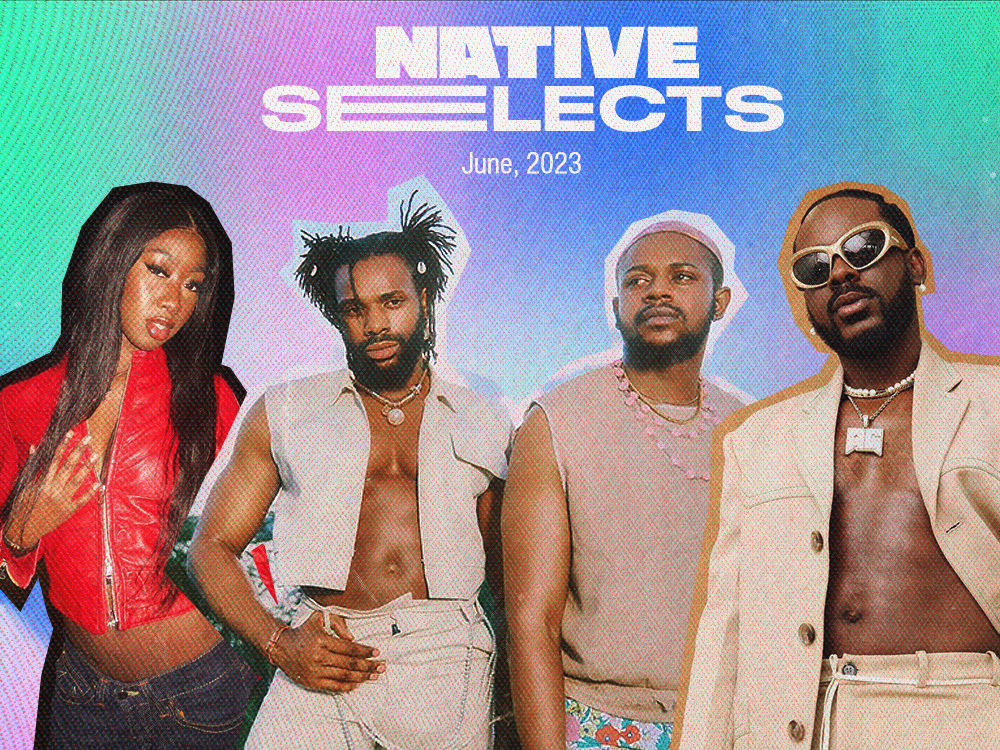
NATIVE Selects: New music from Victony, Chinko Ekun, THEMBA & more

It’s that time again. Every day, new music shows up, sweeping fans and music lovers off their feet while artists gauge reactions to know the effect of their creativity. At the NATIVE, we are committed to keeping our ears on the pulse of the music scene and bringing the best sounds to your doorstep.

Last week, we brought you songs from Bella Shmurda, Justin 99, Elaine and more. Today, we have songs that move from Afropop to Amapiano to R&B, with our select artists showcasing their unending talent and passion for creativity. Lock in!


VICTONY – “SOWETO (REMIX) FT. DON TOLIVER, REMA & TEMPOE

Almost a year after his ‘Outlaw’ project birthed the hit track “Soweto,” Victony returns with a star-studded remix featuring Nigerian superstar Rema and American artist Don Toliver. The track is another addition to the list of collaborations between Nigerian acts and their international counterparts, say Selena Gomez on Rema’s “Calm Down” and Don Toliver’s “Special.” Rema and Don Toliver add spice to a song that has been a fan favourite across the world, settling into Tempoe’s flute-sweetened production and reminding us again why “Soweto” is a fire track.

Uzoma


“MUSTARD SEED” – LANAIRE ADEREMI

Predominantly a performance poet, Lanaire Aderemi has now released her debut song. “mustard seed” is produced by the mercurial Yinka Bernie, who layers evocative strings with a neo-soul flourish. Her voice attuned to sparse movements, lanaire creates a record which floats with positive affirmation. It’s a soulful record which lifts the listener into the ethereal soundscape with relative ease, while the repeated “I can do all things” builds a dream-like warmth throughout the song’s runtime.

Emmanuel

“TABOO (REMIX)” – KAREN NYAME KG & DJ IC

In the later parts of last year, South African Afro-house musician, Karen Nyame KG delivers a soulful rendition on the high tempo productions accompanied by heart-thumping drum patterns and saxophone chords. For the remix with DJ IC, the track maintains Karen’s honeyed vocals however, taking on a mellow, slowed down approach with focus on the infamous log drums commonplace in house music in these parts. 

Nwanneamaka

MAU FROM NOWHERE “S_T_L” FT. MAYA AMOLO

Mau is the gift that doesn’t stop giving and  “S_T_L” is testament to that. Joining hands with songbird Maya Amolo, the duo offer an intimate and minimalistic gift giving a sunset experience. The song was written in that liminal space where you recognize that you and this person need to follow your own paths but there still lingers a deep love and yearning for what you shared – and all the fears and insecurities that come with it. The delicate production and the conversational approach between the two artists portray pain in a beautiful and healing way. 

Tela


CHINKO EKUN “I LIKE GIRLS” 

Once heralded as one of the best indigenous rappers around, Chinko Ekun has been rebranding in recent years. An important part of this comes from his flirtation with pop sounds, and “I Like Girls” is a confident move in that direction. Produced by Ozedikus, the spritzy record pulls from the logdrums of amapiano to establish its party-starting allure. Ever the punchline purveyor, Chinko Ekun sprinkles fun-streaked one-liners all over the record, emerging with a song which, more than proclaiming his love for girls, actually evokes a visceral mood which immerses the listener better into the groove. 

Emmanuel


THEMBA & NICO DE ANDREA “DISAPPEAR (REMIX)” FT. TASAN & ANDREA OLIVA

South African singer, THEMBA joins Dj and producer, Nico for an upbeat electronic number about a soured love story. Accompanied by a heart-warming vocal performance by Kasan, the track serves as a part of the two pack 2022 release. For THEMBA’s second release for the year, the newly configured version of “Disappear,” comes with deep-house instrumentals from Swiss producer, Andrea Oliva. 

Nwanneamaka

Featured Image Credits/ NATIVE

Femme Fest’s all-female lineup returns to Lagos this weekend

Over the years, women have been increasingly underrepresented in the music industry–both home and abroad. Whether its the top executive spots at record labels, or A&R’s, managers, artists, DJs and producers, the top spots are typically reserved for their male counterparts despite their valid contributions to the growth of the music industry across the years. When it comes to the live performance industry, these numbers are even lower. A BBC survey found that only 13% of female headliners are women, a staggering figure that is even lower when brought closer to home.

Femme Africa has filled a much-needed space in the music and entertainment industry, seeking to bridge the disparate gaps between female artists and their male counterparts in Nigeria’s androcentric society. This has culminated in a dedicated series of workshops, panels, and its live showcase–Femme Fest which has welcomed established and emerging acts to the stage since its inception in 2021.

More than just a space for women to perform and showcase their talent, Femme Africa–and by extension, Femme Fest has also served as an incubation platform for emerging female talent playing a hand in the music of Tems, Somadina, SOLIS, Bella Alubo, and more. This International Women’s Month, Femme Africa is not slowing down on its mission to spotlight and champion female talent on the African continent. Since March began, the Femme team have launched the Pink Book, a digital curation spotlighting African women doing exceptional work in audio and music.


View this post on Instagram


A post shared by FEMME MAG (@thefemmemag)

Now, the Femme team are bringing their Femme Fest back to Lagos this Saturday, 25 March 2023. The one-day music festival will feature some of the brightest and talented female names in music. This year, the show will see performances from Bloody Civilian, SGaWD, and newcomers such as Qing Madi & Winny, and female-owned brands like Skin Ink, Rekoja Cadles & more. With promises to make this year’s show even bigger and better, the festival is also sponsored by brands such as The Orchard, Amstel Malta, Star Radler, Kuda Bank, Absolut, MTV Base and more. 

When we last spoke with Femme Africa’s founder, Ayomide Dokunmu, she spoke about growing tired of the tokenism in the music industry and carving out a space where women can learn, share their skills, and commune with one another: “It’s important because we don’t have that many that are just speaking to us- there’s also a need to make a conscious effort to promote diversity. Men had a head start, and in order for us to catch up, there needs to be initiatives that are just for us.”

Don’t miss out on all the new talent and brands at Femme Fest this weekend.

Get your tickets here.

Featured image credits/NATIVE


ICYMI: 8 essential books to read this Women’s History Month

For Us By Us: Nigeria’s 2023 Election Serve As A Reminder of Our Oppressive Past

You must have seen the videos and heard the accounts. In the days after Nigeria’s gubernatorial elections, conversations around tribalism has been the most dominant to have emerged—tribalism, particularly against Igbo people, the ethnic group of which I’m proud to be part of. While there’s long been acts of violence and subjugation carried out against Igbo people, the most recent was set alight through comments made by the chairman of Lagos State Parks Management Committee, Musiliu Akinsanya, popularly known as MC Oluomo. In a meeting by the All Progressives Party (APC), Oluomo could be heard instructing the room packed with party loyalists. “Please tell them, we’ve begged them,” he says, referring to Igbo people, “If they won’t vote for us, it’s not a fight. Tell them that ‘Chukwudi’s mom, please, if you don’t want to vote for us, sit down at home!’” 

The Nigerian Police Force (NPF) has not deemed this an immediate threat but Olumo’s words speak volumes about the current climate around Igbo people in Nigeria. Speaking to Channels TV a night before the elections, the spokesman of the NPF, Olumuyiwa Adejobi shared, “Let us take it as a joke, like he has said. He has come out to debunk that it is not true. Let us leave it that way that it is not true. It is a joke between two persons in that area at that particular point in time.”

Lagos is Nigeria’s commercial epicentre and a fixture in our booming cultural scene. Aside from being a former capital, it currently has one of the biggest economies in Africa, a position that has been generated through a mutual effort from each citizen resident in the state. For centuries, people within the geographical area known as Nigeria have moved around the country, going where their varied sensibilities find mutual acceptance despite their tribe.

History indeed proves that there are few places in the world where its original inhabitants still reside today. Pertaining to arts, it’s been imperative that creators move across borders to share their work and learn new techniques, which has led to the multifaceted nature of Nigerian artwork. The particular invocation of the Igbo people is quite dangerous because, against the better instances of shared cultures, we’re returning to our oppressive and discriminatory past of the sixties. As anyone who knows what those years contained would tell you, it was the most gruesome period in our history. 

In the several accounts of people who were denied their right to vote in the gubernatorial election because they “looked Igbo,” this twisted ideology of preserving Yoruba dominance in Lagos was the common chant. As we’ve seen in the videos, people were attacked and killed, all in the presence of armed policemen and security officers who swore to protect lives. For several people who were forced to witness the ugliness of tribalism for the first time, it’s a crucial introduction to the most enduring of Nigeria’s loopholes as a country. And for Igbo people who were more or less born into this struggle, it’s another reminder of how easily seeds of hatred and discord can be sown into people, all for gaining political power. 

One thing must be clear: tribalism, like poverty and illiteracy, has always been a favoured tool in the hands of Nigerian politicians. This goes back to the 1960s when the regions of the country—then the East, North and West—were divided on how best to approach independence. Among the leading politicians, there were agendas passed down to the people rejecting a central government, positioning eventual domination by other tribes as the major factor. For tribes who have evolved different religious and social lifestyles, this excuse of domination fed into already-existing tensions. 

Led by Emmanuel Ifeajuna and Kaduna Nzeogwu, the military coup of January 1966, which brought an end to Nigeria’s First Republic, was hastily called an “Igbo coup.” The coup plotters had planned to apprehend the major occupants in federal government positions although, according to Max Siollun’s ‘Oil, Politics and Violence,’ they didn’t unanimously agree on whether to arrest or kill them. That resulted in important Igbo personalities such as the county’s president Nnamdi Azikiwe and Premier of the Eastern region Michael Okpara escaping with their lives, which soldiers of northern extraction saw as complicit, especially as the most ranked northern politicians Tafawa Balewa and Ahmadu Bello had been murdered. 

In supposed retaliation, six months later a counter-coup was carried out, this time killing over 250 Igbo and Eastern army officers, including the highest-ranking army officer Major General Aguiyi Ironsi. The following year saw the pogrom carried out against Igbos in all parts of the country, most notably in the north by soldiers. A scene in Chimamanda Ngozi Adichie’s 2006 novel ‘Half of a Yellow Sun’ describes the bone-chilling nature of the killings and how even pregnant mothers and children weren’t spared. In his acclaimed book ‘In Africa Biafra Died,’ Emefiena Ezeani relates how, in comparison to the other coups Nigeria would witness, “none has been associated with the ethnic origin of their principal plotters.” 

These coups set the backdrop for tribalism against Igbos in Nigeria. Considering that over 40,000 Igbo lives were grotesquely claimed throughout 1967 in several parts of the country, the realisation is that Igbo people are more or less second-class citizens within Nigeria – it is frankly the least secured life in the country, and stoking this peculiar fire is ugly to say the least. We also must consider the various minority tribes (Nigeria has over 350 ethnic groups after all) being lumped into the Igbo group, a destructive proof that injustice is everyone’s concern. The barely-veiled scapegoatism thrives on a dangerous precedent without a proper deconstruction, putting off discussions and demonstrations of self-determination proves to be shortchanging history. 

As an Igbo person born and raised in Lagos, it’s been surprising but not shocking to see the anti-Igbo hatred being spewed from all angles and it actually takes the shape of an organised attack. Right from writing off the candidacy of Labour Party’s Gbadebo Rhodes-Vivour on the account of his mother being Igbo (and referring to him in a derogatory way as Chinedu) to the comments of MC Oluomo and several other party members who’ve referred to allowing Yorubas to be in “control” of Lagos, there’s been progressive coordination of these attacks, most recently culminating in the gaslighting we’ve seen from people who confine what’s been happening to a political strategy. 

For over ten years I lived in Ajegunle, an area in Lagos State that suffered ethno-religious crises in the early 2000s, and among the everyday people, such tribalism was almost non-existent. Being one of the most ethnically-diverse neighbourhoods in Nigeria, it was obvious that we could live together if some people weren’t fanning the embers of hatred. Some of my closest friends in secondary school were from other tribes, and it didn’t matter much to us. The events of this election have been a brutal reminder that the ethnic-spurred storylines in Old Nollywood (“over my dead body would you marry an Igbo man”) among other signifiers has deep-running ties in the Nigerian socio-political space, and it’s a conversation that must be had. 

“It has to do with the role Igbo people play in the economic landscape of Nigeria and then it has to do with their numbers.” – Chukwudera Chiedoziem, a journalist and writer based in Awka, southeastern Nigeria.

For Favour, a young graduate who voted in Lagos, it was jarring to be referred to as “Omo Igbo” for the first time in her life. She was asked to vote “for us” by street dwellers she met on her way to the polling booth. She also narrated to the NATIVE how sad it was to see people picking their ballot papers from the gutter, after thugs had arrived on a motorcycle to scatter the booth which was close to her house. “’All these Igbo people,’” she said, quoting their exact words, “’Una wan occupy Lagos, una wan pursue us.’ These people were with guns.” Chigozirim, who is presently an Architecture undergrad, spoke to us about witnessing “people who he grew up and played football with” openly disenfranchising others and instigating violence. 

According to Chiedoziem, the potency of utilising Igbo hatred as a means of asserting political power can be traced to history. “The 1966 coup was tagged an ‘Igbo coup’ and Igbo people were killed and it led to the Biafra War,” he said. “These things have not been properly addressed on a national stage. We’ve not talked about it; there has been no consensus on the national stage that Igbo people were wronged. And the ‘restructuring, rehabilitation and reconciliation’ that the Gowon government recommended has not been carried out. It’s more like running away from trauma and the trauma keeps resurfacing.”

Featured Image Credits/The NATIVE


ICYMI: LEADERSHIP, POWER & NIGERIA’S GOVERNMENT OF THE PEOPLE

uNder Spotlight: Rhita Nattah’s Music Channels The Personal & Political

For Rhita Nattah, music—citing Nigerian Afrobeat legend Fela Kuti—is “a spiritual thing.” The Moroccan artist, whose entry into the music industry began with an unsavoury experience and who continues to grapple with bad policies in her home country, has managed to keep her head above water and her eyes fixed on the grand prize: making music that impacts the lives of her listeners. “You gotta respect the art. You got to respect music. That’s what I feel,” she says. “[Music] is first and everything comes after. Money and fame don’t come first. Never.”

Nattah’s debut EP ‘INNER WARRIOR,’ which was released last month, encapsulates all her ideals and beliefs. Over a bedrock of traditional Moroccan music—Aissawa and Ahwachsprinkled with Western influences in the forms of R&B, Soul and Hip-Hop, Nattah digs into herself to unearth powerful yet catchy songs about self-belief and her experiences as a woman in Moroccan society. “I am gonna tell you things about myself/I didn’t know before/Things I hide from myself, from myself/Oh, some days were dark,” she sings on the EP opener “Garden.” Nattah, who appeared in the NATIVE’s uNder column for February, revealed that she wants to be “a voice for the people, a friend, a sister, through my music and words.”


View this post on Instagram


A post shared by Rhita Nattah 🌶 (@rhitanattah)

Born in Fez, which is the oldest of Morocco’s imperial cities and served as the country’s capital at least five times in its history, Nattah grew up listening to traditional Moroccan music. As a teenager—and with the help of computers and YouTube—her music expanded to accommodate more names: Amy Winehouse, Sarah Vaughan, Dinah Washington, Sizzla, Queen Omega. Courtesy of YouTube, she taught herself English (the languages spoken in Morocco are Arabic, Berber, French and Spanish), how to play the guitar and how to compose music. 

In 2016, while she was a master’s student, the Swiss electronic band Kadebostany contacted her to write and compose a song for them. The song “Save Me,” which is one of the band’s most popular songs, has ten million views on YouTube, has over ten million plays on streaming platforms and has been remixed by artists in Greece and Germany, amassing over a 100 million views. Despite the success of the song, Rhita Nattah didn’t get any publishing credit. Rather than let disappointment destroy her passion for music, she decided to seek more knowledge about the music industry.

“I spent a lot of time trying to learn about the music business, about author rights, about neighbouring rights, about distribution, but I just discovered with time that in Morocco, they respect nothing about [rights] too,” she says. “That’s why that [Swiss] group took advantage of me because here [in Morroco] organizations are very fucked up. Big actors [and] big actresses in Morocco never get their rights. When it comes to art, it’s very bad. So even though I learnt about the rights and everything related to the music thing, I get nothing [in terms of royalties].”

Throughout her journey in music, Nattah has had Samir El Bousaadi by her side. He’s her musical collaborator and husband. They met while she was a university student in Rabat. Nattah had needed another guitarist for a concert she was billed to perform and found Bousaadi in her Facebook contact list. “He accepted and we met for rehearsals, and then we played together,” Nattah says. “We loved the vibe and then we started meeting more often to play music together, just to discover what we can do, just jamming in general.” Nattah and Bousaadi’s friendship deepened as they spent more time fine-tuning their craft. In 2017, they got married. 

Samir El Bousaadi. Image Credit: Instagram/@samirbs

“I trusted him because I really love to work with people who listen to good music,” she says about Bousaadi. “And also because he’s a musician. I love producers who can play instruments. He can play guitar, bass and piano. And for me, this is important. If you’re a producer, you should know how to play instruments. He [Bousaadi] listens to a lot of metal and grunge. He used to play with several groups and when he plays the guitar, I feel it. The way he plays is very emotional and that’s the thing that I loved when we first met, before knowing everything about him.”

Between 2017 and 2019, Nattah and Bousaadi wrote and composed music, while trying to find their unique spot sonically. They also did covers of music from other artists—mostly Nigerian Afrobeats musicians. In the videos, Bousaadi, strumming his guitar, would sit beside Nattah who would belt out the songs. They covered songs from Wizkid, Tekno, Melvitto & Oxlade, Kizz Daniel, American singer Khalid and Syrian musician Bu Kolthoum. Although Nattah received offers from Afrobeats producers, she turned them down because she had no intention of being identified with one sound. In 2019, she and Bousaadi felt it was time for her debut.

Nattah’s debut single “Not the Same,” which Nattah’s friend on social media Jamie Portier mixed and mastered for free, was the precursor to ‘INNER WARRIOR.’ It tells the story of a woman ruing a failed relationship but determined to let go of her hurt and forge ahead. At the time, Nattah had completed her master’s degree and Bousaadi worked as a graphic designer/director in a French bureau in Rabat. When a job opportunity as a teacher (and with great pay) in a Catholic school appeared, Nattah turned down the offer to focus on her music. Bousaadi, too, quit his job. 

“It was a very hard and crazy decision because everyone around us was very intrigued and they took us for crazy and childish people,” Nattah remembers. “They were like, ‘You know, in Morocco, we have nothing. We don’t have the industry. What are you doing?’ We [Nattah and Bousaadi] were believing. We had no idea of how we were gonna do the things, but we [knew] that we [could] have something. We just knew inside of our hearts that we can give something.”

Amid the resounding effects of the COVID-19 pandemic, Nattah and Bousaadi were holed up at home making music. They turned their room into a makeshift studio, with two tables, a computer and a mic. Nattah’s favoured place to record in the room was a closet. With Nattah singing and Bousaadi handling production, they finished recording the songs for Nattah’s EP in 2021 and sought the assistance of Talal Bouroki, who with Bousaadi, is a member of the Moroccan Rock band General Rest In Peace. The process of mixing and mastering the songs with Bouroki lasted from January 2022 to July 2022 because Bouroki had another job and could only work on the songs on Saturdays. 

The recording process for ‘INNER WARRIOR’ was heavily collaborative. “Sometimes Samir starts working on a beat and I’m like, ‘Oh, this is interesting,’ and I just start doing toplines and melodies,” Nattah says. “[Then] Samir takes more time to make the beat and then when he finishes, I put words to these melodies.” An instance is “The Calling,” whose melodies for the verse and chorus Bousaadi had created before Nattah infused the words. According to Nattah, it’s all about the feelings the songs evoke in her and Bousaadi. 

“On My Own” is Nattah’s most personal song on the EP. She reveals that it is a snapshot of a particular moment in her life as it cracks a peep into old decisions. In the first verse, Nattah sings, “I’ve been smoking lately I know bad (sir).” While she no longer smokes, she defends its importance in the song for her honesty in opening up about a habit she adopted during a stressful situation. 

In a 2012 report, The New York Times noted that generations of creatives in Morocco earn paltry sums in royalties, even if they are lucky enough to get anything. Under the government, the Moroccan Bureau for Copyright, which “is supposed to find solutions and ensure respect of intellectual property, including the piracy” has been accused of withholding the royalties of artists. Eleven years later, the situation remains the same. 

“The main problem [is] the fact that governments before and even [current] governments ignored art and culture because of [religious] thinking,” Nattah says. “And the people who were famous in Morocco [and] came before us didn’t prepare the path, didn’t find solutions, didn’t talk about it. Some people were [also] bought; they [governments] gave them a little bit of money and they shut their mouths.” 

The Moroccan music industry has lacked a proper structure to collate the financial rewards that each artist deserves from their works. Although Nattah’s music is played by radio and TV stations in Morocco, she hardly receives any royalties. “Sometimes they choose to pay you with no details like it’s a salary. and sometimes, they don’t. It depends on their mood, I guess. Yeah, it’s very fucked up,” she says. “But I can’t stop making music because I chose this path, you know; no excuses.”

Nattah is already at work on her album, which she hopes will feature guest appearances from artists in Morocco, the UK and Nigeria. She and Bousaadi also have an EP in the pipeline with Canada-based Moroccan act Sami Chaouki. Nattah, who is an indie act, dreams of touring the world and performing in countries such as Germany, Turkey, the UK and the United States, where the streaming metrics say she has a loyal following. 

With increased visibility in her career—featuring as Spotify Africa’s Equal Artist of the Month and a billboard appearance in New York’s Times Square—Rhita Nattah’s path to success is widening. “I’m just waiting to see what life has in store for me,” she says. “I’m just working on my music, minding my business [and] doing the things that I love. Hundred per cent following my heart, believing since day one and that’s it.”

Stream Rhita Nattah’s ‘INNER WARRIOR’ below.

Featured image credits/NATIVE

Davido makes his return with announcement of his new album, ‘Timeless’

001 is back. The rumours are true, Nigeria pop star Davido is back from a well-deserved hiatus and he’s already whetting our appetites for new music. For months, Davido’s return has been at the height of social media conversations as fans held on to his cryptic tweet “See You In March” shared in a moment of proximity with his fans last December.

Wasting no time to make good on his promises for new music to our ears, Davido arrives today with the announcement of his fourth studio album ‘Timeless’ with a cinematic trailer recounting the travails he’s been through in the past year. With unbridled confidence and limitless audacity, Davido pens a letter to his fans and well-wishers, thanking them for their support on his journey and inviting them to the next phase of his career-defining ride.


View this post on Instagram


A post shared by Davido (@davido)

Since his debut on the scene in 2017 with “Dami Duro,” Davido has edged out the competition with ease. From his debut album ‘Omo Baba Olowo’ with standout tracks such as “Back When,” “Ekuro,” “For You,” and more, he’s consistently spoken directly with his audience through his music and bypassed naysayers on his way to the top. His omnivorous album fast-tracked Davido’s name as a household name in Afropop history. While his return to a cohesive body of work didn’t come till almost seven years later, Davido never strayed from the limelight, keeping his legion of fans satisfied with groovy cuts and meme-able chrouses from 2017’s “FIA” and “Fall” to 2018’s “Assurance,” and more recent cuts such as Popcaan-assisted “Risky,” “FEM” and “Ke Star” featuring Focalistic.

Indeed, there’s little need for a reminder about Davido’s expansive catalogue and his place in Afropop’s ever-evolving canon. With the forthcoming release of ‘Timeless’ Davido brings to full picture the decade-long journey to the top of his game. In the video montage, Davido reflects on his journey by mapping out key moments in his career from his rebellious spirit in “Dami Duro” to his current standing as an artist commanding global audiences and selling out stadiums. He sings “If they wan turn Goaliath, I be Davido for life,” his voice vibrating with resilience and determination for his next act.


View this post on Instagram


A post shared by The NATIVE (@thenativemag)

In the trailer for ‘Timeless,’ the videos were baked into the music in a cinematic style which set the tone for where Davido could go sonically and thematically. Considering it’s been a while since he heard new Davido music, the Amapiano production which had the famed Magicsticks tagline brings a fresh excitement to the album and could portend the album’s experimentation. The scenes set in the rural, vegetative setting also hint at Davido’s immersion into the natural world, a pairing that foreshadows the album’s themes.

Coming from ‘A Good Time’ and it’s follow-up ‘A Better Time’, the artist’s exploration of familial values has been filtered through upbeat bops and the occasional introspective cut. ‘ABT’ was especially poignant as it charted a straight course from his motivations as a global artist to homeward considerations of his legacy, most strikingly captured on “The Best,” which features his protege Mayorkun.

With ‘Timeless’ establishing the associative moods of melancholy and triumph, it’s expected that Davido’s perspective has matured in a new light, especially after the unfortunate event that led to his absence on social media since last year. For a musician who is most potent when providing insight into his personal life, it’s clear that this ‘Timeless’ era in Davido’s storied career has all the potential to become an all-time high for Afropop. It’s his time.

Pre-save the album below and watch the trailer.


Written by Emmanuel Esomnofu and Tami Makinde 


ICYMI: Revisit our TIME cover story on Davido here

What’s Going On: Mass Protests In Kenya, Malawi Declares State of Emergency & More

“What’s Going On” Tallies Notable News Headlines From Across The Continent — The Good, The Bad, And The Horrible — As A Way Of Ensuring That We All Become A More Sagacious African Generation. With This Column, We’re Hoping To Disseminate The Latest Happenings In Our Socio-Political Climate From Across The Continent, Whilst Starting A Conversation About What’s Important For Us To All Discuss. From Political Affairs To Socio-Economic Issues, ‘What’s Going On’ Will Discuss Just That.


MASS PROTESTS IN KENYA

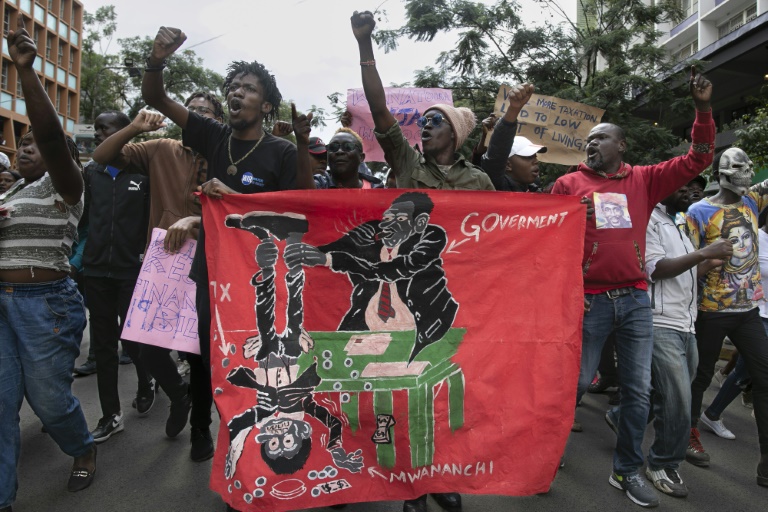
Mass protest have broken out in Kenya. For the better part of Monday morning, police officers pitched camp at different areas in Kenya ahead of the expected protests by the Azimio la Umoja coalition. The strike dubbed #Maandamano was created by the opposition led by Azimio leader, Raila Odinga to compel the current regime to honour various issues the country including the high cost of living, discrimination in state appointments as well as purported lack of transparency in the country’s electoral body.

Odinga’s opposition believes that the election was stolen despite Kenya’s highest court upholding victory for incumbent President William Ruto in last year’s election. Odinga is also calling for a reinstatement of the four commissioners sacked by Ruto’s government from the electoral body. Despite being deemed illegal, the protests continued as planned with roads leading to government buildings now blocked and the president’s official residence sealed off.

Police clashed with protesters in Nairobi’s city centre, with businesses in the city centre shuttered for the day, and in Nairobi’s Kibera slum, where Odinga has substantial support. Clashes were reported in the city of Kisumu, in western Kenya, which is considered a stronghold for Odinga. One university student is reportedly shot dead in Kisumu. According to the National Police Service, the protest was termed illegal since it didn’t meet the threshold of the law. Nairobi police commander Adamson Bungei, says Azimio failed to meet the threshold to hold the protests as the law requires that one informs the police of the intended protest at least three days prior. Following this, Raila Odinga informed the government that mass protests will take place every Monday until the government meet their demands.

#NATIONALSHUTDOWN: PROTESTERS DEMAND THE RESIGNATION OF RAMAPHOSA IN SOUTH AFRICA

Thousands of protesters marched through South Africa’s cities on Monday, calling on President Cyril Ramaphosa to resign over the lack of jobs and electricity. In response, the country’s security forces guarded and sealed off malls and streets to prevent any violence and looting. Current reports state that more than 550 protesters have been arrested since Sunday night on charges of public violence, intimidation, damage to critical infrastructure and theft, the national intelligence body said in a statement.

In several parts of Johannesburg, protesters waved banners saying “Ankole must go”, referring to Ramaphosa’s love for the Ankole cattle breed. Other banners read “our people sleep hungry,” as many join the demonstrations to push back against prolonged economic turndown. The Marxist Economic Freedom Fighters (EFF) led by their leader Joseph Malema protested against social and economic challenges faced by South Africans, including crime, corruption, load shedding and unemployment amongst others.

Prior to the anti-government protests, 87 people were arrested after Julius Malema addressed followers in the streets of Pretoria. Dubbing the protests #NationalShutdown, many shops were closed down due to fear that the demonstrations would grow and mirror the 2021 protests in the country.

MALAWI DECLARES A STATE OF EMERGENCY DUE TO CYCLONE FREDDY

According to authorities in Malawi, Mozambique and Madagascar, the death toll in southeast Africa due to the exceptionally long-lasting Tropical Cyclone Freddy has risen to 522. Of the countries, Malawai has been hit hardest by the cyclone and disaster management authorities in Malawi reported on Saturday that the death toll had risen to 438. Malawi’s president, Lazarus Chakwera, declared a 14-day national mourning period last Thursday.

The cyclone which is named Freddy has now dissipated, causing widespread devastation in Malawi, including critical infrastructure. Roads have been cut off and electricity poles have fallen down, according to the Electricity Generation Company Limited (EGENCO). Malawi has declared a state of emergency. Cyclone Freddy first made landfall on February 21 in Madagascar. From there, the storm moved on to Mozambique and then back across the Indian Ocean. On March 11, it reached Mozambique for the second time and then moved on to Malawi.

“A lot of areas are inaccessible, restricting the movement of assessment and humanitarian teams and life-saving supplies,” said Paul Turnbull, the World Food Program’s director in Malawi. “The true extent of the damage will only be revealed once assessments have been concluded.” Both nations were already facing a cholera outbreak before the cyclone hit and there are fears that the flooding could worsen the spread of water-borne diseases. Mozambique was also dealing with Freddy’s first battering and floods earlier in the year.

Featured image credits/


ICYMI: Five States To Watch In Nigeria’s Gubernatorial Polls

Here’s What We Know About Peter Obi’s Petition Against Tinubu and INEC

Call this the biggest lawsuit in the country and you wouldn’t be wrong. On March 20, the presidential candidate of the Labour Party (LP) Peter Obi filed his official petition against Bola Ahmed Tinubu, Nigeria’s president-elect and candidate of the All Progressives Party (APC). In the weeks since the Independent National Electoral Commission declared Tinubu as the winner of the 2023 presidential elections, the gross misconduct which saw several accounts of voter suppression and electoral malpractice have been a major talking point, both in on home turf and internationally

As expected, Peter Obi and the Labour Party had rejected the outcome of the elections. In his national address to the country on March 3rd, Obi said, “The election has been conducted and results announced as programmed. It is a clear deviation from the electoral rules and guidelines as we were promised and did not meet the minimum criteria of a free, transparent, credible and fair election devoid of voter intimidation and suppression, and late commencement of voting in some specific states”.

While many Nigerians had reservations about the judicial process, the precedent of Peter Obi in court cases provided hope to his teeming supporters. Those who witnessed his ascendance in state politics recollected how Obi had reclaimed his mandate from Dr. Chris Ngige of the Peoples Democratic Party (PDP) after state elections in 2003, after thirty five months of the latter sitting in power. Even though he contested with a newly formed party All Progressives Grand Alliance (APGA), the doggedness of Obi saw him make history as the first candidate to unseat a sitting governor through the judicial process. Eight months after he was sworn in, he was impeached by the state House of Assembly in 2006, but for the second time he went to court, reclaiming his mandate and returning as governor in 2007. 

Earlier this month, the Labour Party had dragged INEC to court, commencing its case by seeking to prevent INEC from reconfiguring its Bimodal Voter Accreditation System (BVAS). Although the Court of Appeal had refused his prayer, it had granted Obi and other candidates the approval to scrutinise electoral materials. That court case had been the INEC’s validation in postponing the gubernatorial elections, but with this recent petition filed by Peter Obi and the Labour Party, it is clear that we have a major legislative battle on our hands. 

As can be accessed on the document made available by investigative journalist David Hundeyin, the petition was filed on the 20th of March. It makes the case of Peter Gregory Obi and the Labour Party against Bola Ahmed Tinubi, his running mate Kashim Shettima, INEC and the APC. In the petition, Obi’s case rested on five points, which are namely: that Bola Ahmed Tinubu was not qualified to run, that he failed to get majority of the lawful votes, that he failed to score 25% in the Federal Capital Territory, Abuja, and the election be cancelled and a fresh one conducted in which Tinubu and Shettima won’t be a part of. 

Other details which came into prominence was the point made against Shettima, who accepted the vice presidential nomination even though he was a senatorial candidate. Although he withdrew the latter on February 15th, on the previous day he had a double nomination which infringed on the Section 115(d) of the new electoral act. More importantly, the petition also made mention of the alleged drug charges which Tinubu faced in the US prior to his becoming a politician in Nigeria. As many have pointed out, foreign security departments might be subpoenaed and called to testify at the case, which puts this in full glare of the international world.

The unprecedented nature of this case is not lost on Nigerians. With palpable buzz following the announcement of the petition, it has been described as a petition into the Supreme Court as a body. When these charges are brought to court and the witnesses present, it would open up the legislative framework of Nigeria in a way no case has ever done before. 

Indeed for Nigerian electorates, these are very interesting times. Having proven unable to conduct credible elections and demands for accountability falling on deaf ears, it would be revelatory to gauge the impartiality of the judicial process. As a country with weak democratic institutions, there’s a lot of potential in this particular court case. 


ICYMI: Nigeria’s 2023 election serve as a reminder of our oppresive past

TurnTable Top 100: “Who Is Your Guy (Remix)” Becomes Spyro & Tiwa Savage’s Highest Charting Single

Tiwa Savage’s impressive run continues as her placement on Spyro’s “Who Is Your Guy (Remix)” moves the track to a new peak of No. 2 on the chart, becoming both her and Spyro’s highest charting singles in Nigeria. Tiwa Savage previously peaked at No. 3 on the singles chart with “Loaded” in 2022. “Who Is Your Guy (Remix)” tallied 75.6 million in radio reach (No. 1 on radio) and 2.08 million on-demand streams (No. 5 on streaming).

For the fourth week, BNXN’s “GWAGWALADA” leads the Official Nigeria Top 100, tallying 3.45 million on-demand streams (No. 1 on streaming) and 43.9 million in radio reach (No. 3 on radio). It is BNXN’s second-longest No. 1 song in Nigeria – a week behind “Feeling,” which spent five weeks at No. 1 in 2021.

Omah Lay’s “soso” slips to No. 3 while Rema’s “Holiday” dips to No. 4. Ayra Starr’s “Sability” stays at No. 5 for another week after debuting and peaking at No. 1 for a week.

Bella Shmurda’s “Ara (Gen Gen Tin)” debuts at No. 6, tallying 2.17 million on-demand streams (No. 3 on streaming) and 22.8 million in radio reach (No. 16 on radio). The song is Bella Shmurda’s eighth top-ten entry in Nigeria. Ruger’s “Asiwaju” is steady at No. 7 for a second week after topping the chart for seven consecutive weeks.

Adekunle Gold’s “Party No Dey Stop” with Zinoleesky launches at No. 8 on the Top 100 off two days of tracking. The collab track accumulated 1.94 on-demand streams (No. 6 on streaming) and tallied 14.4 million in radio reach (No. 31 on radio). The song is challenging for No. 1 on next week’s chart in its first full week on the chart.

Khaid’s “Jolie” steps into No. 9 while Kizz Daniel’s “RTID (Rich Till I Die)” is unmoved at No. 10. Outside the top ten, Khaid’s “Carry Me Go” with Boy Spyce debuts at No. 16 off a partial tracking week (4/7) while Tiwa Savage’s “Stamina” with Ayra Starr & Young Jonn starts at No. 26. Other top 40 debuts include Zlatan’s “Omo Ologo” at No. 21 and Peruzzi’s “Pressure” with Fireboy DML at No. 25.

Featured image credits/Youtube: Spyro

NATIVE Selects: New Music From Elaine, Bella Shmurda, Justin 99 & More

It’s that time again. Every day, new music shows up, sweeping fans and music lovers off their feet while artists gauge reactions to know the effect of their creativity. At the NATIVE, we are committed to keeping our ears on the pulse of the music scene and bringing the best sounds to your doorstep.

Earlier this week, we we brought you songs from Adekunle Gold, Tiwa Savage, Chike, Khaid and more. Today, we have songs that move from Afropop to Amapiano to R&B, with our select artists showcasing their unending talent and passion for creativity. Lock in!

BELLA SHMURDA FT. NASTY C – “PHILO (REMIX)”

Prelude to the release of his 15-track debut album, ‘Hypertension,’ Nigerian street pop pioneer, Bella Shmurda enlisted Omah Lay for a standout performance on “Philo.” As expected, the track became a mainstream success, sitting at the top of several national charts for weeks on end. For the remix, Bella Shmurda taps into South African music heavyweight, Nasty C for a stunning delivery. Still maintaining its catchy, fabled hook, Nasty C’s smooth vocals and flawless rhymes elevate the track to new heights. 

Nwanneamaka

QING MADI – “WHY” 

Confidence is an infectious trait in every artist and Qing Madi has an overdose. The soulfully energetic “See Finish” had introduced the Nigerian artist’s distinct style to listeners and she’s proven keen to keep soaring in good form. “Why” benefits from a stripped soundscape which allows her R&B-inflected vocals shine through. A reprisal against detractors, she sings for the protection of her individuality, a mood that’s best reflected in the lyrics, “No dey put your eyes for my business, cos you dey want to kill my spirit”

Emmanuel

YUMBS, UNCLE VINNY & JUSTIN 99 FT. PCEE – “PIKI PIKI” 

Viral Amapiano sensation, Justin 99 joins upcoming staples in the domineering genre, Yumbs, Uncle Vinny and Pcee for an intoxicating mid-tempo rendition assisted by the genre’s infamous log drums and shakers, incorporated with sweet-sounding flute notes. In usual ‘piano fashion, the track’s harmonious instrumentals took center stage with sonorous vocal embellishments, making its four-minute plus run a pleasurable sonic ride. 

 Nwanneamaka 

TOBY GREY – “PEACE OF MIND”

Over Benyjo’s R&B production, Nigeria-born, UK-based singer Toby Grey utilises “Peace of Mind” in praise of an unproblematic lover. She exudes a tone of gratefulness at the fact that her love isn’t the jealous and insecure type who seeks to deflate the woman in their lives. “Peace of Mind” is the kind of answer that a lot of people in love—man or woman—pray to the heavens for.

Uzoma

1UCID – “GREATEST”

Given the versatile nature of Afropop, it’s no surprise that diasporan sounds have increasingly merged with the traditional percussive style. Ghana-born artist 1UCID (pronounced as Lucid) has spent many years in America, and the subtleties between both cultures informs his music. “Greatest” has an energy he calls ‘AfroBlues,’ heavy on the emotive inflections of his voice as he charts his rise to musical glory. Mellow, groovy and packing lots of quotables through his rap cadences, it’s a conscious effort at finding middle ground between associate genres. 

Emmanuel

REMY BAGGINS – “IN MY BED”

Three years after his 2020 EP ‘Amaterasu!,’ multitalented Nigerian singer, rapper, singer and sound engineer Remy Baggins unleashes his latest single “In My Bed.” Produced by TMXO (with additional production efforts from Remy Baggins, Jaylon and Ramoni), Afropop-inspired “In My Bed” births Remy Baggins as a suave lover skilled in the matter of sexual pleasures, as he beckons to his lover to join him in the bedroom. The single also comes courtesy of a new deal with Sony Music West Africa.

Uzoma

ELAINE & BLXCKIE – “LOVING YOU” 

Teasing their collaboration for weeks now, Elaine and Blxckie have finally released “Loving You”. With both artists flying the unique flags of their craft, it’s a song that lends itself to the ethereal space between R&B and House music. Their voices are assured and carry the theme of love so well, with Elaine’s warm vocalising meeting the melodious crooning of Blxckie with such fine style. It’s the kind of song to be heard anywhere, whether in the heated spaces of intimacy or outdoors, where its dreamy progressions would surely serenade any audience. 

Emmanuel

MEDIKAL FT. SISTER DEBORAH – “COLD & TROPHIES”

How do you make an epic record from a Trap bounce? Medikal has the answers on “Cold & Trophies”. The Ghanaian rapper hasn’t always been the most accepted MC from those parts but when he raps, he delivers pretty well. On the new record, it’s not just the shiny synths or the decimating weight of his bars that makes it stand out. Rather it’s the scope, how the beat switches halfway and he flows into a falsetto, setting the scene for Sister Deborah to drop an effective closing verse. It’s a song that works on many levels. 

Emmanuel

WINNY – “DON’T LEAVE”

As she prepares for her debut self-titled EP, Nigerian singer Winny shares new single “Don’t Leave,” an infectious tune that blends Dancehall, Pop and R&B. Through her patios-inspired delivery, Winny expresses her affection for her man and pleads with him to not leave her side. Winny’s vocals are charged with emotions and the pain colouring the idea of abandonment is visceral. “Don’t Leave” is a must-listen.

Uzoma

SINACHI & DAN AKINS – “WICKED”

The soundscape of African music has never been as multifaceted as it is today. Bridging the peculiarities of different genres, ingenious musicians have been able to come up with a new sound. The talented duo of Sinachi and Dan Akins achieves just that on “Wicked”, a song that ripples with originality. With a drill-esque bounce permeating its glossy surface, Sinachi unfurls great rhyme schemes while Akins provides the warm background, lulling sweet adlibs which provides balance. “Mali” is also shared as part of the 2-pack single, switching up the production in a more melancholic style but the theme of love and desire is universal, as ever embedded with finesse onto the song’s distinct groove.

Emmanuel


MAJOR LEAGUE DJZ, MAJOR LAZER & BRENDA FASSIE – “MAMGOBHOZI”

It’s a meeting of the majors on “Mamgohbhozi”. Primed to release their collaborative project ‘Piano Republic’ on March 24, the super producers have debuted a new single which features the legendary Brenda Fassie. Pulling her ethereal vocals from the classic “Vulindlela”, they build great Piano sonics around the song. More than a great way of paying homage, it reconstructs the record in a contemporary light, setting grand expectations for the forthcoming project.

Emmanuel


Amaarae explores love and sensuality on new single “Reckless and Sweet”

Amaarae is the gift that keeps on giving. Closing out 2020 with her critically acclaimed debut album, ‘The Angel You Don’t Know (TAYDK),’ featuring standout cuts like Cruel Santino and Kodey Radical-assisted “JUMPING SHIP” and promotional single, “LEAVE ME ALONE,” Amaarae reaffirmed herself as a force to be reckoned with. Soon enough, standout track “SAD GIRLS LUV MONEY” began to garner mainstream success and caught the attention of Columbian-American hitmaker, Kali Uchis for a remix, proving Amaarae’s penchant for topping worldwide charts.

Following the album’s outstanding success and memorable live performances at KOKO and Pitchfork Festival Chicago to name a few, keen listeners were itching for new music from the artist. Amaarae has paid this back by kicking off the rollout to her sophomore album, ‘Fountain Baby,’ which has found the artist lending her voice to a number of tracks, serving as a subtle reminder of her sonic abilities. Think the soulful “A Body, A Coffin” for the ‘Black Panther: Wakanda Forever Prologue’ and her sweet sounding bars on Cruel Santino’s “Born Again,” or the brief yet indelible renditions on Blaqbonez’s “Whistle” and Stormzy’s “This Is What I Mean.” Without a doubt, Amaarae is ready for her next act.


View this post on Instagram


A post shared by Fountain Baby (@amaarae)

Arriving today, the Ghanaian superstar makes a captivating solo comeback with new single “Reckless and Sweet,” a fun, sexy synth track that explores themes of love and loss. “Reckless and Sweet” serves as the first promotional single for Amaarae’s sophomore album, ‘Fountain Baby’ and launches Amaarae into a new act, where she’s offering a refreshing update from her debut album.

Over twinkling production touches, funky basslines and skittish flows, Amaarae’s sensual and honeyed vocals take centre stage as she tells a story of a lover using her for personal gains. Infusing a barrage of melodies including cross-continental sounds such as Arabic, Indian and African, Amaarae paints a picture that visualises her experiences with a sweet-sounding chorus and catchy lyrics such as “The evil-er eye has warned me of your intentions, it’s ’cause my money’s just too long/The thought of me spendin’, gives you goosebumps.”

Accompanying the track’s release, Amaarae plays the protagonist with two lead love interests in a lush, high fashion video. The monochromatic styling and warm tones drive the track’s message and tone of love and mystery. “Reckless and Sweet” also provides great insight to her new approach on the upcoming album, whetting our appetite for what’s to come. Speaking on the new single, Amaarae shares,

“It’s about being intentional with the ways we make and give love. It’s about finding the inner sensuality and confidence within yourself and sharing that with the world.”

Watch the video for “Reckless and Sweet” below.

Featured Image Credits/Amaarae


ICYMI: It’s about time we give Tiwa Savage her flowers

Turntable Hot 100: BNXN’s “Gwagwalada” Spends Another Week At No.1

“Gwagwalada” remains the top-ranked song in the Hot 100. The BNXN song which features Kizz Daniel and Seyi Vibez tallied 3.50million streams and 43.7million in radio reach, making it No. 1 and No. 4 respectively on both mediums. It joins “Finesse” as BNXN’s second-longest No. 1 while “Feeling” has two weeks on them.

Following behind is Omah Lay’s “Soso,” another No. 2 slot for the ‘Boy Alone’ cut, while Rema’s “Holiday” maintains its peak position on No. 3. The Tiwa Savage-assisted remix of Spryo’s “Who Is Your Guy” climbs to a new peak at No. 4, making it Tiwa’s fifth Top 10 entry and the first for Spyro. The song also contributes the largest share of the total chart points during the tracking week. It had 49 million in radio reach (No. 1 on radio) and 1.77 million (No. 5 on streaming), a new peak on both the radio and streaming charts.

Ayra Starr’s “Sability” drops to fifth place after debuting and spending one week at No. 1. Libianca’s “People (Remix)” with Ayra and Omah Lay enters the Top 10 for the first time, after tallying 48.2 million in radio reach and 1.38 million in streaming, placed at No. 2 and No. 7 on both mediums. At No. 7 overall, it is Libianca’s first Top 10 in Nigeria and it is Ayra Starr’s ninth (the most for any female artist) and the 12th for Omah Lay.

Rounding out this week’s top ten is Ruger’s “Asiwaju” which retreats to No. 7 while Khaid’s “Jolie” drops to No. 8. Rexxie’s “Abracadabra (Remix)” dips to No. 9. and Kizz Daniel’s “RTID” completes the top ten this week. Ascending purposefully, Lojay’s “MOTO” reaches a new high of No. 17 on the Top 100. The Magicsticks-produced “Availabu” off the artist’s ‘Gangster Romantic’ also debuts at No. 44.

Read a full breakdown of the charts here.

It’s About Time We Give Tiwa Savage Her Flowers

Tiwa Savage has proven with each new effort that she is a force. In a number of ways and for a lot of years, the scales continue to be tipped. When forces go against the grain to even out the playing field or dare to restructure a system to accommodate more women, they are met with resistance. Zooming in on any industry or space occupied by women and men, someway or another the power lies within the latter. In today’s world where everyone is given 60 seconds to make a lasting impression before all eyes are on the next thing, one can only imagine how difficult it is to stand out in the crowd. In recent times however, there cracks are beginning to show and women are finally getting the recognition they deserve.

Bringing it closer to home, everyday, the music industry in Nigeria achieves new groundbreaking records. The domineering genre that is Nigerian pop—colloquially referred to as Afrobeats—and all its proponents relentlessly break boundaries and attain new heights of star power, slinging the ropes of the expansive genre well beyond its borders. When Tems isn’t winning a Grammy and having a mutual fangirl moment with Mary J. Blige on the red carpet, Ayra Starr is sitting at the top of several national charts with each new release. At such a crucial moment in our history, it is vital to recognise those who have remained staunch amidst the challenges and emerged victorious in a world set up to suppress them. An inspiration to many within and outside the industry, Tiwa Savage is one of such unique pillars, an icon in her own right.


View this post on Instagram


A post shared by Tiwa Savage (@tiwasavage)

Rewind the clock to 2012, roughly three years after graduating from Berklee College of Music, an optimistic Tiwa Savage returned to Nigeria to further pursue music. Sitting at the top of the industry at the time were a plethora of hits still able to trigger feelings of warmth and nostalgia in any listener todaya limitless list that includes Olamide’s high-octane “First of All,” Burna’s hypnotic “Like to Party,” Davido’s conceited “Dami Duro” and Flavour’s “Ada Ada.” Evidently a scene on the cusp of a bigger breakthrough, the industry at the time was undeniably male-dominated and standing out would require enormous persistence. Intimidated or not, sceptical or not, Tiwa Savage was about to make an impact that would be felt years down the line. That year, the scene got a glimpse of Savage’s eminent superstar qualities when she signed to the then newly-minted Mavin Records and made memorable appearances on the label’s compilation album ‘Solar Plexus’.

It’s not that Tiwa Savage was an unknown quantity. In 2011, she bolted into the Nigerian music mainstream with the pair of “Kele Kele Love” and “Love me, Love me, Love me,” two snappy and instantly distinct electro-pop songs that established her as a vocal siren and diva with obvious charm and charisma. Birthed from a partnership fissure that led to the dissolution of the iconic Mo’Hits Records, the Don Jazzy-led Mavin imprint was looking to make a statement with ‘Solar Plexus’. With the only obvious hit being D’Prince’s sex-led “Take Banana,” the label was still figuring out the roles for its all-star cast but there was Tiwa Savage, the least experienced in Nigerian pop amongst the roster, standing out on ensemble cuts (“I’m A MAVIN”) and sole focus tracks (“O Ma Ga”) alike.

A year after the Mavin compilation project, Tiwa Savage delivered an outstanding and generous debut LP with ‘Once Upon A time’, a 21-track that sprawled towards multiple sonic directions as a means of emphasising the singer’s versatility. In addition to the diva appeal of her first two breakout singles, there was the Don Jazzy-assisted smash hit “Eminado,” the glorious combination of romance and folk-pop on “Ife Wa Gbona,” deeper cuts like the salacious “Written All Over Your Face” and her spiritual paean on “Olorun Mi.” Darting across modish Nigerian pop sounds at the time, R&B influences, Gospel, Makossa and more, the project’s musical and thematic diversity served as a statement of her multifaceted person, even though a lot of the media coverage was intent on flattening the singer through the lens of objectification. 

At a time when women had to work ten times harder to garner half the attention as their male counterparts, only to get half the accreditation, the challenges Tiwa Savage experienced are inexhaustible. Added to setbacks within the industry, the reception of an artist as herself in a society like ours contributed to hindering a come-up. But Tiwa Savage was relentless. When several expectations aren’t set for women and decisions aren’t made about their bodies on their behalf, women in the industry are only utilised as the punchline for lyrics and objects of attention for music videos. It goes without saying that standing out based on sheer merit would prove difficult. However, for any avid listener focused on the power of her otherworldly vocals and divine star qualities, Tiwa Savage was one track away from becoming one of the biggest pop stars the continent had seen. 

Reminiscing on some visuals from the archives, “Love Me 3x” and “Wanted” especially, blogs and articles littered the internet using words as ‘explicit,’ ‘raunchy’ or phrases like ‘despite the fact that Tiwa Savage is married’ to express their dissatisfaction with her appearance. Her radiant energy exuded through our screens as she transitioned from a reflective pink bodysuit to a zebra print one-piece and beautiful mini dresses with plunging necklines but for many Nigerians, that was ‘too much.’ Like operating in a male-centric industry was not tasking enough, she received criticism from all corners by people who have self-proclaimed access over women’s bodies and affairs. Tiwa Savage—occupying a position as delicate as hers—remained unapologetically grounded in herself and though it wasn’t apparent at the time, consequently rendered herself a reference point for artists like Ayra Starr. 

Just as she was experiencing a steady, promising rise, Tiwa Savage’s career hung in the balance. In an emotionally-charged sit-down with Pulse Nigeria, Tiwa Savage accused her ex-husband/ex-talent manager, Tunji Balogun (TeeBillz) of stealing, infidelity, mismanaged funds and drug addiction. As expected, her music inevitably took the back seat to all the events in her life as she tried to maintain her reputation and protect her child, Jamil. Consequently, her late 2015 sophomore album, ‘R.E.D’, bore the brunt of this. Opening up with “Adura” (translating to “prayer” in Yoruba), ‘R.E.D’ was predominantly an ode to the unforeseen career strides she had experienced in her short time in the industry. Tiwa Savage found resilience in her faith, emphasising her feelings of gratitude and respect to God, while also flaunting a renewed sense of conviction in her artistry and purpose.

With other standout singles like Dr Sid-assisted “If I Start to Talk,” she reiterates her appreciation for successes achieved thus far as she croons on the mesmerising hook, “If I start to count all the blessings/The blessings wey baba God give me we no go end.” Still, ‘R.E.D’ was greatly affected by the rumour mill that churned out speculations about her divorce proceedings. In hindsight, that period was a soft reset for the singer, with the announcement of a management and publishing deal with Roc Nation in 2016, and the release of her first extended play in the summer of 2017 which served as a return to form.

‘Sugarcane’, a harmonious composition of groovy Afropop tracks and several R&B-laced cuts, provided a 6-song suite that comprises some of the best songs in Tiwa Savage’s catalogue. The delightfully brief body of work holds several evergreen Tiwa Savage cuts, including the Spellz-produced, Wizkid-assisted “Ma lo,” the buttery opener “Sugarcane” and commercial lodestar “All Over.” While she’s never been shy about laying out romantic desires in direct terms, there’s a delectable smoothness to her approach on the EP, as exemplified on the project’s best song, “Get It Now.” For its remix, she enlisted American R&B heartthrob Omarion, whose contribution sounded effortless because of how much of a great song Tiwa Savage already made.

For her growing longevity and prominence as the foremost female superstar in Nigerian music through the 2010s, the biggest knock on Tiwa Savage was in how she seemingly caped for the patriarchal status quo. In a 2017 interview, just over a year after the media spectacle about her divorce, the singer discussed the difficulty of women breaking into the echelon of superstardom, deeming the extra hard work and conservative bullshit female artists have to deal with as a virtue. Going a step further, she dismissed gender equality. As an artist who’s shown irreverence by wielding her sexuality and sense of self as weapons against the conservative grain she’s had to deal with, her non-feminist ideals were disheartening but not entirely surprising.

Across the two studio albums and EP she released in the previous decade, Tiwa Savage featured a grand total of zero women. Some of it is a by-product of operating in a male-dominated space but, for what it’s worth, she’s always been a grade A collaborator, a walking highlight reel that consistently turns cameos into song-elevating displays. The list is endless: her stunning appearance on Patoranking’s “Girlie O (Remix),” her show of poise on Ladipoe’s “Are You Down,” her sensual turn on Jidenna’s “Spy Candy,” showing off her falsetto alongside Wavy the Creator on “Body Deep (Remix),” playing the confident romantic foil to Lothario types like on Young Jonn’s “Ello Baby” and Spinall’s “Dis Love,” and much, much more.

As a headline collaborator, Tiwa Savage is as imperial as she is generous. Think: Her forming a glorious duo with the then unknown Timi Wonder on “Ife Wa Gbona” or letting Wizkid’s charisma shine even brighter next to her on multiple occasions without deeming her own star power or the couple times her collaborations with Don Jazzy felt like they were a match made in music heaven. Amidst his mainstream re-entry in 2018, Tiwa Savage scored arguably the best Duncan Mighty collaboration of the time with “Lova Lova,” a high point in another period of recalibration that comprised one-off singles and several feature appearances from the singer.

In mid-2019, news of the singer signing a global recording with Universal Music was announced, effectively setting her up to scale her presence within Afropop’s international push. There were expectations and the first glimpse of a renewed Tiwa Savage was on the Beyoncé-headlined compilation album, ‘The Lion King: The Gift’, duetting with Mr. Eazi on the groovy, soulful “KEYS TO THE KINGDOM.” A few months later, in September, she would lay down an assertive gauntlet with the vibrant Fela-inspired single, “49-99,” setting an expectant tone for a future release, which she teased out with several singles, including “Owo Mi Da” and “Attention,” the latter of which was premiered through an earworm performance on A Colors Show. With a new album on the horizon, Tiwa Savage deservedly sat in the glory she created for herself, setting the project up as her most confident yet with the release of “Dangerous Love” and the delightful hypocrisy shunner “Koroba.”

When ‘Celia’ dropped in 2020, the timing was spot on. Faced with a series of tribulations offset by a global pandemic, the world turned to music for its healing purposes and Tiwa Savage’s project provided just that. On her third studio album—arguably her best body of work yet—the singer reaches for more depth and even briefly ponders her legacy. Named after her mother, the project explores the stories of an African woman through her own lens, with impeccable vocal performances and forthright lyricism enabling Tiwa Savage reaffirm her person and reintroduce a singer with a more wholesome awareness of the immediate environment she’s operating in.

The mid-tempo, love themed track with Sam Smith, “Temptation,” and the subtle socio-political commentary on Naira Marley-assisted “Ole,” to name a few, illustrate the variety of sounds and themes the project explores. However, sitting well within the album’s theme and arguably one of the best songs in that year is “Koroba.” Over the course of her journey in the industry, Tiwa has been forced to get accustomed to public scrutiny and on this track, she turns her attention to the Nigerian audience, whose criticism she is all too familiar with. As the London-produced “Koroba” addressed the hypocrisy towards women who date for monetary benefits, she calls out our society that shames these women but lets the men who steal to make these provisions, off the hook.

‘Celia’, one of the best albums in a packed year for great projects, could have perhaps used a lot more attention beyond the chatter on social media that reduced its reception to a lack of hype. It’s telling of our society where a woman, a superstar for that matter, puts out a body of work and it becomes the lightning rod for conversations about music marketing and PR, rather than the merits of its content. If Tiwa Savage felt slighted by all of this, she didn’t publicly show it, carrying on with the album’s promo run till the early days of 2021.

In August, a year out from ‘Celia’, she returned with her second extended play, ‘Water & Garri’Stacked with highly anticipated features from Ghanian superstar Amaarae and R&B icon Brandy, the 5-tracker presented a seamless blend of different sounds, intricately woven together by Tiwa Savage’s sheer artistry. “Somebody’s Son” with Brandy warmed its way into mainstream ubiquity for its relatable theme, while the Amaarae-assisted “Tales by Moonlight” is a shimmery track accompanied by subtle sax elements, equally artistic visuals and almost makes up for the years of non-existent appearance of women on the singer’s projects. ‘Water & Garri’—also assisted by NAS, Rich King and Tay Iwar—is proof of Tiwa Savage’s unending efforts to surpass all expectations and outdo herself with every new release.

While she’s teased a sequel to the EP, her quest for excellence is taking on ambitious forms of expression. Currently in post-production, Tiwa Savage will star in a film named after ‘Water & Garri’. Expanding the world of her creative outputs even further, the film’s release would mark her directorial debut as she takes on the role of a remarkable fashion designer based in America, seeking to return to her country and face the guilt left behind. She will also be joined by some Nollywood regulars, Mike Afolarin and Jemima Osunde. While this is her first lead role, true stans are familiar with Tiwa Savage on the big screen. From playing Shade Banjo on MTV’s ‘Shuga Naija’ in 2013 to her theatre efforts for the Broadway Nigerian remake of Tyler Perry’s ‘For Colored Girls’, Tiwa Savage is not new to the scene.


View this post on Instagram


A post shared by Tiwa Savage (@tiwasavage)

From a keen consumer perspective, the last decade of Tiwa Savage has been a pure joy to witness. An unquestionable serial hitmaker and Doctor of Music—as awarded by University of Kent in 2022—Tiwa Savage has achieved several career strides and continues to serve as a pillar of the music industry in these parts for many reasons. When she isn’t collaborating with some of Africa’s best like Dj Maphorisa and Major League DJ’s on “Koo Koo Fun” or Asake on intoxicating tracks like “Loading,” she’s reinforcing music’s healing powers with every body of work she puts out. Amidst the chaos that is life, Tiwa Savage remained genuine and consistent as she told hers and our stories, simultaneously polishing her craft, sound, brand and image.

Also an inspiration for many outside the music industry, Tiwa Savage serves as an interminable figure with admirable buoyancy for many women, simply by being unapologetically herself and reclaiming ownership from people trying to make decisions on her behalf. In the thick of challenges she faced as a woman in an increasingly male prevalent space, Tiwa Savage has remained a consistent and persistent face, providing comfort to many with her instantly recognisable, sweet-sounding vocals. It’s about time we give credit where it is due. 

Featured Image Credits/The NATIVE


Nwanneamaka couples her creative interests with her individuality, using words as a vessel for her expression. 


ICYMI: THE NATIVE LAUNCHES NEW WOMEN-FOCUSED VERTICAL, UNRULY

NATIVE Selects: New Music From Adekunle Gold, Tiwa Savage, Khaid & More

It’s that time again. Every day, new music shows up, sweeping fans and music lovers off their feet while artists gauge reactions to know the effect of their creativity. At the NATIVE, we are committed to keeping our ears on the pulse of the music scene and bringing the best sounds to your doorstep.

Last week, we brought you songs from Boj, Zlatan, Mikun, Seun Kuti, Bella Shmurda and more. Today, we have songs that move from Afropop to Amapiano to R&B, with our select artists showcasing their unending talent and passion for creativity. Lock in!

ADEKUNLE GOLD — “PARTY NO DEY STOP” FT. ZINOLEESKY 

With his signing to Def Jam Recordings announced some hours ago, Adekunle Gold is stepping into a new light. The Nigerian artist has been one of the most forward-facing creatives in contemporary Afropop, interpreting his soulful records through a refreshingly creative direction which hasn’t lost the intimacy of his earliest days. A signature bop, “Party No Dey Stop” marks this new era of AG. He joins forces with the street poet Zinoleesky, resulting in a stripped but groovy number, merging lived-in perspectives with his desire to have a good time. 

Emmanuel

KHAID — “CARRY ME GO” FT. BOY SPYCE

Khaid follows up January’s “Jolie” with his latest single “Carry Me Go” featuring Mavin Records’ singer Boy Spyce. “Carry Me Go” continues the theme of romance (that began with “Jolie”) as Khaid and Boy Spyce shed their defences and express their devotion to their lovers. Over SIGNALS’s delightful Highlife guitar riffs, both artists pair their vocals to create catchy music that calls for multiple listens.

TIWA SAVAGE — “STAMINA” FT. AYRA STARR & YOUNG JONN 

Since making her debut before the 2010s, never has there been an Afropop phase without the inimitable vocals of Tiwa Savage. Her collaborative zeal has been a crucial aspect of her artistry, ensuring she keeps in touch with the evolving sounds of Africa and the diaspora. “Stamina” showcases that brilliance again; with Young Jonn and Ayra Starr making great work of their input, it’s a sensitive record bubbling with originality. On production duties, Magicsticks delivers a mellow Amapiano-tinged beat, allowing the dynamic vocals to serenade about the willingness to love. A fine return for the Queen of Afrobeats. 

Emmanuel

CRAYON — “THE ONE (CHOP LIFE)” FT. YABA BULUKU BOYZ

Mavin Records’ act Crayon continues his impressive run of form after last year’s “Ijo (Laba Laba)” and a fine showing on the label’s compilation album ‘Chapter X’ with his first single of the year “The One (Chop Life).” On the track, Crayon revels in his prowess as a hitmaker and party starter. “The One (Chop Life)” features Mozambican music trio Yaba Buluku Boyz—with production credit to DJ Tarico who is a member of the group—who bring their charisma to the Amapiano-infused song and fire up Crayon’s claim to the top spot. 

Uzoma

CHIKE — “SPELL (REMIX)” FT. OXLADE

After releasing his anticipated sophomore ‘The Brother’s Keeper’ last year, Chike demonstrated his prowess as a writer of intriguing narratives. “Spell” was one of those early favourites among listeners; layering his dulcet vocals over the stripped production of DeeYasso, the theme of being mesmerised in love was beautifully captured. Joining the remix is Oxlade, another vocalist whose subject matter revolves around the complexities of love. Together they emerge with an updated sound, complementing each other with dynamic vocals and ethereal melodies. 

Emmanuel

JAIDO P — “ONE OF A KIND” FT. FIREBOY DML

On the NXRTH- and Cracker Mallo-produced “One Of A Kind,” Jaido P and Fireboy DML combine forces for an uplifting ode to overcoming trials. Over a mid-tempo Afropop beat, Both artists, who began their careers in music as students of Obafemi Awolowo University (OAU), pull the listener down memory lane, recalling the obstacles they have faced. They are also in a celebratory mood about the rewards of their hard work and encourage the listener to keep their eyes on the prize. 


Uzoma


Featured Image Credits/The NATIVE

8 Essential Books To Read This Women’s History Month

Women are the backbone of every society. As the world pushes further into a modernist future, the perspective and practices of women remain crucial for widespread development. As models of both humane and intellectual natures, the particular histories of Africa and diaspora Black communities owe a huge debt to the contributions of women.

In its small way, Women’s History Month attempts a reciprocation of the loving values we’ve been passed down from women. Across family, art, science, and politics, there are several personalities whose work establish their importance. In the field of literature, there’s no underplaying the gargantuan role women have played. From its earliest periods, scholarly and literary work, having been dominated by men, were prone to gloss over the perspective of women.

However, taking on the essential mission of writing history in their own words, many women over the years have constructed in-depth profiles and ideas which continue to influence the world. Focusing on inimitable voices which have created strong works, this list highlights eight books that explore themes of women’s history, gender politics, and feminist values. Whether through the worldbuilding scope of fiction or hard-wrought academic-style essays, here are 8 essential books for essential reading through March and beyond. 

‘WOMAN AT POINT ZERO’ BY NAWAL EL SAADAWI 

Until her death in 2021, the Egyptian author Nawal El Saadawi was considered a giant of world literature. Prior to her earliest books in the late fifties, no other writer combined such a layered understanding of the patriarchal Arab society and constructing intimate women characters. She also published searing works of sociopolitical natures which often led to fall-outs with the Egyptian government, the likes of ‘Women and Sex’ and ‘The Hidden Face of Eve’ being forward-facing in their ideology while embracing a biting stylistic verve that would go on to become El Saadawi’s trademark. 

‘Woman at Point Zero’ was the most acclaimed of her fiction—a slim, remarkable novella narrated from the viewpoint of its protagonist Firdaus, it has become a classic work in feminism. Firdaus is to be hanged the next day for murdering a pimp, and on the night before her execution she relates her story to a female psychologist whose occasional insights embeds the book with another layer. Exploring the unjust nature of Arab culture in its treatment of women, ‘Woman at Point Zero’ goes on to confront difficult subjects of sexual and social liberation. 

‘RE-CREATING OURSELVES: AFRICAN WOMEN & CRITICAL TRANSFORMATIONS’ BY MOLARA OGUNDIPE 

For decades, Ogundipe’s scholarly work was geared towards recognising and re-evaluating the spaces women uphold in society. It’s a vision immediately present in ‘Re-Creating Ourselves’, a multi-layered discourse to feminist thought. “The essays in this book,” she notes on the Introduction, “attempt to answer some of these questions as they problematise the questions and reflect the dynamic contexts within which we tried, in the cataclysmic seventies and the more circumspect eighties, to re-vision our lives, re-create ourselves and re-examine received ideas and theories.”

The book delivers on that promise, pairing theoretical criticism with more practical notions of womanhood. Molara charts an expansive terrain, pairing the intellectual and political traditions of the African continent with those of the diaspora Black world. Among other subjects, she highlights the role of women in famous literatures, considers the responsibilities of a female writer, dissects the relationship between women and religion, and ends the collection with a nod to the political, on “African Women and the Myth of Democracy.”


‘BLESS THE DAUGHTER RAISED BY A VOICE IN HER HEAD’ BY WARSAN SHIRE 

In 2011, the Somali-born poet Warsan Shire shook the world of poetry. Her chapbook ‘Teaching My Mother How To Give Birth’ was representative of a new generation of African poets who were writing the private tensions of their heart with the encompassing allure of communal allure. Shire would explore migration through the specific lens of being female, and prior to the mid 2010s, had assumed a respected position within literary circles. She also wrote and voiced the empowering poetry you’d hear on Beyonce’s ‘Lemonade’, an album heavy in its ethos of feminism. 

Making her full-length debut, ‘Bless The Daughter Raised By A Voice in Her Head’ continues in the feminine-focused direction of Warsan’s early works. Her style broadens out to incorporate external voices, pulling from stories of women across the different societies she’s so far called home. She’s especially considerate of generational qualities, charting the similarities and differences between the lives of mothers and daughters. “Mama,” she writes in the title poem, “I made it out of your home, alive, raised by the voices in my head”.

‘OGADINMA, OR EVERYTHING WILL BE ALRIGHT’ BY UKAMAKA OLISAKWE 

Set in the eighties, ‘Ogadinma’ has been hailed as a prospective feminist classic. The titular character faces hard circumstances in the book’s early parts, with a rape culminating into a pregnancy no one wanted. Forced to relocate to Lagos from her family home in Kano, she refuses to marry an older man, thus marking the start of her independence. A vivid, sometimes brutal evocation of patriarchal societies and the need for feminine autonomy, the book takes from the narrative ideology of classic African feminist writers such as Flora Nwapa and Buchi Emecheta. 

Ukamaka Olisakwe belongs to a generation of women writers such as Chinelo Okparanta and Sefi Atta who’ve utilised fictional material to explore femininity and its supposed limits. A graduate of the University of Iowa’s acclaimed International Writing Program, she has orchestrated important projects within academia and the broader literary landscape. The magazine which she founded—Isele—is a tribute to her late grandmother who was nicknamed ‘Isele Nwanyi,’ a dancer and performance poet. After seeking submissions that “subvert the tropes and narratives associated with and definitive of womanhood”, the magazine published The Woman Issue in 2021. 

‘A QUESTION OF POWER’ BY BESSIE HEAD 

Although Bessie Head was born in South Africa, she is widely recognised as Botswana’s greatest writer. This is because she moved to the country during her formative years as an intellectual, evolving past the poor conditions that had surrounded her birth. Like many writers, Bessie tends to wean the details of autobiographical life into her fiction, emboldening her work with social realities. 

‘A Question of Power’ is hardly Bessie Head’s most famous novel but its subject matter explores a mental aspect of life which is relatively uncovered by African women writers. Based on her own life, Head produces a mindbending novel which has the mixed-race Elizabeth at its centre. The child of a deranged woman, the truths of her background send her spiralling into a breakdown, she leaves South Africa with her son and arrives at the village of Mothabeng in Botswana. A portrait of the challenges faced by mentally challenged women, the psychological leanings of the book is enriched with complex romantic flourishes. 

‘EFURU’ BY FLORA NWAPA

Published in 1966 by Heinemann, ‘Efuru’ was the first African woman-authored novel written in English. It’s a classic whose influence trickles down to almost everyone on this list while Nwapa, who never claimed the ‘feminist’ tag during her lifetime, was a source of inspiration in the writing of profound female characters. 

The storyline of ‘Efuru’ has all the conventions of feminist literature; unsatisfied in her marriage to two husbands, she leans into her spiritualist calling as a worshipper of the lake goddess. Overlapping with the precolonial Igbo society present in Chinua Achebe’s ‘Things Fall Apart,’ the novel took on the essential mission of establishing the lifestyle of women and the patterns of their independence. In the elevated tier of feminist books like Mariama Ba’s ‘So Long A Letter’ and Emecheta’s ‘Second Class Citizen,’ it’s a moving narrative with distinct style.

‘STAY WITH ME’ BY AYOBAMI ADEBAYO

For a debut novel, it’s unbelievable the sort of acclaim that follows ‘Stay With Me’. Constructed on strong feminist ideals, novels like Yvonne Vera’s ‘Butterfly Burning’ and Lola Shoneyin’s ‘The Secret Lives of Baba Segi’s Wives’ were already present on the literary scene, but Ayobami Adebayo extended their scope with taut prose and locally-weaned philosophy. As a result, ‘Stay With Me’ possesses a singular narrative you can never truly predict until you read the book. 

Following the story of Yejide and Akin, the novel charts their relationship’s evolution from university lovers to married couple. With external forces spurring them to recreate after four years of marriage, their inability to do so leads Akin’s mother to bring a second wife, literally, to their doorstep. The book evolves then into a spiritually-streaked exploration, leading to disturbing and profound realisations about the demands of family. Ayobami’s second book ‘A Spell of Good Things’ has recently been published and if it’s anything like ‘Stay With Me’, then readers are in for a feast at the literary table of emotions. 

‘DAUGHTERS OF AFRICA: AN INTERNATIONAL ANTHOLOGY OF WORDS AND WRITING BY WOMEN OF AFRICAN DESCENT’

An encompassing book which includes many great women writers—Imbolo Mbue, Bernadine Evaristo, Yewande Omotoso, Taiye Selasi, Zadie Smith, Ayesha Haruna Attah and several others—the ‘Daughters of Africa’ anthology is, quite simply, essential reading. Its editor Margaret Busby is a Ghanaian-born writer who became the United Kingdom’s youngest and first Black woman publisher after graduating in the sixties. Ever since, she’s been a valiant curator of excellent women artists, and here she focuses particularly on women of African descent, regardless of where they were born in the sprawling diaspora. 

A dazzling potpourri of stylistic conventions, the over 200 contributors on this book incorporate genres such as poetry, short stories, drama, autobiography, oral history, letters, diaries, novels, memoirs, journalism, speeches and letters, among many others. For anyone seeking to better understand the overlapping ebbs of ideas between Black women across generations and geographical lines, ‘Daughters of Africa’ is an important book to read. 


ICYMI: 7 ESSENTIAL AUTHORS FOR LEARNING ABOUT AFRICA’S HISTORY

New Era’s Latest Documentary Explores Accra’s Underground Youth Culture

While the alternative music scene in Nigeria was gaining popularity, the same was happening next door in Ghana. From Accra to Tema and beyond, these artists were infusing Western sounds with traditional African elements from genres such as Hiplife, Hip-Hop and creating their distinct soundscapes to channel their feelings on everyday issues. As the scene grew and gained buzz alongside us through acts like La Meme Gang, FOKN Bois and Amaarae, more creatives expanded their reach beyond music and into other categories of pop culture including fashion and skating.

This phenomenon of music and underground youth culture has now fully permeated Ghana’s creative space, with more creatives rising and forming community-first channels that give back to their local community and create opportunities for a new generation of creatives. One example is the Sandy Alibo-led Surf Ghana, an NGO and collective dedicated to youth empowerment through music and sports.

New Era

Despite the limitations posed by traditional African culture to creative expression, Surf Ghana is home to a talented spate of musicians, surfers, skaters, filmmakers, photographers, journalists, graphic designers, and is heavily rooted in collaboration between its creative ecosystem. “People in Ghana always say: oh, it’s afrobeats or nothing,” says Alibo. “I’m like, guys you’re wrong, there is a platform for an alternative scene here, and it’s at the skatepark.”

In 2019, Surf Ghana launched Skate Gal Club, Ghana’s first all-women skateboard collective who aim to “create safer environments and challenging women to confidently take risks.” In 2021, the group opened Accra’s first-ever purpose-built skating facility: Freedom Skatepark which in the past year has specifically catered to the underground music scene that was bubbling up at the skatepark, Surf Ghana opened Vibrate Space. More than the actual space for creative expression, Vibrate Space is a community recording music studio and music business program designed to educate and equip emerging young musicians and aspiring managers and promoters.

As champions of Ghana’s thriving alternative scene, no community is greater primed for a collaboration with New Era than Surf Ghana. “The community in Ghana is ready to create, build, and connect with the world. With New Era,” Alibo says, “I want to give them the resources and tools to make things happen.”

Since opening, Freedom Skatepark has been a pivotal setting for Ghana’s alternative music scene, as it is a place where collaborations happen, collectives are formed, and parties are thrown. Freedom Skatepark has hosted collectives such as All My Cousins who are featured in the documentary alongside Sandy. In the documentary, members of All My Cousins – made up of Ansah Live, Narah, Cozy, Tony, Seyyoh, Shrek and Juicy all speak about the impact of their growing community, and how each member of the collective forged a relationship with Freedom Skatepark. In the years since, this relationship has pushed them into developing and polished their music skills in a plethora of ways, from songwriting and performing skills to DJing and production.

Featured in the documentary is the latest single, “Act A Fool”, a breezy pop-tune which shows off the alternative leanings of the music coming out of Ghana’s underground music community. Co-produced by Yokothemoon and Liquidbeatz, the earworm track takes listeners through smooth-sounding beats bolstered by shimmering keys and twinkling production; resonant melodies and confident verses that bring the warmth of Ghana’s alternative soundscape to the fore. With their short but sweet verses, the artists make their case for refusing to be submerged by life’s hardships and instead choosing to embrace its unpredictability.

Sandy Alibo shares that she feels rewarded that Vibrate Space is fulfilling its intended purpose, catering to the needs of creative communities from all over Africa. She says proudly in the documentary:

“South Africa, Nigeria, Togo, Ivory Coast… They are coming every month. I’m proud of this. I want to make sure that they believe in themselves and discover the resources and talent here,” says Alibo. “What we’re doing here is about education. We’re taking the time to educate people that there is so much potential here; we just never get the tools and resources to realise it. But as soon as we do, it’s like BOOM!”

New Era’s latest partnership with Surf Ghana and Vibrate Space will also provide support for over 400 emerging artists over the next six months through mentorship, access to the Vibrate Space studio, and opportunities to perform at live events. Contributions from New Era will also help provide AV and studio equipment and digital support for artists to raise awareness of their content across the region and globally.

Throughout 2023, New Era will explore the stories from alternative and progressive communities from across the globe to see what life is like for the faces on the creative edge of their respective countries. Amplifying these stories through New Era’s global presence, New Era will continue to work with local communities by supporting growth and contributing to the future of creative cultures.

Watch Accra’s New Wave below and find out more here.

Featured image credits/Courtesy of New Era/Shot by Ray Fiasco and Chantal Azari


ICYMI: Ghanaian music is, and has always been diversely abundant

Best New Music: Yinka Grapples With Unrequited Love on “Flowers”

Nigerian singer Yinka has always had a thing for love, and by extension, the delicate connections forged between people and the accompanying emotions those connections birth – whether painful or pleasurable. On her latest EP ‘Let’s Get Romantic,’ the alternative R&B singer, previously known as Olayinka Ehi, dives into those emotions whilst inviting the listener to partake in the plunge. In collaboration with a small group of producers—Chris Potter, max & kyle and Shae Jacobs—Yinka flaunts her affection on “Let’s Get Romantic,” “Two Weeks” and “Die Loving You,” and reveals her sensual side on “Red Dress.” But it’s on “Flowers” that Yinka hones in on a part of romance that tilts toward a dangerous precipe and is all too common in many romantic relationships.

“I write music about love and life. It could be my life or inspired by other people’s stories,” Yinka told VoyageLA. “I like to write about a woman’s role in relationships and how she can be empowered and showcase her vulnerability. I like playing with the opposite of society’s expectations when it comes to the role we play in relationships and life.” Throughout her career, Yinka has done just that, stepping into different roles and powering them with her sultry vocals. She was the smitten lover on 2017’s “If You,”; in 2019’s  “No Love This Summer!,” she was non-committal and a fun-seeker; and a devout mother on 2022’s “Sweet One.”


View this post on Instagram


A post shared by YINKA (@olayinkaehi)

The opening seconds of “Flowers,” produced by Chris Potter, will not come off wrong as a film score. The piano chords rise to a crescendo amid the twittering of birds that sound like they are hanging on sun-soaked trees. The atmospheric feel of the instrumentals is brought into focus when Yinka sings, “The dust didn’t settle/I’m hopeless in love/Lost in your thoughts/But I’m still in awe.” The bass, kicks and background vocals come in next, as though signalling the underlying tensions in Yinka’s words when she sings, “Doesn’t scare me at all/Even in my loneliness.”

The full picture of the track lays in the song’s glorious hook. “You don’t give flowers/You don’t give cards/But you keep falling/I keep on loving,” she sings. While this frames Yinka’s thoughts as positive, it is a cover she wears to console herself: her lover won’t give her the things that would make her feel loved but she is at least grateful that he is by her side. On the track, Yinka settles for what she can get but still, not getting what she wants must hurt.

“Flowers” is not the first track that Yinka uses to address unrequited affection and selling oneself short in a relationship. On 2019’s “Thinking,” she weighs her options and informs her lover about her unhappiness in their situation. “You take me for granted/You don’t make me feel wanted/You are just lucky I want it,” she sings on 2020’s “Terms and Conditions” before revealing that she wants better and will no longer accommodate mistreatment. Those sentiments continue on 2020’s “This Is A Love Song” and 2021’s “Someone Else” with Mannywellz. On the latter, she does not doubt her misfortunes when sings, “You always have love to give/You just have no love for me/Always had time to give/You just wanted someone else.”

My head above water/Opening that door/You’re reckless in all this,” Yinka sings in the second verse for “Flowers.” It is one thing to recognize that you are in an unfavourable situation and another thing to know that fact and yet accept it. While it comes off as careless, blind trust in one’s partner, Yinka captures a situation that many people find themselves in: wanting more but settling for less, perhaps out of fear of the unknown or a belief that a little patience and more love is all that is needed to turn the tides in their favour. The lyrics “Doesn’t scare me at all/Even in my loneliness” shows the path Yinka toes: a strong belief in love to conquer uncomfortable facts. That, in a way, ties into the whole essence of her project. 

“This EP came from my entire being,” Yinka revealed. “I got tired of everyone saying [‘fuck love’] and acting like we didn’t care because of our valid experiences. I wanted to write about changing that and being intentional with love and romance so I did.” Regardless of the thoughts and emotional compromises fueling “Flowers,” it is a credit to Yinka’s skill as an artist for capturing real human feelings and complications about love.

Stream the EP ‘Let’s Get Romantic’ below.

Featured image credits/

Hot Takes Special: Tems, the view, the topic and the moment

Tems was the view, the topic and the moment at the Oscars this year. With millions of viewers around, award nights tend to generate a ton of buzz on social media for a number of reasons. When we aren’t dressed in pyjamas and picking apart celebrities’ looks on Twitter, we’re sharing memes in reaction to some of the night’s winners and losers. Last year, the talk of the night was the infamous Slapgate. While many viewers were fuelled with shock and excitement over Will Smith’s reaction to an unsavoury comment about his wife, Jada Pinkett-Smith, others were apparently afraid. I guess? One-half of the Twittersphere made jokes about it and applauded him for standing up for his wife, another half, including Amy Schumer, Judd Apatow and more expressed their horror and fear over the violence.

One year later, against my better wishes, the conversation continues popping up as the likes of this year’s host, Jimmy Fallon couldn’t seem to let it go. Watching the show in the early hours of the morning became increasingly exhausting as 60% of Fallon’s comedic monologue referenced the slap. However, I braced myself through the redundant and uninteresting aspects, waiting for Rihanna’s performance and the announcement of Best Original Song. Like many viewers, sitting through these 3-hour long award ceremonies would be almost impossible without the hilarious on-going social media commentary. Still reeling with excitement about the possibility of Tems’ Oscar for her writing contribution on “Lift Me Up” off ‘Black Panther:Wakanda Forever,’ nothing could have prepared me to find that she had created her own after-award show stir just by sitting pretty in Lever Couture. 

Much like the Slapgate last year, one half of the Twitter sphere made jokes about Tems’ outfit, some likening the headpiece to massive geles that Yoruba women wear to owambe parties, or the towering hats Black women wear to church. On the other hand, some seemed to be offended by the large headpiece, using rather vile language to express their distaste. A moment that started off with comments pitying whoever was sitting around Tems, quickly turned into distasteful, racially motivated commentary. The heat even extended beyond mere Twitter fingers, as publications like New York Post called her ‘rude’ and other Twitter users words and phrases as ‘self-absorbed,’ ‘classless,’ ‘entitled’ and ‘lacking in self worth’ to name a few. 

For many black women, growing up in a society that holds them to the highest, most unrealistic standards, this didn’t come as a surprise. In the same space, off-putting tweets were flying around about Angela Basset for expressing the way she really felt after losing yet another Oscar category. Nominated under Best Supporting Actress for her prolific and memorable performance as Queen Ramonda in ‘Black Panther:Wakanda Forever’, the award was instead given to Jamie Lee Curtis for her role in box office giant, ‘Everything Everywhere All At Once’ For any following Basset’s decades long journey in Hollywood, it would come as a surprise that she has never been awarded by the Academy for any of her iconic roles. Trolls took to social media to call her ‘ungrateful’ and a ‘sore loser’ when she had every right to be upset or at least disappointed. 

And this prejudice towards black women isn’t a one-off moment. For the 2015 Oscar Ceremony, Fashion Police and Red Carpet host staple, Juliana Rancic criticised Zendaya’s now iconic red carpet look, sporting now trendy faux locs, saying “I feel like she smells like Patchouli oil. Or Weed.” The capital R that was glaring at me from that comment, is the same capital R that glares at me now with the backlash Tems is receiving for her outfit. Whilst we can all agree that it must have been annoying for the people behind her to have their view blocked, it’s simply not that deep. Especially not deep enough for the connotations of the comments she received.


View this post on Instagram


A post shared by TEMS 🕊 (@temsbaby)

While many argued -yes, Nigerians included- that the statements lacked racial undertones, it’s important to remember that in the instances other *cough* women did similar things or simply existed, it was more ‘iconic’ than inconsiderate. For the 2010 MTV Video Music Awards, Lady Gaga’s Franc Fernandez-designed raw meat dress was and still is the talk of that night. Except in her instance, it was ‘eccentric.’ For anyone who’s entered a butcher’s market or any grocery store retailing meat products, you can imagine the aromas exuding from the “Bad Romance” award-winner that night. Cher’s towering feather headdress at the 1986 Oscar’s, a response to her ‘Mask’ snub in that year’s ceremony was also deemed groundbreaking. Just as these women were making bold fashion choices, Tems was doing just the same. 

In an interview with Harper’s Bazaar, Tems shared, “Two years ago, I’d have said no to this dress. But it’s my first Oscars — I am going to go all out. I really wanted to make the most of the day. The dress is also my way of celebrating my work and the people around me, celebrating my country, and celebrating the people that are rooting for me. This dress says ‘Yes, yes, I am here!'” Her stylist, Dunsin Wright also shared that she wanted to reflect the magnitude of the iconic moment. Whether you like it or not, this is Tems’ moment. The rite of passage for black famous women to receive racially motivated backlash is tired and we’re tired of it. Black women should be able to take up space without being put under a microscope. More than Tems, it’s about all of us, and it’s comforting to know that through her music and her response to the backlash, it’s no skin off her back. She’s good for it.  

Featured Image Credits/Instagram: @temsbaby.


ICYMI: NATIVE EXCLUSIVE: “TOGETHER IS OUR WIN,” TEMS TALKS ABOUT WIDENING THE CIRCLE

TG Omori & The Evolving Relevance of Music Videos

When TG Omori said that “in due time” music video directors would be receiving at least 10% of the streaming income of every music video they direct, he sent social media into a frenzy. A comment widely debated as it was brushed aside, a number of the reactions seemed to push against Omori’s flippant online personality, and his undeniable relevance to the conversation around music videos in Nigerian pop. While it appears that there’s merit to the argument, it’s a conversation that goes a lot deeper than just TG’s comment, and even deeper than the scope of Nigerian music in general.

To start with, any appraisal of this topic would undoubtedly locate TG’s place in the canon of Nigerian video directors. Since making his entry into the mainstream around 2019, no director has successfully combined the craftsmanship of videos with such purposeful visuals. The video for YCee’s “My Side” featured little of the crowds and colourful treatments TG is now known for, but it’s more telling that the closing credits didn’t display his name in the now-signature vivid logo. The credits were packed alongside other people as the cinematographer. “Totori” from I.D Cabasa, Wizkid and Olamide marked a change, featuring the logo at the start and also the closing seconds of the record. 

As the year went on, TG Omori grew bolder in his presentation. By virtue of their shock value, Naira Marley’s “Soapy” and “Am I A Yahoo Boy” gave the him a similar level of acclaim, with TG riding on the anti-establishment wave to consolidate his own brand. In the four years since, he’s kept appearances while using social media to his advantage and for many Nigerian music enthusiasts, he’s become the most recognised director—in a similar vein to Clarence Peters in the 2000s and 2010s. Like producers once were, video directors were an underappreciated part of the music industry. From the 2000s when the modern Nigerian pop scene established itself, videos were considered peripheral to the overall creative process. Granted, a few labels like Kennis Music and Mo Hits would later shoot good enough videos for their artists, but outside those elevated spaces, it just wasn’t as accessible. A video like Da Trybesmen’s “Oya”, which was allegedly the first to be banned in Nigeria, was directed by Ayo Shonaiya but not many people knew that until the ‘Afrobeats: The Backstory’ documentary on Netflix, while hundreds of videos released during that era still have uncredited directors till the present day. 

TG Omori being the popular figure he is makes him part of the very few who have edged themselves towards rightful recognition. He comes from the line of DJ Tee, Clarence Peters and Meji Alabi who have earned their own credible fan base, which is a useful trade-off for the artist themselves in addition. Demanding more rights to the creative work isn’t as crazy as people want it to seem, especially when the director is at the peak of their powers and popularity. 

The arguments for or against owning a percentage of visual content have to do with the popularity TG Omori currently has, that’s for sure. He supposedly charges about $50,000 to shoot videos, and for a lot of people, that should suffice as a one-time payment. Especially considering that a music video wouldn’t exist without a piece of music in the first place. 

While it may not seem like it, there’s every possibility that such a change would have an industry-wide effect, for better or worse. On the positive side, if concrete efforts are made by Omori to include percentages in his record, more video directors would seriously weigh their options going forward. This can only be possible if the director can rest on similar laurels that TG can or is perhaps working with a relatively new artist who might not be able to afford outright payment for their services. 

On the less positive side, more artists and labels would cast their gaze farther from the man in the middle of the saga, which is TG Omori. Already we’ve seen a number of comments on how Omori isn’t all that anyways, just pairing colours and vibes on his productions. If anything, more than any other director, Omori brings the hyperactive nature of the Nigerian landscape into his pictures, giving them the realism of a feature film even though sometimes the storyline cedes way for the aesthetic. 

Last year, the phenomena of Asake wouldn’t have the same gravitas if TG had not embarked on the distinct worldbuilding he did. “Omo Ope” was his breakout record and had fitting visuals by Asher Kine but viewed in the run-up to his eventual dominance, viewers would subconsciously omit that video. While its party scenes and attendant lighting improved the exuberance of the record, it doesn’t match the potency of the visuals for the Burna Boy-assisted “Sungba (Remix)”. This is because a broader range of Asake’s mannerisms is captured, and in very poignant settings like the water bridge and indoor party.

By the time the YBNL artist arrived the seismic event of his debut album, ‘Mr Money With The Vibe’, the visuals for “Peace Be Unto You” and “Terminator” had gone ahead in establishing a visual moodboard. Drawing from the persona of a street champion whose credibility wasn’t in question, Asake was presented in variant edges on both videos. The latter was especially poignant in its usage of the pit ring to establish tension, while the artist’s on-screen romance with the model Bria Myles curated his supposedly softer side. Another crucial touch was the switch between Asake’s initial denim outfit and a flowing white gown, with red coral beads giving the outlook of a spiritualist. That visual journey would be continued on “Yoga”, an Omori classic that interpolates the intimacies of Senegalese culture.

The music video has evolved a lot. Whereas Omori’s work with Asake advances the artist’s style and brand, a journey into previous conventions reveals more direct usage of visuals; which is, first and foremost, as a means of promotion. In the global context, “music videos” were created in the late 19th century, but it was seldom considered as art at the time and were more like accompaniments to music. A series of still images portrayed on a screen alongside a live performance was the earliest version of this medium, and as time progressed, by the 1920s short videos which were called “musical films” were in vogue around Europe and the inventor Lee DeForrest was considered a trailblazer with his films of vaudeville performers. 

Music videos, in that era of its existence, had more ties with the sphere of science and technology than it did artistic interest. It also pulled very passionately from the conventions of more established media forms such as Film, as was demonstrated by iconic videos such as Madonna’s “Material Girl” and Michael Jackson’s “Bad”, which was directed by Martin Scorcese. In regards to staging and dance sequences, Hollywood was the earliest inspiration for music videos. In between, there was also the prime era of Beatlemania, when the English pop band revolutionised the game in the sixties with promotional videos which they sent to television programmes without appearing live, an exhausting activity which proved hard to juggle with their global stardom. 

The fact that music videos now concern themselves with artistic values over promotional ones, shows how important visualisation in music has become. This makes it at the least understandable, that the orchestrators of this evolution would demand bigger stakes. In Nigeria, the foundational music videos were basically performance videos. You’d be hard-pressed to find a video from Ayinde Barrister, Onyeka Onwenu or Osita Osadebe which had the peculiarities we define a music video by today. Such videos were usually shot in natural settings, with a bevvy of dancers or audience upholding the musician’s celebrity. 

Even during the first phase of the modern pop industry in the late nineties, the quality wasn’t as forward-facing. Social media was not a thing at the time and videos usually relied on the star power of the musician to engage viewers. Style was then present, but it wasn’t the major thought; rather simply, videos were made to play on television during prime time and show audiences the faces of the superstars they loved. Obi Asika’s ‘Journey of the Beats’ documentary credited P Square and Jude ‘Engees’ Okoye for creating some of the most immersive music videos in that early period. While 2Face and Mo Hits had their moments, no one can possibly forget the eye-grabbing allure of “Do Me” or “Omoge Mi”, both drawing inspiration from the already-established style of American music videos. 

As music video channels like MTV Base and Channel O entered, the medium became more important. With the motivation of airing continentally, artists were more invested in creating better videos and selling themselves to wider audiences and prospective partners. It’s no surprise that the P-Square brothers were also one of the most booked artists (if not the most booked) during the 2000s. Collaborative channels also opened, as musicians from around Africa saw the overlapping of cultures such as dances and percussive patterns that was prevalent throughout the continent. 

While the conversation about video directors’ rights might be new to Nigerian audiences, it’s a topic that transcends countries and music scenes. To get more professional context, The NATIVE reached out to a filmmaker and music video director who wanted to stay anonymous. “We’re in a place where you don’t need to spend a million dollars on a music video,” he says, “You don’t need to buy film stock or shoot on a Kodak camera or whatever, you just need to make something that is exciting for people to watch. And even though they’re now all these opportunities to sell stuff—you can shoot stuff on your phone, promote yourself as an artist, the video now becomes even more valuable because they’re so many people that are making music and putting out music”. 

Pulling from Spotify data of songs uploaded everyday (which was 100,000 last year), he makes the case that “the actual power of a music video has increased”. The uniqueness of an artist, their branding and style, comes primarily from this medium, and it’s his opinion that video directors who engage in it as a business can’t afford to go off prolific runs because the money isn’t as substantial as many would think. “It’s not a Nigerian problem,” he says, explaining through a Twitter thread in 2012 from Daniel Kwan, “It’s a global problem”. 

In the tweets, Kwan, who’s part of The Daniels duo who directed the Oscar-nominated film ‘Everything, Everywhere, All At Once’, went on a rant about how “music video directors are the only directors in the industry to not have unionised”. According to Kwan their eight-year-old video for DJ Snake and Lil Jon’s “Turn Down For What”, which has now amassed 1.1billion views on YouTube (here’s the YT earnings) was shot on a budget of $2,000 for each person at the most, averaging $4 per hour even though they “conceptualised, directed, edited, performed, and did VFX for two months…and that doesn’t include the weekends or overtime we worked”. 

Music video directors usually think of them as a stepping stone to more full-length filmmaking, and sometimes their investments through financing or extra service is considered necessary. “And because music videos must compete at a top level,” our expert director says, “If I make a film, I don’t have to include all the slangs from last weekend that was trending on TikTok. But if I need to make a music video, Ayra [Starr] can literally come to me with a TikTok that came out last week, or Rema can come to me and say ‘yo, Travis Scott was wearing this jacket, I need it to be in my music video that we’re shooting’. So it means that music video guys have to update consistently and imagine having to do that, contributing to millions and billions of streams, and still not breaking even”. 

A music video director who must then make profit from that sole venture would therefore have to make a lot of music videos. “That’s the only way,” he says, “It’s tested and trusted. Music videos are often very ambitious”. He relates the instance of a Kwan-esque rant by Clarence Peters way back in 2009 on the Knighthouse cut “Capital Drama,” which featured the veteran video director, Tha Suspect and Mo Cheddah. Someone calls Clarence and asks how much it’ll cost to shoot a music video; upon hearing the fee, he goes on a tirade, a frustrated Clarence on the other side of the call. Seconds later, he’s bursting into a fiery rap verse, establishing his worth. Clarence is another director who has requested percentages, but gives a discount price to the artist who then has to sign a deal with his production company. 

He says: “That TG Omori rant is TG saying, if I’m at this point in my career, where I’m contributing so much to the culture, I’m contributing so much to the music, and on a business level I have to do all this work, then I want a stake in the thing”. There are limitations to such an agreement however, mostly financial.

“The average artist does not earn nearly enough to give you ten percent,” he says. “Unfortunately, high-end music videos cannot be afforded by the average Nigerian artist. So the only way that can happen is for people like TG—[Omori] is trying to create a precedent where, ‘you know what? This music video thing can be a lifeline for people; it doesn’t have to be a step to being a filmmaker—like oh, ‘you know what? I did music videos for a while and now I’m doing something else’. No. Because you are earning percentages, you are earning a stake in something. In fact, you’re more likely to say, ‘the budget of this video is fifty million naira, but because we’re getting ten percent, I’m going to take off thirty percent and I will earn that in my points’”. 

This system is already being adapted in some countries. In 2022, France’s Society of Authors, Composers and Publishers of Music (SACEM) signed a landmark agreement which gives a fixed streaming rate to diverse collaborators within a record, according to the number of streams. It is inclusive of video directors, who are allowed to recoup revenue on a given percentage for a fixed period of time. “The only way music videos can ever be profitable for video directors is exactly what TG is saying,” he says. “Clarence is one of the few video directors that kinda stuck to it for over a decade; think about all the music videos you saw when you were growing up, all those guys just started doing other things”. 

With structurally-developing countries like Nigeria lacking the flexibility to effect such copyright laws, the challenge often lies in the hands of creatives and their lawyers to work their way around these. “There are so many ways to make money from a video,” he says. “It’s not just YouTube views, it’s whatever system that is playing that video—whether it’s TV royalties, whether it’s an ad or a publishing placement—there are so many ways. But those systems are not yet in place”.

Ultimately, the merit of music videos cannot be understated. At every step of the Afropop journey, it’s been with us, whether it’s 2Face Idibia’s homely “African Queen” or the shimmering sea and beautiful models on the remix of “Beautiful Onyinye.” The human mind is incredibly visual and videos engage in the recreation of a song’s qualities, and when done right, stamps the artist a bit more certainly in the nostalgic conversations of the future. The memory of certain musicians have waned because they did not shoot enough videos and therefore lack a modest number of objectively iconic ones. 

The nuances of payment, for our expert source, however, leaves the conversation in a sort of middle-ground. “If a director is collecting royalties for his ideas,” he notes, “what happens to a choreographer who comes up with an idea for a dance move that goes viral and then there’s a TikTok challenge that is built on that? How do you measure that? That’s why these are not the things I fight for; I fight for paying people well, I fight for paying people on time, I fight for work hours—those are the things that concern me. I think in terms of a royalty system for directors, directors can request it. The deals that you get are only as good as the deals you ask for; so it’s about leverage. Everything is about leverage”.

It’s a great time for Nigerian Pop because never has the scene boasted such a vast resume of distinct video directors. From rural snapshots to Hollywood-esque skyscrapers, wildlife scenery, grand pools and grass-strewn backways to deserted churches, the filmography has been nothing short of stellar. Given the existing conditions of funding and further remuneration in place, a lot more credit is owed to music video directors.


ICYMI: THE BEST MUSIC VIDEOS OF 2022