New Music Friday: New Projects From Rexxie, Navy Kenzo, Yinka & More

It’s Friday and the weekend beckons. What better time to unwind with the latest music projects from the African continent? More than ever, artists are utilising their creativity for the satisfaction of music fans around the world. These projects serve the purpose of preserving a moment (or moments) and distilling them into sonic pleasures. On this week’s New Music Friday, there’s new music from Nigeria, Afropop’s capital, global-attuned Afro-house sound and delicious Rap-influenced concoctions from Uganda and South Africa.

REXXIE – ‘BIG TIME’

Almost two years after the release of Rexxie’s debut album,’ A True Champion,’ he comes back with an eccentric 12-track project. The producer puts his music wizardry into practice by fusing varying sounds across Afropop. He is on-brand on this project as he talks about loyalty, devotion and respect. Together with a stellar lineup of artists including Lojay, Ajebo Hustlers and Teni, as well as producers such as Niphkeys, the mainly self-produced project is a defining moment for Rexxie’s career.


NAVY KENZO – ‘MOST PEOPLE WANT THIS’

Navy Kenzo’s new album, ‘Most People Want This,’ is the latest in their musical evolution. An ambitious project, drawing on their experiences from the past few years of making music, touring, and collaborating with artists from around the world. The album is a cumulation of their vast palettes including Dancehall, Pop, R&B, Reggae, and Afrobeat. Fireboy DML appears as the only guest feature in the album. Declaring their domination in “Madness,” or confessing undying love you definitely wanna cruise on ‘Most People Want This,” on a calm Sunday afternoon.


JUNE FREEDOM – ‘SWEET WATERS’

June Freedom pens a tribute to womanhood and its journey. The Cape Verde artists employ a list of women as collaborators honouring their presence since its women’s month. The French elements in the tape cannot be ignored with the mellophone releasing perfectly woven melodies to encapsulate you with feminine energy. The acoustic sounds coupled with the blend of Spanish production is the right atmosphere for a perfect letter to women all over.


BLAQ JERZEE – ‘LOST FILES’

Nigerian music producer and singer Blaq Jerzee has released his debut album ‘Lost Files.’ The 17-track project, which was preceded by the singles “Dangerous,” “Superwoman,” “No Stress” and “Mawe,” features a host of African and international guest appearances, such as Tiwa Savage, Mr Eazi, Tekno, Diamond Platnumz, Harmonize, 1da Banton, IAMDDB and Jaz Karis, among others. There are also production credits for Blaq Jerzee and a small crew of other producers.

KO-C – ‘GENESIS’

The start of ‘Genesis’ is enough to draw your attention. With narration of Genesis 1:1, KO-C goes on to explain the void in the earth before getting into a boisterous number that has him chanting, “I am a winner.” While you think you have a grasp of the project KO-C takes the listeners on a music call trip moving from Rap to Lingala. Exploring from percussive backdrops to highlife numbers ‘Genesis’ is a testimony to KO-C’s greatness.


YINKA – ‘LET’S GET ROMANTIC’

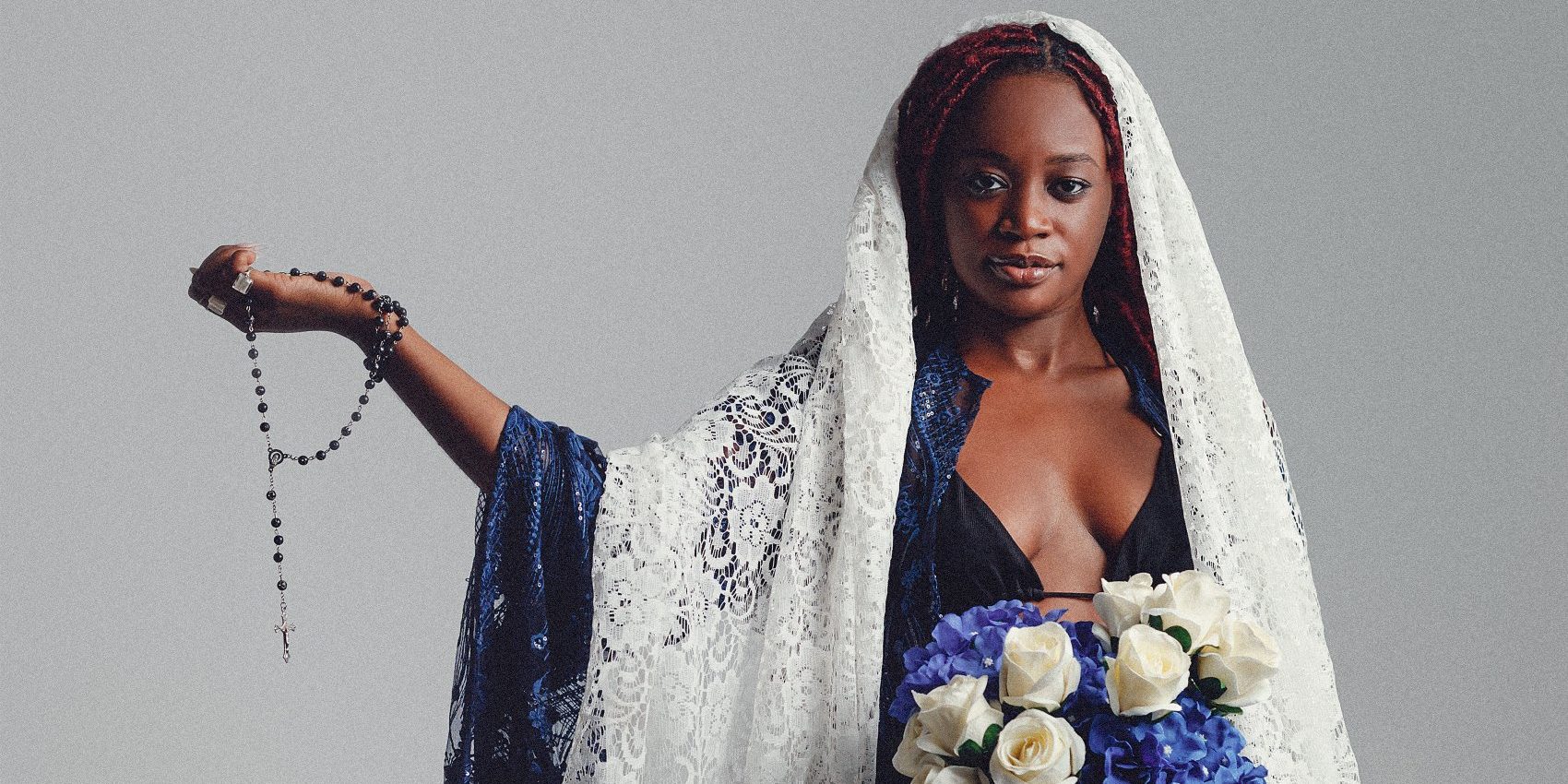
Multidimensional songbird Yinka offers her debut project ‘Let’s Get Romantic.‘  The album attempts to show that the experiences we have when in love influence our thoughts of love. Rather she encourages a movement of love, rather instead of abandoning the concept in a wave of cynicism and bad experiences. Yinka’s evolution is evident as she explores different directions and subtle ideas. The EP captures an endearing tale about a young love.


YOUNGSTACPT & SHANEY JAY – ‘SUFFER FOR BEAUTY’

Suffer For Beauty’ is a powerful and introspective body of work exploring struggle, pain, and success. The powerful and honest lyrics paint a vivid picture of the struggles faced by many in South Africa and around the world as YoungstaCPT tackles topics such as poverty, crime, and inequality with a raw and unflinching honesty that is both refreshing and inspiring. Shaney Jay’s expert production adds depth and texture to the album, with intricate beats and haunting melodies that perfectly complement YoungstaCPT’s powerful vocals as he cuts through the his collaborator’s thick slab of beats.


ICYMI: KEMUEL, RHITA NATTAH & MORE BEST NEW ARTISTS OF FEBRUARY 2023

NATIVE Selects: New Music Friday standouts From BOJ, Zlatan, Blxckie & more

It’s that time again. Every day, new music shows up, sweeping fans and music lovers off their feet while artists gauge reactions to know the effect of their creativity. At the NATIVE, we are committed to keeping our ears on the pulse of the music scene and bringing the best sounds to your doorstep.

Earlier in the week, we brought you songs from Camidoh, DAP the Contract, DeadWvlf & Jaci Martinz and more. Today, we have songs that move from Afropop to Amapiano to R&B, with our select artists showcasing their unending talent and passion for creativity. Lock in!

BOJ – “2 BAD”

Following the release of his star-studded, solo sophomore album, ‘Gbagada Express,’ Boj spent the later parts of 2022 expanding the world of the project with accompanying visuals and memorable stage performances in cities across the UK. For his first release of the year and first since his album, Boj’s sonorous vocals lead the groovy, mid-tempo track where he expresses his admiration for his girlfriend. Through the Adey-produced track, Boj repetitively croons on the catchy hook, “my girlfriend is too bad,” evidently mesmerised by her beauty. 

Nwanneamaka 

MIKUN – “SUPERWOMAN”

Mikun’s distinct vocals has seen him pull numerous singles revealing a new phase of his artistry. After taking a much needed sabbatical break, Mikun returns with his latest release, an ode to all women. In “Superwoman,” Mikun is in awe of his muse as he celebrates her strengths and beauty as his tender vocals croon over the synthetic melody. 

Tela

SEUN KUTI & BLACK THOUGHT – “BAD MAN LIGHTER 2.0” FT VIC MENSA 

Over the years Seun Kuti has proven eager to blend his Afrobeat sound with sounds from the diaspora. His collaborative approach sees him join forces with the legendary frontman of The Roots, Black Thought and Vic Mensa on “Bad Man Lighter 2.0.” Set to laid back funky grooves, the energetic hook from Kuti proves a fitting accompaniment to the conscious lyrics of the rappers. Mensa does a great job on the closing verse, channelling the spirit of musical ancestors, before ceding way to an evocative horn solo. A perfect demonstration of fusing distinct energies. 

Emmanuel

HAGAN & MUVA OF EARTH – “HIGH (HAGAN REMIX)”

British-Ghanaian DJ and producer, Hagan, joins Nigerian alternative jazz singer muva of Earth on the remix of her 2022 single, “High.” The initially slow-tempo melodious track takes new shape with Hagan’s groovy and energetic drum patterns and adlibs. Released alongside the instrumentals in a 2-pack record, muva of Earth is tapped into her higher self as dulcet vocals deliver a smooth rendition, “I’m high, high on life/Thirsting for knowledge.”

Nwanneamaka

PHVNIX – “MARY JANE” 

Newcomer singer and songwriter, Phvnix is here with the mid-tempo record titled “Mary Jane.” On the record, he talks about living a stress free life, the importance of focusing on one’s self and taking life one day at a time. He fuses Afropop elements with new sounds of reggae and highlife. Over the distinct production of the track, the artist continues to express his deepest thoughts about life. 

Wonu

ZLATAN – “OMO OLOGO” 

Major pioneer of Nigerian street pop, Zlatan returns for his second release of the year following the Seyi Vibez-assisted “Let There Be Light.” Unlike Zlatan’s energetic and upbeat tracks, “Omo Ologo” -which translates to glorious child in Yoruba- takes a more solemn approach. Lead in by heart-warming mellifluous vocals, Zlatan marks his journey, attributing all praise to God in Yoruba and English. Comparing his past and present, his lyrics and tone are heavy with reflection and appreciation of God’s favour in his life.

Nwanneamaka

BELLA SHMURDA – “ARA (GEN GEN TIN)”

Bella Shmurda’s foray into pop on last year’s ‘Hypertension’ proved to be masterful. Flexing his spirited vocals over colourful production, he set a new path for his future sojourns. “Ara” continues in that direction, the musician assuring his lover of his good intentions while painting an image of his celebrity perks. Taking the celebratory tone of his more celebrated records, the song finds Bella in familiar territory. 

Emmanuel

EMO GRAE – “AMAZING”

Marlian Music act EMO Grae starts 2023 with “Amazing,” a smooth love song wherein he serenades his beau; he ensures to inform her about the sacrifices he’s willing to make for her and the kind of future he wants for the both of them. EMO Grae’s lush vocals make a fine combination with IbkisSleek’s saxophone-aided Afropop production, culminating in a rich, mellifluous sound. 

Uzoma

YKB – “BO CARD (THINGS I NEED)”

Still relatively new to the scene, YKB has proven with each release that he is an artist dedicated to his craft and on the cusp of a breakthrough. After delivering promising tracks like “san siro” and thoughtfully curated EP, ‘Before I Blow’ in recent years, uNder alum, YKB is back for his first release of the year, “bo card (things i need).” The track lyrics, accompanied by instantly catchy instrumentals, take the vulnerable route as YKB often does, “Girl I’ve been sitting by your window, please can you come out.” He expresses his longing for his love interest with the assistance of soft saxophone keys midway through the track. 

Nwanneamaka


BLXCKIE, MAYTEN & S1MBA – “STUCK (YOUR HEART)” 

Love has always been a favoured theme among musicians. With an array of perspectives capable of being presented, it’s no surprise the tensions and joys of affection are everywhere on the playlists. “Stuck (Your Heart)” shines with its stripped soundscape, pairing soft drums with the vocally dynamic deliveries from the trio of musicians. A sensitive record, it’s the type to soundtrack chill outdoor evenings. 

Emmanuel

Featured Image Credits/The NATIVE


ESSENTIALS: ‘INSHA’ MERGES INNOVATIVE ELECTRONIC MUSIC WITH FOLKOLORIC VALUES

Review: Spinall’s ‘Top Boy’

The world of a DJ is contrasting. One second you’re the life of the party, the subject of everyone’s attention and then the next, the music claims everything, leaving you where you started: as just another person in a crowd. Even with the nearby reminder that disc jockeys aren’t considered a part of the creative process as they should be, you’ll hardly find an active DJ ready to relinquish the transcendent thrill of soundtracking cherished moments.

Definitely not SPINALL, whose breakout was announced through a slew of projects. Less ambitious than eye-catching, he was marking territory in a field notably shy of accomplished players. DJ Jimmy Jatt and DJ Neptune were home-facing veterans still pushing their craft in productive directions, DJ Xclusive was courting the posh circles of Nigeria’s elite class, Chocolate City and M.I Abaga were positioning DJ Lambo in the figure of label elder and curator, and there was Spinall—cap-donning, culture-appraising Spinall, whose debut record “Gba Gbe” had Burna Boy deliver one of his most groovy performances ever. Upon releasing ‘Grace’ in December 2020, Spinall had five albums, a consistency unmatched by any of his contemporaries. During that run, he quietly took off the ‘DJ’ prefix from his name.

Spinall’s resilience has stood him out from his class. Perhaps his background in media helps, but the act born Oluseye Sodamola has always moved with an eye on the external reception of his brand, sometimes even to the music’s detriment. Holistic branding has been courted in non-musician industry players since Denrele had his afro and DJ Sose his face tattoos, but few DJs have struck a better balance between musical evolution and intentional imagery. In the early years of his career, Spinall did have a couple of hits; “Excuse Me” had the inimitable fingerprint of Timaya on its scorching street pop-meets-dancehall production while “Ohema” would come just a year later, connecting Mr Eazi’s Ghana-indebted lingua with Nigeria’s sonic bounce, a pairing that proved successful as that became Spinall’s first bonafide hit.

In 2023, Spinall’s relevance to the culture exceeds musical qualifications. Corporate partnerships have broadened his networking reach and with the steady proliferation of Afrobeats into global cultural frameworks, Spinall has been consistent at the forefront of events. From the One Music Africa fest to Afro Nation and most recently MTV Europe awards, Spinall’s trailblazing journey continues to inspire a forthcoming generation of curators and disc jockeys.

“If na aki alcohol o make we shack am no be small,” Wizkid sings on “Nowo” off the ‘Iyanu’ album. That fleeting sense of revelry has always been present in Spinall’s projects, constructing feel-good capsules rather than narrative progression. On his sixth album ‘Top Boy,’ Spinall is the most accomplished he’s been in that regard. A desire to wean the best from life remains a dominant focus, but Spinall’s guests enjoy more free reign than ever. “Give Me Love” sees Niniola wielding her vocals with novel sensitivity as she demands more from a lover. The understated quality of the log drums allows her to take on more responsibility, and it’s one she relishes. Minz plays similarly on “Every Day,” riding the mellow production with natural-sounding confidence. “Na only things wey I like I dey do,” he sings in a way that takes the edge off the anti-establishment stance he adopts in the verses.

On first listen, the songs on ‘Top Boy’ that stand out the most are the solo recordings. Spinall has an eye for the originals, and like any good collaborator, he executes his vision by meeting them halfway. Co-written with Olamide, “Palazzo” was a crucial part of Asake’s domineering run last year, with rap cadences meeting Fuji’s lyrical ingenuity in the sweetest pockets possible. Its strength holds up on the album. Amaarae and Jess of the VanJess duo deliver tonally diverse but structurally exquisite records on “Bow Down” and “Just To Be” respectively.

The latter’s jazzy touch culminates in a sensual horn solo, while the singer’s performance dazzles with a ballerina’s finesse. It’s a fine ode to companionship, almost the thematic opposite of Amaarae’s. The eccentric Ghanaian upholds superiority rather than intimacy, bringing the desired lifestyle to life through razor-sharp witticisms. “Baby would you whine your waist on me?/Feel like God’s giving praise to me,” she sings before the assertive chorus, giving the ‘bow down’ that follows a slightly sexual undertone, not the first time a musician would construct imagery with religious and sensual parallels. Adekunle Gold finds himself in lush, comforting plains on “Cloud 9”; over a saccharine, Highlife-tinged beat, he sings lovingly about everything from a woman’s seductive poise to his longtime friendship with Spinall. A feel-good record that instantly stands out, it’s one of the simpler and better performances on the album.

Spinall also makes some interesting pairings on ‘Top Boy.’ Frequently, he attempts to connect blocs of diaspora-based musicians to Africa’s home base. Stefflon Don’s Caribbean roots find great space in the Dancehall-paced production of “Oshey,” while BNXN’s songbird approach embeds Nigeria’s distinct trait onto the record. “Power” and “Sere (Remix)” brilliantly utilises Summer Walker and 6LACKs cool American R&B vibe, although the ‘Still Over It’ musician finds herself in the more pensive soundscape of electronic. And while Olamide and Kemuel are perfectly aligned on “Bunda,” just as Azanti and Zaiam are on the opener “Cruise,” it’s important that Spinall gets such a grasp on records featuring non-Nigerian African artists.

In the past, Spinall has attempted cross-country pairings which notably featured Mafikizolo and Sarkodie on his records but their peculiarities weren’t honed into, making the collaborations sound too much of a calculated pairing and lacking any excitement. Chemistry informs the choices here—Ntosh Gazi would seldom be the first name one associates with a Phyno and Reekado Banks song, but on “Top Mama,” his energetic, hype man-esque vocalisations burnishes its credibility. Amapiano is not new to Nigerian artists but there’s an originality that arises when its drums are paired with the primal language. “Outside” joins Blxckie’s melodic prowess with the crisp flows of LADIPOE, perhaps the most natural collaboration on the tape. The former’s soulful adlibs feed the aspirational zest of the latter, enriching the record with feel-good quality that shines on subsequent listens. Tay Iwar carries as much heft on “Honest,” a warm entry which builds on the vulnerable narratives he’s increasingly become known for in Afropop circles.

For someone who’s made the ‘top boy’ phrase his associative tag for a long time, this project carries the intimacy of an eponymous work. Spinall’s hand is everywhere. The sequencing bares his growth: from how the album portrays self-love and confidence in unique snapshots to the music’s progressive warmth which builds an internal rhythm. With his own production heavily featuring, ‘Top Boy’ shines with deliberation. Spinall also gets props for extending the grace of previous albums by pairing artists at different stages of their careers, essentially pushing everyone to perform at a very high level. Whether it’s Jess’ affectionate coos on “Just To Be” or Nasty C’s zesty affirmations unlocking heavenly pockets on “Power (Refix),” there’s a sense the musician wants to deliver on their slots.

Without any doubt of recency bias, ‘Top Boy’ is arguably the best album Spinall has created. The choices he makes bring his expanding skills into focus, most especially the connection he reveals in African and diaspora sounds. And, as though knowing he’s done enough in the curation, Spinall keeps himself out of the music for the most part. Cut with minimalism, a few adlibs mark his only vocal contributions. As a DJ, it’s always tempting to establish a presence through the random shoutout or namecheck, but Spinall’s lean direction reveals an alternative route. He’s more a producer and curator than ever, and with the fine polishing befitting of his profile, he creates the project that finally solidifies his artistry.


ICYMI: READ OUR REVIEW OF AJEBUTTER22’S ‘SOUNDTRACK TO THE GOOD LIFE’

For The Girls: Brazy’s versatile and carefree artistry

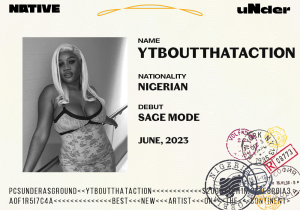
While female rappers have always been present in Nigerian, evident in the legacy of rap artists likes of Weird MC and Sasha P, their prominence within mainstream conversations is always overshadowed by the inherent dominance of their male counterparts. In recent years, more women—armed with braggadocios lyricism and standout vocals—have made it loud and clear that they are not to be sidelined. As they tell their stories unapologetically and spit the bars like no one’s looking, SGaWD, YTboutthataction, Daisy and more in the budding class of women in rap are taking up space. Another unforgettable frontrunner in this group of artists is Brazy.

Still a relatively new name to the scene, Brazy has been causing a stir since her debut on L0la-assisted “Siren” and one thing that’s remained consistent from the 2021 release till her Velli-produced breakthrough track, “Attends”, is the spontaneity of the craft. Preferring to go down the organic, easy-breezy route, most—if not all—of Brazy’s released tracks were recorded in one take. “I wouldn’t say I’ve started taking music seriously yet,” she responds rather honestly to the question of when she started taking music seriously. “It’s still very much about me chilling with my friends.”

As she takes her time figuring things out and going with the wind of her creative inclinations, Brazy still manages to standout out from the crowd for a number of reasons. Her self-assured lyrics and ear for beats that match her effervescent tone, mostly produced friend and collaborator Babyrixburger, as well as her ability to deliver something different on every track makes listening to Brazy refreshing each time. 


View this post on Instagram


A post shared by brazy (@brazyybih)

Within reason, this drew the attention of alternative rap auteur and alté pioneer Cruel Santino. Sitting amongst many popular names like Koffee, Amaarae, Gus Dapperton and Skepta on Santi’s sophomore LP, ‘Subaru Boys: FINAL HEAVEN’, Brazy’s clutch performance on opening track “Matilda” offered a standout cut from the 21-tracker. Her airy, mellifluous vocals and memorable adlibs, paired seamlessly with Santi’s eccentric production and futuristic sounds, set the pace for what many would consider one of the best projects from 2022. Just like that, from making music as a hobby and fun activity with friends, Brazy was opening act for Santi’s Europe Tour and recording the soundtrack that rocked the sound waves of many end of year festivities in these parts, “Attends.” 

If you couldn’t already tell from the witty pre-hook, “cheat on me and I’ll cheat on you,” Brazy is here for a good time. She’s experimenting different sounds and genres but one things for certain, Brazy’s songs are one of one. We caught up with the genre-fluid rap artist on what these moments have been like for her. She goes into detail about working with one of her major inspirations, recording “Attends” in 10 minutes, her new collaboration with UK artist Len, what the future holds and much more.

Our conversation, which follows below, has been lightly edited for clarity.

NATIVE: Let’s kick off with your name. What inspired the name Brazy?

Brazy: It’s actually quite an uninteresting story. You know when finsta’s were a thing, my username was Brazybih and when I went to Uni I didn’t want people to know my real name. My Instagram was previously my full government name and when I went to school they butchered the pronunciation. I put my name as Brazybih on instagram and all my friends started calling me Brazy.

NATIVE: Lots of listeners don’t know Brazy studied engineering. Is this a career path you’re pursuing and how do you navigate that alongside the music?

Brazy: I studied Bio-medical Engineering at Uni and that’s when I was making most of my songs. I’ve always called myself a DIY queen. I’m always multitasking. When people find out that I studied Engineering or I speak Mandarin, they’re usually surprised. That’s what I enjoy doing. I like being able to have different sides to me. I will always purse dreams I have for myself alongside creative things. I’m actually not pursuing a career in Engineering because Uni was a scam. However, I am going to be working in sales at an investment bank from July. A lot of my music is based off the knowledge that I have and nothing is wasted. It’s a very integral part of who I am and if you don’t know those things about me then you can hear it in my music. We’re a package.

NATIVE: How would you describe your music to someone who’s never listened?

Brazy: I would say that my music is very, very fun. It’s full of personality. When you hear any of my songs, you instantly have a reaction and it’s normally a positive reaction. It would get you moving and you can really feel my personality in the song. All my songs are different so there’s not one way I can really describe it for now.

NATIVE: We can both agree that you have a distinct sound. Do you have any inspirations or reference points for this?

Brazy: I’d say my sound is similar to how I talk. When people ask me this question and I give a response, I usually hear ‘you sound nothing like that.’ Ajebutter is a huge inspiration to me. Isabella Lovestory and Sho Madjozi as well. I sound nothing like those people. Those are people that I like listening to and you can feel their energy and character through their music. That’s where I take inspiration from. Anytime I listen to their songs, I feel good. I’d say my sound sounds like me. In terms of inspirations, it’s people that make music that leave others feeling good. I’m inspired to put that same feeling and personality into my songs.

NATIVE: While you had been releasing a number of songs, the moment all eyes were on Brazy was after your verse on ‘Subaru Boys: FINAL HEAVEN’ intro, “Matilda.” Definitely a personal favourite from the project. Had you known prior to the project’s release that you were recording for the intro track?

Brazy: Thank you, I appreciate that. I certainly did not know that. Santi is one my of favourite artists. I’ve always known he was a Nigerian in the Alte crowd but he wasn’t accessible to me. He was like SANTI. During A-Levels, I listened to Mandy and The Jungle all the time so when he reached out to me I couldn’t really believe it. As I said, music wasn’t a thing for me yet so I was surprised. I did my verse and sent it over. The way he took my adlibs and put it at the beginning of the song, making it into such a cinematic piece was crazy. I thought to myself, ‘This is why you’re Santi!’ I knew the song was going to be standout on the album but certainly not the intro. It was a huge moment in my life to be the first thing that you hear when you listened to my favourite artist’s album. That reassured me big time.

NATIVE: Your verse on “Matilda” really showed me and a lot of listeners that more than anything, your sound is versatile. It was unlike anything I’d heard from you. Would you say you’re targeting any specific genre or still figuring that out?

Brazy: With my music it’s all depending on how I feel at the moment and I guess that’s why a lot of my songs sound very different. I think you can hear how organic it is. I did not sit down for hours writing the over and over again. I think that’s the beauty in my music and that’s what makes it sound the way it does. I’m going to try not to put myself in one genre just because it might be an easier way to package myself. I’m still going to go with the flow and do what I want. Ideally, I would love to a Dance artist. Someone that makes music for clubs and the Ibiza vibe but when I hear the beat I might do something entirely different. I don’t have a certain direction im trying to go into. I just want to be the best that I can be in whatever lane I find myself.

NATIVE: Speaking more on collaborations, one consistent thing I would say it that you collaborate a lot with other female rappers like YT, Deela and T6lu. In such a male dominated space, why do you think its important to build that community?

Brazy: Definitely. I think I have the most fun working with other women, especially my friends. There’s so much talent that women have that men don’t always give the opportunity to explore freely. For me, creating music is about the vibe. I don’t work with people that I don’t like or have fun with. The energy in the room is super important and working with women is always a good time. When I work with male producers, it’s not that same vibe and you can definitely hear it. For me it’s about how organic it feels and working with other women that are confident, hot and have the same vibe as me feels most natural. I also believe in surrounding myself with confident women. It creates the best sounding songs.


View this post on Instagram


A post shared by brazy (@brazyybih)

NATIVE: Let’s talk “Attends.” You released a snippet on tiktok and it blew up in a matter of days. Were you expecting that and what did that moment feel like for you? 

Brazy: I wasn’t expecting it at all but when it happened I thought it made sense. I made the song when I was opening for Santi’s Europe tour. I wanted to make a song that I could perform on the tour that no one had heard before. I sent my producer friend, Velli, a playlist. At the time, I was listening to a lot of Brazilian Funk, French Bouyon, Reggaeton, Dancehall, Trenches music and so many more random selections. Velli sent me a beat, drawing inspiration from these genres and I was so ill but pulled through. I heard the first beat and went “Attends, Shekela” and that’s just how it happened. I did it in ten minutes.

I didn’t even have time to listen to the song again. When he sent it back to me, I really liked it. I didn’t think it would go off that much especially in Africa. When I performed it in Paris, I hadn’t put the snippet out but the way the audience reacted was insane. I thought because it had that Bouyon feel it was nostalgic to them or other black people in Europe like Amsterdam. Then I heard it took off in Ghana. My friend from Ghana told me it sounded similar to what they used to listen to when they were kids.

NATIVE: You had performed on a couple of stages having been on tour with Santi but what did it feel like performing “Attends” and seeing how much your own song resonated with audiences? 

Brazy: I think it was crazy particularly in Lagos where people go to concerts to pretend and stand still. For everyone to forget all of that and go crazy, I knew the song was something special.

NATIVE: Even if you don’t want to move, you’d have to when that song comes on.

Brazy: Exactly. No other option. When I’d perform my other songs, people would come up to me after the set saying they enjoyed it but “Attends” is instant. Once they hear the first five seconds they get excited immediately. It feels good especially because it was spontaneous. Excited to see what results I can bring when I put in the maximum effort.

NATIVE: You lent your vocals on Len’s new song “Addiction.” Talk to me about that. 

Brazy: Len is a huge artist and his music is amazing but it’s very different to what I sound like. When he asked me to do the verse I was excited. My vocals on “Addiction” are reminiscent of early days Brazy. The rap, “JPG” Brazy rather than the dance Brazy. I like to know that I still have that. I’m excited to see what the reaction is going to be when it drops.

NATIVE: So far, it seems like you’re on the cusp of something much bigger. What more can we expect from you? Any projects or visuals in the near future? 

Brazy: The “Attends” video is hopefully coming out soon. I hope to record an EP and drop that soon. I’m just looking for the right people to work with. More performances and more features too. I love doing features. This is just the beginning. 

NATIVE: Do you have any one you’re keen on collaborating with? 

Brazy: I would love to collaborate with Sho Madjozi. I really want to work with DJ’s that make their own beats. So someone like DJ YK Mule and DJ Cora. I like their beats and I feel like together we can make something crazy. Bouyon rap is mostly dominated by women and I love that. I’d love to work with a lot of women in that space. Any women doing similar things in their space that I’m doing, I’d love to work with.

NATIVE: How would you describe your average listener and what audience do you anticipate targeting in the future? 

Brazy: My average listener is someone who loves to have fun and isn’t too stuck in their ways. They would listen to me singing on “Gingerbread” but they’d also listen to me giving dance music on “Attends.” That’s my ideal listener and that seems to be my audience. They’re very open minded. They love everything that I do. For the audience I anticipate targeting, that would be the nightclub scene. Songs that can be played over and over at parties and nightclubs. I have that with “Attends.” I could never perform it just once. I performed at a concert once and did that song back to back 5 times. An audience that wants to have fun and vibe just like me.

Featured Image Credits/NATIVE


ICYMI: STREETWEAR IS ON THE RISE IN AFRICA BUT INDUSTRY-WIDE SUPPORT IS SLOW TO HAPPEN WITH IRETI ZACCHEAUS

AV Club: ‘Your Excellency’ Encapsulates the Power of Media in the Political Arena

2019 was a bagful of events: Muhammadu Buhari ended his first term as Nigeria’s president and was again elected into office for his second term; BBC News Africa’s investigative documentary “Sex for Grades” cast light on sexual harassment issues in tertiary institutions; Naira Marley drew the attention of the Economic and Financial Crimes Commission (EFCC) and owned the airwaves with hit singles; and Nigeria’s first Oscar entry ‘Lionheart’ was disqualified over dialogue requirements. 2019 was also the year Funke Akindele made her directorial debut with the EbonyLife Films-produced political satire drama ‘Your Excellency.’

Just like the year it was released, ‘Your Excellency’ is set in 2019 and while the film’s location isn’t explicitly mentioned, the camera shots of areas such as the Third Mainland Bridge and the Lekki-Ikoyi Link Bridge provide one answer: Lagos State. ‘Your Excellency’ hosts a fine cast that includes Akin Lewis, Funke Akindele, Shafy Bello, Bimbo Manuel, Kunle Coker, Alex Ekubo, Osas Ighodaro, Eku Edewor and Deyemi Okanlawon, among others. At that time, the film, by toeing the path of politics, was a further deviation—started by ‘Chief Daddy’ (2018)—from EbonyLife Films’ romance-based film productions: ‘Fifty’ (2015), ‘The Wedding Party’ (2016) and ‘The Royal Hibiscus Hotel’ (2017).


View this post on Instagram


A post shared by EbonyLife Films (@ebonylifefilms)

In ‘Your Excellency,’ the fever of the presidential election campaigns has everyone in its grip. Chief Olalekan Ajadi (Akin Lewis) is a billionaire businessman who, after three failed attempts, is contesting for the fourth time to become the 13th president of Nigeria. He has two individuals in his life he wholeheartedly trusts: his second wife Kemi Ajadi (Funke Akindele) and his assistant Fred (Oluwaseyitan “Seyi Law” Aletile). Although Chief Olalekan has good intentions for the Nigerian people (that involves creating a Ministry of Happiness), he is a fun-loving man who is naive about the complexities of Nigerian politics. When the more formidable political party Democratic Action Congress (DAC) makes Chief Olalekan their presidential candidate,  he, without much thought, jumps ship, jettisoning the political party he co-founded for a better shot at the presidency. 

One of the other contenders for the seat of the presidency is Michael Idehen (Deyemi Okanlawon), the son of a well-respected family who carries the weight of expectations hoisted on him by his father and grandfather. Michael is viewed as an upstart, who, like Chief Olalekan, is inexperienced about the ways of the political world. “My lack of experience also means that I am not tainted by this corrupt political system…It also means that my government will not be business as usual,” Michael says about himself during a debate. While Michael has the potential to become an engrossing character, the film kicks him to the sidelines, offering him the unwarranted role of the most desirable bachelor who has women drooling over him and plotting meet-cutes.

The story world of ‘Your Excellency’ is fuelled by the media. Any occurrence, whether true or false, is processed through news media, social media and web media for public consumption. There is the TV show Eki Talks hosted by the broadcast journalist Eki Adua-Evans (Eku Edewor) who seems to be the only media space in the film’s Lagos that has access to all politicians and media personalities. There is the social media-addicted couple Kachi (Alex Ekubo) and Candy (Osas Ighodaro) who, through their reality TV show, make their everyday dealings content for their online followers. And there is the gossip blogger Stephanie (Toni Tones) whose job it is to spy and drop opinions about the lives of people.

The ability of ‘Your Excellency’ to capture how media permeates every aspect of the characters’ lives is the film’s biggest win. From cameras to phone screens to TV screens, privacy is absent: while some characters try to hide as much about themselves as they can from the public, many more characters want to reveal as much as they can about other characters to the public.

In 2021, the Nigerian government banned Twitter and, despite the uproar, the ban lasted for seven months, with the government claiming the ban was due to “persistent use of the platform for activities that are capable of undermining Nigeria’s corporate existence.” Presently, the year is 2023 and Nigeria’s presidential election is three days away. Social media has become a useful tool for candidates to rally their supporters and for supporters to spread the reach of their candidates. The country is also grappling with the scarcity of cash (due to the change in naira notes) and on social media, there have been videos and photos of riots headed by frustrated citizens. It is evidence of today’s world: social media is an instrument that can do both good and harm. It also behoves stakeholders in the media—journalists, broadcasters, bloggers, and influencers—to ensure that information is disseminated responsibly. 

By no covert means does ‘Your Excellency’ draw parallels to the real world outside of make-believe. For instance, Chief Olalekan is a huge admirer of former American president Donald Trump, who was in office in 2019. In Chief Olalekan’s palatial home lay a portrait of Trump, which Chief Olalekan sometimes stands beside and admires, while trying to recreate the man’s pout. Also, Chief Olalekan’s political slogan “Make Nigeria Great Again” is a copycat version of Trump’s “Make America Great Again.” Elsewhere, Michael is referred to as Nigeria’s Obama and, in a scene with his father (played by Bimbo Manuel), his father tells him, “You need to find your own Michelle.” Funke Akindele’s Kemi, who does well as a semi-literate person (although bits of her ‘Jenifa’ character seep into her dialogue), is portrayed, in an ill-advised move, as an actor and the real-life Funke Akindele. There is also a movie crossover moment when ‘Chief Daddy’’s AK Famzy (Folarin “Falz” Falana) makes a cameo appearance. 

While satire allows for the ludicrous, there is still a need for believability. In a pivotal moment in the third act, Kemi admonishes Chief Olalekan about his obsession with Donald Trump. “You are kind. You are not revengeful. You are not a racist. You are not a bad person, so please stop comparing yourself with him,” she says. Chief Olalekan replies, saying, “I am different from him. I’m nice to women. And I respect everyone.” Throughout the film, Chief Olalekan’s love and admiration for Donald Trump is an important motif—Trump is more than a mentor and is everything Chief Olalekan wishes to be. That scene, regardless of the emotional pull it stirs, crushes an important element of the film. It raises the question: Why did the filmmakers spend so much time setting up Chief Olalekan as a great admirer of Trump when he wants to be nothing like him?


View this post on Instagram


A post shared by EbonyLife Films (@ebonylifefilms)

‘Your Excellency’ is a good watch, though. For the most part, the sets and costumes (except for Pastor Leke (Emmanuel “EmmaOMG” Edunjobi) who is referred to as a pastor but costumed as a reverend) match the luxurious lifestyles of the moneyed politician-characters. The campaign rallies, election polls and inauguration ceremony show the muscular skill of the filmmakers. Interestingly, four years later, Funke Akindele is contesting for the position of the deputy governor of Lagos State, joining a growing list of actors who have delved into politics: Banky W, Desmond Elliot, Kate Kenshaw (who played the role of a governorship aspirant in 2019’s ‘4th Republic’) and Yul Edochie, among others.

As Nigerians troop to the polls on Saturday to once again exercise their civic responsibility, it is important to be on guard against false content and information. As exemplified in ‘Your Excellency’, media, if used in the right hands, will yield positive results. If not, it will breed manipulation and distrust. For many Nigerians, most especially the young population, this ongoing election cycle isn’t just a fight for the present but also the future.


ICYMI: SHANTY TOWN IS A PICTURESQUE CRIME THRILLER WITH GLARING PLOT HOLES

How Rivet Is Enabling Creatives Track & Manage Fan Engagement Across Social Media

Today’s world is undeniably content driven and creator oriented. Apps like TikTok, Twitter, Instagram, Facebook and more have given any user with accessibility to the internet and social media a chance to plug in and generate various forms of content. Now more than ever, everyone’s tapped into their creative side, churning out a plethora of content for their varying audiences. This results is a high concentration of creatives, content and oftentimes support or followership from users across the globe. It goes without saying that a number of creatives see the value in staying connected to those who appreciate their content, seeing as it helps them stay at the top of a highly saturated market.


View this post on Instagram


A post shared by Rivet (@userivetapp)

By streamlining and organising ones fans, creators can best understand how to satisfy their needs as well as the best mediums to communicate with them. Alongside this, it would enable content creators and other creatives determine which audiences to target with their varying content. Gathering all this data by would undoubtedly be tedious. “When I was putting out my second album, I found that people tried engaging or buying something from me went through a manual process,” Anjolaoluwa ‘Anj’ Fayemi shares with The NATIVE. “Even when When I wanted to tease information like new releases, it was very frustrating to use because it sometimes got lost.”

With his first-hand experience, Anj, an MIT graduate, teamed up with Simran Pabla, whose experience in computer science and machine learning was integral in the creation of Rivet, alongside their third partner Nafim Rahman. They began building Rivet, an AI-driven Customer Relationship Management platform to help creators lean into their fans with exclusives and discounts. The data gathered also enables creators discover the demographic of their fans that are less active and discover ways to re-engage with them. The platform ultimately aims at providing its users a more prescriptive tool to drive engagements and possibly monetise it.

Recently, the platform received a $500k pre-seed funding led by Drive Capital with additional participation from The Hustle Fund and Visible Hands to further the groups vision of empowering creators and artists across the world. As the creative community grows and proves to be an increasingly lucrative business, a platform like Rivet that enables users seamlessly navigate consumer relationships couldn’t be more beneficial. Following the funding announcement, we caught up with Anj Fayemi and Simran Pabla, two of the platform’s founders to discuss the technicalities of the platform as well as the future of Rivet.

Our conversation, which follows below, has been lightly edited for clarity.

NATIVE: This platform is being built partly from your experiences and frustrations. What gap does Rivet intend to bridge in the content creator ecosystem?

Simran: The artists we work with, we’re finding are active on over five platforms on average. They have social presence and presence on various commerce platforms. Managing that just as a team of one or two people in incredibly difficult. Our initial focus was understanding to make it possible for artists to manage across these fragmented ecosystems more effectively. That’s where we started stitching information across those pools to better inform these creators on what fan behaviour looks like across those different points. We became really interested in taking it a step further and understanding, not just how we can make that data available in a more useful manner, but how can we make it actionable.

NATIVE: Could you explain in detail what it would require to access of join the platform? Talk me through that process. 

Simran: When you first sign up on our platform, you’ll be guided to connect your different accounts with Rivet’s. So Instagram, Shopify, Eventbrite and wherever else you’re engaging your fans. Once you connect those with us, that’s how we start understanding what your fan behaviour looks like across different platforms. From there, Rivet is able to start building fan segments for the creator. It shows fans that are most likely to attend a show or ]purchase something from you for example. We’re able to offer those kinds of insights and guide you through the best way to reach out to those people. We have tools within the platform that enable you directly start reach them. Rivet learns more about your fans, builds a stronger profile for each of them and is able to really tailor and personalise your engagement with each of those individuals, based on those preferences.

NATIVE: You recently received a large  investment led by Drive Capital, how does this enable improving the platform for users? 

Anj: This allows us to invest more on product development and hire across, engineering and marketing in order to build more awareness for the product. It would enable us get more creators onto the platform and all that does is give us momentum ahead of our full launch in the summer.

NATIVE: What inspired the name ‘Rivet’? Does that represent anything? 

Anj: Yeah. What it means is this concept of creating experiences that are really magical from creator to fans. It’s facilitating those experiences and enabling creators provide those experiences to their fan communities. One of the words we used to describe this is ‘riveting’ and so Rivet comes from that.

NATIVE: Briefly describe the accessibility of the platform to users. Does a creator need to have a specific following before being able to use the platform? 

Simran: So right now we’re focused on artists that have at least 5000 to 10,000 followers and above across social media platforms. That just means we’re able to build stronger insights about their community. We’re really excited in the future to expand and make Rivet valuable to anyone who’s looking to take their art seriously and build a business from it. That’s where we’ve started today to build the strongest models and understand those trends more effectively.

Anj: A little smaller is fine for growing artists, but we’ve been focused on those numbers as a threshold for where you can really see value on the platform right now. We’re in beta, which is free, so we’re optimising for feedback on fan experiences interactions and driving up engagement. The platform will see and continue to improve the product ahead of our launch.

NATIVE: Why did you guys centre the focus of Rivet on social media content creators specifically?

Anj: We’re focused first on musicians and then social media, content creators. It’s more about where the pain pinched the most. From our customer discovery user interviews, we found the pain was felt the most within that demographic but now we’re receiving organic interest from other types of content creators. With that, we’re expanding the platform to be more functional for them but that’s guided our approach to who we target.

NATIVE: Other than following, what else do you look for in artists and creators looking to use the platform beyond those numbers?

Anj: Creatives that are serious about their journey as a content creator and are looking to build a business. A business that at its core is their community and are they ready to start investing in what that could look like.

NATIVE: How do you hope this platform expands the creative economy? What are those changes you hope to see better the creative ecosystem as a whole? 

Simran: Artists, musicians and any creators really with a community driven focus built and maintain their community. We just expect the number of platforms creators engage their fans to continue to grow, change and shift over time. So the intelligence that we can bring to that ecosystem can really change the way artists, creators and really anyone with the community engages with those people and retains them over time.

[Featured Image Credits/The NATIVE]


ICYMI: THE NATIVE LAUNCHES NEW WOMEN-FOCUSED VERTICAL, UNRULY

Essentials : Co-curated by KMRU, ‘Insha’ Merges Innovative Electronic Music with Folkoloric Values

In life, you can’t move forward without knowledge of your past. Knowledge of your heritage forms a source of self-identity that lights up an inner flame. On ‘Insha,’ a collaborative project from members of the Nairobi Ableton User Group, the exploration between the past and present cutting-edge electronic production forms a connection between music and our deeper self. With very little by way of vocals, its intentions are as clear as its searing execution.

Nairobi Ableton User Group (NAUG) is a community and space where Ableton Live is used for creating, collaborating, and performing. By extension, NAUG is emblematic of how creatives in Kenya’s experimental electronic space cross paths frequently. In 2021, renowned luminary KMRU helped curate a primer into the space with the compilation project, ‘Place: Nairobi’, with contributions from Janice Iche, Kimina, uNder alum Coco Em and more.

Similarly compiled to show the diverseness of Kenya’s electronic beat scene, ‘Insha’ is a 14-track project that fuses synthesised instrumentals and organic sounds. Created with the vision of cultural evolution in the Kenyan community, the cooing of birds in the morning accompanied by gentrified production calls you into freedom, love, captivity, and self-analysis. The project was born out of a workshop organized by KMRU and Mbogua Mbugua Mbugua, known as M³, and includes a robust roster of Manch!ld, Nyokabi Kariuki, Kimina, Ngat Maler, Rushab Nandha, Snse, KMRU, and M³.


View this post on Instagram


A post shared by NAUG (@nairobi_ableton_user_group)

The ominous yet hopeful “Aliamka,” by Kimina, serves as the perfect intro track with the conceptualization of actuality sounds, culturally symbolizing the opening of a new era while still paying homage to the past. The instrumental gleams of minimalistic productions as it ushers you into KMRU’s electronic “I Had The Impression.” As if the bass drums don’t trigger your inner African, the songs give a sense of escape from colonial clutches that slowly convert to neo-colonialism. The static sound over an indistinct conversation only proves Kenyan creatives are adding artistic layers to their cannon.

Seeking to work against the preconceived notion of what African sound is supposed to sound like, KMRU meticulously curated ‘Insha.‘ From the cover art, you immediately get the concept it’s supposed to be an African-themed project. Focusing on the uniform yellow line on the old-age public transport vehicles and bus stop area reflects the rawness of the project. The warm colours are meant to present a peaceful time of expressing your African values without fear of being judged.

The melancholy in Barno’s “Calm, Chaos” serves more as a calling to escapism from colonialism, as the background vocalist emphasizes the glorification of colonialism. The plaintive expanse mirrors the black man’s despairs over neo-colonialism while the muse states everyone will donate money to the white man while no one can contribute to a black man. “Escape From Nyawawa” colours the project with hope and triumph. According to the Luo tradition, Nyawawa was believed to be the spirit of the dead. To escape it you had to bang pots, plates, pots etc. Marking a different era in the album, Manch!ld cumulates modern tempos with 808s while still enacting the traditional drum sets.

‘Insha’ takes you through various time stops, each relevant to the other. The unpredictability of the album oscillates between a spate of moods and themes, aligning with the cultural vision of the project. The constant whistles, chants and ululations synchronized with the electronic bass brought a new element to traditional songs. Originating from the Gikuyu, “Mura” by Budalagi espouses the independence and the joy that comes with freedom.

On “Anjiru (interlude),” Nyokabi Kariũki releases scintillating cries while finding her inner voice in Pan-Africanism. The thumping of the drum with her high-pitched shriek creates a vivid glorious image of colonial oppression through education.“Mtwapa Siren” stood out for several reasons. Of all the songs, it was the only one that was accompanied by vocals. Acting as the lead single, Nabalayo’s husky yet sultry vocals instantly sweep you into an instant folk tale. Painting a vivid image of instruments underwater, Nabalayo’s voice is a siren inviting you into the water.

NAUG – INSHA (THE FILM) from NAUG on Vimeo.

Growing up in Nairobi serves as a form of expression. Being the capital city of Kenya and home to a large youth population, ‘Insha’ forges new sounds that uphold the inherent need for inventiveness while still being tethered to an authentic centre. With an emphasis on highlighting new artists, Munyasa makes his debut with “Borrowed Cadences.” The pitched synthetic melodies breathe a life of new air with their electronic instalment and airy synths. As he makes an intersectional new age frenzy as MR LU’s “Kaa Tuchome” sees him infusing traditional chants and new age music and reflecting Nairobi’s current music scene: diverse and monumental. 

The emphasis of this tape comes in African-inspired productions. The drums, the bells, and the horns are all synonymous with African heritage in communication. In Kenyan cultural communities, musical performance has always been linked with a long chain of related events and ideas. Music was often used to illuminate a specific topic and its implications for society. Through this method of explanation, musicians were able to reveal several underlying social concepts that determined people’s behaviour towards each other and the community. This common recurring theme was seen mostly in ceremonies.

The strongest aspect of ‘Insha,’ apart from the stellar production, is that it gives everyone enough space to explore and create their sounds without losing focus. A versatile yet compact album.

Listen to ‘Insha’ here.


ICYMI: JUSTIN99, RHITA NATTAH & MORE BEST NEW ARTISTS FROM FEBRUARY 2023

INEC Postpones Governorship & State House of Assembly Elections

Since the turn of the year, national elections have been the biggest concern of the Nigerian population. From recording an unprecedented interest amongst young Nigerians to actually having massive turnout across the 36 states of the country, the elections of 2023 have been engaged on a level like no other. The Independent National Electoral Comission (INEC) who’ve been tasked with the responsibility of ensuring free and fair elections have been at the centre of the conversation, spurring widespread criticism for their ineffectual handling of the elections.

Yesterday, the INEC announced that it was postponing the governorship and state house of assembly elections, which was originally scheduled for March 11th to a week later. Citing its need to reconfigure the Bimodal Voter Accreditation System, the electoral commission made the development known not long after The Court of Appeal in Abuja granted them permission to reconfigure the BVAS machines which were used in the 25th February Presidential and National Assembly elections. 

Led by Joseph Ikyegh, a three-member panel of the court ruled in favour of INEC, agreeing with the electoral body that the data on the BVAS machines were capable of being completely saved on the back-end server, and that not configuring them would adversely affect the organisation of the governorship and state house of assembly elections. 

The court also ordered them to make certified copies of the data to the respondents, which were namely the Peoples Democratic Party (PDP) and its presidential candidate Abubakar Atiku; and as well the Labour Party and its presidential candidate Peter Obi, both of whom came second and third in the widely controversial results announced by INEC some days after the election was held. 

Both Peter Obi and Atiku Abubakar had commenced separate legal actions to challenge the outcome of the elections at the Court of Appeal which also doubles as the Presidential Election Petition Court where candidates could present their dissenting arguements before the judicial system. In the immediate aftermath of the results’ announcement, both parties filled ex parte applications—-which were subsequently approved—seeking to inspect sensitive materials that INEC used to conduct the elections, including a physical examination of the BVAS machines.

Prior to yesterday’s hearing in Abuja, several employees within the INEC had given assurances that the information on the BVAS couldn’t be lost or tampered with, but that’s rich coming from a body that has visibly broken its numerous promises to Nigerians on how it intended to handle the elections. From the understaffed polling units to its failure to electronically transmit the results, there’s been no shortage of dissapointments from this INEC administration. “There is the need for reconfiguration of the BVAS devices,” said the INEC deputy of the ICT department, in a filing dated on the sixth of March, “The reconfiguration of the BVAS devices entails purging the accreditation data on the BVAS devices”. 

The Labour Party lead counsel Onyechi Ikpeazu (SAN) in his argument, said that granting INEC permission to reconfigure the BVAS devices would be tantamount to losing essential data which they needed to build their case. 

In a statement signed by Festus Okoye, the chairman of the INEC Information and Voter Education Commitee, the body revealed its reasons for taking court action against the initial ruling to inspect the 176,000 BVAS machines that were used for the elections. “The Commission approached the Tribunal to reconsider the offer, given that the BVAS systems were to be deployed for the Governorship and State Assembly elections and that the lack of a clearly defined timeframe for the inspection could disrupt the Commission’s ability to conduct the outstanding elections. For instance, the BVAS can only be activated on the specific date and time of an election. Having been used for the Presidential and National Assembly elections on 25th February 2023, it is necessary to reconfigure the BVAS for activation on the date of the Governorship and State Assembly elections”. 

The body mentioned that while the ruling gives them the time to commence its preparation of the BVAS, “it has come far too late for the reconfiguration to be concluded,” it wrote on the statement. “This decision has not been taken lightly but it is necessary to ensure that there is adequate time to back up the data stored on the over 176,000 BVAS machines…However, we wish to reiterate that the Commission is not against litigants inspecting electoral materials. Consequently, it will continue to grant all litigants access to the materials they require to pursue their cases in court”.

It remains to be seen how the postponement would affect the elections. Considering the place of Labour Party as a legitimate third force, as it won a number of impressive seats at the senatorial elections, several states could experience a change in the ruling party after the gubernatorial elections. To keep our readers in track with developments in some important states, The NATIVE analysed the prospects of several leading candidates going into the elections.

For now, we encourage participant figures to campaign with grace, to shun ethnic comments and promote values of true democracy. 


ICYMI: LEADERSHIP, POWER & NIGERIA’S GOVERNMENT OF THE PEOPLE

The NATIVE Launches New Women-Focused Vertical, uNruly

Over the past few years, The NATIVE has been devoted to documenting the impact of popular culture on tomorrow: today, and over time, this has only intensified. Whilst carving out a niche to be the pulse of the young African, feminist values have been at the core of everything we do at The NATIVE Magazine. This is not only because the editorial operations are helmed by women, but because we believe in the fair and equal treatment of all people, regardless of gender, religion, nationality, sexuality, or anything else. So we birthed uNruly, a space for The NATIVE Woman, by the NATIVE’s women. 

via GIPHY


It is imperative that we use our platform to empower women, amplify their voices and stand in solidarity with women as they continue to strive for an equal footing in this unjustly androcentric world. Thus came the birth of uNruly —a vertical of The NATIVE which aims to create disruptive discourse around African popular culture. The women of The NATIVE Networks have carved out this digital and experiential space for young, black, African women to bare all and let loose, building upon the foundation we have set in the company’s 6-year history. With uNruly, we are focused on building a community, country and continent that caters directly to the needs of young, African women through stellar storytelling and unique experiences. 

Launching today, the new vertical will maintain the theme of this year’s Women’s History Month ‘the women who tell our stories’, and use this platform to continue to do so. Remember what Beyoncé said about chopping the wood from the tree and making your own table? Welcome to your own table, girls. 


View this post on Instagram


A post shared by uNruly (@nrulywoman)

Featured Image Credits/NATIVE

NATIVE Selects: The Best Songs This Week From Camidoh, DAP the Contract & more

It’s that time again. Every day, new music shows up, sweeping fans and music lovers off their feet while artists gauge reactions to know the effect of their creativity. At the NATIVE, we are committed to keeping our ears on the pulse of the music scene and bringing the best sounds to your doorstep.

To close out last week, we brought you songs from Libianca, Nv Funk, Kwesi Arthur and more. Today, we have songs that move from Afropop to Amapiano to R&B, with our select artists showcasing their unending talent and passion for creativity. Lock in!

IBRAAH – “NIMEPONA”

Tanzanian musician Ibraah is a sweet-voiced singer. Showcasing prodigious talent from age eight, the youngster now marks distinct territory in his home country. He’s been on records with the likes of Harmonize and Joeboy, each time impressing with fluid melodies and heartwarming messages on the variant edges of love. “Nimepona” has a melancholic finish to its delivery, with Ibraah evoking the song’s subtitle, “I have recovered”. Classic heartbreak story from tears to triumph, but the flavour this time is remarkably fresh. 

Emmanuel

JACI MARTINZ & DEADWVLF – “SENSUAL” 

Off their recently released 5-track EP, ‘The House Kids From Africa,’ DeadWvlf and Jaci Martinz enlist Nigerian-EDM producer Jamie Black for “Sensual.” Appearing on the back end of the project, the Afro-house number immediately leads in with mid-tempo drums accompanied by subtle elements of clashing cymbals, setting the pace for the sweet-sounding vocals.  After an upbeat delivery on the verse in which they recollect the impact of their love interests, the track’s instrumentals take centre stage with the saxophone gaining  a harmonious solo rendition. 

Nwanneamaka

MORENA LERABA – “HELERU”

Although Morena Leraba has been around for over a decade, the Lesotho artist has only just released his debut project, ‘Fela Sa Ha Mojela’. The project fuses traditional elements polished with explosive neo-soul grooves. Closing record “Heleru” thrives off that amorphous artistry, retaining mystery in the upbeat percussions while brooding undertones adds poignant layers. Leraba’s vocal inflections oscillate between menacing and celebratory, seeming to call forth energies from raw soil. 

Emmanuel

TANAKA – “WAIT FOR LOVE”

Blink twice and there’s a new South African auteur waiting to rock your world. Tanaka has taken the time off popular lifestyle to work on his sound, collaborating sparingly over the years with close friends like Skai Lounge. He’s now released his debut project, ‘You Look Beautiful In This Light’, and it’s a masterpiece. Four songs with incredible layers, “Wait For Love” is a standout. Burnished with the fun bounce of bedroom pop, Tanaka’s dreamy vocals evoke the breathless emotions that come with wanting love. An electronic sheen runs through, complementing his vocals in a way only a producer like him could execute. 

Emmanuel

DAP THE CONTRACT – “I REMEMBER” FT. CHANDLER ELYSE

On his first single of the year, Nigerian-born rapper/producer, DAP The Contract pays homage to the bittersweet attachments of memories. “It’s hard to remember just how we met/But I couldn’t forget you,” he sing-raps. Over a Trap-influenced beat, he realises that foraging into the past can unearth both pleasant and bad occurrences. Guest artist Chandler Elyse also battles her feelings about distant connections as she sings, “Think about me when it’s someone else.”

Uzoma

CAMIDOH – “BEAUTIFUL”

The rising profile of Ghanaian musician Camidoh is owed to his fresh takes on R&B. He’s been able to blend a unique West African flavour to his breezy delivery, a pairing that’s yet audible in his new record, “Beautiful”. With bubbly drums and a sonorous guitar, he sings affectionately about a lover, painting fine images in the minds of listeners.

Emmanuel

REBECCA WINTER – “ME FIRST”

For her first release of the year, Nigerian Afro-fusion artist Rebecca Winter delivers a slow tempo number about protecting her peace and prioritising her needs in a relationship. The lyrics hold stark vulnerability as she croons on the melodious pre-hook, “How can i be with you and feel alone, I’ll take each day as it comes but I’m taking it on my own/ I cannot lose myself, I’m doing this for myself.” An undeniably reflective number, she reaffirms through the course of the track the need to ask important questions and refrain from enabling toxic relationships. 

Nwanneamaka


ZUCHU – “NAPAMBANA”

Unarguably one of East Africa’s biggest pop stars, Zuchu has maintained a consistent streak over the years. “Napambana” arrives with stellar timing with Women’s History Month. Bubbly production is met with a positive-themed approach of Zuchu, taking a stand for the unique issues pertaining to women in African society. The video is similarly poignant, cutting across social status to depict scenarios with tear-inducing humanity. Professionally-trained vocals often are melodious but it takes a socially-aware artist to lend their voice to issues larger than themselves.

Emmanuel


ICYMI: GHANA’S CONTRIBUTIONS TO AFROPOP HISTORY GOES DEEPER THAN MUSIC

2023 Elections: Five states to watch in Nigeria’s gubernatorial polls

The 2023 elections in Nigeria aren’t over yet. Just as they did two weeks ago for the presidential and senatorial elections, Nigerians will troop to their polling units on Saturday ( March 11) to vote for their preferred candidates in the elections for Governorship and State House of Assembly seats. Many citizens have expressed frustration at the shortcomings of the Independent National Electoral Commission (INEC) and there is a desire for better practices during the forthcoming elections.

Only three states out of the country’s 36, several states won’t hold elections on March 11. Some of those states are Imo, Kogi and Bayelsa, which will instead hold their gubernatorial elections on November 11, due to the tenures of the incumbent governors ending on January 14, 2024 (Imo State), January 26, 2024 (Kogi State) and February 13, 2024 (Bayelsa State) respectively. As the anticipation heats up for this weekend across the country, here are five states whose situations you should keep an eye on.

LAGOS STATE Elections

Labour Party (LP) presidential candidate Peter Obi pulled a massive upset in Lagos State during the Presidential elections, when he polled 573,088 votes over All Progressives Congress (APC)’s candidate Bola Tinubu’s 571,575 votes and People’s Democratic Party (PDP)’s candidate Atiku Abubakar’s 76,290 votes. In recent times, Lagos State has been a stronghold of the APC, and candidates of the party vying for governorship positions have never lost an election in the state since Tinubu became Governor in 1999. 

Obi’s win in the Lagos 2023 Elections cancelled the long-held public opinion that Lagos State is a no-go area for other political parties. His win will serve as an encouragement to the other two major contenders—PDP’s Abdul-Azeez Olajide Adediran and LP’s Gbadebo Rhodes-Vivour—vying for a position against the current Governor, Babjide Sanwo-Olu of APC. Prior to Saturday’s election, Adediran (also known as Jandor) and his running mate Funke Akindele have made clear their intentions to loosen APC’s grip on the state, while Rhodes-Vivor, per social media, appears to be the candidate the youth of the country flock to. 

ABIA STATE Elections

The biggest news from Abia State during presidential/senatorial elections was that the incumbent governor Okezie Ikpeazu (of PDP) lost his senatorial bid to Enyinnaya Abaribe of the All Progressives Grand Alliance (APGA). Throughout the years, many people have spoken up against the way the state has been governed, and have described it as “leadership failure, god-fatherism and imposition.” During the 2023 election, LP won by a landslide with 116,338 votes over PDP’s 5,713 votes and APC’s 2,164 votes. 

There is the belief that victory is possible for LP, with its candidate Alex Otti backed by the goodwill of Peter Obi. On the other hand, while PDP’s candidate Okechukwu Ahiwe, who enjoys the support of Ikpeazu, has pledged to do “completely new things in the state,” it is left for the citizens to show their belief in his words at the poll. APC candidate, Ikechi Emenike remains in contention while APGA will likely not be in the running after their choice of governorship candidate was nullified by the Court of Appeal in Abuja.

OYO STATE Elections 

Sitting governor Seyi Makinde, who was elected into office in 2019, is running for a second term amid claims that he threw his support behind APC candidate Bola Tinubu—who won the polls in the state with 329,427 votes—during the presidential election. Makinde’s alleged act has caused fracas within his PDP camp, with the APC branch in Oyo State denying claims that Makinde had a hand in Tinubu’s victory and distancing themselves from his re-election bid.

The complications in Makinde’s bid in the 2023 elections could create an advantage for other major contenders such as Teslim Folarin (of APC) and Adebayo Adelabu (of Accord). Although Makinde remains a popular figure in Oyo State, the election on Saturday will prove if his goodwill with the public is still as strong as it is perceived to be.

RIVERS STATE Elections 

Although Bola Tinubu was declared the winner of the presidential election polls in Rivers State, the result has been contested by the LP frontman Peter Obi. According to Stears Elections figures, LP won the election in the state with 155,583 votes over APC’s 130,209 votes. This situation adds a twist to the gubernatorial election as LP’s candidate Beatrice Itubo could fancy her chances to cause an upset. 

An intense battle can also ensue between the major contenders Tonye Cole (of APC), Siminalayi Fubara (of PDP) and Magnus Abe (of Social Democratic Party (SDP)). Fubara has the backing of the sitting Governor, Nyesom Wike but Cole and Abe seem to also be able to hold their own weight. 

PLATEAU STATE Elections 

In 2015, power shifted to APC in Plateau State after it had resided in the hands of PDP since 2004. Both parties are in the running for Saturday’s election with their respective candidates Nentawe Yilwatda Goshwe and Caleb Mutfwang confident about their chances of victory. But from all indications, it won’t be only an APC-PDP battle in the 2023 elections. 

During the presidential election, LP won in the state with 236,618 votes; it was the first time the party knew the taste of success in the state. It has given the party’s candidate Patrick Dakum confidence that he has a good chance of winning and overturning the APC and PDP reigns. There is also the chance for more parties to make their impact felt as the APC and PDP governments have been accused of “a lack of political will, lack of innovation, capacity and competency.”


ICYMI: LEADERSHIP, POWER & NIGERIA’S GOVERNMENT OF THE PEOPLE

Best New Music: Dwin, The Stoic Pens An Intimate Letter On “Sit”

The secret to the serenity that comes with Dwin, The Stoic songs might be in the singer’s husky voice. Offering the assurance of his soft yet assertive vocals, as he croons over often minimal production choices, Dwin is sure the king of ballads. His 2018 album ‘Heavy Heart’ was received with much critical acclaim, an intimate set of songs situating him within the tradition of singer-songwriters in Nigerian alt-pop. Mostly opting for a folk-influenced sound palette on that solo debut LP, his storytelling powers were on full display as he navigated the taxing tides of youthful uncertainty—mostly attuned towards romantic situations.

Dwin’s 2022 was filled with a rollout of songs and collaborations parading his artistic range. Experimenting with smooth, R&B-tinged pop in “Streets,” he offered a new face to the mastery of his skill-set and inherently teased the multitude of possibilities for his future output. On the 3-song pack, ‘Gkw/Winning Bread’, he does not shift from his calm cadence but instead amplifies his tender message on a percussive backdrop. Adding an intimate touch to the song, Dwin releases a soft hum as if comforting his struggling listeners on the second single “Winning Bread.”

Tonally similar to many of his previous minimalistic offerings, Dwin, The Stoic returns with his first single of the year, “Sit.” While the sonic direction would usually point to a lovelorn direction, Dwin opts for a more bracing approach as he offers a hopeful message over the soft chime of the guitar strings. As if asking his listeners not to dwell in the past but rather to march forward, Dwin opens the first verse adding an intimate touch to the song as he recalls his father’s words: Son, don’t cry/things go missing all the time/Son, please take care/people come and people go.” His husky voice glimmers over the bridge as the organic production mirrors the soft touch of someone comforting you.

Music always reflects what we are feeling and acts as a reflection of our society. The process of healing is not as easy as portrayed. The pain doesn’t forever slip away but instead finds its quiet moment to creep in and remind you of your loss. In the second verse, Dwin takes charge, assuring his listeners that pain doesn’t last forever because the world always moves on. Understanding the challenges of grieving and losing a valued item, Dwin, The Stoic leaves a descriptive image of the healing process. “But if I ever feel like my world is crashing down I close my eyes and breathe take a seat like my father said, just sit and breathe my dear.

Partly self-produced, Dwin has found his foot in vivid storytelling. Painting a vivid image, “Sit” acknowledges the ease of wallowing in the pool of melancholy, but it also offers a comforting life raft for when it’s time to get back to shore. It’s reminiscent of Yinka Bernie’s cult classic song, “It’s Okay to Cry,” fitting right into the mould of balmy and ultra-relatable cuts. For Dwin, this song also elevates his status as a songwriter and artist, with his shift from love-oriented cycles to pragmatic issues coming without any vivid growing pains.

Gearing up for the release of his EP ‘Love Lane,’ Dwin gives his fans a sneak peek of what to expect from his first proper solo project since ‘Heavy Heart.‘ A perfect start to his year, Dwin, The Stoic is continuously evolving and morphing into a more confident and authentic artist. Drawing the world from stressful occurrences, Dwin reminds all of us to breathe.

Listen to “Sit” here.


ICYMI: THE MANY FACES & VOICES OF DWIN, THE STOIC

Turntable Top 100: BNXN’s “Gwagwalada” is back for the No.1 Spot

Following the release of Seyi Vibez and Kizz Daniel-assisted “Gwagwalada” a few days shy of a month ago, BNXN fka Buju’s track reclaims the No. 1 spot with 3.55 million plays on streaming platforms as well as 26 million in radio reach during the tracking week. Following closely behind and making a re-entrance into the charts is Omah Lay’s “Soso.” A fan favourite off his July 2022 debut LP, ‘Boy Alone’, the song snags 46.8 million in radio reach and 2.30 million across streaming services.

After debuting at No.1, Ayra Starr’s “Sabililty” slips down one spot this week to No. 3. With a series of entries like “Bloody Samaritan” and “Rush,” Ayra remains the only Nigerian female artist with multiple No.1 entries in the Turntable Top 100. “Holiday” by Fellow Mavin Signee and Ravelord, Rema, tallies 2.36 million across streaming services, sitting at No. 4 in this week’s rundown. For another week, Ruger’s “Asiwaju” remains at No. 5 after topping the charts for seven consecutive weeks between December 2022 and January 2023.

Just outside the top five, Asake’s “Yoga” holds the 6th spot spot for another week, with Khaid’s “Jolie” coming in at the 7th spot. Rexxie’s “Abracadabra,” a pre-released single ahead of his recently announced sophomore album, ‘BIG TIME’, has dipped to No. 8 for this week’s rundown. Sitting at No. 11 last week, Kizz Daniel’s “RTID (Rich Till I Die)” comes up to No. 9, while Spyro’s “Who is Your Guy,” recently remixed with a new Tiwa Savage verse, closes out the charts at No. 10.

Outside the top ten, Young Jonn’s “Currency” with Olamide returns to its No. 11 peak and Lojay’s “MOTO” glides up the chart at No. 21. Chart predictions anticipate the track in the top twenty rundown following the Friday debut of his sophomore EP, ‘Gangster Romantic’.

See the full list here.

Featured Image Credits/NATIVE


NATIVE EXCLUSIVE: MAGICSTICKS WANTS TO BE KING OF THE WORLD

NATIVE EXCLUSIVE: SHŌLZ explores vulnerability and alienation in debut single “Vex”

Over the years from holding down the NATIVELAND crowd to festivals in LA, Paris, Malta or Accra, SHŌLZ has gathered a reputation for his standout showmanship behind the deck, joined by DJ partner, Addy Edgal for NATIVE Sound System. With several shows under their belt, the pair released their debut compilation album, ‘NATIVEWORLD’ enlisting a slew of African talents on standout tracks like “Stuck on You” and “Runaway” with Mavins Records SabiGirl, Ayra Starr, The Cavemen on the stellar intro, “Tortoise,” Cruel Santino on “EDMP (E Dey Move Person)” and more. Championing the growth of the creative community in these parts, the project also featured note-worthy contributions from talented producers like P.Priime, Tyler Turner, GMK and more.

Now coming in fully as an artist-producer, SHŌLZ debuts his new single “Vex,” the second song in a two-pack release, alongside the Somadina and TAR1Q-assisted “Cruel Love,”. After witnessing a shift in the attitude of many Nigerians following the loss of innocent protesters at the Lekki Toll Gate Massacre on October 20th, 2020, many Nigerians surrendered all feelings of political apathy in order to take a stand in determining their country’s future. However, following the events of the 2023 Presidential election, many Nigerians have once again been left feeling unenthusiastic for the country’s future.

At such a sensitive time for many Nigerians, music can serve as a source of comfort and togetherness for everyone feeling defeated at the state of the country’s affairs. Understanding this, SHŌLZ channels these strong emotions, tapping into a distinct range of rap geniuses including a major face in Nigerian drill music, Odumodublvck, Alte Pioneer Teezee and uNder alum Candy Bleakz. Accompanied by an energetic beat, Teezee crosses between Yoruba, English and Pidgin to express his frustrations on the standout verse saying, “You try to kill us but we are up/You can’t kill our spirit, We go vex.” Finally, armed with his usual hard-hitting bars, Odumodublvck shows that he is not afraid to speak his mind with witty lyricism as the track draws to a close, “Tinubu day call me, Odumodu can you PM/ I tell am say I no go free if e no buy me loud.”

Fresh off the song’s official release, The NATIVE spoke to SHŌLZ on the new single “Vex,” under Nigeria’s current political climate, the song’s accompanying visuals and what we can expect from the artist-producer in the future.


View this post on Instagram


A post shared by shōlz (@djsholz)

His answers, which follow below, have been lightly edited for clarity.

NATIVE: Hi SHŌLZ, coming off the release of ‘NATIVEWORLD’ with NATIVE SoundSystem, this is your first solo release as an artist-producer. Why was it important for your song to speak about the state of Nigeria?

SHŌLZ:  I’ve always been attracted to music that could move me and make me feel something. Having spent more time in Nigeria in the past couple of years and being here for the last few months, it’s impossible not to feel for what’s going on here politically. In my own way, I wanted to push a sound that could encourage conversation and make others feel what I felt. To see the direction that the country is moving in is painful and vexing. I wanted to bring our world and community into that.

NATIVE: Teezee, Candy and Odumodu are inimitable rap talents with very distinct styles. How did the selection process for the featured artists come about?

SHŌLZ: There wasn’t any selection process to be honest. I prefer music to develop organically. We normally run camps to record new tracks and develop existing ideas and this was one of the songs that came out of the camp we ran in August, last year. I think Candy recorded her verse first and by the time OD(Odumodublvck) recorded his, we knew we had something because everyone knew the words by the end of the day.

NATIVE: The video for “Vex” finds all artists in the streets of Lagos, talking about what’s currently vexing them. What message were you trying to pass across with the video?

SHŌLZ: I want the music to be a medicine for the pain I guess. This thing called life can get hard, so whether it makes you dance, laugh or even cry for a second, it reduces pain. I’ve been trying to vocalise more of what I’m going through and hopefully, it encourages others to do the same.

NATIVE: What’s next for SHOLZ this year?

SHŌLZ: More of everything. I am looking to drop an album this year, ‘JJC,’ so keep a lookout for that as well as some instrumental/beat tapes. Some other dope stuff too which I can’t really share but let’s just say it involves going on the road.

Watch the video for “Vex” here:


Featured image credits/Instagram


ICYMI: THE LAYERS OF NIGERIA’S RELATIONSHIP WITH MUSIC AND POLITICS

uNder: Best New Artists (February 2023)

In recent years, we have been privy to several momentous occasions with the sounds from these parts incessantly redefining the status quo and breaking boundaries one track at a time. Now more than ever, spotlighting the expansive talent pool and variety of sounds emanating from this side could not be more critical. From the homegrown artists telling the stories of the streets in Johannesburg to the burbs of Abuja or Nairobi and even the artists emerging from the diaspora.

With a viewer attention span shorter than ever, some exceptional talents may skip your radar but the monthly instalments of our uNder column are here to ensure that all corners are covered. A month after bringing you artists that we expect to have a big 2023, we’re back with a new set of great, budding artists for uNder’s 2023 February class, with hypnotic sounds from South Africa’s viral Amapiano sensation, Justin 99, joined by the experimental synths from Flier in Kenya, the exuberant and introspective indie raps of Horrid the Messiah, plus more. Find your new favourite artist(s) below.

KEMUEL

Earlier this year, Kemuel got recognition from some of the greatest in the game. It is telling that the duo of Spinall and Olamide allowed him space to establish the direction for “Bunda,” the lead record off Spinall’s sixth album, ‘Top Boy’. Beyond industry affiliations, Kemuel has shown glittering promise since the release of last year’s ‘ESCAPE’, a well-curated project which introduced him as one to watch out for.

Described as a literal escape from the restrictive shackles of realism, the longing for perfect union enlivens the project. Right from the ethereal sonics of “AWAY”, there’s an associative vibe to Kemuel’s sound. Not quite heavy in percussive tones, the colours of his singing meet the exquisite movements of Wondah, who produces the entire tape. “Can we run?” poses the song’s central tension, but between the reverb echoes of “away, away” and the inclusion of ominous elements, a lot of sonic layers unfurl. “FINALLY” and “MUMU” reveal similar sensations, Kemuel’s vocals ever poignant and coloured with bases of hums, strings, call-and-response patterns. Unhurried, it’s the type of Afropop CKay and Victony gets consistent props for, although Kemuel’s language is distinctly his, not quite risqué as the aforementioned names but tender, serenading with his milky vocals.

As a child, Kemuel loved to play with choir instruments, enabling a grasp on the rudiments of sound. In 2021, his production for Sukah’s “Spotlight” showcased the atmospheric elements he’s now immersed in. The titular record of that EP—and also the last—demonstrates Kemuel’s appeal: affectionately scripted, the laidback grooves radiate with purpose and passion. Over time we’ve seen artists that produce make great music, and Kemuel seems to have so much in the bag. His journey burns with promise.

RHITA NATTAH

One of the most striking qualities of Moroccan singer Rhita Nattah is her voice; it bears so much emotion and charisma. The next thing that catches your attention is her lyrics, which shine with insight from lived experiences. Although she has been in the music industry since 2016, Rhita Nattah released her first single “Not the Same” in 2019, in partnership with long-time collaborator Samir El Bousaadi. She and El Bousaadi, since the days of her Afrobeats-themed covers, have spent time learning production and songwriting and crafting a sound that is both ancient and contemporary.

“I gave up on everything for the music, and made bloody sacrifices in Morocco to be able to create it,” she tells the NATIVE. “In Morocco, there’s no music industry and artists don’t even get paid their royalties from organisations. Samir El Bousaadi and I used to have two eggs per day and create music. Even though I had a master degree in French didactics and he was working as a graphic designer director, he gave up on his work to live doing his passion, because we can’t imagine ourselves doing something else.”

In early February, Rhitta Nattah released ‘INNER WARRIOR,’ a documentation of her journey and experiences, as regards love, self and Moroccan society. Effortlessly, through traditional Moroccan music, R&B and Soul, she makes room to vent her angst, embrace her vulnerabilities and call out her country’s politicians. I am gonna tell you things about myself/I didn’t know before/Things I hide from myself, from myself/Oh, some days were dark,” she opens up on “Garden” off ‘INNER WARRIOR.’ 

Counting all my blessings, I’m not willing/To give up on my soul and my sanity/I have faith in my words and their honesty,” she sings on “Fear Nothing,” revelling in her inner strength. “I want to be a voice for the people, a friend, a sister, through my music and words,” the singer tells The NATIVE. Rhita Nattah is a voice that will be heard for a long, long time to come.

JUSTIN99

The intoxicating log drums and sweet-sounding shakers, accompanied with the heart warming melodies commonplace in Amapiano have become a comforting sound for most listeners privy to South Africa’s burgeoning scene. Ever so often, artists like Justin99 discover new ways to transform the transcendental ‘piano sounds and facilitate an even deeper connection to the listener, devoid of language barriers. Framed within the digital age, a viral moment for an artist like Justin couldn’t be more perfectly timed and well deserved. While many may recognise his 29-second snippet for the #Justin99Challenge, accompanied by striking dance moves from a number of Tiktokers, Justin99’s discography holds other notable tracks.

His debut, “Chipi ke Chipi,” off Amapiano hit-making producer-duo Mellow and Sleazy’s ‘Midnight in Sunnyside’ couldn’t have been a more perfect entry into the scene, a chippy viral hit song with over 2 million plays on Spotify alone. Doubling down on stellar collaborations, Justin99 enlisted Mr JazziQ, Pcee and EeQue for a catchy, thumping rendition on “ZoTata,” alongside “Mozambique” and “Dlala 99,” off the Volume 2 compilation of South Africa’s Black is Brown Entertainment album. From his small but mighty catalogue and snippets of future collaborations with Amapiano heavyweights like Kabza De Small, the producer, DJ, dancer and vibes curator has proven to be a promising act to keep an ear out for.

HORID THE MESSIAH

Intricate songwriting has always been a forte for rappers. Listening to Horid The Messiah, the South African rapper’s formative diet of classics from older relatives and the contemporary model of A-Reece is revealed through the strength of his pen. Horid began releasing material two years ago, pairing glossy, trap-suffused production with narrative zest. The October 2021 debut EP, ‘I V T A P E S’ had four tracks under a runtime of ten minutes, but it was enough time for Horid to flex tightly-scripted bars and exuberant deliveries, with themes like self-belief and romantic fissures scripted with visceral ability.

The Johannesburg-bred rapper continued to forge on, his tendency to collaborate with fellow rising acts—Kaz, Eddie Soul, fellow uNder alumni Scumie—burnishing his credo amongst a community of like-minded folks. Horid’s sobriquet as ‘Baby Jesus’ might reference his diminutive stature but it’s also a reflection of his complete appeal as a music superstar. Modelling and acting for brands, he’s got one foot in the corporate world while the second roams, enabling stellar releases such as “I WON’T TELL” and the ‘While You Wait’ project, both in 2022. “HURT” was the latter’s opener and an indication the rapper sought to probe the greater demons of his mind. “I don’t condone all the shit that I’ve done, this is something that you don’t deserve,” he raps over a thinly sketched production. An immersive project advancing the shock value of glitz, The Messiah’s humane quality comes alive.

Horid walks on a path trodden by the likes of Reece and Nasty C, rappers whose pop-leaning direction does not diminish their dedication to street narratives. The Solo Sae and Ficz-assisted “UHHH” also marked a great start to the year, its  distinct cadences and synth-heavy production endowing the record with ostensible hit qualities. Horid The Messiah’s fine range is demonstrated most recently in his Valentine’s Day-released two-pack ‘Do 4 Luv’, baring, at this point, his double-edged sword of boisterous cuts and soulful introspection.

CHELSEA DINORATH

There’s an obvious sensuality to Kizomba music that lends itself the best to affectionate performances. For a genre whose popularity cuts across multiple continents with Lushophone ties, there’s no shortage of great vocalists and there’s always an influx of fast-rising talent, who understand the music’s form and how to function within it. Angolan singer, Chelsea Dinorath is on track to become Kizomba’s latest superstar, delivering earworm jams with heartfelt intentions.

Even though she’s been making music for much longer, she officially debuted in 2019 with “Retrato Perfeito,” a mid-tempo song where the building blocks for her artistry can be heard in hindsight. In subsequent years, she followed up with diverse singles, going the contemporary R&B route on “With U,” singing in multiple languages on “Toi Et Moi,” and contributing a lilting half-verse to the ensemble cast hit song, “Céu Azul.” While a large part of the last couple of years could be described as her development stage, Chelsea Dinorath is officially in full bloom.

With her richly textured, siren voice and a writing style that boils down the tension of romance into gorgeous songs, the singer’s abilities have been better realised over her singles from the past year. It’s no coincidence that it comes with her full lean into Kizomba, like the winning warmth of her biggest song yet, “Sodadi.” On “Melhor,” log drum infusions accent the buttery groove, showing her willingness to innovate within genre boundaries. Chelsea has already opened her account for 2023 with “Unfollow,” which emboldens the effortless beauty of her voice – a striking artistic trait that will help carry her to greater successes.

FLIER

Flier describes himself as the “purveyor of all things fly.” There’s an enveloping serenity to a Kenyan singer, rapper and producer’s music, where personal dispatches take on a relatable warmth. On “Filthy Rich,” his vocals and minimalistic production choices invites you into his world where he sings his admiration of being rich and being able to make it out. 

Singing and rapping in both Kiswahili and English, his voice cuts across the chorus with the first verse being a dedication to his family and the second verse to his romantic muse, both of which he promises the world to them. His singles are often paired with distinct guitar productions as seen in “Embrace,” “Policy” and “Kile Tumepitia.” The most exciting part about Flier’s career is his ever-diverse creativity which sees him explore diverse subjects. Whether it’s love as seen in “Bandia” or just teasing his production skills in “Run Deputy Run,” which carries clear inspiration from Bob Marley and the Wailers’ 1973 hit, “I shot the Sheriff.”

With a limited digital footprint and a sprawling catalogue of singles that stretch back four years, Flier is yet to hit a mainstream breakout moment but he doesn’t seem keen to break the mode of his operations, seemingly trusting that the music will find its intended audience. Flier’s music found us, let it find you too.

TOLIBIAN

Nigerian street-pop is fond of elevating viral stars with veritable talent. (See: Zinoleesky.) Ilorin-raised Tolibian first popped on Nigeria’s youth culture radar with a series of ear-catching, humour-tinged covers of popular pop songs, with the most notable arguably being his cover of Buju’s “Peru (Refix)”—itself a cover of Fireboy DML’s global hit song, “Peru.” Those covers exhibited the influence of Apala on his vocal tricks, which is fitting since the genre of Yoruba folk music has a deep history tied with Ilorin.

In 2021, Tolibian officially kicked off his journey with his debut single, “Abortion,” a fine display of his ability to deliver songs relaying the Nigerian experience, delivered in a winning mix of pidgin English and Yoruba quips. He’s followed with several well-received singles, setting himself up as an accessible voice in street pop without losing the winning charm of his earlier covers. Even as his voice and style is heavily influenced by Apala, there’s a very modish tilt to Tolibian’s artistry, even approaching the R&B-influenced side of Nigerian pop with songs like “Abaya Palava” and his most recent lovestruck single, “Hello.”

Over the past two years, Tolibian has converted internet listeners into fans with his voice of gold, and the potential for stardom is brighter than ever. With a knack for blending catchy Afropop rhythms with soothing R&B melodies, Tolibian is one to look out for this year — a fresh new voice of the generation we’re looking out for this year.

LEANDRA.VERT

In November, South African Amapiano producer/DJ Musa Keys spearheaded the eponymous release of his label’s debut compilation project, ‘House of TAYO’, packed with contributions from emerging artists on the imprint’s roster. On this compilation, singer Leandra.Vert quickly showed out as a standout performer, turning in indelible contributions across the four songs she’s featured on. With her cherubic, positively dizzying voice, she floats over the saxophone-infused “AboMalume” and  adds an ethereal dimension to the project’s commercial centrepiece, “Blue Tick.”

Before her House of TAYO affiliations, Leandra.Vert was already flaunting her potentials as a singer, mainly opting for soulful pop and R&B soundscapes on earlier singles, including the 2021 debut song “In Too Deep” and early last year’s “Tse Monate” with Mustbedubz. Both love songs, they served as an introduction to her raw vocal talents, which she’s been harnessing better with subsequent releases. Drawing inspiration from a range of artists, including current neo-soul luminary Ari Lennox and soul-fusion rule-breaker Iamddb, the singer has spent ample amounts of time perfecting her craft to fit varying sonic moulds, with Amapiano being the current focus of her sound. The sample size isn’t huge, but Leandra.Vert is already an artist to pay attention to.


Compiled and written by Emmanuel Esomnofu, Uzoma Ihejirika, Nwanneamaka Igwe, Wonu Osikoya, Tela Wangeci & Dennis Ade Peter.


ICYMI: LIBIANCA, TYLA & MORE ARTISTS TO LOOK OUT FOR IN 2023

Ghana’s Contributions to Afropop History Goes Deeper Than Music

For a relatively small country, Ghana’s contributions to Afropop has been gargantuan. Where contemporary audiences have been eager to praise the incursions of Nigerian and South African pop into popular spaces, the music of Ghana is no slouch in the journey of Afropop. From patenting the classical techniques of Highlife to providing a cache of lingo that’s been used everywhere across the continent, there’s no doubt that Ghana plays an invaluable role in bridging musical evolution with cultural ingenuity, and for too long its flowers have evaded her. 

In the nineteenth century, the music of Africa—and West Africa specifically—was a mix of the various traditional sounds across several ethnic groups and Eurocentric influences, especially from colonists who were resident in countries such as Ghana. Apart from church music, which was sometimes recorded in local languages, what was considered popular music around the 1900s usually had traceable influences from the more equipped Europeans. Ghanaians were the first to take the refined aspects of music-making and filter their own sounds through them, creating Highlife, which is rightly considered the sonic precursor to modern pop music in West Africa.

This essential bit of history hasn’t gone unchallenged. In the past, Nigerians have erroneously viewed Highlife as its own creation, ostensibly due to the fact that the genre became very popular during a crucial period of the country’s independence in the sixties. Artists from the geographically bigger West African country have also minted gold records from its conventions, but would Nigeria have become that conscious to Highlife’s appeal if artists like E.T Mensah hadn’t toured the country? Considered the modern pioneer of the form, Mensah’s creative freedom allowed the likes of Bobby Benson to learn directly from his style, and Benson in return solidified the genre’s standing among the elite class of Lagos with his acclaimed Jam Sessions which would also help in developing many future stars of Highlife. 

More pertinently, it was the five-beat pattern which was adapted from the percussive style of Akan music which provided the sonic template for what’s now known as Afrobeats. Without glossing over the diverse sonic traditions prevalent in accomplished music scenes across Francophone and Southern Africa, it’s almost unarguable that contemporary Afropop as a global phenomenon was largely reliant on the sound of Ghana. Azonto and Hiplife had amassed great followership in diasporan communities before many genres that’s now popular today. On ‘Afrobeats: The Backstory’, a most intriguing episode was when the filmmaker Ayo Shonaiya traced the origins of the five-beat pattern to Ghanaian folk music, also connecting its peculiarity to the primal bounce of Hip-Hop. 

Thus, Ghana resides at the very centre of Black art. No other African country boasts a relationship with such important conventions across music, art and history. Perhaps we can attribute this wide-ranging attribute to the reach of Ghana’s coasts, which although prompting the unfortunate history of slave dealings, was also a factor towards its cultural vibrancy. Quite fortunately, the country has proven eager to align its historical importance with its modern outlook on culture. The revered Kwame Nkrumah was a pioneering figure of Pan-Africanism, and besides mentoring other African personalities who became thought leaders in their own countries, a strong imprint in his ideology is the communion of black communities across the world in fashioning a global front for our own interests. It’s also telling that the great W.E.B Du Bois maintained a great relationship with Nkrumah and resided in Ghana until his death. 

In the past half-decade, Ghana has done important cultural work. From ‘The Year of the Return’ to other musical events which have designated areas of local history to highlight, a lot of people in the diaspora have travelled to the country. With celebrities often making that trip, the perception of Ghana in the international media space has tremendously improved, while music companies such as Audiomack have proven eager to set up offices in the country. Against the risk of trivialising diverse experiences, it’s also important to note that this tourist attention hasn’t always translated into a more vibrant economy for everyday Ghanaians, as we’ve reported in recent times. 

This cross-continental relationship was demonstrated on a holistic scale last year by the American rappers Chance The Rapper and Vic Mensa, who parlayed months of deliberate collaboration with Ghanaian acts like King Promise and Kwesi Arthur into the Black Star Line festival, a multidisciplinary event which was held in Accra’s history Black Star Square and had US superstars such as Erykah Badu, T-Pain and Tobi Nwigwe in attendance. The name of the historic steamship corporation founded by Marcus Garvey, the Black Star Line was an important showcase of Ghana’s decades-long role as a mediator of black cultures and experiences.

Another instance of international stars aligning with the GH culture came through the figure of Kendrick Lamar, who made a trip to the country around the same time his long-anticipated LP ‘Mr Morale & The Big Steppers’ was released last year. Being a rapper who allies closely with his African heritage, Lamar’s move had an almost spiritual connotation. And yes, music hasn’t always been the pulling factor—the rapper Noname whose interests in historic Black Literature brought her to the George Padmore Research Library on African Affairs last year. 

As a Nigerian, one is born to recognise the tensions with our next-door neighbours. In recent times the supremacy of Jollof rice has been the most keenly contested aspect of our shared history, although to that conversation no unarguable consensus has been reached (I’ll wait until I taste Ghanaian Jollof in Ghana before I reach my own verdict). There’s also the more touchy history of Ghana Must Go in 1983 which, it must be said, was spearheaded by a government that had an eye on retaliation (Ghana had done the same in 1954 and 1969) and didn’t necessarily consider the nuances of diplomacy but also humanity, why it is necessary that anyone who hasn’t proven a threat to society should be allowed to reside wherever they want provided they go through the proper channels of entry. 

Growing up, the love for Ghanaian culture was quite visible in social spaces. Even today, without missing a breadth a lot of Nigerians would mention Ghana as the African country they would most like to visit. I remember the homage Highlife musicians such as Cardinal Rex Lawson and Chief Osita Osadebe have paid to Ghana in their songs, either singing in local Ghanaian dialects or referencing the country in storytelling mode. Flavour’s “To Be A Man” had such a character who travels to Ghana to hustle, and upon getting a visit from his friend, reveals that life hasn’t been great to him. A sprinkle of the famous Kuffour name, and Flavour arrives at the cross-cultural blend which was responsible for birthing his genre. Ghanaian-themed bars were also a thing growing up, and during my moments of voyage in reality or through movies, it wasn’t at all strange to see a ‘Baba Ghana’ bar which was owned by a Nigerian.

During the mid 2010s, the Ghanaian sound made a return to the centre of Nigerian popular music through Mr. Eazi. The revelation of Eazi was actually felt throughout the continent, but more poignantly within Nigeria, which was his home country. With songs like “Leg Over” and “Hollup” drawing from the aforementioned five-beat pattern, urban lingo such as ‘ohema’ and ‘charley’ also became widely popular. Runtown’s “Mad Over You” was the sonic icing; mentioning Ghana girls and some famous meals from the country, its resonant production coated the song with the warmth of a love letter, from Nigeria, and indeed the rest of Africa, to Ghana. 

On their part, Ghanaian artists have been forward-facing with the sound. The likes of Sarkodie and M.anifest have frequently stretched hands of collaboration towards other African musicians, and in the process, creating multi-layered catalogues for themselves. Efya, Cina Soul and now Gyakie have reflected R&B excellence, blending its sensitivity with the brimming colours of Highlife. R2Bees, Shatta Wale and Stonebwoy are approaching veteran levels, but there remains a vivid desire for merging the rich sonic history of their country with sounds from elsewhere. In recent times, artists like Amaarae, Camidoh, Black Sherif and Kojo-Cue have showcased the necessary mix of talent and intentionality needed to secure their spot at the zenith of Afropop for the next decade at least.

What is obvious is that Ghana has always been a part of Africa’s desire to fashion its own identity. The government can surely do better in bringing the benefits of its cultural renaissance down to the average citizen, but in terms of embracing its cultural history, Ghana is right now a beacon of inspiration to the entire continent of Africa. As the country celebrates its Independence Day today, it’s surely worthwhile to consider what true independence means and how Ghana has taken the necessary first step of aligning its sociopolitical agenda with the storytelling of its peculiar history.


ICYMI: THE SIGNIFICANCE OF KENDRICK LAMAR RELEASING HIS ALBUM FROM GHANA

NATIVE Selects: A List Of The Best Songs This Week

It’s that time again. Every day, new music shows up, sweeping fans and music lovers off their feet while artists gauge reactions to know the effect of their creativity. At the NATIVE, we are committed to keeping our ears on the pulse of the music scene and bringing the best sounds to your doorstep.

To close out your week, we brought you a stellar collaboration from Don Toliver and Wizkid alongside a slew of singles from Falz, Tay Iwar and more. Today, we have songs that move from Afropop to Amapiano to R&B; these artists—from Nigeria, South Africa, Kenya, and more—showcase their unending talent and passion for creativity. Lock in!

KWESI ARTHUR – “PAIN INTERLUDE”

Ghanaian rapper, Kwesi Arthur showcases once again his brilliant craftsmanship on “Pain Interlude,” his second release of the year after DJ Semtax and BackRoad Gee-assisted “Floor Shake.” Immediately leading in with a daunting key, in line with the tracks title and cover, Kwesi delves into the matters necessitating his frustrations while expressing the need to live his life without regret. Maintaining a mid tempo across the track’s length, Kwesi croons on the memorable hook, “Make I talk about the pain/No pain no gain.”

Wonu

BAABA MAAL – “FREAK OUT” FT. THE VERY BEST

While some may recognise the Senegalese singer from chart toppers like “There Will Be Time” or “Wona,” others can recount his pristine writing contributions to Burna Boy’s rendition of “Alone” off ‘Black Panther: Wakanda Forever.’ Off his three- track release ‘Freak Out,’ the project’s energetic intro serves as the second track from his forthcoming album ‘Being,’ slated for release later this month. Blending the traditional, heart-thumping drums with the visceral electronic production by Johan Eugo, Maal enlists vocals from Esau Mwamwaya from The Very Best. “Freak Out” offers a standout cut from the project, exploring the effect of social media and the internet on Africa and the world community. 

Nwanneamaka 

SPYRO – “WHO IS YOUR GUY (REMIX)” FT. TIWA SAVAGE

On the remix of his viral 2022 single “Who Is Your Guy?,” Nigerian singer Spyro invites superstar Tiwa Savage for an energetic, fun-filled ode to friendships and connections. Over Amapiano and Afropop, Spyro and Tiwa Savage recall the individuals in their lives who carry positive influences and have contributed massively to their growth. Tiwa Savage immerses herself in Spyro’s world and exemplifies her versatility. 

Uzoma

NU FVNK – “BLACK SHADOW” 

Haunting bass progressions are the first thing you hear on “Black Shadow”. With every second’s count the beat incorporates more elements, before Nu Fvnk’s vocals sweep in with the right amount of tension. A song with military leanings, it evokes the poignant heat of civil rights demonstrations. Fvnk’s native South Africa has a layered history of that and his chant-esque writing mirrors that urgency. “Anywhere I go, anywhere I live/ Black shadow on my skin, tryna take the light from me,” he sings with sharp imagery, burnishing the ethos of his unique direction. 

Emmanuel

REXXIE – “CALL MY PHONE” FT. AJEBO HUSTLERS 

With “Abracadabra” still doing a madness on the streets, Rexxie isn’t catching any sleep. He moves closer to the imminent release of a project titled ‘Big Time,’ expanding the scope of his artistry with each song. “Call My Phone” does exactly just that: produced by the mercurial Niphkeys, the song’s balance of affectionate songwriting and cherry production renders a sweet tease about it. Ajebo Hustlers continue on their impressive feature streak, owning the record through their original takes and vivid storytelling. 

Emmanuel

LIBIANCA – “PEOPLE (REMIX)” FT. AYRA STARR & OMAH LAY

Following the success of “People,” released in the later parts of 2022, Libianca taps young Afropop stars Omah Lay and Ayra Starr for the track’s remix. A dreamy blend of melodious vocals from the trio, “People (Remix),” like the original lead in with Libianca’s instantly recognizable vocals and lyrics, “I’ve been drinking more alcohol for the past five days/Did you check on me?” Following up with ad-libs and a full solo verse, Ayra’s mellifluous vocals take center stage as she expresses the all too familiar need to escape reality as she questions her sanity. The slow-tempo track closes out with Omah Lay reiterating the song’s sentiments. 

Wonu

MAJOR LEAGUE DJZ & MAJOR LAZER – “DESIGNER” FT. JOEBOY

Closing out 2022, a surprise collaboration from Major League DJz, DJ Maphorisa, Tiwa Savage and Diplo resulted in a catchy chart topper, “Koo Koo Fun.” For their most recent release, the iconic South African duo, Major League DJz and superstar DJ-producer, Major Lazer tap into Joeboy on “Designer.” The instantly catchy Afro-house number leads in with percussive elements layers over subtle drum patterns as Joeboy sings of rocking his designer items and spoiling his love interest with equally flashy gifts. Midway through the track, the instrumentals take the forefront as the hook repetitively sings “I be rockin my designer.”

Nwanneamaka

BONGEZIWE MABANDLA – “UKUTHANDA WENA” 

Shortly after the release of “noba bangathini” in the earlier parts of the year, South African singer Bongeziwe Mabandla is notorious for fusing traditional Xhosa folk music with more modern electronic productions, creating distinct sounds as seen on his new track “Ukuthanda Wena.” WIth production credits attributed to Tiago Correia-Paulo, marries heavy drum patterns with a techno-esque production featuring layers of percussion elements. “Ukuthanda Wena” serves as the second promotional single of his studio album, ‘amaXesha,’ slated for release later in the year. 

Nwanneamaka

MID3 – “UNDER G”

Fusing the menacing energy of Drill with the colourful melodies of Afropop, “Under G” is a fitting introduction to the sound of rising act, MiD3. He draws from the familiar convictions of the country’s Gen-Z, flagrantly establishing his desire to soundtrack great moments in the present generation. With vocals which instantly stand out, the song’s usage of live talking drums is also a nice touch, earning the artist a striking personality. 

Emmanuel

SHARYN – “WHEN LOVE COMES” FT. JAE EAUX

For all the changes in the modern world, we’ve never lost belief in a Godly presence. That force remains a source of life and hope for many all across the globe, and it’s a transcendent feeling Sharyn evokes on “When Love Comes.” As part of Platoon’s Gospel Heritage compilation, it advances the ethereal vision, a soothing record which builds towards an ecclesiastical atmosphere. Sharyn’s admonition to open our hearts to love is amplified by her warm vocals, a serenade which assures the listener that God is in control of our affairs. 

Emmanuel 

Featured Image Credits/The NATIVE


ICYMI: AFROPOP ON THE RISE: JUST WHEN YOU THOUGHT IT COULDNT GET ANY BIGGER, IT DID

NATIVE Sound System’s DJ Sholz Shares Stellar 2-Pack, “Cruel Love” & “Vex”

Afropop exists at a very interesting juncture right now. In the hands of innovative producers and musicians it’s become a most malleable sound, easily folded with conventions from other genres. That sonic compatibility emboldens the scene with the responsibility of creative risk taking, and few have so valiantly stepped up like NATIVE Sound System. Carved out of the NATIVE Networks, NSS is a DJ collective and producer supergroup that has increasingly touched base with the sounds of Africa and its sprawling diaspora, releasing last year’s ‘NATIVEWORLD’ in alliance with that vision. 


View this post on Instagram


A post shared by shōlz (@djsholz)

This year, the collective has again struck musical gold. Championed by SHOLZ, the release of his two-pack single arrives with much promise. Given the magical body of work which its debut proved to be, establishing the diverse grooves of our heart through earthy, lived-in music and talented spate of artists on the roster. Just as the collaborators on that project embodied the creative vision, so also do the featured artists across these two new songs–including the heavily sought after artist from Abuja, OdumoduBlvck and Chocolate City rappers, Candy Bleakz and TAR1Q (Nu Trybe)

Cut from a dreamy soundscape, “Cruel Love” starts off with the floating beauty of Somadina’s vocals. The production merges an heart-grabbing drum pattern with finishes of psychedelia disco, ominous tones and retro sound effects playing from the background. Vocally, Somadina’s eighties-evoking sheen meets in harmony with TARIQ’s new-school Trap-welcoming flow. All the mental hoops that comes with hoisting a toxic affair is present, and with skilled precision as well the richly layered sound, their emotions and perfectly set up the second release.

“Vex” is a different beast. Many listeners would likely return from this with Odumodublvck’s incinerating verse playing off their domes, but Teezee’s nostalgia-inducing set-up is just as inviting. At the heart of the song is Candybleakz’s poignant hook, bravely singing, “Na wetin I want I go get, and if una no give am to me, I go vex,” establishing the protestant edge which coats every angle of the record. Odomodu’s gleeful but demanding lyrics echoes his style on “Picanto,” but feels gruffer in delivery which captures the difficult emotions many young Nigerians currently feel.

With the heavy cloud of political activities in Nigeria, a record like “Vex” becomes a stance on democracy, on the supremacy of the people’s will. Bursting with a menacing Drill base, the accompanying elements from producer Adey only serves to heighten the atmosphere. In consideration with “Cruel Love”, the two-pack shines a light on the private and public aspect of Nigerian lifestyle, reining-in strong opinions on what are the most discussed topics in our contemporary society. 

With a background forged by spreading the gospel of breaking sounds from our home state, country, and continent, NATIVE Sound System and SHOLZ’s latest release is a reminder of their penchant for identifying, championing and now producing sounds from this side to the world watching.. The zesty turns of Dance music although charging the songs, leaves ample space for the musicians to impress their distinct perspectives. Beautifully ideated and even better executed, “Cruel Love” and “Vex” is essential music.


ICYMI: OUR FIRST IMPRESSIONS OF NATIVE SOUND SYSTEM’S ‘NATIVEWORLD’

Lojay’s Sophomore EP ‘Gangster Romantic’ Is Finally Here

Lojay is the moment. The talented singer and songwriter arrived in grand style less than two years ago with the release of his debut collaborative EP ‘LV N ATTN’ with record producer Sarz. Since his debut, Lojay has consistently shown off undeniable star power which he backs up with a stellar pen game and a unique vocal cadence. 

Through 2021 and 2022, Lojay delivered deep romantic cuts that soundtracked our innermost desires, while keeping his finger on the pulse of what’s currently trending through records such as “Monalisa,” “Only Fan,” and “Tonongo.” With no signs of slowing down anytime soon, late last year, he drew listeners into his world of automobiles and romance with the electrifying P.Priime-produced record, “LEADER!” Shortly after, he welcomed DJ Maphorisa and Kabza De Small into his orbit with the Amapiano-infused track, “CANADA.”  All these records have only led up to the release of his sophomore EP. 

Arriving today is the 7-track body of work ‘GANGSTER ROMANTIC,’ a brisk 17-minute run which sees the artist at his most honest and his most unified. Across the four new tracks, Lojay blends his silky and sultry vocals with sharp lyricism, expressing personal vulnerability in several melodic confessions.

He opens the project with “YAHWEH,” a romantic number to his love interest, which founds Lojay laying down his cards and painting a picture that visualises his romantic intentions for his muse. The dark chord progression adds a fine and unique layer to the record. Elsewhere on the project, the artist delivers the soulful record, “IYD.” On this track, Lojay dials up his lover boy anguish, infusing the track with a deeper emotional palette than his previous releases. Similar to “CANADA,” the record “AVALABU” is an amapiano-infused number which sees an energetic drum pattern along with Lojay’s catchy vocals. He rounds out the tape with yet anothe P.prime-produced jam titled “OVA,” an uptempo record filled with melodic synth lines and syncopated drum patterns. Here, Lojay speaks on a past relationship he’s dealing with while still showcasing his vocal ability and range. 

With his sights firmly set on expanding the purveys of his artistry, Lojay approaches his sophomore EP with a keen sense of curiousity and a new-found sense of confidence. ‘GANGSTER ROMANTIC’ is a fine addition to his growing catalogue, showcasing yet again why Lojay is one of the most compelling and unique artists within the Afropop scene right now.

Listen to ‘GANGSTER ROMANTIC’ here.

Featured Image Credits/NATIVE/Courtesy of the artist


ICYMI: ASAKE’S TIME

NATIVE Exclusive: Magicsticks Wants to be King of the World

Magicsticks cages his guard dog and leads me into his duplex in Ajah, an upper-middle-class area in Lagos, Nigeria. It was here, in his home studio, that he produced, mixed and mastered all twelve songs in Asake’s debut album, ‘Mr Money With The Vibe’. The album was released in September 2022, only a few days before I visited him. There are two of Magicsticks’ friends in the living room, one of whom is Logos Olori, an up-and-coming artist. He and Magicsticks had first met at Lagos State Polytechnic (LASPOTECH) in Ikorodu, where the latter was admitted to study computer science in 2018; they have been inseparable ever since. It was also in Ikorodu, a city in the north-east of Lagos, that Magicsticks’ career as a record producer took off. He has come far since then, winning many awards and producing one of the most commercially successful albums in Nigeria in 2022.

Born Kareem Olasunkanmi Temitayo to a Christian home—a fashion designer mother and a father who is into “oil and gas”—Magicsticks, the first of five children, was born in Alagbado, Lagos, but was raised in Sango Ota, Ogun State. Later, his family lived in Ifo, also in Ogun. But wherever they went they carried a ravenous appetite for music. Magicsticks recalls his father, a former disc jockey, playing all kinds of music in the house, “from old school to afrobeats to house music to jazz.” “It’s not like I was consciously paying attention to it. But in the house, it’s boom boom every time,” he says.


View this post on Instagram


A post shared by Magicsticks Beat (@magicsticks_)

His was an early entry into music. In his teens, he played the drums for a local church and, on occasion, the piano. Rife are tales of artists who faced disapproval from parents wishing for them white-collar careers. Far from having an apathy for the arts, these parents merely understand the financial perils such a career promises in the country. But such was Magicsticks’s luck that a musical strain runs in the family, and with it, perhaps, an understanding of the futility of unheeding art’s calling. His father would lead him by hand to a record producer in Abeokuta, Ogun State, where he was advised to learn computer engineering. He did; these days he can by himself repair his music production gadgets whenever they crash.

Magicsticks tells me that his relationship with his parents was mostly cordial, but it was sometimes spotty. One time, while in secondary school, he ran away from home. On finding him, his parents bound his hands and dragged him home, he says, the gleam of mischief in his eyes suggesting hyperbole. When he could legally leave home, he left right away and made Abeokuta his new haven; there he pursued his “personal hustle.” It was while in Abeokuta that he got admitted to LASPOTECH, prompting his move to Ikorodu.

“I just don’t buy the idea of living with your family for too long,” he says. In many ways, self-sufficiency has defined his career; most of what he knows about music production he taught himself, an exercise in trial-and-error that began in 2013 when he bought FruityLoops software from Computer Village, a cluster of stores in Ikeja famous for trading electronics. And when he grew tired of sound engineers excising the “emotions” from his productions, he taught himself mixing and mastering. The first song he mixed and mastered, Ryan Omo’s saxophone-rich “Belema,” was released in the summer of 2020.

But before launching his career as a record producer, Magicsticks had donned his father’s old robes, working as a deejay from 2009 to 2013. In 2013, while in Ikorodu, he caught the ear of the music producer Jay Pizzle, who would double as a friend and benefactor. With Jay Pizzle’s help, Magicsticks moved from Ikorodu to the more urban Lagos Island, and in a sense, towards the pulse of Nigerian popular music, for most of the country’s important music events are staged in that glittering part of town. “If you are not yet a big producer, artists don’t really want to fuck with you,” he says. “Jay Pizzle, with his industry influence, was able to help me. If an artist was in the studio, he would tell them to listen to some beats I made.”

It was also through Jay Pizzle he acquired a taste for house music; it would mark Magicsticks’ later records, playful pastiches of soulful pianos and violins and breathlessly percussive beats. Jay Pizzle would also urge Magicsticks to get a producer tag, introducing him to a friend who then coined the famous “Tune in to the King of Sound and Blues,” a line delivered with a nasally cartoonish fervour at the start or end of every song produced by Magicsticks.

It was also through the record producer that Magicsticks met DJ Neptune in 2020 at a music camp organised by Mr Eazi. One of the beats he played to DJ Neptune and Mr Eazi’s hearing would provide the sonic canvas for the former’s “Nobody,” featuring the latter and Joeboy. The high-energy single, with its age-old message of romantic jealousy, was released in March 2020 and was widely received as though it were the cure to the pandemic that had left most people home-ridden. It placed number 1 in a list compiled by TurnTable Charts of the 50 most streamed Nigerian songs in 2020.

Though the song introduced Magicsticks to the mainstream, it was his work with Asake that proved he was more than a tourist. He had first met the artist in a studio, in 2019, through the online comedian Sydney Talker; Asake and Sydney Talker had come to master the former’s 2020 single “Lady.” A self-professed introvert, Magicsticks is not wont to “letting people into my space,” but with Asake it was different. Words desert him as he tries to explain why theirs is a producer-artist union conceived choate. “You know people connect. Sometimes you just meet and connect with them,” he says. Perhaps realising his response tended to the abstract, he seeks to dress it in bone and flesh as he cites the divine. “Maybe it’s just God in the middle of us,” he says, an easy smile powdering his face.

Asake and Magicsticks’ first work was the 2020 single “Mr Money,” which Magicsticks produced, mixed and mastered. It was released with moderate success. Amapiano shakers and log drums, the raves that year, defined the song. With the release of the Olamide-assisted “Omo Ope” in January 2022, the duo had settled into the sonic identity they would carry into Asake’s debut extended play and album. “I think ‘Mr Money’ was us trying to find our sound, and ‘Omo Ope’ was like, yes this is the sound,” Magicsticks says.

In “Omo Ope,” which was an instant hit, Magicsticks blends elements of South African house with Afropop sensibilities. Though there are hints of it in Ryan Omo’s “Belema,” it was in “Omo Ope” that Magicsticks would first prominently use the crowd vocals technique that has come to be associated with Asake, as much as with him. This layering of vocals has the knack of lending a religious feel to even songs with irreligious concerns, so that when Olamide raps about female derriere in “Omo Ope,” Magicsticks’ production gives it the veneer of a sacred subject.

Magicsticks reveals that the crowd vocals, a motif in many of his records, are not computer-generated but rather created by a real-life choir handpicked by Asake. He also reveals his preference for working with instrumentalists while making a record. His friend Goke had played the saxophone for “Organise,” a song in Asake’s album. But Magicsticks often has a hard time getting this ad hoc band to effectively recreate the sounds in his head. Nonetheless, he finds ways around it. “Somehow I find a way to let them understand where the vision is coming from,” he says.

Seeing potential in Asake, Olamide signed the artist to his YBNL record label, and seeing potential in his partnership with Magicsticks, he allowed Magicsticks to produce most of the songs in Asake’s debut EP, ‘Ololade Asake’ (three out of the four songs)—which was released in February 2022—and all twelve songs in his debut album ‘Mr. Money With The Vibe. Acutely aware of the label owner’s influence on his career, Magicsticks says, “If it was not for Badoo (Olamide), I don’t think we’ll be having this conversation right now.”

In “Sungba,” a hit song off Asake’s EP, Magicsticks bares his Fuji strain, which would even be more pronounced in “Joha,” a track in Asake’s album. He calls “Joha” the most difficult song he worked on in the album. A version of it had been released when Asake was still a student at Obafemi Awolowo University, Osun State, and was a favourite in the student community. Wanting to improve the original version and yet not wanting to bias Magicsticks’ creativity, Asake let the record producer listen to only a fraction of the original record, and then the producer had to recreate the song using only the faint memory of the beat he had heard. In Magicsticks’ hands, the original version of the song—a high-tempo cracker designed to excite exuberant undergraduates—lost some of its pace.

‘Mr. Money With The Vibe’ debuted at number 66 on the Billboard 200 chart. Also, Magicsticks has picked up several awards including plaques from TurnTable Charts for producing four songs which were the most streamed in Nigeria. The songs include “Omo Ope,” “Sungba (Remix),” “Peace Be Unto You (PBUY)” and “Terminator,” all Asake’s songs. But perhaps the capstone of his achievement with Asake is how, by combining elements from popular genres like Afrobeats and South African house with those of niche ones like Fuji, he has been able to create what sounds primarily like Nigerian street music while exuding a mainstream appeal not common to street music.

The record producer, who turns 28 this month, continues to search for new sonic material. For “Yoga,” Asake’s first single of 2023, Magicsticks swaps Amapiano for Séga, sampling Michel Legris’s “Mo Capitaine,” replacing log drums with the deep rumble of the ravanne. Though a bulk of his work has been done with Asake, Magicsticks stresses the importance of artists working with as many producers as possible, if only to test themselves on a variety of sounds. “Normally I advise artists that they shouldn’t be working with just one producer. I tell them to work with different producers and get different sounds,” he says. He too has worked with a varied few: he produced Niniola’s “I Did It (Bum Bum),” Olamide’s “We Outside,” and Tega Starr and Mr Eazi’s “French Kiss,” to name a few.

The success Magicsticks has had has not lessened his work ethic. He still wakes up at 4am daily and works until 9pm, producing no fewer than five beats. “There’s always stuff to do. There’s always stuff waiting for me,” he says. Unlike other Nigerian producers like Young Jonn and the Grammy-winning Tejiri Akpoghene who have moved into singing and songwriting territory, Magicsticks expresses no such desire. He does not see himself on stage with a microphone singing a song; he sees himself on stage “with my big deejay mixer, controlling the crowd.”

In a room in his Ajah home, there is a board on which the producer writes the names of the artists with whom he would like to work. Some of the names include the giants of Nigerian pop music: Burna Boy, Davido, Olamide and Wizkid. He has worked with all; one name, however, proves elusive. “I just want to produce that record for Drake first, then let’s know what’s next. Drake, I’m looking for you, man,” he says, laughing. There is a sense that, for the producer, Drake is only a metaphor for global acclaim. The King of Sound and Blues, it seems, wants to be King of the World.


View this post on Instagram


A post shared by Magicsticks Beat (@magicsticks_)


Michael Aromolaran is a Nigerian writer and journalist. He is @michaelaromol on Twitter.


NATIVE RESET ISSUE: ASAKE, UNDISPUTED

For Us By Us: Leadership, power & Nigeria’s government of the people

What is Democracy? Ask many of us in Nigeria and you’re likely to get a uniform answer: Democracy is a government of the people by the people. I remember this particular definition because it was taught to me and my classmates in Primary 4. My memory isn’t photographic but I do remember Mrs. Obasi, the longstanding teacher in that grade and assistant head teacher at my primary school, ensuring we knew that definition by heart. Also, for the purpose of this story, I asked my 11-year old nephew to define democracy, and he gave me the same answer.

By the second year of junior secondary school, a significant part of the social studies syllabus is dedicated to democracy and its system of operation. I can’t remember everything but I do remember the emphasis on citizen participation in electing leaders to various offices and holding them accountable. Also, I remember that Nigeria practices Representative Democracy, where citizens elect officials to legislative house, officials whose jobs are to propagate laws and policies for public good. I also remember separation of powers as a characteristic of Democracy, and being taught the general functions of the three arms of government: Legislative, executive and judiciary.

Along with the democracy proselytisation in JSS 2, I think, we were taught about the autocracy and monarchy systems of government, albeit without any real depth beyond the idea that they aren’t as great as democracy—which makes all the sense in the world on paper. It was agreed upon in the syllabus that Democracy is best and, since that was the system of governance in Nigeria, it was the only one that really mattered. By the time I was in JSS 2, Nigeria was inching towards an uninterrupted decade of democracy, its longest streak after the first four decades of independence were largely lorded over by military dictatorships.

On May 29 this year, Nigeria will mark 24 years of democratic governance system. It will also do so by swearing in a new president, and welcome in newly elected and returned officials into various public offices. For almost a year, the country has been in election mode, which has culminated in citizens taking to the polls to elect choice candidates, starting this past Saturday with elections for president and federal legislators into Senatorial seats and the House of Assemblies.

In these times, and stretching all the way back to the heart-breaking aftermath of the EndSARS protests against police brutality, the overwhelming sentiment has been that Nigerians—the youth especially—should go out and exercise their supreme civic duty: Voting. The reason I bring up the EndSARS protests is because it’s come to define the relationship of many Nigerians to leadership. Like I mentioned earlier, democracy is meant to foster citizen participation in government proceeding—basically, Nigerians have a voice and the government is meant to listen.

As the Lekki tollgate massacre and other killings in the protests’ aftermath showed, the Nigerian government wasn’t only unwilling to listen, it was ready to act tyrannically and with brazen impunity. It was the latest example of power show. In a truly democratic society, none of those things should have happened. And even after they did, people should have been held accountable, but that hasn’t happened till date. It frames how government really works in Nigeria, where the people are meant to be subservient regardless of conditions and elected officials don’t want to work in service of the people.

In the ideal of democracy, there’s an emphasis on government as leadership to the people through service. In Nigeria’s democracy, it’s been repeatedly shown by the powers that be that government is about wielding power. This is why it’s very common to hear Nigerians refer to the presidency as a seat of power, not a seat of leadership. During this election period, I’ve seen way too many tweets referring to candidates and their capacity to “rule,” when the discussion should be better tuned to who’s best fit to serve the country and its citizens.

It’s unsurprising, though, considering that 16 years of our almost 24 years of democracy has been led by two former military dictators from the ‘70s and ‘80s. As much as it is in the past, it feels fitting to say that our democracy is still defined by the country’s relationship with autocracy. That our vocabulary when we discuss public office hasn’t evolved beyond power and ruling, into leadership and service, is easy proof of where we are as a country.

To be realistic, being in public office comes with its set of powers but as is often said, with great power comes great responsibility. In Nigerian democracy, though, power is just that—power. Responsibility be damned. This is why many politicians and their affiliates approach elections as a do-or-die affair, because getting into office means assuming great power where responsibility is arbitrary. It’s why elections in Nigeria are widely considered to be rigged in favour of those willing to attain that power by any means necessary, whether it’s through bribery or violence. It’s also why an entire generation–this writer–included has grown up disillusioned by the power play at hand, choosing instead to find pockets of joy where we can.

If elections are seen as contests to bring in leaders meant to serve and point the country in a better direction, there would be less emphasis on bringing people into power from all sides of the electorate. This current election cycle might just be more proof of how Nigerian democracy works, especially in relation to how officials work to get into office. Since Saturday’s presidential and federal legislative houses elections, there’s been widespread allegations of irregularities, from voter suppression and disenfranchisement to blatant rigging and general lack of transparency. Regardless, winners have been announced.

Nigeria practices democracy but time and again, but it’s more about who’s at the top lording over the rest of us at the bottom, and these elections have yet to really topple that status quo. Maybe that will change one day, but right now, our democracy doesn’t look like it’s acting as a government of the people by the people.


ICYMI: NIGERIANS ARE DEMANDING ACCOUNTABILITY FROM INEC FOLLOWING THE 2023 ELECTION