SheSaid.So x Patreon Present #AltList 2021

It’s that time of the year again, Patreon and Shesaid.so present the Alternative Power 100 Music List 2021, also known as the #AltList 2021, which was first introduced in 2017 as a response to the lack of diversity in Billboard’s Power 100 List. 

Shesaid.so is a globally independent community of strong women and gender minorities in the music industry which began in September of 2014 by Andrea Magdalena in London, UK. Starting out as a passion project, Shesaid.so has turned into one of the largest communities in the music business and is still getting bigger. A community filled with record labels, artist management companies and booking agencies, Shesaid.so also comprises technology and creative agencies, composers, artists and more with offices in London and L.A.

Shesaid.so uses its platform as a mission to connect and empower underrepresented communities towards a more equitable music industry for all, one woman or gender minority at a time. 


View this post on Instagram


A post shared by shesaid.so (@shesaid.so)

This year’s #Altlist 2021 theme is ‘The New Creative Economy’ celebrating those at the forefront of the new era shaking up the music industry. Characterised by democratisation and increased financial empowerment, the new creative economy has been made possible due to the impressive and commendable works by independent creators and entrepreneurs who push to break down the barriers that have been known to have restricted access in the past. By engineering new ways to own your work and with community-supported financing – no matter how big or small – the music industry’s new path allows independent creatives to fully excel in this new creative economy. The #Altlist 2021 is not limited to any gender so all genders are welcomed. 

As with all industries around the world, the COVID-19 pandemic last year put a strain on the operations of a system where the music industry’s independent creators, thinkers and entrepreneurs can thrive successfully. It was out of this adversity that this fruitful partnership between Patreon and Shesaid.so came to be. 

In this year’s list, there will be special awards and 10 new unique categories, covering areas like artistry, community, records labels, and many more. 


View this post on Instagram


A post shared by shesaid.so (@shesaid.so)

For four years, the Alternative Power 100 List has since been highly sought after by many artists, and creatives in the music industry who aim at traditionally underrepresented communities. 

To ensure your fave or someone you feel deserves to be on this list makes it on, you can now cast your nominations till November 12th. To find out more about how to make your nominations, check here.

Featured image credits/Shesaid.so


ICYMI: Let’s get into these inches

A 1-Listen Review: Ladipoe’s new EP, ‘Providence’

Nothing about the rise of Ladipoe into a dominant rap star was rushed. Over a decade ago, the Nigerian rap artist born Ladipo Eso emerged as a frontrunner in potential rap messiah debates. It’s understandable, his introduction via Show Dem Camp’s “Victoria Island of Broken Dreams” is still one of the most entrancing rap verses committed to wax by a Nigerian lyricist.

What followed was a far more elongated route filled with more great feature verses, sporadic solo drops, including his long-awaited 2018 debut album, and, in the present, a handful of huge singles helping to fully realise those potentials. The path Ladipoe walked not only tested the patience of day one fans but also tested the wits and resilience of the man himself.

Even when things were not going great, he seemingly took them in stride, using that time as a crucible to intentionally forge the sort of revered, dynamic rap artist he currently is: One that can effortlessly bar it up on one song, and remain engaging while curating charming smash hits. Without a doubt, Ladipoe is in a groove and it’s what makes the possibilities of his newly released EP, Providence’, enticing. It’s his first proper project in over three years and, for a rap artist working on a much higher artistic plane these days, my expectations are up and stuck.


View this post on Instagram


A post shared by Leader of The Revival (@ladipoe)

In Usual 1-Listen Review Fashion, All Reactions Are In Real-Time While The Music Plays. No Pauses, Rewinds, Fast-Forwards, Or Skip.

“LOTR II”

This is an exquisite opening, very jazzy. I know some bars are about to be slung! Let’s go! Okay, the scheme on that second line has my senses all heightened. “The secret to longevity is, always you write the narrative.” Lifelines! Fuck, I’m not listening on Tidal. I need to know who produced this, such a premier the ‘90s bounce. That’s a double entendre, go figure. Sometimes, Ladipoe raps like he’s delivering the most interesting Ted Talk ever. “The signature is just an autograph that says pay me first.” Boy! Fam! So. Many. Quotables. I don’t like that trap line, but this entire song is way too good for me to be nit-picking. This is how you start an album, man. This should be an album!

“Afro Jigga” (feat. Rema)

Ozedikus tag, my man never misses. BTW, the OG version of “Moslado” is a classic, could care less for what they did to the song for its video. This is an Afro-Dancehall knock, heads will bob. Rema! Feels like it’s been a long while we heard from him—even though I still saw him the other with the rest of the NATIVE team. Man, I remember when we were making distinctions between Afropop Rema and Trap Rema. Good times. Ladipoe’s delivery is Teflon, he’s skating with ease on this one. Can’t hear any line to make my ears stand, but this is just a feel-good song. I 1000% believe women are throwing themselves at Rema, I’ve seen the difference in his physical frame from “Dumebi” to “Soundgasm” up close. London worked on this as well? Yeah, this is a cheat code record. Poe has mastered how to construct pop-rap songs, this is just another flex to prove that. Will revisit.

“Law of Attraction”

Again, this should be an album! Oh Dear God, I know where this man is going with this bedroom voice cadence. He even mentioned Meghan and Jhene! This is unfair. How can you be a killer lyricist and a rap artist making songs for women? This man has the infinity stones, FFS. Who’s the woman harmonising? (Editor’s Note: She’s UK-based singer Dolapo.) The only way I can describe this beat is seductive Afropop, something you catch a private whine to. “I think I know what girls like,” you don’t say, Fam. This song is going to go, maybe not super-mainstream but women are going to absolutely love it, which is pretty much the same. I remember when people found out that Ladipoe is married, the jokes were funny. The lady singing here is going absolutely crazy, the sensuousness is leaking from her voice effortlessly. This is a keeper.

“Running” ft. Fireboy DML

Eish. Thinking about what this song is about, this is a slightly jarring, thematic transition. Anyways, this is a solid record. Let me confess: This is the second Fireboy feature I like, I’ll keep the first one to myself. Poe is one of the most coherent rappers you’ll ever here, this first verse is him threading multiple things into a contemplative and confident whole. This hook is simple but it resonates, and Fireboy’s self-aggrandising part on this second verse is really good. I don’t know about loverboy Fireboy, but when he shows a persona, he’s riveting. See: “Peru.” From a scientific point, this is a well-constructed pop-rap record. Man, we’re all running on vibes. Well, December is here sha. Keeper, this one.

“Love Essential” (feat. Amaarae)

Ladipoe and Amaarae was bound to happen, and it’s on a song titled “Love Essential.” Rappers saying mushy stuff before a song starts is not my thing, but Poe gets this pass. I have a really raunchy quip on how Amaarae sounds right now, but I’m keeping it to myself—or I might just tweet it. Everything here is tingling, the keys, Amaa’s voice, the choral tracking, the cloudy atmosphere, everything. This shouldn’t be a heart-break song. Okay, this sounds way more remorseful, and I’m not mad at it. This verse is engrossing AF! “Showed me love essential, you’re my only lifeline.” This song is officially the reason I want to get heart-broken soon, I’d like to relate deeply. Maybe that’s taking it too far, will definitely revisit.

“Providence”

Who’s talking? I deeply relate to this annoyance. London and 44DB tag? Oh God! “More life when your circle is pure” is a valid, but social media has ruined yarns like this for me. I like this knock, slightly off-kilter but familiar enough to keep you zoned in on Poe’s buttery flow. I heard that line about a Don Jazzy and Dr Dre beat, don’t know why I’m not too enamoured by the possibility of that if it ever happens. Wait, this is a song from the “Revival Sunday” series. I mean, it’s been slightly reworked but it’s recognisable when you deep it. Wait, wasn’t that song also titled “Providence”? (Editor’s note: Yes, it was) Right, I get the reason for this title even more now. An angelic beat just switched, and this man is rapping with the dead-eyed vim of game 6 Klay Thompson. I can hear the Drake comparisons from listeners already, and it’s not like he’s denied the Canadian superstar’s influence. “It’s why I pray to God even if I’ve never seen him/faith never needs a reason.” I’m going to google providence right now. This is a monster closer. Love it.

Final Thoughts

Ladipoe’s 10,000 hours are complete. If there’s anything Providence’ proves, it’s that Ladipoe has reached a level of mastery through constant effort and consistent experimentation. In 20-plus minutes, there’s no moment he doesn’t sound in complete control of his instincts as a rapper and intuition as a music-maker.

This EP isn’t necessarily meant to be career-defining, neither is it a low-stakes inflection point. It’s somewhere in the middle of those poles, a confident exhibition of where Ladipoe has gotten to in his career, and a competent declaration of his boundless creativity as a rap artist. It’s a set of rap songs ranging from good to really good, with each song optimised for their themes and musical approach. Poe’s ear for beats has only gotten better with time, and his inclination toward a varied soundscape is tied together by his ever-absorbing flow and quip-laden lyricism.

I did google the meaning of Providence, and one of its definitions—“timely preparation for future eventualities”—frames this EP perfectly. Ladipoe has been preparing for the successes he’s currently enjoying, and Providence is his well-earned victory lap. The thing about victory laps, though, is that the marathon continues. Ladipo Eso still has more impact to make on Nigerian rap and pop music, where he goes next will be a function of what he wants to achieve next. For now, the celebrations are deserved, so let’s join Ladipoe to bask in the gratifying glow of Providence’.

Listen to Providence’ here.


ICYMI: READ OUR 1-LISTEN REVIEW OF BUJU’S ‘SORRY I’M LATE’

‘Amina’, ‘Oga Bolaji’, ‘& More Titles On Netflix Naija This Month

As we gradually enter the holiday season and near the end of the year, the vast amount of music and entertainment that we receive is growing at an exponential rate. As such, it’s hard to sift through the sheer amount of good films and programmes that are out there on streaming platforms. Netflix has kept all the attention on it with the release of titles such as the first-ever Nigerian Netflix original series ‘King of boys: The Return Of the King’, ‘Smart Money Woman’ to the Korean hit series ‘Squid Game’. 

This month, it’s no different in this regard for the streaming behemoth. As the holiday season looms, Netflix now brings us more amazing titles to keep the viewers spoilt for choice and entertainment. To this end, we’ve put together a list of new exciting titles to add to your personalised list this month. 

Amina

04/11/2021

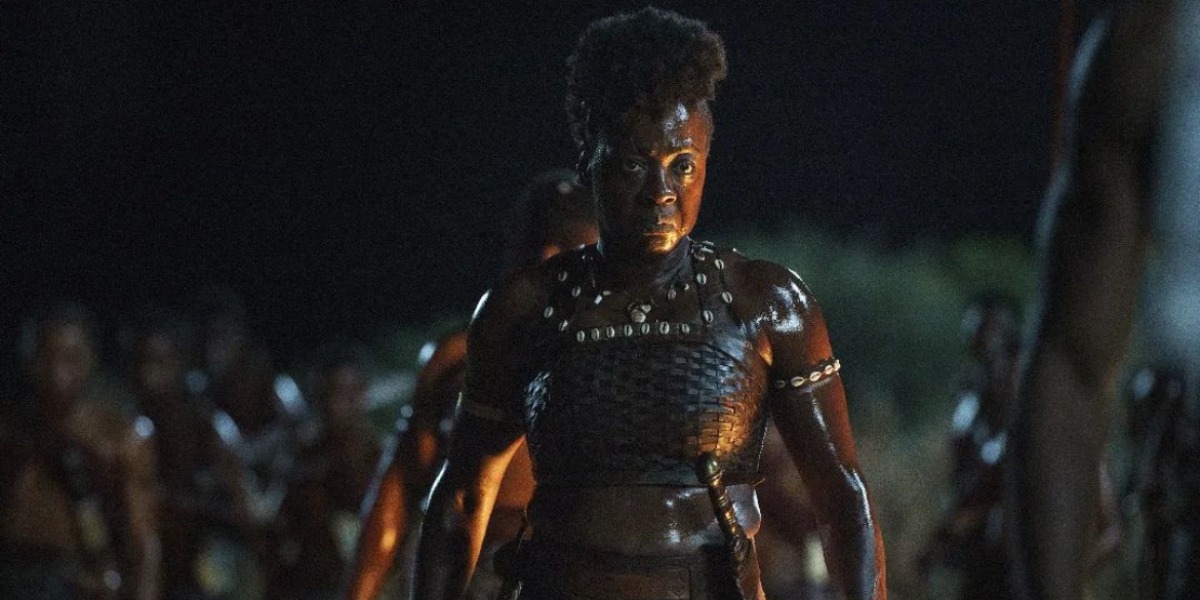
The Historic Nigerian film based on a true-life story is set in the 16th-century Zazzau empire now known as Zaria, Nigeria. In this Izu Ojukwu directed movie the warrior queen Amina must make use of her military skills and tactics to defend her family’s kingdom as she faces betrayal by her adored lovers, having to face her ferocious enemies in battle and being exploited by the so-called nobles in the kingdom


View this post on Instagram


A post shared by Netflix Nigeria (@naijaonnetflix)

Oga Bolaji

03/11/2021

This 2018 Nigerian drama film written and directed by Kayode Kasum, centers around the life of the simple happy-go-lucky musician ‘Gold Ikpomonsa’ who retires in his 40’s. After he meets a 7-year-old girl, his life takes a whole other turn, is it for the better or worse?. The movie highlights the struggle and resilience we as Nigerians have.

Happiness Ever After

10/11/2021

A sequel to the 2016 movie ‘Happiness Is a Four-letter Word’ which is based on a novel by Nozizwe Cynthia Jele. This South African film carries on the theme that surrounds the first film which is friendship and sisterhood as we find Zaza, Princess and Zim living through their family feuds, loss and newfound love. 

In My Room

17/11/2021

Nigerian comedian Kenny Blaq tickles our funny bone with his one-man stand-up comedy show where he reflects on the realities of a year spent indoors due to the effects of the COVID 19 pandemic, riffing on airport customs, his love life, and more.


View this post on Instagram


A post shared by Netflix Nigeria (@naijaonnetflix)

Featured image credits/Amina

NATIVE Exclusive: It’s Backroad Gee’s Time Now

At such a young age and in such a short period of time, Backroad Gee has proven himself to be a formidable grime artist. Beginning his musical journey in 2019, the rapper in slightly over 2 years has continually refined his craft to fit perfectly into the burgeoning musical landscape in the UK. 

His rise to stardom began with his hit single “Party Popper”, a bass-heavy track that has the artists spitting dizzying rhymes bars over an intoxicating production. He followed this closely with the release of his debut EP ‘Muktar With Reason’ in 2019. Since the release of his glittering debut, he has released two EP’s this year alone ‘I’m Free’ in 2019 and ‘Mukta vs Mukta’ in 2021. Since then, he’s only doubled down on improving his skills which is a great source of pride to him.


“I really wanted it to cater to everyone with this tape because I love music and I wanted to give that type of energy back to everyone that’s going to listen to this tape,” he tells me over a Zoom call with a calm and self-assured tone. His energy which visibly bounced off the screen keyed me into his personality which also shines through on his gritty bars which radiate an exciting and mischievous energy. He embodies a new template of authenticity which is welcome among today’s modern listeners. Brimming with excitement for the future, the UK mcee is now ready to open his world up further to his growing audience. 

Although he is known for making drill and grime music, he speaks to the importance of allowing artists the freedom to operate within a range of genres: “I’m an artist and not just a drill rapper” he makes clear over our call.  His debut mixtape ‘Reporting Live From The Back of the Roads’, is a combination of sonics, themes, tastes, and styles all tied together to show off a blend of different strengths and abilities. Now, the 24-year old Congolese-born London-based rap artist is ready to share his full-length debut mixtape with the world. With that being said, this is Backroad Gee’s time.

Our conversation which follows below has been lightly edited for clarity.

NATIVE: What does it feel like to finally put out your second full-length mixtape? 

Backroad Gee: I feel like people can understand my artistry more and I can do a lot of things. I’m a journalist from where I’m from so I want people to see other sides of me. 

NATIVE: What were you trying to create when you started working on this new mixtape? 

Backroad Gee: Initially when I started working on the tape there was a lot of back and forth because originally the tape was supposed to go in a certain direction but I changed the name, changed the dynamics and I really wanted it to cater to everyone because I love music and I love listening to all types of music and I wanted to give that type of energy back to the people. 

NATIVE: The features are very interesting, were they intentional? 

Backroad Gee: They are all organic artists, so it wasn’t really planned. It just happened to work because they’re really good artists. There was at least one song with a planned feature because we already had a relationship with each other. 

NATIVE: The production on the project is also a highlight. What was the selection process like?

Backroad Gee: When it comes to my productions I’ve been able to fuse grime and drill so it’s not straight drill or straight grime. The sound effects are just a part of me and where I’m from so I just put that in there. 

NATIVE: You never shy away from your African roots. Are you open to working with more African artists?

Backroad Gee: Oh yes, I sure will. I’m going to be working with a lot of Nigerians, Congolese, and just a lot of Africans so just watch out for me. Aside from making and loving drill music, I can make anything and everything I set my mind to. I’m an artist and not just a drill rapper.

NATIVE: What’s one achievement that you can say you’re most proud of? 

Backroad Gee: I’m very glad I’m doing music because music has really done a lot for me cause honestly, I’d be somewhere else doing what I’m not supposed to be doing if I wasn’t doing music. It’s a blessing really

NATIVE: What would you want people to take away from this album?

Backroad Gee: I want everyone to feel the music, enjoy the music and love the music. It’s all so special to me and I want it to mean more to the people actually listening to music. There’s a lot of work and time that has gone into putting this tape together and seeing people enjoy the sound would mean everything to me.

Stream ‘Reporting Live (From the Back of the Roads).’

Featured image credits/Courtesy of the artist

TurnTable Top 50: Ladipoe’s “Running” Makes Its Top 5 Debut This Week

Ladipoe lands a spot in the top 5 this week with his recently released Fireboy DML-assisted single “Running.” The single serves as the rapper’s second top-five entry after the five-week No.1 streak of “Feeling” earlier this summer. The single also garnered 37.4 million in radio reach and 1.41 million equivalent streams.

Elsewhere in the charts, Joeboy’s “Sip (Alchohol)” spends its fourth week at No.1 on the TurnTable Top 50. This week, the single tallied 47.2 million in radio reach, 2.77 million in TV reach and 3.86 million equivalent streams. It’s followed by Adekunle Gold’s “High” which stays atop the charts for the fifth week with 47.7 million in radio reach.

Ayra Starr’s “Bloody Samaritan” falls to No.3 this week and is followed by Fireboy DML’s “Peru” at No.5 this week. Kizz Daniel’s “Lie” comes in at No.6 this week and it is closely followed by Timaya’s Cold Outside” featuring Buju at No. 7. Rounding out this week’s top ten of the TurnTable Top 50; Tiwa Savage’s Somebody’s Son” with Brandy retreats to No. 8 from its No. 5 peak while Omah Lay’s Understand” falls to No. 9 after topping the chart for three weeks.

Closing out the charts., Larry Gaaga’s “Egedege” with Flavour, Phyno & Theresa Onuorah launches at No. 10 on the chart after tallying 9.5 million in radio reach, 1.99 million equivalent streams and 762,000 in TV reach.

Featured image credits/Instagram

Songs Of The Day: New Music From Mayorkun, Wande Coal, Hanna and More

As the year winds down, the sheer number of music we receive at The NATIVE keeps growing at an exponential rate. With live shows back in full swing and Afropop hits such as Wizkid’s “Essence” and CKay’s “Love Nwantiti” climbing the charts both home and abroad, there has never been a more exciting time than the present for the ever-evolving sonic landscape. Through it all, we remain committed to the ideal of music discovery and sharing that is a big part of what we stand for.

That’s where our Songs of the Day column comes in. We’re doing the work to stay on pulse with all the music coming out from across the continent and beyond, bringing you exciting songs of tomorrow: today. Last time out, we had exciting music from Idahams, Sho Madjozi, Loose Kanyon, and Focalistic amongst others. Today, we’re bringing you new music from our favourite duo, The Cavemen; a standout from Mayorkun’s long-awaited sophomore, ‘Back In Office‘; and a new single from icon, Wande Coal. 

The Cavemen – “Biri” ft. Made Kuti

While last year’s ‘ROOTS’ introduced the world to The Cavemen’s wondrous re-interpretation of highlife, their latest effort, ‘Love and Highlife,’ released today already sounds more engaging than the latter, updating the thematic inspirations of  ‘ROOTS’  to center love as a motivator for their work here while retooling the production of their debut to follow this slight tweak. On “Biri,” the brothers join forces with another fantastic musician, Made Kuti, for a languid affair where the grooves of their highlife meet the light percussions of Made’s neo-Afrobeat for a joyous intersection of a very 2021 version of two of Nigeria’s most powerful music styles post-independence. 

Mayorkun – “No Strings Attached” ft. Joeboy

For huge parts of 2020, Mayorkun was the voice of popular culture in Nigeria, soundtracking the year with songs like “Geng,” “Betty Butter,” and a scene-stealing feature on “The Best,” off Davido’s third album, A Better Time. For the most part of 2021, Mayorkun has been off the grid, completing work on his sophomore album,’Back In Office,’ and singles like the Victony-featuring “Holy Father” and the titular track have hinted at a sonic evolution from the former DMW singer. “No Strings Attached” is not necessarily a sign of those changing tides, instead it’s a brilliant union of the strengths of  Mayorkun and Joeboy, seeing them riff off each other while singing about taking care of a love interest’s wants regardless of the situation of their entanglement.

Wande Coal – “Come My Way”

For much of the year, Wande Coal has kept been silent but today he returns with “Come My Way,” his first solo single of 2021. The track, produced by Bruno and Screwface, finds Coal in defiant mode, promising to let nobody get between him and his blessings. The track takes influence from the low-lit sound of contemporary R&B, merging it with the warm vibes of Nigerian Afrobeats and the throbbing digital pulse of South Africa’s Amapiano. 

Hanna – “BOI”

Zimbabwean-Ethiopian wordsmith Hanna Kuruneri has been on the ascent for huge parts of the last three years. Since stepping into the limelight during her time at the University of Cape Town, coming to the attention of the likes of Nasty C and DJ Clock after posting a viral video rapping on Instagram, Hanna has impressed with her vociferous bars. “BOI,” Hanna’s latest song featuring DeekayDidIt, draws from her most proud, cocky and powerful self, giving representation to her taking power back, asserting boundaries, and reminding herself of her brilliance. 

Niniola – “I Did It” ft. Lady Du

While others like Kabza De Small, Tyler ICU, and Vigro Deep continue to receive acclaim for the innovative directions they are pushing Amapiano into, South African singer, Lady Du, remains at the forefront of the genre, with songs like “uZuma Yi Star” and “Woza” displaying her hypervivid take on Afropop. Uniting with Nigerian singer, Niniola, who is famed as the queen of afro-house, they make a sonic dedication to the art of seduction. Atop a strobing instrumental, the duo sings about the joys of dancing and seeking thrills while deftly passing the baton around without disruption. 

Kwesi Arthur ft. Medikal – “Different”

Since establishing himself as one of the standout talents in the youthful core of Afropop’s vanguard with 2019’s ‘Live From Nkrumah Krom,’ Kwesi Arthur has flirted with the rap and pop side of his music on songs like “Baajo” and the remix of Yaw Tog’s “Sore.” Teaming up with Kwesi Arthur on “DIFFERENT,” Arthur raps over a menacing beat from Shadxw about being at the top of Ghanaian music for a long time while assuring listeners that his eagerly-anticipated tape is on its way. 

Nimco Happy – “Isii Nafta”

Earlier this month, a video of a singer, Nimco Happy, performing a song usually sung at Somalin weddings went viral on Twitter. The song called “Isii Nafta,” means “give me life,” but it is more widely known by its catchy lyrics “I love you more than my life.” Last week, the song got an official release, and it is sung across four languages–Somali, English, Arabic, and Swahili–over a polyrhythmic instrumental that sees Nimco sing about romantic bliss and happiness. 

Somadina – “Super Soma”

Following up on her single “Kno Me”, Somadina is back with a new single titled “Super Soma.” The new single finds the singer departing from her string of earlier releases and launching a new rockstar persona befitting for this phase in her career. Describing the track as more than a single, but a theme, the ebullient new track finds the singer telling us how great she is. Over the GMK-produced track, she delivers one of her best performances, embodying a superhero persona and loudly screeching across the futuristic production.

Featured image credits/Instagram

5 African Spring/Summer 2022 Collections to look out for

The fashion calendar is off to a very great start. All across the world, established and emerging fashion houses are unveiling the world around their daring spring and summer collections, whetting appetites for the upcoming fashion season which seems to feature bold and colourful prints and patterns.

Here in Lagos, Nigeria, one of fashion busiest capitals, all eyes have been heavily focused on the fashion runway which has made its welcome return to the city after the break caused by the COVID-19 pandemic last year. While the busy Lagos Fashion Week  calendar has breezed by this weekend, there are still a number of African fashion designers unveiling their latest collections, to incredible fanfare. From Thebe Magugu’s ‘Genealogy’ collection to Orange Culture’s ‘Peacock Riot’, here are a few SS22 collections to look forward to by African designers on the continent and in her diaspora.

Thebe Magugu

The South African designer and former LVMH prize winner, Thebe Magugu unveiled his collection titled ‘GENEALOGY’. The new  collection is inspired by the history, experience and heritage of the Magugu family. From the colours to the style and fabric, each look has its own unique story and reinterpretation. “Our home in Kimberley was a temp built from Debeers, who provided settlement for their miners(my grandfather). We were one of the first houses on the settlement and seen here my mother with an oversized trench coat on our street, now known as Ipopeng- which translates into “make yourselves pretty,” Thebe explains as the backstory behind one of the collections’ vibrant pieces.


View this post on Instagram


A post shared by Thebe Magugu (@thebemagugu)

Kenneth Ize

The Nigerian designer debuted his SS22 collection during Paris Fashion week earlier this fashion season. His looks have always been known for his craftsmanship, colourful versatility and asooke technique, which makes it extremely wearable for anyone. In this collection, we see a lot of fringe, stripes, patterns and so much more. 


View this post on Instagram


A post shared by DBS Fashion Society (@dbsfashion)

Sindiso Khumalo

The South African designer, the LVMH joint prize winner, unveiled her collection during the Milan Fashion week. The collection pays homage to the University of Cape Town Jagger African Studies library that was caught in a mountain fire in April of 2021. Some of the pieces are also filled with hand illustrations of maps, political history and stories of African legends lost in the fire by a South African artist known as Snalo Ngcaba. Since the launch of her fashion brand in 2015, her designs and textiles in her collections are handmade with watercolours and collages. Her colourful aesthetic is also inspired by her Zulu and Ndebele heritage.


View this post on Instagram


A post shared by DBS Fashion Society (@dbsfashion)

Xuly Bët

Lamine Badian Kouyaté, the Malian/Senegalese known for his cool and casual take on his designs took a different approach for his SS22 collection. This features many body-hugging, nylon and sports-like design items, a welcome return to his brand’s essence. “With this Spring-Summer collection, I wanted to be radical, I wanted to come back to the quintessence of Xuly.Bët. A quintessence that has been purified,” says Kouyaté. The looks are all inspired by the 1995 collaboration between Xuly Bët and Puma. He translates the modern nature of the avant-garde looks to that of today through his use of colours, fabrics, stitches and design. 


View this post on Instagram


A post shared by XULY.Bët (@xulybetofficial)

Rich Minsi

Milan fashion week witnessed the unveiling of the South African designer Rich Minsi’s Spring Summer 2022 collection titled ‘Mafamaba Yexe’. Minsi explains that “Mafambe Yexe finds its inspiration in a microscopic view of Bumba’s purge, made up of cells that, like so many others, cut up aside to multiply. Pain on the skin, aches on the within, discomfort in all places. From that discomfort, cells made echoes of their own likeness, and Bumba birthed the world”. The colours yellow, green and red are at the forefront of the collection. His aim is to push the conventional fashion boundaries not only through his designs but also his personal style rocking mini skirts and other unconventional looks. 


View this post on Instagram


A post shared by RICH MNISI (@rich_mnisi)

Featured image credits/NATIVE


ICYMI: Orange Culture kicks off Lagos Fashion Week, Peacock style!

Fresh Meat: Best New Artists (October, 2021)

Staying true to our mission reshape the face of African popular culture, The NATIVE team curates a monthly list to spotlight the best and most exciting new artists on the continent. Some of these artists have dropped songs to some regional acclaim, while others are brand new on the block, working towards their first big break. Tune in to what’s next. Click here for September’s Fresh Meat.


Afropop is currently witnessing one of its most defining moments. This year alone, the genre has soared unlike ever before, taking on new life as it fully goes global with frontrunners such as Wizkid, Tems and CKay. We are witnessing history in the making as the genre and its youngest proponents shatter glass ceilings that previously set them back from worldwide fame.

The most interesting part of all this lies in the fact that their success is setting a vast tone for where the new vanguard of Afropop hitmakers are able to take their music next. Now, more than ever before, the world is interconnected and looking for its next superstars and Afropop has positioned itself at the apex of this search. What’s difficult, however, is sieving through all the noise, and finding all the diamonds in the rough. That’s where the NATIVE’s Fresh Meat column comes in to make sure that good music isn’t being slept on.

Now entering its 19th edition, this month’s Fresh Meat packs in a punch as it features some of the hottest emerging artists on the continent. From Nigerian Rap newcomer DaisyFirecracker to South Africa’s Young Stunna, here are the artists you need to be listening to right now.

Hunter Rose

In the last few years, some of the most innovative R&B music coming out of Africa has sprung from South Africa. From Shekhinah’s wispy neo-soul to Bonj’s song of angst and melancholy, the sounds from the Rainbow Nation are in sync with the global sound of contemporary R&B. The singer known as Hunter Rose is rooted in that culture of fluid expressionism, calmly detailing her feelings about life, love, and despair over featherlight beats attuned to her diminutive voice. Hailing from Cape Town, the singer first came to attention through a series of The Weeknd covers that translated the distinct mirth of the Toronto singer’s smoky lyrics into her optimistic worldview.

Her first single, 2019’s “Hot,” pushed her art in new directions, casually subsuming the electronic thrum of house music into her soul core. A broader showing of her capabilities was given on Slow Summer, a joint project with Clap Cotton and Loop Schrauber, where the singer’s voice mapped out the stretch of the project. On the project, Hunter plays the role of reassuring her listeners about going through tough times on “Just Fine,” infusing the single with a shoegaze essence, while “Goody” captured her exuberant spirit over a jazzy instrumental.

Hunter’s debut album, Love & Trust, melds the storytelling of Slow Summer with an insistent desire to express her wants in friendships and romance. On “Let Me Go,” with Ile Saadiq and Meek, Hunter sings about potentially being the one causing the obstacles in her romances, asking her partner to let her go. That rare feeling of optimism is dissolved on the titular track where she sings about making it with a partner, crooning about love and trust being all they need. These complex feelings come to a head in the final stretch of the project where the relationships Hunter holds dear teeter on the edge of collapse, leading to anguish-filled tracks like “Lose Control” and “Goodbye (Outro).” On her latest single, “Get It,” the singer reunites with Clap Cotton, displaying the majestic sense of pacing that makes her music a wonder.

Felicia

20-year old FELICIA might be relatively new to the music scene but her voice demands attention. Committing to music in 2019, the self-taught singer, songwriter, producer and audio engineer took it upon herself to improve her craft throughout the lockdown period in 2020, and the results were immediately evident. In August 2020, she released her debut single “So There’s That,” a track that finds the artist flexing her distinctly smoky vocals over the solemn, guitar-led production.

Music always seemed to be the goal for FELICIA When she was only 10 years old, she began writing her own original music and taking piano lessons, giving her the perfect foundation for what she is today and what she’s preparing to grow into. Drawing heavy influences from R&B/Soul, FELICIA has shaped her sound in such a way that it has undeniably become hers. In February 2021, she released her debut EP ‘1:50AM’. The 5-track self-produced solo tape shows off the artist’s vulnerability from the melancholic production to the poignant lyricism, all tied together through her purposeful artistry.

In just slightly over a year, she’s garnered quite the attention as she has been featured on a number of editorial playlists including Apple music “Alte cruise”, “Afro-soul Mix”, “R&B Now” playlist and Spotify’s “New music Naija” playlist. And she’s not slowing down anytime soon. Already, one of her singles “I Won’t” has earned her new levels of recognition as it hits the 100k stream mark.

FELICIA’s infectious voice especially coupled with her preference for an eclectic and altogether soulful soundscape is definitely something to speak on. Although she hasn’t been in the scene for so long, FELICIA has a promising music career right in front of her and we’re rooting for her.

Vee Iye

In the past few years, Big Brother Nigeria has emerged as one of Africa’s most viewed and most discussed reality TV shows. Last year’s lockdown season, in particular, proved to be a very entertaining season, grabbing viewers’ attention with remarkable individuals to root for. It also embellished how the show has become a place for emerging artists to reach and hold the attention of a wider audience, not only for its eventual winner but also for its other contestants. This is particularly so for Veeiye, who’s advancing her career as a singer right before our eyes.

Born Victoria Adeyele, and performing under the moniker Veeiye, Vee is a British-Nigerian singer and songwriter singing about poignant and relatable stories. Her music career dates back to long before her run on the Big Brother 2020 Lockdown season, with a few singles and low-key support appearances, including backup vocals on UK rapper Not3s’ single, “Aladdin”. With a rangy, honeyed and agile voice, Vee’s potentials as a singer were evident before she entered the Big Brother house, and it shined on several occasions in the house, setting her on a potentially fruitful path when she rejoined the outside world.

In that time, her musical growth has been measured and meaningful as she’s improved upon her skill. Earlier this month, a year after gracing screens across the continent, Vee released her debut EP ‘Young & Reckless’, a 5-tracker that features Mavin rapper Ladipoe and close friend Laycon. The 13-minute listen is a short yet dynamic set ruminating on matters of love, sex, affection, intimacy and more. With an undeniably unique sound, she introduces listeners to her sound and gives a well-rounded view of her youthful world.

Fusing Afropop with R&B and her brand of bold writing, Vee’s artistic inclinations are convincingly well-worn. Even with her short catalogue, the singer is on her path to stardom, leaving no room for doubt with her powerful and audacious voice.

Dagizah

It’s not every day you uncover a footballer turned fast-rising artist. Abubakar Abdulahi popularly known as Dagizah is a Nigerian rapper and singer whose music can be described as a fusion of both foreign and local sounds. Starting off his professional career, the rising star made the change to music when he ran into financial difficulties at Samba FC, the football team to which he was signed to and played.

Over time, with the influence of his elder brother who constantly would buy him CDs of his favourite artists such as Usher and Saheed Osupa, he soon uncovered his passion for making music. “I came about Dagizah in a funny way when I was trying to create an email years ago and that was what came to my mind first. Ever since then, I have been going by the name, DAGIZAH,” he explained of his chosen moniker in an interview with Vanguard news. After Dagizah made the conscious effort to pursue his music, he began putting out music and performing in minor school events until he got the chance to perform alongside the likes of Danny S in 2018 and Zinoleesky in 2019. Along the way, he caught the attention of Chippy Muller, the CEO of Chippy Records, to which he’s now signed. As he advanced in his career, he also went on to receive a co-sign from industry powerhouse and Grammy-nominated artist, Bankulli.

As he advances in the game and improves upon his craft, Dagizah aims to show the world what no other can bring to the industry as he releases a slew of singles including “Cashless” and “Oyojo Reloaded” as well as his debut EP titled ‘Zero Your Mind.’ He has found a way to merge genres from all spectrums, mixing Drill music and Fuji music, alongside Amapiano laced with a trappy and textured melody. Dagizah clearly has so much more in store and can’t wait to show the world.

Zamorra

Adekunle Olawashina Abdulateef also known as Zamorra is a 22-year old Nigerian Afropop artist who caught our attention after he engaged in a viral Twitter trend. During the time, his hype reached a fever pitch shortly after he made a song that compared two similar subject matters and determined which was more important. While this was one of the most defining moments of his career, Zamorra has actually been making music since he was young. His love for music began from his days in church before he started writing music professionally in 2015.

With his success in the “importanter” song challenge, Zamorra also scored a befitting remix with Small Doctor followed by a vibrant music video for the song which trended and went viral nationwide, cementing him as a talented newcomer. In 2015, he was signed to Fox Records where he dropped an array of singles such as “Better De Come”, “Deserve Better”, “Run Away” and many more. He recently debuted his first-ever EP entitled ‘Storms and Rainbows’. The 8 track project entails his life experiences from moving to Lagos from Ondo state, those who have shaped his life and everything else in between.

The main message Zamorra wishes to share with listeners comes into full display on the standout track “Timeless” where he speaks on the uniqueness of his journey and his timeless, no limitations approach to making music. He pushes back on those who compare his journey to his counterparts who may have gained more success and popularity in the industry, choosing instead to focus on his singular vision to improve his craft. With the future still ahead of him, it’s clear that Zamorra is barely getting started on his plans for world domination.

Young Stunna

Amapiano is a gift that keeps on giving. This is not only true for the countless hits that keep surfacing but evident through the talents the genre keeps unearthing. 21-year old Young Stunna is the latest breakout star. With his unmissable voice, clever lyrics and catchy melodies, the South African vocalist/rapper first made a splash earlier in the year on Dzo 729’s “Baxolelela” and on Dlala Regal’s “Dlala Captain.”

Hailing from Daveyton, Johannesburg, Stunna started writing music at a young age. His deep love for music was shaped by his family, who played a lot of Hip-Hop, Kwaito and R&B during his upbringing. Drawn towards the former, Stunna was impressed by how impassioned the artists expressed themselves, and by the early-to-mid-2010s, he started recording and performing as part of a rap group in and around his township.

Delving into Amapiano in February, an invite to a studio session with pioneering producer/DJ Kabza De Small would prove to be a necessary catalyst to his burgeoning career. After recording “Camagu” together, the superproducer was so impressed by Stunna’s prowess that he promptly signed him to his Piano Hub label. Within a space of a few months, Stunna’s trajectory significantly shot up, thanks to his show-stealing features on songs like the chart-topping “Bopha” and “Sgija”.

His recently released, star-studded debut album ‘Notumato’ (Beautiful Beginnings), opens with the highly-anticipated smash hit “Adiwele” (which has been subject to leaks and viral moments). In the song, Stunna confesses that a new life filled with fortune is calling upon his name, while also expressing gratitude towards Kabza for his contribution, and for opening doors for him. While on “Shaka Zulu,” Stunna speaks of his explosive arrival, comparing it to that of a warrior. He details how he has fought to be where he is today, being able to take care of loved ones and doesn’t have any desire to go back to his old life. On the 16-track LP, Stunna explores different themes with equal authenticity. His ability to make groove-centric bangers, as well as broadly relatable Amapiano tunes, attests that the vocalist is on a path to superstardom.

Daisyfirecracker

When Daisy raps, she sounds as if she has a point to prove; the words that burst out of her mouth are rapid-fire bars after bars, delivered with a fierceness and confidence that commands attention. The Nigerian rapper, who is an indigene of Okija in Anambra State, didn’t have the smoothest ride into the music scene. Her search for a better living took her away from her family home and into the big city of Onitsha and then more than 3000 kilometres from Nigeria into Guinea-Bissau. But a spot in front of a microphone was always Daisy’s true home.

Now signed to Dreamspace Entertainment, Daisy put out her first single, “Straight Ahead,” early this year. The track, which is produced by respected Nigerian producer Major Bangz, is rife with thumping drums. Daisy matches the vigour of the production with her high-energy delivery and braggadocious lyrics. Her fortunes improved when she appeared twice on Nigerian artist/hypeman Slimcase’s Instagram Live show. On both videos, which went viral, Daisy freestyled in her characteristic rap style of Igbo and Pidgin English, wowing audiences with her peppy lines and infectious composure. She also appeared on Nigerian disc jockey DJ Jimmy Jatt’s Jimmy’s Jump Off.

About a week ago, Daisy released her debut EP ‘Fire Cracker’. On the nine-track project, whose title is another pseudonym Daisy bears, the rapper displays her range and versatility. On songs like the title track and “Who Dey Zuzu,” which has roots from one of her freestyles on Slimcase’s show, Daisy offers the side of her artistry that her fans know: chest-thumping lines backed by a ravenous delivery. She turns on her softer, lover girl side on cuts like “Lemon and Juice” and the R&B-tinged “Fantasize,” which features MaynEvent. On those songs, she combines rapping with laid-back singing that doesn’t feel out of place but complements her romance-filled intentions. She goes a step further and becomes a relationship counsellor on “True Love,” as she advises couples to remember that hard times are part of the fabric of a long-lasting relationship.

There is also the street anthem, “Ima Kosi,” on Fire Cracker. Here, a street smart-Daisy shouts out different regions in the eastern part of Nigeria as she reiterates that hard work and dedication are the foundations to enduring success. She also takes shots at her detractors on “No See Road” and “Rest,” reminding them that she cannot be stopped. She samples Astrapiia’s “Can’t Quit You” on “Never Quit,” which is a reminder to herself to never let go of her dreams of rap stardom. Although Daisy operates in a space that never adequately rewards the talent of female artists, most especially female rappers, “Never Quit” is a promise to herself and her fans: she is here to stay.

K.Keed

There are a few intangibles that you pick up on when you hear a budding rap artist in the first few times. Presence is one of those, an ambiguous function of the artist’s natural cadence and a convincing oomph to their delivery that instantly defines how they will be received by your ears. The same way size can’t be taught to aspiring basketball players, it’s almost impossible to teach presence in rap – at worst, the artist just doesn’t have it; at worst, the artist can grow into it. South African rap upstart K.Keed has IT, in abundance. Presence is a preternatural part of her skill-set, dating all the way back to the very first song you’ll find on her SoundCloud page – released in 2018.

“Murder,” as the title suggests, is a bruising song where Keed tears through the web of naysayers and unbelievers, a pre-emptive gauntlet thrown down ahead of any doubts about her potential as a rap star. On that song, every line is as impactful as the one before it, each couplet landing with the loud thump of a giant’s step and every clever line slicing through with the sharpness of a samurai’s sword. Even though her voice is naturally honeyed, it’s effortlessly contorted into a delightfully stinging weapon, setting the precedent for an artist who easily sounds compelling and whose swagger will consistently be unchecked.

In 2017, K.Keed began rapping at the nudge of a friend; she took a beat from him, went home to write to it in 30-minutes and it unlocked a part of her she scarcely knew. It frames what she currently is in her default mode: a dead-eyed lyricist with an inclination to incinerate any beat she encounters. But you’d be wrong thinking that’s all she is. ‘Concepts’, her brief 2019 collaborative tape with producer Lay Lay, teased out more range from Keed, both as a melodic vessel and versatile songwriter. By last December’s solo debut EP, ‘R E L I G I O N’, a clearer vision of who Keed wanted to be as an artist became clearer. The EP is filled with lyrically intricate bars, breezy melodies, and enveloping trap beats, resulting in a definitive statement of artistic self wrapped into infectious bangers.

Earlier this year, Keed got her biggest mainstream look yet, spitting the instantly memorable hook on “Spazz,” headlined by friend, fellow Cape Town rapper and NATIVE Fresh Meat alum, Dee Koala. However, to truly appreciate where she’s headed, you have to take into account all of her drops this year, which have been mostly freestyles, a format she clearly uses as a showcase. One of those freestyles is “Goblin,” where she combines simple chants with biting raps, over a bubbly trap beat, into one of the most enjoyable rap songs out this year. There’s also a blistering freestyle over the soul-sampling beat for Drake’s “Lemon Pepper Freestyle,” and a rough but enjoyable lyrical exercise over the classic beat of The Notorious B.I.G’s “Mo Money, Mo Problems.”

Last month, she shared ‘Tx3’, a 2-pack drop with a woozy trap banger and a springy, hyphy-inspired song. They are experimental iterations of the supreme confidence K.Keed has in her abilities, and it will make you believe she determines where she goes next on the road to becoming a hybrid rap superstar.

Featured image credits/NATIVE

Written by Ada Nwakor, Dennis Ade-Peter, Uzoma Ihejirika, Madoodiwa Miya, Wale Oloworekende and Wonu Osikoya

Oroko Radio, A Community Radio Station Is Launching In Ghana

Over the past few years, Ghana has established itself as a cultural hotspot in West Africa. Renowned for its rich history of culture and music, it’s become an important player in the creative scene particularly with 2019’s Year of Return initiative. The creative landscape is indeed thriving however, it lacks structures for collaboration and sparking conversations.

Cue in Oroko Radio, an online community radio station that aims to provide a platform for Ghanaian, African and diasporic voices to be heard, in their very own words. Formed out of the unlikely friendship forged by co-founders and creative professionals Truseye, Kikelomo, Nico Adomako and Naëmi Ada, the new radio station will amplify emerging talent outside of the mainstream as well as develop a community that enriches the global cultural landscape.

Oroko Radio was born out of a need to tell our stories by members of the African and Diasporic creative communities. It’s title stems from an alternative spelling of the Yoruba word, Àrokò, an ancient pre-colonial West African method of non-verbal communication through everyday items. It is distinctly rooted in West African culture and aims to provide an accurate representation of youth culture in Ghana and Africa.

It was initially a recipient of the Creativity Pioneers Support Fund from the Moleskine foundation which kickstarted and funded the idea to bring it to life. Set to launch at the end of December with a series of workshops, panels and pop-ups, the radio station will involve Ghanaian talent such as SuperJazzClub, TMSKD DJ and Accra-LA native, Blaq Pages. It will also include other African and international talent such as Sensei Lo, Tommy Wà and Kenyan organisation, Santuri.

Speaking about Oroko, co-founder Kikelomo shared that:

“Radio plays a key role in music innovation throughout history – Genres like hip hop, grime, garage, drill and many more would not exist without it. Radio provides another medium for independent artists to grow, without the nepotism or money typically needed to access major labels.”

Co-founder Nico also added:

“Throughout the history of the continent, music has always been a tool to communicate. This is what Oroko wants to build upon. We are aiming to set up a platform that amplifies and connects independent artists from all over Africa and the Diaspora, a platform from which we can share our stories, visions, and experiences to tackle the issues we care about.”


View this post on Instagram


A post shared by Oroko Radio (@orokoradio)

The radio station will also be partnering with Pioneer DJ which will provide club-standard DJ equipment and DJ controllers for the workshops set to take place later this year. Pioneer DJ Marketing Executive, Steve Briandt, shared that: “Our whole team is excited to be involved in this fantastic project, which promises so much. Not only is Oroko Radio going to unearth new talent and amazing music from around the world, but it will also encourage people to join in conversations that will hopefully kick-start positive changes in local and international societies.”

Alongside this, Pioneer DJ, Oroko Radio and the NATIVE Magazine will be running a giveaway next week. Keep your eyes peeled on our accounts for more information.

You can learn more about Oroko radio here.

Listen to The Cavemen’s new sophomore LP, ‘Love & Highlife’

In a year packed to the ears with its fair share of great albums, The Cavemen’s debut album, ‘ROOTS’, emerged as one of the most dazzling of 2020. The sibling duo, comprising bassist Kingsley Okorie and drummer Benjamin James, expanded the Highlife-inspired ethos of their initial singles into a classists fever dream, updating the vintage genre with resonant, modern-day ruminations on love and identity. 

In addition to winning the award for Best Alternative Album at the Headies, ‘ROOTS’ won the band fierce admiration and loyalty from an ever-growing fan base, to which they performed at sold-out shows across Nigeria and in Ghana. For all of the acclaim and seemingly filled schedule, the Cavemen have clearly spent the time since their landmark debut working on their craft. Just over a year later, the band is back with its sophomore album, Love & Highlife’. The project was announced earlier this year, and tracklist details were shared a few days back.


View this post on Instagram


A post shared by The Cavemen. (@the.cavemen)

‘Love & Highlife’ is now out as scheduled, and on first listen, it continues to consolidate The Cavemen’s inclinations towards presenting vintage Highlife to the current generation who weren’t alive to witness the genre in its heydays in the ‘50s and ‘60s. As retro-inspired as they are, they’ve earned a reputation for being inventive in their approach to Highlife, and they continue on that path on their sophomore LP.

They are joined by Afrobeat heir-apparent Made Kuti on “Biri,” legendary Nigerian producer Cobhams Asuquo features on “Were Kwushin,” while singers Etuk Ubong and PC Lapez make appearances on “Kpokom” and “Azana,” respectively. Including previously released singles, “Selense” and “Udo,” Love & Highlife comprises eighteen tracks, and it clocks in at just over the hour mark.

Listen to Love & Highlife’ here.

Featured image credits/Instagram


ICYMI: READ THE NATIVE’S REVIEW OF THE CAVEMEN’S DEBUT LP, ‘ROOTS’

Where Were You: Orange Culture Kicks Off Lagos Fashion Week, Peacock Style!

Adebayo Oke-Lawal’s Spring/Summer 22 – “Peacock Riot” – makes its runway debut at a private showcase in Lagos, Nigeria.


Getting ready for the Orange Culture show yesterday was the moment it really hit – Lagos Fashion Week (LFW) was truly back! Arriving at the venue, you’ll quickly realise my excitement was shared by the fashionable guests who attended the event. Seeing fashion lovers alike – dressed to the nines – expecting to be entertained by what turned out to be an amazing show, was a fantastic way to get the fashion season rolling.

Since the fashion label made its runway debut at Lagos Fashion & Design Week 2011, it has consistently used its presence to engage buyers in social activism. Since then, Adebayo Oke-Lawal has pushed his brand forward to become one of Nigeria’s biggest names in fashion. Following the brand’s history of using clothes to ask and answer questions in the same vein, this collection wasn’t any different.

‘Peacock Riot’ aims to uncover stories of isolation, inclusion and the quest for dignity as a collective human agenda. With prints inspired by peacocks, war paint and flowers; “Peacock Riot” was a form of swaying activist in a hypothetically constructed space – “The OC Garden,” a place that is free of prejudice – especially for people who are most vulnerable to societal stereotypes. This garden represents the mental space people occupy before they confront these stereotypes.

The venue, which was tastefully decorated with orange plants, lights and a faux grass runway, looked all shades of this and more! “It is both an important time to have a voice and to use it, and for this collection, it was necessary to investigate our surroundings and find tools that although are commonplace and random, are still used to profile and further marginalise people in our society,” echoed Adebayo Oke-Lawal, the label’s creative director says on the inspiration behind this collection.

Up until this moment, the brand has garnered international acclaim for its androgynous style and willingness to push boundaries with pieces made from ethically-sourced local fabrics. From handwoven macramé to upcycled lace trimmings and denim, to custom prints – including the brand’s first logo print – this collection is a “representation of different variations of generations and styles of the forefront of activism.” Highlighting political campaigns through fashion activism, Orange Culture S/S 22 collection incorporates colour, texture and patterns to bring to the foreground the different groups of people that rallied together to fight for arguably the most important cause of 2020; ENDSARS.

By playing on the stereotypical narrative that identifies us as a people, Orange Culture aims to tell a story about the beauty in the stereotypes placed on the youth.

One after the other, jaw-dropping pieces are being sent down the runway with eyes following with rapt attention – all these and more tell-tale signs of a fully engaged audience. Talented stylist, Daniel Obasi, was tapped by the fashion label to bring its pieces to life. It’s clear that they were very intentional in the choice of styling elements such as colourful tights, durags, and skin – utilising sartorial choices that were previously used to antagonise androgynous dressers as a form of fashion activism. “It is about normalising differences, rather than approaching it with the kind of fear that eventually leads to harm.”

However, yesterday’s hot button fashion event didn’t stop at fashion and activism for Orange Culture. It was a “music meets runway” situation as artists such as Falana and Lojay performed at “The OC Garden,” both deliciously clad in outfits from the brand.

With congratulations and applause filling the air at the after-party, it’s safe to say Lagos Fashion Week is off to a great start thanks to Orange Culture.

Featured image credits/Instagram: StyleFiles

NATIVE Exclusive: The Mayor Of Lagos Is Back In Office

In today’s hyperspeed, viral climate, it is more than easy to fade off as an artist if one’s releases aren’t regularly delivered to satiate fans’ appetites. Finding and maintaining your foot in an industry like this isn’t exactly the easiest or the most welcoming. Yet, artists such as Mayorkun have managed to reinvent themselves with each new phase of their career.

Since stepping foot into the music industry, he’s consistently upped the ante and this present moment is no different. In early 2016, he signed with Davido’s record label Davido Music Worldwide (DMW) and released his debut single “Eleko.” The hit song garnered him a loyal following and since then, he’s been of undeniable importance in this oversaturated industry. 


View this post on Instagram


A post shared by MAYORKUN (@iammayorkun)

Mayorkun as an artist has had a great run so far and definitely is not stopping anytime soon. After taking a three-year hiatus from releasing any solo work, the Mayor of Lagos has now made his return with the release of his sophomore album ‘Back In Office’, his first project under Sony Music Entertainment. 

‘Back In Office’ is essentially a statement by the artist that cuts across different topics such as evolving, self-growth, self-awareness, self-acceptance, love, romance, and more. Experimenting with different cultures, languages, and themes, Mayorkun is in fact ready to prove his strength and abilities to the world. The 12-track full-length LP is a follow-on to the theme of his debut album. Now signed to major label powerhouse, the artist is ready to let us into his world giving us front row viewing to his next act.

“I feel like this is the right time to drop my project because I know people are listening now.”

Over a zoom call, the singer talks to the NATIVE about his sonic growth, his sophomore album and why it took so long to get to this moment. 

Our conversation which follows below has been lightly edited for clarity.

NATIVE: Hi Mayorkun, how has the experience been since finishing the tape?

Mayorkun: I’ve just been waiting to be honest. I’ve finished the tape since so it has been about 4 months now. 

NATIVE: Your sophomore album comes 3 years after your debut album. Why did creating this new one take so long and why now?

Mayorkun: I’ve always been a singles artist. When I just started, I felt like I needed more time to push a project and I didn’t have that time. I felt like a lot of people wouldn’t listen if I came out with a project. There were a lot of projects that dropped at that time and just sort of flopped because people just didn’t listen at that point in time. I feel like this is the right time to drop my project because I know people are listening now and they’re more in tune with an artist’s world.

NATIVE: On this new project there’s something for everyone. What were you hoping to achieve with this?

Mayorkun: So, because it has taken me so long to put out a second project, a lot of sounds have come and gone between that time and now and I felt like people would appreciate it if I had a song with different vibes, different sounds. Each song should be completely different. I don’t want the two songs to sound alike. Unlike my first album that was mainly about love and girls, this one is broader.


View this post on Instagram


A post shared by MAYORKUN (@iammayorkun)

NATIVE: What would you say was the most challenging part of creating this new project?

Mayorkun: The songs where I had to make use of choristers. The choristers were not on the island so moving from the island to the mainland was hectic for me. They are from a hood in Surulere so I tried to be lowkey, record, and leave but by the time I came out the street was filled with people. It felt like a show when I came out and I had to finish it that day because I couldn’t go and come back. 

NATIVE: What are you looking to achieve with this project?

Mayorkun: With the song like Back in Office that was the last song I recorded on the album, I was feeling like I needed a song to just remind people that yes this guy is bad so I called Speroachbeatzz. But the project as a whole I just want people to see the obvious growth and lyricism. 

NATIVE: What was the most notable song for you to create on this project? 

Mayorkun: The track with Flavour. I did my NYSC in Anambra state so I have a little of Igbo in me, but I wasn’t so fluent so I called Zoro and Chike to put me through. I’m really excited about this particular song because I feel like I really outdid myself. 

NATIVE: What’s one thing you want listeners to take away from this Album? 

Mayorkun: As I said earlier, aside from growth I feel like the whole African music scene is growing and I really want people to connect with that growth through this Album. Each song has a reason behind it and I want people I made those songs for to connect with it. 

Listen to Mayorkun’s sophomore album ‘Back In Office’ here.

Featured image credits/NATIVE
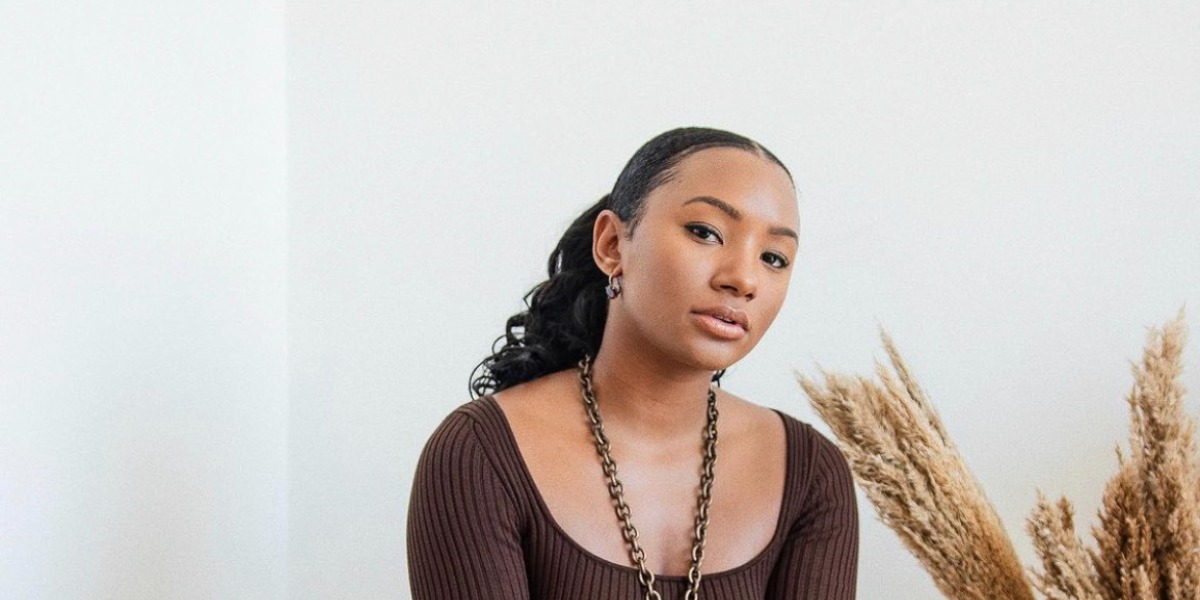

ICYMI: With Darkoo, You Always Get Twice As Much

A 1-Listen Review of Buju’s Debut EP ‘Sorry I’m Late’

In many ways, Buju’s career is a product of the increased proliferation of the internet and its impact on music culture. A little over two years ago, his career picked steam when he previewed a track for friends who suggested he get a rapper, Zlatan, on the record. With no access to funding or the clout to request such a collab, Buju went about trying to secure a Zlatan verse the only way he could: via a social media tag campaign. Impressed by Buju’s unrelenting doggedness, Zlatan granted his request, and their collaboration, “Spiritual,” was borne, and remains one of the most important in Buju’s oeuvre.

The momentum from that release effectively opened a path for the young singer, leading to subsequent releases such as “L’enu”, which caught the attention of Burna Boy who signed the budding star to his label. Since then, Buju has been on an upward trajectory, laying his harmonious vocals on some of the biggest songs coming out of the continent including Ladipoe’s summer hit “Feeling” and Timaya’s “Cold Outside.”

View this post on Instagram


A post shared by Buju (@bujutoyourears)

With each release in 2021, Buju has kept up with his impressive streak, gliding across songs with legacy acts like Timaya and Wizkid as well as enlivening songs with newcomers like Savage (“Confident”) and Sean Dampte (“PePe”) while carrying over the magic into his own singles (“Testimony” and “Outside.”) With a full year’s worth of work behind him, the singer is set to make his most maximal statement yet with ‘Sorry I’m Late,’ and, as with all things Buju, it promises to be an intriguing listen.

In Usual 1-Listen Review Fashion, All Reactions Are In Real-Time While The Music Plays. No Pauses, Rewinds, Fast-Forwards, Or Skip.

“Daniel Benson”

Of course, Timi Jay produced this. I love how fluid Buju sounds here, he must have been in such a settled space when he recorded this because he’s basically floating over the percussive base here. I also love how he juxtaposed his name for biographical anchor here, it’s a very clever inversion of the typical Nigerian project opener. It’s just two minutes though, why don’t the good things ever last?. Solid opener, let’s see what else this project holds.

“Never Stopped”

One thing you’re always going to get from a Buju record is a surprising turn of melody, and it’s partly down to his voice but I don’t think anyone should be discounting his writing credentials. He’s definitely one of the best writers operating at the top of the game right now and the verse where he dares anyone to match him up with their best rappers is peak Bujumania. I love this record, so smooth, but I have issues with the mixing, the drums keep skipping across what he is saying and it diminishes the experience a little. But overall, Daniel Benson has been at his finest on this project.

“Kilometer”

This beat is so atypical to what Buju would work with and it briefly shows because he takes a few seconds to get into the groove of it but I like how he eventually takes control. This song is obviously a calculated effort for a club banger but I don’t know if it’ll resonate as he wants it to in that area. I love the log drums here, but the riffs just don’t do it for me. Will not be revisiting this.

“Something Sweet”

Buju to your ears has shown up. This track lives up to its name. I think one of Buju’s biggest strengths is how he channels melancholy for these sort of pithy tracks that make it very easy to empathise with his work. I like how simple the instrumental is here and Buju just leans into his singing bag effectively. An Efficient track that has all the components of a classic Buju R&B track, I can see this song going on numerous playlists.

“Ogechukwu” ft. The Cavemen

Immediately I saw the tracklist, I was looking out for this one. I like how effortlessly Buju eases into the highlife influence here. The Cavemen also do a great job of opening the door for him with their sturdy supporting vocals. The beat is significantly slowed down to allow their voices to bounce off each other clearly but there’s room for improvement. Buju’s delivery doesn’t quite capture the thrumming energy of the highlife genre and The Cavemen are criminally underused here but the scope of Buju’s vision is brilliant. Adding this to a few playlists.

“For Here”

Another song built in the classic Buju template. There’s a tenderness to Buju’s voice that makes his romantic declarations seem so sincere. The way the log drums undergird this is inventive and adds something new to this tried and tested formula of Buju slowly wrapping his beautiful vocals around the specific words while literally sputtering others. “For Here” is also significantly below the three-minute mark but I’ll take it. I’m still yet to be overly wowed but the songs have all been serviceable to nudge me on to the next track. Time for the finale.

“I Do”

I’m ready to sign the petition to get Buju to work exclusively with Steph. Their knowledge of each other is so phenomenal and this song just expands on that chemistry. I genuinely feel like Buju can impact the body of contemporary R&B and this song strengthens my belief. From the creeping flow to the insouciant delivery scheme, this is probably the song that has excited me the most for the future of Buju’s music. Great song.

Final thoughts

After the year that Buju has had, ‘Sorry I’m Late’ feels a bit disconnected from his earlier string of releases. It’s not a terrible project, it’s just not the grand statement that many would have been expecting from Mr. Daniel Benson. Too many times here, he lingers in the safe zones of his ability, just gently coasting out over suave beats that are well-suited to his vocals. This is not to say that he necessarily needs to make any grand statements, instead, he lets the music do the talking with high-spirited productions that fans will surely welcome.

The most exciting moments on ‘Sorry I’m Late’ come when Buju moves out of his comfort zone and infuses new sounds and style into his music: contouring his voice around highlife influences on “Ogechukwu” with The Cavemen or just broadening the scope of his sound on “I Do.” Particularly on the latter, he sounds genuinely hungry and that bodes well for the journey forward. One of the standout talents of the year made a project to stamp his presence and document his evolution, it would be better but it is good enough to go on. Welcome, Buju, now sing to our ears.

Featured image credits/Courtesy of the artist

On Simi and the path of Endless Evolution 

I don’t think it is possible to think about an artist and the scope of their work without some sort of recourse to where they are coming from and what that means for the paths they might meander down as they gain perspective on life and develop more mastery of their art.  Even from the earliest days of her career, singer and songwriter, Simi has always been a kind of poster child for artistic evolution without restraint, crossing all sorts of imagined barriers to plant her genius in whatever field or genre she set her sights on.

In 2014, six years after playfully toying with gospel music on ‘Ogaju,’  her debut body of work, the singer released ‘Restless,’ a series of five covers that re-imagined classic tunes by the likes of Adele and Rihanna, signaling that Simi was ready to move beyond the strictures of gospel as a genre to tackle the monster that is Nigerian Pop music. Very little is said about that period of her life or the specific sacrifices that have to be made to build a pop career, or even more so, the not-so-close border between gospel to Nigerian pop.

However, I cannot imagine that it would have been easy to move outside of the comfort zone of the music that has mostly defined your identity against a country where any departure from the norm could be met with fierce resistance. In Nigeria, segueing from the Gospel to Pop pipeline was cause for concern and loudly condemned by a society that would berate the move to secularism. Essentially, Simi is either some sort of martyr or that one of the most wealthy musicians around is an urban figure of resistance, only that, in all likelihood, she knows the cost of making music that can make her most intimate audience uncomfortable if need be. 

For many people, Simi seems to exist in a time capsule that they can’t— or won’t—let go of. They want to preserve their memory of Simi through the miracle of ‘Simisola’ from 2017, or maybe it’s the other way around: them trying to preserve the receding joy of 2017 through Simi and her wonderful ballads. There is joy, however little, in nostalgia, and these days, we want to take a helpful serving of joy wherever we can because we don’t know when next we might get some of that. However, this doesn’t change the fact that as a person and an artist, Simi has changed (and still is).

On the opening song of her third album, ‘Omo Charlie’s Champagne Vol. 1,’ she sang of grief, paying homage to the loss of a father who was both anchor and hero to her. When I talk about grief here, I don’t mean the halfway sort of grief that Afropop excels at hinting at or pointing out. “Charlie” is a sweeping elegy snuck unto a pop album about glorious reflection and the joys of marital bliss. Too often, the audience can forget that artists are people like them, driven by artistic desires, however highfalutin they may be; motivated by tragedy, and given to whims just as you and I may be. Fans listen to some work and have comments that often serve to keep an artist stagnant peddling the same old formula than constantly evolving and improving on their skills. 

In casual conversation with strangers at beaches and bars after the release of ‘Omo Charlie Champagne,’ I heard many people find newer and inventive ways to say that Simi was no longer at the heart of Nigerian Pop. Yet the singer has consistently turned the dial up on her output, releasing numbers such as “Duduke” and “Know You” which prove what an inspired singer Simi is and remains and how effortlessly she can match the pedestal she has set with her earlier releases.

There really is no yardstick for what artists Nigerians will love despite all their complexities and quirks and I can’t help but feel that, in spite of all the success of 2020, many people don’t know what to make of Simi because of how sharply she shapeshifts to fit her artistic desires as she did for the R&B pivot of ‘Restless II.‘ It can be, I am sure, jolting to go from the warm tenderness of “Know You” to the biting uncertainty of “Triggered.” Being a great singer who is also malleable, who is also a woman who is also operating in Nigeria is perhaps the trickiest of intersections to navigate.


View this post on Instagram


A post shared by Simi (@symplysimi)

On her latest single, “Woman,” Simi makes a conscious decision to give a voice to the concerns and fears of women, Nigeria’s long most marginalised class. To sing about all the ways that women’s lives have been viewed as expendable in the hope of opening up a larger dialogue about it feels like something that Simi was always gearing up to tackle. What I am most heartened about is that this is not a ploy. There is a fine line between performance and performativity, and Simi is firmly on the side of the former.

While it is true that music is often a vehicle to escape the carnage that is unfurling itself across the real world, too many times, the fires are too great, too intense for us to turn away and we have to look it in the eyes and attempt to douse the flames with words from our hearts and mouth; and that’s what, I think, Simi attempts to do on “Woman.” The lesson, for me as a listener,  is seeking how I can be a part of making the world a safer, more equitable place for women. For Nigerian music fans, I would love to see them divest from topics that set women up for the nonsensical position of “first lady” or its numerous derivatives that conversations about Nigerian music seem to be in a rot about.

The truth is that the legacy of Simi continues to be written–loudly and quietly. It takes a certain level of fortitude to confront structural inequality in an industry built on a legacy of more structural inequality. It also takes a lot to convince eyes that don’t want to see you that you’re worth their time. I cannot claim to have any understanding of what direction Simi might go with her music from here on but I always return—and I hope you will too—because there’s something satisfying about being part of a journey that’s constantly being written and rewritten, time and time over, in excellence. 

Featured image credits/NATIVE
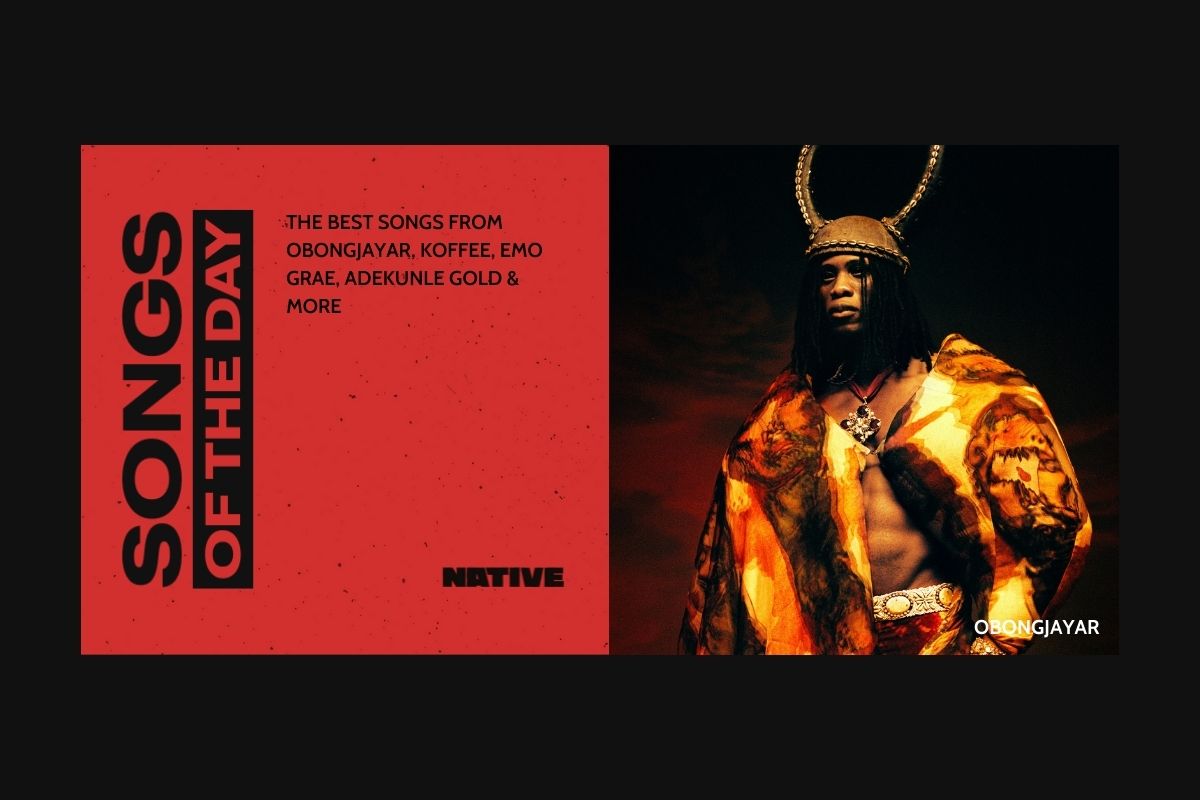
Songs of the Day: New Music from Joeboy, lordkez, Juls & more

As the year winds down, the sheer number of music we receive at The NATIVE keeps growing at an exponential rate. With live shows back in full swing and Afropop hits such as Wizkid’s “Essence” and CKay’s “Love Nwantiti” climbing the charts both home and abroad, there has never been a more exciting time than the present for the ever-evolving sonic landscape. Through it all, we remain committed to the ideal of music discovery and sharing that is a big part of what we stand for.

That’s where our Songs of the Day column comes in. We’re doing the work to stay on pulse with all the music coming out from across the continent and beyond, bringing you exciting songs of tomorrow: today. Last Friday, we brought you new releases from Ladipoe, Fasina, Fireboy DML, Eugy, Reekado Banks, and more. For our early-week installment, we’re bringing you recent drops from Joeboy, Juls, lordkez, Msaki, Sho Madjozi, and more. Tap in and enjoy.

Joeboy – “Sip (Alcohol)”

Joeboy’s ability to consistently find the intersection between relatable affections and pristine pop songwriting is responsible for his established reputation as a hit-maker. The singer reached into the same bag for his latest single, “Sip (Alcohol),” which quickly went on to become a smash hit, and is currently on its third week at No. 1 on the TurnTable charts. In support of the song, he’s shared the Dammy Twitch-directed video, a brightly coloured set of visuals with vivid emotive overtones that capture the song’s overall essence.

Idahams – “Problem”

Nigerian pop music has a penchant for hyperpop tracks aimed at encouraging escapism, urging listeners to find a good time even though the situation in the country is anything but a good time. Idahams’ new single, “Problem,” falls firmly into that lineage, a light-hearted appeal for listeners which urges them not to be consumed by their problems. “Problem no dey finish, enjoy yourself/wahala for the person wey no wan flex,” he proclaims over the Amapiano-influenced production. Matching the candour of his message, the accompanying video sees Idahams and several young Nigerians smiling, dancing and generally having a great time.

Nandy & Sho Madjozi – “Kunjani”

As it’s a part of her heritage, Sho Madjozi’s deep appreciation for East Africa is documented. Following the video for her hit song, “Jamani,” which was shot in Mombasa, Kenya, she’s now collaborated with Nandy on the Tanzanian superstar’s new single, “Kunjani.” Both known for delivering colourful, sometimes dance-ready music, they combine for a dusty Amapiano banger, singing energetically over droning synths, bright keys and thumping percussion.

Loose Kaynon – “98 Bulls” (feat. M.I Abaga & A-Q)

Nigerian rap veteran Loose Kaynon has just dropped his solo sophomore effort, Survivor’s Remorse. The brief 8-track project follows ‘Crown’, his collaborative project with A-Q which was executive produced by M.I Abaga. On it, the trio reunite for the standout track, “98 Bulls,” a boastful track that references the ‘90s Bulls dynasty which won six NBA championship titles. Drawing parallels with one of the all-time sports success stories, all three rappers take to a Beats By Jayy production, which is reminiscent of the early ‘00s Dipset era, slinging self-reverential bars while underpinning their hubris with a sense of brotherhood.

The Big Hash, Blxckie & YoungstaCPT – “Heavy is the Crown”

While it’s been two years since his last project, South African rap artist The Big Hash has remained visible with a string of frequent singles and features. For his latest drop, he taps two colleagues, Blxckie and YoungstaCPT for “Heavy is the Crown,” a conceited slapper produced by Doou$hii and Season 98. Over knocking 808s and smoky piano samples, the trio revel in their individual come-ups, recounting steps forward and sneering at detractors with authority.

lordkez – “belladonna” (feat. Shekhinah)

South African singer/rapper and NATIVE Fresh Meat alum, lordkez has just released ‘midsummer’, her fourth overall project and second of the year. The new tape continues her flair for sonic experimentation while highlighting her increased preference for blunt lyricism over the poetic flourishes that marked her earlier work. To support the project, she’s shared the video for the opening track, “Glory,” a warm, romance-themed track that features an unusual appearance from Maglera Doe Boy, who showcases his singing chops as opposed to the aggressive rapping he’s known for. In something of a performance piece, the video shows both artists serenading each other over cups of tea, an intimate setting that matches the feel of the Neo-Soul jam.

Msaki – “Mntakababa” (feat. Kabza De Small & Focalistic)

South African singer Msaki wields one of the most compelling voices in Afropop, a chamber-filling voice that can wring out emotions and belt out memorable melodies to smash hits. In a few weeks, she’ll be releasing two albums, ‘Platinub Heart Open’ and ‘Platinumb Heart Beating’. In the lead-up to the projects, she’s just dropped two new singles, including “Fetch Your Life II,” a jazzy reprise of her 2019 smash with Prince Kaybee. The other is “Mntakababa,” a deep house bop that features production from Kabza De Small, and a rather easy-going guest appearance from rapper Focalistic.

Juls & – “Intentionally” (feat. Fireboy DML)

Earlier this month, British-Ghanaian producer/DJ Juls released his long-awaited debut album, Sounds of My World. The 15-song album found Juls traversing contemporary Afropop and Black music from the diaspora, tying them all together into a unified statement through his neo-highlife-fusion sieve. The latest single off the album is “Intentionally,” a summery, romantic cut that features Nigerian pop superstar Fireboy DML. The song recently received the video treatment, a TG Omori-directed set that features Juls and Fireboy having a chill time with women who act as their love interests.


NATIVE EXCLUSIVE: A SONIC JOURNEY INTO JULS’ WORLD

TurnTable Top 50: Joeboy Holds The No.1 Spot For A Third Week

Joeboy makes a comeback as his single “Sip (Alcohol)” spends its third week at No. 1 on the Turntable Top 50. “Sip (Alcohol)” tallied 4.28 million equivalent streams and 45.6 million in radio reach. It is the third biggest week ever for a song in TurnTable Top 50 history – behind only the last two weeks of chart points recorded by the song.

Mavin’s latest golden child, Ayra Starr trails behind at No.2 for a second week running with the London-produced single “Bloody Samaritan.” It’s closely followed by “High” at No.3, the track by Adekunle Gold and Davido which holds this spot for the successive week.

Elsewhere in the Top 5, Kizz Daniel’s seven-week chart-topper “Lie” lands at No. 4 on this week’s chart. It’s followed by Tiwa Savage’s “Somebody’s Son” with Brandy which has risen from No. 9 last week to a new peak at No.5 this week. The song tallied 44.4 million in radio reach, 9.7 million in TV reach, and 687,000 equivalent streams. This also marks the first time ever in Top 50 history that multiple songs by lead female artists will be in the top five region of the chart.

Fireboy DML’s “Peru” slides down from No. 5 to No. 6 on this week’s Top 50 and it’s followed by Timaya’s “Cold Outside” with Buju which debuts on the chart at No. 7 with 28.5 Million in radio reach, 5.4 Million in TV reach and 1.2 Million in streams. To sum round up this week’s charts, we have Omah Lay’s “Understand” at No. 8, Burna Boy’s “Want It All” with Polo G at No. 9 and Lojay and Sarz’s “Monalisa” at No.10.

Featured image credits/Instagram: joeboyofficial

The Cavemen Detail Their Sophomore Album, ‘Love and Highlife’

Despite all the disruptions and turmoil of 2020, brother duo, The Cavemen, stepped into their own as connoisseurs of the neo-highlife sound with their exciting debut album, ‘ROOTS.’ After an enthralling 18-month spell that had seen them contribute to Lady Donli’s ‘Enjoy Your Life’ and tease listeners with a healthy supply of singles, ‘ROOTS’ was the diamond in their crown, establishing bassist Kingsley Okorie and drummer Benjamin James as one of the most important voices working in the modern Nigerian music landscape. 


View this post on Instagram


A post shared by The Cavemen. (@the.cavemen)

A little over a year after the release of  ‘ROOTS,’ The Cavemen have returned with details for a sophomore album set to be titled ‘Love and Highlife.’ The announcement of the project comes after the release of singles like “Selense” and “Udo,” open-ended compositions that feature more of The Cavemen’s signature sprightly vocals and foggy instrumental drenched in highlife’s iconic heaves. 

In keeping with The Cavemen tradition, ‘Love and Highlife.’ is another re-immersion into their world with the album run-time clocking in at one hour, three minutes on streaming services. There are also 18 tracks to take in with contributions from Made Kuti, Cobhams Asuquo, PC Lapez, Ugo, and Etuk Ubong. As the title reveals, the album is steeped in themes of love with songs title “Love&Trials” and “Teach Me How To Love” following that thematic direction. 

Based on the premise of singles like “Selense” and “Udo,” the album is set to incorporate more playful elements into its core while retaining the definitive style of the brothers.  Here’s to more music from the cave.

Featured image credits/kellystrophq

Let’s get into these inches

For years, black women have propped up the global demand for human hair but the industry remains shrouded in secrecy and shady ethics. Investigating the hair industry, and the beauty standards that shape it, Ore Ogunbiyi encourages us to scrutinise our relationship with extensions and the blurry line between finding freedom in our hairstyling, and denying that same freedom to others.


I love a good wig as much as the next black woman, so I absolutely hate to break it to you, but… your Peruvian hair isn’t from Peru, your 22-inch Brazilian hair was probably made in China, and a significant chunk of human hair in the global market went down someone’s plughole first. How lovely?

For Africans and other black people in the diaspora, hairstyling, and the trends around it, have been significantly influenced by racialisation; but well before white people set foot on the continent, African women (and men too) have always ‘done the most’ with their hair. A look at ancient art and even more recent photographs from the continent show how women have historically braided and tied their hair up in extravagant styles, stretched it with thread and rubber wire, treated it with herbal condiments and decorated their heads with cowries and beads. In short, elaborate and intricate hairstyling has always been a part of who we are. Even as Africans were snatched from the continent to be slaves across the world, they took many of these traditions with them and braided each other’s hair on their days off.

Although hair augmentation predates colonialism, the advent of colonialism and slavery reconstructed beauty standards and the idea of what is considered conventionally beautiful to an almost irreversible degree. These ideas are pervasive and black women everywhere have felt their influence. “Good” hair is visibly long – and not just when stretched. It is straight and not easily tangled. Soft and not coarse. Fine and not thick. As beauty standards changed in favour of Eurocentric features, black people grew more creative about how to meet them: using chemical relaxers, applying intense heat and, ultimately, wearing human hair wigs. 

Wigs and weaves have given black women room to easily create the illusion that we have hair lengths and textures that we naturally don’t, and it helps us blend into worlds where most people do. Cited in Dina Yerima’s essay analysing the practices of Western beauty standards by Black Women, to paraphrase renowned academic Homi Bhabha, mimicking the powerful (read: White) race is one way of earning power in Western societies. For as long as that demand exists, so will the global industry attempt to meet it.

Human hair wigs are not new, particularly the ones designed to mimic European and Asian hair textures. There was a big spike in wigs being worn in Europe in the Elizabethan era. Japanese Geishas and royals in Ancient Egypt have historically worn human hair wigs too. France’s King Louis XIII loved a good 613 frontal (they were called periwigs back then). However, most of the hair in late 19th century Europe came from Switzerland, Germany and France where dealers would cut off poorer girls’ hair at local fairs, or sometimes as a spectacle in a market square. 

For the most part, though, the industry was and still is, shrouded in secrecy. In today’s world, there remains a long process that happens before Rapunzel’s locks find their way into our wigs. In a move away from 19th century patterns, most human hair today is collected from poor women (and men) in India. As a sign of religious devotion (this could be to honour the gods, to seek some divine purification or to remember a deceased loved one), many young women in rural towns have their hair cut off at Hindu temples. Historically, this hair would be burned. But since the 1960s, the donated hair that is collected at these government-controlled temples is cleansed and then auctioned off to factories and distributors. Prices vary, but hair can cost as much as $1500 for 1kg. One Indian hair manufacturer, Nazia Alizaba, tells me that this donated temple hair is the best quality you can get because it’s less processed, as poorer women from rural areas are less likely to treat their hair with henna, strong shampoos, dyes and bleach. 

Aside from donated hair, there is a wealth of well-documented stories of hair being procured in much more unethical and untraceable ways. Women in conflict zones like Myanmar are attacked for their hair, which is forcibly cut and sold off by thieves. Some young women in Venezuela are conned into selling their hair for next to nothing by dealers taking advantage of the dire economic situation there. When supply is low or manufacturers are looking to increase their profit margins, factories may buy their hair from untraceable sources. Nazia, however, claims that the most reliable way to consistently get good quality hair is still from the temple auctions in India.

Most of the value added to the price of human hair is at factories like hers where the hair is sorted into lengths and textures in a labour-intensive process. The hair is washed and sun-dried repeatedly to get rid of the oils used by the donors, and in between washes, workers separate the strands by hand to ensure the cuticles on the strand’s surface are all facing the same direction, minimising tangling. Frontals and closures are knotted by hand and wefts are machine-stitched then combed for half an hour to catch shedding hairs. Before the final wash, the factory workers also have to get rid of lice which Nazia says infests 99% of the hair they receive. There is so much lice that one worker can spend the whole working day cleaning five or six 100g bundles. 

But all of this is just for “virgin remy” hair, the silky gold standard of human hair that lasts the longest tangles the least and goes for the highest prices. About a third of the hair that goes into Nazia’s factory will never end up going to her vendors. Almost 30% of the donated hair is grey and some of the hair has way too many lice to be salvaged. Instead of discarding of it, her factory sells this waste hair – which they call ‘mixed donor hair’ – to Chinese factories that have the facilities to process this hair further with chemicals and steam. In China, it can be mixed with animal hair, hair from combs and plug holes, and even plastic synthetic hair to make eyelashes, hairnets, braiding hair, and – wait for it – ‘Brazilian’ and ‘Malaysian’ hair. Are you looking at your wigs a bit differently now?

From Hong Kong, which is the largest exporter of human hair, products are shipped all over the world. I-Tips for example, (the small cylinders of individual hairs which are attached to your hair strands) are particularly popular in Europe, but frontals, closures and lace wigs, which are spread much more widely, are popular with black women. 

But how about natural human hair extensions?

In the 1960s, the politicisation of afros by the Black Panthers in the US birthed a natural hair movement that has empowered many Black people to embrace their kinks and curls. In light of this, some hair vendors are trying to change the way black women use human hair extensions. The past few decades have seen black women slowly reclaim, on their own terms, the idea that natural hair textures, in their coily, kinky state, are versatile, work-appropriate and ultimately, beautiful. 

RUKA hair is a British brand that sells human hair extensions designed to mimic black hair, as opposed to European and Asian textures. It was co-founded by Ugo Agbai (left) and Tendai Moyo (right), two black women who know what it’s like to pay premiums at hair salons just for having long, thick afros. It’s taken them years to unlearn the characterisation of their hair as difficult. RUKA was birthed out of a shared desire to be as exploratory and experimental with their hair as they were with other areas of beauty, and to give other people space for that too.

There isn’t as much global demand for afro-textured human hair extensions, which have to be steam processed to achieve the unique curl patterns, though they’re now catching up with the quality of Asian and European textured hair extensions which have been developed for decades. Tendai tried to start a natural hair extensions company before but struggled with supply chain issues, so in some ways, she knew the drill. With RUKA, she was determined to do things differently. She and Ugo are focused on the ethical sourcing of the extensions and partnering with manufacturers who understand their vision. But most exciting to them is the community they’ve been able to build around the products that provide black women with an array of hair solutions. 

You may want your hair thicker, higher or longer – after all black women have done intricate and elaborate things with their hair forever – but until recently we haven’t had many options to do that while still showing off our own hair textures. Black women are not the only people who perm, dye, bleach, straighten or enhance their hair with extensions. “People are going to want extensions and solutions just as women of different ethnicities look for extensions as solutions but our solutions are limited in what they look like,” says Ugo. That was before brands like hers joined the market, selling ponytails and clip-in extensions that mimic 3C-4C curl patterns, giving you room to experiment with different lengths and styles while still celebrating your own natural hair textures. 

Take what you need and do what you want

The ugly side of the natural hair discussion has often policed Black women who still choose to alter or tuck away their hair textures but that’s not what this is. “Within Africa,” Tendai says, “extensions have always been part of the roster of black women and black men’s hair. It’s a part of our styling. It’s a part of our tradition. It’s a part of our self-expression. And so I think, the policing of it, whether it be that you’re policing people for trying to look Naomi-Campbell-straight, whether it be that you police people with afros, all of the policing just kind of needs to go.”

This isn’t another article shouting at you to “go natural” or guilt-tripping you for your hair choices which constantly teeter a delicate line between the imperial and the indigenous. Yes, racialisation and the violence it came with have changed how black women see their hair textures and a whole industry is thriving off the back of it. Yes, we should acknowledge that and understand how we got here. But on the other side of that acknowledgment and understanding, there is a freedom that deserves to be embraced. Instead of negotiating an internal conflict of choosing between extensions that seem more or less natural – or textures that seem more or less ‘black’ – we should be liberated by the choice we have, finding freedom in the options available to us and the potential for the versatility they bring. 

Each day, week, or month where we choose to style and re-style our hair, we are making choices about beauty standards we wish to foreground, but in a space whose frontiers are defined by our shared experiences as black women. In a 2017 essay, Dina Yerima writes that “The postcolonial subject is one whose life is rife with contradictions.” Hair and beauty are no exception. To decenter whiteness from our personal relationships with our hair in the midst of the choices we now have requires us to think about hair textures beyond how “white” they are. Self-expression for black women should be able to exist at all points of the texture and length spectrums without policing, with an understanding (and even an appreciation) that we exist in this weird space within postcolonial contradictions that can’t be easily teased apart or completely undone. 

There is a beauty in being able to talk about our unique experiences of extensions, braids, wigs and everything in between with other black women who share them. There is learning that happens here. For example, the fact that black hair is more sensitive to manipulation is a case for why you might want to keep it tucked away under wigs or woven into extensions. 

For as long as hair and beauty conversations are tinged with shame, policing, secrecy and ignorance, it will always have its limits. There will always be value in learning more about the hair we grow, the hair we choose and the symbolic value of both, particularly for black women who are having to constantly re-learn how to see their hair as beautiful. There is no reason why this can’t be done while also restoring freedom to hairstyling and giving room for preferences that aren’t solely governed by a desire to look white, even when extensions are involved.

Hairstyling trends are increasingly globalised but the phenomenon is more multidirectional than is often recognised. Non-black people take hair cues from us too and there are borrowings across the board. Hair is one of the most versatile bits of the human body and extensions, in all their forms, are likely to remain a part of that conversation for everyone with follicles. The history of extensions, and other forms of hair augmentation, is one that is diverse and shared. The sooner the hair police recognise that the sooner black women may be given room to truly be free in the individual hair decisions that they make. 

Image Credits/RUKA Hair


Ore Ogunbiyi is a reporter at The Economist, a writer and an author. She co-wrote “Taking Up Space: The Black Girl’s Manifesto for Change”. 


ICYMI: For Us By Us: Exploring Fatness and Desirability as a queer African woman

We spoke to a few young Nigerians on the aftermath of last year’s EndSARS protests

It’s been a year since the Nigerian Army opened fire on peaceful protesters who sat waving the Nigerian flag at the Lekki toll gate, Mushin and other parts of Lagos. While many of the demands requested from the Nigerian government are yet to be met, the one-year anniversary of the event passed by gravely with many young Nigerians revisiting the real trauma of the past by the police continued violence. 

On closer reflection of the past year, it would appear that not much has changed in the country. Citizens are still endlessly harassed by those meant to take care of them, police continue to use unfettered amounts of violence on unarmed persons,  our leaders continue to steal from our mouths and the rising levels of insecurity are nothing short of devastating. It seems as though the country is regressing further into destitution, reneging on years of hard work by private individuals to bolster its cultural currency through music and entertainment.


View this post on Instagram


A post shared by The NATIVE (@thenativemag)

There’s no denying that many young people still feel torn and hopeless about the government’s inactions and their continued lackadaisical attitude towards ensuring justice is met. October, 20, 2020 most especially marked a turning point in the minds and hearts of many young Nigerians who for the first time had acknowledgment that their voices and votes did not matter to the very people elected to protect their interests.

As such, this year’s EndSARS memorial passed solemnly for many people in our community. To this end, we caught up with a few young Nigerians to talk about how their perception of Nigeria and her government have changed since last October’s protests.

Micheal  (26)

What does the End SARS movement mean to you?

To me personally, from what I know the End SARS movement is the Catalyst that raised awareness of what has been going on prior to the massacre at the Lekki bridge. The police are abusing their power on the younger generation and killing some that don’t have the money or connection to make a living out of it. The cycle of corruption of underpaid civil servants then leads them to seek bribes to make ends meet which is wrong.  I wasn’t really aware of the police issues like that because it never happened to me so probably I still don’t know.

How has your perception of Nigeria & her government changed since the Lekki Toll Gate massacre?

My perception was shaken in a sense, I was worried about Nigeria like I was thinking, is there going to be a war? As for the government, I wouldn’t lie, I fully gave up on the government but not the country. I still have hope that things will work out the way God destined because it’s a blessed country just bad governance.

What still needs to be addressed in order to feel truly free?

The main issue is to confirm who ordered the massacre to proceed or compensation for the families that lost their loved ones there. A sanctuary forum for the public speaking on raising local issues such as These should be placed where it’s neutral ground and there’s no government or private power where the youths are free to discuss and others as well. We might even hear things the police have to say from their point  of view but that’s wishful thinking 

Soraya (20)

What does the End SARS movement mean to you?

It means freedom. It means this generation of Nigerians are fed up and are ready to fight for their human right to life.

How has your perception of Nigeria & her government changed since the Lekki Toll Gate massacre?

My perception of Nigeria and her government weren’t good to start with. I was aware that they were wicked and had no regard for human life, they kill people all across Nigeria.  For example, when the Nigerian military killed 150 Pro-Biafra protesters in Anambra in 2015 and killed another 349 people in Zaria in 2016. However, after the Lekki Toll Gate massacre, I came to the heartbreaking and painful realisation that they knew they still wouldn’t be held accountable, even when the whole world was watching.

What still needs to be addressed in order to feel truly free? 

There are so many different definitions of freedom but I believe that at the base there needs to be accountability for what has happened. Individuals need to be held accountable. Every human being deserves to know that their life matters and no one is above that. But I think Nigerians will feel truly free when they know they have leaders that put their livelihoods and safety above their personal aspirations. There are so many corrupt people in positions of leadership in Nigeria and our primary goal right now should be making sure that the right people are getting the jobs. I recognise that getting there won’t be an easy journey as I’m sure we all know it’s not as simple as getting your PVC and going out to vote. Personally, I have faith that one day we will have the leaders we deserve, it might not be tomorrow but it will happen.


View this post on Instagram


A post shared by The NATIVE (@thenativemag)

Amal (26)

What does the End SARS movement mean to you?

Hope, but only a very little amount of it. I think the movement showed that you can no longer ignore the young population in Nigeria because we are powerful when united. But we still have such a long way to go in terms of unity which is why I’m only slightly hopeful.

How has your perception of Nigeria & her government changed since the Lekki Toll Gate massacre?

My perception hasn’t changed, they’re still the same evil people with a demonstrated history of violence towards peaceful protestors. They killed peaceful protestors in Kaduna in 2015 then did the same in Abuja in 2018 & 2019. Similarly to End SARS they tried to flip the narrative & didn’t acknowledge the lives lost. The government was also never held accountable. So when it happened again last year, I wasn’t expecting anything from the government.

Tosin (22)

What does the End SARS movement mean to you?

Although the movement started as a campaign to end the special anti-robbery squad (SARS), I believe it grew into something much bigger. It kind of evolved into a movement against Bad governance, corruption within the system, police brutality and a lot more negative factors that affect the masses. I would say it was our way of voicing out our frustration with the system, and just letting the people in power know they need to do better. Honestly, it was pretty impressive seeing how the ENDSARS campaign unified the youth; it was kind of like a community free of classism, nepotism and all that. In a way, I would say the ENDSARS movement actually gave me hope for our generation.

How has your perception of Nigeria & her government changed since the Lekki Toll Gate Massacre?

Honestly, I did not really think highly of the government before the massacre and now I think of them even less than before. The fact that they could do something that brutal really speaks volumes of the type of people that they are.

Fiyin (25)

What does the End SARS movement mean to you?

The End SARS movement means more to me than just ending police brutality. Yes, ending police brutality was the initial cause of the movement but I feel it graduated to something way bigger which is ending bad governance. It grew to a movement that was aimed at just the police to our leaders, politicians, enforcers, legislative and judiciary, even at our fellow peers

How has your perception of Nigeria & her government changed since the Lekki Toll Gate Massacre?

I’ve always loved Nigeria but at the same time was aware of its issues. If I’m being honest the Lekki toll massacre made me fall out of love with the country and lose all hope in the country. It made me angry and at the same time also sad for the country and its people.

What still needs to be addressed in order to feel truly free? 

The primary thing that needs to be addressed is the lack of accountability. Till today we have moved on like it never happened and not a single soul has been held accountable for the carnage, killings and injuries. This is something that will never happen in advanced countries, even in third world countries, perpetrators are held accountable. Accountability for the actions first then we can build on from there.

Tolu (27)

What does the End SARS movement mean to you?

The End sars movement was an eye-opener as to what the Nigerian populace can achieve when they speak with one voice. As you know, the movement arose as a reaction to the incessant police brutality in Nigeria. It is pertinent to note that the End SARS campaign isn’t merely about Nigeria’s corrupt Special Anti-Robbery Squad. It is also a broader call for social justice from Nigerian youth. The protests, and their fundraising structure, have created a microcosm of a properly functioning nation.

How has your perception of Nigeria & her government changed since the Lekki Toll Gate massacre?

Although the Nigerian government claimed that no lives were lost during the protest, video evidence as seen on social media showed how youths were covered in blood from the gunshots from the armed forces that were present at the protest ground. The government’s stance is quite unfortunate and is a mirror of what the government stands for – lies, deceit and corruption. I now believe that the Nigerian government lacks empathy and its policies are anti-people

What still needs to be addressed in order to feel truly free?

Firstly, the Nigerian government needs to apologize to the people for the shootings by the armed Soldiers and police during the End SARS protest. Secondly, there must be a total overhaul of the Nigeria Police Force. The policemen need to be retrained on basic human rights and rules of professional engagements with the civilians. Lastly, the government should empower the Police Service Commission to monitor and discipline erring police officers.

Ayomide (22)

What does the End SARS movement mean to you?

The movement made me proud to be a Nigerian youth. It meant so much to see Nigerians from different backgrounds band together and really see each other as a people deserving of dignity and respect from the people meant to protect us. 

How has your perception of Nigeria & her government changed since the Lekki Toll Gate massacre?

I feel like I’ve had a harsh awakening. I’ve always known that those in power had no regard for the average Nigerian, or desire to improve our lives. But I didn’t fully realize how discardable they viewed our lives, or how much contempt they had in their hearts for those who refused to accept oppression. 

What still needs to be addressed in order to feel truly free?

There’s a lot that needs to be addressed to feel free. However, I feel like an acknowledgment of the lives lost is a good starting point. No one desires to be a martyr. But countless lives shouldn’t be lost for nothing or at least just not be erased. They deserve that at least.

Tolu (25)

What does the End SARS movement mean to you?

For me the movement means solidarity. It means witnessing Nigerians from all walks of life coming together to stand for our right to life. Our right to protection. Our right to freedom. It’s one of the very very few things that makes me proud to be Nigerian.

How has your perception of Nigeria & her government changed since the Lekki Toll Gate massacre?

I’ve always had a deep feeling of hatred for the Nigerian government. They are useless and incompetent and honestly, that’s me being kind. But the toll gate massacre showed me that they are actually inherently evil, wicked and do not value human life. And when I think about what happened I get the same hollow feeling I got last year when the news broke. Why should we be subjected to leadership by people who so clearly hate us?

What still needs to be addressed in order to feel truly free?

I think the most unnerving thing is the government’s attempt to act like we were all experiencing some type of fever dream. For us to have watched people die live on social media was horrific enough. For people to lose their loved ones… I can’t even imagine. But for the government to deny it? I can’t even wrap my head around it. There has to be accountability. People have to face persecution. We need a complete overhaul of the system and I worry that’s impossible.

Featured image credits/NATIVE

Words by Moore Wright, Ada Nwakor and Tami Makinde

Wale gets personal on his latest album ‘FOLARIN II’

After over a decade of his operation in the rap game, Nigerian-American rapper, Wale is back with a new project and the seventh in his sprawling discography. The newly released ‘FOLARIN II’ is a follow-up to 2019’s ‘Wow…That’s Crazy’, this time, featuring acts such as J Cole, Rick Ross, Jamie Foxx, Maxo Kream, and more.


View this post on Instagram


A post shared by Wale (@wale)

As one of rap’s most ubiquitous members, the album builds on Wale’s years of musical capability, revealing him as one who’s only gotten better with time. On the newly released project, he spits tenaciously about his decade-long journey, covering the fortunes and misfortunes that come with life, love, success and more. The new Warner Music release finds the rapper flipping between sounds and moods, as he dips into wordplay and mid-2000s R&B samples one moment on tracks such as “Poke It Out” with J. Cole and triumphant, yet reflective tracks on numbers such as “Tiffany Nike.”

‘FOLARIN II’ is an intimate message to the OG Wale fans. The rapper gets more personal than he’s ever been with his listeners as he marries braggadocious raps with self-reflective lyrics. During a recent interview with Uproxx, the DMV native explained the importance of the relationships he currently upholds. In the interview he explains “I’ve done a lot of things that I probably shouldn’t have done out of frustration and feeling like I’m not being heard, but I’m blessed,” he continues to say. “And I’m just grateful.  Got a legion of people that still fuck with me through my good and bad. Even though my bad hasn’t been as bad as some others’ bad, but my good and bad.”

‘FOLARIN II’ is an honest testament to his growth as the rapper expertly shows his progression from underground player to global success. Armed with braggadocious bars, soul-baring romantic confessionals, and moving social commentary, the cohesive new project is his most versatile offering to date.

Stream ‘FOLARIN II’ below.

Featured image credits/Instagram

Watch the End SARS inspired 2D-animation ‘Days To Follow’

To honour the victims affected by the 2020 End SARS protests, Nigerian filmmaker and director Jamila Dankaro has recently put together an End SARS inspired 2D-animated film. Debuting on the memorial of the Lekki massacre, the film adeptly tells the story of two Nigerian sister’s whose lives are changed after attending the protests. 

Written and directed by Dankaro herself, ‘Days To Follow’ touches on the bitter truth of the lives of police brutality victims and the afthermath of their encounters when justice is never met. It highlights the realities of what a few or more might have experienced during the protest which have been disregarded or hidden from the media.

Dankaro says she chose the medium of animation to tell the story because she wanted to the playfulness of the colours and characters to offset the film’s weighty message. She says her goal was to tell a story that caused people around the world to rememeber the life-altering events of last year while doing her best to keep their trauma at bay.

She shares:

“All over the world, we (Black people) are arguing the validity of their voice and with this pain in mind, I wanted to create something to honour the families who lost loved ones. I wanted to create something for my people.”

Watch ‘Days To Follow’ below.

Featured image credits/DaysToFollow


ICYMI: Disney is set to release biopic on Giannis Anteokounmpo