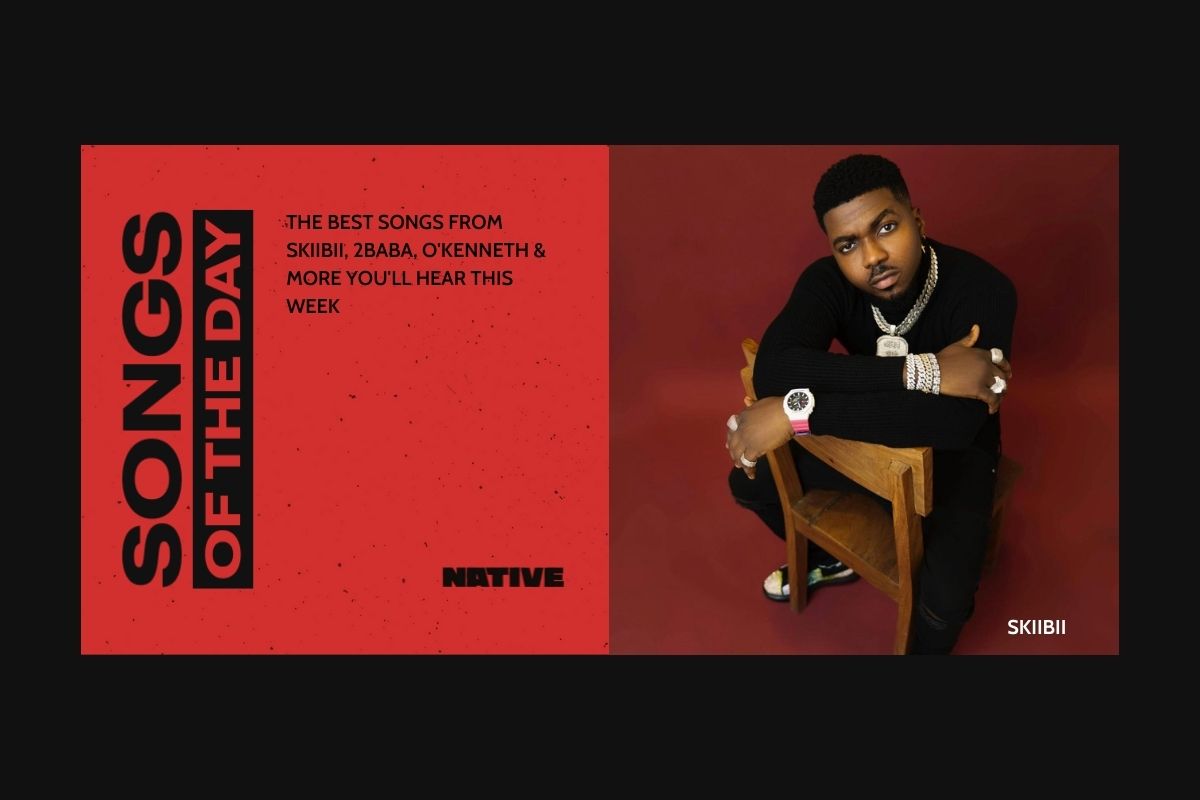
Songs Of The Day: New Music From Ladipoe, Fireboy DML, Fasina and more

As the year winds down, the sheer number of music we receive at The NATIVE keeps growing at an exponential rate. With live shows back in full swing and Afropop hits such as Wizkid’s “Essence” and CKay’s “Love Nwantiti” climbing the charts both home and abroad, there has never been a more exciting time than the present for the ever-evolving sonic landscape. Through it all, we remain committed to the ideal of music discovery and sharing that is a big part of what we stand for.

That’s where our Songs of the Day column comes in. We’re doing the work to stay on pulse with all the music coming out from across the continent and beyond, bringing you exciting songs of tomorrow: today. Last time out, we had exciting music from Simi, Sarkodie, Timaya, and Buju amongst others. Today, we’re bringing you new music from Ladipoe, Reekado Banks, AV, Kemena, Fasina, Oma Mahmud and more. Tap in.

Ladipoe – “Running” ft. Fireboy DML

The last 18 months have been very important for Ladipoe. In the thick of the 2020 national lockdown, Ladipoe caught a break with his Simi-assisted “Know You” channeling the lustrous-but-lonesome energy of the times before a collab with Joeboy saw out the year in stunning fashion. This year has seen more success for the musician with his Buju-featuring single, Outside,” being one of the biggest singles of the year. The rapper is set to close out the year with an EP titled ‘Providence’ and he has portended the release of his sophomore project with another rap-sung collaboration. This time, he worked with YBNL singer, Fireboy DML, for “Running,” a single about moving on despite obstacles and limitations that situations can present. 

Reekado Banks – “Ozumba Mbadiwe”

The month of October will forever be one of the most significant months in the history of Nigeria, and it has little to do with independence. On October 20, 2020, officers of the Nigerian military opened fire on unarmed protesters, cruelly bringing an end to the peaceful #EndSARS protests. One year later, Nigerian pop singers are keeping the memory of the protests alive with incisive songs targeted at the government, and on Ozumba Mbadiwe,” his latest single, Reeekado Banks pays a powerful homage to the tragic killings w hile weaving a story of grind and seeking love. On the song’s potent second half, he pointedly sings, “October 20, 2020, something happen with the government, they think say we forget, for where.”

AV – “Confession”

Earlier this year, AV broke through with his ubiquitous single, “Big Thug Boys,” moving from the hypervisibility of TikTok videos to a spot at the pinnacle of radio plays and streaming numbers. His newest single, “Confession,” a guitar-led ballad takes influences from Bollywood sonic, with the singer settling into the grooving instrumental with his typically melodious lyricism while buffering his verses with a rotation of lambas and slurred flows primed to give the song a grungy feel.

Kemena – “Vowel Sounds”

Last year, alt-pop singer, Kemena, released one of the year’s most euphonious albums with ‘Bond,’ his debut album that segued from expressions of love to candid observations of his life from songs like “International” and “Inugo.” On his latest single, “Vowel Sounds,” the singer crafts a single about reading meaning into a love interest’s words with the song’s tagline going “She’s making vowel sounds like a,e,i,ou but what she really means is I love you.” Once again, Kemena proves himself a master of melody. 

Eugy – “Osu Freestyle” ft. Medikal

Ghanaian-British artist Eugy has joined forces with Accra hip-hop talent Medikal on the new single “Osu Freestyle,” a single off his upcoming debut headline show in London. Combining a hard-hitting production with Eugy’s distinct bars and Medikal’s rapid-fire flow, the new single packs a serious punch from their unfettered eccentricity. The official video, which features both artists making moves in the bando, communicates this energy in visual form. It follows the release of the “My Touch” remix package, which featured reworks from artists such as Medikal, Kwesi Arthur, Busy Signal and Chivv and also included an NFT drop.

Pearl Cardy – “Far”

In one life, Pearl Cardy is a respected on-air personality with thousands of fans who love her much-followed song countdowns on SoundCity but in another life, she is an artist on the rise with her 2020 debut single, “Wait,” introducing fans to the singing aspect of her creativity. Pearl’s latest single, “Far” is caught from the same material as “Wait.” Riding a wavy instrumental made up primarily of drum loops, Pearl pours out her heart about always wanting a love interest despite any restrictions that might be in the way of their romance. 

Titose – “Forest”

Hailing from Botswana, Titose sings with a swaying sense of ease, gently weaving her voice around weighty emotions with the poise of a veteran. Titose is scheduled to put out her first project ‘Was It Something I Said’ in November and leading up to the drop, she has been putting out a couple of songs. Her latest, “Forest,” sees her emote over a sombre instrumental attuned to her spry voice, with the message being that she will do what it takes to make a relationship work. 

Oma Mahmud – “Money Problems”

Blending elements of rock and afrobeat into his infectious alternative sound, Oma Mahmud is one of the most innovative musicians operating in Nigeria. He’s also among the most consistent musicians of his generation with projects like ‘Pink’ and ‘Rockstvr’ showing the depths of his capabilities.

His latest project, ‘For The Love Of Women and Country’ blurs the lines between the personal and the communal, but it is on standout track, “Money Problems,” that he attempts a playful critique of the capitalist framework, pointing out the inequalities that such a strong reliance on money foster on us as a people. At the end of the day, Mahmud aims the withering eyes of his critique at the government, pointing out that “all this things, na government cause am.”

Fasina – “Elevated”

The music that Fasina has put out this year has had very specific messaging attached to it. On ‘Love and Grief’, his February-released four-track EP, the singer narrated relatable stories about the highs and lows of his life in his uniquely laidback style. On his latest single, “Elevated,” that laidback style is complimented with a trappy flow as the singer talks about the changes in his life and the positives that come with it. 

Featured image credits/Instagram

A 1-Listen Review of MOONGA K.’s ‘CANDID’ EP

The first I heard of MOONGA K.’s sublime vocals was after the guitar intro to “I know (I do)” off his 2020 LP, ‘an ode to growth p.1′. A 23-minute run, as its title suggests, ‘an ode to growth p.1‘ was a soulful record that seeped introspection and pensive melancholy. Being introduced to MOONGA K. via this project, left me in instant awe of his ability to share deep, provocative expressions of self, through songs that are alluring and pleasurable.

Released during the summer, when the carefree black boy is at his best, “black, free & beautiful” embodied everything myself and other MOONGA K. fans come to expect of MOONGA K. Fun, emotional, experimental, relatable, and meaningful. Naturally these are the anticipations listeners had for his 2020 project. As we await the sequel to his ‘ode to growth‘, MOONGA K.’s new EP ‘CANDID‘, promised not to disappoint, with is similarly self-attuned title.

CANDID‘ has, by my estimations, lived up to the body of work that preceded it. In fact, as he CAPS titling would indicate, ‘CANDID‘ has indeed outdone MOONGA’s past work. Here he is more experimental. He displays his dexterity boastfully and flawlessly. On ‘CANDID’ MOONGA K. is who he is, and the unafraid aura that envelopes this piece puts MOONGA K. at his best. But before I give too much away with my fan-girl reviewing, here’s what I thought of the project on my first listen. No pauses or skips – I mean imagine me even wanting to!

“REBEL TIME”

This is a very captivating start. His ‘Alternative’ label is really showing out! Wow, the song’s mood and melody are in quite a contrast with the rock hero intro of this song. In less than thirty seconds there’s so much to digest. The drums remind me of “Toy Soldier”. Ohh the Sampa the Great feature makes perfect sense. This is a dark, yet triumphant record – everything is coming together quite tidily. The drumline lead on this record is giving me like New Orleans struggle and this song is a sense of overcoming. It feels like a movie sequence soundtrack to a protest or something. This song evokes so much power. And yeah, it would be remiss without the megaphonic speech.

“i AM (interlude)”

Ooh, I did I Am affirmations in therapy. It’s a very “I am power” is exactly the message this EP has conveyed so far. “I am insecure but I am determined.” That is such a deep line that resonates heavily with me, I’m sure with other too. Anyone that has been in the trenches (like the trenches) will know.

“black, free & beautiful”

The political commentary delivered in a jazz-inspired melody with its catchy bass line feels very nostalgic, but, paradoxically, unfamiliar. With its political message, “black, free & beautiful” is also a pretty commercial single, which is always a helpful way to express your beliefs as a musician. The distorted vocal riff which features highlights of an electric guitar exhibit MOONGA K..’s confidence with an eclectic mix of sounds.

“GIVE IT 2 YA”

The “GIVE IT 2 YA” bounce is seductive, but he uses this avenue to, again, talks about important interpersonal issues: healing and therapy. “Liberate your life as you vibe to this song,” MOONGA says, and it’s near impossible not to. The song is incredibly infectious, it’s a fabulous bop that will certainly get you moving and the lyrics encourage a sense of mindfulness that is not too heavy, but still stimulating.

Ok, so he’s going to a Capella now. But wait, he’s bringing back the heavy instrumentation. That’s another thing this EP is full to the brim of, a thunder of instruments that build an inescapable bubble whilst. you listen to this EP.

“honeybee”

Now there’s a mellow touch with “honeybee”, after the crescendo of “GIVE IT 2 YA”, which was building up all the way from “i AM”. Whew!! MOONGA K.’s soprano singing is beautiful, and it is trailed by that sax is honestly mouthwatering. The heartbeat thump that forms the heart of the percussion reminds us where this song really sits, deep in our soul. Side note: this EP would slap so hard live.

“WHOLE (interlude)”

Interesting choice to subtitle “WHOLE” as “interlude” and not an outro. This self-reflexive ending is very touching. MOONGA K. has gotten more personal as the project has progressed. Now he wraps with a meditative stillness, inviting us too to look inwards, after spending the bulk of the project critically analysing the failings of the outside world. Genius.

Final Thoughts

15 minutes is way too short. This project could have had two or three more songs, at the very least. I honestly wouldn’t be mad if he gave it another five! ‘CANDID‘ calls for serious meditation and reflection.

MOONGA K.’s words, topics and delivery are enlightened and meaningful throughout the project, there’s not one song that doesn’t go deep into the human psyche – not even the romantic cuts, “GIVE IT 2 YA” and “honeybee”. The latter is given its true emotional significance in “WHOLE”, where he challenges this idea of pleading for the love expressed on “honeybee”. Where “i AM” is a prelude to “black, free & beautiful”, “WHOLE” is “honeybee”’s conclusion. This art of using two different records to illustrate the multiple layers of his thought processes when contemplating a subject matter, to me, is highly intellectual music-making. As it stands, I remain in awe of MOONGA K. I cannot wait to give this project more streams, but I really do wish it would take me on a mindful journey for more than 15 minutes.


ICYMI: Wale gets personal on his latest album ‘FOLARIN II’

Listen to AV’s new single “Confession”

Afro-fusion newcomer and Fresh Meat AV is one of the fastest rising acts out of Africa this year. First gaining traction mid-way through the year with the release of his viral single “Big Thug Boys,” the singer has continued to sustain the momentum by turning his attention to social platforms such as TikTok and Thriller which have bolstered the song’s visibility and showcased his musical abilities.


View this post on Instagram


A post shared by AV (@babyboyav)

This year alone, AV has peaked at No. 5 on the Thriller charts, infiltrated accounts all over TikTok less than three weeks from his debut single release and earned a title as one of the year’s most Shazamed songs. He’s become almost impossible to ignore with his sound taking on new heights as he soars in the industry.  Without losing any steam, the singer is now back with a new single in time for the busy December schedule. 

Released today, the new single  “Confession” is a hypnotic new track primed to get listeners on the dancefloor. The Tempoe-produced number is as the title implies, a romantic track that finds AV making sweet confessions to his romantic interest. Over a sweet array of harmonious keys, the singer acknowledges his feelings for this woman, confessing the ways in which she makes him feel and speaking to their future. With lyrics such as “I must confess your ibadi na my objective/e dey give me problems,” AV shows more of his melody-driven sound and knack for radio-ready hits.

Listen to “Confession” here.

Feature Image Credits/Instagram

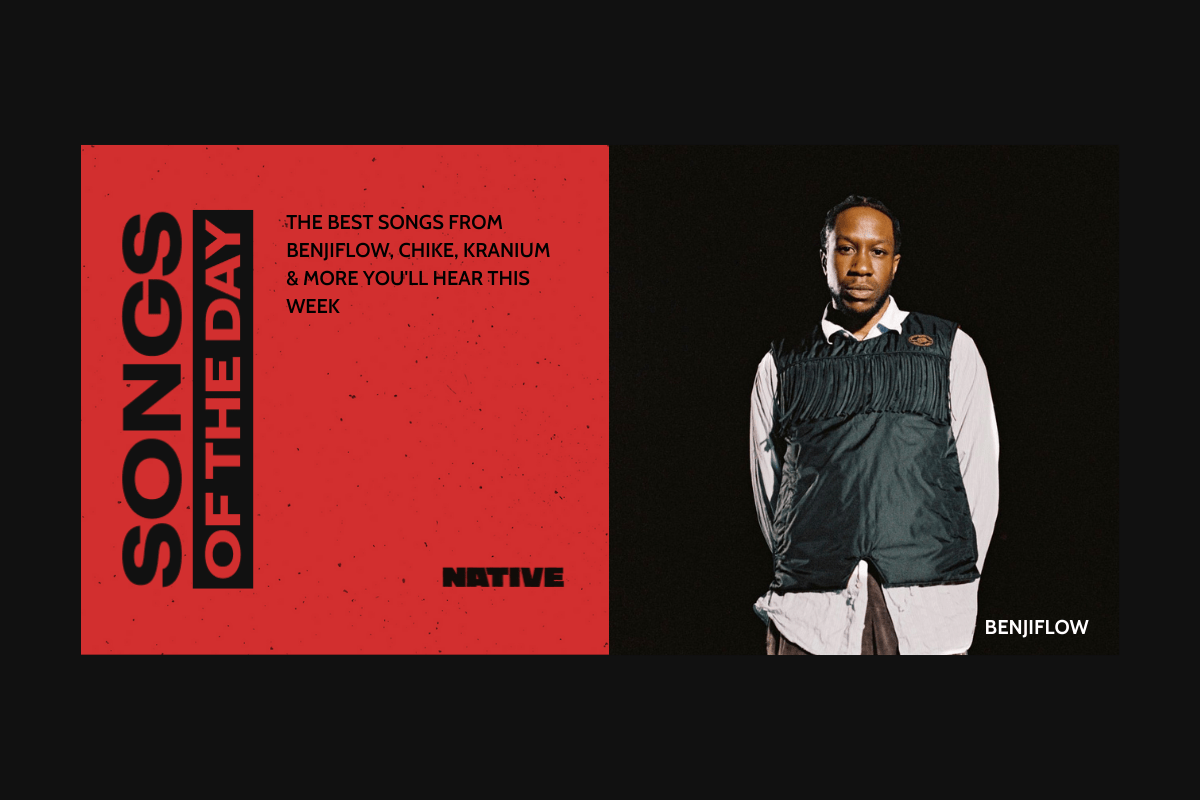
NATIVE Premiere: Benji Flow debuts “My Bella” music video ahead of upcoming EP

North London act, Benji Flow continues his musical streak with the release of the visuals to his latest hit single “My Bella” which was composed alongside fellow Nigerian singer, Oxlade. The single which was released earlier this month serves as a promotional single for Benji’s forthcoming sophomore EP titled ‘The Thrill’ which is set to be released on November 4.


View this post on Instagram


A post shared by BenjiFlow (@benjiflow)

“My Bella” is the second track set to be on the EP, serving as a follow-up to the earlier released single GO” which was back in August alongside a skilfully directed video by Charlie Di Placido. “My Bella ” is a self-produced love track that transports his listeners into a summery realm with the union of the singer’s voice with Oxlade’s smooth vocals laced across an intoxicating beat.

The newly released visuals bring the song’s romantic lyrics to life with a sensual new video directed by Charlie Di Placido and shot in London. Benji’s forthcoming project ‘The Thrill’ is an 8-tracker that finds him making an ambitious change from his last EP as he experiments more and shifts the boundaries on his creative output once agin. Benji has a great way of merging his UK R&B, Cuban and West African sounds all together in such a melodious and effortless way and that doesn’t fall short in this new EP. 

Both My Bella” and “GO” give you a little glimpse of what you should be expecting from the whole project and also reiterate the Versatility within this sound and music. Ahead of the official release of Benji Flow’s “My Bella” video, for our exclusive premiere of the single, The NATIVE chopped it up with the artist. We learn about the singer’s musical inspirations, how his cultural background defines him, and what he wants the fans to know about ‘The Thrill.’

NATIVE: Hi Benji, how are you doing? What’s the inspiration behind your new track “My Bella” featuring Oxlade?

BENJI: I’m getting by, living through these times, and keeping my head up as we strive for greatness. The inspiration behind this track was basically expressing my love for the lady I was with. It was that, and I had also just watched West Side Story (one of my favourite movies ever), I loved the way they made love songs sound so incredible! The lyrics ‘take all for my likkle rider, I know you’re a likkle tired’. That was me basically saying, I’ll do it all for you, you’ve been through a lot, I’ll put it on my shoulders now.

NATIVE: It’s such a romantic number with a beautiful array of melodies. Why did you choose this single as a promotional number for your project?

BENJI: I believe in the song, when I made it I knew this was something I wanted the world to hear by itself. I don’t mind what is on the radio or what is popular when I make something that I feel, I have to show the world!

NATIVE: Oxlade is an amazing artist with a beautiful voice. How did the collaboration come about between you two and what was the most memorable part of the creative process?

BENJI: I created the song and I actually had Ox in mind. He’s my friend and we’ve been friends for some years now. One day I was in the studio, I played the record to my friend Mikey (SOS). He went mad and said, “you know who would be amazing one this song, Oxlade”. I was like ‘bruhh that’s exactly who I was thinking. Mikey facetimed Oxlade in 5 seconds and was said bro listen to this, Oxlade was like “this is Benji, I knowww I this is Benji, send me this now.” Ox cut the record in like a couple of days and it was right back in my hands, harmonies and everything! Getting his part back was the most memorable part.
NATIVE: Your debut EP ‘BENERGY’ did quite well and now you plan on dropping your sophomore EP ‘The Thrill.’ What should we be expecting from this new project? Any exciting features?

BENJI: This EP Is the next evolution in sound for Benji Flow, I have much legroom and growth to go. I just want to show the world where I have been in the last year. One more feature but I can’t let it be known, you all know them though.

Featured image credits/TSE

Listen to Ladipoe’s new single, “Running” featuring Fireboy DML

After spending the 2010s figuring out his potential as a prodigious rap artist, Ladipoe has been racking up milestone accomplishments. Last year, he provided one of the ubiquitous anthems for the lockdown blues with the Simi-assisted “Know You,” for which he went on to win his first awards at the Headies. In the summer of renewed hope and reopening, Ladipoe struck again with “Feeling,” the summery Buju-assisted cut that instantly went on to enjoy smash success.


View this post on Instagram


A post shared by Leader of The Revival (@ladipoe)

In that time, Ladipoe also achieved a personal milestone: the birth of his first child. He announced the news in a recent Instagram post, where he also hinted at the impending arrival of a new project, which has now been confirmed. Providence, Ladipoe’s new EP will be out on November 3rd. It’s the follow-up to his 2018 debut album, ‘Talk About Poe’, and last year’s brief compilation tape, ‘Know You’, which housed its titular smash hit and three other well-known pre-released singles.

Ahead of the EP, Ladipoe has shared the Fireboy DML-assisted “Running” as its lead single. Helmed by Andre Vibez, the song’s production comprises bouncy bass, a buzzing bassline and glistening keys, set a feel-good backdrop for both artists to indulge in escapism, reflect honestly and boast confidently. Fireboy sings the hook with an earnest candour, also sharing the second verse with Ladipoe, while the rapper delivers a typically lived-in first verse that roots the song. Providence is set to feature “Running” and five new tracks, with features from fellow Mavin colleague Rema and Ghanaian superstar Amaarae.

Listen to “Running” and pre-add Providence here.


ICYMI: TEMS SHARES THE IMAGINATIVE VIDEO FOR “CRAZY TINGS”

Giannis Antetokounmpo biopic, “Rise” is set for 2022 release

In July, Giannis Antetokounmpo led the Milwaukee Bucks to the NBA championship title, the latest crowning moment of his supernova career as a professional basketball player. Averaging 35 points and 13 rebounds over the course of the 6-game finals series, Giannis stamped his authority as one of the greatest basketball players alive, standing out with memorable crunch time plays and 50-point performance in the deciding game.

Giannis’ route to being one of the most dominant and revered athletes of his time did not come easy. Born in 1994 to Charles and Veronica Adetokunbo, both Nigerian sports professionals who emigrated to Greece a few years prior, Giannis grew up in a less privileged household, one directly fostered by the difficulty of his parents finding steady, well-paying jobs, and indirectly effected by racism. To assist their parents, Giannis and his brothers hawked items like watches, handbags and sunglasses. At 13-years old, Giannis started playing basketball, eventually making it into the NBA about six years later, in 2013.

In the time since entering the NBA, Giannis has won a flurry of individual awards: Most Improved Player in 2017, Most Valuable Player award in 2019 and 2020, Defensive Player of the Year in 2020, multiple All-Star selections, and more. However, winning the championship last summer—and NBA Finals MVP—has clearly meant the most up to this point in his career. At 26-years old, his story of grit, hard work, determination and triumph is inspiring, and it’s already proven to be the source of a recent biography, and now, an upcoming biopic.


View this post on Instagram


A post shared by Dayo A Okeniyi (@dayookeniyi)

Announced back in March, the biopic was reportedly going to be titled “Greek Freak,” after Giannis’s popularly known nickname. However, recent announcements by cast and crew of the film have pointed at a new title: “Rise.” Going by social media posts, it seems production on the film has wrapped and it will be gracing screens via streaming service, Disney+. While its title may have changed, its direction is primed to stay the same. “Viewers can look forward to a very inspirational story,” director Akin Omotoso told Hoops Hype podcast back in December. “You get a chance to get behind the scenes. It’s a really emotional story.”

Giannis is set to be played by acting debutant, Uche Agada, who got the gig after heeding the casting call put out on social media by Giannis himself. He’ll be joined by Yetide Badaki (of “American Gods” fame) and Dayo Okeniyi, both acting in the roles of Vera Adetokunbo and Charles Adetokunbo, respectively. Other members of the acting cast include Ral Agada (Thanasis), Jaden Osimuwa (Kostas), Elijah Solanke (Alexandros), Lala Akindoju (Joy), and more. There’s no set date for when “Rise” will grace our eyes, but it seems like it’s a lock for 2022.


View this post on Instagram


A post shared by @akinomotoso


ICYMI: NIGERIA’S FEMALE BASKETBALL TEAM IS BEING OWED MONEY AND RESPECT

Tems shares the imaginative video for “Crazy Tings”

There can be no doubt that Tems has enjoyed a phenomenal run this year. Still reveling in the success of her debut EP, ‘For Broken Ears’, “Essence,” her collab with Afropop superstar, Wizkid off his recently released album, Made In Lagos’, became the soundtrack of gradually returning to the simple pleasures of the pre-pandemic times, with the song still breaking new ground (it is currently at number nine on the Billboard Hot 100 chart). 


View this post on Instagram


A post shared by TEMS (@temsbaby)

As she continues to ascend in her career and attain new heights, Tems is taking it all in good strides. Two months ago, the singer released her sophomore solo effort, a succinct EP titled If Orange Was A Place’, where the singer returned to the wispy, emo-powered influences of earlier releases like “Looku Looku” and “Mr Rebel” with a soundscape crafted by Ghanaian producer, GuiltyBeatz. 

Tems has now returned with an imaginative video for “Crazy Tings,” the lead single of If Orange Was A Place’. As is the case with Tems videos, this one too is inspired by its title with a series of crazy things happening as Tems moves through a series of hectic scenes dressed in a delightful green gown. She strategically places in visual expressions of the world around her including clips of police brutality, grooming, inept politicians, nightlife and much more.

Directed by UAX Studio, the video captures a fluid vision of Tems as she flips the inferred meaning of crazy to offer some glimpse into the rapidly evolving landscape of her life while paying dividends to GuiltyBeatz’s neo-highlife-inspired production. 

Watch the video for “Crazy Tings” below.

Featured image credits/Youtube: temsbaby

Listen to Efe Oraka’s solemn new single “Live Rounds In The Dark”

A year ago today, the nation watched with horror as the Nigerian Army opened fire and shot live rounds at peaceful protesters waving the Nigerian flag at the Lekki toll gate, Mushin and other parts of Lagos state. A devastating occurrence that’s now gone on to popularise conversations about last October’s EndSARS protests which shook and reverberated across the country and the wider diaspora, the memorial day passed with little to no change from the inept government and law enforcement institutions.

Instead, young Nigerians coming out in throes were once again greeted with unfettered use of force and violence to disperse them from memorial grounds across the country. With many still reeling in horror and fear from the grave crimes committed against private citizens on our own soil, Abuja-based singer, Efe Oraka is memorialising the lives of the dead through song.


View this post on Instagram


A post shared by Efe Oraka (@efeoraka)

Released yesterday, the singer’s latest single “Live Rounds In The Dark” is a solemn and stunning tribute to the lives lost on October 20, 2020, but also to the countless lives lost year in and out to police brutality here in Nigeria. Opening up with mellow keys, Efe paints a picture that visualises the feeling of dread and doom that many young Nigerians felt that fateful day. The sorrowful ballad was composed by the singer during last October’s protests to make sense of the emotional turmoil felt by many at the time.

Singing “Everybody sinking, where do we run/I see fires everytime I wake,” Efe sings about the current lived reality of many young Nigerians. With a resigned voice, she sings solemnly about the lives lost in the past and those that we’re currently still losing, as she squarely addresses our leaders whose years of corruption and ineptitude have led to the rot that we have now descended into. In the accompanying video shot by Nvthy, we see clips of Efe solemnly performing her verse acapella against a monochrome backdrop that indicates the graveness of the song’s subject matter.

While we continue to honour the lives of those lost last year, we caught up with Efe on her new release “Live Rounds In The Dark.” Her answers which follow below have been lightly edited for clarity.

NATIVE: Hi Efe, could you please tell us more about the inspiration for “Live Rounds In The Dark?”

EFE: In a nutshell, live Rounds in the dark was inspired by the wake of collective emotional turmoil suffered after the killing at the Lekki toll gate. That night was very harrowing. I remember feeling so distressed and literally seeing thoughts in my head being shared by mutuals on my timeline. I don’t think I’ve ever experienced collective grief like that before. It was a lot and being aware of the fact that I was not the only one feeling that way was something else entirely. I fully realized the duality of feeling a sense of community. Comfort in knowing that you’re not the only one who’s going through the pain but the sheer horror of knowing the exact same thing. I felt very heavy and the only way I could attempt to balance the weight was by writing. It was one of those moments where because the feelings were so potent and real, the words just came along. It felt spiritual.
NATIVE: What significance does this date hold for you as an artist and a young person in Nigeria?

EFE: I think it’s a very significant date for me as an artist because it shows me how art is a herald of the times. I look back at music created by Nigerian artists in the 70s and 80s and it’s almost like they foreshadowed the events of today. It makes me understand just how important it is to make art that reflects what is presently going on and show the very essence of the present moment. I believe that the art created can be used to as a tool of social cohesion and change, aiding us to reflect, learn and heal. As a young Nigerian, this date is significant because it reminds me of just how much has been lost and how much needs to be done to get to space safe enough for everyone to move forward. I’m being reminded that the events at the toll gate were real and orchestrated by the government — a crime against humanity that someone needs to answer for.

NATIVE: Looking back a year from the events at the Lekki tollgate and the End SARS protests, what are some of the things that still need to change for our country to recognise the plight of its young people?

EFE: A functioning mechanism for transparency and accountability is still yet to be put in place. Every day there’s one security challenge or the other, police are still harassing young people in Nigeria and generally, the whole atmosphere feels pretty unstable. There are so many idiosyncrasies with the way political power is conceptualized and furthermore, administered here that always leads to injustice. These injustices keep going on without being tackled and the situation worsens by the day. It’s almost like there’s no one who cares or is honest enough to make sure that checks and balances are adhered to.

NATIVE: What do you hope for listeners to take away from your new single?

EFE: I wrote the song because I needed release but I’m finding that release may not necessarily mean ‘letting go’ in that sense but rather transformation. In that light, I hope the song helps people to transform all the pain they feel into something more and it gives them a way to put things into perspective, pushing collective healing forward. I hope that it also reignites that sense of total community and unity, devoid of exclusion of any kind. I hope it serves as a way to remind everyone that what we witnessed at the toll gate was not a figment of our imagination. It is my way of documenting what we saw happen in real time so we can keep pushing our own narratives.

Watch the video for “Live Rounds In The Dark” below.

Featured image credits/EfeOraka

For Us By Us: How young people in Nigeria are honouring the one-year anniversary of EndSARS

On the night of October 20, 2020, Nigerians all over the world watched officers of the Nigerian military open fire on unarmed protesters railing against police brutality in Nigeria. In an instant, the biggest protest movement in Nigeria for years was cruelly snuffed out by a government more interested in maintaining the status quo than delivering any form of real justice.  

For young Nigerians especially, the ripple effect of that night continues to live long in the memory and it has been a sobering one year since 20/10/20. On the first anniversary of the killing, we invited some members of the wider NATIVE community to reflect on the protests, processing their grief, and what the future looks like for youth-led movements in the country. 

Below we spoke to some young members of our community who have been affected by police brutality including UX designer, Esesosa Belo-Osagie, culture writer, Nelson C.J, musician, SGaWD, activist, Omotayo Coker, and music writer, Otolorin Olabode, in conversation.


View this post on Instagram


A post shared by The NATIVE (@thenativemag)

Wale: How are we all feeling about the one-year anniversary of 20/10/20?

Eseosa: I’m dangerously close to a place where I genuinely don’t care anymore, but also I’m still angry. So, hopefully, anyone who feels like me in this space can vent and channel that anger so they don’t feel as angry anymore. 

Nelson: I’m definitely with Eseosa on this one, I feel really numb. I don’t really give a shit anymore. I also don’t have any fight in me because there doesn’t seem to be any hope that things can change. With everything that has happened, it’s really clear that this is just cruelty. It’s not a mistake, it’s really calculated cruelty and they are ready to kill anybody that opposes them. They are ready to do anything to ensure that they are not held accountable. I think it’s very important to take note of that because maybe we underestimated them and expected at the very least that they’d be humans or at least have some empathy. I’m mostly here so others can feel emboldened by other people being here. 

Olabode: It’s a monumental day because we get to think back to the happenings of last year. But what amazes me is that one year after, we are still back to that state, there hasn’t been any effective change that has happened in the system. Most of what we are fighting is still the same.  I read in an article that in other countries, these types of revolutions usually lead to some type of change but ours just felt like it was done by kids and it was just cast aside. But I feel like we created history and people can look back at this moment and know we advocated for change even if it was resisted by those in power. Who knows, in 10 years’ time something might happen and we’ll be able to get our change. 

Omotayo: I agree with Nelson’s point that the end of the protests was just pure wickedness. Most of us feel defeated but that is what they want and I feel like we shouldn’t give up yet. I know it’s tough and we still need time to process all that happened but we shouldn’t give up. Protesting was about demanding a better future for ourselves and I don’t see how any human should see that as a bad thing. It was peaceful and it’s so painful and unfortunate that they decided to pay us back by shooting at us and killing our brothers and sisters. 

For Omotayo, there was a video of you addressing the media that went viral last year, what prompted you to go out to protest?

Omotayo: The protests started on Monday but my first day was a Wednesday. I was actually going through a lot during that time so I had to hold back. I decided to go because I felt like we were all involved at the end of the day. It didn’t matter if I was not the one being directly involved but we I just wanted to go and do something. The day before I went, some people had been making fun of our efforts and I just felt like it wasn’t fair. I don’t like being bullied and I felt like that was what the government was doing to us because they knew they could get away with it and I just couldn’t stand aside.   

Wale: Obviously, the way the protests ended was crushing, but were there any positives to take away from it? 

Nelson: Before now, I was of the opinion that the protests were completely unsuccessful because we just ended and were reeling from everything. I felt very bad about the entire thing, but what it really provided to us as Nigerians is that it helped us gain perspective and understand how the mind of this administration works and how the mind of the Nigerian government machinery works and I think that’s a huge win because there’s no doubt in my mind that the Nigerian government will do anything to ensure that people are kept in line and that the government is not kept accountable. What this means could be death or blocking people’s accounts, they will do anything to ensure that we don’t even try to hold them accountable. When this all started, there was a lot of “We are taking this back” which was really admirable but really underestimated the extent to which the government will go to muffle people’s voices. Even if we don’t decide to protest because of the collective trauma of watching people die on Instagram, we have an understanding of what can happen and we are much aware of how this machinery has been designed to not accommodate any criticism or accountability. We know that they will do anything to muffle that voice and we are going to be more prepared. The most they can do — and I don’t want to insult the lives that were taken — is kill us and having this understanding in mind, for me, is a huge help. But speaking in terms of our demands and how protesters behaved to other marginalized people, it was really shameful and hurtful and those can obviously not be counted as successes in my opinion but overall the protests were helpful. 

Eseosa: I know we talk about how certain things could have been done better and that we could have sustained the protest longer but in retrospect, I think that the protest in itself was some kind of progress. For the first time, regardless of tribe or religion, maybe not sexuality yet, people agreed on something and it became something that went beyond just #EndSARS to talking about bigger issues that need to be addressed and answered. In retrospect, I think of the protest itself and how long it went on for and how determined people were. About having hope that something will happen, it’s a very tiny glimmer and I don’t pay too much attention to it because one year later nothing has changed. Somebody tweets, “Nigeria will not be the end of me,” and the day after, he’s murdered in cold blood. You think about the fact that protest at the Toll Gate and at 12P.M, the governor of the state comes to declare a curfew in a state where realistically speaking, even if you lived on the island you wouldn’t be in your house by 4 PM, you’ll still be on the road having to answer to the police. Everyone sitting at the Toll Gate is probably thinking that the worst thing that can happen is that there’ll be tear gas but the military gets there — and you’re probably still telling yourself that they are there for decorum even if you are asking why they need the military for decorum — and the next thing you’re hearing is people dying. I cannot get the image of those people out of my head.


View this post on Instagram


A post shared by The NATIVE (@thenativemag)

I think about the fact that I wouldn’t have known that anything was happening at Lekki Toll Gate if I wasn’t switched on to DJ Switch’s Live. I saw a guy die on her Instagram Live and, the next morning, the government comes on to say nothing happened. The number of us that saw someone die, that saw people try to save others by removing a bullet from their bodies were just taking part in some type of collective hallucination. Sanwo-Olu says there was nothing and comes back to say there was nothing after the army’s official Twitter account tells us to beware of people lying. They also backtrack and say that people actually shot. It’s just a thing where nothing is beyond the Nigerian government now, there’s nothing they won’t do. There are too many people who want the rot to go deeper because of the benefit they get from it. We can’t have that, the horror stories we heard about those Awkuzu SARS guys are too sad and not one person has been brought to book. Absolutely nothing has happened. The protest was a win but what do you do with that. The military has killed people, where do we go from here, that’s what’s always on my mind. Every time I think about change, I remember watching someone die on Live and I ask myself if there’s anywhere to go from there. It’s really bleak. 

Wale: SGaWD, I know you don’t have an institutional understanding of the Nigerian police, but in your opinion, do you think that they can be reformed?

SGaWD: I think I have been in Nigeria for a year and I have had enough run-ins with the Nigerian police to understand that they are bullies. The average Nigerian is a bully. All through this conversation we’ve talked about how the protests may not have yielded a lot and the reason why I think it came ro that was because not everyone was standing on a United front in the sense that a very small fraction of Nigeria actually supported the protest. Nigeria is made up of roughly 170/180 million people and on the day protests were happening around the country, very few people came out across the country; maybe because of one inconvenience or the other but we everyone had different agendas and we now had a problem with a Nigerian police force that saw us as disposable. I don’t understand the relationship between the Nigerian Police Force and the citizens but I do know that it is a very bully-like relationship and I don’t know if there can be any change just because the average Nigerian is also a bully that is looking for the opportunity to oppress others that they think they are more fortunate or educated than. I don’t think the Nigerian Police Force can be reformed, the rot is too deep and what you see is what you get. Just try as much as possible to not be in the same place as them or have any run-ins with them but I don’t think there can be any reforms. 

Wale: Omotayo, when Governor Sanwo-Olu announced the curfew, did you expect that the military would be brought in?

Omotayo: I knew they would bring the military but I didn’t know it’d get to that extent. I thought they’d bring the military to try and disperse the crowd or arrest a few people. The day it happened, I was so broken. I was wailing. It’s unfortunate that this is happening and it’s almost like we have to ask if there’s a future for us in this country. We’ve normalised things like “Welcome to a new dispensation” and you honestly can’t blame anyone for leaving Nigeria because people have tried and last year was just the breaking point for many people that had hope. Everyone is trying to move to countries that’d appreciate them because the Nigerian government is not doing that at all. We’ve been asking who gave the order for the shooting and no one has said anything. There’s no value for Nigerian lives.  

Wale: Music has played a key role in memorializing the protests, what did you make of it and have you enjoyed the music?

Olabode: I think Nigerian artists have long been involved in protest culture. In 2017, when there was a hike in food prices and everything, 2Face wanted to lead a protest and it would probably have sparked some change but that didn’t open and 2Face had to put out an apology for not leading the protest due to pressure from the government and police. This time, there was larger participation. We saw Wizkid tweeting, that’s someone with a huge fanbase that people look up to for different reasons. Even though Burna Boy’s response didn’t come fast, he also came through. We saw full participation from musicians and the music played a part. If you checked WhatsApp and Twitter, you’ll see loads of people sharing Burna Boy’s “20.10.20.” Him putting out that song encapsulated what had happened and when we look back in some years’ time, we’ll want to remember the occasion and all the things that happened in that period and you can do that through the music. I think musicians contributed a lot to Nigerians being vocal this time. People in Surulere would probably have seen his tweets and been encouraged to go out. Also, when he was in London, he came out to support the movement and that made more people involved. 

Wale: What do you think is the future of civic engagement with authority in Nigeria?

Nelson: I don’t see the possibility of us reasonably engaging with the government. I don’t see a world where they open the doors for us. People who have a genuine interest in change can’t be figureheads who have played a part in the harm we are experiencing now. For example, when they were having panels, the people they’d allow to be on there with other government officials were people like Segalink, people who have incredibly bad reputations and whose words and actions helped form the idea that the protests were very violent and uncoordinated. So, I don’t really see an opportunity where we can ever really get to speak with the government. What I do think is possible is a coordinated effort on our end to change government however we can, to clog it and start changing it.

Personally, I’m a member of Youth Party, I registered earlier this year, and it would be really interesting to see what it would look like if more Nigerians decided to register and be a part of that kind of formal coalition. I know PVCs are important but who are we going to use them to vote for if they’re still going to rinse out the same old people and bring them back to us then we’ll end up using our PVCs for these horrible people. The first step will have to be regrouping and forming a strong alliance by ourselves because it’s in that alliance that we can really find ways to clog the machinery, move forward, and figure out ways to govern ourselves because I don’t know what we can tell the government that they have not already heard. Going forward, there has to be a coordinated effort on our own end to use our machinery to clog the existing one and infiltrate. It doesn’t matter if we’re starting from the local government, we can move up from there, that’d be really helpful for the entire movement. I don’t see engagement with the government working but joining existing youth parties and working with them is really great. 

Omotayo: I agree with Nelson, I think we need to regroup. I don’t know how we can communicate with the government because if we have gone out to protest and their response was not to do better then I’m not sure how to go about the next phase of the engagement. 

“The first step will have to be regrouping and forming a strong alliance by ourselves because it’s in that alliance that we can really find ways to clog the machinery…”

Wale: Do you think you want to get involved in the electoral process?

Omotayo: If I had the opportunity to, I would definitely. But then again, politics in Nigeria is not for the faint-hearted. 


View this post on Instagram


A post shared by YouthPartyNg (@youthparty_nigeria)

Wale: do you believe that we can make some change via politics if there was a youth bloc?

Olabode: I feel like in the last elections there was some level of youth involvement. It was, perhaps, not youths per se but there were people on the fringe of being youths. There were people like the Quilox founder, Shina Peller. Akin Alabi as well who has always enjoyed a good rapport with the youths even if his views can be controversial. Then there was Desmond Elliot. In times past, we’ve had these people and not really seen change even if Akin Alabi was part of the contingent that filed the motion to disband SARS in the House of Representatives last year. What I feel like is that we need to question ourselves about the young people who have gotten there and done nothing.

There needs to be some form of accountability from whoever gets into power. In the last elections, Banky W went up against Obanikoro’s son and even though Obanikoro’s son won, I don’t think there’s been any change. The young people we elect next have to be accountable to us because there’ve been people who didn’t contribute to proceedings or sponsor any motions throughout their four years as representatives. People will probably re-elect Desmond Elliot in the next elections but going forward I want more youth participation and we need to evaluate our strategies. We need to support young people when they present themselves during the next elections and we need to be part of everything, from ensuring that our votes count to encouraging people to get their PVCs. With this, we can flood the system and start getting some changes. 

Featured image credits/GlobalCitizen

The Nigerian police continued to show villainous side during EndSARS memorial protests

In November 1949, 21 Nigerian men were shot to death by the Nigerian police force. The men were miners at Enugu’s Iva Valley mines, Nigeria’s largest coal mine at the time, and were protesting their unfair treatment alongside their colleagues. Prior to the massacre, the miners had complained bitterly about inhumane working conditions and low wages, amongst other tangible reasons, adopting a go-slow method to their production as means of emphasising their grievances.

When the British colonial government at the time began laying off the miners en masse, they decided to carry out a sit-in protest, making it difficult for the mine to be closed and new workers to be hired. On November 18, led by Senior Superintendent F.S. Phillips (a Brit), officers of the Nigerian police began shooting at the protesting miners, after Phillips translated the miners’ camaraderie at the protests as menacing war dances. In addition to the 21 killed, at least 50 others were reportedly fatally injured in the massacre. Apart from Philips, the other policemen were reportedly Nigerian.

This story is perennially relevant when trying to understand the relationship between Nigerians and the Nigerian police force, a perfect framing for how the policing system in Nigeria has never been geared towards serving and protecting its citizens. The Nigerian police was formed as a unit to cater to colonial interests, and after independence, its allegiance shifted to the cruel leadership that replaced those colonial powers. Coupled with a severe failure to evolve its practices, and arbitrary abuse of power becoming a prominent part of its identity, it’s a system that will always resist the idea of reform, and see calls for change as a challenge.

During the EndSARS memorial event at the Lekki tollgate, honouring the passing of those massacred by the Nigerian army, a protester was ruffled and arrested while granting an interview. With a combative tone in his voice, one borne out of anger and that many Nigerians could easily identify with, he said something that stood out to me: “We have shown that the police have not learnt their lesson.” Even though last year’s EndSARS protests was one of the most vital civil rights moments in Nigerian history, our return to the streets served as a reminder that the Nigerian police weren’t built to learn any positive lessons. It was created to uphold the status quo, and that included brutalising Nigerians both at the behest of governing powers and for the officers’ own reasons.

There’s a part of last year’s heart-rending massacre at the tollgate that doesn’t get enough attention. According to stories from survivors, after the army wreaked havoc on peaceful protesters who were unarmed, police officers came into the same grounds and began shooting unarmed citizens at point blank range. The army is definitely responsible for one of the darkest nights in Nigerian history, but we should never forget that the police are just as complicit.


Throughout last year’s protests, their cruelty matched the fervour with which the government brought in paid thugs to attack and disrupt peaceful protests. They shot live bullets at several of the protests, killing several protesters and even bystanders. They arrested and severely tortured many, and they’re still using the country’s inept judicial system to their sinister advantage—it’s reported that over 300 people are still in prisons from the EndSARS protests, in Lagos alone. In the aftermath of the massacre, hundreds of people were reportedly killed by the police, many of them in cold blood. All of that reinforced the fact that, to the Nigerian Police, the idea of positive reforms is an incendiary suggestion; they understand their role in keeping Nigeria’s exploitative and citizen-squeezing system in place.

On the first anniversary of the Lekki massacre, the Nigerian police reprised its role as expected. Police officers were geared to the teeth, as though it was a war zone and not a gathering of people honouring the memories of their tragically slain countrymen and demanding that they would like not to be brutalised, exploited and killed by the civil force meant to keep law and order. In the days leading up to the memorial protests, police officers had already been sighted at the tollgate, as a loud promise to continue their atrocious deeds during the Occupy Lekki tollgate protests earlier this year. In fact, the police commissioner in Lagos issued an unconstitutional statement warning against any physical protests at the tollgate.

Although heartbroken, the Nigerian youth came out in a procession of cars and people, even with the knowledge that the police would continue its violent and citizen-averse methods. Towards midday, teargas was thrown at protesters, at least four people were already known to be arrested by the police, and as the day wore on, the numbers increased. In one of the arrest videos that went viral, an Uber driver, Clement Adedotun, was picked, violently badgered and bundled into the police van, infamously known as the black Maria. More people were arrested and assaulted in a similar manner, and while social media projected the numbers hadn’t entered double figures due to the reports that made their way online, it turned out over 30 people were arrested at the Lekki tollgate.

Following the same community-based welfare approach as last year’s protests, spearheaded by members of the Feminist Coalition, legal services were provided for those who needed them. Already with that knowledge, it seems as though the police slightly modified its approach, tacitly arresting and assaulting protesters, as well as allegedly hiding the location of the stations’ people were being held for hours—that’s if they were even taken to a police station in those hours. Thankfully, over 30 people were released on bail towards midnight, a huge relief even though none of them should’ve been arrested in the first place.

While the focus was in Lagos, as expected, those who participated in memorial demonstrations across the country also faced the cowardly, intimidating methods of the police. In Abuja, where last year’s protests were subjected to unrelenting assault from the police, protesters were surrounded by armed policemen who sneered at them as a show of force. In Enugu, a coalition of the police and army combined to maltreat and arrest protesters, before they were released after interrogation. BBC reporter Ebere Ekeopara also stated that she and her cameraman were roughly handled while attempting to cover the protests.

During this year’s memorial events, the press seemed to be particularly targeted. In Osogbo, the capital of Osun state, Daily Post reporter Sikiru Obarayese was reportedly arrested despite identifying himself, during a police invasion that disrupted the peaceful protest. Back in Lagos, Legit TV journalist Abisola Alawode was picked up by the police earlier in the day and was finally released later on. In a viral clip, Arise TV reporter Oluwaseyitan Atigarin was seen fending off aggressive police officers while they tried to confiscate equipment being used to cover the protests.


View this post on Instagram


A post shared by ARISE News (@arisenewsofficial)

With their callous response to the memorial events of October 20, 2021, the Nigerian police once again reminded us of why they are villains to young Nigerians. At one point, the commanding officer at the Lekki tollgate read protesters the Riot Act—even though it was him and his officer perpetrating the violence—pledging his allegiance to the president, even though the police system is meant to be beholden to the country and work for the people. It was another snapshot of why the police have always been complicit in the tyrannical leadership that’s constantly plagued Nigeria.

Arbitrarily demeaning and killing Nigerians is deeply woven into the very fabric of policing in Nigeria. It’s a long shot to wonder if that would change anytime soon, but the first step is not just realising that the Nigerian Police is NOT (y)your friend, it’s realising the institutional, contextual and historical reasons why. The line runs from the Iva Valley massacre to the Lekki tollgate to the consistent brutality they mete to all of us, and the fear they will constantly elicit until the whole thing is revamped, not just reformed.

[Featured Image: Web/FIJ]


Dennis is a staff writer at the NATIVE.


FOR US BY US: HOW YOUNG PEOPLE IN NIGERIA ARE HONOURING THE ONE-YEAR ANNIVERSARY OF ENDSARS

How the #EndSARSMemorial is being marked across Nigeria

Last year, the whole nation united in protest against police brutality, persisting insecurity and the woeful governance that propagates this neglect for the human rights of Nigeria’s people. Throughout the month of October, protests to EndSARS – the rogue security agency notorious for their indiscriminate harassment and killing of young Nigerians – ensued. Tragically, as we stood up for our right to life, many Nigerians in protest, and even those as bystanders, lost theirs, to the same police we were protesting in the first place.

Honouring the lives of our fallen kin, who were brave enough to put their bodies on the line in the name of justice for us, their people, today #EndSARS memorial services have sprung up all over the country, and in the diaspora too. In our minds forever, today marks a year since the devastating Lekki Massacre, in which security forces opened fire on peaceful protestors, who were occupying Lagos’ Lekki toll gate. Nigerians all over, in memory of those that were unlawfully killed at the toll gate, and throughout the EndSARS protests, mark today as the EndSARS memorial, and demonstrations have taken place all over the country this morning, with solemn processions scheduled for this evening.

Lagos and Oyo State

In Lagos this morning, a car procession moved through the Lekki Toll Gate, the site at which protestors in Lagos were killed by those sworn to protect them. A year later, petitions and panel hearings later, police brutality and abuses of power persist. Several demonstrators were injured and some arrested as the police presence at the toll gate, unsurprisingly, took a violent turn.

One of the first lives taken by police during the EndSARS protests last year was that of a young boy, Jimoh Isiaq, who was a bystander during protests in Oyo state. Following this distressing tragedy, as the EndSARS protests intensified, Governor Seyi Makinde ordered police not to engage with protestors and received praise for his actions to support the protests. This year, he seems to be on the same path. Reports from the Oyo State protests suggest non-violent police presence in Indian, where officers are supposedly escorting the protestors as they demonstrate through the street. The Oyo commissioner for Youth and Sports, Seun Fakorede is also said to have joined the protests this morning.

Abuja, Osun, Edo and more

In Benin City and at the Unity Fountain, Abuja crowds of Nigeria joined together to protest the injustices that occurred last year, the security and socio-economic failings of our state and to demand accountability from our leaders. Speaking at Unity Fountain human rights activist Omoyele Sowore condemned the incompetence and greed of the government, with police sirens blaring in the background as he implores us to “reject all their intimidation.”

Reported live by JEOTV, corroborated by tweets from the region, the morning demonstrations planned in Ilorin were seemingly deterred by a heavy police presence at the Post Office site, where the protests were to be held. There remains a candlelight procession to be held in memory of the fallen this evening at 7 pm. Similarly in Oshogbo, Osun, and Enugu the heavy presence of police seem to have preemptively thwarted plans for protest as well. Osun State is set to hold a candlelight procession at 4 pm and Enugu the same at 7 pm.

Abia, Port Harcourt and the wider diaspora

Protests were also planned for this morning in Aba, at the Abia State Polytechnic, a significant location in the fight against police brutality. Last month, Corporal Chinedu Nwachukwu was dismissed and found guilty of raping a female student at the university. Earlier this year, a Lagos-based businessman, Nnamdi Nwauzuo shared the story of how his sister was killed by security forces in their pursuit of EndSARS protesters.

In Port Harcourt demonstrations will begin at 3 pm, whilst in Jos, they will commence at 5:30 pm. Candlelight memorials are to be held all across the country, from Bayelsa to Ilorin, Oyo to Jos. Outside of Nigeria too, memorials in London, Long Beach, California, Toronto are all set to take place later today.

A year later, and Nigerians remain unified in our fight against corrupt and ineffective governance. Abusing their power and ignoring the plights of the people, our political leaders are facing a reckoning that will disrupt their corrupt systems. As we remain unrelenting in our protest, we keep the faith that the EndSARS movement and the political activism galvanised by the youth in this time will set our country on a brighter course.


ICYMI: What’s Going On Special: A year on from the End SARS protests, not much has changed

What’s Going On Special: A year on from the End SARS protests, not much has changed

I believe that Nigeria exists, amongst other things, to shock, baffle and break the hearts of the majority of its population. It’s a conundrum as old as the country’s creation itself, an amalgamated entity formed by colonial powers. The same description still applies over 60 years after the country’s independence, except the colonial powers have been replaced by consistently awful leaders, who continue to shock, baffle and break the hearts of successive generations of Nigerians with new depths of economic, political and social cruelty.

Today marks the one-year anniversary of Nigerian soldiers shooting at hundreds of unarmed Nigerians at the Lekki tollgate and in other environs across Lagos including Mushin. Yes, it really happened. Young Nigerians were attacked with gunfire by Nigerian soldiers on their own soil, for committing the crime of protesting against police brutality and, by effect, the government’s indifference towards the suffering of its citizens. On the night of October 20, 2020, Nigerians at home and in the diaspora—and the entire world, even—watched with horror as young men and women fatally lost and struggled for their lives, the national anthem and green-with-green flag unable to act as capable shields against skin-breaking, blood-letting, life-taking bullets.

It was shocking, it was heart-breaking; it still remains shocking and heart-breaking, and the aftermath continues to be baffling. Hours after the massacre, the Lagos state governor pointed at “forces beyond our control,” and Nigeria’s president entirely omitted the killing of Nigerians on Nigerian soil by Nigerian soldiers in his national address, emblematic of his administration’s non-acknowledgment of the bloody event. Months later, the Nigerian military alternately lied and conflated the truth of what we already know, that their soldiers killed unarmed civilians at the Lekki tollgate on the night of October 20, 2020.

The reason I keep restating what happened on that Tuesday night is because of all the denials, silence and bald-faced lies by the alleged conspiratorial powers to erase one of the cruelest events in Nigeria’s fourth republic. It’s a tactic that’s worked on several occasions, where memories of atrocious happenings are pushed to the margins of history, only accessible to curious minds and those capable of holding a grudge through the injustice. Well, technological advancements and the internet are too democratised to keep pieces of evidence suppressed, and there are many young Nigerians who will continue to hold this particular grudge—because we defiantly asked to not be killed and fatally injured by the state.

For nearly three weeks in October 2020, millions of Nigerians walked the streets and motorways of the country in a demonstration against the special anti-robbery squad (SARS), a unit of the Nigerian police force infamous for casually and cruelly mistreating Nigerians. Initially created to tackle crimes such as robbery and kidnapping, the unit devolved into the sort of banditry it was meant to eradicate, wreaking havoc on the same people it was sworn to protect from harm. Generally, very few Nigerians can claim to count on a police force that has always been systematically inept at, and sometimes unwilling to, solve crimes and protect citizens, instead of using its power to harass and extort.

Within the first week of the EndSARS demonstrations, the Nigerian government and police responded in the same way it had a few times before, banning the bitterly complained about the unit, before officially dissolving it when they realised empty words would not be enough. At the same time, the promises to end state-supported brutality were being contradicted by their brutal response: live bullets were frequently shot at throngs of scampering bodies, people were arrested and (are still being) severely assaulted for demonstrating, and even armed thugs were ferried into attack peaceful protesters.

To be shocked and heartbroken, you have to be expectant, to be optimistic, and, to an extent, naïve even in a country like Nigeria. Despite all of the brutality meted out in our protest, we expected change to happen, and we were optimistic about our chances due to collective defiance. I remember marching, singing and chatting alongside new friends I’d made during a mini-Volleyball competition in Mushin, three days to the Lekki Massacre, trusting that our tenacity would count positively. But the thing is, defiance and tenacity for a humanitarian cause in Nigeria are rarely ever rewarded, and that is perhaps where our naivety showed, believing our generation would be the ones to effect change despite the past pointing to the contrary.

The Nigerian state has always shown a willingness to crush anything that’s critical of the status quo, and when intimidating moves did not work during the End SARS protests, it issued its crushing blows. The tragic ending of last year’s protests totally unravelled the true, gory and near-irredeemable face of Nigerian leadership to a new, younger generation. In fact, in the last year, the Nigerian government, led by former military dictator Muhammadu Buhari, has seemed to fully embrace its villainous side without any apparent care for the wellbeing of its citizens.

Living in Nigeria has always been a dangerous sport, but it’s arguably at its hardest and scariest these days. Yes, the police still profiles, harasses, extorts and kill the people it was sworn to protect, so much so that it’s okay to wonder if SARS ever left the streets in the first place. General and food inflation is currently far from kind, and addiction to horrible economic policies is squeezing more and more people into poverty. Nigeria’s South is being beset by armed herdsmen, kidnapping rates continue to increase, and state-sanctioned force is being used against aggrieved secessionists, especially in the south-east where the military is routinely involved in alleged attacks. The North is also being ravaged by insecurity, with ultra-religious terrorist groups stomping the eastern part of the region, and armed bandits terrorising its western part.

There are easy parallels between the government’s handling of last year’s protests and the continued, all-around systemic dysfunction we find ourselves. How do you expect a government to care about its citizens’ economic wellbeing and social welfare when basic amenities and palliatives were being hoarded during the trying times of the pandemic? Of course, a government whose response to civil dissent is censorship has no qualms extra-judicially banning a social media platform that fosters unbridled criticism. It’s fitting that a government that can’t commit to police reforms will refrain from condemning a cop fingered as an alleged key player in a cybercrime case. A government that prefers inaction, high-handedness, and will even mock civil rights demands will comfortably ignore striking doctors, while its president routinely seeks medical care abroad.

In all of my twenty-plus years as a Nigerian who’s lived nearly all his life in Nigeria, I don’t think I’ve been more aware of the fact that the Nigerian government doesn’t care about me, about you, about us. Maybe it’s because as you grow older you have no other option than to be perceptive of your society and its governing powers, but it still baffles me without fail. I understand it—or at least I think I do from the opening paragraph—but the sting that comes with every headline that shows the Nigerian government’s competency at cruelty is always familiar but never stale.

Nigerian leaders are typically described as inept but even that identifier would be bestowing too much grace on them. To be inept, though, is for the results of your efforts to be far from satisfactory. Make no mistake, the Nigerian government under President Buhari fits this bill, but only if you’re looking at it solely from a citizen’s perspective. From the ongoing economic mess—see the dollar brouhaha—to the aggressive rent-seeking policies in Nigeria’s burgeoning tech space, to the consistent policing of the media, to the constant flouting of the rule of law, and other scenarios, there’s sinister intentionality at play.

“When you inherit institutions and they were extractive, it’s very easy to fall into the practices of the colonizer,” South African Human Rights lawyer Brian Currin says in the documentary, “How to Steal a Country.” Even though we’re operating a democratic system this quote pretty much applies to Nigeria, where the government has taken up the role of its British colonizers to extract value wherever it can, through whatever means, and demand servitude from its citizens regardless of civil disagreements. In the Buhari-led administration, we’re pretty much in a reprise of his dictatorship period back in the 1980s. The President is still blaming “middle men” for the effects of the same horrible economic policies he brought back, and he’s still flouting the rule of law as he pleases while generally waging war on everybody like he did many years ago before many of us were even born.

One of the moments that still baffles me when I recall the events of last year’s protests is the video of Buhari chuckling as the Lagos state governor presents the demands of protesters to him. To me, and to many, it was an open mockery against the collective voices demanding for change. He had the same baffling reaction earlier this year in a rare interview on Arise TV, when he was asked about the extrajudicial Twitter ban. Based on these two events, I often wonder if president Buhari believes his administration owes accountability to Nigerians because it feels like we’re subject to the unquestionable whims of an overlord rather than the ideal nation-building ethos of a democratically elected leader. If we were in the latter, the president wouldn’t have the option to keep the reason for the Twitter ban to himself, he wouldn’t openly mock calls for reforms, and the deaths of unarmed civilians from the gunshots of soldiers wouldn’t be muted.

I’ve heard several social commentators describe the Lekki massacre as a stain on the conscience of the nation. That’s a serious understatement. The night of October 20, 2020, is another indictment—in a long list of indictments—on the very soul of Nigeria, so much so that I often wonder if there’s any soul left for saving, or even if there was a soul to begin with. I firmly believe that night fundamentally shifted the relationship of many young Nigerians with the country, and one of its glaring effects is the massive exodus we’re currently witnessing. Many in this demography don’t believe Nigeria is capable of changing for the better anytime soon, and even if it does, it’s better to be safe than sorry.

If the discussions of the last few days and the planned events of today, in remembrance of last year’s protests, prove anything, it’s that cynicism doesn’t expressly translate into lack of care. Young Nigerians are weary of the happenings from last October, and are even more aware of how much the Nigerian government is working to their detriment, but the commitment to ensuring one of the most vital civil rights moments in Nigerian history isn’t erased is a sliver of light in a time where all the memories are bloodied.

In his classic prison memoir, The Man Dies, Nobel laureate and activist Wole Soyinka famously wrote, “The man dies in all who keep silent in the face of tyranny.” The truth is, what we all witnessed on the night of October 20, 2020 is nothing short of tyranny. The fact that we’ve refused to keep silent about it is brave. The common question after the Lekki massacre ended the protests was, “what next?” It’s a question that still applies till date, and while we’re still figuring that part out—getting a PVC and voting would go a long way—the fact that we’ve not been shocked, heart-broken and baffled into totally abandoning the cause is currently our greatest strength.


ICYMI: NIGERIA’S PRESIDENT INVOKES GENOCIDAL PAST TO THREATEN WAR

How to call for help throughout today’s EndSARS memorial events

Today marks the first anniversary of the Lekki Massacre when Nigerian soldiers shot unarmed civilians at the Lekki tollgate as a crushing act to halt the EndSARS demonstrations against arbitrary police brutality. In remembrance of that bloody event, young Nigerians have chosen to honour the memories of those departed and the sacrifices of survivors with a series of planned processions around the country. At the tollgate itself, a procession of cars and people took place this morning as a preemptive measure against the chagrin of the Nigerian police.

Yesterday, the police released a statement that it would not be “allowing” any physical events at the tollgate, claiming that it was a decision made for security reasons. Despite its unconstitutionality, they issued a similar statement when protests against the reopening of the tollgate were scheduled earlier this year, arresting and assaulting those who came out. Today, they’re back at it again as expected. From news reports on the ground, the Nigerian police have arrested at least four people this morning at the tollgate during the EndSARS memorial procession: a young man named Okechukwu Peter, a journalist with news and gossip publication LegitNG, Abisola Alawode, a man who was forcefully arrested while granting an interview, and a lone protester in a white garment.

As of yesterday evening, fully geared members of the Nigerian police were sighted at the tollgate, as though they were getting set to meet a sect more sinister and dangerous than peaceful protesters. While the police have yet to remotely consider reforming its ways, all we clearly have is each other in the fight against police brutality and bad governance in Nigeria. That’s why there are helplines to navigate today’s memorial events and ensure the police don’t arbitrarily put any more peaceful protesters in jail. 

Those involved in, or have spotted, any trouble today during today’s events have been advised to use the hashtag “EndSARSHelp” on Twitter to call for assistance. Alternatively, you can call 09129452247 to report any incidents during any EndSARS memorial event throughout the country. Please keep this information close to you throughout today, and if you’re involved in any qualms or spot anything wrong happening to anyone, don’t hesitate to use them. Let’s all stay safe and look out for one another, remembering that we’re one community with the goal of eradicating police brutality in Nigeria.


NIGERIAN STUDENTS SHARE THEIR EXPERIENCES OF BRUTALITY AT THE HANDS OF SARS

Nigerian Police Arrest Protesters At End SARS Memorial in Lekki

It’s been one year since soldiers of the Nigerian Army brazenly opened fire on unarmed protesters at the Lekki Toll Plaza. However, despite testimony from witnesses and experts, deep-dive reports into the events of that tragic night, and evidence suggesting the military’s presence, there has been no justice for those who lost their lives on that night.

To commemorate the tragic killing of young Nigerians, a driveby procession was scheduled to hold at the Lekki Toll Gate on Wednesday, October 20, 2021, but, predictably, this effort is already being stifled by members of the Nigerian Police Force who have maintained a heavy presence at the plaza since yesterday.


View this post on Instagram


A post shared by Pulse Nigeria (@pulsenigeria247)

Earlier today, many Nigerians turned up at the Lekki Toll Plaza to get involved in the drive-by protests yet while it largely went on without disruption, there have been incidents of indiscriminate arrests and harassment by the police. In videos that have gone viral on the micro-blogging platform, Twitter, protesters and bystanders are being rounded up by police officers and arrested for no discernible offences. In one of the videos, a middle-aged man, claiming to be a Canadian citizen, is addressing journalists at the Lekki Toll Plaza when he is arrested by police officers. 

Ironically, the man, dressed in a tracksuit, was lamenting the poor welfare afforded police officers when he was arrested. “The police are underpaid,” he said. Another protester named Okechukwu Peter had his placard snatched by police officers before he was led to their van where he urged those around to “remember those who were killed.”

Despite the intimidating tactics being employed by the police, efforts are already being made to ensure the prompt release of the protestors by members of the #EndSARSHelp team whose efforts are being coordinated by Ms. Modupe Odele. Already, a man named Achebe Okechukuwu has been detained and there are reports reaching social media that police have begun firing tear gas at those who remain at the site of last year’s massacre. We will not be intimidated. Our message remains clear: #EndPoliceBrutalityInNigeria.


View this post on Instagram


A post shared by The NATIVE (@thenativemag)

Featured image credits/PulseNigeria

Nigerian Students share their experiences of brutality at the hands of SARS

A recent graduate of the Federal University of Agriculture, Abeokuta, Otolorin Olabode was one of the Nigerian Police Force’s many victims, as a student. Narrating his encounter with SARS officials, Olabode speaks to other Nigerians about the abuse, harassment, extortion and illegal detention they suffered at the hands of SARS, during their time in university. 


It was a Thursday. Exams had been concluded a week prior in the academic domes of the Federal University of Agriculture, Abeokuta. Scores of students had galloped off to their houses, in anticipation of a short holiday. Many, predominantly final year students were still trapped in school hurrying to wrap up their research studies in time for their project defense.

With exams over, came freedom and luxury of time. Post data seminars and defending my projects lay ahead for me, but I still had two weeks to kill before all of that. Most of my day was spent fondling with gamepads, hopping from one conversation to another on Twitter and staring at the TV screen in the common room of School’s hall of residence. A boring day.


View this post on Instagram


A post shared by Funaab Juice Media (@funaabjuice)

The whole Thursday was just going to waste away and since exams were over, I remembered I had made a promise to visit a friend who stayed off-campus. The environment breathed peace and serenity, which indicated that many residents had gone home. Bright yellow lights flustered out of the houses that lined up either side of the street. “Wow, there’s light”, I reasoned. Bimpe’s flat was a few meters away. A green painted house, just a stone throw from a newly-built mosque. But I was oblivious of the imminent trouble waiting for me. Under a tree close to where I was heading, three police officers had parked their van, stopping students and checking their phones. I didn’t know this as I was ruminating on if I would sleepover or not. As I strolled forward slowly, a bike sprinted past me and it was then I saw a police officer halting the bike, instructing the guy on the bike to disembark.

What? SARS? In a rush, my heart raced. What should I do? Turn back or proceed confidently? I had nothing to hide. I don’t engage in fraudulent activities but my mind brought back memories of innocent friends who were arrested for nothing and had to pay to be free. If I should turn back, my action would alert these people and who knows, I might be shot at in the process. I summoned courage. The guy who was stopped had submitted his phone and attention had been diverted to him. As my heart continued to produce the loud thuds, it dictated my walking pace. Carefully, I trudged forward, my eyes fixated on the greenhouse I was heading to, not peering at either side. No one called me. No “Stop there”. No “Hey You”. That was a close shave. And I indeed was, lucky.

But other students haven’t had it lucky. For Bolu, a 300 level student, his first experience with SARS officers was a nightmare. He wasn’t walking nor going to visit a friend, police officers came over to have a nice time with him.

“Around this time last year, I was In my room sleeping. Suddenly I heard someone knock on the door and norms, I thought it was one of my friends. On opening door, I was surprised with the sight of two police officers instructing me to hand over my phone. Not wanting trouble, I complied, handing over my device to one of them in Mufty. He checked my mail, gallery, apps, he found nothing.

So he asked me to unlock my WhatsApp, he went through all my chats, searched for some keywords like “cashapp”, “client” and many more.

And to be honest, no matter how wise you are, you would be involved in some group chats where things like this would be mentioned.

He saw almost all and next thing was a hot slap, omoooor, I wan cry

So he said we should be going to Harmony Police station, the school’s police station. Simultaneously, the second officer started beating me, they did not allow me to say anything, just because of WhatsApp chat

So they sha later said they will collect 25k, and I should not transfer, bro I later gave them 10 thousand naira sha.

So since then, no matter how important your chat is, I will joyfully delete it”


View this post on Instagram


A post shared by Funaab Juice Media (@funaabjuice)

For students of the Federal University of Agriculture, Abeokuta, their way of life has changed since EFCC operatives invaded off-campus residences in 2019.  Hostels were burgled. Students arrested. Cars and other possessions carted away. From then on, EFCC operatives have made it mandatory to make frequent trips to the school’s environs. Their raids are targeted at hostels that have Air Conditioners installed, students who own luxurious cars or exhibit a flashy lifestyle. Police officers have also compounded to this oppression.

It’s the lifestyle of a student that gives them joy. Seen wearing raggedy jeans or owning a car, is the key to massively extorting that certain student or fortunately if they appear as a group, there’s boundless joy in the heart of these officers. There’s always this suspicion of fraudulent activity if you tick any of these boxes: own a car, wear flashy clothes or live in expensive hostels. To them, only a fraudster can fund this lifestyle.

Abel, a student of Funaab had gone to get food at an eatery alongside two of his friends when they saw SARS officers heading towards them. He recounts of the experience.

“We had gone to get food at soupa, I came out of the building, trying to board a bike. We were 3 – 2 guys and 1 girl. They were coming from the police station  and as we were to hop on the bike to head home, they stopped us and told us to enter their car, I was reluctant at first and I asked what my offence was, point blank, with no proof whatsoever, they labeled me “A yahoo boy”. When we saw that it was serious, my friend and I handed over the food we bought to the girl with us  and told her to go home. They thought we told her to help us keep our stuff at home that we didn’t want them to see. So they told us to enter the car and go to our hostel.

We sha followed them, I kept asking what was my offence and what we’ve done and how do we look like yahoo boys?

Then we got to our place, they checked our rooms and didn’t find anything, they asked for the girl, I took them to my friend’s room, that was where the girl was, they sha checked and found a bitcoin app on my friend’s phone. They didn’t believe me and said I was hiding something and we need to go to their station. They had no evidence whatsoever. But they believed we were too clean and we were hiding something. So they carried us back to the station.

On the way to the station, they threatened us, saying I should confess that I’m a yahoo boy or else I would be reported to the VC and be expelled. At the station, they said as I was clean and nothing was found, they wanted me to pay 10k. For my guy, they demanded 50k. They threatened to detain us. I didn’t want the stress and I wanted to be free and not sleep in the station, so I paid the 10k. For my guy, we rallied around and pegged the money to be 35k. For doing nothing. Paying 45k for nothing.”

The mode of operation of these officers seem orchestrated. It’s like a memo had been passed to all SARS officers in every state on how they should operate. If an officer doesn’t find anything incriminating on the user’s device, he takes to threats of detaining the student. Stubborn and unflinching individuals might be beaten and ultimately remanded in the station for more than 24 hours. Students can only be released if “they can cooperate”. By ceding to their demands—settling them.


View this post on Instagram


A post shared by UNIILORIN Warriors (@ilorinwarriors)

Adeyinka, a 400 level student of Unilorin was subjected to this treatment. He said:

“On this day, it was on a Friday. We had this routine in my hostel in the morning where we hang out and discuss issues. This particular day, there was weed and booze, so we got high and all. I was already high so I went inside my room to sleep. Around 11am, the SARS people came. They came in plenty, going from one room to another in my hostel. They knocked my door and I rose to answer them. On seeing them, I asked for their ID cards, they showed me and went ahead to search the room. We were two in the room, and during their search, they saw a pepper spray can and a bulletproof kinda jacket my friend was putting on.

He was meant to perform at an event that day and when they saw it, they asked where he got it. He explained he bought it online and showed them the transaction between him and the seller. Now they said I’m holding chemicals in our room, and I told them that it belonged to my girlfriend, she forgot it when she came over and it’s a means of self-protection.

They didn’t even listen to our explanation and instructed us to enter the bus they came with. We obeyed and we were driven to F Division police station. Getting there, we were not even allowed to explain ourselves there and the DPO said we should be taken into the cell. Our phones were collected, not able to call, no statement written, we were remanded in the cell until the next day. They called us out the next day and asked us what happened. We explained, pleading innocence and not understanding what was going on. They threatened us, saying we were still going to sleep in the cell for two days before charging us to court on Monday. They labeled us thieves, saying my friend is in illegal possession of a bulletproof jacket, saying we rape people and residents had reported our hostel to the police station. I told them we were being detained illegally and the DPO replied with a slap, punching and kicking me in the process.

One woman came to our cell, pleading with us to bail ourselves and sway to their demands. They called me out again, requesting 20k for only me. I replied that I didn’t have money on me, they said I’m not ready and told me to go back to the cell.

I returned to them, seeing they were adamant and I didn’t want to pass another night in the cell. I told them that I only have 10,000 Naira with me. They agreed and I transferred the money to them. My guy was bailed with 19,000 Naira because that was the last money left in my account. Bro, it was a terrible experience”

Female students aren’t left out in this. While it’s always been perceived that females are rarely arrested and are let off, police officers can take to the extreme when there’s monetary value involved. It’s at this point another means of extortion is derived. Coming up with unscrupulous reasons for arresting individuals. Helen, a student of Funaab and an entrepreneur who sells hair products had gone to town to take delivery of her goods. Transiting back to school on a bike a few minutes away from her residence, the usual culprits—officers of Harmony Police station had stationed a roadblock. Explaining her goods came in late and had to fetch it that night fell to deaf ears. The officers demanded she followed them to the station.

”It was not even that late and even if it was late, I wasn’t supposed to sleep in the cell. Because there was no suspicious goods or items like firearm or knives. It was just my phone and my goods (wigs). They searched me and they said they suspect me and I had to follow them to the station. The bike man that carried me was also arrested. They detained me and the bikeman. When we got to the station, they told me to remove my earring, drop my phone and goods and everything that was with me, write a statement. I wasn’t even given the chance to call my friends or anybody. Even the bikeman, same thing and unfortunately for the man, he had so much money on him that day around the region of 100,000 Naira as cash with him. They collected all the money from him and took us to the cell.

The next morning, they called us out and trust me it was horrible. I had to stay in the cell for not doing anything. Mosquito bit me and urine was smelling everywhere in the cell. I was just crying.

The next day, they called me out, gave me my phone to call my friends to tell anybody that can bail us out. I was surprised because they didn’t even give me any chance to defend myself. I wasn’t allowed to explain because I did nothing. I called few of my friends to bail me out. My friends paid 10,000 Naira to bail me out.”

It might seem the regularly targeted individuals are students who wear expensive clothing or drive cars. Maybe a way to counter them and stay off their troubles will be to dress simple so as not to tip them off. Ahmed wished it worked for him. Wearing only a T-shirt and a pair of jeans trousers heading to Unilag for a lecture, he got stopped and had his phone searched.

“I was on my way to school, then they had not banned Oride, so I took Oride from Jibowu heading to Unilag gate. It was along that Abule-Oja road. The road that day had a danfo bus stationed with a group of policemen standing around with their guns. A policeman stopped the bike, and I was confused because I thought maybe he wanted to ask for the rider’s license. He then ordered me to come down. I was kinda scared because I was with my laptop. After he told me to come down, he checked what was in my bag, and when he saw that I had a laptop, he was like I’m a yahoo boy. He then told me I had to see his sergeant that it was the sergeant that would clear me and all. During the whole waiting phase, the policeman pushed me into the danfo bus. They took my phone, bag and my laptop. The sergeant wearing mufti came, was given my phone and he sat down and went through my emails, messages, WhatsApp and my other apps. He found nothing incriminating.

They were unable to switch on my laptop to see what was on it. Since they couldn’t check what was on it, they threatened to carry me to their police station, check what was on my laptop and probably detain me.

Long story short, they drove me away from that spot and started driving me around, threatening me that they would carry me to the station and handcuff me. And after the sergeant couldn’t find anything incriminating on my phone, the guy was like he doesn’t like carrying innocent people around, that I should drop something for them. I told them that I don’t have money in my account because I couldn’t just imagine dropping hard-earned money for being innocent. They eventually freed me, dropping me at a bus stop not far from Unilag gate.”


View this post on Instagram


A post shared by UNILAG CAMPUS BLOG (@unilaghappen)

With ASUU strike remanding students at home, there’s still a mole of fear in the hearts of many on if these incidences will linger on when the strike is called off. SARS may have been banned. But does that ban include the roadblocks and randy police officers who might still threaten arrest in exchange for few naira notes?

Students are helpless and the power Students’ Union Governments once wielded in the past has waned. Most times, they’re tools used by the School administrations to ensure peace and quell protests in schools. And who wants to be expelled if they’re at the forefront of a protest against police oppression in schools. Doing that is playing into the hands of the dreaded Students Disciplinary Committees in some of these institutions. If summoned and invited for questioning, students rarely emerge from these sittings unscathed.

The strike has dimmed these ugly occurrences from the public eye but there’s every guarantee these men in black outfits will continue with their past activities. Students want peace. They don’t want to foment trouble. And no individual wants to be detained. It’s what gives these officers the advantage. If there’s any evidence of the promise from the Nigerian Government that citizens have seen the end of SARS, it will be from Nigerian tertiary institutions.

Featured Image Credits: Al Jazeera


Note: Most of the men and women who appear as characters in the narrative have asked I shield their identities. Names have thus been changed to guard their privacy. However, everything else I describe about them and their experiences is factual and true.


ICYMI: FOR US BY US: YOUR VOICE (AND VOTES) MATTER

Songs Of The Day: New Music From Simi, Falana, Funbi & More

As the year winds down, the sheer number of music we’re receiving is growing at an exponential rate. With live shows back in full swing and Afropop hits such as Wizkid’s “Essence” and CKay’s “Love Nwantiti” climbing the charts both home and abroad, there has never been a more exciting time than the present for the burgeoning sonic landscape. As such, it’s hard to sift through the chaff and find get to all the good music that hears us at pour base emotions.

That’s where our Songs of the Day column comes in. We’re doing the work to stay on pulse with all the music coming out from across the continent and beyond, bringing you exciting songs of tomorrow: today. Last week, we had soothing music from Nasty C, Badboytimz, visuals from Tiwa Savage x Brandy & many more. Today, we’re bringing you new music from Simi, Sarkodie, Timaya, Buju, Falana and more. Tap in.

Simi – “Woman”

Simi is known to be very experimental with her music. From singles to features, she’s always performing at the top of her game. On her most recent release “Woman”, she speaks to the importance of empowering women, particularly on the societal struggles we face as women on a day to day and the strength we portray as women. To open the track she sings “Woman don suffer, lowo everybody” simply stating that women suffer in the hands of both men and women. The uptempo production of the track makes the song catchy and fun but the message of the track is passed across seamlessly. 

Falana -” Energy” ft Sir Dauda

Falana is here with her sophomore EP ‘Rising’. The 7-tracker finds her speaking on self-growth, self-confidence, self-sufficiency and more. On the standout track “Energy”, she teams up with Sir Dauda to deliver the mid-tempo dancehall tune. Blending vocals melodiously over the beat, they sing on the hook of the track “I feel love, I feel free and this is something that you cannot takeaway from me”.

Timaya – “Cold Outside” ft. Buju

Timaya collaborates with Buju for a mid-tempo tune. On the track “Cold Outside”, both artists deliver a stellar performance over the Yung Willis- beat. Buju takes the lead as he delivers the first verse and the hook of the track. On the hook, he quips “Make nobody tell me nonsense my nigga streets is so cold my nigga/Ama pull through like the strings on my guitar ah”, speaking on past life experiences and how he may have adjusted to certain things now.  Timaya comes in shortly after and passes the same message in his own way.

Diamond Platnumz – “Gimmie” ft. Rema

Tanzanian singer and songwriter Diamond Platnumz teams up with Rema to deliver the hit single “Gimmie”. On the uptempo romantic number, both artists are found singing love lyrics to their respective muses. On the catchy call and response hook, he quips “Your love gimmie, all your body gimmie, your waist, gimmie. All your love gimmie”, addressing a love interest that he’s vying to get their attention.

 Sarkodie – “VIP” ft Zlatan & Rexxie

Ghanaian rapper Sarkodie is here with the new track “VIP”. On this track, he features Nigerian street pop artist Zlatan and Grammy award-winning producer Rexxie. The track successfully pulls Sarkodie into the street pop scene as he raps over the fast-paced production of the Rexxie beat. Known for his adlibs, Zlatan delivers a stellar performance on his verse as well as with the adlibs. Everyone seemed to have brought their A-game.

Funbi – “My Intentions”

Since the release of his debut EP ‘Serenade’ in 2018, Funbi took a break from releasing any solo material for a while. For his first single in such a long time, he is here with the melodic love tune “My Intentions”. The track finds the artist speaking to his muse about making his intentions for her clear. On the chorus of the track, he sings “let me tell you my intentions, to love and give you affection/not to mention, I never see this kind connection” over the smooth production of the track.

Prettyboy D-O – “Broke Boy FC” ft. MOJO AF

Prettyboy D-O is here with his sophomore album ‘Love Is War’, The 14 track LP is a combination of sonics and themes. On the standout track “Broke Boy FC”, D-O is joined by MOJO to deliver a heavy rap banger. Co-produced by Dare and Higo, the track finds both artists making braggadocious claims about being on top of their game as well as flaunting their wealth “I play for the chop life FC, I pledge to the chop life FC/Then me play for the broke boi FC, transfer go the chop life FC”.

Tim Lyre & Oscar Mbo – “REAL(OSCAR MBO REMIX)”

The Afro alternative vocalist Tim lyre has built a well enough fan base since the release of his EP, ‘Indigo’ which includes the likes of AYLØ and Mojo, and has gained millions of streams on various platforms. On this remix, we have Tim’s vocals on an upbeat house beat which is mixed by the house DJ and podcaster Oscar Mbo, which gives the track a foot-stomping and body-moving rhythm to it. This song drops for the anticipation of his debut album ‘Worry’.

Pa Salieu ft. Aitch – “BAD”

The Gambian British rapper has returned with another hit single “Bad” since the release of his EP ‘Afrikan Rebel’ but this time he taps his fellow hitmaker Aitch which will be their first collaboration ever. The song produced by Two Inch and Why Jay comes along with an eye-catching visual directed by KC Locke. “Girl your Body dey bad, Energy bad” is repeated in the hook speaking on the duo praising and highlighting a girl who they believe is the exact type of the kind of girl they want.

New World Ray – “Mars!” ft. Cruel Santino & Maison2500

British Nigerian rapper New World Ray has returned with the release of his new project ‘Light Speed: A Trip To Space’ and going with the theme of the whole project, it’s an intergalactic affair. Standout single “Mars!” featuring Nigerian artists Cruel Santino and Maison 2500 is one of the project’s most euphoric cuts as we emerge into the psychedelic world fuelled with the techno and electronic style beats. New World Ray’s songs have always been known to break the norms of music as his sound is a combination of trap, electronic alternative and hip hop mixed together that leaves feeling like you’re in a concert.

Featured image credits/Instagram

Best New Music: Bad Boy Timz makes an euphoric return on “Move”

In many ways, Bad Boy Timz had the time of his life last year. After enjoying a star turn on “MJ,” the singer maximised the social currency he received by following it up with two remixes that cast two of Afropop’s biggest names namely Teni and Mayorkun respectively.

Through his string of radio-ready hits, the singer’s most compelling quality lay in how he effortlessly channeled the extemporaneousness of genres such as Fuji and Apala with the present of Nigerian pop. This was mainly courtesy of his knack for rhythmicity and stellar production; and the in midst of the gloom and insolation of 2020, his music served as a potent reminder of the time before lockdowns were a norm. 


View this post on Instagram


A post shared by TIMZ – YOUNG F£LA (@badboytimz)

Later in 2020, Timz was a shining light on Carpe Diem’, the expertly curated album that signaled Olamide’s rapprochement with the center of Nigerian pop. “Loading,” the Olamide and Timz collab off the album, was a standout that took on a life of its own almost immediately after the release of the album, introducing the rising singer to a whole new audience. By the end of February 2021, he had received a Headies award in the Rookie Of The Year category. Then Timz seemingly disappeared. 

Just at the moment, his career was projected to take off, legal issues with his label, Anonymous Music, threatened to disrupt his trajectory. Months passed without any words from Bad Boy Timz with only scant Insta stories updates occasionally popping up to remind fans that he had not indeed vanished off the face of the earth. Two weeks ago, the singer made a concerted return to social media, announcing that he was scheduled to put music out. “Move,” the song that he promised is packed with the free-wheeling boundlessness that drew many people to his music in the first place. 

Produced by Semzi, “Move” has a typically spurious edge, built around a concoction of piano chords, splattering drum patterns, and a rapid delivery flow from Timz. On the song, he is ready to head back into the club, crash the most exclusive events, and continue his money chase after all these months away. There is almost no time to be downcast about any disruptions to his career as he carries on with the no-frill approach that made him a household name in the first place.    

“I no like wahala o,” the singer says on occasion through the track as he lays bare the simple oleanders that motivate him with an earnest air that reflects his irrepressible energy. The template here bears some similarity to “Have Fun,” the denouement on his impressive 2020 that we heard from him before he seemingly faded from view. Hopefully, we don’t have to wait as long to hear more from the singer.

Featured image credits/Audiomack: BadBoyTimz


ICYMI: With Darkoo, You Always Get Twice As Much

NATIVE Exclusive: A sonic journey into Juls’ world

It’s almost become comforting to hear a familiar yet still unknown soft-spoken lady mention “Juls Baby” at the beginning of an Afropop record. This was usually confirmation that the tune ahead would be an enjoyable number, soaked in a rich array of melodies and capable of provoking pensive thoughts and gathering listeners to the dancefloor in the same breath.

This famed producer tag belongs to none other than the British-Ghanaian beatsmith, Juls who has only evoked more levels of excitement as he’s mastered his skill. In Juls’ world, no skips are necessary. He is undoubtedly a household and worldwide name when it comes to this current era of Afrobeats, Afroswing – or just great music inspired by the African continent.


View this post on Instagram


A post shared by Juls Baby (@julsbaby_)

Deservedly so, Juls has been getting hip to the game since 2013 when he laid down the gentle and traditionally folklore-like approach to Afropop on Mr Eazi’s string of earlier releases including “Bankulize”. The pair’s catchy sound introduced a much more thoughtful approach to the fast, party-starting genre we were used to. Juls’ beats allowed for reflection, and for poignant storytelling, with a pace made for reading between the lines. It’s no surprise then, that years on, many emerging stars on the continent still use creations from the Eazi-Juls partnership such as “Bankulize”, “Skintight” and “Hollup”, as soundtracks for their traditional engagement and wedding love stories all over YouTube. A few days after the release of his debut album, on a Zoom conversation with me, he says of the musical pairing: “We had a good run…I feel like the sound we created shaped Afrobeats…the modern-day Afrobeats anyway”, Juls responds.

From Burna Boy to Wizkid and Wande Coal, artists still look to Juls for his Midas touch and hit-making assurance. Whether it’s mellow, romantic numbers such as Wizkid’s “True Love” featuring Tay Iwar and Projexx or Burna Boy’s urgent, bass-thumping “Rock Your Body,” Juls sets a vast tone for where he can go sonically. Now, the enigmatic, calm and collected producer – officially a solo artist – takes us on a sonic journey with his debut album ‘Sounds of My World’. A fitting title for the commingling of sounds that listeners are met with. Much of the sounds, instrumentals and languages Juls features pull from a variety of cultures and nationalities.

On here, listeners are comfortably transported to various parts of the world – no clashes, no turbulence. Laced with hints of Samba from Rio De Janeiro, to the traditional percussion instruments, shekere shakers and 3-click tone-setting rhythm of West Africa, and the soulful house-inspired Ampiano vibes of South Africa, there is something packed for every ear. With sound, he demonstrates how connected we actually all are, not just in theory. What’s more impressive is Juls wouldn’t have had to read up on all this – he’s heard it all before. It’s who he is. Like a lot of us who have migrated and travelled around the world, he was raised with this awareness of boundless interconnectedness between cultures. In turn, it’s gifted him with a well-rounded understanding of music.

Being a citizen of our culture, Juls is most definitely tapped into emerging sounds from around Africa. With the help of a new vanguard of Afropop hitmakers from Fireboy DML, to Niniola, newcomer Knucks, King Promise and of course Wizkid, it’s proven to be a defining showcase for his ability.

Our conversation which follows below has been lightly edited for clarity.

NATIVE: How would you describe your debut album, ‘Sounds of My World’?

Juls: Very spiritual and experimental. I experiment with a lot of things soundwise – whether its making beats or even mixing – when I’m setting the tone for that I just like it to be good vibes…very spiritual. Give the people good vibes, let them feel the music, that’s what I like to bring to my music since that’s what I like to bring to my world.

NATIVE: How much of your background would you say informs this title?

Juls: Being from London, I merge [a variety of sounds] to the African sounds pretty much embedded in me from when you’re a child. [Obviously] as a child growing up these are the records that your aunties, uncles, mum and dad are playing in the house. So you literally have the best of so many different worlds, and that’s pretty much my influence with regards to anything music-wise. I like to channel everything I hear around me.

NATIVE: With everything going on, I can imagine you had quite some time to work on the album. I believe you said a couple of years on IG. Tell us about that process?

Juls: I started working on it literally after dropping my mixtape Colour. Colour was a great mixtape, but I didn’t really enjoy the creative experience as much as I enjoyed making this album…and I was just making quite a lot of music in between. [This time] I purposefully got a studio and said “I’m gonna make music that I’m happy about”. Over those 2 years, I’ve just been learning, experiencing different things, building the brand. I definitely needed those 2 years to kinda understand and experience a lot more.

NATIVE: Since the album is a representation of who you are, how did you select the artists you wanted to help do that this time around?

Juls: It was more so a collaboration, we just connected in different moments and we were more fans of each other’s music. We just came together naturally, and they were intrigued with how experimental I was trying to be like Niniola, she said she’s never done a record like we did before, the same was said by Haile about Makossa Riddim as well.

NATIVE: Knucks is quite a new artist. Describe the process of working with him?

Juls: Well Knucks has become a friend now. He’s been doing his thing for quite a while now, it’s actually my brother in law who put me on. His sound is different to the usual commercial rap in the UK…and I like that. And I feel like that sound is a fresher, new breed. I definitely wanted to tap in and even learn from him [and the other upcoming artists featured] to a certain extent.

NATIVE: How would you say this is different to your past production? Would you say you’ve evolved or improved over time?

Juls: I don’t wanna compare it to other stuff, I think it’s just literally…again, it’s me being experimental. I’m used to creating certain vibes and now it’s like the end of an era and now I am trying to do something new. I was really eager to get this album out, and then re-group again and try new things from a creative perspective.

NATIVE: I hear global inspirations in this album: Amapiano from SA, some Brazilian and Latin American style beats. I can imagine you’re very well-travelled… Have you been able to spend time in those countries you take inspiration from?

Juls: I do a lot of travelling, man. For example, I went to South Africa just before the pandemic. I have relationships with most of the Amapiano producers and DJ’s. I’ve known DJ Maphorisa for a minute…got to chop it up with the twins over there and when they came to London too…Busiswa is a friend, we’ve worked together before, Moonchild…I linked up with the twins [Major League Djz]

Going to SA, they took me around to all the clubs…I went to Soweto to shoot the video for Soweto Blues ft. Busiswa and Jaz Karis. I got to see what Jo’burg and the townships were like, and you could tell that their [dancing and music] is a reflection of their feeling and pain…looking around you still see [effects of the] apartheid. [Yet still], they are happy people, they love their music and have fun. Then obviously, I go to Ghana and Nigeria frequently, so you know…so i’ve experienced these genres first-hand.

NATIVE: I saw that you said you wanted to spread love and good vibes? What other messages did you want to get across about yourself and as a whole?

Juls: I think we’re in a world where people love to judge people by the book. I think my music speaks for itself and it’s literally a reflection of my personality. If you meet me one on one, you’ll realise I’m the same person you hear in my music.

NATIVE: What are your expectations for the album?

Juls: People talk about charting and all of these things all the time, I don’t know…[more importantly] I want people to take it in…and I want longevity. I don’t want people talking about it for 2 weeks and that’s it…I want to be able to break the music down…also through visuals coming up…I want to travel and play the music to different people and different audiences…so, yeah, longevity.

NATIVE: It’s early but, have you thought ahead of this album? I can imagine you had a lot of time during the pandemic to create?

Juls: I’m already thinking about the next thing…to be honest…yeah. Whenever I can get it to the people.

Featured image credits/Courtesy of the artist


ICYMI: This is Lex Ash’s truth

Our first impressions of Prettyboy D-O’s debut LP, ‘Love is War’

In the final quarter of 2018, Prettyboy D-O released his debut album, Everything Pretty’, to critical acclaim. The year before, he captured ears with “Peter Piper,” the fun and lascivious single that effectively set the ball rolling on his career. Subsequent singles, “Footwork,” “Itty Bitty” and “Chop Elbow,” drew more people into his expansive musical approach and distinct identity, showcasing D-O as an artist who embodied both frivolous and socially conscious expression with the same level of conviction. It also helped that his blend of dancehall and rap cadences instantly sounded unique coming from him.

’Everything Pretty crystallised all of D-O’s tendencies, as well as an unyielding ethos, into an emphatic debut album. The music not only matched the antics that made him seem riotous, it enhanced that persona. These days, D-O’s artistic bonafides are undoubtable. His voice, which can shapeshift from guttural to pleasantly absurd, his genre-mashing style of music, and his zany fashion choices have afforded him a unique lane in the Afropop zeitgeist. Last year’s ’Wildfire’ built on the convincing display of its predecessor, subtly expanding the boundaries of D-O’s musical identity and reinforcing how much of an unrelenting force he is.

As he’s been teasing all year long, D-O has finally released his debut album, ‘Love is War’. He’s been clearing out space for the new LP with the release of “Living in Bondage,” “Police n Teef” and, more recently, the IAMDDB-assisted “Falling.” Considering his reputation from previous projects, expectations for the new D-O album are sky high. After our first listens, here’s the first impressions of ’Love is War’ by members of The NATIVE team.


View this post on Instagram


A post shared by Prettyboy D-O 🌍 (@prettyboydo)

Best Song?

Wonu: Honourable mention for me would be “Police n Teef,” I feel like the song isn’t as big as it should be but then again it’s a banger.

Ada: Well this is a tough one, I wasn’t able to firmly pick a song as a favourite but a few songs do stand out for me: “Rodman Style,” “Kumbaye” and “Lord protect my steppings.”

Rahman: I don’t have a best song, but it’s between 3 songs: “Like me,” “Lord protect my steppings” and “Broke Boys FC,” it’s really hard to pick one song because the album is quite good.

Biggest surprise?

Moore: The biggest surprise for me was definitely the opener, “1996.” The guitar riff at the beginning is very unusual for a Nigerian song, the ending rant against the police was also unexpected and powerful.

Nwanneamaka: The biggest surprise was definitely “Like Me.” D-O really got Davido out here singing and harmonising. I loved it and I think it’s the perfect cut from a stellar project.

Best Verse?

Rahman: Pa Salieu and Mojo had great verses. It almost felt like I was in the studio while they were recording their verses. They had the best 2 verses on the tape.

Wonu: Mojo did really well on “Broke Boys FC,” I think he had the best verse on the album.

Biggest skip?

Dennis: Right now, the closest thing I have to a skip is “If They Send You,” which is odd because posturing D-O is my favourite D-O. It just doesn’t have the instant oomph of the other unruly, self-assured tracks I’ve heard from him, but I think it will grow on me with more listens.

Ada: This is a tough one but since I have to choose I’d say it’s the “If They Send You” track. The song wasn’t bad but as I kept listening to it I got a bit bored.

Overall first impression

Nwanneamaka: While I was a casual D-O listener, I began anticipating the album when he released “Living In Bondage” and “Falling” with IAMDDB. Listening to Love Is War, it surpassed my expectations, I’m not going to lie. I think his sound has really evolved from what it was on his debut, Everything Pretty, and I’m really liking this. On a first listen, “Hanky Panky” really stood out to me. Its groovy, rhythmic beat is guaranteed to get you in a good mood just like the rest of the project.

Dennis: Prettyboy D-O hasn’t surprised me since his debut album, and I mean that in the best way. Love is War might be his best project yet, that’s a bold remark based on one listen but it should hold up because it doubles down on everything that makes D-O, well, D-O: searing lyricism, colourfully brash beat selection, experimental flows, inventive melodic range and just D-O being generally convincing. The main difference between this album and his previous project is authority; he’s always moved with conviction, many times having to bruise his way towards making you believe it, but this time he’s just innately commanding. It’s in the way he rails against Nigeria’s socio-economic stagnancy on “1996,” the self-eulogising on “Rodman Style,” going blow-for-blow with Pa Salieu on “Lord Protect My Steppings,” and his unyielding sense of self on standard album closer, “Trust Issues.” I’m not surprised because D-O has had it all along, it’s only getting clearer to him—and probably to us.

Listen to Love is War here.


ICYMI: OUR FIRST IMPRESSIONS OF MAGIXX’S SELF-TITLED DEBUT EP

Jameson celebrates Nigeria’s 61st Independence Day with a special edition pack

In partnership with Jameson NG


1st of October – This year, Nigeria celebrated her 61st Independence Day from colonial rule. While this year’s Independence Day passed by quietly, with many young Nigerians still reeling from the events of last October, alcohol brand Jameson spent the day bringing together many people from different tribes and places, for their annual Jameson Connects Independence Day event.

This year, the new generation of Afropop artists changing the game led the charge on the day of the event to incredible fanfare. Notable names such as Ayra Starr, BOJ, Ajebutter, Odunsi The Engine, Buju, Aye & DJ Camron graced the stage at Iddo Terminus in Lagos, Nigeria. The event was also attended by Jameson’s bearded brothers who make up a crucial part of the brand’s core.

As Jameson’s highly fashionable guests dined and celebrated with their favourite artists, they also enjoyed its smooth taste right from a new special Independence Day pack. Now entering its second year, this year’s Independence Day pack highlights elements that showcase and celebrate the freedom to be one’s authentic self. As a brand that prides itself on being a voice for the alternative, the special pack speaks volumes about Jameson’s longstanding future in the culture which can now be looked forward to every year through these packs.

This year, the newly unveiled Jameson design draws on the brand’s core identity which is rooted in a strong sense of community. Drawing inspiration from the diverse group of individuals who find freedom in being themselves and stay unchanged by the environment around them, the new pack adapts visual expressions from young Nigerians truly living freely despite all the odds.

Taking a strong departure from last year’s case which celebrated Nigeria’s cultural heritage, this year’s case casts its focus on freedom of expression and the importance of taking moments for pause and enjoyment in today’s hyperactive society. The pack is adorned with beautiful illustrations that speak to the many pleasures of young Nigerians including; music, love, community, fashion, and more. The images depict young people in happy settings enjoying music and good company while donning a mix of contemporary and traditional clothes that reveal their Nigerian pride and optimism for a better future. Some of the pack’s main highlights include:

Shuku Shuku Periwinkle

Meji.Meji’s founder and creative director, Tolu Coye’s Shuku Shuku Periwinkle, has a shining spot in this new case design. The young designer’s signature hairstyle is translated into the case as we see an image of a young woman donning the style while taking a selfie at a fashionable party.


View this post on Instagram


A post shared by Tolu Oye- Altè Aunty (@tolucoye)

Drums and instruments

Also depicted in the image are instruments and drums, strategically placed to show the importance of music to this young generation. Currently, the new vanguard of Afropop hitmakers are soaring higher than ever before and music and live show experiences have become more important in connecting us and our community than ever before. Jameson as a brand has positioned itself at the forefront of the alternative movement and these image depictions of live music further serve to buttress this company value.

Fashion

Fashion is one of the most visible modes of personal expression. In the new case design, Jameson represents the importance of fashion to young people in Nigeria by depicting sartorial choices that speak to their Nigerian heritage. Donning vibrant fabric in green, the clothes adorned are representative of the stylish pieces worn by members of Jameson’s community.

Fans can always count on Jameson for reliable smooth taste, however, the new pack which featured on the social media pages of Lagos’ alté scene now adds an extra incentive for new customers to buy the bottles. You don’t want to miss out on a chance to get the limited-edition package as you’d also be paying for the artwork which celebrates and champions freedom in a year of seismic change all around us.

Jameson is a triple distilled Irish Whiskey; distilled, matured and bottled in Ireland. Jameson should be enjoyed responsibly by people over 18.

Featured image credits/Jameson Nigeria

Daily Paper & Wekafore celebrate West African culture with new collection

Amsterdam-based streetwear brand, Daily Paper has teamed up with Nigerian fashion brand Wekafore to release a first time ever capsule collection. Entitled “THE SPIRIT DON’T DIE,” the collection celebrates the life and times of Nigerian music icon and Afrobeat pioneer, Fela Kuti. This is another one of the brand’s attempts to celebrate the African heritage and spotlight new cutting-edge designers, and what better brand to tap in order to bring this vision to life than Wekafore.                                                                                                   

WEKAFORE was founded by a Lagos-born Nigerian designer Wekafore Maniu Jibri, which finds him reflecting on the work of his grandfather who passed away without fulfilling his dreams. He found a way to bring his grandad’s work back to life as some form of reincarnation for the whole world to witness the brilliance. The designs are the epitome of modern African styles and aesthetics with a hint of American culture which finds beauty in androgyny by mixing both feminine and masculine styles.


View this post on Instagram


A post shared by La Casa Wekaforé (@wekafore)

The genius in Fela Kuti as the muse for the execution of the collection is outstanding. The musical legend and icon has paved the way politically, musically and even sartorially, which was very much an essential part of his innovative artistry. “Like Fela, the pieces are very pink, very psychedelic and very African at the same time. And that represents 100%. And I think being able to speak that way through a platform like daily paper is a testament to contemporary African consciousness,” says Wekafore Maniu Jibril of the newly released collection.

Daily Paper and Wekafore have grown from humble beginnings to where they are now with a lot of love and support from the community. Both have a certain message they aim to share with their audience through their designs, which has then brought them together for this collection as they celebrate Africa culture and heritage. Every piece found in the collection represents or is an interpretation of, West African culture from the Lasered-on Denim, Kalakutu Queens Print to the Red Acid-Wash.

The Daily Paper x Wekafore Collection is set to be available for purchase globally online and in-store across all Flagship stores on Friday, October 15th.


ICYMI: “FINDING FELA” & THE IMPORTANCE OF WHOLESOMELY DOCUMENTING AFRICAN MUSIC’S HEROES