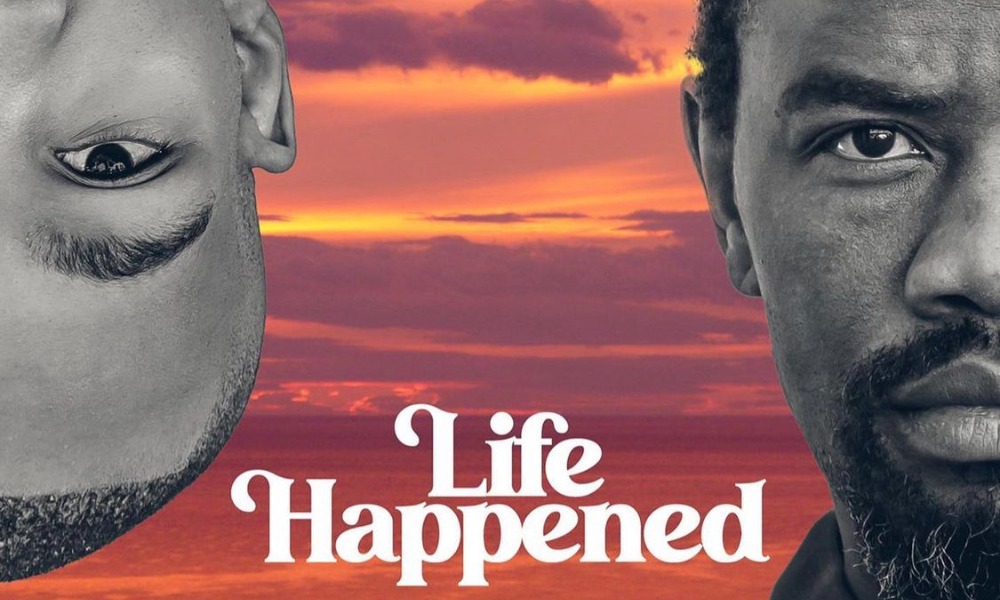
Best New Music: Teezee Shares Creative Synergy With Davido On “BADI”

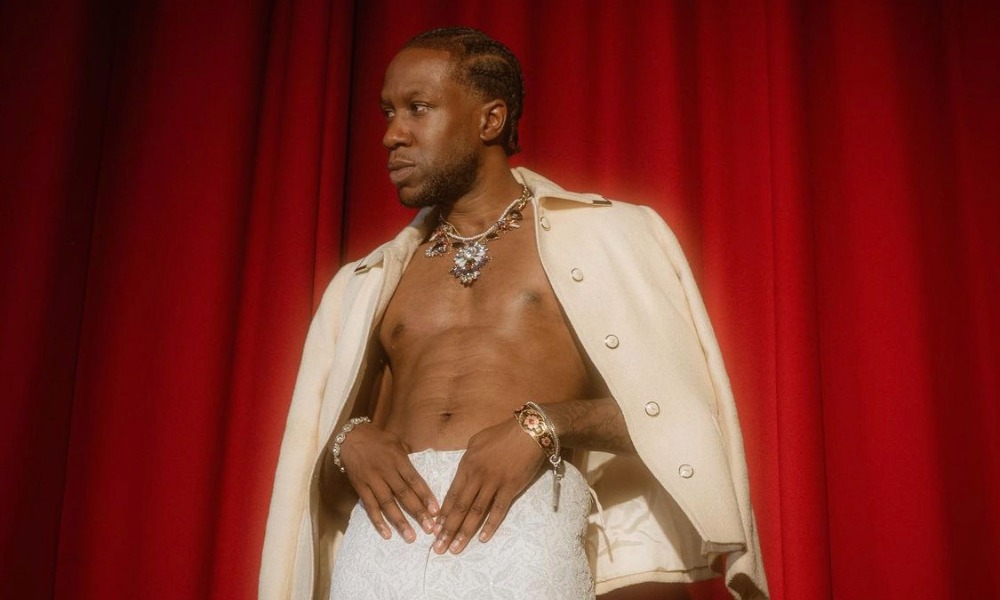
In many ways, Teezee is one of the few true visionaries operating in Nigerian music. Whether as part of DRB Lasgidi, a creative super-collective that was central to the ushering in of innovative expressionism and music that coalesced into West Africa’s eruptive alté scene, or as a critical part of the Lagos-to-London pipeline that is encouraging exchanges of ideas, cultural touchpoints, and melodies between both cities. Teezee continues to push boundaries with his art and life’s work. 


View this post on Instagram


A post shared by @teezee

The past 18 months have been especially fruitful on multiple fronts for Teezee. Last year, he became a father for the first time and, earlier this year, he began the campaign for his sophomore project. He first released the Maison2500 and New World Ray-assisted GUALA,” a trippy Hip-Hop affair that found the young veteran operating in the rap origins of his earliest work. He later followed this up with an electrifying feature on Skepta’s “Peace Of Mind” in tandem with Kid Cudi. 

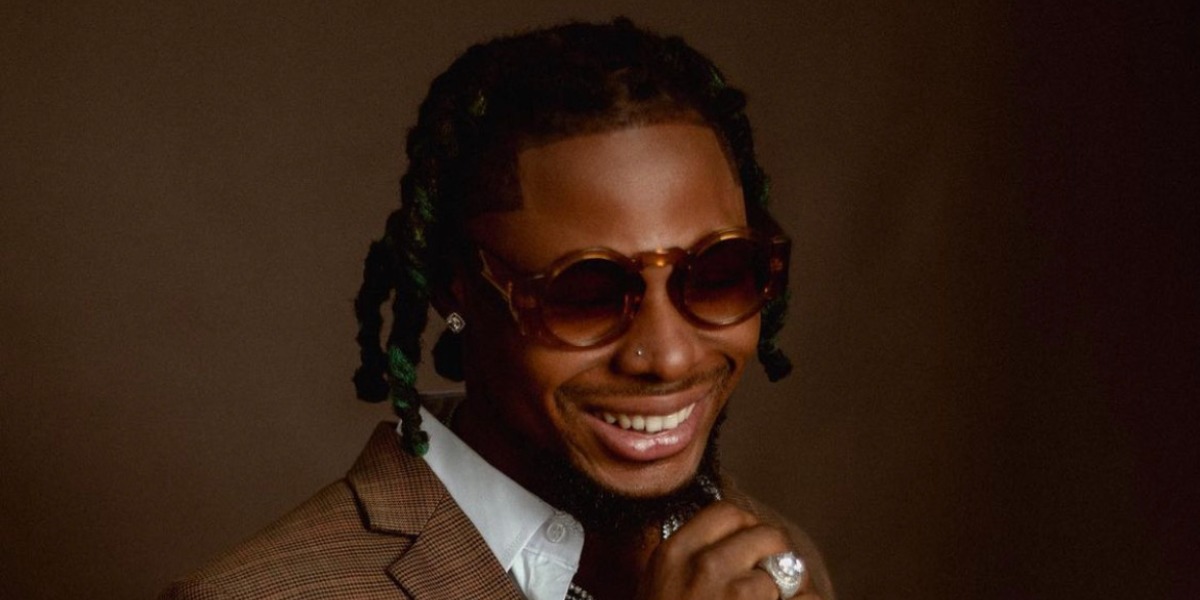
Displaying the shape-shifting appreciation for melody that has made him a fixture on the music scene for more than a decade, Teezee’s latest, the Davido-featuringBADI,” is an earworm track that sees him put his love for women, romance, and hedonistic thrills in the spotlight while assuring his woman that he’ll always appreciate her. 

The sprightly instrumental, put together by the DMW-affiliated Napji, bears the hallmark of a party anthem. Davido kicks things off with a buoyant opener as he declares his intent to link up with a shy girl who is also a bad girl. Not many have Davido’s mastery of doublespeak and, he makes his declarations work while staying on-tune. Over the memorable chorus, he sings: “Your body, it’s all for me, body, it’s all for me/ Body, it’s all for me, body, it’s all for me.” 

When Teezee slides in, he’s in a similarly certain mind-frame mood, picking up from where Davido left off. “We go dey together, thought I told you so,” he sings, expressing his romantic intentions. He later continues: “I don’t really care about what they say about me/I don’t really care what they say about you,” while listing out the physical characteristic of his perfect woman. 

Just a little over two minutes, “BADI” is an interesting expansion of Teezee’s soundscape to reflect the boisterous energy of the singer’s Nigerian origin. It is full of delectable songwriting that makes Nigerian pop an inventive arena while still retaining enough of his essence to make it a cool December anthem. And with a sophomore project still to come, it’s clear that he’s genuinely just having some fun. 

Stream “BADI” below.

Featured image credits/GhanaMusic

TurnTable Top 50: Reekado Banks “Ozumba Mbadiwe” leaps into the top ten

Just in time for the end of year festivities set to take over the country very soon, Reekado Banks has a hit single on his hands. Released a few weeks back, “Ozumba Mbadiwe” debuted to enthusiastic reactions from listeners, and its potential staying power is reflected on the charts this week.

After debuting at the 18th spot in last week’s edition of the TurnTable Top 50, the P.Priime-produced, Amapiano-infused bop has jumped ten places to the No.8 spot in this week’s chart, giving the ever-capable Nigerian hit-maker his first top ten entry on the Top 50.

Reekado Banks recently dropped ‘Off the Record II’, his second EP in two years, as well as the accompanying set of visuals for “Ozumba Mbadiwe.” These new updates will undoubtedly push the song up the charts in the coming editions, and perhaps challenge Joeboy’s “Sip (Alcohol)” for the top spot. For now, though, the Empawa singer’s latest smash has extended its number one run on the Top 50 to six consecutive weeks. While the activity for the Tempoe-produced fan-favourite was down across streaming, radio and TV, “Sip” still led streaming and TV charts for the week in review.

The rest of this weeks top five remains unchanged for the previous edition of the charts, with Adekunle Gold and Davido’s party-starting “High” staying at number two, Ayra Starr’s self-affirmation anthem “Bloody Samaritan” in the third position, Timaya’s Buju-assisted bop “Cold Outside” at number four, and Fireboy DML’s euphonious banger “Peru” remaining in the fifth spot for its sixteenth week. Following the recent release of his EP, Providence’, Ladipoe’s “Running” stays at number six, while Zlatan’s “Ale Yi” jumps back to its peak position at number seven, after dropping his sophomore LP, Resan. Making a similar 10-position leap, Wande Coal’s “Come My Way” is at the ninth spot for this week. Rounding out this week’s top ten is Lojay and Sarz’ “Monalisa,” falling one place from its previous position.

You can get into the full Top 50 charts here.


BEST NEW MUSIC: FAVE EMBRACES ROMANTIC VULNERABILITY ON “BABY RIDDIM”

Songs Of The Day: New Music From Omah Lay, Reekado Banks, Dunnie & More

As the year winds down, the sheer number of music we receive at The NATIVE keeps growing at an exponential rate. With live shows back in full swing and Afropop hits such as Wizkid’s “Essence” and CKay’s “Love Nwantiti” climbing the charts both home and abroad, there has never been a more exciting time than the present for the ever-evolving sonic landscape. Through it all, we remain committed to the ideal of music discovery and sharing that is a big part of what we stand for.

That’s where our Songs of the Day column comes in. We’re doing the work to stay on pulse with all the music coming out from across the continent and beyond, bringing you exciting songs of tomorrow: today. Last time out, we had exciting music from The Caveman, Mayorkun, Wande Coal and more. Today, we’re bringing you new music from icon Banky W, Omah Lah, Reekado Banks, Phyno & more. Listen in!

Banky W – “Jo”

After taking a break from releasing any music, Banky W is here with his first single in over two years. “Jo” is a mid-tempo tune that finds the artist serenading his muse who happens to be played by his wife in the accompanying music video. His lyrics speak to the love shared between them. He sings “Yes you are far from regular the life of the party, I wanna be right where you are/Girl na you dey burst my medulla,” revealing the fervour of his devotion to her. Despite taking such a long time off the music, it goes without saying that Banky W’s still got that ineffable charm. 

Omah Lay – “Free My Mind”

Omah Lay has been on a roll since stepping into the scene. Just this year alone, he’s already released the chart-topping single “Understand” and made a guest appearance on the Masterkraft remix to Justin Bieber’s “Peaches” with Masterkraft. His latest, “Free My Mind” is an uptempo track that celebrates the importance of enjoying the moment with no worries. Over the catchy hook, he offers the line “Free my mind, free my mind dey shayo,” delivering a song coated in his familiar melody-driven sound. “Free My Mind” sets a vast tone for Omah Lay’s musical dexterity as he takes a welcome departure from his earlier singles and delivers a number that speaks directly to his Port Harcourt roots. 

kZm – “Midnight Star”

Fresh Meat alum, kZm has just released two new singles titled “Midnight” and “Alienated” to round off the year and both happen to widen the scope of his discography and give a clear indicator of his style. On the romantic number “Midnight Star”, he trades in his raps for a mellow flow which provides the perfect background for him to fire off his romantic lyrics. Over the mid-tempo production, he sings “It wasn’t love until I met you baby, Oh baby you’re the only way/It wasn’t love until you hesitated then affiliated yourself with me,” addressing a lover who he can’t get off his mind. 

Reekado Banks – “Lupita Nyongo”

Barely a year from the release of his sophomore album ‘Off The Record’, singer and songwriter, Reekado Banks has just released a new EP titled ‘OTR, Vol.2′, the second installment on his off the record series. The 5-track project finds the singer bringing his familiar warmth and enlivened touch to the burgeoning Afropop space. On the standout P.priime-produced track “Lupita Nyongo” he sings about the beauty of Black women, likening their beauty to that of Lupita Nyong’o. The uptempo number pairs P.priime’s rapid-fire production with Reekado’s undeniable charm resulting in an enjoyable number that deserves to feature on your rotation this week. 

Twitch 4EVA – “Give Up”

For his latest release of the year, Ghanaian singer and songwriter Twitch 4EVA returns with “Give Up”. The Yung D3mz-produced track finds the singer delivering a heart-filled appreciation track to those who deserve flowers in his life. He shouts out those who supported him to this point in his career. “Dem say make we never give up/Dem go show you true colour,” he sings over the song’s catchy production, leaving listeners with helpful advice for how to navigate similar situations and rise from it.

Phyno – “Do You Wrong” ft Olamide

Adding to the streak of their incredible collaborations, Phyno and Olamide team up again for the unmissable number, “Do You Wrong.” Over the mid-tempo production, both artists address the women in their lives and promise their unwavering devotion to them. “Say I no be perfect man but I no go do you wrong, why would i do you wrong tell me why would i do you wrong”, Phyno sings over the first verse, laying down his true feelings for his lover. Olamide joins him on the next verse, delivering an equally heart-rendering performance and reinforcing their legacy which ranks among the most powerful in the Afropop space. 

Jess ETA – “Skata”

In preparation for his forthcoming project, producer, singer and songwriter Jess ETA has just released his first offering for the year, the groovy number titled “Skata.” The mid-tempo track finds the artist appreciating his muse’s body and serenading her with sweet words. On the chorus of the song, he quips This your backa don scatter the place/This your waist odikwa necessary o,” expressing the effect her presence has on him. The accompanying Imraan Christian-directed video fits the song’s romantic move as it features a number of angel-like dancers enthralling viewers with their movements.

Bosaboi – “My Ways”

Nigerian born Canadian based singer, songwriter, and performer Bosaboi is here with his third official solo single of the year titled “My Ways”. Over the bouncy production of the track, he speaks about elevating, changing his ways and being a better version of oneself. On the hook of the track, he sings “Tell a badman wanna come my way/I was outside when they left me in the rain, Now I’m inside and the rain champagne”, tackling the pains of his past while trying to stabilise his current emotions.

Basketmouth -“Trouble” ft 2Baba & Blaqbonez

Basketmouth might be one of the music industry’s best-kept secrets. After delivering his fine debut ‘Yabasi’ earlier this year, the singer has now followed up with a new single titled “Trouble”. The track finds him linking up with 2Baba and Blaqbonez for an up-tempo number that finds each collaborator at their most braggadocious. Over the song’s hook, Basketmouth sings “See me see trouble oh/How this one take concern me,” delivering lyrics that will certainly have any listener on the dance floor.

Ms Banks – “Party” ft Naira Marley

Following the success of their 2019 collaboration “Anywhere”, Ms Banks and Naira Marley are at it again. Their latest “Party” finds them celebrating the December party season which is just around the corner. The Rexxie-produced track finds both artists deliver a catchy number that ties into the upcoming festive season and pairs familiar, danceable production with quotable lyrics.

Dunnie – “Oh Baby” ft The Cavemen

Over the weekend, singer and producer, Dunnie released a new project titled ‘AMAZON’. The 8-track tape features a spate of talented artists such as The cavemen, H_Art The Band & Darassa. On the standout track “Oh Baby” featuring the Afro-highlife band, the Cavemen, she sings about her plan and intentions for her love interest and their future together. On it, she offers the lyrics “oh baby, I must to marry you my baby/I don see my lover, no more cunny cunny,” a line armed with instantly catchy melodies that you might well be humming after one listen.

Browny Pondis – “BAMBILA”

Nigerian singer and songwriter, Browny Pondis only began his musical journey a few years ago but already his skills are vastly improving with each new release. Next year, the singer is gearing up for the release of his debut EP titled ‘October First,’ an introspective 5-tracker that is aptly inspired by his country’s Independence day from colonial rule. Ahead of this, he’s shared a new single titled “BAMBILA,” a romantic number about an unrequited lover who he met under the dimly-lit lights of a nightclub.

Bonga Kwana – “Lace”

South African singer and songwriter, Bonga Kwana is a fresh-faced charmer who weaves nostalgia, tradition and queer culture into her beautiful and emotionally layered music. The singer has just shared her sophomore EP ‘New Faces to Old Problems,’ which features the chart-topping promotional single “Ndifuna Wena” featuring Ntsika which held the No.1 position in the 5FM Pop charts for three weeks running and continues to grow. “Lace,” is another standout from the project which showcases more of Bonga’s airy vocals and soul-baring songwriting. “I’m coming with the intention to love you for the rest of your days and more,” she sings on the song’s first verse, addressing a lover who she feels attached to like lace.

Featured image credits/Instagram

Get to Know Shesaid.So’s 2021 Alternative Power 100 Ambassadors

With an objective to connect and empower underrepresented communities towards a more equitable and diverse industry for all, shesaid.so is a global independent community made up of women from all areas of the music industry.

Founded as a passion project in 2014 by Andrea Magdalina, the global network of female professionals has only continued to expand and challenge the music industry’s outdated systematic framework along the way. Its Alternative Power 100 Music List is a daring response to the industry’s lack of inclusivity and has become a beacon of pride for many Black and ethnic-minority professionals in the industry.


View this post on Instagram


A post shared by shesaid.so (@shesaid.so)

Shesaid.so ‘s theme this year is “The New Creative Economy”, and it celebrates those who have chartered ways for independent creatives, thinkers, and entrepreneurs in the music industry to survive financially due to the negative impacts of the COVID-19 pandemic.

To ensure that the industry is represented in its entirety, shesaid.so have established special awards including ten brand new categories which cover a range of categories including music and sound creation, business and technology, artist management, marketing, communications, PR, and more. Alongside this, there are also a number of talented ambassadors from around the world specially chosen to represent each of these categories. Included this year are a number of African names such as Niks Delanancy, Ibrahim Kamara, and Shauni Caballero.

As nominations officially close today, we’ll be taking a closer look at the achievements and contributions of these three ambassadors to their respective industries.

NIKS Delanancy

Community and Activism Ambassador

Asides from being a DJ and radio station personality, NIKS is also a co-founder of Black Artist Database (B.A.D), a database formally recognised as Black Bandcamp. Founded in 2020 in the aftermath of the pandemic and a summer of racial reckoning, the community-based platform hosts a plethora of international Black-owned record labels, artists, producers and bands. On the platform, users can now search, filter and directly support these black creatives and artists via their online profiles. With all the issues and injustice in our world today, B.A.D recognises the need to make a difference in the lives of Black creatives and businesses. The B.A.D community keeps growing and growing and has already amassed over 3,500 Black-owned labels, artists, producers, bands and creatives in their database.

Ibrahim Kamara

Creative Ambassador

Ibrahim Kamara is one ambassador that needs no introduction. As the co-founder and Editor-in-Chief of GUAP magazine, the UK’s first-ever video magazine, Kamara has a long line of credentials in the game. Since meeting while in university, Kamara and his partner Deji Adentuji both believed they would follow the corporate route after school but things quickly changed for them. In the summer of their third year, they decided to pool some money together and try out a few business ideas, along with some friends. After many trials and errors along the way, GUAP Mag was formed in 2015 and has since actively sought to push and create diversity with new and fresh faces of talent and creativity to the forefront. Ibrahim always aims to use his art, creativity and platform to champion diversity and authenticity for young Black creatives like himself.

Shauni Caballero

Sync & Publishing Ambassador

Shauni Caballero is the founder of the music publishing house named GO 2. She began her career many years ago when she worked for PRS and Universal Music, after which she decided to start her own agency. GO 2 was founded to redress a gap in the market for Black artists. In an interview with Music Week, Shauni explains her desire to educate people on all there is to know about royalties and publishing, making real change by spreading these teachings to the music communities in Jamaica and Nigeria and working closely with CMO’s in these countries to put together Infrastructure that ensure creatives are compensation for their work.

To find out more about how to make your nominations, check here.

Featured image credits/NATIVE
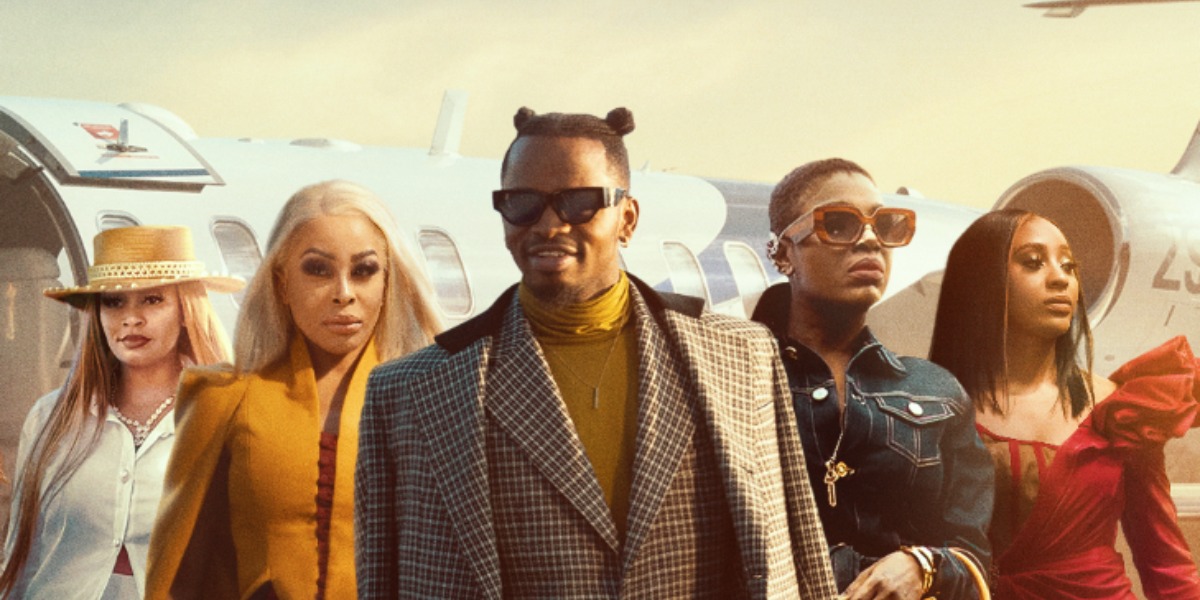
Teezee and Davido’s “BADI” is all you to hear need today

Teezee is on the cusp of an evolution in his music career. Earlier this year, the rapper officially began the rollout for what will eventually serve as his sophomore project with the release of the Maison2500 and New World Ray-assisted “GUALA.” Now, he’s is inching closer to its imminent release with melodies that are front and centre of everything he makes.


View this post on Instagram


A post shared by @teezee

Over the past decade, Teezee has earned a growing reputation for his eclectic and vibrant knowledge of sonic influences with his day-one crew, DRB who’ve fed off the euphoric energy from their home city, Lagos. That multicultural influence is now palpable on his second release of the year, “BADI.”

Inspired by ’90s Nollywood films which Teezee was raised up on, the new Davido-assisted track is a catchy radio-ready number that finds the rapper exploring his love for women. Here, he trades his sharp, gritty raps for a more melodic tone, which provides the perfect backdrop for him to fire off his lyrics on love and affection for women. Singing “We go dey another dimension/Only you go get my attention, forget all the names in my mention,” he takes a rhythmically daring turn that’s now reaped great redwards–shit slaps.

Davido adds a layer of intrigue with a fire first verse followed by a catchy hook: “Badi, sun mo mi/Your Badi is all for me,” a detail so scripted it must have been divinely ordained. The danceable hit packs more in each verse as the song builds, a marker that hints at its ability to invite sing-alongs and TikTok challenges.

In just a few hours, Teezee will also release “BADI” the film, a Nollyesque production that promises to be a visual homage to the rapper’s love for films, pretty women and romance.

Stream “BADI” below.

Featured image credits/Teezee


ICYMI: Why Amaarae deserves to top global charts

Review: Mayorkun’s “Back In Office”

Looking back, Mayorkun becoming an Afropop superstar was more of a certainty and less of a gamble. In Nigerian music, nothing is a given, but it clearly doesn’t hurt when your introduction to the general audience is spearheaded by one of the most ubiquitous names around. On a night in 2016 that should go down as lore, Davido announced the entrance of Mayorkun—and Dremo—into his DMW record label. It wasn’t just any other announcement; much like all things Davido, it was exuberant and slightly chaotic. It also unfolded right in front of our eyes, on our Twitter timelines.

In 2021, Mayorkun’s ubiquity is undebatable. Perhaps that’s why the title of his recent sophomore LP, Back in Office’, seems a bit misleading. Every year since his DMW unveiling, the singer has scored at least one smash hit, becoming an even more impeachable pop star as the calendar flips forward. The title is also a knowing nod to his 2018 debut album, ‘The Mayor of Lagos’, the singer’s speculative attempt at self-mythologising. The album itself was a mixed bag, doubling down on Mayorkun’s then-increasing reputation as a competent and consistent hit-maker, but barely doing enough to establish a riveting persona.

In the two years leading up to TMOL’, Mayorkun’s most apparent gift was his relatability and his command of catchy melodies that stick in the ears of listeners and immediately commit themselves to memory. In a singles-focused market, it’s a talent with its own premium but as seen it doesn’t readily transform into a great full-length if that’s the only gambit. While it isn’t a full-on course correction for structural flaws of his debut LP, Back in Office’ does a notable job of reconciling what makes Mayorkun a hit-maker and ideals of a full-length.

In recent times, the premium of delivering a great body of work in Afropop has been climbing upwards—back to its significance in the CD era of the 2000s. The trend of hit songs being of the utmost importance is still very much in vogue, but great albums are now greeted with a level of reverence that seems to last longer than the instant gratification of having a hugely popular single.

In 2020, Afropop delivered more than its fair share of great projects, with some that will be described as seminal in the coming years. The obvious examples are Burna Boy—perhaps the strongest contender for the full-length album renaissance—and Wizkid; but there’s also the Cavemen, whose innovative, revivalist Highlife manifesto, ‘ROOTS’, earned the duo a level of adulation that sets them up for longevity.

When Mayorkun released TMOL’, we were only seeing traces of the increased significance of albums. With Back In Office’, it comes at a time when Nigerian pop is midway into this renewal. “I’ve always been a singles artist,” Mayorkun admitted to The NATIVE shortly before the album release. While he goes on to justify the timing of his second LP using the diminishing attention spans of listeners, he seems aware of the terrain he’s playing in, and it clearly influenced how he curated Back In Lagos’. “Each song should be completely different,” he says in the same interview. “I don’t want two songs to sound alike. Unlike my first album that was mainly about love and girls, this one is broader.”

‘Back In Office’ has its fair share of romance-themed songs, but it clearly isn’t defined by them. If anything, it is defined by the deservedness of the boulder-sized chip on his shoulder. Mayorkun has never not come off as a self-assured person, but there was a profound persona glow-up on last year’s “Geng,”, a deliriously catchy Grime-infused banger. That song was transcendental for Mayorkun, dialling up the punk aspect of his character matrix and, in addition to his established charm, setting him up as a bridge between street-pop and the very centre of Nigerian pop music.

On the title track of his album, he makes an irrefutable statement: “I held down the lockdown for a long time.” Between “Of Lagos,” “Betty Butter,” his remix of Zinoleesky’s “Ma Pariwo,” and two searing appearances on Davido’s A Better Time, and more, Mayorkun has the catalogue to back his talk. Over the lockdowns, it was evident Mayorkun was in a creative flow state—and he knew it. His melodies felt effortless even as he experimented, and his lyricism was as poised as it was playful.

‘Back In Office’ is at its most thrilling when it feels like those tenets are being tapped into. “Back in Office” might not have the same instant consuming power as the singer’s best songs, but the self-reverence becomes increasingly appealing with each repeat listen. On “Jay Jay,” he collaborates with Amapiano trailblazers, DJ Maphorisa and Kabza De Small, for a song that feels like a spiritual successor to “Of Lagos,” with his controlled mania making for a sure-fire album highlight.

Like his debut, though, it’s almost impossible to carry the gimmicks from hot singles into a hot album. To his credit, Mayorkun doesn’t overtly try to do that on Back in Office, but there are tepid moments when he tries to explore. On the Telz-produced “Freedom,” which features a choir, the theme of self-actualisation is dulled by its proselytising lyrics, which attempt to resonate with everyone in general terms. Even with the ill-advised interpolation/feature of Di’Ja’s “Aww,” “Piece of Mind” is a much better attempt at being relatable, mostly because Mayorkun is content with expressing and exorcising his own issues.

Maybe a little surprising is a fact that this project’s major lag comes from the love songs sequenced together in its mid-section. It’s not that these songs aren’t up to par with the rest of the project, it’s that they lack any discernible sizzle or spark, and when they do, it’s not always from the singer himself. Released shortly before the album dropped in its entirety, “Holy Father” is dominated and defined by Vict0ny’s inspired contribution. Curiously, Mayorkun doesn’t match his tenor. On “Desire” and “No Strings Attached,” with Gyakie and Joeboy respectively, he’s a much better collaborator, but that’s partly because the performances from these guests don’t necessarily challenge him.

Going through his catalogue, it’s quite obvious that Mayorkun does a lot of his best work solo. He’s also a great guest to have, but it barely raises any hairs when he invites other artists not named Davido unto his own headlining work. Even though he’s not featured on the song, “Let Me Know” has the makings of a Davido-ready collaboration, down to its preppy melodies and signature ad-libs. Recorded three years back, it was created at a time when he was still retooling his mentor’s influence on him.

Of course, it’s impossible to talk about Mayorkun without mentioning how much Davido imparted on him—he declares as much on “The Best”—and while he’s become an artist in his own right, the hallmarks of those lessons will continue to abide with him. Pulling in heavy sonic cues from mid-tempo Nigerian pop, Amapiano, as well as fringe highlights from R&B, varying shades of Folk, Rap, and more, ‘Back In Office’ shows some range but keeps everything attuned to what’s familiar.

One of the most interesting ways to parse this album, especially with its sequencing, is to view it through the modish template of a modern rap album. The introspective opener, check; triumphant second song, check; multiple romantic songs in the middle, check; exuberant songs to pick up the pace, check; contemplative closer, check. Back In Office’ doesn’t break any moulds, neither does it set any new precedents on how we should view Mayorkun as an artist. He’s a pop star, and pop stars don’t really need great albums to remain on top.

Stream ‘Back In Office’ below.


REVIEW: TEMS’ ‘IF ORANGE WAS A PLACE’ EP

Funbi makes a defining statement with “My Intentions”

Last month, R&B singer Funbi made his return to the music scene with the release of the Spax-produced single “My Intentions.” The smooth romantic number found the singer floating on the pure adrenaline of finding a new crush as he expresses his amorous desires for a lover.


View this post on Instagram


A post shared by Funbi (@funbimusic)

Now, the singer has now further unveiled the world around his upcoming project with the release of the accompanying video for “My Intentions.” Shot and set in Lagos, Nigeria, the Ademola Falomo-directed video gives us a glimpse of the transformative power of true love and the joy that comes from having it in your life. The video introduces a renewed Funbi who has formed a better personal relationship after sharing his truest intentions with the object of his affection.

Speaking about the new release, the singer shared:

“I have evolved, I am now more accepting of my emotions, more honest about my feelings, and not ashamed about it. I’m not trying to hide anything anymore, I’m taking the consequences as they come, just in a space where I am free. Keeping these emotions in is negative, you become congested and uncomfortable, it’s time to open up.”

Watch the video for “My Intentions” below.

Featured image credits/Courtesy of the artist


ICYMI: With Darkoo, You Always Get Twice As Much

NATIVE Exclusive: Cuppy Is Always Getting Better

You were born in this world an original so don’t die as a copy.

It’s a busy evening for Cuppy. Following the highly anticipated release of her debut album, Original Copy, she’s been slammed with back to back time-consuming engagements all day, and this interview is right at the tail of her itinerary. “Don’t worry I’m gonna give you guys all the tea,” she assures me, comfortably settling into her hotel bed in Italy. She’s everything you’d imagine her to be: bubbly, high energy, and casually weaving in a witty joke into every other sentence while sporting a cropped braided version of her signature fuchsia pink hair. “I guess I’m just a product of my environment”, she says, speaking on her sonic influences and musical journey. 

From the moment Cuppy stepped onto the scene as the newest female DJ in town back in 2013, it was obvious that she was one of a kind. Her unique sound, for one, was a fusion of Electro House and Afrobeats; an unorthodox blend not many mainstream DJs dared venture into, at the time. The sound, which she later coined as ‘Neo-Afrobeats’, was one she carried everywhere with her – along with her signature bedazzled Beats by Dre headphones. These days she goes by her nickname, the ‘Princess of Afrobeats’, and with good reason. As a renowned DJ, she’s played at countless events around the world, bringing her own slice of Africa everywhere she goes. She’s on a mission to not only share what Africa has to offer with the world but hopefully open up the world more to Africa.


View this post on Instagram


A post shared by Cuppy (@cuppymusic)

Comparing her debut Electro House 2013 single, “I Love My Country” with her latest, Rema and Rayvanny assisted, Afropop smash hit, “Jollof on the Jet”, the disparity is crystal clear. Prior to the release of “I Love My Country”, Cuppy had been living in London, playing and listening to strictly House music. By 2017, she had moved back to Nigeria and begun getting into Afropop, taking time to understand which elements of the genre she loved, and slowly incorporating them into her sonic palette in a bid to refine her own sound. Her steady journey of musical evolution culminates into ‘Original Copy’; the 12-tracker filled with a star-studded guest list that scans the breadth of the continent, making a compelling case for her growing artistry and position as a longtime Pan-African tastemaker. 

From an early age, music was a big part of Cuppy’s life. Born Florence Ifeoluwa Otedola, Cuppy grew up in Lagos, the largest city and cultural hub of Nigeria, where the foundations for her love for music were established. Her earliest memories of music lie in the lengthy car rides from Ikeja to Victoria Island with her dad, listening to Fela Kuti. “I didn’t really understand what was being said, but I just had that connection. And obviously, there’s a lot of traffic so you end up listening to the albums over and over again,” she vividly recalls. Moving to London at age 13 for school, she became exposed to the thriving nightlife of The Swinging City. 

“I remember being 13 years old and just roaming around London and just falling in love with the music. Back then it was mainly house music in London, it wasn’t as urban as it is now” 

It was this exposure that instilled a deeper love for music and prompted her to pursue a career as a DJ. “I loved going out so I always wanted to do music but I didn’t know exactly how,” she reminisces, gently tucking a stray braid behind her ear. “I remember going out and discovering that music was everywhere but then there was this power that DJs had and I became properly obsessed with it. I thought wow, you know, I’d found something that incorporates my love for music but also is really sociable,” Cuppy tells me, revealing how her love for music manifested a desire to express it in any way possible – her career as a DJ was simply a by-product of that. 

Cuppy has had a very successful career as a DJ. From playing at the 2014 Financial Times Summit in Mexico City to being named as the resident DJ at the MTV Africa Music Awards in the same year, she has a slew of high-profile performances neatly tucked under her belt. Nevertheless, with time, she began yearning for more. “I was so comfortable playing my own music as a DJ, I never really wanted to do more than that. But I also wanted to become a bigger DJ, and I noticed all the DJs – from Jimmy Jatt to Exclusive, to Spinall to Neptune – everyone actually had their own songs with artistes,” she explains, narrating the genesis of her career as a recording artist. “It all started with Tekno,” she adds. The Afropop certified hit-maker and producer was someone she had always dreamed of working with, so she reached out and the result was “Green Light”, the rhythmic, dance-inducing number that ruled the streets in 2017. 

Unlike most artist-DJ collaborations at the time, “Green Light” had Cuppy laying down her own vocals alongside Tekno’s, which she continued to do in subsequent releases. With time, Cuppy began experimenting and trying her hand at different genres and styles of African music, collaborating with renowned artists and producers like Sarkodie for the sensual “Vybe”, Masterkraft on the GQOM-inspired “Charged Up”, and Zlatan on the dance number “Gelato”. As expected, every stage of her experimentation welcomed raised eyebrows as many doubted her actual sonic abilities and cited her DJ career as the full extent of her talents. But such doubt didn’t stop Cuppy, she knew it was all part of the process and in due time, the haters would become believers. 

“With the album, I was just me, I didn’t overthink it. Just enjoyed myself, had fun and talked about how I felt. Literally just did my thing. I think that reflected,” she tells me of the making of ‘Original Copy’. The 12-pack, feature-heavy offering hosts an impressive all-star roster and exudes a level of quality that was unexpected to many, including the artists that turned her down. ‘“ know I owe you major tea so I’m gonna give it to you,” she says propping up on her bed. “So I wanted to work with Mr. Eazi, he didn’t like the record I sent him. Wanted to work with Tekno, he said he was working on his upcoming album. Wanted to work with Niniola, actually, we did a record together, but she decided she just wanted to be a writer, she didn’t wanna be on it. Wanted to work with Yemi Alade, but she just couldn’t make it to the studio in time. Wanted to work with WurlD, he didn’t like the record I sent him. Wanted to work with Santi, he went ghost on me. Wanted to work with Tems, she didn’t check her dm in time. I mean the list could go on. So I really want people to understand that I’m really proud of what I’ve achieved, but it wasn’t my initial vision.” Nevertheless, she sees the rejections and indirect ‘no’s’ as a blessing in disguise. “Yeah a lot of doors closed but a lot of doors also opened,” she adds; “Some of the artists you hear are not my first choice but now looking at it, I couldn’t have had a better choice.”  

‘Original Copy’’s release was a pleasant surprise to everyone and a shocker to doubters ready to relish in an ‘i-told-you-so’ moment. “I’m so glad people underestimate me so I can over-deliver,” she excitedly gushed in an interview with Bellanaija prior to the album’s release. And boy, did she deliver. The response was overwhelmingly positive; under 24 hours of its release, all 12 tracks made the top 100 Nigerian Chart on Apple Music and 10 of the tracks remained on the platform, days after. It also climbed to number 30 on the list of top albums on Audiomack, garnering 1.9 million streams, and 1.9 million likes in just three days. The collaborations are as expansive as you can get, featuring contemporary pop vanguards like Rema, Rayvanny, Fireboy DML, and Nonso Amadi, international heavyweights like Wyclef Jean and Julian Marley as well as afro-juju legend Sir Shina Peters. 

With ‘Original Copy’, the 27-year old proved that hard work trumps talent. Judging by her previous singles over the years, many wondered whether Cuppy’s voice as a solo artist would shine through on this new project or if she would take a backseat and let the features do the talking. But with ‘Original Copy’, she proved she was perfectly capable of doing both, and succeeding at it too. Her refined vocal contributions are a product of dedicated months on end to professional vocal lessons and overall artistic development. “I never thought I would be singing as much as I am. I literally was in the car today listening to my album and I said, ‘I swear to God, this isn’t me,’ because when I play the music and I sing it, it just doesn’t sound the same. To be honest, I’ve gone through a lot of vocal training to become a better artist,” she admits. The sonic growth exuded on her album was apparent to everyone, including the artists who turned her down. ‘‘So many artists (I reached out to) were like ‘Shit, I didn’t know your album was gonna be this amazing’. I think that the Cuppy they thought was going to be on this album was the old Cuppy, the Gelato Cuppy. And they didn’t realize I had developed,’’ she reveals. Everything leading up to the success of the project is a product of Cuppy’s hard work and determination to level up; it’s a testament to her continuous evolution.

If there’s anything Cuppy’s six-year journey in the limelight has taught us, it’s that change is the only thing you can count on to be constant. Whether it’s switching out blond ponytails for bubblegum pink hair or trading ankara skirts for color-blocked outfits, Cuppy has undergone various stages of growth and change. In the same vein, her ideals have also advanced. Back in 2018, in a controversial interview with City FM, she seemingly denounced feminism – a trend most Nigerian women in music seem to follow. Her comment attracted a lot of backlash on social media with every Tom, Dick and Harry attempting to give their two cents on the matter. Looking back now, she’s well aware of her misplaced ideals and the effect they had on those who looked up to her. “I think at that point I honestly didn’t really understand nor did I fully embrace the power I had, or influence I had. Like 100% I’m a feminist. But I think it’s really important for me to understand what I’m fighting for and the movement it even represents,’ she tells me. 


View this post on Instagram


A post shared by Cuppy (@cuppymusic)

She’s less worried about stepping on the wrong toes in a male-dominated industry and more focused on uplifting her fellow women. Her album – which she revealed had an all-female creative team – packs an onslaught of female artists, from Teni and Efya to Ms Banks and Darkoo. “I’m just a fan of their work and I felt it was really important to enjoy what other women had to offer,” Cuppy remarks.

As well as her newly dedicated support for women, from the onset, Cuppy has always embodied the Pan-Africanist ideal. Many may remember her eight-city continent-wide tour, tagged ‘Cuppy Takes Africa’ back in 2015. “Exploring Africa and its rich and diverse culture has always been a dream of mine,” she commented at a press conference in Lagos back then. “I am so excited about discovering the music and the people, and soaking up the whole experience.”

So one can imagine the full circle moment she felt when Apple Music called her up in March to be the first host of their first African radio show, ‘Africa Now’; a show dedicated to spotlighting the wealth of talent existing in Africa and the diaspora at large. Fifteen episodes deep, hosting a slew of artists from Master KG and Patoranking to Tiwa Savage and Yemi Alade, Cuppy’s ‘Africa Now’ celebrates African music’s prominence in culture, giving listeners a sense of Africa’s current soundscape and rich musical history. “The journey (so far) has been phenomenal, it’s been so great. Apple music is an amazing organisation and I always say this, but i think it’s about damn time that the organisations invest in and highlight our continent. We’re doing great things, so to be the face of that is just epic. I can only hope that as african artists get bigger, the platform gets bigger. For me I want the audience to grow beyond just Africans, I want it to become a global show that non-Africans also appreciate.” 

While hosting the first African radio show on Apple Music may be new territory for Cuppy, pushing boundaries is part of the course – thankfully, she’s no stranger to that. Cuppy’s entire essence is boundary breaking, whether it’s her sound, lyrical or video content, choice of collaborations or even fashion tastes. She’s eccentric on all fronts and not afraid to be unapologetically herself. “I constantly feel the need to embody Cuppy, which is obviously me. I’m an extrovert so I wanna express myself. Without even talking to me, I want to enter a room & evoke a certain feeling. I want to come across as a confident woman. I want to be vibrant,” she explains. From her signature pink hair to her bright, designer-clad outfits, Cuppy is a defiant trend-setter in her own right, if not for anyone, for herself. “Colors make me feel good, and just to be clear, pink is not a soft color. It’s not a color that you should feel is over-feminine or submissive. Pink is very powerful, and I’ve been able to own it and embody it to who O am,” she adds. 

For as long as her career can remember, Cuppy has been slapped with endless criticisms, ranging from her fashion sense to her musical abilities. But that’s to be expected in these parts; being unapologetically your authentic self will always attract some level of scrutiny from the public. Her wealthy family background has also been referred to as her sole source of success, as being born into privilege is very often demonised over here. Regardless, Cuppy remains unphased by it all, with a tunnel vision on her upward trajectory. “I literally don’t give a shit, like I just don’t care. Because if I did, I wouldn’t have put out an album, would I ?” she laughs. 

“I’m just so focused on my passion and my vision that I know not everyone will like what I do, but no one is going to deter me. I always think success is the best revenge.”

It’s this same hypercritical eye from consumers at home that arose the misconception of Cuppy being an ‘unserious artist’ (she’s debunked that notion with ‘Original Copy’’s release), despite her having an undergraduate degree in Business from King’s College, London and a Master’s degree in Music Business from NYU. Anyone who’s actually in the know would understand that Cuppy is actually a PR dream – her promotional campaigns for “Gelato” and “Jollof on the Jet” could be taught in the Business classes she attended; she’s a brand in herself and she works hard and smart to push her brand as far as if can reach – and further. Earlier in the year, when she made the switch from her longtime Arsenal allegiance and firmly planted herself in the heart of Manchester United Twitter, many brushed it off as a phase that’d pass. But behind the scenes, she was working. Just three months later she’s been revealed as a part of the official Manchester United jersey campaign, with her, Burna Boy, Aitch and Dutchavelli being among the first people to receive the new jersey. And whether or not her sudden switch was always part of the game plan, this is yet another move that makes it hard to deny Cuppy’s strategic approach to her brand building. 

I’m a contradiction in myself,” she assertively tells me. “Like [as] Cuppy, considering my background, considering my upbringing, I 1000% should not be doing what I’m doing and so I’m working against odds and I’m owning that narrative.” Juggling being Ife Otedola and Cuppy, the persona is no easy feat. Growing up in a family like hers, she does, however, remember to keep both sides apart. “I try not to cross the lines. If you know me as Cuppy, you know me as Cuppy. If you know me as Ife then you know me as that,” she says. In her journey to musical and self-discovery, she’s owning her truth and living loudly, and this billionaire pink-haired princess is doing it on her own terms. Seeing no one as competition but herself, she’s proving to be a multifaceted being; she’s conquered DJing, curation, production, radio show hosting, and now she’s earning her stripes as a pop artist in her own right. There’s no particular end goal for her, but one thing is clear: Cuppy will make her mark.

I’m literally taking each day as it goes, I don’t have a grandmaster plan or strategy in place. I’m just going with the flow, I’m creating an opportunity and learning as I’m going. I’m making it make sense financially, making money, doing some cool things. But I don’t have a particular plan. For me, it’s just about being authentic and showcasing what Africa has to give.

Featured image credits/

24 Hours of the Smithsonian In Lagos: An immersive art experience

Last week, the Museum of African Art launched its global presence in Lagos, Nigeria with an immersive art exhibition titled ‘Taste! 24 Hours of Smithsonian in Lagos.’ The collaborative interactive art experience in partnership with Art X Lagos, the African International Film Festival (AFRIFF), the African Artists’ Foundation (AAF) and David Adjaye designed venue Alára brought together the international, Nigeria and African diaspora through the worlds of film, art, photography, and fashion.

Taste! was curated by former Smithsonian Artist Research Fellow Temitayo Ogunbiyi, who created a multisensory, participative art experience that involves the use of sound, photography, and food by sound artist Emeka Ogboh, New York-based photographer Iké Udé and Temitayo Ogunbiyi in collaboration with chef Renèe Chuks. The three-day event kicked off in Lagos last Friday with Taste! Mystique, a masterclass for a group of Lagos-based photographers in collaboration with the African Artists’ Foundation.

“Taste!” seeks to question assumptions concerning culture, geography and identity. By appealing to the senses, Temitayo Ogunbiyi, Emeka Ogboh, Iké Udé, and Chef Renèe Chuks urge the audience to remember, recognize and interact with the project based on personal experiences.

Speaking about the event, Ogunbiyi shares that:

“There are a lot of ways to interpret the term. This is why we thought it was so fitting to be the umbrella term for this wide range of experiences.”

Intrigued by the prospect of an all-immersive multi-sensory experience, I attended all three days of the event and uncovered the magic of the intersection between our senses and the art, music, fashion and photography we consume.

TASTE! MEMORY

On this day, guests are wowed by the culinary prowess of Chef Renèe Chuks who curates a menu of fresh Cuban mint and broccoli leaves – grown in Ogunbiyi’s home garden – mixed with her locally sourced squid ink, pineapple, hibiscus, turmeric, and Bambara, honours their connection to Yoruba cooking techniques. Many of these ingredients connect to Yoruba healing, traditions, sustainability, biodiversity, and the memories we hold in our senses.

Ogunbiyi’s delicate and nuanced offerings of “botanical hairstyles” are unusually presented alongside the tasting experience. Her works fuse botanical forms with the shapes of hairstyles she has observed in the Caribbean, West Africa, and wherever she draws inspiration. Selections from Ogunbiyi’s renderings are printed on the server’s and usher’s custom aprons – as well as take-home gift items.

Ogunbiyi also shares: “The experience that I’ve worked to shape –’Taste! Memory’, we’re really looking at food traditions that connect to Lagos from our personal experiences. It was exciting to work with Chef Renèe Chuks, to think about our connection to the city. Whether it’s eating chin-chin or cooking and innovating from Efo, we tried to think through in curating this experience with food and drinks.”

TASTE! MYSTIQUE

On November 5, Iké Udé partnered with the African Artists’ Foundation to lead a master class for a group of emerging Lagos-based photographers. Udé is Best known for his conceptual photographic portraits that explore issues of representation – across sexual, gender, cultural, and stylistic identity.

The young artists tutored by Udé in his signature style – creating mystique at the intersection of harmony and the unexpected – took portraits of Nollywood Star, Enyinna Nwigwe. ‘Taste! Mystique’, the three-day art experience involved a masterclass, an exhibition with interactive studio sets, and a ‘Tableau Vivant’ living installation.

Alongside photographs from the master class, Udé presents two bespoke studio sets that reflect and disrupt distinct, cultural references from Lagos and beyond. The opulent Nollywood-inspired sets offer attendees an opportunity to take photographs, perform, and commune. Within Udé’s compositions, participants can choose how to participate in personal negotiations of space and proximity.

The ‘Taste! Mystique’ experience culminates in a living installation on the opening night of the Africa International Film Festival. Guests of the opening celebrations can become works of art by posing for photographs against another of Udé’s exuberant sets.

“The African image has been controlled by the west since the advent of colonialism. The way we are depicted has been bastardized. It’s part of my job to make African representation beautiful, one project at a time – It’s my duty.”

TASTE! SOUND

On this day, the audience is invited to listen closely to music and soundscapes that Nigerian-born Berlin-based Emeka Ogboh, made in Lagos. The artist recontextualises sounds from Lagos and other cities to highlight contemporary microeconomics, reflect on the social dynamics of immigrant populations, and respond to pertinent planetary issues.

During this session, he revisits the early years of his career – sharing sound art from the formative years of his career. Live-streaming from Berlin, he discusses his crossover into the music industry, his practice, and how he has evolved – with relation to Lagos and other cosmopolitan cities. In addition, he speaks about how sound can reframe perceptions of the world. Guests also enjoy a debut track from his forthcoming music album and a sneak preview of his major forthcoming project, ‘Lagos Underwater.’

Recently named Director of the NMAFA, Ngaire Blankenberg, whose utmost vision is to see the museum be “more international” and reach “global Africa”, believes this was the right time and place for such an event to take place in one of Africa’s busiest art capitals.

To round off the event, she shares:

“My purpose is not the same as the original founder and collector. Every director, I believe, has a different vision as to where the museum goes. Creating art experiences as opposed to art exhibitions, is really where I would like to take NMAFA. Art isn’t just something to own. Art is something to experience, art is something to be in dialogue with. We aren’t just passive vessels of art, we bring something to the experience and the experience you bring affects how you see the art itself.

It’s understanding – not just reading text on a panel – but understanding them through your taste, through your body, through sound. Being able to bring your own perceptions, your own memories to the experience, to make it that much meaningful, that’s what the new NMAFA is moving towards. For me, there is this interesting conversation between the museum, the artist and the audience. It’s a circle of engagement and the audience is as important as the artist.”

Read more about the Smithsonian In Lagos here.

Featured image credits/SmithsonianInLagos


ICYMI: A recap of what happened at Art X Live

Why Amaarae deserves to top global charts

A year on from the release of her glittering debut, Amaarae ‘s music is topping charts globally. In the past week alone, her genre-defying debut album ‘The Angel You Don’t Know’ has gained her new levels of recognition days from celebrating its one-year anniversary. While it’s a warming moment for the genre-bending singer and rapper, for many who have been paying close attention since ‘Passionfruit Summers’, this current moment has been imminently approaching for while now.


View this post on Instagram


A post shared by Fountain Baby (@amaarae)

This week, Amaarae’s expansive catalogue of music have been all the rave. Off the back of her globe-throttling appearances, which found her live at the Pitchfork fest and gracing stages from the United States to London and Europe for her CRAZY WURLD tour, the Ghanaian-American singer and rapper is now reaping the rewards of years of hard work, which have only been made more feasible due to her gargantuan ambitions.

The remix to her standout single “SAD GURLZ LUV MONEY” ft. Moliy and Kali Uchis is steadily gaining traction on charts around the world, months from its initial release. Over the past few days alone, Amaarae has moved up from a few thousand videos using her song on TikTok to racking in over a million videos. Alongside this, she’s shot to the summit of the Shazam US charts this week after making her debut on the chart only a few weeks ago. To sweeten this moment even further, the record has gone to top other global charts including No.1 on the global Spotify Viral 50 chart, No. 12 on the Billboard World Albums chart and No.5 on the Billboard Bubbling Under Hot 100.

In one single day, the Kali Uchis-assisted number did a clean sweep across streaming platforms, garnering over 2 million streams on Spotify alone, a sizeable amount of streams for an African artist, particularly one who is operating independently and without any major label backing. This feat is certainly one worth celebrating, particularly as a female African artist operating outside the tenets and boundaries of a male-centred music industry. Already, listeners and loyal fans are already calling for Amaarae’s blueprint to be followed to a tee as she embarks on this new stage of her career, but what these comments fail to take into account is the fact that success rarely happens overnight.

Three years ago, the alternative scene was buzzing with some of the newest and brightest stars in the current Afropop vanguard. From Lagos to Accra and Johannesburg, an emerging class of new acts were bypassing industry gatekeepers and making music that met the demand for something new and different. Amaarae was one of such names making headlines, alongside the boys of La Même Gang from Ghana. At the time, her melody-driven sound and fettered authenticity were both ammunition used to fuel polarising conversations against the validity of her music, but these debates have only quelled as she’s risen to the top, off the back of her own distinct sound.

Amaarae has always been an adventurous artist and a risk-taker. Right from ‘Passionfruit Summers’, the singer and rapper has set a vast tone for where she is able to go sonically and lyrically. She carried this on throughout the years, first delivering a string of unmissable singles and collaborations such as the Cruel Santino-assisted “Rapid Fire”, “LIKE IT” and “Spend Some Time” featuring Wande Coal to the release of her genre-defying debut ‘The Angel You Don’t Know,’ her most cohesive and coherent effort to date.

Similar to Omah Lay who has established himself as one of Nigeria’s most promising contemporary artists all within the space of a year to Tems who continues to break boundaries unknown to many women in Afropop to even CKay whose smash hit “Love Nwantiti” is making head waves across the world, it is ostensibly clear that Afropop is witnessing its defining moment, all bolstered by its new vanguard of hitmakers. Amaarae is definitely in great company as she now joins the ranks of African artists who have topped global charts this year and introduced a new template of authenticity and self-confidence to the current soundscape.

Perhaps Amaarae’s crowning moment was destined all along–it was only a matter of time. Anyone who knows their salt on the music industry is aware of the reach and impact that Latin artists have on music with their English-speaking counterparts. The Latin-English collaboration pipeline is one that has been tried and tested to produce colossal results as we’ve seen from artists such as Bad Bunny, Luis Fonsi, Rosalia and more, however, Amaarae’s use of this formula now points to the future of transcultural collaborations that favour African artists on a global scale. Whatever the case, it’s hard to imagine any of Amaa’s contemporaries more destined for a moment like this than her, she’s been teetering the lines of an international crossover for a while now.

With the Yinka Bernie-produced single “SAD GURLZ LUV MONEY,” Amaarae’s music is finally collecting real estate and reverence as it rightly should. Currently, she’s one of the few African artists operating in a lane entirely of their own making. With the visibility that this traction will offer Amaaraee, it’s clear that the singer is being ushered into the next phase of her career, one where she sheds her rookie status for veteran tendencies.

Featured image credits/Youtube


ICYMI: A Review of Amaarae’s ‘The Angel You Don’t Know’

NATIVE Exclusive: Daisy is Nigerian rap’s latest Fire Cracker

Rap music in Nigeria is dominated by men, but it would be disingenuous not to pay attention to the increasing number of women forging their own path where it can be several times harder for female rappers to thrive. Rapping in a mix of Igbo and pidgin English, Daisy is a Nigerian mcee operating within this flawed framework. “…that it didn’t work for them does not mean it’s not going to work for me,” she confidently tells me when we talk about the sparse lineage of successful female indigenous rap artists.

Her words, which could be easily mistaken for arrogance, become powerful when they are traced back to her life before fame. Born in Anambra State, Daisy, whose real name is Anurika Happiness Mgbodim has always had an independent spirit. After high school, she left home and went to find work in Onitsha, the big, popular city known for its commercial activities.

Egged on by what she calls a “hustler’s mindset,” she soon moved to Guinea-Bissau for work. Somewhere between all these, she took a passionate shine to Rap music and held onto her dreams of being a rapper, stealing time between her shifts to write freestyles, lyrics and record songs even when the path to her rap dreams weren’t clear cut.

That doggedness and never-say-never attitude is what permeates her music currently. She discharges her lines in gung-ho fashion, shooting one fiery bar after the other. Recently signed to Dreamspace Entertainment, she caught her first bouts of wider attention with her official debut single “Straight Ahead,” then her feature on DJ Jimmy Jatt’s Jimmy’s Jump Off and viral, two-time showcase on Slimcase’s Instagram Live freestyle sessions. It became abundantly clear that she’s a walking rhyme slayer. But you’d be wrong to think raw lyricism is all she has to offer; Daisy is actually a budding rap artist sharpening her edges and polishing her song-making skill-set, one release at a time.

Daisy’s debut EP, Fire Cracker’ was recently released and it is defined by both her well-honed abilities as a rapper and an artist willing to experiment. Across the nine-track project, she doesn’t confine herself to one style; instead, she flows from Hip-Hop to R&B and Pop, while maintaining the originality of her streetwise Igbo lines. It’s the work of an artist confident in her current abilities, but also focused on increasing her appeal as part of the long game. With her confidence and self-assuredness, it’s really hard not to buy into her confidence.

Following the release of her EP, we caught up with Daisy to talk about her influences, the new project and the future of Rap music in Nigeria.

Our conversation with Daisy has been slightly edited for clarity, and it follows below.

NATIVE: What was your upbringing like?

Daisy: Growing up was fun. I grew up in my hometown Okija [in Anambra State]. I come from a family of four – three girls and one boy, who is the last child. I’m the third child of my parents.

One interesting thing about that time was that I was born with dreads. I can’t remember when my mom cut the dreads but then growing up with dreads made people stay far from me. I didn’t have many friends while growing up, mostly male friends, because people had this mindset that anybody born with dreads had [or was possessed with] water spirits. In a way, [people’s behavior] affected me; I was mostly on my own because of the energy I was getting from people. But over time, I started mixing with people. I later moved to Onitsha where I started working. And that was also where I started music professionally.

NATIVE: At Onitsha, what job were you doing there?

Daisy: I was working in a pure water company. That was my first job. I stayed in Onitsha for two to three years. I grew up with a hustler’s mindset and didn’t come from a rich family. Later, I worked in a lotto company before I left for Guinea-Bissau.

NATIVE: How was your experience of Guinea-Bissau?

Daisy: I spent three years there. I went there in search of a better life. Over there, the people are welcoming. They love to have a good time and vibe to Nigerian music. They enjoy life to the fullest. I was recording and collaborating with the artists there and sending my songs over to Nigerian sound engineers for mixing and mastering. I still have people over there that I chat with who are still my good friends. I’m also making plans to have one or two shows there.

NATIVE: At what point did you realise you could rap?

Daisy: It was when I was in high school. SSS2, if I’m not making a mistake. I used to freestyle with my friends. But our beat during that time was just the school desks. [Other students] would just be hitting the desks for me and then I’d be vibing. But before then, I was just writing down thoughts. I liked writing stories. I listened to gospel, hip-hop and ogene music. After [freestyling with friends in school], I moved to Onitsha and then I had some friends who were then into music. A friend of mine took me into the studio; he was like, “You can actually do better with all these things you are doing as freestyles.” So that was where I started.

NATIVE: You are signed to Dreamspace Entertainment. What was the process that led to you being signed?

Daisy: Last year, I joined Obyno Daddy Muna’s Igbo Rap Challenge. He just searched for rappers and he gave us a hint of what we were going to talk about. And I did my freestyle; it was just raw. That was during the #EndSARS protests. He reposted the freestyle and I came third. That was where my label boss saw the video and he contacted Obyno. They were actually friends, already. They started talking about me and Obyno recommended that if he would like to work with me, it is a good idea. So my boss chatted me up. That was how I got signed.

NATIVE: Between the period of freestyling and being signed, how did your family take your decision of pursuing music as a career?

Daisy: It wasn’t easy, especially with my mom. My mom doesn’t like secular music. She is a hardcore Christian. Her mindset was that she just wanted a cool, calm girl but I’m not really like that. She was my problem then. It got to a point that I had to stop. But I can’t quit so I kept on trying to convince her, especially with the help of my elder sister who has always supported me.

Also, I used to play football, too. But I stopped because my mom didn’t like that and also because of the [negative] way people saw female footballers. But I continued with the music. I thank God my mom later started supporting me. She is one of my biggest fans at the moment. She prays for me and her words motivate me. So I don’t have any issues with my family, they are supporting me.

NATIVE: What will you say is the biggest difference between being unsigned and being a signed artist?

Daisy: [At first,] I was seeing music as fun. I was just having fun before. I wasn’t looking at the business part of it. I knew there was something like that but to get into it or to build up a team to work with. I didn’t have any connection. I was just doing my thing, dropping freestyles. [At a point,] I got tired of freestyles because although people were supporting me, I wanted more. And I knew that I wasn’t financially buoyant to support myself. In terms of promotions, building my team, rebranding, getting connected to the right people in the industry and then knowing the business part of it too, [getting signed] has helped me a lot. It changed my mindset.

NATIVE: Major Bangz, who’s a renowned producer in Nigerian hip-hop, produced your first single “Straight Ahead,” and he produced some songs on ‘Fire Cracker’. How did this working relationship start, and what has been your experience working with him so far?

Daisy: Working with Major Bangz so far is a dream come true. I have been listening to songs produced by Major Bangz right from when I was a kid, especially Phyno’s songs. I am a big fan of Phyno. I was dreaming of seeing Major Bangz one day but it happened so fast because the person I had in mind working with at first was Benjamz.  But while trying to contact Benjamz, I don’t even know how it went with my team, I changed my mind. I said, “Let’s go for Major Bangz.”

And Major Bangz did one beat and sent it to them [my team] before I even met him.  [On that beat], I recorded “Firecracker” before “Straight Ahead.” We were trying to drop “Firecracker” and then I recorded “Straight Ahead,” so we just decided to drop “Straight Ahead.” I met Major Bangz for the first time when I recorded “Firecracker.” The vibe was just there, [it was] like we have been working for a long time. And he is one of the biggest inspirations behind the Fire Cracker EP. I [co-wrote] some songs on the project with him. Working with him so far, I have learnt a lot of lessons that have helped me build myself in areas I was lacking.

NATIVE: Your freestyles on Slimcase’s Instagram show went viral. You have appeared in DJ Jimmy Jatt’s Jimmy’s Jump Off. What do these co-signs and acceptances from these names mean to you?

Daisy: [Appearing on] both Jimmy Jatt and Slimcase’s shows were my starting point professionally this year. And it helped me a lot because I remember when my followers on Instagram was about 2500 before appearing on their shows. I went for Jimmy’s Jump Off and that was where Slimcase saw the video. He contacted Jimmy Jatt and asked about me and Jimmy recommended that I should be on his show too because I am good. Slimcase contacted me on Instagram. That was where we started before I appeared on his show twice. Both Jimmy Jatt and Slimcase have been good [to me] and working with them was the biggest thing that happened to me since I started music.

NATIVE: On your debut EP, you displayed your talent and versatility: you balanced your characteristic rapid-fire bars with mellow love songs. How long did it take you to work on the project and what was the process like?

Daisy: We started working on Fire Cracker EP last year after the #EndSARS protests. I recorded “Firecracker” first, on a beat I bought online but I didn’t put a chorus. My boss suggested that I should get a good chorus for the song. So I left that one and we went for Major Bangz’s beat. The second song I recorded was “Never Quit.” The rest was recorded in Nigeria with Major Bangz because I wasn’t in the country at the time. Recording the project took about eight months. And the process was fun, but also not that fun because, at the end of the day, you have to deliver well. We recorded up to 20 songs before we started selecting the ones that made it into the EP.

NATIVE: You say it was fun but wasn’t fun, what was the challenge you faced?

Daisy: If I go with my vibe, I’d be doing hardcore songs only. I know that is good [because] it is not easy seeing a female rapper vibing hard these days. But at some point, I started thinking about another thing apart from hardcore songs. I was thinking, Maybe people might get tired of one vibe all the time. And Major said, “Yeah, you are right.” So that was when we started creating “Lemon and Juice,” “No See Road” and the rest of them. The hardcore tracks on the EP are just two. I didn’t want to focus my energy there.

[Also], most of the freestyles I have been dropping online are all hardcore rap. And people know me with these hardcore songs. People don’t believe I’d come out with a good love song. I have written love songs for some people but I don’t focus on recording love songs. So “Lemon and Juice” is the first love song I have recorded.

NATIVE: What inspires your music?

Daisy: It depends on what I want to talk about. Inspiration can come from anywhere. Maybe, now we are talking, you might say something and I’d pick it up from there [and] then find the ingredients and make up a good song. The environment I have been in, the people I grew up with, even my life also inspires me. And I love staying around old people. I love proverbs. All those good lines inspire me a lot.

NATIVE: Are there artists that inspire you?

Daisy: A lot of them. The likes of M.I Abaga, Vector, DAX, Phyno, Flavour, Cynthia Morgan. A lot of them.

NATIVE: You are a female rapper in a space that is usually male-dominated. How has your experience been so far in the industry, any challenges?

Daisy: Everybody has their own story and what works for them. I do listen to Hip-Hop a lot, right from when I was a kid. And those [rappers] that have been there, that it didn’t work for them does not mean it’s not going to work for me. When you do something and you remain consistent and keep the image one hundred, just pray that people receive your sound and then appreciate it. And keep it steady, not just [that] you release today and tomorrow nobody will hear from you. And I don’t like doing something that people are used to already. I have been dropping hardcore songs and then this EP came with a love song. Nobody knows; maybe tomorrow I’ll put out another one that will shock people. So that’s the music thing for you. It’s not like I’m perfect, but the important thing is being consistent with everything you are doing.

NATIVE: What has the reception been for your EP?

Daisy: The feedback has been great so far. I do go to the comments section on Audiomack, Boomplay and other streaming platforms. I think we are doing well for now.

NATIVE: What should fans expect next from you — an album, another EP or more singles?

Daisy: First, I want to go to the east and do a tour. I [plan to] release at least three videos from the EP and I’m preparing to drop another single, maybe in December or January.

NATIVE: In the nearest future, where do you see yourself in the Nigerian music landscape?

Daisy: In the next one or two years, I should be balling. I just pray for more power, the right team, and the right people to connect me to the right people. That’s it. And also to keep the image one hundred and be consistent.

Listen to Daisy’s Fire Cracker’ here.


Uzoma Ihejirika is a Nigerian writer. He writes album reviews on his newsletter Nigerian Reverberations.


ICYMI: DAISY WAS SELECTED TO THE NATIVE’S LIST OF THE BEST NEW ARTISTS FOR OCTOBER

Best New Music Special: Tochi Bedford’s “Benjis” and SGaWD’s “Rude”

In an interview with YNaija back in April, Tochi Bedford made a heartening remark: “Honestly, I think the rap scene in Nigeria is at the healthiest it’s been in a while.” There’s something of an unspoken caveat added to that statement – “at least, amongst the people I’ve worked with so far” – that is meant to emphasise his personal viewpoint, but broadly reflect the creatively fertile and increasingly diversified terrain unearthed when you fully survey rap music in Nigeria.

Last week is an easy example of this: On Wednesday, rap superstar Ladipoe dropped his latest EP, ‘Providence’; a day later, rising hybrid rap artist and Fresh Meat alum SGaWD delivered her debut EP, ‘Savage Bitch Juice’. Merely a day later, indigenous rap firebrand Zlatan released his sophomore LP, ‘Resan’, and Tochi Bedford himself put out his second project, ‘After Eternity’. Moments like this don’t come around often, but when they do, they’re typically emblematic of the creatively fertile soundscape in Nigeria’s Hip-Hop/Rap scene.

All of these projects may not fully capture the scope of the rap music being made in the mainstream and in the underground, but they’re stylistically varied to highlight the vibrant playing field in Nigerian rap, even if most (online) conversations tend to equate the scene’s health to that of its more traditional side.


View this post on Instagram


A post shared by ♾ (@tochibedford)

For this week’s Best New Music selections, we’ve picked a standout song each from the new projects by Tochi Bedford and SGaWD, because they were both too good to pass up and, coincidentally, both tapes are on the same tonal spectrum of experimental and exuberant Trap music. Dig in.

Tochi Bedford – “Benjis” (feat. Odunsi [The Engine])

In comparison to his new project ‘After Eternity’, last summer’s ‘Eternal Mob’ sounds pretty conventional. While the main elements – delightfully haunting melodies, speaker-rattling bass and hyper-specific lyricism – are identifiable threads across both tapes, there are subtle but profound differences in what Tochi Bedford wants to achieve with his newest drop. Where the musical edginess of his debut was underpinned by an invariable confident and aspirational person, ‘After Eternity’ is thematically brasher and the music is slightly more melodically complex.

The intro song, “Benjis,” sets a heady tone for ‘After Eternity’, epitomising the cumulative traces of growth in Tochi’s powers as both a producer and writer. Co-produced with Sverre Timmermans (Svt), the song’s beat is as hazy as it is maximalist, a melange of about several psychedelic melodic motifs, undergirded by rapidly ticking hi-hats, constantly matching snares and blown-out 808 bass. Referencing the hundred dollar bill, as a gateway to expressing a lavish lifestyle, their lyrics on “Benjis” sound less excited and more factual, and the arrogance is especially leaking from Tochi’s solitary verse sandwiched between Odunsi’s instantly memorable hook.

That’s another hallmark of ‘After Eternity’: Tochi Bedford is more irreverent than he ever was on his debut tape. “When I leave it’s a scene/This all started with a dream/Why you wanna cause a scene/Why you wanna fight,” he raps both enthusiastically and dismissively, the lines piling up into an emphatic show of self-assurance. It’s a far cry from, say, the vexed energy of ‘Eternal Mob’ opener, “Bros,” where he reckons with fake friends. By the time “Benjis” hits a key change on one of its melodic riffs, and the beat switches to something slightly more solemn, Tochi’s overconfidence in himself is well beyond believable. He’s everything he says he is, and we are witness to this.

SGaWD – “Rude”

There are a few reasons SGaWD is one of the prominent voices in the growing tide of Nigerian women rappers forcing their way into being acknowledged in Nigerian rap. Perhaps, the most important one is that she’s a walking double-edged sword. Across her brief but clearly tenable catalogue, she’s proven equally adept at running through bars and stacking harmonies, a dually-tuned switch ready to flip between scathing bars and romantic lyrics. On her debut tape, ‘Savage Bitch Juice’, however, it’s her rap side that gets a lot of the shine, and for good reason.

‘SBJ’ is a project of self-declaration, with SGaWD rapping her way to prove just how imperial she believes she is. For sure, there’s a lot of brawn, but what makes the project downright enjoyable is the blasé authority palpable in her smooth flow. From a songwriting standpoint, “Rude” might be the project’s centrepiece, a song that rolls varying dimensions of shit-talking into a catchy banger. Produced by Brum3h and Mayhem Oshunda, the bounce on “Rude” recalls Odunsi’s “Wicked, Sexy,” but its sunny piano riff and percussive embellishments create a colourful fusion between Trap and Bashment.

Matching the candour of the production, SGaWD sinks into a semi-feathery cadence, perfect for her lyrical mix of contempt and sensuousness. Written with intentions of vividness, the first verse is framed as a romantic shot-shooting exercise, with SGawD clearly annoyed that her target is playing coy. By the second, it’s obvious her sex appeal has done the job, and she dedicates some of that 16 to rapping literal quips about its hypnotic power. Everything about “Rude” is effortlessly inviting, and it’s wonderfully boiled down to its hook, a repetitive part that will instantly stay in your head as soon as you hear it. For over a year, the newcomer has been edging towards her moment and it seems, with ‘SBJ’, that moment is within reach than ever before.

Featured image credits/Instagram

Bella Shmurda Is The Voice Of The Streets

The music that we consume are aural repositories of history as much as they are enjoyable tunes that soundtrack our experiences. Whether regaling you with the exploits of a person, the circumstance of a place or basking in the glow of an event – fictional or otherwise – music continuously offers a first-hand account of the places and people it springs forth from. In Nigeria, no form of music offers that palpable connection to its circumstance and origin like street-bred music does. Whether just by the sheer boisterousness of its adherents or the unique cadence adopted by these artists, these experiences demand to be felt.

Stitching together the old works of masters like DaGrin, Lord of Ajasa, Olamide, and Reminisce, you can piece a tapestry of the fears, doubts, hopes, joys, and perspectives that powered them, and, inadvertently, from their own stories tap into the state of mind of the people from their birthplaces. When DaGrin, on “Ghetto Dream”, off his iconic album, ‘C.E.O., rapped, “Aimoye many times ta wan eyan ti ni pe kin lo give up, pe mo local, pe ona mi on se hip-hop,” listeners can be instantly translated to the othering of indigenous Hip-Hop for most of the 2000s. Or when Olamide vociferously declared himself the voice of the streets, definitively stepping into the leadership void bestowed on him by DaGrin’s tragic passing, music enthusiasts can acknowledge a changing of the guard for indigenous music. 

Musicians sometimes distance themselves from distinct regionality in favor of appealing to everyone however, the marker of a good (read: great) Street-pop artist has proven to be one who meticulously crafts worlds we want to be a part of, or at the very least intently observe.

Of all of today’s Street-Pop stars, no one presents a more factual representation of the incidents that have marked –and continue to shape – them as Bella Shmurda does. The Olamide-assisted remix of “Vision 2020” that brought him to fame was a thought spiral on feeling abandoned by the government in the ghetto, and seemingly resorting to illicit means to live a good life. Many have, and will continue to, call it fraud-glorifying music at its most addictive, but it is also an unfiltered perspective that can help us understand the mindset and perspective of the average joe effectively trapped in a vicious cycle of lack.

One could argue that is not necessarily glorifying the fraud culture as it is speaking to the nuance that inspires its proliferation. Fictional or not, the stretch in the remix when Shmurda raps, “Mama call me say Chinedu is balling, what are you doing, son?/You are dulling/Four years in LASU is really nothing/Bella get that money, son we are starving,” is instructive of inter-generational struggles and the subtle pressure to blow up that many young people in 21st century Nigeria are confronting. There really is no hyperbole in Bella Shmurda’s music and that is why he’s been able to build such a dedicated fan base built around people of a similar ilk who see their struggles in his struggles and take encouragement from his wins. From front to back, his debut project ‘High Tension has a distinctively autobiographical feel: whether it’s the growling search for motivation on “Ginger Me” or the hood love tales of “Amope, there’s a feeling of authenticity that pervades Shmurda’s music and by the time he arrives at “Upgrade”, it is clear that he is on an upward trajectory. 

The Bella Shmurda that made ‘High Tension no longer exists, at least not in an artistic sense. In the over 18 months since he dropped that project, his life has changed in more ways than imaginable. A relative sense of comfort has been achieved, and direct proximity to the street bends that raised him has been greatly reduced by his soaring success. Starting with a feature on Runtown’s “Body Riddim”, Bella has been summoned to the high table of Nigerian Pop, where women, weed, and hedonism are supreme drivers of what moves the nightclubs and the raucous culture that Afropop thrives on.

“Fade”, the penultimate track on Davido’s ‘A Better Time is set up to be a spiritual experience but, despite Bella’s best efforts to stay conscious within the elder popstar’s orbit, Bella’s delivery defaults to Davido’s direction – that is, powered by lust. Through this all, there are moments of recollection, when muscles memory of his struggles and life story sets in, as it did on “Triumphant” off Olamide’s ‘Carpe Diem‘, and his own the monster hit “Cash App”. Yet, both these songs, especially the latter, lack the lived-in intimacy of those seven songs from ‘High Tension, forgoing some of the nuanced standpoint and empathetic pull for greater commercial appeal.

For one to attain Pop superstardom, the rules are pretty simple: make music with ideas and motifs that appeal to the most paying consumers. In Nigeria, that crowd is definitely not in Bella’s home community of Okokomaiko. So, as Bella Shmurda becomes a progressively bigger musician, his music is gravitating towards generalism, singing about random topics that he carries through in that glorious almost-drawl of his.

His latest project, ‘High Tension 2.0, bears evidence of this approach, songs like “Party Next Door” and “Champion” are brilliantly crafted, would-be Pop anthems that sound brilliantly crafted but lack the withering swagger of his previous efforts. For all of the polished sheen that this project presents, the best songs are those when Bella is tenderly looking up at things to come, singing about his hopes and joining his tensions to the wider history of the people that he is amongst. He does so palpably on “World”, where her belts that “prophecies coming to pass/mami revelation is coming to pass,” with the “pass” sounding very much like “past.” Those instinctive slurring of words are part of the charm of Bella Shmurda, they are why kids chant his name, and why he is the radiant child of Street Pop music. 

All of this isn’t to say that Bella is a worse musician while he attains greater heights. Far from it, he’s becoming a more capable one. What this project really signifies is that he’s a changed man. Life is changing and the proximity to lack and devastation that inspired his earlier art has given way to a more evolved existence, underpinned by comfort and luxury. No one can begrudge Bella Shmurda the chance to bring his music to a wider audience, only that in stretching himself he does not overstretch the authenticity that makes him a brilliant street poet. The roads to Pop superstardom in Nigeria are better paved now, so I can imagine that the cache of verses we are getting from Bella Shmurda now are the last of an era before he evolves from the street into a full-blown Pop fixture that thrives in the middle of philistine excesses of love, hedonism, and narcotics.

But maybe it doesn’t have to be like that. Olamide kept touch with the biggest Nigerian popstars of the 2010s by making Pop songs that clung to the ideals and ethos of his Bariga origins, however, supersized or, these days euphonious, his offerings became. Pop’s pivot to hyperrealism from the middle point of the 2010s has paved the way for the emergence of artists who climb to the top of their crafts, however murky and unsavoury the details of their ascent might be. Bella Shmurda’s rise to popularity sits at the nexus of these two factors: A third-wave descendant of indigenous Pop’s rise to ubiquity at the dawn of the 2010s and a beneficiary of the Internet’s connectivity, which means more and more ears had to listen to music from those parts of town after the relentless mainstream successes of his elders. 

‘High Tension’ captured the anxieties of a ghetto kid with a golden drawl who wanted to make a success of himself via music after allegedly trying out a bunch of options – legal and illegal– that didn’t quite come off. ‘2.0 meets an ascendant superstar in a vortex of sorts, trying to balance commercial expectations with artistic candour. It is a delicate balancing act to carry out, but if anyone can do it, Bella can.


@walenchi Is A Lagos-Based Writer Interested In The Intersection Of Popular Culture, Music, And Youth Lifestyle.


ICYMI: SILENCING NIGERIAN RAPPERS IS NOT THE ANSWER TO CYBERCRIME

TurnTable Top 50: Joeboy Stays In The Lead

Joeboy ’s hit single “Sip (Alcohol)” holds on to the No. 1 spot on the Turntable Top 50 for the fifth week which makes it one of the longest leaders in chart’s history just a day before the one year anniversary of the Top 50. The song amassed an equivalent 3.33 million equivalent streams to remain at No. 1 on the streaming chart, 48.6 million in radio reach to move to the summit of the radio chart and 3.97 million in TV reach as it tops the TV chart for the first time.

Joeboy ‘s “Sip (Alcohol)” joins the ranks of singles such as “FEM,” “Godly,” “Kilometre,” “Feeling,” and “Lie”, making it the 6th song to reach the summit of the charts and three-component charts; radio, TV, streaming. It is closely followed by Adekunle Gold’s “High” which is steady at its No. 2. Next up is Ayra Starr’s former No.1 hit song “Bloody Samaritan” which remains at No.3 for another week. 

Timaya’s single “Cold Outside” with Buju rises to hit a new peak at the No. 4 on the Top 50 after tallying 855,000 equivalent streams, 39 million in radio reach and 1.8 million in TV reach. Fireboy DML’s “Peru ” slides to No. 5 as it spends its 15th week in the top ten region of the chart while Ladipoe’s “Running” with Fireboy DML falls from the 5th spot to No. 6 this week and Kizz Daniel’s “Lie” also retreats to No. 7 this week from No. 6. 

Rounding up the charts this week is Burna Boy’s “Want It All” with Polo G which returns to its No. 8 peak spot on the chart while Lojay & Sarz’s “Monalisa” holds at No.9 this week for the 18th week in the charts. Tiwa Savage’s “Somebody’s Son” with Brandy at No. 10 closes this week’s top ten after peaking at No. 5. 

Just outside the top ten; Flavour’s “Levels” ascends to a new peak at No. 15, Reekado Banks’ “Ozumba Mbadiwe” leapfrogs to No. 17, Wande Coal’s “Come My Way” debuts at No. 19 and Mayorkun’s “Holy Father” launches at No. 20. Buju also has three new debuts from his Sorry I’m Late EP; “Kilometre” at No. 22, “Never Stopped” at No. 26 and “Daniel Benson” at No. 33. 

Featured image credits/

What’s Going On: Protests In Sudan, Crisis In Ethiopia & More

“What’s Going On” Tallies Notable News Headlines From Across The Continent — The Good, The Bad, And The Horrible — As A Way Of Ensuring That We All Become A More Sagacious African Generation. With This Column, We’re Hoping To Disseminate The Latest Happenings In Our Socio-Political Climate From Across The Continent, Whilst Starting A Conversation About What’s Important For Us To All Discuss. From Political Affairs To Socio-Economic Issues, ‘What’s Going On’ Will Discuss Just That.


Ever so often, we have to remind developed parts of the world that Africa is not a country. It’s not just because a significant portion of people in those parts are unenlightened, but also because of the continent-wide similarities when it comes to social, political, and economic issues. For one, Africa is teeming with corrupt and inept leaders—many of them dictators— who have failed to invest in meaningful infrastructure, all while derailing and rejecting systemic change through violent means if necessary. In addition to this, they are fully aided by deeply patriarchal, religion deferring, and ultra-conservative social constructs.

At the same time across the continent, the current generation of African youth are pushing against these systemic boundaries, in order to continue the arduous work of rewriting the narrative. Even with all of the endeavours, talent and records being witnessed from music to tech, the limitations put in place by the continent’s political landscape still looms large. Every week, disparaging headlines from around Africa make their way to the news, reminding us of the bumps affecting these perceived stripes, and the roadblocks which delay our growth towards more wholesome and enabling societies for all Africans. Below are few news bits of what’s been going in on in the past few days.

Pro-democracy demonstrations in Sudan

Since 2019, Sudan’s political seat has been under heavy contestation. In August of that year, military and civilian leaders began sharing power after Sudan’s long-term authoritarian President Omar al-Bashir was overthrown. Although Bashir’s tyrannical rule was put to an end by the military, protests from civilians at the time resulted in a plan to negotiate a democratic government for the country through the Sovereign Council. However, as the years have gone by, the tension between both sides has only worsened with each proponent believing that the other is in a tussle for power.

Military leaders in the transitional government have demanded reforms from their civilian counterparts and called for the cabinet to be replaced. This was dismissed as a power grab by civilian leaders. Since then, pro-democracy protesters and pro-military protesters have swarmed the countries busiest streets demanding for their voices to be heard. Recently, the head of the Sovereign Council, Gen Abdel Fattah al-Burhan has given a speech announcing a state of emergency and dissolving both the cabinet and the council. The civilian Prime Minister, Abdalla Hamdok, remains under house arrest and is facing pressure from the military to co-operate with them.

In a response to last month’s coup, pro-democracy protesters swarmed Khartoum, the country’s capital and its twin city of Omdurman, Wad Madani to the south, and the northern city of Atbara, where they were tear-gassed by Sudanese security forces. The teachers’ rally came after the military replaced heads of departments at the education ministry, as part of sweeping changes it made in multiple sectors. Since the coup, led by Sudan’s top general, Abdel Fattah al-Burhan, mediation efforts involving the UN have sought the release of detainees and a return to power-sharing, but sources from the ousted government say those efforts have stalled. Western governments have also stalled economic assistance to Sudan and will continue to hold relief until there is a return to democratic power.

Crisis in Ethiopia

In the last eleven months and counting, the Ethiopian government, under the leadership of Prime Minister Ahmed Abiy, has been persecuting people living in Tigray, the country’s northernmost region bordering Eritrea. The yearlong conflict between federal government troops and Tigrayan forces has killed thousands of people and displaced more than 2.5 million people. The UN has said up to 7 million people in the regions of Tigray, Amhara, and afar need help, including 5 million in Tigray where some 400,000 people are estimated to be living in famine-like conditions.

The government declared a six-month state of emergency on Tuesday, days after Prime Minister Abiy Ahmed and authorities in Addis Ababa told Ethiopians to take up arms to defend their neighborhoods against the Tigray Defence Forces, an amalgamation of forces from the region’s former ruling Tigray People’s Liberation Front and other rebel groups. To counter this, on Friday, nine anti-government groups in the country announced the formation of an alliance called the United Front of Ethiopian Federalist and Confederalist Forces, with a view to overthrowing the government. The new bloc said in a signing event in Washington, DC, that it no longer recognized Abiy’s government as legitimate and would seek to establish transitional arrangements, striving toward a democratic future.

Now, diplomats and regional leaders are now scrambling to bring the warring parties to the table as fears grow over the possible collapse of Africa’s second-most populous nation.

Deadly attack in Niger

Last Thursday, gunmen killed 69 people including a mayor in an attack in a remote area of southwest Niger, the interior minister said on Thursday, part of a wave of violence against civilians that has swept the country this year. A delegation led by the mayor of Banibangou was ambushed on Tuesday about 50 km (30 miles) from the town, near the border with Mali. The area is overrun by militants associated with a local affiliate of Islamic State that has killed hundreds of civilians in rural communities this year.
Fifteen people survived and a search operation was underway, Interior Minister Alkache Alhada said on state television. As of today, no group claimed responsibility for the attack.

Not including Tuesday’s violence, Islamist groups have killed more than 530 people in attacks on civilians in the frontier regions of southwest Niger this year, over five times more than in all of 2020, according to data provided by the Armed Conflict Location & Event Data Project (ACLED), a consultancy which tracks political violence. The country’s government declared two days of mourning in response to the attacks.

Oil tank explosion in Sierra Leone

The state-run central morgue in Sierra Leone’s capital, Freetown has received 91 bodies as a result of a fuel tanker explosion that occurred in the early hours of Saturday. The explosion was caused when a fuel tanker collided with a lorry, which caused a fuel spillage that ignited and led to a huge explosion at one of the capital’s busiest junctions. The country’s Vice President has referred to the explosion as a national disaster.

Reports also state that the large death toll was caused by passersby in the area who began pillaging the spilt oil once the accident occurred in Freetown. Rather than call for help or assist those caught in the damage, many on ground at the scene began collecting the leaking oil, leading to built up traffic at the junction. By the time the explosion was underway, it was difficult to evacuate the premises and many were caught in the deadly explosion.

Featured image credits/

Where Were You: Art X Live Returns To Lagos

For the past few years, Art X Live has become one of the leading art festivals in West Africa. The showcase is designed to exhibit the innovative works of African artists from all around the continent and the diaspora. Now entering its sixth edition, Art X Live made its return to Lagos this weekend, featuring works from over 100 artists across 25 countries both in Africa and her diaspora.


View this post on Instagram


A post shared by ART X Lagos (@artxlagos)

While COVID-19 and social distancing guidelines kept many art enthusiasts away from the annual event the previous year, this year’s event reintroduced the Art X Live brand with a resounding bang. Building on past editions that have featured a range of talented newcomers and established acts from Lady Donli to Ladipoe and TMXO, this year’s event tapped into the magic of Afropop’s new vanguard of hitmakers including Lojay, Dami Oniru, AYLO, Pheelz, BigFoot, and visual artist FEZ.

This year’s theme, known as “Forward Ever” is curated by Lanre Masha, Faridah Folawiyo and Ayo Lawson who seek to celebrate Nigeria’s past, present and future. The theme also encapsulates the fervour of the performing acts who individually and collectively champion a new template of authenticity in today’s emerging soundscape. Therefore, it came as no surprise that Art X Live was a night to remember.

As someone who had never attended previous editions of Art X Live, I had little to no expectations of the event, however, I was pleasantly thrilled with the commingling of Lagos’ love for partying and music with the city’s appreciation for art. As a first-time attendee, the palpable energy from the crowd and the stunning performances from the artists was enough to convince me of the night’s great success. With December, our official party season just around the corner, it would be really nice for us to see even more of these.

To round off the event, I had the pleasure of speaking with some of the performing acts about their place in Africa’s emerging soundscape, their music, and the importance of immersive experiences such as Art X Live.

Our conversation which follows below has been lightly edited for clarity.

NATIVE: How does this moment feel for you? 

AYLØ:  It’s obviously an amazing moment, a very amazing feeling and I’m certainly very happy to be here. It’s a very new experience for me and the type of person I am. It’s also a reminder that maybe I’m on the right track and there’s a platform for a sound such as mine. I’m pretty excited. It’s been long and tough, the past few weeks have been crazy but it’s also been very fun.

Lojay: It’s been good, it’s been exciting. It’s been a vibe and I certainly can’t complain, I feel blessed. 

Dami Oniru: It’s been quite an interesting moment. For me, it’s hearing my songs I already put out in a different way than what I created. It’s so amazing and just shows how deep art can be and the power of collaboration.

Pheelz: It’s certainly been an experience, I’ve met a lot of interesting people and I’ve gotten to work with them so yeah, It’s been fun.

NATIVE: Art X is an important part of the culture here in Lagos. What does performing or showcasing at this year’s event mean to you?

AYLØ: It’s the most work I’ve done for a performance and it’s also the most creative I’ve been in such a short period and It’s the biggest performance for me right now. Like I said, I’m very excited to be here and I’m happy to be a part of this.

Lojay: There are a lot of major parts of Art x Lagos to be honest but I’m excited to come on and do my part and make the crowd pop.

Pheelz: It means a lot to me, this is my first ArtX ever and just playing a role like this means a lot to me and also I had a lot of creative freedom so that made me very interested in this. I’m very excited to see how it all plays out tonight.

NATIVE: How do you embody this year’s theme of ‘Forward Ever’ in your craft? 

AYLØ: Well for my performance, I worked with Pheelz and usually when I perform, I just perform the song as it is but this time, We actually re-engineered a couple of songs so there’s a couple of songs I’ve never performed like this before because this is the first time a version like this even exists.

Lojay: To be honest, it was just a matter of pushing the envelope for myself in terms of changing or switching up the vibe of my performance and giving people a different experience from what they’ve had before basically, that was key for me.

Dami Oniru: 2020 happened so fast for me, It’s like putting everything behind me and just wanting  to do more and be more intentional.  I felt like I needed the pause and now that it’s over, it feels like  the first time again and there’s no reason to stop now. It’s literally facing the front and putting everything in despite everything that has happened in the past.

Pheelz: First off, you simply can’t move forward without paying homage to what has happened so I drew inspiration from that. A lot of what I put together is very futuristic, so basically creating futuristic sounds but still paying homage to the past.


View this post on Instagram


A post shared by ART X Lagos (@artxlagos)

NATIVE: Has art ever been an inspiration behind any of the music you’ve created? 

AYLØ: I guess yes, just the ambiance has been an inspiration but music, music has definitely inspired the music I’ve made and I’m still making, then film and just introspective media and of course, art is one of those things, It’s what you feel that makes it what it is and also what the artist may have done.

Lojay: Not behind my creation per se, but I enjoy making art. I draw so I just see all of this and I feel inspired to create. 

Dami Oniru: I won’t say visual art exactly but audios, songwriting and just even listening to other people’s songs, that’s something I’ve definitely put into my music especially tapping into different genres and writing styles.

Pheelz: Art, yes it definitely has played a role in my creation. I’m an artist as well, a visual artist and that’s what I do when I don’t make music, I paint and make 3D art.

NATIVE: You produced this year’s theme ‘Forward Ever’ alongside Big Foot. Can you talk us through the production process?

Pheelz: BigFoot is someone I’ve respected over time and It’s a thing where we both respect each other from afar and subconsciously just wait for an opportunity to work together so this was a perfect opportunity to just work and create together. The process was new at first, there was anxiety here and there but after a while, I got used to the team and everyone involved and just the vibe here so working became a lot easier. I’m happy everything worked out fine and everyone was really happy with the outcome.

Featured image credits/Art X Lagos

1-listen Review: Zlatan’s sophomore LP, ‘Resan’

Zlatan elbowed his way into visibility. On Chinko Ekun’s seminal 2018 smash hit, “Able God,” the rapper, then going by the moniker Zlatan Ibile, absolutely detonated, turning out a rhythmically engrossing verse that instantly endeared him to the Nigerian pop/rap mainstream. Along with viral single “Leg Work” and a similar scene-stealing performance on “Killin’ Dem” with Burna Boy, Zlatan was anointed one of the leading figures in the latest renaissance of street-bred music in Nigerian pop music.

While the novelty of his dominance has worn off, Zlatan remains as surefooted as ever, thanks to a consistent run of hits as a headlining artist (“Quilox” “Lagos Anthem”) and keen collaborator (“WTOD” “Cash App”). As a reliable as he is when it comes to turning out big singles, Zlatan is something of the cliché Afropop hit-maker who has a difficult time turning in beloved projects. His debut album, Zanku’, is uneven and hasn’t aged too well, while last year’s RoadToCDK’ EP was only impressive in small bits. At that, I’m hopeful for Zlatan’s newly released sophomore LP, Resan’, albeit cautiously. Let’s hear what the man has curated.


View this post on Instagram


A post shared by WORLD🌎PRESIDENT (@zlatan_ibile)

In Usual 1-Listen Review Fashion, All Reactions Are In Real-Time While The Music Plays. No Pauses, Rewinds, Fast-Forwards, Or Skip.

“That Guy”

This sounds triumphant already, like a typical track two from a rap album. “Many people don try, many people don fail/I no want be that guy” as the crux of a Zlatan song is very on-brand. I like the gospel flourishes on this production, but I don’t like it as a choice for the first song. That second verse is captivating to an extent, this bridge and hook could take some time to grow on me. Zlatan referencing the law of gravity is a bit interesting to me, LOL. He’s a learned man, and the moves he’s continued to make prove that he’s smart. He’s also a prayerful man, it seems. I don’t know about this one, especially as an intro.

“Alubarika” (feat. Buju)

The single I heard only once, partly because it didn’t do much for me. Steph has something of a consistent sound, very folk-pop but also dynamic in feel. This is one of the least memorable hooks I’ve from Buju, his voice is still intoxicating but the melody and words are somewhat stock. Zlatan raps with something of blitzkrieg edge, but thankfully he’s found ways to retool his flow as each song’s vibe fits. Ehh, this hook really isn’t hitting. “Sapa o le te e l’orun,” you don’t say, fam. There’s a story between that line on this song, Adekunle’s Gold’s “High” and Olamide’s “Rock.” Anyway, this will be a definite skip for me.

“Level”

I need this album to give me some excitement really soon, abeg. This is very groovy, has that owambe vibe. “All the money wey dey the bank, I give am to you.” Yoruba men lie a lot, LOL. I can understand the sentiment sha, but this song is just not giving what it’s supposed to give. This sounds like the sort of love song Olamide would squeeze into his rugged and sprawling albums in the mid-2010s. You know what? I might be wrong, this is growing on me. I can’t remember the tag from the beginning, but whoever produced this brought a really good beat. The Olamide influence is leaking out of this song. I don’t know, man. Might revisit.

“Shakur” (feat. Ms Banks)

I like this, sounds sinister and darkly alluring. Ehhh! That drop didn’t do it. Fuck, it could’ve been harder. I get that it’s a love song, but still. It’s picking up steam, but these lyrics are anything but grabbing. Even this flow is rigid, very little about this song is enjoyable, I’m sorry. When he revs into the double-time flow, it gets a bit better. A bit. Ms. Banks showing out! Yes, turn this shit out. That’s the most excited I’ve been while listening to this album.

“Polongo” (feat. Bella Shmurda)

Konto will never die! Let’s go, street-pop 1.0! Rexxie’s range >>>>. “I don dey ball like Roger Miller/lyricially, I’m a killer” is the best lyric line from Zlatan on this album, so far. Well, maybe it’s because he sounds engaged and enlivened by this beat. I knew this beat would fit Bella without any hassle, he sounds really good. FAM, the nostalgia is rushing out of this song like a broken faucet. Daddy Showkey and Danfo Drivers would be impressed. Is Zlatan a hopeless romantic? I need to investigate. I need this to be a hit song for December, we have enough mid-tempo pop smashes and Amapiano-infused hits, this would diversify the playing field. I really like this. Rexxie came with that heatrock!

“Egun”

These are some dramatic strings. Zlatan is always so excited, like a toddler with a perpetual supply of candy. Storytelling Zlatan, I wish he’d do this more, even if his perspective can be sometimes jarring for me. This a Nollywood storyline, a former stripper turned church-going lady for the sake of finding a husband. I can swear there are dozens of Nollywood films with this as the plot. I’m actually laughing, LMFAO. I can appreciate the detailed approach, but it’s all so funny to me. She stopped doing chores after y’all married? Wow, my condolences. This is just funny to me. Definitely not interested in coming back, partly because songs proselytising about marriage aren’t for me.

“One Life”

I can tell this beat won’t impress me. There are only like three producers that can really do the Amapiano-infused Nigerian pop thing, I personally don’t think Willis is one of them. Anyway, Zlatan is running this beat for all the juice it has, but what he’s saying isn’t appealing to me. I get it, you want me to have fun, but it doesn’t seem like you’re having fun while rapping all of this. Man, I miss Rahman Jago being a visible fixture in pop culture, that man always gave us great memes. With enough push, this might do well as a single. It seems anthemic enough.

“Money” (feat. Davido)

Five more songs? Yikes. Spellz tag, I’m up. This is actually invigorating, Zlatan is talking that hustle talk with the level of vim I like from him. This song is going to go, the beat has banger qualities. Davido! His vocals could’ve been mixed better, but he’s eating. I like that melody switch, solid feature. My head is swinging from side to side, Zlatan is in his bag. This flow on the second verse is actually infectious. “Ever since I don come, lamba in my mouth,” talk your shit, sir. This is Zlatan at his best, just careening through a groovy beat. Keeper.

“Ale Yi”

This is Niphkeys. Yeah, called it. The log drums have the same character as Zinoleesky’s “Kilofeshe.” I like that Zlatan is an advocate for hustling and enjoying life at the same time, it makes him a compelling character in stretches. Oh shit, I’ve heard this song involuntarily at a few places. This was a single? I know why it’s gotten popular, that hook is raunchy and the streets love raunchy. I like the melodic touches. This song is a targeted hit, it’s just not hitting me.

“Fada” (feat. Phyno & Flavour)

This should be a god-tier link-up. P.Priime is doing Igbo Highlife-inspired beats, too? Is that anything that young man can’t do? Zlatan is a romantic at heart, it’s clear to me. Yoruba men and Igbo women combination is a much fawned-over match-up on social media, even though it’s a quite trickier in real life. That guitar is fire. Phyno De Coke! I want a “Fada Fada”-level banger from Phyno soon. There’s so many good things happening on this beat. Flavour will not be performing at my wedding if I ever get married, the man has a woman-stealing voice and aura. BTW, “Levels” is one of the greatest songs I’ve heard in my life. This is a solid collaboration. Might be an outright keeper on a few revisits.

“Energy” (feat. Rayvanny & Sho Madjozi)

A Zlatan song titled “Energy” with Sho Madjozi on it? Yeah, inject it. Of course, he’s mentioning Ghanaian and South African women when it comes to massive derrieres. I won’t take the Nigerian women slander, though. Vanny boy! I like the tone of his voice. Thinking about it now, he has shared Zlatan’s issue with making tepid projects even though he’s a serial hit-maker. This beat is an adequate slapper. Sho Madjozi can do very little wrong on this type of beat, she’s running this one with that infectious charisma. This is a banger, actually. P.Priime might be a generational talent.

“See Me So”

Final song. Thank you, God. LOL. If there’s one thing Zlatan never slacks on, it’s ad-libs. I really like this beat. We’re getting romantic Zlatan again, further confirming my theory. Wait, this might be the best love-themed song on this album. The uncertainty of falling for someone can be grinding, Zlatan is somehow making it sound exciting. This is a really good song, ending the album on a relative high. In fact, this entire second half has been pretty good.


Final Thoughts

‘Resan’ might be Zlatan’s best project yet, which is saying both a lot and not much. As much as it is an improvement from his previous solo projects, there are still familiar pitfalls. On his sophomore LP, Zlatan leans into the tricks we’ve come to expect from him—agile flows with a melodic slant, captionable bars, pop-oriented songwriting, and groovy beats. The result is an album that isn’t evenly rewarding to listen to, partly because the manic energy he often channels on his biggest and best songs doesn’t carry over into focused body of work.

The improvements here are incremental—’Resan’ is a lot shorter than ’Zanku’, which helps, and the collaborations work better than on his previous projects. It also consolidates on the hustle-mentality and party-starting ethos we’ve come to know Zlatan for, while emboldening the softer side of his persona through several romance-themed cuts. ’Resan’ is not exactly a unified statement of all those things, neither is it wholly engrossing. What it is, is an album with its split of peaks, valleys, and in-between; an apt representation for a hit-maker who’s always in a groove, but also an artist still figuring out the best ways to consistently employ the weapons in his arsenal.

Listen to ’Resan‘ here.


1-LISTEN REVIEW: LADIPOE’S NEW EP, ‘PROVIDENCE’

Kabza De Small & MDU aka TRP team up for new LP, ‘Pretty Girls Love Amapiano 3’

Kabza De Small creates high-quality work at a high-volume rate. As a solo artist and one-half of the Scorpion Kings, his discography, especially in the last three calendar years, is a marvel to sort through. It includes albums like’Scorpion Kings’ and’I Am The King of Amapiano: Sweet & Dust’, projects that helped define Amapiano and expand its commercial viability. There’s also a sprawling line of classic, smash singles, with the most recent including “Abalele,” Young Stunna’s “Adiwele,” and “Asibe Happy”—yes, let’s count the leaks.

Even though he’s not be outwardly prolific in recent times, Kabza has clearly been working as obsessively as ever, evidenced by the staggered release of his new 50-track LP, Pretty Girls Love Amapiano 3’. The new project is collaborative release with fellow pioneering Amapiano producer, MDU aka TRP. In a recent conversation with legendary producer Oskido, Kabza revealed that MDU was responsible for figuring out the log drum, which is not only a staple of Amapiano but also a defining element of the Dance subgenre.

While MDU is not necessarily on the same plane of reverence as Kabza, his influence clearly looms large, with a lengthy collaboration list that includes Focalistic and Mr Jazziq, as well as a collaborative project with Semi Tee earlier this year, which spawned the Sir Trill-assisted hit, “Isingisi.” Having worked with Kabza on several occasions, MDU sharing the bill on PGLA3’ is an expansive extension of their musical kinship, even though the title continues the lineage of a series by his colleague. In between the Scorpion Kings run in 2019, Kabza dropped the first instalments of the Pretty Girls Love Amapiano’ series, setting the tone for its instrumental-centred and vocal-scant approach.

Over the next five weeks, ten songs from PGLA3’ will be released every Friday, until the set is complete on December 2nd. It’s a smart move, considering how much of data dump 50 songs is, and the overwhelming task of getting through it all at once—10 songs each week seems bite-sized by comparison. The first ten songs have already been shared, and they set the tone for the album, which is MDU and Kabza De Small expressing themselves through drum patterns, piano chords, and whatever instrumental embellishments they see fit. The only song of the first ten with any sort of vocals is “Dlala,” which features illegible murmurs by DJ Maphorisa.

The first set of songs also include heavy contributions from Piano Hub affiliates and “Sgija” producer-duo, Nkulee 501 and Skroef 28, with co-production credits on four tracks. In the next few weeks, more collaborations will be unveiled and perhaps more vocal tracks, but the first set of songs on PGLA3’ shows that MDU and Kabza De Small indulged in whatever creative whims they felt like while making the album.

You can listen to Pretty Girls Love Amapiano 3’ here.


ICYMI: HOW LEAKS ARE HELPING TO POWER SOUTH AFRICA’S DANCE MUSIC SCENE

Marvel Studios’ ‘Eternals’ has been banned from cinemas nationwide

This week, Marvel’s Cinematic Universe was poised to release its latest film ‘Eternals’ in cinemas around the world. However, its release week was not without its complications as the film stoked polarising conversations for its eventual ban in the Gulf region countries, according to The Hollywood Reporter.

As the latest inclusion to the world of Marvel makes its way around local markets and industries, it seems that the Gulf region which has now pulled the film from its cinemas is not the only area with issues surrounding the film. Reports are now reaching that ‘Eternals’ has also been pulled from cinemas in Nigeria where homosexuality is still a crime.


View this post on Instagram


A post shared by CinemaPointer.com (@cinemapointer)

The reason for the ban? According to Cinema Pointer, Nigeria’s National Film & Video Censors Board, under the leadership of Alhaji Adedayo Thomas, the country has now joined other countries around the world to ban or suspend Marvel’ Eternals’ due to its portrayal of homosexual couples. According to reports, the film will be banned because it depicts a ‘gruesomely irresponsible inclusion of a homosexual mouth-to-mouth kiss scene,’ states Cinema Reporter.

Director Chloe Zhao, who won the Oscar for best director earlier this year for Nomadland, spoke recently about her desire to not tweak any scenes to appease censors.

“I don’t know all the details, but I do believe discussions were had and there’s a big desire from Marvel and myself – we talked about this – to not change the cut of the movie,” she said to Indiewire. “Fingers crossed.”

While this is the first openly gay superhero in the Marvel Cinematic Universe, and a cause for celebration and progress, the moment has instead been marred by discussions of the film’s suspension and ban across cinemas nationwide due to the homophobia ingrained in these countries.

Currently, homosexuality remains a crime punishable by a prison term of up to 14 years in Nigeria, as provided by the Same-Sex (Prohibition) Act (SSMPA). It is yet to be determined whether the ban will be lifted, however, the film has currently been pulled out from cinema film line-ups nationwide.

This post will be regularly revised with updates. 

Featured image credits/

Songs Of The Day: New Music From SGaWD, Yaw Tog, Tochi Bedford & More

As the year winds down, the sheer number of music we receive at The NATIVE keeps growing at an exponential rate. With live shows back in full swing and Afropop hits such as Wizkid’s “Essence” and CKay’s “Love Nwantiti” climbing the charts both home and abroad, there has never been a more exciting time than the present for the ever-evolving sonic landscape. Through it all, we remain committed to the ideal of music discovery and sharing that is a big part of what we stand for.

That’s where our Songs of the Day column comes in. We’re doing the work to stay on pulse with all the music coming out from across the continent and beyond, bringing you exciting songs of tomorrow: today. Last time out, we had exciting music from Mayorkun, Wande Coal, The Cavemen amongst others. Today, we’re bringing you new music from our NATIVE’S August Digital cover, Yaw Tog; sounds from SGAWD, SESS, Tomi Thomas and many more.

Sess – “Cover” ft. Psycho YP

Multi-genre producer, singer and songwriter Sess is here with his sophomore project ‘Spotlight.’ On the 7-tracker, he is joined by Teni, Falz, Simi, PsychoYP and more. On the self-produced PsychoYP-assisted standout track “Cover”, Sess sings over the mid-tempo production of the track “Je kin toju re baby je kin toju re/Cover you baby, cover you”, he quips on the hook of the track. PsychoYP follows in briefly and delivers a stellar rap verse on the track.

SGaWD – “Ain’t No Way” ft. Princess Mami

After a series of freestyles, singles and features, SGaWD is here with her debut EP ‘Savage Bitch Juice’. The 16-minute long 6-track EP shows off the singer, songwriter and rapper’s ability as an artist. The standout track “Ain’t No Way” featuring Princess Mami has both artists talking about being in charge and remaining at the top in an audacious tone over the heavy production of the track, creating a feel-good track. “Bitch ain’t no way, nigga ain’t no way/ Bitch ain’t no way, nigga not today” she quips on the chorus of the track. 

Yaw Tog – “Sei Mu”

Ghanaian drill rapper and NATIVE’s August Digital Cover star Yaw Tog is here with his new single “Sei Mu”. Since stepping into the limelight and gaining attention, Yaw Tog has easily gained an audience always looking out for him. On the uptempo track, the artist sings “wo di me kaaa ah/Send me my money, I need it right away” in an audacious tone.

Saint Austiin – “Rather Be”

For his post-Lethal Emotions release, 44DB producer, singer, and songwriter member Saint Austiin collaborates with Manuel Cole & Veen to deliver the single “Rather Be”. The mid-tempo trap track has the artists singing to their respective muses about where they have them placed in their lives. On the chorus of the track, the artist sings “I’m here in dark and I keep searching for you, Counting the stars and I know you feel it too/All of your energy, Don’t take it away from me, there’s no place i rather be, I’m telling the truth”. All artists deliver a stellar performance over the heavy production of the beat.

Tamera – “Good Love” ft. Tay Iwar

Tamera, on this track, teams up with Tay Iwar to deliver the sonorous and influential track “Good Love”. On the Tay Iwar-assisted track, she uses her powerful and audacious voice to sing “I’ll give you something you won’t ever find in no one else/You tell me you know but you don’t even know yourself”, expressing her emotions for her muse and what she has to offer. Tay comes in shortly after and delivers a smooth and melodic verse. Both artists compliment each other perfectly.

Tochi Bedford – “Benjis” ft. Odunsi The Engine

Founder of producer collective 44DB, Tochi Bedford debuts his debut 7-track EP titled ‘After Eternity’. The 17-minute long tape features artists such as Bratzbih, $hadow, TAPZ GALLANTINO and more, as Tochi showcases his artistic ability. On standout track “Benjis”, he teams up with Odunsi The Engine and delivers a stellar performance as he sings over the heavy production of the self-produced track

Tha Boy Myles – “Get Loose”

For his newest release, Myles is here with the single “Get Loose”, an Amapiano infused track that has the artist delivering a romantic number to his muse, explaining how he wants to be with her and do all he can for her. He sings on the hook, “I wan dey with you my baby/Black melanin she dey burst my speakers”

Fuse ODG – “Booze Anthem” ft. Quamina MP & Kofi Kinaata

The British-Ghanaian hitmaker Fuse ODG, popularly known for his hit song “Antenna” has linked up with singer and songwriter Kofi Kinaata and Quamina MP to release the new record “Booze Anthem”. The award-winning musician drops this track since his last work with Dr Cryme on the song “WOW” but his last official song before the release of “Booze Anthem” is “One in a million” which was released back in August.  “Booze Anthem” is traditionally an Afrobeat song with a dance hall vibe as the artists fill the track with their individual tones and native language. The song speaks on living your best life and enjoying the benefits of your labour. 

Ladipoe – “Afro Jigga” ft. Rema

Ladipoe has just dropped his latest EP ‘Providence’, a 6-tracker that sets out to encapsulate this moment in time in his career. On the Rema-assisted standout track “Afro Jigga,” both artists make a worthy showcase of their rapid-fire musical abilities. Ladipoe’s mellow and somewhat soulful rap and Rema’s high-pitched unique vocals blend effortlessly with the euphoric yet catchy production. 

Cross & Ajebutter – “Feeling Funky”

Cross d boss, an ex-Big Brother Naija housemate from the 2021 shine ya eye season, has decided to fill his fans with love and entertainment as he Teams up with the musical artist and close friend Ajebutter to release the much anticipated single “Feeling Funky”. Cross D Boss is known for his never-ending energy and constant nightlife routine it’s no surprise that the reality has decided to create music that highlights his vibe and love for Amapiano music. The TMXO and Spinall-produced track is filled with an up-tempo Amapiano beat which was inspired by his funky approach to life and partying when in and out of the Big Brother house. Ajebutter’s deep and smooth voice merges well with cross’ humorous and repetitive lyrics. 

DJ AB – “Supa Supa” ft. Mr Eazi

DJ AB has just released a new EP titled ‘Supa’ which hosts the catchy titular track known as “Supa Supa.” In this track DJ AB taps Mr Eazi for an upbeat Afro dance sound which will certainly get listeners on their feet this weekend. Mr Eazi did not disappoint with his raspy deep voice which comes in seamlessly with the beat in such an ear-pleasing way and the hook is extremely catchy. This is definitely a song that deserves to be on your playlists. 

Tomi Thomas – “Hopeless Romantic Remix” ft. Wale

Back again with his hit single “Homeless Romantic” but this time the multi-talented Nigerian artist Tomi Thomas links with world-renowned American rapper Wale, who just released his latest project ‘FOLARIN’. This remix gives everything and more you expect with such talent from both artists. The level of chemistry, vocals, sound and melody brings back a nostalgic feeling from the first single with the reggae style beat and sound but in an elevated way with the addition of Wale’s Verse. 

Midas the Jagaban – “Harley2Joker”

Closing out the summer and initiating the coveted “cuffing” season, London-based mcee Midas the Jagaban has released her long-awaited single “Harley2Joker.” Aptly released on Halloween, the new romantic number finds the masked singer crooning about a love interest that she is unable to let go of. Serving melodic vocals and harmonies on a fun bouncy Afropop beat produced by PB, the self-proclaimed Joker herself gives us the perspective of both characters on the record with a fun back and forth throughout. With “Harley2Joker,” the rapper is already whetting appetites for what’s to come on her debut mixtape out next year.

Featured image credits/NATIVE
WANI brings his project one step closer with new single “Jailer”

Today, with the release of his second single this year, WANI has just brought his anticipated forthcoming EP ‘Lagos City Vice II’ one step closer. On the new romantic number “Jailer”, the singer teams up once again with producer Adey and co-producer, Bizzouch to deliver yet another dynamic collaboration.


View this post on Instagram


A post shared by WANI. (@wani.wonder)

Over the funky Afropop production, WANI sings about a love interest who he wishes to give a comfortable life. “Girl I wanna be where you are, but you acting like a prisoner/Oh Ms Jailer, I cannot save here,” he sings over the song’s catchy hook, addressing his woman who he’d like to shower with material possessions and a stable, romantic relationship. However, she’s unwilling to recognise the power of their love and chooses to remain a prisoner to her own mind.

The song, which is performed with palpable maturity and newfound levels of self-confidence, showcases WANI’s refined vocals and the mastery of his craft. Speaking about the new single, the singer shares “I know “JAILER” will instantly resonate with my core fan base. I can’t wait for everyone to hear it. It is the perfect gateway to my upcoming full project. I’m ready!”. With the release of the new single, WANI reminds his loyal following of his abilities and whets appetites for his forthcoming release.

Stream “Jailer” below.

Featured image credits/Instagram: Wtfandikan