For The Girls: Ria Sean Is Forging Her Own Path

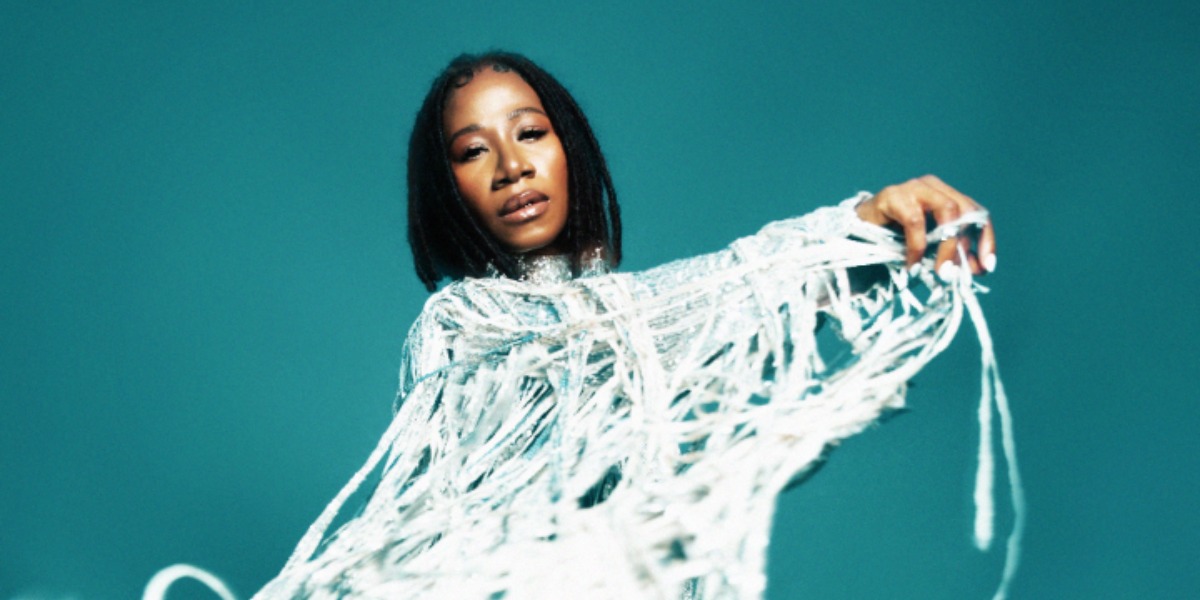
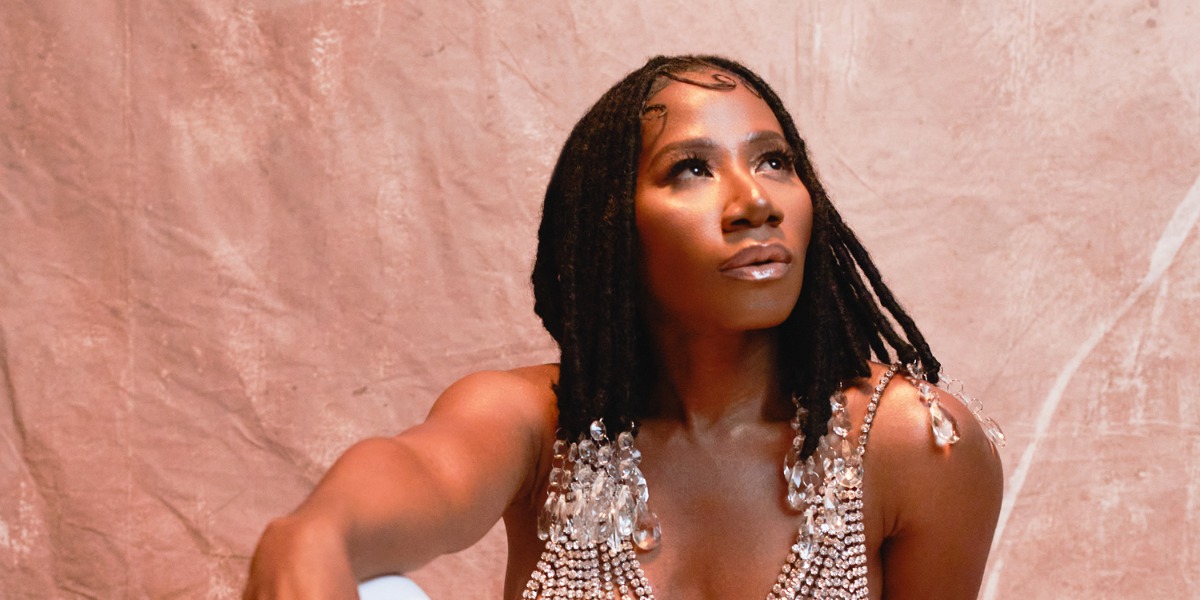
Earlier in the summer, rising singer and songwriter, Ria Sean signed with Aristokrat Records, one of Nigeria’s premier labels. While the moment was widely celebrated, Ria Sean’s inclusion on the roster stood out for one reason: she’d become one of the few female artists to get the Aristokrat seal of approval, joining earlier acts such as Cameroon’s T’neeya and Lagos’ Saszy Afroshiii.


View this post on Instagram


A post shared by Ria sean🧳🍯 (@theriasean)

It’s no secret that the music world is heavily male-dominated. Although women have been integral to Afropop’s culture, they’re often shifted to the background as decoration for their male counterparts, or they are pitted against one another and maligned by critics and fans alike. However, we’re now coming into times where several female artists are making music on their own terms, honing their sound and increasing their reach, and side-stepping industry gatekeepers. That’s why career moments such as the one Ria now enjoys are a reminder of the strides women have made, and continue to make in the industry.

However, there’s a slight chance we might have missed out on all of this, as while she was growing up in Nigeria, the singer found her first love in dancing. She tells me via a Zoom call that dancing is a form of expression that she’s nurtured right from when she was a young girl. Despite not earning any professional qualifications as a dancer, the singer shares that she’s always loved the free flow of movement it offered her, and she’s consistently trying to imbue it in her music videos (or from the comfort of her room). When she wasn’t dancing, Ria would spend her time visiting a friend’s studio where she would eventually write and record her first song.

Ria Sean fell in love with music when she was 6 years old. However, she wouldn’t take it seriously till she was 13-years-old and singing in the church. Raised by a hardworking single mum who made sure Ria grew up with everything she and her siblings desired, Ria, admits that she faced challenges while trying to find her footing as a young girl on the streets of Lagos. “When I wouldn’t have money for transport to the studio she would help out. She has believed in the dream for so long now. She knew I was so dedicated to making music and nothing else had my attention,” she tells me a few days after her debut EP’s release. Emboldened by a dynamic mother who believed in her dreams, Ria Sean would take matters into her own hands, and forge a way out of adversity, using her experiences as an anchor to propel her to greatness.

It was only a matter of time before Ria’s tenacious spirit would land her the tools she needed to propel her artistry–which she now enjoys with her Aristokrat deal. However, as much as what we’re seeing from the singer today appears well-thought-out, defined and relatable strategy, this moment in her career has actually been years in the making. “I try to be versatile and explore new sounds and new vibes but still keep the same Ria Sean,” she admits to me, as she impresses on the importance of staying true to herself while expanding the scope of her artistry.

“I make music for everyone and for the soul. Music that touches your soul and makes you feel like you want to listen to it again. I make music that inspires and spreads good energy.”

The sweet spot in Ria’s music seems to be that the Nigerian singer and songwriter is constantly trying to speak directly to her soul. Her recently released debut EP, ‘FLUID’ is a mesmerising collection of heart-wrenchingly confessional numbers which sound like a friend on the other end of the phone. Ria Sean has a knack for singing about things we don’t say outright, at one moment pining for her love to please her on “Satisfy My Soul” and at another moment, demanding that she’s paid what she’s owed on numbers such as the promotional single “Money Bag.”

With this, Ria occupies a refreshing position in today’s musical landscape. She’s among the leading female singers who are making their voices heard and disrupting the status quo, eschewing the times where only one female singer could be on top at a time. As part of a new generation of female artists putting lyrics to our infinite moods, it’s clear that Ria Sean is here to redefine what it means to break barriers as a female artist today.

Now, off the back of the incredible fanfare she’s received from her debut EP, the singer is now offering listeners and her loyal fans more insight into her world by premiering the official music video for “Satisfy My Soul” today. To celebrate its release, we caught up with the singer about the song’s inspiration, her background, and what it means to be a woman in the industry today.

Our conversation which follows below has been lightly edited for clarity.

NATIVE: Hey Ria, what inspires the music you make?

RIA: When writing music I get inspired by anything I find interesting at the moment. Maybe a personal experience or a particular tree that I really like. I just write about anything I want to write about. I’m really versatile and free with my vibe.

NATIVE: What was the concept behind the “Satisfy My Soul” video? How involved are you in your creative output?

RIA: The concept was to have a lot of skin in the video but there’s also a deeper meaning behind “Satisfy My Soul”, representing family and my sisters. The visual is me around my sister and there is a part in the video where you see me around money, so those little details are things that drive me and make me satisfied. I contributed to the visual by showing Clarence a few ideas and references of what I wanted the video to look like and he went with it, showed me what he had in mind, I agreed to it and we shot the video. I had about 50% say of what the video will look like.

NATIVE: “Satisfy My Soul” holds such a strong message, what would that be in your words?

RIA: The main message is “say you satisfy my soul”, that thing that gives you drive and keeps you going and satisfied even when things aren’t going well. I have a few things that I’m mainly singing about like money, family, friends and that’s what we try to portray in the video.

NATIVE: Tell me about getting signed to Aristokrat Records. How did that come about for you?

RIA: It was from all the studio jobs I was doing. I was doing backup for various artists cause I needed to make money. One day I went to do a backup job and the producer at the time was a guy called Lyriq and he heard what I did and he was interested in working with me. We talked and I worked on some records with him. He was linked to Aristokrat’s and he played my music for them and they were interested in me. They didn’t sign me immediately but they had an eye on me. I was just doing my thing and they signed me a year later.


View this post on Instagram


A post shared by Ria sean🧳🍯 (@theriasean)

NATIVE: What’s it like being a young female in the music industry today? 

RIA SEAN: I don’t really know how to answer this question when I’m asked because I’m so focused on just getting what I want to get, the positives and not the disadvantages. I could say that being signed made things a lot easier because things weren’t as easy for me before I got signed as an independent and female artist. Money is an issue, being a woman is an issue because you have to do a lot more and beat people’s expectations and you have to come out of your comfort zone. Because of the passion and love I have for music, I know music and I know what I want for myself, I haven’t paid attention to the negatives.

NATIVE: What would you say are the differences between being independent and signing to a label?

RIA: Being an independent artist, you do whatever you want cause it’s just you and there’s this certain freedom you have but it’s hard when you don’t have a team. When you’re signed you’re working in a team and you want to do better and go the extra mile because there are a lot of people you’re working with. so it’s pretty easy to work in a team than being independent because you have to be creative and there is also a business side to it like planning so many things like interviews and making money. Money is a strong factor when you’re signed. You can make it as an independent artist if you have the connections and money but it’s easier when you’re signed. Both sides work fine but being signed is easier for me because when I was independent it wasn’t easy.

NATIVE: Talk to me about your perspective on women owning their sexuality and reclaiming their bodies. Why do you think it’s important for listeners to associate you with that message?

RIA: At the end of the day it’s my body and I do whatever I want. Sexuality doesn’t have to be showing off ass, skin, boobs and all but me personally that’s how I feel comfortable showing myself off, I’m a sexy being and I like that. Sexy can also mean being smart, your mindset and how you see things. I want to spread the energy to women in the world that you should be comfortable in yourself, wear what you want and just be you. Women go through a lot like being on their period and having cramps and all. You’re the one carrying all that burden so you should feel okay to carry your body how you like as long as it’s not hurting anyone. Whatever decision you want to make with your body then do it as long as it’s something that makes you happy and satisfied.

NATIVE: Would you say your work is contributing to the changing landscape of Afropop music?

RIA: I’d say my work adds to the landscape of Afropop because there are so many other people in the world making similar music. I don’t plan to change it but add to the music I’ve grown up listening to and I’m just gonna come and contribute to it. Imagine it just being me, it would be really boring so the only way it could be beautiful is by adding your own vibe to it.

NATIVE: What should we be expecting from Ria Sean? Any new projects coming soon?

RIA: I have more EPs and albums coming out. But all next year. I am putting together a merch soon but I’m still trying to work everything out.

Watch the video for “Satisfy My Soul” below.

Featured image credits/NATIVE


ICYMI: With Darkoo, You Always Get Twice As Much

Review: Phyno’s ‘Something to Live for’

Phyno grew up in the serene city of Enugu attracted to the booming sound of Hip Hop, a genre birthed from harsh circumstances and black excellence. He admired rappers like 2Pac and The Notorious B.I.G. who rapped every word like they really lived it. Their plush, grand beats were of particular interest and after years of fitting Igbo words into the rhyme schemes of Busta Rhymes, Phyno, whose real name is Chibuzor Nelson Azubike, wanted to test his mettle as a rapper—not immediately, though. Instead, he’d learn production because the Enugu producers he approached for similar beats were more adept in Highlife which was the most recognizable genre in the entire region. 

Phyno stepped into the rap life in 2010, at the turn of a decade in which rap music in Nigeria blossomed. His early songs were delivered primarily in English, perhaps because the biggest rappers then operated on a similar plane. This was the era of Naeto C and M.I Abaga when the latter rap superstar, along with Nigga Raw, would bring Phyno on a Star Fest stage in Enugu. Both rappers also joined Flavour and Timaya on Phyno’s Multiply.” These moments might have come at the beginning of his career, but a young Phyno would set a vast tone for where he could go sonically.

For many, Phyno’s assembling of this star-studded lineup so early in his career either portended one of two things (or both of them). For one, it was clear that he’d amassed a great network during his producing days and had his fingers on the culture’s pulse. On the other hand, his talent for rapping was so unique anyone could see it. Phyno, however, pined for a Lagos crossover and would come a long way before he became an “East Coast Nigga [who’s] banging in the West” as he would later rap on Kush Muzik.”

December 2012: the year that Ghost Mode was released. Produced by Phyno himself, the rapper and his guest star, Olamide would trade bars over a fiery beat, lifting their indelibly worded lyrics from totems of popular culture such as video games and Nollywood. The jungle-themed video was directed by Clarence Peters at the peak of his powers, featuring close-up shots of the rappers. A new generation of impressionable kids and teenagers would gaze at the TV to see Phyno’s much-discussed lean physique and austere tattoos, spit dizzying rhymes with a cool detachment. By the next time, when he appeared in the smoky video of iLLBliss’ Anam Achi Kwanu,” delivering its instantly memorable hook, it was clear Phyno played the street associate to iLLBliss’ mafia boss. He knew the queer spots of the city and could get you anything; somehow you also knew not to fuck with him. 

His debut album, ‘No Guts, No Glory’, was built off this idiosyncrasy. On its cover Phyno’s face is set against a dark background, bringing his stoic features into view. Many may not have realised it at the time but Phyno went into that album as one of the country’s most excitable artists. The pressure however proved to be nothing as Phyno made light work of subjects both personal and communal. On the project, he would chart his crazy youngster days on opener Chibuzo to a tribute to deceased friends and associates over a soulful sample of Marvin Gaye’s “Abraham, Martin and John” on the Major Bangz-produced Good Die Young.” At the time, his star power hadn’t fully been established, so features like P Square, Omawunmi, and Ice Prince were necessary fusions of quality and hype. Later that year at The Headies, Phyno would go on to earn five nominations including Artist and Album Of The Year. He won Best Rap Single for Parcel.” His evolution was underway.

Naturally, Hip-Hop purists contested Phyno’s position, believing his style to be a downgrade on the culture’s established tenets (read: intelligent-sounding English punchlines). He and the Fuji-exploring Olamide had supposedly abandoned their Hip-Hop roots. The rappers’ response came on Reminisce’s Local Rappers,” a record where they mocked those who saw their pop-rap experiments as lazy and without any lyrical muscle. Punchlines don’t pay: said the trio. Initial outrage slowly transfigured into understanding, especially as the mid-2010s increasingly saw indigenous elements co-opted into the mainstream.

Phyno’s own interpretation of other genres such as Highlife began with Connect in the period before ‘The Playmaker’, his 2016 sophomore album. Subsequent albums would follow this template—pairing of rap bangers with guitar-streaked Highlife production. 2019’s Deal With It’ was recognisably rap-directed (with all-time Phyno classics like Speak Life and Get The Info) but he couldn’t help producing near pop-hits like Ka Anyi Na Ayo and Ride For You.”

On Phyno’s fourth and latest album, Something To Live For’, the 35-year-old veteran continues this encompassing tradition, for better or worse. The album’s opener, “Chizoba,” features The Cavemen, the brother band whose albums ROOTS’ and ‘Love & Highlife’ has updated the daring inventiveness of Highlife, a genre whose cultural reign was stunted by the outbreak of the Nigeria-Biafra War in 1967. Mirroring Phyno’s direction, the duo’s trademark skittering percussions are traded for producer Chillz’s atmospheric keys setting the tone for the euphoric cut.  Arriving hot on the heels of this cinematic backdrop, Phyno unpacks his stories of strife but leans more towards appreciation, flexing his current wins which include sending his mother a “Mac just to put her on fleek.” 

Many artists once tussled with their parent’s expectations of them having regular, well-paying jobs. Indeed, much of their early music documented this familial pressure and the relentless pursuit of their creative talents. “Chibuzo,” the first track off No Guts, No Glory’ features comic voice-overs from a woman who plays Phyno’s mother imploring him to stay off the streets. ‘Something To Live For’ is no different in this regard. On “Chizoba,” he wastes no time in referencing the trajectory of his current journey: “Chukwu e desi go m na frontline\ Now ife n’eyezim nni bu punchline (translated as “God has put me on the frontline; now what feeds me are punchlines”), he raps, acknowledging the grace he now enjoys.

Over the years, Phyno’s commercial successes have tended to overshadow his lyrical depth. Although he got hip to the game by learning the technicalities of American Hip-Hop, he’s also well versed in the Igbo oral tradition, whose rich proverbs, riddles and irony seep into his music. Backed by this wide knowledge, it’s no surprise that every Phyno album has its exalted moments of pure rapping ability. On STLF’, it comes on the fifth track—“I Do This,” which features the American rapper, D Smoke. The album’s centrepiece sees both rappers declare their intent to represent the characters you’d find in their respective hoods of Enugu and Inglewood, traversing cultures with their relatable rhymes about growing up in the hood.

On “Gold Medal,” Phyno unites Ghanaian rapper Pappy Kojo with BEEPEE, a budding act from the East. Together they run laps around the bouncy production, making a case for their superior rap skills while acclaiming the gloss of their celebrity. Phyno’s assertion that “I’m in the room but you can’t metu (touch)” is a boastful piece of information that doesn’t sound any bit fictitious. This account is further strengthened on the affirmative track “Stacks,” where he raps about talking his shit and backing it up. Always one to project a veneer of indestructible belief in his greatness, Phyno sometimes orchestrates a look through his mind, giving listeners insight into the complex emotions he seldom has the will to express.

“All The Smoke,” a deep cut reminiscent of Burna Boy’s “Pree Me,” is built on steady drums and melancholic keys. “Living everyday just because we no dey shout for their face dem talk say we no dey audible/I no fit forget where me I come from,” he sings, referencing the criticism his introversion has generated. The underside of these conflicting thoughts throws the ugly state of Nigeria’s social reality under focus. Phyno makes that connection on “Ghetto,” a riveting account of hood reality. “If no be for music, tell me where I for be?” he asks. Some national newspapers recently reported that the highly addictive crystal meth—known as Mkpuru Mmiri in Igbo states—is rampant in the region. Among other life-threatening effects, the drug causes heightened irritability which might account for the increasing crime rate in the region. When Phyno says “things dey happen for the ghetto,” it’s with the brutal admission that big dreams are being lost in the same streets which made him.

For all of Phyno’s dedication to gritty, street-focused narratives, there are also moments that radiate joy. Masterkraft’s bubbly production sets his heart aflame with gratitude on Bia,” a record that could seamlessly fit into a playlist meant to soundtrack weekend mornings in Christian homes. Historically, the Igbos had earnestly received Christian missionaries in the 19th Century, and as globalisation brought local churches conventional techniques and modern instruments, influential Igbo musicians like Patty Obasi and Luke Ezeji paired classical choral music with indigenous elements. Born to Christian parents in Enugu, Phyno is familiar with the traditional church sound.

In his professional music, he condenses both Gospel and Highlife to represent both sides of a social coin—the former embodies submission to the divine will while the latter is ostensibly boisterous, depicting the lifestyle that comes with having it. On STLF’, a number of songs fit into this hybrid subgenre. “Winner” finds Phyno exalting his Creator for his wins, joyously singing, “the things I pray to God, I swear e give me double,” before admitting a deep concern: “How I go dey and my people na na-eri aja? (How will I be alive and my family will be eating sand?).” As the album progresses and the percussive-heavy production collapses into a body-shaking gyration, we find Phyno linking up with longtime collaborator Flavour on “Ikepentecost,” a vibrant, high-tempo song that would soundtrack the December festive period, renowned for its widespread show of opulence.

Incorporating non-rap genres like Highlife where even the best singers might struggle, Phyno’s malleable voice texture ensures he comes out tops and most times with a hit song. Because rap is closest to everyday speech than most genres, elite rappers find ways to inflect their delivery to evoke different moods. Phyno’s cadence mirrors his chosen beats. On traditional rap production, as in “Chizoba” and “I Do This,” he adopts a high-wire cadence, bouncing off the beat rather than riding along. When faced with the coastal sounds of Highlife, he strains for tenderness, as seen in the sanctimonious “Bia” where his earnest vocals are joined by a choir to plead for Heaven’s grace.

On the backend of ‘STLF’, he ditches rap’s imposing quality for sing-song love duets, powered by guest artists like J’Dess (“Love Me Right”), Jay Teazer (“No Love”) and Anjulie (“Ain’t Nobody”) who infuse some needed variance. Unlike previous star-filled albums, STLF’ mostly features rising musicians, an indication perhaps of Phyno’s desire to further step into his legacy. His Penthauze Entertainment signee, Superboy Cheque—himself rewriting the rules of pop-rap in Nigeria—might have made a worthy guest but his absence is rather ceremonial than practical. And, with sixteen songs and over an hour-long, the album could have been more cohesively strung together given that it lags in unexpected places.

Phyno’s albums are infamously released without fanfare but Something To Live For’ was a notable deviation. Hours before release, Phyno and buddy Olamide teased themselves on Twitter, with Olamide saying he’d leak their song together because  Phyno “no sort boys.” Fans were gleeful to see the reclusive musicians share their famous bromance in a public space and when Olamide ‘leaked’ the record to Notjustok.com, there were even more reasons to like “Do You Wrong.” Sharing the house party vibe of Carpe Diem’’s “Shilalo,” the musicians plead a love interest’s indulgence with lyrics dripping with humored loyalty. “Say I no be perfect man no mean say I go dey do you wrong. Why I go I dey do you wrong?” asks Phyno on the chorus.

Evident throughout the album is Phyno’s ability to curate good vibes, whether he’s teaming up with Peruzzi on the tropical “Belong To You” or detailing the excesses of his celebrity lifestyle over Amapiano’s signature log drums (“Onye Nwa”). After the cultural dominance of last year’s “Highway,” Phyno takes a step closer towards building his legacy while retaining the hallmarks of an experimental artist colouring the lines beyond Hip-Hop, Highlife, Gospel and more.

In all, Something To Live For’ has a remarkable number of highs and some unavoidable lows. While he expertly delves between subject matters, both personal and communal, it’s also clear that some of Phyno’s recurring themes have become cliché at this point and trimming the album could have powdered the cracks. This album won’t shake up his discography but this takes nothing away from its place in the rapper’s sprawling career.

Ever since 2010, through associations with producers as varied as Major Bangz and Masterkraft, he’s ascended to the zenith of African rap music, standing among Olamide, Sarkodie and Cassper Nyovest as rappers who’ve transcended scenic validation and are now pop stars. Homewards, his influence can be heard in the stories of young Igbo rappers like Daisy and Jeriq crossing over into Lagos—the journey Phyno began over a decade ago. “The legacy I’m leaving behind has a whole lot to do with realness,” he said in an interview. It’s obvious he’s going nowhere just yet and Something To Live For’ is his pledge. 


Emmanuel Esomnofu is a Nigerian writer and culture journalist. His work investigates youth culture and histories. Tweet him @esomnofu_e  


ICYMI: READ THE NATIVE’S REVIEW OF MAYORKUN’S ‘BACK IN OFFICE’

Our Reactions To The Nominations for the 64th Grammy Awards

After an almost year-long wait for the 64th Grammy Awards nominations, they are finally in. Widely seen as the most prominent and coveted music awards system, the award show has, for better or worse, come to be regarded as the most-respected arbiter of music in America and, in recent years, exciting, emergent sounds from across the world.

In a way, the Grammys has helped project a sense of normalcy to a world still dealing with the changes imposed by the COVID-19 pandemic. Earlier this year, when the 63rd edition of the awards ceremony returned, it did so partly in person, eschewing the largely virtual format that other major award ceremonies had fallen back on. It also served as a semi-final return to live music events which were put on hold for much of the past year, ushering in a summer of festivals and artist tours. Once again, music could be enjoyed in person and despite the fleeting feeling of everything else, the communities it nurtured were able to thrive.

This year, the 64th Grammy Awards arrived with more controversy than would typically underscore the hot-ticket event. Undoubtedly, the controversial call to not nominate The Weeknd, despite the record-breaking achievements of his album, ‘After Hours,’ robbed the Grammys of some credibility, leading to a long-overdue reckoning with its archaic structure. That reckoning came earlier this year when a change was announced to the Recording Academy’s nominating committees. Among those invited to join the organisation this year were a recorded 48 percent are female, 32 percent Black, 13 percent Hispanic or Latino, and 4 percent Asian or Pacific Islander. Already, we’re seeing the effects of this change with a record number of five Black artists including Kanye West, Jon Batiste, and more, in the race for an Album of the Year win.

Sensing an opportunity to finally receive some love from the Recording Academy with the installment of the popular votes, Drake and Kanye West, who have complicated relationships with the Academy, submitted their respective albums, ‘Certified Lover Boy’ and ‘Donda’ for consideration in the Album of the Year category, with ‘Donda’ getting the nod for AOTY alongside bigwigs like Taylor Swift, Olivia Rodrigo, Justin Bieber, Doja Cat, Billie Eilish, and Lil Nas X. In a snub that is sure to sting, Drake missed out on all the top categories, only getting nominated in Rap categories. The Toronto native was recognised for Best Rap Album and Best Rap Performance for “Way 2 Sexy” with Future and Young Thug. Also, J. Cole received nominations in all the Rap categories, following his debut Grammy award earlier this year. With the use of the popular votes, the Rap album category is led by stellar names such as Nas (‘King’s Disease II’) and Tyler, the Creator (‘Call Me If You Get Lost’). Other big categories like the Best New Music category offered little surprises with hitmakers like The Kid Laroi, Baby Keem, Saweetie, Finneas, Japanese Breakfast, and favorite Olivia Rodrigo rounding up a solid list while Pakistani vocalist and music composer Arooj Aftab got a surprise nod.

Last year, the Recording Academy renamed its contested ‘Best World Music’ category, announcing that it would now be known as Best Global Music Album category. The refurbishing of the controversial title was celebrated as a move in the right direction to combat the harmful idea that all music outside the Western gaze belonged in one category. Further progress in defeating these colonial and racist connotations of these narrow categories is being proposed by the Grammy Award who also recently introduced the ‘Best Global Music Performance’ category to “honor artistic achievement, technical proficiency and overall excellence in the recording industry, without regard to album sales or chart position. The album is reserved for performers exhibiting “non-European, indigenous traditions.”

With contemporary music from Africa in the thick of a global expansion, Afropop’s moment in the sun is being supported by the Grammy. Over the last two years, music from Africa has featured more prominently on the nominees’ roll call, Burna Boy has received two consecutive nominations in the Best Global Music Album category, snagging the 2020 gramophone for ‘Twice As Tall,’ following Angelique Kidjos’ win for ‘Celia’ in 2019.

This year, the Best Global Music categories spot more representatives from the African continent, featuring a delicate balance of contemporary music and traditional music, led by Wizkid’s globally-resonant ‘Made In Lagos.’ Thanks to the far-reaching success of “Essence,” his late-summer soundtrack with Tems, Wizkid is also nominated in the ‘Best Global Music Performance’ category, meaning that the boy from Ojuelegba could potentially walk away with two gramophones come January 22, 2021. Outside of this, West Africa is well represented in the two categories, with Femi and Made Kuti also earning their first-time nominations for their joint project, ‘Legacy +’

With all these points taken into consideration, the NATIVE team has decided to share our real-time reactions to the nominations for the 64th Grammy Awards which is set to take place next January.

Best Global Music Performance

Arooj Aftab – “Mohabbat”

Angelique Kidjo & Burna Boy – “Do Yourself”

Femi Kuti – “Pà Pá Pà”

Yo-Yo Ma & Angelique Kidjo – “Blewu”

WizKid Featuring Tems – “Essence”

This is the first time that this category is being awarded so it’s hard to get a picture of what might happen. The central idea is to reward music that doesn’t conform to the typical formats of “American or European” music but there are generally red flags if the goal is to be inclusive because how do you deservingly honor the glut of music that’s coming out of Africa, South America, North America, and Asia with one category? For me, it feels a little impossible and I can’t escape the feeling that this is one of those categories that would come down to lobbying and eventually descend into a popularity contest.

I expected to see some curveballs from the Recording Academy in terms of the music that made it to the shortlist but it feels pretty nailed-on that Wizkid and Tems’ “Essence” would win this category. With the cultural cachet that Afropop has right now, I wasn’t surprised to see more songs from Africans on the list. It’s heartwarming to see Femi Kuti get a nomination for “Pà Pá Pà” and this field is pretty tightly-contested for the sort of “technical proficiency” that the Grammy prides itself on. Arooj Aftab’s “Mohabbat” has that languid, folkloric core that could make it a shoo-in for the award.

Angélique Kidjo is a Grammy favourite and she has two songs on the shortlist, and I expect that her familiarity with the Recording Academy might help her curry some favour but it’s hard to look past Wizkid and Tems for this one. Good luck to all nominees and I’m looking forward to what the timeline would look like on the morning of February 1.

– Wale

Record of the Year

Billie Eilish – “Happier Than Ever”

Olivia Rodrigo – “drivers License”

ABBA – “I Still Have Faith in You”

Lil Nas X – “Montero (Call Me By Your Name)”

Silk Sonic – “Leave the Door Open”

Jon Batiste – “Freedom”

Doja Cat – “Kiss Me More” (feat. SZA)

Tony Bennett & Lady Gaga – “I Get a Kick Out of You”

Justin Bieber – “Peaches” (feat. Daniel Caesar & Giveon)

Brandi Carlile – “Right on Time”

At the last two editions of the Grammys, Billie Eilish picked up the gramophone for Record of the year, becoming just the third artist to accomplish that feat. Ahead of next year’s ceremony, there’s every possibility of a 3-peat for the inventive pop singer. Her sophomore LP, ‘Happier Than Ever’, dropped in the summer to warm critical reception, and its title track is nominated in this category. I don’t think it’s the best song on the album, but “Happier Than Ever” looks like one of the better bets to win this category. Honestly, the competition isn’t that fierce, if you ask me.

Catering to production, instrumental arrangement and sound quality, the Record of the Year category is often tilted towards “sophisticated” choices, with truly experimental recordings rarely getting any shine. It’s why Hip-Hop and contemporary R&B are almost always shut out in this category, despite the experimentation in those genres ultimately leaking into, and driving, Pop music. Track record considered, don’t be surprised if Tony Bennett and Lady Gaga’s reunion gets them the gramophone—they did win a few last time.

For my money, I’m going with Silk Sonic’s “Leave the Door Open.” The Soul revivalist sound is easy bait for academy voters, and the song is actually pretty good. Also, Olivia Rodrigo’s “drivers license” is a solid contender, not because I love the song, but because the Grammys love nothing but a new darling and she seems like a good candidate—especially so Gen Z can help boost ratings. I’m slightly disappointed Wizkid and Tems’ “Essence” didn’t get a look, as well as BTS’ summer smash “Butter,” but it’s on pace for an award that obviously didn’t give a damn about globalised pop hits like Drake’s “One Dance,” “Despacito” and Cardi B’s “I Like It.” On a final note here, I’d revolt if Justin Bieber’s “Peaches” wins, that’s as beige and as bland a song I’ve heard in my entire life.

– Dennis

Rap Album of the Year

Tyler the Creator – ‘Call Me If You Get Lost’

Drake – ‘Certified Lover Boy’

Kanye West – ‘Donda’

J. Cole – ‘The Off Season’

Nas – ‘King’s Disease II’

Last year’s nominees for Rap Album of the Year was arguably the funniest and second most frustrating part—after the whole Abel Tesfaye snub—of the nomination announcements. The Academy decided to go #RealHipHop, selecting projects by traditional lyricists and totally overlooking the experimental, younger and more popular side of Rap music. Yeah, Nas finally won a Grammy, but for ‘King’s Disease’? And over Freddie Gibbs and the Alchemist’s ‘Alfredo’?! Oh, please.

In an obvious bid to avoid the murmurs of last year’s contenders, the academy simply reverted to type this time, nominating the most popular rap albums around. Yeah, J. Cole sounded looser and more engaged on ‘The Off Season’ but this category is meant to be chess and not checkers. Drake’s ‘CLB’ and Kanye’s ‘Donda’ are data dumps, and you can’t even call them competent, talk more of being wholesomely compelling. Nas’ ‘King Disease II’ is even more boring than its predecessor, all that rose-tinted nostalgia and black capitalist talk only works in bursts. That leaves Tyler the Creator’s part-personal, part-conceptual, part-triumphant tour de force ‘Call Me If You Get Lost’ as the only true representation of the best rap albums for the year in review.

What would my nominations look like? Glad you asked. In addition to Tyler, I’d add the following: Megan Thee Stallion’s Good News, which is easily better than the rest of the nominees, and gets better with every revisit, even though many people wanted that woman to catch an L so bad; Young Nudy’s ‘Dr. EV4L’, because it’s punishing and consistently exhilarating Trap music; Navy Blue’s ‘Songs of Sage: Post Panic’, because it’s one of the best confessional, Soul/Jazz sampling rap albums I’ve ever heard; and Vince Staples’ self-titled album, a concise, mood-setting album that unpacks itself with repeat listens. Anyways, congrats to Tyler on his win. Any other nominee here wins, and it’ll just be another day at the office for the Grammys.

– Dennis

Best Global Music Album

Rocky Dawuni – ‘Voice Of Bunbon, Vol. 1’

Daniel Ho & Friends – ‘East West Players Presents: Daniel Ho & Friends Live In Concert’

Angelique Kidjo – ‘Mother Nature’

Femi Kuti And Made Kuti – ‘Legacy +’

WizKid – ‘Made In Lagos: Deluxe Edition ‘

After completely reshaping the Best Global Music Album category from its previous title ‘Best World Music Album,’ it seems that this year the Recording Academy finally made good on its promise to reflect the diverse sonic landscape emerging across the globe and reform its rewards system, following criticism over the years that they remain stuck in their ways.

Previously held by past winners such as Angelique Kidjo who is nominated once again for her recently released album ‘Mother Nature,’ Fatoumata Diawara, Seun Kuti and Burna Boy whose album ‘Twice As Tall’ won the newly minted music award category last year, taking the title from other contenders such as legendary Afrobeat artist Antibalas, Brazilian music icon, Bebel Gilberto and Tuareg musicians, Tinariwen. This time around, the competition is tighter despite some of our favourite Afropop albums making the cut. Hawaiian-American singer, composer and songwriter, Daniel Ho returns this year with a nomination in the category after winning the title twice in the past, including the category for Best Hawaiian Music a record four times as well. His run for the win is contested by Kidjo who has similarly held this title four times in the past.

Nonetheless, there are leaps made in this category, bolstered by the inclusion and representation of West African music through Wizkid, the Kuti’s and Rocky Dawuni. Perhaps unsurprising is Wizkid’s nomination for his magnum opus ‘Made In Lagos,’ solidified in its standing after a vibrant summer of warming its way up the Billboard charts and festival circuits. It’s in great company alongside Dawuni’s afro-reggae offering ‘Voice of Bunbon, Vol.1’ and Femi and Made Kuti’s ‘Legacy+,’ a joint project which builds on the father-son duo’s unyielding ethos as socio-political activists with impressive technical writing abilities. I’m not too certain how this category will play out next January but I can bet that Ho and Kidjo are the two most likely to snag the title, going by their track records. However, the Grammys do love to reward a first-time nomination win so Wizkid is potentially vying for the win this time around.

– Tami

Album of the Year

Jon Batiste – ‘We Are’

Tony Bennet & Lady Gaga – ‘Love For Sale’

Justin Bieber – ‘Justice’

Doja Cat – ‘Planet Her’

Billie Eilish – ‘Happier Than Ever’

H.E.R. – ‘Back Of My Mind’

Lil Nas X – ‘Montero’

Olivia Rodrigo – ‘Sour’

Taylor Swift – ‘Evermore’

Kanye West – ‘Donda’

A tag as prestigious as ‘Album of the Year’ is one worthy of acclaim for any artist, especially one with a Gramophone-sized record attached to it. Last year, Taylor Swift’s ‘Folklore’ landed the coveted title, becoming the first woman to win the award three times since the Academy’s existence. The singer beat off competition from strong contenders such as Haim, Jhene Aiko, Coldplay and Dua Lipa. Many contested Swift’s win, especially as the singer’s pandemic-inspired project didn’t follow the patterns of previous AOTY winners and lost in its genre category to another AOTY nominee, Dua Lipa. This year, however, there’s more room to manouvere as the Academy has now extended the number of nominees for the Big 4 categories, including AOTY, to 10 in total.

Kanye’s ‘Donda’ features at the token Rap album to make the AOTY cut but we’re not too miffed as it’s been a comparatively boring year for Rap. Epically, however, Taylor Swift and Kanye West’s recent albums both snag nominations this year. While the pair have since buried their differences, their nomination within the same category has already spurred memes and gif reactions on Twitter, as listeners battle out who’ll be crowned the winner. With a record number of 21 Grammys to his name, West is tied with fellow rapper, JAY-Z for the most nominations and we won’t be too surprised if he smoothly sails to victory this year off the back of the inimitable ‘Donda,’ though undeservingly. Also nominated within the category is newcomer, Olivia Rodrigo who received seven Grammy nods including all the Big 4 categories including AOTY and becomes the second-youngest after Eilish to be nominated.

Doja Cat also monumentally snags a nomination for AOTY alongside fellow Black artists like H.E.R, Lil Nas X, and Jon Batiste. The last Black artist to take home AOTY was Herbie Hancock in 2008, for a tribute to Joni Mitchell and the stakes are even lower for Black women who haven’t held the title since Lauryn Hill in 1999. What would my nominations look like? I’d definitely throw in Jazmine Sullivan whose recently released album ‘Heaux Tales,’ was nominated for Best R&B album but missed out on an AOTY nomination. I’d also have liked to see a female rapper earn her spot for AOTY and although I’m not completely convinced Megan thee Stallion’s ‘Good News’ is AOTY-material, it wouldn’t have mattered because who really gets to define these value systems? The Grammys wants us to believe that sales aren’t the metric for Grammy success but we’ve seen the Academy play into a popularity contest time and time again. This has proven to fall short of fully representing today’s diverse sonic landscape. Despite this, this year’s nominations are definitely a step up from last year and I, for one, am just happy to see more women deservingly earn their flowers.

– Tami

Featured image credits/NATIVE

Essentials: De Mthuda reaffirms why he’s ‘The Landlord’ of Amapiano

As the listening session for The Landlord’, the highly-anticipated full-length by pioneering Amapiano DJ/prodcer De Mthuda is about to commence, the prolific artist walks in with a calm, shy-like demeanour. He’s introduced by the current Head of Urban at Universal Music (South Africa), before hitting the stage to showcase his latest work. When asked what he has in store for the attendees, which mostly consisted of media and industry-personnel, he answers with a confident smile, “iLandlord album bafethu, asimameleni (guys, let’s listen).


View this post on Instagram


A post shared by De Mthuda 🇿🇦 (@demthudasa)

When not in the comfort of close friends and family or the studio, Mthuthuzeli Gift Khoza is a reticent character, who expresses himself best through music. Since the mid-2010s, De Mthuda has been consistently upholding his position as a trailblazing Amapiano DJ and producer. When the now-globally renowned genre was on the cusp of national recognition in 2019, Mthuda emerged with the Njelic-assisted “Shesha.” His mainstream breakout which helped popularise refined-melodic singing within the genre was in high rotation on radio and was one of the first Amapiano songs to reach gold-selling status; ultimately sparking the upward trajectory of the genre.

From that culturally shifting moment, seeing and admiring the song’s success, other pioneers like Kabza De Small and DJ Maphorisa featured melodic tracks on their genre-elevating, eponymous album Scorpion Kings’, enlisting the talents of Bontle Smith, Sha Sha, and Samthing Soweto. The Scorpion Kings even went on to collaborate with Njelic on the cult classic “Nana Thula,” that same year.

While De Mthuda followed up with other bonafide hits in “Bade” and “Ebumnandini,” he reached his innovative and creative zenith in 2020, in line with the genre’s continental takeover. Mthuda spearheaded the synth bass-laden, Techno-tinged iteration of Amapiano, which forms the bedrock of his current sound. Staying true to the genre’s communal and collaborative nature, he teamed up with fellow Vosloorus native and then-burgeoning producer, Ntokzin. The pair had previously worked together on “Blissful Day,” which was initially included on Mthuda’s 2018 debut ‘Forever’, as well as in the House Afrika/Born in Soweto-curated 2019 compilation ‘Amapiano Volume 4’—which also hosted Kabza De Small’s “Bamba La” and Kwiish SA’s “Iskhathi (Gong Gong).”

During the midst of the coronavirus-induced national lockdown in South Africa, Ntokzin and De Mthuda rented a house solely for the purpose of creating music in a secluded area in Brakpan. The fruits of that creative habitation started with the release of “Forbes.” A string of singles—“Dakwa Yini,” “Igama Lam,” and “Ghost”—followed, and ended up in the joint project ‘Ace of Spades’, which recently won Album Of The Year at the first annual South African Amapiano Awards. Before that album’s November release, De Mthuda had dropped a solo EP, ‘Story To Tell Vol.1,’ in June. Though the EP failed to yield a hit record, it laid the foundation for the phenomenal run Mthuda has been on.

With Mthuda’s star power at an all-time high, and several leaks allowing fans to peek through his upcoming works, The Landlord’, couldn’t have come at a better time. The album builds on the signature sound the producer has carved over the past year-plus, adding layers of soul by bringing along a number of equally-talented individuals who assist in bringing some of his visions into life.

Producer Da Muziqal Chef, who appeared in all three smashes in his last EP ‘Ace of Spades (Reshuffle)’, is responsible for a lot of the musical flourishes. “Sometimes I have ideas that I cannot execute well, so he’s always there to assist,” De Mthuda confesses on the Apple Music album liner notes. The synergy between the two super-producers shines through yet again on the project. He also employs the skills of Sipho Magudulela, who adds guitar riffs, and saxophone licks to the album’s already beamy productions. The guitarist and musician is credited as a feature of four of the project’s twelve songs.

The album’s rollout started with the overdue official release of romantic ballad “Emlanjeni.” The track also serves as the opener, as the dream team that brought us the two-times Platinum-selling “John Wick” team up for yet another undeniable smash record. On the fan-favorite single, which has already been certified Gold, Sir Trill muses about missing a lover that he hasn’t seen in a while AND vowing to travel a thousand miles to meet his love interest by the river (“emlanjeni”), no matter the hurdle. Driven by the featured vocalists, romance quickly becomes a constant theme on the album. On “Jola,” the latest song to be given the single treatment, Sino Msolo expresses his disbelief in finding himself in a romantic involvement, while on “Mhlaba Wonke,” he admires the alluring beauty of his partner and argues that no one else in the world is as attractive.

On “Khanda Liyazula,” Sino is joined by fellow El World Music affiliate Mthunzi, as they dovetail about how isgubhu (the sound/drum) is driving them insane. Similarly, on the dancefloor-inviting “Jaiva,” frequent collaborator Njelic warns of Mthuda’s sgubhu and hit making abilities. “Let me tell you about this man, a big big man/he’s a warrior, he can come and come/he can make you dance, he can make you jive,” he sings in the refrain, before being joined by Focalistic who delivers slick raps.

On ‘The Landlord’, De Mthuda widens his sonic collage to include influences from genres such as Afropop, bubblegum-Disco, Kwaito, and even gospel. “Double Double” interpolates lyrics from Uche’s “My God Is God,” which became popular in South Africa when the Nigerian gospel artist performed it with the Joyous Celebration choir in 2009. The singer-songwriters on the album compliment its lush and dynamic productions. The singer of the ascending duo Murumba Pitch renders career-elevating, standout vocal performances on “Phithizela,” “Double Double,” and “Gijima”—the latter is Mthuda’s personal favourite on the album.

“Inkomo Zam” focuses less on the customary percussions, luminous basslines, jazzy chords and airy pads of ‘Piano instead highlighting Nomfundo Moh’s soaring voice and the song’s Kwela-inspired, Afro-jazz guitar. The song, which appears towards the end of the album, also offers a slight preview into Mthuda’s next compositional path, which he refers to as ‘Skandi Yano,’ a fusion of Maskandi elements with Amapiano. While most of the albums remains progressive in its approach, the aptly titled “Roots” pays homage to the genre’s instrumental early days, without sounding dated or compromising on De Mthuda’s current style and the album’s overall tonality.

It has more of my feel, I did it to express my feelings through the music. It’s kind of different from the sound of ‘Piano,” De Mthuda told LootLove about the album during an episode of Apple Music’s Africa Now Radio. The album’s title can be considered a nod to the self-reverential acclaim, and self-affirmation of his status as one of the genre’s mainstays and frontrunners. Crafting bangers for artists such as Samthing Soweto, Njelic, MalumNator and Kammu Dee, it’s clear that Mthuda sees himself as umastandi (the landlord) of the genre which started out as an offshoot of South African House. But when asked by the MC during the listening session, he responds “awume (leave it/don’t start)” while confidently smirking, as if he would rather let the people decide if he is worthy of the title or like most ‘Piano enthusiasts like to say, “let the music do the talking.”

Listen to De Mthuda’s The Landlord’ here.


@madzadza is a South African freelance writer. He has contributed to reputable online publications, writing extensive pieces on popular African music and emerging scenes. As someone who has a wide musical taste and a keen interest in most genres, he keeps his ear to the ground and his writing and commentary is not limited to one specific sound.


ICYMI: KABZA DE SMALL & MDU AKA TRP TEAM UP FOR NEW LP, ‘PRETTY GIRLS LOVE AMAPIANO 3’

‘The Harder They Fall’ & the link between JAY-Z and Fela Kuti

Every epic combat sequence in film deserves an equally epic song or score. For ‘The Harder They Fall’, Netflix’s recent historic western feature, its visceral crescendo is sounded off by “Let’s Start,” a brassy tune from Fela Kuti & Africa 70’s collaborative live album with the iconic British drummer Ginger Baker in 1971.

Originally, the song itself is an ode to unbridled infatuation; Fela urges his partner to get ready for sex since they both know what is about to happen. “O l’oun t’awa se ni iy’ara, je ka bere (there’s something we have come into the room to do, let us start),” he bellows. In The Harder They Fall’, that context is retooled for its anticipation, tension and enthusiasm. You’ve probably seen it by now: As Trudy Smith (Regina King) and Stagecoach Mary (Zazie Beetz) square off, “Let’s Start” rings off solemnly with Fela’s opening monologue. As the scene builds, more punches are exchanged and the long-awaited face-off between the Nat Love and Rufus Buck gangs ratchets up to a 100.

Undoubtedly, that fight sequence wouldn’t be as hair-raising as it is without the chosen Fela song. Shortly after The Harder They Fall’ premiered on Netflix, much was deservedly made of “Let’s Start” featuring in a pivotal part of the film, not only because everything Fela draws in hype, but also because it’s a lesser-known composition in the Afrobeat pioneer’s sprawling discography. However, beyond the initial stun, there’s a speculative and simple reason for the song’s inclusion in a film about Black cowboys: JAY-Z.

There’s very little hidden about JAY-Z’s admiration for Fela Anikulapo-Kuti. Over the last decade-plus, the all-time Rap great and business mogul born Shawn Carter has found several ways to embolden his reverence for Fela, and The Harder They Fall’—which he produced and helped curate its soundtrack—is his latest sign of reverence. The first bold gesture was his role in “FELA!”, the Broadway musical dramatising and detailing the life and times of Fela. Alongside Will Smith and Jada Pinkett-Smith, JAY produced the musical, which premiered for the first time in November 2009.

“It’s an inspiration, about the power of music,” he told MTV News on the opening night of “FELA!” “Here’s a guy that’s on the other side of the world who was influenced by James Brown, who takes this thing and makes his own sort of genre of music. I just think it’s fascinating,” he continued. JAY’s involvement with the play happened after seeing the musical during its Off-Broadway run, at the behest of renowned drummer and producer, Ahmir Thompson—better known under the moniker ?uestlove.

After seeing an early show, Thompson became an ardent evangelist for “FELA!” and helped get JAY-Z on board as a producer for its Broadway premiere and run. As much as it may have been a business venture, putting up money for the production of the musical is a worthwhile sign of respect, and it appears that the respect and understanding of Fela’s socio-political legacy has only continued to deepen on JAY’s path, especially in recent years.

In 2016, he curated a playlist for Tidal, JAY-Z: Songs for Survival, featuring 21 protest songs and socially conscious anthems, and it included “Zombie,” Fela’s iconic satire against post-colonial juntas. Curated around one of the heights of the Black Lives Matter protests in the mid-2010s, majority of the playlist featured classic songs from America, with Bob Marley being the only non-American artist on there. Fela’s inclusion on Jay’s playlist plays directly into the pan-African ethos that drove the Afrobeat musician’s work, linking the Black American struggle with the global Black experience.

Deferring to less hectic circumstances, JAY-Z has also name-dropped Fela in his raps on two fairly recent occasions. On “Blue’s Freestyle/We Family,” a deluxe cut from his classic 2017 album 4:44′, he brags about bumping Fela in a foreign car. He makes a similar retort on “MOOD 4 EVA,” a highlight off Beyoncé’s ‘The Lion King: The Gift’, except this time he’s bumping Fela on a private Jet owned by sportswear brand Puma.

Even though Fela’s music has made its way into the work of artists close to him—like his famous wife Beyoncé, who worked “Zombie” into her iconic Coachella set and was rumoured to have created but later scrapped an entire Fela-inspired album, as well as superstar protégé J. Cole, who famously sampled “Gentleman”—JAY-Z hasn’t substantially used Afrobeat as an inspiration on wax, but it doesn’t mean you won’t find examples if you dig deep enough

One of my favourite links between JAY-Z and Fela is an unofficial mixtape titled ‘Nigerian Gangster’. Helmed and hosted by Chicago based DJ/producer Mike Love, the tape is a creative mashup of JAY’s cinematic 2007 album, ‘American Gangster’, and select samples of songs from Fela’s catalogue. Swapping out the vintage Soul-inspired production on AG, Mike Love places JAY’s suave raps over experimental production with Fela samples as their foundation.

For “Pray,” the beat is built around a crawling sample of “Upside Down,” the 1976 track that Sandra Iszadore, one of Fela’s formative influences, features as the lead vocalist. For the triumphant “Roc Boys (And the Winner Is),” JAY’s supreme boasts is merged with the radiant horns of “Water No Get Enemy.” It’s obvious Nigerian Gangster’ wasn’t sanctioned by JAY-Z, and there’s no evidence online that he supported it in any way. However, it’s an intriguing—if not as definitive as Danger Mouse’s The Grey Album’, which merged JAY’s raps and the Beatles music—look into what a Fela-inspired album would sound like from the rapper.

The possibility of JAY-Z leaning more into his adulation for Fela on-wax is a possibility that’s up in the air, but it seems clear that he’s become a proper student of the Afrobeat maestro—at least, that’s what I gleaned from The Harder They Fall’. “Let’s Start” was composed at the very beginning of Fela’s Afrobeat experimentations, when his dense approach had yet to fully unify and the music still hewed towards Big Band Jazz stylings. Five decades later, it’s responsible for an instantly memorable cinematic moment, partly because of JAY-Z, who has clearly been doing his Afrobeat assignment.


@dennisadepeter is a staff writer at the NATIVE.


ICYMI: “FINDING FELA” & WHOLESOMELY DOCUMENTING AFRICAN MUSIC’S HEROES

NATIVE Premiere: Vict0ny wants to “Pray”

Earlier this year, rising star Vict0ny was on the cusp of a breakthrough. Following the release of 2020’s ‘Saturn,’ a collection of radio-ready hits, the singer was primed to soar into greater heights off the back of his melody-driven sound. Then the worst happened–Vict0ny survived a near-fatal accident which changed the course of his life and his faith forever.


View this post on Instagram


A post shared by VICTONY (@vict0ny)

Back in July, the singer released a two-pack single titled ‘Dark Times,’ a title that informs the harshness of some of the song’s lyrics. More than an avenue to say what he was feeling at the time, the standout track “Pray” served as a representation of a specific time, where his mother’s prayers became the soundtrack to his life. Backed by her incredible faith and his, the singer offered lyrics such as “This smile I carry for my face oh/E dey hide wetin I dey face,” over soothing ambient production.

To further expand the world around the catchy track, Vict0ny has now shared the song’s official video which builds on its solemn lyrics. The Splash-directed video features varying clips of the artist performing his verse against contrasting backgrounds and sartorial choices. In one scene, we see the artist in a garden clad in all black while surrounded by people who may be described as family and friends seeing him through his hard times. In another scene, Vict0ny and his collaborators are clad in all white, signalling a move from despair to hope.

Armed to the teeth with affirmations, the video for “Pray” is meant to offer both the singer and his loyal fans some solace. Ahead of the video’s official release, we caught up with the singer on the inspiration behind the video, the process of creating it, and his religious faith.

His answers which follow below have been lightly edited for clarity.

NATIVE: What does this song mean to you?

VICT0NY: The song means a lot to me. It’s a timestamp in my life. When I listen sometimes, I’m so connected to it and I forget that it’s my own voice. It speaks to me and it’ll forever remind me about April 2021.

NATIVE: What was the inspiration behind the song’s video concept?

VICT0NY: When I was writing the concept of the video, I had two things in mind. I wanted a very simple video that’ll show how important a mother’s prayer is in her child’s life. I also wanted people to see how my friends and family stuck with me in my dark times.

NATIVE: Does your faith or religion have any bearing on your music?

VICT0NY: Yes it does 

NATIVE: What was the most memorable part of creating the song and video?

VICT0NY: Memorable part of creating the song would be; composing the second verse. The lines came to me instantly and I ran with it. I had just read something on the internet that pissed me off and it just came to my head like “too many talks wey Dey make man vex …”

With the video, it’ll be the journey we embarked on to get to the location. You know being carried by my friends to the boat, and traveling with them was indeed a memorable experience. That’s the longest I have been on water. Traveling that far to find a location that fits the mood board made me realise how hard we were working to bring the idea to life.

NATIVE: If you could remix this song, who would you feature?

VICT0NY: I can’t really think of anyone for now

Watch the full video for “Pray” here.

Featured image credits/Courtesy of the artist

Best New Music: Davido & Focalistic’s “Champion Sound” Lives Up To Its Name

Just before summer, Davido and Focalistic teased the possibility of a joint EP in the works. To stoke hype for its release, Focalistic premiered “Champion Sound” during an IG live, which inevitably spawned a leak—because that’s just what happens in South African Dance music these days.


View this post on Instagram


A post shared by Davido (@davido)

Earlier in the year, the pair delivered the intoxicating remix to Focalisitic’s 2020 summer smash, “Ke Star.” Although it wasn’t the Nigerian singer’s novel venture into the South African-rooted sound, “Ke Star (Remix)” represented Davido’s most satisfying foray into ‘Piano. The Afropop superstar’s presence and trademark energy brought in a fresh, magnetic layer to an already captivating banger, tripling the charisma on display without overwhelming the essence of the Vigro Deep-produced jam. It was a masterclass in non-South African stars adopting Amapiano, and because Davido is one of the very best synthesisers of multiple sonic and cultural influences, the pair were bound to collaborate again.

Just as “High,” his collaborative smash hit with Adekunle Gold, was running up the charts and consuming reopened dancefloors, “Champion Sound” leaked and quickly made itself a staple among partygoers. It was obvious that Focalistic and Davido had another huge song on their hands, but one that felt even more organic. Where the pair’s first outing was most likely a crossover play by Focalistic, this new single confirmed that he had reeled Davido into his sonic universe.

Not every song that’s a hit is a great song. For leaks, specifically, it can be difficult to tell if a song is great on its own merit, or if the hype is being driven by its exclusivity. “Champion Sound” existed for downloads in low fidelity format on many blogs, before the high fidelity version made its way to DJs in a prescient promotional move. Thankfully, it still slaps. Davido and Focalistic are a fabulous match and, “Champion Sound” channels that chemistry into a high-octane number primed for dancefloors.


View this post on Instagram


A post shared by Michael Oshai (@mikeyoshai)

Where the thrill of “Ke Star (Remix)” was in hearing Davido effortlessly work his superstar appeal, the highlight of “Champion Sound” is in his interplay with Focalistic. The two artists swap boasts, Focalistic in SiPitori and Davido in Pidgin English, each picking up the pace after the other’s burst of bars, and playing back-up with their repertoire of distinct ad-libs. Produced by Tee Jay and Caltonic SA, the beat firmly sits in the dust spectrum of Amapiano, but if you listen closely, there’s an allure to buzzing synths and chirping vocal samples that form the melodic basis of the song. While they are significantly less animated than their previous hit song, the vocal pair are as triumphant as ever; Focalistic’s hood lingo and technical writing ability is as effortless as ever, while Davido’s ability to turn out insanely catchy melodies and one-liners remains ever pristine.

“Champion Sound” is a musical game of tag, with genuine admiration flowing both ways. “Shout out to the South/And Focalistic with the Champion Sound,” as Davido proclaims. It’s an on-wax appreciation of Amapiano and, by extension, South African Dance music—the gift that keeps giving to Nigerian pop music, even if Nigerians won’t always fully appreciate it.

Watch the video for “Champion Sound” here.


@dennisadepeter is a staff writer at the NATIVE.


SOUNDS FROM THIS SIDE: AMAPIANO

Turntable Top 50: Fave earns her top 5 debut this week

For the seventh consecutive week, Joeboy’s hit single “Sip (Alcohol)” holds on to the No. 1 spot on the Turntable Top 50. It becomes the joint second-longest No. 1 on the Top 50, joining Teni’s “FOR YOU” with Davido and Kizz Daniel’s “Lie” as the which both previously held this title.

This week, the song garnered 2.33 million equivalent streams (down 22.6%), 53.3 million in radio reach (up 15.9%) and 2.9 million in TV reach. “Sip (Alcohol)” also spends a record-equaling eighth week on the streaming chart, matching the record of Omah Lay’s Godly.

Adekunle Gold’s “High” holds steady at its No. 2 for another week. It’s followed by Reekado Banks’ “Ozumba Mbadiwe” which replaces Ayra Starr’s “Bloody Samaritan” at No.3 with over 50 million in radio reach (up 30.9%), 857,000 equivalent streams (up 60.2%), and starts with 2.2 million in TV reach. 

Timaya’s single “Cold Outside” with Buju stands firmly at the No. 4 spot on the Top 50 for a third week. While Ayra Starr’s former No. 1, “Bloody Samaritan” falls to No. 5. Newcomer Fave’s single “Baby Riddim” rockets from No. 21 to No.6 on the TurnTable Top 50 to become the singer’s first top ten entry. The song drew 28.3 million in radio reach (No. 13 on the radio chart) and 1.41 million equivalent streams (No. 2 on the streaming chart).   

Elsewhere in the top 10, Omah Lay’s “Free My Mind” launches at No. 7 with 32 million in radio reach and 1.21 million equivalent streams. It’s followed by Fireboy DML’s “Peru” at No. 8 on the charts, Ladipoe’s “Running” with Fireboy DML at No. 9 and Mayorkun’s “Holy Father” with Victony at No.10.

You can find a full breakdown of the charts here.

Featured image credits/

Songs Of The Day: New Music From Kizz Daniel, Vigro Deep, SirBastien & More

As the year winds down, the sheer number of music we receive at The NATIVE keeps growing at an exponential rate. With live shows back in full swing and Afropop hits such as Wizkid’s “Essence” and CKay’s “Love Nwantiti” climbing the charts both home and abroad, there has never been a more exciting time than the present for the ever-evolving sonic landscape. Through it all, we remain committed to the ideal of music discovery and sharing that is a big part of what we stand for.

That’s where our Songs of the Day column comes in. We’re doing the work to stay on pulse with all the music coming out from across the continent and beyond, bringing you exciting songs of tomorrow: today. Last time out, we had exciting music from Davido, Odunsi, M.anifest, amongst others. Today, we’re bringing you new music from Kizz Daniel, Vigro Deep, Nissi and more.

Kizz Daniel – “Burn”

For his 4th studio project, Kizz Daniel is back with a 7-track EP titled ‘Barnabas’. The newly released project is a combination of Afro-fusion tunes which sees the artist sharpening his technical writing ability and his knack for melodies. On the romantic number “Burn”, he sings “You make me burn like fire, fire burn like fire/You make me run like Bolt, Usain Bolt when I run back to you”, expressing his affection for his lover, over the soothing and distinct production of the Young John-produced track.

Vigro Deep – “In The Dark” ft. DJ Bucks

South African producer and DJ Vigro Deep has returned with a new project titled Far Away From Home.’ The new project finds him collaborating with Yashna, Neo Ndawo, DJ Bucks, and more. The DJ Bucks-assisted standout track “In The Dark”, is an uptempo rhythmic House number that finds both artists expressing their feelings about a love interest. “No need to beat around the bush, I’ll tell you straight to your face,” sings DJ Bucks over the chorus, delivering a romantic number made for the twinkling of dimly-lit club lights.

Gemini Major – “Ooh Lala” ft Ayra Starr

Malawian-born South African-based producer and singer, Gemini Major has just released a new hypnotic track titled “Ooh Lala” featuring Mavins Ayra Starr. Over the song’s mid-tempo romantic production, Gemini Major addresses a love interest who he wishes to show the depth of his affection. He’s joined by Ayra who sings heartfelt lyrics such “tell me that you want me/call me when you lonely/baby do you want me?,” that fit into the song’s overall romantic mood. 

Sir Bastien – “Money”

Sirbastien is a French-Nigerian multi-instrumental multi-genre singer, songwriter, and producer from Ibadan, Nigeria. On his latest release “Money,” the singer delivers a mid-tempo number that finds him assessing the effect of his newfound fame and wealth on his psyche. “I want to say I love but you want all my money/Money made you mad,” he sings over the song’s hook, directly addressing a lover whose actions seem to consistently fluctuate when there is money.

Eugy – “I Need A Boo” ft. Kuame Eugene

Love is in the air so cuffing season must be over soon. Ahead of the release of his forthcoming project ‘Home Run’, the Ghanaian singer, writer and rapper has released a new track titled “I Need A Boo.” The bouncy new track finds both artists speaking directly to their need for romance and affection. Over the Amapiano-infused number, he sings “If you need my love baby, you can have it all/I need a boo, I need a baby” expressing to his lover what they he wants.

R2Bees – “Eboso”

Ghanaian producer duo, R2Bees have been behind some of the most prominent Afropop numbers released in the past few years. To round off the year, following on from their earlier released track “Fine Wine” featuring King Promise and Joeboy, the duo is back with their new single titled “Eboso”. Over groovy mid-tempo production, the pair deliver a catchy tune that celebrates and champions their Ghanaian roots.

Savayo – “Gangsta Love”

Nigerian-American artist, Savayo has just released a new romantic number titled “Gangsta Love”. On the Killahbass-produced track, he expresses himself to his muse, speaking about his feelings for her which have crept up on him despite his hard exterior. On the hook of the track, he sings “Shawty asking for some love I know I cannot give/Shawty say she want a gangster, I’m not the one,” expertly masking toxic lines under an array of melodies.

Featured image credits/NATIVE


ICYMI: Listen to Nissi’s new single “Hold”

Limbo Accra & NMBello Studio launch new West African design competition

Limbo Accra, an architecture-infused spatial design studio and nmbello, an eponymous brand and design studio in Lagos, have teamed up for an African design competition to encourage students in Nigeria and Ghana. Titled ‘Africa – A Designer’s Utopia,’ the competition is established as a strand of Limbo Accra’s Scott House Project, an ongoing public engagement project that continues the legacy of tropical modernism.


View this post on Instagram


A post shared by LIMBO ACCRA (@limboaccra)

Created to encourage students from Ghana and Lagos to think differently about design, the competition invites applicants from across West Africa who are passionate about creating sustainable design while considering the manufacturing ecosystems of their various cities.

To achieve this, all entrants are encouraged to collaborate with local craftsmen to create economically viable and long-lasting products for the home and the public. The competition entrants can design a proposal with a concept for a final product as long as the final product is readily available to local manufacturing and production technique. Applicants do not require a prototype as this will be developed with the nmbello studio team.

Judging the competition will be a fine selection of jurors from around the continent and the diaspora including Virgil Abloh, Dong-Ping Wong, Lichen NYC, and many more. The submission of entries officially kicked off on the 15th of November and closes on the 18th of January. The winner announcement will follow a month later, on the 18th of February with the winner’s final work displayed at a group exhibition in Accra next year.

Outside the competition, Limbo Accra and nmbello’s collaboration also sees both design studios come together to investigate the current manufacturing and design ecosystem and understand the impact that urban planning has on the design, creation, building and distribution of these products through community networks. Their research will serve as a purely academic venture which will follow on from the 2022 design competition in Accra.

To find out more details on the competition, please visit here.

Featured image credits/ScottHouseProject

Chivas x Balmain release special edition bottle and celebrate the Nigerian hustle gen

Whisky brand, Chivas Regal and luxury Parisian fashion house, Balmain have collaborated to create a special limited edition bottle. The partnership, which sees two legendary houses coming together, is built on the authentic fusion of heritage, boldness and innovation.


View this post on Instagram


A post shared by Chivas Regal (@chivasregal)

Born out of the defiant and bold attitude of both brands, the limited edition Balmain x Chivas XV bottles embrace the essence of luxury French fashion and iconic Scottish whisky. The limited-edition bottles which were released globally in October are not for sale and feature extremely limited and individually numbered gold bottles. The bottles are also adorned with metallic armour and chains, which is a nod to Balmain’s signature runway pieces. FYI – There are currently only 100 of these limited-edition bottles in Nigeria which will be given to individuals who embody the essence of both the Chivas and Balmain brands.

To celebrate the partnership last week, in Lagos, Nigeria, both brands teamed up for a legendary one-night experience titled “Armour for the Night,” with appearances from a number of talented Gen Zers and millennials known for breaking convention, defining popular culture and fashion, and celebrating success, AKA the Hustle Gen. This exciting collaboration finds Chivas Regal departing from the old guard and forging a new future that centres the Hustle Gen at its forefront.

Speaking about the collaboration, Elizabeth Anthony, the brand manager for Chivas Regal Nigeria shared:

“This partnership brings together two legendary houses that are united by their distinctively defiant and bold attitudes and brings a bold new take on the meaning of modern luxury. Those familiar with the Chivas brand will know it stands for success and we keep looking for ways to align with like-minded brands and individuals who define and celebrate success on their own terms. With this, we are beyond excited to leverage this collaboration to celebrate the new direction for Chivas in Nigeria, as the luxury whisky for the Hustle Gen.”

Also speaking on the collaboration, Oliver Rousteing, Creative Director, Balmain said,

“Just like Balmain, Chivas has always adhered to the highest standards with neither house being afraid to push boundaries and break with outdated conventions. Those already familiar with the Balmain universe will note that this unique collaboration includes a signature motif of the house—the oversized golden chain. Whenever I’ve included that eye-catching adornment in my collections, it has served as a bold symbol of the defiant spirit of our rebellious and inclusive Balmain Army – a bold and audacious attitude that both Chivas and Balmain celebrate”.

Chivas Regal is a blended Scotch whisky manufactured by Chivas Brothers, which is part of Pernod Ricard. Chivas should be enjoyed responsibly by people over 18.

Featured image credits/ChivasXBalmain

Netflix Naija Announces First-Ever Christmas original film ‘A Naija Christmas’

Over the past year, Netflix Naija has got us covered with entertaining movies, shows, series, documentaries and more to keep us hooked to our screens. To round off the year, the streaming behemoth is already rolling out feel-good Christmas films and series to keep viewers engaged as we near towards the festive season.

Now, Netflix Naija has just recently announced the imminent arrival of the first-ever Nigerian Christmas original movie, ‘A Naija Christmas.’

The film which is slated for release on December 16 follows the unique lives of three brothers namely, Ugo, Chike, and Obi played by Efa Iwara, Abayomi Alvin and Kunle Remi alongside their mother who is played by the late Rachel Oniga. Set and filmed in Lagos, Nigeria, and directed by the highly talented director Kunle Afolayan, the star-studded film also includes appearances from a number of Nollywood faves including Mercy Johnson, Ade Laoye, Carol King and Linda Osifo. 

As eligible bachelors, their mother’s only Christmas wish is for her sons to find suitable wives and get married. The trio eventually surrenders to her urges to find a wife when she is on her sickbed during the festive season. The hilarious film finds them frantically searching for women to fulfil their ill mother’s wishes. 

Christmas in Lagos, marriage and fine suitors? What’s not to love.

Watch the trailer for ‘A Naija Christmas’ below.

Featured image credits/
Listen To Nissi’s New Single “Hold”

Spaceship Record’s Nissi is rounding off the year with a new track. Following the release of the groovy number “Move x2” and the Backroad Gee-assisted “Ready Or Not,” the Afro-Jazz singer and songwriter has reemerged with a new single, “Hold.”

Last year, the singer told the NATIVE that her debut project ‘Ignite’, and her music, on the whole, is intended to reveal bit by bit who she really is. “Hold” is no different in this regard, showcasing more of the singer’s technical writing ability and impressive sonic range.

Arriving today, the uptempo track “Hold” is a romantic number that pairs vibrant, percussion-driven production with the singer’s soulful vocals. Over the Telz-produced track, she sings “Hate how you’ve got a hold on me and I can’t release it,” over the song’s hook as she expresses the hold that her lover has on her. 

Throughout the track, Nissi sonically transports us through a journey with the final destination being a realisation within oneself that love is a driving force. As the song builds, it becomes harder not to bop your head and sway your hips to the fusion of sounds cascading for listeners’ experience. With a background in dancing, it’s clear to see that Nissi is always ready to make music that not only sees people at the base of their emotions but simultaneously draws them to the dancefloor.

Listen to Nissi’s “Hold” here.

Featured image credits/Courtesy of the artist

Songs Of The Day: New Music From Davido, Odunsi, M.anifest & More

As the year winds down, the sheer number of music we receive at The NATIVE keeps growing at an exponential rate. With live shows back in full swing and Afropop hits such as Wizkid’s “Essence” and CKay’s “Love Nwantiti” climbing the charts both home and abroad, there has never been a more exciting time than the present for the ever-evolving sonic landscape. Through it all, we remain committed to the ideal of music discovery and sharing that is a big part of what we stand for.

That’s where our Songs of the Day column comes in. We’re doing the work to stay on pulse with all the music coming out from across the continent and beyond, bringing you exciting songs of tomorrow: today. Last time out, we had exciting music from Niniola, Peruzzi, and GuiltyBeatz amongst others. Today, we’re bringing you new music from Davido, Odunsi, M.anifest, and more. 

Davido & Focalistic – “Champion Sound”

For much of this year, Davido has continued to impact culture without dropping his own music. Still, his guest features have maintained the magnetic presence that makes him one of the most celebrated musicians out of Africa. To close out the year, he’s reunited with South African rapper, Focalistic, to rekindle the chemistry of “Ke Star (Remix),” their cross-continental hit from earlier in the year. “Champion Sound,” this new attempt is not so new however as it has been playing for months from Jozi to Lagos and is already confirmed a hit in many quarters. The Dalia Dias-directed video finds both musicians making overt brags and bouncing melodies off each other. 

Odunsi (The Engine) – “Half A Tab”


While the world waits for full-on immersion into Odunsi (The Engine)’s world after the statement-making success of rare.,’ he has continued to push his music in a variety of eclectic directions that reinforces his dedication to artistic exploration. Half A Tab,” his latest is influenced by the glittering essence of Disco music. The single is tempered with a soul essence that sees the cult hero lean into psychedelia and half-whisper lyrics such as “I swear I saw the devil in the VIP and she looked me dead in my eyes.” 

Kizz Daniel – “Addict”

Earlier this year, Kizz Daniel caught a nationwide hit with Lie,” displaying a level of self-awareness and the confidence that has been palpable in his music over the last 18 months. His latest project, ‘Barnabas,’ sees him continue to make the addictive brand of Afro-fusion that he has made his calling card. “Addict,” performed over a minimalist instrumental is an interesting juxtaposition of the euphoric highs of narcotics and the rush of a thriving romance.

M.anifest – “E No Easy”

On Madina To The Universe,’ M.anifest’s eagerly-anticipated fifth album, the concept of home plays a central role, with the rapper searching for what it means to him in an increasingly globalist world. The project is driven by captivating lyricism and rich global sounds but is anchored around the arresting sonics of his home country. On “E No Easy” with Tiggs Da Author, M.anifest’s rich storytelling takes root as his collaborator, Tiggs delivers a smooth verse about the complexities of life and the strangeness of the world. 

WANI – “God Bless The Child (GBTC)”

It has taken three years for WANI’s ‘Lagos City Vice II’ to arrive and parts of the project are driven by an air of aspirational composure from the innovative singer. Other parts are narrative flicks bolstered by detailed storytelling from WANI and on “God Bless The Child (GBTC,)” the tensions of operating in Lagos inspire the singer to take stock of his successes and his place in the world. “And we smoking on the loud praying that we gon blow/ Shey we go make am? We still never know,” he tenderly sings. 

Ice Prince – “Shakara” ft. CKay

Both Ice Prince and CKay have had a monumental year in differing ways. For Ice Prince, a veteran of the Pop scene, his music has grown more refreshing, thanks to a number of collaborations and his ‘Bed of Roses’ collaboration with Peter Pann. On “Shakara,” CKay pulls the veteran into his mid-tempo emo-Afropop world where they sing about showing affection to a love interest regardless of her efforts to rebuff them. 

DKizz – “Show Me”

Newcomer, DKizz, has shown an intuitive appreciation for Afropop melodies across the breadth of his sparse catalogue. On “Show Me,” he leans into the traditional cadence and sonic styles of Nigerian pop to shower his affection on a love interest while expertly interpolating a lyric from Mayorkun’s classic anthem, “Che Che.”

Tim Lyre – “Highlife” ft. Lady Donli & Prettyboy D-O

Ahead of the release of his debut album, ‘Worry<,’ Afro-fusion singer, Tim Lyre, has teamed up with Prettyboy D-O and Lady Donli for an Afropop-influenced single titled “Highlife.” The song is defined by its celebration of an unrelenting spirit of the hustle and a call for youths to secure the bag with Lady Donli delivering a delightful verse about making it for herself and her family regardless of any challenges in her way. 

Teffy – “Ordained”

For the past few years, Ope Teflon known adoringly to fans as Teffy has occupied an interesting space in the Nigerian Hip-Hop/Rap scene. Emerging back in the early 2000s with peers such as DRB, LOS, Cruel Santino and more, the rapper has been patiently biding his time and improving his skills till his breakthrough moment. That moment seems to have finally come for the rapper who recently released his latest project titled ‘Melody King III.’ On the standout second track “Ordained,” the Lagos-based rapper is at his most braggadocious, as he waxes poetic on his undisputed status in the industry. “Ain’t new to the game, youngins know my name/the kid has been ordained,” he quips over the song’s catchy hook, as he addresses the naysayers and opps who may doubt his position. “Ordained” sets a vast tone for the rest of the project which finds the rapper at his most relaxed as he purveys the city which birthed him.

Marv OTM – “Big 45”

Apex Village remains at the forefront of space-rap culture in Abuja and Nigeria as a whole and Marv OTM is the chameleonic shape-shifter in the creative super-collective. On ‘Way Up North,’ his 2020 collaborative project with Malik Bawa, the artist switched between braggadocious bars and fluid melodies. Now, on “Big 45,” he alternates between both sides to celebrate the glorious high of a night out with his boys. 

SOLIS – “Love Games” ft. Champs

For the past few years, SOLIS has remained one of the head honchos of bedroom pop in these parts. As she gears up for the release of her sophomore project, the singer has shared “Body Signal,” a hypnotic track that would get anyone to the dancefloor. For her latest release, the singer teams up with Champs for a breakup anthem and mid-tempo number titled “Love Games.” Singing “Cursing is my name/Loving is the game,” she questions the feeling of love.v b

Msaki – “Mntakababa” ft. Kabza De Small & Focalistic

South African singer, composer and songwriter Msaki has just unveiled a dual album drop today with ‘Platinumb Heart Open’ and ‘Platinumb Heart Beating’ with the former centered on protest and the latter on joy. On ‘Platinumb Heart Open,’ notable features include the remake to 2019’s “Fetch Your Life,” an anthem about hope, self actualisation and perseverance in the darkest of times while ‘Platinumb Heart Beating’ is bookended by the catchy Focalistic and Kabza De Small-assisted number “Mntakababa,” a poignant story about family, aspiration and homecoming. Here, all three artists recount the story of an elder sibling filling their younger sibling with words of encouragement and inspiration.

Featured image credits/
Track By Track: WANI breaks down ‘Lagos City Vice 2’

Back in 2016 when WANI moved back to Lagos from Chicago, all he had was $500 in his pocket, a hard drive full of songs and a wish for the stars to align in his favour. Two years later in 2018, that hard drive full of songs became his debut project, Lagos City Vice’, which consisted of underground hits such as “Instaman” and “China Designer”, and introduced WANI’s essence to us at a time of pivotal change in the Nigerian music industry.

Today, on the other side of that cultural reset followed by a global pandemic, WANI has now dropped his sophomore project, Lagos City Vice 2′ which gives us an update on his life, his growth and of course, his music. WANI WANI WANI WANI


View this post on Instagram


A post shared by WANI. (@wani.wonder)

On ‘Lagos City Vice 2’, WANI ‘s pen, flow and melodies are indicative of someone who was influenced by the sounds of the 2000s, mixing together a blend of the cadence we heard from the likes of Styl Plus, Craig David, Tosin Martins, Sisqo and more. His Debut,Lagos City Vice’ introduced us to this concept with songs like the project’s introduction, “2Face Riddim”, where he interpolated 2Face’s “Keep On Rocking”, taking parts of a 2004 club banger to make a 2018 love song. In addition to the nostalgic melodies, the project benefitted from Wani’s honest love confessions, which mirror the dating experience of 20 and 30 something-year-olds in today’s world.

Where WANI took Lagos City Vice’ on his own, the project’s follow-up benefits from his collaborators who he considers his bruddas: Buju, Show Dem Camp and Prettyboy D-O.

With production from a wide range of producers including Adey, Bizzouch, Steph, Higo, WondaMagik, TrillXoe and more, Lagos City Vice 2′ is a lively blend of the type of songs you want to hear in the club when you’re deep in your feelings. While WANI ‘s honest self-reflection and interpretation of the world around him on songs like “God Bless The Child” will invoke the same in you, the energetic beats will also invoke a head bop and in some cases, such as with “Jailer” or “Faaji”, a full-on dance session.

Below, WANI breaks down the tracks on the project.

Lagos City Vice 2 Lagos City Vice 2  

Grown Girl

This is my favourite song on the project man, perfect intro. Let you know what I’m about right at the gate. The song is a female empowerment record actually. It says ‘If I catch a vibe that I like, vibe that you like, then it’s on sight’, so even though the song sounds raunchy, it’s a song that’s wrapped in consent cause I can’t be out here being a weird nigga. I made this one for the girls, it’s about women owning their own sexuality and not feeling ashamed to do whatever they want. If you’re trying to fuck a nigga on the first night, tell him, if you’re trying to tell him to get the fuck out of your house, tell him, if you want to have kids, tell him. It was 100% inspired by real-life situations in my sex life that just made me feel  ‘this is some grown girl shit’. Personally, I love women who know what they want on the first night because I know Nigerian culture shames women for being sexual but bro, if you’re tryna fuck me on the first damn night, then do that because it’s what you want to do. WANI WANI WANI WANIs City Vice Lagos City Vice Lagos City Vice 

Jailer

I had to fight for this song oh, there are three producers on the song, there’s Higo, Bizzouch and my main nigga Adey, producers should definitely collab more and this is a special record. This one is for my baby, I’m basically singing about the dynamics of a long-distance relationship because she is in Chicago and I am here. I really want to be there with her, but I can’t because I have shit to do here, I’m having a hard time aligning with what she wants to do because I’m so set in what I want to do. So on “Jailer”, is like  I’m singing about her being stuck in her own ways and me being stuck in my own ways. The girl I wrote it about actually blocked me, we’re fighting right now. She thinks I’m a narcissist, but I don’t think so I know I’m being self-centred but I kinda have to be right now to get to where I want to be. I just want a little bit of compromise to get the two of us to where we need to be. WANI WANI WANI WANI WANI

Faaji ft. ShowDemCamp


That’s me showing love to the only people I would consider big bros in the industry. SDC, they were my first public co-sign and the relationship me and Tec have built is very important to me. He’s definitely somebody I look up to as a mentor in this industry, so this was just like not only me saying thank you, but also me wanting to put the moment on wax between me and him. Everybody I have on my project is someone I respect highly and love, and with him, he’s the only person that has really taken time to show me the ropes and the song is just like showing that we should have a good time.

Smoke Out The Window

I wrote that track in a period when the girl I was talking about previously and I were having a lot of arguments and I needed to protect myself from all that pain and this relationship shit. Basically, on the track, I’m just saying ‘same ol’ text’, meaning you keep asking me the same ol’ thing, I’m going to keep telling you the same lie. I can’t be the one you love, I know there are other niggas out there better for you and so it’s me just telling her to just leave so I don’t have to be the one to do that. In a musical form it sounds less toxic, but yeah that’s how I felt when I was writing it. I sound like a cliche ass nigga

Hennessy ft D-O

If guys are hearing this, I’m a Henny drinking ass nigga. Right out of high school, I’ve been drinking Henny. I’m not trying to fish for a deal or anything, but if you guys want to drop one on me I’m down because nobody drinks Henny more than me. But yeah, I love when D-O talks about women, and we have so many songs together, I knew it was going to go off so this one is just the club banger the album needed.

Calvin Clean

Mehn that song is just a vibe don’t take this one seriously, just listen to it. It’s just lamba. It was just a freestyle that I think is catchy, so I put it on my project. I sampled Pasuma on it – Pasuma Wonder – which is where I got the ‘wonder’ part of my name. Pasuma was somebody my dad used to listen to when I was young so I put some parts I remember from my childhood.

Level

This is the oldest track on here by far. In all honesty, this should be the intro, but I just really love “Grown Girl”. It’s just a track talking about all the different levels I’ve gone through to get there. Every artist should have this sort of song in their catalogue. Looking back at all the different levels and looking forward to stepping up again. WANI WANI WANI WANI 

God Bless The Child

My spirituality comes out in my music, in the same way I express everything I feel deeply about. I have faith in myself, in my team and in God. I genuinely believe the path I’m on is where I need to be on. It takes a lot of strength to believe in yourself, and God Bless The Child is just me expressing where that strength is from. This track is the most personal track I’ve ever recorded in my life. Produced by Steph, he’s an amazing young producer. It’s my most vulnerable track, I’m talking about my mother and my father’s role in my life. It’s very personal to me, I love it. The track is my serious fear of failure, fear of success and anxiety towards music all wrapped in one. I think to myself ‘will I make it?’, I still don’t know, but I know God bless the child. I’m working hard for mine and not just sitting around waiting, I’m doing what I need to do to lay down for myself and I don’t want anything sooner than it’s supposed to come.

Featured image credits/

Meet Klein, the British-Nigerian Classical Artist and Producer

British-Nigerian singer, songwriter and producer, Klein is unafraid to present all her paradoxes. While she hasn’t got a classical musical background like many of her peers, she’s already shared stages with big-ticket names such as Björk, Wu Tsang, Mark Leckey, and more. Klein’s music escapes labels. Rather than squeezing her artistry into forms that have already been defined, she operates in a lane entirely of her own making, disrupting the old tropes of the classical genre.

With a futuristic sound that masterfully weaves in R&B, Hip-hop, Grime, and more, she’s been telling poignant stories that touch on her Nigerian roots while showcasing a unique mixture of versatility, dexterity, and style. Her music veers from piano-laden solos to punk-pop guitars and bass drops, backed by persistent rhythmic displacement that’s positively hypnotic.

Klein isn’t too bothered with people not receiving her sound. “I was just thinking, would they like it? would they not like it? At least they heard it and that’s important,” she says to me over a zoom call, a few days before her project’s release. That’s why her music is full of her deep appreciation of her West African background, particularly with the release of her latest project ‘Harmattan.’

Following up the release of her single “Roc” and her deal with PENTATONE, an international classical music label, ‘Harmattan’ is a collection of 11-songs named after the West African season. She describes ‘Harmattan’ as a soundtrack of epic revolt against beginnings and ends, drill trapped and re-released into release from communication into lush, unbounded share.

To this end, we caught up with the British-Nigerian act to talk about her strengths as an artist and producer, her passion for storytelling, her UK & Europe Tour, and much more.

Our conversation which follows below has been lightly edited for clarity.

NATIVE: Hi Klein, thank you for joining me today. Hope you’ve been well since wrapping up the project?

KLEIN: Relieved. I feel like I just had something bubbling inside me and I finally let it out and now that it’s out I can finally make a Drill record, it’s like let me just be a trap star. I really just wanted to release more stuff and after I finished the record I was relieved that now I can rest.

NATIVE: How would you describe the music you make?

KLEIN: It’s a weird one because I feel like for years I’ve always regurgitated things that other people have said that I don’t really believe. For years, I never really saw myself as a musician because I was just literally doing something in my spare time that I would just upload and I always say that a lot of things I make stems from hip hop, R&B and whatever way it filters out is something else and out of my control. Recently, I was watching some Nollywood films and I realized that my songs sound like some Nollywood moments. I would say a lot of Nigerian films I saw growing up definitely played a part and the music in all of these films seemed normal to me and that kind of took form over the years.

NATIVE: When did you first find your passion for music and storytelling?

KLEIN: The thing is so funny because in uni, I studied English and Creative Writing and I kind of flopped it. I always used to flop my English and Creative writing and every time I had to write a story, I would make it weird. There was a time I picked Hansel and Gretel and I made it really eerie and my teacher was like “this is really sick” and I was just being myself. That was when I realised that whenever I did stuff, I could just make it the most really ridiculous thing and it became this thing whenever I played shows. Instead of just playing the set I would do a musical, a theater piece and it was just like ah yes you definitely like telling stories. In hindsight, I always wanted to be a filmmaker perhaps that was what I was moving towards before music even became my thing.

NATIVE: When did you then come to start making music professionally?

KLEIN: Last year, so I got a message from the label and I was like okay I want to release with you guys. Up until then I just made stuff as a hobby and I wasn’t really interested in music at all, I had a job as a transcriber, I was a runner for Britain’s Got Talent. I just did a lot of stuff relating to filmmaking, production and made it fun because the music wasn’t really what I was pursuing.

NATIVE: What are some of the familiar themes you are drawn to in your music?

KLEIN: The themes are never necessary except on this new record. What I do is look at the essence of people like Soulja boy when I was younger. It definitely inspired me. I think Grime has played a massive massive effect on me whether I was aware of it or not because I grew up in the South so it definitely affected me. Like Shiesty she had a massive influence on me cause I saw her once when I was 17 and I knew yeah she’s IT. Like Tyler Perry, I like his plays. He’s an icon even though some things can be so random he’s always being himself.

NATIVE: Now you’re about to release a new project in a few days. Harmattan is a very inspiring body of work and an enjoyable listening experience. What’s your creative process like?

KLEIN: I feel like my creative process is the lack of a creative process. I just watch tv and maybe have certain things plugged in. My guitar is always there and that’s cause I always just overthink so I just trip myself and that’s when I end up making stuff and saving them even if it’s crappy. It could end up being a classical track or a Hip-Hop interlude that I make for a live show. With some of the tracks like Harmattan, there were certain things I was conscious about like the solo piano. I really wanted to make a track to show the history of piano playing.

NATIVE: It also refers to a season here in West Africa. How much of your Nigerian roots do you incorporate into your music?

KLEIN: The name kind of suited the record. A lot of times I have some gap in my memory and a lot of things I can’t remember but I know there was a time I went to Nigeria and it was the harmattan season. There was this weird time that everything felt very very lucid but also dissociative, I also felt very safe. It just sort of reminds me of how I felt around that time. This record embodies that feeling.

NATIVE: How much of your personal life do you reflect in your music?

KLEIN: Too much. A lot of my friends know me but they don’t really know me. I have a barrier between people in my everyday life so I feel like my music is a way for my friends and family to find out things about me. A lot of things are quite personal and from personal experiences.

NATIVE: Your most recent release “Roc” is a very interesting track and the video also captures the theme behind the song. What was the inspiration behind this?

KLEIN: Over the past two years, I’ve had such a weird dream to be in the Roc Nation brunch. I wanted to be with Jay-Z. It’s a manifestation song and the video is a reality of what my life is actually like. I wanted to just document what was in my actual surroundings and I was just filming it cause I’ve always felt like my life was a SIMs character, it’s quite mundane.

NATIVE: What would you like fans and listeners to take away from this body of work?

KLEIN: I was just thinking would they like it? would they not like it? At least they heard it and that’s important, that’s all.

NATIVE: You also have a passion for the arts and have your first full-length film underway. Tell me more about this side of you and how you have nurtured it alongside your musical career?

KLEIN: I see them side by side, everything is just an extension of the other. I’ve never really seen it differently, I’ve done both the same kind of way.

NATIVE: How much do your two passions have a bearing on each other and the way you view the world?

KLEIN: I’m really a dissociative person so I haven’t really thought that far to what my view of the world is. I see the world the way Mona Scott-Young sees the world.

NATIVE: You’ll be touring between this November and March next year. Will this be your first tour and what cities are you most interested in visiting?

KLEIN: Nigeria definitely. I’m also looking forward to Bristol because it’s a show on a boat, that’s going to be a vibe. Manchester, Lisbon, and I’m looking forward to the lowkey shows which is the one at Rough Trade East because I used to go there when I was younger just to look at vinyls. So it’s pretty insane that the place I used to sit at is the same place I’ve been booked to perform a show.

NATIVE: What’re the next few months looking like for Klein?

KLEIN: I have a film that came out so we’re going to keep screening that, keep playing shows. I just started working on a play I can’t disclose yet but I’m definitely working on that.

Stream ‘Harmattan’ below.

Featured image credits/Courtesy of the artist

How An Unreleased Davido and Focalistic Song Took Over the Streets

By now, it’s no secret that Davido and Focalistic have another hit on their hands. Following on from the duo’s first link up on “Ke Star (Remix)” earlier this year, the pair recently reunited for a new Amapiano number that doubles down on their joint synergy and hype. The only catch—the single remains unreleased, powered by a series of leaks and backend links on music piracy sites.


View this post on Instagram


A post shared by PITORI MARADONA⭐️ (@focalistic)

“Champion Sound” first began playing in the clubs just before the summer season. At the time, following the seismic change left by the COVID-19 pandemic, the gradual administration of the vaccine meant that many people were reemerging from their homes and visiting shared public spaces including nightclubs and festivals. On the continent, year-old songs such as Wizkid’s Tems-assisted “Essence”, that had previously been confined to private listening sessions were now being played on the club and concert circuits, inviting ears to witness them in a new light.

The first tell-all sign of “Champion Sound” came on the 6th of April. Two months after the release of their hit single “Ke Star,” the pair went on Instagram live to celebrate the song going platinum, unbeknown to fans that they would be hearing exclusives right from the source. “Tell them we got the EP coming bro,” comes Davido’s raspy voice from the other end of the live, via a saved recording of Focalistic’s Instagram. With “Ke Star” still popping off in the clubs, the duo announced they had 4 new songs underway with a joint EP scheduled for the summer.

Yet, the summer came and went without so much of a whisper on the EP. On June 1, the pair dropped another teaser for the forthcoming project. Focalistic again went on his Instagram and shared what would become our collective first listen of “Champion Sound,” played over their 12-minute Live session. “RUNNING THE STREETS 🌐 // Title : RA E TAOLA!!!” Focalistic’s caption had read inviting over 350K views since its release. A day later, Davido himself would confirm the imminent release of the song with a teaser clip on his own Instagram page, reminding fans of the forthcoming EP release once again with an irresistible energy that permeated off our screens.

It didn’t take long before “Champion Sound” began infiltrating the clubs and bars from West Africa to the South. Feyisola Ogunbanjo, an A&R, talent manager, and project manager for NATIVE Sound System tells me that she first heard the song in a club over the summer holidays. “I remember being at Club Envy in VI and bopping my head to the beat,” she tells me a day before the song’s official release. “It’s about time,” she continues. “It’s a hit already and everyone can join in the fun, not just the DJ’s.”

“Champion Sound” joins a number of other Amapiano, Gqom, Afro-house and Afro-tech songs that have leaked onto the Internet, with a significant portion of those songs becoming hits in the streets, on dance floors and social media. These leaks are not uncommon as playing, performing and previewing unreleased music is a constant with many producers and DJs around the world. Gaining access to these exclusives is typically viewed as a marker of pride or honour, but with “Champion Sound,” the metric to mainstream success is a bit different. It wasn’t just that DJs were playing exclusives of the song at nightclubs and events on the continent, it was played by almost everyone who had caught a whiff of it in the past few months.

The song quite literally took on a life of its own, making its way into our hearts and ears from its near-constant replays across social media and in-person activities. You’d be hard-pressed to find someone who’s not heard it at least once or has got the cracked MP3 file on their device. For culture journalist, Makua Adimora, the song’s organic marketing is just one of the many strong suits it possesses hours away from its imminent release. “It was crazy how the entire room always knew all the lyrics, despite it not being officially out,” she tells me via text message.

Yesterday, the song’s hype reached fever pitch when Davido celebrated his birthday with as much flair as the Queen herself. Inviting his friends from far and wide across the music and entertainment industry to participate, Davido shared a call out for monetary birthday gifts on his Instagram story. It didn’t take long before many of the singer’s friends, including Focalistic himself, began sending him bank transfers for a sum of 1 million Naira. Clearly, no cap to his earlier mentioned lyric, “how much is 1 milli, 1 million dollars,” on 2019’s “1 Milli,” Davido embarked on a crowdfunding exercise, unlike many of us have ever seen before.

While on the surface it may have seemed like Davido being his boisterous self, it’s clear that the singer is one of the best Internet marketers that West Africa has ever seen. After months of teasing the new single and EP, the singer is now paving the way for its entry into the soundscape with a viral moment. Davido is aware that the viral tweets about the Instagram 1million challenge will be seen by more people than the song itself, given that many of us have already heard it, so he’s less concerned about marketing the song directly as he is stirring some controversy.

When it comes to Davido, many of us know that music is only one part of the equation. Much like artists such as Lil Nas X and Drake who have realised that music lovers in this age not only want to listen to music but to experience it, engage with it and make it their own, so also has Davido become wiser to the game. “I think Davido is just a PR dream; anything he does/says has the entire internet in a chokehold,” shares Adimora. “And even if it was a pre-meditated strategy, I think the seamlessness/effortless feeling of it all is a testament to the fact that he was made for this entertainment thing. You really can’t beat this man.”

With only a few hours left to the song’s official release, Davido and his latest antics are all the talk right now. It won’t be too early to assume that this was the plan all along.

Stream “Champion Sound” below.

Featured image credits/NATIVE

Songs Of The Day: New Music From Ladipoe, Niniola, WANI & More

As the year winds down, the sheer number of music we receive at The NATIVE keeps growing at an exponential rate. With live shows back in full swing and Afropop hits such as Wizkid’s “Essence” and CKay’s “Love Nwantiti” climbing the charts both home and abroad, there has never been a more exciting time than the present for the ever-evolving sonic landscape. Through it all, we remain committed to the ideal of music discovery and sharing that is a big part of what we stand for.

That’s where our Songs of the Day column comes in. We’re doing the work to stay on pulse with all the music coming out from across the continent and beyond, bringing you exciting songs of tomorrow: today. Last time out, we had exciting music from Banky W, Omah Lay, and Phyno amongst others. Today, we’re bringing you new music from Peruzzi, Niniola, Blaq Jerzee, and more. Tap in.

Ladipoe – “Running” ft. Fireboy DML

Following the release of his latest project ‘Providence’, Mavins rapper, Ladipoe has just updated the Fireboy DML-assisted single “Running” with brand new visuals. Directed by Prior Gold Pictures, the video is reflective of the duo’s growth captured in a stylish way, revisiting scenes from LADIPOE’s “Jaiye” & Fireboy’s breakthrough track, “Jealous”. The earworm track combines the pair’s strong writing ability and knack for melodies.


Niniola & GuiltyBeatz- “Dig Dig”

In the span of 15 months, Niniola has gone through a series of creative phases that have displayed different parts of her creative process. On ‘Colour and Sound,’ her 2020 sophomore album, she crafted signature hypervivid Afro-house anthem with strong influences from Afropop and EDM while ‘6th Heaven’ saw her crooning melodiously over R&B-influenced instrumental.

Her latest body of work, the four-track ‘Lagos to Jozi’ E.P. tracks her fascination with the hypnotic sounds of South African House with a dash of Amapiano. On “Dig Dig” with GuiltyBeatz, she is in superb form, melding the confessional writing of her ‘6th Heaven’  tape with the deep grooves of House music.

WANI – “Jailer”

Earlier this year, WANI kicked off the rollout for his sophomore project ‘Lagos City Vice II’ with the release of the Buju-assisted “Times Two.” He recently followed this up with the mid-tempo number “Jailer” which found him showering a love interest with affection. Now, he’s just released the Nosachi-directed finds the singer performing his catchy verse while being egged on by a beautiful woman. If this is any indication on what’s to come on the project, we’re more than ready for WANI SZN.

Pheropizzle – “Only You”

Ahead of the release of his debut extended play, ‘Element,’ rapper and singer, Pheropizzle released a single titled “Only You” today. Drawing from Drill and Grime influences, Pheropizzle’s deep vocals is perfect for the Afropop-meets-rap style of the track where he sings about being enamored by a love interest. Pheropizzle is confident of his charm, insisting that only he can hold his lover’s heart and waist. 

Moore – “Too Soft”

Last year, Moore introduced listeners to his breezy style on his EP titled ‘Moore Or Less‘. On his latest single, “Too Soft,” the singer talks up the perks of the soft life and his determination to walk that path over an Amapiano-influenced world. In Moore’s world, drama is non-existent and he lives for the thrill of life. “And If you love me, say you love me ‘cos life is short,” he confidently utters in the opening stretch of the song. 

Kay Slice – “Slice M Go”

After the success of his last single, “Breeze,” released in September, Dutch-Ghanaian rapper, Kay Slice, has returned with a new single titled “Slice M Go.” Deftly melding Afropop influences with Hip-Hop, he talks about taking whatever negativity and unbelief life throws at us, and turning it into a tool for positivity and self-confidence. As Kay Slice explains, “it’s about the underdog who found a way to turn negativity into fuel to rise.”

Re.decay – “Check The Vibe” ft. Wifty Bangura & ADH

Following the recent video release for “These Days,” their collaboration with Ghanaian artist, Kirani Ayat, Berlin-based production duo, Re.Decay, have teamed up with Sierra Leone-hailing vocalist Wifty Bangura and the NYC-based artist ADH for a song titled “Check The Vibe.” Spearheaded by Wifty,Check The Vibe” displays the singer’s impressive range from masterfully stacked harmonies to a punchy rap verse. Her crisp delivery is complimented by smooth bars from ADH as they fuse together to form a song about being on the same wavelength with like minds. 

Peruzzi – “SWEETAH”

Last year, Peruzzi released his sophomore album, ‘Rum & Boogie,’ splitting the project’s runtime between the emotional toil of navigating life as a young man and trying to live up to the fast life. On his latest song, “Sweetah,” the singer leans into his expressive side, buttering up a love interest while sharing details about the effect she has on him. The best Peruzzi tracks have found in him the expanse between romanticism and wispy emotiveness, and on “Sweetah,” he finds the perfect nexus between both emotions.

Paybac Iboro ft. Alpha Ojini & Ozone – “Bury Me For Gold”

PayBac Iboro has always been a master of crafting narratives, his last project, 2020’s ‘Cult!’ was a conceptual look at the ills and failures of modern Nigeria. On his latest song, “Bury Me For Cold,” he leans into fluid melodies to express his desire to be perceived as an influential figure in tandem with Alpha Ojini and Ozone. 

SIPHO. – “Beady Eyes”

Zimbabwean-born, Birmingham-raised singer and producer, SIPHO. has a voice of gold. With a background making music in the church, the sweet-voiced singer blends a range of sounds and genres to his will, with a charisma that permeates off our screens. His recently released single “Beady Eyes,” is a futuristic love song that finds the singer disguising melancholic lyrics over high-spirited productions. “Let go, I won’t cry for you,” he sings over the song’s catchy hook, addressing a lost love who can no longer hold unto.

Kizz Ernie & Psycho YP – “Get Bread”

In the last few years, Kizz Ernie has established himself as an intriguing artist with an amorphous sonic bearing, blending Trap, Afropop and R&B. He continues that exploration on his new single, “Get Bread,” a candy-sweet banger about stacking his paper and keeping it moving. He’s joined by Psycho YP, and together they whip their way through a beat with fluttering flutes and groovy 808 bass. The accompanying music video is equally fun, showing both rappers performing their set with effortless animation and zero hassles.

Featured image credits/Instagram/NATIVE

Essentials: Tochi Bedford is enthralling on ‘After Eternity’ 

When he released his debut project, Eternal Mob,’ last year, Tochi Bedford was in the thick of his transition from producer to producer-artist. While a central part of 44db, the sprawling producer collective comprised of Trill Xoe, KD, Malik Bawa, Veen and Johnson IP, among others, the project found Tochi Bedford rising from one at the nascent stages of his career to a formidable artist armed with trunk-rattling sonic homages.

On Eternal Mob,’ his mid-tempo, almost conversational type of Hip-Hop led to highlights like the Cruel Santino-featuring Disintegrate” and “Notice Me//Posted Up” with DnDsection. Across the 17 minutes of Eternal Mob,’ Tochi Bedford segues between slick-talking mobster and lover boy while punctuating his melodic crooning with sturdy percussive bases.

After Eternity,’ the follow-up to his debut finds him in a more fluid form. Here, he settles on obscure melodies and freestyle-inspired flow patterns as a vehicle for expressing his thoughts. His subject matters sway between surviving the bumps of life as a 22-year-old and maintaining his autonomy. Opening “outside,” the third song on the project, Tochi Bedford sneeringly declares, “Yeah I’m standing outside/So, it’s fuck the world.” The weary feel of that lyric is duplicated many times across ‘After Eternity,’ as Tochi Bedford offers fierce reflections about his tumultuous life.

Teaming up with fellow producer-singer Odunsi (The Engine) on benjis,” the opening half is dedicated to flexing and declaring just how much money he has to throw around. Near the end of the song, we get a startling monologue-like reflection of what’s actually going down: “I’m boxed and I’m really balling and shit,” he says before he adds, “I’m fed up, I’m really sick of this shit.”

Much like its predecessor, ‘After Eternity’ is a minimal effort, topping off at 17 minutes, but where it truly shines is in how inward-facing it appears. At a time when the centre of Nigerian pop is reckoning with fringe sounds and alternative melodies, Bedford’s latest excels as much more than a reinvention of the wheel. Rather than relying on familiar production, Tochi Bedford opts for psychedelic influences and bleeding-heart 808s here. On “demand,” alongside TAPZ and Wode, Tochi Bedford tries to outrun his popularity while enjoying the benefits that hyper-visibility can bring him. The beat switch within the song channels the forthright energy of ‘After Eternity.’

Alone with his thoughts, Tochi Bedford makes a showcase for his newly refined confidence. With more clarity,  he reflects on the cost of friendships and bonds in a way that doesn’t necessarily feel bitter as it is cautious. The second half of  ‘After Eternity’ has many of these moments of cold, deliberate consideration that see Tochi Bedford contrast his motives and those of others around him. On “no backwood,” he’s in a similar headspace, watching out for people who want the ‘deets’ on him just for its sake. “Too many niggas hit my line/Want an update/They wanna see where I’m at/See where I stay,” he gloomily sings.  He’s similarly a cold-hearted heartbreaker on “wassup,” declaring that, “Heart so cold, I ain’t used to give a fuck/Married to the game, I can’t let you interrupt.” 

In its entirety, ‘After Eternity’ is full of tough lyricism and quippy beats. In his world, Tochi Bedford is not scared to say things that others would run away from. Across the project, he transforms to the foul-talking mobster of ‘Eternal Mob,’ but here, there’s a more nuanced view of Tochi Bedford’s humanity and artistry.

Listen to After Eternityhere.


@walenchi Is A Lagos-Based Writer Interested In The Intersection Of Popular Culture, Music, And Youth Lifestyle.


BEST NEW MUSIC SPECIAL: TOCHI BEDFORD’S “BENJIS” & SGAWD’S “RUDE”

The Lagos State Judicial Panel confirms a massacre took place on October 20

A year on from the deadly shootings at the Lekki toll gate, Mushin and other environs in Lagos, the state judicial panel charged to investigate the crimes committed against Nigerian citizens by elected armed officers have reported that what took place on October 20, 2020 could be considered a “massacre.”

This admittance by the Lagos judicial panel contradicts previously held accounts by the Lagos state government and the Nigerian Army who vehemently denied the death of Nigerian citizens on the night in question. The report, which took more than a year to produce, accuses Nigerian Army officers of having “shot, injured and killed unarmed helpless and defenseless protesters, without provocation or justification, while they were waving the Nigerian Flag and singing the national anthem and the manner of assault and killing could in context be described as a massacre.”

Officially inaugurated over a year ago, on the 19th of October, the Lagos State Judicial Panel of Inquiry into Victims of Police Brutality and Other Related Matters was set up to ensure speedy inquiry or restitution on SARS activities, extortion, and extra-judicial killings of citizens with a view to delivering justice and compensating survivors and their families. The panel’s jurisdiction was further extended following the deadly attacks on October 20, 2020 when allegations surfaced that officers of the Nigerian Army and police had fired live rounds at peaceful protesters.

Up to now, the Lagos State Governor, Babajide Sanwo-Olu had previously announced that “forces beyond [his] direct control” were responsible for last year’s brutal attack even going as far as to claim no lives were lost on national tv, implying that the video evidence we all saw via live-stream were doctored. The Lagos State government has only doubled down on this position as the months have gone by, conflating the truth and choosing instead to engage in a fake news campaign against international media houses such as CNN whose scathing investigation threatened to expose the forces at play.

The panel also found “the conduct of the Nigerian Army was exacerbated by its refusal to allow ambulances render medical assistance to victims who required such assistance. The Army was also found not to have adhered to its own Rules of Engagement.” According to the 300-page report, the Nigerian Police Force were also deployed to the Lekki toll gate where they “shot, assaulted and battered unarmed protesters, which led to several death and injuries. The police officers also tried to cover up their actions by picking up the bullets.


View this post on Instagram


A post shared by CNN Africa (@cnnafrica)

The report goes on to state that the LCC hampered the panel’s investigation by refusing to turn over some useful information and evidence as requested by the panel while also causing a nuisance to the investigation by manipulating the incomplete CCTV video footage of the Lekki toll gate on the night in question. There was also a further attempt to cover up the incident of the 20th of October by cleaning up the toll gate and failing to preserve the scene ahead of the investigations.

Based on these atrocious findings, the panel also included a number of 32 recommendations for the government which include but are not limited to: holistic police reforms, sanctioning defaulting officers in the Army and the police, development of more robust engagement between the youth and the government, a public apology to survivors and victims, the memorialisation and more.

While these findings have been widely believed and upheld by many young Nigerians, many of who witnessed these atrocious crimes and death in real-time, the Lagos state judicial panel report now goes a step further to consolidate what many of us already knew. With a year gone since these heinous crimes on Nigerian soil, many young Nigerians are yet to see anyone take full responsibility for these killings but this report throws a new spanner in the works, opening up the necessary conversations that would be required for restitution.

Featured image credits/Guardian


ICYMI: A Year On From the EndSARS protests, not much has changed

Hot Takes: Stan Culture In Nigeria, Astroworld Fest, Ciara’s Prayer & More

In the blink of an eye, the final quarter of 2021 is almost out the way. It’s November again in the city and we’re gearing up for the party season in these parts. Already, Afropop is witnessing a defining moment with artists such as Wizkid, Tems, Ayra Starr, Amaarae and more, taking the genre beyond the shores of the continent, and inadvertently whetting appetites for the hot-ticket event calendar.

I, for one, am certainly looking forward to what December has to offer. Already, I’ve attended Art X Live and a number of other shows in Lagos, so I’m pretty pumped to see more live shows and experiences return this season. That being said, the wheels of pop culture haven’t stopped turning and as we near the end of the year, there’s more to discuss and debate than ever before. That’s why I’ll be taking the reins this week to bring you all the hot takes from the past week. Enjoy!

What I’m currently listening to

As always, there’s a lot of music in circulation. At the moment, I’m not listening to my usual Afropop music as I’m branching out and seeking out newer sounds. I came across this album titled ‘Introspective’ a few days ago and I’m currently hooked. R&B is the way to my heart so it didn’t take much to convince me to spin this on a loop. For me, it’s one of those albums where you simply can’t have just one favourite. However, if I had to choose, it would be “Face To Face” and that’s only because it mirrorred my feelings to a tee. Aleksa Safiya certainly just gained a new fan and maybe she’ll gain some more by the time you guys check this out.

What I’m watching atm

My all-time favourite series ‘Dynasty’ just returned to Netflix and I certainly cannot contain my happiness. I’ve totally missed the Carrington drama and whew! I’m excited. I haven’t been able to finish the new season. I’m 7 episodes in and it’s about 26 episodes but I certainly will soon. 

The stans are at it again

Over the past few months, Afropop songs such as “Essence”, “Love Nwantiti”, “Sad Gurlz Luv Money,” and the likes have taken over global charts. It’s certainly a win for all on the continent but stans definitely make some certain things harder to enjoy in the moment. While we’re all aware the impact that Wizkid’s Starboy FC has on the culture, it’s safe to say that they’re more often than not stoking the flames of polarising discussions online. 

In a recent conversation on Twitter, fans of Wizkid were seen discussing the global Tems-assisted hit “Essence” in tandem with CKay’s chart-topper “Love Nwantiti.” The way I see it, the focus should be on driving the music and our culture more than anything else. There’s no reason to compare because, at the end of the day, each song is a hit song in its own way, given that they both smashed glass ceilings in the Afropop space. As the Grammys inch closer, it doesn’t seem like either of these artists will stop gaining popularity from fans across the world and that truly is a testament to Afropop’s global moment. 

I’m a believer in celebrating wins no matter how little they seem and these wins are certainly no small feat. They both deserved to be celebrated and the music deserves to reach the right ears. Now, they’ve paved the way for more coming in behind them including Ghanaian-American act, Amaarae who just scored her debut on the Billboard Hot 100. 

Is This The Next APC Women’s Leader?

A week ago, a 26-year old textile trader and member of the All Progressive Congress (APC) political party in Nigeria, Arnee Sarkee, publicly announced his intentions to run for the position of Women Leader of the party. In the list of ludicrous headlines in Nigerian politics, this one certainly takes the cake. It’s even more alarming that this isn’t his first time pulling such a scene. In 2019, he ran for the position of Women’s Leader in a Kwankwasiyya group.

In a recent interview with BBC Pidgin, he mentioned he believes men should “take charge” of women’s affairs at all times and doubled down on his misogyny. In a patriarchal society, where the odds are already stacked against women, it’s disheartening to see men still fight for their innate right to rid us of our agency. Women are already underrepresented in Nigerian politics and it’s harmful thinking such as this that gives rise to discriminatory laws. 

Sarkee also mentioned that the biggest challenge is to win the acceptance of women stating that: “some are jealous of me and others feel I want to seize what belongs to them but that is not true.” To make matters worse, Sarkee also goes to great length to explain why it is his God-given right to rule over women. It’s alarming what people would justify in the name of God. All I know is that people like this within society need to be de-platformed before they bring others to the fold. 


View this post on Instagram


A post shared by FEMME MAG (@thefemmemag)

Lives lost at Astroworld

Earlier this month, Travis Scott’s Astroworld Festival resulted in a tragedy after several young lives were lost during the event in Houston, Texas. According to official reports, the concert attendees and fans surged towards the stage during Travis’ performance causing a stampede in the largely overcrowded venue. Further sources have claimed that the holding capacity of the venue compared to the tickets did not tally.

In the aftermath of the festival, Scott has responded by providing therapy to the fans and families of fans in attendance, paying for funeral costs for all the lives lost, and covering the medical bills of the injured. Not to mention, he’s also been slammed with a class-action lawsuit that could potentially spell disaster for other big-ticket festivals coming to town in the coming months. However, as traumatic as the experience has been for those involved and those watching it unfold, there have also been those on the Internet who have already turned this issue into a joke.

Memes have flooded the Internet since Scott’s video response, reducing what should be a solemn moment into a mockery. We’ve been saying for a while now that we’re memeing and doomscrolling the pain of the past year away but when do we draw the line? The death of young people at a festival is certainly no joke and certainly not content that should be reduced to the stuff of memes and gifs. Lives were lost, people are still in hospital today and some still don’t know if they’ll survive this one. 

I don’t know how we’re going to rescue the Internet from this weird dark nihilistic phase but we certainly have to stop and question what is and isn’t entertaining content.


View this post on Instagram


A post shared by flame (@travisscott)

Ciara’s Prayer

HELLOO? The queen of R&B is back and she’s ‘Still Over It’. Recently, LVRN singer, Summer Walker released the follow-up to her 2019 debut ‘Over It,’ a collection of smooth-leaning R&B hits that covered the misfortunes of love, life and loss. In all of this, “Ciara’s Prayer” has stood out the most, gaining the attention of the Internet who have fawned over the singer’s relationship since she split up with Future. 

Heated debates have already popped up on the timeline with both sides arguing for and against the need for resulting to divine intercession when in search of a spouse. While the Internet is certainly no stranger to debating about relationships and love, this time around, the conversation is wholly unnecessary. To me, “Ciara’s Prayer” was certainly not about the man but rather about self-love and finding a safe space for your heart after being put through the wringer.

With lyrics such as “There’s purpose in your pain,” it’s clear that Ciara is singing directly to anyone who has ever been burnt by a romantic interest. For me, it goes deeper than just this album. There are times when you find yourself in positions that are deeply hurting deeply and you can’t seem to pick yourself back up. It’s low moments such as this that Ciara speaks to on the song. I love and respect Ciara so much and she’s certainly one of my icons but what she did on this was honestly so pure and so what’s the word I’m looking for? Promising. Its all the hope you need as a person briefly tied into 2 minutes and I certainly needed this. I’ve listened to this every day since the release day and I don’t think I’m stopping anytime soon.

Featured image credits/NATIVE