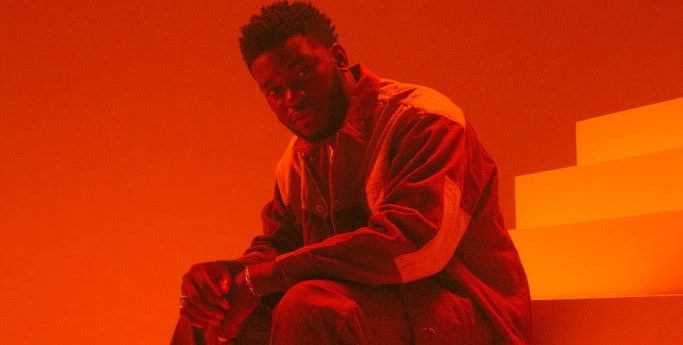
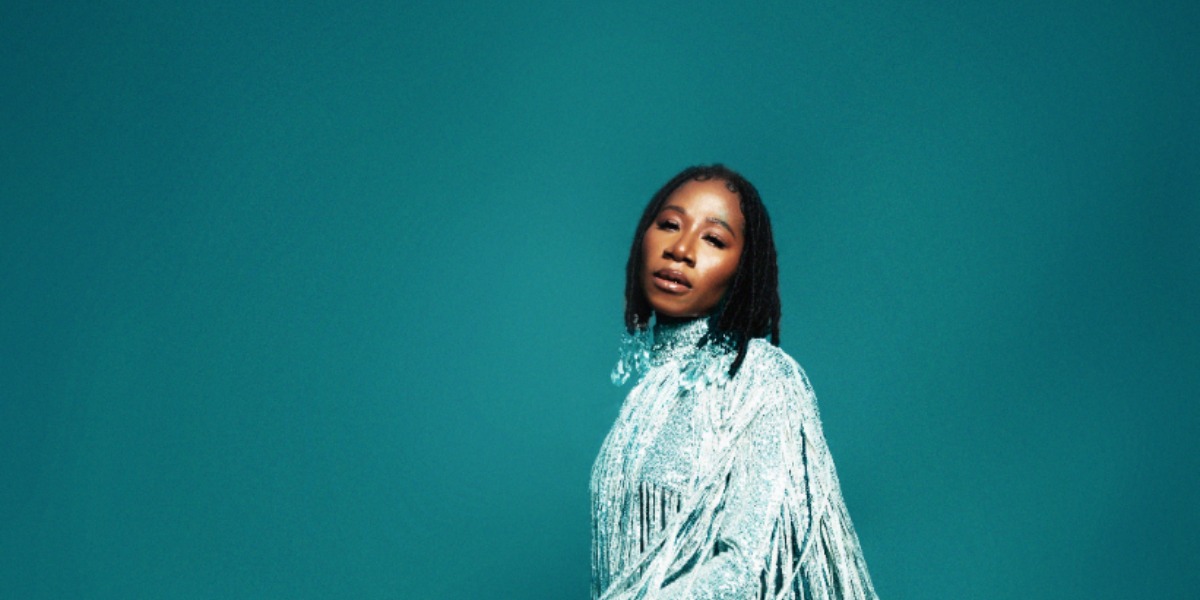
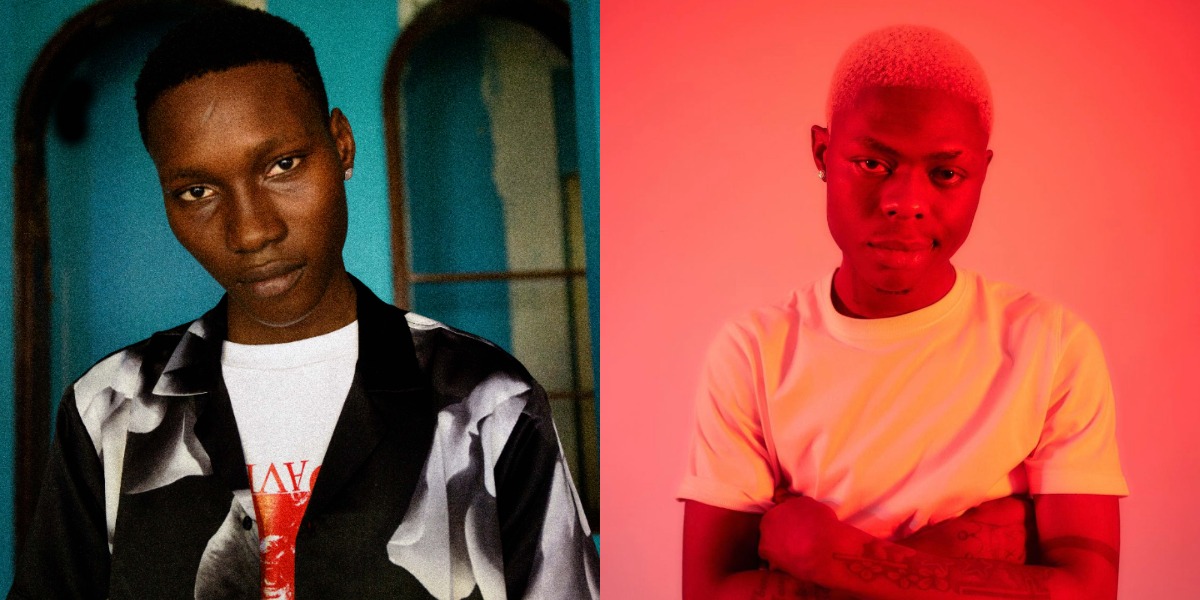
5 Unforgettable Moments from NATIV5

In 2016, the NATIVE was born as a print magazine and musical festival centred around what we saw starting to take shape around us: the next Great African Art Renaissance. 5 years on, our audience has only grown larger and our writing more daring as we continue to champion the voice of the African millennial–and now Gen Z.

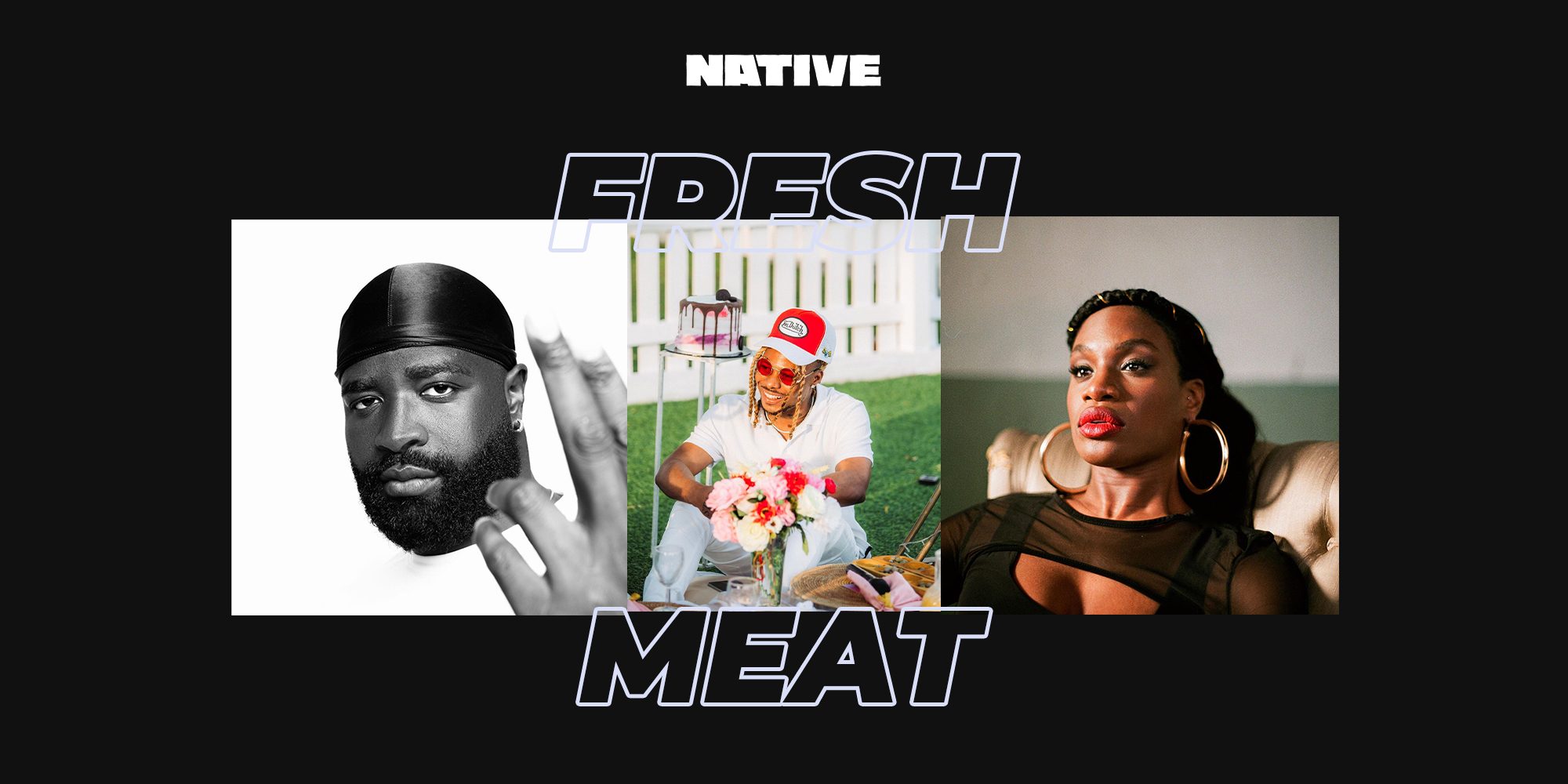
To commemorate and celebrate our 5 year milestone, we brought you NATIV5, a free show hosted by NATIVE Sound System in Lagos– exactly five years on from our first ever festival. As promised, the night was filled with amazing performances from your favourite African entertainers, bringing nostalgic names such as Styl Plus and more popular names such as Amaarae, Odunsi the Engine, CKay, Ayra Starr, Rema and more, to the main stage. To recap all the fun from last December, here are 5 highlights from NATIV5:

Amaarae’s CRAZY WURLD

The fabulous Amaarae took to the main stage for one of the longest performances of the night. The Ghanaian singer was an unmissable force as she performed songs from her fan favourite debut ‘The Angel You Don’t Know.’ However, the highlight of the night was the singer’s star-studded roster of friends who graced the main stage alongside her. In a short time, fans enjoyed music from Ayra Starr, BOJ, CKay, Vict0ny and more, who made the singer’s set a memorable one.

Styl Plus make a comeback

One of the most anticipated artists to grace the stage was the legendary R&B group – Styl Plus. Kicking of the show in grand style, the duo held the NATIV5 stage down with nostalgic tracks from their catalogue including crowd favourites such as “Call My Name,” “Olufunmi” and more. The pair also set the tone for the rest of the concert, amping the crowd up for later acts such as Amaarae, Odunsi The Engine and more.

On-site brand activations

NATIV5 would not have been the success it was without the help and support from our amazing brand sponsors including Tangerine, TrybeOne, Powerhorse, Tix.Africa, Orijin and RED Tv. On the night of the show, each sponsor set up activations for guests and music lovers, inviting them to their stalls with freebies, merch, games, and exciting treats.


View this post on Instagram


A post shared by The NATIVE (@thenativemag)

Quacktails steals the show

While the night was kept going by our amazing brand sponsors from Orijin to Powerhorse who provided the crowd with the much-needed juice to enjoy their night, our food and drink vendors also stole the show on the night. All eyes were on mobile mixology service, Quacktails who provided the crowd with alcoholic and non-alcoholic drinks with imaginative flavours. Their stand was a huge hit of the night. 

Dressed to impress

The night was filled with stylish and fashionable guests of all ages who were adorned in vibrant and daring pieces, reflecting the youthful heart of the NATIVE community. From the artists to celebrities, influencers, music execs, and more, NATIVE events are always a great opportunity to find some fashion inspiration and NATIV5 was no different. 


View this post on Instagram


A post shared by The NATIVE (@thenativemag)

Featured image credits/

Liberian Artists Are Demanding Structural Change In The Music Industry

In Liberia, December is the prime earning season for most musicians. It’s known worldwide as the peak period for live performances and shows. Due to widespread piracy and mobile data issues across Africa and the absence of a music streaming culture, there are reduced avenues for artists to earn a living off their music. As such, most Liberian artists depend on the fees earned from live shows as their primary source of income.

Last year, in a viral moment that sparked polarising conversations, a leaked chat between the management of Bucky Raw, one of Liberia’s biggest artists, and the organisers of the Liberian Music Awards revealed the singer’s management rather high demand for $10,000 as fees at the award ceremony. Fee payments are a riotous game of rules, processes and bureaucracy in the music industry, with the key players more entangled than the ordinary fans might think. Nonetheless, the leaked chat reignited age-old conversations, urging for there to be change to years of mistreatment.

For many Liberian artists, the current structure fails to adequately compensate them. While details of performance fees are kept on a need-to-know basis, it’s widely known (off the record) that “A-list” Liberian artistes earn between $800–1500 on average for live shows within Liberia, with “B and C list” artists earning much lower. Artists are also paid for club performances or appearances which are more commonplace but attract a lower fee. For music listeners, attending a concert to watch one’s favourite artist perform is an investment in an experience, however, for artists, the stakes are even higher when consideration is given to the fact that their earnings are then split between their management, venue organisers and team.

What’s left in the end is meagre and exploitative enough to prompt a call for industry-wide change, which Bucky Raw himself reiterates in an interview with the NATIVE. “For me, this goes towards how much they think we—the Liberian entertainment industry—are worth. We need to add value to our work and add values to ourselves. We need to do this for the next generation of entertainers coming after us,” he shares in a phone conversation with me. “People listen to our music for free instead of streaming, same people would support not paying artists enough, same people would still mock Liberian artistes for being broke. I don’t want to be a broke legend.”

Much ado about performance fees

Access to internet and data services in Liberia renders streaming an unreliable source of income for artists. Widely known as one of the highest and most expensive in the sub-region, sold at at 2.8GB for 5 dollars, music listeners resort to free streaming services such as Audiomack or illegal downloads. According to World Bank statistics, the gross national income per capita stood at just $570 in 2020 which means that many Liberians cannot afford the exorbitant data costs nor can they afford to pay a monthly fee for a streaming service.

In Liberia, there is a rich culture of purchasing music from street vendors who transfer unlicensed files of song recordings to consumers through CDs or direct uploads on their smartphones. These underground vendors have the songs on laptops which they then transfer to a memory card or smartphone. They operate from kiosks which are present in different cities across Liberia, posed on major highways and streets to attract young consumers. With the lack of adequate distribution channels or infrastructure in the music industry, there has been little or no pushback against them despite the intellectual property ramifications they pose.

Due to the large number of consumers who resort to these backend downloads, artists, composers and producers do not earn royalties for the music they make and miss out on a significant portion of their earnings. In lieu of this, most artists have to garner their income through alternative means. The typical set-up involves the artist first creating the music, then distributing them on online platforms, including local blogs, that provide music for free downloads. If their song blows up, the artist then leverages on the popularity of the song to make money from live performances or endorsement deals.

This system is unsustainable for most artists as they are left without remuneration when live shows are unavailable – for example shows were banned and are yet to regain full steam since the COVID-19 health pandemic. Additionally, Liberian artists also lack the access to tour their local cities and towns, largely due to the country’s bad road networks which reduces their options for remuneration. This unreliable transportation network has also led to an over-concentration of events and live shows to the country’s capital city of Monrovia, which itself lacks any suitable venues for large-scale events.

A game of numbers

In Liberia, the cost of production can be high in comparison to the earning capacity of its musician. Currently, production of a song costs between $150 – $200 on average, while video production costs start from $600, excluding additional costs attracted for promotion and branding of songs. Many Liberian artists have argued that the current fee structure does not reflect or match the high cost of production and in turn, leaves them at a disadvantage for pursuing their craft.

While their claims are not unwarranted, structural challenges in the country’s music industry continue to pose a hindrance to any real change. With the lack of any real structures, costs and logistical challenges are a given for any event organisers or promoters in the industry. Currently, organisers of large recurring events including award shows, pageants and more, have to pay an annual franchise fee to the Ministry of Information and Tourism which grants them leave to operate. Those can afford these fees, and operate against all the odds, later face issues with venues due to the lack of large-scale theatres.

Most large indoor entertainment events are held in the ministerial complex hall in Monrovia. However, this hall has a maximum seating capacity of around 700 seats despite being one of the largest indoor venues in Monrovia. The cost of performing at the hall is also steep for most show-runners at its price of around $4000 per day. In contrast, event tickets are priced within the average range of $20-40 (for a regular ticket) so that music lovers can afford them. “You have a hall with a maximum capacity of 700. Additionally, half of the seating capacity in award shows would usually go to complimentary seats which are not paid for. These complimentary seats include artists, presenters, and other invitees. As a result, ticket sales might only cover payment for the lights and hall,” says Sean Gibson, an event organiser and promoter based in Monrovia.

He further explains: “When you factor in ticket sales in relation to other costs including personnel costs, videography, photography, security etc, it’s not then possible to pay one artist $10,000 for a 7-minute performance, considering you would also have around 4-7 scheduled to perform at the show. There is also the question of whether the artist can even pull $10,000 in sales.” Due to the costs of running an award show, organisers turn to corporate sponsors to offset the running costs as ticket sales might be inadequate. In Liberia, one of the country’s biggest music award shows is sponsored by telecommunications giant, MTN.

Foreign versus local

While Liberian continue to speak out against the low fees earned from live performances, their foreign counterparts, on the other hand continue to earn at a disproportionately higher rate than them for shows conducted within the country. Evidence suggests that this is largely due to the mainstream success of foreign music in Liberia—especially those of Nigerian and Ghanaian musicians.

Opponents of the current pricing system reject the argument that logistical cost is a bar to paying local artists more and this point is buttressed by recent shows which have seen foreign artists attract higher performance fees. The country has been graced with a number of successful African acts including Wizkid, Davido, Kizz Daniel etc, who continue to out-earn their Liberian counterparts. According to Bucky Raw and people in his camp, claims have been made that Ghanaian artist, Kwame Eugene was allegedly paid up to $5000 at the MTN Liberia Music Awards (MLMA) in 2018, a significantly higher amount than what was paid to Liberian artists. However, the MLMA has denied the fees paid and stated further that Kwame Eugene was brought to the show by their sponsors MTN and not the award body itself.

For Dede Dalmeida, who is an artist manager and the chief financial officer of the MTN Liberia Music Awards, she shares that performance fees are on a case-by-case basis: “I don’t mind artistes asking for better fees, but artists should not compare their prices with prices paid to artistes in another country. They need to understand the going rate in the country is determined by a lot of things such as cost of living, earning power in the country, size and growth of the industry in the country also matters. Most foreign artistes brought in and paid higher fees are global superstars brought in by mostly multinationals to elevate their brand.”

So what becomes of the demands made by Liberian artists?

It goes without saying that there is an urgent need to increase the performance fees of Liberian musicians. However, there is more pertinently a need for a better system that diversifies income for Liberian artists to earn from their music. In order to achieve that, the Liberian entertainment industry must first address structural issues surrounding monetisation of content, music piracy, distribution, and access to large performance venues. While local unions such as the Music Union have promised to help tackle these issues numerable times, Liberian artists are still hopeful for a solution that comes sooner rather than later.


Dounard Bondo is a writer based in Liberia. His writing usually covers politics, policies, human rights and entertainment in Africa. Dounard has bylines in BBC, Euronews, Quartz, and others. He also writes short stories.

What’s Going On: Protests in Mali, Civil War In Ethiopia & More

“What’s Going On” Tallies Notable News Headlines From Across The Continent — The Good, The Bad, And The Horrible — As A Way Of Ensuring That We All Become A More Sagacious African Generation. With This Column, We’re Hoping To Disseminate The Latest Happenings In Our Socio-Political Climate From Across The Continent, Whilst Starting A Conversation About What’s Important For Us To All Discuss. From Political Affairs To Socio-Economic Issues, ‘What’s Going On’ Will Discuss Just That.


Ever so often, we have to remind developed parts of the world that Africa is not a country. It’s not just because a significant portion of people in those parts are unenlightened, but also because of the continent-wide similarities when it comes to social, political, and economic issues. For one, Africa is teeming with corrupt and inept leaders—many of them dictators— who have failed to invest in meaningful infrastructure, all while derailing and rejecting systemic change through violent means if necessary. In addition to this, they are fully aided by deeply patriarchal, religion deferring, and ultra-conservative social constructs.

At the same time across the continent, the current generation of African youth are pushing against these systemic boundaries, in order to continue the arduous work of rewriting the narrative. Even with all of the endeavours, talent and records being witnessed from music to tech, the limitations put in place by the continent’s political landscape still looms large. Every week, disparaging headlines from around Africa make their way to the news, reminding us of the bumps affecting these perceived stripes, and the roadblocks which delay our growth towards more wholesome and enabling societies for all Africans. Below are few news bits of what’s been going in on in the past few days.

Malians protest ECOWAS sanctions

Months after Mali experienced its second coup in less than a year, the effects of the deposition continue to linger over the West African nation. Last week, ECOWAS, West Africa’s main regional bloc, announced sweeping economic sanctions against the country in response to the Malian ruling government change of the projected dates for general elections. Following the Assimi Goïta-led coup in May 2021, the military had initially committed to holding fresh elections in 2022 but has since backtracked on its promise, claiming that a fresh general election would be held in 2025, three years farther than already envisaged. 

Responding to those fresh developments, the leaders of the 15-member Economic Community of West African States (ECOWAS) held an extraordinary summit where they agreed to impose a trade embargo on the country and shut off its borders. These decisions were backed by France, the United States and the European Union. Reacting to the sanctions, the military junta called for protests against stringent sanctions imposed by ECOWAS and over the weekend Malian citizens came out en masse to express their displeasure with the bans as well as espousing anti-French rhetoric.

Throughout the weekend, thousands of people wearing the national colours of red, yellow and green gathered in Independence Square in the country’s capital in Bamako while protests also spread to towns like Kadiolo and Bougouni in the south of the country. Already one of the poorest and most vulnerable countries in the world, the sanctions against Mali might further push the country to the brink of austerity despite claims that the country is prepared for every eventuality. Further ramping up the pressure on the Malian government, the United Nation’s Security-General, Antonio Guterres, urged the leadership of the country to present an acceptable election schedule while France and the United States have doubled down on calls for a general election. 

Ugandan schools open after two years COVID-19 shutdown

For many people, the COVID-19 pandemic has upended the very hinges of their existence, throwing every single routine into jeopardy, but few parts of life have been as ruthlessly altered by the effect of the pandemic as the education of Ugandan kids. From March 2020 until just the middle of this month, educational institutions in Uganda have been shut down due to concerns over COVID-19.  When the closure went into effect more than 20 months ago, just over 15 million students had their education disrupted, according to Dennis Mugimba, the spokesperson for the Ministry of Education.

While universities and higher had opened up in phases, kindergarten and lower primary students, which include approximately six million students, had not returned in any form at all. In a statement released last September, Janet Museveni, Uganda’s first lady and Minister of Education said that the lockdown was essential to protect citizens.”We choose to be patient and continue to vaccinate our teachers, learners above 18 years of age and the vulnerable population so that we can be confident enough that we have given some protection to a critical mass of our population,” she said. But now that schools are fully re-opening, some are projecting that as many as five million pupils may never return to classrooms, a big blow to a country that’s already one of the poorest in the world and dealing with ever-rising unemployment rates. 

Ugandan critics and opposition figures have debated the validity of Uganda’s repressive lockdown, arguing that officials used the pandemic as a pretext to impose draconian lockdown rules that have caught young pupils in its crosshairs. Ugandan officials, however, believe that its education sector can recover from the long halt. “We believe this time Covid will not scare us,” Joyce Moriku Kaducu, the state minister for primary education, said in an interview. “I don’t accept that there is a lost generation. What I agree to is there’s a percentage of our children who have gotten pregnant, the young boys have gotten into the moneymaking economy and others have gone into things. That does not mean that we have lost the generation completely.”

Ethopian civil war rages on

The contest between the Ethiopian central government and Tigray separatists is showing no signs of easing up anytime soon. The Ethiopian government, under the leadership of Prime Minister Ahmed Abiy, continuing to launch military offensives against people living in Tigray, the country’s northernmost region. The year-long conflict between federal government troops and Tigrayan forces has killed thousands of people and displaced more than 2.5 million people according to the UN. According to the leadership of Ethiopia, they are laying the groundwork for a national conversation but there’s very scant proof of their commitment to the process with officials saying that any peace talks would exclude Tigrayan leaders and the Oromo Liberation Army, both of which have been fighting the Ethiopian national army and declared terrorist organisations by the East African nation. 

The plight of the Tigrayan population has prompted the Norwegian Nobel Committee, who bestowed Ahmed Abiy with the Nobel Peace Prize in 2019, to call on him to end the war and allow humanitarian efforts to reach the war-torn region, saying that he has a responsibility to bring peace to the country. “As prime minister and peace prize laureate, Abiy Ahmed has a special responsibility to end the conflict and contribute to making peace,” the Nobel committee chairperson, Berit Reiss-Andersen, said. “The humanitarian situation is dire and it’s unacceptable that humanitarian aid is not getting through in a sufficient manner.”

Meanwhile, the UN has warned that Tigray stands on the brink of a humanitarian crisis as fighting escalates and drone strikes continue. The World Food Programme (WFP) said on Friday that it would be distributing its last supplies of cereals, pulses and oil next week to Tigray, where more than 5 million people are estimated to be in need of food assistance while reports indicate that more than 100 civilians have died from the airstrikes in the region in 2022 alone. Aid workers have also roundly criticised the government’s blockade, interpreting it as revenge against all Tigrayans. “The big threat there is the Ethiopian government’s blockade of humanitarian assistance that is desperately needed by millions of people in the region, “Human Rights Watch Executive Director Kenneth Roth said. “This is a classic case of collective punishment. This is not punishing Tigrayan military forces. It is punishing the people in Tigray.”

Featured image credits/

Songs Of The Day: New Music From Kofi Mole, PsychoYP, Tim Lyre & More

After the many wins forged by Afropop last year, the musical landscape has never looked more promising. As such the fast and furious pace of new music releases makes it hard to keep track of all the good music coming out of Africa. That’s where our Songs of the Day column comes in.

We’re doing the work to stay on pulse with all the music coming out from across the continent and beyond, bringing you exciting songs of tomorrow: today. To start off the new year, enjoy these new releases from Kofi Mole, PsychoYP, Tim Lyre, Fiokee & more.

Kofi Mole – “Work” ft. Joey B

After rounding off last year with a stellar verse on Teezee’s latest single “New Government” featuring Prettyboy D-O, Ghanaian rapper Kofi Mole has returned with his first official release of the year titled “Work”. The newly released Hip-Hop record is assisted by fellow Ghanaian artist, Joey B and serves as the first official single from this rapper’s forthcoming project titled ‘Knackaveli,’ slated for release next week. Over the catchy production, both rappers trade bars about getting their shit popping and making moves.

PsychoYP – “+234 (Daily Paper)”

To kick off the new year, Apex Village founder and Abuja based rapper PsychoYP is here with new video for his standout single “+234 (Daily Paper)” off his EP ‘Euphoria’. The video captures YP in different settings, first performing in a garden and then in a work space, singing lyrics such as “I know they hate cause I’m famous, I know they hate cause I’m blessed/Starboy I make daily paper”, as he expresses his gratitude for his accomplishments and putting his oops in check. 

Bankyondbeatz & Tim Lyre – “Jump On It”

Nigerian producer, Bankyondbeatz and singer, songwriter and performer Tim Lyre have teamed up for the romantic number “Jump On It”. The mid tempo Amapiano infused track finds the artist singing lyrics such as “You can take my love if it’s all you want/girl I promise, we can go till morning tell me when you wanna jump on it,” as he converses with his muse and reassures her of his undying affections. 

Greencamp – “Yellow Fever” ft SmallztheDJ, Wy & Trill Xoe

For Greencamp’s first-ever release as a talent management agency, they’ve teamed up with 44DB producer Trill Xoe, singer, songwriter Wy & SmallztheDJ to deliver the uptempo track “Yellow Fever”. Over the melodious production of the track, Wy sings Why you dey bleach o?/Why you dey bleach,” encouraging listeners to be comfortable in their Black skin and love themselves the way they are.

FKA Twigs – “Jealousy” ft. Rema

FKA Twigs took the world by storm when she released the tracklist for her latest EP ‘CAPRISONGS,’ which boasted of collaborations with Nigerian singer, Rema, British singer, Shygirl, the Weeknd and more. Finally released last weekend, the new single with Rema titled “Jealousy” is a mid-tempo number that finds the artist speaking to her love interest about the hold he has on her. Rema’s inclusion on the track is one of its strongest qualities with the Afropop wunderkind adopts a jaded, detached flow as he sings “I gave you the keys to my soul/Girl I’m sick and tired of your drama,” describing his disdain for jealous lovers. 

Fiokee -Personal ft Bella Shmurda

To begin the year, Fiokee has released a new LP titled ‘Man’, a 14-tracker which features artists such as Simi, Oxlade, Bella Shmurda, the Cavemen and more. On the standout track “Personal”, Fiokee teams up with Bella Shmurda to deliver an uptempo Amapiano infused number that will surely have listeners grooving and swaying to the infectious beat. “Don’t take it personal, anything I do I do it out of love,” quips Bella Shmurda melodiously over the song’s hook, advising his listeners to always take the high road and live an exemplary life. 

BenjiFlow – “Ready” ft Juls

BenjiFlow is moments away from the release of his forthcoming project. Ahead of this, the singer has shared his first official release of the year titled “Ready” featuring Ghanaian producer and singer, Juls. On the chorus of the track, he quips “I told you I told you I’m ready, don’t let this feeling pass away”, as he explains his romantic intentions to his love interest.

Ade James – “Money For Hand” ft Liya

For Ade James’ first official release of the year, he teams up with DMW’s Liya to deliver Money For Hand”, a track which finds the artist speaking about unrequited and selfish love. On the chorus, he quips “All she wanna know is if i get the money for bank, all she wanna know is if i get kudi for hand/She want to play me wayo,” before Liya steps in shortly and delivers a stellar performance. 

Featured image credits/

TurnTable Top 50: Fireboy DML & Ed Sheeran’s “Peru Remix” Stays at No.1

To start off the new year, Fireboy DML records a third week at No.1 with “Peru Remix” featuring Ed Sheeran. Peru” extends its stay on the top ten to 22 weeks; with a record 19 weeks for the original version and 3 weeks for the remix. The song tallied 62.9 million in radio reach (down 7.2%), 14.9 million in TV reach (up 4.%) – topping the radio and TV charts this week – and 2.34 million equivalent streams (down 27.3%) slipping to No. 2 on the streaming chart.

Kizz Daniel’s former 1-week No. 1 “Pour Me Water” follows at No. 2 for a third consecutive week tallying 36.3 million in radio reach, 11.5 million in TV reach and 2.06 million equivalent streams. Lil Kesh’s “Don’t Call Me” with Zinoleesky jumps from No. 10 to No. 3 on the Top 50 becoming the highest charting single for both artists. 

Burna Boy’s “B. D’OR” comes in at No. 4. It tallied 33.2 million in radio impressions, 1.7 million equivalent streams and 6.6 million TV impressions. Reekado Banks’ “Ozumba Mbadiwe” slides to No.5 this week while Kizz Daniel’s “Eh God (Barnabas)” ascends to No.6.

It is followed by Mayorkun’s “Holy Father” with Vict0ny which comes at No.7. Rounding out this week’s top ten; Ckay’s “Emiliana” at No. 8 which tallied 32.3 million in radio reachand 1.66 million equivalent streams. Adekunle Gold & Davido’s High” re-enters the top ten at No. 9 while Ruger’s “Dior ” reaches a new peak of No. 10.

Featured image credits/

#TwitterBan: FG Lifts Twitter Ban After Seven Months

After a seven-month suspension of the social networking site on local and Internet services in the country, Nigeria’s federal government has lifted her Twitter ban. First introduced last summer, on the 8th of June, the recently-concluded ban was enforced in response to the social media company’s decision to delete a tweet from President Muhammadu Buhari which appeared to threaten violence against separatist protesters in the country’s Eastern region.

In a statement shared yesterday, hours before the ban was lifted, the Director-General of the National Information Technology Development Agency Engagement, Kashifu Inuwa Abdullahi, shared that the decision to lift the suspension came after “Twitter agreed to act with a respectful acknowledgement of Nigerian laws and the national culture and history.”

The amicable decision reached between the federal government and the social networking platform also includes the “appointment of a designated country representative to interface with Nigerian authorities,” the establishment of “a legal entity in Nigeria during the first quarter of 2022,” and a promise by Twitter “to comply with applicable tax obligations.”

For months, the country’s federal government and its current Minister of Information, Lai Mohammed maintained that the ban would not be rescinded until the social networking platform complied with its number of conditions which included but were not limited to the establishment of a Twitter Nigeria office. With the ban now lifted, Twitter is yet to say publicly whether it has agreed to any of these terms – but in a tweet, the social media company welcomed the lifting of the suspension and promised that they remained “deeply committed to Nigeria.”

Featured image credits/IT News Africa

Tomi Adeyemi Signs Deal With Paramount Pictures For ‘Children Of Blood And Bone’

Nigerian-American novelist and creative writer, Tomi Adeyemi, has announced the inking of a deal with American film and television production and distribution company, Paramount Pictures, to bring her critically-acclaimed YA novel series, Children Of Blood And Bone, to life on the big screen. 

Paramount Pictures landed the rights to Children of Blood and Bone trilogy after a bidding war among major players including Universal, Amazon and Netflix. Tomi will be at the forefront of the effort to bring the movie to cinemas with the 28-year-old set to executive produce in addition to adapting the story and writing the script. The studio is also committed to fast-tracking the adaptation in partnership with its collaborators, Wyck Godfrey and Marty Bowen of Temple Hill Entertainment and Karen Rosenfelt of Sunswept Entertainment. 

“Tomi Adeyemi’s Children of Blood and Bone has not only become a phenomenon in the YA world, it has transformed every expectation of what world-building fantasy can be,” said Co-President of Paramount Pictures Motion Group Daria Cercek. “It’s with enormous pride that our studio — along with Tomi and our partners Wyck, Marty and Karen — set out to bring this franchise to life on the big screen. With its thought-provoking and timely themes, we know that this story will resonate with a global audience.”


View this post on Instagram


A post shared by TOMI (@tomiadeyemi)

Children of Blood and Bone was originally published in 2018 by Henry Holt Books for Young Readers, an imprint of the popular publisher, Macmillan. Its sequel, Children of Virtue and Vengeance, reached number 1 on the New York Best Seller list and received critical acclaim like Children of Blood and Bone

According to Tomi, the final book in the trilogy is due out in 2023, revealing that she is in the final stretch of completing the book. “I’m only a couple drafts away from finishing book 3,” she said. “I’m turning it into my publisher in a few months, and then it’s straight to print and in your hands in 2023.”

Featured image credits/Tomi Adeyemi

For Us By Us: The Emancipation Of Cuppy

There is no better time than the new year to begin again, reinvent yourself and change your perception of the world. That’s why I’ve started 2022 with a bald head and a new lease on life. This year, I will be 30, and looking back at my 20s in the public eye, I realised that my validation and appeal as a black, female DJ, have always been defined by the way I look – as if my level of slay has ever made my mixes any better? 

Social oppression has led many of us, black women to hide our real hair underneath a wig or something else that suits Eurocentric beauty standards better than our natural afros do. Of course, these hairstyles often protect our hair from breakage, but we all know why it is that black women often wear their hair in long, straight styles. In my case, I chose to stand out with my infamous pink inches. Now, 29 years old, I’ve started digging deeper into myself, and realised that there’s more to the pastel pink inches you can see on the outside, they come from a dynamic magenta within me. 


View this post on Instagram


A post shared by Cuppy (@cuppymusic)

When I started as DJ Cupcake many years ago, I was known for my signature ponytail look. Even though I really loved the style, what I loved the most about this hair choice was how practical it was while I was on set. It kept the hair out of my ears, and my headphones would sit nicely on them – no problemo. Not only did the pony enhance the shape of my face and display my inherent beauty, but it was also so quick to get done and took minimal effort to style. Even today, I still style my braids in a high ponytail. 

Speaking of braids. 

Having braided hair has always been a convenient choice for black women since we were young. Growing up in Nigeria, having braids with ‘attachment’ meant it was holiday time, and during school time, picking new hairstyles named after some iconic black women in music like Evelyn King and Sade Adu always brought a sense of giddiness (and a few tears if the woman who did your hair didn’t care about your scalp). For me, growing older and moving to England, braids became a thing of convenience, a hairstyle that would last for a long time and keep my hair protected from harsh weather conditions. I’ve always loved the look of braids, but hated the time (and sometimes edges) lost doing them, so I started rocking braided wigs. GENIUS 

Under much scrutiny from the public court of social media, I would spend so much time thinking and planning about my hair. When I started at Oxford last year,  I decided to shave my hair off to take that power back. Samson lost his extraordinary power when his hair was cut while sleeping in biblical mythology, but for me when I shaved my hair, I felt very powerful. A woman cutting all her hair off is usually met with some sort of reaction of surprise or the other, and often seen as ‘acting out’ –  I mean, look at how much we still talk about Britney in 07. 

The mere fact that I had to think about how to rock my new hairdo in public whilst warding off a sea of social media commentators about MY aesthetic is telling. As if the way I look with pink inches or a bald head is going to make my music any better? 

 At the end of the day, I came to conclude within myself that I like my new do, and that’s the only opinion that matters (well, my sisters and best friends also kinda matter here). Afros, cornrows, straight weave – they all make their own unique statement, based on whose head it’s on. No matter what condition it’s in, black hair speaks. At the moment with my pink inches gone, I feel like I’ve wiped the slate clean. Much like I cleared some mental space digging deep into myself and figuring out what I want for this new chapter, there’s now space for whatever I want my hair to be, on MY own terms. 


View this post on Instagram


A post shared by Cuppy (@cuppymusic)

Lancey Foux Is Set To Perform At Rhythm Unplugged Alongside Tion Wayne & More

For a number of reasons, 2020 did not have the experiences that make the Christmas period in Lagos one of the most eagerly-anticipated parts of the year. Due to the shuttering effect of the COVID-19 pandemic and measures taken by governments everywhere, live performances were put on hold. However, just 12 months after, things seem to be picking up with a full slate of activities lined up for the year-end. 

One of the activities that is signaling the return of the Lagos December experience to a form of normalcy is the return of legendary show, Rhythm Unplugged, to social calendars. Set to hold across an entire week, the favourite December music ritual certainly makes its return with a memorable bang this year with a lineup that features a talented spate of Nigerian and African talent.

As the one-week affair draws to a close, its star-studded lineup gets more interesting including tonight’s show which will feature performances from British-Nigerian rapper, Tion Wayne, and indie cult hero, Lancey Foux. For Tion Wayne, the event will be a strong end to a year that saw him release his fourth album, ‘Green With Envy,’ headlined by the Davido-featuring “Who’s True” while Foux has drawn praise for his highly-lyrical escapist grime-influenced rap particularly on his recent album ‘LIVE.EVIL’. The British stars will be joined by a selection of Nigerian Afropop stars including Rema, Fireboy DML, Buju, Ladipoe, Blaqbonez, Ruger, and Mayorkun among others.

Welcome to NATIV5

This week, after half a decade of being the voice of the African millennial and Gen Z, the NATIVE will be turning 5. Five years down the road, it’s time to reflect on the work we have done and how impactful it has been for a generation of young people attempting to contextualise this period of stellar African art.


View this post on Instagram


A post shared by The NATIVE (@thenativemag)

In conversation with people who are hip to what moves culture, many pick out 2016 as the year when African culture had its sliding door moment. Some approximate it to the distinctively African twang to the festivities of summer ‘16 powered chiefly by Drake’s monster hit, “One Dance”. Others ascribed the shift in perception towards African culture to the exciting and unique cultural talent springing out of the continent, but what cannot be doubted is that from 2016 onwards, the NATIVE has duly documented our stories and shaped the face of alternative youth culture.

Like our, Editor-In-Chief Seni Saraki said, The NATIVE was formed with the idea of taking stock of this great African art renaissance, and, since our formation, our commitment to honest, empathetic storytelling and reportage has been unwavering. In the time since our formation, the NATIVE has played a key role in shining a light on some of the most important landmarks and issues of this generation of young people and, after 60 months of doing just that, this week marks the fifth anniversary of the Native’s establishment. 

Of course, this could not have been possible without the support of our team and community. Importantly, the occasion of our fifth anniversary is a call for celebration. In five years, we have gone through thousands of articles, placed some of Africa’s biggest stars on our cover, and collaborated with Nike on an original jersey design. 

To kick off collaborations, we are hosting an intimate friends and family invite-only celebration of all things NATIV5 where we hope to swap stories and tales of what archiving the Great African art renaissance has looked like. And later in the week, on Wednesday 22nd of December, NATIVE Sound System will be hosting a show in Lagos for members of our community – exactly five years on from our first ever festival. 

We, of course, promise to make it worth your while and keep to all safety precautions. We hope to party with you soon!

Featured image credits/NATIVE
Songs Of The Day: New Music From Naira Marley, Bella Alubo, Olamide & More 

The end of the year is here but music releases are hardly stopping. There is still heat if you know where to look and, with many artists putting out their last songs for the year, we know you might need a primer on what stuff to be listening to as we all bid to close out the year in the best way possible. 

That’s where our Songs of the Day column comes in. We’re doing the work to stay on pulse with all the music coming out from across the continent and beyond, bringing you exciting songs of tomorrow: today. Last time out, we had exciting music from Black Sherif, Seyi Shay, and Mohbad amongst others. Today, we’re bringing you new music from Naira Marley, Olamide, Iyanya, and more.

NAIRA MARLEY – “KOJOSESE”

Since his career got a major boost with his controversy-laden run in 2019, Naira Marley has refused to recede from public view, solidifying his staying power with a string of hit singles like “Koleyewon” and the Busiswa-featuring “Coming.” Keen to see out 2021 on a high, the singer has returned with another tune titled “Kojosese.”

Cut from the same cloth as its dance-ready predecessors, and off his forthcoming debut album, ‘This Is Africa,’ “Kojesese,” is an infectious anthem that merges the bounce of kuduro with the percussion of Afropop. Produced by Angolan, Leo Beatz, the song sees Naira Marley urge his listeners to hit the dancefloor and have a great time. 

BELLA ALUBO & ZORO – “DANCIA”

Earlier this year, Bella Alubo released her debut album,Bella’s Buffet,’ interspersing her minimalist take on the intersection of R&B and Afropop with a range of sonic tells from Highlife, Hip-hop, and Trap.  One of the most well-received songs from the project was “Dancia,” a collaboration with Nigerian rapper, Zoro, that expanded on the classic rap-sung format with beguiling ease. The video for the song tunnels into the chemistry between the duo as they take a historic approach to documenting their romance and their desire to be together regardless of what life throws at them. 

MONEY BADOO & RICKY TYLER – 47K$

Some of the most inventive R&B music out of Africa springs out of South Africa, and Money Badoo is an avatar for that innovative streak. Gently layering her voice-over wavy basslines with tales of lust and love, she continues to break barriers and set new benchmarks with her authentic take on the genre. Her new single “47k$” is a testament to this as she joins forces with Ricky Tyler on this song which speaks about intoxicated love, chemistry, and intimacy over a wispy instrumental. 

OLAMIDE X POCO LEE X PORTABLE – “ZAZOO ZEHH”

For years before he inked a deal with Empire and reinvented his sound for global domination, Olamide was street music’s biggest ambassador to Afropop, sneaking in the densest street slangs into the heart of the genre. To close out the year, Olamide has teamed up with popular dancer, Poco Lee, and hype man, Portable, for a hard-hitting single titled “ZaZoo Zehh.” Produced by P.Priime, the song sees Olamide drop his most street-leaning verse for a bit while Portable takes us deep into street culture with a lengthy monologue that captures the dynamism of street pop. 

IYANYA & WANDE COAL – “CHANGE AM”

Last year, Iyanya released ‘For Your Love,’ a project that was packed with the R&B influences that made him a reality TV sweetheart more than a decade ago. On “Change Am” with Wande Coal, the singer leans into Afropop for an accomplished showing that rises on the power of the duo’s synergy. Produced by 1da Banton, the beat shifts from place to place while Iyanya and Wande Coal move rapidly between English and pidgin singing about changing the gears of their life and luxuriating in the finer things of life. 

TEEZEE F.T. PRETTYBOY D-O & KOFI MOLE – “NEW GOVERNMENT”

Ahead of the release of his sophomore project ‘Arrested By Love,’ due out next year, Teezee has released a new single in time for the December festivities titled “New Government” featuring Nigerian rapper, Prettyboy D-O, and Ghanaian peer, Kofi Mole.  An uptempo Afro-fusion track, “New Government” features bragging from Teezee and his guests about being at the forefront of a new revolution and paving the way for a new generation of power players. “But now there’s a new government in charge/Pretty be the new government in charge/Teezee be the new government in charge,” D-O confidently asserts in the song’s infectious hook. 

C BLVCK FT. NAIRA MARLEY  – “TEAR RUBBER

No other label operating today has its fingers on the pulse of street culture like Marlian Music does and in C Blvck, they have one of the sub-culture’s most bruising voices.  On “Tear Rubber,” C Blvck is joined by label boss, Naira Marley for a casual flex about their cultural cachet and street credo. Leading the way, Blvck sings about being a strong presence on the scene before being joined by Naira whose insouciant flow is a perfect contrast for his protege’s spurious delivery scheme. 

Featured image credits/Instagram

NATIVE Premiere: Teezee leads the “New Government” with Prettyboy D-O & Kofi Mole

Teezee has been on a steady streak of releasing the most thought-out and intriguing singles of the year. Earlier in the year, he began rolling out new music after a hiatus from releasing any solo material, beginning with the Maison 2500 and New World Ray-assisted single “Guala” and soon after, the end-of-year banger titled “BADI” featuring Davido.

All these will culminate in the release of his sophomore project ‘Arrested By Love,’ which fans will be gettting next year. Ahead of this, he’s just released a new single in time for the December festivities titled “New Government” featuring Nigerian rapper, Prettyboy D-O, and Ghanaian peer, Kofi Mole. 


View this post on Instagram


A post shared by @teezee

The latest release, “New Government” is an uptempo Afro-fusion track that sees all performers waxing poetic about leveling up and being in charge now while ushering in the new guard after years of rule under the outdated systems that govern our society. “But now there’s a new government in charge/Pretty be the new government in charge/Teezee be the new government in charge,” D-O chants over the infectious hook, bigging up himself and his collaborators as they revel in the triumph of their sound and style as two of the alternative scene’s leading men.

Accompanied by the catchy new hit is the Yaw Phanta-directed video which doubles down on the song’s triumphant mood featuring varying clips of Teezee and his fashionably clad collaborators as they rule the streets of Accra, Ghana. The video finds PrettyboyDO and Teezee sitting in a place of authority while delivering the news about the new vanguard in charge. The pair address how there is a new government capable of ushering the people into a new light while asking for support from their constituents. The video also captures all artists in a more colourful light on the streets, besides a car delivering their respective verses.

Ahead of the video’s official release, we spoke with Teezee about ushering in a new sound, his upcoming album and the highlights faced while working on the video.

His answers, which follow below, have been lightly edited for clarity.

NATIVE: Can you tell us the inspiration behind the track “New Government”? 

TEEZEE: Just the fact that a new wave is taking over the music industry, no more gatekeepers and OGs can stop our shine. We move forward regardless. Taking everything that belongs to us

NATIVE: You’ve teamed up with two amazing artists Prettyboy D-O and Kofi Mole. How did the song come to life with both artists? 

TEEZEE: My niggas Pretty and Mole ! We all linked up in Accra and the connection between what we’re doing across borders. S/O to Free The Youth for putting us all in the same room!

NATIVE: What were some of your major highlights while shooting the music video? 

TEEZEE: Knowing that the swag in this video is unmatched. Myself,  Pretty and Kofi all really pride ourselves on our personal style! Clearly, we are the ones in charge of music fashion P.

NATIVE: What do you want listeners and viewers to take away from this track alongside the video? 

TEEZEE: To us, it’s a statement record and a perfect way to end the year. GH and Naij are like one now. And we want to be at the forefront of that connection.

NATIVE: With a couple of singles out now, what can listeners now expect on your forthcoming project? 

TEEZEE: They can expect an uncanny approach stylistically, sonically and visually. I’m really trying to put this p on a global scale.

Get an exclusive first look at “New Government” below.

Featured image credits/

The Best Music Videos of 2021, Ranked

Some songs aren’t just meant to be listened to; they are to be experienced. When the ongoing pandemic turned the world outside in at the beginning of last year, it re-emphasised the avenues through which we wholly enjoyed music as a living, breathing organism with a visual component. In a time with limited live performances, music videos were one of the few mediums to relish the theatrics artists often attached to performing their songs.

Even with the world being reopened, it’s impossible to understate the importance of music video in the wholesome presentation of music, especially at a time when the audience is global—even the scrutiny is now global. With that in mind, more artists are creating videos that not only represent their music but also elevates it. In celebration of this phenomenon, the NATIVE’s editorial staff has curated a list of the best music videos we’ve seen all year.

From the curated opulence of Wizkid and Burna Boy’s “Ginger,” to the poetic resonance of Shekhinah’s “Fixate,” this list is a testament to the diverse and stunning range of visuals being created across the continent.

10. Yaw Tog – “Sore (Remix)” [feat. Stormzy & Kwesi Arthur]

Director: KooPokuStudios

In September 2020, clips from the music video for “Sore,” the scene-elevating posse cut headlined by then-high schooler Yaw Tog, began to spread like wildfire on social media, putting a spotlight on Ghanaian Drill being led by a Motley crew of rap artists from the historic city of Kumasi. Even though he was the least intimidating figure on the menacing banger, that viral attention immediately transformed Yaw Tog into a budding superstar, and he quickly embraced the role on the remix of his breakout song.

Featuring Ghanaian rap star, Kwesi Arthur and British-Ghanaian superstar Stormzy, “Sore (Remix)” is a posturing showcase strengthened by its music video—much in the same way as its original. Even though it doesn’t reach the dirty-as-nails aesthetic of its OG version, the video for “Sore (Remix)” is just as boisterous, finding a way to balance the differing levels of stardom between all three rappers. Just as on the song, Yaw Tog sets the tone in the video, revelling in his status as the precociously talented rap star with a blinding future. In the midst of familiar faces, Stormzy and Kwesi Arthur wield their star power, but in obvious service to the fact that this is Yaw Tog’s moment.

Dennis Ade Peter

9. Rema – “Soundgasm”

Director: Bobby Hanaford

In the summer, Rema officially released the musical style of his upcoming album as Afro-rave. The Mavin golden boy has always taken listeners on experimental musical journeys since his breakout in early 2019 and has sustained that momentum since then with the same formula of releasing great music. On his latest single, “Soundgasm,” Rema debuts this new sound while soundtracking a sexual experience he mapped out to his love interest if she agreed to be with him.

To further amplify this track is the Bobby Hanaford-directed video. From the visual storytelling to the styling, the video depicts the raunchy message that the song’s lyrics is trying to convey. We see Rema at one end of the room and his muse at the other end in every scene, as he serenades her with promises of a good time. Cool and collected with a guitar to match his lover boy trope, Rema sings passionately and serenades his muse with his sensual and soothing vocals.

Wonu Osikoya

8. Tyla – “Getting Late”

Director: TopShotta and FAX.NY

Fast-rising South African singer Tyla debuted her modern fairy-tale filled music video for her glossy Amapiano-fusion hit, “Getting Late,” in collaboration with producer Kooldrink earlier on in the year. In the video, we see Tyla as a beautiful princess surrounded by a modern-day castle as she enjoys a good time with her girlfriends before an event with her crush.

Kooldrink takes the role of Prince Charming with the mission to woo and get Tyla’s attention any way he can, even if it means being loud. He purchases a fabulous Rolex watch, gives it to her, and waits outside her window for them to attend exchange a lover’s dance at the school meet. The best part of the video is watching Tyla, alongside the diverse cast, burst out infectious and well-choreographed moves to the Amapiano beat in various cameos. The styling and set design was well put together too and done by Tyla and her close-knit friends. A lovely video that compliments her beautiful, smooth and tranquil voice.

Ada Nwakor

7. Odunsi (The Engine) – “Half A Tab”

Director: Odunsi (The Engine) and Ben Cole

Boundaries are a non-existent concept for Odunsi (The Engine). Over the course of his shape-shifting catalogue, he’s gone from sunny alt-Pop to chilly R&B, from glitzy Disco and Afro-Funk to springy Trap. On his latest single, “Half A Tab,” the creatively restless artist has blown up the sonic template from his last EP, and the emerging result is zoinked-out slapper with heavy vocal pitch modulations. The accompanying set of visuals is also experimental in scope and execution, featuring an 8-minute long “full-length film,” co-directed by Odunsi and Ben Cole.

The video is a cool, slick production that features a group of disaffected hot girls on their way to a party. We follow their journey from the retro house that they get ready in, before leaving on foot to the club. The pregame and walk to the club is sound-tracked by an unlikely one-two punch of sampled music from Yves Tumor and Yinka Ayefele, while the original score by Odunsi fills out other parts of the film. It all builds up to the understated yet climactic moment where “Half A Tab” itself starts to play once the girls arrive at the club, with the psychedelic editing, bold make-up choices and blasé performance, Odunsi has compiled one of the most visually stimulating music videos of 2021.

Mooreoluwa Wright

6. Wizkid – “Ginger” (feat. Burna Boy)

Director: Meji Alabi

Two of the biggest musical icons in Afropop Wizkid and Burna Boy teamed up to release the smash hit “Ginger,” off the former’s Grammy-nominated album ‘Made In Lagos.’ Early in the year, “Ginger” released alongside a cinematic music visual directed by the talented Meji Alabi. Forgive me if I’m wrong but this has to be one of the most brilliantly curated African music videos to drop this year. From the set design, casting and styling to the edits, music and direction, it all comes together seamlessly and effortlessly.

Both artists are placed in a warehouse surrounded by minimalist props, cars and beautiful models and dancers. The lighting is superb and highly elevates the whole viewing experience. “Ginger” already being such a smash hit, it is commendable to have the visuals come to par with the music and the energy. One of the best things about the video was the styling which is all thanks to Laurie London. From the Burna and Wizkid’s personal styling which was fashion-forward, minimal, and yet colourful, to the Black female dancers whose clothes in different cameos brought the oomph and merged well with the scenes. It’s an all round lush watch helmed by one of the most prolific directors in Nigeria.

Ada

5. Amaarae – “Sad Gurlz Luv Money”

Director: Yinka Soda

Amaarae sealed her status as one of the most singular voices and persona in Afropop with her immersive, genre-spanning debut album, ‘The Angel You Don’t Know.’ This year, she worked her way into global eyes and ears, attaining a higher level of visibility with the remix of the Moliy-assisted standout track, “Sad Gurlz Luv Money,” featuring American singer Kali Uchis. However, the original song’s video remains a highlight for her fans. Debuting on Crack magazine earlier this year, the song’s video is the cinematic visual of the vibe and energy exuded in the track.

Amaraee and her girl posse are in psychedelic and carefree moods on the Yinka Soda-directed visual. While being their free and liberated selves, they explore life in a pink-coloured world with VHS edits. All the girls are having fun while dressed in the late 90s and Y2K aesthetically pleasing style adding a new level to the visuals. You can’t help but escape into this world of Amaarae’s making.

Ada

4. Jae5 – “Dimension” (feat. Rema & Skepta)

Director: Ebeneza Blanche

For record producer Jae5’s first single of the year, he collaborated with UK grime legend, Skepta and Nigerian superstar Rema, to deliver the Hip-hop and Afropop fused track, “Dimension.” The visual experience is a lush representation of life as a Black West African. Created and shot in Ghana—Jae5 is British-Ghanaian—the video captures different Black people in different parts of the country boldly wearing their skin with pride as they contort their shape into awe-inspiring choreography. In an interview with Fader, the producer made it clear that he wanted to create something that truly represented him and his roots properly. Ebeneza Blanche managed to bring this to life and show the splendour of Ghana in the most satisfying and beautiful way possible.

Wonu

3. Little Simz – “Point and Kill”

Director: Ebeneza Blanche

On her latest album, ‘Sometimes I Might Be Introvert,’ Little Simz affirms her person through the dual pillars of emotional honesty and boastful self-reverence, embracing her formative circumstances and heritage in the process. On groovy standout, “Point and Kill,” her typically heady flow gives way to a lithe, melodic cadence, matching Obongjayar’s playful bellows with vain proclamations of her own. Heightening the song’s importance, both British-Nigerian artists head back to their home country for a stunning music video with the feel of a Blaxploitation flick.

The video depicts Little Simz journeying through a strange and almost fantastical Lagos, eventually winding up at a vibrant party. The styling in the party scene incorporates references to the 1970s through the various afro hairstyles, bell-bottoms and large-collared shirts seen on the partygoers. Director Ebeneza Blanche utilises his familiar style of segueing between several symmetrical shots with little movement, giving the whole video a storybook-ish tone. It is as if we are watching a folktale of two outlaws on a journey. Alongside Obongjayar, this Bonnie and Clyde-esque setup suits the conceited lyricism of “Point and Kill,” depicting two people who refuse to be restrained and will do whatever it takes to get what they want.

It also quickly becomes evident just how much thought went into each frame, location and styling choice. The video is full of references to works about fugitives. When Simz hops on a motorbike with her companion, the bull horns fastened to the handlebars seem to allude to the iconic motorbike in the 1973 film ‘Touki Bouki,’ which follows a pair of Senegalese con artists trying to find freedom through emigration. The final image of the video, which is sound-tracked by the Afrobeat-inspired “Fear No Man,” off ‘S.I.M.B.I,’ finds Little Simz and Obongjayar surrounded by police officers while referencing the 2013 Dominican Republic film ‘Cristo Rey’, also about love, crime and escapism. In fact, the whole video is a stunning ode to rebellion.

Mooreoluwa Wright

2. Shekhinah – “Fixate”

Director: Monde Gumede

In the time since her stunning debut album, ‘Rose Gold,’ it hasn’t been all sunshine and roses for South African R&B star Shekhinah. ‘Trouble in Paradise,’ as the title of her sophomore LP aptly sums, is a part-pensive, part-buoyant consideration of modern-day romance, its overly complicated edges and the toll these emotional games inflict on a person. One of the enduring standouts is the pre-album single, “Fixate,” a musically sunny cut with a pain-riddled premise featuring rising star, Bey-T. On it, Shekhinah sings of bending to every whim of a partner that eventually leaves, her siren voice echoing with a lived-in essence.

Even though the album leans into broken-hearted whining, it’s driven by a silent determination not to be defined by lovelorn experience(s), and it’s wonderfully visualised in the accompanying short film for “Fixate.” Without any shred of an overstatement, it’s the most ambitious set of visuals in Shekhinah’s sparse music video catalogue, and the rewards match the thematic scope and method. It’s something of a two-act presentation, the first representing the desolation of being abandoned by a lover, while the second shows the gilded glow of accepting yourself on your own terms. The reckoning that bridges both happens in between, ensuring that the arc is complete.

Directed by Monde Gumede and starring a gorgeous Shekhinah rocking a shaved head, the short film matches the song’s lyrics and spoken-word piece with apt symbolism. The visual of Shekhinah playing tennis with a ghost, matched with the lyric line “there were signs enough, till out time is up,” is chilling. Alternately, watching her swoon in a field of flowers, while “cut your teeth on sheets of diamond” is recited multiple times, is heartening. The short film is a celebration of healing, a resonant piece with a poetic edge and warm soul.

Dennis

1. Moonga K – “Who’s it gonna be”

Director: Paul Ward

On “Who’s It Gonna Be,” South African experimental R&B/Soul singer Moonga digs into the confusion of unrequited devotion and the heartbreak that might follow. It’s a well-tread topic in music, but there’s an affecting heft to his astonishing voice, and the song is made even more singular with its accompanying set of visuals. The dreamy video takes the viewer on a trip to another galaxy, not unlike how one feels when listening to the song.

Director Paul Ward generally brings a futuristic, post-apocalyptic vibe to a lot of his projects, but it’s taken to the next level in this video. The video depicts Moonga K wandering through a steampunk city, alternatively moving between lying in a cold grey building, attending a party with futuristic attendees, and falling through the sky while approaching what seems to be an asteroid suspended in time, right before it explodes. The recurring images of the asteroid, in particular, stand out as he approaches it, fascinated before eventually being absorbed into it, as the broken rocks show his face multiplied. The faces resemble the Roman God of duality and time, Janus, fitting for a video that utilises non-linear storytelling.

At the end of the video, Moonga K is confronted with what appears to be a ghostly version of himself, alluding to the sort of identity fracture that often happens when feelings aren’t reciprocated. The trippy visuals compliment the lyrics of the song, about a confused person finding it difficult to read the desires of a romantic interest. There is heavy use of blur, with Moonga K sometimes being the only one in focus at the centre of the frame. The aspect ratio and black borders on the sides of the video also make the whole video feel slightly claustrophobic and disorienting in a way that pushes us along with an often confused-looking Moonga K.

Technically, the video for “Who’s it Gonna Be” is a masterpiece. The quality of the set design, costume design, and visual effects allows the video to be immersive and otherworldly like we are truly looking into another, Blade Runner-esque world. It’s epic and huge in scope but also manages to feel very intimate.

Moore

Featured image credits/NATIVE

ICYMI: The Best Rappers of 2021, Ranked

Daily Paper X OffWhite have launched Ghana’s First-Ever Skatepark

It’s finally here! The much-awaited skate park in Ghana has been officially completed and is ready to be launched to society. Yesterday, the doors officially opened on the 4 year-long design project known as Freedom Skate Park which was undergone by Daily Paper, Off White, and the social collective, Surf Ghana


View this post on Instagram


A post shared by Daily Paper (@dailypaper)

Unveiled yesterday, Freedom Skate Park becomes Ghana’s first fully functional skate park located in the heart of Accra.  The launch will be attended by both Ghana locals and international visitors from all over the diaspora, to celebrate a new chapter in African sports and creativity. In addition to this, there was a special tribute paid to the late Virgil Abloh, the Creative Director of OffWhite, who was invaluable to the building of the skatepark. 

“With this initiative, we hope to evolve the skate culture in Ghana to the next level and give locals a platform to grow their talents within a space that will hopefully become their biggest training ground to date. More than board sports, the park will be a creative hub for young Ghanaians to come together, exchange ideas, inspire each other and build their futures through recreational activities. They now have a place where they can be themselves, freely develop their skills together with like-minded people and reach their true potential. Hence the name Freedom Skate Park.” says Jefferson Osei, Co-Founder of Daily Paper

The skate park will be open to the public from 9 am to 7 pm every day, free of charge with special late-night sessions scheduled for Fridays and Sundays. Access to the park will be free of charge and users may have access to skating gears provided by Surf Ghana. The skatepark will also have as part of its programs open sessions, free skate lessons, as well as women-only skate training.

You can find out more information here.


ICYMI: The Best Rappers of 2021, Ranked

NSG Is Bringing The ROOTS Tour To Lagos

Following the success of their debut album ‘ROOTS’ which was released last summer, during the peak of the COVID-19 pandemic, British Afroswing collective NSG is ready to bring their slice of Africa closer to home with their first-ever African Tour which covers major cities on the continent including Lagos, Accra, Nairobi, Lusaka and more.


View this post on Instagram


A post shared by AREA BOYZ (@nsg_music)

The ‘ROOTS’ tour will pay homage to their African heritage and roots as well as celebrating the success of their debut album which continues to gain them new levels of recognition, both home and abroad. NSG began their tour just last Friday in Lukasa, Zambia at the Bigtree Arena before taking it to Nairobi, Kenya over the weekend with their show at the Winning Post, Ngong Racecourse.

For their next stop, the group will be in Lagos, Nigeria on Saturday 18th, December at the Ultima Studios in Lekki Phase One. Set to perform some of their smash hit singles and standout tracks off their album, the group is ready to give fans a fun-filled event as they’ve done in other African cities.

Online tickets for the concert may be purchased at Nairabox while physical tickets can be purchased at H Factor, 16/16 (16 by 16), and Expo House.

NSG

Featured image credits/

Burna Boy and Wizkid Combine on Year-Ending “B.d’Or”

Back in 2020, just before Wizkid dropped his groundbreaking body of work, Made In Lagos,’ rumours swirled on the internet that a song featuring Burna Boy would be making an appearance on the album.

The song between the duo, “Ginger,” would ultimately become one of the instantly well-received songs off the project, showcasing the brilliant contrast between Wizkid’s dulcet flow and Burna’s scene-setting delivery. 

The latest installation of their union comes on “B. d’Or,” a collaboration that was first revealed during Wizkid’s much-celebrated residency at London’s O2 Arena in London earlier in December. “B. d’Or,”  takes its name from the Ballon d’Or, a prestigious trophy for men and women football players awarded by the French weekly magazine, France Football. 

Arriving on the back of a feature on the remix of “Second Sermon,” a viral single by Ghanaian musician, Black Sherif, the upbeat, feel-good record sees Wizkid and Burna Boy proclaim their supremacy via taunting lyrics delivered in an addictive mixture of English and pidgin over an instrumental produced by P2J. 

Taking the lead here, Burna sly declares, “Omo Messi self no do pass like this/ So many things inside my jeans/ I swear down e be things.” “B. d’Or” comes after Burna Boy recently announced One Night In Space, his history-making debut appearance at Madison Square Garden slated for  April 28th, 2022. The Grammy winner will be the first Nigerian artist to headline a concert at the iconic venue.

Stream “B.Dor” below.

Featured image credits/

East Africa will no longer be ignored in wider Afropop conversations

It’s 9 pm in Nairobi, and the streets are buzzing with loud music; along Moi Avenue, matatus— or public service vehicles as they are known—are bumping Khaligraph Jones’ “Champez.” While it’s been a huge fight to get priority for Kenyan songs in her own country, we offer a live sacrifice to the gods for DJ mixes.

East Africa is a hidden gem that is waiting for discovery. Diamond’s eccentric videos and Khaligraph’s gruff voice are just the tip of the iceberg as you dive deeper into the contemporary urban music from the region. Apart from the excellent success stories of Diamond Platnumz, Sauti Sol, Victoria Kimani and several others, there’s a broader musical landscape grabbing ears locally and waiting to be discovered beyond its borders.

Presently, the curfew has just been lifted. After almost two years of no concerts, the event scene roars fresh, bringing in new acts. Eager fans are ready to go out and let off the isolation blues from the Coronavirus-induced lockdowns. Despite barely being mentioned in wider Afropop conversations—as the West and the South dominate chatter—the music coming out of East Africa is undeniably eccentric. While the mainstream industry is bubbling with unforgettable bangers, the underground scene is seething with new artists like Brain Simba and Sheeba Karungi. Culture curators and enthusiasts are also tirelessly working to uplift this ongoing phenomenon, and even fostering cross-country links. For example, UnKut Africa, a mental health/ entertainment website, has been holding a Kenyan Hip-Hop award show over the last few years and is expanding its borders to Tanzania and Uganda through the best East African Artist category.

That doesn’t mean homogeneity is being promoted. Rather, it’s reaching for togetherness through diversity. It’s a widely-held stereotype that Kenyans are quite picky with their music, but it’s the direct opposite with Ugandans. “Ugandans party a lot, so this translates to the type of music and the life they live,” Kipepeo Agency founder, Maija Rivenburg says, describing Uganda’s music scene as experimental and vibrant. “They prefer concerts hence we hold a lot of shows, which explains the Nyege Nyege festival.” The annual festival is a music and arts event founded in 2015, initially starting off as DJ gigs at house parties. It has grown into one of the most popular festivals on the continent, expanding to other countries such as Congo and even France. It’s a signifier of the region’s incremental recognition, and its limitless potential as more people tap into the multicolour musical trend emanating from the region.

In addition to in-bred musical styles, East Africa has always derived musical influences from its immediate natural environments, including the Arabic sound from the coastal region—which helped in birthing Bongo—South African rhythms and predominant Congolese Rumba. As the umbrella of contemporary African music has broadened to incorporate global influences, East Africa has also obliged, allowing the formation of new, delightful musical styles.

Shrap—an amalgamation of the mixed Swahili and English-based creole with Rap—is a booming tributary flowing from contemporary Hip-Hop, and is easily described as the Kenyan version of Trap. From “Wrong” by groundbreaking artist Boutross to Jovie Jovv’s “Kiasi”, there’s a breezy cool and an addictive essence to the sound.  It is one of the few original Kenyan genres, alongside Gengetone, an offspring of Genge and Kapuka, with Reggaeton influences. Gengetone held the country in a chokehold circa 2017 after pioneering music group, Ethic dropped “Lamba Lolo.” At this time, Kenyan artists championed #PlayKEMusic: a hashtag meant to promote Kenyan music on local airwaves.

In the few years that followed, Gengetone was all the rave, and even though it’s still very much around, its dominance has faded significantly. By grabbing the ears of listeners, however, it’s paved the way for more locally-pioneered sounds to receive the much-deserved attention at home. While Shrap has slowly grown to be mainstream relevant, it was first frowned upon. Young artists including Kaygreen, Boutross, Jovie Jovv, and Dope-I-Mean championed the genre that mixed Sheng with the exuberant ticks of the Atlanta-pioneered Rap style.

Saisa Ndabi, an affiliate of the Shrap movement, says she was transfixed by the genre during her first encounter before it had ardent listeners. “My friend played a Shrap song while we were hanging out, and I was instantly amazed,” she enthusiastically explains. “Later on, I would plan events at my University, and Shrap songs had to be played. Si unajua shrap ni injili—Shrap is the gospel!” Since Boutross’ “Wasoro” received the public nod years after its sonic conception, Shrap has experienced organic, exponential growth, teeming with talented fan favourites like Kahu$h, Chris Kaiga, Silverstone Barz, and more.

The East African musical palate is extensive, but Hip-Hop always seems a constant factor in tying the region’s countries together. Rwanda’s Hip-Hop scene is in bloom, with its own version of Trap—KinyaTrap—and Drill music taking over the ears of its listening public, via the works of star rap artists like Bushali and Ish Kevin. In Uganda, Luga Flow is a broad description for homemade rap music, a form of music that has been thriving for well over a decade, due to its resonant edge with the young generation, and the young at heart. A few years back, Big Tril’s “Parte After Parte,” a Dance-fused Hip-Hop track, became a viral continental hit, showing that the country’s rap scene had its own crossover potential.

At that, charity begins at home, and Ugandan Hip-Hop keeps doing its part to connect with national listeners, and even uplift itself via its annual 256 Hip-Hop Awards. It’s also a sign of self-awareness on the path of the artists and creatives who, while looking to reach beyond Ugandan and East African borders, are making moves with primarily parochial concerns, in the hopes that things fall into place and the rest of the continent sits up to take proper notice.

The main barrier to that full-on African crossover is lingual. The question of whether or not language affects crossover potential is slightly complex. Where the majority of artists from Nigeria sing and rap predominantly in English and Pidgin English, undeniably assisting their dominance in the Afropop scene, counterparts across Sub-Saharan Africa who perform in their native, everyday language don’t seem to land the same impact. At the same time, though, it’s impossible, for instance, to diminish the constant influence of South African music on the wider fabric of Afropop, and that’s with its artists singing and rapping in the variety of languages.

While language will always be a constant debate on whether it limits the growth of a genre, Jakkquill, a rapper based in Nairobi, explains that it’s all about your target audience and the type of song. “If you are making a dance song, definitely what matters more is the beat over the language, he says. “But if you are making a Hip-hop track, language serves as a huge factor, and very few artists understand.” It’s conventional wisdom, but perhaps an unconventional sense of adventurousness from the wider African audience might quicken the process of external validation, which might turn out to be a rewarding interaction because of the array of experimental, innovative choices of music to dig into.

In addition to Shrap and other forms of Rap dalliances, Kenya has its fair share of pop singers, as well as a burgeoning Rock and Metal scene. Some of the most inventive Dance rhythms on the continent is being pioneered by Ugandan producer/DJs, some of who are affiliated with the Nyege Nyege collective. Flowing from Tanzania music is Singeli, a reasonably new genre combining traditional and modern instruments, a feature that makes it a favourite of the younger generation. Conceived in Dar es Salaam and gaining attention at the Nyege Nyege festivals, the traditional African drums, and playful rhythms brings fun to the dancefloor. Whether it is the nostalgic “Ninae Share Nae” by Seneta Kilaka or Ant Doty’s unconventional “Walianza Wao”, Singeli diversifies the country’s music terrain.

East Africa could also use more access. In many African countries, digital streaming platforms like Apple Music, Audiomack and Spotify are growing to become the primary tool for music listening amongst the youth. In East Africa, the major platform is currently YouTube. You can easily find an East African artist on YouTube compared to other streaming platforms. This is primarily due to the low data rates, mobile network deals with YouTube, and the low knowledge of music distribution in comparison with their African colleagues. An easy example is Otile Brown’s single, “That’s Why I Love You,” which raced to the 500K mark on YouTube within two weeks, clearly showing YouTube’s vast usage in East Africa.

While lacking an extensive digital footprint may serve as a disadvantage, Tanzania pop stars continue to use this factor to their advantage. They invest in their visuals, making them colourful and vibrant, sometimes with seductive gist, other times with high octane choreography, and other eye-catching gimmicks. The viewing numbers on YouTube enable cross-country collaborations and continuous consumption, which mainly favours mainstream artists. Even with this manoeuvre, they still face the same problems experienced across East Africa’s music terrain, including the lack of genuine record labels. The absence slows down the growth process, as artists constantly have to dig in their pockets to cater to their songs.

In the spirit of self-reliance, mainstream juggernaut Diamond Platinumz founded a media conglomerate, Wasafi WCB, which houses a record label, as well as television and radio stations to support artists on his roster and other upcoming acts in the Bongo scene. It’s reminiscent of label Kennis Music, who controlled the Nigerian mainstream music market in the 2000s with the same all-encompassing strategy. If Kennis Music’s significant relegation to role players these days proves anything, it’s that the playing field needs to be democratised for wholesome growth, and East Africa might be on the verge of that.

While more digital platforms have been eyeing the East, the attention is getting even more pronounced. Spotify has an Alt-Kenya playlist targeting the experimental alternative sound that is yet to hit the mainstream. Boomplay has been offering exclusive deals to enable the exposure of artists in the East African realm. Very recently, Apple Music launched Mali Safi, a section catering to the region’s diverse soundscape, through guest-curated playlists and artists and albums spotlights. All of this will culminate in increased visibility, both for the more popular artists and those hovering under the radar of ubiquity.

From the sensational Kelele Kollektiv with their prepossessing tape to dynamic rap lyricist Lagum, to Turunesh’s sultry vocals and aqueous sonic choices that will put you on edge, and Buruklyn Boyz’ chilly and exuberant Drill explorations, East Africa’s urban music landscape is taking form through its diversity. The scene is earning its place in wider Afropop conversations through increasing musical excellence and authenticity that resonates with its immediate audience. It’s a remarkable recipe, and now, the possibility of breaking out is looking more realistic than ever.


Tela Wangeci is a music journalist and entertainment curator in Sub -Saharan Africa. Hailing from Nairobi, Kenya she is an avid fan of African Hip-Hop. Tela is passionate about bringing Kenyan music in a new light and showcasing various acts contributing to the culture.


ICYMI: READ OUR “SOUNDS FROM THIS SIDE” COVER STORIES

Turntable Top 50: Mayorkun & Vict0ny’s “Holy Father” rises to No. 2 this week

On its way to set a new record is Joeboy’s “Sip (Alcohol)” which holds the top spot for a 10th consecutive week. The record has now become the second song ever to spend double figured weeks at No. 1 on the chart right behind Omah Lay’s “Godly” which spent 11 weeks at No. 1.

Zooming into the No. 2 spot from last week’s 7th position on the Top 50 Chart, we have Vict0ny & Mayorkun’s “Holy Father,” which tallied up to 53.6 million in radio reach (up 13.6%) and 1.2 million equivalent streams (up 7%). It becomes Mayorkun’s highest entry on the charts since the No. 1-peaking effort of “The Best” and this is also Victony’s first and only entry so far on the Top 50. 

Fave’s hit track “Baby Riddim” takes a slip from No. 2 to No.3 on this week’s Top 50 leaving Kizz Daniel’s “Eh God (Barnabas)” to shoot up from last week’s chart at No.7 to No. 4 this week. “Eh God (Barnabas)” garnered 32.5 million in radio reach (down 11%) and 1.92 million equivalent streams (down 7%). 

Reekado Banks’ “Ozumba Mbadiwe,” climbs the chart this week as the Amapiano-infused number climbs from No. 5 to a No. 3 peak and Adekunle Gold’s “High” with Davido falls to No. 6 after peaking at No. 2 on the Top 50 chart. It’s closely followed by Timaya’s “Cold Outside” with Buju which holds at No. 7 on the Top 50. 

To round out this week’s top ten of the TurnTable Top 50, we have Lil Kesh’s “Don’t Call Me” featuring Zinoleesky making its debut on the chart at No. 8 tallying about 7.82 million in radio reach and 2.08 million equivalent streams. This track makes it LilKesh’s first-ever top entry on the chart and Zinoleesky’s 3rd on Top 50 since “Kilofeshe” and “Gone Far.”  The producer Niphleys joins Blaise Beats as the second producer to record several top ten entries with five different entries. 

Davido & Focalistic’s “Champion Sound” takes a leap down to the 9th spot while Kizz Daniel’s “Pour Me Water” makes its first top ten appearance by securing the tenth spot . This makes ‘Barnabas’ EP the fourth project to record at least 3 top ten entries on the Top 50; ‘A Better Time’ (8), ‘Made in Lagos’ (5), ‘Capre Diem’ (3) and ‘Barnabas EP’ (3). 

You can check out a full breakdown of the charts here.

The Best New Artists of 2021

From the beginning, championing new, exciting music has been a fundamental tenet of The NATIVE’s vision, as one operating at the forefront of African youth culture. Achieving this goal in the 21st century has come with its own unique challenges and requirements, but nothing quite beats the rush of hearing music from a rising musician and being certain that they’re bound for the next level.

2021 offered those condensed moments of elation for many of us, introducing us to a wide array of artists from across the continent and the Black diaspora who are making exciting music that channels the angst of their youthful years, the bombast of their surroundings, and the euphoric pop music of their motherland.

Whether it is Kamo Mphela’s hyper-vivid interpretation of Amapiano or Lojay’s breezy fusion of R&B and Afropop, the artists spotlighted below have played key roles in lightening the burden of emerging from our prior collective precarious year—a.k.a. 2020, a.k.a the year of the pandemic—and are placed to continue to define the trajectory of music from the continent and beyond in 2022. Get familiar!

10. Azanti

Last November, Abuja’s Apex Village collective introduced their latest signee, Azanti. The 18-year old singer, songwriter, record producer has a unique sound which he describes as R&B fusion owing to its commingling of  multiple genres such as R&B, Trap soul, Hip-Hop and Afropop. Since stepping into the scene last November with his collaborative EP, ‘YP & Azanti Vol. 1’, alongside Apex Village marquee name PsychoYP, Azanti has made a remarkable entrance in a very short period, gaining the attention of industry heavyweights and peers alike.

From writing credits on Mr Eazi’s ‘Something Else’ EP, to backup vocals on Joeboy’s standout single “Police,” Azanti has proven he’s deserving of a spot in this scene. In September, Azanti released his debut self-titled solo EP ‘Azanti’, an 8-track outpour of love, romance while still maintaining his ground and swaying listeners with his harmonious and infectious melodies. Collaborating with producers such as Malik Bawa, Jaylon and more, Azanti delivered a splendid 22-minute run on the project. With every new record release, feature and guest appearance, Azanti never fails to remind listeners, fans and himself why he decided to make music in the first place.

Wonu Osikoya

9. Ria Sean

Ria Sean crept her way into our radar and our hearts following the release of her breakout single “Money Bag,” which was her first release after signing to Aristokrat Records. Since then, the singer and songwriter has consistently wooed us with her unique aesthetic, talent and high level of artistry in both her music and visuals. Ria’s most recent project is her debut EP, ‘FLUID’ which is a collection of mesmerising and heart-warming songs that sounds like that girlfriend of yours that whispers in your ears and gives you advice and a wave of emotions floods in.

Her lyrics always have a message behind them tailored with an ear sweetening beat and rhythm, which have played a huge part in her success. Some of our favourite tracks like “Satisfy My Soul” and “Lemonade” have placed her among the leading female singers who are using their voice and music as a way to challenge the status quo. Ria Sean makes it a mission to keep her fans on their toes with her art and music but still keeping with what makes Ria, Ria.

Ada Nwakor

8. Buruklyn Boyz

There’s a strong case to be made for Kenya being one of the strongest hubs for Drill music in Africa—it’s perhaps the second most vibrant behind Ghana’s Asakaa movement. At the very centre of Kenyan Drill’s emergence is Buruklyn Boyz, a creative collective with rappers Mr Right and Ajay as its leading names. The pair initially came up as rap artists with versatile palettes, but it was the authenticity with which they reaped their Buruburu locale that was the main draw. It’s fitting, then, that their name-making, viral single from late last year is named after their country’s capital city.

A few months after Ajay released the first set of Drill tracks, “Psycho” and “Trapping,” the pair decided to fully hone in on the rap sub-genre, debuting “Nairobi” to rave reactions. In the year since, they’ve followed up with solo and collaborative tracks, cementing their status as the leading lights of Drill music in Kenya. Apart, their strengths are apparent; Mr Right is operates in clever raps and sticky hooks, while Ajay traffics in menacing flows and dead-eyed lyricism. However, when together, they meld effortlessly, whether it’s sharing joyful aspirations on “Dream Ya Kutoka Kwa Block” or tagging each other in on the reverential “Location 58.”

Tapping into the influence of Chicago Drill more than any of their African peers, Buruklyn Boyz’ brand of Drill is lyrically vibrant and musically haunting. The rappers’ lingual mix of Sheng, Kiswahili and English sprinkles is always matched by phenomenal production and eccentric melodic samples that lend their work a bluesy yet explosive feel. Throughout this year, and at this moment, it’s impossible to claim any other artists made more exciting Drill music than Buruklyn Boyz.

Dennis Ade Peter

7. Ruger

Jonzing World brought us their latest signee Ruger in January with the release of the track “One Shirt,” featuring label boss D’Prince and Rema. Since his first ever appearance, there was no doubt that Ruger was an Afropop superstar in the making. Effectively kick-starting his career, he released his debut EP, ‘Pandemic,’ in February to rave reviews. The 6-track set finds the artist tying sounds such as Dancehall, Afropop and more together to create his own unique mixture. The EP touches on topics such as love and self-confidence, explaining why he’s deserving of a place in this scene. He quips assertive lyrics such as “Man I spit fire to the mic from day one” on the opener of the tape, making public declarations of his entrance into the scene.

Weeks later, “Bounce” would become a fan favourite off the EP and score Ruger his first smash hit. Closing out an eventful year, he recently followed up with his sophomore EP, ‘The Second Wave’. The project title is inspired by the initial tape, and serves as a worthy follow-up to round up an amazing year for Ruger. Already, his sophomore project is endearing him to more fans and listeners across the continent, including standout tracks such as “Dior” and “Snapchat,” which hooks listeners on first listen. Ruger’s certainly going to be in this scene for a long time and we’re rooting for him.

Wonu

6. Young Stunna

You blink twice and Amapiano has a new budding superstar on the block. Among the genre’s several breakout stars of this year, Young Stunna left arguably the most indelible mark on pop culture via a viral video. You know it, the one where the now-hugely popular DJ Uncle Waffles leads 2021’s ultimate groove moment with her entrancing dance moves while “Adiwele” lifts her spirit and that of the crowd as well. In South Africa’s burgeoning Amapiano scene that shows no signs of slowing down, the Kabza De Small-produced banger is the biggest validation of Young Stunna’s powers as a vocalist and hit-maker.

Prior to that moment, though, Young Stunna was already earning his stripes, putting on impressive performances on Dzo 729’s “Baoxelelela” and Dlala Regal’s “Dlala Captain.” Linking up with Kabza would prove pivotal for his career, paving the way for star turns on “Sgija” by fellow Piano Hub affiliates Skroef 28 and Nkulee501, and “Bopha,” the smash hit headlined by producer duo Mellow & Sleazy, which also featured a stunning appearance by DJ Maphorisa as his vocal alter ego, Madumane. To strengthen his case as a wunderkind, Young Stunna delivered his debut LP, ‘Notumato,’ a vibrant set of ‘Piano bangers driven by his ability to find a pocket and roll out magnetic delivery patterns. It’s an album stuffed to the ears with wonderful highlights, a strong indication that there’s a lot more where those came from.

Dennis

5. Black Sherif

Viral mob flick songs with catchy hooks have been a stock in trade for Kumasi’s drill scene for the better part of the last 18 months, giving rise to stars like Yaw Tog, City Boy, Jay Bahd, and Reggie. In Black Sherif’s world, though, both snarling bars and teasing choruses are not disparate elements operating as separate units; instead the Konongo native blurs the line between both art forms, complimenting his vociferous flow with a rhythmic sheen.

Blacko came to popularity in the middle of 2021 when his song, “First Sermon” went viral, seeing the musician adapt the drill influence of the Asakaa boys but enliven his flows with a confessional urgency that mined the details of his life for inspiration. But it is on “Second Sermon,” the follow-up to “First Sermon,” that Sherif’s gospel came into sharp focus. Making a tribute to a loved one who died and the gritty realities of life in his hood, Blacko captures these details over a jolting instrumental by Ghanaian Stallion, catapulting himself to regional fame. “Second Sermon” attracted the attention of Burna Boy who featured on the remix of the popular song. While the wait for Blacko’s debut project, he has solidified his position as one of the most important Ghanaian acts operating today.

Wale Oloworekende

4. Kamo Mphela

Kamo Mphela came into this year as something of a known commodity. On Kabza De Small and DJ Maphorisa’s 2019 collaborative, genre-defining album, ‘Scorpion Kings,’ Kamo put in a star-making turn on one of the standout hits, “Sandton,” effectively setting herself up for superstardom. The following year, she dropped ‘Twentee,’ a brief, low-stakes collection of songs, while putting in stellar shifts on a handful of hit singles, including MFR Souls’ “Amanikiniki” and Busiswa’s “SBWL.” All of this set the stage for a banner year run, effectively driven by her magnetising pull as a singular voice in Amapiano.

An accomplished dancer before fully exploring the possibilities of stepping in front of the mic, Kamo Mphela’s music is deliberately tilted towards eliciting visceral reactions. Her beat selection is firmly planted on the dustier side of the Amapiano spectrum, and her delivery is a rap-indented, propulsive flow with a seductive edge. Entering the year on a mission, and with a refined, self-assured skill-set, Kamo released ‘Nkulunkulu,’ a 4-song EP with its title track as the instant smash hit. Then came “Thula Thula”—via NTS’ Amapiano Now compilation—and “Dubai,” both songs emboldening her love for fusing ‘Piano and rap into an infectious whole. Combined with stunning features on Vigro Deep’s “Slender” and Sha Sha’s “iPiano,” Kamo Mphela’s undeniable 2021 run proves that she’s only getting started.

Dennis

3. Gyakie

Ghanaian singer and songwriter Gyakie, daughter of the music legend Nana Acheampong, has intelligently strutted her way into pan-African superstardom, which is clear due to her overwhelming hit song “Forever,” and its Omah Lay-assisted remix. The track was the front-runner off her late 2020 debut EP ‘Seed,’ but she’s building her mainstream appeal some time before that.

Since beginning her professional music career in 2019 and dropping her first single, “Love is Pretty,” Gyakie has continued to beat the odds and excel in her path to stardom. She was able to still pursue her art and complete her studies all at the same, showing her level of dedication. Asides from the release of her hit singles “Forever” and “Need Me,” Gyakie has had a good year packed with collaborations, including Fiokee’s “Follow You” with Nigerian singer Chike, D-Black’s “Sheege,” and Mayorkun’s “Desire.” Gyakie continues to prove that she’s a force to be reckoned with and has so much more to give.

Ada Nwakor

2. Lojay

It’s crazy how Lekan Osifoso Jnr., popularly known as Lojay, made a huge, life-changing turn this year. From club speakers to performing at the O2 arena in London, 2021 has gotten better and better for the young rising star. After releasing his collaborative EP, ‘LV N ATTN’ with renowned producer Sarz, his world has never been the same. “Monalisa” has been arguably one of the biggest hits of this year and is still making waves, racking up numbers in all streaming platforms and being nominated for several local and international awards. Other tracks like “Tonongo” and the recently released single “Only Fans,” alongside DJ Neptune and Zlatan, has also been huge hits for the artist.

Asides from the catchy and groovy hits singles, what really distinguishes the singer is his distinct high-pitched tone and voice which beautifully blends in with the beat. Interestingly enough ‘LV N ATTN’ isn’t his very first project; he dropped his first solo project in2017 called ‘Midnight Vibes’ which highlighted his raw skills as a singer and songwriter. After graduating college in 2018, he decided to immerse himself fully into his music and it is undeniable that all the commitment and hard work has really paid off. From the look of things, there is no slowing down for Lojay anytime soon and we can’t wait to see what he has in store.

Ada Nwakor

1. Ayra Starr

It’s not every day we see newcomers release a debut EP and a debut album in the first 6 to 7 months of their career. 19-year-old singer, songwriter and performer Ayra Starr got activated to Mavin records in January and has since then been a force to be reckoned with in the music scene. Earlier this year, the wunderkind brought to listeners her self-titled debut EP, a 5-tracker which finds the artist flaunting her powerful yet soulful vocals track after track, resonating on matters such as love, heartbreak, romance, self-confidence and more.

Few months after the release of her debut EP, Ayra Starr made a comeback with her debut album ‘19 & Dangerous’, an 11-track LP which she worked on throughout the lockdown period in 2020. Back in August, she shared with the NATIVE that she’s put her all into the album: “I’m allowing myself to grow. This album will speak for me in rooms where I am not there”. The album cuts across matters such as self-love, self-elevation, romance, becoming, growing up, and heartbreak, whilst giving a glimpse of her colourful and vibrant world where she certainly lives on her own terms. Delivering standout tracks such as “Cast” and “Bloody Samaritan,” you can tell that the Gen Z’er is clearly living by her own rules, stating and reaffirming listeners that she’s not doing this by mistake–she was made for it.

Although her career just kicked off this year, Ayra Starr in such a short time has proven star quality and will definitely be here for a while. With a voice as powerful and dominant and a pen game as vulnerable and honest as hers, Ayra Starr is truly the star of the moment.

Wonu Osikoya

Victor Okpala Appointed Artist & Label Partnerships Manager For Spotify West Africa

Nigerian entrepreneur and music executive, Victor Okpala, has joined Spotify as its Artist & Label Partnerships lead for West Africa as the streaming giant continues its efforts to break into the sub-region. Confirmation of Okpala’s appointment came via a LinkedIn update shared to his close social network.

Victor Okpala

Earlier this year, Spotify established itself as the world’s leading streamer with nearly 400 million users made a long-expected move into more African territories, becoming accessible in countries like Nigeria, Ghana and Kenya without users having to recourse to VPNs. 

The appointment of  Okpala, who has extensive experience working in the music industry, will help Spotify entrench itself as a major player in Nigeria’s emergent market. In his new role at Spotify, Okpala will oversee and strengthen the relationships between Spotify and artists across the sub-region as well as establish cordial ties with some of west Africa’s most important record labels. 

Additionally, he will be the contact person for west African artists and label in the Spotify ecosystem, playing an integral role in helping artists identify with Spotify as a key partner and not just a music streaming service. Previously a music critic and multimedia music journalist, Okpala has pivoted to advocacy and entrepreneurship in recent years. Over the last two years, he has served as the founder and leader of  NABSolute Media, a Lagos-based communications boutique agency that caters to the branding and public relations need of musicians and creatives. 

In 2020, Okpala was listed by US publication, Billboard as one of the gatekeepers in Africa’s entertainment ecosystem for his work in communications and moving music forward. Through his work with NABSolute Media, Victor Okpala has managed campaigns for African music heavyweights like Dare Art Alade, Reekado Banks, Runtown, Seyi Shay, Skales, and K1 De Ultimate, as well as Grammy nominee, Somi and JUNO award winner, Töme. 

Featured image credits/Courtesy of Okpala

We are getting an Ed Sheeran remix to Fireboy DML’s “Peru”

Since the release of his hit single, “Peru” earlier this year, Fireboy DML has been on a roll. Its near residency atop the Nigerian charts, since its release, has been more than enough proof of the song’s commercial viability and its growing reach in these parts.

Now, it seems that the song is getting a remix, just in time for the Christmas period with a surprising feature from British singer, Ed Sheeran. In a conversation with Elton John’s Rocket Hour on Apple Music 1 last weekend, Ed Sheeran teased details of his guest verse. Speaking about the new remix, the singer shared that he got sent the Fireboy DML single by a friend of his who runs SBTV. On hearing the track, Sheeran was instantly compelled to record a verse for the song and sent it over to the “Peru” artist.

“So I’ve done the remix for this song, but this is the original and it’s just, it’s an earworm, and it’s addictive, and I’m obsessed with it. I mean, Cherry will tell you, I’ve had this song on repeat constantly in the house for the last week.”

Sheeran’s “Peru” Remix will join a long line of recent cross-continental hits including Wizkid’s chart-topping Tems-assisted single “Essence” which caught the soulful ears of Justin Bieber and CKay’s “Love Nwantiti,” which has garnered several remixes since its viral moment earlier this summer. While there is no known release date for the “Peru” remix, fans can expect it any moment now as we currently enjoy the detty December szn. Watch this space!

You can listen to the original version here.

Featured image credits/