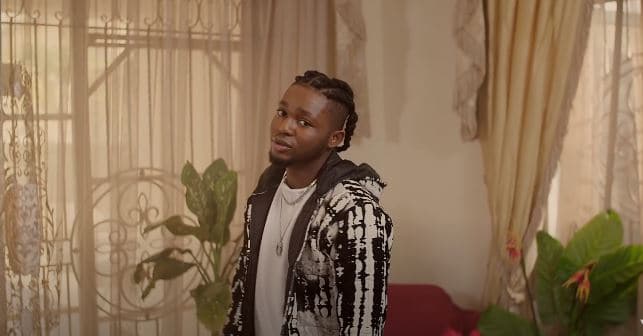
Watch Rema in the video for his hit song, “Woman”

Rema’s skill as a versatile artist was established right from his self titled debut EP, ‘Rema’ where he delivered radio-friendly Afropop jams like “Dumebi” and a convincing emo-trap performance on “Why”. He has since continued to expand his sonic palette, proving that no matter what sound he explores, he’s guaranteed to deliver another banger. Earlier on in the year, he went on a back to back release spree, which gave us a strong contender for Song Of The Year, “Woman” which he has now revived with an energetic video to match his impressive vocal range and charming charisma.

Over the groovy, drum-led beat by Ozedikus and Altims, Rema sings about his love for all women, regardless of the way they look. He has beautiful women all over the Internet interested in him and admits how he’s enjoying the attention too much to commit to a relationship. While rumours surrounding his dating life are debated every other week on the timeline, Rema is sending a clear message with “Woman” that he’s still young with no plans to be tied down as he’s just having fun.

For the accompanying video, we see him getting his prayers for more women answered while performing on a theater stage where he’s offered a symbolic apple by one of the women and he licks his lips after accepting it. Though we are used to seeing women dancing to the catchy melodies of songs in music videos, the video for “Woman” goes further by paying tribute to several women of different shapes, stature, and complexion. We stan a king who understands that representation matters

Watch the video for Rema’s “Woman” below.

Featured Image Credits: YouTube/Rema
[mc4wp_form id=”26074″]


You are meeting Debola at a strange time in his life. He wandered into a dream and lost his way back. Tweet at him @debola_abimbolu


ICYMI: Watch Rema play the heartthrob role in his video for “Ginger Me”

Wizkid, Davido & the significance of leaks and piracy in Nigerian music

Ten days before release, Tyler, the Creator’s fourth studio album, ‘Flower Boy’, was leaked to the Internet in its entirety. Instead of going into panic mode and bringing up the release date, the American artist barely even acknowledged the leak, continuing with his rollout as though every step of his plan had remained intact. Usually, when a leak occurs, artists and their teams become reactive in order to retain some control, however, Tyler and his team didn’t react, and later on when the music dropped, it proved to be a positive decision.

Following on the heels of his lukewarmly received third LP, ‘Cherry Bomb’, anticipation for ‘Flower Boy’ was quite high amongst his dedicated fan base and within hip-hop listener circles. Due to the stakes, a leak should have meant reduced sales, but instead, the album managed to still gross Tyler’s highest opening week sales and Billboard Chart position at that point in his career. In the post-digital era where digital bootlegging has advanced beyond buggy LimeWire links and severely limited internet bandwidth, Tyler’s achievement was quite remarkable, and he would go on brag about it on the freestyle cut, “ZIPLOC”.

While the success of ‘Flower Boy’, despite leaking, can be regarded as an anomaly, it’s also indicative of the continued shift in listening habits, especially with the rise of streaming as the primary means of music consumption, over the last few years. At the turn of the millennium, music piracy was the major epidemic for the global music industry, and prior to that, CD bootlegs were the main issue when. This, however, wasn’t enough preparation for the rampant format of digital piracy that would follow, with the ever-evolving Internet as the enabler to this issue.

For the whole of the noughties and half of the 2010s, illegal music downloads were the major bane for artists and record labels. The Internet had helped many young people realise that they could get a lot of music without paying, and it showed piracy to be the post-release version of leaks—anyone with a CD could simply rip and upload to a website for thousands and millions more to download. Armed with technological advancements, listeners clearly wanted immediate access to all of their favourite music without having to pay as much (or even anything at all) for it.

In an interesting twist, the same Internet managed to provide the strongest combative measure, through the advent and adoption of music streaming. According to reports, music piracy was declining due to the easy, legal access streaming provides, and that phenomenon has had its effects on leaks. In addition, streaming has provided a savvier avenue for artists and labels to contend with leaks, allowing them control the narrative and spread of their releases, and that’s probably why you’ll find that even though leaks are still prevalent these days, it’s not uncommon for listeners to wait for the official version of the song and wait for the intended listening experience.


View this post on Instagram


Run it up!! #MadeinLagos!! Out worldwide.🇳🇬❤️🖤🦅

A post shared by 🦅 (@wizkidayo) on

In the wee hours of October 30, 2020, Wizkid finally dropped the highly anticipated ‘Made In Lagos’, an album that was becoming something of a speculative myth with each shifted release date. After pushing it back to mid-November from its original October 15 date in solidarity with the #EndSARS protests, the revered afropop artist brought ‘MIL’ forward to October 29, possibly under the duress of an impending leak. At its allotted time, 11:11pm, the album was still nowhere to be found on streaming platforms, much to the chagrin of thousands of fans who had stayed up to catch the release as soon as it dropped.

A few minutes later, ‘MIL’ dropped relatively unceremoniously but to the same level of expected fanfare. As chaotic as they were, this sequence of events effectively combatted the leak, ensuring that a large bulk of listeners experienced the album for the first time through legitimate channels. The afternoon before its release, the Dropbox link containing the album’s pre-release version, sent to several music industry insiders and media platforms, was already being passed around and it was only a matter of how soon the entire public would lay their hands on this leaked version.

We at the NATIVE had been given legitimate access to a pre-release link, I had already listened to ‘’MIL’ for our 1-listen review column, so I didn’t listen to the content of the leaked Dropbox link, even though I wanted to. Part of that was for confirmation and curiosity: Was it the same? Was this album really going to come out? Were there going to be any changes made? Although I drifted off to sleep after it seemed like Wizkid had flouted another release date, ‘MIL’ had managed to get back-to-back spins immediately I found out it was available to stream, early the next morning. The album was really out, and even though the changes weren’t drastic, there were notable changes in the mixes of a few songs. Rather than simply holding on to the Dropbox link, I was much more comfortable listening to the officially released version of the album.

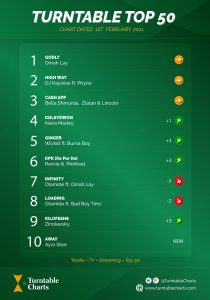
Unlike much of the larger world, the adoption rate of music streaming in Nigeria is still fledgeling. Due to high cost of data in addition to the recurring monthly cost of streaming, the idea (albeit slowly receding) that streaming is a luxury makes it such that a significant portion of listeners still rely on illegal music downloads. Regardless, the impact of the growing population music streamers, both through freemium and premium streaming platforms, has become impossible to ignore. Earlier this week, TurnTable charts reported that ‘MIL’ had raked in the biggest debut week for an album on YouTube NG, and the Burna Boy-assisted “Ginger” made history as the first number one song on the newly minted Top 50 charts, which is meant to be a reflection of the biggest songs in the country.

With these commercial achievements, it seems pertinent to wonder if ‘MIL’ would have gained this much early success if it had actually fully leaked. There’s no definite answer since it’s a hypothetic situation, however, it feels important to interrogate the consequence of leaks within the bigger picture of Nigeria’s evolving music industry. While gathering talking points for this piece, it dawned on me that our local music scene has been built on the back of piracy which is a form of intentional leaks, if you will. In the late ‘90s when eLDee pretty much instituted the Alaba model, starting with the Trybesmen, it was essentially a format where informal distributors paid a one-off price for the rights to pirate and sell an artist’s work.

The Alaba model was the dominant format for music distribution until the early to mid-2010s, with the internet and peer-to-peer sharing technology (e.g. Bluetooth) becoming more popular amongst young people. Powered by a rise in the use of Blackberry phones and other internet-enabled phones, that was basically the beginning of Nigeria’s own Limewire era, instigated by popular blogs such as Notjustok, Tooexclusive, 360nobs and more. In this period, CD sales began to decline and several artists even suffered leaks. I remember receiving M.I’s feverishly anticipated sophomore album, ‘M.I 2: The Movie’, a day before official release from a friend who had downloaded the entire album from some blog to his blackberry. While I would go on to buy the CD on the day it dropped, the ease of playing the album on my phone meant the CD didn’t get that many spins.

While artists and labels continued to sell CDs with the Alaba format, because the Internet use was still very low around here, many people decided to take advantage of these blogs, intentionally leaking their music to them in order to get as many ears as possible. Considering that live performances have always been the more lucrative revenue stream, allowing their songs to roam freely was a strategy to gain people’s attention so they would get more performance gigs. It’s still a commonly deployed strategy, and as a great example, it continues to be instrumental in the infiltration of street-bred music into mainstream afropop—the Shaku Shaku and Zanku waves were carried on the backs of intentional leaks and rampant piracy.

At the moment, there’s no tangible information about the effect of streaming on illegal music downloads in Nigeria. At the risk of being a little too optimistic, it’s clear that there’s a rise in streaming culture, even though it might be taking longer than it is in the rest of the world. The positive implication of this is that artists know that there’s a demographic who are ready to access their music through legal, revenue generating channels. On the consumer side, streaming comes with a double combination of ease and access, which becomes a habit that makes it tedious to go around searching for download links and leaks (in the case of soon-to-be-released music).

Over the weekend, one of the songs off Davido’s anticipated ‘A Better Time’, out this Friday, was leaked to social media, through no affiliations to the artist or his camp. The Nicki Minaj-assisted song has been trailed by its fair share of hype, and its leak definitely got thumbs tapping away on social media. As much as there was adequate chatter on the quality of the song, much of it still centred on its chances for commercial success when it finally saw official release. While there’s very likely unchecked proliferation going on, it’s telling that a leak doesn’t seem to be hampering a potentially huge international collaborations.

On his path, Davido hasn’t done as much as react to leak, going on with the rollout for ‘ABT’ with the recent release of “So Crazy”, the Lil Baby-assisted single that had already been scheduled. In the blog-dominated era, there’s a high possibility Davido would have run with the leak as a single, since it would already be on millions of phones. With streaming, however, it seems as though there’s a confidence that there’s a dedicated audience waiting to listen when the song is officially out, so there’s nothing to sweat.

Using situations involving Davido and Wizkid to determine the implications of leaks and piracy might seem a bit idealistic, since they’re two of the biggest superstars and so many people would naturally be paying attention and waiting for their new releases. However, that’s also exactly why they are perfect examples, because this means the stakes are really high for them. Their different approach to handling leaks shows that artists have increased agency in controlling how they want their work to be received. As I’ve been told by many artists, the process doesn’t stop until the music is out—and even in some cases, after it’s out. No artist wants their process to be disrupted by leaks and affected by piracy, and it should be a bit comforting that these factors seem to be getting less grave with each passing day.

The common trope is that Nigerians would rather not pay for music, but the truth is, music is more or less free these days. While it isn’t entirely ideal from a creator’s point of view, listeners can access music for free through multiple freemium streaming platforms, as well as premium ones for a relatively inexpensive rate. Getting the double positive of ease and instant access to official for next-to-nothing, depending on spending power, is obviously more alluring than surfing the web for illegal downloads. As more people lean into this route, the hunt for leaks and appetite for digital piracy will continue to dwindle, hopefully, up to the point where a Nigerian artist’s album can leak for days in advance and it won’t have much bearing on its potential for commercial success.


Dennis is a staff writer at the NATIVE. Let me know your favourite the Cavemen songs @dennisadepeter


READ OUR REVIEW OF WIZKID’S ‘MADE IN LAGOS’

Falz pays tribute #EndSARS protesters in his video for “Johnny”

Although the momentum of the EndSARS protests isn’t quite the same as it was last month (especially following the Lekki massacre 3 weeks ago), young Nigerians haven’t quite given up and continue to speak up against bad governance. We’ve lost faith in our security forces’ ability to defend our safety in the streets, so people are using their voices in different ways to continue to exposes the rot in our society and document things as they are happening in real time. Falz was very active voice during the protests last month, and he has continued to lend his platform to the cause since. Now, his newly released video for “Johnny”, one of the standout tracks from the socially conscious tape he released last year, ‘Moral Instruction’ aims to pay tribute to the victims of police brutality and those who we have lost.

‘Moral Instruction’ is Falz’s fourth project, however, unlike the previous Falz tapes which saw him build public appeal with his humorous and often charming takes on social issues, ‘Moral Instruction’ took a more serious tone as he criticised social norms and the negligent government with a Fela inspired gravitas. Though “Johnny” was the tape’s opening track, it remains as timely as ever because it offers a detailed description of the police brutality that sparked the recent #EndSARS protests in Nigeria. Over the retro-inspired hip-hop beat produced by TMXO, Falz narrated the story of young people getting killed by trigger-happy police officers.

To drive home just how rampant this issue is, he’s just updated the nearly two-year-old track with a graphic video to match the horrific tales he narrated on the track. In addition, to the dramatised clips of Falz at a staged protest, Olu The Wave-directed music video also features some original clips of the police brutality recorded during the EndSARS protests—including the video recordings that captured as army officers attacked protesters at the Lekki toll gate.

Saying “Johnny just drop/ Na popo shoot am down/ If Johnny continues to drop/ Iyan melo Lo na ku”, “Johnny” highlights how all young Nigerians are at potential risk of getting killed by the police and the video captures this with shuffled shots of Falz and several others lying in a pool of blood.

You can watch the video for “Johnny” by Falaz below.

Featured Image Credits: YouTube/FalzVEVO
[mc4wp_form id=”26074″]


You are meeting Debola at a strange time in his life. He wandered into a dream and lost his way back. Tweet at him @debola_abimbolu


ICYMI: Watch the video for Falz’s latest single, “One Trouser”

Rap Song of the Week: Prettyboy D-O is an unstoppable force on “Jungle Justice”

Prettyboy D-O is a magnetic force, and for anyone who has been paying attention to his career-defining run, this can either be deduced from his characteristic sound which is unique to only him or from his larger-than-life personality which is generally what keeps fans and onlookers endeared to him.

From the moment Prettyboy D-O stepped into the scene, he’s used his platform to speak about society’s ills. One of his first official singles, “Chop Elbow” was a socio-political number, calling for everyone from politicians to the police, and all his haters to do as the title says (i.e, do one). The song served as a marker that his music would never shy away from passing commentary on society’s penchant to subjugate the underdog and take advantage where there’s an opportunity to, and it’s with this same energy that he brings to his debut performance on A Colors Show, to give fans a taste of his new single “Jungle Justice”.


View this post on Instagram


A post shared by Prettyboy D-O 🌍 (@prettyboydo) on

Maintaining his proclivity for high-energy performances and bruising raps, “Jungle Justice” could sit comfortably on his recently released EP, ‘Wildfire’, towing a similar line to the brand of self-assured anarchy that punctuated much of the project’s premise. Opening up with distinct keys that quickly build into a more menacing beat, Prettyboy D-O floats on the up-tempo number produced by DOZ and Hvrry, which gives the message enough room to stand out, as he runs through his feelings about the broken Nigerian system. He’s self-assured as usual, starting off with a clear caveat, “You better warn them/try to take me money, I go hurt them” he sings, explaining his battle with the Nigerian police, whose disturbing actions he’s been very vocal about on different occasions in the past.

In a recent interview with Okay Africa, D-O was quoted to have said, “I do not like bullies, I do not like things that are not equal, I don’t like intimidation, I don’t like oppression” and this certainly translates to his music. “Jungle Justice”, as the name suggests is about taking matters into your own hands, controlling your fate, and fighting for what’s right. But unlike the gruesome act that’s come to encompass public mob justice in this country, D-O isn’t physically drawing fists with his oppressors and haters, he’s simply doing the work and letting it speak for himself. When he sings I say my brother this na jungle justice/Cos where Mi from dey no give you no nothing/No recognition but we always working”, you can imagine his words as unequivocal truths. 

D-O is telling his haters to keep sleeping on him because their recognition of him in the industry has no bearing on the heights that he will go in his career. This is brought to a peak when he interpolates 50 cent & The Game’s monster hit “Hate It or Love It” singing, Hate it or love it, the underdog’s on top and I’m gonna shine only until my heart stop”. Taking a leaf from 50 cent’s book, his bars are marked with evocative details of his come up, counting the people closest to him as his brothers and detailing years of slumming it together in his earlier days. Each line is memorable, oscillating somewhere between singing and rapping, as he delivers it passionately with an audible smirk to the opposition.

With the premise of this song, D-O is saying he’s a rapper rapper and his compelling catalogue of music is proof enough of this status which he doesn’t feel like he needs to prove anymore. He’s easily become one of the most intriguing characters in the Nigerian hip-hop scene, with a ubiquitous presence in the new vanguard of hip-hop/rap, which now inspires newer hitmakers such as Fresh Meat Alum, JELEEL!. Throughout “Jungle Justice”, he affirms himself as one of the GOATS despite being counted out and this shines the most on the song’s anthemic hook.

Back in June when I last caught up with D-O as he quarantined in Los Angeles, he told me about witnessing the groundbreaking anti-racist movement that swept the US during the summer following the death of George Floyd. He said about the protests, “I just wanted to see how these people can just wake up and start fighting their governments and actually get results”, and inspired by the energy of people, he was insistent on learning how this could translate to his country, Nigeria. No one could have foreshadowed that only a few months later, the #EndSARS protests would break out across the nation and young Nigerians would come out in droves to demand better from their government and law enforcement. D-O who joined the protests at the height of it all was very vocal about the ineptitude of the Nigerian government, and on “Jungle Justice”, which was recorded two months before this historic moment, his vision shone clearer than ever. He’s telling us to be patient, because the underdog will rise and get everything they are owed.

Featured image credits/Youtube


.@tamimak_ Is a Staff Writer at The NATIVE. Send me memes.


ICYMI: Davido links up with Lil Baby in the video for “So Crazy”

Davido links up with Lil Baby in the video for “So Crazy”

Davido is fast approaching go-time for his newest body of work, ‘A Better Time‘. Last November, the Nigerian pop juggernaut stunned listeners with his incredible sophomore album, a long-awaited follow up to his crowd-stealing debut, ‘Omo Baba Olowo‘. Just shy of a year later, Davido already has a follow up. ‘A Better Time‘ is titled and branded as the sequel to ‘A Good Time‘, one that promises more tracks from around the same high point in his life.

The lead single for ‘ABT‘, as Davido himself abbreviates it, was “FEM”, a confident, sharp-tongued hit that, at first caused buzz because of its subliminal messages directed at Burna Boy, but then took on an entirely new life as it voiced the sentiments of a generation who have grown tired of our leaders’ sweet nothings. After putting the project on hold to lend his voice and privilege to the #EndSARS movement, Davido has now returned to ‘A Better Time‘, releasing the album pre-order along with the second single off the record, “So Crazy”, featuring Lil Baby.


View this post on Instagram


A post shared by Davido (@davido) on

Throughout his career, Davido has come up alongside a number of elite American acts, from Meek Mill to the Migos. Collaborating with Summer Walker, Gunna, Chris Brown, A Boogie wit da Hoodie and Popcaan on ‘A Good Time‘, Davido will be bringing in collaborations with Nicki Minaj, Young Thug and more to ‘A Better Time’, including Lil Baby on “So Crazy”.

Davido’s latest is a typical Davido record, in that it sees him longing after a girl. This time however, she is giving him the run around, airing his calls and generally acting a little disinterested which he and Lil Baby of course find “so crazy,” they sing on the hook. Taking the song’s first verse after the introductory hook, Lil Baby delivers some solid bars, followed up confidently by Davido, who bursts in with a commendable rap performance.

As he tweeted in celebration of Joe Biden’s win in Georgia, that is David Adeleke’s second home. Looking very cosy in the music video for “So Crazy”, for which they hosted a pool party full of stunning women, one can only assume Davido and Lil Baby are on their home turf of Atlanta, Georgia. Giving credence to Davido’s assurances that the girl he’s after will have a good time with him, the simple music video is very effective in displaying the vibrant and fun-loving nature of the song. Hopefully these qualities extend album to itself.

Pre-save ‘A Better Time’ now.


ICYMI: WIZKID & BURNA BOY’S “GINGER” MAKES HISTORY AS THE FIRST NO. 1 SONG ON TURNTABLE TOP 50 CHART

AV Club: How ‘Citation’ interrogates Nigeria’s failing establishments

Trigger warning*


Following the story of a young student who has accused her course supervisor of attempted rape, Citation is a timely piece of social commentary that challenges the status quo of victim-shaming when it comes to reported cases of sexual violence, and looks to inspire the country toward fairly functioning justice systems. Analysing the Nigerian context from which the film in born, Nelson C.J. reviews Citation and explores its representation of Nigeria’s failing establishments.


On October 7, 2019, Emmy-nominated journalist and filmmaker Kiki Mordi, released a 13-minute-documentary for BBC Africa Eye, exposing the long-standing and mostly unchallenged sex for grade tradition present in Nigerian and Ghanaian universities. After release, social media platforms had nothing else on their conversation belts for days. Nigeria stopped for a second; to ponder about its place in allowing this menace to have happened for so long without question. The Sex For Grades documentary completely flipped our notions of sexual assault and reiterated an often overlooked truth about the integral place of power in conversations around soliciting sex in return for better grades. While many might have considered that harmful tradition a discomfort one of the many hitches in our academic set up, it was not until the release of this documentary that we began to see the extent of the damage it actually causes on students who are caught in its twisted process.

It’s safe to say then, that the seismic influence of that documentary is what birthed or at least inspired, the new Kunle Afolayan feature, Citation. Starring first time actors Temi Otedola, and Ibukun Awosika, these two women debuted alongside several seasoned professionals from various primary cinematic disciplines, Joke Silva, Ini Edo, Jimmy Jean Louis, Yomi Fash Lanso, Gabriel Afolayan, Bukunmi Oluwashina. Gabriel Afolayan who plays the protagonists’ partner, displays a particularly noteworthy performance, seen flexing out a bit more, and embodying his role as a charismatic medical student in a Nigerian university. 


View this post on Instagram


A post shared by Kap Motion Pictures (@kapmotionpictures) on

SPOILER ALERT

Citation is like much of Kunle Afolyan’s work, in the way he takes a chance at artistic inventiveness. Here, he casts Temi Otedola, an aspiring actor in her debut performance, in the film’s leading role – a bold move that pays off – and maximizes locations often overlooked by other mainstream Nollywood movies, so that the halls and grounds of Obafemi Awolowo University. Other locations used in the film, such as Senegal and Cape Verde, play an active role and become necessary characters who also influence how the film is remembered.

But some notable changes appear in Citaion, which follows the story of Moremi (Temi Otedola), a young, smart and determined postgraduate student who tries to prove, to her university’s tribunal, that indeed, her course supervisor and lecturer Proessor Lucien N’Dyare (Jimmy Jean Louis) tried to rape her. In this film, Kunle Afolayan, is careful. Not particularly as detailed or meticulous with the storytelling as he often is, but careful. This carefulness is easy to tell from the gentle yet quietly sinister pace by which Citation is told. 

The story unfolds the way slightly inexperienced hands might try at removing the bandage from a wound. And as the wound of this story comes slowly undone and its layers are fully realised, one is brought to the sense that Afolayan is not entirely preoccupied with not making a mistake, as he is careful about telling a good, tactful story.

Spanning 2hours and 31 minutes, the film begins by asking us to trust the systems of accountability available to us. This of course is a hard concept to follow seeing how deeply dysfunctional those systems have repeatedly proven to be in real life. At the beginning of the film, we see a university student being offered sex by her lecturer in exchange for an up in her grades, an up which as far as we can glimpse from the plot, she duly deserved. Bolstered by evidence which she had collected by recording the call and a boyfriend willing to ambush the lecturer himself, the plot takes a complicated twist that results in the death of the lecturer and the expulsion of the students involved, including the female student who was offered such a proposition in the first place.

This opening scene, while furthering the campaign for the belief in systems, failed to acknowledge the real reason why they weren’t the first point of call. 

This expectation to rely on systems is a running theme throughout the movie; a theme that correctly highlights the importance of strong accountability systems, like the express objectivity exhibited by the panel overseeing Moremi’s case, despite Moremi’s fears of their bias towards Professor Lucien. Regardless, the film fails to interrogate how those systems have failed people in the past. Any strong accountability system needs a history of it working enough for people to trust it, otherwise, the ready alternative of that, people taking matters into our own hands and designing their own type of justice, becomes widely accepted as the only logical course of action.

Citation is mostly told through the process of Moremi trying to convince the senate tribunal made up of top academic faculty members, of the truth of her story, and much of this process requires a constant sifting through memory. Sometimes it is reliable and crease-free, and other times it is muddled and wrapped in complications that threaten to implicate her. After growing close to Professor Lucien who tricks Moremi into teaching him how to drive a manual car, we see the charismatic professor lead our protagonist away from the people closest to her; sometimes with the attention he showers, other times with the pretence of relinquishing control to Moremi, and once with the trip to Senegal and Cape Verde that preceded a dark side of Professor Lucien which would only come fully revealed much later, after an Easter party at his house.

The choice to cast Temi Otedola in the lead role made for a brilliant if sceptical watch. With this being her first acting gig, it is fair to absolve her of some of the ways her delivery might falter or her Yoruba speaking might sound comical even when she is being serious. Yet what she lacks in fluent Yoruba, she makes up for in her deeply convincing emotions and hitch-free French, further enhancing the cosmopolitan makeup of her character. From her accommodating French communication with N’Dyare, to her whimsical adventurous nature, Moremi is painted with broad strokes of metropolitan naivety, innocent traits that her professor manipulates into his web of lies as unexplainable flaws in judgement.

In trying to prove her innocence to the panel, Moremi finds herself in that inescapable whorl of acute recollection. As it often happens when piecing back traumatic events, this process of retrieving bittersweet but necessary memories is non-linear. It is retold with a jaggedness that pushes at Moremi’s judgement as she tries to rediscover a version of people she thought she was aware of, but had unfortunately failed to see. 

Retrospect is Kunle Afolayan’s strong suit. And as with his other films, Citation is able to come together as a story, not by the characters merely remembering past events and building it out with the help of a stunning colour grading and reliable acting, but doing so with context, and retrieving events that were once thought to be inconsequential into moments where they become most significant. 

The cinematography in Citation is also stunning, and generous with its use of place and mood to stress the mounting dread that follows Moremi as she, guarded with nothing but her words and no immediate concrete evidence, wonders if the tribunal will believe her story or not. Unfortunately, the dialogue, however, falls short of this meticulous cinematic serving. Although actors Ini Edo, Joke Silva, Ibukun Awosika, all carry their roles with a pleasing dedication to excellence, the dialogue at several points make the story hard to follow and some parts of the acting hard to believe or swallow. The dialogues featuring academic discourse gave the film a profound and immersive flow, but still, this wasn’t enough. In fact, these lengthy displays of academic prowess seemed to almost try its best to upend the stellar efforts of the actors who had to use them.

In parts where dialogue was sparse, such as the Seun Kuti concert or leisurely scenic cuts during the trips to Senegal, the unnecessary extension of these scenes, served as a lag to the story. Occasionally, though, these distractions — because ultimately they did distract from the overall plot progression of the movie — felt like a welcome relief from the unflinching eyes of the panel, while allowing us to see Moremi, a character whom one grows to care for, being happy and young and momentarily unbothered by Professor Lucien’s despicable intentions that would come to cloud her coming days. While making strong assertions for itself as a socially conscious work with a global resonance, Citation could have done with a bit more nuance, a bit more shedding of old tropes about women vilifying other women for the attention of men, some exploration of how the case got to the Tribunal panel in the first place and how it was received when it was tendered. As in real life, that process is often an important marker in what type of cases people decide to report to guiding authorities.

At the heart of it though, Citation is as much about sexual exploitation in academic spaces by people vested with power, as it is about the systems that enable their exploitation to thrive and go unpunished, however, in preference of imagining the fair and functioning justice system Nigerians crave and deserve, Tunde Babalola’s script fails at dutifully interrogating the latter. It is also about what it means to simply be a young woman who wants to get her life back, finish her post-graduate studies and pursue her dreams, however slightly cushioned and naive they might appear.


View this post on Instagram


A post shared by Kap Motion Pictures (@kapmotionpictures) on

Featured Image Credits: Temi Otedola/Instagram


AV CLUB: “NIGERIAN PRINCE” IS ABOUT A FRAUDULENT SCAMMER, BUT THE POLICE IS THE REAL VILLAIN

Social distancing rules could leave your December spotless

The first time I heard about Detty December, I thought it had to do with the dirt from the harmattan winds. I only found out the festive meaning behind it after I moved to Lagos for my NYSC and realized that when my friends said they were saving up for Detty December, they weren’t talking about getting clothes that don’t stain easily. They were talking about getting their wallets fat enough to indulge in all the partying and festivities that happen in December.

Under normal circumstances, there are lots of fun activities to go to in Lagos all year round like partying, going to music concerts, comedy shows, arcade games houses, movies, and even theatre shows if that’s what you’re into. However, no matter what it is you’re into, the best time to do it is in December. The mood is generally more pleasant at that time of the year as people are in their festive spirit, whipping out a cheerful attitude that they only showed sparingly through the year. You can sense the urge to top whatever festivities they had done the previous year as turn ups get more turnt up as we edge closer to the end of the year.

However, since the coronavirus swept through the unprepared world and hit Nigeria in February, events, parties and shows have gotten derailed as social distancing rules were implemented to prevent the spread of the virus. As a result, it feels almost cruel to reminisce about previous Detty December accomplishments. Initial quarantine laws restricted movement and allowed only essential workers to go out, but lately, the social distancing rules have gotten more relaxed, allowing businesses to resume work while workers wear face masks and maintain social distance. We even had a good laugh on the timeline when the government announced the flimsy 8pm to 6am curfew as a preventive measure to reduce the spread of the virus from the 4th of May. Since then, we’ve seen things gradually go back to normal as restaurant doors were opened and adolescent milestones, weddings, funeral and religious gatherings resumed under the condition that nose masks are worn and the number of participants is restricted.

https://twitter.com/Gideomatic/status/1254859733397155843?s=20

Sadly because the pandemic has gone on for so long, people seem to be less vigilant and more careless about following the social distancing protocols. The UK is currently experiencing the 2nd wave of the pandemic because of this and as a result, the nation is going into lockdown for the second time. Nigerians have also been encouraged to limit social interactions because according to Buhari, “Our economy is too fragile to bear another round of lockdown”. But will Nigerians give up the treasured end of the year tradition, especially at this time that we need it the most?

Fisayo has been indoors since March when the lockdown was first imposed in Lagos. Unlike most people, her job as a writer allows her the privilege of working remotely from home where she lives with her family. However, she admits that she has been out for a wedding party and a sleep over party since the lockdown started. Our basic human need for connection and intimacy can only be suppressed for so long before we eventually seek out social interactions.

For Ice who also spoke with us about the pandemic’s effect on his partying lifestyle, staying at home during the quarantine was insane and he was happy when things started to open up. “I’ve been to a couple of parties. Not the regular Lagos parties though cause people are still scared and observing the situation of things. But people still come out and have fun. It’s just not as crowded as it used to be.”

The risk of getting the virus is reduced by following safety regulations like wearing face masks in public gatherings, keep good hand hygiene and social distancing. However, that’s easier said than done as 63,328 cases of COVID-19 have been already been reported in Nigeria and we anticipate that those numbers will spike as we approach the end of the year. Young Nigerians spent most part of last month outside, protesting for an end to the SARS unit of the Nigerian police force and police brutality. While our reasons for breaking the social distancing laws were noble and urgent, it has increased the risk of a second wave of the pandemic in Nigeria and especially in Lagos, where December tends to get dirtiest.

Toyosi isn’t optimistic that there won’t be a second lockdown and has gone ahead to enjoy the freedom she has while she can still go out. “I actually haven’t partied partied, just a sprinkle of house parties and beach parties and tbh, zero social distancing; Everybody sharing blunts. Fortunately, I haven’t (and wouldn’t in Jesus Name) caught the Rona.” For Ifeanyi Chuku who also spoke with us about coping with the lockdown, she too has tried and failed at social distancing while out at an event that held in Lagos in October. “At first everyone was wearing their masks, you know, Covids still outside. But then when it came time for that mosh pit, everyone’s masks were off.”


View this post on Instagram


PSA from @asaofficial 🧼 stay clean and stay safe 🙏🏾

A post shared by The NATIVE (@thenativemag) on

The big concepts that have become synonymous with December festivities in Lagos are unlikely to hold this year due to the social distancing restriction. And though we expect that virtual concerts—like we saw from artists like Asa, Johnny Drille, and others who invited fans into her homes for their live-streamed concerts—will replace the regular December shows, the music concert experience isn’t quite the same when you’re not half focused on the performance and half trying not to lose your shoes and other valuables in a moshpit of fans. Though we’re looking forward to making the most of the anticipated virtual shows and live performances, it might be best to keep a hold on any lofty expectation because of the unreliable state of internet access in Nigeria.

All indicators point at partying conditions being less than ideal and for some, the 208 recorded Covid-19 deaths in Lagos already, 1,151 deaths in the whole country as well as the widespread unrest and protests around the world might make it difficult to even think about partying in these uncertain times.

Regardless, lots of Nigerians traditionally travel to congregate with their loved ones in December and though this is our first December holiday since the pandemic hit, we bet that that urge still persists. Fisayo told us she had a family party at home last December which involved her nuclear and extended family. She believes the party will still hold this year as it’s an annual tradition but she won’t be around for it because she plans to travel to America in December.

Ice also plans to spend time with his family during the December holidays since he’s been working through the year. “I have plans to go out of the country but we’re in very usually time so it’s hard to say for sure. I really don’t know what to expect yet. Usually, I have a couple of friends who come into the country from London and it’s always fun but since there’s a lockdown in London, I doubt if there’d be able to come to Nigeria for this December.” Ifeanyi Chuku also shares Ice’s uncertainty as she told us that she has no plans and will be going with the wind.

Judging by London’s second wave lockdown, there aren’t likely to be many IJGB(I Just Got Back)s from London this December and they were a major part of the allure of Detty December. The social distancing laws are also likely to get more strict in December and we’d appeal to everyone to follow the social distancing laws so we can beat the pandemic and go back to celebrating our favorite holiday. Even hearing bangers and fireworks going off have lost its appeal after we’ve gotten so traumatised by all that gun violence from the #EndSARS movement.

Featured Image Credits:
[mc4wp_form id=”26074″]


You are meeting Debola at a strange time in his life. He wandered into a dream and lost his way back. Tweet at him @debola_abimbolu


ICYMI: Remembering the pre-lockdown parties

Review: Wizkid’s ‘Made In Lagos’

‘Made In Lagos’ is Wizkid’s fourth studio album in his decade-long reign at the top of African pop’s totem pole. His second feature-length release under Sony Music Entertainment’s RCA Records, ‘Made In Lagos’ is a concurrent and refined follow up to his then-experimental ‘Sounds From The Other Side’. This time exhibiting confidence, maturity and sophistication, ‘Made In Lagos’ is coloured by live instruments and a worldly selection of featured artists, making a successful amalgamation of the afropop sound Wizkid popularised worldwide.


Over a week after its release, it still feels surreal. The album that has been ‘Status: Imminent’ for nearly three years now, finally arrived on October 29, 2020. Since the original Starboy first revealed plans of his fourth studio album, with the hashtag #MadeInLagos appearing as early as February 2018, multiple hit singles, shows, and awards, a label compilation album with his new signees, and even several collaborative merch drops, all went by with no album in sight.

In the roughly thirty-three months between the first whispers of ‘Made In Lagos’ and its final arrival in the last week of October 2020, Wizkid subjected eager ears across the globe to countless false starts – some more convincing than others – resulting in ‘believe it when I see it’ scrutiny to each new announcement that followed the last disappointment, inviting unending memes across social media cyberspaces. Unlike the Boy Who Cried Wolf, however, ‘Made In Lagos’ never lost any steam. Wizkid FC (the name his fans have attached to themselves, fittingly referencing Wizkid’s plural jersey releases) remained loyal and keen, as always.

Made In Lagos’, no doubt, came as the most highly anticipated album in contemporary Nigerian music history; but not just because we had been expecting its any-minute-now landing for several years. With a lacklustre sophomore album, and the heavily criticised follow up, ‘Sounds From The Other Side’, fans have been waiting the whole decade to hear a body of work from Wizkid worthy of his undisputed magnus opus, ‘Superstar’. In his ten-year career, Wizkid has grown from the boy whom we all instantly knew had it, into the superstar he was destined to be. One of the most prominent musicians on the African continent, not having a body of work that lived up to his debut had little effect on Wizkid’s trajectory. His success was never challenged or diminished by the fact, but as more and more Nigerian listeners grew an appetite for feature length albums from their pop stars, Wizkid fans grew even more anxious for a project that would define the Starboy Wizkid had evolved into – one that would speak to his refined sound along with his dignified status as a bona fide international superstar. This is ‘Made In Lagos’.

From the moment Wizkid introduced himself to the Nigerian populace – opening his debut song yelling, “it’s your boy Weezy” – there was unanimous agreement amongst all listeners that this newcomer was already a star. ‘Superstar’, the album from which “Holla At Your Boy” was the lead single, at the time felt like a natural, warranted and credible album of boasts, considering Wizkid was one of the hottest acts that year. As he’s remained so ever since, the lyrics on this prophetic debut album have become less and less disputable. When he sings “see everywhere I go and every I be, be it in Las Gidi or overseas, see everybody call my name” on the cleverly-chosen album opener, “Say My Name”, what might have been an ambitious exaggeration back in 2011 is an unequivocal fact these days; Wizkid’s music travels, no Visa, as he sings on “No Lele”. He is the ‘Superstar’ he knew he would be, even in those early days. Even his “wearing Dolce and Gabana” lyric on “Don’t Dull” has come into fruition in the most magnanimous way possible.

The words on ‘Superstar’ remain truer than ever, but from his fresh-face and early 2010s fashion on his album cover, to his vocal and lyrical abilities, Wizkid has of done a lot of growing up through the course of his career, and we have watched him religiously through it all. The most notable pivot that fans have pointed to, especially in the wake of the ‘Made In Lagos’ release, is the mood of the soundscape under which Wizkid now produces. Whilst with EME, where he released ‘Superstar’ and his sophomore album, ‘Ayo’, Wizkid jams were primed for the dance floor. He carried this penchant for ubiquitous hits into his Starboy Entertainment run, releasing singles such as “Dance For Me” and “Final (Baba Nla)”,  before kicking off his deal with Sony Music’s RCA Records with the less than commendable commercially-produced “Daddy Yo”. But since the 2017 signing, Wizkid has relaxed into his adult groove. Still fit for a night out, Wizkid’s sound has evolved from club bangers into sensuous red wine accompaniments.

Playing with slower tempos and more careful production, though ‘Sounds From The Other Side’ was widely criticised at the time, the “Starboy international sound” he proclaims on “One For Me” has stuck. Then chastised for trying to go Western and failing, Wizkid’s R&B cut on his latest album, the Ella Mai-assisted “Piece Of Me”, has been lauded as one of the stronger records on the album. From the mellow grooves he floats through, on the sultry Starboy compilation ‘SoundMan Vol. 1’, to the atypical melody (which at first stuns) in which he sings “Oh for my bed dey do like rocky o, used to go round after round round round, no lie…” over the last couple of years, Wizkid has revealed himself, settled in somewhere between home and the other side.

Lyrically too, Wizkid has progressed. Though ‘Made In Lagos’ is not written by him alone, Wizkid’s improved pen game on the album is apparent from the very first track, “Reckless”. Produced by P2J, who executively produces ‘Made In Lagos’, Wizkid’s introduction on “Reckless” revisits his first link up with the British producer on Tiwa Savage’s “Bad”. Mirroring the marching rhythm that plays consistently through P2J’s strings on the beat of “Bad”, Wizkid chants the opening bridge: “Dem inna, inna, inna, inna, inna, I know sey dem go pray on my downfall//I’m still a winner, winner, winner, winner, winner, me never let them play on my banjo.” After an arresting start, Wizkid saunters into his first verse, making a testament of his improved lyricism with lyrically dense verses, where his use of song-writing clichés is limited, instead reworking widely known adages into more personal adaptations of the proverbs we’re so used to hearing (“showered in blessings, now my cup’s running over”).

Even the subjects Wizkid covers through his lyrics speak to the ten-year evolution of this instant star. On ‘Superstar’, Wizkid found himself bragging about his greatness; now, having achieved heights even greater, “Reckless”“Blessed” and “Grace” narrate the trying road Wizkid has travelled in order to reach his current peak position. The first stages of this journey played through his career-defining international breakout record, “Ojuelegba”.

“Ojuelegba” was an ode to home; a thank you to the place that birthed him, and a recognition of the inexplicable gratitude he feels for being able to rise from the streets to the world. According to childhood friend, Silly, who was Wizkid’s other half in his first foray into secular music, via the two-man-band, SI, “[Wizkid] was like the brain in Pinky and the Brain, always wanting to take over the world;” “Ojuelegba” was the hit single that would give him that.

Appearing on his sophomore album, ‘Ayo’, “Ojuelegba” caught the attention of British grime juggernaut Skepta, who fielded it to Drake before the duo released the game-changing collaboration that many argue set West African pop on its current course to global dominance. Following “Ojuelegba” came “One Dance”, and then “Come Closer” and in and amongst those two collaborations with the dictator of global hip-pop, Wizkid’s deal with RCA. “Ojuelegba” was a turning point in Wizkid’s career, where the world that he had so longed to touch, the global market that many thought he has penetrated far enough, opened up to him in an explosive way. Now known across seas, Wizkid is extrapolating this turning point into a full-length album. Sticking with the same cool predilections, the same affinity for live instrumentation, the same high standard of production, ‘Made In Lagos’ continues the journey Wizkid started in “Ojuelegba”, narrating what the rise has looked like since, building upon the tales he told at the very start of his career.

In the time of “Say My Name”, Wizkid was an overnight star, now at “Reckless”, he has been grinding tirelessly to reach the stage at which he is; he has faced unprecedented pressures and unimagined trials. These stories could make for riveting musical entertainment, vicious songs that rail into the opps, tell-all tunes that describe the betrayals, but it isn’t Wizkid’s way to dwell on adversities. Rather aloof to any public scandal, his words on “Blessed” explain the sundown inclinations of the album – I don’t want to talk about the things wey go really make me down tonight// I don’t want to talk about the things wey go really make me frown tonight,” he croons, indicating that the night time is best spent gyrating, or mighty wining.

Noted in the early hours of that Thursday morning, as fans stayed up to stream the uncertain release, ‘Made In Lagos’ is a sensual body of work, fit for carnal pursuit. Some have suggested Wizkid’s penchant for overtly erotic lyricism is a recent development, unique to this album; however, in (and not between) the lines of Starboy favourites, such as “Totori”“Fever”, “Low”, “Jam”, “Kana”“Nowo”, “Soco”, are explicit invitations for sex. Outright discussion of fucking on the second single, “No Stress” might have projected expectations of the album to exceed Wizkid his typically sex-driven content, but in and amongst “Ginger”“Longtime” and “Roma” is a healthy dose of love; it goes without saying, “True Love”, or the chirpy, uplifting lead single, “Smile”, or the vows of commitment on “Sweet One” (albeit co-mingled in with promises of sweet rounds), or even the toxic love song, “Essence”. Sex is a prominent topic throughout the album, but it has been throughout Wizkid’s discography. As his lyrical dexterity improves, consequentially, his ability to relay his carnal desires is enhanced. That’s what we hear on ‘Made In Lagos’; the experiences in love of a man who can much better articulate his experiences in love. Aided, of course, by the formidable line-up of featured artists he convokes for this fourth studio album.

Taking only half the project solo, ‘Made In Lagos’ heavily relies on the contribution of its featured artists. Typically inspiriting and inspiring on his offerings, Damien Marley’s placement on “Blessed” leads the song, not only in terms of the order in which he and Wizkid appear, but in terms of the alluring quality that he draws in, as his deep and direct vocals follow up the mysterious opening painted by Alexander The Greatest’s bassline composition. Similarly, as Wizkid ventures into the depths of R&B on “Piece of Me” it is Ella Mai’s assistance that carries the record to its commendable heights. On “Essence”, both at the top of their respective fields, from vastly different eras, Tems and Wizkid prove why this combination of heavyweights is one Nigerian listeners have been pining after since it was first teased.

Another highly anticipated feature from a Nigerian peer was Wizkid’s collaboration with Burna Boy. Wizkid and Davido have been the top reigning Nigerian musicians for the most part of their careers, constantly pitted against each other, and in their early days, buying into the beef by competing with each other for a space in which they both comfortably existed. Allegedly getting physical during the height of their feud at the One Africa Music Festival in Dubai, 2017, their animosity seemingly dissipated a year later, when Davido yelled to his 30 billion crowd members, “would you like to meet my new best friend,” and Wizkid emerged. Since, the two have publicly supported each other, most especially Davido, who caught heat earlier this year for claiming Nigeria’s top two for himself and Wizkid, despite the African Giant having now made his way into the upper echelons of Nigerian pop. Throwing a tantrum because he got left off bad and boujee, it’s now the turn of Burna Boy and Davido to nurse a petty feud, as Wizkid earns praise for putting those childish days in his past. Although OBO, his longest rival, doesn’t make it to the album, Burna Boy, who he often works with alongside P2J, appears on track number two, “Ginger”.

A track that boasts great synergy between the two, “Ginger” falls flat on its face as Burna Boy launches into an unforgiving key change, continuing in a passionate tirade that fast became the butt of Twitter jokes. As for the other featured artists on the album, Terri, H.E.R. and Skepta all deliver strong contributions, though easily forgotten. In the cases of Terri and H.E.R., this is given the quality of the other features on the album, in Skepta’s case, because his opening verse is followed up by an entire three plus minutes of the song, with no further appearance from him. Unfortunately, and ironically, the length of “Longtime” diminishes the impact of Skepta’s feature on ‘Made In Lagos’.

In 2018, Tierra Whack released her debut album ‘Whack World’ a forceful body of work that particularly stood out for its 1-minute-long songs. Rihanna, when asked why she chose to release a photobook and not a written biography, replied Women’s Wear Daily saying, “my fans are young and they’ve got ADD; they’d rather look at pictures than read, let’s be real.” It is said so often that it has become unbearably boring, but the fact is, our instantaneous access to most of the world’s knowledge has changed the way in which internet users consume everything, from information, to entertainment – even food. In this social climate, artists are opting for songs shorter than the universally agreed 3:30 average. Tiwa Savage’s ‘Celia’ and Olamide’s ‘Carpe Diem’ both averaged a hard three minutes per song, whilst Fireboy’s ‘APOLLO’ an average of less than two minutes fifty. Globally, music is tending towards shorter releases – even evidenced in album length (by number of songs) – but Wizkid is defiant of this trend. The average length per song on ‘Made In Lagos’ extends over three minutes forty, with several tracks, including “Longtime” featuring Skepta, hitting or diving over, four minutes. Whilst this might work for the songs on which he has integrated features, Wizkid’s solo take, “Sweet One”, like “Longtime”, definitely does suffer for its length.

Its preceding track, “True Love”, however, does not. In this writer’s view, “True Love” is the unequivocal stand out of the album, thanks in no small part to Tay Iwar’s mesmerising pre-chorus and chorus, perfectly accompanied by masterful production from Juls. Another point at which a feature artist outshines Wizkid on the album, Wiz’s first verse falls short of the performance laid out by Tay Iwar, though he makes up for it with a fun and catchy bridge. “True Love” soars, not only for Tay Iwar’s vocals but also from Juls’ creativity and attention to the song’s production. The funky mix of Wizkid’s vocals on the intro, is followed by the wistful pre-chorus led by Tay Iwar, whose dynamic melodies bewitch listeners before BabaRons’ bass guitar, Kaasare’s lulling saxophone and subtle hints of a hand drum, join in to lift Tay’s chorus into the clouds. This formidable composition illustrates, through its arresting sonics, the ethereal love Tay Iwar laments on the track, the symbiosis between the beat and the lyrics elevating the song even further.

Executively produced by P2J, the live components on ‘Made In Lagos’ are enviable. From the album’s intro, “Reckless”, the saxophone makes its case for the most invaluable instrument brought in on ‘Made In Lagos’. Played by Venna, “Reckless” enjoys an outro reminiscent of Femi Kuti’s solo at the end of ‘Ayo’’s own intro track, “Jaiye Jaiye”. Joined by Marcos Bernardis, Venna again adorns “Mighty Wine” with his saxophone, which floats in and out at its own whim, upstaged only slightly by the staccato notes that hop through the chorus. Playing on “Sweet One” and “Smile”, Venna’s sax also shines alongside Immanuel Simelane’s bass guitar on “Blessed”. In other parts plucked by Kevin Ekofo, the bass is another formidable inclusion without which ‘Made In Lagos’ simply wouldn’t slap. “Gyrate”, for example, would be an otherwise immemorable track if stripped of Kevin Ekofo’s deft instrumentalism. With Ekofo playing on “Piece of Me” as well as the outro, “Grace”, P2J’s genius on the latter track is emphasised in the form of additional vocals from rising singer, Asia, who punctuates Wizkid’s chorus with her stunning harmonies.

A bright and bubbly track, “Grace” picks up after the slump instigated by “Roma”. An amazing closer, this record follows up an excellent body of work with a proclamation that Wizkid is in a league of his own. Singing “them no fit run my race,” Wizkid takes us back to (yes, Burna Boy’s single of that title, but also) his debut album, specifically, “Oluwa Lo Ni”, upon which he sung, “them wan run my race, 100 metres.” All these years later, Wizkid is circling back to remind us that doing his own thing is at the top of his agenda, and nobody does it, or will ever do it, like him.

From the streets of Ojuelegba to world domination, from snapback caps to Puma collections, from iconic Samklef beats to Grammy-nominated P2J productions, Wizkid’s is a grass to grace story like never before. As he embraces the international acclaim, infuses global pop tastes (including references to “1 Thing”, Kevin Lyttle’s “Tempted To Touch”“Frontin'” by Pharrell), collaborates with his Western counterparts, Wizkid continues to rep the city that birthed him – as a being first and then as an artist. Releasing this album as a bona fide global Superstar, Wizkid wants no mistakes made, he was ‘Made In Lagos’. The race from Lagos to the world, is the race he’s running, the race he’s winning the race he’s won.


ICYMI: REVIEW: WIZKID’S SUPERSTAR

The significance of Drake listening to Oxlade

It seems like everywhere you look, from rampant police brutality to the ongoing pandemic, circumstances look and feel irrevocably bad. Anything that serves as a distraction from the increasingly gloomy news feed is welcome in our current moment of widespread unrest, and through it all, music has proven to be a necessary, momentary escape. While most of us are trying to navigate our day to day, and get a sense of what our real life is going to be, Drake is in his $100M mansion in Toronto, relaxing to the soothing sound of Oxlade’s music.

Over the weekend, the world’s biggest pop star posted a screenshot on his Instagram, showing he’s listening to Oxlade’s “Away” on the speakers in his “Master Bedroom”. This comes only a few weeks after he made the official announcement for his upcoming album, ‘Certified Lover Boy’, which is scheduled for a January drop. Naturally, Oxlade stans have reacted by celebrating the co-sign with tongue-in-cheek quips about a possible feature on the coming album. We’ve confirmed, however, from Oxlade’s management that there’s no music in the works quite yet, and even though the speculative collaboration might not see the light of day, people are still elated that the Drake, one of our generation’s most important discovered the sound and loved it enough to share it with his audience.

Afropop has become increasingly popular in the global space, and from what we know about Drake in the past few years he’s been on the scene for, he definitely knows how to spot a trend from a mile away and make the most of curating global pop sounds. Prior to today’s Instagram post, Drake had shown his appreciation for afropop through his collaborations with Wizkid who featured on Drake’s first #1 feature on the Billboard Hot 100 chart, “One Dance”. He has also imbued himself into UK’s grime culture with several collaborations such as “Only You” featuring Headie One and has developed ties with Caribbean dancehall through his cordial relationship with tastemakers such as Popcaan and his affiliation with Party Next Door who is of West Indies descent. As he continues to broaden his horizon as the most internationally celebrated pop star, Drake looks out to discover African talents as well.

Drake has a tendency to jumpstart a new album rollout with goofy playlist style posts on his Instagram that serve as a mood board for what he’s creating and what fans can expect. It’s not surprising that he can get inspired by afropop as our sound shares similar lyrical content with his music; poignant with braggadocio and unapologetic statements either professing sexual prowess or street creed or ushering a new dance. Back in 2017, he shared a picture of Tekno on his IG story and after nearly 2 years, we eventually heard the Tekno’s co-produced Drake and Swae Lee collaboration, “Won’t Be Late”. The romantic bop also incorporated ingenious Nigerian slangs like it was written by Tekno; “Ikebe, pressing on me heavy/ Bakasi, moving on me wasi”.

From the title of his upcoming project, ‘Certified Lover Boy’ and the love-shaped patting in his recent haircut, it’s clear that Drake has romance on his mind. Oxlade’s heartfelt pop song certainly struck a nerve with the 6god and we won’t put it past him to borrow some influences from the young Nigerian singer—He certainly has a reputation for doing that.

Oxlade is one of the new afropop acts on the rise after only breaking out last year with his feature on Blaqbonez’s “Mamiwota”. Since breaking out, his captivating voice has seen him grow organically to dominate mainstream Nigerian pop culture by securing a slew of high-profile features like “Causing Trouble” with DJ Tunez and performing at Wizkid’s Starboy Fest concert last year. He shared his debut EP, ‘OXYGENE’ earlier this year and the track that Drake posted, “Away” was one of the tape’s highlights as his falsetto gives afropop an ethereal texture that Drake is now appreciating through his IG post. Oxlade has joined the ranks of other Nigerian talents like Wizkid, Tekno, and Rema who have all gotten Drake’s co-sign and it points to greater things ahead for the singer whose fans have capitalised on the attention by reminding everyone to stream “Away”.

Featured Image Credits: Instagram/oxladeofficial
[mc4wp_form id=”26074″]


You are meeting Debola at a strange time in his life. He wandered into a dream and lost his way back. Tweet at him @debola_abimbolu


ICYMI: Today is a good day to revisit Oxlade’s debut EP, ‘Oxygene’

Listen to ‘Under The Moon’, the debut EP from Chi Virgo

She’s in the pages of Dazed China for Valentino, i-D for Mowalola, she’s one of 1xBlue’s favourite faces and a proud Eytys ambassador. Chi Virgo has always loved modelling – one of her childhood hobbies included parading around in oversized heels (belonging to her mother) – but living out her childhood fantasies doesn’t end with all-day shoots commencing at the crack of dawn. The young Rachel (nicknamed Rachie from which we get ‘Chi’) would be proud and excited to see that her solo singing performances to small but supportive crowd of her mum’s friends would morph into an exciting career as a recording artist. Today, Rachel would be bubbling off the excitement of releasing of her debut body of work, ‘Under The Moon‘.

To those who are familiar with Chi Virgo, the first two tracks on the EP, “Bored” and “Bye Bye” shouldn’t be unfamiliar to you, as these were both released as singles this year. Opening up with the disgruntled fuck-buddy anthem, “Bored”, and followed up by the moodier-toned “Bye Bye – where Chi waves goodbye to a toxic ex  – ‘Under The Moon‘ explores different stages in a romantic entanglement. On “Trip”, Chi Virgo invites hip hop leaning 808s and whispered adlibs to illustrate the excited hopefulness she finds in the infant stages of the relationship, whilst “Bored” sees Chi toying around with a broken play thing, for no reason other than she has nothing better to do. “Bye Bye” delivers a new, cutting adaptation of the ‘you’re better off’ break up message, as Chi sings, “I’m calling it quits because you need to learn, you need to feel that burn,” and the project closer puts an end to all that childhood folly, as Chi proclaims she’s “On To The Next”.

A soulful singer with a rather glamorous set of pipes, Chi Virgo’s debut EP is a mere four tracks, averaging three minutes each making the extended play less than a quarter of an hour. Given it’s wanting length, “On To The Next” is a hopeful title and song, that Chi Virgo fans, no doubt increasing in number after this project, have more to expect from the rising star. Speaking with NATIVabout the EP, Chi Virgo reveals that the last song she made on the project, “Trip” was completed a year and a half ago and “Bye Bye”, one of the first songs Chi ever wrote, was the only song that was retained on ‘Under The Moon‘ as its tracklist juggled over the years. After the long road, Chi Virgo is mostly excited to get “On To The Next”, she tell us, “I’m excited because it means I can get to releasing more things, and hopefully more people will hear.

“I really want ‘Under the Moon’ to be an introduction to my style – it’s my way of saying ‘Hi I’m here, I’ve finally arrived!’”

Featured Image Credits: Chi Virgo/Instagram


ICYMI: OMAH LAY UPDATES “DAMN” WITH A 6LACK-ASSISTED REMIX

Tems is Apple Music’s Africa Rising artist of the month

The potential for growth in Africa’s music streaming culture has pushed previously absent streaming platforms to set-up their services in several countries around the continent, and for already existing ones, to continue consolidating their presence in a bid to improve their market share. On the latter side of this spectrum is Apple Music, the streaming behemoth which significantly increased their presence in Sub-Saharan Africa earlier this year, offering their services in thirty countries, a massive improvement from the prior thirteen that could access the platform.

It’s one of the several indicators that shows how Apple Music is raising the stakes of its operation in Africa, by actively widening its base of potential streamers on the continent and placing an emphasis on the colourful multiplicity of the music coming out of Africa. “I Don’t Think Africa Makes One Style Of Music – I Love Santi And Odunsi. It Can Go From Nasty C To Manifest, From Teni to Cassper Nyovest. There Isn’t One Sonic Representation Of Africa”, Ebro Darden, Global Head of Apple Music Editorial for r&b and hip-hop shared with us back in May.


View this post on Instagram


Honoured to be the next Africa rising artist, Thank you🙏🏾 @applemusic More in my bio🕊 #africarising

A post shared by TEMS (@temsbaby) on

In that same month, Apple Music launched “Africa Month”, which consisted of a month-long celebration of African music, through curated editorial content and a slew of playlists displaying the continent’s sonic variedness. That month also saw the proper inauguration of two of Apple Music’s highly revered playlists, ‘Africa Rising’ and ‘Africa Now’. The former is dedicated to spotlighting highly talented and rising artists on the continent, while the later caters to “the latest and greatest songs presenting the African continent in its lush entirety”. Both these playlists are curated to spotlight a wide range of artists, while the cover artists are shuffled on a fortnightly basis—Africa Rising changes its cover artist every month, while Africa Now does that on a weekly basis.

At this moment, two of Nigeria’s young and brightest artists, Tems and Omah Lay, are on the cover of two prominent Apple Music playlists. For this month, Tems has been the feature artist of Africa Rising, following the release of her magnificent debut EP, ‘For Broken Ears’. Throughout this year, the highly-rated singer has been manifesting the sort of unique breakout many have been predicting, following her burst into mainstream consciousness with last summer’s “Try Me”. Rather than make any hurried moves, the Issue 004 cover star took her time with releasing her very first project, clearly an extension of her meticulous creative process.

Entirely written and majorly produced by Tems herself, ‘For Broken Ears’ instantly confirmed what we’ve known all along: Tems is a supremely gifted artist who’s primed for superstar status. Being on the cover of Africa Rising is the latest in a long line of co-signs for the singer, and for what it’s worth, it shows that Apple Music is paying attention, not lip service, to the new vanguard of afropop. Interestingly, Omah Lay graced the debut cover of Africa Rising when it debuted, following the release of his phenomenal debut EP, ‘Get Layd’.


View this post on Instagram


Look who’s the global cover star of R&BNOW playlist on Apple Music!! DAMN feat @6lack streaming now on @applemusic 💜

A post shared by Omah Lay (@omah_lay) on

Officially debuting on Valentine’s Day with the syrupy “You”, Omah Lay has quickly become the biggest breakout sensation of this year. ‘Get Layd’ was a stunning introduction into his strengths as an evocative writer, a delightful producer and a conjurer of loosely flowing melodies. The EP was the soundtrack of quarantine for a significant portion of Nigerian listeners, with the EP locked into the top ten of the Local Apple Music chart for over four months, on the way to racking up over 120million streams across all platforms.

Omah Lay’s selection as the cover star of R&B Now this week coincides with the release of “Damn (Remix)”, an updated version of the standout cut off his EP, which features a new, stellar contribution from American R&B singer 6lack. When ‘Get Layd’ first dropped, we named “Damn” Best New Music for its striking songwriting, which found Omah Lay expressing self-assuredness and messiness in equally honest terms. This particular quality, along with the loosely flowing melody, fits right into 6lack’s hip-hop-influenced r&b wheelhouse. Much like this feature, being on the cover so early on in his career solidifies, in certain terms, that Omah Lay is the latest pop superstar on the block.


NATIVE BUSINESS SPECIAL: APPLE MUSIC ARE BETTING FIRST ON AFRICA, AND THAT MAY BE THE KEY TO VICTORY

Amaarae’s debut album, ‘The Angel You Don’t Know’ is almost here

Three years after the release of her neo-soul EP, ‘Passionfruit Summers’, Amaarae is finally set to release her debut full-length LP ‘The Angel You Don’t Know’. All year long, she’s been whetting our appetites for its release through the project’s pre-released singles “Leave Me Alone” and “Fancy” as well as hosting a series of intimate Instagram Live sessions with her fans, where she sometimes teased some of the songs off the project.

Now, the moment is finally upon us. Initially delayed from its original release date due to the singer’s decision to give attention to the current challenges across Africa, the album will officially be released next weekend on November 12th and we couldn’t be more excited.


View this post on Instagram


A post shared by at0mic angel (@amaarae) on

Today, Amaarae has now unveiled the full official tracklist of the 14-track album featuring a host of artists and producers from Cruel Santino, Odunsi The Engine, Kojey Radical, CKay, Rvdical the Kid, KZ, Kyu Steed, Yinka Bernie, Yinoluu, Jesse Alordiah, and many more. Speaking about ‘TAYDK’, Amaarae states:

“Sonically, The Angel You Don’t Know is a testament to my love for music and my capabilities as an artist. I’m working within different genres and styles and really pushing my personal boundaries – faster tempos, ballsier lyrics, edgier textures and tones, the same is evident in the visuals as well. Spiritually, the energy is God level. The confidence. The audacity is evident throughout the record. I’m not backing down on any song.

There’s a range of moods and energies sometimes it’s sexy, sometimes it’s anarchist, sometimes it’s sad and other times it’s playful. At its core, this project is my form of gospel. I’m on a quest to evangelize the people. If you weren’t an Amaarae believer before. You have no choice now. I went to great lengths to make sure that there was something for every sort of person.”

From the trailer, this is made abundantly clear. We can hear the audacity she speaks of through some of the snippets, especially in the rock-inspired song played throughout the trailer. ‘We’re gonna run it up it’s getting wild’, and we already knew, but she has now confirmed it and got us even more excited with this new reveal.

You can pre-add ‘The Angel You Don’t Know’ here.

Featured image credits/SteveMorris/YussifAlJabaar


.@tamimak_ Is a Staff Writer at The NATIVE


ICYMI: Omah Lay updates “Damn” with a 6Lack-assisted remix

‘Citation’ is now streaming on Netflix Naija

After several months of teasing the release, Kunle Afolayan’s highly anticipated new film ‘Citation’ is now streaming on Netflix Naija, just in time for the weekend. The film follows the story of a young postgraduate student named Moremi (played by Temi Otedola), who takes us on a journey to attaining justice in a world bent on silencing and subjugating women, after she experiences sexual assault at the hands of a new lecturer on campus.

Speaking on the film’s theme, Afolayan said:

“Citation will create awareness on the violence against women in the public and private sphere. It will educate society on enforcing women’s rights. The movie will encourage and embolden women to stand up against mistreatment and abuse by a patriarchal society. It has been designed to propel women to aspire to become successful leaders.”

The film’s release seems particularly timely in this period following the release of the BBC Africa: Sex For Grade’s documentary last year which exposed the sexual harassment and assault taking place in West African tertiary institutions. More than that, happenings in the past year have been a reminder that the fight against sexual and gender-based violence in the country is far from over, after the brutal killings and rape of young women like Uwa, Farishina, and more.

Watch the trailer for ‘Citation’ below and make sure to add it to your watch list this weekend

Featured image credits/Netflix


.@tamimak_ Is a Staff Writer at The NATIVE


ICYMI: There’s an ‘Osuofia in London’ remake coming in 2021

Omah Lay updates “Damn” with a 6lack-assisted remix

The quiet time between when an artist is discovered and when they make it to the big leagues is becoming shorter and shorter, thanks to the global village we’re now living in. Port Harcourt native, Omah Lay only made his artist debut in February, and has now become a constant presence in the Nigerian music scene, and not even the social distancing laws that kept us indoors for the most part of the year could get in the way of his impressive breakout run.

Earlier in the year, he released his breezy, romantic debut tape, ‘Get Layd’ which served as comfort music during quarantine, and gave us even more indication of his ability and why he’s here to stay. When the tape dropped, “Damn” was our immediate standout and earned the spot for Best New Music that week, and now he’s given the track an update with a new guest verse from 6lack


View this post on Instagram


DAMN FEAT. @6lack OUT NOW WORLDWIDE! LINK IN BIO 💜

A post shared by Omah Lay (@omah_lay) on

One of the key triumphs of Omah Lay’s tape was how he was able to highlight afropop‘s diverse sonic palette. Though Nigerian pop stars have a reputation for making dancefloor bops aimed for the dancefloor and spirited concerts, his music has placed him among the new vanguard of afropop talent who seem as invested in emotional expression as they are in crafting groovy songs.

Produced by Bizzouch, the beat for “Damn” sets a bluesy ballad tone for him to reflect on his relationship with his muse. Over the moody acoustics, he warmly croons, “She loves me like damn, like damn, damn, damn,” while his upbeat vocals contrast with the beat’s slow-motion pace. The melodic effect allows his vocals to stand out as listeners are encouraged to hold on to each word written into his infectious melodies. Even 6lack couldn’t resist borrowing Omah Lay’s lyrics as he interpolates some of the original lyrics and melodies in his guest verse for “Damn Remix”; “Telling all the girls I’m on your side/Telling all my boys I’m on your side”.

“Damn Remix” is a sweet and romantic single as both singers deliver impressive vocals describing the affectionate feelings everyone wants in their relationship. Omah Lay has proven yet that he can create a moment without needing to tour and it’s only fitting that he gets cosigned by American heartthrob, 6lack for his song that perfectly captures the thrill of a new relationship.

[mc4wp_form id=”26074″]


You are meeting Debola at a strange time in his life. He wandered into a dream and lost his way back. Tweet at him @debola_abimbolu


ICYMI: NATIVE picked “Damn” for Best New Music in May

For Us By Us: Your Voice (And Votes) Matter

In the midst of the chaos that has been an unprecedented year enveloped by a global pandemic, the likes of which none of us have never seen before, there seems to be a never-ending cycle of battles that we’re constantly facing to start off the new decade. Earlier this summer, we raised our voices in unison against the killings of George Floyd and Breonna Taylor, two black lives that were unjustly taken as a result of racial and gendered police brutality.

Barely off the tail-end of that fight, we saw that black lives continued to be threatened across the globe, particularly here in Africa and numerous reports from countries including Nigeria, Cameroon, Angola, Congo have shed light on the decades-long state oppression and violence. Since the beginning of the year, it has truly felt like there has been no time to catch a break because of the continuous injustices that continue to pop up in every corner of the world. The new decade did not come with the grand and lofty ideas we nursed of cosmic technological advancements, but instead, has unearthed the deep rot that exists in society and how marginalised groups continue to suffer the most in these cases.


View this post on Instagram


A post shared by feministcoalition (@feminist.co) on

Here in Nigeria, the gerontocratic and patriarchal system is responsible for shrinking and suppressing our voices. When President Muhammudu Buhari addressed the nation in his second televised statement since the #EndSARS protests began, he failed to mention how exactly any of the demands of the young, peaceful protesters had been met, and was more concerned with the idea that the “promptness” with which the government has acted seemed to have been “misconstrued as a sign of weakness” , going on to warn against young Nigerians persistence in exercising their democratic right to peacefully protest. His speech was a clear indication of the way the Nigerian system works, one that constantly sees the demands of a younger generation as an affront to culture and a sign of disrespect and instead of listening, makes effort to subjugate.

It’s easy to feel like your voice doesn’t matter in the grand scheme of things. In fact, many young Nigerians like myself would agree that no one believed we had a voice or say in the political world up until now. We grew up in a country where we were constantly told that we’re “the leaders of tomorrow” but as we became more aware of how the world works, it was made clear that we were inheriting a system sullied with corruption, police brutality and a lot more societal ills from the generation before us. That’s why this current movement has been particularly important in galvanising many of us to action, and no one is simply comfortable taking a passive step with their future when we know what exactly is at stake.

Given everything that’s going on at home, it’s been difficult to focus on anything beyond our shores. That being said, the ongoing Presidential Election in the USA is impossible to ignore. In what is ostensibly the battle between the lesser of the two evils, as it sadly always tends to be, there is a glimmer of hope. According to VOX, the turnout rate for the elections this year has reached a record high, recording more than 160 million people voting in the presidential election. This means that 66.9% of the eligible voting population turned out for this election, the country’s highest rate since 1900 and remarkably so, amidst a global pandemic. These numbers stuck out to me because it showed how much Americans were ready to come out in waves and demand that their voices and their votes mattered.

Here, demanding that your voice and vote matter is much harder in practice, made so by years of election-linked violence and malpractice in our country’s fabric. But following the #EndSARS protests that coursed through the country in the past month, young Nigerians seem to be awakened to a new reality, one where they demand more for themselves and asked to be recognised in their country. During the heat of the protests, efforts were successfully sustained through the actions of young individuals who were pooling resources from their community to provide for any monetary, legal, and medical demand that arose from the movement. We saw the Nigeria that we were fighting for being represented through their actions and the swelling sense of camaraderie that ensued from the protests. As a result of this awakening, there are already projections that the 2023 elections will be a different one in this country’s history.

At this point where physical protests across the country are on pause, the question on many minds seems to be what’s next in our collective steps to take back our country and demand the future we deserve. If the #EndSARS Protests of October 2020 taught us anything, it’s that the current leaderless, decentralised movements do not need one group needs to fight for the collective future of all of us. We all have a part to play in individually ensuring that our voices are heard and that our lives matter to those that we elect to lead us. Our country is not short of its problems, and already we’re seeing young people come up with ways they enact change and mount pressure on our leaders; whether that’s by recalling a senator or taking an active role in the ongoing judicial panels investigating SARS-related abuses.

For me, the more people willing to get on board, the better chances we have of making sure the demands of the minority are met. We can only ensure this future by informing and educating each other and making sure that the voices are heard, and what better way than by sensitising the population to get their voter’s card and take an active involvement in politics ahead of the next round of elections. To this end, My Voice My Future initiative is a non-governmental organisation in Nigeria that is currently launching a #GetYourPVCCampaign2023 aimed at sensitising young Nigerians, especially those from low-income families, on their civic responsibilities and voter’s education, as well as easing the process for registration and collection of their PVCs ahead of the elections. The team is currently expanding and looking for volunteers in the aftermath of last month’s protests as a way of taking advantage of our collective anger and channeling it into sustainable political and civic action. Having a 66.7% registered voters turnout like America would be a monumental feat for Nigerian youth, whose contributions in past elections have been largely low. According to Sahara Reporters, the just concluded 2019 presidential elections recorded the lowest turnout of voters in the history of Nigeria, with only 15.2 million voters participating out of 84 million registered voters in the country. In fact, there has been a steady decline in voter participation since 2003.

These low numbers are chilling considering they are to elect the most powerful political office in the country, but they reveal larger truths about the distrust from the public. There’s typically a general sense that your votes and voice don’t matter when election malpractice is at an all-time high. But now despite all this, young Nigerians are determined more than ever to get as involved as possible with subsequent elections, whether at the state or federal level, to ensure that we’re electing those who care about the Nigerian people at heart. The issue, however, is that even if we get the right people in power, issues like voter suppression and the exclusion of Nigerians in the diaspora from voting will always be a hindrance to our collective power. That’s why initiatives like My Voice My Future are welcome because they show what’s possible if we all get involved in our own way. One person who has been very vocal about the power of our voices and votes, is a 23-year-old artist and Fresh Meat alum, SGaWD whose legal background has spurred her to take a more active role in the country’s politics. She’s joined the My Voice My Future team to get more people involved in education and combating voters suppression in Lagos.

Here’s a summary of our chat below:

On why she’s chosen to act.

My relationship with Nigeria has been very naive in the sense that I know that this is where I’m from and live but that sense of privilege no matter how small, kind of makes you docile to the things that are happening around you. And having lived in America, being a black immigrant woman who is young, I didn’t have a lot of privilege or safety and I had to learn through community to speak up about a lot of things. Coming back to Nigeria, that sense of community isn’t strong, you really get to understand that nothing is going to change until you put your hands towards changing it. The same thing happened with my music, I was very nonchalant about my music and I kept wondering why no one was paying attention to my music but the truth is that I had to put in the work and effort and do the cover art and be more professional. That’s how life is you have to be intentional and you can plan and plan but the joy is in the actual execution.

On the work My Voice My Future do.

In the rise of the #EndSARS protests, people have been like, we have never had a time where everyone was so inquisitive and trying to be aware and actively seeking out information and sharing the information with everyone. Yes, protests are great, they gather momentum and keep morale high but we have to actively have to do things to ensure change and to safeguard and guarantee the change for future generations and the only way this can work is if there’s a reform in policy and through the constitution.

On how they plan to do the work.

We plan to tackle 3 main areas ahead of the 2023 elections and that includes the bureaucratic process of registration and collection of PVCs, voter suppression, and the exclusion of the diaspora from voting. We support other NGOs doing the work and, we also have a lady called Bolu Ogboye who has volunteered to exclusively help with any female politicians that are running for office in 2023. We also have general volunteers we have been able to gather from the community. The aim is to make sure that not only people online have access to the information but also people in grassroots communities. Also, we want to educate people on the line of accountability; everyone is so quick to hold the President accountable and they should but then you need to know that in your LGA you can hold someone accountable.

We’re making sure that all through the upcoming elections, people are making an informed decision on who they are voting for, who they are recalling, and who they want to actively support or volunteer for. We will also help people find public hearings where they can go and ask questions but because the public is not actively engaged, there is no sense of accountability and people are not proactively involved. You can’t ask someone to change something that you are not aware that is happening. For example, with the recalling of a member of the Lagos House representatives like Mrs Alli-Macaulay, not many people are aware of how the process works. Electoral recalls require 50% of the registered voters in her constituency. If you think about it, just imagine how many people would need to effect this change. And then with voter suppression and the general disdain for politicians, did up to  50% of the registered voters in a local government even vote? So how can you request this amount? Things like this really matter so paying attention to electoral laws and policy and just knowing where and how to effect change. 

On how she plans to galvanise more people to action.

As much as everyone is asking what’s next, I did mention that this is a thing of choice. So you have to know deep in your heart that you genuinely want this and you are genuinely interested in doing this. It’s free to join, it’s open, all you have to do is volunteer your time and services and share information. We already have people who have volunteered and joined the community and who are actively asking other people to join the community but I feel like you don’t have to be a certain person to join the campaign. This first wave is focused on information and logistics and we will still get to the grassroots work with people who speak languages. So everyone has a part to play. I can’t speak more on a global campaign but I am trying to run a music campaign where we can direct all of our musical energy and all of our artistry, entertainment, and sports into actually pushing for education and having them make informed decisions rather than campaigning and rallying for people who we know are going to disappoint us.

On why it’s important for artists to use their platforms.

I feel like there is a big difference between having an opinion and having a party that you support and doing the right thing. Here and now, where we are in this time of End SARS, everyone is asking for the right thing to be done so it’s either you support the right thing or you move out the way. No one is here to applaud half-assed efforts because they know you, everyone is here for accountability. For artists, no matter how much you feel you are entitled to having your opinion and your own privacy and you don’t want the burden of the public on you, because you have been gifted that platform (yes I believe its a gift), the only thing you can do is try to be the best version of yourself and push for awareness and information. So that when people are making decisions, they are making decisions based on what you have informed them about and not what you are trying to feed them. So with artists, we have to be really careful with the information we share and misleading our fans and followers because essentially your voice does matter and you influence people whether intentional or not.

On the Feminist Coalition.

As a woman, I take an active role in my local government in Akwa-Ibom. I volunteer and have been for a while for political awareness of the masses. I also work with widows in my community with the support of my mum. I think it’s a blessing when you know that life is bigger than you. My whole thing is that community is infinitely important. Once you accept that life is bigger than you, then why you need to be empathetic makes sense and why you have to even care about what other people are doing to the world around you. I am trying to push community and that’s why I applaud Feminist Coalition because they are a physical manifestation that community exists even if it was just online. It’s proof that we can build sustainable communities that exist today despite people trying to cause discord. I think that’s what a lot of people have found, that community is the only thing that can save us here. 

Featured image credits


.@tamimak_ Is a Staff Writer at The NATIVE


ICYMI: Arise O Compatriots in the diaspora, Nigeria is calling

AV Club: “Nigerian Prince” is about a fraudulent scammer, but the police is the real villain

In his newly published book, ‘Boldly Comes Justice: Sentient Not Silent’, author and famous neuroscientist Abhijit Naskar writes, “The problem with law enforcement is not the corruption, but an absolute denial of that corruption”. It’s a statement that is as profound as it is ordinary, because on one hand it captures one of the core ills behind bad policing, and on the other it’s an observation that doesn’t need too much insight, especially if you’ve been paying attention to the news lately.

This year, amidst a raging pandemic, several countries have become grounds for protests against terrible policing systems that enable various dimensions of abuse towards the same citizens police claim to serve and protest. From America to Nigeria to Angola to Uganda, people have come out demand for police reform, but these agitations have been treated with lip service and/or further police brutality. It’s an indicator that, not only are the police unwilling to change, they’re entirely rejecting the notion that there’s any need for change.

In Nigeria, specifically, it’s far from a secret that the police is one of the villains average Nigerians have to deal with on a daily basis. For most of the population, the mere sight of police causes shudders, because extortion has been one of the system’s main ills for decades. From soliciting bribes on the roads to demanding money before taking on any form of investigation, the corruption of the Nigerian police force is as legendary as it is ever pervasive, and it clearly frames their manner of operation as a system of patronage. As long as you pay what the police demands, you’re most likely free to go about your activities, even if they know those activities are downright illegal.

In the 2018 film “Nigerian Prince”, this real but troubling relationship between policing and patronage is depicted to strong results. Directed by Nigerian-American filmmaker Faraday Okoro, “Nigerian Prince” follows two main characters, Eze (Antonio Bell) and Pius (Chinaza Uche), as their unlikely paths collide but they strike up a bond based on desperation. Eze is an American teenager born to Nigerian parents, who was sent to Nigeria to live with his aunt Grace (Tina Mba) for four weeks, only to find out the actual duration is for a year and his mother has cancelled his return flight upon landing. On his path, Pius is a scammer who crafts and engages in a myriads of fraudulent schemes, but here’s the kicker: the Police not only knows what Pius does, they basically tax, enable and generally regulate his activities.

Pius and Eze are cousins, and after an unfortunate first encounter, they basically become two peas in a pod, since the latter is bent on finding his way back home and that involves getting money for a flight ticket, while the former is seeking for people to scam in order to pay off a fine imposed by a high ranking police officer. When viewers are introduced to Pius, he’s seen selling a car, which pretty much vanishes after the victim has already paid over N3million. Immediately after the crime is reported, Pius is quickly brought in for being the perpetrator, largely because the police have a history with him and his scams.

In this interface, the dynamic between Pius and the police is quickly established: not only is he visibly intimidated, he’s clearly subject to the whims of their demands. For not informing him of the scam and not paying the tax percentage attached to each scam, the DPO of the police station, ominously named Smart, fines Pius N4million, and that’s after returning the money he ripped off his unsuspecting customer.

With the fine time bound, Pius has engaged in several schemes in order to ensure he pays up on time. To do that, he cajoles his mentor Baba (Toyin Oshinaike) into a partnership, and after they run a scheme involving non-existent bags of rice, they make a relatively big play to pass off household items as expensive chemicals that can clean “black money”. Unbeknownst to them, though, their white patron is a U.S. secret agent working in tandem with Nigeria’s Economic and Financial Crimes Commission (EFCC).

Pius and Baba are arrested, but they are soon released following an order from above, much to the befuddlement of agent Bob. Apparently, DPO Smart paid off someone in the EFCC, and in order to ensure they aren’t rearrested and Smart has to pay more, they quickly destroy all evidence, which is one of the key times Eze is fully roped into Pius’ world. This captivating sequence plays into the common trope that the law is only binding to those without connections to places of power, and there’s no better ally than corrupt police to cheat a morally bankrupt law enforcement system.

Between the vividly forced “Nigerian” accent from Chinaza Uche (Pius), whose acting is great otherwise, the not-so-spectacular cinematography, and a storyline that is sometimes gets too literal—that scene where Pius breaks down “419” to Eze is quite cringe—“Nigerian Prince” has its critical bumps, but the portrayal of police in relation to crime is very remarkable. In situating them as arbiters and enablers of crime, the film uses art to represent a reality of Nigerian life that is widely known about but isn’t always shown like this on the big screen.


View this post on Instagram


Now streaming.

A post shared by Naija On Netflix (@naijaonnetflix) on

It’s not that Nollywood hasn’t always depicted the lawlessness of policing in Nigeria—there are scores of films with the trademark scene where the police tortures an arrested suspect to cajole confessions—but there’s a tact in “Nigerian Prince” that we don’t always see. Part of that might be the fear of backlash from the authorities. Earlier this year, the Jade Osiberu-produced “Sugar Rush” was temporarily banned from cinema screens nationwide by the National Film and Video Censors Board, and even though the board claimed that it was a case of expired exhibition permits, there were speculations that the ban stemmed from the film’s less-than-ideal representation of the EFCC.

In “Nigerian Prince”, the police just doesn’t tax and protect Pius’ criminal activities, they also serve as accomplices, as in the final scam where they help rip off another unsuspecting victim. It’s the sort of depiction that can get a Nigeria-based storyteller and production company into hot water. “Nigerian Prince” was commissioned as part of the inaugural ‘AT&T Presents: Untold Stories’, an initiative between the Tribeca Film Institute and AT&T, and it saw theatrical release in the U.S. after debuting at the Tribeca Film Festival in 2018. With these circumstances, it’s easy to see why Faraday Okoro was more fearless in showing the Nigerian police, and law enforcement generally, in its widely known corrupt light.

Stretching even beyond their corrupt practices,  Okoro incorporates the force’s penchant for brutality and casual murder, showing the prevalence and interdependence between abuse of power and financial gain, a devastating mix that fuels the country’s utterly bad policing system. Alongside other themes like betrayal and being uprooted, “Nigerian Prince” is about fraud, but it doesn’t take much to realise that the police is the main villain.

Don’t get me wrong, fraud deserves to be condemned and Pius is also a villain, but there are moments you catch yourself rooting for Pius, due to how much brutality the police metes out. I don’t think they’ve caught wind of it, but if they have, there’s no doubt that the Nigerian police will condemn their representation in “Nigerian Prince”, deeming it as bad PR when average Nigerians know that they’ve been one of the prominent villains of Nigerian reality.

There’s a popular belief that the Nigerian police know who the actual criminals are, but they’re reluctant to arrest them since these criminals always “settle” them. “Nigerian Prince” reinforces that notion, showing that the police is only friends with those who line their pocket, a relationship that can best be described as “scratch my back and I scratch yours, if not I will stab you in the back”. It’s a reiteration that the people who make up the system charged with maintaining law and order are, more often than not, lawless and disorderly themselves.

[“Nigerian Prince” is currently streaming on Netflix]

Featured Image Credits: YouTube


Dennis is a staff writer at the NATIVE. Let me know your favourite the Cavemen songs @dennisadepeter


ICYMI: WHY ‘OLOTURE’ IS MORE THAN A STORY, IT’S REAL LIFE

TurnTable Charts to commence an official Top 50 chart, next week

Back in July, when the Official UK Afrobeats chart was announced, with J Hus, NSG, Young Bxne and Burna Boy leading the table, debates over the ownership of ‘Afrobeats’ grew tense, as West African listeners criticised the charts for presenting a false reality of what the genre is, who is at the forefront of the genre, and which songs are actually hot in afrobeats right now. What these charts, and the debate around them, proved was the obvious variance in genre definitions and listening habits between British West Africans and those of us closer to the ground; as West Africans in the UK diaspora celebrated a new chart that represented their tastes, on this side, we were left wanting more. Fortunately, TurnTable Charts, which launched their first charting system on July 9, have been working throughout the year to bring us just that.

The infant Nigerian publication cum charting body, TurnTable Charts first launched, in July, with the weekly Top Airplay Chart – where Tiwa Savage made history– which records the most popular songs across Nigerian radio, according to data from Radiomonitor. Since the launch of the Top Airplay Chart, TurnTable have launched three more charts, a Top Triller Chart, Top Streaming Charts – which compiles data from YouTube, Audiomack and Boomplay, as the top three free streaming platforms in Nigeria – as well as a TV Top Songs Charts. Now, next Monday, TurnTable are launching their biggest chart yet, TurnTable Top 50.

TurnTable’s Top 50 compiles numbers from radio airplay from 54 radio stations, TV airplay from 5 cable television channels (data sourced from Radiomonitor/Media Planning Service), and streaming numbers, as monitored by TurnTable Charts themselves. As TurnTable evolves with time, however, they have already promised to incorporate more data into the Top 50 charts.

In line with Global New Music Friday, TurnTable are marking Friday’s as the start of the tracking week, ending the following Thursday. In terms of policy points, so far, TurnTable have only outlined four points, including that album songs are counted into the charts, and that airplay for remixes and their original songs are compiled together, with the version of the track attaining the most charting points being listed on the chart itself. Furthermore, in terms of airplay data, to avoid chart manipulation, a song must have received plays from at least five radio stations before its numbers are considered for the TurnTable Charts. The last policy refers to recurrent songs. Whilst some charts have policies against recurrent songs, on the TurnTable Charts, as of now, do not, meaning that no matter how old a song is, or how many times it has re-entered the charts, the song will still be eligible for ranking, given it meets all the other criteria.

Nigerians have been clamouring for a charting system that represents their listening habits for years now – it is great to finally see a body dedicated to bringing this to life, and with so much promise. Hopefully, TurnTable Charts don’t go the way of eLDee’s Playdata, but rather become the reliable go-to ranking body for Nigerian music, a valuable resource for music business insiders and another avenue to brag for artists. As they incorporate more data into their charting system, TurnTable will inch closer and closer to their full potential, but this can’t be done without our help and our interest. So, stay up to date with the charts TurnTable are finally providing, via the publication’s website here.

Featured Image Credits: TurnTable


ICYMI: WE NEED TO TALK ABOUT AFROBEATS

Here’s what we know about the End SARS judicial panels

Over the past two weeks, young Nigerians have been asking the government very difficult, yet, pertinent questions about their demands to #EndSARS. We cannot forget what happened on the 2oth of October, and we’re all demanding answers as to who gave the army its command to use brutal force against peaceful protesters in Lagos in response to our simple demand for them to  simply bring an end to a rogue Police Force Unit. So far, every response from the government has been less than satisfactory, and even though SARS has been disbanded in theory, in reality, people are being killed in the comfort of their homes, deafening bullet sounds still fill the air and violent armed forces continue to patrol the streets – markers that the government are yet to understand how best to serve and protect the Nigerian people.

Over the weekend, however, results began to look imminent. During last week, various state governments around the country announced the setting up of judicial panels to probe into the excesses and atrocities committed by ex-SARS officers. So far, Ogun, Delta, Lagos, Nasarawa, Ondo, Anambra, Plateau, Edo, Imo, Enugu, and Kaduna are amongst the states that have currently announced and begun inquiries into the victims of SARS brutality and human rights violations by the Nigerian Police Force. The Lagos state panel has been hearing inquiries from victims of the Lekki toll gate incident, which began its first sitting last week and is set to hold for another six months at the Lagos State Court Of Arbitration.

The makeup of each judicial panel is largely similar from state to state. The panel will be chaired by a retired High Court Judge and other members will be selected by the State Governor. The other positions available will be from representatives of Civil Society groups, The Police Force, The National Human Rights Commission, as well as two two ‘youth’ representatives. The National Economic Council has also directed all state governors to open a victim’s fund to enable the payment of monetary compensation to survivors of police brutality, in addition to the compensation bereaved families have been receiving.

Here in Lagos, it was announced last week that the youth representatives for the ongoing inquiries in the state were Rinu Oduala & Majekodunmi Temitope. In a detailed Twitter thread, an observing citizen shared a breakdown of the actions at the Lagos Court of Arbitration. Three cases were read last week including the accounts of Mr Okoye Agu who spent 47 days in SARS detention, Mr. Ndukwe who became wheelchair-bound from an encounter with SARS officers, and Mr. Ebun Adegboruwa. According to the thread, the chairman adjourned the cases until November 3 citing that the Commissioner of Police had to attend the inquiry, which he did not at the time of the hearing.

Yesterday on November 3rd, the Lagos panel held the first sitting exclusively on the Lekki ‘incident’ set to feature an appearance from both the Lagos State Government (LASG) and the LCC toll gate representatives. According to Editi Effiong, who has been very vocal about the state of the panel online, the LCC claimed that the footage from the toll gate stopped recording at 8 pm due to network interference, and what had been recorded was only contained visuals as there was no accompanying audio. The footage, however, was not played yesterday and was blamed on “technical reasons”. The LCC MD, Mr. Abayomi Omomuwa also claimed that the footage circulated on social media of cameras being removed were not for surveillance but actually plate number recognition cameras used to identify vehicle type.

In his detailed thread, Editi Effiong also noted that the LCC was represented by a member of the LASG legal team and they were exchanging talking points with one another. Another red flag noted was that both the LCC and LASG line of questioning was designed to absolve them of any guilt. From his account, a few stark truths ring out, there is a clear conflict of interest in this legal choice. However, a member of the Nigerian Bar Association quickly picked up on this but he was told by the chair of the judicial panel that the current exercise was only for investigation and the rules of evidence would not be the same as in a court of law because they are guided by different rules.

This was the exact problem that many feared would occur as the government has earned itself a reputation for not coming through on their promises. There is a general sense of distrust from people on social media who fear that the decisions of the panel will end up being ignored, as the government has done in the past. Writer and human rights lawyer, Ayo Sogunro confirmed these sentiments when he shared a thread of past judicial panels that have been weakened by a history of inconclusive results.

Dating back to 1999, there have been a number of human rights judicial panels set up to investigate atrocious killings and violence perpetuated by the Nigerian armed forces. The conclusions from grave instances such as the IDP camp bombing and the Zaki Biam massacre, on further inspection, showed little example of thorough, just investigation. Sogunro’s thread revealed that the reports from the past judicial panels were either ignored by the enacting bodies or the guilty police officers were further exonerated for their crimes. So why should we have faith that the current panels be any better?

The difference this time is that Nigerian youths are finding their voice more than ever before. At our disposal, we are utilising digital technology and social media to our advantage and it’s given us the propensity to galvanise in seconds as we saw during the two-week protests that took place across the nation. Today, we saw young Nigerians take active steps to join the ongoing judicial panel in Lagos – whether they attended in person or online – as well as young lawyers volunteering to provide competent legal representation for survivors of SARS brutality. Young people around the country have also begun civic education for the wider public as a means to equip and enlighten the electorate, thereby increasing our chances of getting our voices heard come 2023.

The mounting pressure seems to be working. Already we have seen the Lagos state governor, Babajide Sanwo-Olu renege on his earlier statement that there was no involvement of military personnel at last week’s attack in Lagos. In an interview with CNN yesterday, the governor admitted that, from the gathered footage, Nigerian armed forces are seen carrying out the attacks at the Lekki toll gate. The governor committed to a full investigation of what happened on the ground and ensured that he will channel the judicial report to all relevant authorities in the state to ensure that everyone is held culpable for their acts. Though we are yet to see any tangible results, the judicial panels are set to hold across different states for the next six months and we can only hope that, this time, the growing pressure from young Nigerians at home and in the diaspora will spur justice for the victims of state violence.

Featured image credits: Twitter/Lagos State Governor Jide Sanwo-Olu

[wysija_form id=”1″]


ICYMI: How the Festival of Lights captured the heart of the end SARS protests

NATIVE Exclusive: Introducing Midas the Jagaban

In Greek mythology, King Midas was famously recognised as a greedy king whose itching palm led him into a life of tragedy. As the myth goes, his penchant for avariciousness landed him in a tight spot when he was cursed with the ability to turn everything he touched into shiny, hard gold–even his own daughter. These days, however, the legend of Midas has become synonymous with stories of good fortune and success and it’s this connotation that inspired new kid on the block, Midas the Jagaban’s unique moniker.

“Midas is my second persona. When I am Midas, I’m a different person entirely. And everything I touch kind of turns to gold so I related that to my music,” she says to me during our conversation on Zoom last weekend. As for the Jagaban part of her moniker, she tells me that it was inspired by her Yoruba roots and a famous line on her debut single “Come We Bill Ehh”.  “There’s a line on there that everyone likes and it goes “E mi Midas I be Jagaban” and I just knew that Midas the Jagaban was my story and it relates to me because I am leading the new generation. It seemed fitting”. For an artist who remains clandestinely masked at all times, her operative intentions seemed strange to me but for her, she was only just getting started and introducing the world to her zestful persona.

“I’m at the beginning stages of my career. I’m simply introducing myself as Midas the Jagaban and I want people to come party with me so my music is very representative of my vibe and my intentions.”

Born in the UK to a Nigerian family, Midas the Jagaban was under the usual African family pressures to succeed in life and finish her education for a suitable professional career. She was working jobs and paying bills but at the end of May, things finally fell into place for her despite the effects of the global pandemic on the music industry.I was working for the last year and then it was just a matter of what I really wanted to do with my life. I was in a space where I was like I might as well just try. It’s one life so why not?” she says to me with a laugh. Her statements are short and terse, but they pack just enough of a punch to give me good indication of the kind of future she envisions for herself and the music industry as a whole. 

She tells me matter-of-factly about why she’s finally ready: “It wasn’t planned. It was more like I had gone to the studio, recorded this song, and then it had gotten such good reception so far so I was like yeah, I am doing this and I am going to do it properly”. And much like it usually goes in life, things fell in place naturally, and she soon found a team of people who were just as committed to her grand vision as she was to catalyse her rise to the prominence. The result was her debut single “Come We Bill Ehh”, a lively energetic single whose infectious beat all but commands that you rise up and burst into happy dance. And it seems to have caught on really well, haven amassed over 2 million views on Youtube so far.

The music I make is a vibe really. Like it’s quite repetitive but also it’s very much very good vibes. When you are listening to it, it makes you forget a couple of bad vibes.”

Despite haven started her career in the midst of a pandemic, Midas definitely has that golden touch when it comes to the music game. Her second single “Party With A Jagaban” is only a month old but already its hit and exceeded the 1 million views mark on Youtube and currently sits at number 3 on the official UK Afrobeats chart. For a newcomer, this is a very impressive feat and it’s one that Midas the Jagaban does not take for granted. Already, there are calls from fans for her to feature with artists of similar ilk like Darkoo and Naira Marley and it’s not hard to see why.

Her sound is very familiar. It’s the catchy brand of danceable afropop with simple, memorable lyrics. Her music is influenced by her favorite artists at the moment which she names as Burna Boy, Naira Marley, Koffee, Wande Coal, and Teni. According to Midas the Jagaban, she’s heavily inspired by the “vibes”. Right now, the world is her oyster. She’s at the nascent stages of what’s looking up to be a successful run with her music and the only thing in front of her is her future. She says, The future has sustained me. The fact that I don’t know what’s going to happen is scary but I want to find out. It keeps me going just to see and to keep seeing.” And she’s already primed for an even bigger 2021, having just been selected as one of the artists in the first edition of No Signal Radio’s annual Yearbook, showcasing the artists the station is most excited about.

Currently, her home country Nigeria, which just marked its 60th independence day, is contesting the use of brutal force within the country’s armed forces and the decades-long unfiltered excesses of her corrupt government. As a Nigerian living in the UK, Midas the Jagaban has been increasingly vocal about what’s going on back at home. To her, she believes more than anything that change is coming, and the younger generation are the ones to effect such change. Just before we round up our conversation, she adds, I think it is a very hard time but I think it’s also an inspiring time because it just inspires change. Change is coming and I think that should inspire art or music in a way”.

Featured image credits/MidastheJagaban


Tami is available here @tamimak_


ICYMI: In conversation with Dj Switch

The Nigerian government seems more focused on every other thing than ending SARS

On October 11, 2020, the Inspector General of Police, Mohammed Adamu, announced the disbandment of the Special Anti-Robbery Squad (SARS). Ordinarily, this would be regarded as a positive step by the Nigerian Youth who had started protesting against the infamous, rogue unit, but that declaration rang hollow, since this was the third time in four years the same declaration had been made to no lasting effect.

This time around, an audio ban wasn’t going to assuage the agitations of young Nigerians. Protests against police brutality continued, and along came a list of demands describing the steps the youth would like to see, in order to truly indicate the end of SARS and the beginning of wholesome police reforms that won’t put us in danger. A big part of the fight has been emphasis on decentralisation, with no one claiming to be the arrowhead and every campaigner being regarded as a leader in the push for a better police system.

At every single turn in this fight, government officials and detractors have made it a duty to reiterate that leadership figures were needed to further dialogue. This rhetoric, along with constant demands for protests to cease, became their go-to comments, despite the fact that the Nigerian youth populace had made their demands clear, in elaborate terms and would settle for no less. For many, the emphasis on specific leaders is a ploy to undermine the potency of the leaderless movement against police brutality.

Despite the stated intentions, many have inferred that there are two different, yet, equally sinister reasons behind the pressure to identify leaders: to win those leaders over through bribes, or target them for harassment. The Nigerian government seems to be giving credence to the latter inference. Yesterday evening, news filtered through that the State Security Service prevented Modupe Odele from flying out of the country. An affiliate of the Feminist Coalition and a lawyer who has been instrumental with coordinating legal services during the protests, Ms. Odele emerged as one of the more popular figures in the #EndSARS protests.

In a newsletter she shared with select acquaintances, Ms. Odele alleged that the SSS seized her passport, as she was trying to exit the country for a vacation trip, even though the seizure is unlawful. The newsletter has not been widely shared on social media, based on a request from Ms. Odele herself to the recipients. According to news publication, People’s Gazette, this prevention of international travel isn’t novel, with a source claiming that as many as six people have been stopped from travelling out of the country in the last week.

According to the People’s Gazette, the federal government has begun compiling a no-fly list of hundreds of popular participants in the #EndSARS protests, bizarrely viewing these Nigerian citizens as threats to national security. “We want to be sure of the real motive of those who led the protests and raised money. We suspect some people might have played subversive roles in the suspicious campaign against the government”, a senior official at the Ministry of Interior allegedly told the People’s Gazette.

As the #EndSARS protests gained more momentum and became increasingly organised, the government has targeted those involved in organising, especially the Feminist Coalition. In the middle of demonstrations, the Central Bank of Nigeria allegedly froze the donation links set up by the coalition, temporarily restricting the flow of funds that were crowd-sourced for the support of protesters. This instance, along with the alleged no-fly list, shows the real intent behind the government’s need to identify leaders, and it also indicates that the powers that be are embarrassed by the vitality of the protests and the unyielding calls for an end to police brutality.

The quoted statement by the senior interior ministry official shows one of the tactics the government is trying to use in invalidating the protests. In saying that they’re trying to be sure of the real motive behind the demonstrations, the government is trivialising the agitations of young Nigerian, by trying to frame the protests as a Trojan horse for a politically-driven movement, when it is very glaringly a human rights issue. By focusing on the idea that the protests were a subversive avenue to undermine the current administration, it shows just how little the Nigerian government cares about the voices of its citizens.

To further entrench its agenda of trivialising the issues raised by its citizens, it appears that the government is trying to present social media as the public enemy. In the past few weeks, officials from various tiers of government have called for the “regulation” of social media, claiming that it is largely responsible for inciting violence. In a series of videos from sittings at the Lagos State House of Assembly, state lawmakers took turns regurgitating rhetorics on the spread of misinformation via social media, with each person devolving into annoying statements concerning the Nigerian youth.

Speaker, Mudashiru Obasa led a minute of silence for the lives lost during the period of the protests, but made it a point to openly omit “miscreants”, ostensibly referring to protesters who died from state-sponsored brutality. Desmond Elliot, representing Surulere constituency, repeatedly referred to young Nigerians as “children” in his nonsensical rant on why social media should only be a tool for spreading positive information. Mojisola Allison-Macaulay, representing Amuwo-Odofin, claimed that most Nigerian youth were always high from constant drug use and only used social media for illicit activities.

Just yesterday, governors, traditional leaders and prominent clerics from the northern parts of Nigeria met, but rather than discuss the banditry that has been plaguing the region for years, they used the meeting to recommend that social media be regulated. In the communique adopted by the gathering and subsequently leaked to social media, they commended the president for being proactive in addressing issues of the #EndSARS protests, while also calling for “major control mechanism and censorship of the social media practice”, due to its “devastating effect in the spread of fake news”.

Communique from the recently held meeting of the Northern states governors’ forum

The topic of regulating social media is far from new, but the fact that it’s gaining renewed momentum indicates the government’s seriousness with censoring the words of its citizens, under the guise of stemming fake news. In November 2019, a bill to regulate social media passed its second reading in the senate. Officially titled “Protection from Internet Falsehoods and Manipulations and other Related Matters Bill 2019”, the bill is sponsored by Senator Muhammad Sani Musa, representing Niger State East senatorial, and has garnered criticisms from large sections of the populace.

In March, the bill seemed to have been dealt a death blow, while Senator Musa attempted to defend the bill during its public hearing. In three hours of testimonies, civil society organisations, government agencies and private citizens vehemently stood against the bill, with the Supreme Council for Islamic affairs and Nigerian Army being the only supporters. With this turn of events, it was widely expected that the bill will be totally dumped, however, with this rejuvenated support across all tiers of government, there’s the possibility that there will be an even stronger push for the bill to be enacted into law.

Even though it’s disappointing and very frustrating, none of these tactics are surprising. For simply demanding the basic right to live freely and peacefully, without the fear of being physically abused and killed by the police, the Nigerian government has responded with brutality, half gestures and infringing on people’s rights, with the potential to take away even more rights. By focusing their energy on far removed issues that many young Nigerians are opposed to, the government is exhibiting an insensitivity that adds even more doubt to their already tenuous commitment to ending police brutality and effecting lasting police reforms.


.@dennisadepeter is a staff writer at the NATIVE


ICYMI: THE FIGHT TO #ENDSARS IS REALLY A FIGHT TO FIX THE NIGERIAN SYSTEM

What Nigeria’s Proposed Social Media Bill Means For The Internet and Free Speech

Once again, the Social Media Bill is being discussed in the Nigerian House of Assembly following the month-long #EndSARS protests that swept the nation. During the protests, we noted that there was uneven attention being paid to the coverage of the gross human rights injustices taking place around the country by local press due to several warnings from the National Broadcasting Commission.

For many of us, social media became the quickest and fastest way to disseminate information about the protests and call our leaders out for their failures. The young Nigerians raising their fists and placards on the streets would make plans on our social media timelines and logistics would promptly be arranged. It was also where we witnessed the atrocities that took place on the 20th of October and it’s also how we are learning about the true events taking place in Oyigbo, Rivers State. Last week, footage from the Lagos state House of Assembly revealed members who were displeased in how young Nigerians and social influencers had begun using social media. The likes of Desmond Elliot and Mojisola Alli-Macaulay called for stricter sanctions on social media because of the widespread dissemination of unverified information they believe was spread during a time of national crisis.


View this post on Instagram


A post shared by Ayo Sanusi | Illustrator (@ayodoodles) on

This footage is worrying for many reasons. For one, the problem with the bill is the idea of who gets to decide what constitutes as false information and manipulations. First introduced back on November 9th, 2019, the bill titled ‘Protection from Internet Falsehood and Manipulations Bill 2019’ was sponsored by Senator Mohammed Sani Musa, representing Niger East senatorial district, with the aim of regulating the menace of hate speech and fake news. Within the ambits of the bill, it is a punishable offense for an individual to transmit a false statement as fact, with prejudice to Nigerian society whether you’re within or outside of Nigeria. This also covers the health and safety of the country’s citizens, influences the outcome of an election in Nigeria, amongst many other things.

The punishment for this crime is “a fine not exceeding N300, 000 or to imprisonment for a term not exceeding 3 years or to both”. Many analysts are concerned that this bill, and rightly so as should it be passed through the Senate, it would greatly infringe on people’s human rights to freedom of expression. For many young Nigerians, there is a shared understanding that this could be used by our government as a tool for internet censorship, raising concerns that the bill’s true intentions may be to stifle political commentary and anti-government scrutiny in light of cases against journalists and publications like Premium Times. During the protests, we watched in real-time how atrocities were committed, from the viral video of the politician at Abule Egba who fired into a crowd of protesters when he was denied audience to DJ Switch’s harrowing Instagram Live videos at the Lekki toll gate on the night of the massacre. We also watched how the Nigerian Army has been on a “fake news” spree, branding things we witnessed via Instagram Live as fake news, showing us just how easy it is for those inc charge to bury what social media is able to unearth in real-time. Till today, none of these offenders have been prosecuted for their crimes.

The Nigerian government is more concerned with silencing free speech online than on protecting their citizens. Many other African countries have done this in the past, for example, countries like Zimbabwe, Sudan, and the Democratic Republic of Congo have forced internet shutdowns in the last year, and Tanzania, Uganda, and a host of North African countries have stringent subsisting rules relating to use of social media and digital publishing.

Earlier in the year, a public hearing held on the 10th of March at the National Assembly saw most speakers, ranging from civil groups, government agencies, and average citizens, on the day in opposition to the bill, highlighting the fact that the bill could be abused by authorities, essentially violating the Human rights of average Nigerians. Speaking at a public hearing, the executive chairman of the National Communications Commission (NCC) noted that the bill gives unconscionable power to the Police to be the judge and jury of proper internet content. The NCC and the broadcasting organisation of Nigeria (BON), amongst others, agreed that most of the bill’s provisions were already captured in previous legislations such as the Cyber Crimes Act of 2015. Speaking further Sa’a Ibrahim, chairman of BON, remarked that the bill is “undefined and misleading”, adding that its purpose was not necessary.

In the aftermath of the protests, more leaders from around the country have been calling for the adoption of more stringent rules on internet usage in the country. Today, news that the Northern leaders were in support of the federal government’s quest to censor social media reached us and many young Nigerians are not too pleased. Many leaders in the North shared that the #EndSARS protests had become “subversive action” intended to divide Nigeria and shared that unfiltered checks on social media had led to the devastating spread of fake news. We were reminded once again that the battle is far from over until the focus of our leaders is on the rampant loss of Nigerian lives and not on social media reputations. Evidently, many are feeling the heat of the continued international exposure.

It has become clear that our leaders see our demands for better on social media as an affront to their elderly age and status, a key marker of the gerontocratic Nigerian system that seems to have built the political sphere. While we agree it’s important for us to take a definitive stand on fake news and hate speech, especially in a culturally diverse country such as Nigeria, we must ensure that the principles of free speech and open discourse remain sacrosanct. Nevertheless, conversations such as these are vital to entrenching the values of democracy in our society. The bill has passed through its second screening, and with increasing support from state leaders, it likely is likely to become law and potentially resurface down the line.

There is an online petition against the social media bill with close to 100,000 signatures. The target is 150,000, and you can sign the petition here.

Featured Image Credits: Web/ NATIVE
[mc4wp_form id=”26074″]


.@tamimak_ Is a Staff Writer at The NATIVE


ICYMI: COULD THE WEST AFRICAN ‘ECO’ PROVIDE A LIFELINE FOR NIGERIA’S ECONOMY?