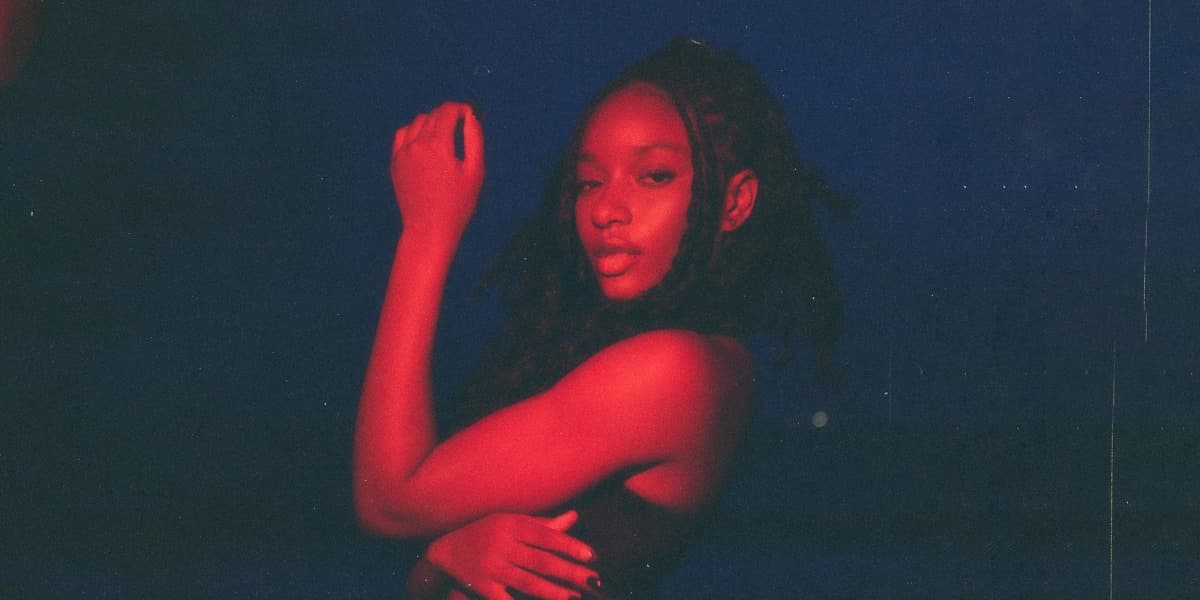
Efe Oraka is a storyteller and world-builder. In the opening moments of her debut EP ‘Magic’, she wastes no time in setting the scene for what’s to come. Singing beautifully over vibrant chords and strings, the Abuja-based singer/songwriter chants, “happiness is never automatic/God bless the magic.” Her words, simple as they may be, are a key clue to the singer’s thematic preoccupations across the 7-track EP, which chronicles and explores the gritty sides to stories of love, growth, and self-worth.
Employing the help of some amazing artists and collaborators such as M.I, Tay Iwar, DOZ, and Sir Bastien, Efe Oraka embarks on a journey to convey her experiences as a Gen Z woman in today’s world. Each lyric and anecdote she shares is instantly relatable, at one moment pondering on lighter issues such as her lack of self-control with munchies on “Comfort Food”, and at another moment revelling in the magic of a new crush on “Wonderland”.
“I wanted to create something I could always go back to – something that perfectly documented my thoughts, feelings, and everything really, that I, at the time, alluded to making me ME.”
There is no aspect of the Gen Z experience that is left out of the world she created on this project, and it’s deliberately done to capture the singer’s growing pains. When she was just 17, Efe Oraka began working on what would become her debut EP. Although it would take her three more years to confidently share the musical offering, she soon realised it had morphed into a love letter to the many phases she’s had to shed along her journey. Speaking with the NATIVE a few months after its release, the singer/songwriter admits that the project became a way to not just articulate her own pain and growth, but to emphasise with listeners who she was certain would use it to navigate their own experiences.
The songs on ‘Magic’ are said to “immortalise [her] growth” and as such it is caught at the intersections of different types of experiences of a young African woman. Here, listeners see romantic inclinations held side by side with a deep passion and reverence for God. On the M.I Abaga-assisted “Zion”, Efe sends a cry out to God as she questions her faith and her place in the universe. Her voice is heavy and pained, as she sings “I’m tired of trying/Oh Zion o why are you lying,” instantly bringing back memories of my own struggles with faith. M.I’s introspective verse elevates the “Zion” into an apt soundscape for moody musings on a Sunday afternoon.
Her songs are set against airy, ethereal backdrops, and coupled with her delicate, soothing voice, she weaves her own world where she unfurls the complexities of the past. The magical metaphors with titles such as “Wonderland” conjure images of a sonic escape from our present reality. Tay Iwar adds his enchanting allure to “Love Galatic”, making it an instantly pleasurable listening experience, soft and stripped back to match the tenor of both their voices. “You are Mars and I am Venus/So Much Distance In Between Us,” Efe sings warmly, examining a lover that is putting up communication blocks. It bleeds into the project closer “Dive”, a reflective number that finds Efe advising a younger version of herself. “You got to sink or swim to stay alive so when you reach your ocean baby go ahead and dive,” she sings on the song’s hook, advising herself and listeners alike to face their fears head-on. You move as the lyrics are repeated, building towards the vivid guitar solo that bookends the song. Efe Oraka sees her past flaws clearly and comforts listeners to be less hard on themselves.
Ultimately, ‘Magic’ is a finely crafted story told through very distinct lenses. Efe Oraka asks listeners to look deep within for their inner child and get comfortable with vulnerability. It’s a divinely contoured body of work that finds its sweet spot in fashioning poignant and intimate coming of age stories about love, faith, and purpose.
New year, same agenda. Last year, the NATIVE created the ‘Songs of the Day’ column as an avenue to curate some of the best and biggest songs from around the continent. In the time since its creation, the column has served as an avenue to discover music from niche, rising acts, while also spotlighting releases from the biggest artists. As music industries around the continent have begun kicking into gear, it’s only right that we return to pointing you towards as much great music as we can.
For last week’s Songs of the Day, we brought you new music from Femi Kuti, A-Reece, Yung L, SirBastien and more to catch you up on the latest songs from around the continent. Our latest Songs of the day curation includes new singles from Bella Shmurda, Tomi Thomas, Le Diouck and DJ Bamao Yendé, Fresh Meat alum, capespring and Sustain. Dig in.
Dangbana Republik x Bella Shmurda – “Rush”
Bella Shmurda fans are set to have a ball today as we celebrate the anniversary of the rising singer’s debut tape, ‘High Tension‘, as well as his birthday. To make the day even more memorable, Bella Shmurda also released his highly anticipated new single, “Rush” which he has been teasing on social media since the start of the year. The snippet of the song he shared on Audiomack already raked in 7 million views and his fans can finally stream the full version of the gritty, bass-boosted street-hop sound Larry Lanes and Pbeatz produced for the song. Bella’s encouraging lyrics, “Why are you feeling down? Life is short so ginger yourself,” and his catchy melodies ride the groovy instrumentals to give the song a little extra oomph that can turn car rides and walks into a private party if you listen with the volume on full blast. It’s Bella’s birthday so we recommend that you do just that.
Bamao Yendé x Le Diouck – “Marvin Gueye”
Paris-based Senegalese singer, Le Diouck and DJ Bamao Yendé first started collaborating in 2018 and their harmonious partnership led them to form a band called Nyoko Bokbae. Last year, the duo released their new 6-track EP, ’55 Degrees‘, delivering a hypnotic and ethereal sound made more haunting and sensual with Le Diouck’s knack for singing in a mix of French, English and Wolof. The opening track, “Marvin Gueye” has now gotten updated with an immersive music video that highlights their eccentricities with the cowrie necklace and the desert scenery. Vincent Catel directed the video which captures Le Diouck and his love interest as they embrace each other, bath together and smoke together. For those who can’t follow the lyrics because of the language barrier, the video plays out like an art film depicting the elegance, beauty, and power of dark-skinned people.
Tomi Thomas – “Who Knew”
Tomi Thomas has opened his account for the year by sharing the accompanying video for his previously released single, “Who Knew”. Uaxstudio’s Seyi Akin directed the video which follows Tomi Thomas as he performs his Reggae-fueled melodies while walking among regular folks in the streets. They all join him to dance along to the lightweight beat Genio produced for the song. Tomi’s lyrics, “Who knew, who knew?/ We would get these Standingovations,” offers words of comfort for those who are still struggling to get recognition for their works. With the cast of people living in the slums of Lagos, he is able to motivate his audience to continue believing in their dreams.
capespring – “Indigo”
Last year, capespring emerged as one of the promising artists from Kenya to look out for when he shared his debut project, ‘Duality’. With his smooth voice urging listeners to lean into their feelings while he translates the minutiae of his post-high school life into lo-fi Rap and R&B music, fans were able to compare him to artists like Frank Ocean and Stromae. However, the 17-year-old singer has wasted no time to show that he still has more to offer, just releasing his debut single for the year, “Indigo”, in partnership with an international music label, Kitsuné. The single is the opening act of a 5-part heartbreak story that follows him as a protagonist, searching for a lover to rid him of his woes. His lyrics, “Do I need a shawty or do a shawty need me/ I just need somebody that’s gon put me at ease,” finds him detailing what he wants from a relationship in a mix of rap bars and melodic singing. He promised to share his second single, “puppy” on Valentine’s day while we can expect the full project in March.
Sustain – “Situationship”
Sustain’s new EP, ‘Afrosus’ earmarks him as one of the new artists emerging in Nigeria whose sound is inspired by the indigenous Yoruba sound of Fuji and Juju music. Though he sings in English lyrics as much as he sings in Yoruba, his accent and melodic references remain deeply rooted in Yoruba traditions. However, the Afro-Caribbean instrumentals Phantom produced for “Situationship”, the opening track from the recently released EP allows him to explore his range while he quizzes his muse to confess their earnest feelings; “Baby let me know/ Do you want me too the way I want you?” The smooth mix of Caribbean guitar riffs and Sustain’s charming melodies make “Situationship” an instant earworm that encourages listeners to play the entire tape, which also features artists like Yusufkanbayi on “To Love”.
Featured Image Credits: NATIVE
[mc4wp_form id=”26074″]
You are meeting Debola at a strange time in his life. He wandered into a dream and lost his way back. Tweet at him@debola_abimbolu
Since its October 9 release, Bella Shmurda’s inescapable “Cash App” has amassed as much controversy as it has plays – quite a feat, as it currently has over 25 million stream across YouTube, Audiomack and Spotify. Referencing his dubious mode of income, back when he was still hustling tirelessly to reach this point of success, Bella Shmurda has continued to receive backlash for his casual lyrics which explicitly mention the practice of ‘Yahoo Yahoo’, the ubiquitous term used to describe internet fraud in Nigeria.
In the past four months since the song has been released, internet users have continued to lambast Bella Shmurda for his ambivalent criminality, and the lack of remorse or accountability he shows when putting it on wax for thousands of impressionable “youths” to hear. Alongside comparisons to violence in Hip-Hop, petitions advocating that the Nigerian Broadcasting Commission ban“Cash App” off the airwaves emerged, indicating the double standards many Nigerians employ in praising one genre of music whilst deriding the other for being guilty of the same thing.
Having spent sleepless nights taking risks, he sings on “Cash App”, Bella Shmurda is not afraid to flaunt his newly acquired commas, regardless of the illegal ways in which they are gained. Like Davido on “Dami Duro”, Bella Shmurda is singing about his life experiences with wealth, bragging about the money he’s earned in his lifetime. The difference is, Bella Shmurda wasn’t born to a Baba Olowo, as Davido was; his concerns weren’t spilling Belvedere in the club, getting girls, or trying to fend off money hungry leeches. Featuring Olamide of YBNL (Yahoo Boy No Laptop), Bella Shmurda’s 2019 breakout hit, “Vision2020” provides a lens through which we can investigate the rough road that he has travelled, with no end in sight, that led Shmurda, and many other young Nigerians like him, to allegedly take a left into a life of crime. Singing from his mother’s words, “better get that money, son/we are starving,” Bella Shmurda raises the gender imbalance that places the family’s need at the feet of the “man of the house” and his finances. Telling us he “hustled for six months, [I] no get money,” Bella Shmurda continues into his verse finishing, “I’ve been thinking o, I’ve been thinking o,” illustrating the long-lasting, hopeless desperation that led him into scamming.
Whilst Bella Shmurda’s circumstances do evoke pity, at the end of the day, poverty is not an excuse to defraud innocent people who have their own – financial or otherwise – struggles to face every day. Many Nigerians in his position would continue to work honestly, one can’t condone cybercrime simply because it is a symptom of the government’s failings, as Bella Shmurda is quick to remind us of “Vision2020”. Still, by understanding his motivations, “Vision2020”, “Cash App” and music detailing and inextricably glorifying cybercrime in general, offer us an opportunity to assess the socio-economic conditions in which Yahoo Yahoo proliferates in Nigeria.
Like knife crime is to Drill music, or gun crime was to Gangsta Rap, cybercrime has been the illegal vice attached to the Zanku music trend, right from its onset. Zlatan, who features on “Cash App”, who was arrested alongside Naira Marley as part of an EFCC investigation, and has long since been affiliated with this infamy in Nigerian society, broke out with a verse on “Able God” which outrightly encouraged struggling young Nigerians like him to invest in a laptop and get online (“kuro n’be ‘to ye ko lo ra lappy/ tete connect ki wan na le collect”) – a euphemism understood by all Nigerians to basically mean, “get into fraud.” If we listen to Bobby Shmurda who says, “Run up on that nigga, get to squeezing, hoe,” or UK Drill rapper, A.M whose lyrics narrate, “3-2 shots make man disappear/Bare bluss tings all over the gaff/Leave man’s face all open and that,” it is clear that music not only glorifies crime, but also, in some parts, actively encourages it as a response to one’s own circumstances – be it poverty or disrespect. However, as British Journalist Andre Montgomery-Johnson says in his documentary of Drill and knife crime, titled Terms and Conditions, “there’s so many things that you can look at. The lack of father figures, the lack of economic structure, the lack of activities, the lack of opportunities.”
Montgomery-Johnson might be speaking specifically in reference to Drill music, but the same can be said about Zanku music. To understand the link between Zanku music and cybercrime in Nigeria is to realise it’s an effect not a cause, existing only because Yahoo boys exist. By simply denigrating Zanku music and focusing on its hardly proven effects on youngsters, we are ignoring the symptom and avoiding the disease that is cybercrime. In our hyper-religious society, with its moral superiority complex, this is of course the easy way out, to make ourselves feel better about condemning yahoo without actually doing anything about the fraudulent practices that characterise Nigerian culture, such as the victim blaming that occurs when prices are unfairly hiked due to client profiling, or the virtue ascribed to those who are able to evade customs officers both home and abroad. Fundamentally, our society has been desensitised to fraudulent behaviour over the years, so there is a hypocrisy in criticising artists singing about their own reality (and, this writer would argue, a sense of problematic culture tourism in consuming a culture which we are not a part of, to which we cannot relate, with judgemental intentions).
Globally renowned for our scams, it is understandable why publicising our prevalent fraud problem is a particular trigger to Nigerians. But it is incorrect to ascribe the blame of our cybercrime notoriety to musicians; fraud has been brewing on our shores far before Olu Maintain put a dance to it on “Yahooze”. For at least a century, Nigerians have been running their scams abroad, with one of the earliest 419 documents dating back to 1920, according to Stephen Ellis’ This Present Darkness: A History of Nigerian Organized Crime. P.Crentsil – “Professor of Wonders” as he signed himself – was a fraudster who would write to foreign countries, including Ghana, describing how his supernatural powers could be used to the benefit of his mark, for a fee of course. Dubbed the “advance-fee scam” Crentsil’s M.O. is a confidence trick, described by the US’ Federal Bureau of Investigation as a scheme which “occurs when the victim pays money to someone in anticipation of receiving something of greater value – such as a loan, contract, investment, or gift –and then receives little or nothing in return.” On the Wikipedia page for “advance-fee scam” it takes only three paragraphs before Nigeria is highlighted as one of the countries in which this type of fraud is most prominent, given as the first and most detailed example.
The “Nigerian Prince” scam is the most notorious iteration of advance-fee fraud, dating as far back as the mid 1900s, with notorious Nigerian conmen, Prince Eket Inyang Udo, Prince Orizu (aka Dr Abyssinia Akweke Nwafor Orizu), Prince Bill Morrison (who was actually a 14-year-old boy) and Prince Modupe coming up as some of the earliest Nigerian Princes. In the mid ‘40s Wayo Tricksters emerged alongside these highly successful “princes” – they were financial scammers who sold victims boxes of blank paper, promising that, with the application of a particular chemical, these sheets would turn into valid currency. However, in the ‘80s, during President Shehu Shagari’s regime, was when Nigerians really settled into our deplorable stereotype.
The Shagari Administration of 1979-83 led by poor example; their corruption and overspending not only brought about economic downturn but also bred a culture of greed, entitlement and crime, naturally resulting in the increasing prevalence of fraud in Nigeria. As ever, during the Buhari administration that followed, things only got worse, and our “whether na legal or illegal” attitude deepened. Coinciding with the growth of the internet, which brought about tools such as translators and voice modifiers (that have only improved over time), and gave out criminals even more access to countries all over the world. Cybercrime boomed throughout the ‘90s, damaging our international reputation and resulting in the formation of the Economic and Financial Crimes Commission (EFCC) in 2003, by President Olusegun Obasanjo.
With a history such as this, it becomes almost laughable to suggest Zlatan or Bella Shmurda are responsible for the cybercrime epidemic in Nigeria. For many years, fraud has been a lucrative mode of income and a well-practiced method of poverty alleviation. With our corrupt politicians looting from innocent people too – albeit for largely different reasons than to the disenfranchised youth – Nigeria’s problems do not begin nor end with “Cash App”, and pretending that shutting out the experiences of an entire demographic will somehow erase the problem, will only insulate the cancer of fraud from real and proper scrutiny.
Ultimately in the “Cash App” music video – where Bella Shmurda, Zlatan, Lincon and Dre Spencer (Mr Loader) rob the Bank of America – the criminal quartet end up trading their ice for prison stripes. Yahoo boys come and go, but unless Nigeria fully evaluates our values, customs and priorities, we’re going to be known as 419ers forever.
Yea, mine own familiar friend, in whom I trusted, which did eat of my bread, hath lifted his heel against me.
A London-based artist, Kida Kudz’s music is inspired by his time living in Nigeria and his daily life in the UK. He often took part in rap battles while he was in high school in Nigeria and he eventually got his first taste of the limelight when he emerged as the winner of the 2nd edition of the Peak Talent Show in 2010 before he moved to the UK. Though Kida moved to the UK for studies and even graduated with a degree in Media Production from Newham College, UK, he remained committed to following his music passion and expressing himself authentically. As such, his songs express Afrocentric sentiments that other diaspora Africans can relate to. It’s no surprise that he was able to grow a strong fanbase of Jiggy Boys (and girls) both at home and abroad as he delivered hit songs that made him into a distinct figure in the UK Rap community and a crucial part of Afropop’s global dominance.
Kida Kudz’s Pop proclivities put him in the same room as other key figures in the music scene in Nigeria and abroad, and he often collaborates with these artists, for example on his breakthrough single, “Issa Vibe” featuring Burna Boy and Geko. The song’s success made him a regular feature in Afropop playlists around the world. He has since continued to capitalise on his successes to remain a mainstay in the music scene as he even created a distinct sound dubbed Afro-swank by blending his indigenous influences with his Rap influences. The stylistic melodies and composition have produced impressive genre-blurring gems like “1AM”which recreated Ghanaian Hip-Life classic, “Ahomka Womu” into a club hit.
Given the career boost the Nigerian market gave him, Kida Kudz has been partial to these parts, an obvious preference from his tweets alone. The listening party for his debut project, ‘Nasty’ in Lagos, Nigeria, and the city welcomed him with open arms as his venue was packed with a mix of students, celebrities and hipsters who had come from as far as Jos to see him perform their favorite tracks. You wouldn’t have been able to tell that he isn’t based in Lagos from the crowd’s reaction to tracks like “1am”, “Big Up” and “Tasty Time”. He closed last year with an impressive 3-track project, ‘Jiggy Pack Vol. 1’ and we can’t wait to hear what he has planned for 2021. he already teased a potential collaboration with the rising artist, Bella Shmurda after he discovered that they share the same birthday, which happens to be today.
To celebrate Kida Kudz’s birthday today, we’re looking back at our interview with the talented artists, which we conducted following his debut project, ‘Nasty‘. Enjoy below:
THE NATIVE: What’s your most reoccurring vision for each year?
KIDA KUDZ: I’m so excited in the role that God has given me, bro. I think I’ve got a lot of responsibility to the industry and I can’t mess it up. That’s why I take pride in what I do. I’m making sure that I’m not folding and I’m not forgetting the game plan. I’m just trying to focus on the right energy, and what I’ve promised myself that I’m going to be musically. I’m not trying to fall victim to the industry and do the same thing everyone is doing. I just focus on my craft till it gets there.
THE NATIVE: What makes your sound so distinct?
KIDA KUDZ:Speaking for myself, I had to do a lot of studying. I had to do a lot of learning and unlearning. I had to let go of some things that are not good for me. I had to find my deeper self. Ever since I found that balance, it’s been lit and everything has been great, ‘cause I’ve been out here for a long time. Like I started my career when I was 14 so me moving to the UK after winning a talent show in Nigeria really helped me add more to what I grew up listening to. When I moved [to London] I got exposed to Ellie Grande, the UK Rap, the Pop, the R&B. Everything mixed with my own culture, where I come from. Everything polished nicely. I [also] try my best to listen to off-genre stuff so I can just listen to music and vibe.
THE NATIVE: How did you know you wanted to make music?
KIDA KUDZ: My first dream was to be a vet doctor, but I didn’t even make it to be a science student. I was an art student. I did audio engineering, music business and music production in school [and] college in the UK. I’ve always loved music and being able to record myself is a great advantage. Music business, as well, has made me more exposed to a lot of things. I’m still learning though. I’m still figuring my way around stuff. I do a lot of research.
THE NATIVE: How have people accepted your sound around the world?
KIDA KUDZ: They’re accepting us properly. We’re recognised worldwide. People had to develop with me. It took me 9 years to finally say, “this is my sound; this is the kind of music I make.” And to be able to say it with my chest up and be like yeah this is what I created by myself. I think the supporters and the industry grew with me. ‘Cause at some point, I don’t think people got what I was doing. And I’m not even mad at that cause I didn’t know what I was doing either. I was trying to figure something out while I was doing the music. Thank God they didn’t leave me, they just stuck by me. Now that everything is patterned, they’re real happy to say, “yeah they’re Kida Kudz supporters” ‘cause they’ve seen it grow and they’re proud to be a member.
THE NATIVE: Do you feel pressured to keep up with the enthusiasm of the Jiggy FC fanbase?
KIDA KUDZ: There’s no pressure anymore. They’re already in the deeper realm with me. It’s a different connection. I think every Kida Kudz supporter has a deeper meaning to the Jiggy FC that I say in my track. It’s for people that actually live this stuff. Everyone that has put their energy where my energy is at. So the same feeling I feel when I drop a song and be like, “yeah, this is how I want people to feel,” people are feeling it that way because music is a spiritual thing. That’s why I probably don’t have everyone behind my back now. Because it’s not for everyone. But at some point more people are going to come. But for now it’s just me and my people and they’re deeply into the stuff that I’m doing.
My shows and events are spiritual, man. People lose their mind and shit cause they feel it differently. It’s like if I go to a Lil Wayne show, I’d lose my mind cause that’s my hero. Someone I looked up to growing up. I’m sure people from my generation looked up to Lil Wayne as well.
THE NATIVE: Your general thoughts on award shows?
KIDA KUDZ: I’m not going to say I don’t care about accolades ‘cause I want a Grammy. But I’m disconnected to a lot of things. I don’t really care about a lot of things. But the right time, when it comes, it’s cool. But I don’t do this for the award. I do it ‘cause I love this stuff. I do this for people that want to listen to music.
Featured Image Credits: Instagram/kidakudzgram
[mc4wp_form id=”26074″]
You are meeting Debola at a strange time in his life. He wandered into a dream and lost his way back. Tweet at him@debola_abimbolu
Do you ever make new year’s resolutions? I’ve always thought it imperative to make one to guide your year, even if you end up abandoning it months down the line. But with last year being anything but normal, the tradition of making a new year resolutions seemed a tad redundant for such an unprecedented time. For one, we’re still battling the COVID-19 pandemic which seems to be getting way worse than it is easier, and for many of us, entering the new year wasn’t the tell-all answer to the terrors of the previous year, but really a continuation of a really shitty time in our young lives.
I think a lot of us are starting to realise how, in the grand scheme of things, nothing really matters – not time, not resolutions, and not even life itself (sorry to go all nihilistic on you). But through all the confusion and the chaos, there have been moments of hope and moments where we have felt truly at peace despite witnessing major historical events in realtime. We started this column a few months ago to give you (more ourselves tbh) a much-needed break from the constant consumption of horrible news every day, and it’s been such a journey discovering all the latest tidbits in popular culture to get our minds off our dystopian reality. So to start off the new year, The NATIVE welcomes you back to your favourite column in the world. Enjoy!
What I’m watching on Netflix: Snowpiercer
I’ve been searching through the entire Netflix catalogue for something interesting to watch since I’ve rewatched Bridgerton an unhealthy number of times, so it was quite interesting to come across a new Netflix Original series, Snowpiercer. I’d seen the trailer which was jam-packed with enough cliffhangers to pique my interest, and boy did it do just that! Snowpiercer is a really interesting series (if you have the attention span for 50-minute long episodes), as it tracks human life after global warming has caused the Big Freeze and all human life has ended – save for a few survivors who made it aboard the Snowpiercer Express.
With 1001 train carriages, we watch how human life tries to continue its existence, but rather than become a utopia where all people flourishes, society continues to show how backhanded and evil it truly can be. The rich are sectioned into first-class complete with walk-in closets, caviar, and chandeliers, second class is just as exquisite, third class is the working class and then there’s the tail where the poorest are kept, away from sunlight – they are even prohibited from bearing children. I won’t give more of the plot-line away, but if this is your beat, you should binge Season 1 right away because Season 2 is out on Netflix this weekend.
What I am listening to: Drake’s ‘Nothing Was the Same’
Drake is by definition what you would call an album artist. With over six studio albums, three compilation albums, and seven mixtapes, there is no shortage of Drake’s material out there for you to stream and enjoy. Yet the 6 God is not showing signs of slowing down any time soon. Last week, it was announced that Drake would be pushing back the release date to his highly anticipated album ‘Certified Lover Boy’, the follow up to last year’s ‘Dark Lane Demo Tapes’, and though I was looking forward to hearing how Drake has evolved since his last offering, I was more than okay waiting a bit longer for the album. This is because I have recently spent a lot of time revisiting my favourite Drake albums, ‘Take Care’ to ‘Views’, ‘More Life’ and my absolute favourite at the moment, 2013’s ‘Nothing Was The Same’.
By my standards, ‘NWTS’ should be regarded as a classic – arguably the crème de la crème of all Hip-Hop/rap albums. I mean, it gave us singles such as “Furthest Thing”, the Jhene Aiko-assisted “From Time”, “Hold On, We’re Going Home”, the Sampha-assisted “Too Much”, “Pound Cake/Paris Morton Music 2” and many more. Revisiting this album took me way back to when I was younger, looking to the age I am now longing for what has now become my reality. I didn’t know it then but Drake’s bars would become quotables that directly mirrored some things in my adult life. Like when he sang “the furthest thing from perfect like everyone I know” on “Furthest Thing”, echoing how a lot of us feel in our twenties realising that no one has it all figured out. I guess you could say nostalgia led me to the album, but it was the timeless bars that kept me coming back for more Aubrey. Whether you fuck with Drizzy or not, there’s no denying his influence on popular culture today and the way he continuously changes the game. If you won’t take my word for it, at least revisit the project and hit me with your hottest takes (I’m available @tamimak_)
Amaarae is calling ALL the bad b*tches!!!
“Shawty, and if you a bad b*tch run it up, run it up!” Attention all hot girls, the Ghanaian singer and rapper Amaarae is mid-production for the video to her standout Yinka Bernie-produced, Moliy-starring single, “SAD GURLZ LUV MONEY”, and she’s calling for you (yes, you reading this rn) to submit your video entries for a chance to be featured in the song’s video. Besides Davido, you’d be hard pressed tto find anyone more dedicated to their fans and open to collaboration in the Afropop space than Amaarae, and that’s just a testament to how great an artist and creative she truly is. I can’t imagine the video for “SAD GURLZ LUV MONEY”, not including Amaarae’s trusted Raenbow fans, just because of how involved we were in the making of ‘THE ANGEL YOU DON’T KNOW’ – particularly those of us privy to the exclusives on her finsta.
SAD GIRLZ!
Send in your FAN-CAM videos 2 be featured in the SAD GIRLZ LUV MONEY video here (there’s an instructions guide & submissions folder): https://t.co/rVf3lg8EU7
Y’all see the energy! You know the vibes! I need you to take it up 10 million notches. I 💜 y’all! Let’s go! pic.twitter.com/w624o1truS
Funke Akindele’s “Omo Ghetto” is the highest-grossing Nollywood movie
The devil works hard but Funke Akindele-Bello, the brainpower behind the Jenifa series, works even harder. Despite the changes to cinema culture this year, caused by the COVID-19 pandemic and the pivot to more digital forms of streaming, Funke Akindele’s recently released film ‘Omo Ghetto’ has broken the record as the highest-grossing Nigerian movie of all time in Nigerian cinemas.
Estimated at a whopping 468 million naira, the film has now surpassed ‘The Wedding Party’ and ‘The Wedding Party 2’ which previously held the title until this year. This is no small feat as the world vastly changed at the time when this Nollywood film was released, and cinema ticket sales had taken a huge plunge in the face of the never-ending virus. Though I am yet to watch the film in cinema, it certainly could not be glossed over that a female director is breaking a 5-year old record (previously held by another woman) with her film. Give Funke Akindele-Bello her flowers, now.
Funke Akindele’s Omo Ghetto is now the highest-grossing Nigerian movie of all time in Nigerian cinemas! The hit comedy film has grossed 468million naira and it is still counting. Congratulations to the entire team👏🏽👏🏽👏🏽 pic.twitter.com/53lLXlVg55
Meek Mill wants to collaborate with young Nigerian artists
(Written by Debola Abimbolu)
Although the ongoing pandemic has limited performers from touring around the world, social media has allowed artists to continue expanding their audience across the globe. Earlier this month, we saw a young Nigerian talent, Hyzah featuring on international media headlines after getting the coveted Drake co-sign for the videos of him freestyling in the streets of Lagos. The video went viral on Twitter and he quickly became an overnight sensation, growing from having just 2 followers to 77,000 followers in a matter of hours.
While we can only imagine what’ll happen if they co-sign leads to a proper collaboration between the two talents, it’s certain that Nigerian Twitter is fast becoming the go-to place for discovering young talents. Over the weekend, another American rapper, Meek Mill tweeted “Link me with the new young Nigerian artists”. Though the 5 framed art emojis he included in the tweet suggested that he was referring to visual artists, both music and visual artists responded to the prompt by replying with images and links to their works. Even fans responded with suggestions like Laycon, Tems, Rema, Blaqbonez and more.
Davido, who previously worked with Meek Mill on the 2015 hit single, “Fans Mi”, which saw the two artists stand side by side in the video, in one of the earliest indications that Afropop was a globally competing genre, also responded to the call, saying, “stop playing, hits r us!!!” We wouldn’t mind an encore given how much the two have grown since. Although Twitter has now taken down Meek’s account, we doubt that it has anything to do with the overwhelming number of people who responded to his call.
Let’s talk about PLT
Just before 2020 ended, it was announced in December that a Black woman, Teyana Taylor would be taking over as the new creative director and ambassador for Pretty Little Thing (PLT), a UK-based fashion retailer that has been known to profit off the ideas of black women and underpay for their labour (side-eye to everyone who shopped their black Friday sale). While this was a historic moment for Black women, I couldn’t help but think that it was a bit tokenistic. This hire doesn’t erase the wrongs that the company has done to Black women, and it feels, to me at least, like PLT’s attempt to assuage their guilt and court their Black buyers with feigned allyship. It’s no secret that Black culture remains the blueprint for many of the trends in popular culture today and this also persists in fashion where fast fashion companies take Black creations and claim it as their own, only to profit from the frenzy caused by that theft in the long-run. When the online Black community voices their anger over Black inventions or creations being stolen, we are largely ignored or given mediocre responses by these companies who persist in stealing designs.
Recently, creative designer and blogger, Fisayo Longe complained about her brand’s legendary Gai dress being imitated by fast fashion companies in the UK and even here in Nigeria, where you can easily find a dupe on stalls in Balogun market. PLT was one of the brands to have copied the design and style of the Gai dress, but rather than stop production of these dupes, PLT have only doubled down by ignoring these complaints and hiring a Black woman in a high profile role. So what exactly has been done to make sure Black creatives aren’t stolen from? It’s only skirted around the issue and given a similar retort to ‘but I have black friends,’ [intense eye-roll]. Brands like PLT need to do better, but it’s up to each and every one of us to speak up when Black people get their ideas stolen. If they won’t stop, we at least have to make them uncomfortable to profit off Black creatives.
You’ve heard of James Bond but have you heard about the latest spy detective in Africa? If you haven’t, then I am here to give you the scalding hot tea. A documentary on the popular Kenyan private investigator Jane Mugo is coming to the BBC, and it seems very entertaining by the look of the trailer. Jane Mugo is a spy that gets the job done, she’s been responsible for bringing many criminals to the law but was forced to go into hiding when she was named a wanted criminal by the Kenyan police.
The documentary is said to track her life in hiding, and the rigorous practices she has to undertake to evade a criminal sentence in her home country. While the rest of the world laughed at the comical trailer released yesterday, it seems that Kenyans, on the other hand, found the BBC Africa trailer far from entertaining. Many Kenyans were not impressed and poked at the gaps in the trailer. Whether or not you’re familiar with the story of Jane Mugo, there’s no denying that her methods are hilarious, so watch the trailer and watch your day go from bad to great :)).
🇰🇪 With police widely mistrusted in Kenya, many people are turning to private detectives to solve crimes.
None is more famous, or controversial, than Jane Mugo.🕵️♀️
Despite Nigerians across the country, from all demographics, protesting their wanton persecution at the hands of the very people sworn to protect them, last year, insecurity in Nigeria still remains high. The violence in northern Nigeria isn’t declining, as we all bore horrific witness to during the December period, when over 300 school boys were kidnapped in Katsina. Down south, in Oyo state, the Fulani Herdsmen have been accused of perpetrating multiple killings, resulting in activist Sunday Adeniyi Adeyemo, popularly known as Sunday Igboho, calling for the eviction of the Fulani Herdsmen. In today’s news, his house has been burned down, in retaliation, it is suspected.
Yesterday evening in Imo State, the Nigerian Army are reported to have gone head to head with the Indigenous People of Biafra (IPOB)’s Eastern Security Network (ESN), a fatal clash that has led to the death of multiple local people in the Orlu local government area of Imo State, in what Social Media users are now calling the Orlu Massacre. Whilst in neighbouring Enugu, armed men wearing a uniform labelling them as the “CRACK SQUAD” were captured on video threatening and extorting locals. Even across state lines, the lack of police presence on these widely known danger zones that we call expressways – with their poor construction and sparse, if not non-existent, lighting – opens travellers up to kidnappers and bandits. This was the fate of one Twitter user, who used the #EndSARS hashtag to tell their story and bring attention to the fact that, all across the country, Nigerians are forced to live in fear, owing to the corrupt and inadequate security forces we must endure.
Video footage showing when Lagos state police task force allegedly killed an innocent youth going to work this morning in Oshodi area pic.twitter.com/rzQdlyCNJM
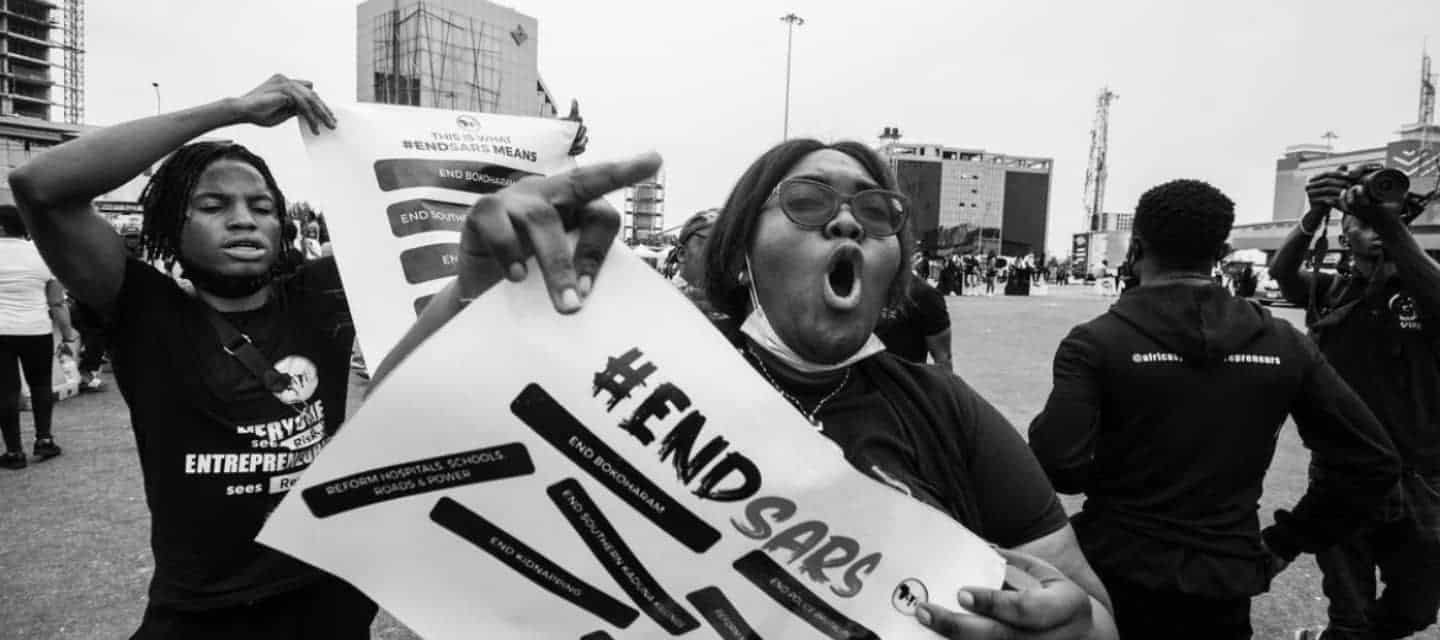
Amidst the multiple dangers from militants in various pockets of the country, kidnappers crippling interstate travel, and local criminals who are emboldened by the police’s lackadaisical attitude to fighting crime, the Nigerian police force themselves, continue to count themselves amongst the dangers Nigerians face on a day to day basis. Last year October, Nigerians united in weeks of EndSARS protests, with the hope that the corrupt and violent police unit would be disbanded and brought to justice for their crimes. Instead, officers that had unjustly taken the lives of the citizens they were sworn to protect were shifted into a ‘new’ police unit, simply given a new uniform in which to carry out their unscrupulous crimes. The reform Nigerians were hoping to achieve still has not appeared, and unfortunately, this continues to cost us our lives.
This morning, the Lagos State Police Task Force allegedly run down a young bricklayer in Oshodi, in their pursuit of a danfo bus. Killing him instantly, the police are now allegedly withholding the victim’s body from his family, a cousin reports on Twitter, calling out the Lagos state governor as he describes the police’s threat to them with large weapons. Owing to an inadequate, ineffective, poorly trained and careless police force, another young Nigerian has lost their life.
Our call to EndSARS is more than a request to remove the Special Anti-Robbery Squad, but a demand that the very thread used to weave the blood-stained fabric of Nigeria’s poor governance be unwound with immediate effect. Yesterday afternoon, announcing that he has “accepted the immediate resignation of the Service Chiefs, and their retirement from service,” our President seemed to be finally taking our pleas seriously. We only hope that the newly instated defence chiefs will instigate the reform in Nigeria’s security sector that we are looking for, carrying out their duties diligently, justly and to the service of all Nigerian people.
I have also appointed new Service Chiefs, to replace the retired officers:
The latest social phenomenon is the new voice-only social media app called Clubhouse which is now causing all the rave online, to the annoyance of the select few still unsure about joining the app. Launched back in April by Paul Davison and Rohan Seth, the new networking app was released in the thick of the coronavirus induced lockdowns, a time where most were connecting to their loved ones and friends online, making it the most conducive environment to receive an app with such interesting features.
It works just like last year’s Houseparty, with users having the ability to access a variety of rooms as they connect to people within their professional field or even just converse with friends. There are no exceptions to the number of rooms and conversations one can have on Clubhouse, I once found myself hopping from a room for a live rendition of Lion King the Musical to another room for astrology lovers looking to get a detailed reading of their chart during the new moon. It’s no denying that Clubhouse is a hit, and with a recorded 600,000 active users since its inception, the number of users is only growing by the millisecond, and the app has already being valued at $1 Billion dollars this year.
Clubhouse is moving quickly today, but in some ways it feels like our journey started a long time ago. We wanted to take a moment to share our story and tell you a bit more about what’s next.https://t.co/rsvnHYlS4b
Of course, as with all things, Nigerian users have a record-breaking audience on Clubhouse, and typically rooms for Nigerians double and triple by the thousands when interesting conversations surface on the app. At times, a quick scroll through your social media timeline will reveal that just about everyone is tweeting about the latest hot topic on Clubhouse, while the other half is complaining about Clubhouse conversations dominating the timeline.
For me, I’ve reached a point where I am dealing with online fatigue and I’m less likely to use the app, but that’s not quite the same for a lot of other young people. To this end, we spoke to a number of young Nigerians who use Clubhouse, to find out why they made the pivot to the latest app, from using it as a hub to keep WeTalkSound, a community of artists and creatives in touch to sourcing out all the latest gossip, here is what members of the NATIVE community had to say:
I’ve been using it for about a month now and I’m typically drawn to rooms that have interesting topics, relatable topics, or rooms with provocative names just to understand what they are talking about. I started using the app mostly because I’m spending more time indoors and boredom isn’t a joke. I barley even already use it as much as I used to when it first came out and I think I’ll totally forget about it when things are back to “normal”. I actually think we are consuming too much media, and I think it’s lack of what to do, too, so we keep checking our social media for anything interesting to keep going and yeah I’m getting tired of the repeated topics and things.
M, 23, M.
I started using the app sometime in November 2020, mostly out of boredom and curiosity. Now I find myself going back to rooms with discussions on things that affect everyday life as a young person such as mental health, sexual health, and identity. I’m also a member of clubs centred around my interests in music and creativity, such as the WeTalkSound Club and the Beyhive fan club. It has also been a great way to feel connected to other like-minded people and less alone. I however don’t see myself spending as much time on the app in a post-covid world. I wouldn’t call it a safe space because it is the internet, so you’ll still run the risk of running into frauds and generally people with ill intent. Through it all, I’ll still recommend the app to people.
I, 21, F.
I started using Clubhouse because of boredom and all the time spent at home social distancing. I’m typically in rooms surrounding my interest such as the game rooms where you can play with strangers and friends alike, the football discussions and the WeTalkSound community. Some discussions on there have educated me on a myriad of topics, but I’ve decided not to get distracted by what I listen to on Clubhouse or every other social network. There are some pretentious assertions that actually makes you deviate from what you believe in.
D, 22, M.
I use Clubhouse because I like to have fun. I mean it’s a bit like Houseparty in the sense that you can have a laugh with your friends and enter as many rooms to contribute (or even cause some mischief). I rarely use it nowadays because these new apps are mostly facades that don’t last very long, but when I do use it, I’m typically in rooms with people I already know on a day to day and not really with those that I don’t know. I also like gossip so when there’s a bit of commotion on the app, because someone’s dishing out their life story for strangers, you can find me there!
S, 25, F.
I joined on 24 November, 2020. Initially I was drawn to black and tech rooms, now it’s usually Twitter that draws me back I won’t lie. I love a bit of drama here and there, as long as they’re not talking about anything remotely conscious, so dating horror stories, that room about that sugar baby was HILARIOUS until people started trying to reason with her. I am into trash content rooms tbh, or singing talent audition rooms. I absolutely would not use Clubhouse if things were back to normal – frankly, I want to throw my phone away when things are back to normal – but even aside from that, I genuinely think it’s Twitter on crack. There’s a lot of use in the app but it gets watered down by the typical toxic nature of social media: echo Chambers and no actual conversation. Will I pop back on for an occasional trash room? Probably. But to be sitting down hearing people argue – it’s not for me. BK chat fell off for a reason.
I, 23, F.
I had been hearing about CH in the second half of 2020 and it sounded like an interesting concept. However, I was using an Android then so I couldn’t join even if I wanted to. Towards the end of the year, I was hearing more chatter about the platform and I decided to get an iPhone and experience it for myself. Once I joined, I understood how it could help take our community to a new level. The fact that CH is a melting pot of cultures and audiences occurred to me as holding a huge potential to expand our community – laterally and vertically.
In our fast-growing club, people are networking with creatives and professionals that they probably wouldn’t have had a chance to connect with so directly, outside of CH. That, to us, is an indicator of the impact we’re creating by growing the community and curating these important conversations. I would agree that it’s fairly linked to the remote nature of life right now. People want companions and online communal experiences that can attempt to replace real-life gatherings and conversations. CH is providing exactly these. I think, though, that even when things go back to normal – whatever that would be – CH would have become embedded in the culture in a way. It wouldn’t be easy to just shake off its hold.
Trigger warning: Police brutality, violence and death
The governor of Imo state, Hope Uzodimma has ordered a curfew as a result of the violent clash that happened on Monday, between security agents at Orlu local government. Although it’s still unclear what exactly triggered the violence, local media reports confirmed that it started from the conflict between the military and some youth believed to be members of the Eastern Security Network (ESN), a rogue security agency set up by the Indigenous People of Biafra (IPOB). The Nation reported that the clash happened in Okporo, Banana junction, Ogboosisi in Orlu local government and the governor has now restricted movement from 6 pm to 6 am in the surrounding neighborhoods (Orlu, Orsu, Oru East, Oru West, Ideao North, Ideao South, Njaba, Isu, Nwangele and Nkwerre) in order to deescalate the crisis.
The brutal exchange of gunshots is believed to have resulted in at least 10 deaths including 4 soldiers as reported by The Punch. We were also able to see some clips of the attack from people within the community who were brave enough to capture parts of the violence and destruction on their phone cameras. The videos which they shared on social media showed soldiers in their army uniforms, shooting at unseen targets while the secret videographer commented that they were shooting at “anything that moved”. We also saw houses raised in flames and military trucks driving around the streets while we hear people crying and begging to be spared.
However, according to the governor’s report, it was a group of militants – under the ESN – that unleashed terror in Orlu and killed innocent citizens. Aloy Ejimakor, a lawyer and special counsel to the IPOB leader, Nnamdi Kanu disagreed and explained that he believes the operation was an attack against Igbos as he has no clue what prompted the attack.
Though militant attacks have become quite common in Nigeria (the Boko Haram terrorist group was famously referenced in Marvel’s “Black Panther” film), it doesn’t seem like the government has found a solution to the insecurity crisis. It’s now causing people in Imo state to grieve for the loss of lives and properties and without any concrete reason for the senseless killing. Citizens continue to live in fear for their lives.
Featured Image Credits: Twitter/Real_AmakaIke
[mc4wp_form id=”26074″]
You are meeting Debola at a strange time in his life. He wandered into a dream and lost his way back. Tweet at him@debola_abimbolu
Burna Boy was quite confident going into 2018. Although he was far from being one of those previously nascent superstars with their backs to the wall, there was a sense that this was the Port Harcourt-born singer’s moment of truth, the tipping point to a potentially higher zenith. You see, in the years after his much beloved, cult classic debut LP, ‘L.I.F.E’, Burna’s trajectory had been muddied by a handful of low points, both in terms of music reception and persona perception. His 2015 sophomore album, ‘On A Spaceship’, was quite panned upon release and is commonly considered to be bottom rung in quite the magnificent discography.
It also didn’t help that he was quite the incendiary figure to a Nigerian press always ready to embolden to negative news and rumours. From his now infamous (non-)attire at the 2013 Felabration, to issuing death threats to “bloggers” circa 2015, and the highly publicised allegations of his involvement in a robbery incident in late 2017, Burna had earned a bad rap. He’d gone from being unanimously revered as a singular talent to inspiring ambivalence; there were still hordes of fans who swore by his music, and there were equal, if not more, bystanders who deemed the trouble to outweigh his musical output.
Historically, music has always been littered with superstars who happened to be complex characters, with traits that aren’t widely beloved. The rationale – even in this day and age of cancelling ultra-problematic famous people, where discussions about separating the art from the artists are omnipresent – is to balance the good with the undesirable and let fans individually determine where they stand with the artist. Even though Burna had yet to do, say or cop to anything wildly toxic that would warrant being widely shunned, there was a feeling amongst many that his music wasn’t consistently stellar enough to balance out his indiscretions. The solution was as clear as day: Come with great music.
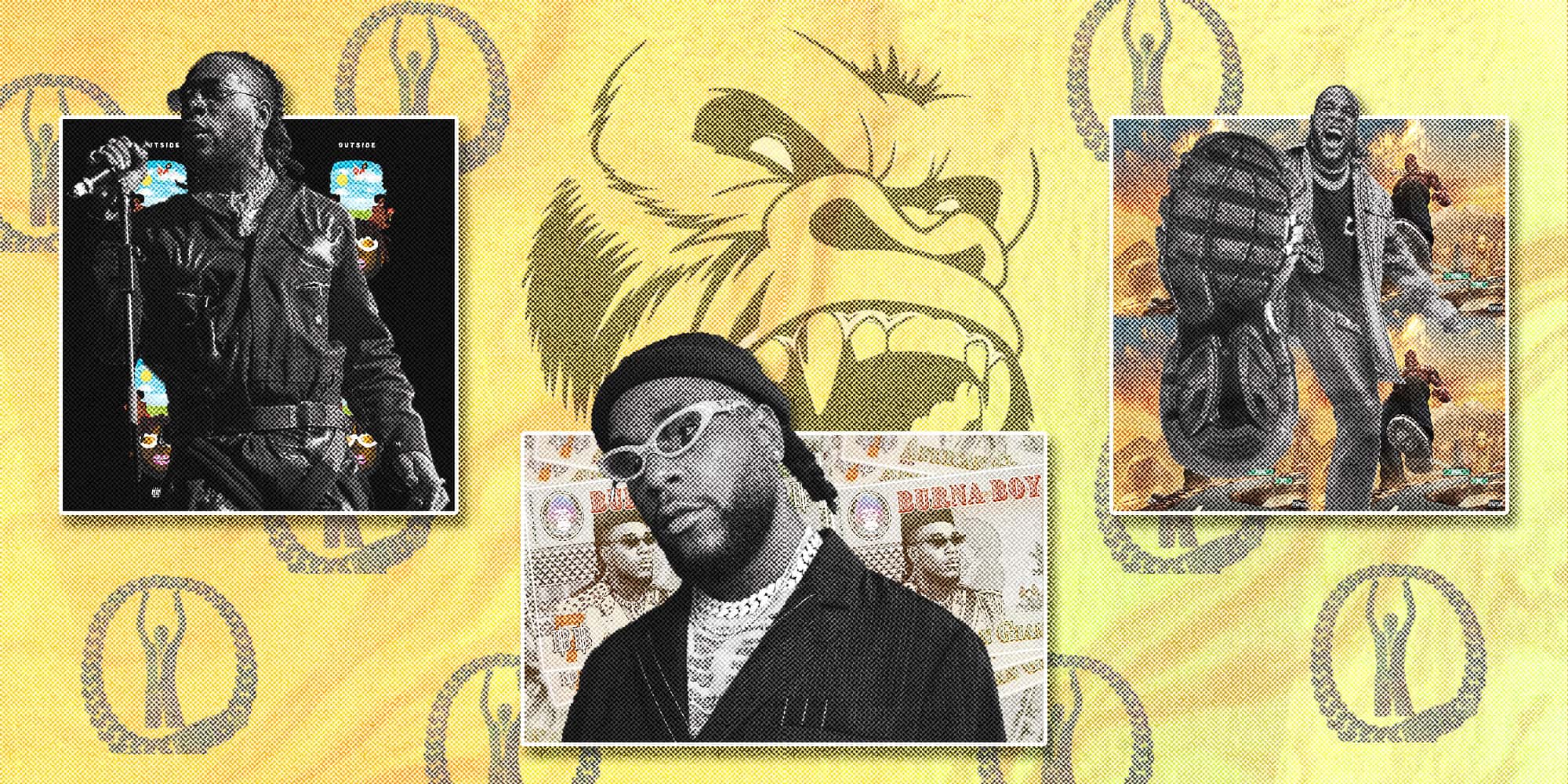
When ‘Outside’ came out on January 26th, 2018, exactly three years ago today, it was meet with rapt attention and instant high praise. The third official long-play from the man born Damini Ogulu was a neat closing to the rather messy second act of his career, and a phenomenal entry into a prosperous third. About a year-and-a-half prior, the singer had dropped his first EP, ‘Redemption’, a back to basics effort that, these days, sounds equally genuine and reined in. By comparison, ‘Outside’ is a ferocious swing off the fences, a body of work that’s sonically scattershot but extremely coherent in presentation, mainly due to Burna’s vastly improved understanding of his powers as a malleable vocalist and vivid songwriter.
Even today, listening to ‘Outside’ is like riding a spinning, undulating carousel without feeling the nauseating, dizzying effect that usually accompanies such rides. In fact, coming in at an apt 44-minute duration, there’s a feeling of intense clarity that comes with how well Burna opens up his ability, whether it’s the way he bellows on the head-banging dancehall thrasher, “Heaven’s Gate”, or the sensual coos he issues over the Neo-Highlife groove of “Rock Your Body”, or his whimsical hopscotch on the finger-snapping Trap cut, “Streets of Africa”. The project also doubles as a riveting reintroduction to Burna, and a snapshot into his mind. Arguably its emotional centrepiece, the title track, which features British singer Mabel, is one of Burna’s best feats of introspection, where he reflects on his place in African Pop music, and openly admits his mother’s biggest fear of him ending up with the same fate as currently incarcerated, famed dancehall artist, Vybz Kartel.
From a commercial standpoint, though, the main gambit for ‘Outside’ is undoubtedly “YE”, the flawless Pop piece music sitting smack centre on the project. While it was already inching towards smash hit status at home, the global floodgate of attention came crashing in after American Hip-Hop artist Kanye West auspiciously released his similarly titled, eighth solo studio LP. For sure, this was serendipity at work, but the increased hype and subsequent acceptance of “YE” is clearly testament to the song’s quality, and further proof that luck happens when opportunity meets readiness. (Besides, that wasn’t the first time Kanye was unknowingly opening up a new audience to an artist; Burna simply ran with it.)
With “YE” as a springboard to increased international visibility, and resurgent, unreserved ubiquity in Nigeria and across the continent, ‘Outside’ followed suit as the first layer in the mosaic of one of the greatest creative runs contemporary Afropop has ever seen – and it may still be ongoing. Burna took the album, and his newfound notoriety, on tour, headlined by myth-building performances at London’s O2 Brixton arena and Eko Hotels in Lagos. In the same year, clearly feeling inspired from his career uptick and a new lease of life, he’d already began building up to his next album, with the release of smash singles, “Gbona”, “On A Low” and the Zlatan-assisted “Killin’ Dem” – the latter would go on to be the first huge hit of the following year.
If Burna Boy had entered 2018 feeling confident, he came into 2019 downright cocky. On the first day of that year, organisers of the hugely popular Coachella festival announced the line-up for the year’s edition. Burna Boy took issue with the positioning of his name and its font, well-known for refusing to bite his tongue, decreeing himself an African Giant. As usual, the public was split over this latest outburst, with a section identifying with Burna Boy’s pride, and the other side deeming it as a delusion of grandeur. Either side didn’t really matter to Burna, the next step was to back his claim up through his music, and what followed was watching him grow fiercer over the coming months.
With his singles from the ending of the previous year still very much in public rotation, Burna delivered “Dangote” on the very first day of March, an affecting hustler’s anthem referencing Africa’s richest man. That same month saw the release of ‘Steel & Copper’, the joint EP with American production duo DJDS, where Burna bounced from self-mythologising to sobering reflection over spacey Trap beats. Strictly released by Atlantic Records, whom he’d signed an international recording deal with (sans Africa), ‘Steel & Copper’ didn’t see local release, but from a creative standpoint, it’s an achievement in flaunting Burna’s adaptable skill-set. It may have been a minor release, from an impact perspective, but it’s a notable part of this run.
The main course for 2019, ‘African Giant’, arrived in late July, over a month after sharing its next big single, “Anybody”. In several ways, ‘African Giant’ is Burna’s assertion of his singularity as an Afro-Fusion artist within the context of Pop music’s continued globalisation. Even more expansive than his preceding project, the singer’s fourth studio album finds him digging his heel deeper into his roots, both musically and content-wise. ‘AG’ continues Burna’s dalliances with Caribbean Pop, Hip-Hop and R&B, but there’s a strong emphasis on Afrobeat and contemporary Afropop as the basis of his sound. Having made his claim to be the African Giant during his Coachella-related outburst, this musical direction was very fitting.
As with most albums running towards the hour-mark, ‘African Giant’ has its smidge of bloat, but the large bulk of it is consistently impressive, and the highs are overwhelming enough to position the LP as a myth-sealing body of work. Very often, we think of great albums as those with little to zero flaws, however, narratives and subsequent impact matter just as much as the music comprising the album. ‘AG’ was released to unanimous acclaim, further confirming that Burna Boy was operating on a gravity-defying plane. With scintillating love songs (“Gum Body”“Omo”), urgent and imperfect socio-political commentary (“Wetin Man Go Do”“Another Story”), and cuts celebrating heritage and accepting self (“African Giant”“Destiny”), ‘AG’ is evenly spread between displaying Burna’s now supreme musical gifts and situating him as an artist for the people.
Even with the multiple huge hits on ‘AG’, there’s no “YE” off the album, which is more of a testament to its reception as a full album – so far, the album has been streamed over a billion times – than an indictment of the mammoth singles released from it. Continuing his steady incline on a global scale, Burna Boy went on a yearlong tour, with stops in North America and Europe, including a sold-out affair at the London’s 12,000-capacity SSE arena. The cherry on top of this colourful sundae of critical acclaim and scale-breaking commercial impact came in November, when the Grammys announced that ‘African Giant’ was nominated for Best World Music album. In the truest sense of it, ‘African Giant’ is landmark album in the history of contemporary Afropop, the second and grandest layer yet of the mosaic that is Burna’s album showings.
Having already gone on back-to-back MVP runs, with arguably the best albums in each year, the rumour mill began to spin that Burna Boy was looking to attempt a 3-peat. He’d closed 2019 with the rather low-key release, “Money Play”, and kick-started 2020 with the well-received “Odogwu”, both singles celebrating the singer’s affluence and far-reaching influence. These songs were initial indicators of a festive direction, until the clearly gut-wrenching loss at the Grammys. Few months after Angelique Kidjo picked up the gramophone for a record fourth time, Burna Boy revealed via Twitter that the loss deeply upset him, but after personal reflection and speaking with the legendary Beninese singer, who dedicated her win to him, he’d picked his head up and begun working on his fifth studio album, ‘Twice As Tall’.
There’s something of a holding pattern to this album run, where each one is driven by a need to level up after some form of controversy or setback. ‘Twice As Tall’ followed and reupholstered that pattern in equal measure, an album where we saw Burna reconstruct his imperial persona over the course of fifteen remarkable songs that bind together to simultaneously humanise him and elevate his greatness even further. Much like the plot of a superhero movie, Burna turns his low point into a launch pad for a gilded showcase of self-assuredness, where emotional vulnerability and openness are the triggers for moments of clarity and triumph. In my opinion, it’s the strongest album Burna has made, in terms of making a resounding statement and a coherent sonic experience.
Co-executive produced by the legendary Sean Combs, ‘TAT’ continues Burna’s genre-blending antics, however, it leans the most on Afropop’s percussive innovation and Hip-Hop’s booming low-end. The music is aptly maximalist, standing tall and complementing the singer as he rebuilds his unassailable confidence, one indelible melody after the other. Where this sort of musical approach would swallow lesser vocal performers, Burna shows out once again, flaunting just how much of a Swiss army knife his voice is, from patois-inflected cadences, to rap flows and burly singing.
In a year where a pandemic shuttered public spaces for long periods, it was slightly difficult to wholesomely determine the magnitude of a hit song. At that, it seems fitting to deem “Wonderful” and “Way Too Big” as huge singles, going off their activity on streaming platforms. In the U.S., a market Burna and several of his peers are looking to crack, the singer debuted at the 55th spot of the Billboard Top 200 album charts, the highest debut position for an album by a Nigerian artist. The album also scored Burna his second consecutive nod for Best Global Album at the upcoming edition of the Grammys. For the third consecutive year, Burna put in another extraordinary shift, pulling out another album of the year contender and generating impact on a wide scale.
Of those last three years, though, the contention for Nigerian music’s MVP was its hottest. For the first time in a long while, the widely regarded big 3 – Wizkid, Davido and Burna – had solid shouts, each dropping well-received albums with multiple huge songs. While choices may vary according to the individual, it is worth noting that Burna Boy broke the MVP hegemony between his two peers in remarkable fashion, and he’s writing his legacy in the most wholesome way possible: building an undeniable discography.
Afropop is a hit singles market, but great albums have always been integral to mythologising artists. In the span of three years, Burna Boy has delivered three great albums, all of which could be considered classics, a feat that’s astonishing in and of itself. At this moment, there isn’t much indication as to what Burna’s intentions are for this year, but it’s irrefutable that, since his rebirth, he’s gone on a peerless creative run.
History is a tricky phenomenon. It is always unfolding right before our eyes, while also demanding that we take some time to evaluate the actual value of an occurrence. At the same time, though, there are some events that are too seismic to be left and revisited after a while. As far as contemporary African Pop music is concerned, Burna Boy has made history with the three album run of ‘Outside’, ‘African Giant’ and ‘Twice As Tall’. If he plans to keep going, that’s great; if he takes a break and closes this arc of his career, it will be immortalised as one of the greatest, elongated landmark moments in Afropop.
Featured Image Credits: NATIVE
Dennis is a staff writer at the NATIVE. Let me know your favourite the Cavemen songs @dennisadepeter
Not all music lovers are as knowledgeable on the know-how of the music business as they would like you to believe. Often times people speak with authority on the inner workings of the music industry despite having very little knowledge on how the industry actually works, and that may just be down to the fact that there’s very little information out there on how the musical ecosystem works. The music industry here in Nigeria is still in its nascent stages in comparison to other global music spaces and there is still little structure in place to navigate the emerging industry.
There are certain industry insiders, however, that you can always rely on for the latest information on the technicalities of the ever-growing industry and those who are constantly sharing gems on how independent artists can better manage their careers. Whether they are talent managers, OAPs, writers or even record label owners, these are the people in the know about the music industry. Every Afropop lover should be keeping tabs on industry insiders for current and reliable information, and the NATIVE are here to guide you into the right arms. This is by no means a definitive list but a starting guide to learning more about the way the industry works.
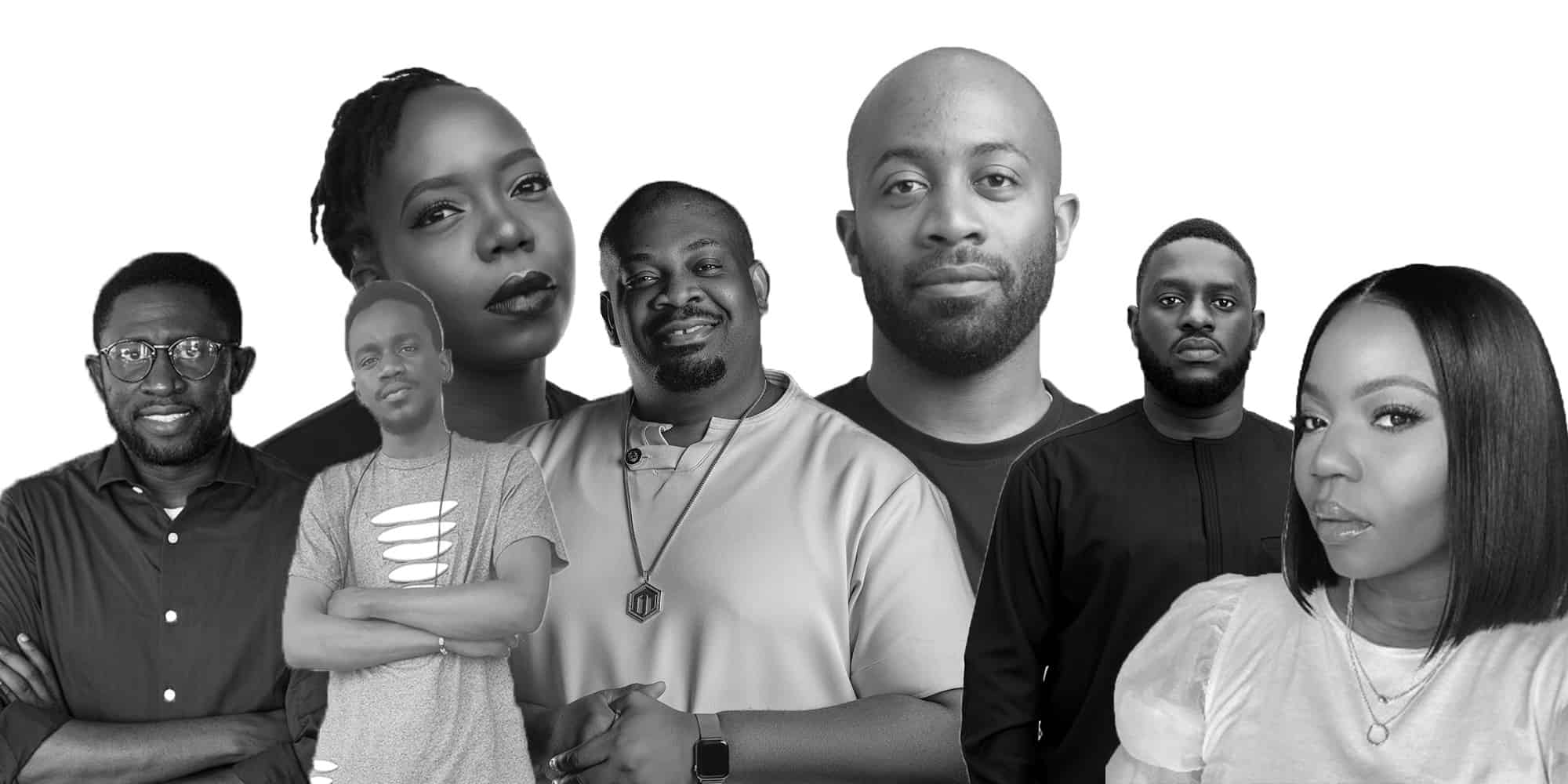
If there’s anyone you should follow out here, it’s Don Jazzy – the man is one of the biggest names in the entertainment industry, and rightly so. His resume includes artist, songwriter, record label owner of the legendary Mo’Hits Records, and now new-label Mavins Records. He has been responsible for breaking out some of the best African acts today including Korede Bello, Tiwa Savage, Ladipoe, Rema, and now a new act Ayra Starr.
Godwin Tom is a trusted source in the music industry. He’s spent years building a reputation as someone who knows the workings of the industry having successfully managed the careers of Afropop acts such as M.I, Wande Coal, and Wizkid. Tom runs and manages his own talent management and events company, iManage Africa, and runs an online music boot camp that teaches participants how to gain opportunities in the music business through management, A&R, record label services and more. He recently launched a podcast called Journey of A Learner which hosts different guests to discuss navigating the African entertainment industry.
Anyone who is anyone in music knows Asa Asika or at least knows about him. His uncle is the great music business legend, Obi Asika who once ran Storm 360 Records, and his cousin, rapper Naeto C is a fan favourite in the rap scene. Over the years, Asa Asika has gained accolades of his own, from his long-time management of Afropop star Davido as the pair formed a formidable partnership. He’s also a co-founder of The Plug, an independent music publishing, music licensing, and entertainment company run with partner Bizzle Osikoya. Also frequently dropping motivational life gems from time to time, Asa Asika one to follow.
Osagie is what you call an OG in the industry. She started her career as a presenter on Rhythm 93.7 with Sola Thompson at the age of 17; before moving on to become a personal assistant to the late OAP, Tosyn Bucknor. She went on to become a talent manager to very successful acts of the time such as Skales, Timaya, and Wizkid. She now runs the Basement Gig and owns a full-service management company named The Zone Agency with a clientele that includes prominent figures like Timaya, Reminisce, and Ehiz.
As the newly-appointed General Manager of the Nigerian arm of Universal Music Group, Chin Okeke is known as a reliable tastemaker in the music business. His company Eclipse Live have over the past couple of years focused on bringing live, affordable, and accessible entertainment to the youth of Africa. They have organised events such as Lagos Music Week, ECHO Music Conference (EMC), Arise Fashion Week, and Gidi Fest, a popular festival known to be a hub for both established African acts and the new vanguard of Afropop hitmakers. Follow him for great music finds and good discussion.
Muyiwa Awoniyi is popularly known for his role as manager to the NATIVE 004 cover star and Rebel Gang leader, Tems but long before their paths crossed, he was manager to Nonso Amadi, one of the first young acts from these parts to push the boundaries on the emerging Afropop sound. Awoniyi also runs a podcast known as the The Donawon Pod where he discusses important topics ranging from intellectual property of African art to the importance of healthy relationships.
On this turf, Bizzle Osikoya is known as “The Plug”, not only because he co-founded the full-service management, distribution, and talent management firm but because he’s built a reputation as being a helper to all stars. So far, he’s worked with a number of artists such as Naeto C, Ikechukwu, Dr. Sid, Wande Coal, and most recently, Oxlade. Osikoya the guy you want to know and follow for the latest acts in the game.
Kimani Moore is a force to be reckoned with. She’s one of the most trusted voices in the game because of the invaluable contribution she’s made to the lives of her artists which include Odunsi the Engine, Larry Gaaga, Mowalola, Tay Iwar, and Deto Black. Currently, she runs Kimani Moore Entertainment (KME), an African owned and operated talent management firm and music company and sits on the voting academy for the MOBO Awards. Follow her for motivational life quotes and key insights on the running of a talent management firm.
Tega Oghenejobo’s career with record label Mavin has been ongoing for several years, working with the company since 2012. Currently the company’s Chief Operating Officer, Oghenejobo facilitated a multimillion-dollar equity investment partnership with Kupanda Holdings. Mavin has now become an industry leader in finding the best Afropop acts in the country and Tega is well versed in the technical know-how of the game.
Although journalist and media executive Osagie Alonge is now the Director of Marketing at OPay, he is still regarded as a trusted voice in the Nigerian music industry given that he has worked for several years on the back-end as the Editor-in-Chief of Pulse Nigeria and Pulse Africa. His detailed analysis and witty commentary on the culture and entertainment scene can best be observed on his podcast A Music in Time.
Dolapo Amusat is the guy you need for connecting the dots, solving problems and coming up with solutions. He’s a data scientist who has worked in both tech and creative industries with involvement in companies such as Bolt, Google, KPMG, Total and more, but he’s popularly known for his involvement with WeTalkSound, a rising community of musicians, creatives artists, and music enthusiasts united in a common goal of supporting and uplifting each other. Dolapo can best be found hosting frequently scheduled Clubhouse rooms for educating and informing creatives and artists on the music business.
Around here, having a great lawyer on retainer is essential because of the lack of proper structure in the music business. In need of any legal know-how for your artists and their music licenses then Foza is the woman for you. She always offers insight on social media about legal technicalities that artists may be unaware of as well as participating in panel discussions on a range of topics from business and music contracts to the future of the music business.
As the long month of January draws to a close this week, Omah Lay continues to double down on his current winning streak as he maintains the No. 1 spot on the weekly Turntables Top 50 charts with “Godly”, one of the singles off his recent EP ‘What Have We Done’. The record-breaking song has now spent eight consecutive weeks atop the Turntable charts and is far ahead of the second longest number on streak, “Bad Influence” which sat on the charts for five consecutive weeks.
With 1.58 million equivalent streams, the track remains the highest performing song in the country across radio, TV, and streaming services. On the Top 50 charts, “Godly” is closely followed by DJ Kaywise’s “High Way” featuring Phyno at No. 2 which moved three places from its spot at No.3 in last week’s charts. This will be both artists’ first time in the Top 10 with their collaboration now joining Olamide’s “Infinity” as the highest-charting hip-hop song on the Top 50.
The rest of the top 5 consists of Bella Shmurda’s “Cash App” with Zlatan & Lincoln, which stays at its No. 3 peak for a third straight week. Olamide’s “Infinity” moves down to No. 4 after spending nine consecutive weeks at No.2, and is followed by Naira Marley’s “Koleyewon” at No.5 – moving seven spots its position at No. 12 last week– which makes it four Hip-Hop songs, predominantly performed in indigenous languages (Igbo or Yoruba) currently in the Top 5.
Olamide’s “Loading” featuring Bad Boy Timz and Davido’s “Jowo” interchange positions this week, with the former now at no.6 and the latter at no.7. Wizkid’s collaboration with Burna Boy “Ginger” is now at No.8, Rexxie and Moh Bad’s “KPK” is at No.9, with Davido and Mayorkun’s “The Best” closing out the top 10. View the TurnTable’s full Top 50 chart here.
Historically, women have played prominent roles in the advancement of technology, amongst the first programmers in the world, pioneering algorithms, language programmers and other invaluable technologies without which life today would be unimaginable. However, in the sexist ’60s, as the tech industry grew into a lucrative, socially imperative venture, women have been ostentatiously shut out and grossly underrepresented in leading positions. In the 60 years since, things have hardly changed for women in tech, but the future looks increasingly bright thanks to budding Nigerian entrepreneurs who are investing in women in African tech.
Boasting that they’ll be the ones “writing first checks for audacious female founders, with bold ideas, at the “ridiculously early” stage,” FirstCheck Africa is a female-led angel fund, founded by PiggyVest Co-founder and COO, Odun Eweniyi and Eloho Omame, Managing Director of Endeavor Nigeria.
Today, we launch FirstCheck Africa (@FirstCheckHQ), to invest "ridiculously early" and open doors for female founders, and to help women invest in tech. 🎉🎉
Our vision is an African future that women have an equal hand in leading & shaping through tech & entrepreneurship.
It is no secret, even to those outside the tech world, that female entrepreneurs are grossly under-funded. Especially in the early stages of pitching, women face difficulties securing investments at a largely disproportionate rate to men. As FirstCheck cite, “in 2019, less than five per cent of global venture capital went to female-led companies.” Due to the effects of the global pandemic, things have only gotten worse for women in tech, worldwide, and in Africa too. This is why it is important for Omame and Eweniyi to focus on women in the ideation stages of their start up, however they also wish to provide opportunities “for the middle tier of women, who are millennial or in their mid-careers.”
In the long run, FirstCheck Africa’s mission is for women to have an equal role and responsibility in shaping the future of African technology and entrepreneurship – especially as investment into Africa multiplies over the years, more women need to be counted amongst the founders of highly-valued startups. To achieve their goals, Omame and Eweniyi realise that the tech ecosystem in Africa need to focus on “[increasing] the pipeline of female entrepreneurs.” Furthermore, African tech needs to openly address and resolve the biases women in the industry face, and also work to “close the gender confidence gap.”
Putting their money where their mouth is, this year, FirstCheck will invest up to $25,000 in six women in the ideation stage of their start-up in African tech. With a sprawling network, FirstCheck will be taking advantage of their connections to collaborate and uplift women in their community. Appreciating the importance of role models in career development, FirstCheck will also be combatting representation issues, both by platforming women in high-ranking roles and existing themselves.
FirstCheck Africa is playing an important role in expanding opportunities for women in tech, and in diversifying the industry they will also achieve “better long-term outcomes for the technology ecosystem.”
Creativity thrives best in our current situation, as we continue to spend most of our time at home, seeking out ways to escape boredom. The experience of dealing with emotions of fear, anger, frustration, confusion, exhilaration, and exhaustion through the whirlwind of the year 2020 has also blessed many voices with many stories to tell, and higher chances to excel. But with the increasing number of new artists waiting to be discovered, it certainly helps to be like Ruger who has Afropop hitmakers like D’Prince and Rema in his corner. The trio shared their new track, “One Shirt” as a monument to the strength of the Jonzing World label, each delivering impressive verses narrating their rise to fame and celebrity.
Although Ruger was already unveiled as the second Jonzing World signing since January 2020, he remained pretty much in the dark until a year later, with “One Shirt” released last week as his debut single under the label. He accurately describes the struggle, hustle, and patience most artists have to endure before becoming ‘overnight celebrities’, Ruger sings “Everybody get e own story oh/ As they dey take hustle for money oh” with a call and response flow that fits the catchy instrumentals Kukbeats produced, that boast highlife guitars riffs, horn harmonies and backing vocals that recall Afropop’s roots in Afrobeat.
Ruger’s mix of motivational lyrics and catchy melodies gives the song all the qualities of an anthem before D’Prince and Rema even infuse their charming personalities on their respective verses that celebrate their individual acclaim. While D’Prince pulls from every corner of his career with lyrics detailing his own rise to fame and becoming a mentor to younger artists, Rema adopts a Wizkid-esque flow as he shares the spotlight with the rest of his label mates and delivers lightweight melodies that boost the song’s dancefloor appeal.
Channeling personal experiences of struggle to make feel-good music is a proven format to make lifelong fans out of listeners who can easily put themselves in the artist’s raggedy shoes and worn clothes. It served Wizkid on his breakout album, ‘Superstar’ and in fact, the title “One Shirt” appears to be inspired by Wizkid’s lyrics from “Wad Up”, featuring none other than D’Prince; “Back in the day, I used to wear one jeans/ One shirt toast girls/ Dem no dey tell me ‘wad up'”. Ruger and Rema have been positioned as part of the new generation of superstars and they too can now narrate their stories to motivate other aspiring artists to be patient and trust the process of their career journey.
The Director DK-directed video follows a horror film theme that captures the Jonzing World trio as a powerful cult, and we wouldn’t bet against the artists growing cult-like following with his anthemic debut.
It hasn’t taken very long for music tastemakers to start showing off their contenders for the biggest music talent discovery of 2021. Don Jazzy’s long-standing reputation for putting us on to Afropop hitmakers made fans tune in to the new project from Ayra Starr, the latest Mavin singer that was unveiled last weekend. However, Ruger’s debut shows that D’Prince can also scout for talents and he’s ready to give Don Jazzy a run for his money.
Watch the video for “One Shirt” by Jonzing World trio, D’Prince, Rema and Ruger below.
Featured Image Credits: Instagram/rugerofficial
[mc4wp_form id=”26074″]
You are meeting Debola at a strange time in his life. He wandered into a dream and lost his way back. Tweet at him@debola_abimbolu
New year, same agenda. Last year, the NATIVE created the ‘Songs of the day’ column as an avenue to curate some of the best and biggest songs from around the continent. In the time since its creation, the column has served as an avenue discover music from niche, rising acts, while also spotlighting releases from the biggest artists. As music industries around the continent have begun kicking into gear, it’s only right that we return to pointing you towards as much great music as we can.
Having brought you some of the best releases you might have missed during this festive period, our latest curation includes new singles from Femi Kuti, A-Reece, Yung L, SirBastien and more. Dig in, and you’re welcome.
Femi Kuti – “As We Struggle Everyday”
Since going out on his own in the late ‘80s, Femi Kuti has continued to uphold and evolve Afrobeat’s legacy as a distinct, socio-politically-inclined genre. On February 5, the musician will be releasing ‘Stop the Hate’, one side of the double album, ‘Legacy+’, with his son, singer and talented multi-instrumentalist Made Kuti. Ahead of release, he’s shared a second pre-album single, “As We Struggle Everyday”, on which he laments the double-sided nature of our existence as Nigerians, where we push through societal obstacles while still hailing the inept leaders in power. With radiant and punchy instrumentation to match, Femi remains as poignant as ever, continuing to serve as the voice of reason and optimism.
Skillz 8Figure & Twitch 4EVA – “4 Life”
Last year, Skillz 8Figure and Twitch 4EVA emerged as two of the best nascent stars coming out of Ghana. Both former Fresh Meat alumni, Skillz and Twitch dropped their debut EPs, ‘Gangsta Luv’ and ‘Lost’ respectively, with the former making it on to NATIVE’s year end list for the best projects. Opening this year, both singers have teamed for the collaborative cut, “4 Life”, a breezy song that flaunts their prowess at making groovy, lightweight afropop tracks. With the hook sung by Twitch and Skillz delivering the sole verse, they deliver a finely tuned and catchy romantic set, which is befitting of the beach-themed music video that accompanies the song.
Yung L – “Yaadman”
Afro-Caribbean artist Yung L is getting set to release his sophomore album, ‘Yaadman Kingsize’. Few days after letting us in on the details of the drop, he’s shared the intro cut, “Yaadman” as the third pre-release single. Backed by springy drums, bass guitar lines, eerie piano chords and blaring horns, Yung L prints a self-assured image of himself on wax, swinging between patois-indented delivery and a typical trap cadence as exalts himself with lines like, “Marley be the fire, Marley be the heat”. It might sound a bit stock, but his conviction is evident and quite infectious.
A-Reece – “The 5 Year Plan”
A-Reece pulled off one of the best feats of self-introspection in African rap music last year with “Residual $elf Image”. That release heralded the build-up to an upcoming project, which he’s now officially announced. ‘Today’s Tragedy, Tomorrow’s Memory: The Mixtape’ is set to drop in late March, and to stoke anticipation for its release, Reece has dropped the second single, “The 5 Year Plan” featuring Wordz. Over an ominously swinging beat, both rappers reiterate stacking up paper as their main priority. Opting for a straightforward approach, the song is hook-driven, ensuring that the clarity of their intentions isn’t remotely misunderstood. “I’m about to break the bank/still got nobody to thank/my pockets is full like I’m robbing a bank”, Reece repeatedly proclaims.
Zaire – “Shotti”
“My niggas gang members, but we no gangbangers/had to summon all of my strength from the ancestors”, UK-based, Congolese rapper Zaire spits at the top of the second verse of his newly released official single, “Shotti”. Those two bars centre the theme of the song and gives an even peek into Zaire’s persona, a young man who’s lived a rugged life and remains tethered to his African roots. In the accompanying, striking video, there’s frames of him dressed as African royalty, as well as in the midst of mean-mugging crew holding up guns. “Shotti” is a remarkable introduction to an artist getting set to unfold his coming of age story.
SirBastien – “Girlfriend (feat. Naya Akanji)”
Across his short and increasingly impressive catalogue, SirBastien has shown his ability to take quotidian romantic sentiments and put them in a precious light. “Girlfriend”, his first single since last year’s ‘Mango Island’, is exactly what you’d guess from the title, a plain-stated ode to a significant other. Rather than come across as cloying, “Girlfriend” is quite the exquisite listen, with SirBastien singing words of reinforcement and skating over a self-produced beat that blends R&B harmonies with a Caribbean pop bounce. Fellow Fresh Meat alumnus Naya Akanji joins in with a brilliant verse, with her sweetly sounding vocals emphasising the delicateness of the chosen theme.
So$avelli – “Drive By”
Drill music in Africa is picking up steam. While the community in Kumasi, Ghana is getting most of the attention, there’s quite the amount of drill purveyors in pockets across the continent. For his latest release, Nigerian rap artist So$avelli has dropped a cover of “Drive By”, Fivio Foreign’s hit song from last April. Taking a cue from the original, So$avelli details his fast and rugged lifestyle over the rumbling beat. “My niggas ready for violence, boy they not scared ‘bout the sirens”, he raps with his deep voice, a declaration that’s easy to believe when you see him and one of his guys aiming the scope of their guns at the camera of the accompanying DIY video.
Offica & Dbo – “Take It (Yuck)”
Since snagging his first major hit with “Naruto Drillings” in 2019, Irish-Nigerian rapper Offica has been quite prolific, building his reputation as one of the prominent voices of Ireland’s burgeoning drill scene while also slowly and steadily impacting the UK. Last year, he reached back to his roots with “Opor (Remix)”, featuring Ajebutter22 and Ladipoe, attempting to widen the reach of his audience ahead of a potential, career-boosting year. To kick-off 2021, he’s dropped “Take It (Yuck)”, a high octane banger featuring fellow A92 affiliate Dbo, and it continues his inclination towards infusing Nigerian pidgin slang into his effusive bars about making money and tackling his opps.
Dennis is a staff writer at the NATIVE. Let me know your favourite the Cavemen songs @dennisadepeter
In just shy of a decade since its formation, Mavin Records – the record label imprint run by head honcho Don Jazzy – has been churning out Afropop stars by the second. From Tiwa Savage, to Wande Coal, Ladipoe, Rema and more, the star-studded hallways of the Mavin HQ have been graced by some of the most audacious musicians dominating the West African music scene at the moment, and it seems that this is a mantle that they won’t be letting up anytime soon.
Announced late last night, Mavin Records has welcomed a new female artist into their glamorous roster of stars. 18-year-old Ayra Starr is the latest emerging female singer to catch the attention of the Afropop powerhouses in these parts, joining previously signed artists such as Liya of DMW and Tori Kechee of Marlins Music. Born and raised between Lagos and Cotonou, music has always been the centre of this teen star’s universe and now she’s ready to share it with the world.
Ready to hit the ground running (the devil works hard but Don Jazzy works harder), the news of Ayra Starr’s signing comes alongside the release of the emerging singer’s self-titled EP. The 5-track project sees Ayra effortlessly showcase her powerful, soulful vocals and her diverse musical influences, running through a myriad of sonic influences from Afro-Pop, to R&B, Trap and Alternative. Ayra deftly weaves Yoruba and English into her lyrics, excelling at singing about the intricacies of romantic relationships, a feat she handles with maturity far above her years.
Here, on her debut project romantic love is a deserted battlefield loaded with emotional land mines. The EP’s lead single and opening track, “Away”, is a mid-tempo and rhythmic anti-love anthem on which Ayra sings in pained lilting vocals about finding the strength to move on from an undeserving lover. “Take away your trouble and leave me be” she chants on the song’s hook, a clear and concise message that shows this emerging singing is endlessly ready to speak her mind. For a debut project intro, Ayra wastes no time in showing that she’s strong-minded and unwilling to compromise her boundaries for anyone.
Speaking on the track, Ayra said:
“I freestyled half of “Away” at a time I was feeling down. It was like therapy. Singing the song out loud was like freeing myself from my burden. “Away” is not just a heartbreak song, it’s a song that empowers you to stand up to that thing or person that is causing you sadness.”
The rest of the project finds Arya Starr creating beautiful, emotionally layered and honest tracks. The uptempo “Ija” is a bouncy, fun number where the singer address a lover who’s always running through her mind. On “DITR” Ayra gets real about the use of vices and how they can serve as a coping mechanism for the stresses of the world. Her songwriting is couched in relatability as she sings ,“Nothing has changed please, she’s only ageing/peer pressure bad ni,” putting words to what we wish we could say to our parents as we get older.
“Sare” is the most experimental number on the project, with its brassy anthemic beat and its instantly memorable chorus. Ayra’s deep undertaking of her psyche results in music that’s equal parts enjoyable and reflective. The vulnerability in her music creates something that sonically feels like a late-night conversation with your homegirls – familiar and new all at the same time. This is an artist who has a lot more to say. Love and the pursuit of happiness drive this project, and it’s clear that Mavin has a budding star on their hands, one who’s gathering inspiration from the world around her and delivering evocative coming-of-age stories. We can’t wait to see how she continues to develop next.
When poet, performer, and playwright Lanaire Aderemi was five years old, her mother would tuck her and her sister into bed with a bedtime story. These stories were the typical folktales many of us grew up listening to, but every once in a while, her mother would cook up a mystical, fantasy story, never heard before by the young girls, much to their excitement and glee. The 21-year-old poet and writer did not realise at the time but this would go on to become one of her earliest memories of falling in love with storytelling.
Unlike many of her peers today, Lanaire came from a background where she was positively reinforced for exploring her creative side. She was a hardworking student and an even more voracious reader, but this never deterred her from engaging in the arts. By the time Lanaire was graduating high school, she had amassed a journal full of poem entries, collated through her childhood, that her mother further encouraged her to publish as an anthology. “The next few days, I was literally arranging my poems in order of how I wanted the anthology to look like. I put 30 together and published them under the name ‘Of Ivory & Ink’”. This anthology went on to become the premise of her second play, ‘an evening with verse writer‘ released almost five years after.
“My mum has literally been the foundation of my creative practice.”
Lanaire’s mother was not the only woman that had inspired her craft over the years; her story is marked by female relatives, friends, artists, and role models who have embodied everything that she wished to be as an artist and a woman. For Lanaire, rather than squeezing her artistry into forms that were not representative of her and her community, every venture she took part in was a means to touch on black feminist politics from collectivity to community building and more. One of her earliest inspirations was the late Mrs Funmilayo Ransom-Kuti, a fierce feminist activist and the de facto leader of the Egba Women’s 1947 revolt, whose socialist-driven work inspired Lanaire to create her first play shining a light on the importance of women-led movements.
Another keen inspiration of hers was the work of singer, songwriter, and performance artist Solange Knowles, whose live performances and interdisciplinary work had always left Lanaire in awe, and inspired her to touch on different forms of artistry outside poetry. This led Lanaire to look for ways to blend her artistry with other forms of expression, leading her not only to spoken word but to stage design, creative direction, and more recently, to music – Lanaire dipped her toes into music creation when she co-created an EP with friend and rapper King Solomon back in 2018.
The EP once again touched on topics that were important to Lanaire, exploring and deconstructing the ways in which racial politics and Western ideals were presented in and around the black community. She is always looking at how to examine the interconnectedness of all people, particularly for women who are oftentimes erased from popular culture. At its best, Lanaire’s work embodies a new template of authenticity and one in which black people – black women especially – can be vulnerable and open about their experiences.
“Whilst my work isn’t necessarily considered popular culture, I’ve never had to worry about it being popular because I don’t want it to lose itself and I never want it to be stripped of its radicalism.”
It’s why over a decade later, Lanaire Aderemi is about to step up into the biggest milestone of her career yet: the release of her debut film an evening with verse writer: a documentary by lanaire aderemiand her second festival in three years aptly titled Story Story. It’s a moment she’s been working towards her entire life, the culmination of all those years of piecing together intimate stories about her life and her craft and turning them into literary gold. When we settle down for a call over the phone on a Thursday morning two weeks before the arrival of her festival, Lanaire is beaming with joy about what has led up to this moment.
“Story Story is the embodiment of my creative journey because it is literally my childhood meshed with moments from my teenage years into a 3-day festival,” she tells me earnestly. When her mother, or her teachers in her formative years, were telling her stories, Lanaire recalled that they would always begin each new tale with the call and response phrase, “story story,” an invitation to listeners to join in a collaborative narrating experience. As a Yoruba woman, the idea of collaborative tales had trailed her all her life, so she would be remiss to take on her biggest project without paying homage to a very important facet of her culture.
“I think because my creative journey would have been impossible without the people that are around me, I had to make sure that the spaces I was inhibiting and the stories that I was telling were interactive for both my audience and me as a performer,” Lanaire says. Her need to foster interaction through the call and response technique not only informed the title of her upcoming creative festival but also informs most of her spoken word performances where she feeds off audience interaction to propel her storytelling. She tells me that the importance of collaboration in the creation process cannot be understated and she’s endlessly peppering into the tapestry of each story or poem a rich collaborative standpoint that allows her to capture a more well-rounded polysemic view of the world.
This by no means suggests that Lanaire’s personal thoughts and feelings are lost in her work, if anything they are represented in its most uninhibited form, alongside the thoughts and feelings of her team, friends, family, and even her peers. It’s Lanaire’s strong sense of self and her fiercely independent nature that allows her to see collaboration, not as a form of erasure, but as a way to capture everything that the modern world has to offer – and it’s one that she deftly covers with sharp-clawed precision and empathy.
“I think erasure is one of the most violent things you can do to someone and I always go into each opportunity telling my team or everyone else that, ‘hey guys I am not the leader here, we are all leaders.'”
‘Story Story’ will be held from 5-7 February. You can register here.
“You may know what you want, but the moment you have to work with other people, you never know what’s going through their minds or how you can combine all your visions,” Lo Village frontman, Kane admits over Zoom, as we settle down to discuss the Maryland collective’s upcoming LP ‘Lost in America’. When I speak to them months ahead of the release, the Ghanaian-American sibling duo Kane and Ama are in good spirits (Tyler is unavailable on this day), riding the high off the upcoming project. Although the album had to be delayed for several reasons, there is still a sense that 2021 is a better time than ever to share it with the world.
Last year may have been tumultuous for Black people collectively, but it did offer some much needed time for reflection for the group. The forthcoming ‘Lost in America’, their third studio album is their most ambitious offering yet (I know, I’ve heard it), with an aim to adeptly cover the experiences of the Black person in America. Although they initially did not intend on discourse pertaining to the racial uprisings that coursed through the country last summer, Ama tells me: “It would have been a disservice to not cover it. I feel like when we write music, we’re always talking about the perspective of where we are right now; so to act as if everything that’s going on right now isn’t going on would make no sense.“
Before the previous year ran out, the Hip-Hop/R&B collective set out to unveil the world around the upcoming LP, first releasing the album’s promotional single “Terry Crews” in late October. The number was aptly titled to satirically criticise the widely publicised statements of actor Terry Crews who had flagrantly wound up the Black community during the height of the Black Lives Matter protests. Lo Village’s sincerity bleeds through in their writing, as they embed the song with sharp, critical observations sure enough to pique any listener’s interest. A few months after, in December, the group subsequently released another political cut, “Out the Window”, a memorable single that boldly spoke about the injustices against Black people in America with an accompanying music video that paid homage to the lives lost to state-sanctioned violence.
When I ask the collective whether they see themselves as role models to the cause, Kane responds:
“My father wasn’t around for a while when I was growing up and so I looked up to rappers to teach me the ropes and a lot of what they spoke about influenced me negatively. So with this project, I’m trying to speak directly to other black people, black males, especially those who don’t realise we are being brainwashed.
I’m trying to put you on the game. It’s like, ‘Yo, don’t fall for the trap,’ you know? Because you will spend years trying to undo the trap that you put yourself into”.
Being the oldest member of the collective, Kane typically takes on the role of the group organiser and frontman, who makes sure things are always in order – it’s been this way since their inception back in 2016. They say three is a crowd, but Lo Village make an exception to this rule. The Maryland trio comprising of Ghanaian siblings, Kane and Ama, and Trinidadian rapper Tyler do sometimes clash because of their differences in age and backgrounds, but finding the right balance between everyone’s differences has become their superpower. Speaking to the NATIVE, Ama shares,
“Just being a girl and being younger can be frustrating at times trying to get off what I want to say. Also because I am the R&B essence of the group, sometimes there might be times where the guys want to create music that’s more Hip-Hop and I’m more Soul-leaning.
But knowing that we all have good chemistry, I am able to compromise and just be like ‘okay well, we are going to figure out something for the best interest of the group.'”
It’s this efficiency in organising their affairs and their firm understanding of who they are – both individually and as a collective – that has sustained Lo Village’s drive all through the years and gained them the attention of industry heavyweights and considerable fanfare, including a spot on HBO Insecure’s Season 4 playlist and a label deal from EMPIRE. It seems as though the collective is now enjoying a moment in the limelight that has been long coming, but success rarely ever feels like you dreamed it would.
While the group is making headlines for themselves in Maryland and in America, they have at times felt amiss for their distance from their African and Caribbean roots. But that’s all about to change with the incoming release of their full-length LP ‘Lost in America’ – out this Friday. Here, they are more experimental and willing to cross the boundaries of their usual sonic approach, opting this time to work with Cameroonian producer Blvck Rose who helped the group to create their own take on Afropop. Although it’s their first foray into anything Afropop-leaning, Kane shares: “I feel like, for us, coming up in a Ghanaian household, we have things that we picked from the music. I don’t know what it is yet, but I feel as we do more and more music, we will be able to play off of that.“
To give an album a title like ‘Lost in America’ feels like a poignant metaphor considering the group’s intention to connect to their roots. The world is changing, our tastes continue to acclimate to the furore of modern times and it may very well be that the reckonings of the past year continue to universally call for Black people to re-examine their experiences and their search for self beyond the American perception. Today, one could very well argue that the Afropop scene is primed for further acclimatisation to different people and places. The sound is constantly evolving and growing beyond the perceptions of what African music typically has been known to sound like.
‘Lost in America’ certainly succeeds in finding a rhythm that works for the multicultural trio and it’s possible you couldn’t find a better set of people suited to soundtrack this relatable experience. In any case, Lo Village is here to stay, whether that’s in communities in Accra or in Maryland. Lo Village were made for this moment.
“We are so excited that we get to be here on earth at this time and we’re the catalysts to make that change. We don’t feel like Lo Village was created for no reason, we were created for this time and to be able to spread the message”.
As the international interest for diverse and multicultural art continues to grow, so has the appeal for African art. It’s no wonder that Rele Art Gallery, a renowned Nigerian art gallery with two locations in Lagos already, is opening a new space in Los Angeles. Following positive reception at their booth at the 2020 LA Art Show, on the 1st of February, Rele Gallery will open the doors to its new space on the swanky Melrose Avenue in Beverly Grove, as the first contemporary gallery from Africa to place roots in the city.
Fortunately, the profit motive can coexist with good art as they have announced the debut showcase, “Orita Meta (Crossroads)”, which will feature works by three impressive contemporary Nigerian artists: Marcellina Akpojotor, Tonia Nneji, and Chidinma Nnoli. All three women will display works in line with the “Orita Meta” theme inspired by a book and painting of the same name by fellow Nigerian artist Peju Alatise.
Loosely translated from Yoruba to mean, “a junction where three roads meet,” Marcellina Akpojotor, Tonia Nneji, and Chidinma Nnoli have all proven to be more than capable of bringing these themes to life. They’ve each developed reputations for exploring themes such as the dichotomy of purity and sexualisation imposed on women through family, religion, and the state, seen in Chidinma Nnoli’s “A Poetry of Discarded Feelings” series. Tonia Nneji has also shown a knack for draping her female figures in brightly coloured and patterned fabrics to create images of female communion and solidarity, while Akpojotor incorporates pieces of Ankara fabric to build up her intricately layered scenes. Exploring the universal concepts of gender, family, and empowermentfrom their unique Nigerian perspective is certainly something to look forward to.
Speaking with Hyperallergic, the founder of Rele Art Gallery, Adenrele Sonariwo explained why she really loves L.A and chose to open a new space there.
“It’s such a strong, vibrant community of individuals that care deeply about the arts, especially African Art, which I’ve experienced first-hand”
Although Rele Gallery will be the first gallery from Africa to open in Los Angeles, Sonariwo confirmed that contemporary African art “is already well established as a genre in the world, including the United States.” In fact, according to her, a large share of the gallery’s patrons came from the US long before they announced the Los Angeles gallery space.
Adenrele Sonariwo was a co-curator of the Nigerian Pavilion for the 57th Venice Biennial in 2017, the first time Nigeria participated in the highly regarded international exhibition and her reputation continues to grow with the coming “Orita Meta” showcase, which she described as her way of presenting a good collection of some of the most talented contemporary African artists that are currently creating on the continent. She explained in the article from Hyperallergic,
“In particular I wanted to present women creating from a different perspective than the US audience might be familiar with.”
Rele Gallery has also shown invested interest in emerging artists, establishing a Young Contemporaries initiative to mentor a handful of artists every year since 2016. “Orita Meta” artists, Marcellina Akpojotor and Tonia Nneji were also participants of the program and going forward, you can expect the gallery to feature contemporary African art, with a special focus on Nigerian women, though Sonariwo says they aren’t against collaborating with artists from other locations as well.
Featured Image Credits: Instagram/relegallery
[mc4wp_form id=”26074″]
You are meeting Debola at a strange time in his life. He wandered into a dream and lost his way back. Tweet at him@debola_abimbolu
We all enjoyed watching animations when we were children, whether it was from Disney, Pixar, Studio Ghibli, Dreamworks, or any other production houses. Though the art styles were formless and other-worldly enough to make them enjoyable, sometimes I felt disappointed that there weren’t more people who looked like me in the animations. Fortunately, that’s a problem that kids these days can now avoid with the increased representation of African in animation. In fact, we now have African multiple animation studios, for example Taeps Animation Studios and Creele Animation Studios, who recently collaborated to release a 3D animation, ‘The Satchel’, now available to stream for free on YouTube.
The 11-minute long animated film premiered yesterday as Creele Animation Studios’ debut project and it’s as action-packed and drama-filled as the 2019 trailer suggested. The 3D animation adapts the Yoruba historical myth of the earth’s creation as it depicts revered Yoruba deities, Obatala and Oduduwa, (sons of Olodumare, the supreme being), as they battle for the power to create the earth with the all-powerful Satchel. Nissi Ogulu, director and producer of The Satchel’ explained that the film was created in-line with the animation studios’ aim to share authentic African stories and promote our magnificent culture.
Speaking on her motivations to bring the historical story to animated life, Ogulu shares:
“Many of us in my generation grew up consuming a lot of foreign pictures, we weren’t privileged to watch content made up from characters of African descent, and this vacuum is what we’re trying to fill starting with our debut project.”
The brightly coloured animation uses character designs, scenes, visual screenplay, dialogue, art, and music direction to portray the beauty of the African culture, lifestyle and music while making the African themes suited for people of all age groups. The epic fight scene between Obatala and Oduduwa is very satisfying to watch while the entire story is relatable and allows African viewers to draw a strong connection to their home. The Satchel is truly one of the first of its kind and you can now enjoy it below:
Featured Image Credits: YouTube/The Satchel
[mc4wp_form id=”26074″]
You are meeting Debola at a strange time in his life. He wandered into a dream and lost his way back. Tweet at him@debola_abimbolu
D’Prince’s evolution from an all-star artist to record label mogul is happening in real-time. Less than two years after unveiling Rema as its first signee, his Jonzing World imprint recently announced newbie singer, Ruger, as its latest act – in collaboration with Sony Music UK. Considering the stratospheric heights Rema has reached since his phenomenal, self-titled debut EP, Ruger clearly has big footprints to follow, but if the new joint single with his label mate and label boss, “One Shirt” is any indication, he looks set to chart his own path to acclaim.
As much as “One Shirt” is an introduction to Ruger’s ability as a formidable songwriter capable of slinging catchy melodies, the song is a victory lap of sorts for the entire Jonzing World family, a rising label imprint that has taken off and only has the world to gain going forward. The newly unveiled signee takes the lead on this cut, laying down the celebratory tone with his instantly memorable hook, revelling in his new lifestyle of sipping on expensive drinks, chilling with “Omoba”, and the promise of better to come. He also alludes to the days of wearing a single shirt to multiple venues and constantly hustling, ensuring that his celebration doesn’t come off to the new audience as premature.
D’Prince and Rema both join in with sole verses in between the hook, with the former celebrating his status as an ascendant kingpin, and the latter sneering at naysayers and relishing his success. Scoring their triumphant cadence, Ditweni’s beat is delightfully and wickedly groovy, taking inspirations from Afrobeat and Funk by mixing effervescent drums, shimmering pianos, growling bass guitars, horn blasts and scratchy electric guitar riffs. “One Shirt” is undeniably catchy and its message of success after persevering is quite relatable, both aspects which will very likely drive the song into prominence in the early days of this young year, and young star.
In the accompanying video, directed by DK, the trio’s celebratory mood is put within a mystical realm, as it opens up with Ruger seemingly resurrecting into his new life. Later on, D’Prince passes the torch to Ruger (quite literally), while Rema performs in the midst of dancers styled in ritual-leaning attires.
Watch the video for “One Shirt” here.
Dennis is a staff writer at the NATIVE. Let me know your favourite the Cavemen songs @dennisadepeter
In the history of Nigerian music, no other figure possesses a mythos as powerful as Fela Anikulapo-Kuti. Of the myriad of hugely popular and trailblazing African artists of the twentieth century, the Afrobeat originator is arguably the most fascinating, confounding, and complex musical figure of that period. The Afrobeat pioneer’s story stands out for many reasons; between creating one of the most distinct and singular genres to emerge out of Africa, insidiously tackling the corrupt powers that be, and leading a heavily hedonistic lifestyle, Fela’s life has served as an unending wellspring for many to (attempt to) tell his story in varying forms.
Finding Fela, a documentary centred on the life and times of the artist, premiered at the 2014 Sundance Film Festival and was recently made available for free viewing for a limited one-week period last week, on the online documentary archival channel, Link TV. Co-produced and directed by prolific, Oscar-winning director Alex Gibney, Finding Fela is a sprawling, 2-hour long feature, largely aimed at intensifying the spotlight on Fela’s political activism, as an awe-inspiring introduction for previously unfamiliar audiences, and to further endear him to those already acquainted with his life story.
On the surface, it’s an interesting perspective considering how much of his time on earth was consumed and defined by loudly sticking it to corrupt military regimes, with severe consequences to match. However, as a wholesome examination of Fela’s life and a portrayal of his legacy, Finding Fela falls short, obsessing over his martyrdom while visibly inching away from fully exploring the complexities that made up the man. Initially conceived as an on-screen accompaniment to ‘FELA!’, the 2009 Broadway musical executive produced by Shawn Carter and Will Smith, the documentary constantly revels in the spectacle of Fela’s confrontational approach to socio-political issues, and the mystic he garnered from being a social dissident and defiant truth-teller.
Contextually speaking, it is impossible to divorce the mythos of Fela from the social, political, and economic condition of Nigeria in the ‘70s and ‘80s. Following the Nigerian civil war in the late ‘60s, the country entered into a prosperous period mainly due to the discovery and exportation of crude oil as Nigeria’s main earner. During those years of the oil boom, revenue inflow was abundant, but rather than heavily invest in building up infrastructure and creating a system to ensure national wealth that lasted for decades, the military regimes in those times were ultra-corrupt, recklessly looting and casually oppressing the majority of its citizens. By the ‘80s, due to the effect of the oil glut, Nigeria’s socio-economic conditions worsened significantly, perhaps reaching its lowest during a recession in 1984 under a familiar figure (the Military ruler, President Muhammadu Buhari of Nigeria).
Enlightened by his encounter with the Civil Rights movement during a brief, but quite tumultuous stay in the U.S. in the late ‘60s, Fela’s music and activism, following his initial years of making featherweight highlife-jazz with his first band Koola Lobitos, is indelibly linked to this period in Nigerian history. Finding Fela does a remarkable job of highlighting this bond, examining the push-and-pull between the government’s responses to his “incendiary” brand of music, and Fela’s increasing obstinacy and unyielding mentality, even after the infamous attack by “Unkown Soldiers” which led to the tragic passing of his mother, the late Mrs Funmilayo Ransome-Kuti. In these moments, Alex Gibney perfectly presents Fela as a rebel, but if you’re looking for anything deeper than the usual “Music is a weapon” shtick, this documentary is sorely lacking.
With testimonies from the now-deceased Africa ’70 drummer and bandleader Tony Allen, visual artist and close friend Lemi Ghariokwu, authorised Fela biographer, Carlos Moore, author of Fela: Life & Times of an African, Michael Veal, his most famous children, Femi, Seun and Yeni, and more, Finding Fela pulls in from a wide and apt range of sources. At that, the focus on deification means that Fela’s work as a musician and the fallible sides of his person are under-explored and handled shoddily.
Apart from Femi narrating how Fela ended up at the Trinity College of Music in London, the short 2-minutes detailing his synergy with Tony Allen, led by legendary drummer Questlove, and Michael Veal breaking down the difference between Africa ’70 and Egypt ’80, there isn’t much about Afrobeat as a creative landmark in all of music. If you’ve read any of the several biographies on Fela, there’s a heavy emphasis on him being a consummate artist and a composer with golden ears who demanded excellence from members of his band at all times. Too little of this makes its way into the doc, and it fragments several important details about Fela’s artistry, such as the way he ran his band with an iron hand, and the constant fiscal issues they suffered – several band members of Africa ’70 held day jobs at the height of Fela’s popularity, to supplement their earnings which often came in late. Tony Allen and a significant portion of the band left after the 1978 Berlin Jazz festival, after months of no pay and finding out that Fela planned on using the 6-figure payment to fund his presidential run.
In a similar manner, perhaps even more aggravating, details of Fela’s personal life are also fragmented to keep the veneration intact. In perhaps the wildest revelation of the doc, Femi and Yeni revealed that Fela insisted that his children address him by his name rather than “Dad” or any other variation, because he didn’t want it to seem like he was favouring his own children over the hundreds of people living in his commune, Kalakuta republic. Rather than using that as a cue to dig deeper into his parenting method – Fela infamously refused to let his children attend school since he detested western education –the doc finds a way to spin it into a sign of altruism. It was a missed moment to capture Fela’s complex character matrix, as someone who was a man of the people and also a terrible father, by most standards.
Of all the non-ideal traits Fela exhibited, none was more infamous than his hedonistic lifestyle, particularly marked by stories of his voracious sex appetite and his marriage to 27 women in one day. To live this lifestyle, Fela was openly misogynistic, cordoning women to the role of “helpmates” both on wax and off it. Of course, this was the ‘70s, and feminism wasn’t a welcome concept in these parts (it still isn’t but it’s more popular). At that, this part of Fela’s life is very unsettling, not really because he had so many sexual partners at once, but for the fact that several of them got involved with him while they were minors. No one’s disputing the role of the Kalakuta queens to the very fabric of Afrobeat, but there’s a predatory and paternalistic aspect that is always worth exploring when narrating Fela.
In the authorised biography, Fela: This Bitch of a Life, author Carlos Moore interviewed Fela’s wives, and about half a dozen admitted to being sexually involved with Fela from as young as their mid-teen years – from fifteen to sixteen. In FindingFela, none of this is acknowledged, rather it is side-stepped to focus on the “honour” he bestowed on them by hailing them as his queens. Choreographer and director of ‘FELA!’, Bill T. Jones, explains in the doc that he couldn’t fully explore this side of Fela in the musical, mainly because the times have changed and many in the audience would be experiencing the man for the first time in a theatre in Manhattan, New York. Alex Gibney does the same, very likely for the same reason.
Another reason why Finding Fela isn’t an entirely compelling watch, especially to audiences who are familiar with his life’s story and those seeking to know more beyond his status as a political activist, is the wealth of information about Fela that’s been made available to the public. Many long-form articles have been written, books have been published, and multiple documentaries about the man have been released, even dating as recent as BBC’s Fela: Father of Afrobeat from late last year. On a broader level, it begs the question of the fate of the stories of African music’s heroes, considering that very few have been able to corner the same level of obsessive attention Fela has garnered.
From What Happened, Miss Simone? to Amy and Beware of Mr. Baker, documentaries about iconic artists are full-on inquisitions that allow audiences to reckon with their inspirations as extremely talented individuals with their own quirks and traits, however undesirable. Finding Fela is far from a hagiography, but it clearly doesn’t dig deep enough. In a way, it portrays Fela as a bunch of ideas – mostly political – but people, even the most famous ones, are a lot more than a summation of their ideals.
It is widely known that African music has a documentation problem; many of our iconic figures’ stories are untold, and even when that happens, they aren’t always wholly represented. Finding Fela is a reminder of the dearth of these stories, not just as a pointer of the need to preserve, but also an example of why proper, critically tight documentation is urgent and important.
Dennis is a staff writer at the NATIVE. Let me know your favourite the Cavemen songs @dennisadepeter