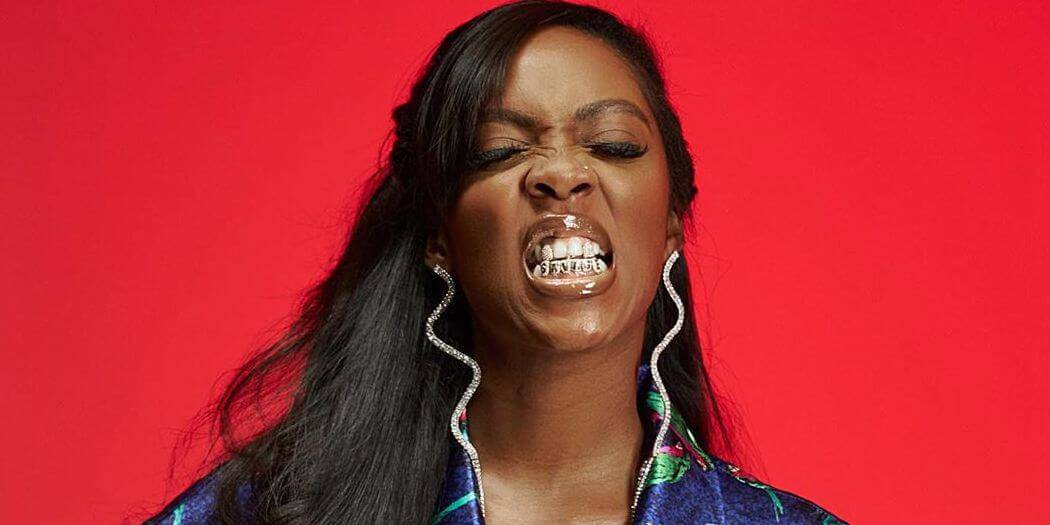
There’s a popular Igbo adage that states “Onweghi ihe bu ihe ohụrụ n’okpuru anyanwu” – which loosely translates to English as “There is nothing new under the sun”. Whether it’s fashion, entertainment, or art, most modern concepts are simply reworked regurgitations of the past. In the same vein, contemporary music – especially African music – evidently has strong ties to past music styles that defined previous eras.
Thus is the entire essence of the Afrocentric band, The Cavemen, who channel the nostalgic highlife sound that raved in our country during the ‘50s and ‘60s. Fusing elements of jazz and soul music with their evident highlife influences, The Cavemen – comprising the sibling duo Kingsley Okorie and Benjamin James – create their version of futuristic highlife; a coalition of slices of the past and their modern perspectives. Although the pair first stepped onto the scene as instrumentalists, they attained a higher level of visibility back in 2019 as they began making music of their own. Their peerless sound – one they’ve defined as ‘Highlife Fusion’ – was born out of a necessity to fill a void undoubtedly missing from the Nigerian mainstream. Listening to the Cavemen, you’re immediately catapulted onto a different plane; it’s suddenly a cool Sunday evening in Nsukka – the storied city in Enugu state, Nigeria – in 1965, and you can feel the dusty red sands beneath your feet and perceive the scent of palm wine trailing laughter from husky voices in the backyard, as the blaring music envelops your ears. It’s a sound that begets warmth, a warmth our grandparents once relished in, a warmth we can now all identify with.
African music, more than anything else, is historically ancient, rich, and diverse, and here in Nigeria, our sounds are vast and varied, upheld by our storied culture. However, in the last few decades, Afrobeat – and more recently its offspring, Afropop – has been singled out as the blanket genre that defines our country’s contemporary sound, resulting in a sideline of other genres. This was, however, not always the case. Delving deeper into the history of our arts, you’d find that before Fela Kuti’s revolutionary work as the pioneer of Afrobeat, before our country’s independence, highlife was a mainstay; seeping into our roots from Ghana. It was West African pop music when the Union Jack was lowered for the last time by the British colonial masters in Lagos, and the Nigerian Green-White-Green flag was hoisted.
While the music held more significance for Ghana in the ‘60s,representing their daily socio-political struggles, in Nigeria, it was feel-good music, carrying mundane themes, made specifically for dance. Although highlife spanned across the breadth of the country, it first gained popularity among the Igbo people following World War II. Performers like Rex Lawson & the Majors Band, Chief Osita Osadebe, Victor Uwaifo, and the legendary Oliver De Coque revolutionized the sound and, for a while, highlife was the dominating genre in our sound culture. Following the civil war in the late ‘60s, Igbo musicians were forced out of Lagos and returned to their homeland and as a result, highlife ceased to be a major part of mainstream Nigerian music; solely thought of as being something purely associated with the Southeasterners. Over time, highlife’s popularity slowly dwindled among the Igbos, and it was reduced to a passive genre. A genre The Cavemen, Igbos themselves, are prepared to resurrect.
Right from their debut single, “Osondu”, the Cavemen’s unique agenda was vivid: they are here to expand on the transcendent blueprint of Highlife music, and play their part in extending the influential sound’s relevance in the most authentic way possible. In the last year, the duo have furthered their cause with subsequent releases of singles like “Bolo Bolo”, “Me You I” and more recently, “Anita”, as well as producing the majority of Lady Donli’s critically acclaimed debut album, ‘Enjoy Your Life’. Their electrifying live performances – with stages as intimate as living rooms and as grandiose as TedX conventions – have lit up many rooms and earned them a reputation as one of the most enjoyable bands around. Slowly, but surely, Kingsley and Benjamin are taking strides to becoming the modern torch bearers for the highlife genre.
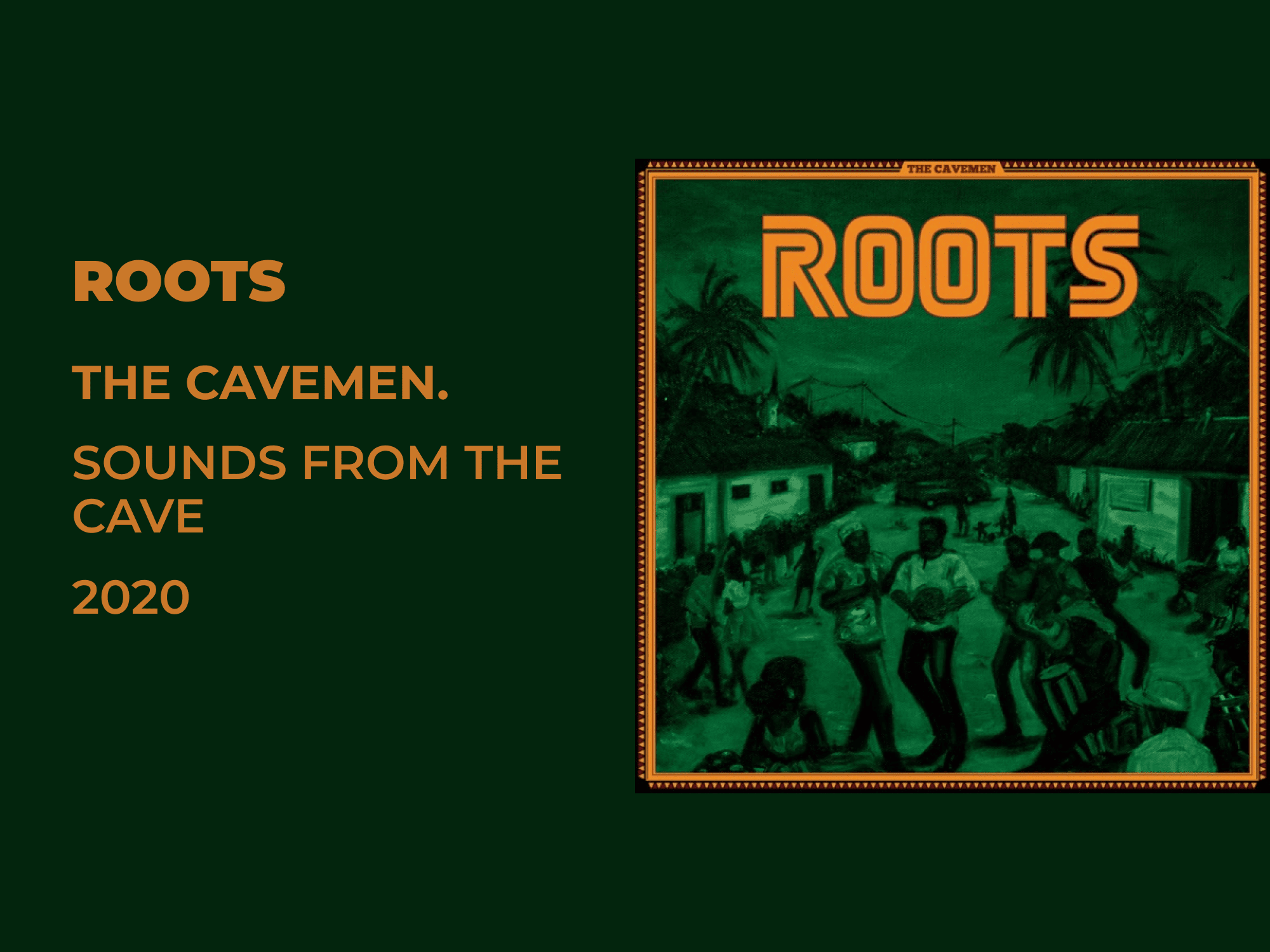
Their sonically opulent history climaxes into ‘ROOTS’, the Cavemen’s newly released debut album which they had been teasing since January, but actually working on over the last couple of years. On a mission to “fill the vacuum for contemporary highlife”, ‘ROOTS’ is, as its name suggests, produced in reverence to their Nigerian heritage and a genre with deep anchors in the history of African music. Sitting at just six minutes short of an hour, the sixteen-tracker is concurrently an expansive journey through the rich sound of highlife and a heartfelt ode to the soundtrack of our country’s traumatic history and political turmoil.
Highlife is, more than anything else, characterised by its very particular sound; jazzy horns melding with layered, arpeggiated guitar riffs and skittering percussions, serving as the perfect backdrop for the spacey croons of the performer. It’s music that evokes spiritual hip gyrations from unassuming bodies as they become one with the rhythm. The first half of the album – as Kingsley reveals in an interview with Accelerate TV – is intended to sound like an afternoon in town, filled with mellifluous melodies, and easy going yet message-bearing lyrics. “Ah, Akaraka oh/Echi d’ime” (Destiny/Tomorrow is pregnant), Kingsley rhythmically intones on “Akaraka” in his vernacular Igbo tongue over the accompanying traditional instrumentals certain to send shots of nostalgia through your body. The pitter-patter percussive progression of pre-released “Bolo Bolo” would cause an eruptive swinging of hips on the dancefloor in a ‘50s nightclub in Enugu; “Ọ gini ka i ga-eme ka nwanyi a ghara i bolo bolo su” (What will you do so that a woman won’t take you for a fool?), Kingsley questions as Benjamin’s sizzling drum rolls swirl with the irresistible guitar melodies. And on the shekere-heavy “Bena”, the breezy rhythms are reminiscent of a Sunday afternoon car ride through town.
Love, in all its variant forms, is a running theme in highlife music; almost every song boasts lyrical attempts to woo a woman. It’s no wonder why every other song on ‘ROOTS’ is named for a woman and places her firmly at the center of its subject. On “Fall”, “Me You I” and “Anita”, the pair explore themes of freshly tapped love, frothing at the mouth with infatuation. “Ije love asogbue m” (The journey of love is sweeting me), Benjamin shrieks on the mellow “Me You I”, painting the all too familiar picture of you early days in love. “Bena” and “Ọbiageri” are dedications to transactional love. “A mana m/Obu na I ma m/Naani inye I na eri/Nako mo” (Don’t know me,if you know me for only what you want from me), they repeatedly echo on the weighty “Ọbiageri” (the name which directly translates as someone who came solely to enjoy), as they render an ode to those who take but never give. And sometimes love goes sour; it gets messy but we somehow can’t let go – the Cavemen perfectly illustrate this downturn on “Ifeoma Odoo” and “Crazy Lover”.
The late Professor Chinua Achebe once said “Ilu bu nnụ okwu” which means “Proverbs are the salt with which words are eaten”. Proverbs are the wisdom of a people, in a nutshell. Complex stories and situations are concentrated in a few words and phrases which capture and retain the essential meaning of the experiences from which they derive. Hence, the compulsory use of Igbo proverbs (“ilu”), parables and idioms, in every traditional setting, has elevated the language to the status of a living art of popular communication. This has translated into Igbo music, particularly highlife. While the lyrics are often sparse and repetitive, they commonly hold vital life lessons, conveyed mostly through witty proverbs.
On ‘ROOTS’, The Cavemen transform into the wise village elders perpetually planted on seats under the mango tree, passing on moral lessons to any child willing to hear; “Osondu” probably narrates one of the most crucial life lessons needed. “Mgbe I na-aga ije gi elekwala anya n’azu, ọsọndu” (When you’re going on your journey, don’t look back, run for your life), they warn, advising listeners to focus on their onward path alone. On “Iro”, Benjamin and Kingsley convey a message on the demerits of ‘iro ajọka’ (quarrel), admonishing listeners to live and let live because “ọ bu onye makwazi ife ọ ga-egbu”(who knows what you will be?) And “Onye Ma Uche” (which directly translates as ‘who knows the mind ?’) relays ear-pulling advice on dealing with others. ‘O ga ka mma, kanyi bi e ndu, na maghi uche. Ma oburu na I ma Uche m, gi were ike I gbo oso. Ma oburu na m ma uche gi, ewere m ike gbo oso’ ( It’d be better for us to live life not knowing the mind. Because if you know my mind, you might run away from me. And if I know your mind, I might run away from you), they counsel, enforcing the popular saying, ‘what you don’t know won’t hurt you’.
“I want people to feel healing, really. That’s what I want from this album, I want impact and healing,” Kingsley revealed in the trailer for ‘ROOTS’, shared via their social media. On the opposite spectrum of highlife’s ability to send electrifying shocks down your spine and overtake your body’s hip movement, resulting in a cascade of gyrations, lies its healing power; its ability to cleanse the soul. The late Cardinal Rex Jim Lawson was known to weep and shed tears while singing his own songs on stage, notably the haunting “So Ala Temen”, a slow-boiling track filled with gentle rhythms. In the same way, the reflective “Beautiful Rain” and “Homesong” stand out as calmers. It is gentle rain (quite literally) on an early Saturday morning. Traditionally, agriculture was a leading profession among the Igbo people who would rise as early as the crack of dawn and make their way to farms spanning over thousands of acres to get to work. Naturally, they would always pray for the right amount of rainfall to enable their crops to grow and yield a bountiful harvest. Hence, to the Igbo people, rain is often seen as a deity of healing and replenishment. It’s little wonder why Kingsley repeatedly begs the rain to “ye m amamihe” (give me wisdom). “Mmiri ozuzo, sachapu ihe ọjọ m” (Beautiful rain, please wash away my sins), Kingsley begs over the stripped down, hi-hat led instrumentals on “Beautiful Rain”.
Among all things, highlife is communal music. It’s a chore-filled Saturday morning in an extended household. It’s a Thursday evening rendezvous at the beer parlour down the street. It’s the ‘dance dance dance’ segment of your cousin’s newborn’s naming ceremony. Highlife has always been the bedrock sound for common gathering and ‘ROOTS’ is an attempt to channel this spirit, starting right from the album artwork – courtesy of ATIDE Studios – which portrays an image of townspeople in a village square, making merry and dancing to the beat of the drums played. Instilling a sense of community through the mellow grooves, Benjamin croons, “Eze oge ndi obere” (Good times are short), on the album’s third track “Oge”, beckoning listeners to “ka anyi jiri ya me nke ọma” (let us use it for something good).
The Cavemen are carefully treading their own path as a bridge between generations, bringing the sounds from the past into the future. Further listening to ‘ROOTS’, the Cavemen’s goal becomes clearer by the second; they are here to uphold the legacy of highlife but they’re much more than revivalists – they’re dedicated to creating instantly timeless music rooted in their own authenticity. It’s music that transcends language barriers, as is evident during their scintillating live performances; whether or not you understand the language, the music will speak to you. It’s music that transcends generations as those irresistible drum patterns will make anyone from 5 to 50 dance and ‘feel alright’.
The essence of the hour-long journey on ‘ROOTS’ – frankly the Cavemen’s career in its entirety – is best summarized on the album’s two minute opener, “Welcome To the Cave”. ‘Uda si n’ugba’, the sounds from the cave (which they define as ‘the heart of a man’) is the music they are certain will change Nigeria, unite Africa and inherently impact the world. They are set to give the Nigerian music landscape the diversity it’s been yearning for and growing into, while embodying the spirits of their musical ancestors. And while many have crowned ‘ROOTS’ album of the year from these parts (this writer included), it’s apparent critical acclaim isn’t the sole end goal for this revolutionary duo; they are more focused on making music people can live with. “It’s long, but you’ll sit with it because it’s good music”, Benjamin shared with NATIVE upon the album’s release. In their bid to render a contemporaneous update of a near-forgotten era, the pair are also laying the groundwork for the future of highlife – a future we hope will never overlook highlife again.
Music has continued to sustain our sense of community as we all navigate the chaos of the world around us. Artists have kept the party going with new relatable songs that helps us remember the good old days (before the pandemic), dream of a better tomorrow, or just enjoy the present moment. Because we know the volume can be overwhelming sometimes, we’ve decided to highlight the best songs released from around the world, thrice a week, in a bid to put that extra pep in your steps as you go through the rest of the year.
We covered the new releases from Yemi Alade, Jess ETA and SGaWD, Ruhdee and Bella Shmurda, Justin UG, and Rexxie, Zlatan and LadiPoe on our mid-week curation of Songs of the day. Today, we’ve compiled a list of our favourite new releases to set the perfect mood for the weekend. You can enjoy the latest releases from Ghanaian sensation, J Derobie, Del B, Wizkid, Flavour, Walshy Fire, and Kes, Oxlade, Bella Shmurda, Moshoodat and Olayinka Ehi, Mojo, and D-O. Enjoy.
J Derobie – “Riches”
Since breaking out into the mainstream with emPawa-endorsed single, “Poverty”, J Derobie has continued to impress fans with his reggae flow and dancehall harmonies. The song recently won the award for reggae/dancehall song of the year at the Vodafone Ghana Music Award and now, he’s celebrating the accolade with a new single, “Riches”.
MOG Beatz produced the beat for “Riches” with a laidback groove, mixing percussion harmonies, synths and a bouncy drum riff. J Derobie’s rasta-flow matches the catchy bounce of the beat as he celebrates the hustler ambition of people living in the streets; “Every ghetto youth is a star”. The video directed by Wofa Rockson captures the crowd-pleasing vibe of the song as well as J Derobie’s street-savvy as we watch him surrounded by fans while performing on the street.
Del B Feat. Wizkid, Flavour, Walshy Fire, and Kes – “Consider II”
Before Del B released his debut single as a recording artist, “Boss Like This”, he already made his name as a producer, cooking up hits for A-list Afropop artists like Davido and Wizkid. He continued to show off his networking prowess on his debut tape, ‘Afrodisiac (the mixtape)’, which saw him collaborating with Seyi Shay, Wizkid, Timaya, Davido, Mr Eazi, Flavour, Runtown, CDQ, Dice Ailes, Bam Bam (Ex-Big Brother Housemate) and Moet Abebe. Though the romantic standout track, “Consider”, already had a starstudded lineup, featuring Wizkid and Flavour, Del B just upped the ante even further as he adds Major Lazer’s Walshy Fire and Kes to contribute for the song’s second instalment, “Consider II”.
“Consider II” has a breezy Afropop swing, making it perfect for the summer parties. The lightweight ambience of the instrumentals guide Del B, Wizkid, Flavour and Kes as they try to convince their muse to be their lovers. If you’re ever stuck on how to charm your love interest, “Consider II” is loaded with sweet words that can break down any resistance.
Oxlade – “DKT(Dis Kind Thing)”
Long live the romantic banger. When Oxlade shared his debut tape, ‘Oxygene’ in March, he showcased the allure of crafting Afropop songs that are born out of both a need to express extreme romantic desires and mission to charm a lover with catchy melodies. The success of tracks like “02”, where he compares his desire for his lover to his body’s need for air confirmed the mainstream appeal of his dramatic confessions and he keeps up his desperation for love on his latest single, “DKT”.
IsceBeatz produced the mid-tempo beat for “DKT”, mixing Afropop drum riffs with atmospheric synths, and horn samples that punctuate Oxlade’s romantic confessions. Singing, “I’ve been searching for you for a while”, Oxlade appeals to listeners’ emotional sensibilities while his catchy r&b-inspired melodies launch the song into anthemic stratosphere.
Bella Shmurda – “Dangbana Orisa”
After weeks of teasing fans with snippets and posts that hinted at the start of a new chapter in his career, Bella Shmurda has finally released his anticipated single, “Dangbana Orisa”. Earlier this year, he offered up a soulful representation of the lifestyle on the streets with his debut tape, ‘High Tension’ which earned him rave reviews and massive fanfare from fans of indigenously-charmed music. For his new single, he links up with street-hop’s premier producer, Rexxie, who set the laidback backdrop for Bella Shmurda’s Yoruba-fueled vocals about his courage; “Bi ina ban jo, Ogiri o sa(The walls don’t run when there’s fire)”.
Over the dancefloor-friendly instrumentals, he channels his street-smart to make a confidence-inspiring anthem. Singing “Vanessa tell me where you dey, I don come/ You know I’m about to fuck this up”, “Dangbana Orisa” underscores Bella Shmurda’s charm, as he embodies the pride of his indigenous Yoruba culture while still be accessible with English lyrics inserted at intervals.
Moshoodat – “Goddess” Feat. Olayinka Ehi
Moshoodat has been a shiny beacon, representing the inner light of black women through her career as a creative director and makeup artists. The New-York based creative has been portraying the beauty of black women with her captivating photographs of herself and other black women, basking in the glow of their skin. She has now taken on a new creative outlet as an artist and her debut single, “Goddess”, finds her rapping as she continues to preach her empowering message of celebrating the beauty of black women.
The piano-led beat for “Goddess” was produced by Nigerian producer, Melvitto and he mixes piano harmonies with head-bobbing 808s to sets a solemn backdrop for Moshoodat’s confidence-inspiring lyrics. Olayinka Ehi also features through her airy crooning that serves as backing vocals, adding an extra layer of glitter to Moshoodat’s celebration of black beauty. Saying, “Can’t believe I got this far without knowing my worth”, she’s claiming her power while also encouraging listeners to do the same.
Black Beatz – “Dobale” Feat. MOJO
MOJO’s rap prowess makes him a standout from the rest of the Chop Life Crew band members. His solo catalogue has caught the attention of music lovers who can appreciate his ability to coin vivid bars in Yoruba. On Black Beatz’s “Dobale”, he continues to show off the crowd-pleasing allure of his raps as he was enlisted to deliver the catchy hook and chorus for the club-driven single.
Saying “Olun gbogbo wan learn (They’re all learning)/ The way you carry na blessing/ The way you whine am na talent” over the smooth mix of drum riffs and percussion, “Dobale” is delivered as a love note to a muse. The groovy beat Black Beatz co-produced with Raffy is primed to serve the dancefloor and the newly released video directed by All of Us translates this into a house party set where we see Black Beatz and MOJO partying with beautiful ladies. Though there is a cut scene that shows Black Beatz and MOJO at a cult meeting happening at the same house party location, the song only focuses on appreciating their lovers’.
Prettyboy D-O – “Mentally” Feat. WANI
D-O’s latest project, ‘Wildfire’ brought the aggressive energy we’ve come to expect from our bolshy fave. However, nestled among the 8-track tape of aggressive bravado is “Mentally”, a pause for tender thoughts, where he teams up with WANI to confess his romantic feelings. Though the dancehall-influenced beat Adey produced for “Mentally” already granted the song a summery ambience, the newly released video with a house-party theme can elevate the song to be the soundtrack of this summer.
Prettyboy D-O, Integral Studio and UAXStudio are all credited for directing the almost 3-minute long clip that shows Prettyboy D-O partying with models. WANI is also shown performing his verse to his beautiful muse while we hear both artists relaying their fragile emotions, on the back of organic and minimal Afropop beats. “Mentally” is another romantic banger that makes proves D-O and WANI’s ability to make listeners sweat; if not on the dance floor, then under the sheets.
Na-Ku – “Uhp”
“Uhp” begins on topic, with Na-Ku asking himself where he’s been and where he’s at, questions on his fans and opps’ lips alike, to which he simply responds, “I’m up”. Two seconds shy of two minutes, Na-Ku’s first verse and only verse sees him switch between him setting the record straight—“Fuck it ain’t losin’, they thought I was down and out”—and him making flirtatious moves towards a girl, despite having a wifey.
Produced by the highly proficient fast-riser, Tochi Bedford, “Uhp” is a moody, yet affirmative record. The message is clear, Na-Ku “don wake” and everyone who thought his seven-month hiatus would be the end has another thing coming—the rapper chants across the outro, “dia papa!”
[mc4wp_form id=”26074″]
You are meeting Debola at a strange time in his life. He wandered into a dream and lost his way back. Tweet at him@debola_abimbolu
South Africa’s youngest and fastest growing electronic music movement, Amapiano has grown from underground to mainstream disruptor; now it is going global. South African writer and documentary photographer, Setumo-Thebe Mohlomi journeys through Amapiano history to illustrate how.
Amapiano is the youngest sibling in the South African musical family. It’s almost customary, then, that ‘Piano, like young Black South Africans at family gatherings, is held by the hand and presented to its older family members. As a uniquely South African sound, ‘Piano borrows from the country’s deep musical catalogue – even though its specific township of birth is undetermined, as though its birth certificate is still pressed under its parents’ mattress. But at times, the South African electronic music movement is chastised for not even remembering the clan name of its oldest ancestor, Jazz; censured for being coddled by its youngest uncle, Kwaito; and scolded for not paying enough homage to its closest relatives, diBacardi and AfroHouse.
All of the genres which influence Piano have homes in most South African townships and have played their respective essential roles in the country’s political and creative history. South African Jazz, from which Piano borrows its keys – and is named for that – was instrumental in helping to overthrowing apartheid; Kwaito music was the first original sound that came from the post-democratic South Africa, its warm melodic chords informing the infant sound; whilst drum patterns which are partly taken from diBacardi – a sensation which was pioneering in its DIY approach – and other genres popular in SA townships, swirl in Piano’s DNA.
As well as paying homage to all its predecessors, Piano also has traits entirely of its own making, which differentiate it from its lineage.
Local Spinner
‘Piano music was birthed in the townships at the edges of cities in the Gauteng province, with a few townships and artists staking a claim to originating the sound. In particular, it is Kutloano Nhlapho (who hosts The Playa’s Club on popular Gauteng radio station YFM under the pseudonym, Da Kruk) however, that has been involved with exposing mainstream audiences to the then strictly street sound since 2017. “Hore mang mang (That so and so) started with a drum and somebody put on keys, that doesn’t matter anymore. I really think it doesn’t matter where it started from. My biggest thing is where is it going? How are the guys going to make it more relevant in the next couple of years?” Da Kruk posed last year. He does his part to ensure ‘Piano’s global relevance through his show AmaInternational, which he hosts on the London station, The Beat FM.
Between 2017 and now, ‘Piano has not only infiltrated the mainstream, it continues to disrupt traditional music production and distribution models. If you’ve got a keen knack for striking nostalgic yet unfamiliar chords, a cracked version of Fruity Loops, access to online data sharing sites like datafilehost, WhatsApp, Facebook and other social media accounts, it’s possible to become a Piano star. After all, these are the ingredients which shot the movement’s foundational hits – namely, “Amabele” by Kabza de Small, “Shesha Geza” by De Mthuda and Kaygee and Bizizi’s “Kokota Piano” – to fame. Twenty-two year-old Lehlohonolo Marota, professionally known as Kwiish SA, who made “Isikhathi” (one of the first hard-hitting, unpolished hits popularly known as Gong Gong for how they knock) remembers his decision to focus on music, “I dropped out of school in grade 10 because of friends. I had also started smoking zol [cannabis] and things like that,” he says “plus I was getting booked for gigs so I didn’t have time for school anymore. Sometimes I would get booked for a Sunday gig and have to go to school on Monday. I would go to the gig and get paid good money. That’s when I realised that if I lived like this I might survive.” Typically, Marota’s first hit went viral without his realisation.
“When you send music through Whatsapp, there is no stopping it. So the name Kwiish SA was already on kids’ phones and I would hear my music being played in local taxis, not knowing how it got there. ”
Kwiish SA
As a sound which originated on the African continent, however, ‘Piano only very nearly missed the fate of many contemporary sounds in other African countries which are popular within a specific country’s borders but never get a passport out. “I think a lot of African countries suffer from that insular production. You make such amazing music but you never share it with anyone else and no one else will know the genre but people are comfortable within their countries that people know their music,” asserts the British-Kenyan Elvis Maswanganyi, who performs, promotes events, produces and hosts an afrobeats radio show, ‘Destination Africa’ on BBC 1Xtra as DJ Edu. The afrobeats pioneer has been keenly observing the growth of Piano’s international appeal, telling NATIVE, “Amapiano caught on faster than Gqom because with Gqom I think it was more of the white audience that caught onto it. They already have musical styles that are similar to that, so it connected with them. Amapiano has got soul in it, the chords are warm and there is singing. As much as it is still raw and organic, those very warm chords make it feel quite uplifting when you hear them.”
As DJ Edu suggests, diversity within the ‘Piano sound has differentiated this movement from others from its onset. The Beat London’s latest specialist music show host, Nohlapho, agrees, claiming that Piano’s international appeal was an inevitable and natural progression. “I started talking about Amapiano three years ago when it really wasn’t a thing. I’ve always been talking about the diversity of the genre, but obviously we were waiting for more people to warm up to it and for it to make enough noise for people like [Kabza de Small and] Burna Boy and Wizkid, and Tiwa Savage with De Mthuda to actually do stuff together.”
DJ Sumbody and Cassper Nyovest
Remix|Collaborate
Afrobeats, originating in West Africa (Nigeria particularly), is the dominant sound in Sub-Saharan Africa and the region’s biggest musical export. Circa 2010 – at a time when Piano had a small but loyal following – releases like P Square, Akon, and May D’s “Chop My Money” and Fuse ODG’s “Antenna”were doing the rounds, poised to becoming charting hits in subsequent years and trailblazers for the international growth of Afrobeats. Since then, the genre and its stars have become internationally recognised and a natural choice to help South African acts break the markets of other countries on the continent, and further afield, emerged.
When they first penetrated the mainstream, Piano producers bought the ears of a wider online and radio listenership by including vocals to their instrumentals. These vocals took the form of singing and repeated party refrains and catchphrases. Piano producers have also benefited from remixing familiar vocals off already popular songs and giving them a Piano sensibility. Notable among these are Kabza de Small and DJ Maphorisa’s (known as Scorpion Kings) 2019 remix of “everything i wanted”which features South African vocalist Marichan singing Billie Eilish’s part. Other, non-piano producers have also taken advantage of remixing as a channel to international audiences. Master KG’s “Jerusalema”, for example, though it was already popular across Africa before its Burna Boy remix, has, with the African Giant’s vocals, become an international viral sensation, peaking at #2 on Billboard’s World Digital Music chart; whilst the original, which featured only the vocals of South African singer, Nomcebo Zikode, is now celebrating a platinum certification in Italy.
Recently, Sarz and WurlD’s “Ego”was remixed by Major League Djz and Abidoza. The outcome is a record sensitively reinterpreted to allow both the original and elements of its remixing just enough breathing room. Tiwa Savage’s “Dangerous Love”, released earlier in 2020, has enjoyed a ‘Pianofied treatment by South African DJs Ganyani and De Mogul. Both of these remixes lean closer to the type of Piano described by producers and listeners as musically “mature”, sarcastically nicknamed ‘Harvard Piano’ because this variant demonstrates a producer’s wide musical knowledge.
Collaborations have also ensured that relatively unknown ‘Piano producers and vocalists are able to build a following by putting their names beside more established acts. On the global stage, across genres, collaborations are an essential tool for mass appeal. “It’s very strategic,” says DJ Edu “I think that is where they connect, especially with the collaboration. I think it’s how people consume music nowadays. For example, when you go to your streaming platforms, what tends to happen is one [artist] leads you to another. So a lot of people are discovering most of the artists by chance. Literally, I think it’s a maze but once you get one song and you get the collaborations, the algorithms guide you towards who else is popular or who was collaborated with.”
Using SA-Nigerian features to full effect, Kabza de Small’s “Sponono”with Burna Boy and Wizkid (alongside Cassper Nyovest and Madumane) appeared on the producer’s fourth studio album ‘I am the King of Amapiano’. The single looks destined to garner a million Youtube views in the first three months of its release, and Sony Music’s Director of A&R for Sub-Saharan Africa, Spiro Damaskinos observes that its popularity might also be owed to the vital combination of various digital streaming and social media platforms’ recognising Piano, granting the genre international accessibility.
“Social media has played a massive role in spreading the buzz and the sound globally. The big DSPs put the spotlight onto it by creating playlists on their platforms, giving new artists exposure to the world.”
New Heirs
The skills that ‘Piano has picked up growing on the streets of South African townships – tussling with and winning over the mainstream, and opening its eyes to strategic collaborations as an avenue for the music to reach continental and global audiences – make it something of a golden child. The hopes of many South African musical family members rest on the shoulders of Piano representing the country, well, abroad. This is colossal pressure for a movement that, perhaps more than anything, requires space and time to come into its own.
Harvard Piano and other radio-friendly variants of SA’s youngest and most influential electronic music movement are prying open international markets for a sound which has experienced a growth spurt to rival a teenager’s and with an appetite to match. Locally though, the fastest-growing stars are the young producers leaning towards a diBacardi-influenced brand of Piano, with complex but raw and devastating drums, chest-rattling bass lines and often uplifting but sometimes dark melodies. Leading this pack in popularity is Vigro Deep, whose ability to churn out hits was introduced with “Untold Story”, became established with “International” (the refrain after which Da Kruk’s show is named) and is soaring with “Ke Star” featuring Focalistic. Close behind him is trio The Lowkeys, who have used the national lockdown period to release a project, The Main Sound of Pitori and become household names with appearances on popular music TV channels MTV Base and Channel O. Thebelebe Onalenna, Freddy K and Sje Konka among others are also helping to create a buzz around a harder-hitting Piano variant.
These producers are the incumbent royalty of Piano, now tasked with the challenge of sustaining the momentum of the Amapiano movement, across the continent and in the African diaspora.
Image Credits: Setumo-Thebe Mohlomi
As a writer, Setumo-Thebe has published with reputable South African and international publications and online platforms for over a decade. His broad area of specialisation encompasses the arts, culture, business and international politics in Sub- Saharan Africa. Working symbiotically with his writing, Setumo-Thebe’s Documentary Photography comprises still images that do not merely reiterate or illustrate what is written but offer perspective and work in conversation with his writing.
Ice Prince has had a relatively quiet run this year, save for a few loose singles and collaborations, however, now it seems that the “Oleku” hitmaker is officially ready to make his return to the music industry. He’s coming back with exciting news of his official signing with an indie record label, 300 Entertainment, home to some of hip-hop’s most exciting names such as Young Thug and Megan Thee Stallion.
Ice Prince is the first African and Nigerian to be signed to the New York-based record label, and alongside the great news, the rapper has also released a new single titled “Make Up Your Mind”, a groovy afropop offering featuring Tekno.
Hint of the new song first came a few days ago when Ice Prince shared a still from the song’s upcoming video with the caption ‘Track 7 loading’ suggesting that the single was a pre-released one from a forthcoming album. Well, whatever the case may be, “Make Up Your Mind” is a definite banger and we can’t get enough of the vibrant music video.
Over the up-tempo beat produced by Stunna, Ice Prince shows that he’s still got that masterful grasp of hip-hop and wordplay just as he did circa 2011. He does most of the heavy lifting, rapping ‘Omo make up you mind/if you too dey fight omo break up on time’ as he stresses the importance of only engaging in romantic relationships that serve you, because life is too short to be loving the wrong person. Tekno, in his usual fashion, delivers a killer hook instructing his love interest to make up her mind on their romantic relationship and though his demands may be weight, the catchy beat will you have you dancing along.
Alongside the new release, Ice Prince has also shared vibrant new video directed by T.G Omori. The kaleidoscopic visual feast is a fitting one for this catchy song as it shows scenes of both artists just having fun while backed up by energetic dancers. As the weekend rolls in, get into this catchy afropop number which we can definitely see being played as the places around the city gradually opens up again.
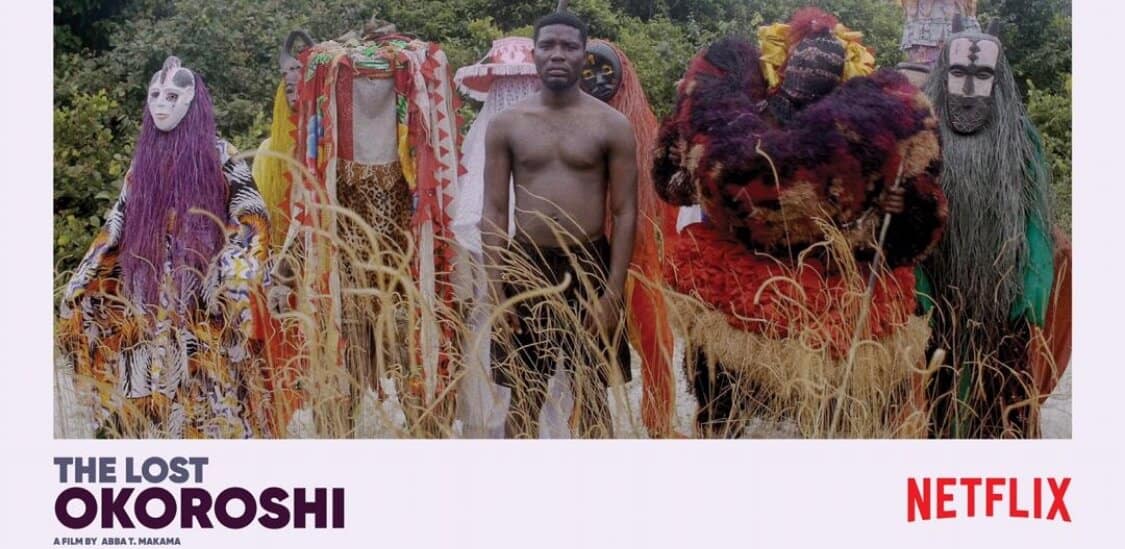
Last year, Surreal 16 filmmaker and director, Abba Makama released his second full-length film titled The Lost Okoroshi which premiered internationally at the Toronto International Film Festival (TIFF) as part of its new Discovery slate. The film which follows a young security guard stuck in a job he doesn’t enjoy takes a turn for the unexpected, when he wakes up one morning and finds that he has transformed into a traditional masquerade known as the Okoroshi.
Though the film premiered in Lagos at the Lights, Camera, Africa Film Festival for a select number of guests, it never made it to the cinema circuit within Nigeria, leaving many unable to watch the masterpiece at the time of its release. Well, not anymore, as The Lost Okoroshi is now officially streaming on Netflix in Nigeria and globally. Abba Makama shares with the NATIVE that,
‘I’m extremely excited that exactly a year from premiering at the Toronto International Film Festival, the world finally gets to see it, especially at a time where being spiritually connected is important’.
You can watch the film here and watch the trailer below.
2020 may well go down as the year of the revival, as Ladipoe is currently having a great run. Back in April, the rapper/singer released the romantic number “Know You” featuring Simi, a groovy afropop number that stayed in the top 10 on many DSP and airplay charts for several weeks including reaching the number spot in both Kenya and Ghana.
Two months later, he followed this up with “Lemme Know”, a confident statement track which faired just as well and went on to benefit from a freestyle challenge and a remix from NATIVE 003 cover star, Teni. Then shortly after, linked up with Zlatan for the remix to “Opor”. He’s been booked and busy.
With no plans of slowing down anytime soon (but you knew that), he’s now linked up with Joeboy for a new catchy single wittily titled “Yoruba Samurai”. Ladipoe wants to set the record straight, he’s a Yoruba samurai, not a demon, and the two could not be more different from each other. Where the Yoruba demon stays gaslighting you in a series of toxic entanglements, a Yoruba samurai is a sweet model romantic partner who will ‘go to war for you’ as Ladipoe amorously sings on one of the verses.
Over the mid-tempo Ozedikus-produced beat, Ladipoe and Joeboy serenade their muses, who have been successful in melting their hard exterior and romantic walls. Ladipoe waxes poetic about his love interest with impressionable lines like “You know I studied chemistry, still I can do the math/two bodies in one soul is what you and I have become”. He’s joined by Joeboy for the song’s hook, whose alluring vocals rock and sway over the infectious beat, as he details his romantic inclinations.
Any romantic would tell you to be wary of certain kind of lovers, but Ladipoe makes a claim for this samurai’s capability. He may well have another hit on his hand.
The long-awaited album Made in Lagos could be arriving any day now or at least that’s what Wizkid would like us to believe despite how long we’ve been waiting. So it’s fair if any member of Wizkid FC (this writer included) has some trust issues towards the Starboy currently.
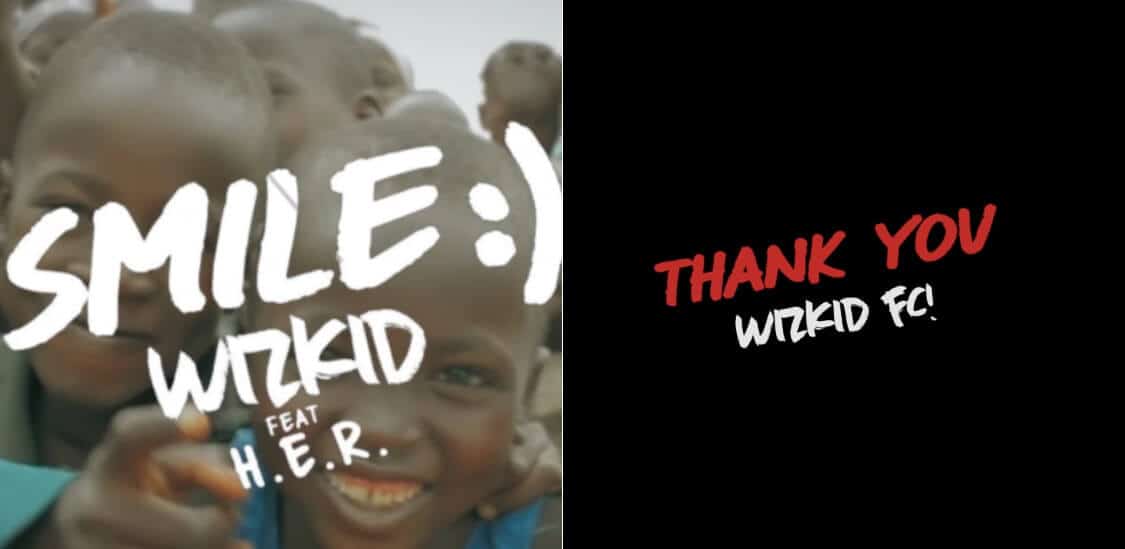
Well, we can’t really stay mad at the G.O.A.T for too long, as Wizkid is satiating fans with the newly-released lyric video for his latest single “Smile” featuring H.E.R, presumably in hopes that this will whet their appetites for the project that is to follow. The video which was released today features varying clips of Starboy FC fans around the world singing, performing and dancing the lyrics to “Smile” while with their loved ones. The lyrics are displayed at the bottom of the screen, each line made to feature as a comment on an Instagram live, very fitting for the current times where we’re mostly connected through our screens.
As the song’s vibrant horns and trumpets fade out and the last of the beaming smiles disappear, the words “Thank You Wizkid FC” appear on a dark screen closing out the incredibly heartwarming video. Whether you choose to forgive him or not, Wizkid has all his fans in his mind, and Made In Lagos could very well be more than worth the wait. Watch this space.
Nigerians are the real monarch when it comes to memeing. Our natural propensity to laugh at literally anything coupled with our hyperbolic overdramatic inclination equips us with the skill to generate the funniest short clips, to source the most humorous snippets and to re-difne even the most innocent of videos as memes. You must remember that in 2003, Nigerians were crowned the happiest country people in the world, our nation also labelled the ‘Happiest Place on Earth’ by The Guardian in 2011. Though we’ve now dropped to 91st happiest country (5th out of Africa’s 54 countries) ours is still an incredibly jovial society – one need only look at Nigerian Twitter to appreciate that.
But our humour is set to a backdrop of political instability, financial insecurity, civil unrest and innumerable social injustices. Everyone, including us Nigerians, can agree that there is very little to laugh about here – our problems are grave – however, we always find a way to make light of our country’s dire straits. According to Ebenezer Obadare, who writes a compelling journal article, titled, ‘The Uses Of Ridicule: Humour, ‘Infrapolitics’ and Civil Society in Nigeria‘, our humour might not be in spite of our country, it is likely that our dedication to laughing at Nigeria stems from Nigeria’s issues themselves; he writes: “laughter serves a variety of functions for the oppressed African subject – as ‘vengeance’, ‘coping mechanism’, a ‘means of escape’, ‘subversion’, not to mention as a means of ‘resistance’“.
Back in April, when the lockdown was replaced by a countrywide curfew, memes flooded the streets mocking our government’s decision, which seemed to suggest that COVID-19 only came out at night. This response was a sort of coping mechanism for our fear, and a means to escape the unsettling reality of the fast-rising COVID-19 numbers that the NCDC reported daily, especially worrying considering our notoriously inadequate healthcare system. A few days ago too, Twitter users used humour as a means of vengeance in a way, rallying against former Minister Femi Fani-Kayode, who erupted into a violent verbal attack on a journalist who asked a question that offended him.
From political cartoons, to internet memes, “jokes have always been iconic tools in the hands of society’s subalterns, used to caricature those in power, subvert authority, and, in some instances, empower themselves,” says Obadare. The latest way in which we, the largely powerless laypeople of Nigeria, are raging against the system is by imagining how (in)effective superheroes would be in our hardly-functioning society. Innocent as the initial prompt was, asking “if superheroes were in Nigeria“, the hilarious responses – that highlight our infrastructural issues, or make jest at our customs or even humorously depict the social issues that are rife in Nigeria – illustrate the little positivity we have surrounding Nigerian affairs but how willing we are to laugh right through the pain.
Look through the quote tweets and replies via the respective hyperlinks, and check out our favourite memes below:
Music has continued to sustain our sense of community as we all navigate the chaos of the world around us. Artists have kept the party going with new relatable songs that helps us remember the good old days (before the pandemic), dream of a better tomorrow, or just enjoy the present moment. Because we know the volume can be overwhelming sometimes, we’ve decided to highlight the best songs released from around the world, thrice a week, in a bid to put that extra pep in your steps as you go through the rest of the year.
We started this week’s Songs of the day curation with new music releases from Niniola, Shatta Wale, Moshfire, SirBastien, Ayüü, July Drama and Tosin, and Flavour and Phyno. Today, we’ve compiled a list of all the latest music releases from around the continent that you don’t want to miss out on. Yemi Alade, Jess ETA and SGaWD, Ruhdee and Bella Shmurda, Justin UG, and more have put out new releases and you can enjoy them below. You’re welcome.
Yemi Alade – “True Love”
Yemi Alade’s consistent work ethic has made her one of the most popular musicians from Africa. Her unwavering dedication to curating her image with cultural references also earned the title of ‘Mama Africa’ and she continues to showcase her love for African style and aesthetics in her video for “True Love”.
“True Love” was released last month as Yemi Alade’s second single since her last project, ‘Woman of Steel’. The Vtek produced song was primed for mass consumption with the mix of catchy dance-driven harmonies and Yemi Alade’s uplifting message about the positive effect of happy music. Singing “DJ play that happy music (forgetting my sorrows)/ Make the people sing-along”, “True Love” encourages listeners to turn to feel-good melodies when life gets stressful as it often does. Paul Gambit directed the video with different shots of Yemi Alade and the casts wearing African print fabrics and other traditional attires that brighten up each frame with colorful designs. The world is in desperate need of positive-vibes and Yemi Alade has provided that with her celebration of African tradition in her video for “True Love”.
Jess ETA – “Resistance” Feat. SGaWD
Following their steamy collaboration from earlier this year, “Like Me”, Jess ETA and SGaWD have doubled down on their raunchy chemistry with a new collaboration titled “Resistance”. The sexually-charged song is one of the lead singles from Jess ETA’s upcoming EP, ‘Balance’ and it confirms the romantic direction already hinted on the previously released single, “More”, featuring Zarion Uti.
Jess ETA and SGaWD already demonstrated their fluency in rap, r&b and Afropop sounds through their singles and features. However, “Resistance” is the first time all of those music sides—and more—were presented in a singular statement. Though they’re flaunting their wide stylistic range, the focus is on worshiping their muse as they sing, then rap about their attraction to their muse saying, “You’re my beautiful addiction/ I have no more resistance to you”.
Ruhdee – “Shaye” Feat. Bella Shmurda
For fans who’ve been paying attention to Bella Shmurda’s social media, it seems the singer is gearing to roll out a new project. The first hint came after he started referring to himself as Dangbana and earlier this week, he shared the snippet for a new single, “Sho Ni Cc” on his IG. Though the caption encouraged fans to click the YouTube link in his bio, there was only snippet available on the streaming platform. Despite being upset at the trickery, we’ve remained on the lookout for when it eventually drops. This is how we found his latest collaboration, “Shaye” by Ruhdee.
Nakademus produced the lightweight beat to set a laidback groove for Ruhdee and Bella Shmurda’s captivating melodies on “Shaye”. Ruhdee and Bella Shmurda take turns laying verses about their celebrity lifestyle as accomplished musicians and the video directed by Praise Niphy reinforces their claims by showing them in their flashy clothes and jewelry. We also see the pair performing their vocals, accompanied by two models and a convertible car that serves as proof that they get love and money.
https://www.youtube.com/watch?v=W-Tyg3S3JGM
Rexxie – “Opor Remix” Feat Zlatan, LadiPoe
Rexxie’s debut tape, ‘Afro-Street’ showcased the wide stylistic range of the street-hop sound that once dominated the Nigerian mainstream music scene. After highlighting the genre’s groovy appeal, the producer recently updated one of the standout tracks, Zlatan-assisted “Opor” with a remix that featured a new verse from LadiPoe. The updated version has now gotten a befitting video that captures the exciting sound and the energetic Zanku dance that accompanied the sound.
Praise Niphy directed the dimly lit video for “Opor Remix”, and it captures Rexxie and Zlatan performing together in different studio sets while LadiPoe performs in a retro-themed room. The red-lights and color-grading edits allow both sets to fit together as a whole. Just as we observed when the single was released last month,“Opor Remix” shows LadiPoe’s willingness to expand the scope of his music and also shows the depth of Rexxie’s phonebook. LadiPoe’s adaptable flow and his impressive bars have given the street-hop wave a much-needed revival.
Justin UG – “Monalisa” Feat. Nano Shayray
Multi-talented internet celebrity, Justin UG has continued to push the boundaries of his creativity. The comedian/ dancer/ MC/ actor is always exploring new mediums to express himself, and has recently tapped into music with the release of his 2-track tape, ‘Vibes with UG’. Both tracks, “Monalisa” and “Bridget” have romantic themes with laidback Afropop instrumentals designed to serve dancefloors. Though they are both worth giving a listen, “Monalisa” is the first track and it stands out as our first time hearing Justin UG’s surprisingly sweet singing voice.
“You say you love me/ Why you come dey change your mind?”, he asks a paramour over catchy drum riffs and soft synth harmonies produced by badthesoundboy. He’s later joined by Nano Shayray who also feels that he’s being played by his muse. Though their airy vocals are performed with the charming allure of a love song, they are both too keyed into their fear of being played to pass their love message across. Regardless, “Monalisa” has a compelling groove built around catchy melodies that are further proof of Justin UG’s chameleonic talents.
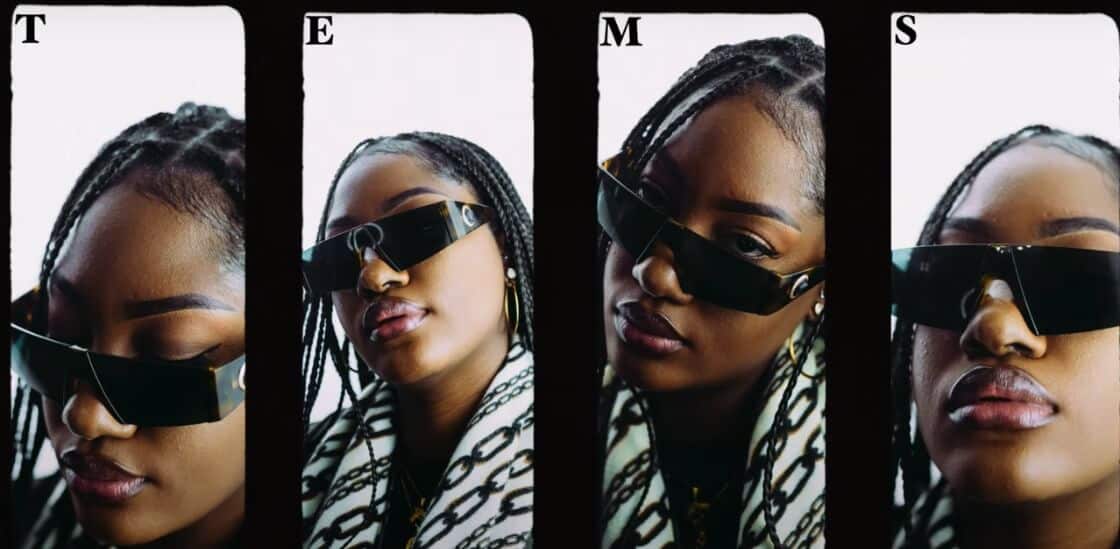
Tems is a girl on fire and with each new release, we’re more certain that she’s priming herself for a global takeover. After giving us a sneak peek into her creative process a few months back, the leader of the Rebel gang has more in store for her army of loyal followers. A few months back, when the world was uncertainly adjusting the changes this new year had brought, the elusive artist connected with her fans on Instagram live to share new music and catch up with them, in a moment of close proximity. And now, while we wait for more from her, the leading vibe is giving fans a further look into her mind and her methods.
Today, Melanin Unscripted in collaboration with Tems brings you a mini-documentary following Tems’ time in New York City earlier this year. For her first time in the Big Apple, we get to see Tems as she connects with creatives and explores the city. We see her donning vibrant colourful Orange Culture pieces at museums and later performing for a lively crowd at an intimate gig. As she sings the words to “Try Me”, the crowd chants back with her, and therein lies the beauty of the Rebel Gang and their leading vibe, the ability to hear us at our base emotions and turn that into memorable songs.
It’s clear that Tems wants to connect with her fans more, as they are what keep her going. She sends an important message to her loyal following, the Rebel Gang, which she reveals is synonymous with freedom. ‘I’m overcoming so that they can overcome aswell’ she shares in the voiceover that accompanies visuals. Tems continues to show that she’s a force to be reckoned with and with her deep conviction in herself and faith in God, she promises that her debut album will represent a fresh start and a new page.
While we wait for her debut album, you can watch ‘MU Narratives x Tems’ below.
Podcasts are becoming increasingly popular in today’s world and everyone from your fave celebrities right down to influencers and regular folk like you and I, are tapping into the growing industry as a different medium to talk freely about the topics that affect all of us. Whether that’s Mandii B and WeezyWTF of the Whorible Decisions podcast talking unabashedly about sex toys and tricks or Scottie Beam and Sylvia Obell bringing you the latest news blowing up their timeline on Okay, Now Listen, there’s a podcast out there for every and any listener.
As of this year, Apple Podcasts is home to more than 500,000 active podcasts and many of them are racking up stellar numbers as listeners regularly tune in weekly or bi-weekly for new episodes. Though the growth of podcasts has been more of a slow burn here in Nigeria, there have been a few shows over the years which have been able to garner loyal followings. In 2018, Stears Business posed the question ‘will podcasts become the new FM?’ challenging whether the most used media form in the country could be usurped for this new way of disseminating information, particularly as it was very popular amongst millennials. Unfortunately, podcasts still haven’t taken over mainstream radio quite yet, but there has been a boom in the number of podcasts popping up in these parts, from former regulars Loose Talk to Nigerian-American, Submarine and Roach, I Said What I Said, and even newcomers like F & S Uncensored, the fourth space, Confident and Killing It and many more.
I, for one, was late to the party and started listening to podcasts just two years ago when I stumbled upon Adowa Aboah’s The Gurls Talk podcast, a conversation between the British-Ghanaian model and activist and some of the phenomenal women she’s privy to know in varied fields of work. It didn’t take long for me to seek out similar podcasts from women who created a space to talk and share about issues that affect us the most and the latest happenings in today’s world. Through this, I found podcasts owned by West African women living here and in the diaspora including Hectic Podcast, The Receipts Podcast, and a personal favorite of mine and many young Nigerians, I Said What I Said.
One thing particularly endearing about these podcasts were the women behind them and the unadulterated way they were able to get real about issues pertaining to young people, especially women and their experiences. Though Feyikemi Akin-Bankole and Simi Badiru of F & S Uncensored never set out to inspire anyone but themselves, the two long-time friends, who created their podcast over a year ago, have already become a favourite amongst young Nigerians for being so relatable. Having formed the podcast over their shared love for music and pop culture, the two friends set themselves apart with their determination to stay true to themselves. When they speak about their experiences registering for NYSC in Nigeria or interview people that are culturally sound in the music and entertainment scene like Tinya Alonge and Fresh L, they unknowingly influence a host of young people listening to their show and going through similar experiences.
In Nigeria where creative careers are not always embraced and encouraged, Feyikemi and Simi are taking up space by shining a light on their experiences while working in the music industry as well as producing nuanced commentary on the pop culture of today. ‘We didn’t specifically set out to host a women-centred podcast, but then we are both two young girls that enjoy life and enjoy the things that we do so we figured why not talk about it and see if anyone else can relate’ Feyikemi shares with me, and it so turns out that many listeners definitely did relate as the duo share their heartwarming fan mail from listeners who are impacted by the two close friends.
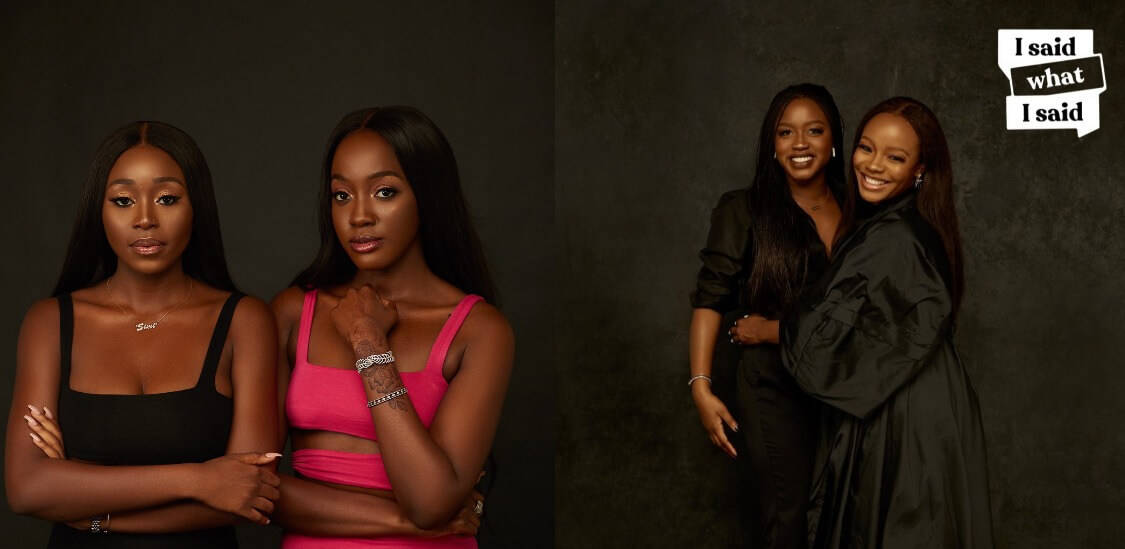
For Feyikemi Abudu and Jola Ayeye of I Said What I Said (ISWIS) podcast, who have just celebrated their third anniversary over the weekend, they are unashamedly honest about everything pertaining to life as a millennial woman in Nigeria, discussing everything from dating to pop culture and even taboo topics that are typically shunned when it’s not behind closed doors.
The idea for I Said What I Said first came up in 2015 when Jola nursed the idea of hosting one for women like her. Jola wanted a partner who she could effortlessly bounce ideas and jokes off, which came in the form of her friend, Feyikemi Abudu two years later, the pair were friendly but apart from the fact that Jola had a crush on Feyikemi’s brother in secondary school and the duo moved with the same circle, it wasn’t until Jola extended the suggestion to be co-hosts that a deeper sisterhood was formed.
‘I remember thinking this is going to work and it’s going to be smooth, and it has been from the first day’ Jola shares with me about the synergy between her and Feyikemi was effortless. With the help from friends at Midas Radio, the duo set out to create what is now widely listened and enjoyed by many today as I Said What I Said.
“I am an unashamed feminist and a lot of my interest is in women’s issues. If I am going to be doing anything that I am in creative control of, women’s issues will always be the top of the pile and that’s the same thing with Feyikemi. It’s our thing and we care about women and we want them to express themselves and feel safe and gist.”
Jola is aware that ISWIS has many male listeners as well, her focus is on showing up for the women she and Feyikemi have been able to connect to through their podcast. Fostering this safe community for women has been of utmost importance to the pair as they regularly communicate with the women that listen to their show and it’s this element of care and empathy in their podcast that endeared them to their loyal followers who wholly supported them at their first live show during Social Media Week.
In a world where women–especially black women–are unfavourably treated and berated by society, ISWIS creates an unfiltered space to share a bit of banter, gossip, and talk about some genuine life experiences. Both women genuinely love making others laugh while still taking time out to speak on what matters the most to women who like and sound like them. Openly speaking about these topics gives other women the confidence to share their own experiences as Nigerian women are often taught to shame themselves for speaking out about their dating mishaps and exploring their sexuality.
Though they are regularly topping Apple podcasts charts for having the most listened to podcast in the country, Jola shares that ‘I think just, in general, having spaces that focus on women without performance is really great and because there are so many types of women out there and so many different things we are interested in, you literally can’t exhaust audiences’. What has set them apart from their peers is their ability to use their similar senses of humour and their close friendship as a means to break barriers that exist between them and their audience. Thick as thieves, they represent both sides of the same coin, but their distinct personalities help to spruce the show up with their cheerful and fun antics.
I can’t stress the importance of having a safe space for millennial and Gen Z women to find joy, laughter, and advice all in the same spot and the continued existence of these podcasts that cater to a myriad of women goes a long way in helping a community of women openly embrace their mistakes and their achievements. We’ve listened, laughed, and cried along with these women and now it’s time that you do, you might learn a thing or two.
The Internet is a glorious, yet terrifying beast. An ever-growing expanse, the world of social media has become one of the forefront uses of the Internet, especially during these times where physical social interactions are largely prohibited. From mainstream socials, such as Twitter and Instagram to niche gaming forums, there exists a tonne of content on the web for us to search, stumble upon, share, analyse, and in times like these, most importantly, there’s a tonne of entertainment at which we can all together laugh.
During this global pandemic, we’ve had our freedom of movement curtailed, our rights refused to us and most heartbreakingly our heroes and fellow black people taken from us too soon. Throughout the year, most of us have felt its horrors on a personal level, in our respective societies and as a global community. There has been no respite in news cycles, so it has been important to cherish moments of joy, whenever they appear, no matter how silly these moments seem to be. At least, that’s how I’ve been getting through it all – laughter and the Twilight Saga.
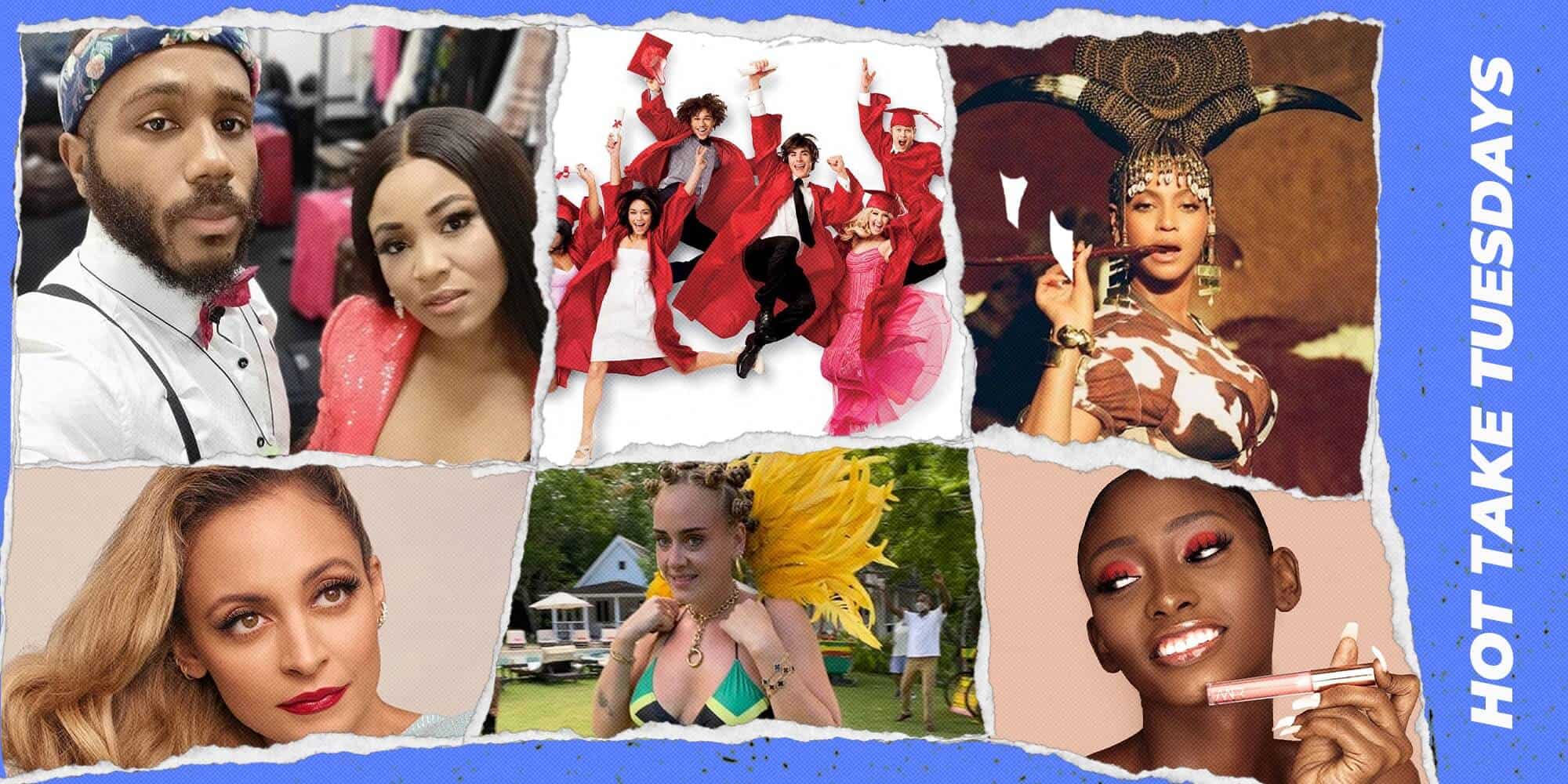
For this week’s Hot Take – our new column where a different member of the NATIVE editorial team will dissect different trending topics across the globe, giving give their hot takes on each topic – I, Adewojumi Aderemi have focussed on all the things that made me laugh over the weekend and this week so far, and one or two topics that have helped me grow (if only a little). Here goes:
What I’m watching on YouTube: BabyGirlTos
Someone save me from @babygyaltos’ YouTube channel I can stop watching 😭😭😭😭😭
You’ve most likely seen BabyGirlTos’ content shared as three-second long meme bites on Twitter, but the brief videos don’t do any justice to how hilarious her channel is. Tosin, as she permits us to call her in her fun and memorable introduction (“what is up YouTube? It’s your girl, BabyGirlTos aka Tosin and we back with another BANGER video“), is a really funny and very open YouTuber, who imparts valuable lessons to her viewers; how to achieve her ’90s inspired lob looks, how to get thick, what the kids are saying by way of slang and whether or not you’re a toxic lover. Her funniest videos however, are the ones where she is joined by her friends as the energy they all bounce around is infectious – you won’t be able to stop laughing and you certainly won’t want to tune out.
Watch her brand new video here:
What I’m watching on Disney+: High School Musical
I have been given the gift of Disney+ access for a limited time only and I am using it right, catching up on all the oldies from Parent Trap to Cheaper By The Dozen and, of course, the Gen Z Holy Grail, High School Musical. My favourite is HSM3 because of Troy Bolton’s phenomenal performance in “Scream”. With a significantly larger budget than the first two, Troy’s solo this time is a legitimately flawless production; basketballs come raining down, Troy walks on the walls (Inception referenced this cut), and he tops it all off with the most dramatic belt ever. Arms stretched wide, veins popping, Troy Bolton’s “Scream” could give MJ and Janet a run for their money. “Can I Have This Dance” and “I Just Wanna Be With You” are also powerful romantic duets that have a place in my fictional wedding, so hearing those again tugged at my frail heartstrings.
What I’m listening to: Growing Up With gal-dem
After listening to new music on Friday and and writing about all my faves (which involves repeated listenings) I like to use my weekend to unplug as much as I can, either going back to older projects, namely ‘My Beautiful Dark Twisted Fantasy’, and ‘rare.’ , or – which is the case most times – I opt out of music listening altogether and enjoy my imaginative thoughts in silence. This weekend, was a no music weekend, but instead of (over)thinking about my own melodramas, I decided to contemplate growth, with gal-dem. Starting with Tiwa Savage’s episode on Motherhood, I then went on to listen to Michal Coel’s episode where she talked about “taking the note“.
Lifting the phrase from a public diary entry she wrote during her studies about ten years ago, Coel’s idea of taking the note suggests that when we get criticisms from people, we simply accept what they say – take the note – and reflect upon their words later. Later, you can analyse their criticism in the context of your life and your work, asking why they say that? Where it has value, are they projecting? – questions which enable you to apply the criticism to just the right degree. Both episodes put me in a deeply reflective mood so I also went on to watch the Homecoming x Browns Fashion panel on street style, which got me thinking critically on how to grow myself and our industry. Listen to Growing Up With gal-dem below here.
Nicole Richie is an environmental rapper!!!
During the lockdown period, my sister and I revisited Paris and Nicole’s iconic The Simple Life (you can tell from my excessive use of the phrases “That’s hot!” and “Loves it!“), so I’ve grown a newfound interest in all things Paris and Nicole. A couple of weeks ago, Paris Hilton released the trailer for her upcoming autobiographical documentary, This is Paris, a YouTube Original film which details her childhood traumas as Paris, for the first time, reveals to viewers and even her family, who is really behind the wild child heiress persona we’ve always thought she was. Nicole Richie, on the other hand is conflating her gardening enthusiasm with her family background in music, releasing her debut album ‘Unearthed‘, under her new persona, Nikki Fre$h.
The introduction is from her daddy, Lionel Richie, who, despite being a musician himself, is very apprehensive about Nicole venturing into rap, pleading with her husband to talk Nicole out of Nikki Fre$h. Thankfully Nicole doesn’t listen, simply replying, on the album, with “Parent Trap”, where she opens: “hop out the porsche/straight the the store/but only organic cos I’m bout the planet and don’t do the pork“. Going on to talk about her mothering tactics, “Parent Trap” is literally what it says on the tin, trap music by mommy.
After rapping about her chickens, her sage, rosemary and other herbs in her garden, Nikki Fre$h plays for us another voice message, this time one sent to her sister Sofia, where Nicole is accused of “singlehandedly killing rap music” and not in a good way. The album is populated with a series of hatery voice messages from her circle; Kyle is mad that she’s gentrified rap music with her ‘conscious trap’; Mila is not with the fact that she has to sit behind chickens on Fre$h’s Farmer’s Market Tour; Molly’s boyfriend is concerned that ‘the principle of it’ might have some negative implications on him, “because somehow [he’s] now associated with the record; whilst an unnamed woman accuses Richie of using crack again, since apparently “she doesn’t even grow her own vegetables“. The final voicenote from Nikki’s sister-in-law reveals that she didn’t take on any counsel from her “Life Partners”, going full speed ahead with her album, despite all their reservations.
‘Unearthed‘ is simply not as offensive as these voicemails would have you think. Sure, it is gentrified hip-hop at its best, but does Nikki Fre$h not deserve some credit for staying true to her interests in the music she makes? Not to mention the fact that she’s shedding light on environmental issues in a wholly entertaining way. From “U.G.L.Y”, Nicole Richie’s cult following will learn not to chuck away their peaches simply because they don’t bounce (an incredible metaphor by the way), on the techno-rap “Lil Gems”, she runs through all the remedies you need to get rid of your negative energy that might manifest itself as physical pain, whilst she advocates for water sanitation on the aptly-titled, “Drip Dip”. It’s a huge shock that even at her age, with children, financial security and such a notoriously creative family, that Nicole Richie would be met with such backlash from her support system. But it’s inspiring to see that no matter the discouragement she faces, Nikki Fre$sh will always put on for the environment.
KiddErica is triggering so you all should stop talking about it
Currently in the UK, I have not had the pleasure of watching the season of Big Brother Naija, however Twitter has been keeping me somewhat in the loop of all the talking points arising from the show’s affairs. This week’s drama centred around the relationship woes of Kiddwaya and Erica, nicknamed KiddErica. During the Saturday night party, a lover’s tiff between Kiddwaya and Erica emerged from his affectionate dealings with other girls. In response to Eria kicking off at Kidd, our resident BBN expert tells me Kiddwaya demanded to know what he had actually done wrong this time, to which Erica didn’t have much to say, instead resorted to insulting him, as opposed to communicating or addressing her issues properly.
As we’ve already said before, KiddErica’s is a modern love story; typical of heterosexual shituationships, and triggering for anyone attempting to move on from the hurt. It’s worryingly common for a girl to fall in love with a guy who has clearly stated he cannot be in a relationship. As someone who has been in this position, KiddErica’s relationship is incredibly triggering, but a good point of reflection for me. Erica certainly should free herself of a guy who cannot be the guy she wants him to be (which Kidd repeated, to her and others, during Saturday night’s party). In fact, it is unfair for her to expect him to be someone who he doesn’t want to be or for her to expect him to change his ways, which he clearly stated at the beginning of the relationship, because she is upset about his in-exclusivity – some would argue that she’s being manipulative even.
On the other hand, Kiddwaya’s behaviour can also be seen as manipulative. Insisting that he does care about Erica, Kiddwaya continues to draw her in and hold her near, nurturing her feelings at the same time as rejecting them. He looks like he wants to have his cake and eat it, and whilst it’s clear that this whole thing will hurt Erica in the long run, it’s likely to take its toll on him too, especially if he does indeed care for her. In conclusion, they should both quit it before things take a turn for the worse, because in toxic friendships such as these, things only get worse. Taking a break from each other, talking extensively about their feelings and then being intentional about considering each other’s feelings as well as their own, might got a long way in stabilising their relationship – if Kidd really cares like that, he’s likely LYING like ALL MEN. I wouldn’t know much about that though, it’s #toxicgirl for life.
For some time now, I have silently watched as the internet drags “the new Burberry“. Apparently, there are people, and lots of them, who believe, or rather “can’t believe” what Riccardo Tisci has “done” to Burberry. I just don’t get it. Apart from Kendall Jenner’s poorly lit home shoot, I am living for everything the Italian designer is doing with Britain’s iconic brand – I mean, what’s not to love?
Now I am no fashion enthusiast, talk less of an expert, so there might actually be legitimate cause for all the hate my dearest RT is receiving for his revamp (I’d call it revival) of the Burberry brand, but to these humble eyes, Tisci has brought with him a contemporary free-spiritedness that he’s been lauded for for years. I first fell in love with Riccardo Tisci during my tumblr days, following the release of his colourful larger than life collaboration with Nike, worn by Joan Smalls on the tumblr pages. Bestowing upon the classic Air Force One design his creative eccentricity, Riccardo Tisci has gone on to do the same with Burberry, taking advantage of his full reign as Chief Creative Officer, to make the brand his own, whilst still retaining staple garments and points of identity, such as the infamous trench coat or instantly recognisably Burberry tartan plaid.
Though streets are big mad at Kris Jenner’s logo-manic Burberry bodysuit, and all the other pieces along the new logo’s line, I think it’s fabulous that Tisci has put a bit of him in the TB logo, and even more grand that these are the pieces boasting pop culture relevance. You may think the print is garish, or stick your nose up at his celebrity clientele but Beyoncé’s outfit in “Already” ought to tell you everything you need to know: Riccardo Tisci is a design god and he’s doing the lord’s work at Burberry.
Over the weekend, Mohini Beauty launched their brand new make-up line (you can shop here, although it’s mostly sold out), beginning the day with a ‘Get Ready With Me’ Instagram Live, where Omoehi Ighodalo, the beauty entrepreneur behind the brand, sampled the products going up for sale, as well as other products Mohini has in the works. Teasing the release of a super convenient lash glue, a beauty blender, setting powder and a couple of luscious blushes, Mohini Beauty has my appetite whet and my pennies ready to drop for their next release. In fact, I am literally on the edge of my seat, eagerly waiting for drop day. In true journalist fashion, my obsessive “when!!”s hurtled at the brand’s DMs got me thinking, what does this about buying practices in the digital world and what are the benefit to brands of teasing products well before they’re launched?
Product teasing isn’t really a new phenomenon; we have fashion shows months before the collections are available (though that’s mostly for buyers), we have expos for cars and tech products that flaunt what’s to come in advance of their official launch dates, even buying catalogues, that are super popular in the West (RIP Argos Catalogue), detail the products to come in the store’s next season. Letting customers know what they’re going to be able to get before they’re able to get it, has always been a useful marketing strategy, but in today’s post-digital world the art seems ubiquitous – every brand or company is learning the hack to ensure that their products are sold out even before they go on sale. This strategy, of course, involves excessive social media drive.
Thanks to Instagram’s borderlessness, and general accessibility across the globe, this picture-based platform has become a primary site of digital marketing, especially useful for smaller brands who do not have the budget for adverts or the press connections that established retailers might have. As more and more brands co-opt the Instagram space, our buying practices have shifted even further away from the high-street, as visiting the [dot]coms which replaced the physical stores becomes an archaic practice in light of “DM to order” demands or direct shopping links on socials. In order to make the most of this more democratic space, smaller business (like emerging artists), must ensure that they always keep their audience attentive – this is one benefit of product teasing.
By teasing products, brands and companies can stay relevant even in times where they don’t actually have products out. Putting out feelers also helps brands know which products to prioritise in the production stages, and which items to produce more of, which Omoehi Ighodalo, founder of Mohini Beaty, confirms to me, saying that “the more [my customers] like something, the more of it I order“. Later on, Ighodalo narrates how her timetable of product releases has changed based on which “I had planned to release the matte lipsticks I’m working on next month, but people really wanted the eye shadow” so that’s what’s up next, as well as the much-coveted lash glue, which she had originally planned to launch in December. Clearly there are palpable benefits for brands to share products whilst they’re in the works, so although it’s a real test of patience, it all works to everyone’s advantage in the end.
I won’t talk too much. I can’t. Wishing London a “happy what would [have been] Notting Hill Carnival” on Sunday evening, Adele caused quite the stir on social media, as her well wishes were accompanied by this post of her donning bantu knots and a Jamaican flag bikini. Despite the clear cultural appropriation implications, an the political conversation that could easily have been extracted from this picture, Adele was given a free pass, escaping cancellation because she’s just too dear to black communities worldwide. It might be hypocritical that Adele garners happy-spirited laughter, whilst other celebrities would come under serious fire – have come under serious fire even – for doing the same or similar. Well, most Jamaicans on Twitter (at least in my space) decided the only energy the picture deserved was meme energy, and Black Twitter, as usual, delivered the creative and hilarious content we all signed up for. Enjoy below.
Music has continued to sustain our sense of community as we all navigate the chaos of the world around us. Artists have kept the party going with new relatable songs that helps us remember the good old days (before the pandemic), dream of a better tomorrow, or just enjoy the present moment. Because we know the volume can be overwhelming sometimes, we’ve decided to highlight the best songs released from around the world, thrice a week, in a bid to put that extra pep in your steps as you go through the rest of the year.
We covered the new releases from Namibian rapper, Lioness, Olayinka Ehi, Tiwa Savage, King Perry and PsychoYP, TaavTheHuman and Isaac Lörd, and Aux Zenith to set the perfect mood for the weekend. Now we are starting the week with the latest releases from Niniola, Shatta Wale, Moshfire, SirBastien, Ayüü, July Drama, Tosin, Flavour and Phyno. Enjoy.
Chu-Chu – “Electra” Feat. WANI
American-based Afropop singer, Chu-Chu has followed up his 2019 debut, “Killing Me” with a double single release titled ‘Electra and You’. Both songs are worth a listen but the track that caught our ear the most is the collab with one of our all-time favorites, WANI on “Electra”.
Dazzling synths, soulful percussion, and laidback drums set the excited tone for Chu-Chu and WANI’s sweet vocals addressed at their respective love interests. WANI already proved himself a formidable and efficient dancefloor filler with a gooey soft spot with his romantic-Afropop catalog and he lives up to his reputation with this catchy set, admitting to his obsession with his lover; “If you see me in the club with my dark shades on/ You should know I got her on my mind/ It’s like all the time”. Though the dancefloor isn’t employed as a plot device on Chu-Chu’s verse, his r&b-inspired flow and hearty lyrics about his romantic feelings deliver “Electra”‘s love message succinctly. The same romantic message carries on to the second song, “You” as Chu-Chu returns with aplomb.
SirBastien – “Addis Ababa” Feat. Ayüü, July Drama, Tosin
Being a producer/artist combo allows SirBastein to build his own sound with an extra dedication to specific details. He introduced listeners to his beach-music soundscape on ‘Mango’, his debut tape from last year. And though his breezy synths and lightweight harmonies have reflected on other artists like Ilaye, YMK, and Judo who he has produced for, we can finally get immersed in his soothing Caribbean harmonies as he just released his sophomore tape, ‘Mango Island’.
The project features Maya Amolo, Eri Ife, Remy Baggins, and others who join him at the sandy beach. The standout track, “Addis Ababa” brings Ayüü, July Drama, Tosin into SirBastien’s beach-inspired universe as they sing over the lightweight mix of soft percussions, rattling samples, twinkling guitars, and laidback drum riffs produced by SirBastien. Each artist takes turns performing their verses describing how they fell in love at the beach. If you close your eyes and listen to the meticulously detailed instrumentals, you can almost feel the wind in your face.
Shatta Wale – “Kumerica”
Shatta Wale’s standout performance on “Already” made it to the soundtrack that featured on Barack Obama’s 2020 Summer playlist, and now his latest single, “Kumerica” seems to be a warm welcoming embrace for his American audience.
Produced by Pac, the drill beat for Shatta Wale’s “Kumerica” and the synth-heavy beat sets a menacing backdrop for Shatta Wale to detail his criminal lifestyle to reach his goal of being powerful, wealthy enough money to stunt. Maybe this isn’t a warm embrace after all. It’s such a convincing drill song, it’s hard not to hear it as a threat to American drill artists who have to compete with an accomplished dancehall king whose unafraid to experiment with the new sound.
Flavour – “Chop Life” Feat. Phyno
Phyno and Flavour teamed up for a celebratory new single, “Chop Life” earlier this month, and now they’ve supported the collaboration with an accompanying video to match.
Over the mid-tempo highlife beat produced by MasterKraft, Flavour and Phyno remind us to be grateful for our lives. With Flavour’s catchy melodies and Phyno’s relaxed flow, the mood is jovial and the TG Omori translates that into a party-themed video. The opening scene is set at a road-side buka where Flavour, Phyno and some actors are seen enjoying their meal. We later watch them selling beers then later, celebrating their successful business. You get the sense that “Chop Life” is an ad for the beer brand featured in the video, but at least the song is honest and the video doesn’t hide the fact that business is booming.
Moshfire – “Thinking of You”
Countless songs have been written to capture the feeling of falling in love. The way Moshfire tells it on her latest single, “Thinking of You”, it’s a dangerous and reckless adventure that everyone should avoid at all cost. Her lyrics, “I’ve been losing my mind all day/ Risking my life just by falling for you/ I will do anything/ What do you say?“, are addressed at a lover she’s chasing.
If the obsessive lyrics weren’t already scandalous, her soft cadence and the drums like a pounding headache make the song feel like the soundtrack to a horror film about the extremes people are willing to go for love. The synths, xylophone harmonies, guitar riff, and twitchy funk rhythm lend the song a captivating allure while she confesses how completely she has fallen in love with her muse. Saying “That is why I can’t stop chasing you” triggers this writer’s stalker alert, but then, the whole song screams extreme risk. Moshfire’s blunt treatment of obsessive love is compelling in its ludic depiction of passionate attraction.
[mc4wp_form id=”26074″]
You are meeting Debola at a strange time in his life. He wandered into a dream and lost his way back. Tweet at him@debola_abimbolu
When artists who rap predominantly shift to singing as their primary mode of vocal expression, accusations of being a sell-out often trail that 180-degree turn. Considering Nigeria’s still emerging rap scene, it’s not entirely unfounded that ex-rappers switch things up to improve commercial viability, however, at the same time, this sort of adjustment has proven to be an integral part of several artists’ evolution into something truly special, with examples ranging from Santi and Rema to Cheso and Morell.
As recent as this past January, Victony was trading raps with Ladipoe during the Mavin rapper’s Revival Sunday series, letting loose an avalanche of unsparing punchlines about his invincibility as a rapper on “Revival Mode”. On his excellent new EP, ‘Saturn’, Victony is now a full-on singer, a transition that is seemingly recent but not altogether unexpected. In March, he put out “S.M.S”, a song that still leaned in on his proclivities as a rapper even as he fronted his developing ability as a melody slinger. There’s little room for any doubt on ‘Saturn’; Victony’s transformation is complete, and even if it might be temporary, he’s shed his rapper skin for something more colourful and captivating.
https://www.instagram.com/p/CEbNIHXDjAG/
“More”, the intro track to the EP, lays out the exciting edge to Victony’s newly earthed powers and direction, combining the spirited charisma of his boyish tenor with a bright, rainbow-like sonic palette. The touchstones for “More” shouldn’t be unfamiliar: musically it has the technicolour lushness of a Toro y Moi song, albeit with a very Afropop bounce; while his singing echoes the r&b charm of, say, Daniel Caesar and the ecstatic hollering of breakout star, Oxlade. Regardless, Victony never sounds derivative — in fact, whatever his actual influences are, they appear as sly winks rather than knowing nods.
“More of your love”, he repeatedly sings on the chant-ready hook, emphasising the song’s love-struck and dreamy premise, a theme that’s pretty much run-of-the-mill in the current landscape of Nigerian pop music. The elevating factor, though, is that Victony doesn’t sell the passion behind his sentiments as much as he embodies it in his winding melodies and plainly aching lyrics. “I dey for you my lady, it’s time to dive now and we’ll survive now”, he enthusiastically intones on the first verse, urging his love interest to take a plunge in the deep end and reassuring her of his unsinkable commitment.
Matching the mix of playfulness and intensity in Victony’s performance, groovy percussion, cloudy piano chords and vocal chants form the vibrant sonic backbone of “More”, giving it an orthodox, club-ready bounce and an alt-pop elegance at the same time. As instantly striking as ‘Saturn’ is, Victony is still on his path to refinement, but for what it’s worth, “More” is a phenomenal glare into the sort of world-beating artist he’s primed to become at the peak of his powers.
Staying true to our mission reshape the face of African popular culture, The NATIVE team curates a monthly list to spotlight the best and most exciting new artists on the continent. Some of these artists have dropped songs to some regional acclaim, while others are brand new on the block, working towards their first big break. Tune in to what’s next. Click here for July’s Fresh Meat.
2020 has been a harrowing year. Currently, in the midst of a global pandemic, the fear of disease has been overshadowed by the loss of our many heroes, the worldwide persecution of black people, most especially black women, and the gloomy sense that it just doesn’t get better, because, all year, it hasn’t. Here at the NATIVE, we’ve found collective solace in music, particularly in our search for new talent from all over the continent for this column, especially seeing our alum, such as Omah Lay or WhoIsAkin rising into prominence.
In today’s world, life lives online. Everything we consume is instantaneous and on-demand, thanks to the worldwide availability of streaming services. For younger artists, this paradigm shift has been crucial to their rise, as gatekeepers have less and less control over who we discover, and artists are able to find their audience anywhere around the world from their own little corner.
This month Fresh Meat, it’s the sung-rappers who have particularly caught our attention, so we are dedicating this edition of Fresh Meat to their infectious, sing-along flow. Though the origins of this style of rapping are hazy, critics have made peace with crediting the habit to Drake – though Soulja Boy would have your head. Over in these parts, sung-raps are popping off too. As Phlow dabbles in varying styles on her new project ‘Marmalade‘, OG Caesar is delivering his growth through his unrefined autotuned vocal raps on ‘NeoVicious‘, whilst Victony is leaning further into his R&B proclivities on ‘Saturn‘.
Here’s a list of the best new artists from August.
burningforestboy
Though emo music has fallen off the culturally relevant peak of the late 2000s – when fans’ lifestyle and fashion reflected their dark souls – it has remained a vibrant niche, never too far behind whatever is mainstream. Hip-hop’s colorful-haired acts like Uzi Vert and Trippie Redd have kept the emo flag flying high and with burningforestboy’s gothy debut tape, ‘Cicada’, the South African singer joins the vanguard steering pop from butterflies and rainbows towards darker, weirder places.
We first discovered burningforestboy last year, when he featured on Si Xiaz’s “Darklight”, wailing over the eerie trap beat as he elevated the song to forward-thinking, genre-smearing heights. His aching falsetto and the spacey synth instrumentals were instantly reminiscent of The Weeknd’s debut, ‘Trilogy’. But while we’ve watched Abel embrace pop for mainstream appeal, burningforestboy is still very much in his avant-garde phase as he explores the pain and angst of living a life of debauchery on ‘Cicada’.
Singing “Bad bitch in my whip/ Blunt inside this whip/ Driving way too quick/ Way too much on my mind” on the lead single, “Talisman”, you can almost picture the party, after-party, hangover trajectory of his life as he shares his intimate anxieties with a presumed lover. He doubles down on blurring the lines between pain and pleasure with the rest of the 5-track offering. On “Insomnia”, it’s unclear if the breathlessness his bar exude is caused by a panic attack or oral sex and on “Dreamstate”, he does drugs till he’s passed out.
His edgy lyrics are mirrored in the slinky production with slow pianos adding a sultry elegance while menacing sub-bass distortions reflect his pessimistic lyrics. The sound of distress on burningforestboy’s ‘Cicada’ makes it listen like a snow-globe of tainted love that makes the apocalyptic outside world seem near-manageable by comparison. It’s thrilling and emotionally gutting stuff that makes him appealing to fans though we haven’t even seen a clear image of his face till date. He always finds different artsy ways to keep his face hidden in the shadows for his pictures and videos, but when we spoke with him to understand what motivates, he explained that;
“I haven’t done anything with intent or goal-oriented. I’ve just existed and I guess the way I exist appeals to a lot of people and people just generally gravitate to what I do; whether it’s me burning shit or the music I make.”
burningforestboy is clearly swinging for the avant-pop fences and we’re here for it.
Victony
Afropop has become more fascinating over the last couple of years thanks to a new generation of artists who have emerged and made the soundscape more diverse than it has ever been with different exciting sonic styles. These expressive new sets of talents have shown they aren’t afraid to explore themes outside mainstream party-driven sensibilities, and Victony’s 2019 debut, “Menace” introduced him as a confident rapper with a fast flow and lyric book of punchlines.
Saying, “I am the realest/ This is the voice of the realest” he’s arriving with a big energy on “Menace”. His rap performance was convincing, but when he debuted “Space and Time” this year, he had switched to a more melodic cadence that allowed him to bare his heart over lush and atmospheric production. The R&B-leaning track showed Victony’s versatility, as he captured the heady freedom from a fresh breakup, while still depicting his deep feelings. Though the lyrics, “I don’t need love/ I need my space and time” seem to celebrate the breakup, his emotive vocals don’t sound too excited, hinting at a vulnerable emotional state that sets the tone for Victony’s newly released debut project, ‘Saturn’.
The 6-track tape finds Victony embracing R&B melodies as his new sound. However, he also bridges different influences as trap beats are introduced on “87 Club”, while he showcases his ability to make radio-friendly Afropop songs to fill dancefloors on “Jo Riddim” and “Fasta”. He also shows his range with Spanish lyrics on the Falz-assisted “Maria”, boasting of his international potential. Victony’s flair for melodies makes his romantic songwriting striking over the lush production, and his topics are sprawling, as goes through different themes; from committed lover to playboy to being celibate – each track told its own story as though created to serve the single driven Nigerian audience.
By incorporating different elements from R&B and mainstream Afropop to create ‘Saturn’, the ambitious debut shows that Victony has something to prove. It has positioned him as one of the young talents hoping to shape the sound of the mainstream into their own image and shows off his raw talent as he continues on the path to refinement.
LunaLovesYou
Debuting her first single on Soundcloud just last year, with only four tracks to her name so far, LunaLovesYou is right at the start of her career, but her trajectory already looks inescapably promising.
Signposted by a DIY image of glossy lips near kissing an already smeared camera, “Glitters” is the first song we see published on LunaLovesYou’s sparsely populated Soundcloud page, “The first part of myself I shared with the world” she’s said. Opening with low-key, paced acoustic guitar chords – a staple in LunaLovesYou’s discography – and droplets of water to build up the teary atmosphere, Luna’s debut illustrates her humble beginnings, as he vocals are stalked by the jarring noise of an unprofessional recording set up and an engineering absence. Still, it “Glitters”. Singing about a lover who has changed his ways, indicating love lost on his account, LunaLovesYou soars into her head voice on the powerful chorus, singing that “not all that glitters is gold”. “Glitters” is a modest track, but for a first attempt it shows undeniable promise that LunaLovesYou is one to watch out for, and her singles, thrown out here and there over the past two years, have only painted a clearer picture of her success.
Just 19 years old, LunaLovesYou’s music career kicked off around the same time as she began her Business Management degree at England’s University of Reading, which could explain the sparse nature of her musical output. In today’s instantaneous world, pressure is mounted upon rising stars to push out as much content as they can in order to hold onto the audience’s attention until they become established enough to take a breather, knowing they won’t be forgotten. Well, LunaLovesYou has been strutting at her own pace, knowing that her unequivocal talent will do the job of gripping ears when she’s ready. After all, her first official DSP appearance, “Dear V, I’m Sorry” was enough to keep us peeled and eagerly waiting for the moment her soft-spoken musings of a love she wishes to impart in full over a dreamy instrumental backing – led, of course, by an acoustic guitar – would be followed up. It took almost a while but the experimental “What If” and now the 234jaydaa collaboration have both lived up to the “First Time” we heard that Luna loves us.
Through all four records that are public to the world – Luna has teased a deep enough catalogue of unreleased songs – LunaLovesYou’s vocal prowess is eminent. Her soprano voice in incredibly strong, enabling her to forcefully hit the upper register, a skill she tends to flaunt, though her love-stoned lyrics also encourage a fainter delivery that paint the wistful picture her reflective words suggest. From holding onto her “First Time”, to apologising for getting tangled up in love (“Dear V, I’m Sorry”), to cutting ties with someone who’s done her dirty on “Glitters”, LunaLovesYou knows her way around melancholy, even revealing pieces of her depressed state on “What If”.As she emerges with more music, we hope to hear Luna’s mended soul, but considering the poetry that seeps out from her desolate state is so appetising, like the Weeknd, we wouldn’t mind if she remained addicted to the woes. Regardless of our wants, LunaLovesYou is doing things her way, and hers is a journey we’re enthusiastically following.
Princess Mami
Earlier in the year, we took a deep dive into the rising female emcees that are showing up and talking their shit in these parts, and though the girls are still fighting to get their voices heard in a male-dominated industry, many of them are making music on their own terms, inverting the norms and delivering their honey-toned kiss-offs with ease. While names like Fresh Meat alum, SGaWD, and newcomer, Deto Black come up in these conversations, there are a number of rappers quietly growing and perfecting their flows that we should also get familiar with.
Enter Princess Mami, the energetic 19-year old with mean jabs and unforgettable bars who is slowly growing her fanbase of men and women ready to stunt on the competition. “I make music for people that just want to have fun and talk their shit” she says over the phone, and though her bars are marked with lines telling women to get their money up, she’s open to anyone enjoying her music as long as they like her bubbly personality and slick-talking bars. Growing up between Abuja and London, Princess Mami has been singing and rapping for most of her life. Her all-embracing musical diet consisted of Tupac, 50 Cent, Nicki Minaj, Lil Kim, and even the greatest Disney Channel hits that were popular at the time. As a tween, she got her first mic and would go on to create a YouTube channel dedicated to rapping her heart out to Nicki Minaj’s hit songs, including, of course, “Super Bass”.
Since then, Mami has been delivering bossy raps, as a woman of actions over words. After traveling down to Abuja in the summer of 2018 and being welcomed as she performed her first music gig in her city, Princess Mami felt a renewed sense of confidence to continue pursuing music. Her first single “Opps”, delivered over two years ago, put her on the map for her catchy punchlines but it’s her latest single “Band$” that endears the budding artist to her listeners. “Band$” is a declaration of everything she loves: shitting on niggas, chasing the bag, and looking cute while doing it. Though she doesn’t have many releases yet, she’s determined to show that she’s worth all your attention. “I’m actually working on my first EP at the moment” she tells NATIVE, and though she’s keeping details on the down-low until it’s ready, the freshmean promises to show a bit more of who Princess Mami is while keeping listeners entertained with her flashy, cocky trash-talking self. It’s the year of women coming for everything they want, and we’re so excited to see Princess Mami rise to new heights. Watch this space.
Phlow
When Phlow confidently raps “Get out your papers, class is in session” over the energetic number “Buzzin” featuring Psycho YPoff her latest EP ‘Marmalade’, you can’t help but cling to her every punchline, as it feels more like a universal truth than a boast. Loud, proud, and in charge, Phlow is an artist who shows up and demands that you listen – her presence in the industry is a bold affirmation that women can be every bit as hard as the guys (and then some).
Since beginning her career with several head-turning cyphers, projects, and features, Phlow has operated in her own lane. She gained attention at the time for being the female rapper who could hang out with her male colleagues, but as we’re coming into times where genres are becoming less constricted, the talented wordsmith has found herself trying on new styles and flows while outgrowing her perceptions of what rap should sound like. Her latest EP ‘Marmalade’ is symbolic of this growth, where she delivers her most vibrant offering till date. The 6-track project is a self-confident affair with features from Tomi Owo, Alpha Ojini, and Blaqbonez amalgamating into a thrilling whole.
On ‘Marmalade‘, Pholw takes shots at her opps (“Grub Up”) with Alpha Ojini, delivering an unruly kiss-off to start her latest project as she reveals she’s hungry to decimate the competition. “Been a rapper but I might pop” she spits, a confident boast which reveals she’s got the heavy rhymes but also a knack for experimenting with new alt-pop flows. On “Offline”, Phlow delivers an open-wound, confessional where she pulls down her walls to reveal her insecurities. When the song opens up, she’s is clearly not rapping. Phlow’s singing voice is distinct, almost as if she’s talking at a normal pace, and it’s refreshing to hear her try new ways to pass across her message.
One of the standouts on her ‘Marmalade’ is “Energy” (featuring Tomi Owo), with its syrupy production and charming lyrics. Tomi Owo and Phlow share an organic chemistry that translates in each lyric they enunciate. As the song builds up, the angelic production provides the perfect background for Tomi’s alluring vocals to take center stage as Phlow fills the gaps in with catchy rhymes. Nigerian artists are continuing to experiment with the current soundscapes drawing inspiration from a range of different genres, so, thankfully, we will continue to see more and more rappers experiment with their perceptions on what rap music should sound like. We wholly welcome more women emcees breaking apart from the norms and rewriting their own rules.
Alewya
The first time we heard Alewya’s voice on a song, it was back in May and British-Nigerian rapper Lil Simz had just released her sixth musical offering ‘Drop 6’. As Lil Simz rapped ‘Who Do I Trust? Who Do I Love?/Tryna Seek Sense, Be The Real Me’ on “where’s my lighter”, Alewya’s mellifluous vocals instantly collided with the rapper’s poignant musings leaving this writer wondering who exactly owned this irresistibly powerful voice. A month later, she had delivered her debut single and the rest is (about to be) history.
Though the 26-year old model and artist may have had a late introduction to music (she only picked up a guitar at 21), she’s quickly mastered the art of delivering amped-up party anthems that can get the whole club quaking. The Egyptian-Ethiopian artist just released her debut single “Sweating” at the end of June, and the sultry energetic number soundtracks the intoxicating feeling of dancing with a stranger in an appropriately humid club. Drawing influence from her African roots as heard from the catchy and familiar afropop drums, Alewya encourages listeners to “keep sweating” as the pulsating beat thumps on and her breathy vocals add to the allure of the sweat-induced dancing that will surely follow. The accompanying video which takes place in a steamy underground club filled with black intoxicated dancers begins with the words “This video is for US,” and though her subject matter never strays from enjoying oneself, it’s propelled by the idea that black people deserve to let loose, dance and be happy in a year marked with so much loss and pain.
Although the current state of the world doesn’t allow for much reckless abandon and dancing, Alewya shared in a recent interview with The Face, that she doesn’t want to constantly be consuming trauma right now and that’s why we have to manifest and visualise the party by using our imagination to bring the party to us. This is what she sets out to do in her music to make listeners feel and to move them to channel that feeling into dance. While she’s only got one single officially out at the moment, Alewya is working to make sure that her debut project is more than worth your time. We can’t wait to see what other parts of the artist lay under all that hard exterior, and we certainly are impatient to hear more club-ready hits from the multifaceted artist.
OG Caesar
Rap in Nigeria is a heavily contested topic, thanks largely to the old-time hip-hop influenced crew at Chocolate City whose dedication to crowning the best rapper in the country has often led to the conclusion that good rap doesn’t really exist in Nigeria’s mainstream. Irreverent to the state of the artform in the country, a good number of the kids racing out of the doors the Alté forefathers flung open are rapping; and they’re rapping good. Spitting bars professionally since 2017, 19-year-old OG Caesar, though still in his infant stages, has a deep-pocketed discography lined with innumerable collaborations with fellow up-and-comers, as well as commendable solo records exhibiting a solid musical range. However, it’s his latest offering that OG Caesar wishes to be known for.
Releasing ‘NeoVicious’ on August 22, OG Caesar has hit the reset button on his budding career, asking fans to “discard everything [we] thought [we] knew”, instructing us to “learn once more”. Coming to ‘NeoVicious’ open to taking in the new perception Caesar wishes to narrate to us, a few qualities in his music remain prevalent; firstly, his affinity for incorporating singing into his bars. Opening with the audibly autotuned chant, “you can’t stop me” on track number one, “Reasonable Doubt”’s sung chorus is reminiscent of 2019 Christmas Eve loners anthem “Outside” (featuring a shout out to our EIC) or the slow running “Partyanimal” off his debut EP, released on Soundcloud. OG Caesar’s confidence, and its presence within his ever changing rap style also remains notable; for example, his aggressive flow on the psychedelic “Important” matches his bolshy delivery on 2018’s hard-hitting, cut-throat number “Problem”.
Admitting the ‘NeoVicious’ is driven by the weight of his emotions, openness is something that Caesar has nurtured for some time. On one of his earlier Soundcloud offerings, “Evil”, OG Caesar begins with the typical ‘I’ve got a bad bitch’ drivel rappers tend to spew, before correcting himself, telling us those bars were just for clout. These days, OG Caesar doesn’t even bother with the pretence. Hurt in parts, confident in parts, reflective and wise in other parts, OG Caesar 2.0 brings forth the full complexity of his character on ‘NeoVicious’. If this is how he’s moving from now on, we have lots to look forward to from the rap freshman.
Whether you like it or not, the legitimacy of street-bred rap artists who mainly rap in their indigenous tongue is no longer up for debate. In the years since the “takeover”, this sect of Nigerian music has become commercially viable by catering to a wide audience, while also finding ways to be creatively engaging. Emergent star, Jaido P is emblematic of this in-built dynamism, possessing an evolving skillset that removes any limits to what he’s capable of.
On the back of “Gor Die”, the DJ Mustard-influenced, anthemic single that started amplifying his buzz in several hoods across South Western Nigeria, Jaido put out his debut EP, ‘SEH!’, late last year. Across the 7-track project, the rapper showcases his versatility, hopping between straightforward bar-fests (“Seh”) and songs driven by catchy melodies (“Faya”). Amidst the variety of sounds he tries out on ‘SEH!’, the defining element of the EP is Jaido’s topical range, as he sings and raps about his drive for success (“Kadara” with Chino Ekun), Nigeria’s unwillingness to see its hustlers shine (“Run”), and the difficulties of maintaining friendships as we grow up (“E Get Reason” featuring Zlatan and Davolee).
As quietly impressive as ‘SEH!’ was when it came out, it was apparent that Jaido still had a lot of fine-tuning to do to his abilities, and his more recent releases have seen him grow into a more compelling artist. In May, he combined with Davolee and Masterkraft for “G.O”, arguably the hardest Nigerian rap song of the year so far. Spitting aggressively over a stomping beat, Jaido absolutely blacks out with two impeccable verses, reminding detractors (read Kabex) who have criticised him for going “pop” that he can get head-rattling raps jumping at any given time.
Sealing his destined rise, Jaido recently scored the much coveted Olamide feature on his new single, “Tesina Pot”. In the month since its release, “Tesina Pot” has become a hit on the streets of Lagos – both as a song and a slang – a positive indicator that the Olamide effect is working its magic. Even with the big name star attached to it, Jaido P is clearly the star of what already seems like his breakout song to the Nigerian mainstream, putting in a vibrant performance that indicates his readiness for the spotlight as more ears open up to him.
OFITOKWA
OFITOKWA makes music that is thematically bound to introspection and constantly evaluating personal truths. Within his short but impressive catalogue, the Botswana-based artist excavates his inner thoughts in a bid to gain a better understanding of himself, untangling universal emotions partly for himself and partly to get listeners to do the same, avoiding any overt urges to try and sound like an everyman.
Although you can listen at any time, OFITOKWA’s music hits hardest during owl hours, when the silence and stillness from the outside world adds gravitas to his contemplations. In April, he released his debut EP, ‘Hotel Kalahari’, a project inspired by his move from the quiet town of Maun to Botswana’s capital city, Gabarone. “Hotel Kalahari exists in a place where time is a construct. A place where the real measure of progress is the quality of The JRNY”, he wrote in the press statement of the EP. Digging into his psyche, OFITOKWA explores what self-improvement truly means and embraces resolutions to become a better, with his rap-sung cadence helping to lessen the weight of his meditative couplets.
In addition to making substance-packed music that you can live with, OFITOKWA also boasts an encompassing arsenal as a producer and audio engineer, abilities that ensure he matches his thoughts with pristine musical choices. On his latest single, “Live & Direct”, constantly spinning piano strings, vocal chants and intermittent bass kicks serve as the perfect foil to his candid demeanour and conversational flow. Clearly dedicated to distilling his life into his music at every possible chance, OFITOKWA is not only charting his personal growth and doing the same, he’s also crafting crafting immersive soundscapes and increasingly proving to be a master of all trades.
Twitch 4Eva
Founded by Kwesi Arthur, Ground Up Chale is a Ghanaian creative collective dedicated to empowering the youth of Ghana, inspiring and supporting them on their own artistic journeys. As well as Kwesi Arthur, Ground Up Chale also includes Ghanaian youngsters Kofi Mole, Quamina MP and Apple Music’s Africa Rising alum, Twitch 4Eva.
Beginning his career in 2016 – though his earliest released singles, housed on his bubbling Soundcloud page, are from two years later in 2018 – Twitch 4Eva has earned a name for himself as an eclectic genre bender, incorporating an R&B palette with hints of highlife into his strong afropop offerings, producing a sound he dubs coastal music. Clearly present in his original songs, Twitch’s coastal music also rears its head for his several refixes of popular Afropop hits, where he their original beats and most of their lyrics are reworked for an inspired exhibition of his own tastes, a fun display of how Twitch would do “Risky”, “Anybody”, or “Baby” if they were given to him.
With a populated Soundcloud spanning two years, full of bouncy bops like the KaySo-produced “Hwana” or the mid-tempo numbers, such as the Kwesi Arthur-featured record that put him on the map, “Take Your Something”, Twitch 4Eva only just released his debut body of work, ‘LOST’ earlier this month, amassing a world of praise with the dynamic ten minutes.Led by a soothing guitar, the lead single, “Baby” is an addictive love song, upon which Twitch switches between his vernacular tongue and English as he professes love for his baby. Simple in its beat, Twitch’s passionate vocalisation and adoring lyrics are what give this tracks its real punch, and in the context of the entire project, “Baby” is just one piece to the very complex puzzle of love that Twitch wishes to illustrate.
Twitch writes only based on the emotions he feels, for ‘LOST’ these emotions are credited to the testy waters of love, its title alluding to how easy it is to get caught up in it all, as love and the relationships they anchor dictates itself, leading us instead of us ruling it. On the wishful “Chaskele” where “[he] wonder[s] if [he’ll] ever be enough/ cos it’s fucked up if this is what is ‘love’” Twitch pleads to be done right, whilst on the uptempo project closer “DaaDa”, a happy contrast to the slower-paced two songs that preceded it, Twitch is more concerned with living life to its fullest. This song reminds us that Twitch feels other things too, taking us back to last year’s “RUDEBWOY” and “Happy Everyday” which both show a confident (somewhat aggressive) positivity about life and the future. Rightly so, because his is a bright one.
“I didn’t want you to see what’s coming – that’s the essence of this album”
This is what Adekunle Gold had to tell Apple Music of the final record on the album, titled “My Ex”. Upon reaching that point, one thing is clear to everyone who listened in full; in this sense, Adekunle Gold has prospered. With ten worldly tracks stacked cohesively atop one another, each side of the decagon that is his third studio album, ‘Afro Pop, Vol 1.’ brings an unexpected display of musical dexterity, that portrays a professional growth as much as it portends global success.
Adekunle Gold has been inching towards this, subtly. More discreet than Tiwa Savage or Burna Boy or Rema, whose international PR drives have seen them cover billboards, star on late night TV and feature extensively across global-reaching publications. This year it was revealed that Gold had secured a deal with Universal Music Group subsidiary, Virgin EMI Records, but even last year, signs that AG was pushing for a global audience came through his first joint venture with Nailah Blackman on Walshy Fire’s “Outside” off ‘ABENG’, just weeks apart from his contribution to Michael Brun and BélO’s ‘Lokal, “Eda”. His singles, “Before You Wake Up”, “Promise”, “Young Love”, and even “Kelegbe Megbe” (note: not “Jore” as its sparse lyrics are predominantly in Pidgin English) stripped themselves – though not completely – of the Yoruba tongue that seduced listeners during Adekunle Gold’s breakout years, still under Olamide’s feeder label, YBNL. “Sade”, “My Life”, “Orente”, “Pick Up” all featured extensive conversation in his vernacular tongue, but as his ambitions ventured overseas, so did his primary mode of lyrical delivery. Understandably; the world is ready for an Adekunle Gold – an alternative Nigerian artist who feeds the fancy of both mainstream pop channels and traditional folk and highlife predilections – Adekunle Gold had to do all he could to make sure that he was ready for the world.
Nigeria has been taking baby steps towards global domination for some years now. Africa has always had its art at the centre of cultural production, but in recent years, the continent has become the subject of much global intrigue. Despotically prodding at the human race’s region of origin as if it were an infant child to be coddled and smooched, Western popular culture, which eclipses global conversation, has adopted an “Africa Now” stance that purports a sort of reintroduction to the richly populated continent. Africa is the baby giants from West to East want to hold; our country, Nigeria is its cheeks – the first port of call for curious powerhouses in global industries stretching from music to technology; the seemingly malleable region that commands the most attention from outsiders on a touristic adventure. The current neo-colonial dynamic of this cultural exchange deserves our critique, but it would be dishonest to imply that the Africa to the world narrative has been solely to the detriment of Nigerians (though our dominance in African affairs is likely to the detriment of other African nations).
In the world of music, some will argue that ‘to the world’ began with Mo’Hits’ brief stint with G.O.O.D Music, that this was the start of contemporary Nigerian pop’s crossover into the international market. I like to take that glorious year, 2016 as the real turning point for Nigerian music. International collaborations had been popping off for years; in 2013, the ever-relevant 2Baba teamed up with T-Pain for the clubbuster, “Rainbow”, the same year that Rick Ross made his appearance alongside Nigerian pop’s more prolific brother’s on “Onyinye” which was preceded a year earlier by Akon’s feature on P-Square’s 2012 hit single, “Chop My Money”. In 2015, leader of contemporary Afropop’s latest charge, Davido linked up Meek Mill for the slept on single, “Fans Mi”, but it was the year after that, when his long-time rival, Wizkid bagged a surprise remix from Drake and Skepta – both kings of their respective turfs at the time – that the frequency and consistency of Nigeria-International collaborations stuck.
The year was 2016; and since then Nigerian music has been a mainstay in global music conversations, growing in relevance with each emerging artist with a flair for Western appeal. The idea of ‘crossing over’ no longer seems so daunting, so impossible or so exclusive; with less than two years on our radars Fireboy DML and Rema have both made a name for themselves internationally, a feat that took Tiwa Savage, Davido and Wizkid over half a decade in Nigeria’s limelight to achieve. With international recognition comes international acclaim, exemplified by Burna Boy’s year-long Grammy campaign, and it is in this is the climate that Adekunle Gold’s ‘Afro Pop Vol 1.’ has already been touted an Academy Award contender (with some corners of the internet giving Gold’s Album of the Year above Burna Boy’s ‘Twice As Tall’).
The contemporary influences and Western appeal are one of the first points of note on Adekunle Gold’s ‘Afro Pop Vol 1.’. His first body of work with EMI, Gold’s ‘Afro Pop’ title suggests a comprehensive summary of the sounds that rule African pop music; incorporating Gqom styles (“Sabina”), staying true to his highlife origins (“Water Carry Me”) and delivering a quintessentially Afrobeats song (“Firewood”), Adekunle Gold does his title justice. However, his flexibility doesn’t end at simply adopting varying musical tastes from his local sphere of influence, what listeners and this writer seem to have picked up on first is Gold’s ability to craft these recognisably afropop genres into Western-defined pop songs without sounding like a sell-out.
What Gold himself describes as a drivetime summer bop (once again in his Apple Music album notes), “Here for Ya” could easily play on London’s Capital 1xtra,or fitted into a road trip sequence from the Hollywood hills. The song begins with echoed chants, “I’m here for ya” and ominous chords that kick into an electronic beat (courtesy of Diplo) which is augmented by Pheelz homegrown production, featuring vibrant horns and a mixed riff that plays like every other pop song blaring through Western radio channels. Lyrically too, Adekunle Gold transcends borders, singing of his devotion to a single girl, in an attempt to prove his worth to her. In any other setting “Here fo Ya”, would be a generic cliché worth of few commendations, but in the context of ‘Afro Pop’, this quintessential “World Music” number is another notch in Adekunle Gold’s heavyweight belt.
Coming up as an alternative artist, forgoing conformity for a highlife stroke with his debut album, ‘Gold’, Adekunle Gold is easily left out of conversations to do with afropop leading artists. Though his music isn’t mainstream, as an artist he is, so it is fair to say that these omissions have been unwarranted, nevertheless the jaded lover who grew up into a more confident singer on ‘About 30’ now sets himself up in the big leagues as a world renowned artiste, and through this entire campaign, he’s simply let his music do the talking.
Adekunle Gold’s growth is glaring; in several aspects of his artistry he has evolved. Where ‘Gold’ felt like compilation of rejections, ‘Afro Pop’ – a little too heavy on the love songs considering the diversity of content we heard throughout ‘About 30’ – puts Adekunle in control, most of the time. Whilst “Sabina”, with is gqom flexes, live tenets and jazz subtleties, sees Gold pining for a second chance, Blaise Beatz’s “Something Different” it reminiscent of the Adekunle Gold from the 2010s in its sound also. But the way this track cries around the topic of unrequited love, is contrasted by the song that follows, a highlife number, “Water Carry Me” which sees Gold win in love in the end. The W that is “Water Carry Me” – its folk rhyme chorus in line with its Pidgin English title to make for a modern reworking of a tradition canticle – translates to the album in its entirety, as the penultimate track illustrates a win (not just in terms of love) that has been building up throughout the project.
“Water Carry Me” and the one that follows it, the tenth and final track of ‘Afro Pop’, “My Ex” are more reflective the rest of the album than “Something Different”. The latter song’s sonic mood is matched solely by “Firewood” (which boasts an effortless Tekno feature), its jaded subject matter finding peers in only “Sabina” and the R&B collaboration with rising singer and long-lasting friend of Gold’s, Olayinka Ehi on “Exclusive”. “My Ex” narrates a well-known feeling of regret, when our lust trumps our wisdom and we make that embarrassing journey back. Familiar as Adekunle Gold’s lyrics may be, “My Ex” delves into unfamiliar territory for the artist, as his relatable chorus, where he repeats “don’t judge me”, is twisted into an electronic riff, his vocals sent to the background of Spax excited production. Returning to the quote that opened the review, “I wanted to do this [beat switch] with all the songs on this album. I didn’t want you to see what’s coming – that’s the essence of this album,” “My Ex” achieves, more than any song on this album, the juxtaposition of calmness and club-bounce that Adekunle Gold seems to be going for.
Going from zero to hero, between debut and sophomore, AG has carried on his biannual progression, growing even more sure of himself on ‘Afro Pop Vol 1.’, with songs such as “Pretty Girl”, “AG Baby” and “Okay” depicting the confidence and control that Gold has been building up since his coming of age project, ‘About 30’. A harsh opening, particularly with his enunciation of the word “shit”, as he sings “stacking up my money no time for your shit”, “Okay” dismisses the love and lust that populates the album, focussing squarely on Adekunle’s Gold come up – this is what makes the record so strong amongst the rest. Bragging about his wealth (“I dey my penthouse you can’t even reach me”) as he verbally drags everyone who stands in the way of him peacefully living his life until they’re literally dragged out of the picture, “Okay” is a subtle song, its laid-back subdued energy offering a sinisterly threatening atmosphere, given Gold’s no-nonsense lyrics (“I’m not the one, calm down”).
Adekunle Gold’s plea to be left to his own devices, hints at another walk of life in which he has evolved; his style. Nigeria’s is an incredibly traditional society, where deviation from the norm is not only discouraged but most often chastised as disrespectful or attention seeking. However, as our borders open up to international stakeholders and their liberal mindsets, in tandem with the rise of the non-conformist Alté scene that encourages self-expressive style experimentations to compliment its sprawling musical output, the music space – not surprisingly considering that music and fashion are creative bubbles that pride themselves on confronting the status quo – has seen a visible shift away from the traditional. Fireboy paints his nails black, Rema carries around a teddy bear, Runtown wears cowboy boots, Adekunle Gold models primary school beads on his album cover. But this is not to say that society as a whole is progressive or accepting of the do you philosophy that seems to be spreading to far corners of our music industry. One artist that bears the brunt of Nigeria’s wider audience’s bigoted curiosity is Odunsi (The Engine), whose every tweeted media is subject to interrogations about his sexuality or faux concern over his mental wellbeing. It says something, then, that Adekunle Gold a 30+ (we all know the significance of that) mainstream artist (in all but his music) so freely dons his fashion-forward, loose-fitting co-ords and glimmering suits, crowned with his now signature braids and beads – but his style choices haven’t evolved without criticism.
In the midst of his album promotion, Adekunle Gold came under fire for co-opting queer aesthetics, in light of his wife’s numerous homophobic remarks went unchecked across the internet. When Simi opened her notes app on the third of this month to deliver an apology to the LGBTQ community, the scrutiny only intensified, as the public questioned the convenience of it all. Gold had just released his album tracklist and was celebrating a feature in Quazar Magazine, a queer publication – by any measure, this was not a time for mumblings of queer exploitation on the part of the style-experimenting artist. Adekunle Gold maintains he knew nothing about it, whilst others still suspect those few days were orchestrated by the infamous PR machine; whatever you choose to believe (I’m on the latter side of the fence), though “Okay” is not a tirade against the critics, it still stands as a firm reminder that Adekunle Gold wants no interruptions in how he chooses to live his life.
He’s a long way from his photoshop origins, a time at which doctored images of Adekunle Gold with Tiwa Savage, Toolz or Tonto Dikeh were all the public had to see of Adekunle Kosoko, the promising, yet undiscovered singer who was poised to take on the world. Thanks to a role as the graphics designer for YBNL (AG majored in Graphics during his study of Industrial Art Design at Lagos State Polytechnic), Adekunle Gold was given the chance to be a Nigerian singing sensation, but what he saw was the world within his clutches. In an oversaturated industry ‘Afro Pop Vol 1.’ looks more like an airplay charter than a playlist number – overtly pop albums don’t inspire much playback – to this writer at least. Still, ‘Afro Pop Vol 1’ is the vessel with which Adekunle Gold will reach the global heights we imagine for our brightest stars. We cannot predict any Academy decision, but whether he brings it home or not, that the people can put their faith in Adekunle Gold to deliver Nigerian pop her first Gramophone portends a global success that we hope AG Baby, our baby, rides out to its fullest.
Wale Oloworekende believes Nigerian pop music left the slums in order to sustain itself, at the risk of never getting the flowers they deserve. In the following chapter by chapter breakdown, he makes a good case why.
I
Many times I cast my mind back to that brief conflagration between Olamide and Don Jazzy on the first day of 2016. I ponder about the hotness of Olamide’s rage at the establishment and the thinly-veiled venom of Don Jazzy’s retort; of how Nigeria’s then-evolving online community responded to it all, the jokes, memes, and overwhelming predictions being made in real-time; the fleeting feeling of there being an observable discord between two of the most bustling labels of that time. But mostly, what I think about are the specific words Olamide used on stage that day – “Lil Kesh is our own Next Rated artist. F**k that sh*t! Streets ti take over” – and how, by voicing a salient point of the streets’ resurgence, he inversely capitulated that the streets had not been in true control for a hot minute – and sadly, perhaps never again.
From mid-2014 to December 2015, there was barely any rapper hotter than Lil Kesh anywhere in the span of this country, and many felt that with each of his hit songs delivered in a defiant mass of Yoruba-inflected lingo, the streets were inching closer to the epicentre of popular culture – within touching distance of being feted as the origin of all the sauce, once again.
So, for Olamide to have been outraged by Kesh’s snub in the Next Rated Category hinted perhaps more than anything, at a deeper frustration – chagrin at a more systemic hiccup that seemed to say, ‘we thank you for what you have done but you are not vetted enough for our awards because you are the street and we have passed your epoch.’ This is what I think was the biggest frustration: to be denied a hero’s welcome to that other Nigeria, despite soundtracking all their darkest perversions and hidden desires for months and months on end. To be seen but not acknowledged.
II
When Dagrin, rapped, “Omo Naija ni mi, Naija no bi mi si,” on his seminal track “Pon Pon Pon”, he was talking about a specific kind of Nigeria that is not readily discernible by everybody, despite months of the song ruling everywhere from street bacchanals to posh raves. With his verse, Dagrin was giving a conspiratorial wink to the Nigeria of his childhood, the Nigeria that would rather not be seen. The Nigeria of a bus conductor whose bed is a chair in a park, or the struggling petty trader who is also a widow with four children. There is enough proximity to that specific kind of Nigeria in the video for “Pon Pon Pon”, which almost makes it a fitting dirge for Nigerian pop’s abandonment of the slums, even if it was imagined as a coronation of sorts for the streets.
No one people can claim to own pop music, but there can be no doubt that the places known to us as the streets – a colloquialism used to refer to areas like Orile, Mile 2, Maza Maza, Surulere, Bariga and, more recently, Agege – have had a foundational influence on the ebb of our music; on what can be said, how they can be stylistically altered and what cadence they can be said in. For decades, the streets ran contemporary Nigerian pop music.
These days, Ajegunle is almost a fountain of mythological exegeses, however, from the mid-90s to the early noughties, the community pummpled by violence, lack and abandonment was the hotbed of musical talent in the country, overrun with talents such as the effervescent Daddy Showkey; noted troubadour, African China; counterculture icons, Danfo Drivers; and a host of other eminent singers of their day, whose songs were a reflective mirror of lived experiences and injustices. In essence, the music from that period was a communal product, heavily indented by self-ownership and identity. Growing up in the places that inspire these sort of music, you understand that music is a tool used to make lives that have been pushed to the far edges of public consciousness visible. And that’s how contemporary Nigerian pop starts to filter out of concrete layered over the lives of ordinary people. From songs like “Danfo Driver”, “Dyna”, and “Denge Pose”, music becomes the identity of an idea of different places, an idea that evolves into popular perception to become known as the streets. Dusty feet kicking footballs grew up into wary mouths that saw the studio as a means to escape economic deprivation.
For an all-too-tantalising moment, the status quo held. The biggest stars of the Ajegunle moment stayed in their hoods, venerated as kings holding sway with their galala and reggae-infusions. But one day, predictably, the sound started to transmute to neighbouring estates and one after another, musicians and influential figures like Daddy Showkey and Nelson Brown started to leave in search for something resembling a calmer life. In the same way rappers make the move from Crenshaw to 90210, the disheartening conditions that fueled their art also made them leave what was once home, however, they didn’t go too far. They moved to Festac, Orile, Amuwo Odofin, Okokomaiko, and Satellite Town, stretching the elasticity of their music by a bit but not entirely shutting off the tap that watered their influences.
III
When 2Face released “African Queen” all those years ago, establishing it as the new plus ultra of Nigerian pop, Ajegunle was being edged away from the centre of conversations by Festac, another offshoot of its influence. And all the popular names from just a few years ago were being quietly displaced by the likes of Tony Tetuila, Eedris Adbulkareem, Faze, and 2Face himself.
On his critically acclaimed debut album, ‘Face2Face’, with the bulk of its production handled by OJB Jezreel, 2Face is a multitude of things: charmer, superstar, and pop general. The biggest takeaway, however, is his ability to slip into the sort of personality that can cross over into the other Nigeria without misgivings about his credibility and aura, no doubt helped by his easy smile, warm personality, and sprightly gait. Yet for all its aspirational hue, ‘Face2Face’ confronts the pervading fears that are per se for the streets and its constituents. “Police (Skit)”, following directly after the tropical warmth of “African Queen”, is a taut imagination of running into a police team while still being, at least for a few more months, from the slums where bodies can mortally yield to a policeman’s bullet and life continues like nothing ever happened.
Back then in 2004, when the Trybesmen were dishing amazing fusions of hip-hop and pidgin, when D’Banj and Don Jazzy were navigating a path to the top echelons of superstardom, when OJB’s fantastical alchemical sound was rewriting the DNA of Nigerian pop from gruffly groaning to computer-generated softer-sounding melange of hip-hop and r&b, the music still (at least in soul) belonged to the streets. Even as the money came in and behemoths like Kennis Music and Storm Records became emblematic of Nigerian pop’s promised proliferation, the stars of that era still maintained a proximity to the unheralded places where music was stitched into the tapestry of regular life. Yet, as the years passed, the music started to be weaned off those overt influences and the streets’ influence on the music that would play from mischievous end of the year parties to wedding parties became fragile.
According to Osagie Alonge, Nigerian pop basically blew up into different places after being reverse-engineered at OJB’s musical mecca – most notably on Face2Face. “From Surulere everybody just took the sound and did their own thing with it,” he tells me one night in October 2019. By doing their “own thing,” I wonder if he’s talking about Nigerian pop’s state of euphoric placelessness for much of the 2010s, as popular music evolved into a stripped, frictionless mix of file transfers, nouveau riche anthems, and perpetual horniness. But, really, what you and I know happened is that pop stars realised that love sells and being a civil watchdog can be a thankless task – if you doubt me listen to Sound Sultan’s “2010” – and by becoming wizards of love, they moved out of the spaces where risks could come to their person and had insulation from all of that turmoil.
In 2020, the problems that sparked the deluge of conscious-adjunct songs from Ajegunle in the mid-90s still persist, perhaps even more luminous now. Slum schools are still perennially underfunded, health infrastructure is on the verge of collapse in those areas, crime is soaring, and parents who were kids in the ’90s are watching their own kids search for a way out that appears non-existent. But the music now – still an incredulously politicised insistence on prosperity and romantic bliss in a country that wants anything but that for its citizenry – plays different; the edginess of those previous years a foregone reality.
Many times in the last decade the streets spoke back without giving away any part of itself. Dagrin’s sun-soaked lyricism and playful wits went mainstream, Olamide’s hedonism became the tale of a generation, and Reminisce morphed into a cultural icon but, on occasion, their successes still felt half-way, a kind of success that had to wear gatekeeping down with its inevitability, that said ‘this is who I am and you can’t do anything about it, so accept me as I am.’ Maybe Olamide was right when he said, “Street ti take over,” atop the Headies stage all those years ago because “Local Rapper” his acerbic collaboration with Phyno and Reminisce led to turned up noses and belly-aching and muted acquiesce. But to take over and to hold fort are two different things. To not disappear from eyes that never wanted to see you in the first place, but even then, the streets taking over was at best, a rote rehashing of what had come before – singers singing out to the void for opportunities to leave the places where life was crumbling around them.
IV
Everywhere Burna Boy went in 2019 he took the Zanku with him. From Oslo to London to Toronto, the move was an important part of his sets, delighting eyes all over the world with his spirited improvisation of this dance whose place of origin is Agege, another of those hoods that now mostly serve as tributaries for Nigerian pop’s omnivorous appetite. When I see the audience squeal in delight as Burna sweatily does the dance, I wonder if they know the birthplace of this move they revel in. I wonder whether they know that it’s not strictly “Nigerian”, that it germinated from a community that may, or may not, be lost in the harvest of it all; that an entire squadron of streets artists have built a movement around it in the perhaps misguided belief that it will, again, fleetingly, make them pop culture’s toast despite all evidence to the contrary.
In one scene in her latest visual album, Black is King, Beyoncé, too, zankus. She does it with the sublime grace of a water dancer. Head spinning, hands swirling, and legs in perfect synchronization for that almighty air kick. I close my eyes, half-scared she’ll fall, but, of course, she doesn’t, she’s Beyoncé. In that moment I don’t know what to feel. Seeing a dance from a place where life is pressed against the edges of a city that would rather they are not there is a whole new trip. But, really, what I think is: Nigerian pop may have left the slums, but when we rise with our hands crossed, legs poised to prance, and voices undeterred, they will always have to see us because we have the sauce.
Featured Image Credits: NATIVE
Wale Oloworekende Is A Lagos-Based Freelance Writer Interested In The Intersection Of Popular Culture, Music, And Youth Lifestyle.
Every Weekend, The NATIVE Will Put Out A List Detailing The Best And Most Enjoyable Songs Released During The Week.
With The Scope Widening And Music Dropping At An Immeasurable Pace, It’s Easy To Miss Out On A Lot Of New Drops, So We’ve Decided To Help Out, By Collating A List Of The Best Hip-Hop, Pop, R&B Songs From All Over The Continent. Our Main Goal With This List Is To Make Finding Great Music Of The Moment Easier For You.
“Black and White” – Nasty C ft. Ari Lennox
Since releasing the tracklist for his latest album ‘Zulu Man with some Power’ a few weeks back, many, like myself, were hooked on the slew of international features on the project, which spanned artists like T.I, LilGotit, Lil Keed, Rowlene and in particular Dreamville Records signee, Ari Lennox.
Arriving on Friday, Nasty C’s project delivered more than was expected, as the SA rapper cast a larger than life shadow with an offering of 20 songs which find him at his impenetrable best. “Black and White” featuring Ari Lennox stood out as an unmissable track due to the duo’s noteworthy chemistry which reverberated with each memorable lyric. “I got a lot of this love to give/I got some land inside of ribs” Nasty C sings-raps, as he addresses a lover and runs through a list of things that he would unrequitedly offer to them as a token of his love. He tries to convince his love interest of his devotion as he feels their love is as simple as black and white.
Nasty C is joined by Ari Lennox on the second verse, as the neo-soul singer infuses her effortless and soothing vocals to aid the storytelling on the song. Singing “So call me baby, cause you be putting it down on me/when we loving you know we don’t care”, we hear Lennox revel in the sexual attraction that she shares with her lover. It’s simplicity at its best – the union of their very different voices makes for a pleasurable listening experience.
“Wicked Kitty” – Beezyx ft. Yinka Oshodi, SGaWD, Rinds and Mimz
At the beginning of the year, many of us at the NATIVE were calling for the ultimate girl’s anthem and though the year is far from over, we must say it’s been a good year for the girls. From witnessing stellar collaborations from women like Tiwa Savage and Hamzaa, 234jaydaa and LunaLovesYou, Cuppy and Darkoo, and more, producer, Beezyx’s “Wicked Kitty” featuring Yinka Oshodi, SGaWD, Rindss and Mimz seems to be exactly what the doctor ordered.
For his second single of the year, the budding beatsmith taps into the sensual inclinations of a host of female artists whose individual distinct and rich voices create layered, otherworldly melodies that swell and shimmer with each listen. As the infectious mid-tempo beat begins Yinka Oshodi starts off by stating her claim, “only want bands and Chanel no.5”; she has a wide selection of admirers who will start wars in her name but she’s more concerned with what they can give her. Oshidi’s bars then bleed seamlessly into Fresh Meat alum SGaWD’s verse, the hypersexual siren, in her usual fashion, sensually singing about how her kitty has her admirers feigning for it.
Similarly, Rinds’ and Mimz’s songwriting is littered with scenes that are positively cinematic, bringing up memories of your own sexual relationships (only if you got that WAP). These women all claim and own their sexual desires, and sound amazing while doing so. Despite the existing social norms that women should silence their intimate desires, each artist raises a scathing middle finger to society and, here, sexuality is welcome as they sing about the prowess of their pussies. Think WAP but more honey-toned and sensual.
“Glory” – Tiwa Savage
On Friday, Tiwa Savage released her third studio album to instant fanfare. Thirteen compelling records that together come to the rescue of Afropop, which has, lately, been falling into the background as Nigerian music thankfully diversifies. ‘Celia’ is full of astounding records with bolshy lyrics, impeccable vocals and captivating beats. All these characteristics are present on “Glory”, but the record is even more poignant as it talks about her living to smell her flowers, which many have brought to the altar of ‘Celia’.
Getting into her afro-house bag for this club-buster, Tiwa Savage leaves most of the first half of this song up to Shama Joseph, the Haitian beatsmith, professionally known as Sak Pase, who produced this to perfection. After two takes of her first verse, broken up by the bouncy dance rift where she repeats that she wants to live her glory, Tiwa Savage moves on deliver an inspirational talk. “Everything we go through has its purpose, might not be so bad after all”, she sings, encouraging us not to take the wrong path just because it looks easier in the moment. Ending the verse reassuring us that “There’s nothing left between you and your [beat drop]” “Glory” emerges as a motivational speech as well as an infectious dance tune that will carry raves to their sweaty neon heights across the world (thanks to Universal distribution) and leave you drunkenly preaching to whoever is next to you to live their glory!
“More” – Victony
On “Space & Time”, the lead single for Victony’s newly released project, we heard him depict the heady freedom from getting over a relationship as he sent a breakup message to his past lovers, “Folake and Sade”. With his somber and heartfelt vocals and Young Taylor’s atmospheric production, “Space and Time” retained angsty R&B’s overarching dedication to love. However, Victony’s lyrics, “I don’t need love/ I need my space and time now”, swore he was done with romance.
“Space and Time” helped build our anticipation for Victony’s project, ‘Saturn’, offering only a piece of the whole story to spark our curiosity about why he’s at odds with love. Now the tape is out and from the opening song, “More”, we can get some context for his emo attitude. “More” finds Victony singing over an airy mix of synths, percussion, laidback drum riffs, and backing vocals produced by WRDZ. The mellow instruments create a serene backdrop as Victony makes the bold move of asking his lover for more commitment in their relationship.
He sounds confident and comfortably in his pocket as the atmospheric beat shifts to match his flow. Singing “Baby look into my eyes and see that all I need is more of your love”, he sounds really convincing. We’d never have imagined anyone turning down such a smoothly delivered request if we hadn’t heard him dismissing relationships on “Space & Time”, which appears later on on the project.
“YKTFV” – King Perryy ft. PsychoYP
With hip-hop’s dominance as the most popular genre in the world, the trap sub-genre has also become more appealing. Several Nigerian artists have made the synth-heavy sound their bread and butter and King Perryy has also decided to experiment with the sound for his latest single, “YKTFV”.
It’s a fitting trajectory for King Perryy who always seemed to pay more attention to songwriting than his fellow Afropop contemporaries. On “YKTFV”, he explores the Afro-trap sound by singing over trap production while blending his storytelling pen with his dance-driven melodies for dance floors. The eerie trap instrumentals set a gritty backdrop for King Perryy and his featured artist, PsychoYP as they narrate their rise to celebrity status.
PsychoYP’s career, as one of the few trap artists pushing the genre to more mainstream audiences, makes him the perfect partner for King Perryy and they both show off their range on their “YKTFV”. While PsychoYP is able to appeal to the genre’s more violent sensibilities with gun referencing lyrics, King Perryy took the club route he’s familiar with his verse’s focus on dance floor romance.
“Birkin” – OG Caesar
Co-produced by himself and Honorr, OG Caesar’s 6th and final track off his recent release, ‘NeoVicious’, begins with wistful chimes and contemplative chords that signal at the DMC (deep meaningful conversation) upon which “Birkin” embarks. Once the high hat and snares break in for the song’s hip-hop infusion, OG Caesar leads the class telling his peers, “my nigga please get up we gotta get the bags”, the song’s title coming from the fact that “Mama wants a Birkin”, one of OG Caesar’s motivations for putting his head down and getting to work (he’s also got bills to pay).
OG Caesar’s aim with the project was to come clean with his emotions, narrating the pain that has brought him down, and paradoxically built him up; he sings on “Birkin”, “In my story there are no villains, heroes or distractions/ there’s only struggles survival and making magic happen”. Adopting a sung flow, Caes also uses his one and only verse on the two-minute track to correct those considering a life of crime as the easy way out, sympathetically spitting“I know you gotta eat, but there are better way/I know that crime pays but know you gotta pay it back”.
Featured Image Credits: NATIVE
Words by Debola Abimbolu, Tami Makinde, Adewojumi Aderemi
Music has continued to sustain our sense of community as we all navigate the chaos of the world around us. Artists have kept the party going with new relatable songs that helps us remember the good old days (before the pandemic), dream of a better tomorrow, or just enjoy the present moment. Because we know the volume can be overwhelming sometimes, we’ve decided to highlight the best songs released from around the world, thrice a week, in a bid to put that extra pep in your steps as you go through the rest of the year.
Our mid-week curation for Songs of the day featured new music releases from L.A.X, Larry Gaga, and Joeboy, NYC-based Afropop singer, Shirazee, Rexxie, Zlatan and LadiPoe, DJ Kaywise, Mayorkun, Naira Marley and Zlatan. Today, we’ve compiled a list of all the latest music releases from around the continent that you don’t want to miss out on. We’re covering the new releases from Namibian rapper, Lioness, Olayinka Ehi, Tiwa Savage, King Perry and PsychoYP, TaavTheHuman and Isaac Lelord, and Aux Zenith to set the perfect mood for the weekend. Consider this our weekend gift to you. You’re welcome.
Olayinka Ehi – “Shake”
Olayinka Ehi’s feature on Adekunle Gold’s album, ‘Afro Pop, Vol. 1’ introduced her unique brand of r&b to mainstream Nigerian audiences. Just days after we saw her get the special treatment for her contribution to the project, she’s back with a new single, “Shake”. For fans who discovered her through her 2020 debut, “Terms and Conditions”,“Shake” standouts for its dancehall leaning vibe. Jesse Alordiah produced the mix of Caribbean carnival-inspired harmonies which guide Olayinka Ehi’s smooth melodies as she reminds us of all the things we miss about clubbing.
While the catchy mix of synths, upbeat drum riffs, DJ beat drops and what sounds like a sample of Lagbaja’s “Konko Below” sets the song firmly within the four walls of the dance club, the self-loving message of Olayinka’s lyrics makes perfectly suited for anywhere with a mirror. Everyone deserves to hear the word, “Shake that if you know you pretty and you fine” sang to them while they work out at the gym.
King Perryy – “YKTFV” Feat. PsychoYP
The vivid storytelling of King Perryy’s songwriting was always the biggest allure for his Afropop releases. Though his knack for crafting catchy melodies drove his song’s mainstream appeal as he fit in with A-list guest features like Patoranking, Timaya, Teni, Terri and others, his latest single, “YKTFV(You Know The Fvcking Vibe)” expands his sonic range for an Afro-trap experiment.
Fans of trap music will tell you that you can’t go wrong when you have PsychoYP as a guest feature, but it’s hard to imagine a better fit for King Perryy’s ambitious Afro-trap sound on “YKTFV”. The airy trap instrumentals create an eerie backdrop for King Perryy and PyschoYP’s verses where they describe their gritty background and ascent to celebrity status. Both artists share similar career positioning as mainstream artists with a niche audience. On “YKTFV”, they deliver impressive performances with catchy trap flows and lyrics that dig up old music releases while highlighting their commitment to documenting their real-life experience in their music.
Tiwa Savage – “Glory”
Tiwa Savage’s anticipated ‘Celia’ album is here. The 13-track tape takes us through the r&b singer’s joyful attitude as one of Afropop’s torchbearers. The Davido linkup on “Park Well” was a definite highlight for the tape and it was great to see her flex her international label’s influence with the Sam Smith guest feature on “Temptation”. However, her self-assured performance on “Glory” remained this writer’s brightest moment from the tape.
Tiwa Savage is a proven pop star with the vocal range and songwriting chops to evoke an array of emotions. On “Glory” she experiments with the weightless ambiance of trance music as she sings over the electronic dance music-inspired production from Juice Billionaire, Kheil Harrison, Sham “Sak Pase” and Joseph. Singing “Everything we go through has its purpose/ Might not be so bad after all”, she delivers the type of optimistic message that we need to get through the rest of this rollercoaster year.
Lioness – “Feeling” Feat. Waters
Love is often depicted as transitional within hip-hop’s misogynistic soundscape. Only a handful of rappers can be vulnerable and this leaves us with boastful songs that teach how love is earned through shiny things. Namibian rapper, Lioness appeals to the hearty emotions on her Waters-assisted track, “Feelings”. Saying “I’d be your heaven in human disguise”, she confidently confesses all the ways she loves her muse without any fear of being sappy.
“Feeling” was released along with her project, ‘Wish You Were Here’ earlier this year, but she just shared the accompanying video directed by Namafu Amutse. The video was filmed at Windhoek, Namibia and it shows Lioness in different vibrant and colorful sets that highlight the confident lover narrative she explored on the song.
Aux Zenith – “Under The Sun”
Aux Zenith is a production duo based in Toronto and Lille. The members, Kiga and Jean draw from their varied taste in music to create an aura that inspired by their cultured experience, growing up in Addis Ababa, and their ambition to make music that entices people to move or feel something. Aux Zenith just released its debut single, “Under the Sun” and the summery tune aims to coax a feel-good feeling from listeners.
The atmospheric synth-based production and languid singing imitate the care-free feeling of bliss one might feel while relaxing at the beach or at the park. Hearing Kafaye’s lyrics, “The land is green and the sky is blue/ We’re under the sun till the day is gone”, performed with echoing effects that make the words enchanting, “Under the Sun” encourages listeners to kick back and enjoy nature. It’s the type of song you play to remind yourself everything will be okay.
TaavTheHuman – “Bundles + Nines” Feat. Lörd Isaac
When trap artists talk about their criminal lifestyle, they depict it as a brightly colored comic strip. With “Pew”, “Pow” adlibs, and other gunshot onomatopoeias letting listeners know the type of action they’re in for. Trap artists entice listeners into their violent world with colorful melodies and confidence-inspiring brags. For “Bundles + Nines”, TaavTheHuman and Lörd Isaac team up to glamourize their violent and druggy lifestyles over the sinister trap beat produced by Filipmakebeats.
The first words you hear on “Bundles + Nines” are from Lörd Isaac whispering “Let’s go” like the pair are sneaking up on someone. Correspondingly, TaavTheHuman hits the ground firing as he starts the hook saying, “I pull up and slide/ with bundles and nines/ I’m drowning my ops”. The aggression continues on Lörd Isaac’s opening verse as he brags about all the highlights of trapping—“I’m sipping on red/ I’m up in the club with a premium thin/Watch how she grabbing on my thing”—before TaavTheHuman closes with a similarly boastful verse. While their lyrics cast them as threatening figures, their catchy melodies are evocative and make it hard to resist nodding along to the beat.
Aluna & KAYTRANADA – “Recipe” Feat. Rema
When Aluna debuted “Body Pump” back in May, she was ushering in a new artistic era. The song confirmed that she had broken away from her renowned career as one half of the renowned EDM duo, AlunaGeorge, and was starting her solo career. The London-based just released her debut project, ‘Renaissance’ where she takes a more firm stance on her artistic direction, turning her melting pot of influences into throbbing, futuristic heaters like the 7th track, “Recipe” featuring KAYTRANADA and Rema.
“Recipe” finds the sweet spot where EDM and Afro bashment intertwine. To achieve this, she enlists the help of Canadian producer, KAYTRANADA and Nigeria’s youngest dancehall export, Rema. KAYTRANDA’s smooth mix of lush EDM instrumentals and dancehall drum riffs set the twerk and wine groove which Aluna and Rema ride with energetic and melodic performances. They make the perfect partnership as they sing about their commitment to dancefloor romance—“I’d do something for you/ You got the recipe”—with catchy melodies that can take a promising tune over the top into a summer anthem.
Chu-Chu – “Electra” Feat. WANI
American-based Afropop singer, Chu-Chu has followed up his 2019 debut, “Killing Me” with a double single release titled ‘Electra and You’. Both songs are worth a listen but the track that caught our ear the most is the collab with one of our all-time favorites, WANI on “Electra”.
Dazzling synths, soulful percussion, and laidback drums set the excited tone for Chu-Chu and WANI’s sweet vocals addressed at their respective love interests. WANI already proved himself a formidable and efficient dancefloor filler with a gooey soft spot with his romantic-Afropop catalog and he lives up to his reputation as he performs his catchy set, admitting to his obsession with his lover; “If you see me in the club with my dark shades on/ You should know I got her on my mind/ It’s like all the time”. Though the dancefloor isn’t employed as a plot device on Chu-Chu’s verse, his R&B-inspired flow and hearty lyrics about his romantic feelings deliver “Electra”‘s love message succinctly. The same romantic message carries on to the second song, “You” as Chu-Chu returns with aplomb.
[mc4wp_form id=”26074″]
You are meeting Debola at a strange time in his life. He wandered into a dream and lost his way back. Tweet at him@debola_abimbolu
MannyWellz set the romantic tone for his upcoming project, ‘Mirage’ with the lead single, “Floating” last month. The song featuring VanJess managed to perfectly capture the euphoric high of being in love with sweet, affectionate lyrics. For the latest single from the upcoming tape, “A Million”, MannyWellz appears to be over his romantic feelings. Here, he offers a blistering condemnation of falling helplessly in love and gets a guest verse from his DC-partner, Wale to support his anti-valentines day song.
https://www.instagram.com/p/CAlN8TmAkCa/
With the lush Afropop production and MannyWellz’s crooning falsetto, “A Million” has all the necessary qualities to be a love song. But rather than exalt the transcendent powers of romance, his lyrics question why romance should be worth pursuing if the greatest love is to love ourselves. “A million times I put you first/All the lies kept me down/ I’m trying to love myself and I don’t need your help”, he sings, casting the illusion of romance in a stark light that shows him finally full of love, but forced to contend with the truth that he’s not loved equally in return. Wale’s rap verse also adds an extra layer of vulnerability, where he admits to being hurt and confused before breaking things off with his muse. Though the earlier single, “Floating” hinted at a sweet and tender outing for ‘Mirage’, we now have a more succinct impression of the project thanks to the breakup-themed new single, “A Million”.
You can stream MannyWellz and Wale’s “A Million” below.
Featured Image Credits: Instagram/mannywellz
[mc4wp_form id=”26074″]
You are meeting Debola at a strange time in his life. He wandered into a dream and lost his way back. Tweet at him@debola_abimbolu
Reaching number one on Apple Music’s most-streamed r&b/Soul (it’s neither of those things btw) charts before it was even released in full, Tiwa Savage’s third studio album ‘Celia‘, has been a much-anticipated body of work. From the well-charting singles, “Dangerous Love”, “Koroba” and the Sam Smith-assisted “Temptation”, it was clear ‘Celia‘ would live up to all the hype the album had garnered in the past two years. Ultimately, Tiwa Savage exceeded all our expectations.
‘Celia‘ is a formidable pop album, already being lauded as a ‘classic’. Naming the album after he mother, who she takes every opportunity to thank and celebrate, ‘Celia‘ reads as a memoir of an African woman. Free in her sexual impulses, driven in her pursuit of the life, and resilient to the many misogynistic barriers standing in her way, Tiwa Savage’s ‘Celia‘, is unapologetic about her womanhood, asserting her female perspective into this hugely male-dominated space in unquestionable sonic style.
‘Celia‘ is packed with potential hits, crafty collaborations, bolshy lyrics and impeccable vocal abilities – the high points are innumerable. With time and more plays, I’m sure different aspects of the album will stand out, however on its first day, these are the 5 take homes from Tiwa Savage that I am most compelled to share.
1. ‘Celia’ is meticulously produced
Though its opening is a little too jarring for these ears, it must be stated the Tiwa Savage wastes absolutely no time building up a vibe or setting the scene for what’s to come. Plunging listeners straight into the depths of the dancery right from the top, “Save My Life”, brings us an upbeat introduction to Tiwa Savage’s loved-up opening track. “Ole” (produced by Rexxie) too boasts a captivating preamble, with a near forty seconds of vibrant horns, feel-good drums and an ensorceling bass guitar building up to Tiwa Savage’s “Give me my money” starter. “Park Well” is a mid-tempo track that plays with a plethora of instrumentation, just like “Ole”, this time including fun harmonies between Davido and Tiwa Savage. Then the infectious Afrohouse beat on “Glory” coupled with the excellent engineering of Tiwa’s vocals, primes the record for chart takeover, whilst Pheelz’s ominous kick drum, choir-like harmonies and mixing of fellowship into the song’s end brings the gospel feel to the prayerful album closer, “Celia’s Song”.
2. If it ain’t about the money…
Preceding the familiar “Koroba” where Savage distastefully kids about living lavish on the national budget, is the Rexxie-produced “Ole” which opens with “Give me my money, wetin you owe me” – the first sign that Tiwa Savage is all about the money. Following up that entry with “Oga share the money,” it’s clear that Tiwa Savage is not about to entertain any no budget conversations. The irony that Naira Marley features on this song is not lost on us. Naira’s Yoruba verse encourages us to get our money up, mocking people who are in debt or spending without having a means of making.
3. Not one, but two women!
Publicly denouncing feminism on numerous occasions, it may or may not come as a surprise to you that Tiwa Savage was yet to put another female artist on, with her entire discography void of women, save the few collaborations put together by Mavin, or other female artists seeking her out. Well recently, Tiwa Savage has been outspoken when it comes to women’s issues in Nigeria, and it looks like she’s backing that up in her music, featuring not one, but two women on this album.
It’s nothing to be commended that Tiwa Savage has taken almost a decade to feature a woman, having been at the top of the totem pole for quite some time, but it is nice to see that she’s finally stepping up. Teaming up with Stefflon Don, who delivers a phenomenal verse on “Bombay” before passing the baton to Dice Ailes, Tiwa Savage goes on to introduce her far-reaching fanbase to the vocally endowed Hamzaa. “Pakalamisi” is not a track we’d ever expect to hear the soulful voice of Hamzaa, but she emerges as an effortless addition to the record, boasting great synergy with Tiwa Savage, at the same time flaunting her musical versatility.
4. Tiwa Savage stays sexually liberated
Tiwa Savage has always played into her sex appeal. In this sense, she is defiant of her conservative Nigerian audience and seeks to rework imaginations of what a female artist should look like, leading the industry whilst owning her sex appeal in a way that is rare to these parts. On ‘Celia‘, Tiwa Savage comes out with an onslaught of carnal numbers, reminding us why she labels herself a bad gyal.”When I bere you go want mercy” she sexily narrates on the bedroom number, “Bombay”, which seems to be about a male member “bigger than Bombay“, we find out on the chorus after she asks, “boy make you give me your long ting ting“. Later on, as Tiwa Savage explains why she’s grown tired of her lover on “Attention”, she asks him “when las you tell me to bend over make you jam the ting enter?“, another rather vulgar line that might stun anyone with prudish ears. As for me, I love it – catch me quoting these bars with or without a steady.
5. Say NO to mind games!
We got a hint that Tiwa Savage was taking no nonsense from her second promotional single, “Koroba”, which begins with her calling out the blogs (notorious opps) for slut-shaming her because she’s friends with political elites. Tiwa’s middle fingers reach full length on ‘Celia‘ – standing out in particular at the laid-back London-produced record “FWMM (F*CK WITH MY MIND)”. Though here she’s talking about a former flame, “FWMM” sees Tiwa Savage confirms that she is big fry and refuses to settle for anyone who is only with her halfway. Warning her ting, “I’m loving this freedom, so don’t give me reason to free ya, cos lowkey I don’t need ya” Tiwa Savage instructs her partner not to fuck with her mind, but it’s a sentiment that can be extrapolated into all relationships. Confident, fierce, self-assured, all throughout this project, Tiwa Savage has fully blossomed into her butterfly state and not a single thing on this earth can take that away from her. LOVE to see it.