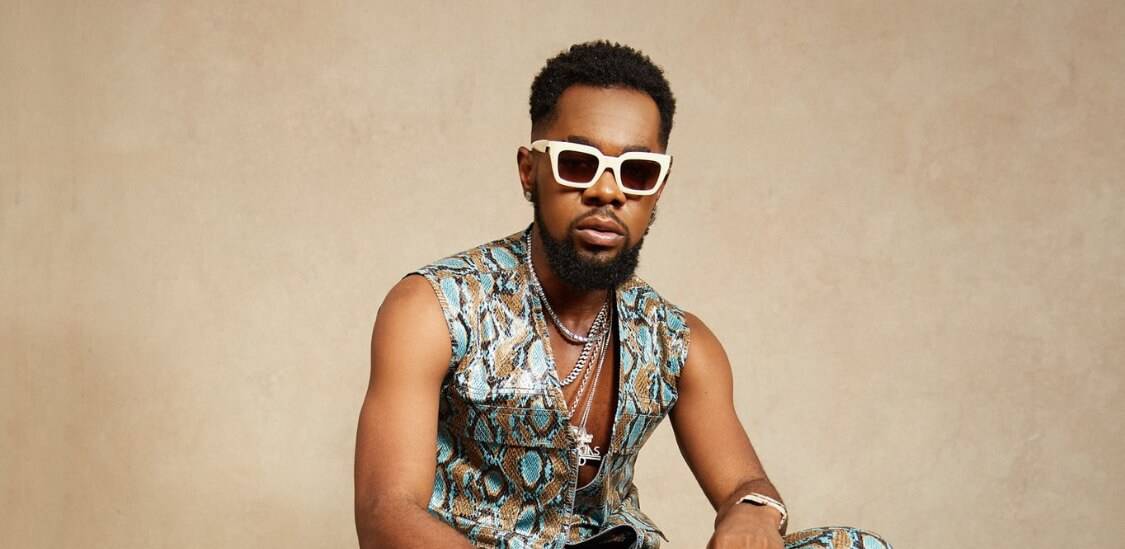
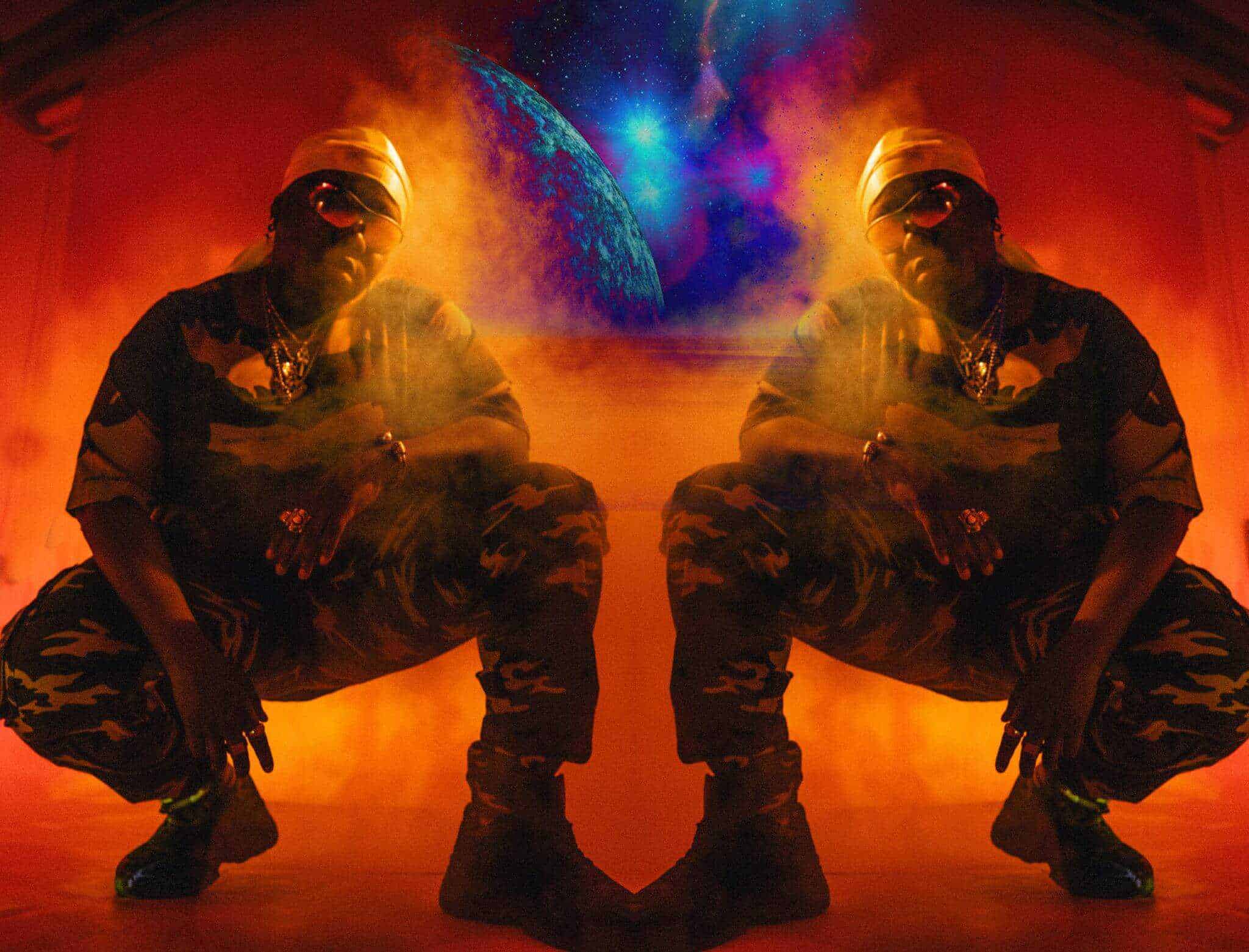
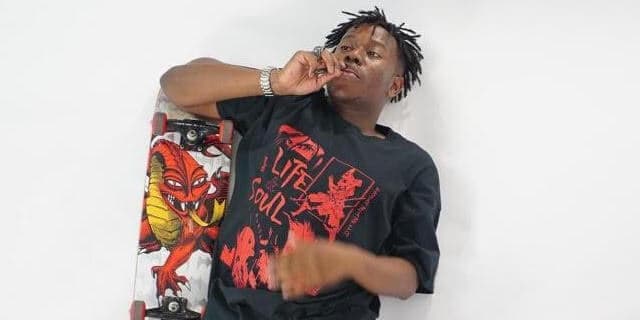
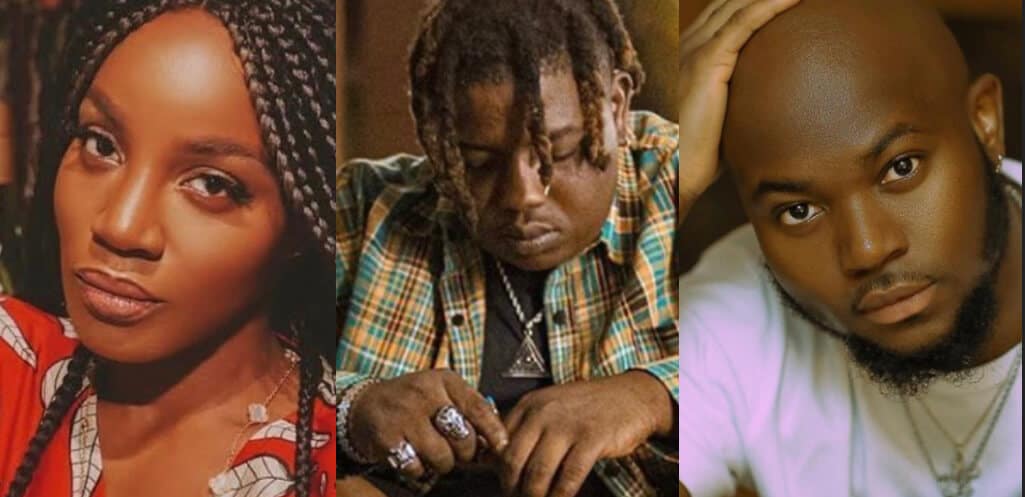
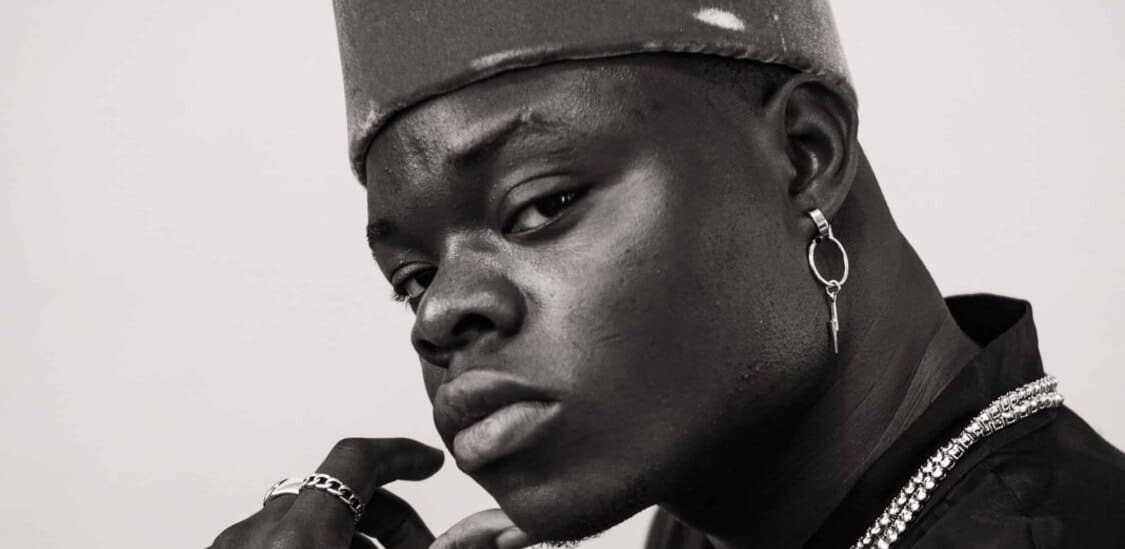
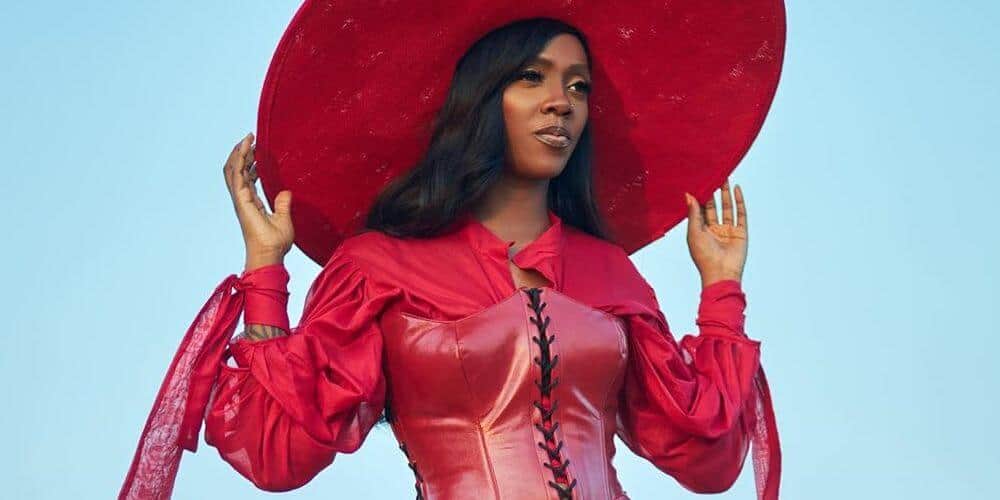
Friday is a good day for many reasons, but a big one around here is all of the new music that regularly awaits us. In a weekend packed with new full-length releases from Tiwa Savage, Nasty C, and more, one release I was particularly looking forward to was that of Patoranking’s–a chameleonic master at party-ready hits from “Girlie O” to “Suh Different”. The hitmaker makes his return with his third studio album ‘Three’ arriving just a year after the release of his sophomore album ‘Wilmer’.
Aptly titled ‘Three’ to represent the three-fold experience of life, love, and happiness that underscore his latest offering, the new project is anchored by the up-tempo promotional single “Abule”which reminded listeners of their connection to their hometowns. ‘Three’ contains melodies for before, during, and after the club bolstered by groovy features from Tiwa Savage, King Promise, Sauti Sol, and Flavour, who all throw in their own distinct regional flair to the reggae-inflected tunes of Patoranking.
From the incredible sonic quality which sees him trying on a range of different sounds to back his intricate songwriting that details private encounters in an appropriately humid club, ‘Three’ definitely houses some unmissable gems that deserve their flowers. While we get more and more familiar with Patoranking’s cocktail of reggae, afrobeats, pop, dance music, and more, we’ve decided to put together a list of 5 instant standouts while listening to the new project (tweet at me whether your standouts differ from mine @tamimak_)
“Yo Body“
A quick peruse through Patoranking’s Twitter will soon reveal that the Ebutte Metta-native regards himself as ‘the next big thing after Bob Marley’. A gargantuan statement to make from any artist, seeing as the reggae legend is revered worldwide by a host of different artists, but on “Yo Body”, Patoranking puts his money where his mouth is and delivers an up-tempo steamy number to whine and dance to.
“Whine It” featuring Sauti Sol
Sauti Sol has easily become my favorite group from East Africa and boy are they putting in the work right now. From releasing their own project ‘Midnight Train’ earlier this year to featuring on Burna Boy’s most successful project yet ‘Twice as Tall’, everything they have touched so far has been straight fire so it follows that “Whine It” is no exception. Like Patoranking says, ‘this is a whining song, the perfect whining song’ and I guarantee that you can’t listen to this number without wanting to get on the dance floor and throw that ass in a circle (LOL!).
“Black Girl Magic“
After the video for Beyoncé and Wizkid’s “Brown Skin Girl” left many black women like myself and the women at the NATIVE feeling loved, accepted and seen, Patoranking single “Black Girl Magic” joins the ranks of songs preaching about the beauty and allure of black women around the world. Over an array of trumpets, keys, and groovy house percussion, he delivers a love letter to black women accented by his rich melodious voice. It’s super sweet and catchy.
”Abule”
Although “Abule”was a pre-released single from ‘Three’, it’s probably still the most enjoyable number on the project for me. What once sounded basic on the first listen soon becomes lyrics that linger on the lips thanks to the catchy afropop production from Telz. As the tumultuous year beats on, songs like this remind me of where we are coming from and how much further we have to go, but with my faith undeterred from the events of this year, I’m pleased to have a song like this to cushion the emotions.
“Matter” featuring Tiwa Savage
Since their fun, light-hearted collaboration “Girlie O” back in 2014, Tiwa Savage and Patoranking have not linked up for another song together. But on “Matter”, they come together yet again for a catchy afropop love song infused with all the sentimental tenderness that we would expect in its lyrics. The charming love song allows them both to excel in their area of expertise, delivering honey-toned memorable numbers and I could definitely imagine this number being played at wedding after-parties (after the 40-plus guests have gone home, of course!)
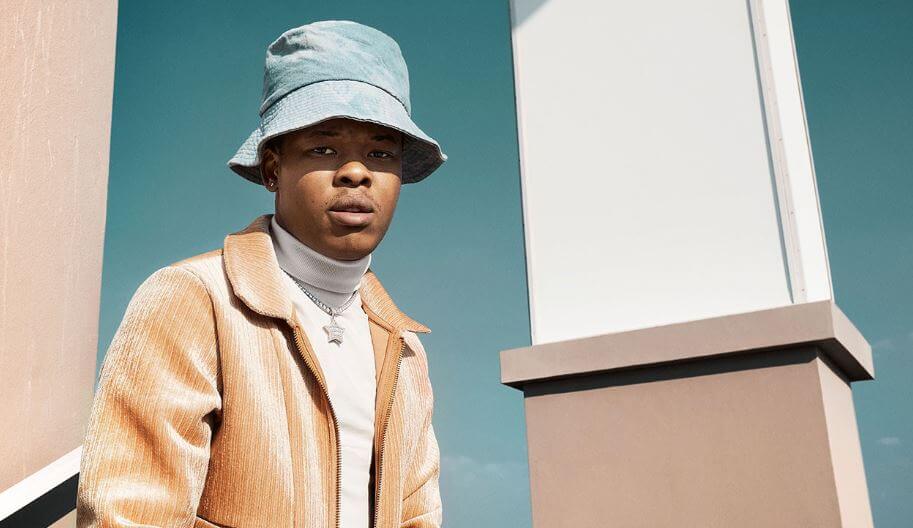
When Nasty C released his sophomore album, ‘Strings & Blings’, he wasn’t aiming for kingly status as much as he was laying claim to it. After making the passage from hot prospect to proper rap star with his debut album, ‘Bad Hair’, his follow-up saw him elevate into an undeniable superstar, a transition that happened with little to no prior doubts. On the album, Nasty C was in his most rounded form yet, and it showed in how he relayed ample doses of personal introspection (“Another One Down”), examined the intricacies of intimacy (“SMA”), and sounded off imperial boasts (“Jungle”).
Nasty C’s his third studio album, ‘Zulu Man with Some Power’, finds him on the cusp of another upward transition. Earlier this year, it was announced that Nasty C had signed a global recording deal with prestigious hip-hop label, Def Jam, a marquee partnership aimed at furthering the rapper’s burgeoning international reach. Already tapping into the benefits of this arrangement, Nasty C has performed on American late night TV, and in June, he linked with DJ Whoo Kid for ‘Zulu’, a mixtape of freewheeling raps that loosely fronted his blistering abilities, and was clearly meant to drum up hype for the main event.
With this scenic roll-out, ‘Zulu Man with Some Power’ has definitely shaped up into one of the blockbuster releases of an already packed summer, however, it’s down to the music to fully acquit these high stakes and probably set Nasty C on the next, and possibly a loftier, arc of his high-flying career so far.
“King Shit”
A-capella to open up, interesting choice. “They can never play, I know my worth” is very fitting bar for a song titled “King Shit” in 2020. I like how Nasty C’s singing voice is somewhere between mellow and boisterous. That’s a nice horn bridge, I’m still waiting for the bass to drop. Ah, there we go! He’s rapping like a dragon casually breathing fire, brags were made for Nasty C’s rap voice and unblemished flow.
“Steve Biko”
Underwater keys will forever remind me of 40, that man is a genius. Did Nasty C just say he feels like he’s the new Steve Biko? That’s a weird brag, if you ask me. It just doesn’t align for a rapper to link his flossing lifestyle with that of a freedom fighter, well, unless his angle is Steve Biko fought for him to live lavish as a Black man in a white world. Look at me doing mental calisthenics, will have to revisit to get it. The production absolutely knocks, though.
“That’s Hard”
You can’t not go hard on a song titled “That’s Hard”. Ooohh! This flow is saucy, and these drums have an elastic knock to them, like a squid playing whack-a-mole with every available limb. Haha, references to Jordin Sparks and “No Air” will live forever. “Y’all careers is flimsy and blurry, y’all not focused” is an extremely disrespectful bar, I fucking love it. This man is handing down caustic subs live from mount Olympus. Yeah, this is a hard song.
“Overpriced Steak”
If there’s anything that’ll get me, it’s a flickering soul sample. That was a glorious bass drop, I felt it kick me in the chest. “Talking stakes over overpriced steaks” is an interesting way to sum up how good life has been. Lil Wayne and T.I getting referenced as inspirations, the latter features on this same album twice — that’s mad. “Won’t ever use my skin as an excuse ‘cos I’ve seen Hova face”, can’t wait for motivational, Black capitalist Twitter to start quoting this bar. Nasty C is no longer hungry, but he clearly still has a lot of drive in him.
“Feeling”
The songs have been short, which is great for a 20-song album. Nasty C has an impeccable ear for picking beats, those gospel organs have a radiance to them. “Validation is a drug”, talk to them, king. This verse is the closest he’s sounded to being on earth with the rest of us mere mortals, and he still manages to sound unvarnished. This beat is gorgeous! “I don’t walk on water but some people praise me” is an interesting way to capture being famous. He’s trying to sound disaffected by the special treatment he gets for being popular, and he’s also mouthing off at naysayers, interesting. “Promise you if I don’t die a legend, I’mma die trying” is a resounding bar. This whole song is resounding. “Feeling” won’t be the choice for a single, nor will it raise the roof at shows, but I can see myself and a few people running this back a million times.
“La Vida Loca”
Alien beeps and vocal harmonies. Getting money is obviously Nasty C’s favourite topic. This shit knocks harder than the police breaking into a house with no warning, and that Spanish guitar definitely conjures imagery of living your best life. With all of the things this song has going for it, it’s not overly remarkable. “Told my city I’ll be back, I got money pulling me on both sides” is a great hook, though. When rappers say they feel like Sosa, I roll my eyes a bit. This outro is an example of how to use an electric guitar as embellishment, not overkill. I’ll revisit to see if I like or dislike this more.
“Zone” (feat. Tellaman)
That bass guitar riff is making my ears vibrate. That bass dropped in with the force of a wrecking ball. I don’t really like when Nasty C gets into his vindictive bag when it comes to women, he seems to enjoy the disrespect a little too much. Tellaman’s is too immaculate for this level of savagery, but somehow he’s making it work. Whoever did these guys dirty definitely left an impression, and it was far from positive. I like this song a bit, not sure if I’ll like it more with multiple returns but I;m down to give it a try.
“How Many Times”
Starting off with a Piano and electric guitar combo. WOW! These drums are plush and gorgeous, I actually want to sink into them. I love it when rappers go at those who discount their potential at the beginning—Nasty C never spares them. This flow has some Young Thug to it, especially with those double time inflections, but Nasty C is owning. This is triumphant music that’s just as wistful. This breakdown is very Mike Dean-esque, brash and majestic at the same time. This man has vindicated himself, and his performance carries the aura of been undefeated.
“Eazy”
Man, I love this song! The best pre-released single, if you ask me. The grandiose energy of this beat taps reminds me of Kanye in his ‘MBDTF’ era. The carefree opulence Nasty C throws into his bars reminds me of when Kendrick said he does cartwheels in his estate. I can keep going with the references, but you get the point by now. This second verse should be preserved as one of the wonders of the world—any verse that effortlessly references Riley from the Boondocks deserves to be placed on a high pedestal. “Eazy” is aspirational rap music made by a rapper who makes invincibility sound spontaneous. Keeper, all day.
“All In” (feat. T.I)
Eish, these maudlin strings are a jarring transition but the bass just dropped and all is right with the world. On second thought, I have mixed feelings towards this beat, it has this stock, stadium-ready rap appeal I don’t fuck with. Not exactly in love with this nursery flow Nasty C is employing, but I’m not mad at it. T.I taps in, he sounds much more comfortable. Bankhead! Nothing too crazy is happening with these raps, but his conviction is selling me. I don’t like this hook, which is weird because Nasty C barely ever fails to deliver top tier hooks.
“Lose Some Win Some”
This album has flowed pretty seamlessly. Another cavernous bass drop, I love it. There’s some real honesty to these raps, fame really brings exploitive people around. He doesn’t sound paranoid, more like annoyed. “I cannot stop until we all getting paid” is noble, but it’s also a burden.
“Sad Boys”
Rolling pianos and r&b-type drums is very fitting for a song titled “Sad Boys”. We’re in the remorseful bag, the vocal performance has a lot of genuineness to it. This has a romantic tone to it, but it can be multipurpose. There’s no pride when it comes to regret, it’s a constant reminder that we don’t always make the best choices.
“Black and White” (feat. Ari Lennox)
This is the song I’ve been looking forward to the most since the tracklist dropped. Growling, funk bass guitars are an eternal cheat code, they will force you to pay attention. These raps are the type you go “Awww” to. When it comes to his romantic songs, I prefer Nasty C’s softer side when he goes full-on smitten, it adds a nice dimension to his confident persona. Ari Lennox! Her voice beamed in all the way from Venus, so beautiful and radiant. This is definitely her bounce, I can see this being on ‘Shear Butter Baby’. “Fall in love deeply when I look into your eyes”, yes please. They’re complementing each other really well here, this is a great collab.
“Deep Pockets” (feat. Rowlene)
I like this build-up. “I’ve got people asking me to move mountains” jumped out at me. Nasty C raps with a Teflon flow, even when he’s running through his bars. I don’t really like the auto-tune on Rowlene’s voice, but their harmonies lock in together quite well. Will come back to this.
“Bookoo Bucks” (feat. Lil Gotit & Lil Keed)
ATL Jacob tag, let’s go! I like this muffled entrance, Hndrxx would be proud. A Kobe reference, R.I.P Mamba. “I can’t be caught out by no low stakes/when my name is in their mouth like Colgate”. Fellow rappers, don’t talk about Nasty C if you’re not on his level. Gotit sounds good on this, maybe I should listen to him more. This hook will go off at live shows, especially with that Kobe reference. God, I miss live shows. Keed! His energy is always off the wall. That was a short verse but I loved the energy, very infectious. This is a banger.
“Palm Trees”
“I’ve got jewels on me, expensive ass shoes on me” is a pointed brag. This beat is a bulky monster; it’s like Bankroll sampled juggernaut running through walls and chopped it up as the bassline. That nuts line is crass but it’s also quite funny. The city of Los Angeles should be paying Nasty C, this is a glamorous ad for the city of angels. This is another live show fixture, it’s going to absolutely go off. “Death by a motherfucking diamond, I bet my chain look like a noose on me” is actually a bar.
“Zulu Man”
This song had me when it dropped, the conviction jumps out with every the double time flow. I can’t understand a word when he switches to isiZulu, but I can tell he’s snapping and saying some weighty stuff. I’ve just kicked living in South Africa up my bucket list, the cadence to the words are riveting.
“Ababulali”
Tribal chants and knocking bass, an oddly great pairing. This could be the whole song, and I’d take it with both hands. Who’s he promising the world to? This is very endearing. This has to be addressed to his father. After watching that “Origins” mini-doc earlier today, I can fully appreciate the sentiments behind this song. They didn’t have the perfect relationship and these straightforward raps represent that; at the same time, he’s committed to making sure they spend the remaining time working towards the best relationship possible. Usually, I’d have something to say about the chants but they’re perfect for the occasion. This is a great song.
“There They Go”
The lead single. This song is smug enough for me to feel sorry for whoever Nasty C is taunting. This flow is like watching someone cripwalk on water, that’s the incredulous imagery I can conjure at this moment. “I be listening to Weezy and he the reason I smoke trees and beat every mic”. Is Lil Wayne the GOAT? That’s a rhetorical question. I usually tend to dislike beats with robotic riffs, but this glockenspiel riff is doing it for me, and the bass is causing my headphone to vibrate. “I sign deals but I own my soul” is a bar. “There They Go” was a great choice for a first single, it slapped when it dropped and it still slaps on the album.
“They Don’t” (feat. T.I)
Confession time: I don’t really like this song. Here’s the thing, it’s a very “climate” record. Not that there’s something altogether wrong with a climate record, but I like socially aware songs to have some bite even when they’re aiming to convey optimism. I like the line, “They don’t want to see a young black man succeed”, but it doesn’t have the urgency or vitriol that I think racism should be met with. It does hold some weight when you look at it as a cry of exasperation. Ever since T.I said that Atlanta is Wakanda, I’ve had mixed feelings towards this verse. There’s a pointed edge and some lived-in resilience to his voice, these names will always jar me deeply. Black Lives Matter. Period.
Final Thoughts
‘Zulu Man with Some Power’ doesn’t just refer to amount; it mainly refers to the magnitude of Nasty C’s powers as a rap artist and continuously growing star. On his third studio album, he casts a larger than life shadow with a set of songs that sees him working at his impenetrable best. It’s the work of an artist who’s confident enough to believe he possesses a Midas touch, and he backs it up with a body of work that’s worth its weight in gold.
On “Blisters”, the intro track on ‘Strings & Blings’, he rapped, “Too much power for one Zulu man”, foreshadowing his rise to becoming one of the first names that pop up when rap music out of Africa is the topic. On “Feeling”, the fifth track on this new album, he proclaims, “Promise you if I don’t die a legend, I’mma die trying”, letting us know that he’s far from content with his current standing and is intent on breaking as many glass ceilings as possible, going forward. This attitude permeates the entirety of the album, as he cuts an invincible figure over a phenomenal batch of beats.
‘Zulu Man with Some Power’ doesn’t reinvent the wheel for Nasty C. Instead, it doubles down on his exuberant ethos, further fine-tuning his flair for impressionable bars, great hooks and attention-grabbing flows and melodies. The main addition is that he clings tighter to his heritage than he ever has on wax, rapping majority of a song in isiZulu for the first time in his career, dedicating an entire song to his father and making it clear that Durban will forever be home early on the intro track, “King Shit”. In reaffirming his roots, Nasty C has set his own terms of engagement for new listeners, while reassuring older fans that he’ll always carry them along even as the world gravitates towards him.
Featured Image Credits: Billboard
[mc4wp_form id=”26074″]
Dennis is not an interesting person. Tweet Your Favourite Playboi Carti Songs at him @dennisadepeter
On the night of August 26, a young boy of 16 years old, Nathaniel Julius was shot and dumped at the Chris Hani Baragwanath Hospital, where he later died, following a robbery in Eldorado Park, Johannesburg. A beloved member of the community believed to be killed by the police, residents of Eldorado Park took to the streets in protest the following day, demanding that the corrupt local police (they are now being investigated by the Independent Police Investigative Directorate) answer for their crimes. What the community of Eldorado Park would like is for the police to be stripped of their unwarranted power, with one resident even calling for the removal of Police Chief.
In a protest that lasted throughout the morning in Eldorado Park, Police faced off with the community, the latter burning tires and throwing stones at their antagonists, whilst the law enforcement responded with rubber bullets, tear gas and stun grenades. In a news report broadcasted by Newzroom Afrika, one resident even says that police shot at his wife and his children whilst they were working in their own home, not participating in the demonstration.
Police brutality is not a new phenomenon in the area, speaking to Newzroom, one woman says a drunk officer armed himself and directed his gun at her without any cause, whilst another man recalls that this is not the first time a child has been killed at the hands of the Scorpions, he calls them. This violence perpetrated by the police is symptomatic of the rampant corruption and abuse of power that goes on within the policing community in Eldorado, a systematic oppression that is worryingly replicated throughout the world.
Residents describe an apathetic police force, who do not carry out their mandate to serve and protect. A community plagued with many social ills, according to local reports, when issues are taken to the police, such as drug abuse problems, nothing is ever done. Eldorado Park residents have been boiling up for some time, against a system that is mandated to work for them, but so brazenly disregards their life. Nathaniel Julius’ death was the straw that broke the camels back.
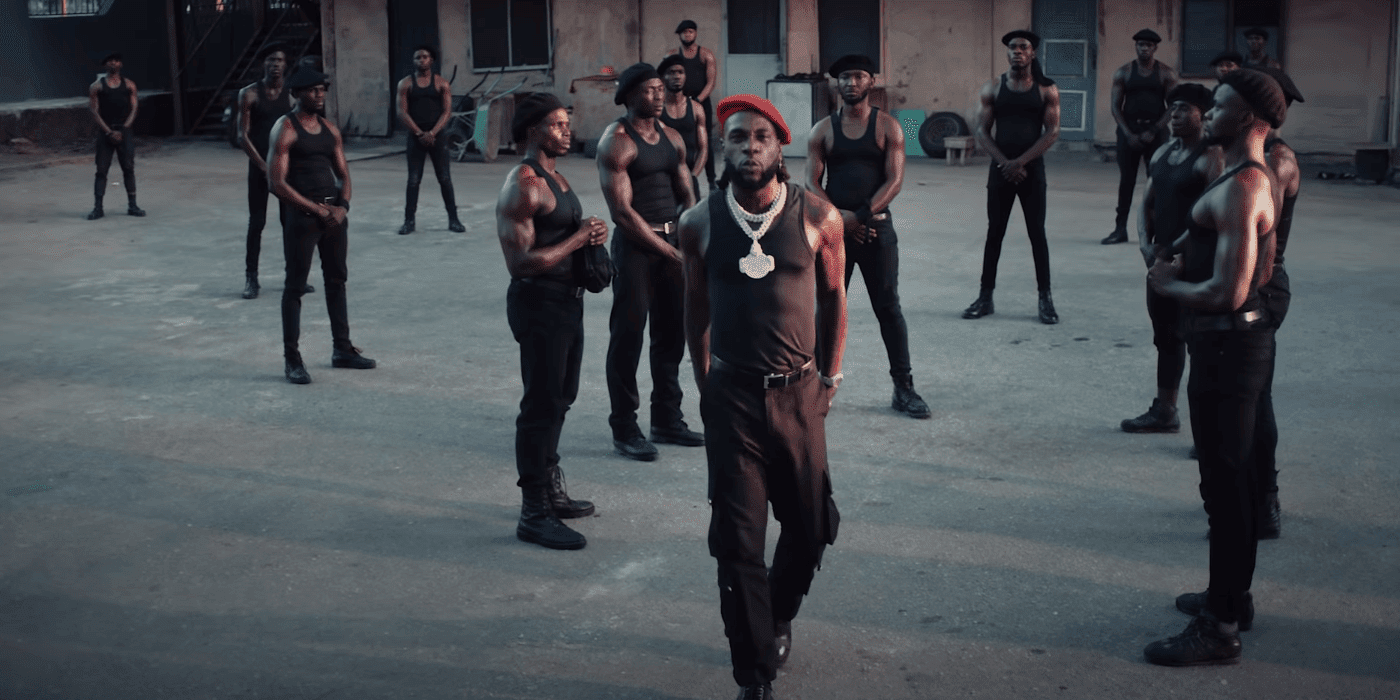
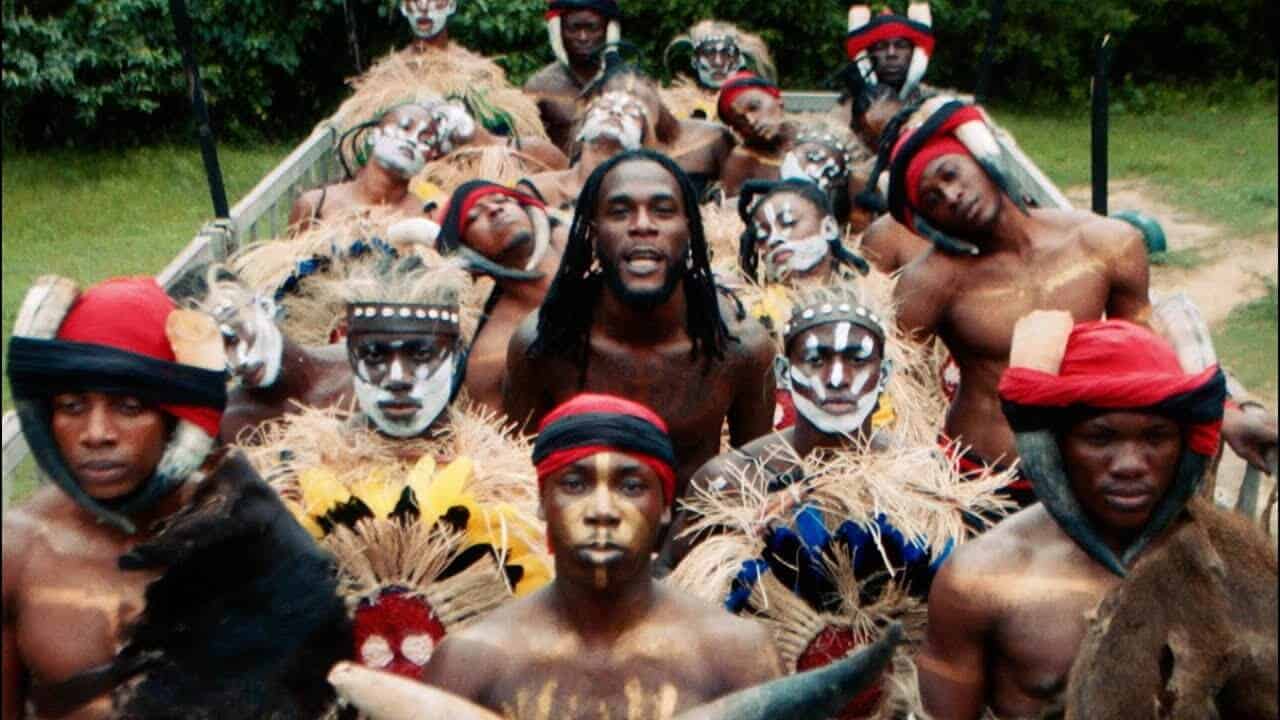
The same evening of the Eldorado Park protests came Burna Boy’s rousing video for his socio-politically driven album standout, “Monsters You Made”. Featuring Chris Martin, who appears on screen in the Lagos-set video (but literally on a screen), “Monsters You Made” is an anarchist track which sees Burna Boy rage against the establishment in a fashion that is typical of the African Giant. In his YouTube live this evening, Burna Boy dedicates the song to Zimbabweans, Americans, Nigerians and every country, including South Africa, in which their people are revolting against a failing system, and branded as the enemy for demanding basic human rights.
A fictional uprising, Burna Boy’s riotous music video bears eery similarities to the scenes captured on Newzroom Africa. Depicting angry, sad, tormented soldiers gearing up for war – with Burna Boy as their general, of course – the “Monsters You Made” music video shows the Monsters wreak havoc in order to do good. Brandishing themselves with the Anarchy sign as they prepare for war, this armed militia are painted as the violent antagonists, just like the powers that be paint activists when we stand up and fight for justice and equality. However, with a touch of dramatic irony, we know even before the Meji Alabi film ends, that these are the real heroes of the story.
We know that these are the real heroes, because we have seen this revolution play out a million times; civilians pleading for their safety, demanding justice for innocent lives lost to the same people sworn to protect us. The systems of power all over the world have continually abused their hierarchical positions, and as more instantaneous media spotlight these occurrences in real-time, we, the people are growing more and more restless, less and less willing to be ruled and dominated by the few elites who would trade our lives for a dollar. So the “Monsters You Made” video ends, screaming at greed and capitalism as the root of all the world’s evil.
The return of the fourth season of Big Brother Naija to our screens could not have come at a better time for all of us, within a year of unprecedented change to almost every aspect of our lives, having a show like BBNaija to unite viewers nationwide every day has helped make restore a sense of community and togetherness that seemed lost in the efforts to socially distance this year. What was once a reality tv show regularly consumed in Nigerian households has now seemed to gain more momentum or at least that’s what I’ve gathered from every corner of my Twitter timeline.
For five weeks, we’ve collectively raved about Kidd being the season’s heartthrob, Laycon being the typical representation of a Nigerian guy to the ridiculous strictly Indomie diet the housemates seem to be on. However, much of the show’s entertainment rests on the daily sponsored challenges played by the housemates. This year so far we’ve seen the housemates compete in uniquely curated games revolving around the brand sponsorship from brands like Betway, Indomie, Hawaii, Airtel, Dulux, Guinness, and more.
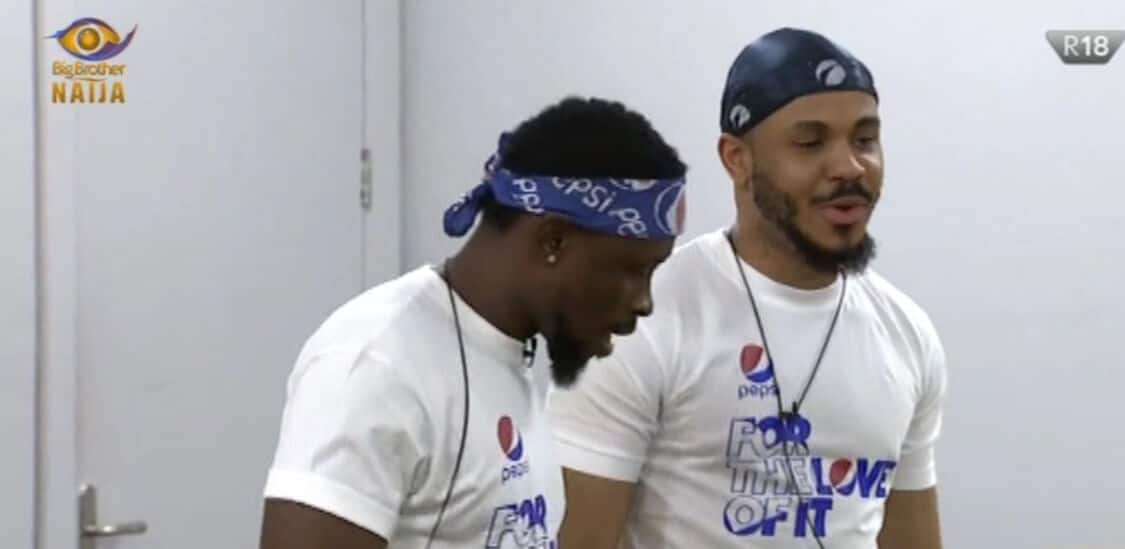
Although I’m a passive watcher of Big Brother, watching mainly from my timeline or logging onto a few hours at a time when I can spare, one of the most exciting challenges I am glad to have been able to watch is the ‘Pepsi Know Lyrics Challenge’ held yesterday. The duet singing competition involved the housemates singing and performing a song from the lyrics of Pepsi brand ambassadors Wizkid, Tiwa Savage, Tekno, Davido, Burna Boy, DJ Spinall and Cuppy.
Performance competitions are only as good as those performing them, so I wasn’t expecting much as the housemates only had a couple of hours to learn, practice, and memorise lyrics and a catchy dance routine. During the practice, I had my bets on Erica and Neo winning as they were performing Burna Boy’s “On The Low” and their gusto and salacious dancing looked like first place material. However, their killer moves during practice didn’t really translate during the main event, the singing was off-key for them and many of the housemates who seemed to have a hard time delivering at the same tempo as the song’s instrumentals.
Wathoni and Laycon’s performance of Wizkid’s “Fever” was also a bit cringey, I know getting into character is important but Laycon was a little too into character for me but the worst had to be Kiddwaya and Lucy taking over the stage for Cuppy and Tekno’s “Green Light”, not only did Lucy forget the lyrics but she had a whole angry match just before her performance and that really hurt their chances (not that Kidd’s adorable dancing did them any favours).
Despite all this, it looked like a close tie between Ozo and Trikeytee’s performance of “Duro” and TolaniBaj and Vee’s performance of Dj Spinall’s “Baba”, but after a brief pause for the premiere of Burna Boy’s fourth studio album ‘Twice as Tall’ (we love to see it), Ozo and Trikeytee emerged as the winners of the competition.
As the days become numbered and the stans grow more tiresome (we’ll talk about that another time), Big Brother seems like anyone’s prize to win at the moment– even TrikeyTee who always seems to escape eviction every single week. So in the mean time, I’ll be here rooting for my girl Erica (and maybe Kidd).
You can catch up highlights from the Pepsi challenge here.
For the past three years, Homecoming’s annual festival has become a staple for Easter holidays in Lagos. Due to the pandemic, however, the festival have now announced that they will be making its return this year for the third iteration digitally and it all looks exciting, as it will be in partnership with London-based fashion powerhouse, Browns.
The focal point this year, will be on helping Nigerian brands in the Homecoming community to access international retail distribution. Browns Fashion will stock Nigerian brands and international Homecoming-aligned brands on their website, and these brands, Mowalola, Patta, Vivendii, Post-Imperial and more take up residence at their store in Shoreditch, London.
Alongside the retail distribution, Homecoming and Browns Fashion will be presenting an e-zine titled “Ni Agbaye”, meaning “in the world”, which will be aimed at exploring the influence and exchange that afro-culture has on global pop-culture. It will also include a series of digital events, two of which will be live panel discussions. Kicking off today at 6pm BST, the first-panel discussion, ‘Pushing the African Visual Identity Forward’ will hold with useful insights from a multi-talented lineup including our Editor-in-Chief, Seni Saraki.
On Friday, the second-panel discussion will hold at 6pm BST and this time the focus will be on exploring the evolving state of global streetwear and the role which Africa is currently playing in its regeneration through the detailed insight of industry professionals like Virgil Abloh (the creative director of Off-White), Gee Patta (the founder of Patta), and Ireti Zaccheus (the founder of Street Souk) with moderation from Grace Ladoja and Alex Sossah (founders of Metallic Inc).
Both panels will be available to sign up to via Eventbrite and the Homecoming e-zine and product edit will be available exclusively at brownsfashion.com from 26 August. For the full Homecoming lineup, visit here.
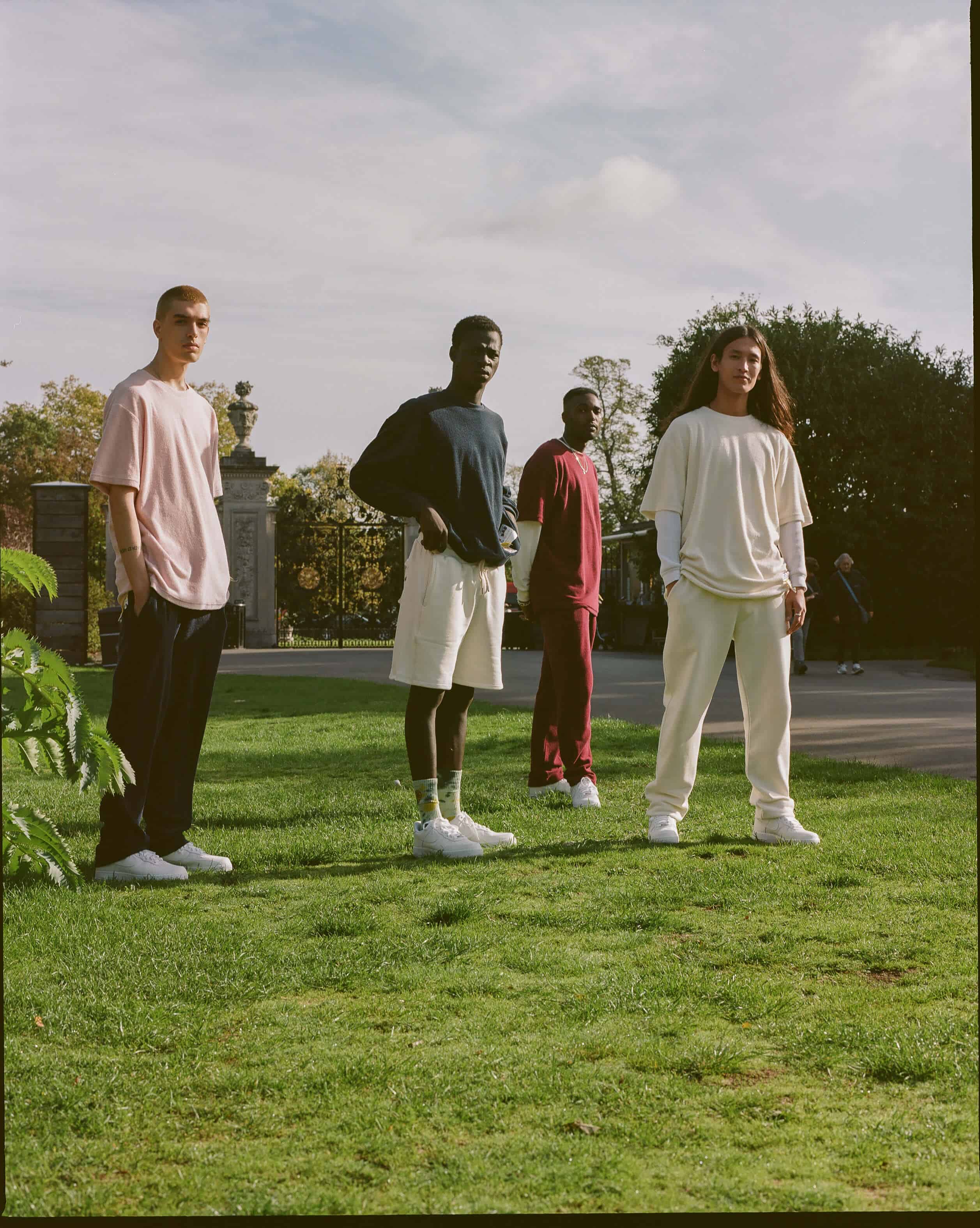
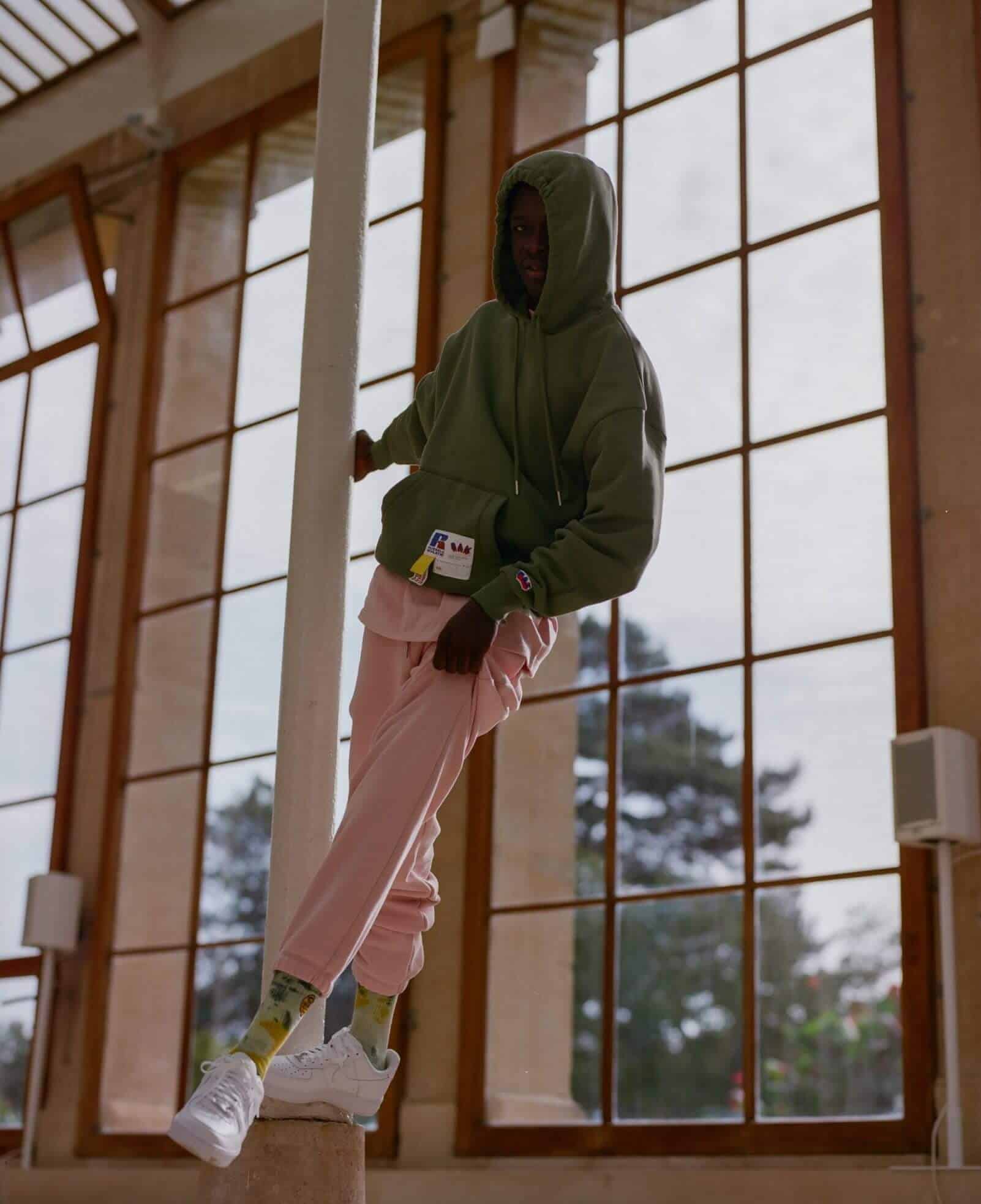
¤This will certainly come as a shock to you, so you better take a seat: there was once a world without the crewneck. In fact, there was a lot of world without the crewneck sweatshirt, its invention dating back only one hundred years, thanks to the prophetically streetwear savvy American footballer, Benjamin Russell Jr. of the University of Alabama.
With too much itch on the woollen garments – worn before Russell Sr. formalised his son’s pitch into the heritage athletics brand, Russell Athletic – Russell Jr. proposed a cotton alternative overall for its comfort and durability. This style became known as the sweatshirt, or the crewneck, or the crewneck sweatshirt. Whichever you call it, Benjamin Russell Jr.’s invention is now a staple in the apparel industry, especially in the street style world which dominates youth culture in Nigeria today.
From Russell Athletic’s first crewneck, came the hoodies that Vivendii have branded for their latest campaign with Homecoming, in collaboration with Browns. The matching bottoms for the sweatshirt, sweatpants have since been detached from their upper body predecessor, with brands like Corteiz printing their cursive logo on the bottoms shunning the top half prototype.
Similarly, Russell Athletic, historically renowned for its kit collaborations with sport teams, is leaning into the ever-growing streetwear market, notably through their RAX label, which sells exclusively at Selfridges. Launching last September, the initial 19-piece drop has now been followed up with a second cotton rich collection, featuring towelling cotton tees and tracksuit pants, contrast panel hoodies, lounging shorts and of course a neat range of crewnecks, all fitted with the comic-esque RAX logo as well as the original Russell Athletic patch (on the tops).
Browse the lookbook below, and shop RAX via Selfridges here.
Image Credits/Russell Athletic
Wojumi is a bad bitch & she’s going to brag about it. Tweet her your latest cultural exploits @dewoju
We may not have the summer of our lives that we once imagined, but that doesn’t mean all is lost this year. Even though we can’t go outside, Corona is not stopping the annual Notting Hill Carnival this year, even though this time it’s coming with a twist. The carnival is set to be broadcast online for viewers worldwide to watch from the comfort of their respective homes. What was once known to shut down the streets of London with its vibrant colours and speaker-rattling music will now be live-streamed for those wishing to join in on the yearly tradition, to aid the ongoing efforts to remain socially distanced.
Announced earlier this week, the performances on the main stage will include a vast array of artists from all over the world, with Davido, Tiwa Savage and Yemi Alade repping from Lagos, to Koffee and Proteje from Jamaica as well as a host of artists from Trinidad and Tobago including Olatunji, Iwer George and Adanna.
Taking place over the British bank holiday this weekend, the event will be streamed over four separate channels starting from 6pm to midnight on 29th August, with the celebrations continuing between 9am and 11pm on the 30th and 31st August.
It has been another heavy week for black people. It’s really abnormal to watch the way black people are treated as often as we do, and recently, another video of a black man being brutalised by the police has surfaced on the internet. In addition to that, we’re being bombarded with pictures of Jeffree Star and his black lover, and while I felt guilty scrolling away from the video of Jacob Blake getting shot, I did not feel any type of way about skipping footage of Jefree Star’s racist ass.
I don’t know about everyone else, but I don’t want to see a-single-nother second of him and his 6’7 bae on MY internet any longer, especially because along with this news, has come another avenue for homophobes to homophobe, and the only person I blame here, is Jeffree Star – he is just bad news through and through.
Men have failed us this week, from openly being amorous with a racist to not showing support after Meg publicly announced her abuser. For a bit of catharsis, The NATIVE has birthed a new column, Hot Takes, where every week, a different member of the NATIVE’s editorial team will dissect different trending topics across the globe, and give their hot takes on each topic. Here’s how my week is going so far, and a few of my hot takes for the week.
What I’m watching on YouTube: Tea Time With Tems
Tems is one of the funniest people you’ll ever meet, and what makes her so funny is that it’s completely unintentional. When we spoke for our Issue 004 cover, she told me her ultimate goal would be to set up a tea room, called Tems Tea. In a new series with YouTube music, she’s answering a few questions about herself and her music, and it just really shows how hilarious she is. Definitely looking forward to Part 2
Watch it here:
What I’m watching on Netflix: The Governor
It’s taking me forever to get through this, but it’s one of those series that’s so bad it’s good. The overacting, the ridiculous plot, the poor quality – what better way to waste my time? What I do love about it, is that The Governor is a woman who shows her ability to be the head and the neck at the same time. As you would expect in real life, being the HBIC doesn’t exempt her from disrespect from other men, but she (almost) always clears them and I love to see it.
What I’m listening to: ‘Festival Bar’ by Davolee
After I watched Top Boy last year, I became obsessed with life on the streets, and after reading everything on the internet about gang banging, the best way to get continuous insight is through music. This is why I became particularly enamoured to young rappers closer to my age group like Dave, Headie One, Polo G and Roddy Ricch, because they illustrate life on the streets so well, that I feel like I was there with them and his has recently become the case with rappers my age back in Nigeria.
In May when Davolee dropped Festival Bar, I had a lot on my mind and because he was rapping in Yoruba I couldn’t concentrate enough to get a clear enough picture of what he was saying. The other day, however, “Festival Bar 2” came up on shuffle, and I heard (properly for the first time) when he said “O ti di do or die, because a ti di negative energy fun wan bayi” and I could relate. I then went to listen to the whole thing properly, and I couldn’t believe what a fantastic storyteller he is.
Throughout the EP he takes us through different phases of his life; we first meet Segun the barman at Festival Bar in Ikotun who gets the boot for another person’s wrongdoing, then to Segun the motor boy just so he could make an honest living because he wasn’t interested in a life of crime (emi o le gbe ‘bon laye mi, hustle mi yo mi), and how he only got paid N17,500 at Aquadana in Oshodi. He then tells us about he got counted out of a competition because he rapped in Yoruba (much like indigenous rappers get counted out today), how he met Olamide and his life changed, but the pressure of fame and success became unreal for him to deal with. He paints a clear picture of how his experiences in life caused his depression, dabbling in drugs and alcohol to numb the pain he was feeling, and how everything he went through contributed to the man we know today.
I’m definitely interested in hearing more from I’m and I’ll be looking out for a project.
The rap niggas ain’t shit
I was listening to “Hate The Real Me” by Future earlier today and when I heard him say ‘I ain’t been the same since that nigga shot me’, I thought of Megan immediately. It has been so nice to see her go back to normal on social media, being her normal, bubbly, twerky self, even though she was shot in both feet less than a month ago. Last week, she came out and announced that it was in fact Tory Lanez who shot her in the feet for no reason, and there has been an underwhelming amount of support from the men in the rap community she’s a part of. When you think about the fact that these men know exactly how she’s feeling, (because from the music I listen to, chances are it’s been them or they know someone who has been assaulted in this manner,) it’s unbelievable how quiet it has been.
I remember J Cole recently making an entire song because he didn’t like Noname’s tone when she wasn’t even talking to him, yet it’s crickets when a fellow rapper has assaulted a woman. While we don’t know what kind of support Megan been shown offline by these rappers, I feel like it’s important for them to also speak up and call out Tory Lanez’ bitch ass for assaulting a woman. There have been a few rappers speaking up for Megan such as Bun B, T.I, (who’s the last one), and even though a lot of what they’re saying is laced with benevolent sexism, such as ‘how can you shoot a female in a bikini?’ (snore) and “these niggas is bitches, these niggas is hoes” – this is the same energy I expect from ALL rappers. In this current social climate, I believe that a public denouncement and shaming of a perpetuator is necessary, especially when the entire situation played out so publicly. To me, Tory Lanez is the bozo who shot Meg, but he’s also representative of all the other men who assault women on a daily basis and could be a threat to any of the rest of us. Their silence towards his wrongdoing just reminds me how unprotected we are, but how can I even be shocked when they’re still out here making songs and fraternising with Chris Brown?
Beyond this particular incident, rap’s disdain for women is made increasingly clear with each passing day. From the subject of their music treating women like collateral damage or objects they acquire, to actively fighting when women try and take up space in the scene (see ridiculous reactions to “WAP”). Rappers are a very important voice in demanding social justice, and at the moment, black people all over the world are outrightly challenging unjust practices. The fact that their voice isn’t lent to demanding social justice for women, is surprising and disappointing.
The other day, I saw a video of a woman being touched inappropriately without her consent, and when she fought back, she was teased and mocked by all the men surrounding her. These are two entirely different situations, from two different parts of the world and there seems to be the same underlying sentiment towards the woman. It’s a shame and I hope that the world does become a better place for us in my lifetime. The world needs to protect black women in actual practice and not just in empty platitudes on the internet when it doesn’t actually matter.
“Brown Skin Girl” is the best song in the world at the moment
On a more positive note for women, we know that we always have our own backs whether it’s in action or finding comfort through songs like what Megan provide for us. When I’m feeling really sad, I listen to Megan Thee Stallion to make me feel like a bad bitch, and I really hope making music does for her what listening to her music does for me. Yesterday, Beyoncé released the video for Brown Skin Girl on YouTube, which featured on Black Is King last month and watching the video again made me feel very accepted and loved and seen. The level of collective emotion Beyoncé is able capture is truly a super power, but I feel like Brown Skin Girl takes it to a different level.
Beyond being an actual bop, the song feels a bit to me like a reinsertion of black women into society on our own terms, and the video kind of reinforced that for me by portraying young black women as debutantes – a very rare sight. I learnt recently that black people were only allowed into these balls as servants, and it reminded me a bit of when I was in school, and was never I was never invited to a debutant party of sorts called The Feather’s Ball even though I was typically invited to other types of parties. I never actually wanted to go, but I definitely always felt left out when (all) my friends would come back after a Christmas holiday talking about something that happened at this ball. Brown Skin Girl for me, feels a bit like not being left out of the ball, because I’m hearing all these affirmations about the way I look and who I am. Beyoncé was able to capture a very specific insecurity most young black women have, which society instilled in us from a very young age, and that’s why I believe it’s one of the most powerful songs of our generation. Another song I believe is a strong contender is Jhene Aiko’s “Born Tired”, but that’s a discussion we’ll have when the video drops and I can really talk my talk about it’s positive effects on a woman’s mental health.
Ladipoe is really The Leader Of The Revival.
2020 has been the year of Ladipoe. Since “Know You” got to number one back in April, he’s become a ubiquitous voice for the rap scene, and beyond the actual music, you can tell that he’s here to stay. He’s recently made a move which shows us that he’s thinking ahead not just for his own music, but for the future of the Nigerian rap scene, which might confirm his self-appointed position as the Leader Of The Revival. A few months ago, we discussed the issues we had with indigenous rappers being left out of the rap conversation, yet have managed to gain commercial success and acclaim through their own versions of rap. In that piece, Dennis concluded saying that the rap scene needs to embrace them for organic growth throughout the continent, and it seems like we called it all the way back then as we recently got a collaboration between Ladipoe and Zlatan on a Rexxie production. Back in April when we interviewed Ladipoe, he said to us: “I’ve learnt that people don’t know what they want, so you need to give them you, and don’t worry about whether they will like it or not. It has to be your authentic self, first, so that they set their own standards and expectations accordingly.”
This made me revisit his nearly two-year-old debut album, ‘Talk About Poe’, and a lot of the songs stood out to me more than they did when I first listened. With a more trained ear, I could hear his authenticity in the cadence, lyrics and flow, which is the most important tool (I believe) you need in music. Some of my current favourite rappers such as Roddy Ricch, Meek Mill or Polo G stand out to me because I feel like what they’re saying in song could be a conversation they’re having with anyone, and this is the same way it feels when I listen to Ladipoe. He’s at a unique intersection in the Nigerian music scene, which hasn’t fully embraced rappity rap yet. If we’re looking through his music from this year alone, you can see that there’s something special, as he’s been able to maintain his own signature sound on collaborations with artists who have completely different sounds to his such as Simi, Teni and Zlatan. I always say that when you have something worthwhile to say, people will listen and it’s worth paying attention to Ladipoe. It feels a bit like he’s ploughing the road himself, and then setting the foundation for those coming behind him… and for God’s sake, stream Haba.
Noughts & Crosses… no.
Roc Nation recently acquired the rights to the television adaptation of what I considered a modern classic at 12 years old, Noughts & Crosses, and for those who don’t have context, it made them furious. This is very understandable, considering that we’ve just seen a video of another black man being killed mercilessly by the police, therefore the timing couldn’t be more off.
I read Noughts & Crosses about 12 years ago, and it was easily one of my favourite books at the time. I remember bursting into inconsolable tears when.. well, the end happened, and now I’m wondering whether I would have such a reaction (in context of it being a FICTIONAL story) to seeing a white person being treated the same way we see Black people being treated all the time.
I never set any time aside to watch the series, just because I didn’t want to taint the memory of such a great book, but now I’m definitely intrigued. When I was a young teenager, I wasn’t as socially aware as I am now, and it could be interesting to see what kind of nuance I missed in the story when I read the book.
Fun (or maybe not so) fact: One of the scriptwriters is a Nigerian lady: Lydia Adetunji
People have a weird obsession with Father DMW being a virgin
We all remember when we were deep in lockdown, and Father DMW was a huge source of our entertainment. It seems like a lifetime ago when we would all look forward to his and Eva’s daily conversations (my favourite one was when she told him she had a boyfriend and he had a mini-breakdown), until Michael Blackson made it weird by inserting himself into the conversation and talking about why Father didn’t want to have sex. Unlike a lot of you fickle lot, I tune in every time I see him going live on Instagram, and you can imagine my shock when I heard someone STILL asking him why he’s a virgin and why he doesn’t want to have sex. It’s hard to understand him sometimes, but he’s said very clearly that he’s waiting until he gets married to have sex.
It might seem like a joke, but this is toxic masculinity at play here. History is replete with women preserving their sexuality before marriage, because society teaches that one is more valuable when they’re ‘innocent’ and ‘untouched’, therefore, it beats me that this isn’t extended to men, and Father’s virginity is met with disdain. It wouldn’t be nearly as scandalous and unbelievable if a woman said she wasn’t a virgin, so pray tell, why it’s such a big deal that Father is not interested in having sex? It should go without saying, but another person’s decisions about their sexuality should not be anyone’s concern, and it’s very strange for people to keep poking fun at him for such a personal decision. Male chauvinists will always do their thing I guess – where do we sign up for men to not be allowed to men anymore?
The food on Big Brother is very unhealthy
I’m a very passive Big Brother watcher. I used to watch highlights on an Instagram page called BigBrother Hot Gist 2020, but they got closed down and now I just watch via the timeline. Even with how little attention I’m paying, I can tell that their diet is abysmal and someone needs to step in. Every time I tune in, I see them either eating or cooking Indomie. I’ve heard that they eat other things like Eba and other ‘swallows’ but I’ve never seen it and I’ll believe it when I see it.
Apart from the fact that it’s a bit dead to literally eat the same thing every day, Indomie is the worst thing to be eating so often. Instant noodles are made to bear long shelf lives, therefore they’re packed with all sorts of preservatives that aren’t really good for the human body. On top of that, it’s high in fat and sodium AND there’s such little nutritional value, you might as well just be eating a sponge.
I get that Indomie saves lives in a pinch, when I ran out of pocket money at uni I was on a strict Indomie diet, but surely Multichoice can provide them with better and more healthy food options? It’s upsetting me and my homegirls fr. In unrelated news, I’m really excited about the Pepsi Challenge tonight!
Featured Image Credits:
[mc4wp_form id=”26074″]
Damilola is the HBIC around here, don’t tweet at her @damdamxx
If you’re yet to read ‘The Death of Vivek Oji’, the third book by Nigerian-American author Akwaeke Emezi, then you need to stop what you’re doing and get a copy right away. Hopefully, I can make a compelling case about why, for me, it was an unforgettable read where the lives of Vivek and the other characters in his world extend far beyond the pages I read. Their stories were a haunting reminder of the injustices that many queer Nigerians face daily for simply just existing in this world, but more than just a reminder of death, the book is an exploration of life, loyalty, becoming, love and finding your chosen family. If that still hasn’t got you convinced, might I also add the fact that the gripping novel became a New York Times bestseller within weeks of its release, marking a first for the talented author who completely deserves all the praise they are getting.
Exploring queerness in present-day Nigeria, Akwaeke’s third offering is storytelling at its finest. Through flashbacks and perspective-shifting narration, the life (and death) of the brilliant Vivek Oji and the people he loved is unveiled to readers. These characters can’t save Vivek from what readers know is inevitable, but through their narration, we see the story of a young man who lived his life fully with his chosen family, who loved and lived privately, and who was unwilling to let his background or his born-gender stop him from truly feeling alive.
For the sake of giving too much away–you absolutely must pick up a copy right away, here were my five takeaways while reading the book last week (I’m in love with Vivek so feel free to discuss with me @tamimak_)
From the moment you pick up ‘The Death of Vivek Oji’, you know it ends in the eventual death of the protagonist. Excluding the obvious hint in its title, the first chapter of the book contains one haunting sentence, ‘They burned down the market on the day Vivek Oji died’. The chilling sentence is a firm reminder that the protagonist is no longer with us, opening readers up to a sinister mystery of uncovering his death. In a year of seismic change and discomfort, everything we knew and clung to has been called into question, while we continue to lose lives to the scourge of the ongoing global health crisis, we’re also coming to terms with the fact that people pass on every day for a myriad of other reasons. Reading this novel while grappling with the loss of death in my personal life gave me some reassurance and served as a reminder that death is not ultimately as final as we think. Even in death, there is life because just like Vivek, his life is eulogised by those he left behind, who tells his story full of life and love.
Queer lives are not up for bargain.
In a recent interview, Emezi said, ‘‘I’m writing for people like Vivek. I don’t want to centre the people who are doing the harm” and while reading the most intriguing moments were witnessing the fervour and life that resided within Vivek. He was unabashedly himself with his chosen family that consisted of his close female friends and his cousin, Osita. Despite living in a world that didn’t accept him, Vivek was firm and certain in who he was. In this book, queer lives of young Nigerians are told not as an accessory to the main plot but as a manifestation of everything that gave Vivek comfort and security. Reading a book like ‘The Death of Vivek Oji’ reminds you of the social attitudes towards the LGBTQIA+ community in West Africa, but it also opens you up to a private world where they all live and love without fear and hesitation. It’s such a beautiful story, and I truly believe every queer Nigerian should read it.
Our ancestors are with us always.
After exploring Igbo spirituality and ogbanjes in her debut book Freshwater, Akwaeke’s focus shifts towards Igbo spirituality and the idea of reincarnation. Here, death is not an end but rather a beginning of new life. A part of me actually wishes Akwaeke named this book, the death of Nnemdi Oji, the name that should have been given to Vivek due to the links between his birth and the death of his paternal grandmother, Nnemdi. Through Vivek, Emezi explores the idea of reincarnation which is not accepted because of the gender assigned by the parents at birth and it’s interesting to see her take on how this plays out and how it bleeds into all aspects of Vivek’s life.
The unwavering community of safety and support women provide.
Vivek’s mother is part of the Niger wives, a group of foreign women who married Nigerian husbands and relocated to the country to raise their children and support their husbands. Though these women are friends solely based on their husbands, their periodic meetings spur the most unlikely friendship in their children, most of whom are girls. When Vivek is teased and taunted at home for wearing eyeliner or growing his hair, he hides away in the homes of close friends, Juju, and the twins, Olunne and Somto. They become part of his chosen family and with them, he can be Nnedi and live free form judgment. When Vivek passes away, they become the anchor through which his parents learn about their child – not as Vivek, who they never seemed to understand, but as Nnedi, the person she truly was. Reading about Vivek’s friendship with these women left me feeling safe and reminded me of my own community of best friends and support systems who are always there for me unapologetically.
Music has continued to sustain our sense of community as we all navigate the chaos of the world around us. Artists have kept the party going with new relatable songs that helps us remember the good old days (before the pandemic), dream of a better tomorrow, or just enjoy the present moment. Because we know the volume can be overwhelming sometimes, we’ve decided to highlight the best songs released from around the world, thrice a week, in a bid to put that extra pep in your steps as you go through the rest of the year.
We set the ball rolling for this week with new releases from Barry Jhay, Seyi Shay, Zlatan, Ycee and Small Doctor, Solana and Joeboy, and Mr Eazi and King Promise. For our mid-week curation, we have new music from L.A.X, Larry Gaga, and Joeboy, NYC-based Afropop singer, Shirazee, Rexxie, Zlatan and LadiPoe, DJ Kaywise, Mayorkun, Naira Marley and Zlatan. Enjoy.
L.A.X – “Lose My Mind”
Being alone in quarantine is enough to drive anyone crazy, when you add the yearning for a lover into the mix, you get inspired to write a song titled “Lose My Mind”. “Lose My Mind” details L.A.X’s struggle with being apart from his love interest. Singing “Girl I miss our vibe/ When this is all over/ Want to make you my wife” over the piano-led beat, produced by Clemzy, L.A.X nails a familiar mood for lovers who have had to endure the pandemic-induced isolation from their significant others.The mellow harmonies and L.A.X’s romantic lyrics are primed to soundtrack wedding receptions but given his recent history as an unfaithful lover, we wonder if he’s ready to make that commitment.
Thankfully, the video directed by Ahmed Mosh isn’t set at a wedding. Rather, it shows L.A.X and his muse speaking over the phone, with clips of them sharing intimate moments together sprinkled into the mix. When they celebrate the news that the lockdown in Lagos has been lifted at the end of the video, there’s a sense that things will just go back to normal, unlike the future the song depicts.
Larry Gaaga – “Slow Burner” Feat. Joeboy
Entering the foreground of the music industry last year, Larry Gaaga has continued to partner with A-list artists to deliver dance-driven songs for parties. For his new single, “Slow Burner”, he sets asides his reputation for working with legacy artists like Flavour, Wande Coal, Sarkodie, and others, and teams up with Joeboy who has to prove that the younger generation also know how to party. “Slow Burner” highlights the appeal of dance floor romance with its sultry lyrics and catchy Afropop instrumentals that entice listeners to move. Over the groovy Afropop harmonies that have become Joeboy’s bread and butter, he describes the sexual tension between himself and his dance partner. “Me I just want to dance and romance your body/ You set the dance on fire and you last long; you’re like a slow burner”, he sings, enunciating every word with surgical precision to capture the sensual mood on dance floors.
The video, directed by Unlimited LA, highlights the song’s raunchy themes as we see Joeboy and his muse getting intimate while we also watch Larry Gaaga receiving, what we can only assume is, a handjob. Joeboy is also seen performing with a live band but given the after-party activity the song hints at, it’s hard to imagine that performing his song is the highlight of his night.
Shirazee – “Zaddy”
Lots of diaspora African artists have attempted to channel their indigenous influences to make contemporary pop songs, but none have captured the motif quite like Shirazee. His authentic Nigerian accent on songs like “JUJU”, featuring SAINt JHN underline his commitment to amplifying black and African voices while marrying modern pop sounds with his roots. For his latest single, “Zaddy”, he interpolates Amber’s 1999 Eurodance hit song, “Sexual (Li Da Di)” for a groovy and sexy song where he expresses his romantic feelings for his muse. Singing “Just meet on the northside/ pull me over closer at the rendezvous” over the smooth disco bassline, “Zaddy” is the type of song you put on while preparing for a date. The laidback instrumentals set a pleasant mood that can guide listeners while they get dressed, wear makeup, or even sit through traffic on the way to their date.
“Zaddy” is the first track from the Benin-raised artist’s coming tape, ‘Lost’, which is expected to drop before the end of the year. He spoke with NATIVE saying, “Benin is the source of a lot of things that it doesn’t get credit for. You can hear a lot of Benin’s influence on Haitian and Brazilian culture. I don’t think people understand that, so I want to make sure that I reconnect the dots.” We can’t wait to hear the rest of the tape, which even promises a feature with South African singer, Busiswa.
Rexxie – “Opor Remix” Feat. Zlatan, LadiPoe
Rexxie became the official street-hop producer after helping produce several hit songs for Zlatan and Naira Marley. His aptly titled debut project, ‘Afro-Street’ offered the different sonic palettes of the sound and also highlighted its groovy appeal with different dancefloor-driven tracks. The producer just updated one of the standout tracks, Zlatan-assisted “Opor” with a remix that features a new verse from LadiPoe. The original Zanku beat and Zlatan’s energetic chorus and verse are retained on the remix as LadiPoe shows his adaptable flow by aligning with the upbeat instrumentals to deliver socially conscious bars and cocky brags; “Fuck all man who hate on black lives/ Only Whitehouse we know, e dey Yaba.”
Given the original song’s theme of celebrating abundance, LadiPoe’s anti-hate message comes across a bit preachy. The bouncy beat keeps the cheerful ambiance going and ‘Poe eventually gets into his party-talk bag with brags about sliding into women’s DMs and leaving them on read. “Opor Remix” shows LadiPoe’s willingness to expand the scope of his music and also shows the depth of Rexxie’s phonebook. It has built our anticipation of more unique collaborations to come from both musicians.
DJ Kaywise – “What Type Of Dance” Feat. Mayorkun, Naira Marley, Zlatan
Word on the street is the Zanku dance wave is no longer in fashion. This leaves room for a new dance to take over and DJ Kaywise has released a new single that asks the question that’s on everyone’s mind; What type 0f dance will we be doing next? The DJ titles his new single, “What Type of Dance” and it features Mayorkun, Naira Marley, and Zlatan who are all renowned dance trend experts. “What Type of Dance” was produced by Fresh who sets a groovy backdrop for the artists to deliver verses that explain why their favourite dance move is the sensual type.
While the beat for “What Type of Dance” is certainly designed for dance floors, Mayorkun and Naira Marley are more concerned with making love than dancing. For Mayorkun’s verse, he confessed that he’d rather spend his time with his lover than performing shows while Naira Marley spends his time trying to convince his love interest to have sex with him without missing a step with the beat. Even Zlatan’s closing verse doesn’t give an answer to what type 0f dance, but rather expresses that he isn’t picky. His verse encourages listeners to get into the groove as he ran through a list of popular dance moves like Galala, Azonto, Gbeku, and his own Zanku dance.
With none of these Afropop tastemakers deciding on a type f dance, “What Type of Dance” seems to suggest that the type of dance doesn’t matter as long as the party mood is set. The video Dammy Twitch directed doesn’t offer any answers either as all we see is DJ Kaywise partying with the featured artists and a few cameos at a studio set.
[mc4wp_form id=”26074″]
You are meeting Debola at a strange time in his life. He wandered into a dream and lost his way back. Tweet at him@debola_abimbolu
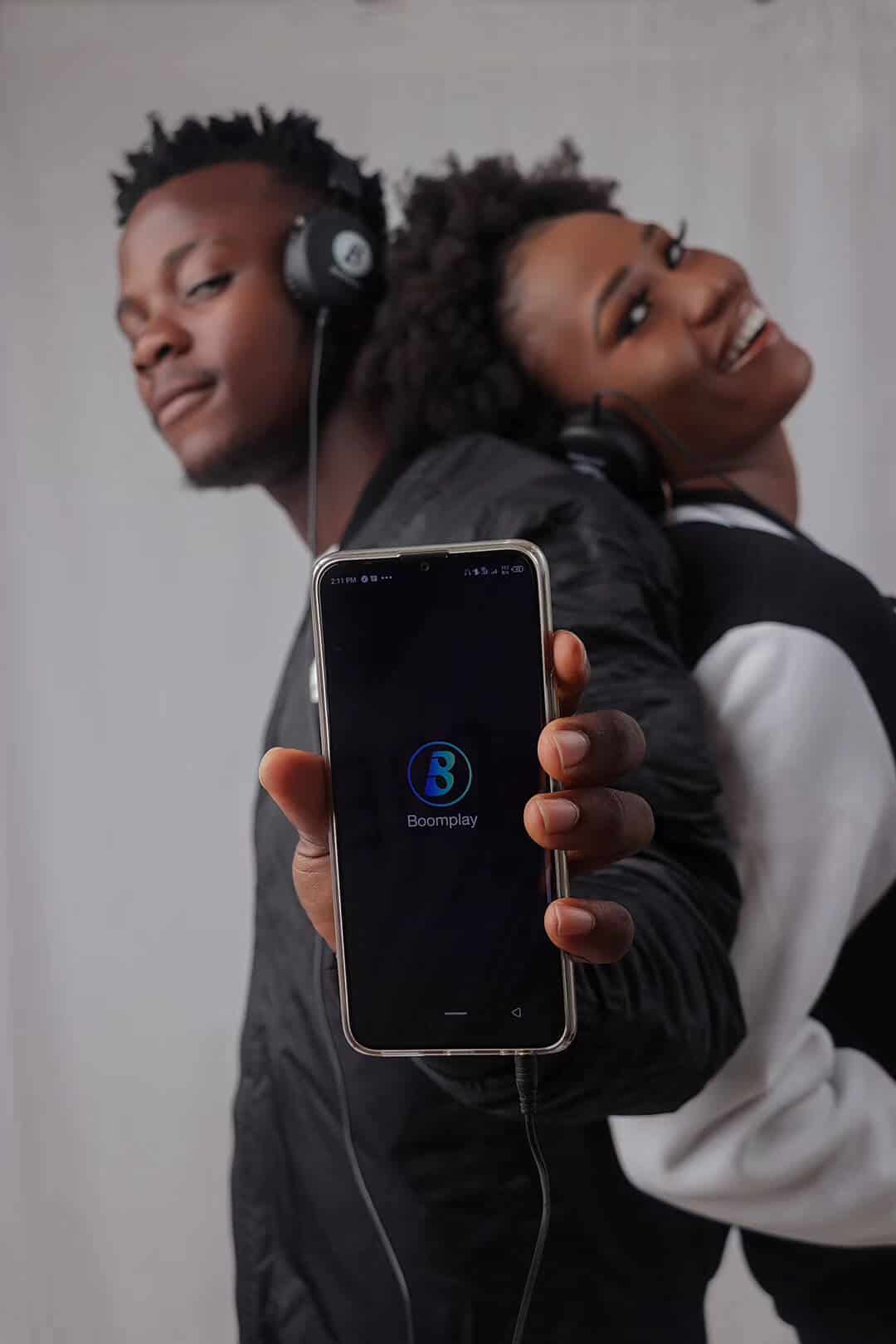
Jungle Entertainment Ventures and Free Me Digital, music distributors for many of our favourite musicians from Falz and Adekunle Gold to Ajebutter 22 and P Square have recently pulled their entire music catalogue from Boomplay Music. In a recent interview, General Manager of Boomplay Nigeria, Dele Kadiri, confirmed that as of January 2020, 80% of Boomplay Music’s 86 million user catalogue are Africans. In this interview, he also disclosed that the app has consistently ranked as the number 1 DSP in Africa for a while now, due to the pre-installation of the app on the TECNO Boom J7 music phone.
According to Canalys; a global technology market analysis firm, Tecno, itel and Infinix smartphones are in number 2, 3 and 5 positions respectively in a list of Africa’s top smartphone vendors. Given this, with Boomplay as the default music player on these smartphones, the streaming app saw a massive surge with these phone users.
With these seemingly large numbers, one would assume that there will be a symbiotic relationship between the streaming platform and the artists whose music they house, however, according to David Evans, CEO of Jungle Entertainment, this appears to not be the case at all. Earlier today, Evans announced that his distribution company will be removing their entire catalogue from the DSP in an Instagram Story, claiming that ‘the Chinese company with no Nigerian representation on their board has exploited the Nigerian music industry for long enough’
Speaking to The NATIVE, Evans said:
“Boomplay doesn’t provide any value for the music industry. They don’t have any advertising so they’re not getting more users, they also have the lowest per-stream rate around here. We’ve asked them to address some of these issues but they don’t seem to want to budge.
They use our artists’ popularity and numbers to make themselves look good, but they don’t pay us or offer us anything that supports the industry.”
In April 2019, Tech Point reported that Boomplay recently inked a distribution deal with the Universal Music Group, which enabled them to licence the label’s catalogue for Boomplay’s multiple markets within Africa; Nigeria, Ghana, Kenya, Tanzania, Rwanda, Uganda and Zambia. In addition, they also recently raised $20 million to develop their presence in Africa, in a Series A funding round, which was led by Maison Capital and Seas Capital.
These all make up what fuelled Evans’ decision to pull Jungle Entertainment’s music from the streaming site, as he tells The NATIVE that the distribution company hasn’t been paid ‘a single dime since Boomplay’s inception’.
He continues:
We produce thousands of songs, hundreds of music video which cost us nothing less than 1 billion Naira altogether a year. If all the music distributors came together to actually calculate how much we’re spending, we can’t have foreigners just come and take this content, put it on their app which they have raised money to operate from investors. Not a single dollar has gone towards the advancement of the music industry and speaking for the music industry and for myself, it’s not acceptable. It’s almost like slavery.
For Evans, he doesn’t mind losing out on monetary gain as long as struggling artists whose work is being used are getting support in some form for their music. He relays that during the pandemic, Jungle Entertainment has received additional support from other music streaming sites with money that had been raised from their governments, yet, haven’t even received any royalties from Boomplay since they set up in Nigeria.
In his Instagram story earlier today, he confirmed that his move to remove Jungle Venture’s entire music catalogue was supported by Michael Ugwu, CEO of Free Me Entertainment, and Bugo Arinze of MAD Solutions. If all music distributors come together to remove their music from the DSP, it places other streaming platforms such as Audiomack who have set up in Nigeria with the aim to promote the best music out of the continent in a unique position.
*This story is developing
The NATIVE has reached out to Boomplay for comment
You can’t stop OG Caesar. This is the first lesson we learn upon entering his angsty realm of the emo-rap trip, ‘NeoVicious‘. OG Caesar knows he’s great, and his sophomore body of work is designed to prove it. Concocting rousing beats for himself – alongside peers, Honorr and Monty Monello – whilst tapping into his painful personal experiences and real-time emotions, OG Caesar is equipped with all the right tools to deliver a meaningful, crowd-catching project, and he does just that.
19-years-old, OG Caesar hasn’t seen much of life’s trials – he knows that, “I ain’t been in the streets but I know about pain that shit familiar to me” – but he has felt pain, and it is this feeling that he parades across the psychedelic production (“Important” plays much like A$AP Rocky’s drug-induced “L$D”) that makes the fresher the relatable wordsmith he receives praise for being. Whether he’s avoiding love because of a bruised ego on “40 Below” or attempting to flip his mistakes into millions (with the incredible line, “I done made mistakes now I’m trying make some millions either way I’m making Ms”) on “Resident Evil”, OG Caesar’s plight is one that can resonate with listeners across the board – a useful quality to be able to wield on one’s early project.
The contemporary Caesar is also pretty versatile. Bringing sexy to his vulgar bars on the intro, “Reasonable Doubt” or the hard-hitting “Resident Evil“, OG Caesar ends his six tracks with a mature message to his peers. Singing about how he’s pulling his socks up and getting to work to make it, encouraging his buddies to do so too, Caesar admonishes the easy route a life of crime can offer in securing the bag.“Birkin” is an excellent outro that offers his audience a chance to reflect as we bop our heads in both enjoyment and manifestation of a Birkin for our mothers too. Ultimately, “Birkin” is a solid tune that flaunts Caesar’s skills as a producer, a rapper and a lyrically adept thinker – a fitting conclusion to this triumphant EP.
The production on ‘Twice As Tall’ is the very first commendation listeners have to give Billboard 200’s spot 54, as Pat Boone’s rendition of the Journey To The Centre Of The Earth soundtrack number, “Twice As Tall” is honoured to introduce what will instantaneously become Burna Boy’s most successful body of work. Convoking a slew of talented producers, from hip-hop legends Timbaland and Mike Dean to local hero Rexxie, Burna Boy pays close attention to the beatsmiths who are to provide the instrumental grooves that will accompany his versatile performance through the project. The opening of the album makes that clear, before anything else.
Just as Boone is reaching into his chest to pull out the spritely pre-hook of “Twice As Tall”, the 1959 classic moodily bleeds into the futurist production that underscores Burna Boy’s retrospective meditations on the times were he “couldn’t level up”. Produced by a village, “Level Up (Twice As Tall)” is a sonically sprawling track, with its theatre-school introduction complemented by electronic musings that morph into drawn out chords and soft keys as Youssou N’Dour delivers his uplifting hook, before returning to Boone’s rhyme, reverberated underneath a deep bass heartbeat.
This is the point at which Burna Boy discusses his infamous Grammy L. Though only two minutes of the album have played, by this point, Burna Boy is already reminding us of that disheartening robbery which unified the country and our growing allies all over the world. At his second verse of the whole album, we’re already magnetised, already roused, already swayed enough to once again bubble up with disappointment and rage levied at the Recording Academy, because, from the little we’ve heard so far, this is a Grammy award-winning artist. And as ‘Twice As Tall‘ progresses, Burna Boy continues to prove his worth over and over again, with the help, of course, of the producers he’s meticulously sought out to realise his monumental vision for this giant middle finger.
“Burna told me ‘we have to make something monumental’ and we built on that,” says LeriQ – long-time collaborator of Burna Boy’s whose production presence on ‘Twice As Tall’ was one of the most anticipated features in the immediate run-up to the album. LeriQ and Burna Boy have been behind many a hit, populating dance floors and soundtracking memories for almost a decade now. First appearing together in 2011, on ‘Burn Identity’ and ‘Burn Notice’ – Burna Boy’s introductory mixtapes before his celestial debut, ‘L.I.F.E’ (exclusively produced by LeriQ) – Burna Boy and LeriQ became one of those infamous producer-artist duos, whose collaborations immediately pique public interest. As Burna has risen through the ranks, scoring beats from renowned British beatsmith, Jae5 (“Sekkle Down”), or compiling a project with Los Angeles Electronic duo, DJDS, fans from his early days had pretty much given up on the idea of a full-bodied reunion from the early Aristokrats. With three credits ‘Twice As Tall’ and a reassuring message for fans to “definitely expect more from us”, it looks like Burna and LeriQ heard our cries, faint as they may have been growing.
“We’ve been missed. The listeners wanted their minds blown, so I did [that].” LeriQ tells NATIVE, appreciating our thirst for the unforgettably good duo that brought #OutsideLife highlights such as “Run My Race”, “Tonight”, and “Like To Party”. Building on their wealth of experience together, LeriQ was short of nothing when it came to what sounds he would bring to Burna’s latest.
“I went back, tapped into our roots and took our roots international. Port Harcourt is and always will be a source of inspiration for us – I wanted to bring the listeners home.”
And bring us home he did. Credited on “Way Too Big”, “No Fit Vex”, and “Monsters You Made”, on the latter track in particular, LeriQ and Burna Boy carry the torch home. On “Monsters You Made”, which is gearing up for a single promotion, Burna Boy returns to his socio-political impulses that he’s often praised for, despite the fact that he mostly shies away from the depths of political topics (probably for the best). Narrating how governments all over the world have either failed their own people or brought turbulence to the shores of other nations, Burna Boy touches upon the dismal state of affairs in he and LeriQ’s home of Rivers State. Plagued with environmental degradation brought about predominantly by the oil industry, who thanks the region’s natural resources with unregulated gas flaring and occasional oil spills, the great State of Rivers has long been the concern of activists, as they fear, not only for the environment, but for the humans within it, whose struggles in an already trying country are compounded with these avoidable environmental wrongdoings that affect their fishing and farming livelihoods as well as human health. When Burna Boy sings, “I’ve seen the sky turn to grey/It took the light from the day”, interpolating Michael Jackson’s narrative flow on “Dirty Diana”’s pre-chorus, he is joining the ranks of outraged Nigerians speaking up against the unruly gas flaring, that pollutes the air with an omnipresent choking soot.
Following Burna Boy’s tirade with the familiar anarchist progressions of “Dirty Diana”’s bass guitar, LeriQ weaves a contemporary pop transition into Chris Martins’ chorus, stripping back the song’s moody ambience and replacing it with a more airy atmosphere, subtly coloured with a spritely reggae-like bounce. Quietening down the production for Ghanaian author, Ama Ata Aidoo’s sampled outro, LeriQ finishes the piece in style, drawing out his ascending notes to set a contemplative mood that encourages listeners to meditate on the academic’s words.
The vibe doesn’t stay solemn for long, however. Burna and LeriQ’s final reunion on the album is followed up in contrasting flair by the cocksure, “Wetin Dey Sup” – its upbeat production courtesy of “Wonderful” producer, Telz. Narrating the making of the (potential) hit, Telz shares with TheNATIVE, “When we made “Wetin Dey Sup”, he was just vibing. I was in the other room, he called me and said to hear this. He was vibing, and I told him “bro chill let me record it,” I gave him my phone and he was recording it. He was like, “what do you think?”. I said, “oh mad o” let me do something on it, and that was how we did “Wetin Dey Sup” I still have the voice note.”
When you hear the blaring horns echoing Burna Boy’s interrogation, “wetin dey sup?” on the chorus, the production process of vocals first, beat later, becomes entirely obvious. Burna Boy is a hands-on artists – according to Telz and audible through his self-defined afro-fusion sound that tends to ring distinctly Burna Boy regardless of which producer has a hand in it. Shuttling back and forth with Telz, pitching ideas to the producer, petitioning changes in certain aspects of his production, it’s Burna Boy’s attentive approach combined with his welcoming attitude to criticism, that Telz found most inspiring about working with the African Giant.
“He has given me so much confidence, in the sense that everyone knows he’s the biggest artist in Africa, [but] we are working, and I’m correcting him. If something doesn’t sound right, he can ask me, or I’ll just tell him that I think you should change this and he listens to me.”
Skread too, who produces our top pick of the album, “23” mirrors Telz’s sentiments, telling us, “it’s always inspiring also to meet big artists like Burna who stays down to earth, easy to talk to and curious about people sitting in the room.” When asked the same question, LeriQ cited his co-production with Mike Dean – credited alongside Timbaland, Diddy and LeriQ of course on “Way Too Big” – as the most inspiring point of his whole experience contributing to ‘Twice As Tall’. Though Telz’s “Naught by Nature” production also rubbed shoulders with the greats (Diddy, Mario Winans and ‘90s rap icons Naughty by Nature themselves) he throughout his responses reiterates that working with Burna Boy was his highlight of the journey, sharing that “he’s the best person I’ve ever worked with without a doubt”. Thanking Burna Boy for bestowing upon him a confidence that he can work with anybody, from here on out, and enlightening his sound, Telz maintains that he too has levelled up, “what I’m making now is not what I was making two to three months ago because I know that this is a different ball game.”
Even when Telz played the wrong beat for Burna Boy, the adaptable fusion artist reassured him that it was the exact sound he was after, Telz recalls “he was looking for carnival sounds or something you could play in carnivals that will get people happy, something joyful” – which we find just that on “Naughty By Nature”. Burna Boy’s “Jamboree” interpolation is clear through his playful chorus, ending in the cheeky nod, “I be naughty by nature, I be gang-gang”, but Telz does something magical with his production of this homage track. With Burna Boy having already sampled the iconic late ‘90s bop (“Collateral Damage”), pressure was on Telz to deliver a unique, yet equally as bewitching record for this project; he didn’t disappoint. Borrowing from Naughty By Nature’s original bounce, Telz smoothly infuses the “Jamboree” with a hyperactive percussion that sounds like a coalition between bongo and djembe drums, habitual of the mainstream sounds of the region from which Burn Boy first rose.
To follow Telz’s percussive African-themed outro, is Rexxie’s streets-inclined production on his second and final track on the project, “Comma”. Distinctive beyond just his infamous tag, “yo Rexxie pon this one” Rexxie’s signature sounds, that scored Naira Marley’s historic ascent to fame last year, is described by the producer as “Afrostreets”, a blend of mainstream Afropop production and more gritty sensibilities that credits its origin or influence to the streets. “BurnaBoy called me and made me understand he’s a big fan of my sound but wanted the signature Rexxie sound on a whole different vibe,“ Rexxie types of his involvement in this project.
Their previous work, namely Zlatan Ibile’s “Gbeku”, wasn’t a Burna Boy original, but for his own album, Rexxie excitedly explains that Burna Boy brought more attention and more passion to “Bebo”, “Comma” and the other songs that “are way better”, currently on lock and key in the vaults. Much like Telz, seeing Burna Boy create at his peak, with his full weight behind the records inspired Rexxie and helped him too level up – ultimately for Rexxie:
“Working with Burna Boy improved my understanding of how to reason with my inner self. Your inner self always has something to tell you at every situation, it helped my music discernment.”
“For a producer having an artist who catches the emotion you tried to put in your music, and who’s able to bring that much musicality, soul and vibe to it, going even beyond what you expected, it’s an incredible feeling.”
So says the mastermind behind the clear standout, “23”, Skread. A collaboration originally intended for Skread’s own project, when Burna Boy heard “23”, with its deep piano chords reminiscent of Burna Boy’s magnum opus, “Ye” – a song Skread admits to being a fan of – he resonated so deeply with the contemplative production and penned a track so deep that Skread couldn’t but offer it up for ‘Twice As Tall’. In fact “it’s an honour” for the French producer to be included on the ‘African Giant’ follow-up that has clenched the global gaze, refocussing the spotlight on everyone involved on the career-defining body of work. Recorded during one of their few recording sessions in Paris, “23” is a melodic four minutes, with a simple, barely there beat, brought to life by Burna Boy’s flexible vocalising and polyphonic harmonising. On his changeable production, Skread does an excellent job of replicating a typical afropop drum pattern, and without prior tracklist knowledge you’d likely think he was from our ends. Speaking of his experience with “your favourite artist’s favourite artist”, Skread praises Burna’s versatility and musical adeptness, noting in particular his ability “to catch crazy vibes instantly on so many genres of beats”. This is the highlight of the entire album itself. Switching flows to match Skread’s slight twists and turns on the production, Burna Boy’s malleable vocals, flexible to the demands of whichever beat he’s decided to work with, complement his multiple subject interests, that chastise the system (“Monsters You Made”), paint him in a vulnerable light (“23”) or profess his utter brilliance (“Way Too Big”) – Christmas wrapped in the lyrical dexterity he flaunts throughout the tape.
Showing us truly what he is made of, the production on what Rexxie deems to be another Grammy-worthy body of work gives Burna Boy all the room he needs to be ‘Twice As Tall’, and for that, our hats go off to Skread, Rexxie, Telz, LeriQ and the many other beatsmiths that put a hand to this greatness. On your next spin, pay attention. We promise you won’t regret it.
In case you didn’t know, it’s Cuppy SZN and we are loving every moment of it. Last Friday, the DJ, producer, philanthropist, and now recording artist released her debut project ‘Original Copy’, and we must say that she deserves her flowers right away. In popular discourse, Cuppy’s musical abilities are often the subject of much doubt, as critics cite her DJ career as the full extent of her talents whilst haters refer to her wealthy family background as the source of her success. With ‘Original Copy’, DJ Cuppy is making a compelling case for her growing artistry, putting on a self-determined showcase, with the help of a few friends, strong enough to silence the criticism.
Ahead of the release of the 12-pack offering, the versatile, feature-packed tracklist left us wondering whether Cuppy’s voice as a solo artist would shine through or if she would take a back seat and let the features do the talking. But once the project reached out ears, Cuppy proved that she was capable of doing both, and succeeded at both.
Though she admits she’s only in the infancy with her artistry, she shares in an interview with CNN that she purposely had over 10 features on the project because “wanted to make sure that [she] was expressing [herself] on each track but also displaying a message through other people“. With a global platform with Apple Music’s Africa Now radio show, aimed at pushing a pan-African message, it’s clear to see that Cuppy is on a mission to spotlight her contribution to afropop, but also to exhume the wealth of talent that exists here in Africa and in the diaspora at large and project them to the world.
Although ‘Original Copy’ marks a defining moment for Cuppy’s career with repeat-worthy songs and quotable lyrics (I, for one, have listened to “Jollof on the Jet” an unhealthy amount of times), it’s the romantic afropop offering on the project’s fourth track “Feel Good”, featuring YBNL’s golden child Fireboy DML, that stands as the project’s most intriguing quality. Originally termed as the “JA ARA E” of the entire project upon our first listen, after several more listens, we can confirm that “Feel Good” is tailor-made for the lovers amongst us, who might be missing the euphoric feeling of post-midnight dancing.
Though Fireboy DML and Cuppy is a collaboration I never would have imagined, it’s a no brainer that the fast-rising artist was Cuppy’s pick for this romantically inclined number, as he’s established himself as Nigeria’s loverboy with his debut album, a project that singled him out as one of the youngest, hottest names in the new afropop vanguard at the moment.
“Feel Good” captures the shiny allure of afropop at its finest. Produced by P.Priime, the groovy up-tempo beat builds by latching onto the percussion-led sonics of afrobeats laying the perfect bedding for Fireboy DML’s delectably infectious vocals. “The night is still young and so are we/I might be wrong but you’re all I need” Fireboy begins, as he tries to convince a lover of his romantic feelings by singing irresistibly sweet words, sure to get any potential love interests swooning.
On the pre-chorus, he sings, “Tell me what you want to do tonight/O mami let me do you right” over calm, spacey guitar riffs which complement his amorous lyrics and paint poignant images of two lovers gliding on the dance floor under the twinkle of the dim-club lights. His happiness is almost symbiotic – you can’t listen to “Feel Good” without actually feeling good and bursting into dance.
It’s at the catchy and chantable chorus that the first hint of Cuppy’s vocals come into play. As Fireboy DML sings “I want to make you feel good/Baby ma fi mi pa”, Cuppy’s additional vocals can ostensibly be heard gliding over the danceable beat as both artists express their romantic intentions with their love interests. Cuppy’s decision to give Fireboy DML full reign of the entire song is incredibly calculated and necessary as it allows Fireboy DML to truly shine, not only as an artist with an irresistible flow but as one with a lyrical dexterity that sets him apart as brightest acts in these parts.
With her promotional singles (“Jollof on the Jet” featuring Rema and Rayvanny and “Karma” featuring Stonebwoy) still comfortably sitting in the Apple Music Top 100 songs in Nigeria, as well as ‘Original Cuppy’ bagging the fourth spot on the Top 5 albums in the country on the platform, it is clear that Cuppy’s six-year-long journey to her debut album has finally paid off. With hits like “Feel Good” under her belt, Cuppy is primed for a successful career going forward.
Last month, Rema went on a 3-week release run, with new tracks, “Ginger Me”, “Alien” and the ubiquitous “Woman”. This week by week drop is pointing to a possible project, which in this climate would be very welcome for the Mavin star. Bringing our attention back to his first of the three songs last month, he’s released a video for “Ginger Me”, the weight of the message is made nearly imperceptible by the graceful clip that shows Rema’s leisurely romantic experience with his muse.
Directed by uaxstudio, the video for “Ginger Me” captures a simple romantic getaway. We see Rema and his muse cuddling up at an apartment while he performs his adoring lyrics to her; “When I dey sing, sey na you I dey sing for”. Though his lyrics also acknowledge the groovy allure of his melodies and the dance-driven beat produced by The Element, Rema and his muse stay indoors and look happy to be in each others’ company and away from public eyes.
There are shots set in a neon-lit room and shots of dancers to appease the song’s dancefloor intentions, but by far, the most captivating frame is the closing shot of Rema and his love interest sitting on a swing. The image is a tribute to the cover art for the single, which shows Rema’s attention to detail when depicting his love life in his music.
Watch the video for Rema’s “Ginger Me” below.
Featured Image Credits: YouTube/Rema
[mc4wp_form id=”26074″]
You are meeting Debola at a strange time in his life. He wandered into a dream and lost his way back. Tweet at him@debola_abimbolu
Back in 2017 when DJ Cuppy stepped away from the decks and picked up the mic with the Tekno-assisted “Green Light”, we knew she was on to something but couldn’t quite place a finger on exactly what it was. Lighthearted with a catchy groove that made it effective on dance floors while showcasing DJ Cuppy’s sonic palette and voice, the song served its purpose – and with most of her subsequent releases, she has since continued to blaze the trail. This has now all culminated in her star-studded debut EP, Orignal Copy which we can all agree, banged.
Throughout her career, Cuppy has faced criticism from far and wide, whether it’s about her music or her style and hair choices. This could be thanks in no small part, to the fact that she was born into great privilege, which Nigerian society will always make you apologise for. Criticism is generally regarded as an occupational hazard for artists, however, DJ Cuppy remained unphased through it all, and continued to release club bangers with a diverse guest-list including artists from all around the continent like Kwesi Arthur, Zlatan, Sarkodie and more.
The impressive all-star roster she assembled showed the high standards she holds herself to, while also positioning her as a truly pan-African tastemaker with the culturally relevant artists she featured. From the tracklist alone, you can tell that she’s merging several worlds together, with features from all over the world: Wyclef & Julian Markey, to bringing two generations together with a Shina Peters’ feature.
From the guest list, the album is very promising and I didn’t quite know what to expect. Here’s how my first listen of ‘Original Copy’ went.
“Epe” (Feat. Efya)
You can’t go wrong with a South African House beat. The mix of catchy drum riffs, ambient harmonies and Efya’s enchanting melodies create a soothing backdrop for Cuppy’s speech to cut through with ease. She’s set the tone for the tape by describing her creative purpose as an African artist making music for a global audience, yet feeling the most comfortable doing it from home. Efya’s vocal performances is impressive as well. This is the way to open an album.
“Jollof on the Jet” (Feat. Rema and Rayvanny)
This was the first song that built our anticipation for Cuppy’s album and it’s easy to see why it was released first. Just like the meal that inspired the title, “Jollof on the Jet” puts listeners in the mood for partying with the laidback Afropop instrumentals. Though Rema and Rayvanny put in impressive performances with romance-themed verses, the simple chorus from Cuppy makes the song deserving of endlessly replays.
“Wale” (Feat. Wyclef Jean)
Boy, Cuppy is really singing here, but I’m just not in love with the performance. She doesn’t have the most convincing Yoruba tongue and I feel like that has let her down a bit here. Wyclef’s verse rescues the song with reference to his classic hit, “Perfect Gentleman” and his romantic confessions. However, partnering on a romantic song is most compelling when it feels like the artists are speaking to each other and asides from the line where Wyclef praises his “African Queen”, you don’t get that on “Wale”.
“Feel Good” (Feat. Fireboy DML)
This sounds fun. Fireboy can sing, but I’ve always felt he sounds better when he’s just enjoying the song rather than trying to hit notes. Here, he sounds happier than a child at his birthday party as he sings, switching flows expertly over the groovy instruments. Fireboy has unlocked his sensual pack, and now we’re sure to have teenagers who will share this song on their social media in hopes that their love interests will get the message.
“Cold Hearted Killer” (Feat. Darkoo)
Cuppy knows what’s pop. So far, each of the 5 tracks I’ve heard has the underlining quality to fit into club DJ sets and yet they all sound different. “Cold Heart Killer” mixes the groove of reggaeton with EDM synths to create a sugary pop song for the dancefloor. It’s so wavy, it’s hard to stay engaged with the lyrics as the beat slowly builds up to Cuppy’s chorus where she talks a big game as a “Cold ass killer”. It appears Cuppy is trying to rebrand herself as tough-talking badman and she picked the perfect partner in Darkoo. However, it feels like they’re both too concerned with capturing the party vibe to leave a threatening impression on the song.
“Original Copy”
The title track is a triumphant song and she opens it ironically with the harsh words of her critics; “DJ Cuppy/ Music is not your forte”. She flows over the trap production with ease and delivers confident brags to match trap’s boastful ethos. “I told my daddy I don’t need him no more” might sound tame coming from any other artist, but when your dad’s a multibillionaire, it’s a news headline. Though she doesn’t directly address her haters, her lyrics are so cocky that she doesn’t even need to. Also, she really sounds like herself and perhaps that’s why this song is titled “Original Copy”.
“Karma” (Feat. Stonebwoy)
The album returns to a party groove for the 7th track, “Karma”. This collaboration between Cuppy and Stonebwoy is perhaps the most convincing on the whole project. They borrow each other’s flow and go back and forth exchanging pleasant lyrics like an evenly matched tennis game. Everything about this song is infectious, you can’t help but get into the groove and dance.
“Litty Lit” (Feat. Teni)
Yet another radio-ready joint. Teni never misses an opportunity to show off her street-savvy energy and she infused just enough humour to give the song her signature flavour. The rhymes are interesting and familiar while the beat sounds like a tribute to early 2010 Afropop club bangers. This is a highlight of the album and Teni fans will be grateful for new music from their queen.
“54” (Feat. Julian Marley, Sir Shina Peter)
It’s rare to find a song that leans so heavy on nostalgic sentiments while still sounding contemporary. Julian Marley and Sir Shina Peter are both cultural icons, however, we wouldn’t have imagined them on a song together till Cuppy set them up together. This is one of the most important songs on the project, bringing two completely different generations and worlds together to celebrate the motherland.
“Guilty Pleasure” (Feat. Nonso Amadi)
Okay this is a sweet song. And with those guitar riffs, I can certainly vibe to this. Nonso Amadi proves why he’s still the poster face for r&b romance with his alluring melodies. Cuppy sounds like she has been doing some intense vocal training and it’s paying off. This is one of the songs on the album which definitely needs a video and we’re hoping for one.
“P.O.Y” (Feat. Ycee, Ms. Banks)
We’re back in the banger bag. I wonder why the album is sequenced like it is. The up and down is an interesting experience. Ycee’s leisurely rap sounds good and his ability to switch from rapping to singing is always impressive. Ms. Banks also adds a verse in her charming UK accent. Both artists have already proven their ability to make club-bangers and the whine-ready production is smooth. It’s the kind of song that leaves you wanting more.
“Labalaba” (Feat. Seyi Shay)
This is the last song and Cuppy is back again as an artist. She joins Seyi Shay in singing over the atmospheric afro-house production. No one can say Cuppy isn’t adventurous, with so many sonic variations on this album. Just when you start to get comfortable, she throws in a curveball. Thematically, she’s comparing her carefree spirit to a butterfly (Labalaba in Yoruba) while waving goodbye to a forgettable ex. She’s really convincing as an unbothered heartbreaker, and this is one instance where Cuppy actually outperforms her featured artist. 
Final Thoughts
‘Original Cuppy’ shows the full arsenal of DJ Cuppy’s artistic range. Her catalogue has always been dominated her club bangers, but the album finds her exploring more niche sounds. The title track, “Original Copy” for instance experimented with trap and I find myself praying she releases more trap songs where she can be herself and be assertive.
Cuppy’s star-studded guest-list means she’s not putting on any new artists, however, all her A-list features sound tailored for their placements while she also contributes vocals to give the album a cohesive form. Contrary to prior expectations of her ability and what the project will hold, there are a few shining moments where she shows he can really deliver.
Her rare mix of skills as a DJ, curator, producer and artist makes ‘Original Copy’ a special album that highlights her strengths and unique style. While the execution is daring with unpredictable match-ups and features with artists from different eras and different genres, most tracks from tape are tailored for the dance floor she’s familiar with. Thankfully, the pace changes often so the tracks aren’t repetitive.
Music has continued to sustain our sense of community as we all navigate the chaos of the world around us. Artists have kept the party going with new relatable songs that helps us remember the good old days (before the pandemic), dream of a better tomorrow, or just enjoy the present moment. Because we know the volume can be overwhelming sometimes, we’ve decided to highlight the best songs released from around the world, thrice a week, in a bid to put that extra pep in your steps as you go through the rest of the year.
Last weekend was one for the books with the number of new songs and projects from our faves; The Cavemen, Fireboy DML, Cuppy, Nasty C, Blaqbonez, Tomi Thomas, Falz amongst others shared new songs that we analysed here. To set the ball rolling for this new week, we have new releases from Barry Jhay, Seyi Shay, Zlatan, Ycee and Small Doctor, Solana and Joeboy, Mr Eazi and King Promise and more. Enjoy
“Ashe She” – Barry Jhay
Barry Jhay’s debut single, “Aiye” introduced him as an exceptional singer who infuses his Yoruba lyrics with heartfelt inspection. He continued in the same vein for his debut project, ‘Barry Back’, where he offered more Yoruba-fueled songs that resonated somewhere between solemn introspection and motivational-speak. He has just released the music video for the project’s second track, “Ashe She”.
“B’ota gbogun, bo binu/Mo mo pe alanu n be leyin mi oh/ And anything wey I lay my hands on/ Moni mo mo wipe ashe she”, he sings as he confesses of his faith in God over the catchy beat produced by Tee-Y . The video directed Director K highlights Barry Jhay’s traditional spirituality with the opening scenes shot at a Yoruba shrine. Though we also see shots of him praying at a church and later, outdoors with an occultic group, it’s hard to tell if there’s any narrative to follow. However, with Barry Jhay’s lyrics encouraging listeners to remain steadfast in their faith, the religious imageries are thought-provoking.
“Tuale” Feat. Ycee, Zlatan, Small Doctor – Seyi Shay
Seyi Shay has had many highlights in her career since she first broke out with “Murda” in 2014. For her latest single, “Tuale”, she’s giving thanks to everyone whose support over the years has made her career possible. “Tuale for my people wey sabi/ Tuale for the person wey dey make my song a hit”, she sings over the upbeat instruments and she also gets some friends, Ycee, Zlatan and Small Doctor to weigh in as well. They each deliver compelling verses narrating how their music career made them into celebrities and expressing their gratitude to the fans, good and everyone who made it possible.
The video directed by Mr C takes Seyi Shay to the streets where we see her enjoying her time on the streets. Though Ycee doesn’t show up in the video, we see Zlatan and Small Doctor recording their vocals as well as dancers who confirm the groovy effect of the beat.
Solana – “Far Away” Feat. Joeboy
Joeboy fans have Solana to thank for giving them a new Joeboy verse sooner than expected. The two make a convincing pair on the romantic record, “Far Away”. Produced by Killertunes, the lightweight harmonies make the perfect backing for their hearty confessions addressed at their unfaithful lover. To a passive listener, the sweet melodies from Solana and Joeboy suggest that “Far Away” is just another valentines day ballad, however, the lyrics reveal the love they explore to be messy, carnal and risky. The soothing harmonies disguise the anxiety of her pleas as she asks her lover to commit to their future together; “we’re about to make it forever oh/ The way that I feel is forever oh”. On the track, Joeboy plays the boyfriend who is trying to be the best partner he can be, so he confesses his romantic feelings and promises to always be the loving boo, while Solana comes across as trying to mend a broken heart with these promises.
“Baby I’m Jealous” – emPawa Africa, feat. Mr. Eazi, King Promise
With the world isolating to stop the spread of COVID-19, a lot of businesses were put on hold while we figured out how to navigate the world on the internet. While some took this as an opportunity to relax, others—especially creatives with online platforms—found ways to keep pushing their products. Mr Eazi and his emPawa Africa team put out new music in June while we adjusted to the new normal and now they’ve put out the video for “Baby I’m Jealous”, the first single from the tape. The video captures the song’s producer, Guiltybeatz and artists, Ghanaian highlife star, King Promise, and Mr Eazi as they try to create from the comfort of their homes.
The video opens with a facetime conversation between King Promise and Guitybeatz discussing how they aim to promote the song and we get a candid portrait of their in-door life. We see Mr Eazi join in as well as they try to set up lights to shoot the video for the romantic song with their phones. The video is proof that the pandemic can’t really stop creativity, and awkward as it is, it’s fitting to the catchy song.
[mc4wp_form id=”26074″]
You are meeting Debola at a strange time in his life. He wandered into a dream and lost his way back. Tweet at him@debola_abimbolu
Beyonce is a great performer, in fact, there’s a conversation to be had for crowning her the best of this generation, but I’ll let you be the judge of that. From her days as a member of Destiny’s Child to her legendary Coachella performance that bagged her a Netflix documentary, she’s consistently delivered awe-inspiring dance routines and death drops that you definitely should avoid trying at home.
So when a 22-year old performer named Papi ‘Stephen’ Ojo burst out with similar jaw-dropping moves beside Queen Bey in her executive-produced visual album Black is King, he quickly became the cynosure of all eyes in his hip-jerking, blue-toned role. But as his expansive CV will reveal, Papi Ojo has had a hand in many of your favorite celebrities dance moves long before Queen B’s seal of approval, haven worked with names like Rihanna, A$AP Ferg, Janet Jackson, Teyana Taylor, Davido, and more.
Just a young kid from Lagos trying to make it in the world like you and me, Papi Ojo does not take his success so far for granted. In a conversation over Hangouts last week, he tells me of the immense gratitude he felt working with Beyoncé on set every day and the gargantuan role of bringing African dances to a global stage. “It’s a blessing to be putting my country on the map. There are far many talented dancers on this earth but for me to be able to represent and for Africans on the continent to accept me, I am proud that I didn’t disappoint people back at home and here in the diaspora”.
As a born and bred ‘Naija’ boy, Papi has always been conscious of whether or not he will be a disappointment. Any Nigerian child can easily relate to the difficulty of choosing a creative passion over a professional dream society has for us, but for Papi Ojo getting his parents on board with his vision took little convincing. Backed by his older brother, who is now late, and his cousin Emmanuel, the three formed a dance group called the A.V.O Boyz back in 2015 when his family moved to America.
“My parents have always been supportive and even though, they want us to focus on education, they have never once stopped my brother and me from dancing. They would give us the leeway to do what we wanted because they underwood that education is not the only way to make it in life.”
Backed by this supportive family background and a prayerful disposition, Papi Ojo now wants to make his mark in the music industry. Growing up within a musical family who were not only fans of music but were also performers themselves, Papi found his love firstly in music before being enthralled to move to the sounds he was hearing. ‘I was very insecure about that side of me even though I have always wanted to do music and it’s always been my passion’ he admits to me, describing the period before he found the discernment to dive into his passions and live completely for himself last year. Though the focus has mostly been on his dancing and little on his actual musical talent, Papi Ojo is ready to show the world that he can merge these two passions together seamlessly and prove that he’s more than worth your time.
‘Papi is here, hide your girls’ says Ojo with a chuckle, explaining that this is his catchphrase. He describes a pulse of love and positivity at the centre of his music, ‘I would describe my music as music for the lovers and for the happy people. It highlights romantic love and having fun while touching on everyday activities for millennials’ he succinctly explains. This captivating quality that evokes amorous feelings and feel-good dance is ostensibly seen from his most recent release “Beremole”, a catchy afrobeat number primed for dancefloors from Lekki to Brooklyn.
Though he’s only been making music for a year, Papi is confident in his ability to constantly provide listeners with dance-ready hits haven grown up on a musical diet of P-Square and Sound Sultan. He credits the rising afropop acts at the time for propelling his tryst with dancing, explaining that a song truly comes alive when you can connect to its hypnotic pulse. ‘I have to combine my two passions because they are like brother and sister. They help each other so much’ Ojo says, before adding ‘Why stay in one lane if you can dominate in two, you understand?’. Gone are the days of constricting oneself, as these days, people can be as multi-hyphenate as they please and cater to the many different versions within themselves.
Above all, Papi Ojo wants the world to know that he is following his heart. The heart that brought him to singing as an insecure kid all those years ago and the heart that has sustained his dance career even at times of turmoil when he was close to giving up. He goes wherever the music and the dancing take him, and for now, that’s finally leading up to his biggest project yet–the release of his forthcoming EP. This project, he promises will introduce viewers to a whole new side to him, which will be bolstered by the best music video that will do justice to his love for dance.
“I need to get out of my own head and realise that the world is bigger than me and my own problems, and I have to stand up for something. I hope everyone is ready to take this journey and be ready for my growth. Don’t worry, it will shock you.”
With the harrowing events of this year from the global health crisis to the racial reckonings that have been amplified, Papi Ojo is banking on himself more than ever before. Nothing has seemed impossible this year and nothing seems beyond reach, and with Ojo’s sturdy Christian faith and his deep warming conviction in himself, he’s gunning to win the hearts of not only the ladies but the world at large.
Featured image credits/EbonyMagazine/Disney/Parkwood Entertainment
With the Friday release of her third studio album, ‘Celia‘ just around the corner, Tiwa Savage is refocussing our gaze right back on her, after a quality of New Music Friday. So far, the promotional singles for ‘Celia‘ have been resounding hits, with “Koroba” and its predecessor, “Dangerous Love”making chart history in Nigerian airplay.
Well it looks like her third and, we can assume, final single before the project drops, will follow the same path. With a Sam Smith assist (we might have to adopt them) and a sensational London production, “Temptation” looks like a hit that’ll span nations.
London opens this number with jazzy hints on his production, introducing a sexy bass guitar that sets the sensual tone Tiwa Savage is going for on her opening verse and chorus, co-written by Fireboy DML and herself. Leading with her head voice crooning the repetitive lines, “temptation, that’s all I see when I look at you“, Tiwa Savage is looking for “ginger” from the song’s muse, and taps into more Western-pop proclivities than what we’re used to through her vocal deliveries.
After a typically bouncy instrumental riff, Sam Smith makes their grand entry onto the track, coming with a smooth verse that is both lyrically considered and vocally alluring. A little more wistful than Tiwa Savage – staying right on brand – Sam Smith sings, to their own muse, “the shape of your body replays in my mind”, telling us how they, “crave your attention”, before ending their verse in unison with Tiwa Savage over a duet that confesses they’re both “all fired up with nowhere to go”.
A Sam Smith and Tiwa Savage is a collaboration we never would have imagined, but Sam Smith brings their A-game to Tiwa’s latest, and the dynamic London beat – full of well-placed horns, familiar afropop drum patterns, and jazz inflections from the guitars – fully brings the record home.
Coping with the chaos of 2020 has taught us how to have a good time even when conditions are less than ideal. A huge part of that lesson has come from music, as artists continue to provide songs that build our optimism, with their resolve to keep the party going through the pandemic and increasingly traumatic news feeds. That’s why we’ve decided to highlight the best songs released from around the world, thrice a week, in a bid to encourage that extra pep in your steps as you go through the rest of the year.
Earlier in the week, we got new music from WurlD, ADH, Vector, Eugy and PyschoYP, Ghanaian singer, Sista Afia and Fameye, BOLG and Jaiye. To get you in the mood for the weekend festivities, we’ve compiled a list of all the best songs released this weekend. Blaqbonez, Tomi Thomas, Falz, Nasty C, new Marlian Music signing, Tori Keeche and Naira Marley, Tulenkey and more. Enjoy.
Tomi Thomas – “Hopeless Romantic”
Tomi Thomas‘ first taste of the limelight came through his role as a member of the LOS crew. However, since the group’s 2012 hit song, “Bad Guy P”, they’ve each pursued solo careers and Tomi has steadily grown into his own. He improved on his singing and is now renowned as one of the most captivating stage performers in the country. On his latest single, “Hopeless Romantic”, he reflects on his days alone and how his passion for singing gets undermined by those who don’t understand him.
The Caribbean leaning instrumentals for “Hopeless Romantic” are smooth, and the laidback arrangements allow for Tomi Thomas’ storytelling to shine. “It’s funny/ How they show me/ That they don’t know me/ I’m just a hopeless romantic”, he sings on the catchy chorus. And though the lyrics are simple and casual, his delivery is meticulous as his pitch falls and rises to match the intensity of his story. The accompanying video allows for more vivid narrating as we see him and his muse dressed like they’re prepared to go for a wedding.
Falz – “One Trouser”
Falz‘s most endearing talent is his sense of humor. Though he’s an accomplished actor and a convincing rapper, his jovial flair gives him an extra edge over others in his field of entertainment. His latest single, “One Trouser”, benefits from this as well with the comical depiction of a rowdy Lagos bus park.
The lyrics for “One Trouser” narrate the hilarious scene of a fight that broke out between Falz’s fictional character, Jimi and an Okada rider. Falz references popular motor parks like Surulere, Bode Thomas and Marwa Roundabout as the location of the accident and with his Falz the Bahd Guy accent, he delivers a convincing impression of a Lagos street fight, saying “Shebi we go enter one trouser”. The accompanying video directed by Dammy Twitch featured cameos from other comedians who fill up the busy street where the hilarious fight happens. Though the accumulation of accidents is exaggerated for humor, Lagos is the most populated city in Africa and the streets are indeed rough.
Tori Keeche – “Yoga” Feat. Naira Marley
Naira Marley’s Marlian Music label unveiled their latest signing, Tori Keeche yesterday and have now shared her debut single, “Yoga”. Tori Keeche is the first female artist on the label and with her new single, “Yoga” she confirms that she isn’t just a placeholder as plays tag team partner with none other than the label boss himself.
Aided by the dancehall beats, Tori Keeche delivered matured lyrics on “Yoga” as she wields her sexuality confidently to describe how she’d like to have sex with her partner; “I stretch it out like Yoga”. The sex-charged direction of the song fits Naira Marley’s emo perfectly and because of that, he’s able to switch from the street-hop style to a more conventional Afropop style. With the catchy dance-driven beat and both artists going back and forth, promising to please their lovers, “Yoga” is a rapturous song that deserves a spot on all sex playlists.
Tulenkey – “Link Up”
Last time we heard from Tulenkey, he was lamenting the woes of the pandemic on “Corona”. Though the virus remains a threat till date, the anxiety attached to it has eased off a little and he’s now back with a celebratory new single titled “Link Up”. “Link Up” finds the Ghanaian artist singing and rapping in a mix of English and his indigenous language as he explains how he has been coping with recent events.
Singing “Forget the stress and party/ Stress no fit kill man/ Smoke all the stress away”, Tulenkey recommends using cannabis to get rid of the anxiety. The laidback instruments produced by MOG Beatz are designed for dancing and it’s sure to put listeners in the right mood as we enjoy the weekend festivities.
Nasty C – “Zulu Man”
Fans continue to anticipate Nasty C’s upcoming project, ‘Zulu Man With Some Powers’ after the pandemic forced the South African rappers to delay the project’s release. However, he has continued to put out singles from the tape and the latest one, “Zulu Man” is the project’s title track.
Nasty C’s self-assured raps have earned him a reputation as one of Africa’s top hip-hop acts and the good people at Def Jam were impressed enough to sign him on earlier this year. Despite having the attention of the whole world at the moment with this upcoming m project, “Zulu Man” finds Nasty C rapping mostly in his indigenous language, while his flow remains as impressive as ever.
Blaqbonez – “Big Brother”
Though Blaqbonez first earned his name as a battle rapper, his social media antics have given him the reputation of an internet troll who’s constantly poking fun at anyone who’s unfortunate enough to give him a reason. He took a pop turn for his debut single in 2020, “Haba” which he cheekily promoted insistently till it became infamous. For “Big Brother”, his second single release, Blaqbonez is reminding everyone of his rap prowess with no gimmick involved.
Though we won’t put it past Blaqbonez to find another amusing way to promote the song down the line, there‘s nothing whimsical about “Big Brother”. Rapping “Them no fit lock me inside no house now/ Cause me I dey for street, I’m getting guwap now”,“Big Brother” finds Blaqbonez bragging about his accomplishments while shading those who doubted him.
DOZ x Malik Bawa – “FADED” Feat. PsychoYP, Marv OTM, Denzel Oaks, Zilla Oaks
When you hear a song titled “Faded”, your expect the song to be about drinking too much alcohol, especially when it’s a trap song. You expect to be reminded of the drowsy feeling and pleasant numbness of partying hard. DOZ x Malik Bawa’s “FADED” doesn’t disappoint in capturing the faded mood. The producers’ psychedelic trap production creates a glassy-eyed backdrop for PsychoYP, Marc OTM, Denzel Oaks and Zilla Oaks to paint their various ideas of extreme partying.
The chorus goes “I’m faded off my drink” and then the beat drops, signaling the rappers to each take turns to add different eccentric details to the mosh pit. PsychoYP brags about his drip, Marv OTM raps about drinking and driving, Denzel Oaks talks drug money and Zilla Oaks closes with a drowsy flow that alludes to the Hennessy he tells us he has been drinking. As trap music grows more popular and mainstream, Nigerian trap artists are getting more comfortable and attempting to capture more ambitious moods.
[mc4wp_form id=”26074″]
You are meeting Debola at a strange time in his life. He wandered into a dream and lost his way back. Tweet at him@debola_abimbolu
Every Saturday, The NATIVE Will Put Out A List Detailing The Best And Most Enjoyable Songs Released During The Week.
With The Scope Widening And Music Dropping At An Immeasurable Pace, It’s Easy To Miss Out On A Lot Of New Drops, So We’ve Decided To Help Out, By Collating A List Of The Best Hip-Hop, Pop, R&B Songs From All Over The Continent. Our Main Goal With This List Is To Make Finding Great Music Of The Moment Easier For You.
“808 Therapy” – Remy Baggins
When you’re going through your darkest times, talking to people, whether is therapists or friends or even family, can seem impossibly vulnerable and emphatically unappealing. In our TIME Issue cover story, Mowalola discussed how one of her most prized collections was created during a time of deep distress; gearing up for his next album, Santi has been vocal about how the pain he has been through this year has fuelled his creative process. Sometimes, art is the only way in which one can express our vulnerable feelings and work through the emotions that are bringing us down. This is what Remy Baggins takes on on “808 Therapy”.
After a melancholy melodic two sentences that emerge as the song’s chorus (“they ask me why I never tell nobody what’s been going on inside my head/so imma put it in a song and turn my 808s to therapy instead”), Remy Baggins almost interrupts himself, as he begins to dive into this “808 Therapy” session. The top of the first verse “bro let me show you my woes”, is followed by unguarded bars throughout the song that express the myriad of emotions Rembo has been subjected to during his career. He is jaded by the snakes he’s discovered in his camp; resentful of the fact that he is perpetually underrated; slighted that his hero would say he doesn’t think he’ll blow; inspired by himself, resilience and obvious skill to keep working. The jumpy hip-hop beat over these vulnerable verses is juxtaposed with softer, less percussive instrumentation on the chorus, giving Remy Baggins and listeners in calming introspective respite before he breaks into bitterly narrating those “woes“.
“Link Up” – Tulenkey
This year has been one hell of a rollercoaster. We already felt pretty sick from the tragic news of multiple of our legends passing, as well as civilians losing their lives in accidents like the gas plant explosion in Lagos, however, the pandemic really pushed this year into a horror show of epic proportions. The anxiety from dealing with the COVID-induced lockdown was what inspired Tulenkey’s debut single for 2020, “Corona”, which he has now followed up with, “Link Up” which updates us on how his mental state has improved since we last heard from him.
“Link Up” is a turn-up song for the clubs. The catchy beat, produced by MOG Beatz, is designed to serve dance floors, with Tulenkey setting us off in a good mood as he chants “Lala/Lala” cheerfully on the song’s intro. Tulenkey sings and raps, mixing English and his local language as he describes how he can have a good time in spite of all the chaos around. Singing “Forget the stress and party/ Stress no fit kill man/ Smoke all the stress away”, “Link Up” recommends partying as a cure to anxiety and stress. Though the pandemic has greatly affected our ability to link up and party, Tulenkey is itching to return to the club as the world slowly resumes its forward motion.
“Original Cuppy (Interlude)” – DJ Cuppy
For DJ Cuppy, scrutiny from the media about her life coming from a notable family, has made her vulnerable to criticism whenever she released music. Regardless, through her career path as a DJ, a curator and now an artist, she has kept at it, releasing club-bangers and ignoring the negative reviews (in her music at least). Just the other day, she released her debut album, ‘Original Copy’ and on the title-track, “Original Copy (Interlude)” she finally addresses the haters.
Being criticised is typically regarded as an occupational hazard for artists, and in hip-hop’s self-assured terrains, it’s used as fuel. DJ Cuppy channelled her haters for her trap experimentation on “Original Copy (Interlude)” as she flips the harsh words from social media comedian, Oyemykke into an intro for the cocky number which we learnt was an actual freestyle. Though the song is only a minute long, she delivers impressive brags and an even more impressive attitude as she switches flows over the airy Trap-infused beat produced by Bond. We recently wrote about how women are leading a hip-hop revolution in Nigeria and with this song, DJ Cuppy adds her contribution to the confident charge where women can blow their horns and be assertive.
“Blood Guns and Revolutions” – Msaki
Although revolutions are looked at as some sort of idyllic fix for terrible conditions, the truth is they often come with harrowing consequences for those who have lived through them. “Blood Guns and Revolutions”, the breath-taking new single by South African singer, Msaki, is a treatise on the loss and trauma that follows when people have to fight tyrannical powers for rights to a better society. With poetic writing and a vocal performance that personifies heartbreak, Msaki strips away the glamour from revolutions, centring the people who have to suffer in these situations and pointing her fingers to those who benefit from the chaos.
“Four thousand rounds of bullets, ready to break black bodies again”, she mournfully sings in the very first bar, a loaded line that connects the past and present struggles of Africans and Black people everywhere. In the past few months alone, we’ve witnessed several protests across the world with different triggers behind them, but the one thing they have in common is that they all involve the brutalisation of people desperate for a change—a change for the better. It’s a recurring cycle that Africans and Black people are familiar with, and it fuels the odd but fitting mix of disappointment and cynicism Msaki channels on “Blood, Guns & Revolutions”.
“You died with nothing still, although museums are filled with stories of your ill-rewarded heroic deeds”, she observes on the second verse, invoking the memory of fallen heroes and wondering why many more have to die for sweeping change to be effected. Accompanied by folksy guitars, elegiac strings and languid drum rolls, Msaki chamber filling voice offers the song’s small glimmer of hope, bringing some radiance to a relentlessly dark topic.
“Exclusive” – Adekunle Gold ft Olayinka Ehi
All year, we’ve been gearing up to the release of Adekunle Gold’s album, ‘Afropop Vol 1’, and upon it’s arrival last Friday, it confirmed everything we already assumed about the project. Packed with experimental songs which show off Adekunle Gold’s sonic and personal growth, one of the songs that stood out the most was the entanglement anthem we all currently need, “Exclusive”.
Enlisting our Fresh Meat alum, Olayinka Ehi, the pair provide a mellow duet about a complicated relationship. We’re all aware of how complicated dating in this age is – having to go through so many stages before you get to the ‘real thing’. “Exclusive” perfectly captures the confusion and uncertainty that comes when you haven’t defined a relationship, highlighting the anxieties of each party. On the chorus, the pair duet: ‘Are we exclusive? Is it game over, let me know and if you’re holding back, then let go of my heart’, initiating a tough conversation people would rather avoid against the mellow Pheelz-produced beat.
While Adekunle Gold holds his own with his vocals and clear pen, Olayinka Ehi undoubtedly steals the show, with her honest and relatable lyrics and perfectly pitched vocals.
“Residual $elf Image” (feat. Ayanda Jida) – A Reece
A-Reece is only 23years old, but he’s done and been through enough to be considered a veteran rap artist. On his latest single, “Residual $elf Image”, the South African rapper takes the posture of someone whose experiences have helped shaped him into a more secure person, balancing his exuberant tendencies with a riveting wistfulness. Containing a fair share of machismo, the song initially starts off with standard fare braggadocio, but as it moves along, it hinges more on self-awareness, something Reece has always tapped into, and his efficacy here shows how seasoned he’s become at speaking the truth of his mind.
“Acknowledgement without the accolades, still I celebrate/’cos any day could be the last time I hear this record play”, Reece raps at the beginning of the second verse, emoting from a place of honesty and thankfulness. As he continues into the third verse, he gets more assertive of his mission for longevity, keeping his pristine, nimble flow over broody piano chords. In the backend of the song, Ayanda Jida’s soulful bridge and an interpolated interlude from “The Matrix” leads into a beat switch, where Reece taunts his foes out over a looped soul sample.
It’s in this latter part gets into his lyricist bag with impressive lines like, “You boys are only known for shaving points like Paul on The Longest Yard”. “Residual $elf Image” is Reece reminding himself and listeners who he is exactly, also setting the stage for the next arc of his impressive career so far.
Featured Image Credits: NATIVE
Words by Adewojumi Aderemi, Debola Abimbolu, Dennis Ade-Peter and Damilola Animashaun