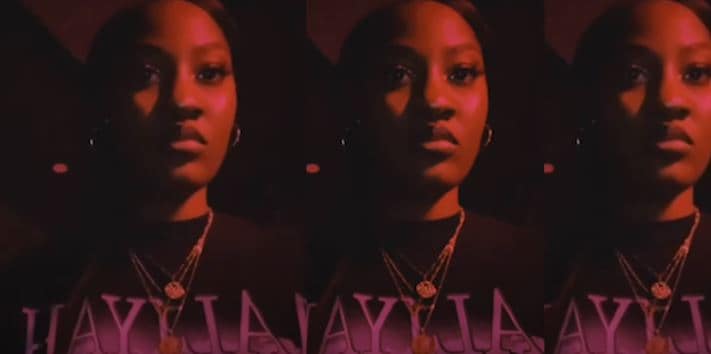
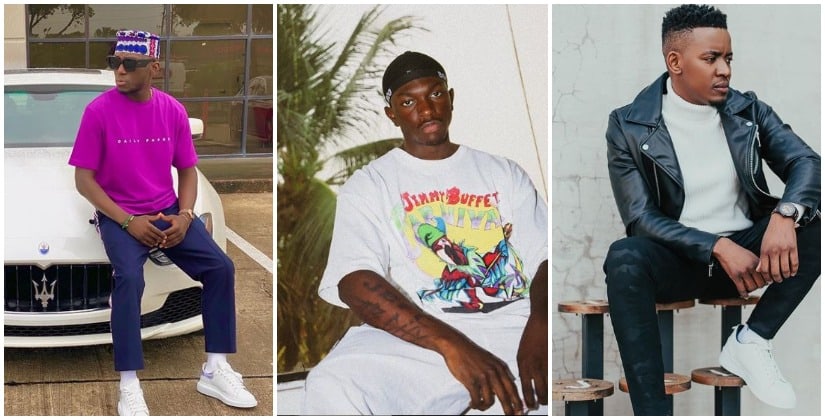
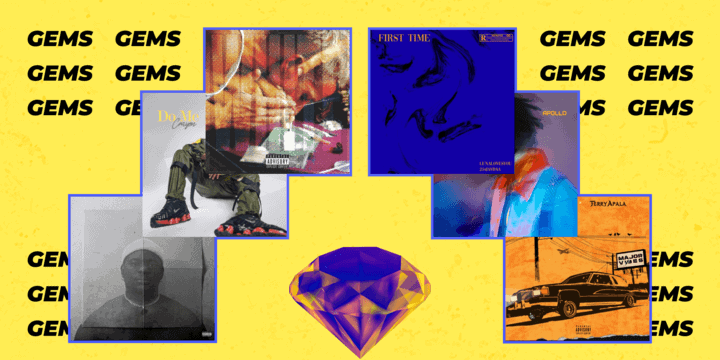
‘Amaterasu!‘ is Remy Baggins’ second project this year. Back in March, he followed up his sex-driven 2019 tape, ‘Hentai‘ with a more complex take on relationships, exploring the complicated dynamics of love, entitled ‘Sakura‘. Leaning into his r&b proclivities, as those subject matters are disposed to, ‘Hentai‘ and ‘Sakura‘ shared much of the same sonic DNA – both lively pop-inclined bodies of work which tapped into the alternative tastes of the world surrounding Remy. ‘Amaterasu!‘ plays with an entirely different soundscape, however, with the only unifying thread between this piece and the last being Remy’s Japanese inspired nomenclature.
‘Amaterasu!’ is an introduction to“Trap Rembo”, Remy Baggins’ reactive alter ego that has risen out of the fire of “frustration anger and extreme pressure” Baggins writes on the flip side of the album cover. Explaining that ‘Amaterasu’ is an inextinguishable flame that burns continuously for seven days and seven nights, Remy Baggins shares with his fans this seven track project in the hopes that “this ignites and unquenchable fire in the hearts of those who try to provoke us.“
An expressive rap project, which does as much baring of souls as it does bragging about skill, ‘Amaterasu!‘ is full of some venerable penmanship, from Remy Baggins himself, and his newest set of collaborators, including vernacular rapper, MOJO and Pyscho YP on the lead single “Gboju!“.
If it is Remo’s intention was to arm listeners with enough quotables to fan the flames of their rage – which his considerable craftsmanship on the first track makes clear that it is – then it’s our duty to report on just how well Remy Baggins has executed this undertaking.
“Trap Rembo”
Remy Baggins is upset, and though he confesses this early on, the moody production that opens up with church bells of reckoning give the game away first. Quoting Drake with his opening line, “I’m upset“, Baggins goes on, particularly in his second verse, to deliver original bars that emphasise just how over it all he is.
First, he makes it known that he’s all about the money, a topic we return to later (albeit with a little less punch) on “W.I.G.B.?” saying, “The only bands I listen to are rubber bands” on the muffled hook, before returning to more clearer production just in time to set things crystal for all the snakes: “If you got a fucking problem with me tell it to my face“.
By far the hardest line of the project however it this one: “Bitch I wrote, produced and mixed this shit and dropped it anyway.“ As becomes clearer throughout the rest of the project, Remy Baggins is tired of being underrated and disrespected, he’s got incredibly skill and ‘Amaterasu!‘ is all about flaunting it. Apparently, he’s also got palpable influence (“Ain’t nobody moving ‘till I muhfucking say so“) and no more patience for the doubters: “Bitch I’m only loyal to my homies and my ego“.
“Gboju!”
Simple as it is, the title line, “My guy Gboju!“ packs a real punch, especially at the start of a record which details all the ways in which you are not deserving of Remy, Psycho or MOJO’s attention. For Remy Baggins, it’s all the fraudulent behaviour from people who don’t know how to work hard for their money. Repeatedly asking to emphasise his deep judgement, Remy Baggins poses the serious yet hilarious question: “why you faking money online?“
MOJO, on the other hand, is more concerned with your lack of skill staining his whites. Effortlessly flowing between Yoruba and English, the new gen vernac rapper, in his bassy gritty voice reminds us of what sets him apart from the herd, delivering two “Awon bawo Orisa Babalawo fill the verse with incantation/ Awon bawo lesson teacher mo’n ko won even when them dey vacation“ before switching up his flow for a memorable closing verse.
“Southside”
Featuring Marv, OTM, VEEN & Kiienka, the verses on “Southside” a pretty literal and don’t seem to share the same enthusiasm for dragging their peers as the previous tracks do. In this light, beyond the threatening chorus “We don’t talk we talk is outside“, “Southside”is surprisingly lacking in bolshy punchlines, considering the song begins with “Oga you think say I stupid?/Are you dumb? Are you foolish?“
“808 Therapy”
‘Amaterasu‘ was born from pain. This record is the project’s middle point and acts like the core of the beast, revealing the sources of Remy Baggins’ hurt as he decides to “put it in a song and turn my 808s to therapy instead“. After clever bible references like “You a dreamer nigger, Joseph“ and “Silent devil with the halo“, Remy Baggins goes on to announce that “I smoked my first joint with Jesse Jaggz“, an utterly random confession that acts to lift our spirits after Remy reveals one of his sources of hurt, he recalls, “Slippery nigga like my 808s/My idol couldn’t tell me to my face/He told my homie I’m never gon’ blow(oh my god, what the fuck?)“. It’s a painful bar, but a topic Rembo doesn’t dwell on for too long, and in the end he offers us just the advice we’d give him: “Tell a stupid nigga wisen up“.
“Sicker!”
Mirroring the Migos’ “Get Right Witcha” flow for the chorus, its final bar “And if you think you dope, bitch I’m sicker“, reminds me of Africa’s best rapper, Jahdatta, who famously said “you think that you’re ill, I’m mentally iller“. Though not emulating the same, self-diagnosed crazy as Jahdatta, Boogey’s first and only verse on the track is a pretty wild one, his standout lyric being, “Pray to the one who owns the sky, no reply is she light skin though?“
“W.I.G.B.?”
More melodic than the previous tracks, “W.I.G.B.?” returns to the topic of the budget. Insisting that they be left alone “if it ain’t about the money” (Zilla references), Remy Baggins also concedes that he’ll entertain a conversation for one other reason, but nothing else, singing: “If you ain’t talking ego, please get out the way”. After demanding what he’s owed and instructing opps to keep his name out of their mouth, Remy Baggins gets even more aggressive on this sung number, silkily vocalising the following threat: “You don’t wanna fuck with Rembo lose a finger like you Django“.
Though Zilla Oaks is a rapper himself, on this track he concurs with Remy Baggins, singing his way through his verse, but his finest lyricism comes when he returns to rapping, indicated by his delivering the bar: “Only L I take is when I levitate“.
“No Regrets”
As many rap projects do, ‘Amaterasu’ concludes with a reflective, emotive number, where Remy Baggins details all the pressure he’s been feeling, ultimately consoling himself with the fact that, despite the mistakes, and perhaps not being where he thought he would be, or where he ought to be, he has “No Regrets”. For anyone feeling lost in life, alone in their search for purpose this song will resonate. Though we all like to believe that things will fall in place at the right time, patiently waiting for your moment is nearly impossible for the driven and ambitious like Remy. Especially when “Time is of the essence, homies living lavish waiting on the boy” the eagerness to reach the top of your game so you can live your best life with your peers multiplies infinitely.
Featured Image Credits: Remy Baggins/Instagram
Wojumi is a bad bitch & she’s going to brag about it. Tweet her your latest cultural exploits @dewoju
“You’re only as funky as your next cut” – Andre 3000, “Rosa Parks”
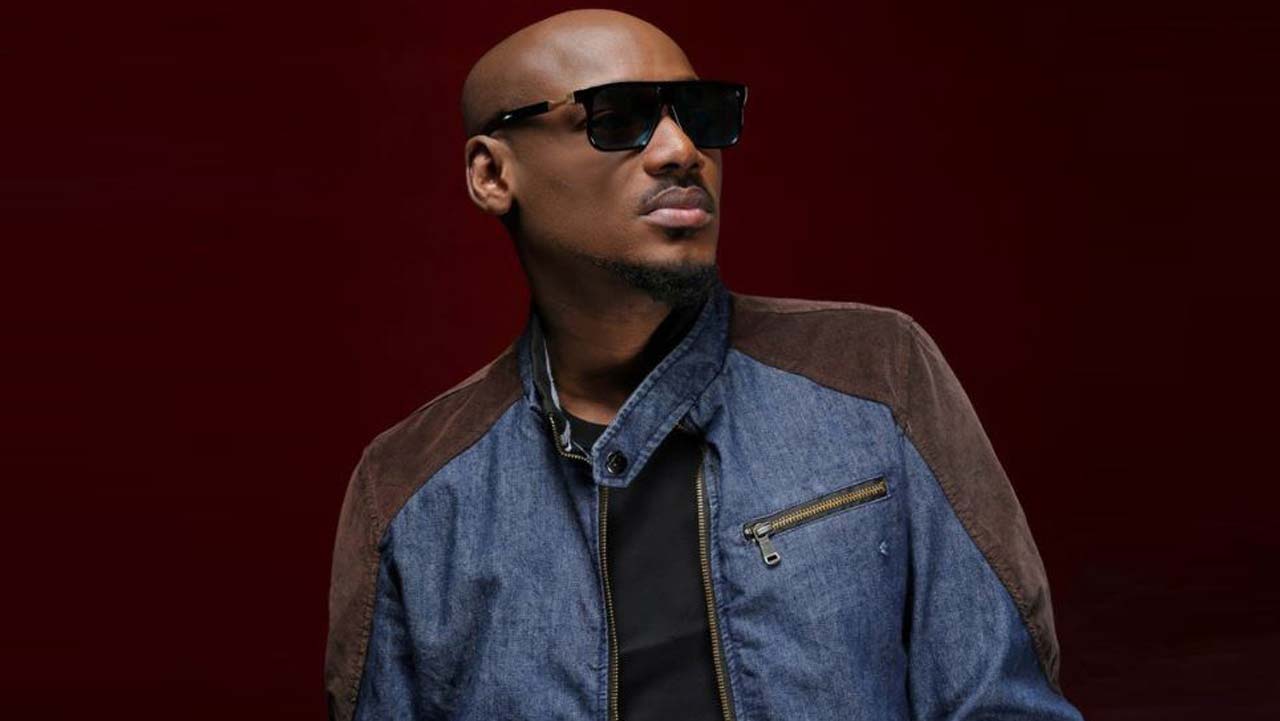
Towards the mid-‘00s, 2Baba—then known as 2Face Idibia—pivoted into a solo career. In the preceding years, he was one-third of Plantashun Boiz, the seminal group who debuted in the late ‘90s and opened the new millennium with two impactful albums, ‘Body & Soul’ (2000) and ‘Sold Out’ (2003). According to industry lore, 2Baba was key to the end of the group’s dominant run, after opting to sign a solo recording deal with powerhouse label at the time, Kennis Music. Justifying his decision, 2Baba continued from where he left off and instantly hit the ball rolling as a standalone act, becoming one of the continent’s biggest artists as the decade wore on.
Along the way, he hit a valley which eventually proved definitive within the overall picture of career. In 2008, 2Baba was in an unfamiliar situation: For the first time in his illustrious, decade-long career, the singer put out a solo album which wasn’t met with unanimous acclaim. Prior to this, every 2Baba album was far from just any other release; they were hotly anticipated events that lived up to their billing, both in terms of quality and instant impact. For an artist who arguably had four classic albums under his belt (Plantashun Boiz included), the lukewarm attitude to his third album was deafening and it was the first time 2Baba seemingly stumbled, which led many to doubt the godly heights he had made the standard today.
Just two years before, 2Baba had obliterated any idea of a sophomore slump, following up his classic debut album, ‘Face 2 Face’, with ‘Grass 2 Grace’, an equally classic album which is widely regarded as one of the greatest pop albums in contemporary Nigerian music. Given this back to back successes, his third act was expected to continue this immaculate run. However, the resulting album, ‘The Unstoppable’, was anything but business as usual, and a lot of the criticism stemmed from the belief that 2Baba had failed to meet the standards of his previous work.
While his first two solo albums worked within the same blueprint—both were released under the watchful eye of Kennis Music—‘The Unstoppable’ took a more experimental bent, pushing 2Baba’s r&b fascination to the forefront, a move that wasn’t satisfying to many. I vividly remember when a secondary school classmate was trying to convince the whole class that ‘The Unstoppable’ was an instant classic, but none of the rest of us were having it. At the time, the tradition was to keep a new favourite album on repeat so we could brag about knowing all the lyrics, but this was the first 2Baba album many of us didn’t leave in for prolonged periods in our Walkman and CD players at home.
Revisiting ‘The Unstoppable’ over the 12years since it came out, it has become easier to appreciate the album’s experimental flair, however, it does fairly lack the lived-in writing and bold, indelible hooks that has defined many of 2Baba’s best and biggest songs. But back then, it seemed more like 2Baba was in decline, and it didn’t help that there was a relatively new set of superstars – Wande Coal, M.I Abaga, Banky W etc. – who were already showing out and taking Nigeria’s contemporary music scene into a new realm.
Music fans can be very fickle. At the first signs an artist isn’t delivering according to their standards, they begin to question the efficacy of the artist’s powers and allegiances quickly begin to wane. This is what makes Andre 3000’s quote resonate with many artists, especially those who aim for mainstream success; they can go on a run that makes them invincible, but the perceived failure of their latest work chips into their rep, sometimes very significantly. Without a quick turnaround back to their “best”, the listening public will continue with their lukewarm attitude until the artist effectively descends from the pedestal of constant popularity.
Acutely aware of the stakes, 2Baba made a supreme return to form in subsequent years, proving that he was too big and too talented to be counted. First came “Implication”, the song that reclaimed his position as one of the finest at dishing out club bangers, then came “Only Me”, one of the greatest feats of honest introspection in Nigerian music. Armed with these two smash hits, the singer put out ‘The Unstoppable: International Edition’ in 2010, a front-to-end experience of 2Baba’s glorious and transcendental powers. A mixture of the best songs off his previous album – some of which were reworked and remixed – and great new additions like “Take it Back” and “Raindrops”, the new collection saw 2Baba find the balance between his need for experimentation and catering to a wide audience.
It would be a bit of a stretch to consider the period around ‘The Unstoppable: International Edition’ as a resurgence for 2Baba, and that’s mostly because he never really lost the Midas touch that made him a spectacular artist. But with the gift of hindsight, it was a comeback of sorts, which in addition to reinforcing his legacy as one of the greatest Nigerian artists, became a cornerstone of the singer’s longevity.
In Nigerian music, it’s commonplace for artists to fade into oblivion at the first signs that they’re struggling. It was especially rampant for artists who broke out in the late ‘90s and ‘00s to exit the scene after a few tepidly received offerings, or become a shadow of their best selves if they chose to remain around. 2Baba sidestepped those damning options brilliantly, cementing himself as Nigeria’s foremost perennial superstar, and becoming the conventional blueprint for longevity with his continued dominance in the first half of the last decade. In this period, he continued to release hits (“Ihe Neme”“Dance Floor”) even though subsequent albums didn’t reach the same level of critical acclaim as ‘The Unstoppable: International Edition’.
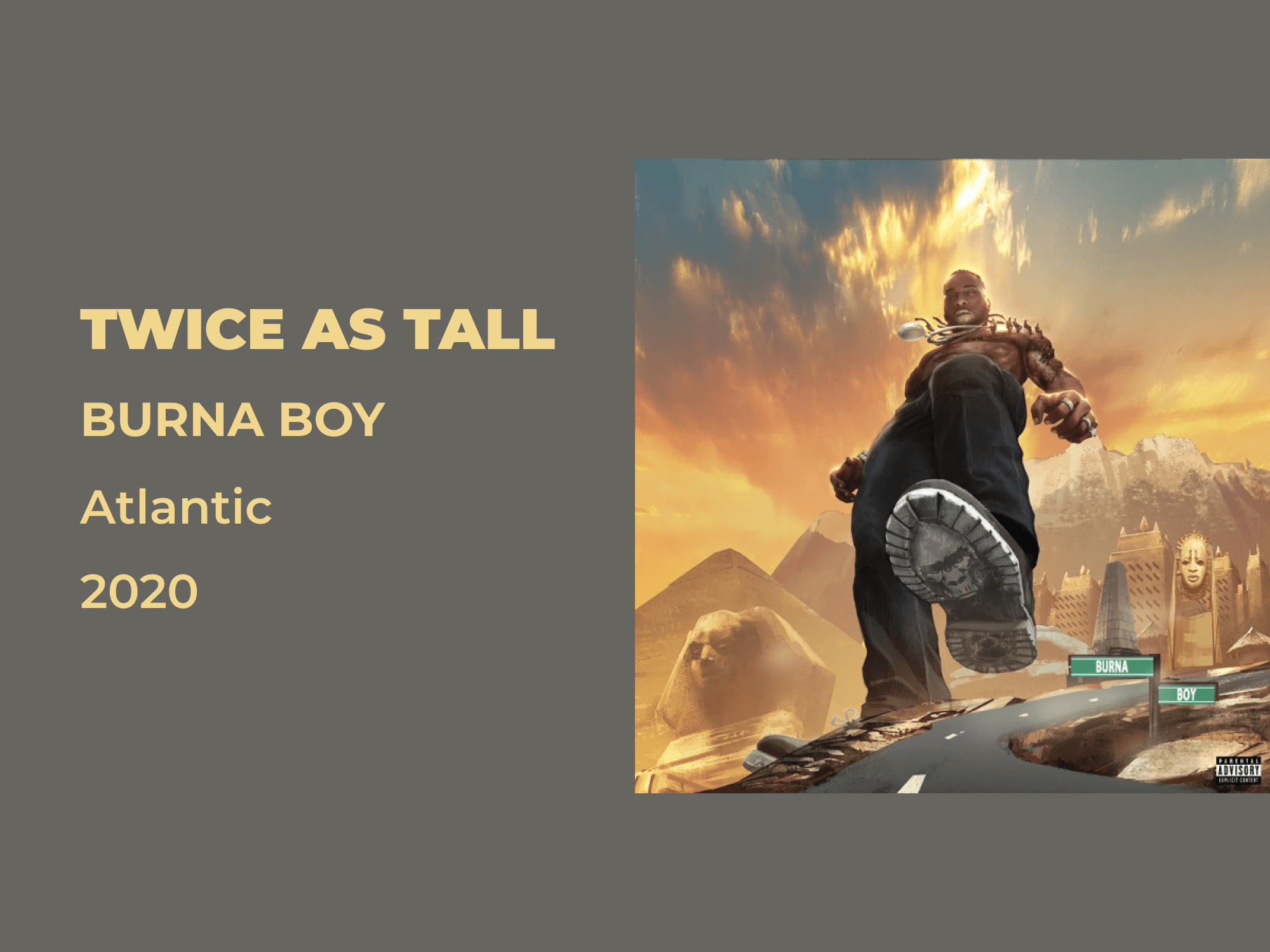
These days, albums such as Burna Boy’s ‘Outside’ and ‘Twice As Tall’ , Davido’s ‘A Good Time’ and Fireboy DML’s ‘Laughter, Tears & Goosebumps’ have helped full-length LPs regain a new level of meaning in gauging an artist’s star power, however, it’s still a well-known fact that scoring big hit singles is the ultimate key. Even though his prominence is now a given at every point in time, 2Baba understands the need to refresh his relevance, and he’s used the singles game to his advantage even with his output significantly slowing down in the last five years.
Earlier this year, 2Baba dropped ‘Warriors’, his first album in nearly six years, and in that time he had a few periodic releases, features and a handful of hit songs. Most notably, in the summer of 2018—four years removed from his previous studio album, ‘The Ascension’ – the singer delivered “Amaka”, an instant fan favourite which went on to become one of the biggest songs of that year. The song itself is a reminder 2Baba’s unvarnished ability to make great, easy listening music, but at the same time it doubled as a way of showcasing that the legendary singer can finagle a hit song at any point in time.
Hits are unpredictable, artists rarely ever know what is going to be a big song because they don’t know how an audience will react, however, there’s a level of experience that helps already proven artists to position their music to appeal to the wider audience. 2Baba hasn’t entirely hung this current arc of his career on making and putting out songs with the intention that they all become hits, but he clearly knows how to make them and it’s served him well so far, even when he isn’t at his most prolific or absolute best.
By the standards set from the singer’s previous albums and just generally speaking, ‘Warriors’ is quite the middling affair, but it has its fair share of enjoyable bits. Earlier this month, he shared the Wizkid-assisted “Opo” as the latest single off the album, adding a colourful set of visuals to Blaqjerzee’s thumping, club-ready beat and the raunchy subject matter aided by lively performances from the two artists. If it wasn’t for the ‘rona, there’s little doubt in my mind that “Opo” will be in rotation on DJ sets at clubs and parties, but there’s still a probability for it to be the latest addition to 2Baba’s record of having a hit song in circulation at nearly every point.
As much as his overall worth will never again be tied to whether he can score hits or not, 2Baba’s recent years have shown that he still has more to offer Nigerian music. He’s in that rare position where’s he’s not “only as funky as [his] next cut” like Andre 3000 said, but can also show up with widely enjoyable music when he wants without question. Over two decades in, he’s epitomising what it means to add to a legacy rather than solely resting on his many laurels. Well over a decade after springing back from a less than ideal position, 2Baba has remained relevant to an audience that’s figuring out how to pay attention to multiple generations of superstars at a time, and he’s setting the tone for what it means to be a long-serving artist in Nigerian music.
Featured Image Credits: Youtube/2Baba
[mc4wp_form id=”26074″]
Dennis is not an interesting person. Tweet Your Favourite Playboi Carti Songs at him @dennisadepeter
The past week has been one of heated controversy for Naira Marley and his Marlian Music imprint, as Lyta’s debut single under Marlian records earned a flood of backlash for the video’s alleged copyright infringements.
Unveiling their very first female signee, who is already being referred to as the First Lady of Marlian Music (deep eye roll), Naira Marley is redirecting the conversation to spotlight a brand new talent, Tori Keeche.
From our extensive search, “Yoga”, which features Naira Marley himself, is Keeche’s first ever single. Perhaps this explains why the track opens with so much hand-holding from the label boss. With NM opening the track with bold statements about his big d*ck, Tori Keeche spends the first minute and a half of “Yoga” repeating after Naira (from a females perspective), as the two alternate appearances in quick succession.
Post-chorus, however, both Naira and Tori are allowed to dwell on their verses a little more and this is where we get a real look at the fresh meat. On this song at least, Tori Keeche seems to be a singer inclined to the dancehall vibes, and the carnal desires. Though her debut might sound like a party anthem, listen closely and, in true dancehall fashion, the filthy number seems more fit for foreplay.
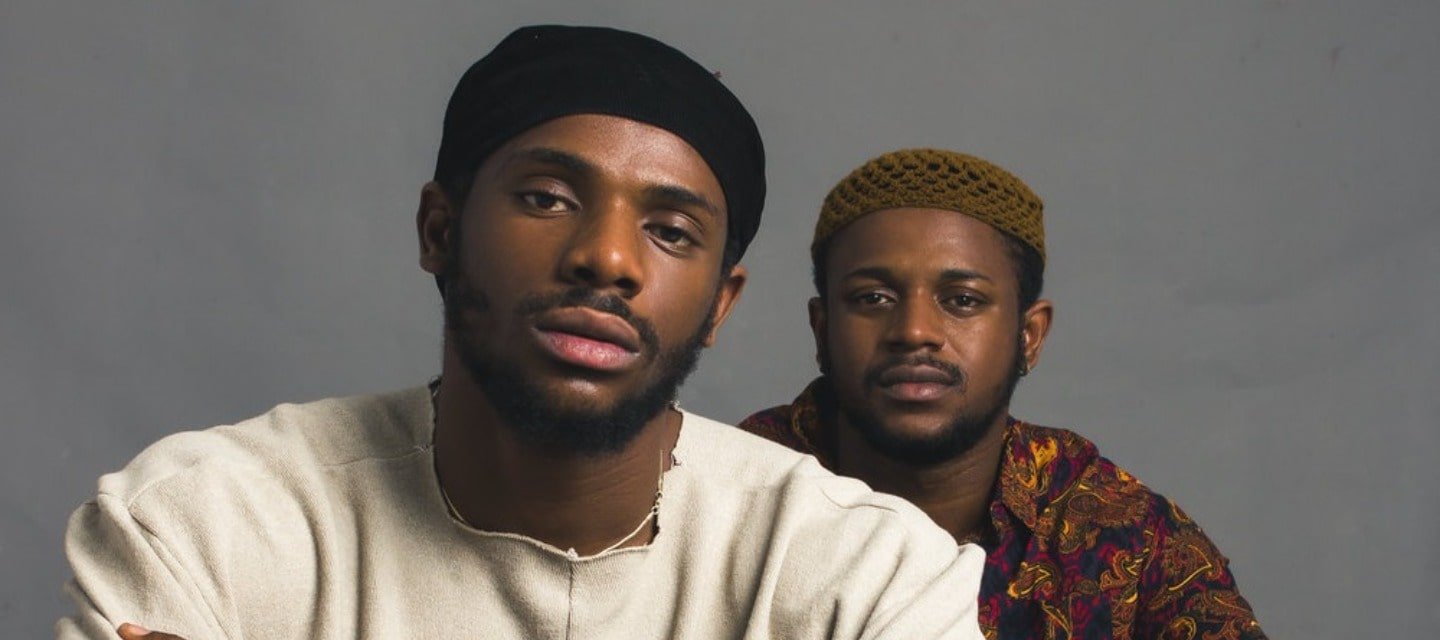
Right from their debut single, “Osondu”, the Cavemen’s immediate agenda was clear: they are here to build on the immortal blueprint of Highlife music, and play their part in extending the influential sound’s relevance in the most authentic way possible. In the past year and a bit, the sibling duo, comprising bassist Kingsley Okorie and drummer Benjamin James, have advanced their cause in meaningful ways, constantly raising the bar with subsequent singles, playing an integral role on Lady Donli’s critically acclaimed debut LP, ‘Enjoy Your Life’, and generally improving their profile as one of the most delightful bands around through their electrifying live performances.
All of this culminates into ‘ROOTS’, the Cavemen’s newly released debut album which they’ve been teasing since the beginning of this year, but working on over the past two years. Initially set for release on August 22nd, the pair have shared the album ahead of schedule, heeding the call of expectant fans and explaining that they also couldn’t wait another day for it to drop. In a weekend with a slew of new album releases from mainstream heavyweights, Fireboy DML, Cuppy and Adekunle Gold, the cavemen are hedging their bet on cutting through the stack with quality music that will be carried through word of mouth by fans and early listeners.
When we interviewed Kingsley and Benjamin for our recent Time Issue, they made it clear that they were making an album people can live with. “It’s long, haha, but you’ll sit with it because it’s great music,” Benjamin remarked about the hour-long album, a tricky proposition in the streaming era where more artists are prioritising brevity to deal with shortened attention spans.
Our “Welcome to the Cave” is a brief introduction to the sonic tour we’re about to embark on, a 2-minute announcing upon which The Cavemen reveal that “the cave is the heart of a man”. This opening track projects that the music, music that emanates from their heart, will change the world, starting small with Nigeria, bringing peace and unity to Africa and then the world.
From their living room, where this album was recorded, The Cavemen begin their journey to change the world by diversifying the Nigerian music landscape with a Highlife sound, that has been audibly omitted from contemporary music. Though we’d heard them perform alongside at Odunsi’s Lagos headline in December 2018 and a couple of weeks later at Lady Donli’s intimate performance at The Patio, it wasn’t until The Cavemen accompanied Lady Donli on her debut album, ‘Enjoy Your Life’ that we were fully clued in to their own musical tastes.
“I met [The Cavemen] first in 2018 at Tamerri festival in Abuja, and I was just in awe of their talent. I knew then that I wanted to be a part of their journey, so did what I could to in my capacity to just get them out there. From performing at my shows to linking them with all the musicians in my circles.” Lady Donli says of her discovery of the band and putting everyone on. Two years later and the two acts are two projects deep, as their executive production on Donli’s masterpiece has flipped into Lady Donli’s first A&R project on The Cavemen’s own debut: “Working on their album has been super fulfilling and I’m just so happy that it’s finally coming out. I feel like everything is coming full circle cause they worked with me on EYL and now I’m working on them with their debut.”
Deciding to “fill the vacuum for contemporary highlife”, The Cavemen share with NATIVE, ‘ROOTS’ is, as its name suggests, is produced in reverence to their Nigerian heritage and the music that coloured the country during its most turbulent times. The Cavemen’s service to their country is reflected even in the album’s artwork – courtesy of Atide Studios, a rising creative agency in operation between Lagos and LA – which non-coincidentally uses solely green hues: “The album art represents ‘community’” they reveal.
Beyond the lively album cover and The Cavemen’s traditional instrumentalism, the duo’s ‘ROOTS’ can also be heard through their lyrics, which are more often in their vernacular tongue, Igbo, than in English, an inaccessibility that actually elevates the album with its uniqueness and authenticity. Whether you understand the lyrics or not, songs like “Oge” or “Bolo Bolo” will certainly leave you feeling alright; and the times at which The Cavemen do adopt the common tongue, their breadth of experience is evident, with the enamoured description of falling fresh into love on “Fall” contrasting the pain expressed on the melancholic “Crazy Lover” that features a glimpse of femininity who drives home the sentiment of loss (“ey, you take my heart away”).
On first listen, the Cavemen seem to have achieved what they set out for. Comprising five pre-released singles and eleven new tracks, the 54 minutes-long set is packed with bewitching, colourful and easy listening grooves, resulting in an album that flows immaculately from front to back and favours repeat listens.
Don’t just take our word for it, listen to ‘ROOTS’ here.
Say what you will about DJ Cuppy, she has been working relentlessly over the past few years to get to this stage, and on first listen to her debut album, ‘Original Copy’, Cuppy’s hard work has paid off.
Initially making a name for herself as an afro-house DJ, Cuppy’s first venture into music-making, over six years into her DJing career, came as an instant hit. With the Tekno assist on “Green Light” DJ Cuppy’s musical debut was an inescapable bop that put the naysayers (of which there were many) to shame, however it didn’t manage to silence them. ‘Original Copy‘ should.
With a tracklist stacked with West African talent, some based at home and some over in the UK, DJ Cuppy’s debut album has been highly anticipated, for over a year now, by both fans and critics – the latter expecting more of Cuppy’s parody-like content, such as “Werk” and “Gelato”. The only hint of #that Cuppy is the witty title and eccentric video for the lead single “Jollof on the Jet”. Beyond that, ‘Original Copy‘ is a sturdy body of work, one that deserve all the attention its primed to get.
Beginning with a mission statement to rep roots, whilst creating globally appealing sounds using a concoction of music influences, on the jumpy “Epe”, DJ Cuppy starts the album with a strong afro-house groove that reminds us of where the worldly DJ started. Though we expected Efya to do a little more than vocalise, “Epe”, which emerges an intro, sets the bar incredibly high for the rest of the project. Here are my pick of the songs that live up to that bar:
“Feel Good” ft. Fireboy DML
Opening this funky record with his smooth domineering voice that rules over every beat he touches, Fireboy gifts us with the “JA RA E” of ‘Original Copy‘ – given all the room he needs to deliver a typically alluring sex-driven love song..
“Original Copy (Interlude)”
Coming after the Darkoo-assisted, “Cold Heart Killer”– which is a solid number, but gets a little annoying after a while – DJ Cuppy’s foray into rapping regains control of the project. Ending the minute saying “I told my daddy I don’t need him no more/Baby boy you can catch me on tour/I’m the man/I’m the man/Original Copy, yeah I swear that I’m the man“, DJ Cuppy refuses to let haters use her father’s wealth as a tool to undermine her skill – hard to argue with that here.
“Karma” ft. Stonebwoy
A commendable stand-alone record, “Karma” is given a whole new lease of life on the album, standing out as a pop tune that I definitely wouldn’t be mad hearing played and replayed over radios from London to Lagos to Accra and the whole damn world.
“P.O.Y” – ft. Ycee & Ms Banks
A highly anticipated record, Ycee’s opening verse sets “P.O.Y” up as one of the strongest tracks on this album, as expected, Ms Banks knocks it out of the park. Though we wish Ms Banks had been awarded a few more bars to talk her shit, Ycee and Cuppy’s duet on as they chant “Kamikaze, on a Cuppy level” on the reverberated hook, soon distracts us from that blatant robbery.
Now, don’t get me wrong, ‘Original Copy‘ is full of bangers. It was a pleasure hearing Teni again on the Pheelz-produced “Litty Lit”, and noticing Cuppy’s singing improvement on “Cold Heart Killer”, and grinning in cheesy delight at Julian Marley’s astoundingly corny opening line “no place brightens up my world like Mama Africa“, on the Motherland-dedicated “54”.
Back in 2019, DJ Cuppy had threatened to quit making music after her debut album, telling on City 105.1 FM “At this point, I am committed to music and I just want to have a body of work there and quit. I don’t have to be here for a long time.“. At the time, I can’t say many people would have raced to dissuade her, but after hearing ‘Original Copy‘, there’s no doubt that Cuppy should be doing this. If DJing at Cactus on the Roof or hosting a radio show at Apple music is what DJ Cuppy is called to do, then making music is too.
Listen to the full project below, or on your preferred streaming medium via this Platoon link.
Wojumi is a bad bitch & she’s going to brag about it. Tweet her your latest cultural exploits @dewoju
The arrival of Fireboy DML’s sophomore album, less than 18 months after he broke out with the music video for “Jealous”, is something of a remarkable rarity in Afropop, where singles have ruled the music market for decades on end. But if we know anything about Fireboy it’s that he does not conform to any standards, not ones set by society or ones dictated by the industry, even if they seem to be the easiest path to success.
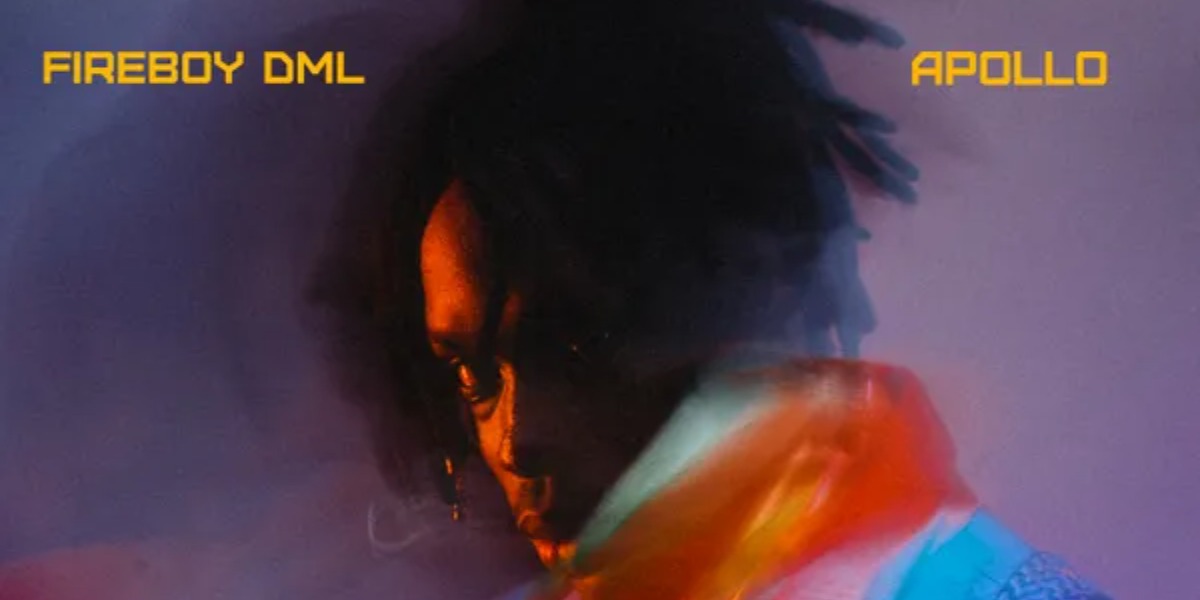
Nowhere is Fireboy’s self-ruling attitude more present than his latest body of work, ‘APOLLO‘. Dedicated to revealing more of himself, and his growth in the short time in which we have known him, ‘APOLLO‘ is a seventeen track course full of memorable moments, sonic highlights, lyrical keeps and emotive breaks, that keep listeners attentive throughout.
Lots stuck out to me upon hearing the album. From the very first lyric proclaiming his status as the Greatest, on the opening of “Champ”, Fireboy’s cocksure attitude shines forth, and on records like “Dreamer” and “Go Away”, his hopeless romanticism dwindles before our very ears. As ‘Laughter, Tears and Goosebumps‘ left us with a flood of emotions, including those three of course, ‘APOLLO‘ leaves its listeners with much to think about too. Here are my five takeaways whilst listening. (I’m in love with this project so feel free to Tweet me yours @dewoju)
1. Fireboy is blown
“I be king, I’m the best my generation ever seen“, Fireboy opens ‘APOLLO‘ (named after the god of music and poetry). Through the first verse of “Champ”, he sings about his rapid accession to fame, professing that he is a king, a legend in the making and most importantly a champion – so the choir chanting the word would have us believe. Returning to the subject of fame for the pompous “Lifestyle”, Fireboy introduces his preferred technique for handling the spotlight – ghosting.
“All the pressure and the wahala/I just wanna be alone/I don’t wanna see no message on my phone/nothing dey do me you should know/I just feel like I should do this on my own” he sings on his own dedication to the iPhone’s life-saving tool, “AirplaneMode”. On this moody number, Fireboy delves deeper into the pressures of fame; the overdose of carnal attention, competition from his peers and the unavoidable conflict that trails behind ever-increasing commas. Being blown is tough, ‘APOLLO‘ will tell you that. But Fireboy will also tell you that he’d have it no other way.
2. But he’s been through it
Though “Champ” is a boastful number towards its end Fireboy reflects on how far he’s come, singing of the start of his journey, “I’m the average boy from the average streets/with an empty pocket and a bag of dreams/many things wey him eyes don see/many tears wey him eyes don bleed“. Opening with bagpipes, the introspective “24 (Interlude)” is a rather gripping number that also reflects upon Fireboy’s life so far, in more detail, as he narrates his life, also chastising himself for the mistakes he has made in it so far, but ultimately concluding with the self-assuring lines “you go dey okay, you go dey alright“. Clearly, life has not been an easy road for Fireboy DML, but the trials haven’t simply ended with fame. Teaming up with his mentor – who would have no doubt imparted words of advice on how to deal with his newfound notoriety – “Afar” details the flip side of fame, the snakes, which Olamide biblically references as “Babylonian, Pharisees and narcissist”.
3. We’re left wanting more from the party songs
The first overtly dance-like song is the disco throwback, “Favourite Song”. Apart from the nostalgic feel and the commendable attempt however, “Favourite Song”, just isn’t that that. Fireboy’s lyrics are a bit more simple than we’d usually expect and the melody is a little too unimaginative it actually becomes corny. As Fireboy is a rather intentional artist, these elements to “Favourite Song” are likely deliberate, but for me, they just don’t work to produce the throwback pop song I’d sneak into my ’80s playlist. “Friday Feeling” is the same, not that it’s a disco song, just that it’s not it. Fireboy is pretty good at manipulating different musical fads, reimagining them into his own unique sound, but somehow, with “Favourite Song” and “Friday Feeling”, it seems the clichés get the better of him.
4. Pheelz.
Fireboy and Pheelz are truly a match made in heaven. Producing a total of nine songs, over half the project, Pheelz really brings the best of the best cuts for Fireboy, although Fireboy also has a very big hand in the production process, he says. I already mention the bagpipe intro on the interlude, and though “Favourite Song” and “Friday Feeling” weren’t my cup of tea, I must say that Pheelz did what he had to do on those numbers, especially the former record, for which he ditches all his usual production techniques for an authentically disco production.
Slowing things down for “Dreamer” and “God Only Knows”, Pheelz offers up more simple beats for Fireboy to kill. Incorporating a dreamy whistle over the chorus, “Dreamer” places emphasis on Fireboy’s favourite instrument, the acoustic guitar, whilst “God Only Knows” uses powerful drums to maintain its slow pace. Deep in his bag throughout this album, it comes as no surprise that Pheelz would produce Fireboy’s favourite song, delivering the perfect outro on “Remember Me”. Sneaking a flute into Fireboy’s final instructions to us to remember him, the breezy instrument plays us out with a descending skip, tying the album together in a touching end to the poignant final track.
5. Fireboy DML is a naughty boy
When the final promotional single, “Tattoo” dropped, we all began to wise up to the fact that Fireboy DML was a bit more lustful than his sparkly love songs on ‘LTG‘ would suggest. Singing, “Let me be beside you or maybe inside you” on “Tattoo” ‘APOLLO”s second track is an early warning of the sexy, libidinous Fireboy that is sure to be populating our TV and radio channels in no time. Other singles, “Eli” and “New York City Girl”include suggestive bars too, “She just needs some dutty love” and “I just wanna have a good time, maybe once maybe two times”, as well as the braggadocio “Lifestyle” upon which he offers to fly a girl out – to budget-debauchery’s capital city, Ibiza – after singing, “Many girls wey dey come find me, I no get time/But in the mean time, come give me something wey go ginger/give it to me while I lean back”.
Male singers are notorious for vocalising fictitious love songs that melt the hearts of their listeners, whilst, in their private lives, crushing every soul that crosses their path with a romantic unavailability that feels unimaginable considering their sweet incantations on their greatest hits. It is disappointing to hear that Fireboy was one of those dream-sellers, but it’s more a relief to know that he’s stopped lying.
Featured Image:
Wojumi is a bad bitch & she’s going to brag about it. Tweet her your latest cultural exploits @dewoju
In this new series, The NATIVE will be presenting one-listen reviews of some of the most-anticipated albums on the scene. As the review style suggests, all songs will receive instant reactions while being played – no skips, rewinds or pauses in between, just our honest, in-the-moment reactions to the newest projects in town.
On November 25, 2019, Fireboy DML pushed convention aside in remarkable fashion. Due to the high level of pressure for a worthy first album, relatively new artists tend to push their debut full-lengths back in favour of slightly less gilded bodies of work like EPs and mixtapes. Not Fireboy. For the most part of the year, the singer was enjoying a breakout run after shooting into wider popularity with the widely loved “Jealous”, however, he used the high stakes of a debut LP to cement himself into a bonafide star by year’s end.
Critically well-received and a commercial blockbuster, ‘Laughter, Tears & Goosebumps’ was Fireboy’s epoch-making moment; it’s an album folding singer-songwriter curiosities into Afropop cadences, and took on a life of its own after it graced the ears of the public. Since its release, ‘LTG’ has now been regarded by many as one of the marquee debut albums in recent memory, and indeed, Nigerian pop music.
Rather than bask in the glow of this achievement for a long minute, Fireboy DML is back with his sophomore album, ‘APOLLO’, just nine months later. It’s a bold move, considering the stakes attached to following a celebrated album – you don’t want to fall into the dreaded sophomore slump just seventeen months after your break out. For Fireboy, though, this is the album meant to seal his entrance into the hall of the greats; a chance for him to start properly building his mythos and legacy. He doesn’t just understand the occasion, he’s added to the expectations and firmly believes he’s up to the task – our ears will have to be the judge of that.
“Champ” (feat. D Smoke)
2000s R&B guitar chords will never die. “I be king” is a daring way to start an album. I like that NEPA bill line a bit. Oh, we’re getting the choirs right at the start. Fireboy is pulling no punches from the beginning, he even came with the D Smoke feature (we see that EMPIRE connection already working). I can hear the joy and invincibility in D Smoke’s raps but this flow isn’t doing it for me – not a bad verse, could’ve used him getting into his Spanish, that always works on me. Fireboy is the manifestation of the Nigerian dream – or at least a version of this. “Champ” is the song you use in an aspirational ad, I can see the pitch in my head already. Solid intro, Pheelz is 1 for 1 on this album.
“Spell” (feat. Wande Coal)
Well, that’s one way to get attention at the beginning of a song. The swing of this beat is kinda cute, word to Sarz. Getting right into the loverboy bag from song two, as expected. I like the high pitch falsetto, it sells the idea of being hypnotized by a woman. I can spot some incoherence to the writing but the melody and cadence is covering that up pretty nicely. Wande Coal! He sounds good. This is his bounce, now that I think about it, like if “Again” had a more urgent bounce. Shit! Wande hit the high pitch and sent my soul into orbit. Wande hit a couple octaves in just a few seconds. This is a good song, will definitely revisit.
“ELI”
Pheelz keeps a special pack for Fireboy – you can’t tell me nothing different. I really like the beat of this song, it’s one of the things that stood out when it was first released. I’m happy I heard this song before I watched the video. Streets said this song has a D-O DNA to it, I don’t really hear it. I like the grunge to Fireboy’s melody, but I don’t know if these lyrics are for me, I can see a lot of people getting into though. This is actually a nice transition from “Spell”, selling different sides of being hypnotized. This guitar solo is from guitar hero, if you ask me – it sounds really mesmerizing but I can’t hear the technical edge.
“Tattoo”
Another single, perhaps the best of the pre-released bunch. “Make I be like tattoo for your body” is a funny way of expressing affection, they are almost always mistakes – ask the numerous people who have tattooed exes on their bodies. This song is quite steamier than anything Fireboy has done, it gives him some edge and I really like this edge. That Usain Bolt line needs to be stoned, I’m tired of trite references to the speed god. ‘Bamboo, cassava and other things singers have called their penis: A study’. LOL. Type-A brought that heat, these guitars are mint. “Tattoo” is my favourite so far. [He says only four songs in]
“Favourite Song”
Oh yeah! We’re going to the ‘80s! Meh, that opening is a little too literal for a party song. Eish, I want to beat these lyrics with a bat. This beat is extremely shiny, it definitely personifies the excess that ruled the ‘80s and got a certain current president bankrupt. Those horns are phenomenal. What is that tribal chant? Fucking hell, Fireboy needs to add some edge to his performance, he’s not the reason I’ll come back to this song to be honest. Fam, the Weeknd, Dua Lipa and Jessie Ware are somewhere shaking their heads right now. This breakdown is a mess, not even appropriate. Yikes.
“New York City Girl”
The first single. Many people didn’t like it, and I can see why. Of all of Fireboy’s love songs, this one sounds a bit uninspired. I understand wanting to spend more time with someone from out of town, but I can neither hear the urgency in a line like “run away with me”, nor can I hear any lasting memories being made in asking for one more dance. “NYC Girl” is not a remotely bad song, but it’s emblematic of how unbearable Fireboy can get when he’s too deep into his treacly, loverboy bag.
“Lifestyle”
This beat is jamming, this squealing guitar riff is a nice touch. That’s how you enter into a brag record. I caught that “Jealous” reference, this is good. My upper body is moving in agreement with this. Eish, that horn was too smooth to make an appearance. “I no dey online for two weeks/them say I dey ghost on them/na their own problem”. The rhyme scheme on this second verse is tough, this is a good run. Fireboy sounds really good bragging – he’s not exactly dunking on his opposition violently, but it’s a good breakaway run. I wish this hook was much catchier, though. Definitely running this back.
“Airplane Mode”
I don’t know if anyone can make a better song titled “Airplane Mode” than Odunsi, but I’ll like to see Fireboy try. This is quite honest. “So many legends dey, I’m just trying to be another one” is a bar. Pressure and success go hand in hand, the late, great Christopher Wallace said it best: “Mo’ money, mo’ problems”. This chorus is very relatable, if only a little too literal. “If no be love, na money palava.” Preach, bro! Eish, that beef line needs to go. Having to explain you want to do things on your own is annoying, I can see a lot of people connecting to this. Good song, I’ll come back.
“24 (Interlude)”
Bring interludes back 2020! The bagpipes took me out a bit. Success has toughened Fireboy a bit, I love it. “You are such a fool, how you go do this all for love?” I am laughing out loud. This has some honesty, but it’s also really funny.
“Dreamer”
I know these guitar chords from somewhere, fuck. Fireboy being jilted is top 2, that’s how he scored “Jealous”. Anyways. What kind of rhetorical question is this? Boy, pack your shit and move on. You know who’s going to like this song? Laycon. The production is a cacophony of “indie” clichés, the guitar, the strings and the drums with unorthodox bounce. Man, this song is so dramatic and I don’t even know how to feel. A sleazy electric guitar just landed in the mix and I know for a fact I won’t be playing this except I’m running this album back.
“Afar” (feat. Olamide)
Finally, we get to hear the mentor-protégé collaboration. Those chants are beautiful, the drums came in really good. Fireboy’s success has made him paranoid, damn. “Make them dey love me from afar” is relatable no matter how you scale it, everyone has people they want to keep away from. Olamide’s flow is very calm, it’s adding a poignant touch to his lyrics. These raps are cool and clear-eyed, nothing too crazy but they get the job done. This a solid chorus, it will likely stay in your head. “Afar” is the definition of an album deep cut, will revisit.
“Go Away”
Six more songs, yikes. ‘APOLLO’ has been moving briskly so far, but I can say there should have been cuts. Fireboy was pouring his heart out over piano before these grungy drums came in. Falling for someone who doesn’t feel the same is a shitty feeling, and Fireboy is doing well in capturing it here. Yikes, this second verse is filled with stock lines, thankfully we’re back to the chorus. Fireboy loves his chants, I’m not mad at them. This album has a few misplaced use of horns, which is odd because you really can’t fuck up horn placements, or so I thought.
“Shadé”
I already like this vibe even though I can tell it’s another “cute” love song from a mile away. Fireboy loves his acoustic guitar riffs, it suits his flair for R&B-inflected melodies. I like the juxtaposition between the production and the carnality in Fireboy’s lyrics, it’s complementary enough to work. This is the song you make after you’ve been awestruck by many beautiful women in the club, which I’m sure has happened to Fireboy a few times. This song has the potential to become a TikTok hit, just take the hook and make a waist whining challenge. It’s cliché but it’ll probably happen.
“Friday Feeling”
Hold the fuck up! Is Pheelz sampling “Lagos Beat”? I hope my man is getting paid from this. This is the obvious club song, the spiritual successor to “Scatter”. This song is giving me Boboledu house vibes, like something Master KG could’ve made. Fireboy is not a great writer of party songs, but his vocal performance here is much more compelling than on “Favourite Song”. I’ll like to see how this does when clubs open up.
“God Only Knows”
P Priime tag always gets me hype, that guy has a blinding future. This has some orchestral magic to it, I like it. Like a wise man once said, I’m so sick of love songs – especially when they have this edgeless attitude to them. Tribal chants are played out, you guys. “If you give me one more chance, I promise I no go fall your hand.” I rolled my eyes so hard I probably saw the back of my head. I do have to say, Fireboy is singing his precious heart out and I can’t really fault that. An album with ten of these and Fireboy wins a Grammy for Best World album, quote me LOL.
“Sound”
Anything beyond 15 songs is overkill for me, except it’s Amapiano. This sounds quite big, I like big sounds when they are well done. “I’m not just a singer wey give you the ginger, I give you the vibe.” Is that a mission statement? If it is, then it’s not exactly original. Anyways, I like this song, it’s confident and confident Fireboy is him at his most compelling, if you ask me. Nothing about saying the sound is taking you far away is novel, but the execution is quality stuff. THIS IS HOW YOU USE HORNS! Pheelz laced this one properly, great bounce and bright colours to the beat. This is a definite keeper.
“Remember Me”
Final song. I’m not fatigued, but I’m happy we’re here because it’s been a good ride. The transitions on the back third of this album has been a bit clumsy, compared to the top half. I think it’s safe to say Fireboy has climbed to the top of the mountain, but remaining there and building a towering legacy is the harder part. Malcolm X said every man has a legacy whether they like it or not, and that changed the way I look at people who don’t want to be forgotten. I used to think it was overly egotistic, but I see why artists want their names carved in the hearts of listeners and stamped in the sands of time. “Remember Me” is a great outro, it’s very sentimental but in a positive way. Might not be the biggest song off the album, but it’s going to stay with whoever the message is meant for.
Final thoughts
In the months since his star-making debut album, Fireboy has amassed a wealth of experience that has played a role in helping him to become an artist with an increasingly complex persona. On ‘APOLLO’, Fireboy is not just the love-struck troubadour with party scattering bits on ‘LTG’. He’s now showing more dimensions to himself, expressing fears, worries and a burning desire to leave a lasting legacy.
As a relatively fresh-faced act, he addressed doubters on his debut with great hopes that he would manifest his potential – and he did. On a significant portion of his sophomore, he sings with the confidence of someone who’s proven himself, and those songs turn out to be the most compelling moments of ‘APOLLO’. The album is also rewarding for its slightly darker turn, with Fireboy exploring weightier themes like isolation, paranoia and just how much fame has impacted him.
At seventeen songs, the album definitely has its fair share of filler material, mostly coming in the form of standard fare love songs. At that, Fireboy’s innate ability to create interesting narratives and conjure melodies that oscillate between breezy and intense keeps things from being sleepy. He’s also assisted by maximalist production from Pheelz, Type A, iamBeatz and P.Priime. The beats aren’t ground-breaking, but they’re diverse and consistently crafted to serve as the perfect foil for Fireboy’s sensibilities.
What ultimately defines this album is that Fireboy is far from satisfied with just becoming a star; he’s determined to become like, or even greater than, the legends he looked up to, as he expressly states on “Airplane Mode”. It’s a lofty target, but he’s proven his commitment to growing upwards with ‘APOLLO’, overcoming the sophomore slump with relative ease and adding a consequential layer to the grand mosaic of his career.
Last Friday, Lyta put out his first official single of the year, “Hold Me Down”, along with a colourful set of visuals to accompany the song. Coming just a few days after the official announcement of his record contract signing with Naira Marley’s Marlian music, the release was only supposed to signal a new lease of life for Lyta – especially after a controversial exit from YBNL last year which led to him subsequently realigning himself as a veritable hot prospect in Nigerian music with well-received singles “Monalisa” and “Worry”, and a nomination for Next Rated at the last Headies.
Rather than the overwhelmingly positive reception Lyta would have been hoping for, “Hold Me Down” began to drown in a sea of backlash, after negative comments trailed the music video for being an alleged direct copy of “Just Right” by South Korean boy band, GOT7. The blatant similarities between the two videos were pointed out by fans of GOT7, and in typical K-Pop fandom fashion, they have been relentless in pointing accusing fingers at Lyta and the video director, WG Films.
At the moment, comments under the “Hold Me Down” video have been turned off, but if you were quick enough to catch them while they were up, the section was populated with GOT7 fans panning Lyta’s “copycat” video and urging other viewers to go see the “original”. Additionally, the ratio between likes and dislikes was grossly uneven, before those metrics were also rendered invisible, with thumb down hits far outnumbering those who hit the thumbs up. On Twitter too, relentless K-Pop fans have adopted #ApologizeLyta as the official hashtag, popping up under every tweet related to Lyta and his video, while also spamming GOT7’s record label, JYP Entertaintment, in a bid to get them to take legal action against alleged plagiarism, on behalf of their client.
Despite the backlash, however, Lyta and his team have treated these allegations with a levity that is now expected of Nigerian artists accused of unashamed imitation. A quick scroll through Lyta’s Twitter page shows the singer in full aloof mode, as he’s gone about promoting the new single, even though every tweet and retweet from him is being met by comments from GOT7 fans attempting to shame him and demanding he addresses the accusations. On Sunday afternoon, Naira Marley put out a tweet saying he’d spoken to Lyta’s mum and “she prayed for everybody in Asia”, since her son had now gained popularity on the continent, jokingly undermining their very legitimate anger.
In the closest thing to an admission of culpability, the director WG Films claimed he loved the video for GOT7’s “Just Right” so much, he decided to recreate it for Lyta’s “Hold Me Down”—but even the tweet proving admittance has now been deleted. The description on the YouTube page for “Hold Me Down” has also been changed to expressly state that the video is inspired by GOT7 and fellow K-Pop powerhouse, BTS. In doing this, the aim is to clearly stem all the negative reactions, even though the attribution is obviously after the fact.
I spoke to lyta’s mum, I told her that her son is now very famous in Asia, she said thank God and she prayed for everybody in asia. #HoldMeDown
Normally, all of this should be shocking, but for anyone who has been paying attention to music video plagiarism issues in Nigerian music, it really isn’t. In fact, we’ve developed a worrisome pattern of blatantly ripping off other sources, that dates back quite a bit. In 2013, respected veteran director Clarence Peters came under fire for allegedly replicating the central parts of American hip-hop super-group, Slaughterhouse’s “My Life” for the music video of Ice Prince Zamani’s “V.I.P”, and he returned to the headlines for the same reason in 2016, this time taking unfettered cues from Justin Bieber’s “Sorry” for Flavour’s “Dance”.
In all fairness, Clarence Peters has built an enviable resume since arriving on the Nigerian music scene since the mid-00s –he’s arguably the most celebrated music video director in recent times. Nevertheless, there’s still a relatively obvious credibility to both these examples when you place the contrasting videos side-by-side, and it begs the question of how many more instances we may have missed, especially if the “reference” clip isn’t a widely popular charting number. The internet has played a massive role in ensuring the world is becoming an increasingly connected, globalised village, and seeing as Nigeria has been playing catch up, it’s not far-fetched that many of these types of alleged discretions from the (somewhat recent) past may have flown under the radar with relative ease.
With the slow rise of internet penetration in the country and the increased global attention to Nigerian music, obvious biting can be caught much quicker these days – there are a few too many recent examples to that effect. Shortly after its release in April, TG Omori’s work in the video for Terry G’s “Adura” was under scrutiny for bearing identical similarities to the video for Swedish singer-songwriter, Neneh Cherry’s “Kong”. Shortly after it was brought to her attention, Jenn Nkiru, the British-Nigerian director behind the August 2018 released “Kong” video, called TG Omori out for biting her work without trying to put his own creative spin on it. TG Omori has yet to publicly respond to this accusation.
About a month before that incident, Davido’s video for “1 Milli” was in the news for similar reasons, with allegations that a scene had been directly lifted from the 2018 short film, “Entitled”, by British-Nigerian filmmaker Adeyemi Michael. A few days after the seeming connection was made, the director for “1 Milli”, Dir. K stated on his Instagram story that he was showing respect and paying homage to Adeyemi Michael’s work. For some, Dir. K’s statement coming after his use of another artist’s work was spotted seemed dubious, since Adeyemi wasn’t outrightly credited nor did it seem like his permission was sought before the video was released. Adeyemi Michael has yet to make a public statement concerning the recreation of his work, and that might just be because an agreement may have been reached (considering Davido’s established knack for properly crediting anyone involved in working on his music).
if you’re going to bite my work at least execute it + push the vision + culture forward by adding to the cannon + not stealing from it.
Inferences aside, these scenarios come back to a familiar yet murky question surrounding the rights of the creative being blatantly ripped off, and that’s the line between homage and thievery. The line between homage and thievery is hinged upon receiving permission and execution. In order to for a music video to be regarded an homage, the director needs to seek out their source, inform them of their intentions in advance and credit them publicly. Upon doing that, the director should interpolate their inspiration in a way that also takes cognisance of their own creative licence – basically, don’t do copy and paste.
Unimaginative copying seemed to be Jenn Nkiru’s main gripe with TG Omori, in her scathing tweet where she stated that TG Omori’s version of the allegedly cribbed scene “is trite af.” The truth is, no idea is entirely original and creativity is basically a form of regurgitating inspirations into something distinct. It is totally fine for directors and artists to take cues from pre-existing videos, but it’s embarrassing when the result is an exact replica of the inspiration, and even worse, when the person(s) being taken from has no prior knowledge.
Unlike in music, where the artist being plagiarised has a high, nearly clear cut, chance to take legal action and win (there’s even a name for it: sampling), music videos are far less certain, since the exact rights of the director aren’t as defined. The first issue stems from the fact that many reports about ripped off videos tend to refer to them as plagiarism cases, when in fact, they are copyright cases. The main difference between the two is, plagiarism provides cover for wrongful claims of authorship while copyright is solely focused on rights to creativity; the former is based on ethical grounds that’s pretty much rigid, whilst the other is focused on legalities which are ambiguous by definition. Plagiarism prevents people from passing off borrowed work as their own and copyrights protects against creative work being infringed upon without the owner’s permission, and the latter usually comes at a cost.
For example, when an artist is sampled, they are entitled to an agreed percentage of whatever music they inspired. The distinct qualities of the audio composition makes it easy for a copyright to be applied, such that any further use is largely subject to the discretion of the owner(s). For videos, however, copyrights are far trickier because of the unlimited number of combinations that are possible even when a frame-by-frame interpolation is being made. This difference is why a musical sample that’s been sped up or chopped beyond initial recognition needs to be cleared, but a blatant visual copy can escape legal retribution provided it isn’t claiming outright ownership of the idea from the jump.
In the case of Lyta’s “Hold Me Down”, it doesn’t take detective skills to see that the first half of the video is pretty much a photocopy of GOT7’s “Just Right” – but “pretty much” doesn’t equal exact. Despite following the same sequence, there’s differences in the colour, such that it can be argued that Lyta’s video is simply a harmless recreation. While doing research for this story, I found out that parodies are covered under the fair use side of YouTube’s copyright policies, meaning that Lyta and his team can even argue that “Hold Me Down” is a parody of “Just Right”, especially after they’ve now claimed they were paying homage.
Up till now, JYP Entertainment have yet to address this situation or hint at a legal suit, possibly owing to the complexities involved. If it was some form of musical theft, the case would have been shut alreadt, however, this is entirely different, partly because YouTube has its own difficulties monitoring and regulating against plagiarism and copyright problems when it comes to videos. Another hindrance could be that there’s a physical boundary between all the involved parties, with no international copyright laws to serve as arbitrator between them.
Every country and region has copyright laws and codes which are specific to them, and although both videos in this case are primarily hosted on the same virtual platform, where they were created needs to be taken account of. JYP cannot effectively sue Lyta and WG Films in their home domain of South Korea, neither can they do so in the U.S (where YouTube is based), and they very likely won’t come to Nigeria solely for litigation purposes. There’s every chance that they will file a complaint with YouTube – if they haven’t already – but it’s going to be really difficult for the streaming giant to see a motive to take down the “Hold Me Down” when its platform is choc-a-block with similar cases of theft.
As much as technical loopholes might help alleged culprits like Lyta get away with blatant acts like these, we desperately need to curb the acceptance of unimaginative copying in Nigeria, and hold ourselves to a higher standard. At this time, “Hold Me Down” has crossed the million views threshold on YouTube, no doubt an effect of the controversy that came with it. Yet, within the wave of negative reactions, Lyta, Naira Marley and several fans have been relishing the increased popularity the video has generated. In the Nigerian entertainment space, we’ve come to accept the idea that all publicity is good publicity, when in plenty of cases, bad publicity takes its toll on the perception of an artist and takes some time to overturn – just ask Skiibii.
Lyta and his team might be riding high on the buzz he’s generated, but embracing such infamy at a point where he’s still proving himself ultimately says a lot about the relatively non-existent standards when it comes to brazen creative theft. With the examples listed above and all the other ones that have receded from memory, the mind-set that you can’t shame the shameless is what many have seemingly adopted. If the fact that creative theft is simply theft doesn’t appeal to our sense of moral duty, maybe we can see the damage within the framework of how Nigerian music will be perceived on the global stage if we’re not clamping down on it at home.
Of the vitriol-laced replies to the above-mentioned Naira Marley tweet, one that struck me the most said: “Is this the future of Nigerian music? Singers with no integrity or originality.” While we’ve been able to contain the cases of Nigerians allegedly taking from creatives within our community, unlicensed and bland copying from K-Pop giants and other similarly veiled acts will bring in international coverage that will cast a dark cloud of mistrust as these types of reports accumulate. For the sake of our growing creative industry, this is the time to stop coddling, enabling or tolerating plagiarism and copyright infringements in our music videos. Lest we welcome the coronation of a new ‘Nigerian Prince’.
Featured Image Credits: YouTube/Breakfast Club
[mc4wp_form id=”26074″]
Dennis is not an interesting person. Tweet Your Favourite Playboi Carti Songs at him @dennisadepeter
With Fireboy DML’s debut album, ‘Laughter Tears and Goosebumps’, it became abundantly clear that he’s here to stay. With incredible vocal range and a dexterous pen, we were presented with a modern classic to which he’s followed up today with his sophomore album, ‘Apollo’.
In addition to the pre-relased “New York City Girl”, “ELI” and “Tattoo“, we have 14 new songs where Fireboy shows off his ability. Upon first listen, ‘Apollo’ is another album you can listen to with no skips. Fireboy is self-assured on brag-filled tracks like the intro track, “Champ”, “Lifestyle” and the Olamide-assisted “Afar”, whilst maintaining his lover boy stance on others such as “Shadé”, “Dreamer” and “Tattoo”. He’s also given us party-ready tracks; “Friday Feeling” and the Wande Coal-assisted “Spell”, however, it’s on the disco-inspired “Favourite Song” and the pensive “Airplane Mode” he gives his best.
Earlier on in the year when we spoke to the rising star, he told us that this project is going to be what seals his position in the game and it’s fair to say it has.
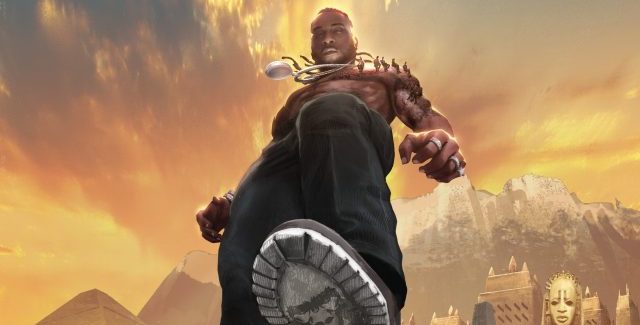
‘Twice As Tall’, the third major label release from Burna Boy, is the triumphant third act in what has been an unrelenting, unforgiving, and unapologetic three-year crusade to the top of the African Music mountain, and, if this record is anything to go by, far, far beyond.
As the cheerful, Disney-like “Twice As Tall” by Bernard Hermann plays, taken from 1950s classic Journey To The Centre of Earth, it welcomes us to the latest project from Burna Boy, his third in as many years, following the signing of a joint venture deal with Atlantic Records. It is a welcome reminder that the arrival of ‘Twice As Tall’, the album, is the final destination of a near 1000-day voyage by Burna Boy and his critically-acclaimed team, around the world and back. But one can’t help but think the immediate journey to this particular LP started on that fateful day in Los Angeles, California. With the city still mourning the tragic death of Kobe Bryant – an event which still feels surreal to type – in true Hollywood fashion, the show went on in The Staples Centre, the arena Bryant himself entertained and won in, for twenty years.
The 62nd Grammy Awards kicked off at 7PM local time, but for most of us in town for the festivities, it was over before the television coverage even started. The infamously catch-all “World” Album Award is one of many awards handed out before the stream begins on national television, and from my hotel room, still shocked and paralysed by the news that morning, we learnt that Burna Boy’s triumphant ‘African Giant‘ – the album that was the soundtrack to the previous summer and the months to follow – lost out to multiple Grammy winner, Angelique Kidjo. In her acceptance speech, Ms. Kidjo tipped her hat to the Nigerian artist, going as far as to say the award was “for him”, but of course that didn’t change its final resting place in her own home. It was an anti-climatic end to a weekend, and in truth a whole year, which seemed to be building to that very moment. Seeing Burna in LA during Grammy weekend was everything you see in the movies before the big crowning ceremony – the adoration from party to after party, the packed industry audiences at every exclusive Grammy Weekend event, locked in to see the African Giant they’d heard all about, for themselves. Everything seemed to be building up to validation on Sunday evening, but that didn’t come.
And here we find ourselves. Over a year since the last album, and nearly seven months since that dark day in California, the world has changed drastically in that time. Even before pressing play on Burna Boy’s latest offering, given all that has come before it, it would be disingenuous not to point out the gramophone-shaped elephant in the corner of the room. And to his credit, it’s one that Burna addresses quickly and honestly on “Level Up”, the album’s brooding opening track: “I remember when I couldn’t level up/Cause the Grammys had me feeling sick as fuck, throwing up and shit/Asking questions like, ‘why it wasn’t us?’, almost had a nigga feeling envious/Tell em, say them can’t bury us/Cause the love make me stand up every time when me fall/Come back standing twice as tall.” Defiant, reflective intros are somewhat of a Burna Boy album tradition; the grandiose ‘African Giant‘ title track, ‘Outside‘’s moody “More Life”, ‘Redemption‘’s uplifting “Pree Me”, and the cinematic “Intro” on his debut album ‘L.I.F.E‘, Burna clearly singles out these moments to really talk his talk, showing off his lyrical chops whilst setting the tone for what more is to come.
At it’s best, ‘Twice As Tall‘ is a victory lap for the back-to-back MVP. Urgent, frenetic tracks like “Alarm Clock” and “Wetin Dey Sup” sound like the futuristic brothers of the young(er) Burna displayed on “Run My Race”, the classic street record off his debut album – more polished, more laser-focused, but not missing an ounce of the energy we first heard back in 2013. Coincidentally, “Alarm Clock” and “Wetin Dey Sup” are two records which have assigned production credits to the surprise guest of The African Giant’s album: Sean “Diddy” Combs. The Hip-Hop polymath was said to have been drafted into proceedings as an executive producer “80%” into the completion of the album. His addition has been a relatively significant point of contention for many listeners – Nigerians are notoriously protective of Western influences on our music.
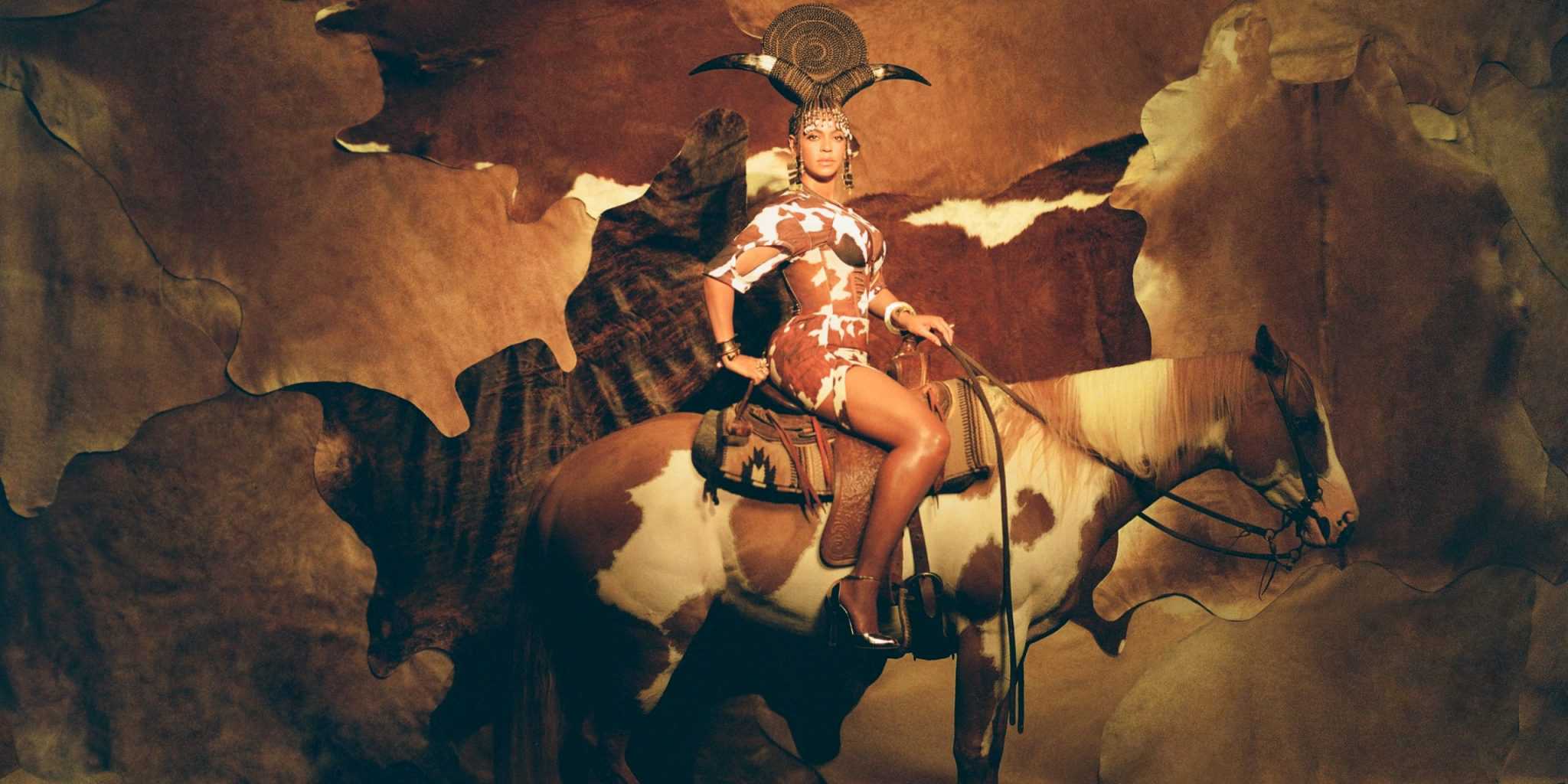
Since Burna’s ‘Outside’ release, music from the continent has come on leaps and bounds as a whole – be it Burna’s own unique brand of Afro-fusion, Rema’s infectious strain of Afropop, Kabza De Small’s arresting Amapiano rhythms, or Santi’s refreshing take on Hip-Hop (as well as the numerous other genres and sub-genres that exist) – the rules are being written and rewritten. In 2016, When Drake and Skepta hopped on Wizkid’s “Ojuelegba”, it felt like a win, for Nigeria at least. But in 2019, When Beyoncé dedicated a whole album to the continent, with numerous African artists and producers featured across a body of work inspired by Disney classic The Lion King, it felt not just deserved, but to an extent not enough, and maybe even not needed. This has less to do with The Queen B, and more to do with just how far music from the continent has gone. It no longer needs an “introduction” to the international audience – at this point, you either get it or you don’t. It is not to say artists are no longer interested in crossing over internationally – this is the goal for many – but they are now more willing to do it on their terms, on our terms. The days of excessive sonic pandering are truncating with each New Music Friday, and Burna Boy, through his trifecta of major label releases, has been a significant factor in this.
That being said, although it’s easy to decline to look further and beyond Diddy’s infamous dramatic narrations during track transitions on ‘Twice As Tall‘, delve a bit deeper and you see his subtle but full-bodied touches throughout the project. Be it pulling in the unicorn Anderson .Paak to supplement the combative live drums on the aforementioned P2J-produced standout, “Alarm Clock”, or orchestrating a poetic meeting of the two ends of Burna’s near decade long career, as Leriq, his long-time go-to producer, collaborates with Hip-Hop legends Mike Dean and Timbaland, to deliver the weighty offering on early fan favourite, “Way Too Big”. And you simply can’t miss the ’90s Golden Era touches Combs made his name with, as they reverberate on “Naughty By Nature” – featuring the legendary Hip-Hop duo that Burna sampled on his previous project, showing just how far you can level up in a little over a year. On the record, young Spaceship Collective producer Telz shares credits with Diddy himself and Mario Winans. Whilst some may point to marketing as the reason for the drafting in of the man that built Bad Boy Records (and they just may be right), you can’t help but feel that, for the young Nigerian producers on the album, it must have been an irreplaceable experience. Telz, who engineered the album and has lead production credits on five songs, describes the feeling of now making music with people he looked up to in secondary school as “crazy.” He says, “Just In October, I was selling beats for ₦20k, and now I’m changing the mindset of other young producers. Nigerians producers just need exposure, there’s talent here.” Speaking to Apple Music’s Tobi Oke, Burna seems especially honoured to be able to provide these opportunities himself: “[the] part of the album I’m proud of is having top producers from the UK and Nigeria here alongside guys like Mike Dean, to co-produce, to add that extra to it. It’s giving that best of both worlds and trying to bridge the gap between them.” As Burna has grown from a young flame himself to a leader in his own right, the responsibilities go further than just making good music, and he seems to be well aware of what comes with that.
Despite the guidance by Diddy, and the production offered by the likes of Leriq, Jae5 and P2J, the glue of the album, and the real star of the show that isn’t mentioned nearly enough is Burna’s phenomenal and versatile vocal performances throughout. Artists like Adele, Asa and John Legend are renowned by fans and critics alike for their generational voices, however, this praise sometimes seems reserved for vocalists in particular genres and music styles. Notorious B.I.G’s music would not be what it is without his deep, bellowing voice emanating the flows he became known for. Lil Wayne’s hits like “Lollipop” and “A Millie” similarly wouldn’t be what they were without his growling southern drawl. In the same vein, Burna’s vocal inflections throughout his career, but particularly on this album, truly brings his entire soundscape together. On “Level Up”, he uses a clear, rap-like delivery – with his vocal pitch almost identical to his speaking voice – to adequately present his opening memo to the people, addressing his last couple of years in the game, and all its high and lows. Vocally, It’s eerily similar to his 2011 breakout record “Freedom Freestyle”, and lyrically, it shows just how far he has come, from the teenager just trying to make it out of the pack, to becoming the giant at the top of the mountain. On the bigger, stadium status songs like the phenomenal “Time Flies” – which features an expertly laid out, recurring sample of Sade’s “Sweetest Taboo” – Burna adopts a near falsetto style singing cadence, fleeting between the legendary drums perfectly. On the the other hand, on the radio-ready “Monsters You Made”, accompanied by Coldplay’s Chris Martin and an epic “Dirty Diana” interpolation, Burna sticks to a deliberately simplified flow to match the PA-address style production on his voice and to complement the message behind the song. Although ‘Twice As Tall‘ doesn’t consistently venture into the sociopolitical realms of ‘African Giant‘, this song seems particularly targeted, as Burna Boy urges those in power to look at the roots of the problems around the world today. Inspired by the Black Lives Matter movement that gripped the world during lockdown, Burna also alludes to happenings back home, particularly in his home state of Rivers. It is a brief but emotive foray into heavier subject matter that many feel Burna could touch on more, as a voice for young people around Nigeria.
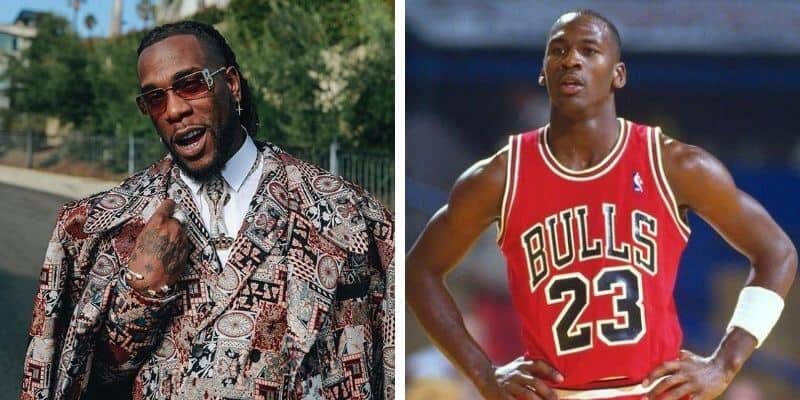
Before dubbing himself The African Giant, Burna and his team have always made a concerted effort to link up dots around the continent with cross-country collaborations, in an effort to diversify his sound and expose him to new audiences. On “Wonderful”, the album’s lead single, despite being a solo song, does appear to be attempting to utilise the same formula. Although it does listen better within the album as opposed to a standalone single, “Wonderful” doesn’t come near the highs of his recent Pan-African leaning forays like his scene-stealing outings on Kabza De Small’s riveting “Sponono” and the remix to Master KG’s inescapable “Jerusalema”. Beyond this attempt however, ’Twice As Tall‘ doesn’t really see Oluwaburna reinventing the wheel or pushing himself to his creative limits, but rather perfecting his aim and doubling down on what he does best. It’s a welcome surprise of sorts to hear two Rexxie produced songs in “Bebo” and “Comma”, but the former comes across as slightly trite at this point, whilst the latter hardly shifts the needle creatively, either – though it must be said, “Comma” does have immediately tangible dance-floor potential, and could be a slow burner primed for explosion whenever we’re allowed to party again. Burna could be excused for slipping into the generic Afropop hit-making methods on such records, when just a matter of songs later, he delivers the magnum opus of the album, the brilliant and introspective “23”. An ode to the greatness of Michael Jordan, Ogulu uses a soft, stripped back vocal inflection throughout the song – a baring of soul of sorts. Due to the single-dominating market we find ourselves in in Nigeria, “23” is the type of record we are usually robbed of, at least from the mainstream players. Burna said he was inspired watching The Last Dance, and particularly related to the scene in which Jordan explains the sacrifices he made to get to the top. For Afro-beats/fusion/pop (whatever you want to call it), there’s a propensity to strictly relate the genre to the good times. It’s the soundtrack to our good times, but just like us, the voices and minds behind the music we love so much, go through it too. In three short years, Burna has gone from perennially “underrated” to the main man. That comes with a lot of baggage.
On the mellow, Skread-produced beat, Burna sings somewhat reflectively “music makes me feel I be Jordan.” For the first time since the album’s intro, the Grammy shaped elephant raises its trunk almost in agreement.
The similarities between music and sport, and the stars that populate the two professions, knows few bounds. But the one key difference is the legitimacy of the accolades in both industries. Despite the recent addition to the Recording Academy of the likes of veteran A&R Bankulli in an effort to be more representative, The GRAMMYs, like every award show, is inherently flawed. Winning a Grammy is not the same as winning an MVP title in the (W)NBA or the Balon D’Or as a footballer. Every black artist, producer, songwriter and critic knows that. But for the music industry, it’s all they have. As much as we continue to try and dissociate ourselves from material things, we are all human. A Grammy is the material pinnacle for most people in the music industry. There’s a reason even Jay-Z, after years of boycotting the ceremony due to its numerous flaws, finally attended in 2018 following a record number of nominations, hoping to win a coveted Album Of The Year award. As Burna compares himself to Michael Jordan on “23”, the question pops into this writer’s head: “What’s Jordan without his MVP awards?” Does it take away from his greatness or skill level or other accomplishments? No, not at all, anyone who says that doesn’t know ball. But no one wants to be Jerry West – the man widely believed to have inspired the iconic NBA logo, but who doesn’t have a single MVP to his name. As Drake eloquently put at the 2019 ceremony – whilst collecting his own award – “music is an opinion based sport”. But it is a sport, and there’s nothing wrong with wanting to win.
‘Twice As Tall‘ is not just the Burna Boy’s third project in three years, but also his eighth solo body of work in nine. By any definition, he is an album artist to the core. This is particularly poignant and relevant when examining the journey that has led to this point for him as an artist, and in the terrain he made it in – or made it through, however you wish to look at it.
Due to the nature of the Nigerian music industry structure, many artists are heavily reliant on live show revenue. This leads to an almost non-stop hamster wheel throughout the year, consisting of shows upon shows. In Davido’s dominating 2017 year, he famously played over 100 shows, ranging from club gigs in Paris to Wireless Festival in London to sold-out stadium shows on behalf of the Ugandan president. For many of these artists, the pandemic-induced lockdown we all experienced would have been a rare moment of stillness. It was for Burna. The first six months of this year were probably the first time since ‘Outside’ that he could hop off the hamster wheel, and, even lyrically, you can hear it.
Singles rule the game in the era of streaming. Even before streaming, singles have long since been the main currency within Nigerian music. Between the rampant piracy encouraged by the music blogs of yesteryear, and having to negotiate with the good folks at Alaba, many artists and local labels saw singles as the only viable creative outlet that delivered returns. The costs of making and promoting an album far outweighs those of a single, but in a region with a poor record of royalty collection, the benefits of a full body of work were minimal. On the other hand, there was extreme potential in live revenue one could amass if you managed to get your single to catch fire. The tradeoff here is one that happens all over the world and every individual must deal with: creative vs business. Piracy and the booming live revenue space led to artists prioritising singles over albums, but one could argue this led to periods in time dominated by an overarching lack of quality in the mainstream music sphere. Streaming has been seen to balance this back out again. With the presence of Boomplay, UduX, Gbedu and MusicTimes, joined by international players Audiomack, Apple Music, Tidal and Spotify (still not available in West Africa), all operating with market adjusted subscription options, the hope is that the collective streaming power on the continent will grow, and local artists can begin to view record sales as a viable revenue stream, no pun intended.
Burna Boy, despite these limitations, played the long game and consistently stuck to his project-orientated approach, whilst some of his peers were blown by the winds of the singles and whichever style seemed to be working. He has had to be patient, but that patience he showed is being rewarded handsomely now, and not just financially. Building up a loyal and genuinely invested core fanbase, in those years, has been the crucial support system during his crusade to the very top in the last three years. This is the trade off between being a singles artist or an album artist – the former may experience more immediate wins, but you are forever at the mercy of us, the fickle listeners. You are forever having to twist and turn to the new style. Album artists set their own terms. They invite you into their world, not meeting you on the crowded grounds between radio stations, dance-floors, barbershops, hair salons, wedding receptions or the countless places people congregate to hear music.
For the last three years, we have all been living in Burna Boy’s World. On ‘Twice As Tall‘, he lets us in once again. On records like “Level Up” and “Naughty By Nature”, we see his dreams and aspirations – ones he admits have changed and graduated themselves, the further he goes on this journey. On songs like “Comma” and “Wetin Dey Sup”, we see the elements of the same old Burna from #thatyear with the faded out Afro, looking for trouble, and inevitably singing his way out of it. On songs like “23” and album closer “Bank On It”, we spend time with a deeper, more introspective Burna I’d certainly like to hear and see more of. Since Burna’s riotous debut in 2011 with the ‘Burn NoticeMixtape’, he began on a path that has led us to this recent trio of projects, catapulting him to the very top of the totem pole. Whilst many conversations around the album seem to revolve around a potential Grammy nomination, this feels like a side-note by the end of the hour, viewed through the lens of Ogulu’s near decade long career.
This is the simultaneous ending of a chapter, and the beginning of a new one. ‘Twice As Tall‘ does not have the high celebration points of ‘African Giant’, or the raw creative roulette showcased on ‘Outside‘, but it packs an abundance of growth of the man himself, one we are fortunate enough to witness on record, and that feels like an even more significant accolade than any one award, in my ears at least.
Coping with the chaos of 2020 has taught us how to have a good time even when conditions are less than ideal. A huge part of that lesson has come from music, as artists continue to provide songs that build our optimism, with their resolve to keep the party going through the pandemic and increasingly traumatic news feeds. That’s why we’ve decided to highlight the best songs released from around the continent, thrice a week, in a bid to encourage that extra pep in your steps as you go through the rest of the year.
After starting the week with new releases from Darey, Davido, Crayon PrincessMami and more, we are bringing you our midweek curation with the latest songs from around the continent. We have new music from WurlD, ADH, Vector, Eugy and PyschoYP, Ghanaian singer, Sista Afia and Fameye, BOLG and Jaiye. Enjoy.
WurlD – “Story”
It’s clear that WurlD’s favourite emotion to channel is love. His project, ‘Love is Contagious’ and a joint project with Sarz, ‘I Love Girls with Trobul’ didn’t hide his passion for romance. Though he went for a more sound-inspired title for his latest tape, ‘Afrosoul’, he mostly stuck with the heartfelt theme. He has now put out the music video for “Story”, one of the highlights from ‘Afrosoul’ where he confesses his yearning for love and shows off his Nigerian tongue with pidgin English lyrics.
The newly released music video was directed by Baba Agba and WurlD and it captures the somber emotions of the song through the colourless set. Singing “I just dey form to dey do yanga/ I know I act like a tough guy”, “Story” narrates WurlD’s struggle after falling out of favour with a love interest. Watching him perform the melancholic lyrics—“When you no dey call I feel lonely”—in the white space captures that empty feeling after we lose something valuable. The song and video make it clear why fans and even other artists know they can always count on him to infuse emotional range into his music.
Sista Afia – “Party” Feat. Fameye
When we were still in shock at the scale of the COVID-19 pandemic, Sista Afia released a gorgeous track simply titled “Corona”. The song was written to raise awareness about the virus and it managed not to evoke the anxieties of the time while encouraging listeners to follow the preventive measures to reduce its spread. Though the threat of the virus is still as real as ever, the singer from Ghana continues to preach transcendence through music as her latest song, “Party” invites listeners to celebrate and be merry. With some of the lockdown laws getting relaxed, some people have returned to enjoying party festivities and Sista Afia shows her excitement by singing “We go party all night long”, over the retro high-life inspired beat produced by Willis Beatz. Famaye also contributes a rap verse in their local dialect and appears in the disco-party themed video directed by Rich Sheff.
ADH – “Man Dem Remix” Feat. Vector, PsychoYP, Eugy
After showing off the appeal of rapping over Afropop production on his 2019 hit song, “Man Dem”, ADH has returned with a newly updated remix. While the original song captured the love between him and his African community with the video shot in Senegal, the remix confirms the supportive relationship among African artists as he features other artists from Africa, Psycho YP, Eugy and Vector. On the remix, each artist takes turns delivering cocky sets over the catchy mid-tempo beat produced by JayLon. ADH’s original verse opens the song before we get the new rap verses from Vector, PsychoYP and Eugy. Though all verses were written with the intent of evoking confidence, they each deliver unique flows that fit the bouncy beat. The lyrics also show each of their individual interests as Vector makes gun threats, PsychoYP talks about getting high and Eugy brags about putting on his team, “Future State”.
Melvitto x Gabzy – “Trouble”
“Trouble” sounds like it could be a song about the good times at the start of a romantic relationship, and Gabzy’s lyrics, “I just want to show you off/ Build you up” capture the moments when things are flush with excitement and everything seems perfect. However, the way he sings the words and the way Melvitto’s instrumentals float around like a ghost also makes it feel like the song is about a tense relationship. The line, “He did you wrong girl/ I’d never do that” highlights the cloud hanging over the relationship as it portrays how past relationship traumas can still affect new relationships.
This premise offers Gabzy a challenge which allows him to show that he can back deep sentiments with sharp and smart songwriting. He sounds convincing as he swears he’s different from his muse’s ex and promises he “Want(s) to ride for (her) till the end”. After last year’s joint tape, ‘Summer’ Melvitto and Gabzy continue to be a remarkable pair when they get together.
BOLG – “Sempe”
BOLG’s latest single, “Sempe” is just as bolshy as you would expect from a seasoned Afropop vet. The catchy track borrows words from the ‘African Giant’ lyric book, saying “You know when I pull up/ Everybody gatz to Gbese!”. Though BOLG’s melodies are also influenced by the same highlife riffs that inspire Burna Boy’s fusion sound, he offers a more convincing traditional feel thanks to his Yoruba lyrics and accent. Produced by Callie Majik, the groovy bass lines and horns are necessary for a good time on the dancefloor and BOLG’s boastful lyrics will give listeners a push to get moving.
Jaiye – “Bails”
Drill music is the latest hip-hop rave and it hasn’t taken long for African artists to catch on to the wave. IDPizzle recorded his first hit song, “Billie Jin” by fusing the genre with his indigenous sebene sound and now Nigerian rapper, Jaiye just released a new single, “Bails”, offering his own spin on the eerie bass-heavy genre. GCL3F produced the thumping beat for “Bails” while Jaiye stacks his boastful bars with several guns and drug referencing lines as he retains the gangster rap ethos of the sound. The gangster intent of the song carries on into the video which tributes his studio gang affiliation with cuts of him flanked by his group of friends. Though he’s the only one seen rapping and point his gun-shooting fingers at the camera, they all cut a mean posse with they can be seen smoke and work out while Jaiye performs the self-assured bars bragging about being the toughest rapper.
[mc4wp_form id=”26074″]
You are meeting Debola at a strange time in his life. He wandered into a dream and lost his way back. Tweet at him@debola_abimbolu
Twenty years ago, the Internet was still a new shiny toy, and social media was limited to instant messaging and emails. Now, the Internet has become our way of life, and as such has made the world has become a global village, where any sort of information you need is only one search bar way. We’re all in touch with everything that’s happening in every corner of the globe, all the time, which is ultimately a great thing with several benefits, however, can be a bit (read: a lot) overwhelming.
Constantly digesting information, whether good or bad, is usually followed quickly by your entire timeline’s opinion of it before one even gets a good understanding of how they feel about the topic. Much like the tv or music we consume does, the news and current affairs either unites or divides us as people, especially now that we’re all (or at least should all be) stuck at home, hiding from a deadly disease.
One day, we’re arguing about whether Laycon is really intelligent (spoiler alert, he’s not), the next we’re wondering why someone has been sentenced to the death penalty for… singing.
For a bit of catharsis, The NATIVE has birthed a new column, Hot Take Tuesdays, where every week, a different member of the NATIVE’s editorial team will dissect different trending topics across the globe, and give their hot takes on each topic. Here’s how my week is going so far, and a few of my hot takes for the week.
What I’m watching on YouTube: Roddy Ricch’s interview with Lawrence Burney for The Fader. I really like this interview because it seemed like a really honest conversation between two black men, and Roddy is making some very important life lessons discussing one of my favourite albums ever, ‘Please Excuse Me For Being Antisocial’, why it’s important to just focus and get shit done, and the power of being yourself. I’ve watched it a billion times, but I take away something new from it each time I watch it.
Watch it here:
What I’m watching on Netflix: I’m currently in the middle of this film called ‘Nigerian Prince’ on Netflix. I’m about 20 minutes in and so far, I don’t really understand why the main and titular character of a Nigerian film isn’t a Nigerian actor, especially when there are supporting Nigerian cast members we’ve seen do really well in other films.
Check out the trailer:
What I’m listening to at the moment: Obviously Burna Boy’s Twice As Tall. Today, I wrote a review on the album’s stand out, “23”, so I’ve had that song on repeat pretty much the whole day.
Listen here:
Toke Makinwa and Falz’s new show, “Therapy”
In my recent YouTube rabbit hole, I came across a 10-minute web series starring Falz, Toke Makinwa, Bovi and Josh 2 Funny. At first, I was intrigued, so I watched it, but was sorely disappointed so obviously I carried on. Not because of the quality; Toke Makinwa is actually a decent actress and is a lot better actress than I expected her to be. I noticed this on Sugar Rush (showing on Netflix) where she played one of the film’s villains, and Falz does his thing with the accent which… I guess gets the people going.
My issue, however, was how blatantly misogynistic and tone-deaf the dialogue was and I just didn’t really understand the point of it in 2020. The show follows a young couple, who are in couple’s therapy to sort out their marital issues. In the first episode, Stephanie (Toke) and her husband, Biodun (Falz) are fighting because she wants to live in Banana Island, and isn’t happy that her husband has bought a house for them in a Lekki phase 5,000. In his response to her issue, the episode ends with him revealing that he was saving so that he could buy a house in America. The fight in the second episode is about the fact that Biodun refuses to help her with any household chores and blatantly refused to because football is more important and it’s ‘an insult’ for him to be seen doing any domestic work.
This brought to mind the timeline conversation about the AITA story where a man complained about his wife hiding a secret savings account from her husband in case anything went wrong, where she put 10% of her salary every month. Given the attitude towards Nigerian women, which ‘Therapy’ seems to propagate, it’s fair to assume that Nigerian marriages aren’t really partnerships, and even though I’ve never been married before, the things I see and hear suggest that it’s usually to the detriment of women. While I understand that it’s dishonest to hide money from your partner, let’s not act like Nigerian women don’t almost always have to go straight into survival mode once they enter a marriage.
In the first episode of ‘Therapy’, Biodun appears to ‘punish’ Stephanie for hating her house, with the news of a house he’s buying in America, which she’s now allowed access to for being ‘ungrateful’. If I were in a marriage like Stephanie’s, where my husband won’t help me out with chores and feels like he can punish me for being ungrateful, I would 100% have a secret stash so I could escape the bondage one day.
Watch ‘Therapy’ here:
Female rappers are not your children’s role models
Just yesterday, Cardi B and Megan Thee Stallion’s collaboration, “WAP” debuted at Number 1 on the Billboard Hot 100 charts after only one week. This is a big win for women who rap, especially for Megan who had a particularly horrible past few weeks after getting shot in both her feet, followed by an incessant amount of trolling.
Given the premise of WAP, which flaunts a woman’s sexual prowess with Meg and Cardi’s slick-tongued rhymes, there has been a lot of talk with the aim to chastise these women for ‘crossing their boundary’ even though they have been saying very similar things for most of their respective careers. A lot of this criticism stems from beliefs that they should be setting better examples for younger women and be better role models since they’re in positions of visibility. It doesn’t need much explanation to see why it’s unfair to place this responsibility on women, especially when the same expectations are not extended to men who usually rap about the same thing, and also glorify other things society deem immoral such as drugs and violence.
In a recent Instagram video, Cardi gives women some much-needed sex education and useful tips about how to not throw your PH balance off during intercourse. Given that a woman’s sexual autonomy is usually only considered in relation to men, it’s only a good thing that we have women who are unapologetically taking ownership of theirs, which does in fact set a good example for other women who are typically taught that it’s a thing to be ashamed of. We’ve discussed previously about why it’s important for women to hear other women’s experiences in song, and society’s moral compass shouldn’t really have any place in what kinds of topics they decide to explore.
P.s: We believe there’s a new vanguard of female rappers who are leading the charge in Nigeria. While old heads struggle to see the vision, we spoke all about why these women need to be listened to here.
I don’t really want a Telfar bag
In a world of uncertainty, two things have been certain this summer: There’s a global pandemic and everybody wants a Telfar bag. While we’re all stuck at home, we haven’t been able to go physically shopping for a while so we’re all lusting after the same things on the internet. From Jackie Aina’s wardrobe to Saweetie’s, just take a look at how coveted Kai Collective’s Gaia dress is, and how quickly it became the item of the summer and sold out within hours at every drop.
The Telfar bag has also been another widely talked about item of the summer, which is stirring up a lot of chaos on the timeline every time a new drop sells out in seconds. Telfar—a Black-owned and genderless fashion brand which was founded in 2004— has now introduced a new way of making sure the getting the bags are easier for those who want it, with the caveat of a potentially waiting longer to actually get the bags. I’ve seen a lot of people getting super upset that they weren’t able to buy one, but now this new approach means there are higher chances for those who actually want one.
Only thing is, I don’t really get it. The bags are really nice – for sure – and these days I’d rather give my money to a black-owned business than a big capitalist conglomerate, however, I just don’t really understand why everyone is falling over themselves about it. What I am looking out for, and waiting to drop is a restock of that fire Mowalola bag.
When Big Brother started a month ago, we at the NATIVE were automatically rooting for Laycon purely based on the fact that his music started gaining traction after he went into the house. Unfortunately, when we started to get to know him, it became harder to root for him, and now we’re just not checking for him at all. Granted, he’s been a major source of some of the best entertainment this season has seen so far, mostly as a result of the love triangle (was it even) between him, Erica and Kidd, however his behaviour and the kind of co-signs he’s getting are a lot less than ideal.
There’s a popular Twitter saying that goes “when many Nigerian men agree with you, you must be doing something wrong”, and Laycon must be the human version of this saying. He’s the typical ‘nice guy’, who believes that his niceness must be rewarded and that his affection must be reciprocated, which you’ll find to be the case for most Nigerian men but you guys won’t let us tell you the truth about yourselves without accusing us of being bitter.
You won’t have to search very hard to find a clip him looking salty in the background when Kidd and Erica are being amorous, or saying horrible things about Erica behind her back and making up scenarios that never happened so he can appear to be the victim of a situation which he shouldn’t be in to begin with. 2 weeks ago, Erica made a clear choice to couple up with Kiddwaya much to Laycon’s dismay, and this is where his true colours showed up.
Watching all this unfold, it’s clear to me that Laycon is not a good person, however, for some reason, you see many people on the Internet defending his behaviour, and chastising Erica for picking the person she was attracted to from the beginning (if this isn’t misogyny at play, I don’t know what is). Even though Laycon has an actual girlfriend who he has been dating for 8 years outside the house, somehow, it’s okay for him to be pining after someone who doesn’t want him, and is even being touted as a stand-up guy. I decline to agree. No thanks.
Nollywood’s portrayal of rich people is abysmal
Who else is watching Red TV’s The Men’s Club? The web series is so bad it’s good, from the cringe-worthy dialogue to the over acting, I love every second of how awful the show is, and every Wednesday, there’s no doubt I will be cringing about how the wealthy are portrayed on television, thanks to ‘The Men’s Club’. The show follows the lives of four friends, Tayo, Lanre, Louis and Aminu, who are probably in their early 30s and trying to live their best baby boy lives. Aminu is (apparently) a billionaire, Louis used to be an heir to a huge fortune before he was cut off, Tayo used to be married to a spoilt rich girl, whose father funded their lives, and is now dating another spoilt rich girl, whose father is now funding his life (by bribing him with contracts to get through to his daughter), and Lanre is a regular guy who likes to date rich older women.
It’s clear that these people are supposed to represent the upper echelon of society, but they don’t seem to get it right. This is typical for Nollywood, however. From films like ‘The Bling Lagocians’ to ‘The Wedding Party’, the portrayal of wealthy people is just so far from the truth, it’s actually a bit ridiculous. From the things they say to each other, such as ‘Daddy why didn’t you allow me take the jet to Paree‘ (‘Assistant Madams’) to Aminu in ‘The Men’s Club’ transferring N10 million to a landlord’s account without asking for the account number, it’s clear that there’s very little research put in place when these characters are being written, and these films would be a lot more enjoyable if there was more intention behind these characters other than just being inserted.
Either way, it doesn’t stop my binge and I’ll be waiting on tomorrow’s episode at 3pm sharp.
Featured Image Credits:
[mc4wp_form id=”26074″]
Damilola is the HBIC around here, don’t tweet at her @damdamxx
Twenty years ago, the Internet was still a new shiny toy, and social media was limited to instant messaging and emails. Now, the Internet has become our way of life, and as such has made the world has become a global village, where any sort of information you need is only one search bar way. We’re all in touch with everything that’s happening in every corner of the globe, all the time, which is ultimately a great thing with several benefits, however, can be a bit (read: a lot) overwhelming.
Constantly digesting information, whether good or bad, is usually followed quickly by your entire timeline’s opinion of it before one even gets a good understanding of how they feel about the topic. Much like the tv or music we consume does, the news and current affairs either unites or divides us as people, especially now that we’re all (or at least should all be) stuck at home, hiding from a deadly disease.
One day, we’re arguing about whether Laycon is really intelligent (spoiler alert, he’s not), the next we’re wondering why someone has been sentenced to the death penalty for… singing.
For a bit of catharsis, The NATIVE has birthed a new column, Hot Takes, where every week, a different member of the NATIVE’s editorial team will dissect different trending topics across the globe, and give their hot takes on each topic. Here’s how my week is going so far, and a few of my hot takes for the week.
What I’m watching on YouTube: Roddy Ricch’s interview with Lawrence Burney for The Fader. I really like this interview because it seemed like a really honest conversation between two black men, and Roddy is making some very important life lessons discussing one of my favourite albums ever, ‘Please Excuse Me For Being Antisocial’, why it’s important to just focus and get shit done, and the power of being yourself. I’ve watched it a billion times, but I take away something new from it each time I watch it.
Watch it here:
What I’m watching on Netflix: I’m currently in the middle of this film called ‘Nigerian Prince’ on Netflix. I’m about 20 minutes in and so far, I don’t really understand why the main and titular character of a Nigerian film isn’t a Nigerian actor, especially when there are supporting Nigerian cast members we’ve seen do really well in other films.
Check out the trailer:
What I’m listening to at the moment: Obviously Burna Boy’s Twice As Tall. Today, I wrote a review on the album’s stand out, “23”, so I’ve had that song on repeat pretty much the whole day.
Listen here:
Toke Makinwa and Falz’s new show, “Therapy”
In my recent YouTube rabbit hole, I came across a 10-minute web series starring Falz, Toke Makinwa, Bovi and Josh 2 Funny. At first, I was intrigued, so I watched it, but was sorely disappointed so obviously I carried on. Not because of the quality; Toke Makinwa is actually a decent actress and is a lot better actress than I expected her to be. I noticed this on Sugar Rush (showing on Netflix) where she played one of the film’s villains, and Falz does his thing with the accent which… I guess gets the people going.
My issue, however, was how blatantly misogynistic and tone-deaf the dialogue was and I just didn’t really understand the point of it in 2020. The show follows a young couple, who are in couple’s therapy to sort out their marital issues. In the first episode, Stephanie (Toke) and her husband, Biodun (Falz) are fighting because she wants to live in Banana Island, and isn’t happy that her husband has bought a house for them in a Lekki phase 5,000. In his response to her issue, the episode ends with him revealing that he was saving so that he could buy a house in America. The fight in the second episode is about the fact that Biodun refuses to help her with any household chores and blatantly refused to because football is more important and it’s ‘an insult’ for him to be seen doing any domestic work.
This brought to mind the timeline conversation about the AITA story where a man complained about his wife hiding a secret savings account from her husband in case anything went wrong, where she put 10% of her salary every month. Given the attitude towards Nigerian women, which ‘Therapy’ seems to propagate, it’s fair to assume that Nigerian marriages aren’t really partnerships, and even though I’ve never been married before, the things I see and hear suggest that it’s usually to the detriment of women. While I understand that it’s dishonest to hide money from your partner, let’s not act like Nigerian women don’t almost always have to go straight into survival mode once they enter a marriage.
In the first episode of ‘Therapy’, Biodun appears to ‘punish’ Stephanie for hating her house, with the news of a house he’s buying in America, which she’s now allowed access to for being ‘ungrateful’. If I were in a marriage like Stephanie’s, where my husband won’t help me out with chores and feels like he can punish me for being ungrateful, I would 100% have a secret stash so I could escape the bondage one day.
Watch ‘Therapy’ here:
Female rappers are not your children’s role models
Just yesterday, Cardi B and Megan Thee Stallion’s collaboration, “WAP” debuted at Number 1 on the Billboard Hot 100 charts after only one week. This is a big win for women who rap, especially for Megan who had a particularly horrible past few weeks after getting shot in both her feet, followed by an incessant amount of trolling.
Given the premise of WAP, which flaunts a woman’s sexual prowess with Meg and Cardi’s slick-tongued rhymes, there has been a lot of talk with the aim to chastise these women for ‘crossing their boundary’ even though they have been saying very similar things for most of their respective careers. A lot of this criticism stems from beliefs that they should be setting better examples for younger women and be better role models since they’re in positions of visibility. It doesn’t need much explanation to see why it’s unfair to place this responsibility on women, especially when the same expectations are not extended to men who usually rap about the same thing, and also glorify other things society deem immoral such as drugs and violence.
In a recent Instagram video, Cardi gives women some much-needed sex education and useful tips about how to not throw your PH balance off during intercourse. Given that a woman’s sexual autonomy is usually only considered in relation to men, it’s only a good thing that we have women who are unapologetically taking ownership of theirs, which does in fact set a good example for other women who are typically taught that it’s a thing to be ashamed of. We’ve discussed previously about why it’s important for women to hear other women’s experiences in song, and society’s moral compass shouldn’t really have any place in what kinds of topics they decide to explore.
P.s: We believe there’s a new vanguard of female rappers who are leading the charge in Nigeria. While old heads struggle to see the vision, we spoke all about why these women need to be listened to here.
I don’t really want a Telfar bag
In a world of uncertainty, two things have been certain this summer: There’s a global pandemic and everybody wants a Telfar bag. While we’re all stuck at home, we haven’t been able to go physically shopping for a while so we’re all lusting after the same things on the internet. From Jackie Aina’s wardrobe to Saweetie’s, just take a look at how coveted Kai Collective’s Gaia dress is, and how quickly it became the item of the summer and sold out within hours at every drop.
https://www.instagram.com/p/CDuYp9sFT2u/
The Telfar bag has also been another widely talked about item of the summer, which is stirring up a lot of chaos on the timeline every time a new drop sells out in seconds. Telfar—a Black-owned and genderless fashion brand which was founded in 2004— has now introduced a new way of making sure the getting the bags are easier for those who want it, with the caveat of a potentially waiting longer to actually get the bags. I’ve seen a lot of people getting super upset that they weren’t able to buy one, but now this new approach means there are higher chances for those who actually want one.
Only thing is, I don’t really get it. The bags are really nice – for sure – and these days I’d rather give my money to a black-owned business than a big capitalist conglomerate, however, I just don’t really understand why everyone is falling over themselves about it. What I am looking out for, and waiting to drop is a restock of that fire Mowalola bag.
https://www.instagram.com/p/CB0svJiAVFC/
Laycon is not a good guy
When Big Brother started a month ago, we at the NATIVE were automatically rooting for Laycon purely based on the fact that his music started gaining traction after he went into the house. Unfortunately, when we started to get to know him, it became harder to root for him, and now we’re just not checking for him at all. Granted, he’s been a major source of some of the best entertainment this season has seen so far, mostly as a result of the love triangle (was it even) between him, Erica and Kidd, however his behaviour and the kind of co-signs he’s getting are a lot less than ideal.
There’s a popular Twitter saying that goes “when many Nigerian men agree with you, you must be doing something wrong”, and Laycon must be the human version of this saying. He’s the typical ‘nice guy’, who believes that his niceness must be rewarded and that his affection must be reciprocated, which you’ll find to be the case for most Nigerian men but you guys won’t let us tell you the truth about yourselves without accusing us of being bitter.
You won’t have to search very hard to find a clip him looking salty in the background when Kidd and Erica are being amorous, or saying horrible things about Erica behind her back and making up scenarios that never happened so he can appear to be the victim of a situation which he shouldn’t be in to begin with. 2 weeks ago, Erica made a clear choice to couple up with Kiddwaya much to Laycon’s dismay, and this is where his true colours showed up.
Watching all this unfold, it’s clear to me that Laycon is not a good person, however, for some reason, you see many people on the Internet defending his behaviour, and chastising Erica for picking the person she was attracted to from the beginning (if this isn’t misogyny at play, I don’t know what is). Even though Laycon has an actual girlfriend who he has been dating for 8 years outside the house, somehow, it’s okay for him to be pining after someone who doesn’t want him, and is even being touted as a stand-up guy. I decline to agree. No thanks.
Nollywood’s portrayal of rich people is abysmal
Who else is watching Red TV’s The Men’s Club? The web series is so bad it’s good, from the cringe-worthy dialogue to the over acting, I love every second of how awful the show is, and every Wednesday, there’s no doubt I will be cringing about how the wealthy are portrayed on television, thanks to ‘The Men’s Club’. The show follows the lives of four friends, Tayo, Lanre, Louis and Aminu, who are probably in their early 30s and trying to live their best baby boy lives. Aminu is (apparently) a billionaire, Louis used to be an heir to a huge fortune before he was cut off, Tayo used to be married to a spoilt rich girl, whose father funded their lives, and is now dating another spoilt rich girl, whose father is now funding his life (by bribing him with contracts to get through to his daughter), and Lanre is a regular guy who likes to date rich older women.
It’s clear that these people are supposed to represent the upper echelon of society, but they don’t seem to get it right. This is typical for Nollywood, however. From films like ‘The Bling Lagocians’ to ‘The Wedding Party’, the portrayal of wealthy people is just so far from the truth, it’s actually a bit ridiculous. From the things they say to each other, such as ‘Daddy why didn’t you allow me take the jet to Paree‘ (‘Assistant Madams’) to Aminu in ‘The Men’s Club’ transferring N10 million to a landlord’s account without asking for the account number, it’s clear that there’s very little research put in place when these characters are being written, and these films would be a lot more enjoyable if there was more intention behind these characters other than just being inserted.
Either way, it doesn’t stop my binge and I’ll be waiting on tomorrow’s episode at 3pm sharp.
Featured Image Credits:
[mc4wp_form id=”26074″]
Damilola is the HBIC around here, don’t tweet at her @damdamxx
This time two years ago, Tiwa Savage would have been prepping for her first ever UK headline, a sold out show at the honourable O2 Indigo concert venue in London. This time last year, still celebrating her gripping feature on Beyoncé’s The Lion King compilation album, ‘The Lion King: The Gift‘, Tiwa Savage was crossing the Ts and dotting the Is on her debut single under Universal Music, “49-99”.
It’s safe to say that August is a particular month of power for Africa’s self-ordained Number One Bad Girl. Announcing her forthcoming third studio album in May, news of ‘Celia”s imminent arrival – August 28 – is sweetened by further news that its two promotional singles so far, “Dangerous Love” and “Koroba” have made history in the Nigerian airplay charts. Compiled by TurnTable Charts, yesterday it was revealed that Tiwa Savage has now become the only artist to debut multiple songs in the top ten of their Top Airplay Charts, joining the likes of Rema, Omah Lay and Adekunle Gold to have multiple top ten records in a week.
.@TiwaSavage is now the only artiste to debut multiple songs in the top ten of Top Airplay Chart
For those who don’t know, TurnTable Charts are a freshman charting body in Nigeria (whose week one only dates back to July 9, despite a false start in April), taking on the responsibility of keeping track of the most streamed songs in the country, and TV and radio airplays from local data, neatly categorising them into three distinct charts. Nigeria has been notoriously lacking in a formal, credible charting system, and with the recent launch of the controversial Official Chart’s Afrobeats Chart, calls for our very own structure of ranking have become even more forceful.
In this time, TurnTable Charts have been working on bringing the industry “more credible and accurate data”, says their Editor-In-Chief, Ayomide Oriowo, by which we can safely judge which songs and artists are indeed favourite of the people. Speaking to NATIVE of his motivations for launching the TurnTable Charts, Oriowo narrates:
“The only reason you know Lil Baby is having a fantastic year is cos there’s a Billboard that lets you know. The only reason [we know] “Thriller” is the biggest selling album is because there is chart publication that makes you aware of that. We knew that Nigerian music needs a chart publication, it needs that story to be told. That’s the only way you can know what’s popular, what genre is more dominant and the consumption behaviour of listeners. So we decided to start TurnTable Charts… Now, we have a credible chart for the biggest means of consumption in Nigeria (Radio).”
Charting the week after the song was released, “Dangerous Love” entered into TurnTable’s Airplay Top Ten at number seven, reaching its peak position (for now) at number four, last week. Not the only milestones the Cracker Mallo-produced single has scored, less than a week after it aired, “Dangerous Love” had already reached top ten positions in 16 African countries, amassing five million streams in a fortnight.
Arriving not up to two weeks ago, though it seems like much longer given how ubiquitous the single has been since, “Koroba” yesterday joined “Dangerous Love” on TurnTable’s Airplay chart, at chart position seven, currently sitting right below the ‘Celia‘ lead single, which has dropped two places to number six.
However on the same day she celebrated her charting achievement, Tiwa Savage would also be robbed of rightful recognition. Yesterday also, age-old music platform, NotJustOk posed the question, “whose album are you patiently waiting on?“, with a four-square image of Adekunle Gold, Davido, Wizkid and Fireboy, leaving Tiwa Savage, DJ Cuppy, Niniola and every other female artist whose announced a new album out of the conversation. In response to this androcentric omission, the Savage called forNotJustOk to be cancelled, along with its sexist peers, once again demanding that “the narrative MUST change,” for women in music.
Back in May, we spoke about how Simi’s “Duduke” reached Apple Music’s number one spot and was accompanied by her contribution to Ladipoe’s, “Know You”, in the top ten. However, beyond Simi’s fans, who seemed to simply be enjoying the music, the wider public (from our perspective at least) didn’t really seem to care enough to celebrate that achievement with her. There were few loud and proud congratulations to the captivating singer for clenching those coveted spots then, and now, with both of Tiwa Savage’s ‘Celia‘ singles occupying top 10 spots in the airplay charts, history is itching to repeat itself.
Well, we’re not having it. Tiwa Savage’s strangle-hold on the Nigerian pop space is one to be clamoured about, especially when considering the misogynistic barriers that have stood in her way throughout her nearly decade-long career. Ironically, it is this popular societal practice of underestimating women, undermining their efforts and only paying them mind when it’s time to judge or slander that Tiwa Savage addresses on the opening lines of the second single that bagged her the charting success, “Koroba”.
As Oriowo says, charts let us know who’s who and what’s what in music. Explaining Tiwa Savage’s success to me, TurnTable’s EIC says: “Her feat is quite impressive because she did it twice now. For context sake, Burna Boy’s “Wonderful” debuted at No. 17, “AG Baby” debuted at No. 14, “Jollof on the Jet” at No. 29, even “Betty Butter”, the current No. 1, debuted at No. 17.” If we’re noting Burna Boy, rather ridiculously, sitting at number 1-15 on Apple Music’s top 100 in Nigeria, earning a number one spot on Apple Music’s ‘Top Album’s section, then we should all be paying attention to and celebrating when Tiwa Savage makes chart history like this.
Whether you’re paying attention or not, Tiwa Savage is poised for another memorable summer. Set to perform on Jimmy Fallon’s The Tonight Show, Tiwa Savage has her own plans of world domination, so you better keep up.
Check out the tracklist for her album here:
CELIA 28th August. Pre-Add NOW
Save My Life Temptation ft. Sam Smith Pakalamisi ft. Hamzaa Koroba Bombay ft. Stefflon Don X Dice Alies Dangerous Love Park Well ft. Davido Interlude (US) FWMM Ole ft. Naira Marley Attention Glory Celia’s Song pic.twitter.com/FBAd1cevHq
The nominations for the 2020 International Emmy Awards are officially in, and a host of groundbreaking news programs and up-and-coming talent have been recognised for their contributions to prime time television and news. Among those being recognised this year in the news and current affairs category is the BBC Africa Eye: Sex for Grade’s documentary, which was released last year by investigative journalist Kiki Mordi.
2020 International Emmy Awards Nominees for News & Current Affairs Announced!https://t.co/HwBWqANZKB
The documentary which puts a spotlight on the sexual harassment taking place in tertiary institutions in West Africa is infinitely important as it sheds light on the sex and gender-based violence endemic that plagues many universities in Nigeria and Ghana. Congratulations are definitely in order to the amazing team who worked on the documentary particularly Kiki Mordi who braved talking to these women despite the general attitudes towards rape culture in Nigeria and to everyone in the BBC Africa team.
Burna Boy loves his basketball references. Last year on ‘Steel & Copper’, his joint EP with producers DJDS, he dedicated the opening track “34” to NBA MVP, Giannis Antetokoumpo saying on the hook that he will always ball like a pro. One prolific year, two albums, a grammy-nomination and several other wins later, it’s clear he’s been doing just that. After so many years of being questioned and doubted within the Nigerian music industry, we’re now witnessing Burna Boy at his peak, on a run of global domination with the release of his third studio album in three years, ‘Twice As Tall’, where he crowns himself the musical Michael Jordan on the album’s standout, “23”.
If there was anything to take away from The Last Dance, it was that many people can motivate themselves to win a championship, however, playing the long game involves a lot more focus and dexterity than you can imagine. While for many of us the 10-part series was a means to keep ourselves entertained and inspired to do more with our lives during the early days of lockdown, Burna’s take away from The Last Dance was that music makes him feel like he’s Jordan. Michael Jordan is undoubtedly the best basketball player ever, and arguably the greatest sportsman who has set the blueprint for what greatness entails. A 6-time MVP winner, The NBA describes MJ as “a phenomenal athlete with a unique combination of fundamental soundness, grace, speed, power, artistry, improvisational ability and an unquenchable competitive desire“. Much like Burna is currently doing with the Nigerian superstardom, Michael Jordan certainly redefined what it meant to be an NBA superstar.
While sportsmen have trophies at the end of the season, to award their hard work and affirm their status, winning a Grammy for their musical creation is a musician’s equivalent to a trophy at the end of their game. On the album’s opening track, “Level Up”, Burna pours his heart out, explaining that losing out on the Grammys left him “feeling sick as fuck“, and “wondering why it wasn’t us“. Further down the album on “23”, his energy changes; he now gives himself a pat on the back for how far he’s come, singing that the music makes him feel like he’s Jordan.
Speaking to Apple Music, Burna said:
“This is a shout to Michael Jordan, and the number he wore. And I think this came from when I was watching ‘The Last Dance’. I was watching that scene with him describing the way he works and just how hard he goest to push those around him for greatness. I related to that so much. Even about how lonely that road is, because you may have started with a bunch of people, even some guys that were probably better than you and that’s really how it goes. There’s so much sacrifice to this that people won’t see”
Burna Boy floats on the mellow, slow-tempo Skread-produced beat, which allows his intricate songwriting to take centre stage and convey very intimate feelings. Throughout the song, he’s affirming himself of his status as the GOAT after being counted out, and letting us know how much it takes for him to get to where he is. He’s self-assured, as usual, and knows that his future is bright when he starts the first verse with a 9ice reference singing: “gongo a so, aiye a gbo”. Burna Boy is telling us that the music speaks for itself and the whole world will hear when it’s time, which isn’t a far cry from his current reality: He’s performed on American Late Night television, not to mention ‘Twice As Tall‘ is angling to be his first UK top 10 album on the Official Charts.
For the past two years since his game-changing mixtape, ‘Outside‘, Burna Boy’s career has seen a steady incline, and with each new drop, has changed the scope of what to expect from Nigerian music. His unique sound – which has now inspired a new generation of hitmakers such as Buju, WhoIsAkin and more – doesn’t bend to any unwritten rules, and this is what endears people to him, regardless of the many controversies and reservations they tend to have of him as a person. As long as you have something worthwhile to say, people will listen, and Burna knows this, since he has not only won over the affection of the whole nation after being counted out for so long, but also the attention of the world.
After “balling like a pro” on “34”, he’s now going to “roll a loud one, record my album, don’t address anyone’”on “23” because he can. It’s clear –from the music – that Burna is striving to be the best, and whether he receives the recognition for it or not, he’s telling us what it takes for him to get to the level he’s aiming for, and he won’t stop.
Listen to “23” here:
Featured Image Credits:
[mc4wp_form id=”26074″]
Damilola is the HBIC around here, don’t tweet at her @damdamxx
There was one positive thing that stuck out about Darey Art Alade when he first started gaining attention: His killer voice. Coming third place back in 2004 at the first iteration of the pan-African music reality TV show, Project Fame, Darey, in addition to being the scion of legendary Nigerian musician, Art Alade, clearly had the chops to be more than another forgotten contestant of a talent competition. Shortly after, he began to manifest his potential on the way to becoming one of the seminal Pop/R&B figures in contemporary Nigerian music.
In the hallowed halls of Nigerian male artists particularly known for their vocal prowess, Darey is in rarefied territory, boasting to a catalogue brimming with definitive songs grounded in the sheer power and range of his soulful voice. In 2011, he put out his third studio album, ‘Double Dare (HeartBeat)’, the rare double LP which largely justified its 80-plus minutes run time, using an eclectic music selection and a variety of effective features to advance the album’s listening experience.
In one of the best mergers between Darey and an outside voice, he was joined by American rapper Chamillionaire on the remix for one of the album’s lead singles, “The Way You Are”. In comparison to its frequency these days, international collaborations at the top of the last decade were a rarity, and this was made evident in the resulting songs— for example, Snoop Dogg’s slick verse on “Mr Endowed”, in hindsight seems more like an addition to the song than an actual component of the song’s fabric. This is what makes “The Way You Are (Remix)” so remarkable because it seems more like a meeting of peers and a combination based on synergy and mutual respect.
Remixes can be tricky, and sometimes the featured artist can have a negative effect on an already good song – in the case of relatively high profile guests, they can come across as though they’re doing the primary artist a favour. Granted, Chamillionaire was years past his commercial peak as a rapper at the time, however, he was definitely a positive addition to “The Way You Are (Remix)”, supplementing Darey’s r&b leading man charm in a manner that’s reminiscent of crossover Rap/R&B jams that dominated large parts of the ‘90s and 2000s.
Like an overwhelming portion of Darey’s catalogue, “The Way You Are” is about women, and even though there’s a romantic tone to it, it is hinged on body positivity. Although it can be accused of being heavy-handed and abrasive in tone, the song’s saving grace lies in its tacit acknowledgement of beauty standards and the specificity of accepting a lover’s physique regardless of what they think of their attributes. ‘I like the way you are’, he sings in a sweetly floating falsetto on the hook, almost as if his heart would be shattered if his interest doesn’t take to his words of reassurance—the execution wasn’t perfect but there’s no doubting the purity of his intention.
Keeping the original, glossy EDM-inflected r&b beat, Chamillionaire kicks off the remix with a verse where he admires his lover’s physical attributes and pledges his undying love to her. “Must be in heaven ‘cos your body is to die for/when you’re with me, I’ll never say odabo (goodbye)”, he raps with a charming verve. Rather than disappearing after the first verse, he returns for a boastful second verse and closing bridge, where his vocal interplay with Darey is heightened by a Reggaeton breakdown.
In the conversation about collaborations that helped build a bridge between Nigerian music and the west, “The Way You Are (Remix)” is barely ever mentioned, which is understandable since the song wasn’t exactly a commercial behemoth. Regardless, it showed that collabs between Nigerian artists and their foreign counterparts could be organic and quite seamless, long before global superstars started tapping Afropop for chart-topping hits and full-length projects.
It also highlights Darey’s flair for doing things his own way, and if his recently announced return to music continues in the same way, the big-voiced singer could still have more seminal music and moves to offer in the near future.
Listen to “The Way You Are (Remix)” here.
Featured Image Credits: YouTube/Darey
[mc4wp_form id=”26074″]
Dennis is not an interesting person. Tweet Your Favourite Playboi Carti Songs at him @dennisadepeter
Hailing from Trinidad and Tobago, culture writer, Tenille Clarke spotlights the Caribbean contributions to Beyoncé’s latest masterpiece, ‘Black Is King’.
22 years into her career, the internet streets still go abuzz for a Beyoncé drop, with the debut of ‘Black Is King’ – a film directed by the 38 year-old Queen Bey – causing an inescapable ruckus when it was released a few weeks back, still retaining its relevance in news cycles ‘till today. Making its Disney+ debut on July 31st, the highly-anticipated movie was an undeniable celebration of African lineage and traditions. The film not only revisited the continent’s culturally-rich history, revered rituals and identities in multiplicity, but it also showcased a full exhibition of cultural reverence that allowed African people around the diaspora to find joy in their light, and to be seen. The treat in store was a visually stunning display of black excellence in all fashion forms, with many people enthralled by the dreamy sequences of scenery, such as the sharply styled “MOOD 4 EVA” highlight – which also included Hip Hop royalty, Jay Z rolling up to a mansion in a crisp Rolls Royce, and Beyoncé’s diamond encrusted teeth being brushed by a white butler while draped in a silk dollar-print robe by Duckie Confetti.
In the days following the film’s release, social media was rife with credits and congratulations to the innumerable African creatives that contributed to the creative direction of ‘Black Is King’. As talents such as, dancer Papi Ojo (who led Beyoncé in dance on “ALREADY”) and stylist Daniel Obasi (responsible for Tiwa Savage and Mr Eazi’s looks in “KEYS TO THE KINGDOM” and Wizkid’s “BROWN SKIN GIRL” feature) received high praise for their work, fans were quickly learning that key members of the film’s production team included creatives from the African diaspora as well.
Beyoncé wears Valentino Hot Couture, A-Morir and, Christian Louboutin in “ALREADY”
Unsurprisingly, the Caribbean also made its creative presence felt in Black is King – with undeniable influence taking shape in such iconic moments as the life-sized chess board scene featuring avant-garde looks from Simon-Hartman London in “MOOD 4 EVA”, or the stunning 2-piece set on a sultry Queen Bey which distracts from Burna Boy’s visual absence in “JA ARA E”. Taking an audacious step into a fictitious world of next-level fashion and beauty inspired by The Lion King movie, celebrity costume designer and wardrobe curator Zerina Akers and world-class hairstylist Neal Farinah formed a part of the production team that brought their collective genius to the project, injecting their own unique understanding of real African culture through their powerful Caribbean experiences.
A region of breathtaking islands some 7,000 miles west of Africa, quietly nestled in hypnotizing crystal blue waters with picturesque landscapes, the Caribbean Islands are popularly known for our enchanting “sun, sea and sand” tourism appeal. Notably, the Caribbean also has a heavy dose of African ancestry littered across the islands, further dynamized by our English, French, Spanish, Dutch colonial influences. From The Bahamas clustered in the North with their “Junkanoo” tradition, to the twin-island Republic of Trinidad and Tobago in the southern part of the island chain with its annual Carnival celebrations known as “The Greatest Show On Earth”, our culture is punctuated by the traumatic history of the Transatlantic Slave Trade – making this space profoundly multicultural. This complex cultural heritage and Afro-Caribbean familiarity and identity is what informed both Zerina Akers and Neal Farinah as they animated the ‘Black Is King’ film with their eye-catching handiwork.
Neal Farinah is a certified celebrity hair doyen who has been styling Beyoncé’s hair for over a decade. Speaking with me about his first inkling of what was to come, Farinah reveals that Mrs. Carter explained the concept of ‘Black Is King’ to him after a 2am on-site job, which she excitedly described at the time as “her baby”. As she showed him various references to African hair during their conversation over a year ago, he recalls being mind-blown by her inspirational ideas, but ultimately realising that the proposed workload was a massive undertaking that would require a skilled team of hairstylists who needed to be equally passionate about hair. Creating 40 varied wigs with intricate styles and hues in less than a week for a movie set is no easy feat – but that’s exactly what his team was able to achieve.
Beyoncé wears Tongoro Studio in “BROWN SKINN GIRL”
He tells me:
“What I love about Beyoncé, is that although she’s my boss when we’re working, we have a friendship. She gives me a platform to share my creativity, speak on (black) culture, and she’s always coming with something new and different. And I love that innovation about her because that’s who I am as an artist.”
‘Black Is King’ interpreted intricate African hairstyles, such as the signature Mangbetu tribal crown from Eastern Congo worn to display royalty status in the 1900’s (“BROWN SKIN GIRL”); the Zulu Tribe’s bantu knots that symbolised a person’s marital status (“ALREADY”); the horned head braid work originally worn by Ethiopian Dinka and Mursi tribes to demonstrate prestige and power (“ALREADY”); and the outstanding Nigerian style known as Orisha Bunmi, worn for special events (“BROWN SKIN GIRL”). The finished hair products made definitive statements through colour, texture and length, courtesy of a team that spanned parts of the Caribbean.
“It was such a diverse team, all black, all powerful” Farinah gushes about working with a hand-selected team of hairstylists such as Xia Charles, Keinda Samuel, Kendra Garvey, Kamilah Gerestant, Nakia Rachon, Nicole Newland, Safiya Warner & Tashana Miles. Farinah worked meticulously to achieve his aim of broadening the dialogue on the customs and depictions surrounding hairstyling in the film, by paying an authentic tribute to a number of tribes in Africa that he would have learned in his own extensive and diligent research. “I had to have the best of the best, and I wanted to share that pie with everyone,” explained Farinah. The journey also helped him connect the dots to black hair in his own Caribbean heritage.
“Being a hairstylist raised in a multicultural country as Trinidad and Tobago, these ‘Black Is King‘ hairstyles meant something more. It was spiritual, it was generational power, it was respect and deeper than I ever imagined.”
Beyoncé wears custom Timothy White in “BROWN SKIN GIRL”
Wardrobe Stylist Zerina Akers praises Farinah as a longtime collaborator on a number of projects, explaining, “Over the years, I love how unapologetically himself he is at all times.” For her, calling on Caribbean creatives for ‘Black Is King’ – including London-based designer Melissa Simon-Hartman and the talented Tobagonian tailor Delia Alleyne – introduced a new wave of iconic ingenuity to the project. Referring to her as “a godsend”, Akers credits Alleyne for a number of memorable looks, including Beyoncé’s psychedelic opening outfit for the “JA ARA E” visuals, and Tierra Whack’s ominous cape in “My Power”. While Trinbagonian-Ghanaian designer, Melissa Simon-Hartman got credited for the custom-made black and white chessboard looks for the “MOOD 4 EVA” scene. The work ethic of her peers seems to be an intimate reflection of Zerina’s own Caribbean identity.
Always an advocate for clients and peers expressing their authentic selves through fashion, Zerina proudly admits that her Caribbean heritage has immensely shaped her styling skills. “I was never above working for free – [at the start of my career] I worked with many different stylists on many different shoots and I just took my time and learned,” says Akers. Speaking lovingly of her maternal lineage Zerina credits her own determination to succeed to that “Caribbean grit”. She also credits her Panamanian grandmother with teaching her how to sew – a Caribbean tradition which is often handed from women to their young girls.
“Having that upbringing has opened my mind to many different worlds; I would not just bring things home, but I would take things and ideas from my Caribbean home and bring it out into the world. It’s motivated me to get out there and do it, the good work.”
Beyoncé wears Wendy Nichol in “BIGGER”
Following an overseas assignment in South Africa for Beyoncé’s Global Citizen Concert in 2019, Zerina admits that her creative eye was elevated from that single travel experience. She explains that she was able to bring depth to several ideas, such as inspiration from the award-winning work ‘For Coloured Girls Who Have Considered Suicide/When the Rainbow is Enuf‘ by playwright Ntozake Shange, as well as 90’s inspired Versace campaigns. Armed with extensive research, conducted alongside Creative Director, Kwasi Fordjour, Akers’ goal was clear ahead of production for ‘Black Is King’. She strategically set out on a monumental task with a desire to honour African culture as opulent and timeless, which led her to connect with a number of designers throughout Africa and the diaspora who would add value to the overall vision of the project. In Zerina’s eyes, African lifestyle is the epicentre of fashion – at the intersection of luxury and individuality.
“I wanted to pull inspiration from traditional African cultures to contribute to the narrative and to connect that with the diaspora. So we have the design, the designers, but then we have the ghetto. And not to say that’s all that we are, but that’s where the heart is.”
Setting out to explore new silhouettes, colour combinations and textures that were still visually familiar to Africa, Akers collaborated with an assortment of creatives for ‘Black is King’, such as Senegalese designers Adama Paris and Tongoro Studio, who appear in “BROWN SKIN GIRL”; art dealer Twiga Mbunda, who decorated “ALREADY”; American brand, Lace by Tanaya, spotted in “FIND YOUR WAY BACK” alongside a signature Egyptian-inspired headpiece forged in collaboration with Akers and couturière Natalia Fedner. In addition to sourcing the pieces worn, she also created a signature Egyptian-inspired headpiece collaboration with couturière Natalia Fedner. If fashion were a sport, then the end result of this style ode to Africa that is ‘Black Is King’ is olympian – careful, deliberate, game-changing and authentic. As with any medal ceremony, Akers has a top 3:
“The Valentino on the car with the all-leopard in “ALREADY”; Timothy White’s huge black gown from “BROWN SKIN GIRL” when Beyoncé is down in the cocoon and then she stands up, and then the floral tea party scene, not just her look but the entire scene – those 20 or so looks – that was just one of my favoUrite things to style.”
Beyoncé wears Area in “FIND YOUR WAY BACK”
In their own career film reels, ‘Black Is King’ is etched as an unforgettable highlight in the professional lives of both Zerina Akers and Neal Farinah. The Caribbean consciousness is at the forefront, centring their own lived experiences as African people.
Asked about “when the noise subsides” from the film’s current buzz, Zerina trusts that ‘Black Is King’ will leave Caribbean people with a burning desire to explore African culture and spirituality with a greater sense of entitlement and assurance. As Africans celebrate having their own people share their own culture through their own narratives, Zerina wants her Caribbean kin to enjoy the same delight:
“I want them to remember that they were also included, and that they were also present, and that the artistry was also present. It’s okay to walk into a room and know that you do own that room
For Neal, this is a moment to celebrate Caribbean joy, while recognising that a new journey has begun for his own award-winning career.
“Anything is possible in life (…) in helping to pave the way for other young artists from the Caribbean, I’m just rolling high and celebrating for all of us.”
Beyoncé wear Burberry and Christian Louboutin in “ALREADY”
Credits: All Images: Parkwood Entertainment Hair: Neal Farinah Stylist: Zerina Akers Make-Up: Rokael Beauty
Tenille Clarke is an avid wanderlust, Carnivalist, cultural enthusiast and publicist who pens about her ongoing love affair with travel, culture and entertainment through a Caribbean lens.
Coping with the chaos of 2020 has taught us how to have a good time even when conditions are less than ideal. A huge part of that lesson has come from music, as artists continue to provide songs that build our optimism, with their resolve to keep the party going through the pandemic and increasingly traumatic news feeds. That’s why we’ve decided to highlight the best songs released from around the continent, thrice a week, in a bid to encourage that extra pep in your steps as you go through the rest of the year.
Over the weekend, we brought you new releases from Tiwa Savage, Reminisce, and AKA, as well as new singles from Kiienka, Playgirlfavy, and more. To kick this week off, get into new releases from Davido, Darey, Crayon, Terry Apala and PrincessMami, as well as a new video for SOLIS’s ‘RBV,U‘ single “don’t fall in love with a libra woman”. Dig in and enjoy.
“Jah Guide Me” – Darey
After a hiatus from releasing music, singer/songwriter Darey is back with a new uplifting single, titled “Jah Guide Me”. Over the up-tempo beat couched with vivid percussion patterns, produced by Pheelz, Darey sings about reaching the destiny that has been ordained to him. ‘I call on him, I must fulfill my destiny/In all my gettings, I go get money’ he sings, conveying his Christian faith and the immense peace that comes with surrendering your worries to the Most High. In the accompanying video directed by himself and Mex Ossai, Darey also addresses the pressures and shortcomings of living in Nigeria, depicting Nigerians in their daily settings in varying clips throughout the segment.
Crayon – “Do Me”
Mavin’s Crayon is back with yet another single, this time titled “Do Me”, and we’re wondering if the recent slew of releases are leading up to the artist’s debut project. Whilst the question floats around our collective pop culture consciousness, you can relax to the soothing sounds of “Do Me”, which finds the artist pleading with his love interest to be treated fairly in their relationship.
SOLIS – “don’t fall in love with a libra woman”
Earlier in the month, we declared that bedroom pop was now ‘Ruled by Venus, Unfortunately’and SOLIS continuously proves that she’s worth all our flowers. Over the weekend, the singer/songwriter released the video for one of the tracks on the recent project, “don’t fall in love with a libra woman” and in usual SOLIS fashion, it’s home-made feel gives off the impression that this is truly SOLIS’ universe – we’re all mere guests in it. Shot, edited and directed by the talented artist herself, the video for “don’t fall in love with a libra woman” sees SOLIS performing in various bedroom sets. This video everything we expected and more as it truly captures the essence of the message SOLIS wishes to pass across to her listeners: she loves them.
Snakehips, Jess Glynne – “Lie For You” featuring Davido & A Boogie wit Da Hoodie
If you ever wondered what a crime-fighting animation of your favourite afropop star would look like, then Davido has got you covered, teaming up with British electronic music duo, Snakehips, Jess Glynne and A Boogie wit Da Hoodie for the video to their latest collaboration, “Lie To You”. In these visuals, we see animated Davido and Jess Glynne being chased by their opponents, each time they coming out successful. The song’s medley of r&b, pop and afropop makes for a pleasant listening experience as you watch it all the dramatics play out, so why not sink in below?
Princess Mami – “Band$”
London-based Nigerian rapper, Princess Mami is back from her hiatus with a fun new release titled “Band$”. Her latest single, “Band$” introduces Princess Mami as the newest irresistible girl rapper on the block with a firm declaration to talk her shit confidently in a way that leaves her listeners all the more in love with themselves. “Yeah I never miss, yeah I only make hits/I keep it classy, boujee and I’m still fucking rich” she raps with a self-awareness that some may find intimidating, but rather than focus on that, Mami realises her confidence is her power and encourages others to live as carefree as she does. It’s fun, it’s light-hearted, it’s punchy, and it’s one of the many reasons why we’re certain women are leading the rap revolution in Nigeria. You all better keep up.
Featured image credits/Youtube/IamJinius/DaniellMbonu
It can be hard to keep up with the rapid pace of events unfolding during lockdown because each week brings with it heart-rendering news from every corner of the world. With the decreased physical and social interactions due to the global health crisis, there are fewer opportunities to have fulfilling emotional interactions throughout the day–particularly if you’re not keen on being glued to your phone screen all day.
To counteract this loneliness, many members of our community admitted that they were seeking out old habits, through music or film, in a bid to ground themselves with something familiar for a sense of stability in today’s world. Well, now we have something exciting to hold on to until there’s a sense of normality again.
Following his recent involvement in Genevieve Nnaji’s 2018 release ‘Lionheart’, beloved actor and comedian Nkem Owoh will be returning to our screens, and this time, he’s left London for the sunny shorelines of Miami, Florida as ‘Osuofia goes to Miami’ is set to hit theatres in 2021. The film will be directed by Agozie Agwu and though there are no further details on which adventures Osuofia will be getting up to while in Miami, it’s clear that wherever Osuofia goes, trouble shortly follows as seen from the last two films.
While we wait for the film to hit cinemas next year, you can rewatch ‘Osuofia in London’ here on Youtube.
Every Saturday, The NATIVE Will Put Out A List Detailing The Best And Most Enjoyable Songs Released During The Week.
With The Scope Widening And Music Dropping At An Immeasurable Pace, It’s Easy To Miss Out On A Lot Of New Drops, So We’ve Decided To Help Out, By Collating A List Of The Best Hip-Hop, Pop, R&B Song From All Over The Continent. Our Main Goal With This List Is To Make Finding Great Music Of The Moment Easier For You.
“Tattoo” – Fireboy DML
We’re a few days away from the arrival of Fireboy DML’s sophomore album ‘APOLLO’and with each new pre-released single, we’re infinitely more excited to hear what he gives us this time around. For his latest single, “Tattoo”, Fireboy DML is switching the romantic lover boy flows from previous releases like “New York City Girl” for a more audacious sex-positive track, where he welcomes his sexual inclinations and encourages you to do the same.
He sings: “Make I be like tattoo for your body/when you need that bamboo just call on me” on the hook, and in his usual fashion, melds afropop and r&b perfectly and uniquely with salacious verses to set the tone for his explicit charm. The mid-tempo beat led by keys and heavy bass, sets the cosy bedding for his melodic visuals as he continues to lay out his desires, ‘I dey see your pure desire/make you no go try deny am’ he sings, encouraging his muse to own her carnal desires as they are a natural part of the human experience.
Growing up in Nigeria, sexuality was demonised, from the church, to the family home, and even in schools where the curriculum harmfully excludes sex education, thereby not leaving room for teachings about consent and rape culture from teachings. This is what makes it so important for artists to cover these topics in their songs, and normalise talking about them so that their listeners are encouraged to explore that side of themselves more confidently. With “Tattoo”, Fireboy DML has shown that he’s got the range on lock and he’s an artist with a whole lot more to say.
“Gotta” – Kiienka featuring SGaWD
Since the release of his sophomore project ‘Spaceman 2.0’back in May, Port Harcourt-based rapper, Kiienka has shown he’s got the right elements to be one of the best young voices from these parts, and we can’t get enough of his impressive lyrical chops and his rapid-fire punchlines.
For his first solo offering since the project, Kiienka has just put out a two-pack single titled ‘Grateful’, however, it’s on “Gotta”, the single featuring Abuja-based rapper SGaWD that we truly witness his unfiltered confidence and clever wordplay. “Came out the mud, I had dirt on my shoes/Grateful For Life ‘Cos I Never Thought I’d Make It This Far” he raps, addressing his success so far, sending a clear kiss-off to the naysayers who doubted his abilities. Kiienka is in celebratory mode; despite where he’s come from, he’s done immensely well for himself and no one can take that from him.
The second verse is taken by Fresh Meat alum, SGaWD, who is known for her immense talent as both a rapper and singer. For “Gotta”, she’s clearly singing but with the confidence of your favourite emcee, “Hella rich niggas be texting my phone/even your homie try to hit on the low” she coos teasingly, as she demands to know if she’s still wanted, ’cause she’s got a phone full of admirers she’s kept at a distance. It’s come correct or get replaced for SGaWD – we love to see it.
“Fàyá” – Mo’Believe
Our first introduction to Mo’Believe’s Yoruba folk music portrayed him as a cheerful artist who also knew about struggle and perseverance. On his debut tape, ‘Ariwo Èkó’, he split the time between singing about palm wine induced festivities and the suffering from living in poverty. Two years later, after growing more recognition from performing in concerts, including the annual Gidi Fest, the singer looked set to cross over to more mainstream audiences. Though he lost his studio to a fire accident in February, Mo’Believe has remained positive on his follow-up tape, ‘Big Daddy Mo’. The 6-track offering of upbeat songs made it clear that he wanted to push beyond the setback and focus on his ascendence to a place of comfort.
Mo’Believe is not pretending he wasn’t fazed by the fire incident, releasing a new single, “Fàyá”, narrating his experience dealing with the loss. Jay Blakez produced the song with a percussive beat that mimics the groovy ambience of a live band set. The blissful harmonies and backup singers serve as the perfect backdrop to Mo’Believe’s Yoruba lyrics as he expresses joy at the fact that the fire wasn’t worse than it was; “Irin ise lo jono. Ina o gbe orin lo” (only tools were burnt/ my talent is intact). Mo’Believe‘s traditional brand of Afropop tends to retain some contemporary elements of the present times, but on “Fàyá”, his celebration of life comes across as spiritual and would fit right into the testimony period at church services.
“Do Me” – Crayon
Crayon’s flow is arresting. When he opens his mouth, he deploys words with effortless precision and assertiveness of a seasoned veteran. Though the 20 year old singer from Ebonyi state is a relative newcomer in Nigeria’s music scene, he has remained a constant feature on Afropop playlists all year round with his impressive work rate allowing him to release 7 new singles this year alone.
His latest single, “Do Me” continues his penchant for making romance themed bops. Thanks to expert production from Baby Fresh, “Do Me” is primed with the right drum riffs and overall percussion to serve dance floors. And though the pandemic has not been encouraging for our dance floor antics, Crayon’s opening lyrics, “Show me your waist work/ I go give you the moonwalk/ We fit do am for TikTok” suggests the next best alternative: that your cool dance moves can earn you clout on social media.
Beyond serving our need for partying, “Do Me” is romantic song with an aggressive edge as Crayon delivers a warning call to anyone that tries to get between him and his love interest. He comes out swinging at “Amebos” and “another man”, threatening to “Kpa Kpa ti tan mental”. Though it’s not clear to me what exactly “Kpa Kpa ti tan mental” means, it doesn’t sound pleasant for the person on the receiving end. Crayon’s confessions of undying love for his muse are hard to dispute after hearing him cuss out his haters in those unintelligible words.
“White Nose Shit” – $hadow
An ode to that beautiful inhalable snow, $hadow’s “White Nose Shit” is a transparent confession of his fancy for the classy Class A. Boasting that he’s on the drugs that do actually ‘show for face’, $hadow needs no company – especially if it’s from the opps – except maybe a girl who can match his high at 4am. Repeating the chantable chorus twice, $hadow takes us all the way to the halfway mark before he delves into his one and only verse. Here, $hadow retains his no nonsense attitude, firing through a bunch of “don’t like”s before opening up about his association with the trap life and the glamorous jewellery that coms with it.
Paying most attention to the chorus of the song – rightly so because it’s outlandish, provocative, catchy and basically everything good in a hook – the best thing about $hadow’s latest is that there is all the right focus and emphasis on its most alluring elements. Coming in at just over two minutes, “White Nose Shit” isn’t unnecessarily prolonged, but the upbeat track still finds time to shine a light on the moody production that transports us eagerly into the void fashioned by $hadow on his latest body of work, upon which “White Nose Shit” sits.
“First Time” – LunaLovesYou ft. 234jaydaa
Premiering on DJ Femo’s No Signal radio show, ‘Welcome To Chaos‘ LunaLovesYou brings back the soft guitar chord-opening that I fell in love with on my first introduction to the starry singer, “Dear V, I’m Sorry” – so instantly, “First Time” hits the mark for me. “First Time”takes us through the painfully familiar feeling of loving a fling a little too much, confessing through song on her opening verse, “I know I haven’t seen you lately, that’s cos we never dated/I don’t know why I treat you like my lover“. As if the mellow R&B instrumentals weren’t emotional enough, “First Time” takes a turn for the even deeper at its sensual chorus, where the song’s title comes into play. Remembering the “first time I laid up on you“, LunaLovesYou justifies why she’s holding onto something that she knows isn’t real. Hand on heart, I feel that.
Passing the baton to 234jaydaa for verse number two, “First Time”, evolves from being a typical sex-driven R&B song (I’m reminded of Trey Songz’s “Dive In” and “I Love Me Some Him” by Toni Braxton) into an dreamy and dynamic record, thanks for 234’s unique singing and her new found affection for rapping, which she throws into the mix on here as well. Everyone with good sense is paying attention to these two singing voices – 234jaydaa and LunaLovesYou – so this collaboration came off the back of some pretty high expectations. Did they disappoint? Me thinks not.
“Apala Drill” – Terry Apala x Major Bangz (feat. AO-The Machine)
Terry Apala’s entry into the mainstream was characterised by the unique use of his Fuji-indented cadence, retooling it to fit into contemporary sounds without coming off as gimmicky. It’s been over four years since “Champagne Showers”, and Terry hasn’t quite reached the heights many predicted for him, however, he still has the magic touch that made him riveting when he was first introduce. With little pre-release hype, he’s dropped a new collaborative EP with ace producer Major Bangz, ‘Major Vibes’, and the tape finds Terry gliding across several sonic styles, with his voice as the unifying element.
Of the 6 comprising tracks, “Apala Drill” showcases Terry at his sharpest, making full use of his knack for innovation for a song that sounds very cutting edge. Co-opting the drill subgenre, Terry zones out in a fit of bravado that find’s the balance between drill’s innate tilt towards aggressiveness and his carefree persona. Assisted by AO-The Machine’s instantly memorable hook, and Major Bangz’s sinister and rumbling production, Terry adopts a speedy flow, zooming across each of his lines with the same uninhibited energy. His boastful raps are not the most inventive (“This is not gambling, I’m very good at it/very soon we taking over, Apala music to the world”), but he delivers them with a bulletproof conviction that’s difficult to overlook.
Even though it primary blew up on the back of its readiness for dancefloor purposes, practitioners of Amapiano have made it a duty to showcase and continue to explore the many dimensions to the South African house subgenre. As their name indicates, production/DJ duo MFR Souls mostly operate on the soulful, lusher side of the Amapiano spectrum. They’ve just dropped a new album, ‘Musical Kings’, an expansive listen that doubles down on already established traits and pushes them further into other spaces within the Amapiano confines.
Lead single, “Amanikiniki”, is something of a declaration that MFR Souls can do overtly clubby jams with the best of their colleagues. In previous features and on their debut album, ‘The Beginning’, the pair often looked to balance the propulsive nature of Amapiano with emotion-invoking quirks, however, they completely embrace the former to ensure their intentions with “Amanikiniki” is unmistaken. On the song, featuring chuffing synths, sparkling piano riffs and a bouncy bassline, Bontle Smith and Kamo Mphela deliver charismatic vocal performances, dovetailing around each other for chemistry and exuding a thousand watts worth of energy.
Although all their lyrics are in isiZulu, there’s enough references to “blessers” to infer that Bontle and Kamo, two increasingly prominent women in a very male-dominated Amapiano scene, are touting the spellbinding effects their bodies have on men. Whether you understand the words or not, “Amanikiniki” is a dance cut that expertly combines the attributes of its collaborators into a phenomenal whole.
Words By Tami Makinde, Debola Abimbolu And Adewojumi Aderemi