TurnTable Top 100: Asake and Fireboy DML Lead The Charts

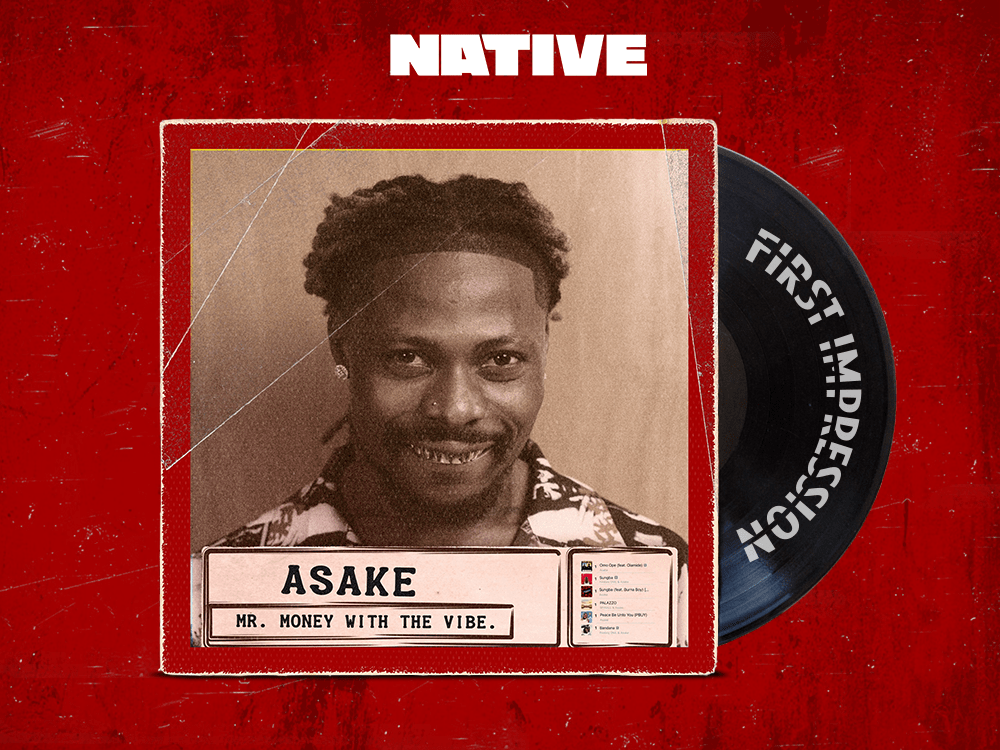
This week, ahead of the release of his third studio album ‘Playboy,’ Fireboy DML’s hit single, “Bandana” remains at the top of the charts for a second consecutive week. “Bandana” tallied 3.53 million Nigerian streams (No. 1 on streaming) and 56.9 million in radio reach (No. 1 on radio). The song marks Asake’s first song to spend more than one week at No. 1 on the Top 100 or defunct Top 50 (“PBUY” spent a week each at No. 1 on the Top 100 and Top 50).

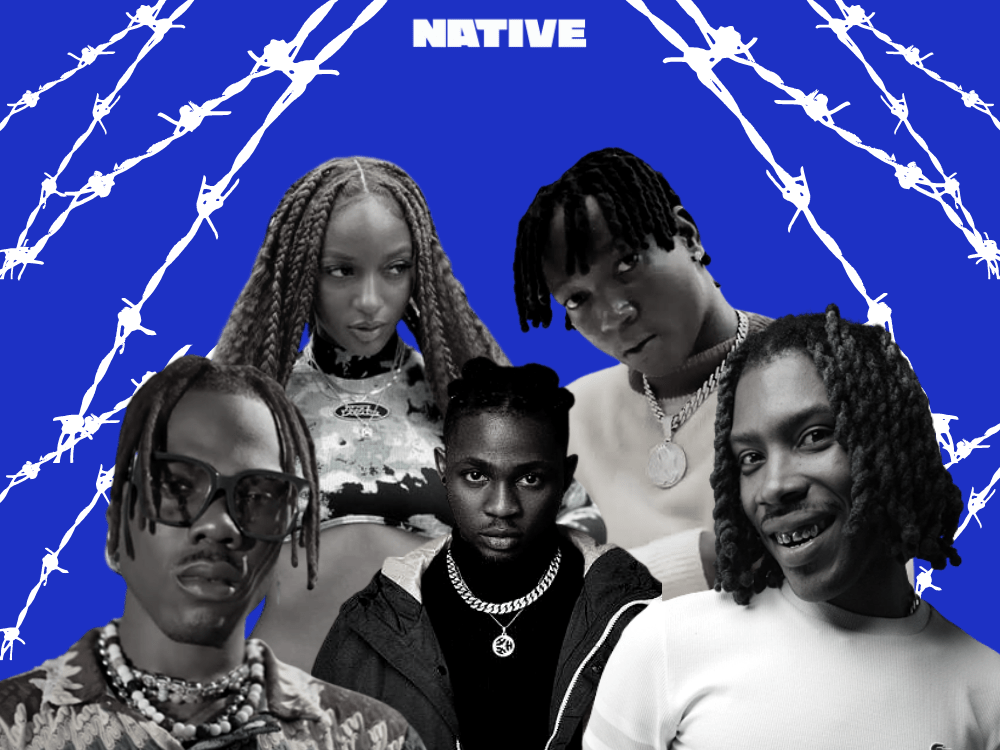
It is followed by Asake’s “PBUY” which is at No.2 for another week on the charts, while Burna Boy’s “For My Hand” featuring Ed Sheeran rises from its previously held position at No.4 to No.3 this week. Coming in at No.4 is Mavins “Overloading (OVERDOSE)” which features Ayra Starr, Crayon, Magixx, Boy Spyce and more, while Kizz Daniel’s chart-topping “Buga (Lo Lo Lo)” rounds up the top 5 spots this week.

Following at No.6 this week is Burna Boy’s “Common Person” which re-enters the top ten at a new peak. The song talied 2.96 million streams (No. 2 on streaming) and 7.95 million in radio reach (No. 64 on radio). At No.7 is also Burna Boy’s “It’s Plenty” which is followed by Crayon’s “Ijo Laba Laba” at No.8 this week. Rounding up this week’s top ten is Burna Boy’s “Last Last” at No.9 and Mayorkun’s “Certified Loner” at No.10.

Elsewhere on the charts, Oxlade’s “KU LO SA – A COLORS SHOW” ascends to a new peak of No. 12, Omah Lay’s “i’m a mess” drops 12-14, BNXN’s “Kenkele” with Wande Coal debuts at No. 15. Additionally, all of the tracks on Burna Boy’s ‘Love, Damini’ continue to chart in the Top 100 for an unprecedented third consecutive week.

Read the full breakdown of the charts here.

Featured image credits/

NATIVE Exclusive: Camidoh Was Made For This Moment

Last Thursday, Ghanaian singer Camidoh held his first-ever live performance at the Standard London. The night was well attended by music lovers and industry insiders alike, as they gathered together for the first time to welcome the artist to the city. The occasion was marked by the success of Camidoh’s hit single, “Sugarcane Remix,” featuring Mayorkun, King Promise and Darkoo, which has garnered over 9 million plays on Spotify alone, and 16 million views on Youtube.

Originally released back in 2021, “Sugarcane” went on to garner more fanfare when it was released a year later with a star-studded cross-continental remix that commingled cultures and sounds. Over a catchy production laid down Phantom, the singer and his collaborators deliver an unforgettable tune that has now become the soundtrack of many parties and weddings.


View this post on Instagram


A post shared by Midoh 💐 (@camidoh)

While “Sugarcane Remix” has continues to garner more plays since its release earlier this year, and its debut atop the TurnTable charts, the song has also taken over our timelines. Following in the footsteps of Afropop records before it, such as Kizz Daniel’s “Buga” and CKay’s “Love Nwantiti,” Camidoh’s “Sugarcane Remix” also exploded on TikTok. Currently the #SugarCaneChallenge has recorded over 85 million views and 1.3 million video creations, inspiring dance challenges and remixes from music lovers across the Internet.

It’s clear Camidoh has scored a massive hit on his hands, and he’s a student of the game, keenly paying attention to how important memorability is where melodies are concerned. Powered by this rich trove of insight, Camidoh went on to release his debut solo single of the year titled “Kaba” last Friday. The new single finds the artist exploring love and its complications, as he inquires into modern romantic relationships.

Switching between his native tongue, Ewe and English, Camidoh delivers a bubbly high-spirited track, about loving his muse, and attempting to put in the work so that her needs are met and provided for. The song’s vibe is undeniably hypnotic, toeing similar lines as “Sugarcane Remix” and his earlier releases, a move that will certainly satisfy both his old and new audiences. All this is inching towards Camidoh’s defining moment: the release of his debut album. During his stunning Evening at the Standard, Camidoh shared that his new project, ‘LITA’ would be out for release soon, and would feature of blend of music that fans had come to expect from him, while introducing listeners to something new.

Ahead of the project release, we caught up with Camidoh ahead of his first-ever headline show, ‘An Evening With Camidoh’ and spoke to the rising Ghanaian artist about his inspirations, his time in the UK, and his plans for the future.

Our conversation which follows below has been lightly edited for clarity.

NATIVE: When did you first get started in music?

Camidoh: I started music professionally in 2008. Back then, I was in high school and started a group with some friends. We formed a band and we were called Belce. We made Afrobeats at the time, but back then, it was not a common genre in Ghana, so we made more of what we’d call Hiplife.

NATIVE: How would you describe the music you make?

Camidoh: In regards to the genre , I call it Afropop and R&B. I describe my music as feel-good music and sweet music. I always go for very sweet romantic music and that’s what makes it special and sweet.

NATIVE: What inspired your hit single, “Sugarcane”?

Camidoh: I was just trying to make a very easy going track that people would enjoy. I didn’t want to make people think too much to understand the lyrics. It’s inspired by a general love story of a woman playing hard to get, so I’m serenading her with sweet words to make her feel good and shoot my shot with her. I make love songs all the time. This time around, “Sugarcane” was special because it didn’t take itself too seriously, the lyrics aren’t deep, it’s very catchy and I guess that’s something everyone can relate to.

NATIVE: How does it feel to witness the success of your song on a global scale?

Camidoh: It feels really good. It feels like a step in the right direction. If I can do it on this level, with one song, then the door is actually open for me to make a mark. I can literally do everything on a global level. It fuels me with hope and makes me want to do it again. I want to work hard for the next record and the next. I feel motivated to replicate the formula.


View this post on Instagram


A post shared by Midoh 💐 (@camidoh)

NATIVE: What was your experience like working with the song’s collaborators? 

Camidoh: It was really good. I drew a lot of inspiration from their participation. The way that they have all treated this record – asides from performing the record, they have shown up for it in numerous ways.

NATIVE: What do you want UK audiences to take away from your music?

Camidoh: What we did at the Standard was to properly introduce the real Camidoh. When I became a solo artist from the group, I started making acoustics. I was performing these acoustic versions of songs, covers, renditions and all of that. That was the proper foundation of Camidoh. I wanted my fans out there to see me running a track and be like ‘oh he can really sing.’ If I decide to do any other thing, at least my fans have seen that I can actually sing. It’s not about gimmicks. That was the aim, to really go in with the fans.

NATIVE: What did it mean to have your first headline show in London?

Camidoh: It felt great, especially looking at the turnout. It felt very impressive. It has motivated me to do a bigger venue next time. The venue’s capacity was 250 people but we had even more people who were trying to register to be a part of it, which we obviously couldn’t allow. It was a sold-out event. Next time, we do something even bigger for the fans.

NATIVE: Where do you want to be by this time next year?

Camidoh: By this time next year, I want to be able to do venues like Indigo 02 and 02 Brixton Academy. I want to be a global name across the world. I want to be a household name globally and not just the UK, not just Ghana, not just Africa, but globally. 

Stream Camidoh’s latest single, “Kaba” below.


Interview by Moore Wright and words by Tami Makinde


ICYMI: Shop New NATIVE Merch

Songs of the Day: New Music From Jaywillz, Flash, Tena Tenpo & More

We’re halfway through 2022, and it’s been an eventful year for Afropop. There’s been a torrent of great new music, spawning a massive stack of inventive smash hit songs. From Highlife-infused Ghanaian pop, to the unrelenting force that is Nigerian street-pop, to South Africa’s indomitable Dance scene, to tantalising Drill explorations in East and Central Africa, and much, much more, we’re living through abundant and musically expansive times.

Every week, tonnes of songs from African artists make their way to digital streaming platforms, and wading through them can be intense. That’s where The NATIVE’s Songs of the Day column comes in to help. We go through as many new releases as possible, spotlighting them here, two to three times every week. Today, enjoy new releases from Flash, Larry Gaaga, Jesse Jagz and more. Dig in. 

FLASH & DJ SPINALL – “FIDIDI”

For those who know, Flash is one of great talents in the game. Across his sparse catalogue, he has turned in all-time classic performances on Sarz’s “Get Up” and Show Dem Camp’s “Tropicana” but he has somehow been less prolific as a lead artist. On the groove-lined “Fididi,” he coasts a fast-paced beat amidst adlibs from Spinall. Still impressively tender in his vocal delivery, he packs a lot of good vibes into the three minutes of this new catchy track.

LARRY GAAGA – “BLESSINGS” FT. JESSE JAGZ & TEGA STARR

Larry Gaaga has another steady bop for listeners. This time, on “Blessings,” he joins the unlikely pair of rap savant Jesse Jagz and Tega Starr, a rising Afropop act. He’s actually the catalyst of this record, weaning his bright vocals onto the live-inspired tapestry of the production. With the vibe to match, Jagz delivers a short but poignant verse in his usual gruff style, colouring this record with the breezy allure of a laid-back summer number.

TENA TENPO – “BUMPY” FT. MOJO AF

On “Bumpy,” Tena Tenpo’s latest release, a voice sample forms the basis of this song’s arresting production, somewhere between Kanye West and Prettyboy D-O, off the strength of its bounce. MOJO kicks off things with a zesty verse, lining technical quirks into the trademark bass of his voice. By the time Tena Tenpo comes along, you’re surely swept up in the record’s eccentricity, full of its energy and positivity.

JAYWILLZ – “TILL DAWN”

Amidst the current crop of Afropop artists, love is a subject that leads to a larger resolution. For Nigerian singer, Jaywillz on “Till Dawn,” a standout record off his latest EP, it’s a delirious high, and you’d hear the excitement of his vocals on this one. Backed by tender percussions and colourful guitar strings, he turns in a performance that reaffirms his name among the many great acts to watch out for.

ELVEEKTOR – “50K” FT. BUGZY DVINCI

On his projects, Enugu-bred rapper Elveektor is intensely political in his exploration of identity. It’s the bedrock of his strong underground fanbase, but Valentine Ogbu has also been known to do impressionist, vibe-influenced rap singles. “50k” is another impressive moment in the run-up to his ‘Ife Nwoke’ album, calling up Bugzy to create a Trap-inflected bop. The stuff of dreams and grind forms their thematic source, and the thrust of this record.

PRIDDY UGLY – “30 MINUTES TO SOWETO”

The introspective leanings of South African rappers have constructed what is perhaps the most intriguing Hip-Hop scene on the continent. From Tyson Sybateli to Thato Saul and Priddy Ugly, they all share a burning desire to document the twisting angst of their lives.

Priddy’s “30minutes to Soweto” is a sprawling track of six minutes, packing the tear-inducing observations of Priddy into two utterly stirring verses. In the first, he creates a wonderful progression with the bars, “Most of our fathers were the type to beat our mothers, so our mothers wore a face-beat just to keep it undercover/ And deep benеath the covers therе were heaps of secret lovers/Love we need to rediscover, just to teach it to each other.” The Armsdeal-directed visual is also a poignant reflection of the streets, featuring the rapper in a drive through the city that made him, looking back on what it’s taken to get this high-up in life.

uNder: Best New Artists (July, 2022)

2022 is poised to be a great year for music. Coming off the stay-at-home induced orders of 2020 and creating and experiencing music in isolation, the world is open up once again and music is being released an exponential rate. As such, with another edition of the uNder column, our mission remains committed to bringing our audience the best new crop of artists primed to cause a stir on the continent and in the diaspora.

So here we are again, with a new batch of rising artists who probably haven’t even peaked yet but are nearly on the cusp of an explosion into superstardom. From the ‘Piano-loving duo TxC who have dominated popular festivals and stages across the globe to Nigeria’s Majesty Lyn who steadily carving her own corner in the game, and to Ghana’s Lasmid who is reworking nostalgic influences in his music, here is our list of Best New Artists for July.

Lasmid

There’s a certain nostalgia that comes through on Lasmid’s music. Born and raised in Ghana, Lasmid is a singer and songwriter whose growth can be charted from his 2020 debut single “Odo Brassband.” The groovy Hiplife single harkens back to an early era of Ghanaian music and finds the singer showering his muse with praises. The earworm track was a glittering debut which cast a wide net for where Lasmid was able to go sonically and artistically.

While he’s taken the slow and steady pace to releasing new music, the hard work seems to be paying off as he racks in more accolades on the way to the top. In 2019, Lasmid won the 8th season of MTN’s Hitmaker, a music competition created by MTN Ghana back in 2011, which earned him the recognition of his peers and role models alike. He’s only released a handful of singles but everything he’s released has been more engaging than the last, with records such as the Kwami Eugene-assisted “Sika”, “Father” and “Atele” revealing more layers to his artistry, as he melds Afropop, Gospel, Highlife, R&B and more.

If you’re looking for an entry point into Lasmid’s short but sweet catalogue, look no further than his latest single “Friday Night”, one of the biggest songs in Ghana this year, which also shows his massive potential. The mid-tempo number finds the singer talking about enjoying life and focusing on the positive aspects it has to offer, a cocksure and confident way to come into the game. Within two years of his debut single, Ghana’s Lasmid has gone from singing in the choir at an early age to getting involved in rap battles while growing up, and now singing on main stages. With a few months left in 2022, we’re betting that Lasmid is one to watch out for.

Majesty Lyn

In 2018, Majesty Lyn released a cover of 2Baba and Peruzzi’s “Amaka”. Amid other covers, that one went on to become a smash hit on social media, introducing Lyn’s total artistry to a large section of Afropop fans, shortly after the then 21 year-old musician delivered a stellar verse on “Memories” is a stand out cut from ‘Alternate Ending’, the joint album from Boogey and Paybac iBoro also known as The Lost and Found.

Lyn soon captivated ears with singles of her own, going on to release the ‘Four Twenty’ EP in 2020. The four-track project had buzzing standouts like “Hold On My Heart” and “You See” which showcased Lyn’s expansive range and tonal brilliance, while constructing tales of young love and ambition. The brilliance of that introductory year was finely wrapped with “Find Your Way,” a House-tinged record packed with motivational bite. “Friends don’t even last these days, shameless with the plastic ways/ Sadly there’s no time to waste, concentrate when things fail,” she sings with exciting resolve, underlining her resolve to be a generational voice.

2021 was a typically prolific year for the Port Harcourt-bred musician, releasing two projects–‘Lyn of the South’ and ‘Loud And Clear (4.20)’–between March and April. As suggested on its title the former bleeds into personal stories, carried by strong records of affirmation like “Name Another Girl” and “Zion,” an ode to the transcendental forces behind her. Still, lyrics like “cos I’m entitled, and I am a bitch,” reflect her unapologetic honesty. Her latest single “Notice” was released barely a fortnight ago, notably to much anticipation after becoming an IG trend as well. Without a tinge of exaggeration, Lyn’s amorphous skill set sets her on the path of making a novel impact on the ever-changing Nigerian music industry.

Wendy Kay

Over the years, East Africa has been a breeding ground for some of the most inventive musicians emerging the continent. Wendy Kay emerges from this tradition of excellence, debuting in 2018 with “Maybe.” Even that early into her career, Kay’s artistry already possessed an accomplished sheen, constructed by poetic, cutting lyrics which gently flowed out of R&B-patterned strings. “Nakudai” followed the next year, this time relaying more urgency yet still indelibly stringed by Wendy’s bright vocals breaking into fun, dance-ready cadences.

Her debut EP came in 2020, the succinctly-titled ‘My Way’ which significantly broadened her range. The titular opener ripples with rap-inflected drums, but Wendy’s vocals are remarkably cool as she sings about executing her vision in her unique way. From mirroring the beat’s rhythm to soulful croons, her skillset is audibly gorgeous. Other songs like “Mama Papa” and “Stori Ni Gani” also had that singularity of vision, utilising bold sonic to sketch out Wendy Kay’s motivations. The Rigga-assisted “Samahani” is a personal favourite, formed on a lush backdrop of knocking percussions and Kay’s affectionate singing. Breakup is the subject, and such powerful emotion is weaned from that, portraying Wendy Kay as an experiental artist.

Going through a prolific 2021, Lyn released a number of songs which strengthened her grasp on the Kenyan music scene, and crucially marked her out as one to pay attention to. Earlier this year she released ‘My Way 2,’ a fitting sequel to her first project. As on earlier songs, her neo-soul flourishes are present on standouts like “Niambie” and “Safe Space,” again reaffirming Wendy Kay as a most compelling artist.

TxC

South African Amapiano duo Tarryn Reid and Clarisse Hefke will most likely fall within the category of artists you may have come across before. Popularly known under their moniker, TxC, the duo are well known for their viral ‘Piano dj sets which has seen them grace prestigious stages across the world including their eclectic Boiler Room set which has amassed over 1 million views.

While their stellar DJ sets need no introduction, they are fairly new on the music scene given that the duo only released their debut project this year. Arriving just this month, the duo released their debut 5-track EP ‘A Fierce Piano,’ which brings their love and passion for Amapiano into sharp focus. The 30-minute body of work features guest performances from stellar African artists such as Tim Lyre, Daliwonga, Murumba Pitch and more, who offer a rare and rounded glimpse into the world of the ‘Piano-playing duo. On “Mood,” one of the project’s standout tracks featuring Tim Lyre, the duo provide the perfect backdrop for Tim Lyre to fire off his pensive and clever verses, creating an irresistibly danceable hit.

Since their arrival on the scene, they have collaborated with industry heavyweights such as Dinky Kunene, Daliwonga, DJ Task, Unlimited Souls, Amaroto, as well as Nigerian superstar Davido. Although the step towards releasing their own original music may seem new to those familiar with the duo from their early days, TxC have always been involved in music from a very young age and decided to pursue disc jockeying full-time to express this passion. Inspired by the fact that there were not many female DJ’s of colour, they decided to take the risk and move to Johannesburg to start their music career, making one of the most impactful decision of their lives. Now, with the world at their feet, TxC are ready to take on the world stage from the studio.

Mi$tak

Mi$tak is a marvel of youthful imagination and a reflection of hip-hop’s diverse, Trap-centric era. A year ago, he shared his debut full-length project, ‘Truth of the Matter’, a fine showcase of his ability to helm vibrant bangers packed with self-assured bars and occasionally introspective lyricism. Months later, on this year’s Valentine’s Day, the Kenyan artist dropped ‘Love & Ties’, a brief EP featuring his best impressions as an R&B crooner, laying his atmospheric vocals over thumping and mood-based production.

While the bulk of his current catalogue favours his powers as a rap artist, Mi$tak fits perfectly into the digital era of artists boasting seamless diversity across singing and rapping. As a rapper, though, he favours quirky punchlines that accent his delightfully deadpan flow. He recently joined forces with Ouma Wafegi for ‘RAHA’, a trap-infused tape packed with an unrelenting onslaught of feel-good slappers underpinned by a consistent display of exuberance, in the catchy flows, imagery-based raps and ominous but colourful beat selection. Whether dropping intoxicating rhymes or indulging his gruff soul-man croon, Mi$tak is carving out his identity as a worthwhile artist to listen to.

Caleb Awiti

In a 2020 interview, Caleb Awiti stated that his dream collaboration was to work with Bryson Tiller. That should give you a clear picture of the era and type of R&B music the Kenyan singer reveres. Having decided to make music as a passion, Caleb started honing his voice from a young age, officially debuting as a teenager in 2019 with “Messed Up”, introducing himself as a decidedly R&B artist. Since then, he’s delivered dozens of singles and several projects, including his debut project, ‘Love Letters 1’, and its fairly recent sequel from March.

Prolific and talented, Caleb’s smooth and entrancing vocals are the centrepiece of his music, often floating over hypnotic, slow-rolling beats as he navigates infatuation, love, and toxic exes. It’s fitting for an artist that, in addition to Bryson Tiller, the vivid influences of singers like The Weeknd, Drake and Brent Faiyaz plays into the solipsistic edge of his music, as he escapism, romance, and melancholia. Parsing his music through something of a Lo-Fi filter, his sound is hazy and often minimal, made for moments of personal listening – preferably at owl hours.

With an inclination towards spontaneous music-making, there’s a constant lived-in feel to his songs, whether it’s an off-the-cuff love letter to a modern R&B darling or taking us through the tumult of being with a possessive partner on latest single, “All To My Own”. The type of music Caleb Awiti makes prioritises honesty and he’s living up to that requirement.

Featured image credits/NATIVE

Revisiting Sarkodie’s Third Album, ‘Sarkology’

The early 2010’s was an interesting time for me, as a young writer and music lover. Rap music was always a part of life, but then I’d begun to immerse myself in knowledge of the craft. It was the years of deep cuts and Genius, the years of penning my own lyrics, of getting in online battles with silly pseudonyms, the year of Sarkodie. I think I had heard about Sarkodie in a non consequential argument about fast rappers. One wide-eyed boy, obviously revelling in this discovery, shouted out, “Una dun hear Sarkodie?!”                                           

The three syllables of that name stuck to my head, so one day I browsed and found a song titled Lay Away. Shot on a tightly packed rural area, the considerably budgeted video centred on Michael Owusu Addo, the man otherwise known as Sarkodie who’d also go on to become one of my favourite rappers ever. His black skin and sunglasses had a militant feel, making the words he rapped seem like a message from a distant brother. Sure he was fast: he bended Twi like a glob of mashed cereal, and was crucially able to retain its essence even though parsing it through a foreign form. 

Sarkodie’s appeal was however his gritty Hip-Hop swag, and I readily fixed him onto my playlist which at the time consisted of names like M.I Abaga, Boogey, Eva Alordiah, Tumi and Phenom, among others. To the best of my knowledge that decade was the final run of Nigerian rap as a focus of the mainstream, and so I wasn’t the only Nigerian catching the Sarkodie buzz. By the time the E.L-assisted Azonto Fiestadropped, the Ghanaian MC was primed to become an adopted member of the Nigerian music scene, a role he fully entered with the ‘Sarkology’ album. 

Admittedly, it’s a very lengthy album—thirty songs, and feature-streaked from start to finish. Listening to it now, it’s not a perfect album. Indeed, its most exciting moments come in the latter parts, with the beats even more polished. On it, you’ll find the Banky W (“Pon Di Ting”) and Davido (“Gunshot”) collaborations, which are prime examples of the pop-rap path which Sarkodie continued to explore. 

I remember we were in college when the former rifled through the streets of Lagos, possessed with the swag found in rap crossovers at the time. I remember Banky W’s cheeky last line “baby, I can make you move faster than Sarkodie’s raps” introducing the rapper’s trademark element to mainstream Nigeria. 2Face Idibia (“War”) and Tiwa Savage (“Ordinary Love”) also turned in scintillating performances, but nothing could trump my love for Burna Boy’s output on “Special Someone,” a song which also featured South African rapper AKA. Asides the signficance of having three major acts from three African countries collaborate, the song was impressively tender, drawing from the soft nucleus of R&B while brazenly adapting the breezy cadences of rap within the verses. 

Sarkodie was however more than just a fine curator. Regardless of how much leverage his Nigerian-facing collaborations gave him, ‘Sarkology’ still featured the rich Ghanaian flavour I’d fallen in love with two albums ago. On “Original,” he talks about the concerns of people that he’ll be limited by rapping in his native language, then discarding the thought by going on to decimate a boisterous beat lined with triumphant synths. There he also mentions Reggie Rockstone and Obrafour among his musical heroes, thereby noting Hiplife among his sonic touchstones. 

On “Elijah,” he parlays his musical kinship with the iconic Obrafour into a notable rap affair. Zesty, calculated verses blend with a poignant hook, one which immediately takes the audience into the mood of being in an alcoholic bar somewhere in Tema, communing with like minds and getting high. 

The duo of “Adonai” and “Devil In Me” centre Sarkodie’s tendency to align religious beliefs with raps. Rather than the more popular version of the former, it’s a musician called SK Blinks who delivers the hook and chorus of this one. Even the lustrous sheen of the remixed version isn’t present; rather, a stirring, primal percussive rhythm is maintained and amplified, rising with delicate knowledge of the traditional style of playing. Blinks’ vocals are deliciously roots-y as well, and setup by such brilliance Sarkodie’s thoughtfulness is given free reign to emerge, scarcely shackled by the technical demands of all-out rap songs. 

“Devil In Me” is another such song. With Efya’s vocals being in its prime period, she renders a strong performance which raises the roof of the album. Hearing it again, this church-inspired rap music also forms the core of M.I Abaga’s “Imperfect Me.” The vulnerability of Efya’s sombre cry inspires a similarly heartfelt approach from Sarkodie, and it’s such a perfect way to close the album. Of course, you’d expect a number of skits from a 30-track album but the high points of ‘Sarkology’ are incredibly high. 

The directness of a record like “Rap Attack” can only be attempted by an MC of high calibre, confident in his ability to hold his own over such a demanding beat. At the time Vector was really prominent for his battle tendencies so it just made sense–you went into the recording expecting something, and you got just that. 

It’s also worth knowing, however, that such directness would not always have great compliments. A review I read of this album faulted Sarkodie’s eagerness to overtly display his rap credibility. This, the writer felt, was highly considered over the concept of a particular album, and I kind of agree with him. As much as Sarkodie is a fine rapper, I don’t always align with his albums. Well, there isn’t much to align with but in the case of ‘Sarkology,’ the impact trumps its quality, and that’s fine. There’s an array of such albums scattered over the tapestry of popular music. 

Not looking much further, the expansive edge of a rapper like M.anifest have given him better albums down the line. Stitching the concerns of a capitalist world into his own exploration of identity, the Ghanaian has made enduring albums like ‘Nowhere Cool’ and ‘Madina To The Universe.’ However, Sarkodie as well has largely gotten it right with recent projects ‘Black Love’ and ‘No Pressure.’ The former especially has a unified sonic backdrop (of lush, warm beats), and is threaded by an array of perspectives about love. What pushes that over the line as an important album, would have been intimate lyricism. Admittedly, that was lacking even though Sarkodie’s delivery still had its assured flow and humorous observations. 

Still, I’ll always remember ‘Sarkology’. Being Igbo and a fan of Highlife music, I’ve always been aware of some alliance with Ghana and Sarkodie was the first superstar born from that imagination. The trendier years of Hiplife in the early 2000s wasn’t really my generation; I heard the songs but Sarkodie married the fascination with Hip-Hop with obviously local content. For this fact, ‘Sarkology’ will always remain an important African rap album.

Azanti hints at new album with “Getting Hot”

Since his debut on the scene, Azanti has been cruising to greater heights. So far, with a collaborative EP and a handful of features under his belt, he is inching towards making a name for himself in the Afropop scene. From songwriting credits on Mr Eazi’s EP ‘Something Else’, to backup vocals on Joeboy’s standout single “Police”, Azanti has utilised his artistry to the fullest in such a short period of time.


View this post on Instagram


A post shared by Azanti Fsn (@azanti_fsn)

Now, with a clearer vision about where he’s headed in the game, Azanti shares his debut solo single, “Getting Hot,” an anthemic and instantly memorable song that is fit for the summer. The track opens up with shakers in the background as his melodious voice croons over the instrumental. Azanti takes advantage of the single to remind his fans he’s coming in big with lyrics such as “..so let me remind you my name is Azanti.”

He paints a picture of the journey ahead of him, taking stock of his lessons so far and preluding the success of the future. Fuelled by assertive storytelling, “Getting Hot,” widens the potency of Azanti’s arsenal and takes him a step closer to the powerhouse he is capable of becoming. 

“Getting Hot,” also serves as the Abuja-based singer’s official label debut, after signing with Def Jam Records. 

Stream “Getting Hot” below.

Songs Of The Day: New Music From Jae5, Wande Coal, Camidoh & More

We’re halfway through 2022, and it’s been an eventful year for Afropop. There’s been a torrent of great new music, spawning a massive stack of inventive smash hit songs. From Highlife-infused Ghanaian pop, to the unrelenting force that is Nigerian street-pop, to South Africa’s indomitable Dance scene, to tantalising Drill explorations in East and Central Africa, and much, much more, we’re living through abundant and musically expansive times.

Every week, tonnes of songs from African artists make their way to digital streaming platforms, and wading through them can be intense. That’s where The NATIVE’s Songs of the Day column comes in to help. We go through as many new releases as possible, spotlighting them here, two to three times every week. Today, enjoy new releases from Jae5, Dave, Camidoh, Wande Coal, DJ Tunez, and more. Dig in.

JAE5 – “Propeller” ft. Dave & BNXN

On “Propeller”, UK based producer Jae5 unites rapper Dave with Nigerian singer, BNXN (fka Buju). BNXN opens the track with his buttery smooth vocals, singing “been a long time since I learned to put rhymes together, spin round your block I’m a big propeller” as he reminds listeners of how far he has come with his craft. Rapper Dave steps in and lays two stellar verses on the record with BNXN singing the hook at intervals. 

DJ Tunez – “Bad Girl” ft. Wande Coal & Victony 

DJ Tunez brings Wande Coal, Victony and P.Priime together to deliver new single “Bad Girl.” Over the stellar production of the fiery new record, Wande Coal and Victony are a divine pairing, feeding off each other’s energies and lyrics.

Victony sings “bad girl don’t you run away now, girl” calling on his love interest to remain with him. Wande Coal also delivers a standout verse, as he chants lyrics such as “bad girl don’t run away now, e get many things I want to say now/pretty girl come my way now, I get many  things I like to show ya.” 

T-Classic – “Oliver Twist”

Nigerian born singer and songwriter T-Classic has arrived with his sophomore EP ‘Voicenote,’ a 6-track project which features a guest verse from S1mba. On the project opener and standout track “Oliver Twist,” T-Classic speaks on his love for beautiful women and how he can’t seem to commit to one. He quips “So make I follow the way, the way of Oliver Twist” as he plays on the tale of Oliver Twist who was never satisfied.

Camidoh – “Kaba” 

Ghanaian singer Camidoh held down the airwaves recently with his hit single “Sugarcane Remix” which featured Mayorkun, King Promise and Darkoo. Now, the singer is back with another catchy tune titled “Kaba.” The mid-tempo record sees Camidoh delivering a catchy verse about the complexities of love and dating in modern times.

Ayüü – “2 Müch” 

Abuja-based singer Ayüü has arrived with his second official single of the year. On the Lë Mav-produced “2 Müch,” he melds R&B sensibilities with heavy Afropop drums while singing lyrics such as “Sometimes it feels like I’m at peace but then, i start talking to you/Got betrayed sacrificed sha, Still walking with you.”

Mau From Nowhere – “Our Favourite Songs”

uNder alum, mau from nowhere is an experimental artist often toying with unconventional sounds. Following the release of his previous single, “Fireflies,” earlier this month, the singer returns with a new track titled “Our Favourite Songs.” Over the song’s mid-tempo production, he sings “I know you’re scared to chase it, scared of who’ll do you wrong/So we’re celebrating, making all our favourite songs,” reassuring her of their shared love.

Bryann – “Juju Pt. 2” (A COLORS Performance) 

Fresh Meat album (now known as uNder) took the internet by storm when he debuted as a contestant on the ongoing season 7 of Big Brother Naija. Now, the singer joins the long line of Nigerian artists featured on the COLORS platform with his new single,  “Juju Pt. 2.” On the Spax-produced record, he sings “forget the thing dey do me pon pon, the thing dey high me like sawdust/i’m addicted, I’m addicted to you,” to his love interest, as he reveals how deep his love runs for her.

Featured Image Credits/NATIVE

Shopé Shares Exciting New Project, ‘Things We Say’

The African community in the diaspora contributes a lot to the trajectory of Afropop. Beyond providing a bubbling, paying fanbase for African acts across countries like the US and the United Kingdom, musicians creating from over there has also been inspired to reflect their roots in their sonic choices.
Canada-based Nigerian artist Shopé has released his EP, ‘Things We Say’. The six-track project encapsulates the breadth of his myriad influences, and is threaded by the concept of one’s human relationships and the power of words as a central part of that connection.
The music scene of Cadana is impressively growing to include an array of musicians, with acts like Nonso Amadi breaking out over the past half-decade to considerable acclaim. Shopé is inspired by this tradition, utilizing R&B to fine effect. Before the release of this album, he had a laidback year, putting out “Rikiki” and “Pepper Dem,” two singles which doubled down on the legitimacy of his Nigerian origin. In the colorful visuals of the latter song, he stages an interview at the beginning to flex on his fashion, smoothly using that to establish the buoyant vibe of the record.
With all the deliberation that goes into Shopé’s music and his overall presentation, ‘Things We Say’ surely has great potential to break through the ice of today’s many releases. Actually, it’s quite expected that the tape will become a solid entry in his discography, looked back upon with relish as he continues to grow his fan base.

NATIVE Premiere: Teezee’s New Video For “DRKSKN” Is A Love Letter To Lagos

Earlier this year, Teezee released his sophomore album ‘Arrested By Love,’ his first solo body since 2013’s debut ‘The Fresh Prince of Las Gidi.’ The new project provided a full-view of his sonic and personal world, capturing the duality of Teezee as both rapper and singer than at any point in his career while displaying the appreciation for quaking instrumentals.


View this post on Instagram


A post shared by @teezee

Since the EP’s release, Teezee has been drawing fans into the world of ‘Arrested By Love,’ by treating fans to new video treatments. Earlier in the year, he shared the video for the Deto Black-assisted “NOK’D” and has now followed this up with the release of the official video for “DRKSKN” featuring UK rappers, Lancey Foux and Backroad Gee.

The new video features clips from Teezee’s colourful world in Lagos and London. Directed by Ayo Odunsi, the video includes clips of Teezee as he takes us through different parts of the Lagos living experience, from concerts to the beach, family time and more. All these experiences merge into an enjoyable visual experience for the viewers’ consumption.

The vibrant and colourful video also captures Lancey and Teezee, during the rapper’s visit to Lagos last December, as well as multiple clips of raging fans and listeners at concerts. Following the video’s release, we spoke to Teezee about the inspiration behind the video and the importance of documentation.

His answers, which follow below, have been lightly edited for clarity.

NATIVE: How did this particular collaboration come about?

Teezee: This particular collaboration came about in London in early 2021. I had linked up with my longtime friend and collaborator Lancey Foux and I had always been a fan of his music cause he always had his own interesting way of going about putting out his music in the UK and now, he’s one of the biggest and with Backroad, I met him around the same time in London and we just connected on energies and we linked up in the studio on the same day so Lancey laid the hook first in like five minutes and so Backroad and I just hopped on and did our verses back to back and that happened.

NATIVE: What was the major idea behind this video and how were you able to create this visually? 

Teezee: I just wanted to capture Lagos in its full element during the party season. From the rage season in December with events such as NATIV5 to Easter with Homecoming, these are what make Lagos fun. I’m glad my close friend, Lancey could really feel the energy of Lagos and really understand that people are really messing with him out here because it was his first time perfo he’s been here back in the day with Skepta and wasn’t able to perform but these two events really showed him that people on this side mess with him a lot.

NATIVE: What were two major highlights while shooting this video?

Teezee: Well, it was really the Behind The Scenes moments we were really trying to capture, so I think the highlight was really the whole scene in its glory. There’s a lot of cameos from people and participants in everything we’ve been trying to build for the past couple of years and that’s pretty exciting.

NATIVE: What do you want listeners and viewers to take away from this track alongside the video?

Teezee: Obviously, Lagos is one of the craziest and funnest cities in the world but yeah, this one’s actually for Black people and dark skinned people. This record celebrates us for being darkskinned people and being on our own vibes.

Get an exclusive first look at “DRKSKN” below.


Hot Takes: First Kill, BB Naija’s Epic Return, Afrobeats World Tour & More

As the month July draws to a close, the last lap of the summer is underway. While there’s still a month left to soak up the sun, hang out with friends and curate the perfect playlist, I feel a sense of wistfulness in the air. Although it’s not quite over yet, I’m already starting to feel a sense of nostalgia for the passing summer, which is a fitting emotion  for the end of cancer season.

There is still a lot to look forward to in the remaining days. For one, the new season of Big brother Naija arrives, just as the last week of ITV’s Love Island hits our screens. Also, there’s a Netflix’s summer catalogue which includes a new sapphic show ‘First Kill’ which I’m now bingering. There’s also new music to discover, including the soundtrack from a musical. As always, the wheels of pop culture are ever-turning and it’s our job to put you onto the hottest takes on just about everything. Keep reading this weeks Hot Takes as we’ve got a lot to say.

What I’m Watching

‘First Kill’ is the sapphic vampire show taking the internet by storm. Premiering on Netflix in June, it follows the love story of Juliette, a young legacy vampire and Calliope, a monster hunter, who cross paths when Calliope relocates to a new town and school. Unsurprisingly, they fall in love, causing tension between their families. 

‘First Kill’ feels very familiar in a lot of ways. It features a classic forbidden love story a la ‘Romeo and Juliet’, which is referenced frequently throughout the show. The interspecies relationship is just one of many in fiction since ‘Twilight’ was published, and the vampire-monster hunter dynamic in particular has been explored in teen fiction since ‘Buffy the Vampire Slayer’ in the 90’s. Calliope and Juliet fall in love almost instantly and spout poetics about their love in ways that feels eye rollingly cliché. 

What stops First Kill from being completely  cookie-cutter, however, is the nature of the central relationship. It is unfortunately noteworthy that such a mainstream show focuses so heavily on a canonical lesbian relationship from the get go, instead of making them side characters or teasing the relationship over several seasons. Calliope, one half of the central couple, is also a darker skinned black woman, played by Imani Lewis. This makes her a rare black queer character in a lead role, who isn’t portrayed as villanous and, is instead morally righteous to a fault.

‘First Kill’ is definitely a show I would recommend to those who want a cheesy love story with a fresh dynamic.

What I’m listening to

Recently, I’ve been listening to the soundtrack from the 2021 musical ‘Cyrano.’ It is an adaptation of the French play Cyrano de Bergerac, and often parodied play where a conventionally unattractive man woos his love Roxane through the more attractive man, Christian. 

While overall a decent movie, to me the best thing about it was by far the soundtrack. It was full of yearning, best exemplified by the first major song, Someone to Say” and its reprise, which details the longing to love and be loved. Another notable song was Overcome” which may best represent the themes of the play. In it Cyrano sings to Roxane through Christian, with Cyrano detailing how overcome he is with his feelings. The film ‘Cyrano’ is overall a decent, relatable movie with a standout soundtrack.

First they mock us, now they love us…

Nigerian music and in particular Afrobeats has certainly become more mainstream in recent years. No matter where in the world you are, it’s likely that you’ll hear at least one song by a Nigerian musician playing in a club, restaurant or from someone’s personal radio. This has caused some people to bring up the fact that Nigerian music was not always something considered ‘cool’, even by Nigerians based at home.

The increasing global popularity of African music may have to do with this change, as people all over the world are beginning to show their appreciation for music from this continent. While it is very pleasing to see more people showing their appreciation for Nigerian music, it does make me think about what it means for something to be cool. Does being cool mean something is trendy? And if it is trendy, does that mean it could easily fall out of fashion? It also makes me question how much this sense of coolness has to do with the foreign acceptance of Nigerian music. Is that the benchmark of what is acceptable?

In spite of all of these worries, it may also not really matter what has made Nigerian music ‘cool’ as much as it’s important that it’s getting mainstream appreciation. As detailed in the Netflix documentary Afrobeats: The Backstory, Afrobeats has had a dedicated fan base for a while and will continue to thrive in spite of music trends.

Rappers aren’t always moral

It’s an open secret that celebrities aren’t the most morally upstanding citizens in society. Time and time again, we’ve seen celebrities get away with heinous crimes just because someone was able to throw money at the problem. This has become increasingly so since the onset of the pandemic where the cracks in celebrity worship are beginning to show and people are divesting from the online personalities they once held dear.

Recently, rapper Lil Uzi Vert was seeing showing support for Kodack Black, who has a history of sexual assault cases and just got arrested on drug trafficking and possession charges in Fort Lauderdale, Florida. According to official reports, police discovered 31 Oxycodone pills and over $50,000 in cash in his vehicle during a traffic stop earlier this month. The rapper has since posted a $75,000 bond and was later placed on house arrest by authorities. Black also agreed to a $225,000 surety bond, along with submitting drug tests, wearing a GPS ankle monitor and remaining at home unless for medical reasons, court appearances or employment.

Yesterday, Lil Uzi Vert voiced their belated support for Kodak Black on Twitter, saddened that Kodack was dealing with more hits  after he was shot in the leg by a stray bullet in Los Angeles in February. While I definitely understand why Uzi Vert may want to show his support for his friend, there’s no understating that a grave crime was committed and he is now facing repurcussions from the law. It is not “going through shit” as the rapper would suggest but really the consequences of his own actions? I’m really tired of celebrities thinking they are akin to God. Give it a rest.

BB Naija is back & better

by Wonu Osikoya 

It’s official, Big Brother Naija is back for its 7th season. After wrapping the reunion for the BBNaija Shine Ya Eye season just last month, the new season kicked off a few days ago with a double launch. On Saturday 23rd and Sunday 24th, Big Brother welcomed 24 new housemates into his house. 

This year, the theme is ‘Level Up’ and following the theme, the contestants have been divided into two houses with 12 contestants in each house. As the new season has arrived, Big Brother has also arrived with his twists and games which are set to entertain viewers for the next 71 days. Already, alliances are being formed and scoreboards are being drawn as Africans are once again united to watch the drama unfold from their favourite housemate. From what I can tell, two contestants seem to be causing all the conversation on the timeline are Bryann, who is already well-known as an artist, and Sheggz, who allegedly assaulted one of his ex-girlfriends back in the UK.

Featured image credits/

TurnTable Top 100: Fireboy DML & Crayon Dominate This Week’s Charts

The YBNL/Empire duo of Fireboy DML and Asake have clinched the top spot in the week’s edition of TurnTable Top 100. Their “Bandana” collaboration makes a record-high jump from 66th spot on last week’s chart to number one this week. Also number on streaming, it tallied 4.47million Nigerian streams and went on to reach 49.5 million people through radio; that however got the record on number five on the radio chart.

This makes it Fireboy’s first number one on the new TurnTable Top 100. It’s Asake’s second, even though he’s had two number ones in the defunct Top 50. Fireboy’s “Peru” had also reached the zenith of that chart, earlier in 2022.

“Peace Be Unto You” relinquishes its top spot, going to number two this week. For the second consecutive week, its TG Omori-directed video also tops the TV chart, with a reach of 14.7million. “It’s Plenty” by Burna Boy rises from six to three, while the Ed Sheeran-assisted “For My Hand,” still off the Love, Damini, drops three places from its number one spot to four.

Completing the Top 5 is the Mavins’ “Overloading (OVERDOSE)”, which drops one spot from last week’s position. Kizz Daniel and Tekno’s “Buga (Lo Lo Lo)” drops from number three to six. Ruger’s “Girlfriend” returns to its peak position of number seven.

Burna Boy’s “Last Last” goes from fifth to eight on the chart while Mayorkun’s “Certified Loner (No Competition)” ascends four spots, going from thirteen to nine. The only new entry in this week’s top ten is Crayon’s “Ijo (Laba Laba),” which ascends a mammoth eight spots, going from eighteen to tenth. The song is also No. 1 on this week’s radio chart with 53.6 million in radio reach. With the presence of “Overloading” at No. 5 and “Ijo” at No. 10, Crayon becomes one of the few artistes with multiple top ten entries on the Nigeria Top 100.

Checkout the full chart on the TurnTable website

Budweiser’s FIFA KickOff Concert Is Coming To Lagos This Weekend

Budweiser, one of the world’s leading brewers is known for throwing some of the most intriguing parties in Nigeria. For their latest iteration, Budweiser is now bringing a music and sports experience in celebration of the World Cup Season straight to the heart of Lagos.


View this post on Instagram


A post shared by Budweiser Nigeria (@budweisernigeria)

The BudXLagos FIFA KickOff Concert will be held on Saturday, 30th at the Eko Convention Centre and will see a range of performances including performances from Davido, 2Baba, Asake, Tiwa Savage, Wande Coal, Fave, Teni as well as Budweiser ambassador, Mayorkun. The event will also host DJ sets from some of the hottest DJs on the continent including DJ Spinall, DJ Consequence amongst many others. The concert is a celebration of the biggest football platform in the world, the FIFA World Cup Tournament set to kick off in November and this time around, in Qatar. 

Budweiser is calling on all football lovers in Nigeria to gather and celebrate as we usher in the World Cup season in grand style. Tickets may be purchased at Nairabox. Each ticket purchased will offer buyers a chance to win an all-expense paid trip to the FIFA World Cup in Qatar to watch two matches. The NATIVE will also be giving out tickets and to win these, you must be subscribed to our newsletters. 

This event is only accessible to people over 18 years of age.

Featured Image Credits/

We spoke to some Burna Boy fans about ‘African Giant’

Burna Boy’s star power is undeniable. Over the past few years, the Grammy-award winning artist has embarked on a peerless run, as he conquers all frontiers in his path to ubiquity. With every milestone he crosses, he manages to add a new layer of freshness to his artistry, taking on new styles and morphing with the times while staying true to himself and his core fans.

On his latest offering ‘Love, Damini,’ the Port Harcourt-born singer casts his sights on his biggest mission yet: himself. Across the project’s 19 tracks, Burna Boy delivers plaintive choruses and sharp verses cutting through a range of topics from love to becoming. While he’s always been a formidable singer, here he also sounds like she learned that with global superstardom comes the freedom to set ones own agenda.

Off the back of selling millions of records, hosting countless arenas across the globe, of which the most recent was the sold out 20,000 capacity at Madison Square Garden, Burna Boy continues to connect with his audiences back at home with familiar slangs and colourful lyrics that remind us he’ll never stray too far from home. While it was the ‘Twice As Tall’ that earned Damini Ogulu his Grammy, his 4th studio LP ‘African Giant’ that set him on his globe-throttling mission.

3 years ago today, just the release of ‘African Giant,’ his 4th studio album, Burna Boy was at a pivotal stage of his career. Afropop was witnessing early stages of its world dominating defining moment and artists such as Burna Boy, Wizkid, and more were at the forefront of that revolution. Coachella 2019 happened and then Burna Boy maintained that momentum with ‘African Giant,’ one of the most impressive body of works in Afropop today. The album featured a series of artists across the world, from Jorja Smith to Damian Marley to one of his icons, Angélique Kidjo and cut across many different genres and sounds, weaving poignant stories on the Nigerian Government to levelling up and attaining his achievements at the time. 

The importance of an album such as ‘African Giant’ can simply not be overstated. To that end, today, on its third year anniversary, we spoke to a number of OG Burna Boy fans about the album that set Burna Boy on his current streak. Enjoy.

Sapphire (19)

 Top 2 songs on ‘African Giant?’ 

“Gumbody” and “Anybody” but this was a very tough decision for me

What was your first impression of ‘African Giant’ when you initially heard the album? Was this an easy album to get into or did you need some time?

My first impression of African Giant, honestly speaking, I listened to the album head to tail at once this year.  In the past, I just used to pick, play and go. It is a solid 10/10 album, in my opinion Burna’s best album till date. It is a masterpiece. 

Three years from its releases, how impactful will you say ‘African Giant’ has been?

When I got this message I revisited the album and all I can is that shit is forever going to be legendary. The next generation and generation after that, will bow to the supremacy of that album. Everybody that listens to ‘African Giant’ will feel the impact of the album.

Chidinma – (26)

Top 2 songs on ‘African Giant’

My favourites are  “Pull Up” and “Gum Body”

What was your first impression of ‘African Giant’ when you initially heard the album? Was this an easy album to get into or did you need some time?

I would say I liked it, I wasn’t entirely wowed initially but I knew it had a couple of good songs and the  replay value was good too. For me because of the replay value I knew I was going to easily get into it. I just needed some time with it, that’s how I am with all Burna’s albums, I have to take my time to appreciate the art.

Three years from its releases, how impactful will you say ‘African Giant’ has been?

In terms of impact, I think it helped place Burna on a global scale. Most people might say “Ye” did that but I think ‘African Giant’ went on to solidify that, it Introduced Burna’s sound to the world and I’m happy about that for him.

Tobilola (23)

Top 2 songs on ‘African Giant?’

Honestly there are too many songs to pick from but i think i might just have to go with “African Giant” and “Omo”

What was your first impression of ‘African Giant’ when you initially heard the album? Was this an easy album to get into or did you need some time?

My first impression was that this was burna boy coming to prove himself honestly because the album is clearly a work of art, right from the first listen I was hooked and I’m even still hooked. Burna Boy created an unbelievably great album

Three years from its releases, how impactful will you say ‘African Giant’ has been?

 I feel ‘African Giant’ was like a stepping stone for Burna Boy into the international scene which impacted the world of music as a whole because it literally got him his first grammy nomination. Before the album most international features were from the top dogs in the industry but after you’ll notice a lot of international artists started working a whole lot more with african artists which was a massive push for the continent as a whole.

Ade Tee (28)

Top 2 songs on ‘African Giant?’

“Gum body” and “Gbona” does it for me 

What was your first impression of ‘African Giant’ when you initially heard the album? Was this an easy album to get into or did you need some time?

I’ve been a Burna girl since the days of “Like to party” so listening to ‘African Giant’ was very easy for me. I was basically like “yess Oluwa burna is back to finalise the statement he made with ‘Outside’ and he definitely did. The album is too solid.

Three years from its releases, how impactful will you say ‘African Giant’ has been?

Normally, Burna is a good story teller with his music so African Giant has been impactful and will always “Gbona feli” (be hot) in coming years. Burna Boy understands his audience and whether you’re an Outsider or not, you’ll feel the impact of his entire discography.

Haneefah (21)

Top 2 songs on ‘African Giant?’

That has to be “Dangote” and “Collateral Damage” 

What was your first impression of ‘African Giant’ when you initially heard the album? Was this an easy album to get into or did you need some time?

My first impression was “this album is just there” then i listened to it again after and it was a really nice album. For me, it was one of those albums that just needed to grow on me and that happened in a twinkle of an eye, I git into the album quicker than I expected.

Three years from its releases, how impactful will you say ‘African Giant’ has been?

A couple years later, I feel like it has been impactful, it’s a very good body of work with so many classics, from songs like “Gum Body” to “Omo” you already know Burna finished work. I’m still upset that this wasn’t the album that won him his Grammy, It was almost just too good.

Tolu (30)

Top 2 songs on ‘African Giant?’

My top 2 songs on the african giant album are; Pull up and Different.

What was your first impression of ‘African Giant’ when you initially heard the album? Was this an easy album to get into or did you need some time?

I remember Burna saying he dropped the album because of the whole Africa giant, small and big font saga.  I will say I loved the album more over the years. Initially when i heard i was expecting something just like outside but he showed us another part of him, and quite a number of songs on the album have come to stay .

Three years from its releases, how impactful will you say ‘African Giant’ has been?

The album has been impactful as a Nigerian especially, Burna Boy spoke about injustices and other stuff currently going on the nation, that’s him doing his part, and it definitely made impacts in certain other parts of the world, especially Nigerians in the diaspora.

Revisit ‘African Giant’ here

Featured Image Credits/The NATIVE

Review: Omah Lay’s ‘Boy Alone’

In 2020, a 23-year-old honey-toned artist appeared on the radar for Afropop lovers. Asides coming from the bubbling Port Harcourt scene, almost nothing was known about his person. The music had obvious appeal though, its many qualities helmed by a saccharine voice and incredibly aware songwriting. Bad Influenceand You constructed the myth of Stanley Omah Didia, pushing him onto the attentive gaze of a lovelorn generation during the saddest time of our collective history.

To his credit, Omah Lay marked his breakout year with ‘Get Layd,’ a project suffused with delightful sonic pairings. Lo Loand Ye Ye Ye cushioned the earlier pair of singles, while Damn went on to become a smash hit. R&B seemed to be an inspiration for his emo-heavy subjects, but the artist still carried the throbbing of Port Harcourts’s social life into his distinct sound.

These peculiarities mark Omah Lay as a standout student of his class, and the willingness to release projects is even more admirable. His sophomore EP, ‘What Have We Done?’, from November of the same year, may not have had the same instant cultural cache as its predecessors but the project reaffirmed the ascendant superstar’s unique ability to touch the core of his person, closely and without editing, while turning out a hit as monstrous as “Godly”. Rawness best describes that quality, but Omah Lay manages a kind of refinement, sketching where another artist would flagrantly paint.

Word about his debut album began spreading since late last year. Its forthcoming release was welcomed as the next step in his well-oiled career, since Omah Lay has conquered the terrain of two EP’s while becoming a darling of the streaming era. When he collaborated with Justin Beiber for early 2022 single “Attention,” that only served to amplify his burgeoning global status while coinciding with the run of a worldwide tour.

This hints at the album being a longstanding project, shifting through the motions of the artist’s ever-changing life. The pre-album releases of Understand and Woman were produced by Tempoe and P.Priime respectively, who are perhaps two of the biggest influencers of the new school sound—despite the current legal tiff. You know that sound when you hear it: minimal, mid-tempo, and easily folded into the singer’s melodies. 

Understandably, both records were hits. Then Omah Lay announced the album this July, following up on the trend of utilising short rollout periods in order to maximise impact. That release day when it dropped, it sure felt like a full circle moment: here was this dreadlocked youth whose come-up we had witnessed, now sporting a full head of hair and his debut album. A number of recent social media posts reveal that perspective of having come into his own; where he was once reserved, now he speaks with cutting edge. “My depression became worse after I had sex with my therapist,” he wrote in one, deftly influencing people onto the vibe of his debut album.

In basic terms, ‘Boy Alone’ is about mental health and hedonism. That, however, undersells the sonic pleasures that’s essential in its success as a debut project. We’ve always parsed Omah Lay through the eyes of a lyricist, a conveyor of moments that aren’t easy to capture in words. The sweaty stuff of rooms and the gritty feel of streets are windows of the house he’s the architect of. Under his supervision, though, ‘Boy Alone’ offers way more lyrically and thematically.

The production is the immediate standout of the album. In an industry full of mid tempo beats, it’s obvious that Omah Lay goes for the originals. Each fourteen song is richly layered in an individual scale, closely attuned to the unconventional movements of the artist. Together, they’re splattered onto a broad canvas of a buttery percussive base. Occasionally, as on “i’m a mess” and “purple song,” there’s an emo feel radiating its centre, utilising mood-centric guitars to create a tender atmosphere. The duo of “never forget” and “soso” brilliantly pick up the pace, helping conduct the album’s rhythm at crucial moments. 

Everything set up, Omah Lay coasts over each beat like a veteran sailor. Never mind that he’s been in our faces just a little over two years, he expertly charts an expansive and cohesive tale of young existence. He’s most interested in flipping melancholy on its many sides, showing the listener the associative tendencies of his mind. The paradox of getting high when he’s low is just one of them; Omah Lay makes the most interesting connections, witty as he is blunt, balancing both qualities with remarkable mastery. 

The album begins on an aspirational note. “Only the real fit recognize/ Only the ship wey believe e no go capsize,” he sings in the opening lyrics of “recognize”, keeping the runtime minimal as he effortlessly enters “i”. He’s even more aware of his grind here, utilising its winding second verse to urge more freedom and “dance from night till the morning.” Even though the sounds are soft, they’re very affirmative records which set the mood for the album’s somewhat militant nature. 

Further along, songs like “temptations” and “never forget” uphold his resolve to memory. It’s typical that having gone through a battle, one would have mental scars which, poked a little, could unleash a barrage of images. The former ebbs towards a lover, honestly recalling the times when his toxic lifestyle punished her tenderness. “In all of these temptations wey dey inside my life, you still hold me strong,” he sings with affectionate clarity, further painting her unconditional love while sketching vignettes of not keeping up with his own family. It’s a vulnerable portrait many young men would be familiar with, given how closely its trajectory resembles life.

“never forget” flips the gaze outwards, situating Omah Lay in the role of communal observer. A touch of groove lingers in the keys, but the mood is decidedly pensive and with undertones of the oil-related violence that’s rife in his native South. In the very first line he identifies his roots, going on to rep his Marine Base in Port Harcourt while warning, “I know love is war.” The repeated chants of “I’ll never forget” which make up the bridge precede a slight change in the song’s tempo, its percussions sped up as Omah Lay kicks off an exciting rhyme scheme with his second verse. His knickering came “way before Michael Jackson sing Billie Jean,” and in his ending lines he affirms, “my eyes don see the things, ordinary person like you no go believe it/ It’s why I’m cold and shivering; so I hide my pains, my blow, my misery.”

Omah Lay threads a number of traumatic experiences throughout ‘Boy Alone.’ In between, the revelry otherwise popular in African music is present, but there’s always some greyness lurking around. “i’m a mess” is the most impressionist among this sub-category, offering a damning assessment of the artist’s mind state. He makes a case for his celebrity (“How many million I make for a living?”) but knows it’s ultimately a veneer that’ll slip off once he’s alone and face to face with familiar demons. On “how to luv,” he’s forthcoming about the desire to love and reside in the moment, but even then the mask reappears when he admits “But I no believe say you go fit to solve my issues,” and then later on, cheekily inserting, “I get the spirit of ashewo.”

This spirit emerges in full glare on “bend you” and “woman,” which, by far, are the most sultry songs on the album. The last single pre-album release, “woman” has an understated quality, using metaphors like rubber band to suggest certain levels of intimacy. “bend you” is quite arrogant in its boldness: just few lines in, Omah Lay sings about liking panties from River Jordan and elsewhere, constructing a comically wise aphorism when he sings, “I hit that pussy motor accident/Road wey lead to happy ending, e no dey hard to kill person.” Such writing is reminiscent of Ye Ye Ye,” upholding the name of Omah Lay as one of the better descriptors of insanely great coitus.

Through it all, it’s important to know that sex isn’t Omah’s end game. Those minutes are a pleasurable escape from the shackles of his own depression, and the duo of “safe haven” and “soso” are adept conduits for his unfettered honesty. Quite the closer, “purple song” finds the young man running through a list of possible rift areas, and yet entreating his lover not to let him go. “Only my water fit cool your soul,” he sings with calm assurance, deftly working a sexual suggestion into that and the lyric, “only your mouth fit lick my soup.” Tay Iwar on “tell everybody” infuses his signature feathery touch, but even then his host threads the salacious path. Along with Beiber on “Attention”, they’re the project’s only guests, contributing to the lived-in perspective of ‘Boy Alone.’

Among the new vanguard of Afropop superstars, the skill level of one’s lyricism is a hot topic. In such discussions, Omah Lay’s name is never far off. He’s the quintessential street poet, readily collapsing eras of linguistic inventiveness into the structure of a verse. ‘Boy Alone’ is a dazzling showcase of his ingenuity. 

Ditching literary detail for cultural nuance, he’s highly adaptive of everyday terms and locations. He references Port Harcourt severally, spicing the songs with the narrative acumen that’s immediately audible in the music of his statesmen Burna Boy and Ajebo Hustlers. He’s most reminiscent of Duncan Mighty when he sings in Ikwerre, drawing from a deep well of inspiration while pairing those with influences elsewhere. Sometimes Omah Lay sounds closer to Drake than Celestine Ukwu, the legendary Highlife musician whose band his grandfather played in. The associative rhythms of the coastal genre, though, supplies a tribal grandeur to his otherwise polished beats, portending a well-balanced mix. 


View this post on Instagram


A post shared by Omah Lay (@omah_lay)

Omah Lay’s voice is also an instrument of wonder. In default mode, it takes a lithe and reserved form. He’s however able to contort it into anything else, whether as a silver-tongued seductor (“bend you”), a cry-in-the-rain R&B disciple (“temptations”) or rap-leaning lyricist (“never forget”). A lot of things in life can be predictable, but Omah Lay’s delivery isn’t one of those. Reading his lyrics without sound offers insight into his unorthodox structures, but not the nuance of his Ikwerre-inflected adlibs which, more often than not, form the catchiest sections of a record. 

‘Boy Alone’ is a memorable debut album. Every part of it fits into the breathtaking whole, one of the very first mainstream albums from Nigeria to dissect the phenomena of mental health on this scale. Since releasing “Do Not Disturb” in 2019, Omah Lay has always stood out; with these fourteen songs, he stands out even more visibly. Having attracted the focus of an entire generation two years ago, here he allies closely with the thoughts of their mind and the motivations of their heart. Still, ‘Boy Alone’ is a personal work. It’s as personal as the title suggests, and Omah Lay, making art from the sprawling details of youthful existence, might just have created a classic Afropop album. The resolve of that assertion would be tested by time, but right now this album surely ranks among the most important offerings of 2022.


BEST NEW MUSIC: OMAH LAY’S “TEMPTATIONS” IS A MASTERPIECE OF ROMANTIC TUSSLE

What’s Going On: Protests In Uganda, Extremist Group Claim Attack On Mali’s Military Base & More

“What’s Going On” Tallies Notable News Headlines From Across The Continent — The Good, The Bad, And The Horrible — As A Way Of Ensuring That We All Become A More Sagacious African Generation. With This Column, We’re Hoping To Disseminate The Latest Happenings In Our Socio-Political Climate From Across The Continent, Whilst Starting A Conversation About What’s Important For Us To All Discuss. From Political Affairs To Socio-Economic Issues, ‘What’s Going On’ Will Discuss Just That.


Several dead from2 bus crash in Kenya

On Sunday evening a passenger bus crashed into River Nithi. The bus is under Modern Coast Express Limited and offers passenger and courier services. According to the police commander Donatha Chal, the bus heading to Mombasa lost control hurtling down a steep slope, hitting the guard rails, and eventually plunging 40 meters into River Nithi. Additionally, the bus driver was driving at high speed and ignored the blackspot warnings.

According to local reports, at least 34 people have been confirmed dead with over 11 other passengers being rushed to the hospital. Eastern Regional Commissioner Evans Achoki confirmed the number of passengers on the bus is unknown. The efforts to search for more bodies are underway. Following this tragic incident, the National Transport and Safety Authority(NTSA) suspended the company’s license.

On its Twitter page, NTSA promised a thorough investigation into their crash and operation of Modern Coast’s safety operational standards. Several fatal accidents have occurred on the road leading the public to appeal for a change of location. According to the previous passengers, this is not the first time the bus encountered malfunctions. Among the complaints traced down to July 2016 include the bus breaking down, reckless driving, missing rear lights, and being involved in another accident. The second complaint was the bus hit a stationary truck on the Mombasa-Malindi Highway resulting in the death of the driver.

Rebel group claims responsibility for Mali attack

Mali is bleeding. In the last two years, the West African country has experienced political turbulence and terrorist insurgency resulting in two coups experienced in the last two years. The most recent attack came on 22 July when armed terrorists attacked the country’s main military base on the outskirts of Bamako. However, security forces in the area repelled the attack and were able to regain control of the area.

Militants linked to al Qaeda and Islamic State have repeatedly raided bases across Mali during a decade-long insurgency concentrated in the north and centre but never so close to Bamako in the south. The recent attack was carried out in Kati Camp using two car bombs resulting in the wounding of fifteen civilians and the death of one soldier. Recently, Mali’s military confirmed seven assailants from the terrorist group had been killed and eight arrested. On Saturday night, the media unit of Al-Qaeda confirmed its involvement in the attack.  

The attack was aimed at a military fuel and transport depot. Kati camp is the residence of strongman Colonel Assimi Goita, Mali’s transitional president, and Defence Minister Colonel Sadio Camara. The attack came a day after suspected jihadists carried out six simultaneous raids on security positions in the regions and Koulikoro, near Bamako. The terrorist group stated the raid was a response to the government’s collaboration with Russian mercenaries.  In May 2021, the junta led by Goita staged a coup, forcing out a civilian-led government. Since then, it has woven closer ties with Russia, bringing in Russian personnel, while relations with international partners have gone into a downward spiral.

Central African Republic hit by severe floods

Since 2009, the Central African Republic has faced climate change regarding rainfall. In 2019, the country was hit by the worst flooding in two decades, destroying over 10,000 homes and affecting an estimated 100,000 people across the country. Recently, the floods have only worsened with time.

In the past week, the area has received torrential rainfall resulting in flooding in the Bangui area. The flooding caused damage to goods worth millions of dollars while six people were reported missing. According to local media, the runway of the Bangui M’Poko international airport was submerged in water, and flights could not take off.

In Senegal, the streets of Dakar flooded after a heavy downpour brought down a section of one of the main highways into the city. The rainfall in Dakar is spaced by several dry days. The heavy downpour comes a month after a density of dust floated over the Senegalese capital and other regions of the country affecting visibility. It is not the first time Dakar has experienced flooding making it a yearly affair. In 2021, a storm erupted causing rainfall worth a year to fall within a day. The locals blame poor construction for the flooding. Local experts explain Dakar is built on flood plains and soft soil to the water table. Over 16 million people live at the seaside where there are housing shortages. 

WHO declares monkeypox as a global health emergency

The World Health Organisation officially declared Monkeypox a global health emergency, urging precautions to curb the spread of the disease. Director General Fedris Adhamon labeled the disease a matter of international concern which means there is a looming possibility of a pandemic. Not much is known about the Monkeypox disease as its commonly found in Central and West Africa. However, over the past few months, the virus has affected over 16,000 people in 75 countries killing 5 people from Africa. 

The declaration signals a health crisis and a coordinated international response is needed before it breaks out. The director of W.H.O overruled the health agency emergency committee as the emergency can lead member countries to invest significant resources in controlling the outbreak, draw more funding to the response, and encourage nations to share vaccines, treatments, and other key resources for containing the outbreak. This is the second time in two years the World Health Organization has taken the extraordinary step of declaring a global emergency.

Protests against rising prices in Uganda

On Monday, Ugandans took to the streets of Jinja protesting the rapid rising cost of living. According to local news reports, protesters barricaded the streets before the police cleared them from the road with teargas. The protest comes one day after authorities revealed government officials are in a cahoot to steal money through inflation. The authorities encouraged people to stay indoors for three days to protest inflation that has reduced the purchasing value of the Uganda shilling.

The prices of commodities have continued to increase in Uganda. Notably, a litre of petrol in Kampala is now selling at $1.70, sometimes even higher in other parts of the country. The ruling president Yoweri Museveni has resisted calls for his government to launch price interventions. The area police spokesperson James Mubi also shared with local reporters that the police have arrested 45 suspects behind the Monday morning protests. 

Featured image credits/

Best New Music: Aluna, Prettyboy D-O & Kooldrink’s “Nowhere to Hide” is resonant & buoyant

Maybe Dance music is really enjoying a moment of mainstream revitalisation. Maybe it’s all a kneejerk reaction to the latest releases from two of music’s biggest stars—Drake’s vaunted dance album and Beyoncé’s instant return to ubiquity with a NOLA Bounce slapper. Whatever the case, perhaps the most important part of the current dance music hype is the proper recognition of its roots, as a sonic form pioneered by black, queer musical inventors.

Due to its widespread co-opting and, to be a little blunt, whitewashing, the foundational contribution of black musicians to dance music, and its undying significance to queer folks across the world, has been obfuscated over the decades. For those in the know, though, that history is unimpeachable. Speaking to Vogue, British singer, producer and DJ Aluna detailed her reverence for the early heroes of dance music, stating that one of the objectives of her 2020 debut LP, ‘Renaissance’, was to “champion the Black women who were the foundations of dance music, and who were either exploited or forgotten.”

Aluna achieves that intent by taking up space as a solo act, after years of being part of the dance-fusion duo AlunaGeorge. Across the fourteen tracks of her debut album, the singer centres herself and her expansive musical tastes, with dance music as the foundation but also taking on several rhythmic forms across the Black diaspora. That global outlook and obvious curiosity extends to Afropop: Rema made an appearance on ‘Renaissance’ standout, “The Recipe”, and Aluna tapped Tekno for last summer’s remix of “Don’t Hit My Line”.

On her latest single, “Nowhere to Hide”, Aluna collaborates with Nigerian rap/dancehall iconoclast, Prettyboy D-O, and South African producer Kooldrink. Together, the trio unite for a glossy and bubbly cut musically defined by Amapiano. In the last three years, the South African-originated dance subgenre has become insanely ubiquitous, holding the attention of listeners in (and beyond) its local country, forming the basis of experimentations across Afropop, and proving to be consistently intriguing as producers add new elements or unveil older layers to the sound. Aluna’s novel foray into ‘Piano, as a vocal artist and producer, wholesomely plays into this offshoot of dance music.

Kooldrink, the song’s co-producer, is, amongst other credits, widely known for helming Tyla’s Amapiano-pop smash, “Getting Late”, and his touch here is unmistakeable. This time around, he shares production duties with Aluna and Jaydon Lewis, but the template is clear. “Nowhere to Hide” is a rendering of ‘Piano at its most supple: the wide baseline, thudding bass, tantalising bass guitar riff, soft piano chord, and several electronic synth chirps, all uniting for a head-turning, shoulder-twisting groove. The lush arrangement perfectly pairs with Aluna’s porcelain voice, as she mulls over expressing romantic sentiments with the fear of unrequited love loudly lurking around.


View this post on Instagram


A post shared by Aluna (@aluna)

In addition to the euphoric high it provides, dance music has always been a form for singers express and work through relatable emotions, especially the complicatedness of yearning for romantic connection. With an established preference for bracing sincerity, Aluna sings of a feeling that’s immediately familiar, her first person perspective writing and wondrous voice perfectly capturing that oscillation between confessional desperation and stopping yourself from being desperate. “Nowhere to Hide” is a Cinderella story, though, where being expressive leads to reciprocity.

Prettyboy D-O, who’s fashioned himself as the occasionally tender and raunchy heartthrob, plays his role to perfection. He offers companionship with commitment, stating his readiness to give up “some loving or that S-E-X.” In his remarkable appearance, he switches his vocal delivery a few times, playing it straight down the middle at first before entering a double-time flow in that trademark, patois-inflected cadence, then rounding it out by mirroring Aluna’s melody on the hook.

Thematically, “Nowhere to Hide” is resonant; musically, it’s a buoyant jam. It hits all the right notes in a time where many of us are romantically jaded—for the fear of “breakfast”—and also relish the (somewhat) post-pandemic opportunity to take to the dancefloor.

Listen to “Nowhere to Hide” here.


ICYMI: CAN THE NEW DRAKE ALBUM INTENSIFY THE SPOTLIGHT ON SOUTH AFRICAN DANCE MUSIC?

Marvel’s ‘Wakanda Forever Prologue’ EP Is Available Now

Marvel Studios has officially kicked off their rollout to ‘Black Panther: Wakanda Forever.’ The Black Panther sequel has been one of the most anticipated releases, and last week a riveting trailer only served to whet appetites more for the November release. The trailer features clips of the desolate emotion in Wakanda after the death of King T’Challa (a character which was immortalised by the late Chadwick Boseman), with director Ryan Coogler intentionally making vague of the new Black Panther.

For many Africans and the global fan base of Afropop, another groundbreaking moment was Tems singing a cover of Bob Marley’s classic “No Woman, No Cry.” It was the latest addition to the Nigerian’s ever-expanding global relevance, but for Marvel it was a fitting opportunity to collaborate with the sonic base in Africa, which is the geographical inspiration for Wakanda.

To further bring us into the sonic world around the forthcoming film, a three-song EP has now been released. Described as a prologue EP, the project is executive produced by Oscar, Emmy and Grammy-winning composer Ludwig Goransson and the CEO of this very network, Seni Saraki. Along with the Tems rendition, there are two new songs performed by Ghanaian musician Amaarae (“A Body, A Coffin”) and Mexican rapper Santa Fe Klan (“Soy”).

In a statement, Goransson revealed that the sonic vision of the Marvel film was created after extensive trips to Mexico and Nigeria. He says:

“We spent our days working with traditional musicians who educated us about the cultural, social and historical contexts of their music. We built a catalogue of instrumental and vocal recordings with them that explored both traditional and non-traditional uses of their musical material. During the nights on these trips, we had recording sessions with contemporary artists who were akin to the characters and thematic material explored in the film. Using the script as a blueprint, along with the recordings from the traditional musicians, we began to build a musical vocabulary for the characters, storylines and cultures. The instrumental score and soundtrack for ‘Black Panther Wakanda Forever’ both organically grew from these sessions and workshops. They are conceived together as a singular entity to create an immersive and enveloping sound world for the film.”

The movie ‘Black Panther: Wakanda Forever’ will be released on November 11, 2022, and casts the likes of Angela Bassett, Letitia Wright, Michaela Coel and more.

Stream ‘Wakanda Forever Prologue’ EP below.

Featured image credits/NATIVE


ICYMI: Marvel Studios Unveils First Trailer For ‘Black Panther 2: Wakanda Forever’

Songs Of The Day: New Music From Jinmi Abduls, DJ Tunez, Citizen Deep & More

We’re halfway through 2022, and it’s been an eventful year for Afropop. There’s been a torrent of great new music, spawning a massive stack of inventive smash hit songs. From Highlife-infused Ghanaian pop, to the unrelenting force that is Nigerian street-pop, to South Africa’s indomitable Dance scene, to tantalising Drill explorations in East and Central Africa, and much, much more, we’re living through abundant and musically expansive times.

Every week, tonnes of songs from African artists make their way to digital streaming platforms, and wading through them can be intense. That’s where The NATIVE’s Songs of the Day column comes in to help. We go through as many new releases as possible, spotlighting them here, two to three times every week. Today, enjoy new releases from Jinmi Abduls, DJ Tunez, Citizen Deep and more. Dig in.

JINMI ABDULS – “ROYAL RUMBLE”

In the early stages of his career, Jinmi Abduls was known for tapping from Highlife’s sonic material. Lately, the Lagos-bred musician has taken his sweet vocals into broader sonics within Afropop. Last weekend he released two party-ready songs, “Dapada” and “Royal Rumble.” The latter is more attuned to his sensibilities, a serenade which pledges unfettered love for one’s partner. With elements of House, there’s a warm overtone to its overall colour.

DJ TUNEZ & AMEXIN – “ALREADY”

It’s no secret that Afropop witnesses a mass influx of new talents everyday. Keeping up with such sonic wealth is no doubt hard, but most times the truly remarkable stand out on their own. On “Already,” Wizkid’s official disc jockey and business partner DJ Tunez connects with Amexin for this mesmerizing love record. The singer’s lithe vocals are really emotive, carried on colorful melodic notes which contributes to its mad replay value.

UCHE MALIK – “NKECHINYERE”

In the grand appraisal of all things Afropop, a number of diaspora-based acts have joined in the movement. Uche Malik is US-based but has ethnic links to Owerri, the capital city of Imo state. His recently-released project is titled ‘Nwa Owerri,’ and features this standout record which literally translates to ‘the thing God has given me’. It’s a spritzy record with bright guitars and Uche’s full vocals, gracefully rendering thanks in a mix of Igbo and Pidgin English.

CITIZEN DEEP & EL MAESTRO FT. ZANEEMUSIQ – “BABA MONGAMELI”

Soweto-bred DJ and producer Citizen Deep has always been on his grind. Since 2019, he’s worked to great acclaim in South African dance music, releasing projects to his ever burgeoning fan base. His latest project ‘Arcade 2’ features this standout, a deeply hypnotizing groove made from dusty drums and loopey key elements.

EESKAY – “AA RANO”

You’ve probably read us raving about the Abuja Drill scene. With every release their acts push the envelope of what’s possible in Naija Rap, blending colorful cadences and thrilling plotlines, essentially building the narrative of what it means to be a young person in this country. EEskay’s “AA Rano” is an anti-establishment anthem, loosely centered around the nation’s incessant fuel scarcity. Asides the thematic material, what truly intrigues the listener is the effortless barrage of flows, the authoritative voice that sounds like it means everything it says, the cinematic pull of the visual. Everything about the record just works, and that’s no small feat.

WAJE – “IN-BETWEEN”

If we’re counting African R&B icons, WAJE surely makes the list. The Nigerian vocalist has been rather off-the-limelight in recent years, but anytime she gets on the mic she makes it count. Her previous single “All Day” was a fitting collaboration with Tiwa Savage and not long after, she’s released an album, ‘WAJE 2.0’. “In-Between” is a standout, featuring the singer’s lucid vocals over haunting piano chords. She details a love lost, invoking all the associative emotions with emotive mastery.

Marvel Studios Unveils First Trailer For ‘Black Panther 2: Wakanda Forever’

Yesterday, Marvel Studios returned with the first teaser for ‘Black Panther: Wakanda Forever’, the sequel to the 2018 block buster starring Lupita Nyongo, Chadwick Boseman, Letitia Wright and many more. 

Released a few hours ago, the official trailer of the sequel features BET-award winning singer, songwriter Tems performing a cover of Bob Marley’s “No Woman, No Cry” while the question of who will take on the mantle of the Black Panther lingers around the trailer, showing the somber tone of the country following T’Challa’s death.

Directed by Ryan Coogler, the film will show the aftermath of losing the king T’Challa played by the Late Chadwick Boseman who passed on after battling cancer four years prior to his death in the year 2020. The series is set to feature returning actors Lupita Nyong’o, Michael B. Jordan, Danai Gurira and more, and also feature newcomers such as Michaela Coel, Dominique Thorne, Alex Nivilani, Mabel Cadena and Tenoch Huerta. 

Coogler in an interview stated that:  “It goes to new places in Wakanda that we haven’t seen before and it goes to new places in the Marvel Cinematic Universe” explaining the length to which producers and directors from the Marvel Studios have reached to achieve the outcome of the new film. The trailer reveals never been seen clips of Wakanda’s aquatic environments, futuristic technology and more will also be enhanced in the film. 

The film is set for release in cinemas on November 11th will feature the next Black Panther which has been teased in the official trailer as a figure is seen in the hero’s suit at the end of the trailer, although it isn’t clarified who is in the costume.

Watch the full trailer for ‘Black Panther 2: Wakanda Forever‘ here


Four takeaways from Ayo Shonaiya’s ‘Afrobeats: The Backstory’

An ongoing conversation has been sparked ever since Netflix premiered their first-ever Afrobeats documentary on the 29th of June, 2022. The Africa-led musical movement has arguably been the fastest-rising cultural phenomenon of the 2020s, therefore it made all sense for the streaming company to acquire Ayo Shonaiya’s work and push it with the resolve they’ve shown so far. With the 12-episode series ‘Afrobeats: The Backstory’ now fully released, sections of viewers have their different opinions.

For those who have limited knowledge of the Afrobeats scene, it’s surely an important reference point. Its deliberate spin around the movement’s birthplaces of Nigeria and Ghana, down to its early to mid 2000s evolution among the UK diaspora, were especially in-depth. However, it’s those based in Africa who experienced first-hand those generation-defining moments who’ve had the most to say about Shonaiya’s documentary. Ranging from well-deserved praise on its novel elements to criticism about perceived oversights, it’s been attended with the depth of reaction that’s only befitting of such an important cultural production.

Here at the NATIVE, we’ve made no small efforts to contextualise this music we so love. Through longform and 1-listen reviews, first impressions, feature pieces, and interviews with influential figures on chosen creative projects, it’s been a recurring mission of ours to centre the basic components of art. By doing that we’re able to demystify the creative process, and enable healthy discussions about its execution. As a result, we’ve asked members of our editorial team to each share their biggest takeaway from the Netflix Afrobeats documentary. Knowing how diverse our interests are, this is one compulsory accompaniment before, during or after watching the doc.

The ‘S’ is important

As someone who has never visited West Africa, I often confuse Afrobeats and Afrobeat. When the documentary starts, Shonaiya’s emphasis on “Afrobeats with an S” communicates one thing: the difference is immense and by the end of the documentary. Now, I can assure you I will never confuse it. The growth of the genre has been like a roaring fire in the forest consuming and carrying everyone with it and the documentary puts it out in the most detailed manner. In short, if you don’t know the origin of the genre, this documentary is your encyclopaedia.

As the documentary explores the rise of Afrobeats, the Nigerian global music phenomenon, the 12 episodes give a perfect blend of Nigerian classics and new generation music, from Afrobeat to Afrobeats. Paying homage to Fela Kuti, Shonaiya is key to ensure his light does not deem, giving him and Tony Allen credits for coining the name of the genre. I love the fact there was a background check and involvement of key players of the genre such as Junior & Pretty, Eedris Abdulkareem, Sound Sultan, Banky W and more. While watching the show there was an immediate emotional connection to the message as an African and also a lover of the genre. It felt like I was in the ’90s when Shonaiya broke down the emergence of Afrobeats. Compiling hit songs, club bangers and invaluable education, Shonaiya drove the point home. Afrobeat and Afrobeats are not the same.

Tela Wangeci

Documentation is important

For ‘Afrobeats: The Backstory’, producer Ayo Shonaiya gathered footage from over 20 years of real time experiences. At the time when memories were being created  Shonaiya was making sure to create a visual representation of these moments. At the time, Afrobeats was still on the come up and no proper structure had been put into place but the clips collected by Shonaiya has given the body of work more meaning and has amplified the storytelling, making the consumption of the documentary a lot easier. The documentary did justice to highlighting the relevance of what is being experienced now and its importance to the future. These footages also gave the documentary a feeling of a memoir, letting the viewers feel even closer to players such as Obi Asika, Keke and D1, JJC, Ayo Shonaiya himself, Don Jazzy, and more.

Wonu Osikoya

Thank you, Ghana!

In early 2017, Nigerian Twitter went into a frenzy after Mr Eazi stated in a now deleted tweet that it’s impossible to understate the influence of Ghanaian music on Nigerian music. Since then, the singer has been in something of a contentious relationship with Nigerian music faithful, even being cancelled – that’s despite scoring more hit songs and heading a successful label services company. In ‘Afrobeats: The Backstory’, Mr. Shonaiya digs into the “5-beat count” that forms the rhythmic basis of Afrobeats, tracing it to the Kpanlogo drum pattern, which is central to Ghanaian folk music and, consequently, Ghanaian urban music. Basically, Afrobeats—aka Nigerian pop in the doc’s context—has, and continues to, crib cues from its neighbour.

If you want to go all the way back, there’s Highlife, which has its origins in Ghana and formed the foundation of the sound for many iconic Nigerian artists, from Celestine Ukwu’s Igbo Highlife, to Sir Victor Uwaifo’s Edo Funk, to Fela Kuti’s Afrobeat, and more. In a more modern context, several Nigerian artists and hit songs around the turn of the millennium took vivid influences from hiplife, the Ghanaian originated sound that melded highlife melodies with the bounce of hip-hop. The mid-2010s renaissance that slowed down the de-facto tempo of Nigerian pop—led by Eazi’s banku sound, Tekno’s “Pana” and Runtown’s “Mad Over You”—owes a lot to neo-highlife melodies.

In the docuseries, respected producer JMJ and acclaimed singer Stonebwoy chip in on the influence of Ghanaian-originated music on Afrobeats, offering the sort of nuance that’s already known but doesn’t want to be acknowledged by Nigerians. So, again: Thank you, Ghana.

Dennis Ade Peter

Too many exceptions to ignore

As much as I enjoyed the documentary, it had a number of gaping holes. The most confounding for me was the absence of the Eastern music scene’s myriad contributions. Highlife was well-connected to its origin birthplace of Ghana, but its evolution within Nigeria wasn’t done proper justice to, especially with the 1967 Nigeria-Biafra War, which essentially ruptured its burgeoning fan base across the whole nation and gave way to the rise of Fela’s Afrobeat, and not long after, Juju and Fuji primarily in Southwestern Nigeria.

In telling the Afrobeats story, a deliberate effort must be made to decentralise the importance of Lagos. Shonaiya’s focus on the city brothers Lagos and London was too much of a singular narrative, even if true and well-researched. As a result, the descendants of the Highlife-dominated Eastern scene weren’t given their credit. Ostensibly missing was the contribution of notable figures such as P Square, Flavour, Dekumzy and J Martins who made the sound of Nigerian Pop varied in the 2000s, and in the post-MTV era became early explorers of the East African market.

Emmanuel Esomnofu


NATIVE ROOTS: THE BIRTH OF AFROBEAT

Songs Of The Day: New Music From Prettyboy D-O, M.I Abaga, Kwesi Arthur & More

We’re halfway through 2022, and it’s been an eventful year for Afropop. There’s been a torrent of great new music, spawning a massive stack of inventive smash hit songs. From Highlife-infused Ghanaian pop, to the unrelenting force that is Nigerian street-pop, to South Africa’s indomitable Dance scene, to tantalising Drill explorations in East and Central Africa, and much, much more, we’re living through abundant and musically expansive times.

Every week, tonnes of songs from African artists make their way to digital streaming platforms, and wading through them can be intense. That’s where The NATIVE’s Songs of the Day column comes in to help. We go through as many new releases as possible, spotlighting them here, two to three times every week. Today, enjoy new releases from M.I Abaga, Aluna, Prettyboy D-O, Higo, Layzee Ella, Superboy Cheque, Yemi Alade and more.

Aluna – “Nowhere To Hide” ft. Prettyboy D-O & Higo

This Friday, UK songstress Aluna shares a new number titled “Nowhere To Hide” featuring Prettyboy D-O and producer, Higo. The track is a smooth, poignant single with romance at its heart. Combining elements of Afropop and Amapiano with Aluna’s pitch-perfect vocals, the song’s catchy production provides the perfect backdrop for Prettyboy D-O to trade his rapid-fire bars. Thew new single from Aluna sees the singer continue her fruitful run of cross-continental collaborations.

M.I Abaga – “The Guy”

Nigerian rapper M.I Abaga has been teasing the release of his forthcoming album. Ahead of this, he has shared a new single titled “The Guy.” The single is a statement of the foundational relevance of the artist, a call to keep pushing, and a self-celebratory declaration of clear excellence. With its catchy lyrics and a memorable hook, the song clearly attests to the undoubtable versatility of M.I “The Guy” Abaga.

Skillz 8Figure – “Delilah” ft. Kelyvn Boy

Since the release of his debut EP ‘Gangsta Luv’ in 2020, Skillz 8Figure has remained one of the most prolific artists to keep tabs on. Since the year began, the Ghanaian-based, Sierra Leonean-born artist has been teasing the release of a new project with promotional singles such as the Kofi Mole-assisted “Wateva” and “Mind” featuring King Perry. For his latest release, he employs the help of Kelvyn Boy for a romantic number which finds both artists singing about their respective muses and the hold they have on them. Singing “Girl me want you, my delialah” Skillz serenades his romantic interest while playing on biblical allusions of Delilah and Samson from the Bible.

Layzee Ella – “Medusa” ft. Khaid

uNder alum, Layzee Ella makes music that sees listeners at the base of their emotions. Following the release of “sober” earlier this year, the Nigerian singer employs the help of other uNder alum, Khaid for the mid-tempo new track titled “Medusa.” The new track finds both artists singing about their respective muses and expressing exactly how they make them feel. The melodic hook finds Khaid singing “I thought I want to dey follow water go/I no fit use am,” as he sings about the effect his love interest has on him. “Medusa” is set to feature on Layzee Ella’s upcoming album ‘Find Everything’ which is set for release next month.

Superboy Cheque – “Holy Gee”

Last year, Superboy Cheque shared his debut album ‘Bravo,’ a 13-tracker which found him weaving poignant tales about his life and the come-up. To open his book for the year, the rapper and singer has now shared new single, “Holy Gee,” a rhythmic new single which founds him showcasing his lyrical dexterity. Over the mid-tempo production from Ozedikus, he sings “I dey steady on my ground, no stop/What’s the point of making money if you no fit blow with all your guys,” sharing insights on the current strides he is making in the indsustry.

Kwesi Arthur – “Nirvana” ft. Kofi Mole

After the success of his groundbreaking debut album ‘Son Of Jacob,’ Kwesi Arthur is back with an inevitable banger titled “Nirvana” and featuring fellow Ghanaian rapper, Kofi Mole. Taking a departure from his standard Drill beats, the new single finds both rappers trading bars about reaching euphoria. “No dey show fake love/I just wan touch nirvana/Seems so far sometimes but na nirvana man go find,” quips Kwesi Arthur over the song’s catchy hook, as he detaches from the lull of everyday life and looks ahead to greater heights.

Yemi Alade – “Begging”

Yemi Alade is as prolific as they come. For her latest release, the singer shares new anthem “Begging,” which finds her divesting from romantic relationships and refocusing on what truly matters: herself. Over the song’s upbeat production, Yemi Alade addresses her romantic interest and shines a light on the ways in which love has left a sour taste in her mouth. Singing lyrics such as “If you help me see love/Tell am I no want to love/Ain’t got no time for no lo lo love,” she emphasises her need to put love on the back burner.

Featured image credits/NATIVE


ICYMI: Here are our best new artists for June 2022