After Breakfast, what happens next?

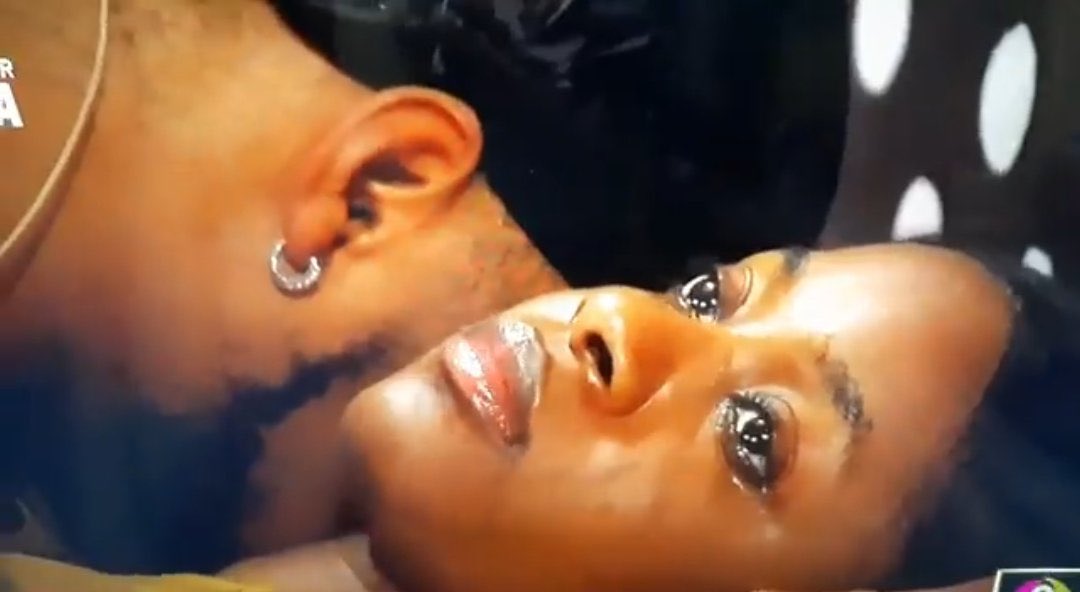
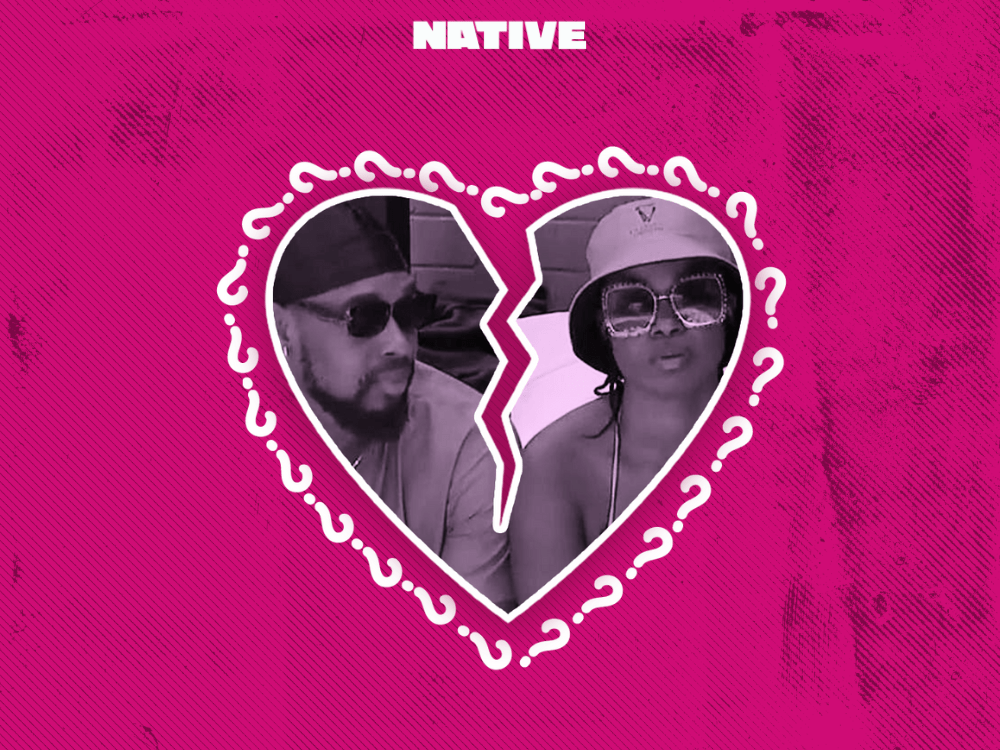
For the uninitiated, breakfast is a neologism for heartbreak. Coined from the popular Yoruba saying, “Gbogbo wa la ma je breakfast, askiko ti aluku ma je ti e, ototo ni,” which roughly translates as “We’ll all eat breakfast, everyone will eat theirs at a unique time,” the sceptre is slowly shuffling through the land and is being served to everyone regardless of their background.

Social media is awash with wistful clips of freshly heartbroken love birds speaking bitterly about receiving their serving of breakfast. An alarming number of young people are taking to social media to declare themselves over the concept of love, and are now fervently championing a campaign against the famed emotion of bliss. Even Grammy award winning musician Burna Boy recently had a brush with the scourge, which spurred his most recent single and song of the summer contender, “Last Last.” The dating scene is looking as dangerous as ever and the general consensus seems to be that the cost of giving room for emotional vulnerability is way too high. 

More and more young people are losing faith in love, the very ingredient that has coloured human existence since time immemorial. As someone who has had my own share of heartbreak in the course of my life, I’d be lying if I said I don’t feel an ounce of sympathy for those who have sloughed away the concept entirely from their minds. But this article is not about the burgeoning apathy towards the concept of love, instead it’s about coping with heartbreak or breakfast as it is fondly called.

The term heartbreak has overtime been reduced to a vacuous platitude that could refer to anything, from the blazing pangs that follow a messy split from a lover, to the mild twinge of sadness that follows watching your team lose a game. The Nigerian equivalent, Breakfast is a much more potent word. Breakfast is one of the most difficult ordeals to navigate, in the blink of an eye, the person you thought that you would lock hands with, as you amble through life suddenly becomes a stranger. Thoughts of them, which used to fill your world with vibrance and cause your insides to tingle, now rouse visceral dismal emotions.

It is akin to the feeling of losing someone. And in many ways it is mourning the loss of someone. The common thread that is woven through both circumstances is the hollowness that trails them. For many people, a romantic partner is a significant part of life, their essence melds with yours, your respective schedules warp to accommodate each other, memories of them are permanently emblazoned on your mind, and when they’re gone, all that’s left is the pain of forcefully being yanked apart by the forces of breakfast and the hollowness in the parts of your heart that played host to them. 

One thing I’ve learnt over time is that the hurt from heartbreak will lessen with time. Depending on how strong your attachment to your estranged partner was, the pain may still dawdle for a long time, but like many tribulations in life, it becomes bearable. However, no amount of experience or foreknowledge can prepare you for a breakfast. Each experience is fresh and gritty. I remember my last heartbreak which happened this year. At the time, I went a full week without mentally coming to terms with the loss of a partner with whom I’d spent a year of my life with. I brushed off our breakup and casually dismissed  it as “one of those things” as it wasn’t my first dance with those emotions, but after a week, those dormant emotions had formed into a thick fog of darkness and finally I had to grapple with them.

One of the most subtle and insidious ways society functions to exacerbate the feelings of heartbreak, is its passive dismissal of the experience. In the event of a loss of a loved one, society acknowledges your pain, you get a period of respite from work, cordial visits from friends and coworkers to commiserate with you, even displays of solidarity from acquaintances. But upon a breakup, reactions range from mockery to aloofness. You’re stuck in a ravine of hurt, but society does not pause to acknowledge your pain, let alone rally around in solidarity. Mind you, I’m not calling for work leaves to be afforded heartbreak victims (even though it’s not an entirely bad idea), however, it’s jarring that society treats an experience so significant to the affected person with so much aloofness. 

The situation around a heartbreak can be nuanced but as a rule of thumb it’s important not to blame yourself, especially in the recovery period. Heartbreak can stoke feelings of self-doubt or self scrutiny, and it’s easy to find yourself overanalysing the situation and wondering if you’re to blame. Even if you’re to blame, what good could come out of beating yourself over spilt milk? The pain and the roller coaster of emotions that trail a heartbreak episode are neither esoteric nor trivial, they hurt, really bad. So, in many ways, it is an injury and just like it would be outrageous to wallop your shoulder blade following an injury to it, whether the accident was your fault or not. It’s also directly opposite logic to jab at emotional wounds from breakfast, whether you’re at fault or not. 

The prevailing rhetoric foisted upon us by the previous generation is that: Heartbreak is just one of those things, so when it happens, dust yourself up and keep moving. However, the reality is that heartbreak is an injury that requires healing and the healing process mirrors the trajectory of physical healing from a wound. The period following a serving of breakfast is not the time for sombre introspection or unpacking demons from the deepest recesses of your mind, it’s the time for relishing in self-love and allowing yourself to heal. 

The world is rarely kind to people nursing wounds from a lost love. You only have to look around recent pop culture examples such as Lori Harvey and Michael B. Jordan and Kim Kardashian and her ex-husband, Ye to understand how seldom we care for the emotional health of the people around us–particularly celebrities who we believe are exempt from being dished a serving of breakfast.

A scroll through a Twitter thread on the said topic will leave you inundated by the myriad of recovery strategies proffered by self-acclaimed breakfast aficionados. One strategy that particularly jots out is: getting a rebound. From personal experience, this can work but it can also come back to bite your heel. In my sophomore year in the university, I went through a string of messy situationships and relationships. One of them particularly left me rattled. I was ghosted by the one true person I really cared for. 

As a final note, why do we see so much news and fiery rhetorics on failed relationships on social media, when in reality lots of people are in loving and stable relationships? Many people spend so much time on social media that the line between the bubble it offers and reality begins to blur. Not everyone is a heartbreaker on social media, some of us are the perpetually heartbroken. It’s okay not to subscribe to the prevailing notion of love and relationships but if you’re subliminally coaxed to give up on love by the nihilism on social media, dial back and remember that negativity makes the headlines while the great things of life remain in the background.


ICYMI: TWITTER TAUGHT ME HOW TO FEEL, NOW REAL LIFE HAS NO APPEAL

Ayra Starr updates “Bloody Samaritan” with a befitting Sun-El Musician Remix

Ayra Starr is a once-in-a-generation type of star. Following her debut on the scene back in 2020 with her eponymous debut EP, Starr has been on a mission to share her music with the world. Now, her talent precedes her name with numerous singles showcasing her warm yet sonorous vocals. Since the release of her debut album ‘19 & Dangerous,’ Ayra Starr continues to gracefully confirm herself as one of the most compelling artists of today, with her recent feature on NATIVE Sound System’s debut single “Runaway” with Lojay.

Now as Ayra tours internationally alongside Koffee for the first time since her debut, she’s also put a new spin on her hit single, “Bloody Samaritan” giving it a befitting and timely remix. Released today, the “Bloody Samaritan” remix arrives with a feature from South Africa’s Sun-El Musician with wistful vocals and twinkling production touches.

Produced by Grammy award winning producer London, the single pivoted her career with its Amapiano and Afrobeats backdrop. On its recently released remix, however, Ayra Starr switches up the tempo and slightly adjusts the synths to bring a new EDM feel to the track. The “Bloody Samaritan” remix also features a delightful blend of upbeat log synths and Afro-house percussion with Sun-El Musician’s Midas touch seering through the production.

On “Bloody Samaritan,” Ayra’s voice glitters as it merges with the song’s groovy production, subtly widening her the scope of her artistic range. While a remix may not be welcome by all, Ayra surely showcases that she is surer about her talent and her voice, as she audaciously sets out to display her unwavering artistic fortitude and growth.

Stream “Bloody Samaritan Remix” below.


Featured image credits/Instagram

June 12 & the complexities of status symbols in Nigeria

If you’re adequately—or even slightly—versed on the history of Nigeria, the irony of last year’s nationwide protests on June 12 is evident. 29 years ago, on the same date, age-appropriate citizens participated in the election meant to usher in a civilian administration to end over a decade of military rule. The June 12, 1993 elections have been described as the most peaceful polls in the country’s fraught history with elections, however, the results were retracted and annulled by the then-dictator, General Ibrahim Babangida. It would take nearly six years for another presidential poll to be conducted and a formal transition to democracy.

Nearly eight months after soldiers of the Nigerian army shot at peaceful protesters at the Lekki tollgate, Nigerians defiantly congregated in several major cities across the country on June 12, 2021, in protest of the perpetual systemic rot we’ve all been living through for far too long. This year, there were no protests, mainly because there’s an impending general elections, and 23 years since exiting military dictatorship, the debilitating issues are evident.

Nigeria is going through its worst bout of internal insecurity problems since gaining independence. Regressive economic policies and rampant corruption continue to worsen multi-dimensional poverty, police brutality remains prevalent even though we loudly requested not to be killed, and the grave inadequacies of social and physical infrastructure consistently makes the standard of living bothersome for most Nigerians. On paper, lasting change from the autocratic leadership of our past should’ve been the ideal prescription for forward evolution, but in reality, it has emboldened existing problems and created a thriving ground for a cesspool of new societal ills. Sadly, this isn’t where the irony starts or ends.

In 2019, President Muhammadu Buhari officially recognised June 12 as Democracy Day, in commemoration of the peaceful 1993 election, which is widely believed to have been comfortably won by the late Chief Moshood Abiola. A successful businessman, beloved philanthropist and lifelong politician, MKO Abiola, as he is affectionately referred to, emerged as a symbol in the fight for Nigerian democracy. He was arrested, imprisoned and allegedly assassinated for his insistence on taking his rightful place and fulfilling his obligation as an elected president. He is a martyr. The thing is, though, martyrs are not always saints.

For all his inherent flaws, one of the overwhelmingly positive attributes of Fela Anikulapo-Kuti was his unbending dedication to socio-political truth-telling. In 1980, the Afrobeat pioneer recorded and released “International Thief Thief (I.T.T.),” a vitriol-laced barrage of arrows fired at the rich who’d acquired their wealth through corrupt practices. Already in his militant, post-Zombie’ era, Fela directly called out the principal target of his ire, MKO Abiola. The song’s title was a play on the name of the multi-national telecommunications company MKO locally headed at the time.

At the time, Fela was in a bitter battle with Decca Records over unpaid royalties from the albums he cut for the record company; MKO Abiola was the chairman of Decca Records’ operations in Nigeria at the time. While this personal connection definitely played a huge role in the making of “I.T.T.”, Fela’s indictment went beyond personal vendetta. Well before he embodied the hopes and dreams of a democratic Nigeria, corruption allegations trailed MKO Abiola’s career. In a Washington Post report from 1980, it is alleged that he was central to “questionable payments of millions of dollars” to gain Nigerian contracts on behalf of International Telephone and Telegraph Corporation.

While that’s the most popular example of MKO’s allegedly unscrupulous side, there are loose narratives of his un-ideal ventures as a politician, which supposedly included the sponsoring of one or more coups. Also, for a man who wanted to serve as the president of a multi-religious country, he was a vocal advocate for the adoption of Sharia law in the south-west. These parts of his life have been greatly downplayed in the MKO mythos, focusing instead on his philanthropy and democratic stance. Of course, there’s a legitimacy in hinging the bulk of his legacy on the latter point, he did win a pivotal election and remained defiant in the face of brutal despotism. On the face of it, he seemingly had a few crooked bones in him, a potential messiah who committed the sins you’d expect of the archetypal Nigerian politician.

Due to its ever-evolving variety of social, political and economic issues, Nigeria has a constant fixation with messiahs, ideal figures that represent the sort of leadership required to turn around the country’s fortunes. Except you’ve done some research, it is impossible to not think of MKO Abiola as this sort of apex hero but he exemplifies the complicatedness of many of the country’s symbols. It is interesting, and perhaps sobering, that the inspirational figure behind the most symbolic date in Nigeria’s was allegedly flawed in ways that mocked the very democracy he became a champion of.

Across global history, there are symbolic figures who represent this sort of irony, popular individuals with storied legacies and abysmal attributes. Sometimes, these legacies are revised to appropriately capture the complex nature of their person. For examples: Winston Churchill has been described as one of the greatest English statesmen ever but his racist and imperialist reputations have adjusted perception of him; Mahatma Gandhi’s activist work and philosophical ideals earned him global adulation, but stories of his horrible deeds as a serial sexual abuser of minors has undone some of that adulation.

This sort of in-depth revisionism is not yet commonplace amongst Nigerians, saddling us with heroic figures whose realities fail to live up to expectations. Here’s an example that turns my stomach every time I think about it: the airport in Lagos is named after a former military dictator who was the commanding officer in charge of the army battalion responsible for one of the most gruesome acts of genocide in Nigerian history.

In the aftermath of President Buhari’s incensing tweet which ostensibly threatened war by invoking the civil war of the late ‘60s, I came to find out that many Igbo people and well-versed individuals in Nigerian history are cynical of Nnamdi Azikiwe, Nigeria’s first president who is widely considered a hero of independence. According to accounts, Azikiwe colluded with politicians from the northern region for ideological but ultimately personal reasons, with a popular news journalist deeming him as “a pan-Africanist hotep.” As the leader of the National Council of Nigeria and the Cameroons (NCNC)—the political party founded by Herbert Macaulay—circa independence, he joined forces with the Northern People’s Congress (NPC), stalling plans for independence until the north was ready, vehemently opposing federalism and a proposed bill by the Obafemi Awolowo-led Action Group (AG) for regions to seek secession down the line.

This arrangement helped make Tafawa Balewa, Nigeria’s first prime minister, enshrining a model of civic nationalism without taking stock of the country’s ethno-religious complexities that would, and still continues to, prove a thorn in our side. There is an archival interview clip of Ahmadu Bello, then leader of NPC, Northern Premier and Sarduana of Sokoto, being openly bigoted toward Igbo people, an irony considering his party’s affiliation with the Azikiwe’s, and a least discussed part of his legacy even though he is nationally deified.

Even Obafemi Awolowo, who led the opposition at the time, played a key role in the civil war as finance minister in the Yakubu Gowon-led regime despite being a loud advocate for regional federalism and an initial sympathiser for the agitations of Nigeria’s South-East region. Speaking of Gowon, the former dictator granted an interview on the 50th anniversary of the end of the civil war, stating that he didn’t do anything wrong by fighting a war for Nigeria’s “non-negotiable” unity. Now regarded as an elder statesman, he continued to peddle the “no victor, no vanquished” rhetoric, choosing not to account for his regime’s failings in a war that cost millions of lives.

The complicatedness of the symbolic figures mentioned in this article—and the dozens more unmentioned—play a significant role in the way Nigeria is currently shaped and the social, economic, and political issues it continues to face. The problem with the relative obscurity of these wholesome portraits from Nigerian history is that information is not made readily available for the many Nigerians who did not live to witness these personalities and the foundational events.

I spent all of my formal education days within the Nigerian education, and I can comfortably say that the overwhelming bulk of my knowledge of contemporary Nigerian history has come from a handful of books and a lot of Google searches. The same applies to many Nigerian Millennials and Gen Zers, because both basic and in-depth acquaintance with our history are by-products of our curiosity. Nigeria is structured to keep the darker parts of its history hidden, making it almost impossible to actually know and wholly revise the exploits of those it considers its heroes. The effect of this is that we repeat the same cycles even if the context shifts.

By the next general elections in 2023, Nigeria would be twenty-four years into its fourth republic, running a democratic system of government. In sixteen of those years, we would’ve been led by two former dictators who were elected into office twice, Olusegun Obasanjo and Muhammadu Buhari. Not only are they similar with these feats, but they are also interestingly linked: After resuming as head of state, following the assassination of Murtala Mohammed, Obasanjo relinquished power to civilian rule in 1979; four years later, Buhari returned the country back to military control. During their time as military rulers, both of these men were scathingly criticised by Fela Anikulapo-Kuti, a pre-emptive indicator that both were far from the public-serving saviours they billed themselves as when seeking election through democratic means.

In an interview aired on the government-owned Nigerian Television Authority (NTA), the evening before last year’s June 12 celebrations, Buhari claimed that Nigerians are forgetful of his administration’s achievements, stating that over ten million people have been moved from poverty. A simple fact check proves this to be very untrue. The claim, however, is not entirely surprising. If anything, it is emblematic of the exaggerated premise on which he campaigned, where his previous run as a dictator was described as the apex of patriotism to a younger generation desperately looking for a potential hero.

Since Buhari (re-)entered the highest public office in the land six years ago, Nigeria has plunged deeper into poverty and unemployment, while insurgency and general insecurity have become a far worse problem. The economy is running on the fumes of bad policies, and all around us, the press and general freedom of speech are being attacked, and the president has shown his preference for un-democratic ideals a handful of times. It is a befitting sequel to his time as a military rule. When asked, during another rare interview on Arise TV in 2021, what his legacy would be, Buhari said he’d leave that to the Nigerian populace with hopes that they’d be fair to him. To me, it sounded like a suggestive answer from a man who would like to be someday considered a hero. Considering Nigeria’s penchant for historic irony, it doesn’t seem like a far-fetched wish.


@dennisadepeter is a staff writer at the NATIVE.


WHILE WE MOURNED, WE DANCED: ON #ENDSARS, AFROBEATS & GRIEF

Best New Music: Thato Saul & A-Reece Uphold Classic Rap Values on “Put It On Me”

Bravado and a seen-it-all honesty lies at the centre of everything Thato Saul raps about. Having grown up in Saulsville of Pheli, a township in Pretoria West, the 26-year-old had intimate references of the society’s darkest ills and its vivacious communism, diluting those qualities into the music he began creating around 2014. Since then, Thato has ascended among the most respected lyricists in South Africa, the introspective weight of his bars often streaked with the brutish haughtiness of a rapper who grew up on diss battles.  


View this post on Instagram


A post shared by Thato Saul (@thatosaul_)

Over the weekend, Thato’s ‘Life Is Gangster’ was released to considerable acclaim, extending his prolific catalogue with some of his most boisterous cuts yet. In thirteen songs, he evokes the gritty landscapes of Pretoria, from its shared stories down to the infamous heat of its streets. Collaborators broaden his ideas, infusing impressionistic verses and choruses which complement his vision of taking rap’s inherent storytelling qualities into the peculiarities of living on the poorer and more challenging side of the social classes.

For as long as rappers have existed, making it out of such places makes you special. And the fact that everyone wouldn’t necessarily concur with that renders it even more narrative quality, introducing the prospects of haters into the fold. Right at the beginning of ‘Life Is Gangster’, Thato delves into this arena of rap. He calls up A-Reece, a trusted rapper with similar qualities who makes the perfect feature.

Thato Saul has spoken in interviews about the influence of 50 Cent and 2Pac on his rap ambitions, his earliest models on how to come across as authoritative without sounding fictitious. On “Put It On Me,” he makes his reputation as menacing as a gun, spraying on hypothetical enemies with remarkable precision. “I ain’t dead my homie, you can put on me/ I ride there with homies, you can put it on me,” he raps on the chorus, segueing into his verse with similar verve. 

He is even more direct in his verse, taking no prisoners as he stakes his claim among the greats of the country’s current scene. With humorous detail reminiscent of Frank White, he spits lines like “I take the S out of Spain, your ankles will get sprained/ That’s if you think this is a game/ Sugar coaters you’ll be cane”. His focus never wanes as he switches rhyme schemes, rounding off his verse with, “Protecting all my street cred/ Born and raised from the crumbs was how a nigga was bred”, employing in that last word a cheeky wordplay which aptly reaffirms his street ethos. 

On his part, Reece is more attentive to the nuances of being one of the most visible rappers in the country. It’s a spot that comes with juicy positives but also with the awareness of proving one’s mettle during specific times, which is exactly what he accomplishes alongside Thato. “These niggas is tryna master a technique that I invented/ Get your prepositions right cos I don’t think you understand,” he raps with seamless vigour, then stating the humane vision of his lyricism in what is the perhaps the song’s most striking line: “I ain’t talking rap money when I say I’m tryna touch millions.”

The production is sparse but effective, layering head-bumping drums and soulful vocal samples with melancholic, glossy keys. The result is a cinematic record, impressively lined with the Zulu-tinged vocals of Thato and Reece.

Listen to “Put It On Me” here.


ICYMI: LISTEN TO MOONCHILD SANELLY’S SOPHOMORE ALBUM, ‘PHASES’

TurnTable Top 50: Ladé debuts in the top ten with “Adulthood Anthem”

Rising Nigerian singer-songwriter Ladé has been on the cusp of her breakout moment. Following her pseudo-self-titled debut EP back in December, hugely popular vocal advertising work including Airtel’s “444” ad, and a viral video showcasing her vocal chops, the singer has now scored her first entry on the TurnTable Top 50 chart with her new single, “Adulthood Anthem.” 

The relatable song, which laments the unending responsibility of being all grown-up and wishes for the simpler days of childhood, debuts at No. 9 with 3.68 million equivalent streams and 9.75 million radio impressions. This feat is historic for Ladé, as “Adulthood Anthem” becomes the second song by a female lead artist to debut in the top ten of the TurnTable Top 50. She follows Ayra Starr, who debuted at No. 10 with her debut single, “Away,” back in February 2021. As more people discover her new breakout hit, expect the song to remain and possibly keep rising in the top fifth of the chart.

Meanwhile, the rest of the top ten remains unchanged from previous weeks. Kizz Daniel and Tekno’s ubiquitous smash, “Buga,” stays at No. 1 for the fifth week in a row. This makes it one of the three longest-running No. 1 songs in 2022—alongside Skiibii and Davido’s “Baddest Boy” and Black Sherif’s “Kwaku the Traveller”a tie that could be broken if it stays another week at the top of the chart. For the third consecutive week, Mavin’s all-star single “Overloading (OVERDOSE)” is at No. 2, closing the gap with 5.10 million streams and 53.8 million in radio reach, in a bid to reach the summit of the TurnTable Top 50.

The rest of this week’s top five is also unchanged: DJ Spinall and Asake’s “Palazzo” is at No. 3, Burna Boy’s “Last Last” is at No. 4, and Zinoleesky’s “Loving You” is at No. 5. TurnTable Top 50 darling Omah Lay is at No. 6 this week, with his recent single “Woman” climbing one spot from its previous position. Davido’s “Stand Strong” also moves up a spot to No. 7, after peaking at the sixth position. Ghanaian singer Camidoh’s “Sugarcane (Remix)” dips two spots from last week to No. 8, continuing its top ten run for a significant part of this year. Rounding out this week’s top ten, Asake and Burna Boy’s former No. 1, “Sungba,” makes its way back up, rising four places to No. 10.

You can read a full breakdown of the charts here.


ICYMI: LISTEN TO GYAKIE’S NEW EMOTIVE SINGLE, “SOMETHING”

Songs Of The Day: New Music From MOJO, Jeriq, Darkovibes & More

We’re halfway through 2022, and it’s been an eventful year for Afropop. There’s been a torrent of great new music, spawning a massive stack of inventive smash hit songs. From Highlife-infused Ghanaian pop, to the unrelenting force that is Nigerian street-pop, to South Africa’s indomitable Dance scene, to tantalising Drill explorations in East and Central Africa, and much, much more, we’re living through abundant and musically expansive times.

Every week, tonnes of songs from African artists make their way to digital streaming platforms, and wading through them can be intense. That’s where The NATIVE’s Songs of the Day column comes in to help. We go through as many new releases as possible, spotlighting them here, two to three times every week. Last weekend, we brought you new music from Mr Eazi, Ladipoe, Preye Itams, Mafikizolo and many more. This week, enjoy a new selection from MOJO, Freddy K, Jeriq, Psycho YP, Darkovibes, and more. Tap in, and you’ll definitely find new sounds for your playlist(s).

MOJO – “Rap Jesu”

“Rap Jesu” is Mojo’s brazen assertion of being the messiah of Rap. Since his 2020 single, “Chiwawa”, he has made a point to set himself apart from the crowd with his inimitable laidback style of delivery and his penchant for theatrical beats. Two years since his debut and that thread is still snugly woven through every song he drops. On “Rap Jesu”, he surfs a sprawling serene production interspersed with shimmering theatrical keys, switching flows deftly and exploring pockets of space with his amorphous voice as he sings his praises.

 Moonchild Sanelly – “Chicken”

Moonchild Sanelly dances to the beat of her drum. From her penchant for genre-bending sounds to her inimitable style of delivery, every song she spawns is a testament to her unflinching bohemian ethos. “Chicken”, a standout from her just-released album, ‘Phases,’ sees this motif in full glory. Over a boisterous production, she tugs at the age-old question: Who came first, the chicken or the egg? Shuffling between whimsical singing and concerted mulling, she conjures a gratifying party anthem.

Offica, Darkovibes & A9DBO Fundz – “Kolomental”

“Kolomental” sees Nigerian-Irish rapper, Offica, Ghanian singer Darkovibes and Irish rapper A9Dbo Fundz combine for a blistering Pop record. Over the boisterous production, they conjure a sound reminiscent of a high-octane night at the club. Coming with sleek lines and punchy melodies, they broach the topics of ebullience and opulence.

Freddy K & Tyler ICU – “Ashi Nthwela” FT. Focalistic

The ascendance of House Music and Amapiano from suburbs in South Africa to the world over the past few years has been steep and majestic. A new wave of prolific artists with fresh and subversive spins on the genre is emerging and Freddy K and Tyler ICU are some of the most prominent fresh voices leading the charge. Off their freshly released EP, ‘Freddy Vs Tyler’, “Ashi Nthwela” is a standout which encapsulates their unbridled knack for colouring outside the borders of the genre to spotlight their idiosyncrasies. Joining forces with Focalistic they rope in sonic bits from an eclectic palette to conjure a dazzling party soundtrack.

Insane Chips – “I Came For It All” ft. Psycho YP & Jeriq

Nascent act Insane Chips may have just a smattering of singles out, but over the course of his career, he has established himself as a prolific act with a handle on a far-reaching gamut of sounds, from punchy Afropop tunes to ominous Hip-Hop records. For his freshly-released single, “I Came For It All”, he taps two of the nation’s most blistering rappers, Psycho YP and Jeriq, for a luxuriantly melodic Hip Hop record. Against a backdrop of theatrical keys and hard-hitting Hip-Hop drums, they bounce off each other, trading opulent bars about their rise to success.

Kaptain – “Non Stop” ft. Teni

In 2020, Kaptain caught the attention of the public after his debut EP, ‘Kapacity’ was released. The project saw him amble down the svelte path between sombre introspection and breezy anthemic singing while establishing himself as a purveyor of hood chronicles. Now, he’s back with a glistening single with Teni dubbed “Non Stop”, which is a standout off his fresh album, ‘Beyond Any Reasonable Doubt.’ Surfing bouncy drums, twinkling keys and groovy bass riffs, the pair bounce off each other as they deliver a melodic ode to God’s blessings to them.


Mr Wakobi – “Forgiven” ft. Spiritual Vibez

“Forgiven” sees Mr Wakobi tap Spiritual Vibez for a richly melodic ode to the elusive concept of forgiveness. Over a bouncy reggae instrumental, the pair broach the topic of going against the grain and rising above adversaries to the echelons of success.

Featured image credits/NATIVE

What’s Going On: Kenya’s ICT Bill, eviction of Maasai community in Tanzania & More

“What’s Going On” Tallies Notable News Headlines From Across The Continent — The Good, The Bad, And The Horrible — As A Way Of Ensuring That We All Become A More Sagacious African Generation. With This Column, We’re Hoping To Disseminate The Latest Happenings In Our Socio-Political Climate From Across The Continent, Whilst Starting A Conversation About What’s Important For Us To All Discuss. From Political Affairs To Socio-Economic Issues, ‘What’s Going On’ Will Discuss Just That.


Proposed ICT Practitioners Bill causes uproar in Kenya

As the general elections in Kenya approach, the government is running around making legislative changes in order to earn another term in office. Over the past week, the National Assembly enacted an ICT Bill dubbed ICT Practitioners Bill 2020. The bill which is awaiting the president’s approval seeks to establish an ICT Practitioners Institute for training, registration, licensing, practice and setting standards for ICT professionals in Kenya. The proposed Institute will also issue annual licenses to the practitioners at a fee. The bill was first proposed to the Kenyan parliament in 2016 then 2018 but was rejected on the basis of repetitiveness. It was then reintroduced in Parliament in November 2020 with very minimal changes from the previous ones.

The bill has caused an uproar among Kenyans and political figures such as presidential aspirant Raila Odinga asking Uhuru Kenyatta not to sign the bill terming it as vague yet loaded with sweeping powers over the ICT sector, with no clarity on the specific problem it is meant to address. The legislators describe the bill as progressive aiming to reduce confusion in the ICT sector while providing a legal framework for the ICT practitioners in Kenya.

South African opposition demand the step down of incumbent President

As president Ramaphosa addressed the National Assembly, opposition legislators heckled at him confronting him over allegations he tried to cover up the theft of cash from his game farm, Phala Phala. The Legislators in question were from the populist Economic Freedom Fighters (EFF), the second largest opposition party, who were removed by security guards as they shouted that Ramaphosa should not be allowed to address the house. The Radical Economic Freedom Fighters party president, Julius Malema stated Ramaphosa has failed to prove himself as a worthy president and assured he will receive the same treatment as Jacob Zuma, the previous president who is in court over corruption charges.

The parliamentary proceedings descended into chaos for the second day running prompting the Speaker of Parliament, Nosiviwe Mapisa-Nqakula, to order the removal of several legislators. One of the EFF legislators, Omphile Maotwe shared that “The president of the republic, there are serious allegations against him, so he can’t come to the house to address us. He must step aside and allow the law to take its course.”

President Ramaphosa has denied any wrongdoing, saying his farm got the money from selling animals and that he had reported the theft to his presidential protection unit. Last Friday, according to AlJazeera, he told legislators that the robbery was under investigation and that “the law must be able to take its course”. These challenges comes ahead of Ramaphosa’s bid to be re-elected the party’s president at its national conference in December.

Members of Tanzania’s Maasai community have been displaced from their homes

Thousands of Maasai people have fled their homes and escaped into the bush following a brutal police crackdown on protests against government attempts to evict them to make way for trophy hunters and conservation. On June 8 dozens of police vehicles and an estimated 700 officers arrived in Loliondo, N. Tanzania, near the world-famous Serengeti National Park, to demarcate a 1,500 km2 area of Maasai land as a Game Reserve. On June 10, the armed officials fired on Maasai protesting at efforts to evict them. According to reports, there are at least 18 men and 13 women were shot, and 13 wounded with machetes while one person is confirmed dead.

This comes after police officers demarcated pieces of the Maasai land as a Game reserve. Live footage of the attack was shared on social media causing an international uproar of the police brutality. Following this, the officers have been going door to door assaulting anyone who is believed to be circulating the footage or part of the protest. This is the latest episode in a long-running effort by Tanzania’s authorities to evict Maasai from their land in Loliondo for safari tourism and trophy hunting. The leaders of the Maasai community arrested last week have not been seen since they were detained. Now, the NGO Pan-African Living Cultures Alliance said it plans to stage a mass protest on Wednesday unless they are released. The Tanzanian government has denied it is trying to evict anyone and said it was trying to conserve the area. It maintains the Maasai will still have access to 2,500 sq km of land.

Militant attack in Burkina Faso

Over the weekend, armed gunmen in Burkina Faso killed at least 55 people in the latest attack in the west African country, which is seeing mounting violence caused by Islamic extremists. The attack took place in the Seytenga in Séno province with the country’s official government report putting the official toll at 55, while others place the figure far higher, with some saying as many as 100 had died.

New reports arriving today from the Guardian also state that 29 more bodies have been found following a massacre by Islamic extremists, raising the provisional death toll to 79, and that the search for still more victims is being hampered by fears of booby-trapped devices planted “by terrorists to mine the site”. Burkina Faso is one of the hardest hit African countries with terrorist attacks. According to AJ Plus, Violence in the region has forced at least 2M people to flee and nearly 1 in 4 people in Burkina Faso needs urgent humanitarian aid, according to the UN

Featured image credits/TechCabal

Essentials: Namakau Star successfully reinvents herself on debut project, ‘Landing’

South African soul-fusion singer, Namakau Star started her solo career under the moniker Iindirhe. Her fairly recent name change was a move of reinvention, with the main aim of being authentic. While there’s the innate ‘African’ feel attached to the names, there’s clearly more meaning that symbolises the nominal shift—a Google search shows a result that the name means brave, and another result claims that persons named Namakau are passionate and move on instinct.

The music Namakau Star has been making since debuting in 2021 with “Trance” encapsulates those symbolic meanings, a fundamentally soulful sound that ropes in elements from R&B and hip-hop, along with electronic tinges. It falls on the outré side of South Africa’s urban music spectrum, an instinctive and clearly individual choice that ensure she’s building her image and sound exactly how she wants, establishing herself as the soul goddess.


View this post on Instagram


A post shared by VibeGoddess (@namakau.star)

Recently, the uNder alum released her debut project ‘Landing’, a soulful 7-track project stamping the budding artist’s credentials as an auteur of immersive and affecting music. With singles such as “Floating” and “Rewind” laying the foundation for her debut, Namakau Star delivers a cohesive and slyly eclectic body of work, turning in gauzy neo-soul cuts, earthy hip-hop-soul bops, along with her ear-tingling vocal melodies and themes that dig into varying facets of the human condition.

In its brisk 30-minute span, Namakau Star traverses ‘Landing’ with sonic explosions and soulful lyricism. The futuristic tape takes listeners to utopia, with an overall feel that’s ethereal. This serene and soulful backdrop provides an efficient background for Namakau to spread her positive ideologies to the universe. She opens the project with a pensive record on time. Tomorrow (Intro) questions your actions on earth over a dreamy synth. Setting the record for the whole project, Namakau Star takes you through an introspective journey accompanied with a melodic background as she displays her vocal range and capability.

2088” coasts on an airy production with a jazz influence. Namakau Star embodies her rap personality as she sings to her muse of the positive energy that surrounds her, dubbing it the mothership. Floating, released earlier on as an announcement to her album, sees her floating over airy synth productions as her R&B prowess exudes all over the song. With every note Namakau hits, she brings out a new surprise and it is evident in Surrender(Interlude). Apart from her strong vocals, the production in the song stands out the most. The pensive instruments compliment Namakau’s desperation in her lyrics she sings, “I am at the edge of the waterfall.”

Rewind, which marked her R&B territory, is a graceful rumination on past romantic experiences and confronting the idea of being able to change things if she were given the chance. In true versatile fashion, the honeyed single has Namakau Star singing in the first half and rapping in the second half. Seazn Luv, featuring LordKeyyZ, is an ode to all lovers. Namakau gets vulnerable in this eclectic number that goes beyond emotional connection and physical touch. Reminding everyone of the power of their sexuality, the chorus keeps on pondering as she sings, “Seazn the soul with Luv.” LordKeyyZ serves as a perfect collaboration partner. His verse is short and precise but his lingering background vocals leave a lasting impression. Breathe, the only other collab song which features Phola, signs ‘Landing’ off on a perfect note, a stunning neo-soul track with a riveting rap verse from its guest.

Throughout the soulful album, Namakau Star puts together a clear and precise message: free yourself and live through the experiences. She takes her listeners on an emotional journey with crisp productions. As she affirms her listeners to believe in themselves more and the essence of positive vibes, the assuredness and serenity is comforting. An exceptional project from an artist reinventing herself, ‘Landing’ is an ethereal debut for the star who is carving her identity one wondrous and deeply relatable song at a time.

Listen to ‘Landing’ here.


ICYMI: CHECK OUT OUR BEST NEW ARTISTS FOR MAY 2022, WHICH INCLUDES NAMAKAU STAR

Bruk It Down: The creation of “Foreigner” with Nonso Amadi

After a much-needed 2-year sabbatical break, Nonso Amadi made a pronounced groovy re-entry into the scene in February with “Foreigner.” A singer, song-writer and producer, Nonso derived the inspiration from Omah Lay’s project, paying keen attention to the drums that provided the perfect backdrop for his sonorous voice. Upon its release, the self-produced single, “Foreigner” was met with instantly rapt reception, ensuring that his long-awaited return scratched the itch of fans who had been waiting with bated breathe.

“Foreigner” has been at the tip of the tongues of Nonso’s supporters, with its hypnotic lyricism and Afropop-tinged R&B arrangement showcasing the artist’s range, touting his music prowess as an artist and a producer. The intensity of his words are felt through the smooth seductive record and smooth vocal records. His knack for defying openers lead to the melody infused in the song, as he adores his muse while creating adorable music at the same time.

Being a producer has developed Nonso’s penmanship, as he knows what gets the listeners excited.  Speaking to the NATIVE, Nonso Amadi said, “the best way to capture your listeners is through the ups and downs,” “Foreigner” managed to tap into the emotive corner of the listeners through the emphatic high and lows. From playing around with instruments and his voice to employing mid tempo vocals that have the sauce, Nonso Amadi made a sterling comeback with “Foreigner”. Managing to emotionally connect with the audience through R&B melodies, here is how the singer’s comeback single came to be.

Watch the Making of “Foreigner” below.


ICYMI: THE VULNERABLE ART & HEART OF SIMI

Songs Of The Day: Mr Eazi, Ladipoe, Bella Alubo & More

We’re halfway through 2022, and it’s been an eventful year for Afropop. There’s been a torrent of great new music, spawning a massive stack of inventive smash hit songs. From Highlife-infused Ghanaian pop, to the unrelenting force that is Nigerian street-pop, to South Africa’s indomitable Dance scene, to tantalising Drill explorations in East and Central Africa, and much, much more, we’re living through abundant and musically expansive times.

Every week, tonnes of songs from African artists make their way to digital streaming platforms, and wading through them can be intense. That’s where The NATIVE’s Songs of the Day column comes in to help. We go through as many new releases as possible, spotlighting them here, two to three times every week. Earlier this week, we brought you new music from Kabza De Small, Shatta Wale, Chop Life Crew and more. This weekend, enjoy our selection from Mr Eazi, Ladipoe, Preye Itams, Mafikizolo and many more. Tap in, and you’ll definitely find new sounds for your playlist(s).

Mr Eazi – “Legalize”

Earlier this year Mr Eazi announced his engagement to Temi Otedola through a bite-sized clip which he shared across social channels. The video was set in the ambient city of love, Paris, and saw him take to his knees as he proposed to his long-time girlfriend. His new release, “Legalize”, which is also his debut of the year, captures the palpable aura of nuptial bliss stoked by the engagement video. Over a serene production upholstered by twinkling guitar riffs and trilling violin melodies, he declares his unbridled love for his muse and his desire to make their relationship legal.

Ladipoe – “Big Energy”

Since his 2020 seminal breakout hit “Know You”, Ladipoe has cemented himself as a rapper with a knack for fusing heavy-hitting Rap bars and anthemic Pop hooks into a unique flourish. On his latest offering, “Big Energy”, he continues to toe this trajectory. Here, he surfs over a mid-tempo production interspersed with whimsical keys, brazenly singing his praises by way of exaggerated braggadocious bars such as “Big Energy, when I come through, big energy”, which he sings over the hook.

Mafikizolo – “10k” ft. Sjava

Very few artists in the southern pocket of Africa possess the artistic range and longevity of one of South Africa’s foremost duos, Mafikizolo. Since their debut in 1996, they’ve been in sync with the pulse of Pop culture, morphing and evolving to mirror the times. Their latest cut, “10K” is another testament to their unflinching knack for reinventing themselves. Roping in angelic singing, trilling bass riffs and bouncy grooves, they conjure a poignant flurry of serene ethereal sounds.

Bella Alubo – “Location” ft. Niniola

Bella Alubo brandishes her femininity in her music unabashedly, whether it’s a velvety romantic ballad or a bouncy Pop record, her songs serve as rallying anthems for her burgeoning female audience, and her latest isn’t any different. For “Location”, she taps Afro-house pioneer Niniola, for an upbeat Afro-house earworm. Against a backdrop of boisterous drums and undulating melodies, they bounce off each other as they trade whimsical lyrics about making a delivery to a location.

Thato Soul – “Put It On Me” ft. A-Reece

The moods of Thato Soul’s music are typically defined by intense reflection and gritty storytelling. This is a motif that’s firmly woven through his latest project, ‘Life is Gangsta’ — a 13-track ode to his days in Saulsville, a gritty township in South Africa. Off the project, the A-Reece assisted “Put It On Me” is a standout. On the record, he surfs a blend of RnB and 80s Hip-Hop, pulling apart the themes of success and gratefulness, as he relays his hood chronicles by way of velvety rap bars.

Kweku Smoke – “Weso” ft. Jay Bahd

Kweku Smoke is one of the youngest and most subversive rappers charting the course of Drill music in Ghana. Young as he is, he has already cemented himself as one of the most exciting voices on the block, and his defining legacy is his inimitable take on Drill music. He ropes in his native tongue, syncopated flows and hooks, to conjure Drill anthems unique to himself. On “Woso”, this pattern is glaring, he taps fellow Ghanian rapper Jay Bahd, and the pair trade rapid fire flows over an ominous production.

Prèye – “Malibu”

“Malibu” feels reminiscent of the slow-burning sultry R&B records that coloured most of the 80’s and 90’s. Nigerian singer Prèye has kept her releases precious and powerful, always adeptly making a statement with each new release. Against the backdrop of a smoky salacious production, Preye professes her love to her muse with witty lines. “Ain’t no problem, you’re my type. You’re exactly what I like”, she sings over the hook.

Reece – “No Crying In A Hoe Phase”

“No Crying In A Ho Phase” is a sparkling blend of Lo-Fi Pop and R&B that sees Reece pull apart the unwieldy conundrum of getting emotionally attached to a casual lover. Over a bouncy production, he deftly conjures a vivid montage of the situation. He sounds forlorn as he sings about a gnawing longing for a lover and filling up emotional chasms with booze, before picking himself up and declaring that there is no crying in the hoe phase.

Featured image credits/NATIVE

Moonchild Sanelly Releases Her Sophomore Album, ‘Phases’

Two years ago, South Africa’s Moonchild Sanelly released ‘Nüdes’, an EP which showcased her eclectic interpretation of genres like Gqom and EDM. Soon after, she was one of the fine roster of African talented who worked with Beyoncé on ‘Black Is King’, colouring the album with the eccentric flourishes of her style. 


View this post on Instagram


A post shared by Moonchild Sanelly (@moonchildsanelly)

Now, Moonchild Sanelly occupies a unique space in South African music, her sensual lyrics often becoming larger conversations on female autonomy. Her florid sonics have also brought her to the notice of international collaborators afterwards, positioning her as a conductor for electronic music beyond the continent. 

She’s been busy this year, starting off her run to the ‘Phases’ album with the two-pack Strip Cluband Over You she released in March. The UK rapper Ghetts featured in the former, foreboding the diaspora-leaning direction of the blue-haired artist. April Fool’s Day followed a month after, and then Cute“, furthering Sally’s exploration of her eccentric style. 

Earlier today, the musician released her latest album, ‘Phases’. The follow-up to her 2015 debut album, ‘Rabulapha!’, it was crafted around the myriad experiences associated with women, Sanelly has explained the intent behind the album. The nineteen songs pulses with the boisterous overtones of a collective anthem, but with individual experiences permeating its several layers. It goes near and far collaboratively, from the South African acts like Blxckie, Theology HD, Sir Trill to international acts Ghetts, Sad Night Dynamite and Trillary Banks. 

Stream ‘Phases’ below 

Featured image credits/

Gyakie shares new emotive single, “Something”

This time last year, Gyakie had confirmed her entry into the echelon of rising superstars. The Ghanaian singer’s behemoth single, “Forever,” along with its Omah Lay-assisted remix, captured the ears and hearts of Afropop audiences across the continent and in the diaspora. Later that year, Gyakie followed with “NEED ME,” which emphasised her colourful sonic preferences and assured songwriting abilities. In the time since breaking out, she’s also worked with Nigerian singer Mayorkun, Tanzanian singer Jux, and more pan-African collaborators.


View this post on Instagram


A post shared by Song Bird (@gyakie_)

Until today, Gyakie’s 2022 output has been limited to a handful of guest appearances. Opening her headline account for this year, she’s back with a romance-themed single, “SOMETHING,” which sees her put a more complex spin on her writing. Across her growing catalogue, Gyakie has often focused her love songs on the devotional side of the spectrum, resulting in highlights like “Sor Mi Mu” and her breakout smash. This new song is an impressive change of pace, as she sounds deeply annoyed by an inconsistent partner. “It’s like I’m walking far away to you/Baby, don’t try,” Gyakie sings on the bridge, extending an olive branch without coming across as smitten.

Produced by Nigerian wunderking producer P.Priime, “SOMETHING” is a delightful blend of pinched highlife guitar riffs, folk-inflected Afropop percussion, R&B piano melodies, an apt arrangement for the singer’s dazzling, husky vocals. This emotive single, with its lived-in premise, is another step in Gyakie’s artistic evolution. Reportedly the lead single of an upcoming EP, “SOMETHING” sets an expectant tone for whatever the singer has coming next, and also serves as a strong standalone song that declares that Gyakie is working her forward as a superstar.

Listen to “SOMETHING” here.


ICYMI: GHANA IS SET FOR NFL’S FIRST AFRICA-HELD CAMP

Wale in the Wild: Zinoleesky, Lagos & street-pop’s gospel of hope

In his new column for The NATIVE, ‘Wale in the Wild’, culture writer Wale Oloworekende digs into the boisterous tapestry of Nigerian pop, offering a series of contextualised and personalised essays on the relationship between the music, its points of origin and how it all ties together into the Nigerian experience. This inaugural essay takes a personal look at the rise and rise of Zinoleesky, through the lens of society, genius lyricism and personal experiences.


The truth is that there are very few things that I hold as sacred as the court of music I keep with my friends these days. I think that what this means more than anything is that, on the most bleary days, one by one, from places that are most unlike each other, we emerge at each other’s houses and, sometimes, we speak on the troubles that keep us awake at night; other times these conversations are had over a glass of wine or whatever can numb the pain enough to allow the words to form in our throats. But most importantly, on the days when talking is too strenuous or the weight of words threatens to break our backs, we play music.

One thing I have noticed about the music that we spin is its consistent ability to leave us enthralled. I have yet to see a problem, with the notable exception of death and its many variants, that music hasn’t seen us through or at least started us on a path to feeling better. Even with death, all we ask is that the music goes high enough, the liquor stays flowing longer than usual, and we can start to imagine a way out of any painful labyrinth.

In discussion, my friends and I have often playfully tried to localise where things started–or at least appear–to go awry in our generation, and, being frank, many of us point to the gloom of 2020 as a portent of sorts. 2020 was a wild and anxious year in many respects. Almost as soon as we attuned ourselves to the social distancing and stay-at-home regimen of the COVID-19 pandemic, we were being forced to pour ourselves out into the streets to protest a rogue institution that seemed fixated with the forcible neutering of young black bodies. Many times in 2020, it was hard to take a look over your shoulder and not feel a hovering sense of sadness.

That said, here is another fact about 2020 that I think you should know: In the first two weeks of that year, I compiled a scatter-brained list of artists to watch out for in the year for a nice outlet I used to work for and I put Zinoleesky on the list.

By the time 2020 was biding its final farewell, Zinoleesky was on his way to music superstardom, off the bank of a string of hit songs that distilled his brand of cool, brooding music into a clarion call for a generation facing its toughest moment, while sneaking in tidbits of his ghetto gospel. From “Ma Pariwo” to “Kilofese,” Zinoleesky seemed to be presciently aware of what the zeitgeist needed to be saying at any particular time he released new music. 

Since then, Zinoleesky has become an immutable part of the Afropop galaxy, as he has moved from songs like  Naira Marley to “Gone Far” to “Blessings.” I think it is impossible to talk about the narrative of Zinoleesky’s career without turning our gaze on who he is and where he came from. Many times in the last 18 months or so, I have wondered about the specific anecdotes that line his music and the all-too-casual elegance with which he has leaned into his role as the de-facto voice of a generation of ghetto kids. I imagine that it is a hard task to be Zinoleesky, to make the crux of your art inspiring people that many others would rather not see. But by any estimation, there are roles that become you and there are roles that you become when there are no outlets to tell the specific stories that you want to tell.

                                                                                  *****

At this specific moment, there is no sub-genre that waters Nigerian pop’s ever-evolving cast of slangs, lingo, and euphemisms with the regularity that street-pop does. What this means is that you can barely walk down any road in this country and not hear Mohbad tell you of how he wakes up at 4:30am to get to whatever activity might put some food on his table for the day, or see Bella Shmurda perform Cash App,” with all the controversy that the track invites, to 20,000 people who are screaming it back word-for-word at the 02, while lost in the madcap delirium that I must imagine follows the performance of such a track in a huge sea of people coming together to bathe in the glow of music. 

I guess what I’m trying to say is that street-pop is here to stay and I know this because it has crossed over into the places that I would never have seen it going into even five years ago. But if you were paying attention as far back as 2019, it might have been easy to at least not be surprised by this current trajectory of street pop. Every other week in the third quarter of 2019, we’d wake up to a new viral video from a bunch of street rappers domiciled in Agege, rapping about the survivalist conditions of life in the place that they call home.


View this post on Instagram


A post shared by Show KILLER🔫. (@zinoleesky)

The responses to these videos broadly fell into two categories: first, there were those whose direct lived experiences were referenced in those freestyles whose fire emoji comments littered the comment sections of those rising rappers, egging them on with every fibre of their being; then there were those who looked upon this rising tide with bemusement, unsure what to make of these rappers who were really Fuji-inspired singers at heart.

Of all the rappers we saw on our phone screens from Agege in 2019, Zinoleesky was the one who seemed most uncomfortable with the strictures of rap as a medium, the one more likely to break into an intuitive spurt of melody to bookend his raps that resembled the readings of a poet in residence. I think that the dominant thought about Zinoleesky, about Agege, about street-pop in general at that point, was that this too shall pass. That whatever was being done on that side of town would eventually tide over and Nigerian pop would continue its unstoppable rise to international ubiquity with street pop as nothing but a side note of that trajectory. The point I’m trying to make is that Zinoleesky is of people that are dreamers, eternally optimistic, forever building, and ready to burst at the seams, regardless of whatever institutional barrier is stacked against them. 

I have spent countless hours over the last two years considering what might be Zinoleesky’s greatest skill, and I have come to the conclusion that it is in how he put his own distinct interpretation on feelings of hopelessness while finding a way to localize joy in the midst of all that despair. There is something to be said about someone that gives a voice to this instinct of the oppressed, but it is another thing to urge the same people to find a way to look past all the worries in their life and keep at their life with any sort of joy.

One time last year, I was in Computer Village and I must assume that my audience knows that Computer Village, functioning as a microcosm of Lagos, is not the most optimistic of places, but late in the afternoon “Gone Far” came on in the section of the market where I was hiding away from a heavy downpour and men who may or may not be looking to pick pockets stopped for a second to acknowledge the genius of Zino while doing their best impression of smiles while singing the line “more money, more respect” heartily. And I suppose this says something about the origin of the music that originally inspired Zinoleesky and his incredible ability to propel its aura forward. Last year during a conversation in an almost empty car lot in Ikoyi, the singer sheepishly admitted to me that the music of icons like Pasuma and Saheed Osupa were some of the biggest inspiration on his life. If truth be told, in a moment when Nigerian pop is moving beyond the physical locale of its origin to touch an almost unquantifiable audience, Zinoleesky’s voice is more important than ever. It’s the voice of Lagos, singing the music that keeps us alive and vitalizes us.

                                                                                            *****

One time in between smoking whatever remained of a blunt and sipping some bacardi, one of my friends described Zinoleesky’s Naira Marley as a breathtaking work of poetry. He’s right. There’s something achingly expressive about the breath, cadence, and lines that Zinoleesky employed in that song. Even the most cynical of us must admit that there’s something redemptive about a mother’s love. I know this because many times my mother’s love has pulled me back from whatever gapping abyss has threatened to swallow me whole. Half of the time when we’re listening to Zinoleesky play, I must admit to you that we’re high as shit. I must also tell you that Nigeria is after our lives in many ways that we cannot often describe, but the truth is that we remain present, alive, warm bodies fighting for each other as best as we can because all we have is the music and one another. 

I have grown to be accustomed to the Nigerian institution being a supreme bully that will come after anybody that doesn’t fit their linear narratives about how one should present themselves so I was not mighty surprised when officers of the NDLEA invaded the living space of Zinoleesky and members of Marlian music. Most of that night, while doing whatever it is to numb the pain of the previous day, all I can feel is an abiding sense of disconsolation. I would be a hypocrite if I say there’s anything revolutionary about Zinoleesky being thrown in jail by the Nigerian institution, but there is a silent message I assume in who was invaded and how overwhelmingly quiet the Internet space appeared; how there was a very strong possibility that we could just move on as though nothing happened.

It is a humid March night and Zinoleesky is bantering on stage at Obafemi Awolowo University’s amphitheater. For those who don’t know, there is defiance baked into the very fiber of OAU, and it seemed almost like an act of divinity that Zinoleesky’s first public performance post-NDLEA drama should come there. Performing to an overly-euphoric set of listeners, Zinoleesky instructs the DJ to play “Blessings,” his smash hit with producer, Niphkeys, and the words, “Don’t know why I’m always thinking about tomorrow,” float perfectly into the air against the cascading backdrop of more than six thousand people shouting the words back.

If truth be told, me and my niggas are not perfect, we make mistakes upon mistakes, till we happen on whatever decisions and results we can live with. But we live in the essence of music, we pray at the altar of Zinoleesky and all the other radiant children of Nigerian pop. I want to believe that music is the weapon now more than anything, music is the weapon for our continued existence, especially when we are high and need something to line our mouths.


ICYMI: BELLA SHMURDA IS THE VOICE OF THE STREETS

Our first impressions of Falz’ ‘B A H D’

Three years between albums is a long wait in Falz terms. After debuting with ‘Wazup Guy: The Album’ in 2014, Folarin Falana spent the half-decade filling up his discography with new projects. During that period, he not only scaled great commercial heights, he also expanded his persona. Within years, the Nigerian public came to appreciate the full breadth of his entertainment-based skillset, including being a rap artist, a comic and an actor, and while that played a key role in his prominence, it’s how he’s adapted those abilities into being a slyly complex personality.

Specifically on the music side of things, Falz is a deceptively rangy rap artist, with the ability to craft pop-rap hit songs and also effortlessly lace his way through a cypher verse. His thematic range is also admirable, as he’s capable of turning in straightforward dancefloor fillers, socially resonant songs, confident personal statements, and fiery—if heavy-handed—political tirades. During that prolific run of projects, even during the brief controversial times, Falz’s willingness to make music that cuts across different facets of the human (and Nigerian) experience consistently made him one of the more relatable rap-fusion artists around.

In the three years since the politically-charged ‘Moral Instruction’, Falz hasn’t been idle. There’s been new hit songs, while he’s increased his stock as an actor and has been very vocal about the social injustices Nigerians face. Today sees the release of his fifth solo studio LP, ‘B A H D’, named after part of his (previous) full moniker and part of that infamous 2015 hit song with Davido and Olamide. The 12-song project is briskier than his first three albums, and it has more features than his last album, including guest spots from Tiwa Savage, Timaya, BNXN, The Cavemen. and more.

The NATIVE’s editorial staff has gone about its first few listens to ‘B A H D’, and here are our first impressions.


View this post on Instagram


A post shared by Falz TheBahdGuy (@falzthebahdguy)

Best Song

Tela“All Night” has to be the song that stands out for me. The upbeat tempo and Falz’ soft delivery complements the love song directed towards his muse. Definitely a dancefloor number the song is hypnotic from the first key and he serves the best opener, “…Raindrops falling on me.” The honeyed chorus has a magnetic effect that is undeniable. 

Moore: B A H D is an album that is filled with great songs, but the song that takes the number one spot for me has to be “Gentleman.” The opening guitar riffs immediately give an incredibly upbeat feeling. The repeating riffs throughout makes the rhythm feel quickly familiar and catchy. The lyrics are sweet in their directness, as they’re aimed towards someone Falz is trying to court. Overall it’s a song that is pleasantly simple in a lot of ways, and a wonderful song to listen to.

Emmanuel: Falz does a very admirable job throughout this album. Its considerable number of 12 songs renders every song levity, making you want to listen with all you’ve got. That said, a number of songs on here can easily challenge as the best song but right now I’m leaning towards “Knee Down.” The title phrase has strong connotations in the average Nigerian’s mind and Falz along with guest Chike impressively parlays its dramatic qualities into a song bearing the pomp of a romantic thriller. Falz’s rapping is some of  his most experimental yet, fully succumbing to the Western references he’s channeled throughout his career. Chike on hook duties must be a cheat code for rappers; between A-Q’s “Breathe” and this, his price ought to have tripled.

Best Verse

Dennis: I like the final verse on “Gentleman.” Falz has never really come off as the type of rap artist that focuses too much on technical brilliance, but that doesn’t mean it isn’t there. There’s the obvious end rhyme scheme on this verse, which doesn’t get in the way of stacking devotional quips. There’s a few internal rhymes there as well, but beyond my nerdy brain digging into all of those semantic, there’s an alluring simplicity to how the whole thing plays, which is a perfect encapsulation of Falz at his very best.

Chibuzo: While brilliant penmanship is a thread that’s woven across the project, I think Falz’ verse on “Woman” is something special. It’s not just about how vivid and palpable the lyrics are or how witty the lines are, it is a culmination of all these factors, coupled with how his verse fits snugly with the rest of the song. Shout-out to The Cavemen. for that super duper hook. 

Tela: Falz has amazing penmanship and it shines all through his verses in the album. The second verse of “Knee Down” has sterling delivery and writing. Portraying the dark sides of relationships—“you don’t  have to curse I’ll back off”—Falz explores the challenges of relationships. Lines such as, “Please don’t throw that bag, it costs way too much,” has me smirking cause no one wants their expensive stuff mismanaged.

Best Produced Song

Emmanuel: The production on this album is wonderfully executed. Falz’s natural role as executive producer gives a credible account of his curatorial talents. One aspect he’s really successful is the combination of several producers who’ve made notable contributions to the current soundscape of Afropop. Among many, Dukktor Sett on “Inside” does something to me. His signature neo-Highlife flourishes are matched with glistening vocals reminiscent of Fela Kuti. The vibe is immediately distinct, setting the musicians for memorable performances which is lyrically inspired by the romantic suggestions of the beat. It’s likely to be the song that grows on its own terms, slowly but almost surely. 

Chibuzo: The trifecta spanning from the album’s opening track to the third track boasts of sterling production. I was so taken aback on my first listen, I’ve spun the album a couple of times now and I’m still enraptured by the quality of the production and by effect the songs in general. These songs check all the boxes for what makes a brilliantly produced record — incredible melodies, a healthy dose of experimentation, clean post production, amongst others. But I’d say “Beautiful Sunflower” scores the home run. The beat is insane, ethereal melodies layered on a luxuriantly expansive primordial 80s RnB beat. It captures a palpable nostalgia for the breezy ethos of the 80s. The mixing of the vocals is incredible. On all fronts the production of that song pulls its weight. Amazing amazing record. Given a commercial nudge, I see this record taking off the same way Adekunle Gold’s “Something Different” coloured the summer of 2020.

Best Guest Feature

Dennis: I’m going with Boy Spyce on “Inside.” This is probably the most arresting on-wax performance I’ve heard from him yet—and, yes, that includes his debut EP. There’s the whimsical rhyming that’s central to songwriting in Nigerian pop on his verse, there’s spots where he’s harmonising beneath Falz’ vocals, and his melodic phrasing is preppy in the way several acclaimed, new school, male Nigerian pop singers have used to gain prominence. Boy Spyce is still working his way into a singular skill set, but this feature shows there’s a uniquely cut diamond beneath all the major label gloss.

Emmanuel: This is actually a hard choice, everyone came correct. Hold a plastic gun to my head though, and the choice is between Boy Spyce on “Inside” and Chike on “Knee Down.” The former makes a Kendrick Lamar-esque “Control” showing, dazzling his older co-stars with his exuberance and lyrical precision. It’s the kind of verse which announces the arrival of a major talent, something Spyce has been working towards since being unveiled by Mavin Records. What more can I say about the Chike bit? Simply phenomenal.

Any Skips?

Tela: To be honest , I love all the songs in the album. They each show you Falz duality as an artist as he traverses different soundscapes and experiments on different sounds. The whole album is a rollercoaster of joy.

Chibuzo: Honestly, I have no skips. The project is a cohesively strung stream of consonant sounds. I’ve listened twice without skipping. So, as it stands, I can’t bring myself to pick any skip. 

Dennis: Weirdly, for me, it’s the opener. It doesn’t rope me into the project the way I would have liked, which is a shame because that beat is great. Maybe I’ll change my mind when I revisit.

Overall First Impressions

Chibuzo: What strikes me the most about Falz is his unrelenting commitment to evolution. Every Falz project marks a major career inflexion point for him. He caught the public’s eye as a deft rapper with a knack for peppering his music with whimsical lyrics, then he shed that layer and morphed into an introspective bard, spinning politically charged pop anthems, he continued on this arc in the lockdown when he unveiled his new personality as a bubbly dandy with tracks like “Bop Daddy”, a personality that served as an apt harbinger to his present musical persona. Now, on ‘B A H D’, he’s Falz the effusive romantic. 

While I think the Pop records on this project could have used more oomph, I have nothing but unflinching praise for this project. Falz is in a meadow thronged with unfamiliar sounds—lots of R&B, splotches of Rock and Soul music—yet he surfs these sounds with immaculate nimbleness while still treating us to a healthy dose of OG Afropop. Incredible! I could rave about the songwriting, cohesiveness and the overall listening experience, but I’d just sound like a broken record. 

Tela: I am in awe of Falz as I listen to ‘B A H D’. Each song is a deeper cut into him as he showcases his musical and creative range. From “Another Me,” where he is rightfully braggadocious and acknowledging his talent, to “Beautiful Sunflower,” where he employs Tiwa Savage on a love-centred single, Falz has proved the three year wait to the album was worth it. A perfect balance of club bangers and introspective numbers, the album is an emotive journey towards love, greatness and success.

Emmanuel: I truly wasn’t expecting an album like this from Falz. It’s a beautiful showcase of his pop credentials, finding new ways to stretch his voice into sounds we never noticed prior. Having emerged into the game as a rapper then cutting into a broader figure as a pop star, Falz has shown the ability to adapt. Now more than ever, the mainstream sound has slowed to a recognizable pace and Falz is again transitioning. Even better, his well-established bad boy image effortlessly plays into the suave quality of the album. His background in rap offers him an assortment of songwriting structures, while he taps up the best producers around to build a cohesive sound underneath. Without a shred of exaggeration, ‘B A H D’ just might  be one of the best albums we hear from a mainstream act all year.


HOT TAKES: BET AWARDS, WHO’S THE FOOTBALL GOAT?, HEARTBREAK SZN & MORE

Track By Track: Dice Ailes Breaks Down His Debut EP, ‘Ladies First’

Dice Ailes was always destined to create a project like ‘Ladies First’. It is coloured with sultry Spanish influences as much as the flavours of Nigerian experiences, presented through his R&B fusion sound and conceptualised two years ago as a bridge to his forthcoming album, ‘Waterman’. The six-track EP offers a punchy and wholesome take into the current soundscape of Ailes, the Canada-based musician who’s made an unquestionable mark on the turn of contemporary Nigerian pop. 


View this post on Instagram


A post shared by Waterman (@dice_ailes)

The project arrived last week with little fuss and great intent. Bare on the cover is a closeup shot of Dice Ailes, and a “digital autograph” which signs the tape off as a piece of him. While the world dealt with the pandemic, Dice was going through the motions of unusual disassociation. He went from Togo to Nigeria and then Canada in the pre-lockdown stage, accruing a number of romantic experiences. Those converging relationships birthed ‘Ladies First’, a project which ostensibly shines with personal overtones. 

Dice Ailes is flagrant in his youth and graceful with his deliveries. Whether combining with Tiwa Savage over the stirring “Hold Me” or going the solo route on the beat-switching “Monica,” Dice Ailes continues to display mastery over a coveted section of Afropop. The tape is helmed by mostly in-house producers and Sony Music Entertainment, pairing the far-reaching record label machinery with artistic terrain which is significantly familiar. “The EP was supposed to bring my fans up to speed with the things I was up to,” he says, “and also show that I’ve grown a lot as a human being and a musician. The sounds on there are very matured, grown, sexy.”

To know more about the creation of the ‘Ladies First’ EP, dig into this track-by-track breakdown The NATIVE recently had with the musician.

“LEFTSIDE”

I created “Leftside” in 2020, here in Canada. You know, it’s just one of those songs where you’re just singing about a sexual experience with a woman. That’s basically what it is, just like a fun time – Netflix and chill, just home relaxing. And the producer – his name is Clonez, he had sent in the beat from the UK through my A&R at the time; his name is Future, and Future sent me the beat and I feel that’s one of the best vibes to put that type of content on. 

“ROSALIA”

This was made around the same time with “Leftside”. Rosalia was produced by my in-house producer Brym, here in Toronto. In “Rosalia” I’m pretty much singing about having mixed emotions and not knowing for sure if to embrace a certain feeling that you’re feeling, wanting to let it go and still wanting to have it. That’s what I’m basically describing on there. The instrumental sounded very Spanish and I felt it would be nice to have a Spanish influence on that. 

So I featured Kaydy Cain, and at the end of the song I felt it was only right to have the actual Rosalia do like an outro, and do a response to what I was singing on the hook. In 2019, me and Kaydy had done a song called “Hasla el Piso”, we shot it in Madrid and we just sort of built a relationship ever since then. ‘Cos he’s a huge fan of Afrobeats so we thought it’d be nice to have him on the record as well. He’d also played the record for Rosalia and she really liked it, and she sent in the outro. 

“MONICA”

I think it was the last addition to the tape. We had different versions of it, but that was the last song I recorded. I recorded that this year in Nigeria, before I came back (to Canada). So uhm “Monica”, I’m just dealing with a lot of stress and pressure from the world and from the industry and just having that one thing–you know everybody has like a coping mechanism when it comes to whatever we’re going through in life. You know, for certain people it’s objects, for certain people it’s substances, for certain people it’s actual human beings that help you go through hard times. That’s what I’m basically singing about, having that person, my Monica, helping me get through those tough times. The first part of it was produced by Brym, my in-house producer. He had some help with production by a guy called Mykon, in Nigeria. And then the second part is produced by my other in-house producer, his name is Sarmy Fire. That’s how “Monica” came about. 

“ZOMBIE”

For every one, there’s those times when you fall in love with people of a certain kind and you’re just enslaved to your relationship. To the point where you just wanna do anything and just be there at any point in time for them. And I felt like the best word to describe that type of emotion is like a zombie, where you’re just following and doing whatever it is your emotions tell you to do, not even thinking about it. I had experienced something like that during the pandemic and I felt it would be nice to share that with my fans and bring them closer to my personal life. 

I’m a big fan of samples. I feel like the fans connect to things that are nostalgic, things that they’ve heard before. I had that on “Telephone” with Ebenezer Obey, on “Ella” we had Majek Fashek and on this one we have Fela. Growing up, I listened to a lot of different genres of music. My uncles put me on to Fela and a lot of African music. I listened to a lot of gospel music; Don Moen. I listened to a lot of rock. I listen to every type of music so when I write music my brain is like a sponge, it just soaks everything from the past and just brings it back to me when I’m creating. 

“PRAY AS YOU GO”

On “Pray As You Go”, it’s very self-explanatory. We’re just talking about lost love, the beginning of an end to something that was built over years. Just letting it go and not holding on to the hurt that came with the entire situation. The song was produced by Brym and the interesting thing about “Pray As You Go” is, the intro we hear a lady saying, ‘oh my God, I love Dice’ and on the song I’m talking about lost love. What happens there is, while I’m singing about the lady that’s leaving, I have the actual lady that I’m in love with in the moment do the intro. It just balances out for me in my head. 

“HOLD ME”

It was just one of those moments where like–I was Atlanta, I was working on the ‘Waterman’ album still. I think that was in 2021? Yeah, I was in Atlanta 2021 working on the album and we had gone to a party, me and my DJ, DJ Yankee. We’d gone to this party, such a fun time, crazy night. I met this one girl that really inspired me and I hit the studio the following day – I thought it would be nice to sing about it. So I made that song, and I just felt like it needed a female perspective to work. The conversations that me and the girl had, I think the fans really need to know it from a female perspective so I thought Tiwa would be the best person to sing that back to me. Tiwa and I had worked on a song on her ‘Celia’ album. We had planned to do another song together and we put together “Hold Me” and the world loves it. It’s also interesting working with her because she was very open to direction, and open to working collaboratively. And that was produced by my producer, Don P. He’s based in Atlanta. 


TRACK BY TRACK: VICTONY BREAKS DOWN HIS SOPHOMORE EP, ‘OUTLAW’

PsychoYP & Odomodublvck combine on new drill song, “Bando Diaries”

The burgeoning ascendance of Drill music from the coffers of Abuja to the rest of the country and, by extension, the world, has been a steep and increasingly rewarding one. “Bando Dairies,” the new single from PsychoYP which features fellow Abuja trap/drill stalwart Odomodublvck, is a crowning moment of sorts, as it sees two of the scene’s leading voices bounce of each other for a high-octane gritty anthem.


View this post on Instagram


A post shared by bando baby (@psychoyp)

Last month, more eyes and ears were attuned to the creatively boundless rap scene in Nigeria’s capital city, by way of Atlanta-based rapper dndSection’s seeming slight against PsychoYP. The ensuing on-wax tiff spilled beyond its immediate participant, with several Abuja-based rappers taking dnd’s Best Rapper out of Africa claim personal, backing YP with scathing diss tracks that inadvertently roped in the English rap scene in Lagos. Regardless of how you viewed situation, and the entire efficacy of beefs in Nigerian rap, those disses culminated into a timely statement from a rumbling scene.

Rather than let the controversial high fade away, two of Abuja’s most notable voices are backing their claim up with “Bando Dairies,” a high octane slapper that’s equal parts menacing and intoxicating. In typically unflustered and sublime form, PsychoYP employs a flow that contorts, dovetails and engages the jagged beat, proving once again his uncanny knack for finding ear-holding pockets with his agile and malleable voice. Proving a complimentary counter point, Odomodublvck continues to define his mystique, painting vivid images of his gritty times in the bando.

Its accompanying video, helmed by long-time YP collaborator Kuddi is Dead, is a supercut of energetic performances from PsychoYP and Odomodublvck, always in the company of a menacing posse. Overall, it matches the fervent and aggressive tenor of the song.

Watch the video for “Bando Dairies” here.


ICYMI: INSIDE THE EVOLUTION OF DRILL MUSIC IN NIGERIA’S CAPITAL CITY

Hot Takes: BET Awards, Who’s The Football GOAT?, Heartbreak SZN & More

A lot of stuff has happened in the past week, no doubt amplified by the frenetic pace of social media. And though I think it’s a bit unhealthy to have your head wrapped around every bit of news as it drops, it’s still our responsibility to keep our ears and minds open. That’s why I’m able to do this Hot Takes column—which is really one of our most important packages all through the week. 

So dig in as I stop by various places in the world, entering their most discussed and entertaining news topics and, yes, giving my two Nairas on what I think. From the final ruling of the Johnny Depp – Amber Heard trial to the ever-running saga of who’s the football GOAT (Ronaldo or Messi?), stay with me as I take you through the latest happenings in popular culture. 

WHAT I’M WATCHING

I was recently staying over at a friend’s place and I wanted us to see some of my favourite films on Netflix. So you could say the past week has been spent revisiting old loves with a new heart. Two films that were particularly striking had such polarising ideals that thinking of it now, I can’t help but marvel at the power of art. How vast one could travel, no visa.

Anyways, the movies were ‘Uncut Gems’ and ‘The Lost Okoroshi’. We’d first seen the former, a fast paced thriller about a man who can’t stop betting. Adam Sandler in the lead role is everything you’ve never seen: restless, smart, conniving. He’s also a winner, slugging it out in New York City and then, the film ends with a breathless scene, and suddenly we’re in a rural part of Lagos. Raymond has dreams about masquerades and he even turns to one, but Abba Makama’s film isn’t experimental just for the sake of it. He’s telling an important story of the clash between spiritual and physical, and it’s no wonder why I can’t stop thinking of such topics anytime I watch the film. 

WHAT I’M LISTENING TO 

Not long ago, I saw a tweet about the no-feeding-visitors culture of Swedish parents and how it contributes to the strength of their pop music. The comments really made for an interesting thread, and one thing led to another and I discovered a phenomenal Swedish musician named Tove Styrke. And she’s just released a new album titled ‘HARD’ and that’s really a sick project. I’ve been bumping it in bits and pieces, while using my Tidal algorithm to check out similar artists within the same genre. 

JOHNNY DEPP & AMBER HEARD CASE

Many have eagerly followed the proceedings from Johnny Depp’s defamation suit against Amber Heard. Sometime last week, the Fairfax county, Virginia court ruled in favour of the star actor, awarding him $15 million, including $5 million in punitive damages, which is capped at $350,000 legal limit in Virginia. That means Depp is entitled to $10.35 million, while the Heard was also awarded $2 million in damages, after the jury found that Depp’s former attorney Adam Waldman defamed her.

The ruling immediately came with a long trail of reactions and, of course, a lot of the takes have revolved around Depp being condemned in the court of public opinion. While the merits of that focus is understandable, it flattens a domestic abuse situation into an avenue for petty gender wars and “male solidarity.” A lot of people are treating Depp’s win as an exoneration of the accusations levelled against him by Heard, that he abused her repeatedly throughout their relationship and 1-year marriage. In fact, this trial win is basically the carryover of an anti-defamation campaign Depp has been on for a few years now.

In 2018, he sued the publisher of the British newspaper publication, The Sun, for libel after it ran a story that labeled him a “wife-beater.” Depp lost that case. In a do-over, he sued Heard directly this time around, for writing an op-ed that was published The Washington Post, where she advocates for stricter measures in domestic abuse accusations against (in)famous people. Depp wasn’t mentioned by name in the op-ed, but Heard’s referencing of her lived experiences made her liable in his case.

As the trial unfolded, it seemed to show enough compelling evidence that the both people were abusive to each other. The trial showed that the pair were in a messy relationship, however, Depp’s win seems to  have exonerated him from the accusations that he was abusive toward Heard. The truth is, cases of domestic abuse should be treated uniquely. If there’s no background into the intimate details of that family, judgement should be left for the adequate personnel to investigate. 

This is no hot tea but it’s tea, in fact, that many men used the Amber Heard case to suggest most women lie in such situations. Well, nuance—that’s the key word here. While Depp is no doubt smiling to the bank and getting his mental health checked, why don’t you try to exercise a little more patience when news like these pops up again? Why not wait for parties with enough access to give a bit of verified information? Interestingly, Amber Heard has a countersuit which she file around the time of Depp’s defamation suit. The trial will likely start later this year, so it’s worth wondering what will happen if Heard goes on to win that trial. Will people suddenly believe her again? Will they have the gall to go at Johnny Depp?

WHO IS THE FOOTBALL GOAT? 

The club football season might be over, but the game never stops. In the past couple of weeks football stars have been turning up for their national sides, some with a chance to prove they’re the greatest with any freaking side. That ‘some’ is just two men: Messi and Ronaldo, who recently scored goals and made continental records for Argentina and Portugal respectively. 

Messi was first to make his mark, netting FIVE goals against Estonia on Monday. Shortly after on the same day, Ronaldo scored a brace against Switzerland, the first being a clinical finish after a sweet attacking move which included his Manchester United teammate Bruno Fernandes and Bernardo Silva. On Twitter, fans on opposing sides made their longstanding arguments about who was better. Though I had no part in those trolls and discussions, I surely have a say in the matter. 

Ronaldo, Ronaldo, Ronaldo. Argue all you want about how Messi is a better player than CR7 (he truly is), but Ronaldo’s GOAT status lies in how he reminds us of being the possibly best human you can be. In Ronaldo, there’s no sentiment, no godly air that needs supernatural choristers to pull off, he’s just one man who needs to do the job. He’s done the job since I was a primary school enthusiast who hated his guts and he’s still doing it now, almost twenty years after. There’s no bigger inspiration for me than a guy like that. Messi is cool, though. 

BET AWARDS 2022: TEMS & WIZKID SCORE BIG NODS, LIL NAS X FOR THE SNUB

Ahead of its June 26th ceremony, BET announced the nominees for this year’s BET Awards last week. According to the announcement statement, “this year’s nominees reflect an abundance of creative expression and Black excellence across music, television, film, and sports.” Versatile superstar singer and rapper Doja Cat leads all nominees with six nominations, including nods for Album of the Year and Best Female Hip-Hop artist. She’s followed by singer Ari Lennox and rapper/singer Drake, both with four nods.

Interestingly, and very notably, global Afropop superstar Wizkid is nominated in the Best Male R&B/Pop artist. Usually, non-American artists are often nominated in the Best International Act category, lumping together acts from across the black diaspora, regardless of genre differences. Wizkid’s nomination in a ‘main’ category is clearly down to the impact of “Essence,” but it also speaks volume of the growing stateside impact of Nigerian Pop. In addition to that, Tems is also nominated for Best New Artist, another wondrous feat in her awe-inspiring career trajectory. Tems also has a nod for Best International Act, with Fireboy DML and South African twin DJ/producer duo Major League DJz repping for Afropop.

In all of this, it’s also impossible to not ignore the online raucous Lil Nas X has been causing since the nominations were announced. The rapper and singer was nominated for a grand total of zero awards, prompting a tirade on Twitter, ostensibly linking the lack of nods to “the bigger problem of homophobia in the Black community.” Last year, Lil Nas X released his debut album, MONTERO, to warm critical reception, and his Jack Harlow-assisted single, “Industry Baby” was a smash hit. At the last Grammys, he was nominated for five awards, even though he didn’t win any.

In a tweet, he complained of being ignored by “my own people,” when the biggest award show clearly recognises him. His choice to call out deep-seated homophobia in the Black community as a reason for the snub is curious to a lot of people, and even though I’m over artists being aggrieved by award shows, Lil Nas X clearly needs a pointed target for his vitriol, and his choice angle isn’t exactly unwarranted. He’s since shared a snippet of an upcoming song dissing the BET awards and, honestly, I won’t mind the drama being prolonged if the song slaps.


LORI HARVEY & MICHAEL B. JORDAN BREAKUP 

Burna tried to warn us it’s breakfast szn but we didn’t listen. Was that why the breakup between Lori Harvey and Michael B. Jordan was so surprising? Still, it’s typical that we’d lose our absolute shit for two seconds whenever such news comes out. 

And so far, from what I’ve noticed, Michael is being targeted the most. Not outright ‘targeting’ but the actor, who wasn’t his typical self when he was seen courtside at Game 2 of the NBA Finals with rapper Cordae, was made fun of in most of the comments. It makes me think people don’t believe that men’s processing of heartbreak can be very obvious. We get too comfortable with the hard guy archetype, and think anything else is just too funny to cut him some break.

Still, people do what they do and I’m wishing Jordan a good time out in the streets. Coming from someone in the trenches, it’s never ideal. But then again there’s really no manual to life and if you survive long enough to learn from your experiences, you won’t remember much of the sadder nights. Here’s the reaction of Steve Harvey to make it all lighter. 

Featured image credits/NATIVE


ICYMI: MEET THE MINDS BEHIND PITH AFRICA

NATIVE Exclusive: Producer/DJ Jinku talks new project with Karun, ‘Passenger 555’

Jinku got into producing music at a time when Swedish House Mafia was all the rave. Understandably, that meant an inclination towards fast-paced electronic music, but years of self-discovery meant he was able to define his preferences, incorporate broader sonic choices into his palette, and find his own musical identity. I learnt the more I produce the more, I understood what I liked and what I wanted to work with,” he recently told The NATIVE. “With time I noticed I liked slow and downtempo music like R&B, Hip-Hop, Electronica and the likes. It was a process of elimination to get where I am now.”

These days, Jinku has carved out a lane as a curator of fusion sounds, a pioneer within Kenya’s alternative music space. Hailing from Nairobi, the producer’s keen attention to experimenting and making delightful yet idiosyncratic music has brought about timeless projects, ‘Amadeyo’ and ‘Vagabond’, which have stamped his name in Eastern Africa’s thriving electronic music scene. For Jinku, it is more than just music. It is about communicating with his fans on a personal level and creating a timeline of events that resonates with them.


View this post on Instagram


A post shared by @karun.i.verse

Officially entering into the scene in 2015, Jinku made it a priority to align with the unorthodox, having been inspired by previous alternative Kenyan artists. Alongside Ukweli, Hiribae and Nu Fvnk, he formed EA Wave, a music collective that champions inventiveness within Kenyan music, partly by collaborating with artists that uphold the tenets of musical uniqueness. In that spirit, ‘Passenger 555’, Jinku’s new collaborative project with Kenyan R&B-fusion maverick Karun, is something of a monumental feat. It is a meeting of two cutting edge artists to create a singularly compelling body of work.

Telling a parallel story of broken love and re-ignited love, ‘Passenger 555’ is a fluid storytelling project, an immersive fusion of R&B and downtempo Afro-house with Karun as the vocal lighthouse, and Jinku as the madcap yet composed orchestrator. Cobbling together ambient keys, moody R&B melodies, soulful guitar riffs and distinctly textured African percussion, the producer weaves sonic sound-beds to earworm effect. The title track “Passenger 555” and “Passing Through” served as precursors to the album, giving a sneak peek into a two-way chronological project that cumulatively mirrors change, while showcasing pure technical brilliance from its curators.

“Karun is one of the fastest writers I have come across,” Jinku says of his collaborator, adding that she’s great “at writing about abstract emotions.” Partly created during 2020’s pandemic-induced lockdowns, ‘Passenger 555’ fleshed out and tinkered with over a lengthy period, which lends itself to the project’s (partly serendipitous) thematic cohesion. The 7-track project renders a cosmic tale of love with space as the backdrop. “Imagine being in space discovering planets but at the same time you are having a quarrel with your lover,” Jinku says, describing the heady  and intoxicating premise of ‘Passenger 555’.

Our conversation with Jinku, which follows below, has been lightly edited for clarity.

NATIVE: When did you know that music was your calling?

JINKU: I don’t know if it’s a calling but I can say it is one of the few things I am good at. I have done graphic design, writing and drawing. I started out as a graphic designer in university and eventually I was linked up with Saint Evo who does African House. I worked with him as a visual artist but at the same time grew an interest in music production. He once gave me a copy of FL Studio and that’s where my journey officially began. Apart from that it was another outlet of art that I could use. Music is the one thing I have focused on consistently. It is something that is natural to me and doesn’t feel like work.

NATIVE: How did you get into the production of electronic music?

Jinku: I got into production when Tomorrowland was at its peak. Everyone wanted to be the next Swedish House Mafia. So I naturally inclined into following the popping trends but I loved slow music better. I learnt the more I produce the more I understood what I liked and what I wanted to work with. With time I noticed I liked slow and downtempo music like R&B, Hip-Hop, Electronica and the likes. It was a process of elimination to get where I am now.

NATIVE: Who have been your inspirations? 

Jinku: Just A Band has heavily impacted my career. I am fortunate to have met Blinky Bill while still young and they gave the alternative scene a voice and showed people they can produce unorthodox music and develop a niche base. This inspired me massively because that is how our music collective EA Wave, which consists of Ukweli, Hiribae and Nu Fvnk, was made. We were random kids making music on Soundcloud but once we united we created a new movement.

NATIVE: How has being a part of EA Wave helped in your journey as an artist?

Jinku: It’s great to have a community. Especially since music can be solitary. Having a community and friends who ensure you don’t get lost as they guide you through your creative process. It’s just the comfort of being in a room with people who do the same thing as you.

NATIVE: Your new project, ‘Passenger 555’ was created alongside Karun. What was the collaboration process like?

Jinku: Karun is one of the fastest writers I have come across. I played her a beat in the studio twice and in 6 minutes she composed the whole song. Her writing is effortless and her background favours her, as she’s been in the industry for a while. She really knows how to get into a room and deliver what is necessary. Karun is very talented, especially at writing about abstract emotions and she was in a favourable headspace.

NATIVE: The curation of ‘Passenger 555’ is strategic. When you listen chronologically it tells the story of dying love but as you listen to it from the bottom, it tells the story of a reigniting love. What was the concept behind that?

Jinku: The concept came after all the tracks were recorded. The first track I did with Karun was “Fluid”, the songs were not recorded in a chronological manner. I know the last song on the tape was “Rise” and we had done a live performance for Goethe Institute and we had a few extra minutes on set and she had performed all her tracks. This was the decisive song because this is where I changed the project from an EP to an album. She quickly came up with lyrics to save the situation and the song fit perfectly with the previously recorded songs. They all told a story and that was what I needed. Above all, there was a lot of experimentation, as I constantly rearranged the songs to see how I would experience the project. I added “Passing Through” last on the tape as the mid song just to glue the first and second half of the tape together. That is why it’s called “Passing Through.”

NATIVE: There are a lot of musical instruments in the album. What sounds inspired the project?

Jinku: I really like Bonobo because he has wordplay vocals. When making the tape I was heavily consuming his music, in particular his albums ‘The North Borders’ and ‘Migration’. I really like how he warps vocals and builds songs around them and it was something I wanted to experiment with in relation to Karun’s voice, so I got a lot of vocal samples from him. Also, resampling Karun’s voice and creating textures behind it. I also worked with a guitarist, Tugi, who gave a raw feeling with guitar riffs. The whole project is actually very raw and I ensured Karun’s voice is crisp and clear so you can hear everything.


View this post on Instagram


A post shared by Jacob Solomon (@jinkubeats)

NATIVE: Is there a story behind the album cover art?

Jinku: ‘Passenger 555’ is a space odyssey. That was my guiding star in shaping the album. I created a fictional story about two lovers going to the end of the galaxy in a spaceship and they are having a fight. Everything just gelled together because I wanted to portray how such a situation would look like.

NATIVE: What would you say was the peak moment when creating the album?

Jinku: Creating “Rise.” As I earlier said, it was the defining song for me as it changed the approach of the album from an EP to an album. I was in aw after she came up with lyrics while performing. I knew Karun was dope but that was the highlight for me.


IDENTIFY: IT’S KHAID’S WORLD AND WE’RE JUST LIVING IN IT

Songs Of The Day: New Music From Kabza De Small, Shatta Wale & More

We’re halfway through 2022, and it’s been an eventful year for Afropop. There’s been a torrent of great new music, spawning a massive stack of inventive smash hit songs. From Highlife-infused Ghanaian pop, to the unrelenting force that is Nigerian street-pop, to South Africa’s indomitable Dance scene, to tantalising Drill explorations in East and Central Africa, and much, much more, we’re living through abundant and musically expansive times.

Every week, tonnes of songs from African artists make their way to digital streaming platforms, and wading through them can be intense. That’s where The NATIVE’s Songs of the Day column comes in to help. We go through as many new releases as possible, spotlighting them here, two to three times every week. On Monday, we spotlighted new drops from Namakau Star, Bensoul, Straffiti and more. For our mid-week curation, enjoy new music from Kabza De Small, Shatta Wale, Chop Life Crew and more. Tap in, and you’ll definitely find new sounds for your playlist(s).

Kabza De Small – “Khusela” ft. Msaki

“Khusela” is Kabza De Small’s latest subversive take on the billowing genre of Amapiano. He deftly melds the groovy percussion of Amapiano and velvety melodies of gospel to conjure a refreshing concoction of ethereal sounds. He taps Msaki, whose syrupy vocals drip across the poignant instrumental. Powerful, ethereal and soulful, “Khusela” is the perfect soundtrack to bright energetic days.

Shatta Wale – “Hunter”

For decades, Shatta Wale has been a mainstay in the Ghanaian pop scene, keeping fans and spectators spellbound by his alluring mystique. In “Hunter”, that mystique takes the center stage as he bolts powerful lyrics against the backdrop of a suave mix of dancehall and punk. On the record his hectoring personality is in full view as he unabashedly sings his praises and declares himself the lyrical hunter.

Wale Turner – “All I Please” ft. Reekado Banks

Only a few artists are as deft as Wale Turner with regards to combining rap and whimsical sonic elements to conjure resonant hits. In 2016, he caught the public’s eye with his seismic hit “No”, and since then, he has pretty much stuck to the template. Now he’s back with a refreshing single, “All I Please”, which sees him tap Reekado Banks. He ropes in French, English and Yoruba lines as he conjures a ballad that sees him drizzle himself with adulation.

Chop Life Crew – “Kilo Oz” ft. Finesse, Tena Tempo & LK

The otherworldly psychedelic effects of weed is a topic that typically seeps into the chatter of spirited youths, and “Kilo Oz” is a resplendent ode that captures this situation. Over a melodic undulating instrumental, Chop Life Crew and the featured artistes mull over the effects of the psychoactive effects of blowing trees in animated discourse. “You ever get so high had to ask yourself how you managed to stay low key?” they sing over the hook.

Minikingz – “New Skin Care”

North London collective, MiniKingz comprised of BenjiFlow, Oscar #Worldpeace and Ragz Originale, some of the UK’s most pioneering names in rap, R&B and grime, release a long awaited single titled “New Skin Care.” The new single is the trio’s debut song together, and finds them delivering experimental, multi-dimensional sounds. They go back to back on verses effortlessly with clever lyricism, unique flair and a humble sense of confidence that is rare to find, making “New Skin Care” an exhilarating listen.

Young Wazi – “Spaceship”

Packed with syncopated drums, sustained melodies and otherworldly vocals, “Spaceship” sees Young Wazi put a unique spin to Trap music. Over the glistening production, he toes a familiar trajectory to rappers as he raps about opulence, drugs and women.


ICYMI: PRODUCER/DJ JINKU TALKS NEW PROJECT WITH KARUN, ‘PASSENGER 555’

Ghana Is Set For NFL’s First Africa-Held Camp

The National Football League (NFL) has announced its first official events in Africa, beginning June 21 in Ghana. This will happen through a week-long program (NFL Africa: The Touchdown) which includes a talent identification camp, a fan event and a flag football clinic. Having broad visions of engaging with its African fanbase, these are socially-relevant ways the American franchise seeks to employ. 


View this post on Instagram


A post shared by NFL Africa (@nflafrica)

More than 100 players in the NFL are of African descent, and the League will highlight their contributions while bringing the word to potential talent for the sport’s future. Current NFL players who will take part on-site include Seattle Seahawks Uchenna Nwosu (Nigeria), Houston Texans Ogbonnia Okoronkwo (Nigeria), Cleveland Browns Jeremiah Owusu-Koramoah (Ghana), and Indianapolis Colts Kwity Paye (Liberia), as well as NFL Legends Mathias Kiwanuka (Uganda), Roman Oben (Cameroon), and Osi Umenyiora (Nigeria).

“This is a truly remarkable initiative,” said Umenyiora, the facilitator of The Uprise, a football program in Nigeria that has held regional camps in Ghana, Nigeria, and South Africa in recent months. “This camp is not only giving opportunities to great African athletes, it is also highlighting the incredible African athletes already in the NFL. The positive impact of this cannot be overstated.”

“We look forward to hosting our first camp in Ghana and will look to activate in Nigeria and other African countries in the future,” said Damani Leech, NFL Chief Operating Officer of International. “We want to provide an opportunity for the next generation of African prospects to showcase and further develop their talent. As we continue to look for ways to strengthen the pipeline of international players, we hope this camp, and future camps, provide a path for aspiring players from across the continent.” 

Leech also outlined the reward system for exceptional performers. “Top talent from the camp could be invited to participate in International Combines, the International Player Pathway program, and for those athletes ages 16 to 19, there’s the opportunity to attend the NFL Academy in London,” he said.

For the latest information on the NFL in Africa, follow @NFLAfrica social media channels on Twitter and Instagram.

Featured image credits/Andscape

NCVRD: How Nonso Nwangwu Created Jeriq’s ‘Billion Dollar Dream’

“I’ve been drawing since I was about 6 or 7 years old,” Nonso Nwangwu tells me over a zoom call on an early June evening. From childhood, art has been a big part of Nonso’s life, sometimes taking priority space, other times lurking around as he explored other interests like chasing the dream to become a professional soccer player. These days, along with his love for music and passion for storytelling, he’s doing the art on a respectable level, with his latest marquee work being the cover art for ‘Billion Dollar Dream’, the well-received debut LP from Nigerian rap artist Jeriq. 


View this post on Instagram


A post shared by Chinonso Wilfred (@artsbynonso)

In the last few years, the Enugu native rapper has grown from underground rap artist to cult hero to national recognition. His music, centred on a searing grind mentality, has earned him reputation as a hustler’s rapper, mixing declarative lines of personal ambitions with vivid details from his life, resulting in motivational vignettes that are deeply relatable. Rapping in a predominant mix of Igbo and pidgin English, mostly over minimalist Trap beats, Jeriq is the latest rising star from indigenous rap music, and Billion Dollar Dream’ is the latest lodestar in the quest to satisfy his unquantifiable ambition.

A Jeriq fan, Nonso has always been able to relate to the stories, struggles and hustle motif the rapper embeds in his music. That ability to identify with the artist’s core message played a huge role in his work on the cover art. The illustration seems simple but the weighty message behind each element on the cover is what makes this piece of art standout. The creator also managed to tie his personal experiences into this art. “The best thing about working with Jeriq was the creative freedom,” he tells.

Being born and raised in the Eastern part of Nigeria just as Jeriq, stories which were told on most of the records, such as “True Life Story,” were easy for Nonso to personalise and convert into visual assets. As the creator of the artwork, it’s only fair that Nonso remembers every element on the cover but his ability to remember each element vividly without looking through the art stood out to me the most.

Creating the cover art for ‘Billion Dollar Dream’ has become one of the most thrilling projects the digital artist has worked on till date as he has worked majorly with artists still on the rise. According to Nonso, Jeriq’s mentality has elevated from the hood where he started from and for that reason, he’s seated on a high rise building, looking over the entire neighbourhood and looking directly at the bigger buildings, now focusing on the bigger picture.

Our conversation with Nonso Nwangwu follows below, and has been lightly edited for clarity.

NATIVE: Could you brief me on your background, where are you from and what led you to visual and graphic design?

Nonso: I was born and raised in Owerri, Imo state. I’ve always been drawing since I was very little. I’ve been drawing since I was about 6 or 7 years old if I remember correctly but I started digital painting in my first year of university in University of Nigeria, Nsukka in 2017. I was always a huge fan of art but I wasn’t drawing anymore after a while, I just left it and focused on other things like playing soccer and trying to go pro, but this was between my final year in secondary school and when I got admission into university. It wasn’t until a friend showed me a sketch app on his phone one day in church in late 2017 that I decided to pick up the skill again and see what I could do with it.

NATIVE: What are your earliest memories of pursuing your current career path?

Nonso: I had tried painting in the sketch app before but I couldn’t get into it, it was too hard for me to work with so I honestly just didn’t bother like I said and this was in 2015. So I wouldn’t really say that I gave it a proper chance until 2 years later.

NATIVE: So when would you say you professionally started making your own designs?

Nonso: Professionally, mid 2018. I had spent between early 2018 and mid 2018 learning on my phone then. 

NATIVE: Had you created for anyone before Jeriq?

Nonso: Yes, I’ve created designs for a lot of people but off the top of my head right now, I can’t really remember anyone but they’re mostly upcoming artists. I also just did something recently for Lil Kesh and although it came out after Jeriq’s, I had worked on it before I rounded up Jeriq’s project.

NATIVE: So let’s talk about Jeriq’s cover art for ‘Billion Dollar Dream’. What was the scope of the work you did for Jeriq’s album art direction?

Nonso: Ok, so someone on Jeriq’s team reached out to me and commended my work and asked if I was interested in working on the art direction for the entire project and I’ve always been a huge Jeriq fan since early last year so we started talking and they mentioned the name of the album was going to be ‘Billion Dollar Dream’ and his first project was titled ‘Hood Boy Dreams’ so when I put those together, the first thing that came to mind was fixing Jeriq in a light where he had elevated, that’s why you see him sitting where he is. Yes, he’s still a hood boy but his mind has left the hood so that was the initial idea I had and that was what I then created from.

NATIVE: Did you work on this alone or will you say Jeriq had a large input? How collaborative was the process between you two?

Nonso: For the album cover itself, it was basically just me. I heard the album title, I had an idea and I just sent him a sketch which he instantly loved so there was no back and forth at all. We worked on 10 covers together, each song has a distinct cover so there was more collaboration on the individual covers but for the album, I sent him a rough sketch and he loved it so I just developed that further.

NATIVE: When you heard this project, what were your first thoughts about the music and how did that translate into the art that you made? 

Nonso: To be very honest, it was easy for me to translate his music into art. I had to go to Enugu to link up with him, listen to the project and then create something but I was already familiar with Jeriq’s music so translating that into art was not difficult. I would say I’m a hood boy myself so I could relate to his struggles, trying to get money, trying to hustle to leave the hood, so I could understand Jeriq and I just found it very easy to create this idea from everything I had listened to.

NATIVE: Can you run me through what the cover means from your own perspective?

Nonso: Dreams. We all have our dreams, somewhere we’re all trying to get to. Never stop, just keep going, no matter how hard it gets, just keep fighting for what you want

NATIVE: Can you also talk me through the elements on the cover art from the bag of weed to the neighbourhood? 

Nonso: Everything represents Jeriq in one way or the other. Jeriq smokes a lot so the bag of weed and the backwoods had to be represented there. From where he’s sitting, he can see the entire area which is his hood and right now, his mentality has matured and he’s no longer thinking like he’s in the hood, even if he still is. Now, he’s seated on a tall building still in the hood but looking at more taller buildings just in front of him, he’s now focused on doing bigger things and becoming even more successful. Jeriq is also on his laptop, he makes music from there so that also has to be represented along with his headphones which he always has with him and then there’s money, well he’s a rich man so why not. Also his brand “Iyoo Cartel” is represented on his bucket hat.

NATIVE: How long did this take you to create the art?

Nonso: It took about a week to have the cover art sorted out but there was more back and forth on the individual covers. 

NATIVE: Which individual cover did you enjoy working on the most?

Nonso: “True Life Story”, “Chukwuebuka” and “Trapping”

NATIVE: Why those three? 

Nonso: I love the story “True Life Story” tells about secondary school, teachers being wicked and basically understanding life and I could relate to that so being about to work on that art was very inspiring then with “Trapping”, i love the colours and the concept so much and with “Chukwuebuka”, I’m a christian and I love praying so translating that into art was also very interesting for me 

NATIVE: What’s the best thing about working with Jeriq? 

Nonso: Creative freedom. Jeriq has no stress at all, and he trusted me enough to allow me handle this project. 

NATIVE: Will you say you were able to tell Jeriq’s story with this art?

Nonso: Yes, 100 percent. I believe Jeriq was satisfied with my work. 

Featured Image Credits/NATIVE


ICYMI: LANRE WILLIAMS ON THE MAKING OF REMA’S ‘RAVE & ROSES’