The recently released Netflix film, “Glamour Girls”, is a reimagined follow-up to the classic 1994 Nollywood film of the same name, taking place in the same universe as the original. It similarly follows a group of escorts as they try to import the glamour mentioned in the title into their own lives.
The new “Glamour Girls” is an interesting creation. It carries on similar themes from the original film, with a group of women trying to make their way in a patriarchal world, using the tools that they have. The character Emmanuella’s arc, in particular, shows us the amount of effort that goes into becoming a success in that industry industry.
Superbly played by Sharon Ooja, Emmanuella starts off barely able to support her siblings on a stripper’s salary. After getting fired from her job, she goes to Donna, a madam who has a day job as an interior designer. After being rejected for appearing too uncouth, she then has to go through a makeover to appear polished enough to attract high class clients. Even after she attracts one such person in Segun and gets a legitimate job as a bank manager, her work as a stripper is used to belittle and humiliate her, even by the man who benefits from her sexuality, as Segun orders her to strip for him in a moment of cruelty.
In these moments, the audience is called to sympathise with the characters as they try to make it in the world. The story is refreshingly non-judgmental towards sex workers, who are often either entirely demonised or typically victimised in Nollywood. In “Glamour Girls”, the escorts are far from heroic, but are still portrayed as people to emphasise with.
Despite similar themes, putting the 2022 film and the original side by side in many ways shows us how far Nollywood has come since the 90s. The high definition shots of luxury yachts and private planes shows a level of production value that would have previously sounded inconceivable.
The soundtrack also exemplifies the state of modern Nigerian entertainment. The film uses many songs that would be considered ‘alté’. The fact that songs by artists walking the more alternative side of Nigerian music, from AYLØ and SGawD to Seo and Wani, score such a mainstream film shows how much the music industry in Nigeria has advanced in the past few years. The song choices reinforces the aesthetic of “Glamour Girls” as a modern film with a progressive ethos, but those choices also don’t always properly align with the film’s context or fully enhance the scenes they accompany.
For example, when SGawD and Somadina’s “Pop Shit” rings off around the top of the film, it sets a slick tone as we see the bustling city of Lagos. The song is poorly mixed with the rest of the audio however, making it difficult to hear the characters dialogue. This distracting sound design makes the song feel like it goes on for far too long, giving the scene it plays over the feel of an awkwardly made music video, especially as the song swells back in for a few seconds in the next scene, as Donna is on the phone.
Other songs just feel generally misplaced. The triumphant song, “My Time” is played over a scene where Emmanuella storms back into Donna’s office after being kicked out, vouching for herself, in a moment that the soundtrack signals should be very emotional. The issue is, this happens in the first fifteen minutes of the film. It is hard to feel anything apart from mildly impressed for a character we barely know at that point, so the use of such an intense song feels quite premature.
In what should be an iconic moment, “Glamour Girls Jam Mixed” plays over a scene where the escorts, including a freshly made over Emmanuella, go for a night out together for the first time. Unfortunately, the issues with the sound mixing combined with awkward framing makes the scene feel unintentionally cheesy instead.
There are many things that stop “Glamour Girls” from being truly great. Throughout the film, shots with very uninspired framing linger for far too long, making ‘big’ moments come across very flat. The unfocused pace of the plot with many moving parts also makes the story feel very loose and confused. All of this makes the film feel like it should make up the opening episodes in a TV show, as the whole thing lacks a certain cinematic quality.
“Glamour Girls” is a film that shows what impressive progress the Nigerian film industry has made overall. Far more focus is being put into production quality than ever before, and music that would have previously only been for niche audiences are now featured throughout a mainstream production. The film, however, still has a myriad of issues that stop it from being a truly memorable film past being a sign of progress. This is unfortunate, but also just evidence of where the Nigerian film industry is, an industry in which many strides have been made but where there is still a long way to go.
One of the first notable things in the showroom for ABAGA VELLI’s debut, ready-to-wear collection was not one of the many uniquely crafted garments presented. It was the bag of fresh flowers displayed in a bag in front of the entrance. Creative director, designer and brand co-founder Adémidé Udoma says he specifically asked that there be no water for the plants, wanting to show their full life cycle and eventual decay. This was an early indication of the way Adémidé approaches his designs, with thoughts about the entire journey of each item, and the brand as a whole.
Perhaps this focus on journeys stems from the fact that he has had a significant one in his own life. While Adémidé was born to Nigerian parents, he spent his formative years in the UK. He grew up experiencing the artistry that London had to offer, making frequent visits to the vintage fashion haven that is Brick Lane, where the showroom took place. He was also exposed to British history, both through school and simply by growing up in a historic city. He, however, did not have as much access to the details of Nigerian history. He had to go out of his way to get information, in the amount of depth he wanted, facilitating a proactive nature in doing research on the topics important to him. This active curiosity was not just limited to history, but to all sorts of artistic mediums. He was inspired by literature, like the work of Nobel laureate Wole Soyinka.
This interest in various art forms led to an unsurprising foray into the creative industry, with Adémidé gaining years of experience working as a creative and art director with various artists and publications. With a history in fashion already, making made-to-order items for various clients, he is going into ready-to-wear for the first time. The recent collection, COUP 001: All Roads Lead to the Horn, promises a great future for the brand. Adémidé tells us The NATIVE he is already thinking about the brand’s 100th collection, with the entire journey of ABAGA VELLI in mind.
Adémidé is also currently designing furniture, notably making tables out of recycled material. He is someone that thinks about how long things can last, and where they will end up. This is represented by the second part of the collection title, As All Roads Lead to the Horn, which references the idea that all roads lead back to Africa, his origin. In thinking of endings and beginnings, God warned Adam early in the Bible, “For dust you are, and to dust you shall return”. Adémidé is thinking about where the items will end up, allowing for a focused approach to sustainability, which likely plays into his goal of his clothes being as timeless as possible.
In the room, across from the waterless flowers, there were a pair of shoes displayed in the middle of their design process. While the shoes may simply seem unfinished at first glance, they are also a complete art piece in some ways. Likewise even the completed items in the collection are in the middle of their own journey. Things existing in different states at the same time. Even though the journey of ABAGA VELLI started a while ago, this really does feel like the Genesis of something completely new.
NATIVE: ABAGA VELLI means ‘Art Brings Access, Grants Ascendance’. What do you think art can bring access to? Where can people ascend to through art?
Adémidé: The bringing of access just represents the idea that, through my time and through a lot of my peers’ time from humble beginnings, our work and our talent and our skillset has often granted us access to new information and to other platforms of information. So every single time I’ve been able to progress my mindset and elevate through our work, it’s allowed me access to new rooms, people and environments. The grants ascendance side is, through this access I’ve been able to, and I hope others will be able to, access more and elevate and ascend to these higher thought processes rather than seeing your life as very much decided for you, just like through your expression you’re always able to evolve out of that situation, your current is never permanent.
What made you make the transition from made-to-order to ready-to-wear? Why is now the best time for this?
The transition very much stemmed from demand to be honest. At the beginning it was very much about developing, exploring new tailoring ideas, new forms, new shapes. Very much a honest way of communicating visually. Then from that using that in shoots, I was able to build a following and a real cult demand for what we do, and at first we responded to that demand through made-to-order commissions. But after that, it transpired into becoming a full-fledged brand. And then we had buyer interest and that was one of the key things that made me and the team decide that we do need to offer a full-on collection so that people will understand how everything works together, rather than just positioning a jacket or one pair of trousers as a thing you can buy from one of these retailers. We thought it was important that purchases weren’t just based on what they saw a certain artist wearing, that it was based on a full collection.
Was it always the goal to evolve into a ready-to-wear brand? Or was it just based on the amount of demand?
It was definitely organic. Approaching it in this way, like working with stockists, wholesale—all these types of things were initially in the thought process. It wasn’t like, “yeah we’re doing this to sell to retailers,” that definitely wasn’t the case. For me I always wanted to create a gallery project, and I still eventually want to do that. Eventually we’re going to have a direct to consumer offering and that will be a full-on gallery platform, rather than just a clothing brand. For now I guess the way the stars have aligned has allowed us to work with stockists, and introduced the brand to a wider audience.
You’ve said your brand has a ‘nomadic diaspora nature’. How much of your brand is linked to your identity as someone in the diaspora?
I think it’s limitless, to be fair. Every part of that is a factor. For me growing up at a young age in London but still having this connection to Nigeria and to my culture, and even within my culture, starting to understand the nuances of different tribes, was a very confusing upbringing so I had to kind of navigate Britain. Being in this society and trying to succeed within that construct, while still knowing that I was an outsider and not really ever feeling that national pride that some of my school friends would have about England. A Lot of that restriction has always fuelled my creativity, it’s always made me want to express myself and be somewhat rebellious. I’ve been fortunate enough to find skillsets that allow a lot of that rebellious nature to stimulate progression rather than turn that into something that could have been very negative.
So, for me, this diaspora element and the idea of being born a foreigner and never feeling like you have a fixed home, making the world your home and feeling like you’d be able to go to anywhere in the world and really take something from that experience, whether it be going to Rio De Janeiro or Bhutan or Italy. It’s always had an impact on my work so even with the clothes you’re going to see certain details from Italian tailoring and fabrications from Japan. You’re going to see Yoruba hand craftsmanship that would be accustomed to like woodcraft. You’re going to see certain elements of my fathers side, which is the Ibibio side, and they are very much sea people so you’re going to see certain fisherman types of nods. Because I’m of the diaspora, my nod to fisherman might be a utility vest or a waistcoat because that’s still a very European way of approaching fishing culture.
I still think there’s a beauty in that because, through these experiences I’ve had trying to go back home or trying to get back in touch with my culture, I still have to have an element of that diaspora to be able to even communicate it. All these different elements have come together to create this beautiful noise of expression. Through not feeling at home in the country I was born in, I’ve always looked to other cultures. That’s actually a big element of the idea of All Roads Lead to the Horn. No matter where I go or what I try to seek, I still end up en-route back to my origin. That’s really the main thing in regards to the references. I’m always seeking something different to the norm. My norm is already something I feel distant to. When you question your origin there can be so much depth to that too, even when you go back home, in my case Nigeria. There’s so much lack of understanding because a lot of those things actually aren’t Nigerian, there’s a lot of ideology that was brought over from elsewhere. You can even be in the diaspora in your own country. For me when you’re going on this journey back to the horn it’s just this idea that you’re learning more information from all these experiences to reach an understanding within yourself rather than having to be in a specific place.
What’s your ideal journey for a clothing item of yours to take?
Everything that I create, I want to last multiple lifetimes. The most fulfilling thing would be to know of a piece that I created being passed to someone’s child. And their child’s child could have the same jacket, with it becoming a family heirloom. That would be the most fulfilling thing, to have work that outlives me and outlives people. That could end up in the most interesting and outlandish places. Time is something I’m very interested in and the idea that items could become more powerful the longer they are, rather than when they’re brand new or fresh off the press. It’s very much that the value comes from the time, the stories and the journeys that have latched onto the garment rather than just the creator and being made. That’s when it becomes a vanity project. Like, “Oh, I made this so it’s the best thing ever.” It’s only the best thing ever when it’s lasted the test of time. I’d say the goal is for my clothes to be timeless.
How has your past as a creative director impacted your design process?
I approach everything from storytelling. I don’t see a difference between designing clothes, designing furniture, writing films and styling. I see it all as the same thing, it’s just different mediums of communication. I guess through creative direction, from a commercial standpoint, has allowed me to understand the importance of understanding your audience and showcasing your messaging in a way that can be understood. A friend of mine told me a quote: “The idea behind songwriting is to say the most with the least words.” That’s how I see creation. With clothes you can write books, it can be a lot but to stimulate a reaction just from looking at an object is such an interesting thing. When I creative direct for brands, a musician, a record label, it’s still the same thing and them being able to get the message across to the audience. I guess that’s how it’s helped me. It’s helped me perfect my craft of communicating to an audience.
What single piece of media has had the most impact on you and this collection?
It’s hard for me to say one piece of work to be honest. But I definitely think that critical literature in general has had a very big impact on me. I’ll also say directors like Jean Luc Goddard have had a very big influence on me. I guess it’s not really about this collection, it’s more a nuanced amalgamation of ideas. I wouldn’t be able to say this collection is because of this. It’s very much a life journey being put into clothes. I definitely would say between music and literature, definitely not actual clothes, those two things have inspired me to be able to do this collection. But it would be unfair of me to say a specific song or book. I’m very much an extract person. I may read your whole book but it’s just one paragraph that’s changed my life.
Why is it important to bring a casual touch to formal clothing constructs?
It’s just the idea that I want someone to feel comfortable in any environment. A Lot of the time you can feel that, to be in a formal environment, you have to conform an element of your identity. But, for me, I want to create clothes that can stand the test of time and the test of environment, so it’s multi purpose. That’s actually a lot of where the utilitarian nature and the military references stem from, because a lot of those military pieces were made to work in all kinds of terrains. For me to be able to be at a wedding or in a meeting and be in a suit, but the suit feels as comfortable as wearing a denim jacket—that’s the same kind of concept. That you can go to a night event or a house party and you can wear the exact same outfit, maybe styled a little differently depending on your preference, but it’s still really the same thing. It’s allowing the clothes to be multi-functional. It’s very much about the user as much as it is about the clothes; the clothes don’t make you, you make the clothes, so it’s really about yourself and how would you want to rock them and that’s your style.
You’re someone who likes to challenge your consumers. Do you feel that making your clothes so flexible to different personalities offers its own challenge?
I think it’s a challenge because it takes a lot of time and a lot of tailoring. What I’ve been able to understand from being around bespoke tailors for the last ten years, I’ve understood that a successfully tailored jacket is about it being comfortable to the wearers and not just looking striking to the viewer. That really is the difference between ready-to-wear and bespoke, because you can buy a very expensive ready-to-wear jacket from any serious ready-to-wear brand, but it will never feel the same as a bespoke version of that jacket just because of the way that human bodies are all very different in very specific ways. So, for me, it was the idea that understanding human form and putting clothes on so many different types of people and trying to find a good medium. It took a lot of time to get to that point but I feel like it will complement a wide variety of body shapes, from men to women to anything.
It’s never about the sex, it’s just about how it falls. I don’t actually see it as menswear or womenswear, I just see it as how the clothes fall. It was hard but definitely I feel far more confident by having to do it the hard way, because now I have something that I feel is actually quite forward-facing and innovative just from the tailoring side alone. I wouldn’t even say it’s a challenge, I feel like it’s quite fun, it’s a collaboration. And I’m very excited to see how people are going to wear it independently because, as you can tell, everything was pretty much styled by itself. That’s going to excite me and probably even inspire me more with my next designs, it’s probably going to be like, “Wow, I didn’t even think about it like that, that’s crazy.” Definitely, it’s going to be a conversation between the customer and myself.
You say you already have a plan for your 100th collection. What would this look like?
Yes, but it’s not so literal in that way. In terms of line drawings, I have hundreds and hundreds of them. A Lot of them are super technical to the point where I have no idea how I’m going to make them in real life. So it’s me on this journey to make what could be considered the 100th collection, but it’s more like a concept car. I’ve already designed the concept building but before I get to any of those things, I first have to find out how I’m going to make the trouser and the jacket. For me, the collection I’ve designed already, those are definitely the aim to get to. But nothing is so linear, everything can come in. But I definitely create the clothes in a way that they are going to be elevated. I’ve stripped them down so there’s so much more of the journey to go on. It’s kind of like a musician exposing the stems of the track. You’ve got the stems so you can make all these different outfits and remixes but I’ve already got the mastered version in my head, I just haven’t put it out yet.
What was the most challenging part of putting “COUP 001: All Roads Lead to the Horn” together?
People! [Laughs] I don’t want to say it like that, but it’s just friction. At the end of the day, when you’re someone who’s a bit of a dreamer and very ambiguous, ambitious and abstract, people can kind of be like, “This doesn’t make sense.” It’s hard, but people have to see things fully before they can really understand it. A lot of times I’ve had friction just by having to dilute things so they can be communicated well enough to get to the next level. That’s part of design and something that I’ve learnt, even through client work, is that understanding your client and collaborators is important, because at the end of the day it’s not just you, you need people. So I guess that’s been the hardest part, having to be dependent on people and having to go back and forth to make sure they understand what you’re saying. It’s been the most difficult part but also the most fulfilling because, at the end, when you make something that you consider beautiful, all the fighting and back and forth is all worth it. The back and forth does help ideas evolve. Pressure makes diamonds.
What does it mean to you personally and as a brand to debut at London Fashion Week?
I think it’s very progressive. I’ve always been into fashion so I’ve always been aware of these types of events. It’s quite interesting just from the fact that we, who are very unconventional, are able to be on these conventional platforms. I think there’s beauty in that type of disruption. There’s a coup in it [laughs] because I’m sure there’s many people who wouldn’t want us to be in such places. For me, it’s a testament to the collection itself, it really is a coup. Now we’re in the room. I don’t want to over-attribute things to these platforms, because I don’t want another young designer reading this to think they have to be on these platforms to be legitimised, but it is nice to be there and show more people your approach. I appreciate that but I definitely don’t think it’s a necessity. There’s never an only way to do it.
What’s next for ABAGA VELLI after this LFW debut?
More editorial, collaborations, films and of course more designs. I really want to explore the idea of a creative eco-system; gallery, workshop, store, and culinary experience.
What’s one thing you want ABAGA VELLI to be remembered for?
I want the ideas and works to continue to evolve, and following generations to use our unconventional approach as inspiration to not have to conform their ideas, and that there’s always another way.
[All images provided by ABAGA VELLI via FUTURE BRAND THINKING]
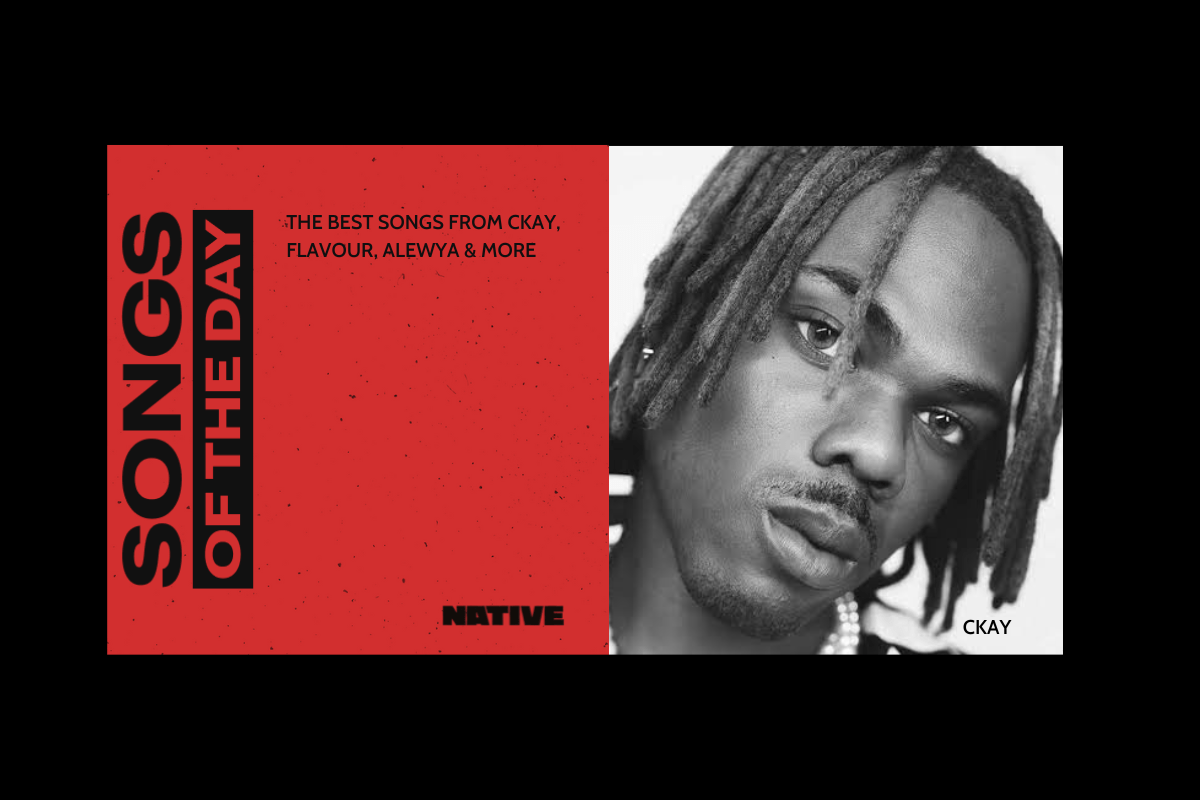
CKay vaulted into global superstardom on the back of a single that went viral over two years after its release. Instead of expressly attempting to replicate the sonic makings of that hugely successful song, the singer has committed to purposefully expanding his sound, as seen in the sultry Amapiano banger, “Watawi.” The direction of the new single, which features Davido and Focalistic, is already paying dividends, as it climbs to No. 10 on the TurnTable Top 50, moving three spots up from its debut position last week.
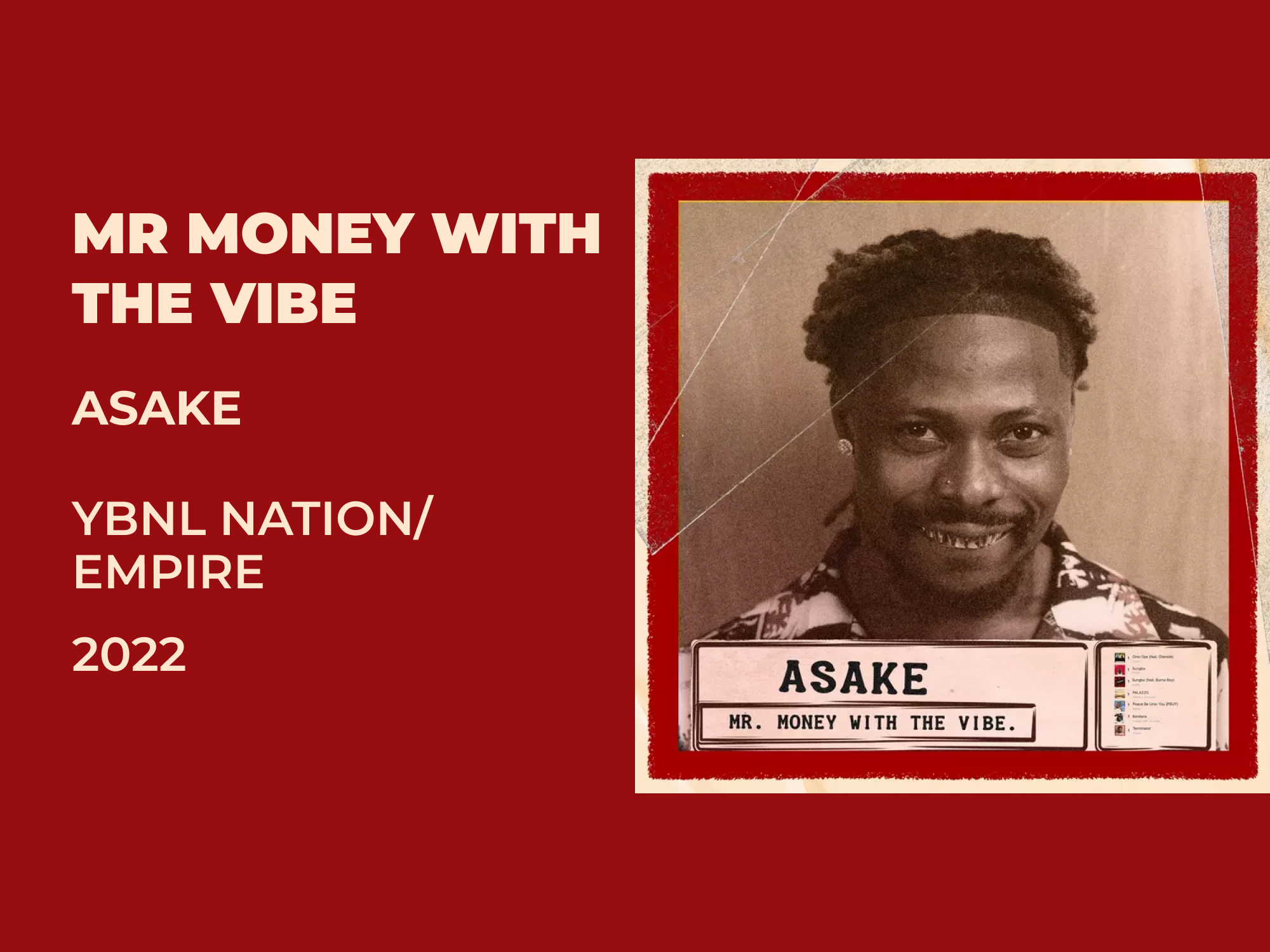
The rest of the lower half of the top ten is pretty much unchanged from the previous week. Ladé’s “Adulthood Anthem” continues to be a fixture here, slipping one place to No. 9, while Zinoleesky’s tender “Loving You” swaps places and moves up to No. 8. Holding steady on the TurnTable Top 50, Camidoh’s “Sugarcane” and Omah Lay’s “Woman” keep their respective No. 6 and No. 7 positions. Just above them, Spinall and Asake’s “PALAZZO” drops down one spot to No. 5, swapping places with Burna Boy’s “Last Last,” which is at No. 4 this week.
For the second consecutive week, Mavin’s “Overdose (OVERLOADING)” remains at No. 3, after a multi-week No. 2 peak on the chart. Asake’s latest smash hit, “Peace Be Unto You (PBUY)” is at No. 2 on this week’s TurnTable Top 50, a one spot drop after topping the chart last week. Ascending back to No. 1 is Kizz Daniel and Tekno’s “Buga,” a return bolstered by the recent release of its colourful music video. This extends the reign of “Buga” as the song with the most weeks at No. 1 in 2022, previously clocking six consecutive weeks, until “PBUY” interrupted that run.
“Buga” will also mark the final No. 1 of the TurnTable Top 50, as the chart is set to rebrand and expand to become the TurnTable Top 100. Starting next week, July 11, TurnTable Charts will be issuing the top 100 chart, reflecting the biggest songs in Nigeria across all streaming platforms and airplay mediums.
TurnTable Charts is proud to announce the launch of its new flagship music chart that combines all platforms in the country— TurnTable Nigeria Top 100 💫
The Nigeria Top 100 is an all-genre multi-metric singles chart that employs a weighted system to combine streaming & airplay pic.twitter.com/dHs6ST2JDF
— TurnTable Charts (TTC) (@TurntableCharts) July 4, 2022
For now, you can take a look at the full rundown of this week’s TurnTable 50 here.
Towards the mid-2010s, the soundscape of Afropop was being stretched thin. In the countries of Nigeria and Ghana, the irreverent groove of party-ready bops were the dominant sound, but all that changed when Mr. Eazi got on the scene with the seminal “Skin Tight.” With a sonic palette as richly structured as it was emotionally moving, he was able to churn out an impressive number of hit songs in relatively little time, therefore imprinting his name and that of the producer, Juls, in the pantheon of influential Afropop musicians who positively transformed its trajectory.
Although he started in the crucial role of orchestrating the sonic backend, Juls would move into the scene’s centre in the coming years. As popular songs eased onto slower beats and were carried by the coastal embellishments associated with finding one’s peace, the originator of the groove was more readily mentioned. Last year, the Ghanaian-born Juls successfully dug into the candy pot of his networking and collaborating years to release ‘Sounds of My World’, his celebrated debut album. More than anything, the project highlighted the various ebbs of contemporary expression his signature palmwine music flowed into, whether it was laidback rap appearances or soulful R&B-type singing.
When The NATIVE caught up with Juls to discuss his debut album, the producer suggested he was moving past the sure-fire qualities that had accorded him his catalogue of hits. “I’m used to creating certain vibes,” he said, “and now it’s like the end of an era and now I am trying to do something new. I was really eager to get this album out, and then re-group again and try new things from a creative perspective.”
Throughout the first half of this year, Juls has made good on that desire. The duo of “Ready” and a Zikomo remix of “Summer in the Ends” were highly collaborative, allowing musical input from the likes of British acts BenjiFlow and Jaz Karis and taking Juls’ music into broader sonic plains. In May, he released “Jamestown Riddim,” a track that’s noticeably boisterous. With the brazen overtones of Afrobeat-style horns, it was clear to see that Juls wasn’t just approaching a new phase of his storied music making: he was already there, waiting as always for others to catch up to what he was doing.
“Lokoto Riddim” is the latest of his protean flourishes, released over the weekend to little fanfare. Afropop is a genre in which the pidgin-spiced lyrics and vocal deliveries form a great deal of its commercial appeal, it’s dazzlingly magical how Juls keeps the listener grounded in the three minutes of the record’s runtime. Situated at its core are the urban Highlife percussions Juls has masterfully interpreted throughout his career, but on the closer listen the song is more layered.
There’s an assortment of original sonic choices like a breathing rasp which functions here like a snare would, some few sections carried by birdsong, sensual guitar licks and of course a child-like vocal sample that says “eh eh eh eh” in a quite strange way, as though caught in a peculiar pain. Still, the most dominant parts of the song are groovy parts where these all collide into an exhilarating body-shaking vibe. It hasn’t been long since producers began staking out their own releases but we’ll surely agree—for our own sakes, after all—that the future of African music is carried in the shifting inspirations of their talented hands.
Even with a distinct touch and a recognisable brand of groovy minimalism that leans into rustic inspirations, Juls is firmly situated within the class of future-facing producers in African and diasporic black music. “Lokoto Riddim” is a blistering highlight of his sonic vision.
“What’s Going On” Tallies Notable News Headlines From Across The Continent — The Good, The Bad, And The Horrible — As A Way Of Ensuring That We All Become A More Sagacious African Generation. With This Column, We’re Hoping To Disseminate The Latest Happenings In Our Socio-Political Climate From Across The Continent, Whilst Starting A Conversation About What’s Important For Us To All Discuss. From Political Affairs To Socio-Economic Issues, ‘What’s Going On’ Will Discuss Just That.
Persistent Power Cuts In South Africa
South Africa is currently facing its worst power cuts in two years, as South Africans face up to six hours without power a day. Africa’s leading industrialised country—and second-largest economy—last experienced such drastic outages in nearly three years. Eskom, which generates more than 90 percent of the country’s power, has struggled to meet electricity demands in South Africa for at least a decade, but the outages have not been this severe since December 2019. The loss-making utility, saddled with debt approaching 400 billion rand ($24.4bn), is trying to contain costs as part of a turnaround plan.
The people are sitting in the cold and in the dark, businesses are being hurt, this was already a very difficult time because of very high cost of living and fuel.
Eskom has blamed the severe outages on a labour strike which started last week. The protests began after wage talks between Eskom and trade unions, including the National Union of Metalworkers of South Africa and the National Union of Mineworkers, reached a deadlock. Eskom has a total nominal capacity of 46,000 MW, but it said on Friday that more than 20,000 MW was offline due to breakdowns and planned maintenance. The state utility company was granted a court ruling to block the strike, but the protests have continued. Similar protests over wage talks in the past have also hampered operations. The utility is set to meet with workers’ unions on Friday to discuss a new pay offer to try to settle the dispute.
With an ageing coal fleet that is highly prone to faults, Eskom has struggled to meet demand since 2007, choking economic growth. Eskom routinely implements scheduled power cuts, called “load shedding,” to prevent a strain on the system that could cause a total blackout and to replenish emergency generation reserves. Already burdened with unsustainable debt levels, its unreliable coal-powered plants force it to spend large amounts on diesel for backup generators while its tariffs are not yet cost-reflective. State enterprises minister Pravin Gordhan told a media briefing on Tuesday that: “Eskom is in this position because of the industrial action which has meant that in many power stations up to 90 percent of the staff could not attend to the duties … because of intimidation.” Gordhan added that the crisis was “causing a huge amount of damage to South Africa’s reputation”.
In a statement, Eskom shared “load shedding is implemented only as a last resort to protect the national grid,” while requesting citizens to use electricity “sparingly”. Former South African opposition leader Mmusi Maimane has urged President Cyril Ramaphosa to take “urgent action”. “The people are sitting in the cold and in the dark, businesses are being hurt, this was already a very difficult time because of very high cost of living and fuel,” he tweeted on Wednesday.
Central African Republic Launches Bitcoin Hub
The Central African Republic has launched its government-backed cryptocurrency hub called Sango—named after one of the country’s official languages. President Faustin Archange Touadéra launched the hub on Sunday in a live announcement on social networks. It follows the country’s adoption of Bitcoin as legal tender in May, only the second country after El Salvador, to adopt Bitcoin as legal tender. President Touadéra shared that: “Sango means the language of money and wealth. Cryptocurrency helps the poor gain control over their investment,” relating the project to ‘digital gold.’
Although the specifics of the project are still very much uncertain, according to the Mining Minister of the Central African Republic, Rufin Benam Beltoungou, the project will help people in the country’s significant mining resources among other things. Many concerns remain about the adoption of cryptocurrency in the country, especially after the collapse of Bitcoin by more than 20% just last month. About 90% of the Central African population does not have access to the internet, although the country has signed an agreement with neighbouring Cameroon to share its fibre optic network in 2023. The government estimates the Central African Republic’s natural resources to be worth more than $3 trillion (£2.4 trillion). But the country has been torn apart by a succession of civil wars for nearly a decade and is one of the poorest in the world.
Fourth Ebola Outbreak in DR Congo Officially Over
Shortly after the most recent Ebola Outbreak in the Democratic Republic of Congo, the outbreak has been controlled and put to an end. The outbreak has been contained within three months thanks to a “swift” and “robust response” in the Democratic Republic of Congo, says the World Health Organisation (WHO). Since 1976, this has become the 4th outbreak in DR Congo and the most recent outbreak killed four people, three of which were confirmed cases and one being a probable case, the global health body shared.
The WHO will continue to monitor the situation in case of any “flare-ups”, but in a statement it praised the Congolese authorities. The UN organisation worked together with the government to roll out vaccinations, testing, contract tracing, infection prevention and control, as well as community engagement. WHO Regional Director for Africa Dr Matshidiso Moeti in a statement on Monday shared: “This outbreak response shows that by bolstering preparedness, disease surveillance and swift detection, we can stay a step ahead.”
2023 African Cup of Nations Postponed To 2024
The next Africa Cup of Nations will be played in Ivory Coast in 2024, and not 2023. In 2017, continental governing body CAF announced that it would move the finals from their traditional January/February slot to June/July, in a bid to avoid repeated disputes with European clubs forced to release players in the middle of the season. With the World Cup in Qatar taking place in November and December this year, the decision has been taken to postpone the finals rather than bring them forward. This simply means that the Nations Cup will be held in January and February for the second time in a row, after this year’s tournament in Cameroon.
Under former CAF president Issa Hayatou, who was overthrown in 2017, African football’s ruling body refused to countenance any possible change of date for the months the continent’s flagship sports event is hosted. About four months after taking charge, Ahmad Ahmad—Hayatou’s successor—turned this policy on its head, following consultation with the continent’s officials. CAF Secretary-General Veron Mosengo-Omba said there are no plans to permanently move the finals back to January/February given the contrasting weather patterns across the continent at different times of the year.
When asked why it took CAF so long to make a decision on this matter, given that June and July have been the rainy seasons in Ivory Coast for many years, Motsepe failed to directly address the question, saying the choice had been made ‘out of courtesy’ with Ivorian organisers. Both Motsepe and Mosengo-Omba were speaking in Morocco, which is hosting the ongoing Women’s Africa Cup of Nations.
Half of 2022 is gone. The world has finally returned back to normal – or so it seems. Bodies are back in close contact, cheeks are grazing each other, masks are a rare sighting in public, and social distancing is in the mud. Through the dystopia of a global pandemic to the “new” normal, a consistent presence is the unprecedented inventiveness and unyielding excellence that powers urban African music. The first six months of this year have been no different, and our mid-year list ranking the best projects so far is a testament to the deluge of great music that crosses our ears on a daily and weekly basis.
15. Teezee – ‘Arrested by Love’
As inviting, bright and riotously creative as its cover, ‘Arrested by Love’ is a wondrous showcase for Teezee. Blending Rap, Funk, Trap into the tape, the groovy project brought about a summery feeling well before the summer began. Through this project, he discusses community heritage, success and other melodramatic subplots we encounter. “Do Me Jeje” (produced by Monster Boys at the first NATIVE Sound System camp) deserves an honourable mention, as he teams up with Knucks to deliver one of the best songs in the album. In sum, ‘Arrested by Love’ sees Teezee enter his OG era with infectious clarity.
Tela Wangeci
14. Jinku & Karun – ‘Passenger 555’
Karun’s voice keeps getting better and in conjunction with Jinku’s production, resulted in the sonic explosion in ‘Passenger 555’. The downtempo house and ambient R&B mood perfectly merge with Karun’s fluttering voice, as the pair take us on an intergalactic journey. The project is curated to tell a story about a failing love when listening in chronological order, and fighting for love when listening in reverse order. It’s an honest and vulnerable, which will pull you into Karun’s evocative lyricism over spacey beats.
Tela Wangeci
13. Victony – ‘Outlaw’
Through the rubbles of an accident, Victony rose. His was a testament to the great forces of nature pulling together to save a special talent. It’s a trajectory as old as time itself, and there’s no man better to take that into Afropop, than Victony. He’s moved with a graceful sheen ever since, layering his distinct vocals on hits like “Rosemary” and “Holy Father”. His solo music bears that mark of renaissance, going from “Pray” to “Apollo” with effortless mastery, revealing Victony as one of the talents to rock 2022 and beyond. ‘Outlaw’ is sufficient proof of his talent, combining lush production with strong vocal awareness, birthing songs like “Outlaw” and “Soweto” which, by any critical metric, ranks among the better Afropop songs of the year.
Emmanuel Esomnofu
12. DJ Lag – ‘Meeting with the King’
It’s possible to read the title of DJ Lag’s debut studio album, ‘Meeting With The King’, as self-aggrandising, but one listen through the mutating 15-track project sounds like an undulating ride through a primordial African castle. Since the inception of Gqom in the 2010s, DJ Lag has rounded every bend and scaled every fence, serving as a leading voice of the culture. ‘Meeting with the King’ sees this motif in its full glory, as the iconoclastic 26-year-old artiste burrows deep into the most starkly experimental pockets of Gqom: slowing down the tempo and sloshing it with an assortment of eclectic sounds, from Amapiano to Funk. For an artist who has been a frontrunner in the genre’s burgeoning scene for over a decade, his debut album witnesses his knack for inventiveness at an all-time high. On songs like “Raptor”, where drums rumble with unbridled gusto and he marries the entrancing ethos of Techno with whimsical theatrical explorations, it’s obvious that he crafted ‘Meeting With The King’ with the grandest, voyeuristic experience of Gqom in mind.
Chibuzo Emmanuel
11. Tim Lyre – ‘Worry <’
The sultry, sensitive soundscape of Alté music has a corner strictly anchored by Tim Lyre. He’s collaborated with the movement’s biggest names, parlaying his electric production into the corridors of mainstream music. His solo releases revealed his alluring mastery of the complete music-making process, possessing a protean voice in sync with his lush beats. Lyre’s debut album, ‘Worry <’, was released on the backend of singles “Real” and “Highlife”, both melding into his eclectic soundscape with great harmony. His role as curator and performer is wielded with economy, ceding the center stage in indelibly high moments. The result is a 31-minute long masterpiece, a shimmering soundtrack to motions of love, life, despair and resilience.
Emmanuel Esomnofu
10. Buruklyn Boyz – ‘EAST MPAKA LONDON’
Immediately Buruklyn Boyz premiered the seminal “Nairobi,” they became the de-facto voices of Kenyan drill. Usually, that should come with some pressure, but Ajay and Mr Right have sauntered through expectations with subsequent releases, none more rousing than their debut album, ‘EAST MPAKA LONDON’. After over a year of building their credentials with great, some utterly essential, singles in the Kenyan drill canon, they add a thrilling debut album to that repertoire. Over the course of the sprawling set, they reinvent as much as they stay tethered to their blueprint, adding some heart to the brawn they’ve always showcased, resulting in a dynamic album that collects the abilities of Ajay, Mr Right and their collaborators into a finely aggregated whole.
Dennis Ade Peter
9. Coco Em – ‘Kilumi’
Coco Em’s music demands your attention at every turn. The Kenyan DJ/producer carries the heart of a consummate experimentalist underneath the sleeves of an electronic musician. Over half-a-decade since she began drawing acclaim for her mixes, and with only a few previous song releases to her name, her debut project, ‘Kilumi’, impressively confirms Coco Em’s bonafides as a genre-bender whose only allegiance is to her well-honed intuitions. Here, she breaks into varying styles of Electronic and Dance music, as well as adjacent sounds, using those shards to piece together enchanting bangers, and a cumulatively entrancing body of work. ‘Kilumi’ asserts the undeniable powers of its creator.
Dennis Ade Peter
8. Cruel Santino – ‘Subaru Boys: FINAL HEAVEN’
Cruel Santino is comfortable taking risks, blurring sonic lines and pushing boundaries on the way to singular expression. For his latest project, ‘Subaru Boys: FINAL HEAVEN’, he’s in usual mad scientist, world-building mode, going through a journey of self-discovery through anime-inspired narrative devices and character development. The music is packed with a dizzying range of influences, weaving Hyperpop, Rock, contemporary Rap, flecks of R&B, Dream Pop, and more, into an enveloping whole. A sprawling 21-track run, ‘Subaru Boys’ is in non-stop motion, and even if total immersion is dependent on listener readiness to take the plunge into Santi’s preference for symbolic and elaborate storytelling, the album is a candy jar of sonic treats, blessed with undeniably great guest turns from Jamaican singer Koffee, DC rapper WiFiGawd, Ghanaian singer Amaarae, and more. The threads don’t just cohere, they weave together to form the latest grand declaration of auteurship from an artist whose vision is his greatest power.
Dennis Ade Peter
7. Tyson Sybateli – ‘Home’
South African rapper Tyson Sybateli has one of the most quietly prolific catalogues in hip-hop right now, and his recent album is a testimony to his consistency. The abundance of swanky lyrics represents Tyson at his sharpest, as he makes a sterling performance. In 12 songs, Tyson tells a reality-soaked story of hope and impending glory, while managing to imbue the music with a clear, golden-age rap technical edge. As its title suggests, the album finds Tyson in a less competitive stance as compared to his previous projects.
‘Home’ hones in on the full range of his powers, whether that’s doing his best R&B impression alongside Amarafleur and Marcus Harvey, or trading razor sharp bars with Jay Jody. The colossal album is decorated with soul-drenched beats laced with consistently knocking low end, a perfect backdrop for Tyson to be incredibly cocky and disarmingly human. The tape is perfectly curated taking you on a euphoric journey with introspection. If nothing else, you can’t say Tyson Sybateli hasn’t given the best rap flex of 2022?
Tela Wangeci
6. Asa – ‘V’
After over a decade of serving as a purveyor of spellbinding cinematic compositions fit for grand concert halls, the Paris-born Nigerian luminary waltzed into 2022 with a wide-eyed woozy Afropop cocktail. With an eclectic-yet-cohesive blend of sparking sounds and resonant stories that stand toe-to-toe with those of her younger peers in the sprawling Afropop scene, Asa devotes her fifth studio to pulling apart the different shades of the elusive concept that is love. Far from the scowling weightiness that defined her previous works, ‘V’ is the most vulnerable and risky version of the 39-year-old iconoclast: from the refreshingly youthful production and the furiously poignant stories that see her burrowing deep into her personal experiences, to her choice to tap a young cache of collaborators, ‘V’ is the work of a vaunted veteran sprouting again.
Chibuzo Emmanuel
5. Moonchild Sanelly – ‘Phases’
Flamboyance lies at the heart of Moonchild Sanelly’s acclaim. Her artistry reveals a musician deeply steeped in the traditions of South Africa while aware of the music elsewhere. These fragments are threaded by an explosive sense of electronic music, a preference that’s seen her dabble in Gqom, Amapiano and other similar sounds. ‘Phases’, the musician’s sophomore album, followed her foray into British music circles (several UK musicians feature here) and finds her executing flagrant ideals. Romance is usually the subject, but she’s astoundingly subversive, constructing remarkable storylines from queer angles. What’s magical is her ability to have fun while at it, taking the listener into a soundscape that sounds like an entire carnival.
Emmanuel Esomnofu
4. BOJ – ‘Gbagada Express’
Five years after the release of his sophomore solo album ‘Magic’, Alté pioneer and ⅓ of DRB, BOJ returned with ‘Gbagada Express,’ a 16-track LP fusing a wide variety of sounds and voices, all sieved into a remarkable body of work. ‘Gbagada Express’ is a purposeful expansion of BOJ’s artistry, and a reflection of BOJ’s journey so far. On the tape, he teams up with Fireboy, Victony, Moliy, Obongjayar, Amaarae and many more artists who seamlessly match his energy across a smoothly executed range of mid-tempo Nigerian pop, drill, Highlife-inflected Afropop, R&B-tinged bops, and more.
‘Gbagada Express’ kicks off with the Fireboy DML-assisted record “Owo Ni Oko” which sees both collaborators discussing the necessities of being rich and having money and the importance of working for money, a fine introduction to the 43-minute run. Records such as “Unconsciously” and “Tinu Ewe” showcase BOJ’s pen game at its finest, while other records such as “Culture” and “In A Loop” display his versatility as an artist and emphasise his credentials as a curator of great collaborative songs. Even with its musical scope and rotating door of guests, ‘Gbagada Express’ is a clear and concise statement by an artist who has taken time out to perfectly craft his sound and realign his mission.
Wonu Osikoya
3. Rema – ‘Rave & Roses’
Sometimes, traversing through life as a young Nigerian can feel like being stuck in a sprawling convoluted maze. From grappling with banal layers of youthful reality like sex, love and revelry, to trudging through scuzzy layers of the Nigerian reality: battling agonizing insecurity, bad governance and crippling police brutality, being a young Nigerian can be overwhelming. In the three years between Rema’s majestic debut single and his recent debut album, the nation’s youthful tapestry has dimmed several shades darker across all facets. ‘Rave & Roses’, the gleaming diamond that ultimately formed from this dark time, attempts to navigate the complexities of the Nigerian youth in this age and the nuances of being a young celebrity trying to balance fame and everyday living.
Rema grapples intensely with these emotions and struggles, capturing the fiery thoughts and intense inner monologues of a young man trudging up a mountain of yearning — yearning for love, for sex and for a brighter nation. On “Are You There”, one of the album’s brightest-sounding Afropop moments, he captures the mettle and outrage of the millions of youths across the country yearning for a holistic renaissance across all facets of the nation’s affairs. This is a thread that’s snugly woven through the 16-track project. Over a genre-bending sonic palette, he serves as the voice of his generation, a poetic troubadour with resonant musings on love, burning lust, wistful self-reflection and political angst.
Chibuzo Emmanuel
2. Kabza De Small – ‘KOA II Part 1’
Kabza De Small is a creator and curator of lasting moments. Part of that is a by-product of his obsessive need to express himself, a prolific soundman always in need of a canvas to splash together piano riffs, synthesised notes, and unyielding percussions. Part of that is because, when you proclaim yourself king in a wildly inventive subgenre that turns out new stars with every blink, greatness is the only option at every turn. Two years off his incredibly expansive, classic debut solo LP, ‘I am the King of Amapiano: Sweet & Dust’, the producer returns with a sequel that’s even more arrogant than its predecessor.
Assertiveness pours out of ‘KOA II Part 1’ unbridled; this is not a statement of importance, it’s an edict from the top of Mount Olympus. The scope is unpretentiously grand, invariably packed with incredibly soulful cuts, affecting folksy tunes, and wall-rattling bangers. Ever the shamanistic composer, Kabza De Small spends two-plus hours purposefully teasing out Amapiano’s range with consistent experimentations, directing a star-studded cast of guest voices that augment the simple fact that, no matter how routine it may seem, this is actually greatness personified.
Dennis Ade Peter
1. Obongjayar – ‘Sometimes I Dream of Doors’
Obongjayar knows the test of sound. Since breaking out six years ago, his songs have generated great interest due to their effortless ability to imbibe personal material within an assortment of artistic virtues. Experimental might be the usual word but, for Obongjayar, it’s a natural synthesis of his many identities. This awareness has resulted in a sparse but excellent catalogue, formerly comprising three EPs. Then in October 2021 he edged closer to Afropop’s teeming centre of Nigeria with “Message In A Hammer,” a post-protest record which combines close observation with haughty angst. Not yet known among his burgeoning fan base, Obongjayar had set off the motions to his debut album. The announced title had a poetic lilt which was typical of Obongjayar—the willingness and the ability of evoking the epic.
Obongjayar’s ‘Sometimes I Dream of Doors’ has been one of the most intriguing releases of the year. It’s a startling, vulnerable, and well-constructed body of work, masterfully threaded to ambient music by producer Barney Lister. Although he is London-based, the songs are precisely focused on Nigeria, deftly picking strands of memory and weaving them into consequential stories and earth-shaking bops. Music is largely subjective, but I sincerely believe that anyone who’s listened to ‘Doors’ would acknowledge its brilliance. Post-release, it’s been a sort of anthem for a wide range of Nigerian youths caught in their individual tussle with dreams. The peculiar timeliness of that fact renders the album a sort of eternal heft, because songs like “Wind Sailor” and “Tinko Tinko” will continue to soundtrack moments, whether caught up in listless melancholy or pensive tides, turning a romantic situation into the strongest pledge: self-love.
Zambia-born, Botswana-raised Sampa the Great is a rap iconoclast. Over the course of her catalogue, she’s explored deeply resonant issues, spinning personal stories and societal observations – especially as a black woman who’s lived in Africa, the U.S, Australia, and travelled the world a fair bit – into declarative vignettes over a variety of instrumental choices, ranging from jazzy rap to progressive R&B and even Dance-inflected beats. In 2019, Sampa released ‘The Return’, a sprawling and stunning debut album that scored her critical acclaim, expanded her popularity, as well as wins and nominations at several music awards in Australia.
Three years after her international breakout, Sampa the Great is gearing up to share her sophomore LP, titled ‘As Above, So Below’. Earlier in the year, she teamed up with American rapper Denzel Curry for “Lane,” a delightfully abrasive song reclaiming and reasserting the narrative of her artistry, setting an expectant tone for her upcoming album. In addition to that single, ‘As Above, So Below’ will comprise eleven songs, with notable features from American rapper Joey Bada$$, British-Ghanaian rapper Kojey Radical, and Beninese icon Angelique Kidjo.
Conceived after relocating back home to Zambia during the coronavirus pandemic, ‘As Above, So Below’ taps into a heritage Sampa the Great is clearly proud of. She’s collaborated with a handful of Zambian artists, including Jazz musician James Sakala and Jagari Chanda of the iconic Zamrock band WITCH. On the recent, second lead single, “Never Forget,” Sampa delivers an emphatic ode to Zamrock, the inventive style of psychedelic rock that originated in the ‘70s. She’s joined by her sister Mwanjé, singer Tio Nason and rapper Chef 187.
In the single’s accompanying video, archival footage of Zamrock bands performing in the ‘70s, as well as clips of everyday Zambian life from that era, is sprinkled within the artful and riveting set of visuals. In addition to strengthening her bond with her roots, “Never Forget” expands the rap artist’s musical purview and continues to sustain expectations for a new Sampa the Great album. ‘As Above, So Below’ is scheduled for a September 9 release.
Weeks ago, Gyakie kicked off her solo output for 2022 with “Something.” Having strode down the path of features for most of the year, the song was demonstrative of what we know about the Ghanaian singer’s talent since breaking out with “Forever.” It was reaffirming to her burgeoning fanbase across Africa and beyond that Gyakie’s catalogue consistently propels her towards unlocking deeper layers of her folk-inspired artistry.
Ushering listeners into July is Gyakie’s second single of the year, “FOR MY BABY.” As she’s shown on previous songs, the topic of romantic love is a portal for Gyakie to enter the deeper parts of her person. Irrespective of her position in the extremes of morality, her ability to channel perspective results in extremely cathartic songs. That tradition follows into this new affair which sees her layering affirmative lyrics over the minimal embrace of Soji’s production.
The record sets a warm mood, carried on the assured singing of Gyakie. With her husky vocals enunciating her desires, she’s accompanied by luminous guitars, saxophone notes, and local percussion that’s richly evocative of Highlife. “Why you like to act like this?” she sings in the way of a concerned lover, unwilling to throw in the towel on a relationship that’s taken a while to build. It is an admittedly trite theme among Afropop musicians; the enduring quality of Gyakie’s song is however the weight of its restrained emotions, each line written with accomplished economy.
“FOR MY BABY” is the second single off ‘My Diary,’ the sophomore EP from Gyakie which is forthcoming on July 22nd. The project features six tracks, and will surely be intended to solidify the singer’s astounding run at the zenith of the global movement that is Afropop.
The accolades usually accorded to Nigerian pop, regularly referred to as Afrobeats, today is not an overnight phenomenom. It’s been a consistent journey from as early as the sixties, moving through reiterations and eras, till what is recognised nowadays. Among custodians of the culture, those who live and breathe it, there has been the growing relevance to conceptualise Afrobeats—to solidify the genre’s future prospects by understanding its history.
Just some days back Tems was winning two BET awards, while Fireboy DML performed on the main stage of the ceremony. Burna Boy is serenading audiences across Europe and Wizkid is holding it down for the young superstars like Rema and BNXN, popping up on their stages. Away from the mainstream, there’s no small number of artists breaking the norm by wildly experimenting with their sound. New trends are being adapted and rejigged–it’s a bubbling scene. That’s the premium motivation for stating and controlling the narrative, especially through the inclusive medium of film.
It was made known sometime last year that filmmaker and veteran music executive Ayo Shonaiya was producing a documentary for Netflix. ‘Afrobeats: The Backstory’ featured an elite lineup of appearances, helmed by a fine mix of foundational figures and contemporary players. It stoked great anticipation across music circles, and also for the less obvious reason of being the streaming giant’s novel music documentary in Nigeria.
Viewers will have to wait no longer, as the pilot episode was released yesterday, the 29th of June. Scripted in twelve episodes, the documentary series will feature footage from about 20 years ago. Key industry figures like Kenny Ogungbe, Dayo ‘D1’ Adeneye and Paul Play Dairo are some of the interviewees for this episode. In line with the experiental vision of the producer, a playlist comprising classics and new school jams will accompany each episode.
In the coming episodes, followers of the series will be privy to intimate details of the scene’s formation. Right from its sonic roots (the 5 Beat pattern) to the influence of the UK/US diaspora and how music videos changed the game, it’s scripted with purpose and from credible angles. The penultimate episode contains an exclusive interview with Tony Allen, who discusses the origin of the Afrobeat term and who added the famous ‘s’.
As a music fan caught in the whirlpool of many releases, you’re likely to miss out on a bunch of things. This documentary shouldn’t be one of those. Even though it’s a solid proof reference for the genre, Afrobeats is a movement famously peppered with anecdotes and you’re quite sure of having a good time with it. Don’t take my word for it though; go see the thing.
Two years ago, the duo of Ayo Olagunju and Moyo Ajibade took a lifelong interest seriously. Acknowledged as the socially connected folks within their circle, most of their friends looked to them for popping locations within Lagos. Then the pandemic broke out and everything went stagnant. Indoors, it struck them. What if people could access a website where they’d find places suited to their chosen interests?
The pandemic being considerably contained, FaajiApp was fully fronted the following year. “One of the first things we did was get a designer,” said Faaji’s co-founder and product manager Ayo, on a recent call with The NATIVE alongside other members of the startup company’s leadership. “The reason was because we wanted a playful, enjoyable website. From getting designers, we started getting engineers that were capable of building the idea we had in mind.”
Yet available only in Lagos, the creators rightly placed a growing need for recreational activities around the city. “I saw it going both ways because they’re people who want to go out, but they don’t know where to go,” says Moyo, who is Faaji’s co-founder and operational manager. “Like, a lot of people want to go out, they want to spend their money. Lagos is stressful, you know? Imagine leaving your house entering traffic from nine to five. Lagosians are always looking for an avenue to blow off steam and we wanted FaajiApp to be that place where you can find different avenues to do that.”
What was subsequently required was Faaji’s push into the market. Seyi Alawode came on board then, handling “marketing, branding, partnerships and all of that fun stuff,” she says. Formerly based in the United Kingdom, she runs a marketing agency and tells me now that Faaji has “hands down been one of my favourite clients to work with ever…I mean, the boys already know one another and they are their own audience.”
She continues: “We are the Faaji audience, so it’s almost like talking to our friends. A good chunk of our marketing campaigns have been based on research and it’s not hard to literally ask your friend as a young girl in Lagos, ‘what are your socialising pain points?’ And you find that a lot of people are lonely, a lot of people don’t have people to go to events with, a lot of people don’t have—you know, they’d go to events and wish they were at home, watching Netflix. That is another pain point, a lot of people also think Lagos is very repetitive. So we have all this data, and that’s been Faaji’s recipe.”
Navigating the website is easy and quite fun. Users can choose between four animal avatars, and then there’s about 30 interest categories—including loud music, games, costume party, LGBTQ+, football and many more. You can purchase event tickets and there’s also the prospect of hosting an event.
Social tools such as Find A Buddy and the Faaji Gang discord group are designed to help users embrace community. “It makes your fun much more amplified and really good,” explains Ayo. “I feel like that’s one thing that would separate Faaji from, I’d say to a large extent Eventbrite and other platforms,” reiterates Seyi, “because it actually goes deep into the Gen Z side of things. I think that’s why the culture is fucking with it, ‘cos it’s more to our taste.”
The creators of Faaji are currently building its network to prove that “the concept actually works before we expand to other territories,” says Moyo. They’re well open to establishing in the UK, reasonably because of its concentration of Nigerian migrants; meanwhile, Abuja residents have demanded its set-up in the capital city. To that end, what data would Faaji require to function satisfactorily in, say, Anambra state?
“First of all, we need to understand what the scene is like in Anambra,” explains Moyo. “We’d have to do lots of research to find out, ‘Okay, do people in Anambra like to turn up? Do they like to go out? What do they actually enjoy doing?’ Fun is relative; it’s different for different people. That’s the first thing we need to find out; then we also need to find out, ‘Okay who are the providers of this fun? Are there enough providers? Is it something that we need to put in the Faaji effect? Like, you know, make more personalised events and activities for the people of Anambra.”
As is common throughout the call, someone else—this time Ayo—bounces off another’s person reply to give more detail on Faaji’s practices. He recounts a recent case of a beach party host asking if payment from an event can be made from abroad, Belgium specifically. “It goes to tell you that Faaji is a global product,” says Ayo with obvious glee. “But because of the nature of our business, we have to do our due diligence, which is what Moyo explained. Before we get a host on board we have to be sure who you are. We don’t want you going to a party and you get kidnapped, which is just why we’re limited to Lagos for now. The moment we automate that process of security and vetting hosts, that’s it. We can accept payments from anywhere; you can buy tickets from anywhere.”
Creating such a product comes from a lived-in understanding of being young and down for the ride. The Faaji trio have either had personal experiences of parties coming up short, or needing to schedule loose time periods. Between Ayo having five years experience as a product manager and Moyo being a dynamic social character, their heart is undoubtedly in the right place.
For Seyi, being an undergrad in London demonstrated the usefulness of similar products. “There’s a website called Design My Night–up until I left university, anything I’m doing in London, I’m doing it on there,” she says. “Unless you have friends who know what’s going on at all times, there’s no way you’re going to find out what to do, where to do it, how to do it. I was most excited to see how it would work for the Lagos market.”
It is widely agreed that tech is Nigeria’s greatest influencer right now. Across industries, important products like Faaji are serving as a launchboard onto the unlimited possibilities of a new world. According to Ayo, more strategic collaborations are being lined up in the coming months. He makes it clear Faaji are more than a ticketing company—the description was only necessary to get them on the radar of potential users.
“The next thing for us is 10x start, go on steroids,” he says, “and what do I mean by going on steroids? We have a mobile app coming out. Already as we speak, we’re already planning concerts for December. We’re already planning experiences; one of the things I’m very keen to see is a new feature that will give you updates on what people are doing in different locations. You should see it very soon. You’ll keep hearing about Faaji for the next six months.”
We’re halfway through 2022, and it’s been an eventful year for Afropop. There’s been a torrent of great new music, spawning a massive stack of inventive smash hit songs. From Highlife-infused Ghanaian pop, to the unrelenting force that is Nigerian street-pop, to South Africa’s indomitable Dance scene, to tantalising Drill explorations in East and Central Africa, and much, much more, we’re living through abundant and musically expansive times.
Every week, tonnes of songs from African artists make their way to digital streaming platforms, and wading through them can be intense. That’s where The NATIVE’s Songs of the Day column comes in to help. We go through as many new releases as possible, spotlighting them here, two to three times every week. Earlier this week, we shared recent drops from Jaido P, Lia Elise, Dwin the Stoic and more. Today’s selection includes new music from Ms Banks, Samthing Soweto, MzVee, and more. Enjoy.
MS BANKS — “BOUNCE”
On her latest single “Bounce”, off her impending EP ‘Bank Statement’, the British-based Nigerian singer-rapper leans starkly into her Nigerian side, both sonically and lyrically. Over a bouncy, Highlife-inflected Afropop production upholstered by boisterous percussion, exotic horns and seething guitar riffs, she renders a salacious ode to sexual attraction.
SAMTHING SOWETO — “AMAGENTS”
“Amagents,” a resplendent soulful track by venerable South African Soul singer Samthing Soweto, feels like a quaint soundtrack to long sweltering drives. Released in commemoration of Father’s Day, it’s a reassuring ode to girl dads. Over a serene production, he layers his languid angelic vocals, as he conjures a poignant enrapturing number
SAMSNEY — “KUACHA” (FEAT. KELVYN BOY, BLACK SHERIF & DARKOVIBES)
“Kuacha” feels like a grand celebratory moment for the Ghanaian music industry for a good number of reasons. The obvious reason being that it boasts of a stacked cache of heavyweights on it. The other reason being that it melds Highlife: the quintessential Ghanaian genre that characterized the soundscape of post-colonial West Africa, and Ghanaian Drill: the socio-cultural language of the youths of the day. Against the backdrop of primordial highlife guitar melodies and heavy Drill percussion, Samsney’s collaborators bounce off each other, dishing sleek flows and melodious singing.
MZVEE — “FLEX” (FEAT. KWESI ARTHUR)
Ghanaian pop star MzVee recently released her latest LP, ‘10 Thirty’, which plays host to a trove of Afropop superstars like Tiwa Savage and Bella Shmurda. The Kwesi-Arthur assisted “Flex” is a standout. Over a groovy percussion, the pair trade bars as they conjure a heartfelt ode to love.
OBONGJAYAR — “NEW MAN”
Earlier this year, British-Nigerian singer Obongjayar released his debut full-length, ‘Some Nights I Dream of Doors’, to critical acclaim. Retaining attention for the LP, he recently released the video for “New Man”, a declarative highlight with defiant and resonant writing. In the video directed by Chukwuka Nwobi, symbolism meets an animated and boisterous Obongjayar, melding into a searing watch.
RNB PRINCESS — “SHE BAD” (FEAT. LOTI)
Over the course of her short but impressive catalogue, RnB Princess has showcased her adeptness at spinning the complexities of modern romance into resonant songs. Her latest single, “She Bad”, is no different, as she taps Loti for a conversational song portraying two people in a noncommittal situationship.
Ndumiso Manana is not your ordinary contemporary artist. The eSwatini-born singer, producer and Grammy award-winning songwriter can only be described with lush melodies and jazzy backdrops of R&B. Diving into the scene with sanguine indie singles such as “You don’t,” his new age R&B exudes emotional maturity and honesty. Born in Johannesburg, Manana was always attracted to music and his surrounding allowed him to hone his ability to compose, produce and perform.
Manana fully introduced his fully-formed artistry with the late 2020 debut EP, ‘In The Beginning Was The End’. Complemented by stirring instrumentation, the EP channelled Manana’s understanding of romance through a resonant narrative, portraying a love story in reverse order. The project was well-received, and it served as a remarkable jumpoff point for his solo career, as Apple Music subsequently scouted him for their Artist’s Spotlight series, and the EP was nominated for Best Produced Music Album at the South African Music Awards in 2021.
After months of buildup, the polymath has released his second EP,‘But could the moments in between’. The euphoric project houses 8 songs that conjure beatific grooves that radiate with alluvial soul, celestial jazz, electronic experimentation, and the polyrhythmic essence of Africa. In 22 minutes, Manana tells the story of romance, encapsulated with poetry and acoustic nostalgia that digs beneath your bones, seeping into your bloodstream and inner visions. The previously released summer anthem “Summervibe” and the December heart-warmer “Minute Of Silence” formed a perfect precursor, giving his fans a peek of what his conglomerate EP packed.
Right from the start, the EP is heavily influenced by his Jazz background, while retaining his defining contemporary sound. The 8 tracks are perfectly woven together, varying between warm acoustic sounds and songs that allude to dance floors of the ’80s. The EP has zero features, as against his last drop that featured established South African R&B singer Rowlene, which was also the only feature on the project. Manana is at his mercurial bests as he starts off with “Summervibe” which was released last year. His Jazz influence is written all over the song as the bass drums form a percussive backdrop as he layers his vocals over the cool piano keys. The serene number sees Manana express his relationship with his mental health: “confronting my issues passive-aggressively.” The melodious hook has you humming as he gives a sense of hope opening a bright side to the album.
“Summevibe reprise” is a creative genius that loops in the opening track with a lighter tone, as it ushers you to the next track “Pulchritudinous”. Upon searching for the meaning of pulchritudinous you see Manana portraying his muse as literally beautiful. Known to derive inspiration from his relationship with his partner, this is a song dedicated to adoring her. His writing is flowery and flush with adoring declarations: “I’m falling deeper into your eyes, sometimes I do disguise my infatuation, I adore you there is no reservation.” The soft piano keys present an ideal situation for lovers to feel like a walk down the beach while watching the sunset.
Each love song is more potent in building a solid narrative for adoration and love. Ndumiso Manana switches up the slow tempo in “Dance Therapy”, enabling him to express his vocal range, putting on his serenading skills as he convinces his muse of his love while still reassuring her she should put herself first. “It’s all the same” serves as the next track as he asks his muse to be equally vulnerable. With only four lines, his soul-stirring lyrics take into life conveying a very weighty message with minimal effort. The curation of the album flows easily as you get to see the story of love in its different forms, from adoration and reassurance in “Dance Therapy” to petty fights in “But You First”, exposing the toxic side of love with the essence of finding yourself and growing.
“Minute of Silence”, which served as the second lead single, features moody production sends you to a mellow state as you grasp the thought of broken love. Mostly self-produced, Manana is a sonic genius as he uses “Summeribe reprise”, “It’s all the same” and “Minute of silence” to curate an eclectic musical experience as you are exploring the tape. With emotive writing in each song, Manana focuses on enticing his listeners with his vulnerability as he exercises his vocal range. “Patiently” closes the curtains to this sonic experience as he reminds you that you are enough. He offers relatable lyrics—“nothing’s wrong, just don’t know where my life’s going”—while still offering reassurance that patience pays, acting as a counterpoint to “Summervibe” where he is worried about his future.
Ndumiso Manana’s talent is a goldmine of euphoric settings, from his gripping writing, which gently carries you through the project, to his soothing vocal range that assures you it’s just life and you can get through it ‘But could the moments in between’ serves as a testament to his powers as a reality-based artist and auteur, as he dissects running out of love within the concept of self-acceptance. It’s the sort of premise that’s made Manana a distinctly alluring voice in South Africa’s teeming R&B scene.
African music is in a great place, and that’s not because of its obvious, global crossover powers these days. African music is in a great place because of the variety and abundance we’re getting. Across the continent from Nigeria and Ghana to Kenya and South Africa, it’s clear that we’re living in a time of unbridled eclecticism and experimentation, and the direct by-product is a landscape always filled with great, Pan-Africanmusic.
As much as we’re storytellers, curators and critics, The NATIVE’s editorial staff are fans and music listeners just like you—well, we probably have to listen to a lot more music than you. That obviously means we have preferences, which means we have favourite songs that lean solely to our subjective tastes. With half the calendar year gone, we’ve been taking stock of the music we’ve been listening to and, as a precursor to our ranked mid-year projects list, we’re sharing some of our favourite songs of the year, so far, with you.
Asa & The Cavemen. – “Good Times”
“Good Times” is the focal point of Asa’s experiments on her fifth album, ‘V’. The record’s beachside ambience is created from spaced-out drums, hand-held percussion, swooning piano keys and lightly-invoked chants. Highlife is a foundational sound for Afropop and here it effortlessly soundtracks the overlying message of friendship and love. When the distinct tones of Asa and Cavemen’s lead vocalist Benjamin meet in the record’s closing parts, it lends itself to an out-of-body experience and illuminates the fullness that comes with being wrapped in the peculiarities of another person’s good intentions.
Emmanuel Esomnofu
Jaylon – “Get Down” (feat. Azanti & Chrystel)
When Jaylon and Azanti come together, you already know you’re getting great music. The pair have showcased great synergy on records such as “Firedncr,”“Latan” and now on their most recent offering, “Get Down.” Jaylon’s production stands out the most, as he focuses mostly on the piano and drums, breathing a shiny ‘80’s energy into the record. Chrystel also brought in a subtle and sweet energy into the record with her soulful and elastic yet powerful vocals. The synergy between all the collaborators on the record is undeniably great and everyone brought their A-game, from the producer to both featured singers.
Wonu Osikoya
Butera Knowless – “Bafana Bafana”
One of my recent obsessions these days is urban Rwandan music. What started as a fascination with inventive Trap stylist Bushali, around the time covid lockdown measures eased up a bit in the cursed summer of 2020, has become an overall keenness with pop and rap music from the land of a thousand hills. Butera Knowless has become one of my favourites, through last year’s ‘Inzora’ and visiting some of her back catalogue. The veteran singer and songwriter is a true diva, armed with a golden voice and vividly assured attitude. Her March single, “Bafana Bafana” is a toast to inner strength and unassailable confidence, her soulful and exquisitely glossy voice striding authoritatively over groovy production with orchestral flourishes. She’s joined by iconic Rwandan rappers BullDogg and Fireman, both contributing passionate rap verses to one of the best Afropop songs this year.
Dennis Ade Peter
Obongjayar – “New Man”
While ‘Some Nights I Dream of Doors’ is filled with back-to-back fantastic songs, “New Man” is a highlight, and one of the most interesting songs I’ve heard this year. The whole song feels like a spiritual experience, with lyrics that feel like an ode to the strength of the individual. The lyrics, “Get off the ground and start again” are sung with a quiet resolution. This contrasts with the guttural tones that inspire just as much confidence, with the line “I was born warrior” letting the singer tell us who he truly is.
Moore Wright
Buruklyn Boyz – “Catalyst”
Buruklyn Boyz is currently the supreme drill group in Kenya and East Africa. The release of their defying hits such as “Location 58” and “Nairobi” have enabled them to climb the Hip-Hop charts, and assert themselves as the next artists to watch out for. Fresh from their album release ‘East Mpaka London’, which has now surpassed one million Spotify streams, a diamond in the rough dubbed “Confession” reigns. While the whole album has timeless bops, the enchanting spell of “Confession” cannot be ignored. The song sounds more like a freestyle rather than a complete number and the rawness of its production gives a unique feeling when listening to it.
The back and forth between Ajay and Mr Right is exhilarating as it is impressive to see them on a faster and dancehall oriented beat. Immediately you hear the tag line “Metro Sucka Doba ” and “Clue Ashaivisha Track,” a guaranteed bop is promised. The menacing beat intro has a catchy melody with cheeky lyrics from Ajay—“Late night I am getting a text what are you up to I am bored in bed”—as Mr Right’s penmanship is witty and easy making the lyrics simplistic. Over time, the collective has mastered the art of not only creating Drill bangers, but experimenting with new sounds that act as catalysts to their career. Despite the year being halfway through and already releasing a charting album, I am anxiously expecting new magic from the dynamic duo.
Tela Wangeci
Asake – “PBUY”
When Asake waltzed into this year with the Olamide-assisted “Omo Ope,” which immediately became a hit, he immediately surged to prominence. However, no one envisaged the glorious next few months he would have. Since his first nationwide hit, he has doubled down with four additional hits and has incontrovertibly cemented himself as the most prolific Afropop act so far this year. For all his exploits this year, his latest track, “PBUY,” is perhaps his finest point. The boisterous track sees him finally perfect his inimitable blend of Amapiano, Afro-soul and Juju music: a quaint melodic sound that has characterised his last few offerings. Over a dizzyingly poignant production, he renders a dazzling ode to his humble beginnings.
Chibuzo Emmanuel
Omah Lay – “Woman”
This particular record, to me, is one of Omah Lay’s finest offerings. “Woman” is that one record that you listen to and you feel at ease, it’s soothing. P.Priime made the usual Omah Lay record sound so smooth with the additional elements added to the production of the record. Omah Lay unleashed his smooth, lover boy side and expresses his deepest feelings for his love interest with his amorous lyrics. The potency of his writing stands out on lines such, as “My girl no get no problem ah/All of a sudden, she say me I go be Tuface, Annie Macaulay, ok nwa baby,” showing off his muse and her stresslessness. With his debut album ‘Boy Alone’ set for release very soon, Omah Lay has set the mood for the album and has given listeners a feel of what to expect on July 15th.
Wonu Osikoya
ZRi. & Tyson Sybatelli – “Burgundy”
The penultimate song off South African act ZRi’s ‘Skins.’ EP is a lyrical showcase. Having taking a swing at eccentric soul-inspired music in previous songs, “Burgundy” is a straightforward attempt at solidifying the reputation of the musicians. A nineties Hip Hop-influenced drum pattern is roped with suspense-filled keys, setting a cinematic template for sprawling verses whose luminous quality is in the angle of its details. From lyrics such as “Flowers grown in the dark, they look just like ghetto leaves” to “Gang signs like class kids, more than merrier when I see obstacles,” the mood is decidedly pensive and poetic, allowing the gritty underside of becoming successful in the South African music scene to shine through.
Emmanuel Esomnofu
BOJ – “In A Loop” (feat. Moliy & Mellissa)
BOJ’s “In a Loop” has been a consistently delightful song to listen to since its release. A wonderfully mischievous song, it is easy to sing along to as it follows a man trying to tempt a girl away from her boyfriend. The contributing vocals from Moliy and Mellissa elevate the whole experience. The lyrics, “can’t leave him, cannot leave my baby,” are sung with such a surprising amount of sincerity that makes it almost believable. “In a Loop” remains a reliably energising song to return to.
Moore Wright
Ronehi & AYLǾ – “Saudade”
The first time I heard Ronehi and AYLǾ’s collaborative single, “Saudade,” I played it on repeat for at least 30 minutes. Somewhere in between, I contemplated texting someone I had a “serious” fling with almost four years ago. Then, I googled the word Saudade and found out it means nostalgic longing and, in that moment, I realised the pair had successfully bottled that feeling into a perfect, deeply relatable song. Ronehi’s backdrop is magnificently minimal: twangy guitar riffs, distinctly African percussions with a sexy lilt, and saxophone motifs floating in and out. AYLǾ, an ever-willing emotive lyricist, writes a delightful ode to being deeply infatuated with a consistent presence from the past, every line leaking with mild desperation and undying devotion.
Dennis Ade Peter
Kabza De Small – “Eningi” (feat. Mhaw Keys, Njelic, Simmy)
Amapiano has become one of my favourite genres in the past two years. With so many variations released every other week, I try to keep up with new releases as much as I can, and Kabza De Small was my first touchpoint into the genre. “Eningi,” from his latest project ‘KOA II Part 1’, which translates to ‘a lot’, is a song dedicated as a prayer to God, asking for abundance in wealth. Featuring Mhaw Keys, Simmy and Njelic, “Eningi” has stellar production from Mhaw Keys and Kabza, as well as befitting vocal contributions and synergy from Simmy and Njelic. “Eningi” can easily pass off as a dance soundtrack to your prayerful life.
Shina Ladipo
Rema – “FYN”
As young as Rema’s career as an Afropop superstar is, he’s already cemented himself as a cultural monolith, and his debut album (as riveting as it is) is already poised to be a cultural touchstone. Off Rave & Roses, “FYN” is a lurid cut that crystallizes his reality of being a seditious Pop star. It’s this quality of splitting throngs of rapt listeners across lines that bolsters his alluring personality.
“FYN”, an initialism for fresh young nigga, palpably captures the essence of his reality. Against the backdrop of an opulent production underpinned by shimmering keys, he juxtaposes his luxuriant lifestyle with the trove of hate he receives from his detractors. In his opening monologue on the track, he says, “They don’t really like me talking my shit like the OGs did, they hating on me cos I’m a fresh young nigga”. Going against the grain and squaring up to adversaries are themes intricately woven through the tapestry of life, and “FYN” serves as a tether to the gritty nature of life and a bastion of hope in periods of tribulation from critics or in Gen-z lingo, haters.
Chibuzo Emmanuel
Chris Kaiga – “Ongeza Debe” (feat. DAI & Scar Mkadinali)
In the history of Kenya discographies, “Ongeza Debe” has to go down the hall of fame. Two GOATS of different music genres came together to offer a timeless beautiful track. While Chris Kaiga has intentionally garnered the love of Kenyans with his laid back tunes and playful lyrical capability, Scar Mkadinali has become East Africa’s most sought-after rappers befitting the title ‘Kovu’. DAI’s vocal capability is unmatchable as the jazzy instrumentals open up for Chris’ witty verse. It is songs like “Ongeza Debe” that makes me wish Kiswahili was understandable worldwide. Chris Kaiga penmanship is eccentric as each line chronologically leads you to his next line. Scar is forever the king of pride rock with his cadence on a “debe” – beat. Great artists are always dynamic and adept, Scar is an example of this. The delivery from both artists bring a calm demeanour of the song which basically focuses on doing your best and having fun.
Tela Wangeci
Cruel Santino – “Tapenga”
Cruel Santino has always reinvented himself and reupholstered his sound with every new project. This plays directly into Santi’s ability to create worlds using sound and carefully crafted imagery for every new journey he takes on his bodies of work. On his latest, ‘Subaru Boys: FINAL HEAVEN’, he leans into anime-inspired motifs to tell a story about dealing with heartbreak, tracing the euphoria of falling in love and its unpleasant aftermath by framing the plot and its accompanying emotions in a surreal universe with monsters and demons.
“Tapenga” is a song about Santi’s love life with a girl (demon), likening their encounter to a Tapenga, which is a place where the mountain meets the sea. This fits perfectly into the universe of ‘Subaru World’, which, as told through sounds and themes, is a place that exists both underwater and on land. Genio Bambino’s combination of piano synths and drums on the record takes you on a short pleasant ride through Santi’s story and a compelling point in ‘Subaru world’.
Amapiano is South African dance music’s current mainstream darling, and it’s become a major influence at the very centre of Afropop in the last few years. At the forefront of its widespread adoption are DJ Maphorisa and Kabza De Small, the producers and DJs who jointly make music and perform under the Scorpion Kings moniker. In July 2019, the pair released their debut, eponymous album, a definitive album and a marquee moment that would go on to spark the subgenre’s South African domination, continental acceptance and increasing global recognition. Their strides with that album and subsequent, extensive involvement in all things ‘Piano have been a key factor in Amapiano’s mainstream recognition and popularity.
Early last year, the Scorpion Kings teamed up with Congolese-South African singer TRESOR for ‘Rumble in the Jungle’, and both producers have been quite busy ever since. Kabza De Small continued to hone his Piano Hub imprint through monumental breakout of Young Stunna, and he very recently released his critically acclaimed project ‘KOA II: Part 1’, which saw a plethora of features including Ami Faku, and Focalistic. Meanwhile, DJ Maphorisa got deeper into his rap vocalist bag as Madumane on smashes, “Izolo” and “Bopha”, while also teaming up with SOA Mattrix for ‘Tintswalo’.
Two years since they last headlined a project alone, the Scorpion Kings have returned with ‘Scorpion Kings Live Sun Arena’, a short project with an important context that dates back two-plus years. On the back of the awe-inspiring success of their 3-album run in the back half of 2019, Kabza De Small and DJ Maphorisa were scheduled for an arena headline concert in 2020, a crowning moment they pre-empted with ‘Scorpion Kings Live’, a star-studded project filled with new songs and a few remixes scheduled to be performed at the monumental event. Due to the Covid-19 pandemic, the arena concert was indefinitely postponed, and it’s now set to take place on July 22nd.
‘Scorpion Kings Live Sun Arena’ serves the same precursory role as the first ‘Live’ project, but just as its predecessor housed classic cuts like “eMcibini” and “Phoyisa”, this new EP houses six exuberant songs that reiterate why the Scorpion Kings are an unbeatable force in the Amapiano subgenre. On its second, standout track, “Beliveki (Live),” Kabza and Phori reunite with soul singer Ami Faku, building on their already proven chemistry. Last year, the trio combined for the emotive “Abalele” and groovy yet calming “Asibe Happy,” huge hit songs that benefitted from all-round mastery.
Similar to their previous collaborations, “Beliveki (Live)” lands on the gentle knocking side of the Amapiano spectrum, but this gently consuming effort is a bit more visceral than the trio’s previous songs, with Kabza De Small and DJ Maphorisa helming a more full-bodied beat. Ami Faku puts in an effortlessly compelling appearance, using lyric repetition and a delightfully restrained performance to reaffirm her position as a vocal powerhouse. It’s a combo that works like a dream every single time: sleek production by the Scorpion Kings is matched by Ami’s euphonious voice, both parts elevating each other and culminating in great music.
From its bumping bassline to its rattling shakers, the song opens on an inviting note, settling into an alluring groove with syncopated drum pattern forming the rhythmic backdrop. The beat’s dynamic percussion is mashed with a lush piano chord riff and gleaming synths, with occasional percussive embellishment, as the malleable composition of the song makes it an experiential listen, the perfect sonic environment to highlight the featured vocalist’s gorgeous contributions. A structural detour from the form of their previous collabs, which included verses and bridges, the songwriting on “Beliveki (Live)” is mostly built around a chorus, with Ami Faku repeatedly chanting an anthemic passage to incredibly soothing effect.
That, after two previously released songs—and a handful of collabs with Kabza—Scorpion Kings and Ami Faku can add another gloriously affecting song to their increasing canon of collaborations is phenomenal. Perhaps, that’s the conceit powering DJ Maphorisa and Kabza De Small in their joint efforts, a duo capable meshing magnificently with each other and, maybe more importantly, curating magic with their vocal partners. “Beliveki (Live)” irrevocably seals the transcendental nature of the on-wax partnership of the trio involved in its making.
Asake has been Nigerian pop’s revelation of this year, jumpstarting trends, amassing acclaim and tangible accolades with each new release. The singer’s latest drop, “Peace Be Unto You,” has snagged the No. 1 spot on the TurnTable Top 50 chart in its debut week, tallying 6.18 million equivalent streams, 34.1 million in radio and 2.52 million TV impressions. This gives Asake his first solo No. 1, and his third overall, as his previous top songs were collaborations; “Omo Ope” with Olamide and “Sungba (Remix)” with Burna Boy.
The race for the No. 1 spot was a close one. Last week, Kizz Daniel and Tekno’s “Buga (Lo Lo Lo)” scored the most weeks at No. 1 in 2022, and while it received a major boost due to its recent video release, the song finally slips to No. 2 on the chart. Mavins’ “Overloading (OVERDOSE)” has consequently fallen to No. 3, after threatening to take over the top spot in the last few weeks. With 40.7 million in radio reach, however, it leads the component radio chart that makes up the TurnTable Top 50. This feat means Ayra Starr is the first female artists to send to two songs to No. 1 on radio, and Ladipoe becomes the first rapper to do the same.
Rounding out the upper part of this week’s TurnTable Top 50, SPINALL & Asake’s “PALAZZO” descends 3-4, while Burna Boy’s “Last Last,” which tops the TV chart for a fifth straight week, has gone down one spot to No. 5. Omah Lay’s “Woman,” which previously peaked at No. 5 on the chart, has fallen one spot from its previous week’s position to No. 7, and its preceded by Camidoh’s “Sugarcane (Remix)” with Mayorkun, Darkoo and King Promise which also moves down one spot to No. 6.
Lade’s “Adulthood Anthem” attains a new No. 8 peak this week, with 2.54 million equivalent streams and 22.7 million in radio reach. Zinoleesky’s “Loving You” drops two place to No. 9, while Davido’s “Stand Strong” with The Sunday Service Choir falls two spots to No. 10. For songs that just missed the top 10, there are several debuts, with Ckay’s “WATAWI” entering the TurnTable Top 50 at No. 13, Chris Brown’s “Call Me Every Day” with Wizkid starting at No. 14, Mayorkun’s “Certified Loner (No Competition)” debuts at No. 20, and Ruger’s “Girlfriend” also debuts at No. 27.
We’re halfway through 2022, and it’s been an eventful year for Afropop. There’s been a torrent of great new music, spawning a massive stack of inventive smash hit songs. From Highlife-infused Ghanaian pop, to the unrelenting force that is Nigerian street-pop, to South Africa’s indomitable Dance scene, to tantalising Drill explorations in East and Central Africa, and much, much more, we’re living through abundant and musically expansive times.
Every week, tonnes of songs from African artists make their way to digital streaming platforms, and wading through them can be intense. That’s where The NATIVE’s Songs of the Day column comes in to help. We go through as many new releases as possible, spotlighting them here, two to three times every week. Coming off our mid-week curation, we highlighted new drops from Youngstacpt, Aya Nakamura, Dapo Tuburna and more. This Friday, we have exciting new releases: Krizbeatz, Lia Elise, Moelogo and more. Dig in!
JAIDO P – “REASON MUCH”
Since the transcendental “Tesina Pot,” Jaido P has risen to become one of Street Pop’s most exciting voices. He’s able to reach the extremes of the human condition, ever lining his songs with the poetic cadences of the Yoruba language. “Reason Much” is a quite different song in his oeuvre, constructed on a minimal nineties drum pattern, replete with ominous keys which underline his pensive direction. “Life is so hard, I dey reason much” he raps in the hook, placing those end rhymes within a number of tightly constructed bars.
KRIZBEATZ FT. BELLA SHMURDA & RAYVANNY – “WILD PARTY”
Over the years Krizbeatz has solidified his name as a hitmaker, soundtracking some of the most iconic records in the pantheon of modern Afropop. Like many, he’s also made the crucial entry into releasing his own music and unlike many, he’s done an astoundingly consistent job of that. Since 2020’s ‘African Time’, he’s tastefully refined his sound to match the shifting soundscape. His newest record “Wild Party” effectively preludes the Summer, pairing the sunny groove of the season with Amapiano-style production. Set by this template, Bella Shmurda and Rayvanny’s dynamic voices smoothly meld into the hypnotising vibe.
LIA ELISE — “SAME OLD STORY”
Romantic complexities is a subject embedded within R&B history, and it’s the path taken by Elise on her debut single. The 20-year-old South African musician has garnered buzz around the country’s underground scene for her full vocals, exciting with covers and a few loosies. “Same Old Story” sees her honing into her strengths to produce a stirring power ballad. Set by a poignant piano line, she details a lover’s inadequacies with touching perspective. The accompanying video by Howie Combrink and Rici Martins also cues into the narrative, slowly building cinematic scenes full of deft psychological flourishes.
BOYBREED – “LET YOU DOWN”
Emotive strings and soulful drums are everywhere on “Let You Down,” the new song from brother duo Boybreed. Its undertone is sometimes groovy, but the message is unmistakably inspired by the weighty motions of love, the promise to always be there. The vocals are remarkably reminiscent of Maleek Berry’s, moving into a smooth zone of R&B that’s amplified by flushes of lived-in Nigerian experiences. Ultimately, it’s a warm record that should soundtrack the listless melancholy of rainy days and evenings when you’re roped in the presence of a romantic partner.
BIGFOOTINYOURFACE & DWIN THE STOIC – “DAYLIGHT”
This duo have previously connected to wonderful results, and “Daylight” is a fine return to their creative alliance. Over Bigfoot’s energetic production which collects drum-ready drums and rolling keys, Dwin The Stoic is more optimistic than ever, singing about seeing the daylight in all he does. It’s an exhilarating performance from two notable names in the Nigerian alternative scene; it’s also the kind of song to draw the peculiarities of that world into the corridors of the mainstream, demonstrating the similarities between both.
TINO — “A MYTH AMONGST MEN”
Few rappers around the continent are as sonically adept as South African MCs, a fact Tino continues to prove. His ‘Drmstate’ EP is a dazzling collection of ethereal, jazzy-led sonics which are impressively sliced through with lived-in raps. A standout of the five-track project is “A Myth Amongst Men,” a lyrical showcase which bounces with the braggadocio favoured by Trap-leaning artists. “One day imma look at the new wave from the top like ‘oh man, wait I’m really the father’,” he raps in the first verse, underlining his resolve to become an influential figure of the SA scene in years to come.
MOELOGO – “NOTHING”
Through his songwriting and other collaborations, British-based Moelogo has become a recognizable fixture in Nigerian Pop. Not long ago the musician announced ‘Euphonic,’ a body of work which he’s now released. The five-track EP collects an array of experiences familiar to anyone who’s lived and loved. “Nothing” is a standout, a classic tale of abandonment which coalesces into searing hurt. Moelogo floats over the shiny beat with descriptions of his heart state, employing his unique vocals to hit the message home.
Drake slung a major curveball with his newly released seventh studio album, ‘Honestly, Nevermind’. Announced only a few hours to its June 17 release date, the Canadian hybrid superstar gave the music world barely any time to speculate, on the intentions of the album, on its sound, and on its collaborators. But even with that blank slate, not too many people can claim that they had a Drake dance album on the cards.
Eight months back, as 2021 ground to its final days, the rapper and singer released his sixth LP, ‘Certified Lover Boy’, a typically lengthy album that continued Drake’s knack for hopping across modish musical styles. Like several of his projects from the last five to six years, its reception wasn’t unanimously warm; amongst its criticisms was, this was another paint-by-the-numbers Drake album, an attempt to reach the widest variety of listeners possible and appease the algorithms in order to juice up the numbers and continue his hegemony over pop music. Like all of his projects, ‘CLB’ spawned hits and cultural moments, but it obviously didn’t move the needle on Drake’s artistry, nor the discuss around it.
Not too long after ‘CLB’, and months before the announcement and arrival of ‘Honestly, Nevermind’, there were already speculations of a quick turnaround between albums. The tell signs were there: Several ‘CLB’ songs had leaked nearly a year before release, affecting its impact; he famously followed ‘Views’, another highly anticipated album, with the better-received playlist project, ‘More Life’; and Drake has established his preference for being prolific. Patterns, though, are meant to be played with and, even if this surprise release matched those signs, Drake pulled off a new trick with the music direction of his latest LP.
Maybe the garish cover, which is quite atrocious if you ask me, and relatively lean tracklist should have let us know ‘Honestly, Nevermind’ wouldn’t be a typical Drake affair. At 14 tracks, it’s one of, if not, the most concise album from the artist, and it includes only one credited vocal collaborator, in the person of Atlanta rapper 21 Savage. Then, within minutes of release, listeners who use Apple Music pointed out its genre tag as ‘Dance’, an alert that helped jumpstarted the hot takes.
Following its luminous instrumental intro, the rest of the album kicks into gear, a perpetual motion affair of high octane beats with Drake’s straightforward croons, some warbled falsetto, and rare moments of rapping. From a writing standpoint, not that much changes in Drake’s wheelhouse, as he fixes his attention on the complicatedness of modern romance. That means it’s left to the music to carry the weight of inventiveness, and a formidable, sometimes thrilling, series of dance beats are consistently up to the task.
Within general and critical conversations on ‘Honestly, Nevermind’, there’s been extensive detailing of its influences from regional styles of dance music, including Jersey Club, Baltimore Club, and Chicago House. A musical influence that’s not really being given its just due, is House music from South Africa. Maybe because it’s only one song (“Texts Go Green”) that fully bears the imprint of South African Deep House, but a beyond-the-surface look shows just how important it is to the very thread of the album.
Across ‘Honestly, Nevermind’, a cumulative half of the songs are contributed to by its three South African collaborators, led by globally celebrated producer/DJ and recent winner of the Best Dance Album award at the last Grammys, Black Coffee. Reuniting with Drake after producing “Get It Together” off ‘More Life’, which sampled his 2009 hit song, “Superman,” he’s credited with co-producing two songs, “Currents” and “Overdrive,” which is in addition to being the one of the album’s executive producer.
Sona, Black Coffee’s son and a rising producer/DJ in his own right, helms the thumping and affecting “Texts Go Green,” a gleaming standout from the album’s opening third. TRESOR, the only non-producer of the trio, has his pen work and distinct voice embedded in six songs, co-writing on five songs and contributing vocals to four songs. It’s arguable that, with their contributions, these three put up some of the definitive highlights of ‘Honestly, Nevermind’, from Sona’s evocative piano chords, to Black Coffee’s booming but billowy drums on “Overdrive,” to TRESOR’s emotive mutters on “Down Hill.”
There’s a personal undercurrent to the musical scope of this Drake album that’s impossible to ignore: It’s the work of an apex music superstar flexing his autonomy. This is the first time in a long while that the rapper and singer doesn’t seem to be creating music out of obligation to his status; it’s an album he made because he wanted to, not necessarily trying to please every type of Drake fan there is. Attached to this is the obvious mainstream influence he wields, the kind that kickstarts trends or, at the very least, catalyses increased attention to the sounds he’s tried on for size.
Within an hour of release, ‘Honestly, Nevermind’ scored the highest single day streaming numbers for a dance music album on Apple Music. Even within the divisive discuss that immediately surrounded the project, it’s impossible to deny the absolute power that sort of record indicates, and it’s been suggested that Drake’s latest will help increase interest in dance music, specifically the subgenres that got shine on the album. Obviously, because the influences of Jersey Club, Baltimore Club and Chicago House are on the forefront of these discussions, that agenda explicitly applies to them. It makes sense to wonder if the improved visibility will extend to dance music from South Africa.
South Africa’s dance music is arguably the most inventive scene within the context of urban African music. It’s a lineage that traces down most notably from Kwaito’s emergence in the ‘90s to Amapiano’s current reign at home and across the continent. The timeline between and around those aforementioned sounds are populated with mainstream and regional subgenres like Deep House, Tribal House, Afro-Tech, Tech-House, Gqom, Shangaan Electro and more. In their own invariably obvious and subtle ways, these different styles of dance music are interconnected with each other, and linked to other prominent sonic forms around them, from Jazz to Maskandi to rap.
With the variety of subgenres and the continent sweeping power of sounds like Gqom, Amapiano and Afro-Tech, dance music from South Africa isn’t just cutting edge, its influence on the multi-coloured tapestry of urban African music is undeniable. Globally, South African dance music has been able to corner its fair share of admirers: Black Coffee, arguably the most popular African house producer/DJ, consistently plays dance festival stages across the world, in addition to his annual summer residency in Ibiza; these days, more than a handful Amapiano producers and DJs go on European tours, while also getting festival bookings. As laudable as these exploits are, the scene could use better visibility on an international scale, to match its importance to African music.
Within the framework of Afropop’s global rise, Nigerian pop music is often afforded the largest share of attention, often overwhelmingly controlling the narrative. Part of that stems from “One Dance,” Drake’s summer ’16 mega smash which featured Nigerian superstar Wizkid, and combined elements of Caribbean pop with the then du jour groove of Nigerian pop. At that point, Nigerian music was already working its way into global music conversation, but the presence of an identifiably Nigerian star and sound on the biggest song in the world for several months, was a massive catalyst.
Regardless of how you feel about his knack for borrowing from regional styles of music and his globe-trotting tactics, Drake has proven himself to be a catalyst for wider acceptance of previously lesser known subgenres. At his most wholesome, the rapper and singer is an influencer, staking out new sonic territory to add to his omnivorous sound palette and, by effect of his superstardom, exposing his findings to an international mainstream audience.
‘Honestly, Nevermind’ isn’t Drake’s novel dalliance with dance music from South Africa. Also, in the time since “Get It Together,” globally renowned superstars Kendrick Lamar and Beyoncé have also tapped South African dance styles and collaborators on compilationprojects. At that, Drake’s influencing track record and the sheer shock of a surprise dance album is arguably more monumental, and it’s happening at a time when we’re now accustomed to African music crossing over to a global audience through light curiosity.
Whether Drake has helped to further stoke interest in South African dance music, through his collaboration with Black Coffee, Sona and TRESOR, remains to be seen, but his track record with music of African origins is more than a tenuous basis for optimism. The biggest obstacle to this Drake-fuelled visibility might be narrative. Already, several publications have misattributed the production on “Texts Go Green” to Black Coffee, while Billboard completely omitted TRESOR in an article highlighting key collaborators to the album. On social media, many are comfortable lumping everything into a very American context, misrepresenting the influences of tracks with the South African dance music flavour.
Perhaps, this is where prideful ownership comes in, a loud claiming of their influence by those closest to sound: South Africans—and to an extent, Africans. I remember, in 2016, Nigerians at home and in the diaspora loudly proclaiming the importance of Nigerian pop—under the widely accepted Afrobeats misnomer—to “One Dance” across social media. That made it impossible to misrepresent the sound, and it helped to focus the spotlight of the Drake influence on a globally nascent scene. While none of the songs with SA dance affiliations on ‘Honestly, Nevermind’ have shown the power to be as world conquering as “One Dance,” a similar sort of pointed arrogance could be pertinent—and urgent, even.
In the era of globalisation, where music travels seamlessly across borders through streaming, narrative is important to ensure the actual origins of a sound aren’t obscured. It’s also important in the quest for increased international recognition. While Drake mainly fixated on house music with his South African connections, it could very well be a viable gateway to the curiosity about, and increased global acceptance of, the multiplicity of dance music from a powerhouse country in African music.
Award shows haven’t always been the most wholesome avenue to capture the rising phenom that is modern Afropop, but there are heart-warming instances worth celebrating unabashedly. At Sunday’s ceremony for this year’s BET Awards, Wizkid and Tems won the Best Collaboration award for the Justin Bieber-assisted remix of their smash hit, “Essence.” Last year, the Made In Lagos standout signalled a higher level of stateside visibility for Nigerian pop, and heralded the making of more moments in subsequent months.
In an instalment of Complex’s Brackets series, American radio personality and media executive Ebro Darden crowned “Essence” as the song of 2021’s (sort of) post-pandemic summer, reinforcing a consensus that started forming as the song grew from Instagram virality to cookout favourite. It made sense that many were upset that the Wizkid and Tems collaboration, even with a remix that features a bonafide stateside (and global) superstar, didn’t score any nods in the general fields at the last Grammys, with the recording academy choosing to shunt the song and its housing album to the Global categories.
This BET award win is not a rejoinder to that notable shrug, it’s a celebration of how far Nigerian pop and urban African music has come. With Wizkid absent at the ceremony, Tems went up to receive the award, and her short acceptance speech reflected that wider celebratory tone. It wasn’t the only time the big voiced singer would climb the stage; she picked up her second award for Best International Act, gracefully dedicating her win to African and Black girls and women everywhere.
While those were the only two Afropop-related wins of the night, Nigerian singer and Best International Act nominee Fireboy DML created another moment for Nigerian pop, performing a rubbery, horn-laden rendition of his Billboard charting hit, “Peru.” Again, it was a celebration of the truly global status of our music, which continues to travel from Lagos to London to Los Angeles.
It’s official, the highly anticipated Play Network film ‘Glamour Girls’ is now streaming on Netflix Naija, becoming the most recent addition to Netflix Naija original catalogue.
The film is a recreation of the 1994 release about independent single women embarking on their own paths within Nigeria’s traditionally patriarchal society. Arriving today is the Play Network remake of ‘Glamour Girls,’ a thriller directed by Bunmi Ajakaiye, which shows the differences between socio-economic classes in the world today. The film features appearances from Nollywood’s most intriguing names, including Sharon Ooja, Segilola Ogidan, Nse Ikpe-Etim, Joselyn Dumas, Toke Makinwa and Chukie “Lynxxx” Edozien.
This remake is said to present a modern spin on the classic plot, which will suit the current times. The movie kicks off when some girls enter the world of “escorts” looking for easy riches and find themselves in a gruesome case of robbery and murder.
2018 was a sweltering stint for Teni, a sparkling year that cemented her as one of the most prolific and beloved musicians from this part of the world. She flagged off the year with “Askamaya”, a swanky party anthem that elevated her to public renown. Then, she doubled down with “Case”, a soulful romantic ballad that shattered all bounds and transfixed her standing as one of the most exciting voices on the Afropop landscape. Finally, she closed the year with one of the grandest anthems of that year, “Uyo Meyo,” a powerful ballad that snowballed into a rallying cry for a nation bereft of hope.
She hasn’t had quite the mammoth run since, but four years later she’s an undeniably reliable voice in Nigerian music. Now she’s back with a glistening two-pack EP, Little & Legendary. The project is her first solo release since the release of her majestic debut album, Wondaland, which dropped last year.
Much more than bright summer anthems, Teni’s music are pulsing melodic discourses that see her grappling with the most daunting quagmires of the human psyche. She traverses a far-reaching gamut of themes, from love to hope, and fine-tunes these intimidating topics into lurid Pop anthems.
On Little and Legendary, she’s still toeing this arc. On “Little,” over minimal percussion and shimmering guitar riffs, she pulls apart the conundrum of dealing with a love interest who is hesitant to reciprocate the emotion of love, and enjoins them to live in the moment. “Legendary” sees her surf an ethereal production as she delivers a paean to her greatness. After a brief hiatus, Teni is finally back with two scintillating hits for your summer rotation.
Kida Kudz has been a star ever since he made his mark with the 2017 single “Issa Vibe,” and since then his track record has been impressive. The rap-meets-afrofusion artist continued his streak of fan favourite releases last year with ‘Top Memba’, a project housing 10 powerful tracks that saw Kida Kudz showcase his versatility, with appearances from Bella Shmurda, Made Kuti and more. His vast sound palette sees him touching on everyday life issues from love to success.
Today sees Kida Kudz team up with Nigerian Mr Dutch for a new joint EP ‘World Citizens’. The four-track project is a cumulation of talent and sounds that is set to assure the listeners that Kida Kudz is one of the best rappers flourishing in the bridge between Lagos and London’s parallel Afrofusion scenes. The project title pre-empts the message in the collaboration project, as the music is basically a stamp of their worldwide fans—real-world citizens.
Kida Kudz and Mr Dutch fuse various sounds from both Nigerian pop and UK Afrobeats, evoking upbeat emotions and setting ablaze a party aura. Focusing the better part of 2022 on creating timeless numbers such as “Rocket Launcher” sees them bragging to their muse of their material property and their capability to provide whatever they want. Packing euphoric numbers such as “Dancing Animal,” which is guaranteed to be a fan favourite both on playlists and on dancefloors, they blow up their sonic tempo transitioning into a mellow serenading soundscape.
With a vision of ensuring a colourful Afrofusion feeling when listening to the album, Kida Kudz and Mr. Dutch tap renowned street-pop savant Barry Jhay, signing off the project with a distinctly Nigerian identity. For Kida Kudz, who is making a comeback after the release of 2021′ ‘Top Memba’, and serving as a debut project for Mr Dutch, the project is a compilation of summer vibes and authentic Afropop aura.