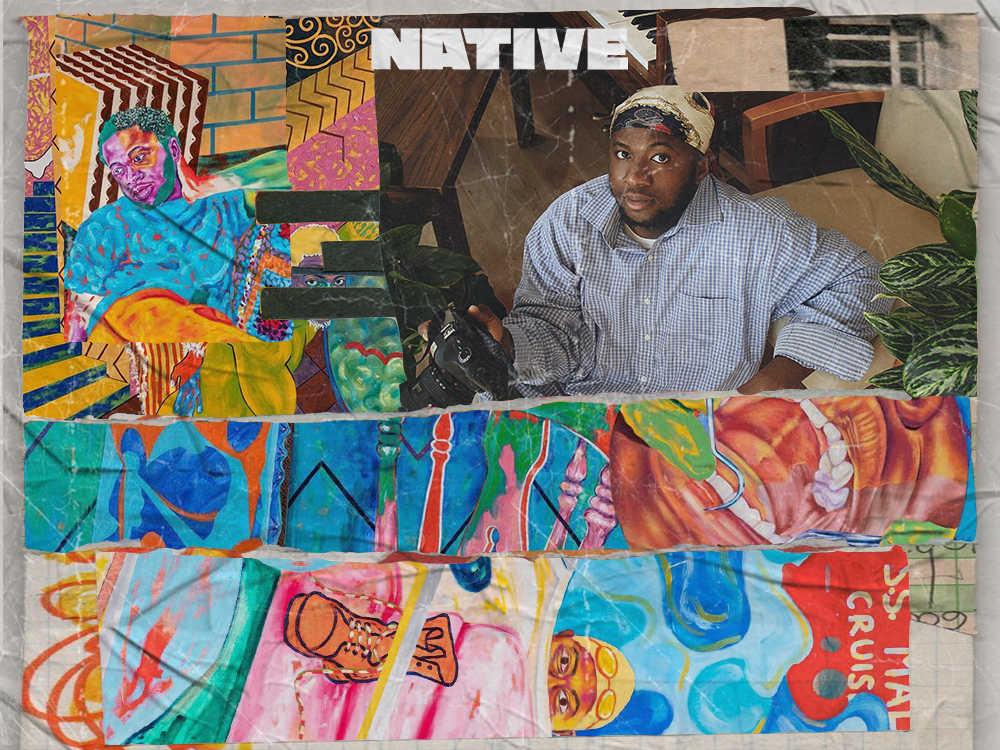
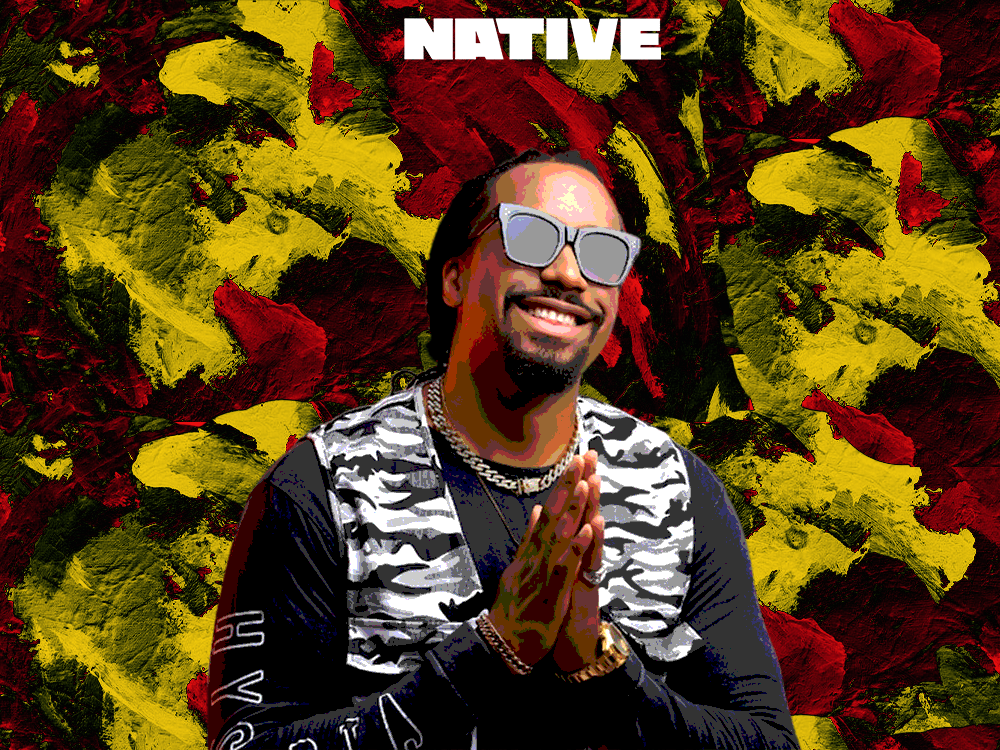
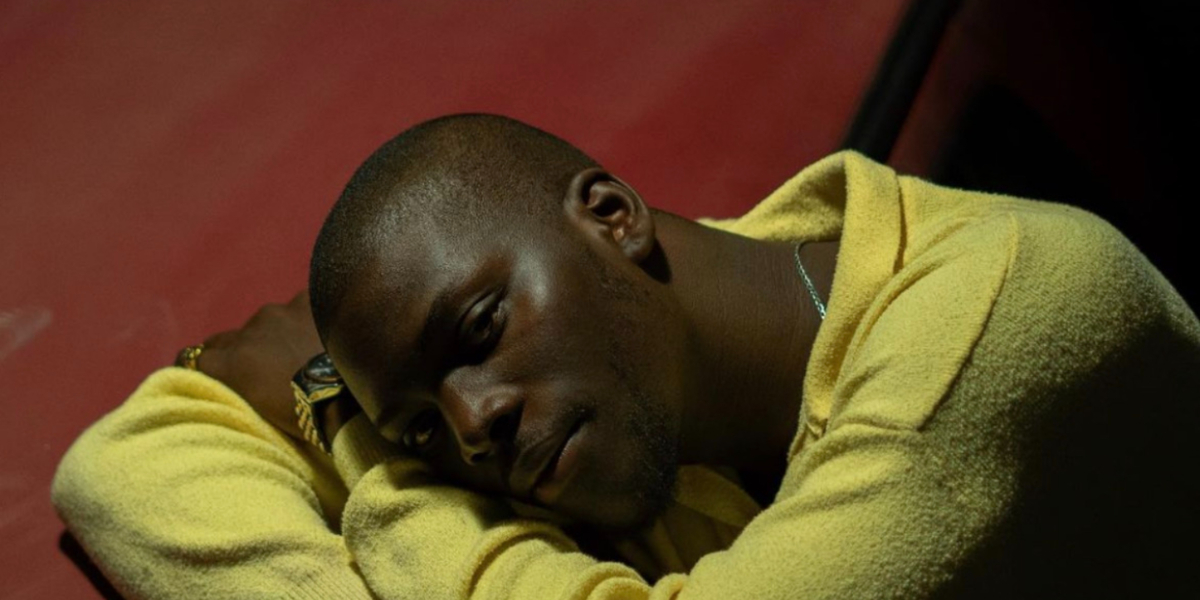
Daily Paper Debuts New Collection ‘Identities Rebuilt’, In Celebration Of Its 10 Year Anniversary

The Dutch streetwear brand Daily Paper marks its 10th year anniversary this month. After years of immersing itself into African youth culture, the fashion brand celebrates its decade-long run in the game by continuing its focus on championing Africa’s creative talent and cultural legacy for a global audience.

To commemorate this remarkable win, Daily Paper has now shared a first look of its latest Fall/Winter 2022 series named ‘Identities Rebuilt,’ a collection that reflects the brands’ journey through the decade and as well draws inspiration from heritage, identity and community.  


View this post on Instagram


A post shared by The NATIVE (@thenativemag)

For its FW22 collection, Daily Paper introduces new silhouettes as well as classic denims, an elegant wool coat, braided knits and not to forget the collections hero piece; a branded leather jacket. A custom branded coat of arms embroidery decorates the back of the jacket, which was first revealed in the form of a mosaic center piece at the brands’ London flagship store last year.

The emblem reflects the founders’ multicultural heritage depicting a lion, leopard and an eagle and other notable memorabilia. Also, in staying true to the brands essence, outerwear makes a strong comeback in this collection for the colder months of the year, with signature puffer jackets, varsity jackets and bombers in new colours and designs.

Speaking about the new collection, Co-founder and Design director Abderrahmane Trabsini shared: 

 “This year marks our 10 year anniversary of Daily Paper. From exploring our roots, to starting a blog, continuously building our community and opening our flagship stores in NYC and London. With FW22 we’re going back to the essence of Daily Paper and rebuilding our identity.”

The first drop of Daily Paper’s Fall/Winter 2022 collection will be available globally online at dailypaperclothing.com and in-store across Daily Paper flagship stores in Amsterdam, London and New York on Friday, July 22, 2022 at 12 PM CEST. Prices range from €15 to €500.

Featured Image Credits/Zach Apo-Tsang

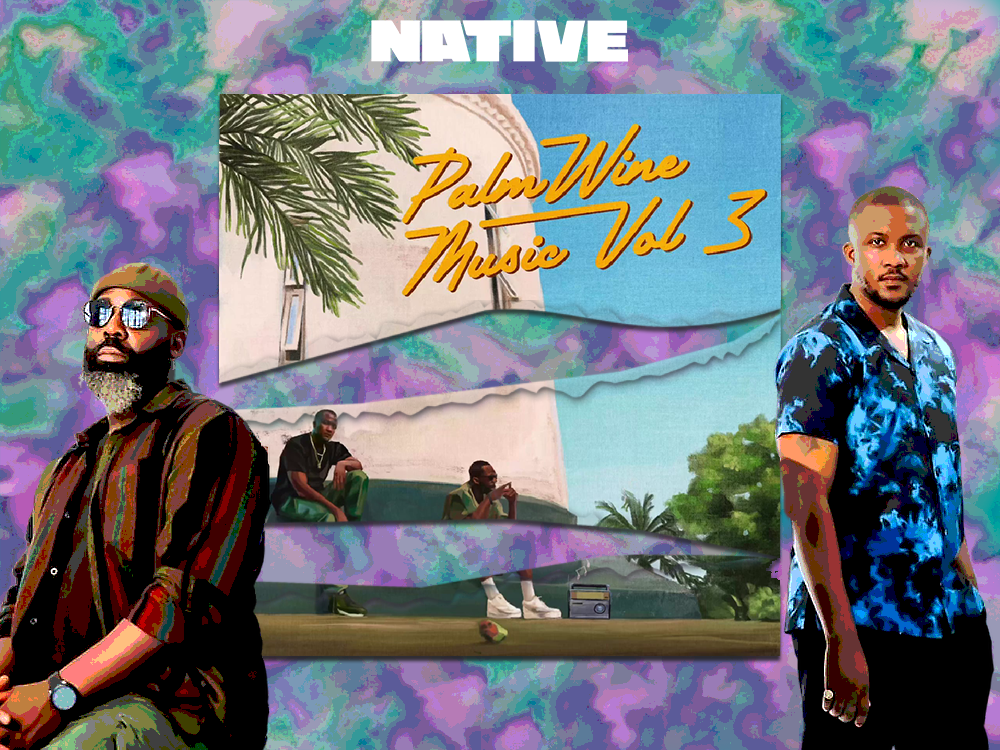
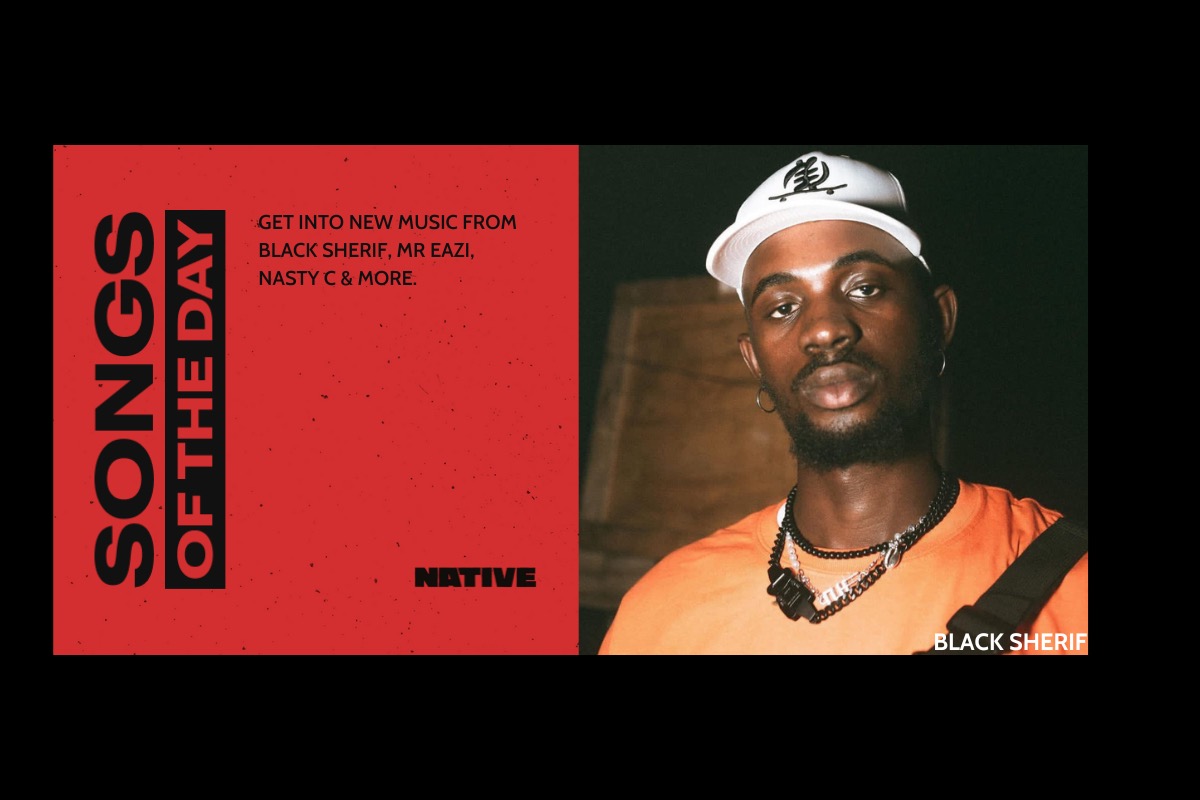
Songs Of The Day: New Music From Maya Amolo, Major AJ, Mau From Nowhere & More

We’re halfway through 2022, and it’s been an eventful year for Afropop. There’s been a torrent of great new music, spawning a massive stack of inventive smash hit songs. From Highlife-infused Ghanaian pop, to the unrelenting force that is Nigerian street-pop, to South Africa’s indomitable Dance scene, to tantalising Drill explorations in East and Central Africa, and much, much more, we’re living through abundant and musically expansive times.

Every week, tonnes of songs from African artists make their way to digital streaming platforms, and wading through them can be intense. That’s where The NATIVE’s Songs of the Day column comes in to help. We go through as many new releases as possible, spotlighting them here, two to three times every week. Today, enjoy new releases from Maya Amolo, Tijani, Major AJ, Mau From Nowhere and more.

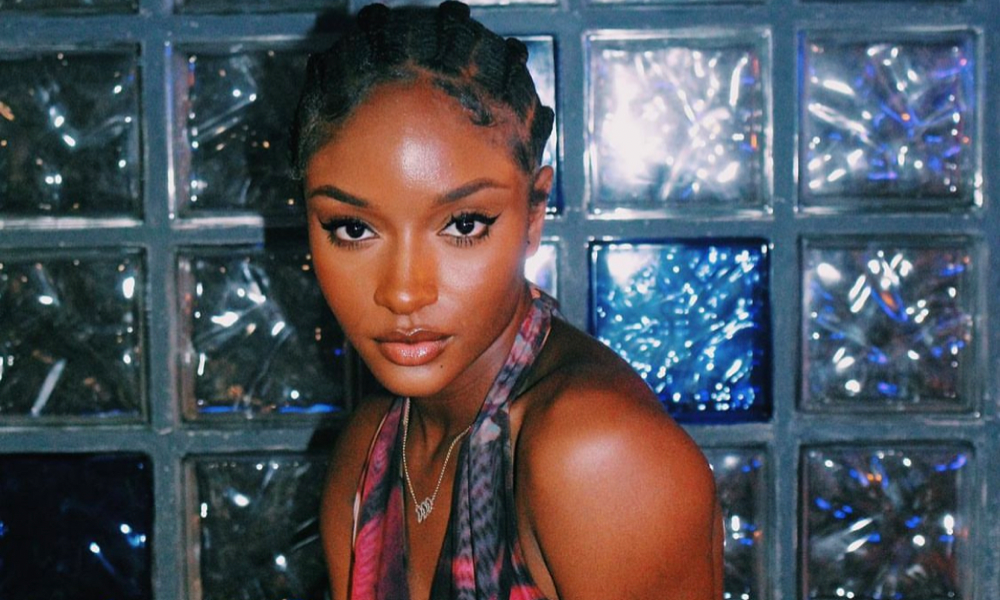
Maya Amolo – “Foundry” ft. Kalibwani

Kenyan R&B alternative singer, Maya Amolo is gearing up for the release of her new EP. After sharing her recent single “Can’t Get Enough” earlier this year, Maya is back with her second offering from the forthcoming project. On “Foundry,” she pushes her artistic boundaries as she enlists a trio of upcoming Nairobi-based artists on the track. Lukorito’s detailed production accompanied by DJ IV’s punctuated drums create an enticing backdrop for Maya’s airless vocals. Ugandan rapper Kalibwani delivers a smooth verse with lyrics exploring love’s complex spectrum.

mau from nowhere – “Fireflies”

The uNder alum, mau from nowhere has released a sombre yet hopeful track titled “Fireflies.” The new single finds him telling telling a tale of making it back to yourself after wandering far away from your roots. Starting off with a piano and drum combo, mau emulates the feeling of staring into a mirror trying to seek and understand yourself. He uses the song as an avenue to share his journey, with solo personal conversations from when he first stared music and balancing the craft with a full time job. He wraps up the song with a conversation between him and his grandmother detailing his visions and aspirations.

Major AJ – “Taboo”

Chocolate City has been on a roll for the past few years. From releasing timeless albums to revealing a roster of talented artists such as Blaqbonez, Young Jonn, and more, the label has been leading the charge in priming Africa’s brightest stars. Major AJ is the latest singer to join this talented fold with the release of his 5-track album ‘Retroverse.’ The project’s apt title symbolises a new beginning despite his presence in the scene.

Standout single, “Taboo” is a enjoyable new listen with influences from the 70’s retro and disco sounds. Giving insight into his mind, Major AJ conveys his emotions with strong penmanship as he talks about a mysterious girl who is toxic but irresistible with lyrics such as “..separate my soul from my body.”

Tijani – “Dance” ft. K3vo & Niyyi

Tijani’s road to musical success has been an ongoing proactive journey. Since releasing his first single “Paulina” in 2020, his music has indoctrinated the use of saxophones on an Afropop backdrop. Over the weekend, Tijani enlisted K3vo and Niyyi for the lustrous new single, “Dance”. The Kssdwizz-produced Afro-soul single balances the percussive backdrop with fervent piano keys. The song’s melodic structure sees the trio adore their muse, while promising a love-filled life with lyrics such as “I can take you to the moon.” 

Lucianne – “Te Amo”

Earlier in the year, singer Lucianne step into a new phase of her career when she released her recent single, “More.” Now, with a new name and a renewed sense of vision, the singer returns with a new Afro-R&B masterpiece “Te Amo” in the lead-up to her comeback EP ‘Becoming.’ On the new single, she builds on themes of love and romance, while opening up a more vulnerable side. The infectious R&B offering is fused with lush Afropop sensibilities and soundscapes, over which Lucianne weaves defiant tale of the strength and fortitude.

D. Matthews – “No Frontin”

“No Frontin” serves as the first single from D. Matthews and the precursor to his upcoming debut EP. Driven by lush synth keys and minimalist percussion drum arrangements, the single sees D.Matthew showcasing his captivating flow and delivery. The Australian-based Afropop crooner also puts on display his penchant for creating contemporary and progressive music, while also paying homage to the foundational flavours of the late great Fela Anikulapo Kuti, and giving a nod to a cult classic from Adewale Ayuba and Jazzman Olofin.

Featured image credits/NATIVE


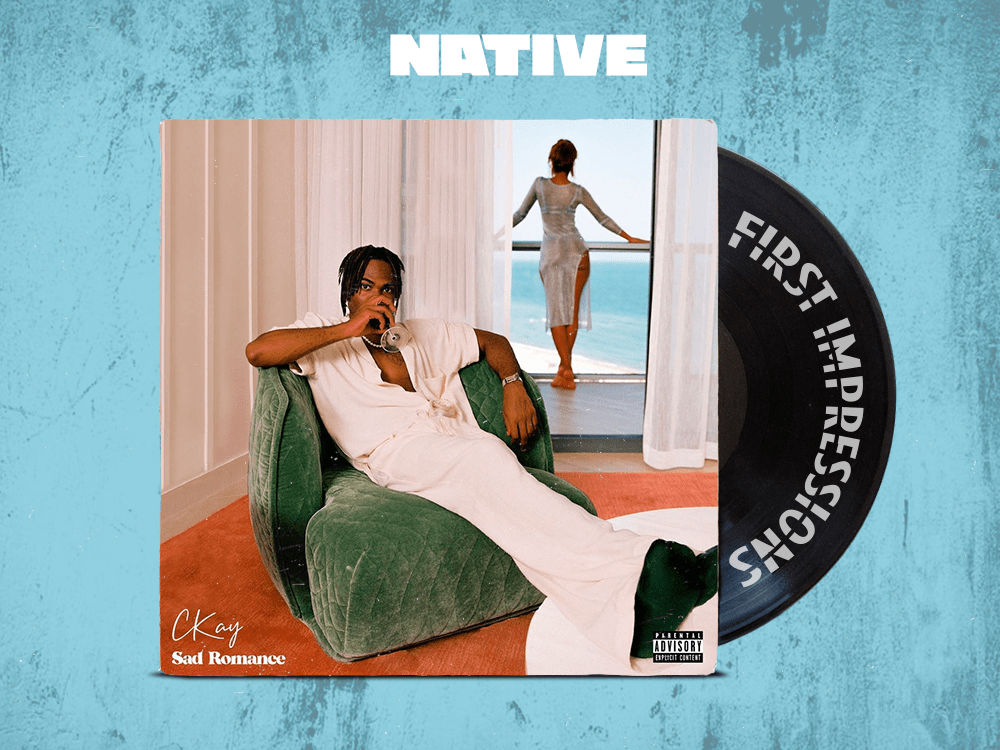
ICYMI: Our First Impressions Of Omah Lay’s Debut LP ‘Boy Alone.’

TurnTable Top 100: Burna Boy’s ‘Love, Damini’ Sweeps The Charts

Following the release of his recent LP, ‘Love Damini,’ the Grammy award winning singer Burna Boy debuts at No.1 with the Ed Sheeran-assisted “For My Hand.” The new single tallied 3.90 million streams and 47.5 million airplay audience impressions. “For My Hand” arrives as the second No. 1 entry on the Nigeria Top 100 – the chart was launched last week as the first standard music chart in the country that combines all platforms.

Elsewhere on the charts, Burna Boy also debuts three other songs off his new album, ‘Love, Damini’ including “It’s Plenty” starts at No. 6, “Common Person” at No. 7, “Different Size” at No. 8 and “Cloak & Dagger” at No. 9 while previous chart-topper “Last Last” slides to No.5 on this week’s top ten.

Asake’s “Peace Be Unto You” slides to No. 2 on this week’s chart – it continues to lead airplay in Nigeria with 79.1 million in airplay reach (up 27%). It leads the radio chart for a third week and reaches No. 1 on the TV chart for the first time. Kizz Daniel’s “Buga (Lo Lo Lo)” with Tekno is down to No. 3 while Mavins’ “Overloading (OVERDSOE)” falls to No.4 this week. Ruger’s “Girlfriend” descends from its previous peak at No.7 to No.10 this week.

Outside the top ten; more tracks off ‘Love, Damini’ feature in the Top 50 – “Jagele” at No. 45 is the lowest charting song off the album. Crayon’s “Ijo (Laba Laba)” rockets to No. 18, jumping seventy-two places in the process while Chris Brown’s “Nobody Has to Know” with Davido debuts at No. 57 while Fireboy DML’s “Bandana” with Asake launches at No. 66 off one day of tracking.

Featured image credits/

Our First Impressions of Omah Lay’s Debut LP, ‘Boy Alone’

Omah Lay has mastered the art of turning real life experiences into widely loved earworms. Since his clandestine entry into the music scene during the COVID-19 pandemic with his soothing voice and honest writing, the Port Harcourt-born singer and songwriter has delivered records with instantly relatable tunes and catchy melodies.

Over the span of two years, Omah Lay has delivered two EPs, stellar party bops and soulful music. Last year, he landed himself one of the biggest songs of the year with “Understand”, a mid-tempo record which sees the singer directly addressing a love interest who has taken his love for granted. The record maintained momentum as it remained at the top of the charts for weeks and earned the highest charting number 1 record on the TurnTable Charts. He rounded off the year with the year “Free My Mind” and shared with listeners the title of his anticipated debut album: ‘Boy Alone.’ For months, Omah Lay has teased the release of his debut album and now, the 14-tracker has finally arrived.

The body of work sees production credits from producers such as Tempoe, Semzi, P.Priime, Niphkeys and more, and features guest appearances from a range of artists, from Justin Bieber to Tay Iwar. The purple-themed, imminently personal 40-minute long LP is bound to dominate discussions over the weekend and most likely, beyond. Here is The NATIVE editorial team’s first impressions of ‘Boy Alone’.


View this post on Instagram


A post shared by Omah Lay (@omah_lay)

Best Song

Moore: While I’m tempted to call “safe haven” the best song due to its enchanting vocalisations, I’m going to have to say “i’m a mess”. As the title suggests, the lyrics make this song one that everyone can relate to, describing messy, complicated emotions. It’s set to a very catchy tune, inviting the listener to sing along to the song on particularly sad days.

Emmanuel: “never forget” has my whole heart. Although Omah Lay says a lot of brave, exciting things throughout ‘Boy Alone,’ he’s very unapologetic here. The lyrics go from angst to tenderness in easy motions, carried by minimally pensive production which is divided into two parts. Especially in the last verse, Omah makes a case for his A-level pen game, running a scheme that recedes from an emotive standpoint while making observations on the world’s nature. 

Dennis: I’m going to go with “soso”. It’s quintessential Omah Lay, in its expressive lyricism, but what makes it special is the passion emitted from the melody and how it interfaces with Tempoe’s instrumental arrangement, which is a colourful slab that pulls from highlife, local gospel, and afro-house.

Biggest Potential Hit

Wonu: I believe the biggest potential hit record on this album is still “Woman”. The record is easily the most marketable and has a more different feel to it now that its on an album and there’s more context to it, it’s easier for the record to be more appreciated. 

Maria: My pick for this is “bend you”. The melody is infectious and the hook is really catchy and at the moment, those are the qualifying attributes of hit songs. It’s a song that’s sure to resonate with people really easily.

Tami: I think the biggest potential hit for me would be “bend you”. There’s just something about the melodies and rhyming pattern on this song that just does it for me. I think it reminds me of 2020 Omah Lay, just that young kid fresh out of Port Harcourt and hungry to show the world his ability. It’s reminiscent of ‘Get Layd’ and that has me coming back for more. It’s not the strongest contender for best written song of the year but not that many songs out today are anyways. Artists should be able to make music for the sake of making sonorous, enjoyable music and I don’t see the harm in making music that finds a way to connect with our emotions while divulging as little as possible of its creator.

Best Production

Shina: Okay, so there are a lot of shouts for this pick. First of all the album is choke-full of amazing productions. The one I’ll mention first is the Niphkeys-produced “i’m a mess”; I was surprised to find out it was produced by Niphkeys because it is far from the Street Hop style we’ve come to know him for. Another which is currently my favourite song from the album is the P2J produced “i” and my last would be “Understand”. Tempoe served a delightful offering.

Emmanuel: Perhaps the second-most endearing quality of ‘Boy Alone’ (asides Omah Lay’s vocal output) is its production. Kept in as few hands as possible, a coherent feel emerges. The three-song run of “i’m a mess,” “temptations” and “Understand” really does stand out, though. It begins with Niphkeys’ lofi-inspired percussion teasing Omah’s most tear-jerking performance while the latter tracks draw sonic semblances from early 2000s R&B, using vocal reverberations to construct the parallels between romantic tension and dealing with bigger demons. 

Wonu: Anything Tempo touches just somehow does it for me. I think the best production will be “soso”. There’s this feel to the beat from the combination of the chords and the drums, I think Tempoe really outdid himself on the production of this track, I’m very impressed. Close second for me will be P2J on “tell everybody”. The strings on this record are so sincere and honest, my type of music.

Biggest Skip

Maria: My biggest skip is “Attention”, and before anyone comes for me it’s not a horrible song, it’s just not as great as I expected a Justin Bieber feature to sound. In comparison to other songs on the album, it’s not a song I’ll be running back to listen to.

Tami: Honestly, I think I need to spend more time with this album before I come to any conclusions about its biggest skips. For me, I think Omah Lay’s music really represented a time in our lives: months deep in a global pandemic and stuck at home figuring out the uncertainty of the future. So, for his debut album, I expected a little departure from that familiar and comfortable beat he had been striding since his debut EP but ‘Boy Alone’ didn’t fulfill that for me. It’s a big skip on many songs only because I’m yet to fully take in their intricacies. I will definitely have to run back a lot of these tracks in the near future.

Moore: My biggest skip will have to be “temptations”. Coming fifth on the track list, it comes after other low energy songs, while lacking the qualities to draw you in.

Best Guest Verse

Tami: The strongest guest verse for me would be Tay Iwar on “tell everybody”. I’m definitely biased to anything Tay Iwar and have been excited to hear him on more features since his killer verse on Wizkid’s “True Love” back in 2020. So, I was more than excited to get to the Tay Iwar verse and listen to his sheer brilliance and he absolutely did not disappoint. It’s one of my favorite verses on the album and has one of the most engaging beats as well. Omah Lay and Tay were the all-star combo we didn’t know we needed till now.

Emmanuel: There weren’t many guests on ‘Boy Alone’ and I think that just plays into the vision of the project. Omah Lay’s solo releases tend to better capture the delicate turmoil of his mindstate. As we know, this is the crux of his lyrical abilities. So far into his career, Justin Bieber has been among the few who’s able to shift the needle for him—which is why I think he’s the best guest on here. “Attention” works far better as an album cut; within the framework of a young man trying to find peace, it’s a desperate plea for female attention. Bieber’s excellent work on the first verse and pre-chorus perfectly sets up Omah Lay. Even when those parts are done, the Canadian superstar lingers in the background, providing vocal assistance and through that firmly imprinting his vibe on the record. 

Shina: Best guest verse for me would be the Tay Iwar feature. Of course I’m already biased on this choice because of my dislike for the Justin Bieber-assisted “Attention”, but this is not my only reason for picking this as the best guest verse. Tay Iwar’s vocal contribution to this record is near perfect on a complementing stellar production. Strongly feel this song could have appeared earlier on the album.

Overall First Impressions

Emmanuel: As expected, the contents of Omah Lay’s unfiltered thoughts are the standout of his debut album. However, it’s the sonic leanness which most surprises me. On these beats you’ll hear an artist who remains unfazed by grand gestures; he’s rather simple in executing his stylistic peculiarities. It’s a project that not just delivers on its ambitious title, but pours into various levels of the influences that formed a man like Stanley Omah Didia. In the collection of these fragmented levels, ‘Boy Alone’ effectively captures the sex-crazed, therapist-needing nature that inspires the toxic masculinity of Nigerian Pop music. What this means is that Omah Lay, like every great writer according to Teju Cole, is conversant with the history of his field while in conversation with it. Such brilliance is destined for the top.  

Wonu: Overall, ‘Boy Alone’ is an honest body of work by an artist who has a lot to get off his mind, storytelling at its finest. Omah Lay truly meant it when he said he poured all his emotions into this body of work. The album is honest and true and I believe Omah Lay made a masterpiece. An 8/10 body of work if you ask me, with very strong and solid songwriting as well. The production is not too complex but he did justice to each track and delivered a stellar body of work.

Dennis: What I like the most about Omah Lay’s brand of honesty is that it finds clarity without unnecessarily reaching for catharsis. That’s what ‘Boy Alone’ continues to work with, emotional vulnerability without gimmicks. Coupled with a groovy batch of beats passed through something of a Lo-Fi filter, his lyricism and conversational melodic style are immersive. The Boy Alone continues to set himself apart.

Moore: Omah Lay’s ‘Boy Alone’ is an album that is easy to listen to. The entire project is filled with slow, atmospheric songs. Due to the slowness, the project can feel lethargic in a way that won’t be welcome in all moods. In the right setting, however, the album will provide a very pleasant listening experience due to its consistency and well produced tracks.

You can listen to ‘Boy Alone’ here.


ICYMI: OMAH LAY IS READY FOR THE NEXT PHASE OF HIS CAREER

Songs Of The Day: New Music From Adekunle Gold, Waje, Chike & More

We’re halfway through 2022, and it’s been an eventful year for Afropop. There’s been a torrent of great new music, spawning a massive stack of inventive smash hit songs. From Highlife-infused Ghanaian pop, to the unrelenting force that is Nigerian street-pop, to South Africa’s indomitable Dance scene, to tantalising Drill explorations in East and Central Africa, and much, much more, we’re living through abundant and musically expansive times.

Every week, tonnes of songs from African artists make their way to digital streaming platforms, and wading through them can be intense. That’s where The NATIVE’s Songs of the Day column comes in to help. We go through as many new releases as possible, spotlighting them here, two to three times every week. This Friday, we have several exciting new songs for you. Enjoy!

ADEKUNLE GOLD – “5 STAR”

For his latest record Adekunle Gold digs deep into the mud of his existence. Over Kel P’s swirling keys and steady percussion, the musician charts the glory of his trajectory. He’s autobiographical in mentioning the exact places, the time period and how he’s progressed over the years. All this while keeping a sweetly defiant tone, even taking shots at the ineptitude of the ruling elite. “Our government no get time for ghetto; we only get love on manifesto,” he sings in the second verse. It’s a quietly exhilarating song, full of the humanity that’s made AG Baby one of the most beloved Afropop superstars. 

IYANYA FT. DAVIDO & KIZZ DANIEL – “LIKE”

The trio behind this song have an unbelievable amount of hits between them and barely hours after release, “Like” is already sounding like one. It possesses the saccharine fluidity that’s popular across Afropop, but the accomplished singing of all three impressively captures the tale of longing at its center. They all take turns to sing the chorus of “If you like, we can both decide.” The groovy production as well contributes to its allure, a polished package that sounds ready-made for the charts. 

NAKHANE – “TELL ME YOUR POLITIK” 

On “Tell Me Your Politik,” Nakhane brings fellow South African collaborators, Moonchild Sanelly and Nile Rodgers seamlessly into her world. Nakhane’s hook and a short verse lays down the sensitive direction of the record, a willingness to only get down with men whose ideals align with yours. Moonchild Sanelly’s verse builds around the story of an ex-lover, who offered bomb sex but changed when strangers were around. Breaking into an excitable run at the end, the song eases into its final rest, but not without causing your body to move.

DETAILMADEIT – “HUSTLERS AMBITION” 

Abuja-based rapper Detailmadeit boasts a prolific catalogue and he’s showing no signs of letting up. After releasing a slew of singles, ‘O.T The Mixtape Vol. 1’ captured the gritty-yet-exquisite feel of his music in project format, realigning his sonic vision with the hungry-for-success nine-to-five perspective he carries every day. “Hustlers Ambition” is cut from a similar cloth; it sees Detail waxing poetic over the twinkling drop of piano keys and a flamboyant percussive base. “Tryna see the scene blow up on a global scale,” he raps, again highlighting the transcendental scope of his goals. 

CHIKE FT. FLAVOUR – “HARD TO FIND”

It’s been pretty clear for a while now that Chike is one of the most talented Nigerian vocalists. Having captured the hearts of many with his classic debut album ‘Boo of the Booless,’ word about a forthcoming sophomore has been going round. On “Hard To Find,” he offers something to wait on, a brilliantly cinematic record which drips about pure vocals. Alongside the legendary Flavour, he creates a heart wrenching song about the uniqueness of true love amidst the craze of the world we know. Backed by buttery percussion, swirling Highlife guitars and an evocative string section at the end, it’s a warm record that should follow you into the weekend. 

WAJE FT. TIWA SAVAGE – “ALL DAY”

What do you get when two women icons of Nigerian pop collaborate? An absolutely freaking bop. “All Day” is produced by LeriQ, and the mastery associated with his name is evidently present. Sharp synths and syncopated violins form its bright Dancehall melody. As opposed to trying to fit over the beat, the duo of Waje and Tiwa effortlessly glide across, layering their golden vocals in the service of a good time.  

BADBOY TIMZ – “IZ GOING” 

It has been quite a while since we got new music from Badboy Timz and it only makes sense the singer makes his return with a banger. “Iz Going” draws colourful influences from EDM, while mashing those eccentricities with the Fuji-inflected flavour of Timz’s vocals. A romantic affair is the subject of the Tempoe-produced song’s heartbeat-paced rhythm, seeing the singer make assurances that are as witty as they are affectionate. 

ILLBLISS FT. IDAHAMS – “ABENA”

This warm record sees both musicians pleading the flavour of Abena’s love. It’s a terrain of pop-rap which iLLBliss expressively thrives in, even though he’s paid more homage to his Hip Hop roots in recent releases. “Abena” sees a return to that form, featuring a sweetly-laced hook from the Port Harcourt-bred Idahams. Given the shared history of Highlife between that part of Nigeria and its South East, the string-led overtones of “Abena” fits just perfect. iLLBliss still retains his bossy bravado, but the lighthearted nature of his delivery complements the chill intent of the record.

Omah Lay Is Ready For The Next Phase Of His Career

2020 was a remarkable year for historic reasons. The COVID-19 pandemic effected global uncertainty, putting a question mark on any and almost everything.  For then rising singer, songwriter and producer Omah Lay, that period of dizzying doubt was a blessing in disguise.

Omah Stanley Didia has always been surrounded by music. At a young age, his Grandfather played the drums for the singer Celestine Ukwu before he passed away in 1977. Omah Lay initially started out as a rapper in a rap group with the stage name ‘Lil King’, then delved into music production which seemed to be useful to him at the time. After making beats for people which went uncredited, Omah Lay decided to pick up the microphone and make music for himself, music which appeals to the new generation. 

Port Harcourt, a small city in Nigeria and the treasure base of the nation sees some of the most talented musical creatives out of the country, including Global superstar Burna Boy, pioneering street-pop storyteller Duncan Mighty, Afro-fusion duo Ajebo Hustlers, and it was also the fostering environment for Omah Lay. Emerging from a city that’s produced some of the most definitive artists in Nigerian pop, the singer was working within a lineage while trying to stamp what made him uniquely special. 

Omah Lay kicked off his musical career in April 2019 with his debut single “Do Not Disturb” and a month after, proceeded to release his sophomore single “Hey Brother.” His consistency, delightful melodies and all round soulful and sensual energy landed Omah Lay a recording deal with KeyQaad and afterwards, the singer took a 7-month hiatus off putting out materials to rebrand for a majestic re-entrance.

In January 2020, the multitalented wunderkind arrived with the hit record “Bad Influence,” a track that set the artist in the eyes of many. Already gaining attention of listeners and mostly female fans, he followed up with the romantic number “You”, which sees the artist chanting sultry love lyrics to his muse, lyrics such as “If you need a fire, I’ll be your lighter, Please be judge and put me on trial/If you think I’ll hurt you, put me underwater take me court, yeah, I don’t need a lawyer”

As the world ground to a halt due to the pandemic, Omah Lay released his debut EP, ‘Get Layd’. The EP which hosted 5 tracks, including already existing tracks, “You” and “Bad Influence,” featured a blend of catchy melodies and groovy mid-tempo beats, produced by Omah Lay, Bizzouch, El Jack and Andre Vibes. The EP which also housed the records “Lo Lo”, “Damn” and “Ye Ye Ye” which garnered over 20M+ streams across all platforms less than a month after its release while making an additional 100M+ streams by the third month of its release. The smooth and relaxing music Omah Lay presented at the time was exactly what listeners needed to carry on at such a low period, serving as comfort music and landing Omah Lay a spot on the NATIVE’s first edition of its Best New Artists column, uNder—previously known as Fresh meat.


View this post on Instagram


A post shared by Omah Lay (@omah_lay)

Six months later, Omah released his sophomore EP ‘What Have We Done,’ following the release of the 6lack-assisted “Damn (Remix)”. The tape saw four new tracks, “My Bebe”, “Can’t Relate”, “Godly” and “Confession”, produced by Echotheguru, Tuzi, Tempoe, and Omah Lay respectively. ‘What Have We Done’ is a fine offering by an artist dealing with the anxiety that comes with stardom. On the standout record “Godly,” Omah Lay chants lyrics such as “Men I thank God I godly, say God no ungodly/It’s why I Jaye sometimes, a little Henny and ice,” stating his appreciation for the good things of life and his accomplishments so far. The sophomore project stood as a solid follow up for the artists’ debut. 

Since then, there have been a handful of singles from the artists, singles that have made listeners and fans hold on to the artist up until now. He kicked off 2021 with a smash hit as he featured alongside Alpha P on Masterkraft’s official remix for Justin Bieber’s peaches. He followed up with another hit “Understand” shortly after which touched down as one of the best songs of the year and rounded off the year with a more relaxed and melodic tune “Free My Mind,” a mid tempo record which finds the artist speaking on forgetting his worries by drinking alcohol and focusing on the more positive things.

Now, Omah Lay is ready for the next phase of his career as his debut album ‘Boy Alone’ is only a few hours away. For months now, Omah Lay has teased the release of his debut album with teasers and promo clips of the new universe he’s creating. The album is set to host 14 tracks, including already released records “Understand”, Justin Bieber-assisted “Attention” and his most recent offering, Ppriime-produced “Woman.” Records like these have set the tone for what’s to come on the album. His debut album is set to be a combination of all his emotions, sweat and tears all tied together into 40 minutes. While the new stories Omah Lay is set to tell on his new album remain unknown, he has spent most of the last two years cutting his teeth as one of the most exciting artists of the now.

Boy Alone’ will be a body of work with a fine mix of love songs, infectious tunes and fiery club bangers, neatly packed from one of Port Harcourt’s most viable hitmakers.

Featured Image Credits/The NATIVE

Fireboy DML & Asake Unite For Their First-Ever Collaboration, “Bandana”

2022 has been Fireboy DML’s season. The YBNL act cruised into the year off the global success of the Ed Sheeran-assisted Peru (Remix) but he’s been angling towards more notable moments. After announcing the ‘Playboy’ title of his third album due for release sometime this year, its self-titled record was released to almost unanimous acclaim, fast becoming one of the year’s most exciting songs.


View this post on Instagram


A post shared by Fireboy DML (@fireboydml)

After his historic performance on the main stage of the BET awards, the musician followed up the buzz by revealing the cover of his forthcoming album. The focus on his facial expression gave hint into the expected incursions into the events of his mind. It’s no surprise then that for Fireboy DML’s latest record, he collaborates with his on-fire labelmate, Asake, who’s had a very memorable 2022 himself. 

“Bandana” is produced by the phenomenal P.Priime, featuring the violin sections and church-like percussion familiar to listeners of Asake. It sets the template for his anthemic chorus, part indulgent and part triumphant. “I be ghetto boy, I be singer,” he sings with audible glee, sketching the aspirational core of the record. “They never see me coming…Naija boy wey dey go foreign/ Oshey, Mr. Money,” he continues, quite aware of the peculiar nature of his nationwide acclaim. 

The subject of fame has been covered severally across Fireboy’s catalogue and here he’s adept as ever, able to maintain his lived-in perspective while casting hopeful eyes to the future. As always, he calls on the evidence of his closest community to hold up the struggles borne from his trajectory. His first verse recalls writing his story “since ‘06” and following that up with “I no be OG, but if you ask them dem know me.”

His deft working of everyday phrases into the nature of his celebrity continues deep into the verse, where he sings “music chose me, just know this and know peace/ I dey lowkey, but I’m never lonely; sexy ladies come whine for me slowly.” The second verse finds him in a more confrontational zone, discussing the returning gains of his legacy while representing his family and aiming lyrical shots at detractors. 

“Bandana” counts among those rare songs with a fine combination of everything, threaded immaculately through the famous backstories of its two creators. Coming with the promise of an album between them, there’s a prophetic feel to the record. At the moment though, it’s for sure the perfect anthem to live it up. 

Listen to “Bandana”

Asake leads the debut edition of the TurnTable Top 100

Over the past two years, the TurnTable chart has been one of the most consistently accurate charts for Nigerian music. Due to the dearth of verifiable data on music out of Nigeria, their introduction on the scene was welcome as they filled a much-needed gap within the industry.

Since its inception, the TurnTable mission has always been to provide statistical data around the music we so love, and their latest venture is an indication of their dedication to reflecting the Afropop space as it continues to grow and spread exponentially across the globe. Introducing the TurnTable Top 100, a new flagship chart that encompasses all platforms in the country (streaming and airplay), which is powered by data collected across all streaming platforms and airplay data provided by Radiomonitor.

TurnTable’s Hot 100 is based on a careful formula drawn from audio and visual streams within Nigeria. It also counts airplay on radio and satellite TV, becoming the golden standard for the provision of comprehensive music activity, including the much-touted No. 1 song in Nigeria.

To that effect, Asake has the first No. 1 song on the TurnTable HOT 100. Counting from July 1st to July 7th, “Peace Be Unto You” has accumulated a staggering 2.94million in streams and 68.8million in airplay impressions.

Kizz Daniel and Tekno’s “Buga (Lo Lo Lo”) ranks at second place, with 3.07million streams and 62.1milion airplay impressions. The Mavins’ all-star “Overloading (OVERDOSE)” comes closely behind, with 2.86million Nigerian streams and 48.7million in airplay reach. Burna Boy’s “Last Last” is No. 4 with 1.66 million Nigerian streams and 53.9 million airplay impression. SPINALL & Asake’s “PALAZZO” rounds up the top five with 1.69 million Nigerian streams and 48.6 million in airplay reach.

Elsewhere in the Top 10 of this premier Hot 100, Camidoh’s “Sugarcane (Remix)” with Mayorkun, Darkoo and King Promise is No. 6, continuing its enjoyable foray into the Nigerian market – it tallied 1.40million Nigerian streams and 45.1 million airplay impressions. Ruger’s “Girlfriend” is No. 7 with 1.47 million Nigerian streams and 40.1 million airplay impressions.

Rounding out the top ten, Zinoleesky’s “Loving You” is No. 8, Mayorkun’s “Certified Loner (No Competition)” is No. 9 and Omah Lay’s “Woman” is No. 10.

In more extensive dives of the chart, you’d find that there are 30 non-Nigerian artists on the Top 100 in both lead and featured capacities. The majority of Chris Brown, Future, DaBaby, Beyonce, Jack Harlow, 21 Savage, Cardi B, Lil Durk, Kanye West, Post Malone and Roddy Ricch are from the US, while Darkoo, ArrDee, Ed Sheeran, Harry Styles, Cat Burns, Tion Wayne and La Roux are from the UK. Five are from our frequent collaborators Ghana, with songs from Camidoh, King Promise, Black Sherif, Stonebwoy and Gyakie.

The full Nigeria Top 100 will be available on turntablecharts.com and you can follow @turntablecharts on Instagram and Twitter for all chart news.

Featured image credits/Youtube

Best New Music: NATIVE Sound System’s “Wedding Ring” Is A Marker Of Its Continued Growth

For several years, NATIVE Sound System has operated in the background of many significant cultural moments. Whether this was a ‘guest list only’ London party, heads down on the decks as hands fly up on the dance floor or a guest spot on the NTS or No Signal airwaves, the once DJ duo consisting of Addy Edgal and DJ Sholz, spreading the gospel of emerging sounds from our home state, country, and continent.

First sharing a taste of our sound through impressive sets at Boiler Room or shows with the likes of artists such as Rema, Naira Marley, Odunsi (The Engine), the NATIVE Sound System duo quickly grew into a community of synergetic musical talent, identifying, championing and now producing sounds of tomorrow: today. Now, the producer, talent incubation and A&R supergroup is ready for its third act and the next step in its well-oiled sonic machine.

Earlier in the year, NATIVE Sound System released their first single off their forthcoming debut LP. Titled “Runaway” and featuring two of the newest voices in Afropop, Ayra Starr and Lojay, the new number gave a taster course to the inventive sounds on the collaborative compilation project and foreshadowed what the group would bring to the Afropop space. According to those in the know, the forthcoming album spans the four climatic and cultural seasons in Lagos; summer, rainy season, harmattan and Christmas, and will feature a host of talented producers such as Trill Xoe, Adey, New World Ray and more.

“Runaway, a romantic ballad initially conceptualised during a recording camp in an off-site Airbnb during the stay-at home induced orders of 2020, soon found a home in the hearts and ears of curious listeners who have eagerly followed the group since its inception. A month after the release of their debut single, NATIVE Sound System achieved a stellar feat by garnering over 1million streams which have only served to bring the song closer to its core community and even earned the group a skit from the uber talented, Ikorodu Bois.

Now, ready to bring the album one step closer, NATIVE Sound System has returned with its star-studded sophomore single “Wedding Ring,” an Afrofusion number which draws elements from a range of genres including R&B, Afropop, and more, which all commingle together seamlessly for an enjoyable listening experience. Pulling together the best and talented from the alte scene, “Wedding Ring” masterfully features WANI, Odunsi (The Engine), BOJ and British-Nigerian singer, Odeal. 

Produced by Trill Xoe and Sholz, the record opens up with the powerful vocals of WANI, as he quips memorable lyrics such as “I give you my all but I can’t give you everything/Pinky ring till I buy you wedding ring”, meant to serve as a warning to his love interest about his non-committal nature. Following WANI’s expert lead, BOJ steps in with a more relaxed and easy energy as he sings standout lyrics on his verse such as “Baby I’m a smooth operator,In the summer or the winter yeah yeah/Imma give you all you wanna, Biggy biggy bundle.” 

Without losing any momentum, BOJ shortly gives way for Odunsi The Engine’s catchy verse which offers a rich trove of insight into his view on modern relationships. On his verse, he chants lyrics such as “Bad girl love it when you run to me, I know that you love me and I can’t complain/But if I complain make you no dey vex, I know shawty go crazy for that make up sex”, as he extolls his love interest while also reinforcing boundaries in their relationship. Odeal takes the final lap of the record as he concludes the number with his sonorous vocals, and a charisma that permeates of his amorous lyrics (“Girl your blessings and love wey you give me that’s all i know/But that you get everything, everything that you want.”)

The record sees all four collaborators drawing from each other’s diverse energies and sonic styles while staying true to their individual strengths. The song’s bubbly and high-spirited production disguises its toxic lyrics while offering up an enjoyable number that listeners will keep dialling back to catch all its intricacies. As the second promotional single off the forthcoming album, “Wedding Ring,” sets a vast tone for where NATIVE Sound System and its collaborators can go sonically and lyrically. 

With the new single, NATIVE Sound System continues to showcase its improved growth while satisfying both old and new audiences who regard them as cultural tastemakers. We are eagerly watching this space for their next (next) act.

Listen to “Wedding Ring” here

Featured image credits/NATIVE

What’s Going On: Ghana’s inflation crisis, jailbreak near Nigeria’s capital city & more

“What’s Going On” Tallies Notable News Headlines From Across The Continent — The Good, The Bad, And The Horrible — As A Way Of Ensuring That We All Become A More Sagacious African Generation. With This Column, We’re Hoping To Disseminate The Latest Happenings In Our Socio-Political Climate From Across The Continent, Whilst Starting A Conversation About What’s Important For Us To All Discuss. From Political Affairs To Socio-Economic Issues, ‘What’s Going On’ Will Discuss Just That. 


Ghana seeks economic support from IMF for inflation crisis

Ghana’s economic situation has been detrimental to the lives of its citizens. Last month, hundreds took to the streets of capital city, Accra to protest the skyrocketing cost of living in the West African country, with consumer inflation now hitting decade-long highs. In June, the inflation mark increased to 29.8% annually, a two percent uptick from its mark in the previous month. The last time Ghana’s inflation hit the 29% mark was in January 2005, a negative development that reflects the ever-rising cost of consumer goods and consistent weakening of the Ghanaian Cedi.

The country’s statistics agency has stated that the hike in prices were driven up by household items, with the prices of imported good rising more than domestically produced goods for the third straight month. With rising global price for crude products, transportation prices have grown at 41.6%, while food inflation has risen to 30.7%. To combat the “fully blown crisis,” which it blames on external factors like the Covid-19 pandemic and the effects of the war in Ukraine, the Ghanaian government has announced its plans to seek an economic support package from the International Monetary Fund (IMF).

While still ironing out details for the support package, a mid-term budget review scheduled for Wednesday, July 13, has now been postponed to an unspecified date.

ISWAP claims responsibility for jailbreak near Nigeria’s capital city

Last week Tuesday, armed attackers bombarded the medium security prison in Kuje, on the outskirts of Nigeria’s capital city of Abuja, with residents of the area reporting that they heard multiple explosions. The attack on the prison led to a raid that freed an estimated 600 inmates, among them being the 69 suspects captured and arrested in the fight against insurgent Islamic groups. The Islamic State in West African Province (ISWAP), a Boko Haram offshoot that has allied itself with the global terrorist group ISIL, has claimed responsibility for the attack and jailbreak.

Permanent Secretary at the interior ministry, Shuaib Belgore, told journalists that over half of the escaped population had been recaptured, with some turning themselves over to the police and others captured in their temporary hideouts. However, the whereabouts of many escapees are unknown, including that of Boko Haram commanders like Kabiru Sokoto, the mastermind behind the 2011 Christmas Day bombing that killed 44 people in Catholic Church in Abuja. The jailbreak and disappearance of these type of figures have spawned brow-raising theories, with some claiming that the vacation of armed troops from around the Kuje area was a sign of collusion with the Nigerian security forces to free top insurgents in exchange for abducted individuals in the Kaduna railway attacks.

The president’s remarks, issued through his Twitter account, did little to quell these theories or inspire confidence, even portraying a sense of confoundedness: “How can terrorists organize, have weapons, attack a security installation and get away with it?” With the Nigerian government proving helpless against these groups fuelling insecurity, while expanding their reach beyond the country’s northern region, analysts say that this attack is strategic and ominous, especially for the effect it might have on Nigeria’s future, seeing how close the attack was from the centre of leadership.

Insurgent attacks worsen under Burkina Faso’s new military regime

In late January, Burkina Faso became the fourth West African country—in 18 months—to come under military rule. The coup d’état, which initially started as a mutiny, saw the forceful removal of former president Roch Kabore, and the eventual installation of Lt. col Paul-Henri Damiba who led the mutinous soldiers under the banner, Patriotic Movement for Safeguard and Restoration (MPSR). Damiba and his coup-plotting comrades enjoyed public goodwill, basing their forceful entrance on quelling insurgent attacks that have plagued Burkina Faso since armed groups linked to ISIL began to spill over from neighbouring Mali.

Rather than a downtick, though, the violent attacks have worsened under military rule. Last month, close to 100 people were killed in the northern border village of Seytenga, with survivors saying that the assailants moved unopposed in their massacre. It’s the second worst attack in the 7 years since insurgent attacks became prominent in the country, a year after over 100 people were slain in the north-eastern village of Solhan. Since the Seytenga attack, the military government has ordered residential evacuation, and has announced the creation of military zones in order to take back control of the area.

“The plan also aims to cut the sources of supply for terrorist groups which have created corridors in the eastern part of the country to be able to move to refuel, motorcycle, and ammunition,” Mahamoudou Savadogo, founder of geopolitical advisory firm Granada Consulting, told Al Jazeera. According to the UN, Burkina Faso has one of the world’s fastest-growing numbers of internally displaced people, with over 1.9 million forced to flee their homes due to the ongoing conflict.

Morocco & Zambia advance to semi-final of Women’s African Cup of Nations

After its opening week of group stage matches, the knockout phase of the 2022 Women’s African Cup of Nations is underway. Comprising winners and runners up from the three groups, as well as two best losers, countries in the quarter-final stage include host country Morocco, South Africa, Nigeria, Zambia, Senegal, Tunisia, Cameroon, and Botswana. In the first two quarter-final matches played on Wednesday night, Morocco and Zambia emerged winners, with the former edging out a 2-1 win over Botswana and the latter winning 4-2 on penalties, after pulling a 1-1 draw with Senegal after full time and extra time.

Morocco await the winner of the quarter-final tie between South Africa and Tunisia, while Zambia’s semi-final match will be played against the winner of Nigeria’s match with Cameroon on Thursday evening. Along with Morocco, South Africa and Nigeria have been tipped as favourites since the beginning of the competition, but both countries are facing their own form of adversity. Record 11-time champions, Nigeria endured an opening day loss to South Africa, before bouncing back with two clean sheet wins in the group stage, while dealing with the loss of star winger Asisat Oshoala to injury. South Africa enjoyed a dominant 3-win start to the Cup of Nations, but they’ve lost star forward Thembi Kgatlana to injury and are faced with a Covid outbreak.

Semi-final games are scheduled for next Monday, July 18, while the third place match will take place next Friday and the finals will be played the day after. Morocco will also host the 2022 edition of the CAF awards next Thursday, July 21. Nominees for the male categories, headlined by internationally renowned players like Sadio Mane, Mo Salah and Riyadh Mahrez, were recently released, with nominees for the female categories to be shared in a fortnight.

[Featured Image Credits: The Guardian Nigeria]


ICYMI: GHANA IS SET FOR NFL’S FIRST AFRICA-HELD CAMP

Songs of the Day: New Music From Crayon, Sha Sha, Karun & More

We’re halfway through 2022, and it’s been an eventful year for Afropop. There’s been a torrent of great new music, spawning a massive stack of inventive smash hit songs. From Highlife-infused Ghanaian pop, to the unrelenting force that is Nigerian street-pop, to South Africa’s indomitable Dance scene, to tantalising Drill explorations in East and Central Africa, and much, much more, we’re living through abundant and musically expansive times.

Every week, tonnes of songs from African artists make their way to digital streaming platforms, and wading through them can be intense. That’s where The NATIVE’s Songs of the Day column comes in to help. We go through as many new releases as possible, spotlighting them here, two to three times every week. This mid-week drops makes up for the column’s absence last week, packing jam after jam for your listening pleasure.

CRAYON – “IJO (LABA LABA)”

Crayon ranks among the most exciting young stars in Afropop. Since his debut EP ‘Cray Cray,’ the Mavin Records act has continued to prove his mettle, making dedicated ears of an easily distracted audience. Unarguably one of  the biggest songs released this year (“Overdosing”) thrives off the sunny glee of his vocals, the alertness of his melodic phrasing to contemporary culture.

“Ijo (Laba Laba)” keeps up the form, marking his introduction to the gift that is Amapiano. It comes no better than a Sarz beat, and Crayon easily thrives off the spacey drums and accompanying elements, delivering a song that’s fun, anthemic and inspirational. Its recently released visuals was directed by TG Omori and features Don Jazzy in a starring role, with cameos from Magixx, Blaqbonez and other notable faces. 

SHA SHA FT. SOA MATTRIX – “UNGOWAMI”

The contemporary thrust of Amapiano counts Sha Sha among its biggest influencers. Her vocal mastery enables her the keys to the entire scene, collaborating with virtuosic intent while bringing the world closer to her uniqueness. Alongside Soa Mattrix, her latest song “Ungowami” packs an impressive progression of instrumentals. Dusty Piano log drums and swirling keys interlace with their distinct voices, rippling with strength and tenderness all at the same time.

NANDY & OXLADE – “NAPONA”

Tanzanian singer Nandy’s ties with the Nigerian music industry is extended here. After featuring Joeboy not long ago, Oxlade emerges now as the masculine character who she’s helplessly in love with. Right from the bubbly overtones of the production, the head-swirling nature of the song is beautifully introduced. Nandy and Oxlade’s voices are in sync, as they both sing in the rain-dripping style of the R&B classics. 

GUILTYBEATZ, TWITCH 4EVA & MR HUDSON – “UNIVERSE”

A psychedelic trip best describes the feel of “Universe.” This collaborative masterpiece travels by way of Ghana and the United Kingdom. Ghanaian-British producer sets the scintillating groove, merging fast-paced percussions with moody keys and electric synths to create a futuristic EDM vibe. He’s joined by British singer Mr. Hudson on the chorus, while Ghanaian rapper Twitch delivers a short but notable verse.


COBHAMS ASUQUO – “ELEPHANT MAN”

It’s not everyday you get a new single from Cobhams Asuquo. The legendary producer and musician is kept busy by other engagements but once every while, he returns to showcase a glimpse of his brilliance. “Elephant Man” is a distinct record from the alternative affiliations of his earlier days. In that sense, he’s fully conversant with today’s pop music, bringing his assured songwriting into a boppy beat. The titular term refers to his influence on the soundscape, making well-earned brags while keeping a sense of the perspective it took to get here.


MUT4Y, AZANTI & DJ TUNEZ – “BE MY LUV”

On this song, frequent Wizkid collaborators Mut4y and DJ Tunez curate an exciting experience. Setting the tempo with an energetic beat ready-made for an outdoor party, Azanti comes in full flow. His confessions of love aren’t delivered with brooding prescience but rather with a vivacious sense of his celebrity. He’s lyrically aware in the style of Afropop’s young musicians, singing “Omo if you leave I go tire” with genuine somberness, even though the elements swirling around him lies on the other side of that emotion.

KARUN FT. HOOK – “PEN & PAPER”

Alternative R&B musician Karun is one of Kenya’s finest voices, boasting a rich catalogue. Her glistening vocals form the core of “Pen & Paper,” a song that takes you down the trippy field of unrequited love. Her similarly remarkable songwriting comes into focus as well, using the metaphor of a pen and paper to paint the nature of her desires. The mood is decidedly ambient, slowly building towards its final moments with the credo of an heavenly tune.

EBII – “FOLLOW”

Rising UK-based Nigerian singer Ebii released the two-pack project ‘Two4Summer’ over the weekend. A standout is its opener, a mid-tempo sizzler which moves with romantic intent. It’s titled after the character’s closeness with his love interest, pledging “I no go use you catch cruise” and not long after, underlining that she makes “a man wan move correct.” The groovy allure of the record will surely rub off the right way on listeners, and perhaps a number of them would mark his name out for the future.

Dremo – “Monaco”

For his first official release of the year, Dremo is here with new Hip-Hop tune titled “Monaco.” On the Niphkeys-produced record, the rapper chants meaningful lyrics such as “I’ve been working on a low/K’owo malo tan l’apo” which translates to “I’ve been working on a low/So my money doesn’t run out”, audaciously stating that he’s been working and consistently chasing the bag. Dremo pairs the record with a colourful and vibrant video which only serves to make the new number an enjoyable listen.

Featured image credits/

Burna Boy’s New Album ‘Love, Damini’ Is Finally Here

For the entirety of 2022, a new Burna Boy album has dominated music discussions. Having made clear his intent to release an album each year he’s musically active, ‘Love, Damini’ was sure to count among the projects we’d be listening to sometime in the near future. More importantly, titling it after his government name was a hint at approaching the zenith of the personal, lived-in perspective often present in his music.

In our pre-album story, we took stock of his recent wins especially coming off the back of his Madison Square Garden’s ‘One Night In Space’ concert. That crowning touch poured into the screens of millions worldwide and those in the arena, as Burna Boy reeled off hit after hit with astounding backup from the Outsiders band. With his Grammy win not too far in the distance, it was clear–at least, to us–that he was entering a new phase, one where for the first time in over a decade he didn’t need to prove anything to anyone.

His run-up to the famed sixth album was further stoked by the release of “Last Last.” After teasing the Chopstix-produced record at the MSG, it’s “I need Igbo and Shayo” anthemic chorus continued to flame the embers of its arrival. It’s right now touted among the songs of the summer, reaching vast audiences and, obviously, stands out as Burna Boy’s most potent single since ‘Twice As Tall’.

‘Love, Damini’ seemed primed for its destined July 2nd release date—the birthday of Damini Ogulu—until the musician struck another controversial line. A shooting incident which happened in a Lagos nightclub allegedly had Burna Boy among its major characters. The alleged happening was widely reported and discussed all over social, especially after reports that he flew to Spain on a private jet that same night. The singer and his team have since stuck to keeping mum to respect any ongoing investigations. 

The album’s release was subsequently shifted to July 9th. Burna Boy has since been on the road, continuing his tour while popping up to headline festivals like Afro Nation and perform at others, like the Glastonbury Festival. Some hours before the release of ‘Love, Damini,’ he announced on his social media that he would no longer perform during the United Kingdom-held Wireless Festival. One thing remained certain: that at 12AM West African Time, the album would be released.


View this post on Instagram


A post shared by Burna Boy (@burnaboygram)

‘Love, Damini’ counts at a wholesome nineteen tracks, featuring an array of guest artists who complement the stunning range of Burna. The legendary South African group Ladysmith Black Mambazo feature in the first and last songs, while the 31-year-old continues his foray into the American and British music scenes: Blxst, Kehlani, Khalid, Ed Sheeran and J Hus are featured. Latin pop sensation J Balvin and Dancehall icon Popcaan turn up scintillating performances, while Victony on the flesh-adulating “Different Sizes” is the sole Nigerian guest appearance.

For the production, Burna Boy calls on previous collaborators Telz, P2J, Jae5 and Chopstix. The greater part of its soundscape is however constructed by international figures, including Jon Bellion, Blxst, Skread and many more. Their sonic choices tease out spellbinding performances from Burna Boy, again reminding us why he’s one of the most vocally dynamic artistes in the world.

You can listen to ‘Love, Damini’ here.

AYLØ returns with new project, ‘For Good Reasons’

Nigerian alternative R&B singer, songwriter and producer AYLØ has arrived with his most recent album, ‘For Good Reasons,’ his follow-up to 2020’s ‘Clairsentience’ EP and his first full-length project in nearly three years.


View this post on Instagram


A post shared by AYLØ (@aylo.sol)

In August 2019, AYLØ released ‘Dnt’Dlt’, a 10-track album which featured records such as “Paris”, “City On Lights” and the lead single “Sassy.” The body of work also accommodated artists such as Fasina, Mojo, Cheso & more, who all matched AYLØ’s energy seamlessly, and delivered a stellar body of work. Now, Aylø is ushering more listeners into his world with his most recent offering ‘For Good Reasons’ — a 10-tracker which sees the artist blending elements of R&B, hip-hop and rap, all fused together to make an impressive and standout album and this time, AYLØ has teamed up with more artists such as PsychoYP, Zilla Oaks, Merry-Lynn, Tim Lyre and more in a bid to deliver an even more standout performance. 

In AYLØ fashion, the body of work revolves around matters such as love, romance, self-evolution and levelling up. The project features records such as “Tekkers” and “James Bond”, both of which are mid tempo records which sees the artist flexing his vocals over the distinct production of the tracks. On the album opener “Tekkers”, the artist quips on the chorus of the track “please don’t regret this, for the money I’ve been reckless/body been a temptress, tekkers, lessons and I’ve been attentive,” stating where his mind has been and what he’s been up to.  Produced by Sptmbr Yngstr, the PsychoYP and Zilla Oaks-assisted record “James Bond” sees all the collaborators on the record merging energies seamlessly. AYLØ opens the record with the chorus as he chants, “say something, two for two sounding like the same song/look at you staring but you ain’t sure.” PsychoYP & Zilla Oaks step in and spin the song in a different direction as they both add layers of rap to the record.

AYLØ, with this body of work, has proven he’s at a different level in his career and his evolution since he kicked off up until now is highly notable.

Listen to ‘For Good Reasons’ here.

Featured Image Credits/Courtesy of the artist


ICYMI: READ OUR LIST OF THE BEST PROJECTS OF 2022, SO FAR

NATIVE Sound System release star-studded “Wedding Ring” as the second single off upcoming LP

The sound is unfolding right in front of our eyes. In early April, DJ and producer collective NATIVE Sound System unveiled the Ayra Starr and Lojay co-headline lead single, “Runaway,” as the first piece of the puzzle ahead of its anticipated debut album. Conceived during recording camps across London and Lagos in late 2020 and early 2021, the album has been billed as a trip through varying weather and cultural seasons, including rainy times, summer, Christmas and harmattan.

As the album draws closer, NATIVE Sound System have, today, released the second lead single, “Wedding Ring,” featuring a one-time-only band comprising Nigerian singers Wani, BOJ, Odunsi (the Engine), and Odeal. Culled from the summer section of the NSS album, the new single is a mid-tempo bop with romantic overtones, symbolising both the breeziness of the season and the vibrancy of Nigerian wedding culture both at home and in the diaspora. Produced by Trill Xoe, “Wedding Ring” collects multiple influences, from folk-indented Afropop to soulful R&B touches, into a sweltering song fit for several purposes, including intimate moments and communal ones.

Exhibiting seamless synergy, the quartet offer admiration-based songwriting with their own personal twist. Wani leads proceedings off with the hook, his impassioned croon underscoring the devotion of an affecting line like, “Girl you know I’m a rider.” BOJ and Odunsi pass the baton within a verse, the former’s fuzzy baritone serving as a stylistic counterpoint to the latter’s atmospheric tone. Odeal joins in with a wonderful verse of his own, sealing the lovestruck verve of the song. With Wani returning a few times to sing the hook between verses, as well as its number of vocal contributors, “Wedding Ring” takes on the structure of a rap cypher, but with the soul of a confessional R&B cut, and the buoyant spirit associated with summer.

“WANI, BOJ, Odunsi, and Odeal came together in this really symphonous way, bringing something from each of their styles,” Trill Xoe says of the fusion ideal powering the single. That’s also emblematic of the upcoming NATIVE Sound System album, an amalgamation of dozens of artists and producers and support creatives, in service of championing the sounds of tomorrow, today.

Listen to “Wedding Ring” here.


ICYMI: READ OUR DIGITAL COVER, ‘PROJECT RUNAWAY’

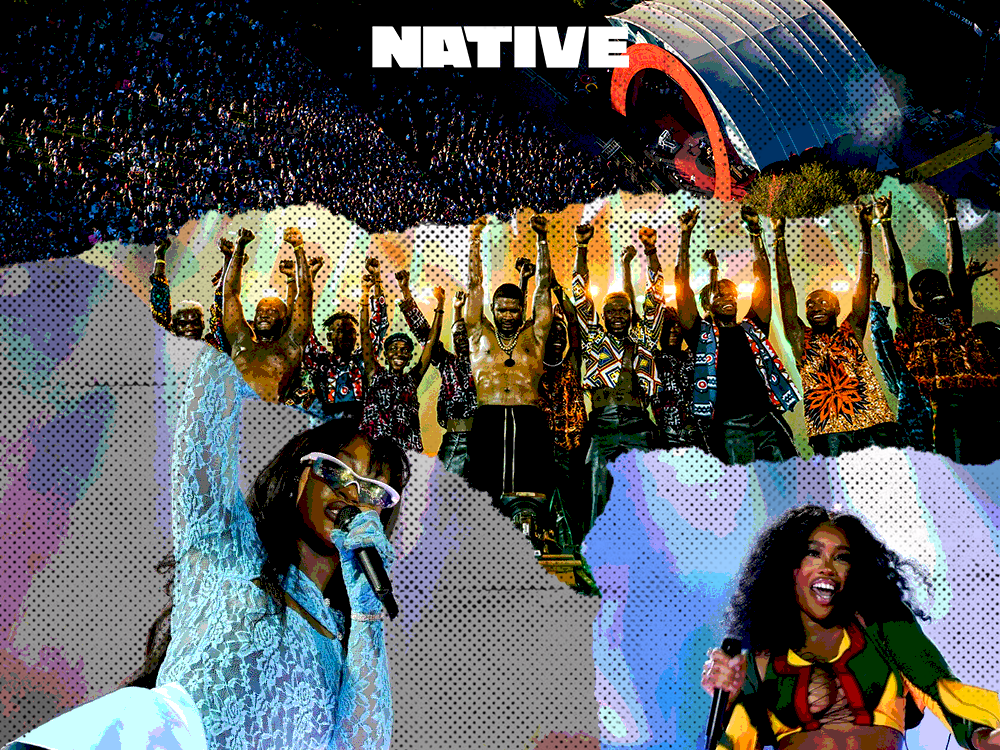
How Important Have Live Performances Become For Nigerian Pop?

Nigerian Pop has been consistently ascendant since the return of festivals and the ecosystem surrounding music returns to some normalcy. No more is this cornerstone of Afropop being considered as the next best thing; it’s been the thing over the past two years. Whether through burgeoning streaming numbers, topping international charts, headlining major festivals or making fans of global entertainment figures—we’re seeing it all. 

As this happens, the established practices of the local scene is being parsed through ears and eyes that are quite different from those of the home audience. Still, through the virtual strength of smartphones we’re able to key into these exploits all over the world. Through seconds-long clips, a sense is gotten of the crowd’s (usually) excited reaction to songs that are recognisably cut from textiles of the Nigerian experience. 

It used to be enough that these musicians were flying the soft colours of our flag. Nowadays, the quality of the experience matters even more; performing music live has become one of the most dominant conversations around Nigerian Pop as a global product. Over the weekend, Omah Lay was the subject of a TikTok post which trended after he appeared at the Afronation festival. The complaint about singing over recorded songs is quite familiar among Nigerian audiences, but has fallen on deaf ears over the years.

It’s been obvious for a while now that the purchasing power of Nigerians is quite low, in comparison to those of foreign audiences. The closest explanation for consistently bad performances in these parts is the country’s confounding ineffectual state, which affects production quality in no small ways. In the consideration of Omah Lay’s detailed thread explaining what happened with his sound set-up, the conversation opens a bit more onto the question of respecting the local audience. Some commenters made the point—and it’s hard not to agree—that if it was an event held in Nigeria, such elaborately drawn arguments wouldn’t be made available.

There has been increased focus on live performances, especially on the biggest stars of the Afropop scene. Few people after all, would expect world standard sound production on a little community show, but it’s different when you take to a stage and perform to thousands of people. Burna Boy’s stage craft has been an important factor of his creative rebirth; he’s been in heavy demand ever since the shimmering quality of that artistry was gleaned by foreign audiences. Beyond singing with his voice, he deftly transitions into his songs, backing music with flagrant choreography while maintaining chemistry with his band and lasting for long minutes on stage are the hallmarks of each and every of his performances.

Over the past two years, the musician has stretched himself to great artistic heights so that each time he performs, clips are routinely shared on social media to discuss his uniqueness. He shares that quality with Wizkid and Davido, who’ve been incorporating live music into their performances during the OG stage of their accomplished careers. An outcome has also been the growing reputation of their accompanying bands like Alternate Band, Outsiders and The Compozers, who take on the important responsibility of interpreting recorded music into grand stage pieces.

If the biggest Nigerian acts all agree on this facet of artistic detail, it’s quite clear there’s more to it. Taking Nigerian Pop worldwide transcends just creating hit songs; you have to be a sterling performer who’s able to reimagine those songs and bring them into the world of the listener. Quite literally, the voice becomes the major instrument of this; only in the formative years of Afropop was the priority on showmanship. That was before the access of social media blurred the gap between celebrities and fans, and just being vibrant on stage portended satisfying entertainment.

Going back before the 2000s though, classical Nigerian genres Highlife, Juju and Fuji held variant exceptional practices of live music. Without today’s programmed producing apps, they had to tussle with the physical components of musical instruments, reaching mastery through that delicate struggle. They had the discipline to treat music just like any other craft; one you had to spend years learning before moving out on your own. 

For Highlife, the Bobby Benson Jam Sessions was very influential in training many icons of post-sixties Nigerian music, from Roy Chicago to Victor Olaiya. The practice wasn’t much different from that of a footballing academy where exposure to the practices of more established players would undoubtedly impact the younger players in terms of developing their skills and motivating them to turn up for training.

Due to this foundational element, Highlife is one of the most exciting genres to listen to. Whether on a recording or during a live show, it constructs a fresh, soft landing for the singer’s voice which is usually layered across a medley of instruments, from guitars to percussion. The associative rhythms of its guitars have also continued to feature in modern Afropop, featuring prominently in the exciting groove of Camidoh’s “Sugarcane” and Kizz Daniel’s “Buga,” two of the biggest songs released so far this year.

One chill day in 2020, I found myself walking down a street in Lekki. My commute to a music show had taken a couple of hours, but now at the Island, the given location wasn’t far away according to the people I asked. It was an event by The Cavemen, a retro-inspired band whose exceptional performance qualities were the talk of their burgeoning fan base. 

At the gate, I was granted a media pass and moving inside, it was instantly remarkable how the audience were mostly young people. Highlife, the touchstone for The Cavemen’s sound, wasn’t readily accepted by most people in my generation, born more than two decades after the civil war effectively made it a regional genre. Still, Kingsley and Benjamin Okorie’s act wasn’t just by channelling the sound; the lifestyle of its rural beginnings was brought on stage, with clumps of vegetation, cowries and calabashes placed at strategic positions while the performers wore vintage-styled outfits. 

By the end of the event, I was an avowed fan. Performing all the songs off their now-classic debut album ‘ROOTS,’ tracks like “Anita” and “Beautiful Rain” were attended by natural elements like the encroaching darkness and light flushes of rain. You can stream a song for all eternity but nothing trumps the memory of being in the visceral present as the musician’s raw vocals reaches your ears, a joint between your fingers or throwing your head across a sea of bodies to see two lovers in deep embrace.

I once discussed Zinoleesky’s Tiny Desk appearance alongside Naira Marley with the creative director of Glitch Africa. It wasn’t long after the showing had stoked a lot of reactions, with some suggesting that it hampered his chances at the keenly-contested Next Rated category at the Headies Award later this year. That might be an overblown analysis in the typical style of online discourses, but the concern holds the weight of how important live performances have become in reviewing an artist’s strengths. 

The director’s opinion was that the performance set-up wasn’t attuned to Zino’s strengths because the “Loving You” singer usually comes across as thoughtfully reserved in his songs. He would have done better if he started off sitting down; that would ease the pressure of being dynamic with his movements while focusing on his vocal output. It’s a small but effective tweak we’ve seen Glitch Africa present over time, becoming a sort of anchor for commendable live performances from a range of new-school musicians from Ruger to BNXN, T.I Blaze, Salle, Hanujay, Rema, and many more. 

Credit should however be given where due, particularly to women musicians who consistently uphold high standards. The quartet of Asa, Simi, Tiwa Savage and Yemi Alade rank among the greatest musicians of the modern pop era and beyond updating their catalogue with important projects and hit songs, they all share a propensity for nerve-striking stage performances. Their styles are also markedly different; while the former duo would reflect soulful mastery over classical sounds like Jazz and R&B, the latter are savants of Pop music, bringing great energy and choreography to their performances. 

The newer generation of women pop stars from Tems and Ayra Starr to Fave, Liya and Ria Sean have also proven themselves quite capable of holding their own on stage, pairing vocal strength with exuberant displays of serenade. We have to reason if perhaps the masculine leanings of the wider music industry have cornered us into making excuses for male musicians and holding them to considerably lesser standards.

Those who are interested enough in Nigerian music to attend shows will have lots of horror stories about concerts held within the country, their almost non-existent focus on intricate planning. But we love this music because it’s sung for us and by us. It is therefore ideal that we galvanise the industry towards better efforts at making the experiences of these songs long-lasting. Beyond the bants about who’s the better performer and what not, the complexities of live performances deserves to be unfurled at the levels we can control respectively. At the end, it cannot just be another hot topic because this is about making sure we ground the future of Nigerian music in a culture we can be proud of.


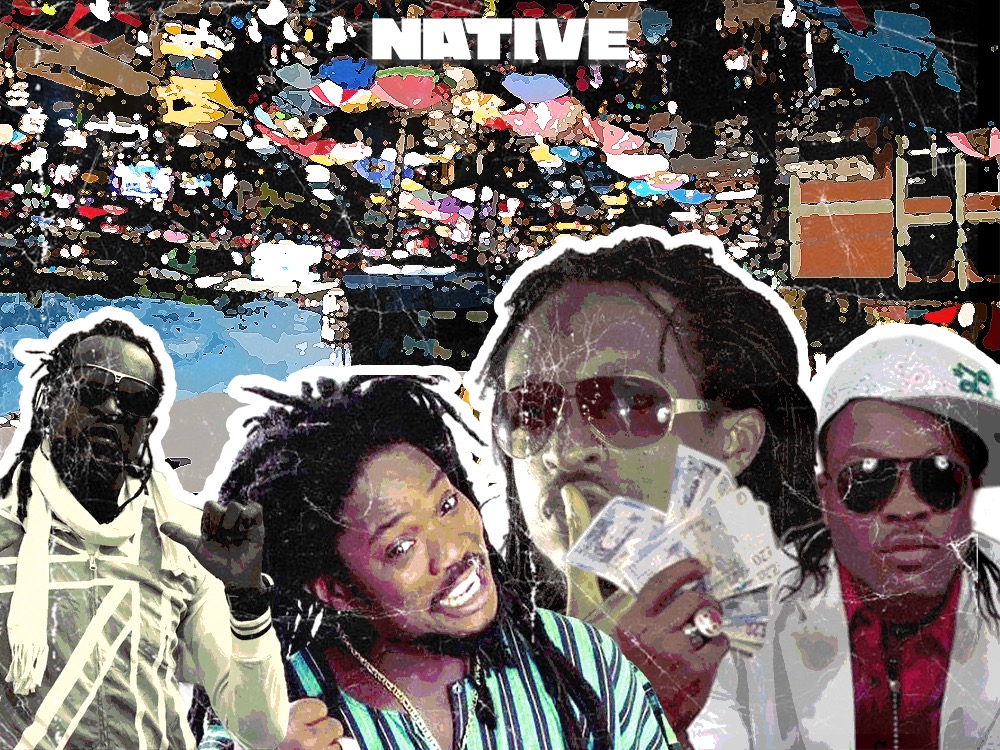
WALE IN THE WILD: ZINOLEESKY, LAGOS & STREET-POP’S GOSPEL OF HOPE

UNDER: Best New Artists (June, 2022)

Beyond the mainstream context of urban African music—hello, Afrobeats—an solid mixture of homegrown musical styles and global influences has ensured a consistent torrent of exciting music that often defies simple categorisation. A lot of this is being driven by up-and-coming artists, who are building on predominant and less pronounced sonic choices, carving out their own distinct place.

Since we launched unDer earlier this year, the column has served as a guiding light towards the discovery of these new musicians, an important mission we started in 2020 as Fresh Meat. Hundreds of musicians have come through these ranks, with genre-defying abilities that are familiar among creators of the post-internet generation. Sure, a number of them had considerable budgets from record labels before their big break; most, however, have in their possession, remarkably singular artistry which is already evident in the nascent years of their career. They all share that artistic promise. 

This month marks the fourth edition of unDer. As always, it is threaded by an eclectic selection of African musicians. Whether operating within the continent or beyond, the recognisable sonics carried through centuries of history is ever-present across their catalogue. With interpretation peculiar to each individual artist, it is safe to say that the music here preludes the sonic trends of tomorrow.

With that being said, let’s dive into this magical curation. Enjoy!

NYA

The Ghanaian pop scene moves in seasons. In every given season, the overwhelming majority of releases sport a particular flavour. But on certain occasions, you catch wind of a song or a project that jots out of the pack on account of its unique ambience. That’s the case with Nya’s four-track debut project ‘Euphoria’, a colourful showcase of resonant writing and formidable song-craft from the velvet-voiced singer. Over the course of four tracks, she displays her artistic range and the amorphousness often required to surge to prominence in the Ghanaian pop landscape.

The mini-EP sees her tread the svelte arc between paying tribute to primordial Afropop influences and leaning into nascent experimental explorations. I would love for my listeners to be able to feel the transparency of deep emotions and experiences that I have been exposed to in my life. Know that I am just as raw and human as they are when going through relatable situations,” she’s said about the project’s purpose. She does this gracefully, weaving old and new into a euphoric flourish, weaving in clear influences from R&B and neo-soul while exploring the intricacies of romantic entanglements. Nya has just set sail on her career, and it’s obvious she already has all the tools required for a mercurial future.

LOKI

When Loki raps, a vortex materialises and sucks you into his expansive world – an animated reality where glistening shards percolate from his voice and you’re left floating in weightless bliss. Loki’s brand of rapping is woozy, laidback and instantly enrapturing. His songs are pulsating melodic ballads that see him weaving in and out languid rapping and sonorous crooning.

The South Africa-based rapper-singer has been on the S.A Hip-Hop scene since the 2020 plague days and has managed a smattering of singles and collaborations, including one with venerable SA rap icon, Cassper Nyovest. It’s also helped that he’s currently signed to Skhanda World, the indie label headed by celebrated rapper K.O, which has provided him with proper guidance as he progresses. It’s on the label’s late 2021 compilation project, ‘Welcome to the Planet, that he fully pronounced his readiness for stardom, turning in multiple bangers, including the Blxckie-assisted “Shoda Ngami.” It’s still the early days for the sprouting rapper, but his cache of blistering singles signify his arrival, and at this point it’s plausible to assert that he’s poised for a bright career.

nesza

The state of Canada strongly inspires the modern twist of R&B familiar in the songs of Drake, Bryson Tiller and Nonso Amadi. It’s also where Adaeze Enoka, known now as nesza, got her start into professional music, approached by college friends who thought she’d do great on their record. That was 2017, and since then nesza has consistently moved towards an understanding of her craft. Although the lean information available on her online suggests a reclusive character, nesza is remarkably prolific.

“Lost” registered her among debutant musicians at the end of the 2010s, catching the attention of Mr. Eazi thereafter, with nesza sharing her debut EP, ‘Bitter-Sweet’, with distribution from the entertainment entrepreneur’s emPawa Africa imprint. Back-dropped by a global pandemic, nesza’s incursions into the lopsided field of romance assumed an epic sheen. Her direction was both honest and exuberant, imbibing songs like “Subway” and “Dangerous” with considered weight. Over the latter’s minimally pensive production, nesza bemoans being “stuck with all my old routines,” underlining her mortal flaws with frank perspective. 

nesza’s writing is clinically precise, a quality she gleaned from listening to Adele, Coldplay and Wande Coal during her formative years. Preferring to coast over neo-soul beats, she takes lucid observations into the dramatic ebb of rap, using familiar flows to chart the philosophies of her generation (“Try not to break me, I break too easy,” she sings in “Break“). 2022 has been typically productive, her second single “Trouble” coming in March. “If it’s trouble that you want, you will find,” she sings in a wistful tone on the song’s chorus, not evading the peculiarities of romantic conflict as much as being willing to fight her battles. With her sophomore EP ‘To All The Heartbreakers’ expected later this year, right now is surely a good time to get into the music of nesza.

Phinoshey

Jazz and rap have an undying relationship with each other, and Phinoshey recognizes it. Working as a rapper and a producer, he has patiently been etching his presence in the Kenyan music industry. Growing up in the slums has informed his view towards life, as uses his past and current environment as inspiration for his introspective soulful numbers. Preaching positivity as a result of coming up from Kibera slums, Phinoshey brings hope while singing poetic refrains and making nostalgic references to his childhood. Taking a reality-based approach to complex, socially pertinent topics such as police brutality and youthful aspirations, his vague description of better days perfectly merges with his Lo-Fi style.

Making his entrance in 2018 with his eccentric single, “Love” you can immediately tell he is a student of the game. His adoration for literature in high school plays part in his striking diction, playing a huge role in his somewhat throwback, ’90s east coast rap aesthetic. With 3 bodies of work—Kib’s Era, Sun From Kibera and Ikigai—Phinoshey is on a committed journey to positively influence the youth while still causing a buzz. The recently released ‘Ikigai’ adds an assured layer to his artistry. Finally getting recognition with fans and causing an impact, Phinoshey beats his chest with precise poetic composition, touching on hopes to get out of the hood, serenading his muse in Love Story and just having a good time. Phinoshey’s dedication and commitment have seen him build an impressive catalogue so far, a tenacity that will see him far into the game as more listeners open their ears to him.

Kami Leonne

Trim might be known about Congolese songbird Kami Leonne, but the singer is clearly working her way up. Referring to herself as the queen of Afro Silk, Kami Leonne is an R&B artist hailing from Congo. With a reasonable discography of sultry numbers, Kami Leonne blends experimental pop, R&B, trap, and mid-tempo Afropop elements into one harmonious package, making her sound unique and orthodoxly pleasing. Releasing two bodies of work, 2020’s Promises and No Use Seducing Time in 2021, Kami Leonne has been making music long before finding her feet in the industry, building confidence in her vocals and writing as seen in her latest number “All I want”. The romantic R&B number sees the singer blend lust and love, creating a chaotic mess that embellishes her undeniable talent and affinity for impressionistic writing.

This mode of operation is regular to the singer and songwriter, like how she ruminates about heartbreak, loss, and disillusionment across No Use Seducing Time. She releases her arsenal of trap and R&B as her masterful and melancholic vocal performances pair incredibly well with the tragic themes woven into tracks like “You Don’t Love Yourself” and “Stay With Me,”. Though still early into her musical career, Leonne’s writing, composition, structure, and production are consistently top-notch. Bursting into the scene with her hypnotic and seductive persona, Kami Leonne is one to watch out for.


ICYMI: ONA DEMA, NANETTE & MORE ARTISTS TO DISCOVER FROM MAY 2021

A 1-listen review of A-Q, Blaqbonez, M.I Abaga and Loose Kaynon’s ‘Behold the Lamb’

M.I Abaga, Blaqbonez, A-Q and Loose Kaynon kicked off a storm in the early days of 2019. A few months out from the 3-week album run that saw the consecutive releases of A-Q and Loose’s brawny ‘Crown’, M.I’s reflective ‘Yxng Dxnzl: A Study on Self Worth’, and Blaqbonez’s exuberant ‘Bad Boy Blaq’, the quartet assembled for its first cypher, a gaudy display of lyrical skill with a vitriolic bent. They’d return a few months later with a meaner tone, which eventually snowballed into a bunch of controversies and arguably the biggest beef in Nigerian rap music history.

Last year, they reunited for “The Last Cypher,” something of an attempted apotheosis. Apparently, that was just the prelude to a joint full-length album. Teased about a week ago, with each rapper sending out bare images of their letters in the LAMB acronym, ‘Behold the Lamb’ sees a semi-surprise release after its announcement less than a day before. Exclusive to Boomplay for almost 48 hours before making its way to other streaming platforms, A-Q sent out a tweet explaining that release route: “They [Boomplay] give a shit about Nigerian Hiphop.”

Whether you think the reason is substantial or founded on hubris from seemingly getting a bag, a joint album headlined by four of the most prominent (English) rap artists in the game is intriguing. The 3-album run in August 2018 was generally impressive, Blaqbonez is now a legit star, M.I and A-Q delivered a stellar joint tape in addition to well-received follow-up projects, and the cyphers have been generally good, with great moments in between. All of that sets a pretty high bar for ‘Behold the Lamb’—in my mind, at least.


View this post on Instagram


A post shared by Emeka The Stallion 🐎 (@blaqbonez)

In Usual 1-Listen Review Fashion, All Reactions Are In Real-Time While The Music Plays. No Pauses, Rewinds, Fast-Forwards, Or Skip.

“Badman Size”

This is a curious way to start, sounds like something that could be in the middle of Blaq’s ‘Sex > Love’. The guitar riff is a phenomenal touch. I don’t know, I was expecting a fiery start—or assertive, at least—from the jump, but I’m hearing M.I in a preppy, pop-rap cadence and it’s throwing me off. Blaq really went from flinging battle raps to slinging playful hooks, I respect the evolution more than I wince at it. I like Loose Kaynon here, that brief double-time trick is nice. A-Q will find a way to attack a beat, he’s going to be aggressive if there’s a pocket. It’s a nice verse, but this whole song isn’t doing much for me as an intro. Expectation is the killer, huh?

“Groupie” (feat. Oxlade)

I expected every rap artist to line up for an Oxlade hook after “Mamiwota,” and it sort of did, but not to the extent I wanted. We’re still in mid-tempo pop terrain, but this is more sultry. Yeah, I do not like this beat. I get the synthwave-meets-log drums idea, but it’s not glistening how it should. This sounds like another outtake from Blaq’s album, and I hope it’s not a recurrent theme for this project. This is the M.I I’m not a fan of, trying to pull off punchlines that don’t really work, because what is that Shatta Wale line? LOL, I admire this man wanting us to vote, but that line is ridiculous in a terrible way. A-Q will rap-rap on any beat, the good thing is that he’s becoming increasingly great at finding the right pocket. This flow is really good. Even Oxlade sounds relatively soulless to me right now. Yeah, get this song outta here. That Loose Kaynon covid line is irritating. Definite skip.

“Fame Sh*T” (feat. PsychoYP)

Jayy tag, along with what sounds like a harpsichord riff. Yeah, I might be up. I have sympathy for celebrities and the toll fame takes on them, but it sounds like whining if there’s no depth to the complaints. Come on, Blaq, give me something. This beat knocking. YP! That cadence is always pristine. Bando man out here talking that talk. Forgive me, I thought they were lamenting, but it’s a self-aware celebration, LOL. Is this M.I? What is this flow? I hate it. That racist line is irritating. I wish I could see my own face right now. They wasted a YP verse for this?! And a good Jayy beat as well?! It’s always R.I.P to that man, anyways.

“Chasing Designers”

A third of the album and I’m waiting for something, anything to happen. I like the atmospheric nature of this, but again, this sounds like a Blaqbonez song that got cut. Bro, there’s a hilarious irony here and Blaq is not selling it how he should. This is good writing but the delivery is tepid. “If I ever feel sad, I just spend more money” is a peak Blaqbonez line. Loose Kaynon’s technique as a writer of rap verses is probably his greatest strength, and I can hear it here. There’s some really good lived-in lines, even though it sort of counteracts Blaq’s self-aggrandising. I don’t like the mix of this song, and A-Q’s verse is just exacerbating that. Lyrically and delivery-wise, it sounds…solid. I don’t know, man.

“Snapchat Vs Facebook” (feat. Chike)

I like this slow build-up. Chike said he’s got “the Snapchat for the baddies” and I do not believe a word of it. You can’t have boo two times in the title of your album and attempt to be a Lothario. (Unrelated, but Ditto: Fireboy DML.) The fact that Blaq can easily slip into ‘Mr Boombastic’ mode is reinforcing the consistent theme that this is another outtake from his last project or the one he’s working on. Chike is doing an Omah Lay impression, and it’s not working. A-Q will sneak in a good vignette at the beginning of his verses, it’s a good way to keep listeners engaged from the jump. Keep this song away from me, sha.

“Plus 254” (feat. Bien & Khaligraph Jones)

Halfway through this album and I swear, I just want to feel alive. Jayy tag. This feels grand, with a cinematic touch. I really like Bien’s voice, even though he’s effectively fallen behind Savara and Fancy Fingers in my order of favourite Sauti Sol members. This man went full raunchy since going solo and he hasn’t looked back. Khaligraph Jones will find a good pocket, which is remarkable because he has such a burly voice and you wouldn’t expect him to be very dynamic. These drums knock but they just don’t have the oomph. Blaq was in Kenya not too long ago, so I’m assuming he worked on this with Khaligraph. Again, my theory might be true. Not a bad song. In fact, it might even be a highlight. Still not a keeper.

“Reciepts” (feat. Ko-Jo Cue)

Transitions have been mehhh, but this sounds like it could be something. Violin strings and thunderous bass? Count me in. Ko-Jo Cue has one of my favourite rap voices in all of Africa, he never sounds ruffled in any environment. I just hit the facepalm, like what is M.I really doing here? I get the playboy thing, but I’m sorry I can’t get into it ‘cause you have a wife now, man. That’s not even the main reason, because that black lives line is so unnecessary. My GOAT is embarrassing me, man. He’s back for a second verse? Please, Lord. Help me. This sounds more like it. I fuck with the conceited energy of these lines, even though it feels recycled from his projects since ‘Illegal Music 3’. This hook, though. Absolutely amazing. Such an amazing beat as well. Will revisit.

“Fears”

Jayy tag. This has some soul in it, I’m hype. Yeah, these are the drums. Let’s go, Blaq. Yeah, he’s talking. “Life is too short to not be making my own decisions/and I cannot blame the label for my inhibitions.” This is a verse! I repeat: This is a verse! This is a therapy session. This is a busted vein rapping. The honesty is engaging and refreshing and affecting and wholesome. Come on, A-Q. Give me something. Hehh, I don’t like this diatribe here. I need someone to give me the first two-plus minutes of this song, that’s all I need.

“Pray for the Crown”

Penultimate song. I’m happy, this gon be over soon. I liked Q’s opening bars until that dentist bit, it felt forced. This man will find a rhyme scheme and run it ragged, which is mostly a good thing. I like his revolutionary bent, just wished he didn’t ruin “Fears” with it. Haha, the raps are striking. A-Q would be an engaging standup comic if he had some comedic timing, because he goes all in on everything with a conversational verve, he’d just need to add the punchline every few minutes. Beat switch for Loose Kaynon, very foreboding, like it’s welcoming the undertaker from the afterlife. Oh, that stakes line is nice. That cherries part is not so nice. Am I an armchair critic? Find out on the next episode of Dragonball Z. That verb line is a bar. Not a surefire keeper but I’ll definitely revisit this.

“The Last Cypher”

I remember Blaqbonez tapping the Boomplay icon on his phone at the beginning of the video for this cypher, and I found it funny because the man is always focused on Apple Music as a gauge of his commercial success. As far as the verse, it’s really good. Blaqbonez in his disrespectful bag is always a good trip. You could make the argument that Loose Kaynon didn’t eclipse any of his colleagues in any of the cyphers. Maybe he outdid M.I here, because that man’s verse here wasn’t really it when I heard it, and I’m hearing some good bars here, like the villain one. That “all hair” line perfectly captures the era of rap Loose came into, shout-out to Lil Wayne and Fabolous is all I’mma say. 

M.I knows how to sound royal, it’s been a thing since “Short Black Boy.” That Jerry Krause line is a phenomenal reference. Okay, I may have been wrong, this is a really good verse. Here he goes again, proselytising and stuff. That cadence switch reminds me of Sinzu. A-Q always raps like he’s a jackhammer trying to break down reinforced concrete. Bro, he found a scheme after that blackout line and he ran it ragged. “I’m getting paper currency, don’t tell me about your dogecoins” is such an emphatic and dismissive line. He cleared it up on the podcast with Osagz, but it’s still giving “What the fuck is an NFT?” and that’s word to Tyler Okonma. “Fuck smoke, I’m serving hot fuse” is a great way to close a verse out.

Final Thoughts

There’s no way to sugarcoat it: ‘Behold the Lamb’ is remarkably tepid, and the reasons are obvious. For the majority of the album, all of the headline rap artists show up in uninspired form. A consistently fiery A-Q misses the mark, tone-wise, on a few occasions; Blaqbonez is in autopilot on almost every song; M.I barely performs at the expected level for one of the most dynamic rap artists in African rap history; and, even in his sparse appearances, Loose Kaynon is just reliable—which isn’t a bad thing, but a transcendent showing wouldn’t have been out of turn.

At first, I thought it was my expectations affecting the listening experience, but as the project wore on, it was quickly apparent that this was a set of not-so-good songs, flecked with some stellar moments. Like I wrote several times during my reactions, the majority of ‘Behold the Lamb’ feel like brazen outtakes from Blaqbonez’s recent work. It’s no surprise that the album’s best moments feel like they weren’t grabbed and reupped from the cutting floor, from the rumbling drill of “Receipts” to the soul-baring “Fears.” In fact, it all reminds me of ‘2 Kings’, the unremarkable joint project from Olamide and Phyno back in 2015, where the collaborating rappers phoned in drab performances over largely dull beats, so much so that they were easily upstaged by a protégé.

One obvious denominator is that both projects were aided by a corporate sponsorship—‘2 Kings’ happened courtesy of telecom company 9mobile. A-Q may have been right that Boomplay cares about rap music in Nigeria, but it’s shocking and appalling that four of the most vital voices on the scene made an album that’s not good enough to show that they care.


ICYMI: THE IMPORTANCE OF WELL-EXECUTED CYPHERS TO THE NIGERIAN RAP SCENE

Essentials: Jakk Quill rips through beats on new EP, ‘Finding Flows’

Jakk Quill is an enigmatic rap artist with the occasional raging urge to tear through beats, ol’ school rap style. Initially not very drawn to hip-hop, he related a lot more to rock and house music, until influences from J. Cole and Drake nudge his creativity into focus and helped kick-start his rap dreams. The Kenyan lyricist has worked his way into a respectable acclaim of his skill-set, with a catalogue that includes 2020’s ‘NEW Decade Same Dreams’ and last year’s ‘Lost in Motion’, the latter earning him a nomination at the 2021 UnKut Hennessy hip-hop awards.

After relative silence on—April’s “Loose Ends” was his first post-project release—Jakk Quill returned with a surprise EP, ‘Finding Flows’, over the weekend. Primarily self-produced, the 4-track project is remarkably consistent in tone, a rewarding listen fitting for its bite-sized run time. Conceptually, the sequencing and pace of the EP are stellar, with the skits helping to give things a ’90s college radio mixtape feel. The EP’s crux feels very straightforward, built around this idea of bragging and paying homage to the artists who paved the way for Jakk Quill and inspired his love of the culture. For the most part, this comes across well, with the Kenyan lyricist closing off the album with a freestyle over the beat for Jack Harlow and Drake’s “Churchill Downs.”


View this post on Instagram


A post shared by JakkQuill_KE (@jakkquill_ke)

Right from the start, he makes it clear his slight absence in the scene doesn’t mean he isn’t working. The intro, “What’s Going On,” is a skit where Jakk Quill satirical laughes after being asked what he has been up to. 2021 could be termed as his strongest year after releasing ‘Lost In Motion’, with the rap artist cruising over a versatile range of rap beats, working through personal stories and observations while still maintaining his assertive cadence. ‘Finding Flows’ is straightforward in its tone, a forthright reminder to the public that he takes his job as a technical lyricist serious. Switching flows, “Fucc a Flashbacc” shows Jakk Quill’s growth as he sounds confident and defiant in his delivery. The bass-infused beats show his tough-guy hyperbole felt throughout the 4 tracks. Jakk Quill seems comfortable in his skin and, by all accounts, now makes music he wants to without worrying about converting those who don’t want convincing.

Tron goes for maximalist production in Mindin My Biness: menacing piano snares that echo and drums that rip heads clean off shoulders. But Mindin My Business” offers the spirit of his loose material and packages it into a much more cohesive and focused gift of chaos. It does a few things differently than the previous records. He’s still using unconventional flows, but it’s mixed with buzzy bars more common, rather than obscure. On Churchill Downs Freestyle, Jakk Quill brags about living an enormously normal life, spitting, “had to dive into my inner matrix make some quick decisions, I am a math quiz I want to see big digits.” It’s a subtle flex claiming he’s one of the biggest celebrities in his niche cultural scene, possessing the foresight that he’s on his way up but not quite ready to brag about material possession.

Throughout ‘Finding Flows’, Jakk Quill raps mercilessly like a stapler gun. He has the quirkiness to appeal to mainstream rap heads without losing the flair that brought him to this point. With ‘Finding Flows’, Jakk Quill shows that while he may not be making subversive work, his worthy gimmicks and work ethic are remarkable on their own.


ICYMI: READ OUR 1-LISTEN REVIEW OF ASUM GARVEY’S ‘THE ASUM CUT’

Big Brother Naija Returns For Its 7th Season

It’s official: the biggest African reality TV, show Big Brother Naija, is returning for its 7th season this July. The new season will kick off with the double season launch show on July 23rd & 24th, 2022, across African Magic stations, including Africa Magic Showcase, Africa Magic Urban and Africa Magic Family channels.


View this post on Instagram


A post shared by Big Brother Naija (@bigbronaija)


Over the past few years, Big Brother Naija has simply become one of the most exciting ang engaging reality TV shows out of Africa and for another year, the TV show is back this month and promises to be more intruiging. About two weeks ago, the housemates of the Shine ya eye season came together one last time for the reunion of the sixth season of Big Brother Naija, in preparation for the new new season, which is set to kick off at the end of the month.This year, the winner of the competition will join Mercy, Laycon, Whitemoney, Efe and Miracle as one of the winners of Big Brother Naija and walk away with 100 million naira worth of prizes, including 50 million naira cash prize and prizes worth 50 million naira. The headline sponsor of the new season for the second time in a row is Pocket (fka Abeg app) and the new associate sponsor is Flutterwave. For the seventh season, the show will witness a return of a few pre-COVID 19 elements including the fan-favourite ‘Ninjas’ and a live studio audience. Fans can also expect a line-up of more engaging tasks, unpredictable twists and Big Brother’s games for 72 days. 

The voting style from last year will remain the same i.e Voting will only be on the Big Brother Naija website, mobile site, and the MyDStv and MyGOtv apps for active customers. The number of votes each subscriber will have will be determined by their subscription packages, with DStv Premium and GOtv SUPA subscribers receiving the most votes. Additionally, 30 fans of the show will also win 1 million Naira each in the Fave Lock-In promo exclusive to DStv & GOtv customers.

Featured Image Credits/Instagram

Songs of the Day: New Music from Timaya, Octopizzo, Dremo & more

We’re halfway through 2022, and it’s been an eventful year for Afropop. There’s been a torrent of great new music, spawning a massive stack of inventive smash hit songs. From Highlife-infused Ghanaian pop, to the unrelenting force that is Nigerian street-pop, to South Africa’s indomitable Dance scene, to tantalising Drill explorations in East and Central Africa, and much, much more, we’re living through abundant and musically expansive times.

Every week, tonnes of songs from African artists make their way to digital streaming platforms, and wading through them can be intense. That’s where The NATIVE’s Songs of the Day column comes in to help. We go through as many new releases as possible, spotlighting them here, two to three times every week. Making up for the column’s absence at the end of last week, this curation includes new drops from Timaya, Dremo, Fresh Meat alum Groovy Jo, and more. Tap in.

Timaya – “Get My Money Right”

Iconic Nigerian singer Timaya returns with “Get My Money Right,” a groovy single reliant on his knack for storytelling and resonant lines. Serving as his third release of the year, the melodious number sees Timaya talk about getting money right and standing by your principles. Over a boisterous, mid-tempo beat, Timaya reiterates his focus on securing his bag, regardless of brazen hate or backhanded comments.

Octopizzo – “Tom Mboya”

To mark 53 years since Tom Mboya was assassinated, Octopizzo dedicates his latest single to the beloved political leader, rapping impassioned quips centred on pan-Africanist ideals. A crisp video accompanies the versatile number which is characterized by lush green background and constant references to the late political leader. The harmonious background symphony perfectly complements Octopizzo’s voice over Keith Wamz’s folk-indented hip-hop beat.

Skillz 8Figure – “Moves” (feat. Sherro)

Just over a month after teaming up with Sherro for “Stop,” Skillz 8Figure reunites with the same collaborator for his latest single, “Moves.” Over an afro-swing beat, the pair boast of their affluence, with Skillz’s infectious drawl setting the tone for Sherro’s energetic rap verse. The song represents a carefree party, and that’s what its loose, accompanying video portrays.

Pheelz – “Finesse” (East African Remix) [feat. Rayvanny  & Theecember]

Months after the successful release of the BNXN-assisted “Finesse,” Pheelz is still riding high off the song’s success and finding ways to elongate its impact across Afropop. The singer and producer drops a new East African remix. Pairing up with Rayvanny and Theecember, the viral number takes a different approach, bringing a new twist to the song and making it sound brand new as the artists go back and forth with Kiswahili, Pidgin and English.

Mellow & Sleazy x Chley – “Wenza Kanjani” (feat. 2woshort, TNK Musiq & BoontleRSA)

In 2021, producer duo Mellow & Sleazy burst into mainstream acclaim for their guttural take on Amapiano, spawning viral hits like “Bopha” and “Nkao Tempela.” Month off their ‘Midnight in Sunnyside’ album, they’ve teamed with recent breakout act Chley for new single, “Wenza Kanjani,” which also includes instrumental contributions from TNK Musiq and BoontleRSA. Featuring a wall-rattling groove and atmospheric synths, the club-ready banger sees Chley set the tone with his buttery vocals, setting the tone for 2woshort’s dizzying standout verse.

VRSD – “Kokoka” (feat. OluwaMillar)

While the drill music renaissance in Nigeria’s capital city is rightly getting its acclaim, there’s a similarly burgeoning movement happening in the country’s southwest. One of its more mercurial manifestation is “Kokoka,” the new single from rising rappers VRSD and OluwaMillar. Having shown an affinity for reflective themes and resonant lines, VRSD approaches his debut foray into drill with a loose but focused edge, rattling off clever mix of self-assured quips and idioms in Yoruba, setting an intoxicating tone for OluwaMillar to waltz in and put up a fine shift with his staccato flow.

Groovy Jo – “Goodbye”

Eight months after its original release, and a few weeks after its announcement, Groovy Jo has now shared the deluxe edition of her debut project, ‘The Groovy Way’. The new drop spots five newly added songs, including the recent pre-release single, “Feeling It.” One of the standouts among the additions is “Goodbye,” where her seditious bars immediately get you hooked to the hypnotic number. Combining her hard bars, stealth flow, and raunchy attitude Groovy calls out an ex-lover after realizing her worth. Throwing subliminals, it’s filled with rage-filled, slick-worded bars like, “Sweet nothings I was just sweet for nothing,” all culminating in an infectious kiss-off song.

Dremo – “Monaco”

Drill is finally creeping into mainstream Nigerian rap and, like colleagues Blaqbonez, Oladips and more, Dremo is not letting it go by. “Monaco” is a drill-infused number that sees the rapper boasting of his work ethic and glossy lifestyle, growling his way through Niphkeys’ thumping beat. The accompanying video is similarly energetic, but with a high concept twist that does its part in keeping things intriguing.


ICYMI: READ OUR LIST OF THE BEST PROJECTS OF 2022, SO FAR

AV Club: “Glamour Girls”, music choices & the complicated strides of modern Nollywood

The recently released Netflix film, “Glamour Girls”, is a reimagined follow-up to the classic 1994 Nollywood film of the same name, taking place in the same universe as the original.  It similarly follows a group of escorts as they try to import the glamour mentioned in the title into their own lives.

The new “Glamour Girls” is an interesting creation. It carries on similar themes from the original film, with a group of women trying to make their way in a patriarchal world, using the tools that they have. The character Emmanuella’s arc, in particular, shows us the amount of effort that goes into becoming a success in that industry industry.

Superbly played by Sharon Ooja, Emmanuella starts off barely able to support her siblings on a stripper’s salary. After getting fired from her job, she goes to Donna, a madam who has a day job as an interior designer. After being rejected for appearing too uncouth, she then has to go through a makeover to appear polished enough to attract high class clients. Even after she attracts one such person in Segun and gets a legitimate job as a bank manager, her work as a stripper is used to belittle and humiliate her, even by the man who benefits from her sexuality, as Segun orders her to strip for him in a moment of cruelty.

In these moments, the audience is called to sympathise with the characters as they try to make it in the world. The story is refreshingly non-judgmental towards sex workers, who are often either entirely demonised or typically victimised in Nollywood. In “Glamour Girls”, the escorts are far from heroic, but are still portrayed as people to emphasise with.

Despite similar themes, putting the 2022 film and the original side by side in many ways shows us how far Nollywood has come since the 90s. The high definition shots of luxury yachts and private planes shows a level of production value that would have previously sounded inconceivable.


View this post on Instagram


A post shared by Netflix Nigeria (@naijaonnetflix)

The soundtrack also exemplifies the state of modern Nigerian entertainment. The film uses many songs that would be considered ‘alté’. The fact that songs by artists walking the more alternative side of Nigerian music, from AYLØ and SGawD to Seo and Wani, score such a mainstream film shows how much the music industry in Nigeria has advanced in the past few years. The song choices reinforces the aesthetic of “Glamour Girls” as a modern film with a progressive ethos, but those choices also don’t always properly align with the film’s context or fully enhance the scenes they accompany.

For example, when SGawD and Somadina’s “Pop Shit” rings off around the top of the film, it sets a slick tone as we see the bustling city of Lagos. The song is poorly mixed with the rest of the audio however, making it difficult to hear the characters dialogue. This distracting sound design makes the song feel like it goes on for far too long, giving the scene it plays over the feel of an awkwardly made music video, especially as the song swells back in for a few seconds in the next scene, as Donna is on the phone.

Other songs just feel generally misplaced. The triumphant song, “My Time” is played over a scene where Emmanuella storms back into Donna’s office after being kicked out, vouching for herself, in a moment that the soundtrack signals should be very emotional. The issue is, this happens in the first fifteen minutes of the film. It is hard to feel anything apart from mildly impressed for a character we barely know at that point, so the use of such an intense song feels quite premature.

In what should be an iconic moment, “Glamour Girls Jam Mixed” plays over a scene where the escorts, including a freshly made over Emmanuella, go for a night out together for the first time. Unfortunately, the issues with the sound mixing combined with awkward framing makes the scene feel unintentionally cheesy instead.

There are many things that stop “Glamour Girls” from being truly great. Throughout the film, shots with very uninspired framing linger for far too long, making ‘big’ moments come across very flat. The unfocused pace of the plot with many moving parts also makes the story feel very loose and confused. All of this makes the film feel like it should make up the opening episodes in a TV show, as the whole thing lacks a certain cinematic quality.

“Glamour Girls” is a film that shows what impressive progress the Nigerian film industry has made overall. Far more focus is being put into production quality than ever before, and music that would have previously only been for niche audiences are now featured throughout a mainstream production. The film, however, still has a myriad of issues that stop it from being a truly memorable film past being a sign of progress. This is unfortunate, but also just evidence of where the Nigerian film industry is, an industry in which many strides have been made but where there is still a long way to go.


AV CLUB: ‘BLOOD SISTERS’ & THE VALUE OF CRITICISM IN NOLLYWOOD