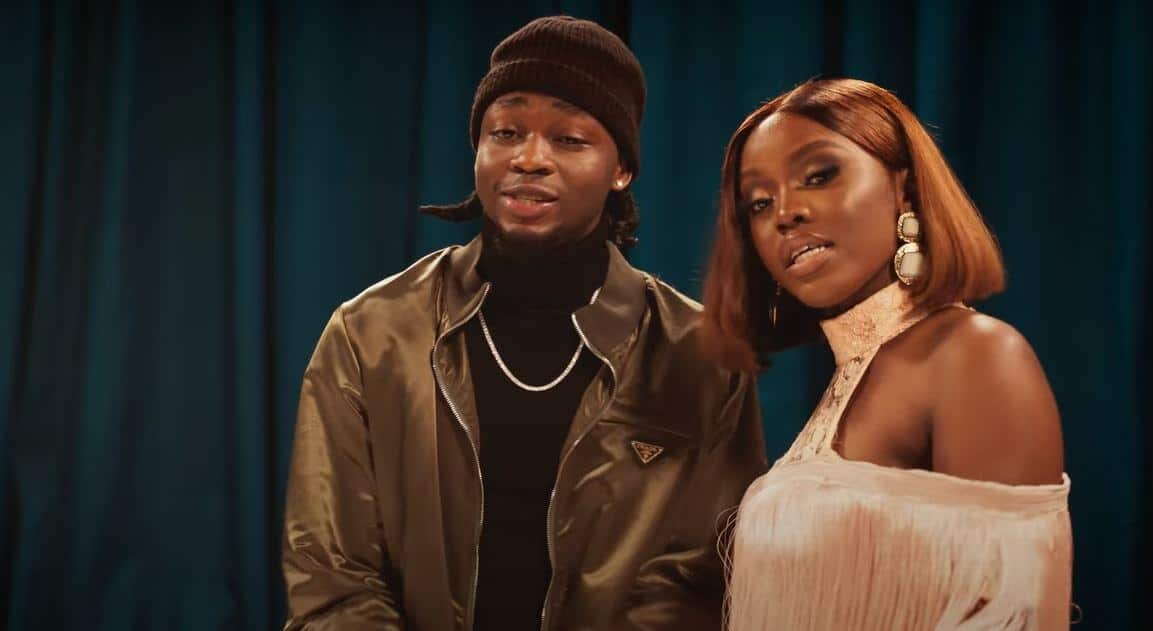
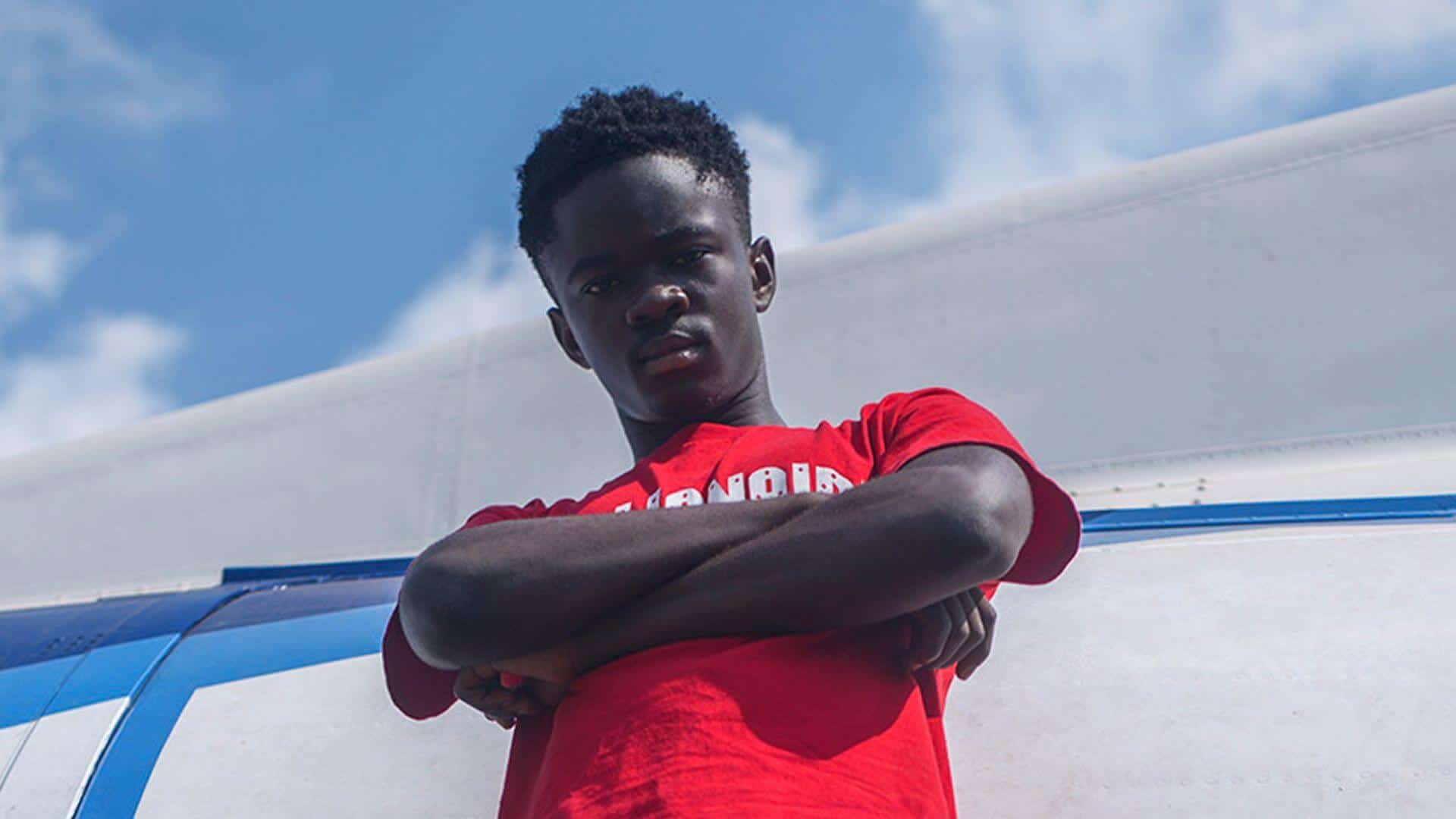
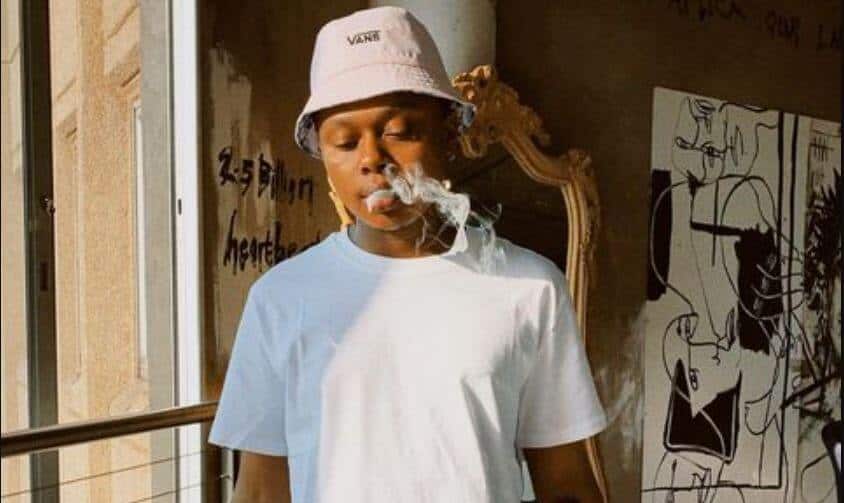
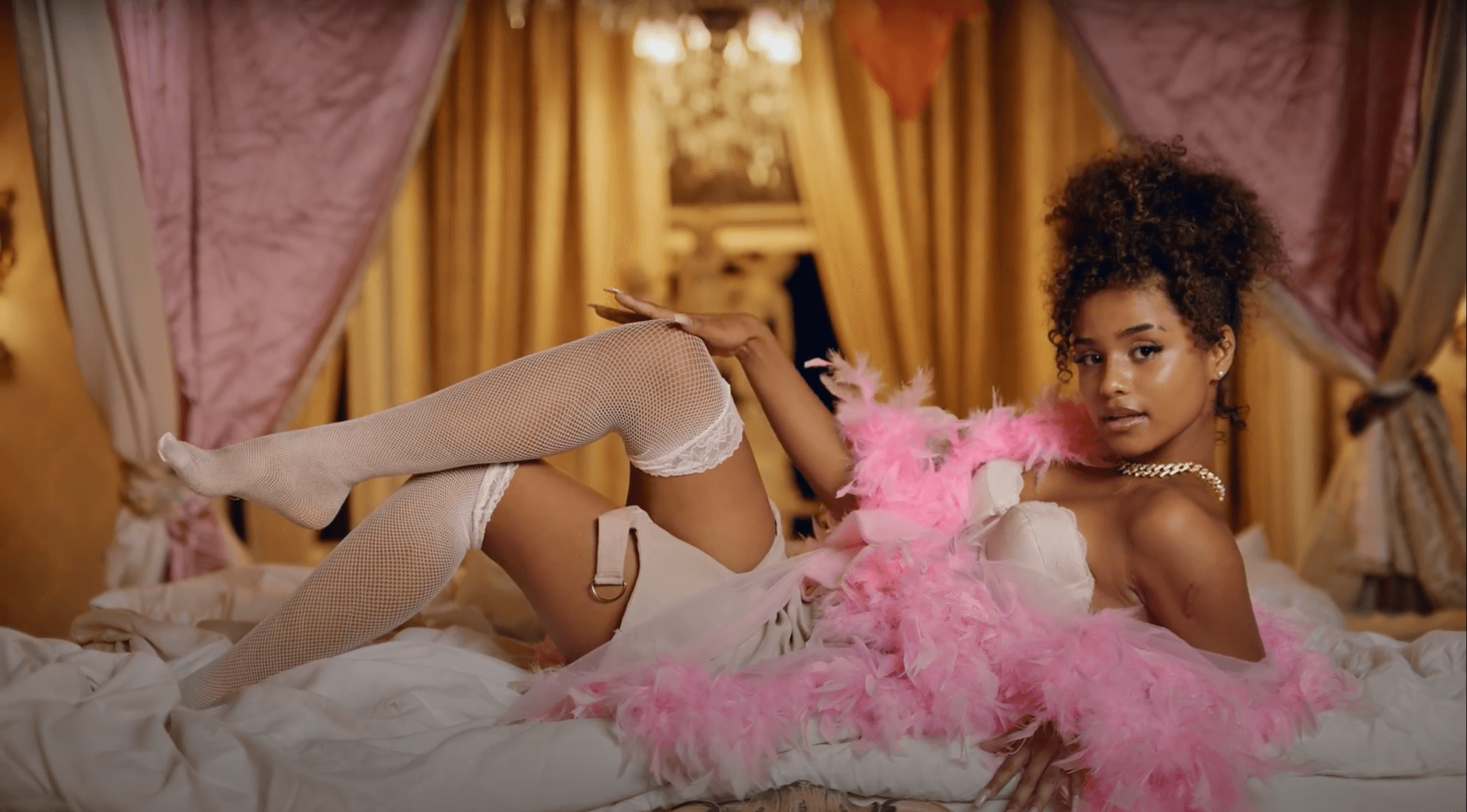
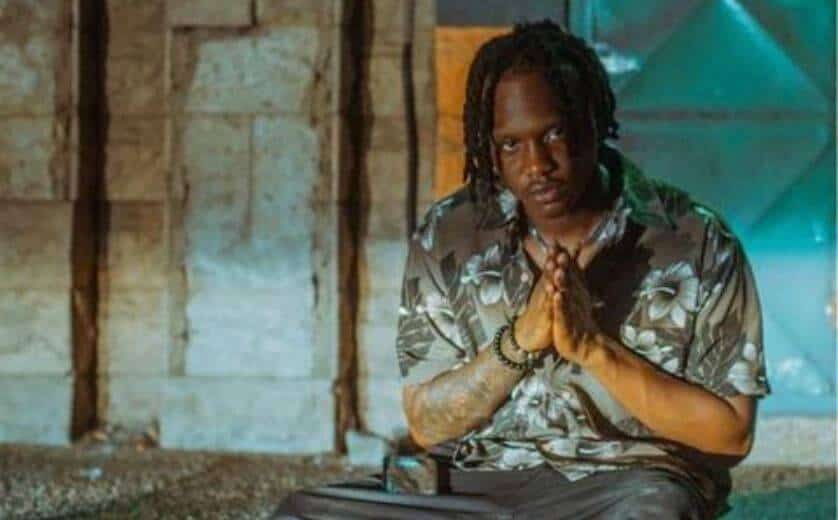
“You may know what you want, but the moment you have to work with other people, you never know what’s going through their minds or how you can combine all your visions,” Lo Village frontman, Kane admits over Zoom, as we settle down to discuss the Maryland collective’s upcoming LP ‘Lost in America’. When I speak to them months ahead of the release, the Ghanaian-American sibling duo Kane and Ama are in good spirits (Tyler is unavailable on this day), riding the high off the upcoming project. Although the album had to be delayed for several reasons, there is still a sense that 2021 is a better time than ever to share it with the world.
Last year may have been tumultuous for Black people collectively, but it did offer some much needed time for reflection for the group. The forthcoming ‘Lost in America’, their third studio album is their most ambitious offering yet (I know, I’ve heard it), with an aim to adeptly cover the experiences of the Black person in America. Although they initially did not intend on discourse pertaining to the racial uprisings that coursed through the country last summer, Ama tells me: “It would have been a disservice to not cover it. I feel like when we write music, we’re always talking about the perspective of where we are right now; so to act as if everything that’s going on right now isn’t going on would make no sense.“
Before the previous year ran out, the Hip-Hop/R&B collective set out to unveil the world around the upcoming LP, first releasing the album’s promotional single “Terry Crews” in late October. The number was aptly titled to satirically criticise the widely publicised statements of actor Terry Crews who had flagrantly wound up the Black community during the height of the Black Lives Matter protests. Lo Village’s sincerity bleeds through in their writing, as they embed the song with sharp, critical observations sure enough to pique any listener’s interest. A few months after, in December, the group subsequently released another political cut, “Out the Window”, a memorable single that boldly spoke about the injustices against Black people in America with an accompanying music video that paid homage to the lives lost to state-sanctioned violence.
When I ask the collective whether they see themselves as role models to the cause, Kane responds:
“My father wasn’t around for a while when I was growing up and so I looked up to rappers to teach me the ropes and a lot of what they spoke about influenced me negatively. So with this project, I’m trying to speak directly to other black people, black males, especially those who don’t realise we are being brainwashed.
I’m trying to put you on the game. It’s like, ‘Yo, don’t fall for the trap,’ you know? Because you will spend years trying to undo the trap that you put yourself into”.
Being the oldest member of the collective, Kane typically takes on the role of the group organiser and frontman, who makes sure things are always in order – it’s been this way since their inception back in 2016. They say three is a crowd, but Lo Village make an exception to this rule. The Maryland trio comprising of Ghanaian siblings, Kane and Ama, and Trinidadian rapper Tyler do sometimes clash because of their differences in age and backgrounds, but finding the right balance between everyone’s differences has become their superpower. Speaking to the NATIVE, Ama shares,
“Just being a girl and being younger can be frustrating at times trying to get off what I want to say. Also because I am the R&B essence of the group, sometimes there might be times where the guys want to create music that’s more Hip-Hop and I’m more Soul-leaning.
But knowing that we all have good chemistry, I am able to compromise and just be like ‘okay well, we are going to figure out something for the best interest of the group.'”
It’s this efficiency in organising their affairs and their firm understanding of who they are – both individually and as a collective – that has sustained Lo Village’s drive all through the years and gained them the attention of industry heavyweights and considerable fanfare, including a spot on HBO Insecure’s Season 4 playlist and a label deal from EMPIRE. It seems as though the collective is now enjoying a moment in the limelight that has been long coming, but success rarely ever feels like you dreamed it would.
While the group is making headlines for themselves in Maryland and in America, they have at times felt amiss for their distance from their African and Caribbean roots. But that’s all about to change with the incoming release of their full-length LP ‘Lost in America’ – out this Friday. Here, they are more experimental and willing to cross the boundaries of their usual sonic approach, opting this time to work with Cameroonian producer Blvck Rose who helped the group to create their own take on Afropop. Although it’s their first foray into anything Afropop-leaning, Kane shares: “I feel like, for us, coming up in a Ghanaian household, we have things that we picked from the music. I don’t know what it is yet, but I feel as we do more and more music, we will be able to play off of that.“
To give an album a title like ‘Lost in America’ feels like a poignant metaphor considering the group’s intention to connect to their roots. The world is changing, our tastes continue to acclimate to the furore of modern times and it may very well be that the reckonings of the past year continue to universally call for Black people to re-examine their experiences and their search for self beyond the American perception. Today, one could very well argue that the Afropop scene is primed for further acclimatisation to different people and places. The sound is constantly evolving and growing beyond the perceptions of what African music typically has been known to sound like.
‘Lost in America’ certainly succeeds in finding a rhythm that works for the multicultural trio and it’s possible you couldn’t find a better set of people suited to soundtrack this relatable experience. In any case, Lo Village is here to stay, whether that’s in communities in Accra or in Maryland. Lo Village were made for this moment.
“We are so excited that we get to be here on earth at this time and we’re the catalysts to make that change. We don’t feel like Lo Village was created for no reason, we were created for this time and to be able to spread the message”.
As the international interest for diverse and multicultural art continues to grow, so has the appeal for African art. It’s no wonder that Rele Art Gallery, a renowned Nigerian art gallery with two locations in Lagos already, is opening a new space in Los Angeles. Following positive reception at their booth at the 2020 LA Art Show, on the 1st of February, Rele Gallery will open the doors to its new space on the swanky Melrose Avenue in Beverly Grove, as the first contemporary gallery from Africa to place roots in the city.
Fortunately, the profit motive can coexist with good art as they have announced the debut showcase, “Orita Meta (Crossroads)”, which will feature works by three impressive contemporary Nigerian artists: Marcellina Akpojotor, Tonia Nneji, and Chidinma Nnoli. All three women will display works in line with the “Orita Meta” theme inspired by a book and painting of the same name by fellow Nigerian artist Peju Alatise.
Loosely translated from Yoruba to mean, “a junction where three roads meet,” Marcellina Akpojotor, Tonia Nneji, and Chidinma Nnoli have all proven to be more than capable of bringing these themes to life. They’ve each developed reputations for exploring themes such as the dichotomy of purity and sexualisation imposed on women through family, religion, and the state, seen in Chidinma Nnoli’s “A Poetry of Discarded Feelings” series. Tonia Nneji has also shown a knack for draping her female figures in brightly coloured and patterned fabrics to create images of female communion and solidarity, while Akpojotor incorporates pieces of Ankara fabric to build up her intricately layered scenes. Exploring the universal concepts of gender, family, and empowermentfrom their unique Nigerian perspective is certainly something to look forward to.
Speaking with Hyperallergic, the founder of Rele Art Gallery, Adenrele Sonariwo explained why she really loves L.A and chose to open a new space there.
“It’s such a strong, vibrant community of individuals that care deeply about the arts, especially African Art, which I’ve experienced first-hand”
Although Rele Gallery will be the first gallery from Africa to open in Los Angeles, Sonariwo confirmed that contemporary African art “is already well established as a genre in the world, including the United States.” In fact, according to her, a large share of the gallery’s patrons came from the US long before they announced the Los Angeles gallery space.
Adenrele Sonariwo was a co-curator of the Nigerian Pavilion for the 57th Venice Biennial in 2017, the first time Nigeria participated in the highly regarded international exhibition and her reputation continues to grow with the coming “Orita Meta” showcase, which she described as her way of presenting a good collection of some of the most talented contemporary African artists that are currently creating on the continent. She explained in the article from Hyperallergic,
“In particular I wanted to present women creating from a different perspective than the US audience might be familiar with.”
Rele Gallery has also shown invested interest in emerging artists, establishing a Young Contemporaries initiative to mentor a handful of artists every year since 2016. “Orita Meta” artists, Marcellina Akpojotor and Tonia Nneji were also participants of the program and going forward, you can expect the gallery to feature contemporary African art, with a special focus on Nigerian women, though Sonariwo says they aren’t against collaborating with artists from other locations as well.
Featured Image Credits: Instagram/relegallery
[mc4wp_form id=”26074″]
You are meeting Debola at a strange time in his life. He wandered into a dream and lost his way back. Tweet at him@debola_abimbolu
We all enjoyed watching animations when we were children, whether it was from Disney, Pixar, Studio Ghibli, Dreamworks, or any other production houses. Though the art styles were formless and other-worldly enough to make them enjoyable, sometimes I felt disappointed that there weren’t more people who looked like me in the animations. Fortunately, that’s a problem that kids these days can now avoid with the increased representation of African in animation. In fact, we now have African multiple animation studios, for example Taeps Animation Studios and Creele Animation Studios, who recently collaborated to release a 3D animation, ‘The Satchel’, now available to stream for free on YouTube.
The 11-minute long animated film premiered yesterday as Creele Animation Studios’ debut project and it’s as action-packed and drama-filled as the 2019 trailer suggested. The 3D animation adapts the Yoruba historical myth of the earth’s creation as it depicts revered Yoruba deities, Obatala and Oduduwa, (sons of Olodumare, the supreme being), as they battle for the power to create the earth with the all-powerful Satchel. Nissi Ogulu, director and producer of The Satchel’ explained that the film was created in-line with the animation studios’ aim to share authentic African stories and promote our magnificent culture.
Speaking on her motivations to bring the historical story to animated life, Ogulu shares:
“Many of us in my generation grew up consuming a lot of foreign pictures, we weren’t privileged to watch content made up from characters of African descent, and this vacuum is what we’re trying to fill starting with our debut project.”
The brightly coloured animation uses character designs, scenes, visual screenplay, dialogue, art, and music direction to portray the beauty of the African culture, lifestyle and music while making the African themes suited for people of all age groups. The epic fight scene between Obatala and Oduduwa is very satisfying to watch while the entire story is relatable and allows African viewers to draw a strong connection to their home. The Satchel is truly one of the first of its kind and you can now enjoy it below:
Featured Image Credits: YouTube/The Satchel
[mc4wp_form id=”26074″]
You are meeting Debola at a strange time in his life. He wandered into a dream and lost his way back. Tweet at him@debola_abimbolu
D’Prince’s evolution from an all-star artist to record label mogul is happening in real-time. Less than two years after unveiling Rema as its first signee, his Jonzing World imprint recently announced newbie singer, Ruger, as its latest act – in collaboration with Sony Music UK. Considering the stratospheric heights Rema has reached since his phenomenal, self-titled debut EP, Ruger clearly has big footprints to follow, but if the new joint single with his label mate and label boss, “One Shirt” is any indication, he looks set to chart his own path to acclaim.
As much as “One Shirt” is an introduction to Ruger’s ability as a formidable songwriter capable of slinging catchy melodies, the song is a victory lap of sorts for the entire Jonzing World family, a rising label imprint that has taken off and only has the world to gain going forward. The newly unveiled signee takes the lead on this cut, laying down the celebratory tone with his instantly memorable hook, revelling in his new lifestyle of sipping on expensive drinks, chilling with “Omoba”, and the promise of better to come. He also alludes to the days of wearing a single shirt to multiple venues and constantly hustling, ensuring that his celebration doesn’t come off to the new audience as premature.
D’Prince and Rema both join in with sole verses in between the hook, with the former celebrating his status as an ascendant kingpin, and the latter sneering at naysayers and relishing his success. Scoring their triumphant cadence, Ditweni’s beat is delightfully and wickedly groovy, taking inspirations from Afrobeat and Funk by mixing effervescent drums, shimmering pianos, growling bass guitars, horn blasts and scratchy electric guitar riffs. “One Shirt” is undeniably catchy and its message of success after persevering is quite relatable, both aspects which will very likely drive the song into prominence in the early days of this young year, and young star.
In the accompanying video, directed by DK, the trio’s celebratory mood is put within a mystical realm, as it opens up with Ruger seemingly resurrecting into his new life. Later on, D’Prince passes the torch to Ruger (quite literally), while Rema performs in the midst of dancers styled in ritual-leaning attires.
Watch the video for “One Shirt” here.
Dennis is a staff writer at the NATIVE. Let me know your favourite the Cavemen songs @dennisadepeter

In the history of Nigerian music, no other figure possesses a mythos as powerful as Fela Anikulapo-Kuti. Of the myriad of hugely popular and trailblazing African artists of the twentieth century, the Afrobeat originator is arguably the most fascinating, confounding, and complex musical figure of that period. The Afrobeat pioneer’s story stands out for many reasons; between creating one of the most distinct and singular genres to emerge out of Africa, insidiously tackling the corrupt powers that be, and leading a heavily hedonistic lifestyle, Fela’s life has served as an unending wellspring for many to (attempt to) tell his story in varying forms.
Finding Fela, a documentary centred on the life and times of the artist, premiered at the 2014 Sundance Film Festival and was recently made available for free viewing for a limited one-week period last week, on the online documentary archival channel, Link TV. Co-produced and directed by prolific, Oscar-winning director Alex Gibney, Finding Fela is a sprawling, 2-hour long feature, largely aimed at intensifying the spotlight on Fela’s political activism, as an awe-inspiring introduction for previously unfamiliar audiences, and to further endear him to those already acquainted with his life story.
On the surface, it’s an interesting perspective considering how much of his time on earth was consumed and defined by loudly sticking it to corrupt military regimes, with severe consequences to match. However, as a wholesome examination of Fela’s life and a portrayal of his legacy, Finding Fela falls short, obsessing over his martyrdom while visibly inching away from fully exploring the complexities that made up the man. Initially conceived as an on-screen accompaniment to ‘FELA!’, the 2009 Broadway musical executive produced by Shawn Carter and Will Smith, the documentary constantly revels in the spectacle of Fela’s confrontational approach to socio-political issues, and the mystic he garnered from being a social dissident and defiant truth-teller.
Contextually speaking, it is impossible to divorce the mythos of Fela from the social, political, and economic condition of Nigeria in the ‘70s and ‘80s. Following the Nigerian civil war in the late ‘60s, the country entered into a prosperous period mainly due to the discovery and exportation of crude oil as Nigeria’s main earner. During those years of the oil boom, revenue inflow was abundant, but rather than heavily invest in building up infrastructure and creating a system to ensure national wealth that lasted for decades, the military regimes in those times were ultra-corrupt, recklessly looting and casually oppressing the majority of its citizens. By the ‘80s, due to the effect of the oil glut, Nigeria’s socio-economic conditions worsened significantly, perhaps reaching its lowest during a recession in 1984 under a familiar figure (the Military ruler, President Muhammadu Buhari of Nigeria).
Enlightened by his encounter with the Civil Rights movement during a brief, but quite tumultuous stay in the U.S. in the late ‘60s, Fela’s music and activism, following his initial years of making featherweight highlife-jazz with his first band Koola Lobitos, is indelibly linked to this period in Nigerian history. Finding Fela does a remarkable job of highlighting this bond, examining the push-and-pull between the government’s responses to his “incendiary” brand of music, and Fela’s increasing obstinacy and unyielding mentality, even after the infamous attack by “Unkown Soldiers” which led to the tragic passing of his mother, the late Mrs Funmilayo Ransome-Kuti. In these moments, Alex Gibney perfectly presents Fela as a rebel, but if you’re looking for anything deeper than the usual “Music is a weapon” shtick, this documentary is sorely lacking.
With testimonies from the now-deceased Africa ’70 drummer and bandleader Tony Allen, visual artist and close friend Lemi Ghariokwu, authorised Fela biographer, Carlos Moore, author of Fela: Life & Times of an African, Michael Veal, his most famous children, Femi, Seun and Yeni, and more, Finding Fela pulls in from a wide and apt range of sources. At that, the focus on deification means that Fela’s work as a musician and the fallible sides of his person are under-explored and handled shoddily.
Apart from Femi narrating how Fela ended up at the Trinity College of Music in London, the short 2-minutes detailing his synergy with Tony Allen, led by legendary drummer Questlove, and Michael Veal breaking down the difference between Africa ’70 and Egypt ’80, there isn’t much about Afrobeat as a creative landmark in all of music. If you’ve read any of the several biographies on Fela, there’s a heavy emphasis on him being a consummate artist and a composer with golden ears who demanded excellence from members of his band at all times. Too little of this makes its way into the doc, and it fragments several important details about Fela’s artistry, such as the way he ran his band with an iron hand, and the constant fiscal issues they suffered – several band members of Africa ’70 held day jobs at the height of Fela’s popularity, to supplement their earnings which often came in late. Tony Allen and a significant portion of the band left after the 1978 Berlin Jazz festival, after months of no pay and finding out that Fela planned on using the 6-figure payment to fund his presidential run.
In a similar manner, perhaps even more aggravating, details of Fela’s personal life are also fragmented to keep the veneration intact. In perhaps the wildest revelation of the doc, Femi and Yeni revealed that Fela insisted that his children address him by his name rather than “Dad” or any other variation, because he didn’t want it to seem like he was favouring his own children over the hundreds of people living in his commune, Kalakuta republic. Rather than using that as a cue to dig deeper into his parenting method – Fela infamously refused to let his children attend school since he detested western education –the doc finds a way to spin it into a sign of altruism. It was a missed moment to capture Fela’s complex character matrix, as someone who was a man of the people and also a terrible father, by most standards.
Of all the non-ideal traits Fela exhibited, none was more infamous than his hedonistic lifestyle, particularly marked by stories of his voracious sex appetite and his marriage to 27 women in one day. To live this lifestyle, Fela was openly misogynistic, cordoning women to the role of “helpmates” both on wax and off it. Of course, this was the ‘70s, and feminism wasn’t a welcome concept in these parts (it still isn’t but it’s more popular). At that, this part of Fela’s life is very unsettling, not really because he had so many sexual partners at once, but for the fact that several of them got involved with him while they were minors. No one’s disputing the role of the Kalakuta queens to the very fabric of Afrobeat, but there’s a predatory and paternalistic aspect that is always worth exploring when narrating Fela.
In the authorised biography, Fela: This Bitch of a Life, author Carlos Moore interviewed Fela’s wives, and about half a dozen admitted to being sexually involved with Fela from as young as their mid-teen years – from fifteen to sixteen. In FindingFela, none of this is acknowledged, rather it is side-stepped to focus on the “honour” he bestowed on them by hailing them as his queens. Choreographer and director of ‘FELA!’, Bill T. Jones, explains in the doc that he couldn’t fully explore this side of Fela in the musical, mainly because the times have changed and many in the audience would be experiencing the man for the first time in a theatre in Manhattan, New York. Alex Gibney does the same, very likely for the same reason.
Another reason why Finding Fela isn’t an entirely compelling watch, especially to audiences who are familiar with his life’s story and those seeking to know more beyond his status as a political activist, is the wealth of information about Fela that’s been made available to the public. Many long-form articles have been written, books have been published, and multiple documentaries about the man have been released, even dating as recent as BBC’s Fela: Father of Afrobeat from late last year. On a broader level, it begs the question of the fate of the stories of African music’s heroes, considering that very few have been able to corner the same level of obsessive attention Fela has garnered.
From What Happened, Miss Simone? to Amy and Beware of Mr. Baker, documentaries about iconic artists are full-on inquisitions that allow audiences to reckon with their inspirations as extremely talented individuals with their own quirks and traits, however undesirable. Finding Fela is far from a hagiography, but it clearly doesn’t dig deep enough. In a way, it portrays Fela as a bunch of ideas – mostly political – but people, even the most famous ones, are a lot more than a summation of their ideals.
It is widely known that African music has a documentation problem; many of our iconic figures’ stories are untold, and even when that happens, they aren’t always wholly represented. Finding Fela is a reminder of the dearth of these stories, not just as a pointer of the need to preserve, but also an example of why proper, critically tight documentation is urgent and important.
Dennis is a staff writer at the NATIVE. Let me know your favourite the Cavemen songs @dennisadepeter
Not to be a drag, but we are still very much in the middle of a pandemic. Under normal circumstances, we would be partying every weekend, eating out at our favourite restaurants and travelling around the world, but the last ten months have been anything but normal for many of us. The disastrous COVID-19 virus continues to threaten lives around the globe and disrupt life as we once knew it, and, contrary to what half your timeline may be saying, the arrival of the new year was not the much sought out end to its deadly scourge.
Although there are ongoing conversations about making a vaccine available here in Nigeria, the reality is still that social distancing measures need to be in place to ensure safety for everyone in the foreseeable future. This has not been an easy feat for the extroverted amongst us (and even for ambiverts like myself), who have been forced to maintain socially distancing guidelines in efforts to curb the further spread of the virus. Over the Christmas period, an increasing number of Nigerians, including those who maintain a permanent residence abroad, began to flout the restrictions. They found a way to create their own flexible social rules, where they either adopted frequent testing regimens or kept their partying outdoors; while others relied on their gut instincts to determine which events were safe to attend.
Now, of course, as the days roll by, the number of cases continues to rise at an alarming rate, and we are now reckoning with the reality that we may very well continue to exist side-by-side with the virus for several more years – or at least until the vaccine has been made freely available for all. Whilst December was far from ‘detty’ (as we have now come to expect annually), streets weren’t exactly spot-free either. Rather than halting social gatherings altogether, there were events and club nights every other day despite the rise in cases in the country. To this end, we spoke to a number of young Nigerians about their experiences attending non-COVID compliant parties over the past month. From run-ins with law enforcement to being charged to mobile court, here’s what they had to say:
I didn’t have a personal experience but my friend went to a club in Lagos and when the task force came in, she was too drunk to escape; they were picking up mostly women in the crowd. They got moved in a Black Maria to a police station on the island. On my way home, I got a call that my friend was being transferred across several stations from the island to the mainland and before I was able to locate her, it took several calls and pleas. When it came to bailing her, we were delayed because they bailed white people out first and we later had to settle for a bail payment at a mobile court on the mainland. It was very traumatic and I wouldn’t advise any of my friends to move about at those times. It’s not worth it.
D, 22, M.
So I actually hosted a COVID-19 party last month on the 26th. We reduced the number of tables in the lounge setting so as to reduce the amount of guests we would be having in attendance. We also ensured the use of face mask and hand sanitisers before entering the space. The strict adherence to the use of face masks was not easy, people removed them to eat, drink or smoke so that defeated the purpose. We were afraid of police interference and actually made plans to lock the club so that there was no entry or exit of guests past 12 am because that would draw unwanted attention to the event location. Even though it was risky doing it, I would still host another party and even as we speak right now, I am now planning my next event. If the laws allowed, we go get another party this month.
M, 23, M.
I got arrested with about nine of my other female friends when we went clubbing in Lagos. We were in police custody from 3 am to 5 pm and it was the most traumatic experience ever. We were kept sitting on the floor under the hot sun for hours with nowhere to eat, [no] contact [to]people outside, [no chance to] drink water or use the toilets. If we saw a socket, we would quickly hide and charge our phones so we could contact someone on the outside. The female staff were hitting us with sticks and now I have bruises all over my body and I had to visit the hospital when I came out. At 5 pm, they brought cameras to record us and show them benevolently giving us water on camera. We had to pay a fine and we went to court to get us out of there but they told us there would be a subsequent hearing but imagine me going. They will never see me again.
F, 22, F.
I haven’t actually got arrested for clubbing but I’ve been at the club so many times this past month where we had to quickly evacuate because the police or the army were on their way to cart people off to the cell. I’m someone who firmly believes in leaving when it’s time to leave and not forcing things so once I see that the club is clearing out because someone got intel on a possible arrest, I’ll be out of there so fast you don’t have to tell me twice. My friends, on the other hand, would be like oh let’s hit up the next event and have fun there but I’ve never been a fan of club-hopping especially not in these times where it’s too risky.
P, 24, F.
This December has not been the same as every other Christmas but it was still fun because there were a couple of events. I was never worried about being stopped by police at first because everyone was going out and breaking curfew so there was never any fear. But then I was arrested on the way home once, I was on the way home with my girlfriend and I saw officers in the blue army uniforms blocking movement on the road. The head officer then sent one of his men to take us down to the station and there were about 10-15 people already at the station being arraigned. I was just very worried about my girlfriend at that moment because you never hear good stories about the police. They took my shoes and my chains and they put us in a cell with the prisoners already at the station. The prisoners were very violent and said they would rape or assault us because we were new in the cell. We were there for about 4 hours and it was very traumatic but we made it out in the end.
Last year, young Nigerians (home and abroad) came together for the #EndSARS protest against police brutality and the impunity of Nigerian government officials. Although the movement took a huge blow when peaceful protesters at the Lekki toll gate were murdered by Nigerian military officers, and our President all but threatened us with more violence if we continued the protests, our resolve to speak up against unlawful governance remains unshaken. We have two more years until we can exercise our right to kick out the bad leadership at the 2023 elections, but while we wait, a large majority of young Nigerians have resorted to civil disobedience to protest against the government.
The Nigerian Communications Commission (NCC) released a statement on Tuesday the 15th of December 2020, ordering mobile network subscribers to provide their National Identification Number (NIN) in order to update SIM registration records before December 30th. They also threatened that all SIMs without NIN will be blocked and any network operators who do not comply could lose their licenses. However, the threats had very little effect, as people were too busy celebrating the festive season to be bothered. As a result, the 2-week deadline was extended till the 19th of January, but from the passive reactions of Twitter users, it’s quite clear that young Nigerians have no intention of ever getting their SIM registration updated with the NIN, regardless of the consequence.
A large majority of young Nigerians being unmoved by the threat of getting their SIMs disconnected would have seemed unthinkable a few months ago, especially with the COVID-19 pandemic forcing us to reduce our social interactions to just phones conversations. But the last few months have also shown us just how little our interests matter to the government. Rather than implement the law that can lead to the betterment of citizens, they’re attempting to make slaves out of us and put our health at risk by making us join long queues at the limited NIN registration centres, in the middle of a pandemic. Those who choose the option of generating a code remotely also stand the risk of being scammed by fake apps which the National Identity Management Commission (NIMC) has warned can harvest people’s NINs and Bank Verification Numbers.
It’s not that we don’t see how having a trusted means of identification can improve our lives, for one, identification gives us access to a number of services, by making international businesses more confident about potential customers for their products. However, the previous attempts of the government to provide a trusted identification system with Bank Verification Number (BVN), Drivers’ Licence, Voter’s Card and International Passport make the NIN registration feel like duplicated efforts. The BVN is issued by the banks, drivers’ license by the Federal Road Safety Corps (FRSC), voter’s card is issued by INEC, and the international passport is issued by the Nigerian Immigration Services (NIS); and while these are all regarded as functional identities, they aren’t harmonised or interoperable.
you can’t do BVN without a valid nigerian ID, you can’t renew passport without NIN, you go and do the NIN 2 weeks it hasn’t reflected on their system. I swear someone is using Nigeria to play sims or GTA man
The NIN is the government’s latest attempt at capturing the personal information and biometrics of Nigerians to serve as the ultimate means of identification for Nigerians at home or abroad. But young Nigerians are being reluctant to get it as a silent and non-violent form of protest. We already sacrificed hours (sometimes weeks), and in some cases safety, of our lives to get our BVN, drivers’ license, and international passport so why go through the hassle of getting the NIN when we already own other means of personal identification? If the network providers go through with the threats to block our SIM cards, we can guarantee that they will suffer huge financial loss and the commission will also lose in tax returns.
Those who wish to retrieve their national identity number via their mobile phone can do so with a unique USSD code, *346#, which attracts a N20 charge when dialled. Though the NIMC claims they’re trying to improve SIM registration transparency, one has to wonder if it’s just a quick money-making scheme for the organisation. As it stands, Nigerians are coping with the situation by doing what we do better than most; diffusing the tension with online humour. People have responded to the threats of getting blocked by posting several memes teasing the NIMC to do their worst while we wait to see if they’ll actually block our SIMs. Because, let’s face it, getting our SIMs blocked will be a useful excuse to avoid certain responsibilities and cut off the toxic people in our lives.
Whether you happen to lead a life of crime or not, most people agree that stories surrounding criminal masterminds are pretty damn interesting. Lots of money, fancy cars, copious amounts of drugs, wayward explosions and libidinous encounters are all things that society finds itself attracted to, for better or worse. These are the usual trademarks of the more felonious amongst us, and given these collusion of interests, various entertainment providers often market stories about criminal enterprises, with several hit songs and blockbusters that glamorise violence, drugs, and crimes emerging in pop culture across the globe, throughout time.
Olu Maintain’s “Yahooze” is easily one of the most recognisable Nigerian songs from the last few decades, its infamous status owed, in no small part to his almost celebratory narration of the flamboyant lifestyle of internet fraudsters. Although he, and others after him, will deny that glorification was their intention, “Yahooze” remains a potent hitmaking template from which several other artists, such as Naira Marley and Bella Shmurda, have continued to use to dominate the music scene till date. These days, the current trend in Nollywood seems to tilt more towards romantic stories than crime stories, but the ’90s and early 2000s were famous for turning the spectacle of armed robbery into motion pictures. We had movies like 1996 cult classic, Most Wanted (which saw actors like Regina Askia, Ayo Adesanya, Ibinabo Fibersima, and Genevieve Nnaji play out a Nigerian rendition of Set it Off), Derico (a biopic of the notorious armed robbers in the South-Eastern part of Nigeria who freely unleashed terror on both the civilians and security operatives during his days), Issakaba, OwoBlow, and many more.
Despite the minimal resources available to Nigerian filmmakers at the time, they were able to depict the violence and gore that criminals leave in their wake. The whimsical FX edits of bloodshed didn’t make the movies less compelling, or even less scary. Following the drama was usually enough to get our hearts racing or even give us nightmares. Today, Nollywood has grown to become the second-largest film industry in the world, employing more than a million people and generating nearly $2bn a year from cinema tickets and DVD sales, TV rights, royalties and fees. This allows for more resources to bring elaborate scripts to life and depict graphic screens of violence just like Hollywood movies do.
The improvement and upgrades in equipment and quality of film production have increased the appeal for action-packed Nollywood movies and we’ve seen some elaborate attempts like the dystopian action film, Ratnik, released last year. The blend of sci-fi robots and machines with mystical African spiritual powers delivered maximum entertainment. And although it could be argued that most movies are crime movies (if only because most dramas need crime, or conflict, or at least transgression in order for it to spark into life), the best crime movies are known for making spectacles out of the destructive deeds of criminals. The more casual shootings and explosions involved in an overwrought bank heist, the better. It’s why Kemi Adetiba’s 2018 crime thriller, King of Boys grossed N245 million at the box office – the film depicted the violent power struggle of political criminals. However, there’s an undeniable feeling of extra adrenaline and fascination that comes from knowing the reckless violence and crimes we’re watching actually happened, in real life.
Nollywood director, Charles Okpaleke (Living in Bondage: Breaking Free;Rattlesnake: The Ahanna Story) has set out to capitalise on the appeal of a true-crime narrative, recently announcing his acquisition of the intellectual property rights to make a biopic about Shina Rambo, the notorious ’90s criminal who terrorised most people who lived in the South West of Nigeria, even extending his terror to Benin Republic and other regions outside Nigeria. He was known to wear charms that made him invincible and carry weapons with which he ruthlessly murdered people who challenged him. His terrorising acts became the stuff of legend as media reported that he went to police stations in broad daylight, armed to the teeth, to kill every police officer on duty. He was also reported to have robbed a car dealership and driven 40 exotic cars in a convoy, from Lagos to Cotonou, unstopped. Whilst heinous acts of lawlessness, these Shina Rambo tales are all cinema gold that could make for a really entertaining watch.
At the moment, we haven’t been privy to any details about the casting and crew for the promised Shina Rambo biopic or even when it’s expected to be released, but Charles Okpaleke’s Instagram post confirms that it will be action-packed and we will accept nothing less. He hasalready shown that he’s adept at making action dramas with his previous movies, Rattlesnake and the femme-fatale horror, Nneka the Pretty Serpent.
It’s fair to say that we’re living in a more liberal and tolerant culture, particularly the revolution of social morals tied to the youth movement. However, we expect that some Nigerians will still object to movies that glamourise criminals and their lifestyle of senseless violence, so it will fall on the director to narrate the crimes in such a way that caution against criminality is conveyed right alongside the wanton acts of one of Nigeria’s most prolific thieves.
Of course, arguments against portraying criminals as heroes hold credence, for example in ensuring that viewers aren’t encouraged to become real-life villains and take lifestyle inspiration from criminals, but watching crime movies can also be therapeutic for viewers who find satisfaction in playing the part of an amateur detective while following the story. Psychologists also believe that women in particular love true crime movies because they offer tips about how to increase your chances of survival if you find yourself in a dangerous situation, as the victims of Ted Bundy –who was recently played by Zack Efron in Extremely Wicked, Shockingly Evil and Vile, Netflix’s biopic about the serial killer – did. It would be a shame if Nigeria didn’t take advantage of our own criminal legends to make true crime movie plots. It might be too ambitious to expect the Shina Rambo biopic to make the same $9.8 million Extremely Wicked, Shockingly Evil and Vile did at the box office, but if it makes even half of that, everyone in Nigeria’s movie industry will eat.
ShinaRambo will be an excellent crime movie. The story of those Lagos robbers who had a gateway speedboat, the story of the criminal activities of the One Million Boyz, the stories yet to be unearthed about Lagos’ hyperactive crime scene, these action-packed realities tailor-made for a Nollywood blockbuster, we’re happy to see them finally
Featured Image Credits: Instagram/charlesofplay
[mc4wp_form id=”26074″]
You are meeting Debola at a strange time in his life. He wandered into a dream and lost his way back. Tweet at him@debola_abimbolu
Since breaking out in the inaugural class of Mr Eazi’s talent incubator programme emPawa Africa, Nigeria’s afropop superstar Joeboy has gone on to become one of African music’s brightest lights following his debut single “Baby” in Summer 2019. In a little over a year, the singer has joined the ranks of the new vanguard of afropop stars including Fireboy DML, Oxlade, Rema, and more, dominating the afropop genre and expanding its sonic reaches to a new generation of listeners.
While his run so far has been marked by a series of notable 2020 collaborations, including “Sun Comes Up” with Major Lazer and “Nobody” with Mr Eazi and DJ Neptune, the 23-year-old singer is still in the nascent stages of his career on the cusp of an explosion into superstardom. Starting off 2021 with a bang, the Lagos-based artist has now announced his plans to release his debut full-length LP titled ‘Somewhere Between Beauty and Magic’, a follow-up to the late 2019 EP, ‘Love & Light’.
The upcoming LP which is slated for a February 4 release date is said to be a celebration of love in its myriad forms through 14 tracks, produced by a committee of top afrobeats producers led by E Kelly, Killertunes, Dëra, and BeatsbyKO. As an artist endlessly putting the words to romantic millennial trysts, we can’t wait to see what Joeboy cooks up this time around.
Speaking about what we can expect from the debut album, Joeboy shares that:
“Working on this project was life-changing — I met a version of myself I never knew before… The plan was to come up with a title that best describes love, without actually using the word love. Hence Somewhere Between Beauty & Magic. Because love is a perfect blend of beauty and magic.”
Ahead of the album release, you can watch Joeboy’s documentary with Apple Music here.
For the second year in a row, Yung L has decided to hit the ground running in the early days when the music industry is traditionally just warming up. In January 2020, he released ‘Juice & Zimm’, a 7-song tape which he rolled out as a “playlist” project. In addition to flaunting his already established abilities at mashing afropop and dancehall into catchy songs, the tape also included pan-African guest features, including Tanzanian singer Vanessa Mdee, Ghanaian rapper Sarkodie and Nigeria’s Tay Iwar.
To start off 2021, the singer has announced and shared the details for his sophomore album, ‘Yaadman Kingsize’. The follow-up to his well-received 2017 debut, ‘Better Late than Never’, is set to drop on January 29th. It will comprise eleven tracks, including “Operator” released last December, and the Wizkid-assisted remix of “Eve Bounce” off ‘Juice & Zimm’, which dropped back in May. The album will feature guest appearances from Afrobeat scion Seun Kuti, legendary Nigerian singer Shank, British-Tanzanian artist Tiggs Da Author, Sudanese singer/producer Sammany Hajo, and more.
In the Instagram post announcing the album, Yung L called ‘Yaadman Kingsize’ his “Best project yet”, drumming up our expectations considering how formidable his debut LP and follow-up projects have been. You can pre-order the project here while we await its drop later this month.
Dennis is a staff writer at the NATIVE. Let me know your favourite the Cavemen songs @dennisadepeter
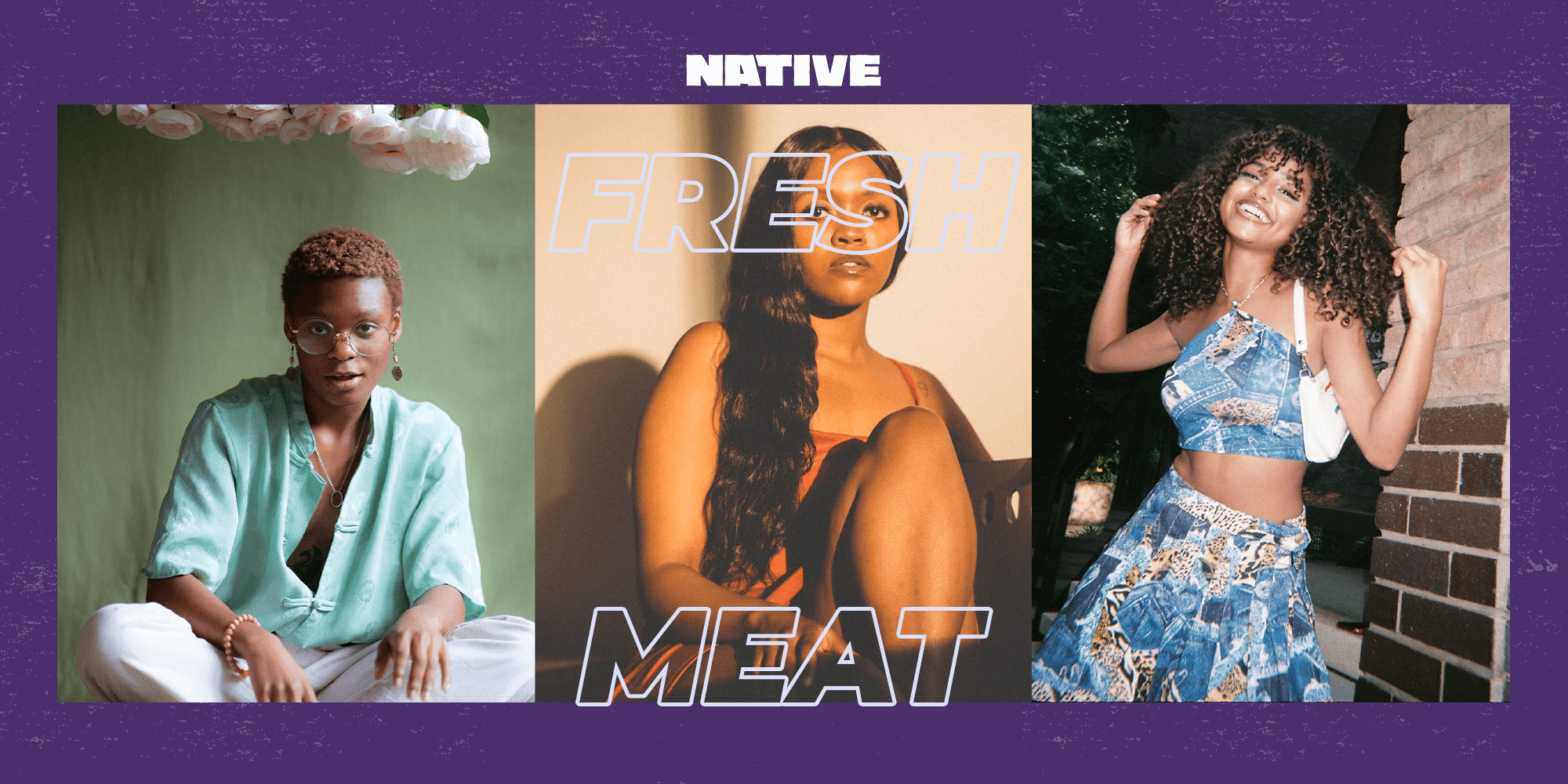
London-based Nigerian singer, Tomi Agape dropped her long-awaited debut project last December, following years of sporadic single drops and several memorable guest appearances, from Santi’s “Rapid Fire” to SDC’s “Love on Weekends”. The 8-track project, ‘Never Gunna Be the Same’, came in just a few weeks after she initially announced the tape with the release of the lead single, “Lovers Rock”, featuring BOJ and Amaarae. The single built anticipation for the tape and hinted at the passionate intent behind it with all three artists declaring their affection for their respective love interests and audaciously asking them to accept their advances. She remains hopelessly in love through most of the tape as she explores different romantic situations while showing off her R&B vocals and ability to make music that can get listeners to think, feel, and move.
Though she made the songs on the EP during what she described on her Instagram as “one of the most difficult and uncertain years of her life”, you wouldn’t guess it from the charming lyrics and soothing harmonies she crafted with her team of producers, Despecialist, C Biggz, Le Mav, Whoelse, N2thea and Juls. Right from the opening track, “One Call Away”, we hear Tomi singing over a smooth jazz production as she encourages her muse to reignite their passion; “You don’t have to be alone, I’m in your zone/ won’t you pick up the phone?” Reminiscing about happy moments from past relationships is now at an all time high with the pandemic limiting our social interaction and Tomi served up a nostalgic jazz number to soundtrack the mood.
Her passionate reminiscing continued on “Those Days”, produced by N2thea. However, here she’s more aware of her lover’s shortcoming and sounds ready to move on despite still acknowledging the attraction she feels for him; “there’s no more fight inside us/ we’ll let go of what’s inside us”. It’d be heart-breaking if the instrumentals weren’t so upbeat as she attempts to walk the delicate line between R&B and dancehall. On the 5Yffe-assisted track, “Seasons”, she’s able to teeter more convincingly between dancehall, rap, and R&B as the two exchange affectionate lyrics over the catchy Afropop beat produced by Le Mav.
She reworks Busta Rhymes and Mariah Carey’s “I Know What You Want” into a sultry Afropop bop on “Give it To Me”, one of the dancefloor-driven tracks from the tape and it showcases the potency of Tomi Agape’s seductive pen game; “Baby if give it to me, I’d give it to you/ get rid of your friends, I’d let go of me crew”. And though she remains inspired by romance on “This Way”, she’s examining her relationship with surgical precision, singing “Love has made me this way/ take time with my emotions/ time by my lonesome” as she ultimately recognises that romance isn’t always a bed of roses. Her introspection gets even heavier on the next track, “London”, a pre-released single where she narrates how uses music as her escape from the struggles of living in London.
Tomi’s captivating voice and her brilliant songwriting allow her music to penetrate to the soul whether she’s singing about smoothly sailing romantic relationships or dysfunctional ones. While we’re struggling to make the most of these uncertain times we’re in today, Tomi Agape’s debut is quite the soothing affair, putting words to emotions that many of us are feeling today.
Stream Tomi Agape’s ‘Never Gunna Be The Same’ below.
Featured Image Credits: Instagram/tomiagape
[mc4wp_form id=”26074″]
You are meeting Debola at a strange time in his life. He wandered into a dream and lost his way back. Tweet at him@debola_abimbolu
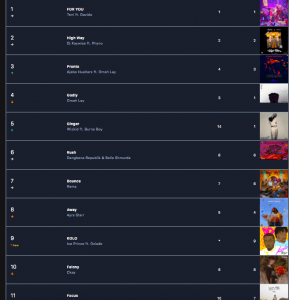
Omah Lay emerged as 2020’s brightest breakout star, dominating on streaming platforms and charts in a year with limited live show opportunities. We’re in a new year and the Port Harcourt-raised singer/producer is only doubling down on his stunning streak. For the seventh week in a row, his smash hit “Godly” remains at the very top of the Turntable Top 50 charts, which charts popularity through freemium streaming outlets as well as TV and radio airplay.
With an equivalent of 2.44million streams, “Godly” emerged as the most streamed song in Nigeria for the fifth week in a row, matching the same record as “Bad Influence” which also earned the same honour last summer. The song also topped the radio chart with 47.7million radio airplay audience impression, while it climbed from number four to number two on the TV chart with 10.1million TV airplay audience impression. Following closely on the top 50 charts is “Infinity”, his collaboration with Olamide which is at number two for the ninth week in a row.
Wizkid and Burna Boy’s “Ginger”, which made history as the first number one on the top 50, comes in at number three this week, jumping up five spots after being aided by the recent release of its crisp music video. Rounding out the top 5 is Bella Shmurda and Zlatan’s ubiquitous banger, “Cash App”, at number four, while DJ Kaywise and Phyno’s amapiano collab, “High Way”, comes in at the fifth spot, leaping up from the thirtieth position in the previous week, thanks to significant increase in streams and radio airplay impressions.
The top 10 is rounded out by Davido’s “Jowo” (6), Olamide and Bad Boy Timz’s “Loading” (7), Rexxie and Mohbad’s “KPK (Ko Por Ke)” (8), Davido and Mayorkun’s “The Best” (9), and “Your Body” by Mayorkun (10). You can check out the full chart, dated January 18, here.
Dennis is a writer at the NATIVE. Let me know your favourite the Cavemen songs @dennisadepeter
Music held us down through the toughest moments in the past year. Whether it was protest anthems such as Davido’s “FEM” that held us through October’s #EndSARS movement, or the long-awaited arrival of Wizkid’s magnum opus ‘Made in Lagos’, music offered us solace and extended a friendly warm hand when life around us turned bleak.
But the truth is that there’s so much music being released at the same time that it’s perfectly normal for a number of releases to slip through the crack and completely miss your radar. To this end, we have compiled a list of under-the-radar releases that the NATIVE believes deserves more love and attention from our community. From party-ready anthems like Zinoleesky’s amapiano inspired number “Kilofeshe” to the rap girls anthem “Kno Me” that Somadina and SGaWD served up, here are 15 tracks that deserve to be on your radar. You’re welcome and Enjoy!
Somadina & SGaWD – “Kno Me”
Last year, we were calling for the release of the ultimate girl’s anthem which would cement the new vanguard of female artists staking their claim and making a name for themselves in the androcentric afropop industry. It seems that this year more collaborations between the girls will be happening because singer Somadina is dipping her toes into the deep end and serving up a collaboration that rivals everything that’s been released up to this point. Is she a singer? Is she a rapper? Even Somadina herself doesn’t know but she’s able to hold her own in the rap game, carefully assisted by SGaWD, a rapper and singer that’s been dominating conversations for the past year.
Zinoleesky – “Kilofeshe”
Zinoleesky is the man of the moment. Towards the tail end of the year, the Marlian music signee released his debut project ‘Chrome’ which offered a rounder view of his sonic world by introducing the singer as the hottest number to emerge from the streets to mainstream. “Kilofeshe” was an obvious standout from the project, offering the singer’s take on the South African amapiano sound that is coursing through the African music industry. Although we have our reservations about that (you can read about it here), there’s not that many verses harder than proclaiming “extraordinary things I’m doing, ordinary things no fit move me again”.
Another amapiano number on the list? You bet. Masterkraft delivered one of the most memorable party anthems of the last quarter when he recruited Bella Shmurda and Zlatan for a boisterous upbeat number titled “Hallelu”. Over the clubby drumbeat, both artists praise God for all the blessings that they have accrued over the year, with Bella Shmurda showing off his dazzling rap skills and his stellar penmanship. It’s a bonafide hit and you definitely don’t want to sleep on it any further. Now all we need is for the clubs to open up.
AYLØ – “Closure”
AYLØ has been on our radar for several years and he’s only getting better with each new release. In December, he followed up 2019’s stellar ‘Dnt’Dlt’with ‘Clairsentience’, a 6-track r&b offering that traces romantic relationships and all their complexities. Although the wheels of the world have halted to a standstill, AYLØ is still making memorable moments with those he loves, and feigning to be in close quarters with them as he negotiates “Closure”. The standout song is brimming with truth and power and instantly relatable to anyone who’s mourning their quarantine crush.
Lolu – “TT (Tongue Twister)” (feat. adé & Mafeni)
20-year old DJ/producer, Lolu enjoys using music to tell stories and create timeless sonic experiences. His latest drop,“TT” featuring adé and Mafeni, is a mid-tempo number that perfectly embodies the popular phrase, “Problem no dey finish so we just dey vibe”. Capturing the nihilism and hedonism of the ‘detty’ December holidays, “TT” comforts listeners and tells them to let go of their worries and let the good vibes take over for the moment. If you’re looking for a bit of escape this January, this is the song for you.
Mukhy & Glitch – “Julie”
Afropop is replete with love songs certain to mirror similar romantic trysts in your life and Mukhy’s latest single “Julie” is no exception to this. Though he’s a new kid on the block, having left his day job in the UK to pursue a music career in the thick of the COVID-19 pandemic, Mukhy is set to showcase his musical abilities now more than ever before. For his latest offering “Julie”, Mukhy collaborates with afropop singer, Glitch to produce a number that embodies a fun-filled feel-good melody built on heavy references and features loads of feel-good energy.
Nu Baby – “Two For You”
After making his mark on the scene last year with his stunning rendition of “Cover You”, a wonderful single that featured fast-rising singer, Buju, afropop singer, Nu Baby is out to make this year his most memorable yet. His latest offering “Two For You”, a two-pack release that delivers groovy productions with atmospheric vocals, and infectious melodic elements is built for playlists that take listeners from the house to the club and back. “Two For You” will capture anyone’s attention and will leave people wanting more. Let his message-heavy lyricism and wordplay will take listeners on a musical journey.
Olayinka Ehi – “This is a love song”
Last year, Olayinka Ehi finally started to get more recognition for her enchanting voice and enviable expressive range as she put out impressive singles and got enlisted for notable collaborations with artists like Adekunle Gold and Whoisakin. Her growing buzz saw her experimented with dance-pop on “Shake”, however, she closed the year with “This Is A Love Song”, a return to the intimate sound of soulful R&B. Her lyrics, seesawing between breezy nonchalance and bluesy hurt, expresses dissatisfaction with a romantic partner over melancholic organ harmonies. Though the sombre melodies and narration of her relationship woes are strikingly low-spirited for a song titled, “This is A Love Song”, her depiction of love as something that needs to be worked on is sure to strike a nerve with people seeking catharsis for their romantic struggles.
Samthing Soweto – “The Danko! Medley” Feat. Mzansi Choir
Samthing Soweto’s 2019 debut album, ‘Isphithiphithi’, completed his renaissance from outlier to pop superstar, snagging a platinum certification and winning multiple awards at last year’s South African Music Awards. To close 2020, the South African singer-songwriter shared a surprise EP, ‘Danko!’, almost exclusively continuing to showcase his amapiano prowess over the course of six songs. For closing track “The Danko! Medley”, however, he linked up with the Mzansi Choir to create an a capella mash-up of songs of the EP, as well as a reworks his smash single, “Akulaleki” featuring Shasha, DJ Maphorisa and Kabza De Small. The song plays out as a nostalgic throwback for Samthing Soweto fans who have been following his progress from back when he started as a member of the with a capella band, The Soil.
Rindss and Beezyx – “Gymnast”
Nigerian based producer, Beezyx teamed up with Rindss for a joint tape, ‘Descente’ last December. Though the 5-track tape offered a delightful mix of sultry R&B and afropop that can soundtrack the ride back home from the night at the club, it never got the attention it really deserved. Fortunately, one of the standout tracks, “Gymnast” has legs to sustain it well into the new year as Beezyx crafts a laidback groove for Rindss’ sensual singing addressed at a love interest. “I’m going to dance cause you’re my only fan, baby”, she sings seductively, while her voice intertwines with Beezyx’s gentle percussions. The two were first partnered up on the impressive single, “Wicked Kitty” which also featured contributions from Yinka Oshodi, Mimz and SGaWD. However, their performance on “Gynnast” shows they can be just as compelling as a duo.
Jola Bello – “789”
Jola Bello has continued to share new music since she first debuted with “For You” in 2019. Last year, she contributed an impressive performance on “Connection”,one of the standout tracks from the WeTalkSound collective’s ‘LOFN 3’ series before closing the year with her latest single, “789”. The charming new song is another romantic addition to her growing catalogue of heartfelt bops as she expressed her romantic feelings for her muse and encouraged him to make his move on her; “Boy you know you’ve got my attention/ Baby save me, you’re my redemption”. “789”was produced by Wizad who sets the song to a lightweight highlife groove which Jola Bello rides expertly as she delivers catchy melodies and adorable lyrics detailing her hearty feelings.
Picazo – “Pain”
Picazo broke out into the Nigerian mainstream music scene as an indigenous rapper with the enviable cosign from Olamide. Although he hasn’t had the most successful run like fans anticipated, it’s not for lack of effort or talent. His latest single, “Pain” released at the end of 2020, showcases his impressive ability to adapt his sound to fit the latest trend of Afro-house that is currently dominating dance floors around the continent. The synth-heavy production for “Pain” was made by Zaki Magic and it avoids the generic amapiano sound, opting instead for trance-inducing harmonies. Picaso’s finely tuned singing vocals and the dazzling production give the song narrating the turmoils of relationships an immersive quality we aren’t used to getting from dance-driven bops.
Saint Bond – “Free” Feat Cuppy
Saint Bond is the producer responsible for creatively directing DJ Cuppy’s debut tape, ‘Original Cuppy’. Although he’s still a relatively new name in the music scene, he has kept pushing the boundaries for Nigerian music with his latest single, “Free”, emerging as one of the songs picked to feature on SoundCloud and Pharrell’s i am OTHER collective’s collaborative tape, ‘SoundCloud Presents: iamOTHER, Vol. 2’. The tape which serves as a platform to spotlight and support upcoming artists was focused on empowerment, unity and speaking up about racial injustice and Bond’s “Free” was selected among the 10 tracks on the tape. He produced a euphoric beat for “Free”, hybridizing highlife guitar riffs and EDM synth harmonies to make the catchy baseline while he sang “Police go stop us/ they wan control us/ The tryna’ hold us down/ together we’re stronger” over the groovy instrumentals with tender elation. It’s the kind of motivational song we don’t hear enough of these days as he encouraged listeners to unite in the fight against oppressive police systems.
Darassa – “Proud of You” Feat. Alikiba
Tanzanian rapper, Darassa shared “Proud of You”, featuring Alikiba last year as one of the tracks from his motivational album, ‘Slave Becomes A King’. The song has now gotten a befitting video that shows the East African pair as they perform the song celebrating their love interests and enjoy a good time, partying by the pool.
Mohbad – “Sorry”
Although Mohbad is yet to become a household name in the Nigerian music scene, he is already heading to be counted amongst Nigeria’s hitmakers. He contributed the vocals heard on Rexxie’s “KPK”, one of the biggest songs in Nigeria at the moment. He also put out an impressive 8-track tape, ‘Light’, showcasing his storytelling ability and melodic Yoruba-inclined vocals. On the tape’s opening track, “Sorry”, Mohbad narrated a familiar tale of struggle we often hear from street-raised artists who grew up in poverty and learned to hustle and scam for their survival. Singing “My brothers are hungry/ Daddy gather money make I go poly/ I go poly but I no go class/ Daddy, I am sorry”, the song finds him acknowledging his own faults in the way his life turned out but we with his Yoruba-tinged delivery, we can still hear the cocky swagger of a street mogul in his voice.
Runtown – “If E Happen For Lagos”
Lagos is the entertainment capital of Nigeria so it’s not surprising that we often get songs dedicated to the city. However, Runtown’s new single is less flattering than most as he highlights the hardship Nigerians face in the city; “If you no know biggie man, you never know person”. Singing over the breezy Afrobeat production done by Mystro, “If E No Happen For Lagos” is laidback and primed for dance floors, never mind the thought-provoking lyrics about Nigerians leaving the country to avoid the hardship brought on by bad governance. However, that’s the beauty of the song as the deceptively catchy melodies lull listeners to dance despite the gloomy lyrics.
“Adhesive with my thoughts so my people come first,
converse with your people so they know who came first,
ain’t really into lectures so I spit it in a verse”
– STILLBLUE
Multidisciplinary creative duo GRAY417C’s latest short film ‘BREATHINMYWORDS’ came to fruition in 2020, a year shrouded in political, social and ecological turmoil. From the global pandemic which hit in its first quarter to the various protests that followed, 2020 was nothing short of an Orwellian nightmare. ‘BREATHINMYWORDS’ was initially inspired by the uptick in the Black Lives Matter movement following the death of George Floyd – which shone a new light on the grave racial injustices occurring in the West, but encouraged little discourse around the carnage left behind by colonialism, neocolonialism and ongoing imperialism in Africa. While the BLM protests have reignited the will to fight in Black people globally, there is still a lot to be done.
Movements such as EndSARS in Nigeria, Congo Is Bleeding, Am I Next in South Africa, Anglophone Crisis in Cameroon and Shut It All Down in Namibia, late last year, began to take centre stage and rally a greater global convergence and exchange of views and purpose. However, it is important that individuals approach the issues being raised by the respective movements with nuance and knowledge of the histories and stories of the nations and peoples on and off the continent.
The ‘BREATHINMYWORDS’ film and accompanying song of the same name – by artist Stillblue from his debut project Systematic Sentiment – aims to shine light on these systems, that encroach on the basic human rights of individuals across the continent while actively stifling and stagnating development. ‘BREATHINMYWORDS’ was created as a tool to encourage individuals to delve into the histories of their countries, as African nations are rich fountains of traditions and ideologies that can be harnessed in order to push them forward.
BREATHINMYWORDS is broken up into 3 parts. Each new segment is introduced through the consumption of a pill by the protagonist. The pills transport the protagonist into other states of being as showcased through the use of different visual styles. The first state represents the dormant individual who does not see or understand the white supremacist capitalist patriarchy for what it really is but is attempting to break through. After popping a pill, the protagonist is transported to a state of revelation in which he is able to bear witness to the atrocities that have occurred in Africa over the past centuries. This second state is communicated through an amalgamation of found footage that highlights great African leaders who are all too often forgotten; juxtaposing them against atrocities which have bedevilled Africa. We are then transported to the protagonist in a cage – a symbolic representation of our educational system and mainstream media – where the final pill is consumed, and the protagonist enters a stage of enlightenment.
Coincidentally, the title ‘breath in my words’ highlights the power of our voices in the same manner as the ‘Soro Soke’ (speak up) chant that became the slogan for a generation refusing to be silent on social injustices, in solidarity with the EndSARS protesters. Hopefully through this work, individuals are able to educate themselves, become politically active and speak up so that their aspirations may shape the future.
Credits:
Music by STILLBLuE & ramo
Produced by GRAY417C
Creative direction by STILLBLuE, Rahim Mussa & Elisha Tawe
Photography by Rahim Mussa
Edited by Elisha Tawe & Mohamed Mussa
Elisha Tawe (Instagram: @vicious_roy) is an audiovisual artist and style editor at A2.O Mag. His work focuses on the historical impacts of art and fashion on subcultures and social movements. Elisha is currently based in the UK and holds an MA in Media and Communications.
Writer, Vincent Desmond explores the world of the young Nigerians who date older people for monetary gain and opportunities, discussing how they have been affected by both the ongoing pandemic and Nigeria’s second recession since 2016. Names have been changed to provide anonymity
“It’s funny because this is not something I have ever tried to do, it just happens. Some people are very good with math, some can sing; me, I attract people with money.”
This is what Bisi has to say about her job as a sugar baby. During the day, she runs a food business in Lagos State, and while it’s doing significantly well, a large amount of the income she lives on comes from the people she dates. On a typical weekday morning, she’s on the phone trying to get plates of food that have been ordered to her customers in different parts of Lagos, while on the weekends, she hardly leaves her bed until the evening when it’s time for a date with one of her sugar daddies.
She tells me:
‘‘I try to ensure my dates are all on the weekends so I don’t feel overwhelmed. It’s easier now than it used to be, but sometimes, they insist on meeting over the weekdays either because of their families or work. I only ever go if I like them or if I think they are a big fish. I earn pretty good money from my business, I can sustain my lifestyle off it, but I have people who want to take care of me so of course, I’ll take it.’’
While Bisi is unsure of how much exactly she makes per month from the people she sleeps with, she believes she averages between N600,000 to N800,000 and often earns way more every month. She explains that there’s no set price, and is often gifted based on how her suitor feels or as a celebratory token when they have secured a big bag. She recalls fondly: “I was with a guy – some politician – in 2019 when he told me how something he has been working on finally clicked as we were there, and told me I was his good luck charm. He gave me a million naira out of that money, as per good luck charm”.
In contrast to Bisi, who tells me that she has never actively searched for a sugar daddy and seems to just attract them naturally, Derek, a gay man who lives in Abuja has had to go out of his way to find sugar daddies. Where people like Bisi have discovered they seem to naturally attract people willing to spend money on them, people like Derek have had to deliberately search for it. Both people like Bisi or Derek are not unicorns in the business, across all genders and sexualities, you’ll find that there are just as many people who seem to attract sugar-guardians as there are people who have deliberately searched for their benefactor(s).
Derek tells me about some of the hiccups he’s faced along he way, saying “One thing I’ll advise people is that they should never move from a sugar daddy to another if they’re friends or in the same circle. I did it and omo, it was horrible. Elderly men are petty as hell and it was a mess.” It took Derek almost two months to find a new sugar daddy after he fell into what he calls a ‘sugar daddy love triangle’ and when he did, he realised something that changed the model of how he operated.
After meeting a top engineer in the UK who earned in pounds and generously gifted him an apartment, a new MacBook and an iPhone 8 Plus, which was the latest at the time, he took a new approach to his sugar baby business. Derek explains:
“I don’t enforce regular salaries or allowance because I was told that when you do that, it looks like a job or business relationship and that stifles how much you can really get. He gifted me based on how he felt and whatever I told him I needed. He could give me N300,000 this week, N50,000 next month, and N500,000 the following week. We were together for more than a year before I jumped ship.”
All over the world, the pandemic has affected the economy and several people’s income. Currently, Nigeria is going through its second recession since 2016, and the value of the Naira is the lowest it has ever been. Altogether, these factors have had a crippling effect on some of these sugar babies’ income, especially those who earn in local currency.
Derek’s model has evolved since he first asked his friend how to get started, and now he actively seeks out people who earn foreign currency. He makes use of the network he gets from dating affluent people to gain access to – and ultimately date – other affluent people. He tells me point blank that “It’s actually simple if you use your head. Rich people are friends with rich people and rich queer people stick together.”
Like Derek, Raye has also had to seek out foreign currency, as earning in Naira hasn’t been as forthcoming for her during the pandemic. She explains to me that working this job during the pandemic has been both good and bad, and while she has a sugar daddy who hasn’t sent her any money all year, she’s had another who has. Raye tells me about the sugar daddy who has sent her ‘zilch’, saying: ‘‘We still talk and I am understanding he has a family and the pandemic has put a lot of people in a bad situation so I can’t be mad. And then there’s another man, he’s in his mid-30s and we met in December of 2019. He’s not Nigerian and earns in dollars. He’s been really amazing to me and is the one who has sent me money the most this pandemic.’’
Raye isn’t alone. While lockdown restrictions in Nigeria are now almost entirely a thing of the past, the effects of the pandemic, as well as the recession, are particularly felt by sugar babies around the country. Noble, a writer and sugar baby, reveals that she had to dip into her savings for the first time in years to survive this year. Given that this job doesn’t come with stability, it’s important for her to always put some of it away, and she explains this saying:
“Writing is great and brings in a decent income but while I earn about N150,000 from writing for people, I sometimes earn like N400,000 from sugar mummies. Because of the way a lot of sugar babies are paid, it’s a bit hard to plan ahead and constructively use the money if we don’t aggressively save. It’s not like a regular job with a monthly salary that you can make plans with in advance. Here, some days you’ll go meet your sugar mummy and come back with N20,000 and other days with N200,000. So I save half of everything no matter how small or big and use the other half for daily expenses. I pay my rent and my family’s from the savings and do other big projects from it.’’
Among sugar babies, cash inflow is largely unpredictable. While some sugar babies are placed on an allowance, many seem to rely on an unspoken agreement as well as the generosity of their sugar parent. Sugar babies like Derek prefer this, as it doesn’t restrict how much they get, however, sugar babies like Noble note how much harder it makes planning out their lives and expenses. While she has considered asking them for a more stable income, she notes that it’s risky, as it’s a reminder that the reason she’s having sex with them, is because she is being paid to and sugar parents don’t seem to be fond of that.
Noble’s contingency plan for this insecure earning pattern is to save, and due to how erratic their cash inflow is, many of the sugar babies who share their stories with mecorroborate that they too are big on saving. Bisi shares that, through saving all the money she gets from men in her PiggyVest, she was able to buy a car and a second piece of land. She tells me “It’s also from where I paid two years worth of rent where I live. Right now, I am very comfortable, my family is comfortable and I am exploring getting into bitcoin and creating passive income streams so that in a few years, I’ll be earning enough to not be bothered about working hopefully.”
Bisi isn’t the only one who is thinking about the future. Derek also shares that some of his anxieties are surrounded around how unpredictable the Naira is, so he’s started saving in Dollars. He’s also learnt a trick which allows him save money on buying material things with the money he’s given, and gets his person to buy him clothes, gadgets and trips, which doesn’t affect how much actual money he gets.
“My lifestyle is pretty luxurious, and that’s very risky. A lot of us run on luck, you can wake up one day and your sugar daddy will say he doesn’t want you again and you won’t find someone else who wants you. What next then?”
For people who are looking to join the field, these sugar babies advise that one needs to understand how risky and volatile the industry is, and that not everyone is built for it. Derek warns that “If you are going to do this, you need to understand the danger you are putting yourself in, you need to understand that it’s more than gifts and money and sex. This is sex work if we are keeping it clear. People always forget about the work in sex work till they’re in it.”
Featured Image Credits: Patrick Demarchelier/Vogue
Vincent Desmond is a writer whose work explores queerness, internet culture and identity. Tweet him your favourite piece @vincentdesmond_
This year has been a monumental year for albums from the continent of Africa. Beginning with a disappointing L for Afropop lovers worldwide – who had hedged their bets on Burna Boy to take home the Best World Album Grammy – our faith was renewed throughout this year, thanks to incredible music. From Drill projects putting Kumerica on the map, to Amapiano infecting the continent north of South Africa and beyond, this year has been one of sonic diversity, experimentation and widening global interest. Last year’s ‘Afropop to the World’ international campaign has been successful, and this year, we’re no longer grasping for global attention – we’re sitting pretty at the table.
For many, the trickle-down effect of Wizkid, Davido, Santi, Tiwa Savage and Burna Boy’s US bits over the past few years, has been life-changing, especially for younger artists. Producers too, have enjoyed Afropop’s status as a global mainstay, for example as Telz and London now appear alongside seasoned beatsmiths, Timbaland and P2J, a boast that wouldn’t have been possible without the hard work and mentorship from the big three.
The significance of this year in albums cannot fully be appreciated without mention of the final arrival of Wizkid’s long-awaited ‘Made In Lagos‘. After all new music was put on hold to honour the End SARS movement, it was Wizkid’s ‘Made In Lagos’ that provided us with the first unifying experience of joy and celebration, reminding us that despite the hardship our country bestows upon us daily, we can be, and indeed are, great. With DRB also finally delivering their debut album – first teased as part of their ten-year anniversary in 2018 – this year, peers Davido and Burna Boy, on the other hand, were quick to offer up sequels to their 2019 drops.
Outside of West African pop, the likes of Nasty C, Amaarae and Odunsi (The Engine) showed up to remind us that – once considered ambitious kids challenging the industry – they are now established artists, having paved the way for a newer musicians with extra-mainstream tastes, such as O’Kenneth & Reggie, Icytooicy, and Forevatired – who also released projects this year.
Meanwhile down south musicians were brewing a trend that would grab the continent by its neck, a new sound hybridised from the Jazz, Kwaito, diBacardi and AfroHouse sounds that dominate the South African music market. Dubbed Amapiano, the new production style became the hottest sound on the continent this year, and on his fourth and final album of 2020, South African DJ, Kazba De Small claimed his crown as the King of Amapiano, a bold claim which went uncontested owing to the resounding success of the album.
2020 has been a trying year with innumerable curveballs, but as always, in times of adversity, good music thrives. As our Editor-in-Chief professed in our Special Issue WizMag, Music is the Medicine; these are the top twenty projects that nursed us through the year.
20. Sorry I Don’t Like Phone Calls – Ictooicy
If you’re yet to hear about Ictooicy this year then you’re either new here or haven’t been paying attention. The Lagos-bred rapper has become one of the hardest newcomers in these parts, continuously presenting the soundtrack for our most intimate feelings, with lyrics that admit things many of us feel too vulnerable sharing. With two projects this year, it’s clear that, much like us, Ictooicy has a lot of feelings, and with each new release there’s evident artistic development and growth.
‘Sorry I Don’t Like Phone Calls’, her February offering, is a 7-tracker that runs through the rapper’s state of mind. In a well-rounded glimpse into the workings of her life, Ictooicy shows that it’s possible to wish to be left alone and have all the love in your heart for those closest to you. On standout number “Lights” featuring Kiyo, she sings sombrely, “I hope that you know I do the best that I can” offering explanations as to why she may come off as standoffish and detached. On the project, her pain feels lived in and relatable, with each song presenting a need to find peace within herself – a strong theme this year. IC has had our attention for a while now, however, with the project’s chart-topping success, it’s not hard to see why 2020 was the year people started catching on to the self-proclaimed ‘poet with a flow’.
Tami
19. Pioneers – DRB
It is a superfluous task to measure DRB Lasgidi’s cultural impact purely through music. For more than a decade, the collective has quietly revolutionised community building, popular culture, merch curation, and party norm from Lagos to London, all leading to the alté community’s vaunt to global limelight in the late 2010s. While DRB Lasgidi members have all dropped music independently, there has never been a body of work to serve as a reference for the group’s sonic ambitions, with the exception of a number of loose tracks from the years past. 2020 marked the end of that drought with ‘Pioneers’, their swashbuckling debut album. The title itself suggests DRB’s estimation of themselves as leaders and with the album, they provide an integrated vision of what Nigerian pop music can aspire to with a wide diverse range of sounds that doesn’t disrupt the project’s cohesion. “Kasala” a textured pop song featuring Prettyboy D-O, flows effortlessly into “Salty”, a trap blitzkrieg that houses innovative verses from Santi and Maison2500. On “Next Gen” Fresh L raps, “Next gen kings, we the next best thing”, and it falls into sharp focus how incisive they still sound, despite being 10 years in. Long may they reign.
Wale Oloworekende
18. Leave Me At the Pregame – Maya Amolo
The sombre piano chords that launch Maya Amolo’s debut project ‘Leave Me At the Pregame’ present a good indication of the project’s upcoming emotional tone. The opening is “Puddles”, an anti-love anthem that finds her coming to terms with an uncommitted lover. “Fuck a fairytale, you and I ain’t enough” she sings grimly, shedding her naivety in the project’s first moments. But even while she’s reliving heartbreak, her voice is unmistakably soothing – resigned yet optimistic, with an undeniable sense of acceptance that there’s better coming.
Throughout the EP, Maya Amolo serves up breakup ballads, punctuated by moments of real growth and independence, drawing anyone who listens further into her youthful world. It feels like an old friend, recounting their latest romantic woes on a late night and seeking comfort in the process of sharing their most private thoughts. By the end of the project, she’s found her strength and she triumphantly sings “I’d rather drown than have you as a lifesaver”. Having clawed her way out, Maya Amolo shows us, in careful detail, the path it took her to gain peace and serenity, something we can all agree is needed this year.
Tami
17. Wildfire – Prettyboy D-O
‘Wildfire’ is the continued manifestation of Prettyboy D-O’s loud, constant self-prophecy that he’s primed to become an unstoppable force. After making good on the promise of his potentials on his excellent debut album, D-O doubled down on every positive artistic attribute for his latest project drop, culminating in a quick 8-song trip that’s searing and alluring in slightly unequal measure, but altogether instantly striking. Seesawing between growling rap cadences and animated, patois-inflected melodies with greater confidence, D-O’s singular skill-set is even more evident on ‘Wildfire’; it’s an exciting project from an artist nearing the peak of his powers.
Dennis
16. Tugela Fairy (Made of Stars) – Simmy
South African singer, Simmy delivered an impressive sophomore album, ‘Tugela Fairy (Made of Stars)’ with uplifting messages on love and following your ambition. Just as she did on her debut album, ‘Tugela Fairy (Made of Stars)’ narrates heartfelt stories with poignant lyricism and atmospheric productions that see her blur the lines between AfroHouse, Funk, EDM, R&B, Gospel, and nostalgic references that promote her Zulu culture.
On one of the standout tracks, “My Light” she encourages listeners to follow their dreams with a retelling of the Biblical story of the 3 wise men who followed a star. The song has all the soothing qualities to serve as the perfect soundtrack for the Christmas season. As with all the best musicians from Africa, Simmy scoured the past while recording ‘Tugela Fairy (Made of Stars)’; she samples South African legends, such as Jabu Khanyile,and American disco group, Lipps Inc to create a portal to a world that feels nostalgic, yet new and breathtakingly alive.
Debola
15. Gangsta Luv – Skillz8Figure
There are a few recognisable influences for Skillz 8Figure’s ‘Gangsta Luv’, from the repetitive sting of Wizkid’s “Joro” (“Kolo”), to the solipsism of contemporary R&B (“Gangsta”). Regardless, the magnetic element of the Ghanaian singer’s debut EP is his uncanny ability to spin his innermost, lustful desires and personal reflections into utterly catchy, rewind-worthy bops. With a sole official outing prior to this EP, ‘Gangsta Luv’ is the sort of instantly memorable coming-out party that many new artists dream of, but only few can pull off. In six brief songs, Skillz whisks his listeners into a colourful realm of neo-afropop beats and melodies so sugary, it’s impossible to resist.
Dennis
14. THOSE KIDS NEXT DOOR – Forevatired
A team of eleven players, Forevatired were one of this year’s most promising rising acts, with many ears in the industry glued to the ground in anticipation of their July project, ‘THOSE KIDS NEXT DOOR’. Keen anticipation was followed by continued praise, as the ten tracks introducing the group to their ever-growing audience did not disappoint. Right from its soulful double-sided introductory track, “WEST”, FOREVATIRED kept listeners intrigued and on their toes as they incorporate all their different tastes, styles, moods and creative expression into the twenty-minute tape. They say, “too many cooks spoil the broth,” but when it comes to FOREVATIRED, “there’s strength in numbers,” more aptly describes their output. The collaboration between RUNA, Pablo, Pharaoh, Eti, Sham, Faith, Golddrummachine, INDIGO, Brum3h, Rookie SBK, ROCK!MONSTA on this project elevates their respective offerings, coming together in a versatile yet astoundingly cohesive drop.
Titled ‘THOSE KIDS NEXT DOOR’, the project introduces FOREVATIRED as the cool kids on the block. As kids, they keep their records short, they make references to Pritt Stick glue and infuse Nollywood skits into their music. They are unafraid to make mention of their recreational drug use, nor do they hide their dark times. In a growingly progressive world, ‘THOSE KIDS NEXT DOOR’ captures the attitude of the forward-thinking youth who live by a strict do what you want mantra, as expressed by Rookie on “BLUE” or ROCK!MONSTA’s description of the “MAGIC” of making music. It’s a project that resonates deeply with many of us young creatives, and it does so from their superior sonic pedestal.
Adewojumi
13. High Tension – Bella Shmurda
Bella Shmurda wasted no time establishing himself as an outstanding Afropop talent when he shared “Vision 2020”, the Olamide-assisted lead single from his debut tape, ‘High Tension’. The song’s success built anticipation for the project, which took us on an immersive and spiritual journey through the same gritty streets that inspired hitmakers like Olamide and Naira Marley. Over the 7-track EP, Shmurda narrates the struggles of life on the streets, where he learned tips for daily survival rather than ‘thrival’.
This EP opened the door to a more appealing Street-Hop universe – a reminder that hope can be found even in the darkest places. It set the singer up for the dominating run he’s enjoying at the end of the year as he’s now a regular feature on radio with bops like “Cash App”.
Debola
12. Celia – Tiwa Savage
Tiwa Savage’s peak presented Nigeria with a sensational diva who could really sing as well as make great pop music. All her career, Ms. Savage proved capable at churning hits, in soft medleys (“Ife Wa Gbono”) or party bangers (“Eminado”). With her tinny voice being the bridge between sultry R&B and mainstream pop, Tiwa collected a unique space within the Nigerian music industry.
Until recently, the need to document societal struggles hadn’t found her music, or a lot of her peers’ even. But 2020 was markedly different. The End Sars movement across Nigeria, Black Lives Matter, the growing economic concerns piling on black nations and communities worldwide, as well as the rising phenomenon of women’s abuse across Nigeria, stepping into the booth to record ‘Celia‘, Tiwa Savage had a lot on her mind. She’d also left Mavin Records, owned by longtime business partner and friend Don Jazzy, to join Universal Music Group. Obviously a crucial part of her crossover to the global market, Tiwa Savage, now more than ever, needed a gracious exit from her pop queen phase. She finds that on ‘Celia‘ with its delectable songwriting, warm honeyed beats, bright melodies and flashes of sociopolitical awareness.
Whether it’s the Naira Marley-assisted “Ole” or “Koroba” – where she throws Nigeria’s misogynist culture in its face – Tiwa Savage deftly floats over the mid-tempo percussions. Her skill with featured artists means that she situates her own guests comfortably, delivering slick verse after slick verse but leaving just enough space for the guest. On Speroach-produced “Park Well”, Tiwa’s mellifluous vocals and Davido’s trademark energy, lean on the electric production, hoisted on the warm drums and jazzy horns. On solo effort “Dangerous Love”, she excites with head-bumping flows and an adlib-led hook that has proven irresistible. The album’s closing track “Celia’s Song” gives Fresh Morning vibes, a strong sense of beauty and peace evoked from the ethereal synths and hallelujahs. Here, Tiwa Savage has you where she wants you: vulnerable and beautiful… glorious.
Emmanuel Esomnofu
11. For Broken Ears – Tems
Back in January when I sat with Tems for NATIVE’s Issue 004 cover story, she made abundantly clear that the intention of her music is to help whomever is listening feel and heal their emotions. With her short and sweet debut project, Tems definitely delivered. For black people all over the world, 2020 has been a time of heightened fear –whether it’s a fear of catching or spreading a deadly disease, or fear of your life at the mercy of those who are sworn to protect you. In a year which has forced everything to pause, a year that can be characterised as a frenzy whilst we’re all still being constrained, Tems’ ‘For Broken Ears’ seems like the antidote to all the poison.
With 7 tracks, Tems takes us on a journey through her most troubling emotions, finding healing within the chaos and finally coming out of the other side, intact. Starting off with an assertion of the validity of her feelings on “Interference”, the project’s strongest track, “Free Mind” sees her finding that peace she’s after, a theme which runs through each following track on the project right to the closing, “The Key”. Wearing many hats as producer, songwriter and vocalist on ‘For Broken Ears’, there’s a real sense of Tems’ giving her whole self to us through this music, and this gives what we’re listening to more credence as the soundtrack to our lives and lived reality. Tems’ most valuable currency is expressing her raw emotion, and this is what makes ‘For Broken Ears’ one of the best projects to come out of this year.
Damilola
10. Get Layd – Omah Lay
We were all still adjusting to the self-isolating rules of the lockdown when Omah Lay shared his debut project, ‘Get Layd’, back in May. His mix of emotionally piercing lyrics and compelling Afropop melodies were just what the doctor ordered for the gloomy period we collectively experienced. All five tracks gestured at a world of love and pain, where he described different romantic scenarios with vivid and intricate songwriting.
Though he initially started his music career as a producer, Omah Lay opted to handle all the vocal responsibilities on the tape, and only produced one track, “Bad Influence” which showed off his range. The fanfare for ‘Get Layd’ has sustained the whole year, granting him access to emerge as one of the strongest contenders for breakout artists of the year.
Debola
9. Everything You Heard Is True – Odunsi (The Engine)
From his debut as a full-fledged artist in 2016, it was evident that Odunsi (The Engine) was a force to be reckoned with. His 2016 project, ‘Time of Our Lives,’ elucidated an artist daring to stand out from the pack as he dished out a unique spin of bright, bouncy Afropop. In 2018, he went darker, releasing his debut, full-length studio album, ‘rare.’, which saw him marrying his ’80s and ’90s R&B influences with a dark, Pop-tinged sonic palette. On ‘Everything You Heard Is True’, however, Odunsi embraces the darkness. Earmarked by hazy, psychedelic production, ‘EYHIT’ finds Odunsi evoking equal parts love-drunk melancholy and cynical machismo. The 7-track project comes across as an arrival of sorts, brimming with music that feels like one long, psychedelic trip.
What’s most intriguing (and rather refreshing) about the project is Odunsi’s seemingly newfound confidence. Known for his unorthodox fashion and sonic choices, “The Boy From Nigeria That They Hate To Love” has often been met with ridicule from “critics” and naysayers. On ‘EYHIT’, however, he addresses this bunch – for the first time ever – without saying anything at all. As the title suggests, Odunsi no longer wishes to be understood: “It’s just a combination of everything anyone’s ever felt about me, everything anyone wants to believe, because at the end of the day, it’s their perspective and I can’t battle someone’s views,” he explained in an interview with NATIVE earlier in the year. He’s at the point where he’s comfortable in his authenticity enough to explore new soundscapes, as he does with the project. Laced with bouncy 808s and sinister trap melodies, ‘EYHIT’ is a stunning body of work illustrating the inner workings of an artist who is at peace with his true self; Odunsi is finally free.
Makua Adimora
8. I Am the King of Amapiano: Sweet and Dust – Kabza De Small
Amapiano producers tend to disregard the notion of increasingly short attention spans; songs run well over the 5-minute mark, and full-length projects could go fo hours. Even by these precedents, Kabza De Small’s ‘I Am the King of Amapiano: Sweet & Dust’ is wildly indulgent, a sprawling odyssey that just falls shy of three-and-a-half hours. To call that run-time a risk would be understating how much of an undertaking it is to keep listeners engaged for the entirety of the album, and not only does he pull it off, Kabza makes a grand statement. Split into two sides, ‘IAMTKOA’ experiments, dazzles, and thrills, backing up his titular claim and, of broader consequence, shoring up the legitimacy of Amapiano as a rangy SA House subgenre, one that’s as creatively complex as it is viscerally affecting.
Dennis
7. Zulu Man with Some Power – Nasty C
On his first major-label debut ‘Zulu Man with Some Power’, Nasty C sets out to fill gargantuan shoes. On the album opener “King Shit”, he wastes no time in laying claim to his kingly status, addressing himself as a king amongst his contemporaries. In this new role, he’s able to converse with God on shrooms, gift diamonds to his inner circle, and fly state to state, despite coming from Durban city. Make no mistake, Hip-h=Hop/Rap is here to stay in Africa and Nasty C is one of the genre’s widely-known ambassadors.
The rapper isn’t too preoccupied with sticking to rigid themes so much as he’s concerned with listing off the perks his grand lifestyle now affords him. The songs on ‘ZMWSP’ are teeming with self-confidence, and Nasty C gets through most of the project by relying on his on-demand cockiness and his deeply bruising raps. Even at moments where he’s a bit more detached, resigning the raps for a softer flow on numbers such as “Sad Boys” and “Ababulali”, he’s still as cocksure as ever, reminding everyone that he deserves the accolades despite being this young in the game.
Tami
6. Carpe Diem – Olamide
Olamide is a facilitator. In a glaring way, ‘Carpe Diem’ is a statement from a veteran who has the mindset of a freshly minted artist – it’s clear that Olamide has hit the reset button on his accomplished career, and this new album has renewed his wholehearted love for music. In a recent interview with P.prime, he revealed that what we know today as ‘Carpe Diem‘ changed entirely when he met with Olamide, and the young producer is responsible for 7 of the album’s 12 tracks. At the same time, some of the biggest hits have been helmed by the leaders of the new school, Bad Boy Timz, Omah Lay and Bella Shmurda. More than providing us with good music, the album is emblematic of Olamide’s status as an OG, who is actively making room for the next generation. It’s surprising that an artist as culturally relevant through two decades of Nigerian music as he is would need to reveal a different side of himself, but his need to try on new stylistic choices is proof of a genuine love for music and need to facilitate the soundscape’s growth.
Dennis
5. THE ANGEL YOU DON’T KNOW – Amaarae
With a good stock of featured appearances keeping her in mind, Amaarae released her first single of the year halfway through 2020, beginning her debut album campaign with the relatable, “LEAVE ME ALONE”. There, singing of her self-worth and demanding that her space and privacy be respected, the follow up single, “FANCY” is equally as self-affirming, also including the sex-positive tones that are customary on Amaarae records. Months later, when ‘THE ANGEL YOU DON’T KNOW’ finally dropped in November, Amaarae’s motivational quips and libidinous lyrics were pieced into the full-scale puzzle of a millennial creative. Sexually liberated – and fluid – “blowing on the internet”, but still crossing her fingers that she’ll make her millions so she’s able to spoil her mother with a Bentley, Amaarae speaks to all budding creatives trying to make it, inspiring listeners to be and love our true selves, through the irresistible sonics of her magnificent debut album.
Whilst her content is relatable, Amaarae’s singing and rapping styles are extraordinary, incomparable, unmatched. Her familiarity with the upper register is infamous; hitting the high notes effortlessly on sung numbers, Amaarae also excels at rapping up there, in a sexy avant-garde style that allures listeners with its uniqueness – though Moliy and Princess Adjua boast mind-blowing chemistry with Amaarae, as their voices flow relatively indistinguishable from one another on “FEEL A WAY”. Of course, the same can’t be said for her other, male featured artists, but ‘TAYDK’ still draws out the best of the likes of Santi – who exercises his singing muscles – or Odunsi (The Engine), who brings his raw, jaded experiences for an authentic record that captures youthful folly in its entirety. KZdidit’s reverberated hook on “PARTY SAD FACE” is phenomenal, but, as with all the collaborations on the album, Amaarae’s powers are not ever overshadowed. On many albums this year, guests have been known to wash their hosts, but throughout ‘THE ANGEL YOU DON’T KNOW’ Amaarae stays in charge. Experimenting with heavy metal on the “D*A*N*G*E*R*O*U*S” intro, Alt-Pop on her California-tinted interlude, escaping into a cartoonish universe on the outro “CRAZY WURLD”, Amaarae is successful in her various forays, but ultimately it is her own personal style that wins, on the album, in our ears and on this list.
Adewojumi
4. A Better Time – Davido
There is a wildly boisterous moment at the beginning of “Something Fishy”, one of the first songs on ‘A Better Time’, that provides a glimpse into why Davido is one of the most defining acts of his generation. With a slight drop of his inflection when he vocalises “Wait!” he elevates the ponderous pace of the song into bacchanal fare, proving his mettle for seeking out unique Pop anthems. Very few artists take the Pop genre as seriously as Davido does, even fewer have his commitment to conjuring hits that will blare out of speakers in malls for months on end. On ‘A Better Time’, Davido’s third studio album and second in less than 12 months, the artist is in prime Pop-singing form as he hops from Afro-fusion to Hip-Hop-tinged Pop to Amapiano-inspired beats with relative ease, even if his dynamism means that the singles there work better as a playlist that an “album.” In a year when buzzwords like “quarantine”, “social distancing”, and “lockdown” have entrenched themselves in our cultural landscape, Davido has also been hard at work to make music to help us ignore this unusual normal.
Wale
3. Roots – The Cavemen
The entire essence of the Afrocentric band, The Cavemen, channels the nostalgic highlife sound that raved in our country during the ‘50s and ‘60s. Since their 2019 debut, the pair have tread a path unique to them, fusing elements of Jazz and Soul music with their evident Highlife influences to create their version of futuristic Highlife; a coalition of slices of the past and their modern perspectives. This sonically opulent history is expanded further on ‘ROOTS’, their critically-acclaimed debut album. Just six minutes short of an hour, the sixteen-tracker is concurrently an expansive journey through the rich sound of highlife and a heartfelt ode to the soundtrack of our country’s traumatic history and political turmoil. On ‘ROOTS’, the brother duo take on many forms; they are the village elders continually dishing out advice to any who wish to heed; they are love-sprung men, exploring themes of freshly tapped love as they render lyrical attempts to woo a woman; they are the town square entertainers, delivering communal music for merrymaking. Further listening and The Cavemen’s goal becomes clearer by the second; they are here to uphold the legacy of Highlife, but they’re much more than revivalists – they’re dedicated to creating instantly timeless music rooted in their authenticity.
Makua
2. Twice As Tall – Burna Boy
With the most impressive discography of his era and a bunch of classic records, Burna Boy’s quality is a glaring light. His music is, at different times, joyous, conversational, painful, triumphant, and always features a rich voice engaged in the intersection of personal and communal stories.
‘Twice As Tall’ – his fifth album – came after his fourth, ‘African Giant‘, was nominated for a Grammy in the Best World Album category. The eventual winner Angelique Kidjo would dedicate her award to young African stars taking the sound global, naming Burna Boy himself. Months later, it would be another African legend, from the era of Kidjo, Youssou N’Dour, who turns star feature on “Level Up”, the album’s emotional opener. Burna Boy stitched this album to the weight of his Grammy loss but more importantly, to how he’s dug in to emerge with even more great music. Each song realises its full potential, helped by the expertise of American strongholds Diddy, Mike Dean and Andre Harris, paired with the local flavour from Nigerian producers like LeriQ, Rexxie and Telz.
Contrast of black and white render photographs legibility, and on ‘Twice As Tall‘, Burna Boy is both grim and optimistic; immersed in dangerous scenarios one moment, singing alongside a choir and seeking divine protection the next (“Bank On It”). This artsy handling of detail imbibes many Burna Boy songs with great visual prospect and ‘TAT‘ is especially exceptional, producing three excellent videos already (“MonstersYou Made”, “Real Life” and “Way TooBig”). “Oya Do Am If E Easy”, he says now on the Meji Alabi clip with a smile, knowing ‘TAT‘ has earned his second Grammy nomination and could become the first golden gramophone he owns.
Emmanuel
1. Made in Lagos – Wizkid
October was a tough month for Nigerians. In bleak moments where we watched security forces who are sworn to protect us bully, brutalise and kill fellow citizens in real time, in addition to the government’s lackadaisical response to our complaints about being killed for no reason, there wasn’t much that made us feel good to be Nigerian. Wizkid’s long awaited album, ‘Made In Lagos‘ was postponed in solidarity of the moment, and the juggernaut dedicated his time to fighting alongside the rest of us. After a long month of consuming tragedy every single day, ‘Made In Lagos’ finally came and it was the first time in what felt like forever, there was any collective joy.
More than good music, ‘Made In Lagos’ was the medicine we all needed. The triumphant declarations on the album’s opener, “Reckless” juxtaposed the despondency we all felt; seeing our two G.O.A.Ts collaborate on “Ginger” hit different; hearing our peers, Tay Iwar and Tems on a Wizkid album was a measure of growth for a burgeoning scene; and the uplifting message on the Damien Marley-assisted “Blessed” helped us find hope and gratitude in a bleak situation. Without even setting out to, ‘Made In Lagos’ made being Nigerian, feel good again, and in a year laden with loss, confusion and tragedy, the best music is the kind you can feel, and that’s what makes it the best album of 2020.
A few weeks ago, Naira Marley gave us a double release with two striking songs, “Koleyewon” and “Chi Chi”. This year, Christmas feels anything but merry, following rising cases of COVID-19 all over the world in addition to the uprisings against social injustices we’ve faced all year. Leave it up to our Marlian president, however, to still find a way to spread some good cheer, much like he’s done with the newly released video for “Chi Chi”.
Much like the song says, Naira Marley has fallen in love with a girl named Chi Chi and he’s confessing his feelings to her against the Rexxie-produced beat. In the video, we see how he becomes smitten by her when they meet at a buka joint where she works much to her madam’s dismay.
Throughout the video, we see that Marlians do have feelings too like he says on the song, as Naira showers her with gifts, wires her money and serenades her with his sweet lyrics.
You can watch the video exclusively on The NATIVE here:
This year has been filled with so much loss that you’d be lucky to have only lost 10 FIFA games and 100 lighters. In a year filled with loss of human life and creature comforts, a world-wide dismantling of societal injustices, and the collective trauma we all felt whilst doing so, there’s been one constant escape from the gloom: music.
As we continue to review the pop culture landscape which has offered some much-needed joy and escape in this terrible year, today we’re celebrating the 10 new artists who despite a restrictive year, managed to establish themselves as the most notable new artists on the scene. This year, the criteria to gain the world’s attention is much different to what it’s ever been, and as we all look for familiar grounding, whether it’s a sound that will lift our gloomy spirits, or confirm our innermost feelings, there hasn’t been a more welcome time for upcoming artists.
We started Fresh Meat earlier on in the year before the pandemic hit to identify and champion the new talent we believe should be up next. Looking back, the pool has been anything but shallow, which has made it difficult for us to land on the best 10 across the entire continent. For our last of 2020, we have put together a ranked list of our favourite new artists on the scene, who have shifted the needle one way or the other and are expecting to take off to great heights throughout this decade.
10. SGaWD
22-year-old singer and rapper, SGaWD has been one of the year’s best discoveries, and to show how special she is, she’s done it all with only one official solo release this year. First hitting our radar with the brash-talking, slick-tongued lyricism that trailed her earlier rap releases on Soundcloud “Are You Dumb (WMF)” and “Whorephobia”, it was clear that SGaWD came into the game ready to prove her chops and to make music for women to have a good time.
Earlier on in the year with her first release, “Feel Right” featuring DOZ and Mafeni, SGaWD introduced listeners to the softer, mellow r&b side, and she continues to prove her musical malleability by unlocking new layers to her artistry. SGaWD clearly has grand visions for the future of her craft, and her steady slew of features this year, from Kiienka’s “Gotta” to Somadina’s “Kno Me”, proved that she could handle her own whether it came to singing or rapping. She has all the makings of a star, and with her debut project on the way, we’re in for even more of a treat.
Tami
9. Ictooicy
If you’ve been paying attention this year, you’ll know that Ictooicy has been working hard. Over the year, she’s been steadily working her way from being bedroom pop’s leading ambassador to an artist capable of topping Nigeria’s charts and one growing in self-confidence with each new release. A few years ago, an artist like Ictooicy would have struggled to achieve the same feats the young star now enjoys, and her refusal to conform to any set rules is what sets her apart today.
Her music displays a level of self-awareness we don’t always get in Nigerian pop music, laden with lyrics which constantly evaluate life’s many turbulent experiences. More than just some background noise, her music is a bit like a friend– close and safe enough for you to let down your guard with, and this may also explain why Ictooicy’s ever-growing fan base started off with a bunch of her close friends leading a close-knit digital community that constantly show up for the artist. So if you’re yet to get better acquainted with our very own Icy girl, we’d suggest you catch up on her expansive catalogue while there’s still time to be in your feelings without the distractions of a bustling everyday life.
Tami
8. O’Kenneth & Reggie
At first under the stewardship of Chicago natives, Drill music was given some light tweaks as it became one of the forerunning genres of music in the UK during 2018. New Yorkers – who have always found reason to relate England’s capital, London – picked up the deep slides and moody rhythms of the sound, and with their global influence, sent the world into a Drill-obsessed frenzy. As the sound became en vogue late last year, more and more Drill rappers came out of the woodworks and into the limelight this year, including the now globally renowned Kumasi Drill rappers under the indie record label, Life Living Records. Starring KwakuDMC, City Boy, Jay Bahd amongst others, O’Kenneth and Reggie emerged as particular crowd favourites from the Asaka music movement this year, owing in parts to their joint project, ‘Straight Outta Kumerica’.
Collaborations are an essential tool in the music industry – for a number of reasons – and one that rising musicians most often make use of on their ascent into public consciousness. Life Living Records are heavy on the collaboration, with innumerable posse cuts under their belts. In these drops, Reggie and O’Kenneth are often the standouts, so when they released their joint EP, it was obviously an instant hit. Sampling Bollywood vocals, in the style of Naughty Boy’s “La la la” and paying their respects to the Drill icon, Pop Smoke, “Bust” is a record dedicated to their city, upon which they rap about putting Kumerica on the map with their infectious Drill. With hits such as “Akatafoc” and “SORE” spreading across the continent and into global music conversations, Reggie and O’Kenneth’s superior contributions to the vanguard of Ghanaian Drill has given the world one of its most exciting musical enclaves this year.
Adewojumi
7. ENNY
You can’t listen to Enny without instantly recognising that X factor. Sometimes an artist doesn’t need to have released a ton of music for them to command our collective attention, all we need is a peek into a reality that resonates with ours, and South London-based emcee, ENNY is proof of this.
Back in May, her debut single “He’s Not Into You” introduced her style to us, where she gives us some important life lessons about dating and romance, while effortlessly switching between spitting bars and the sung chorus. In addition to her clear talent, the song feels like that brutally honest friend who always has your back, and you know you should listen to more often, but don’t always. By her follow-up, “Peng Ting Black Girls”, a love letter to black women which came alongside a stunning video that shuffled between her experiences as a British-Nigerian, we knew she was one to watch. Enny’s music is uplifting for women, and has created a safe space for young black women, who have spent the year fighting against racial and gender-based inequalities. We need music like ENNY’s, and with a small catalogue of music under her belt, she should be poised for an even bigger 2021. From where I’m standing, it feels like there’s no limit for her upward trajectory in the game and we can’t wait to see where she goes next.
Tami
6. Azana
Armed with a richly textured voice, Azana makes music that will stir up emotions even if you don’t understand every line she sings. In April, the 19-year old South African singer officially debuted on Sun-El Musician’s thumping “Uhuru”, a pan-African plea to constantly engage the powers that be for positive, wholesome change. Her excellent, stirring debut album, ‘Ingoma’, expanded on that feature introduction, with her soulful, billowy voice shining bright in a soundscape that varies from piano-led ballads, to folk-soul cuts, and up-tempo thumpers. It’s quite remarkable that her breakout year has been characterised by music displaying her formidable skill-set, but what’s more remarkable is that she’s clearly still in the formative stage of her career. It’s only fair to wonder how much more riveting Azana will be when she hits her next plateau.
Dennis
5. Maya Amolo
In Maya Amolo’s world, vulnerability is soothing and the process of healing – though turbulent –sounds rewarding and freeing. After a few years spinning lo-fi, “sad girl tunes”, her early July debut EP, ‘Leave Me at the Pregame’, is rooted in finding clarity. To do so, she exhumes situations, untangles emotions, and reaches any sort of resolution she deems suitable. Maya’s voice is her strongest tool, and while the experimental r&b production on her EP is fitting, its spectral tone is riveting, her writing is honest and assured, inviting listeners to examine their own feelings through these songs. Maya’s sound isn’t mainstream, but if climbing up to number one on the Apple Music r&b charts in Kenya is any indication, it’s that she’s cultivating an organic set of supporters by creating a safe space with her unique brand of music.
Dennis
4. Skillz8Figure
Skillz 8Figure emerged as one of this year’s best discoveries from Ghana after he dropped his debut EP, ‘Gangsta Luv’. As a true product of the times we’re living in, he lent influence from all over the world for the 6-track tape that merges dancehall and trap-soul melodies without losing the strikingly Ghanaian bounce. Skillz pulls off the tricky endeavour with his expressive writing range, as he conveys all the familiar sentiments from his different influences; bragging about sexual prowess, ambition and gang ties.
Setting most of his songs to the slow and sexy groove of Afropop that listeners can feel in their hips, Skillz 8Figure’s music can serve dance floors. However, it’s his vivid and confidence-inspiring lyrics, “Speak the truth, like I write the Bible/ Dem a stick to your skin, like a fucking tattoo” that earns him the loyal following of fans who recognise his potential to represent Ghana on the world’s stage.
Debola
3. Bad Boy Timz
The best Afropop stars all have one thing in common, they have an effortless ability to make anyone who is listening dance almost on demand. Bad Boy Timz first showed promise to being elevated to the status of many of our greats on last year’s “Checks and Balance”. However, he didn’t break out into the mainstream until this year, when he dropped “MJ” and we all couldn’t get enough of the indelible track.
The song was so popularly accepted that he followed up with two subsequent remixes with two of afropop superstars, Teni and Mayorkun. Whilst his acclaim grew thanks to the ubiquitous track, he cemented his position as one to watch with his performance on “Loading” one of the standout tracks from Olamide’s latest album. In 2020, it would have been impossible for you to not notice Timz, and the fact that regular articities being restricted didn’t stop him from getting the people going. With his string of successful hit songs, Bad Boy Timz has definitely been elevated to pop stardom and we’re expecting him to be around for a while.
Debola
2. Bella Shmurda
Earlier on in the year when Bella Shmurda dropped his debut EP, ‘High Tension’, we knew instantly that there was something special about him. At the time the project dropped, we would have never guessed that a pandemic would have kept us away from dancefloors for most of the year, his introspective music came at a time that could guide troubled minds through the turbulent lockdown.
With a feature on major albums from Davido and Olamide’s albums this year, aligning himself with heavyweights bodes well for his trajectory and there’s no doubt about his star and staying power. With a unique sound that sets him instantly apart, his ability to switch up his cadence, whether he’s begging for God’s protection on “Omnipotent”, reflecting on life’s troubles on Olamide’s “Triumphant” or just getting the party started on “Cash App”.
Damilola
1. Omah Lay
2020 will be remembered as the year of Omah Lay. Not only did the Port Harcourt-raised singer/producer break out, he dominated. On Valentine’s Day, Omah dropped his lilting, infectious single, “You”, and in the weeks to come, it became evident that we were watching the real-time ascension of a budding star. The single worked its way to ubiquity, and the subsequent debut EP, ‘Get LayD’, skyrocketed to the top of the charts, with multiple songs sitting in the upper parts of streaming charts across multiple platforms, for several months!
In a year cursed with a raging pandemic, the spotlight shone brightly on Omah Lay, as he provided the soundtrack for a weird, difficult and challenging time. Blending breezy melodies, accomplished songwriting, and honest reflections over swinging, mid-tempo beats, Omah Lay brought a soothing consciousness and undeniable catchiness to the sourness of lockdown and isolation. His second EP, November’s ‘What Have We Done’, continued the same ethos, wrestles with newfound fame and its responsibilities this time around.
Having scored his first international feature, and stealing the show on Olamide’s “Infinity”, Omah Lay is clearly an artist with a Midas touch. Within a year, he’s become a superstar; each new step is primed to build his mythos into the sort of generational greatness that will inspire idols, peers, and the stars of the future.
Debola
[wysija_form id=”1″]
Written by Adewojumi Aderemi, Debola Abimbolu, Dennis Ade-Peter and Tami Makinde.
August 11, 2020 marked the 47th anniversary of DJ Kool Herc’s iconic party on Sedgwick Avenue, a date which has been adopted as the official birth date of hip-hop. As it inches towards five decades of existence, hip-hop (both as a culture and music genre) has made its way, from its institution in the Bronx, to every corner of the world. From contemporary Nigerian pop music, to hiplife in Ghana, and kwaito in South Africa, hip-hop has had a profound influence on the fabric of African music in the last three decades.
With that, it’s only right that rap music continues to find ways to thrive across the continent. There’s a widespread belief that rap is several steps below varying forms of afropop in terms of commercial acclaim, which isn’t entirely unfounded, but that idea undercuts all of the positives, from the overflow of rap artists around, to the infinite, ever-evolving range of styles. To anyone that paid attention to rap music across the continent in 2020, it’s obvious that the genre contributed its fair share to the sonic landscape, spawning hit songs, laudable projects, and continued growth in craft.
To reflect the wholesomeness of rap music in Africa this year, our list pulls in hit-makers, lyricists, experimental stylists, and everything in between. It’s a celebration of not just the best rappers of the year, but also the variety and boundary-pushing ethos that will keep rap music in its upward trajectory.
10. Joey B
As far as sheer range, there aren’t too many others rappers on the continent who operate on Joey B’s level. Over the years, the Ghanaian rapper has been building a catalogue driven by versatility, emphasising variety in his music, and becoming one of the best at adapting his voice to features, no matter the sound. In May, Joey put out ‘Lava Feels’, his second-ever project which he simply described as “a collection of songs”. Even with this low-stakes billing, the 9-track tape is an arrogant display of Joey’s increasing command of his powers, and one of the most enjoyable rap projects this year. ‘Lava Feels’ is a trip through several, varying sounds, ranging from synthy trap to breezy G-Funk, with Joey’s ability to effortlessly navigate through each sonic choice serving as the magnetic element. With several features and a contender for hardest rap song of the year, “Akobam”, Joey put in a stellar shift in 2020.
Dennis
9. Prettyboy D-O
At 28, Prettyboy D-O might be one of the most consistent and intriguing characters in the Nigerian hip-hop scene. His mix of bruising raps and dancehall-inspired melodies alongside his energetic personality has garnered him a cult-like following since his entry into the scene. 2018’s ‘Everything Pretty’ arrived with a bang at the time of its release, proving D-O’s knack for cadence, storytelling, and melody, but this year, he’s dialled it up a few notches with the release of his highly-anticipated follow up ‘Wildfire’. The new project is excellent, teeming with a wider stylistic range than he has previously employed, as we see the singer effortlessly dancing over menacing and boisterous production while delivering hip-hop perfection.
This year has been a good time for D O to flext his muscles, and for him the highlight of the year was the rapper landing a killer verse from Olamide on “Wetin You Smoke”and the debut of his latest socially-inclined number “Jungle Justice”, a hard-hitting rap song that spoke to the times we’re currently living in. Much like he usually does, he tells the tale of the underdog who continues to suffer at the hands of the powers that be, and judging by what we’ve seen so far, we expect him to only build on that momentum in 2021 where he’s teasing his debut full length LP.
Tami
8. Ladipoe
It’s difficult to engage in any conversations about rappers delivering on their best form this year without considering Mavin’s Ladipoe as a shoo-in for the famed title. The self-proclaimed Leader of the Revival has been tirelessly working all year long, trying and testing the boundaries of his pen game with his weekly freestyles as well as a string of singles, which each had their solid moments.
This year, after signalling the inception of Revival Season once again with the release of his earlier offerings “Revival Mode” and “Tailor Made”, he began building up hype and anticipation for what was to come. With his description of his bars as teeming with purpose on the self-assured number “Tailor Made”, it’s no surprise that Ladipoe is able to maintain this much impact in the game with only a few releases in the bag. However, it was the Teni-assisted “Lemme Know Remix” that proved to us beyond doubt that Ladipoe is here to stay. Building upon an already great song, Ladipoe found a way to create more momentum for the already popular song, by including fans with a call for freestyle submissions to the beat.
Ladipoe’s sweet spot is that his rap is adaptable to whatever the message he needs to send across is, he’s an all-round artist and can adapt to whichever genre or beat he finds himself working with. When we last spoke to the artist back in April, he shared he sees himself not only as a rapper but “a songwriter—[I am] an artist”. He keeps outdoing himself to the point where it’s fairly difficult to predict his next move, but from his impressive track record this year, it’s clear that he’s an artist with true staying power.
Tami
7. O’Kenneth
Thanks, in no small part, to the late, great Pop Smoke, Drill music became a ubiquitous sound at the top of this year, and as we’ve gone through 2020, we’ve seen more and more artists dip their toes into the angsty waters, as others emerge as Drill acts through and through. The latter category is where Ghana’s O’Kenneth belongs. A forerunner in arguably the biggest Drill movement coming out of Africa, O’Kenneth’s deep raspy vocals smoothly and effortlessly gliding over the year’s favourite groove, has been a particular highlight in rap music this year.
Dropping freestyles and covers early last year, O’Kenneth built up his following with his fast-flowing indigenous rap, and this year is making more serious plays alongside his famed record label, Life Living Records. Constantly collaborating with his label crew, you’ll hardly hear O’Kenneth alone, but his command of each song ensures that he’s never lost in the mix. With a strong repertoire of rapping styles behind him, from sung rap to an offbeat flex, O’Kenneth boasts a versatility that keeps his performances fresh and enables him to kill any record. Designated the opening verse of Sean Lifer’s “Ma Drip”, O’Kenneth also leads on the celebrated “Akatafoc”, a strong indication that even his label mates appreciate his penchant for arresting audiences with his bars. This year, along with the excitement of local Drill that brings in our African experiences on familiar Western sounds, O’Kenneth also brought to the scene his promising, genuine talent that we’ve got our eyes on for next year.
Adewojumi
6. Zlatan
All over the world, rap is primed for a new kind of energy that will aid evolution throughout the 2020s. After nearly half a decade of old heads coming for ‘mumble rap’ and those at the helm of it, two of 2020’s hottest rappers of (Lil Baby and Roddy Ricch) are a direct product of the evolution of mumble rap. Back home, in the decades old, yet still burgeoning rap scene, evolution doesn’t seem like such a welcome thought, and as such, solid rappers such as Zlatan are often counted out of rap conversation for straying slightly away from the set tenets of ‘what rap should be’. This leaves me with a lot to wonder, because when you consider his proximity to the streets ✓ storytelling ✓, flow ✓, longevity ✓ impact and commercial success ✓, one wonders what else it takes to be considered a rapper. Regardless, it’s been hard to ignore Zlatan since he broke out, and has been at the helm of the mainstream appeal indigenous rap has seen in recent years. This year, he’s continued the strong, winning streak he started out with a short two years ago, with a plethora of features and tracks that gained the attention of the whole nation, whilst still waxing lyrical in a completely different language. From brining Obesere back in the beginning of the year, to closing out the year with the triumphant “Lagos Anthem”, Zlatan’s position as one of the year’s strongest rappers leaves little to contend with, and I don’t ever want to have a conversation about rap that excludes Zlatan.
Damilola
5. Focalistic
If you deep it properly, Focalistic is something of a visionary. For as long as rap music has indented pop culture in Africa, there’s been a debate between “keeping it real” and making it accessible to the immediate audience. There’s no mistaking where Focalistic lands, his tagline, “Ase trap tse ke pina tso ko kasi”, literally translates to, “it’s not trap, it’s songs from the hood”. As amapiano was brewing into the global sound of South African hoods, Focalistic was one of the first rappers to adopt the infectious sound, a sonic ability he’s mastered without sacrificing his ability to make straightforward rap songs.
In 2020, he became a go-to collaborator for ‘Piano producers, including Kabza De Small, Semi Tee, and Vigro Deep, scoring his biggest hit till date, “Ke Star”, with the latter. Earlier this month, he dropped ‘Sghubu Ses Excellent’, continuing his dominant run with an impressive project that strengthens his potent fusion of amapiano and rap. Focalistic dedicated his year to being busy in service of his immediate audience, showing in his own way, that there’s nothing more important than keeping the streets fed.
Dennis
4. Costa Titch
Costa Titch’s presence in the South African music scene has been impossible to ignore since he started out as a member of the dance crew, New Age Steez. He already garnered some attention as the pioneer of a new kind of trap sound, which takes influence from the new generation of Soundcloud rappers such as Lil Pump.
South African music has had it’s fair moment throughout 2020, and this year, Costa Titch’s mosh pit inducing raps provided rap fans the energy to rage. Teaming up with AKA and Riky Rick for one of this year’s biggest South African rap songs, “Nkalakatha Remix”, Costa Titch’s experience as a dancer allowed him to deliver attention-grabbing choreographed dance moves in the video, which made the song even more popular, as fans mirrored his moves on their TikTok posts, a feat rappers such as Drake, Megan Thee Stallion and more have achieved this year as well. His impressive run was wrapped up with his debut album, ‘Made in Africa’, offering fans a collection of new club bangers with an A-class guest list of features that includes AKA, 25K, DJ Maphorisa, Riky Rick and more. With talent sprawling from all over the continent with diverse styles and cadence, it will take no time for the African rap soundscape to create it’s own identity.
Debola
3. Olamide
Having sat at the top of his game for over a decade, Olamide is having his full-circle moment and with it, we’re getting more authentic music to show off his incredible range. As we know, Nigeria’s rap scene loves to carve out a special place for indigenous rappers, rather than including them as rappers in their own rights. Having taken the sound to mainstream level, and even more impressively out of the country and the continent, this year was Olamide’s year of the flex and with a joint venture with Empire, and two projects, let’s never disrespect this man again. This year, he explored both his popular sounds and gave fans a rap themed album, ‘999’ as well as a pop album, ‘Carpe Diem’.
As always, more than the music, Olamide has always been one to expand the culture, and apart from highlighting Olamide’s range and consistency, both albums also highlight Olamide’s knack for discovering young tealent and giving them a platform for their talents to be recognised. For ‘999’, he featured upcoming rappers like Fresh Meat alum, Cheque, Jackmillz, Milly, and more, leading in the next generation while on ‘Carpe Diem’ artists such as Omah Lay, Bad Boy Timz and Bella Shmurda stole the show, while Olamide just sat back and did the thing we always enjoy.
Debola
2. Nasty C
In case you didn’t know, Nasty C is African rap music royalty. If you have any doubts, here’s a quick rundown of the rapper’s packed year: he signed a recording deal with prestigious hip-hop label, Def Jam; he dropped ‘Zulu’, a pre-album mixtape hosted by the renowned DJ Whookid, which was followed shortly after by his highly anticipated junior LP, ‘Zulu Man with Some Power’; and, in collaboration with Red Bull, a documentary of his trip to Japan began streaming on Netflix. What’s incredible is that, the elevated hype of these endeavours were always matched by the quality of his raps and the overall music.
For many, especially previously initiated listeners, Nasty C didn’t have much to prove, but with every move positioning him as the go-to ambassador of rap music out of Africa only raised expectations, he clearly lived up to it. On ‘Zulu’, he matched some of his most inventive and playful wordplay with indelible flows, vividly channelling his Lil Wayne influence into a dazzling, low stakes act. ‘ZMWSP’ applied that showboating trait to a stunning project that oscillated between invincible and human; one moment he’s handing down boastful edicts from Mount Olympus, in the next he’s appreciating his father over tribal chants. 2020 was the year Nasty C entered a godly realm, and he did it in awe-inspiring fashion.
Dennis
1. Amaarae
Amaarae’s bid for Rapper of the Year was placed with highly favourable odds back in May, with her indelible opening verse on the instant classic, “body count”. One of her earlier performances this year, Amaarae has gone on to count several other invaluable feature credits, both as a singer and a rapper. When it comes to the duality of her talents, her recent back to back appearance on Ghanaian rapper Dex Kwasi’s project – or earlier, on Rvdical The Kid’s “NASA” – say it all: Amaarae is a rapper first and a singer second. From hearing “HyPNOTIZE” and “WANT MY HoE BACK” you’ll quickly learn that her rapping goes harder, a claim we can back up by the superior commercial success of the former track.
Spending the year cementing her place as a bonafide rapper cum singer, Amaarae has been doing so whilst also proving she’s unrivalled in both fields. With her high-pitched, soft-toned, (sometimes) sung rapping style, nobody is doing it quite like Amaarae, and her brand of music has been, more delectable than other rap performers attempting to steal our attention. As she introduces “Still Dey Inside” with an acapella fast flow, by the 10-second mark, it’s clear that Amaarae has already washed the other rappers on the track – after the full four minutes, it’s confirmed. Her debut album, ‘The Angel You Don’t Know’ takes this washing industry-wise – continent wise. Popularly touted as one of the best albums to come out of Africa this year, ‘TAYDK’ ticks every box: her lyricism is enviable as always, her flow is unmatched (though Moliy makes an outstanding attempt on “SAD GIRLZ LUV MONEY”), her style is versatile, production is flawless and she makes good use of timeless musical samples, which is one of the core attributes of rap music.
As the world increasingly spurns its patriarchal order, in several male-dominated fields we’re seeing the undoing of androcentric customs that afford men more space and encourage women to accommodate men for a chance at success. Of course, music is one of these fields. These days, women making music have just a little more freedom and autonomy over their creations and also their branding. Pandering to male-dictated tropes is growing archaic, and across Africa, the rapper that most exemplifies this progressive advancement in music is Amaarae. Effusing positivity everywhere she appears, in her music, Amaarae preaches – to women, but applicable to all people – the ‘be true to you’ mantra in the most aspirational of ways.
It is often said by hip-hop critics that the best in the game are the ones who spit their truth. Rappers are so often criticised for faking hood status, mimicking the genuine trauma experienced by their icons, in a bid to walk in their footsteps of success. As a millennial African musician who lived in America for a period, Amaarae spitting her truth sounds vastly different to Jay Z’s greatest hits, but hers don’t slap any less. Whether it’s fully embracing her toxic traits, knowing when to gesture a T for time out, bragging about her new money, and revealing her multiple sexcapades, Amaarae is not shy to share any part of her life on a song. It’s this authenticity that bolsters her unique flow and pitch, to make her one of the best rappers in Africa. This year, the best.
Adewojumi
[wysija_form id=”1″]
Written by Adewojumi Aderemi, Debola Abimbolu, Dennis Ade-Peter and Tami Makinde.
Collaboration is one of the most brilliant things about music. Any avid listener will agree that having two of their faves on a track together is the best, but beyond the sonic, collaboration has been an effective means for young artists to claim their stakes in the game, by delivering an unforgettable feature on any song.
In a pandemic stricken year, where music has proven to be the crutch, we can’t even begin to imagine what this year have been without some key collaborations; from Burna’s Diddy-produced album making us swell with pride back in July, to the collective joy that swept the timeline when Odunsi surprised fans with the full version of “wicked, sexy” back in April.
When you think about how wide and diverse the current soundscape of the continent is, it comes as no surprise to see artists leaving their comfort zones and experimenting with new exciting sounds, taking risks that continue to widen the scope. Even though this has made it a bit difficult for us to narrow down to only 15, the wide array of music available from every corner of the continent is very exciting, especially at a time when the whole world is watching. To this end, we have curated a list of the top 15 collaborations of this year featuring the likes of Burna Boy, Wizkid, Fatoumata, Psycho YP, and many more.
Enjoy.
15. Psycho YP on “YKTV (You Know The Fvcking Vibes)”
It’s hard to settle on one Psycho YP verse because the man doesn’t miss. The TRYBE alum is constantly topping his own standards, and you’ll be hard-pressed to find a feature where YP doesn’t steal the show. Regardless, we managed to narrow it down to his assist on the drill sounds of King Perryy’s “YKTFV (You Know the Fvcking Vibes”, a number that pays homage to the late rapper Pop Smoke, who played a pivotal role in New York’s drill scene.
Psycho YP glides over the menacing beat with ease, adopting a jaded detachment while moving with the comfort of someone who knows they don’t have to expend too much. With an unparalleled track record, Psycho YP continues to prove why he’s a lyrical goldmine unafraid to put it on for his city. Warning don’t listen to this while driving because it’s bound to give you a false sense of swagger and invincibility.
Tami
14. Sho Madjozi on “I’ve Got A Friend”
Last year, Davido, a notoriously singles-oriented artist, dropped his sophomore album, a full seven years after his break out with ‘Omo Baba Olowo’. Apparently in a bid to free himself from his current label obligations, last year’s ‘A Good Time’ was quickly followed up by this November’s ‘A Better Time’, a sequel that builds upon all the merits of its predecessor, most especially when it comes to the quality of the album’s features. Mayorkun has been lauded as the hero of the album, for his high ranking performance on “The Best” and his assist on the affectionate, “I Got A Friend”, where he and Davido perch on Sho Madjozi’s back as she carries the song to its repeat-worthy heights.
With the only real verse on the song, Sho Madjozi’s thirty seconds, which are accompanied by equally catchy intro and outdo appearances, is the backbone of the song. Coming in with an exuberant rap-along flow that will have non-native speakers attempting to speak her tongue, Sho Madjozi’s verse on “I Got A Friend” is vivacious, it’s hard-hitting and it’s tailored made to bring out the best in Fresh VDM’s clearly SA House-inspired beat.
Adewojumi
13. WANI on “Mentally”
When Prettyboy D-O announced the release of his sophomore EP ‘Wildfire’ earlier this year, the project’s prescient title and the foreboding feeling left by gritty hardcore promotional singles such as “Dey Go Hear Weh” and “Odeshi” all seemed to suggest that it would be one of the meanest, toughest rap projects in these parts. Although D-O stayed true to his brand of self-assured anarchy for most of the project, the rapper also showed off his romantic side yet again, this time linking up WANI for a song that turns their thug-love trope into the material of sing-along choruses.
WANI has spent the past year working on the follow-up to 2018’s debut EP ‘Lagos City Vice’, and as such we haven’t heard much from him. Regardless, that hasn’t stopped WANI from generating buzz in his own way, and this year alone he’s contributed guest verses to fire tracks such as DRB’s “I Swear” to Higo and HVRRY’s “Company”, proving that he hasn’t lost any of the star qualities that first endeared him to us. Out of all of these, it’s on the Adey-produced romantic cut with Prettyboy D-O that WANI hits the sweet spot, singing in a pacified tone about the illicit joy of losing yourself to a new crush and longing for someone who probably can’t be trusted. His slinky vocals seamlessly balance the vigour of D-O’s as he muses, “girl I’m so fucked up again with your wickedest love”. Might just be me, but the openness of his words will surely have you pondering all your past relationships.
Tami
12. Teni on Bad Boy Timz “MJ”
Although we spent the better part of the year stuck indoors, you couldn’t escape the sounds of Bad Boy Timz, the singer who warmed his way into our hearts and ears with his dance-floor ready bops. On his upbeat single “MJ”, he wastes no time gaining our attention and successfully packs more into each verse on the song than most artists do on entire albums. And it’s already paying off as the song generated enough buzz to receive remixes from two of afropop’s hitmakers Mayorkun and Teni the Entertainer.
NATIVE 003 cover star, Teni, has a knack for bringing life to any song, attracting so many people to her lovably charming personality and her profane confidence. Her presence on the remix turns the track into groovy singsong affair, infusing delicate harmonies to an already boisterous song. She takes the lead on the song, shifting between singing and rapping as she sets the scene for the uptempo memorable hook. If this doesn’t make you want to kick your feet and dance then I don’t know what will.
Tami
11. Buju on HVRRY & Higo’s “Company”
From early, impressive cuts like “Energy” and “Commander”, Buju first caught major attention by plainly articulating the facets of modern relationships. This proficiency in turning the complexities of romantic situation(ship)s into relatable, sometimes catchy bops has made the singer an ideal collaborator for artists making songs concerning matters of the heart. “Company”, the Higo & Hvrry-helmed single from April, is arguably the most potent example in his growing portfolio of features. Backed by a fast-paced, zanku-ready beat, Buju turns in a charismatic performance fitting for the aloof content of his lyrics. “Oh I need your company, Oh I need you beside me/But I cannot beg for your love, you know”, he sings with the sort of forced iciness many of us muster after we’ve been taken for a fool one too many times. Sure, “Company” is a danceable song, but it will also give you enough to ruminate on, and Buju is the central factor to that.
Dennis
10. Rema on Manny Norté’s “4AM”
Rema came into the music scene at a time when Afropop had carved a space for itself on to the global music stage. He quickly made his presence felt with “Iron Man”, one of the standout tracks from his self-titled debut EP, ‘Rema’ which earned him a feature on former US president, Barrack Obama’s summer playlist. The endorsement positioned him at the forefront of the new generation of talents in a music scene that was exploding to global stature, so it wasn’t a surprise to see him get recruited along with other internationally renowned artists, 6lack and Tion Wayne for British DJ/presenter, Manny Norte’s summer anthem, “4AM”.
Although Rema has proven adept at crafting trap flows with emo bars to match, he’s also skilled at delivering feel-good Afropop melodies to soundtrack the Nigerian nightlife. On “4AM” he channeled the breezy vibe of the latter, as he gracefully begged his muse to remain faithful. “Girl 4 am and I call up your phone/ Me, I just wanna say hi/ It’s a lie, me I lonely tonight” he teased, showing his famous lover boy charm as he rode the minimalist pop beat P2J produced with ambient harmonies that set the mood for a beach party.
Debola
9. Fatoumata on “Désolé”
Gorillaz pulled a DJ Khaled for their latest project, ‘Song Machine, Season One: Strange Timez’ as it was packed full with famous guest stars such as Beck, Elton John, Schoolboy Q, 6lack, St Vincent, Tony Allen, Skepta, Moonchild Sanelly and others for the 17-track tape. However, it’s hard to argue with the success of the superstar mashup, especially for the standout track, “Désolé” where they partnered with Mali-born and Paris-raised singer, Fatoumata Diawara to create the most enchanting marriage of traditional and modern sounds.
Gorillaz already established their reputation for making revolutionary hybrid music that blends hip-hop, electronic music, and indie-rock. On “Désolé”, they tapped Fautoumata for an authentic cross-cultural fusion of European electronic music and contemporary Anglophone roots music. Though performing her lyrics in her indigenous dialect means her words are unfamiliar to non-French speaking audiences, her melodies are easy on the ear as she reminds us that we don’t have to abandon our roots while presenting our culture in a new way.
Debola
8. Burna Boy on “Jerusalema”
Despite the difference in language and culture, Nigeria and South Africa share a love for music that allows artists from both countries to collaborate without sounding contrived or inauthentic. Artists like Wizkid and Davido already showed us that there’s a sweet spot where the lightweight melodies of Afropop and the ethereal groove of South African AfroHouse interweave. However, Burna Boy’s verse on Master KG and Nomcebo Zikode’s “Jerusalem Remix” added an extra layer of charm as he took some cues from Nomcebo Zikode’s vocals on the original song and performed some lyrics in their indigenous dialect. His English lyrics, “Look into my eyes, see pain and sacrifice/ What goes on in my mind/ Struggling to survive” shows another example of how Burna Boy can channel his grief and make an emotive bop as his contribution allowed the remix peak at #2 on Billboards’ World Digital Music Charts.
Debola
7. Moliy on “SAD GURLZ LUV MONEY”
When the early-listen SoundCloud link for ‘THE ANGEL YOU DON’TKNOW‘ was shared with me, I noticed an interesting distinction on track number thirteen. Moliy, who appeared earlier on on “FEEL A WAY” was listed as “starring” in “SAD GIRLS LUV MONEY”. Though my go-to, Apple Music simply credits Moliy with a “feat.” the SoundCloud and YouTube accolades are much more accurate. “SAD GIRLZ LUV MONEY” is helmed by Moliy, and what’s most brilliant about her performance is that you can hardly tell. Moliy so effortlessly mimics Amaarae’s signature upper register whisper-soft singing, without losing her own vocal identity along the way.
Leading the song for the first two minutes twenty, with her two-part chorus and rightfully lengthy verse, Moliy is truly the star of “SAD GIRLZ LUV MONEY”, responsible for all of our favourite bits on the track, such as, “get the fuck outta my way I’m gonna get paid ya,” and “I really like to party.” ‘THE ANGEL YOU DON’T KNOW’ is easily one of the top five albums out of Africa this year – front to back, every song excels. For Moliy to take control of an entire track, pretty much and match the supersonic standards set by Amaarae – to the point where her showing has been touted as one of the album’s top tracks – is no small feat. That’s probably why Amaarae has labelled the track as “Starring Moliy.”
Adewojumi
6. Maison2500 on “wicked, sexy”
After Odunsi the Engine premiered the mosh-starting single “wicked, sexy!” at close collaborator and friend Cruel Santino’s first headline show in Lagos last year, the Maison2500-assisted collaboration became one of the most anticipated songs from these parts. But the more the song was teased on socials, the more fans grew worried that the single would never see the light of day–it did.
Somehow the record didn’t suffer from its delayed release, shooting up to #9 on the Apple Music Top 100 charts hours after its release as the song’s lyrics invited singalongs and Tiktok videos. By embracing the brash, discordant timbre of punk-rap, both artists came into the game cocky, moody, and ready for a good time. Taking the song’s opening verse, Maison2500 sets the mood for the sexy summer staple, as we find the rapper at his most playful and boastful. “Shawty I’m wicked, don’t stress me” has been everyone’s mood for the year Maison2500 put it in words for us. But even as the year fades out, this song still goes off in the function with its futuristic production and it’s straightforward meme-able chorus.
Tami
5. Mayorkun on “The Best”
Davido definitely recognises the importance of forming alliances with other talents, as his catalogue is sprawling with songwriting credits from artists like Teni, Tekno, Peruzzi, Adekunle Gold, and others who have helped deliver hit songs that established him as an elite artist. Through all of this, his most consistent partnership has been with Mayorkun who he signed to his label in 2016. The standout track from Davido’s recently released album, “The Best” is their fourth released song as a duo and they take the opportunity to celebrate their bromance; “See I learnt from the best oh/ Davido/ Sho get oh?/ Baddest oh/ Mo bad oh”.
The song shows how comfortable they are as a pair after having fine-tuned their musical chemistry since they first teamed up on “Bobo” over 2 years ago. Though they took different directions with their verses with Mayorkun addressing his love interest, Betty and Davido making a statement to his opps, they still manage to bring the song together nicely. Mayorkun’s delivery is as impressive as ever, where he performs a convincing impression of Wande Coal’s falsetto, while delivering one of the best guest verses of the year.
Debola
4. Tay Iwar on “True Love”
Tay Iwar is one of Nigeria’s most talented musicians, his voice is transcendent, his production exceptional, his music is ethereal. And when it comes to features, Tay Iwar is not known to shrink himself so that other artists may shine and for that reason, he tends to wash almost every artist who invites him onto a song. When it’s a project, you can expect Tay to rinse every other artist who appears on the record too. So he did on Wizkid’s ‘Made In Lagos’; though he sits amongst other phenomenal performances, for example those of Damien Marley, Ella Mai and Terri, Tay Iwar’s vocals soar far above the rest.
Following Juls’ rhythmic introduction with his softly spoken, “my days,” right from the top of the track, Tay Iwar steals the show with his head bursting performance. Kind enough to usher out a pre-chorus to precede his “True Love” hook, Tay Iwar commands the Juls production with his vocally dexterous, lyrically poetic and profound performance. Tay’s chorus is delectable and one to which you simply can’t help but return.
Adewojumi
3. Bad Boy Timz on “Loading”
There’s a strong case to be made that “O shock won bakan” is the best opening ad-lib of this year. Loosely translating to “it shocked them somehow”, it’s a marker of arrogance, a quip buoyed by the sort of clairvoyance that comes from being overconfident. For the stunning shift Bad Boy Timz put in on “Loading”, the overconfidence is perfectly fitting. According to Olamide, he gave Timz and producer P.Priime the leeway to come up with the foundation of the song, and upon his return in about 20 minutes, they had a ridiculous banger waiting for him. Even Olamide was shocked.
Timz came into 2020 looking to effectively breakout, and the summer smash, “MJ”, put him over. The single pegged him as an artist with a strong flair creating dance-ready music, an ability that came as a premium during a raging pandemic—in a year brimming with chill music, people still wanted to dance even if it was alone. On “Loading”, he summons the same power to compel listeners to dance with far more assurance, wielding his snappy melodies like an expert horse rider. Within the few bars of his addictive hook, Timz encourages us to stay active in our paper chase, while conjuring the rewarding joy of dancing non-stop in the middle of friends and strangers—a feeling many of us miss and hope to return to as soon as possible.
Dennis
2. Deto Black on “body count”
When the first line of a song is “Don’t worry ‘bout your body count/let your body bounce,” you know you’re in for something very special. “body count” is the anthem of the year and Odunsi the Engine brought the girls together for this phenomenal sex-positive anthem that shows African women embracing their sexuality on their own terms. It’s full of one-liners that have doubled as Instagram captions around the globe and upon release, it truly felt like a win for the girls. Amaarae delivers a verse that defines the carefree and confident attitude that put her on the map but the real show-stealer was the trump card waiting on the second verse–Deto Black’s debut akin to Nicki Minaj’s scene-stealing “Monster” moment back in 2010.
Songs about sex and power are common, but apparently shameful when women are the ones dishing it out. But Deto Black bursts into the song with all the confidence and self-assurance in the world, talking smack to the opps aunties, and niggas without a Lamb (or plan). She’s the ultimate bad girl and she’s not afraid to make bold proclamations about sexuality, luxury, and power from a woman’s perspective.
Tami
1. Burna Boy on “Sponono”
Burna Boy is the most versatile artist of his generation. Convincingly hopping between rap cadences, patois inflections and straight-up melody slinging, the self-proclaimed afro-fusionist is the present-day vision of what it means to be a singular artist while showcasing range. If you took it for granted on his trio of sparklingalbums from the last three years, his feature run makes it evident that there really isn’t any sound Burna cannot excel over.
On “Sponono”, the blockbuster single off Kabza De Small’s sprawling, phenomenal ‘I am the King of Amapiano: Sweet & Dust’, Burna absolutely stuns. Amidst a vocal line-up that includes Wizkid and Cassper Nyovest, two of the biggest superstars in African music, the singer shines the brightest by doing something many would consider mundane: playing his role. On a fair share of occasions, Burna’s malleability and burly presence has threatened to overwhelm (Buju’s “L’enu (Remix)”) or outright consumed (“Jerusalema (Remix)”) songs he’s featured on, which isn’t a detriment to those songs. The masterstroke of his guest appearance on “Sponono”, however, is that he’s commanding and complementary in the same breadth, operating as the standout star while also performing in service to the song itself.
Kabza’s breezy instrumental arrangement sets an immaculate ambiance for his guests to float, and while his other counterparts accept the invitation, Burna switches things up without being disruptive, adding a visceral edge to his melodic incantations. In amapiano, a producer-driven genre, vocal artists have to turn in gripping showcases so as not to get swallowed by the layers of the music. Some do so by being inserting enough charm to not be ignored, while others opt for a more aggressive approach. For “Sponono”, Burna’s first and only foray into amapiano yet, he finds a balance between both poles. The best part: He sounds so damn effortless while doing it.
Dennis
[wysija_form id=”1″]
Written by Adewojumi Aderemi, Debola Abimbolu, Dennis Ade-Peter and Tami Makinde.
The Nigerian fashion industry has come a long way from where it was a decade ago, thanks to several efforts such as Lagos Fashion Week and the likes which have enabled the sideways growth of the industry. These days, fashion is no longer limited to luxury and high-end fashion and young Iretidayo Zacchaeus’ streetwear convention, Street Souk, is one good indicator of this.
Founded two years ago, inspired by her mother’s Fashion and Beauty conventions to similar effect, the biggest streetwear convention in Lagos, Nigeria is back for its third year running edition this weekend and will continue its mission to create a youthful hub of fashion, music, and culture with a special dedication to championing the work of upcoming and established streetwear brands in the country.
The event which is hosted by founder Iretidayo Zacchaeus is one of the first of its kind to be created in Nigeria and West Africa more generally, where it’s impossible to ignore the ongoing streetwear revolution. It’s also not lost upon us, that at the helm of bringing the entire scene together, with an effort to expand and spotlight, is a young woman. Given that globally, the streetwear community much like most things, is extremely male-dominated and has largely always catered to male consumers.
Building a community build for women in streetwear is no easy feat, and it’s impressive that Ireti, through this huge convention is breaking that mold in Nigeria, where you’ll find that most of the prominent streetwear brands are male-owned, even though most of the clothes tend to be gender-neutral and can be worn by anyone. Alongside the event, the talented powerhouse has also collaborated with Virgil Abloh to create a limited edition shirt that celebrates young Nigerian women, which you can shop here. Speaking about the collaboration, Iretidayo shared that:
“The shirt is intended to celebrate all Nigerian women, regardless of sexual orientation, tribe, religion, and belief. “The future is female, and we really want to embrace that especially in a genre of fashion that is not always representative of women,”
So ahead of this year’s event, we spoke to the young trailblazer about what to expect at this year’s edition, her plans for the brand’s future, and the challenges that come with hosting an event under strict health guidelines. Street Souk will return to Harbour Point, Victoria Island this Sunday 20 December from 12 pm – 6 pm, featuring over 40 brands from around the country.
NATIVE: Hi Ireti, well done on the forthcoming third edition of Street Souk. How does it feel to bring back the convention for the third time running after the year we’ve all had?
IRETIDAYO: I mean it’s crazy, there’s a lot going on in the world and this year has been a particularly hard one dealing with a pandemic. We just had to do it because the show must go on as they say, and young people need something to celebrate and smile and be happy about. It’s an amazing experience to still be here 3 years after I started this. It literally started off as a passion project and didn’t know how this was going to turn out like this, but to see the growth over the three years has been amazing. Also, to be able to pull this off consistently and to still have this much backing from people and sponsors has shown me that we’re definitely doing something right and a lot of people believe in the vision.
NATIVE: When you started out, what was your vision for Street Souk and do you think you’ve been able to live up to it?
IRETIDAYO: My vision was to create a platform for new and established streetwear brands in Nigeria to work together, communicate and showcase their stuff so people can know what is going on out here and to build a streetwear community here. Globally, the streetwear community is so connected and there are always forums on social media where you can stay connected but that’s not the case here. So I wanted to build something similar for us, by us, and to be able to bring music, entertainment, fashion, and more together. Also, the people are a big part of Street Souk. There’s no Street Souk without the brands who showcase at the event or the people who attend and make purchases.
NATIVE: What are some of the biggest challenges you’ve faced since you started.
IRETIDAYO: This year has been especially more difficult than others because we have had to put a lot of COVID-19 measures in place. Now we have a whole new set-up and floor plan to accommodate for this very serious health issue. We have to do everything we can to the best of our abilities to make sure that we are following the guidelines and all the protocols given by the state government and just globally in general. Another difficult task is sustaining people’s interest in streetwear and the convention because it’s not easy to get people to come back every year, but we have just been lucky enough to find a community of like-minded people who understand the importance of our mission and also believe in our vision.
NATIVE: What do you believe your role is in documenting streetwear culture in Nigeria?
IRETIDAYO: For me, I always knew that I wasn’t creative in the sense that I would take up art or music but I knew I wanted to work within the industry. I knew my job was to bring people together, connect them, and let them meet the people they need to meet in order to get where they need to go. So I knew I had the facilities to be able to create a platform whereby I could put this into action. This was just me finding my calling in a sense. Streetwear has been the love of my life for over 10 years I would say, I’ve been in love with street culture, so this is essentially me giving back to what streetwear has done for me.
NATIVE: There are fewer numbers on this year’s selection of brands. Was this streamlined purposely to comply with COVID-19 guidelines?
IRETIDAYO: Honestly, it has been amazing but this year we had to scale down our numbers because of COVID-19. The selection process was a lot more rigorous and a lot more time consuming than before. We had to really do a lot of quality control because we want to space out all the stalls and make sure there’s enough space for people to move around freely without having to be too close to each other and maintain social distancing. We have about 50 brands coming out on Sunday, some this is their first time and for others, this will be their second or third time here. It’s just been amazing to witness the growth and change in these brands and see brands who maybe no longer exist, those who have completely rebranded from selling just T-shirts to now selling bespoke outfits. It keeps showing me how much space there is for growth in this industry.
NATIVE: What’s next for you and Street Souk?
IRETIDAYO: Let’s just say we are taking over Africa. Hopefully, we have a full African takeover that’s what I’ll say. We want to go to as many cities in the country first and then take it as far as we can. We know there’s a streetwear scene in Africa and we all just want the opportunity to connect.
Featured image credits/StreetSouk
.@tamimak_ is just trying to make it to the end of the year