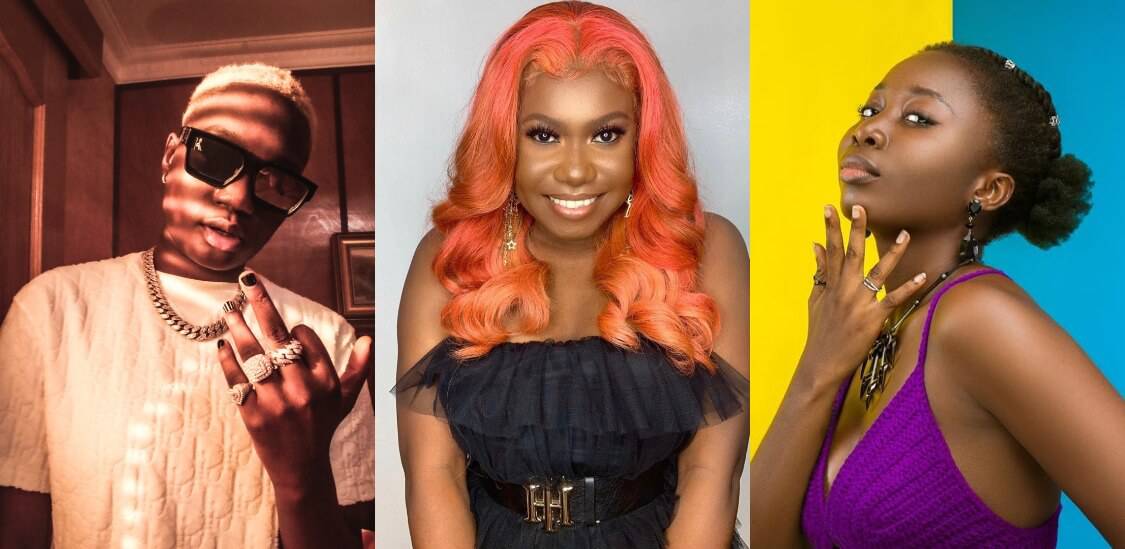
Last year, Sierra Leonean-born, Ghana-based singer Skillz 8Figure became one of those artists no one could possibly ignore with the release of his debut EP ‘Gangsta Luv’, an honest 6-track confessional that merged dancehall sensibilities with trap-soul melodies, while staying true to his familiar Ghana bounce. Since then, the singer has been putting out new music, clearly improving on his sound with each subsequent release and amassing considerable fanfare on the way.
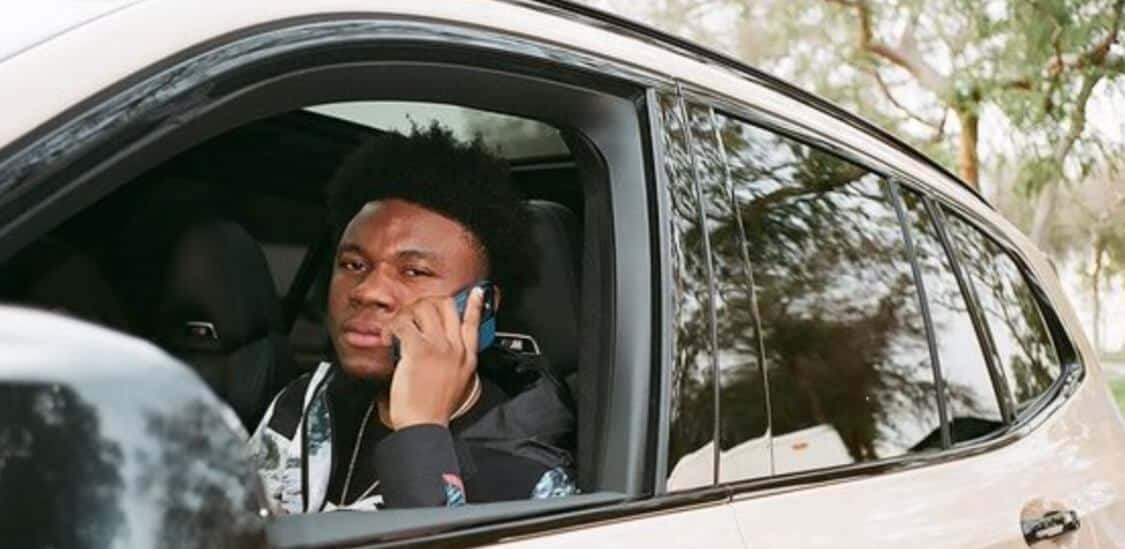
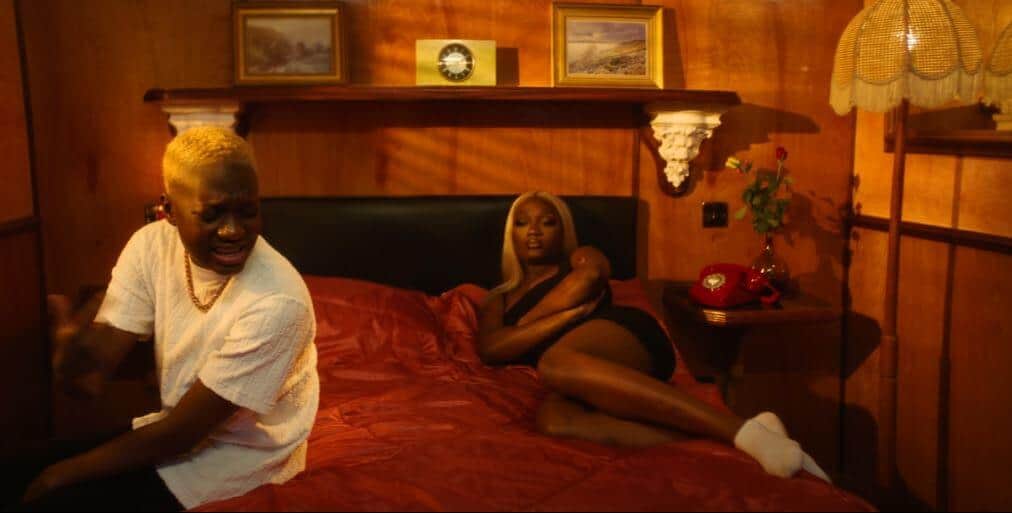
With his debut EP still making waves around these parts, Skillz 8Figure has now released a smooth follow-up EP titled ‘After Dark’, blending his musical influences from Ghana and Sierra Leone over distinct Afropop and highlife melodies into what he’s coined as ‘coastal music‘. The newly-released 8-track tape with features from Psycho YP, Twitch 4VA, Oxlade, Enam, and more, finds the singer with the melodic flow penning lyrics influenced by familiar experiences in his interpersonal relationships. Here, he presents his thoughts in a raw, intimate, and no-holds-barred manner. Together, Skillz 8Figure and his collaborators go to great lengths to capture their romantic and lustful desires, and this comes through the most on the Oxlade-assisted “Make Sense”.
Over a colourful and slinky mid-tempo beat produced by VT, Skillz 8Figure makes the act of lust sound playful and romantic, turning up his boyish charm alongside Oxlade to capture the heart of the song: beautiful and endowed women. “And baby girl if you go leave me, my head fit to scatter/Your body dey make sense oo,” quips the singer over the groovy production, as he admires the girl of his dreams. His amorous and sensual lyrics paint a picture of a beautiful woman who he seems to have inadvertently fallen in love with, after witnessing her greatest asset: her beauty. He’s unwilling to end what they currently have built together because anything less than being in her presence might signal the end to him.
Although it’s clear that he’s enamoured with this woman because of her beautiful looks, Skillz 8Figure’s soothing voice and affectionate lyrics seem to suggest that he’s found himself falling deeper than the physical. Oxlade joins him on the song’s second verse singing “Your body makes a lot of sense, na confam oo/Give me love, I will give you mine”. Against the dance-ready beat, Oxlade pleads for his love interest to take a plunge further into their romance, whilst reassuring her that he’s just as committed to their love as she is. Both artists consistently change their flow and pitch to express their emotions, driving Skillz 8Figure’s message that they are completely smitten.
Given that physical attraction plays a huge role in most millennial and Gen Z relationships these days, it’s not surprising that both artists choose to express their feelings on these type of relationships, but while doing so they end up unpacking more than these base feelings, revealing a softer side that requires quality time and attention from their partners. “Make Sense” speaks to the power of trusting your feelings, despite not knowing where they may lead you. Skillz 8Figure embodies a heart on your sleeve approach, unlike many do in the modern dating scene, choosing to show all his cards rather than hide his true feelings. It’s important to see male artists show this level of self-awareness, speaking to some of the most vital conversations on emotional intelligence right now.
With this, they share an important reason to stick to your guns, as their self-assuredness allows them the room to express exactly what they’re feeling, which a lot of us will be able to relate to.
Last year, South London-based, Nigerian-born emcee ENNY took the world by storm with the release of her Amia Brave-assisted single, “Peng Black Girls”, a love letter to Black women everywhere with lyrics that armed them with the tools to take on a world that constantly perpetuates violence against them. At the time, the introspective number sounded like a trusted friend in song form, and was released in a year spent fighting against racial and gender-based inequalities.
To start off the new year, the UK rapper has now shared a new single titled “Same Old”, continuing in her established line of introspective raps and razor-sharp delivery. Over the mid-tempo beat, ENNY examines the human condition and her own complex wiring quickly grabbing listeners attention right from the onset and holding that momentum to the very end. Lyrically, the new single “Same Old” sees the rapper reflecting on issues such as complicated love with the same old boys, the detrimental effects of the Brexit vote, and the gentrification she witnesses right on her doorstep.
“Wan chop life be free from Brexit, Like look at all the mess you made/Fuck you and your friend gentrification”, she quips on the first verse as she examines the actions of the British government with a scalpel-like introspection. Her bars are marked with evocative details about her experiences, and as a newcomer on the scene, she speaks to the fragility of fame and social media. “It feels like the matrix/I’m dealing with some glitches,” she raps, unafraid to mince her words or shrink the thoughts in her head. It’s clear that ENNY has a knack for singing about things we don’t want to say outright.
She raps with all the self-conviction in the world, speaking directly to Black audiences and simultaneously bypasses industry gatekeepers as she throws shots at them. With unlimited confidence and unbridled audacity she says, “Your pains for sale so they’ll milk it/I’m getting scared, just wake up,” ending the song with an urge to listeners to break the same-old patterns she’s found herself in. Speaking about the new single, ENNY shares that:
“There are so many beautiful moments and feelings attached to this track from the moment it was created and I hope that anyone that listens to it is able to experience that energy when they hear it.”
Music has served as the life force connecting people and communities around the world in these unprecedented times. Though the pandemic has denied us live shows and concerts, where the magical bond between artists and fans unfolds in real-time; artists have remained committed to sharing music with fans, so we continue to honour their art and create space and visibility for them. Last year, The NATIVE created our ‘Songs Of The Day’ column as an avenue to curate some of the best and biggest songs from around the continent. In the time since its creation, the column has served as a means to discover music from niche, rising acts, while also spotlighting releases from the biggest artists on the continent. As artists continue to share their music with us this year, it’s only right that we continue pointing you towards as much great music as we possibly can.
This month is the anniversary of the Coronavirus in Nigeria as well as Women’s History Month so our curation will emphasize celebrating women and music that have made these uncertain times more bearable. Last Friday, we brought you new releases from Ice Prince and Oxlade, Ruger, Skillz8Figure, Lyta, Legendary Styles and Falz, Marv OTM and Psycho YP, and more. Scouring across the continent for songs from the last few days, today’s curation includes new drops from Sho Madjozi, Zlatan, Lioness, William Last KRM, and much more. Dig in and enjoy.
Sho Madjozi – “Shahumba” (feat. Thomas Chauke)
Late last year, South African rapper/singer Sho Madjozi shared her sophomore project, ‘What A Life’, a vibrantly crafted body of work that continued her self-appointed mission to present her Tsonga heritage to the world. On the upbeat tape, she leans heavily into Shangan Electro, a South African House sub-genre earmarked by its rustic, folk influences with features from Manu WorldStar, Dj Mfundhisi and more. In support of the project, Sho Madjozi has now released the video for its lead single, “Shahumba”, which features legendary Tsonga musician Thomas Chauke. The video is part-narrative and part-exhibition, as it shows a father and a daughter bonding through music in its first half—seemingly mirroring her childhood—while a flamboyant live performance with both artists is the focus for the second half of the video.
Bella Shmurda – “Rush”
Bella Shmurda is having the time of his life and he’s clearly living it up. After fully emerging as breakout star in 2020, albeit a tad controversially, the singer quickly opened his account for the year with his latest hit single, “Rush”, an instantly infectious banger that coupled Bella’s self-assured, rockstar persona with a groovy, dance-inducing beat. The newly-released video for “Rush” sees Bella Shmurda moving between frenetic and nonchalant defiance, as he reels off his brand of street realism-soaked quips, while in a myriad of settings that range from the religiously symbolic to those with psychedelic effects.
William Last KRM – “How It Feels” (feat. Dato Seiko & Fella)
Botswanan comic sensation William Last KRM made his full pivot to rap stardom with last November’s ‘Willian’, an impressive debut album showcasing his formidable skillset as a storytelling lyricist. Named after his daughter, the album also presents William Last as a complex person who’s growing for his sake and his daughter’s. Following the viral success of the phenomenal video for lead single, “Tinto”, he’s now dropped the video for “How It Feels”, an affecting portrait of his fight with personal demons, which has been worsened by negative public comments about his comic streak. The DirectorMo-helmed video oscillates between William in a shack and a Range, signifying his steady ascent to fame, but his performance, as well as that of featured artist Dato Seiko, remains vividly sombre all through.
Sauti Sol – “My Everything” (feat. India.Arie)
Nearly three months away from the 1-year anniversary of their latest album, ‘Midnight Train’, Sauti Sol have yet to cease promotional efforts for the star-studded project. However that’s all changed now as the Kenyan Pop quartet has now released the music video for “My Everything”, which features revered American Neo-Soul singer India.Arie. Capturing the song’s romantic direction, and the breeziness of its guitar-led mid-tempo groove, the video is set at a vacation spot with a beach, with one of the group members running into his Sauti Sol colleague, alongside his love interest. We also see clips of Indie.Arie beaming over a computer screen, radiating her trademark warmth in all its soothing essence.
Bryan the Mensah – “Problem No Dey Finish”
After a very productive 2020 run that saw him release two impressive self-assured EPs, Bryan the Mensah is back at it this year with the video for his new single, “Problem No Dey Finish”. Titled after, and taking inspiration from, the popular social media slang, Bryan delivers a stomping banger boasting of his intermittent carefreeness, deeming it as reward for his consistency and hard work. Over OKAIWAV’s booming low end, he also addresses artists living fake lives for the digital flex. The accompanying video focuses on the youthful exuberance driving the song, as we see Bryan rapping his set at a house party and in a moving while surrounded by friends up to funny shenanigans.
Lioness – “Superstar”
“I got classy goons that dressing up in Dior/I’m finally that bitch that got them shutting the store”, Lioness raps at the end of the first verse of her latest single, “Superstar”. Those two lines are symbolic of the myriad of quotable one-liners and infectious braggadocio the Namibian rapper laces the song with, lacerating DJ Potpher’s Amapiano-indented Swag Rap production with precision and sassiness. In its new, accompanying music video, Lioness embellishes her imperial allure, rapping her lyrics with a cold yet riveting stare, while dressed in several impressionable outfits that project both sensuality and self-assured power.
Psycho YP & Azanti – “Caro”
Over the last month, Psycho YP and Azanti have been dropping videos to songs off their well-received joint project from late 2020, ‘YP & Azanti, Vol. 1’. The recently released set of visuals for “Caro” is the third video release, following accompanying visuals for “Focused” and “Ji Masun”. Just like its predecessors, the video for “Caro” follows a distinct narrative, as it follows Psycho YP and a love interest who seem to be having the best of times until it is revealed that the affair was a ruse for robbing him of his money. Also catering to the song’s ultra-groovy sonic direction, Azanti is captured performing with a live band at a function packed with friends, including a typically energetic cameo from fellow Apex Village artist Zilla Oaks.
Pappy Kojo – “All Day All Night” (feat. Kofi Kinaata & Gyedu Blay Ambolley)
Last Friday, Ghanaian rap hit-maker Pappy Kojo released his long-awaited debut album, ‘Logos II’, a star-studded 15-track project with high profile features from Sarkodie, Kuami Eugene, Phyno, Kwesi Arthur, and more. In support of the release, he released the video for “All Day All Night”, a feel-good cut comprising a delightfully minimal, bouncy beat, and guest appearances from Kofi Kinaata and Ghanaian rap pioneer, Gyedu Blay Ambolley. Embodying the song’s lightweight concern, the accompanying set of visuals are sun-soaked, as it captures Pappy and Kofi performing their sets on a road trip and at landmark locations in European Town, Sekondi. Meanwhile, Gyedu is captured rapping on the top of a roof, with a scantily clad model dancing and keeping him company.
Adhnok – “Twisted” (feat. Genio & SniperSan)
Relationships are more complicated than they’ve ever been. Most likely due to the way social media has drastically adjusted the way we view romance, the idea of what a functional romantic situation looks like isn’t singular anymore. Take Adhnok’s official debut single, “Twisted”, a spacey trap cut dedicated to a love interest whose impulses and effects are decidedly toxic. “She got that twisted love,” he repeatedly sings in a droning vocal tone, and even though he references the popular saying, “Once bitten twice shy,” it’s obvious that he’s still very enamoured by the same toxic habits this partner exhibits. Melodically rapping that his efforts to move on from the toxic situationship have proven futile, “tried to leave her but Ican’t,” Genio’s closing verse stands in solidarity with Adhnok’s vulnerabilities. In the end, despite its dangers, the trio’s romantic outlook remains unchanged, as SniperSan’s vocal assist captures: “[they] want that toxic love.”
Dennis is a staff writer at the NATIVE. Let me know your favourite the Cavemen songs @dennisadepeter
Darkoo’s breakout single, “Gangsta” was one of those songs that you heard all the time, everywhere. The earworm track went viral on social media, accompanied by a dance that seemed to catch on all over the UK, Nigeria and Ghana, and now, two years later, she’s garnered over 24 million listens. It’s almost impossible that you haven’t heard the One Acen-assisted banger, and since then, with each following release, she has doubled down on gaining even more of our attention.
However, there’s a slight chance we might have missed out on all of this, as while she was growing up in Nigeria, Darkoo found her first love with football. She tells me via Zoom from her apartment in Ghana that music was never really a dream for her, it was football she spent most of her time dreaming about. As a young girl, she was cheered on by her supportive dad who wished for her to take the sport seriously so she could play professionally, however, when 13-year-old Darkoo began at an all-girls secondary school in the UK, she soon found herself growing out of those dreams. It was at this time she began to embrace more music and fashion like her peers, explaining how a fated meeting with a trusted friend led to several paid studio sessions which helped her develop her passion for music.
Darkoo who was raised on a musical diet of Wande Coal, Wizkid, Michael Jackson, Rihanna, and more, began nurturing her passion for an eclectic mix of music ranging from Afropop to R&B, Pop, Rap and more. Having moved between Nigerian and the United Kingdom for most of her life, Darko began mixing elements of both rich cultures, making use of the distinct nuances from these two places which suit her music style. The singer tells me that she tries to strike a balance in her music, stating that “Gangsta” is probably the best representation of both her homes. “The detail is in the way in which I say certain words. It’s a bit like an English slang, but the way in which I’ll say the word will be so African” she tells me.
The sweet spot with Darkoo’s music seems to be that the Nigerian singer is able to consistently meet the increased demand from today’s listeners to provide something different, bold, boundary-pushing, and above all, authentic. As much as what we’re hearing is the pull to the talented singer, what we get to see is just as important, because she’s constantly communicating through her aesthetic.
Her Instagram bio reads “2 in 1”, and she adeptly works to show this through her androgynous and feminine sides. On the one end, she’s able to blend seamlessly with the guys, rocking her blonde low cut and a baggy tee while throwing up gang signs in her latest video, while on the polar opposite end, you’ll also see her clad in the bodycon dress with the killer weave and makeup.
“I’ve always played both personas. I’m not even trying to push anything I would say, but just to just show that I’m comfortable with both sides of me and I can be what I wanna be when I wanna be it”.
Since her breakout single “Gangsta”, she’s shown her ease at slipping between both personas and boldly exists in an industry where women are still constricted by their appearances and conventional standards of beauty, and it’s amazing to see her consistently raise a middle finger to these archaic rules. Her inspiringly firm sense of identity continues to inform the path that she’s forging in the industry, one where she’s allowed to exist on her own terms and in her own time.
“People always say fake it till you make it. But at the end of the day, there’s something about an artist that is just really themself. You’re more than allowed to do what you want to do.”
All this has culminated in the fame and success that the Nigerian-born, south London-raised singer-rapper now enjoys today. Recently, the singer just released her first official release for the new year, the mid-tempo romantic number titled “Pick Up” which finds her putting her unique twist on vulnerability in romantic relationships. The release of the new single is said to whet fans appetites ahead of the forthcoming debut project release and is said to be “a bit more heartfelt,” than many of her earlier singles releases.
“Everything I write is from the heart and from personal experiences, but you know, with “Pick Up”, things felt different,” she tells me. Darkoo explains how she had to strip down her walls and expose her vulnerability with this new release, which is typically unfamiliar to her because of her focus on the up-tempo Afro-swing club bangers. This song seeks to reflect the common theme of getting your heart broken after letting your guard down in a romantic relationship. Although Darkoo goes the entire length of the song on her own, even going as far as paying both sides of the heartbreaker and the heartbroken in the song’s vibrant music video, she tells me that she’s also excited for the future of Afropop and about collaborating with different artists in the future including women like Tems and Tiwa Savage.
With all the fanfare surrounding the new year, Darkoo occupies a refreshing space in the industry setting herself apart with a unique and playful groove, which has marked her as one to watch. As part of a new generation of female artists putting lyrics to our infinite moods, it’s clear that Darkoo is here to shake tables and flip the narrative of what it means to break barriers as a female artist. She’s forging her own path, one piece of the mosaic at a time and it’s clear that her defining ethos is simple enough to get her ahead – work hard, and play harder.
Barely a week after news broke that Flutterwave had hit a new milestone by raising over $170 million in its Series C funding, which effectively raised the company’s value above the unicorn mark of $1 billion, the African payments fintech start-up has now announced more great news in store. Today, Flutterwave begins its partnership with global online payments merchant Paypal, in order to make accepting and making e-payments easier for businesses within Africa. According to a statement by Flutterwave, the integration with PayPal will be live and operational across 50 African countries and worldwide.
Today, we are announcing an important step towards achieving our mission and goals. We @theflutterwave have collaborated with @PayPal to allow businesses in Africa receive payments from over 377 million @PayPal users all over the world. pic.twitter.com/h0tDPIOGwd
Launched back in 2016 as a Nigerian and U.S.-based payments company with offices in Lagos and San Francisco, Flutterwave helps businesses build customisable payment applications through its meticulously crafted APIs. It has since grown to become one of the fastest-growing payments companies in the world, providing an unsinkable payments infrastructure to connect Africa to the global economy According to reports, Flutterwave says more than 290,000 businesses use its platform to carry out payments and it boasts of an impressive clientele of international companies, including Booking.com, Flywire, and Uber.
Flutterwave CEO Olugbenga Agboola said the new partnership reinforces the Nigerian company’s vision of “creating a seamless digital payments system for Africa’s business communities that can now transact with international consumers.” Before now, PayPal was only functioning in 12 African countries including Algeria, Botswana, Egypt, Kenya, Lesotho, Malawi, Mauritius, Morocco, South Africa, and more. However, this landmark move will make the payment service available across more African nations rolling out to businesses and SMEs first.
For African e-commerce businesses, this move is pretty significant, as it will create an ease of business for the continent’s booming private industries, as well as connecting them with more than 377 million Paypal users globally. Rather than make their entry into the continent by themselves, PayPal has chosen to partner with an existing company whose expertise and experience in the African market will be key to potentially overwhelming success. Congratulations Flutterwave.
Pay with Paypal is now available on Flutterwave! 🦋😁
All Paypal users can now pay African businesses from anywhere in the world, on our gateway. We’re excited to be opening up a world of opportunities for businesses in Africa!
Our latest column, “What’s Going On” will tally notable news headlines from across the continent — the good, the bad, and the horrible — as a way of ensuring that we all become a more sagacious African generation. With this column, we’re hoping to disseminate the latest happenings in our socio-political climate all over the continent, whilst starting a conversation about what’s important for us to all discuss. From political affairs to socio-economic issues, ‘What’s Going On’, will discuss just that.
Ever so often, we have to remind developed parts of the world that Africa is not a country. It’s not just because a significant portion of people in those parts are unenlightened, but also because of the continent-wide similarities when it comes to social, political, and economic issues.
For one, Africa is teeming with corrupt and inept leaders—many of them dictators— who have failed to invest in meaningful infrastructure, all while derailing and rejecting systemic change through violent means if necessary. In addition to this, they are fully aided by deeply patriarchal, religion deferring, and ultra-conservative social constructs.
At the same time cross the continent, the current generation of African youth are pushing against these systemic boundaries, in order to continue the arduous work of rewriting the narrative. Even with all of the endeavours, talent and records being witnessed from music to tech, the limitations put in place by the continent’s political landscape still looms large. Every week, disparaging headlines from around Africa make their way to the news, reminding us of the bumps affecting these perceived stripes, and the roadblocks which delay our growth towards more wholesome and enabling societies for all Africans.
New hike in fuel prices in Nigeria
Given that the country hasn’t had a uniform fuel pump price in about a year, since the coronavirus negatively impacted global crude prices, it seems off that in the year 2021, Nigeria’s continued dependence on crude oil as its primary source of income is still a thing. What makes it even more aggravating, is the lack of fully functional refineries, which means that we have to import the bulk of distilled products for nationwide use.
This strange cycle has affected the increasingly expensive consumer prices for distilled crude products, especially petrol (Premium Motor Spirit or PMS), which has exponentially increased in price over the last few decades. Late last week, the Petroleum Products Pricing Regulation Agency (PPPRA) announced that fuel prices had now increased to N212.61/litre, causing uproar on social media, and mild panic amongst citizens for fear of fuel scarcity.
However, Vanguard reported the mean pump price for petrol would remain at around N170, with the PPPRA stating that the government would be paying around N42 as subsidy per litre. At the moment, though, there’s still some uncertainty with regards to the actual price of petrol and the last we left off, the Nigerian government, claims that the information hasn’t been ratified, or even received by the administration. The Minister of State for Petroleum Resources, Timipre Sylva, stated that the news of a hike in price is untrue. Petrol stations are currently selling petrol at the mean pump price, although individual discretions means consumers are buying anywhere from N162 to N170.
Protests in Senegal
(TW: Contains sexual abuse allegations)
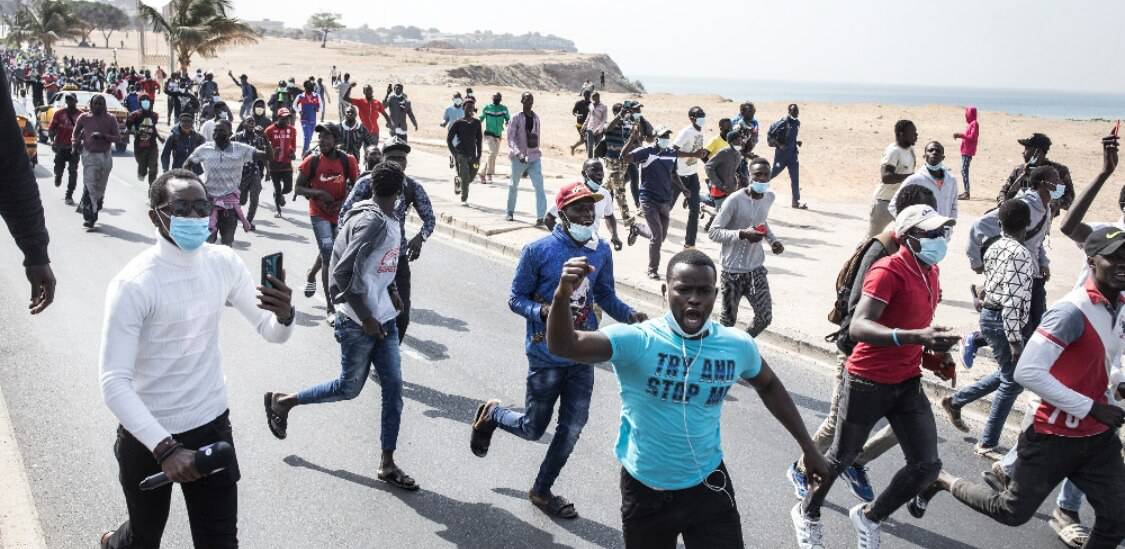
At the beginning of this month, protests erupted in Senegal following the arrest of opposition leader, Ousmane Sonko for disturbing public order, after supporters had lined up to support him on his way to court due to an ongoing case of rape allegation charges against him. With many already believing that the charges were trumped by the incumbent President, Macky Sall, the arrest led to nationwide demonstrations, which resulted in the Senegalese government pulling out familiar tactics we’ve seen from governments all over the continent regarding protests in the last few months.
Two TV stations were cut off from transmitting after being accused of inciting unrest, while social media use around the country was limited. On ground, protesters were met with brutality by law enforcement, via rubber bullets and tear gas, which led to the deaths of at least 11 young people, including a 12-year old boy in Bignona.
Nearly 600 people were injured, and hundreds more arrested, including well-known social activist, Guy-Marius Sagna. Protests have ceased in the last week, however, the agitations remain palpable, with many seeking justice for the deceased and injured, as well as the freedom of all those arrested during the protests. All of this is exacerbated by the deep distrust in President Sall’s government, which has been accused of deep-seeded, nepotism-fuelled corruption, and favouring alliances with France over the economic growth of its citizens.
Also tragic is the ongoing treament of the sexual abuse allegations against Ousmane Sonko, which has been politicised at the expense of an alleged victim. Since the allegations came out and her identity was revealed, Sonko’s victim has been the target of vitriolic abuse from the politician’s supporters, and even family members, who believe she’s been used as a pawn by the current administration. Just over a year ago, Senegal finally passed a law criminalising rape, giving some hope to victims that they can seek justice through the right channels. However, with the way this woman is being treated, it sends a message about how seriously the justice system takes the safety of Senegalese women.
Bystander killed by police during protests by South African students
For about a month, students at the University of Witwatersrand have been protesting the inability of some students to register for the new academic year, mainly due to financial barriers such as outstanding debt and lack of finance to fund first-time university students. Last Wednesday, local police took to Braamfontein with rubber bullets to disperse protesting students, which killed 35-year old Mthokosizi Ntumba in the process. According to eyewitness accounts, Mr. Ntumba was shot at close range shortly after exiting a nearby clinic and was not part of the demonstrations.
WATCH: The SABC has obtained exclusive footage of the moment just before the 35-yr-old civilian was shot by police in Braam. In an interview with SABC, the doctor who attended to him in the clinic said he tried to resuscitate him. EMS declared him dead on the scene #witsprotestpic.twitter.com/EVZbKMiBg4
This is yet another case of police brutality being meted out on protesters peacefully and loudly making their concerns known. Following a student protest before exiting office, former President Jacob Zuma adjusted the National Student Financial Aid Scheme (NSFAS) from a student loan program to a free tertiary education initiative for students from financially poor homes. Earlier this month, though, Higher Education Minister Blade Nzimande declared that the NSFAS didn’t have enough in its coffers to fund new first-time university students, a statement that wasn’t well-received, as the body has been routinely accused of financial and operational irregularities.
With budget cuts to tertiary institutions, South African students might be planning to shut down universities in order to ensure financially inclusive registration measures for the academic year. The Wits university incident has exacerbated students’ response, underlined by the deep distrust in government due to allegations of corruption. Four police officers have been arrested in connection with Mr. Nthumba’s death, at least offering some hope that the perpetrators will be held accountable— something which is somewhat irregular in Africa where the government doesn’t always prosecute physical abuse of power.
Suspected bandits kidnap students in Northern Nigeria
Late last month, Nigerian news publication The Cableestimated that 1,119 students have been abducted in Northern Nigeria over the last seven years, the starting reference point being the abduction of 276 students from Government Girls Secondary School, Chibok, Borno State. That number has only continued to rise, with the latest being the abduction of at least 30 students of the Federal College of Forestry Mechanisation, Afaka, Kaduna state. The news broke last Friday, with initial rumours that all the kidnapped students were girls, however, Kaduna state commissioner for internal security, Samuel Aruwan, stated that checks indicate “26 females and 13 males” were missing.
On Saturday, horrifying videos of the kidnapped students surfaced online, with the victims asking the government for immediate help. In the video, a student who identified himself as Benson Emmanuel said, “We appeal to the government to come and rescue us, most of us here have been badly injured.” Surrounded by armed men with concealed faces, he goes on to appeal against use of force from the Nigerian government, as their kidnappers have threatened more bodily harm and even death if their requests aren’t replied swiftly. The bandits are seeking a ransom of five hundred million Naira (N500m), which follows the M.O of recent kidnaps from the last few months.
While this is a developing story we will continue to keep our eyes on, it continues to underline the grave insecurity issues in Northern Nigeria. Just yesterday, travellers from Kaduna to Abuja were urged to turn back or find alternative routes, as the main road passage is rumoured to have been taken over by armed bandits. Meanwhile, President Buhari has issued a warning through a statement conveyed by presidential spokesman, Garba Shehu, saying that the federal government won’t tolerate the destruction of the country’s school system by bandits and “would-be” terrorists.
Any chance to celebrate women is welcome, especially in today’s climate where it’s made clearer and clearer how much it takes to simply be a woman in the world. All month, we have been highlighting and amplifying how amazing women are to mark Women’s History Month, therefore feels appropriate that the women who birthed us, raised us, protected us, and taught us everything we need to know to take on this world get their own special day.
African mothers are in a league of their own, and it’s probably safe to say we all have the same experiences with our mothers. It’s safe to say that the soundscape today is worlds apart from what theirs was when they were coming of age, therefore, they just don’t get our music. We’ve all had to deal with how our parents opposing feelings about the ever-changing culture: from fashion and music to socio-political beliefs. To celebrate them this year, we at the NATIVE have reached out to a few of our friends from all over the continent to discuss how their mothers feel about our favourite thing: music. From some wondering what Beyoncé has to do with Christianity, to others humming Travis Scott, here’s how the mothers in our community feel about their children’s music taste.
My mum has definitely adjusted to my music taste or I’m just older so she’s aware that her words won’t affect me as much as before. In the past, she would do her best to adjust to the music I was listening to because she’s always loved dancing and having fun, but when she’s not in the mood for all that, then my music becomes vulgar noise that I need to turn the volume down on. Haha, I’m glad she’s not on my neck anymore though.
R, 27, M.
I would say my mum and I have very different tastes in music except when it comes to Fela. I tend to listen to Neo-soul and R&B, whereas my mum listens to mainly afro-beats and 80’s hits. The thing that fascinates me about my mum’s music though is how she always hears the wrong lyrics and when I correct her I feel like I’ve ruined the song (usually letting her know it’s an innuendo for something). I remember she kept humming the tune to “Antidote” by Travis Scott and I asked does she know what that song is about, and as I explained it she seemed perplexed. I think she would rather just enjoy the tune than try and understand the lyrics. That’s probably why we both love Fela because you listen to the message but for a good 15 – 20 minutes just enjoy the instrumentals no confusion involved.
F, 23, F.
My mum actually loves my music taste now – for the most part. She’s always asking me to “update her iPod” and quoting random lyrics and saying “oh play that song that said…”. But during my pre-teens, I was an Eminem stan and I remember her walking in on me rapping along to “Sing For The Moment” with the lyrics printed out, and I think she was quite worried. Looking back on it, there’s probably something to unpack there.
S, 26, M.
My mum always asks what I’m listening to and it’s like “Trust me mama you don’t want to hear the vulgar lyrics”. When I’m cooking, I play my trap songs out loud, and apart from my mum wondering what is being said, her most puzzling question is how the hell we dance to such type of music. I guess we just vibe to it!
P, 23, F.
I once complained to my mum that she played too much King Sunny Ade, and I’ll never forget her response: “My friend, will you shut up and go listen to your noisy music”. Shortly before, I’d been playing Kendrick’s ‘DAMN.’ on loudspeakers, on Good Friday no less. I’m not 100% sure what she thinks of my music taste, but she’s almost always in control of the radio or aux whenever we’re in the car together, blasting King Sunny Ade every chance she gets.
D, 24, M.
It’s funny how my mum used to groove with me when I was still home and schooling from home, coming back from uni in her ride and I’ll always play the radio for the latest jams. But with time, my taste in music has changed a lot from back in those days, and I don’t really get much of a response from her anymore.
M, 23, M.
When I was younger, we used to only listen to my mum’s music in the car, so she sort of influenced the sound I like today. Although now the script has flipped, so when I’m driving, we’ll only listen to my music, and these days we find ourselves singing along to the ones we both like. Especially songs that have samples of songs she liked when she was younger, like Beyoncé’s ‘Before I Let Go’ or Drake’s ‘Nice For What’. It’s almost like our music worlds have come together, and I don’t think she even realises it.
D, 26, F.
My mum saw that I had Beyoncé as my screensaver or my lock screen once, and she asked why ’cause she had never seen me use a picture of anyone other than myself before. I responded by saying that Beyoncé is an exception because of how talented and amazing she is, and my mum went on a rant about how I need to be careful with the music I take in and I was so confused. She kept asking what Beyoncé does for Christianity. I just had to zone out from that conversation.
T, 23, F.
I can’t lie my mum always takes the piss about my music. Recently, when I was listening to tracks like “Way Too Big” on Burna Boy’s recent album ‘Twice as Tall’, my mum found it really uncomfortable because of all the swear words. She thinks a lot of the music I listen to is repetitive and vulgar but I don’t really care.
J, 23, M.
My mum has definitely adjusted over the years to my music taste. When I was younger, she used to have a lot to say about the music I was listening to but now I’m older, she be vibing with me when I’m playing music in the car whether it’s trap or Afrobeats, she seems to really enjoy my music.
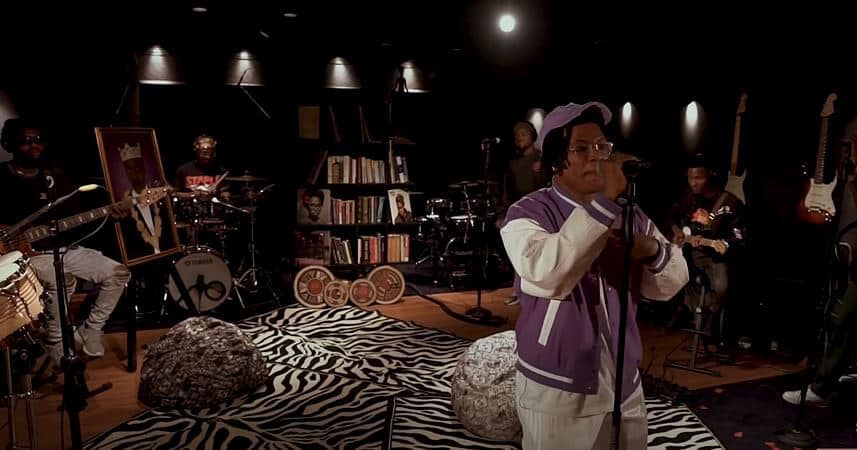
In the recently shared multi-artist Tiny Desk concert, put together in support of ‘Rhythms of Zamunda’, the Def Jam Africa-curated soundtrack inspired by “Coming 2 America”, the most visceral run is somewhere in its middle section, where Alpha P blocks out nearly four minutes for a raucous performance of his contribution, “Jiggy Bop”. Shot in the instantly identifiable Clout Africa studios in Lagos, the singer/rapper is supported by a live band and a hype-man, as he embellishes the stomping energy that makes the recorded song an instantly infectious, swaggering banger.
Mostly comprising previously released songs from artists across Africa, the soundtrack does a great job of capturing the continent’s musical heterogeneity. For the most part, though, this packaging seems largely targeted towards previously unfamiliar listeners, since the previously initiated already understand the ethos behind the compilation. Like the other handful of new additions—Tellaman’s “Overdue” and Bonj’s “Ain’t It True”—Alpha P’s “Jiggy Bop” is a shot of freshness to a project filled with older songs. From the 4-bar drum count that opens it up, the song quickly grabs attention, holding that momentum right through to the end.
Produced by go-to collaborator TMXO, “Jiggy Bop” projects sonic references from George Clinton’s brain-melting psychedelic Funk, the mysterious disco of William Onyeabor, and the elastic Funk-indented Hip-Hop bounce of the Neptunes. At that, these references feel secondary to the symbiosis between Alpha P and TMXO, an established combo that continues to strengthen its chemistry by building and bonding on signature individual quirks. In addition to the shimmering piano chords, slightly animated bass guitar riff, synthesised funk guitar sprinkles, and meaty drum groove that form the musical foundation, the chanted chorus also echoes TMXO’s distinct touch, a trademark made evident on the producer’s eponymous EP from last year.
Proving to be a more magnetic presence in front of the mic, Alpha P picks an intriguing pocket doesn’t always land on the beat, choosing to fall forward at several points, in a way that emboldens the excitement of his songwriting. “We gorillas, we be running up all night”, he quips on the pre-chorus, as he puts in a boastful shift where he namechecks Zamunda’s Prince Hakeem. On “Jiggy Bop”, Alpha P runs with the fun direction of TMXO’s beat, and in the process, they create a feel-good thumper that could very well become a cross-continental party starter, on the back of its placement in the soundtrack for a hugely promoted film.
Listen to “Jiggy Bop” here.
Dennis is a staff writer at the NATIVE. Let me know your favourite the Cavemen songs @dennisadepeter
Music has served as the life force connecting people and communities around the world in these unprecedented times. Though the pandemic has denied us live shows and concerts, where the magical bond between artists and fans unfolds in real-time; artists have remained committed to sharing music with fans, so we continue to honour their art and create space and visibility for them. Last year, The NATIVE created ‘Songs Of The Day’ as an avenue to curate some of the best releases from around the continent. In the time since its creation, the column has served as a means to discover music from niche, rising acts, while also spotlighting releases from the biggest artists on the continent.
This month is Women’s History Month, therefore our curation naturally focuses on celebrating women, as well as music that has made these uncertain times more bearable. Our midweek selection included new releases from Gabonese singer, Pamela Badjogo, Philkeyz and Blaqbonez, Oladips and Zlatan, Kwamz and emPawa artist, Bosom P Yung. To kickstart the weekend, we’re putting you on new releases from Ice Prince, Oxlade, Ruger, Skillz8Figure, Lyta, Naira Marley, Zinoleesky, Legendary Styles & Falz, Blaq Jerzee, Mr Eazi, Marv OTM, Psycho YP and more.
Ice Prince – “Kolo” featuring Oxlade
After inking a record deal to 300 Entertainment earlier last year, Ice Prince has been serving up hits in preparation for his forthcoming album. For his latest offering, he’s teamed up with Oxlade for an intoxicating new sensual single titled “Kolo”. The Egar Boi-produced track sees both artists professing their devotion for their love interests.
Singing “I want to use my last card to spoil your life/E get e thing you do me I no fit explain o” on the hook, Oxlade expresses the lengths he’s willing to go for his love, before he’s joined by Ice Prince who raps about losing his senses to love. The accompanying video, directed by U.A.X brings the song’s seductive feel to life with sensual lighting and hypnotic dance from beautiful women.
Ruger – “Monalisa”
Since his appearance in February’s Fresh Meat class, we’ve had our eyes on Jonzing World’s latest signee, Ruger, the fresh-faced newcomer with the voice of gold. Today, the 21-year-old releases his debut EP, aptly titled ‘PANDEMIC’ after his rapid-fire declaration on the recently released single “Ruger”: “Ruger is the lockdown/Ruger is the pandemic”.
The 6-track afro-dancehall offering finds him laying out his after dark thoughts. Standout romantic number “Monalisa” is the project’s sweet spot as we hear Ruger declare his romantic interest for a beautiful woman who he can’t seem to get off his mind. Over the uptempo jazzy production, he sings “Shey you know you don make me kolo/Finally you go follow me” eager to prove his affection. You can hear it in the percussive beat and vibrant keys, this is a street poet intent on getting the girl by any means necessary.
Vector & M.I Abaga – “Crown of Clay” featuring Pheelz
Vector and M.I Abaga seem to have put their longstanding beef aside fully, as they have linked up for memorable new single “Crown of Clay”. Rather than throwing shots at each other in the manner we saw previously, the track finds both rappers trading bars about the realities of being a young Black African. Over the uptempo beat produced by Pheelz, Vector raps “We can’t speak, we can’t speak/but you can’t hold the voices, some of dem go burst out/But odeshi dey for my black skin” painting a realistic picture of the ways African governments continue to stifle the voices of young Africans from Nigeria with the #EndSARS protests to Uganda with the presidential run between Bobi Wine and Museveni.
M.I joins him on the second verse, rapping: “Welcome to the bloodline of black queens who birthed the black dream/Women with the heart of a king like drag queens” his words aimed at reassuring listeners of their strength. It’s clear that this number was made to uplift many young people around the continent who may be feeling helpless thanks to the government, who continuously kills their dreams.
Skillz 8Figure – “Sempe”
Ghana-based Skillz8figure is as consistent as they come. Since arriving on the scene back in 2019, he’s been serving killer singles which have only served to earmark him as one to watch in these parts. After releasing his debut EP ‘Gangsta Luv’ last year which we featured on our Best 2020 Projects list, he’s been teasing the release of his debut album ‘After Dark’ with promotional singles featuring Psycho YP and Twitch 4Eva.
Finally, the wait is over. Arriving yesterday, the 8-track offering sees the singer working his romantic charm throughout the project, which boasts of features appearances from Oxlade, Enam, Mellisa, and more. The groovy percussive beat on “Sempe” is an instant standout, as Skillz8figure delivers an open confessional to a love interest. “Only you dey my mind/Girl your kiss na fire/I no go fit to tire” he sings melodiously on the song’s first verse, before delivering a killer verse about his intentions to commit. His touch is light and the production so well-matched to hone in his affectionate message.
These days, being hesitant about new romantic situations after getting burnt by old flames in the past is nothing new and for his latest single, Lyta turns up the dial on his romantic intentions with “Are You Sure”, an amorous offering featuring labelmates Naira Marley, Zinoleesky and EMO Grae.
“This your love drive me crazy, I don’t trust myself/Baby are you sure that you want me/ Are you sure it’s not the Hennessy” Lyta sings on the hook, inquiring about whether his lover is just as committed to their union. Even Naira is wearing his heart on his sleeve singing “Baby if you leave me I will kill myself” before he’s joined by EMO Grae and Zinoleesky who’s intentions are similarly flirtatious. Wahala for who love Marlian.
Zlatan updates his hit single “Lagos Anthem” with a befitting remix, this time including features from Oberz, Oladips, Kabex, and Trod. Keeping the delectable charm of the original version, Zlatan begins the song with the instantly familiar hook “dem dey talk say money no dey Lagos” over a percussive drum-led beat that sets the pace for what’s to come. In the accompanying video directed by Dammy Twitch, we see female models dressed in traditional attire to represent the three main tribes in Nigeria which roots the song in authenticity. We also see Zlatan and his collaborators deliver their verses while living it up and toasting to the good life, they’re also spraying dollar bills showing money is indeed in Lagos when you’re with Zlatan.
Legendary Styles – “I See, I Saw” featuring Falz
At the start of the year, the Igbo drill song “I See, I Saw” by rapper Legendary Styles was slowly making its way across social media timelines and taking over our TikTok feeds. However, just as the song was about to hit 1M streams across DSPs, it got pulled down rather quickly. At the time, Styles explained that the owners of the original beat had pulled down the song because of an uncleared sample.
The song was later re-released after Styles’ producer created a new beat for the rapid-fire number. Today the rapper unveils the official remix “I See, I Saw” with a feature from Falz. The remix has a more relaxed tempo, complete with new verses from Styles and memorable inclusions from Falz. While Styles begins the song with the memorable hook that took over social media, Falz joins the rapper on the second verse rapping “I dey dodge all the shenanigans/want to run up on my Cadillac/I dey see am for all the grass” as he calls out the opps posing as friends.
Blaq Jerzee, Mr Eazi & Harmonize – “Falling for You”
On his new romantic single “Falling For You”, Blaq Jerzee taps into beautiful vocals from Banku Music head honcho Mr Eazi, alongside Tanzanian singer, Harmonize. The self-produced romantic number sees all the artists declare their love interest for women in their lives. “You dey burst my mind/If you be ogbanje I go cast and bind,” sings Mr. Eazi reminiscently adopting cadence similar to those employed on hits such as “Skin Tight”. The song’s title is perfectly indicative of what’s inside, a gooey love song that celebrates romantic affection in all its glory.
Apex Village, the Abuja-based musical collective comprising of several skilled artists and producers have been holding it down for several years. With the new year in focus, they’re showing no signs of slowing down anytime soon with near-weekly rap releases. Last month, rapper and producer Marv OTM delivered ‘Cruise Control’, a 2-pack release including features from SGaWD and has quickly followed this with new heat titled ‘Holy Grail’. This time, he’s joined by Psycho YP and they both enlist $paceley on the braggadocious number “Suit & Tie”.
The uptempo single sees all three rappers trade bars about their prolific runs trapping and making money despite not taking the traditional routes to success with a 9-5 job. “Can’t catch me in a suit and tie/but I’m working like a 9-5” Marv OTM raps memorably on the hook, essentially toasting to his unconventional success. He’s joined by $paceley who chims memorable liners such as “No be bands? Make you go” and Psycho YP who reaffirms his position as a “young nigga tryna get all that guap”. It’s straight flexing on the beat for over 3mins, what’s not to love.
Spotify’s entry into 80+ new countries around the world was a momentous move that signified how much of a powerhouse the streaming behemoth had become. During its late February’s virtual live event, Stream On, the Swedish audio streaming platform which has already established as the world’s leading streamer with nearly a 400million users, was now focusing its expansion on more territories within Africa and Asia.
From Nigeria and Ghana to Zimbabwe and eSwatini, the move signified a calculated and wholesome attempt to become the streamer of choice across Sub-Saharan Africa, a region that has been identified as the next frontier for growth and investments as the post-digital, on-demand era rages on. Considering the presence of Apple Music, Audiomack, YouTube, Tidal, and Deezer in several parts of this region, Spotify’s entrance is quite belated, but it was greeted with excitement nonetheless.
Given its popularity on a global scale, and a widespread reputation as the most intuitive platforms for listeners, the response is appropriate, even more so because many have been looking forward to this entry, and some in the region have even been accessing the platform for a while, on a not so covert tip–with VPNs.
“It’s common knowledge now, everyone who wanted Spotify for years knew that all you need is a useful VPN app”, Yaz, a Nigerian living in Tema, Ghana, tells me during a friendly chat. It wasn’t a grand revelation, after all, he was only echoing a statement I had said just before. Sometime in 2016, after a Google search, I figured out how to access Spotify even though its services weren’t available in Nigerian. All I needed was a Virtual Private Network that would change my IP address and present my location to the streaming app as a country where Spotify was operational. For well over a year, Spotify was my go-to place for music streaming.
This practice of using Spotify via VPN picked up, and it became common practice amongst a portion of young people across the continent. “My friend sent me the link to the app, and a VPN recommendation. That’s basically how I got started”, Yaz goes on to explain. While I eventually settled for a streaming platform that was operational in Nigeria, Yaz tells me he has stuck with Spotify ever since, and he’s “very happy” the streaming giant is now properly available in Ghana for two reasons. Firstly, no more VPNs; and secondly, he no longer has to pay for Spotify’s premium plan in dollars, since the option to pay in Ghanaian Cedi is far more cost-effective.
Like other international streaming platforms, Spotify has adjusted the prices of its premium with regards to each country’s economic situation, while offering its usual, limited freemium tier. In Nigeria, the individual premium plan is priced at 900naira (about $2), while it’s priced at 17cedi (about $3) in Ghana. These amorphous prices, which range according to country, ensures that the streamer is offering enticing, relatively low prices to users while competing with previously operational streaming platforms in these countries.
Across the country, the streaming platform began partnering with local networks to offer subsidised payments. Shortly after announcing its launch, it announced that it would be partnering with M-PESA in Kenya, Safaricom’s mobile money service platform that is hugely popular in the country, offering Kenyans a familiar and easy route to pay for their premium subscriptions.
“Of course, the price is meant to lure in new users, but don’t underestimate how appealing it already is for those who’ve been using it with VPNs”, Folarin, a Lagos-based tech-consultant and self-described music junkie, says. “A lot of the people that were excited for Spotify’s entry had interfaced with the app, so that just naturally drove up hype.” On the day Spotify launched in Nigeria, the timeline was pre-occupied with jokes regarding the previous usage of VPNs, signifying just how much reputation has played in the streamer’s early (re-)adoption.
During one of our daily newsroom meetings, NATIVE managing editor, Damilola Animashaun, revealed that she had transitioned into using Spotify extensively, after loyally using her previous primary streamer for around 15years. Her switch was prompted by conversations with editor-in-chief, Seni Saraki, who explained Spotify’s listener benefits and urged her to try the streaming platform. In a few weeks of usage, Damilola now swears by Spotify, noting the usefulness of its intuitive features, such as personalised playlists that aid in discovering, and even reminiscing on songs from the past.
“The thing is, Spotify sells a wholesome listening experience with its app”, Yaz tells me. “Personally, those playlists have kind of expanded my music taste in a way that makes me feel like the algorithm is catered solely to me. It’s a big reason why I never left, and when you’re enjoying it, you’re trying to make everyone know and put them on.” In the last few weeks, at least three people have evangelised me on why I should return fully to Spotify—I still use my free account to listen to podcasts—with a friend telling me via WhatsApp, “I know you like discovering new stuff, trust me you’ll find new jams and great new artists.”
Beyond the reputation and explosive word of mouth from the already initiated, Spotify knows its work is cut out if it wants to become a leading streaming platform on the continent, ahead of those previously operational and already familiar with locals. In a recent interview with Accra-based Citi FM, Phiona Okumu, Spotify’s head of music for Sub-Saharan African, explained that the streamer was right on time since it made meticulous moves ahead of its launch in the region. “Launching on a continent as diverse as this one—the amount of countries, the number of languages, the amount of culture that we have—I don’t think it would be right for us to rush into a situation,” she explained, adding that it was important to make sure “there is a good fit of a localised team that understands how to tell the story internally or within the country and also to the rest of the world. Those were the things that make it seem that we are late to the party but actually I believe we are right on time.”
In the interview, Phiona says she’s confident that Spotify’s AI tech—which she says is the most intuitive amongst all streaming platforms—and editorial content will set the streamer apart in its quest for dominance. “The user that is in Africa is going to discover more African music and more international music. That already for me is a win because music is borderless and that is a much more intuitive way and the way young people, especially, listen to music.” With plans to collaborate with local creatives and stakeholders, she believes Spotify is a unique position to advance Africa’s music ecosystem, citing its extensive work with South Africa’s quickly influential Amapiano scene.
It goes without saying that Spotify is too big to fail, however, like every other expansion move, its entry into 38 new countries in Africa’s developing streaming space is a risk. As has already been highlighted, the potential rewards will be quite huge for the continent’s perennially developing music industry, assuming it all works out. The outcome will become evident with each move the streamer makes across these countries, but the early positive is that it is already enjoying the goodwill of the many who have been waiting for Spotify to be fully operational in their countries.
[Featured Image Credits: Web Search]
Dennis is a staff writer at the NATIVE. Let me know your favourite the Cavemen songs @dennisadepeter
Music has served as the life force connecting people and communities around the world in these unprecedented times. Though the pandemic has denied us live shows and concerts, where the magical bond between artists and fans unfolds in real-time; artists have remained committed to sharing music with fans, so we continue to honour their art and create space and visibility for them. Last year, The NATIVE created our ‘Songs Of The Day’ column as an avenue to curate some of the best and biggest songs from around the continent. In the time since its creation, the column has served as a means to discover music from niche, rising acts, while also spotlighting releases from the biggest artists on the continent. As artists continue to share their music with us this year, it’s only right that we continue pointing you towards as much great music as we possibly can.
This month is the anniversary of the Coronavirus in Nigeria as well as Women’s History Month so our curation will emphasize celebrating women and music that have made these uncertain times more bearable. For last weekend’s selection, we brought you new releases from Niniola, Naya Akanji, Darkoo, Lavaud, Reekado Banks, Teezee, Yaw Tog, Naomisia, Alpha P, TMXO, and more. Today, we’re bringing you all the latest music releases you don’t want to miss from Gabonese singer, Pamela Badjogo, Philkeyz and Blaqbonez, Oladips and Zlatan, Kwamz and emPawa artist, Bosom P Yung. Dig in and enjoy.
Pamela Badjogo – “Respectez-nous”
Gabonese singer, Pamela Badjogo released her new project, ‘Kaba’ a few days before international women’s day. The Afro-jazz singer who first built her reputation performing with African music legend, Angélique Kidjo as members of the Malian supergroup, Les Amazones d’Afrique has returned with her debut solo project. Over the 30 minutes duration of the 8-track tape, she reflects on her migratory journey, having lived in Gabon, then Mali, before settling in France.
The standout track, “Respectez-nous” demonstrates her multi-lingual vocals as she delivers a feminist message over Afropop production. The track is one of the more upbeat songs on the project while we hear her address her male love interest, singing “Hey baby, we’re going to respect each other/ You and me on an equal footing.” Though her lyrics are mostly French, her makosa melodies make for an entertaining listen while the beat inspires listeners to dance.
Benzo – “Kumanikazi”
Last month, South African emcee, Benzo caught our attention with her arresting, snappy raps and killer flow on her debut project ‘Kumanikazi’, a feat that landed her in our Fresh Meat class for February. Since then, we’ve been regularly spinning tracks off her album in hopes that we receive new Benzo material soon and the 20-year-old rapper heard and answered us. Released today, Benzo has now officially kicked off the visual rollout for the titular song “Kumanikazi” which finds her effortlessly switching between Xhosa and English.
In the video, Benzo is joined by a team of close friends and creatives from the Johannesburg creative scene who certainly make it a visual feast by every metric. As Benzo raps, “Like a bun in the oven, I am on the rise/when I spit I make sure it will click in your mind” we get to see varying clips of the Johannesburg scene, from the skate parks where people gather to show off their latest moves to the courts where games are played. Benzo pops up often in the video, clad in a killer fit with a rhinestone encrusted pastie on her boobs which immediately brings up memories of outfits worn by the legendary female emcee, Lil Kim.
Philkeyz – “More” Feat. Blaqbonez
Nigerian producer/artist, Philkeyz (aka Mr Melody) has released his debut project, ‘Premium’. The 8-track EP offers a variety of lightweight Afropop melodies and features an impressive list of choice Afropop artists, from Blaqbonez to Kizz Daniel, The Gifted, Yemi Alade, Bisa Kdie, Makhaj and Skinny Fabulous who contribute guest verses that make the project memorable. The opening track, “More” is one of the standout tracks with the soothing mix of classic R&B production and romantic lyrics performed by Philkeyz and Blaqbonez.
Like the project’s lead single, “Rhythm Nd Bass”, “More” finds Philkeyz showing off his charming vocals as he sings of the self-produced beat. Singing “You show me love and give me peace/ As I love you now, no remedy”, Philkeyz has no issues wearing his heart on his sleeves while his featured artist, Blaqbonez delivers a melodic performance, taking a more cocky approach to the romantic theme. Singing “Cause you’re too fine, I wanna put you in a Fendi top”, the Chocolate City artist sustains his flashy rapper persona on the romantic bop.
Kwamz – “Wake Up”
Ghana has just celebrated the anniversary of her independence and Kwamz, one half of the dancehall duo, Kwamz & Flava has shared a new single with politically changed message, “Wake Up”. The song was produced by Narchos who set the song to a upbeat rhythm that borrows sonic elements from the Azonto era of Afropop. Although the beat’s groovy attribute sets it up to feature on DJ set lists at dance clubs, Kwamz’s lyrics are charged with the intentions to inspire listeners at a political rally; “Ghana wake up/ Cause your people dey struggle/ The government is killing us.”
The appeal for politically conscious songs has seemed at an all-time-high following recent protests like the BlackLiveMatter in America and EndSARS movement in Nigeria. We’ve seen how music can play a big role in political activism and Kwamz’s latest release, “Wake Up” is a new addition, confirming the growing popularity of protest songs as he encourages listeners to stand up for what they believe in.
Oladips – “Mainland 2 Island” Feat. Zlatan
The harsh realities on the streets of Nigeria have inspired some of the best street-hop anthems. “Mainland 2 Island” is the latest tune serving up motivation for those going through rough times as two of our favourite streets-hop acts, Oladips and Zlatan link up to narrate how they’ve grown from grass to grace. The ambient production from P Prime sets the languid pace for the song while we hear Oladips and Zlatan rapping in a mix of English and Yoruba as they offer listeners a picturesque narration of their humble beginnings and credit God for their growth to become the celebrated music stars they are today.
The accompanying video for “Mainland 2 Island” emphasizes the spiritual message of the song, through the church setting and ritualistic direction. We see Zlatan performing his verse in a church building, while surrounded by white garment worshipers and Oladips performs at a shrine where he seems to carry out a fetish ritual. The video paints a wholesome picture of the different things people do so they can escape from poverty in Nigeria.
Bosom P Yung – “Nyinya”
Ghana’s rising singer, Bosom P Yung has just shared the music video for his previously released single, “Nyinya”. The fusion of Afro-Caribbean melodies with hip-life sentiments earmarked the singer as a talent to look out for, as he showed his versatility and confidence to explore genres outside the trap sound he’s famous for.
Babs directed the new video for “Nyinya”, capturing the gratifying sentiments Bosom P Yung’s romantic lyrics attributes to love; “I will bow down to you/ She give me kind of love way am dien to get oh”. The video shows Bosom P Yung travelling on his power bike to meet his lover at a beach before they continue riding together and go for a dinner date. The dance-driven beat produced by Ipappi put to task by dancers featured in the video and their performance adds to the upbeat nature of the song before the mood turns sour at the ending as Bosom P Yung’s lover is killed by some women.
[mc4wp_form id=”26074″]
You are meeting Debola at a strange time in his life. He wandered into a dream and lost his way back. Tweet at him@debola_abimbolu
From ‘Black Panther’ to ‘Judas & the Black Messiah’, the last few years have seen a resurgence in the popularity of film soundtracks. So, it follows that the newly released sequel of the 1989 comedy classic, ‘Coming to America’, is accompanied by two soundtracks, both of which feature heavy involvement from African artists scattered across the continent. On the official “Coming 2 America” soundtrack, comprising songs used in the film, Davido, Burna Boy, Tiwa Savage and Tekno make appearances amongst an all-star cast that includes Megan Thee Stallion, John Legend, Nile Rodgers, and more.
Curated by Def Jam Africa, ‘Rhythms from Zamunda’ is the second accompanying soundtrack, billed as a collection of songs inspired by the new film. Featuring songs by Nasty C, Tiwa Savage, Prince Kaybee, Larry Gaaga, and more, the project traverses across the continent to accommodate a diverse range of sounds aimed at displaying the heterogeneity of music in Africa. Coming at a time when soundtracks are back in style, along with its gradual embrace on the continent (in Nigeria, at least), ‘Rhythms of Zamunda’ is a potentially significant project, and it’s been treated as such by the contributors and curators.
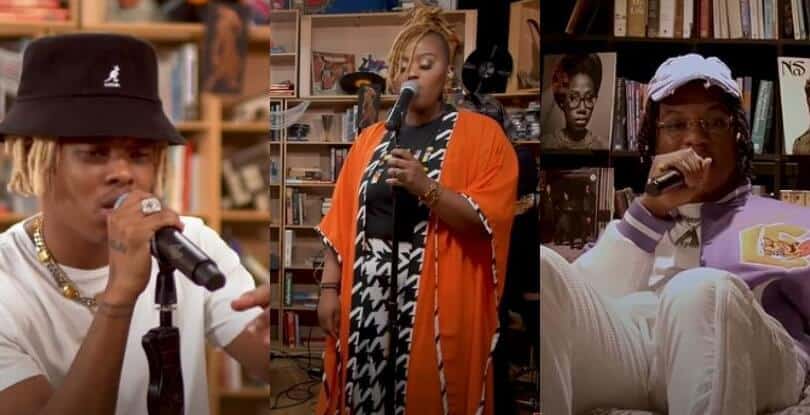
In support of the “inspired by” soundtrack, a multi-cast Tiny Desk concert has just been released, featuring a handful of artists performing their contributed songs. In trademark Tiny Desk fashion, all performances shot at different locations, are tied together by the platform’s preference for intimate, acoustic live settings. The concert opens with a rendition of the project’s lead single, “Black & White” by Nasty and Ari Lennox, with both artists filming from different locations but still displaying phenomenal chemistry, similar to their performance on The Ellen Show a few weeks back.
The South African rap superstar then introduces Cameroonian singer Locko, who delivers a stripped-down version of his catchy bop, “Magnet”. SA R&B sensation Ricky Tyler takes over, flaunting his velvety vocals while singing the fluttery melodies of “Everything”, a standout from his impressive debut album, ‘Small World’. Nigerian singer/rapper, Alpha P follows right after, upping the tempo with his boisterous, TMXO-produced cut, “Jiggy Bop”, exuding megawatts of energy alongside an electric band and a lively hypeman. Superstar SA House DJ/producer Prince Kaybee steps up to the plate in the same setting as Nasty C and Ricky Tyler, and he’s joined by Msaki as the duo perform their iconic song, “Fetch Your Life”.
The multi-artist concert is rounded off by Togolese premier duo Toofan, as they perform their Fally Ipupa-assisted smash, “Ye Mama”, performing with the manic energy they’ve come to be associated with on stage. With high-quality cinematography and stellar musicianship across every segment of the Tiny Desky concert, the ‘Rhythms of Zamunda’ cast adheres the ethos of its host platform, while doing a great job of making the case for African music’s diversity beyond the stock description of “Afrobeats”.
Watch the Tiny Desk concert here.
Featured Image Credits: YouTube/NPR
Dennis is a staff writer at the NATIVE. Let me know your favourite the Cavemen songs @dennisadepeter
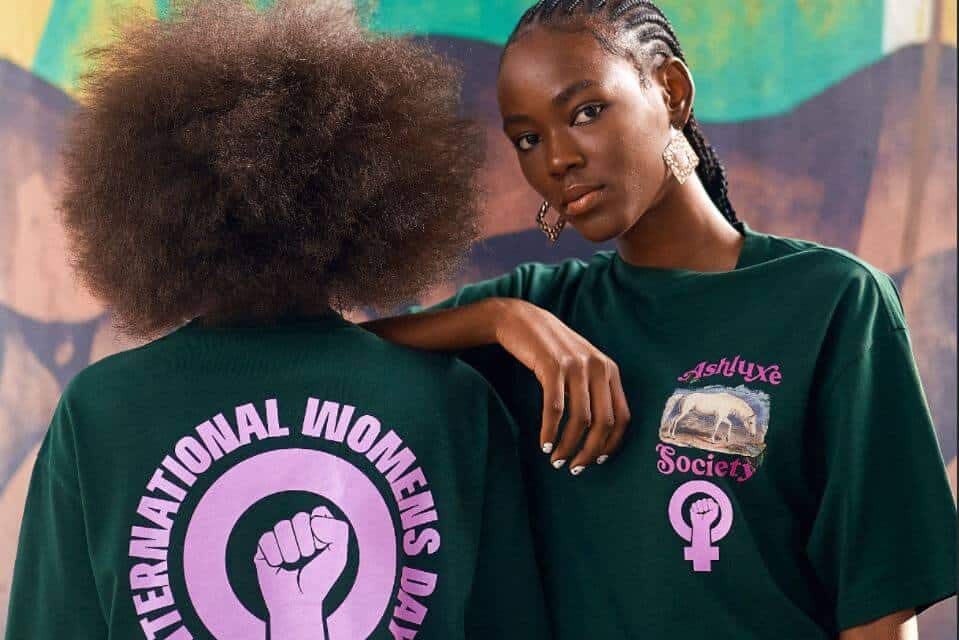
One of the missions for this year’s International Women’s Day, which was celebrated a few days ago, is “to celebrate the work of women creatives and elevate visibility for commercial projects and commissions”. As part of its ongoing commitment to foster unity and positive change through community action, Nigerian streetwear brand ASHLUXE recently released a specially-designed limited edition T-shirt to celebrate IWD ’21. Far from being just another merch drop, the limited T-shirt release is a charitable endeavour, as 100% of all the proceeds will be donated to the Visual Arts unit of the Department for Creative Arts at the University of Lagos.
The donated proceeds will be used to purchase much-needed equipment and materials, and in line with IWD global aim of accelerating gender parity, the monies will also assist in offsetting the school fees of at least three female visual arts students for an academic session. Commenting on the philanthropic drop, ASHLUXE Yinka Ash said: “at Ashluxe we believe that true diversity at every level is the key to creative innovation and success, so it’s more important than ever that we celebrate and spotlight black women currently shaping the creative industry and also nurture the next generation of black female creatives. I cannot think of a better time than during Women’s Hist month.”
Considering the emphasis on STEM professions and Law as the “ideal” route promoted for many Nigerians, ASHLUXE’s gesture towards a Visual Arts program, which is subconsciously maligned in Nigeria’s aspirational society, validates those who have chosen that path, and will wholly support a several women as they pursue a degree that will enhance them ahead of their professional careers. “We are thrilled that ASHLUXE has chosen the Visual Arts Unit at UniLag as the beneficiary of this great initiative”, Professor of Art and Art History at the University of Lagos, Peju Layiwola, commented. “Gender inequality has been a long-standing issue in the art world, so we welcome any drive aimed to specifically nurture and support our female students. Donations as generous as this are vital to ensuring that the University will continue to fulfil its mission of teaching, creating for generations to come.”
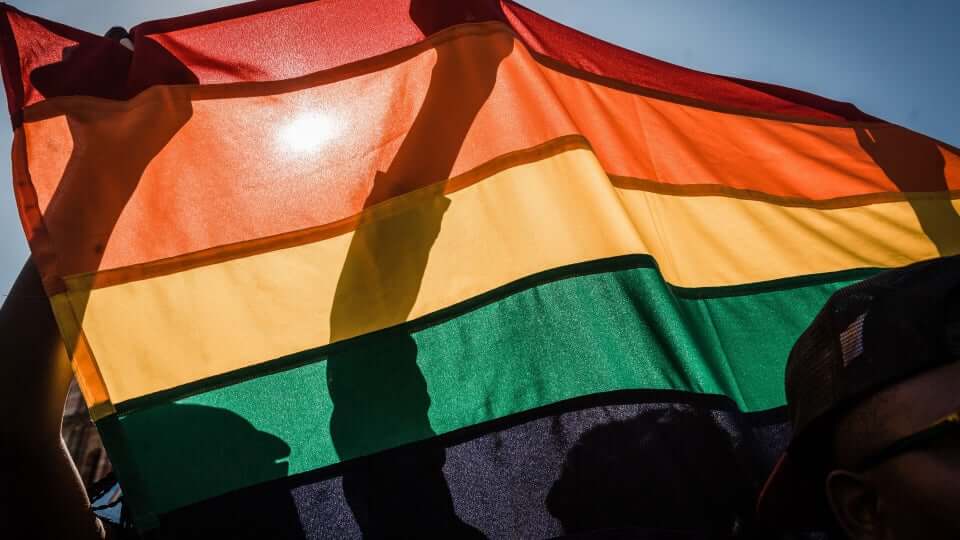
Over the weekend, Ghana celebrated the 64th Independence Day from colonial rule, a day which typically would be widely celebrated given how far the country had come since then. For a silent minority of Ghanaians, though, the day passed quietly and painfully, as they are still reeling from violent erasure by a homophobic state bent on harming and persecuting them.
On the surface, Ghana as a nation has developed vastly since its independence back in 1957. The country has been synonymous with revolutionary African freedom, and widely celebrated for its rich culture and peaceful society, in addition to boasting one of the fastest-growing economies in Africa. In 2019, there was a notable and impressive explosion of entertainment, art and tourist activity spurred on by the Year of Return initiative, which was orchestrated by the country’s incumbent President, Nana Akufo-Addo. The year-long programme of activities was to commemorate 400 years since the first slave ships travelled to Jamestown, Virginia, U.S.A, and the cultural initiative sought to nurture relationships and connections which were lost as a result of slavery. This positioned Ghana as a key holiday destination and investment hub at the time, however, the attempt at refixing its past did not extend to all colonial imports, as the country continues to hold on to historically ingrained homophobia by subjugating their LGBTQIA+ community.
Just days before the weekend celebrations and the swell of collective national pride on social media, this marginalised group of Ghanaians experienced several targeted and violent attacks to their safe spaces and existence. As a result, it’s no surprise that these citizens have found it increasingly difficult to find something worth celebrating about their country.
Public outrage about queer Ghanaians first re-emerged back in January, after a community resource centre was opened by LGBT+ Rights Ghana, a grassroots organisation led by Alex Kofi Donkor in the nation’s capital city Accra. Instead of focusing the nation’s attention on more pertinent public issues — government deals gone awry, the increasing number of unemployed graduates due to COVID-19, or even the dismissed petition to recount Ghana’s 2020 election votes — parliament, media and expert personalities rather took to public forums to once again deny the humanity of thousands of queer Ghanaians.
During ministerial vetting proceedings, when asked whether the queer community living in Ghana deserved protection, Parliament members on live TV mocked the existence of queer Ghanaians, denying their humanity and place in society. This culminated in further attempts of erasure by media organisations such as Joy FM, Peace FM and Pulse, who gave platforms to known homophobes like Moses Foh Amoaning, a Ghanaian albino lawyer with ties to the far right coalition known as the World Congress of Families. By doing so, Ghanaian media contributed to a relentless news cycle of vitriol, spreading further misinformation about the queer community to an already misinformed public.
Some of the press went as far as to organise a hate group called Journalists Against LGBTQ+, pressuring the Ghanaian government to demand apologies from international ambassadors who attended the opening of the resource centre, and for showing their support to the queer community. All these instances aggravated an already present atmosphere of violent homophobia in the country, smearing the opening of the LGBT+ office as a place of indoctrination, rather than a necessary safe space for queer Ghanaians to find communal support.
These events would not have been possible without Ghanaian society’s reliance on section 104 of the Ghanaian Penal Code, a colonial era law which has been used to justify a continuous and mounting attack of its queer citizens. The code which prohibits “carnal relations” between a man and another man has long been a source of justification for the targeted maltreatment and violence against all queer Ghanaians. Using this law, employers, government, the police and the public at large are able to deny queer Ghanaian citzens access to the most basic human rights and freedoms, which include housing, employment, dignity and respect. This law in turn, has permitted and encouraged media companies, public figures and church leaders to promote and peddle homophobic content to the masses under the guise of maintaining national values.
By the end of February, the LGBT+ Rights centre had been raided by authorities on the order of President Akufo Addo in form of a televised spectacle, warning and reminding all queer Ghanaians of their second class citizenship and lack of protected status in their own country. Given this, it is unsurprising that many queer Ghanaians do not see Independence Day worth celebrating. For Ethel, the threat of constant violence has left her feeling numb to the festivities that often frame Ghana as a fun, peaceful and safe country.
“I dont feel anything, not patriotism, no excitement, i dont feel anything really, because this is a country that hates me, that would rather see me dead because I am queer, I don’t have any love to share, no nothing — I can’t feel anything” —Ethel**
This latest wave of homophobia has also fuelled an increase in profiling by authorities and the general public. Young Nigerians know all too well the inhumane treatment and effects of violent profiling, exposed in the youth led #EndSARS protests last October. In the same vein, many young Ghanaians now face instances of kidnappings, beatings and murder, as their reality for even seeming to appear “queer” in public. Men deemed too expressive, or effeminate and too soft spoken, women and men who prefer to dress in androgynous fashion, and essentially anyone who may express themselves differently is in danger of facing unrelenting attacks and abuse from homophobes who are being egged on by the current hateful, national rhetoric.
Bigoted comments like those of former President John Agyekum Kufuor, “Why would a man decide to sleep with his fellow man when God created a woman for that purpose”, further confirm that the oppression of queer Ghanaians does not exist in a vacuum, and that many other traditionally marginalised groups could face mounting pressure during this current national debate. The former president continued to make a connection between working mothers, women who “pursue economic wealth”, as abandoning their true moral purpose of raising children, which in his view is leaving more children susceptible to the “+LGBTQ” and other such “vices”. Women do not solely exist to be wedded and bred, and as disturbing as former president’s comments are, it is unsurprising that those who believe the queer community is an abomination would also hold onto outdated and sexist views on gender roles and the position of women in society. Suffice it to say, these sentiments demonstrate the kind of expired, patriarchal thinking that is being relied on throughout the country, which leaves the queer community and other marginalised groups at risk.
This violence meted out against the community, public beatings handed out by strangers, blackmail by malicious police officers and opportunistic individuals barely scratches the surface of the abuse and violence facing queer Ghanaians and those unfortunate enough to be labelled as queer by our society. Mel [31], shares what being a masc-presenting woman is like in Ghana. “The profiling by [Ghanaians] in public spaces has been detrimental to my everyday life, which threatens my safety constantly, I am always looking over my shoulder,” she tells me. “Celebrating Independence makes me wonder; are we really independent, though? Are we really free? Free to express ourselves? Free to love whoever, free to identify however? If we as a people aren’t free, our country isn’t and I believe that’s what “independence” should be about”.
For a country that boasts of its strong democracy, and positions itself as an innovative hub where youth culture is respected and allowed to thrive, it is incredibly appalling that Ghana continues to mete violence against members of its country. From violent public stripping, to the threats of homophobic rape and societal discrimination, it is clear that my country has little regard for queer lives. To celebrate Independence Day as the state continues to sanction violent erasure and prosecution of these members of its society, is a heavy but necessary reminder that Ghana is far from the free and independent state it purports to be.
Queer Ghanaians are not trying to turn your son/daughter/nephews and nieces gay, nor are they trying to initiate everyone into their “cult”. No one can be turned gay. Sexual orientation, is not something that can be taught or forced on anyone. Queer Ghanaians are simply citizens looking for community, they are searching for a safe existence without having to face unmitigated violence at their every turn. Queer Ghanaians are searching for solace, a right to exist without fear and intolerance. In an ungraceful attempt to assure Ghanaians that their so called liberal president still aligns with good Christian values, President Nana Akufo Addo sidestepped the brutal reality facing queer members of our society. Instead of asking the general public to cease violence towards this group, in line with Article 17(2) of the constitution of Ghana to treat ALL its citizens equally before the law, the president opted to declare that same sex marriage would not happen in his presidency. In a statement released via the LGBT+ Rights social media pages, the organisation detailed a number of rights violations against queer people since the community became a topic for national debate. The organisation also made it clear that they are not requesting for same sex marriages but rather the chance to feel safe in a society so obsessed with their suppression, urging Ghanaians to move forward with tolerance and empathy.
So, yes, Independence Day passed quietly and painfully for queer Ghanaians. Freedom from colonial rule means nothing to a section of society who constantly live in fear for theirs and their loved ones’ lives. For other young Ghanaians like Ms Dee*, Saturday’s festivities meant very little to her, she explains: “Well I honestly don’t care about Independence Day. Why should I care about the Independence Day of a nation that refuses to acknowledge my existence as a queer Ghanaian? Freedom and justice where? My community doesn’t have freedom and there has been no justice for us either so I don’t care for 6th March”. Aku Shika*, another queer Ghanaian woman who was recently outed to family members,also believes there is nothing worth celebrating saying, “I cannot recognise the independence of Ghana as anything worth celebrating, a country with such a large portion of the population in poverty, or cannot afford healthcare, and a good percentage of these people are queer. This country has done nothing for me and goes to great lengths to make sure I am targeted and unsafe. March 6th is like any other Saturday to me”. Like Aku, other queer Ghanaians chose to rather spend the moment with their chosen family and community with whom they have created safe spaces with, where they can relax and not worry about the threat of violence, imprisonment or sanctions from the general public, authorities or their family members.
“Independence day has held very little significance for me personally. This year I’m spending independence day with my girlfriend. It’ll be our first together, so that’s what i’m looking forward to.” — Nana B.
For Kweku*, the current situation has fuelled their drive to continue to push for better community organisation, saying: “I would love to be in a space where I do not have to shrink myself or hide a part of myself just to exist. Independence is synonymous with freedom but as a queer person living in Ghana, this is only a dream. I will spend the day with other queers reflecting on our nationalism and ways to create queer-friendly spaces.” When being confronted with these overwhelming homophobic sentiments, it’s easy to feel as if rights for queer Africans are unattainable. It is also easier to feel defeated, and that the community’s cries for dignity and respect go unnoticed. However, as the years go on, more and more nations are beginning to recognise that queer lives do indeed matter in the fight for global justice. In these parts, countries such as Angola, have taken fairly recent measures to overhaul a century-old legislation that criminalised homosexuality, in addition to passing new laws to prohibit discrimination against sexual orientation in the country. Progress is slow-burning but it is definitely building.
So what would it take for Ghana to get to this point after so many authorities and public figures continue to be steadfast in their hate? For Angola, one of the first steps seems to have been the legal recognition of Associacao Iris Angola, an LGBTQ+ advocacy group in 2018. In Ghana, organisations such as LGBT+ Rights are often side-lined or denied access to legal representation in parliament or other public forums, despite advocacy not being a crime. Another huge difference is that in Angola, there has been a level of awareness fostered and tolerance towards same sex relations that does not seem to exist in Ghana at the present moment. In reality, queer Ghanaians are constantly vilified and dehumanised for having same sex relations. In fact, queer Ghanaians must constantly deal with the hyper-sexualisation of their orientation, since one of the ways traditional media justifies its homophobic sentiment is by constantly reinforcing the “perverted” nature of the LGBTQ+. Derogatory phrases like trumu boys — trumu meaning asshole — are commonplace and used to paint queer Ghanaians, specifically gay men, in a demeaning light further warranting public disapproval and mistreatment.
Fundamentally, it seems that Ghana will need a good deal of cultural and systemic overhaul; educating the public against this kind of salacious misinformation is a start. Though strong anti-LGBTQ+ sentiments exist in Ghanaian society, with more allies speaking up, awareness about the injustices currently facing queer Ghanaians is building. Celebrities like musicians Sister Deborah, Stephanie Benson, Wanlov, politicians and other public figures have come out criticising the continued mistreatment of the queer community. Civil groups like LGBT+ Rights, Courageous Sister and SOLACE_Ghana and more have been putting in the work to create safe spaces for queer Ghanaians and the more support they get, the easier their jobs become.
Hello Love Help us reach our goal. Support our fundraiser. Please Donate generously to our COMMUNITY SUPPORT FUND by clicking on this LINK to Read more, Donate & Share! Thank you❤️https://t.co/D5D1MMD71f
Parts of Ghanaian diaspora and the African community have also come out in support of queer Ghanaians. With global figures like Naomi Campell, Edward Enniful of Vogue, and Boris Cudjoe already showing solidarity by a letter to the Ghanaian government to recognise the rights of queer Ghanaians, raising international awareness about the situation as it unfolds. With Ghana making such a large commitment to reacquaint itself with its diaspora community, pressure from this group is sure to add to the growing mass of voices that cannot be ignored, that are currently speaking out for change. The Silent Majority, a group of Ghanaian feminists, have also lent their voices to the cause, petitioning government and the public ,drawing attention to the rights violations facing queer Ghanaians. Amongst the youth, collectives such Moongirls GH and DramaQueens have been centering and celebrating queer Ghanaian realities through art, educational events and playwriting, demonstrating a shift in values no matter how slight. It is no small feat to teach tolerance and awareness in our society and as time goes on, one can only hope that more people begin to engage and empathise with the issues facing the LGBTQ+ community in Ghana. One thing is clear, queer Ghanaians and their allies refuse to allow local media and government to silence them, taking to social media, international publications to raise awareness about this current onslaught.
As long as people keep speaking up against this hateful rhetoric, queer Ghanaians continue to find ways to pick themselves up from the events of recent weeks and months. At the moment, 8 Ghanaian MPs have now moved to sponsor a private members bill to criminalise homosexuality and prohibit advocacy against homophobia, placing further restraints on the already meagre lives that members of the LGBTQ+ community in Ghana face. It is time more than ever for other members of the Ghanaian public at large, especially allies, to speak against such violent actions and call for better treatment, empathy and the overall protection of this marginalised group. And just maybe, by doing so, we can begin to break these cycles of misinformation and bigotry after decades of practiced homophobia passed on by previous colonial rule.
Because as Kweku echoes, “Whether people like it or not, queer Ghanaians exist”, and they are not going anywhere any time soon.
Like almost everything in the constantly shape-shifting music industry over the years, the role of artist managers has evolved to fit within the scope of the fast-moving, post-digital era. As independent artists gain more traction and power in the music scene, bypassing gatekeepers and the need for labels and traditional contract deals, it’s become increasingly harder for artists to stay sonically relevant and in-tune with their audience in the age of social media. There’s more at stake, a lot more responsibility required to make it in today’s world, and a good artist manager is integral to creating the type of success an artist wants.
In the last few years, Peter Jideonwo has proven himself to be one of the more adept artist managers of the times, successfully managing some of music’s brightest names over the years, including Trippie Redd, The Kid Laroi and the late, highly revered Juice WRLD. Currently, he co-owns independent label Grade A with partner Lil Bibby, and together they’re controlling their little but burgeoning corner of Hip-Hop’s bustling scene in so many different ways, from artist development to social media strategy and, more recently, merchandising, a business that runs the gamut of the hottest rappers at the moment, including Lil Durk, Polo G, Lil Tjay, G Herbo and many more.
“I am really just a happiness engineer. I make everyone happy and I make stuff shake and just really try to innovate and change the game as much as possible.”
Although Peter has certainly earned his stripes over the years, the 27-year old Nigerian would never have imagined that he would become a manager to some of the best names in the Hip-Hop space, but years of cultivating a hustle spirit in Surulere, a suburb in Lagos, Nigeria where he grew up, gave him the much needed thick skin to thrive as an artist manager and budding music executive. Jideonwo tells me that he grew up in a moderate middle-class family that shuffled between Lagos and Port Harcourt, and he quickly learnt that he would have to be enterprising and proactive to get what he wanted.
So when his family moved him to school in the UK at the age of 10, and then to college in the U.S. later on in his formative years, Peter knew that he had to stand out in some way. As a millennial who grew up in the promising age of the internet and social media, Peter soon realised that he was good at getting people to care, and his over a million followers garnered across different parody accounts over the years was proof that he had these people skills. Then, years later, a chance encounter with a Nigerian collective in the States led Peter on a journey that culminated in everything the artist manager is currently bountifully reaping.
“I met a Nigerian guy who was in a collective with other Nigerians and they were party promoters but my problem is that I went to college in Indiana so I didn’t have that kind of crowd. However, I approached him expressing interest in the job and quickly learnt the ropes,” he tells me over a Zoom call last Thursday. After soon learning how to pull crowds of people to parties and nightclubs near him, Peter set his sights on a much grander vision–hosting a music concert. “I never wanted to really be a party promoter because it’s just not for me. I’ve never been an out-there person. So I sold my car for $10,000 and went to the people I worked with asking that we host a concert,” he admits. Although the first concert was an astronomical success at the time, his partners didn’t see a future in Peter’s line of interests and he soon parted ways with the collective.
Peter didn’t relent on his dreams to host similar shows and concert experiences, and it was his hunger to boost the visibility of the artists he booked for shows that endeared him naturally to the role of an artist manager. After working successfully with G Herbo on shows in Chicago, the pair soon began touring different states and venues, looking for gigs and concerts that would take in a street artist, despite the negative connotations attached. As Peter continued to build his portfolio, he eventually met Juice WRLD, the then Soundcloud rapper, who he boosted to social media virality in a matter of months. Peter had found his beat, and he’s been sticking to it ever since.
Just on the other side of his artist The Kid Laroi’s debut on the Jimmy Fallon Show, we spoke to the rising music powerhouse about his role as an artist manager and what it takes to stand out from the crowd. Our chat, which follows below, has been lightly edited for clarity.
NATIVE: How did the artist/manager relationships that you’re currently involved in begin?
PETER: I didn’t know I wanted to make it in the music industry. I have always been entrepreneurial and doing stuff on social media. At one point in my life, I probably had like a million-plus followers on various parody social media accounts so I’ve always been an internet kid since 2006. After working in party promotion after graduating college, I knew that I could drive traffic so I began thinking about other ways to use my skills. This is how I realised I wanted to do concerts although we lost a lot of money at the time. Then I ran into this artist in Chicago called G Herbo. No one would book Herb at the time because he was a street artist. I decided to take a chance on him and convinced one of my friends to book him. God was on my side and he let me book the show, my box office came to about 60-70k dollars and we made huge profits. This was my biggest breakthrough. After that I took him city to city. This was me with no connections, just me with Google, looking up venues, booking shows. That’s when I met my partner Lil Bibby and we instantly connected. We just kept building like that and then I started doing merchandising with Famous Dex. I really grew in that business not knowing how big it was going to be.
NATIVE: You’ve worked with vastly different Hip-Hop artists throughout your career. How would you say you’ve tailored your skills to each artist individually?
PETER: I think the most important thing is really the ability to deal with people, that is what God blessed me with. I would say this is because I grew up with a lot of people and just really know what makes people tick. Sticking to your word is the most important thing you’re going to do. I’m a good people person and I’m really good at establishing connections to a certain extent. You can get something out of everyone and that’s how I bring value every time I am in the mix. A lot of times with artists, people just take and take and don’t really add any value to their career so that’s what I try to do with each artist.
NATIVE: What’s the most important part of your role as an artist manager?
PETER: It’s doing everything that your artist is not doing. The problem with artist management right now is that a lot of managers think exactly as the rappers and musicians are thinking. They want to be in the fame and the limelight but they are not fully investing 100% of their time into making sure that the artist is going correct. Not everyone but a lot of people. The most important thing that an artist manager can do is doing everything that your artist is not doing. If your artist is focused on gaming and making music, then you can do everything else to enhance their brand. Make their brand bigger and try to establish other forms of their business.
NATIVE: What do you think Afropop artists and managers could be doing to boost their visibility on social media.
PETER: Again branding is important. I think a lot of people are already doing a good job of this but I think it’s a different animal when you try to step out of your comfort zone and break into the American market. However, I do realise that the African and American markets are vastly different and what might make you tick in one, may not work for the other because it’s two totally different types of people. I would say really think outside the box and do all the stuff your artist is not doing, especially if you’re the ones with the money. The music back home is great but there has to be something else. We have to do a better job of letting people know what our people got going on so it’s not just “that’s a great record” then we’re on to the next. We need to be doing more stuff to make your artist relevant in everything other than music.
NATIVE: How do you consistently stay on the pulse with everything pop culture and media?
PETER: The internet. I’ve been an internet kid for many years since 2006. I’m still an internet kid even though I am older now so it is really what you choose to do with your time. Are you going to spend the time watching someone else or making sure you are a success and learning? I don’t even spend time watching what other people do and how they spend their time. I’m constantly learning new things and finding out how the world works. Working is not necessarily what humans could be put on earth for. I wish we could spend our time learning more about our culture and improving it. My little three hours at the end of the night, I spend learning. I wish I have more time to learn. You need to be ahead of the curve to benefit your clients in some way.
NATIVE: We know you’ve done tremendous work with the Hip-Hop scene over there but are there any Afropop acts that you’d like to work with?
PETER: You know the person that I really like right now is Elaine from South Africa and I like VanJess as well. I am a huge fan of everyone and I love the culture and I do love what Davido, Wizkid, Burna Boy and everyone else is doing to enhance and break over here in the American market but these are the two that I would really like to work with just because they are fresh. I’m not the kind of person that you try to get into stuff that is already going, I love building things up. That’s what is really special about the work we are doing because we can take something from inception to a bigger stage.
Featured image credits/Courtesy of Peter Jideonwo
Doing what I can to make sure the culture isn’t slept on @tamimak_
It’s officially March, meaning Women’s History Month is here again. Although I don’t subscribe to the idea of only honouring, championing, and celebrating women one month in the year (please I am begging these brands to stop), it’s always a great time here at the NATIVE because I get to run wild on my agenda to put women on and nobody can complain about it. And if they do, then it’s safe to say that it’s going straight to management and good luck to that person.
Over the weekend, I hosted another episode of Native Sound Radio and this time, I got to talk about women for the two-hour radio show and listen to a DJ mix by a female DJ. We spoke in great length about the role of women in the music industry, listened to our favourite African women in music, and chopped it up about topics that concern women from fast-fashion brands stealing from small Black-owned brands and Love Island South Africa not casting any dark-skinned people in the premiere episode of its new show. It was refreshing to sit down and engage in these interesting topics with women like me including Damilola and Mide, and it’s what I’ve always loved to do: learn from and teach other women.
For this week’s Hot Takes column, I’m taking the reigns to school you guys on all things Elsa Majimbo, the Kenyan comedian that has become Black Twitter’s greatest joy, the #FreeMeghan movement, Afronation returning in the summer, and misogyny in the music industry. Enjoy!
What I’m listening to: Women
This week, you guessed it I’ve been listening to women. Not just because it’s Women’s History Month, but because this is just what I’ve always done and it’s been the music I’m most drawn to in my twenties. Last year, I wrote a piece about how women make music that captures the breadth of our experiences in a patriarchal world. Whether they intend to or not, through their music, we get to see and hear our experiences represented by those with a platform as they shine a light on how we navigate this world. I’m always down to listen to women who provide me with therapeutic levels of excitement, given the consistent gloom of the past year.
This week, I curated a short playlist of songs by women that I’m currently listening to on loop. From Tems’ afro-reggae “Damages” , Tia Corine laying down her expensive demands on “Chanel” and South African singer, Tyla’s Pop/R&B infused amapiano sounds “Getting Late”, right down to Amaarae’s slinky raps on “CELINE” and Flo Milli’s ruthless kiss-offs on “Beef Flomix”. These are all young female artists existing entirely in their own lane across the music industry, audaciously speaking their truths and examining their experiences as women in an androcentric industry.
What I’m watching: Ginny and Georgia
Over the weekend, while recording episode 4 of Native Sound Radio in time for IWD, our HBIC and someone I can call my incredibly talented friend, Damilola, recommended a series to me that I had almost written off after watching 10 minutes of the first episode. Netflix’s latest teen drama ‘Ginny & Georgia’ had been making rounds on social media last weekend, with a hilarious soundbite of a conversation between a Chinese-American and a biracial Black-American making its way through our timeline.
Although I thought the show was yet another case of light-skinned problems (aka not my business), I decided to give the show another try after the stellar recommendation and I have to admit I’m warming up to it. I want to be like Georgia when I grow up because how has she been through half the shit she has and still managed to forge a good life for her two children? She may not be the exemplary mum by a long shot, but she certainly does her best to provide as a single mum–despite her worrying methods. Plus there’s a lot of good-looking men on the show and I am not mad at that one bit. Think ‘On My Block’ meets ‘Euphoria’ and I’m certain you’ll get this show.
What’s hot on TikTok: Tyla
19-year-old South African singer, Tyla is taking the music scene by storm. But she’s also racking up pretty impressive views on TikTok and making a case for how the app is crossing over the hottest pop, R&B and rap songs to the mainstream. I’ve recently started following Tyla on TikTok and she’s very entertaining to watch. Her debut single “Getting Late” which has now amassed over 1 million views on Youtube was treated to a quirky TikTok dance challenge and the singer wasted no time in encouraging other people to follow suit as she released a detailed choreography video. You can check out her content here.
Elsa Majimbo is winning
Last year, Elsa Majimbo was the crisp-eating, straight-taking, comedic star of the Covid-19 lockdown and while this year, not much has changed, as the young superstar is still doing all that, the Kenyan comedian and “15x chess champion” is now best friends with two sonic powerhouses and cultural figures who are revered around the world. Yup, that’s right. Elsa is probably on Rihanna and Beyoncé’s finsta and I am not mad at it.
A black woman is winning and she is winning big at such a young age, this is the stuff of dreams. Whether she’s making funny sketches on TikTok and Instagram, or delivering a Cautious Clay-produced ASMR bop titled “Snack Queen” or announcing the imminent drop of a collection with, Valentino, Elsa seems to be constantly booked and busy. I love to see it. Location: On our necks
After postponing the second arm of its Portugal festival last year due to the global health pandemic, Afronation promised to return in 2021, ignoring calls for refunds from many of its guests who had purchased earlier tickets. As of now, there have been no new concerts or live show experiences, even though many have turned to digital mediums to remain engaged with fans who were social distancing at home.
Well, it seems like Afronation know something we don’t know about the end of the panoramic, because they have just announced, yesterday, that the summer festival will be held from the 1st-3rd July this summer, a few days after the UK goes into a relaxed tier of the lockdown as announced a few weeks ago.
While the likelihood of the concert holding still looks slim, we’re not trying to hold out too much hope that this summer will see the world returning back to its regularly scheduled programming, especially when many of us are yet to be vaccinated. Currently, the Covid-19 pandemic is being administered to citizens around the world in phases (excluding Nigeria because our government sucks) and it may very well be that this summer’s hottest item will be evidence of the 2-shots administered from the vaccine. In any case, I think I’ll let you guys go first and test the waters and then we go again in 2022.
The British Monarchy and their racist past (#FreeMeghan)
“My regret is believing them when they said I would be protected,” these were the words said by the former Duchess of Sussex, Meghan Markle to Oprah Winfrey during their interview on CBS in the late hours of Sunday evening. Meghan was referring to the British Royal family, the Windsors, ruled by Queen Elizabeth who is Meghan’s husband, Harry’s grandmother. Just as many people suspected, the interview was both explosive and enlightening as the couple went into detail about their experiences with the Royal family and the Firm–the clandestine organisation reminiscent of ‘Scandal’s’ B 6-13.
While they graciously carried out their royal duties since their courtship and marriage, Harry and Meghan especially have been subjected to the harsh and often-times damning wrath of the British tabloids. Behind the scenes, the couple was in the midst of a mental health crisis which found them dealing with the long-established culture of control and racist thinking that has shaped the British monarchy for many centuries. Their lack of protection for Meghan while she was slammed in the tabloids and on social media eventually took a toll on the former actress while she was pregnant with her first son, Archie, and she reached a critical point in her mental health journey where she was seriously considering ending her own life. Although The Firm was made aware of the gravity of the situation that Meghan was dealing with, they didn’t give her the help she needed and she was told that it would cause more conversation about the Royal Family. The couple first moved to Canada, then to America where they couch surfed with Tyler Perry before buying their own property in LA with the vex money Princess Di left Harry.
Now, while it’s easy to criticise Meghan for ignorantly marrying into an archaic and notedly racist establishment and expecting that they would protect her, that fails to acknowledge how many Black people (especially ones who are biracial) hold onto small faith in institutions in hopes that their proximity to whiteness would save them from institutions that have historically harmed us. It’s a reminder that none of us are immune from oppression and rather than seeking to join or get a seat at a table at these racist institutions, we should be seeking to scatter them and end years of oppression and violence. For dark-skinned Black women, what Meghan Markle is dealing with is textbook misogynoir at play, and we can’t dismiss her own experiences which nearly led her to end her life. In any case, I’m all for seeing the toppling over and destruction of these archaic racist organisations so really both the British monarchy, the Commonwealth and the Firm can get TF asap!!!
Drake’s Scary Hours 2′
Written by Debola Abimbolu
The anticipation for Drake’s coming album, ‘Certified Lover Boy’ has been building since it was first announced during a DaBaby concert in 2019. Though he promised to drop the album by summer 2020, the pandademic forced him to push back the release while he adapted and released ‘Dark Lane Demo Tape’. The album got pushed back again following speculations that it will be available by January 2021, but he explained that he had to focus on recovering from a knee injury. But rather than leave us with nothing, the 6 god in his benevolence has gifted us with another surprise release, ‘Scary Hours 2’, a 3-track tape that follows the first ‘Scary Hours’ EP released in 2018, which featured “God’s Plan” and “Diplomatic Immunity”.
‘Scary Hours 2’ shows Drake isn’t just unstoppable; he’s also flexible. The world might not be ready for a full-on triumph anthem from Drake while the pandemic is still going on, but who can resist when he steps into his role as a self-aware rapper with a lot of haters. With guest features from Lil Baby and regular collaborator, Rick Ross, ‘Scary Hours 2’ is a solid project that will be remembered as one of the more notable releases from his already impressive catalog.
The 3 tracks, “What’s Next”, “Wants and Needs” and “Lemon Pepper Freestyle” find Drake tracing familiar territories, although this time, the old yearnings acquire a fresh glow of top-notch hip-hop production. Where before, he came on as a friendly singer/rapper willing to please everyone, he can now make self-aware brags like “Now I got it all/ And bein’ honest, I don’t really wanna talk about it/ And if I didn’t have it, wouldn’t wanna sulk about it”. Although the bars are compelling as always, he seems like he’s pulling his punches or perhaps saving the best lines for Certified Lover Boy. ‘Scary Hours 2’ shows that Drake is still in the best form of his life and he’s showing no signs of slowing down anytime soon.
Misogyny in the music industry
Over the weekend, a Medium post was shared on social media, it was from a blog called Music InduSTREET run by a user known as @JollofDiary who had recently interviewed a former artist manager who no longer wished to work with female artists in the Nigerian music industry. This ex-manager claimed that had noticed that it was difficult to manage female artists in comparison to their male counterparts for a number of reasons, including lateness due to makeup and wardrobe preparations, the inability to hop on a bike to show venue because she was a woman and the unwanted advances from male music industry stakeholders which they were unable to deal with. The ex-manager went into detail about how these advances from OAPs and industry professionals left him scarred because he had never witnessed such firsthand before.
The post set off a chain reaction where women (and certainly anyone with a brain) challenged the ex-manages reasons providing evidence as to why female artists were far more competent to work with than men. Not only were the reasons entirely rooted in misogyny, but they also showed male privilege as the ex-manager was able to make the decision to separate himself from harassment and unwanted advances when women go through this every day of our lives. Simi and the well-respected lawyer, Foza weighed in and spoke out against how prejudiced people are towards female artists when there’s no difference managing both. Simi also spoke out about her experiences in the Nigerian music industry and how both the labels and audiences would try to pit female artists against each other for no good reason, setting off a much-needed conversation on how women are able to stay afloat and make their music in an androcentric industry.
Barely hours after this conversation, producer, Samklef showed exactly why the industry is ten-times harder for women when they are endlessly sexualised. After a snippet of Wizkid and Tems on set of the music video for “Essence” in Ghana was shared on social media over the weekend, many fans and listeners began tweeting insidiously, exclaiming that they were annoyed that the singer had consistently chosen not to reveal her body. “Everybody can’t wait to see Tems yansh. Me sef dey wait. Who dey wait with me,” Samklef’s now-deleted tweet read, as he boldly sexualised the singer who has explicitly said that she chooses to keep the focus on her music and her lyrics. Samklef was corrected by several people on social media including Simi, who all tried at great length to show the producer why his “joke” was disgusting and unwanted. To defend himself, Samklef insulted Simi, posted an old picture of her attacking her for coming after him because of her looks. He also claimed that ex-BBN housemate Erica had performed sexual acts on live television but now, it’s no longer being talked about because time has passed and it’s not a trendy issue. Again, he continued to show his lack of understanding for a woman’s agency and autonomy showing that he clearly didn’t respect women if he believes it’s his prerogative to make jokes about sexualising a woman who has taken agency over her right to not show her body.
“I need people to understand the message behind the music, not just seeing one sexy, hot girl, who can sing,” Tems had told the NATIVE in her interview for the NATIVE 004 cover story, explaining how she’s dealt with years of harassment because she was more curvaceous than others. Now, in her twenties, and entirely on her own terms, the Rebel Gang leader is saying definitively that she wants the music to come first before anything else, that’s her agency, that’s her right because it is her body. Same way it. is Simi’s body and Erica’s body, these are grown women who have a right to their agency and can choose to do whatever they want. It’s not our place as a society to chastise the women who dare be sexually confident and revealing with their body and in the same breath sexualise women who don’t want that attention. This Women’s History Month, if you can learn anything at all about women’s experiences and our lives, I implore you to start with this: “Our bodies, our prerogative!”.
Over the weekend, the fourth episode of NATIVE Sound Radio hosted by Tami Makinde aired on No Signal Radio, and to celebrate this Women’s History Month, the show will be hosting conversations driven by women. In the first episode of this series, Tami chops it up about all things women and popular culture alongside me, the HBIC around here, and the founder of Femme Africa, Ayomide Dokunmu.
The role of women in the music industry has become an increasingly present topic, given that women from all walks of life and from different creative and business sectors have created spaces for themselves in this male-saturated business. While the needle has shifted a bit, there’s still a long way to go with regards to how all of these women, no matter what their station is, are treated.
In this episode, we had a great time listening to music from African women we admire while we created a vulnerable space where we all shared our experiences in different aspects of the music industry, dissected the recently released Coming 2 America, KAI Collective’s ongoing case against Boohoo and much more. Here are 5 takeaways from the episode
There’s a super-secret NATIVE Sound Album on the way.
I’m going to pretend like I don’t know everything about the NATIVE Sound Album on the way, and be as excited as everyone else about it when it gets released. Last night on the show, we shared the first teaser of what’s to come on the album, with an unreleased record with Chi Virgo number. I guess that’s all I can say for now, but keep your eyes and ears peeled for any information about that, and keep in mind that if you blink, you could miss it!
The Kemist is a fantastic DJ.
I love women, I love listening to women and I love it when women play other women. In this special International Women’s Day mix, The Kemist gave us a cocktail of all our favourite songs by women from Destiny’s Child to Lauryn Hill, Amaarae to Oby Onyioha and Flo Milli to Lil Kim. It was truly a treat, and we enjoyed every second of the mix. Follow The Kemist for more from her here.
Women all over the world suffer, but in our own little corner of the world, ratata! Mide, Tami and I had a deep and honest conversation about what it’s like manoeuvring this world as women, from men who try and use work to offer sexual advances, to people who count you out of a culture you’re building and men automatically assuming that I’m a man because it’s apparently impossible for a woman to be in charge. (Listen for the funniest and most ridiculous thing someone said to me). Beyond this discussion, we also spoke about how hard it is for female artists in the industry to get half as much, even though they do twice as much work, and have a shelf life imposed on their career due to unfounded opinions. It’s actually really hard out here for a real bitch, send a black woman money today.
KAI Collective vs Boohoo
A month ago, founder of KAI Collective, Fisayo Longe announced that her atelier was suing the fashion behemoth, Boohoo Plc for copying the design of her trend piece, the Gaia. On the show, we spoke in depth about Tami’s investigation of the case (which you can read all about here) and what it means for such a big conglomerate to take from a smaller, black-owned business.
Coming 2 America was a bit sexist
The whole of the Internet seems to be talking about the sequel to the 90’s classic, Coming To America, which aired on Amazon Prime and in cinemas. On the show, we spoke about the film, and why it’s problematic in today’s age, for example, it was laden with sexist jokes, which in the ’90s might have not been a big deal, but today, just does not bang. It’s not funny when women are the butt of the joke, and it was a bit hard to overlook that in the grand scheme of things especially knowing how the world treats us. Listen for how we generally felt about all things surrounding the newly released blockbuster.
If you didn’t catch the episode live or missed some of these hot topics while it was on, you can listen to the whole thing here:
In an increasingly liberal world where the “ideal” image of a pop star is constantly being stretched and refashioned, Darkoo is a unique and emblematic persona. In the near two years since the One Acen-assisted “Gangsta” intensified the spotlight on her nascent career, the singer has continued to hone every part of her artistry into an unmistakeable identity, curating eclectic takes on Afro-Swing and Afro-fusion, while continuing to lean heavily into her own physical representation of “a woman who can do both”.
About this time last year, when the world was still figuring out how to deal with a novel coronavirus pandemic, Darkoo released “Juicy (Brown Skin like Eva)”, a sumptuous and lustful ode to the irrefutable beauty of Black women. The song captured a singer gearing up to embrace superstardom, and it would’ve been a much bigger song in the summer that never was. Having closed out the last year with “Cinderella”, in collaboration with superstar French boy band 4Keus, Darkoo has opened 2021 with “Pick Up”, a new single that subtly widens the scope of her ability.
Credited as Darkoo featuring Darkoo, “Pick Up”plays into the common trope of artists collaborating with their alter egos, except in Darkoo’s case, there’s two perspectives and no alter ego. In her small but formidable catalogue, which has its fair share of romance-inclined cuts, the singer’s delivery hinged on infections exuberance. This time around, she’s settled into a mellower tone, fitting for the increased level of vulnerability she expresses on the song. Over piano strings, plucky guitar riffs, lush horns, and thudding bass, Darkoo represents both sides of the conversation in a disintegrating romantic situation, playing both roles in an interesting twist.
Although she mainly writes and sings from the standpoint of the hurt party trying the hardest to fix things, the slightly more hesitant half is felt in the song in the way Darkoo plainly engages with the tension between both sides. “‘cos we just more than friends, more than sex/more to this thing”, she sings on the bridge, offering hope that it might just work out. By the second verse, though, things get spiteful, worsening the chance of redemption and hinting at far deeper issues than a gesture, grovelling, or one-night stand can save.
On “Pick Up”, the gentle rasp in Darkoo’s voice is form-fitted into a tool of honest expression, commanding space within the slinky, Caribbean Pop-inspired groove. It’s less effusive than her previous offerings, but no less compelling, opening up further possibilities ahead of Darkoo’s upcoming debut project.
Watch the video for “Pick Up” here.
Dennis is a staff writer at the NATIVE. Let me know your favourite the Cavemen songs @dennisadepeter
Heading into the March 19 release date of her long-awaited debut album, ‘Wondaland’, Teni is building up quite the head of steam with the Davido-assisted lead single, “For You”. For the straight week, “For You” sits at the top of the TurnTable Top 50, having initially made history as the first song by a female artist to debut and ascend to the top of the charts. Remaining at the top of the streaming charts, tracked through freemium streaming platforms, along with respectable positions on radio (No. 5) and TV (No. 8) airplay charts, this continued run more or less solidifies the song as a smash hit.
Mavin fast-rising star Ayra Starr continues her stellar run in the top ten, with her breakout single, “Away”, entering this week’s edition of the chart at No. 5, dropping one spot from its highest position yet. A few weeks ago, the singer set the previous bar for the highest charting song by a female artist, and its continued presence at the upper echelon is further indication of Ayra Starr’s world-beating potential. Rounding off women’s contribution to this week’s top ten is Latin Pop superstar Becky G, whose collaboration with Burna Boy, “Rotate”, debuts at No. 8. The Reggaton-indented song was released as the official soundtrack to Pepsi’s latest big ad, and it becomes the highest charting song by a non-African artist, a feat achieved primarily on the back of radio airplay impressions.
The rest of the top ten includes usual suspects from recent weeks, with DJ Kaywise and Phyno’s “High Way” climbing back to its peak No. 2 position after the release of its bright and ostentatious music video. Omah Lay’s history-making, perennial chart-topper, “Godly”, makes its mark at No. 3, while his collaboration with Ajebo Hustlers, “Pronto”, climbs to the fourth spot on the charts. Having dominated social media discuss in the days since its release, Rema’s “Bounce” makes its debut at No. 6, a healthy starting position in light of its viral post-promotion which very well continue in coming weeks.
Joeboy’s “Focus”, off his recent debut album, moves four spots to No. 7, marking his highest entry on the Top 50. Rounding of the top ten are Dangbana Republik & Bella Shmurda’s “Rush”, and Davido and Mayorkun’s “The Best”, while Kizz Daniel’s “Flex” debuts outside the top ten (No. 13), indicating the possibility of rising to higher positions in coming weeks. You can view this week’s edition of the TurnTable Top 50 here.
Dennis is a staff writer at the NATIVE. Let me know your favourite the Cavemen songs @dennisadepeter
Music has served as the life force connecting people and communities around the world in these unprecedented times. Though the pandemic has denied us live shows and concerts, where the magical bond between artists and fans unfolds in real-time; artists have remained committed to sharing music with fans, so we continue to honour their art and create space and visibility for them. Last year, The NATIVE created our ‘Songs Of The Day’ column as an avenue to curate some of the best and biggest songs from around the continent. In the time since its creation, the column has served as a means to discover music from niche, rising acts, while also spotlighting releases from the biggest artists on the continent. As artists continue to share their music with us this year, it’s only right that we continue pointing you towards as much great music as we possibly can.
This month is the anniversary of the Coronavirus in Nigeria as well as Women’s History Month so our curation will emphasize celebrating women and music that have made these uncertain times more bearable. During our mid-week selection, we brought you new releases from GoodGirl LA and DJ Zandimaz, as well as new video drops from Ninola, Yemisi, Fireboy DML, SuperJazzClub, Naledi Skyes and much more. Today, we’ve compiled a list of all the new songs you don’t want to miss including a new EP release from Niniola, Naya Akanji, Darkoo, Lavaud, Reekado Banks, Teezee, Yaw Tog, Naomisia, Alpha P, TMXO, and more. Dig in and enjoy.
Darkoo – “Pick Up”
Since her arrival on the scene back in 2019, British-Nigerian rapper Darkoo has established her dominance with an exciting string of singles including “Gangsta”, “Juicy (Brown Skin Like Eva)” and “Kryptonite”. For her first offering of the year, the rapper is turning inwards for a mid-tempo introspective number titled “Pick Up” which finds her confronting her feelings after a lover leaves her calls unanswered. As an artist that’s constantly showcased both her feminine and masculine qualities, this song follows in her approach to deliver a fluid perception of Afropop.
“When I call you, no pickup/You don’t answer put me on missed call” sings Darkoo passionately on the song’s hook before delving into an honest confessional where she confronts her feelings for a love interest who hasn’t reciprocated her romantic intentions. In the Kelvin Jones-directed video, we see the singer play both sides of the relationship: as both the fed-up lover who has given too much and the love interest who can’t seem to commit. With a catchy beat and a message many will surely relate with, Darkoo once again proves her penchant for earworm melodies.
Niniola – “Ryde”
Since the year began, Afrohouse queen Niniola has been delivering a slew of R&B singles for her fans who enjoy her more romantic, soulful side as she revealed when we last spoke to her. So far, she’s served up “Promise” and collaborated with singer Yemisi, “Jolo”, showing she’s more than capable of serenading a love interest as she is at getting listeners to the dancefloor with her enchanting melodies.
Today, the singer has now released a 6-track EP titled ‘6th Heaven’, a soulful pack of singles that find the singer unleashing the depth of her sonic range and allowing love and gratitude to drive her lyrics. The EP’s final track “Ryde” is an alluring sensual track that will have you coming back for more listens. “Our love was forbidden/We’ve been through it all/We’ll be riding it out for life” she sings melodiously over the mix of drums and keys, as she reaffirms her committment to a partner for their love and kindness towards her.
Mide Michael – “Ojoro” (feat. Naya Akanji)
When it comes to romantic love, entering into a new relationship can be a daunting task for anyone who’s got their heartbroken in the past. However, no one is an island and we’re all constantly looking for ways to find healthier reciprocated love as we go through our adult lives. In his latest single “Ojoro”, Mide Michael turns his focus to an ungrateful lover who he has found out does not truly love him. He makes sense of these feelings of hurt and revelation, assisted by Naya Akanji who adds her charm to the uptempo number. “Baby na you don spoil my fantasy/Gone are the days you was killing me”, she sings soulfully, giving a familiar nod to P-Sqaure’s memorable “Do Me, I Do You” line.
Lavaud & Reekado Banks – “Oh My”
British singer/songwriter Lavaud has enlisted Nigerian singer, Reekado Banks for her latest romantic offering titled “Oh My”. Over the mid-tempo beat produced by Mickeygeearist and Tuzi, both artists sing about their romantic affections and what it takes to get them smitten. Lavaud delivers her verse in both French and English, painting a picture that visualises her experiences with love. Reekado Banks joins her on the song’s third verse singing, “Dey fall for your matter, biko hennessy/I pray for ya” also dipping into some casual French and making the song instantly memorable with his sensual lyrics.
Alpha P & TMXO – “Jiggy Bop”
‘Coming 2 America’, the sequel to Paramount’s 1988’s ‘Coming to America’ which featured Eddie Murphy and Arsenio Hall, is days away from release on streaming services. Ahead of this, the film’s official soundtrack ‘Coming 2 America: Music From the Motion Picture’ and an additional soundtrack titled ‘Rhythms of Zamunda… Music Inspired By Coming 2 America’has now been made available online with features from some of Afropop’s most exciting names including Tekno, Tiwa Savage, Burna Boy, Nasty C, Tellaman, Alpha P and more.
One of the standouts on the recently released project is “Jiggy Bop”, an uptempo number featuring Apple Music’s Artist of the Month, and Headies Rookie of the Year nominee, Alpha P and Grammy-nominated producer TMXO. The groovy uptempo shows the singer/rapper Alpha P flex his lyrical muscles on the number, “Young jigga run it up one time/for a real hitta put it on Facetime” he raps with brimming excitement over the song’s hook, matching his clever wordplay and enviable with TMXO’s incredible bouncy production.
Jay Cliff – “Chargie” (feat. Töme)
Ghanaian singer, Jay Cliff has just released a new 6-track EP titled ‘Red Wine Conversations’, a concise offering of romantic numbers that featuring a host of different artists from Efya, to TÖME, Ayüü, $paceley and more. The TÖME-assisted “Chargie” is a romantically-inclined number that finds both artists addressing new love interests who are the missing puzzle piece they’ve been missing all this time. “You don’t want to keep your distance/and I want you anyway” Jay Cliff sings on the song’s second verse, admitting that he’s willing to look past the mixed signals for the relationship to work.
Naomisia – “Victim”
After years of releasing deep R&B cuts, Tanzanian singer Naomisia has just released her debut project which is titled ‘What Doesn’t Kill You’. In usual fashion, the new project finds her combing through her experiences and becoming a musical manifestation of power and strength for her listeners. The project’s opener “Victim” finds the singer/songwriter at her most honest, singing about a past lover who she can’t seem to forget. “You have a hold on me, we should make a decision/Cause I’m willing to be your victim” she sings soulfully on the song’s hook, admitting that she’s not ready to move and accepts that she’s ready to keep holding on to her muse’s captivating love.
The past few months have been characterised by an increased demand to end the wanton corruption, injustice, and inexplicable inequity perpetuated by our world leaders and the failing police systems that have spent years abusing their power worldwide. Here in Africa, particularly, a host of nations from Nigeria and South Africa to Cameroon, Liberia, and now Senegal, have seen their young people unite to continuously speak up against oppressive regimes, years of unfettered violence, and the abuse and disregard for basic human rights by those sworn to defend and protect us.
Social media has accentuated the violations taking place across the continent, allowing many of us to watch in real-time how unsafe life has become. Over the past two days, Senegal has been under harsh global spotlight since the eruption of protests in the country’s capital city, Dakar following the arrest of political opposition leader, Ousmane Sonko on Wednesday ahead of his scheduled appearance in court for an alleged rape charge against him.
Supporters of Senegal’s opposition leader Ousmane Sonko protest in Dakar after he was arrested ahead of his scheduled court appearance to face a rape charge.
Sonko was arrested on charges of disturbing public order after his supporters and security forces began to clash pic.twitter.com/fZEpFyAi19
According to reports by Amnesty International, Sonko was arrested on his way to his hearing at a Senegalese court due to the presence of demonstrators and sympathisers on his route. Following this, on March 4, his supporters took to the streets across the country expressing their discontent at the government’s treatment of Sonko resulting in the worst unrest the country has known in recent times. The headquarters of media houses deemed close to the government were attacked on Thursday evening and other demonstrations have begun across the country including in Sonko’s native Casamance region in southern Senegal.
In retaliation, Senegalese law enforcement have clashed with supporters of Sonko, using tear gas and stun grenades at protesters. This is said to have resulted in the death of a 20-year-old man, Sheikh Coly in Casamance which is in the south of the country. Much like during the #EndSARS protests in Nigeria, the Senegalese government is systematically silencing the voices of the protests, through these indiscriminate arrests and also by thwarting press coverage of the events ongoing. On Thursday night, the government placed bans on two media houses accusing them of broadcasting “in loop” images of unrest triggered by the arrest of an opposition leader. Today, social media and messaging apps in Senegal were also reportedly restricted from internet access in the early hours of the day amid the two-day unrest.
Reports also state that Sonko was to be transferred Thursday evening to a Dakar courthouse where his case was to be heard by a judge but his lawyers said the hearing had been postponed to Friday. The country’s Interior Minister, Antoine Felix Abdoulaye Diome said that Sonko had been arrested over a ban on gatherings because of the coronavirus and violating a traffic plan put in place. Sonko, who came third in the 2019 presidential election accuses incumbent president Macky Sall of conspiring to sideline him ahead of the 2024 elections because of his popularity among the country’s young people.
It seems that governments across various African nations are feeling the number and power of its young population who will stop at nothing to ensure that every citizen has access to their basic human rights and can live free from persecution. The Senegalese government now has the eyes of the world turned on it as news of the violent clashes continue to take over our timelines. Thankfully, this year, we are demanding better, for ourselves and the world we all live in.