A year later, Ayra Starr has emerged as a generational voice

A year ago, Ayra Starr arrived in spectacular fashion, with a fully formed voice, a bewitching demeanour, and the backing of the most effective label machine on the continent.

As has become the norm for new Mavin signees, Ayra Starr entered the public eye with her debut EP, an eponymously titled 5-track set with the opening number, “Away,” as its lead single.“Away” opens on a rather solemn tone, even if its lyrics are biting, until it hits a crescendo with a magnificent hook that instantly carves out space in your memory. On “Sare,” another delightful standout, the euphoria leaking out of her vocal performance is mesmerising and instantly identifiable, because the dizzying feel of devoting yourself to a romantic partner, especially when you’re young, is a universal experience.

Within a heartbeat, the singer’s name was already in ubiquitous circulation; and it was near impossible to scroll across the Twitter timeline on that day without seeing takes about Ayra and her new EP. As much as the buzz revolved around a new face in the game, Ayra Starr’s activation was also a testament to the Mavin machine, which, over the years, has become an incubator for nurturing sure-fire talent. Starr was no different.

Without any ounce of exaggeration, Ayra Starr’ and the glossy video for “Away” showed that Ayra Starr had IT. She possessed that special combination of talent and self-assured charm that melds into star power. Part of which came from working with the greatest music Svengali in Nigerian music, many months before her eventual mainstream arrival. The other part, and perhaps more important, is the preternatural poise she already possessed from years of fiddling around with her voice.

As an adolescent, Ayra Starr was already attempting to remix and cover her favourite songs, and by her early teens, aided by a mother who supported her dreams, Ayra and her brother were already writing original songs. If you scroll through her Instagram, there are covers of Andra Day’s “Rise Up” and 2Face Idibia’s “Ole,” both wildly different in style and substance, while serving as accurate depictions of Ayra’s pull which lays in her melodious vocals and its resounding tone.

A lot has been said and written on Ayra Starr being relatable to Gen Zers and younger millennials. As true as it is, it’s not a distinction that seems to limit her appeal. The trends of Pop music are usually dictated by the young demographic, but the true mettle of a pop star is the ability to reach a broad, diverse range of people. In craft, the melding of clear-eyed writing, deftly handled melodies, and a multiplicity of musical choices from soulful folk to IDM is impossible to fault, regardless of proximity to the singer’s immediate audience. While Ayra’s largest crop of loyal fans are those she’s much closer to in age, the music is refreshingly light and the subject matter is universal enough to transcend generational divides, as proven from the singer’s near 1.5 million followers on Instagram.

In a larger context, this sort of breakout is another indicator that the current vanguard of Nigerian Pop music is widening for its younger voices to shine right off the bat. Just two years before Ayra’s unveiling, fellow Mavin wunderkind Rema, stormed into mainstream popularity with his dazzling eponymous EP, becoming the toast of Nigerian music almost overnight. A year later, Port Harcourt-raised singer/producer Omah Lay crashed the doors with Get LayD’, a delectable debut that fused Afropop and contemporary R&B into a breezy whole. Both artists followed up with new project(s)—two for Rema, one for Omah Lay—within the same calendar year, effectively setting a new bar for breakout year criteria.

With immediate examples in front of her, Ayra Starr didn’t just follow suit, she upped the ante. About seven months away from her debut EP, she dropped her debut LP, 19 & Dangerous’, to instant critical acclaim and rapturous public acceptance. If ‘Ayra Starr’ was an assertive coming out party, her debut album was a commanding statement, magnifying every positive attribute from her first project into a wondrous 11-song set. Her writing, with major assists from brother and major collaborator Milar, remains clear, albeit even more inviting with the avalanche of quotes across multiple standouts. The music is as colourful as ever, spanning a range of genres such as emo pop, acoustic R&B, Trap-inflected Afropop, and more, without dampening cohesion.

“I always knew I was going to name my album ’19 & Dangerous’,” she told The NATIVE before the album release. “I said that by 19, I would release my first project and now, I am doing exactly that.” It’s awe-inspiring that in her first full year as a professional recording artist, Ayra Starr was basically ticking off items from her checklist. Beyond the self-manifestation hubris, though, it’s a culmination of her life’s work till that point. To fully appreciate that, go through Ayra’s Instagram page and you’ll find the alleged video that pretty much convinced Don Jazzy to sign the singer. That song, then titled “Damage” per the video caption, shows up on her debut album as emotive highlight, “Toxic.”

Of course, it would be impossible to take stock of 19 & Dangerous’, and Ayra’s entire 2021, without mentioning “Bloody Samaritan,” the London-produced masterpiece that turned into a smash hit and anointed Ayra Starr as a blossoming superstar. It’s a gleaming Afro-fusion gem, a fusion of dusty Amapiano drums and ornate melodic flourishes forms a sonic background for a vocal performance that’s pure gold in technique and downright infectious in attitude. As definitive as her biggest song is to her career trajectory, Ayra Starr’s breakout year was wholly defined by her catalogue, a stunning collection of sixteen songs across two stunning projects.

Ayra Starr entered 2021 relatively anonymous. A year later, she’s just entered 2022 as one of the most exciting artists of her generation. For the singer, her label and her most loyal fans, I’m pretty sure there’s a general consensus that there’s still a lot of work to do, but it doesn’t mean a victory lap isn’t presently warranted.


BRUK IT DOWN: GRAMMY NOMINATED PRODUCER, LONDON ON THE MAKING OF “BLOODY SAMARITAN” BY AYRA STARR

Adekunle Gold Announces New Album ‘Catch Me If You Can’; Shares New Single “Mercy”

Adekunle Gold’s obsession with growth is remarkable. Over the past few years, the singer has constantly metamorphosised with the times, breaking previous moulds of him in an effort to to remould and fine-tune his persona into something rounder, edgier and more captivating for his audience.

While these transformations happen in real-time, they were overtly evident on his third studio LP ‘Afropop Vol.1,’ which has spurred new levels of recognition for the “High” singer. Now, following a string of hit singles last year including “It Is What It Is”, the Lucky Daye-assisted “Sinner” and “High” with Davido, Gold is hot on the heels to begin the year with a new album titled ‘Catch Me If You Can,’ and a new single “Mercy” released today.


View this post on Instagram


A post shared by AG Baby (@adekunlegold)

The Blaise Beatz-produced track “Mercy” fuses energetic Afropop drums with heavy Dancehall elements and slick electronic production, providing the perfect backdrop for Adekunle Gold to take a shot at his enemies who disguise as friends. He speaks about fake love from friends and foes, directly conversing with His maker on how to navigate the stormy relationships he faces. He sings “Oh lord have Mercy Mercy,This fake love don dey plenty plenty/Who born the person person wey wan try cross me make dem try me, try me,” over the song’s catchy hook, even going as far as to aptly interpolate Awilo Lokomba’s classic song “Denge Pose.”

It’s clear that Adekunle Gold is fully taking control of his journey on this next phase of his career. The new album promises to showcase more of Gold’s signature addictive melodies and honest lyricism while giving room for the singer to grow, evolve and take on new subject matters as a husband and father. Alongside sharing the new single, Gold also share the album’s evocative cover art and its release date which is slated for February 4th.

Listen to “Mercy” here and pre-order ‘Catch Me If You Can’ below.

Featured image credits/CandiceLawler

Our First Impressions of Fave’s Debut EP ‘Riddim 5’

It’s hard not to root for 21-year-old newcomer, Fave. Following a successful run in 2021 which culminated in a double feature on Olamide’s highly anticipated 8th studio LP ‘UY Scuti,’ and the release of her breakout hit “Baby Riddim,” the singer began the  year determined to draw fans and listeners closer into her world with the release of her debut EP ‘Riddim 5.’ However, for those who’ve been paying attention from the jump, Fave’s success feels like a divinely ordained next step in her nascent musical journey.


View this post on Instagram


A post shared by Fave (@faveszn)

By now, it’s no secret that Fave is no stranger to Internet success. When she was only 18 years old, her first official single “M.O.M.M.S” went viral on social media, attracting the ears and attention of loyal fans who have stuck by her the whole time and bolstered her career to new heights. Since then, Fave has operated in a lane entirely of her own making, teasing covers and new singles on social media, with an audience that’s acutely aware of her rookie status with veteran tendencies.

Over the years, she’s risen from an exciting name on the cusp of a breakthrough to a rising star worth paying close attention to. Showcasing a unique mixture of versatility and style, Fave continues to fashion herself into her own kind of pop powerhouse, choosing to put the music first before anything else. And this seems to have paid off for her as she continues to win over the Internet and many industry heavyweights along the way.

With the release of her debut EP, ‘Riddim 5,’ Fave is ready to prove herself and her abilities even further to the world. Employing stellar production from a range of talented producers such as KrizBeats, Niphkeys, Damie and more, the singer tells deep and poignant tales about love and life from the perspective of a 20-something woman still finding her way. Each song carries a profound sense of emotional depth which Fave uses to conjure therapeutic levels of aural healing for those in need. Her touch is light, and the production so well-matched that when she makes claims such as “I still go do my own, this shit is part of the run,” on “Kilotufe,” nothing seems out of place.

The hard work is evident and ‘Riddim 5’ has already made its way to the top albums on Apple Music Nigeria, barely 24 hours from its release. So, what’s the project’s best song? Biggest skip? Most surprising moment? The NATIVE team have got you sorted as we deliver what we think are the standouts from ‘Riddim 5.’ Here are our first impressions of Fave’s debut EP.

Best Song?

Ada: That’s hard because before I heard the project, I thought it would for sure be the single, “Baby Riddim” but now I’ll have to add two more tracks to my fave list and those are “Obsessed” and “Mr Man”. They’re really so catchy and they just get you in a gentle groove. Don’t sleep on “S.M.K” too.

Wonu: My best song is easily “Mr Man”. I love the progression of the track, it’s so enjoyable and soothing to listen to and I certainly appreciate the bounce on the production of the track. Close second will be “Baby Riddim”, it sounded as if it was a new song I was listening to and it just flowed with the whole tape. Fave really did something with this tape I must say.

Dennis: Split between “Kilotufe” and “Mr Man.” Maybe because they’re night and day, musically and thematically, but they work in their given contexts. The music on “Kilotufe” is sparse and thudding, a foreboding backdrop for Fave’s annoyance at a former love interest trying to double back after she’s become popular. “Mr Man” is lush, somewhat dreamy, and has a sunny bounce, perfect for those re-assuring quips. Maybe it’s the latter, because the opening line of that chorus is one of the top highlights of the EP.

Biggest Potential Hit?

Wonu: Even after giving the project a few spins, I think “Baby Riddim” is still the biggest hit off the tape. I believe the song is going to be a lot bigger than it already is right now. The song has so much potential to be a global smash hit, I mean let’s take a look at what the track is currently doing?

Moore: “Baby Riddim” definitely seems like the most versatile. It has the kind of rhythm that makes it capable of being a club anthem, but is also chill enough to be the type of song someone could listen to relaxing with friends or alone. That’s not even mentioning the fact that it already is the most popular song so far, having Baby over 3 million streams on Spotify.

Biggest Skip?

Moore: My biggest skip has to be “S.M.K”. It doesn’t immediately hook me the way the other songs do. It may work better out of the context of the rest of the EP, but it feels extra repetitive as it seems like a less complex version of some of the other tracks. It is overall a bit too mellow and uncomplicated. It could be good for the right mood however, just not every mood.

Tami: It’s hard to choose your biggest skip on a project that runs under 20-minutes, especially one as thematically drawn together as ‘Riddim 5.’ Every song serves a purpose on this EP and peels back a layer to the viral star that we’ve become accustomed to over the past few years. Still, gun to my head, if I was to choose my biggest skip, it would be “S.M.K,” the Niphkeys-produced number which I had run back a couple of times before it stuck like the other songs. Still, it’s a strong body of work that deserves to be heard.

Overall First Impression

Ada: I can not deny that Fave definitely has so much potential. The whole project definitely doesn’t hit from the first listen, it’s one of those that you start getting into it from the second listen. Surprisingly I enjoyed it more than I thought I would but I do wish she added one or two more songs and had more versatility with the overall vibe of the project.

Moore: ‘Riddim 5’ is certainly an easy listen. No song has too much energy. It works in the project’s favour, the songs aren’t overwhelming but they aren’t boring either. The order of the tracks also gives a nice build up to the most energising song, Baby Riddim. not super experimental, it is the type of EP that you could listen to driving home with the windows rolled down. I definitely see this finding a lot of success.

Dennis: ‘Riddim 5’ is a project of consolidation; there are no wild surprises but it’s a pleasant way to build on the abilities Fave has flashed in the last few years of her come-up. Her writing is consistently evocative, her voice is a marvel in how she uses it, dialing it down for breeziness and cranking it up in bits for intensity and tonal variety. Since “Baby Riddim” is the breakout hit, this EP makes her potential for greatness undeniable.

Featured image credits/Tomm_34

Tiwalola Ogunlesi Scores Two-Book Deal With HarperCollins

British-Nigerian life coach, speaker, and now author, Tiwalola Ogunlesi has been on a mission to empower women to be their most confident self. After years of racking up an impressive portfolio and anchoring her own self-empowerment podcast, Ogunlesi is now ready to make her biggest move yet: the release of her debut book titled ‘Confident And Killing It.’

Announced yesterday via social media, Ogunlesi shared that her latest book will be coming to stores in the summer of 2022 with the backing of Harper Collins, one of the largest publishing houses in the UK. The book which is now available for pre-order online is slated for release on the 7th of July with the promise of a two-book deal.

According to Tiwalola Ogunlesi’s Instagram, ‘Confident and Killing It’ is a practical game plan to help readers unlock their most confident self. The book will serve as an empowering guide for anyone looking to overcome imposter syndrome and tap into their best self. Speaking about her debut book, Ogunlesi also shares:

‘Understanding that confidence is a practice and becoming intentional about my personal growth has helped me win the battle in my mind and become the confident woman I am today. Discovering my truth has brought so much joy, love and abundance into my life, and I want the same for every single one of you.’

Since the inception of her website and the slogan ‘Confident and Killing it’, Tiwalola Ogunlesi has made it her life’s mission to ensure that every woman feels and lives as the best version of themselves. She has encouraged women to love themselves wholly and to show up even when they are marred with doubt. Also speaking about the new book, commissioning editor, Zoe Berville shares: “Tiwalola empowers others to live more confident and fulfilled lives in a way that feels completely fresh, authoritative, and accessible. And in helping women to help themselves, her work speaks directly to the heart of our ethos as a division. We have big plans for Tiwalola’s Publishing and are thrilled to be joining the Confident and Killing It movement.”

You can pre-order ‘Confident and Killing It’ here.

Featured image credits/
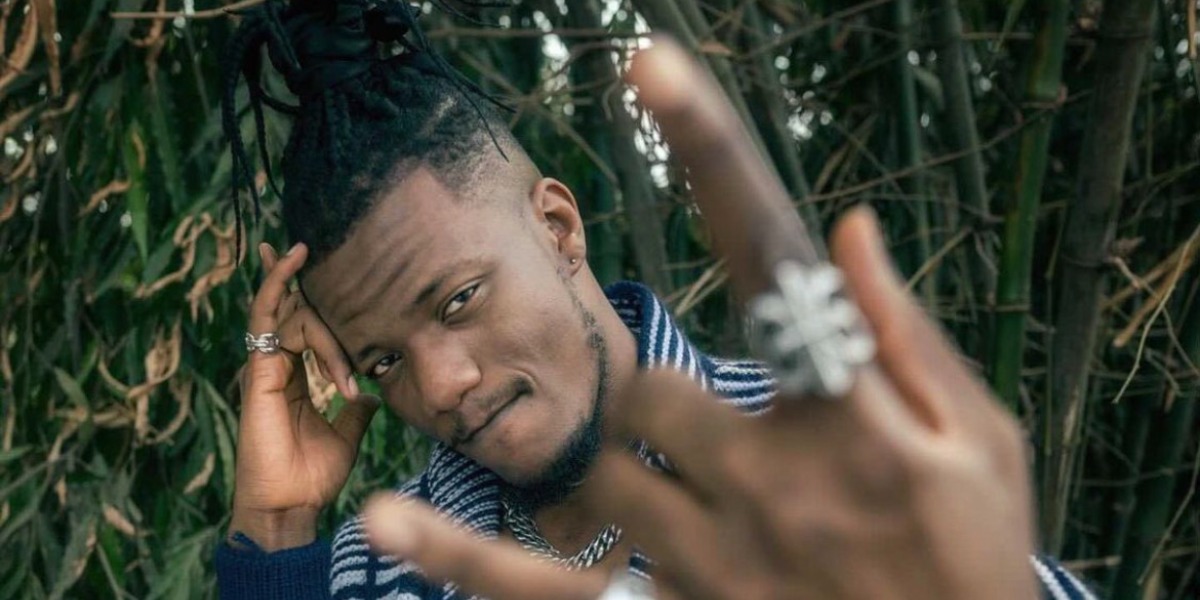
NATIVE Exclusive: Nissi Ogulu has a lot to say, and you’re going to listen.

“The best is what you should be aiming for at all times, because that is your capability” 

Nissi is gearing up to the release of her aptly titled project, Ignite, whilst in isolation away from her family in London. Whilst her whole family is together in Lagos, Nissi got stuck in London just before the lockdown, and is missing home and her family immensely. While some of us are stuck with parents at home against our preferred wishes, however if your family consisted of Burna Boy, Mama Burna and the super stylish Ronami, you would be upset if you were alone anf away from them whilst in the middle of a global pandemic. Coming from an immensely talented family, Nissi’s talent both sonically and visually is innate, and as a result has always harnessed her creative abilities. She tells me that since she was a young girl, she’s had a grand vision of what she wants her talents to be used for, and her dreams are slowly becoming a regular reality for her.

There’s a popular saying that the apple doesn’t fall far from the tree, and looking at Nissi’s both nuclear and extended family, the saying can’t be any more true. Her older brother, Burna Boy, the African Giant has taken great strides in the past year, and left big shoes for anyone to fill, however, Nissi isn’t even trying to. Before Buju was signed to On A Spaceship Ent, Nissi was the only artist under the label imprint, which she calls their family’s dynasty. When I ask whether she feels any pressure from her family, she explains matter-of-factly: 

“My family has always been supportive with my creativity. We all have our journeys with our own different creative processes, talents and expressions. My dad supports and helps me with my product design, but my mum and my grandad are key in the music. My grandad showed me the ropes in terms of performing my music and actually expressing what I have to say in a song, rather than just singing it bluntly.”

The talented singer/songwriter is looking forward to introducing herself and her sound to the world, and our brief conversation over the phone told me everything I need to know about her and her music. The 7-track project aims to be the spark that ignites the fire within Nissi, housing tracks which she recorded over the past two years. She has a lot to say, and won’t hold back. No matter who you are or where you’re from intentional lyrics and delivery will command your attention, and ensure that you’re listening. You’ll get the sense of this from some of her pre-released singles from 2016’s “Pay Attention” or the recently released “Judi”, which were all aimed to introduce the talent Nissi houses within her. 

“This is my first body of work and I see it as an appetiser. People are just getting a taste of what Nissi is or what she has to offer. Everything I release is just me peeling back the layers of the onion, and I know if you’re listening to this project it’s definitely for me, not anybody else.” 

The layers of this onion have been forming for a long time. She fondly recalls sneaking around in Corona School, Agbara with her best friend to form a rap group – where she went by Nizzle – to vibing at Sunday Service at Royal High, Bath. 

This brings to mind her 2016 single, “Pay Attention”, which could have very easily been released today. Singing xxx, Nissi confronts society’s ills and speaks about the ways we need all need to be more mindful and pay attention to what’s going on around us if we want to effect any change. This is what her music embodies, and her project serves as her stepping stone to spreading this message. It’s very important that her music adds value, because in her own words, what’s the point of having a voice if you’re not going to use it to effect change? 

Music has long been used as a tool of expression, which benefits both the artist and the listeners. The best kind of music is the sounds you can feel, and Nissi ensures to pour as much of herself into the songs to make anyone similar to her feel what she’s saying. 

I’m very empathetic by nature and I take inspiration from everything around me. I always try to express it in a way that I know other people can relate to. So for me, it goes way beyond just the two or 3 minutes or the gbedu bursting your brain”. It’s very rare to find such a young artist in the game be so sure of themselves and what they want their music to sound like, and when you think about it, it shouldn’t come as such a shock that this is the case with Nissi. She tells me that having her mother’s support is a key player in how much confidence she has in herself. Watching her mother’

“The real skill is being able to say something that people can understand and enjoy easily. It helps when you constantly utilise music as a means to say something, whether it’s to yourself or to someone else.

10 African Music Executives To Keep Tabs On

In the past year, African music has thrived and grown in the most insular moments, embedding itself into global cultural conversations more than ever before. On the continent, Afropop has soared, gaining new heights, reaching new ears, and now earning more reverence and fandom than ever before.

While artists are regularly recognised for the music they make, there are a number of key players operating behind the scenes who have made invaluable contributions to the burgeoning Afropop landscape. All across the continent and the diaspora, these exceptional music execs continue to make landmark moves for Afropop and play their part in fashioning the sounds of today. Over the last 12 months, we’ve particularly seen a number of these key players record great wins, from talent managers to A&R’s, music editors, project managers and more. This by no means is a definitive list but just a starting guide to some of the most exciting African names in the music industry, who are poised for an even bigger 2022.  

Jada Pollock

Talent management – Wizkid

Music Executives

 Jada Pollock kicked off her career about 10 years ago and has since then managed some of the most successful acts from around the world. She started off managing Tinchy Stryder, and has since worked her way up the music industry, contributing to the careers of talents such as Chris Brown and Pia Mia. 5 years ago, Jada began managing Afropop superstar Wizkid and currently still runs the Grammy Award-winning artist’s team alongside his long-time manager, Sunday Are. Seeing the success of Wizkid’s ‘Made In Lagos’, it is no surprise that  Jada was rated Billboard’s ‘Executive Of The Week’ last September.

Lanre Garba

Co-President of Black Music, Atlantic

Music Executives

Gaba started off her career over a decade ago, first holding a post at EMI Music Publishing and Ruffhouse Music Publishing. In 2002, she joined Atlantic Records in the A&R department before working her way up to the position of VP. In 2015, she was appointed head of urban A&R operations, and she became GM/senior VP of urban A&R in 2018, and last year rose to executive VP of Black music A&R. She currently serves on the advisory board of the Clive Davis Institute of Recorded Music at New York University and Gyrl Wonder, a mentoring organisation for young women of colour. Just recently, she was promoted to co-president of Black Music.

Benewaah Boateng

Manger, West Africa (Anglophone)

Music Executives

Benewaah Boateng has served as an invaluable contributor to the Ghanaian music scene. She began one of the leading youth music blogs in Ghana, championing the voice of the underground who are typically maligned in the industry. Since then, Harmattan Rain has gone on to record many wins including becoming an official Apple Music playlist curator and breaking many artists into the industry. Now, she currently holds the role of Manager for Spotify West Africa (Anglophone), a space where she continues to make room for music from back home.

Tunji Balogun

CEO of Def Jam Recordings

With over a decades worth of experience in the music industry, Nigerian-American Tunji Balogun now serves as Def Jam’s current CEO. Starting off his career back in 2004 as a marketing intern at Warner Brothers Record before taking on a full-time role as an assistant for the label after obtaining his bachelors degree. Since then, he’s worked at Interscope and RCA where Balogun served as senior vice president of A&R before his promotion to executive vice president and played an integral role in the careers of Childish Gambino, Bryson Tiller, H.E.R., Khalid, Goldlink and more.

Camille Storm

Music Executives

Camille Storm of Camille&Co, a Nairobi based creative agency representing groundbreaking African talent in music, fashion and art, is a widely recognised name in the African music industry. Since starting off her career, Camille has worn many hats in the music industry serving as a music journalist, an entertainment consultant, PR strategist and an A&R and more. It’s no wonder her IG bio reads “I make people famous.” With no signs of slowing down anytime soon, Storm continues to forge a formidable career off the back of helping others and has grown to be well respected among her peers.

Cindy Ihua

Talent manager 

Music Executives

Women are certainly making a name in the industry right now. Artist manager and creative director, Cindy Ihua is one of such women. Currently serving as the manager for some of the toughest lyricists in the game including PsychoYP to Azanti and Zilla Oaks, Cindy continues to . Alongside working as a talent manager, Cindy also runs Ceeander Entertainment, a filmmaking entertainment company shaping African films. Just this year, the company has worked on videos such as PsychoYP’s “Euphoria”, Azanti’s “Latan” & more. 

Temi Adeniji

MD, Warner Music South Africa

Temi Adeniji is the recently appointed Managing Director of Warner Music South Africa and SVP, Strategy, Sub-Saharan Africa.  She joined Warner Music as Director, International Strategy & Operations in 2016, and was promoted to VP in 2019 and SVP in 2020. In this role, she continues to bridge the gap between Africa and the world, rising the ranks at a pivotal time for the label which continues to expand into the continent.

Charlotte Bwana

Head of Media & Brand Partnerships, Audiomack Africa

As the Head of Media and Brand Partnerships at Audiomack Africa, Charlotte Bwana has been an invaluable contributor to the burgeoning Afropop landscape. Recently, she negotiated a landmark deal with MTN that made Audiomack’s unlimited music and content free to more than 82million users. She continues to grow the platform’s roster of clients, working with names such as Afrochella, Ziki Music, Y fm (South Africa & Ghana) and more.

music executives

Muyiwa Awoniyi

Talent management – Tems

It’s no secret that Tems is hot on the block at the moment and that’s thanks in no small part to her great support system which includes manager, Muyiwa Awoniyi. Before he was artist manager to Adele’s favourite artists, Awoniyi was also manager to some of exciting names including Nonso Amadi. Awoniyi also runs a podcast known as the The Donawon Pod where he discusses important topics ranging from intellectual property of African art to the importance of healthy relationships. With a sharp eye for talent, Awoniyi is definitely poised to make more moves in 2022.

Music Executives

Feyisola (Kulupsy) Ogunbanjo

Talent management and Project Manager, NSS

Before Feyisola Ogunbanjo was manager to exciting acts such as Lady Donli and MARV OTM, and project manager for NATIVE Sound System, she was already hip to the ins-and-out of the music industry. Starting her career off exactly a decade ago, as an assistant to the programming manager at Trace TV, Ogunbanjo has over the years racked up an impressive CV, going on to work across a range of fields in the music and entertainment industry with roles in PGM, Expo Lagos and more. She also facilitated the Lagos arm of NSG’s African tour last December. She continues to gain reverence in the music industry and aims to create her own company made for and by women.

Featured image credits/NATIVE


Editors note: This list originally included Sipho Dlamini from Universal Music South Africa.


NATIVE Exclusive: Fave Is Ready For The World

Fave was only 19 when she shared her first single with her followers on social media. In little under two years, that fresh-eyed singer with buttery smooth vocals has worked her way up and carved a lane for herself off a strong belief in her abilities.

After conquering the Internet and gaining the attention of industry heavyweights like Olamide and Mr Eazi, to whose incubator programme she is now distributes her music, the rising star is earned her first breakout single with “Baby Riddim,” a romantic bop that also earned a top five spot on the TurnTable charts. Now, she’s ready to bring listeners closer into her world with the release of her debut effort.


View this post on Instagram


A post shared by Fave (@faveszn)

Fave’s love for music started at such a young age with her earliest recollection of music dating as far back as she can remember. Over a Zoom call one Lagos afternoon, she tells me, Making music was side by side with other parts of my life, I have always found a way to always fit it in my life.” Her sound is influenced by the music she’s been listening to since she was a young girl. In her earlier days, she listened to a lot of Soulful Pop music, including Lordè, Sia and Adele, which helped her shape her sound into what it is today. 

Following the reception of “NBU,” she proceeded to put out her single “M.O.M.M.S” and since then, Fave has captivated the ears of many. Describing her journey so far as “elevating”, the singer made it a mission to take her craft more seriously, rather than creating music to just keep to herself. This landed her not one but two spots on Olamide’s most recent studio album ‘UY Scuti’

Now, with a clearer vision of her sound and the path she hopes she take, Fave is ready to take the world by storm unveiling the world around her debut EP ‘Riddim 5’ which she shared with her growing fanbase today. To this end, we caught up with the “Baby Riddim” singer ahead of the release of her album to talk about the music and the realities of her journey. 

Our chat which follows blow has been lightly edited for clarity. 

NATIVE: What’s your earliest recollection of making music?

FAVE: For as long as I can remember so I think I would say since I discovered how to write from quite an early age.

NATIVE: Who were some of your earliest musical inspirations?

FAVE: Adele, Sia and Lana Del Ray. I used to listen to Alicia Keys2, Lorde, a couple of artists that were singing at the time but these ones i mentioned were the major influences though. 

NATIVE: Tell me a bit about life before making music. What was growing up like and attending formal education in Nigeria?

FAVE: Making music was side by side with other parts of my life. It has always been part of my life regardless of the fact that I started making music officially recently. I have always found a way to always fit it in my life, whatever it is that I’m doing at the time I’ll be making music alongside. I don’t have to be recording music to be making music actually. But before I officially started making music in 2019 I was just a student basically. I think I learnt makeup artistry. I was trying to get into the whole makeup thing. It was my side hustle in school so when I got the opportunity to be in the studio that was when my first song came about and I haven’t done any other thing since then. Just music and school. 

NATIVE: What about your family? Were they supportive of your music career and what were some of the ways they nurtured it?

FAVE: They have been supportive. Sometimes they give me a nod that I should take a few steps back, think things through, they’ve tried to really make me understand that it might just be a hobby, it might not be something I’d want to do all my life as a career, basically just the African household. It’s like your parents have to know more than you, you think that you know everything but you do not know, your parents know more than you and so it’s like regardless of the fact that i spend time trying to convince them that this is me, music is literally my life if you take away the music you’re taking away my everything. I could get by in life but I wouldn’t give you the best of me if it isn’t something I’m really excited to do. So yeah they support me because they know that I’m doing music because it’s not really something I can hide at this point so they support me but sometimes they try to tell me to focus on school, don’t let music distract you. 

NATIVE: When did you make the decision to take music seriously?

FAVE: 2019 was when i decided to take music seriously. I had always been telling my parents before I started school that I’d love to record and like go to a proper studio but they didn’t understand at first. I wasn’t really on my own so I couldn’t make some kind of decisions till I got to university and I was alone and I could make some certain decisions by myself. That was when i was able to record in a studio.

The first song I recorded was the first song I put out actually. One night, I wrote the song and sent it to a close friend who was also a student and owned a studio. I told him I was going to stop by and record the song and that became M.O.M.M.S”. I recorded that song and put it out days after he mixed it just briefly. I just had this conviction in me that I should start, like what the hell am I even waiting for I don’t need too much. I was not even really thinking about money then, because opportunities could come from basically anything. It didn’t have to be such a big step to take so I just did that. That was when the whole music journey started.


NATIVE: You have also caught the attention of industry heavyweights like Mr Eazi and emPawa. What does it mean for you to develop from singing in your room to a small audience to your music now reaching the right ears?

FAVE: It’s elevating. It makes me want to do more, makes me believe more in myself. It’s the kind of energy you need when you’re progressing. It gives you that answer you need even if you’re not looking for an answer or just a conviction. It just tells you that for you to be here you’re probably doing what you’re good at and you’re doing it well so it makes me feel really good. It makes me appreciate people more, makes me appreciate my music more. 

NATIVE: What are some of the most challenging aspects of pursuing your craft in Nigeria?

FAVE: The area of money when you’re just starting people will tell you you need money to push your music or else you’re going to have difficulties. Money is an issue. You need to believe in yourself. It’s really good to have faith in oneself. You need people that tell you the truth, that love your craft as much as you, people who listen to you, people that want to build with you, your art around you. Working hand in hand with people that are not working with you because of what they can get but because they love you.

NATIVE: How open are you to collaboration? Who are some of the people you’ve worked with behind the scenes to get to this stage in your career?

FAVE: I’m definitely open to collaborations, I’m not going to shy away from that. I’m very very excited when it comes to trying to see what I sound like with someone else’s sound. Especially if it’s someone I have great interest in. Like organic collaborations. I’m definitely open to working with different artists. And for people on my team, my two managers Folu and South. Those are the major people behind the scenes. I am grateful to have people by my side that I can still openly talk to, that I’m very comfortable with. We go through stuff together. Those 2 people have helped my music grow. 

NATIVE: You featured on 2 songs on Olamide’s ‘UY Scuti’ album. How did you meet Olamide and how was working with someone as important as that?

FAVE: It was the freestyle video I put out during lockdown, that was April last year. I guess it went viral and it got to him so he hit me up on Instagram and told me my sound was fire so we started talking from there and when he was in the country I went to see him and then suddenly we were recording in the studio. That was literally how we met. 


NATIVE: What themes or topics are you drawn to when making music?

FAVE: Usually it’s the beat. What usually creates the direction that I go subconsciously is usually the beat. There are some beats that are played and I figured that there’s no love word coming into my mind, there’s no love theme, there’s no picture of affection or vessel of emotion coming into my mind, it’s just something else. I’m probably just getting like a sad vibe or i’m getting like a you’re trying to leave me vibes or maybe i’m a great person you can’t fuck with me vibe. I try to take that direction. If it’s a beat that gives like two different vibes or 7 vibes I could just pick. Sometimes I start writing before the beat plays, sometimes I decide what the beat is going to be like from scratch. So usually it’s the beat. I don’t write about stuff happening to me, it’s just a few times I’ve written from my own situation.

I feel like the music I make is from my head so they have to be thoughts of mine, some experiences consciously or unconsciously, things that I see or have been around, it comes from sort of knowledge so I can be able to paint a story or imagine it in my head. Most times i might have already finished writing a song before i now figure out that it probably relates to some part of my life or i’ve experienced it. Subconsciously when I’m writing its building up from somewhere, it could be a movie or something I didn’t even experience first hand.

NATIVE: What are some of your interests outside music?

FAVE: I love to write poems, I’m an all round kind of art person. Art people don’t shy away from putting their hands in everything. I tried to separate the educational side of my life with the creative side. Now I’m in school studying Law but it’s just something that I’m studying because I can, it’s not really something I’m interested in or that I would like to do. My answer will be that I could do several things, I love to cook, I love to draw on peoples faces, that’s why I learnt makeup. I also love to draw. 

NATIVE: Your single “Baby Riddim” is currently gaining incredible traction online. Did you ever foresee this moment and how does it feel to live it now?

FAVE: I didn’t envision it. I just knew it was a great song. i was excited to be putting it out with emPawa because there was a plan, usually when i put out song we just put them out based on vibes, we try to milk it from the fans, the people who love Fave they can definitely take it to next level but with “Baby Riddim” we did bank on it, we actually wanted to go hard with this song, we wanted to put it out with a plan, we didn’t want to do a shabby job because we were thinking of the projects to come. When the song had been recorded I was excited for people to hear it because it’s very different from other songs I’ve put out in the past, I was excited for people to hear that side of me, I just knew that people would tell that it is a great song as much as I knew. 

NATIVE: What was the inspiration behind “Baby Riddim”?

FAVE: It was the beat, that was really it. The beat.

NATIVE: What’s next for you?

FAVE: A new project, collaborations basically. First off I don’t really know because I usually work on vibes most of the time but the project is really definite and the collaborations because I haven’t really done much collaborations and then whatever comes. We’ll take it from there. 

Pre-save ‘Riddim 5’ here.


NATIVE EXCLUSIVE: SEYI SHAY IS UNAPOLOGETIC ABOUT WHO SHE IS

Identify: WANI Is Playing the Long Game

When WANI started writing the songs that would form the crux of ‘Lagos City Vibes 1,’ his breakout EP which launched him as a star on the rise, he had not moved to the city full-time. The 27-year-old singer, born Ayorinde Olawani Ayokun, was still slumming it out in Chicago and recording songs in the comfort of his room.

Back then, a younger WANI would spend his time compiling an indisputable roster of tracks, creating and adding them to a hard drive that he didn’t think would see the light of day. “I never had any intentions of putting my music out,” the singer says in chat with The NATIVE.

The trigger for the career that we now know about was ‘More Life,’ the cache of dancehall and house-inspired riddims that Drake released in the first quarter of 2017 which spurned a WANI remix of its breakout track, “Blem.” He distinctly remembers the feeling of going viral for his music: “I literally put it out, turned my phone off and went to the gym and by the time I came back there was like a 100 retweets,” he says.


View this post on Instagram


A post shared by WANI. (@wani.wonder)

Buoyed by the success of that single, the singer put out a new single titled “Instaman,” a delectable Afropop number that introduced him to a new level of success and visibility while he still battled financial woes. Around the time, he was starting to play with the idea of returning to Lagos. “I finished my degree and it didn’t give me any skills I was gonna use to tackle anything,” he says candidly, “especially when I didn’t know what the f*ck I was coming back here to do, in my mind I was like goddamn I was about to come and work in radio.”

In May 2018, WANI found his calling. He took a series of songs from his hard drive and made a decision to share it with the world. Today, those tracks are known as the nostalgia-driven ‘Lagos City Vibes 1. He received critical acclaim for his balmy melodies and lived-in voice as well as his gorgeous work reworking 2Baba’s classic single, “Keep On Rocking,” on standout track “2Face Riddim.” In many ways, that project changed his life. “The validation was crazy,” he admits. “I now realised that that’s what I wanted all along: to be seen, to be known for something especially after for what I was doing, trying to be accepted for so long. Then finally the music I had and what I loved the most in life finally brought that validation.”

Three years later and the road to ‘Lagos City Vibes 2,’ has been lined with anticipation from fans eager to see what the next phase of WANI’s journey might be. Running through navel-gazing sensual cuts and vociferous hard-hitters, his sophomore EP ‘Lagos City Vibes 2’ is conceptually rooted in the evolving landscape of his life in Lagos, and sees him come of age against the backdrop of Nigeria’s commercial city. “When the first project dropped I was just wishing on the stars,” he says, “now going into it I am much more older, wiser, I know a lot more people, I am more respected, I have more of a name.”

Following the release of his sophomore effort last year, we caught up with Platoon artist, WANI and identified his roots and the potency of his music.

His answers which follow below have been lightly edited for clarity. 

NATIVE: Let’s start from the beginning and talk about your name. What is your government name?

WANI: My government name is Ayorinde Olawani Ayokun.

NATIVE: What does your name mean and what does it mean to you, personally?

WANI: “Ayorinde” means joy has come. I don’t know what “Olawani” means but my grandma gave me the name. I don’t think “Lawani” is Yoruba. I don’t think my version is, I don’t know I might be wrong but I don’t think it’s Yoruba. I don’t think my grandma’s intention was to give me a Yoruba name. There might be a Yoruba translation but I don’t know it.

NATIVE: A lot of your music is geared towards women or is about women. What would you say is the foundation of your interactions with women, how would you marry the two?

WANI: That’s a very good question. The foundation of interaction with women starts from all women in my family including my mother, my aunt and my grandmother who I mentioned earlier. With the music, those are very much shaped by my own personal relationship with women  and the respect is definitely one thing that I overemphasise in my relationships with women. I know I tweak sometimes but I never over tweak.

NATIVE: You have mentioned going through a rebrand. What does this rebrand entail?

WANI: I am learning more about myself obviously I’m getting older too , I want the subject matter to reflect my growth. Right now, I am getting more comfortable and confident with my image. My image is becoming more fluid, the core of who I am as an artist is still going to be the same to be honest like the values I have, talk about women and 90% of the time I might throw a track out there talking about life, family dynamics and the way the brand is represented. I definitely want to add some tweaks to it for sure.

NATIVE: So, let’s walk you back to when you dropped Lagos City Vice in 2018, how long before that were you making the project?

WANI: Lagos City Vice was not a concept till I got back to the city, but I was recording a lot in my room because in Chicago I used to do a lot of audio engineering for this people. Around the time, that whole Chicago scene was popping and it was a very lucrative opportunity for me just to get my foot in the door. But I never had any intentions of putting my music out, until “Blem” by Drake dropped. I put a cover out and it went viral on Twitter, it went so crazy. I had no intention on doing that, I literally put it out and the anxiety was killing me. So I turn my phone off and go to the gym and by the time I came back, there was like a 100 retweets. If not for my friend who encouraged me to release the cover, I don’t think my life would have taken this path. I might have probably stayed in DC, stayed in Chicago.

NATIVE: So the music went off, then what?

WANI: Lucky for me I am not one of those niggas that just had one track, I had like a whole catalogue. It was just songs on my hard drive that I’d recorded over time. So the music came out and I was like “damn people are fucking with this shit,” then I had to make a decision on whether to fall back or go hard. I was broke that summer 2016, I was on my ass and I got a check of 500 dollars from the music and I knew I had to put more energy into it. I already had the tracks, all I had to do was mould it into something.

I moved back to Lagos with $500 in my pocket and a hard drive full of songs. Ever since then it’s just been a struggle of how do I scale this, which I have tried my hardest to do and I’m making progress. I know what works for me but then I am so excited about how I’m getting to that next level. Off that project I signed deals, I have done a couple shows. I feel like I have committed too much, I have to see it to the end, I have to see what it turns into and I am totally comfortable with it to turn into failure 100%.

NATIVE: What does failure mean to you ?

WANI: Failure means not getting into scale where the income from it can sustain other shit in my life, to not getting to a level where it makes sense financially, I guess that what failure means in the musical aspect. Overall generally, I won’t be a failure I have picked up so much skills. At this point in my life, I am rushing to fail, I wasted so much time trying not to fail and now I’m speeding towards failing. So, if it’s going to fail let me know right now as opposed to sitting down and thinking damn is this gonna work I have no time bro I’m getting older.

NATIVE: Who are you and what are you trying to tell us with your music?

WANI: I am not trying to tell anyone anything per say, I am just trying to just talk about life the way I see it from like the women to the culture and like growing up. The whole point of Lagos City Vice was to show Lagos through my eyes: a third world cultured kid. I’ve had so many different experiences that even people that I call my friends don’t fully understand. All the people that understand in my life are the people that were there when it was happening.

“I feel like I have committed too much, I have to see it to the end, I have to see what it turns into.”


View this post on Instagram


A post shared by WANI. (@wani.wonder)

NATIVE: OK so, now you are here and we’ve gone through all the different stages, what are you feeling one week to your project dropping?

WANI: I am feeling confident. Going into this project now, I feel much more confident than I was year back so I am not just wishing on the stars. I have things in place to get me to the next level. My biggest fear is that I just hope I didn’t fix too much of what wasn’t broken on the first project. I know ‘Lagos City Vice 2’ numbers wise is gonna be more successful than my first project LCV 1 but what LCV1 had was that pure connection, which means more than the numbers.

NATIVE: Now your project has been out for a few days and people have had time to digest it. How are you feeling about the reception so far?

WANI: It’s dope. First week numbers are decent so far. I know ‘Lagos City Vice 2’ numbers wise is gonna be more successful than my first project LCV 1 but what LCV1 had was that pure connection, which means more than the numbers.

Featured image credits/WANI


Words by Wale Oloworekende and Interview by Damilola Animashaun


Now Playing: Road to LCV2

DLT Brunch is here to create more wondrous party experiences for Black people

If the Coronavirus pandemic amplified anything, it’s our consistent need for in-person communities. UK-based events outfit, Days Like This (DLT), earned its social capital by curating unmissable community experiences, putting on brunches and day parties that grew into a staple of London’s party scene over the past few years. The pandemic temporarily halted operations for DLT Brunch, but it barely dented its momentum—and instead sharpened the group’s sense of purpose.

Co-founded by friends, Michael “MK” Amusan, Bosun Apata and Anthony Iban, DLT started as a quest to fill a vacuum. Raised in London, the trio moved to New York for a year-long internship in the city that never sleeps. This eye-widening experience included the array of day time events that stuck with them even when they returned to the UK.

That part of London’s party scene was pretty much non-existent at the time, prompting the creation of DLT as a proactive outfit to offer similar experiences, but tailored to appeal to Londoners. What started, circa 2016, as a minor key event with about 200 attendees, steadily grew and began attracting partygoers in their thousands across the years.

In 2019, DLT hosted multiple events in London, expanded its parties to Ibiza, then Lagos and Accra towards the end of that year. The Covid-enforced lockdown followed suit, but the lasting impact DLT had on its attendees renewed the outfit’s impetus and refreshed the perspectives of its founders. “I think, for us, we represent a group of people connected to their roots but there’s not necessarily a space for us to exist in,” MK says in a chat with The NATIVE over a Zoom call. “I think we started to learn that we were a staple within the London party culture. What it made us do is help us realise we weren’t always intentional for what we were doing for Africans and Caribbeans in London, because that’s who we were appealing to.”

With a better understanding of its responsibility to the Black community in the UK, DLT returned last summer with stronger convictions, hosting several events, including one at Boxpark Croydon with Rema as its headliner. DLT also hosted an intimate live event celebrating Aaliyah’s legacy, coinciding with the influential R&B icon’s music finally making its way to streaming platforms, before closing out the year in the same fashion as 2021 with a series of parties in Accra, Ghana. Their return to Ghana is part of a forming dedication to “make Africa DLT’s second continent.”

Some days into December, we had a conversation with co-founders and friends, MK and Anthony about DLT’s stellar run in 2021, previous experiences in Ghana and Nigeria, and more. Our chat has been lightly edited for clarity, and it follows below.

NATIVE: How has 2021 been for you, so far?

MK: We just started doing events properly since the pandemic, so it’s been just crazy ‘cause we’re trying to do as much as we can. We’ve managed to do a lot of cool things this year; we had Rema perform at one of our events in August, we’re going to Ghana again—we haven’t been back since 2019—and, you know, just been able to come out and party with people like before is just a good feeling.

NATIVE: How about you, Anthony?

Anthony: It’s been good, you know? Like MK said, having that year off was a bit intense, because 2019 was the year DLT had really grown. We just got back from Ghana, we were in Nigeria, and then we had to go into lockdown. So, it’s really good that we’ve been able to celebrate and party amongst each other. Also, we’re able to travel and go back to Ghana this year, it’s really, really exciting, and all of the future possibilities.

NATIVE: What was Ghana like the first time?

Anthony: It was incredible, man. It was a bit of a risk from us, ‘cause we’re both Nigerians and we were told by a lot of our Ghanaian friends to pull an event in Ghana, but we were sceptical because we hadn’t been there before and didn’t know what the landscape would be like. When it actually happened, it was amazing, the energy was crazy and people absolutely loved it. I still get people, till this day, telling me DLT Ghana 2019 is the best event they’ve ever been to, and we just said to ourselves, we 100% have to be back there every December if that’s possible.


View this post on Instagram


A post shared by Days Like This Brunch (@dltbrunch)

NATIVE: You were in Lagos around the same time, too.

MK: Yeah. Again, it was a similar situation to Ghana, where we’d been doing our events in London, we had quite a few events and more people started taking notice to us—our events were selling out in minutes, seconds some times. There was a lot of social media buzz, then Bizzle came to one of our partners and he was like, “you guys need to bring this Lagos.” We were like, “for real?” At the time, it sounded like a crazy idea, but he was pretty certain. We met up with some people in Lagos—in fact, we started off the conversation in a WhatsApp group. Anthony went to Lagos and Ghana in November, met up with the people in charge of the venues we used in both countries, and yeah, that was it. We announced both dates, and it was a nice way to end the year, ‘cause we had Lagos, London, and we finished off the year in Ghana.

NATIVE: Across those experiences, what were the peculiar differences in organising an event in London and having to carry that over to Lagos and Accra?

Anthony: I think the hardest part is appealing to the locals. Obviously, we’re not creating an event just for people travelling, we still want to appeal to people in Lagos and Accra. So, I think it was really finding out the right DJs to book, and finding the right ways to advertise to those living in these cities, because these are quite different places to the UK. We had to talk to our friends to get recommendations for DJs and how to sell tickets, because we use British platforms to sell tickets over here but that’s not what people flock to in Lagos. Once we got our heads around all of that, it was quite smooth sailing.

NATIVE: It’s just one part of the experience, but how were you able to curate the food? I’d like to think you have set operations in the UK, so you’d have to manoeuvre different here.

MK: Funny enough, when we’re here, we’re quite flexible with how we do food. Sometimes, we bring in our caterers, other times we work with the venues and who they’ve got. Fortunately for us, the two venues we used—Atmostphere and Bloom Bar—they have their own catering team, so it was just a case of curating a menu that treated both the travelling audience as well as the local audience. It was just a case of sharing our ideas and figuring out what would work locally. We usually have four or five things on our menu, so we just picked two or three things that would work in London, two or three things that work locally, and let’s see which ones get the most love.

NATIVE: You reopened last year with several events, but the Aaliyah one stands out to us. How did that come about?

Anthony: One of my friends reached out to me and said that [record label and music services company] EMPIRE wanted to have a conversation. They brought up the idea to commemorate Aaliyah’s music and the re-release on streaming platforms, and we were born in the ‘80s but grew up in the ‘90s so Aaliyah was a staple in a lot of our childhood, so we thought it made sense. Also, because DLT—I guess, during the brunch—is very R&B focused, we felt this was an amazing marriage for us to be able to work with them and the music fit into what we normally do. It was a really fun but different way of how we do brunch, because we normally wouldn’t dedicate a brunch to one artist, but in this case it was cool because we were given the freedom to play different types of music, but we also incorporated a lot of Aaliyah songs in a natural way, if that makes sense.


View this post on Instagram


A post shared by Days Like This Brunch (@dltbrunch)

NATIVE: How was that for you, MK?

MK: Yeah, it was different kind of putting together an event which is solely focused on an icon. Like Anthony said, we grew up on ‘90s music, so it was a natural fit for brand and it was right up our street when we were approached to do it. When we have our events, at the beginning of the event, we always play classic, singalong R&B songs. It was different because we had to curate our music a little differently, we usually just start with R&B, but we started with it and finished with R&B. I really enjoyed the event, because I’m an R&B fan, and it also brought out a new, different audience of dedicated R&B lovers and they came to that event. Also, there was a lot less pressure, because it wasn’t as big as the two to three thousand DLT event. It was quite intimate, and it was fun to have a smaller event.

NATIVE: It looks like you guys basically picked up from where you left off when Covid first hit. How did the pandemic reshape what you think DLT’s role is in the Black community?

Anthony: I think the pandemic gave us a lot of breathing room and space to fine-tune the brand, and we realised that, especially in London culture, people were missing us. I think we started to learn that we were a staple within the London party culture. What it made us do is help us realise we weren’t always intentional for what we were doing for Africans and Caribbeans in London, because that’s who we were appealing to. So, the pandemic gave us the time to actually sit down and, just coming off Ghana and Nigerian as well, we fully realised this who our brand is for and these are the people we cater to. From then, we decided to be very intentional in the cultural moments that we involve ourselves in during the year. For instance, we’d do something during the Nigerian independence, and we’d also do something during the carnival. We’ve intentionally made ourselves that platform for the diaspora, and I think we wouldn’t have been as intentional without the pandemic, just that breathing space to figure out this who we want to be.

NATIVE: How about you, MK?

MK: I think for us, we represent a group of people connected to their roots but there’s not necessarily a space for us to exist in. That’s the audience we are, we’re from Nigeria, we live in London, but we also appreciate Nigerian music, Ghanaian music, Caribbean music, and the culture attached to them. We wanted that to show even more in our parties, and I think the pandemic made us realise we have this impact because when things are quiet, you notice that people remember the nostalgic moments, and a lot of them were still talking about DLT in Ghana. A lot of people are online, Clubhouse is a thing, and a lot of people were in there saying they couldn’t wait to go out again, and DLT was constantly mentioned. That gave us a sense of responsibility, like, we have this brand and people actually resonate with what we’re doing. We understand that responsibility and encourage it.

NATIVE: DLT is back in Ghana, how does that tie into the experience you want to give your audience?

Anthony: I think what we really want to give people is the freedom of being black and having the freedom of just doing what you like without any issues. I mean, we’re from the UK and there’s still some form of stigmatism of being black and enjoying yourself, and I feel like when we’re in Africa, there’s that freedom of being able to be, being able to enjoy ourselves to the maximum. The security, the owners of the venue want us to be here; we’re not seen as a minority, we’re part of the majority and that’s a feeling we want to give continuously. In the UK, we’re still black facing stigma whenever we’re just trying to enjoy ourselves, and we’re always trying to make sure the venue and security doesn’t see us this way. But in Ghana, it’s a whole 180.

MK: Yeah, man, I agree with that. In Ghana, it’s a different vibe, a different party from the UK, parts of Europe and maybe in America. Whereas, over there, it’s like partying at home with your people, the experience is just unmatched, and it feels like it’s curated for you.

NATIVE: So, Ghana is about to be the second home for DLT?

I think we want to get there, yeah, haha. We’re trying to make Africa DLT’s second continent in general, we’re still trying to build ourselves, ‘cause this is the second year over there and we haven’t done Nigeria but we’d love to be back. I want to say exclusively that we want to be everywhere in Africa.

MK: I feel like we’ll want to exist in any touchpoints in Africa that are welcoming of it and need this kind of experience.


ICYMI: CLOUD X IS ON A MISSION TO DIVERSIFY FESTIVAL LINEUPS IN THE UK

5 Unforgettable Moments from NATIV5

In 2016, the NATIVE was born as a print magazine and musical festival centred around what we saw starting to take shape around us: the next Great African Art Renaissance. 5 years on, our audience has only grown larger and our writing more daring as we continue to champion the voice of the African millennial–and now Gen Z.

To commemorate and celebrate our 5 year milestone, we brought you NATIV5, a free show hosted by NATIVE Sound System in Lagos– exactly five years on from our first ever festival. As promised, the night was filled with amazing performances from your favourite African entertainers, bringing nostalgic names such as Styl Plus and more popular names such as Amaarae, Odunsi the Engine, CKay, Ayra Starr, Rema and more, to the main stage. To recap all the fun from last December, here are 5 highlights from NATIV5:

Amaarae’s CRAZY WURLD

The fabulous Amaarae took to the main stage for one of the longest performances of the night. The Ghanaian singer was an unmissable force as she performed songs from her fan favourite debut ‘The Angel You Don’t Know.’ However, the highlight of the night was the singer’s star-studded roster of friends who graced the main stage alongside her. In a short time, fans enjoyed music from Ayra Starr, BOJ, CKay, Vict0ny and more, who made the singer’s set a memorable one.

Styl Plus make a comeback

One of the most anticipated artists to grace the stage was the legendary R&B group – Styl Plus. Kicking of the show in grand style, the duo held the NATIV5 stage down with nostalgic tracks from their catalogue including crowd favourites such as “Call My Name,” “Olufunmi” and more. The pair also set the tone for the rest of the concert, amping the crowd up for later acts such as Amaarae, Odunsi The Engine and more.

On-site brand activations

NATIV5 would not have been the success it was without the help and support from our amazing brand sponsors including Tangerine, TrybeOne, Powerhorse, Tix.Africa, Orijin and RED Tv. On the night of the show, each sponsor set up activations for guests and music lovers, inviting them to their stalls with freebies, merch, games, and exciting treats.


View this post on Instagram


A post shared by The NATIVE (@thenativemag)

Quacktails steals the show

While the night was kept going by our amazing brand sponsors from Orijin to Powerhorse who provided the crowd with the much-needed juice to enjoy their night, our food and drink vendors also stole the show on the night. All eyes were on mobile mixology service, Quacktails who provided the crowd with alcoholic and non-alcoholic drinks with imaginative flavours. Their stand was a huge hit of the night. 

Dressed to impress

The night was filled with stylish and fashionable guests of all ages who were adorned in vibrant and daring pieces, reflecting the youthful heart of the NATIVE community. From the artists to celebrities, influencers, music execs, and more, NATIVE events are always a great opportunity to find some fashion inspiration and NATIV5 was no different. 


View this post on Instagram


A post shared by The NATIVE (@thenativemag)

Featured image credits/
Liberian Artists Are Demanding Structural Change In The Music Industry

In Liberia, December is the prime earning season for most musicians. It’s known worldwide as the peak period for live performances and shows. Due to widespread piracy and mobile data issues across Africa and the absence of a music streaming culture, there are reduced avenues for artists to earn a living off their music. As such, most Liberian artists depend on the fees earned from live shows as their primary source of income.

Last year, in a viral moment that sparked polarising conversations, a leaked chat between the management of Bucky Raw, one of Liberia’s biggest artists, and the organisers of the Liberian Music Awards revealed the singer’s management rather high demand for $10,000 as fees at the award ceremony. Fee payments are a riotous game of rules, processes and bureaucracy in the music industry, with the key players more entangled than the ordinary fans might think. Nonetheless, the leaked chat reignited age-old conversations, urging for there to be change to years of mistreatment.

For many Liberian artists, the current structure fails to adequately compensate them. While details of performance fees are kept on a need-to-know basis, it’s widely known (off the record) that “A-list” Liberian artistes earn between $800–1500 on average for live shows within Liberia, with “B and C list” artists earning much lower. Artists are also paid for club performances or appearances which are more commonplace but attract a lower fee. For music listeners, attending a concert to watch one’s favourite artist perform is an investment in an experience, however, for artists, the stakes are even higher when consideration is given to the fact that their earnings are then split between their management, venue organisers and team.

What’s left in the end is meagre and exploitative enough to prompt a call for industry-wide change, which Bucky Raw himself reiterates in an interview with the NATIVE. “For me, this goes towards how much they think we—the Liberian entertainment industry—are worth. We need to add value to our work and add values to ourselves. We need to do this for the next generation of entertainers coming after us,” he shares in a phone conversation with me. “People listen to our music for free instead of streaming, same people would support not paying artists enough, same people would still mock Liberian artistes for being broke. I don’t want to be a broke legend.”

Much ado about performance fees

Access to internet and data services in Liberia renders streaming an unreliable source of income for artists. Widely known as one of the highest and most expensive in the sub-region, sold at at 2.8GB for 5 dollars, music listeners resort to free streaming services such as Audiomack or illegal downloads. According to World Bank statistics, the gross national income per capita stood at just $570 in 2020 which means that many Liberians cannot afford the exorbitant data costs nor can they afford to pay a monthly fee for a streaming service.

In Liberia, there is a rich culture of purchasing music from street vendors who transfer unlicensed files of song recordings to consumers through CDs or direct uploads on their smartphones. These underground vendors have the songs on laptops which they then transfer to a memory card or smartphone. They operate from kiosks which are present in different cities across Liberia, posed on major highways and streets to attract young consumers. With the lack of adequate distribution channels or infrastructure in the music industry, there has been little or no pushback against them despite the intellectual property ramifications they pose.

Due to the large number of consumers who resort to these backend downloads, artists, composers and producers do not earn royalties for the music they make and miss out on a significant portion of their earnings. In lieu of this, most artists have to garner their income through alternative means. The typical set-up involves the artist first creating the music, then distributing them on online platforms, including local blogs, that provide music for free downloads. If their song blows up, the artist then leverages on the popularity of the song to make money from live performances or endorsement deals.

This system is unsustainable for most artists as they are left without remuneration when live shows are unavailable – for example shows were banned and are yet to regain full steam since the COVID-19 health pandemic. Additionally, Liberian artists also lack the access to tour their local cities and towns, largely due to the country’s bad road networks which reduces their options for remuneration. This unreliable transportation network has also led to an over-concentration of events and live shows to the country’s capital city of Monrovia, which itself lacks any suitable venues for large-scale events.

A game of numbers

In Liberia, the cost of production can be high in comparison to the earning capacity of its musician. Currently, production of a song costs between $150 – $200 on average, while video production costs start from $600, excluding additional costs attracted for promotion and branding of songs. Many Liberian artists have argued that the current fee structure does not reflect or match the high cost of production and in turn, leaves them at a disadvantage for pursuing their craft.

While their claims are not unwarranted, structural challenges in the country’s music industry continue to pose a hindrance to any real change. With the lack of any real structures, costs and logistical challenges are a given for any event organisers or promoters in the industry. Currently, organisers of large recurring events including award shows, pageants and more, have to pay an annual franchise fee to the Ministry of Information and Tourism which grants them leave to operate. Those can afford these fees, and operate against all the odds, later face issues with venues due to the lack of large-scale theatres.

Most large indoor entertainment events are held in the ministerial complex hall in Monrovia. However, this hall has a maximum seating capacity of around 700 seats despite being one of the largest indoor venues in Monrovia. The cost of performing at the hall is also steep for most show-runners at its price of around $4000 per day. In contrast, event tickets are priced within the average range of $20-40 (for a regular ticket) so that music lovers can afford them. “You have a hall with a maximum capacity of 700. Additionally, half of the seating capacity in award shows would usually go to complimentary seats which are not paid for. These complimentary seats include artists, presenters, and other invitees. As a result, ticket sales might only cover payment for the lights and hall,” says Sean Gibson, an event organiser and promoter based in Monrovia.

He further explains: “When you factor in ticket sales in relation to other costs including personnel costs, videography, photography, security etc, it’s not then possible to pay one artist $10,000 for a 7-minute performance, considering you would also have around 4-7 scheduled to perform at the show. There is also the question of whether the artist can even pull $10,000 in sales.” Due to the costs of running an award show, organisers turn to corporate sponsors to offset the running costs as ticket sales might be inadequate. In Liberia, one of the country’s biggest music award shows is sponsored by telecommunications giant, MTN.

Foreign versus local

While Liberian continue to speak out against the low fees earned from live performances, their foreign counterparts, on the other hand continue to earn at a disproportionately higher rate than them for shows conducted within the country. Evidence suggests that this is largely due to the mainstream success of foreign music in Liberia—especially those of Nigerian and Ghanaian musicians.

Opponents of the current pricing system reject the argument that logistical cost is a bar to paying local artists more and this point is buttressed by recent shows which have seen foreign artists attract higher performance fees. The country has been graced with a number of successful African acts including Wizkid, Davido, Kizz Daniel etc, who continue to out-earn their Liberian counterparts. According to Bucky Raw and people in his camp, claims have been made that Ghanaian artist, Kwame Eugene was allegedly paid up to $5000 at the MTN Liberia Music Awards (MLMA) in 2018, a significantly higher amount than what was paid to Liberian artists. However, the MLMA has denied the fees paid and stated further that Kwame Eugene was brought to the show by their sponsors MTN and not the award body itself.

For Dede Dalmeida, who is an artist manager and the chief financial officer of the MTN Liberia Music Awards, she shares that performance fees are on a case-by-case basis: “I don’t mind artistes asking for better fees, but artists should not compare their prices with prices paid to artistes in another country. They need to understand the going rate in the country is determined by a lot of things such as cost of living, earning power in the country, size and growth of the industry in the country also matters. Most foreign artistes brought in and paid higher fees are global superstars brought in by mostly multinationals to elevate their brand.”

So what becomes of the demands made by Liberian artists?

It goes without saying that there is an urgent need to increase the performance fees of Liberian musicians. However, there is more pertinently a need for a better system that diversifies income for Liberian artists to earn from their music. In order to achieve that, the Liberian entertainment industry must first address structural issues surrounding monetisation of content, music piracy, distribution, and access to large performance venues. While local unions such as the Music Union have promised to help tackle these issues numerable times, Liberian artists are still hopeful for a solution that comes sooner rather than later.


Dounard Bondo is a writer based in Liberia. His writing usually covers politics, policies, human rights and entertainment in Africa. Dounard has bylines in BBC, Euronews, Quartz, and others. He also writes short stories.

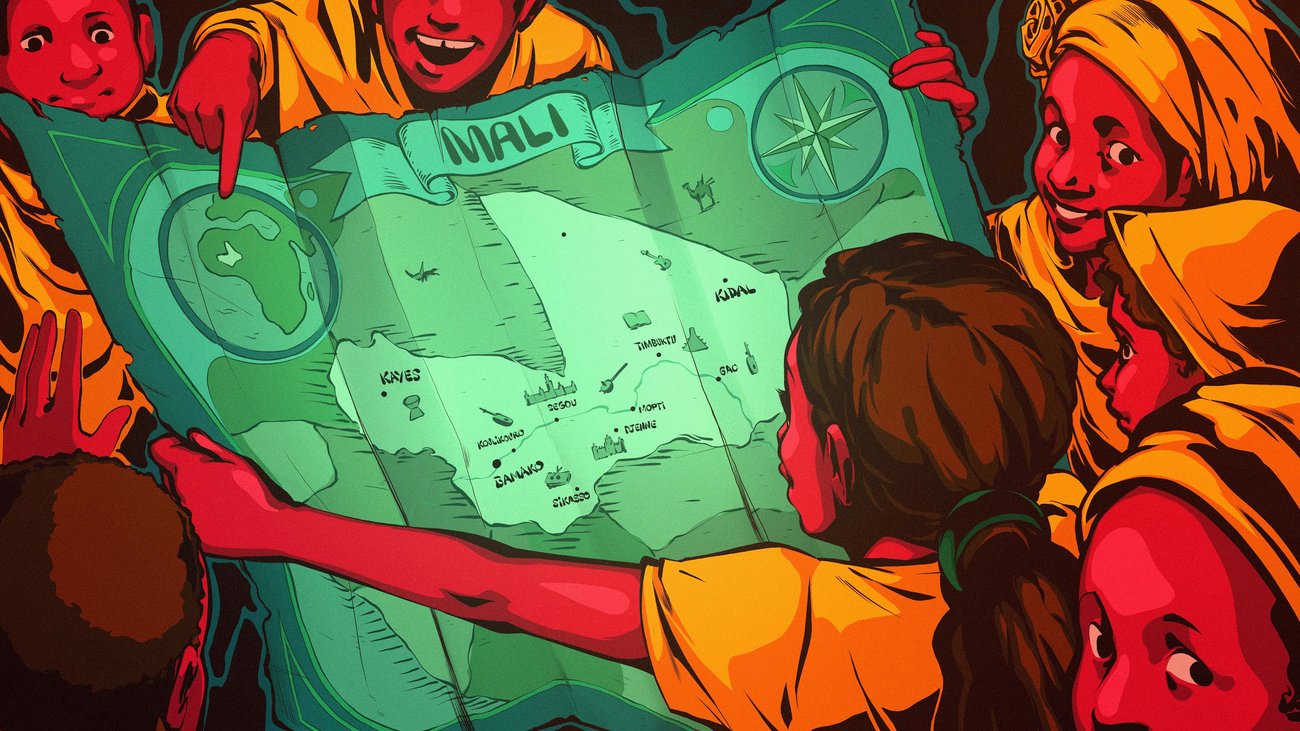
What’s Going On: Protests in Mali, Civil War In Ethiopia & More

“What’s Going On” Tallies Notable News Headlines From Across The Continent — The Good, The Bad, And The Horrible — As A Way Of Ensuring That We All Become A More Sagacious African Generation. With This Column, We’re Hoping To Disseminate The Latest Happenings In Our Socio-Political Climate From Across The Continent, Whilst Starting A Conversation About What’s Important For Us To All Discuss. From Political Affairs To Socio-Economic Issues, ‘What’s Going On’ Will Discuss Just That.


Ever so often, we have to remind developed parts of the world that Africa is not a country. It’s not just because a significant portion of people in those parts are unenlightened, but also because of the continent-wide similarities when it comes to social, political, and economic issues. For one, Africa is teeming with corrupt and inept leaders—many of them dictators— who have failed to invest in meaningful infrastructure, all while derailing and rejecting systemic change through violent means if necessary. In addition to this, they are fully aided by deeply patriarchal, religion deferring, and ultra-conservative social constructs.

At the same time across the continent, the current generation of African youth are pushing against these systemic boundaries, in order to continue the arduous work of rewriting the narrative. Even with all of the endeavours, talent and records being witnessed from music to tech, the limitations put in place by the continent’s political landscape still looms large. Every week, disparaging headlines from around Africa make their way to the news, reminding us of the bumps affecting these perceived stripes, and the roadblocks which delay our growth towards more wholesome and enabling societies for all Africans. Below are few news bits of what’s been going in on in the past few days.

Malians protest ECOWAS sanctions

Months after Mali experienced its second coup in less than a year, the effects of the deposition continue to linger over the West African nation. Last week, ECOWAS, West Africa’s main regional bloc, announced sweeping economic sanctions against the country in response to the Malian ruling government change of the projected dates for general elections. Following the Assimi Goïta-led coup in May 2021, the military had initially committed to holding fresh elections in 2022 but has since backtracked on its promise, claiming that a fresh general election would be held in 2025, three years farther than already envisaged. 

Responding to those fresh developments, the leaders of the 15-member Economic Community of West African States (ECOWAS) held an extraordinary summit where they agreed to impose a trade embargo on the country and shut off its borders. These decisions were backed by France, the United States and the European Union. Reacting to the sanctions, the military junta called for protests against stringent sanctions imposed by ECOWAS and over the weekend Malian citizens came out en masse to express their displeasure with the bans as well as espousing anti-French rhetoric.

Throughout the weekend, thousands of people wearing the national colours of red, yellow and green gathered in Independence Square in the country’s capital in Bamako while protests also spread to towns like Kadiolo and Bougouni in the south of the country. Already one of the poorest and most vulnerable countries in the world, the sanctions against Mali might further push the country to the brink of austerity despite claims that the country is prepared for every eventuality. Further ramping up the pressure on the Malian government, the United Nation’s Security-General, Antonio Guterres, urged the leadership of the country to present an acceptable election schedule while France and the United States have doubled down on calls for a general election. 

Ugandan schools open after two years COVID-19 shutdown

For many people, the COVID-19 pandemic has upended the very hinges of their existence, throwing every single routine into jeopardy, but few parts of life have been as ruthlessly altered by the effect of the pandemic as the education of Ugandan kids. From March 2020 until just the middle of this month, educational institutions in Uganda have been shut down due to concerns over COVID-19.  When the closure went into effect more than 20 months ago, just over 15 million students had their education disrupted, according to Dennis Mugimba, the spokesperson for the Ministry of Education.

While universities and higher had opened up in phases, kindergarten and lower primary students, which include approximately six million students, had not returned in any form at all. In a statement released last September, Janet Museveni, Uganda’s first lady and Minister of Education said that the lockdown was essential to protect citizens.”We choose to be patient and continue to vaccinate our teachers, learners above 18 years of age and the vulnerable population so that we can be confident enough that we have given some protection to a critical mass of our population,” she said. But now that schools are fully re-opening, some are projecting that as many as five million pupils may never return to classrooms, a big blow to a country that’s already one of the poorest in the world and dealing with ever-rising unemployment rates. 

Ugandan critics and opposition figures have debated the validity of Uganda’s repressive lockdown, arguing that officials used the pandemic as a pretext to impose draconian lockdown rules that have caught young pupils in its crosshairs. Ugandan officials, however, believe that its education sector can recover from the long halt. “We believe this time Covid will not scare us,” Joyce Moriku Kaducu, the state minister for primary education, said in an interview. “I don’t accept that there is a lost generation. What I agree to is there’s a percentage of our children who have gotten pregnant, the young boys have gotten into the moneymaking economy and others have gone into things. That does not mean that we have lost the generation completely.”

Ethopian civil war rages on

The contest between the Ethiopian central government and Tigray separatists is showing no signs of easing up anytime soon. The Ethiopian government, under the leadership of Prime Minister Ahmed Abiy, continuing to launch military offensives against people living in Tigray, the country’s northernmost region. The year-long conflict between federal government troops and Tigrayan forces has killed thousands of people and displaced more than 2.5 million people according to the UN. According to the leadership of Ethiopia, they are laying the groundwork for a national conversation but there’s very scant proof of their commitment to the process with officials saying that any peace talks would exclude Tigrayan leaders and the Oromo Liberation Army, both of which have been fighting the Ethiopian national army and declared terrorist organisations by the East African nation. 

The plight of the Tigrayan population has prompted the Norwegian Nobel Committee, who bestowed Ahmed Abiy with the Nobel Peace Prize in 2019, to call on him to end the war and allow humanitarian efforts to reach the war-torn region, saying that he has a responsibility to bring peace to the country. “As prime minister and peace prize laureate, Abiy Ahmed has a special responsibility to end the conflict and contribute to making peace,” the Nobel committee chairperson, Berit Reiss-Andersen, said. “The humanitarian situation is dire and it’s unacceptable that humanitarian aid is not getting through in a sufficient manner.”

Meanwhile, the UN has warned that Tigray stands on the brink of a humanitarian crisis as fighting escalates and drone strikes continue. The World Food Programme (WFP) said on Friday that it would be distributing its last supplies of cereals, pulses and oil next week to Tigray, where more than 5 million people are estimated to be in need of food assistance while reports indicate that more than 100 civilians have died from the airstrikes in the region in 2022 alone. Aid workers have also roundly criticised the government’s blockade, interpreting it as revenge against all Tigrayans. “The big threat there is the Ethiopian government’s blockade of humanitarian assistance that is desperately needed by millions of people in the region, “Human Rights Watch Executive Director Kenneth Roth said. “This is a classic case of collective punishment. This is not punishing Tigrayan military forces. It is punishing the people in Tigray.”

Featured image credits/
Songs Of The Day: New Music From Kofi Mole, PsychoYP, Tim Lyre & More

After the many wins forged by Afropop last year, the musical landscape has never looked more promising. As such the fast and furious pace of new music releases makes it hard to keep track of all the good music coming out of Africa. That’s where our Songs of the Day column comes in.

We’re doing the work to stay on pulse with all the music coming out from across the continent and beyond, bringing you exciting songs of tomorrow: today. To start off the new year, enjoy these new releases from Kofi Mole, PsychoYP, Tim Lyre, Fiokee & more.

Kofi Mole – “Work” ft. Joey B

After rounding off last year with a stellar verse on Teezee’s latest single “New Government” featuring Prettyboy D-O, Ghanaian rapper Kofi Mole has returned with his first official release of the year titled “Work”. The newly released Hip-Hop record is assisted by fellow Ghanaian artist, Joey B and serves as the first official single from this rapper’s forthcoming project titled ‘Knackaveli,’ slated for release next week. Over the catchy production, both rappers trade bars about getting their shit popping and making moves.

PsychoYP – “+234 (Daily Paper)”

To kick off the new year, Apex Village founder and Abuja based rapper PsychoYP is here with new video for his standout single “+234 (Daily Paper)” off his EP ‘Euphoria’. The video captures YP in different settings, first performing in a garden and then in a work space, singing lyrics such as “I know they hate cause I’m famous, I know they hate cause I’m blessed/Starboy I make daily paper”, as he expresses his gratitude for his accomplishments and putting his oops in check. 

Bankyondbeatz & Tim Lyre – “Jump On It”

Nigerian producer, Bankyondbeatz and singer, songwriter and performer Tim Lyre have teamed up for the romantic number “Jump On It”. The mid tempo Amapiano infused track finds the artist singing lyrics such as “You can take my love if it’s all you want/girl I promise, we can go till morning tell me when you wanna jump on it,” as he converses with his muse and reassures her of his undying affections. 

Greencamp – “Yellow Fever” ft SmallztheDJ, Wy & Trill Xoe

For Greencamp’s first-ever release as a talent management agency, they’ve teamed up with 44DB producer Trill Xoe, singer, songwriter Wy & SmallztheDJ to deliver the uptempo track “Yellow Fever”. Over the melodious production of the track, Wy sings Why you dey bleach o?/Why you dey bleach,” encouraging listeners to be comfortable in their Black skin and love themselves the way they are.

FKA Twigs – “Jealousy” ft. Rema

FKA Twigs took the world by storm when she released the tracklist for her latest EP ‘CAPRISONGS,’ which boasted of collaborations with Nigerian singer, Rema, British singer, Shygirl, the Weeknd and more. Finally released last weekend, the new single with Rema titled “Jealousy” is a mid-tempo number that finds the artist speaking to her love interest about the hold he has on her. Rema’s inclusion on the track is one of its strongest qualities with the Afropop wunderkind adopts a jaded, detached flow as he sings “I gave you the keys to my soul/Girl I’m sick and tired of your drama,” describing his disdain for jealous lovers. 

Fiokee -Personal ft Bella Shmurda

To begin the year, Fiokee has released a new LP titled ‘Man’, a 14-tracker which features artists such as Simi, Oxlade, Bella Shmurda, the Cavemen and more. On the standout track “Personal”, Fiokee teams up with Bella Shmurda to deliver an uptempo Amapiano infused number that will surely have listeners grooving and swaying to the infectious beat. “Don’t take it personal, anything I do I do it out of love,” quips Bella Shmurda melodiously over the song’s hook, advising his listeners to always take the high road and live an exemplary life. 

BenjiFlow – “Ready” ft Juls

BenjiFlow is moments away from the release of his forthcoming project. Ahead of this, the singer has shared his first official release of the year titled “Ready” featuring Ghanaian producer and singer, Juls. On the chorus of the track, he quips “I told you I told you I’m ready, don’t let this feeling pass away”, as he explains his romantic intentions to his love interest.

Ade James – “Money For Hand” ft Liya

For Ade James’ first official release of the year, he teams up with DMW’s Liya to deliver Money For Hand”, a track which finds the artist speaking about unrequited and selfish love. On the chorus, he quips “All she wanna know is if i get the money for bank, all she wanna know is if i get kudi for hand/She want to play me wayo,” before Liya steps in shortly and delivers a stellar performance. 

Featured image credits/
TurnTable Top 50: Fireboy DML & Ed Sheeran’s “Peru Remix” Stays at No.1

To start off the new year, Fireboy DML records a third week at No.1 with “Peru Remix” featuring Ed Sheeran. Peru” extends its stay on the top ten to 22 weeks; with a record 19 weeks for the original version and 3 weeks for the remix. The song tallied 62.9 million in radio reach (down 7.2%), 14.9 million in TV reach (up 4.%) – topping the radio and TV charts this week – and 2.34 million equivalent streams (down 27.3%) slipping to No. 2 on the streaming chart.

Kizz Daniel’s former 1-week No. 1 “Pour Me Water” follows at No. 2 for a third consecutive week tallying 36.3 million in radio reach, 11.5 million in TV reach and 2.06 million equivalent streams. Lil Kesh’s “Don’t Call Me” with Zinoleesky jumps from No. 10 to No. 3 on the Top 50 becoming the highest charting single for both artists. 

Burna Boy’s “B. D’OR” comes in at No. 4. It tallied 33.2 million in radio impressions, 1.7 million equivalent streams and 6.6 million TV impressions. Reekado Banks’ “Ozumba Mbadiwe” slides to No.5 this week while Kizz Daniel’s “Eh God (Barnabas)” ascends to No.6.

It is followed by Mayorkun’s “Holy Father” with Vict0ny which comes at No.7. Rounding out this week’s top ten; Ckay’s “Emiliana” at No. 8 which tallied 32.3 million in radio reachand 1.66 million equivalent streams. Adekunle Gold & Davido’s High” re-enters the top ten at No. 9 while Ruger’s “Dior ” reaches a new peak of No. 10.

Featured image credits/
#TwitterBan: FG Lifts Twitter Ban After Seven Months

After a seven-month suspension of the social networking site on local and Internet services in the country, Nigeria’s federal government has lifted her Twitter ban. First introduced last summer, on the 8th of June, the recently-concluded ban was enforced in response to the social media company’s decision to delete a tweet from President Muhammadu Buhari which appeared to threaten violence against separatist protesters in the country’s Eastern region.

In a statement shared yesterday, hours before the ban was lifted, the Director-General of the National Information Technology Development Agency Engagement, Kashifu Inuwa Abdullahi, shared that the decision to lift the suspension came after “Twitter agreed to act with a respectful acknowledgement of Nigerian laws and the national culture and history.”

The amicable decision reached between the federal government and the social networking platform also includes the “appointment of a designated country representative to interface with Nigerian authorities,” the establishment of “a legal entity in Nigeria during the first quarter of 2022,” and a promise by Twitter “to comply with applicable tax obligations.”

For months, the country’s federal government and its current Minister of Information, Lai Mohammed maintained that the ban would not be rescinded until the social networking platform complied with its number of conditions which included but were not limited to the establishment of a Twitter Nigeria office. With the ban now lifted, Twitter is yet to say publicly whether it has agreed to any of these terms – but in a tweet, the social media company welcomed the lifting of the suspension and promised that they remained “deeply committed to Nigeria.”

Featured image credits/IT News Africa

Tomi Adeyemi Signs Deal With Paramount Pictures For ‘Children Of Blood And Bone’

Nigerian-American novelist and creative writer, Tomi Adeyemi, has announced the inking of a deal with American film and television production and distribution company, Paramount Pictures, to bring her critically-acclaimed YA novel series, Children Of Blood And Bone, to life on the big screen. 

Paramount Pictures landed the rights to Children of Blood and Bone trilogy after a bidding war among major players including Universal, Amazon and Netflix. Tomi will be at the forefront of the effort to bring the movie to cinemas with the 28-year-old set to executive produce in addition to adapting the story and writing the script. The studio is also committed to fast-tracking the adaptation in partnership with its collaborators, Wyck Godfrey and Marty Bowen of Temple Hill Entertainment and Karen Rosenfelt of Sunswept Entertainment. 

“Tomi Adeyemi’s Children of Blood and Bone has not only become a phenomenon in the YA world, it has transformed every expectation of what world-building fantasy can be,” said Co-President of Paramount Pictures Motion Group Daria Cercek. “It’s with enormous pride that our studio — along with Tomi and our partners Wyck, Marty and Karen — set out to bring this franchise to life on the big screen. With its thought-provoking and timely themes, we know that this story will resonate with a global audience.”


View this post on Instagram


A post shared by TOMI (@tomiadeyemi)

Children of Blood and Bone was originally published in 2018 by Henry Holt Books for Young Readers, an imprint of the popular publisher, Macmillan. Its sequel, Children of Virtue and Vengeance, reached number 1 on the New York Best Seller list and received critical acclaim like Children of Blood and Bone

According to Tomi, the final book in the trilogy is due out in 2023, revealing that she is in the final stretch of completing the book. “I’m only a couple drafts away from finishing book 3,” she said. “I’m turning it into my publisher in a few months, and then it’s straight to print and in your hands in 2023.”

Featured image credits/Tomi Adeyemi

For Us By Us: The Emancipation Of Cuppy

There is no better time than the new year to begin again, reinvent yourself and change your perception of the world. That’s why I’ve started 2022 with a bald head and a new lease on life. This year, I will be 30, and looking back at my 20s in the public eye, I realised that my validation and appeal as a black, female DJ, have always been defined by the way I look – as if my level of slay has ever made my mixes any better? 

Social oppression has led many of us, black women to hide our real hair underneath a wig or something else that suits Eurocentric beauty standards better than our natural afros do. Of course, these hairstyles often protect our hair from breakage, but we all know why it is that black women often wear their hair in long, straight styles. In my case, I chose to stand out with my infamous pink inches. Now, 29 years old, I’ve started digging deeper into myself, and realised that there’s more to the pastel pink inches you can see on the outside, they come from a dynamic magenta within me. 


View this post on Instagram


A post shared by Cuppy (@cuppymusic)

When I started as DJ Cupcake many years ago, I was known for my signature ponytail look. Even though I really loved the style, what I loved the most about this hair choice was how practical it was while I was on set. It kept the hair out of my ears, and my headphones would sit nicely on them – no problemo. Not only did the pony enhance the shape of my face and display my inherent beauty, but it was also so quick to get done and took minimal effort to style. Even today, I still style my braids in a high ponytail. 

Speaking of braids. 

Having braided hair has always been a convenient choice for black women since we were young. Growing up in Nigeria, having braids with ‘attachment’ meant it was holiday time, and during school time, picking new hairstyles named after some iconic black women in music like Evelyn King and Sade Adu always brought a sense of giddiness (and a few tears if the woman who did your hair didn’t care about your scalp). For me, growing older and moving to England, braids became a thing of convenience, a hairstyle that would last for a long time and keep my hair protected from harsh weather conditions. I’ve always loved the look of braids, but hated the time (and sometimes edges) lost doing them, so I started rocking braided wigs. GENIUS 

Under much scrutiny from the public court of social media, I would spend so much time thinking and planning about my hair. When I started at Oxford last year,  I decided to shave my hair off to take that power back. Samson lost his extraordinary power when his hair was cut while sleeping in biblical mythology, but for me when I shaved my hair, I felt very powerful. A woman cutting all her hair off is usually met with some sort of reaction of surprise or the other, and often seen as ‘acting out’ –  I mean, look at how much we still talk about Britney in 07. 

The mere fact that I had to think about how to rock my new hairdo in public whilst warding off a sea of social media commentators about MY aesthetic is telling. As if the way I look with pink inches or a bald head is going to make my music any better? 

 At the end of the day, I came to conclude within myself that I like my new do, and that’s the only opinion that matters (well, my sisters and best friends also kinda matter here). Afros, cornrows, straight weave – they all make their own unique statement, based on whose head it’s on. No matter what condition it’s in, black hair speaks. At the moment with my pink inches gone, I feel like I’ve wiped the slate clean. Much like I cleared some mental space digging deep into myself and figuring out what I want for this new chapter, there’s now space for whatever I want my hair to be, on MY own terms. 


View this post on Instagram


A post shared by Cuppy (@cuppymusic)

Lancey Foux Is Set To Perform At Rhythm Unplugged Alongside Tion Wayne & More

For a number of reasons, 2020 did not have the experiences that make the Christmas period in Lagos one of the most eagerly-anticipated parts of the year. Due to the shuttering effect of the COVID-19 pandemic and measures taken by governments everywhere, live performances were put on hold. However, just 12 months after, things seem to be picking up with a full slate of activities lined up for the year-end. 

One of the activities that is signaling the return of the Lagos December experience to a form of normalcy is the return of legendary show, Rhythm Unplugged, to social calendars. Set to hold across an entire week, the favourite December music ritual certainly makes its return with a memorable bang this year with a lineup that features a talented spate of Nigerian and African talent.

As the one-week affair draws to a close, its star-studded lineup gets more interesting including tonight’s show which will feature performances from British-Nigerian rapper, Tion Wayne, and indie cult hero, Lancey Foux. For Tion Wayne, the event will be a strong end to a year that saw him release his fourth album, ‘Green With Envy,’ headlined by the Davido-featuring “Who’s True” while Foux has drawn praise for his highly-lyrical escapist grime-influenced rap particularly on his recent album ‘LIVE.EVIL’. The British stars will be joined by a selection of Nigerian Afropop stars including Rema, Fireboy DML, Buju, Ladipoe, Blaqbonez, Ruger, and Mayorkun among others.

Welcome to NATIV5

This week, after half a decade of being the voice of the African millennial and Gen Z, the NATIVE will be turning 5. Five years down the road, it’s time to reflect on the work we have done and how impactful it has been for a generation of young people attempting to contextualise this period of stellar African art.


View this post on Instagram


A post shared by The NATIVE (@thenativemag)

In conversation with people who are hip to what moves culture, many pick out 2016 as the year when African culture had its sliding door moment. Some approximate it to the distinctively African twang to the festivities of summer ‘16 powered chiefly by Drake’s monster hit, “One Dance”. Others ascribed the shift in perception towards African culture to the exciting and unique cultural talent springing out of the continent, but what cannot be doubted is that from 2016 onwards, the NATIVE has duly documented our stories and shaped the face of alternative youth culture.

Like our, Editor-In-Chief Seni Saraki said, The NATIVE was formed with the idea of taking stock of this great African art renaissance, and, since our formation, our commitment to honest, empathetic storytelling and reportage has been unwavering. In the time since our formation, the NATIVE has played a key role in shining a light on some of the most important landmarks and issues of this generation of young people and, after 60 months of doing just that, this week marks the fifth anniversary of the Native’s establishment. 

Of course, this could not have been possible without the support of our team and community. Importantly, the occasion of our fifth anniversary is a call for celebration. In five years, we have gone through thousands of articles, placed some of Africa’s biggest stars on our cover, and collaborated with Nike on an original jersey design. 

To kick off collaborations, we are hosting an intimate friends and family invite-only celebration of all things NATIV5 where we hope to swap stories and tales of what archiving the Great African art renaissance has looked like. And later in the week, on Wednesday 22nd of December, NATIVE Sound System will be hosting a show in Lagos for members of our community – exactly five years on from our first ever festival. 

We, of course, promise to make it worth your while and keep to all safety precautions. We hope to party with you soon!

Featured image credits/NATIVE

Songs Of The Day: New Music From Naira Marley, Bella Alubo, Olamide & More 

The end of the year is here but music releases are hardly stopping. There is still heat if you know where to look and, with many artists putting out their last songs for the year, we know you might need a primer on what stuff to be listening to as we all bid to close out the year in the best way possible. 

That’s where our Songs of the Day column comes in. We’re doing the work to stay on pulse with all the music coming out from across the continent and beyond, bringing you exciting songs of tomorrow: today. Last time out, we had exciting music from Black Sherif, Seyi Shay, and Mohbad amongst others. Today, we’re bringing you new music from Naira Marley, Olamide, Iyanya, and more.

NAIRA MARLEY – “KOJOSESE”

Since his career got a major boost with his controversy-laden run in 2019, Naira Marley has refused to recede from public view, solidifying his staying power with a string of hit singles like “Koleyewon” and the Busiswa-featuring “Coming.” Keen to see out 2021 on a high, the singer has returned with another tune titled “Kojosese.”

Cut from the same cloth as its dance-ready predecessors, and off his forthcoming debut album, ‘This Is Africa,’ “Kojesese,” is an infectious anthem that merges the bounce of kuduro with the percussion of Afropop. Produced by Angolan, Leo Beatz, the song sees Naira Marley urge his listeners to hit the dancefloor and have a great time. 

BELLA ALUBO & ZORO – “DANCIA”

Earlier this year, Bella Alubo released her debut album,Bella’s Buffet,’ interspersing her minimalist take on the intersection of R&B and Afropop with a range of sonic tells from Highlife, Hip-hop, and Trap.  One of the most well-received songs from the project was “Dancia,” a collaboration with Nigerian rapper, Zoro, that expanded on the classic rap-sung format with beguiling ease. The video for the song tunnels into the chemistry between the duo as they take a historic approach to documenting their romance and their desire to be together regardless of what life throws at them. 

MONEY BADOO & RICKY TYLER – 47K$

Some of the most inventive R&B music out of Africa springs out of South Africa, and Money Badoo is an avatar for that innovative streak. Gently layering her voice-over wavy basslines with tales of lust and love, she continues to break barriers and set new benchmarks with her authentic take on the genre. Her new single “47k$” is a testament to this as she joins forces with Ricky Tyler on this song which speaks about intoxicated love, chemistry, and intimacy over a wispy instrumental. 

OLAMIDE X POCO LEE X PORTABLE – “ZAZOO ZEHH”

For years before he inked a deal with Empire and reinvented his sound for global domination, Olamide was street music’s biggest ambassador to Afropop, sneaking in the densest street slangs into the heart of the genre. To close out the year, Olamide has teamed up with popular dancer, Poco Lee, and hype man, Portable, for a hard-hitting single titled “ZaZoo Zehh.” Produced by P.Priime, the song sees Olamide drop his most street-leaning verse for a bit while Portable takes us deep into street culture with a lengthy monologue that captures the dynamism of street pop. 

IYANYA & WANDE COAL – “CHANGE AM”

Last year, Iyanya released ‘For Your Love,’ a project that was packed with the R&B influences that made him a reality TV sweetheart more than a decade ago. On “Change Am” with Wande Coal, the singer leans into Afropop for an accomplished showing that rises on the power of the duo’s synergy. Produced by 1da Banton, the beat shifts from place to place while Iyanya and Wande Coal move rapidly between English and pidgin singing about changing the gears of their life and luxuriating in the finer things of life. 

TEEZEE F.T. PRETTYBOY D-O & KOFI MOLE – “NEW GOVERNMENT”

Ahead of the release of his sophomore project ‘Arrested By Love,’ due out next year, Teezee has released a new single in time for the December festivities titled “New Government” featuring Nigerian rapper, Prettyboy D-O, and Ghanaian peer, Kofi Mole.  An uptempo Afro-fusion track, “New Government” features bragging from Teezee and his guests about being at the forefront of a new revolution and paving the way for a new generation of power players. “But now there’s a new government in charge/Pretty be the new government in charge/Teezee be the new government in charge,” D-O confidently asserts in the song’s infectious hook. 

C BLVCK FT. NAIRA MARLEY  – “TEAR RUBBER

No other label operating today has its fingers on the pulse of street culture like Marlian Music does and in C Blvck, they have one of the sub-culture’s most bruising voices.  On “Tear Rubber,” C Blvck is joined by label boss, Naira Marley for a casual flex about their cultural cachet and street credo. Leading the way, Blvck sings about being a strong presence on the scene before being joined by Naira whose insouciant flow is a perfect contrast for his protege’s spurious delivery scheme. 

Featured image credits/Instagram

NATIVE Premiere: Teezee leads the “New Government” with Prettyboy D-O & Kofi Mole

Teezee has been on a steady streak of releasing the most thought-out and intriguing singles of the year. Earlier in the year, he began rolling out new music after a hiatus from releasing any solo material, beginning with the Maison 2500 and New World Ray-assisted single “Guala” and soon after, the end-of-year banger titled “BADI” featuring Davido.

All these will culminate in the release of his sophomore project ‘Arrested By Love,’ which fans will be gettting next year. Ahead of this, he’s just released a new single in time for the December festivities titled “New Government” featuring Nigerian rapper, Prettyboy D-O, and Ghanaian peer, Kofi Mole. 


View this post on Instagram


A post shared by @teezee

The latest release, “New Government” is an uptempo Afro-fusion track that sees all performers waxing poetic about leveling up and being in charge now while ushering in the new guard after years of rule under the outdated systems that govern our society. “But now there’s a new government in charge/Pretty be the new government in charge/Teezee be the new government in charge,” D-O chants over the infectious hook, bigging up himself and his collaborators as they revel in the triumph of their sound and style as two of the alternative scene’s leading men.

Accompanied by the catchy new hit is the Yaw Phanta-directed video which doubles down on the song’s triumphant mood featuring varying clips of Teezee and his fashionably clad collaborators as they rule the streets of Accra, Ghana. The video finds PrettyboyDO and Teezee sitting in a place of authority while delivering the news about the new vanguard in charge. The pair address how there is a new government capable of ushering the people into a new light while asking for support from their constituents. The video also captures all artists in a more colourful light on the streets, besides a car delivering their respective verses.

Ahead of the video’s official release, we spoke with Teezee about ushering in a new sound, his upcoming album and the highlights faced while working on the video.

His answers, which follow below, have been lightly edited for clarity.

NATIVE: Can you tell us the inspiration behind the track “New Government”? 

TEEZEE: Just the fact that a new wave is taking over the music industry, no more gatekeepers and OGs can stop our shine. We move forward regardless. Taking everything that belongs to us

NATIVE: You’ve teamed up with two amazing artists Prettyboy D-O and Kofi Mole. How did the song come to life with both artists? 

TEEZEE: My niggas Pretty and Mole ! We all linked up in Accra and the connection between what we’re doing across borders. S/O to Free The Youth for putting us all in the same room!

NATIVE: What were some of your major highlights while shooting the music video? 

TEEZEE: Knowing that the swag in this video is unmatched. Myself,  Pretty and Kofi all really pride ourselves on our personal style! Clearly, we are the ones in charge of music fashion P.

NATIVE: What do you want listeners and viewers to take away from this track alongside the video? 

TEEZEE: To us, it’s a statement record and a perfect way to end the year. GH and Naij are like one now. And we want to be at the forefront of that connection.

NATIVE: With a couple of singles out now, what can listeners now expect on your forthcoming project? 

TEEZEE: They can expect an uncanny approach stylistically, sonically and visually. I’m really trying to put this p on a global scale.

Get an exclusive first look at “New Government” below.

Featured image credits/