
Viola Davis Stars In ‘The Woman King,’ A Film Inspired by the Kingdom of Dahomey

Multi-award-winning actress Viola Davis and ‘Underground RailRoad’ actress Thuso Mbedu are the leads in the forthcoming warrior epic titled ‘The Woman King’.

Based on a true-life event, the film is a historical movie inspired by events that took place in the Kingdom of Dahomey, one of the most powerful states in Africa during the 18th and 19th centuries. Set to hit theatres in September 2022, ‘The Woman King’ is certainly an apt subject for a month dedicated to otherwise overlooked figures in Black history.


View this post on Instagram


A post shared by VIOLA DAVIS (@violadavis)

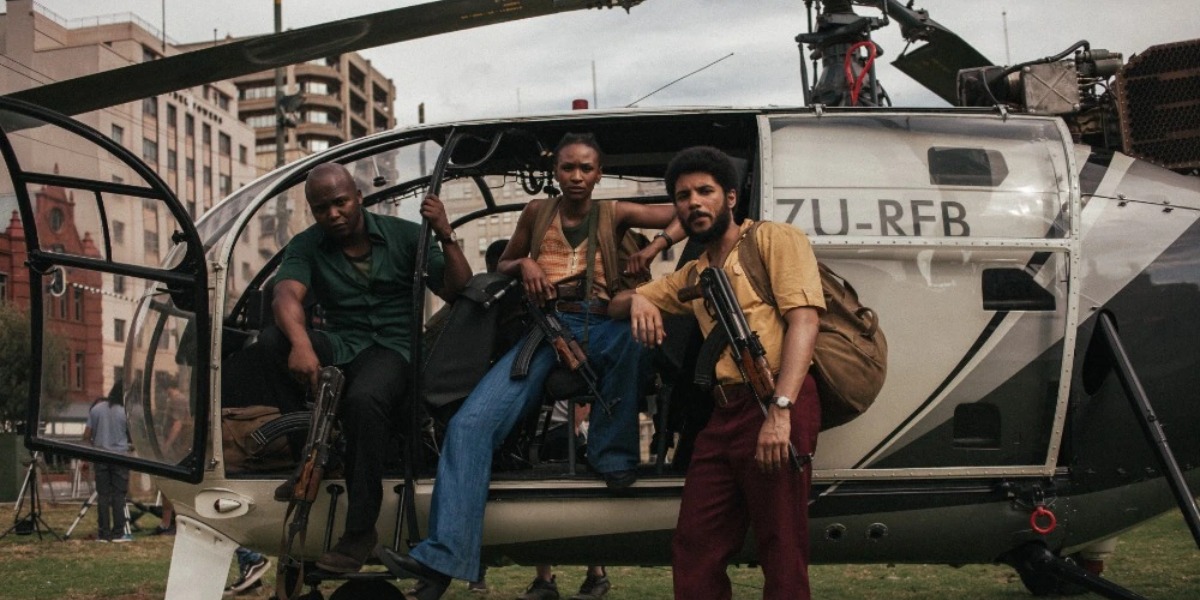
The film centres around Viola Davis, who plays Nanisca, the general of an all-female military unit known as The Amazon alongside her military recruit, Nawi who is played by Thuso Mbedu. Together they fight the French and neighbouring towns who have disrespected their honour and enslaved the people of Dahomey and all they live for.

The movie also stars John Boyega, Adrienne Warren, Sheila Atim, Lashana Lynch, Jayme Lawson, Hero Fiennes Tiffin, and many more. Viola Davis, alongside Cathy Schulman, Julius Tennon and Maria Bello, are producing the Tristar Pictures movie. In a recent tweet, Davis shared her excitement over the upcoming role, stating, “I’m deeply honored and excited to bring this incredible story of these badass female warriors to life.”

Davis also serves as a producer on the film, alongside Cathy Schulman, Julius Tennon, and Maria Bello. The film is based on an original screenplay by Dana Stevens, with Gina Prince-Bythewood serving as director.

Featured Image credits: Instagram/violadavis

Hot Takes: Rihanna’s Baby Bump, Khaby Lame & Nikyatu Jusu’s ‘Nanny’ & More

Somehow, we’ve already made it through the first month of 2022.  The pandemic has seriously made time feel meaningless, because January seemed to fly by in just one blink. Looking back on the past month could possibly give us an indication of what’s in store for the rest of the year.

2021 was a very eventful year in the best and mostly the worst ways. It’s clear that we won’t be getting a break this year. January turned out to be a very hectic month. So far we’ve already gotten a pregnancy announcement from the coolest couple alive and a major partnership between Hugo Boss and Khaby Lame. More seriously, we’ve been shown that the lack of value placed on black women’s lives continues to be a major issue. This week I’ll be giving my hot takes on everything thats been going on in pop culture. Enjoy.

What I’m listening to.

During my sad girl hours (most hours), I like to go to Youtube to listen to Lana Del Rey’s unreleased music, making myself even sadder because I can’t add them to my Spotify playlists. In January, I listened “Say Yes To Heaven” on repeat and ket myself feel like an ethereal fairy in my less ethereal sweatpants. I particularly enjoyed the fan-made music video from the account cherryparadiso which used clips from films like Russian Ark and commercials like Sofia Coppola’s Marc Jacobs to make a an airy video that’s perfect for the song.The dreamy song sometimes makes me idealistic enough to hope our problematic ‘goddess of sadness’, as Georgia Miller puts it, will one day release all these songs as an album, although those hopes are definitely misguided.

What I’m watching

Recently I heard positive things about the HBO max series the ‘Sex Lives of College Girls’ and decided to give the first episode a try. This ‘try’ turned into a binge session where I watched the entire thing in one sitting. This is owed not only to my significant lack of impulse control, but also to the genuine quality of the comedy series.

The show follows a group of very different college roommates as they navigate sex, love and ambitions at their prestigious fiction New England College, ‘Essex’. We follow the aspiring comedian Bela, the WASPy high strung and secretive Leighton, the politicians daughter and soccer star Whitney and naive small town girl Kimberly as they go through their first college semester.

The (sometimes overly) sex-positive, Indian-American Bela made the strongest impact on me, with her character getting some of the best and most ridiculous lines and a particularly relatable, complex story to me as a woman of colour with ambitions in the entertainment industry. Leighton who sometimes felt like a gossip girl cosplayer in the best way (apart from her questionable choices in grandmotherly blazers) was also a standout with actress Reneé Rapp delivering her lines with such an over the top aggression that it made the character strangely endearing instead of Karen-like. The revelation that —spoilers for the first episode— Leighton is a deeply closeted lesbian also allows us to empathise with why she is so guarded. Kimberly is a character that I was fully prepared to dislike, as her micro-aggressions towards her black co-worker Canaan, barraging him with questions about the black experience upon first meeting made her appear irritatingly oblivious. She was quickly put in her place by Canaan however and quickly seemed to learn her lesson. Pauline Chalamet played the character with such sincerity even when putting her foot in her mouth that it was hard not to find her endearing. Whitney, the black daughter of a popular senator is seems like the most composed out of the 4 roommates. Her affair with her soccer coach makes it clear that she has some messiness of her own. She was actually the character that felt weakest to me, surprisingly as she seems like the easiest to like. It felt like the show wasn’t always sure what her role was, her characterisation flip flopping between a socially aware cool girl, an awkward and eager to please girl and a more neutral ‘straight man’. In a show where the other leads are so clearly defined it makes her fade Ito the background in group scenes especially, which is unfortunate for the only black lead.

Besides the issues with Whitney, the show does deal with a range of diverse storylines effectively. It handles serious topics ranging from sexual assault to internalised homophobia with care and without being tonally inconsistent with the rest of the show, unlike with other HBO shows like the Gossip Girl reboot. It doesn’t shy away from going deep, while still providing the audience with much needed escapism, that often made me wish I could trade university experiences with these girls.

If you’re looking for your next 6 hour binge, line this show up.

Tiktok roasting sexist podcasts

Tiktok has recently introduced a new filter allowing people to have more masculine features. Many women have began to use use the filter to mock a specific subset of toxic males.  Specifically the type of pick up artist or motivational speaker who goes on podcasts to discuss their views about women and dating.

An example of such men would be the Fresh & Fit duo who give dating advice to men on Tiktok before eventually being banned from the app, but still have an active podcast. The type of men who call women ‘females’ and spend most of their time criticising women, making it confusing why they would even want to date women. The parodies use similar speech patterns and show how little originality there is in this space. Tiktok has unfortunately given a different platform these types of men. It has also given a platform to Tiktokers to call them out.

Rihanna’s bundle of joy

For years, people have been obsessed with the singer Rihanna’s romantic life. With this came multiple rumours about the artist being pregnant, even more frequently than there have been for most celebrities.

On Monday, for the first time, the the rumours were actually proven correct. Rihanna and musician A$AP Rocky announced the pregnancy through a photoshoot. The announcement shook up the internet, with many people ecstatic for the couple. However, many people were critical of Rihannas choice in the father. Many people have insulted his looks and career in comparison to Rihanna. Even a publications like Forbes used the headline “Singer, billionaire, and beauty and lingerie mogul Rihanna is expecting a baby with her boyfriend rapper A$AP rocky”, with many noting the difference in which they were both described.

A lot of male celebrities female partners have been harshly criticised on the internet, with both Selena Gomez and Hailey Beiber receiving death threats for their connections to Justin Bieber. This is one of the rare celebrity couples where the man receives more hate. This still feels very cruel and unfair to A$AP Rocky , even if it is Rihanna.

It is also very condescending to Rihanna, with the implication that she somehow doesn’t know her worth. Overall, it seems like the internet has a serious problem drawing boundaries when it comes to famous couples.


View this post on Instagram


A post shared by COMPLEX (@complex)

Missing black woman syndrome

On December 12th 2021, two black women died in Bridgeport, Connecticut. Tiktok influencer, Lauren Smith-Fields was found dead in her apartment after a Bumble date. The cause of death was declared to be cause by intoxication from “Fentanyl combined with prescription medication and alcohol”.

Her family was not informed of her death. Her mother and brother went to check up on her at her apartment and were simply greeted with a note that said “If you’re looking for Lauren, call this number.” When her family spoke to the detective involved about the white man that she had been on a date with, he dismissed her concerns calling the man a “really nice guy”.

Brenda Lee Rawls

On the 14th of December, Brenda Lee Rawls family found her body at a medical examiners office. This came after a hectic search when they were informed of her death by a neighbour and not the police, with them having to call the police and various hospitals before finding her body. Rawl’s sister has said, “It’s almost like they’re not aware of her death, or they just don’t care and that made us angry,” “She was raised and born in Bridgeport, Connecticut, paid her taxes, voted and they treated like she was nothing. Like she was roadkill.”

The lack of care in which these two situations were handled make it comparable to the media frenzy in Gabby Petito’s case. “Missing white woman syndrome” occurs when the media white woman who are missing or endangered a large amount of focus when compared to other demographics. Now we can see the opposite happening when it comes to black women.

Black women are often seen as disposable and less valuable, with black deaths are just statistics and nothing more. Cardi B had to tweet about Lauren Smith-Fields’s death before the investigation was reopened. There has been some action taken with the detectives involved in both cases being suspended, but it feels insulting that it has taken so long, with uproar from the internet, for these cases to be treated with any empathy.

Nikyatu Jusu’s “Nanny

At the 2022 Sundance film festival the Sierra Leonian-American director Nikyatu Jusu made her feature film debut with the horror film Nanny. It follows a Senegalese nanny as she works for a wealthy New York family.

The film won the Grand Jury Prize at the film festival, making Jusu the second black woman to win this award. While this is a fantastic feat on Jusu’s part, it is unfortunate that in Sundance’s 44 years of operation this is only the second win. there is still much further to go in the support of black women behind the camera.

Jusu has described Nanny as a ‘dark but hopeful love-letter for mothers who have been systematically excluded from the American dream’. From the rave reviews to the compelling premise, this seems like a movie to watch out for.

Khaby Lame and The Success of Black Creators

The Tiktoker Khaby Lame has scored a massive campaign with Hugo Boss, also co-designing a capsule collection with the label. Just two years ago, Lame was a factory worker who quit his job when the COVID-19 pandemic hit. However, since he took to TikTok during the stay-at-home induced lockdowns, Lame has emerged as one of the app’s most followed creators–all while being mute.

Tiktok and social media in general allows major career growth for many creators. It is good to see a black creator benefiting from the app. This is especially true after criticisms have been given to popular white creators who benefit from the trends and dances started by black Tiktokers, without crediting them and eventually getting far more exposure. Addison Rae in particular was criticised when she used creator Jalaiah Harmon’s “Renegade” dance in an appearance on Jimmy Fallon, an event that she has apologised for.

This brings to mind recurring issues in which black people create styles and trends that are not praised until they are seen on a white person, as seen when Kylie Jenner was praised for making wigs cool, or with the entire Kardashian clan ‘popularising’ facial and body features that are more associated with black women. The success of creators such as Khaby Lame is hopefully a sign that black creators are finally getting their due.


View this post on Instagram


A post shared by Khaby Lame (@khaby00)

Featured image credits/NATIVE

Best New Music: Asake taps Olamide for celebratory jam, “Omo Ope”

Nigerian pop music is largely defined by whatever trends are embraced and championed by the streets of mainland Lagos. It’s a fact that’s impossible to overstate, especially at a time of rampant inventiveness that involves meshing external influences with the innate, percussive bombast of street-hop. In 2020, Asake became known for his breakout single, “Mr Money,” a hype track that paired the airy, propulsive vibe of South African House music with local drums from folksy Nigerian genres, Fuji and Juju.

It would be indefinite to claim that “Mr Money” set the trend, but it surely played an integral role in the uniquely captivating style of DJ mixes running Lagos’ streets at the moment, where popular songs are re-upped with the addition of Fuji and Juju-inspired percussion. On his part, Asake has followed up with a slew of guest features and a handful of follow-up singles, mostly playing into his sensibilities as a caption-ready writer, energetic vocal performance and production leaning into the gimmick of his biggest song yet. Listening to these singles and features, however, it felt like there was more to Asake’s craft than these specific type of cruddy bangers.

Starting out the year on a phenomenal note, Asake taps Nigerian pop mainstay Olamide for “Omo Ope,” a euphoric new single that successfully expands the singer’s musical purview without sacrificing one bit of his boisterous persona. In fact, it amplifies his powers as a potentially prolific pop hit-maker.

On the song, Asake leans into a common advocacy in street pop: living the good life and indulging in whatever material and hedonistic excesses you deem fit. While many songs with this theme try to be substantive by adding an inspirational undertone to the festive mood, “Omo Ope” is solely focused on the enjoyment that’s happening in the moment. “Mo s’are f’owo mi s’aye/gbomo mefa l’ole/emi omo ope o,” Asake sings in self-congratulation on the hook. The first two parts of that lyric line roughly translates to: “I used up my money on flexing/bringing home six women.”

Singing in a tone that exudes utmost satisfaction, Asake is lively without being loud, pulling off an instantly memorable melodic performance rooted in glaring conviction. Asake’s verse runs for about six bars, a proclamation of his party-starting prowess, keeping it rather simple before running into the bridge, and eventually the song’s hook. His showing on the hook is complimented by choral embellishments, a creative touch that pays off mightily.

Produced by Magicsticks, “Omo Ope” is a masterclass in song arrangement, combining a light two-chord piano riff and a full-bodied percussion groove as its foundational elements, a perfect backdrop for Asake to flaunt his singing. As the song progresses, guitar plucks and log drums—‘Omopiano’ for the win!—are infused, especially on Olamide’s verse. Even though he’s mellowed out his sound significantly over his last two albums, Olamide has ensured his connection with street pop and its younger generation has remained intact. Unlike song-defining contributions to recent collaborations, Portable and Poco Lee’s “ZaZoo Zehh” and TI Blaze’s “Sometimes (Remix),” his appearance on “Omo Ope” is mostly additive as a function of his ever-effective star power.

It’s not every day we get an Olamide verse as the cherry on top, rather than as the attention-holding show-stopper. It’s a testament to Asake and his improvements as a pop artist in the two years since gaining his first hit. With over two million streams on Audiomack already, in just over a week of release, “Omo Ope” looks like Asake’s next big hit. Besides that, it’s one of the best songs in Nigerian pop music this early into the new year.

Listen to “Omo Ope” here.


SOUNDS FROM THIS SIDE: STREET POP

PreGame: Welcome to Deto’s World

“PreGame” is a NATIVE Original series which grants us an all-access pass to the lives of your favourite artists & icons, on their most important days. In our debut episode, we take a trip to Nigerian rapper Deto Black’s World, as she prepares for her debut solo London show, celebrating her EP release.


Last August, rap newcomer and style coninosuieur, DETO BLACK released her debut EPYung Everything,’ a 5-track taster course to everything she has on the menu from quippy beats to fully-formed snapbacks. Released almost a year since her debut feature on the scene-stealing Odunsi (The Engine) “body count” with Amaarae, the EP was widely received by eager fans waiting to hear what the newcomer had in store.


View this post on Instagram


A post shared by DETO🖤 (@detoblack)

In true DETO fashion, she did not disappoint, drawing listeners further into her glamorous world by embodying rap’s current themes of women’s independence, sexual freedom, autonomy and strength. ‘Yung Everything’ was just the body of work DETO BLACK needed to make her debut highly-anticipated full appearance in the Nigerian music scene.

Following the release of her debut body of work, DETO BLACK celebrated in grand style, inviting friends and loyal fans from around the UK to her first-ever headline release party in London. Sharing the stage alongside her longtime collaborators and friends including Teezee, (Odunsi The Engine), Mowalola and more, DETO kept the crowd entertained with singles off her new tape while also plugging in some exclusives.

Before gracing the stage in the evening, we spent the day with DETO BLACK as she prepared for her show, learning more about the world around ‘Yung Everything,’ and discussing with her makeup artist, Alice Dodds who helps the rapper construct her bad bitch persona, one eye gem at a time.

But our words won’t do justice to how wild the night was, so this is something you need to see for yourself.

Watch ‘PreGame with Deto Black’ below.

Featured image credits/Instagram: cherriebroll

How Corteiz Is Redefining Streetwear Culture in the UK

If anyone asked whether you’d be willing to swap your cherished designer jacket for a brand new coat worth a fraction of the price, would you say yes? No? Maybe? Well, for hundreds of GenZ Londoners last week, there was only one answer: say less.


View this post on Instagram


A post shared by LUNDUN. (@clint419)

Ask any teen to twenty-something UK native even remotely interested in streetwear fashion, and chances are they’ve heard of Corteiz or are among one of its loyal fans anticipating the latest exclusive drop. A fashion staple for some of the UK’s brightest stars including from Dave, Virgil Abloh & Jorja Smith, the London-born streetwear brand thrives off exclusivity: private Instagram account, passworded website with secret codes only available on drop day and hot-button items selling out within minutes. Still, Corteiz’s biggest selling point remains the constant, energising buzz around the brand, thanks to its illustrious marketing strategies. Whether it’s making a hundred people race through the streets of London or Lagos for a free T-shirt or get in line to swap their travel cards for exclusive drops, the team behind Corteiz sure knows how to keep the people talking–and buying.

But last weekend, they upped the ante. To launch its new collection, the brand took to social media to announce a surprise event dubbed “Da Great Bolo Exchange”, requesting that Londoners swap their high-end jackets including North Face, Supreme and more – but interestingly, no Black-owned brands – for an unreleased Corteiz “BOLO” puffer. Social media was immediately abuzz with excited chatter as many found this to be an outrageous ask. No one believed that any streetwear head would actually fall for it.

Yet, come 3 pm the following day, a North Face army was spotted on the streets of West London, excitedly making its way to an empty parking lot for a chance to secure one of the 50 BOLOs up for grabs. On the day, £16k+ worth of designer jackets – ranging from brands like Arc’teryx, to Moncler, Nike, North Face, and Supreme – were exchanged for BOLO puffers. This level of guerrilla marketing tactics undoubtedly showed the extent of Corteiz’s impact on its audience and signified that the brand is just as – if not more – coveted than the big-name streetwear brands.

But how did a company created in 2017 by a couple of kids amass a cult-following of this magnitude in such a short time?

Right from inception, Corteiz ushered in a fresh dynamic in retail. Founded by British-Nigerian Clint (AKA Clint419) in his London bedroom, the brand started out with screen-printed crewnecks and T-shirts, embodying a non-conformist approach right from the jump. The collections featured symbols of delinquency: tees embossed with the Alcatraz insignia, distinctive Corteiz-scribbled balaclavas and bold powerful messages of breaking down boundaries and ruling your world. Relying solely on social media and word of mouth to boost awareness, Corteiz cultivated a tight knit community of loyal fans and followers. Drop announcements were only made on the – now 200k+ followers deep – private Instagram page and the passworded websites (passwords are sent to those who sign up when instructed to), generating a feeling of exclusivity among its audience.

Soon enough, it gained the attention of UK celebs such as Stormzy and Central Cee, who were spotted donning pieces from the brand. Yet, despite this celebrity following, everyone still receives the same access to the clothes on the website – a feature that underscores the brand’s direct-to-consumer marketing methods. This community-led and authenticity-fueled approach stays true to the very essence of streetwear, long before it became gentrified by billion-dollar luxury companies. Streetwear originated in the 90s; curated and developed by the Hip-Hop scenes of NYC, the surf-skate & graffiti culture of LA and Japan nightlife in response to traditional brands who refused to dress them. The roots of streetwear were always about the people and Corteiz embodies this ethos wholeheartedly. It joins a legion of direct-to-consumer brands including WAF, co-owned by British-Nigerian, Slawn, who similarly employs guerrilla marketing techniques that draw in loyal fans looking to connect to something deeper than fashion or art.

“There’s a sense of community that aligns with the brand,” says Benson Edo, a Houston-based stylist and image consultant. “Its consumers know what they want and the brand gives them more than that. That sense of community and togetherness is crucial for a brand to thrive.” This rings true in everything that Corteiz does. Their pieces, while limited, hold a sentimental value of some sort, evoking a kindred spirit among people who own them; almost like they’re all part of some cool, members-only club. People want to feel like they are tapped into an exclusive experience – especially GenZ consumers, with 30% of them interested in the ‘first opportunity to purchase’. Traditionally, luxury brands promoted the feeling of exclusivity with their high price ranges through authoritarian top-bottom communication. Streetwear has now taught the industry that limited editions do promote a sense of exclusivity, not through prices, but through community spirit.

In many ways, Corteiz is a direct mirror of its founder and creative director, Clint, and this plays no small part in the brand’s rise as a youth culture powerhouse over the years. Clint’s true-to-self demeanour is all the rave and his brand of reckless adolescence is conveyed into Corteiz’s designs and presence. His motto, RTW (RulestheWorld) is a philosophy people have bought into, and cultural capital of that sort is invaluable as a brand. “Without cultural capital, who exactly would be loyal to the brand?” Edo asks, stressing that a brand needs a following that “believes in its ideas.” People buy into the brand because they believe in Clint and in this sense, Clint and Corteiz are one. This speaks to the personality-led fashion landscape of the 2020s where consumers buy into brand faces that provide cultural cachet and credibility (see Virgil Abloh at Louis Vuitton and Telfar Clemens at Telfar). People trust Clint, therefore, they trust Corteiz.

As such, the success of “Da Great Bolo Exchange” is a testament to the fact that in marketing, brand positioning is everything and value is in perception. The jackets exchanged for the BOLO puffers were worth hundreds to thousands of pounds, yet people were willing to trade them in for a jacket retailing for a fraction of that price. Ultimately, these designer jacks were then donated to a soup kitchen for the homeless for no profit.

This move ties into the studies which state that 76% of people who feel connected to a brand are more likely to buy it over a competitor. What this tells us in this case is that value lies in the eyes of the consumer. People were willing to swap products from more established brands for an indie brand on the come up because the cultural capital it possesses is far more valuable to them than a £1000 winter coat. This is not to say that this applies to every brand and its consumers. Global belief in Corteiz as a brand may not be widespread yet, but their ability to already impact the perceptions of hundreds, hints at numerous potential to continue to scale upwards.

With Corteiz, Clint is redefining streetwear culture in the UK, one sold out tracksuit and puffer at a time. Owning a fashion brand comes with numerous barriers which become even harder to break down when you’re Black. Corteiz’s BOLO exchange offers a sliver of hope to independent Black-owned brands, showing that community backing converts to revenue in so many ways – and sending a £16,000 middle finger to the old guards upstairs at the same time. With the majority of its audience being Gen Z, it’s clear that the future of streetwear is the youth; the new generation of consumers (who Edo describes as “informed, meticulous and RICH”) are identity shoppers and will buy into any brand that connects and resonates with them. “The youth are the heart of consumerism,” Edo adds. “Any brand that inspires the youth has already won.” To that end, watch out, corporate. BOLO season has only begun.

Featured image credits/

What’s Going On: Bloc suspensions for Burkina Faso, DR Congo sentences 49 to death & AFCON updates

“What’s Going On” Tallies Notable News Headlines From Across The Continent — The Good, The Bad, And The Horrible — As A Way Of Ensuring That We All Become A More Sagacious African Generation. With This Column, We’re Hoping To Disseminate The Latest Happenings In Our Socio-Political Climate From Across The Continent, Whilst Starting A Conversation About What’s Important For Us To All Discuss. From Political Affairs To Socio-Economic Issues, ‘What’s Going On’ Will Discuss Just That. 


AU & ECOWAS suspend Burkina Faso following military coup

Last week, Burkina Faso became the latest African country to come under military rule following a coup d’état. The Patriotic Movement for Preservation and Restoration (MPSR), the junta led by Lieutenant-Colonel Paul-Henri Damiba, arrested President Roch Marc Christian Kabore and effectively took over the government. The junta’s reason stems from the raging insurgency in the country, being perpetrated by armed groups linked to al-Qaeda and ISIS, and the Kabore-led administration’s failure to adequately support Burkina Faso’s military against the consistent spate of violent attacks.

The coup has been roundly condemned by external governmental bodies, and Burkina Faso has now been suspended by the African Union (AU). The AU’s 15-member Peace and Security Council voted to suspend Burkina Faso from participating in all AU activities until the restoration of constitutional order. In the same vein, West African bloc ECOWAS has suspended Burkina Faso during a virtual extraordinary summit of heads of states. ECOWAS has yet to mete out any sanctions—like it did to Mali recently—and will only move forward with any further decisions after a report from fact-finding teams that will be sent to Ouagadougou.

These responses are in contrasts to the reactions of many Burkina Faso citizens, who have deemed the ousting of Kabore by the junta as good news for the country. Many cite the incessant insecurity, as well as the economic situation in the county which the democratic government failed to improve on for years—about 40% of the population live below the poverty line and minimum wage has been stuck below $50 since 2008.

Currently, the MPSR is enjoying the goodwill of its population, and has named Damiba interim president. In its latest statement, the junta has restored the constitution to ensure the autonomy of the judiciary. This is, in part, to effect the resumption of the long-awaited trial over the assassination of revolutionary leader, Thomas Sankara, back in 1987. One of the defendants is former long-term president, Blaise Compaore, who was deposed and fled to neighbouring Ivory Coast on asylum.

DR Congo court sentences 49 to death over killing of UN experts

In March 2017, the bodies of two members of the UN Group of experts were found, after weeks of being reported missing, in the Democratic Republic of Congo’s Kasai Central province. Swedish national Zaida Catalán and US citizen Michael Sharp were on a UN peacekeeping mission, investigating widespread human rights abuses near the remote village of Bunkonde, south of provincial capital, Kananga. Their bodies were found alongside that of their Congolese interpreter, Betu Tshintela, with Catalán’s head decapitated.

Nearly five years later, a military court has sentenced 49 people to death for these deaths, while one officer will receive 10 years in prison. DR Congo has observed a moratorium on the death sentence since 2003, so those convicted will serve life sentences. The judgement has, however, been met with scepticism for not indicting and convicting higher-level officials, with Catalán’s sister, Elisabeth Morseby, stating that the trial had not revealed the truth. “In order for the truth to emerge, all suspects, including those higher up in the hierarchy, need to be questioned which has not yet be done,” she told Reuters.

Human Rights Watch’s senior researcher on Congo, Thomas Fessy, echoed the same sentiments, stating that the investigation and trial had failed to uncover the full truth, leaving more questions than answers. Several of the defendants were sentenced in absentia, because they were never apprehended or escaped from custody. Sharp’s mother, Michele, appreciated the judgement but is still wondering who gave the orders. “Surely someone in the upper echelons of power,” she said. “We await further developments.”

Burkina Faso, Senegal, Egypt and Cameroon advance to AFCON semi-finals

Last Monday, January 24, at least eight people died and more than 35 were injured after a stampede at the Yaounde Olembe stadium in Cameroon. This happened while crowds tried to enter the 60,000-capacity stadium to watch Cameroon’s round of 16 tie against Comoros. Due to coronavirus restrictions, stadiums attendance are limited to 60% during AFCON, however, the cap is raised to 80% during matches involving the host country’s team. The stampede occurred following free ticket entries into the stadium, after low turnout during the first round of games.

Despite this fatal incident, the competition has continued its course, and it’s set for the semi-finals. Cameroon was the first of four teams to qualify, after winning Gambia 2-0 on Saturday afternoon. They will face Egypt on Thursday night in the semi-final, after the Mo Salah-led team took a slim 2-1 victory over Morocco. After eliminating one of the early favourites, Tunisia exited AFCON following a 1-0 loss to Burkina Faso, who continued their gritty display, having scored just one goal in each of their five games thus far. Burkina Faso will face Senegal in Wednesday’s semi-final, who’ve been in fine form since entering the elimination round of AFCON 2021.

Winners of the semi-final will play in the final match on Sunday night, while losers will play in the third place match on Sunday evening.


ICYMI: NIGERIANS REACT TO AFCON KNOCKOUT WITH SELF-DEPRECATING BANTER

TurnTable Top 50: Skiibii’s “Baddest Boy Remix” Debuts At No.1

This week, Skiibii earns his first top 10 entry with the Davido-assisted “Baddest Boy (Remix).” Tallying a record 8.21 million equivalent streams (No. 1 on streaming), 32.9 million in radio reach (No. 11 on radio) and 827,000 in TV reach (outside the Top 100), this is Skiibii’s first No. 1 entry on the Top 50 as well as being the first entry on the chart.

Skiibii joins Gyakie, Ladipoe and Nicki Minaj as artists would have reached No. 1 with their first chart entry. “Baddest Boy (Remix)” is Davido’s record extending fifth No. 1 entry on the TurnTable Top 50 – having previously reached the top with “FEM,” “Holy Ground,” “The Best,” and “FOR YOU.”

Fireboy DML & Ed Sheeran’s “Peru” slides to No. 2 after topping the chart for four consecutive weeks – it continues to lead the radio chart with 52.6 million radio impressions (7th week at No. 1). It is followed by Kizz Daniel’s “Pour Me Water,” which slips to No.3 on the charts and Adekunle Gold’s recent single “Mercy,” which debuts at No.4 this week. The song tallied 45.8 million in radio reach and 1.94 million equivalent streams and becomes the fourth song off the artist’s highly anticipated ‘Catch Me If You Can’ album to enter the top ten.

Rounding up the top 5 is Lil Kesh’s latest single “Don’t Call Me” featuring Zinoleesky which drops from its previously held 4th position last week. It’s followed by Burna Boy and Wizkid’s awe-inspiring single “B.DoR,” at No.6 this week and CKay’s “Emiliana,” which ascends to No.7 this week. TI Blaze’s Olamide-asssisted “Sometimes,” follows at No.8, with Kizz Daniel’s “Eh God (Barnabas)” at No.9 and Ruger’s “Dior,” holding its No.10 peak.

Featured image credits/

Elsa Majimbo Launches The Alphabet NFT Collection

After conquering the comedy, entertainment and now the fashion world, Kenyan superstar Elsa Majimbo is now inching into a new market: non-fungible tokens (NFTs). Following the release of her exclusive Maison Valentino x The Alphabet for kids & ADULTS book last year, the comedy star along with her money-making team (Mohamed Kheir and Pepijn Temming) have now announced their debut NFT collection.


View this post on Instagram


A post shared by Elsa Majimbo (@majimb.o)

Titled ‘The Alphabet NFT Collection,’ and now live on Crypto.com, Elsa’s latest effort is her first official gateway into the metaverse. The collection brings to life the foundational building blocks of our stories: letters. The first collection will consist of 26 unique letter animations, and the first three drops will have eight letters, which are O, H, D, L, S, A, E, Y. Whoever ends up with the NFT letters – E L S A will be entered into a raffle draw for the chance of winning the exclusive Maison Valentino x The Alphabet for kids & ADULTS book.

The Alphabet NFT Collection will be the first collection to bring word games into the NFT space, allowing collectors to create words, play word games and claim rewards. The second stage launch of the collection will include an $LPHA token as a framework for future The Alphabet Universe utilities while stage three will see the launch of AlphaBattle, the first NFT word game.

The book’s illustrator, Teeming shares that “I’m so excited to finally be releasing this project which we have worked so hard on. Like so many people in this space, I grew up on the internet — and now, as an artist, I’m extremely excited to see the evolution of digital ownership and the impact this has on our internet culture. I hope you all love ‘The Alphabet Universe.’ It’s been a true passion project.” Speaking about the new collection, former NATIVE cover star, Majimbo says:

“I’m so excited to bring our letters to life with this NFT release; when we wrote the original book, I knew that amazing things would come from it,”


View this post on Instagram


A post shared by Elsa Majimbo (@majimb.o)

Featured image credits/AlphabetNFT

Afropop revolves around Nigeria, for better or worse

Of the ten artists nominated for Best African Act at the 2021 MOBO Awards, eight were Nigerian. The other two nominations were for Ghanaian singer, King Promise and UK-based Afro-swing boy band NSG. Essentially, in its thorough survey of urban African music over the previous year, the MOBO’s pretty much determined Nigerian Pop music as the only consequential scene on a continent with 54 countries.

It’s quite the common theme: At the upcoming NAACP Image awards, Ghanaian singer Kidi is the only non-Nigerian artist out of five nominees in the Outstanding International song category; and two out of the three nominees up for Best Global Music Album at the coming Grammys are Nigerian artists. There’s the useful argument that awards aren’t the best gauge for what’s happening in the music zeitgeist, but they are a useful reflection of the music receiving a lot of attention. Especially in the context of the increasing global reach of music out of Africa, there’s an obvious attention landslide in favour of Nigeria.

It would be ingenious if anyone claims the attention is entirely undeserved. Over the last two-plus decades, modern Nigerian Pop music has evolved at breakneck pace, growing out from its initial form as a kitschy and inventive parody of Hip-Hop and R&B, into a boundless organism with wide sonic range and a groovy identity. Just at the dawn of the middle of the 2010s, that constant evolution coincided with the advance of globalisation, through the increased permanence of social media, as well as an auspicious mammoth collaboration between the country’s premier superstar, Wizkid and Drake, arguably one of Pop’s global stars.

To simplify the spike in attention through this particular period, though, would be underselling the fact that Nigerian music has been crossing borders years before. In the mid-2000s, P-Square, 2Face Idibia, the Don Jazzy-led Mo’ Hits, and a handful other acts prominently exported Nigerian music on a continental level, pulling off arena-size live shows across Africa, and dominating awards held on a pan-African level. By the late ‘00s and early ‘10s, artists like Naeto C, 9ice, Chidinma, Wizkid and a slightly wider cast furthered that incursion, helping to service and expand the incremental demand for Nigerian pop music within and beyond Africa.

In terms of pure impact, Afropop has revolved around Nigeria for the lion’s share of this millennium, and that dominance continues to expand with each calendar flip forward. Last year, three Afropop songs made it to the U.S. Billboard Hot 100 singles chart, two of them—Wizkid and Tems’ “Essence”, and CKay’s “Love Nwantiti”—by Nigerian artists, and the third, Amaarae’s “Sad Gurlz Luv Money (Remix)” with Kali Uchis, is by a Ghanaian artist often referred to as a honorary Nigerian due to her popularity and early bond with Nigerian listeners. Nigeria’s ranking at the top of the popularity chain, and by such a significant margin, has become a source of discomfort for several non-Nigerian artists on the continent.

As a glorious 2021 for Nigerian pop music was winding down, Ghanaian Dancehall superstar Shatta Wale went on a tirade via Twitter, condemning the Nigerian music industry for its lack of support towards non-Nigerian artists, specifically Ghanaians. The singer’s accompanying point is the prominence of Nigerian artists in Ghana, claiming a disparity in standing across the border. Not too long after, fellow superstar and frenemy Stonebwoy released a wordy statement, proselytising African unity as a way of agreeing with his colleague rhetoric.

If Shatta Wale, through the combative tone of his tweets and incessant clapbacks, was being didactic, Stonebwoy was being diplomatic. Neither of them was met with kind comments by Nigerian Twitter users. The replies were vitriolic, ranging from sarcastic retorts to straight-up insults, another example of just how loud, tenacious and deleteriously funny Nigerians are on social media when collectively expressing displeasure. It was also the perfect setting for an ever-combustive Burna Boy to enter into a war of words and threats with Shatta Wale, which somehow devolved into sexual assault accusations from each camp.

Within all the noise, the obvious takeaway is not just the dominance of Nigeria on Afropop, but also Nigeria’s awareness on their influence on what gets and stays hot. It’s been said many times, but it’s difficult to overstate the importance of Nigeria being the most populous nation in Africa, as well as the teeming number of first-generation immigrants all over the global diaspora. That alone is an integral part of the unassailable advantage, but it’s worth noting that Nigerian music itself had some work to do to get those numbers in its support.


Even with the forward steps, the ‘00s and part of the ‘10s was marked by the common rhetoric that Nigerian music was inferior to the music from outside, more specifically from the U.S. and the UK. Having a listening diet that was light on Nigerian music was the cool thing to do, until it wasn’t, and the situation reversed. The music has always been great, but it became much cooler to loudly love Nigerian music as a lifestyle. These days, there’s an obvious pride Nigerians everywhere have in the music being made by its artists, and it’s had a profound effect on the external interest from the last couple of years.

For Nigerian music to have to prove itself to its own parochial audience, shows how difficult it can be to coral the collective acceptance of Nigerians. Also, now that the music is a rallying point, controversial statements like Shatta Wale’s and Stonebwoy’s are sure to meet the ire of Nigerians, because of the work it’s taken for Nigerian music to reach local reverence, pan-African supremacy and global popularity.

Around this time last year, Cameroonian entertainment figures Pancho C.Y International and Stanley Enow made claims similar to Shatta Wale, comparing the popularity of Nigerian music and artists in Cameroon with the lack of reciprocal representation in Nigeria. Of course, the reactions from Nigerians was anything but favourable, quickly dismissing those comments as an exercise in entitlement. Conversely, both these situations highlight Nigerians’ understanding of what crossover into Nigeria means for non-Nigerian artists, and it’s an exercise in flexing that power without interrogating some of the responsibilities that come with it.

Nigeria is the most recognisable hotspot of pop music in Sub-Saharan Africa, and that cultural value could be more significant than it currently is to its continental neighbours. With priorities set on music from home-grown artists, Nigerians often approach pan-African music conversations with an aura of supremacy. In early 2017, when Mr Eazi noted the storied influence of Ghanaian-originated styles of music on Nigerian music, the ensuing reactions made it seem like he had committed a cancellable offence. As Amapiano began impacting Nigerian pop in 2020, there were misguided takes on eventually owning the South African-originated sound, a constant attempt with every musical trend that starts off elsewhere.

Knowing very well that music with vested Nigerian interest is amplified in reach, that bullishness casts a negative shadow on Nigeria’s dominant stature in Afropop. It’s near impossible to demand Nigerians pay attention to many artists from every country, or be entirely reverent of every musical style that graces our ears, but that acceptance bandwidth could be widened. That solution looks simple on paper, but it’s far more complex because music is a subjective experience and it’s near impossible to tell everyone what to pay attention to and like.

Nigerian music’s popularity all over the world is often couched within Africa’s increasing cultural impact, however, that context isn’t fully realised when there’s just one country hugging the overwhelming share of visibility. In the last year, Ghanaian singer Gyakie, South African ‘Piano rapper Focalistic, and Mozambican trio Yaba Buluku Boyz gained some level of popularity in Nigeria, through collaborations with Nigerian superstars. Those looks undoubtedly elevated the pan-African and international visibility of these artists. That’s the type of impact-sharing Nigerian music should be looking to heighten, a true flex befitting of their dominance in African music.


ICYMI: APPRECIATING BURNA BOY’S PEERLESS CREATIVE RUN SINCE HIS REBIRTH

Songs Of The Day: New Music From BenjiFlow, Chike, Kranium & More

After the many wins forged by Afropop last year, the musical landscape has never looked more promising. As such the fast and furious pace of new music releases makes it hard to keep track of all the good music coming out of Africa. That’s where our Songs of the Day column comes in.

We’re doing the work to stay on pulse with all the music coming out from across the continent and beyond, bringing you exciting songs of tomorrow: today. Earlier this week, we brought you new releases from Wurld, Portable, Kofi Mole, Reminisce& more. This New Music Friday, enjoy these new releases from BenjiFlow Chike, Kranium and more.

BenjiFlow – “Ready” ft. Juls

After several single releases last year including “Go” and the Oxlade-assisted “My Bella,” Benji Flow has now shared his latest project ‘The Thrill.’ The 8-tracker that finds him making an ambitious change from his last EP as he experiments more and shifts the boundaries on his creative output once again. On standout Amapiano-inspired track “Ready,” the singer teams up with Ghanaian-British producer, Juls who delivers the perfect groovy backdrop for Benji to express his romantic intentions to a muse. “Baby I feel the same way/I told you I’m ready/Don’t let this feeling go,” he sings over the song’s propulsive beat, addressing a muse who he’s ready to deeply commit to.

Chike – “Nwoke Oma”

Singer and songwriter Chike gets inspirational in this solo Afropop single entitled “Nwoke Oma”. “Nwoke Oma” is an Igbo word meaning a good man/handsome man/great man and in true fashion, Chike works his boyish charms on the track. Singing “When you dey hustle, you go dey all alone; when you succeed, they go call you their own,” he speaks on distinguishing between those in your corner and those against you. He advises listeners to be careful and mindful of people who care for you during the good and bad times.

Kranium – “Wi Dey Yah”

Kranium returns with a reggae induced tune titled “Wi Dey Yah” as his first single of 2022. “Wi Dey Yah” is Jamaican slang for “We’re here, or We’ve Arrived, “ showing his new-year mindset. In a boisterous and self-assured tone, he sings about his accomplishments and toasts to the successes yet to come.

Kida Kudz ft Prettyboy DO – “Plus 2”

After the release of his sophomore album ‘Top Memba’ in 2021, packed with hit songs like “Makaveli” and “Animalistic”, Nigerian born London based Afro-pop artist is back to debut his three-track single pack titled ‘Jiggy Pack Vol 2’. The third song on the project is dubbed “Plus 2”, assisted by fellow Nigerian rapper Prettyboy DO. The song is a slow-paced, low-tempo track that flows smoothly with Kida’s unique vocals and DO’s signature eccentric rap style. Both make a great team and lovely vibe.

Save Milli ft Ria Sean & Shank – “Studio”

After releasing his debut EP, ‘Childish II’, last year, Afrosoul singer, Save Milli is back with a dual-single project. The first is a solo track titled “Like This” and the second is “Studio” featuring fast rising singer Ria Sean and Shank, which is an immediate standout of the two.

“Studio” explores an intimate moment shared between two lovers in a cosy studio space. “I’m about to set the mood, you know to make everything beautiful, bout to make love in the studio” sings Save Milli, addressing his love interest and reassuring her of his commitment to her safety and enjoyment. Ria Sean was such a perfect addition to this track as she mimics the reactions and responses of his lover, forming an angelic union of both their voices.

Powpeezy, Barry Jhay & Psycho YP – “Lagos Party Remix”

With success from the first song, Nigerian singer-songwriter Powpeezy taps Barry Jhay and Abuja rapper Psycho YP to hop on the remix for his single, “Lagos Party”. The Afro-trap number finds all three rappers trading bars about Lagos nightlife, getting their shit popping and maintaining the bag.

Khaid – “With You”

Khaid is a fresh face emerging in the Afro-trap scene with his debut single “With You”, released today. The romantic number finds Khaid singing about his unrequited love with a girl who can’t help but give him a hard time. With all the hurt and pain he’s been through, he still falls deep into love with her and hopes she returns the feelings. The energy in “With You” is brilliantly portrayed in the music visual skilfully directed by OceanBoy.

Nu Fvnk – “Fair Game”

East African musician Nu Fvnk has been making music since he was young. After years of sharpening his skills, the singer is ready to kick off the year on a high note with the release of his new single, “Fair Game” which he produced and mastered by himself. The catchy new single is a genre-mashing affair which finds the singer chanting in defiance about the underdog rising to propserity. “Fair Game” is set to feature on the singer’s debut album ‘Color Man’, set to be out soon.


Featured image credits/

AV Club: How “For Maria Ebun Pataki” Deftly Explores PostPartum Depression

These days, Netflix is ensuring that we don’t miss new Nollywood releases after they go out of cinema, and the latest addition to their catalogue is Damilola Orimogunje’s 2020 ‘For Maria Ebun Pataki’ which arrived on Netflix Naija earlier this month. Taking a firm departure from Nollywood’s round-of-the-mill slapstick commentary, the 2020 release is a deep thought-provoking drama which explores a paramount topic in society — postpartum depression.

Starring Meg Otanwa and Gabriel Afolayan, the film deftly address the issue of postpartum depression in new mothers. Given the typical clandestine nature of approaching topics of mental health in Nigeria, Orimogunje’s film is a daring inclusion in the film industry, as it allows viewers witness the realities of mental health and motherhood. 

In the film, new mum, Derin is battling with mental struggles following the birth of her child. While she’s emotionally supported by her husband (played by Afolayan) and joyous at their new born, the new mother finds herself detaching and dissociating from everyone around her as she grapples with her own complex wiring. In these parts, we are typically raised to see mothers as the bedrock of the nuclear family as they are there to provide, support and nourish the household. However, ‘For Maria Ebun Pataki,’ takes a step further to depict the realities of motherhood through the lens of one of its most common side-effects.

According to current statistics from the NHS, 1 in 8 mothers will experience postpartum psychosis following the birth of their child and can start anywhere between 1 week to 1 year. Given these facts, one would expect that this form of depression is spoken about in great detail to expecting mothers or adolescents of legal-age, however, it is rarely given the level of seriousness it deserves as women and mothers are expected to be maternal.

‘For Maria Ebun Pataki’ does a great job at addressing the fact that women don’t seem to have opinions right after childbirth which as a matter of fact is extremely wrong. Fola’s mum (played by Tina Mba) displays her affection in the most supercilious way possible as she doesn’t seem to understand what her daughter-in-law is going through. Being from a different generation, she believes that mothers should be emotionally and mentally in-check for their children, failing to take into account that motherhood is not monolithic.

Derin’s situation is unique. Originally, she and her husband wished to have four children in their marriage but after several complications, Derin was only able to birth one child which eventually led to her losing her uterus due to further difficulties with her delivery. Meg Otanwa played the role expertly, bringing the character to life with her spot-on body language, dialogue and facial expressions. Her ability to express every single emotion without fuss or agitation but with clarity is exactly what the movie needed to pass its message across.

From her feelings of isolation, to the way she’s able to masterfully zone out during ongoing conversations, Otanwa brings her character to life, allowing viewers the room to see first-hand the effects of depression on the human psyche. The downside about sugarcoating depression is that it leads to loss of life. In ‘For Maria Ebun Pataki,’ Derin suffers the same fate, resulting to end her own life when the pressure got too much for her. 

Rather than delivering a happy ending for both mother and family, Orimogunje’s film aims to show viewers the real-side of postpartum depression by showing what happens when it is not treated with utmost importance. Speaking on the film, Orinmogunje himself explains that he wanted the film to be more than just another watch, he wanted it to go a step further a showcase the realities of depression in Nigerian society. 

“Mental health is real, postpartum is real. There’s no shame speaking up and seeking help. There’s no shame talking to medical experts or therapists. We are in 2022, there’s no sole standard on how to live, societal pressure must be addressed and this is why we’ve been advising the film to be watched with parents and family groups,” he shares with the NATIVE.

At the heart of it, ‘For Ebun Maria Pataki’ is a didactic film about the realities of mental health. It doesn’t always end with smiles and laughter all the time, for most people, grappling with mental struggles has real-life consequences such as suicide but it does not need to get to this level before it is taken seriously. ‘For Maria Ebun Pataki’ calls for us to question how seriously we take the struggles of those around us, particularly for mothers who are expected to be tough matriarchs in our lives. 

Featured image credits/IMDB


ICYMI: Nnamdi Okeke embodies the broken Nigerian dream


Words by Wonu Osikoya and Tami Makinde

NATIVE Premiere: Mukhy Wants To Live A “Posh Life”

Just last year, British-Nigerian artist, Mukhy released his debut EP ‘Posh Nation’ to incredible fanfare. The EP was a smooth introduction to an artist who banked on himself and his rapid-fire abilities, released in the middle of the pandemic where the singer was only just coming into his own as an artist. Now to begin the new year, Mukhy is expanding his sonic world with the video release to his latest single “Posh Life,” which features his close friends and Afrofusion artists, Babbz and Sasuk3. 


View this post on Instagram


A post shared by Mukhy (@mukhy_npb)

“Posh Life” is an uptempo Afropop number which sees all the artists speaking on the benefits of living a good, stressfree life. For them, as young artists at the brink of their careers, a good life entails partying with beautiful women, getting wasted with friends, and stacking their paper. 

The Nosachhi-directed cut seamlessly matches the track’s vibrant nature of living life to the fullest and living a posh life. The video captures all three artists having the best time at a house party and on a yacht with women and drinks around as the atmosphere remains vibrant and exciting throughout the duration of the video.

Speaking about the inspiration for ‘Posh Life’, Mukhy shares:

“I recorded ‘Posh Life’ after ex attempted to make me feel jealous. I don’t really emit that type of energy, so instead I walked up to the guy next to her and said the opening line, ‘See the gyal on your shoulder, that’s my old spice’. Safe to say he did not take it well. The braggadocios feeling stuck with me when I got to the studio and ‘Posh Life’ was the result of that session. Essentially though, ‘Posh Life’ is all about having a good time and living a good life, staying away from envy, bad vibes and negative energy, and exuding positivity”.

Ahead of the video’s official release later today, we caught up with the man of the moment, Mukhy to talk about his idea of a posh lifestyle, his ideal vacation and his plans for the future.

His answer which follow below have been lightly edited for clarity.

NATIVE: Hi Mukhy, what inspired your latest single “Posh Life” and its vibrant new video?

Mukhy: I recorded ‘Posh Life’ after my ex attempted to make me feel jealous. I don’t really emit that type of energy, so instead I walked up to the guy next to her and said the opening line, ‘See the gyal on your shoulder, that’s my old spice’. Safe to say he did not take it well. The braggadocious feeling stuck with me when I got to the studio and ‘Posh Life’ was the result of that session. Essentially though, ‘Posh Life’ is all about having a good time and living a good life, staying away from envy, bad vibes and negative energy, and exuding positivity 

NATIVE: How did this collaboration between you, Babbz and Sasuk3 come about ? 

Mukhy: Babbz is my brother. Some people support you when they see you’re growing, others support you in order to start your growth. He’s definitely the latter. So by the time I finished my first verse, there was only one place to go for the hook and what he did was simply genius. He made it in his bathroom – one day I’ll share that video.

Next was the bridge, I knew I needed an R&B voice on it, I actually first sent it to BOJ’s camp but I was left to marinate in their messages …Eventually, it occurred to me that I should just stay with the guys who have been recording with me since day 1…and Sasuk3 got that r&b voice that’s incredible and he killed it

NATIVE: What is your definition of a posh lifestyle?

Mukhy: Man, I’m a shallow, simple guy, good sex and alcohol. If you were expecting something wholesome like “internal success”, sorry. Look elsewhere. I actually think monogamy sucks. Woman, woman and more woman. Then when you’re done with all that, have a strawberry daiquiri with more of the same. The weather doesn’t even have to be good as long as woman is in the vicinity it’s always sunny to me.

NATIVE: Where is your dream vacation location?

Mukhy: Brazil. I can’t think of a better place to be than Copacabana beach with a latino shawty on my lap, another feeding me fresh sushi. Oh my yeah, that’s life. Every penny from Posh life is going towards a holiday in Brazil. If I don’t return, NATIVE needs to let em know I really was here for a good time.

NATIVE: When people listen to “Posh Life”, what do you want them to take away the most from the song?

Mukhy: Hmm, two things “Everybody wanna see if I break….bitch I only break even”, That feeling of “yeh I’m having my best time, and I’m so sorry if you were betting on me to fail, but I will just keep coming better and better with a wider smile” Secondly, along with food and water, a good time is a necessity. Not a single soul underneath the sun can take that away from you. So as you sing the hook, sing it looking straight at your haters “me no get no time for no hay hay hay, me no get no time for no haters!”

NATIVE: So what’s next for Mukhy?

Mukhy: KID REBORN. Easter this year. It’s an EP with all sorts of surprises. I can’t wait to share it with Posh Nation (which by the way is the best fanbase ever). I’m taking this sound all the way and Posh Life is just a warning shot, cause the real is yet to come.

Get an exclusive first look at the video for “Posh Life” below.

Featured image credits/Provided by the artist

Songs Of The Day: New Music From Wurld, Reminisce, Kofi Mole & More

After the many wins forged by Afropop last year, the musical landscape has never looked more promising. As such the fast and furious pace of new music releases makes it hard to keep track of all the good music coming out of Africa. That’s where our Songs of the Day column comes in.

We’re doing the work to stay on pulse with all the music coming out from across the continent and beyond, bringing you exciting songs of tomorrow: today. Earlier this week, we brought you new releases from Skiibii, Davido, 2Baba, Sean Lifer & more. Now to kickstart the weekend, we’re bringing you new releases from Wurld, Portable, Kofi Mole, Reminisce & More. Enjoy.

WurlD – “Let You Down”

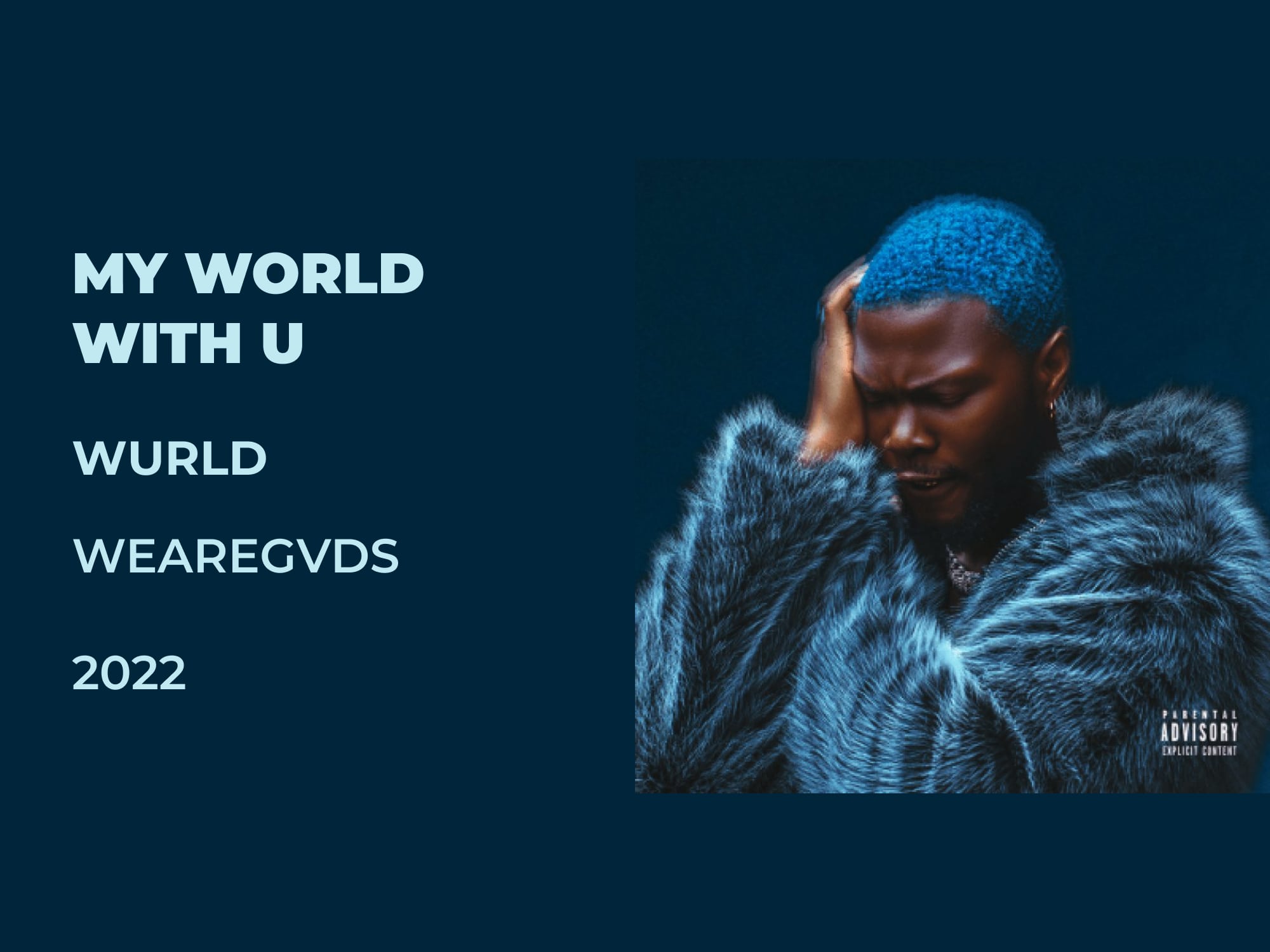
WurlD is infamous for letting his emotions speak through his music. This is not any different on his latest single, “Let You Down”. The electronic Afro-soul track is a solemn number that finds WurlD speaking on his unintentional actions that hurt his love interest. He goes on to wish he didn’t meet her, and maybe he wouldn’t have let her down. “Let You Down” is the headliner to WurlD’s forthcoming 19 track album ‘My World With U’, set to debut in March. Alongside “Let You Down” are his other singles “Spunk” and “Stamina” set also be featured on this project.

Reminisce – “Alaye Toh Se Go Go”

Veteran Nigeria rapper, Reminisce gifts his fans a brand new single titled “Alaye Toh Se Gogo”. Serving as his first official single of the year, the new track is a slow tempo track filled with Piano sounds which are accentuated by delectable drum patterns. He raps his heart out in his signature pace and a clear yet strong voice that carries weighty messages. Gearing up for the release of his upcoming album and other singles yet to drop, he raps about focusing on himself, having no fear, and thanking God for his blessing and hopes he grants him many more years.

Portable (ft. Small Doctor) – “Neighbour”

Since gripping our attention with 2020’s viral track “Zazoo Zeh,” alongside dancer Poco lee and Olamide, and kicking off 2022 with the Barry Jhay-assisted “All Eyes On Me”, Portable has now tapped street-hop pioneer, Small Doctor on another single entitled “Neighbour”. Over a catchy traditional beat, Portable does what he does best and captures our attention with his dizzying rhymes and rapid-fire alliteration. Small Doctor jumps in with the perfect sound that compliments the song and makes for an enjoyable listening experience that will soon hit the streets.

Bella Shmurda – “Friends”

Dangbana Republik’s hitmaker Bella Shmurda delivers a new single dubbed “Friends” to celebrate his birthday. The Niphkeys produced track will be Bella’s first project of the year 2022. On this Afropop single, Bella with all his success and travels has to say goodbye to his friends but reassure them he has them in mind no matter where his venture leads him. A must listen

Mayorkun & Victony – “Holy Father”

The chart-topping single “Holy Father” featured on Mayorkun’s ‘Back to Office’ is back on the scene with a cinematic and eccentric visual. Assisted by fast-rising sensation Victony with such catchy lyrics, vocals and feet stomping beats produced by Semzi, it’s no surprise that this track has garnered impressive numbers on turntables charts and streaming platforms all over. The visual is set on Mayorkun embarking on a secret mission to seek out a high entity, directed by the amazing TG Omori. The biggest surprise is witnessing Victony standing on his feet to perform the song as he was prone to a wheelchair due to a horrific car accident last year. A video worth watching.

Ayra Starr & Ckay -“Beggie Beggie”

Afro pops fastest rising star Ayra Starr and global hitmaker CKay teamed up to give us the hit single entitled “Beggie Beggie” which was featured in the Ayra Starr’s highly received debut album, ‘19 & Dangerous’. Produced by Louddaaa, “Beggie Beggie” is a contemporary and minimalist homage to the warm grooves of traditional African music.

Thematically a change in pace from Ayra’s anthems of defiance and independence, “Beggie Beggie” sees Ayra demonstrate vulnerability and a longing to be loved. With the songs success, it is fair that it is accompanied by a fire music video.  The Director K-released video is a representation of Nigeria’s cultural Renaissance set against a Nollywood-inspired backdrop. The style featured in the visuals is reminiscent of the Y2K and old Nollywood era from the hairstyles to the outfits, emphasising the vision and spirit of the video.


Teeben – “Wayo”

Love is in the air. Leading up to Valentine’s season, “Wayo” by Teeben is a perfect song for those lovebirds and singles wishing to serenade that special someone with a song. An Afro-pop track headed by a heartfelt theme about coming into love with a clean heart and honest intentions. Teeben also admires his love interest and what it feels like to be in love with her. Must be nice for some.

Kofi Mole – “Abuakwa”

The Ghanaian rapper Kofi Mole recently released his eight-track EP ‘Knackaveki’, which features a few of his fellow Ghanaian artists like Joey B, Eden, and Pappy Kojo. One of the fan favourites in the project is the opening track, “Abuakwa”. “Abuakwa” is a catchy single that pays homage to his hometown in Ghana that also goes by the name Abuukwa – Kumasi. “Got love for my city and my city love for the ni***a I dey fuck with just enjoy the hospitality” he raps, determined to put his hometown on the map.


ICYMI: A YEAR LATER, AYRA STARR HAS EMERGED AS A GENERATIONAL VOICE

Daily Paper x Free The Youth Honour Childs Play In Their Sophomore Collection

After the release of their first ever collaborative venture in 2020, Amsterdam-based Daily Paper and Ghana-based Free The Youth have reunited for a new collection based on the pair’s longstanding friendship. First unveiled in Accra at Daily Paper’s pop-up, the collaborative collection will now be made available worldwide on January 27.


View this post on Instagram


A post shared by Daily Paper (@dailypaper)

For their second collaboration, both streetwear brands were inspired by a nostalgic trip down their childhood memories and the games they loved to play as kids. The collection is meant to tap into the child-like youth in all of us where we exude the freedom and ability to create while having fun. Since the collection was made available at the Daily Paper pop up in Ghana, it will also be available in stores worldwide and online starting from January 27th 2022. 

The collection itself features 6 limited edition pieces in classic green, blue, black and white colourways, taking on a playful aesthetic. Adorned with custom Daily Paper x FREE THE YOUTH graphics, the collection represents a true ode to a DIY childhood. Speaking about the new collaboration, set to hit their Daily Paper website tomorrow, co-founders of FreeTheYouth, Maposh, Joey and Kelly share:

“This collaboration with the Daily Paper family was a special one. It reminded us all of when we were young in the hood, where we group up. This was us, making things by hand out of whatever we could find – cans, scraps etc. – transforming it into something, cars mostly. It all started from an idea and through creativity, youth and joy, we were able to make something out of it. This creativity, this hope – this is what we are bringing to the people through this collection.”

Credits:

Photography: @trendsafeez

Producer: @ekowbarnes_

Hair & MUA: @wild_moon

Stylist: @wizkojo

Talents: @prince__b07, @gilbert.q_ & @adom.gee.

You can view shop the collection here tomorrow.

Best New Music: Fave Has Everyone “Obsessed”

At the first peak of the COVID-19 pandemic, Fave cut through the fog of uncertainty with a whirlwind of a voice. Hopping on a beat from a free pack shared by Lagos-based producer and singer Jinmi Abduls, she shared a stunning freestyle video for “N.B.U,” quickly endearing her to many who encountered that video. In the two years since, she’s been methodical with her growth, taking her time with occasional singles and features. All of that paid off at the end of 2021, as she scored her mainstream breakout hit, “Baby Riddim.”

Rolling into the 2022 with purpose, Fave recently released her debut EP, ‘Riddim 5’, to widespread positive reception. The love-themed EP consists of five tracks, including “Baby Riddim,” and it’s the perfect vehicle for her undeniable talent as a head-turning singer and songwriter with a knack for relatable lyricism. While its lead single will still be getting a lot of love, one of the EP’s standouts is “Obsessed.”


View this post on Instagram


A post shared by Fave (@faveszn)

Opening up ‘Riddim 5’ on a remarkable note, “Obsessed” is a gently intoxicating track centred on Fave’s ability to elevate the mundane into something special with heartfelt expression. Her melodious vocals are accompanied by catchy adlibs, and a drum and guitar-filled beat. The KNZ-produced track slowly kicks in with a male voice singing in traditional language, this voice is heard numerous times throughout the track, adding a unique flavour and authentic vibe that matches the fusion of Afropop and R&B on the production. It’s also a solid sonic convoy for Fave to effortlessly sing her heart out about being head over heels for a love interest.

Fave, being a GenZ, explores the nuances of young love with a very modern, casual twist, as she details the strong and sometimes overwhelming feelings we have towards our significant other. “I’m obsessed, I confess, these in my head go spinning round,” she repeatedly sings on the chorus, expressing how romantic love can fogs our minds and fill up every facet of our being. Obsession is a very strong word but, in this context, I believe it was chosen to understand the very extent of the infatuation. She even sings:

 “You leave, I want to follow you there, 

you miss a call, my heart e go tear, 

you say a thing, I hear it different” 

All the signs of an obsessive relationship are barely ever healthy, but young love is barely ever rational. Romance is a beautiful thing but it can turn ugly when it becomes obsessive and has you morphing into someone you don’t recognise. Fave explores that to an extent, conveying the fear and anxiety that comes with this heady sort of affection. Falling for someone is far more complicated than the concept of gravity in our adolescene, and “Obsessed” captures all that perfectly.

Also, on the cusp of Valentine’s Day and the so-called season of love, being with someone that makes us feel special and keeps our heart beating fast is a struggle, especially in the age of frayed connections and situationships. Perhaps, that’s part of what makes “Obsessed” an early fan favourite going into the coming weeks. Currently, the song has been making headway on various streaming and radio platforms, setting up another big single for the singer.

Fave is living in her moment and enjoying every piece of it and that’s what you expect from someone with so much talent. We can’t wait for what more she has in store for us. 


NATIVE EXCLUSIVE: FAVE IS READY FOR THE WORLD

Lady Donli debuts “Thunderstorm in Surulere” on A COLORS Show

After taking a much-needed break from public view, including a months-long social media hiatus, Lady Donli reappeared last summer with new music in hand. The singer delivered the third EP in her catalogue, ‘W I L D’—shorthand for ‘Where is Lady Donli?’—to positive reception. The 6-track set added a fresh layer to her retro-fusionist Pop agenda, with a vibrant palette and Donli being as vocally compelling as ever.

In addition to strengthening Donli’s craft as a pan-African rockstar, ‘W I L D’ is also meant as a precursor to the singer’s sophomore album, which should see release sometime this year. Opening 2022 and kicking off the album rollout in remarkable form, Lady Donli has just debuted “Thunderstorm in Surulere,” the lead single from the upcoming LP, on COLORSXSTUDIOS’ A COLORS Show. Lady Donli joins an increasing list of Nigerian artists who’ve graced the renowned music performance platform, making her appearance memorable with a wondrous set befitting of the occasion and song’s significance.

Produced by UK-based artist and EYL collaborator, BenjiFlow, “Thunderstorm in Surulere” is a tantalising, romantic jam. Musically, it’s an amorphous combination of R&B, Afro-Soul, and Folk-indented Afropop, with three warm riffs—piano, guitar and bass guitar—melding to form a bewitching melodic motif over groovy, languid drums with a jazzy swing. On it, Lady Donli basks in the glow of being romantically entranced, true to her self-professed nature as a lova gal. “Rain is falling, in a way it has bever felt before/It’s the thunder in my soul that’s pouring/‘Cause I think I found the one, I’m Soaring,” she sings at the top of the second verse.

In front of a purple background, Lady Donli performs with the same vibrant energy her live sets have become renowned for, singing, dancing, radiating the joy apt to the song’s theme, and adding adlibs in spots that call for them. Donli’s performance on A COLORS Show is a great way to experience “Thunderstorm in Surulere,” setting a tone of anticipation for her coming sophomore LP.


ICYMI: A RECAP OF LADY DONLI’S EARLY CAREER BEFORE HER 2019 DEBUT ALBUM

Hot Takes: André Leon Tally, Kanye & His Muses, Madea Returns & More

And just like that, it’s the new year again. After weeks of partying and catching up with family and friends during the festive season, we’re back to business as normal as the hazy January days roll in. Although I’m firmly in work mode these days, I’ve been reminiscing on the December period and all the fun that I had to get me through the long quarter ahead. 

I ended my detty December in Ghana which was offered a more serene and slower pace than Lagos. It was really peaceful and calm and exactly the remedy I needed to begin the new year and recharge my spirits. While it’s been a quiet month already, there’s already been enough buzz-worthy pop culture moments happening all across the world to kickstart the first edition of our Hot Takes column this week. From witnessing the entire world Pushin’ P with Gunna, Future and Young Thug to Kanye’s many muses, the sad passing of André Leon Tally and the return of ‘Euphoria,’ this week I’ll be taking the reins with our production assistant, Moore to dish on all the hottest takes from around the world. Enjoy!

What I’m Currently Listening To

The year just started and there are a few releases out already. My favourite at the moment happens to be from Fave, the 21-year-old newcomer and Fresh Meat alum who recently shared the world around her debut EP ‘Riddim 5’ with loyal fans. The succinct 5-tracker runs under the 20-minute mark but still packs in a punch with honest storytelling and catchy beats. I’m extremely impressed at the outcome of the tape but of course, I have some favourites. The standout track for me will be “Mr Man”. I simply love everything about this track, from the lyrical content to the delivery, the track really does it for me. Close second is “Baby Riddim”, as the song simply cannot get old to me. In fact, it sounds like a completely new track on the tape.

What I’m Currently Watching

written by Moore Wright

The second season of HBO’s ‘Euphoria’ recently premiered after an almost three-year break. The long wait seems to have only increased audience’s enthusiasm for the show, as it’s already been all the rave on social media. The season had an explosive start, with Rue and Fezco having an encounter with drug dealers that quickly turns violent. This made the show seem less like the colourful, if very intense, teen drama that we know and more like the hectic thriller ‘Uncut Gems,’ also produced by A24.

The cinematography also marks a change in tone. Shot on film, it is a far more muted with a hazy colour palette than the purple hued previous season. The showrunner Sam Levinson stated that the intention was to make this feel like a house party “at 5 am, way past the point in which everyone should have gone home.” The characters are dressing differently and behaving even more messy than before. With lighter makeup that lets the texture of their skin show clearly on film, it feels like we are truly
seeing the cracks beneath the masks that the characters wore in the previous season. The first season may have felt more like the peak of a high on a night out, this season feels more like the start of the comedown.

Some Of My Favourite TikTok Trends Right Now

The “Gorgeous gorgeous girls” trend has been gaining traction on TikTok. It was first posted by the account @fishdress, in a video in which it was said that “Gorgeous, gorgeous girls love soup. Soup girls are the most popular girls in the chicken coup.” People have begun using the first three words and following up with various things that they think is gorgeous girl behaviour.
Videos ranging from serious PSAs on people encouraging more social awareness, to people proclaiming what they think is hot girl behaviour.

André Leon Talley Has Passed Away

André Leon Talley, Vogue’s first African-American male creative director has passed on at age 73. Talley was a prestigious fashion journalist, creative director, stylist and editor-at-large at Vogue Magazine. It was reported that he died right after suffering a heart attack according to Graydon Carter.  He was a lifelong advocate of fashion as his career in fashion began with an internship for former Vogue editor, Diana Vreeland. He began writing for publications including W and the New York Times, but his rise to fame began when he began writing for US Vogue. He shortly rose to become the magazine’s news director and afterwards became the creative director until he left in 1995. He returned to Vogue a few years later where he felt at home and remained the editor-at-large until 2013.

Interestingly, Tally also served as a judge on America’s Next Top Model from cycle 14 – cycle 17. Tally was not just popular but an important figure in the fashion world, as he was known for his elegant and flamboyant style. He’d dress in kaftans, hats and robes which he wore quite frequently. Alongside writing for publications, he authored three books of which one landed on New York Times bestseller list. From styling The Obama’s during their time in the white house to styling Melania Trump on her wedding, Tally has lived a good life with a career spread over 6 decades. The entire fashion and journalism industry mourns his life and legacy which will never be forgotten. 


View this post on Instagram


A post shared by Andre Leon Talley (@andreltalley)

Kanye And His Many Muses

written by Moore Wright

Kanye West has long been respected as a visionary artist, both when it comes to his music and within the fashion industry One of the ways in which his eye for style is expressed is through the way that he seems to strip down and build up his romantic partners. Kanye’s Pygmalion-like tendency to sculpt women in his preferred image can be seen through his whirlwind romance with Julia Fox.

According to Fox, the pair met on New Years, moving very quickly afterwards. On their second date Kanye filled an entire suite with new clothes for Fox, a process documented in Interview Magazine. Since then, Julia’s street style has already made a marked change, with many of her outfits paralleling those of Kim Kardashian, Kanye’s estranged wife. This is something he’s done with his past partners. 

This pattern can be seen with his exes such as Amber Rose, who he urged to wear a minimalistic white gown to the Metropolitan Opera’s 125th-anniversary gala at Lincoln Center, going against her personal style. Amber still seemed to keep some of her own character in her clothes however. As documented on ‘Keeping up with the Kardashians,’ Kanye took his styling to new lengths with Kim Kardashian, almost completely clearing out and replacing her closet. “[Kanye] sent me a whole email, like, ‘You cannot wear big glasses anymore. It’s all about tiny little glasses,’” Kardashian said about Kanye’s fashion instructions. They ran into some trouble at the 2019 Met Gala where he changed his mind about revealing clothes, encouraging Kim to wear a more conservative outfit, to which Kim argued that he was the one who encouraged her to lean into her sex appeal. His method of transforming his partners is not something that appears to be sustainable. People are unlikely to allow themselves to be shaped by the whims of an artist for long, especially when it comes to their own self expression.


View this post on Instagram


A post shared by COMPLEX (@complex)

Madea returns

Written by Moore Wright

Tyler Perry returns to his iconic character Madea with his recent announcement of ‘A Madea Homecoming.’ This comes three years after his announced decision to permanently lay his character to rest. Many have had mixed feelings about this return, along with growing criticisms of Tyler Perry as a filmmaker in general. A common criticism is that his films tend to be overly moralistic.

In ‘Madea’s Family Reunion,’ there was a speech in which the character Myrtle said “young black women, you are more than your thighs and your hips” after a character in short shorts was ogled. It was framed to more of a call to change their behaviour, instead of addressing the men who did the ogling. In another of Perry’s film’s ‘Temptation: Confessions of a Marriage Counsellor’ the main character engages in an affair (which does not start consensually) and winds up contracting AIDS as punishment for her infidelity, which sends the wrong message to viewers.

However, in the years that have past since his last Madea film was made, Perry may have begun to make some changes to his universe. He is trying to be more inclusive this time around, stating that this film will include an LGBTQ+ storyline.
Perry does appear to be a filmmaker that cares deeply about his audience, and the movies are no worse than many broad comedies of the 2000s, both in terms of quality and problematic moments. It’s not exactly his fault that he was seen as the defining voice of black comedy for so long, but as a result he is being held to a higher standard. Hopefully, the increasing criticisms cause many people have towards his films causes an increase in quality.

Being Child Free Should Not Be Controversial

Pope Francis made waves by announcing that those who choose not to have children are selfish. It is strange that a man who has dedicated his life to a cause, spreading the word of God would question why many people abstain from having children themselves. Young people are growing more aware of the difficulties of being an adult, in part due to people documenting their lives on social media. Many find themselves in mountains of debt, unable to find well-paying jobs in the increasingly competitive job market, making them unsure of how they’d care for a child financially. Increasing worries about climate change also makes young people wary of brining children into the world. Considering how much of a negative environmental impact having a child may cause, many are choosing not to have children as a way to reduce their own carbon footprints.

Regardless of all these very valid reasons, there are many who also choose to not have children simply because they don’t want to. It would arguably be far more selfish of them to bring a child into the world knowing they lack the capability or resources to care for them. We are in the 21st century, far past the point of doing things simply because it is expected. Unfortunately, with the increasing restrictions on abortion access in places like the US, along with Pope Francis’s statement, can make it appear that we are regressing to a more archaic form of thinking, where people have less of a say with what they do with their lives and bodies. The outspokenness of people rallying to improve abortion access, and being honest about their decisions not to have children gives some hope however.

There are more honest discussions about the difficulties of parenthood also. The Nigerian film, ‘For Maria Ebun Pataki’ is a rare film that doesn’t present parenthood and motherhood in particular as an inherently joyful experience. It acknowledges the difficulties that come with it, as it chronicles a woman who deals with postpartum depression. For this to come out of a very Christian country like Nigeria, where parenthood is simply seen as a right of passage into adulthood is very promising.

Featured image credits/NATIVE


Words by Wonu Osiokoya and Moore Wright


ICYMI: A year later, Ayra Starr has emerged as a generational voice

What we know so far about the military coup in Burkina Faso

On Sunday, news reports from Ouagadougou, the capital city of Burkina Faso, confirmed a then-ongoing mutiny, after gunfire was heard around a military base and within the area of President Roch Marc Christian Kabore’s home. Residents and witnesses say the gunfire began as early as 5am local time, in a standoff between mutinous soldiers and forces loyal to the civilian government. By Tuesday, the mutiny had escalated into a full-blown coup, with the army making a statement on national television that it had deposed the President Kabore.

The coup is believed to be centred on the inadequate support the Kabore-led administration gave to the Burkina Faso military in its fight against insurgent groups. Shortly after the ousting of long-term president Blaise Compaore in 2014, Burkina Faso has been plagued by armed attacks from groups linked to al-Quaeda and ISIS. The northern and eastern parts of the country have been the most affected region, as well as the capital city, with the situation growing exponentially worse in the ensuing years, including constant attacks all through 2021.

In June last year, over 100 people were killed in a violent attack on the north-eastern village of Solhan, the worst of the attacks in terms of death toll. In November, an attack in the northern town of Inata resulted in the death of 49 military officers and four civilians, which sparked even more outrage after reports emerged that the troops had gone without food rations for two weeks. It immediately led to anti-government protests and calls for Kabore to step down, which resulted in confrontation between protesters and the police. In another such protest on Saturday, police opened teargas on protesters, despite genuine concerns on the Kabore-led government’s handling of the crisis.

Dissatisfied by the government’s response and support, the Burkina Faso army staged a mutiny, taking control of several barracks across the country, including Sangoule Lamizana camp, which houses the army’s generals and a prison whose inmates include soldiers from the failed coup attempt in 2015. The mutiny was meant to force negotiations with the government for stronger commitment to end the insurgency, however, with talks deadlocked, the mutineers detained Kabore, before announcing full military takeover and a dissolution of the constitution on Radiodiffusion Television Du Burkina (RTB) on Tuesday.

The group, referring to itself as Patriotic Movement for Safeguard and Restoration (MPSR), is being led by Paul-Henri Dimba, a long-term soldier and lieutenant colonel appointed in December by Kabore to commander of Burkina Faso’s third military region. Alongside Chad, Guinea and Mali, Burkina Faso is the fourth West African state to come under military rule in the past eighteen months. The removal of Kabore has been a cause for celebration amongst many locals who have protested the former president’s incompetence, while external bodies and countries, such as United Nations, African Union, ECOWAS and the U.S. government have strongly condemned the coup.

[Featured Image from AFP]


ICYMI: HOW THE LATEST PRESIDENTIAL ELECTIONS PROJECT A BETTER FUTURE FOR ZAMBIA

TurnTable Top 50: CKay scores debut top five entry with “Emiliana”

Last year, CKay emerged as an international sensation. On the back of TikTok-powered virality, the singer and producer’s two-year old single, “Love Nwantiti,” climbed multiple charts across the world, including a stint on the U.S. Billboard Hot 100 and rumours that the single might soon be certified platinum over there very soon. With these accomplishments, CKay had yet to crack the top five of Nigeria’s TurnTable Top 50, until now.

CKay’s latest popular single, “Emiliana,” has just made its way to the No. 5 on this week’s edition of the TurnTable Top 50, on the back of 1.31 million equivalent streams and 42.4 million in radio reach. It’s the only new entry into the top five, coming in behind Lil Kesh and Zinoleesky’s “Don’t Call Me” [No. 3] and “B. D’OR” by Burna Boy and Wizkid [No.4], with both songs exchanging chart positions from the previous week. Kizz Daniel’s “Pour Me Water” remains at the second spot for fourth straight week, after a one-week stay at the top the TurnTable Top 50 to close out 2021.

Retaining its momentum, Fireboy DML’s “Peru (Remix)” with UK pop superstar Ed Sheeran stays at No. 1 for the fourth consecutive week. The song tallied 1.74 million equivalent streams, 13 million in TV reach and 58 million in radio reach. With an ongoing campaign to make “Peru (Remix)” the first Nigerian pop song to top the UK singles chart, there will undoubtedly be a trickledown effect, which might help keep the song atop the TurnTable Top 50 for a while longer.

Further down, rising street-hop artist TI Blaze makes his top ten debut on the TurnTable Top 50 with the Olamide-assisted “Sometimes (Remix).” Given the heft of the YBNL boss’ co-sign, this week’s No. 9 position might not be the song’s peak. It completes the lower half of the top ten, which is replete with familiar entries from past weeks, including Reekado Banks’ “Ozumba Mbadiwe” [6], Fave’s “Baby Riddim” [7], Kizz Daniel’s “Eh God (Barnabas)” [8], and Ruger’s “Dior” [10].

You can checkout this week’s TurnTable Top 50 rundown here.


ICYMI: OUR FIRST IMPRESSIONS OF FAVE’S DEBUT EP ‘RIDDIM 5’

Nigerians react to AFCON knockout with self-deprecating banter

After a blistering start to the 2021 African Cup of Nations (AFCON), Nigeria crashed out in unspectacular fashion on Sunday night, losing to a lone goal against Tunisia in the competition’s round of 16. Being the only country to win all three of its group stage games, the Super Eagles emerged as early contenders as the knockout phase began during the weekend, and Nigerians were very much invested in the team’s seeming, impending dominance.

Now, short of fulfilling that potential, the team departed AFCON after putting on a generally lacklustre display against the Carthage Eagles, who qualified as best losers from the group stage after winning just a single game. Early in the second half, Super Eagles goalkeeper Maduka Okoye conceded via a long distance attempt by Youssef Msakni, in what really should have been a routine save.

Over the remaining 45-minutes, Nigeria created multiple chances to equalise but failed to convert any, with the comeback attempt made even harder when Alex Iwobi was handed a red card shortly after being substituted into the game. The loss dashed the optimism of many Nigerians who were quite certain the national team would make a deep run into this year’s AFCON.

In typical Nigerian fashion, the reaction to the loss was heavily coloured by sarcasm, a coping mechanism Nigerians have adopted to any and every situation. Having served proper banter and caustic comments at several teams who came into AFCON flat, especially neighbouring Ghana who gloriously exited after three straight losses, Nigerians quickly turned that savvy inward.

Twitter was littered with a litany of hilarious comments, with the riffs ranging across two major talking points. While some of the jest was aimed at Maduka Okoye, whose failure to save a relatively direct shot drew the ire of many football fans—mostly male—who were already critical of his goalkeeping abilities, in whimsical relation to his good looks. The other involved President Buhari, who addressed the team hours before the match and was caught in the cross-fire of many tweets, many of which alluded to his incompetence rubbing off on a team that was brutally effective before his call.

Usually, this sort of banter is doled out by fans of opposing teams, but Nigerians have never shied away from self-deprecating jokes. It was expected that Ghanaians would contribute heavily to the barbs, but Nigerians even cut that channel off, with several briefly posing as Ghanaian Twitter users to let their banter off. Nigerians are already infamous on Football Twitter for dishing extremely funny, extremely clever banter and last night was another wonderful example. Sure, the loss stings, but what are you going to do but just laugh? It’s not like we can run the match back.

Here are few of the best reactions in the aftermath of the loss.

[P.S, I’m waiting to see the subsequent fallout from rapper and comic Vader the Wildcard’s ongoing short video series, If an agbero had a diary.]


ICYMI: A MUCH-NEEDED ANALYSIS OF NIGERIA’S SHAMBOLIC TOKYO 2020 OUTING

Songs Of The Day: New Music From Skiibii, 2Baba, O’Kenneth & More

After the many wins forged by Afropop last year, the musical landscape has never looked more promising. As such the fast and furious pace of new music releases makes it hard to keep track of all the good music coming out of Africa. That’s where our Songs of the Day column comes in.

We’re doing the work to stay on pulse with all the music coming out from across the continent and beyond, bringing you exciting songs of tomorrow: today. Last week, we brought you new releases from Kofi Mole, PsychoYP, Tim Lyre, Fiokee & more. This week, enjoy these new releases from Skiibii, Davido, O’Kenneth, 2Baba, Sean Lifer and more.

Skiibii – “Baddest Boy” Remix ft Davido

In November last year, Nigerian singer, Skiibii released “Baddest Boy,” a catchy and boastful track about his journey and come up. To further promote the track, he’s employed the help of none other than Afropop superstar Davido to bolster the song to newer heights.

Released over the weekend, “Baddest Boy (Remix)” finds both artists hyping themselves up and trading braggadocious bars about their current status in the game. Singing “Bad belle lo po la ye, Kehinde le jo jun Taiye/OBO tun gbe won sare”, Davido sets the nonchalant tone for the rest of the song, telling listeners to always strive to be their best selves despite the opps. 

O’Kenneth – “All Eyes” ft. Reggie

The Asaaka boys are back at it this new year. This time around, O’Kenneth teams up with Reggie to deliver new single titled “All Eyes”. Over the bouncy production of the song, both rappers trade bars about handling their opps, maintaining the spotlight while still remaining their true selves. 

DJ Boat – “Old School Love” ft. Victony 

On his new single “Old School Love”, Ghananian DJ and record producer, DJ Boat melds Afropop with contemporary R&B and Pop for a catchy romantic tune about his muse. Teaming up with rising star, Vict0ny, whose buttery smooth vocals make the song an enjoyable listen, “Old School Love” is a nostalgic track about pursuing true love. “I need some time with you, whatchu saying girl?/I need a life with you, whatchu saying girl, that’s why I need that Old school love”, sings Vict0ny over the song’s pop-tinged production, with lyrics that segue between sentimental longing and brazing. 

2Baba – “Smile”

For his first release of the year, veteran singer and songwriter 2Baba has returned with a heartwarming new track titled “Smile”. Over the romantic track, he sings directly to his love interest, thanking her for her devotion and promising to keep her smiling all her days. With lyrics such as “See the way this girl is smiling, e dey burst my brain/No matter what they say, I know I will love her eternally”, the singer declares his deepest feelings in no uncertain terms. 

Sean Lifer – “Goals”

Sean Lifer is heralded as the Godfather of Ghanaian Drill. After years of spreading the gospel of Asakaa Drill back at home and in the diaspora, the rapper has now begun the year with a new EP titled ‘Lost In Space.’ The 5-tracker finds the artist combining a myriad of sounds and themes together to create a world entirely of his own making. On the standout track “Goals”, the rapper speaks about his goals for the future while taking into account his present status in the industry.

Jaywon – “Sugar” ft. Jaywillz

Nigerian singer Jaywon teams up with fellow collaborator, Jaywillz for a romantic new single titled “Sugar.” The track finds both artists serenading their love interests, and attempting to win them over with undulating admiration. 

All Eyes On Me – Portable ft. Barry Jhay

After gripping our attention with the viral track “Zazoo Zehh” featuring dancer Poco Lee and Olamide, the Zazuu master himself, Portable has returned with an another single titled “All Eyes On Me” featuring Barry Jhay. Over the catchy new number, Portable sings “Brother pray for me, sister pray for me, thank you to those showing me love,” thanking those who have stood by him and support his journey.

Featured Image Credits/NATIVE