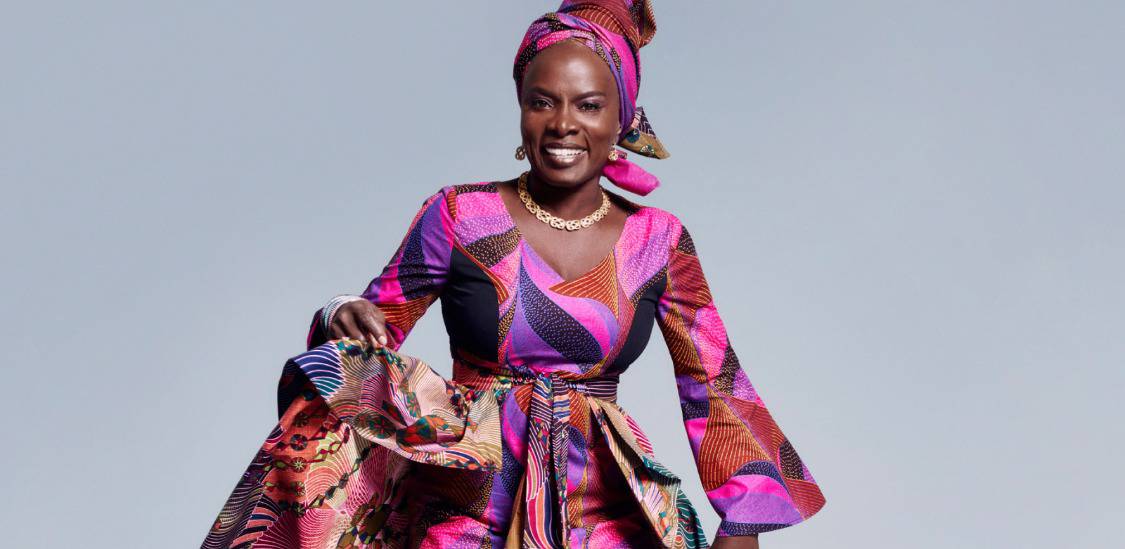
The world is facing the deadly scourge of the coronavirus, and while we wait for world governments to make a vaccine available, and do our part by staying indoors, music is proving to be an indisputable connecting factor bringing hope and joy to millions around the globe. In the efforts to continue this feat, Angélique Kidjo, in collaboration with the United Nations body, has reworked Miriam Makeba’s “Pata Pata”, in order to raise awareness around the coronavirus outbreak.
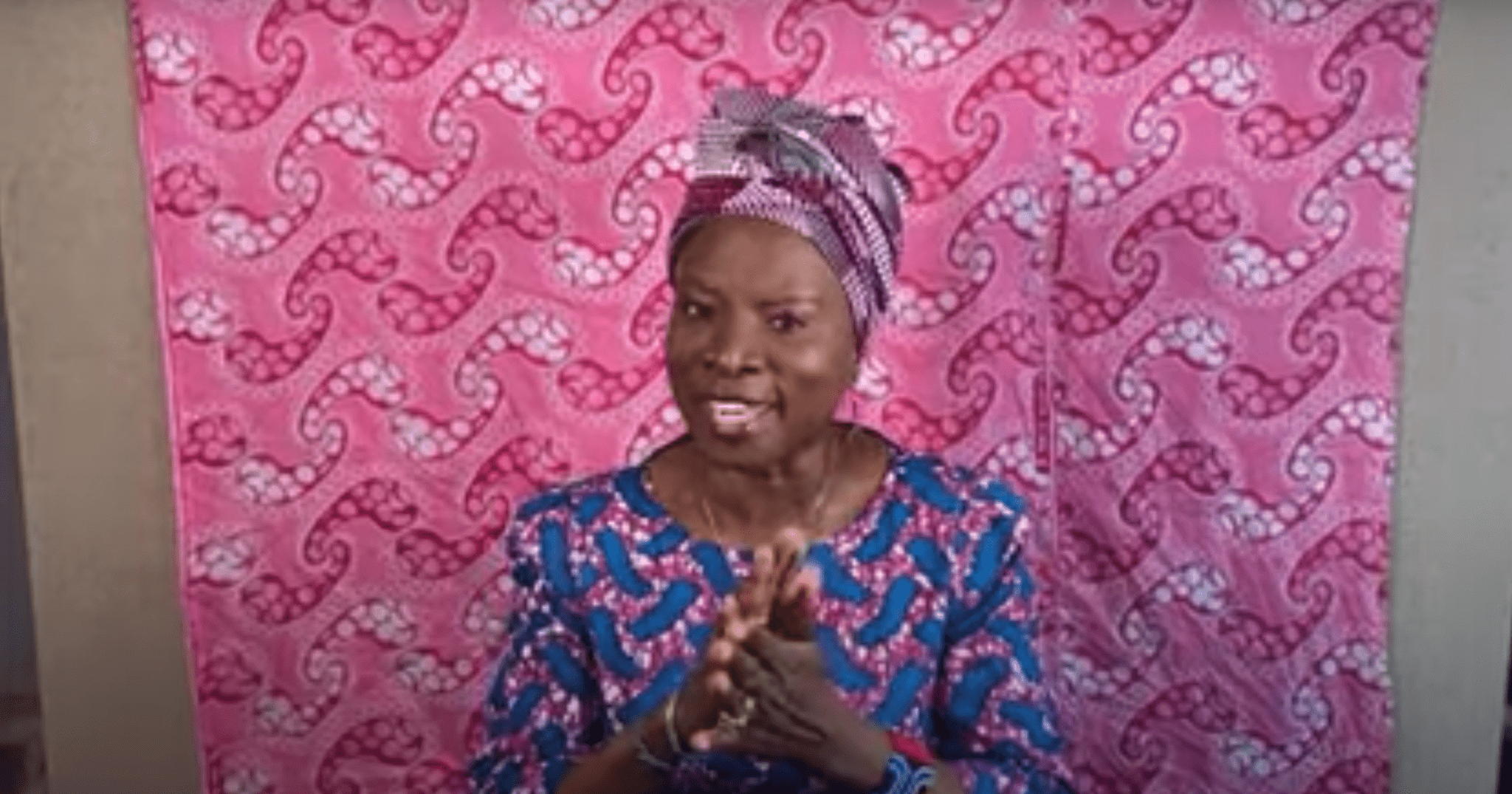
Without any alteration to chords or syllables of the original song, the newly reworked “Pata Pata” now has several changes to the lyrics to suit the theme of awareness, and to spread information and hope in a time of Coronavirus. ‘This is the time to sit it out/stay at home and wait it out/keep your distance please’ sings Angelique Kidjo, in what appears to be a homemade video directed right from the artist’s home.
UNICEF is also encouraging the public to submit videos of themselves dancing to “Pata-Pata” by tagging @1unicefafrica on TikTok or @unicefafrica on Instagram with #nopatapata and #healthyathome. The best dance clips will be included in a music video to be released in mid-May.
Speaking on the reworked song, Kidjo told UNICEF that:
“Miriam inspired me. And Pata Pata gave me hope. We all know what needs to be done, but we also know how much communities are suffering. “Pata Pata” has always been there for people at a time of struggle. I hope it helps once more. And I hope from our confined spaces we can dance once more.”
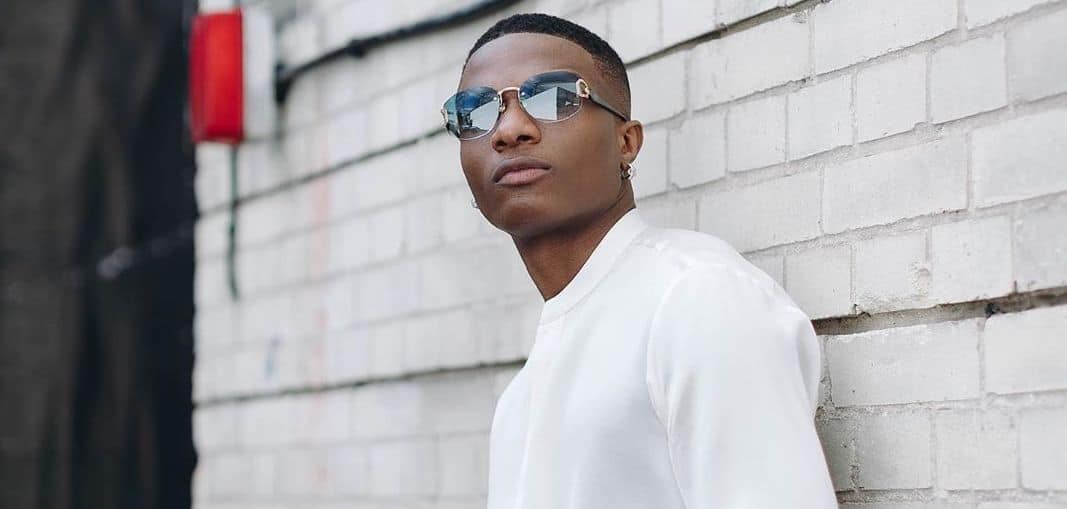
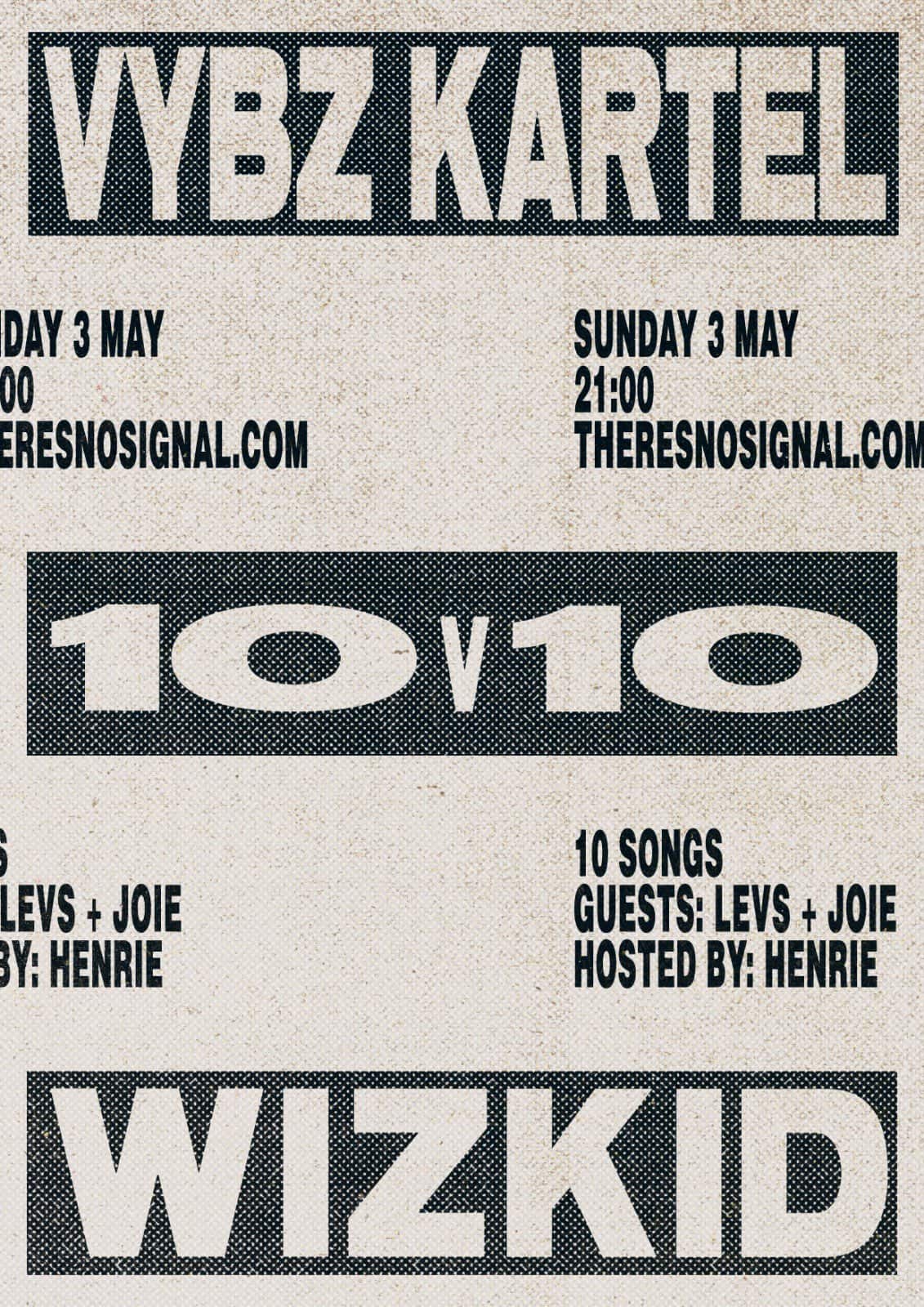
If the No Signal #NS10vs10 catalogue clash over the weekend showed us anything, it was that Wizkid’s star power is undeniable. Not that we ever doubted, but Wizkid has had the game in a chokehold for the past decade since he broke out in 2010 with “Holla At Your Boy”. Since then, his growth is almost palpable from the quality of his music to the heights he has reached since.
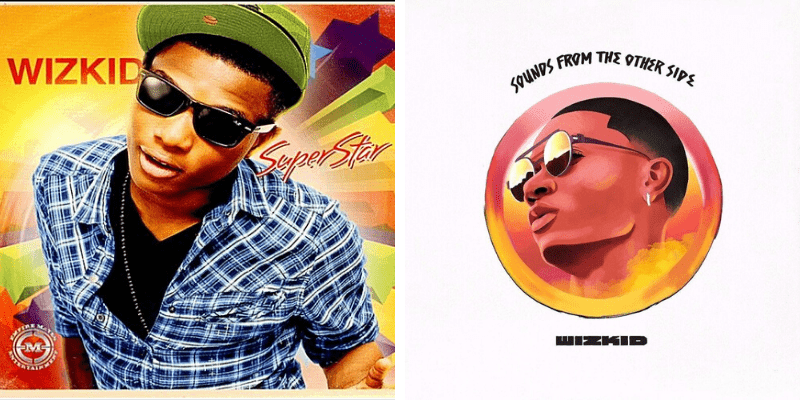
He has scored features with several A list musicians from Beyoncé to Drake and Future, whilst also championing and ushering in the next wave of hitmakers from Terri to his rumoured verse on the remix for Santi’s “Freaky” which we’ve heard will never see the light of day. Since he gained more popularity outside of the country in the latter part of last decade, with newer releases like ‘Sounds From The Other Sides’, “Come Closer” and “Soco”, it’s easy for newer fans to have missed his older work which endeared us to him in the first place.
Wizkid actually has one of the most impressive catalogues from any Nigerian artist with three studio albums, one compilation album, and over fifty singles currently in the bag. Since there’s so much material, some of them have slipped under the radar of the more popular hits, and so we’ve decided to bring to you 10 Wizkid tracks you may have forgotten about. So while we wait (not so) patiently for Wizkid’s next project, here are some songs to hold you:
“Sisi Nene”
Wizkid’s earliest releases under EME Records were full of party starters and crowd-pleasers, including this loose 2012 release “Sisi Nene”. Produced by Jay Sleek, who he frequently collaborated with back then, a young Wizkid celebrates his love interest who he only has eyes for. He sings praises to her and asks for her to whine pon him, something many of us who are revisiting this song can recall from our adolescent parties where we used to grind against the walls.
“For Me” featuring Wande Coal
Any DJ worth his salt would play this song in the club if he wants to get a rousing reaction from the party-goers. Off Wizkid’s debut album, “For Me” was one of the best collaborations we had in the last decade and we’re surprised the song was never made a single. Regardless, it made its way into everyone’s hearts and was one of the tracks which cemented Wizkid as the G.O.A.T, alongside Wande Coal who had already made his stamp.
Wizkid and Wande Coal showed incredible synergy, against a catchy and energetic beat singing mostly in Yoruba about the effect a lover has on them. Whether you understand what they’re saying or not, you can appreciate the fantastic sonic quality.
“Shout Out”
Everyone has seen the viral video of a young Wizkid performing “Shout Out” as a raw, emotional freestyle on the streets of ‘Lere back in the days when he was fast becoming a local champion. When his debut album ‘Superstar’ came in 2011, Wizkid included the famous freestyle into his project, only more refined and more suited match the other hits on the album such as “Don’t Dull” and “Scatter the Floor”.
On “Shout Out”, Wizkid speaks about his rise as an artist, giving a shout out to all his friends and chosen family who have bolstered him up to star status. The chantable hook where he sang “God go make you bigger” to each person he gave a shout out became a staple #thatyear, and will still slap when we hear it today.
“Murder” ft Wale
In 2014, Wizkid released his second studio album ‘Ayo’ and while “Ojuelegba” won the hearts of fans and listeners everywhere, there were several deep cuts which slipped under the radar, such as the Maleek Berry-produced, Wale-assisted “Murder”. The upbeat track sees Wizkid singing entrancingly about a lover, whose looks “are killing [him] murder”.
In his usual slick and sensual manner, Wizkid is on top form navigating between the catchy hook and the two verses before Wale joins him to drop some Yoruba bars, which was super exciting at the time the song dropped. Following this, Wizkid and Wale went on to collaborating again on the fantastic “My Love” alongside Major Lazer and Dua Lipa.
“One Question” featuring Yemi Sax
Over the course of his career, people have accused Wizkid of switching up, however one thing which has remained consistent is his dedication to releasing love songs. Released as a single on Valentine’s Day before his sophomore album dropped, “One Question” was clearly angled for the lovers and he did a great job mixing his party-starting ability with an amorous number on this track. Enlisting Yemi Sax to give the song a more romantic feel with the blaring saxophone, this is one of the best Wizkid songs in the catalogue.
“Wine to the Top” – Vybz Kartel featuring Wizkid
We definitely had to add this number to the list, as not only is it a hugely underrated jam that we don’t get to hear enough in the clubs, it’s actually a single from Wizkid and Vybz Kartel himself. The clash from the weekend had people digging up Starboy’s old tweets including one where he admitted to Vybz Kartel’s music heavily influencing his, and this influence is made abundantly clear on “Wine to the Top”, as Wizkid puts on his best patois-filled verse for this waist-breaking number.
“Everytime” ft Future
By the time Wizkid had featured on Drake’s chart-scaling number “One Dance” it seemed like the international features were literally rolling in by the thousands. ‘Sounds from the Other Side’ saw him linking with Drake again, Major Lazer and even Trey Songz and Ty Dolla $ign.
That same year, he tapped into everyone’s problematic fave, Future for a romantic single “Everytime”. The song was only released on Soundcloud for a long time, and was then made available on streaming platforms a little while after, so it managed to slip under the radar as well. Produced by Shizzi, both artists traded bars about beautiful, enchanting women who they can’t seem to shake off their minds.
“Blow” ft Blaq Jerzee
Last December, Wizkid surprised fans with a new 7-track project ‘SoundMan Vol.1’ on which he paired his intoxicating melodies with colourful beats from producers Kel P, Blaq Jerzee and newcomer, London. On the EP’s second track “Blow”, Wizkid leans further into his Caribbean influences with the raunchy intentions behind his laid back vocals as he tries to woo a love interest. The T.G. Omori-directed visuals match the song’s colourful and seductive lyrics.
Thank You
At the time it was released, “Thank You” strayed away not the usual infectious danceable afropop melody we were used to expecting from Wizkid. To show off his range, he dropped a thanful and appreciative track to his fans for their undeniable support over the course of his short stint at the time, over the catchy Spellz-produced beat produced. These days, Wizkid stans, known as Wizkid FC are almost on the same ranks as the Beyhive or Barbs, and the #NS10V10 clash definitely showed this, when they showed up and out to support Wizkid in online polls to win the #NS10vs10.
Featured image credits/Wizkid/Instagram
Tami is living in a black mirror episode and can’t seem to wake up. Tweet your fave female artistes at her @tamimak_
Ever since he released his debut project, ‘Lagos City Vice’ in 2018, WANI has made his mark on the scene as one to watch and has only grown more into his potential since. For his latest effort on DRB’s “I Swear”, he steals the entire show with his reflective lyrics and impressive vocals, where he gives us a lesson on the importance of vulnerability and resilience.
WANI announced on Twitter that he wrote this verse right after his performance at NATIVELAND 2018, where he wasn’t met with the reaction he was expecting after all the love LCV was met with online.
I wrote “I swear” after my nativeland 2018 performance, Imagine dropping the hottest project in the country and people still don’t know who you are. everywhere quite on stage 😂 🏃🏿
“I swear” was a promise to myself to keep on pushing , I can’t let these nigga see me break !
Against a mellow beat produced by Beatdemons, BOJ starts the song off with the catchy hook, before WANI joins with the chorus where he sings very poignant lyrics saying: “Can’t fall asleep not even on my off days, I swear I’m gunning like I’ve never before” and “I ride for me when no one’s there”. Showing that you need to show up for yourself even when it’s hard to.
Speaking to the NATIVE about his contribution to the song, Wani says:
“I was in a lot of pain when I wrote that chorus. I had never really performed any of the songs from my project, so I thought I was going to kill the performance and I didn’t get the reaction I was hoping I would get.
You might listen to the song and think I’m trying to flex, but I was just hoping the things I was saying would happen in the future, and it’s starting to manifest. People are fucking with me more now so there’s been some progress there. I don’t have that much anxiety in performances anymore because now at least people know me”
DRB’s aim with this project was to show what it’s like to be a young man hustling in Lagos, and “I Swear” is a more vulnerable take on this than the rest of the songs. Resilience is an ineffable quality to have in life, and rather than letting failure overcome us and drain our resolve, we must always find a way to rise from the ashes, and DRB’s “I Swear” serves as a great reminder.
The mellow beat matches the song’s vulnerability and leaves enough room for each artists’ vocals to take centre stage. To buttress WANI’s sentiments, Teezee’s verse speaks about how his time off gave him the drive he needs and how much he grew in the time he took to recuperate. Fresh L also continues in this mode, rapping that he’s often labelled as underrated and that he’ll be rated someday, letting us know about his strong resolve and work ethic.
It’s typical for people to feel pain, bottle it up, and carry on like normal. With this song, WANI released his emotions and wrote himself the perfect reminder that he needs to be resilient in order to get ahead. “I Swear” is a great pick me up, and the perfect soundtrack for those times when you’re feeling a bit unmotivated and need a dose of self-love.
Every time an artist drops new music, they’re unwittingly competing with their previous work, and in some cases, older version(s) of themselves. Unlike new artists who have the luxury of a clean slate, artists we’re more familiar with are always placed in conversations about what they’ve done before, especially in the eyes of the public who have come to define these artists based on their own reception to previous releases.
Since the public’s reaction is what determines the success of the song, it’s widely regarded that once music is officially released, it now belongs to the public. During this period, opinions on the quality of the music begin to fly about, and due to the subjective nature of those, we tend to project our set expectations of the artist.
While opinions are very important when it comes to music, basing them solely on a perception of who the artist should be due to their previous work only serves to box them in and obfuscate evolution. Once there’s a dissatisfaction, sometimes brought upon by what the switch-up represents and not the actual quality of the music, opinions turn into suggestions, which in turn becomes outright demand. This is why perhaps for example, calls for the ‘old’, soul-sampling Kanye have become a thing, ever since he dropped the bolshy and deliberately aggressive ‘Yeezus’ back in 2013.
One of the most noticeable examples of this in afropop is Wizkid, who is currently the go-to artist for debates about old and new versions of an artist, and which version is better. Wizkid’s major breakout on to the global stage, ‘Sounds from the Other Side’, became the catalyst behind this debate, since there’s a perception that it alienated the majority of his local supporters for not being ‘Nigerian enough’.
At a time when the mid-tempo, banku-indented variant had become a norm in the Nigerian mainstream, Wizkid brought afro-Caribbean melodies to the table, and even though it wasn’t a radical or inaccessible musical choice, the reception wasn’t quite what you’d expect from a Wizkid project. What made the album frustrating to some, was that we had all been waiting a long time for the album, and it didn’t remotely sound like his classic debut album, ‘Superstar’. As a result, instead of being judged by sonic quality, ‘SFTOS’ was mainly subject to opinions based off expectations and external semantics.
To be clear, ‘SFTOS’ isn’t some misunderstood classic, however, the initial reactions grossly undersell the project’s quality. Shortly after, Wizkid went on a run of smash hits, which ostensibly sounded ‘Nigerian enough’, including “Manya”, “Soco” and “Fake Love”. While the success of those songs was rightfully deemed as a return to form, that switch-up gives fans the idea that they can explicitly dictate how an artist should approach their craft, which begs the question of what will happen if Wizkid decides to switch up his sound on us again, and whether he will have to conform to expectations if many don’t like the change and not even particularly the music.
As listeners and observers who aren’t part of the creative process, we need to respect that artists deserve to make whatever type of music they want to make. Anything less than that, is a way of stifling autonomy and diminishing creative agency, which only impedes artistic growth. We can still hold artists accountable regardless, by giving their music a chance on its own terms rather than what we want it to be or sound like.
The important thing to know is, music comprises a handful of elements—instruments, voices, chords, etc.—and while various genres work with different types of arrangements, each person can deem the music as good or bad according to their tastes, but at least with some level of open-mindedness.
It’s not wrong to set the standard for an artist based on their previous work, however, there should be room to expect the unexpected. For more niche artists and those who have created an identity on being constantly experimental, preconceived notions are never an issue, this is more for artists who are expected to frequently score hit songs.
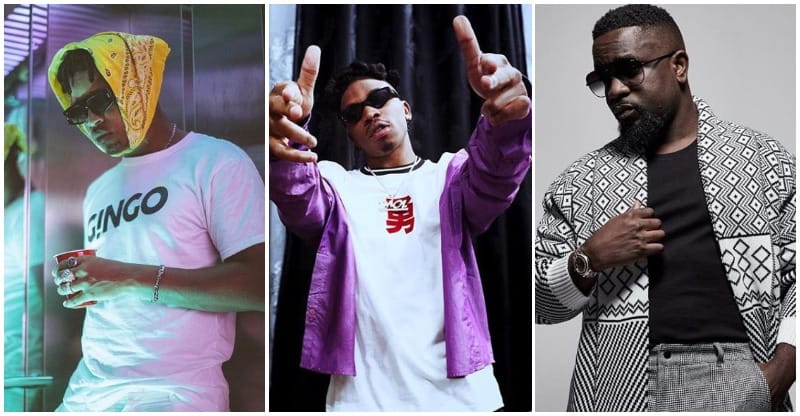
In one of the highlights of a recent Instagram live session, M.I Abaga was briefly joined by DJ Spinall, who made it plain that all he wanted from the rapper was club anthems in the same vein as “Anoti” and “Bad Belle”, not the lyrically dense efforts he’s put out over the last two months. A few days before, an article with this same sentiment surfaced, where the writer deemed M.I’s recent projects as a step back for Nigerian rap music because none of the songs were obvious club hits and catchy anthems.
While it’s well-intentioned to want an artist to make music which garners mass appeal, it’s disingenuous to ridicule their output because it doesn’t conform to a set agenda. During the same live session, M.I was joined by Sarkodie, and they discussed what it means to juggle what you want to do as an artist and what the people are demanding of you. For both these rappers, who have proven adept at making hit songs and no-frills rap music simultaneously, putting a boundary on their musical direction is an affront to their proven abilities.
Sadly, though, public validation is central to an artist’s relevance, and since commercial success is the gauge for acceptance, some artists will constantly appease the fans to the detriment of their freedom to express themselves through the music. In order to balance things out and foster a wholesome ecosystem, listeners need to approach music with some level of awareness— the least we can do is to not suffocate them with our ideas of what their music should be and judge accordingly.
Opinions are important, dictating isn’t.
[mc4wp_form id=”26074″]
Dennis is not an interesting person. Tweet Your Favourite Playboi Carti Songs at him @dennisadepeter
Today, one could very easily argue that the Nigerian musical landscape is more liberated from the audience’s expectations than it’s ever been, and artists now have the room to re-imagine genres to fit their own personal expressions. This allows for an expansive range of new music from many different artists, which can become overwhelming, so we’ve decided to help out by sorting through new songs from across all the sub-genres around the continent to highlight all the new releases you absolutely need to hear.
Last Friday, we enjoyed new releases from DRB, WurlD, Adekunle Gold, Maison 2500, Adanna Duru and many more, as artists around the continent continue to roll out much-needed music to get through these strange and unprecedented times. To start off the new week, we have new releases from Skepta and the late Tony Allen who join the Gorillaz on their new single “Song Machine: How Far?”. We also have new releases from M.anifest, Dammy Krane, ShowDemCamp, Idris King x DAP the Contract, Deena Ade, Ictooicy. Dig in, and you’re welcome.
Gorillaz – “Song Machine: How Far?” featuring Skepta & Tony Allen
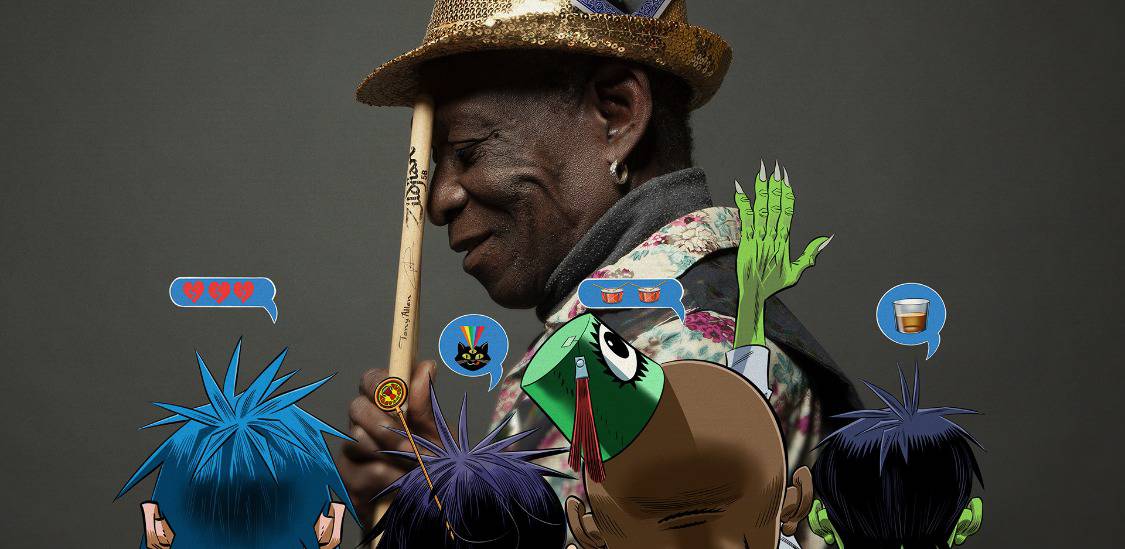
Grammy-winning group, Gorillaz are paying homage to the late Afrobeat legend, Tony Allen with their new single “Song Machine: How Far?” which they enlisted Skepta for. In his usual fashion, Skepta reflects on his journey whilst navigating the music industry with impeccable flow, rapping: ‘Just know I love the action but I move in silence/Taking what’s mine till Elizabeth returns the diamonds’ self-assuredly before the song closes out with Tony Allen’s vocals.
In a press release, the Gorillaz revealed that “The track was written and recorded with Skepta in London just before lockdown and is being shared immediately as a tribute to the spirit of a great man, Tony Allen”. Rest in Power.
M.anifest – “No Long Talk”
M.anifest is back with his first single since the release of his third studio album last year. “No Long Talk” begins with what appears to be a voice note from his father commending him for his achievements and filled with immense pride for his creative son. On the upbeat track produced by Mike Millionz’onem, M.anifest tackles fame and pain with sharp, clear raps. ‘I come alive on IG Live/The lockdown has put a padlock on any new love’ he raps confidently, speaking about how the current state of affairs has made artists resort to social media channels like IG live to connect directly to their fans. The rapper is definitely taking full advantage of this, and is currently collating videos of fans rapping along to “No Long Talk” for a quarantine video special for the new single.
Show Dem Camp – “That Year” featuring Sir Dauda
Rap duo, Show Dem Camp has just released their first single of the year which features talented singer, Sir Dauda, which reflects upon how far they’ve come in the game over the years. With an Ikon-produced beat laced by acoustic strings and vivid percussion patterns, the duo trade bars about getting shit popping after years of grinding in the come up as independent artists. In the accompanying music video, we get to see their come up in real-time, with clips of their highs and lows, and the fans who have stood by them throughout their journey.
Dammy Krane – “Aje”
Dammy Krane is clearly gearing up for a comeback on the scene this year, with a new EP titled ‘4 D Girls’ which is due for release this year. Ahead of this, he recently shared the first single, “Aje” where he sings praises to God about his privilege to have basic amenities even in the face of economic struggles in Nigeria. The catchy upbeat track which was produced by Gnash makes for a real feel-good appreciative number, fitting for the unprecedented times we’re all currently facing.
Idris King – “Roses” featuring DAP the Contract
Idris King has just released a new 3-pack release titled ‘Pure’ over the past few weeks, which is exclusively available to stream on his website. His latest drop, “Roses” featuring DAP The Contract sees the pair lusting after a love interest who they seem to be disconnected from. Over airy synths, he alternates between rapping in French and English, while he tries to remind her of the love they shared, before opening the floor for DAP’s straightforward raps.
We love hearing songs from artists who are able to sing what we’re all feeling inside, but aren’t quite able to express, which is what makes Deena Ade’s latest number so special. On “Bitter”, Deena Ade mourns a lost love and is full of rage and anger at this person who has hurt her. ‘Yeah my ego is bruised but I gotta let you go/Yes I’m kinda bitter’ she sings with strong vocals to express her deep pain and resentment for this person who has caused her irreparable damage. We feel you girl!
Watch the homemade music video for “Bitter” below made by Deena Ade herself and Yunastand.
Ictooicy – “Die For You”
Ictooicy is definitely one of the most hardworking young artists in these times, and even in the midst of all the chaos, she’s continuously rolling out content for her social media following from freestyles to new singles and visuals. For her latest release “Die For You”, she’s longing for a past lover and likens her love for this person to a drug which she can’t seem to get enough of. ‘Always knew our love will fade away/And you’re my heroin make me fade away’ she sings, digging into the frustrating knots of life and flipping them into echoing synths-inflected number.
Theophilus King – “Cha Cha Cha”
Theophilus King has just released his first single of the year titled “Cha Cha Cha”, a catchy upbeat number infused with bass, hi-hats, and whistles and slick, scant singing, sure to get anybody on their feet and dancing along. The song is heavily influenced by Salsa, with the title immediately invoking the cha cha slide, whilst managing to flip the popular sound for a boastful rap number.
Featured image credits/Gorillaz
Tami is living in a black mirror episode and can’t seem to wake up. Tweet your fave female artistes at her @tamimak_
The global outbreak of COVID-19 has proven to be a stressful time for those who work on the front lines of health care everywhere in the world. In Nigeria, we can’t imagine how tough it has been for all the doctors, nurses and caregivers all around the nation whilst trying to figure out the virus in an overstretched healthcare system, which lacks almost everything – from staff to equipment, especially given the attitudes of the population who haven’t taken the pandemic as seriously as they should and the rising number of cases everyday.
We must all take extra care, especially now that the government has eased up on the lockdown rules and things are likely to get more hectic around here. Healthcare workers remain at the front line of response and must be given the due props – beyond putting their own lives at risks, they are saving the lives of many, whilst containing the spread of the virus by nursing those who have been infected back to good health.
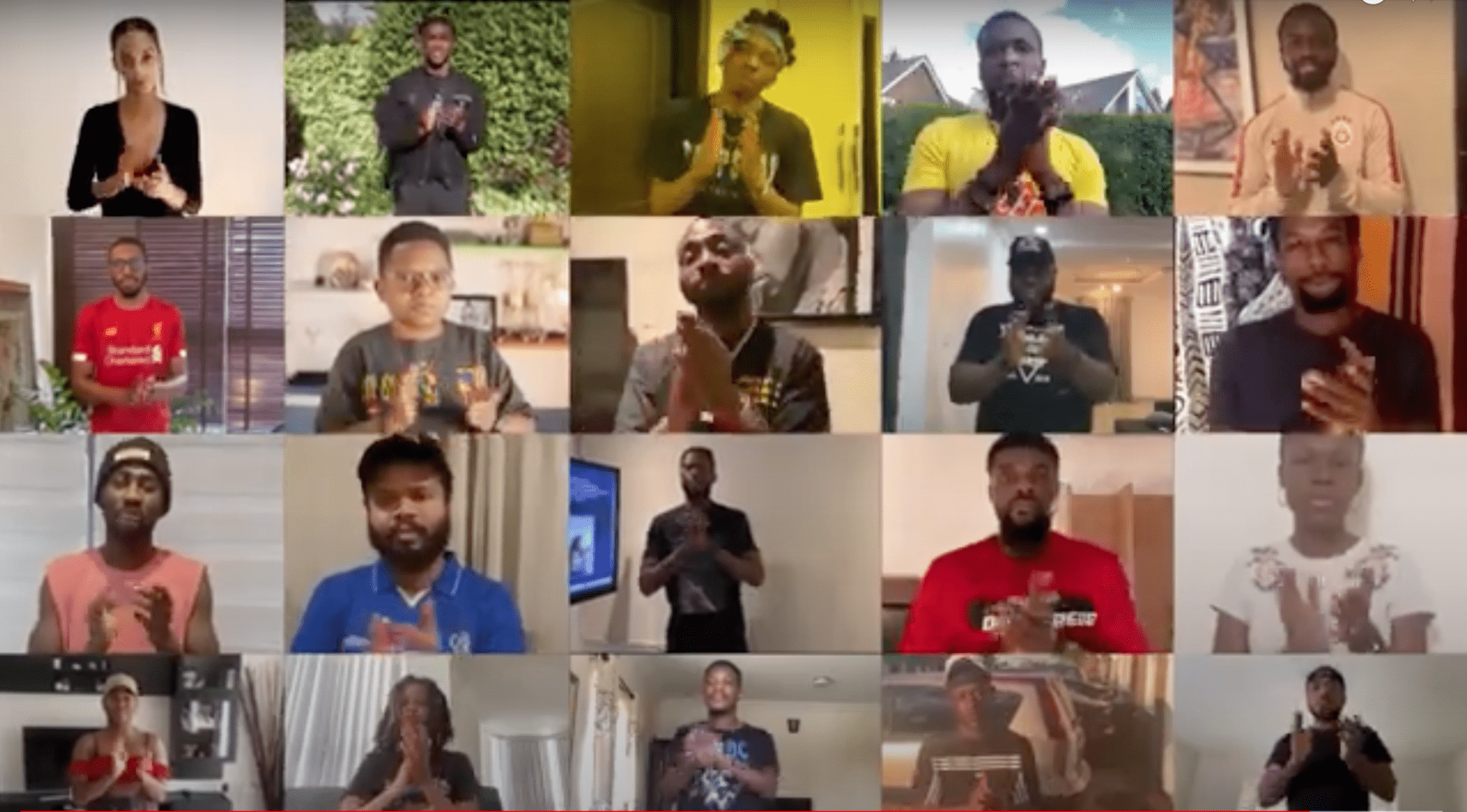
In order to demonstrate the public’s appreciation for everything Nigerian healthcare workers are doing for us in the wake of the pandemic, The Plug put together a heartwarming show of thanks for them. Featuring artists, actors and radio presenters such as Davido, Kemi Smallz, Jemima Osunde, Basket Mouth and more, the video gives a round of applause all our doctors, nurses, caregivers, research analysts and other key workers in the medical space.
We cannot thank you enough for your bravery, kindness, and valiant sacrifice, and we are wishing you all the best as we all continue to fight the nasty virus. Please do your best to stay at home and anything else you can to avoid the spread of the virus.
Lindsey Abudei has been a silent evangelist for neo-soul and afro-jazz music for nearly two decades. Her debut album ‘..And The Bass Is Queen’ earned critical acclaim for its dramatic compositions, compelling songwriting and Lindsey’s soothing, pitch perfect voice.
Prior to the release of her full length project, she had started her musical journey in Jos, collaborating with artists like Jesse Jagz & Ruby Gyang whilst still completing her law degree. Upon moving to Abuja, she meticulously crafted her debut project, an EP tilted “Brown” with musical composer and songwriter Atta Lenell, which featured a heavy jazzy texture and became a characteristic marker for her music.
Her latest single “One On The Outside” is an enthralling ballad, featuring a lush symphony of chords, tamed by Lindsey’s expansive vocals and gentle adlibs. Ahead of its release last month, we spoke to the songstress to discuss her experiences in the industry so far, her development in the time since her last full-length project, and what it means to be an artist.
NATIVE:It’s been 7 years since the release of ‘Brown EP’, using the knowledge you have now, would you have approached it recently?
Definitely looking back now, there are things that I would have loved to change, but at the same time, I wouldn’t change anything. Brown was me in a space trying to put a stamp on finding myself, so I wouldn’t change it for anything. It was where I was at the time, with the knowledge I had. When the bass is queen came out, it was a different direction, it shows the journey, and I wouldn’t change that for anything. There’s always going to be room for improvement.
NATIVE:How come you decided to take such a long break after ‘..And The Bass Is Queen’?
Lindsey Abudei: It took me 3 years to make ‘..And The Bass Is Queen’. I was taking my time, writing, recording, and figuring out what direction I wanted to go in. My musical absence is not deliberate, everyone has their own process, Lauryn Hill has toured the world with only one album. It takes a while to write, it takes a while to record. I’d rather not burn out just because I want to keep up.
NATIVE:Where does your confidence to not chase a hit single come from?
Lindsey: When it comes to my work, my confidence just comes from me being honest with my art, and how I like to create. People take 2 – 3 years to record an album, some even 5 years, Sade does almost 8 years before an album, so we should really start to embrace the fact that everybody has their own process, and accept it for the way that they are. What matters to me is that I’m not so particular and I’m not really crazy about getting singles out. I’m more interested in creating lasting bodies of work, because those last longer.
NATIVE: In your Ted Talk, you seemed sceptical about Afropop’s emergence on the global scene, would you say being a Nigerian artist holds weight in the international scene?
Lindsey: To be honest, the last couple of years have been really great for Nigerian music. I wouldn’t even call it scepticism, it’s more of a question; why that genre of music is the only genre that is being sold as what comes from Nigeria. For those of us who do genres that aren’t afropop, it doesn’t do justice to us. I’ve really been for opening up the spectrum and letting people see the other genres of music by Nigerians.
Being in residencies, I usually get the reaction; “I didn’t know that Nigerians made this kind of music”. So that tells you the story is not true, the story being sold doesn’t tell the whole thing, it’s only telling a particular part, and somehow the world is swallowing it. I think that there’s just a group of people who the media is selling to, and it doesn’t really go in deep. If you get past the surface, you realise that Nigerian music has not really dug in, as much as you would expect it to, and that for me says a lot.
NATIVE: Would you say that it’s because these genres do not have an extensive history in Nigeria as much as Afropop?
Lindsey: Well because the amount of attention on the particular genre – in this case, afropop– definitely pushes the narrative that this is what’s popular, and radio plays more popular songs. The media focuses more on those musicians, more than other genres, and not many media platforms are catered to other genres. So I think maybe the saturation and the fact that there are more people doing that genre has a part to play.
NATIVE:Do you think it’s easier to make music these days, and does that affect the quality or value of the art form?
Lindsey: I wouldn’t say that ease of entry is the reason why the value of music is less, the way the industry is, sometimes, we’re made to think that everything is so fast-paced and that if you don’t fall in line or follow the formula, you’re not going to be recognisable, or considered. So it puts pressure on the artist to keep putting out stuff, and in the effort of putting out stuff, you’re not really thinking about quality.
I think ease of entry has made it easier for people to actually know of genres that aren’t popular because the Internet has opened up avenues for independent musicians, there are now more tools and resources that are available for independent artists. There was a time where you couldn’t get your music on iTunes or Spotify if you weren’t signed, but now it’s pretty open. If you can pay the fees expected of you to pay for distribution, pretty much anyone can get on iTunes and Spotify or Tidal. Ease of access has made it easier for us to connect with more people outside of Nigeria for those of us who are not in the forefront when it comes to talking about Nigerian music.
NATIVE: Are there other aspects you would like to explore?
Lindsey: There are definitely parts of my creative side I’d like to explore more. I like photography, so far what I’ve done is mobile photography, taking pictures with my phone. I have a VSCO account where you can see some of the photos I’ve taken. With the experiences I’ve had for the residencies I’ve been in, I’ve gotten to the point where I would love to work in a way where I can collaborate with other artists in different disciplines, especially when it comes to visual arts, whether it’s film or photography. In the future, I’m hoping I can find a way to have that intersection between music and film, or music and photography as moving forward, as a way of expressing myself more, because I feel like these are two things I’m interested in.
NATIVE: Do you feel there has been much growth in the alternative scene?
Lindsey: I wish that we would get past having these two categories, if it’s not afropop, then it’s alternative. There are other genres, like r&b, soul, indie etc. I like that they are showing a different side of Nigerian music, but I feel like it’s also now creating this big box that they’re shoving people in, so if you’re not in afropop, you’re shoved into that and I’m not very enthusiastic about it. I still want to see it expanded, because I’ve heard people who have done good music, who are active in different genres, whether it’s afro-jazz or soul, and I want to see them come out and be shown as who they are, and not just shoved into a category that is not Afrobeat. The alternative name that doesn’t do justice to what the artist is saying about their music.
NATIVE: Which other artists are you currently listening to and championing?
Lindsey: Definitely there are people’s albums that I enjoy, like Asa’s album I was excited about, there are still people like Bez and many others like the Cavemen, who are doing this very interesting fusion of contemporary genres with highlife, people like that I enjoy.
Featured Image Credits: Web/ Lindsey Abudei
[mc4wp_form id=”26074″]
Djaji is a creative Vagabond, send me your takes on music and African culture @djajiprime
As the world we are used to fades into the past, with not much certainty of when, or even if, we will get it back, there are few constants that have been able to keep us sane – music is one of them. Whilst we can’t listen to our favourite new releases in the clubs, or show off our intricate knowledge of sub-genres on the AUX, platforms such as RECESS’ offshoot No Signal are giving us different ways to digest music as a community, most notably through their now infamous artist catalogue battles, #NS10vs10.
Brothers, Jojo and David are the duo behind the London party sect, RECESS, commonly dubbed “the party of the people”. Beginning No Signal in order to extend their ecosystem, giving more DJs the opportunity to join the RECESS network through a more casual platform, Jojo and David have now become the masterminds behind one of the most coveted radio shows in the UK, and beyond, during this lockdown period. With their 10vs10 battles welcoming audiences from over 34 countries around the world, breaking their record listeners with each episode – the Burna Boy and Popcaan clash brought in over 24,000 listeners – No Signal has even influenced album sales and chart positions, as fans look to familiarise themselves with the discographies of the artists being pitted against each other.
Ahead of tonight’s hotly anticipated clash between Wizkid vs Vybz Kartel clash, we spoke to the RECESS duo about how the battles have affected them as a business and individuals. But first, let’s hear what the pundits for tonight, Joie and Levels, have to say about their tactics and techniques going into the big game.
The NATIVE: How are you preparing for battle? In terms of finding the right songs from their vast discographies and tactics going into the battle.
Joie: I’ve been listening to Wizkid alllll week, really zooming on the songs with the best production because we all know songs are not just the lyrics and performance; it’s about how it makes you feel. Obviously I’ve had recommendations but I think my list will at least please SOME people.
How are you handling the pressure? Both Vybz and Wizkid have some pretty passionate fans
Mate, I don’t even know if I’m handling it. I’ve put my twitter account on private so people don’t bother me and yet they still find me. Either way, I’m a confident person so my tongue is just as sharp as theirs.
Why is it important to you to showcase these discographies?
Music is very important to me and it’s especially important to explore the music of the kings of their respective countries. We don’t seem to understand how deeply intrinsic our music is back home and how much of a cultural impact they’ve had.
The NATIVE: How are you preparing for battle? In terms of finding the right songs from their vast discographies and tactics going into the battle.
Levels: Kartel has over 1000 songs so condensing his catalogue into 15 hits, whereby only 10 will play, has definitely required more focus than my dissertation!
How are you handling the pressure? Both Vybz and Wizkid have some pretty passionate fans
No pressure at all. I see it as a little bit of online fun – corona cheer, if you like. If Kartel’s freedom was dependent on today’s results than I’d be a nervous wreck!
Why is it important to you to showcase these discographies?
Wizkid has achieved phenomenal success and has had an illustrious career within the last decade. He’s catapulted himself to the pinnacle of African pop music and transformed himself into a global icon
On the other hand, Kartel has achieved then near impossible. Constantly reinventing himself and remaining the dominant force within Dancehall – even from a prison cell for 8.5 years – is a feat to be celebrated and there’s no better way to do so than showcasing his music.
The NATIVE: How have the No Signal battles been helpful in helping you sustain the business during these uncertain times?
RECESS: Obviously the parties bring in money and [the radio] stuff hasn’t brought in money so far but it’s brought a lot of awareness and stuff like that. We like to entertain people, and [No Signal] given us a chance to entertain people and still maintain our relevance as people who program moments. We put together moments and find ways for people to enjoy themselves.
I’d say it does put less pressure on us to keep RECESS relevant or alive. RECESS can still exist on a more dormant basis, because this whole 10v10 has allowed us to still maintain our presence as people who create cultural moments. So we’re not making money but by making the right moves we can start making money.
What inspired you to begin the 10v10?
The 10v10 started from the desire to make interactive content. So, we saw a lot of stuff at the beginning of quarantine, people on Instagram Live – we had all of those Lives going off, like Tory Lanez, Versuz that Timbaland and Swizz Beatz started. Naturally, Versuz started a lot of conversations, and then one guy called Bola tweeted “Drake vs 50 10v10 who would win?”
I saw it and I was like we can make this happen at No Signal. I know how to make audio and voice chat and mix it together and put up a radio show from our bedroom. So I messaged him and just told him ‘listen we can make it happen, are you down?’ Then I got like Jameela down, I got my friend Scully the presenter and Henrie the presenter as well, got them down to host it and yeah, the rest is history to be fair.
When did you realise that this had caught the attention of the public, beyond the audience that knows Recess for the parties?
I think it was after the Kojo one that we realised this was beyond the RECESS crowd. But even from the early days, I would even say the RECESS crowd jumped on, because like in the early days the numbers were still quite low compared to something RECESS might do.
People would lock into the RECESS show – I remember when we first started this No Signal Radio we would do streams earlier this month [on RECESS] and the RECESS parties and shows would probably get more streams than the no signal show, by far. But now it’s completely the opposite way around so, I can’t lie to you I think the RECESS crowd even jumped on to this, because they weren’t aware of it either. Before we only used our platform to stream our parties and things we used to do and maybe do events on the side with the name No Signal.
How do you feel about the reception so far?
The reception’s been crazy because at first we had like a hundred people listening, and it’s like ‘ah that’s mad’, then we touched like 200 and it was really mad, that was Nicki Minaj vs Lil Kim. But then it started to take off when we did 50 vs Ja Rule, we had like 851 and we was like “what the fuck!?” But then, J Hus and Kojo, that’s when it was like 4000, 4500 people and it was like ‘you this is actually kind of crazy’. And people knew what we were doing innit.
What have you learned from this whole experience?
My experience is that you can’t please everybody. We’ve had so many negative comments about this, it’s crazy – you can’t even take it personally. People will say ‘why are you comparing them? Vybz Kartel is incomparable’. Other people were being inflammatory towards dancehall lovers and Vybz Kartel. It was a bit mad, it was a bit mad to see all that, but you can’t take it personally.
Another thing we’ve probably learned is that there’s no excuse. Like this is DIY radio out of our bedrooms, DJs are doing it out of their bedrooms, all the hosts, out of their bedrooms – yeah, there’s really no excuse in life. If you see there’s a problem, something you don’t like in any field that you work in, try be the solution instead of complaining.
Can’t lie we was complaining before. When we were on road, we were complaining all the time. We were like ‘when we get a studio we’ll pattern it properly’ but now this Corana has forced us to actually pattern up.
Do you think clash culture is going to make a comeback whenever we’re allowed back out again?
I think the clash culture never left. If you go to raves, you go to parties, you’ll just know it’s never left. But in terms of the way it’s so prominent and regular [now]?
I think this is a good time to re-educate people on clash culture. Obviously, we’re not here to teach anybody, that’s why we’re not calling it a clash because we know that this ain’t exactly a clash – it has a few elements of traditional clash culture but this ain’t a traditional clash.
But I do feel it’s time for clash culture to step into the 21st Century. Not that it’s old, but it’s always referenced like ‘oh it used to be great back in the day’ do you know what I mean? So [we want clash culture to] step into 2020 and beyond, for people to understand it, not for it to be watered down but for it to be made palatable for everyone to enjoy.
It deffo could run because music is one of those things that you can enjoy in so many ways, and the fact that clash culture exists shows that music is really something. To enjoy music in a way that’s borderline competitive where opinions really matter in a space like our space where we usually enjoy and dance to music but right now my opinion count, that’s really something.
And another thing we wanna say is: Black Radio Baby
“First of all, it’s not your fault at all that someone is abusing their power, trust, and love. We let women know that love is great, but should never be violent. If any love is violent, then it’s not love at all and they should not be in a place where they do not feel safe. We help them understand what support is available for them and the risk of not leaving an abusive relationship”.
This is what the founder of the StandtoEndRape Initiative, Oluwaseun Ayodeji Osowobi, wants every woman to know first when they come to her non-profit organisation for help. The guided and emphatic teaching that no woman brings assault upon herself, regardless of the nature of her relationship and a reminder that love does not justify physical abuse in any way.
StandtoEndRape Initiative or S.T.E.R as it is commonly known has been the brainchild of Oluwaseun Ayodeji since its inception in 2014 when the youth-led movement was born. Since surviving her own abuse in 2011, she has remained dedicated to raising awareness of violence against women and girls. “I started S.T.E.R because I saw a death in resources,” she tells me over a Whatsapp call, “I saw there was a death in resources in terms of content around sexual violence and what rape is and how people should break the silence and speak up and there was a death of resources in terms of where to get the help”.
To bridge the gap in this death of resources, Olwaseun Ayodeji took on the arduous task of fighting for women like herself, and those who were less privileged, in a country where women’s issues are still placed on the back burner. Her fight against the system came with its struggles and limitations, “When I first started, it was really tough and difficult because I would get a case and I would struggle between getting medical help, legal help, mental health therapy and economic empowerment at the same time for just one person”. From battling with the inept court systems to dealing with policemen who couldn’t care less about women, Oluwaseun Ayodeji struggled to keep S.T.E.R running but amidst all odds, she continued to fight for the women who sought out her help.
“The police at some point were frustrating, the legal system was frustrating, the medical system as well, it felt like the world was on my shoulder and I was struggling. Until people starting reaching out to volunteer their services, and I was able to help more people. Even now, there are times when we get cases and we refer them and we don’t get the outcome we are hoping to get, and for the client, it’s like ‘STER has failed me’, but it’s really just the system that didn’t let things work, and people don’t see that. It’s been a difficult state to navigate, especially when people have to get evidence for their case to receive justice”.
Now, S.T.E.R is a full-functioning youth-led non-profit organisation with offices in Lagos, Abuja, and Port Harcourt and volunteers in other states across the country. S.T.E.R also provides a range of programs for women and children that range from advocacy to mental health coaching. “We run a range of programs from on-ground community-driven activities and advocacy to litigation, research, M&E, and learning which monitors our impact and scale our activities to even communications for creatives or writers to get involved in and mental health, and psycho-social support unit” she explains to me, listing off the different departments available for volunteering.
With worldwide lockdowns and social distancing becoming the order of the day, Oluwaseun Ayodeji is seeing a disturbing surge in the number of cases she receives. “We have received an increase in the number of calls and reports and at this time where our impact is limited, we are working on referrals for shelter services, and also providing support for mental health. Because of the lockdown, we are not able to provide our medical or legal services in Lagos, but for other states, we are able to do so”. Even during our interview, she is distracted by incoming messages from women seeking out help from her, which shows just how steep these cases have become in recent times.
April is sexual assault awareness month, and to close out the month, a group of women were brave enough to name and shame their abusers on social media yesterday. A remarkable feat in which we witnessed true strength in numbers and camaraderie in women siding with each other against a patriarchal, misogynistic society that still sides with the abusers and perpetrators in power over women. S.T.E.R saw this social media callout as an opportunity to reach out to more women and men who are currently in abusive and violent homes. They have also currently teamed up with Piggy Vest to start a donation fund for women who are unable to cover their own legal fees.
Hey survivors, your timeline is probably very triggering today. Abusers are being outed and hard but important conversations are being held. Remember you can get help and much needed support from us ❤️
Fill our form at https://t.co/dI5BbpH5uG
We love you, it was never your fault.
For Oluwaseun Ayodeji, her long-term plans for S.T.E.R all involve working hand-in-hand with the government to help victims and provide data that will be used to influence future policies and laws. “We’re looking to morph into a capacity-building organisation to help governments to develop programs to help assault survivors. It’s very hopeful and grand, but by the next 5 years we are hoping that we have other organisations doing what we do now, directly providing support to survivors giving us the chance to progress into something much more”. With the government already taking on suggestions from these youth-led organisations such as the federal sex offender’s registry we finally got in Nigeria, and plans for a new Sex for Marks Bill, S.T.E.R’s long term plan is definitely within reach if we all work together.
People, in collaboration with @StandtoEndRape, we now have a link where you can donate to the legal fund to help the ladies who have come forward.
Friday is universally known as the day for new music releases. This means there’s so much music to wade through, and a few might be lost in the shuffle. To help out, here’s a run-down of newly released projects The NATIVE recommends from this week’s slew of releases. From the joint tape from Mut4y and Elhi, debut projects from Terri and Northboi, new EPs from Juls and Maison500, and more, make sure you dig in – you’re welcome.
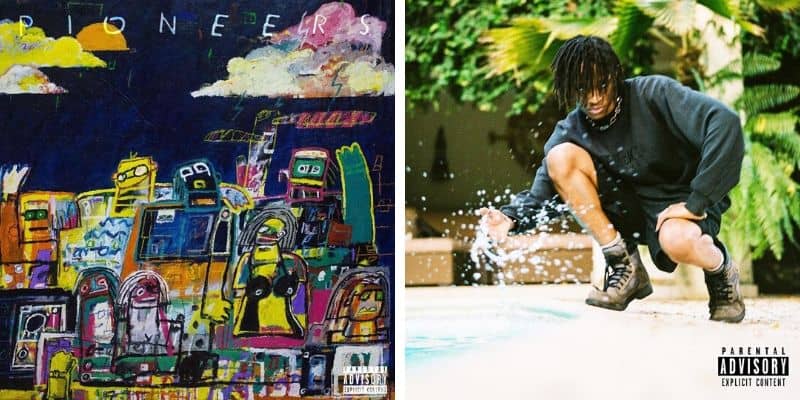
DRB Lasgidi – ‘Pioneers’
It took about a decade for DRB Lasgidi – BOJ, Teezee and Fresh L, to put together their newly released album, ‘Pioneers’. The 12-track project is both an acknowledgement to their individual growths over that time, as well as their influence on Nigerian music and youth culture. To that end, ‘Pioneers’ is packed with high profile features from Olamide, Odunsi (the Engine), Santi, Tems, Lady Donli and more.
Listen to ‘Pioneers’ via Apple Music here.
Mut4y x Elhi – ‘Eu4ria’ (EP)
Mut4y, one-half of production duo, Legendury Beatz, linked up with rising Fresh Meat alum, Elhi, for a joint EP which could very well be the beginning of his breakout era. ‘Eu4ria’ is made up of five tracks, including previously released singles, “Bad” and “Feeling U”, which serves as good indication of the young singer’s talent. The project is entirely produced by Mut4y, while Elhi handles vocal duties all through.
Listen to ‘Eu4ria’ via Apple Music here.
Terri – ‘Afro Series’
Since his introduction on “Soco”, Starboy signee, Terri has been biding his time with singles and feature appearances. The singer has now released his long-awaited debut project, ‘Afro Series’, which houses seven new tracks, with production from Sarz, Tuzi and more. Terri clearly wants to introduce himself on his own terms, and give people a taste of what he’s really about, with no guest features on his debut.
Listen to ‘Afro Series’ via Apple Music here.
Reniss – ‘Nzo’
Reniss is a Cameroonian singer/songwriter who makes vibrant Electro-Pop music, while also inflecting folksy elements to reflect her roots. ‘Nzo’ is the singer’s sophomore studio album, the official follow-up to her 2016 debut album, ‘Tendon’. The new LP contains twelve tracks, with no guest features.
Listen to ‘Nzo’ via Apple Music here.
Maison2500 – ‘Turnpike’ (EP)
Maison2500’s last project, ‘Maseworld’, shot the rapper into higher prominence which introduced most people to his immense talent. His follow up, ‘Turnpike’, continues to consolidate Maison as one of the more exciting artists around, and shows his growth since his breakout. The short tape is made up of five tracks, including the exhilarating, Odunsi-assisted lead single, “Dirty Fanta”.
Listen to ‘Turnpike’ via Apple Music here.
Juls – ‘Happy Place’ (EP)
Less than a year after releasing his stellar and vibrant sophomore album, ‘Colour’, Juls is back with a new EP, ‘Happy Place’. The UK-based Ghanaian producer/DJ continues to explore the colourful range of music in Africa and the diaspora, with the 5-track EP featuring a range of guest artists from all around the globe including Busiswa, King Promise, Jamaican reggae artist Jah Cure and Canadian-Nigerian singer TOBi.
Listen to ‘Happy Place’ via Apple Music here.
Northboi – ‘Spirit Business I’
Since ascending to mainstream prominence as the producer behind Wizkid’s “Soco” and a string of follow-up hits, Northboi has christened himself the oracle of new music. After his major controversy and fall out with Wizkid last year, the producer is back to letting his music do the talking. ‘Spirit Business I’ is Northboi’s debut project, and it comprises twelve tracks with no featured vocal assists. The beat tape is Northboi backing up his assertion that he’s one of the best around, and he’s not wrong.
Listen to ‘Spirit Business I’ via Apple Music here.
Featured Image Credits: Web/Konbini
[mc4wp_form id=”26074″]
Dennis is not an interesting person. Tweet Your Favourite Playboi Carti Songs at him @dennisadepeter
Life in Quarantine is a new bi-weekly column we will be running to give African artists quarantining in different countries from their home country the audience to speak on their current creative processes during the current global pandemic. We take a look into their daily routines and find out how they are fairing being away from their family and friends with no end in sight, yet. To start off the series, we caught up with Enjoy Your Life president, Lady Donli in Canada.
There is no denying that afropop is getting it’s long overdue golden moment, and we’re witnessing a dominant line of new-age at the forefront, taking our music all over the world. The undeniable allure of afropop has lead to many artists from these parts taking on international shows as seen from Santi’s performance at Tyler the Creator’s Camp Flog Gnaw last year to Rema’s string of live shows in the US.
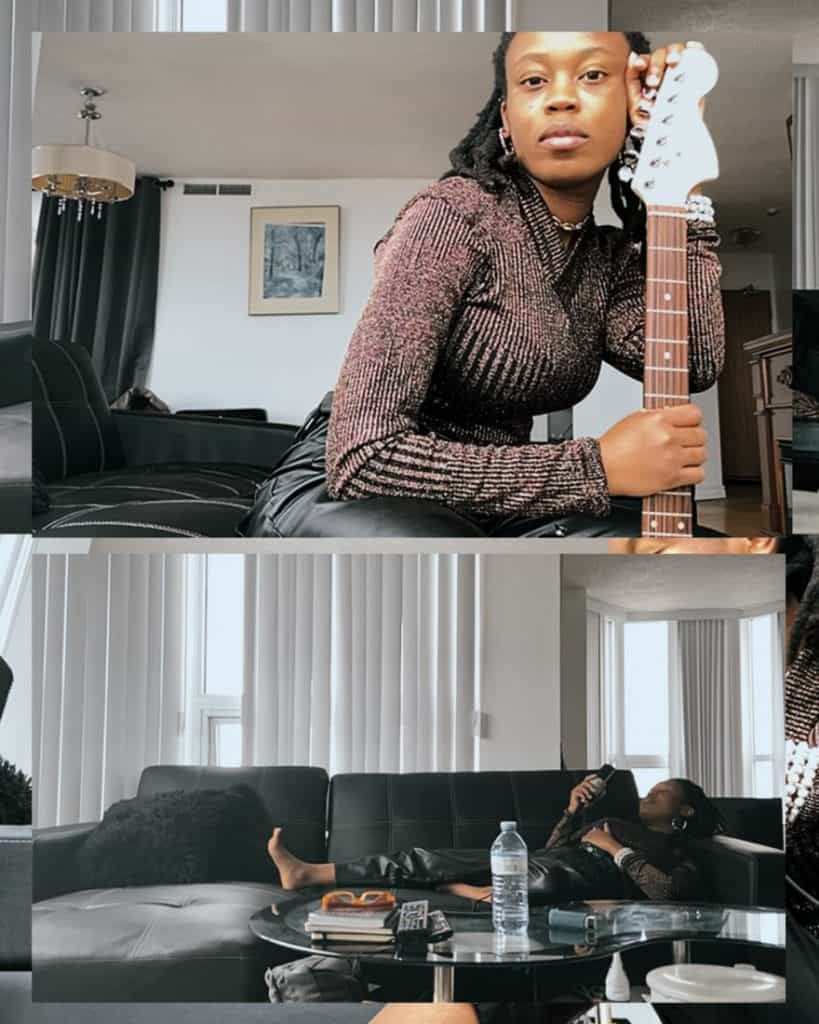
This is what led Lady Donli to North America for a scheduled tour in different states including New York. She was set to fly back from the States to Lagos, but was unable to make it before the government restricted flying and movement, thanks to Miss Rona. Now in Toronto, Lady Donli is trying to take it one day at a time, and is spending most of her days practising the guitar and getting fed up with her male housemates.
Last week, she held an interesting at home concert for her fans, and following that we spoke to the singer about how she’s finding isolation and how she’s coping with the pandemic.
DONLI: I was on a little North American tour, and I was meant to have a show in New York but my show was cancelled because of the pandemic. I had to take a flight back to Toronto and plan my route from there (Toronto is usually my base when I’m in North America). However, at this time flight prices at the time were so steep so it was literally impossible.
Then I just woke up one morning and they were like borders are closing in Nigeria, and Toronto also closed its borders so I was like oh shit! This was all around the end of March, and I couldn’t get a connecting flight because flying from Canada means I have to transit somewhere so I either had to go to London or New York, and it just didn’t make sense to double my risk.
So I had little choice but to stay here and see how everything plays out. Literally my mantra now is just one day at a time, cause my days are all the same now, they all feel the same. There’s nothing else that can be done, like I’m here and I just have to make the most of it. Being away from my family is hard, this would have been a good period to bond cause I’m never at home ever but we’re here so it is what it is.
On how she’s finding it
Donli: I’m with my manager basically so it’s not too bad. But it’s so cold, the weather here sucks and I am tired of being around men – I’m with my manger and his housemate and they’re both men. On the bright side, I have time to practice the guitar and I’m exercising more and just doing things more consistently that I wouldn’t do if I was in Lagos/Abuja.
On what the city’s like in lockdown
DONLI: I mean people still move about here, the lockdown is actually not that strict, but compared to how Toronto usually is, this is a ghost town. Minus essential stores, all other places are still very much closed, you have to line up to enter grocery stores one-at-a-time. No one’s outside really, and the weather is shit as well so that also contributes. It’s not as strict in the Ontario area, but in other provinces there are way more cases so the social distancing requirements there are stricter. I hear from May they might relax the lockdown a bit over here.
On making new music in isolation
DONLI: Okay so basically my laptop crashed, so that has kind of thrown a huge spanner in the works of my creativity. I’m currently trying to get a new one next week, and so I have not really been recording anything. I have been writing a little bit as I’m practising the guitar, but I have kind of paused on actually creating music and I don’t mind cause a break is needed. I wake up, meditate, make breakfast, practice, practice, practice, exercise, shower, and sleep. Like every day I have the same routine.
On her upcoming single, “Wonda Wonda”
Donli: I made “Wonda Wonda” in November of 2019 in Lagos. I was meant to drop it in like February, but like the dates kept getting pushed back by reasons beyond me. I actually wanted to shoot a video, we had even done the treatment and everything was set to be shot in April, which is when I was originally slated to return to Lagos, but obviously that didn’t happen. Right now, there’s so much uncertainty on whether I will ever get to shoot a video or when all this COVID-sh*t will end so yeah I was just like let’s drop it now cause it’s been ready and people want to listen to it.
On when she wants this all to end
DONLI: I really don’t know when all this will end but I am hoping to come back home in like July. There’s barely any flights, and I definitely don’t want to transit in any country with really high numbers cause of the risk. April ended, thank God, and very soon May will as well. I’m just hoping that by June, I can go home but I’m not trying to be too hopeful.
The constant frequency of cross-Atlantic collaborations is proof that afropop is only moving forward with its global appeal. Across the continent, music has only become more diverse and expansive, leading to a daily flurry of new releases. We’ve decided to help out by sorting through new songs from across all the sub-genres around the continent to curate a column with all the best “Songs of the Day”, to highlight all the new releases you Need to hear.
Earlier in the week, we enjoyed new releases from Korede Bello, Sarkodie, Kiienka, Dapo Turbuna, and Mayorkun and many more, as artists around the continent continue to roll out much-needed music to get through these strange and unprecedented times. Today, we bring you all the new music Friday releases all in one place from Adekunle Gold’s first single “Something Different” under new label Virgin EMI Records, to new releases from DRB, Tekno, Wurld, Noir, Starboi Terri, Yinoulu x Psycho YP, Maison2500, Dusten Truce, Adanna Duru and many more from around the continent. Dig in, and you’re welcome.
Adekunle Gold – “Something Different”
For the past week, Adekunle Gold has been teasing his second single of the year “Something Different” and it’s finally here. The sultry romantic drum-led number sees Adekunle Gold crooning about a girl who seems to still be leading him on, even though he’s ready to commit to her. ‘We could be have been something different/You say no money no Hunny o’ he sings over the song’s hook as he tries to reason with his love interest who is unwilling to fall in love if it’s going to mean not being pampered and spoiled the way she needs.
Tekno – “Sudden”
Tekno is back with his third single of the year, “Sudden” an upbeat number where he runs much-needed social commentary on our country. ‘All of a sudden, hustle don catch/40 billion is a nothing for them’ he sings, mocking politicians and governments around the world who are suddenly pushing out billions of cash to combat the deadly pandemic and its ensuing socio-economic effects on the masses. The ongoing pandemic has shown more than ever that most of the existing systems that were the norm under capitalism are suddenly being halted or corrected, showing just how easy it was to make these changes before the virus took over.
WurlD- “GHOST TOWN”
WurlD is set to release his sophomore solo album ‘AFROSOUL’ later on this month and ahead of this, he’s released a new single “Ghost Town” which he premiered on the COLORSXSTUDIOS stage earlier this week. The afrosoul/pop-tinged production allows for WurlD to show off more of his stellar penmanship, speaking about ending up in a ghost town due to his loneliness and having to go the mile on his own. ‘You only gonna get one chance so you better hit the bullseye’ he sings passionately on the song’s hook, advising others like himself to stay true to their passion and beliefs even if it means standing alone.
Noir – “Down for It”
Lagos-based artist, Noir has just released his first single of the year “Down for It” , where he shows his admiration and longing for a love interest over an upbeat afropop-infused beat. The accompanying music video which was directed by UaxSeyi is an extremely vibrant and colourful affair, with varying clips of seductive dancers included to add to the song’s suggestive theme. ‘Sex is human nature’ Noir croons, inviting his love interest to give him a chance and consent to a mutual good time. We love to see consent being addressed in music.
Yinoluu – “You” featuring Psycho YP
Talented beatsmith, Yinoluu’s influence on the music scene is undeniable as seen from his involvement on Odunsi’s debut project ‘rare.’ where he produced the fan-favorite, “Alté Cruise”. To start off the new year, he is set to release an EP ‘Lost Files’ later on in the month, which boasts of features from Amaarae to Mafeni. He’s dropped the second single off the EP, “You” featuring Psycho YP. On “You” we see a different side to YP, where he switches the off-the-cuff raps for a romantic flow aimed at a special woman. ‘Nobody’s ever gon’ take my soul from you’ he croons, expressing just how hooked he is to his love interest.
Starboy Terri – “Ojoro”
Starboy Terri has just released his debut album ‘Afroseries’ which includes the standout track “Ojoro”, a catchy afropop number, which is sure to get anyone off their feet and dancing– even though we’re indoors for awhile. The infectious drum-led Sarz-produced beat makes for the perfect backdrop for Terri’s soft vocals, as he pleads with a love interest not to cheat on him and their love.
Dusten Truce – “Omoge” ft. 3rty and TylerRiddim
Dusten Truce recruits Nigerian singer and producer, 3rty and TylerRiddim for new single “Omoge” on which all three artists exchange verses on love and the ensuing heartbreak which comes with risking it all for love. Over the stellar production from Jayblakez and DJ Xtreme, Truce sings ‘This thing no be game but it’s still a sport/so I keep on playing like Ronaldo with the ball’ as he alludes to love being a game, which he must always have control over like the popular football player, Ronaldo on the pitch.
Adanna Duru – “Acid!”
Adanna Duru’s new single “Acid!” sounds just like the title suggests – it’s experimental, lo-fi, hazy and delectably infectious. ‘I give you the rundown, don’t you ever come round’ she croons over the drubbing beat produced by LA-based producer, Dorktheghost. She sings about the self-confidence and undeniable power she possesses, while she sends a message to naysayers that she is not one to be messed with. Love to see it!
Featured image credits/Instagram
Tami is living in a black mirror episode and can’t seem to wake up. Tweet your fave female artistes at her @tamimak_
After more than a few attempts, it seems like Vader the Wildcard is finally off to the races. The Ibadan-based rapper first garnered major attention after winning the HennessyVSclass Cypher Competition back in 2017, but he wasn’t able to string together a consistent run of material till last year. In the final half of 2019, he put out two jointprojects with tGM and another short but excellent EP with veteran hip-hop producer, Teckzilla.
For his first official single of the year, “You Garru Be Kidding Me”, Vader cuts loose, committing to the comedic side he’s previously showed on social media and a few previous cuts like “Half of a Mellow Sun”, off WeTalkSound’s ‘Lofn 3’. While it has the same dedication to humour as his other attempts, there’s a sly purpose in how “YGBKM” is basically a series of jokes, with no set-ups and every single line is the punchline. Within these non-sequiturs, you’ll find that Vader’s raps are actually quick-witted and timely observations, coated in playfulness and sarcasm—a language readily available to the average Nigerian.
Between poking fun at greedy religious leaders and chuckling at our generation’s fondness for noncommittal relationships, “YGBKM” is a bit more serious than it initially presents. The levity in Vader’s cadence and the songwriting—especially the title as the refrain—are telling signs that the song was crafted for singalongs and is perfectly suited to his ongoing ‘Kidding Me’ challenge.
“Just imagine someone somewhere thinking this song won’t blow”, Vader jovially quips over the light keys and languid but groovy percussion. When that line comes in at the end of the song, you’re already laughing with him because it’s very possible that he’s correct, given that “YGBKM” is an infectious jam with serious smash hit potential.
Listen to “You Garru Be Kidding Me” here.
Featured Image Credits: Instagram/vaderthewildcard
[mc4wp_form id=”26074″]
Dennis is not an interesting person. Tweet Your Favourite Playboi Carti Songs at him @dennisadepeter
All year, we’ve been anticipating the release of DRB’s debut album, ‘Pioneers’, and now it’s finally here. In the run-up, the group released four singles, “Based On”, “Necessary” ft Odunsi The Engine, “Shomo” ft Olamide and “Softly” to prepare us for the eclectic range of sounds to expect from the album, before they revealed the robust guestlist including WANI, Lady Donli, Santi, Maison2500 and many others.
Now, the album has been released and it’s everything we expected it to be and more. Prior to the release, when spoke to the group about how the album came together, we noted that the Nigerian music scape is more diverse than it’s ever been and the eclectic range of sounds in one project is the perfect indication of this.
Speaking to The NATIVE about the album, DRB said:
We really just wanted to show how strong we are as a collective. You can see we’re not all on every single song, we wanted to play to everyone’s strengths and show off our individual abilities as artists. In terms of features, nothing was forced. We collaborated with our friends and people who have been rocking with us from time even the producers.
With standout tracks such as the Teezee, Santi & Maison2500 helmed “Salty” to the cool and mellow Lady Donli-assisted “Ma Pariwo”, they achieved what they were aiming for, and the solid, genre-bending project is definitely a love letter to the alté scene. The vast production work helmed by GMK, Pheelz, Higo, Adey, Genio and more ensures that each featured artist is right at home – most notably WANI on the romantic “I Swear” and Tems on the reflective “Trouble”.
We spoke to The Boys again about which songs from the album are their own favourites, and here’s what they had to say:
Fresh L – “Kasala” is honestly my favourite song, because it’s very mellow and it knocks like heavy. The fusion of everyone’s flow and verses comes together really nicely. I also really like “Necessary” it’s an exciting song.
BOJ – “Trouble” is just a hit song, and Tems absolutely killed it and over gingered. Her flow and texture is crazy and Teez & Fresh really killed it.
Teezee – “Ma Pariwo”, because of how the song came about. We were recording for a long time and Boj got this GMK beat, we all just went crazy, and that same day I got Lady Donli in the studio and it just came together perfectly.
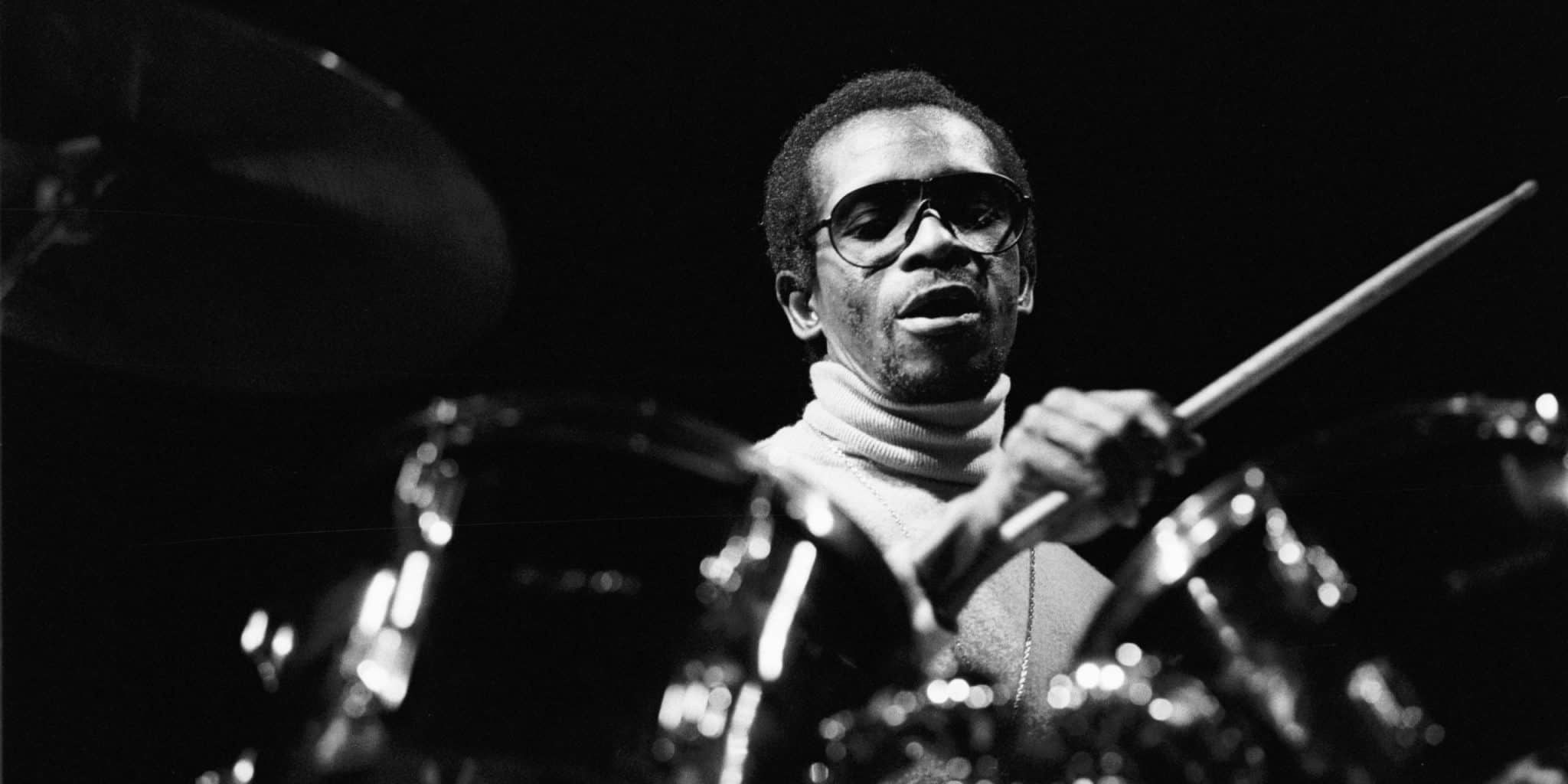
Tony Allen, the pioneering Afrobeat drummer, has passed away. The news was confirmed by Allen’s manager, Eric Trosser, to France24 yesterday. Allen passed away at Georges Pompidou European hospital in Paris, with the cause of death being abdominal aortic aneurysm. He was 79-years old at the time of his passing.
Best known for his work as the drummer in Fela Kuti’s band, Africa ’70, Tony Allen is widely regarded as a co-progenitor of Afrobeat. He initially started his career with a brief stint in the Cool Cats, the Highlife band led by Victor Olaiya, before going on to join Koola Lobitos, the Fela-led band who played a hybrid of Highlife and Jazz in the mid to late ‘60s. As Fela switched gears to Afrobeat, Allen’s drumming style, which were a polyrhythmic, innovative use of the hi-hats and delightfully menacing thuds, became a defining part of the influential genre.
Tony Allen departed from Africa ‘70 in 1978, briefly returning to perform on ‘Music of Many Colours’, the joint album between Fela and legendary soul musician, Roy Ayers. From then, Allen continued to build up a sprawling catalogue of music, which spanned dozens of solo albums and collaborative projects. Notably, he was part of the Good, the bad & the queen, a rock super-group, made up of Damon Albarn (Gorillaz), Paul Simonon (the Clash) and Simon Tong (the Verve), as well as experimental funk outfit Rocket Juice & the Moon, alongside Albarn and Flea (Red Hot Chilli Peppers).
In addition, he put out ‘Tomorrow Comes the Harvest’ in September 2018, a joint project with acclaimed electronic producer/composer, Jeff Mills, and he was the drummer on Angelique Kidjo’s Grammy-winning 2019 album, ‘Celia’. Earlier this year, ‘Rejoice’, the album recorded alongside legendary South African musician Hugh Masekela, back in 2010, was finally released, however, his last solo album, ‘The Source’was released back in 2017.
May his soul rest in peace
[mc4wp_form id=”26074″]
Dennis is not an interesting person. Tweet Your Favourite Playboi Carti Songs at him @dennisadepeter
“I think that all women go through some form of micro sexual aggression, We’re often trained to think that’s just normal, that we have to grin and bear it. “Unless it is rape, [many of us] feel like we can’t really talk about it or that we have to take it in our stride and even laugh about it”.
Aimee Lee Wood, Director of Sex Education.
According to the WHO, one in five women will be sexually assaulted at some point in their lives, and to bring it closer to home, UNICEF says 1 in 4 Nigerian girls are victims of sexual violence before they turn 18, and according to a national survey carried out in 2014, only 38% of those who experienced sexual violence as children told someone about it, and only about 5% asked for help. As though without them, it wasn’t clear enough, these jarring numbers show the need to protect our women–all the time.
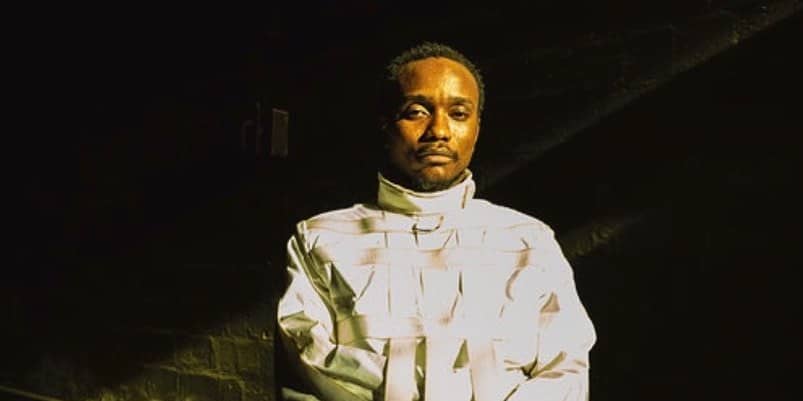
April is sexual assault awareness month, and to close out the month, a group of women were brave enough to name and shame their abusers, including some prominent members of the entertainment industry such as Brymo. Every time this happens, society’s attitudes towards assault and why the aforementioned numbers are as high as they are is made evident.
Two summers ago, young Nigerian women took to Twitter for their version of the #MeToo movement as they named and shamed their abusers and rape apologists living amongst us, which was a monumental moment for Nigerian women in general. This was when whispers of Brymo’s misdeeds fist came to light, and activist Uche Nelo alleged that the singer had been sexually inappropriate with a friend of hers. Her tweets were brushed aside as quickly as they came up, and the singer continued to make music and carry on his career like normal.
The justice system isn’t always on our side, and we still see abusers in power going about their business as usual, (see Busola Dakolo and COZA) therefore, we’re taking matters into our own hands and creating justice for ourselves in the little way we can. Social media has become a tool to name and shame violent behaviour, in a bid for abusers to get their due and be ostracised from society, giving us a semblance of victory.
As a woman, I can confidently tell you that most other women I know have experienced some sort of inappropriate sexual behaviour, and this has been the case for most of our lives since we were little girls. Almost every day, we hear about women who have been assaulted, in situations that could have very easily been us or another woman we love. Every time these stories come up, we’re either reopening old wounds from our past experiences or laden with anxiety about whether we could be the next victims.
Yesterday, before Beyoncé and Megan Thee Stallion sanitised our minds with the fantastic “Savage”Remix, the timeline was very heavy with women expressing the many dangers we face every day, at the mercy of sexual abusers and Brymo came up again, but this time with a detailed description directly from his victim, which brings to light how casually sexually inappropriate behaviour is viewed in society, and the damage it does to women.
This came directly from brymo’ victim and when UcheNelo called him out, y’all called her bitter pic.twitter.com/dLhi8M2Y7v
From this jarring account, Brymo took advantage of an unassuming fan, demanded to be satisfied “because he was already horny”, intimidated the lady in question into sleeping with him (coersion), and laughed in the face of her fear. From what has been alleged, we see how the singer views women as objects of his sexual satisfaction (which he suggested in a recent interview saying he deliberately said offensive and sexually inappropriate things to women in order to get content for his upcoming album).
Casual attitudes towards sexually inappropriate behaviour leave room for violent and abusive men to continue hurting women, and we have dismantled and learnt too much over the years to let the fear of consequences derail the fight. By the looks of it, with the way Brymo has continued like normal in the face of these accusations, it wouldn’t be a far cry to assume that at this point, he either doesn’t think he did anything wrong in that account, or believes (like most men do) that he can get away with it.
Everywhere in the world, cases of sexual assault are swept under the rug and those who have been called out usually get away with it, leaving their victims to pick up the pieces they shattered. It took nearly 3 decades to bring people like R Kelly, Harvey Weinstein and Bill Cosby to justice, thanks to the silence culture and the power they had to build a system that protects their horrible behaviour.
This should be seen as more than a scandal for Brymo and all others who were accused. In calling this behaviour out and holding perpetrators accountable, we are uncovering the socially ingrained cultural and political disparity which shows up in sexual behaviour towards women. We are also sending a message that in the future, other people can’t get away with their abusive behaviour when they see that there are consequences.
We have absolute autonomy over what kind of entertainment we consume, and supporting abusers (alleged or confirmed) sends a message to them that they can continue their behaviour like normal. It also validates and gives confidence to other people like them, who could go on to endanger another woman around the world.
We all know how difficult it is for them to face the law, so what we can do, is hit them where it hurts. By listening to their music and allowing them to carry on their lives as usual with no consequence, we enable their behaviour. To put it simply, someone like R Kelly was able to prey on young black women for 3 decades and pay his way out of getting into trouble for it, because he made a shit load of money from people listening to his music.
Men bond over football bants.
Women bond over sexual assault experiences.
In addition to supporting female-focused spaces which dismantle patriarchal norms, such as Femme Africa, Stand To End Rape, The Dcktator, Wine and Whine, Confident & Killing It, The Consent Workshop and more, we must also ensure that we’re actually all creating safe spaces for women. These platforms give room for women to speak up and form bonds over our collective harrowing experiences as women, with a real sense of sisterhood, community, and protection that we see being fostered.
Women typically bond over these shared experiences, with the common denominator being abuse from men. The sheer number of women who spoke up yesterday on the timeline should give you a good gauge of how rife it is for us, keeping in mind that there are loads more who don’t have it to do the same.
To every woman struggling at the moment, we can hear your silence and we’re here to remind you that awareness is victory and we will continue to fight. We’re all aware of how much more needs to be done, however, looking back at where we’re coming from, the acknowledgement of a problem is a step in the right direction.
Here are some useful contacts within Nigeria to have if you need to speak to someone:
Stand to End Rape (S.T.E.R.) Initiative: 08168967217; 08130320270
Domestic Several and Violence Response Team: 08137960048; 112; 6820
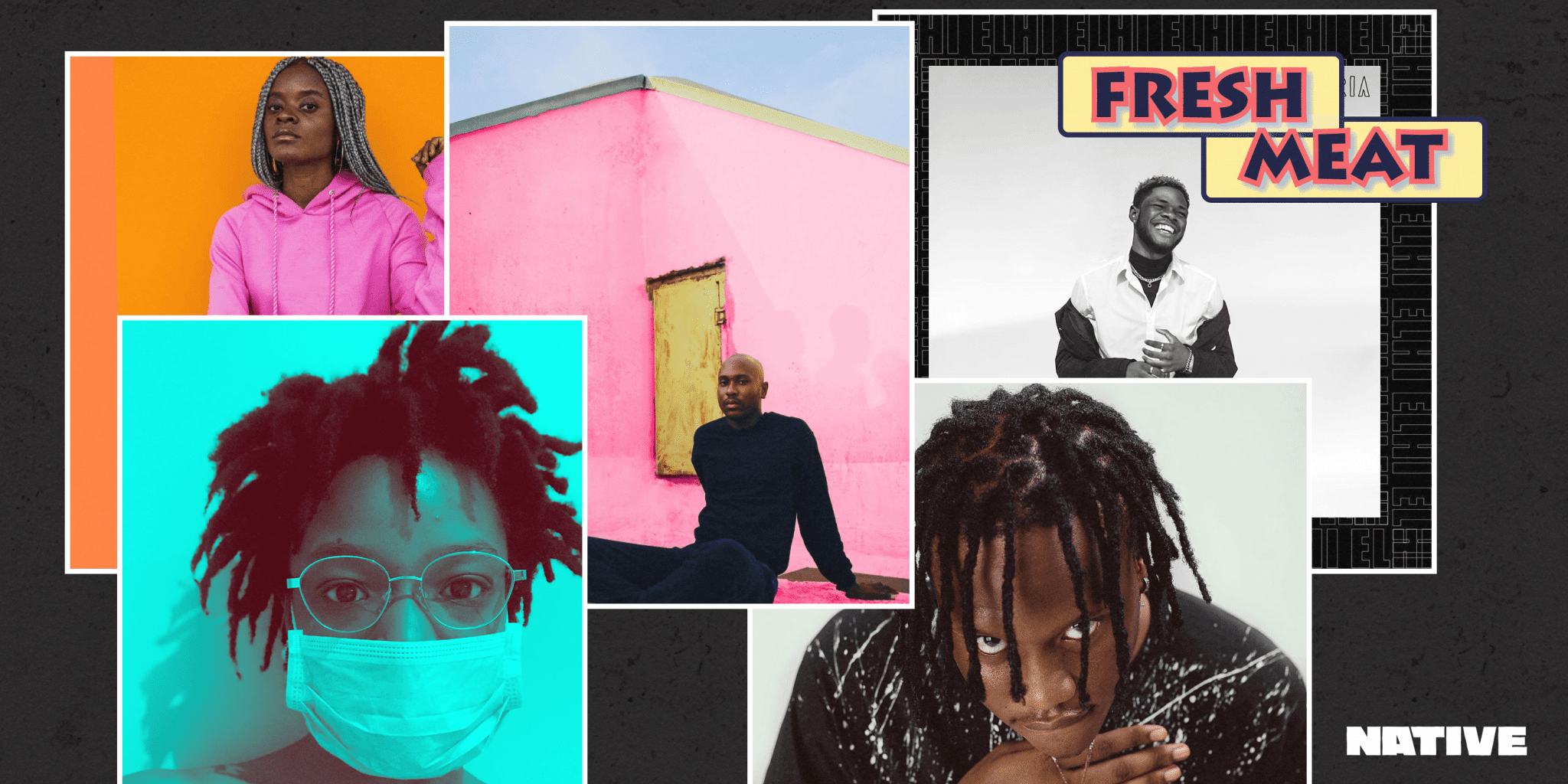
Staying true to our mission reshape the face of African popular culture, The NATIVE team curates a monthly list to spotlight the best and most exciting new artists on the continent. Some of these artists have dropped songs to some regional acclaim, while others are brand new on the block, working towards their first big break. Tune in to what’s next. Click here for March’s Fresh Meat.
This month has been one of unsettled adjustment, as almost every country has adopted some form of lockdown in an effort to contain the Covid-19 pandemic. Everyone at The NATIVE would like to send our love and support to every creative working through these unprecedented times. Nothing can adequately replace live shows or IRL engagement with fans and supporters. That being said, music has been the medicine for a lot of people.
Through intimate Instagram Lives, fans are getting to know the people behind the songs they love – to really know them, beyond radio interviews during album rollouts. Through platforms like VERSUZ and #NS10, the worldwide music community is able to give long-overdue flowers to songwriters and producers that have soundtracked our lives. Through shows like Tory Lanez’s Quarantine Radio, we’re all able to be in the club at the same time with everyone from The Weeknd, to the ex you forgot to block.
Releasing new music has never been harder. Whether you’re a grammy-nominated African Giant or an Icy youth clocking her first chart-topper, artists have been forced to get innovative during this period, as they try to provide some sort of escape to their fans.
For our second installation of Fresh Meat, we doubled down on our commitment to music discovery on the continent, with artists from Lagos to Vaal making appearances on this month’s edition. There is so much good music out there, and now more than ever, we need to support good music.
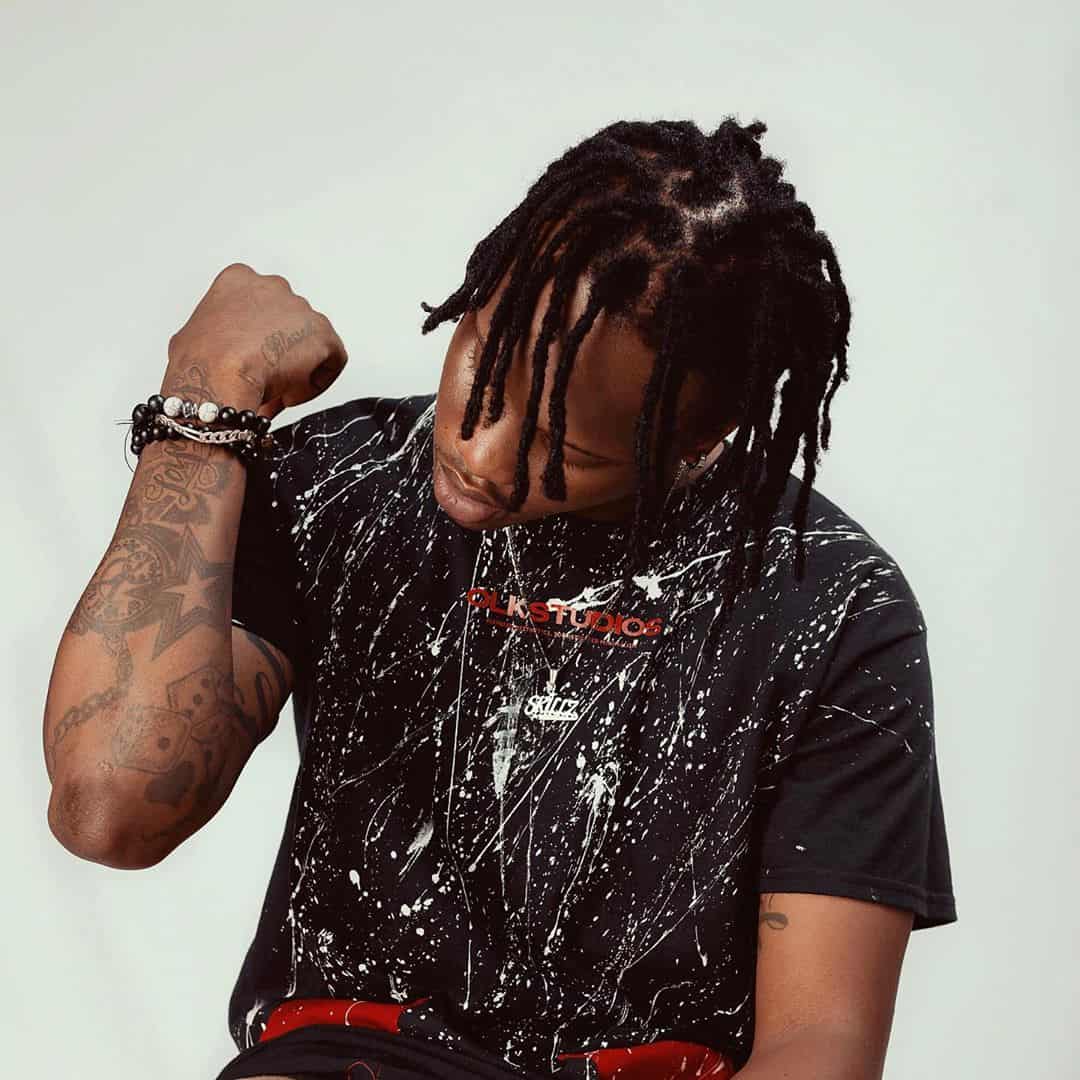
Skillz 8Figure
Before the release of his debut EP, ‘Gangsta Luv’ last month, Skillz 8Figure only had one official appearance to his moniker. Alongside Quamina MP and Prettyboy D-O, he featured on “Champagne”, a standout cut off ‘We Outside; Y3 W) Abonten Vol. 1, a compilation project curated by Ghanaian creative agency, Ground Up Chale last November. On the song, Skillz served as the backbone, delivering the memorable hook which holds the song together and elevates it at the same time.
‘Gangsta Luv’ capitalises on the potential he flashed on “Champagne”, resulting in one of the best EPs to have graced Afropop this year – so far. The 6-song project is an amalgamation of influences into a viscerally thrilling whole, where groovy, mid-tempo beats meets Trapsoul-indented melodies that still feel innately Ghanaian. The EP works within a familiar and relatable territory that includes lust and general life goals, however, Skillz’ still shows he’s no slouch when it comes to songwriting, penning potent hooks, Instagram-ready captions and melodies that are saccharine and downright addictive.
Skillz might be as green as they come, but ‘Gangsta Luv’ as a coming-out party is the sign of an undeniable talent with massive world-conquering potential. As he builds momentum at home and makes further in-roads into neighbouring countries and beyond, Skillz will become one of those artists no one can ignore—we might as well start paying him that attention from now.
Espiquet
Espiquet has one of those voices that jumps out at you. Deep and gravelly, the South African rapper shows up with the presence of a giant and he never fails to stomp around like one on wax. “The Krown”, his second single of the year and the song that caught our attention, is a drill anthem brimming with personality, combining an infectious flow with sinister, memorable one-liners.
As commanding as he can be in front of the mic, Espiquet’s joker card is his versatility. Across a catalogue that spans three solo projects, as well as multiple singles and features, he dabbles into a range of rap subgenres, adding his distinct twist in a way that best represents where he calls home—the Vaal region. “I’m just trying to make the best music I can, to represent what I come from and tell the stories the best way I can”, Espiquet says of his mission as an artist. He adds that travelling through Africa and working with artists from different countries is on his bucket list since it will provide an opportunity for learning and merging stories.
While the current restrictions on movement means Espiquet’s travel plans are going to have to wait—“you can still travel through the internet, luckily”—he’s using this period to work on and put out as much great music as possible. He just released ‘The Remedy’, a 2-song tape with close associate and fellow South African rapper, Farx the Epic, he’s sending out verses for features, he plans on shooting videos for every song he’s dropped recently, and he’s involved in a soon-to-be-released crew mixtape. For him, this is a period to consolidate on the momentum he’s already generated. “We started it, we didn’t know we wouldn’t be here when we weren’t here anymore, so let’s keep moving and see how far it can take us, and how far we can take it.”
ARSXN&LXNER
South African duo, Arson and Loner’s style of melancholic, inferno music, is a fitting companion for listeners who aren’t bold enough to venture into the darkness of their hearts. Their music fields an eclectic blend of sounds and textures, clearly gaining influence from fellow South African rapper, Patrickxxlee. Their latest project ‘Take Me Where Nobody Knows’ features a breed of gritty, menacing and brutally honest punk rap, with transparent reflections on personality, relationships and phoney rappers capping with fake guns.
The standout track, “I’m No Saint, I Admit” is a chilling admission of immorality and an observation on the ubiquity of the bullshit. Whilst they would rather mind their business, they mince no words in declaring their readiness for war: “It seems, it’s just one thing that y’all have in common/No language, not English, not Spanish but violence/ I’m fluent, let’s do it!”. Arson and Loner have been friends since they were 8, and their strong synergy is made clear by the seamless transitions between their respective verses and vocal inflexions. We definitely cannot wait to rage and mosh to these tracks once we are back outside.
https://soundcloud.com/arsonandloner/sets/tmwnk
Fave
Twenty-year-old artist, Fave’s forceful and melodic voice sets her apart, and even though she’s fairly new in the game, she already seems to be making all the right moves and has caught the attention of industry heavyweights like Mr Eazi’s and his emPawa Africa program.
What welcomes you to her Instagram page is a simple message saying ‘I have no genre’, which prepares you for her range across different sounds. Her debut single “M.O.M.S” which sees her experimenting with lo-fi pop melodies, where she offers a reflective song about broken people who are unable to accept love because they are blind to the intention of others. On her sophomore single “Dal”, she takes a full-180 from her debut and taps into a reggae-inspired sound, where she explores a similar subject matter before returning to a pop-tinged production on her latest single “N.B.U”.
Fave is part of the younger crop of GenZ artists to use their social media as a way to skip the middlemen and connect directly with their listeners. Twitter is their home and Fave is no exception, and much like Fresh Meat alum, Icytooicy, she’s known to sample new music and freestyles via her social media before making them official releases. With only a handful of singles and impressive genre-mashing inclinations, we can’t wait to see what she cooks up next.
Tsuni
You know you’re doing something right when you get a public co-sign from Tiwa Savage. Tsuni, the co-signed artist in this case, recently put out her debut EP, ‘Flexxx’, a genre-mashing project entirely helmed by go-to producer, Lord Beezy. Within its four tracks, Tsuni’s shows off her budding dexterity as an artist, using expressive, sex-positive writing and her adaptive voice the through-line between a variety of sounds. The introductory track, “Hold Back”, features sensual vocals over an alt-r&b bounce, while “Bad Habit” is buoyed by a jazz-inflected dance-pop swing.
“We had our fears, we didn’t think people would accept it because of the different sound on the tape”, she explains. Tsuni admits that the warm reception of her very first project has improved her confidence in her abilities, and she’s already looking towards what comes next. While the initial plan was to drop another EP later this year, the singer won’t be rushing herself to any major drops, because she’s more focused on developing and showcasing her diverse skill-set. This means actively working on being a songwriter for other artists, and putting out a lot more content on her socials as a way of drumming up more attention to herself.
With a clear plan of action and commitment to constant growth—she wants to take on vocal training, learn to play a few instruments and engineer music—Tsuni’s admirers are only bound to grow, up to the point where her idols will be widely regarded as colleagues and her co-signs will carry some major gravitas.
Loti
Loti or RnBLoti as he is known by his loyal social media following is not entirely new to the scene, one quick look at his Soundcloud page will reveal that the r&b crooner has actively been releasing for the past four years. His first single “Hold Me” is a deeply reflective number on which he disables the patriarchal notion that men can’t show emotion as she croons about wanting to cry and be held after losing an important parent figure in his life.
In 2018, he released his debut EP ‘Odyssey’, a collection of 8 tracks that showed off more of his buttery smooth vocals as he wielded his misfortune with love as a superpower for making highly relatable r&b bops. But he’s more than just the r&b crooner we’ve come to know, Loti is also a skilled rapper with an enviable flow as seen from releases like cautionary single “Talk Too Much” where he lets a different persona shine through as he sends a warning to the competition.
In all this time since, Loti has constantly shown his determination to grow as an artist, his robust catalogue of singles is full of impressive solo standouts as well as collaborations from romantic number “No Souvenirs” with Tim Lyre to “Oasis” with Yinka Oshodi and more recently his single “Realer” with 44db producer, KD. If there’s one thing that’s clear from Loti’s career so far, it’s that he’s listening to critics and growing with the times. He’s slated to release an EP with frequent collaborator, KD next month and we can’t what to see what else he has to showcase to the world.
Elhi
It’s crazy that we saw artists like Davido and Wizkid come into their positions at the top over the past decade, and are now witnessing a generation of musicians who draw clear influence from them. A few weeks ago, we discussed the new vanguard of hitmakers, and we have no doubts that Elhi is towing the same path, following closely behind artists like Joeboy and Fireboy, who dominated the mainstream charts over the summer. This year, we see an Elhi track occupying the same space.
Elhi has that x-factor you need to gain the attention of a mainstream audience upon first listen, and he caught our attention with his upcoming EP with one half of Legendury Beatz, Mut4y, ‘Eu4ria’. They have teased the project two singles so far, “Bad” and “Feeling You”, where we get a good sense of Elhi’s vocal ability reminiscent of 2011 Wizkid against club-ready beats. With only other two songs in his catalogue, Elhi is quite literally Fresh Meat, and we’re ready to eat.
Moonbather
Previously known as SEO, until the release of her latest project, ‘It’s Imperfection’ Moonbather’s unique sound caught our attention this year. Her 6-project deep discography, dating as far back as 2017, places her among the league of other young artists whose music echoes the SoundCloud trend of experimenting with niche electronic sounds. By creating her unique sound, she’s creating her definition for what it means to be a new, exciting artist in Nigeria today.
Moonbather doubles as a singer and producer for most of her songs, indulging in delightfully weird bedroom-pop experimentation. ‘It’s Imperfection’ nestles in that sweet spot between polished and spontaneous, as her production maintains a sharp and distinct edge – littered with E.D.M. and sci-fi sound elements – provide a quirky backdrop for her innocent, yet, blunt songwriting.
On the instantly striking “Autosexual”, she makes a case for masturbation amidst bold vocals and rummaging percussion. In terms of gaining a bigger audience, the positive reception of the unique vocal delivery of an artist like Santi is an encouraging indicator for Moonbather, since she favours burying her falsetto beneath echoing reverbs that form a translucent tapestry of sound. Her mesmerising and wistfully off-kilter sound is proof of the innovative and ambitious music independent Nigerian artists are capable of when they aren’t driven by the need to attain overnight commercial success, but in playing the long game, Moonbather is only preparing herself for bigger successes soon.
Featured image credits/NATIVE
Words by: Dennis Ade-Peters, Adewojumi Aderemi, Tami Makinde, Djaji Prime
“Parents listen to your children, they are the leaders of tomorrow. Try and pay our school fees…”
I remember singing this every other morning at my primary school in Abuja. The mantra of children being the leaders of tomorrow highlights the finite nature of human life, and the fundamental need for all living creatures to pass on their knowledge and encourage future generations to build upon this for greater progress. It’s for this reason civilisations have refined the art of education in both formal and informal settings since the dawn of humanity. The roles of teacher and mentor were seen as highly pious and noble, because it takes a recognisable amount of expertise and patience to teach.
Once used as a tool of subjugation by the elite, the 21st century has ushered in the free flow of information, with the internet being an omniscient teacher, making education less tedious, and enabling engagement from the comfort of wherever we find ourselves with access to absolutely everything. The barriers to information access have never been so close to being rendered useless, yet in 2020, it would seem like Nigerian universities are unable to make the digital push.
The general public was recently informed of the inability of public tertiary institutions to conduct ‘Open distance’ learning courses, in the wake of lockdowns aimed at controlling the spread of the ‘Rona. This revelation brings to focus the worrying state of education in Nigeria, who’s government investment and focus on education are the lowest of all sectors. This causes teachers to be constantly ill-equipped; strike over low wages, poor incentives and working conditions.
‘Open Distance’ or simply distance learning is the education of students who may not always be physically present at a school. Nigeria officially established open distance learning with the creation of the current National Open Universities (NOUN) in 2002, being the first in the West African sub-region.
In a research paper by Phillip Achimugu & Oluwatolani Olugbemi, the focus on ICT as a ‘topicality’ as opposed to being an integrated tool for education in Nigeria is highlighted as a detrimental attitude towards harnessing technology as a tool for education. According to the paper “This philosophy limits the potential of ICT in education to be a central force in economic competitiveness. Its potential as a tool for addressing challenges in teaching and learning and as a change agent are thus neglected”. The need for students and teachers to go beyond learning about computers, and use them in developing, learning and managing tasks is vital in breeding a culture of research, critical thinking and innovation.
It would seem that currently, Nigeria has no central online curriculum, or national software used for education, as evidenced by the statement issued by the Nigerian universities commission.
An integrated ICT/ Open distance learning format presents many advantages for students and teachers alike; increasing freedom in learning, taking into account individual pace. More resources such as videos bring concepts to life, encourage emulation and also serve as a resource for teachers in training and development. This redefines the role of a teacher and provides greater avenues for analysis on the part of students.
When you look at other more stable societies, we find that education, with specific attention to Mathematics, Science, and Arts, form the bedrock of innovation and higher standards of living. In order to develop infrastructure, provide healthcare, compete economically, and develop solutions to cope with the ever-changing nature of the world, we need highly skilled and trained experts.
Countries in Southeast Asia, particularly Japan and Singapore have little to no natural resources, yet continue to lead the world in innovation, with their students being some of the most intelligent in the world. Universities in Hong Kong and Singapore are among the best and most rigorous learning institutions in the world, which is a result of deliberate planning and focused spending on the education sector – approximately 16% of Singapore’s 2018 budget being spent on education.
United Nations Educational Scientific and Cultural Organisation (UNESCO) recommends an allocation of 15 – 20% of a developing country’s budget should be put towards education. Closer to home, Ghana spent 21.7% of it’s 2014 budget on education, whilst Nigeria has spent between 7 – 12% of its annual budget on education in the past decade, and the 2020 budget allocated only 6.7% of its total to education.
The average salary annual for a public school teacher in South Africa ranges between $13,000 and $14,000, with the highest-paid Nigerian teacher at primary level earning around $6,000 annually with grade level between 14-16. South African universities in collaboration with the government and the private sector are working towards subsidising internet subscriptions for students in the wake of lockdown season.
Beyond funding, entry into teaching colleges have the lowest entry marks, and admission into these colleges is usually a third choice for applicants, highlighting the poor perception of teaching in Nigeria. The effect of this is that teaching is no longer viewed as a respectable career choice, and this affects the quality of education received by our future leaders.
Apart from helping students stay on top of course work during this and any possible lock-downs in the future, distance learning may prove vital in bridging the gap in rural areas, help decongest classrooms, and reduce the time spent on learning. When the focus is tailor-made to students interests and abilities, the results will surely be fruitful.
The neglect of education and technology is worrying, as it’s symptomatic of a society content with little to no progress. How can any of us be proud of any feats of academic success in foreign lands by people of Nigerian origin, when we continue to handicap the educational rights of Nigerians at home?
The current state of education is a far cry from the glory days when Nigerian universities such as ABU Zaria, and the University of Ibadan were not just regional, but internationally acclaimed citadels of higher learning.
Harnessing the ubiquity of the internet as an effective tool for education would help boost the individuality and productivity of students in Nigeria, and also bridge the educational deficit in rural areas of the country. By giving students the resources to develop themselves at their own pace, we produce a conducive environment for critical thinking, and through entrepreneurial investment, help the unemployment situation.
Featured Image Credits: Web/ BudgIT
[mc4wp_form id=”26074″]
Djaji is a creative Vagabond, send me your takes on music and African culture @djajiprime
Every so often, the world is introduced to a superstar whose talents and personality are so unique, yet they still maintain a level of relatability enough to endear them to us. The late Goldie Harvey was perhaps one of the best indications of this in Nigerian music history being Nigeria’s pre-eminent pop diva.
With her stylish brand of rebellious and provocative music, Goldie first caught our attention in April 2010, with her Eldee-assisted “You Know It”breakout single, introducing the world to her eccentric personality, unmistakable voice, and her penchant for extravagant vintage attire in the accompanying music video, shot by Clarence Peters.
Over the years, Goldie represented a brand of fiercely independent-minded women, who were confident in their craft, a philosophy which is what formed the basis for “You Know It”, where she sang: “Yes I’m a diva, ooh I got class, you players hate me, but you know, you know”.
The success of this single paved the way for Goldie’s debut album ‘Gold’, which was released one whole year later. Through the course of the song, Goldie reiterated her unique standing, singing; “We’re not the same O, I’m in my lane O”, emphasising her irresistible allure and personality which her lovers and haters alike had little choice but to admire her for.
Eldee compliments Goldie’s ‘too hot to handle attitude’, with his trademark braggadocio, crediting his swag to the hands of the Almighty. The sonic composition the pair brought together made for a dance-ready track, with electro-inspired synths, and driving drums, the mix would give Goldie an airy, transcendent atmosphere, adding to the intoxicating feel of the song.
“You Know It” would soon become an inescapable smash reaching number 1 on Radio and Dj countdowns, earning Goldie several awards including ‘Best Female Video’ at the Soundcity Awards 2010, ‘Best Use of Costume’,‘Best Afropop’ at NMVA, and ‘Best Female Artist’ at the City People Awards.
This collaboration served as good indication to Nigerian audiences of the intoxicating power of pop + rap, coupled with indigenous charm to pave the way for future afropop divas. Goldie was a superstar who enriched Nigerian music and showcased the beauty in individuality. Even though she’s not here, “You Know It” remains a memorable cut, mainly due to its forward-thinking production which has stood the test of time, making the song an evergreen hit.
On Valentine’s day in 2013, we lost a trailblazer and a fearless creative who was well ahead of her time and wasn’t afraid to let everyone know. Sweet, sassy, and authentic, Goldie laid the blueprint for what it means to be a compelling diva, with an infectious smile, and a desire for all individuals to achieve their dreams stating: “We are our mind, not our body or situation”.
Featured Image Credits: Web/ Onobello
Djaji is a creative Vagabond, send me your takes on music and African culture @djajiprime
The constant frequency of cross-Atlantic collaborations is proof that afropop is only moving forward with its global appeal. Last week alone, we got new music from Tems and Davido alongside Khalid, while Santi joined Octavian and Obongjayar for a hypnotic bop. Across the continent, music has only become more diverse and expansive, leading to a daily flurry of new releases. We’ve decided to help out by sorting through new songs from across all the sub-genres around the continent to curate a column with all the best “Songs of the Day”, to highlight all the new releases you Need to hear.
At the beginning of the week, we brought you Ajebutter22’s Grime-influenced banger, “Big Man Talking”, Jidenna’s “Feng Shui” off the soundtrack of the new “Insecure” season, the latest single off Mut4y & Elhi’s joint project, and more. Today, we bring you Dapo Tuburna and Mayorkun’s collaborative single, a loverboy cut from Korede Bello, a brag-filled stomper from Boity, an Azonto revival jam by E.L and Sarkodie, and much more. Dig in, and you’re welcome.
Dapo Tuburna x Mayorkun – “See Finish”
Dapo Tuburna started off 2020 with his first headlining show, ‘The Gingo Experience’, in celebration of last year’s run that saw him release his well-received debut EP, ‘Gingo Vibes’, amongst other achievements. He soon followed up with his first single of the year, “See Finish” in collaboration with regular hitmaker, Mayorkun. Together, both singers urge listeners to avoid being too open and familiar in public, since it only breeds contempt in the long run. “See Finish” has now been given an accompanying video, which in addition to shots of Dapo and Mayorkun performing their set, we see colourful dance moves and all-round, eye-popping shots.
Korede Bello – “Mi Casa Su Casa”
Korede Bello started his 2020 with “Sun Momi”, a romance-themed cut released just in time for Valentine’s Day, and now he’s continuing with that momentum with the release of his new single, “Mi Casa Su Casa”. Produced by Ozedikus, who laces the beat with an afro-Caribbean flavour, the new single continues to bolster Korede Bello’s heartthrob, with a more mature presence. “If you give me chop, I no go rush”, he sings on the hook, exploring a new raunchy side we’ve never really seen to him.
Boity – “Bakae”
Last November, Boity made history as the first female South African rapper to go platinum, with the success of her Nasty C-assisted debut single, “Wuz Dat”. She followed up with “Bakae”, a song where she stunts and flexes on her naysayers over a thumping trap beat. After a long wait, she’s finally dropped the music video for “Bakae” via IGTV, citing ongoing label issues as the reason she couldn’t put out through any other medium. Regardless, the Nape Phasha-directed video is pretty stunning, as we see Boity rapping her lyrics with a commanding demeanour, while rocking several glamorous outfits.
Over a week ago, Sarkodie put out a call to fellow Ghanaian artists to bring back Azonto, the up-tempo subgenre behind the dance craze that took over West Africa circa 2011. Sarkodie kicked things off with the Tulenkey-assisted “Fa Hooki Me”, and he’s now followed up by joining fellow Ghanaian rap veteran, E.L for “Revival”. Over Pee GH’s bright and buzzing synths, both artists narrate the experience of a night out while also setting the Azonto revival agenda straight with a beat that mimics that sound and instructive lyrics.
Sheye Banks x Ckay x Bella Alubo – “Ifunanya”
Moving beyond their role as music curators for radio listeners, it’s becoming more common for on-air personalities to facilitate songs of their own with vocal assists from artists. Following the release of his Dapo Tuburna-assisted track, “Rotation”, Sheye Banks, the self-proclaimed king of vibes, recently tapped Ckay and Bella Alubo for the romantic single, “Ifunanya”. Backed by piano keys and mid-tempo afropop drums, Ckay and Bella deliver an amorous set loaded with affectionate one-liners.
TÖME – “Free”
After a stunning 2019 run where she opened at headlining shows for Wizkid and Burna Boy, and also released her debut album, ‘Tomesroom Chapter One’, Canada-based singer, TÖME is preparing for the release her sophomore LP, ‘Bigger than 4 Walls’. The album which we’re expecting next month is set to feature Runtown, King Promise and Zlatan, and to whet our appetites, she’s just dropped the lead single, “Free”, along with an accompanying video. Over gently sweeping keys and EDM drums, TÖME’s voice soars as she sings about earning the freedom to go after her dreams. In the video, we see the song’s narrative being played out, as well as shots of TÖME surrounded by nature.
Kiienka – “In the Ends”
Kiienka’s debut EP, ‘Spaceman’, marked the Port Harcourt-based artist as one of the more exciting purveyors of trap music on this side of the globe. He’s continued to consolidate on that ideal via joint releases with frequent collaborator Veen, and he’s currently getting set to drop his next project ‘Spaceman, Vol. II’.
“In the Ends” is the lead single off the forthcoming project, and it serves as a thrilling peek into what we should be expecting. where Veen lays down the song’s layered, psychedelic trap beat, accentuating Kiienka’s brag-filled raps about sipping Hennessy and independently making it to the top with no help.
[mc4wp_form id=”26074″]
Dennis is not an interesting person. Tweet Your Favourite Playboi Carti Songs at him @dennisadepeter
Over the last four years, Insecure has provided us with relatable experiences for the millennial woman who is navigating adulthood and trying to find her feet through the lives of Issa and her best friend, Molly. Insecure recently returned for its fourth season and this time around, the cast have grown up a bit, and are coming into their own as women, glowing and growing, dropping their past toxic patterns.
With this, we also see the inevitability of change and outgrowing certain situations and even friendships we thought would never come to an end. Friendship breakups are never a nice thing, and where romantic breakups get their fair share of attention in every facet of popular culture from films to music, nobody ever really talks about the effects of falling out with a close friend.
The new season begins ominously with Tyler the Creator’s cut-throat number “A Boy Is A Gun” in the background, as Tyler’s emotionally tumultuous lyrics seem to foreshadow the eventual demise of Issa and Molly’s friendship. We get to see Issa’s conversation where she speaks about the friendship ending, saying ‘I don’t fuck with Molly anymore’ ahead of the eventual breakup between the pair.
As entertaining as Insecure is, one of the most frustrating things is that characters tends to take one step forward and ten steps back. Since we started watching the show in 2016, the only character who seems to me making any tangible progress in the entire scope of her life is Issa, which is great for her, but it often feels like her friends are used to having to look after her, when all that shows is how regressive and stuck in the past they are.
Though there are only 3 episodes of the season out, we can already see the obvious tension building between Molly and Issa so far, from Issa’s budding friendship and work relationship with Condola, we begin to see what drives the wedge between her and Molly. From the looks of it, it seems as though Molly is feeling some sort of resentment towards Issa for focusing more on her relationship with Condola and her new passion project, which now means that Issa no longer has time to prioritise Molly’s relationship and professional woes.
As the season goes on, they both begin to lash out at each other and make snarky comments, like Issa saying to Molly ‘You gon’ pull the Old Molly and scare him away?’ when referring to her latest love interest. The internet collectively worried about the possibility that Issa and Molly’s friendship could be coming to an end, and many people shared similar experiences with friendship breakups in the past, opening up a much-needed conversation about the need to find your tribe full of honest and dedicated girl friends.
I will say this, #InsecureHBO is doing a good job at how miscommunication can slowly eat away at a relationship, whether it’s platonic or romantic.
We all know how it goes when you realise your friend is actually an opp, but takes a while for you to actually get to the point of cutting off the friendship because it seems like a ridiculous option. We might not realise, but we expect more loyalty from our friends than we do from (male) romantic partners, mostly because at this point in life, you’ve probably been friends with your closest gals for a very long time, and have shared a deep connections over the years. As close as a boyfriend is, there are certain things he can never understand, which you need your girls for.
It’s always heartbreaking to lose friendships, and what this season of ‘Insecure’ does is present all of our lives on television with some much needed emotional honesty, which can be difficult to achieve in real life. We’re all watching the show, commenting about what Molly and Issa could and should do to save their friendships, but how many of us can confidently say we employ those methods in real life?
Hopefully, watching these uncomfortable facets of life as a black women can encourage us to do better in our real life, such that the show actually serves its purpose to offer nuanced and well thought out responses to the woes black women face.
Friendship break ups like relationships are inevitable, and sometimes people grow apart when their lives are heading in entirely different directions no matter how long they’ve been friends for. The end of a friendship if it has to come to that doesn’t always have to be a fight, and the key to achieving that, is keeping clear communication lines open, with the aim to always resolve and air grievances in a compassionate manner.
Featured image credits/Insecure
Tami is a lover of women, music and astrology. Tweet your fave female artistes at her @tamimak_