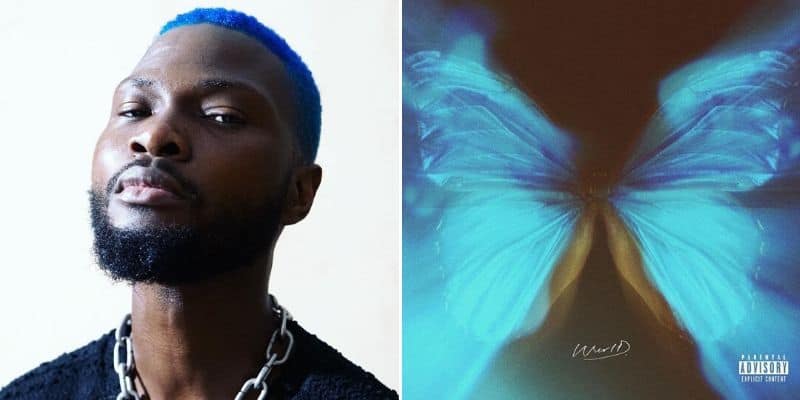
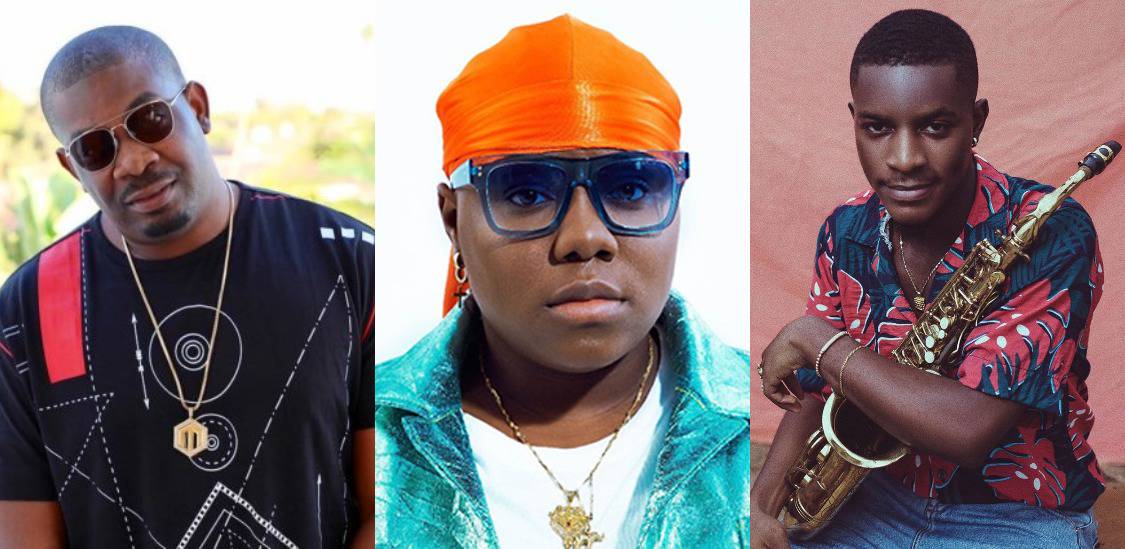
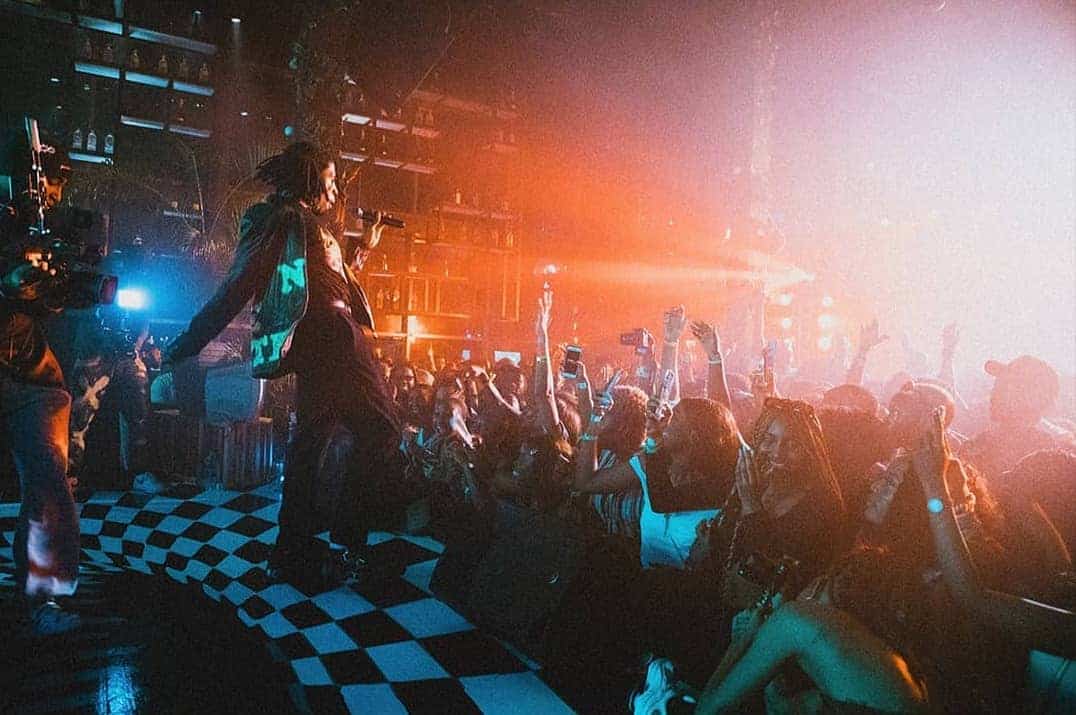
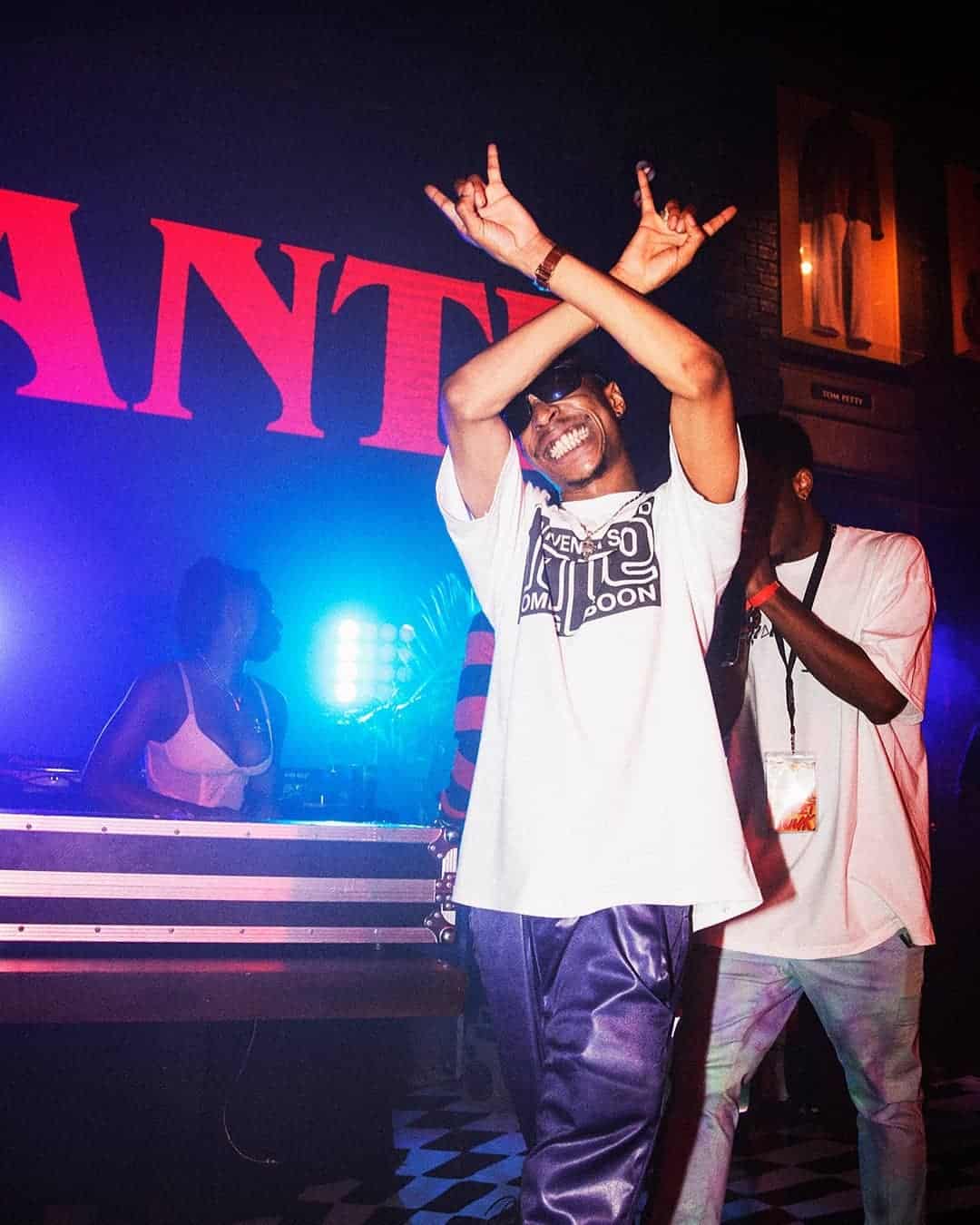
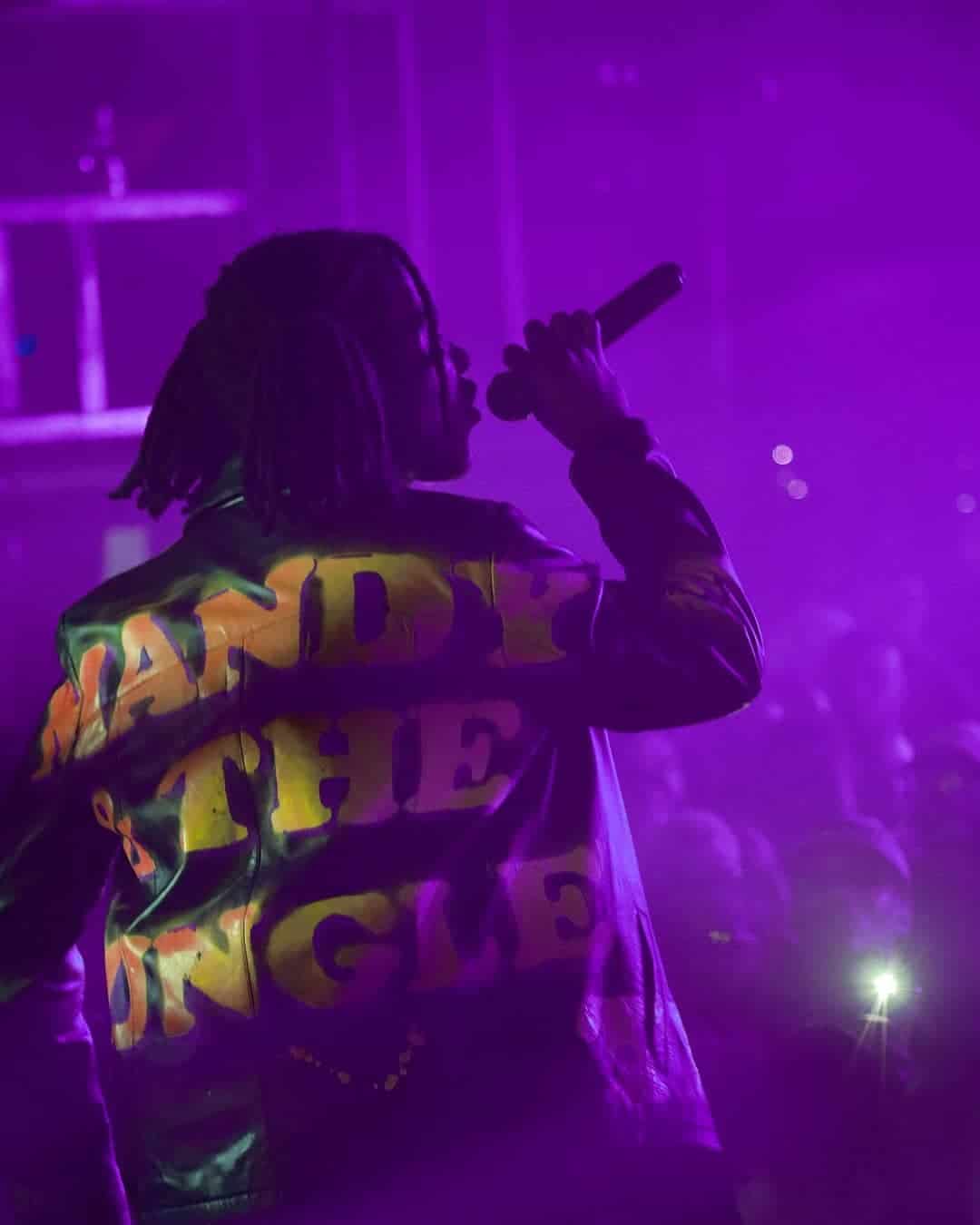
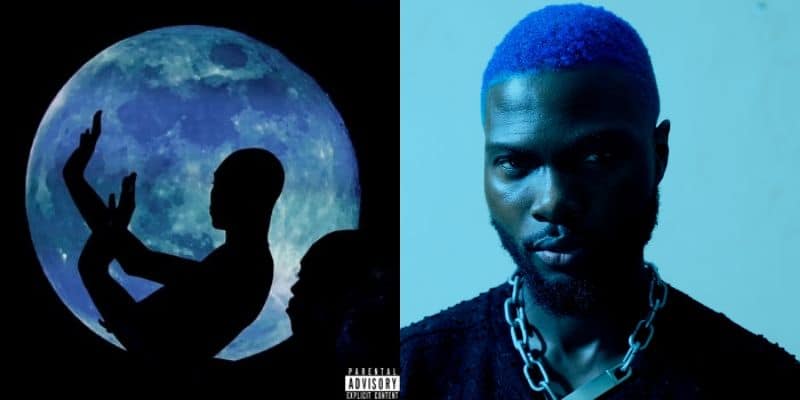
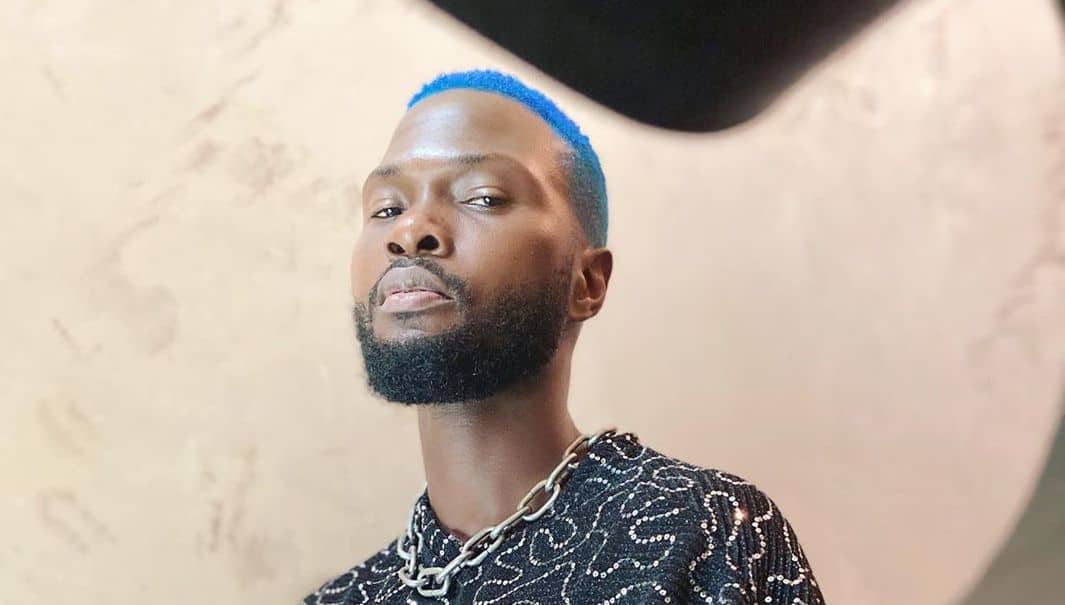
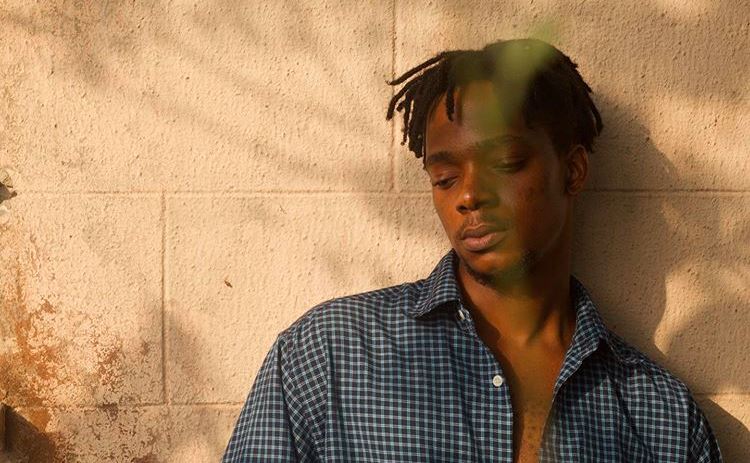
Oxlade came into 2020 with the type of cosigns dreams are made of; Wande Coal sang the lyrics to his song, “Shugar” on his Instagram Live, he secured a slew of high profile features including “Causing Trouble” with DJ Tunez, and earned a slot to perform at Wizkid’s Starboy Fest. He had spent the last 4 years building his reputation as mainstream talent and last week, he followed it up by releasing an impressive debut EP, ‘Oxygene’, to match the fanfare.
Through the 6-track duration of the tape, Oxlade performs melodic sets that seem geared towards translating the atmospheric feeling of air to music; “Cause music is the air I breathe”. On the standout track, “Away”, he gave Afropop an ethereal touch backed by the groovy beat Spax produced. Though the lightweight ambience of the highlife guitar riff Spax produced is airy, it’s Oxlade’s voice that proves most instrumental in capturing the otherworldly aura; whether he’s folding it into pillowy, backing harmonies or using his falsetto to put an exclamation point on his lyrics, “Let us fly/Away, away, away, away…”
Singing “Give me love, give me proper/ Give me sugar, give me down, down”, “Away” is penned with the same romantic intentions as most Afropop songs you’d hear in the club. However, it shows Oxlade’s immense talent to write and produce a catchy, heartfelt pop song addressed at a lover without feeling forced, corny, or patronising. The joyfully earworm-y melodies don’t distract from his intimate depiction of love as his vocals fuse with the groovy beat to make listeners’ hearts and heads nod along. Though Oxlade is still at the start of his career, “Away” points to great things ahead.
Stream “Away” below.
Featured Image Credits: Instagram/oxladeofficial
[mc4wp_form id=”26074″]
You are meeting Debola at a strange time in his life. He wandered into a dream and lost his way back. Tweet at him@debola_abimbolu
I’ll never forget the first time I heard P-Square on the radio in Nairobi. “Alingo” had just come out and the song was on repeat on every radio station, and the accompanying video was played on the hour, every hour, on every television station. Of course, being a newcomer, I thought the mania around the twins was novel, but over the course of a month, I realised that the Kenyan love affair with the twins was actually as extensive as mine, dating back to the duo’s 2008 evergreen hit ”Do Me”
After studying music in school, the multi-instrumentalists started their journey as entertainers in their mother’s church in Jos. The twins initially dreamed of achieving football glory, inspired by Nigeria’s ’96 Olympic success, however, After noticing that they were spending money on soccer practice whilst getting some money from performing their music, the brothers decided to venture further into the entertainment industry. Peter led a dance group named ‘Smooth criminals’, and Paul sang acapella wherever he could.
They got the opportunity to showcase their talent to the world after being selected to participate in the third edition of the ‘Grab The Mic’ competition, which also featured a young Asa as one of the contestants. The first prize meant a 2-year record deal with Timbuk2 records and a fully-funded album. The twins almost didn’t get their big shot, because they were late for the show, but thanks to Paul’s ingenuity and a little help from Sound Sultan, they were able to get their band in on time to perform. Their first performance only lasted last for 2 minutes, but the duo later won the competition, signed with Timbuk2, and released their debut album ‘Last Nite’.
Their breakout single, “Senorita” received the most airplay and kicked off one of the most iconic hit runs in Nigerian music history. “Senorita” is a guitar-led, r&b ballad, which lends influence from Justin Timberlake’s “Like I Love You” off ‘Justified’. The song tells the story of a materialistic “Senorita”, who has grown fonder of one or maybe both of the brothers as a result of their success.
The accompanying music video features a dramatic Nollywood break, before leading into an ensemble dance break. Whilst this leaned heavily into the pervading boy band craze, and obvious influence from Michael Jackson, the fact that the brothers wore their influences on their sleeve made them all the more endearing.
At the end of their two-year record deal with Timbuk2 records, the brothers were ready to take on the world and formed Squared Records alongside their brother Jude. They then their second album ‘Get Squared’ in 2005, which was packed with hits including “Story“, “Temptation” and their biggest hit at the time “Bizzy Body“.
The family synergy between the duo, or rather trio, as their brother Jude was also heavily in their musical production, was a key factor that the brothers admit aided their success. Paul was the primary producer and songwriter, and with his natural inclination for r&b, penned the group’s captivating love records. Peter on the other had a stronger passion for dance and club records, choreographing the group’s dance routines, taking the helm on the group’s chart-toppers, and engineering their tracks. Jude was mostly responsible for directing their videos, as well as running the business side of Squared Records.
The family unit was unstoppable and were poised for world domination, despite fans and others, at times attempting to pit one against the other. Their third album ‘Game Over’ would signal them being the biggest acts in Nigerian music, it’s hard to use the word ‘Smash hit’ for their record “Do Me” as it does not do enough justice to the scale and impact of the song, especially the pedigree of other hits on the ‘Game over’ tracklist including; “Ifunanya“, “Miss u die“, and “More than a friend“, P Square had the game in a chokehold and were inescapable.
P-Square’s music was deliberately delivered in pidgin English, with bursts of their native tongue, Igbo on different tracks. The brothers attribute a lot of their success in Africa to the relatability of Pidgin English, which in combination with their hi-life-infused r&b/pop leaning compositions made them irresistible to the populace. By their fourth album, they had conquered Nigeria and were well known in the West African sub-region. These were mega-stars now, with an international media tour including appearances on the Wendy Williams show and Tim West Wood in the early 10s.
They gained international partnerships – including a record deal with Akon’s ‘Konvict music‘, and a distribution deal with Universal Music’s South African branch – recorded chart-topping hits with artists like TI, & Rick Ross, performed alongside powerhouses like Usher. When it comes to the perks of being megastars, P-Square have been there and done that.
Part of the game-changing formula P-Square implemented was quality music videos, employing them much in the way that their icon Michael Jackson had, as a means of showcasing their talent, and conveying a message. The Jackson estate acknowledged the duo’s homage in “Personally” to the late king of pop, and invited them to the estate, which led to their feature with Jermaine Jackson.
Their video “Alingo” had amassed well over 10 million views at a time when YouTube was one of the least popular platforms to use in Nigeria due to high internet prices. They were no longer the boys from Jos, they had built a cult-like following not only in Nigeria but across the entire world.
Fairy-tales don’t last forever, and after close to 20 years of being a trendsetting duo, news broke that P-Square split. Fans and industry insiders were distraught with pleas on social media for the brothers to reconsider their decision. As solo artists, the brothers have both remained consistent in their output, and still enjoy sold shows across the world, but it’s not the same.
Though the brothers have since 2017, continued to pursue their music individually, their meteoric rise, and influence as pioneers and forerunners in propagating the message of Afropop is in a lot of ways akin to their biblical namesakes spreading the gospel through the world. It is thanks to the efforts of these legends and others, we have a sound and aesthetic as Nigerian artists to be proud of.
Over the course of two decades, P-Square completely re-imagined what it meant to be a Nigerian superstar. From chart-topping singles, groundbreaking visuals, colossal tours, and international features, and an extensive array of awards, PSquare are a reminder of how far Nigerian tenacity can take you.
Featured Image Credits: Web/ P-Square
[mc4wp_form id=”26074″]
Djaji is a creative Vagabond, send me your takes on music and African culture @djajiprime
Ahmed Froko, popularly known as Nxwrth needed just one essential thing to make the jump from the kid beatboxing and drumming on tables in the classroom to being a producer with ears and eyes on him from the entire world – a crew. Before his debut album, he already spent 3 years recording music with the rest of the promising collective, La Même Gang; Darkovibes, $pacely, Kiddblack, RJZ and Kwaku BS.
https://www.instagram.com/p/B3kEynfJp9Q/
We’re witnessing an interesting paradigm shift in the culture, where young artists immediately or very soon after they break out have access to an audience from the entire world. In a time where Billie Eilish’s favourite artists is Zlatan, and when Beyoncé created an entire album featuring talent from all over West Africa, it’s clear that there are more eyes looking in than ever before and the scene is rife with talent all over the continent.
From one conversation with him, you’ll get the sense that even before this shift, Nxwrth always had big ambitions for his music. He discovered his passion early on when he was in high school, and would beatbox and bang on the table for his peers who wanted to become rappers. This then led to a curiosity about how beats were made, and here we are with him today.
Despite the sharp contrast between his ambient-trap leaning sound and what was accepted by the mainstream Ghanaian music scene Nxwrth is gaining more recognition, and will be releasing his debut project, ‘NASA: Thank You For Flying’ tomorrow.
“I wanted my album to be promoted with the right people and I didn’t care how long that was going to take. My music is too futuristic for the locally inclined mainstream and I’m not even mad about that. I’m just hoping for more in the future.”
The 12-track tape features members of the La Même Gang, as well as other artists who suit the album’s vision to transcend genre and space. Nxwrth produced the heady blend of trap beats, while the artists infuse their R&B melodies, reggaetón rhythms, Afropop hooks, rap bars, to drive their message that dreams come true. I’ve had the chance to listen, and songs like the addictive “Mama Pt. 2” gracefully offers a snippet from the countdown of a spaceship’s liftoff while featured artists, Rjz and Darkovibes sing tributes to their mothers.
“The project is basically about my obsession with space and how I might never get the opportunity to go there. I wanted to be able to bring it to life and make it my reality, and I have friends and brothers around me who also wanted to break barriers. I made it around the early stages of when La Même Gang just formed so you can still hear the fresh and raw excitement from our vision for the future.”
“Cupid”, one of the standout tracks of the album was released as far back in 2017 in their early Soundcloud days, which locked in their claim to being a disruptive force changing the soundscape of Ghana’s mainstream music scene. Nxwrth’s synth arrangements and Darkovibes’ romantic melody showed the potential in both musicians as Darko manoeuvred the spaces between Nxwrth’s bass-heavy experimental EDM-fused Afrotrap production.
Nxwrth describes his process as very spontaneous and dependent on how he’s feeling. “I always try to project the transcendence; a sense of flight, flying, liftoff, levitating. That’s how I want people to feel when they listen to my music. I’m a huge Christopher Forlan fan. I really love his movies and after watching Interstellar I was so sold on to the space theme.” Having grown up in Africa, where things like this are presented as just a dream, Nxwrth is almost certain he and those around him won’t get the opportunity to go to space. This is why he makes music as a vehicle to transport listeners to an otherworldly setting.
Similarly, he decides what artist to feature based on the energy they give off and whether he thinks they will be able to git into his space vibes, regardless of their fame or status. Though ‘NASA: Thanks For Flying’ boasts of a diverse range of notable features including the La Même Gang, Nxwrth is able to hold his own against high profile collaborators including Ghana’s mainstream rap star, Kwesi Arthur, Froy3, Tsoobi and Hama.
I appreciate people who are ready to think outside the box cause I make beats that are not the typical beats you hear around. I’m just into people who are ready for change and something new. At the end of the day, it’s the sound that prevails. For me, I’m just looking for the magic. I’m looking for the sound that is going to change someone’s life or mood or stop someone from committing suicide. I’m looking for inspirational music that will change the world,
https://www.instagram.com/p/B80oCJvpxIH/
In many ways, Nxwrth and La Même Gang’s astronomical rise to the forefront of Ghana’s booming trap music scene wouldn’t be possible without the internet and the music streaming culture. Nxwrth acknowledges the timeliness of their success as he recalls the first studio sessions he had with the rest of the gang, and feeling it in his bones that they were on to something special. “You weren’t hearing anything like that anywhere else. I knew we were meant to be great. We’re pioneers,” he says. They didn’t feel the need to comply with the generic sound on popular Ghanaian radio, since they were sharing their music on the Internet where they had a broader audience and could reach anyone anywhere in the world.
“Though I’m a Ghanaian act, I don’t feel like my sound has to be limited to just Africa. Music is a universal language. You don’t need to understand the language to understand the sound. We’re trying to change the world, and that’s why we’re making sounds with different culture and genre. There’s so much fusion in our sound. That’s what we stand for.”
The successful year of return campaign Ghana had last year also showed the producer people around the world are paying more attention to the creative scene in Ghana than ever before. He doesn’t find it surprising though, as he himself is a passionate follower of Japanese anime and understands the appeal of foreign cultures.
“It’s outside the box. When I watch a lot of anime, I get a lot of ideas and feel inspired. It’s very youthful and young and I’m for the kids. I feel like I’m for anybody who watches anime because I make music that’s like an anime. If you listen to “Cupid”, that’s some anime shit. Do you feel me?”.
https://www.instagram.com/p/B-OscnepDq2/
Nxwrth’s forward-thinking and futuristic blend of cultures and his love of space and the extraterrestrials has earned the producer attention from all over the world, and although he admits he’s probably partial to “Cupid”, he loves all the songs on his album and can’t pick a favourite track. “I want everybody to appreciate it as a full project. In fact, that’s the way to listen to it. From track 1 to track 12. It’s a trip to space and to understand and get the whole idea for the whole project, you have to listen to the whole thing.”
The lockdowns caused by Coronavirus has affected Nxwrth and the rest of the La Même Gang who were supposed to make their debuts at the Austin festival in March, however, this is the perfect time for his tape to drop cause he has the ears of a hungry audience. “The world is going through some crisis right now and though it’s bad for us, it’s fucked for everyone else so we shouldn’t be selfish and be sad about the things we’ve missed out on.”
Well as long as we all have internet, African artists can continue their battle for world domination and Nxwrth’s begins tomorrow.
Featured Image Credits: Instagram/nxwrth
[mc4wp_form id=”26074″]
You are meeting Debola at a strange time in his life. He wandered into a dream and lost his way back. Tweet at him@debola_abimbolu
Even though it’s been constantly mined for inspiration by countless artists, the pristineness of Yoruba folk music remains untainted. For contemporary references, you can cite accomplished artists like 9ice and Adekunle Gold who draw heavily on storied offshoots like fuji and juju. There’s also younger ones like Barry Jhay, who straddles the line between fuji-inspired street-hop and mainstream afropop, and Mo’Believe, who refers to his music as urban folklore.
Joining this lineage is Gbasky, a singer who makes folk-pop music many can relate with. ‘Black Frequency’, the singer’s recent sophomore EP, is a soulful take on his influencing genre, mutating vintage rhythms into smoothed and often downbeat cuts. This sonic palette is especially fitting for Gbasky’s self-motivational quips, where he sings about his drive to fill up his pockets and live a hassle-free life. Hustle-themed lyrics accompanied by folksy production is nothing novel, but Gbasky’s palpable honesty drives him closer to the tier of artists who have used this combo to transcendental effect.
On “Money Devotion”, the remarkable lead single, where he subtly interpolates afro-folk legend Beautiful Nubia, Gbasky swings between Pidgin English and Yoruba for his spiritually-inclined set, giving listeners a glimpse into of his hardworking mentality and praying to reap the fruits of his labours. “Before dawn I don wake up, me and poverty don break up”, he gently reveals over West Kulture’s plinking guitar harmonies and sparse percussive groove, using the desire in his voice as the main point of connection to the listener.
With a strong sense of his vocal abilities and limitations, Gbasky works his melodies into nimble and conversational cadences, lending an extra layer of intimacy to his sincerity. It also helps that he’s a pretty solid writer. On the King Perry-assisted “Free Person”, he sings the particularly clever line, “make dem no use their red eye stain my white”, a catchphrase with strong potential to enter pop culture lexicon.
One thing is sure, though: ‘Black Frequency’ is a massive upgrade from his previous project, ‘Phenomenal’. On the 2017 debut, Gbasky narrowed his vision to make formulaic music that played into the hit song mentality, giving little to no trace of a relatable or magnetic character. He occasionally stumbles into similar traps on his new project, like the catchy but anonymous love song, “Original”, and the overtly club-fitted “Fun Wan Tan”, where he eschews any lyrical depth for a glossy personality.
Even with these missteps, which are far outweighed by the positives, ‘Black Frequency’ marks out Gbasky as an artist who’s improving with each effort. In many ways, we’re seeing the portrayal of an artist who is insistent on developing into a singular and more compelling voice in the nearest future.
Listen to ‘Black Frequency’ here.
Featured Image Credits: YouTube/Gbasky Phenomenal
[mc4wp_form id=”26074″]
Dennis is not an interesting person. Tweet Your Favourite Playboi Carti Songs at him @dennisadepeter
In the video his latest release, “Pim Pim”, Dice Ailes delivers a monologue to his “eight girlfriends”, self assuredly telling them off for taking his focus away from working hard trying to drop his debut album. Since he broke out with the inimitable “Otedola” in 2017, Dice Ailes has remained a key player in the afropop world, cementing his position as a hitmaker with songs like “Alakori”, to his recently released banger with the Olamide-assisted “Pim Pim”. With a versatile approach to the music, Dice has managed to keep eyes on him with every new release and now he’s ready to drop his album this year.
https://www.instagram.com/p/B-UQyinnb5v/
Having grown up all over the world with multinational parents, Dice Ailes’ influences stem from a wide range of things, and this is what makes him special. Afropop’s global appeal is undeniable at this stage, and Dice Ailes saw the potential since as far back as 2013 when he moved back to Nigeria from Canada to promote his first single, “Yemisi”.
He’s come a long way from then, and from being signed to Chocolate City to scoring international hits, we’re sure he has way more in store for us. In these quiet and reflective times, we recently caught up with the Chocolate City rapper, to discuss his interesting journey so far, where he draws his influences from, and how he feels about the current state of Nigeria’s rap scene, and here’s what he had to say:
NATIVE: How did you discover that you had a passion for music? Have you always known?
Dice Ailes: I grew up in a bi-religious home; my mum is Christian and my dad is Muslim. So I used to go to church on Sundays, and the Mosque on Fridays. My dad is Nigerian and my mom is Ghanaian, and they also had business all over the world, so I used to travel all the time, and experienced many different norms and cultures. My mum was also in the church choir, and some of my uncles were songwriters and aspiring artists, so I used to sit with them and watch them compose music and play different instruments like the drums, harmonica different things. That’s where I found my passion for music.
What events led to you making your passion into a career when you signed to Chocolate City?
In 2013, I travelled to Nigeria from Canada to promote a single called ”Yemisi”. It was one of my first trips down here that was related to music. I had just decided to get involved with Afropop cause I saw that it was on the rise at the time, and also wanted to contribute to the growing culture. I was trying to familiarise with the industry so we came here and during the trip, I met through a mutual friend. He listened to some of my music and 8 months down the line, we were signing contracts and just getting to business.
You must have witnessed Chocolate City’s steady incline growing up, how did it feel to be a rapper signed to the label?
Dice Ailes: M.I, Ice Prince and Jesse Jagz were like the top dogs when it came to rap and the Nigerian hip-hop, so it was a great feeling to have made the cut. To just to be one of the guys that would be mentioned with their names, that was very flattering.
https://www.instagram.com/p/B39dOhEnr5k/
When you first got into the game, it seemed like you kept to yourself quite a lot. Now, you’ve developed quite a strong friendship with Olamide. How did that happen? What does it feel like to have his support?
Dice Ailes: I’m generally the type of artist that doesn’t rush to do features just for the sake of it. I like to make sure that it sounds and feels right to me. Olamide has always been a big bro since the beginning of my career in Nigeria, he was always supportive, he’d reach out to me and post my music and comment on my pictures and all that stuff. We always wanted to work together from the beginning, but it just never happened. Then in 2019, the time felt right; we got into the studio for the first time and made about 4 songs. Ever since then, the brotherhood was just grown stronger.
You’ve proven to be a versatile artist and you dabble in quite a few different genres. What determines the direction you go with your music releases?
Dice Ailes: So because I’m able to make anything that comes to mind or anything that feels right, sometimes it’s a bit hard to decide the direction to go with the music that I put out. A lot of times, I’m sitting on like 10-15 songs when I’m about to release 1 single. At the end of the day I just go with whatever feels right to me, I listen to my gut. Could be that I just want to reach out to my female fans/audience, so I put out a love song like “Pim Pim”. Could be that I just want to speak to my guys and making them feel inspired about the hustle and then I’d release a song like “Otedola”. That’s just how it goes for me.
“Otedola” was such a massive song. Did you know that it was a hit when you recorded it?
I knew it was a huge song as soon as I recorded it. For every song I record, the dream generally is to have it become a smash. But I was definitely sure that “Otedola” was going to do what it did. I even thought it would do more to be honest. When I shot the video as well, I was excited about it, everything just felt right. A lot of people didn’t believe in it and didn’t want me to put it out because it sounded a bit too different from what was out on the market at the time, but I just knew that it had something.
Do you ever feel like there’s a pressure sometimes to create another song like that?
Not really, I know that I have it in me. I never really try to imitate my previous releases because there’s a lot that the future has in store for me, so I just explore the stuff in me. I don’t try to imitate the past.
A lot of people look back and cringe at their first hits. How does “Otedola” make you feel in 2020?
I think it’s one of my favorite songs that I ever put out. It just describes me and I think it’s amazing composition. I think it’s brilliant what I did with the lyrics, using a lot of metaphors and similes. As soon as I recorded it, I knew that it had something. I knew it was going to become a huge record.
The Weeknd posted a video listening to it. Naomi Campbell, Tinie Tempah, Not3s, Dave, Skepta all reached out to me. A lot of people around the world reached out to me to say they liked it. “Miracle” was a hit song that I didn’t necessarily love because it sounded like something that was already in the market and I generally like to sound different. But then I’m thankful for it cause that was my first national hit record and that’s sort of what brought the attention I needed when I came back to Nigeria.
How do you think social media has impacted your career, and the way people engage with your music?
I think social media has helped to connect people more easily and it has helped to spread music faster than it used to back in the day, which is good. On the other hand, I think it has also given fans too much access to their favourite artists and icons, to the point where the idea of celebrity is starting to diminish. It almost feels like we’re all in one room just being friends. I think that of course it helps engagement but gone are the days where artists like Michael and Madonna were like gods. Now it’s like artists and their fans are like best friends and while I’ve benefited from it helping me spread my music, I’m not a fan of the downsides of it.
We’ve had quite a few hit singles from you over the years, and fans are now anticipating a full project. Is there a reason you didn’t drop one all this time?
There’s no deep reason, I just like to take my time and make sure everything feels right. I like to give my fans quality music and quality visuals. It all has to make sense to me. 2020 is the year that I put out the debut album. We’ve been recording a lot of amazing songs and I’m happy and just ready to go right now.
Well, we’re definitely ready too and will be keeping an eye out for it. Already, we have a good sense of what it’s going to be like, with songs like “Pim Pim”, which from the subtitles in the video we can tell is aimed for an international audience. His feature on Spanish singer, Kaydy Cain’s “Hasta El Piso” was indication that there are eyes on him from all over the globe, and it would be interesting to see who else is watching when he drops.
The fast and furious pace of new music releases makes it hard to keep track of all different new sounds coming out of Africa, as the music scene grows more and more expansive. We’ve decided to help out, by sorting through all the new songs from across all the sub-genres around the continent to curate a column with all the best “Songs of the Day”, to highlight all the new releases you absolutely Need to hear.
The rest of the world remains in lockdown while we battle Coronavirus pandemic, but the music keeps coming. On Wednesday, we brought you new releases by a diverse set of African artists, including Darkovibes, King Promise, Terry Apala, Niniola, Crayon, Veen and others. Last Friday also saw new releases from Nasty C, BOJ, Tulenkey, DJ Juls Shipo The Gift as well as new Jean Frier, SOLIS. Today you can update your playlists with new music from Skepta, DND Section, Minz and Fasina, Flavour, Ictooicy and all the new music from around the continent.
“Mains” – Skepta ft. Young Adz & CHIP
Skepta is always releasing amazing visuals to his hard hitting bars and “Mains” is no exception. A standout cut from his recent project with Young Adz and Chip, “Mains” packs an onslaught of wordplay as all three artists deliver clear, sharp raps on their lifestyle and success. ‘I cannot sit in the house/all my niggas tryna eat’ croons Skepta, as clips of the trio delivering their verses indoors are displayed.
“Bestie” – DND Section
If there’s one good thing to come out of the long days at home, it’s the slew of new music we’re getting from artists who just want to create and make magic to keep busy, and Atlanta-based rapper, DND Section has just released a new track titled “BESTIES”. Over the fast-paced scatting drums and percussion strings produced by Gameboy, DND delivers sharp, clear raps about his savage tendencies: he gets with his current love interest friend just because he can and he’s not afraid to brag about it.
“Scream and Shout” – Ejoya ft. Minz and Fasina
Before the end of March, EjoyaMusic released a 12-track project titled ‘Class of ’20, Vol.1’ a compilation projection that pulled some of the amazing young musical talent we have today. A standout from the tape is “Scream and Shout” a mellow sex-positive bop which sees both artists crooning about their abilities to charm and pleasure their love interests.
“Kanayo” – Flavour ft. PC Lapez
Nigerian highlife artist, Flavour is back with a new release “Kanayo” a name which roughly translates as ‘Let’s continue to seek and beg God for mercy’. The track’s mellow drum-led beat makes for a very sombre contemplative song which is extremely pertinent to the current times. Flavour croons about his fellow Nigerians who are suffering as a result of the ongoing pandemic, highlighting particularly the less fortunate who have no homes to be.
“Torn” – Ictoociy
Ictooicy has been our radar for a minute now as she continues to serve up her brand of emotive lo-fi pop. The Lagos-based artists who just landed a spot on our list of Fresh Meat, is back with a new freestyle “Torn” with plans for new releases every other day to fill the time we have to be indoors. Produced by GC, the mellow bop is laced with guitar-riffs subsumed in ambient synths backgrounds as Ictooicy raps about living with the pain of lost love but rather than dwell in her pain, she sends a clear message that she’ll be okay as she’s found a rebound.
Over the past week, social distancing has put the world on pause, and everyone worldwide has been looking for entertainment as we stay home to beat miss ‘Rona. Social media apps like Houseparty, TikTok and Instagram’s Live feature have become big sources of entertainment, and everyone from celebrities & influencers to even you and I are determined to keep the time at home fun and engaging.
We’re pretty sure you’ve opened countless videos to either hear Megan thee Stallion’s “Savage” or Wiz Khalifa and Ty Dollar $ign’s “Something New” with people mimicking the same choreography. The latest song to get caught up in the TikTok frenzy, is British hip-hop duo Young T and Bugsey’s “Don’t Rush”, thanks to the make up challenge making the rounds with black women everywhere in the world.
The late-2019 hit is packed with catchy one liners, which make for a genuine feel-good tune. Now, the internet has brought it back and it’s making rounds across our timelines from Love Island’s Amber Rose Gill & YouTuber, Ronke Raji to stylist and influencer, Ashley Okoli all joining in on the fun.
The #Don’tRush challenge aims to showcase the beautiful women around the world, and requires women to post before and after shots of themselves whilst getting ready- to stay at home lol. This has then shot the songs to number 1 on the iTunes chart in both South Africa and Nigeria, given that a lot of people would have heard the song for the first time.
Nigerian-born Bugsey went on social media to share his appreciation for the song taking new life in his home country. His connection to Nigeria lent a hand in the clever wordplay in the song’s hook, which sees Bugsey slipping in some pidgin English to the rapid-fire hook.
While we’re all the way here for women are showing off their natural beauty and serving face with make up, we can’t but help wish that the song currently in the #1 spot were a song by a female artist. Since the entire challenged is aimed towards empowering women, it would have been nice to see it all the way through. Songs like Gigi Atlantis’ “Wahala on the Rocks” or Dua Lipa’s “Physical” would have been perfect for this type of challenge, and there’s a lot more where that came from. Hopefully the next time this comes around, we’ll get to see more women being pushed to the #1 spot!
When it comes to technological ubiquity, few mobile phone companies can boast of reaching the status that Blackberry once occupied in Nigerian society. In the late 00’s and early 2010s, Blackberrys were seen as a must-have luxury utility, and the market was filled with so many second and even third hand phones, you would think there was a Research In Motion (RIM) factory in our borders.
Less than a decade later, that ubiquity is just a bit of a nostalgia. Blackberrys are no longer the status symbols they once were, and now iPhones and other Galaxy smartphones are the more trendy options in the current mobile market. Regardless, it’s hard to dismiss the role their devices played in bridging the technological divide, and advancing the socio-cultural dynamics of the 2010s in Nigeria.
From professional workers, and government officials to the big boys and girls in secondary schools and universities across Nigeria, Blackberry provided a much needed bridge to access the rapidly developing social media landscape. They were definitely a contributing factor to Nigeria’s technological frontier, despite having relatively poor internet infrastructure in comparison to the rest of the world.
The phone’s design was alluring, featuring a full QWERTY keypad, making it the best option for email, and chat heavy users. Initially Blackberry’s services were only available on postpaid plans, leaving the option open only to people who could afford it. Blackberry then later made its service available to prepaid users, opening the floodgate for the device to become a staple in Nigerian society.
With a developing social media ecosystem around the world, mobile technology and internet subscription was relatively expensive, and slow. Given this, Blackberry then went on to partner with telecom service providers for BIS, which gave users unlimited access to the internet, at an affordable price (N3000/$20 at the time), and changed the social media game forever.
Blackberry as a mobile device was instrumental in providing access to platforms such as Facebook, Twitter and even blackberry’s own instant messaging platform, BBM. BBM functioned as an online hub for networking, news, music and much more. Certain unique features such as the ‘Now Playing’ status, which showed your friends what music your were listening to at the moment, also helped facilitate music sharing as well. I can’t recall how many artists I started listening to from seeing them on BBM statuses from ShowDemCamp to The Weeknd.
Going back to the sheer number of Blackberry phones available, the resale value of this phone was really high, which further aided its popularity. In addition, they had innovative ways to boost business in Nigeria, across a large number of universities and get a continuous supply of young developers who understand the needs of the local markets. Their focus on our market wasn’t completely altruistic, it was a survival mechanism as their sales continued to dwindle in other markets, owing to the steep competition iOS & Android brought about.
Regardless, as of 2012, half of Nigeria’s 4 million smartphone users owned a blackberry. “What’s your BB pin”, was the 2000s equivalent of sliding in DM, and one of Wizkid earliest/most famous lines said on Dprince’s ‘Jonzing’ said: “I give her my ping and I ping her, then she follow me on Twitter”.
Back then, if you didn’t have BBM, it felt like you were completely out of the loop. Blackberry broke news, introduced people to new music, and helped inter-connect urban centres like Lagos and Abuja. Much like all the social media platforms we have today are doing.
The influx of affordable smartphones from companies like Techno, coupled with services like Whatsapp refusing to make their service available on the device put the nail in the coffin for the once universal social device.
Blackberrys were not the only notable technological driver in Nigerian culture, social media platforms like 2go for example also provided a means for instant communication in a cost effective manner. Operamini was also vital in providing affordable internet services, by compressing web pages and providing a fast internet alternative.
Soundcloud can also be seen as a technological catalyst, ushering a new generation of artists and building a community of music enthusiasts.
Featured Image Credits: Web/ Pocket-Lint
[mc4wp_form id=”26074″]
Djaji is a creative Vagabond, send me your takes on music and African culture @djajiprime
To commemorate Women’s History Month this year, we will be spotlighting a different female artist every day of the month. Some of these women you may know, others you may have heard of and some will be entirely new discoveries. The aim is to shine a light on the remarkable young women from around Africa, who are finding their feet through music and giving women a voice of their own.
Written by Adaobi Ajegbo & Tami Makinde
Every day this month to celebrate Women’s History Month, we have profiled a female artist to showcase the diverse range of talent there is in the industry, which is often overlooked thanks to the patriarchy and set standards. Some of the artists we’ve highlighted are relatively new discoveries, while some others you’ve already heard about.
Efe Oraka happens to be in the category of the latter, with several releases that cement her position in the industry and make her one to keep close tabs on. Over the last two years, she has become an interesting talent to watch over the years and it’s very clear where she’s headed in the game. Just this year alone, she’s bagged a feature from Chocolate City heavyweight, M.I Abaga and performed alongside other talented female artists on International Women’s Day at Femme Africa’s latest showcase.
The Abuja-based artist has been actively releasing music for three years. Her first single on Soundcloud, “Gbe Mi”, dates back to 2017, where she lets her buttery smooth, yet strong vocals shine through. Sampling Kanye West’s “Ultralight Beam”, she introduced us to what we’re now seeing from her all the way back then, and has stayed true to her craft all this time.
Following her latest release, “Zion” and the announcement of her upcoming EP, ‘Magic’, which will feature the pre-released “Zion” , “Wonderland” and an exciting Tay Iwar feature. Since we’re indoors thanks to Miss ‘Rona, we got to speak to Efe in her safe space via Facetime, while she was presumably ready for bed in a headscarf and glasses, and it made for a very enlightening conversation about her craft. We got to speak to the talented singer about her inspiration, her steady incline, personal life and women’s place in the music industry.
https://www.instagram.com/p/BwJzcTCh1IY/
NATIVE: How are you doing in these uncertain times?
Efe: I’m doing okay mostly, taking one day at a time.
So what should we expect from your upcoming EP, ‘Magic’ ?
The EP will have five tracks and an intro. So it’s “Comfort Food”, “Wonderland”, “Love Galactic”, “Zion” and “Dive” but I’ve been wanting to add one more track just because it’s been so long I’ve made everyone wait. I wrote most of these songs between the time I was 17 and 18. I’m turning 21 next month, and there’s been a lot of growth in between. I’m not ready to put any song I’ve recently written, so I have to look for another song from that time.
What’s your selection process like? How do you know which songs you want to put out?
I am definitely really picky; I am my biggest fan and also my biggest critic, so most of the time when I’m just creating a song I think it’s the most amazing thing ever. When I take it to the studio though, I get a beat and I lay out vocals, which gives me time to get out of that initial excitement and really process the song – sometimes I start to feel like “Ómò this one is not really making sense oh”.
But I’m very picky because I just want everything at every point in time to not necessarily be a true representation of me but a true representation of where I am and what my mindset is and what I’m trying to do. And I mean, everyday I’m growing more, learning more, stretching more and my taste keeps changing.
https://www.instagram.com/p/B2ZRB09BSKo/
Tell me a bit about being a woman in the industry? What has that been like for you?
It’s just the thing of constantly being forgotten or left in the shadows and having to fight extra hard to carve a niche for yourself. You’re never really a part of the conversation sometimes. We thank God for artists like Tems and Lady Donli, who keep showing us that you can be a part of the conversation at all times, but it’s also like a lot of times when people refer to female artists they refer to them as female artists as opposed to just being an artist. It’s a lot, it’s just a lot.
Do you have anythingelse that gets in the way of your creative process?
Yes definitely, I don’t want to go to school anymore and I feel like I’ve always wanted to be the champion – like stay in school and do the right thing, but I’m generally in a phase of not caring, especially when it comes to the way other people perceive the things I do.
Uni is not it for me, and that’s a lot for me to say because I do very well with academics, I always have, but at this point in my life allI do is think about all the things I would rather be doing apart from uni. I study law and I’ll be reading statutes and cases, Law is not easy and its like wow I could really just be doing something else. In a way I’m also grateful for the fact that I’m in school, because it’s a good distraction from when music is not necessarily working out the way I want it to.
If you had to, what genre would you categorise your music as?
I really liked that you asked me this question, because when I first started creating music – even though I wouldn’t have called it this then – I was very much a pop girl, I used to listen to a lot of Imagine Dragons, Avril Lavigne, Coldplay, Radiohead & Pink. I was really in my pop/alternative rock/soft rock phase but now that I am growing, the type of music I’ve been listening to in the past few years has really really changed.
I’m very surprised about the fact that I listen to Young Thug now – not because I think the music is not great, but because I was scared and I was like this just generally doesn’t sound like what I should fit into. I then started to realise that everything comes from a source, and at the end of the day, who are we if not one another? We literally all imitate each other, some people just find new ways to extend or shrink or alter what has already been done. So I told myself “Efe, if you want to make music that’s timeless, music that cuts across all works of life and across all types of people you need to immerse yourself in absolutely anything”
Everything is fluid these days, and we need to be maintaining the real essence of who we are so that’s what I’m trying to do. I look more at creating a style for myself, than creating a genre because who is really sticking to one genre in 2020? We’re fusing baby!
So how do you think your fluidity affects the way you’re received by the audience?
I don’t think it hurts my brand, but I’ve definitely had a lot of experience where people have tried to put me in a box. I’ve been put in the Asa, Johnny Drille, Simi box, I’ve also been put in the Santi, Odunsi, Lady Donli box. I’ve been put in so many boxes that I’m just like “yo are you not listening to the music, how does it even relate?”
It used to stress me out a lot, but I literally from the bottom of my heart don’t care where someone decides to place me. The most important thing is that you listen to the music and you’re experiencing it. I feel like when people listen to my bodies of work they will understand that I’m really not trying to be put into any box and I will not associate myself with any particular genre. Do you know what actually? My genre is called cool black girl because I make music that cool black girls make.
That’s right! So let’s talk about “Zion”, what’s the story behind the song and where did you draw influence from?
So essentially, what a lot people may not know is that “Zion” is actually a continuation of “Wonderland”, that’s why i purposely made sure that the artwork was kind of like a darker version of wonderland. So “Wonderland” is a story of love, but it is also a story of uncertainty and not really being sure where somebody is about to take you, having doubts. I say things like it’s a twisted fairytale.
There’s annotations in that song that anybody who’s proper trying to deep the lyrics will grab that they’re coming from a place where they’re not really sure about a certain person, but because the person so interesting and different from what they’re used to, it’s like “okay let me get out of my comfort space and go into this relationship”. So we go to Wonderland together, and then you take me to one part that I don’t really know and now leave me there. So to continue, in “Zion”, I’m begging God to please take me back to Zion. Zion in the bible is a place where Christians, find like their strong place of comfort, a place of rest. But it was also inspired by Lauryn Hill and Carlo Santana.
How did you get M.I on the song?
I didn’t think of MI being on it because I mean it was 2017, I didn’t know anybody in the industry, and like how would M.I; Mister Incredible, Chairman be on my song? So I was just going to ask one of my guys that raps “yo how far, spit some bars. Then on Twitter, there was this thing where his [M.I’s] people said he puts on a lot of female artists, andI replied like “Omo, MI has not put on anybody if he has not put me on o” and he actually saw the tweet and asked me to send him the song. When I sent in the song, he texted me that day at like 1am and asked me what my thought process was for the song; half asleep I sent him a voice note explaining the whole biblical allegories and everything, and then he sent me back that verse. He ate up those biblical metaphors.
You mentioned being inspired Lauryn Hill earlier, which other artists or what else influences your music?
Well I would say it’s mostly from my day-to-day experiences, the conversations I have, the music that I listen to, the places that I go to, it’s everywhere. I used to think that my main inspiration or my driving force was from Abuja because I love Abuja so much, but after a while when I went to Toronto and moved partly to Lagos, I realised it wasn’t the city because I’m picking other things from other cities and the stuff I’m even making in these other cities sounds different from what I would make when I’m home so it’s really just everything around me.
With track titles like “Comfort Food”, “Love Galactic”, “Dive” and pre-released singles like “Wonderland”, Efe Oraka is gearing up to let listeners into her perfectly crafted lo-fi pop world and cement herself as an unmissable name in the music industry. We can’t wait to see what she comes up with.
Dara Alamutu’s music is honest without being overindulgent. This identity is what makes his excellent recently released project, ‘Easy to Love Me Now, Pt. I’ a collection of succinct and powerful snapshots of the rapper’s current state of mind. He makes an entire statement of immense growth where he speaks his truth without needlessly projecting them on others.
The nine songs are a result of a man who wields his imperfections as his superpower. Dara writes and raps with the wizened edge of someone with a new lease on life, and while he doesn’t overly dwell on the errors of the past, it all feels very well-earned. The closest thing to an expository cut on the tape is the bonus track, “Some Fun”, where he reminisces on a period in his life where his head was in the clouds. He acknowledges a few missteps, but in the same breath, he fondly looks at those glossy days as a formative period in his life.
Hinging his growth on the notion there are only lessons and no losses, ‘Easy to Love’ is largely driven by forward momentum. Dara places his sights firmly ahead, only stealing glances at the past through his side mirror. On the heart-warming “Peace & Love”, Dara raps, “don’t believe in your Jesus/but I fought all my demons, shook ‘em off like seizures”, following up with his desire to live the picket fence lifestyle with his girlfriend, in the years to come.
For someone who’s moving into his late twenties, wanting to settle and have kids is a worthy & normal aspiration, but there’s also an explicit understanding that the choices of the present are the foundation for what the future looks like. For many young people, getting their financials in order is an important pre-requisite for starting a family, and Dara is no different. On the intro track, “Too Easy”, he admits that building an estate for his “babies” is the major driving force for his constant money chase, however, the pressure isn’t driving him to desperate measures.
Over the playful piano riff and bouncy trap drums of “Legal”, Dara brags about making his money while staying on the straight and narrow path. It’s the type of responsible flexing that many might consider corny, except one of the biggest rap songs of last year had the rapper revelling in making his wealth “legitly”. Dara’s mum also makes an affecting appearance on “Legal”, name-checking Africa’s richest man in her short, admonishing speech. Beyond that cameo, too, the influence of Dara’s parents also looms large on the project, with references to the ways they’ve enriched his life (“I got a papi who be showing me the ropes”, he recites on “Omo Yoruba (Money)”).
The weight of Dara’s personal themes is exquisitely offset by his conversational flow. He switches between rapping with the confidence of someone who has nothing to prove to anyone except himself, and the spontaneous intensity that he has important things to say. He’s the type of rapper who creates and colours inside his own margins. While this delivery pattern makes for a smooth listening ride, it also casually obscures the technical brilliance of his lyricism. Like on “Too Easy”, when he raps, “one time for the people that got me back straight/couple lies that a nigga couldn’t escape”, it takes a second to gauge the multi-word end rhyme, because the spotlight is on Dara’s openness.
In a similar vein, the beat curation on ‘Easy to Love’ serve to point at the emotions: Dara accompanies his free association raps on “My Back” with a chunky bassline and thudding bass, while the clarity of “Live Out Our Dreams” is underpinned by radiant piano loops and boom bap drums soaked in morning sunlight. These self-produced jazz and soul-indebted instrumentals, albeit with a modern twist, sound gorgeous when they ride out, but in the grand scheme, they ensure that the project comes together as more than the sum of its parts.
Sure, Dara gives us a resounding portrait of what it looks like to embrace growth, but at the same time, we get to experience a musical polymath deliver some of the best rap music of this year, till date.
Listen to ‘Easy to Love Me Now, Pt. I’ here.
Featured Image Credits: Instagram/daraalamutu
[mc4wp_form id=”26074″]
Dennis is not an interesting person. Tweet Your Favourite Playboi Carti Songs at him @dennisadepeter
Sarz has spent the most important two decades in the scene producing timeless hits that transcend genre and boarders. While he’s best known for laying the foundation for hits by DaGrin, Wizkid, Niniola and many others, his epic battle with Shizzi last night made it clear that regardless of who he’s working with, and like his solo album stated, Sarz is really not your mate.
This battle also reminded us of one of his older work on Reminisce’s “Kako Bi Chicken”, the 2011 hit song which broke Reminisce into the mainstream and led him to switch up and start rapping in Yoruba.
“Kako Bi Chicken” ‘s mainstream success cemented Reminisce as a beacon of light for the street-hop scene, and earned him the title “Alaga Ibile”. “Kako Bi Chicken” is one of the songs that set the foundation for blending hip-hop with Afropop, and also set the premise for street-hop’s mainstream ambition, which led Reminisce to expand indigenous rap’s appeal from regional to national.
Sarz is no stranger to melding two worlds, and his entire discography shows how versatile a producer he is. The twitchy bliss of the beat highlighted Sarz’s ability to make music from the past feel an awful lot like the future. Halfway through the song, there’s a heavy traditional drum riff and talking drum sample, which makes it feel a lot like an owambe soundtrack, which is being rapped upon.
Despite being ahead of his time and putting Reminisce on to the allure of the Street-hop sound that is presently dominating the mainstream in Nigeria, Sarz continues to evolve his sound and experiment with different sonic programming that allows him to work with a diverse array of artists with different unique sounds; He released an R&B joint EP last year and also helped Niniola discover her Afrohouse sound.
Thanks to the world-imposed inside life we’re all experiencing right now, we’re getting a huge surge of people returning to the basics, and creators are creating for hungry consumers. In the comfort of our homes, we get to see artists battle against each other, and the friendly competition is just showing off the amazing talent we have in the industry.
Two of the hottest producers on the scene right now, Shizzi and Sarz have fixed a date and time to face off against each other on their Instagram live. Tonight, the producers will follow in the “Epic Beat Battle” footsteps of hip-hop producers, Boi-1da and Hit-boy as they entertain guests on their IG live with their favourite beats, biggest hits and perhaps some unreleased songs with notable features.
Shizzi and Sarz are among the few Nigerians producers who have paid their dues and are sitting right at the top of the music game without being artists. The celebrity producers managed to carve out special niches for themselves, then gradually build a buzz about the sound till it dominated the mainstream, allowing them keave an imprint. Each producer has worked with an impressive range of collaborators since Sarz broke out with DaGrin’s “Kondo” and Shizzi with “Dami Duro”; Sarz has produced hit songs with 2Baba, Niniola, Mr Eazi and even one for himself, “Good Morning Riddim” while Shizzi has produced songs with hitmakers from Olamide, Wizkid, Chris Brown, Davido, Future and more.
However, the reason they make the perfect matchup is because of the instrumental roles they played in the globally recognised success of Davido and Wizkid respectively. Sarz and Wizkid seem to be displaying more camaraderie than a working relationship these days, which they often flaunt on social media, while Davido’s latest hit “Sweet In The Middle” was helmed by Shizzi. . It was only a matter of time before the two producers got dragged into the whirlwind that is the industry fabricated rivalry between Wizkid and Davido, and tonight, we get to decide in real time as they go face to face, sharing music on their Instagram live.
While we gear up to this, we decided to create a list of other producers we would like to see go head to head. It’s interesting to see that we’re at a point in the industry where we can appreciate their special role in the music
Baby Fresh Vs Altims
Having produced several bangers for many of the Mavin stars, these producers have more than enough in their catalogue to just entertain us without any competition. A battle between them will not only be a robust set, but also a reminder of the Nigerian music scene as it’s grown over the years. Baby Fresh is responsible for hits like Tiwa Savage’s “All Over” to Reekado Banks’ “Problem”, while Altims gave us tracks like Korede Bello’s “Do Like That” & Rema & D’Prince’s “La Vida”. This battle will also be great indication of Don Jazzy’s imprint on the afropop scene right from its very young days, and would be a nice reminder of how far we’ve come.
Rexxie VS Young Jonn
Rexxie and Young Jonn have played a unique part in the Nigerian music scene. Both producers have hit songs with the front runners of the indigenous rap scene, Naira Marley & Olamide respectively, so there’s more than enough evidence of their immense talent.
Whether you’re a fan of Rexxie’s Afro-house samples that transition into the indigenously-inspired Zanku club-music or Young Jonn’s hit songs and reputation as the producer that led YBNL to cult-level fandom in mainstream Nigerian music, a Rexxi versus Young Jonn matchup would be a dream battle fans in Nigeria will appreciate. For extra points, they could give us some unreleased songs from street-hop stars like Naira Marley or Zlatan or Olamide.
Black Coffee VS DJ Maphorisa
These two South African producers have built a reputation for being among the most popular DJs in Africa. They’ve both played a key role in representing South Africa’s love for dance music to the rest of the world – on one side, DJ Maphorisa repurposed EDM into Afro-house and made it mainstream across the continent, while Black Coffee on the other hand constructs Kwaito production with house beats, performs on stages all over the world. Their beat battle will not only be a world music event, it will also expand the nuance of the international genre and gives it an authentically African perspective.
Sam Kleff VS MasterKraft
A Beat battle match between Sam Kleff and MasterKraft will be historic, to say the least. Both producers have a catalogue that boasts of a large portion of Wizkid’s debut tape, ‘Superstar’ and collaborations with throwback stars including Banky W, Sammie Okposo, Stella Damascus, Bracket, J. Martins, Sound Sultan and Busta Rhymes. With the new producers taking over from where they started, Sam Kleff and Masterkraft will be competing for nostalgic points as they serve us with classic songs that soundtrack the past.
Don Jazzy VS Cobhams
Asides the remarkable amount of hits Don Jazzy and Cobhams have pumped out in the last two decades, both have also proven impressive scouts for future talents. Cobhams is credited for producing Asa’s breakout songs “Fire on the Mountain” and “Jailer”, while Don Jazzy produced D’Banj’s “Why Me” and has remained the go-to guy for hits with his label, Mavin (formerly Mo’hits) giving us hitmakers like Tiwa Savage, Reekedo Bank, Korede Bello, Wande Coal, D’Prince, Dr Sid, D’Banj, Rema etc. Having sustained their relevance for so long, you can bet both producers have a stretch of good material to keep fans entertained for hours.
Genio VS Higo
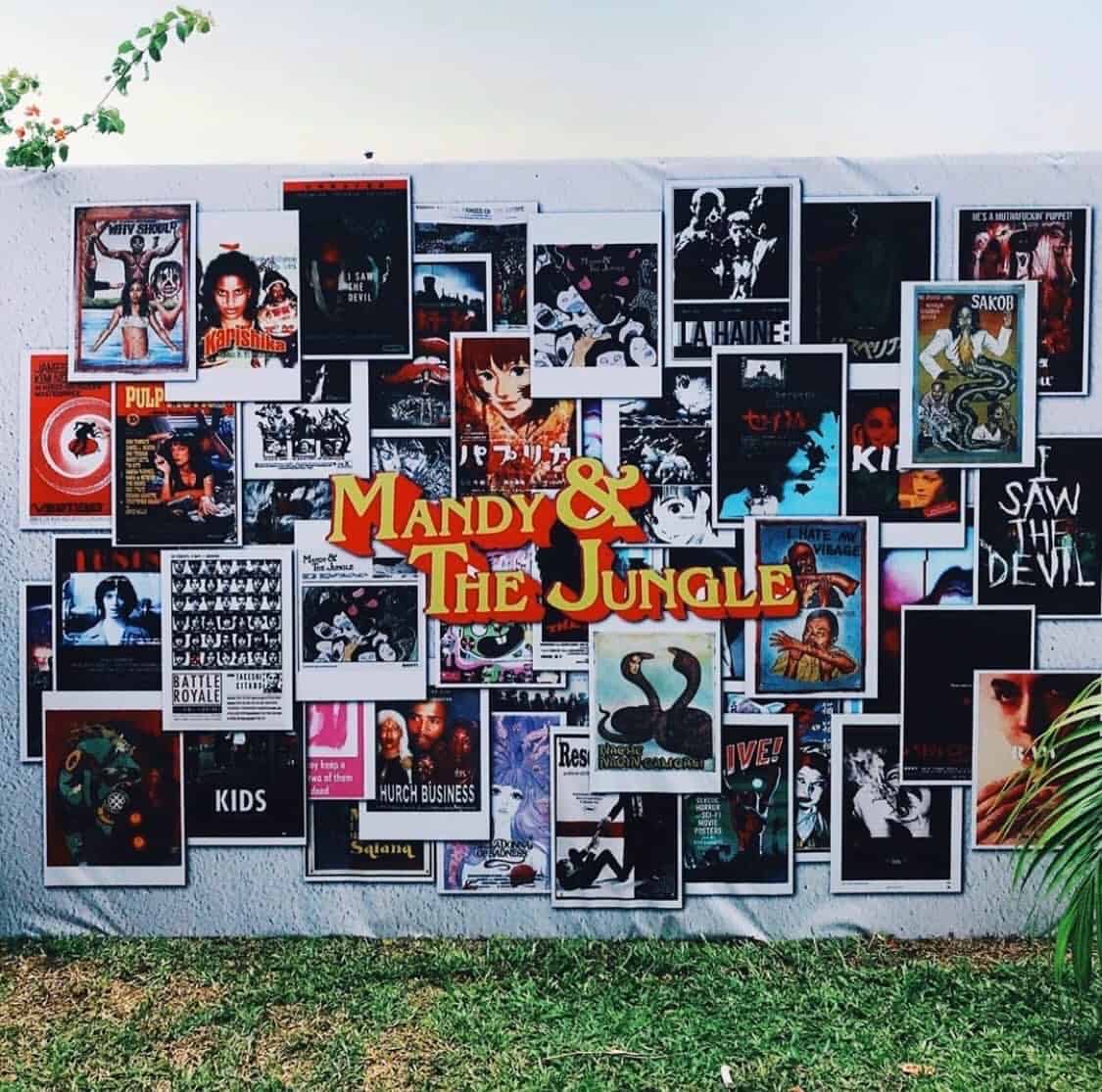
The names, Genio and Higo might not be associated with mainstream hits, but they’ve certainly contributed to making Afropop more marketable for global audiences. But with their production on Santi’s album debut, ‘Mandy and the Jungle’ and Genio’s credits on Odunsi’s ‘rare.’, both producers have laid the blueprint for the next generation of producers.
[mc4wp_form id=”26074″]
You are meeting Debola at a strange time in his life. He wandered into a dream and lost his way back. Tweet at him@debola_abimbolu
To commemorate Women’s History Month this year, we will be spotlighting a different female artist every day of the month. Some of these women you may know, others you may have heard of and some will be entirely new discoveries. The aim is to shine a light on the remarkable young women from around Africa, who are finding their feet through music and giving women a voice of their own.
Since we’ve all been social distancing and doing our bit to fight the ongoing pandemic, artists have taken to using the power of social media to connect directly to fans and keep them entertained with new music releases and engaging video content. You may have seen the viral video of twenty-year old GodsFavour Chidozie (more commonly known under the moniker Fave) singing the lyrics to her yet-to-be released single, as it roamed the Twitter streets over the weekend.
After tapping into the free beats made available to young artists by Lagos-based artist and producer, Jinmi Abduls, the result was an upbeat tune, on which Fave addresses a love interest, questioning whether their love will remain if the circumstances were different. She runs through a list of conditions, testing his love and determined to find out if he’s really the one for her.
Fave has been actively making music for just over a year when she began scouring the internet for free beats that she could make use of for herself. This soon transpired to a full blown musical journey about nine months ago, when she released her first single “M.O.M.M.S” which she explains means ‘me or mask my sins’.
Over the track’s piano led beat, she offers a deep song about broken people who are unable to accept love, because they are blind to the intention of others. ‘We’re waiting for love in the backyard/looking for what’s not lost’ she sings over a pop-tinged production, presenting listeners with two sides of the same coin – those who love others despite their flaws, and those who are broken and won’t accept love.
At the start of the year, Fave released her sophomore single “Dal” a reggae-inspired track on which she sings about love and loss. ‘Everytime I say I wanna switch gears/my stupid heart will press decline’ she muses, singing about all the red flags she ignored because of her love for someone else. It’s always refreshing to come across artists who know outwardly present everything you are feeling on the inside, but can’t articulate yourself.
Fave is already catching the attention of some of the industry’s biggest heavyweights, owing to her freestyles. Mr Eazi’s emPawa Africa programme was seen contacting the talented singer/songwriter and requesting she send in her music. ‘To be honest, I wasn’t happy, excited or surprised. It just felt good to know that they finally recognised me after all I did to get their attention” she told me via dms.
As she’s gearing up to release her third single, which we’re waiting with baited breath for, familiarise yourself with her latest single, “Dal” below.
Featured image credits/faveszn
Tami is a lover of astrology, music and women. Tweet your fave female artistes at her @tamimak_
In just three months of this disorienting year, African music has lost three of its most influential legends. In February, South African singer/bandleader Joseph Shabalala and Nigerian trumpeter and highlife singer Victor Olaiya both passed away within 24-hours of each other, and just last week, we lost Cameroonian saxophonist and genre-bending musician Manu Dibango to the novel Coronavirus. While their careers and the progress they made during their time serves a bit of a consolation that these artists lived long and impactful lives, it’s still a huge loss.
This is why ‘Rejoice’, the newly released joint album by Hugh Masekela and Tony Allen, is a much needed gift amidst the losses. Recorded during a series of sessions in 2010, ‘Rejoice’ is the delightful result from the purposeful collaboration between two of the most talented and innovative African artists ever. Across the album’s eight tracks, Masekela and Allen find common ground in their virtuosic powers, putting together a loose and joyful body of work that slips and slides between Afrobeat and Jazz.
On several occasions, Tony Allen has stated that his stick work is largely influenced by Art Blakey and Max Roach, both pioneering greats of Jazz subgenre, Bebop. He’s always pointed out t he’s always pointed out that he’s an Afrobeat drummer, and his take on Jazz is refracted through that prism.
‘Rejoice’ is a prime showcase of this ethos, and the 2010 recording serves as precedent for his similarly Jazz-inflected 2017 projects, ‘A Tribute to Art Blakey (EP)’ and ‘The Source’. For this project though, he delivers barely adorned, yet, always spectacular drum patterns that tick and pop in unique Tony Allen fashion.
With Allen’s drumming and additional bass riffs serving as the spine, Hugh Masekela’s horns and occasional singing, form the heart of the songs. Equally intense and deft, Masekela’s abilities lends itself a wide expressive range, jumping between vivacious, sullen and everything in between without breaking a sweat. On ‘Rejoice’, he leans closer to the livelier side of the spectrum, imbuing his horn solos with uplifting radiant scats and syncopated runs, even when he’s not being upbeat. His voice also carries a similar effect when he sings, communicating vigour and joy through his wisened tone and full-throated chants.
On “Never (Lagos Never Gonna be the same without Fela)”, they pay their reverence to previous collaborator and fellow African legend, Fela Kuti, with a composition that veers the furthest into Afrobeat territory. Tony Allen’s funky groove, revving bass guitar riff and additional local percussion, drive the song’s big band Jazz-inflected setting. “Lagos never gonna be the same, never without Fela”, Masekela reverently offers in honour of Fela, using his conversational horn solos as a response to the call of his sung lyrics.
If you’re into that type of stuff, ‘Rejoice’ is packed with moments you can geek about, from Tony Allen’s vivid drumming and Masekela’s improvised and intimate motifs, to the elegantly uncluttered arrangements. But the triumph here is, technical precision works in service of a highly enjoyable, sometimes outrightly visceral, album. Of course, for a duo that reshaped African music in their own ways, an album of this calibre is generally expected, but it is no less of a masterwork, one that was clearly anchored by a mutual respect in craftsmanship (“Jabulani (Rejoice, Here Comes Tony)”) between both artists.
In January 2018, Hugh Masekela passed away at age 78, and ‘Rejoice’ is an excellent first posthumous album that adds a bit more gloss to the royal status he earned through hundreds of albums and evergreen hit songs. Tony Allen, currently 79, is still pushing his musical boundaries in his solo work and through joint endeavours, like the 2018 EP with Techno DJ Jeff Mills, ‘Tomorrow Comes the Harvest’, and his integral involvement in Rock supergroup, the Good, the Bad & the Queen. That we got a joint album from these two is something we shouldn’t be taking for granted.
‘Rejoice’ presents two artists celebrating each other in the period of impulsive innovation that birthed a class of pioneering artists. It’s a reminder that we need to cherish those from that era who are still with us, and continue to sing the praises of those who have passed on.
Listen to ‘Rejoice’ here.
Featured Image Credits: Web/hughmasekela.co.za
[mc4wp_form id=”26074″]
Dennis is not an interesting person. Tweet Your Favourite Playboi Carti Songs at him @dennisadepeter
The fast and furious pace of new music releases makes it hard to keep track of all different new sounds coming out of Africa, as the music scene grows more and more expansive. We’ve decided to help out, by sorting through all the new songs from across all the sub-genres around the continent to curate a column with all the best “Songs of the Day”, to highlight all the new releases you absolutely Need to hear.
The rest of the world remains in lockdown while we battle Coronavirus pandemic, but the music keeps coming. On Wednesday, we brought you new releases by a diverse set of African artists, including Darkovibes, King Promise, Terry Apala, Niniola, Crayon, Veen and others. Last Friday also saw new releases from Nasty C, BOJ, Tulenkey, DJ Juls Shipo The Gift and more. This week you can update your playlist with new Jean Frier, SOLIS and all the new music from around the continent.
SOLIS – “Mercury”
SOLIS is here to encapsulate all our worries with her timely track “Mercury”. The talented singer wrote the lightweight catchy lo-fi bop last month when mercury was in retrograde, and things hadn’t got this real yet. ‘2020, what did we do to you?’ she croons when the song starts, speaking about the general low mood that has taken over many of us at this tough time. She also offers up an accompanying music video where we see her singing at home, clearly observing social distancing. We stan a socially conscious queen, flatten the curve!
Jean Feier is one new artist we’re excited about. She has been releasing new music weekly since the beginning of the year, in a personal project she has named #NewFeier. This week, she just released a mellow drum-led new track titled “Hey Love”, where she addresses a love interest directly and questions whether he’s feeling her or nah. ‘I do not care what they think of you’ she sings reassuringly, before switching for a more uptempo flow as she transitions to rapping.
We can always count on BOJ to provide lightweight music for the best vibes. In these times, when we’re all hungry for new music, he’s now given us some more heat, with the release of his new GMK-produced single, “Assignment”. BOJ appears on top form, and does what he does best – kill the hook. The good thing about BOJ’s music is that it was made for the dancefloor, and also for the bedroom which perfect now that we’re all stuck at home!
Juls – “Soweto Blues” Feat. Busiswa, Jaz Karis
Juls has put out his first single release of the year, “Soweto Blues” for which he enlisted South African house singer, Busiswa and UK-based South African R&B singer, Jaz Karis. Juls’ self-produced ambient beat for “Soweto Blues” and it serves a groovy backdrop for Jaz Karis’ smooth voice, singing about her relationship with woes; “Don’t want to talk about it/ Don’t want to live without it”. Busiswa’s adlib vocals are fused into the beat but she also gets a verse which she performs in her indigenous South African language.
Nasty C – “There They Go”
Nasty C has just released his first single, “There They Go” since he announced his recent signing to Def Jam. As has been evident with the host of other artists who have bagged such deals, this will allow the South African rapper continue his role as the ambassador for African hip-hop.
Produced by Cxdy, the base-heavy beat for “There They Go”, leaves room for Nasty C to authoritatively dismiss his haters, while bragging about his impeccable wealth and status in the game. The accompanying video is set in Durban but is directed by Andrew Sandler who shoots Nasty C at different locations like skating parks and landmarks that highlight the African city’s beauty and rich urban culture. “There They Go” is expected to feature on ‘Zulu Man With Some Power’, Nasty C’s upcoming album and follow-up to the multi-platinum selling album, ‘Strings and Bling’.
Ayüü Safi – “Covid Riddim Freestyle”
Since closing off last year with a new project ‘Ayüüniverse’, Abuja-based artist Ayüü Safi has mostly been quiet. Over the weekend, he broke this quiet spell with new freestyle “Covid Riddim Freestyle” produced by Don Ozi. The track sees him switching effortlessly between signing and rapping, as he works through his desire to be high as well as being explicit with sexual feelings for a love interest.
Lörd Isaac – “2020/Coldfeet”
Since making his NATIVE debut with “Milli”, Lörd Isaac has shown himself to be an excellent craftsman, telling his personal stories and experiences through the globally acclaimed trap sound of hip-hop. For his first release this year, the UK-based artist has dropped two new singles “2020/Coldfeet” on which he shows off more of his clever wordplay and enviable flow. On “2020” he croons and raps passionately about being hounded for new music by fans where he would have rather taken his time with releases while elsewhere on “Coldfeet” he taps into the soft-spoken vocals of Michael Ang3lo for a catchy upbeat track where both artists muse about their anxiety.
Featured image credits/instagram
Tami is a lover of astrology, music and women. Tweet your fave female artistes at her @tamimak_
Back in 2018 When Oxlade first broke out into the scene with the catchy hook of Blaqbonez’s “Mamiwota”, we knew he was on to something. Without the same major label backing some of his peers have relied on, Oxlade has managed to build his own little community across social media, mainly due to his charming, larger-than-life personality, which definitely bleeds into the music we’re getting.
With a handful of radio hits, his performance at the 02 Arena alongside his idols (Wande Coal and Wizkid), his collaborations with DJ Tunez, Juls, Melvitto and a very active fanbase, it’s hard to imagine that this is really Oxlade’s first-ever body of work. While he’s spent the past two years finding his feet and contributing to other people’s vibes, he’s now introduced us to what he is really about as an artist with his debut project, ‘OXYGENE’ .
The production is helmed by highly regarded producers, Spax, Syn X, Alpha Ojini, Dera, Nosa Apollo, Lussh and Echo, who all create the perfect bedding to compliment Oxlade’s musings. Even though he seems to be living his best life outwardly, this album takes us inside Oxlade’s head, where his real battle exists.
Oxlade sings, “You’re all that I need” on the opening track, “02”, where he compares his desire for his lover to his body’s need for air. The opening track captures the entire essence of the project, and is a good introduction to Oxlade’s melodic vocal range. For the next track, he turns up the charm on the wistful “Hold On”, where he wears his heart on his sleeve and professes his full-hearted affection for his lover, against a catchy and danceable beat.
The project’s lead single, “Away”, boasts all of Oxlade’s trademark, and is the EP’s centrepiece backed by an the ethereal but groovy Spax-produced beat. At this point, it’s clear that Oxlade is here to get us in our feelings while making us want to turn up at the same time, a winning formula we’ve seen with popular artists from Wande Coal to Fireboy.
On the closing track, Oxlade is joined by Moelogo for the emotive “Tables Turn”, where they reminisce on their come up and how far they have come. The a dreamy ballad sees Oxlade reflecting about his humble beginnings in Mushin, dreaming about making songs with his idols, to actually shutting down shows overseas with them.
The inspiration anthem closes with an intimate voice note from Oxlade’ grandmother, a fitting way to close the chapter on his debut tape.‘Oxygen’ is guided by Oxlade’s charm, the same one that has earned him thousands of supporters. His voice is rich and velvety, flowing out of him much like project’s cover art depicts. By grounding each track in emotional truth, he’s relatable and the project is immediately accessible.
Stream ‘Oxygene’ below.
Featured Image Credits: Instagram/oxladeofficial
[mc4wp_form id=”26074″]
You are meeting Debola at a strange time in his life. He wandered into a dream and lost his way back. Tweet at him@debola_abimbolu
The main driving force behind Tay Iwar’s music is the raw emotion. The reclusive artist is something like an enigma, however, through his music, we are given insight to who he is and are left wanting more every time. Tay Iwar released his debut album, ‘Gemini’ exactly one year ago, and revisiting the project all this time later cements his status as one of the greats even further.
https://www.instagram.com/p/B9cM8FbFLR-/
Tay is part of the latest generation of hitmakers who pulled themselves out of the Soundcloud halls and made it to the global stage. From his vocal range, to lyrical dexterity and impeccable ear, it’s not hard to imagine why. Tay’s experiences and sonic appeal, whilst portraying deep emotion and relationships on ‘Gemini’ leaves listeners intersecting between enjoying the music, whilst relating to the themes presented.
Each song on the 16-track Gemini is carefully crafted and excellently executed, and songs like the Odunsi-assisted “SUGARDADDY”, “DON’T KNOW” ft Sute Iwar and others stood out immediately the album dropped. Given this, choosing favourites was a bit difficult, however, to celebrate one year of his first release under Soulection, the NATIVE team has revisited the project to create a list of the best 5 songs.
“Space”
One of the most upbeat songs on the album, the Santi and Preyé-assisted “Space” is a definite standout from ‘Gemini’. While still bedded by a mellow beat, the three explore the importance of getting some space in relationships and why they need it. While Tay handles the hook, Santi and Preye deliver very strong verses to paint the song’s narrative, while describing why their partners would struggle to leave them alone. Each artist brings their A-game, however, Preye undoubtedly steals the show with her layered verse and impeccable vocal delivery.
“Monica”
With one of the most memorable lines from the past year – ‘I fell in love with you and almost died’ – “Monica” probably has the best song openers of all time. On this track, Tay highlights the toxicity of modern relationships, as he croons about a past lover who left him worse off than they first met. Over the drum-led beat laced with hypnotic guitar riffs, we find out about the mysterious ‘Monica’, who due to the loss of an important family member, has trouble giving and receiving love.
Our lover boy, Tay, recognises his lover’s demons, and still wants to be there for her because he empathises with her pain, however, his demons creep up on him and this results in panic and anxiety due to his own childhood trauma. It’s very rare to see Nigerian men reach this level of depth, and the relatability for both men and women is what makes this song one of the album’s standouts.
“Keeps”
Listening back to the album, some of the deep cuts sound even better than they did the first time around. At this point when music is serving as a form of grounding for those who are unsettled, “Keeps” is one of the best songs to listen to. With pure vibes, and Tay’s smooth vocal delivery, it makes for the perfect song to wind down after a long day (of staying at home), while you scroll through the ‘gram and put one in the air. Produced by Tay himself, the drum-led mellow beat makes the song what it is, making the perfect bedding for the singer to reflect on a past situation with a doubting lover, who he reassures that he’s ‘playing for keeps’.
“Call U”
One of the more familiar songs on the project, “Call U” was first released as loose track on Fridaycruise’s Soundcloud just before ‘Gemini’ was release. This whole album is perfect bedroom music, and Tay Iwar seems to know how to manouvre this really well throughout the album, and this makes “Call U” the perfect closing track. For the entire minute and a half of, he only strings together 5 phrases over somber piano chords, capturing his lustful plea for some sexy time. Singing “Can I call you? In the morning/ When I call you/ Don’t be sleeping/ Come to me”, he’s assertive and demands his lover’s attention, all while still being effortlessly charming.
“Miracle Girl”
In 2018, Tay first gave us a taste of his debut album with a 3-track collection titled ‘1997’. On “Miracle Girl”, the final song off ‘1997’, Tay performs a Prince-like hollering over glassy acoustic guitars, while he personified the ecstatic feeling of great sex with an unnamed lover the night before. Tay includes “Miracle Girl” as one of the last songs on ‘Gemini’ to suit the mood the album had created in all the other tracks. The guitar-led backing beat leaves room for his smooth vocals to shine, and makes for the perfect serenade while the urge to recreate his feeling erupts in listeners… especially now!
Featured Image Credits: Instagram/tayiwar
[mc4wp_form id=”26074″]
ICYMI: Here’s how Rema changed the afropop game in only one year
Staying true to our mission reshape the face of African popular culture, The NATIVE will be curating a monthly list to spotlight the best and most exciting new artists on the scene. Some of these artists have dropped projects which many are familiar with, while others are still finding their feet and discovering their sounds – either way, you definitely want to pay attention.
If the rapid growth and success of young artists from all over the globe – such as our very own Rema or even Compton’s Roddy Ricch – tells us anything, it’s that the music world moves fast today. Young artists are earning their stripes very quickly, and are doing so purely based on their talent and the audience’s reception of them.
To put it in perspective, if we were to make this list same list 10 years ago, artists like Wizkid & Davido would have been fresh in the game, probably gearing up to their debut on the scene to introduce the world to their sound. Now, they have cemented their positions, and have set the pace to inspire the next generation of artists, and are taking our sound all around the world.
Things are different now, and we’re not in testing waters anymore, the world wants to hear our music, and our underground scene is bubbling with hidden gems. We’re now witnessing the generation of artists such as Odunsi The Engine, who graduated from the halls of Soundcloud to the global stage.
A generation of fearless artists who refuse to conform to norms, and are creating their own paths, on their own terms and in times like these, their importance on the scene is made even clearer. Everything going on from the ‘Rona to it’s effect on the entire society serves as a reminder of what’s really important, and when you strip all the pomp and ceremony, the actual music is what’s keeping everyone going.
Music is more than just background sound for most people anymore, it’s now serving a bit of relief from the daily anxiety the whole world is feeling right now, giving both artists and consumers a bit of familiar grounding. Times like these can be particularly difficult for a young artist who is still trying to navigate the chaotic music industry, whilst also trying to develop their own sound and y’know… the pandemic and stuff.
So in a bid for the NATIVE to continuously identify, analyse, and champion the music of tomorrow, we’ve decided to create a monthly list of the most exciting new artists we’re listening to and tipping for. It’s always interesting to watch artist’s trajectory unfold right before your eyes, especially when it turns out that they creates art that will set the tone for years to come.
This year, each of these artists have stood out to us, for nothing other than the actual music. Ranging from different genres, each artist is at a different phase in their career, some testing the waters and trying to figure it out, whilst others are at tipping point, about to break into the mainstream.
What ties them together, however, is the feeling their music evokes from listeners, in a time when all the best music out, is the kind you can feel. From the hypnotic sounds of Olayinka Ehi’s female empowerment anthems to Bella Shmurda’s reflective party bops, here are 8 artist who have caught our attention this year, and we’ll be keeping close tabs on.
Zilla Oaks
You could define Zilla Oaks as boatload of talent and ambition, and he has stayed true to himself since we first heard of him and his community, Apex Village. Zilla is at the forefront of the wave of west African trap artists, melding the Atlanta-popularised sub-genre with his distinct and recognisable south-eastern Nigeria identity.
In 2016, he released his excellent debut EP, ‘NEG:RO’, where he traces through his Igbo heritage, naming a song after Nigeria’s first-ever president, Nnamdi Azikiwe. He followed up with a slew of singles and guest appearances that culminated in his sophomore project, ‘NO ZZZ’, where he forcefully raps about his non-stop grind towards achieving his dreams of being the best and biggest from around here.
In all this time since, Zilla has remained very active, dropping new singles and collaborating with other artists. In early 2019, Apex Village dropped their first compilation project, ‘Welcome to the Ville’, and Zilla appeared on six of the project’s eight songs, pulling out multiple standout performances.
From his emotive candour on “Outta Yo Mind” and the YP-assisted “Strapped Up”, it’s clear that his personality shines through, and that’s what’ is leading the way for him. Zilla has already opened this year with the Dremo and prettyboydo-assisted “Ogini”, which we’re confident will be one of the best rap songs of the year. It’s safe to say he’s not here to play in 2020.
Emosé
Abuja-based artist, Emosé’s sound is hard to place. On the one hand it’s the dusty lo-fi sound that most r&b newcomers channel in their music, and other times it’s solid, and firmly rooted in biblical imagery. Emosé is forging her own unique path; the singer/songwriter and producer describes her music as “deep blues”, an extant genre of music that is characterised by singing on a lilting minor key. Similar to the likes of Asa and Adele, who she names as some of her music influences as well as her former jazz playing father.
For now, her only official release is “Goliath” a pain-filled romance number on which she vulnerably works through conflicting feelings about dealing with her fear. Emosé’s releases always seem to come attached with vivid biblical imageries, possibly alluding to the key role that religion plays in her life and in her craft. With just three loose singles on her Soundcloud, the DIY artist and producer is gearing up to finally share her debut project soon.
FOREVATIRED
The Abuja-based music collective, FOREVA have kept us interested since they were formed in 2017. Their steady incline has made their music hard to ignore, especially after release of their latest album, ‘Before You Kill Us All’. FOREVATIRED is a pretty sizeable collective. Formed in September 2017, and led by Kyd, the collective features 15 rappers, vocalists, producers and a number of other visual creators. Forevatired’s self-sustaining, experimental collaborative family is in a lot of ways similar to LA collective BROCKHAMPTON and Odd Future before them, with their music clearly drawing inspiration from artists such as Frank Ocean and Santi, with sonic textures swinging from guitar-led rock and roll, through ethereal indie-pop, to cool and charismatic raps.
What’s most intriguing about FOREVATIRED, is the balance they bring to their musical compositions, despite featuring a host of artists. Their vocal delivery and presence is not cluttered or ambiguous, illustrating the deliberate and concise thought behind every track, each entry by a member forming memorable and distinct parts of their music. One of the group’s standout tracks, “Else” is the perfect sound track for the world’s mood right now. Roll one, light a candle and set the mood for the lush string sections, as the sorrow of the track’s theme reveals itself; ‘I wish I could change myself/ I’m wishing I was someone else/Pick a random n#gga off a shelf/I’m reaching out for any help’
Zarion Uti
One scroll through his Soundcloud page will show you that Zarion Uti is enjoying himself with the music, whether it’s on a feature, or he’s covering and refixing existing songs. For every cover of Summer Walker’s “Playing Games” & The Weeknd’s “Blinding Lights”, he has just as many songs in collaboration with artists such as Odunsi, dndSection, Psycho YP to name a few.
One strength we’ve noticed from all the music so far, is his ability to kill every single hook he’s enlisted for. Whether it’s on the catchy “Take Time” alongside Toyé & dndsection, or the reflective “Murder” from his 2-year-old EP, his melodic flow is what sets him apart. In the industry as it exists, aritsts like Wizkid, Reekado Banks & BOJ have benefitted from this greatly and it would be interesting to see whether he will tow the same path.
Olayinka Ehi
If you can’t already tell, in this household, we stan Olayinka Ehi. She was the first entry in our ongoing column “For The Girls”, where we’re shedding light on the best female artists from all over the globe. Her first EP ‘Story’ was compiled in 2018 and was a good introduction to her various tastes, from the melancholic opener, “Story About You”, to the up-tempo electronic number, “B.G.S.N” (Baba God Said Nah) and the mid-tempo drum-led track “Jeje”.
Aptly titled, each song tells a different story, with honest lyrics and laid-back delivery that will captivate any listener. She’s filling a space for women in music, with confident delivery that will force any listener to look inwards as she sings our deepest and innermost thoughts out loud. This is why her first single of the year, “Terms & Conditions” caught our attention this year, where she croons about willingly continuing a fling even though she knows how it’s going to end, something I’m sure we all know too well about.
Olayinka Ehi is still in the early stages of her career, her dream-pop sound which we’ve seen on songs like “Good Girl, Bad Girl”, which still evoke emotion are a good contender for the mainstream, and with the rise of artists like Dami Oniru, Somadina & such, there’s definitely room for Olayinka around here. Don’t sleep on her.
Omah Lay
Omah Lay came into 2020 with a big bang, with his first official single, “You” which was released just last month on Valentine’s Day. The Port-Harcourt born singer, songwriter and producer, before the success of ‘You’ had been working quietly underground, waiting for his turn to gain recognition, even from the people who had made use of his talents.
This year, Omah decided to properly pursue his musical career to prove to nay sayers that he could do it, and dare we say he’s well on the way? His hit single, “You” is definitely a convincing show of his song making prowess, and whilst it maintains a recognisable afropop structure with infectious melodies, his previous releases “Hello Brother” & “Do Not Disturb” are shrouded in an air of reflective melancholy.
Omah’s vocal delivery, varied as it may be, breathes life and emotion into his records, regardless of the genre he finds himself making, whether it’s a dance-ready number or a Hip-Hop . Omah is slated to release his debut EP ‘Get Layd’ sometime in April, and we can’t wait to see what else he has to showcase to the world.
Ictooicy
A few years ago, an artist like ICTOOICY wouldn’t be able to achieve the amazing feats she’s done in such a short stint, given her refusal to bend to the rules. Earlier this month, she released an album, Sorry I Don’t Like Phone Calls, which gives you a good sense of her audacity, before you get lost in her fantastic music. Within the first week of it’s release, the album became the number 3 on Apple Music’s Alternative Album chart, and is ranked 75 in the top 100 Nigerian albums, of all genres.
Throughout her releases and features she’s garnered over the years, comes to us as she is, both in character and in music and that’s what makes her so special. On “Liberty Road”, a standout from her latest project, you can hear the sass and the pomp in her music as clearly as you can hear the vulnerability and fear of being hurt. You can also hear that she’s a young artist still finding her feet in the finishing of her songs (which could do with some engineering), however it’s hard to ignore her talent.
Mostly because she won’t let you, Sorry I Don’t Like Phone Calls is the 4th project she has released, and her SoundCloud is littered with other confident songs where she’s baring her soul and using her music as therapy. All of this is made evident in the Outro for her latest album, where she flips a middle finger at the status quo, saying she’s here to stay on her own terms regardless of whether it’s a problem for other people.
Listen for yourself here:
Jackmillz
Jackmillz first caught out attention after two stellar appearances on Olamide’s recently released, strictly rap project, ‘999’. The only artist to get featured twice on the 9-track EP, Jackmillz made the most of this big look, arguably getting the better of the YBNL boss on standout cuts, “Dancing with the devil” and “Demons”. While these features serve as a great entry point, Jackmillz has a growing yet impressive catalogue that marks him out as a future star.
Last December, he released his debut project, ‘Midnights and Weekends’, a fine showing of his expansive range. On the 12-track project, he skips between dreamy trap landscapes, introspective raps, bashment-infused melodies, and straight-up afropop bangers. Currently, the word “vibes” gets a bad rap, with the idea that it only obscures lyrical substance, however, Jackmillz embraces making music that’s heavy on the vibes, with lyrics you still want to pay attention to.
On his newest single, “Live Forever”, Jackmillz articulates a dreaded fear amongst many people in his age range: dying young. Over shimmering guitars, ticking hi-hats and bouncy 808 bass, he proclaims his desire to live the rockstar life to its fullest, performing his best Travis Scott impression without sounding too much like a clone. Even with his influences being vivid, Jackmillz’s personality still shines through. As he refines his skillset and treads new sonic territory in the near future, Jackmillz will only continue to grow into a far more acclaim.
Ms Fu
We’re trying to get to a point where rappers who happen to be girls are not classed as ‘female rappers’, just plain ol’ rappers and Ms Fu is good indication that we will get there. She’ll rap circles around any other MC in her peer group, and this became evident last year when she tasked herself to weekly Thursday drops.
On her songs, she seamlessly weaves between English & Patois, switching up her flow to suit a wide range of beats. From the fast-paced “Energy” to a more mellow cut, “Dear Human” , a love letter to listeners to keep going through the hard times, she’s quick with the wit and never misses the beat.
Like almost every other artist in this list, Ms Fu’s strength lies in her ability to evoke emotion from listeners with her confident bards, and melodic flow. The world is becoming more receptive to women who rap, thanks to the likes of Megan Thee Stallion, Cardi B, Tierra Whack and many others.
Ms Fu is still in a very early stage in her career, but we can tell that she’s tipping herself into something huge. Don’t sleep on her.
Bella Shmurda
The type of music Bella Shmurda’s makes is exactly what the world needs right now. He glides through each reflective song such that you can almost feel the emotion in his voice against the catchy beat. This is what makes him one of this generation’s prime contenders to carry the r&b and soul torch, a genre which is dominated by a particular type of sound.
His Yoruba lyrics definitely set him apart, and his songs benefit from his ability to switch gracefully between Yoruba and English. We have seen nationwide acclaim with artists who played around with this sound such such as 9ice, Reekado Banks or even Fireboy. So, it’s safe to say Bella Shmurda is on the right track.
Indigenous music over here is typically either straight owambe music, or the sound bed for the rebellious street-hop scene rappers like Olamide and Naira Marley are celebrated for turning their setbacks in life into power. Bella Shmurda manages to do the same thing, yet still managing to be delicate and rough around the edges at the same time.
His debut project, ‘High Tension’ opens with soulful cry for help out of the mud. We’re given insight to Bella Shmurda’s trauma, as he paints his reality saying; hustling everyday for money, chasing wire (cyber crime) and witnessing brothers killing each other for survival. Though he doesn’t portray himself as a saint in this chaotic world, his heartfelt confessions are so moving that it only seems natural that he’d slip in a few words of prayer to God, looking for some familiar grounding.
Music is a universal language, and so is pain. The little details of what you’re hearing make you feel seen and regardless of your situation, you can relate to Bella Shmurda’s music. Though the harsh reality of the streets is the recurring theme through his 7-track long catalgue, he also evokes a sense of relatability through other love songs, party anthems and prayerful sons that add more depth and colour to his vivid sound. Having gained the co-sign from Olamide with their collaboration, “Vision 2020”, we can already tell what direction Bella Shmurda’s career is going in, and there’s no other way but up from the bottom.
Featured image credits/NATIVE
Words by: Dennis Ade-Peters, Debola Abimbolu, Tami Makinde, Djaji Prime
A-Q and M.I Abaga always deliver worthwhile events whenever they collaborate. In the last few years, they’ve deepened their bond from collaborators to apparent brothers, curating live events and cyphers together, whilst also dropping projects within weeks of each other. An effect of this stronger relationship is their electric chemistry on wax, as they push each other to deliver their best lyrical efforts when they’re on a track together, reflecting some truth to the saying about steel sharpening steel.
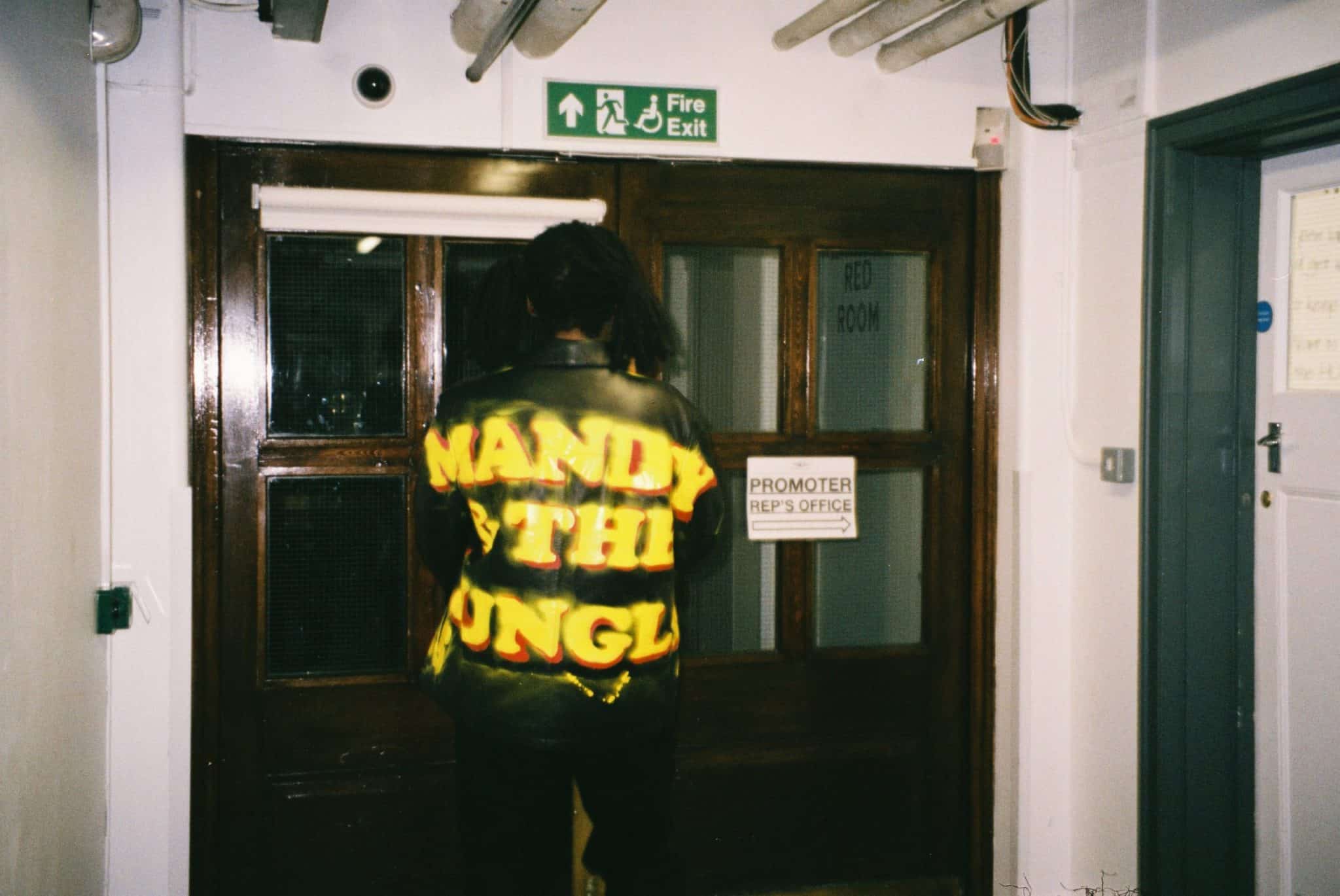
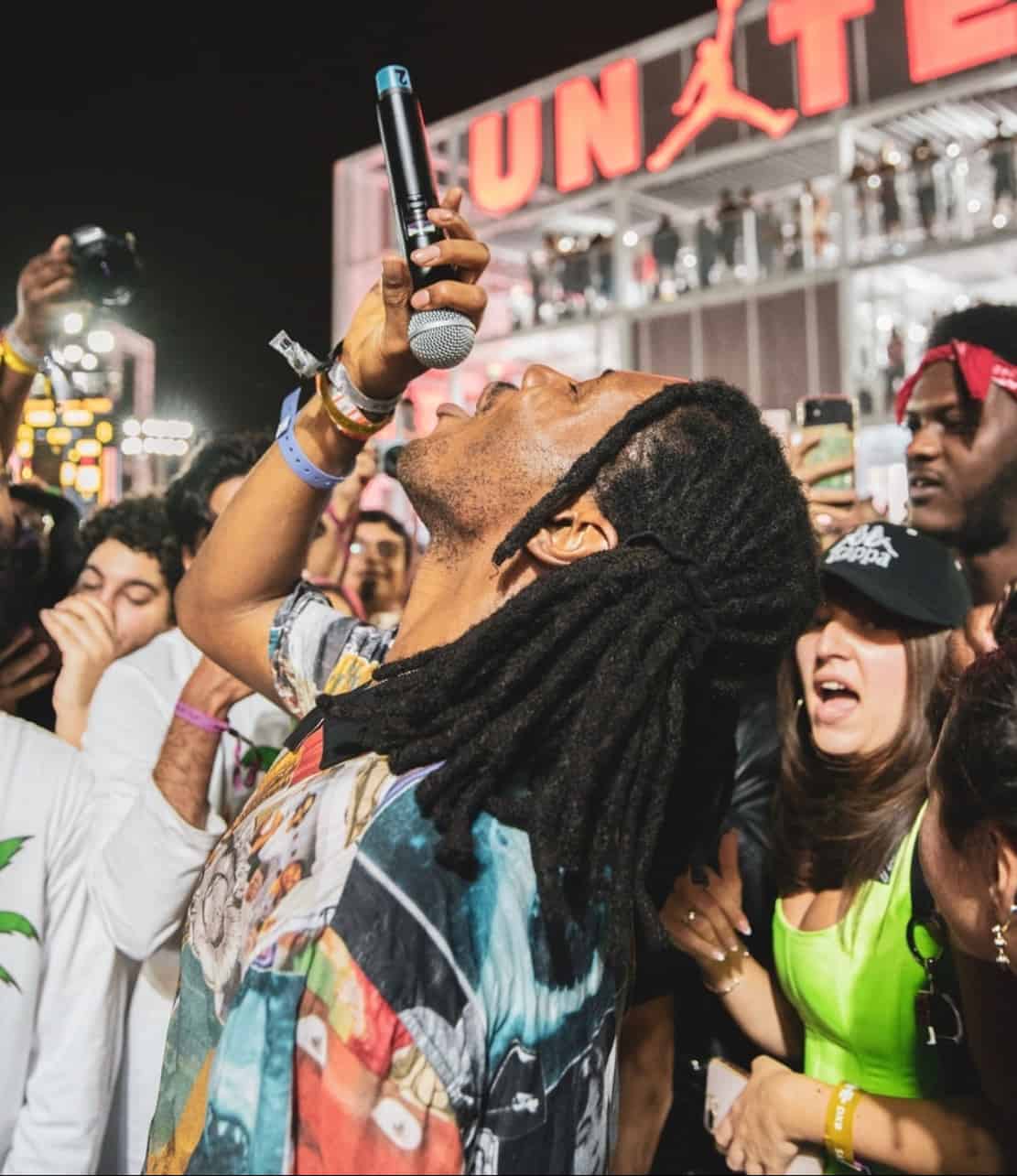
“The Trinity”, a standout cut on M.I’s latest project, ‘Judah’, found both rappers delivering arrogant raps with the fervour of starving bloodhounds. They’ve now come together again very shortly after for “A Class Act”, an immediate standout off A-Q’s new album, ‘God’s Engineering’. While they retain the same self-confident energy that powered their preceding collab, the new cut trades in savagery for grandiosity, as both veterans reassert the dominance they’ve earned on their own terms.
M.I opens the song with his stunning verse, reminiscing on his rise to being the “GOAT” and gives the finger to haters and perceived competitors. “They try to evict the victorious until you show them you vicious”, he raps in a mischievous tone, perhaps taking shots at his most recent opps.
A-Q immediately follows suit on the hook-less song, spinning authoritative lines about his unorthodox path and the animosity he’s getting for being fiercely different. “I can start from zero and make it back/ten years from now, boy play this back”, he assuredly quips, taking conviction from being a trailblazer, certain that posterity will favour him when all it’s said and done.
Backed by an eerie string riff and reverb-stained bass, “A Class Act” is a commanding cut from two of the country’s most talented rappers, which definitely lives up to its name.
Listen to “A Class Act” here.
Featured Image Credits: Instagram/mi_abaga & thisisaq
[mc4wp_form id=”26074″]
Dennis is not an interesting person. Tweet Your Favourite Playboi Carti Songs at him @dennisadepeter
With about twenty-five years in the game and numerous classic afropop cuts, Sound Sultan is the textbook definition of what it means to be a living legend. In the last few years, have been. a bit mellow for him on the celebratory side, however , that hasn’t stopped him from consistently dropping music and staying true to his craft. His latest release is his eighth studio album, ‘8th Wondah’, a 17-track project including five bonus songs and an incredible guest list.
As a marker of his continued relevance and respect amongst his colleagues, ‘8th Wondah’ is packed with a guest list that mixes the old and the new. The album benefits greatly from a wide range of features from 2Baba to Wizkid, Falz, Teni, Mr Real Peruzzi and more. He even brings Olu Maintain, while Sound Sultan is joined by Johnny Drille for the remix of his classic single, “Area (Motherland)”. ‘8th Wondah’ is Sultan’s follow-up to his 2016 LP, ‘Out of the Box’.
You can stream ‘8th Wondah’ below.
Featured Image Credits: Instagram/soundsultan
[mc4wp_form id=”26074″]
Dennis is not an interesting person. Tweet Your Favourite Playboi Carti Songs at him @dennisadepeter
After a few years circling the mixtape circuit, indie rap veteran Paybac Iboro dropped his debut solo album, ‘The Biggest Tree’, in 2018. He’s been busy since then, dropping ‘Autopilot’, a joint EP with producer, Charlie X, and reuniting with Boogey for a second joint album, the excellent ‘Alternate Ending’. Now back on his solo tip, the rapper has just released ‘CULT!’, his second solo full-length.
Paybac had been teasing ‘CULT!’ for nearly a year, hinting that he would be taking a different musical approach. He kick-started the rollout with last September’s release of lead single, “Boy Band”, a lively, playful cut that samples ‘70s Afro-Rock band the Funkees. He followed up with “Activ8”, a song dedicated to legendary Nigerian footballer, Samuel Okwaraji, and also cemented the tape’s nostalgia-influenced direction. Both singles feature on the 15-track LP, with guest appearances from Blaqbonez, Barelyanyhook, Jazzz Atta and more.
Stream ‘CULT!’ here.
Featured Image: Instagram/lookatpaybac
[mc4wp_form id=”26074″]
Dennis is not an interesting person. Tweet Your Favourite Playboi Carti Songs at him @dennisadepeter