Songs of the day: New music from Maya Amolo, Bella Shmurda, Alpha P, and more

We’ve had music to fall back on through all the heartbreaking moments of 2020. Despite the ongoing pandemic, civil unrest, and the seemingly endless barrage of bad news, musicians have continued to capture our collective pop consciousness with new songs that either reflects our present reality or provide an escape from it. We know it can be difficult to keep up with all the diverse streams of music so we’ve created this column to keep you, our readers, up to date with all the finest tunes coming out of Africa and the rest of the world. These are the songs you absolutely need to hear.

We started this week’s curation for Songs of the Day with the new music releases from; Cheque, July Drama, Straffitti, OBT, Jean Feier, and more. Today’s Songs of the day curation features new music from Kenyan singer, Maya Amolo, Bella Shmurda, JELEEL!, Alpha P, T-Classic, and South African duo, Reece Madlisa and Zuma to keep you motivated as we edge closer to the weekend. You can enjoy them below.

Maya Amolo – “I Know” 

After impressing with her debut project, ‘Leave Me At The Pregame’, Maya Amolo has returned with a music video f0r one of the tape’s standout tracks, “I Know”. She offered an intimate narration of her process, growing out of her bad habits on the r&b tape, and on “I Know”, she detailed the struggle she went through whilst dealing with a bad relationship.

Mumbi Muturi directed the 3-minute long video showing Maya in different artsy set designs. With her classy clothes and rose petal props contrasting the timeworn building the video is set in, the video seems to reiterate the song’s message that she’s too good to keep tolerating an inept boyfriend. The video for “I Know” is the second visual from the tape, after she shared the video for “Lush Green” back in July.

Bella Shmurda – “Dangbana Orisa”

Indigenous Yoruba rappers love to glamorise the tough reality on the street with songs celebrating their triumph over hardship. Though Bella Shmurda introduced us to the soulful, pseudo-spiritual representation of the street lifestyle on his debut project, ‘High Tension’, for his latest single, “Dangbana Orisa”, he embodied street-hop’s pride in overcoming adversity as he sang of his esteem over the laidback beat produced by Rexxie; “Bi Ina Ban Jo, Ogiri O Sa (The Walls Don’t Run When There’s Fire)”.

Directed by Naya Effectz Visuals, the newly released video for “Dangbana Orisa”, shows Bella Shmurda in a desert looking scene where he is surrounded by gun-wielding goons in bullet-proof vests. The scene is reminiscent of Mad Max’s dystopian reality, but we also see cuts of Bella Shmurda performing with adoring fans on the street. The street is rough but with Bella Shmurda’s charm he is still able to find love.

JELEEL! – “Love BKO!”

Our Fresh Meat alum, JELEEL! got inspired by racial discrimination for his latest project, ‘Generation Z’. The 6-track EP was released during the protest sparked by George Floyd’s murder at the hands of an American police officer and it offered music as a balm to heal the trauma of the time. He celebrated black power on the 3rd track, “Love BKO”, expressing his rage at the injustice singing “Ima throw a fit just because”. JELEEL! has now released the music video for “Love BKO” and the sci-fi direction reflects his reality as an alien in the racist American society.

The video produced by Ricky Remedy and Aryalion shows JELEEL! beside his alien ship while we also see him making rocks levitate with his mind. While he performs his threatening lyrics, the video represents how institutionalised racism in America vilifies black people as outsiders. Though JELEEL didn’t feature on our series where we, imaginied Nigerian musicians as superheroes, the video for “Love BKO” grants him alien superpowers to make racists pay for discriminating against blacks; “I don’t like that/ You know ima fight that”.

Alpha P – “Quarantine”

Alpha P’s debut tape, ‘King of the Wolves’ introduced him as one of the teen prodigies giving afropop a refreshing new spin. The 5-track EP highlighted his knack for crafting pop sounds with wistful and relatable lyrics and he continues in the same vein for his latest single, “Quarantine” a sleek r&b number produced by BlaiseBeatz. “Quarantine” channels the ongoing pandemic situation in the most romantic way possible as Alpha P expresses his undying love for his muse; “If you get quarantined today, I’d be there/ Staring at your face”.

Backed by the smooth mix of percussion harmonies, guitar riffs, piano harmonies and harmonized backing vocals, Alpha P’s performance is captivating as he sings his charming lyrics addressed at his muse. He explained to us that, It’s a very special song to me and I hope it connects with everyone who has experienced this kind of love, a love where you can’t be with your partner because of the lockdown, or the coronavirus.” Love is a compelling emotion that can always be counted on to make romantic songs relatable, but Alpha P takes it even further on “Quarantine” by infusing the topical subject of the pandemic. 

Reece Madlisa and Zuma – “JazziDisciples (Zlele)” Feat. Mr JazziQ & Busta 929

Back in July, South African music duo, Reece Madlisa and Zuma shared their 5-track EP, ‘Ama Roto’, exploring the trendy Amapiano sound dominating South African radio. They just released the music video for one of the tape’s lead single, “JazziDisciples (Zlele)”, featuring Mr JazziQ and Busta 929, and the 7-minute long clip shot by RB Media, captures a day in the life of the artists.

The video was shot at their township in Alexandra, north of Johannesburg, showing Mr JazziQ and Busta 929 as they record in a room then head to the street to show off the dance that accompanies the Amapiano sound. They make several stops at clubs and bars where others join them to dance the EDM-fueled music and we also see a cameo from Busiswa, one of the key figures in the South African music scene.

T-Classic – “La Cream”

T-Classic’s new EP, ‘Alirat’ is a testament to the singer’s cordial relationship with his label boss, Darasimi Famoyin whose late mother the tape is named after. However, rather than reflect the pain from the loss, T-Classic channeled the grief into celebrating the music that brought them all together. On the opening track, “La Cream”, he delivered a cheerful number to emphasize his confidence in his team; “For life, me and my guys we dey shut it down/ Me and my guys we go paint the town”.  

Reward Beatz is credited for producing the upbeat instrumentals that make “La Cream” a sure feature on club DJ sets as he mixes groovy afropop drum riffs with synths and percussion harmonies. The catchy instrumentals serve as the perfect backdrop for T-Classic to bask in his accomplishment as a celebrated Nigerian artist.

[mc4wp_form id=”26074″]


You are meeting Debola at a strange time in his life. He wandered into a dream and lost his way back. Tweet at him @debola_abimbolu


ICYMI: Catch up on all the new music releases from earlier in the week

In conversation with SirBastien, who is looking to add more depth to Nigerian music’s DIY culture

“I hope my answers are adequate?” SirBastien wonders aloud deep into our conversation, perhaps unsure that he’s saying enough. A few times during the interview, I had to expatiate on questions in order to ensure his responses carried as much information as possible, but this didn’t make our exchange was stilted— it was far from it, in fact. Over the phone SirBastien is as affable as he is reserved, he cuts to the chase when he’s explaining something or telling a story, giving as much details as possible without too many embellishments.

It’s representative of the music he makes. SirBastien’s songs are simultaneously defined by movement and ease, he’s currently honing a flair for musical variety which means his instrumentation choices are composite and richly layered, but it always merges into a chill and immersive whole. Last summer saw the release of ‘Mango’, an impressive debut outing that basked in a tranquil warmth which combined SirBastien’s accomplished chops as a producer with his developing ability as a singer-songwriter. ‘Mango Island’, his newly released follow-up is a positive leap in his evolution to becoming one of the very best polymaths we have around.

When we spoke to SirBastien as part of our Fresh Meat picks for the month of May, he explained that it took a while to embrace the idea of using his voice, saying that it was “super cringe” to hear himself sing. One of the defining qualities of ‘Mango Island’ is that SirBastien sounds like he relishes singing, as he explores the range of his voice and strengthens its identity. Compared to the fragile melodies that were prominent on ‘Mango’, this project opens up to snappier and catchier melodies, resulting in songs that are confidently delivered and earmarked by bolder hooks.

In the same vein as its predecessor, ‘Mango Island’ is thematically planted in romance-driven territory, and according to SirBastien, it’s not because he might be a hopeless romantic. “Love songs are very easy to come by, because if you can describe something about a person—like how their eyes look—you’re some ways there”, he explains. On this project, though, he goes beyond the blue-eyed trappings of the subject, spotting a macho stance on “Pillowhead” and getting raunchy on the Eri Ife-assisted “Late Night”. He’s also joined by a diversely talented cast that add several dimensions to the 9-song set, from Maya Amolo’s girl next door candour on “Cosmic Girl” to the gruff machismo of AYÜÜ and July Drama on afro-Caribbean bop, “Addis Ababa”.

“I never think that it has to be a particular person”, SirBastien says when I ask how he chooses the artists he reaches out to feature on a song. “It’s usually about who fits and whoever is interested.” While this approach, much like his feature-heavy debut, takes the sensibilities of potential artists into cognizance, ‘Mango Island’ is better crafted to reflect SirBastien more as an initiator and less as a pandering artist. In sharpening several aspects of his abilities, SirBastien asserts his commitment to continued growth as he works towards his main goal: to be seen as “one of the driving forces” of Nigerian music’s burgeoning DIY/indie culture.

Our Conversation with SirBastien has been condensed for clarity.

NATIVE: What is it about romance that draws you to sing about love so much?

SirBastien: I’m a hopeless romantic, I think. Okay, maybe I’m not a hopeless romantic. Love songs are very easy to come by, because if you can describe something about a person—like how their eyes look—you’re some ways there. I think it’s easier to describe a person than describing complex topic, like saying “I Love You” is very boring, compared to “I love the way you use your computer in the morning”. It sounds cheesy and weird but I think it’s a lot better, it shows there’s a lot more to it.

I agree with that, ‘cause a line like “Your words are secret to my heart” makes love sound very precious. By the way, how did you get to work with Maya Amolo on that particular song?

I actually texted her out of the blue, ‘cause I always wanted to do a song with someone from East Africa. Maya popped up on my TL randomly and I decided to just try. I hit her up like, “Hey Maya, that’s the song”, she said I should send it to her and she got back to me a few weeks later.

Like your previous project, you’ve stuck with the dynamic of featuring several artists. What’s your creative process when you’re making a song for yourself and how does that come in?

It usually starts with finding a guitar tune I like, then I build up the instrumental. At this point, I don’t have any intentions to keep the instrumental for myself, so I start figuring if I want to send it out and who to. For ‘Mango Island’, the interlude was the only song I actually thought about making for myself from scratch, because my brother thought I needed a song to break the sections, ‘cause it’s meant to be split the project into Side A and Side B. It’s always the beat first, then I usually record only one verse for a song. Choosing who I collaborate with is based on the people I listen to and the songs I’ve heard from them, so I’ll send it   to all of them, it could be about ten artists and only one would respond. I never think that it has to be a particular person, it’s usually about who fits and whoever is interested.

What was it like linking up with Remy Baggins for the song you chose as the single, “Home with you”?

I was actually trying to make a cover of Doja Cat’s “Say So” initially, then I liked the way it was going and I started to change stuff and create something different. I sang the chorus and I thought it was just for fun, not necessarily something to be released, but my friends thought it was very good. Then I sent it to Remy Baggins and it all came together. The interesting thing about the video is, we didn’t even know exactly what we were shooting for when we got to the location. Like everything was set, but we didn’t know what song we’d be doing. Korty, who directed it, went with “Home with you”, it happened just by chance and it turned out to be a favourite for those who’ve listened to the project. Lucky us.

You were able to premiere the video on emPawa Africa, what was that like?

It was super exciting because most of the people that watched the video are subscribers to the emPawa YouTube channel, so I was happy that I was reaching a new audience. That was even more important to me than just the number of views the video got.

Let’s talk about “Late Night”, because it’s different from what you and Eri Ife normally do. How did you guys come up with the song?

I’d say “Late Night” was the most fun song to make on the project, generally speaking. I was actually in the studio with Eri Ife, Efe Oraka and Ramoni, a producer friend of mine, we were just having a good time. Then we played some drums, Ramoni played the piano, Eri Ife and Efe Oraka had some input, it was like a four-man production team. We made the beat, recorded the vocals, and we initially wanted to release it as collab single from the four of us, just for fun. Then everyone else started saying they’re not sure, so I just took for the project. We actually thought about it that it doesn’t necessarily work with everything else on the project, but it’s really good, so why not?

Which collaborations did you want to happen on ‘Mango Island’ that didn’t?

I wanted Amaarae on a song that I produced just for her, but she didn’t respond. I really want to work with Santi, I think he’s the biggest artist in the world. I’m a very very big fan of Santi, so if I have a song with him I think I’ll be very okay, like yeah I’ve had a good run.

Your catalogue of credits, from Eri Ife to Ilaye, is very DIY and indie. Where do you see yourself within the growing DIY culture in Nigeria?

I feel that I’m sort of following in Odunsi’s shoes, ‘cause I think he’s one of the main drivers of this DIY movement. I see everything that he does and it’s very inspirational. Like there are people who will listen to him no matter what. In a few years, I’d like to be in the same light, as one of the driving forces of this culture, because I’m more of a producer than a singer myself and I try to make sure anything I work on portrays the freedom that’s central to the alternative movement. I want my music to give it more depth and more branches so we’re not just limiting ourselves to ‘afrobeats’. So we can have stuff like alternative disco, just make sure there’s even more diversity within Nigerian music.

Featured Image provided by SirBastien

[mc4wp_form id=”26074″]


Dennis is not an interesting person. Tweet Your Favourite Playboi Carti Songs at him @dennisadepeter


FOR THE GIRLS: MAYA AMOLO WANTS YOU TO FEEL SAFE

Hot Takes: Davido’s Fem, Kidderica, The Year of Gaia & Cuppy SZN

This week, the mood of the world seems relatively slow. We’re coming up to the last quarter of probably the craziest and strangest year of all our lives, and the world and its barrage of bad news seem to have finally slowed down (nature is healing). As we endlessly cascade towards the end of the year, I’ve found myself taking more time to pause, reflect, and re-align my purpose each moment, day, and week, and it’s reflected in my entire outlook on life these days.

Though every day brings with it a new tragedy, outrage, or controversy and the suffering of Black people and women, I have been trying to find ways to improve my value to myself. This year, I found power in living my life for myself. Yes, I mean exactly just that, as I’ve learnt that there’s so much power in moving with the knowledge that your life belongs to you, not to your parents or your friends or lovers, but to you. You are the main character in the life that is yours, and as obvious as this may be, I can assure you that discovering this has been even more rewarding and freeing than you can imagine. Social media can become so consuming that you find yourself unsure which thoughts are uniquely yours, and well you’re not alone because Netflix’s new documentary The Social Dilemma shows exactly how the algorithm intentionally plays with our minds. It’s made me re-access how I use social media, and maybe it could help you too.

For this week’s Hot Takes – our new column where a different member of the NATIVE editorial team will dissect different trending topics across the globe, giving give their hot takes on each topic – I will be sharing all the topics from the different corners of the internet that I have been privy to, and also one or two topics that have helped me grow or reaccess my current practices. Here goes:

What I’m watching on Youtube: Podcasts

A few weeks ago, I spoke to two women in Nigeria running their own lifestyle and culture podcasts. It was a super enlightening conversation that showed how women are carving out safe spaces for themselves and women that look like them just exist and share their experiences. Since then, I’ve been listening to more and more women-only podcasts and Whoreible Decisions is one of those podcasts that has been riveting, thrilling, and absolutely funny. I also love finding out more of the artists I am listening to so I definitely recommend this episode in particular with the City Girls. It’s interesting to see how the presenter’s perception of the City Girls based on their music, which is filled with braggadocios lyrics and raw sexual vibrancy, plays into the questions they are asked. The girls were not having it at all, especially Ms Caresha (LOOOL!).

Watch it here:

What I’m watching generally: Love Island USA

As you all know BBNaija has ended – at least for me. With Erica and now, Kiddwaya gone from the house, it’s been less tempting to steal moments to watch the show. Reality TV has always been super entertaining for me if it’s not rigged like BBN (don’t come for me) and so, with help from my best friend, I’ve found myself falling in love with the new season of Love Island USA. Without giving too much away, this season has all the drama and I do mean, ALL of it. From the couple who get together on day one and think they’re the Island’s favoured ones, to black men showing their colourist asses yet again and even to all the juicy tidbits of Casa Amor, Love Island USA is giving me all the drama and more, and that’s probably why I binged it in about a week. I fully stan Jaleb so if this is your sort of thing then check out the trailer below (and let me know which couples you stan @tamimak_).

What I’m listening to: Future’s Purple Reign

Where were you the first time you listened to Future’s 2016 mixtape, Purple Reign? Can you remember? I sure as hell can. I was rounding up my final year of A-levels, nursing a broken heart, in need of a ‘fuck you I’m over it’ anthem, and Future’s Purple Reign was the gift that kept on giving #thatyear. Your story might be different to mine, no doubt about that, but the feeling Future’s brand of toxic masculinity mixed with a dash of undercover loverboy music gives you is euphoric and dare I say, sensational.

For years, we could only enjoy this glorious mixtape on Soundcloud but over the quarantine, Future fed the kids by making this tape and Monster, Beast Mode, and 56 Nights, all of which are now streaming on your favorite streaming platforms. At the time of its release on Apple Music, I revisited the tape because I was feeling nostalgic and the state of the world left me feeling unsafe but since then, I hadn’t gone back to it. However, with the new week, I was missing that dark and compelling brand of music that only Future provides, causing me to revisit the mixtape yet again. Nostalgia is one hell of a drug, but definitely listen if you haven’t, ‘cause this man is a genius. Put aside his toxic misogyny (trust me you can) and you’ll be able to see it too.

Davido wants the haters to FEM!

Davido is back! Back on social media, back to making music, back to teasing his third studio album A BETTER TIME and all is right with the world again. Its been three months without hearing from the pop star and his return has been anything but a quiet one. Having teased “FEM” on social media before, fans were joyed to find that their favorite 30BG member was now ready to share the song on streaming platforms which finds him taking direct shots at the Odogwu. Without getting into men and their egos, one thing that stood out from Davido’s return for me was the wisdom he shared on press runs with radio stations where he shares the reason for the social media break.

“I needed to just go away, re-group and it helped. I won’t say I am a different person but [it has changed me]” he shared with the Beat 99.9 FM a few days ago, in a conversation about his upcoming album and working with international artists such as Lil Baby and Nicki Minaj. For me, Davido admitting that he needed to take time and regroup in order to come back to fulfill the vision for his album, reflected the mood that I have also been in over the past few weeks. Whenever I feel stressed, I get an urge to walk away (read as run), and find ways to reconnect to my personhood and my beliefs. It helps me refocus and conquer any challenges in front of me, and Davido seems to know that all too well. He speaks about needing to take this break because he had a lot of people depending on him, and it wasn’t until he took a step back that he found the fortitude to come back even stronger. Woju and Damilola co-wrote a brilliant piece on mental health that you definitely should read if you’re feeling exactly how Davido felt before his comeback. We all need to take care of ourselves more, and that includes taking responsibility for our mental health.

We’re tired of the people comparing the rap girls.

Despite the fact that rap niggas ain’t shit and they fail to take care of black women that exist within their community, we also have to deal with niggas consistently trying to pit women against each other and I am honestly tired of it! A few days ago, the 2020 XXL Freshman class cypher was released and boy did it send the internet into a frenzy, as people began debating who brought the heat and who got overshadowed. This year, only two women were in the 2020 edition (which is two more than the first ever edition 10 years ago), and in true misogynistic fashion, the niggas came with guns blazing, ready to discount two women who are both at the top of their game this year.

Not only were they comparing these women to each other, but they also brought in Megan Thee Stallion into the conversation, endlessly debating whether Mulatto could overthrow thee Stallion as rap’s leading lady of the year. But what is rap’s obsession with only allowing one woman to dominate at a time? Why do they have to be in any competition? I would really like to know why women always have to be pit against each other, especially a time where it’s clear to see that the current rap girls are all about supporting each other and working together. This is actually a monumental time in history and we should be documenting every last step of it rather than trying to discredit the hard work that each of these women have been putting into their music, their video treatments, their looks, their brands. I’m going to need the rap dudes to take a leave out of these women’s books and stay out of our business if they have nothing beneficial to contribute.

And please don’t get me started on this ‘Felmale list’.

To Cuppy this tune

In case you didn’t know it’s Cuppy SZN and I am a super proud cupcake. Cuppy is really defying the odds, betting on herself and her brand and coming out on top every single time and we absolutely love to see it. After wowing us (and her opps) with her impressive debut album Original Copy, Cuppy is unrelentingly keeping her feet on our necks showing no plans of slowing down any time soon. Earlier last week, it was unveiled that our very own Cuppy was in the latest jersey campaign for Manchester United football club. And not only was she in the campaign, but her own song, the brash smooth-talking “Original Copy (Interlude)” also made an appearance in the campaign video.

It goes without saying that this is a huge opportunity for Cuppy and her music. For a young Black woman like myself, this feels momentous, and it seems the Internet agrees, because Cuppy is finally getting her flowers. Having grown up in a home where my dad was a huge fan of Manchester United and I spent my formative years, knowing, breathing, and living everything Man U, it feels insanely monumental that a Nigerian artist is featured on their 2020 jersey campaign and it goes to show that anything is possible. I am a big believer in all good things come together for those who wait (and work hard) and this feels like a win not just for Cuppy but for African women everywhere. We’re making strides in a myriad of industries and I have never been more proud to be a Nigerian woman. Cuppy has also promised to break the internet this week, and that she definitely did. Shortly after this promise, she took to Twitter to announce the arrival of her brand new pink Ferrari in usual Cuppy fashion, alongside tan and blue models for her sisters. She certainly achieved her goal of breaking the internet because Nigerians have been reacting all morning to the announcement, with replies ranging anywhere from ‘poverty die’ to ‘let’s eat the rich’. Considering the fact that capitalism and its ensuing effects have been at the height of conversations on social media during the quarantine, it is interesting to see how the conversation has changed and how so many Nigerians think they’ll actually be billionaires someday.

Gbogbo Wa Ma Gaia!

Nigerian women are winning on all fronts, and you need only look at Fisayo Longe’s brand Kai Collective and its recent success during the quarantine to see exactly how we are dominating the world. Almost overnight, Fisayo Longe’s 4-year old label saw a meteoric rise during the coronavirus-induced lockdown and that is thanks in large part to the killer mesh print dress tagged the Gaia. Made in 3 different versions, the Gaia is the most coveted item of the summer (after the Telfar bag) that transforms its wearer into That Bitch. Scouring the internet, no two Gaia’s look alike, and what’s more, every woman who has donned it has looked absolutely killer in it, and it is most pleasing to see. To be tasked with creating a community of women who uplift and support each other can be tiresome, but Fisayo Longe does it all with ease as fostering this community of fierce women is of utmost importance to her brand’s ethos.

Yesterday, the Gaia was restocked for the third time since its birth back in April and it once broke the internet (or at least it did the servers on Kai Collective’s site). It is so heartwarming to see so many women rush to support a black African woman’s brand and is a huge testament to how much hard work and consistency pays off. Kai Collective didn’t start today, and it’s been doing fairly well long before the Gaia but with this piece, Fisayo Longe has found her bestseller and well, Gbogbo wa ma Gaia (We must all wear Gaia).

And I mean, if you’re not convinced, then look at these photos of Saweetie in Gaia, and see the material!


View this post on Instagram


goodmorning. @kaicollective

A post shared by babyhairprince$$ (@saweetie) on

Kidd is back home people!

If you were counting on Kiddwaya making it to the finals, you’ll be disappointed to find that he did not make it into the top 5 this week. At the Sunday eviction show, Kiddwaya was among the two housemates (Prince as well) who were evicted from the Big Brother Naija Lockdown house and I’m sad to see him go. Kiddwaya was an all-rounder and brought so much entertainment and life to the house that his presence will surely be missed. But now that he’s out of the house, the question on everyone’s lips is will there be a reunion with Erica seeing as the two were intimately involved with each other on the show.

Watching Kidd in the house, and now seeing him make press runs outside the house, it is clear that he’s a very smart and sensible guy and I mean this because his recent interviews have been the rave of social media this entire week. Every other day, I open my Twitter app to discover that Kiddwaya is trending and more recently, it’s because of his aptly appropriate responses to interview questions during his media rounds. In a conversation with BEAT 99.9FM, when asked whether there will be a relationship between him and Erica now that he is out of the house, Kiddwaya shared that people would always try to group them together because of their relationship, but his only wish is for Erica to be a woman in her own right, conquering her own world while he conquers his with their newfound fame and status. Rather than allow rumours to build about what may become of the two, Kidd centers the conversation on the future business opportunities and deals that they both will be dealing with, sharing that their success does not need to be eclipsed by the public’s need for a romantic relationship. Whether the two ever do formally date or not, they will always be a part of each other’s journey and frankly, it’s nobody’s damn business as these two adults are perfectly capable of doing whatever they want to.

[mc4wp_form id=”26074″]


Hell hath no fury like Tami. Tweet her your fave female rappers @tamimak_


ICYMI: The importance of women sharing their experiences through music

AV Club: How Abba Makama’s ‘The Lost Okoroshi’ portrays ancestral tradition through modern lenses

[The Lost Okoroshi was initially released in 2019, and is now streaming on Netflix.]

Have you ever woken up from a dream that felt hauntingly real? The kind where you’re suddenly thrown into consciousness trying to make sense of everything only to realise moments later that you’re present and safe, and it was just another dream. Well, that’s usually the case for most of us, unless of course, you’re Raymond Obinwa (played by Seun Ajayi) in The Lost Okorosohi, a disillusioned security guard whose lucid dreams pierce the thin veil between fantasy and reality so much, that it begins to manifest in his real life. 

The brainchild of Surreal 16 director and filmmaker, Abba T. Makama, The Lost Okoroshi is his second feature-length film and the latest on the rooster of Nigerian films catching the attention of media behemoth Netflix where the 2019 release is now available to watch in over 100 countries where its service is currently available. Set in present-day Lagos, Nigeria, Makama tells a tale of spiritual possession and the sustained connection between the physical and spiritual realm that transcends class and background. Our ancestors are always with us, or maybe they never left but whatever the case may be, The Lost Okoroshi does that on a remarkable level.


View this post on Instagram


A post shared by ATM (@abbatmakama) on

The tradition of masquerades is one as old as time, and one that exists within almost every tradition and culture. According to Makama, his fascination was born after stumbling across the works of photographer, Charles Fréger’s Wilder Mann: The Image Of Savage which showcased ancestral pagan gods across Europe. The masquerades portrayed, looked a lot like the ones he grew up seeing during his childhood, which spurred the idea to capture how a masquerade in a modern-day context would manifest. All too often, what has since become the case in Nigerian cinema is the eschewing of our tradition in favour of modernity and we’ve seen this to be the case with recent releases like ‘Wedding Party’ ‘Our Excellency’ and more, which mostly present the glitz and glamour of the present day.

The Lost Okoroshi, however, aims to level the playing field, despite not enjoying the same mainstream appeal and cinema circuit that many of its contemporaries enjoyed. Its distinct feature lays in its storyline – there hasn’t been a semi-comic tragi-comedy quite like this before and with a convincing cast including Chiwetalu Agu, Judith Audu, Ozy Agu, and more, Makama presents a world where our ancestral tradition is revered, understood and placed on a pedestal for everyone to see regardless of being set in modern-day Lagos.

Raymond Obinwa is not a perfect protagonist, in fact, there’s little to be desired of his character except the fact that he is the story’s lead. He’s stuck in a security job that he hates, wearing half-dry clothes to work and showing up late despite several warnings from his boss. While at work, he doesn’t get anything done but sit around eyeing guests who visit the building or badgering them for some spare change. His life is fairly mundane though he lives in a megacity, and he seems to be fed up with the fast-paced life and constantly speaks fondly of returning to the East to live as a “real African” man on a farm. The only fascinating thing about his mundane routine life are the vivid nightmares he revisits every night, where an all-purple clad masquerade pursues him.

His trusted friend, a cranky old man by the name of Chief becomes his spiritual advisor when he informs Raymond that his dreams are not a strange occurrence but a deliberate message from the gods themselves. But when Raymond confronts his fears, he winds up being possessed by the Okoroshi masquerade who seems to be sired to him by fate. What follows next is pure comedy as life as the Okoroshi takes a toll on Richard’s human life – he loses his job, his friends, his wife and people run away from him when he attempts to use public transport or visit a hospital. He is an anomaly in this giant city and when we see him parading familiar streets and expressways, we are all the while being reminded that our tradition can sometimes appear out of place in today’s world. 

But at its core, the real message is questioning how we make space for our tradition in the world today because our tradition will always be a part of who we are. Being a follower of Jung’s theory of duality and the collective unconsciousness, it isn’t surprising that Makama plays with these elements in The Lost Okoroshi which aid the storytelling. For instance, the film’s synth-heavy soundtrack is a nod to duality, introducing both new and old sounds, from electronic to afrobeats and funk, in its 94-minute run time. When Raymond embraces life as a masquerade and begins entertaining crowds at market places, the funk sounds of late William Oneyabor’s “When The Going is Smooth & Good” is played in the background, foreshadowing a darker, more sinister fate laying ahead despite the song’s cheerful message. 

At another point, Makama adopts a comic-style art to recount the legend of the Okoroshi masquerade, a stylistic choice that reads very much superhero comic book. Its novelty is more than just a way to introduce a young artist to a new audience, the stylistic choice is a deliberate act to remind us that old and new can co-exist side by side just as tradition can exist in a modern context. When I  spoke to Makama a year ago, he shared that his vision with this film was to debunk some myths about ancestors and masquerades, by showing them in a comical light and here, there is a humanity that shines through despite being a spiritual, otherworldly being that once instilled fear in many of us. 

Even the characters within this world constantly remind us about the duality of things. When word of the reincarnation of the great Okoroshi reached the rest of the country, it attracted members of the IPSSHRR (you’ll have to watch to find out), a society that wishes to have the Okoroshi masquerade for their own gain. The members of this secret society debate about whether a masquerade of such reverence should remain in a city like Lagos where it does not belong or return to the East where it came from, even suggesting that people watch the festivities to celebrate the Okoroshi over the social media pages that will be set up in its name (hilarious, I know).

In each scene, Makama is constantly questioning how we can adapt our ancestral traditions and culture through modern lenses without diminishing their reverence. Voiceless but armed with supernatural powers, the Okoroshi takes on a modern-day Lagos, fighting crime when he can, living it up in dimly-lit clubs, falling in love with a girl who breaks his heart, and making some adversaries on the way. Witty, interesting, and worthy of all the attention its getting, The Lost Okoroshi is truly an enjoyable watch and an unconventional offering from the current crop of films now streaming on Netflix Naija.

Featured image credits/TheLostOkoroshi


Hell hath no fury like Tami. Tweet her your fave female rappers @tamimak_


ICYMI: Daniel Oriahi’s ‘Sylvia’ won’t break any glass ceilings, and that’s okay

Straffitti transitions to Afropop on new EP, ‘STRAFF FROM NIGERIA’

It has been 3 years since Straffitti’s breakout project, ‘Vanilla Sky’ marked him as one of the most impressive rising stars in Nigerian hip-hop. The tape’s psychedelic trap sound and trippy visuals earned him a fanbase of party-ragers who have watched him develop a more mainstream appeal from his underground rap talent origins.

https://www.instagram.com/p/CE_b1G7A07W/

Last year, he gave fans the first taste of his radio-friendly ambitions with “KURONBE”, where he fused his trap cadence with mainstream rap and indigenous rap. The song also showed off his music industry connections with the enviable guest list of features, Prettyboy D-O, Ice Prince and Zlatan Ibile. The progression continued on the dance-driven single, “EVERYWHERE”, featuring Buju and now, he has republished the two singles as the lead singles for his newly released EP, ‘STRAFF FROM NIGERIA’.

“I really love to explore genres and finesse it my own way.” 

True to the words he told us when we spoke with him in May, the opening track on the 6-track EP, “NECESSARY” finds Straff imbuing his hip-hop swagger onto the mid-tempo afropop instrumentals produced by Retrro5. Singing “We dey change am for the paper/ Issa necessary”, the track is a hustler anthem that blurs the lines between his rap sensibilities and his radio-friendly intentions. He affirmed his Afropop speciality by exploring different variations of the dance-driven genre and delivered contagiously buoyant romantic songs like “SHANAWOLE”, one the standout tracks inspired by the rhythm of South African house music.

With the unique flair that Straffitti brings as he transitions to afropop, everyone making romantic club bangers needs to watch their backs cause Straff from Nigeria is coming for their spot on DJ sets.

Stream STRAFF FROM NIGERIA below.

Featured Image Credits: Instagram/straffitti

[mc4wp_form id=”26074″]


You are meeting Debola at a strange time in his life. He wandered into a dream and lost his way back. Tweet at him @debola_abimbolu


ICYMI: Catch up on all the latest music releases here 

Best New Music: Joyce Olong’s “Outta Town” aims to make peace with the past

The mood of the world right now is particularly slow. The past few months have been full of highs and lows and now more than ever, the events of this year have forced us to pause, re-access our steps and re-align them for the future. In the middle of a global health crisis which has turned everything as we know it, change is the only constant we can be certain of.

Generally, music during this period has been reflective of the current state of affairs, and musicians have sought out to capture our collective consciousness through song, either providing solace for the tumultuous times, presenting a way out, or indulging us to the point of escape from our current reality. Joyce Olong’s deeply reflective new single “Outta Town” seems to provide all three with ease, as she sings with tear-inducing sincerity about the all too familiar sentiment of feeling lonely and different from the crowd.

After a three year hiatus from releasing any solo records, Joyce Olong’s first offering of the year is exactly what we need to get through these uncertain times. The self-produced single “Outta Town” is fueled by imaginative storytelling as the introspective songwriter turns inwards and delivers an open-wound confessional tale about rising above your past experiences and re-aligning your present, armed with the knowledge that those who hurt you have a dark past just like you.

The song bleeds with emotion from the very first words, which opens with the gloomy hook. ‘Outta town/Oh you must be dangerous/What’s your agenda, you from outta town?’ she sings over the tender, acoustic-guitar-accented beat. The buoyant production feels like a journey, representing the uncertain feeling of being left out, one we’ve all embarked upon at some point during our lives. But rather than resign to these helpless feelings, Joyce tells listeners to remain afloat, because everyone’s got a checkered past.Don’t fret you will survive/we all come from somewhere/life is always a motion’ she sings, reminding listeners that though the journey may be lonely, but it won’t last forever because life is in constant motion and we’re all going through it together.

On a deeper level, Joyce Olong’s message transcends fraught feelings of loneliness and abandonment and represent much larger truths. Perhaps what is most touching about “Outta Town” is that we all know exactly what she means. We know what it means to advance to a new stage in life; whether it’s a new job or a new school, and to feel like the people in your new environment are judging you based on where you come from. Joyce Olong opines that as long as you remember why you deserve to be in this new stage, and you fade out outside noises, because they are reacting based on their own experiences of the world.

“Outta Town” is one of those songs that could boost your confidence if you need it to, as it feels like listening to a trusted old friend hold your hand through uncertain moments. It’s a testament to how we can all survive the events of this year through self-reflection, compromise, and ruthless honesty. It also says more about the mores of society and the discomfort that comes when you’re on a new path, but like a trusted friend, Joyce Olong reminds you that all the power you need to take on your new phase of life is in you. To the nay sayers and those who want to hold you back, she says “Abeg you free me” and we couldn’t agree more.

Despite her relatively quiet pace these past few years, the vivid and imaginative storytelling that details “Outta Town” definitely whets our appetites for what’s to come, which is the release of her debut album ‘Silhouettes’.

Stream “Outta Town” below.

Featured image credits/Spotify


Hell hath no fury like Tami. Tweet her your fave female rappers @tamimak_


ICYMI: A list of the best songs from last week

Songs of the Day: New music from Cheque, Straffitti, Jean Feier, and more

We’ve had music to fall back on through all the heartbreaking moments of 2020. Despite the ongoing pandemic, civil unrest, and the seemingly endless barrage of bad news, musicians have continued to capture our collective pop consciousness with new songs that either reflects our present reality or provide an escape from it. We know it can be difficult to keep up with all the diverse streams of music so we’ve created this column to keep you, our readers, up to date with all the finest tunes coming out of Africa and the rest of the world. These are the songs you absolutely need to hear.

We ended last week’s curation for Songs of the Day with a bumper release day, featuring new music from; Joyce Olong, a star studded collaboration between Mr Eazi, Major Lazer and Nicki Minaj, a rap pack from Nasty C, Lil Keed and Lil Gotit, and much more. Today’s Songs of the day curation features the latest releases from Cheque, July Drama, Straffitti, OBT, Jean Feier, Raheem Bakare, and more to start the new week. You can enjoy them below.

Cheque – “Zoom”

Cheque has updated his debut project, ‘Razor’ with the visual treatment for one of the standout tracks, “Zoom”. The tape, which narrates Cheque’s triumphant musical journey with tracks written to highlight his newfound celebrity and confidence, was met with rave reviews and it also earned him a feature on our Fresh Meat column for July. If you hadn’t yet succumbed to his brilliance, the newly released video for “Zoom” offers you another chance to redeem yourself and gawk at the spectacle TG Omari directed in commemoration of Cheque’s triumph.

Thanks to CGI graphics, we see the Penthauze artist flying over Lagos traffic in a convertible Benz while leaving behind a trail of cash. With shots of Cheque floating around in the clouds as he sits behind the wheels or on top of the hood, his confident lyrics are brought to life in the fun and entertaining video. Though the shots of him soaring as high as anyone can dream to fly in a convertible Benz will be the talking point for the video, we also flexes his stylish personae with shots of him surrounded by models and bloody mannequins. Just like the gravity-defying video, Cheque showed he can escape limitations with his r&b and rap explorations on his project.

OBT – “Jabulela”

After studying music production in South Africa, OBT returned to Nigeria to pursue his music career. He debuted with a groovy dancehall single, “Killah” in 2017, but it wasn’t till the following year that he showcased his pan-African sound with the clever blend of Ghanaian and Nigerian melodies on
“Medasi”. The Nigerian singer just released his debut project, ‘Birdie’, offering 12 tracks that are inspired by his experience traveling around Africa and exploring the diverse Afro-based sound.

One of the stand-out tracks, “Jabuela” has an eclectic riddim produced by Mona Lee, combining elements of Ghanaian highlife with South African house harmonies, drum riffs and bass drops, while OBT performs lyrics celebrating Africa and the liberating quality of music; “I’ve been touring the world and live my life my way/ Feeling the groove that sweeps my soul away”. Jabulela means to rejoice and bring happiness in Zulu language and the upbeat harmony of the song can certainly brighten listeners’ day.

July Drama – “No Comma”

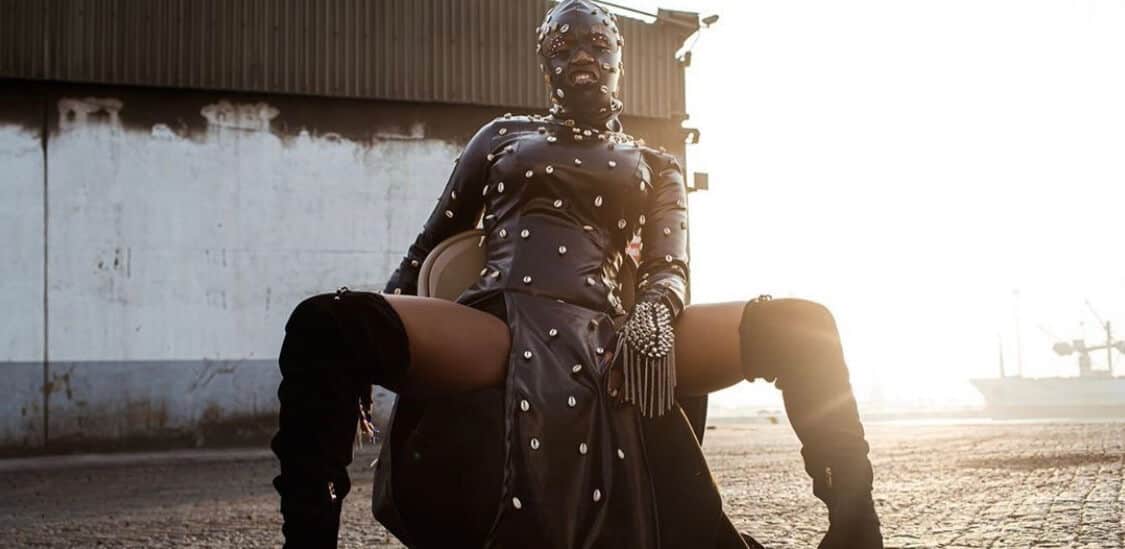
After allowing fans a peek at the earnest lover behind the mask on his debut project, ‘Tryst’, July Drama has returned with a new single, “No Comma”. The song finds the previously masked-up singer/songwriter in a pleasant mood as he celebrates himself and his accomplishments and blessings over the self-produced dance-driven afropop instrumentals.

Listening to good music is a great way to get rid of the gloomy feelings and “No Comma” is July Drama’s most uplifting song till date. “Blessing no comma/ You know that tomorrow’s gon be better than today”, he sings assuredly over the breezy mix of synths and percussion. Though his lyrics also acknowledge that there will always be enemies and opps, July Drama encourages listeners to remain focused on their blessings and be grateful for what they have; “God don bless you/ God don bless me”.

Jean Feier – “YOU ARE”

Ghanaian artist, Jean Feier writes poignant songs expressing her vulnerable feelings. This allows her to make relatable bops as she mashes different genres to create experimental music with emotionally layered lyrics. She proved she can deliver rapid-fire bars on “XXX”, but her newly released video for “YOU ARE” shows off the dreamy allure of her melodic singing. Here, she shares her intimates feelings for a muse who she promises to “Take higher than (they)’ve been before”.

The airy instrumentals Yusei produced for “YOU ARE” imbues the song with an intoxicating ambiance as Jean Feier gracefully confesses her affectionate feelings. Adotey Lomotey directed the video to reflect her meek appeal for love as we see her performing her lyrics all alone in a garden; “I wish you would hold me/ Drive away the lonely”. The song highlights Jean Feier’s ability to tap into her vulnerable emotions to make swooning music fans can relate with.

Straffitti – “SHANAWOLE”

Straffitti’s work as a graphic designer, producer and rapper confirms that he’s a versatile creative. Earlier this year, he introduced his new skill for singing Afropop melodies with Buju-assisted single, “Everywhere”. And now, he has shared a 6-track EP, ‘STRAFF FROM NIGERIA’ to affirm his Afropop specialty. He explored the various sounds of the dance-driven genre on each track as he performed contagiously buoyant songs like “SHANAWOLE”, one the standout tracks inspired by the rhythm of Afro-house.

Retrro5 produced the shimmering EDM-fuelled beat with rattling samples that set a groovy backdrop for Straffitti’s casually impeccable melodies. The catchy beat inspired a charming set from Straff as his lyrics continue Afropop’s dancefloor romance theme saying, “Temperature be rising/ Baby I see through your thighs/Now I’m so hypnotised”. Everyone making romantic club bangers needs to watch their backs cause Straff from Nigeria is coming for their spot on DJ sets.

[mc4wp_form id=”26074″]


You are meeting Debola at a strange time in his life. He wandered into a dream and lost his way back. Tweet at him @debola_abimbolu


ICYMI: Catch up on all the songs releases from last week here

Gems: A List of the best released songs this week

Every Weekend, The NATIVE Will Put Out A List Detailing The Best And Most Enjoyable Songs Released During The Week.

With The Scope Widening And Music Dropping At An Immeasurable Pace, It’s Easy To Miss Out On A Lot Of New Drops, So We’ve Decided To Help Out, By Collating A List Of The Best Hip-Hop, Pop, R&B Songs From All Over The Continent. Our Main Goal With This List Is To Make Finding Great Music Of The Moment Easier For You.


Kimosabe – “Bagger Vance”

A significant portion of Kimosabe’s music is centred on the vulnerable honesty and carnal tension that happens, specifically at night time, between romantic partners or even just two people attracted to each other. In February, the South African singer put out his quietly impressive third album, ‘Nights, Vol. 3’, and he’s returned to dropping music via a new mini-series titled ‘SoulTember’, which will see him release four songs in four consecutive weeks. “Bagger Vance” is the second drop in the series, a song built on raw desire and unfiltered passion.

Sung with a fervent energy, “Bagger Vance” finds Kimosabe pleading for affection from a lady, a one-sided desperation that would’ve been a bit unsettling if there wasn’t a preceding dynamic. According to the singer, the song is about a guy whose side piece wants him to beg since he won’t leave his relationship and commit emotionally to her. “Don’t make me beg for it, ‘cause you’ve got what I need”, he sings over a sleek R&B beat that echoes the signature sound of legendary American producer, Darkchild.

A combination of his vivid writing, supple vocal runs and intense melodies, Kimosabe dutifully embodies the character of a guy who is creeping around, up to the point you might catch yourself rooting for him. Craft wise, “Bagger Vance” is a remarkable display of why Kimosabe is one of the finest R&B artists on the continent.

TROD – “I” (feat. B-Banks)

With an undeniable legacy as the catalyst behind the explosion of indigenous rap music, Dagrin has served as an inspiration for many rappers who have come after him, but none of them are as on the nose as TROD, whose moniker is an acronym for “The return of Dagrin”. Perhaps due to the undue pressure he put himself under, TROD has floated in and out of public consciousness in the near seven years since coming out, showing flashes of his potential on singles and freestyle cyphers. His new EP, ‘The LivinGrin’, is a better, surefooted gauge of his talent, a solid set that lets listeners into his hopes and dreams.

Final track, “I”, is one of the standout songs on the short tape, a song that exhibits TROD’s ability to frame his personal woes within a universal concept. Loyalty, or the lack of it, is a well-worn topic in hip-hop, with rappers generally deriding those they perceive as disloyal and explicitly considering them opps. TROD buys into this cliché on “I”, but what makes his approach and the song refreshing is that he takes an incisive approach to examining the concept of people having your back, while linking it back to all he’s been through. “Won fe ba mi re’rin but ko s’eni to ma ke fun me (They want to laugh with me but there’s no one who will cry with me)”, he poignantly quips at the beginning of the first verse, bringing to mind Kendrick Lamar’s famous declaration, “Ain’t nobody praying for me”.

Backed by acoustic guitar and a soulful percussion knock, TROD’s raps are given an extra layer of clarity, sounding like revelations brought on by real life experiences; when he closes out the song out with “Oju eje l’everybody wa ni mo se ma n sun pelu ibon (everyone is red-eyed, that’s why I sleep with a gun)”, it doesn’t come across as a cry for help as much as he’s justifying his paranoia. “I” doesn’t hit the same contemplative zeniths like some of his idol’s best songs, but it sounds like TROD is on his way there.

Amaarae – “FANCY”

Ghana’s neo-soul pop princess Amaarae is preparing for the release of her upcoming EP, ‘The Angel You Don’t Know’ which is slated for release later this year. Having already shared the sultry single “Leave Me Alone” a few months ago, she’s back with a new genre-mashing single titled “FANCY” to further whet our appetites for what’s to come. Proving to us that all is not lost, and we can still have a hot girl summer despite the tumultuous events of this year, “FANCY” is a trap-style R&B number for all the bad bitches looking to have a great time.

Over groovy drum patterns accentuated with hints of alt-pop, emo-rap, and trap, Amaarae sings “I like it when you call me zaddy/won’t you pull up in my big fat Caddy/I got smoke for a nigga so try me” with an unshakeable confidence that feels very symbiotic to whoever is listening. Speaking on “FANCY”, Amaarae shared, ‘Fancy is a bad bitch record – it’s that joint that you put on when you’re getting ready to go out, when you’re getting ready to ace that exam, to ask for that promotion, do that job interview, go on that date that you know you are about to dress to kill for! It’s for the BOSS BITCHES.” Evidently, Amaarae is not looking to be constricted to genres or personas and we are loving every minute of it.

Joyce Olong – “Outta Town”

After making stellar a appearance alongside Yinka Bernie on the on thought-provoking songs “It’s Okay To Cry”, earlier this year, singer/songwriter Joyce Olong is ready to share her first official offering of the year titled “Outta Town”, the first pre-released single off her forthcoming debut album ‘Silhouettes’.

Over the swelling string harmonies and laidback drum riffs that she self-produces, Joyce Olong sings about the all-too-familiar feeling of being an outcast despite being surrounded by people who claim to know you. ‘They don’t even know, but your life story they narrate/Generalise me/oh they tell me you people are all the same’ she sings, but rather than remain dejected, Olong stays afloat and assures listeners that they can too. Much of the song’s production rests on delicate pianos, and gentle wind instruments, matching the gorgeous and dreary tenor of the lyrics she sings. In a time where we’re all feeling less certain about ourselves and the future, “Outta Town” gives testament to how we can survive through self-reflection, compromise, and ruthless honesty.

Bella Alubo – “Gbolahan”

Bella Alubo makes silky R&B songs with dramatic and intently personal narrations of her experience with love. Her last single, “Loneliest Girl In the World” was inspired by her struggle while self-isolating in London, and for her latest release, “Gbolahan”, she maps out her path to healing from a failed relationship. 

Tuan Malik produced the mellow piano-led afropop instrumentals for Bella Alubo’s charming vocals as she confidently addresses the person responsible for breaking her heart, “Gbolahan”. She opens the song with her drunken voice saying, “Looking fit, pockets thick, really nice, see my smile”, like an Instagram story peek into a good night out. She doubles down on setting the party scene as she goes on to describe how she’s the life of the party;  “Afterparty, Afterparty/ Say My Body Is Like A Bentley/ Trying To Love Me Like A Gangsta/ You Want Me In Your Ride/ Want Us To Leave Here Together”. 

Though the dance-driven instrumentals encourage Bella’s feel-good depiction of her life, she remains focused on the romance gone wrong as she crafts bittersweet lyrics about how she’s recovering from heartbreak; “Dark Shades On, No You Can’t See Me/ I’m Finer Than The Last Time You Saw Me/ Say My Days Are Nicer Now”. The sense of misery is everywhere on “Gbolahan”, echoing in her reassuring chant adlib, “Nobody do it like Bella”. It’s a song you play to remind yourself you’re too good to be sad over some ‘wasteman’.

Wande Coal – “Check” 

Wande Coal has remained one of the biggest pop stars on the continent since he broke out into the mainstream in 2007. He is a constant feature in music conversations thanks to his ability to make endearing R&B ballads as well as unapologetic dancefloor fillers. Though he has proven most efficient when he blurs the lines between dance and googly-eyed romance, on “Check”, he leans into his carefree party spirit to drive away people who only want him for his money. 

“Check” is the third track from Wande Coal’s newly released project, ‘Realms’ and it delivers the dancefloor-driven afropop melodies. While Lekka Beats and ScrewFace set a summery ambiance with tropical island-inspired harmonies, Wande Coal sings about the women in his life who “want to hold (him) down”. The song offers some insight into the dilemma of choosing who to be with when it feels like everyone wants to be with you. He asks his muse, “Are you really the one for me?” but goes on to ask her not to check on him; in spite of his indecisiveness, Wande Coal’s catchy melodies allow him to shimmer with swagger as he rides the groovy instrumentals right into our hearts. Though “Check” is imbued with a romantic narrative, its charm is in Wande Coal piercing melodies that have long been his specialty.

Featured Image Credits: NATIVE


Words by Dennis Ade-Peter, Tami Makinde & Debola Abimbolu


ICYMI: BEST NEW MUSIC SPECIAL: AMAARAE’S “FANCY” IS A LOVE LETTER TO BLACK WOMEN

Review: Nasty C’s ‘Zulu Man With Some Power’


In the post-streaming age, social media has become the fastest way for audiences to suss out whether their favorite artists have new music cooking. One key indicator, I’ve come to notice, is the subtle clues laid bare on their social media in the weeks or months leading up to the memorable drop. Their social media page, usually Instagram, is cleared of its previous posts and replaced by new posts all geared towards the upcoming release in hopes that everywhere you turn, there is a reminder of what’s to come. Wizkid’s been known to do this in the past, Odunsi the Engine did it with his surprise EP ‘Everything You Heard Is True’, and now, South African rapper, Nasty C ushered in his latest album ‘Zulu Man with Some Power (ZMWSP)’ in the same way and it seems to have paid off seeing as it broke the record for the most pre-adds for an upcoming album on Apple Music. 


Though the events of the year have adversely affected us all in different ways, the rapper, producer, and songwriter has been having a good run so far. Back in March, he joined the ranks of African artists catching the ears of major international labels, signing a joint venture deal with Def Jam Records. A month later, he had released a visual EP ‘Lost Files’ to whet appetites for the new album, and then followed this up two months later with the arrival of a collaborative mixtape tilted ‘Zulu’ with Dj Whoo Kid followed. Needless to say, the 23-year-old rapper is putting in the work and then some, and this proficiency in playing the long game shone thorough as he released ‘ZMWSP’, his third studio album in four years.


Nasty C had to do all he could to make sure he was ready to take on the world stage and now the Durban city hero needs no introduction as his public stature has gone to new heights. Although his massive cult-like following alone in South Africa is enough to attribute to his steady incline over the years, it would be a disservice to the great strides that the rapper has been making internationally. Three years ago, he featured French Montana on “Allow” a standout off his debut album rerelease ‘Bad Hair Extensions’ and then further down, he landed an A$AP Ferg feature on monster-hit “King” (currently sitting at 8.4 million views on Youtube) off his sophomore album ‘Strings and Bling’. His bruising ambitious raps were never made to be restricted to the coastal shores of Durban but rather soar farther into the world at large and find a host of new listeners. Where his sophomore project endeared him to global listeners as a rap star on the rise while attracting a double-platinum certification by RiSA certification guidelines, ‘Zulu Man with Some Power’ tips the scale a bit further as Nasty C dips further into his artistic bag emerging as a well-seasoned artist, this time, with no restraints in his neatly packed kiss-offs (“niggas made the worst of decisions then wanna doubt mine”) and boasts (“talking stake over overpriced stake”). 


While Africa to the world is a popular rallying cry of the continent’s artists who are making trailblazing milestones all around the world, covering artists from Burna Boy to Tiwa Savage, it is noticeable in these conversations that the dominant afropop genre garners more attention than that of hip-hop/rap emerging from the continent. This does not by any means suggest that rappers in these parts are not receiving considerable international fanfare, they are, as seen from the careers of artists like Sarkodie, Runtown, trap-leaning newcomer, Rema, AKA, and more but their rewards are far and few between as hip-hop and its perceived foreign aesthetics have not yet won over the African ear in comparison. In fact, the most substantial takeaway from ‘ZMWSP’ is the realisation that Nasty C actually deserves the legendary status he constantly ascribes to himself and so, the fact that a rapper is enjoying this much mainstream success today (“King Shit” was the biggest song in the world at the time of its release) is a remarkable feat that must be celebrated. African music has long been synonymous with afrobeats and afropop–becoming the blanket terms for genres coming out of Africa–and though Nasty C is not averse to hopping on an afropop record, he’s not trying to conform to perceptions of what African music should sound like. He tells Okay Africa, ‘I want the world to know there’s more than just Afrobeats in Africa” and on his latest project, he definitely caps off an incredible run so far: it’s hard to find any new-gen artist in rap who can touch what he’s achieved within the same timeframe.


Unlike his previous projects, ‘ZMWSMP’ isn’t an introductory foray into the rapper’s mind,  if you’re paying attention to the kid then you should already know what he’s done to get her. He’s not concerned with painting a picture of the hostile and chaotic life on the streets as he did on ‘Strings and Bling’, here he’s just doing rap shit and looking to the world for answers. Bragging about your successes or rapping about your hustle is part of the hip-hop narrative and Nasty C makes sure he embeds this into his album. It’s the flashy talking, the profane boasts, the braggadocious swagger, and the glamorous list of everything his newfound fame and money can buy. It feels like he’s ticking off items on his checklist and enjoying the spoils of his hard work so far: we hear him narrate stories of LA nights where he throws ‘a whole lotta ones’ in the strip club on “Palm Trees”, he converses with God on shrooms on “King Shit” and keeps a separate account for his shoes and weed on “Steve Biko”. Whoever his enemies are, they can’t be too happy because Nasty C is living the rapper life, and every line delivered with an audible smirk to the adversaries who doubted him.


Each song is accentuated by a boast and he spits rhymes that only he could marry together. In a similar vein as Meek Mill’s legendary brag-filled album opener “Dreams and Nightmares”, Nasty C’s “King Shit” has the potential to become a cult classic. It strikes the right balance between boastful, inspirational, and humble while setting the tone for what’s to come. He starts off singing acapella, his protean voice effortlessly running through memorable one-liners. He’s at the top of his game and though that’s enough to earn him the highest bragging rights, he’s still humble, acknowledging God’s love through it all. All through the album, he maintains this balance, reminding you that he’s beat the odds to rise to the top but with a proclivity to remain humble. On “Overpriced Steak”, he admits this is because he isn’t used to this new lifestyle and this bleeds into “Feeling” where we witness the pressures that come with attaining wealth at such a young age but “Lose Some Win Some” refocuses the message on grinding till everyone around him eats. His rapping is effortlessly relentless, and he doesn’t ride the beat so much as he decimates it. 


For most of the project, Nasty C goes at it alone, demonstrating his slick ability to move from one topic to another. On “How Many Times” he raps about his come up with intensity, but rather than open up about what he’s had to go through, he leaves it to the imagination, switching between singing and rapping to drive his message home. “Sad Boys” treads similar lines, his melancholic singing makes the boastful message more haunting than it seems. Every song is a reminder that he’s well paid, flexing and he’s having fun while doing so, and why won’t he when he’s got his mentor T.I on not one but two tracks off the project. But, rather than boast his way through 20 tracks, Nasty C also spruces things up with more romantically-inclined numbers. The Ari Lennox-assisted “Black and White” is a soulful and amorous inclusion, endearing itself to listeners from the very first listen. The two share amazing chemistry on the song, as they deliver confessional, open-wound R&B with nostalgic hip-hop cadences. This stands in contrast to the rhythmic “Ababulali” which is actually a love letter to the rapper’s father who only came around to his son’s musical inclinations just recently. Here, love is talked about in terms of devotion and generosity being poured back into our loved ones. Our parents form the basis of our interaction with the world, and though Nasty C’s earliest interactions with his father regarding his music career wasn’t a model example, still he testifies to his dad’s hand in making him a better man by setting a standard that he tirelessly works to reciprocate in his lifetime. 


Nasty C also doesn’t fail to address the gargantuan elephant in the room. At just 23, he’s been doubted by old rap heads for his flows but on “How Many Times” he lays a simple threat: “I’m humble as a fucking child, I’m on they neck though”. Just like Abuja has Psycho-YP and Benin has Rema, so also does Durban have Nasty C. You can’t talk about hip-hop currently in South Africa without including Nasty C’s name in conversation, and that is just an honest testament to how hardworking the 23-year-old has been in the last couple of years. The Durban rapper has had a storied rise, first breaking out as a rap wunderkind amongst his peers circa 2013, but then swiftly rising to the position of rap royalty. He quickly distinguished himself from his adversaries, choosing to rap mostly in English but on ‘ZMWSP’, he delivers a watershed moment rapping his first song entirely in Zulu. Armed with a more resonant origin story, Nasty C shares with Apple Music that ‘[he] wanted to make it cool for people to say, I’m Zulu, Xhosa, this or that’ again–to take pride in it” and that was exactly the energy he brought to “Zulu Man”. His South African heritage features as a badge of honour throughout the album. He rather audaciously compares himself to the late anti-apartheid activist Steve Biko on the project’s second track named aptly titled after him. Art that reflects reality can be triggering, and in a time of continued racial tensions, comparing oneself to a rebel or freedom fighter is making a political statement, whether intended to or not. Nasty C, indeed, does share that it was important to use his platform as an artist to honour a legendary changemaker and by paying homage, he inadvertently places an expectation on himself to walk in their magnanimous shadow. Whether he achieves these lofty ambitions or not is beside the point, he’s got the confidence of someone who has nothing to prove to anyone but himself.


Pro-blackness resurfaces as a theme on the T.I-assisted “They Don’t” where both rappers air their frustrations about the plight of black people in the world today. Rappers exploring the plight of blackness in America is hardly new, but there is something about the way it is handled here that sounds resonant and radical. The names of black lives that have been unfairly lost to police brutality are mentioned and put on center-stage here: George Floyd, Breonna Taylor, Sandra Bland, and more. More than just a rallying cry, Nasty C’s slick, scanting singing rouses aversion to the uniform and systems that unjustly takes black lives and not just in America but in a host of other Africa countries including the rappers own home country where last week, a young man by the name of Nathaniel Julius was shot and dumped at the Chris Hani Baragwanath Hospital where he later died following a robbery in Johannesburg. Residents of the Eldorado Park community took to the streets to protest the boy’s death at the hands of the police resulting in hours of unrest between protesters and police in the area. Given the tone from the top and the grassroots anger, it’s a surprise this confrontation didn’t come sooner but in a time where fans are more critical of how celebrities engage in civil rights activism, using your art as a medium for exposing some of the injustices in the world is a step in the right direction. When he sings “can never let the guap ruin me” it shows because Nasty C has not lost touch with the people who have anchored him to greatness, no matter how long the bank account currently sits. Hip-hop/rap has always represented the voice of the people, the people often obscured and silenced, and starting right from the project’s artwork, we see a world that isn’t quite as glamorous as it appears at first glance. Under all the vibrant colours and beauty, is a murky swamp which attracts snakes and otherworldly creatures–representative of the life Nasty C raps about.


More than anything, ‘ZMWSP’ is a transportive listening experience, due in large part to its production, which exists in almost perfect harmony with Nasty C’s soothing vocals. “Feeling” draws similar lines to emotionally layered numbers like Roddy Ricch’s “War Baby” and Bella Schmurda’s “Omnipotent” by soundtracking dalliances with spirituality. The horns and soulful organ in the background provide the perfect bedding for Nasty C’s biblical allusions that suggest his steps were divinely ordered right from his birth. When he raps chip-on-the-shoulder lines like “When y’all say the names of our legends, y’all better shout mine”, they come off more clairvoyant than outright cocky because you can almost imagine a future in which that could one day be possible. With a Def Jam deal, it’s hard to imagine the young rapper not walking in similar footsteps to the great labelmates before him like Jay-Z and Big Sean. Many know Nasty C for his killer flows but may not be aware that the rapper is also an incredible producer and this reflects in the way the drubbing, buoyant production dictates the album’s mood swings. But he’s not only to praise for this as he gets help from a legendary team of award-winning international producers like Beat Butcha, ATL Jacobs, No I.D, Bank Roll Got It, G Koop, and more who are familiar with his air-tight flows.


To Nasty C’s credit, the project’s features are a good match and they also underscore the envious extravagance and glitz of his new lifestyle. Each year, his collaborations grow more ambitious and though we get exciting features with YSL’s Lil Keed and Dreamville’s Ari Lennox, this writer can’t help but feel gutted to learn that we missed out on a Nasty C and Burna Boy collaboration which the rapper blames on “label shit”, according to a recent conversation on Cuppy’s Africa Now show on Apple Music. Burna Boy who has just released his third major-label album ‘Twice As Tall’ would have been a monumental inclusion to an already great body of work, but it’s hard to imagine it existing in a  world as dystopian as the one we’re currently in now. Maybe that’s why label decisions have led to its postponement, waiting out a time when the world is in a better position to assemble and party, regardless, a co-sign from the African Giant would be a new badge on Nasty C’s heavyweight belt plunging him further into baby goat status while mutually benefiting Burna Boy who is yet to collaborate with any of the new-gen artists carving out their own niche in the music industry. 


Clocking in just under the 60-minute mark, the inescapable allure of ‘ZMWSP’ is the firm reminder that hip-hop doesn’t exist only on the Western shores but lives and takes on new life within different people and sub-cultures borrowing from a wider range of influences endlessly at their disposal. This record feels like an awakening and it could very well sit comfortably amongst the inebriated guests at a breezy roof-top parties in New York or under the twinkling lights of humid clubs in Johannesburg, it’s transnational. Artists like Nasty C deserve to enjoy as much mainstream success as their hip-hop counterparts across the shores, and although Western validation and award shows in general are outdated and inherently flawed, it won’t be far off to envision a rapper like Nasty C confidently joining the ranks of the next XXL Freshman class, which till today has only seen two rappers of African descent. 


‘ZMWSP’ sets the record straight–Nasty C is a rapper rapper. He’s a long way from his debut on the scene in 2013 and he’s handling it all in great strides, wealth and fame can make monsters out of the best of us but it’s only made him go harder, and he very well could be on the cusp of an explosion into superstardom. The project is, as the name suggests, teeming with the unfettered power from the boy from Durban with big dreams and we dare say, he has more than just  some power in him.


Suicide Prevention: Our collective responsibility

Promethazine till the morning, hope I don’t wake up tomorrow”, Roddy Ricch says oh so casually on the chorus of “War Baby”. At first, the morbid sentiments glaring out of the line will take you by surprise, but when you think about the fact that 40% of adults suffer from a mental illness and approximately one million people die of suicide each year, globally, Roddy Ricch’s casual ideation feels more like a vulnerable confession of the dark thoughts far too many of us are familiar with.

In 2016, using global data, the World Health Organisation estimated that suicide was the second leading cause of death in the youthful population. Here in Nigeria, last year, we saw a harrowing spike in the number of people taking their lives, and out of the 42 Nigerians who had been reported to have committed suicide in the first six months of 2019, 11 of them were students.

As well as pre-existing mental illness or temporary psychological fragility, other factors such as financial instability, chronic illness and/or pain, issues in relationships, substance abuse, insufficient support in dealing with these problems and life’s other stressors can cause one to make an attempt. When considering these things within the African context, most of these risk factors are magnified. Research has proven that low-income earners, individuals with poor physical health and drug users are more likely to make attempts on their life, so when considering that majority of the continent’s population are living below the poverty line, healthcare is notoriously inadequate, and there’s an opioid epidemic brewing, these statistics grow even more worrying. In Nigeria specifically, marital issues (within and without marriage) have been proven to be one of the leading triggers of suicidal thoughts, with research showing that unmarried women were more predisposed to suicidal ideation.

However, given the gravity of this particular cause of death, the existing research and anecdotal accounts that prove that suicides are being attempted at alarming rates, we Nigerians, and arguably Africans as a whole, have a generally apathetic approach to mental health issues. Though social media is increasing our awareness and sensitising more and more young Nigerians, the lingering stigma surrounding mental illnesses and the lack of data leaves many people with terrible misconceptions about matters of mental health.

For one, most people still only recognise specific mental illnesses, completely overlooking eating disorders, personality and mood disorders, anxiety disorders and even post-traumatic stress disorders. Clinical Psychologist, Samul Adekunle Junaidu, in explaining why mental healthcare is an important asset in suicide prevention, tells Daily Trust, “I think it goes down to the kind of awareness in our environment, where, you see somebody all dressed up very well but when the person tells you that he or she has mental illness you ignore thinking maybe he or she is not very serious.” What Junaidu refers to is our inability to conceive that somebody is genuinely unwell, unless they are exhibiting it clearly, especially when this has to do with mental health. Even then, when a person’s behaviour is erratic, unhealthy and clearly unstable, society tends to vilify that person, as opposed to compassionately consider the fact that they might be going through a bout of psychological instability, due to immediate triggers combined with (or sometimes not) a preexisting mental health disorder.

Junaidu went on to say, “mental illness plays a large role in people attempting and committing suicide. This could result from stress, overwhelming situation, it could be because of depression; there are several situations, where an individual could commit suicide.” We saw this play out live on national television in the Big Brother House last Saturday, as Erica’s inability to cope with the stress and overwhelming situation she had found herself, led her to a breakdown and suicidal thoughts, thinking and feeling that she is better off not being here.

Suicidal thoughts, or suicide ideation, refers to thoughts or even plans about dying or taking your own life. Suicidal ideation exists in two forms: the passive and the active, the latter of which we more readily recognise as suicidal thoughts because it includes intent and plans to kill oneself. “I’m going to kill myself” is what we expect a suicidal thought to be, however Roddy Ricch’s “hope I don’t wake up tomorrow” and Erica saying “I shouldn’t be here, I’m only here because my parents made a mistake” are both also suicidal ideations. These statements are what would constitute passive suicidal ideation (wishing you were dead or that you would just die without actual plans of suicide), and equally deserve our attention and medical care.

Our conditioning of what we consider to be suicidal thoughts and the reality of the harmful ideations that plague people’s minds are less than accurate. The thoughts can range from creating a detailed plan to having a fleeting consideration, and does not (always) include the final act of suicide. This, however, does not mean that we should disregard passive suicidal ideations though, because people who are suffering are not offered the right kind of attention, it could end in them committing the final act. Contemplating suicide is usually a symptom of an underlying issue and typically the final result of mental illness left untreated. Owing to the stigma that exists and our general lack of primary concern, most people who are thinking of taking their own lives do not seek help. As a society, we ought to create an environment which accommodates people who are candidates of feeling this way and nip it in the bud before it gets there. We’re all quick to attend to physical illness or harm, as the effects are immediate and visible, with a desperate need to prevent this harm deteriorating to death, however, we fail to understand that with a mental illness, it is quite the same.

As a country, one of the first steps we must take is to decriminalise attempted suicide. In Nigeria, according to our Criminal Code, attempting suicide is illegal and individuals found guilty of the ‘misdemeanour crime’ could face up to one year in prison. In the Gambia, Uganda, Malawi, Kenya, Tanzania and Ghana (where it’s also a misdemeanour) attempted suicide is illegal too. According to a criminal law paper written by Cheluchi Onyemelukwe, one of the justification for criminalising attempted suicide is for the law to act as a deterrent, so people won’t want to attempt for fear of going to jail. Onyemelukwe’s first rebuttal to that argument is that most Nigerians do not even know of the existence of such a law. In the event that they do, however, most people attempting suicide wish to be successful, therefore, by their estimations, no crime would have been committed as they wouldn’t have attempted suicide but succeeded at it. By the time someone’s mental wellbeing is being challenged and they are contemplating suicide, the added pressure of being considered a criminal in the eyes of the law and morally reprehensible in the eyes of our hyper-religious society, compounds onto their stress and doesn’t encourage the individual in need of help to seek it.

If the case escalates to incarceration, even more hopelessness and depression will set in, not to mention that putting someone in prison doesn’t alleviate their stress or worries, nor does it improve their finances, mental health, relationship issues, or whatever the trigger(s) toward their attempt were. We need to deal with all those things through public health laws, and not criminalisation. According to The Premium Time, “the federal government said it had expended N500 billion on its social investment. The irony of it all is that not even a dime in such momentous intervention was dedicated to any issue related to mental health.” There have been many criticisms of the national budget, and inadequate support of and investment in mental healthcare is yet another shortcoming of our federal government, that we need to demand they improve.

Onyemelukwe’s paper shares the detail of who a man attempted suicide after being arrested for killing himself. Whilst Lagos State has amended the Criminal Code Law (the only state to use that right in relation to this law), the state’s courts are tasked with making a hospitalisation order. Though this is a progressive step in recognising that people who attempt suicide are in need of medical care, by dragging them to court, we are only adding to the trauma with which they’re already burdened. Criminalisation must be stamped out in all forms for us to truly take a step in the right direction when it comes to looking after our people.

Next, we must take as a society is to reframe our perspectives. Nollywood movies, for example, have a history of portraying “madness” as a punishment for evildoing, which has trickled down into common thought, as the The Federal Neuro Psychiatric Hospital located in Yaba, popularly known as ‘Yaba Left’ is often used as a tactic to scare children into good behaviour, if it’s not serving as the punchline of a joke or particularly descriptive insult. Instead of praising the function and existence of such an institution, we have made it the butt of our derision, thereby isolating patients who need our support most of all, and discouraging people with mental illnesses from seeking help for fear that they too will become the rimshot.

Once our attitudes toward suicide and mental health issues as a whole becomes less mocking,  judgemental or even blissfully ignorant, then we can focus on properly educating the population on mental health. This isn’t something that Nigeria or Africa alone are struggling with, the world at large is guilty of neglecting mental health issues or treating them with little care. Kanye West, who most people are aware has been diagnosed with Bipolar Disorder, is very often derided when he is going through a public episode. Big Sean in his latest album ‘Detroit 2’ spoke about being taught science but not how to deal with his anxiety on the Nipsey Hussle-assisted “Deep Reverence”.

In our Issue 004 cover story, the girl on fire, Tems revealed that she had once hurt herself in school, seeking for a physical pain to numb the psychological pain she was feeling. Davolee, on ‘Festival Bar‘ tracks 3 and 4 talks about leaning on drugs and alcohol (even though he knows that’s who he truly is) to cope with the pressure of success, which drove him into depression. Both Tems and Davolee, when they were going through some of their harshest life trials looked to harmful means to subside their trauma. According to Dr Ani Kalayjin of Colombia University and president of the Association for Trauma Outreach and Prevention a lot of Nigerians experience trauma that causes depression, hopelessness and when this isn’t dealt with, the trauma culminates in PTSD, which is another risk factor for suicide. If in Nigeria, we paid closer attention to mental healthcare, both medically and supportively as a society, then Tems, Davolee and other Nigerians who face trauma on a daily basis – from loss of economic stability due to our ever devaluating currency, to being stopped by SARS and unsure of your fate – would have the right help to deal with their trauma, such as cognitive behavioural therapy, mindfulness therapy, and wouldn’t have to turn harmful solutions to temporarily drown their pain.

LVRN – the Atlanta label to which Cruel Santino is signed, as is Summer Walker, who has been very open about her anxiety disorder – have set up a mental health initiative for their artists, in order to ensure that their talent is given the care they need to manoeuvre fame and the mentally challenging stressors of the music industry. After contestants leave British summertime TV show, Love Island too, they are linked with a counsellor before the reenter the ‘real world’, their families also are offered counselling. This is an initiative Big Brother Naija too should adopt, and instead of the figurehead punishing her for spiralling out of control, Erica’s cry for help should have been taken more seriously and she should have been offered support and care. Simply being booted off and shoved back into a society that literally celebrated her loss could prove to be more harmful to her well being than not.

On all fronts, Nigerians and Nigeria needs to do better in handling mental health issues. We ought to make a conscious effort to cultivate a climate in which mental illnesses are not vilified, mocked or dismissed, an environment conducive to seeking help and receiving support, and a country in which attempting suicide is met with concern and not a criminal record.

We need change, so let’s forge it.


Written by Adewojumi Aderemi and Damilola Animashaun


ICYMI: WE ASK A FEW MILLENNIALS HOW THEY COPE WITH BAD MENTAL HEALTH DAYS

Songs of the day: New music from Wande Coal, Joyce Olong, Nasty C, Bella Alubo and more

We’ve had music through all the heartbreaking moments of 2020. Despite the ongoing pandemic, civil unrest, and the seemingly endless-barge of news about untimely deaths, musicians have continued to capture our collective pop consciousness with new songs that either reflects our present reality or provide an escape from it. We know it can be difficult to keep up with all the diverse streams of music so we’ve created this column to keep you, our readers, up to date with all the finest tunes coming out of Africa and the rest of the world. These are the songs you absolutely need to hear.

While our midweek curation for Songs of the day featured the new releases from Olamide, Teni, Eugy, Sean Tizzle, Jamopyper and Mayorkun and more. Today, we’re bringing you all the latest music releases to get you in the right mood for the weekend. Joyce Olong, Bella Alubo, Nasty C, Lil Gotit and Lil Keed, Wande Coal, Mr Eazi, Major Lazer, Nicki Minaj, and K4mo, Veen, Moelogo, Mike World, Jinmi Abdul, Joeboy, and Oxlade have all put out new music and you can enjoy them below. You’re welcome.

Joyce Olong – “Outta Town”

After exploring different themes of womanhood for her debut project, ‘Merci Beaute’ Joyce Olong emerged as an introspective singer/songwriter, crafting a unique brand of confessional songwriting. Though we’ve had to wait three years for her to release new music, she’s been called upon to contribute guest verses on thought-provoking songs like Yinka Bernie’s “It’s Okay To Cry”. Her new single, “Outta Town” finds her spinning a narrative of facing criticism as an outsider; “They don’t even know you/ But your life story they narrate.”

The swelling string harmonies and the laidback drum riffs she produced for “Outta Town” sets a relaxing backdrop for her soothing vocals as she assures listeners who feel alienated that they aren’t alone. Though the feeling of not belonging can be sad, Joyce Olong’s confidence as she interpolates 50 Cent’s “Many Men” encourages listeners to find the resolve to rise above it.

Wande Coal – “Check”

Wande Coal is the definition of an evergreen artist. The man has consistently delivered stunning dancefloor-fillers since 2007’s “Ololufe” first introduced him as Mo’hit’s sweet-talking R&B singer. He just released his 3rd project,Realms’, a 7-track EP that gleams with his stylish variations of dance-pop. Although pre-released singles, “Again”, “Naughty Girl” and Sarz-assisted “Vex” already enjoyed the fanfare that comes with every Wande Coal release, the 3rd track, “Check” seems to be the new crowd-pleaser to celebrate the tape’s release.

The tropical island vibe of the instrumentals Lekka Beats and ScrewFace produced for “Check” forms a lightweight backdrop for Wande Coal to question his muse’s intentions; “Everyone says you’re the one for me/ Tell me now baby what you want from me”. Wande Coal’s catchy melodies allow him to shimmer with swagger as he describes his uncertain relationship with his muse while riding the groovy instrumentals right into our ears and hearts. This is the music that dancefloors were made for.

Nasty C – “Bookoo Bucks” Feat. Lil Gotit, Lil Keed

Despite the international fanfare for Afropop and other indigenous sounds, Nasty C did not hesitate to deliver the boastful hip-hop sensibilities he’s renowned for on his latest album, ‘Zulu Man with Some Power’. The tape which was released under major  Def Jam Recordings boasts features from American rappers, Lil Gotit and Lil Keed for one of the standout tracks, “Bookoo Bucks”. He’s just followed up the release with an accompanying video aimed at highlighting continued efforts to bridge the African and black American cultures through hip-hop.

All three rappers perform their verses, offering profane boasts about his glamorous lifestyles and we see them living it up in the video Nasty C co-directed with Allison Swank. The video shows Nasty C partying with friends and models at a mansion in South Africa before we see Lil Gotit and Lil Keed partying with models in Atlanta.

Bella Alubo – “Gbolahan”

The last time we heard from Bella Alubo, she was complaining about being the “Loneliest Girl in the World”. At the time of its release, many of us related to the words she sang seeing as we were all self-isolating and helping efforts to curtail the spread of the coronavirus. Fortunately, we’ve learned how to cope with the new normal as people are now finding the courage to venture back into the world as cities begin reopening. As a result, Bella Alubo’s newly released single, “Gbolahan” is rife with this feel-good energy, buoyed by the laidback afropop production and her easygoing charm as she narrates a romantic encounter.

“Dark shades on, no you can’t see me/ I’m finer than the last time you saw me/ Say my days are nicer now”, she begins, placing herself in a long lineage of tales of overcoming misery. She keeps up the dramatic and intently personal narration of her experience with love as she sings about her muse who only wants to show her off as a trophy. “Afterparty, afterparty/ Say my body is like a Bentley/ Trying to love me like a gangsta/ You want me in your ride/ Want us to leave here together” she cries, leaving the details of her story tantalizingly out of view.

Mr Eazi and Major Lazer – “Oh My Gawd” Feat. Nicki Minaj & K4mo

Major Lazer’s mission to unite all the dancefloors around the world makes them suited for borderless collaborations. As a result, Mr Eazi enlisted the electronic dance music group for his latest release, “Oh My Gawd”, the first single from his upcoming tape, ‘Something Else’. The song also features Nigerian singer, K4mo and American rapper, Nicki Minaj who join Mr Eazi in confessing their appreciation for women’s backside.

The song interpolates Dr Alban’s classic, “Carolina” as they ask, “Guess who’s coming to dinner” over the dancehall and EDM beat produced by Fred Again and Diplo. In a statement released when the song was shared, Mr Eazi explained that the song was as fun to make it sounds. “It’s crazy how it went from hearing a K4mo intro in the studio with Fred Again, to me jumping on it and then Diplo hopping in! And Walshy hitting me up to say it’s a banger—next thing Nicki is on it! Been a journey really, like two years in the making and I can’t wait to perform it at my next festival!” But while we have to wait for festivals to return, we can enjoy the choreographed dance video for “Oh My Gawd” as we prepare for the clubs to get opened.

Veen – “Crib”

We’ll never get tired of the way Veen’s voice harmonizes atop his guitar-led trap production. His ability to produce his own songs allows him to bridge trap and afropop sensibilities together seamlessly in the same vein as artists like Odunsi The Engine. Earlier this year, he released a joint tape with Kiienka, ‘Star’, exploring the dance-driven sound of afropop but on “Crib”, one of the standout tracks from his newly released project, ‘Impact’, he turns to R&B-infused trap to deliver his apologetic message to his love interest; “I said I’m sorry/ Baby don’t leave”.

“Crib” subverts trap music’s reputation for being braggadocious, delivering a romantic number that’s sure to resonate with the lovers among us. “I don’t want problems, I want a kiss”, he sings with a politeness that’s unconventional from a rapper but delivered with a romantic open-heartedness that feels real. Though his laidback melodies retain his cool demeanor, the mellow guitar-led beat he produced pulls at listeners heart-strings as he pleads for forgiveness from his muse. With the guitar melancholic guitar solo he throws in at the end of the song, “Crib” highlights Veen’s confidence to push the boundaries of sonic experimentation as he continues to explore different sounds.

Mike World – “Focus”

Because there is no shortage of upbeat dancefloor fillers in Nigeria’s music scene, artists who can tap into their somber emotions for their songs are rare finds. Mike World’s new single, “Focus” puts him among the few emotive Nigerian songwriters as he delivers an emo-trap performance, expressing his unrequited feelings for his muse; “You know I care for you/ Do you not comprehend baby”. Though the catchy trap-inspired beat Baka and $hadow produced for “Focus” has an upbeat vibe, Mike World’s singing through auto-tuned filters quivers with emotion. “It’s sure enough that I adore you/ Now you’re acting like I don’t even know you”, he sang, couching his frustration with an appealingly fluid melody that earns the song endless replay value.

Jinmi Abduls – “Jowo” Feat. Oxlade, Joeboy

Jinmi Abduls’s romantic brand of Afropop places him within the conversation of the new generation of afropop singers taking the dance-driven genre to its emotive heights. For his latest single, “JOWO”, he teams up with Oxlade and Joeboy, two artists who are also reputed for mining their relationship woes to make relatable songs to serve dancefloors.

SBling produced the lightweight mix of catchy drum riffs, synths, guitar, and percussion harmonies that set a groovy backdrop for Jinmi Abdul, Joeboy, and Oxlade’s sweetly melodic vocals. Jinmi Abdul leads the charge, opening the song with wistful lyrics lamenting his failed relationship with his ex; “Promise me sey you go return/ because my last woman, she leave and run”. Joeboy and Oxlade offer their contribution with verses echoing Jinmi Abdul’s fear of getting their hearts broken again. Though love can be the most pleasant emotion, Jinmi Abdul’s “JOWO” reminds us that it can go sour very quickly if we aren’t careful.

https://www.youtube.com/watch?v=qYzvAVTEUbE&app=desktop

King Lekan – “Give You All” featuring Moelogo

NY-based Nigerian producer and musician King Lekan is gearing up for the release of his debut EP ‘No Time’ next month and we’re eagerly awaiting its release owing to its impressive feature list which boasts of collaborations with Bemi Soul, Mojeed, the.wav, and more. In the meantime, he’s just shared the project’s first promotional single, “Give You All”, a groovy afropop number featuring Moelogo. Over the catchy afropop drums and soothing airy keys, Moelogo delivers a captivating afro-r&b set as he sings about his devotion to his lover who he promises to shower with all his love and affection.

[mc4wp_form id=”26074″]


You are meeting Debola at a strange time in his life. He wandered into a dream and lost his way back. Tweet at him @debola_abimbolu


ICYMI: Catch up on all the songs releases from earlier in the week

A 1-Listen review of Wande Coal’s ‘Realms’

In this new series, The NATIVE will be presenting one-listen reviews of some of the most-anticipated albums on the scene. As the review style suggests, all songs will receive instant reactions while being played – no skips, rewinds, or pauses in between, just our honest, in-the-moment reactions to the newest projects in town. 


When Wande Coal released his debut album Mushin 2 Mo’ Hits back in 2009, the world was not ready for the dominance of afrobeats and the ensuing growth of its sub-genres. Over a decade later and this project has served as a cultural shift, which laid the foundation for Afropop as we know it today. Even though it’s still missing across various DSPs, it remains one of the most revered and celebrated in conversations surrounding the undeniable growth of the genre.

Today, Wande Coal has released his highly-anticipated EP titled Realms, his first project in over six years. To understand why it took so long for one of afropop’s biggest names to put out another project, all you need to do is look at the singles-driven market that exists within the Nigerian music scene. Clearly, Wande Coal is at the top of this game, however, he’s ready to give us another project to hold us over in the meantime.

For Wande Coal, this project seems to be a way to placate his restless fans who have been incessantly calling for a body of work since the anthemic “Ode Lo Like” dropped earlier this year. Whatever the case may be, I’m always in the mood for Wande’s ethereal touch on afropop and can’t wait to get into Realms. Here goes:

Again

Interesting choice to open with this single which many, including myself,  have rinsed several times in anticipation for more King Coal music. Despite the underwhelming start to the project (did I mention it’s his first in six years) this song still remains one of my favourite afropop records from this year because it’s so catchy. The songwriting doesn’t take itself too seriously and it’s still a catchy tune that will get everybody fired up and dancing if played at the function.

Check

I’m really loving the song’s intro, reminds me of older Coal records. The mix of ambient guitar riffs and Wande Coal’s soothing vocal pitch mask the song’s blunt lines and that’s the best part. “Don’t check on me, I got patek on me” is a very cheeky line and I absolutely love it (LOOL!). He’s definitely sending a message to someone, sorry to whoever is on the receiving end. As the song builds up, his subject matter seems to delve into the romantic realm, hinting that the accused in this instance is an ex. Sending all the love & light to her because this diss song is a good song, will definitely revisit.

Naughty Girl

You already know anything Pheelz touches is an instant classic and this song is no exception. Though this was one of the promotional singles, it takes on new life in the space of the EP and makes for a more enjoyable listening experience. It even has me inspiring to be this naughty girl to an unsuspecting lad in the future. It’s probably still my favourite on the project, there’s just something about it, must be that Wande Coal ethereal touch I mentioned earlier or Pheelz’ inclusion of that organ in the background, or both. This is the one!

Ode Lo Like

Just four songs in and I think it’s safe to say that Wande Coal has an insane knack for melody and a deep comprehension for cadence because he kills any beat that he is given with ease. Dapiano’s cocktail of piano synths, horn blasts, and pounding drums makes the perfect bedding for Wande Coal’s cocky lines where he warns against those who take advantage and sends a clear message not to be trifled with. It’s not my favourite of the bunch, but it’ll do.

Ever Blazin

The songwriting on this record sticks out to me the most. This is probably the most open Wande Coal has been on this entire project, it seems very baring out your soul at 12 am kind of feel. I really like the high pitch falsetto to convey the depth of his emotions and there’s a sense of urgency when he sings “I drive myself crazy thinking ’bout you” that will surely resonate with many lovers in the house. This is one of the songs on the album which definitely needs a video and we’re hoping for one.

 Vex

At this point, we’re begging for something more than the promotional singles on this project but that seems too much of an ask. In any case, this record is a certified banger jeez! Sarz is a mad man for this beat, you can’t listen to this record without fighting the urge to move your body in some way. Everything about this song is infectious and the icing on the cake is really the kiss-offs to the adversaries. This has all the ingredients of Mushin 2 Mo’ Hits Wande, complete with the absurd rhymes (rhyming kolomental with chemical and the likes) and I am living! This record is begging for the clubs to be re-opened.

Again (Remix) featuring Wale

Finally! Time to hear how Wale contributed to an already great song. Brace for impact. Okay so far, it’s just Wande singing the hook but hm, I am anxious as the evil that past international collaborations between afropop stars and rappers have done is enough, and etched in my memory. Wale’s verse sounds like it was just slotted right in the middle, not entirely convinced. Pause! We will have to run this one back cause it came and went so fast.

Final Thoughts

Wande Coal is and will always be a certified hitmaker, and perhaps it’s the undeniable comfort in this assertion that fortifies him from going to great lengths to show his artistry. His entire catalogue of music can speak for itself and that’s just FACTS! With ‘Realms’, his first project in over six years, he’s not making any bold proclamations beyond what he has already done and that’s okay.

There’s enough on this project to make the radio circuit, hits like “Naughty Girl”, “Ode Lo Like”, “Again” and more will continue to garner fanfare because of their infectious pulse, but as far as making any grand statements, Realms isn’t too bogged down by that and that just might be its sweet spot. Nothing feels out of place (*cough Wale *cough) and everything feels familiarly beautiful and even though we’re coming into times where afropop is fast becoming Africa’s global export, there deserves to be music made just for music’s sake – the kind that exists for no reason other than the good feeling it spurs from listeners.

All in all, Realms seems like a conciliatory offering hinged on the prospect that there’s more to come, hopefully, an album on the horizon, whatever the case may be, we’ll keep our fingers crossed.

Stream Realms below.

Featured image credits/BBC


Hell hath no fury like Tami. Tweet her your fave female rappers @tamimak_


ICYMI: Davido wants you to shut up and listen to “FEM”

On Bobrisky, 30BG & Keeping Up With The Kardashians

“Without ‘Keeping Up With The Kardashians’, I wouldn’t be where I am today”

Kim, neither would we.


View this post on Instagram


A post shared by Kim Kardashian West (@kimkardashian) on

Keeping Up With The Kardashians first aired on the E! network in 2007, launching alongside the first ever iPhone during a time when Kim Kardashian was known only as Paris Hilton’s former assistant-friend who had a sex tape with Ray J (who is now probably only known as Brandy’s problematic brother who had a sex tape with Kim Kardashian). Back then, Kendall, Kylie, Kourtney, and Khloe were simply supporting characters in Kim Kardashian’s fame-hungry antics, known – for the most part only amongst other wealthy Hollywood families – as daughters of Robert Kardashian, one of O.J Simpson’s lawyers during his infamous murder trial, or daughters of Bruce Jenner former, Olympic champion. Thirteen years later though and their entire family – in fact their entire social network – are prominent figures around the world, and six (including their Momager Kris) of the most influential women in popular culture today.

Thirteen years later, and Keeping Up With The Kardashians is taking its final breath (the last season will end next year); the world will be bidding farewell to the life-altering television series that not even the scholars could see coming. The show’s work here is done; thirteen years later and we finally get to say it: Good bye, Keeping Up, the evil you have done in this world is enough.

I kid. Keeping Up With The Kardashians hasn’t been the vessel of evil so many proclaim it to be. Whilst the show, and its stars of course, have changed the world in insurmountable ways, Keeping Up With The Kardashian was a symptom of, or at most a catalyst for, an already changing, increasingly digitising world. Still, from fashion, to consumerism, to culture, beauty standards, career trajectories, to TV and entertainment practices, the Kardashian/Jenner family have played an inextricable role in the defining of the social world order under which we all now live. Though people are lamenting the end of an era, it’s also imperative to consider, and even appreciate, the ways in which, through its legacy, KUWTK will have a lasting impact on the world, especially in our part of it – where the show’s reach is still tangible, even if it’s not immediately obvious.

Keeping Up With The Kardashians is, according to research conducted by The Washington Post, the oldest running family based TV show that exists today, making it the longest lasting as well. But it wasn’t the first. Not by a long shot. In American television history there was The Osborne‘s first, (produced by Ryan Seacrest who executive produces KUWTK), then Reverend Run’s HouseHogan Knows Best amongst others on the family reality shows front. The HillsMTV Cribs, Punk’d, Pimp My Ride, Hugh Hefner’s Girls Next Door and so on were other reality TV shows that emerged after the raging success Survivor (2000) – the real pioneering show when it comes to reality TV. In fact, Keeping Up wasn’t even Kim’s first reality TV appearance, the, then, budding socialite cropping up on Paris Hilton and Nicole Richie’s The Simple Life from time to time. But in the infamous words of Aubrey Graham, “it ain’t about who did it first, it’s ’bout who did it right”. Keeping Up With The Kardashians is looking like “preach!”


View this post on Instagram


A post shared by Kendall (@kendalljenner) on

From competitive reality TV shows, to life improvement shows, such as cooking shows, one can make a compelling argument for the fact that reality shows exist, not only to line the pockets of the entertainment execs, but to promote the cast members of the show, to introduce them to the world and to keep them relevant – either as experts in their respective fields or on the world’s tongue. Agreeing that this is the case, no reality TV show succeeded more than Keeping Up With The Kardashians, and since this success we have seen many iterations of the Reality Star. From Love & Hip Hop‘s Cardi B (who leveraged her rising popularity into an illustrious rap career) to Nigeria’s own Bobrisky – who used Snapchat as her own personal TV network in order to build and promote her business – “famous for being famous” is no longer the slur it used to be, it’s the reality of many of our favourite celebrities, and (Keeping Up With) The Kardashians were the figureheads at the forefront of this cultural shift.

The Kardashian/Jenners are the ruling family of our post-digital world. Though, not the first to make a living off of being themselves on television, through the success of their show, this family helped forge a new normal around the world whereby stalking people on their day-to-day, being involved with what they do in their down time, is as easing as flicking your thumb upwards. From our friends, to the musicians that populate our YouTube searches, these days, we are so engrossed in what other people are doing, because what other people are doing is so readily accessible to us. Sure the Perez Hiltons and Linda Ikejis made a killing from reporting other people’s business, but as reality TV blossomed, and social media fell into our laps, emphasis on those we were looking at telling the story themselves became ever more important. Keeping Up With The Kardashian was a resounding hit doing just that; it is no coincidence that seven of Instagram’s top twenty most liked posts belong to Kylie Jenner. The family were primed to rule the social media platforms as they helped set that standard for all-access celebrity consumption, with their numerous reality TV shows.

Now, we don’t only watch them, we watch everybody. We’ve gone from Keeping Up With The Kardashians to keeping up with Bobrisky – the historical reality TV show paved the way for Nigeria’s most influential Snapchat queen and many other reality stars to be just what they are, prominent public figures simply for sharing their reality (no matter how dramatised it is for the cameras).

Bobrisky began her ‘social media famous’ campaign as a marketing ploy for her bleaching cream product, knowing that if she had the right #influence people would buy the product simply because it was hers. Just like KKW’s make up, or Kylie’s Kylie Skin. Keeping Up With The Kardashians was the jump off point, the centre of all the sisters’ exploits. From the show, they not only gained the popularity to become tastemakers and high-rewarding marketers, they also earned money (and lots of it too) to invest in their businesses, that would return even more money, fame and power. Flipping their popularity into product, Kylie and Kim, most successfully, showed the world just how lucrative social media-led entrepreneurship is, especially encouraging young girls to step into their own ventures (Mohini Beauty‘s founder dubbed herself the Nigerian Kylie Jenner as she launched her new make up line), whether it be in the form of influencing or beginning your own business.

Through meticulous cross-platform self-promotion, Kylie Jenner became the youngest self-made billionaire, whilst her big sister, Kim earned the CFDA’s inaugural Influencer Award, the same year she was honoured at the World Economic Forum. Once again, we won’t attempt to suggest that Kim and Kylie are the pioneers of entrepreneurship – in Nigeria, ‘businessman’ has been the most popular job description for decades – but as the world shifted towards non-traditional means of employment, the Kardashian/Jenner sisters were happy to endorse this digitised iteration of the businessperson, though not without scrutiny.


View this post on Instagram


A post shared by Kim Kardashian West (@kimkardashian) on

All the way back in 2013, President Obama, pondering the world’s changing views of success, stated “I think, there also has been a shift in culture. We weren’t exposed to things we didn’t have in the same way kids these days are. There was not that window into the lifestyles of the rich and famous… Kids weren’t monitoring every day what Kim Kardashian was wearing, or where Kanye West was going on vacation, and thinking that somehow that was the mark of success.” Here, Obama points to the hyper-visibility of wealthy people and how this can affect the perceptions of the 99%, but why he uses Kim Kardashian West and her husband as an example is because, right from their show’s inception, Kim and her family have unashamedly flaunted their wealth as a sign of social status.

When @Jack visited Nigeria, a branch of Twitter took to criticising people who are flashy about their money, because the CEO himself dressed modestly. This isn’t a new ideology. The idea that the rich rich hide their wealth, while the wannabes or new-money families tackily brag about their financial status and enviable material goods, is one that has existed for a very long time. However, these days, that ideology is waining. Davido’s 30 Billion Gang are named for his booming bank account. When they adorn their necks in glistening chains, no one doubts the legitimacy of Davido’s financial status – in fact, most fans thoroughly enjoy seeing Davido splash his money, or Tiwa Savage don head to toe Gucci monogram print (a style which Kris Jenner copied in her birthday tribute to Burberry boss, Riccardo Tisci). Bragging about which designers are in your closet, or which expensive destinations you’ve checked off or how much property you own, is no longer seen as tacky or try-hard. It’s aspirational, it’s inspirational. If it weren’t for Keeping Up With The Kardashians, its excessive displays of wealth, and its casts’ dedication to conspicuous consumption, this writer isn’t so sure that ostentatiously carrying your riches in a transparent monogram Louis Vuitton duffel wouldn’t simply be laughed at. But these days, that’s the stuff of Pinterest boards.


View this post on Instagram


A post shared by Kylie 🤍 (@kyliejenner) on

They might be the First Family of Calabasas, but the Kardashian clan have a global reach to rival the White House’s, and it all started with a matching leopard print photoshoot. Paving the way for reality stars like Bobrisky, inviting us into private jets as often as Davido’s 30BG do, setting a precedent of success for our favourite influencers-turned-brand-owners, like Ashley Okoli, the Kardashians have changed the world, and that includes our corner of it too. So, before you bid good riddance to all its toxic shortcomings, let’s appreciate the iconic TV show for the historical artefact and cultural cornerstone that it is.


Wojumi Is A Bad Bitch And She’s Going To Brag About It. Tweet Her Your Latest Cultural Exploits @Dewoju

Davido wants you to shut up and listen to ‘FEM’

After months in hiding, Davido returned to social media a couple of weeks ago, generating buzz with his Instagram Live chat with the Recording Academy. As usual, everybody had lots to say – which was part of the reason why the Nigerian sensation changed his number and shut of his socials back in June, in the first place – but Davido doesn’t want to hear it anymore. “To the people talking about you because they don’t understand your shine, dey don’t understand your grace, dey don’t understand why they can never be what you are or have what you have..we say #FEM!he tweeted in promotion of his brand new song. 

“FEM” opens with a bright horns before introducing its drums, a flute and even a happy three-note appearance from a steel pan, as Davido exists his private plane. However, those instrumentals are pretty much the extent of the positivity on “FEM” as Davido uses the chirpy beat to deliver a threatening message, reiterated by his back-up dancers throughout the song’s luxurious video.

Getting a clean shave in a dashing two-tone suit, Davido returns to the music scene with more than just loving lyrics, though he deals out a few of those on the song’s first stanza. Questioning why those around him have been acting strangely, warning the opps not to say too much because he will bite back, irately narrating how he’s the unfair target of public scrutiny and vitriol, Davido’s ultimate instruction to those listening (which is the whole world at this point in his career) is to shut it… but like… in French. C’est magnifique!

Likely to be the lead single off his previously announced album, ‘A Better Time‘, “FEM” would fit in almost too comfortably on its prequel, ‘A Good Time‘, indicating that these two albums will have similarities beyond their sequential nomenclature. Of course, living up to the standard of his sophomore album shows the new single has merits, however a more effective dismissal of the haters would have been on a record that doesn’t sound like a replica of his collaboration with the man that likely earned his ear some dissenting voices.

Davido’s leave of absence from the spotlight came about a day or two after allegations of sexual misconduct against Peruzzi surfaced, so the resemblance between his plea that we all “FEM” and the Peruzzi-assisted “Disturbance” is extremely ironic, as the former being reminiscent of the latter takes us right back to the subject Davido would prefer we shut up about. Oops.

Feature Image Credits: Davido/YouTube


Wojumi is a bad bitch and she’s going to brag about it. Tweet her your latest cultural exploits @dewoju


ICYMI: BRUK IT DOWN: TELZ TALKS US THROUGH THE MAKING OF “WONDERFUL”

Bruk It Down: Telz talks us through the making of “Wonderful”

Introducing Bruk It Down, a video series shining a light on the producers and beat-makers behind the scenes, as they break down the intricacies of the songs we listen to every day. In the first edition of our new NATIVE Original, Telz takes us through how he made the vibrant beat to the inescapable ‘Twice As Tall’ lead single, “Wonderful”


Back in June, Burna Boy released the lead single off his latest Grammy-worthy body of work, “Wonderful”. Following the captivating acapella performance that emerges as Burna Boy’s narrative chorus, enters a bubbly beat which depicts a bright enchanting expanse, ruled by the magnanimous ‘Funkula’ – or so the production tag he sprinkles onto the song suggest.

As our fingers got to working to answer the all-important question spinning around as “Wonderful” replayed in our heads – who is Funkula – we found that the man behind Burna Boy’s ‘Twice As Tall‘ promotional number also emerged on Prettyboy D-O hard-hitting collaboration with rap legend, Olamide, “Wetin You Smoke”, that came out a few days prior, and Patoranking’s “Abule” which followed a month later. Along with ‘Twice As Tall‘ came four more beats that would familiarise us with the newest it-producer on the block, “Onyeka”“Naughty By Nature”“Wetin Dey Sup” and “Real Life”. But by far the most seminal production in Telz’s catalogue remains his work on “Wonderful”. 

Speaking with NATIVE, Telz tells us he Burna Boy was looking for a carnival sound to infuse into his album. Though Burna himself is an incredibly versatile artist, singing in different styles, dabbling in and out of different rap flows, the production laid down by Telz is what gives “Wonderful the fun-sprited soundscape Burna Boy sought after. As the song challenges your speaker or earphones to go higher, Telz’s multiple rim-shots and well-engineered shakers highlight the airy synths that bounce between Burna Boy’s enthusiastic delivery.

But our words alone won’t do justice to how meticulously crafted Telz’s production is, this is something you ought to see for yourself.


Words: Adewojumi Aderemi, Videography: Omowunmi Ogundipe, Producer: Damilola Animashaun


MU NARRATIVES PRESENTS TEMS: FROM LAGOS TO NEW YORK

Best New Music Special: Amaarae’s “Fancy” is a love letter to black women

All month, Amaarae has been teasing the release of her forthcoming sophomore EP ‘The Angel You Don’t Know’, the follow up to her 2017 offering ‘Passionfruit Summers’ and from the looks of it, we’re getting to see a whole new side to Ghana’s neo-soul pop princess.

Since releasing the project’s lead single “LEAVE ME ALONE“, a laid-back pop number which hinged on the theme of isolation from people and responsibilities, Amaarae has made the lead up the project even more exciting for those anticipating. All year, she’s been hosting a series of Instagram Lives, playing new music – some off the project, and some otherwise, in efforts to gauge which of the records land a punch with her ever-engaging fans. Well, it seems like one of those songs has landed a spot on the new project, as she’s just released the bouncy Kzdidit-produced single “FANCY” .

Where “LEAVE ME ALONE” found her reflectively finding strength in solitude and encouraging listeners to find solace despite the events of this year, “FANCY” offers a more light-hearted and fun message for anyone looking to just have a good time. “FANCY” is a bad bitch anthem and there is no greater evidence of this assertiveness and confidence that the singer channels than in the song’s opening moments. “I got smoke for a nigga” she says, as a euphoric piano-led solo ushers into the song,  it immediately becomes clear to listeners that all expectations of Amaarae are out the window, this here is an artist keen to develop her sonic palette while retaining the hallmarks of an experimental artist.

Songs about sex and power are central to hip-hop, but are apparently shameful when it’s women who are laying claim to it – just look at the way Cardi & Megan were scrutinised for WAP and you’ll see how much we have to still do. Well, Amaarae is on job to fight this leg of the patriarchy as she has delivered this euphoric cut “for all the bad bitches”. Singing “Every day I do my dance in the mirror/Cause I feel so damn fancy” over the distorted beat, she speaks about feeling oneself and moving with that energy regardless of who you come across during your journey.

The song’s production is built on groovy drum patterns and accentuated with an array of hints of alt-pop, emo-rap, and trap, resulting in a cocktail of atmospheric trap whether it intends to or not. The soft, stripped-back vocal inflection that Amaarae adopts produces the perfect bedding for the layered, otherworldly beat as she sings with unshakeable confidence.

Speaking to the NATIVE on “Fancy”, Amaarae states:

Fancy is a bad bitch record – it’s that joint that you put on when you’re getting ready to go out, when you’re getting ready to ace that exam, to ask for that promotion, do that job interview, go on that date that you know you are about to dress to kill for! It’s for the BOSS BITCHES.

Released alongside the new single, Amaarae has also shared the David Nicolsey-directed video for “FANCY” which was shot in the artist’s home country, Ghana. In the video, varying clips of Amaarae donned in an all-black punk ensemble are displayed while she performs the bouncy single accompanied by bad bitches.

The super engaging video also gives a nod to sex workers and cam girls and honestly, we are living for every single moment. For a summer that seemed to be lost with the tumultuous events of this year, Amaarae’s “FANCY” makes a compelling case for salvaging what’s left of it.

So get up, take a look in the mirror and get fancy!

Watch the video for “FANCY” below.

Featured image credits/Yussif Al Jabaar


Hell hath no fury like Tami. Tweet her your fave female rappers @tamimak_


ICYMI: Nasty C’s ‘Zulu Man with Some Power

Get into Eugy’s latest EP, ‘4 Play’

The British-Ghanaian artist, Eugy is best known on his home turf to be a dream on collaborations, having teamed up with YCee on his previous EP, Mr Eazi and Ajebutter for the sensual hit, “Ghana Bounce”“Lolo” remix which featured Harmonize, Seyi Shay and many more. That isn’t to say Eugy hasn’t proven he can carry a song on his own on singles such as the hot dance grooves, “Rendezvouz” and Tik Tok or the boastful “Don Corleone”, however Eugy’s latest EP, ‘4 Play‘ shows a new, softer side to the artist that flaunts his solo abilities.

Now an independent artist, Eugy kicks off his 8-minute long reintroduction with a cocksure profession that reassures fans that although he’s on a different trajectory at the moment, he’s still the same transnational musician that piqued interests both home and abroad.  Throughout this intro, Eugy reaffirms his status as a top don, purely focussed on finding success and money, and hardly distracted by anything else. Even in his lyrics, Eugy only leaves one line to talk about the carnal interactions the title of the project would suggest are central to his life.

But the leading track, “4 Play” is met with a bright contrast on the song that follows, “Forever”; firstly noticeable in its energetic tempo, then through Eugy’s lyrics which focus on love, as opposed to professional moves, and lastly in his style of delivery, opting for a rapping verse to follow his sung chorus, which plays with a series of familiar Ghanaian slangs. The next two tracks follow along the loving lines of “Forever”, though the introduction to “Feeling” appreciates that Eugy is “busy making moves” (as he stated on “4 Play”) thanks to Eugy’s reverbed excuses, “you know my lifestyle busy ‘cos we always on the go/you know my lifestyle busy ‘cos we always on the go“, co-produced by Bassey and Nonso Amadi.

“Love Blind” offers a more soulful element to the project, Eugy embracing his r&b upbringing to deliver a passionate eulogy to his common sense as he rides blind into love with his baddie. Proclaiming to be a new man, this is a love we hope works out for the best for Eugy, but if it doesn’t, at least we got this sensational project closer out of it. Wrapping up on this high note, Eugy’s reintroduction as an independent artist is a sweet-sounding reminder of the skills he boasts of.

Watch the short clip narrating Eugy’s introductory title track below:


Featured Image Credits: Eugy/Instagram


Wojumi is a bad bitch & she’s going to brag about it. Tweet her your latest cultural exploits @dewoju


ICYMI: ODUNSI LEAKS “LOVE ISSA DRUG/FLOOD MY WRIST”

8 must-hear projects you may have missed this year

Globally accessible streaming platforms have made music ever more available to listeners around the world, which means we have a host of music, old and new, at our fingertips. Whilst it’s great to be able to tap into divergent sounds from far away places, it can be a bit overwhelming to keep up with all the new drops, which means lots of songs and projects flying under our radar. Though this year, we’ve had a lot more time on our hands to explore new musicians and to meditate over a score of new music, it is still impossible for anyone to have listened to the plethora of releases that have come this year, and many of them do deserve our ear.

In light of this, as your resident music experts, NATIVE are bringing you seven of the best albums from the team’s rotation that you probably, unfortunately, missed this year. From recent drops such as Tkay Maidza’s ‘Last Year Was Weird Vol. 2‘ to the Valentine’s Day release ‘Boo of the Booless‘ by Chike, these albums are records you’re going to want to get hip to, so read on and jam on.

You’re welcome.

‘Festival Bar’ – Davolee

Davolee has always retained the spirit of an underdog even when he had an A-list act like Olamide in his corner. He first got a taste of the limelight through his brief feature on “Pepper Dem Gang”, one of the lead singles from Olamide’s ‘The Glory’ album. However, it wasn’t until the following year that he proved his mastery at creating storytelling raps in Yoruba with “Festival Bar”, his debut single. The picturesque tale documenting Davolee’s struggles as a bartender in Lagos affirmed his rap prowess and potential for longevity, after he closed the song with the promise of a sequel.

Though Davolee had severed ties with the YBNL mogul when he shared the 4-track EP, ‘Festival Bar’ in June, the tape’s impact was still felt across the Nigerian music scene.

Davolee had already captured the attention of music lovers with the first two instalments, “Festival Bar 1 & 2” which were released as singles. His narration of the more unsavoury aspects of the Lagos lifestyle already reserved his spot as an artist to look out for and fans couldn’t wait to hear the rest of his empathetic story about his personal journey from being a lower-class Lagosian to discovering his talent and earning financial liberation.

Davolee continued to detail his personal ups and downs over different yet similar sounding ominous hip-hop instrumentals through the rest of the project. As promised at the end of “Festival Bar 2”, Davolee finally shared the story of how his talent got discovered by Olamide on “Festival Bar 3”. Saying “62 steady days ni mo fin drop bars(I rapped for 62 days)/ Sori IG koto di pe eyin gbo bayi(On IG before you could hear me like this) / Gbogbo celebrity yin ni mo be fun repost(I begged all your favourite celebrities for reposts)”, Davolee’s vivid depiction of his struggle to get discovered highlights the hustle for social media validation, while also leaving some philosophical tidbits for those who can relate to his story to soak up game for themselves.

On the final track, “Festival Bar 4”, we get a few bright moments as he celebrates the success of his solo single, “Way”. However, most of the track continues to linger in sombre reflection as he recounted the criticism he faced for leaving YBNL and also that Olamide had agreed to still help him out. A little snooping around will show that the EP is distributed by Inglemind, a company which works closely with Empire who Olamide has recently signed a JV with. This buttresses some of the things he states in the EP, especially with regards to his relationship with Olamide still being solid, and having suffered no actual severed ties.

Altogether, the project is a beautifully tragic narration of the struggles and frustration of the streets of Lagos from Oshodi to Ikotun. Despite the melancholic narration, the portrayal of Davolee’s trails and tribulation offers an inspiring philosophy that there’s light at the end of the tunnel as we hear him go from struggling for what to eat to struggling to deliver a hit song. Through the exhilarating real-time narration of his career trajectory, he’s able to keep listeners engaged for the 15-minute duration of the tape, without needing a catchy hook to water down the severity of his story. Very few artists can dream of accomplishing this feat and by the time the project ends, he sounds like he’s still warming up as he promises to keep us updated as his life story continues to unfold.

– Debola Abimbolu 

‘Last Year Was Weird Vol. 2’ – Tkay Maidza

Zimbabwean-born, Australian singer-songwriter and rapper Tkay Maidza is an indubitable talent on the rise and there is no greater evidence of this glaring fact than the brilliant 6-piece EP  ‘Last Year Was Weird Vol.2’ she released recently.  

On the second instalment of a three-part mixtape series, Tkay Maidza widens the potency of her arsenal by offering a selection of genre-mashing hits, laced with subtle hints of pop, alt-r&b, hip-hop and dance music. Opening song “My Flowers” finds her analysing herself and the thoughts in her mind. “My petals fly, they can fly but they can fall if I don’t take time” she sings, admitting that although she has the potential for greatness, she’s well aware of her limitations. This heavily contrasts with bass-dropping number “Awake” which features JPEGMAFIA. Here, she’s confident in the person she is, as she sends menacing punchlines to the competition. While she waxes poetic of her masterful grasp of hip-hop, she openly confronts living with attention deficit disorder, but rather than let this affect her, she’s sworn to stay up plotting. 

Elsewhere on dreamy “24K”, she admits this confidence is because “[she’s] been blessed by the gods” and moves accordingly, no matter whose toes she steps on in the process. The narrative focus leaves her room to experiment with flows and music. No two songs sound alike and that seems to be the project’s sweet spot, typifying the reason why the pop-leaning rap has attained new heights in recent years. As for romance in her life, she’s ten steps ahead of men and the tricks they play. On “Sad”, she purposely ignores her lovers calls, wryly teasing that his  “small hand [was] tryna play a big boy game” while on Kari Faux-assisted “Don’t Call Again” she asks for distance from a lover who won’t stop ringing her line. Rarely do you come across a projet this neatly packed with these many stylistic choices offering something in it for almost every listener. 

Her versatility is even more impressive considering the album’s length. Sitting at just a few minutes under the 30-minute mark, the project is a brief but ambitious offering from a star on the rise while retaining all the experimentation of a DIY-artist. In a world where gatekeepers wish to pigeonhole female rappers into limited roles to occupy in rap, ‘Last Year Was Weird Vol. 2’ is an exhilarating cut that occupies space in its own right, reminding us that hip-hop/rap could use several voices like Tkay Maidza. Stop sleeping on the girls!

– Tami Makinde 

‘Boo of the Booless’  – Chike

Released in commemoration of Valentine’s Day, this debut album from singer/songwriter cum actor (AfMag’s Battleground), Chike, comprises of a series of honest love notes, penned in pain, in adoration, in longing ness and in dedication to the women that have filled Chike with the blissful sensation. Clearly, this honest resonated, as the project spent many weeks at number 1 on Apple Music’s top 100 album charts, and still remains in the top 10.  ‘Boo of the Booless’ opens with gentle humming set to folk guitars, all held together by rhythm-keeping shakers. Chike’s strong vocals sing of the beauty of having people love you truly, yet the slow tempo and the folk inclinations of “Beautiful People” give the track a wistful ambience, almost suggesting that he has lost the people he celebrates. Over the song’s bridge, Chike explains why he so dearly holds onto his baby (the chorus’ repeated line), singing that there are ugly people who both fail you and bail on you – so he must cherish the “Beautiful People” who love him and make him smile.

Up Next is a Ric Hassani team up, one of only three featured artists on the 14-track body of work, alongside M.I and Anambra’s finest, Zoro. On “Nakupenda”, where Ric Hassani’s silky vocals take the song to new heights, Ric and Chike compete over the same girl, both promising her the world and more. Chike’s collaboration with M.I, on the other hand, is just that: collaborative, not competitive. A passionate r&b leaning number that promises a lasting love, “Forever” depicts an avowed M.I., who lays out his future with his partner, promising that he will never leave her, come rain come shine.

As the album’s title suggests, ‘Boo of the Booless’ approaches love in a hyper-romantic way, even falling into the Romeo and “Julie” cliches on the primarily Igbo record “Roju”. However, whilst the first half makes love out to be entirely fantastical, after the album’s seventh track, “Finders Keepers” – it’s bright saxophone, which is even afforded a solo, and repetitive dance-like chorus signalling the end of something good – ‘Boo of the Booless’ takes a turn for the worst. Ushered in by Chike’s interrogation of his girlfriend, before going on to explain why he is so “Insecure”, this turning point illustrates the multiple sides of love, and might be more relatable to those of us who haven’t quite cracked its complex code.

Love loses its appeal. “Out Of Love” describes an all too familiar feeling of being stranded in love, Chike’s partner confessing over the chorus, “Oh Chike, this is hard for me to say/But I’m gonna say it anyway/I’ve fallen out of love with you.“Forgive” will remind listeners of their most recent messy break-up that left both parties hurt and jaded, whilst “Faithful” brings back the anxiety you feel when you cross paths with a past flame again. “Faithful”’s chorus is a strong contemplative session, where Chike works through his torn heart; asserting that he is faithful to his current girlfriend, seeing his former love has brought up feelings in him that he thought were long gone. “I have someone who loves me, even though I think that I, that I, that I love you” Chike stutters, trying to grapple with his emotions, before ultimately concluding that he’s faithful at the song’s poignant, climatic end.

Boo of the Booless’ is all wrapped up with a gracious thank you to God “for watching over [him],” and “fighting all of [his] battles” floating between English and Igbo, as is typical of a praise song. This is where we see Phyno’s progeny, Zoro, who takes ahold of the second verse, delivering a vernacular rap to swoon over, aiding Chike in his ever-grateful dedication to God. “Watching Over Me” is a good reminder that after all is said and done on earth, for believers, the most important love of all is the love of God.

– Adewojumi Aderemi

‘Easy To Love Me Now pt. 1’ – Dara Alamutu

Dara Alamutu’s music is honest without being overindulgent. This identity is what makes his excellent recently released project, ‘Easy To Love Me Now, Pt. I’  a collection of succinct and powerful snapshots of the rapper’s current state of mind. He makes an entire statement of immense growth where he speaks his truth without needlessly projecting them on others.

The nine songs are a result of a man who wields his imperfections as his superpower. Dara writes and raps with the wizened edge of someone with a new lease on life, and while he doesn’t overly dwell on the errors of the past, it all feels very well-earned. Hinging his growth on the notion there are only lessons and no losses, ‘Easy To Love’ is largely driven by forward momentum. Dara places his sights firmly ahead, only stealing glances at the past through his side mirror.

For someone who’s moving into his late twenties, wanting to settle and have kids is a worthy & normal aspiration, but there’s also an explicit understanding that the choices of the present are the foundation for what the future looks like. For many young people, getting their financials in order is an important pre-requisite for starting a family, and Dara is no different. On the intro track, “Too Easy”, he admits that building an estate for his “Babies” is the major driving force for his constant money chase, however, the pressure isn’t driving him to desperate measures.

Over the playful piano riff and bouncy trap drums of “Legal”, Dara brags about making his money while staying on the straight and narrow path. It’s the type of responsible flexing that many might consider corny, except one of the biggest rap songs of last year had the rapper revelling in making his wealth “legitly”. Dara’s mum also makes an affecting appearance on “Legal”, name-checking Africa’s richest man in her short, admonishing speech. Beyond that cameo, too, the influence of Dara’s parents also looms large on the project, with references to the ways they’ve enriched his life (“I Got A Papi Who Be Showing Me The Ropes”, he recites on “Omo Yoruba (Money)”).

The beat curation on ‘Easy To Love’ serves to point at the emotions: Dara accompanies his free association raps on “My Back” with a chunky bassline and thudding bass, while the clarity of “Live Out Our Dreams” is underpinned by radiant piano loops and boom bap drums soaked in morning sunlight. These self-produced jazz and soul-indebted instrumentals, albeit with a modern twist, sound gorgeous when they ride out, but in the grand scheme, they ensure that the project comes together as more than the sum of its parts.

Sure, Dara gives us a resounding portrait of what it looks like to embrace growth, but at the same time, we get to experience a musical polymath deliver some of the best rap music of this year, till date.

– Dennis Ade-Peter 

‘Mint, Green’ – Shalom Dubas

Shalom Dubas is incredibly self-aware. As she’s exponentially grown into a better-rounded artist with each release, her constant selling point is that she’s cultivated a knack for lived-in music, allowing her to hone in on a range of emotions with personal sincerity. Shalom’s latest EP, ‘Mint, Green’, is a statement of self-acceptance where she reaffirms personal quirks and reinforces her ambitions. It also coincides with the coalescing of her abilities as a rapper and singer into a seamless and entrancing whole.

Last year, Shalom teamed up with producer and close collaborator, Toyin Ores, for ‘Oakwood Ave’, a joint project that functioned as a loose and musically varied (re-)introduction. This time around, she’s tightened things up a bit for ‘Mint, Green’, a brisk set that is defined by an in-built sense of intimacy and honesty. It doesn’t take much to get into it, though, Shalom’s contemplations are matched by a conversational and sometimes playful tone, a mix that’s perfectly accompanied by radiant musical choices. Between the funk-lite bounce of “See Me Now” and crunchy boom-bap on “The Biz”, production on the 6-song set is a fine blend of neo-soul and hip-hop that feels like a natural evolution of what the Soulquarians were pulling off in the early ‘00s.

Shalom inhabits this sound with poise, slipping between warm melody runs and nimble raps, a fluid mode of delivery that’s perfectly suited to her writing style, which feels very much akin to Ladipoe’s famed lifelines style. In as much as she can be clever, she’s most resonant when her lyrics are artfully plain: “persistence is all I need/quality friends is all I need and a girl is going far”, she sings on the pep talk-styled opener, “’02 Thicke”; “no more sugar-coating shit/dissecting myself, I came here to speak/peeped I won’t reach no peak if I don’t publicise my lows”, she muses with utter honesty on “The Biz”. With ‘Mint, Green’, Shalom lets us know that she’s at ease within and is perfectly fine constantly working until she reaches the best version of herself. It’s a gripping portrait that’s finely distilled into an EP that appreciates with each listen.

– Dennis Ade-Peter 

“Bond” – Kemena

Kemena doesn’t like genres. In a time where artists pull influences from stylistically disparate sounds, it’s now normal to dislike strict musical categories because it places them in a box. On his debut album, ‘Bond’, Kemena earns his aversion towards tags, curating an eclectic and experiential project that drifts across varying sound hybrids without coming across as unnecessarily scattered. Serving as producer for all but one track on the project, it’s a testament to his range and imaginative execution.

With a clear affinity for big sounds, Kemena’s musical choices are always bright whether the instrumental arrangements are minimal or broadly composite. On opening track “Ibadan”, he sings against a grand piano and a stack of his own layered back-up vocals; “International” merges indie folk tricks with a distinctly African bounce; “Inugo” is powered by the rustic rhythms of Igbo folk; while “Down” crosses over into rock territory. The grounding factor to the sonic variety on display is Kemena’s voice – a baritone with soulful twang that’s flexible and consistently reliable in expressing a myriad of emotions.

True to its title, ‘Bond’ explores romantic connections and the circumstances that make or break them, from the magic of when things are going smoothly to the inevitable sourness that follows when it goes off the rails. It’s not widest-ranging topic nor is it the most creative, however, it’s rich enough for Kemena to present his powers as a writer with a knack for fascinating narratives. On the standout song, “Only You”, he gets into his storytelling bag, singing from the perspective of someone who’s been cheated on one too many times and has finally reached breaking point. “Feeling” is eerily similar to Omah Lay’s “Damn” in concept, a song that plays into the self-aware trope of questioning the merit of unconditional love.

A strong front to back listen, Kemena keeps things constantly refreshing while carrying the album almost exclusively. ‘Bond’ is a stellar, full-length introduction, don’t let it slip under your radar.

– Dennis Ade-Peter

“Generation z” – JELEEL!

Besides flashy jewelry and colourful hairstyles, showmanship seems to be a dying art in music with more focus on self awareness and emotional maturity these days. American-based Nigerian artist, JELEEL! seems on a mission to bring this back, however, with his penchant for entertaining fans with backflips stunts, shirt tearing and showing off his bulk body build. While his energetic performances are fashioned to draw crowds, it’s his experimental take on hip-hop that makes fans out of his gawking spectators.

JELEEL!’s auto-tuned rockstar voice puts him among the set of unorthodox hip-hop acts breaking out of the mould and for his latest project, ‘Generation Z’, he continued to expand the barriers of hip-hop while also channelling his rage into political activism. After witnessing the traumatic event of George Floyd’s murder at the hands of an American police officer in May, JELEEL got energized to rage. On the opening track, “Red Light!” we hear blaring sirens and clattering drums that conjure an instant sense of tumult. And because the project was released while people were out protesting and rioting the killing in the streets, JELEEL’s combative energy and his unorthodox brand of hip-hop reiterated the popular sentiment that there was an urgent need for change.

With expert production from Connie, Zaro Vega, Ricky Remedy and Aryay, Asoteric and Jonas Jeberg, the project explored a variety of sounds, from hip-hop, dance-pop and reggae-dancehall. He glided across the different genres with agility while his upbeat energy and his unique auto-tuned voice is able to pull the different frenetic moments of hardcore and punk flourishes into a uniform style. Partnering with his Nigerian brother in arms as the project’s only featured artist on “HotShot”, he also made the world feel smaller as he illustrated how black music is interconnected through their collaboration to protest against oppression.

Though JELEEL!’s ‘Generation Z’ mines some of the trauma of racial discrimination, it also celebrates black power and art in the face of oppression. His rich voice and confident songwriting offered music as a balm to heal the trauma of our time, as he weaved a project that reflects today’s youth-led social justice movement and showcases the progressive music birth from having multi-cultural influences.

– Debola Abimbolu

“New Tangents In Kampala, London and Nairobi, Vol. 1” – Various Artists

Put together by Extra Soul Perception – a collaborative creative collective name after saxophonist Monk Higgins’ album release in 1968 – ‘New Tangents In Kampala, London and Nairobi Vol 1.’ convokes a number of artists from the three countries of which those cities are capital, Uganda, England and Kenya. With the aim of exploring all the various tangents which soul music can take, this project is as eclectic in its sound as it is encompassing in its musicians, who recorded the project in a writing camp in Nairobi.

Dutifully paying homage to their roots from the very first song, entitled “Ancestry”, ‘New Tangents’ opens brashly, with London’s ten Lex Amor chanting in her indigenous tongue, set to a bassy electronic beat, credited to Hibotep (Uganda) and Faizal Ddamba Mostrixx (Uganda), who is known for his afro-cosmic productions. The EP’s soul finds itself in “Probably Never”, which features mesmerising keys from Joe Armon-Jones, a jazz keyboardist rising rapidly in the UK. Frequent collaborators, Arnon-Jones and Maxwell Owin (UK) provide the stunning instrumentals that Xenia Manasseh (one of this year’s emPawa30, hailing from Nairobi, Kenya) devours.

Inviting the disco into the tape, on “Roses” (whose star on Apple Music would indicate its been a crowd favourite) Lynda Dawn (UK) and Bes Kept, from the, guides us through feelings of uncertainty in love, communicating the unfortunate realist that “nothing’s ever guaranteed”. Over four minutes long, the length of “Roses” is matched by the song that follows it, “In My Soul”, stretched out by its repetitive takes that hammer the invigorating beats straight into our souls. We do feel it, as Kenya’s beautifully endowed songstress, Karun repeatedly asks us. As another grandiose interplanetary Faizal Mostrixx production sets in motion, Karun also switches out her formidable vocals for an added spark to the already heated record.

After “In My Soul” comes the EPs fourth and final track, “Utokapo”, which plays into rural styles of music-making. Vocally led by Labdi (Kenya), “Utokapo” which exists entirely in the vernacular, is reminiscent of a traditional dance performed by the Digo tribe in Kenya. Springing to life to the tune of their own voices, Kayamb (shakers) and Chivoti (flutes), the Digo’s Kayamba looks like a likely source of inspiration for K15’s inspiriting instrumental backing for Labdi’s emotive performance. Through these five tracks and ten musicians ‘New Tangent’ brings together a range of musical identities into one thoroughly enjoyable 15-minute course.

Listen for yourself:

– Adewojumi Aderemi

Featured Image Credits: NATIVE


Words by Debola Abimbolu, Dennis Ade-Peter, Tami Makinde and Adewojumi Aderemi


ICYMI: FRESH MEAT: BEST NEW ARTISTS OF THE MONTH (AUGUST)

Songs of the day: New music from Olamide, Sean Tizzle, Eugy, Teni and more

We’ve had music through all the heartbreaking events of 2020. Despite the ongoing pandemic, civil unrest, and the seemingly endless-barge of news about untimely deaths, musicians have continued to capture our collective pop consciousness with new songs that either reflects our present reality or provide an escape from it. We know it can be difficult to keep up with all diverse streams of music so we’ve created this column to keep you, our readers, up to date with all the finest tunes coming out of Africa and the rest of the world. These are the songs you absolutely need to hear.

We started this week’s curation of Songs of the day by covering the latest releases from Kwesi Arthur, Ice Prince and Tekno, A.BEEB, DJ Tunez and J Anthoni, $odaman and more. Today, the mid-week edition features the new releases from Olamide, Teni, Eugy, Sean Tizzle, DJ 4kerty and Dammy Krane, Jamopyper and Mayorkun and more. These are all the latest releases you don’t want to miss out on and you can enjoy them below. You’re welcome.

Olamide – “Eru”

Olamide already proved he’s a versatile artist when he made the switch from making rap songs to making club-ready street anthems. He pulled both of his artistic expressions together for his last album, ‘999’, where he rapped about his clubbing lifestyle on tracks like “Mojo” and reflected rap’s ill-mannered attitude towards women on the street anthem, “Wonma!”. He just released his first single since EP, “Eru”, and here, he abandons rap to deliver melodic singing about his love for his partying and his muse.

Singing “Ko le re mi rara(I can’t get tired)/Eyin ma nowo tan(You’d spend all your money)/ Awa olowo nile oh(We have money at home)” over the dance-driven beat produced by P.Prime, “Eru” is dedicated to partying to the max. We expect to hear the song serving dancefloors as soon as clubs get back in business, but in the meantime, we can enjoy the party-themed video Clarence Peters directed for the song.

Teni – “Wanneka Women Anthem”

Teni’s impressive music career makes her one of the most prominent voices in the country. Her relevance in the largely male-dominated music industry positions her as a cultural icon for women and on her latest single, “Wanneka Women Anthem”, she embodies her role as an inspirational figure to deliver a tribute to all women. P.Prime produced the bouncy Afropop beat for Teni’s love message to women as she sings “Baby you’re so smart and beautiful/ Everything on fleek and you’re so unique”, over mix of percussion harmonies and catchy drums.

With dance instructing lyrics—“Oya show them, give them/ Oya baby pepper them”“Wanneka Women Anthem” is another dance-driven performance from Teni after her ‘The Quarantine Playlist’ project with DJ Neptune.

Jamopyper – “If No Be You” Feat. Mayorkun

People fall in love all the time, and musicians keep finding compelling new ways to express their hearty feelings. Paired with catchy Afropop harmonies, Jamopyper and Mayorkun’s candid depiction of how they charm their love interests is stunning. The two singers take turns confessing their feelings for their muses as their bright melodies ride the groovy instrumentals.

Though the beat produced by Mansa Jabulani was designed to serve dancefloors, Jamopypa and Mayorkun infused their goofy personality with lyrics that make the song a pleasant listen anywhere. The video directed by NayaEffectz Visuals captures both artists as they perform the song in different sets and we see Zlatan cameo in one of the sets.

Sean Tizzle – “Oreke”

In the video for Sean Tizzle’s latest single, “Oreke”, the singer gets into a highspeed car chase with someone trying to kill him. The song itself is a romantic ballad written to show the extent of Sean Tizzle’s romantic feelings for his muse as he sings over lightweight Afropop harmonies designed to serve dancefloors. While we hear him serenade his muse with sweet words like “Baby, lately I’ve been acting crazy about you”, the video reveals just how dangerous his attraction as we watch Sean Tizzle get into a fight at the club to protect his lover’s honor.

With Sean Tizzle’s heart-on-sleeves performance, “Oreke” is serviceable as a pop song for the dancefloor. However, the CGI video adds an edginess to the song as the scenes move from a party date to a street race that ends in what looks like a fatal crash.

https://www.youtube.com/watch?v=o8ZAA_fJEEY&feature=youtu.be

Eugy – “4 Play”

Eugy has remained a consistent feature in Afropop conversations since he broke out in 2016 with Mr Eazi assisted single, “Dance For Me”. For his latest offering, the UK-Ghanaian artist/rapper has released a 4-track tape, ‘4 Play’, exploring the sexual tension that builds between people as they grow intimate with someone new. Though all of the tracks convey his romantic feelings and intentions, the title track, “4 Play”, finds Eugy describing all the things he loves about his relationship with his muse; “Always on worst behavior/ Backtrack and you stay down”.

In the video for “4 Play”, we watch Eugy spending his day on a romantic date with a woman he met at a store. Though the laidback r&b-influenced song plays in the background while we see them taking walks, buying flowers, and eating at a restaurant, the lyrics don’t seem to reflect the actions in the video. The closing shot of Eugy in bed with a different woman hints at the bigger picture which unveils through the rest of the cohesive project.

[mc4wp_form id=”26074″]


You are meeting Debola at a strange time in his life. He wandered into a dream and lost his way back. Tweet at him @debola_abimbolu


ICYMI: Catch up on all the songs releases from earlier in the week

All the details for Polo Avenue’s massive summer sale

These days, the phrase “all dressed up with nowhere to go” is especially relevant. At the start of lockdown, we were comfortably spending our days in sweats and loungewear but now, as the city gradually begins to open up again, and life, as we knew it slowly, begins to resume. Most of us have emerged as new people, and as a result, we’re tossing out the sweats for denim pants and swapping the loungewear for clothes that fit our new bodies, personalities and style.

Well, it will be nice to know that there’s a killer sale on at the moment, that you don’t want to miss out on if you’re on the search for new fits or an early Christmas gift for your loved ones.

Polo Avenue – the ultimate destination for high-end watches, accessories, and fashion in West Africa – is having a huge summer sale and it’s an exciting way to treat yourself or your loved ones to some of the finest luxury fashion pieces at a discounted price.

Kicking off earlier this week, the 2020 summer sale which is up to 70% off includes a wide range of exquisite brands from Bottega Veneta, Berluti to Amina Muaddi, Jimmy Choo, Valentino, Palm Angels, and many more. The sale will be held at the Polo Avenue Flagship store at Polo Towers, 166 Ozumba Mbadiwe Road, opposite Radisson Blu, Victoria Island; or the Polo Avenue Boutique, at Admiralty Way, Lekki Phase 1.

Get shopping right now and you’ll be able to save up to 70% on designer womenswear, menswear, bags, shoes, jewellery, and gifts. To unlock your discount, use the code: Pass02 in-store.

Here are some of the brands in-stock during the summer sale;

Featured image credits/PoloAvenue


Hell hath no fury like Tami. Tweet her your fave female rappers @tamimak_


ICYMI: A look at RAX by Russell Athletic’s latest Selfridges collab

12 Nigerian Artists As Your Favourite Superheroes

Last week, Nigerian Twitter was engulfed in hilarious imaginations of a world in which their favourite superheroes were resigned to operating in Nigeria’s impossible terrain. With jokes flying around about the fastest man in the world, Flash, not being able to compete with cars on Lagos expressways, or Spiderman being defeated by a commonplace tool as mundane as the broom, the general consensus was: no superhero, as we know them, would survive in the jungle that is Nigeria.

That’s all good though, because we’ve got our very own home-grown superheroes making Nigeria a better place; these are our musicians. From Fela Kuti and Burna Boy who rage against the establishment, demanding civic right for Nigerian people, to Rema and Tiwa Savage, whose global recognition represents Nigeria in the positive light mass media has so desperately tries to eradicate from our narrative, to Davido and Wizkid who are redistributing wealth in the country by putting people on, or appeasing the “bros do giveaway” crowd, our artists are genuinely making Nigeria a better place.

The Justice League, The X-Men, The Avengers, we’ve all agreed that they couldn’t function for a minute in Nigeria, but Niniola, Tems, Naira Marley and our other revered musical acts, most definitely can take on the roles of Storm or Captain Marvel or even super-villains like The Joker. They can, and to our minds, they have. Using their backgrounds, their aspirations, their impacts, their character traits and their music sensibilities, we’ve drawn equivalents between a dozen of the most influential Nigerian artists and heroes (and villain) from the Marvel and DC universes, highlighting just how much they’ve done to save Nigeria.

Fela as Batman 

Active during some of Nigeria’s most politically turbulent decades, Fela Kuti’s Lagos home probably did not look much different to Batman’s Gotham. Both enraged by the corrupt state of affairs in their locales, Kuti and Wayne decided to take matters into their own hands, saving the civilian population with their unparalleled craftsmanship, much to the anger of the political elites running Gotham and Naija into the ground. Still, that did not stop Batman from racing around in his Batmobile, instilling fear in all the criminal he faces, nor did it ever stop Fela from calling out the criminals who called themselves leaders on his politically charged, pioneering Afrobeat music.

Tiwa Savage as Wonder Woman

Having to deal with men on a daily basis, Wonder Woman has learned to adapt to a testosterone driven space, but that does not stop her, or Tiwa Savage for commanding attention for themselves. Top two in the Justice League and ever-present in music conversations over here, Tiwa Savage and Wonder Woman are pretty much unstoppable forces, who have will continue to claim every victory for themselves and put on for the Themyscira population every time they do.

Wizkid as Superman

There is no doubt that Ayo Balogun is out of this world. Over the ten years since he prophetically announced that he would be a ‘Superstar‘, Wizkid has grown to be the most revered afropop artist. Everyone in the industry uses him as a standard of greatness, whether they are looking up to him, or the bad guys that are scared of him – nobody dares challenge Superman and picking a fight with Wizkid is easily as laughable. Where Superman has otherworldly strength, laser eyes, and an impenetrable skin, Wizkid boasts an array of musical superpowers too, his ability to carry every song, his musical foresight, and his uninterrupted run at the top, making him comparable only to the Justice League’s no.1.

Naira Marley as The Joker

A certified Joker, Naira Marley is notorious for terrorising streets with his inappropriate wit, his defiant candour and his undeniable mastership for his craft – killing shit. And just like The Joker, Naira Marley is pretty much unstoppable – no matter how many times they get captured, be it by the Nigerian police force or arch nemesis Batman, Naira Marley and his DC counterpart always come out stronger, ready to provoke their adversaries once again. You think you’re meant to hate them, but what would Gotham or Naij be without public enemy number one?

Blaqbonez as Deadpool

As depicted by Ryan Reynolds in the 2016 and 2018 Marvel movies, Deadpool is an outrageously funny character. He’s cocksure in his abilities yet driven primarily by a sarcastic, goading humour – a combination that might invite you to mock or underestimate him, but that would be something of a mistake. The same goes for Chocolate City’s Twitter Warrior, Blaqbonez, who loves inciting verbal bouts on the TL, but has a solid catalog to back up his unsolicited beefs. Though neither are considered A-listers (let’s ask why?), when they get their time in the spotlight it’s pure entertainment backed up by palpable skill from both ‘Bonez and ‘Pool.

Niniola as Storm

Though her cohort rarely get as much attention as other teams in the superhero universe, Storm is a vital part of the X-Men Alpha Squad, using her destructive power to create a better world. In the same way, Niniola wields her robust musical ability to create a space in which Afro-House thrives in Nigeria. As Storm has the ability to change the weather, so Niniola can adapt the mood of any function when her bubbly tunes bellow through the speakers. With abilities to forge lightning, both these striking acts are quite literally electrifying.

2Baba as Captain America

We’re not saying he’s been around since the second world war, but 2Baba’s longevity is certainly something, and only really comparable to the never-ageing, virtuous hero, Captain America. From the early 2k jams,  “African Queen” or “For Instance” to his latest run with Wizkid, “Opo”, 2Baba has been consistently flexing his juiced-up musical abilities, slinging his formidable hooks in attack, just like Cap wields his shield. Bringing the party-starting vibes (“Enter The Place”), plucking heartstrings (“Rainbow” ft. T-Pain) and recharging our political batteries (“Only Me”), 2Baba has so much depth to him, and he’s very versatile, much like Capt. – though the latter’s often mistaken for being all business, his love affair with Peggy and his witty one-line remarks and jabs at his other teammates show him in a complex light.

Rema as Spiderman

Having likened himself to both Iron Man and Spiderman on his debut single and one of his more popular freestyles last year, Rema could play out as a multitude of different supernaturals. But of course, Spiderman is most fitting, because Rema is without a doubt the friendly neighbourhood wonderkid, with infinite tricks and enviable flexibility that keep our streets rid of the petty criminals populating the airwaves with mediocre music.

Burna Boy as Black Panther

The Black Panther movie poses an important question of African protectionism. Newly crowned King T’Challa is wary of opening up his highly advanced country to the world, for fear that the West will exploit it as they always do. For King T’Challa (and Burna Boy), it is important that Wakanda is protected from the colonisers, but he also feels a duty to share the country’s technological resources with the world. Describing his ideal “crossover” dynamic, Burna Boy has expressed a similar concern. As he flaunts his distinctly African talent across the globe, Burna Boy wishes, not for African artists to strive for Western approval, or for the West to feel they can dictate or claim ownership of African creativity. Instead, like the Black Panther, Burna Boy’s goals are to show the world just how rich African culture is, to invite them to our shores so that we can boast our comparative advancement. Where Wakanda leads in tech, Nigeria leads in creativity. The Black Panther and Burna Boy sit on those respective thrones.

Davido as Iron Man

Both coming from wealthy, well-established family backgrounds, neither Davido nor Iron Man have let their fathers’ prominent positions overshadow their greatness. Capitalising on the many tools at their disposal, Davido and Iron Man have both built lasting legacies for themselves as the captains of their respective fields, and, to celebrate these wins, treat themselves to opulence and flashy lifestyles, which the fans absolutely love them for. Like Iron Man, Davido is also a formidable mentor, if not better, using his success and recourses to help build the careers of emerging artists, until they’re strong enough to hold their own – similar to Mr Stark’s mentoring of young Peter Parker.

Cruel Santino as Thor

Thor Odinson is the chosen one or the Kingdom of Asgard, the crowned prince destined to lead Asgardians into a peaceful and prosperous future – though many enemies who would rather see them crumble exist in the way. On his ascent through the Nigerian music industry, Santi played the same role for the Alté music scene, putting on for everybody within his sphere in order for the extra-mainstream planet to not only survive, but become the thriving creative space that has tangibly changed the Nigerian music industry at large. In the same way that Asgad’s affairs grow even more inseparable from Earth’s daily workings as each new Marvel movie unfolds, so too has the movement fortified by Santi, The Monster Boys (which you can liken to Asgard’s Warrior Three), and his mischievous yet utterly loveable chameleonic brother, Loki (The Engine), become a mainstay in the the Nigerian music universe.

Tems as Captain Marvel

Cropping up out of the blue, both Tems and Captain Marvel have brought to their respective multiverses a force we could not even have imagined existed. Though neither Tems nor Captain Marvel have many appearances to their names (just yet), they’ve more than proven their power; with her unique and compelling set of pipes, and an untouchable aura flowing within and without them, both Tems and Captain Marvel are the new heroes giving everyone a run for their money, and we cannot wait to experience what more they have in store for us.

Featured Image Credits: NATIVE


Words by Adewojumi Aderemi. All illustrations are NATIVE originals by Debola Abimbolu


ICYMI: TWITTER IMAGINES WHAT SUPERHEROES WOULD LOOK LIKE IN NIGERIA