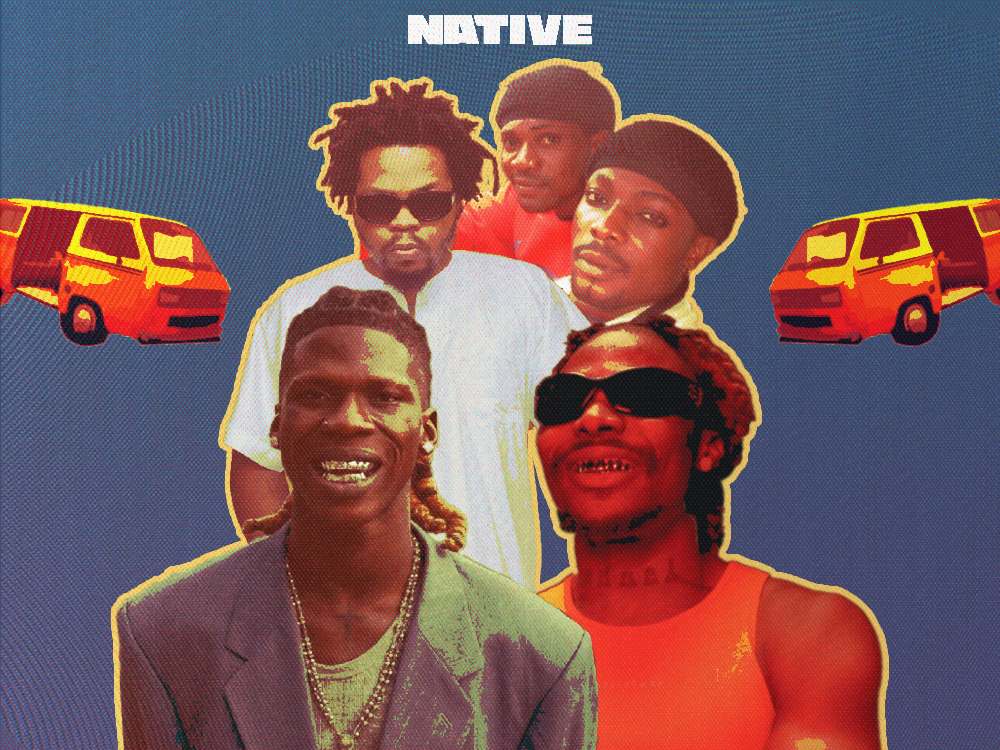
A 1-Listen Review Of Bella Shmurda’s Debut Album ‘Hypertension’

Bella Shmurda’s breakthrough came in 2019 with the Olamide-assisted remix of his single “Vision 2020.” The song captured an energy buoyed by the hunger to succeed and anger at a government’s failure to act to build a stable system for everyone to make it out of lack. A disciple of Nigeria’s street-pop scene, Bella poured his desires and aspirations into his well-received debut EP ‘High Tension.’ In one year, Bella Shmurda moved from a newbie to a promising star with an assemblage of impressive singles and guest appearances.

In 2021, he released ‘High Tension 2.0,’ the follow-up to his debut effort. The project marked a shift in Bella’s career; it bore the evidence of a change of fortunes: where ‘High Tension’ questioned the possibility of his dreams, ‘High Tension 2.0’ affirmed his new status while he worried about the pressures that came with his good fortunes. But Bella, while he struggled with label woes, kept his mind on the music.

A continuation of the electricity-themed projects, Bella has been teasing his debut album ‘Hypertension’ for a while. This is Bella’s way of saying he is operating at his highest form. He gave listeners a taste of the project with “New Born Fela” and the Omah Lay-featuring “Philo.” Now, the 15-track album ‘Hypertension’ is here. Time to give it a spin.


View this post on Instagram


A post shared by Yxng alhaji💐 (@bella_shmurda)

“NEW BORN FELA”

Confession time: When “New Born Fela” initially dropped in August, I wasn’t feeling it. It was no fault of Bella but I just couldn’t connect with the direction I sensed Bella might be heading for the album.  Since then, I haven’t given it another listen. But listening to it now, it’s making sense. This is Bella’s manifesto; he is backing himself on the new journey he is embarking on. And I absolutely love the use of the saxophone on this.

“ASE”

A smooth transition from “New Born Fela.” The saxophone is still playing. Now, the rhythm has shifted to a drums-and-percussion-driven one. The saxophone still plays underneath the drums and percussion, though. This is a prayer-filled track from Bella to his loved ones and the listeners.

“CONTRABAND”

Sonically, this one has no flourishes. It moves away from the lavish instrumentation on the previous tracks. Bella moves from singing to a lover to kicking against bad energy from detractors. Mellow vibe but is still a good one.

“LOOSE IT (FEAT. SIMI)”

A mid-tempo romantic tune on ‘Hypertension.’ I love Bella’s flow at the tail end of his first verse where he uses the words “Baby flamingo,” “Nintendo,” “Telemundo,” “Ata rodo” and “Commando.” Simi does a good job with her verse. She and Bella are feeding off each other energy on this track.

“OH OH OH”

It is a Dancehall vibe. “Pass me the kpoli make I feel alright/Make nobody come stress me tonight,” Bella sings. Here, he is in a playful mode; this is just an easygoing track to vibe to. There is a saxophone solo in the middle of the song. So far, I appreciate the attention to production on this project.

“CONVERSE (FEAT. PHYNO)”

Instantly, the beat demands you to dance. Wait, what language is Bella singing? Igbo? LOL. Appreciate the effort but please don’t beat up the language if you can’t speak it well. Amid the jolly mode, Bella drops some introspection, singing, “Latеly/I’ve been on my toes I’m working (Daily)/Daily (Daily)/Many friends dem dey for jail (Jail).” It is a southeastern affair as Phyno adds his Igbo raps to the love tune; a great choice for this track, indeed.

“FIRE”

Interesting production from Jimohsoundz. This track has a Dancehall rhythm to it but traditional African drums are playing underneath the beat. Bella gives a list of exotic activities he and his love interest can partake in. But he still has time for his haters as he sings, “Thunder fire busy body, talking my matter busy body.” Again, shout out to Jimohsoundz. His production is a standout feature here.

“LAGOS CITY”

Groovy guitar chords, followed by the saxophone. I like the beat, another Jimohsoundz production. “Many people dey for Lagos/Many car wey no be Lexus/Many fish wey No be Titus,” Bella sings. This is his ode to Lagos.

“LEVEL UP”

The emotion in Bella’s singing recalls “Ginger Me” from ‘High Tension.’  Here, he is praying for elevation so he can provide a good life for his family. Bella shows that despite his star status, there is still more for him to achieve.

“PHILO (FEAT. OMAH LAY)”

My jam! This track got me hyped for ‘Hypertension.’ I never knew a collaboration between Bella Shmurda and Omah Lay would sound really good. Omah Lay is clearly in his ‘Boy Alone’ zone and he delivers a short yet excellent verse. Also, KrizBeatz’s production is a sonic delight.

“NAKUPENDA (FEAT. L.A.X., NOT3S & BACKROAD GEE)”

British artists Not3s and BackRoad Gee bring their distinct styles to this intercontinental collaboration. Together with the Nigerian artists Bella and L.A.X., they flow well on ATG’s bouncy beat. Not much lyrically, though. Just something to bob heads to.

“NO OTHER (FEAT. VICTONY)”

I like the beat already. Dancehall stuff happening here. Quite funny when Bella tells his lover he wants “no other girl just my mother.” A short verse from Victony but it adds colour to the track, and his vocals are so enjoyable. KrizBeatz does another magic with the instruments enmeshed into one another. Excellent song with great potential to be a hit.

“MAN OF THE YEAR”

The mood is solemn. The percussion and drums are mid-tempo. “Mother selling pikin and the father marry daughter/Just for the money and the boy kill hin papa/Little children hawking and the government buy the water/Fake life fake news, who dey talk the matter?” Bella sings. Philosophical Bella is back; reminds me of “World.”

“ADDICTED”

Do not let Magik’s bouncy production deceive you. There is a dark theme here. Bella sings about indulging in drugs, alcohol and wild lifestyles. “Maami I’m addicted,” he sings. There is no plea for restitution though. “Nonstop, it’s the life that we chose,” he adds.

“SO COLD (FEAT. POPCAAN)”

The oldest track on the album. It follows the vulnerability of “Addicted.” Bella and Popcaan sing about the harsh realities in their lives, in Nigeria and Jamaica respectively. They share the pains caused by ineffective governments and the desire to create a habitable space in these realities. “Ain’t givin’ up the fight ‘til it’s over, yeah,” Popcaan sings. The grind for a better life goes on.

FINAL THOUGHTS

‘Hypertension’ proves that Bella Shmurda has matured as an artist, most especially with the production. The instrumentation on most of the tracks is intricate and the producers do a good job of offering Bella a sonic template that matches his ambitions. They are the stars of this album.

Thematically, there is no cohesion here. It feels more like a playlist that Bella uses to display his skills as an artist. He moves from braggadocio to romance to vulnerability but the songs would have hit harder if a thread connected them. Bella’s last project that had that cohesion was ‘High Tension.’ I came off that project realising that I had just listened to the aches and joys of an artist hungry for success. Such a connection can’t be found on ‘Hypertension.’

Still, I’m impressed by Bella’s effort. Hopefully, with time and experience, he will deliver a classic album.

Listen to ‘Hypertension’ here.

Featured image credits/NATIVE

Songs Of The Day: New Music from Psycho YP, Zlatan, Candy Bleakz & More

2022 is winding down, and it’s been an eventful year for Afropop. There’s been a torrent of great new music, spawning a massive stack of inventive smash-hit songs. From Highlife-infused Ghanaian pop, to the unrelenting force that is Nigerian street-pop to South Africa’s indomitable Dance scene, to tantalising Drill explorations in East and Central Africa, and much, much more, we’re living through abundant and musically expansive times.

Every week, many songs from African artists make their way to digital streaming platforms, and wading through them can be intense. That’s where The NATIVE’s Songs of the Day column comes in to help. We go through as many new releases as possible, spotlighting them here, two to three times every week. Today, enjoy new music from Bella Shmurda, Candy Bleakz, PsychoYP and more. Lock in!

Bella Shmurda – “No Other” ft. Victony

Street pop heavyweight, Bella Shmurda shares his 15-track debut album ‘Hypertension’ following the release of hit single “Philo” featuring Omah Lay. This counts as his first project since his 2021 release, ‘High Tension 2.0’ in collaboration with Dagbana Republik which features standout tracks like “Party Next Door” and “Far Away”. Closing out the new album is the Victony-assisted “No Other” which features rousing vocals on a mid-tempo melodious track. Produced by Krizbeatz, Bella serenades his love interest on the tuneful hook with lyrics such as “I only want you girl no other/No other girl just my mother.”

Mr Eazi – “Patek (Remix)” ft. Falz, Major league DJz and Dj Tarico

Just weeks ago, Mr Eazi released “Patek” and “Patek(Extended)”, enlisting Joey B and stellar production credits from DJ Tarico, more popularly known for “Yaba Buluku(remix)” featuring Burna Boy, Preck and Nelson Tivane. For the track’s remix, Mr Eazi brought on industry heavyweights, Falz and Major League DJz, elevating the track to new heights. The track which creates a perfect blend of Afropop and Amapiano while retaining the tracks enthralling instrumentals paired with a Falz’s witty lyricism. “Write to the rhythm and finish like shakespeare”, Falz sings as he reminds us of his masterful penmanship. 

Rema – “Dirty”

Clips of Rema on his ‘Raves and Roses’ tour have been making several rounds across social media platforms. Physically present or watching from the comfort of your bedroom, Rema’s star power and ability to connect with his audiences is undeniable. For his recent release, Rema takes us to the beach in the visuals for “Dirty” the third track of his debut album, ‘Raves and Roses’. The tracks sexual theme easily translates into its visuals, as Rema and his love interest don’t shy away from physical intimacy on this melodious number.

Candybleakz – “Dragon Anthem”

Fresh Meat (now known as uNder) alumni, Candy Bleakz is out with another track following the release of her 6 track EP, ‘Fire’ and a slew of singles including “Tinuku” and “No Pressure” assisted by Rexxie. On new single, “Dragon Anthem”, Candy Bleakz who often refers to herself as a dragon brings her usual fire energy to the empowering track. She sings empowering affirmations over the bouncy number with a befitting video where she’s surrounded by several beautiful women.

PsychoYP – “Stronger” ft. Zlatan

From BackRoad Gee’s “Under Attack(Africa Remix)” and “IC3” to his 2-track EP, ‘MIDLIFE CRISIS/WYDTM’ and a couple of singles, Abuja-based rapper PsychoYP has been stacking up a steady string of releases this year in his usual prolific manner. For his latest release, he enlists fellow Nigerian Rapper, Zlatan, to deliver his fierce flow on the track accompanied with his infamous adlibs. The pair go back and forth on the groovy, Amapiano infused beat, delivering hard-hitting bars about getting their shit popping.

Davolee & Zlatan – “West African Time”

Zlatan also features on new single, “West African Time” which enlists Nigerian singer-rapper, Davolee. This acts as a fellow up to tracks he dropped through the year including “Festival of Barz”, “Choose Your Hard” and “Bank Alert”. On “West African Time”, the duo deliver memorable lyrics to accompany the urgent and catchy beat.

Arkxd – “No Hook”

Arkxd is blazing a unique path with his trap bops. Slick metaphors and a gruff-inflected delivery are some of his standout qualities, and on new singlem “No Hook” he bares them for the world to see. This standout cut features on the artist’s latest project, ‘Failure Got Tired of Me’, and sounds cut from the lush perimeters of a Pop Smoke record. True to its title, Arkxd unfurls bar after bar, riding the production with graceful balance.

Featured Image Credits/NATIVE & Instagram:PsychoYP

For The Girls: Bellah Finds Strength In Vulnerability On New Album, ‘Adultsville’

For British-Nigerian singer, Bellah, music has always been a big part of her life right from an early age. As a child, her mother put her in musical theatre and drama school. At 17, she attended a Beyoncé concert, which further strengthened her resolve to be an artist. After she performed Beyoncé’s “Flawless” at her school’s talent show, she was invited to perform the song at a local festival, and at the festival, she found a management team and began artist development, which lasted for five years. “I have always, always wanted to be a creative doing musical things,” she tells NATIVE. “If I wasn’t like an artist, I’d probably do West End [theatre] and be like an actor. If I wasn’t doing that, I’d probably be dancing. I always knew I wanted to be a performer in some aspect.”


View this post on Instagram


A post shared by Bellah (@ibebellah)

In 2019, the North London-born artist, whose real name is Isobel Akpobire, released her debut EP ‘Last Train Home.’ She followed it up with 2020’s ‘The Art of Conversation.’ Initially drawing inspiration from her earliest musical influences—Stevie Wonder, Luther Vandross, Brandy, ABBA, Lauryn Hill, Destiny’s Child and Norah Jones—she began to add more names as she grew older: Kehlani, SZA, Daniel Caesar and H.E.R. Her big break came last year with her performance on COLORS with the Afropop-influenced “Evil Eye,” which has racked one million views.

Afterwards, Bellah began work on her latest EP ‘Adultsville.’ Executive produced by Grammy-winning songwriter and music producer Ari PenSmith, the EP deviates from the Pop leanings of Bellah’s previous works and leans into her love for alt-R&B. The project is an introspective coming-of-age story of Bellah’s transition into adulthood and the personal and familial tensions that accompany that transition. It also explores body image, insecurities, and social pressures. “There are so many underlying issues when you listen to the songs that so many people will relate to. And I’m glad because someone had to talk about it,” Bellah says.

Following the release of her new project, ‘Adultsville,’ she speaks with NATIVE about her career, ‘Adultsville’ and her place in the UK’s music scene as a Black woman.

The interview which follow below have been slightly edited for clarity.


View this post on Instagram


A post shared by Bellah (@ibebellah)

NATIVE: How was growing up like for you?

BELLAH: It was just me and my mom. I’m an only child. My mom is a single mother and I have got sickle cell. So it was not weird; it was intense because it was just us, and obviously complications with having a child with an illness. It was up and down but the love I have received from my mom is second to none and I wouldn’t trade it for the world. Everyone would look at it like a series of unfortunate events but I’d change it for the world.

NATIVE: Did you listen to a lot of music growing up?

Yeah. So my mom grew up in London and went back to Nigeria and came back to London. My uncles were born in Nigeria and then they came to London. So when they came, obviously, they were young fly guys, and they were listening to all the latest R&B and Hip-Hop and all of that; that was always playing in the house when I was younger. MTV was always on. It was always part of the routine in the house. We used to have loads of parties. Growing up, I remember lots of barbecues, so I was in the mix.

NATIVE: Was there any point your mom wanted you to change direction?

Hundred per cent support always. She’s never suggested I do anything else and that’s because she saw how passionate I was about it. I wasn’t like, “Oh, yeah. I think I’m good at singing, maybe I should try it.” It was like, “I’m gonna sing and this is what’s gonna happen. Full stop. Done.” I [didn’t] have a backup plan. I dropped out of uni and pursued it. She’s been backing me 100% all the way.

NATIVE: How was the period of artist development like for you?

It was intense, I would say. It was challenging. It was all the feelings. I was excited because I was getting into new spaces, meeting new people: artists, producers [and] being in the recording studio for the first time. But obviously, you have to really look at the work you have to do, which is writing songs, learning how to write a song, even that is a lot of things. What else? It was just intense. Yeah, I’m really glad for artist development because my first song that I ever wrote and my last song…My first song will never see the light of day. But at the time, I thought, “Wow. Just [wrote] a song. Let me put it out right now.” Do you get what I mean? So I’m really glad [about] my development. I’m so happy, so I don’t go out there and embarrass myself.

NATIVE: What is your creation process?

I love to have conversations and I love to have good food. That’s all. Good food and conversations make the best songs. I always say that because the best songs to me are the most relatable ones. And so if I can make a song out of the conversation we just had, then I’m on the right track. So yes, that’s the process. When people are comfortable and ready to just share experiences, then yeah. That’s the best way for me to make a song.

NATIVE: Do you write your lyrics first or do you listen to the beat before writing?

I like to listen to the music first. I think I’m a melody-driven type of person. I’ll have a concept of the song I want to do but I have no lyrics yet, just thinking about what I wanna do. Then once I hear the beat that inspires me because we are a melody-driven society. People love to hear instruments. They love to hear [a] melody and so it’s just a bonus if you get amazing lyrics on top but yeah, I listen to the beat first.

NATIVE: Tell us about the moment leading up to the release of “Evil Eye” earlier this year on COLORS. What did that mean for you?

It’s crazy because I have always wanted to do a COLORS but I did think it was a distant achievement. So when I found out that was going to happen, I was so excited and I thought I was going to do it for one of the songs I had on my previous project, like an R&B song. I didn’t know they had heard “Evil Eye” and they were like, “Please come on the show and do ‘Evil Eye.’ We are begging you.” So yeah, leading up to it, I was excited but I didn’t know what was gonna happen. I was still wondering, “Wow, this is actually gonna happen.” And even when I did it, I hadn’t finished “Evil Eye” four days before the actual moment.

So I performed a brand new song. The same way it’s brand new to everybody is the same way it is brand new to me as well. Obviously, you do it and then a couple of months pass and then they tell you, “It’s coming out. Here’s the video.” Honestly, I didn’t know what was gonna happen. Then it came out and it did what it did. It opened so many doors for me, so many opportunities. I got into the rooms of so many amazing creatives after that. I’m grateful to COLORS. I’m grateful [for] that moment for helping me along in my career.

NATIVE: You’ve also been busy this year with live performances. How has it been returning to the stage and supporting Tems on her show?

Oh, it was incredible. When we were allowed to be out and perform again, I didn’t realise how much I missed performing, and opening for Tems was amazing. She’s an amazing talent. And her team is just so special. What they [Tems’ management] are doing is incredible and they recognise that what we are also doing is incredible and they wanted to align themselves with me and my brand, which I thought was a really incredible compliment. So yeah, doing those shows was fun, incredible and amazing. I can’t even say any more good words about Tems and her team.

NATIVE: How does ‘Adultsville’ differ from your other bodies of work?

It’s grown-up. It’s more mature, it’s more evolved. The R&B is really R&Bing. I just think it’s a really good body of work. It’s my best year, I would say and I say that because I took time and I focused. I had intentions for this project. The projects that I have put out before, not that they weren’t intentional but they had never been as intentional as this. And I enjoyed working on the body of work that was as intentional as this. [On] the American side of things, they are really picking up on it as well. That’s essentially what I want to be: an international artist. I feel like it’s a little bit of my crossover project. It was hard making this project because it’s vulnerable, it’s raw, it’s honest but I’m so glad that I did. And I’m so glad that we are here.

NATIVE: The EP focuses on daily issues we experience mainly as women, from loving someone to being in toxic love situations and finally finding the strength to leave. How were you able to channel all these raw emotions into ‘Adultsville’?

For me, I feel like music is my outlet. I don’t talk [a lot] in real life, I don’t actually say things to people in real life. So music is just, for me, the best way to express all the emotions that I feel, that I have ever felt. And so it’s easier for me to write an honest song than to write an honest conversation.

NATIVE: Why so?

I think difficult conversations are really awkward. So, when you are able to [make] your feelings concise without anyone interrupting you into a song in a digestible manner, you know. You’re listening to music, you are not going to get angry at a song, that’s weird, you know. Music is already emotional as well and so I think it intensifies what you are saying ten times. Sometimes, even conversation can’t really convey what it is that you are trying to say. I think songs, for me, are my favourite way to show emotion.

NATIVE: What does the EP’s title mean to you?

I wanted it to personify this weird time in my life…this transformative time. At the beginning of the project, I said, “I have just got evicted from my youth” because I genuinely feel like no one prepares you for really being an independent person. There’s no preparation in the world that’s good enough for this period. And so I wanted to just make that a place for people to exist in and that’s what ‘Adultsville’ is for me.


View this post on Instagram


A post shared by Bellah (@ibebellah)

NATIVE: Now that you have dropped the EP, do any of the records resonate with you more, in comparison to when you were recording them?

Yeah, the title track. Sometimes, I need to really sing “Evil Eye” when I’m scared, anxious or worried and just remember what I was saying about myself, about my situation. Every day, the song that relates to me the most changes, honestly, because every day is always something.

NATIVE: What was it like working with Ari PenSmith?

Ari is one of the greatest songwriters that have ever come out of this country. He just knows music, man. He knows ball. And not only does he know it, he loves it. He’s been in the game for a very long time and you can see he hasn’t lost his love for it. He’s in love with music, I think, more now [than] he ever has been. It’s amazing to work with someone who just loves music the way he does. It’s refreshing to see someone as inspired as him. Sometimes, he will call me at 2am, “Hey, I have got an idea for a song,” and I’m like “God. Do you not sleep? Are we not sleeping? Is this not what we do?” But honestly, he’s one of the greatest people I have ever worked with.

NATIVE: In some of your music videos and on the cover of ‘Adultsville,’ there are dark-streaked tears on your cheeks. Does that carry meaning?

Oh yeah, I was saying yesterday that you have to cry sometimes; crying about adulthood, being an adult, crying about where you are but I was like “Let’s make it pretty. Let’s make it fashion.” Depression but make it fashion.

NATIVE: Talking about fashion, what informs your fashion sense?

I really like being creative. I love pushing the bar and elevating [it]. I have an amazing stylist [and] we always try and be a little quirky, a little different. Obviously, we want to give pretty black girl at all times but we do wanna give fashion. We want to give avant-garde artist, especially in the UK, [because] we don’t really have a culture of pushing fashion or pushing the bar or being extravagant or being out there. So we try and do that ourselves.

NATIVE: How did your collaboration with Show Dem Camp come about?

Show Dem Camp is part of Tems’ management team. We met prior and I had a session with them and it was so fun. And just knew that the whole concept of wishing people well is funny to me because someone has to be lying here. You have been hurt, you have been crying, you have been down bad; sometimes, you don’t wish people well, you know. So people don’t wanna appear as [having] bad vibes but I’d rather you openly say that you are bad vibes than hide behind what you are trying to…I’d rather you be honest. And I think that’s where that song came from. It was a fun session.

NATIVE: Are there collaborations you are looking forward to?

Yeah, I want to work with so many people, so many R&B girls that I want to work with. There’s also so many Afrobeats women and men that I wanna work with; I just want to see what the future holds basically. I want to see who I come into contact with because I’m open to working with anyone that’s fire, just dope.

NATIVE: Are there any artists in Nigeria whose works you admire?

There’s this girl and I don’t think she has put out music yet but she’s called Firefly. She’s incredible; she’s got an incredible voice. I think Nonso Amadi is fire. Talent in Nigeria is just endless and boundless. They’re just incredible. So yeah, those are the two that off the top of my head that I’m really looking forward to seeing their journey.

NATIVE: Have you faced any particular hurdles to get to this point in your career?

I have experienced challenges. Me doing R&B in the UK is a challenge in itself; it’s hard, I’m basically making music in a market that doesn’t want to hear the music that I’m making. So it’s God that is getting me through all of this. I have to just deal with internal battles; obviously, the basic common ones: she is a dark skin girl trying do…So yeah, it’s all a lot. But again, there are obvious obstacles [and] because they are so obvious and so big, I can’t do anything about it, you know. So I just go, I just continue and see what I can do in the midst of the rubbish.

NATIVE: What are some of the lessons you’ve learnt about staying true to yourself in the industry?

Being authentically yourself is your golden ticket to anywhere. I think that encompasses everything. Obviously, don’t give up because you are closer to whatever breakthrough than you think you are. Honestly, it’s hard work but it’s the work that you asked for. I have come to realise that a lot of the things I have gone through, I have actually asked for it but I just didn’t know it was going to look like this. When you are younger and you are praying for something and God is giving it to you, and you are like “Ahn ahn. This is not what I was wanting. Thank you.” But you got exactly what you are getting, what you prayed for, it just looks a lot different or there was a lot of added stuff that you didn’t know about. So yeah, I think those are the lessons: being authentically yourself, not giving up and not being frightened or swayed by the obstacles that come with what you prayed for.

NATIVE: What is something you want to tell your listeners?

I love them and they should keep streaming ‘Adultsville.’ I’m gonna be releasing some fire shit next year and it’s gonna be fun. But they should continue streaming.

Stream ‘Adultsville’ below.

Featured image credits/NATIVE


ICYMI: ‘Blood & Water’ Returns To Netflix For A New Season

‘Blood and Water’ Returns to Netflix for a third season

After a whole year-long wait, the ultimate South African teen drama ‘Blood & Water’ is returning to our screen on November 25th. Set in South Africa, ‘Blood & Water’ follows Puleng Khumalo, a 16-year old girl who’s been living with the ghost of Phume, her older sister who’s been missing since birth. It’s a main plot that’s interesting, as it is rooted in Puleng’s somewhat newfound curiosity and several events from the past that keep on haunting the present, both of which form a formidable anchor as the show moves forward.


View this post on Instagram


A post shared by Netflix South Africa (@netflixsa)

Since the season one premier during the 2020 COVID-19 lockdown, Neflix’s ‘Blood and Water’ has captured the attention of audiences in South Africa and beyond with its gripping, suspenseful story and mysterious plot line. A combination of comedy, romance and mystery, the series follows the lives of high school kids from the perspective of Puleng, played by Ama Qamata, as she challenges the status quo and institutions standing in the way of her truth. The show tackles a number of issues prevalent in society including the child-kidnapping syndicate, drug deals, teacher-student relationships, competition, paternity tests and more.

‘Blood and Water‘ offers a refreshing take on drama productions emanating from the film industries in these parts. More often than not, young adults are marely used as an adjunct to the film, with major emphasis on the older characters. On ‘Blood & Water,’ the reverse is the case because the show gathers a cast of young South African actors, capturing the all familiar teenage angst without leaving out all the exciting drama and plot twists.

For its third season, we’re back at Parkhurst High in what promises to be an enthralling drama-filled plot. This new chapter features the original cast including Puleng played Ama Qamata, Fikile played by Khosi Ngema, Wendy played by Natasha Thahane, Karabo played Thabang Mobala and more. As gleaned from the recently released trailer, some new faces will also be added to the mix, stirring the never ending drama in Parkhurst High. Stay tuned.

Watch the official trailer of ‘Blood & Water’ below.


Featured Image Credits/NATIVE

Essentials: Iyanya’s New Album ‘The 6th Wave’ Reinforces His Star Power

Throughout his career, Iyanya has had a fair share of successes and difficulties. After winning the inaugural season of MTN Project Fame West Africa in 2008 and putting out his R&B-leaning debut album ‘My Story’ the following year, he embraced his Afropop tendencies on his 2013 sophomore album ‘Desire,’ which spawned the hit records “Ur Waist,” “Kukere” and the Wizkid-featuring “Sexy Mama.”  At one point, he was something of a sex symbol with his steamy songs and chiselled physique.

A bitter split with Made Men Music Group’s CEO Ubi Franklin threatened to truncate Iyanya’s career but he held his ground, signing with Mavin Records and releasing ‘Signature’ EP in 2017. Iyanya and Ubi Franklin have resolved their differences and he is back with Made Men Music Group. Before that, he kept on releasing singles after singles and 2020’s ‘For Your Love’ EP.

Iyanya made an inspired comeback early this year with the Ayra Starr-assisted “Call.” Produced by 1da Banton, the mid-tempo number was evidence that Iyanya has one of the best vocals in the country. That evidence began clear months later when he released the Reward Beatz-produced “Like,” which featured Davido and Kizz Daniel. On his sixth body of work aptly titled ‘The 6th Wave,’ both “Call” and “Like” find a home on the eight-track offering with A&R work by Ubi Franklin and executive production by Iyanya.

On “Call,” Iyanya seeks forgiveness from a lover as he sings, “After I chop one, I take off/I don miss a good thing, na make up/That thing wey happen na set up/That thing wey lead to the break up/And if you don’t mind, let’s kiss and make up.” On her part, Ayra Starr takes on the role of the nagging partner who refuses to come to terms with her lover’s non-commitment. On “My Lady,” Iyanya has nothing but praise for his love interest as he expresses his commitment to her, singing, “I dey your bus stop/I no fit japa/You be my last card.”

Nigerian artist and music producer Shugavybz takes the larger portion of the production credit on ‘The 6th Wave.’ Out of the eight tracks, he produced four, leaving the rest for 1da Banton, Niphkeys, Yung Alpha and Reward Beatz. On “Sweet Argentina,” he fuses a Highlife rhythm for Iyanya and Ghanaian artist Kuami Eugene who shower praise on their sweethearts. He provides an infectious bounce on the 5ive Rings-featuring “Zone” as Iyanya goes full-on sensual. In his verse, the UK artist offers succour to a woman wounded in a past relationship. “Your ex nigga nah he ain’t fooling me/I don’t know how you dealt with his foolery/He never held you down and now you deeping it huh/I just brought to life the things he didn’t see in you huh,” he raps.

On the Niphkeys-produced “Scam,” Iyanya promise a lover not to take her affection for granted. In his verses, he employs humour and a reference to Oxlade’s “Ku Lo Sa” to paint his picture of commitment. On “Milla,” he and Yung Alpha, who produced the track, lament about the women in their life wanting only money from them. Yung Alpha’s Dancehall influences are on display from the production to his style of delivery.

The trio of Iyanya, Davido and Kizz Daniel shine on the up-tempo “Like.” Iyanya and Davido’s verses are enjoyable but it is Kizz Daniel’s chorus that burnishes the track. The “Buga” crooner shows his mastery of heartfelt ballads, since the days of “Mama” and most recently “Cough (Odo).” On “One Side,” the last pre-released track on the project, Iyanya brings sensual energy to the love tune. “Your body must to kill a man, I no mind to be one of them/Kolombi your body na im I wan do make my mind de rest (oh no)/E better make I de with you cos these olosho don dey cost/Baby turn around make I come on top,” he sings.

The 6th Wave’ is the beginning of a new phase for Iyanya. There is a freshness to his recent outputs, demonstrating a desire to return to the upper echelon of Nigerian music. With his beef with Ubi Franklin squashed, it is an exciting time for Iyanya’s fans. With this project, the singer proves that he hasn’t lost his magic touch and just needs the right push to return to where he belongs: on the charts and in the hearts of music lovers.

Stream ‘The 6th Wave’ below.

Featured image credits/Spotify


ICYMI: Victor Ekpuk is inspiring a generation of multi-visual artists

NATIVE Exclusive: Victor Ekpuk Is Inspiring A Generation of Multi-Visual Artists

Last Friday, the annual Design Week Lagos played host to Victor Ekpuk. The renowned multi-visual artist led a very interactive and immersive session, intimating the audience on his culture-inspired practices. Walking into the hall, one’s attention was quickly drawn to the pieces of Ekpuk displayed on the projector’s screen, epic and colourful, created with intricate Nsibidi expressions which were fashioned into the coherent theme, depending on how intimately one connects with its language. 


View this post on Instagram


A post shared by Victor Ekpuk (@victorekpuk)

In a career that spans three decades, Victor Ekpuk has gone from an alumni of Fine Art at the Obafemi Awolowo University into a global art figure. He has held several exhibitions—New York, Paris, Cuba, Senegal, etc.—and has been commissioned to create monumental pieces for prestigious organisations like The World Bank, the Memphis Brooks Museum, Arab Bank Corporation and many others. Ekpuk’s signature technique has also adorned re-issued copies of Chinua Achebe’s great works of fiction, including ‘Things Fall Apart’ and ‘Arrow of God’

In the aftermath of 2020’s global lockdowns, Victor Ekpuk expanded his mediums of expression, using digital art and VR presentations to reimagine his works. That was demonstrative of Ekpuk’s vision to link the past and the future—even though his descendant Ekpo society of Akwa-Ibom are custodians of the Nsibidi, his willingness to explore new terrain ensures that representations of the culture would always be kept alive, even far away from its origin in southern Nigeria. 

Following his presentation at Design Week Lagos, The NATIVE engaged Victor Ekpuk in an exclusive interview. His words which follow below have been edited for clarity. 

NATIVE: What were the roots for you in what you do presently?

VICTOR Ekpuk: I’ve always been an artist even before I could read and write. I’ve always known how to represent things around me; while my mates were playing football, I was busy drawing on the sand outside of my house. It was the only thing I was really good at, so it wasn’t no surprise to anybody that I’ll go to college to study Fine Art. My mother encouraged me to pursue it, when she saw that I had the talent. When I was in Primary 2, I won a division wide competition for Art. 

NATIVE: How did you start off professionally?

That should be when I left the University of Ife in 1989 or something like that. I started working at the Daily Times as a cartoonist and illustrator. If you go back to the newspaper’s archives, you will see my work. I believe that I am an artist, I can do all things. So I don’t set those limits for myself about what this is and what is that—I can draw and I can interpret others. That was another facet of my imagination which I engaged at the time, it was something that I enjoyed doing, it was my opportunity to talk back at the government of Nigeria and I did that everyday. 

NATIVE: When did you have a big break as an artist?

While I was working at the Daily Times, I also had a studio in my house. So I was painting; I’ll go to work at the Daily Times, I’d come back home and paint. I was showing in galleries in Lagos, and I was doing international exhibitions while that was going on. I guess the first time the Smithsonian National Museum of African American History and Culture was in 1998 or thereabout. 

NATIVE: What was the nineties art scene like? 

The art scene in the nineties was vibrant, but mostly expatriates were buying our works. But I’m happy to see now that Nigerians are also consuming their own culture and buying works from Nigerian artists. ‘Cos we were mostly selling to only oyibo expatriates; there weren’t a few galleries, but now the whole place is exploding with so much culture. We have Design Week, we have Fashion Week, we have ArtX. Lagos is becoming a really important centre and it’s encouraging a lot of young artists and designers to come out and have their work seen, which is really great. 

NATIVE: Your works are sometimes rooted in Afro-spiritual symbolism. What are your origins in this field and how do you interpret its vision?

From my culture—I investigate my own culture. I’m interested in the history and culture of my people. So I found [Nsibidi] to be a form that really informs my work in a way that it attracts ideas. That was a platform from which my own ideas kicked off. 

I see the yearning for people to go back to their cultural roots and be proud of it because for a long time, Westerners have always come and taken it. So it’s a good thing we’re focusing now, which was the point of my workshop today, to encourage young artists and young designers to look within what they have and be inspired by it. 

NATIVE: What do you consider the importance of Design Week in bringing art communities together, especially having figures like yourself who connect Nigerian art with happenings in the diaspora? 

I think it’s very important, because it is a program for which its time has come. In terms of encouraging young artists or bringing the awareness that there is culture we’re proud of, and bringing the awareness of using designers that are available to encourage them to create and people would begin to consume what is created here. Cos I’m seeing a lot of these designers that are showcasing here have their factories here in Nigeria but some Nigerians don’t know that, they think they always have to import from Turkey. 

I was reviewing some of the questions that were coming in, that there’s a difference between art and design. There’s a disconnect between that and what is really happening. For a long time we didn’t see ourselves as creators. But when you begin to let people know that, let them see the obvious that is right in front of them. That’s what we’re talking about. When you look at a mask, what do you see? Do you see design? Do you see an artist who was very creative to create this beautiful piece, or do you see something else? 

NATIVE: What is your opinion of the young undergraduates that were here today? What do you think they need to advance further in their creative careers? 

I think they need to attend more conferences and things like these, to be inspired. They need to read, pick up more on their reading actually because there’s a lot that is floating on the internet, so much knowledge, depends on what you’re looking and what you’re reading. The internet has liberated a lot of things, you don’t necessarily need to have [physical] books anymore. Okay, so, traditional designs or you want to see Yoruba stools, you’ll see so much. The young woman was asking me, ‘I’ve never seen Nsibidi’. Look at the internet. They need to have dialogues like this, with the other professionals who are doing things. I’m happy that I was here today to at least impart my own knowledge and leave the people do what they’ll like to do with it.


View this post on Instagram


A post shared by Victor Ekpuk (@victorekpuk)

Featured image credits/NATIVE 

Lagos Fashion Week returns with some of the best innovators in African fashion

Heineken Lagos Fashion Week is undoubtedly one of the most highly anticipated events in the social calendar. This week, the hot ticket event will reopen its doors to some of the most innovative designers in African fashion. For 11 years, LFW has shone a bright light on the best designers across the continent, and set them on the path for global success. This season, the theme of Collaboration, Co-creation and Community takes centre stage as the show commits to stirring up discussions about sustainability. 

This year’s iteration will be held across four days from the 26th of October up until Sunday the 30th at the Federal Palace Hotel in Victoria Island. Gracing the stage this will are contemporary fashion brands such as Tia Adeola, who recently debuted her 2023 Spring collection at New York Fashion Week to new designers such as LUL’LASTUDIO, older players such as Ugo Monye and cult brands such as Dye Lab.

The theme of sustainability in the fashion industry remains a core aspect of this years show with designers like HOUSE OF AKACHI, Olisa Kenya, Sahrzad Design, and many others presenting outstanding collections. Also set to showcase the wealth of talent across the African continent, SA collectives is slated to present a group of South African Designers including Thando Ntuli’s MUNKUS, Mzukisi Mbane’s Imprint and Ezekhetho by Mpumelelo Dhlamini.

Ahead of tomorrow’s kickoff event, we take a deeper dive into some of the designers set to grace the runaway throughout the week. From Tia Adeola to Kadiju, here’s what’s in store this fashion season.

TIA ADEOLA

Tia Adeola began her eponymous brand at 18 years old and already, she has staked up a talented roster of clients such as SZA, Cara Delevinge, Gigi Hadid and more, who have donned her renaissance-inspired designs. Earlier this year, she released a collection of renaissance inspired silhouettes with her signature ruffles and sheer fabrics, housing messages directed at the Special Anti-Robbery Squad (SARS). A poignant graphic on one of the slip dresses of the collection read “Sorrow. Tears. Blood”. With every passing collection, Tia Adeola continues to break the mould for her peers and generations to come.


View this post on Instagram


A post shared by Tia Adeola (@tiaadeola)

LUL’LA STUDIO

Fresh off Paris Fashion Week with their SS23 (LUL)LESSNESS collection, LUL’LASTUDIO is slated to showcase a new collection on the last day of fashion week. Founded by Lu Adesola in Lagos, Nigeria, LUL’LASTUDIO offers a fresh perspective on unique prints inspired by the designer’s cultural and artistic background. Barely a year since its inception, the brand has already established itself as a force to be reckoned with, and stands out for its use of international and locally sourced fabrics, including aso oke and other recognisable prints. 


View this post on Instagram


A post shared by LUL’LASTUDIO (@lullastudio)

DYELAB

DYELAB is Lagos-based brand with the cult following to match. Fusing the ideals of extreme comfort and style with their versatile range of loungewear, the brand has been a go-to for many local buyers prioritising leisurewear. The brand’s popular agbada’s which are sold in various colours and prints have been donned by everyone from Teezee to Eniola Hu. DYELAB was founded by Rukky Ladoja and employs a variety of dyeing techniques to create a collection of products that provide practical and artisanal sensibilities. Besides their hand-dyed colourful kaftans, they collection also includes culottes, totebags, jumpsuits and much more.


View this post on Instagram


A post shared by DYELAB (@dye_lab)

KADIJU

Kadiju is a womenswear clothing brand in Lagos, pushing out ready-to-wear designs through deliberate and conscious production techniques. Founded by Oyindamola Aleshinloye, Kadiju marries complexity and sophistication with their brightly coloured fabrics and voluminous silhouettes. The brand’s maximalist works are driven by its desire to redefine ideas of sartorial beauty for African women.


View this post on Instagram


A post shared by KADIJU (@kadijuofficial)

HOUSE OF AKACHI

Just last year, AKACHI was established by Nigerian-American designer Nneji Akunne as a fashion house dealing with a variety of leather goods, accessories, clothing and perfumes. The brands ethos centres around meticulously hand crafted pieces, sourced from vintage and recyclable fabrics, in an attempt to reduce textile waste in our environment. The brand also creates a nexus between core traditional values and new technologies to produce one of a kind pieces in limited quantities.


View this post on Instagram


A post shared by House of AKACHI (@houseofakachi)

MUNKUS

MUNKUS is a South African luxury brand showcasing this year as part of the SA Collectives. Through distinct prints, patterns and colours, the brand tells a story that is unique for each wearer and channels a youthful experience fit for any occasion. Rooted in novelty and quality, MUNKUS aims to remind its wearer of their roots and connect them to their humble beginnings with a series of classic silhouettes inspired by South African fashion in the late 80’s and 90’s.


View this post on Instagram


A post shared by MUNKUS™ (@munkus_)

Featured Image Credits/NATIVE

What’s Going On: President Buhari’s 90-Day Flooding Plan, Kampala’s Surge In Ebola Cases & More

“What’s Going On” Tallies Notable News Headlines From Across The Continent — The Good, The Bad, And The Horrible — As A Way Of Ensuring That We All Become A More Sagacious African Generation. With This Column, We’re Hoping To Disseminate The Latest Happenings In Our Socio-Political Climate From Across The Continent, Whilst Starting A Conversation About What’s Important For Us To All Discuss. From Political Affairs To Socio-Economic Issues, ‘What’s Going On’ Will Discuss Just That.


NIGERIA’S PRESIDENT BUHARI GIVES MINISTER 90 DAYS TO PRODUCE FLOOD PREVENTION PLAN

Since June, several states in Nigeria have suffered heavy flooding, leading to massive loss of lives and properties. Although the Nigerian government has been slow to act against the heavy torrent, social media and other news platforms have regularly carried these swathes of unfortunate events, partly caused by heavy rainfall and the overflowing of the Lagbo dam from the neighbouring country of Cameroon. 

Across the country, more than thirty states have experienced varying degrees of flood leading many to question the dedication of the present administration in regards to safeguarding its citizens, especially as environmental bodies had warned earlier in the year of severe rainfall throughout 2022. In a very late response, the President Muhammadu Buhari has directed the Minister of Water Resources Suleiman Adamu to lead the Ministries of Environment and Transportation in developing a Comprehensive Plan of Action within ninety days. 

This comes after the President’s vague order for governmental agencies dealing with the flood in Bayelsa, which is the most severely affected state in the country after 700,000 people have been displaced in over 300 communities. Corporate bodies and individuals have donated relief to the state, while residents continue to call on the President to personally visit these places to assess the situation.

Recently, on Monday, the Lagos State government issued new updates on the flood warnings to all waterfront residents of highbrow Ikoyi, Victoria Island, Lekki and coastal areas of Epe and Badagry to be wary of backflow due to high tide in the Lagos Lagoon. Tunji Bello, the State Commissioner for the Environment and Water Resources, also shared that the earlier flood advisory issued by the State to the effect that all those on the banks of Ogun River, particularly residents of Ketu, Alapere, Agric, Owode Onirin, Ajegunle, Alagbole, Kara, Isheri Olowora, Araromi, Otun Orisha community, Agiliti, Maidan, Mile 12, Odo Ogun, Owode Elede, Agboyi I, Agboyi II, Agboyi II and Agboyi III remain vigilant at this period.

NINE DEAD AS ISLAMISTS ATTACK SOMALIAN HOTEL

Over fifty people were affected in a devastating attack by islamist terrorism group Al-Shabaab. According to reports the attack on the Somalian hotel started around 12:45 local time and lasted close to six hours after three attackers inside the hotel were shot dead by Jubaland state security forces. Nine people were confirmed dead and 47 injured, including students who were leaving a nearby school at the time of attack. 

The hotel attack was the Shebab’s latest in a few months, after previously hitting the capital Mogadishu and central Somalia. It was carried out by four men including a suicide bomber: he had arrived at the hotel in a car which he blew himself in, before three gunmen proceeded into the building. Al-Shabaab has claimed responsibility for the attack, saying they were targeting a hotel where members of the administration gathered. 

President Hassan Sheikh Mohamoud has declared an all-out war against the group, who have intensified their operations in the country in recent months. That was the guarantee in late August when a 30-hour attack on a hotel left at least 21 people dead and 117 injured. The President called for residents to stay away from areas controlled by Islamists as the security forces and local militias launch operations in the centre of the country. Some areas were reclaimed as a result, but overall the situation is very bleak. Somalia is also threatened by a looming famine, caused by the worst drought the country has seen in forty years. 

REPORTED RISE IN KAMPALA’S EBOLA CASES 

Health authorities in Uganda have announced that at least 15 people had contacted the Ebola virus in the capital, Kampala. The capital is now the sixth district in the country to confirm the virus’ presence, after the district of Mubende first identified an outbreak. 

Residents have bemoaned the outbreak, quite scared for what the future holds. It’s especially tough on health workers who must respond quickly and professionally to suspected cases, while there’s a possibility of lockdowns to prevent further outbreak. With the Covid-19 pandemic still a present worry, Uganda fully resumed regular social and professional activities not long ago. Obviously it’s a terrible situation for the economy, with many countries around the world still finding their feet. 

The good news for Uganda is that they’ve handled previous similar cases brilliantly. Strict measures taken during the pandemic averted a high rate of casualties. “With the experience we have had as Uganda in managing Ebola outbreaks, we have put on all that it takes including restricted movements in the epicentre to ensure that this current outbreak is controlled,” said Emmanuel Ainebyoona, the senior communications officer at the Ugandan Ministry of Health. “The cases we are seeing for instance here in Kampala are listed contacts to cases confirmed in Kassanda and Mubende so that shows that we are on top of [the situation]”. 

LAGOS BUS DRIVERS THREATEN BOYCOTT OVER EXTORTIONS 

A boycott of roads has been threatened by drivers in Lagos state. Their statement was made through the registered Joint Drivers Welfare Association of Nigeria. Across the state, complaints of extortion and harassment of drivers by motor park employees and garage management have led JDWAN to call for seven days mass protest and total boycott, starting from October 31, 2022. 

The association asked the government to intervene, mentioning the areas of alleged extortions: Agric Bus Stop, Badagry, Ikorodu, Ikeja, Mile 2, Seme, and many parts of the state, saying they paid as high as N5000 and N7100 at some places. JDWAN’s National Leader, Chairman, Secretary and Assistant Secretary; Akintade Abiodun, Opeyemi Suleiman, Ajimatanarareje Feyisayo, and Taofeek Hassan respectively, signed the statement letter made available to PUNCH Nigeria

“On a daily basis,” part of the statement read, “we lose half our income to motor park boys; we pay exorbitant charges in the garages and at every bus stop where we drop off passengers; whether we pick up passengers or not, we pay morning, afternoon and night. Some routes have 25 bus stops which also serve as illegal tax collection avenues”. The statement also listed a number of demands, and in the case where they aren’t met, “will attract more protest and total boycott. JDWAN is resolute in pursuing justice by all legitimate and peaceful means available”. 

Featured image credits/CNN

TurnTable Top 100: Kizz Daniel & EMPIRE’s “Cough (ODO)” debuts at No.1

Kizz Daniel has done it again. Following the release of his record-breaking “Buga (Lo Lo Lo)” earlier this year, the EMPIRE artist has now released new single “Cough (Odo)” which debuts at No.1 on the TurnTable Top 100 this week. “Cough (Odo)” garnered 10.5 million streams and 70.2 million on radio plays, holding the largest streaming week tally in Nigeria in a week.

It usurps the previous record held by Asake’sTerminator” which tallied 6.83 million streams and 55.9 million in radio reach in its debut week.Cough Odo makes history as the second song ever to debut at No. 1 on every available platform in Nigeria and also the first song without the mention of its title in the lyrics. 

After three weeks of reigning the charts, Ayra Starr’s “Rush” slides to No.2 following the release of the deluxe edition of ’19 & Dangerous,’ her 2021 debut album. Young Jonn’s “Xtra Cool” retains its No.3 for the second week after the release of his album ‘Love Isn’t Enough Vol 2’. Following closely at No.4 is Asake’s “Joha” which drops down from its previously held two-week dominance at No.2. 

Ahead of ‘Young Preacher’ release, Blaqbonez & JAE5’s “Back in Uni”  takes a significant leap from No.10 to No.5 with 46.3 million in radio play. “Back To Uni” is JAE5’s top charting song in Nigeria as an artist and second charting as a producer after “It’s Plenty” which peaked at No.3. Elsewhere on the charts, “Electricity by Pheelz and Davido moves down to No.6 this week.

It is followed by Asake’s “Terminator” at No. 7 and Bella Shmurda and Omah Lay’s “Philo” retains its No.8 postion. The song might make an unexpected comeback ahead of the release of Bella Shmurda’s project ‘Hypertension’ tomorrow.  Asake’s “Organise” drops to No.9 this week and is followed by previous chart topper, “Bandana” by Fireboy DML and Asake at No.10. Outside the top ten, Johnny Drille’s “How Are You (My Friend)” debuts at No.33 and T.I Blaze’s “LOCK UP” debuts at No.42 on the charts this week.

You can read the full breakdown of the charts here

Why R&B Deserves More Recognition In Nigerian Pop Conversations

The tree of African-birthed music has many offshoot branches, of which R&B is one of the strongest. As an art form, it’s also perhaps the most underrated among genres created by Black people—wielding neither the sonic flamboyance of Jazz or the lyrical ingenuity of Rap, the rhythm and blues is true to the natural zeal to sing one’s joys and pains into existence. A miracle of popular music, R&B’s embodiment of vocal strength and melodies as a portal to great emotions have been channelled and tweaked over the decades, and Nigeria hasn’t been missing from this conversation. 

Over the past three years, there’s been a consistent movement of R&B-influenced acts into the centre of the country’s mainstream pop scene. To chart that progression would necessarily summon the history of our music, but this is the truth: R&B has long resided in the shimmering glare of mainstream attention, but very sparingly has its notable practitioners been spread across eras. Presently, there’s a lot more musicians audibly influenced by the sensibilities of the genre, even though the focus on “Afrobeats” have led to some obscuring of their skillset and the musical roots that informs them.


View this post on Instagram


A post shared by Fireboy DML (@fireboydml)

Just as Western Hip-Hop/Rap spurned imitations from early pioneers of the Afropop genre, so also did R&B influence an entire generation of hitmakers from 2Baba who endlessly shared his affection for women to soul-singer Asa to P-Square, Chidinma, Omawunmi, Simi, Flavour, Praiz, Nonso Amadi and many more. Perhaps the biggest primer for R&B’s re-entry into cultural dominance can be traced to YBNL/Empire’s Fireboy DML. Though many listeners got to know him from Jealous,” the groundwork for the record’s success was accumulated during the YBNL Compilation tape. Before the pandemic came into sight, before the sound of Nigerian pop slowed considerably, Olamide was strengthening the foundations of his house. The compilation project was the first he’d put together as a label, and the space afforded to Fireboy DML proved that he heard something in his artistry. 

Anyone who heard that project could bear witness to that something. From the impeccably-sung notes of Fire Down to the sombre reflections in I’ll Be Fine and Finally,” a riveting duet with Temmie Ovwasa, the youngster clearly had the structures of tradition going for him. He became a quintessential old soul in the style of Leon Bridges, connecting the experiences of his generation to the sounds of his foundational years. He tried to etch that awareness into his chosen descriptor, referring to his music as Afro Life which—even though it technically isn’t a genre—has the sort of quirky balance you’d expect from a musician who reveals himself as moulded by the sensibilities of an earlier time. 

Those qualities emerged wholly in ‘Laughter, Tears & Goosebumps’, an album that’s largely referred to as classic. If Nigerian pop thrives off hyper-masculinity and the sexualisation of women, the ethos of R&B prefers a less-brazen and more respectful path to highs of a sensual nature. Need You was expository of the album’s sensitivity, constructed on warm guitar notes which paved the way for honest, lamba-streaked appraisals of his love interest. The rest of the album runs on that gamut, only colouring the production with more pomp which spawned hit records Vibration and Scatter”. 

As initial buzz around ‘LTG’ progressed, it was the slow burning R&B records which took the centre stage. Energy and “Like I Do” were particularly invigorating, especially the latter which was produced by P Priime and features among the artist’s most exhilarating performances. Cooing, ad libbing, and really singing, it was reminiscent of Styl Plus’ prime years, a golden era in the sprawling field of  Nigerian music.

In the years since Fireboy DML has diversified his output, releasing the eclectic, disco-influenced ‘Apollo’ and ‘Playboy,’ his most conventionally pop album. Other artists however carry the same ethos into their music—the pandemic was perhaps influential in that boom, but throughout that year and afterwards there’s been a recognition of one’s softer parts, especially in subjects of romance. Unlike Fireboy DML however, some of these musicians embrace a post-R&B sensibility—theirs are suffused in external influences, with the production often setting the mood as opposed to singing the emotions into existence. 

An important figure in that conversation is melvitto, whose 2019 project ‘The Night Is Young’ showcased his ability to craft eccentric beats attuned to the R&B sensibilities of his guests. Gabzy and Oxlade were standout performers, shedding layers of intimacy on In Fact and “Wait For You” respectively. They have both worked with the producer afterwards, especially Gabzy who embodies the experimentation the genre has found in the hands of musicians who operate just outside the glimmer of popular music. Yinka Bernie, WhoIsAkin, to an extent Odunsi (The Engine), Tay Iwar, Ric Hassani, Majesty Lynn, Ria Sean and Azanti all have enviable projects between themselves, using their experiences of masculinity and heterosexual romance to express poignant emotions. 

Hassani’s Thunder Fire You was an internet sensation at some point—many thought its mix of harsh language and tender singing was funny, but that was really demonstrative of Nigerian-esque stories and how beautifully R&B carried them. 2:25 was an important part of Whoisakin’s ‘Full Moon Weekends,’ relaying bad boy lyrics with a cool tenderness, and in the second verse he actually sings, “2000 R&B typa love is what I want”. Bernie’s ‘Something New’ is emotionally charged with images of mental awareness, while Tay’s ascension to the zenith of pop spaces has been hinged on his mastery of the genre, an ability to relate timeless tension with unparalleled ease and complexity.

Similarly, African women are tapping into a modern take on the R&B coming out of Nigeria. The trio of Tems, Ayra Starr and Fave all lean towards R&B, even though they’re like Fireboy DML in that colourful pop-esque beats have been purposefully employed in their oeuvre as well. Their deep cuts are often tied to their purist selves however, with records like Higher, Beggie Beggie and N.B.U demonstrating that quality. Like their male counterparts, details of troubled romance are etched into the records but with an even more powerful edge of their own agency. 

Outside the popular names, there’s a bevvy of women musicians who are stylishly wielding the fizzy allure of R&B as well. Too many to mention all, the figures of Tomi Agape, Joyce Olong, Ria Sean, Tomi Owo, Olayinka Ehi and Falana have captured stirringly the realities and imagination of women with an acquired cosmopolitan taste, presenting their lifestyles as only normal and not an archetypal representation of Nollywood’s city lady—those who, having come from rural backgrounds, quickly get exposed to the intricate, sensual details of urban life and lose their morals along the way. 

The R&B buzz has entered the radar of even legacy artists like Tiwa Savage and Simi who have released stripped, soul-baring projects in recent times. ‘To Be Honest’ was the latter’s immersion into the vulnerable, witty direction her seminal ‘Simisola’ embarked on. Simi’s childbirth was then in the recent past, and from its experience the famed songwriter cut stories with a personal edge, exploring responsibility, celebrity, friendship and similar fields of interest. On the other hand, ‘Water & Garri’ had an authentic core which placed the five-song EP within year-best conversations. Work Fada took ominous, soulful chants reminiscent of orisha worshippers into a treatise on productivity and the demands of capitalism, while Tay Iwar and American R&B icon Brandy respectively coloured “Special Kinda” and Somebody’s Son with their trademark flourishes. 

While the folksy duet with Nigeria’s alt-pop prince is my personal favourite off the tape, the Brandy collaboration is unarguably the more transcendental hit record. And like some of Ms. Savage’s finest hits, it connects a vibe that’s unapologetically international (read: R&B inspired) with sunny Afro-inspired rhythms and her vibrant fusion of English and its Nigerian Pidgin equivalent. 

In recent times, there’s been a conversation about the standing of R&B globally. Especially in the US, observers have pointed out that the genre isn’t influencing and dominating popular music as it once did. Following the continued ascension of the pop scenes across Latin America, Korea and Africa, the 1940s-birthed R&B is possibly the oldest genre still circulating the perimeters of popular fandom. 

Afropop’s recent embracing of its R&B roots speaks rather to an increasing demand for specificity—in truer terms, R&B has always resided here. Sharing the Black American affiliation with Gospel, it’s been a sonic touchstone for as long as would-be musicians began engaging with church singing programs. Nigeria’s relationship with the genre is especially poignant, stretching to the country’s mass cultural importation which began in the nineties. On TV’s, radio, and public events, the choice music was either Hip-Hop or R&B. However, the younger generation and the artists gravitated towards Rap while older generations, more conservative in their outlook, embraced the smooth swag of R&B.

By the 2000’s, R&B was arguably one of the most played genre in the country. Titans had emerged everywhere: 2Face, even though with more amorphous influences, had the genre as a major tool in his arsenal; his fellow ex-Plantashun Boy Faze displayed masterful artistry on his sophomore ‘Independent’; the ever-thrilling Styl Plus delivered classic records like Olufunmi and Imagine That. The new decade also saw the formation and dominance of Kush, the iconic women-led group whose accomplished R&B sound was striking on their classic album ‘The Experience,’ paired with effervescent writing which leaned on gospel themes. 

You also have to recognise P-Square, for being pioneers who made R&B sound grand without losing its emotional resonance. From Omoge Mi to Am I Still That Special Man,” the duo’s lyrical  sensitivity was barely hidden. Another purposeful deployment came on Paul Play’s Angel Of My Life,” which soundtracked the semi-righteous mode of Nigerian romance at that point in the 2000s. That’s the terrain Flavour and Chike often vaunt into, folding the sweet-talking techniques of Highlife into bluesy and evocative records—“Gollibe” and Hard To Find are highlights of this sub-category. Elsewhere, across the country’s north and southern parts the likes of Bez Idakula and Johnny Drille infuse a folkloric edge to their Western-styled sonics, and as such their records might sometimes be classified as R&B as much as Rock, owing to the deeply layered fusion it possesses.

In the mid 2010’s, Darey Art Alade and Banky W were cleanly-cut purveyors of the sound, offering distinct versions of R&B but with unmistakable reliance on their vocal strengths. While the latter stayed largely purist, the Empire Mates Entertainment co-founder had eyes keenly fixed on expanding his reach as a pop star. 

Somewhere in their middle, you’ll find Wande Coal—the highly revered musician who’s an inspiration for many names in this piece. From Firebo DMLy to Tay, a mention of Wande’s influence has never been far away. What was this Black Diamond cut from? That was the question of everyone as he ripped maximalist beats with the same ease with which he flowed over slow production, inventing melodies from an ethereal stratosphere only he had access to. His vocals were very accomplished in the R&B style, yes, but Wande’s versatility was enviable even among the biggest figures associated with the genre. Who else could deliver Who Born The Maga and Ololufe in the same album?

Oxlade is the most obvious progeny of Wande Coal, and he hasn’t been impatient to play down the influence. From vocal techniques to Yoruba-stewed songwriting, the musician represents the shining light of R&B on the Nigerian mainstream. It took mere seconds on his debut project ‘Oxygene’ for him to demonstrate his affiliations (“O2”) and later on, toeing the vulnerably hurt path with WEAKNESS. Many are of the opinion the musician needs to expressively explore his R&B roots on a project, but he’s continued however to impress with succinct projects and singles. “KU LO SA” has been one of the year’s biggest releases, taking off on TikTok while Usher recently brought Oxlade out at the Global Citizen Festival which was held recently in Accra. Considering how often the dance-ready songs of P-Square were compared to Usher, it bears on the position of Afropop today that he’s bringing Oxlade to his stage and dancing the routine with him. 

Also deserving of R&B platitudes is Chike, whose execution plays more to melancholy and theatric constructions. He’s a famed storyteller, using his duo of critically-acclaimed albums ‘Boo of the Booless’ and ‘The Brother’s Keeper’ to peruse love and its potential for catharsis, pain, and eventual destruction. On the 2022-released album, records like Enough and Nothing Less, Nothing Morewere suffused with great emotional depth carried by Chike’s powerful singing. Sparse touches of percussion and sombre piano notes formed a thin layer of sound underneath his vocals, which was strikingly reminiscent of the practices of the singing talent shows he passed through on his way to pop superstardom. 

In the aftermath of Afropop’s boom in global markets, R&B offers the scene a way to diversify their positioning. Rather than colour everyone with mainstream connections, the deliberate invocation of the genre can point an essential finger to the ebbs of musical history across several African countries. No two countries interpret R&B the same way, because the modes of daily lifestyle audibly influences the music that’s being created. And while ‘blues’ might be evoked with a strong note, it takes far more immersion to strike the appropriate rhythm. 

Experimentation has however been in full bloom, with artists embodying the post-R&B ethos championed by Canadian musicians like Drake and Bryson Tiller. The poignant records of Nonso Amadi is created from this perspective which deftly shifts between R&B and ambient music and Rap. Listen to records like Do Not Disturb  and temptations,” you’ll see Omah Lay falls under this category while CKay’s you also encapsulates the breezy potentials of R&B when paired with the raw energy of Amapiano drum patterns. 

All this points to the vivacity and ever-expanding relevance of R&B. Whether it’s eventually recognised by the creators for its utility and candour remains to be seen, but there’s no doubt R&B has deftly reclaimed its influence close to the centre of mainstream Afropop. From 2019 till now, fewer genres have been consistently adapted while remaining timelessly potent. If you aren’t convinced of that status, a closer listen to the newly-released songs should sufficiently convince you because R&B is alive and well. 

Featured image credits/NATIVE


ICYMI: Burna Boy, Naira Marley & the case for national identity

Lebo Mathosa’s legacy receives a fitting addition with remix EP, ‘Forever’

To describe the legacy of South African singer Lebo Mathosa as iconic is well beyond fitting. In just over a decade of activity, from the mid-90s to the mid-2000s, Mathosa went from being an integral part of the seminal, highly revered Kwaito-fusion group Boom Shaka, to emerging as a bonafide, boundary-pushing solo superstar. At the time of her passing in 2006, at just age 29, Lebo Mathosa was easily one of the most celebrated artists in the contemporary landscape of South African music, lauded for her artistry and discussed for her outwardly assured persona and occasional antics.

In the years since her passing, the life and legacy of Lebo Mathosa continues to be honoured with reverence and nuance, which is not often the case for many iconic artists. It speaks to the singer’s undying influence and the incredibly remarkable life she led. In 2019, BET aired ‘Dream: The Lebo Mathosa Story’, a biopic series portraying Mathosa’s trajectory as a solo act and the complexities that made her who she was. That same year, there was ‘Incomplete Without’, the third posthumous compilation project featuring some of the best and greatest songs from her wondrous, solo three-album run.

Announced earlier this year, the singer’s fourth posthumous project, ‘Forever’, was released last Friday. Unlike its predecessors, this new project predominantly includes remixes to arguably the three biggest Lebo Mathosa songs—“Au Dede” and “I Love Music” off 2004’s ‘Drama Queen’, and “Brand New Day” from 2006’s ‘Lioness’. Released under the auspices of Universal Music South Africa, the curators tap several producers across the ever-colourful spectrum of South African Dance music, giving them creative license to put a modern spin on these classic songs.

‘Forever’ is something of a reverential portal into an alternate timeline, showing what Lebo Mathosa would probably sound like if she adapted to these present times and leaned into the prominent stylings of dance music like Amapiano and Tech House. It’s not a farfetched idea, seeing how she seamlessly expanded her palette over time and transitioned from the Kwaito-indented direction of her 2000 solo debut LP, ‘Dream’, to the dance-pop sound of her latter work, which folded in influences from R&B, Soul, Funk and more. With ‘Forever’, the singer’s siren voice is retooled to fit into music choices as modish as throbbing Amapiano and as left-field as glitch-inflected deep house.

Of the five remix tracks, “Au Dede” receives the special treatment of three remixes from three different producers who put their own unique touch on the song: Karyendasoul’s version plays into his fluid Tech House lane, Josiah De Disciple curates a dancefloor ready ‘Piano rhythm with folk flourishes, and North the Jap’s ability to turn out off-kilter dub grooves comes to the fore on his own remix. In their own varying ways, all three remixes are great reiteration of the song’s dance-ready tilt.

“Brand New Day” is remixed by Sam Deep, and it caters to his preferences of making Amapiano that emboldens the subgenre’s connection to deep house, which feels apt considering the song’s personal lyricism. On BlaQRhythm’s remix of “I Love Music”, his adeptness at inventively manipulating tribal house elements colours the joy with which Lebo Mathosa performs the song.

In these remixes, the producers on ‘Forever’ showcase their own individuality while clearly paying homage to the voice responsible for the magnetic essence of these songs. Rounding the project out, remastered versions of the original songs are included, and they embellish what the remixes already highlight: The Lebo Mathosa legacy is built on a foundation of timeless music.

You can listen to ‘Forever’ here.


SOUNDS FROM THIS SIDE: AMAPIANO

Songs Of The Day: New Music from Victony, Azanti, Zlatan & More

2022 is winding down, and it’s been an eventful year for Afropop. There’s been a torrent of great new music, spawning a massive stack of inventive smash-hit songs. From Highlife-infused Ghanaian pop, to the unrelenting force that is Nigerian street-pop to South Africa’s indomitable Dance scene, to tantalising Drill explorations in East and Central Africa, and much, much more, we’re living through abundant and musically expansive times.

Every week, many songs from African artists make their way to digital streaming platforms, and wading through them can be intense. That’s where The NATIVE’s Songs of the Day column comes in to help. We go through as many new releases as possible, spotlighting them here, two to three times every week. Today, enjoy new music from Victony, Liya, Azanti, Ladé and more. Lock in!

VICTONY & TEMPOE – “SOWETO”

Nigerian artist has unveiled the official music video for “Soweto” off his ‘Outlaw’ EP. The Jyde Ajala-directed video is a fest of colours and captivating dance moves that fit the aura of the track. The video also features guest appearances from Nigerian music producer Tempoe.

LIYA – “IZZ GOING (SKALALA)”

DMW’s frontline female act Liya unveils her first single of the year “Izz Going (Skalala).” The Kdreamkillit-produced track treads the same path as last year’s “Melo”; here, Liya is in playful mode as she sings of doing things her way and having fun.

AZANTI – “LATE4DINNER”

Apex Village’s Azanti follows up his earlier record “Gettin’ Hot” with an infectious new cut “late4dinner.” Produced by London, the track is a romantic tune wherein Azanti airs his desire to jump past obstacles and be with his lover. “Tellin’ you I’m drunk but you want me to drive/You must be ready for my love tonight,” he sings.

LADÉ – “ALL THE WAY”

Off the success of her viral hit “Adulthood,” indie Nigerian singer Ladé has kept her foot on the pedal. Her latest single “All the Way,” produced by Aykbeats, is her letter to men seeking romantic relationships with women. “No need for shalaye/Money na the language /If you want a woman, you go all the way,” she sings over the Amapiano beat.

DAVOLEE & ZLATAN – “WAT (WEST AFRICA TIME)”

On this mellow, Amapiano-tinged track, Davolee and Zlatan reject the shackles the poverty as they affirm their desire to work hard and make money. Davolee, who started as a hardcore rapper has evolved over the years, adding singing to his repertoire. “My papa no too get/And I go buy the jet/You see, I’m just so confident,” he sings.

YINOLUU – “CONSTELLATIONS”

On his seventh single of the year, Nigerian music producer Yinoluu creates a chill vibe on the R&B/Soul-tinged “Constellations.” He sprinkles guitar chords onto kicking bass while also inserting chopped vocals; the result is an alluring blend soundscape that you can’t help but sway to.

ICEZY – “HOLY WATER”

Born Isaac Akanno, up-and-coming Nigerian singer Icezy dedicates his latest single “Holy Water” to his love muse. With silky vocals, the Afropop artist serenades his lover with praise about her body and their connection. Produced by Dokashot, “Holy Water” features a seductive, slow-whine groove backed by guitar and piano chords.

Featured image credits/

Best New Music: Ayra Starr’s “Skinny Girl Anthem” Is A Self-Affirming Number

Ayra Starr is the moment. Looking back at her debut eponymous EP and the well-rounded glimpse into her colourful world ‘19 and Dangerous’, Ayra Starr’s consistency and dedication is unquestionable. Coursing through relatable topics about love, life and familial relationships, Mavins pop princess represents everything Afropop needs right now, as she meets the demand for vulnerable and fluid songwriting.  She creates a balance with each release, eliciting different sides of herself and delivering everything from self-affirming anthems to vulnerable tracks. 

Leading up to the release of her debut album’s deluxe ‘19 & Dangerous (Deluxe)’, Ayra Starr released the promotional single “Rush” which has rocked airwaves, landing the artist three consecutive weeks at No.1 on the TurnTable Top 100. She also affirms herself as the voice of this generation, scoring a record breaking title as the first female artist with two No.1 entries for “Bloody Samaritan” and “Rush”

The Mavin pop princess followed this up with the surprise release of “Bloody Samaritan Remix” with none other than Kelly Rowland whose awe-inspiring verse bolstered the single to new heights. With news of her deluxe album on the horizon, “Rush” and its successor, “Bloody Samaritan Remix” placed the spotlight firmly on Ayra Starr who is tapping into a modern take on the R&B and Afropop coming out of Nigeria.

Across the ’19 & Dangerous Deluxe,’ Ayra breathes new life into her album with new tracks that feature Zinoleesky, Lojay, Kelly Rowland and more, and unfiltered confidence oozing with each new update. However, it’s the previously teased Kayykilo-assisted “Skinny Girl Anthem” that stands out for being brassy, anthemic and instantly memorable. The track opens up with a slow rhythmic beat and a confident Ayra blatantly expressing her ability to “steal your man” without much effort due to her irresistible charisma. In typical Arya fashion, she does not shy away from expressing her sensuality through her sharp twitter lyricism and lush vocals. “I ain’t got no ass and no titties but I’ll steal your man with my kitty/Just a look and he’s with me,” she sings, armed to the teeth with affirmations for women who look like her.

The track shows two sides to Ayra as she enlists her mellifluous vocals and quick-witted bars to deliver a message of showing up with unbridled confidence regardless of the acceptable body standards for Black women. As she continues to affirm herself and others like her, the track picks up becoming more urgent with its delivery as Ayra briefly speaks about her irresistible charm and her ability to have anyone she wants under her spell.

With her current trajectory in mind, it’s not hard to visualise these affirming lyrics from the singer. With each lyric, she’s pushing the envelope and delivering a self-determined showcase which puts women on top and calls out her demands: “Hypnotise the men in my city/We don’t see the red light we going 150.” While the track is clearly an anthem for the “skinny girls,” Ayra Starr also takes things a step further to ensure she expresses her love and respect for all body types, reinforcing that the power lays in the hands of the women. 

Kayykilo brings her fiery side, elevating the boldness and assertiveness of the track with equally affecting lyrics. Her verse stands out for its instantly quotable lyrics while simultaneously matching the energy of Ayra’s smooth vocals. With lyrics such as “I’m number 1 never number 2 and not 3rd, nigga/Cold bitch better go get you a fur, nigga,” Kayykilo continues with a string of self-proclaimed accolades followed by Ayra closing out with the catchy hook. 

With every new release, Ayra Starr continues to etch her name into the path created by artists of her ilk, while simultaneously making a lane for herself. She is constantly edging out the competition and proving she’s worth all the talk, with “Skinny Girl Anthem” serving as further proof that she’s going to be around for a very long time.

Featured Image Credits/Instagram:scrdofme

uNder Spotlight: YKB Is Focused On Authentic Storytelling

If you’re a fan of music discovery, the chances are likely that you’ve probably come across YusufKanbai’s music on the Internet. Popularly known to fans as YKB, the singer has been climbing an upward trajectory and witnessing organic growth since his debut in 2019 when he began showcasing a unique mixture of versatility, dexterity and style. Since then, improving his skills have been a great source of pride as he wields powerful tales of underdog stories and positive affirmations.


View this post on Instagram


A post shared by YKB 🤎 (@ykbonly)

For those who’ve been ardently following him since before his name change from YusufKanbai to YKB, the singer was already dabbling with the creative industry well before his foray into music. Initially starting off his career in photography, YKB was more interested in documenting the culture from behind the camera lenses: “Photography became a job for me because I was solely doing it for money. I’m a creator and I like to tell stories because as an artist, my job is to translate feelings into tangible things that people can digest, so I decided to look for another medium,”he shares with the NATIVE, a few days after the blockbuster release of his video for new single, “San Siro.”

Now, YKB is learning how to be his own kind of pop star from scratch. Born and raised in Ketu, Lagos, the singer and songwriter is cutting through the noise with a firm narrative, smooth sounding delivery, and no gimmicks, making him an absolute breath of fresh air in today’s industry. The singer fuses Afropop, R&B, Trap music and Hip-Hop together to create a unique blend of Afrofusion that showcases him as an undeniable talent with an incisive vision. Although he refuses to the tied down to any stringent labels or genre categories, YKB always shows up as a burgeoning talent with undeniable versatility.

Speaking about his new release, “San Siro” which is slated to appear on his forthcoming EP, YKB shares that the song was written with a muse in mind. “I wrote the song “San Siro” to impress a girl who likes storytelling so before I put out the record, I had already won because she was impressed,” he shares with the NATIVE. As YKB prepares for the release of his new project and continues to widen his world view, his presence is especially critical right now in the Nigerian pop scene and the singer knows this more than anyone. He says:

“I want my music to be what you’d play for your grandkids to let them know what you used to listen to when you were younger.”

View this post on Instagram


A post shared by YKB 🤎 (@ykbonly)

After landing himself a spot on the NATIVE’s best new artists selection of September uNder, we catch up with YKB to discuss his journey so far, his creation process of making music as well as his passion for storytelling. 

His words which follow below have been lightly edited for clarity.

NATIVE: Can you tell me a bit about yourself? What was growing up like for you?

YKB: The highlight of growing up for me was getting to experience two different environments simultaneously. I was raised by two mums, my biological mum and my elder sister which I view as my mum as well. I was exposed to a lot of Fuji music through my biological mum and every weekend I would go to my other mum’s house in Surulere, and that part of my childhood has moulded who I am today. 

Will you say growing up in Ketu has had any sort of influence on your music?

Yes I believe growing up in Ketu has made an impact on my outlook on life.

You’ve always been invested in telling stories in one way or the other. You started off as a photographer and you excelled in that before moving into music. What made you make that transition?

Well photography became a job for me because I was solely doing it for money. I’m a creator and I like to tell stories because as an artist, my job is to translate feelings into tangible things that people can digest, so I decided to look for another medium that was interesting and I’ve always wanted to be a musician. 

Do you still take pictures?

Yes, I do but just for my friends but nothing professional anymore. 

When you introduced yourself to the music scene, you went by a different moniker, YusufKanbai. What made you change names?

I changed names because YusufKanbai was a mouth-full. There’s an Anime called “Bankai” and people would call me that instead of Kanbai, some Yoruba people would even call me “Kanbi,” so I just decided to make it easy for everyone to pronounce my name “YKB.”

When you rebranded as YKB, will you say your art changed in any way or what was the idea behind the entire rebrand?

My art changed unintentionally because I was going through phases, so it was just a coincidence. 

What would you say you did differently compared to now?

In terms of my process, I believe I pay more attention to the quality of my work now, more than before. The quality of your work determines how long it’s going to be played by people, so right now, I’m very focused on longevity and being remembered for as long as possible.


View this post on Instagram


A post shared by YKB 🤎 (@ykbonly)

Now let’s talk about your music itself. Why do you make music? What drives you to make music?

I make music to project, hoping that there will be receivers. We’re all human beings and we all have universal truths. If you can tap into that frequency then that’s for you.

The name of your previous project ‘Before I Blow’ is interesting. What were some of the things you were dealing with at the time that inspired this title? 

When I was making ‘Before I Blow,’ it was at a time where I just felt like everything was moving slowly. I had made songs which were yet to be released, so I was waiting for things to happen. I was waiting for an advance, looking for money to promote my music and so on, so I just decided to name the project ‘Before I Blow.’ At the end of the day, I can look back at everything and feel accomplished after all our hard work.

Can you describe the music you make to me? 

I don’t think I can describe the music I make because I let my music flow. I don’t even attach a name to it until after I’m done or I’ve gone far, so I don’t interrupt the direction of the theme.

Your sound is a bit unique especially with how simple your production can be. Do you contribute heavily to the production process or do you produce yourself?

Whenever I make something I always think about how I can improve on it or make it better. Like I said earlier on, the quality of my work is my priority. If you notice, there are three producers on the song, “San Siro.” Finito made the beat, then I wrote the song and after that, I took it to a certain producer named Fuwon for additional touches. After he was done, I took it to Dave October to analyse the quality of the song. I even had to record a bunch of harmonies with the song just to test it, that’s why the song is so heavy and full. 

What would you like your music to mean to people?

I want my music to be what you’d play for your grandkids to let them know what you used to listen to when you were younger, that’s how powerful and meaningful I want my music to be.

What’s next for YKB personally and professionally?

Right now, I’m just trying to make more good records. Like I said, to be remembered you have to do something differently, so I’m really looking to stretch the envelope as far as possible while remaining original to my story. Everything I’ve put out, even the video, I wrote the treatment for it. I just want to make that connection by putting out real content with authentic stories.

Featured Image Credits/The NATIVE

A 1-Listen Review Of A-Reece’s Latest EP ‘Deadlines: Free P2’

A-Reece is far from what you would call an average rapper. Being a veteran in the industry and growing in the footsteps of rap royalty Jay Jody, he has honed his craft by writing witty lyrics and serving antithesis punchlines. Over the last decade, A-Reece has left an imprint on Hip-Hop books: winning lyricist of the year in 2019 at the South Africa Hip Hop Awards and releasing commemorable projects. 

Despite Soundcloud being pejorative, A-Reece utilises the platform to drop singles that have allowed him to diversify his sound—developing into fully elaborative flows, dense rhyme schemes, and occasionally veering off from hardcore hip-hop to the romantic veil of R&B. Releasing his sixth full-length project in April: The Burning Tree that received massive success, the prolific rapper has been on a roll promoting his singles and featuring in collaborations. 

Releasing the prelude to ‘And I’m Only 21’, the Revenge Club Records co-founder has always kept a tradition of releasing projects on 21 October. In August, he teased his fans with a tweet hinting at the release of a new project. Today, his latest footstep is the release of his newest EP ‘Deadlines: Free P2.’ The EP packs a stellar line-up while all the songs are less than a year old: meaning this is new A-Reece. His previous mixtape ‘Today’s Tragedy, Tomorrow’s Memory was a jubilant masterpiece, so my expectations are high. Let’s get into the music.


View this post on Instagram


A post shared by A-REECE. (@theboydoingthings)

“BAD GUY”

The project kicks off with an ominous opening. The percussive beat is an A-Reece signature. As usual, his knack for storytelling shines through the song. This whole song is a compilation of ice-cold bars from the start. He even takes a moment to remind you his mixtape was nominated for the 2021 South African Hip Hop Award while reminding his day ones about leaving his Ambitiouz entertainment: “came out the label, thought I wouldn’t make it.” This song is too good and it’s just the intro!

“DEATH (Feat. QUENTIN MILLER)”

With the evocative horns and the bouncy backdrop, the aura here reminds me of a Nipsey Hussle song, and the Quentin Miller collaboration is nothing short of exquisite. The two artists complement each other’s verses giving a solid delivery. The message and production of this song are on par. The beat is nostalgic and sad while the artists talk about betrayal from friends and messing up in life.

“INTENTIONS (w/ MARCUS HARVEY)”

Before I even play this song, I can’t fail to emphasize, an A-Reece and Marcus Harvey collaboration is one of the wonders of SA rap. (see: “Dreams”.) This beat is sitting between Soul and Hip-Hop. We are seeing a softer side of A-Reece as he is vulnerable while confessing to his muse. You don’t need to be a hip-hop head to listen to this song.  I love this song mainly because he’s worshipping his lady, not the predictable misogyny in rap songs. This is going to be a fan favourite among ladies.

“SOMETHING TO FIGHT (Feat. JAY JODY & DJ MAPHORISA)”

The torch bearers of the SA New music generation in one song, this is going to be good and you can immediately tell from the beat switch. I have so many questions in my mind in less than ten seconds. This song is so beautiful. The background harmony, the Amapiano beat, and the rhythmic flow is angelic. I don’t know how they managed to roll hip hop on Amapiano but this is giving eargasms. The artists know when to switch to their native language making it sound like a product from South Africa. I want to listen to this song in a red room on the dancefloor with my friends.

“DIFFERENT THINGS (Feat. YOLOPHONIK)”

The guitar strings make the song sound like an Indie track. With a fast-paced rapping over looping piano keys, this feels like a song you’ll enjoy with your crush or a lover.

“BIGGER THAN ME (Feat. EMTEE)”

Now, this is a legendary collaboration. It’s two demigods on one song and as sure as hell this is not disappointing, even the title is cool. Starting off with a sample questioning religion, the song focuses on reflection and their growth as artists: “back when I had to develop a niche, perfoming on stage for free”.  Appreciating their energy and everyone around them this song is different as they acknowledge their growth.

“GODLIKE”

The outro is slower and more composed, signifying the closing of the album. Signifying his role in music is not for entertainment but mainly to pass a message “when God made me he created a leader/been a legend since the day of a fetus.” This line reminds me of Wu Tang’s leader RZA when speaking about his music.

FINAL THOUGHTS

Deadlines: Free P2’  is nothing short of what I expected. It’s alluring and sentimental while still being hardcore and braggadocious. The songs unfold like a collage as A-Reece takes you through various sound-beds and is joined by a diverse, stunning line-up of supporting acts. The project’s curation is meticulous as it opens and closes with A-Reece’s acknowledgment of being one of the best in Hip Hop, with some healthy amount of experimentation folded between the opener and closer.

The balance of the songs, from Amapiano-infused and R&B-tinged cuts to the new school boom bap he’s mastered over the years, tells you A-Reece is adept at servicing his the day ones who know his niche and also willing to create for fans who will discover him. This project is a perfect set-up for the rapper’s highly anticipated ‘P2’, the sequel to his revered debut album, ‘Paradise’. It’s a statement to expect the familiar and the unfamiliar going forward. All in All, A-Reece is a fountain of talent and, while ‘Deadlines: Free P2’ is not a high profile release, this brief project shows that the rapper is always sure to put his best foot forward.

Listen to Deadlines: Free P2’ here.


BEST NEW MUSIC: THATO SAUL & A-REECE UPHOLD CLASSIC RAP VALUES ON “PUT IT ON ME”

Essentials: Young Jonn’s ‘Love Is Not Enough (Vol. 2)’ Is An Update of His Exploration of Love

In March, Young Jonn released his body of work as a singer after signing with Chocolate City. The five-track EP ‘Love Is Not Enough’ is a collection of Afrofusion tracks that address matters of the heart. Off that project, “Dada” blew up, raising his profile in the catalogue of Nigerian producers turned artists: Maleek Berry, Kiddominant, Killertunes and Pheelz. Alongside showcasing his artist chops, he also produced some of the songs on that EP while inviting other producers to shape his sound.

Seven months later, Young Jonn returns with ‘Love Is Not Enough (Vol. 2),’ which he tags on Apple Music as “a further exploration of love’s highs and heartaches.” One song longer than the previous EP, Young Jonn uses the new project to push his brand of love-themed Afro-fusion music. Weeks after the release of ‘Love Is Not Enough,’ Young Jonn tapped Nigerian superstar Davido for the remix of “Dada,” where the latter brings his 30BG-tuned interpretation of love, singing, “I no dey fear billing.” On ‘Love Is Not Enough (Vol. 2),’ this track finds a new home.

During his days as a music producer under Olamide’s YBNL, Young Jonn was responsible for a good number of hit songs in Nigeria. From Olamide’s “Story for the Gods” and “Bobo” to Lil Kesh’s “Shoki” and “Efejoku” to Kizz Daniel’s “Mama,” Young Jonn’s handprints on contemporary Nigerian music are indelible. Despite his successes, he has fearlessly begun a new journey, eager to prove himself as a competent artist. Recently, he scored his first my first solo No.1 record with “Xtra Cool” on Apple Music’s Top 100 songs in Nigeria.

Released last month, “Xtra Cool” also finds its way into ‘Love Is Not Enough (Vol. 2).’ Over Reward Beatz’s upbeat production, which infuses elements of Amapiano, Young Jonn spills his feelings toward a lover. “You know I love you but I’m always on the road,” he sings. Despite his busy schedule, he acknowledges that his woman has a special place in his life. For him, distance doesn’t reduce his affection for her as he sings, “Omo, your ringing tone no wan comot for my head.”

“Xtra Cool” isn’t the only previously released song to reappear on the new project. “Normally” and “Next To You” featuring American R&B singer Vedo make a comeback from the first EP. The only explanation for this could be that Young Jonn feels those tracks deserve longer shelf life. The Afrobeats and Amapiano perfection that Young Jonn, MagicSticks and Niphkeys achieve on “Normally” is ever-present. It is the same on “Next To You” as Young Jonn pushes the track into Amapiano territory as Vedo provides a soothing verse.

“Sokoto” and “If You Leave” are the newest songs on the EP. The former revolves between the romantic and the sensual as Young Jonn praises a lover. “I wanna take a good look at you/Wanna love you times two/Ah every likkle thing you do/Make me wanna dey your body like tattoo,” he sings. Using the popular Nigerian play on words of Sokoto (a state in the country) and shokoto (a Yoruba word for trousers), he sings about needing no one else besides his lover because she has everything he wants. Producer Sochee offers Young Jonn a mid-tempo vibe for him to float in and out.


View this post on Instagram


A post shared by JIGGY ☄️ (@youngjonn)

Young Jonn and Reward Beatz seek inspiration from South Africa’s House music on “If You Leave” as the heavy bass drums merge seamlessly into the log drums of Amapiano. On the song, Young Jonn pleads with a lover not to ever leave his side. “I don’t believe in love but I dey gbadu your company,” he sings, highlighting his vulnerability as he reckons to lose her might mean the end of his hope of finding love again. It is an honest interpretation of some of the complexities that accompany romantic attachments.

‘Love Is Not Enough (Vol. 2)’ is another step in the right direction for Young Jonn. With the success of his previous EP, this new one is a sign that he has cracked a working formula. Coupled with the backing of Chocolate City and his astounding talent as a producer, Young Jonn—the singer—will continue to reap benefits as he adds his voice to the rising chorus of Afropop stars.

Listen to ‘Love Is Not Enough (Vol. 2)’ below.

Featured image credits/

Moliy’s raw lyricism and lush vocals shine through on new EP ‘Honey Doom’

Moliy’s star power shines bright. Over the years, her short but sweet brings the warm warmth of lush soundscapes and dreamy vocals to Ghana’s pop scene alongside stars such as Amaarae. Just last year, both artists teamed up for the electrifying “SAD GURLZ LUV MONEY,” a hit single off Amaarae’s debut album ‘The Angel You Don’t Know.’ Moliy’s star power stretched beyond global audiences as the track’s remix, featuring Kali Uchis, peaked on several global charts including No.1 on the Most Shazamed Songs chart.

Since then, Moliy has continued to reaffirm herself as a defining force in Afropop with her dreamy, ethereal vocals and enchanting beats on stellar tracks like “Love Doc” and her three track EP, ‘Mahogany St’. Joined by Mellissa, she delivers her cutthroat vocals on “In a Loop” off Boj’s recently released ‘Gbagada Express’. Moliy shows no signs of slowing down, and now she’s delivered her latest offering and her second project this year, Honey Doom.’


View this post on Instagram


A post shared by Moliy $ (@moliymusic)

The 8-track project features a number of compelling acts including Mellissa and DJ Radix on the outro “Human” as well as Moonchild Sanelly on the sensual promotional single “Hard.” The project also brags of production, performance and writing credits from superstar producers such as Juls and P.Priime. Keeping in line with her ethereal vocals, ‘Honey Doom’ features Moliy’s soft and airy vocals as well as her relatable penmanship that is informed by her femininity and creative independence.

Her lyrics encapsulate rawness and vulnerability of being a young African woman as she unpacks her emotions towards love and relationships, addressing the toxicity that comes along with it. From tracks such as “Freak”, where Moliy finds her confidence and re-establishes strict boundaries to her former love interest to the P.Priime-produced “Prisoner”, a slow paced rhythmic track in which she boldly expresses her raw, transcendental attraction for her love interest. 

With every new release, Moliy’s star only seems to be shining brighter and brighter. The Ghanaian singer continues to perfectly capture relatable realities of youth, love, relationships and self discovery through her mellifluous vocals, making a lasting imprint on her listeners. With a charisma that permeates off the screen, Moliy is a recurrent face we can expect to see reinventing the sounds from this side.

Featured image credit/NATIVE


ICYMI: OUR FIRST IMPRESSIONS OF AYRA STARR’S DELUXE OF ’19 & DANGEROUS’

AV Club: Kayode Kasum’s ‘Soólè’ Employs Exaggerated Comedy To Make Poignant Social Commentary

In the later parts of 2021, Nigerian movie and music video director, Kayode Kasum, released ‘Soólè’, a poignant social commentary which adds to the slew of productions under his belt such as ‘Quam’s Money’ and ‘Fate of Alakada.’ The title, which loosely translates to “cheap bus” or “cheap ride,” is a popular means of transportation in Nigeria used to commute long journeys by road. Only a week after its release on October 14, 2022, the movie shot up to claim the number one spot on Netflix Naija.

Kasum gathered a star studded cast including Sola Sobowale, Lateef Adedimeji, Adedunni Ade, Femi Jacobs and a plethora of other notable names, as they embarked on a rollercoaster road trip to Enugu, a state in the Eastern part of Nigeria. Through the course of the film, we are introduced to a diverse group of characters with stark dissimilar backgrounds and morals, all which come to a head in the film’s climax.

As they journey to their final stop, the inevitable clashes between these characters creates several bumps in the road, necessitating several stops and the discovery that some passengers had an agenda beyond reaching their final destination. Amid the fast-paced plot and elaborate character portrayals, ‘Soólè’ combines relevant social commentary about the state of the country, and its regressing inter-state travel networks.


View this post on Instagram


A post shared by Kayode Kasum (@kayodekasum)

Audiences are first introduced to a reverend sister, Veronica, who boards a bus to Enugu to source funds for an orphanage. Unlike most religious leaders in Nigeria, Veronica is a lot less judgemental and hypocritical. She engages a fellow passenger and seat partner, Justina, in conversations on modesty expressing her thoughts on the virtue being overrated. She starkly contrasts another religious character, Pastor Oko who upon boarding the bus, forces a praise and worship session on all the passengers. This was followed up by an encouragement for them to offer their money to God through him–a familiar tactic for fraudulent men of the cloth. Unsurprisingly, the majority of passengers obliged, which speaks directly to the blind religious followership Nigerians often have to anyone who holds a Bible and speaks with supposed authority. 

We gain more perspective into Pastor Oko’s character, as he refuses to donate to Justina who had lost five hundred thousand Naira worth of goods after a raid. While other sympathetic passengers offered up money according to their capabilities, he declined to donate to her cause, claiming that he must know the content of the stolen property first. Here, Kasum adeptly sheds light on blind religious followership among Nigerians as well as the sheer hypocrisy and judgemental attitude some religious leaders have on their followers. 

The most engaging aspect of the plot in ‘Soòlè’ is the way in which Kasum allows viewers to see themselves or someone they know in the characters who board the bus. For instance, other than the religious fanatics, Kasum also incorporates poignant commentary about respectability politics which play out in everyday interactions between the old and the young. Here, John, played by Lateef Adedimeji, attempting to alight the bus against the wishes of the other passengers. While conversing with the driver the other passengers began questioning his motives and that spurred a negative reaction from him. Ifebuchi, one of the older passengers proceeded to insult him, referring to him as a “Bastard African” with no respect for his elders. To this, he responded “What respect are you looking for? Your respect was lost years ago” 

‘Soólè’ also touched on the theme of insecurity, one which couldn’t be more relevant in these times, with the ever-increasing rate of robberies and kidnappings on major road networks in Nigeria. In the film, all passengers are enroute a journey to Enugu and while they make their way in the bus, they encounter many horrors that have been experienced by Nigerians living in the country. While most Igbo families dwelling in Lagos and other parts are notorious for going back home towards the end of the year, the reality remains that the security conditions rid passengers of a hitch-free journey. 

It was hard to miss the general tone of desperation, masking as perseverance in the face of danger, which shone through the film and all its main characters. Through all the dangerous obstacles, all characters relentlessly worked to have their money intact in order to leave the bus unscathed in the end. Money becomes a currency through which the passengers alight the bus bargain for their freedom, and get themselves out of tight situations. For instance, in a dire attempt to survive in the tumultuous country that is Nigeria, a man left his pregnant wife stranded so as to get his share of the money. In addition, some captives expressed their desire to stay in the baby factory if it meant them getting their money. 

Overall, ‘Soólè’ acts as a satirical comedy, holding up a mirror not just the current issues plaguing our society and country today, but also some flawed yet normalised behavioural traits that are continuously perpetuated by many Nigerians.

Watch ‘Soólè’ on Netflix Naija.


ICYMI: NIGERIA WILL HOST THE OFFICIAL ‘BLACK PANTHER 2:WAKANDA FOREVER’ AFRICAN PREMIERE

Our First Impressions of Ayra Starr’s Deluxe of ‘19 & Dangerous’

Ayra Starr’s moment in the sun turned into a very promising career. Her magnetism exceeds her obvious stunning looks, and rather includes the singer’s refreshing willingness to explore her femininity and youth from several viewpoints. On her classic debut album ‘19 & Dangerous,’ she combined lyrical awareness with astounding vocal range. Whether on stripped, soulful records or colourful bops, the singer was able to reflect her personality honestly and intimately.

Records such as “Bloody Samaritan” and “Beggie Beggie” became anthems of a generation recognising their shortcomings as easily as they championed stories of triumph. Ayra’s crucial ability to switch when desired is essential to her ongoing success at the zenith of African pop music. Her most recent single “Rush” is currently the number-one song in the country, possessing Ayra’s characteristic vibrant energy which has enabled its transcendence beyond age and social class strata. 

Extending her grasp on the scene, Ayra Starr’s deluxe version of ‘19 & Dangerous’ is now released. She calls up more voices to enliven her vision and goes a relatively novel path by structuring the new records in between, updating the original’s ethos with a daring edge. Considering how gracefully she’s ascended in her skills and stardom over the past year, a lot of takes have immediately followed the project’s release. Within The NATIVE editorial team, we have also collected our early thoughts on the project from Mavin Records’ glittering Starr. 

HOW DID THE ORIGINAL ‘19 & DANGEROUS’ GROW ON YOU? 

Tami: I’ve always always enjoyed Ayra Starr’s formidable output. Right from her debut eponymous EP which featured “Away,” I’ve always known it was only a matter of time before she completely found her footing in the game. ’19 & Dangerous,’ is testament to Ayra finding her voice and her vision as an artist in her own right. For me, it is her vulnerability, fluidity, and adept songwriting that stole the show.

Nwanneamaka: Despite being a fan of her self-titled debut EP, I didn’t hop on ‘19 & Dangerous’ immediately after it was released. It took me hearing “Fashion Killer” in a car ride to finally listen to the project a couple of months after its release. After listening a couple of times, some tracks like “Bloody Samaritan” and “Amin” stood out but “Fashion Killer” remained my favourite. 

Tela: I have always been a big fan of Ayra. Her voice and writing skills have always stood out since her breakout. It was a little bit surprising hearing ‘19 & Dangerous’ since it was a bit different from her R&B catalogue. Despite this, she stepped out of her comfort zone giving us a timeless capsule. I immediately fell in love with the project after hearing “Bloody Samaritan” and can we just take a minute to appreciate “Bridgertn.” 

DID YOU EXPECT A DELUXE OF THE ALBUM?

Daniel: I didn’t see this one coming. Was expecting a new R&B-focused project after the “Skinny Girl Anthem” snippet. But yes I’ll take this! 

Emmanuel: Honestly, I thought Ayra would take the single route to establishing dominance, especially because ‘19 & Dangerous’ did so well. The machinery behind popular music has fashioned many ways to keep the artist in discussions without necessarily putting out new music, but Ayra’s deluxe proves that she’s in her bag. She extends the idea because she’s able to, and a year after the release of the OG album, proves herself all over again. 

WHAT’S YOUR BEST SONG ON THE DELUXE?

Uzoma: “Fashion Killer” is still a bop for me and there is the soul-stirring “Toxic” and “Snitch” with Fousheé. Out of the additions to the deluxe, “Skinny Girl Anthem” with KayyKilo is a standout track for me. Don Jazzy had hinted about the song in his interview with Toolz and Gbemi but he didn’t reveal it was Ayra Starr’s. “Skinny Girl Anthem” embodies Ayra Starr’s fearlessness about her lifestyle and sensuality. Her and KayyKilo’s sassiness on this track is a delightful recipe and the beat by London has a 90s feel that is so calming.

Dennis: I’m still going with “Fashion Killer” because I firmly believe it’s the perfect encapsulation of what makes her a star, both persona-wise and in relation to her songcraft. It’s a shame that there’s no equally stunning video to accompany it. Of the new additions, though, I’ll go with the Lojay reunion on “Running.” They just sound so damn good together, and the way they play off each other in terms of the thematic narrative makes me hope they can do a joint full-length project that reflects and ruminates on the grizzled nature of modern romance.

Moore: The best song to me is definitely “Rush.” It’s a song that represents the career stage that Ayra is in right now, where she’s received enough success that the inevitable hate is beginning to roll in. Ayra sings about ignoring the naysayers, but with a slightly sombre tone that may betray the growing pains that come with such a career regardless. It’s a song that, while very specific to Ayra’s journey, is still relatable to those dealing with difficulties as they try to make it in life and the complicated feelings that come with it.

WHAT FEATURE IMPRESSED YOU THE MOST? 

Emmanuel: Every feature did well, but I have a slight Zino bias. He absolutely shakes things up on the “Lonely Refix,” colluding with Ms. Starr to create new life from the already existing. In terms of chemistry, Lojay and Kelly Rowland are no doubt closer to Ayra’s R&B sensibilities but Zino—Zino knows perfectly how to embed emotional turmoil into otherwise party bops. “Running” featured a great verse from Lojay, too, and after NATIVE Sound System’s “Runaway,” it’s audible how well he speaks Ayra’s musical language. 

Uzoma: It’s Zinoleesky on “Lonely Refix.” Niphkeys, his trusted producer friend, combines well with Louddaaa to create a space for him in Ayra’s world. In this story about unrequited love, Zinolessky views loneliness from the perspective of distance from a loved one. His smooth vocals give life to his emotions as he shifts from romantic to erotic. It’s another win for the singer. 

Daniel: Ayra x Miss Kelly! It was the ultimate feature, Kelly Rowland came into Bloody Samaritan with amazing vocals like it was made for her. It just goes to show the trajectory Ayra is on. She’s a superstar.

WHICH OF THE NEW SONGS HAVE UNDENIABLE COMMERCIAL POTENTIAL?

Maria: I will say “Blood Samaritan (Remix).” “Bloody Samaritan” was already a certified hit before the remix, and it’s certain that Kelly Rowland’s immense success will surely rub off  and boost it to a wider audience.

Tela: It has to be “Skinny Girl Anthem.” The production is exquisite while the rhythm is super catchy. I can already see the TikTok dances and Instagram captions. I am sure so many people will use the song snippet in their Instagram stories – I for sure will quote a couple of lyrics. 

Moore: I think the song with the most commercial potential is definitely “Lonely Refix.” The Zinoleesky fans are already going to majorly contribute to the streams this song gets. The song’s lyrics are filled with a yearning that will certainly connect with its audience. The upbeat tempo also makes it a song that will be very popular at clubs during the December period. It’ll be hard for a listener to not find something to enjoy about it.

WHAT IS YOUR OVERALL IMPRESSION OF THE PROJECT? 

Nwanneamaka: Interesting collaborations. Lojay, Zinoleesky and Kelly Rowland have very different sounds but Ayra seems to blend effortlessly with them. I’m loving it so far, but “Rush” does it for me. 

Israel: It is an extremely well-put-together Project and Ayra consistently proves why she continues to blaze the trail of African Pop music. It makes me very excited for what else she has in her arsenal of bangers and I can’t wait to see what she does next.

Uzoma: This deluxe project reinforces everything we know about Ayra Starr: she is a budding artist with immense talent and versatility. Also, the sequencing style of placing new tracks in the middle of old ones works a treat. It gives the project a refreshing feel, like an old story you fall in love with again because of its new characters. 

Dennis: Unchanged from how I felt about its original version. ‘19 & Dangerous’ was a resounding statement the moment it came out, a wonderful showcase of skill and poise from a singer eager to prove that the initial hype that came with being introduced by a star-making label was even underselling her. Thankfully, this deluxe doesn’t come across as an indulgent flex; if anything, it frames the sterling ascent of a generational talent and it’s a reiteration that Ayra Starr will continue to play by her own rules as she grows forwards.

Featured image credit/NATIVE


ICYMI: Yimeeka Bares Her Soul On Debut EP, ‘Alter Ego.’

Songs Of The Day: New Music From Fave, Reekado Banks, Teni & More

2022 is winding down, and it’s been an eventful year for Afropop. There’s been a torrent of great new music, spawning a massive stack of inventive smash hit songs. From Highlife-infused Ghanaian pop, to the unrelenting force that is Nigerian street-pop, to South Africa’s indomitable Dance scene, to tantalising Drill explorations in East and Central Africa, and much, much more, we’re living through abundant and musically expansive times.

Every week, many songs from African artists make their way to digital streaming platforms, and wading through them can be intense. That’s where The NATIVE’s Songs of the Day column comes in to help. We go through as many new releases as possible, spotlighting them here, two to three times every week. Today, enjoy new music from Young Jonn, Teni, Krizbeatz, Iyanya and more. Lock in!

FAVE – “SCATTA SCATTA”

When Fave shared a snippet of this record weeks ago, a lot of people couldn’t contain their excitement. Her last project showing on ‘Riddim 5’ had cemented the singer’s standing as a most promising artist, and afterwards Fave has lit up some features with her glittering artistry. Much like the title suggests, “Scatta Scatta” evokes a scene she’s barely painted before, one coloured by urgency and dance. Still, Fave’s proficiency shines through, warm vocals floating over production flecked with elements of R&B and Amapiano.

REEKADO BANKS – “JEUN TO DA”

Somehow Reekado Banks always seems to have the zeitgeist on his side whenever he releases a new song. “Oluwa Ni” and “Ozumba Mbadiwe” will forever be remembered for speaking to a moment in time, both in sound and lyrical content. The talented superstar again makes a broad stroke in his new single, embodying the role of a street preacher whose own life makes up his message. As the year winds down people are contemplating their wins and losses, weighing their role in the outcome. “Jeun To Da” grooves on a colourful beat to pass the timely words, “You don try, me sef dun try” and afterwards, reaffirming those with, “You no lazy if you taya”.

BABYFACE – “ONE GOOD THING” ft. Amaarae

Veteran singer-songwriter and producer Kenneth ‘Babyface‘ Edmonds has teamed up with some leading ladies in R&B for a new project titled ‘Girls Night Out.’ Described as a “a sonic journey through love, heartbreak and all of the emotions in between,” the new album features people such as Ghanaian singer, Amaarae who features on standout single, “One Good Thing,” which showcases her undeniable versatility and incisive vision.

TENI – “TROUBLE”

Over the course of the year, Berlin-based COLORS have popularised their brand across emerging markets outside of Europe. A brief residency in Lagos spurred artist performances, and afterwards they have continued to touch base with the country’s swathe of music talents. The magnetic allure of Teni is the latest to colour things, the singer presenting a sexy record which bops with a certain ring and edge. She’s very forward with her desires, explicitly painting a heated scene with a love interest. “I knew you were trouble when I saw you,” she sings on the hook, bold in her abandon and without a tinge of regret. Energetic, sensual, alluring – this feels fresh, even for Teni.

PUPPATIYA – “DISTANCE”

Warm lyrics of serenade colour this record with its energy. Lots of singers have engaged the theme of emotional displacement but Puppatiya more than evokes the subject – his tonal hue and chosen production echoes what he’s feeling, inflecting the record with a certain gravitas.

 YOUNG JONN – “SOKOTO”

Everyday more Nigerian producers are stepping out from behind the boards to showcase their skills as musicians. Young Jonn has been one of the more remarkable stories of that sort, largely because he was very accomplished as a producer, and has quickly proved his ability to sing. Earlier today the Chocolate City act released the second volume of his ‘Love Is Not Enough’ tape which had produced the hit record “Dada”. The new tape continues on his direction of story-led, sugary-produced songs and “Sokoto” is an obvious standout. A love interest plays the subject of Jonn’s inspired singing, unfurling affectionate, sensual lyrics with assured calm.

AFRICAINE – “HOW FAR”

Warm melodies are the favourite of many around the world, and upon hearing “How Far,” the new single from Africaine, one shares a feeling of poignant intimacy. The US-based singer is audibly influenced by the evocative turns of classical R&B, but she also possesses a candour that’s recognisably Nigerian. The new affair benefits from that fusion, baring the musician’s sensitive wisdom with a soulful ease of expression. “Baby, how far? How you dey?” she asks in the hook, and afterwards admitting, “you got me tripping on a Saturday”.

KRIZBEATZ  – “ABENA” FT. 1DA BANTON & MBOSSO

Gearing up for the release of a new project, ‘King of the New Wave’, revered producer Krizbeatz is embodying the statement of that title in his singles. The trademark percussions of Kriz has been known to embrace a pan-African vision, and it’s an ethos he stands by on “Abena”. The new record combines the distinct vocal qualities of Nigerian musician 1Da Banton and Mbosso, a soulful Tanzanian act. With serenading lyrics steered towards a lover’s attention, Krizbeatz’s bubbly production is the essential colour which conveys a perfect picture.

TOBI AJ – “BREAK YOUR BACK”

Twinkling keys, Afro Swing-esque percussions and Tobi aj’s authoritative flow – these are the qualities which provides the unique energy of “Break Your Back,” Tobi aj’s latest record. Listening to it brings that hypnotic energy to the fore as well, a sincere urge to engage one’s primal sense of dance.


IYANYA  – “MILLA” FT. YUNG ALPHA

For those in the know, Iyanya has roots in the tender soundscape of R&B. He after all won the debut season of the MTN Project Fame, and has a career that’s had its peaks and valleys, but it’s credit to his resilience he’s still here, releasing solid music over a decade after his entry. His latest project ‘The 6th Wave’ recognises his OG status, but Iyanya is still experimenting with the sound. “Milla” is a stirring standout, casting a sombre, dark mood with its production even as Iyanya and his guest coolly narrate accounts of a woman in search of thrill, a tinge of fatalism rolling off their reserved flow.

GUCHI – “I SWEAR” FT. YEMI ALADE

With luminous vocals and an accomplished flair for the dramatic, Guchi has become one of Afropop’s most exciting stars. The Nigerian musician became known all over the continent after “Jennifer” and “Benzema” went through the roof, introducing her Highlife-tinged sound to would-be fans. She’s particularly excelled across East Africa, establishing the pan-African awareness musicians like J Martins and Yemi Alade are revered for. “I Swear” sees her join forces with the latter, playing close to the ebbs of Nigerian Pop in their love-affirming duet. Guchi is even more direct in her songwriting, teasing a love interest with the unfazed agency she’s owned since showing up on the scene.

NINIOLA – “FUKU”

Among the first Nigerians to explore South African Dance genres, the inimitable Niniola delves into the hynotic groove of Amapiano for her latest effort. “Fuku” bears her signature sensual edge, her vocals essentially portending a part of the production as well. Though her lyrics are almost entirely delivered in Yoruba, there’s no disruption for non-language listeners as she sways and breaks, making the performance doubly thrilling with her vocal dynamism.

VECTOR – “INSOMNIA” FT. CRACKA MALLO

Just yesterday, the country remembered the lives of the many who were killed during the End SARS protests in 2020. Around the same time, Vector released “Insomnia,” a stirring record which reflects his emotions about protests about police brutality, especially considering he grew in the police barracks and his father being a policeman. His lyricism is pointed and urgent, reporting as much as it reveals. The visuals by Olu The Wave also retains the gritty, reportorial feel by pairing poignant live footage with scenes of Vector and a group of young men in militia outfit, eyes stained by experience.

ARTWORK SOUNDS – “INKULULEKO” FT. RUSSELL ZUMA & COCO SA

Revered duo Artwork Sounds have carved a unique niche with their layered Dance records. On their latest record, they join forces with eclectic vocalist Russell Zuma and DJ Coco SA, all working to embed an irresistible Deep House groove on the seven-minutes record. Zuma’s vocals are soulfully engaged with the glittering synths and bass stabs which reside at the production’s core, while Coco’s additional touches coats the record in a party-starting feel.

Featured image credits/

#EndSARS Anniversary: Two years later, Young Nigerians are moving forward without forgetting

After the events of October 2020, that month now carries, for many Nigerians—especially the youth—a reverence in line with other globally celebrated touchpoints such as Black History Month and Pride Month. That month, Nigerian youth, fed up with the decades-old mistreatments from law enforcement officials, spoke to power with a resounding voice. They shunned the structure of silence that pervades every aspect of the country’s fabric. Their voices echoed beyond the shores of Nigeria and into the global space, demanding and gaining the world’s ears and heart. In the end, many of those voices lost their lives. Yet, their voices remain loud.

The tragedy at the Lekki Toll Gate in Lagos left the entire nation in a sober mood. For young Nigerians, who were the main players in the #EndSARS protests, it was a callous reminder that the government, made up of men and women elected into office by their votes, did not care about their lives, their pains and their future. That DJ Switch, who was one of those that live-streamed the unfortunate shooting, is now a fugitive for recording the truth remains deeply worrying. That message was further driven home by the propaganda of the army and the government—both refusing to acknowledge their involvement in the killing of peaceful protesters.

From Chijioke Iloanya to Pelumi Onifade, many families who lost loved ones to the police and its offshoot the Special Anti-Robbery Squad (SARS) are yet to get justice. Some youths arrested during the protests are still in detention and others are either in or out of hospitals while battling the aftermath of the protests. Some people have their livelihoods stagnated as their bank accounts remain frozen. Still, the country is unsafe for the youths, as extortion, torture and extrajudicial killings by the police persist.

There is some positivity, though. The #EndSARS protests brought to the limelight people, most especially Nigerian women who, for years, have battled a patriarchal system that demands they swallow their voices. From members of the Feminist Coalition to Rinu Oduala to Aisha Yesufu, these women took to the forefront, leading crowds on the streets and employing social media in the mobilization and dissemination of information. On the other hand, LGBTQ+ rights activists such as Matthew Blaise refused to let hate hinder them from adding their voice to the protests, birthing the hashtag #QueerLivesMatter, an important reminder that the responsibility to redeem the country lies at the feet of everyone, whether queer or straight. Nigerian celebrities weren’t left out, too; they lent their support on the streets and in the music studio.

In June 2021, eight months after the #EndSARS protests, the Nigerian government banned Twitter. The ban on the social media platform was centred on the belief that it gave the Nigerian people a too-loud boldness. Social media, in these times, has proved an efficient tool to checkmate the government’s excesses. Even after the ban, many Nigerian youths stuck to Twitter, ignoring both the government’s alternative of the India-owned Koo and the threats of arrest to anyone with the platform active on their phone. The ban was lifted seven months later in January 2022 but again, the government had passed a message that Nigerians understood: they care more about silencing the people than addressing important issues.

In May, members of the LGBTQ+ community marched into the streets of Abuja, Nigeria’s capital city, to peacefully protest a bill by lawmakers in Nigeria’s lower house of parliament, which sought to criminalize cross-dressing. Although it was a low-key affair, it demonstrated a boldness that young Nigerians have come to embrace. “Nigeria never listens to its citizens but I am hopeful that this protest is seen by many and motivates them to join this fight,” one of the protesters told The Rustin Times. “The bill affects us all whether you are queer or not. If you let the government take away our rights today, tomorrow they will come for yours.”

This month, Nigeria celebrated its 62nd Independence anniversary. But there wasn’t much of a celebration happening. Most Nigerians are knee-deep in the campaign craze for next year’s general elections. As the candidates prepare their manifestos, Nigerians are at the point where their demand for the best leadership is at an all-time high. Many Nigerians have taken to social media to urge people to vote while also drumming up support for their preferred candidates.

At the moment, the Nigerian government gives the citizens few joys, if any; insecurity is on the rise across the country and most recently, many Nigerians have lost lives and properties in the floods. On social media, “Japa” is the ever-ringing buzzword for the dream of relocating out of Nigeria permanently. While leaving the country for another where one’s dreams can be easily actualized is a good thing, the long-term implications on the country are not great: aside from the obvious brain drain, it raises the question: What kind of future lies in wait for the Nigerian who can’t afford to leave?

The areas where Nigerians earn a sense of pride are mostly in music, arts and sports. Stars like Tems, Asake, Oxlade and Pheelz are making Nigerian pop—aka Afrobeats—the go-to sound around the world. Digital and visual artists like Osinachi and Anthony Azekwoh are creating beautiful collages of colours and history while sportswomen like Tobi Amusan are laying remarkable foundations for the future. These individuals, despite the glaring lack in the country, are taking up the responsibility to create paths for themselves and their careers. It is a strength we know too well because we have been forced to not expect even the most basic support from our government.

Since October 2020, one thing is clear: Nigerians will no longer just do what they are told. Dubbed the Soro Soke Generation, young Nigerians are choosing the path less travelled because the ones we have used have yielded no good results. We will continue to speak and demand better because we know that is our right. Whether the Nigerian government understands this or chooses to ignore it, Nigerian youths are no more pushovers and our voice and exploits will respond for generations to come.


ICYMI: A YEAR ON FROM THE END SARS PROTESTS, NOT MUCH HAS CHANGED