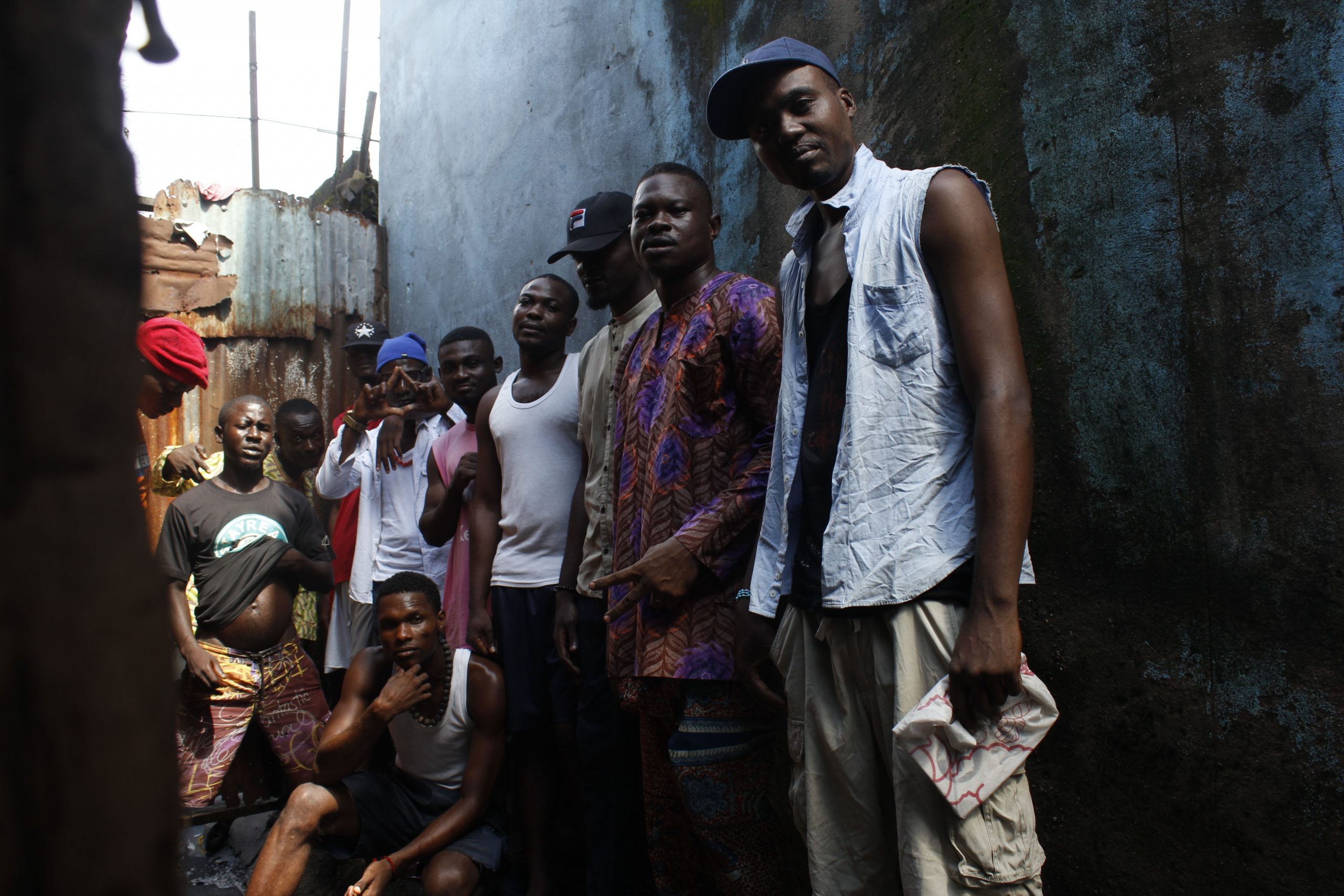
Young Nigerians share past experiences and current feelings on Police Brutality & EndSARS

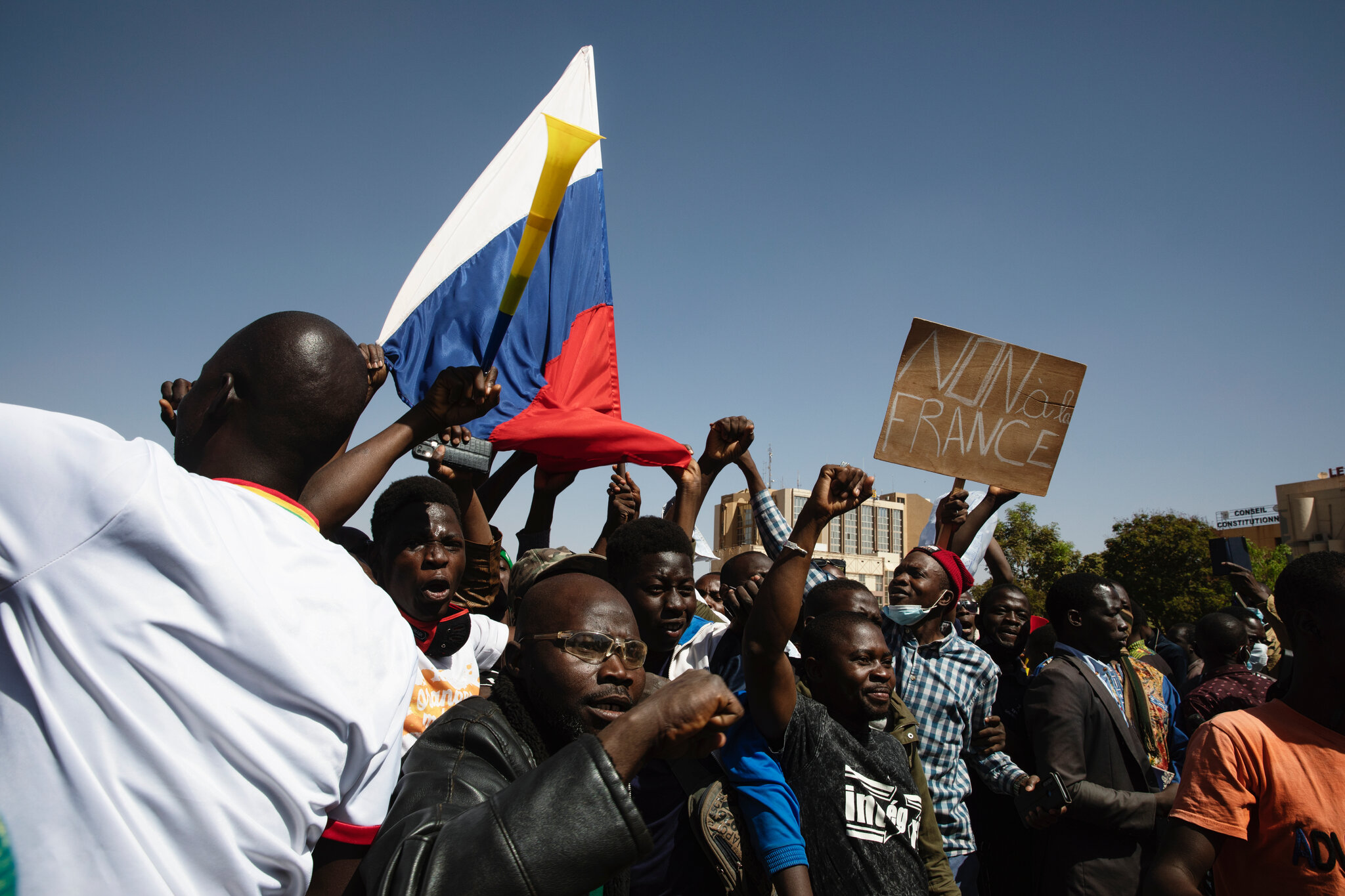
Two years ago, many young Nigerians lost their last shred of innocence and faith, with regards to how far the Nigerian government would be willing to go to assert its authority. For over two weeks in October 2020, millions of youth across the country gathered in protest grounds to demand an end to police brutality, the contact point being the atrocious acts of the Special Anti-Robbery Squad (SARS) unit of the Nigerian police force.

In response, the Nigerian police force responded with more police brutality, and the Nigerian government dragged its feet on making meaningful change, even in the face of millions demanding for their right to live a life free of cruel treatment from the men and women meant to serve and protect them. The heartbreaking culmination was the killing of unarmed protesters at the Lekki toll gate by soldiers of the Nigerian army and officers of the Nigerian police on the evening of October 20, 2020. The perpetrating parties have vehemently denied any wrongdoing, even going as far as feigning ignorance, even in the face of damning evidence and the simple fact that hundreds of thousands across Nigeria and in the world witnessed the sad event in real time.
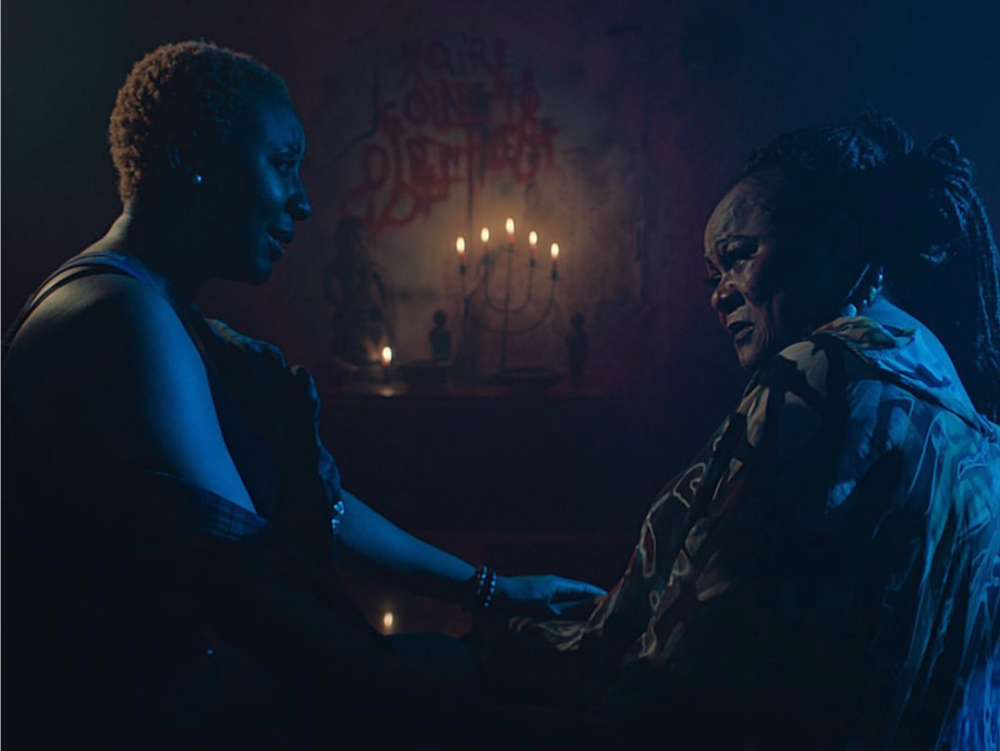
Refusing to allow any form of erasure, young Nigerians are still keeping the memories of the Lekki massacre, and the entire #EndSARS civil rights movement, hallowed – a big smudge on the country’s conscience that shouldn’t be wiped off. In commemoration of its second anniversary, many have gathered at the grounds for a procession and peaceful remembrance of the victims of the massacre. (As usual, the Nigerian police is being a nuisance to unarmed civilians). In solidarity, the young Nigerians that make up the editorial staff at The NATIVE share their past experiences and current feelings on the endemic Police Brutality in Nigeria.


View this post on Instagram


A post shared by The NATIVE (@thenativemag)

Life Before The Protests

What’s your perception of the Nigerian police force?

Dennis: Since the day I saw a policeman harass my mum for a bribe, I’ve firmly believed the Nigerian police force is not here to protect and serve. I mean, I’ve always looked at their officers funny, especially because their uniforms never looked good on them and the way they were portrayed as bullies in home video films. That experience with my mum, witnessed from the front passenger seat at the age of 12, made me extremely distrusting of those men and women in black. My own two experiences with them as a young adult consistently make me look at the force with disgust.

Nwanneamaka: Growing up, I used to see ‘Police is your friend’ signs slapped across almost any imaginable surface you’re likely to run into the police. Long before I became aware of the violence and fear they inflict on citizens, I never believed it. I have always associated them with collecting bribes and random, unnecessary stop checks. Years down the line and prior to the protests they profiled, extorted and harmed innocent Nigerians. Just when you thought it couldn’t get worse, the violence significantly increases during the protests. We lost so many innocent lives two years ago today, may their souls rest in peace. After everything, Nigerians are still profiled and extorted by the police today. I have nothing good to say about the Nigerian police force and it would take a lot to change that.

Have you ever been unlawfully arrested or harassed by Law Enforcement/SARS?

Emmanuel: Somehow, I’ve been quite lucky with the arrests, because I came of age in a place where it was very normal to be arrested just for being young and looking a kind of way. I’ve however been chased one 2020 night, just before the End SARS protests escalated. I remember there was a curfew then and I was returning late at night from a birthday party with a friend. One moment we’re walking, the next two men were relentlessly chasing us through the streets. Luckily we escaped—-it would have been a very long night otherwise. 

Israel: Yes I have. I was in an uber with a Friend of Mine and we got stopped at a Police Checkpoint, one of the Officers proceeded to ask for our ID’s and I didn’t have one but my friend did. So I and my Friend were asked to step out of the vehicle but I told the officer that he didn’t need to do that since she had ID then the officer looked at me violently and cocked his gun then dragged me to a corner and asked for my Phone which i presented to him and started going through all my apps, messages etc. he was only able to find art & photography content so he let me go but only after i was able to log in to my student portal.

How did that experience affect your mental health and daily activities?

Emmanuel: For a while I was wary of unfamiliar bodies coming towards me. I’m a big-sized guy and people never noticed but sudden movements throw me off, especially if I didn’t see it coming. 

Israel: It impacted me negatively because after that experience I was always on edge anytime I left my house and I didn’t know if I was going to make it back home. It also made me obsessed with carrying Identification literally everywhere.

Did you want SARS to be disbanded?

Maria: Of course. They have caused and are causing so much damage. It’s nothing short of insane for a supposed Anti-Robbery squad to be THE robbers. 

Emmanuel: There was absolutely no reason for their madness during its height. Robbery was everywhere and they were nowhere.  

Nwanneamaka: 100 percent. They have caused and are still causing irreparable damage. It’s jarring. 


View this post on Instagram


A post shared by The NATIVE (@thenativemag)

Life During The Protests

Did you join any of the EndSARS protests in 2020? 

Wonu: I didn’t go out to protest but I was protesting heavily through social media and I made sure I supported in whatever way I could, financially. It was so beautiful to see people my age go out to vote and that has kept me very inspired even till this day. The EndSARS period helped me fully understand the power of social media and also the power of having one voice. 

Daniel: I didn’t go out during the protests, but was heavily involved online. It was a really emotional period for me and it fueled my anxiety and paranoia. I was moved to finally see my generation stand up for something and stand their ground. .

Dennis: Yeah, I did. It was supposed to be a one time thing, partly for journalistic curiosity, but I went out a few more times because of how bracing it was to see Nigerian youth rally around a cause with burning passion.

What was your experience at these protests?

Daniel: It wasn’t pleasant! Though I wasn’t at any of the protest grounds, the images and videos were triggering. Completely changed how I interacted with Twitter, I am still traumatized. 

Dennis: Better than many, I think. I wasn’t on the grounds at any time when there were hoodlums attacking peaceful protesters, so it was mostly impassioned chanting and camaraderie with friends I went with and new friends I made there. Thinking about it, we really did think we were going to change this one thing by being as loud as we can.

Were you Inspired or deterred by the protests?

Maria: I was deeply inspired by the protests. The sheer bravery of everyone online and in person was astounding. The camaraderie will forever be one of the greatest shows of strength and patriotism in history.

Israel: I was extremely Inspired by the protests and I was planning on leaving school to join in on them but that would have meant my expulsion so I ultimately reconsidered. Although certain members of society would have you believe that the protests were just an excuse for Young People to destroy property, I had never seen so many Young Nigerians united under a single cause and even if it took our shared trauma to bring us together, I’m really glad it happened.

Emmanuel: Till this day, the heroes of End SARS remain my biggest models for strength and rebellion. We all know how cruel Nigerian governance can be, and to come out in such massive numbers to make their voices heard—that’s sheer indestructibility. We can’t be reduced to mere objects for political chess moves, we’re humans and full of heart. The events of October 2020 reaffirmed that belief in our humanity. 
Did you believe young Nigerians were on the verge of making progress through those protests?

Nwanneamaka: I don’t think we were on the verge of making progress, I think we actually made significant progress. Considering all that was achieved was pretty much planned on the spot and as the days went by, it was very well organized. We got global attention with the #EndSars on twitter and federal government attention with the 5for5 demands, even though not much was done with that. We made great strides but we’re still in Nigeria so the progress was stunted. 

Uzoma: Despite the sad ending of the protests in Lagos, I believe progress was made. The fact that young Nigerians, both in the streets and on social media platforms, spoke unanimously is progress. It has made our political leaders sit up. Now, they are aware that young people won’t hesitate to call them out if they act funny. We might not be at the level of hugely influencing policies and laws yet but the fact that our leaders know we are now paying attention is a step in the right direction.

Wonu: I don’t think it’s fair to say we were on the verge. I believe we made real progress with the protests, we made a point and it was loud and clear. I’ll always respect those who went out to protest because looking back at it now, it really was not easy. I think we made a point with the protests and the Government definitely felt the heat, to me that’s exactly why what happened at the tollgate on the night of October 20th, 2020 actually happened. Rest In Peace to those brave soldiers we lost.

Life After The Protests

What was your initial reaction to events that transpired at the Tollgate Massacre?

Dammy: I was in shock because I did not think it was going to get to that point. I remember seeing the announcements of the curfew on twitter and how people refused to listen to the government and I just thought it was going to be like the other protest days but never in a million years would I have thought that army officers would shoot at unarmed citizens who are protesting for their rights. It was a worrisome evening because the updates on what was going on was rather slow and we could only get so much information from an Instagram live and the strong message from the Nigerian flag that had blood splattered all over it.

Moore: I was horrified when I first heard what was going on. This came after the truly impressive efforts of the Nigerian public coming out to protest abusive officers. It felt like the bubble of hope that had begun to build had burst. People at the scene gave frequent updates, so I felt helpless watching the situation slowly escalate online. That feeling of helplessness lasted for a long time after the event and still remains when thinking about how little has truly changed since the massacre.

Did that Night Affect your life in any way? (If yes, how?)

Uzoma: The events of that night were shocking to me. For years, the Nigerian government has shown they don’t care about the lives of the citizens but I didn’t expect an action so brazen. It made me question if there’s any value attached to my life as a young Nigerian. I thought about how quickly dreams and aspirations can be extinguished. I wasn’t feeling great.

Emmanuel: I wrote a personal essay, and somewhere in it, I recall the events of that night from my end. I was many miles away from Lekki, but what was even more jarring was the network issues that night. Everything was slow, and deliberately so. Considering what happened and the policing of social media afterwards, banning Twitter, it made me aware of how cruelly the wielders of power can seek to take agency from us. My black body never felt completely safe afterwards.

Did your Perspective on the Nigerian Government change after that night?

Israel: Oh yes it most certainly did. Before the Massacre i had seen so many stories and done a lot of deep dives into the sheer terror inflicted by the people that called themselves ‘Officers of the Law’ and how the Government did nothing but turn a blind eye, an attitude that they carried through the events succeeding the massacre and till today. I already wasn’t a fan of the Nigerian Government but that night showed me that we don’t really have a Government just Power Peddlers Preying on the People of this Nation.

Wonu: Yes, it made me more convinced that the Nigerian government genuinely does not care for its people and even till now, I don’t think much has changed, I mean look at the flood in cities across the country, and nobody’s saying anything about that. 

Moore: Yes, my perspective definitely changed. I’ve never had a high opinion on the Nigerian government, but any respect that I had went out the window. For such cruelty to take place in public, with such a minimal response from the government has shown me that they do not place any real value on Nigerian citizens.


View this post on Instagram


A post shared by The NATIVE (@thenativemag)

Two years later, how’re you feeling about that night?

Emmanuel: I’m feeling everything. I feel deep pain for the massacre, and even deeper pain for the many who have similarly been killed and displaced all over the country, whose stories aren’t reported. When you consider that it took Timaya’s “Dem Mama” for many members of my generation to learn about the Odi Massacre in 1999, you just wonder how many relevant events are yet blocked from our view. For the Lekki heroes, you have my heart. I wouldn’t be here without you. 

Wonu: I’m still very scarred, that’s just it. I’m in ubers and I’m battling anxiety because I’m still scared something will happen. My anxiety has become ten times worse since that night, I don’t feel safe and I don’t think there’s any feeling worse than that feeling of being unsafe as a black woman. 

Uzoma: The shootings at the Lekki Toll Gate will forever be an indictment of the government and its arms. Since then, no one in the government has accepted any wrongdoing or made any move to clear the air. They are still using a wall of silence and propaganda to fend off any criticisms. But that night cannot be erased; it will always stand as judgment and spur more of those moments.


ICYMI: THE FIGHT AGAINST OPRESSION IN NIGERIA DOES NOT EXCLUDE THE LGBT COMMUNITY

A New Documentary From With Chude Investigates End SARS

Two years ago, young Nigerians nationwide were engaged in the most forceful fight of their lives. For years on end, the Special Anti-Robbery Squad which was created in 1992 harassed, arrested, defrauded and killed several Nigerians extrajudicially, flouting law and regard for human life in broad daylight. At the onset of a pandemic in 2020 the relationship between the country’s police and her young citizens fractured consistently, as reports of harassment broke out each day. By October, the End SARS protests had broken out in several parts of the country.

Till this day, the events of that month remain alive. Many Nigerians were directly affected and bear the wounds—literally and otherwise. Loved ones were lost and several others went missing, the sinister activities of errant policemen were exposed, and the administration’s disregard for human life was blatantly exposed. Even with overwhelming evidence, public officials have sometimes tried to underplay the gravity of what happened, what we all saw happen.


View this post on Instagram


A post shared by Chude Jideonwo (@chudeity)

On YouTube, With Chude does important community-centered work and on his latest documentary he investigates the End SARS protests. ‘The Most Evil Policemen in Africa’ is a robust depiction of what the protests meant and how it forever changed the lives of many people. Speaking to families and friends of affected individuals, he collects a wide range of memories from across the country. The title phrase ‘I killed your son, and there is nothing you can do about it,” was uttered by CSP James Nwafor, a monstrous, bloodthirsty police officer who headed a station at Awkuzu, Anambra state.

Also featured in the documentary were activists and media personalities, who engaged the local and international audience and helped coordinate funds and legal support. Falz, Rinu Oduala, Mr. Macaroni and many others shared their perspectives from those heated weeks. With its dedication to fact-checking and personal narratives, no doubt this is an essential watch towards understanding that historic moment in the lives of Nigerians. 

Watch the documentary here.


ICYMI: THE FIGHT TO #ENDSARS IS REALLY A FIGHT TO FIX THE NIGERIAN SYSTEM

Songs Of The Day: New Music From Moliy, Wizkid, Spinall & More

2022 is winding down, and it’s been an eventful year for Afropop. There’s been a torrent of great new music, spawning a massive stack of inventive smash hit songs. From Highlife-infused Ghanaian pop, to the unrelenting force that is Nigerian street-pop, to South Africa’s indomitable Dance scene, to tantalising Drill explorations in East and Central Africa, and much, much more, we’re living through abundant and musically expansive times.

Every week, many songs from African artists make their way to digital streaming platforms, and wading through them can be intense. That’s where The NATIVE’s Songs of the Day column comes in to help. We go through as many new releases as possible, spotlighting them here, two to three times every week. Today, enjoy new music from Moliy, Mr Eazi, Reekado Banks, Dami Oniru and more. Lock In!

Moliy – “Together” ft. Juls

Since releasing her debut EP ‘Wondagirl’ back in 2020, Ghanaian singer Moliy has continued to expand the levels of her artistry with new and powerful releases including her feature on Amaare’s “Sad Girlz Luv Money” and “Love Doc,” and BOJ’s “In A Loop” with Melissa. This was followed by the promotional single, “Hard” off Moliy’s just released EP, ‘Honey Doom’, which features a dazzling collection of songs which showcase her sultry vocals. For the EP’s intro song, “Together” Moliy enlists Ghanaian producer Juls on a mid-tempo number where she serenades her love interest over a teetering percussion beat.

WIZKID – “Bad To Me”

Wizkid is the gift that keeps on giving. The Afropop crooner is set to release his new album ‘More Love Less Ego,’ the charming follow-up to his award winning ‘Made In Lagos,’ and has shared the P2J-produced “Bad To Me” ahead of its official release. Now, Wizkid is back with a colourful video to accompany the memorable hook he’s got us all singing, “Casamigos, for my Amigos”. The new video is a lush watch which features clips of Wizkid playing up his usual cool charm, as he takes us behind the scenes of a typical Starboy experience.

Spinall – “Top Mama” ft. Reekado Banks, Ntosh Gazi and Phyno

Spinall is best known for connecting talented artists. This year alone, he’s worked with the likes of Summer Walker, DJ Snake and Ayanna assisted track, “Power(Remember Who You Are)”. Now he’s returned with an all star lineup for his recently released Amapiano-infused track, “Top Mama”, which is accompanied by a colourful new video. Reekado Banks’ raspy vocals colour the track’s intoxicating beat with the assistance of Ntosh Gazi’s catchy adlibs, as he sings “Top boy rolling with the top mama/Boy rolling with the top.” In his usual fashion, Phyno chimes in and showcases his impressive vocal abilities while delivering a killer verse in English and Igbo.

Dami Oniru – “Soft Life”

Dami Oniru is back. Last week, the singer returned to the scene with the smooth sounding, “Soft Life,” a track about not taking oneself too seriously and living a stress-free life. Now, she’s followed this up with a befitting new video which reflects the song’s easygoing ethos. Featuring cameos from talented young woman across the music industry, the video ties together Dami Oniru’s penchant for delivering powerful messages and timeless videos.

Mannywellz – “Jooce” 

“Skedaddle”, “Di Do & No Closure” and “Closure” are just a few of the tracks Mannywellz has under his belt this year alone. Now the BET next up 2022 artist dropped has shared a new track titled “Jooce” which comes accompanied with a befitting music video. On the new single, Mannywellz reaffirms himself and his capabilities with empowering lyrics such as “You got the jooce, you got the jooce/There’s nothing that you need to prove.”

Swagz.i – “I Don’t Know”

For his latest offering, Swagz.i has released his debut EP ‘Diamonds in Broken Hearts’ which features five solo tracks from the singer. The project falls in line with his love themed previously released singles “Heartbreak Semester” and “Enough for You.” On the intro track and standout number, “I Don’t Know”, Swagz.i skillful swaps between Yoruba and English to tell his love interest to prove his devotion to a lover as he sings, “I don’t know what you think this is, I don’t know, I don’t know/No this is not Romeo and Juliet.” 

Rowlene – “Would You Like That”

South African R&B singer Rowlene returns with a new single titled “Would You Like That.” The song see’s Rowlene express her power through demanding, enticing and suggestive language – sexual prowess at its peak with lyrics such as “feeling touches when you lonely/body language got you hypnotised.” The single will feature on her forthcoming EP titled ‘Frequency’ which is due for release on November 11. The new EP ends a 2 year hiatus for Rowlene following the success of her 2020 Album ’11:11.’

Featured Image Credits: NATIVE & Instagram/moliymusic

Hot Takes: Abike Dabiri-Erewa’s Vexations & the Premiere of ‘Black Panther’ in Nigeria

Detty December is drawing closer. It is that time of the year when food, drinks and parties overflow. For artists and music lovers, it is the part of the year they come together to enjoy great sounds and vibes. Nigerian artist Kizz Daniel seems to have his eyes set on that period with his latest single “Cough (Odo),” a sweet iteration of some of his previous hits. On the other side, several areas in Nigeria are battling with flooding, with people losing their lives, being forced out of their homes or losing their properties.

Overseas, Kanye West is getting deserved backlash for his antics and insensitive comments about George Floyd. For this week’s Hot Takes, I write about Black Sherif’s album ‘The Villian I Never Was,’ Abike Dabiri-Erewa’s Twitter storm and the coming of Black Panther to Nigeria.

WHAT I’M LISTENING TO

I have Black Sherif’s ‘The Villian I Never Was’ on repeat. After “First Sermon,” “Second Sermon,” and “Kwaku the Traveller,” “Soja” confirmed to me that Black Sherif is the real deal. I went into his album hopeful yet unsure of what to expect. Was I disappointed? No. This album is a masterpiece. What appeals to me the most about the project is Black Sherif’s incredible understanding of his artistry; he is a man who is still figuring out his way in the world and is so unafraid to put his life on wax and wrap in brilliant music.

My favourite tracks on the project keep changing but at the moment, I’m heavily bumping “The Homeless Song,” “45,” “Soja,” “Sad Boys Don’t Fold,” “Konogo Zongo,” “Wasteman,” “Toxic Love City,” “Don’t Forget Me” and “Oh Paradise.” I have a review forthcoming where I give further thoughts on the album. Look out for that. What is inarguable, though, is that Black Sherif’s album will stand the test of time and set him up for greater things.

ON RESPONSIBILITY & ABIKE DABIRI-EREWA’S VEXATIONS

Earlier this week, news broke that Nigerian students were involved in a clash with their Indian counterparts at GD Goenka University. According to The Times of India, the brawl started on Friday during a practice match scheduled for an upcoming football tournament. Both teams had a mix of Indian and Nigerian students. The Indian students claim that fight started when it was time for substitution and the Nigerian players refused to be substituted. On the other hand, the Nigerian students say that wasn’t the cause of the fight; they say that the fight started on Saturday after outsiders, numbering 40, came with the Indian students to assault them.

Reacting to the news on Twitter, Abike Dabiri-Erewa, the Chairman of the Nigerians in Diaspora Commission (NIDCOM), said that the situation had been resolved and the students were in the custody of Nigeria’s High Commission in India. Among the sea of comments under her tweet, a particular one rubbed up NIDCOM’s boss the wrong way: the comment tagged her words as “eye service,” while using other unsavoury words; this comment was supporting the stance of another that said NIDCOM wasn’t doing enough to protect Nigerians living outside the country.

Dabiri-Erewa was quick to shut down the comment with harsh words of her own. Her rebuttal has drawn criticism from Nigerians, most especially the former minister of education Oby Ezekwesili who called for her to delete the tweet. Dabiri-Erewa, though, has stood her ground, insisting that the tweet will remain and that she will not allow trolls to bully her.

While it is understandable that even political officials are humans, there is still a sense of responsibility that a person in Dabiri-Erewa’s shoes must possess. Internet trolls will always be present but in this case, responding to the tweet in equally an uncouth manner was ill-advised. The truth is that the Nigerian government has not done enough to protect the interests of its citizens living in other countries; with the situation of things, the Nigerian people believe that most government officials are in their positions to serve only serve themselves and not the citizenry. For Dabiri-Erewa and others in her shoes, a moment like this calls for more reflection and a pledge to serve the Nigerian people.


Here we go again with this YE guy

(Written by Dennis Ade Peter)

In a better world, Kanye West would’ve been cancelled a couple of years ago. Well, maybe cancel is such an extreme word, and the nuances are still as iffy its effectiveness. But still, my point stands: Kanye needs to stop being such a big fixture in pop culture—at best, he should be a totem of derision. For the better part of the last half-a-decade, the revered producer/rap artist and billionaire fashion guy has made it a point of duty to spew vile takes and embellish himself through deeply annoying antics.

Remember when he said slavery was a choice? Remember when he recently wore a “White Lives Matter” shirt and went after a respected black fashion journalist? Well, from the stables come the declaration that George Floyd died of Fentanyl overdose, not the knee of a racist cop crushing his windpipe till he lost his breath. Kanye made the statement during a now-deleted episode of the Drink Champs show, rambling for about 3 hours about a bunch of stuff that ranged from unfounded theories like the George Floyd one to anti-Semitic nonsense. Over the last few weeks, the man has been spewing vitriolic nonsense in interviews and across his social media pages, which has led to him being restricted and banned on Twitter and Instagram, respectively. Somehow, he’s still getting his nonsense views off because there are several news outlets and platforms still eager to put a camera in his face.

Like I said, Kanye West would be the epitome of cancelled in a better world, but there’s obviously still millions not only drinking his bullshit juice, but still finding ways of exonerating his trash ass behaviour and nonsense comments. Someone told me it’s because of the attachment to his music. Personally, I don’t think Kanye has made great music since his 2016 album, and his antics turn me off from even rushing to his more recent projects. Even when I listen, I can acknowledge the quality of the sound, but that’s about it—he’s not saying anything resonant, even on albums dedicated to his mother. There’s no defence for his antics and most people know it, but those in support want to believe he’s just a troubled genius.

Troubled people know to seek help. Kanye isn’t seeking help, so those trying to cop pleas for him are just enabling the petulant behaviour of an asshole that needs to be cancelled.

Black Panther Comes to Nigeria

The Walt Disney Company, in association with the Africa International Film Festival (AFRIFF) and FilmOne Entertainment, has announced that Nigeria will host the official African premiere of Marvel Studios’ Black Panther: Wakanda Forever. The American superhero film, which premieres in November, is a follow-up to 2018’s Black Panther.

This is a lovely development. The premiere for the sequel happened in America and bringing this year’s premiere to Nigeria is a fantastic opportunity to connect with fans in the country. Interestingly, there was an African premiere in South Africa for Gina Prince-Bythewood’s action flick The Woman King, which members of the cast Thuso Mbedu and John Boyega attended. It makes me wonder if some of the stars in Black Panther: Wakanda Forever will show up for the premiere; if so, that would be great. If not, get ready to see some outrageous outfits to the premiere event by a who’s who of Nollywood and Nigeria’s socialite scene.


2023 OSCARS: NIGERIA GETS SECOND CHANCE AT INTERNATIONAL FEATURE FILM SUBMISSIONS

Nigeria will host the official ‘Black Panther 2: Wakanda Forever’ African Premiere

A few months ago, Marvel Studios unveiled the first trailer for ‘Black Panther 2: Wakanda Forever’ featuring a soundtrack cover of Bob Marley’s “No Woman, No Cry” performed by BET-award winning singer and songwriter, Tems. This news was accompanied by Ghanaian superstar, Amaarae featuring on the second track,“A Body, A Coffin” off ‘Black Panther: Wakanda Forever Prologue’ the EP.

Now, with only a few weeks left to the film’s official premiere, Walt Disney Company in association with Africa International Film Festival (AFRIFF) and FilmOne Entertainment announced that Nigeria will host the official African premiere of ‘Black Panther 2: Wakanda Forever.’


View this post on Instagram


A post shared by FilmOne Entertainment (@filmoneng)

Announced yesterday, Film One Entertainment, the production behemoth behind blockbuster titles such as  ‘Juju Stories’, ‘Oloture’, ‘Chief Daddy’ and many more titles, confirmed that the African premiere will be held in Lagos, Nigeria. Moses Babatope and Kene Okwuosa, co-founders of Film One Entertainment, shared in a statement, “Being instrumental to the release of ‘Black Panther 2: Wakanda Forever’ in West Africa is a proud achievement and a milestone for us and the entire FilmOne team, it will be celebrated for a long time. We are excited and fully committed to working with The Walt Disney Company to deliver a grand African premiere, even as we channel all our arsenal towards realising a momentous box-office performance for the title”.

AFRIFF founder, Chioma Ude also stated, “We are excited and proud to be part of the premiere of this milestone film here in Africa. This is huge for the continent of Africa as it symbolises to us further bridging the gaps between the global film industries.”

‘Black Panther 2: Wakanda Forever,’ will see director, Ryan Coogler return to the front seat, alongside co-producers, Kevin Feige and Nate Moore. According to the synopsis, the new film follows the aftermath of the death of T’Challa played by late Chadwick Boseman where Queen Ramonda, Shuri, M’Baku Okoye and the Dora Milaje fight to protect their nation from the intervening powers of Namor, the king of an hidden sea nation. ‘Black Panther 2: Wakanda Forever’ will be available in cinemas globally from  November 11, 2022.

Listen to ‘Black Panther 2: Wakanda Forever Prologue- EP’ here. 

Featured image credits/

Essentials: Yimeeka Bares Her Soul on Debut EP, ‘Alter Ego’

Emotions are a difficult field to navigate, and music carries beautifully the density of that tension. In the realm of Afropop, women musicians have often relayed that sensitivity with all the confusion and angst the emotion possesses. It is against this backdrop Yimeeka bases her explorations on ‘Alter Ego,’ the singer’s debut project which combines a wise understanding of ambient R&B with her youthful zeal towards collaboration. 


View this post on Instagram


A post shared by Yimika (@_yimeeka)

Weeks before the EP’s release, a collaboration with Pheelz revealed the soulful tendencies of Yimeeka the producer and a new face on the scene. Solely featuring vocals from the uber-talented musician, “Smooth Criminal” delivered every bit on its title. Its laid-back rhythm was polished with ominous keys and vocoder-inflected bits, providing a mellow soundscape for Pheelz’s honest songwriting to shine through. What emerges is a bit of a cross between Wande Coal and Tay Iwar, but upon further listening the record shines with subtle originality. 

Housed in ‘Alter Ego,’ the familiar number three track listing allows denser accounts of life and romance build on either side of it. In the earlier parts, one gets quickly used to the voice of D1wav who appears on Alter Egoand Influential”. On the former he operates well within the Afropop tradition, inflecting his tales of struggle with an haughty awareness. The swag of its pre-hook is quite reminiscent of Mayorkun on The Best,” but as an instrument, the vocals are very striking. “Influential” brings those qualities better into display, with tightly-written lyrics evoking familiar bad boy imagery. “Be like you wan dey doubt me, If I choose you, trust my scouting,” he references in football terms that would surely elicit a chuckle from viewers of the sport. 

The project’s other half is immersed deeper into soul. “Here With You” is affectionately sung by Joyce Olong, in a style that calls up lovely memories while being appreciative of what’s in front of us. It’s a poignant centrepiece of the EP, kind of mirroring Yimeeka’s personal life and how she’s been involved in other commercial, more lucrative pursuits (including co-founding a start-up) and still chooses, right now, to be caught in the spiritual web of creating music. Even though Olong’s ruminations strike closer to  the romantic, there’s a philosophic edge to her folkloric simplicity that unfurls fresh layers to the record. 

A spoken word interlude from Yimeeka slows down the tension. Over sombre notes perfect for an Anglican church service, the multi-hypenate creative tells stories of her journey. An introverted nature is revealed from the existentialist direction of  her questions, which deftly moves from her love for words to the limitations of words when it  comes to love. Calmly delivered, she ends with the chilling observation, “Love is everywhere, and always here. And if tomorrow ever comes and started without me, love will still be present so why shouldn’t I love regardless?”

On the project’s final duo of songs, Yimeeka emerges onto the stage. As coolly as her production, her singing on Memories conveys the timeless emotion of missing an ex-lover. “Place your eyes on me, please don’t disappear/ You are not for me,” she sings in roundabout ways to reflect the inner turmoil of her character. By the time the cooing chorus comes on, the distraught hue of the record is obvious. Fade Awaycontinues in Yimeeka’s preferred style of a slow burn, and just some seconds short of two-minutes, constructs a vignette-type closer in a way reminiscent of Purple Song

Emerging into the scene with a tape as accomplished as ‘Alter Ego’ speaks to Yimeeka’s talent. With Asake leading the dominance of energetic drums on the soundscape of Nigerian Pop, alternative leaning acts have been the biggest drivers for versatility. On that note, this sounds like few things you’ve listened to in the past. R&B serves up a rich sonic pallete, while Yimeeka’s auteur-esque production dazzles all through the seven songs. With the additional genius of incorporating diverse voices, the feeling of bumping this tape is far greater than any other collection of random songs would. A proper introduction, this one. 

Featured image credits/Yimeeka

What’s Going On: Death Toll Rises in Nigeria’s Floods, Electricity Problems in South Africa & More

“What’s Going On” Tallies Notable News Headlines From Across The Continent — The Good, The Bad, And The Horrible — As A Way Of Ensuring That We All Become A More Sagacious African Generation. With This Column, We’re Hoping To Disseminate The Latest Happenings In Our Socio-Political Climate From Across The Continent, Whilst Starting A Conversation About What’s Important For Us To All Discuss. From Political Affairs To Socio-Economic Issues, ‘What’s Going On’ Will Discuss Just That.


FLOOD: DEATH TOLL RISES IN NIGERIA

The death toll from floods in Nigeria has increased to 603. Since last month, the flooding in coastal areas in the country has worsened as local authorities continue to provide relief to hundreds of thousands of people being evacuated from their submerged homes.

Authorities have laid the fault of the disaster on the release of excess water from the Lagdo Dam in neighbouring Cameroon and on unusual rainfalls. So far, many states from Kogi to Benue, Taraba, Jigawa and Anambra have been affected by these floods.

“President [Muhammadu Buhari] has approved the release to [National Emergency Management Agency] of 12,000 metric tonnes of food items from the National Strategic Reserve, for distribution to communities affected by flooding, across the country. NEMA has since commenced transportation of these items to the States,” the presidency revealed in a tweet on Sunday.

INFLATION RATE: NIGERIA TAKE WORST HIT IN 17 YEARS

Nigeria’s inflation rate has risen to 20.77 per cent, compared to the 20.52 per cent recorded in August, the National Bureau of Statistics (NBS) has revealed in its Consumer Price Index (CPI) report for September released on Monday. The NBS liken the surge to an effect of the disruption in the supply of food products, the increase in import cost due to the persistent currency depreciation and a general increase in the cost of production.

The latest inflation rate is the highest since September 2005. “In September 2022, on a year–on-year basis, the headline inflation rate was 20.77%,” the report read. “This was 4.14% points higher compared to the rate recorded in September 2021, which was (16.63%). This indicates that in the month of September 2022 the general price level was 4.14% higher relative to September 2021.”

On a month-on-month basis, the Headline inflation rate in September 2022 was 1.36%, this was 0.41% lower than the rate recorded in August 2022 (1.77%). This means that in the month of September 2022, the headline inflation rate (month–on–month basis) declined by 0.41%, relative to August 2022,” the report added.

RAMAPHOSA SHELVES ELECTRICITY AND WATER BENEFITS FOR MINISTERS

Following a public outcry, South Africa’s president Cyril Ramaphosa has scrapped his latest amendments to the Ministerial Handbook, which offers government ministers and their deputies several new benefits that include the free provision of electricity and water. South Africans considered the president’s decision as insensitive as the country is plagued with daily power outages and the rising cost of living.

“The President has listened. The President appreciates the public outcry in the context of socio-economic pressures South Africans are facing,” Vincent Magwenya, the president’s spokesperson told the media on Monday. “We can take heart in the fact that the President has ordered the withdrawal of this. The President is heartened by the fact that we have an active citizenry, that, on an ongoing basis, participates in our democratic processes [and] sometimes, vehemently so, disagrees with decisions of government.”

Since June, South Africa’s power sector has taken a hit, due to ageing and poorly maintained facilities. According to Eskom, the energy company managing South Africa’s power, On a scale of eight possible levels of intensity, the country has reached the sixth critical stage out of eight possible levels of intensity. Eskom’s CEO, Andre de Ruyter, had urged the citizens to use electricity sparingly by turning off lights in offices at night, avoid running swimming pool pumps and water heaters at peak hours.

UGANDA’S PRESIDENT BANS SON FROM COMMENTING ON POLITICS

Uganda’s president Yoweri Museveni has said that his son, General Muhoozi Kainerugaba, will cease to comment on government affairs on Twitter. This is in response to the social media outcry that trailed Kainerugaba’s comments two weeks ago when he tweeted about invading neighbouring Kenya and conquering its capital, Nairobi.

“He will leave Twitter. We have this discussion. Twitter is not a problem. The problem is what you are tweeting about,” President Museveni told the media on Monday. “Talking about other countries and partisan politics of Uganda is something he should not do and he will not do it.”

As a consequence of his tirade, the 48-year-old Kainerugaba was taken off his position as head of Uganda’s ground forces, the army’s largest component. He also tendered an apology on Twitter to Kenya’s president William Ruto, writing that “If I made a mistake anywhere, I ask him to forgive me as his young brother.”

Kainerugaba’s outspokenness on social media is well known. From supporting Russia’s invasion of Ukraine to supporting Tigrayan rebels in northern Ethiopia, his tweets have raised eyebrows. In Uganda, Museveni, who is the country’s longest-serving president, has been accused of grooming his son to take over power from him. Kainerugaba has not been shy about his ambitions to become president. In May, he invited his Twitter followers to indicate their position on him running for president in 2026.

KARIM BENZEMA WINS 2022 BALLON D’OR

French international Karim Benzema has won the 2022 Ballon d’Or. This is the first time in his career that he is winning the prestigious award. The annual football award, which was held yesterday in Paris, honours a player deemed to have performed the best over the previous year, based on voting by football journalists.

“There is no age to win the #BallondOr. Sometimes player get better in their 30s and this is all down to taking care of yourself,” said the 34-year-old footballer. “This is a childhood dream. I never gave up. I always kept the joy of playing football. I’m really proud of my journey. This is the people’s Ballon d’Or.”

Karim Benzema was not the only winner at the event. Spanish and FC Barcelona player Alexia Putellas won the Women’s Ballon d’Or, a back-to-back success after winning the award last year. FC Barcelona’s Spanish starlet Gavi won the Kopa Trophy for best performing player under the age of 21, while Belgian and Real Madrid goalkeeper Thibaut Courtois took home the Yashin Trophy.

Featured image credits/

See The Reactions To The American Music Awards & Its New Afrobeats Category

A lot has been said about the Afrobeats to the World movement. For musicians and their fan bases, rubbing shoulders with global music figures holds a very tantalising prospect. For others, mostly business professionals in the industry, they had considerably lesser faith about the Westernisation of Afrobeats, especially considering how the term wasn’t designed with the intricacies of African music in mind. 

That growing desire to include Afrobeats in global selling points reached a new high last week when the American Music Awards announced a new category for Afrobeats in the forthcoming award ceremony. The conversation was rather concise, because it was only a few weeks ago, at the Ghana-held Global Citizens Festival when the Recording Academy CEO, Harvey Mason Jr. revealed that the festival was consulting with relevant parties about the Grammys’ plan to carve out an Afrobeats category.

It seems that the American Music Awards has put this in place first, ahead of their next iteration next month. Among the nominations this year includes a talented spate of Afropop artists such as Wizkid, Burna Boy, Tems, CKay and Fireboy DML who were recognised by AMA under the “Favourite Afrobeats Artists,” category, which has inevitably spurred a lot of conversation over the past few days.

Let’s get into them, shall we?

Obviously, the AMA establishing an Afrobeats category is considered a good thing by many, but should an all-Nigerian representation be the typical? There’s no doubt the West African country is making perhaps the finest Afropop music right now, but what happens when the needle shift, and somewhere else (maybe not even in Africa) takes the flag? I don’t know much about the politics of geography, but I do know it’s barely right to focus solely at the zenith of a mountain without recognising the similarly important contributions of smaller influences which surround it.

All five artists recognised in the newly-helmed category are equally brilliant and talented in their own regard, however can it be said that they represent the vast terrain of Afrobeats as it is now known. Many fear that the new category will fall victim to the one-size fits all approach that is taken for “World Music.” It’s quite telling that media personalities in the diaspora are picking up on how the Nigerian dominance is essentially leading to the gentrification of African music – soon, we might be thinking that anything that doesn’t sound Nigerian isn’t “proper” Afrobeats.

Featured image credits/

Turntable Top 100: Ayra Starr’s “Rush” Remains On Top

Ahead of the release of ’19 & Dangerous’ deluxe edition, Ayra Starr’s “Rush” shows no signs of slowing down. This week, the singers most recent release tops the TurnTable Top 100 in Nigeria for its third consecutive week. The track tallied 47.2 million in radio reach, 67.8 million in radio reach and also attained a new peak of No.2 on both television and radio charts. 

Asake’s “Joha” retains the No.2 spot, solidifying his position as the first artist to have several entries reach Top 2 in the country. This is followed by Young Jonn’s “Xtra Cool” which moves up 10 spots and debuts at No.3 this week. The track retains its No.1 spot on radio for the second week and also tallied 55.3 million in radio reach and peaked at No.7 on streaming platforms with 2.34 million streams. “Xtra Cool” is Young Jonn’s second top ten entry and the artists’ highest charting single, surpassing “Dada (Remix)” featuring Davido.

Following closely at No.4 is Pheelz and Davido’s “Electricity,” and Fireboy DML and Asake’s “Bandana” at No.5 this week. Elsewhere on the charts, Asake also holds down the 6th and 7th spots consecutively with former No. 1 tracks, “Organise” and “Terminator”. Next up is “Philo” by Bella Shmurda and Omah Lay which slides up to No.7 from its previously held No.8. 

To conclude the top ten for this week, Victony & Tempoe’s “Soweto” debuts at No.9, tallying 1.5 million streams. This places it at No.16 on streaming platforms. With 49.6 million in radio reach, “Soweto” also records Victony’s highest charting single as a lead recording artist, surpassing the No.10 peak of “Kolomental” on the TurnTable Top 50 chart. Rounding up the top ten is Blaqbonez and JAE5’s “Back in Uni” which debuts at No.10 with 1.69 million streams and 32 million in radio reach. 

Sitting just below the top 10 is Oxlade’s “Ku Lo Sa – A COLOURS Show” which peaked at No.9 previously, and Asake’s “Dull,” the intro track off ‘Mr Money With The Vibe’ right now, which falls from its previously held spot at No.8 from the previous week.

Featured Image credits/ Instagram: AyraStarr

Somadina Updates “Rolling Loud” With A Remix EP

In 2018, when Nigerian singer Somadina arrived on the music scene with her official release, the anti-love anthem “IHY,” she instantly gained the attention of fans and listeners with her rapid-fire verses and melodramatic chorus. That year was a pivotal time in the Nigerian pop canon as a new vanguard of Afropop hitmakers were arising from the margins, bypassing industry gatekeepers and making relatable music that was impossible to ignore.


View this post on Instagram


A post shared by SOMADINA (@somadina)

Since her debut, Somadina continues to expand the boundaries of her artistry, taking on new challenges, touring Europe alongside friends like Odunsi The Engine and served up more genre-mashing tunes that have become the go-to for women who look, talk and sound like her. Just last year, she teamed up with Nigerian rapper and uNder (previously Fresh Meat) alum, SGaWD for the girls anthem “Pop Shit” and released “SuperSoma,” a catchy track that offered a deeper emotional palette than ever before.

This year, Somadina hasn’t slowed down her output. Already, she’s released “Rolling Loud,” an upbeat track with fusionist production which highlights that Somadina is surer in both her talent and what matters most to her. Now, the singer has updated this new track with a befitting remix EP which expands the worldview around her music.

The remix pack features 6 remixes from DJ’s across the world, who bring their special touch to the project including the VAN-produced remix, TMSKDJ dance remix, TNKMUSIQ-produced amapiano remix, Blinky Bill & ManCh!ld remix and the Pops-helmed remix. Executively produced by Chin Okeke and mixed and mastered by the talented GMK, the remix EP furthers Somadina’s global ambitions and offers a clear indicator of an artist with a lot more to say.

Listen to ‘Rolling Loud (Remixes EP)’ here.

Featured Image Credits/

Review: Black Sherif’s ‘The Villain I Never Was’

The current Black Sherif dominating global airwaves and the pre-fame Black Sherif who, nestled in the belly of Konogo, was seeking an audience with freestyles share a similarity: vulnerability. It’s a resonant ability to engage in a catharsis that pulls his listeners closer to himself. Take his three-year-old freestyle “Motivation” for instance. In the video, a 17-year-old Black Sherif, seated on cement blocks, is staring at the camera as he lays his vocals over a Highlife-influenced Pop beat filtering from an unseen speaker. In the freestyle, Black Sherif is pleading with the government and those fortunate enough to have better odds at life, to show consideration for the plight of citizens in the poor Ghanaian communities.

If you no get money/Abeg give us motivation/Show me love and hold me down/That be all I dey want from you,” he sings. Black Sherif’s use of “us” is deliberate; he marks himself as one with the people, as one who understands their realities, pains and joys. He considers himself a voice for his people. “I feel like I am touching on spots that people used to not touch and I am being as raw and real as I can be,” the Ghanaian singer told GRM Daily. “I am being the voice of that boy outside, because I am from there, I am from the Zongo (ghetto).”

Raised by a large network of family relatives in Konogo in the Ashanti region of Ghana, Black Sherif, born Mohammed Ismail Sherif, chose a life on the streets, buoyed by a determination to carve his path and harken to the call of his destiny. His travails and experiences are the fertile soil that Blacko—as he is affectionately referred to by fans—feeds his words. His breakout singles “First Sermon” and “Second Sermon,” both odes to street life, capture Black Sherif’s energetic delivery and firebrand lyricism. On his debut album ‘The Villain I Never Was’, which shuffles past the previously planned ‘Road To The Tape’ EP, Black Sherif makes a personal catalogue of his journey and that of the people he holds close to his heart. 

Before the grittiness of “First Sermon” and “Second Sermon,” there was the softness of “Cry for Me,” Black Sherif’s debut single. His Highlife influences colour the tone of his delivery and the mellow rhythm of the track. It was also the opening chapter of Black Sherif’s common-person personality. Although “Cry for Me” showed that Blacko was a talented singer, it was “Money” that brought him recognition in his home country. This time, Black Sherif took his Highlife style of delivery and layered it over a Hip-Hop beat as he sang about his desire to escape poverty. On the remix, which features Ghanaian acts AMG Armani and Tulenkey, the latter makes a pronouncement, “Sherif, you go make am/E be time.”  Less than a year later, “First Sermon” and “Second Sermon” were released and now, Black Sherif’s ghetto gospel is gaining massive appeal around the world.

I’m at my down-est in life/And I’ll be homeless for a while/I know it’s unbelievable/Cause I had a home a few days ago,” Black Sherif reveals on the album’s opening track “The Homeless Song.” It is a striking revelation because no one could have imagined a homeless Black Sherif amid the acclaim trailing his music. But it is an example of the honesty Blacko has embraced all through his career. Ever the optimist, he reiterates that although he might fall, he will always get back on his feet, channelling the emotions from “45,” where he sings, “If I fail, I needed that/I’ll come back stronger.”

Defiant is one word to describe Black Sherif’s attitude in his music. Whether he is narrating personal pains on Kwaku The Traveller” or collective trauma on “Soja,” Black Sherif informs the listener that he refuses to back away and settle for less. On the former, which was released in March, he owns his mistakes with the quotable—“Of course I fucked up/Who never fuck up hands in the air, no hands?” On the latter, where he recognises that he is not the only person in the world with struggles, he calls on listeners not to let the darkness of life overwhelm them. “No, I go dey run my race/I’m gonna keep my pace/Cause I really have no one to blame when I fall again/I can’t stand this pain/I can’t watch me fail,” he raps on Kwaku The Traveller.”

That defiance even shows up when Blacko is having a great time. As he celebrates his victories on “Oil In My Head,” he chips, Man don’t stay down when man fall/I get up and come for more.” On the equally jubilant “We Up,” he sings, “On God I trust no man/I lost few mandem to the game I was close to my grave I fell in a trap/But you know man don’t stay down.” It is a trait that Black Sherif honed while in the Zongo settlements in Konongo, one of the roughest areas in Ghana.

Since the days when Nigeria and Ghana began sharing cultural influences through music and other forms, there have been conversations about both country’s music industries and Nigeria’s dominance in the African music scene. From the issue of Nigerian songs topping music charts in Ghana to the most recent Global Citizen Festival, where headliner Usher called three Nigerian acts (Oxlade, Tiwa Savage and Pheelz) to the stage during his performance, Nigerians and Ghanaians are engaged in constant battle. In the media tour for “Kwaku The Traveller,” Black Sherif favoured collaboration. He visited media houses in Lagos and was featured on shows of Nigerian content creators, helping “Kwaku The Traveller” become the first Ghanaian song to debut at number one on the TurnTable Top 50 Chart.

“I don’t smile when I take pictures most of the time,” Black Sherif told OkayAfrica. “We are sad boys because there is nothing to laugh about.” The melancholy in his music is in alliance with the current crop of melancholy-driven sound permeating the African music space. Last year, Black Sherif released “Ankonam,” whose title translates as a loner; on the track, he evokes a sobering mood about sadness. On ‘The Villian I Never Was,’ he makes a tribute to the disciples of melancholy with “Sad Boys Don’t Fold.” Contrary to the solemnness of “Ankonam,” the energy on “Sad Boys Don’t Fold” is upbeat as Black Sherif paints himself as “the man who’s always been sad and ballin’ every day.”

He brings that melancholy to “Oh Paradise,” as it contends with the song’s bright horn blasts. Dedicated to his late girlfriend who passed away in 2017, Black Sherif revives memories of their time together and expresses frustrations at the good times that they never shared. “Sleep well my lover/I will be fine my lover/And my love for you’ll be forever,” he sings. Delivered mostly in his native Twi, he consoles himself with the belief that she is in heaven and begs her to ask for blessings on his behalf.


View this post on Instagram


A post shared by BLACKO (@blacksherif_)

Since he entered the music industry, Black Sherif has never hidden his admiration for the Asakaa Boys, the Ghanaian Hip-Hop group who, in 2020, bolstered the rise of Drill in their home country. Borrowing from the Chicago-originated sound, which was adopted and evolved in the UK, then commercially elevated by the late American rapper Pop Smoke, the Asakaa Boys—made up of O’Kenneth, Jay Bahd, Kawabanga, Cedi City Boy, Reggie, Kwaku DMC, Sean Lifer, Rabby Jones and Braa Benk—spun their unique experiences on the sound’s characteristic hard baseline and inspired a new generation of artists. Black Sherif and fellow Ghanaian artist Yaw Tog are some of the popular names on Ghana’s Drill scene.

On ‘The Villian I Never Was’, Black Sherif utilises Drill for “Sad Boys Don’t Fold,”Konongo Zongo,” “Wasteman,” “Oh Paradise” and the Burna Boy-featuring “Second Sermon (Remix).” A self-acclaimed street preacher, Black Sherif pays homage to his roots on “Konongo Zongo,” as he revisits tough decisions he made in the past. He remains on the streets of Konogo and offers a peek into the life of one of its inhabitants on “Wasteman,” giving details about the pressures that many youths in improvised communities face. On “Second Sermon (Remix),” which was released last year and helped Black Sherif’s rise, Nigerian artist Burna Boy gives colour to the certified street banger.

There are not a lot of love songs in Black Sherif’s discography. Before ‘The Villian I Never Was,’ there was only 2020’s “Mariana.” On the album, there are three: Toxic Love City,” “Don’t Forget Me” and “Oh Paradise.” Like “Oh Paradise,” there is a dark streak to Toxic Love City.” On the song, Black Sherif admits his unwillingness to let go of a romantic partner who brings out the worst in him. He wants to leave but he is unsure if someone else will accept him. Between a known evil and an unknown good, he chooses the former. The vibe on the Reggae-influenced “Don’t Forget Me” is healthier, though. He opens up to his loved one, requesting that they spend time together before he inevitably leaves and goes into the world to hustle.

On the production side of ‘The Villain I Never Was,’ Black Sherif sticks with Ghanaian Stallion (“Second Sermon (Remix)”) and Joker nharnah (“The Homeless Song,” “Soja,” “Prey Da Youngsta,” “Konongo Zongo,” “Toxic Love City” and “Kwaku the Traveller”). He also makes space for new collaborators—London (“We Up” and “Don’t Forget Me”), Samsney (“Oh Paradise”), JAE5 (“45”), WhYJay & LiTek (“Oil in my Head” and “Wasteman”), AoD and RNDM (“Oil in my Head”) and Zaylor & Dystinkt Beats (“Sad Boys Don’t Fold”). These producers, diverse in style, cook a potpourri of sounds that offer magnificent uniformity on several listens.

While the production list is crowded, the guest list is not. It is a Black Sherif show, with only Burna Boy disrupting the flow, right at the end. The track list shares the individuality of Omah Lay’s ‘Boy Alone,’ another debut album from the African continent that does not have a crowded guest list. The album’s cover art, which bears similarity to Eminem’s ‘The Eminem Show’, places Black Sherif firmly in the spotlight. ‘The Villain I Never Was’ is Blacko’s diary, where he pens his pains and aspirations and victories. Although he might make mistakes, he is willing to own them while he creates his world. He is unafraid to become the hero of his life.

Stream ‘The Villain I Never Was’ below.

Featured image credits/NATIVE


ICYMI: READ OUR REVIEW OF OMAH LAY’S ‘BOY ALONE’

Songs Of The Day: New Music From TI Blaze, Mr Eazi, Ninety & More

We’re more than halfway through 2022, and it’s been an eventful year for Afropop. There’s been a torrent of great new music, spawning a massive stack of inventive smash hit songs. From Highlife-infused Ghanaian pop, to the unrelenting force that is Nigerian street-pop, to South Africa’s indomitable Dance scene, to tantalising Drill explorations in East and Central Africa, and much, much more, we’re living through abundant and musically expansive times.

Every week, many songs from African artists make their way to digital streaming platforms, and wading through them can be intense. That’s where The NATIVE’s Songs of the Day column comes in to help. We go through as many new releases as possible, spotlighting them here, two to three times every week. This Friday, enjoy new music from T.I Blaze, Mr Eazi, Small Doctor and more. Dig In!

TI Blaze – “Lock Up”

Street pop singer and songwriter TI Blaze is here with his most recent release and bubbly new single “Lock Up.” Over the Niphkeys production, he reminisces on the tough roads he has traversed so far while choosing to focus on the positive side of life. Over instantly memorable production, he sings lyrics “Livin my life to the fullest, living my life with no regrets/Someone pass me my cigarettes,” which paint a vivid image of his past reality.

Small Doctor – “See Me” ft. Mr Eazi 

Street pop singer Small Doctor teams up with “Patek” crooner, Mr Eazi for a new upbeat record titled “See Me.” The Amapiano-infused number sees Small Doctor speaking about his current standing in the game as one of Afropop’s most enjoyable hit makers. Over the Krizbeatz-produced beat, he sings “when they see me coming warning, yawa go dey/that’s why dem haters wanlo kajo bi ti eja kote,” letting his opps know he’s not to be messed with. Mr Eazi makes the song more memorable with his catchy lyrics and relatable lyrics.

Doski – “Next Level” ft. Zinoleesky

Newcomer Doski collaborates with Afropop star and Marlian Music’s Zinoleesky for the new offering, “Next Level.” The uplifting number finds both artists offering encouragement to listeners as they implore us to focus on the positive aspects of life rather than fixating on what is yet to come. Zinoleesky opens the record with memorable lyrics such as “wetin my mama go chop, wetin my mama go chop, all I’m looking for/ I have to work hard,” which serve to remind us where he is coming from.

Bryan The Mensah – “Problem No Dey Finish” ft. Medikal

On his latest release “Problem No Dey Finish,” Ghanaian rapper Bryan The Mensah speaks directly to his listeners about the never-ending struggles of life as a young adult. For its fitting remix, he taps fellow Ghanaian star, Medikal for a catchy update to an already memorable track. Over the infectious production, Medikal sings lyrics such as “I for sell my house but God is in control, I’m still making money everyday,” which speak about the realities of Ghana’s current economic crisis.

Ninety – “Smoke And Chill”

Following the release of his debut album ‘Rare Gem’ earlier this year, Nigerian artist, Ninety returns with the new laid back and trippy tune titled “Smoke And Chill.” Over the song’s euphoric production, he sings “I just wan smoke and chill for this life of dey where I don’t even know what’s real,” letting listeners in on his current state of mind.

Lyta – “Country Boy”

For his first official single of the year, street pop singer songwriter and producer Lyta arrives with the new mid tempo number titled “Country Boy.” Over the song’s melodious production, he sings lyrics such as “music be the only thing that I know, anytime I sing I feel at home/badman ready badman ready to takeover the world,” letting the world know the intricacies of his journey to superstardom.

Featured Image Credits/The NATIVE

Art X Lagos Returns For Its Seventh Edition Next Month

Seven years since its inception, ART X Lagos, the premiere Nigerian Art Fair continues to successfully pioneer and drive evolving conversations around the innovative contemporary art across Africa, while establishing a hub for talents across the globe to tell their stories, as well as showcase their talent.

Every November, the fair gathers a plethora of curators, collectors, art connoisseurs and art lovers at The Federal Palace in Victoria Island, Lagos and since the 2020 COVID-19 outbreak, now holds an extended exhibition on their online platform. 


View this post on Instagram


A post shared by ART X Lagos (@artxlagos)

Last year, ART X Lagos gathered thirty leading international galleries, fifteen of which were present at the physical fair and fifteen others exhibited their works online. All together, last year’s edition showcased 120 artists from over thirty countries including South Africa, Morocco, Angola, Egypt and more were involved in the showcase. The fair’s packed calendar of events also includes the ART X Live! which have seen performances from breakout artists such as Lojay, Aylo and Dami Oniru and ART X Talks which explores a range of topics regarding the state and growth of African Contemporary art.

This year, the artists on display will emerge from an exciting and diverse group of thirty-one galleries from across the world including DADA Gallery (London, UK), Art Pantheon Gallery (Lagos, Nigeria), Gallery 1957 (Accra, Ghana), Stevenson (Cape Town, South Africa), Afikaris (Paris, France), Galerie Atiss Dakar (Dakar, Senegal) and many others.

The works of artists such as John Madu, Raji Mohammed Babatunde, Damilola Onosowobo, Alioune Diouf and photographs from archives of the Iconic Ghanian photographer, James Barnor are also confirmed to be displayed at the upcoming exhibition. In addition, for the first time this year, the Access Bank ART X Prize has expanded to include two winners, one Nigerian and the other, from the rest of Africa or the diaspora at large.


View this post on Instagram


A post shared by ART X Lagos (@artxlagos)

With only a few weeks left till this year’s edition, more details and information from the exhibition can be expected in the coming weeks. In the meantime, the exhibition is slated to hold in its usual location, The Federal Palace in Victoria Island, Lagos from 4th-6th November with over 120 promising artists showcasing their burgeoning talents.

Tickets can be purchased on their online platform artxlagos.com/tickets 

Featured image credits/

Best New Music: Kizz Daniel’s “Cough (Odo)” Reinforces His Hitmaking Genius

Kizz Daniel’s claim to the Afropop pantheon of greats has been eagerly dissected in recent months. For some, his consistent display of his hit-making prowess elevates him there. Others have faulted his seemingly edgy brand, a construction in need of the neat finishes acclaimed superstars have possessed all through their career. What does the man in the middle think? Well, he’s focused on nothing but hits and more hits. First with the widely accepted song of the year “Buga” and last weekend, just in time for the festive period, another hit-sounding record in the form of “Cough (Odo).” 


View this post on Instagram


A post shared by VADO ‘D GREAT 🎙 (@kizzdaniel)

For a while the musician had employed the promotional tactic of snippets, teasing the record with a dance routine created by Poco Lee. As the days pulled closer, we got to learn the record subtitled “Cough(Odo)” was actually part of a bigger project; from EMPIRE and YBNL. Since entering the African music market in February 2022, the independent company which offers label, publishing and distribution services, have worked alongside some of the biggest names in Afropop. Kizz Daniel’s single is the first one off ‘Where We Come From (Vol. 1),’ a compilation album which was recorded at EMPIRE’s San Francisco headquarters. 

In sync with the festival-themed project, Kizz Daniel’s record pulls many signature flourishes. Right from when the beat drops, you know instantly you’re hearing a bop. The Blaise Beatz production contains the shimmering groove he’s become known for, bursting with sunny synths and upbeat percussions. In the sprawling canvas of Kizz Daniel hits, “Pour Me Water” stands as the obvious precursor to “Odo”. But where that record utilises the bright production to counterbalance the theme of heartbreak, the newer record sees Kizz Daniel lean into the colourful possibilities that comes with being in love. 

For those in the know, women play a huge role in deciding who gets to blow. From the Motown era till the golden age of nineties R&B, romantic sentiments—often sung by men, directed towards women—formed an important part of popular music. Nigerian pop space isn’t so different, with an affirmative love record (African Queen) establishing the standard for the 2000s. Because Kizz Daniel’s artistry is audibly influenced by that period in time, he does reflect its unique brand of effervescent desire. 

“Odo” has all the saccharine qualities of a hit record. Kizz Daniel’s vocals is remarkably immersed in his world, promising to love a woman right by engaging with her own desires. In Afropop where accounts of toxicity are sweetly embedded into records, an A-list musician cooing, “I want to carry my love away, to a place she loves,” is definitely going to stand out. Kizz Daniel has more than just an outlier perspective going for him though, he’s a concise songwriter who leaves poignant images in a listener’s mind. Landing softly on a sofa floor was remarkably and humorously discussed, and here it’s “Enter bathroom, fresh up” that’s repeatedly sung in the style of a catchphrase. 

On TikTok already, the song has been catching on as people engage its waist-swerving dance move. From kids to mothers and young women, it’s attracting an audience not quite different from that of “Buga”. All of which confirms Kizz Daniel as a genius hitmaker. The year’s still got some laps to run but there’s no reason why “Odo” shouldn’t feature in those famous street raves or club gatherings. No doubt—it’s two hits from two released songs this year for Vado. That’s truly special. 

2023 Oscars: Nigeria Gets Second Chance At International Feature Film Submissions

Last month, news reached that the Nigerian Oscar Selection Committee (NOSC) would not submit any film for consideration in the International Feature Film category at the 2023 Oscars Awards. Following the NOSC’s verdict that no film met the eligibility criteria, the 15-member committee, chaired by Chineze Anyaene-Abonyi received backlash from critics unconvinced that the three films the committee had voted upon—Kunle Afolayan’s Aníkúlápó, Biyi Bandele’s Elesin Oba: The King’s Horseman and Adebayo Tijani & Tope Adebayo’s King of Thieves—were below the standards of the Oscars.

Following the chaos that trailed NOSC’s decision, two of the committee members—culture and film Journalist Shaibu Husseini and filmmaker Mildred Okwo—resigned, increasing the doubts surrounding the committee’s decision. In a remarkable turn of events, the Academy of Motion Picture Arts and Sciences has, in a letter addressed to Anyaene-Abonyi, granted the NOSC a one-week extension to reconvene and reach a conclusion about the three films in contention.

According to news reports, the letter, dated October 14, reads as follows: “The International Feature Film Executive Committee reviewed the issues regarding the Nigerian Official Selection Committee (the Selection Committee on behalf of the country of Nigeria) and has granted an extension of one week with the deadline of October 21, 2022 at 5:00 PM Pacific Time.

“The entire approved Nigerian Official Selection Committee will be required to all reconvene and make a final determination regarding a submission to the International Feature Film category for the 95th Academy Awards. The final determination must be delivered by the approved Nigerian Official Selection Committee chair and co-chair.

The International Feature Film Executive Committee’s announcement has been met with praise, most especially from Kunle Afolayan who had expressed disappointment about the NOSC’s decision. Shaibu Husseini and Mildred Okwo have also stated their willingness to return to the committee and cast their votes. Nigeria is not the only country yet to submit a film. There are a number of other African countries yet to make a submission including Cameroon, Somalia, South Africa, Egypt, Malawi, Chad and also Haiti and the United Kingdom.


Featured image credits/NATIVE

Here Are 7 African Designers You Won’t Get To See At Lagos Fashion Week

Heineken Lagos Fashion Week is unarguably among the year’s most anticipated cultural event. Bringing generations of Nigerian fashion designers under one platform, it has become the premier location for discovering A-level fashion talent from, not just within the country, but across Africa and her diaspora.

Since its formation in 2011, LFW has demonstrated thrilling explorations in the world of fashion. From tapping from the country’s wealth of textile materials to embroidering historical patterns, or channeling the daring aesthetic of queer communities—many talented designers have displayed their wonderful creations on its stages. 

This year the Lagos Fashion Week will hold from October 26th to October 29th, with Atafo, House of Kaya, Maki Oh and Orange Culture being some of the acclaimed fashion designers who are presenting across its three-day runtime. At The NATIVE we wanted to highlight seven talented fashion designers who aren’t debuting any collections at this year’s LFW. Their brands are distinctly African and sometimes cosmopolitan, drawing influences from larger fashion trends in the world. Featuring streetwear savants such as PITH Africa and 5200 to ready-to-wear brand such as Vangei, here are 7 designers you won’t get to see at this year’s fashion week.

Read on to find out who these designers are and how they’re carving unique lanes for their texture-based art to thrive. 

5200 

Streetwear is a huge part of Lagos’ budding fashion scene. For one, they’re mostly created by young people and well attuned to the experiments going on in the streets which, for those in the know, is an endless well of rich inspiration. Standout brand, 5200 has many electrifying designs in their catalogue, mostly of denim jeans attended by eccentric stitches and patterns. With roughly finished edges and ripped parts, there’s a gritty yet classy allure to 5200 which makes them one of the most beloved streetwear brands in the country right now. 


View this post on Instagram


A post shared by 52OO (@5200.fleece)

LOUIE DRAY 

Over the course of 2022, the profile of Louie Dray has consistently risen in the fashion landscape. Their works resonate with the demands of the new African youth, simple but seamlessly colourful and comfortable. With their immersive designs embracing an elastic texture which fits on the body, the brand has caught the eye of young people. Pieces with colours ranging from blue, to silver-streaked black and orange have featured in some of the most irresistible looks all year, and observing the Y2K direction of the brand has been truly exciting. Even popular music has been taking note, with superstars Ladipoe and Tems appearing in LD in these past few months. 


View this post on Instagram


A post shared by Louie & Dray (@louie.dray)

VIVIERS 

Johannesburg-based Viviers adopts high concept practices in their designs. It was founded in 2019 by Lezanne Viviers, launching with a showcase which demonstrated their commitment to environmental awareness. Their designs are made from textiles sourced from decades-old fabrics in warehouses, a choice which hints at their desire for originality and durability. Viviers tend to feature sharp edges with an androgynist versatility, not much concerned with the fashion trends of the day. Falling under their ethos of crediting artisans, individual pieces are signed off by the artisans and tailors who create them. Earlier this year, Viviers released their MOTHERBOARD AW2022 collection which connected the shared prospects of fashion and technology through glamorous, intricate pieces reflecting a futuristic outlook.


View this post on Instagram


A post shared by VIVIERS (@viviers.studio)

VANGEI 

The story of Vangei is an inspirational one. Having started out in Ankara designs in the middle of last decade, its founder Kanaan took up other urgent engagements. They couldn’t continue, until 2018 when a scroll through the social media handles of Lagos Fashion Week rejuvenated their drive. It was obvious then: they needed to make clothing, and not just basic styles but they needed to leave a mark. And true to their motivation, Vangei has become a brand to be reckoned with in the Lagos scene. Pieces inspired by queer people have birthed embroidered flower-patterned clothes, chest-baring silk overalls, sky-evoking casuals and many other remarkable works. With the brilliance consistently displayed by Vangei, it shouldn’t be long before they make that LFW debut. 


View this post on Instagram


A post shared by VANGEI (@vangeiofficial)

MAYE TOBS 

Stories are an essential part of Maiyegun Oluwatobi’s creations. His pieces are inspired by Greek myths and other accounts with an edge of Fantasy and superhero tales. The Yellow Belle set, for example, takes its aesthetic direction from the clothings in Beauty and the Beast, a Disney animation that was a favourite for the Gen-Z growing up. Regardless of whether one watched those shows, the interpretations of Maye Tobs are remarkably distinct and multi-layered. With bold colours frequently appearing on their designs, the free flowing, audacious outfits of MT have been carving a unique lane in the dense field of Lagos’ fashion scene. 


View this post on Instagram


A post shared by MAYE TOBS (@mayetobs)

CHLOE ASAAM 

Assam’s pieces are strikingly colourful. Their rich patterns are inspired by the Ghanaian culture, situating Chloe among the designers leading a renaissance in the West African country. Ditching luxury pieces, Asaams are unnervingly simple in their wearability and aesthetic. In her early years designing, Chloe ebbed towards androgynous fashion and how they related to technology. But, as she’s said in an interview, she eventually realised her “ethos wasn’t centred around either. They were extensions of it and that the core of my practice is fusing disparate ideas and experimenting to create timeless pieces for women who want to stand out”. Quite fittingly, Chloe’s biggest inspirations are the women and community around her.  


View this post on Instagram


A post shared by Chloe Asaam (@chloe_asaam)

PITH AFRICA 

Youth culture has an unarguably influential position in Nigerian life. From the motions of the alte community to involvement in historic social causes like End SARS, young people have dictated what it means to create and rebel. Co-founded by Nezodo, Ojemen Cosmas and Adedayo Laketu—three friends who met in university—PITH Africa have been a brand to watch out for. Already worn by figures like BOJ and Mathew Blaise, their designs embrace the individuality and daring ethos of youths around the continent. Quirky, colourful designs blur the lines between casual and official. Their signature ‘P’ icon is brazenly emblazoned on parts of shirts, baggy jeans, ties, and caps, embracing an urban aethestic that is quickly catching on among Lagos-based fashion enthusiasts. In a recent interview with  NATIVE Mag, the founding trio talked about their varied intentions, and underlined collaboration and sustainability as short-term checkpoints on their longer path to becoming, in the words of its artistic director, “a multi-billion dollar company”. 


View this post on Instagram


A post shared by PITH AFRICA (@pith.africa)

Featured image credits/NATIVE

Review: Show Dem Camp’s ‘Palmwine Music Vol 3’


Over a decade ago, Show Dem Camp made an important artistic statement and began laying the groundwork for their cultural dominance. The Juls-produced “Feel Alright” diversified their output, especially considering the battle-ready perception many had continuosly viewed them through. With their EP series ‘Clone Wars’ marking poignant, gritty territory in the longstanding tradition of conscious rap, the duo of Wale Davies and Olumide Ayeni embraced the colourful tapestry of Palmwine Music, a coastal practice which preceded the popularisation of Highlife. Instantly, the pair fashioned a unique sound, which offered new variations to now-familiar themes without erasing what we love.

In the years since, Show Dem Camp have become savants of Nigerian Hip-Hop. Sprawling, immersive depictions of the country’s sociopolitical landscape constructs a large part of their acclaim, but it is their palmwine tapes which have cemented their influence on a section of alternative-influenced pop music. With two albums and a mixtape contributing to the series’ acclaim, 2022 began with an unspoken desire for a third album. It was only last year after all, when the duo updated the more favoured ‘Clone Wars’ series with its fifth album, so listeners of the SDC knew something would have to give, and soon. Weeks ago, the veteran duo began teasing a new palmwine tape which, even more teasingly, was billed as the series’ last entry.

Quite unarguably, the rap skills of Tec and Ghost emerge more forcefully in the older series. Their unrivalled wit and observation effortlessly seeps into generational subjects as much as the contemporary, while the lyricism is purposefully streaked with timestamps. On the other hand, the ‘Palmwine Music‘ tapes offer a less technical connection but higher emotive resonance, pulling the SDC community to the group’s artistic vision as closely as possible. These ideals are retained in the series’ finale, but coloured even more distinctly with established practices from the ‘Clone Wars‘ tapes. 

A consequence of that fusion is the expanded scope of ‘Palmwine Music 3’. In our ever-singles driven market, creating an album with seventeen songs is no easy feat. However, this works for Show Dem Camp because they’ve mastered the artful science of dissection, confronting their themes from different layers to present a robust view of life. No different on the new tape, the markings of romantic bliss and its attendant palaver is incisively and humorously evoked. Right from Nsikak’s stirring guitar-led “Intro,” a dedication to that vision is established. In the important role of host, OAP Folu Storms manages the warmth she exudes all project. “It’s not easy being involved in a relationship; it’s not easy loving,” she opines in her monologue, “But it’s something we all have to go through”

The project explores the myriad flavours of romantic love as its entire 56 minutes runtime goes through the motions of love. Whether through snapshots of a sensual nature (“Heads Over Heels”) or the possessive tendencies of a male lover (“Mine Alone”) preceding the cruel aftereffect of a breakup (“Bad Design”), Show Dem Camp remain on-topic for the album’s entirety. Romance, while being a theme throughout the series, had previously propped up more urgent desires such as having fun and getting up to debauchery in Lagos. The duo of “System Fail” and “For A Minute” are quite different, from say, “Live Life” and “Rolling” which are records the least tethered to romantic ideals on ‘PWM 3’

On ‘Palmwine Music 3,’ Show Dem Camp and their guests follow a more lengthy path to catharsis. Frequent collaborator Tems delivers a typically heartfelt hook on the former, establishing her independence with bright inflections. “I won’t give no apologies,” she promises, infusing a daring edge early into the project. The latter record is dominated by Nigerian-American musician ToBi who rollicks around the song’s production with fluid intensity. “This road ain’t paved with no diamonds and gold/ Far from the end of the show, seeking me round of applause,” he sings affirmatively, leading the rappers’ own combination of romantic commentary and musings on their journey. “Now look we got fans way out in Taiwan,” Ghost animatedly raps in his verse, likening that to “moving like a triad.” 

Also contributing to the depth of ‘Palmwine Music 3’ is its trajectory which traces the progression of a relationship into imminent dissolution. While sharpening their lyrical edge with snapshots into their journey, the album’s centre retains an essential softness made possible by the immersive storytelling. The fictional palmwine radio hosted by Ms. Storms plays an impressively connective role in that; throughout the album, nerve-wrecking conversations are held with young people, taking the spontaneous shape associated with the media form. SDC have been exemplary world builders since the early ‘Clone Wars’ tapes, using skits to expound on their relatable themes. On “First Time Caller (Skit),” our narrator mediates between two arguing lovers, her responses fluid and comically flabbergasted as she goes from radio host to potential new girlfriend in a matter of seconds. 

Lagos—where these scenes play out—is infamously streaked with the unpredictable. Folu’s role as conductor allows SDC the novelistic range to embed as many stories as possible, creating a multiplicity of voices that further strengthens the album’s overall narrative. “Bad Breakup (Skit)” goes the classic route by throwing an open-ended question into the vast ocean of opinions. Over the groovy scoring, people reveal the reasons for their breakups; from the mundane subjects of lovers being unable to cook to the rib-cracking complaint of dating an herbalist’s daughter. Jide’s complaint of being suspected as a cheat is continued on “Old Flame,” where Folu’s investigative tendencies take the backseat for Jide and Eno’s scuffle, and her exclamation of “ye!” when the former announces his impending wedding to an Amaka is just classic. 

All the thematic material aside, the production on ‘Palmwine Music 3’ deserves great praise as well, especially considering it’s handled by just one man. The reputation of Spax as an album producer has glowered over the years, and his work here is characteristically brilliant. Advancing the lean, tropical vibe of previous palmwine tapes, he colours version three with contemporary edge. More is demanded of percussion, bursting with movements that reveal themselves as recently-influenced. On “Feel Something,” there’s a roll faintly reminiscent of House music, while “Apollo” and “If It’s Love” cue in peculiarities from folk and the Reggae-birthed subgenre of Konto. Ever the naturalist, Spax adapts sparingly touches of string and violin instruments which vivifies his production across board.

With their choice of features, Show Dem Camp combines previous palmwine eras with first-time collaborators. That gives the album its rounded feel, starting off from darlings of Nigerian Pop—Tems, BOJ Oxlade, Victony, Tay Iwar, WurlD–to an international but pan-African scope, calling up the purposeful features of iconic Ghanaian rapper M.anifest, budding English-Nigerian act Bellah, and American musicians of Nigerian descent Mannywellz and ToBi. Each feature delivers stellar performances, especially Nesta and Twelve XII on late-album standouts “Old Flame” and “If It’s Love”. On album closer “No Regrets,” experienced palmwine tapper Moelogo channels the wealth of personal conviction, his sagely vocals enriched with rolling drums recognisably adapted from Yoruba culture. “No be your fault say you no get, I understand say you are stressed,” he sings with tender understanding, spurring Ghost and Tec to deliver their most heartfelt bars all through the album. 

It’s a viewpoint that the duo have used in the past, but there’s even more affection when you consider how far Show Dem Camp has come, as a duo and individually. Everyone recognises their role as “alte godfathers,” spurring the communal energy which brought the scene great acclaim from 2017 and beyond. Their status as all-time great rappers is also cemented, while they’ve continued to carve in-roads into popular spaces through the Palmwine Festival. All these are directly related to the fact that Ghost and Tec are very skilled rappers and even better partners. ‘Palmwine Music 3’ sufficiently demonstrates how they fuse distinct strengths into an unbeatable whole.

Tec’s everyman personality informs his observational skills, and Ghost is reliably technical while shedding layers of intimacy as he’s been known to do. In all, their language is very original; the cultural richness of Tec blending with Ghost’s stateside heft, a rhyme slayer working in the tradition of Black Thought and Lauryn Hill. Quite obviously, their powers remain pristine—even though this project seems a perfect end to a much-loved series. Their lyricism cuts open new material and techniques waiting to be explored. Till then however, Show Dem Camp have adequately soundtracked the flagrant turns of Nigerian romance in the digital age.

Stream ‘PalmWine Music 3’ below.

Featured image credits/NATIVE

Songs Of The Day: New Music From Rema, Victony, NSG & More

We’re more than halfway through 2022, and it’s been an eventful year for Afropop. There’s been a torrent of great new music, spawning a massive stack of inventive smash hit songs. From Highlife-infused Ghanaian pop, to the unrelenting force that is Nigerian street-pop, to South Africa’s indomitable Dance scene, to tantalising Drill explorations in East and Central Africa, and much, much more, we’re living through abundant and musically expansive times.

Every week, many songs from African artists make their way to digital streaming platforms, and wading through them can be intense. That’s where The NATIVE’s Songs of the Day column comes in to help. We go through as many new releases as possible, spotlighting them here, two to three times every week. This Friday, enjoy new music from Rema, T.I Blaze, 1Da Banton, WurlD and more. Dig In!

WURLD & MAJOR LEAGUE DJZ – “FREE (SOUNDS FOR HEALING)”

The more WurlD sings, the more he reveals the motivations and anxieties of his heart. The blue-haired electro-soul savant describes his latest record “Free” as an unbounding of the mental shackles that’s held him this year, collaborating with the talented producer Major League DJZ to bring the vision to life. Vulnerable as it is groovy, the production pairs a melancholic whistle with the rolling drums, varying the emotions present on this one.

NSG FT. GIGGS – “NYASH”

For a while now NSG have presented a versatile style which is inspired by the sounds of Africa and the United Kindgom. Their preference for bold records with colourful beats burnishes the credo of “Nyash,” which is the group’s freshest drop. Calling the legendary figure of Giggs to the party, they unfurl hilarious tales centered around the body part which forms its title. “Just because you get nyash, you wanna spend all my current and savings,” they sing on the unforgettable chorus, revealing an understanding of Nigeria’s everyday lingua.

CAMIDOH FT. MAGIXX – “SLOW”

“Sugercane” being one of the biggest Afropop songs since last year, the profile of Ghanaian artist Camidoh has remarkably bolstered since his last showing. On “Slow” he continues to chart broader seas in the scene, collaborating with Magixx for a mellow record on record. “Baby imma put you on a codeine vibe, I’ll take it slow,” they sing over bubbly production, their inflections every bit as suggestive as the lyrics hint.

HERMEZ & TIM LYRE – “LUCID CRUISE 2.0”

Glittering synths are a dominant feature in Hermez’s records, and this stretches the vision even further. The soulful Tim Lyre constructs the record’s other part, both artists painting a picture of a posh lifestyle while searching for even more resonant thrills. “Need somebody, can’t f**k anybody,” sings Hermez in the record’s latter parts, gliding over the beat with an eccentric’s assurance.

DETAILMADEIT – “LOVE ME LIKE YOU DO”

While he’s mostly known for his vivacious raps, Abuja-based rapper Detailmadeit also knows how to hold a groove. A fine example is “Love Me Like You Do,” a maximalist record which sees him flaunt his singing skills. It allies beautifully how he’s crafted an energetic song which soundtracks a feeling that’s famously suffused with highwire emotions.

STANY FT. REMA & OFFSET – “ONLY YOU”

Fresh off a cosign from DJ Khaled, French producer and DJ Stany has released his debut record. “Only You” calls up the hitmaking prowess of Rema and Offset, combining Afropop’s percussive rhythms with string patterns born from of French and Latin sonics. Much to Stany’s credit, the fusions are handled incredibly well and the artists, especially Rema, hits this one home. With colourful visuals establishing it’s prospects for the dancefloors, there’s no doubt this romance-filled bop will catch on sooner than later.

TROMS – “MY HEAD”

On his just-released EP ‘Intentions,’ the Nigerian musician Troms investigates love. His alert vocals rouse old fears and contemporary discussions, floating over the striking mid-tempo palette of the project. Although full of gems, there’s an inner vibrancy which lights up “My Head,” where he admits to the submission that comes with loving someone. “She dun nack me juju,” Troms sings in the song’s refrain, accompanied by deft layering of drums and twangy guitars.

BEGHO FT. ZILLA OAKS – “TWOFACED”

A glaze of sunlight over determined eyes: the cover of “Twofaced” foreshadows its youthful, focused energy. Over Kudi-esque hums and drums inflected with Trap elements, Begho and Zilla Oaks unfurl lyrics which make for a very memorable rap song. With beat switches and vocoder effects featuring among the song’s two-minute runtime, there’s no doubt its novel elements with appeal to rap heads from these parts, and maybe beyond.

HIGO & MARADONA – “HELLO”

When Higo gets into his Afropop bag, he creates very immersive beats. “Hello” benefits from that expertise, co-helmed by Maradona. The mood is that of a party starter, boppy but not quite fully explosive, which is a terrain Higo knows how to pull off. Another layer that makes this record interesting is the Fuji-streaked tone of the singer, a natural extension being the catchy adlibs which make up its closing seconds.

DJ VOYST & VICTONY – “B.O.A (BASED ON ANALYSIS)”

Known for his immersive collaborations, DJ Voyst is here again. This time he’s joined by Victony, a musician whose art has resonated with more people than ever over the course of 2022. On “Based On Analysis” he explores the sensual path he’s made a name in, utilising his famous trick of colouring religious hymns with sultry intent. The record is also produced by Magicsticks, and he embeds his distinct Amapiano flavour to carry the svelte tones of Victony craving companionship.

1DA BANTON – “EGO”

Ever since scoring a global hit with “No Wahala,” the Port Harcourt-bred musician 1Da Banton has moved with admirable deliberation. He’s toured several European countries, and on the music front has teased a new record. Now here, “Ego” follows in the groovy direction of his previous songs. His vocal delivery is however more confident than he’s ever sounded, an assurance which pours into the record’s theme of opulence.

T.I BLAZE – “LOCK UP”

Street Hop phenomena T.I Blaze has been on a prolific streak. He’s now added to his growing cache of emotionally-aware songs with “Lock Up,” a record produced by Niphkeys. The beatmaker’s signature drum flourishes are present, but it’s T.I’s singing which catches you. “Living my life with no regrets, somebody pass me my cigarettes,” he sings on his first verse, running through details of romantic life while maintaining perspective on his journey and how far he’s come. A very accomplished record, this.

JULYSINGSONG – “EYIN”

A pristine Highlife flavour suffuses this record. The Anambra-born musician no doubt had the experiences of his childhood influencing this one, casting his sonic ambitions into the rich field that is traditional music. Packed with percussions, guitars and background vocals, “Eyin” is every bit of a party record coloured with a lot of soul. It’s a combination that surely works, so you might want to look out for this particular artist.

YIMEEKA FT. JOYCE OLONG – “HERE WITH YOU”

After teasing the ‘Alter Ego’ project for a while,the producer Yimeeka is finally here with you. This balmy record features R&B purveyor Joyce Olong who paints affectionate images over stirring, somber production. With the writing exciting with its turns of phrases, Olong’s luminous vocals brings this home. When the record wraps up its dilemma into the satisfying promise of its chorus, you’re instantly brought into the dreamscape of memories and longing for the peace of communion.

Johnny Drille’s New Single “How Are You (My Friend)” Emphasises the Power of Friendship

In 2017, Johnny Drille signed to Mavin Records, after years as an indie artist and scoring his breakout Folk tune “Wait for Me.” Since then, the Nigerian singer has curated soul-piercing ballads for his cult audience, who gather to show their love for his music at his annual concert series Johnny’s Room Live. Last year, Johnny released his debut album ‘Before We Fall Asleep,’ which touched on personal and societal issues, and embraced a wide range of genres—R&B, Afropop, Hip-Hop and Alternative Rock.

Aside from singing, Johnny Drille is also a music producer and sound engineer. His handprints are evident on the projects of fellow labelmates, from Ayra Starr’s ‘19 & Dangerous’ to new artist Bayanni’s debut eponymous EP. Earlier in the year, Johnny put out Valentine’s Day-themed tune “You’re Just Single.” Now, he is out with his official single of the year “How Are You (My Friend),” which is produced by Mavin Records CEO and veteran producer Don Jazzy.

“How Are You (My Friend)” is a letter from Johnny to an old friend as he seeks to reconnect with them. “Padi no vex for me/Say I never call you since/But I hope that you are well?” he sings.  He acknowledges that although time has separated him and his friend, he hasn’t forgotten about them. “I know sometimes e be like say nobody send you/That one na lie/I dey for you my friend,” he sings.

Don Jazzy’s production is a mid-tempo Afropop bop that Johnny owns as his; together with the background vocals, the song carries the aura of the community as the voices blend seamlessly.  “How Are You (My Friend” is evidence of the great synergy Johnny Drille and Don Jazzy have, continuing from their collaboration in the short film Liza and the song “ova” from ‘Before We Fall Asleep.’

On “How Are You (My Friend),” Johnny Drille also recognises the strength of friendship as he offers his shoulder as a resting place for whatever might be bothering his friend. He promises to be available both emotionally and financially, to lighten the burden his friend carries. “I know that I don’t call enough/But you are always on my mind, oh/I dey for you my friend,” he sings. In today’s world of money-chasing and busy schedules, Johnny Drille reminds listeners not to forget the people and connections that matter.

Listen to “How Are You (My Friend)” below.

Featured image credits/

Essentials: Gambian Trio, Nobles Debut Album ‘Joy’ Is Full Of Positivity & Zest for Life

In 2013, T-Berry (Alieu Colley), Aya (Salieu Mballow) and Pablo (Abdallah Badjan) struck a friendship and decided to become a music group. Before then, they had been chasing careers as solo artists. Starting with the stage name Streethustlers, they made covers of the songs of the Senegalese-Gambian group Kerr Gi Family and Nigerian artists P-Square and Wizkid. As their recognition grew in their home country of Gambia, they felt a need to rebrand and chose the name Nobles.  Last year, they released the EP ‘Bukanom (For the Culture),’ which was meant to promote the diverse ethnic groups and cultures in the Gambia.

On their debut album ‘JOY,’ the Money Empire-signed trio collates musical influences from their home country as well as influences from Sub-Saharan Africa. They began recording the album in 2018, moving between Nigeria, Senegal and Gambia, enlisting assistance from Nigerian music producers Phantom, STG and Teekay Witty, and other African music producers UcheMadeIt, JLive Music and Shyboy. The project features guest appearances from Gambian artistes ST da Gambian Dream and Miss Jobizz, Senegalese artists Wally Seck and Rich Waneh, and Nigerian artist Zlatan.

Over the entire project, the producers serve Nobles a collection of beats that push out the best performances from the group. It is a credit to Nobles’ versatility that they slot themselves into the different soundscapes while adding their flavours. Throughout ‘JOY,’ Aya is charged with delivering syrupy hooks and choruses. On the opening track “My Love for Money,” Aya’s vocals are irresistible as he and his co-members declare their affection for riches. “Never switch on nobody/No, no way/I want the money and the power/In the right way,” Aya sings.

Nobles reaffirm their love for money on the upbeat “Dontoroo” featuring Miss Jobizz; they and Miss Jobizz advise their debtors to pay them what they are owed and not try their patience. “Pay me my money/And stop acting so funny,” Miss Jobizz sings. On “Cherry,” Nobles and Wally B. Seck air their feelings for their romantic feelings as they ask, “Would you be my wife/And let me love you?” JLive Music’s production on “Jomuja” leaps with an urgency that Nobles mirrors as they use their verses to convince their lovers to commit to them.

On “Commando,” Zlatan brings the Naija spice with his trademark ad-libs. He and Nobles tell their love interests that they will “Fight for your love like Commando.” In his verse, while acknowledging the song’s theme of romance, Zlatan shares in Nobles’ love for money when he inquires, “Promoter, you must pay me my dough/Where’s my dough?” JLive Music’s horn-driven production on “Kiki” a standout hit song. Nobles and ST Da Gambian Dream regale the eponymous Kiki with admiration.

In an interview with Nobles, My Gambia reveals that T. Berry is “the money man of the team…responsible for the accounting and the money aspect,” Aya “brings in the melody to the music and gets people on their feet to dance to their music,” and Pablo is “the calm guy in the team.” On the Teekay Witty-produced “Yetereh Allah,” Nobles acknowledge the Almighty for the success in their careers. STG’s robust Amapiano-laced drums direct Nobles and Rich Waneh to the dancefloor on the aptly titled “Party.”

“Afro Mami” praises the beauty of the African woman and Jlive Music makes his variation of the Mbalax genre, providing a heady mix of Drill-like synths, horns and drums. The pace is slower on “Ko Mbudi” as Aya sings, “Me wan know I dey for your mind, baby.”  The romantic sentiments remain on “My Way” but the tempo is heightened. On the song, Nobles call on their lovers to trust their devotion and follow their lead.

“We want to share our life experiences, but we also want to convey a message of unity within Gambian music through this album, and we want this album to put our music and culture on the map,” the group reveals. With their album that exhibits cross-cultural influences, Nobles are positioning themselves and their country, whose population stands at fewer than three million, as one of the places to watch out for in the growth of African music.

“We believe this record can add to the elevation of African music, which is currently evolving worldwide, and we want Gambians to be known more for our sacred culture, lovely traditions and immense capacities as this album showcases, instead of notorious governmental issues, and we hope our album ‘JOY’ can begin to change the narrative for the better.”

Featured image credits/

Hot Takes: Mr Money In America, National Honours Award & the Dark Side of TikTok

It’s finally October, and Black History Month is here once again. For many Africans in the diaspora and some of us back home, Black History Month is a pivotal time in Black culture where we honour the triumphs and struggles of Black people everywhere. Celebrating and amplifying Black identities will always be an integral part of the NATIVE‘s mission, so Happy Black History month to all who celebrate.

We’re slowly coming to the end of a busy year, and this only means the detty December period is rolling in any time soon. This year, I’m looking forward to attending as many shows, and of course, crossing over to Ghana for the fun there as well. For us at the NATIVE, December also means end of year lists and ranking some of our favourite artists and projects this year. Revisit past editions here. For today, however, I’ll be focusing on Asake’s US tour which had a bumpy start in Baltimore, to TikTok’s ever totalitarian ways of making money.

What I’m Listening To 

With the year end rolling in, there’s an insane amount of music in circulation right now. Just a few weeks back, CKay released his debut album ‘Sad Romance,’ and I’ve been hooked on it ever since. My personal favourites include “By Now” and “Lose You” which features Ronisia. Other than those two powerful singles, the album itself is an honest portrayal of a toxic love story which is interspersed by alluring sounds and otherworldly production. 

Outside of the album, I’m fawning over a couple of other standout releases including “Xtra Cool” by Young Jonn which is at the top of the Apple Music Charts in Nigeria at the moment, and “Likkle Riddim” by Joeboy which already has the makings of a hit single.

Asake & Nigerian Show Culture 

A few months ago, 2022 breakout star Asake announced his debut USA tour, and a UK tour for the following month. News of the tour was received with rave reviews, as fans clamoured to purchase tickets for the concert and took to social media to share hilarious memes about memorising the singer’s Yoruba-inflected lyrics. It would not be the first time that Asake would enjoy similar levels of viral success, as the YBNL singer has been building key cultural moments with his music, which has led to many drawing comparisons to some of his stylistic forefathers in Afropop including 9ice, Olamide and more.

Officially kicking off on the 22nd of September, Asake’s ‘Mr Money With The Vibe,’ tour has been well underway for less than a month and already, fans are complaining of logistical issues, shoddy security personnel and alarming ticket resellers. Recently, at the Baltimore leg of his US tour, held at the Patapsco Arena, fans and concert-goers complained about the lack of organisation at the event and Asake’s brief stint on stage. Upon further investigation, it was alleged that one of the security personnels present at the concert had their gun stolen from them, leading to the immediate exit of the singer from the arena. In a now viral video, Asake can be seen departing the venue with speed as he is accompanied by a spate of security guards.

It’s not all been bad. Through its near month-long run, Asake’s tour has witnessed some very remarkable moments, which has endlessly been captured by fans and supporters of the artist on social media. From bringing a baby goat on stage to raunchily grinding on female attendees, there has not been a dearth of entertaining moments from the singer’s first-ever tour. However, given it’s his first, there are bound to be some mistakes.

Fans from all across the diaspora have expressed their displeasure at the show’s logistical plans, including the outrageous prices of the tickets, the small and clandestine venue locations and the lack of correct and proper planning. A good example of this would be the announcement and rollout for the singer’s UK arm of the ‘Mr Money With The Vibe’ tour. Since the first London date was announced, fans have come out in throes to express their displeasure at the ticket release rollout, from its pre-release fiasco to its outrageous resellers.

In my opinion, although Asake continues to rise to the upper echelons of Afropop, it’s clear that he still needs space to grow: he’s literally learning how to be a popstar from scratch, no matter how prepared for this moment he may have seemed. It’s also worth noting that many Afropop stars started performing on their home turf before taking their tours internationally but Asake flipped the script and took his tour abroad first. He’s clearly still perfecting his winning formula, and I’m sure the Nigeria tour will be the best one we’ve seen so far.

Buhari has been a bad boy…again?

Earlier this week, the President of Nigeria, President Muhammudu Buhari conferred national honours awards on a talented spate of deserving Nigerians from dominating and leading conversations, both locally and globally, from a range of fields and industries. Among the recipients were author, Chimamanda Ngozi Adichie, singer Teni the Entertainer, Ezra Olubi, the chief technology. officer and co-founder of Paystack.

While many of the videos to arise from the award ceremony centred around Buhari’s mortifying look at Ezra Olubi as he shook his hand and accepted the award, others have also shared scattered thoughts and feelings about young people accepting such level of awards from the very government who failed to protect us barely two years ago. For many Nigerian youth, October is a month of mourning as we remember the devastating occurrences of the EndSARS protests and October, 20 2022.

Two years later, many of us still carry a lot of trauma and anger from the violence inflicted on young people merely for protesting for a better Nigeria, which is could be why people are apprehensive of awards such as this one. While there’s no right or wrong answer to this, we can’t erase the fact that people felt real pain from being let down by the Nigeria government and the armed forces, and in a month of remembrance such as this, many could have seized this moment to pass across a message.

Due to its ever-evolving variety of social, political and economic issues, Nigeria has a constant fixation with messiahs, ideal figures that represent the sort of leadership required to turn around the country’s fortunes. However, it would be unfair to ask anyone to single themselves out as a messiah particularly when many of us witnessed first-hand how women of Feminist Coalition and those who were active during the protests were punished in the weeks and months following its end.

The dark underbelly of TikTok

Since its entry into mainstream popular culture as a mainstay, illegal and unfair business practices have plagued the video streaming app, TikTok. The most recent being the investigation launched by the BBC Eye into TikTok’s dark underbelly of profiting off homeless families and children in Syria. According to the research found, the company has middlemen who work with agencies in China and the Middle East who grant indiscriminate access to families and children from lower-income backgrounds.

These agencies are part of TikTok’s global strategy to recruit live streamers and encourage users to spend more time on the app. As a result, children and young people use the app for several hours as they solicit for gifts and money but in return, they are only given 15% of this earnings. Reports further state that TikTok acquires 70% of these earnings while the middlemen take 35%, leaving the families and children with next to nothing. 

This is so heinous it is unbelievable to begin unpacking this one. This is clearly a case of corporate greed and irresponsibility and it should not be overlooked. Many of these families will only partake in this because there are hard on money and need to take care of themselves and their children. As a company, if you want to render help to the helpless, you should do so from an altruistic point of view and without expecting any returns. To target a country such as Syria were many are war-torn and displaced is the height of callousness and TikTok should pay heavily for this.

It hurts even more knowing that TikTok has now become a viable way for artists and creative entrepreneurs to earn an income online and place themselves in the eyes of their desired audience, but there’s no sweeping something as dark and twisted as this under the carpet. More people should call out TikTok and boycott the app if they refuse to fix up.

Featured image credits/NATIVE